EP1513482B1 - Topische anwendung mindestens eines doppelsträngigen rna-oligonucleotids (ds rna) gegen tyrosinase - Google Patents
Topische anwendung mindestens eines doppelsträngigen rna-oligonucleotids (ds rna) gegen tyrosinase Download PDFInfo
- Publication number
- EP1513482B1 EP1513482B1 EP03756039A EP03756039A EP1513482B1 EP 1513482 B1 EP1513482 B1 EP 1513482B1 EP 03756039 A EP03756039 A EP 03756039A EP 03756039 A EP03756039 A EP 03756039A EP 1513482 B1 EP1513482 B1 EP 1513482B1
- Authority
- EP
- European Patent Office
- Prior art keywords
- seq
- les
- double
- stranded rna
- sirna
- Prior art date
- Legal status (The legal status is an assumption and is not a legal conclusion. Google has not performed a legal analysis and makes no representation as to the accuracy of the status listed.)
- Expired - Lifetime
Links
Images
Classifications
-
- A—HUMAN NECESSITIES
- A61—MEDICAL OR VETERINARY SCIENCE; HYGIENE
- A61Q—SPECIFIC USE OF COSMETICS OR SIMILAR TOILETRY PREPARATIONS
- A61Q19/00—Preparations for care of the skin
- A61Q19/007—Preparations for dry skin
-
- A—HUMAN NECESSITIES
- A61—MEDICAL OR VETERINARY SCIENCE; HYGIENE
- A61K—PREPARATIONS FOR MEDICAL, DENTAL OR TOILETRY PURPOSES
- A61K31/00—Medicinal preparations containing organic active ingredients
- A61K31/70—Carbohydrates; Sugars; Derivatives thereof
- A61K31/7088—Compounds having three or more nucleosides or nucleotides
-
- A—HUMAN NECESSITIES
- A61—MEDICAL OR VETERINARY SCIENCE; HYGIENE
- A61K—PREPARATIONS FOR MEDICAL, DENTAL OR TOILETRY PURPOSES
- A61K8/00—Cosmetics or similar toiletry preparations
- A61K8/18—Cosmetics or similar toiletry preparations characterised by the composition
- A61K8/30—Cosmetics or similar toiletry preparations characterised by the composition containing organic compounds
- A61K8/60—Sugars; Derivatives thereof
- A61K8/606—Nucleosides; Nucleotides; Nucleic acids
-
- A—HUMAN NECESSITIES
- A61—MEDICAL OR VETERINARY SCIENCE; HYGIENE
- A61P—SPECIFIC THERAPEUTIC ACTIVITY OF CHEMICAL COMPOUNDS OR MEDICINAL PREPARATIONS
- A61P17/00—Drugs for dermatological disorders
-
- A—HUMAN NECESSITIES
- A61—MEDICAL OR VETERINARY SCIENCE; HYGIENE
- A61P—SPECIFIC THERAPEUTIC ACTIVITY OF CHEMICAL COMPOUNDS OR MEDICINAL PREPARATIONS
- A61P17/00—Drugs for dermatological disorders
- A61P17/06—Antipsoriatics
-
- A—HUMAN NECESSITIES
- A61—MEDICAL OR VETERINARY SCIENCE; HYGIENE
- A61P—SPECIFIC THERAPEUTIC ACTIVITY OF CHEMICAL COMPOUNDS OR MEDICINAL PREPARATIONS
- A61P17/00—Drugs for dermatological disorders
- A61P17/10—Anti-acne agents
-
- A—HUMAN NECESSITIES
- A61—MEDICAL OR VETERINARY SCIENCE; HYGIENE
- A61P—SPECIFIC THERAPEUTIC ACTIVITY OF CHEMICAL COMPOUNDS OR MEDICINAL PREPARATIONS
- A61P17/00—Drugs for dermatological disorders
- A61P17/14—Drugs for dermatological disorders for baldness or alopecia
-
- A—HUMAN NECESSITIES
- A61—MEDICAL OR VETERINARY SCIENCE; HYGIENE
- A61P—SPECIFIC THERAPEUTIC ACTIVITY OF CHEMICAL COMPOUNDS OR MEDICINAL PREPARATIONS
- A61P17/00—Drugs for dermatological disorders
- A61P17/16—Emollients or protectives, e.g. against radiation
-
- A—HUMAN NECESSITIES
- A61—MEDICAL OR VETERINARY SCIENCE; HYGIENE
- A61P—SPECIFIC THERAPEUTIC ACTIVITY OF CHEMICAL COMPOUNDS OR MEDICINAL PREPARATIONS
- A61P3/00—Drugs for disorders of the metabolism
- A61P3/06—Antihyperlipidemics
-
- A—HUMAN NECESSITIES
- A61—MEDICAL OR VETERINARY SCIENCE; HYGIENE
- A61P—SPECIFIC THERAPEUTIC ACTIVITY OF CHEMICAL COMPOUNDS OR MEDICINAL PREPARATIONS
- A61P43/00—Drugs for specific purposes, not provided for in groups A61P1/00-A61P41/00
-
- A—HUMAN NECESSITIES
- A61—MEDICAL OR VETERINARY SCIENCE; HYGIENE
- A61P—SPECIFIC THERAPEUTIC ACTIVITY OF CHEMICAL COMPOUNDS OR MEDICINAL PREPARATIONS
- A61P5/00—Drugs for disorders of the endocrine system
- A61P5/24—Drugs for disorders of the endocrine system of the sex hormones
- A61P5/28—Antiandrogens
-
- A—HUMAN NECESSITIES
- A61—MEDICAL OR VETERINARY SCIENCE; HYGIENE
- A61Q—SPECIFIC USE OF COSMETICS OR SIMILAR TOILETRY PREPARATIONS
- A61Q19/00—Preparations for care of the skin
-
- A—HUMAN NECESSITIES
- A61—MEDICAL OR VETERINARY SCIENCE; HYGIENE
- A61Q—SPECIFIC USE OF COSMETICS OR SIMILAR TOILETRY PREPARATIONS
- A61Q19/00—Preparations for care of the skin
- A61Q19/02—Preparations for care of the skin for chemically bleaching or whitening the skin
-
- A—HUMAN NECESSITIES
- A61—MEDICAL OR VETERINARY SCIENCE; HYGIENE
- A61Q—SPECIFIC USE OF COSMETICS OR SIMILAR TOILETRY PREPARATIONS
- A61Q19/00—Preparations for care of the skin
- A61Q19/08—Anti-ageing preparations
-
- A—HUMAN NECESSITIES
- A61—MEDICAL OR VETERINARY SCIENCE; HYGIENE
- A61Q—SPECIFIC USE OF COSMETICS OR SIMILAR TOILETRY PREPARATIONS
- A61Q7/00—Preparations for affecting hair growth
-
- C—CHEMISTRY; METALLURGY
- C12—BIOCHEMISTRY; BEER; SPIRITS; WINE; VINEGAR; MICROBIOLOGY; ENZYMOLOGY; MUTATION OR GENETIC ENGINEERING
- C12N—MICROORGANISMS OR ENZYMES; COMPOSITIONS THEREOF; PROPAGATING, PRESERVING, OR MAINTAINING MICROORGANISMS; MUTATION OR GENETIC ENGINEERING; CULTURE MEDIA
- C12N2310/00—Structure or type of the nucleic acid
- C12N2310/10—Type of nucleic acid
- C12N2310/13—Decoys
Definitions
- the invention relates to a novel use of at least one double-stranded RNA oligonucleotide (dsRNA) for topical application as well as to topical compositions comprising in a physiologically acceptable medium at least one double RNA oligonucleotide encapsulated strand.
- dsRNA double-stranded RNA oligonucleotide
- the invention also relates to a cosmetic treatment method using at least one double-stranded RNA oligonucleotide.
- the present invention relates to a new use of at least one double-stranded RNA oligonucleotide (dsRNA) for topical application as well as compositions for topical use comprising in a physiologically acceptable medium at least one oligonucleotide of Encapsulated double-stranded RNA.
- dsRNA double-stranded RNA oligonucleotide
- substances are used topically to prevent or prevent certain cosmetic changes or disorders of the skin or its appendages.
- the substances having a real biological specificity are more particularly sought. Indeed, the more the substances will have a specific activity, such as a specific biological activity, the less likely they will cause undesirable side effects.
- a substance whose action will be targeted to an enzyme such as tyrosinase.
- oligonucleotides such as, for example, those described in the patent application WO 01/58918
- DNA, non-specific RNA or antisense DNA in topical formulations failed to achieve desirable efficacy.
- RNases degrade the native RNA, the quantities reaching the target mRNAs can not be sufficient to obtain the desired effect.
- Another limitation of the use of single-stranded oligonucleotides such as those mentioned above is the risk of possible secondary folds (or secondary re-pairings) of the oligonucleotide.
- composition that solves both the difficulties of targeted administration of the assets as well as the problem of specificity and adapted to a topical application.
- RNA oligonucleotides also called dsRNA for "double-stranded" RNA
- dsRNA double-stranded RNA oligonucleotides
- dsRNA for therapeutic purposes has been described in the patent application WO01 / 36646 which proposes a method of inhibition of genes involved in diseases, in particular cancers.
- the exemplary embodiments of this method propose the inhibition of the expression of a gene in undifferentiated cells, such as embryonic cells, or oocytes, by the intracellular injection of dsRNA targeting the gene to be inhibited.
- the goal is to achieve a systemic effect.
- the modes of administration envisaged concern general administrations.
- a topical formulation must reach a specific differentiated cell, while acting only at a superficial level, that is to say at the level of the skin or its appendages (dermis, epidermis and dander ), or even only on the surface of the skin by targeting the eukaryotic microorganisms that cover it. It may also be desired to seek an effect on a specific cutaneous cell type, such as the fibroblast, the melanocyte, the keratinocyte, the Langherans cell, the endothelial cell, involved in particular cosmetic or dermatological disorders.
- RNA oligonucleotides to specifically inhibit the expression of certain differentiated cell proteins, in particular skin cells. and therefore for the preparation of compositions for external topical use.
- the present invention relates to the use for topical application of at least one double-stranded RNA oligonucleotide which is active on differentiated cells such as dermal and epidermal cells (melanocytes , fibroblasts, keratinocytes ).
- compositions containing the double-stranded RNA according to the invention will be particularly suitable for cosmetic or dermatological use, since they make it possible to reach the cellular target without an invasive mode of administration, and are active without having to penetrate the cell nucleus. . It is through a complex cytoplasmic mechanism that cellular machinery induces an inhibition of the expression of the corresponding mRNA.
- the administration in a double-stranded RNA oligonucleotide cell induces a post-transcriptional extinction phenomenon of the mRNA that it targets.
- the molecular mechanism involved involves sequences of 21 to 23 nucleotides included in double-stranded RNA oligonucleotides, these sequences being responsible for the specificity of the mRNA sequence.
- double-stranded RNA oligonucleotides are also called dsRNA or siRNA (for short interfering RNA, see Tuschl T. Chem. Biochem. 2001; 2: 239-245; ).
- the mechanism involves a dsRNA-ATP-dependent protein complex that triggers a specific degradation reaction of the target mRNA ( Nykanen A & al Cell 2001 107 309-321 ).
- the subject of the present invention relates first of all to a use for a topical application of at least one double-stranded RNA oligonucleotide generally comprising at least 10 nucleotides, in particular between 12 and 40 nucleotides, preferably 20 at 25 nucleotides; double-stranded RNA oligonucleotides having between 21 and 23 nucleotides are particularly preferred.
- double-stranded RNA oligonucleotide is meant a ribonucleic acid sequence having a double helix structure with a sequence substantially identical to at least a portion of the intended messenger RNA.
- the sequence of double-stranded RNA oligonucleotides according to the invention generally derives from an endogenous sequence, that is to say that it represents all or part of mammalian nucleotide sequences or of eukaryotic microorganisms. It can be a gene sequence, coding DNA sequence (cDNA) produced for example with reverse transcriptase from messenger RNA (mRNA) from a mammal, it can also be a sequence of yeast gene.
- cDNA coding DNA sequence
- mRNA messenger RNA
- yeast gene coding DNA sequence
- sequence of the double-stranded RNA oligonucleotide corresponds to all or part of the sequence of a gene, it will be preferred to use the sequences of one or more exons of the targeted gene.
- the double-stranded RNA oligonucleotides according to the invention may be double-stranded RNA oligonucleotides comprising one or more nucleotides modified by substitution, deletion or insertion, these modifications being such that the sequence of the double-stranded RNA oligonucleotide will specifically recognize a fragment of the target mRNA of the degradation mechanism.
- the oligonucleotides of double-stranded RNA may also have a modified skeleton conferring, for example, a better stability.
- phosphodiester bonds of natural RNA strands can be modified to include at least one nitrogen or sulfur atom.
- the double-stranded RNA oligonucleotides according to the invention may comprise bases other than the 4 conventional bases.
- the double-stranded structure of the double-stranded RNA oligonucleotide can be obtained by pairing two single strands of complementary RNAs or the double-stranded RNA oligonucleotide can be obtained by folding and matching. a single single strand of "autocomplementary" RNA, that is to say comprising two fragments of complementary sequences that can be paired by folding the single strand to form a double helix.
- double-stranded RNA oligonucleotide substantially identical to a gene fragment is meant a double-stranded RNA oligonucleotide whose sequence has a degree of homology (percentage of identical nucleic acid bases between two sequences, see the methods of calculated by Atschul et al. J. Molec. Biol. 1990, 215: 403 ) with the fragment of said gene of between 80 and 100% and preferably of at least 90%.
- the double-stranded RNA oligonucleotide has unpaired ends of 2 to 6 nucleotides.
- the double-stranded RNA oligonucleotide according to the invention may also be modified by the addition of a polyethylene glycol as defined by Garrett et al. (Bioorg Med Chem 2000 July 8 (7): 19779-97 ) to improve the efficiency of its transfection in the host cell.
- oligonucleotides of double-stranded RNA according to the invention can be synthesized according to numerous in vivo or in vitro synthesis methods manually or automatically.
- In vitro synthesis methods can be chemical or enzymatic, for example by using an RNA polymerase (as an example of T3, T7 or SP6) which will carry out the transcription of a DNA sequence template (or cDNA ) chosen.
- an RNA polymerase as an example of T3, T7 or SP6 which will carry out the transcription of a DNA sequence template (or cDNA ) chosen.
- the sequence of the double-stranded RNA oligonucleotides used will be selected for specific topical use with any method of molecular biology.
- the mRNAs of the biological targets of interest in the cosmetic or dermatological field may be, by way of example, the proteins described below, but also any mRNA coding for other cutaneous proteins.
- the present invention relates to the topical use of at least one double-stranded RNA oligonucleotide capable of inhibiting the expression of a messenger RNA encoding a protein expressed by a skin cell or of its annexes.
- the present invention also relates to a cosmetic composition in which the double-stranded RNA oligonucleotide is capable of inhibiting the expression of a messenger RNA encoding a protein expressed by a eukaryotic microorganism lying on the surface of skin or scalp.
- the messenger RNA whose expression can be reduced or inhibited, can be that of fibroblasts or other cells present in the dermis, the cells of the vessels, the cells of the epidermal appendices (examples: sebocytes, sweat glands, etc.), cells that can migrate into the dermis as cells involved in immunity or inflammation.
- siRNAs each directed against the proteins involved in the synthesis of sebum, for example HMG Co a reductase, squalene synthase.
- siRNAs directed against the expression of proteins and / or pathological oligopeptides in particular those corresponding to the action of viruses (eg HPV warts) or to cancer cells or those over-expressed in certain pathologies.
- cytokines for example IL1, TNFalpha -308, TNFbeta +252
- receptor proteins for example Toll-like TLRs
- proteins involved in proliferation such as phosphatidylinositol 3-kinase, adhesion (for example CDw60), proteases, in particular serine proteases (stratum corneum chimotrypsin SCCE enzyme) or metalloproteases (in particular MMP-9, MMP-19 involved in psoriasis), or calcium-related proteins (calmodulin) like serine protease CLSP).
- serine proteases stratum corneum chimotrypsin SCCE enzyme
- metalloproteases in particular MMP-9, MMP-19 involved in psoriasis
- calcium-related proteins calmodulin
- siRNAs directed against the expression of proteins and / or oligo-peptides involved in the deactivation of a medicinal product intended for the treatment of the skin for example detoxification proteins such as cytochrome P450 or cytochrome CYP2S1 in the case of psoriasis.
- siRNAs directed against the expression of proteins and / or oligo-peptides induced by external alterations for example siRNAs directed against P2X purinergic receptor after mechanical / chemical alteration of the corneal barrier.
- the siRNAs are chosen and / or combined according to the desired effect by the topical route. It is easy to conceive with the state of the art to use a molecular method for screening the messenger RNAs induced and / or repressed by a pharmacophore or by a cause of undesirable effects (DNA array method) to determine the choice and the assembly of siRNA corresponding to the effect to obtain and / or to prevent.
- the dsRNAs used will be selected for specific topical use, with any suitable molecular biology method and as is done for any messenger RNA in particular according to its primary structure.
- the mRNAs of the biological targets of interest in cosmetics may be, by way of example, and this in a nonlimiting list: tyrosinase, TRP-1, elastase, hyaluronidase, metalloprotease, HmoCoA reductase, 5 ⁇ -reductase, SCCE, NO synthase, urokinase, epidermal protein mRNA .
- RNA oligonucleotide capable of inhibiting the expression of a messenger RNA coding for tyrosinase
- the double-stranded RNA oligonucleotide is such that its 5 'sense strand has the sequence SEQ ID No. 1: 5'-UGCACCACUUGGGCCUCAAdTdT and that its 5' antisense strand has for sequence SEQ ID No. 2: 5 ' -UUGAGGCCCAAGUGGUGCAdTdT.
- the use according to the invention may also comprise a double-stranded RNA oligonucleotide capable of inhibiting the expression of a messenger RNA encoding TRP-1 (tyrosinase related protein 1).
- Such topical uses are suitable for depigmentation and / or bleaching of the skin and / or integuments.
- RNA oligonucleotide capable of inhibiting the expression of a messenger RNA encoding the neutrophil elastase enzyme
- the double-stranded RNA oligonucleotide is such that its 5 'sense strand has for sequence SEQ ID No. 3: 5'-CGGCUACGACCCCGUAAACdTdT and that its 5' antisense strand has for sequence SEQ ID No. 4: 5 ' -GUUUACGGGGUCGUAGCCGdTdT.
- Such use topically is intended to prevent and / or fight against the signs of skin aging such as loss of firmness and / or suppleness of the skin and / or atrophy of the skin and / or the formation of wrinkles and fine lines.
- RNA oligonucleotide capable of inhibiting the expression of a messenger RNA coding for hyaluronidase will be used.
- Such use topically is intended to prevent and / or fight against the signs of skin aging such as loss of firmness and / or suppleness of the skin and / or atrophy of the skin and / or the formation of wrinkles and fine lines.
- RNA oligonucleotide capable of inhibiting the expression of a messenger RNA coding for a metalloproteinase will be used.
- MMPs Metalloproteinases
- the family of metalloproteinases thus consists of several well-defined groups based on their similarities in terms of structure and substrate specificity (see Woessner JF, Faseb Journal, Vol. 5, 1991, 2145 ).
- collagenases intended to degrade fibrillar collagens MMP-1 or interstitial collagenase, MMP-8 or neutrophil collagenase, MMP-13 or collagenase 3, MMP-18 or collagenase 4
- gelatinases which degrade type IV collagen or any form of denatured collagen MMP-2 or gelatinase A (72 kDa), MMP-9 or gelatinase B (92 kDa)
- stromelysins MMP-3 or stromelysin 1, MMP-10 or stromelysin 2, MMP-11 or stromelysin 3 whose broad spectrum of activity is directed to extracellular matrix proteins such as glycoproteins (fibronectin , laminin), proteoglycans, etc., ma
- MMPs Metalloproteinases
- endoproteases endoproteases
- Basal pH neutral collagen, elastin, etc
- endoproteases enzymes that have a coordinated 3-cysteine zinc atom and a methionine in their active site and that degrade the macromolecular components of the extracellular matrix and Basal pH neutral (collagen, elastin, etc ).
- endoproteases enzymes
- these enzymes are present, but weakly expressed, in normal physiological situations such as organ growth and tissue renewal.
- Their overexpression in humans and their activation are however linked to many processes that involve the destruction and remodeling of the matrix. This results, for example, in uncontrolled resorption of the extracellular matrix.
- Such use topically is intended to prevent and / or fight against the signs of skin aging such as loss of firmness and / or suppleness of the skin and / or atrophy of the skin and / or the formation of wrinkles and fine lines, they are also suitable for use to induce and / or stimulate the growth of hair and / or hair and / or curb their fall.
- RNA oligonucleotide capable of inhibiting the expression of a messenger RNA coding for HMG-CoA reductase
- the double-stranded RNA oligonucleotide is such that its 5 'sense strand has the sequence SEQ ID No. 5: 5'-AGCCGCGAGGGUCGUCCAAdTdT and that its 5' antisense strand has the sequence SEQ ID No. 6: 5 ' -UUGGACGACCCUCGCGGCUdTdT.
- Such topical use is intended to prevent and / or combat the excessive production of sebum or sweat in the armpits or feet.
- RNA oligonucleotide capable of inhibiting the expression of a messenger RNA coding for type I and / or type II ⁇ -reductase, and preferentially 5 ⁇ -reductase type I.
- the double-stranded RNA oligonucleotide is such that its 5 'sense strand has the sequence SEQ ID No. 7: 5'-CUGCAUCCUCCUGGCCAUGdTdT and that its 5' antisense strand has for sequence SEQ ID No. 8: 5 ' -CAUGGCCAGGAGGAUGCAGdTdT.
- Such topical use is intended to treat androgen-dependent disorders, in particular, to treat hyperseborrhea and / or acne and / or to induce and / or stimulate the growth of hair and / or hair and / or to stop hair loss
- RNA oligonucleotide capable of inhibiting the expression of a messenger RNA coding for the calmodulin-like skin protein (CLSP)
- CLSP calmodulin-like skin protein
- the double-stranded RNA oligonucleotide is such that its 5 'sense strand has for sequence SEQ ID No. 9: 5'-GGCUUUCUCCGCGGUUGACdTdT and that its 5' antisense strand has for sequence SEQ ID No. 10: 5 ' -GUCAACCGCGGAGAAAGCCdTdT.
- Such use topically is intended to fight against the signs of skin aging and / or fight against the harmful effects of ultraviolet radiation and / or treat dry skin.
- RNA oligonucleotide capable of inhibiting the expression of a messenger RNA coding for NO synthase will be used.
- compositions are also suitable for the treatment of sensitive skin and erythema, in particular photoinduced.
- RNA oligonucleotide capable of inhibiting the expression of a messenger RNA coding for a serine protease such as urokinase will be used.
- Compositions of this type will be particularly suitable for cosmetic treatment and for improving the appearance of dry and / or irritated skin.
- the double-stranded RNA oligonucleotide may be present in a composition at a concentration of between 5. 10 -7 and 5%, preferably between 0.0001 and 1% of oligonucleotide ( s) double-stranded RNA by weight relative to the total weight of the composition.
- Such a composition may be in any of the galenical forms normally used for this type of application, especially in the form of an aqueous or oily solution, an oil-in-water or water-in-oil or multiple emulsion, a silicone emulsion, a microemulsion or nanoemulsion, an aqueous or oily gel or a liquid, pasty or solid anhydrous product.
- the present invention relates to a composition for topical application comprising in a physiologically acceptable medium an encapsulated double-stranded RNA oligonucleotide.
- the composition is such that the double-stranded RNA oligonucleotide is encapsulated in the core or the wall of a coating such as microspheres, nanospheres, oleosomes, niosomes or nanocapsules.
- Double-stranded RNA oligonucleotides at an effective molar concentration in an aqueous solution can be complexed with a polyethyleneimine (PEI) of molecular weight 200 to 100,000 g / M.
- PEI polyethyleneimine
- the nature of the PEI and its proportion of 10 -4 to 1% depend on the type of initial aqueous solution containing the double-stranded RNA oligonucleotides and the cosmetic formulation envisaged.
- the complexation can be objectified by the opalescence of the initial solution.
- this complex is encapsulated in particles with an aqueous core, such as niosomes, or complexed on the surface of vesicles having a lamellar surface containing a cationic lipophilic polymer or surfactant, for example hydrophobic PEIs.
- an aqueous core such as niosomes
- complexed on the surface of vesicles having a lamellar surface containing a cationic lipophilic polymer or surfactant, for example hydrophobic PEIs for example hydrophobic PEIs.
- the cationic lipophilic surfactants may be more particularly chosen from the group consisting of quaternary ammonium salts, fatty amines and their salts.
- the double-stranded RNA oligonucleotide can also be complexed on the surface of cationic oily globules, whatever their size (see patent applications EP 1 010 413 , EP 1 010 414 , EP 1 010 415 , EP 1 010 416 , EP 1 013 338 , EP 1 016 453 , EP 1 018 363 , EP 1 020 219 , EP 1 025 898 , EP 1 120 101 , EP 1 120 102 , EP 1 129 684 , EP 1 160 005 and EP 172077 ).
- the double-stranded RNA oligonucleotide can also be complexed on the surface of nanocapsules or nanoparticles provided with a lamellar coating (See EP 0 447 318 and EP 0 557 489 ) and containing a cationic surfactant on the surface (see references cited above for cationic surfactants).
- lipids will preferably be used: PEI hydrophobed by grafting C10-C22 (from 5 to 50%) unsaturated or unsaturated, branched or unbranched alkyl chains, stearylamine or triamonium Behenyl Chloride.
- Vesicles having a diameter less than or equal to 2 ⁇ m and preferably between 50 nm and 1 ⁇ m are more particularly preferred.
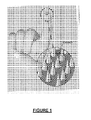
- minidards cones
- the size of the patch may, for example, be adapted to the surface of a pigment spot or a wrinkle.
- the composition intended to be applied topically may be more or less fluid and have the appearance of a white or colored cream, an ointment, a milk, a lotion or a serum. , a paste, a mousse or a gel. It can optionally be applied to the skin in the form of an aerosol. It can also be in solid form, and for example in the form of a stick. It can be used as a care product and / or as a make-up product for the skin.
- composition according to the invention may in addition to the double-stranded RNA oligonucleotide contain at least one active agent chosen from: ⁇ -hydroxy acids; salicylic acid and its derivatives such as n-octanoyl-5-salicylic acid; HEPES; procysteine; O-octanoyl-6-D-maltose; disodium salt of methyl glycine diacetic acid; ceramides; steroids such as diosgenin and DHEA derivatives; kojic acid; N-ethyloxycarbonyl-4-para-aminophenol; ascorbic acid and its derivatives; bilberry extracts; retinoids and in particular retinol and its esters; polypeptides and their acyl derivatives; phytohormones; yeast extracts Saccharomyces cerevisiae ; seaweed extracts; extracts of Vitreoscilla filiformis; soy, lupine, corn and
- composition according to the invention may further contain at least one UVA and / or UVB filter.
- the sunscreens may be chosen from organic screening agents, inorganic screening agents and mixtures thereof.
- the inorganic filters that can be used in the composition according to the invention are in particular nanopigments (average size of the primary particles: generally between 5 nm and 100 nm, preferably between 10 nm and 50 nm) of coated or uncoated metal oxides, for example nanopigments of titanium oxide (amorphous or crystallized in rutile and / or anatase form), iron, zinc, zirconium or cerium. Coating agents are, moreover, alumina and / or aluminum stearate. Such nanopigments of metal oxides, coated or uncoated, are in particular described in the patent applications EP-A-0518772 and EP-A-0518773 .
- the composition of the invention may also contain the usual adjuvants in the cosmetic and dermatological fields, such as hydrophilic or lipophilic gelling agents, preservatives, antioxidants, solvents, surfactants, thickeners, perfumes, fillers, pigments, odor absorbers and dyestuffs.
- the amounts of these various adjuvants are those conventionally used in the fields under consideration, and for example from 0.01 to 20% of the total weight of the composition.
- These adjuvants depending on their nature, can be introduced into the fatty phase or into the aqueous phase.
- These adjuvants, as well as their concentrations must be such that they do not adversely affect the advantageous properties of pantethinesulphonic acid or its salts.
- the proportion of the fatty phase can range from 5% to 80% by weight, and preferably from 5% to 50% of the total weight of the composition.
- the oils, emulsifiers and coemulsifiers used in the composition in emulsion form are chosen from those conventionally used in the field under consideration.
- the emulsifier and the coemulsifier are present in the composition in a proportion ranging from 0.3% to 30% by weight, and preferably from 0.5% to 20% of the total weight of the composition.
- O / W emulsifiers such as fatty acid esters of polyethylene glycol, in particular PEG-100 stearate, and fatty acid esters of glycerin such as glyceryl stearate, as well as W / O emulsifiers such as the oxyethylenated poly (methylcetyl) (dimethyl) methylsiloxane available under the name commercial ABIL WE09 from Degussa Goldschmidt or the mixture of ethylene glycol acetyl stearate and glyceryl tristearate sold by Guardian under the trade name UNITWIX.
- O emulsifiers such as fatty acid esters of polyethylene glycol, in particular PEG-100 stearate, and fatty acid esters of glycerin such as glyceryl stearate
- W / O emulsifiers such as the oxyethylenated poly (methylcetyl) (dimethyl) methylsi
- hydrophilic gelling agents mention may in particular be made of carboxyvinyl polymers (carbomer), acrylic copolymers such as copolymers of acrylates / alkylacrylates, polyacrylamides, polysaccharides, natural gums and clays, and, as lipophilic gelling agents, it is possible to mention mention mention modified clays such as bentones, metal salts of fatty acids, hydrophobic silica and polyethylenes.
- fillers which can be used in the composition of the invention, mention may be made, for example, besides the pigments, the silica powder; talcum; starch crosslinked with octenylsuccinic anhydride sold by National Starch under the name DRY FLO PLUS (28-1160); polyamide particles and in particular those sold under the name ORGASOL by the company Atochem; polyethylene powders; micro-spheres based on acrylic copolymers, such as those made of ethylene glycol dimethacrylate / lauryl methacrylate copolymer sold by Dow Corning under the name Polytrap; expanded powders such as hollow microspheres and in particular the microspheres sold under the name Expancel by the company Kemanord Plast or under the name Micropearl F 80 ED by the company Matsumoto; silicone resin microbeads such as those sold under the name Tospearl by the company Toshiba Silicone; and their mixtures.
- These fillers may be present in amounts ranging from 0 to 20% by weight and
- Another subject of the invention relates to a cosmetic treatment method comprising the topical application on a zone to be treated of a composition comprising, in a physiologically acceptable medium, at least one double RNA oligonucleotide strand as defined above.
- the composition will be applied to the skin and / or the scalp and / or the integuments, in a unique or repeated manner over time.
- composition according to the invention is applied to the zone to be treated, in particular a composition comprising an oligonucleotide of Double-stranded RNA capable of inhibiting the expression of a messenger RNA encoding tyrosinase and / or a double-stranded RNA oligonucleotide capable of inhibiting the expression of a messenger RNA encoding TRP-1.
- the invention also relates to a cosmetic treatment method for preventing and / or combating cutaneous signs of aging, characterized in that a composition comprising a double-stranded RNA oligonucleotide capable of inhibiting is applied to the area to be treated.
- RNA encoding neutrophil elastase and / or a double-stranded RNA oligonucleotide capable of inhibiting the expression of a messenger RNA encoding neutrophil elastase and / or a double-stranded RNA oligonucleotide capable of inhibiting the expression of a messenger RNA encoding hyaluronidase and / or a double-stranded RNA oligonucleotide capable of inhibiting the expression of a messenger RNA encoding a metalloproteinase and / or a double-stranded RNA oligonucleotide capable of inhibiting the expression of a messenger RNA encoding HMG-CoA reductase and / or an oligonucleotide double-stranded RNA capable of inhibiting the expression of a messenger RNA encoding calmodulin-like skin protein (CLSP) and / or a double-stranded RNA oli
- the invention also relates to a cosmetic treatment method for inducing and / or stimulating the growth of hair and / or hair and / or for curbing hair loss, characterized in that a composition comprising a double-stranded RNA oligonucleotide capable of inhibiting the expression of a messenger RNA coding for a metalloproteinase and / or a double-stranded RNA oligonucleotide capable of inhibiting the expression of a messenger RNA coding for 5 ⁇ -reductase type I or II and / or a double-stranded RNA oligonucleotide capable of inhibiting the expression of a messenger RNA encoding NO-synthase.
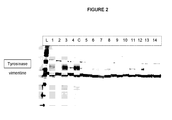
- the experimental conditions are those described by Tuschl et al. (Journal of Cell Science 2001, 114, 4557-4565 ).
- the melanocytes are inoculated 24 hours before transfection at 40,000 cells / well in a 24-well plate in 500 ⁇ l of DMEM medium + 10% serum.
- 0.84 ⁇ g or 2.52 ⁇ g of siRNA duplex (see description below), ie respectively 60 pmol of siRNA-Tyrosinase in 3 ⁇ l of annealing buffer (Dharmacon) or 180 pmol of siRNA-Tyrosinase in 9 ⁇ l of annealing buffer, are used.
- 3 ⁇ l or 9 ⁇ l of siRNA-Tyrosinase duplex at 20 ⁇ M are diluted in 50 ⁇ l of Opti-MEM (Gibco).
- 3 ⁇ l of Oligofectamine (Invitrogen) are diluted in 12 ⁇ l of Opti-MEM and incubated for 10 minutes at room temperature. The 2 solutions are mixed and incubated for 20 minutes at room temperature before being deposited on the cells. The cells are then incubated for 96 h at 37 ° C. with a change of medium after 24 h and then lysed in a buffer containing 10 mM Tris-HCl pH 7.2, 2% SDS, 1% Triton X-100, 10% glycerol + 1 % protease inhibitor.
- the membrane is rinsed in PBS-Tween 20 and hybridized with a peroxidase-coupled anti-mouse secondary antibody (Goat anti-mouse-HRP, Dako) diluted 1/2000.
- a peroxidase-coupled anti-mouse secondary antibody Goat anti-mouse-HRP, Dako
- the detection is carried out using the "ECL Plus western blotting detection system" kit according to the supplier's instructions (Amersham).
- RNA interference thus inhibits the expression of proteins by epidermal cells, by specific tyrosinase inhibitors.
- Composition 1 The double-stranded RNA oligonucleotide is complexed on the surface of cationic vesicles:
- the vesicles are then incorporated into a cosmetic formulation suitable for topical application.
- a daily application preferably on the evening of this preparation allows the attenuation of the pigment spots, a regular and durable application leads to the disappearance of these pigmentary spots.
- Composition 2 dsRNA is complexed within cationic vesicles
- Aqueous solution A 30% distilled water, 1% PEI (MW 200 to 100000) and double stranded RNA oligonucleotide QSP.
- Aqueous solution B distilled water qs 100%
- the hydration step is carried out at the temperature adapted to the lipid mixture and with the solution A with ultrasound stirring and then added a dilution step with the aqueous solution B.
- the vesicles are then incorporated into a cosmetic formulation suitable for topical application.
- compositions 1 and 2 can then be introduced in a conventional manner for those skilled in the art into the following formulation.
- the ingredients are identified according to the CTFA nomenclature. Glycerin 5% conservatives 1% Disodium EDTA 0.2% carbomer 0,5% triethanolamine 0.25% Ammonium polyacryloyldimethyl taurate * 0.3% Sodium hyaluronate 0.1% Vegetal oils 3% Acrylamide / sodium acryloyldimethyltaurate and isododecane and polysorbate-80 ** 2% Cyclopentasiloxane and dimethiconol 3% Suspension of vesicles according to Examples 1 or 2 1 to 25% Water qs 100% * Hostacerin AMPS provided by CLARIANT ** Simulgel 600 provided by SEPPIC
Landscapes
- Health & Medical Sciences (AREA)
- Life Sciences & Earth Sciences (AREA)
- Animal Behavior & Ethology (AREA)
- General Health & Medical Sciences (AREA)
- Public Health (AREA)
- Veterinary Medicine (AREA)
- Dermatology (AREA)
- Chemical & Material Sciences (AREA)
- Medicinal Chemistry (AREA)
- Pharmacology & Pharmacy (AREA)
- Organic Chemistry (AREA)
- Nuclear Medicine, Radiotherapy & Molecular Imaging (AREA)
- Engineering & Computer Science (AREA)
- Bioinformatics & Cheminformatics (AREA)
- Chemical Kinetics & Catalysis (AREA)
- General Chemical & Material Sciences (AREA)
- Molecular Biology (AREA)
- Epidemiology (AREA)
- Diabetes (AREA)
- Gerontology & Geriatric Medicine (AREA)
- Birds (AREA)
- Toxicology (AREA)
- Biochemistry (AREA)
- Hematology (AREA)
- Obesity (AREA)
- Endocrinology (AREA)
- Pharmaceuticals Containing Other Organic And Inorganic Compounds (AREA)
- Cosmetics (AREA)
- Medicines That Contain Protein Lipid Enzymes And Other Medicines (AREA)
- Medicinal Preparation (AREA)
- Saccharide Compounds (AREA)
Claims (7)
- Nichttherapeutische Verwendung mindestens eines doppelsträngigen RNA-Oligonucleotids einer Sequenz, die unter SEQ ID NO: 1, SEQ ID NO: 2, SEQ ID NO: 13, SEQ ID NO: 14, SEQ ID NO: 15, SEQ ID NO: 16, SEQ ID NO: 17, SEQ ID NO: 18, SEQ ID NO: 19, SEQ ID NO: 20, SEQ ID NO: 21 oder SEQ ID NO: 22 ausgewählt ist, für eine topische Anwendung zur Depigmentierung und/oder zum Bleichen der Haut oder der Hautanhangsgebilde durch Inhibierung der Expression eines Proteins der Haut oder der Hautanhangsgebilde, wobei es sich bei dem Protein um die Tyrosinase handelt.
- Verwendung nach dem vorhergehenden Anspruch, dadurch gekennzeichnet, das das Oligonucleotid ein durch Faltung gepaarter, autokomplementärer RNA-Einfachstrang ist,
- Topische Zusammensetzung, die in einem physiologisch akzeptablen Medium mindestens ein doppelsträngiges RNA-Oligonucleotid einer Sequenz enthält, die unter SEQ ID NO: 1, SEQ ID NO: 2, SEQ ID NO: 13, SEQ ID NO: 14, SEQ ID NO: 15, SEQ ID NO: 16, SEQ ID NO: 17, SEQ ID NO: 18, SEQ ID NO: 19, SEQ ID NO: 20, SEQ ID NO: 21 oder SEQ ID NO: 22 ausgewählt ist, das die Expression der Tyrosinase hemmt und in einer Umhüllung eingekapselt ist.
- Zusammensetzung nach Anspruch 3, dadurch gekennzeichnet, dass die Umhüllung unter den Mikrosphären, Nanosphären, Oleosomen und Nanokapseln ausgewählt ist.
- Zusammensetzung nach Anspruch 3 oder 4, dadurch gekennzeichnet, dass die Umhüllung einen Durchmesser kleiner oder gleich 2 µm aufweist.
- Zusammensetzung nach einem, dar Ansprüche 3 bis 5, dadurch gekennzeichnet, dass das oder die RNA-Oligonucleotid(e) 5-10-7 bis 5 Gew.-%, bezogen auf das Gesamtgewicht der Zusammensetzung, ausmachen.
- Kosmetisches Verfahren zur Depigmentierung und/oder zum Bleichen der Haut oder der Hautanhangsgebilde, dadurch gekennzeichnet, dass das doppelsträngige RNA-Oligonucleotid einer Sequenz, die unter SEQ ID NO: 1, SEQ ID NO: 2, SEQ ID NO: 13, SEQ ID NO: 1.4, SEQ ID NO: 15, SEQ ID NO: 16, SEQ ID NO: 17, SEQ ID NO: 18, SEQ ID NO: 19, SEQ ID NO: 20, SEQ ID NO: 21 oder SEQ ID NO: 22 ausgewählt ist, befähigt ist, die Expression einer Boten-RNA zu inhibieren, die die Tyrosinase kodiert.
Applications Claiming Priority (5)
| Application Number | Priority Date | Filing Date | Title |
|---|---|---|---|
| FR0206796 | 2002-06-03 | ||
| FR0206796A FR2840217B1 (fr) | 2002-06-03 | 2002-06-03 | Compositions cosmetiques comprenant au moins un oligonucleotide d'arn double brin (dsrna)et leurs utilisations |
| US38672002P | 2002-06-10 | 2002-06-10 | |
| US386720P | 2002-06-10 | ||
| PCT/FR2003/001648 WO2003101376A2 (fr) | 2002-06-03 | 2003-06-02 | Utilisation par voie topique d'au moins un oligonucleotide d'arn double brin (ds rna) |
Publications (2)
| Publication Number | Publication Date |
|---|---|
| EP1513482A2 EP1513482A2 (de) | 2005-03-16 |
| EP1513482B1 true EP1513482B1 (de) | 2010-04-14 |
Family
ID=29713354
Family Applications (1)
| Application Number | Title | Priority Date | Filing Date |
|---|---|---|---|
| EP03756039A Expired - Lifetime EP1513482B1 (de) | 2002-06-03 | 2003-06-02 | Topische anwendung mindestens eines doppelsträngigen rna-oligonucleotids (ds rna) gegen tyrosinase |
Country Status (8)
| Country | Link |
|---|---|
| EP (1) | EP1513482B1 (de) |
| JP (1) | JP4499554B2 (de) |
| AT (1) | ATE464038T1 (de) |
| AU (1) | AU2003255621A1 (de) |
| CA (1) | CA2485111A1 (de) |
| DE (1) | DE60332112D1 (de) |
| ES (1) | ES2342826T3 (de) |
| WO (1) | WO2003101376A2 (de) |
Families Citing this family (20)
| Publication number | Priority date | Publication date | Assignee | Title |
|---|---|---|---|---|
| DE10254214A1 (de) * | 2002-11-20 | 2004-06-09 | Beiersdorf Ag | Oligoribonukleotide zur Behandlung von degenerativen Hauterscheinungen durch RNA-Interferenz |
| GB0307914D0 (en) * | 2003-04-07 | 2003-05-14 | Univ Dundee | Cytochrome p450 |
| AU2004285134B2 (en) * | 2003-10-21 | 2012-01-19 | Dyad Pharmaceutical Corporation | Methods and compositions for treating 5alpha-reductase type 1 and type 2 dependent conditions |
| DE102004025881A1 (de) | 2004-05-19 | 2006-01-05 | Beiersdorf Ag | Oligoribonukleotide zur Beeinflussung des Haarwachstums |
| WO2006040447A1 (fr) * | 2004-10-07 | 2006-04-20 | L'oreal | Procédé de traitement cosmétique des fibres kératiniques et utilisation d'un inhibiteur de transglutaminase |
| WO2006040446A1 (fr) * | 2004-10-07 | 2006-04-20 | L'oreal | Procédé de mise en forme de fibres kératiniques |
| FR2885813B1 (fr) * | 2005-05-19 | 2008-01-11 | Oreal | Vectorisation de dsrna par des particules cationiques et leur utilisation sur modele de peau. |
| US9139850B2 (en) | 2005-05-19 | 2015-09-22 | L'oreal | Vectorization of dsRNA by cationic particles and topical use |
| FR2885808B1 (fr) | 2005-05-19 | 2007-07-06 | Oreal | Vectorisation de dsrna par des particules cationiques et utilisation topique. |
| FR2890859B1 (fr) * | 2005-09-21 | 2012-12-21 | Oreal | Oligonucleotide d'arn double brin inhibant l'expression de la tyrosinase |
| JP4981381B2 (ja) * | 2006-08-04 | 2012-07-18 | 株式会社ナリス化粧品 | 美白用皮膚外用剤 |
| JP2008115101A (ja) * | 2006-11-02 | 2008-05-22 | Naris Cosmetics Co Ltd | 美白用皮膚組成物 |
| TWI382849B (zh) * | 2007-10-29 | 2013-01-21 | Mello Biotech Taiwan Co Ltd | 產生藉由基因靜默效應以用於皮膚維護之化妝品的方法以及編碼基因靜默效應物之基因重組核苷酸 |
| FR2940977B1 (fr) * | 2009-01-13 | 2016-11-18 | Oreal | Utilisation de formes complexes de la proteine de type calmodulin-like skin protein clsp |
| FR2986233B1 (fr) | 2012-02-01 | 2014-02-28 | Regentis Internat | Peptide bifonctionnel |
| FR3043695B1 (fr) * | 2015-11-17 | 2019-10-25 | ISP Investments LLC. | Procede d'obtention d'un extrait aqueux enrichi en petits arn a partir d'une matiere vegetal et extraits issus du procede |
| FR3106754B1 (fr) | 2020-02-04 | 2022-01-07 | Isp Investments Llc | Procede d’obtention d’un extrait aqueux de lavande, compositions comprenant un tel extrait et leurs utilisations cosmetiques |
| WO2021201276A1 (ja) * | 2020-04-03 | 2021-10-07 | 株式会社 メドレックス | Il-23発現を特異的に抑制する二本鎖rnaおよびそれを含む医薬組成物 |
| FR3116438B1 (fr) | 2020-11-23 | 2022-10-14 | Isp Investments Llc | Procede d’obtention d’extraits aqueux de feuilles de thes, compositions comprenant de tels extraits et leurs utilisations cosmetiques |
| FR3125425B1 (fr) | 2021-07-22 | 2024-09-13 | Isp Investments Llc | Extrait de feuilles de the noir, compositions le comprenant et ses utilisations cosmetiques |
Family Cites Families (2)
| Publication number | Priority date | Publication date | Assignee | Title |
|---|---|---|---|---|
| GB9927444D0 (en) * | 1999-11-19 | 2000-01-19 | Cancer Res Campaign Tech | Inhibiting gene expression |
| FR2804960B1 (fr) * | 2000-02-11 | 2005-06-24 | Lvmh Rech | Nouveaux oligonucleotides et utilisation d'oligonucleotides modulant l'expression de la tyrosinase et de la tyrosinase- related-protein 1 comme agents depigmentants |
-
2003
- 2003-06-02 WO PCT/FR2003/001648 patent/WO2003101376A2/fr not_active Ceased
- 2003-06-02 ES ES03756039T patent/ES2342826T3/es not_active Expired - Lifetime
- 2003-06-02 EP EP03756039A patent/EP1513482B1/de not_active Expired - Lifetime
- 2003-06-02 CA CA002485111A patent/CA2485111A1/fr not_active Abandoned
- 2003-06-02 JP JP2004508734A patent/JP4499554B2/ja not_active Expired - Fee Related
- 2003-06-02 AT AT03756039T patent/ATE464038T1/de not_active IP Right Cessation
- 2003-06-02 AU AU2003255621A patent/AU2003255621A1/en not_active Abandoned
- 2003-06-02 DE DE60332112T patent/DE60332112D1/de not_active Expired - Lifetime
Non-Patent Citations (2)
| Title |
|---|
| ELBASHIR S.M. ET AL: "Analysis of gene function in somatic mammalian cells using small interfering RNAs", METHODS, vol. 26, no. 2, February 2002 (2002-02-01), SAN DIEGO, CALIF, pages 199 - 213, XP002251055 * |
| ELBASHIR S.M. ET AL: "Duplexes of 21-nucleotide RNAs mediate interference in cultured mammalian cells", NATURE, vol. 411, 2001, LONDON, pages 494 - 498, XP002529540, DOI: doi:10.1038/35078107 * |
Also Published As
| Publication number | Publication date |
|---|---|
| AU2003255621A1 (en) | 2003-12-19 |
| EP1513482A2 (de) | 2005-03-16 |
| JP2005530812A (ja) | 2005-10-13 |
| JP4499554B2 (ja) | 2010-07-07 |
| ES2342826T3 (es) | 2010-07-15 |
| CA2485111A1 (fr) | 2003-12-11 |
| WO2003101376A3 (fr) | 2004-05-06 |
| ATE464038T1 (de) | 2010-04-15 |
| AU2003255621A8 (en) | 2003-12-19 |
| WO2003101376A2 (fr) | 2003-12-11 |
| DE60332112D1 (de) | 2010-05-27 |
Similar Documents
| Publication | Publication Date | Title |
|---|---|---|
| US9012418B2 (en) | Topical administration of at least one double-stranded RNA oligonucleotide (dsRNA) | |
| EP1513482B1 (de) | Topische anwendung mindestens eines doppelsträngigen rna-oligonucleotids (ds rna) gegen tyrosinase | |
| EP1255827B1 (de) | Oligonukleotide und deren verwendung um die expression der tyrosinase, die in der synthese von melanischen pigmenten beteiligt ist, zu modulieren | |
| US10512600B2 (en) | RNA complexes that inhibit melanin production | |
| EP2276455A2 (de) | Verwendung von k1f13a und ap-1-hemmern zur hemmung von melanogenese | |
| FR2924334A1 (fr) | Composition cosmetique comprenant l'acide 2-glucoside ascorbique et l'ergothioneine. | |
| EP2935587B1 (de) | Aptamere zur hemmung der enzymatischen aktivität von tyrosinase | |
| EP3090051B1 (de) | Aptamere zur hemmung der enzymatischen aktivität des mmp-9-proteins | |
| EP1699923B1 (de) | Oligonukleotid und dessen verwendung zur modulation einer beta-1-proteinkinase-isoform c in form eines hautdepigmentierungsmittels | |
| EP2793798B1 (de) | Verwendung von mikrorna-moleküle in die beeinflussung von pigmentierung der haut | |
| FR2930151A1 (fr) | Nouvelles compositions inhibant la melanogenese et leurs utilisations | |
| WO2007026009A1 (fr) | Nouveaux oligonucléotides anti-gènes spécifiques de la tyrosinase comme agents dépigmentants | |
| KR20090102764A (ko) | 티로시나아제-관련 단백질-1(trp-1)을 코딩하는 유전자와 상호작용하는 신규한 올리고뉴클레오타이드 및 이 유전자의 탈색제로서 이의 발현을 조절하기 위한 용도 | |
| FR2930152A1 (fr) | Nouvelles compositions inhibant la melanogenese et leurs utilisations | |
| KR101800243B1 (ko) | 마이크로 rna를 포함하는 색소형성유전자 발현조절용 조성물 | |
| FR2864540A1 (fr) | Nouveaux oligonucleotides et utilisation d'oligonucleotides modulant l'expression de la tyrosinase et de la tyrosinase-related-protein 1 comme agents depigmentants | |
| FR2924335A1 (fr) | Utilisation de l'acide 2-glucoside ascorbique dans une composition cosmetique contre le vieillissement. |
Legal Events
| Date | Code | Title | Description |
|---|---|---|---|
| PUAI | Public reference made under article 153(3) epc to a published international application that has entered the european phase |
Free format text: ORIGINAL CODE: 0009012 |
|
| 17P | Request for examination filed |
Effective date: 20050103 |
|
| AK | Designated contracting states |
Kind code of ref document: A2 Designated state(s): AT BE BG CH CY CZ DE DK EE ES FI FR GB GR HU IE IT LI LU MC NL PT RO SE SI SK TR |
|
| AX | Request for extension of the european patent |
Extension state: AL LT LV MK |
|
| DAX | Request for extension of the european patent (deleted) | ||
| 17Q | First examination report despatched |
Effective date: 20071121 |
|
| RTI1 | Title (correction) |
Free format text: TOPICAL USE OF AT LEAST ONE DOUBLE-STRANDED RNA OLIGONUCLEOTIDE (DS RNA) AGAINST TYROSINASE |
|
| GRAP | Despatch of communication of intention to grant a patent |
Free format text: ORIGINAL CODE: EPIDOSNIGR1 |
|
| RIC1 | Information provided on ipc code assigned before grant |
Ipc: A61Q 5/08 20060101ALI20091216BHEP Ipc: A61P 17/00 20060101ALI20091216BHEP Ipc: A61K 6/00 20060101AFI20091216BHEP Ipc: A61Q 19/02 20060101ALI20091216BHEP Ipc: A61K 8/60 20060101ALI20091216BHEP |
|
| GRAS | Grant fee paid |
Free format text: ORIGINAL CODE: EPIDOSNIGR3 |
|
| GRAA | (expected) grant |
Free format text: ORIGINAL CODE: 0009210 |
|
| AK | Designated contracting states |
Kind code of ref document: B1 Designated state(s): AT BE BG CH CY CZ DE DK EE ES FI FR GB GR HU IE IT LI LU MC NL PT RO SE SI SK TR |
|
| REG | Reference to a national code |
Ref country code: GB Ref legal event code: FG4D Free format text: NOT ENGLISH |
|
| REG | Reference to a national code |
Ref country code: CH Ref legal event code: EP |
|
| REG | Reference to a national code |
Ref country code: IE Ref legal event code: FG4D Free format text: LANGUAGE OF EP DOCUMENT: FRENCH |
|
| REF | Corresponds to: |
Ref document number: 60332112 Country of ref document: DE Date of ref document: 20100527 Kind code of ref document: P |
|
| REG | Reference to a national code |
Ref country code: ES Ref legal event code: FG2A Ref document number: 2342826 Country of ref document: ES Kind code of ref document: T3 |
|
| REG | Reference to a national code |
Ref country code: NL Ref legal event code: VDEP Effective date: 20100414 |
|
| PG25 | Lapsed in a contracting state [announced via postgrant information from national office to epo] |
Ref country code: SE Free format text: LAPSE BECAUSE OF FAILURE TO SUBMIT A TRANSLATION OF THE DESCRIPTION OR TO PAY THE FEE WITHIN THE PRESCRIBED TIME-LIMIT Effective date: 20100414 Ref country code: NL Free format text: LAPSE BECAUSE OF FAILURE TO SUBMIT A TRANSLATION OF THE DESCRIPTION OR TO PAY THE FEE WITHIN THE PRESCRIBED TIME-LIMIT Effective date: 20100414 |
|
| REG | Reference to a national code |
Ref country code: IE Ref legal event code: FD4D |
|
| PG25 | Lapsed in a contracting state [announced via postgrant information from national office to epo] |
Ref country code: AT Free format text: LAPSE BECAUSE OF FAILURE TO SUBMIT A TRANSLATION OF THE DESCRIPTION OR TO PAY THE FEE WITHIN THE PRESCRIBED TIME-LIMIT Effective date: 20100414 Ref country code: SI Free format text: LAPSE BECAUSE OF FAILURE TO SUBMIT A TRANSLATION OF THE DESCRIPTION OR TO PAY THE FEE WITHIN THE PRESCRIBED TIME-LIMIT Effective date: 20100414 Ref country code: FI Free format text: LAPSE BECAUSE OF FAILURE TO SUBMIT A TRANSLATION OF THE DESCRIPTION OR TO PAY THE FEE WITHIN THE PRESCRIBED TIME-LIMIT Effective date: 20100414 |
|
| BERE | Be: lapsed |
Owner name: L'OREAL Effective date: 20100630 |
|
| PG25 | Lapsed in a contracting state [announced via postgrant information from national office to epo] |
Ref country code: GR Free format text: LAPSE BECAUSE OF FAILURE TO SUBMIT A TRANSLATION OF THE DESCRIPTION OR TO PAY THE FEE WITHIN THE PRESCRIBED TIME-LIMIT Effective date: 20100715 Ref country code: CY Free format text: LAPSE BECAUSE OF FAILURE TO SUBMIT A TRANSLATION OF THE DESCRIPTION OR TO PAY THE FEE WITHIN THE PRESCRIBED TIME-LIMIT Effective date: 20100421 |
|
| PG25 | Lapsed in a contracting state [announced via postgrant information from national office to epo] |
Ref country code: DK Free format text: LAPSE BECAUSE OF FAILURE TO SUBMIT A TRANSLATION OF THE DESCRIPTION OR TO PAY THE FEE WITHIN THE PRESCRIBED TIME-LIMIT Effective date: 20100414 Ref country code: EE Free format text: LAPSE BECAUSE OF FAILURE TO SUBMIT A TRANSLATION OF THE DESCRIPTION OR TO PAY THE FEE WITHIN THE PRESCRIBED TIME-LIMIT Effective date: 20100414 Ref country code: IE Free format text: LAPSE BECAUSE OF FAILURE TO SUBMIT A TRANSLATION OF THE DESCRIPTION OR TO PAY THE FEE WITHIN THE PRESCRIBED TIME-LIMIT Effective date: 20100414 Ref country code: MC Free format text: LAPSE BECAUSE OF NON-PAYMENT OF DUE FEES Effective date: 20100630 Ref country code: PT Free format text: LAPSE BECAUSE OF FAILURE TO SUBMIT A TRANSLATION OF THE DESCRIPTION OR TO PAY THE FEE WITHIN THE PRESCRIBED TIME-LIMIT Effective date: 20100816 |
|
| REG | Reference to a national code |
Ref country code: CH Ref legal event code: PL |
|
| PLBE | No opposition filed within time limit |
Free format text: ORIGINAL CODE: 0009261 |
|
| STAA | Information on the status of an ep patent application or granted ep patent |
Free format text: STATUS: NO OPPOSITION FILED WITHIN TIME LIMIT |
|
| PG25 | Lapsed in a contracting state [announced via postgrant information from national office to epo] |
Ref country code: SK Free format text: LAPSE BECAUSE OF FAILURE TO SUBMIT A TRANSLATION OF THE DESCRIPTION OR TO PAY THE FEE WITHIN THE PRESCRIBED TIME-LIMIT Effective date: 20100414 Ref country code: CZ Free format text: LAPSE BECAUSE OF FAILURE TO SUBMIT A TRANSLATION OF THE DESCRIPTION OR TO PAY THE FEE WITHIN THE PRESCRIBED TIME-LIMIT Effective date: 20100414 Ref country code: RO Free format text: LAPSE BECAUSE OF FAILURE TO SUBMIT A TRANSLATION OF THE DESCRIPTION OR TO PAY THE FEE WITHIN THE PRESCRIBED TIME-LIMIT Effective date: 20100414 |
|
| 26N | No opposition filed |
Effective date: 20110117 |
|
| PG25 | Lapsed in a contracting state [announced via postgrant information from national office to epo] |
Ref country code: CH Free format text: LAPSE BECAUSE OF NON-PAYMENT OF DUE FEES Effective date: 20100630 Ref country code: LI Free format text: LAPSE BECAUSE OF NON-PAYMENT OF DUE FEES Effective date: 20100630 |
|
| PG25 | Lapsed in a contracting state [announced via postgrant information from national office to epo] |
Ref country code: BE Free format text: LAPSE BECAUSE OF NON-PAYMENT OF DUE FEES Effective date: 20100630 |
|
| PG25 | Lapsed in a contracting state [announced via postgrant information from national office to epo] |
Ref country code: LU Free format text: LAPSE BECAUSE OF NON-PAYMENT OF DUE FEES Effective date: 20100602 Ref country code: BG Free format text: LAPSE BECAUSE OF FAILURE TO SUBMIT A TRANSLATION OF THE DESCRIPTION OR TO PAY THE FEE WITHIN THE PRESCRIBED TIME-LIMIT Effective date: 20100414 Ref country code: HU Free format text: LAPSE BECAUSE OF FAILURE TO SUBMIT A TRANSLATION OF THE DESCRIPTION OR TO PAY THE FEE WITHIN THE PRESCRIBED TIME-LIMIT Effective date: 20101015 |
|
| PG25 | Lapsed in a contracting state [announced via postgrant information from national office to epo] |
Ref country code: TR Free format text: LAPSE BECAUSE OF FAILURE TO SUBMIT A TRANSLATION OF THE DESCRIPTION OR TO PAY THE FEE WITHIN THE PRESCRIBED TIME-LIMIT Effective date: 20100414 |
|
| PG25 | Lapsed in a contracting state [announced via postgrant information from national office to epo] |
Ref country code: BG Free format text: LAPSE BECAUSE OF FAILURE TO SUBMIT A TRANSLATION OF THE DESCRIPTION OR TO PAY THE FEE WITHIN THE PRESCRIBED TIME-LIMIT Effective date: 20100714 |
|
| REG | Reference to a national code |
Ref country code: FR Ref legal event code: PLFP Year of fee payment: 14 |
|
| REG | Reference to a national code |
Ref country code: FR Ref legal event code: PLFP Year of fee payment: 15 |
|
| REG | Reference to a national code |
Ref country code: FR Ref legal event code: PLFP Year of fee payment: 16 |
|
| PGFP | Annual fee paid to national office [announced via postgrant information from national office to epo] |
Ref country code: ES Payment date: 20190701 Year of fee payment: 17 |
|
| PGFP | Annual fee paid to national office [announced via postgrant information from national office to epo] |
Ref country code: FR Payment date: 20200414 Year of fee payment: 18 Ref country code: DE Payment date: 20200519 Year of fee payment: 18 |
|
| PGFP | Annual fee paid to national office [announced via postgrant information from national office to epo] |
Ref country code: GB Payment date: 20200520 Year of fee payment: 18 Ref country code: IT Payment date: 20200512 Year of fee payment: 18 |
|
| REG | Reference to a national code |
Ref country code: ES Ref legal event code: FD2A Effective date: 20211026 |
|
| REG | Reference to a national code |
Ref country code: DE Ref legal event code: R119 Ref document number: 60332112 Country of ref document: DE |
|
| PG25 | Lapsed in a contracting state [announced via postgrant information from national office to epo] |
Ref country code: ES Free format text: LAPSE BECAUSE OF NON-PAYMENT OF DUE FEES Effective date: 20200603 |
|
| GBPC | Gb: european patent ceased through non-payment of renewal fee |
Effective date: 20210602 |
|
| PG25 | Lapsed in a contracting state [announced via postgrant information from national office to epo] |
Ref country code: GB Free format text: LAPSE BECAUSE OF NON-PAYMENT OF DUE FEES Effective date: 20210602 Ref country code: DE Free format text: LAPSE BECAUSE OF NON-PAYMENT OF DUE FEES Effective date: 20220101 |
|
| PG25 | Lapsed in a contracting state [announced via postgrant information from national office to epo] |
Ref country code: FR Free format text: LAPSE BECAUSE OF NON-PAYMENT OF DUE FEES Effective date: 20210630 |
|
| PG25 | Lapsed in a contracting state [announced via postgrant information from national office to epo] |
Ref country code: IT Free format text: LAPSE BECAUSE OF NON-PAYMENT OF DUE FEES Effective date: 20210602 |