EP1511334A1 - Verfahren zum verhindern einer falschen detektion eines übertragungsausgangspegelfehlers in einer funkbasisstationseinrichtung und funkbasisstationseinrichtung - Google Patents
Verfahren zum verhindern einer falschen detektion eines übertragungsausgangspegelfehlers in einer funkbasisstationseinrichtung und funkbasisstationseinrichtung Download PDFInfo
- Publication number
- EP1511334A1 EP1511334A1 EP03728082A EP03728082A EP1511334A1 EP 1511334 A1 EP1511334 A1 EP 1511334A1 EP 03728082 A EP03728082 A EP 03728082A EP 03728082 A EP03728082 A EP 03728082A EP 1511334 A1 EP1511334 A1 EP 1511334A1
- Authority
- EP
- European Patent Office
- Prior art keywords
- transmission
- radio
- radio transmission
- reception means
- output level
- Prior art date
- Legal status (The legal status is an assumption and is not a legal conclusion. Google has not performed a legal analysis and makes no representation as to the accuracy of the status listed.)
- Withdrawn
Links
- 230000005540 biological transmission Effects 0.000 title claims abstract description 262
- 238000000034 method Methods 0.000 title claims description 24
- 238000001514 detection method Methods 0.000 title claims description 17
- 238000012545 processing Methods 0.000 claims abstract description 82
- 238000012544 monitoring process Methods 0.000 claims abstract description 76
- 230000002159 abnormal effect Effects 0.000 claims abstract description 57
- 238000004891 communication Methods 0.000 claims description 9
- 230000015556 catabolic process Effects 0.000 description 26
- 238000009792 diffusion process Methods 0.000 description 10
- 238000010295 mobile communication Methods 0.000 description 4
- 230000000694 effects Effects 0.000 description 2
- 238000005259 measurement Methods 0.000 description 1
- 238000000926 separation method Methods 0.000 description 1
Images


Classifications
-
- H—ELECTRICITY
- H04—ELECTRIC COMMUNICATION TECHNIQUE
- H04B—TRANSMISSION
- H04B1/00—Details of transmission systems, not covered by a single one of groups H04B3/00 - H04B13/00; Details of transmission systems not characterised by the medium used for transmission
- H04B1/74—Details of transmission systems, not covered by a single one of groups H04B3/00 - H04B13/00; Details of transmission systems not characterised by the medium used for transmission for increasing reliability, e.g. using redundant or spare channels or apparatus
-
- H—ELECTRICITY
- H04—ELECTRIC COMMUNICATION TECHNIQUE
- H04B—TRANSMISSION
- H04B17/00—Monitoring; Testing
- H04B17/10—Monitoring; Testing of transmitters
- H04B17/15—Performance testing
- H04B17/18—Monitoring during normal operation
-
- H—ELECTRICITY
- H04—ELECTRIC COMMUNICATION TECHNIQUE
- H04W—WIRELESS COMMUNICATION NETWORKS
- H04W24/00—Supervisory, monitoring or testing arrangements
- H04W24/04—Arrangements for maintaining operational condition
-
- H—ELECTRICITY
- H04—ELECTRIC COMMUNICATION TECHNIQUE
- H04W—WIRELESS COMMUNICATION NETWORKS
- H04W88/00—Devices specially adapted for wireless communication networks, e.g. terminals, base stations or access point devices
- H04W88/08—Access point devices
Definitions
- the present invention relates to a method for preventing erroneous detection of a transmission output level error in a CDMA radio base station device and a radio base station device.
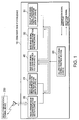
- a known CDMA radio base station device will now be described with reference to Fig. 1.
- a CDMA radio base station device 10 includes a radio transmission/reception function section (card A) 20, a base-band-signal processing function section (card B) 30, a base-band-signal diffusion function section (card C) 40, and a call-processing monitoring control function section (card D) 50.
- the CDMA radio base station device 10 further includes a back-up radio transmission/reception function section (back-up card A) 21 and a back-up base-band-signal processing function section (back-up card B) 31.
- the CDMA radio base station device 10 needs to monitor an error of a transmission output level for ensuring a stable line quality.
- the CDMA radio base station device 10 monitors a breakdown of a radio unit section forming the radio transmission/reception function section (card A) 20 for detecting the transmission output level error.
- the transmission output level error may be erroneously detected according to the resource state of the base-band-signal processing function section (card B) 30 and the base-band-signal diffusion function section (card C) 40.
- the radio transmission/reception function section (card A) 20 determines that it is in a breakdown state and performs switching to the back-up radio transmission/reception function section (back-up card A) 21.
- the back-up radio transmission/reception function section (back-up card A) 21 after switching also detects the transmission output level error, which brings the back-up radio transmission/reception function section (back-up card A) 21 to the breakdown state. In that case, a mobile communications system including the CDMA radio base station device 10 is brought to an interruption state.
- the known CDMA base station device has the following problems. Where a breakdown occurs in the base-band-signal processing function section (card B) 30, an abnormal call is generated, and the base-band-signal diffusion function section (card C) 40 transmits a burst signal to the radio transmission/reception function section (card A) 20, the resource state becomes abnormal. In that case, requirements for the error of the transmission output level of the radio transmission/reception function section (card A) 20 are fulfilled and the radio transmission/reception function section (card A) 20 is brought to the breakdown state in appearance.
- the radio transmission/reception function section (card A) 20 in the breakdown state switches to the back-up radio transmission/reception function section (back-up card A) 21.
- the back-up radio transmission/reception function section (back-up card A) 21 detects the transmission output level error, as in the above-described manner, and is brought to the breakdown state. Subsequently, the system interruption occurs.
- the object of the present invention is to determine whether the resource state is normal or abnormal, where the radio transmission/reception function section (card A) fulfills the requirements for the transmission-output-level error, and determines that the radio transmission/reception function section (card A) is in the breakdown state only when the resource state is normal. Subsequently, the quality stability and maintainability of communications are increased.
- a method according to a first mode of the present invention is a method for preventing erroneous detection of a transmission output level error in a radio base station device including a radio transmission/reception unit for monitoring a transmission output level and performing radio transmission and radio reception.
- the method is characterized in that the radio transmission/reception unit stops data transmission, where the transmission output level is abnormal and the state of a resource required for making call settings is abnormal.
- a method according to a second mode of the present invention is a method for preventing erroneous detection of a transmission output level error in a radio base station device including a radio transmission/reception unit for monitoring a transmission output level and performing radio transmission and radio reception, and a call-processing monitoring control unit for assigning a resource required for making call settings and monitoring the state of the resource.
- the method is characterized in that the call-processing monitoring control unit notifies the radio transmission/reception unit about whether the resource state is normal or abnormal, where the radio transmission/reception unit detects the transmission output level error, and the radio transmission/reception unit stops data transmission by being notified that the resource state is abnormal and switches to a back-up radio transmission/reception unit by being notified that the resource state is normal.
- a method is characterized by having the steps of detecting a transmission output level error through a radio transmission/reception unit, requesting a call-processing monitoring control unit for assigning a resource required for making call settings and monitoring the state of the resource to transmit a notification about the resource state through the radio transmission/reception unit, determining the resource state and notifying the radio transmission/reception unit about the determination result through the call-processing monitoring control unit, stopping data transmission through the radio transmission/reception unit, where the call-processing monitoring control unit notifies the radio transmission/reception unit that the resource state is abnormal, and switching from the radio transmission/reception unit to back-up radio transmission/reception unit, where the transmission output level is abnormal and the call-processing monitoring control unit notifies the radio transmission/reception unit that the resource state is normal.
- a method according to a fourth mode of the present invention is a method for preventing erroneous detection of a transmission output level error in a radio base station device including a radio transmission/reception unit for monitoring a transmission output level and performing radio transmission and radio reception, and a call-processing monitoring control unit for assigning a resource required for making call settings and monitoring the state of the resource.
- the method is characterized by having the steps of detecting the transmission output level error through the radio transmission/reception unit, requesting the call-processing monitoring control unit to transmit a notification about the resource state through the radio transmission/reception unit, determining the resource state through the call-processing monitoring control unit, notifying the radio transmission/reception unit about the determination result through the call-processing monitoring control unit, stopping data transmission through the radio transmission/reception unit, where the call-processing monitoring control unit notifies the radio transmission/reception unit that the resource state is abnormal, keeping on requesting the call-processing monitoring control unit to transmit a notification about the resource state through the radio transmission/reception unit until the resource state is restored, restarting the data transmission through the radio transmission/reception means, where the radio transmission/reception means receives a notification that the resource state becomes normal, the notification being transmitted from the call-processing monitoring control means, and switching from the radio transmission/reception unit to a back-up radio transmission/reception unit, where the transmission output level is abnormal and the call-processing monitoring control unit notifies
- the transmission output level error is detected by comparing a difference between an input value transmitted to the radio transmission/reception unit and an output value transmitted from the radio transmission/reception unit to a predetermined threshold value.
- the radio base station device includes the radio transmission/reception unit for monitoring the transmission output level and performing the radio transmission and the radio reception.
- the radio base station device is characterized in that the radio transmission unit stops the data transmission, where the transmission output level is abnormal and the state of the resource required for making the call settings is abnormal.
- the radio base station device includes the radio transmission/reception unit for monitoring the transmission output level and performing the radio transmission and the radio reception, and the call-processing monitoring control unit for assigning the resource required for making the call settings and monitoring the state of the resource.
- the radio base station device is characterized in that the radio transmission/reception unit requests the call-processing monitoring control unit to transmit a notification about the resource state, where the radio transmission/reception unit detects the error of the transmission output level, the radio transmission/reception unit stops the data transmission by being notified that the resource state is abnormal and restarts the data transmission by being notified that the resource state becomes normal, and the call-processing monitoring control unit notifies the radio transmission/reception unit of the resource state upon receiving the request transmitted from the radio transmission/reception unit.
- the radio transmission/reception unit switches to the back-up transmission/reception unit, where the radio transmission/reception unit detects the transmission output level error and where the resource state is normal.
- the transmission output level error is detected by comparing a difference between an input value transmitted to the radio transmission/reception unit and an output value transmitted from the radio transmission/reception unit to a predetermined threshold value.
- a CDMA radio base station device 100 of the present invention is characterized by having a radio transmission/reception function section (card A) 60 and a call-processing monitoring control function section (card D) 70 that are provided with new functions. That is to say, the CDMA radio base station device 100 includes the call-processing monitoring control function section (card D) 70 that can monitor the resource state.
- the call-processing monitoring control function section (card D) 70 always monitors the state of a resource that is set for a base-band-signal processing function section (card B) 30.
- the call-processing monitoring control function section (card D) 70 monitors that the resource is normally set for the base-band-signal processing function section (card B) 30 and normally output to a base-band-signal diffusion function section (card C) 40.
- the resource denotes common channels (a common pilot channel and a common control physical channel) required for making call settings.
- the call-processing monitoring control function section (card D) 70 determines whether the resource state is normal or abnormal and notifies the radio transmission/reception function section (card A) 60 of the determination result. After being notified that the resource state is abnormal, the radio transmission/reception function section (card A) 60 stops data transmission, so as to avoid a breakdown state.
- the CDMA radio base station device 100 includes the radio transmission/reception function section (card A) 60 and a back-up radio transmission/reception function section (back-up card A) 21 provided, as a back-up section of the radio transmission/reception function section (card A) 60.
- the CDMA radio base station device 100 further includes the base-band-signal processing function section (card B) 30, a back-up base-band-signal processing function section (back-up card B) 31 provided, as a back-up section of the base-band-signal processing function section (card B) 30, a base-band-signal diffusion function section (card C) 40, and the call-processing monitoring control function section (card D) 70.
- the radio transmission/reception function section 60 is referred to as card A, the back-up radio transmission/reception function section 21 as back-up card A, the base-band-signal processing function section 30 as card B, the back-up base-band-signal processing function section 31 as back-up card B, the base-band-signal diffusion function section 40 as card C, and the call-processing monitoring control function section 70 as card D, which will be written in parentheses along with the section names in the following description.
- the radio transmission/reception function section (card A) 60 includes a plurality of radio unit sections (a detection section, a difference calculation section, and so forth).
- the radio transmission/reception function section (card A) 60 monitors the transmission output level, detects the error thereof, and performs communications between itself and a radio-communications terminal device 200 through radio frequencies.
- the radio transmission/reception function section (card A) 60 also includes a detection section for detecting an input value and an output value, a difference calculation section for calculating a difference between the input value and the output value, a comparison section for making a comparison between the difference and a predetermined threshold value, and an error determination section for detecting an error according to the comparison result obtained by the comparison section.
- the input value denotes a value (an ideal transmission-power average value, for example) that is transmitted from the base-band-signal processing function section (card B) 30, diffused by the base-band-signal diffusion function section (card C) 40, and input to the radio transmission/reception function section (card A) 60.
- the output value denotes a value (an actual-measurement transmission-power average value, for example) that is transmitted from the radio transmission/reception function section (card A) 60.
- the base-band-signal processing function section (card B) 30 is assigned a resource and makes the call settings.
- the back-up base-band-signal processing function section (back-up card B) 31 performs a remedy therein and keeps on performing the communications, as a rule. Where the back-up base-band-signal processing function section (back-up card B) 31 is not provided, however, an abnormal call is generated and the communications interruption occurs until the base-band-signal processing function section (card B) 30 is restored.
- the base-band-signal diffusion function section (card C) 40 functions as a repeater between the radio transmission/reception function section (card A) 60 and the base-band-signal processing function section (card B) 30. Further, the base-band-signal diffusion function section (card C) 40 diffuses and inversely diffuses signals.
- the call-processing monitoring control function section (card D) 70 assigns the resource required for making the call settings to the base-band-signal processing function section (card B) 30 and monitors the state of the resource that is set for the base-band-signal processing function section (card B) 30 at all times.
- the CDMA radio base station device 100 has to maintain the transmission output at a predetermined level or higher for ensuring a stable quality. Therefore, where the difference between the input value and the output value reaches a predetermined threshold value during the radio transmission/reception function section (card A) 60 monitors the transmission output level, the radio transmission/reception function section (card A) 60 determines that the radio unit thereof is under abnormal conditions, that is to say, the transmission output level thereof has an error.
- radio transmission/reception function section (card A) 60 and the call-processing monitoring control function section 70 are not provided with the new functions of the present invention, the following problems occur.
- the transmission output level error occurs not only by the breakdown in the radio unit section of the radio transmission/reception function section (card A) 60 but also other factors. For example, where an abnormal call is generated according to a breakdown in the base-band-signal processing function section (card B) 30 and a burst signal with a large amplitude is transmitted from the base-band-signal diffusion function section (card C) 40, the transmission output level of the radio transmission/reception function section (card A) 60 is determined to be under abnormal conditions. Whether or not the transmission output level is under the abnormal conditions is determined by detecting the input value and the output value through the radio transmission/reception function section (card A) 60.
- the output value is determined to be abnormal (In that case, the input value remains the same). That is to say, an error of the radio unit section (that is, the radio transmission/reception function section (card A) 60), that is, the error that is to be primarily detected is erroneously detected by other factors, whereby the radio transmission/reception function section (card A) 60 itself is determined to be in a breakdown state and unusable. In that case, the radio transmission/reception function section (card A) 60 is brought to the breakdown state in appearance. Further, if the radio transmission/reception function section (card A) 60 is switched to the back-up radio transmission/reception function section (back-up card A) 21, the transmission output level error is detected again. As a result, a system interruption occurs.
- the radio transmission/reception function section (card A) 60 meets the requirements for the transmission-output-level error detected by itself, the radio transmission/reception function section (card A) 60 is unconditionally brought to the breakdown state, which causes the system interruption.
- the breakdown is caused by an abnormal resource state, not by the transmission output level error that is caused by the breakdown in the radio transmission/reception function section (card A) 60 and that is to be primarily detected. Therefore, the radio transmission/reception function section (card A) 60 should not be determined to be in the breakdown state and separation control is required for preventing a mobile communications system including the CDMA base station device 100 from being interrupted.
- the present invention allows for discriminating between the state where both the transmission output level and the resource state are abnormal and the sate where the transmission output level is abnormal and the resource state is normal. Subsequently, erroneous detection relating to the radio transmission/reception function section (card A) 60 can be avoided.
- Fig. 3 is a sequence flowchart illustrating a method for preventing erroneous detection of a transmission output level error according to the present invention. First, operations performed in the abnormal resource state will be described, and operations performed in the normal resource state will be described.
- the radio transmission/reception function section (card A) 60 detects an error of the transmission output level (step 101)
- the radio transmission/reception function section (card A) 60 issues the following request. That is to say, the radio transmission/reception function section (card A) 60 requests the call-processing monitoring control function section 70 to transmit a notification relating to the resource state for determining whether the error is caused by a breakdown in the radio unit section or the abnormal resource state due to a breakdown in the base-band-signal processing function section (card B) 30 (step 102).
- the call-processing monitoring control function section (card D) 70 determines the resource state (step 103). Since the determination result indicates that the resource state is abnormal, the call-processing monitoring control function section (card D) 70 notifies the radio transmission/reception function section (card A) 60 that the resource state is abnormal (step 104).
- the radio transmission/reception function section (card A) 60 Upon receiving the notification transmitted from the call-processing monitoring control function section (card D) 70, the radio transmission/reception function section (card A) 60 perceives that the resource state is abnormal and stops data transmission (step 105). The radio transmission/reception function section (card A) 60 keeps on requesting the call-processing monitoring control function section (card D) 70 to transmit the notification about the resource state until the resource state recovers from abnormal to normal (steps 106 and 108). Upon receiving the requests, the call-processing monitoring control function section (card D) 70 transmits a notification that the resource is abnormal so long as the resource state is not recovered from abnormal to normal (step 107).
- the call-processing monitoring control function section (card D) 70 determines that the resource state becomes normal (the determination result becomes normal)
- the call-processing monitoring control function section (card D) 70 notifies the radio transmission/reception function section (card A) 60 of the result (step 109).
- the radio transmission/reception function section (card A) 60 restarts the data transmission (step 110) and goes back to normal operation.
- the radio transmission/reception function section (card A) 60 detects the transmission output level error (step 111)
- the radio transmission/reception function section (card A) 60 issues the following request. That is to say, the radio transmission/reception function section (card A) 60 requests the call-processing monitoring control function section (card D) 70 to transmit a notification about the resource state for determining whether the error is caused by a breakdown in the radio unit section or the abnormal resource state caused by a breakdown in the base-band-signal processing function section (card B) 30 (step S112).
- the call-processing monitoring control function section (card D) 70 determines the resource state (step 113) and notifies the radio transmission/reception function section (card A) 60 that the resource state is normal (step 114).
- the radio transmission/reception function section (card A) 60 determines that a breakdown occurs in the radio unit section (step 115). Then, the radio transmission/reception function section (card A) 60 changes itself to the breakdown state, so as to switch to the back-up radio transmission/reception function section (back-up card A) 21 (step 116). This switching allows for preventing the mobile communications system from being interrupted.
- the radio transmission/reception function section (card A) 60 stops data transmission, where both the transmission output level and the resource state are abnormal. On the other hand, where the transmission output level is abnormal and the resource state is normal, switching from the radio transmission/reception function section (card A) 60 to the back-up radio transmission function section (back-up card A) 21 is performed. Thus, the determination whether the resource state is abnormal or normal allows for preventing the erroneous detection relating to the radio transmission/reception function section (card A) 60.
- a first effect of the present invention is to prevent a mobile communications system including a radio base station device from being interrupted, where the interruption is caused by erroneous detection of a breakdown of the radio transmission/reception function section (card A). This is because the radio transmission/reception function section (card A) is notified of the resource state, so that the radio transmission/reception function section (card A) can discriminate between the error of the transmission output level caused by the breakdown in the radio transmission/reception function section (card A) and the abnormal resource state.
- a second effect of the present invention is to reduce the time of operation stop caused by the abnormal resource state as much as possible and increase the quality stability of the entire system. This is because the radio transmission/reception function section (card A) stops data transmission, and keeps on requesting the call-processing monitoring control function section (card D) to transmit a notification about the resource state until the resource state recovers from abnormal to normal. Further, where the resource state becomes normal, the radio transmission/reception function section (card A) restarts the data transmission.
- the present invention can be used for CDMA radio communications in general use.
Landscapes
- Engineering & Computer Science (AREA)
- Computer Networks & Wireless Communication (AREA)
- Signal Processing (AREA)
- Physics & Mathematics (AREA)
- Electromagnetism (AREA)
- Mobile Radio Communication Systems (AREA)
- Monitoring And Testing Of Transmission In General (AREA)
Applications Claiming Priority (3)
| Application Number | Priority Date | Filing Date | Title |
|---|---|---|---|
| JP2002143643 | 2002-05-17 | ||
| JP2002143643A JP4072379B2 (ja) | 2002-05-17 | 2002-05-17 | 無線基地局装置における送信出力レベル異常の誤検出回避方法及び無線基地局装置 |
| PCT/JP2003/006126 WO2003098949A1 (en) | 2002-05-17 | 2003-05-16 | Method for preventing erroneous detection of transmission output level error in a radio base station device and radio base station device |
Publications (2)
| Publication Number | Publication Date |
|---|---|
| EP1511334A1 true EP1511334A1 (de) | 2005-03-02 |
| EP1511334A4 EP1511334A4 (de) | 2010-05-19 |
Family
ID=29545030
Family Applications (1)
| Application Number | Title | Priority Date | Filing Date |
|---|---|---|---|
| EP03728082A Withdrawn EP1511334A4 (de) | 2002-05-17 | 2003-05-16 | Verfahren zum verhindern einer falschen detektion eines übertragungsausgangspegelfehlers in einer funkbasisstationseinrichtung und funkbasisstationseinrichtung |
Country Status (4)
| Country | Link |
|---|---|
| EP (1) | EP1511334A4 (de) |
| JP (1) | JP4072379B2 (de) |
| CN (1) | CN1328921C (de) |
| WO (1) | WO2003098949A1 (de) |
Cited By (2)
| Publication number | Priority date | Publication date | Assignee | Title |
|---|---|---|---|---|
| WO2008086418A3 (en) * | 2007-01-09 | 2008-08-28 | Sr Telecom Inc | Wireless base station with redundancy |
| EP2079274A3 (de) * | 2008-01-10 | 2011-09-21 | NTT DoCoMo, Inc. | Funkbasisstation, Funkkommunikationssteuersystem und Funkkommunikationssteuerverfahren |
Families Citing this family (1)
| Publication number | Priority date | Publication date | Assignee | Title |
|---|---|---|---|---|
| JP5089780B2 (ja) * | 2009-02-13 | 2012-12-05 | 三菱電機株式会社 | 通信装置、通信システムおよび子局装置 |
Family Cites Families (9)
| Publication number | Priority date | Publication date | Assignee | Title |
|---|---|---|---|---|
| US4274156A (en) * | 1978-01-18 | 1981-06-16 | Bird Electronic Corporation | Monitor for RF transmitter |
| CA1232986A (en) * | 1984-04-16 | 1988-02-16 | Toshinori Hotta | Supervising and controlling system for a communication station in a tdma communication system |
| JP2953153B2 (ja) * | 1991-10-31 | 1999-09-27 | 日本電気株式会社 | 送信電力制御方式 |
| JP2503889B2 (ja) * | 1993-07-07 | 1996-06-05 | 日本電気株式会社 | 無線送受信装置の受信増幅器故障検出方式 |
| JP2834038B2 (ja) * | 1995-07-21 | 1998-12-09 | 日本電気移動通信株式会社 | チャネル中継カードのヘルスチェック方式 |
| JP2878269B1 (ja) * | 1998-03-23 | 1999-04-05 | 日本電気移動通信株式会社 | 基地局監視装置 |
| JP2002095039A (ja) * | 2000-09-14 | 2002-03-29 | Matsushita Electric Ind Co Ltd | 基地局装置及び基地局装置の無線リソース割り当て方法 |
| JP3761863B2 (ja) * | 2000-09-28 | 2006-03-29 | 三菱電機株式会社 | 無線基地局装置および無線通信方法 |
| JP2003174403A (ja) * | 2001-12-07 | 2003-06-20 | Matsushita Electric Ind Co Ltd | 無線基地局装置及び無線基地局装置復旧方法 |
-
2002
- 2002-05-17 JP JP2002143643A patent/JP4072379B2/ja not_active Expired - Fee Related
-
2003
- 2003-05-16 CN CNB038110490A patent/CN1328921C/zh not_active Expired - Fee Related
- 2003-05-16 EP EP03728082A patent/EP1511334A4/de not_active Withdrawn
- 2003-05-16 WO PCT/JP2003/006126 patent/WO2003098949A1/ja not_active Ceased
Cited By (3)
| Publication number | Priority date | Publication date | Assignee | Title |
|---|---|---|---|---|
| WO2008086418A3 (en) * | 2007-01-09 | 2008-08-28 | Sr Telecom Inc | Wireless base station with redundancy |
| WO2008086420A3 (en) * | 2007-01-09 | 2008-10-30 | Sr Telecom & Co S E C | Wireless base station with redundancy |
| EP2079274A3 (de) * | 2008-01-10 | 2011-09-21 | NTT DoCoMo, Inc. | Funkbasisstation, Funkkommunikationssteuersystem und Funkkommunikationssteuerverfahren |
Also Published As
| Publication number | Publication date |
|---|---|
| JP4072379B2 (ja) | 2008-04-09 |
| JP2003332979A (ja) | 2003-11-21 |
| EP1511334A4 (de) | 2010-05-19 |
| CN1328921C (zh) | 2007-07-25 |
| WO2003098949A1 (en) | 2003-11-27 |
| HK1076571A1 (en) | 2006-01-20 |
| CN1653839A (zh) | 2005-08-10 |
Similar Documents
| Publication | Publication Date | Title |
|---|---|---|
| US6667962B1 (en) | Method for recovering dropped call in mobile station for CDMA system and method for informing recovery of the dropped call | |
| US20190274180A1 (en) | Method and apparatus for recovering from radio downlink failure | |
| EP4568327A1 (de) | Verfahren zur erkennung von sidelink-listen-before-talk, endgerät, basisstation und speichermedium | |
| US5050234A (en) | Method for connecting a channel between a base station and a mobile station | |
| WO2006123821A1 (ja) | セルサーチ制御方法および該方法を用いた移動機 | |
| US7424297B2 (en) | Soft handoff system, mobile terminal having the same, and soft handoff method | |
| KR100312143B1 (ko) | 트래픽 채널 및 제어 채널을 사용하는 셀 사이트 방송 방법 | |
| EP1271978A2 (de) | CDMA System und Verfahren zum Erkennen einer Fehlfunktion eines Mobilgerätes | |
| EP1511334A1 (de) | Verfahren zum verhindern einer falschen detektion eines übertragungsausgangspegelfehlers in einer funkbasisstationseinrichtung und funkbasisstationseinrichtung | |
| JP2004023613A (ja) | 無線通信システム | |
| GB2404310A (en) | Managing radio resources in a mobile communication system | |
| EP1385349B1 (de) | Funkrelaisanordnung, Kode-Identifizierungsverfahren dafür und Überwachungsanordnung | |
| JP3406885B2 (ja) | 移動通信システムでのダイナミック機能を利用した基地局のチャンネル資源管理方法 | |
| KR20150100389A (ko) | 무선 백홀 링크 이중화 장치 | |
| US7702334B2 (en) | Prevention of unnecessary hand-over caused by fading | |
| JP4502794B2 (ja) | Phs電話装置及びこれで用いる基地局の異常検出方法 | |
| HK1076571B (en) | Method for preventing erroneous detection of transmission output level error in a radio base station device and radio base station device | |
| US5574727A (en) | Cordless telephone system and communication method thereof | |
| KR100584361B1 (ko) | 무선 통신시스템의 핸드오버 처리방법_ | |
| JP2004207888A (ja) | 無線基地局切替方式 | |
| KR100340002B1 (ko) | 이동통신 시스템에서의 채널 리스트 자동변경 장치 및 방법 | |
| JP3353521B2 (ja) | システムコードレス電話装置 | |
| JP3460133B2 (ja) | チャネル品質管理システム | |
| KR100523260B1 (ko) | Wll 시스템의 고정단말기에서의 소프트 핸드오프 처리차단방법 | |
| KR20020053201A (ko) | 무선 통신 시스템에서 호 단절시 자동 재접속 방법 |
Legal Events
| Date | Code | Title | Description |
|---|---|---|---|
| PUAI | Public reference made under article 153(3) epc to a published international application that has entered the european phase |
Free format text: ORIGINAL CODE: 0009012 |
|
| 17P | Request for examination filed |
Effective date: 20041215 |
|
| AK | Designated contracting states |
Kind code of ref document: A1 Designated state(s): DE ES FI FR GB IT SE |
|
| RBV | Designated contracting states (corrected) |
Designated state(s): ES FI IT SE |
|
| REG | Reference to a national code |
Ref country code: DE Ref legal event code: 8566 |
|
| A4 | Supplementary search report drawn up and despatched |
Effective date: 20100421 |
|
| STAA | Information on the status of an ep patent application or granted ep patent |
Free format text: STATUS: THE APPLICATION HAS BEEN WITHDRAWN |
|
| 18W | Application withdrawn |
Effective date: 20100715 |