EP1481065B1 - Verfahren zum nachweis von liganden des leptinrezeptors - Google Patents
Verfahren zum nachweis von liganden des leptinrezeptors Download PDFInfo
- Publication number
- EP1481065B1 EP1481065B1 EP03720645A EP03720645A EP1481065B1 EP 1481065 B1 EP1481065 B1 EP 1481065B1 EP 03720645 A EP03720645 A EP 03720645A EP 03720645 A EP03720645 A EP 03720645A EP 1481065 B1 EP1481065 B1 EP 1481065B1
- Authority
- EP
- European Patent Office
- Prior art keywords
- leptin
- receptor
- cells
- protein
- leptin receptor
- Prior art date
- Legal status (The legal status is an assumption and is not a legal conclusion. Google has not performed a legal analysis and makes no representation as to the accuracy of the status listed.)
- Expired - Lifetime
Links
- 108010019813 leptin receptors Proteins 0.000 title claims abstract description 48
- 102000005861 leptin receptors Human genes 0.000 title claims abstract description 48
- 238000000034 method Methods 0.000 title claims description 53
- 239000003446 ligand Substances 0.000 title description 13
- 238000001514 detection method Methods 0.000 title description 4
- 108020001507 fusion proteins Proteins 0.000 claims abstract description 61
- 229940039781 leptin Drugs 0.000 claims abstract description 61
- 102000037865 fusion proteins Human genes 0.000 claims abstract description 59
- 102000016267 Leptin Human genes 0.000 claims abstract description 56
- 108010092277 Leptin Proteins 0.000 claims abstract description 56
- NRYBAZVQPHGZNS-ZSOCWYAHSA-N leptin Chemical compound O=C([C@H](CO)NC(=O)[C@H](CC(C)C)NC(=O)[C@H](CC(O)=O)NC(=O)[C@H](CC(C)C)NC(=O)[C@H](CCC(N)=O)NC(=O)[C@H](CC=1C2=CC=CC=C2NC=1)NC(=O)[C@H](CC(C)C)NC(=O)[C@@H](NC(=O)[C@H](CC(O)=O)NC(=O)[C@H](CCC(N)=O)NC(=O)[C@H](CC(C)C)NC(=O)[C@H](CO)NC(=O)CNC(=O)[C@H](CCC(N)=O)NC(=O)[C@@H](N)CC(C)C)CCSC)N1CCC[C@H]1C(=O)NCC(=O)N[C@@H](CS)C(O)=O NRYBAZVQPHGZNS-ZSOCWYAHSA-N 0.000 claims abstract description 56
- 108090000623 proteins and genes Proteins 0.000 claims abstract description 49
- 102000004169 proteins and genes Human genes 0.000 claims abstract description 46
- 239000012528 membrane Substances 0.000 claims abstract description 30
- 102000005962 receptors Human genes 0.000 claims abstract description 24
- 108020003175 receptors Proteins 0.000 claims abstract description 24
- 230000027455 binding Effects 0.000 claims abstract description 23
- 150000001875 compounds Chemical class 0.000 claims abstract description 23
- 230000003834 intracellular effect Effects 0.000 claims abstract description 17
- 239000012634 fragment Substances 0.000 claims abstract description 16
- 238000012216 screening Methods 0.000 claims abstract description 13
- 239000006166 lysate Substances 0.000 claims abstract description 12
- 239000001397 quillaja saponaria molina bark Substances 0.000 claims abstract description 10
- 229930182490 saponin Natural products 0.000 claims abstract description 10
- 150000007949 saponins Chemical class 0.000 claims abstract description 10
- 239000000556 agonist Substances 0.000 claims abstract description 7
- 239000005557 antagonist Substances 0.000 claims abstract description 5
- 101001129927 Homo sapiens Leptin receptor Proteins 0.000 claims description 57
- 102100031775 Leptin receptor Human genes 0.000 claims description 51
- 238000012546 transfer Methods 0.000 claims description 30
- 108010029485 Protein Isoforms Proteins 0.000 claims description 22
- 102000001708 Protein Isoforms Human genes 0.000 claims description 22
- 239000000758 substrate Substances 0.000 claims description 12
- 230000004927 fusion Effects 0.000 claims description 11
- 108060001084 Luciferase Proteins 0.000 claims description 9
- 239000005089 Luciferase Substances 0.000 claims description 9
- 238000012360 testing method Methods 0.000 claims description 7
- YHIPILPTUVMWQT-UHFFFAOYSA-N Oplophorus luciferin Chemical group C1=CC(O)=CC=C1CC(C(N1C=C(N2)C=3C=CC(O)=CC=3)=O)=NC1=C2CC1=CC=CC=C1 YHIPILPTUVMWQT-UHFFFAOYSA-N 0.000 claims description 6
- 150000001413 amino acids Chemical class 0.000 claims description 5
- 102000007318 human leptin receptor Human genes 0.000 claims description 5
- 102000004190 Enzymes Human genes 0.000 claims description 4
- 108090000790 Enzymes Proteins 0.000 claims description 4
- 108010021843 fluorescent protein 583 Proteins 0.000 claims description 3
- WKBPZYKAUNRMKP-UHFFFAOYSA-N 1-[2-(2,4-dichlorophenyl)pentyl]1,2,4-triazole Chemical compound C=1C=C(Cl)C=C(Cl)C=1C(CCC)CN1C=NC=N1 WKBPZYKAUNRMKP-UHFFFAOYSA-N 0.000 claims description 2
- 230000002265 prevention Effects 0.000 claims description 2
- 239000011031 topaz Substances 0.000 claims description 2
- 229910052853 topaz Inorganic materials 0.000 claims description 2
- 230000001747 exhibiting effect Effects 0.000 claims 5
- 230000001575 pathological effect Effects 0.000 claims 1
- 239000000018 receptor agonist Substances 0.000 claims 1
- 229940044601 receptor agonist Drugs 0.000 claims 1
- 239000002464 receptor antagonist Substances 0.000 claims 1
- 229940044551 receptor antagonist Drugs 0.000 claims 1
- 150000007523 nucleic acids Chemical class 0.000 abstract description 30
- 108020004707 nucleic acids Proteins 0.000 abstract description 29
- 102000039446 nucleic acids Human genes 0.000 abstract description 29
- 208000037265 diseases, disorders, signs and symptoms Diseases 0.000 abstract description 12
- 239000000203 mixture Substances 0.000 abstract description 12
- 201000010099 disease Diseases 0.000 abstract description 11
- 210000004027 cell Anatomy 0.000 description 72
- 108091005957 yellow fluorescent proteins Proteins 0.000 description 22
- 239000013598 vector Substances 0.000 description 18
- 108020004414 DNA Proteins 0.000 description 13
- 102000006503 Janus Kinase 2 Human genes 0.000 description 13
- 108010019437 Janus Kinase 2 Proteins 0.000 description 13
- 230000000694 effects Effects 0.000 description 13
- 101100189009 Schizosaccharomyces pombe (strain 972 / ATCC 24843) obr1 gene Proteins 0.000 description 12
- 238000009396 hybridization Methods 0.000 description 12
- 230000014509 gene expression Effects 0.000 description 11
- 230000004913 activation Effects 0.000 description 10
- 241001080024 Telles Species 0.000 description 9
- -1 EYFP Proteins 0.000 description 8
- NOESYZHRGYRDHS-UHFFFAOYSA-N insulin Chemical compound N1C(=O)C(NC(=O)C(CCC(N)=O)NC(=O)C(CCC(O)=O)NC(=O)C(C(C)C)NC(=O)C(NC(=O)CN)C(C)CC)CSSCC(C(NC(CO)C(=O)NC(CC(C)C)C(=O)NC(CC=2C=CC(O)=CC=2)C(=O)NC(CCC(N)=O)C(=O)NC(CC(C)C)C(=O)NC(CCC(O)=O)C(=O)NC(CC(N)=O)C(=O)NC(CC=2C=CC(O)=CC=2)C(=O)NC(CSSCC(NC(=O)C(C(C)C)NC(=O)C(CC(C)C)NC(=O)C(CC=2C=CC(O)=CC=2)NC(=O)C(CC(C)C)NC(=O)C(C)NC(=O)C(CCC(O)=O)NC(=O)C(C(C)C)NC(=O)C(CC(C)C)NC(=O)C(CC=2NC=NC=2)NC(=O)C(CO)NC(=O)CNC2=O)C(=O)NCC(=O)NC(CCC(O)=O)C(=O)NC(CCCNC(N)=N)C(=O)NCC(=O)NC(CC=3C=CC=CC=3)C(=O)NC(CC=3C=CC=CC=3)C(=O)NC(CC=3C=CC(O)=CC=3)C(=O)NC(C(C)O)C(=O)N3C(CCC3)C(=O)NC(CCCCN)C(=O)NC(C)C(O)=O)C(=O)NC(CC(N)=O)C(O)=O)=O)NC(=O)C(C(C)CC)NC(=O)C(CO)NC(=O)C(C(C)O)NC(=O)C1CSSCC2NC(=O)C(CC(C)C)NC(=O)C(NC(=O)C(CCC(N)=O)NC(=O)C(CC(N)=O)NC(=O)C(NC(=O)C(N)CC=1C=CC=CC=1)C(C)C)CC1=CN=CN1 NOESYZHRGYRDHS-UHFFFAOYSA-N 0.000 description 8
- 238000002474 experimental method Methods 0.000 description 7
- 108091026890 Coding region Proteins 0.000 description 6
- PEDCQBHIVMGVHV-UHFFFAOYSA-N Glycerine Chemical compound OCC(O)CO PEDCQBHIVMGVHV-UHFFFAOYSA-N 0.000 description 6
- 239000000539 dimer Substances 0.000 description 6
- 239000002773 nucleotide Substances 0.000 description 6
- 125000003729 nucleotide group Chemical group 0.000 description 6
- 241000282414 Homo sapiens Species 0.000 description 5
- 108010002386 Interleukin-3 Proteins 0.000 description 5
- 102000000646 Interleukin-3 Human genes 0.000 description 5
- 102000004889 Interleukin-6 Human genes 0.000 description 5
- 108090001005 Interleukin-6 Proteins 0.000 description 5
- 108010057464 Prolactin Proteins 0.000 description 5
- 102000003946 Prolactin Human genes 0.000 description 5
- 108010052090 Renilla Luciferases Proteins 0.000 description 5
- 108700008625 Reporter Genes Proteins 0.000 description 5
- FAPWRFPIFSIZLT-UHFFFAOYSA-M Sodium chloride Chemical compound [Na+].[Cl-] FAPWRFPIFSIZLT-UHFFFAOYSA-M 0.000 description 5
- 210000000170 cell membrane Anatomy 0.000 description 5
- 230000008859 change Effects 0.000 description 5
- 239000002158 endotoxin Substances 0.000 description 5
- 238000002866 fluorescence resonance energy transfer Methods 0.000 description 5
- 230000000977 initiatory effect Effects 0.000 description 5
- 229940076264 interleukin-3 Drugs 0.000 description 5
- 229940100601 interleukin-6 Drugs 0.000 description 5
- 229920006008 lipopolysaccharide Polymers 0.000 description 5
- 239000013612 plasmid Substances 0.000 description 5
- 229940097325 prolactin Drugs 0.000 description 5
- 239000006144 Dulbecco’s modified Eagle's medium Substances 0.000 description 4
- 102000003951 Erythropoietin Human genes 0.000 description 4
- 108090000394 Erythropoietin Proteins 0.000 description 4
- ZHNUHDYFZUAESO-UHFFFAOYSA-N Formamide Chemical compound NC=O ZHNUHDYFZUAESO-UHFFFAOYSA-N 0.000 description 4
- 108010017213 Granulocyte-Macrophage Colony-Stimulating Factor Proteins 0.000 description 4
- 102100039620 Granulocyte-macrophage colony-stimulating factor Human genes 0.000 description 4
- 102000004877 Insulin Human genes 0.000 description 4
- 108090001061 Insulin Proteins 0.000 description 4
- 208000008589 Obesity Diseases 0.000 description 4
- 208000001132 Osteoporosis Diseases 0.000 description 4
- 239000007983 Tris buffer Substances 0.000 description 4
- 108060008682 Tumor Necrosis Factor Proteins 0.000 description 4
- 102000000852 Tumor Necrosis Factor-alpha Human genes 0.000 description 4
- 238000006471 dimerization reaction Methods 0.000 description 4
- 230000002255 enzymatic effect Effects 0.000 description 4
- 229940105423 erythropoietin Drugs 0.000 description 4
- 229940125396 insulin Drugs 0.000 description 4
- 238000005259 measurement Methods 0.000 description 4
- 235000020824 obesity Nutrition 0.000 description 4
- OXCMYAYHXIHQOA-UHFFFAOYSA-N potassium;[2-butyl-5-chloro-3-[[4-[2-(1,2,4-triaza-3-azanidacyclopenta-1,4-dien-5-yl)phenyl]phenyl]methyl]imidazol-4-yl]methanol Chemical compound [K+].CCCCC1=NC(Cl)=C(CO)N1CC1=CC=C(C=2C(=CC=CC=2)C2=N[N-]N=N2)C=C1 OXCMYAYHXIHQOA-UHFFFAOYSA-N 0.000 description 4
- 238000002360 preparation method Methods 0.000 description 4
- 108090000765 processed proteins & peptides Proteins 0.000 description 4
- 238000002165 resonance energy transfer Methods 0.000 description 4
- 239000000243 solution Substances 0.000 description 4
- 230000000638 stimulation Effects 0.000 description 4
- 238000001890 transfection Methods 0.000 description 4
- LENZDBCJOHFCAS-UHFFFAOYSA-N tris Chemical compound OCC(N)(CO)CO LENZDBCJOHFCAS-UHFFFAOYSA-N 0.000 description 4
- 108010000239 Aequorin Proteins 0.000 description 3
- KCXVZYZYPLLWCC-UHFFFAOYSA-N EDTA Chemical compound OC(=O)CN(CC(O)=O)CCN(CC(O)=O)CC(O)=O KCXVZYZYPLLWCC-UHFFFAOYSA-N 0.000 description 3
- 102000009024 Epidermal Growth Factor Human genes 0.000 description 3
- 102000003746 Insulin Receptor Human genes 0.000 description 3
- 108010001127 Insulin Receptor Proteins 0.000 description 3
- 108010017324 STAT3 Transcription Factor Proteins 0.000 description 3
- 102100024040 Signal transducer and activator of transcription 3 Human genes 0.000 description 3
- HEMHJVSKTPXQMS-UHFFFAOYSA-M Sodium hydroxide Chemical compound [OH-].[Na+] HEMHJVSKTPXQMS-UHFFFAOYSA-M 0.000 description 3
- 102000000887 Transcription factor STAT Human genes 0.000 description 3
- 108050007918 Transcription factor STAT Proteins 0.000 description 3
- 238000007792 addition Methods 0.000 description 3
- 239000000872 buffer Substances 0.000 description 3
- 238000006243 chemical reaction Methods 0.000 description 3
- 238000000799 fluorescence microscopy Methods 0.000 description 3
- 230000006870 function Effects 0.000 description 3
- 238000011534 incubation Methods 0.000 description 3
- 230000003993 interaction Effects 0.000 description 3
- 230000037361 pathway Effects 0.000 description 3
- 230000026731 phosphorylation Effects 0.000 description 3
- 238000006366 phosphorylation reaction Methods 0.000 description 3
- 230000003449 preventive effect Effects 0.000 description 3
- 230000002285 radioactive effect Effects 0.000 description 3
- 230000001105 regulatory effect Effects 0.000 description 3
- 239000000523 sample Substances 0.000 description 3
- 239000011780 sodium chloride Substances 0.000 description 3
- 239000006228 supernatant Substances 0.000 description 3
- 238000013518 transcription Methods 0.000 description 3
- 230000035897 transcription Effects 0.000 description 3
- 108091032973 (ribonucleotides)n+m Proteins 0.000 description 2
- 241000972773 Aulopiformes Species 0.000 description 2
- 108020004705 Codon Proteins 0.000 description 2
- 102000003688 G-Protein-Coupled Receptors Human genes 0.000 description 2
- 108090000045 G-Protein-Coupled Receptors Proteins 0.000 description 2
- 108010076504 Protein Sorting Signals Proteins 0.000 description 2
- PXIPVTKHYLBLMZ-UHFFFAOYSA-N Sodium azide Chemical compound [Na+].[N-]=[N+]=[N-] PXIPVTKHYLBLMZ-UHFFFAOYSA-N 0.000 description 2
- 102000004142 Trypsin Human genes 0.000 description 2
- 108090000631 Trypsin Proteins 0.000 description 2
- 125000000539 amino acid group Chemical group 0.000 description 2
- 238000003556 assay Methods 0.000 description 2
- PXXJHWLDUBFPOL-UHFFFAOYSA-N benzamidine Chemical compound NC(=N)C1=CC=CC=C1 PXXJHWLDUBFPOL-UHFFFAOYSA-N 0.000 description 2
- 239000012148 binding buffer Substances 0.000 description 2
- 230000033228 biological regulation Effects 0.000 description 2
- 230000037182 bone density Effects 0.000 description 2
- 230000002308 calcification Effects 0.000 description 2
- 238000005119 centrifugation Methods 0.000 description 2
- 238000010367 cloning Methods 0.000 description 2
- 230000000295 complement effect Effects 0.000 description 2
- 230000009260 cross reactivity Effects 0.000 description 2
- 230000002950 deficient Effects 0.000 description 2
- 238000012217 deletion Methods 0.000 description 2
- 230000037430 deletion Effects 0.000 description 2
- 238000009826 distribution Methods 0.000 description 2
- 239000003814 drug Substances 0.000 description 2
- 238000000295 emission spectrum Methods 0.000 description 2
- 238000000695 excitation spectrum Methods 0.000 description 2
- 239000013604 expression vector Substances 0.000 description 2
- 239000000284 extract Substances 0.000 description 2
- 108091006047 fluorescent proteins Proteins 0.000 description 2
- 102000034287 fluorescent proteins Human genes 0.000 description 2
- 125000005842 heteroatom Chemical group 0.000 description 2
- 230000002401 inhibitory effect Effects 0.000 description 2
- 230000004807 localization Effects 0.000 description 2
- 238000004020 luminiscence type Methods 0.000 description 2
- 239000012139 lysis buffer Substances 0.000 description 2
- 238000004519 manufacturing process Methods 0.000 description 2
- 102000006240 membrane receptors Human genes 0.000 description 2
- 108020004084 membrane receptors Proteins 0.000 description 2
- 238000005457 optimization Methods 0.000 description 2
- 230000011164 ossification Effects 0.000 description 2
- 239000008188 pellet Substances 0.000 description 2
- 239000008194 pharmaceutical composition Substances 0.000 description 2
- 230000003169 placental effect Effects 0.000 description 2
- 229940093429 polyethylene glycol 6000 Drugs 0.000 description 2
- 108091033319 polynucleotide Proteins 0.000 description 2
- 102000040430 polynucleotide Human genes 0.000 description 2
- 239000002157 polynucleotide Substances 0.000 description 2
- 229920001184 polypeptide Polymers 0.000 description 2
- 230000008569 process Effects 0.000 description 2
- 102000004196 processed proteins & peptides Human genes 0.000 description 2
- 230000005180 public health Effects 0.000 description 2
- 235000019515 salmon Nutrition 0.000 description 2
- 238000009738 saturating Methods 0.000 description 2
- 210000002966 serum Anatomy 0.000 description 2
- 238000002415 sodium dodecyl sulfate polyacrylamide gel electrophoresis Methods 0.000 description 2
- UCSJYZPVAKXKNQ-HZYVHMACSA-N streptomycin Chemical compound CN[C@H]1[C@H](O)[C@@H](O)[C@H](CO)O[C@H]1O[C@@H]1[C@](C=O)(O)[C@H](C)O[C@H]1O[C@@H]1[C@@H](NC(N)=N)[C@H](O)[C@@H](NC(N)=N)[C@H](O)[C@H]1O UCSJYZPVAKXKNQ-HZYVHMACSA-N 0.000 description 2
- 239000000725 suspension Substances 0.000 description 2
- 239000012588 trypsin Substances 0.000 description 2
- 102000040650 (ribonucleotides)n+m Human genes 0.000 description 1
- JKMHFZQWWAIEOD-UHFFFAOYSA-N 2-[4-(2-hydroxyethyl)piperazin-1-yl]ethanesulfonic acid Chemical compound OCC[NH+]1CCN(CCS([O-])(=O)=O)CC1 JKMHFZQWWAIEOD-UHFFFAOYSA-N 0.000 description 1
- FWBHETKCLVMNFS-UHFFFAOYSA-N 4',6-Diamino-2-phenylindol Chemical compound C1=CC(C(=N)N)=CC=C1C1=CC2=CC=C(C(N)=N)C=C2N1 FWBHETKCLVMNFS-UHFFFAOYSA-N 0.000 description 1
- 244000105975 Antidesma platyphyllum Species 0.000 description 1
- 208000020084 Bone disease Diseases 0.000 description 1
- OYPRJOBELJOOCE-UHFFFAOYSA-N Calcium Chemical compound [Ca] OYPRJOBELJOOCE-UHFFFAOYSA-N 0.000 description 1
- 108020004635 Complementary DNA Proteins 0.000 description 1
- 102000004127 Cytokines Human genes 0.000 description 1
- 108090000695 Cytokines Proteins 0.000 description 1
- QRLVDLBMBULFAL-UHFFFAOYSA-N Digitonin Natural products CC1CCC2(OC1)OC3C(O)C4C5CCC6CC(OC7OC(CO)C(OC8OC(CO)C(O)C(OC9OCC(O)C(O)C9OC%10OC(CO)C(O)C(OC%11OC(CO)C(O)C(O)C%11O)C%10O)C8O)C(O)C7O)C(O)CC6(C)C5CCC4(C)C3C2C QRLVDLBMBULFAL-UHFFFAOYSA-N 0.000 description 1
- QXNVGIXVLWOKEQ-UHFFFAOYSA-N Disodium Chemical compound [Na][Na] QXNVGIXVLWOKEQ-UHFFFAOYSA-N 0.000 description 1
- 102400001368 Epidermal growth factor Human genes 0.000 description 1
- 101800003838 Epidermal growth factor Proteins 0.000 description 1
- 108090000331 Firefly luciferases Proteins 0.000 description 1
- 108091072458 GFP family Proteins 0.000 description 1
- WQZGKKKJIJFFOK-GASJEMHNSA-N Glucose Natural products OC[C@H]1OC(O)[C@H](O)[C@@H](O)[C@@H]1O WQZGKKKJIJFFOK-GASJEMHNSA-N 0.000 description 1
- 101000987586 Homo sapiens Eosinophil peroxidase Proteins 0.000 description 1
- 101000920686 Homo sapiens Erythropoietin Proteins 0.000 description 1
- 101001063991 Homo sapiens Leptin Proteins 0.000 description 1
- 101000617830 Homo sapiens Sterol O-acyltransferase 1 Proteins 0.000 description 1
- 108010001336 Horseradish Peroxidase Proteins 0.000 description 1
- 241000701109 Human adenovirus 2 Species 0.000 description 1
- 241001135569 Human adenovirus 5 Species 0.000 description 1
- 230000004163 JAK-STAT signaling pathway Effects 0.000 description 1
- 102100020880 Kit ligand Human genes 0.000 description 1
- XNSAINXGIQZQOO-UHFFFAOYSA-N L-pyroglutamyl-L-histidyl-L-proline amide Natural products NC(=O)C1CCCN1C(=O)C(NC(=O)C1NC(=O)CC1)CC1=CN=CN1 XNSAINXGIQZQOO-UHFFFAOYSA-N 0.000 description 1
- OUYCCCASQSFEME-QMMMGPOBSA-N L-tyrosine Chemical compound OC(=O)[C@@H](N)CC1=CC=C(O)C=C1 OUYCCCASQSFEME-QMMMGPOBSA-N 0.000 description 1
- 229940122363 Leptin receptor antagonist Drugs 0.000 description 1
- GDBQQVLCIARPGH-UHFFFAOYSA-N Leupeptin Natural products CC(C)CC(NC(C)=O)C(=O)NC(CC(C)C)C(=O)NC(C=O)CCCN=C(N)N GDBQQVLCIARPGH-UHFFFAOYSA-N 0.000 description 1
- FYYHWMGAXLPEAU-UHFFFAOYSA-N Magnesium Chemical compound [Mg] FYYHWMGAXLPEAU-UHFFFAOYSA-N 0.000 description 1
- 101001033276 Mus musculus Interleukin-3 Proteins 0.000 description 1
- 239000000020 Nitrocellulose Substances 0.000 description 1
- 108091028043 Nucleic acid sequence Proteins 0.000 description 1
- 229930040373 Paraformaldehyde Natural products 0.000 description 1
- 229930182555 Penicillin Natural products 0.000 description 1
- JGSARLDLIJGVTE-MBNYWOFBSA-N Penicillin G Chemical compound N([C@H]1[C@H]2SC([C@@H](N2C1=O)C(O)=O)(C)C)C(=O)CC1=CC=CC=C1 JGSARLDLIJGVTE-MBNYWOFBSA-N 0.000 description 1
- 102000007079 Peptide Fragments Human genes 0.000 description 1
- 108010033276 Peptide Fragments Proteins 0.000 description 1
- ZLMJMSJWJFRBEC-UHFFFAOYSA-N Potassium Chemical compound [K] ZLMJMSJWJFRBEC-UHFFFAOYSA-N 0.000 description 1
- KAEGGIFPLJZUOZ-UHFFFAOYSA-N Renilla luciferin Chemical compound C1=CC(O)=CC=C1C(N1)=CN2C(=O)C(CC=3C=CC=CC=3)=NC2=C1CC1=CC=CC=C1 KAEGGIFPLJZUOZ-UHFFFAOYSA-N 0.000 description 1
- 108091027981 Response element Proteins 0.000 description 1
- 241000256251 Spodoptera frugiperda Species 0.000 description 1
- 102100021993 Sterol O-acyltransferase 1 Human genes 0.000 description 1
- 101000697584 Streptomyces lavendulae Streptothricin acetyltransferase Proteins 0.000 description 1
- 210000001744 T-lymphocyte Anatomy 0.000 description 1
- 102000006601 Thymidine Kinase Human genes 0.000 description 1
- 108020004440 Thymidine kinase Proteins 0.000 description 1
- 239000000627 Thyrotropin-Releasing Hormone Substances 0.000 description 1
- 102400000336 Thyrotropin-releasing hormone Human genes 0.000 description 1
- 101800004623 Thyrotropin-releasing hormone Proteins 0.000 description 1
- 108091005971 Wild-type GFP Proteins 0.000 description 1
- 210000001789 adipocyte Anatomy 0.000 description 1
- 230000001800 adrenalinergic effect Effects 0.000 description 1
- 230000003321 amplification Effects 0.000 description 1
- 230000033115 angiogenesis Effects 0.000 description 1
- 208000022531 anorexia Diseases 0.000 description 1
- 238000013459 approach Methods 0.000 description 1
- 102000012740 beta Adrenergic Receptors Human genes 0.000 description 1
- 108010079452 beta Adrenergic Receptors Proteins 0.000 description 1
- 238000005415 bioluminescence Methods 0.000 description 1
- 230000029918 bioluminescence Effects 0.000 description 1
- 230000015572 biosynthetic process Effects 0.000 description 1
- BXYGSMRTHHSAHZ-WOJBJXKFSA-N bis-benzamidine Chemical compound C1=CC(C(=N)N)=CC=C1C[C@@H]1C(=O)[C@@H](CC=2C=CC(=CC=2)C(N)=N)CCCC1 BXYGSMRTHHSAHZ-WOJBJXKFSA-N 0.000 description 1
- 210000004369 blood Anatomy 0.000 description 1
- 239000008280 blood Substances 0.000 description 1
- 210000000988 bone and bone Anatomy 0.000 description 1
- UDSAIICHUKSCKT-UHFFFAOYSA-N bromophenol blue Chemical compound C1=C(Br)C(O)=C(Br)C=C1C1(C=2C=C(Br)C(O)=C(Br)C=2)C2=CC=CC=C2S(=O)(=O)O1 UDSAIICHUKSCKT-UHFFFAOYSA-N 0.000 description 1
- 210000004899 c-terminal region Anatomy 0.000 description 1
- 239000011575 calcium Substances 0.000 description 1
- 229910052791 calcium Inorganic materials 0.000 description 1
- 238000004113 cell culture Methods 0.000 description 1
- 238000002701 cell growth assay Methods 0.000 description 1
- 230000015861 cell surface binding Effects 0.000 description 1
- 239000006285 cell suspension Substances 0.000 description 1
- 230000001413 cellular effect Effects 0.000 description 1
- 230000030570 cellular localization Effects 0.000 description 1
- 238000012512 characterization method Methods 0.000 description 1
- 239000003153 chemical reaction reagent Substances 0.000 description 1
- 230000004186 co-expression Effects 0.000 description 1
- 238000010276 construction Methods 0.000 description 1
- 239000013632 covalent dimer Substances 0.000 description 1
- 102000003675 cytokine receptors Human genes 0.000 description 1
- 108010057085 cytokine receptors Proteins 0.000 description 1
- 210000000172 cytosol Anatomy 0.000 description 1
- 206010061428 decreased appetite Diseases 0.000 description 1
- 206010012601 diabetes mellitus Diseases 0.000 description 1
- UVYVLBIGDKGWPX-KUAJCENISA-N digitonin Chemical compound O([C@@H]1[C@@H]([C@]2(CC[C@@H]3[C@@]4(C)C[C@@H](O)[C@H](O[C@H]5[C@@H]([C@@H](O)[C@@H](O[C@H]6[C@@H]([C@@H](O[C@H]7[C@@H]([C@@H](O)[C@H](O)CO7)O)[C@H](O)[C@@H](CO)O6)O[C@H]6[C@@H]([C@@H](O[C@H]7[C@@H]([C@@H](O)[C@H](O)[C@@H](CO)O7)O)[C@@H](O)[C@@H](CO)O6)O)[C@@H](CO)O5)O)C[C@@H]4CC[C@H]3[C@@H]2[C@@H]1O)C)[C@@H]1C)[C@]11CC[C@@H](C)CO1 UVYVLBIGDKGWPX-KUAJCENISA-N 0.000 description 1
- UVYVLBIGDKGWPX-UHFFFAOYSA-N digitonine Natural products CC1C(C2(CCC3C4(C)CC(O)C(OC5C(C(O)C(OC6C(C(OC7C(C(O)C(O)CO7)O)C(O)C(CO)O6)OC6C(C(OC7C(C(O)C(O)C(CO)O7)O)C(O)C(CO)O6)O)C(CO)O5)O)CC4CCC3C2C2O)C)C2OC11CCC(C)CO1 UVYVLBIGDKGWPX-UHFFFAOYSA-N 0.000 description 1
- 229940042399 direct acting antivirals protease inhibitors Drugs 0.000 description 1
- 208000035475 disorder Diseases 0.000 description 1
- 231100000673 dose–response relationship Toxicity 0.000 description 1
- 230000020595 eating behavior Effects 0.000 description 1
- 238000005265 energy consumption Methods 0.000 description 1
- 238000005516 engineering process Methods 0.000 description 1
- 239000003623 enhancer Substances 0.000 description 1
- 230000007613 environmental effect Effects 0.000 description 1
- 229940116977 epidermal growth factor Drugs 0.000 description 1
- 210000003527 eukaryotic cell Anatomy 0.000 description 1
- 238000000605 extraction Methods 0.000 description 1
- MHMNJMPURVTYEJ-UHFFFAOYSA-N fluorescein-5-isothiocyanate Chemical compound O1C(=O)C2=CC(N=C=S)=CC=C2C21C1=CC=C(O)C=C1OC1=CC(O)=CC=C21 MHMNJMPURVTYEJ-UHFFFAOYSA-N 0.000 description 1
- 125000001153 fluoro group Chemical group F* 0.000 description 1
- 230000004907 flux Effects 0.000 description 1
- 235000013305 food Nutrition 0.000 description 1
- 108010074605 gamma-Globulins Proteins 0.000 description 1
- 230000002068 genetic effect Effects 0.000 description 1
- 239000008103 glucose Substances 0.000 description 1
- ZDXPYRJPNDTMRX-UHFFFAOYSA-N glutamine Natural products OC(=O)C(N)CCC(N)=O ZDXPYRJPNDTMRX-UHFFFAOYSA-N 0.000 description 1
- 238000000227 grinding Methods 0.000 description 1
- 239000001963 growth medium Substances 0.000 description 1
- 235000009424 haa Nutrition 0.000 description 1
- 102000044890 human EPO Human genes 0.000 description 1
- 102000049953 human LEP Human genes 0.000 description 1
- 230000028993 immune response Effects 0.000 description 1
- 239000012133 immunoprecipitate Substances 0.000 description 1
- 238000001114 immunoprecipitation Methods 0.000 description 1
- 230000006698 induction Effects 0.000 description 1
- 239000007972 injectable composition Substances 0.000 description 1
- 230000010354 integration Effects 0.000 description 1
- 230000002452 interceptive effect Effects 0.000 description 1
- 238000007918 intramuscular administration Methods 0.000 description 1
- 238000001990 intravenous administration Methods 0.000 description 1
- GDBQQVLCIARPGH-ULQDDVLXSA-N leupeptin Chemical compound CC(C)C[C@H](NC(C)=O)C(=O)N[C@@H](CC(C)C)C(=O)N[C@H](C=O)CCCN=C(N)N GDBQQVLCIARPGH-ULQDDVLXSA-N 0.000 description 1
- 108010052968 leupeptin Proteins 0.000 description 1
- 238000003670 luciferase enzyme activity assay Methods 0.000 description 1
- 239000011777 magnesium Substances 0.000 description 1
- 229910052749 magnesium Inorganic materials 0.000 description 1
- 239000000463 material Substances 0.000 description 1
- 238000000386 microscopy Methods 0.000 description 1
- 238000001823 molecular biology technique Methods 0.000 description 1
- 238000010369 molecular cloning Methods 0.000 description 1
- 239000003068 molecular probe Substances 0.000 description 1
- 238000012544 monitoring process Methods 0.000 description 1
- 229910000403 monosodium phosphate Inorganic materials 0.000 description 1
- 235000019799 monosodium phosphate Nutrition 0.000 description 1
- 230000035772 mutation Effects 0.000 description 1
- 229920001220 nitrocellulos Polymers 0.000 description 1
- 238000003199 nucleic acid amplification method Methods 0.000 description 1
- 238000007899 nucleic acid hybridization Methods 0.000 description 1
- SYXUBXTYGFJFEH-UHFFFAOYSA-N oat triterpenoid saponin Chemical compound CNC1=CC=CC=C1C(=O)OC1C(C=O)(C)CC2C3(C(O3)CC3C4(CCC5C(C)(CO)C(OC6C(C(O)C(OC7C(C(O)C(O)C(CO)O7)O)CO6)OC6C(C(O)C(O)C(CO)O6)O)CCC53C)C)C4(C)CC(O)C2(C)C1 SYXUBXTYGFJFEH-UHFFFAOYSA-N 0.000 description 1
- 230000003287 optical effect Effects 0.000 description 1
- 210000000963 osteoblast Anatomy 0.000 description 1
- 229920002866 paraformaldehyde Polymers 0.000 description 1
- 230000036961 partial effect Effects 0.000 description 1
- 230000007170 pathology Effects 0.000 description 1
- 230000035515 penetration Effects 0.000 description 1
- 229940049954 penicillin Drugs 0.000 description 1
- 239000000137 peptide hydrolase inhibitor Substances 0.000 description 1
- 230000035790 physiological processes and functions Effects 0.000 description 1
- 229920002401 polyacrylamide Polymers 0.000 description 1
- 239000011591 potassium Substances 0.000 description 1
- 229910052700 potassium Inorganic materials 0.000 description 1
- 230000004850 protein–protein interaction Effects 0.000 description 1
- 230000017854 proteolysis Effects 0.000 description 1
- XNSAINXGIQZQOO-SRVKXCTJSA-N protirelin Chemical compound NC(=O)[C@@H]1CCCN1C(=O)[C@@H](NC(=O)[C@H]1NC(=O)CC1)CC1=CN=CN1 XNSAINXGIQZQOO-SRVKXCTJSA-N 0.000 description 1
- 238000000746 purification Methods 0.000 description 1
- 230000005855 radiation Effects 0.000 description 1
- 238000000163 radioactive labelling Methods 0.000 description 1
- 239000002287 radioligand Substances 0.000 description 1
- 230000010076 replication Effects 0.000 description 1
- 230000001850 reproductive effect Effects 0.000 description 1
- 230000004044 response Effects 0.000 description 1
- 230000001177 retroviral effect Effects 0.000 description 1
- 238000012552 review Methods 0.000 description 1
- 239000012266 salt solution Substances 0.000 description 1
- 150000003839 salts Chemical class 0.000 description 1
- 235000019627 satiety Nutrition 0.000 description 1
- 230000036186 satiety Effects 0.000 description 1
- 229920006395 saturated elastomer Polymers 0.000 description 1
- 230000035807 sensation Effects 0.000 description 1
- 235000019615 sensations Nutrition 0.000 description 1
- 238000000926 separation method Methods 0.000 description 1
- 230000019491 signal transduction Effects 0.000 description 1
- 230000011664 signaling Effects 0.000 description 1
- 238000002741 site-directed mutagenesis Methods 0.000 description 1
- AJPJDKMHJJGVTQ-UHFFFAOYSA-M sodium dihydrogen phosphate Chemical compound [Na+].OP(O)([O-])=O AJPJDKMHJJGVTQ-UHFFFAOYSA-M 0.000 description 1
- 239000001488 sodium phosphate Substances 0.000 description 1
- 238000005063 solubilization Methods 0.000 description 1
- 230000007928 solubilization Effects 0.000 description 1
- 241000894007 species Species 0.000 description 1
- 238000001228 spectrum Methods 0.000 description 1
- 210000000130 stem cell Anatomy 0.000 description 1
- 238000003756 stirring Methods 0.000 description 1
- 229960005322 streptomycin Drugs 0.000 description 1
- 238000007920 subcutaneous administration Methods 0.000 description 1
- 238000003786 synthesis reaction Methods 0.000 description 1
- 229940034199 thyrotropin-releasing hormone Drugs 0.000 description 1
- 230000000699 topical effect Effects 0.000 description 1
- 230000005030 transcription termination Effects 0.000 description 1
- 238000010361 transduction Methods 0.000 description 1
- 230000026683 transduction Effects 0.000 description 1
- 239000012096 transfection reagent Substances 0.000 description 1
- 230000009466 transformation Effects 0.000 description 1
- 238000003146 transient transfection Methods 0.000 description 1
- 238000013519 translation Methods 0.000 description 1
- OUYCCCASQSFEME-UHFFFAOYSA-N tyrosine Natural products OC(=O)C(N)CC1=CC=C(O)C=C1 OUYCCCASQSFEME-UHFFFAOYSA-N 0.000 description 1
- VBEQCZHXXJYVRD-GACYYNSASA-N uroanthelone Chemical compound C([C@@H](C(=O)N[C@H](C(=O)N[C@@H](CS)C(=O)N[C@@H](CC(N)=O)C(=O)N[C@@H](CS)C(=O)N[C@H](C(=O)N[C@@H]([C@@H](C)CC)C(=O)NCC(=O)N[C@@H](CC=1C=CC(O)=CC=1)C(=O)N[C@@H](CO)C(=O)NCC(=O)N[C@@H](CC(O)=O)C(=O)N[C@@H](CCCNC(N)=N)C(=O)N[C@@H](CS)C(=O)N[C@@H](CCC(N)=O)C(=O)N[C@@H]([C@@H](C)O)C(=O)N[C@@H](CCCNC(N)=N)C(=O)N[C@@H](CC(O)=O)C(=O)N[C@@H](CC(C)C)C(=O)N[C@@H](CCCNC(N)=N)C(=O)N[C@@H](CC=1C2=CC=CC=C2NC=1)C(=O)N[C@@H](CC=1C2=CC=CC=C2NC=1)C(=O)N[C@@H](CCC(O)=O)C(=O)N[C@@H](CC(C)C)C(=O)N[C@@H](CCCNC(N)=N)C(O)=O)C(C)C)[C@@H](C)O)NC(=O)[C@H](CO)NC(=O)[C@H](CC(O)=O)NC(=O)[C@H](CC(C)C)NC(=O)[C@H](CO)NC(=O)[C@H](CCC(O)=O)NC(=O)[C@@H](NC(=O)[C@H](CC=1NC=NC=1)NC(=O)[C@H](CCSC)NC(=O)[C@H](CS)NC(=O)[C@@H](NC(=O)CNC(=O)CNC(=O)[C@H](CC(N)=O)NC(=O)[C@H](CC(C)C)NC(=O)[C@H](CS)NC(=O)[C@H](CC=1C=CC(O)=CC=1)NC(=O)CNC(=O)[C@H](CC(O)=O)NC(=O)[C@H](CC=1C=CC(O)=CC=1)NC(=O)[C@H](CO)NC(=O)[C@H](CO)NC(=O)[C@H]1N(CCC1)C(=O)[C@H](CS)NC(=O)CNC(=O)[C@H]1N(CCC1)C(=O)[C@H](CC=1C=CC(O)=CC=1)NC(=O)[C@H](CO)NC(=O)[C@@H](N)CC(N)=O)C(C)C)[C@@H](C)CC)C1=CC=C(O)C=C1 VBEQCZHXXJYVRD-GACYYNSASA-N 0.000 description 1
- LSGOVYNHVSXFFJ-UHFFFAOYSA-N vanadate(3-) Chemical compound [O-][V]([O-])([O-])=O LSGOVYNHVSXFFJ-UHFFFAOYSA-N 0.000 description 1
- XLYOFNOQVPJJNP-UHFFFAOYSA-N water Substances O XLYOFNOQVPJJNP-UHFFFAOYSA-N 0.000 description 1
- 230000004584 weight gain Effects 0.000 description 1
- 235000019786 weight gain Nutrition 0.000 description 1
- 230000004580 weight loss Effects 0.000 description 1
Images



Classifications
-
- C—CHEMISTRY; METALLURGY
- C07—ORGANIC CHEMISTRY
- C07K—PEPTIDES
- C07K14/00—Peptides having more than 20 amino acids; Gastrins; Somatostatins; Melanotropins; Derivatives thereof
- C07K14/435—Peptides having more than 20 amino acids; Gastrins; Somatostatins; Melanotropins; Derivatives thereof from animals; from humans
- C07K14/705—Receptors; Cell surface antigens; Cell surface determinants
- C07K14/715—Receptors; Cell surface antigens; Cell surface determinants for cytokines; for lymphokines; for interferons
-
- A—HUMAN NECESSITIES
- A61—MEDICAL OR VETERINARY SCIENCE; HYGIENE
- A61K—PREPARATIONS FOR MEDICAL, DENTAL OR TOILETRY PURPOSES
- A61K35/00—Medicinal preparations containing materials or reaction products thereof with undetermined constitution
- A61K35/66—Microorganisms or materials therefrom
-
- A—HUMAN NECESSITIES
- A61—MEDICAL OR VETERINARY SCIENCE; HYGIENE
- A61P—SPECIFIC THERAPEUTIC ACTIVITY OF CHEMICAL COMPOUNDS OR MEDICINAL PREPARATIONS
- A61P19/00—Drugs for skeletal disorders
- A61P19/08—Drugs for skeletal disorders for bone diseases, e.g. rachitism, Paget's disease
-
- A—HUMAN NECESSITIES
- A61—MEDICAL OR VETERINARY SCIENCE; HYGIENE
- A61P—SPECIFIC THERAPEUTIC ACTIVITY OF CHEMICAL COMPOUNDS OR MEDICINAL PREPARATIONS
- A61P3/00—Drugs for disorders of the metabolism
- A61P3/04—Anorexiants; Antiobesity agents
-
- A—HUMAN NECESSITIES
- A61—MEDICAL OR VETERINARY SCIENCE; HYGIENE
- A61P—SPECIFIC THERAPEUTIC ACTIVITY OF CHEMICAL COMPOUNDS OR MEDICINAL PREPARATIONS
- A61P9/00—Drugs for disorders of the cardiovascular system
-
- A—HUMAN NECESSITIES
- A61—MEDICAL OR VETERINARY SCIENCE; HYGIENE
- A61P—SPECIFIC THERAPEUTIC ACTIVITY OF CHEMICAL COMPOUNDS OR MEDICINAL PREPARATIONS
- A61P9/00—Drugs for disorders of the cardiovascular system
- A61P9/10—Drugs for disorders of the cardiovascular system for treating ischaemic or atherosclerotic diseases, e.g. antianginal drugs, coronary vasodilators, drugs for myocardial infarction, retinopathy, cerebrovascula insufficiency, renal arteriosclerosis
-
- C—CHEMISTRY; METALLURGY
- C07—ORGANIC CHEMISTRY
- C07K—PEPTIDES
- C07K19/00—Hybrid peptides, i.e. peptides covalently bound to nucleic acids, or non-covalently bound protein-protein complexes
-
- C—CHEMISTRY; METALLURGY
- C12—BIOCHEMISTRY; BEER; SPIRITS; WINE; VINEGAR; MICROBIOLOGY; ENZYMOLOGY; MUTATION OR GENETIC ENGINEERING
- C12N—MICROORGANISMS OR ENZYMES; COMPOSITIONS THEREOF; PROPAGATING, PRESERVING, OR MAINTAINING MICROORGANISMS; MUTATION OR GENETIC ENGINEERING; CULTURE MEDIA
- C12N15/00—Mutation or genetic engineering; DNA or RNA concerning genetic engineering, vectors, e.g. plasmids, or their isolation, preparation or purification; Use of hosts therefor
- C12N15/09—Recombinant DNA-technology
- C12N15/11—DNA or RNA fragments; Modified forms thereof; Non-coding nucleic acids having a biological activity
- C12N15/62—DNA sequences coding for fusion proteins
-
- G—PHYSICS
- G01—MEASURING; TESTING
- G01N—INVESTIGATING OR ANALYSING MATERIALS BY DETERMINING THEIR CHEMICAL OR PHYSICAL PROPERTIES
- G01N33/00—Investigating or analysing materials by specific methods not covered by groups G01N1/00 - G01N31/00
- G01N33/48—Biological material, e.g. blood, urine; Haemocytometers
- G01N33/50—Chemical analysis of biological material, e.g. blood, urine; Testing involving biospecific ligand binding methods; Immunological testing
- G01N33/68—Chemical analysis of biological material, e.g. blood, urine; Testing involving biospecific ligand binding methods; Immunological testing involving proteins, peptides or amino acids
- G01N33/6893—Chemical analysis of biological material, e.g. blood, urine; Testing involving biospecific ligand binding methods; Immunological testing involving proteins, peptides or amino acids related to diseases not provided for elsewhere
-
- G—PHYSICS
- G01—MEASURING; TESTING
- G01N—INVESTIGATING OR ANALYSING MATERIALS BY DETERMINING THEIR CHEMICAL OR PHYSICAL PROPERTIES
- G01N33/00—Investigating or analysing materials by specific methods not covered by groups G01N1/00 - G01N31/00
- G01N33/48—Biological material, e.g. blood, urine; Haemocytometers
- G01N33/50—Chemical analysis of biological material, e.g. blood, urine; Testing involving biospecific ligand binding methods; Immunological testing
- G01N33/74—Chemical analysis of biological material, e.g. blood, urine; Testing involving biospecific ligand binding methods; Immunological testing involving hormones or other non-cytokine intercellular protein regulatory factors such as growth factors, including receptors to hormones and growth factors
-
- C—CHEMISTRY; METALLURGY
- C07—ORGANIC CHEMISTRY
- C07K—PEPTIDES
- C07K2319/00—Fusion polypeptide
-
- G—PHYSICS
- G01—MEASURING; TESTING
- G01N—INVESTIGATING OR ANALYSING MATERIALS BY DETERMINING THEIR CHEMICAL OR PHYSICAL PROPERTIES
- G01N2500/00—Screening for compounds of potential therapeutic value
Definitions
- the present invention is a method of detecting leptin receptor ligands by performing energy transfer between fusion proteins composed of leptin receptors and energy donor or acceptor proteins.
- fusion proteins useful for carrying out this method.
- Leptin is a protein with a molecular weight of 16 kDa that is secreted by adipocytes. This protein is associated with the sensation of satiety, and plays a major role in the control of weight gain, energy consumption, bone formation, angiogenesis but also in other physiological functions such as triggering puberty and reproductive control or regulation of the immune response regulated by T lymphocytes.
- the leptin receptor (OBR) belongs to the family of cytokine receptors. It is composed, as illustrated in FIG. 1, of a single polypeptide chain comprising a transmembrane domain (Tartaglia et al., J. Biol Chem, 272, 6093-6096, 1995).
- the patent application WO 97/19952 relates to this receiver.
- a fusion protein consisting of the long form leptin receptor (OBR1) fused to EGFP (Enhanced Green Fluorescence Protein) was used by Lundin et al (Biochemica and Biophysica Acta, 1499, 130-138, 2000) to study the location of the receptor.
- the activation of the OBR would be via a tetrameric complex composed of two Janus kinase 2 (JAK2) and two OBRs.
- JAK2 Janus kinase 2
- the activation of OBR appears to be responsible for all known effects of leptin such as weight loss and all the phenomena involved in weight disorders.
- leptin works by inhibiting the activity of osteoblasts, a cell population responsible for bone formation. Modifying leptinemia could be used to treat diseases linked to a decrease in bone density, such as osteoporosis or, conversely, those linked to significant calcification.
- Xu et al Proc Natl Acad Sci USA 96, 151-156
- This method has moreover been the subject of the patent application WO99 / 66324.
- This method, called BRET Bioluminescent Resonance Energy Transfer
- BRET Bioluminescent Resonance Energy Transfer
- the enzymatic transformation, by Renilla luciferase (Luc), of a substrate that can cross the membrane generates a bioluminescence, which in turn excites an energy acceptor such as yellow fluorescent protein (YFP or yellow fluorescent protein).
- YFP yellow fluorescent protein
- This method corresponds to the LRET (for Luminescent Resonance Energy Transfer) described by Wang et al (Mol Gen Genet 264: 578-587 (2001)).
- LRET for Luminescent Resonance Energy Transfer
- the effectiveness of energy transfer depends on the physical proximity and respective orientations of the acceptor and the donor.
- the co-expression of luciferase and YFP is not sufficient to induce energy transfer because the distance between the two partners must be less than 100 ⁇ .
- the first protein was fused to luciferase and the second protein to YFP. If both proteins interact a transfer of energy can be observed. Since then, the BRET method has been implemented on a limited number of receptors, presenting a structure very different from the leptin receptor.
- GPCR G-protein coupled receptors
- the insulin receptor is composed of covalent dimers, not non-covalent complexes such as the leptin receptor. In addition, it comprises a rather long intracellular portion. Finally, the authors show that the insulin-induced BRET change can only be implemented on the solubilized receptor.
- leptin-induced BRET change could be carried out on one of the leptin receptor isoforms, but could not be implemented with all isoforms.
- the present invention is therefore a method of detecting leptin receptor ligands by implementing resonance energy transfer between a first fusion protein composed of a leptin receptor, or a substantial portion of it. a leptin receptor, and an energy donor protein, or a substantial and active portion of an energy donor protein, and a second fusion protein composed of a leptin receptor, or a a substantial portion of a leptin receptor, and an energy acceptor protein, or a substantial and active portion of an energy acceptor protein.
- It also contemplates a method of curative or preventive treatment of leptin-related diseases comprising administering a ligand selected by the method defined above to a patient suffering from said disease.
- a first object described in the patent is therefore a fusion protein characterized in that it is composed of a leptin receptor, or a substantial part of a leptin receptor and an acceptor or donor protein of energy, or a substantial and active portion of an acceptor protein or energy donor.
- the fusion proteins according to the present invention are substantially composed of a portion corresponding to part or all of the sequence of a leptin receptor and a portion corresponding to an energy donor or acceptor protein. They may, however, include other amino acid sequences, derived from other proteins, such as signal sequences.
- the sequence SEQ ID No. 4 consists of part of the sequence SEQ ID No. 2 and other sequences, and in particular of the signal sequence of mouse interleukin-3.
- the energy-donor protein is Renilla luciferase. It may, however, be any other energy-donor protein such that the donor's emission spectrum sufficiently overlaps the acceptor's excitation spectrum to allow efficient energy transfer between the two partners. It can be GFP, if the energy transfer is FRET, or aequorin if the energy transfer is CRET. Aequorin can be obtained and used as described in patent application EP0 187 519, or in the article by Inouye et al. (PNAS USA 82: 3154-3158 (1985)).
- the energy-accepting fluorescent protein is preferentially DsRed, GFP or a mutant of this protein, such as YFP, EYFP, wild-type GFP, GFPS65T, or Topaz. It may, however, be any other energy-accepting fluorescent protein such that the acceptor excitation spectrum and the donor emission spectrum overlap sufficiently to allow efficient energy transfer between the two partners.
- the isoform of the leptin receptor included in whole or in part in the fusion protein, is a short isoform, or having a short intracellular domain.
- Such an isoform advantageously comprises a Box1 intracellular domain, but does not include a Box 3 intracellular domain.
- this isoform is the OBRs isoform and even more preferably the human OBRs isoform.
- This isoform may nevertheless originate from any other species.
- OBR soluble form of OBR containing the leptin binding site described by Lee et al (Nature 379, 632-635 ( 1996)), Gavrilova et al (JBC 272: 30546-30551 (1997)) Maamr. et al. (Endocrinology 142: 4389-4393 (2001)) or Clement et al. (Nature 392: 398-401 (1998)).
- the isoform is the human OBRs isoform of sequence SEQ ID No. 2. It may also be a variant of this protein having an identity of at least 65%, preferably at least 75%, and even more preferably at least 85% or 95%, with the sequence SEQ ID No. 2.
- the fusion protein may comprise only a portion of the human OBRs isoform.
- it comprises the part between amino acids 46 and 866 of the sequence SEQ ID No. 2.
- the portion corresponding to the leptin receptor may thus have the sequence SEQ ID No. 4 or a variant of this sequence having an identity of at least 65%, preferably at least 75%, and even more preferably at least 85%. % or 95%.
- the donor fusion protein has the sequence SEQ ID No. 6 or a variant of this sequence having an identity of at least 65%.
- the acceptor fusion protein has the sequence SEQ ID No. 8 or a variant of this sequence having an identity of at least 65%.
- nucleic acids encoding these proteins may be complementary or genomic DNAs, or RNAs. These nucleic acids or polynucleotides may be in single chain form or in duplex form.
- the nucleic acid has an identity of at least 65%, preferably at least 75%, and even more preferably at least 85% or 95%, nucleotide identity with a sequence nucleic acid.
- the hybrid nucleic acid under high stringency hybridization conditions, with a nucleic acid such as defined above, and more particularly a nucleic acid of nucleotide sequences SEQ ID No. 5 and SEQ ID No. 7, or a nucleic acid of complementary sequence.
- the "percent identity" between two nucleotide or amino acid sequences can be determined by comparing two optimally aligned sequences, through a comparison window.
- the part of the nucleotide or polypeptide sequence in the comparison window may thus comprise additions or deletions (for example "gaps") with respect to the reference sequence (which does not include these additions or deletions) so as to obtain an optimal alignment of the two sequences.
- the percentage is calculated by determining the number of positions at which an identical nucleobase or amino acid residue is observed for the two (nucleic or peptide) sequences compared and then dividing the number of positions at which there is identity between the two bases. or amino acid residues by the total number of positions in the comparison window, then multiplying the result by 100 to obtain the percentage of sequence identity.
- the optimal alignment of the sequences for the comparison can be performed in a computer manner using known algorithms contained in the package of the company WISCONSIN GENETICS SOFTWARE PACKAGE, GENETICS COMPUTER GROUP (GCG), 575 Science Doctor, Madison, WISCONSIN.
- the percentage of sequence identity can be carried out using the BLAST software (BLAST versions 1.4.9 of March 1996, BLAST 2.0.4 of February 1998 and BLAST 2.0.6 of September 1998), using exclusively the default parameters (S. F Altschul et al., J. Mol Biol., 1990 215: 403-410, S. F Altschul et al, Nucleic Acids Res 1997 25: 3389-3402).
- Blast searches for similar / homologous sequences to a reference "query" sequence using the algorithm of Altschul et al.
- the query sequence and the databases used may be peptide or nucleic, any combination being possible.
- hybridization conditions described above are suitable for hybridization under conditions of high stringency, of a nucleic acid molecule of varying length from 20 nucleotides to several hundred nucleotides.
- hybridization conditions described above can be adapted as a function of the length of the nucleic acid whose hybridization is sought or of the type of marking chosen, according to techniques known to those skilled in the art. . Suitable hybridization conditions may for example be adapted according to the teaching contained in HAMES and HIGGINS (1985, “Nucleic Acid Hybridization: a Practical Approach", Hames and Higgins Ed., IRL Press, Oxford). in the work of F.AUSUBEL et al (1989, Current Protocols in Molecular Biology, Green Publishing Associates and Wiley Interscience, NY).
- the proteins useful for implementing the present invention may be obtained by any means known to those skilled in the art. They are nevertheless advantageously obtained by expression of the nucleic acids as described above, coding for these proteins, optionally inserted into expression vectors, in advantageously chosen cells, optionally followed by extraction and purification which may be complete or partial.
- the invention also relates to a recombinant vector comprising a nucleic acid according to the invention.
- vector will be understood to mean a circular or linear DNA or RNA molecule which is indifferently in the form of a single-stranded or double-stranded form.
- the expression vector comprises, besides a nucleic acid according to the invention, regulatory sequences making it possible to direct the transcription and / or translation thereof.
- the recombinant vectors may include one or more origins of replication in cell hosts in which their amplification or expression is sought, markers or markers of selection.
- eukaryotic cell promoters will include the HSV thymidine kinase promoter or the mouse L-metallothionein promoter.
- the preferred vectors according to the invention are plasmids, such as, for example, the vectors pCDNA3 (Invitrogen), pQE70, pQE60, pQE9 (Qiagen), psiX174, pBluescript SA, pNH8A, pNH16A, pNH18A, pNH46A, pWLNEO, pSV2CAT, pOG44, pXTI, pSG (Stratagene).
- plasmids such as, for example, the vectors pCDNA3 (Invitrogen), pQE70, pQE60, pQE9 (Qiagen), psiX174, pBluescript SA, pNH8A, pNH16A, pNH18A, pNH46A, pWLNEO, pSV2CAT, pOG44, pXTI, pSG (Stratagene).
- baculovirus- type vectors such as the vector pVL1392 / 1393 (Pharmingen) used to transfect the cells of the Sf9 line (ATCC No. CRL 1711) derived from Spodoptera frugiperda.
- adenoviral vectors such as human adenovirus type 2 or 5.
- a recombinant vector may also be a retroviral vector or an adeno-associated vector (AAV).
- AAV adeno-associated vector
- Such adeno-associated vectors are for example described by FLOTTE et al. (1992, Am J Respir Cell Mol Biol., 7 : 349-356.
- the patent further describes cells comprising a protein, a nucleic acid or a vector as described above, or fragments of these cells, lysates of these cells or membranes of these cells.
- Such cells may be cells isolated from an organism and cultured in a suitable growth medium. They are nevertheless preferentially cell lines. Thus, such lines are particularly advantageously the HEK 293, COS (ATCC No. CRL 1650), COS-M6 and HeLa (ATCC No. CCL2) or Cv 1 (ATCC No. CCL70), Sf-9 cell lines. (ATCC No. CRL 1711), CHO (ATCC No. CCL-61) or 3T3 (ATCC No. CRL-6361).
- the membranes of these cells can be prepared by any method known to those skilled in the art. Preferably they will be prepared by mechanical grinding of the cells and centrifugation of the resulting suspensions, as illustrated in the examples which follow.
- the present invention further relates to compositions comprising cells as described above and saponin.
- said method is carried out with cells treated with saponin.
- the energy donor fusion proteins and the energy acceptor fusion proteins are selected so that the energy resulting from the activation of the donor can be effectively transferred to the acceptor.
- the energy-donor fusion protein is a fusion protein between the leptin receptor, or a substantial part of the leptin receptor and the luciferase or a substantial part of the luciferase.
- the substrate is advantageously coelenterazine.
- the energy accepting fusion protein is a fusion protein between the leptin receptor, or a substantial part of the leptin receptor and the YFP or a substantial part of the YFP .
- the energy transfer measured in the presence of the test compound is compared with that measured in the absence of the test compound.
- the method is implemented on cell membranes, as described above.
- the donor and acceptor proteins according to the present invention are chosen so that the energy transfer is done by resonance BRET, or LRET.
- energy transfer can be effected by FRET (for Fluorescent Resonance Energy Transfer or resonance fluorescence energy transfer) or by CRET (for Chemiluminescent Resonance Energy Transfer or resonance chemiluminescence energy transfer).
- FRET Fluorescent Resonance Energy Transfer or resonance fluorescence energy transfer
- CRET Chemiluminescent Resonance Energy Transfer or resonance chemiluminescence energy transfer.
- the donor fusion protein / energy acceptor fusion protein pairs are chosen to allow such transfer.
- CRET consists of a transfer of energy between aequorin, which is a luciferase, and GFP.
- FRET consists of a transfer of energy between two proteins of the GFP family with different spectra.
- a person skilled in the art can refer to Baubet et al. (PNAS USA 97: 7260-7265 (2000)) for CRET, Matyus (J Photochem Photobiol B 12: 323-337 (1992)) and Pollok and Heim (Trends Cell Biol 9: 57-60 (1999)) for FRET.
- Such a method can be used for the screening of agonists or antagonists of the leptin receptor.
- the method according to the present invention is compatible with 96 or 384 well plates generally used. It does not require the use of radioactive molecules, is sensitive, reproducible, fast and the result is easy to read. Indeed, this process has a good signal / background noise ratio and low cross-reactivity with other ligands than leptin. This is at least partly explained by the fact that detection of OBR activation is directly performed at the receiver, thereby eliminating possible sources of cross-reactivity at other levels of the signaling pathways. signaling as can be observed in reporter-based assays or cell growth assays. In addition, this method is not limited to a transduction pathway having a specific signal but on the contrary is capable of detecting all the molecules interacting with the OBRs. This characteristic is particularly interesting for the implementation of large-scale screening, since more and more membrane receptor ligands turn out to activate certain pathways but not other pathways.
- Such diseases can be diseases related to a decrease in bone density such as osteoporosis or conversely those related to a significant calcification. They can also be diseases that have an effect on weight, such as obesity, diabetes or anorexia.
- Compounds identified by one of the methods of the invention may be formulated into pharmaceutical compositions for topical, oral, parenteral, intranasal, intravenous, intramuscular, subcutaneous, intraocular, etc. administration.
- the pharmaceutical compositions contain pharmaceutically acceptable vehicles for an injectable formulation.
- salt solutions monosodium phosphate, disodium, sodium chloride, potassium, calcium or magnesium, etc., or mixtures of such salts
- sterile, isotonic, or dry compositions especially freeze-dried, which, addition of sterilized water or saline, as appropriate, allow the constitution of injectable solutions.
- the method according to the present invention also allows the serum screening of obese patients for the presence or absence of non-functional leptin or the screening of molecules interfering with the dimerization of OBR.
- FIG. 1 shows schematically the fusion proteins.
- Box1 represents the link site of JAK2;
- Box3 represents the STAT protein binding site;
- TM represents the trans-membrane domain.
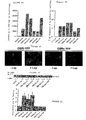
- Figures 2a and 2b illustrate the expression of OBR constructs in COS cells estimated by radiolabeling experiments using 125 I-leptin as a radioligand.
- Figures 2a and 2b the total cellular content of OBR and the percentage of cell surface binding sites are respectively measured.
- Figure 2c illustrates the cellular localization of the expression of OBR1-YFP and OBRs-YFP constructs in the presence and absence of leptin.
- Figure 2d illustrates the activation of JAK2 by different OBR constructs.
- Figure 2e illustrates the effect of leptin stimulation of cells co-expressing the reporter gene for STAT3 and different OBR constructs.
- Figure 3 illustrates constitutive dimerization of OBR.
- HEK 293 cells expressing the various OBR constructs indicated are incubated in the presence of coelenterazine. The energy transfer is measured using a luminometer.
- FIGS. 4a and 4b illustrate the effect of leptin binding on the constitutive BRET of the OBRs.
- Figure 4a HeLa cells expressing the different OBR constructs indicated are incubated in the presence of leptin before initiating the luciferase reaction. The energy transfer is measured using a luminometer.
- Figure 4b The effect of leptin is compared in whole cells co-expressing OBRs-Luc and OBR-YFP, in the absence or presence of saponin, in total lysates and in membrane preparations.
- Figures 5a to 5e illustrate the optimization and characterization of leptin-induced BRET change on OBRs.
- Membranes prepared from HeLa or COS cells coexpressing OBRs-Luc and OBRs-YFP were pre-incubated with or without leptin before initiating the luciferase reaction.
- Figure 5a Optimization of relative and absolute OBRs-Luc and OBRs-YFP expression levels.
- Figure 5b Leptin-induced BRET signal variation as a function of time.
- Figure 5c BRET dose / response curves / leptin concentration on membrane and intact cells in the presence of saponin (0.05%).
- Figure 5d Competition binding of 125 I-leptin increase with increasing concentrations of leptin.
- FIG. 5e Specificity of leptin-induced BRET changes.
- the membranes were preincubated with saturating concentrations of erythropoietin (EPO, 10U / ml), trombopoietin (TPO, 10 nM), granulocyte macrophage colony stimulating factor (GM-CSF, 250 ng / ml), interleukin 3 (IL3, 280 ng / ml), interleukin 6 (IL6, 100 ng / ml), prolactin (PRL, 200 ng / ml), stem cell factor ⁇ (SCF ⁇ , 250 ng / ml), d epidermal growth factor (EGF, 100 ng / ml), insulin (Ins, 100 nM), lipopolysaccharide (LPS, 100 ng / ml) and tumor necrosis factor ⁇ (TNF ⁇ , 50 ng / ml).
- EPO erythropoie
- FIG. 6 Co-transfected COS cells with a constant amount of OB-Rs-Luc (50ng) and an increasing amount of OB-Rs-YFP: o, 200 ng; • 400 ng; ⁇ , 800 ⁇ , 1600; 0, 3200.
- the BRET measurements were made on the cells in the presence of saponin (0.015%), incubated or not with increasing doses of leptin, and are expressed in mBRET.
- the OB-R-YFP and OB-R-Luc fusion proteins were constructed by ligating YFP and Luc to the C-terminus of the receptors by standard molecular biology techniques.
- YFP coding regions obtained from the pGFPtpz-N1 vector Cytogem®-Topaze (Packard, Meriden, CT) were inserted into the EcoRV site of pcDNA3 / CMV (Invitrogen, Groningen, Netherlands) which contains a modified polylinker site.
- the coding region of Renilla luciferase was obtained from pRL-CMV (Promega, Madison, WI) and inserted into the EcoRV site of the modified pcDNA3.
- OBR1 and OBRs were inserted into the two vectors described above, respectively in the EcoR1 / BamH1 and NheI cloning sites. Stop codons were deleted by site-directed mutagenesis and the phase of the fusion protein was adjusted.
- the HEK 293, COS-M6 and HeLa cell lines were cultured in DMEM supplemented with the following components: 10% (v / v) FBS, 4.5 g / l glucose, 100 U / ml penicillin, 0.1 mg / ml streptomycin, 1 mM glutamine (Life Technologies, Gaithersburg, MD). Transient transfections were performed using the FuGene 6 transfection reagent (Roche, Basel, Switzerland).
- the cells were incubated with 100 nM leptin for 60 min and 0.01 mM bis-benzamidine for 15 min before being washed in PBS and fixed for 20 min at room temperature in a solution. cold 4% paraformaldehyde in PBS. The sections are observed by fluorescent microscopy using FITC and DAPI filters.
- the cells were placed in ice, washed twice in PBS at ice-temperature and mechanically detached in buffer 1 (5 mM Tris, 2 mM EDTA, pH 7.4, 5 mg / l of soy trypsin, 5 mg / liter leupeptin, and 10 mg / liter benzamidine) at ice temperature.
- buffer 1 5 mM Tris, 2 mM EDTA, pH 7.4, 5 mg / l of soy trypsin, 5 mg / liter leupeptin, and 10 mg / liter benzamidine
- the cell suspensions are homogenized with a Polytron homogenizer (Janke & Kunkel Ultra-Turrax T25) three times for 5 sec.
- the lysate is centrifuged at 450 X g for 5 min at 4 ° C and the supernatant is centrifuged at 48000 X g for 30 min at 4 ° C.
- the final pellet is washed twice in buffer 1 and resuspended in a solution (75 mM Tris (pH 7.4), 12.5 mM MgCl 2 , 5 mM EDTA with protease inhibitors, as described above) and immediately used in experiments. radioactive ligand binding or BRET experiments.
- HeLa cells were co-transfected with HA2-labeled JAK2 expressing plasmids (donated by Dr. Wojchowski, Pennsylvania State University, Pennsylvania, USA) and plasmids containing different OBR constructs.
- the cells were lysed in lysis buffer (10 mM Tris, 150 mM NaCl, 5 mM EDTA, 5% glycerol, 0.02% NaN3, 0.1% NP40, 1 mM orthovanadate, 5 mg / l of soy trypsin and 10 mg / liter of benzamidine) and centrifuged for 15 min at 13000 rpm.
- the soluble fraction was immunoprecipitated for 2 h with an anti-JAK2 polyclonal antibody (HR-758) (1 ⁇ g / ml) (Santa Cruz Biotechnology, Santa Cruz, CA).
- the JAK2 immunoprecipitates were denatured in the solution (62.5 mM Tris / HCl (pH 6.8), 5% SDS, 10% glycerol and 0.05% bromophenol blue) at 100 ° C for 10 minutes.
- the proteins were separated by SDS-PAGE in 7% polyacrylamide and transferred to nitrocellulose.
- the immuno-detection was carried out with an anti-phosphotyrosine antibody 4G10 (2 ⁇ g / ml) (Upstate Biotechnology, Lake Placid, NY). Immunoreactivity was revealed using a suitable horseradish peroxidase-coupled secondary antibody and the ECL chemiluminescent reagent (Amersham, Aylesbury, UK).
- Transfected cells were serum-deficient in DMEM (1% BSA) 24 h before the binding experiments.
- DMEM 1% BSA
- binding buffer DMEM, 25 mM Hepes pH 7.4, 1% BSA
- I-leptin 1 mM Hepes pH 7.4, 1% BSA
- 200 nM non-radioactive leptin recombinant human leptin (PeproTech Inc, USA) for 4 h at 4 ° C.
- the cells were washed twice with PBS at ice-temperature, lysed in 1N NaOH and the radioactivity determined in a gamma radiation counter.In order to measure the total amount of leptin binding in the extract, the cells were in suspension in 1.5 ml of binding buffer containing 0.15% digitonin for 2 h at 4 ° C. The extracts were centrifuged for 30 min in an Eppendorf centrifuge at maximum speed at 4 ° C. The supernatant (0.2 ml) was incubated with 100000 cpm of 125 I-lep in the presence or absence of 200 nM leptin in a total volume of 0.25 ml with stirring overnight at 4 ° C.
- 0.5 ml ⁇ -globulin (1.25 mg / ml) and 0.5 ml polyethylene glycol 6000 (25% w / v) were added to precipitate the receptor-ligand complexes, which were obtained by centrifugation (17000 xg for 3 min). The pellet is washed with 1 ml of polyethylene glycol 6000 12% (w / v) and counted.
- HeLa cells were co-transfected with 2.6 ⁇ g of plasmid carrying the reporter gene STAT3 (donated by Dr. Levy, New York University, New York, USA), 200 ⁇ g of pcDNA3 comprising the coding region of Renilla luciferase (used as internal control) and with 1.4 ⁇ g of the different OBR constructions or with the vehicle alone. 48 hours after transfection, the cells were deficient overnight in DMEM (1% BSA) before stimulation with 1nM leptin for 6-8 hours. The cells were then washed and lysed in passive lysis buffer (Promega Corporation, Madison, WI) for 15 minutes at room temperature.
- passive lysis buffer Promega Corporation, Madison, WI
- the total lysates were centrifuged for 2 minutes at 15,000 rpm and the supernatants were used in a Luciferase assay (Promega Corporation, Madison, WI) using a Berthold luminometer (Lumat LB 9507). The results are expressed by the ratio of firefly luciferase / Renilla luciferase activities .
- the substrate, coelenterazine h (Molecular Probes, Eugene, OR) is added at a final concentration of 5 ⁇ M and reads with a Fluoro / Luminometer Fusion TM (Packard Instrument Company, Meriden, CT) that allows sequential integration luminescence signals detected with two filters (Luc filter: 485 ⁇ 10 nm, YFP filter: 530 ⁇ 12.5 nm).
- the BRET ratio is defined as the difference of the 530 nm / 485 nm emission of co-transfected Luc and YFP fusion proteins and the 530 nm / 485 nm emission of the Luc fusion protein alone.
- mBU milliBRET units
- EPO erythropoietin
- Ins insulin
- LPS lipopolysaccharide
- TPO recombinant human trombopoietin
- GM-CSF interleukin-3 (IL3)
- IL6 interleukin-6
- PRL prolactin
- SCF EGF
- EGF EGF
- TNF ⁇ TNF ⁇
- the cell surface expression of fusion proteins and wild-type receptors expressed in COS cells vary between 5% and 10%, which is consistent with values already described. Similar values are obtained in HEK 293 cells expressing endogenous OBRs (14 ⁇ 3%).
- the location of OBR fusion proteins in HeLa cells was investigated by fluorescence microscopy using fusion proteins with YFP. The fluorescence due to OBR1-YFP is distributed sporadically in cells whereas that due to OBRs-YFP is localized in plaques. Leptin stimulation locates OBR1-YFP in large intracellular plaques probably corresponding to the endosomal compartment. The location of OBRs-YFP does not change significantly.
- the results obtained by fluorescence microscopy confirm the predominant localization of OBR in the intracellular compartment and are consistent with the already described localization of the OBR1-GFP fusion protein in COS cells.
- the functional expression of the fusion proteins is evaluated by measuring the activation of the JAK-STAT pathway.
- JAK2 kinases are associated with the intracellular domains of OBRs and OBR1.
- Ligand binding induces transphosphorylation of JAK2 and phosphorylation of OBR1 but not of OBRs.
- Phosphorylated OBR1 then provides an attachment site for STAT proteins, which are activated by tyrosine phosphorylation after receptor binding.
- the activated STAT proteins then dimerize and are translocated to the nucleus where they stimulate gene transcription via STAT response elements as described by Tartaglia (1997, J Biol Chem 272, 6093-6096). As shown in Figure 2c, all OBR constructs induce phosphorylation of JAK2 indicating activation of JAK2. STAT3 reporter gene activity is activated by a factor 2-4 by OBRI-wt and OBR1 fusion proteins while short isoforms have no effect on reporter gene activity. These results indicate that OBR fusion proteins are functionally expressed in HeLa cells.
- OBR-Luc and OBR-YFP The dimerization of OBR-Luc and OBR-YFP has been studied in living cells. Significant energy transfers were observed between OBRs-Luc and OBRs-YFP as well as between OBRI-Luc and OBRI-YFP, expressed in equimolar amounts, indicating that constitutive homo-dimers exist for both receptors ( Fig. 3 a, b). The existence of OBRs / OBR1 heterodimers in living cells is demonstrated by the detection of BRET between OBRs-Luc and OBR1-YFP as well as between OBRI-Luc and OBRs-YFP.
- the cells were pre-incubated with leptin before initiating the reaction of luciferase with its substrate. No changes in the constitutive BRET are observed with the OBR1 homodimers and the two OBRs / OBR1 hetero dimeric combinations while the
- BRET is increased with homo dimers OBRs (Fig. 4 a).
- BRET changes of leptin-induced OBR homo dimers were then measured in different cell preparations. Mechanical disruption of the cells in a hypotonic buffer significantly improves leptin BRET increase while basal BRET remains unchanged. Similar results were obtained with the membrane fraction after cytosol separation. While all OBRs-Luc / OBRs-YFP couples contribute to basal BRET, only receptors exposed to the cell surface (5-10%) can be stimulated by leptin that is membrane impermeable in intact cells. The disruption of cell membranes increases the leptin-accessible OBR fraction that is responsible for the leptin-induced increase in BRET.
- a saturated concentration of leptin induces a 2-2.5 fold increase in the basal BRET signal in cells incubated with saponin or membranes prepared from cells expressing OBRs homodimers. This increase is a function of time. Peak values are reached after 20 minutes of incubation with 1nM leptin at room temperature (Fig. 5b). For higher concentrations of leptin, the maximum values are obtained after 5 minutes of incubation at room temperature.
- the effect of leptin is dose-dependent with an EC50 of about 100 ⁇ M (Fig. 5c), which is in agreement with the Ki values obtained with the OBRs-Luc fusion proteins (116 ⁇ M) and OBRsYFP ( 35 ⁇ M) (FIG. 5 d).
- the specificity of the test is demonstrated by the absence of ligand-induced BRET by a saturating concentration of several cytokines and other membrane receptor ligands such as erythropoietin, trombopoietin, GM-CSF, IL3 IL6, PRL, SCF ⁇ , EGF, insulin, LPS and TNF ⁇ .
- the distribution of receptors in dimers follows statistical laws, and at a ratio 1/1 in number of receptors the following distribution is expected if all the receptors are in dimeric form: 1/4 Luc / Luc, 1/4 YFP / YFP and 1/2 receivers capable of generating a BRET signal (1/4 Luc / YFP, 1/4 YFP / Luc).
Landscapes
- Health & Medical Sciences (AREA)
- Life Sciences & Earth Sciences (AREA)
- Chemical & Material Sciences (AREA)
- Engineering & Computer Science (AREA)
- Molecular Biology (AREA)
- Organic Chemistry (AREA)
- General Health & Medical Sciences (AREA)
- Medicinal Chemistry (AREA)
- Immunology (AREA)
- Biomedical Technology (AREA)
- Biochemistry (AREA)
- Hematology (AREA)
- Genetics & Genomics (AREA)
- Urology & Nephrology (AREA)
- Cell Biology (AREA)
- Bioinformatics & Cheminformatics (AREA)
- Microbiology (AREA)
- Biotechnology (AREA)
- Proteomics, Peptides & Aminoacids (AREA)
- Animal Behavior & Ethology (AREA)
- Pharmacology & Pharmacy (AREA)
- Biophysics (AREA)
- Physics & Mathematics (AREA)
- Zoology (AREA)
- Veterinary Medicine (AREA)
- Public Health (AREA)
- Pathology (AREA)
- Nuclear Medicine, Radiotherapy & Molecular Imaging (AREA)
- General Chemical & Material Sciences (AREA)
- Chemical Kinetics & Catalysis (AREA)
- Food Science & Technology (AREA)
- Analytical Chemistry (AREA)
- General Physics & Mathematics (AREA)
- Gastroenterology & Hepatology (AREA)
- Toxicology (AREA)
- Physical Education & Sports Medicine (AREA)
- Cardiology (AREA)
- Wood Science & Technology (AREA)
- General Engineering & Computer Science (AREA)
- Endocrinology (AREA)
Claims (17)
- Verfahren zur Ermittlung der Bindung von Verbindungen an den Leptinrezeptor, das die Schritte umfasst, die daraus bestehen:a) besagte Verbindungen in Kontakt zu bringen mit einem Fusionsprotein, das aus einem Leptinrezeptor, der eine kurze intrazelluläre Domäne aufweist, oder aus einer löslichen Form eines solchen Rezeptors, die die Stelle der Bindung an das Leptin enthält, und aus einem Energiedonor-Protein zusammengesetzt ist, und einem Fusionsprotein, das aus einem Leptinrezeptor, der eine kurze intrazelluläre Domäne aufweist, oder aus einer löslichen Form eines solchen Rezeptors, die die Stelle der Bindung an das Leptin enthält, und aus einem Energieakzeptor-Protein zusammengesetzt ist, oder besagte Verbindungen mit Zellen oder Fragmenten oder Lysaten oder Zellmembranen, die solche Fusionsproteine umfassen, und gegebenenfalls einem geeigneten Enzymsubstrat in Kontakt zu bringen undb) den Energietransfer zu messen.
- Verfahren gemäß Anspruch 1, dadurch gekennzeichnet, dass der in Gegenwart der zu untersuchenden Verbindung gemessene Energietransfer mit dem in Abwesenheit der zu untersuchenden Verbindung gemessenen verglichen wird.
- Verfahren zum Screening oder zum Nachweis von Verbindungen, die für die Prophylaxe und/oder die Behandlung von Erkrankungen bestimmt sind, das die Schritte umfasst, die daraus bestehen:a) besagte Verbindungen in Kontakt zu bringen mit einem Fusionsprotein, das aus einem Leptinrezeptor, der eine kurze intrazelluläre Domäne aufweist, oder aus einer löslichen Form eines solchen Rezeptors, die die Stelle der Bindung an das Leptin enthält, und aus einem Energiedonor-Protein zusammengesetzt ist, und einem Fusionsprotein, das aus einem Leptinrezeptor, der eine kurze intrazelluläre Domäne aufweist, oder aus einer löslichen Form eines solchen Rezeptors, die die Stelle der Bindung an das Leptin enthält, und aus einem Energieakzeptor-Protein zusammengesetzt ist, oder mit Zellen oder Fragmenten oder Lysaten oder Zellmembranen, die solche Proteine umfassen, und gegebenenfalls einem geeigneten Enzymsubstrat undb) den Energietransfer zu messen.
- Verfahren zum Screening von Agonisten oder Antagonisten des Leptinrezeptors, das die Schritte umfasst, die daraus bestehen:a) die möglichen Agonisten oder Antagonisten in Kontakt zu bringen mit einem Fusionsprotein, das aus einem Leptinrezeptor, der eine kurze intrazelluläre Domäne aufweist, oder aus einer löslichen Form eines solchen Rezeptors, die die Stelle der Bindung an das Leptin enthält, und aus einem Energiedonor-Protein zusammengesetzt ist, und einem Fusionsprotein, das aus einem Leptinrezeptor, der eine kurze intrazelluläre Domäne aufweist, oder aus einer löslichen Form eines solchen Rezeptors, die die Stelle der Bindung an das Leptin enthält, und aus einem Energieakzeptor-Protein zusammengesetzt ist, oder besagte Verbindungen mit Zellen oder Fragmenten oder Lysaten oder Zellmembranen, die solche Fusionsproteine umfassen, und gegebenenfalls einem geeigneten Enzymsubstrat in Kontakt zu bringen undb) den Energietransfer zu messen.
- Verfahren gemäß einem der Ansprüche 1 bis 4, dadurch gekennzeichnet, dass der Leptinrezeptor eine kurze Isoform ist.
- Verfahren gemäß einem der Ansprüche 1 bis 5, dadurch gekennzeichnet, dass der Leptinrezeptor eine Isoform ist, die eine intrazelluläre Domäne Box 1 umfasst, aber keine intrazelluläre Domäne Box 3 umfasst.
- Verfahren gemäß einem der Ansprüche 1 bis 6, dadurch gekennzeichnet, dass der Leptinrezeptor die Isoform OBRs ist.
- Verfahren gemäß einem der Ansprüche 1 bis 4, dadurch gekennzeichnet, dass der Leptinrezeptor die humane Isoform OBRs mit der Sequenz SEQ ID NO: 2 oder eine Variante dieses Rezeptors ist, die zu wenigstens 65 % mit der Sequenz SEQ ID NO: 2 identisch ist.
- Verfahren gemäß einem der Ansprüche 1 bis 4, dadurch gekennzeichnet, dass die Sequenz des Leptinrezeptors die Sequenz der Aminosäuren 48 bis 866 der humanen Isoform OBRs mit der Sequenz SEQ ID NO: 2 oder eine Variante dieser Sequenz ist, die zu wenigstens 65 % identisch ist.
- Verfahren gemäß einem der Ansprüche 1 bis 4, dadurch gekennzeichnet, dass der Leptinrezeptor die Sequenz SEQ ID NO: 4 oder eine Variante dieser Sequenz, die zu wenigstens 65 % identisch ist, aufweist.
- Verfahren gemäß einem der Ansprüche 1 bis 10, dadurch gekennzeichnet, dass das Energiedonor-Fusionsprotein ein Fusionsprotein zwischen dem Leptinrezeptor und Luziferase ist.
- Verfahren gemäß einem der Ansprüche 1 bis 11, dadurch gekennzeichnet, dass das Energieakzeptor-Fusionsprotein ein Fusionsprotein zwischen dem Leptinrezeptor und GFP oder einer Mutante dieses Proteins oder DsRed ist.
- Verfahren gemäß Anspruch 12, dadurch gekennzeichnet, dass die Mutante des GFP YFP, EYFP, GFPS65T oder Topaz ist.
- Verfahren gemäß einem der Ansprüche 1 bis 10, dadurch gekennzeichnet, dass das Energiedonor-Fusionsprotein die Sequenz SEQ ID NO: 6 oder eine Variante dieser Sequenz, die zu wenigstens 65 % identisch ist, aufweist.
- Verfahren gemäß einem der Ansprüche 1 bis 10, dadurch gekennzeichnet, dass das Energieakzeptor-Fusionsprotein die Sequenz SEQ ID NO: 8 oder eine Variante dieser Sequenz, die zu wenigstens 65 % identisch ist, aufweist.
- Verfahren gemäß einem der Ansprüche 1 bis 15, dadurch gekennzeichnet, dass es mit Zellen, die mit Saponin behandelt sind, durchgeführt wird.
- Verfahren gemäß einem der Ansprüche 1 bis 16, dadurch gekennzeichnet, dass das Substrat Coelenterazin ist.
Applications Claiming Priority (3)
| Application Number | Priority Date | Filing Date | Title |
|---|---|---|---|
| FR0202431A FR2836475B1 (fr) | 2002-02-26 | 2002-02-26 | Procede de detection de ligands du recepteur de la leptine |
| FR0202431 | 2002-02-26 | ||
| PCT/FR2003/000610 WO2003072787A2 (fr) | 2002-02-26 | 2003-02-25 | Procede de detection de ligands du recepteur de la leptine |
Publications (2)
| Publication Number | Publication Date |
|---|---|
| EP1481065A2 EP1481065A2 (de) | 2004-12-01 |
| EP1481065B1 true EP1481065B1 (de) | 2006-07-26 |
Family
ID=27676092
Family Applications (1)
| Application Number | Title | Priority Date | Filing Date |
|---|---|---|---|
| EP03720645A Expired - Lifetime EP1481065B1 (de) | 2002-02-26 | 2003-02-25 | Verfahren zum nachweis von liganden des leptinrezeptors |
Country Status (19)
| Country | Link |
|---|---|
| US (2) | US7211399B2 (de) |
| EP (1) | EP1481065B1 (de) |
| JP (1) | JP4463562B2 (de) |
| KR (1) | KR101053425B1 (de) |
| CN (1) | CN100523198C (de) |
| AT (1) | ATE334210T1 (de) |
| AU (1) | AU2003224223B2 (de) |
| BR (1) | BR0307956A (de) |
| CA (1) | CA2476846C (de) |
| DE (1) | DE60307061T2 (de) |
| ES (1) | ES2270011T3 (de) |
| FR (1) | FR2836475B1 (de) |
| IL (1) | IL163682A0 (de) |
| MX (1) | MXPA04006491A (de) |
| NO (1) | NO20043503L (de) |
| NZ (1) | NZ535562A (de) |
| RU (1) | RU2373534C2 (de) |
| WO (1) | WO2003072787A2 (de) |
| ZA (1) | ZA200406134B (de) |
Families Citing this family (11)
| Publication number | Priority date | Publication date | Assignee | Title |
|---|---|---|---|---|
| FR2850971B1 (fr) * | 2003-02-10 | 2006-08-11 | Aventis Pharma Sa | Oligonucleotide antisens inhibant l'expression de la proteine ob-rgrp et procede de detection de composes modifiant l'interaction entre la famille de la proteine ob-rgrp et le recepteur de la leptine |
| JP2010510175A (ja) * | 2006-11-10 | 2010-04-02 | ディメリックス・バイオサイエンス・ピーティーワイ・リミテッド | 甲状腺刺激ホルモン放出ホルモン受容体−オレキシン受容体のヘテロダイマー/オリゴマー |
| KR101834574B1 (ko) * | 2009-01-29 | 2018-03-05 | 커먼웰쓰 사이언티픽 앤드 인더스트리얼 리서치 오가니제이션 | G 단백질 커플링 수용체 활성화 측정 |
| EP2687847B1 (de) | 2011-03-16 | 2019-03-06 | Tohoku University | Sonde zum analysieren biologischer gewebe und verfahren zu ihrer anwendung |
| RU2517161C2 (ru) * | 2012-04-02 | 2014-05-27 | Максим Петрович Никитин | Способ определения содержания лиганда в образце (варианты) |
| US8877434B2 (en) * | 2012-04-19 | 2014-11-04 | Hsinyu Lee | Method and system of detecting dioxin-like compounds |
| CN102890155B (zh) * | 2012-09-12 | 2015-04-29 | 暨南大学 | 基于能量共振转移的荧光试纸条及制备方法与应用 |
| US20170051062A1 (en) * | 2014-02-18 | 2017-02-23 | Inserm (Institut National De La Sante Et De La Recherche Medicale) | Methods and Pharmaceutical Compositions for the Treatment of Diseases Mediated by the NRP-1/OBR Complex Signaling Pathway |
| CN104360086B (zh) * | 2014-12-05 | 2016-06-15 | 重庆中元生物技术有限公司 | 一种可溶性瘦素受体的胶乳增强免疫比浊检测试剂盒 |
| EP4036222A4 (de) * | 2019-09-26 | 2023-10-25 | Oricell Therapeutics Co., Ltd. | Modifizierte immunzelle und verwendung davon |
| KR102533483B1 (ko) | 2021-03-30 | 2023-05-17 | 계명대학교 산학협력단 | 샌드위치 효소면역측정법 기반 렙틴 바이오센서 및 이를 이용한 렙틴 검출방법 |
Family Cites Families (8)
| Publication number | Priority date | Publication date | Assignee | Title |
|---|---|---|---|---|
| NZ214563A (en) | 1984-12-31 | 1991-05-28 | Univ Georgia | Production of apoaeqorin using recombinant dna |
| US6355237B1 (en) * | 1994-09-14 | 2002-03-12 | Progenitor, Inc. | Methods for using the obese gene and its gene product to stimulate hematopoietic development |
| US5643748A (en) * | 1994-09-14 | 1997-07-01 | Progenitor, Inc. | HU-B1.219, a novel human hematopoietin receptor |
| US5949948A (en) * | 1995-11-20 | 1999-09-07 | Imedia Corporation | Method and apparatus for implementing playback features for compressed video data |
| US6482927B1 (en) * | 1995-11-27 | 2002-11-19 | Millennium Pharmaceuticals, Inc. | Chimeric proteins comprising the extracellular domain of murine Ob receptor |
| DE69734096T2 (de) * | 1996-01-04 | 2006-06-29 | Amgen Inc., Thousand Oaks | Rezeptor des ob-proteins und verwandte zusammensetzungen und verfahren |
| CA2335305C (en) * | 1998-06-16 | 2006-05-23 | Biosignal Packard Inc. | A bioluminescence resonance energy transfer (bret) system and its use |
| US6864359B1 (en) * | 1999-02-11 | 2005-03-08 | Xencor | Structure-based screening techniques for drug discovery |
-
2002
- 2002-02-26 FR FR0202431A patent/FR2836475B1/fr not_active Expired - Fee Related
-
2003
- 2003-02-25 ES ES03720645T patent/ES2270011T3/es not_active Expired - Lifetime
- 2003-02-25 DE DE60307061T patent/DE60307061T2/de not_active Expired - Lifetime
- 2003-02-25 JP JP2003571468A patent/JP4463562B2/ja not_active Expired - Fee Related
- 2003-02-25 MX MXPA04006491A patent/MXPA04006491A/es active IP Right Grant
- 2003-02-25 CN CNB038044560A patent/CN100523198C/zh not_active Expired - Fee Related
- 2003-02-25 KR KR1020047013379A patent/KR101053425B1/ko not_active Expired - Fee Related
- 2003-02-25 CA CA2476846A patent/CA2476846C/fr not_active Expired - Fee Related
- 2003-02-25 NZ NZ535562A patent/NZ535562A/en not_active IP Right Cessation
- 2003-02-25 US US10/373,624 patent/US7211399B2/en not_active Expired - Fee Related
- 2003-02-25 RU RU2004128457/13A patent/RU2373534C2/ru not_active IP Right Cessation
- 2003-02-25 AU AU2003224223A patent/AU2003224223B2/en not_active Ceased
- 2003-02-25 IL IL16368203A patent/IL163682A0/xx not_active IP Right Cessation
- 2003-02-25 AT AT03720645T patent/ATE334210T1/de not_active IP Right Cessation
- 2003-02-25 EP EP03720645A patent/EP1481065B1/de not_active Expired - Lifetime
- 2003-02-25 WO PCT/FR2003/000610 patent/WO2003072787A2/fr not_active Ceased
- 2003-02-25 BR BR0307956-2A patent/BR0307956A/pt not_active Application Discontinuation
-
2004
- 2004-07-30 ZA ZA2004/06134A patent/ZA200406134B/en unknown
- 2004-08-23 NO NO20043503A patent/NO20043503L/no not_active Application Discontinuation
-
2007
- 2007-04-09 US US11/697,907 patent/US7618818B2/en not_active Expired - Fee Related
Non-Patent Citations (1)
| Title |
|---|
| COUTURIER C.; JOCKERS R., J.BIOL.CHEM., vol. 278, no. 29, 18 July 2003 (2003-07-18), pages 26604 - 26611 * |
Also Published As
| Publication number | Publication date |
|---|---|
| CA2476846C (fr) | 2013-04-16 |
| RU2373534C2 (ru) | 2009-11-20 |
| FR2836475B1 (fr) | 2007-02-23 |
| HK1075274A1 (zh) | 2005-12-09 |
| MXPA04006491A (es) | 2005-03-31 |
| JP2005525111A (ja) | 2005-08-25 |
| AU2003224223B2 (en) | 2008-12-04 |
| FR2836475A1 (fr) | 2003-08-29 |
| ATE334210T1 (de) | 2006-08-15 |
| ES2270011T3 (es) | 2007-04-01 |
| EP1481065A2 (de) | 2004-12-01 |
| NZ535562A (en) | 2008-04-30 |
| US7618818B2 (en) | 2009-11-17 |
| ZA200406134B (en) | 2005-10-26 |
| KR20040096620A (ko) | 2004-11-16 |
| BR0307956A (pt) | 2004-12-21 |
| US7211399B2 (en) | 2007-05-01 |
| IL163682A0 (en) | 2005-12-18 |
| NO20043503L (no) | 2004-08-23 |
| US20070178560A1 (en) | 2007-08-02 |
| AU2003224223A1 (en) | 2003-09-09 |
| RU2004128457A (ru) | 2005-04-10 |
| JP4463562B2 (ja) | 2010-05-19 |
| WO2003072787A2 (fr) | 2003-09-04 |
| CA2476846A1 (fr) | 2003-09-04 |
| KR101053425B1 (ko) | 2011-08-03 |
| US20040132093A1 (en) | 2004-07-08 |
| DE60307061T2 (de) | 2007-04-26 |
| DE60307061D1 (de) | 2006-09-07 |
| WO2003072787A3 (fr) | 2004-03-04 |
| CN1639343A (zh) | 2005-07-13 |
| CN100523198C (zh) | 2009-08-05 |
Similar Documents
| Publication | Publication Date | Title |
|---|---|---|
| US7618818B2 (en) | Method for detecting leptin receptor ligands | |
| Couturier et al. | Activation of the leptin receptor by a ligand-induced conformational change of constitutive receptor dimers | |
| JP5296986B2 (ja) | インビトロ及びインビボでのcAMPの決定のための手段及び方法 | |
| KR20210117271A (ko) | 근막 손상 예방 및 치료를 위한 아넥신의 사용근각 손상 예방 및 치료를 위한 아넥신의 사용 | |
| CA2793794C (fr) | Outils pour l'identification de ligands de lingo-1, lingo-2, lingo-3 et lingo-4, et utilisations | |
| Inoue et al. | Lack of p11 expression facilitates acidity‐sensing function of TASK1 channels in mouse adrenal medullary cells | |
| EP1594964B1 (de) | Oligonukleotide, welche die expression des ob-rgrp proteins inhibieren, und verfahren zur detektion von verbindungen, welche die wechselwirkung zwischen proteinen aus der ob-rgrp familie und dem leptin-rezeptor modifizieren | |
| Perhal | Elucidation of Signal Transduction Mechanisms with Pathological Relevance for Cardiovascular Diseases in-vitro and in-vivo | |
| HK1075274B (en) | Method for detection of leptin receptor ligands | |
| EP1493035B1 (de) | VERFAHREN ZUR AUSWAHL VON BIOLOGISCH AKTIVEN MITTELN DURCH NACHWEIS EINER KONZENTRATIONSÄNDERUNG VON cAMP IN EINER LEBENDEN EMPFINDLICHEN ZELLE | |
| WO2002083936A2 (fr) | Procede de criblage d'inhibiteurs de l'oxyde nitrique synthase neuronale | |
| WO2000055634A1 (fr) | Grb14 et le recepteur de l'insuline ainsi que criblage de nouveaux medicaments | |
| Jabr et al. | WC1E 6JF UK Phone: 44 (0) 207 679 6180 Fax: 44 (0) 207 679 6250 e-mail: l. clapp@ ucl. ac. uk | |
| EP3322821A1 (de) | Pathologieprognoseverfahren |
Legal Events
| Date | Code | Title | Description |
|---|---|---|---|
| PUAI | Public reference made under article 153(3) epc to a published international application that has entered the european phase |
Free format text: ORIGINAL CODE: 0009012 |
|
| 17P | Request for examination filed |
Effective date: 20040927 |
|
| AK | Designated contracting states |
Kind code of ref document: A2 Designated state(s): AT BE BG CH CY CZ DE DK EE ES FI FR GB GR HU IE IT LI LU MC NL PT SE SI SK TR |
|
| AX | Request for extension of the european patent |
Extension state: AL LT LV MK RO |
|
| 17Q | First examination report despatched |
Effective date: 20050217 |
|
| GRAP | Despatch of communication of intention to grant a patent |
Free format text: ORIGINAL CODE: EPIDOSNIGR1 |
|
| GRAS | Grant fee paid |
Free format text: ORIGINAL CODE: EPIDOSNIGR3 |
|
| GRAA | (expected) grant |
Free format text: ORIGINAL CODE: 0009210 |
|
| AK | Designated contracting states |
Kind code of ref document: B1 Designated state(s): AT BE BG CH CY CZ DE DK EE ES FI FR GB GR HU IE IT LI LU MC NL PT SE SI SK TR |
|
| PG25 | Lapsed in a contracting state [announced via postgrant information from national office to epo] |
Ref country code: IT Free format text: LAPSE BECAUSE OF FAILURE TO SUBMIT A TRANSLATION OF THE DESCRIPTION OR TO PAY THE FEE WITHIN THE PRESCRIBED TIME-LIMIT;WARNING: LAPSES OF ITALIAN PATENTS WITH EFFECTIVE DATE BEFORE 2007 MAY HAVE OCCURRED AT ANY TIME BEFORE 2007. THE CORRECT EFFECTIVE DATE MAY BE DIFFERENT FROM THE ONE RECORDED. Effective date: 20060726 Ref country code: FI Free format text: LAPSE BECAUSE OF FAILURE TO SUBMIT A TRANSLATION OF THE DESCRIPTION OR TO PAY THE FEE WITHIN THE PRESCRIBED TIME-LIMIT Effective date: 20060726 Ref country code: AT Free format text: LAPSE BECAUSE OF FAILURE TO SUBMIT A TRANSLATION OF THE DESCRIPTION OR TO PAY THE FEE WITHIN THE PRESCRIBED TIME-LIMIT Effective date: 20060726 Ref country code: SI Free format text: LAPSE BECAUSE OF FAILURE TO SUBMIT A TRANSLATION OF THE DESCRIPTION OR TO PAY THE FEE WITHIN THE PRESCRIBED TIME-LIMIT Effective date: 20060726 Ref country code: NL Free format text: LAPSE BECAUSE OF FAILURE TO SUBMIT A TRANSLATION OF THE DESCRIPTION OR TO PAY THE FEE WITHIN THE PRESCRIBED TIME-LIMIT Effective date: 20060726 Ref country code: CZ Free format text: LAPSE BECAUSE OF FAILURE TO SUBMIT A TRANSLATION OF THE DESCRIPTION OR TO PAY THE FEE WITHIN THE PRESCRIBED TIME-LIMIT Effective date: 20060726 Ref country code: IE Free format text: LAPSE BECAUSE OF FAILURE TO SUBMIT A TRANSLATION OF THE DESCRIPTION OR TO PAY THE FEE WITHIN THE PRESCRIBED TIME-LIMIT Effective date: 20060726 Ref country code: SK Free format text: LAPSE BECAUSE OF FAILURE TO SUBMIT A TRANSLATION OF THE DESCRIPTION OR TO PAY THE FEE WITHIN THE PRESCRIBED TIME-LIMIT Effective date: 20060726 |
|
| REG | Reference to a national code |
Ref country code: GB Ref legal event code: FG4D Free format text: NOT ENGLISH |
|
| REG | Reference to a national code |
Ref country code: CH Ref legal event code: EP |
|
| REG | Reference to a national code |
Ref country code: IE Ref legal event code: FG4D Free format text: LANGUAGE OF EP DOCUMENT: FRENCH |
|
| REF | Corresponds to: |
Ref document number: 60307061 Country of ref document: DE Date of ref document: 20060907 Kind code of ref document: P |
|
| PG25 | Lapsed in a contracting state [announced via postgrant information from national office to epo] |
Ref country code: DK Free format text: LAPSE BECAUSE OF FAILURE TO SUBMIT A TRANSLATION OF THE DESCRIPTION OR TO PAY THE FEE WITHIN THE PRESCRIBED TIME-LIMIT Effective date: 20061026 Ref country code: SE Free format text: LAPSE BECAUSE OF FAILURE TO SUBMIT A TRANSLATION OF THE DESCRIPTION OR TO PAY THE FEE WITHIN THE PRESCRIBED TIME-LIMIT Effective date: 20061026 Ref country code: BG Free format text: LAPSE BECAUSE OF FAILURE TO SUBMIT A TRANSLATION OF THE DESCRIPTION OR TO PAY THE FEE WITHIN THE PRESCRIBED TIME-LIMIT Effective date: 20061026 |
|
| GBT | Gb: translation of ep patent filed (gb section 77(6)(a)/1977) |
Effective date: 20061030 |
|
| PG25 | Lapsed in a contracting state [announced via postgrant information from national office to epo] |
Ref country code: PT Free format text: LAPSE BECAUSE OF FAILURE TO SUBMIT A TRANSLATION OF THE DESCRIPTION OR TO PAY THE FEE WITHIN THE PRESCRIBED TIME-LIMIT Effective date: 20061226 |
|
| NLV1 | Nl: lapsed or annulled due to failure to fulfill the requirements of art. 29p and 29m of the patents act | ||
| REG | Reference to a national code |
Ref country code: IE Ref legal event code: FD4D |
|
| PG25 | Lapsed in a contracting state [announced via postgrant information from national office to epo] |
Ref country code: MC Free format text: LAPSE BECAUSE OF NON-PAYMENT OF DUE FEES Effective date: 20070228 |
|
| REG | Reference to a national code |
Ref country code: ES Ref legal event code: FG2A Ref document number: 2270011 Country of ref document: ES Kind code of ref document: T3 |
|
| PLBE | No opposition filed within time limit |
Free format text: ORIGINAL CODE: 0009261 |
|
| STAA | Information on the status of an ep patent application or granted ep patent |
Free format text: STATUS: NO OPPOSITION FILED WITHIN TIME LIMIT |
|
| 26N | No opposition filed |
Effective date: 20070427 |
|
| BERE | Be: lapsed |
Owner name: INSTITUT NATIONAL DE LA SANTE ET DE LA RECHERCHE Effective date: 20070228 Owner name: AVENTIS PHARMA S.A. Effective date: 20070228 Owner name: CENTRE NATIONAL DE LA RECHERCHE SCIENTIFIQUE (CNR Effective date: 20070228 |
|
| PG25 | Lapsed in a contracting state [announced via postgrant information from national office to epo] |
Ref country code: BE Free format text: LAPSE BECAUSE OF NON-PAYMENT OF DUE FEES Effective date: 20070228 |
|
| PG25 | Lapsed in a contracting state [announced via postgrant information from national office to epo] |
Ref country code: GR Free format text: LAPSE BECAUSE OF FAILURE TO SUBMIT A TRANSLATION OF THE DESCRIPTION OR TO PAY THE FEE WITHIN THE PRESCRIBED TIME-LIMIT Effective date: 20061027 |
|
| PG25 | Lapsed in a contracting state [announced via postgrant information from national office to epo] |
Ref country code: EE Free format text: LAPSE BECAUSE OF FAILURE TO SUBMIT A TRANSLATION OF THE DESCRIPTION OR TO PAY THE FEE WITHIN THE PRESCRIBED TIME-LIMIT Effective date: 20060726 |
|
| PG25 | Lapsed in a contracting state [announced via postgrant information from national office to epo] |
Ref country code: CY Free format text: LAPSE BECAUSE OF FAILURE TO SUBMIT A TRANSLATION OF THE DESCRIPTION OR TO PAY THE FEE WITHIN THE PRESCRIBED TIME-LIMIT Effective date: 20060726 Ref country code: LU Free format text: LAPSE BECAUSE OF NON-PAYMENT OF DUE FEES Effective date: 20070225 |
|
| PG25 | Lapsed in a contracting state [announced via postgrant information from national office to epo] |
Ref country code: TR Free format text: LAPSE BECAUSE OF FAILURE TO SUBMIT A TRANSLATION OF THE DESCRIPTION OR TO PAY THE FEE WITHIN THE PRESCRIBED TIME-LIMIT Effective date: 20060726 Ref country code: HU Free format text: LAPSE BECAUSE OF FAILURE TO SUBMIT A TRANSLATION OF THE DESCRIPTION OR TO PAY THE FEE WITHIN THE PRESCRIBED TIME-LIMIT Effective date: 20070127 |
|
| REG | Reference to a national code |
Ref country code: FR Ref legal event code: PLFP Year of fee payment: 13 |
|
| PGFP | Annual fee paid to national office [announced via postgrant information from national office to epo] |
Ref country code: DE Payment date: 20150218 Year of fee payment: 13 Ref country code: IT Payment date: 20150217 Year of fee payment: 13 Ref country code: CH Payment date: 20150213 Year of fee payment: 13 Ref country code: ES Payment date: 20150113 Year of fee payment: 13 |
|
| PGFP | Annual fee paid to national office [announced via postgrant information from national office to epo] |
Ref country code: GB Payment date: 20150225 Year of fee payment: 13 Ref country code: FR Payment date: 20150210 Year of fee payment: 13 |
|
| REG | Reference to a national code |
Ref country code: DE Ref legal event code: R119 Ref document number: 60307061 Country of ref document: DE |
|
| REG | Reference to a national code |
Ref country code: CH Ref legal event code: PL |
|
| GBPC | Gb: european patent ceased through non-payment of renewal fee |
Effective date: 20160225 |
|
| PG25 | Lapsed in a contracting state [announced via postgrant information from national office to epo] |
Ref country code: CH Free format text: LAPSE BECAUSE OF NON-PAYMENT OF DUE FEES Effective date: 20160229 Ref country code: LI Free format text: LAPSE BECAUSE OF NON-PAYMENT OF DUE FEES Effective date: 20160229 |
|
| REG | Reference to a national code |
Ref country code: FR Ref legal event code: ST Effective date: 20161028 |
|
| PG25 | Lapsed in a contracting state [announced via postgrant information from national office to epo] |
Ref country code: IT Free format text: LAPSE BECAUSE OF NON-PAYMENT OF DUE FEES Effective date: 20160225 |
|
| PG25 | Lapsed in a contracting state [announced via postgrant information from national office to epo] |
Ref country code: FR Free format text: LAPSE BECAUSE OF NON-PAYMENT OF DUE FEES Effective date: 20160229 Ref country code: GB Free format text: LAPSE BECAUSE OF NON-PAYMENT OF DUE FEES Effective date: 20160225 Ref country code: DE Free format text: LAPSE BECAUSE OF FAILURE TO SUBMIT A TRANSLATION OF THE DESCRIPTION OR TO PAY THE FEE WITHIN THE PRESCRIBED TIME-LIMIT Effective date: 20160901 |
|
| PG25 | Lapsed in a contracting state [announced via postgrant information from national office to epo] |
Ref country code: ES Free format text: LAPSE BECAUSE OF NON-PAYMENT OF DUE FEES Effective date: 20160226 |