EP1475435A1 - Kristallstruktur einer Prohormon/Proprotein-Proteinase und ihre Verwendung - Google Patents
Kristallstruktur einer Prohormon/Proprotein-Proteinase und ihre Verwendung Download PDFInfo
- Publication number
- EP1475435A1 EP1475435A1 EP04010704A EP04010704A EP1475435A1 EP 1475435 A1 EP1475435 A1 EP 1475435A1 EP 04010704 A EP04010704 A EP 04010704A EP 04010704 A EP04010704 A EP 04010704A EP 1475435 A1 EP1475435 A1 EP 1475435A1
- Authority
- EP
- European Patent Office
- Prior art keywords
- polypeptide
- compound
- protein
- family
- furin
- Prior art date
- Legal status (The legal status is an assumption and is not a legal conclusion. Google has not performed a legal analysis and makes no representation as to the accuracy of the status listed.)
- Withdrawn
Links
Images






















































































































































Classifications
-
- C—CHEMISTRY; METALLURGY
- C12—BIOCHEMISTRY; BEER; SPIRITS; WINE; VINEGAR; MICROBIOLOGY; ENZYMOLOGY; MUTATION OR GENETIC ENGINEERING
- C12N—MICROORGANISMS OR ENZYMES; COMPOSITIONS THEREOF; PROPAGATING, PRESERVING, OR MAINTAINING MICROORGANISMS; MUTATION OR GENETIC ENGINEERING; CULTURE MEDIA
- C12N9/00—Enzymes; Proenzymes; Compositions thereof; Processes for preparing, activating, inhibiting, separating or purifying enzymes
- C12N9/14—Hydrolases (3)
- C12N9/48—Hydrolases (3) acting on peptide bonds (3.4)
- C12N9/50—Proteinases, e.g. Endopeptidases (3.4.21-3.4.25)
- C12N9/64—Proteinases, e.g. Endopeptidases (3.4.21-3.4.25) derived from animal tissue
- C12N9/6421—Proteinases, e.g. Endopeptidases (3.4.21-3.4.25) derived from animal tissue from mammals
- C12N9/6424—Serine endopeptidases (3.4.21)
- C12N9/6454—Dibasic site splicing serine proteases, e.g. kexin (3.4.21.61); furin (3.4.21.75) and other proprotein convertases
-
- C—CHEMISTRY; METALLURGY
- C07—ORGANIC CHEMISTRY
- C07K—PEPTIDES
- C07K2299/00—Coordinates from 3D structures of peptides, e.g. proteins or enzymes
Definitions
- the present invention relates to spatial forms of a polypeptide Prohormone / Proprotein proteinase, method for structural clarification of such Polypeptides, storage media containing structural coordinates of such a polypeptide; Crystals with such spatial shapes, process for producing such crystals, Connections with the ability to be highly affine to those given by such spatial forms To bind structural areas, uses of such connections to produce a Medicinal product and for medicinal products for certain medical indications, methods for Determination of such connections and uses of the above methods available connections.
- PCs calcium-dependent endoproteinases
- the endoproteinase furin (EC3.4.21.75, MEROPS clan SB, family S8), which is also called SPC1 / PACE.
- SPC1 / PACE The endoproteinase furin
- the Role of an effective auto inhibitor is an effective auto inhibitor.
- furin numerous membrane-bound and soluble precursors of growth factors, receptors, Plasmoproteins, secretases and extracellular matrix proteinases. Furin is also used for Activation of numerous bacterial toxin precursom required, as well as for that Processing of viral surface glycoproteins ("envelope glycoproteins"), such as Example HIV-1 gp160 or the "Avian Influenza Virus Hemagglutinin". In addition to the Membrane-bound forms of furin also occur naturally shortened “shed” furin forms and have been proven to be functionally active.
- envelope glycoproteins such as Example HIV-1 gp160 or the "Avian Influenza Virus Hemagglutinin
- prohormone / proprotein convertases require a representation of the entire to determine the three-dimensional structure of this protein family.
- Such one Protein structure also allows understanding of the medically relevant effects of the To obtain PCs and others, also important in pharmaceutical / chemical terms To carry out studies on this protein family.
- the object of the present invention is therefore based on biophysical Methods to gain insights into the structural basics of PCs, and this To use findings, for example, for the modeling of ligands that fit the can modulate the biological function of PCs.
- Crystal structures of polypeptides of the class of Prohormon / Proprotein convertases comprise the structural coordinates of proteins of the class of the PCs, in particular of Furin, or of sections (e.g. domains) of proteins of the class of PCs, e.g. especially the catalytic domain or the P domain of furin. Be revealed therefore spatial forms of the aforementioned proteins or sections, in particular domains, the same, which express themselves as a "spatial form", ie as an embodiment of this Find structural coordinates.
- a spatial form of a polypeptide having at least one at least 50 amino acids (AS) Comprehensive amino acid sequence of a protein from the PC family or a derivative of which, at least 80%, preferably at least 90%, more preferably at least 95%, more preferably at least 97% with the at least 50 AS Amino acid sequence (primary sequence) is identical. It is preferably a at least 80 AS, more preferably at least 100 AS, more preferably at least 120 AS, more preferably a fragment of a protein from the at least 150 AS Family of PCs that occurs in the spatial form according to the invention.
- AS amino acids
- Polypeptides in the three-dimensional form according to the invention can be those which have two or more of the aforementioned sequences of proteins comprising at least 50 AS the family of PCs contained in the polypeptide occurring in the spatial form embedded or connected by any other ("linker") amino acid sequences in any Order.
- the polypeptide in the spatial form according to the invention is preferably at least one amino acid sequence corresponding to a domain of a protein from the PC family or contain a derivative (as defined above) of such an amino acid sequence.
- the polypeptide in the spatial form according to the invention can be the amino acid sequence of the P domain or the catalytic domain of a protein from the PC family, especially of eukaryotic origin, very particularly of proteins from the family of PCs from mammals, especially of human origin.
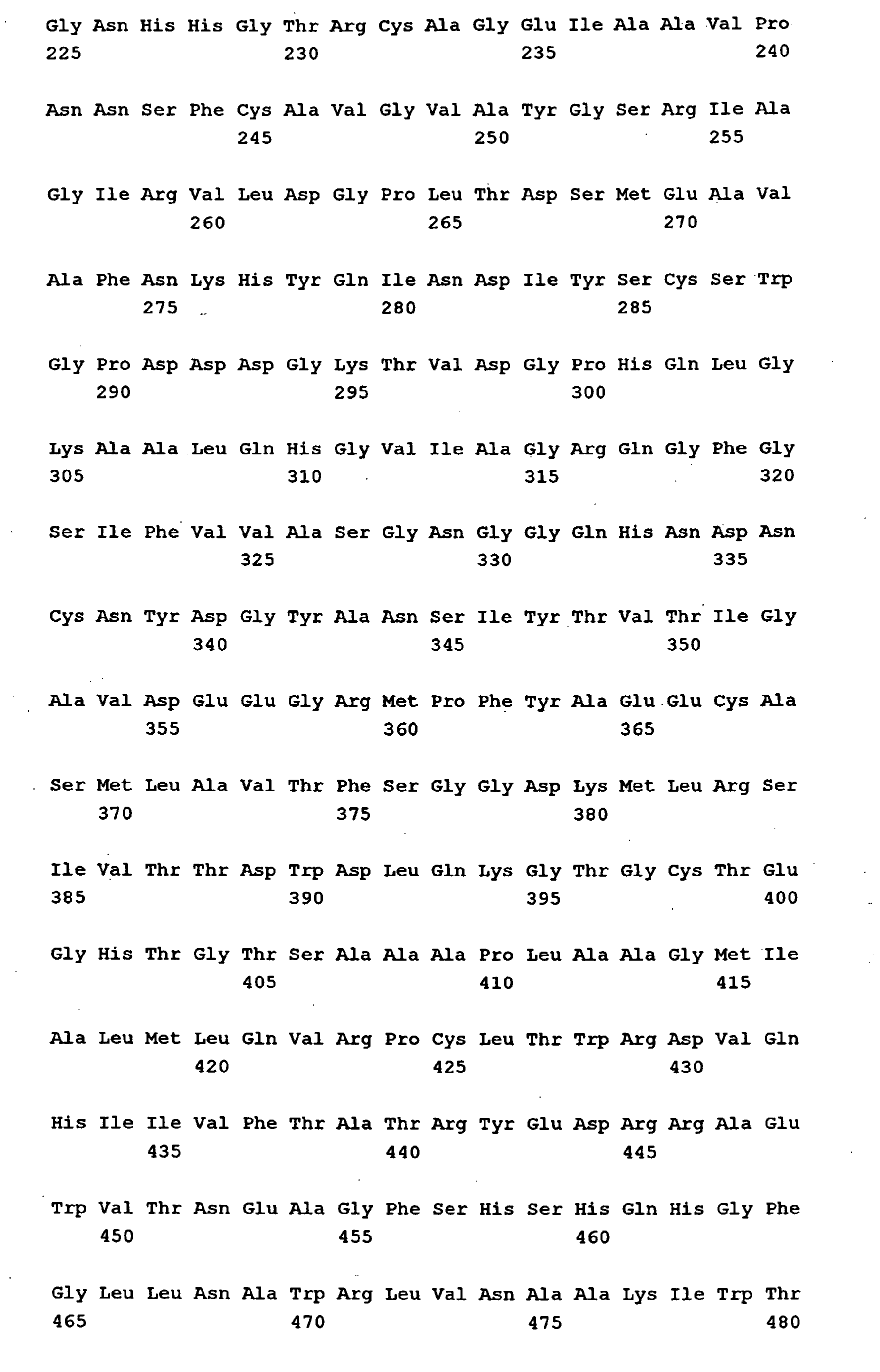
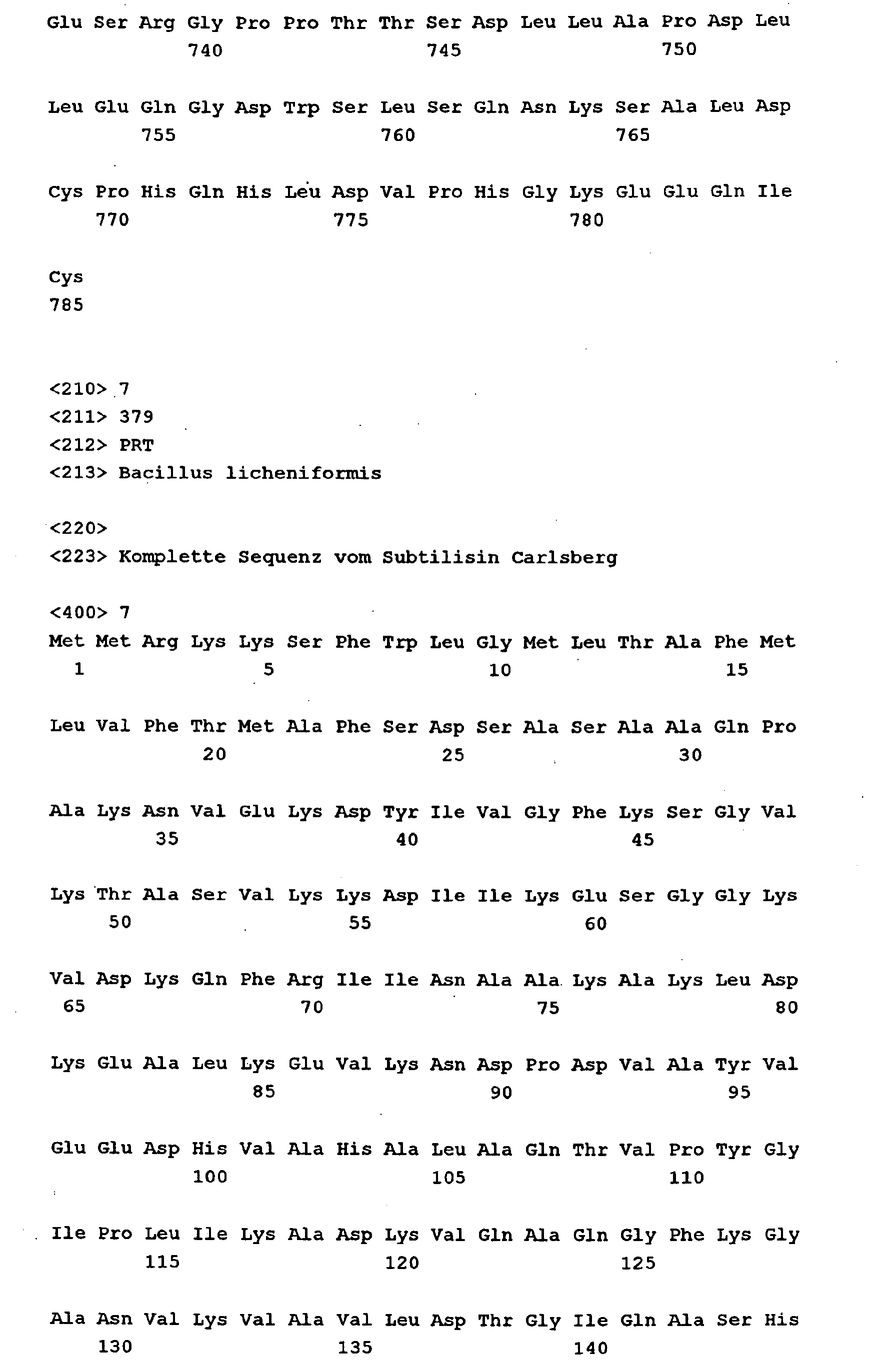
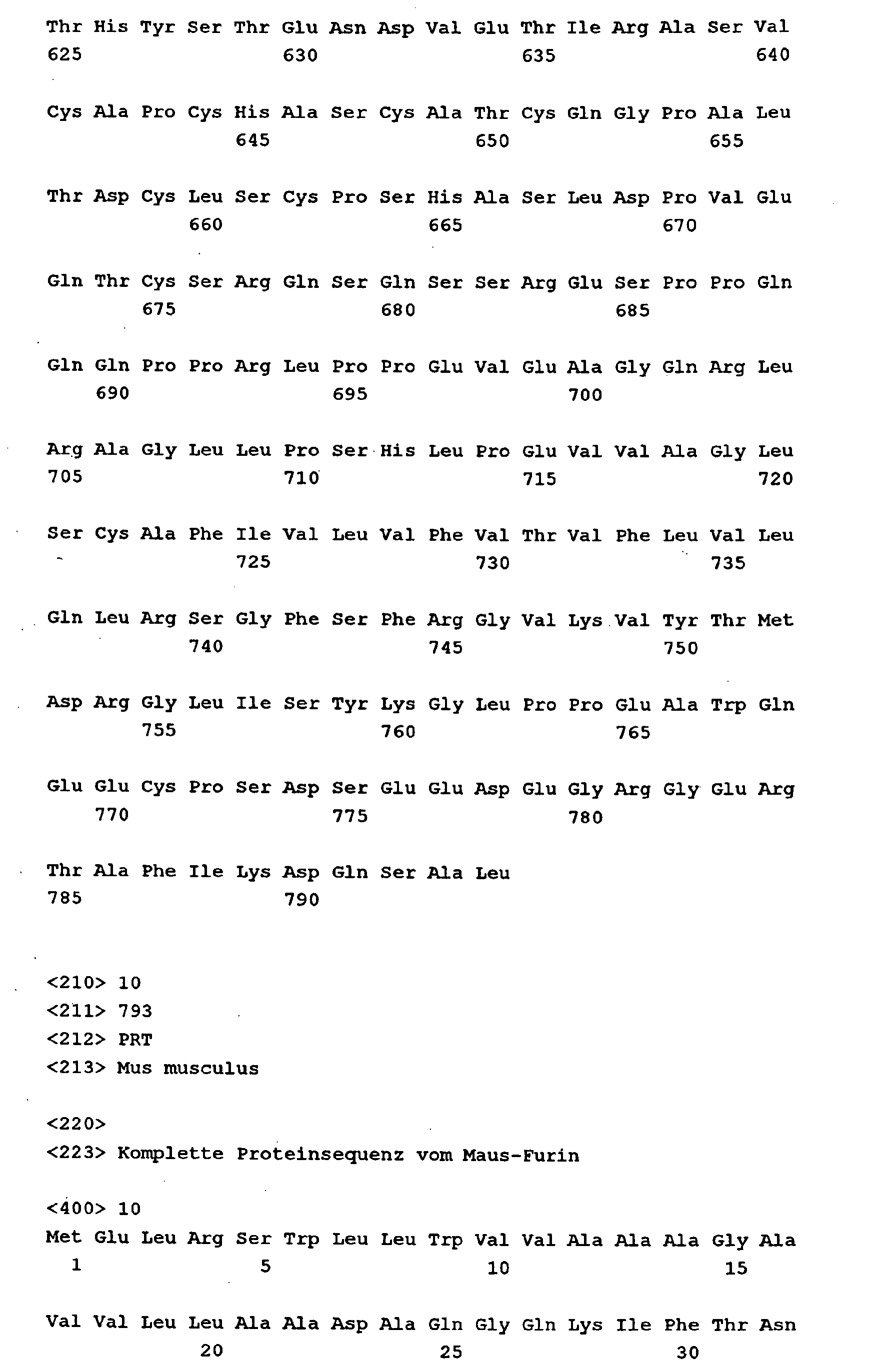
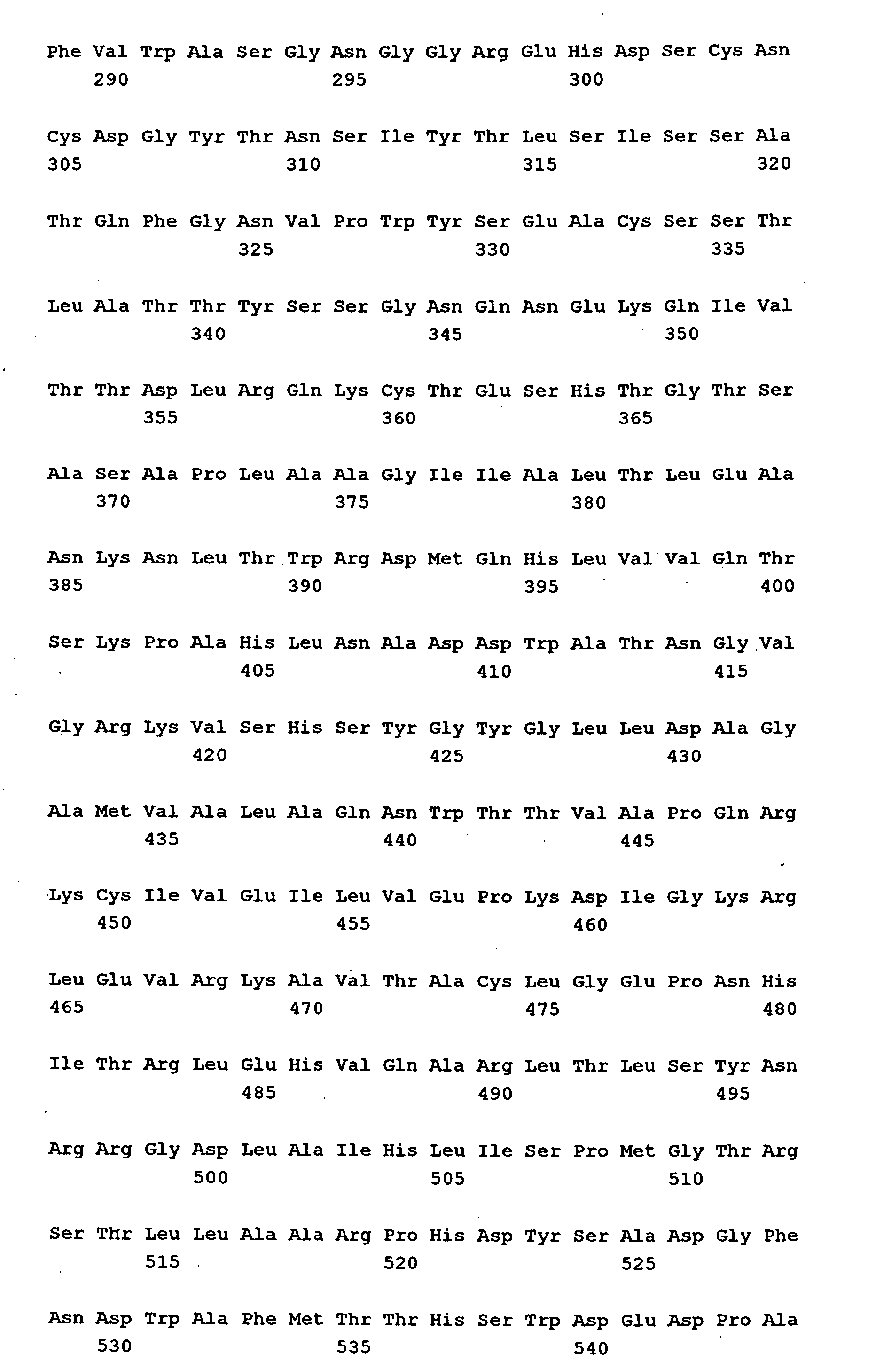
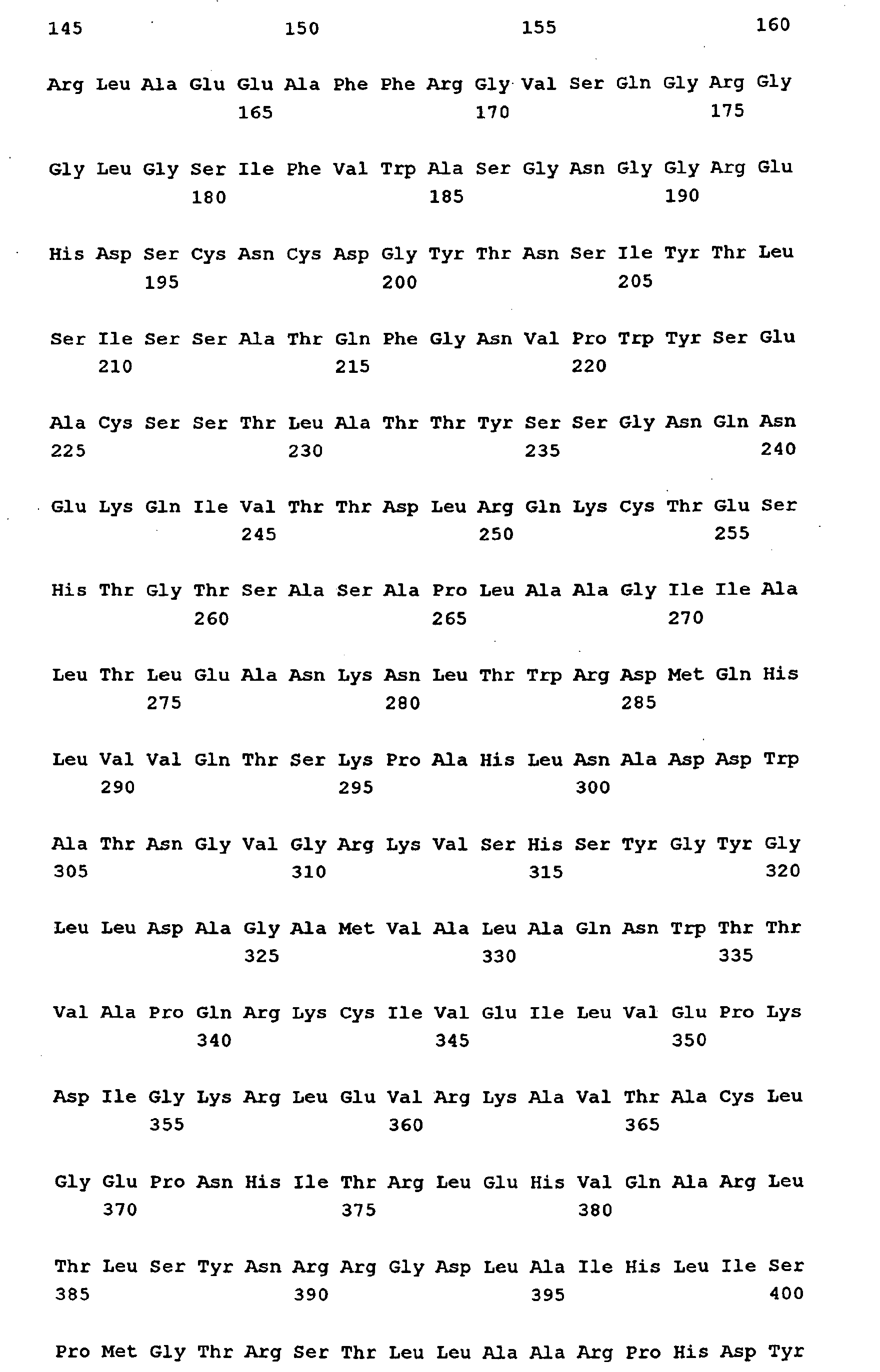
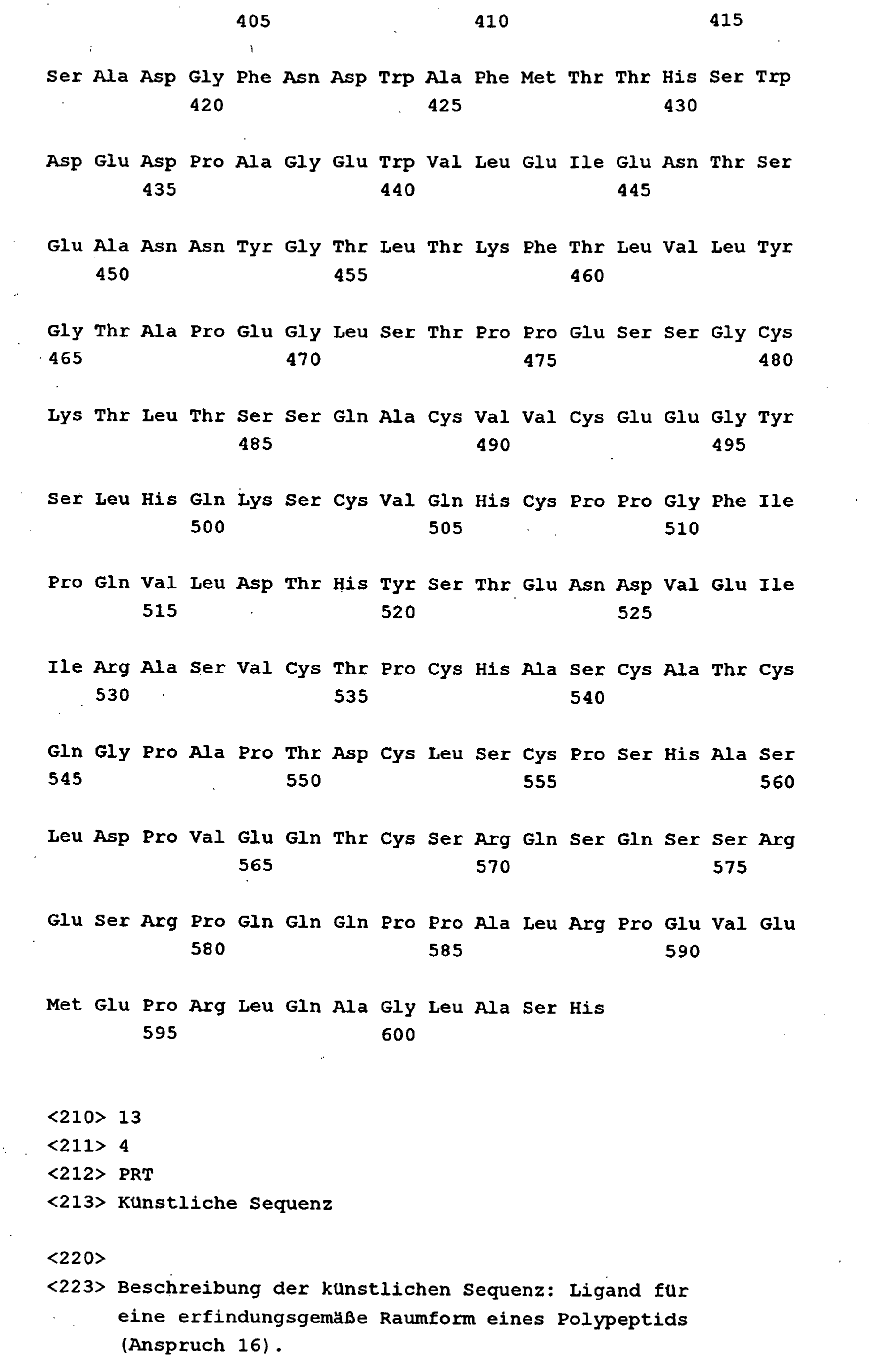
- a furin as An example of a protein from the PC family is, for example, a how Sequence section defined above of at least 50 or - more preferably - more AS of the amino acid sequence shown in FIG. 1 (upper sequence), in particular the human one or murine furins, e.g. B. sequences of positions 1 or 76 or 108 or 110 to 445 or 573 or 793, preferably around sequences of positions 110 to 573, particularly preferably sequences of positions 110 to 445 and 446 to 573.
- the present invention also includes spatial forms of derivatives of the above Sequence sections.
- derivative one as defined above Sequence section of at least 50 or - more preferably - more AS of a protein of Family of PCs
- the spatial shape i.e. so the Tertiary structure, as for the respective section with the structure coordinates according to FIG. 6 determined, largely maintained and only local structural deviations allowed.
- all derivatives of such sequences are included, for example, which an identity of at least 50%, preferably 75%, more preferably at least 80%, more preferably 90% and even more preferably at least 95% with the above Amino acid sequences, in particular positions 108 or 110 to 573, preferably the Positions 108 or 110 to 445 or positions 446 to 573 of the in Fig. 1 (upper Sequence) have shown amino acid sequence.
- amino acid sequences are used as derivatives denotes that only conservative substitutions, i.e. the exchange of e.g. polar against polar amino acids or from hydrophobic to hydrophobic amino acids (e.g. leucine against isoleucine or valine or vice versa or serine against threonine or vice versa) we understood.
- a section or fragment of a protein from the PC family are understood as those sequences that differ from the physiological Amino acid sequence, especially at the N- or C-terminus, have deletions, however, if necessary also intrasequential deletions in the aforementioned and, for example, in FIG. 1 reproduced sequences. This will typically be at least one Act deletion, with each deletion preferably less than ten, in particular less than five amino acids, most preferably one or two amino acids can be deleted compared to the native sequence.
- a spatial shape of a polypeptide which claims at least one 50 AA, preferably one 80 AA and more preferably a 100 and very particularly preferably a 120 AS Section of a sequence of a protein from the PC family, in particular furin, preferably of eukaryotic origin, more preferably from the mammal, in particular human, contains. If necessary, they may also be derivatives of such sections of Proteins, especially full-length proteins.
- those spatial forms which both contain a polypeptide containing at least one 50 AS, preferably an 80 AS, more preferably a 100, more preferably a 120 and very particularly preferably a 150 AS section of a sequence of a protein from the PC family, especially of furin, and also have at least one further compound.
- These will typically be compounds that can bind to the polypeptide as ligands, so that the three-dimensional form is a complex of polypeptide and at least one further compound bound in a covalent or non-covalent manner.
- the compound or the ligands can be a physiologically occurring molecule or else a non-physiologically occurring molecule.
- ligands are those which interact with the polypeptide in particular under physiological conditions and preferably exhibit high-affinity binding behavior (preferably K d ⁇ 30 ⁇ M).
- a spatial form of a polypeptide is preferably used in combination with Sections of physiological ligands are disclosed. This is for example the sequence sections relevant for binding to proteins from the PC family or domains or proteins that are endoproteolytically cleaved by PCs.
- the ligand preferably a physiological ligand, is attached to the one Sequence of a protein from the family containing spatial form polypeptide according to the invention bind the PCs.
- the ligand can itself be a polypeptide, an oligopeptide, a dipeptide or a synthetically modified derivative of a poly, oligo or dipeptide, in particular of physiologically binding to proteins from the PC family native substrate sequences of proteins from the PC family, but also a Peptidomimetic or an organic chemical molecule with a molecular weight of typically ⁇ 5000.
- oligo- or polypeptide sequences are particularly preferred as ligands, their endoproteolytically modified amide bond is modified such that the cleavage is not can take place. All relevant modifications of amide bonds come in here Consideration that is not subject to proteolysis as a result.
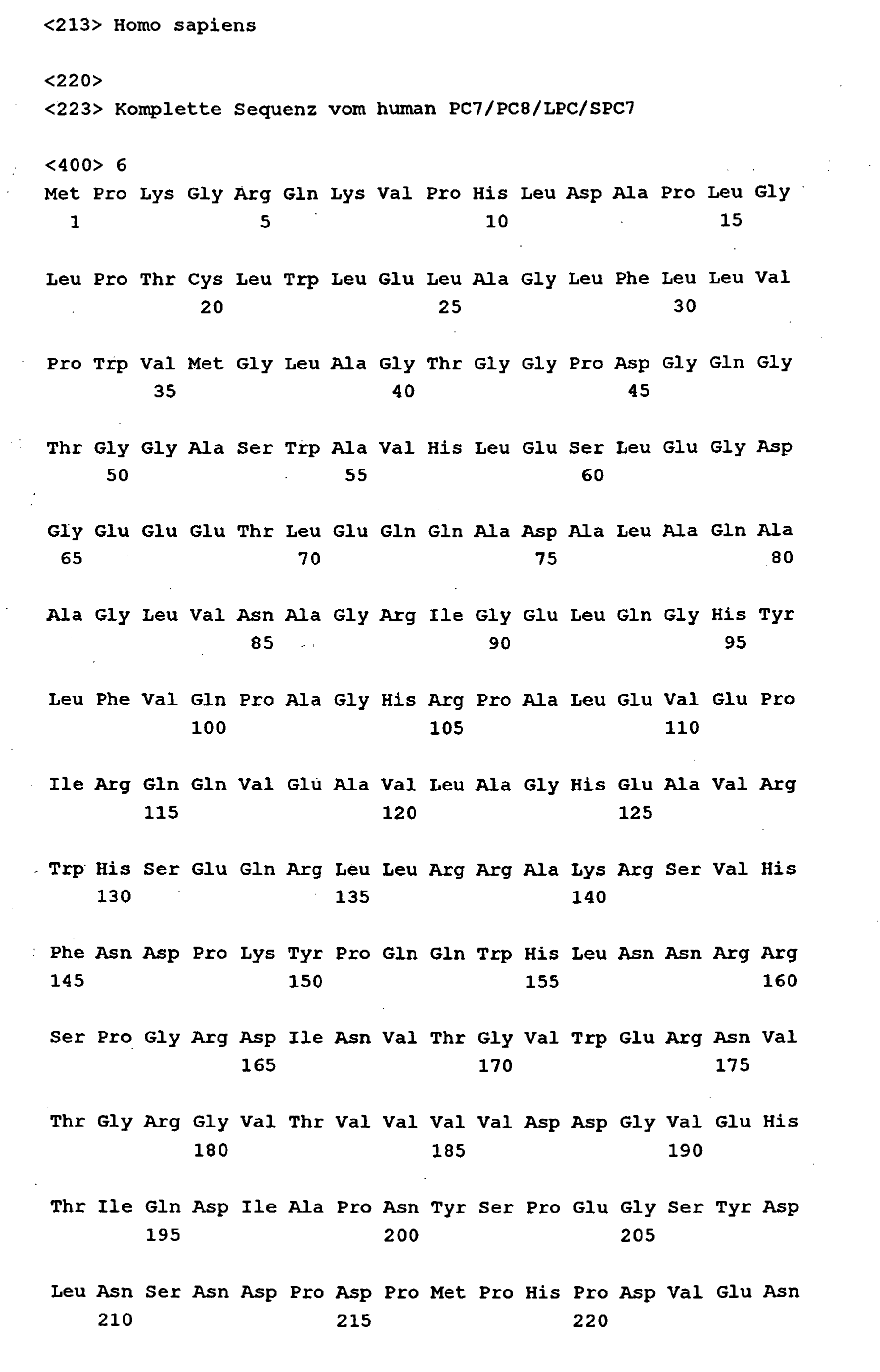
- proteins or precursor proteins from classes of growth factors and hormones such as Pro- ⁇ -NGF, Pro-BDNF, Pro-NT-3, Pro-TGF- ⁇ 1, Pro-Müller inhibitor substance, Pro-IGF-1, Pro-endothelin-1, parathyroid hormone-related propeptide and pro-parathyroid hormone, receptors such as insulin proreceptor, hepatocyte growth factor proreceptor, pro-LRP, integrin- ⁇ 3 chain, integrin- ⁇ 6 chain, plasma proteins such as proalbumin, complement-pro -C3, profactor IX, profactor X, pro-von-Willebrand factor, proprotein C, matrix metalloproteases (MMPs) such as stromelysin 3 and MT-MMPI, viral envelope glycoproteins such as HIV gp160, (e.
- MMPs matrix metalloproteases
- Target molecules from vertebrates such as birds and mammals, especially rodents such as mice, rats or guinea pigs, pigs and humans, or target molecules from pathogens which can infect the species mentioned are preferred.
- the ligand does not have the entire native sequence, it will typically be the 5 to 50, preferably 5 to 25, very particularly preferably 5 to 12, of the amino acid residues of such a target substrate which are adjacent to the amide bond to be cleaved.
- Space forms which have ligands bound in particular to the catalytic domain, preferably to the active center, are very particularly preferred, the ligands preferably having a binding affinity of K d ⁇ 50 .mu.M and typically thereby at least in vitro, preferably also in vivo, the physiological function , especially the endoprotease function, of proteins from the PC family.
- the inhibitory character of the ligand will typically result functionally in that the binding site (s) of the catalytic domain (s) of proteins from the family of PCs for substrate sequences are occupied by the ligand, so that the PC protein performs its physiological function all in terms of its physiological proteolytic function.
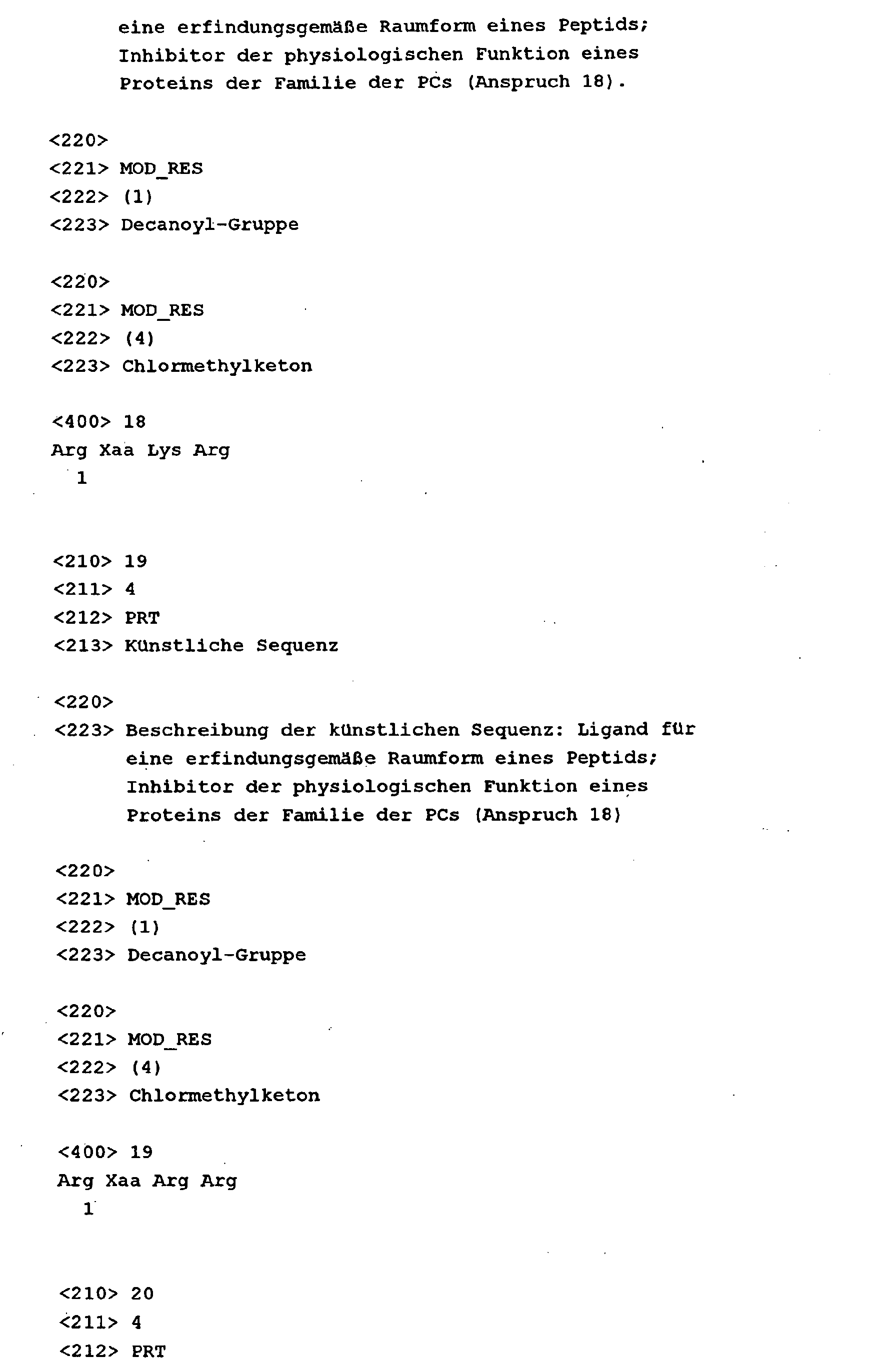
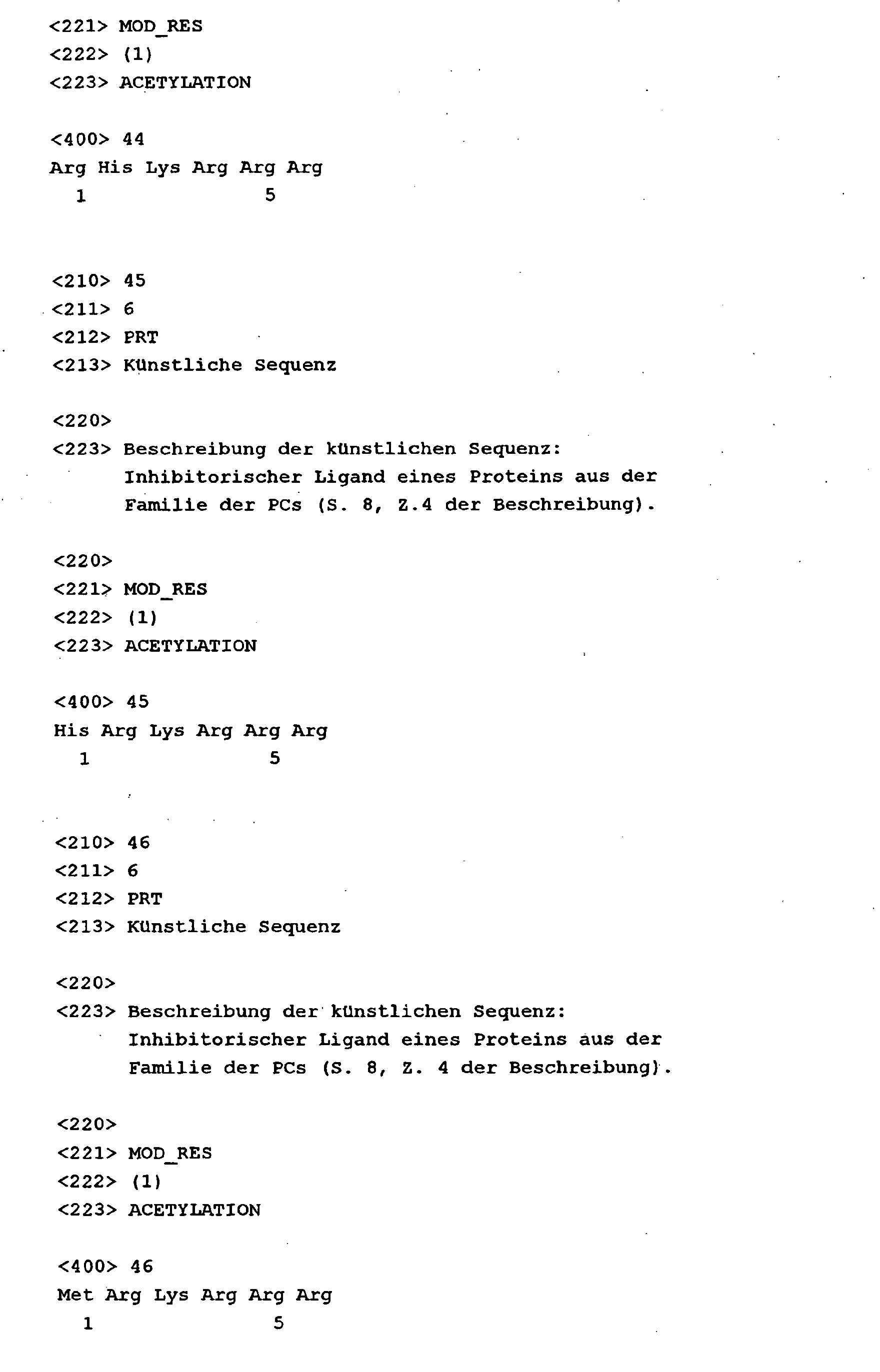
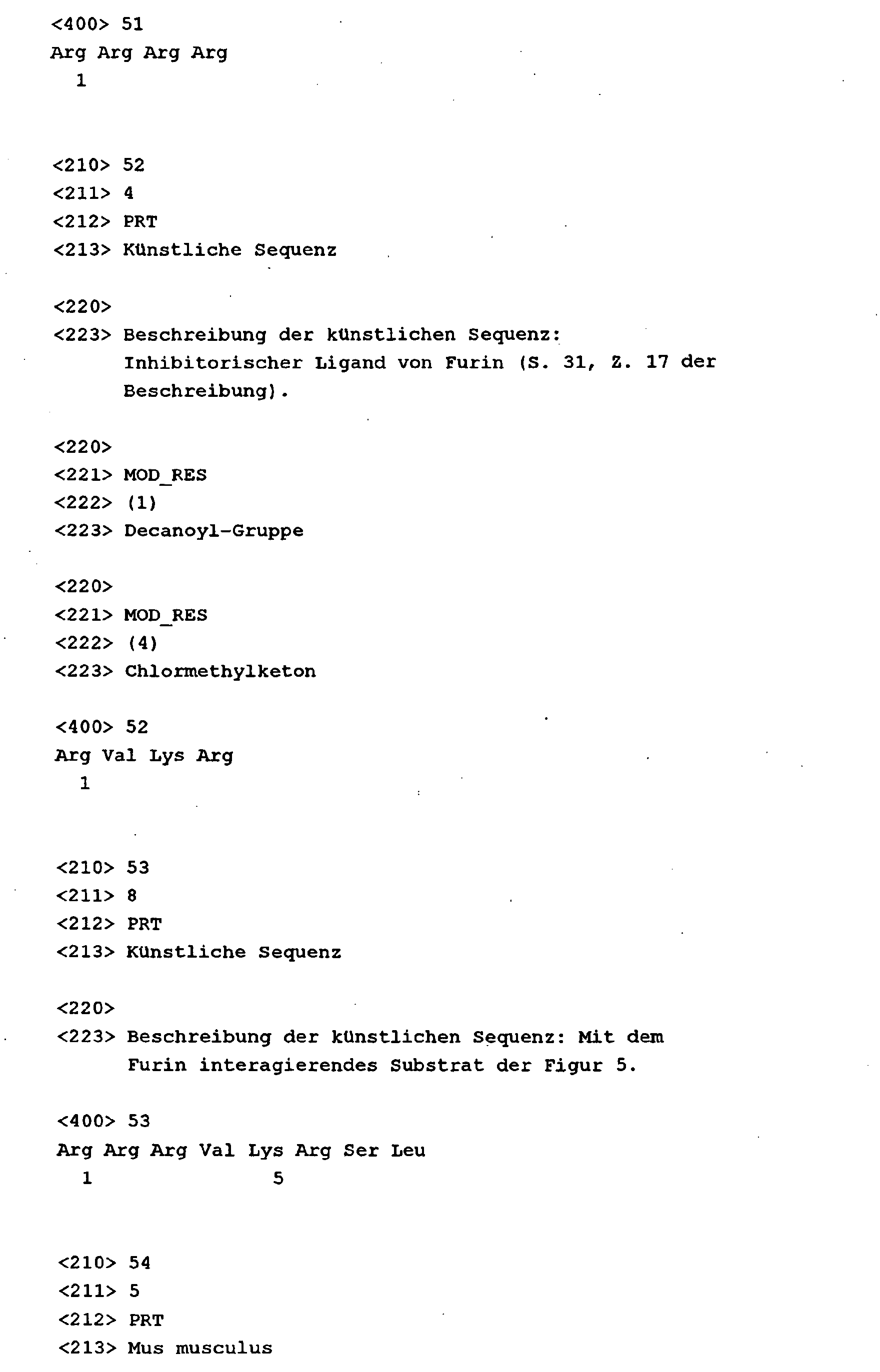
- inhibitory ligands are acylated Arg-Xaa-Lys / Arg-Arg-chloromethanes (for example chloromethyl ketones (cmk), in particular decanoyl-Arg-Xaa-Lys / Arg-Arg-chloromethyl ketones, for example the ligand shown in the examples;
- Xaa any naturally occurring AS
- ⁇ 1 -PIT see Brennan et aL (1988) FEBS Lett. 229: 167-170
- ⁇ 1 -PDX see Anderson et aL (1993) J. Biol.
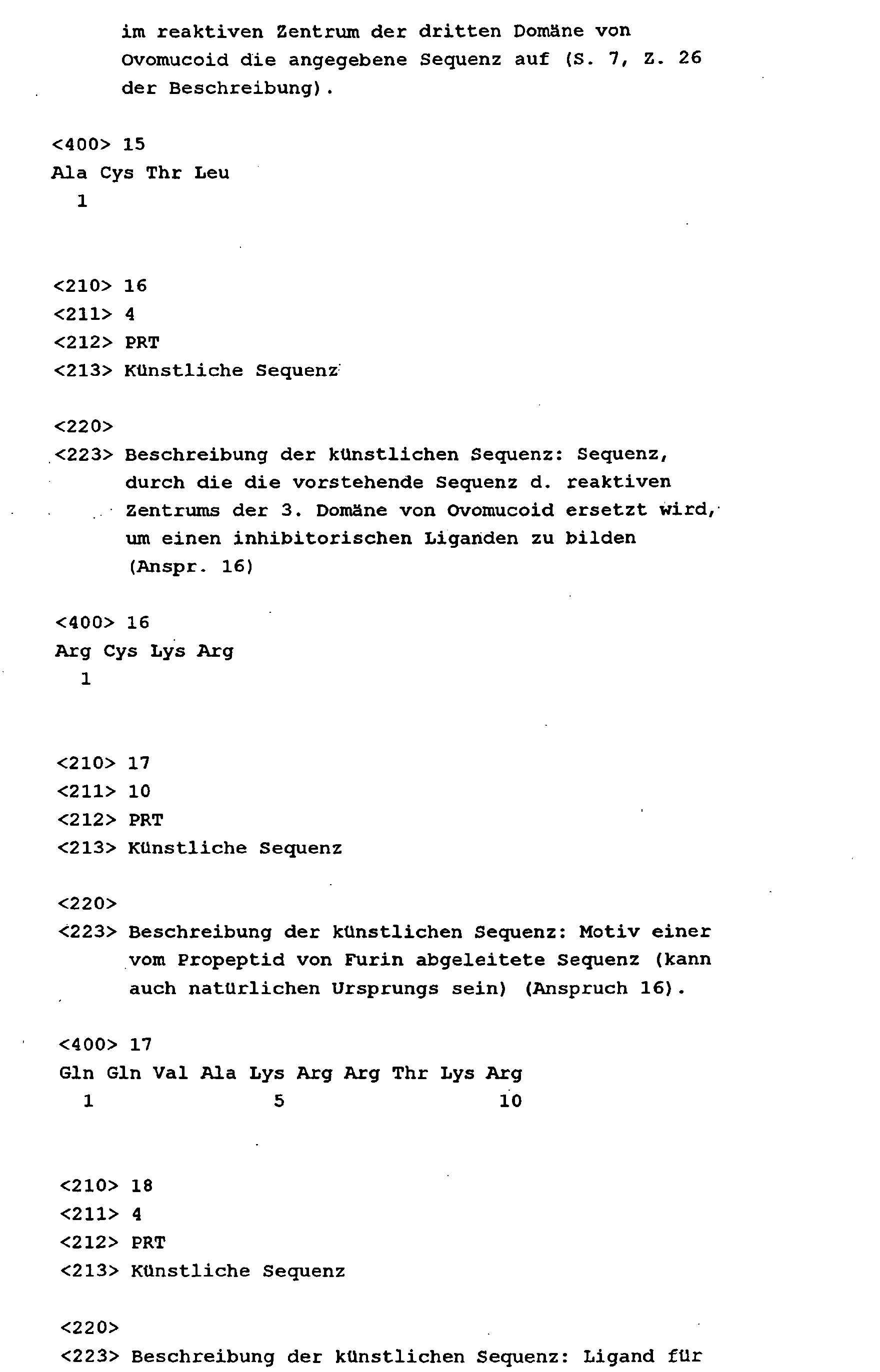
- Chem 268: 24887 -24891 variants of the third domain of Ovomucoid, in which the sequence of the reactive center Ala-Cys-Thr-Leu is replaced by Arg-Cys-Lys-Arg (cf. Lu et aL (1993) J. BioL Chem. 268 : 14583-14585), oligopeptides derived from propeptide from proteins of the PC family, in particular the propeptide from furin (for example murine or human), for example positions 1 to 75 or 107 of the sequence shown in FIG.
- furin for example murine or human
- PC protein inhibitors typically contain and are multibasic peptidyl groups often coupled to compounds that bind to the catalytic center, e.g. Chloromethyl ketones, ketomethylene or phosphonate groups.
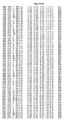
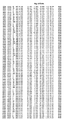
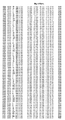
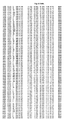
- Kristailformen according to the invention are also characterized in that they are as three-dimensional structure, characterized by structural coordinates for each one, the Structure-building atom (except hydrogen atoms), part of a symmetric Arrangement in a crystal. It is preferred that a room or Crystal form containing at least one polypeptide with at least one at least 50 AS or - as disclosed above - longer section of one or more family protins the PC contains, after superposition with the structure coordinates listed in FIG.
- the crystal form is typically next to the Atoms of the polypeptide or possibly of the ligand (s) (other than hydrogen atoms) and others Contain metal ions, for example alkaline earth or alkali metal ions, in particular Calcium ions, but also heavy metal ions particularly suitable for phase determination, such as e.g. Gold, selenium, nickel or mercury ions.
- ligand other than hydrogen atoms
- metal ions for example alkaline earth or alkali metal ions, in particular Calcium ions, but also heavy metal ions particularly suitable for phase determination, such as e.g. Gold, selenium, nickel or mercury ions.
- the aforementioned at least 50 AS or - as stated above - more comprehensive Sections of a protein from the PC family can initially be aligned assigned to corresponding sections of human or in particular murine furins become.
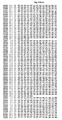
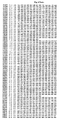
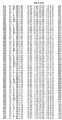
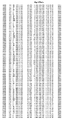
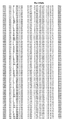
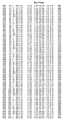
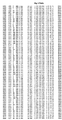
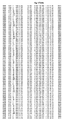
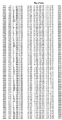
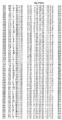
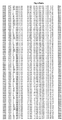
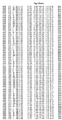
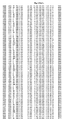
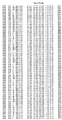
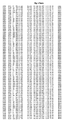
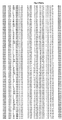
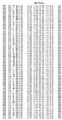
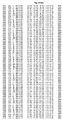
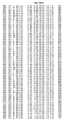
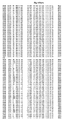
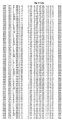
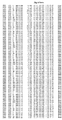
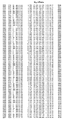
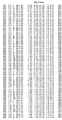
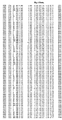
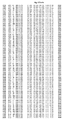
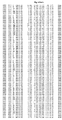
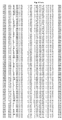
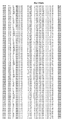
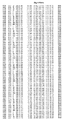
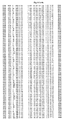
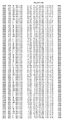
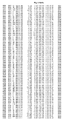
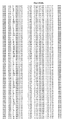
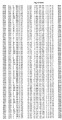
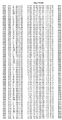
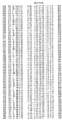
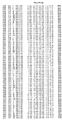
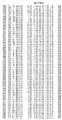
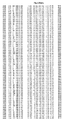
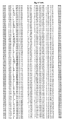
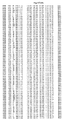
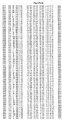
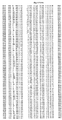
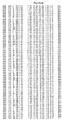
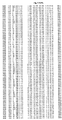
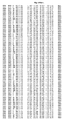
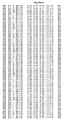
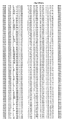
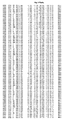
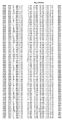
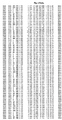
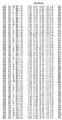
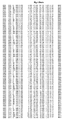
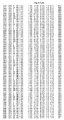
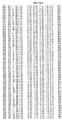
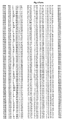
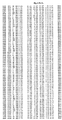
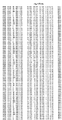
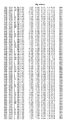
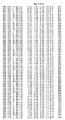
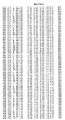
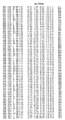
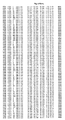
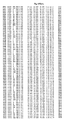
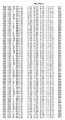
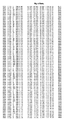
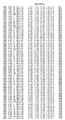
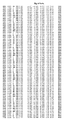
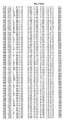
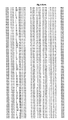
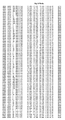
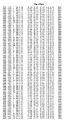
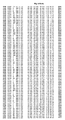
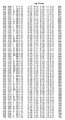
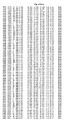
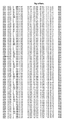
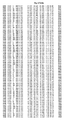
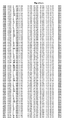
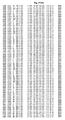
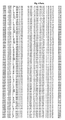
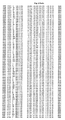
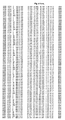
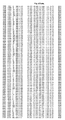
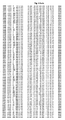
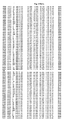
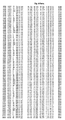
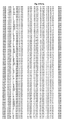
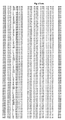
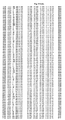
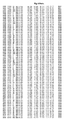
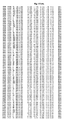
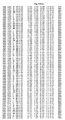
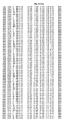
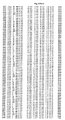
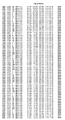
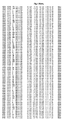
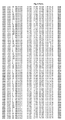
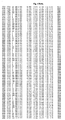
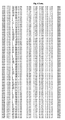
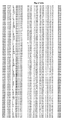
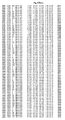
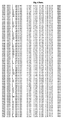
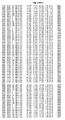
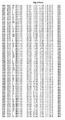
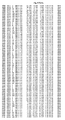
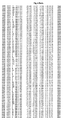
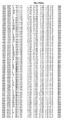
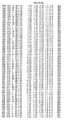
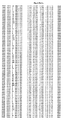
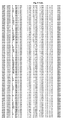
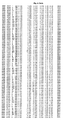
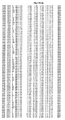
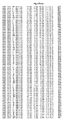
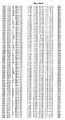
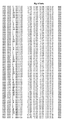
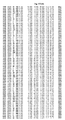
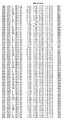
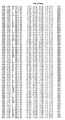
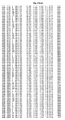
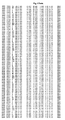
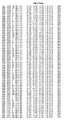
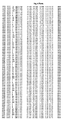
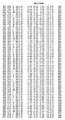
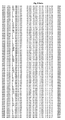
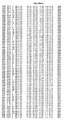
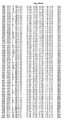
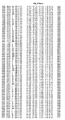
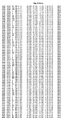
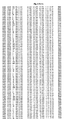
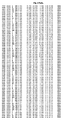
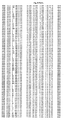
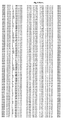
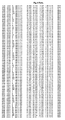
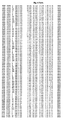
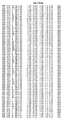
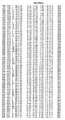
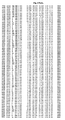
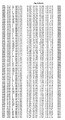
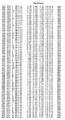
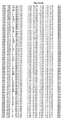
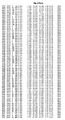
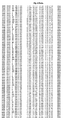
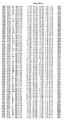
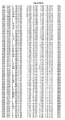
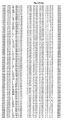
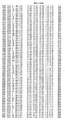
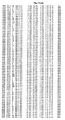
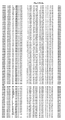
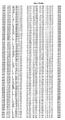
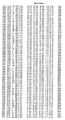
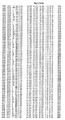
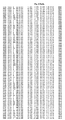
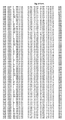
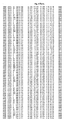
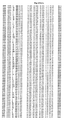
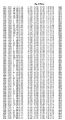
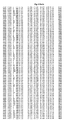
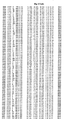
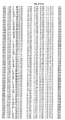
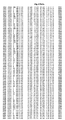
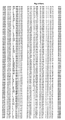
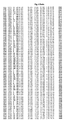
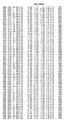
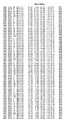
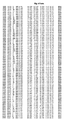
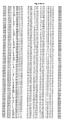
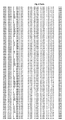
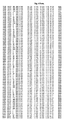
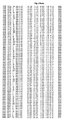
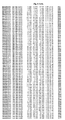
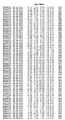
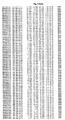
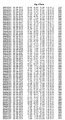
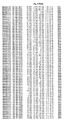
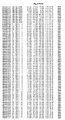
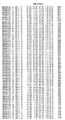
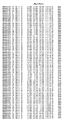
- the structural coordinates are those in the above-mentioned sequences occurring atoms can be seen in FIG. 6.
- the atoms are listed in FIG. 6 each sequentially amino acid for amino acid from the N- to the C-terminus.
- Crystals are claimed which are made of Unit cells are constructed, the asymmetrical unit in the unit cell of the Crystal at least one at least 50, preferably at least 80, stronger preferably at least 100 and most preferably at least 120 AS comprehensive section of a polypeptide from the family of the PCs and possibly at least one has further connection and the polypeptide furthermore has a three-dimensional shape in the crystal takes as a crystal form, as previously disclosed. Crystals are particularly preferred of a polypeptide which has at least one domain (P domain or catalytic domain of a Proteins of the class of PCs contains).
- the crystal will preferably have a space group which is monoclinic, tetragonal, orthorhombic, cubic, triclinic, hexagonal or trigonal / rhombohedral-al. These can be native crystals, derivative crystals or cocrystals, possibly also a "soaked" crystal, that is to say after a ligand has been introduced into the crystal by appropriate solution addition.
- the space group of the crystal having a spatial shape according to the invention as a crystal shape will be space group P1 or P6 5 .
- spatial forms (crystal forms) according to the invention can occur in all "protein-crystallographically possible space groups.
- the present invention further relates to processes for producing a Crystals with unit cells containing at least one in the asymmetric unit Spatial shape of the type according to the invention, ie a polypeptide and possibly at least one further compound, wherein (a) the polypeptide overexpresses in an expression system (b) the overexpressed polypeptide is purified and concentrated, (c) according to (b) polypeptide concentrate obtained in a suitable buffer system, if necessary with addition at least one further compound is dissolved and (d) the crystallization, for example is initiated by (steam) diffusion processes or other processes. Also with regard the information provided by Stout and Jensen (see above) was fully incorporated into the present disclosure.
- compounds which act as ligands Polypeptides from the class of the PCs or on domains of the polypeptides from the class of the PCs (the domains being part of proteins other than that of the PC class can) bind.
- Compounds according to the invention form non-covalent Interactions with the main chain and or the side chains of amino acids that Part of a functional area of the domains of PCs (catalytic or P domain), preferably to the catalytic center or regulatory centers.
- the compound according to the invention the spatial form of a polypeptide according to the invention, in particular as defined in one of claims 1 to 22, or the spatial shape of a at least any structural section, having at least 50 AS, preferably polypeptide containing at least 80 AS and more preferably at least 100 AS in length from the PC family so that the physiological activity modulates this polypeptide, preferably blocked
- the ligands are preferably mixed with at least one of the amino acids Ser368, His194, Asp153, Asn295, Ser253 to Asp258, Ser293, Asp306, Ala292, Pro256 Asp154, Asp191, Glu236, Asp264, Trp254 and Tyr308, particularly preferably with at least one of the Amino acids Ser368, His194 and Asp153, from furin (according to the counting method in FIG. 1) or of the amino acids located at the positions corresponding to FIG. 6 catalytic domains of furin-related proteins (e.g. other proteins from the Family of PCs or furins of different origins) interact.
- furin-related proteins e.g. other proteins from the Family of PCs or furins of different origins
- All the ligands with the catalytic domain are particularly preferably a part or all Form interactions, which are schematic in Figures 4 and 5 for the ligand Decanoyl-RVKR-chloromethylryl ketone are shown.
- the ligands become those Hydrogen bonds, hydrophobic contacts, van der Waals interactions or electrostatic interactions that also affect the native or non-native, in particular synthetic substrates or derivatives or analogues thereof with those for their Binding and, where appropriate, cleavage of the amino acid residues which are largely responsible Proteins of the family of the PCs enter. That becomes a ligand according to the invention preferably at equivalent steric positions with the bound species equivalents have functional groups.
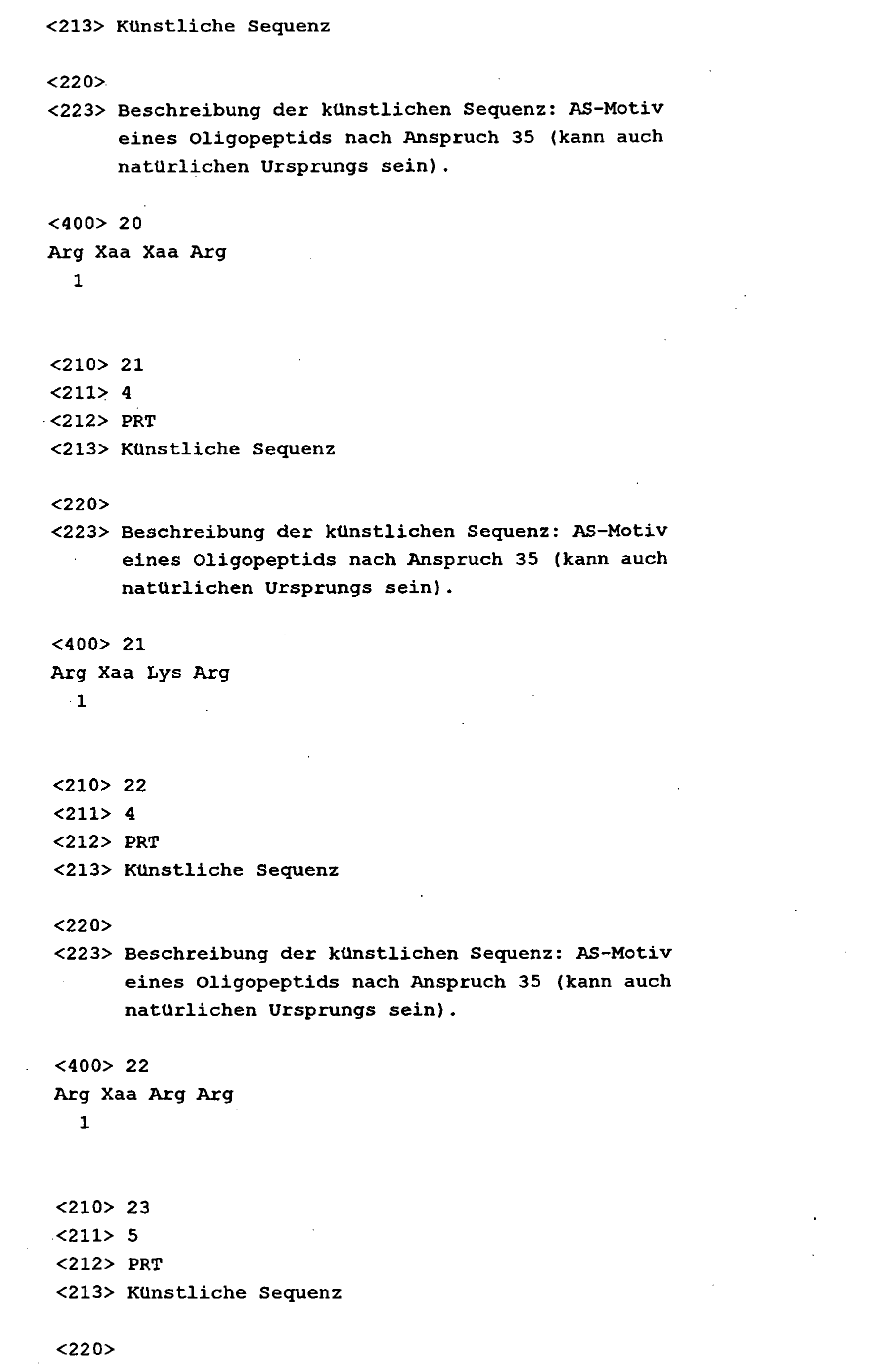
- a ligand according to the invention becomes a Peptide consensus sequence RXXR, in particular RX (K / R) R (X stands for any one naturally occurring AS), or an equivalent or similar structure, in particular with a basic character in order to attach to a protein from the family of PCs to tie.
- RXXR Peptide consensus sequence
- X stands for any one naturally occurring AS
- a ligand according to the invention becomes at least some, possibly all of those there described interactions with a protein of the PC family, in particular Form furin, preferably the catalytic domain thereof, so that a Binding affinity Kd of less than 100 ⁇ M, preferably less than 50 ⁇ M, whole less than 20 ⁇ M is particularly preferably ensured.
- a ligand according to the invention thus becomes structural and steric Have design that the respective binding areas in the protein from the family of PCs, especially furin, especially the structural requirements from FIG. 6, for example the P domain or the catalytic domain, especially in the active center, at the Interface of the domains mentioned or regulatory areas, is complementary.
- this ligand with preferably inhibitor function for a function of a protein from the Family of PCs, especially the proteolytic function can be modified or act unmodified di-, oligo- or polypeptides.
- a peptidomimetic one Di- or oligopeptide is conceivable.
- the peptidomirnet & a will preferably be act those compounds whose backbone is not amide-like bonds, but others have chemical bridges to avoid proteolytic cleavage.
- An inhibitor compound according to the invention can, for example, be a native target sequence of a Proteins from the PC family.
- Preferred compounds, especially oligopeptides contain, for example, one or more peptide motifs of the form (K / R) RX (K / R) R or one thereto Similar motif, where X stands for any naturally occurring amino acid.
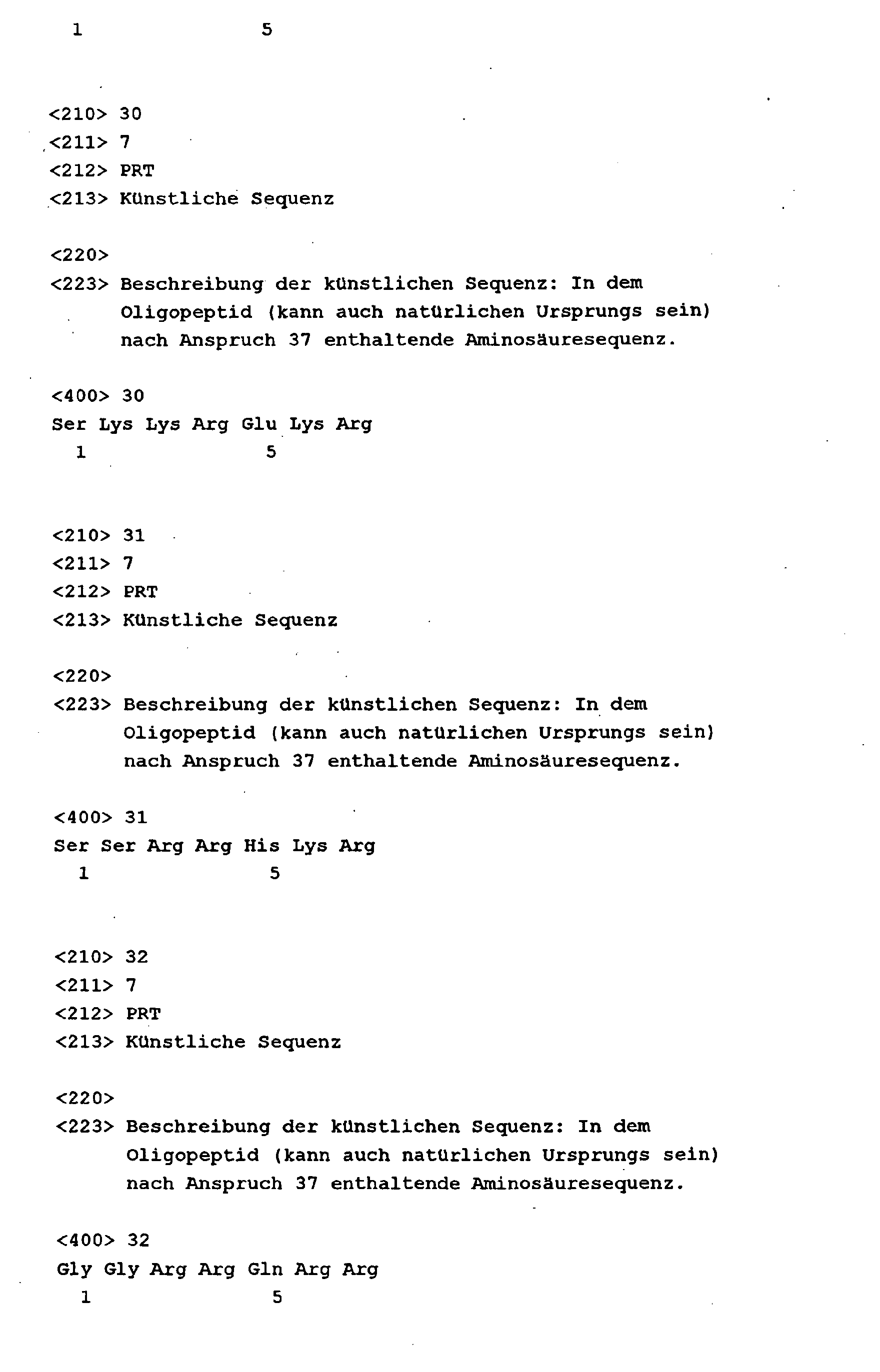
- peptide motifs especially in the case of oligopeptides, which are described in the invention
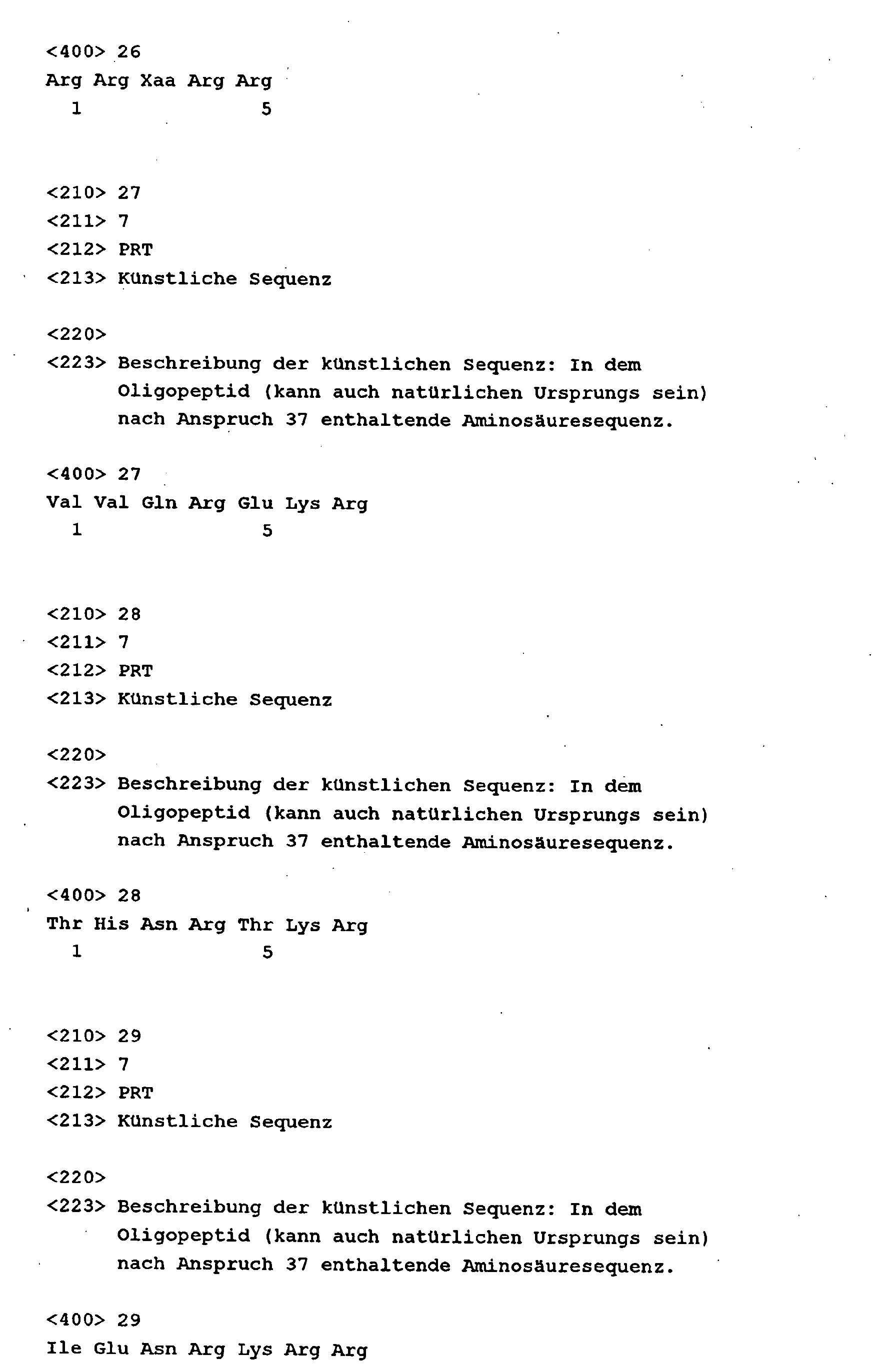
- Connections that can be included are, for example, WQREKR, THNRTKR, IENRKRR, SKKREKR, SSRRHKR, GGRRQRR, SSGRSKR, TDPRTKR, SNSRKKR, AGNRVRR, TRHRQPR, HASRVAR or AKRRTKR and all in Nakayama (1997) Biochem. J. 327: 625-635, described motifs of naturally occurring substrate sequences, referring to the relevant disclosure content of this document is explicitly referred to and is therefore fully included in the present description.
- the present invention includes those ligands attached to a space or Can bind crystal form, which is set out by the structural coordinates of Figure 6.
- the present invention further relates to methods for identifying a Compound possessing the property as an inhibitor of the proteolytic activity of a Proteins from the family (class) of PCs, especially furin, preferably furin from one To act mammals, such as in humans.
- a Compound possessing the property as an inhibitor of the proteolytic activity of a Proteins from the family (class) of PCs, especially furin, preferably furin from one To act mammals, such as in humans.
- furin preferably furin from one To act mammals, such as in humans.
- Such a method is characterized in that (a) a space according to the invention or Crystal form, in particular as defined in claims 1 to 22, is obtained, the Is present in the form of their structural coordinates, (b) the structural coordinates of the Crystal form can be represented in three dimensions, and (c) the steric properties and / or functional groups of a compound with a ligand function are selected such that interactions between the connection and the main and / or side chains of the Polypeptide, for example in the active center. According to this Interactions become ligands which are suitable according to the invention, in particular suitable ones inhibitory ligands that affect the proteolytic or other function of a protein from the Block family of PCs, especially furin, determined.
- the structural coordinates of a crystal shape according to the invention are displayed preferably by graphic representation with the help of appropriate computer programs on a computer screen.
- complementary arrangement of the main and side chains of the crystal form for example in active center of a protein from the class of PCs, for example furin or one structurally related protein, can not be automated according to operator experience suitable ligands with appropriate chemical and / or steric properties identified, constructed on the screen and finally simulated their binding behavior become.
- the selection of suitable ligands is preferably carried out automatically by that searches computer databases that contain a variety of connections become.
- the search is based on the previous characterization of geometric, chemical and / or physical properties for the desired ligands, for example connections with structural and / or functional similarity to the for example, compounds claimed in claims 28 to 37.
- To screening databases contain naturally occurring as well as synthetic ones Links. For example, those in the CCDC (Cambridge Crystal Data Center, 12 Union Road, Cambridge, UK) saved connections for such a search be used.
- the databases available from Tripos see quote above, namely Aldrich, Maybridge, Derwent World Drug Index, NCI and / or Chapman & Hall can be searched.
- the following is the implementation of a method according to the invention for computer-aided Identification of potential ligands described in more detail.
- a ligand in a crystal form according to the invention
- the ligand will typically be one with act inhibitory properties, but activators are also conceivable.
- the bond area is determined by appropriate parameters, for example atomic distances, Hydrogen bonding potentials, hydrophobic areas and / or charges, characterized and on this basis boundary conditions for the chemical, physical and / or geometric properties of the ligand are defined.
- Very particularly preferred are at least one of the previously specified amino acids on the bond (see Claim 31), especially with the aforementioned side chains of the same.
- the interaction potential between an identified connection for example as part of an automated search for a Connection from a computer database, and the desired binding area in one Crystal form determined.
- a method according to the invention is very particularly preferred if when it is used to identify compounds that adhere to a crystal form with the 6 should serve.
- the strength of the according Method step (e) determined interaction between a connection from a Computer database and a crystal form according to the invention provide clues for their suitability to be used as ligands.
- a method for identifying suitable connections is not automated with ligand character as follows.
- a scaffold connection as the starting point of the Identification is carried out in the space to be filled in by the connection to be identified Inside or on the surface of the crystal form, e.g. B. in the catalytic center in the crystallized polypeptide, inserted manually.
- the scaffold structure remaining space is searched for fragments that interact with the surrounding crystal form can occur and can be attached to the framework structure.
- This search for suitable fragments is carried out according to the geometric and / or physicochemical conditions of the three-dimensional structure.
- the search suitable fragments can be found, for example, as an automated computer search Specification of appropriate boundary conditions.
- any by the operator and / or fragments determined by the computer search are made in accordance with Chemical laws of the initial structure of the starting model graphically attached and after each such step the interaction potential with the Target structure area calculated in the crystal form. The procedure continues until the interaction potential between the connection to be identified and the Target structure area is optimized.
- steps (c), (d) and (e) can be repeated cyclically until a compound or class of compounds with respect to their binding behavior for an interaction potential that the respective computer program as Algorithm is optimized.
- a relatively rough characterization of the Binding area of the crystal form initially obtained a large number of potentially Binding compounds can be made more physico-chemical by further specifications or steric characteristics to the desired target compound is increasingly reduced become.
- a chemical library can be removed and in a suitable biological test system in one process step (f) to be examined for their biological effectiveness.
- a biological test system which is e.g. B. is a ligand binding assay can then further chemical modifications of the previously determined compound or the connection class.
- the Application of program packages to identify suitable fragments against existing fragments on the previously identified connection exchanged or to the same could also be added, prove to be useful.
- the present invention also relates to methods for Identification of a compound with the property of being a ligand, typically an inhibitor, to be able to act on the physiological activity of proteins of the class of the PCs, whereby in such a method according to the invention in a method step (a) a biological Test system is preceded, on the basis of which a so-called “screening" for suitable Target connections is carried out.
- a binding assay can preferably be used biological test system.
- such compounds for example from a library of chemical compounds identified who showed a positive result in the biological test.
- This Compounds for example inhibiting or possibly also activating, are in in relation to their geometric and / or chemical properties, for example, characterized in particular with regard to their three-dimensional structure (process step (C)). If the three-dimensional structure is determined as a hit in the biological test Connections not known a priori can be done by methods of the same Structure elucidation, namely X-ray crystallography and / or NMR spectroscopy, or also by modeling or e.g. semi-quantum chemical calculations determined become. In the three-dimensional structure according to method step (d) atomic structural coordinates of a crystal form according to the invention are then according to (e) inserted the compounds obtained in the process steps (b) and (c).
- These can be compounds that are suitable for the physiological Binding site relevant section or to the surface of the polypeptide in the Tie crystal shape.
- the insertion of the compound into the crystal form can be done manually after the Experience of the operator can be done or automated by using corresponding computer programs ("Dock” Kuntz et al., 1982, J. Mol. Biol. 161, 269-288, Sibyl / Base "FLEX-X", see Quote cited above) a positioning of the ligand with the strongest possible interaction between ligand and the target structure area (process step (e)).
- Biological test systems in vitro or in vivo can provide information about the Quality of the connection, e.g. as an inhibitor of the biological reaction, i.e. the Binding event, or via the binding constant, toxicity or Metabolizing properties or, if necessary, the membrane penetration the connection, etc.
- the present invention further relates to processes for producing a Crystal with a spatial or crystal shape with at least one polypeptide according to one of the Claims 1 to 22, wherein in a process step (a) first the polypeptide in one Expression system is overexpressed, synthesized or isolated, (b) that obtained according to (a) Polypeptide is dissolved in a suitable buffer system and (c) the crystallization, for example by (steam) diffusion processes or other processes, e.g. Equilibration is initiated Typically, according to process step (b) concentrated or highly concentrated solution of the polypeptide (s) are present, for example. the air humidity or the ambient temperature can be freely selected for the crystallization can be.
- At least one polypeptide is crystallized Crystals according to the invention which have crystal forms according to the invention, with the aim of to subsequently use the crystals for X-ray structure analysis, it follows after Crystallization the collection of X-ray diffraction data, the determination of the Unit cell constants and symmetry as well as the calculation of the electron density maps, into which the polypeptide (s) are modeled.
- Procedures are also disclosed to elucidate a spatial or crystal form containing at least one polypeptide one of claims 1 to 22, or for determining structural coordinates of a Polypeptide in a spatial or crystal form according to any one of claims 1 to 22, wherein in the case of a method based on a crystal form, the aforementioned are first Process steps (a) to (c) are carried out and then in further process steps (d) and (e) collected the X-ray diffraction data, an electron density map below Use of phase information (e.g. by isomorphic replacement or "anomolous. scattering "methods or by heavy metal atom derivatives) and finally the Primary sequence is modeled according to the specifications of the electron density map.
- phase information e.g. by isomorphic replacement or "anomolous. scattering "methods or by heavy metal atom derivatives
- Another object of the present invention are methods for three-dimensional Representation of a crystal form of a polypeptide of unknown structure that has at least one at least 50 AS, preferably at least 80 AS, more preferably at least 100 AS, more preferably at least 120 AS, still more preferably at least 150 AS comprehensive section of a protein from the family of PCs, in particular furin, e.g. of furin from a mammal such as human furin.
- This is one such procedure characterized in that the crystal form with an unknown structure based on a Crystal form according to the invention with a known structure, for example based on that in FIG. 6 recorded structural coordinates is determined.
- phase information from known initial structure coordinates for example the structure coordinates or Parts of these structural coordinates according to FIG. 6 can be taken.
- Phase information in the case of a known 3D structure of an inventive Crystal form is present or can be calculated, used to identify an unknown structure, which are preferably not significant compared to the known structure different conformational deviations (examples include target structures, to which for the first time a ligand or a ligand other than the one in the starting structure is bound, or derivatives, e.g. Target structures that are mutants of the initial structure).
- phase information of all or part of the known structure is compared with that for the crystal shape of unknown structure collected intensities of the diffraction reflections combined and from this combination an electron density map for the crystal form unknown structure calculated.
- This method is called “molecular replacement” (“molecular replacement ").
- Molecular replacement with the Program package X-PLORE (Brünger, Nature 355, 472-475, 1992) or other commercial available program packages.
- At least one structurally homogeneous region of a protein of the family of PCs is compared and im
- homologous sections between the polypeptide of unknown Structure and the primary sequence of a polypeptide or section of a polypeptide from the Family of PCs, whose spatial or preferably crystal form is known are modeled based on the well-known 3D structure and finally according to method step (c) with the help of suitable computer programs the modeled 3D structure of the polypeptide in terms of its steric conditions is optimized.
- a method according to the invention for clarifying is particularly preferred Crystal forms of unknown structure if the crystal form is known Structure around a protein from the class of the PCs or a closely related protein, in particular, however, also around a section of the same (very particularly around one domain-specific section) and the crystal form of one in its structure unknown isoprotein or other related protein of unknown structure e.g. to be clarified by "molecular replacement” or by "homology modeling”.
- a Crystal form for an analog protein optionally complexed with a ligand, one other host organism.
- Structural coordinates of crystal forms according to the invention can thus be Homology modeling as structural models for sequentially homologous polypeptides of unknown 3D structures serve.
- Program packages come as part of homology modeling in particular, can be used with the Insight II modeling package (Molecular Simulations Inc.) such modeling can be carried out.
- the description of the Program package Insight II is fully included in the present disclosure, especially with regard to homology modeling.
- the present invention further relates to methods for identifying Compounds that have physiological function, especially proteolytic (Endoprotease) function, a protein from the PC family, containing at least a subsection comprising at least 50 AS or - as disclosed above - more a protein from the family of PCs, preferably the furin, in particular from one Mammal or a human, more preferably containing the catalytic domain, or of a derivative of such an amino acid sequence, in particular the proteolytic Effect inhibited, for which (a) the unknown 3D structure of such a polypeptide, which corresponds to a polypeptide in a spatial form according to the invention, after a in the Claims 50 to 52 described method is determined and then (b) using a the method described in connection with claims 41 to 48 Connection with the ability to act as an inhibitor of the physiological function, in particular of the Proteolysis (endoprotease) function of a protein from the PC family, is determined.
- proteolytic Endolytic
- Inhibitors and / or optionally activators of the physiological activity of PCs especially furin, PC2, PC1 / PC3, PACE4A, PC4, PC5 / PC6A, PC5 / PC6B, LPC / PC7 / PC8 / SPC7 from mammals, especially of human origin
- PCs especially furin, PC2, PC1 / PC3, PACE4A, PC4, PC5 / PC6A, PC5 / PC6B, LPC / PC7 / PC8 / SPC7 from mammals, especially of human origin
- inventive type can be an inhibitor or an activator according to the invention be combined with at least one further active ingredient and / or the pharmaceutical Composition or the inhibitor as an active ingredient is used as a drug in a Formulation familiar to those skilled in the art, in particular taking into account suitable pharmaceutical auxiliaries, additives or supplements.
- suitable pharmaceutical auxiliaries, additives or supplements The wording is depend in particular on the route of administration. This can be oral, rectal, intranasal or parenterally, especially subcutaneously, intravenously, or intramuscularly.
- Pharmaceutical composition containing such an inhibitor and / or activator can contain the administration form of a powder, a suspension, a solution, a spray, an emulsion, an ointment, an aerosol or a cream.
- An inhibitor according to the invention or optionally an activator can be combined with a pharmaceutically acceptable carrier material with a neutral character (such as aqueous or non-aqueous solvents, stabilizers, emulsifiers, detergents and / or Additives and optionally other color or flavoring agents can be combined.
- a pharmaceutically acceptable carrier material with a neutral character such as aqueous or non-aqueous solvents, stabilizers, emulsifiers, detergents and / or Additives and optionally other color or flavoring agents can be combined.
- the Concentration of an inhibitor and / or activator according to the invention in one pharmaceutical composition can vary between 0.1% and 100% depending especially the route of administration.
- a pharmaceutical composition or a medicament containing an inhibitor according to the invention or optionally Activator of the physiological (especially proteolytic) effect of PCs can in particular for the treatment or for the manufacture of a medicament for the treatment of Tumor diseases (e.g.
- HIV infections influenza infections with local or systemic Infection potential, Ebola infections, anthrax and other infections with pathogens, which the above-mentioned natural substrates of furin, including all Analogues or derivatives of these substrates,), fertility problems, amyloids Dementias (e.g. Alzheimer's disease), Parkinson's disease, neurodegenerative diseases serve.
- inhibitors of, for example, furin are suitable, cell death, that of Pseudomonas, Anthrax toxin or cytomegalovirus is triggered to block.
- furin are suitable, cell death, that of Pseudomonas, Anthrax toxin or cytomegalovirus is triggered to block.
- Appropriate There are uses for the manufacture of a drug.
- Another object of the present invention is a set of structural coordinates a protein from the group of PC proteins (or a fragment of such a protein of typically at least 50 aa length) or a polypeptide containing at least a section of at least 50 (or more preferably, as previously disclosed, of more AS length) of a protein from the group of PC proteins, such as, for example, in a room or Crystal form occurs, for example the structural coordinate set of furin, in particular according to Figure 6.
- the structure coordinates according to the invention in particular a set of Structural coordinates of a PC enzyme or a PC substrate complex or a part of these, in particular the domains defined above, for example a furin, entirely particularly preferably the structure coordinate set according to FIG.
- modifications to the structure due to Mutations, additions, substitutions and / or deletions of amino acids or other changes in any components forming the crystal Lead changes in structural coordinates. If such variations are within an acceptable standard deviation compared to the original coordinates the resulting three-dimensional structure will be essentially the same.
- the application allows comparisons between different Structures, different confirmations of the same structure and different Share the same structure.
- the one used in Molecular Simularity for structure comparison The algorithm is divided into four steps: (1) loading the structures to be compared; (2) Defining the equivalent atoms in these structures; (3) Carrying out a Fitting operation; and (4) analyzing the results.
- Each structure is identified by a name.
- a structure is called a target structure ("the fixed structure"), all remaining structures are working structures (ie changeable structures). Since the equivalent atoms in QUANTA are defined by the user, according to the invention, equivalent atoms are defined as the peptide backbone atoms (N, C alpha C and O) of all residues conserved between the two structures compared. Only rigid adaptation operations are considered.
- the work structure becomes translational and changed rotationally in order to obtain an optimal match with the target structure.
- the adaptation operation uses an algorithm that optimizes the on the The translational and rotational movements to be applied that the standard deviation difference of the fit across the specific pairs equivalent atoms represents an absolute minimum. This number (in ⁇ ) is used by QUANTA output.
- the standard deviation is preferably less than 1.5, more preferably less than 1 ⁇ .
- Standard deviation means the square root of the arithmetic mean the squares of the deviations from the mean.
- Standard Deviation means the deviation of a protein's peptide backbone or Protein complex from the part of the backbone under consideration of the invention Polypeptides or complexes thereof by the structural coordinates disclosed herein To be defined.
- the structural data according to the invention or parts thereof on a machine (computer) readable Storage medium saved.
- Such data can then be used for different Purposes as disclosed above, for example for the identification of drugs or X-ray crystallographic Analyzes are used.
- a machine-readable storage medium is included a data storage material which encodes the structural coordinates disclosed according to the invention, provided.
- this subject of the present invention can be, for example, a system comprise a computer comprising a central processing unit (“CPU"), a Main memory, for example a RAM (“Random Access Memory”) or a “core” memory can be a mass storage device such as one or more floppy disk drives or CD-ROM drives, one or more display devices (e.g. monitors or TFT screens), one or multiple keyboards, one or more input data lines, and one or more Includes output data lines, with all components replaced by a common one bidirectional system bus are interconnected.
- CPU central processing unit
- Main memory for example a RAM (“Random Access Memory”) or a “core” memory
- RAM Random Access Memory
- a “core” memory can be a mass storage device such as one or more floppy disk drives or CD-ROM drives, one or more display devices (e.g. monitors or TFT screens), one or multiple keyboards, one or more input data lines, and one or more Includes output data lines, with all components replaced by a common one bidirectional system bus are inter
- the computer readable data of the present invention can be through Use one or more modems through a phone cord or a Data line connected to the system can be entered.
- the input device can be CD-ROM drives or floppy drives lock in.
- Preferably also in connection with a display device Keyboard can be used as an input device.
- an output device is generally provided, which is connected to the computer is connected by output data lines.
- the output device Monitor or a TFT display for displaying a graphic representation of a Structure according to the invention, for example using a program like the one above include the software package named QUANTA.
- An output facility can also include a printer, for example for outputting a hard copy, or a floppy disk drive, to save the data output by the system for later use.
- the CPU coordinates the use of the various input and output devices, data access to mass storage and access to the RAM and the order of the data processing steps.
- programs which are used to process the machine-readable data of the present invention can be used. Such programs are one Known specialist.
- a machine readable storage medium of the present invention is described, for example, by magnetic storage medium on which the machine-readable data is illustrated are encoded (i.e. stored) and generated, for example, by a system described above or can be read.
- the medium can be, for example, a conventional diskette or a Be with a suitable substrate and a suitable coating on a hard disk or both sides, which contains magnetic domains (not visible), their polarity or orientation is magnetically variable.
- the medium can also have an opening for Holds the stylus of a floppy disk drive or other data storage device exhibit.
- the magnetic domains of the coating of the medium are so polarized or oriented that they are the machine-readable described in the present application Encode data for reading, for example into the system described above.
- the machine readable storage medium of the present invention can also be an optical one Be a data storage medium.
- the medium can, for example, be a conventional CD-ROM or a rewritable medium, such as a magneto-optical storage medium, for example. a DVD system that is optically readable and magneto-optically writable.
- the medium preferably has a suitable substrate and a suitable coating which is usually provided on one side of the substrate.
- the coating reflects light, and it is a variety of There are notches in the coating which encode the machine-readable data.
- the Arrangement of the notches is caused by the reflection of laser light from the surface of the Coating read out.
- a protective layer is also provided, which is preferably is substantially transparent and is on the coating.
- the coating has no notches, but a multitude of magnetic domains whose polarity or orientation is magnetic is changeable if it is at a temperature above a certain limit, e.g. can be heated by a laser.
- the orientation of the domains can be determined by measuring the Polarization of laser light that is reflected by the coating can be read out.
- the arrangement of the domains encodes the machine-readable structural data according to the invention.
- a particularly suitable drug design technique that can be used according to the invention is how already disclosed above, the so-called iterative drug design.
- the iterative drug design is a method to optimize interactions between a protein and a Connection through determination and evaluation of the three-dimensional structures successive sets of complexes between protein and the compound under investigation.
- binding pocket relates to a region of a molecule or a molecular complex which preferred due to its structure with another chemical unit or Connection associated.
- many drugs exert their biological effects due to the association with the binding pocket of a receptor or enzyme.
- Such associations can affect all or any part of the binding pocket Respectively.
- the understanding of such associations or interactions enables or opens up the design of drugs that have an improved interaction or have improved association with the target receptor or target enzyme and therefore produce improved biological effects. Therefore, the invention Structural data very valuable for the design of potential ligands or inhibitors of PC family proteins, such as furin, or domains thereof.
- association with or interact with refers to a state of a certain proximity or juxtaposition between chemical units or Connections or parts thereof.
- the association can be non-covalent - being the Stacking energetically through hydrogen bonds or Van der Wals or electrostatic interactions is preferred - or be covalent.
- crystals of a series of complexes are made from target proteins and potential ligand and then three-dimensional structures of the complex solved.
- Such an approach results in detailed information about the association between the proteins and potential ligands of each complex. It will Compounds with inhibitory activity selected and crystals of these new ones Obtain protein / ligand complexes whose three-dimensional structure is solved, and it are the interactions or associations in the new complexes and the previous ones compared complexes.
- the iterative drug design is carried out in such a way that successive Complexes are formed from protein and potential ligands and then each new one Complex is crystallized.
- a previously made one Protein crystal in the presence of an inhibitor, forming a protein / inhibitor complex forms. This avoids the need for every single protein / ligand complex to crystallize.
- the term "soaked” refers to a method in which the crystal is converted into a solution which contains the compound of interest contains.
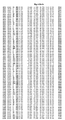
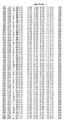
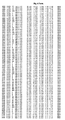
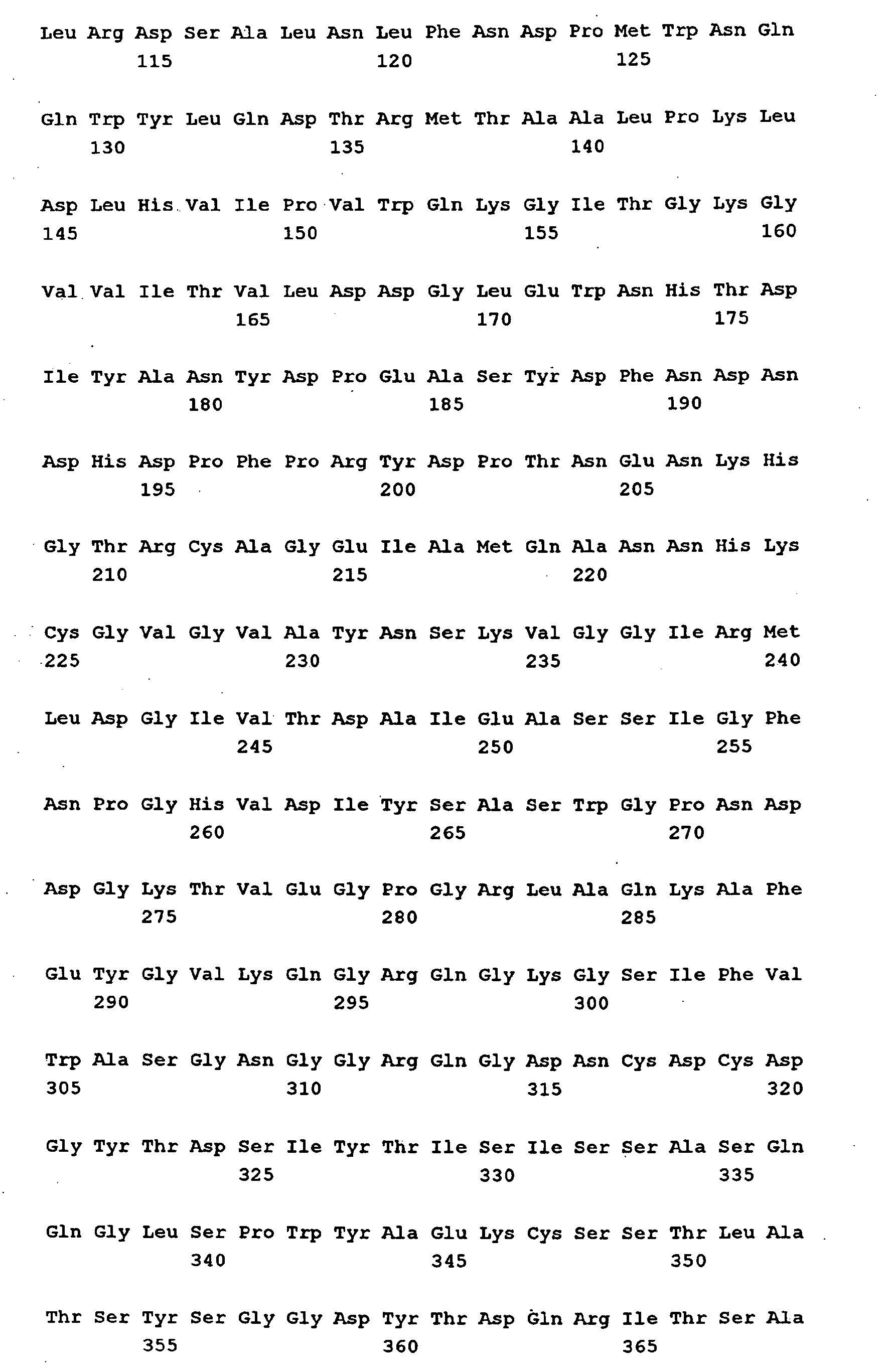
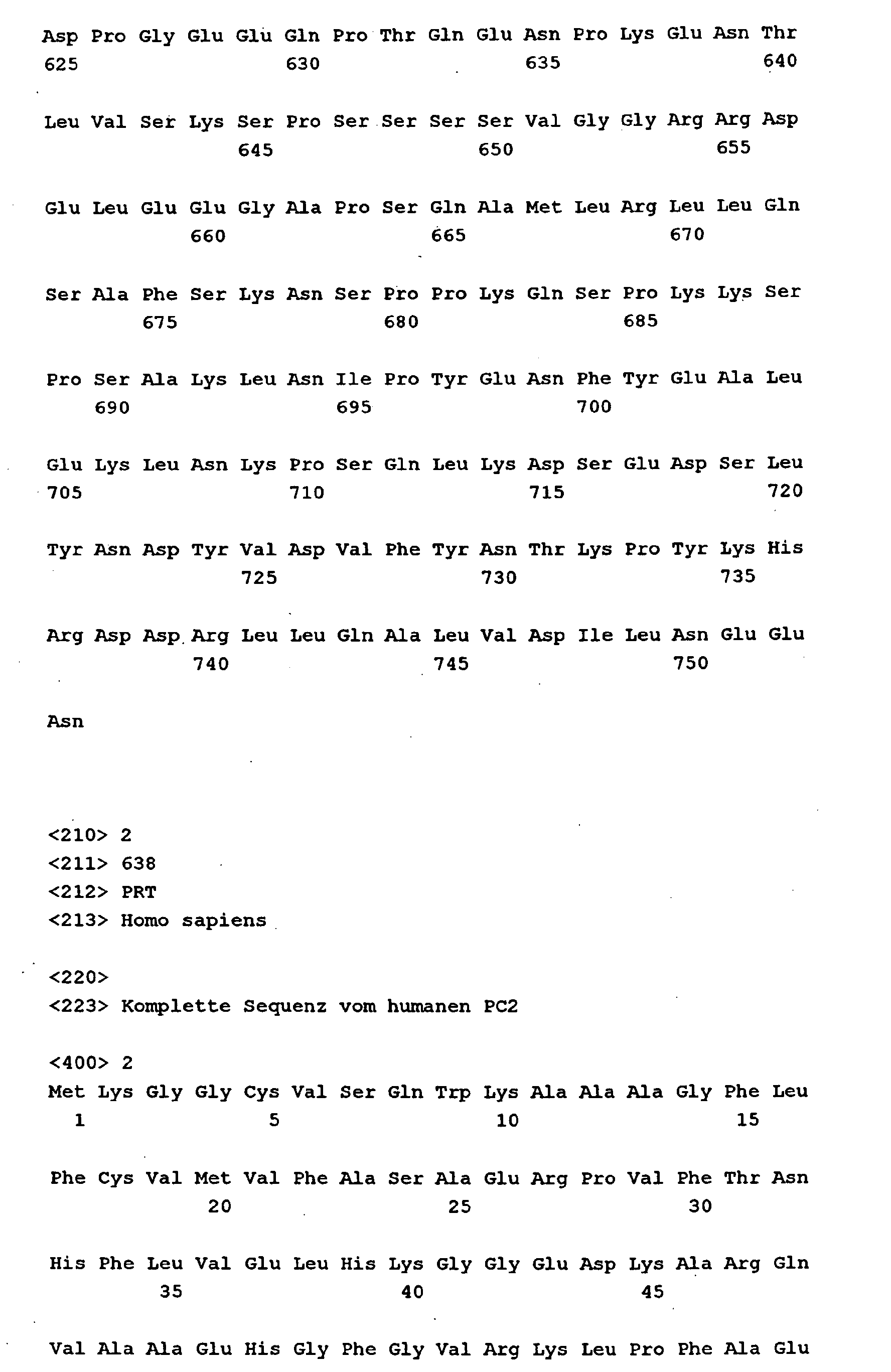
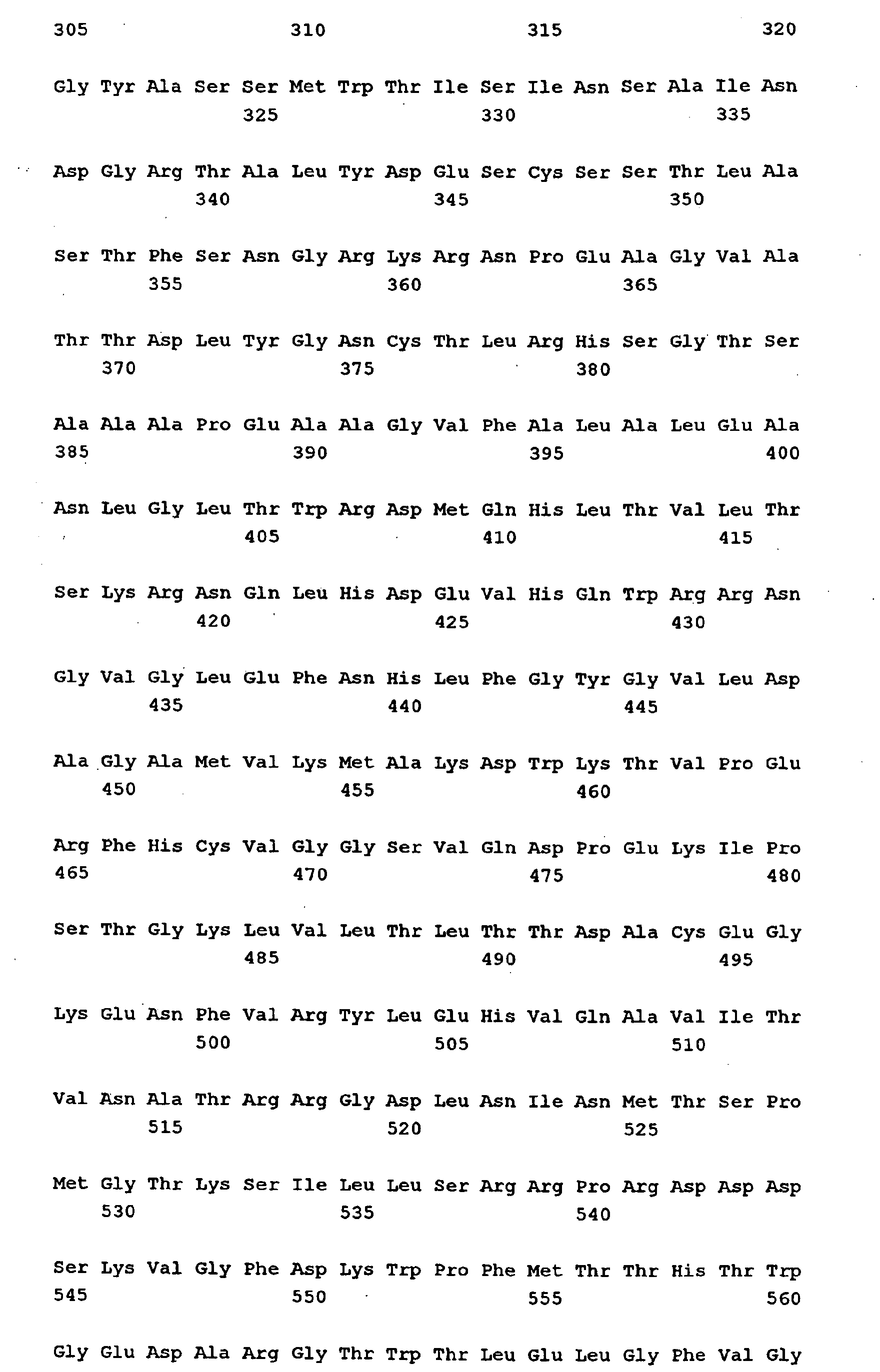
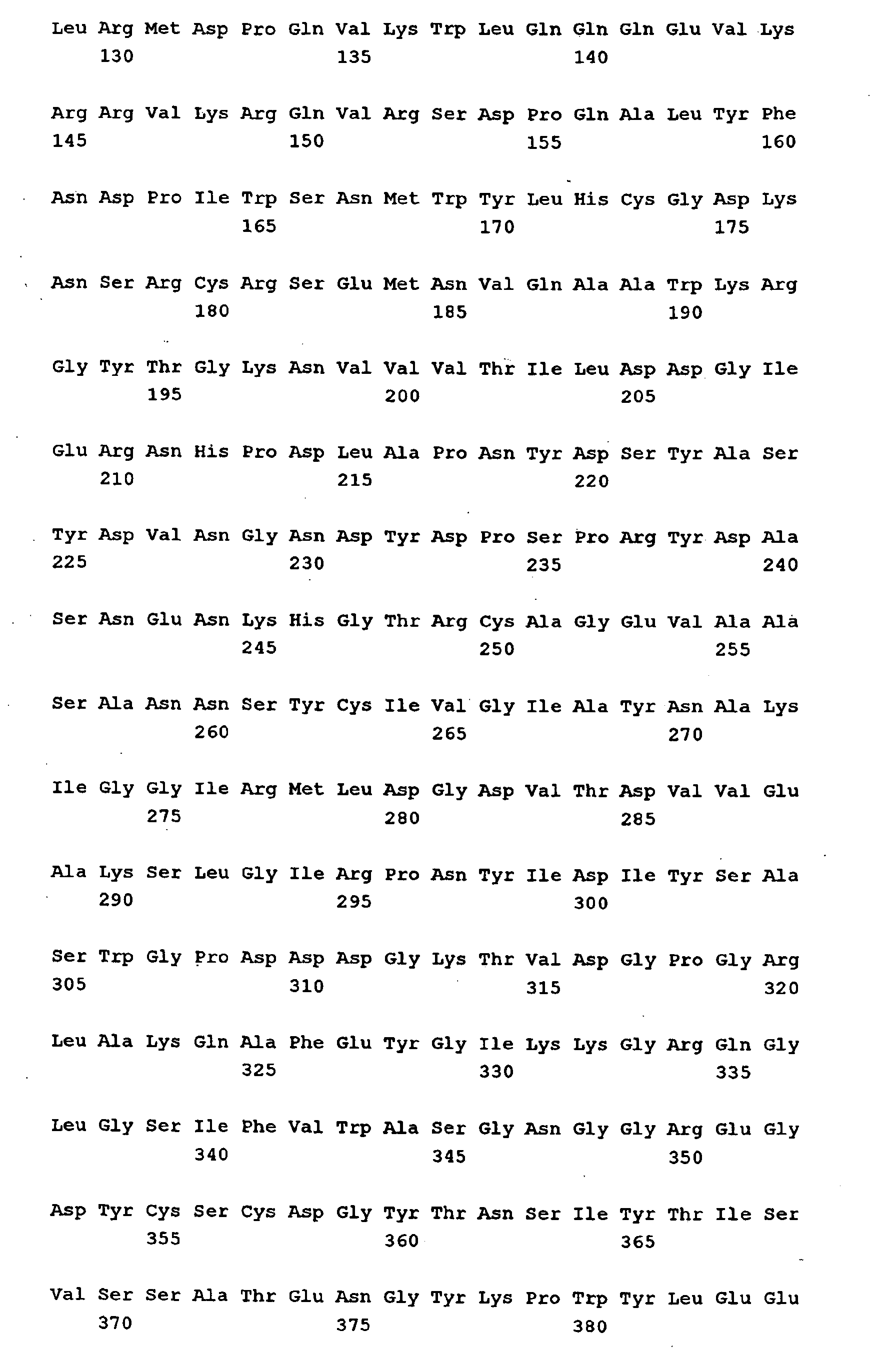
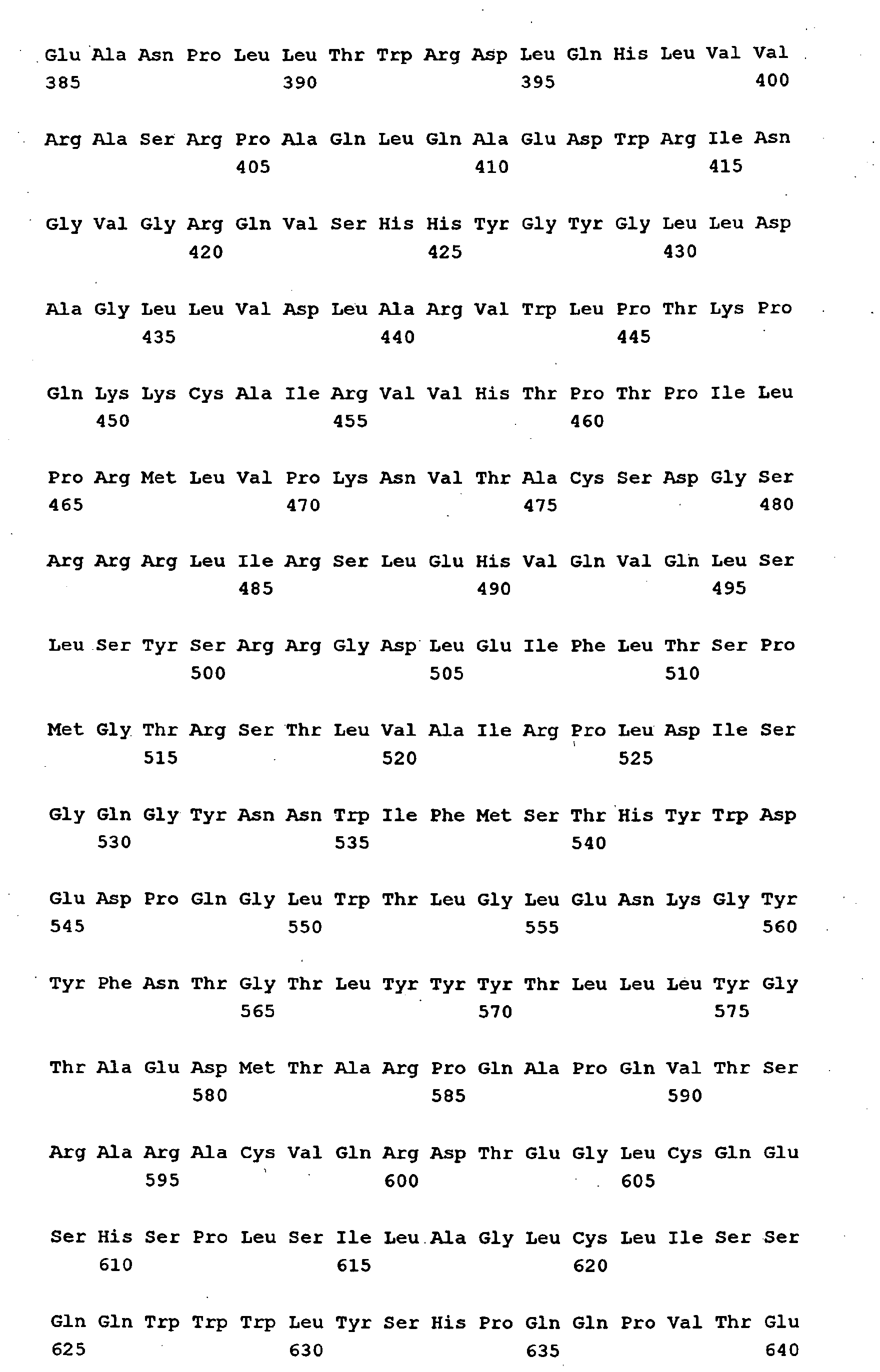
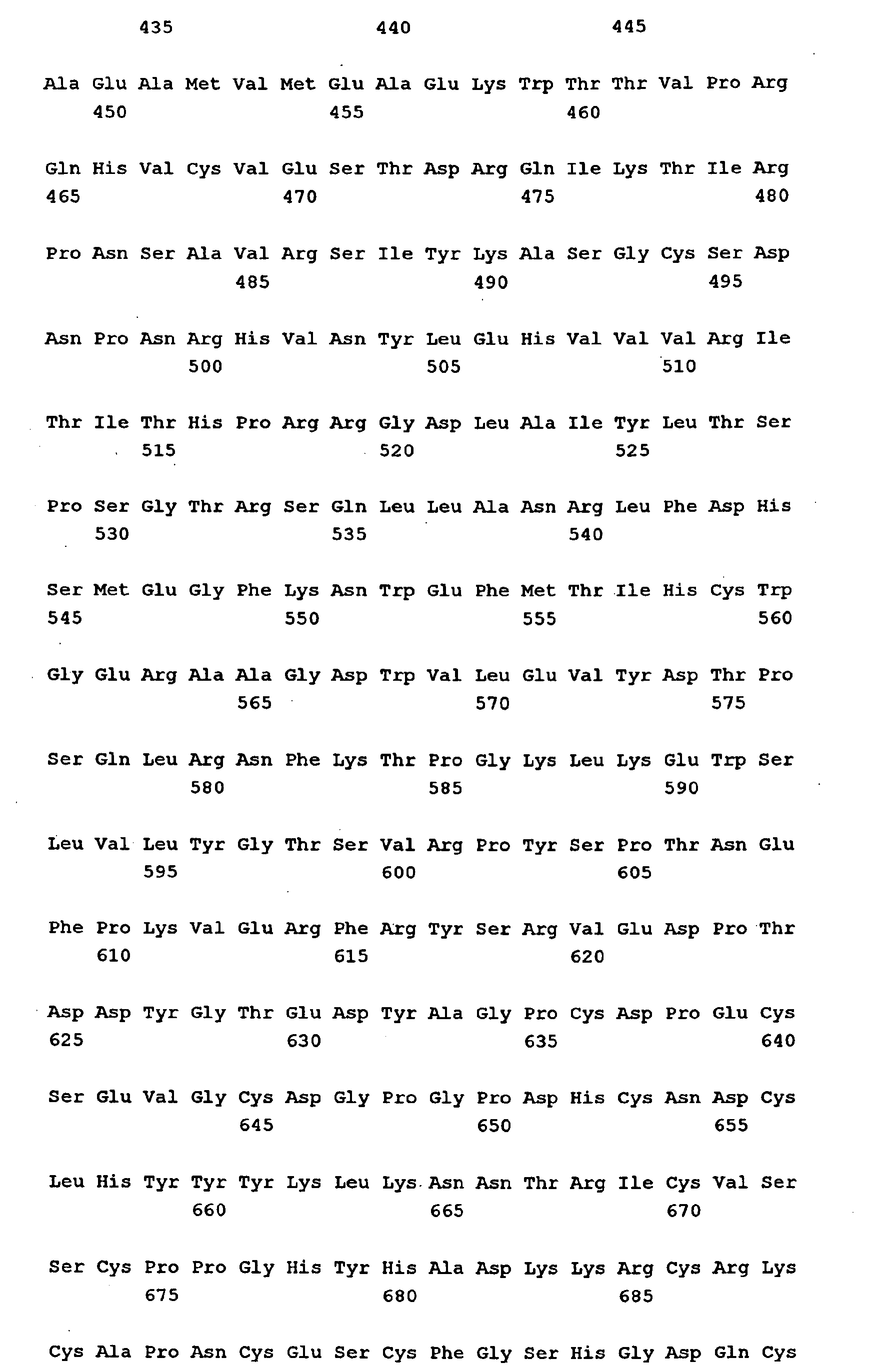
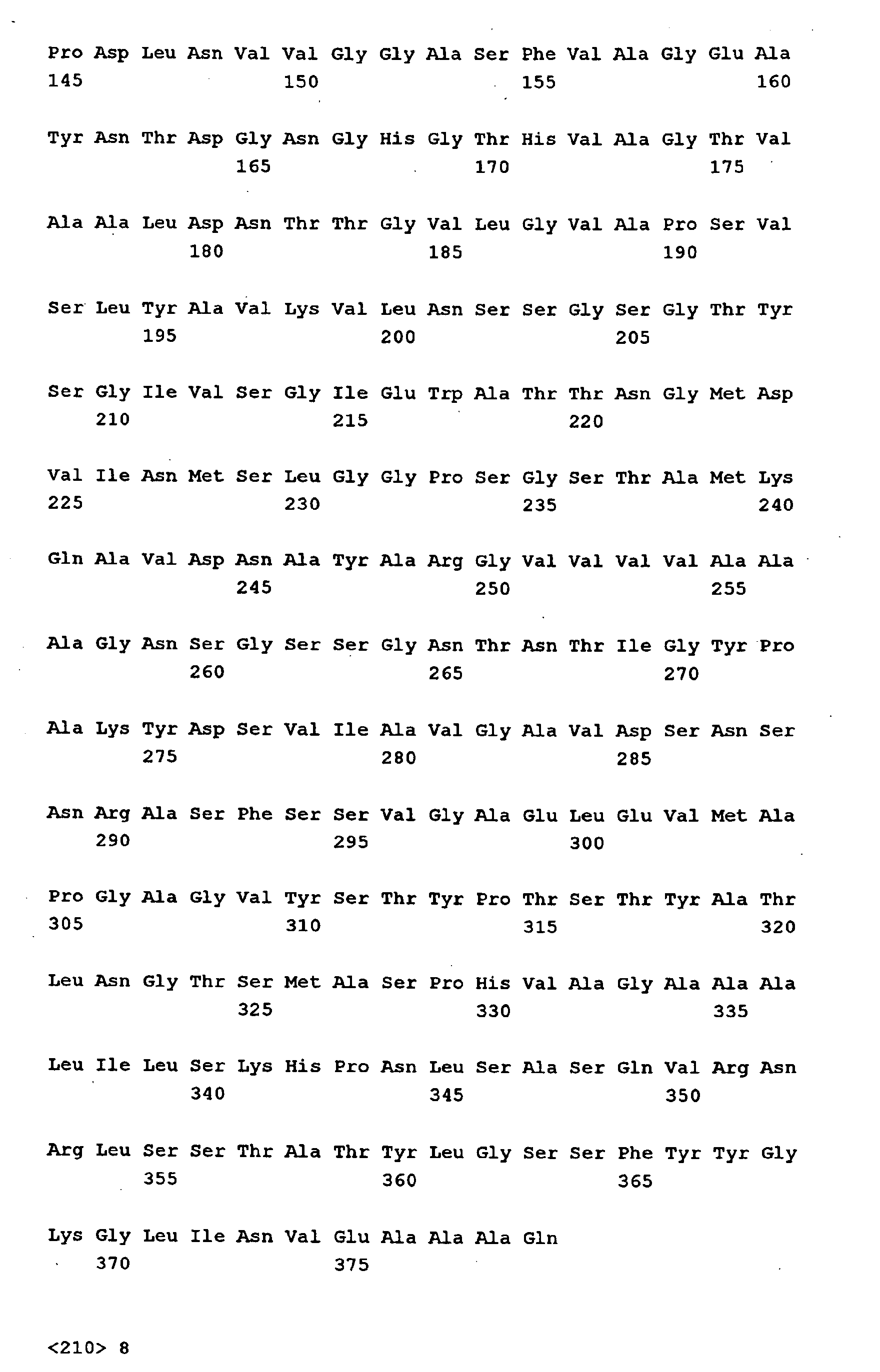
- Figure 1 shows the primary structure of murine furin (upper sequence) and subtilisin Carlsberg (lower sequence). With subtilisin, all topologically non-equivalent residues are in italics shown. Identical and similar remnants are highlighted in red or yellow. Cys residues that Remains of the active center and the two glycosylated Asn residues in blue, green and pink shown. The "non-prime” remains of the primary and secondary activation sites (numbered arrowheads) are highlighted with an orange background, and the Signal peptide cleavage site is indicated by the S-marked arrow head. The numbering of the Positions refers to fully translated mouse furin, with the few Substitutions in the human variant are indicated above the mouse sequence.
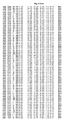
- Figure 2 is a "ribbon" representation of soluble furin, with helices, ⁇ -strands and disordered structural areas of the catalytic domain as yellow helices, red arrows or dark blue rope structures are shown.
- the P domain is shown in light blue.
- the Residues of the active center (dark gray) and the decanoyl-Arg-Val-Lys-Arg-cmk inhibitor residues are shown with all non-hydrogen atoms.
- Two calcium atoms are shown as purple spheres.
- the deep column between the domains is abbreviated as Crev.
- an orientation of the structure is shown, the N-linked Oligosaccharides are shown.
- the full-length protein furin is by means of a Linkers (in the lower area of the illustration according to FIG. 2b) are bound to the membrane.
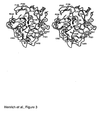
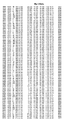
- Figure 3 is a stereo view showing the folding differences between subtilisin and the catalytic domain of furin.
- the superposition of the two structures (catalytic Domain of furin as a red rope; Subtilisin Carlsberg as a blue rope) also contains the decanoyl-Arg-Val-Lys-Arg-cmk inhibitor, the bound calcium ions (blue: subtilisin, purple: furin) and the disulfide bridges of the catalytic domain of furin.
- the orientation corresponds to Fig. 1a.
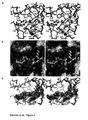
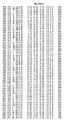
- FIG. 4 shows the interactions between the inhibitor and the column at the active center.
- the stereo representation contains the binding situation of furin with the decanoyl-Arg-Val-Lys-Arg-cmk inhibitor.
- a rod model of the inhibitor with the surrounding AS residues of furin is shown (dark gray: C, blue: N, red: O).
- Figure 4b lists the inhibitor in view of the electrostatic surface potential of the catalytic domain. Red coloring corresponds to negative (-27 e / kT), blue coloring corresponds to positive potential (27 e / kT).
- Figure 4c corresponds to Figure 4a but also shows the electron density map of the inhibitor with a contouring of 1 ⁇ (2 fobs f calc ).
- FIG. 5 shows the potential interaction of furin with the substrate Arg-Arg-Arg-Val-Lys-Arg- -Ser-Leu, which was modeled into the structure (positions S6 to S2 ').
- the color of the surface corresponds to the surface potential of the catalytic domain inked.
- the orientation is like in the other figures.
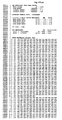
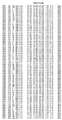
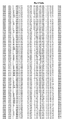
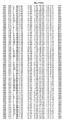
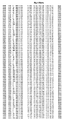
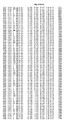
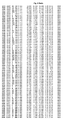
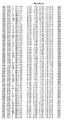
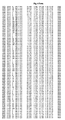
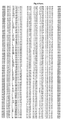
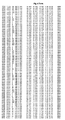
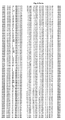
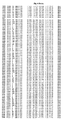
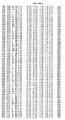
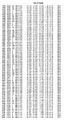
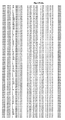
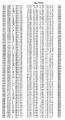
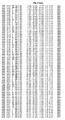
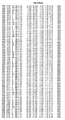
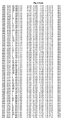
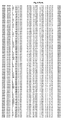
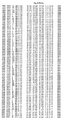
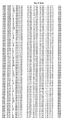
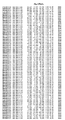
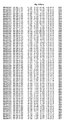
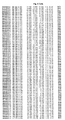
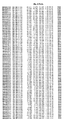
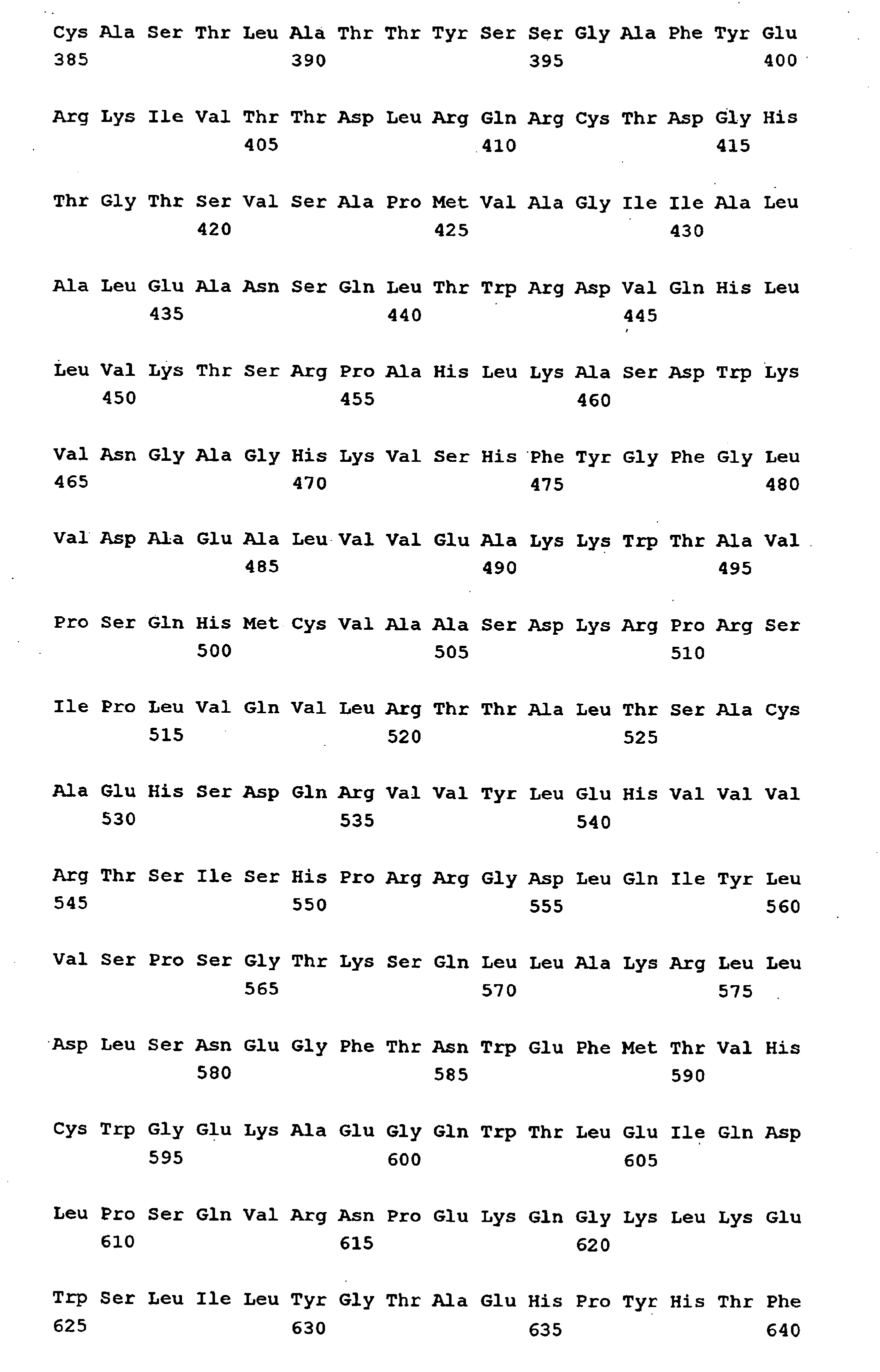
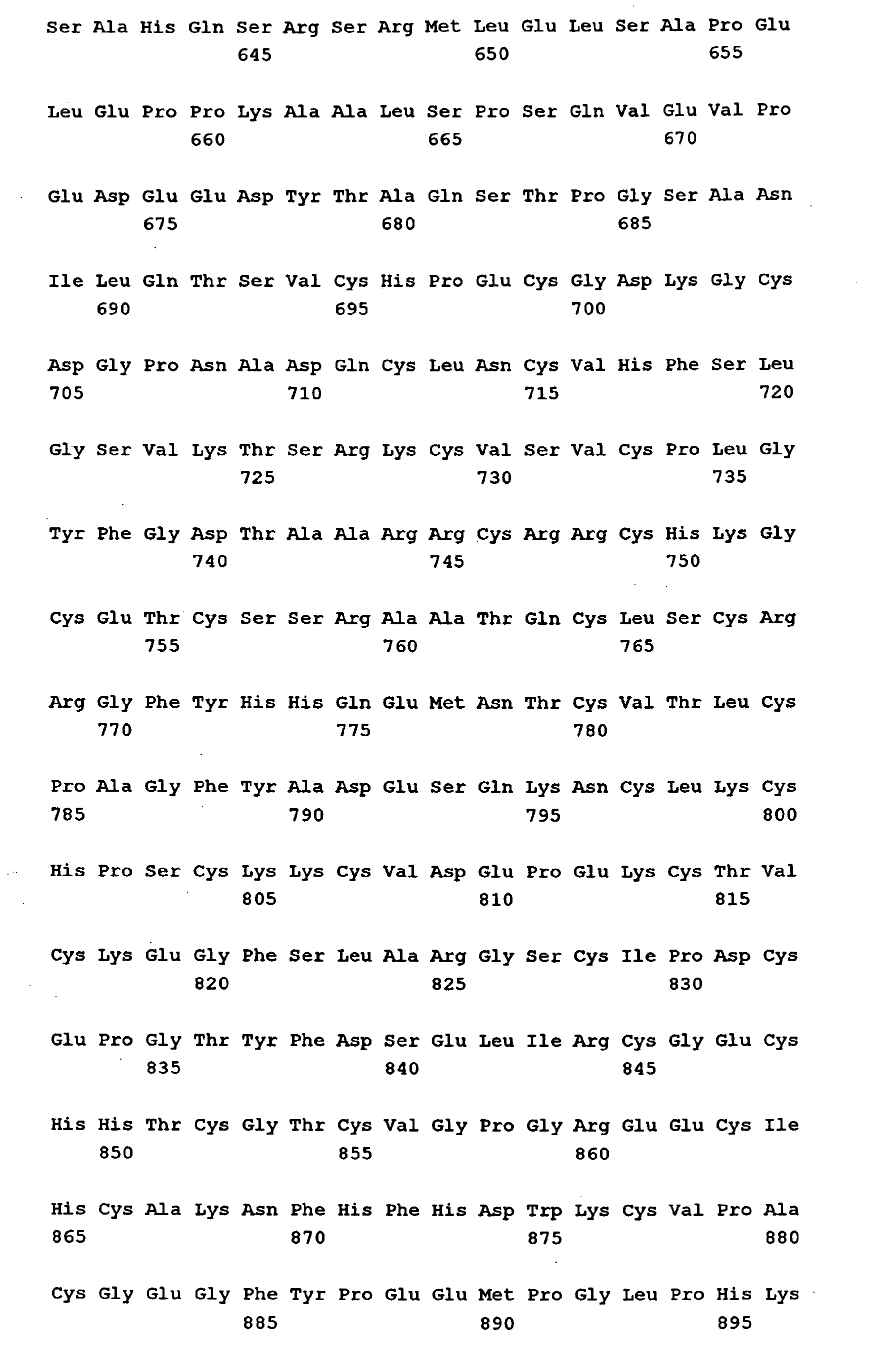
- FIG. 6 contains the structural coordinate set of furin in the mouse.
- the best defined chain of a furin monomer ranges from Asp108 to Leu578.
- This monomer essentially consists of two separate but contiguous domains, the spherical catalytic domain (Tyr110 to Ala445) and the "barrel-like" P domain (Pro446 to Thr573), which interact with each other via a 1100 ⁇ 2 interface (see Fig. 2a).
- the core of the catalytic domain similar to subtilisin, consists of a highly twisted ⁇ -sheet, which consists of seven parallel and one antiparallel strand of ⁇ -sheet (C ⁇ 1 - C ⁇ 8, Fig. 2) is composed.
- This ⁇ -sheet is flanked by five neighboring (C ⁇ 2 to C ⁇ 6) and two peripheral helices (C ⁇ 1 and C ⁇ 7) and by two ⁇ -hairpin loops.
- the catalytic domain of furin is cross-linked by two disulfide bridges between Cys211 and Cys360 or Cys303 and Cys333 (Fig. 3). At two points it contains bound metal ions, which are calcium ions in accordance with the electron density of the counter-charges, the oxygen coordination and the distance criteria (FIGS. 2, 3).
- the neighboring P-domain is organized as a separate, eight-strand ß sandwich.
- the Strands are comparable to those organized in "Jelly-Roll-ß-Barrels", namely with ß-strands P ⁇ 1a / b ⁇ P ⁇ 8 ⁇ P ⁇ 3 ⁇ P ⁇ 6 versus the ⁇ strands P ⁇ 2 ⁇ P ⁇ 7 ⁇ P ⁇ 4 ⁇ P ⁇ 5 (Fig. 2).
- a hydrophobic The core inside is surrounded by polar residues on the surface.
- the closed P-barrel indicates that shorter chains would destabilize the P domain, which is the finding corresponds to that Thr573 is essential for the activity of the P domain.
- the outer strands (“edge strands") P ⁇ 5 and P ⁇ 6 of the P domain and the large catalytic ones Domain loops C ⁇ 5-C ⁇ 4, C ⁇ 6-C ⁇ 7-C ⁇ 8, C ⁇ 11-C ⁇ 12 ("finger hair pin") are on the Contacts between the domains involved, which is due to the essentially hydrophobic Kern (Phe528 ... Val263, Met534 ... I312, Trp539 ... Val398) is made possible, but also through a variety of polar interactions or salt bridges.
- the furin active center column differs significantly from that of bacterial subtilisins in terms of their depth, shape and charges (Fig. 3).
- Fig. 3 At the Furin is a canyon-like column that is exposed by the exposed C ⁇ 2-C ⁇ 2 loop and the C ⁇ 4-C ⁇ 3 surface segment on one side and through the C ⁇ 5-C ⁇ 4, C ⁇ 6-C ⁇ 7 and C ⁇ 7-C ⁇ 8 loops are formed on the other side (Fig. 4), where Ser368 ⁇ His194 ⁇ Asp153 are arranged as a triad of the active center in the middle.
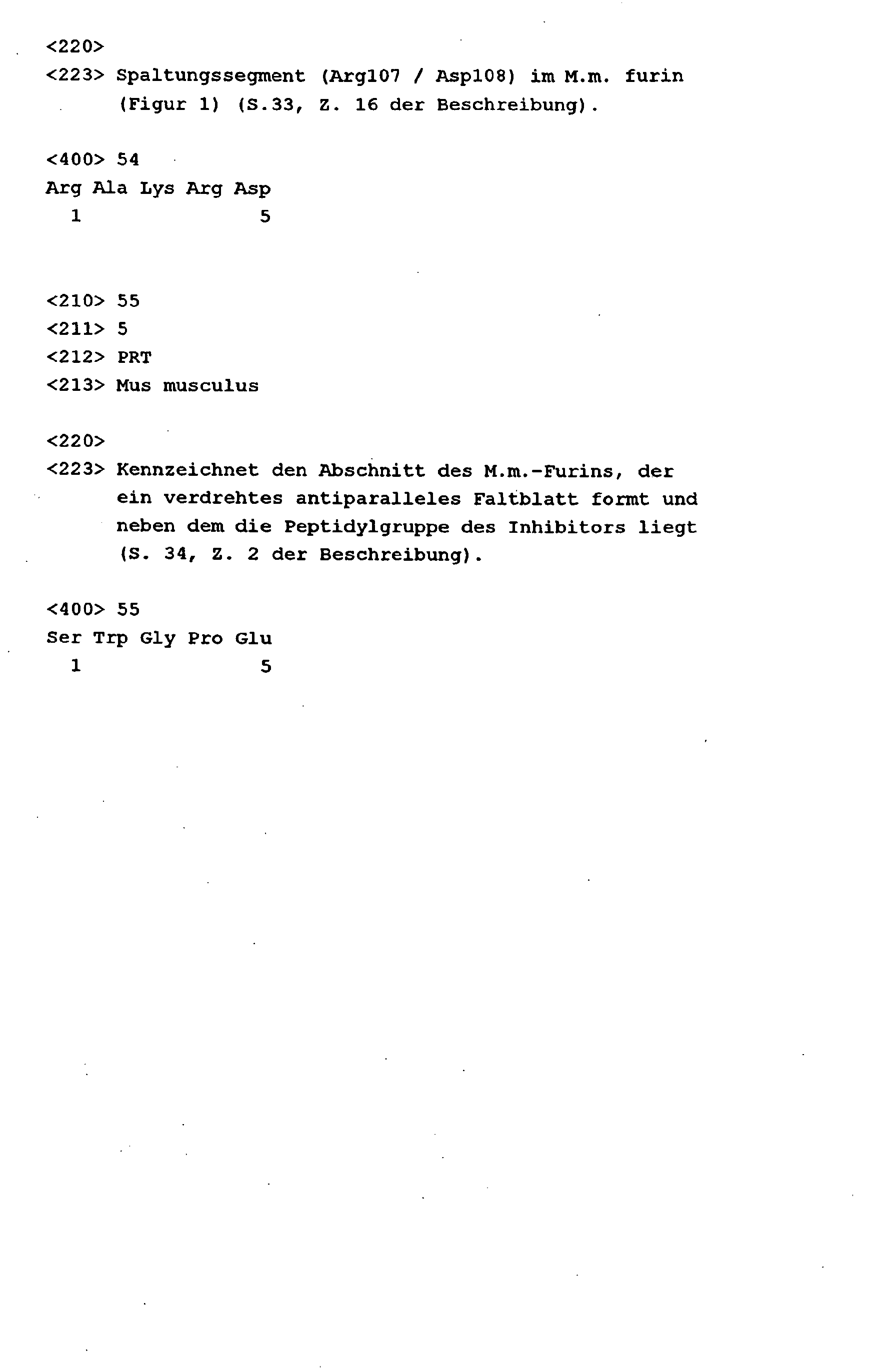
- the inhibitor's peptidyl group is adjacent to the extended Ser253-Trp-Gly-Pro-Glu section, which forms a twisted anti-parallel ⁇ -sheet.
- the P1 Arg side chain extends into the S1 pocket through the Ser253-Asp258 "Entrance frame" (Fig. 4A), which is more like trypsin than like Subtilisin is kinked.
- This side chain is enclosed between sections Ser253-Gly255 and Ser293-Asn295, with its guanidyl group perfectly between the hydrophobic groups in a shallow groove surrounded by the carboxylates of Asp258 and Asp306 and the carbonyls of Ala292 and Pro256. Any other Side chain, including Lys side chain, would fit less well, which in the end explains the unconditional specification of a furin substrate for P1-Arg.
- the P2 lysine side chain extends into a surface fissure, the ⁇ -ammonium group of oxygen Asp154 carboxylate, Asn192 carboxamide and Asp191 carbonyl for good Hydrogen bond is surrounded (Fig. 4).
- Fig. 4 Such are the geometry and the charge the S2 site is advantageous for the uptake of lysine, but also includes a P2-Arg side chain not from.
- the P3 Val side chain extends into the "bulk” solvent what corresponds to the sequence randomness at this position (FIG. 4).
- the side chains of one alkaline P3 residues could have good contacts with the surface arranged Make G1u257 carboxylate, whereby long basic P3 side chains are preferred could - in accordance with the regular presence of alkaline P3 residues In vivo substrates of furin.
- the kinked P4-Arg side chain extends into a gap their guanidyl group advantageously by the carboxylate groups of Glu236 and Asp264 is framed and packaged against Trp254 and Tyr 308 (Figs. 4, 5).
- This complementary packing method prefers the inclusion of P4-Arg side chains, in Agreement with the strong preference of furin for Arg and weaker Lys-P4 residues, however, it can also be used with other side chains.
- the murine furin clone was obtained from K. Nakayama (Fukuoka University School of Medicine, Fukuoka, Yapan).
- the murine furin cDNA was truncated N-terminal to the transmembrane domain from His711 using the polymerase chain reaction (PCR).
- PCR polymerase chain reaction
- This PCR product was then subcloned into pcDNA3.1 (-) - Myc-His (Invitrogen) via the Nbe I and Xba I restriction sites.
- DG44 CHO dihydrofolate reductase negative cells obtained from L.
- Amplified cell lines were examined for an increasing furin expression by the enzyme test. After the methotrexate concentration of 50 ⁇ M was reached, the cells were passaged twice a week in a ratio of 1: 6. 100 ml conditioned medium (Opti-MEM (Life Technologies, Inc.)) containing 100 ⁇ g / ml aprotinin (Miles Laboratories, Kankakee, IL, USA)) were taken out of confluent cell culture roller bottles every 24 hours. The medium was centrifuged at low speed to remove cells and the supernatant was stored at -80 ° C for further use.
- Opti-MEM Life Technologies, Inc.
- the enzyme test for furin activity was essentially as described in Abletalina et al (1998) J. Biol. Chem. 273: 26589-26595, using the substrate pERTKR-MCA at pH 7.0 in 100 mM HEPES, 5 mM CaCl 2 and 0.1% Brij 35 performed. All tests were carried out at 37 ° C. in a 96-well fluorimeter (Lab Systems Inc.) with an excitation wavelength of 380 nm and an emission wavelength of 460 nm. The total volume was 50 ⁇ l. The final concentration of the substrate in the tests was generally 200 ⁇ M. All tests were carried out as double or triple determinations.
- Conditioned medium was thawed, collected and diluted 1: 3.5 with buffer A (20 mM HEPS, 0.1% Brij 35 and 5 mM CaCl 2 , pH 7.4) and passed through a D 100 anion exchange membrane (40 ml / min ( Sartorius, Göttingen, Germany). The membrane was washed with 40 ml of Buffer A, followed by 40 ml of Buffer A containing 50 mM NaCl and finally with 50 ml of Buffer A containing 200 mM NaCl.
- buffer A (20 mM HEPS, 0.1% Brij 35 and 5 mM CaCl 2 , pH 7.4
- D 100 anion exchange membrane 40 ml / min ( Sartorius, Göttingen, Germany). The membrane was washed with 40 ml of Buffer A, followed by 40 ml of Buffer A containing 50 mM NaCl and finally with 50 ml of Buffer A containing 200 mM NaCl.
- the fraction eluting with 200 mM NaCl was diluted 1: 4 with buffer A and applied to a 1 ml Mono Q HR5 / 5 anion exchange column (Amersham Pharmacia Biotech) at a flow rate of 1 ml / min. After washing with 10 ml of Buffer A, furin was eluted through a linear gradient from 0 to 500 mM NaCl in buffer A over 30 ml, collecting 2 ml fractions.
- the enzyme-containing fraction which eluted from the ion exchange membrane with 200 mM NaCl was applied to a 1 ml Ni 2+ nitrilotriacetic acid superflow column (QIAGEN Inc.) at 0.3 ml / min, followed by washing with 10 ml of buffer A. and then eluted with a two step gradient from 0 to 200 mM imidazole in buffer A over 20 ml followed by a linear gradient from 20 to 200 mM imidazole in buffer A.
- the peak fractions with increased enzyme activity were collected and subjected to ion exchange chromatography on a Mono-Q column as described above.
- the crystals of the polypeptide (C-terminally truncated, soluble furin of the mouse) obtained according to embodiment 1 were subjected to the crystallization, chloromethyl ketone inhibitor (decanoyl-Arg-Val-Lys-Arg-CMK) being added for inactivation after purification.
- chloromethyl ketone inhibitor decanoyl-Arg-Val-Lys-Arg-CMK
- Equal volumes of 10 mg / ml protein solution and the precipitation buffer 1.0 M (NH 4 ) 2 SO 4 , 0.4 M Li 2 SO 4 , 0.1 M Na 3 citrate, pH 6 with / without 1, 5-pentanediol
- the crystals were transferred to mineral oil and placed in a cryo- "loop" of a "free-mounting system" (see in particular Cameron et al. J. Biol. Chem. 275 (47), 36741 or Kiefersauer et al J. Appl. Crystallography 33 (part 5) 1223). Airflow more defined Moisture was added to the crystal and diffraction images were taken. The Setting the air humidity to 81% significantly improved the diffraction pattern. This transformation process was accomplished by freezing the crystal in a cryogenic nitrogen stream completed.
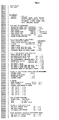
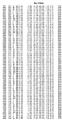
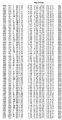
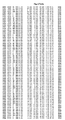
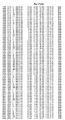
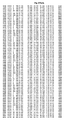
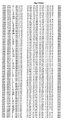
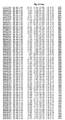
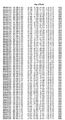
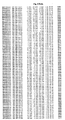
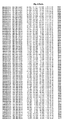
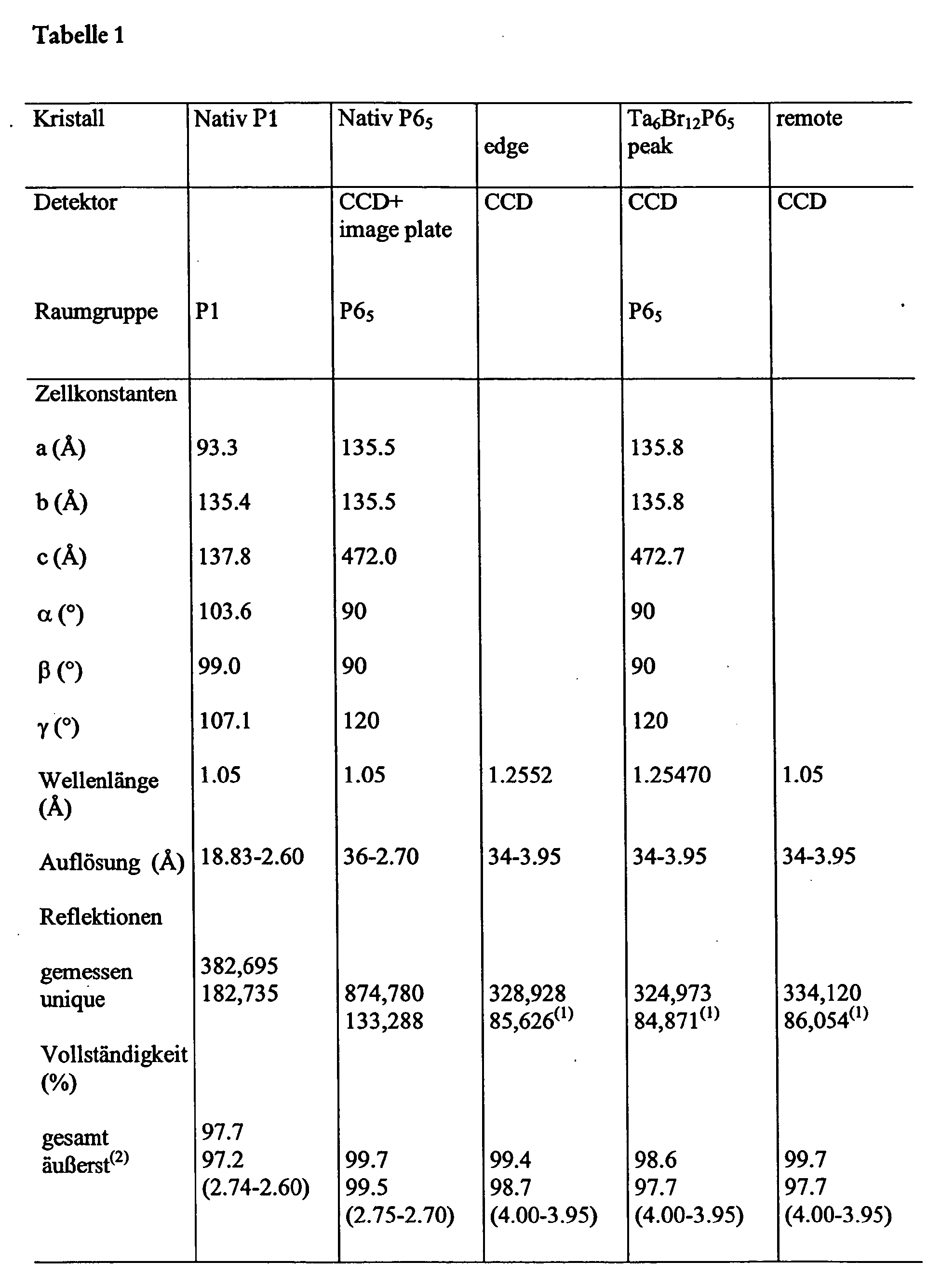
- the triclinic structure was refined at 2.6 ⁇ up to an R-factor / R free of 18.8 / 21.9% for the final model. Further details of the structure can be found in the attached tables 1 (statistics of the data recordings) and 2 (statistics of the refinement of the triclinic crystals).
Landscapes
- Health & Medical Sciences (AREA)
- Chemical & Material Sciences (AREA)
- Engineering & Computer Science (AREA)
- Life Sciences & Earth Sciences (AREA)
- Zoology (AREA)
- Wood Science & Technology (AREA)
- Organic Chemistry (AREA)
- Bioinformatics & Cheminformatics (AREA)
- Biomedical Technology (AREA)
- Genetics & Genomics (AREA)
- Biotechnology (AREA)
- Microbiology (AREA)
- Medicinal Chemistry (AREA)
- Biochemistry (AREA)
- General Engineering & Computer Science (AREA)
- General Health & Medical Sciences (AREA)
- Molecular Biology (AREA)
- Peptides Or Proteins (AREA)
- Medicines That Contain Protein Lipid Enzymes And Other Medicines (AREA)
Abstract
Description
Alle Tests wurden bei 37°C in einem 96-Well-Fluorimeter (Lab Systems Inc.) bei einer Anregungswellenlänge von 380 nm und einer Emissionswellenlänge von 460 nm durchgeführt. Das Gesamtvolumen betrug 50 µl. Die Endkonzentration des Substrats betrug bei den Test im allgemeinen 200 µM Alle Tests wurden als Doppel- oder Dreifachbestimmungen durchgeführt.
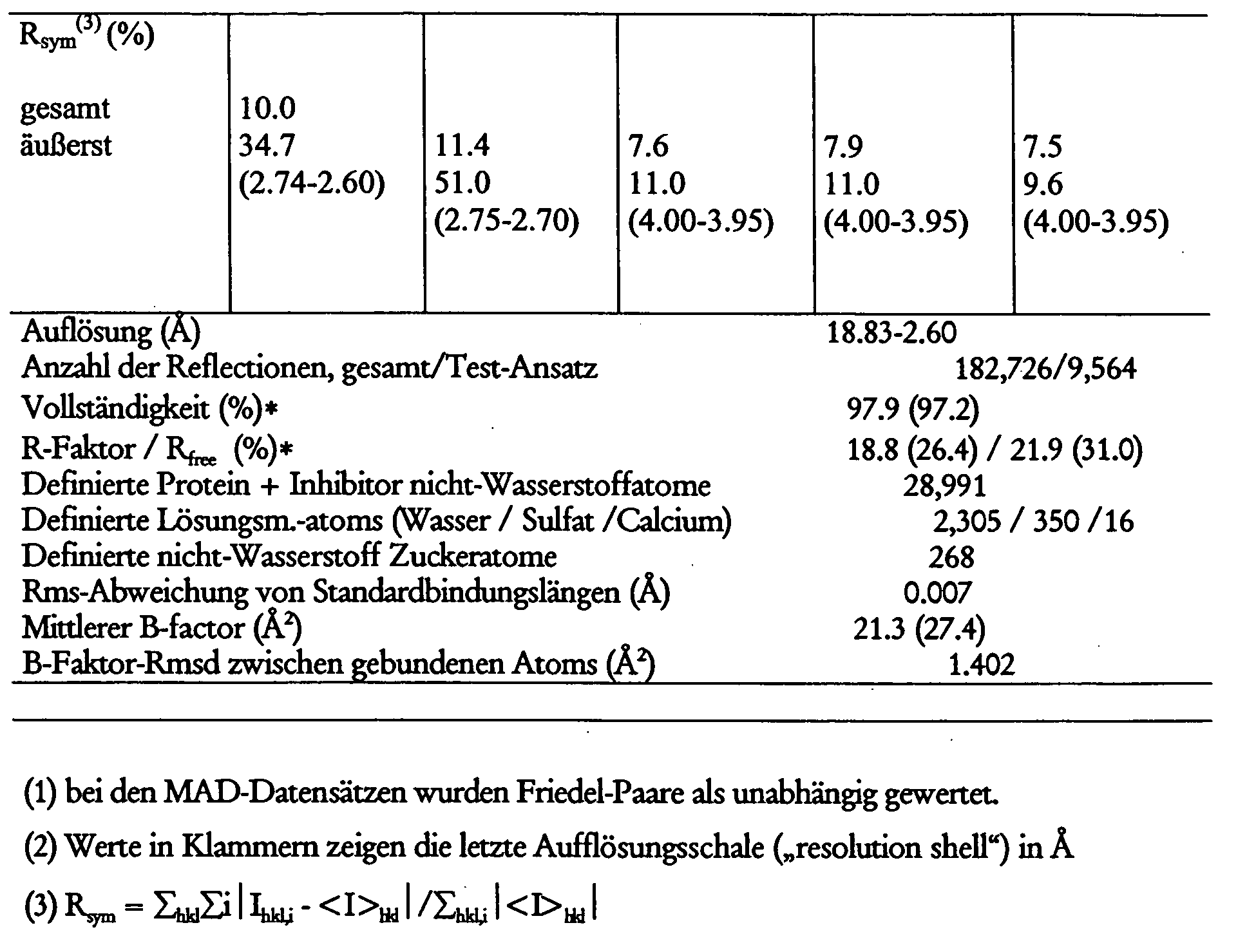
| Auflösung (Å) | 18.83-2.60 |
| Anzahl der Reflectionen, gesamt/Test-Ansatz | 182,726/9,564 |
| Vollständigkeit (%)* | 97.9 (97.2) |
| R-Faktor / Rfree (%) | 18.8 (26.4) / 21.9 (31.0) |
| Definierte Protein + Inhibitor nicht-Wasserstoffatome | 28,991 |
| Definierte Lösungsm.-atoms (Wasser / Sulfat /Calcium) | 2,305 / 350 /16 |
| Definierte nicht-Wasserstoff Zuckeratome | 268 |
| Rms-Abweichung von Standardbindungslängen (Å) | 0.007 |
| Mittlerer B-factor (Å2) | 21.3 (27.4) |
| B-Faktor-Rmsd zwischen gebundenen Atoms (Å2) | 1.402 |




















Claims (61)
- Raumform eines Polypeptids, dadurch gekennzeichnet, daß das Polypeptid in der Raumform mindestens eine mindestens 50 Aminosäuren umfassende Aminosäuresequenz eines Proteins (Teilsequenz) aus der Familie der PCs oder ein Derivat einer solchen Aminosäuresequenz enthält.
- Raumform eines Polypeptids nach Anspruch 1, dadurch gekennzeichnet, daß das Polypeptid in der Raumform mindestens eine mindestens 50 Aminosäuren umfassende Sequenz eines Proteins, ausgewählt aus der Gruppe, bestehend aus PC1/PC3, PC2, PACE4, PC4, PC5/PC6, PC7/PC8/LPC/SPC7 und Furin, enthält.
- Raumform eines Polypeptids nach Anspruch 1 oder 2, dadurch gekennzeichnet, daß das Polypeptid in der Raumform mindestens eine mindestens 80, vorzugsweise mindestens 100, stärker bevorzugt mindestens 120, noch stärker bevorzugt mindestens 150 Aminosäuren unfassende Aminosäuresequenz eines Proteins oder Derivats/e aus der Familie der PCs enthält.
- Raumform eines Polypeptids nach einem der vorgenannten Ansprüche 1 bis 3, dadurch gekennzeichnet, daß das Polypeptid in der Raumform mindestens eine Aminosäuresequenz einer katalytischen Domäne eines Proteins aus der Familie der PCs enthält, insbesondere den Teilabschnitt von AS 110 (Tyr) bis AS 445 (Ala) im Falle murinen Furins oder entsprechend analoge Abschnitte bei Isoformen von Furin anderer Organismen, insbesondere der humanen Isoform.
- Raumform eines Polypeptids nach einem der vorgenannten Ansprüche 1 bis 4, dadurch gekennzeichnet, daß die in dem Polypeptid enthaltene mindestens eine Aminosäuresequenz eines Proteins aus der Familie der PCs eukaryotischen Ursprungs ist.
- Raumform eines Polypeptids nach einem der vorgenannten Ansprüche 1 bis 5, dadurch gekennzeichnet, daß die in dem Polypeptid enthaltene mindestens eine Aminosäuresequenz eines Proteins aus der Familie der PCs humanen Ursprungs ist.
- Raumform eines Polypeptids nach einem der vorgenannten Ansprüche 1 bis 6, dadurch gekennzeichnet, daß das Polypeptid die Aminosäuresequenz eines eukaryotischen Furins oder eines Abschnitts oder Derivats derselben aufweist.
- Raumform eines Polypeptids nach einem der vorgenannten Ansprüche 1 bis 7, dadurch gekennzeichnet, daß die Raumform eine weitere Verbindung aufweist.
- Raumform eines Polypeptids nach Anspruch 8, dadurch gekennzeichnet, daß die Raumform eine weitere Verbindung aufweist, die als Ligand an das Polypeptid, so wie in einem der Ansprüche 1 bis 7 gekennzeichnet, bindet.
- Raumform eine Polypeptids nach Anspruch 8 oder 9, dadurch gekennzeichnet, daß die Verbindung oder der Ligand ein nicht physiologisch auftretendes Molekül ist.
- Raumform eines Polypeptids nach einem der vorgenannten Ansprüche 1 bis 10, dadurch gekennzeichnet, daß die Raumform ein Polypeptid, wie in den Ansprüchen 1 bis 7 gekennzeichnet, und mindestens einen physiologischen Liganden oder mindestens einen Abschnitt eines physiologischen Liganden für das Polypeptid aufweist.
- Raumform eines Polypeptids nach einem der vorgenannten Ansprüche 1 bis 11, dadurch gekennzeichnet, daß die Raumform ein Polypeptid und mindestens einen Liganden oder einen Abschnitt eines Liganden für das Polypeptid aufweist, wobei der Ligand an die katalytische Domäne oder an die P-Domäne oder an die Schnittstelle der beiden Domänen des Polypeptids bindet.
- Raumform eines Polypeptids nach einem der vorgenannten Ansprüche 8 bis 12, dadurch gekennzeichnet, daß der Ligand ein Polypeptid, Oligopeptid, Dipeptid oder ein synthetisch modifiziertes Derivat eines Poly-, Oligo- oder Dipeptids ist, insbesondere ein bezüglich der Amidbindung modifiziertes Poly-, Oligo- oder Dipeptid ist, vorzugsweise mindestens an der zu spaltenden Amidbindung chemisch modifiziert ist, insbesondere so modifiziert ist, dass keine endoproteolytische Spaltung der Peptidbindung möglich ist.
- Raumform eines Polypeptids nach einem der vorgenannten Ansprüche 8 bis 13, dadurch gekennzeichnet, daß der Ligand eine Aminosäuresequenz oder einen Abschnitt einer Aminosäuresequenz eines Proteins aus der Klasse der endoproteolytisch von den Proteinen der Familie der PCs gespaltenen Zielsubstrate oder ein Derivat eines/r solchen Aminosäuresequenz oder eines solchen Abschnitts enthält.
- Raumform eines Polypeptids nach einem der vorgenannten Ansprüche 8 bis 14, dadurch gekennzeichnet, daß der Ligand ausgewählt ist aus Vollängensequenzen oder Teilsequenzen, ausgewählt. aus den folgenden physiologischen Zielsubstraten, bestehend aus der Gruppe: Pro-β-NGF, Pro-BDNF, Pro-NT-3, Pro-TGF-β1,Pro-Müller-Inhibitor-Substanz, Pro-IGF-1, Pro-Endothelin-1, Parathormon-verwandtes Propeptid, Pro-Parathormon, Insulin-Prorezeptor, Hepatocyten-Wachstumsfaktor-Prorezeptor, Pro-LRP, Integrin-α3-Kette, Integrin-α6-Kette, Proalbumin, Komplement-pro-C3, Profaktor IX, Profaktor X, Pro-von-Willebrand-Faktor, Proprotein C, Stromelysin 3, MT-MMPI, HIV gp160, CMV Glycoprotein B, MMTV-7 Superantigen, Hühnerpest-Virus A Hämagglutinin, Masern-Virus F0, NDV F0, Sindbis-Virus gpE2, Parainfluenza-Typ-3-Virus F0, Anthrax-Toxin-protektives Antigen, Diphtherie-Toxin, Pseudomonas-Endotoxin A, Shiga-Toxin, Pro-Furin, Proendopeptidase 3.4.24.18 und Pro-7B2.
- Raumform eines Polypeptids nach einem der vorgenannten Ansprüche 8 bis 15, dadurch gekennzeichnet, daß der Ligand ausgewählt ist aus der Gruppe, bestehend aus: acyliertem Arg-Xaa-Lys/Arg-Arg-Chlormethan, α1-PIT, α1-PDX, einer Variante der dritten Domäne von Ovomucoid, bei welcher die Sequenz des reaktiven Zentrums Ala-Cys-Thr-Leu durch Arg-Cys-Lys-Arg ersetzt ist, nicht-acetylierten Poly-D-Argininen und einer vom Propeptid von Furin abgeleiteten Sequenz, insbesondere mit dem Motiv QQVAKRRTKR.
- Raumform eines Polypeptids nach einem der vorgenannten Ansprüche 8 bis 16, dadurch gekennzeichnet, daß der Ligand ein Inhibitor der physiologischen Funktion, insbesondere der proteolytischen Funktion, eines Proteins der Familie der PCs ist.
- Raumform eines Polypeptids nach einem der vorgenannten Ansprüche 8 bis 17, dadurch gekennzeichnet, daß der Ligand ein Inhibitor des Typs Decanoyl-Arg-Xaa-Lys/Arg-Arg-Chlormethylketon ist.
- Raumform eines Polypeptids nach einem der vorgenannten Ansprüche 1 bis 18, dadurch gekennzeichnet, daß die Raumform des Polypeptids und ggf. mindestens einer weiteren Verbindung eine Kristallform ist.
- Raumform eines Polypeptids als Kristallform nach Anspruch 19, dadurch gekennzeichnet, daß die Kristallform Metall-Ionen, insbesondere Schwermetall-Ionen, enthält.
- Raumform eines Polypeptids als Kristallform nach Anspruch 19 oder 20, dadurch gekennzeichnet, daß die Kristallform des Polypeptids einen mindestens 50 Aminosäuren umfassenden Sequenzabschnitt des Proteins Furin gemäß Fig. 6 mit den dort wiedergegebenen Strukturkoordinaten der entsprechenden Atome dieses Sequenzabschnitts enthält.
- Raumform eines Polypeptids als Kristallform nach einem der Ansprüche 19 bis 21, dadurch gekennzeichnet, daß die Kristallform des Polypeptids einen mindestens 50, bevorzugt mindestens 80, mehr bevorzugt mindestens 100, stärker bevorzugt mindestens 120, noch stärker bevorzugt mindestens 150 Aminosäuren umfassenden Sequenzabschnitt aus der katalytischen Domäne eines Proteins aus der Familie der PCs, insbesondere mit den Strukturkoordinaten für Furin, wie in Fig. 6 wiedergegeben, enthält.
- Kristall, enthaltend pro asymmetrischer Einheit in der Einheitszelle des Kristalls mindestens ein Polypeptid und ggf. mindestens eine weitere Verbindung, dadurch gekennzeichnet, daß die Polypeptide im Kristall eine Raumform nach einem der Ansprüche 19 bis 22 einnehmen.
- Kristall nach Anspruch 23, dadurch gekennzeichnet, daß die Raumgruppe des die Kristallform aufweisenden Kristalls monoklin, tetragonal, orthorhombisch, kubisch, triklin, hexagonal oder trigonal/rhombohedral ist.
- Kristall nach Anspruch 23 oder 24, dadurch gekennzeichnet, daß die Raumgruppe des eine Kristallform nach einem der Ansprüche 19 bis 22 aufweisenden Kristalls P1 ist.
- Kristall nach einem der Ansprüche 23 bis 25, dadurch gekennzeichnet, daß die Einheitszelle des die Kristallform enthaltenden Kristalls Zellkonstanten von ungefähr a = 93,3 Å, b = 135,4 Å, c = 137,8 Å und α = 103,6°, β = 99,0° und γ = 107,1° aufweist.
- Verfahren zur Herstellung eines Kristalls mit Einheitszellen, enthaltend in der asymmetrischen Einheit mindestens eine Raumform eines Polypeptids und ggf. mindestens einer weiteren Verbindung, nach einem der Ansprüche 24 bis 27, dadurch gekennzeichnet, daß(a) das Polypeptid in einem Expressionssystem überexprimiert wird,(b) das überexprimierte Polypeptid gereinigt und aufkonzentriert wird,(c) das gemäß (b) erhaltene Polypeptidkonzentrat in einem geeigneten Puffersystem, ggf. unter Hinzufügen mindestens einer weiteren Verbindung, gelöst wird und(d) die Kristallisierung, bspw. durch (Dampf-)Diffusionsverfahren, eingeleitet wird.
- Verbindung mit der Eigenschaft, als Ligand an Strukturbereiche eines Proteins aus der Familie der PCs oder strukturell mit einem Protein aus der Familie der PCs verwandter Proteine, insbesondere PC1/PC3, PC2, PACE4, PC4, PC5/PC6, PC7/PC8/LPC/SPC7 oder Furin, zu binden, dadurch gekennzeichnet, daß die Verbindung nicht-kovalente Wechselwirkung mit der Hauptkette und/oder den Seitenketten von Aminosäuren, die Bestandteil einer der katalytischen Domäne eines Proteins aus der Familie der PCs oder eines strukturell mit einem Protein aus der Familie der PCs verwandten Proteins sind, eingeht.
- Verbindung nach Anspruch 28, dadurch gekennzeichnet, daß die Verbindung als Inhibitor der physiologischen Funktion, insbesondere der Endoprotease-Funktion, eines Proteins aus der Familie der PCs, insbesondere PC1/PC3, PC2, PACE4, PC4, PC5/PC6, PC7/PC8/LPC/SPC7 und/oder Furin, wirkt.
- Verbindung nach Anspruch 28 oder 29, dadurch gekennzeichnet, daß die Verbindung mit Aminosäuren der katalytischen Domäne eines Proteins aus der Familie der PCs, insbesondere PC1/PC3, PC2, PACE4, PC4, PC5/PC6, PC7/PC8/LPC/SPC7 und/oder Furin, in Wechselwirkung tritt.
- Verbindung nach einem der Ansprüche 28 bis 30, dadurch gekennzeichnet, daß die Verbindung mit mindestens einer der Aminosäuren Ser368, His194, Asp153, Asn295, Ser253 bis Asp258, Ser293, Asp306, Ala292, Pro256 Asp154, Asp191, Glu236, Asp264, Trp254 und Tyr308 von Furin oder der an den gemäß Figur 6 entsprechenden Positionen befindlichen Aminosäuren aus katalytischen Domänen von mit Furin verwandten Proteinen (bspw. andere Proteine aus der Familie der PCs oder Furine unterschiedlichen Ursprungs) in Wechselwirkung tritt.
- Verbindung nach Anspruch 31, dadurch gekennzeichnet, daß die Verbindung mit mindestens einer der Aminosäuren Ser368, His194 und Asp153 von Furin oder der an den gemäß Figur 6 entsprechenden Positionen befindlichen Aminosäuren aus katalytischen Domänen von mit Furin verwandten Proteinen (bspw. andere Proteine aus der Familie der PCs oder Furine unterschiedlichen Ursprungs) in Wechselwirkung tritt.
- Verbindung nach einem der Ansprüche 28 bis 32, dadurch gekennzeichnet, daß die Verbindung ein modifiziertes oder unmodifiziertes Di- oder Oligopeptid oder ein Peptidomimetikum eines solchen Di- oder Oligopeptids ist.
- Verbindung nach einem der Ansprüche 28 bis 33, dadurch gekennzeichnet, daß die Verbindung ein Oligopeptid ist, das die native Aminosäuresequenz eines Zielsubstrats von Proteinen aus der Familie der PCs, insbesondere von PC1/PC3, PC2 oder Furin, enthält.
- Verbindung nach einem der Ansprüche 28 bis 34, dadurch gekennzeichnet, daß die Verbindung ein Oligopeptid ist, das die Aminosäuresequenz mit dem Motiv RXXR, insbesondere RX(K/R)R, oder einem dazu ähnlichen Motiv enthält, wobei X für eine beliebige, natürlich auftretende Aminosäure steht.
- Verbindung nach einem der Ansprüche 28 bis 35, dadurch gekennzeichnet, daß die Verbindung ein Oligopeptid ist, das die Aminosäuresequenz mit dem Motiv (K/R)RX(K/R)R oder einem dazu ähnlichen Motiv enthält, wobei X für eine beliebige, natürlich auftretende Aminosäure steht.
- Verbindung nach einem der Ansprüche 34 bis 35, dadurch gekennzeichnet, daß die Verbindung ein Oligopeptid ist, das die Aminosäuresequenz VVQREKR, THNRTKR, IENRKRR, SKKREKR, SSRRHKR, GGRRQRR, SSGRSKR, oder TDPRTKR enthält.
- Verbindung nach einem der Ansprüche 28 bis 35, dadurch gekennzeichnet, daß die Verbindung ein Oligopeptid ist, das die Aminosäuresequenz SNSRKKR, AGNRVRR, TRHRQPR, HASRVAR oder AKRRTKR enthält.
- Verwendung einer Verbindung oder eines Polypeptids nach einem der Ansprüche 28 bis 38 zur Herstellung eines Arzneimittels.
- Verwendung einer Verbindung nach Anspruch 39 zur Herstellung eines Arzneimittels zur Behandlung von Tumorerkrankungen, zur Immunsuppression, insbesondere von Autoimmunerkrankungen oder anderen Entzündungserkrankungen, GvHD oder zur Behandlung von bakteriellen Infektionserkrankungen oder Virusinfektionen, insbesondere AIDS oder Influenza.
- Verfahren zur Identifizierung einer Verbindung mit der Eigenschaft, als Inhibitor der physiologischen Funktion, insbesondere der Endoprotease-Funktion, eines Proteins aus der Familie der PCs, insbesondere Furin, zu wirken, dadurch gekennzeichnet, daß(a) eine Raumform nach einem der Ansprüche 1 bis 22 durch Strukturaufklärung erhalten wird,(b) die Struktur der Raumform mit Hilfe der Strukturkoordinaten dreidimensional dargestellt wird,(c) sterische Eigenschaften und/oder funktionelle Gruppen einer Verbindung so gewählt werden, daß Wechselwirkungen zwischen der Verbindung und der Haupt- und/oder den Seitenketten des Polypeptids in dem Bindungsbereich ausgebildet oder ggf. optimiert werden.
- Verfahren nach Anspruch 41, dadurch gekennzeichnet, daß in einem Verfahrensschritt (d) die dreidimensionale Struktur der gemäß (c) erhaltenen Verbindung ermittelt und in die Polypeptidstruktur modelliert wird.
- Verfahren nach Anspruch 41 oder 42, dadurch gekennzeichnet, daß in einem Verfahrensschritt (e) die Stärke der Wechselwirkung zwischen der Verbindung und dem aufgefalteten Polypeptid gemäß einer Raumform nach einem der Ansprüche 1 bis 22 bestimmt wird.
- Verfahren nach einem der Ansprüche 41 bis 43, dadurch gekennzeichnet, daß gemäß Verfahrensschritt (b) alle oder ein Teil der Strukturkoordinaten aus Fig. 6 dreidimensional dargestellt werden.
- Verfahren nach einem der Ansprüche 41 bis 44, dadurch gekennzeichnet, daß die Verfahrensschritte (c), (d) und (e) zyklisch so lange wiederholt werden, bis die gemäß(e) erhaltene Stärke der Wechselwirkung zwischen der Verbindung und der Polypeptidstruktur in einer Raumform mit einer Struktur gemäß einem der Ansprüche 1 bis 22 optimiert wird.
- Verfahren nach einem der Ansprüche 41 bis 45, dadurch gekennzeichnet, daß in einem Verfahrensschritt (f) die Eigenschaften, insbesondere die inhibitorischen Eigenschaften, der modellierten Verbindung in einem biologischen Testsystem ermittelt werden.
- Verfahren zur Identifizierung einer Verbindung, mit der Eigenschaft, als Inhibitor der physiologischen Funktion, insbesondere der Endoprotease-Funkdon, eines Proteins aus der Familie der PCs, insbesondere Furin, zu wirken, dadurch gekennzeichnet, daß(a) ein biologische Testsystem für derartige potentielle Inhibitor-Verbindungen etabliert wird,(b) als Inhibitoren wirkende Verbindungen durch ein biologisches Testsystem gemäß (a) ermittelt werden,(c) die Konformation der Verbindung bestimmt wird,(d) die Struktur eines Polypeptids aus einer Raumform, wie nach einem der Ansprüche 1 bis 22 gegeben, durch deren Strukturkoordinaten 3-dimensional graphisch dargestellt wird und(e) die gemäß (b) und (c) erhaltene Struktur der Verbindung in die gemäß (d) erhaltene Struktur des Polypeptids eingefügt wird.
- Verfahren nach Anspruch 47, dadurch gekennzeichnet, daß in einem Verfahrensschritt (f) Art und/oder Stärke der Wechselwirkung zwischen der Verbindung und der Raumform eines Polypeptids bestimmt wird/werden.
- Verbindung als Inhibitor der physiologischen Funktion, insbesondere der Endoprotease-Funktion, eines Proteins aus der Familie der PCs, insbesondere Furin, dadurch gekennzeichnet, daß sie aus einem Verfahren nach einem der Ansprüche 41 bis 48 erhalten wird bzw. erhältlich ist.
- Verfahren zur Darstellung einer 3-dimensionalen Struktur eines Polypeptids unbekannter Struktur, enthaltend mindestens eine Aminosäuresequenz oder ein Derivat einer solchen Aminosäuresequenz eines Proteins aus der Familie der PCs, insbesondere Furin, oder eines Komplexes unbekannter Struktur, enthaltend ein derartiges Polypeptid, dadurch gekennzeichnet, daß die unbekannte Struktur des Polypeptids oder des Komplexes auf der Basis einer bekannten Raumform nach einem der Ansprüche 1 bis 22 ermittelt wird.
- Verfahren nach Anspruch 50, dadurch gekennzeichnet, daß zur Aufklärung der unbekannten Struktur Strukturkoordinaten einer Raumform nach einem der Ansprüche 1 bis 22, insbesondere Strukturkoordinaten wie in Figur 6 dargestellt, eingesetzt werden.
- Verfahren nach Anspruch 50 oder 51, dadurch gekennzeichnet, daß(a) die Primärsequenz eines Polypeptids unbekannter 3D-Struktur mit der Primärsequenz eines Polypeptids bekannter Struktur verglichen wird,(b) für gemäß (a) erhaltene homologe Abschnitte die 3D-Struktur des Polypeptids unbekannter Struktur in Anlehnung an die Struktur aus einer Raumform nach einem der Ansprüche 1 bis 22 modelliert wird, und(c) mit Hilfe entsprechender Computer-Programme energetische Optimierungen der gemäß (b) modellierten Struktur oder Strukturbereiche durchgeführt werden.
- Verfahren zur Identifizierung einer Verbindung, die die physiologische Wirkung eines Polypeptids unbekannter Struktur, enthaltend mindestens einen mindestens 50 Aminosäuren umfassenden Sequenzabschnitt eines Proteins aus der Familie der PCs oder ein Derivat eines solchen Sequenzabschnitts, insbesondere eines mindestens 50 Aminosäuren umfassenden Sequenzabschnitts eines Furins, in Hinblick auf dessen Fähigkeit zur endoproteolytischen Spaltung einer Zielsequenz inhibiert, dadurch gekennzeichnet, daß(a) die unbekannte 3D-Struktur des Polypeptids unbekannter Struktur nach einem Verfahren nach einem der Ansprüche 50 bis 52 ermittelt wird und(b) mit Hilfe eines Verfahrens nach einem der Ansprüche 41 bis 48 eine Verbindung, mit der Eigenschaft als Inhibitor der physiologischen Funktion, insbesondere der Endoprotease-Funktion, eines Proteins aus der Familie der PCs, insbesondere Furin, zu wirken, ermittelt wird.
- Arzneimittel, enthaltend einen Inhibitor, erhältlich aus einem Verfahren nach einem der Ansprüche 41 bis 48 oder Anspruch 53.
- Verwendung eines Inhibitors, erhältlich aus einem Verfahren nach einem der Ansprüche 41 bis 48 oder Anspruch 53, zur Herstellung eines Arzneimittels zur Behandlung bzw. zur Behandlung von Tumorerkrankungen, zur Immunsuppression, insbesondere zur Behandlung von Autoimmunerkrankungen oder zur Behandlung von anderen Entzündungserkrankungen, GvHD oder zur Behandlung von bakteriellen Infektionserkrankungen oder Virusinfektionen, insbesondere AIDS oder Influenza.
- Maschinenlesbares Datenspeichermedium, umfassend ein Datenspeichermaterial, auf dem maschinenlesbare Daten kodiert sind, wobei die Daten durch die Strukturkoordinaten eines Proteins aus der Familie der PCs, insbesondere Furin, oder eines Homologen dieses Komplexes definiert sind, wobei das Homologe Rückgratatome umfaßt, bei denen die Wurzel aus dem Quadrat der mittleren Abweichung von den Rückgratatomen des Komplexes nicht mehr als 2 Å beträgt.
- Maschinenlesbares Datenspeichermedium nach Anspruch 56, wobei das Molekül oder der molekulare Komplex durch den Satz von Strukturkoordinaten gemäß Fig. 6 definiert ist, oder ein Homologes dieses Moleküls oder molekularen Komplexes, wobei die Wurzel aus dem Quadrat der mittleren Abweichung des Homologen von den Rückgratatomen der Aminosäuren nicht mehr als 2 Å beträgt.
- Maschinenlesbares Datenspeichermedium, umfassend ein Datenspeichermaterial, auf dem ein erster Satz maschinenlesbarer Daten kodiert vorliegt, umfassend ein Fourier-Transformat von zumindest einem Teil der Strukturkoordinaten eines Proteins oder Abschnitts eines Proteins aus der Familie der PC-Proteine oder gemäß Fig. 6, das, wenn es mit einem zweiten Satz maschinenlesbarer Daten, umfassend ein Röntgenbeugungsmuster eines Moleküls oder molekularen Komplexes unbekannter Struktur, unter Verwendung einer Maschine, programmiert mit Befehlen zum Gebrauch des ersten Datensatzes und des zweiten Datensatzes, kombiniert wird, zumindest einen Teil der Strukturkoordinaten, die dem zweiten Satz maschinenlesbarer Daten entsprechen, bestimmen kann.
- Verfahren zum Erhalt struktureller Informationen über ein Molekül oder einen molekularen Komplex unbekannter Struktur durch Gebrauch der Strukturkoordinaten eines Proteins aus der Familie der PCs, insbesondere dargelegt in Fig. 6, umfassend die Schritte:(a) Erzeugen von Röntgenbeugungsdaten von dem kristallisierten Molekül oder molekularen Komplex;(b) Anwenden zumindest eines Teils der Strukturkoordinaten, dargelegt in Fig. 6, auf das Röntgenbeugungsmuster, um eine dreidimensionale Elektronendichtekarte von zumindest einem Teil des Moleküls oder des molekularen Komplexes zu erzeugen.
- Verfahren nach Anspruch 59, wobei das Molekül oder der molekulare Komplex unbekannter Struktur ein Polypeptid, ausgewählt aus Proteinen der Familie der PCs oder ähnlichen Polypeptiden, umfasst.
- Satz von Strukturkoordinaten eines Proteins oder Abschnitts eines Proteins aus der Familie der PCs, insbesondere eines Furins, ganz besonders gemäß Figur 6 oder eines Teilstrukturkoordinatensatzes gemäß Figur 6.
Applications Claiming Priority (4)
| Application Number | Priority Date | Filing Date | Title |
|---|---|---|---|
| DE10320879 | 2003-05-09 | ||
| DE10320879 | 2003-05-09 | ||
| DE10323513 | 2003-05-24 | ||
| DE10323513A DE10323513A1 (de) | 2003-05-09 | 2003-05-24 | Struktur einer Prohormon/Proprotein-Proteinase |
Publications (1)
| Publication Number | Publication Date |
|---|---|
| EP1475435A1 true EP1475435A1 (de) | 2004-11-10 |
Family
ID=32991951
Family Applications (1)
| Application Number | Title | Priority Date | Filing Date |
|---|---|---|---|
| EP04010704A Withdrawn EP1475435A1 (de) | 2003-05-09 | 2004-05-05 | Kristallstruktur einer Prohormon/Proprotein-Proteinase und ihre Verwendung |
Country Status (1)
| Country | Link |
|---|---|
| EP (1) | EP1475435A1 (de) |
Citations (2)
| Publication number | Priority date | Publication date | Assignee | Title |
|---|---|---|---|---|
| WO1995002055A1 (en) * | 1993-07-09 | 1995-01-19 | Michael Laskowski | Novel protein inhibitors of serine proteinases (e.g. furin) derived from turkey ovomucoid third domain |
| WO1999051624A1 (en) * | 1998-04-08 | 1999-10-14 | Oregon Health Sciences University | Reagents and methods for inhibiting furin protease activity |
-
2004
- 2004-05-05 EP EP04010704A patent/EP1475435A1/de not_active Withdrawn
Patent Citations (2)
| Publication number | Priority date | Publication date | Assignee | Title |
|---|---|---|---|---|
| WO1995002055A1 (en) * | 1993-07-09 | 1995-01-19 | Michael Laskowski | Novel protein inhibitors of serine proteinases (e.g. furin) derived from turkey ovomucoid third domain |
| WO1999051624A1 (en) * | 1998-04-08 | 1999-10-14 | Oregon Health Sciences University | Reagents and methods for inhibiting furin protease activity |
Non-Patent Citations (7)
| Title |
|---|
| ABAGYAN R ET AL: "HIGH-THROUGHPUT DOCKING FOR LEAD GENERATION", CURRENT OPINION IN CHEMICAL BIOLOGY, CURRENT BIOLOGY LTD, LONDON, GB, vol. 5, no. 4, August 2001 (2001-08-01), pages 375 - 382, XP001156102, ISSN: 1367-5931 * |
| BLAIS V ET AL: "Processing of proendothelin-1 by members of the subtilisin-like pro-protein convertase family", FEBS LETTERS, ELSEVIER SCIENCE PUBLISHERS, AMSTERDAM, NL, vol. 524, no. 1-3, 31 July 2002 (2002-07-31), pages 43 - 48, XP004373014, ISSN: 0014-5793 * |
| FERRER M ET AL: "Structural and functional characterization of an epitope in the conserved C-terminal region of HIV-1 gp120", JOURNAL OF PEPTIDE RESEARCH, vol. 54, no. 1, July 1999 (1999-07-01), pages 32 - 42, XP002292693, ISSN: 1397-002X * |
| HENRICH STEFAN ET AL: "The crystal structure of the proprotein processing proteinase furin explains its stringent specificity.", NATURE STRUCTURAL BIOLOGY. JUL 2003, vol. 10, no. 7, July 2003 (2003-07-01), pages 520 - 526, XP002292695, ISSN: 1072-8368 * |
| ROCKWELL N C ET AL: "The kindest cuts of all: crystal structures of Kex2 and furin reveal secrets of precursor processing", TIBS TRENDS IN BIOCHEMICAL SCIENCES, ELSEVIER PUBLICATION, CAMBRIDGE, EN, vol. 29, no. 2, February 2004 (2004-02-01), pages 80 - 87, XP004489189, ISSN: 0968-0004 * |
| SIEZEN R J ET AL: "SUBTILASES: THE SUPERFAMILY OF SUBTILISIN-LIKE SERINE PROTEASES", PROTEIN SCIENCE, CAMBRIDGE UNIVERSITY PRESS, CAMBRIDGE, GB, vol. 6, no. 3, March 1997 (1997-03-01), pages 501 - 523, XP000856203, ISSN: 0961-8368 * |
| TANGREA MICHAEL A ET AL: "Solution structure of the pro-hormone convertase 1 pro-domain from Mus musculus.", JOURNAL OF MOLECULAR BIOLOGY. 19 JUL 2002, vol. 320, no. 4, 19 July 2002 (2002-07-19), pages 801 - 812, XP002292694, ISSN: 0022-2836 * |
Similar Documents
| Publication | Publication Date | Title |
|---|---|---|
| DE60126970T2 (de) | Kristallstruktur von bace und verwendungen dafür | |
| Prorok et al. | Calcium binding properties of synthetic γ-carboxyglutamic acid-containing marine cone snail “sleeper” peptides, conantokin-G and conantokin-T | |
| US20230016041A1 (en) | Botulinum neurotoxins production methods | |
| EP1481004B1 (de) | Streptavidin-bindungspeptid | |
| Boopathi et al. | An overview of several inhibitors for Alzheimer’s disease: characterization and failure | |
| EP1161524B1 (de) | Zellen, die ein amyloidvorlauferprotein und ein a-sekretase coexprimieren und deren anwendungen in testverfahren und diagnostik | |
| DE69331825T2 (de) | Zusammensetzungen und methoden der inhibition der beta-proteinfunktion | |
| EP1280901B1 (de) | Raumform von tpr-strukturmotiv enthaltenden polypeptiden mit chaperon-bindungsfunktion, deren kristalle und verbindungen zur inhibierung derartiger polypeptide | |
| DE60131423T2 (de) | Ratten-spezifische cathepsin, dipeptidyl peptidase i (dppi): kristallstruktur, hemmstoffe und deren anwendungen | |
| DE69607034T2 (de) | Pcna bindende substanz | |
| DE60015564T2 (de) | Berechnungsmethoden zur herstellung von molekularen mimetika | |
| DE60124927T2 (de) | Verfahren und zusammensetzungen zur inhibition der angiogenese | |
| DE10323513A1 (de) | Struktur einer Prohormon/Proprotein-Proteinase | |
| DE69530261T2 (de) | Durch Zelldichte stimulierte Protein-Tyrosin-Phosphatasen | |
| DE69630120T2 (de) | Kristalle von fragmenten von cd40-liganden und deren verwendung | |
| US20210393501A1 (en) | Preparation method and application of recombinant mutant collagenase | |
| DE60120410T2 (de) | Modulation der tetraspanin funktion | |
| Li et al. | Solution structure of a sponge-derived cystine knot peptide and its notable stability | |
| Malisauskas et al. | Lability landscape and protease resistance of human insulin amyloid: a new insight into its molecular properties | |
| EP1169461B1 (de) | Verwendung von pankreatischer Procarboxypeptidase B zur Herstellung von Insulin | |
| DE60031096T2 (de) | Auf der dreidimensionalen struktur von lta4 hydrolase basierender entwurf von arzneimitteln | |
| EP1856144B1 (de) | Verfahren zum redox-potential-abhängigen nachweis von targetmolekülen durch wechselwirkende polypeptide | |
| DE60304040T2 (de) | Methode zur identifizierung und eliminierung von t-zell epitopen | |
| Sharif et al. | Kinin B1-and B2-receptor subtypes contract isolated bovine ciliary muscle: Their role in ocular lens function and intraocular pressure reduction | |
| CN101041907B (zh) | Rituximab的Fab片段与CD20抗原表位多肽的复合物 |
Legal Events
| Date | Code | Title | Description |
|---|---|---|---|
| PUAI | Public reference made under article 153(3) epc to a published international application that has entered the european phase |
Free format text: ORIGINAL CODE: 0009012 |
|
| AK | Designated contracting states |
Kind code of ref document: A1 Designated state(s): AT BE BG CH CY CZ DE DK EE ES FI FR GB GR HU IE IT LI LU MC NL PL PT RO SE SI SK TR |
|
| AX | Request for extension of the european patent |
Extension state: AL HR LT LV MK |
|
| RIN1 | Information on inventor provided before grant (corrected) |
Inventor name: HUBER, ROBERT, PROF. DR. Inventor name: KIEFERSAUER, RAINER, DR. Inventor name: BODE, WOLFRAM, PROF. DR. Inventor name: THAN, MANUEL, DR. Inventor name: HENRICH, STEFAN |
|
| 17P | Request for examination filed |
Effective date: 20050302 |
|
| 17Q | First examination report despatched |
Effective date: 20050412 |
|
| AKX | Designation fees paid |
Designated state(s): AT BE BG CH CY CZ DE DK EE ES FI FR GB GR HU IE IT LI LU MC NL PL PT RO SE SI SK TR |
|
| 17Q | First examination report despatched |
Effective date: 20050412 |
|
| STAA | Information on the status of an ep patent application or granted ep patent |
Free format text: STATUS: THE APPLICATION IS DEEMED TO BE WITHDRAWN |
|
| 18D | Application deemed to be withdrawn |
Effective date: 20070627 |