EP1469005A1 - Verfahren zur asymmetrischen Hydrierung von Ketocarbonsäureestern - Google Patents
Verfahren zur asymmetrischen Hydrierung von Ketocarbonsäureestern Download PDFInfo
- Publication number
- EP1469005A1 EP1469005A1 EP04001904A EP04001904A EP1469005A1 EP 1469005 A1 EP1469005 A1 EP 1469005A1 EP 04001904 A EP04001904 A EP 04001904A EP 04001904 A EP04001904 A EP 04001904A EP 1469005 A1 EP1469005 A1 EP 1469005A1
- Authority
- EP
- European Patent Office
- Prior art keywords
- formula
- stands
- compounds
- cod
- alkyl
- Prior art date
- Legal status (The legal status is an assumption and is not a legal conclusion. Google has not performed a legal analysis and makes no representation as to the accuracy of the status listed.)
- Granted
Links
- 238000000034 method Methods 0.000 title claims description 17
- 238000009876 asymmetric hydrogenation reaction Methods 0.000 title claims description 11
- 239000002253 acid Substances 0.000 title claims description 8
- 150000002148 esters Chemical class 0.000 title claims description 8
- 150000001875 compounds Chemical class 0.000 claims abstract description 28
- 239000000126 substance Substances 0.000 claims abstract description 21
- 239000003054 catalyst Substances 0.000 claims abstract description 17
- 239000003446 ligand Substances 0.000 claims abstract description 12
- 125000000129 anionic group Chemical group 0.000 claims abstract description 7
- 230000003197 catalytic effect Effects 0.000 claims abstract description 4
- 229910052751 metal Inorganic materials 0.000 claims abstract description 3
- 239000002184 metal Substances 0.000 claims abstract description 3
- 230000007935 neutral effect Effects 0.000 claims abstract description 3
- 239000010948 rhodium Substances 0.000 claims description 62
- KDLHZDBZIXYQEI-UHFFFAOYSA-N Palladium Chemical compound [Pd] KDLHZDBZIXYQEI-UHFFFAOYSA-N 0.000 claims description 42
- PXHVJJICTQNCMI-UHFFFAOYSA-N Nickel Chemical compound [Ni] PXHVJJICTQNCMI-UHFFFAOYSA-N 0.000 claims description 33
- 229910052703 rhodium Inorganic materials 0.000 claims description 22
- MHOVAHRLVXNVSD-UHFFFAOYSA-N rhodium atom Chemical compound [Rh] MHOVAHRLVXNVSD-UHFFFAOYSA-N 0.000 claims description 21
- 229910052741 iridium Inorganic materials 0.000 claims description 20
- GKOZUEZYRPOHIO-UHFFFAOYSA-N iridium atom Chemical compound [Ir] GKOZUEZYRPOHIO-UHFFFAOYSA-N 0.000 claims description 20
- BASFCYQUMIYNBI-UHFFFAOYSA-N platinum Chemical compound [Pt] BASFCYQUMIYNBI-UHFFFAOYSA-N 0.000 claims description 20
- 125000003118 aryl group Chemical group 0.000 claims description 19
- 229910052759 nickel Inorganic materials 0.000 claims description 16
- 229910052763 palladium Inorganic materials 0.000 claims description 16
- 229910052707 ruthenium Inorganic materials 0.000 claims description 15
- KJTLSVCANCCWHF-UHFFFAOYSA-N Ruthenium Chemical compound [Ru] KJTLSVCANCCWHF-UHFFFAOYSA-N 0.000 claims description 14
- 125000000217 alkyl group Chemical group 0.000 claims description 14
- 125000004432 carbon atom Chemical group C* 0.000 claims description 12
- 238000006243 chemical reaction Methods 0.000 claims description 11
- 238000002360 preparation method Methods 0.000 claims description 11
- PONXTPCRRASWKW-ZIAGYGMSSA-N (1r,2r)-1,2-diphenylethane-1,2-diamine Chemical compound C1([C@@H](N)[C@H](N)C=2C=CC=CC=2)=CC=CC=C1 PONXTPCRRASWKW-ZIAGYGMSSA-N 0.000 claims description 10
- UNRBEYYLYRXYCG-ZETCQYMHSA-N [(2s)-1-ethylpyrrolidin-2-yl]methanamine Chemical compound CCN1CCC[C@H]1CN UNRBEYYLYRXYCG-ZETCQYMHSA-N 0.000 claims description 10
- VYPSYNLAJGMNEJ-UHFFFAOYSA-N Silicium dioxide Chemical compound O=[Si]=O VYPSYNLAJGMNEJ-UHFFFAOYSA-N 0.000 claims description 9
- 239000001257 hydrogen Substances 0.000 claims description 9
- 229910052739 hydrogen Inorganic materials 0.000 claims description 9
- 230000003647 oxidation Effects 0.000 claims description 9
- 238000007254 oxidation reaction Methods 0.000 claims description 9
- BDHFUVZGWQCTTF-UHFFFAOYSA-M sulfonate Chemical compound [O-]S(=O)=O BDHFUVZGWQCTTF-UHFFFAOYSA-M 0.000 claims description 9
- 239000012876 carrier material Substances 0.000 claims description 8
- UFHFLCQGNIYNRP-UHFFFAOYSA-N Hydrogen Chemical compound [H][H] UFHFLCQGNIYNRP-UHFFFAOYSA-N 0.000 claims description 7
- 125000004122 cyclic group Chemical group 0.000 claims description 7
- 238000005984 hydrogenation reaction Methods 0.000 claims description 7
- 229910052697 platinum Inorganic materials 0.000 claims description 7
- MDFFNEOEWAXZRQ-UHFFFAOYSA-N aminyl Chemical compound [NH2] MDFFNEOEWAXZRQ-UHFFFAOYSA-N 0.000 claims description 6
- 229910017464 nitrogen compound Inorganic materials 0.000 claims description 6
- 150000002830 nitrogen compounds Chemical class 0.000 claims description 6
- 125000002947 alkylene group Chemical group 0.000 claims description 5
- 150000002431 hydrogen Chemical class 0.000 claims description 5
- 239000000758 substrate Substances 0.000 claims description 5
- 239000010457 zeolite Substances 0.000 claims description 5
- AFVFQIVMOAPDHO-UHFFFAOYSA-N Methanesulfonic acid Chemical compound CS(O)(=O)=O AFVFQIVMOAPDHO-UHFFFAOYSA-N 0.000 claims description 4
- 150000001993 dienes Chemical class 0.000 claims description 4
- 125000001188 haloalkyl group Chemical group 0.000 claims description 4
- 125000002950 monocyclic group Chemical group 0.000 claims description 4
- 150000002825 nitriles Chemical class 0.000 claims description 4
- ITMCEJHCFYSIIV-UHFFFAOYSA-M triflate Chemical compound [O-]S(=O)(=O)C(F)(F)F ITMCEJHCFYSIIV-UHFFFAOYSA-M 0.000 claims description 4
- 125000004641 (C1-C12) haloalkyl group Chemical group 0.000 claims description 3
- JGTNAGYHADQMCM-UHFFFAOYSA-M 1,1,2,2,3,3,4,4,4-nonafluorobutane-1-sulfonate Chemical compound [O-]S(=O)(=O)C(F)(F)C(F)(F)C(F)(F)C(F)(F)F JGTNAGYHADQMCM-UHFFFAOYSA-M 0.000 claims description 3
- 125000001931 aliphatic group Chemical group 0.000 claims description 3
- 150000001450 anions Chemical class 0.000 claims description 3
- 229910017052 cobalt Inorganic materials 0.000 claims description 3
- 239000010941 cobalt Substances 0.000 claims description 3
- GUTLYIVDDKVIGB-UHFFFAOYSA-N cobalt atom Chemical compound [Co] GUTLYIVDDKVIGB-UHFFFAOYSA-N 0.000 claims description 3
- 150000002170 ethers Chemical class 0.000 claims description 3
- 150000008282 halocarbons Chemical class 0.000 claims description 3
- 241000269350 Anura Species 0.000 claims description 2
- LSNNMFCWUKXFEE-UHFFFAOYSA-M Bisulfite Chemical compound OS([O-])=O LSNNMFCWUKXFEE-UHFFFAOYSA-M 0.000 claims description 2
- OKTJSMMVPCPJKN-UHFFFAOYSA-N Carbon Chemical group [C] OKTJSMMVPCPJKN-UHFFFAOYSA-N 0.000 claims description 2
- 150000001298 alcohols Chemical class 0.000 claims description 2
- 125000003277 amino group Chemical group 0.000 claims description 2
- 239000000499 gel Substances 0.000 claims description 2
- 150000005673 monoalkenes Chemical class 0.000 claims description 2
- GJVFBWCTGUSGDD-UHFFFAOYSA-L pentamethonium bromide Chemical compound [Br-].[Br-].C[N+](C)(C)CCCCC[N+](C)(C)C GJVFBWCTGUSGDD-UHFFFAOYSA-L 0.000 claims description 2
- 239000011148 porous material Substances 0.000 claims description 2
- 150000003839 salts Chemical class 0.000 claims description 2
- 239000000377 silicon dioxide Substances 0.000 claims description 2
- 150000004985 diamines Chemical class 0.000 abstract description 3
- 238000004519 manufacturing process Methods 0.000 abstract description 2
- 150000004696 coordination complex Chemical class 0.000 abstract 2
- 150000001768 cations Chemical class 0.000 abstract 1
- -1 Tartaric acid derivatives modified platinum Chemical class 0.000 description 40
- RTZKZFJDLAIYFH-UHFFFAOYSA-N Diethyl ether Chemical compound CCOCC RTZKZFJDLAIYFH-UHFFFAOYSA-N 0.000 description 25
- 239000000460 chlorine Substances 0.000 description 18
- VLKZOEOYAKHREP-UHFFFAOYSA-N n-Hexane Chemical compound CCCCCC VLKZOEOYAKHREP-UHFFFAOYSA-N 0.000 description 18
- UHOVQNZJYSORNB-UHFFFAOYSA-N Benzene Chemical compound C1=CC=CC=C1 UHOVQNZJYSORNB-UHFFFAOYSA-N 0.000 description 17
- 125000003903 2-propenyl group Chemical group [H]C([*])([H])C([H])=C([H])[H] 0.000 description 13
- 150000003623 transition metal compounds Chemical class 0.000 description 13
- WEVYAHXRMPXWCK-UHFFFAOYSA-N Acetonitrile Chemical compound CC#N WEVYAHXRMPXWCK-UHFFFAOYSA-N 0.000 description 11
- WYURNTSHIVDZCO-UHFFFAOYSA-N Tetrahydrofuran Chemical compound C1CCOC1 WYURNTSHIVDZCO-UHFFFAOYSA-N 0.000 description 10
- JFDZBHWFFUWGJE-UHFFFAOYSA-N benzonitrile Chemical compound N#CC1=CC=CC=C1 JFDZBHWFFUWGJE-UHFFFAOYSA-N 0.000 description 10
- 125000000956 methoxy group Chemical group [H]C([H])([H])O* 0.000 description 10
- YXFVVABEGXRONW-UHFFFAOYSA-N Toluene Chemical compound CC1=CC=CC=C1 YXFVVABEGXRONW-UHFFFAOYSA-N 0.000 description 9
- 239000000203 mixture Substances 0.000 description 7
- HFPZCAJZSCWRBC-UHFFFAOYSA-N p-cymene Chemical compound CC(C)C1=CC=C(C)C=C1 HFPZCAJZSCWRBC-UHFFFAOYSA-N 0.000 description 7
- 239000000047 product Substances 0.000 description 7
- 150000003254 radicals Chemical class 0.000 description 7
- VYXHVRARDIDEHS-UHFFFAOYSA-N 1,5-cyclooctadiene Chemical compound C1CC=CCCC=C1 VYXHVRARDIDEHS-UHFFFAOYSA-N 0.000 description 6
- YMWUJEATGCHHMB-UHFFFAOYSA-N Dichloromethane Chemical compound ClCCl YMWUJEATGCHHMB-UHFFFAOYSA-N 0.000 description 6
- VGGSQFUCUMXWEO-UHFFFAOYSA-N Ethene Chemical compound C=C VGGSQFUCUMXWEO-UHFFFAOYSA-N 0.000 description 6
- OKKJLVBELUTLKV-UHFFFAOYSA-N Methanol Chemical compound OC OKKJLVBELUTLKV-UHFFFAOYSA-N 0.000 description 6
- BZLVMXJERCGZMT-UHFFFAOYSA-N Methyl tert-butyl ether Chemical compound COC(C)(C)C BZLVMXJERCGZMT-UHFFFAOYSA-N 0.000 description 6
- 125000002496 methyl group Chemical group [H]C([H])([H])* 0.000 description 6
- AUHZEENZYGFFBQ-UHFFFAOYSA-N 1,3,5-trimethylbenzene Chemical compound CC1=CC(C)=CC(C)=C1 AUHZEENZYGFFBQ-UHFFFAOYSA-N 0.000 description 5
- IJGRMHOSHXDMSA-UHFFFAOYSA-N Atomic nitrogen Chemical compound N#N IJGRMHOSHXDMSA-UHFFFAOYSA-N 0.000 description 5
- 150000004820 halides Chemical class 0.000 description 5
- 125000001997 phenyl group Chemical group [H]C1=C([H])C([H])=C(*)C([H])=C1[H] 0.000 description 5
- QGZKDVFQNNGYKY-UHFFFAOYSA-O Ammonium Chemical compound [NH4+] QGZKDVFQNNGYKY-UHFFFAOYSA-O 0.000 description 4
- CPELXLSAUQHCOX-UHFFFAOYSA-M Bromide Chemical compound [Br-] CPELXLSAUQHCOX-UHFFFAOYSA-M 0.000 description 4
- VEXZGXHMUGYJMC-UHFFFAOYSA-M Chloride anion Chemical compound [Cl-] VEXZGXHMUGYJMC-UHFFFAOYSA-M 0.000 description 4
- HEDRZPFGACZZDS-UHFFFAOYSA-N Chloroform Chemical compound ClC(Cl)Cl HEDRZPFGACZZDS-UHFFFAOYSA-N 0.000 description 4
- MVPPADPHJFYWMZ-UHFFFAOYSA-N chlorobenzene Chemical compound ClC1=CC=CC=C1 MVPPADPHJFYWMZ-UHFFFAOYSA-N 0.000 description 4
- URYYVOIYTNXXBN-UPHRSURJSA-N cyclooctene Chemical compound C1CCC\C=C/CC1 URYYVOIYTNXXBN-UPHRSURJSA-N 0.000 description 4
- 239000004913 cyclooctene Substances 0.000 description 4
- ZUOUZKKEUPVFJK-UHFFFAOYSA-N diphenyl Chemical group C1=CC=CC=C1C1=CC=CC=C1 ZUOUZKKEUPVFJK-UHFFFAOYSA-N 0.000 description 4
- XTHFKEDIFFGKHM-UHFFFAOYSA-N ethylene glycol dimethyl ether Natural products COCCOC XTHFKEDIFFGKHM-UHFFFAOYSA-N 0.000 description 4
- 239000003960 organic solvent Substances 0.000 description 4
- 125000004178 (C1-C4) alkyl group Chemical group 0.000 description 3
- 239000004912 1,5-cyclooctadiene Substances 0.000 description 3
- KAKZBPTYRLMSJV-UHFFFAOYSA-N Butadiene Chemical compound C=CC=C KAKZBPTYRLMSJV-UHFFFAOYSA-N 0.000 description 3
- IAZDPXIOMUYVGZ-UHFFFAOYSA-N Dimethylsulphoxide Chemical compound CS(C)=O IAZDPXIOMUYVGZ-UHFFFAOYSA-N 0.000 description 3
- LFQSCWFLJHTTHZ-UHFFFAOYSA-N Ethanol Chemical compound CCO LFQSCWFLJHTTHZ-UHFFFAOYSA-N 0.000 description 3
- 239000005977 Ethylene Substances 0.000 description 3
- 150000001336 alkenes Chemical class 0.000 description 3
- 239000004305 biphenyl Chemical group 0.000 description 3
- HGCIXCUEYOPUTN-UHFFFAOYSA-N cyclohexene Chemical compound C1CCC=CC1 HGCIXCUEYOPUTN-UHFFFAOYSA-N 0.000 description 3
- 125000001495 ethyl group Chemical group [H]C([H])([H])C([H])([H])* 0.000 description 3
- 125000001827 mesitylenyl group Chemical group [H]C1=C(C(*)=C(C([H])=C1C([H])([H])[H])C([H])([H])[H])C([H])([H])[H] 0.000 description 3
- YLHXLHGIAMFFBU-UHFFFAOYSA-N methyl phenylglyoxalate Chemical compound COC(=O)C(=O)C1=CC=CC=C1 YLHXLHGIAMFFBU-UHFFFAOYSA-N 0.000 description 3
- 229910052757 nitrogen Inorganic materials 0.000 description 3
- YLQBMQCUIZJEEH-UHFFFAOYSA-N tetrahydrofuran Natural products C=1C=COC=1 YLQBMQCUIZJEEH-UHFFFAOYSA-N 0.000 description 3
- 125000002023 trifluoromethyl group Chemical group FC(F)(F)* 0.000 description 3
- 125000004400 (C1-C12) alkyl group Chemical group 0.000 description 2
- 125000004209 (C1-C8) alkyl group Chemical group 0.000 description 2
- RYHBNJHYFVUHQT-UHFFFAOYSA-N 1,4-Dioxane Chemical compound C1COCCO1 RYHBNJHYFVUHQT-UHFFFAOYSA-N 0.000 description 2
- YLBWRMSQRFEIEB-SECBINFHSA-N 1-[[(2r)-pyrrolidin-2-yl]methyl]pyrrolidine Chemical compound C1CCCN1C[C@H]1CCCN1 YLBWRMSQRFEIEB-SECBINFHSA-N 0.000 description 2
- YLBWRMSQRFEIEB-VIFPVBQESA-N 1-[[(2s)-pyrrolidin-2-yl]methyl]pyrrolidine Chemical compound C1CCCN1C[C@@H]1CCCN1 YLBWRMSQRFEIEB-VIFPVBQESA-N 0.000 description 2
- 125000003542 3-methylbutan-2-yl group Chemical group [H]C([H])([H])C([H])(*)C([H])(C([H])([H])[H])C([H])([H])[H] 0.000 description 2
- XDTMQSROBMDMFD-UHFFFAOYSA-N Cyclohexane Chemical compound C1CCCCC1 XDTMQSROBMDMFD-UHFFFAOYSA-N 0.000 description 2
- ZAFNJMIOTHYJRJ-UHFFFAOYSA-N Diisopropyl ether Chemical compound CC(C)OC(C)C ZAFNJMIOTHYJRJ-UHFFFAOYSA-N 0.000 description 2
- KFZMGEQAYNKOFK-UHFFFAOYSA-N Isopropanol Chemical compound CC(C)O KFZMGEQAYNKOFK-UHFFFAOYSA-N 0.000 description 2
- WHXSMMKQMYFTQS-UHFFFAOYSA-N Lithium Chemical compound [Li] WHXSMMKQMYFTQS-UHFFFAOYSA-N 0.000 description 2
- ZLMJMSJWJFRBEC-UHFFFAOYSA-N Potassium Chemical compound [K] ZLMJMSJWJFRBEC-UHFFFAOYSA-N 0.000 description 2
- JUJWROOIHBZHMG-UHFFFAOYSA-N Pyridine Chemical compound C1=CC=NC=C1 JUJWROOIHBZHMG-UHFFFAOYSA-N 0.000 description 2
- NINIDFKCEFEMDL-UHFFFAOYSA-N Sulfur Chemical compound [S] NINIDFKCEFEMDL-UHFFFAOYSA-N 0.000 description 2
- UNRBEYYLYRXYCG-SSDOTTSWSA-N [(2r)-1-ethylpyrrolidin-2-yl]methanamine Chemical compound CCN1CCC[C@@H]1CN UNRBEYYLYRXYCG-SSDOTTSWSA-N 0.000 description 2
- JUFKJRCMBLLXNH-LURJTMIESA-N [(2s)-1-methylpyrrolidin-2-yl]methanamine Chemical compound CN1CCC[C@H]1CN JUFKJRCMBLLXNH-LURJTMIESA-N 0.000 description 2
- 125000004450 alkenylene group Chemical group 0.000 description 2
- 125000003545 alkoxy group Chemical group 0.000 description 2
- QVGXLLKOCUKJST-UHFFFAOYSA-N atomic oxygen Chemical compound [O] QVGXLLKOCUKJST-UHFFFAOYSA-N 0.000 description 2
- 235000010290 biphenyl Nutrition 0.000 description 2
- 150000001721 carbon Chemical group 0.000 description 2
- 229910052799 carbon Inorganic materials 0.000 description 2
- URYYVOIYTNXXBN-UHFFFAOYSA-N cyclooctene Chemical compound [CH]1[CH]CCCCCC1 URYYVOIYTNXXBN-UHFFFAOYSA-N 0.000 description 2
- 150000004816 dichlorobenzenes Chemical class 0.000 description 2
- 239000000706 filtrate Substances 0.000 description 2
- 125000005842 heteroatom Chemical group 0.000 description 2
- 229910052740 iodine Inorganic materials 0.000 description 2
- 150000002576 ketones Chemical class 0.000 description 2
- 229910052744 lithium Inorganic materials 0.000 description 2
- 229910052760 oxygen Inorganic materials 0.000 description 2
- 239000001301 oxygen Substances 0.000 description 2
- 125000001037 p-tolyl group Chemical group [H]C1=C([H])C(=C([H])C([H])=C1*)C([H])([H])[H] 0.000 description 2
- 239000003208 petroleum Substances 0.000 description 2
- SUSQOBVLVYHIEX-UHFFFAOYSA-N phenylacetonitrile Chemical compound N#CCC1=CC=CC=C1 SUSQOBVLVYHIEX-UHFFFAOYSA-N 0.000 description 2
- 150000003003 phosphines Chemical class 0.000 description 2
- 229910052700 potassium Inorganic materials 0.000 description 2
- 239000011591 potassium Substances 0.000 description 2
- 239000000843 powder Substances 0.000 description 2
- 229910001220 stainless steel Inorganic materials 0.000 description 2
- 239000010935 stainless steel Substances 0.000 description 2
- 229910052717 sulfur Inorganic materials 0.000 description 2
- 239000011593 sulfur Substances 0.000 description 2
- 238000005406 washing Methods 0.000 description 2
- 239000008096 xylene Substances 0.000 description 2
- 150000003738 xylenes Chemical class 0.000 description 2
- SSJXIUAHEKJCMH-WDSKDSINSA-N (1s,2s)-cyclohexane-1,2-diamine Chemical compound N[C@H]1CCCC[C@@H]1N SSJXIUAHEKJCMH-WDSKDSINSA-N 0.000 description 1
- VUTUHLLWFPRWMT-QMDOQEJBSA-M (1z,5z)-cycloocta-1,5-diene;rhodium;trifluoromethanesulfonate Chemical compound [Rh].C\1C\C=C/CC\C=C/1.C\1C\C=C/CC\C=C/1.[O-]S(=O)(=O)C(F)(F)F VUTUHLLWFPRWMT-QMDOQEJBSA-M 0.000 description 1
- GHWVXCQZPNWFRO-QWWZWVQMSA-N (2r,3r)-butane-2,3-diamine Chemical compound C[C@@H](N)[C@@H](C)N GHWVXCQZPNWFRO-QWWZWVQMSA-N 0.000 description 1
- 125000004642 (C1-C12) alkoxy group Chemical group 0.000 description 1
- 125000004643 (C1-C12) haloalkoxy group Chemical group 0.000 description 1
- POILWHVDKZOXJZ-ARJAWSKDSA-M (z)-4-oxopent-2-en-2-olate Chemical compound C\C([O-])=C\C(C)=O POILWHVDKZOXJZ-ARJAWSKDSA-M 0.000 description 1
- FKTXDTWDCPTPHK-UHFFFAOYSA-N 1,1,1,2,3,3,3-heptafluoropropane Chemical group FC(F)(F)[C](F)C(F)(F)F FKTXDTWDCPTPHK-UHFFFAOYSA-N 0.000 description 1
- 125000005919 1,2,2-trimethylpropyl group Chemical group 0.000 description 1
- 125000005837 1,2-cyclopentylene group Chemical group [H]C1([H])C([H])([H])C([H])([*:1])C([H])([*:2])C1([H])[H] 0.000 description 1
- 125000005918 1,2-dimethylbutyl group Chemical group 0.000 description 1
- 125000006218 1-ethylbutyl group Chemical group [H]C([H])([H])C([H])([H])C([H])([H])C([H])(*)C([H])([H])C([H])([H])[H] 0.000 description 1
- 125000004206 2,2,2-trifluoroethyl group Chemical group [H]C([H])(*)C(F)(F)F 0.000 description 1
- 125000001340 2-chloroethyl group Chemical group [H]C([H])(Cl)C([H])([H])* 0.000 description 1
- 125000006176 2-ethylbutyl group Chemical group [H]C([H])([H])C([H])([H])C([H])(C([H])([H])*)C([H])([H])C([H])([H])[H] 0.000 description 1
- 125000004493 2-methylbut-1-yl group Chemical group CC(C*)CC 0.000 description 1
- 125000005916 2-methylpentyl group Chemical group 0.000 description 1
- 125000005917 3-methylpentyl group Chemical group 0.000 description 1
- HBAQYPYDRFILMT-UHFFFAOYSA-N 8-[3-(1-cyclopropylpyrazol-4-yl)-1H-pyrazolo[4,3-d]pyrimidin-5-yl]-3-methyl-3,8-diazabicyclo[3.2.1]octan-2-one Chemical class C1(CC1)N1N=CC(=C1)C1=NNC2=C1N=C(N=C2)N1C2C(N(CC1CC2)C)=O HBAQYPYDRFILMT-UHFFFAOYSA-N 0.000 description 1
- 229910017119 AlPO Inorganic materials 0.000 description 1
- 0 C*N(*)*N(*)I Chemical compound C*N(*)*N(*)I 0.000 description 1
- 125000003860 C1-C20 alkoxy group Chemical group 0.000 description 1
- 235000021513 Cinchona Nutrition 0.000 description 1
- 241000157855 Cinchona Species 0.000 description 1
- PXGOKWXKJXAPGV-UHFFFAOYSA-N Fluorine Chemical compound FF PXGOKWXKJXAPGV-UHFFFAOYSA-N 0.000 description 1
- DGAQECJNVWCQMB-PUAWFVPOSA-M Ilexoside XXIX Chemical compound C[C@@H]1CC[C@@]2(CC[C@@]3(C(=CC[C@H]4[C@]3(CC[C@@H]5[C@@]4(CC[C@@H](C5(C)C)OS(=O)(=O)[O-])C)C)[C@@H]2[C@]1(C)O)C)C(=O)O[C@H]6[C@@H]([C@H]([C@@H]([C@H](O6)CO)O)O)O.[Na+] DGAQECJNVWCQMB-PUAWFVPOSA-M 0.000 description 1
- BQCADISMDOOEFD-UHFFFAOYSA-N Silver Chemical compound [Ag] BQCADISMDOOEFD-UHFFFAOYSA-N 0.000 description 1
- KEAYESYHFKHZAL-UHFFFAOYSA-N Sodium Chemical compound [Na] KEAYESYHFKHZAL-UHFFFAOYSA-N 0.000 description 1
- JUFKJRCMBLLXNH-ZCFIWIBFSA-N [(2r)-1-methylpyrrolidin-2-yl]methanamine Chemical compound CN1CCC[C@@H]1CN JUFKJRCMBLLXNH-ZCFIWIBFSA-N 0.000 description 1
- VRAKDAYLTPMBAW-UHFFFAOYSA-N [O-][N+](=O)ClC#N Chemical compound [O-][N+](=O)ClC#N VRAKDAYLTPMBAW-UHFFFAOYSA-N 0.000 description 1
- 125000005073 adamantyl group Chemical group C12(CC3CC(CC(C1)C3)C2)* 0.000 description 1
- 239000003905 agrochemical Substances 0.000 description 1
- 229930013930 alkaloid Natural products 0.000 description 1
- 150000001412 amines Chemical class 0.000 description 1
- 125000002178 anthracenyl group Chemical group C1(=CC=CC2=CC3=CC=CC=C3C=C12)* 0.000 description 1
- 125000003710 aryl alkyl group Chemical group 0.000 description 1
- 150000005840 aryl radicals Chemical class 0.000 description 1
- 125000000732 arylene group Chemical group 0.000 description 1
- 125000000499 benzofuranyl group Chemical group O1C(=CC2=C1C=CC=C2)* 0.000 description 1
- 238000009903 catalytic hydrogenation reaction Methods 0.000 description 1
- 238000005119 centrifugation Methods 0.000 description 1
- 239000003153 chemical reaction reagent Substances 0.000 description 1
- 238000006757 chemical reactions by type Methods 0.000 description 1
- BAQGNDVEQGZTOL-UHFFFAOYSA-N chloro 3-oxobutanoate Chemical compound CC(=O)CC(=O)OCl BAQGNDVEQGZTOL-UHFFFAOYSA-N 0.000 description 1
- 125000004218 chloromethyl group Chemical group [H]C([H])(Cl)* 0.000 description 1
- 230000000052 comparative effect Effects 0.000 description 1
- DDTBPAQBQHZRDW-UHFFFAOYSA-N cyclododecane Chemical compound C1CCCCCCCCCCC1 DDTBPAQBQHZRDW-UHFFFAOYSA-N 0.000 description 1
- 125000000113 cyclohexyl group Chemical group [H]C1([H])C([H])([H])C([H])([H])C([H])(*)C([H])([H])C1([H])[H] 0.000 description 1
- 125000000058 cyclopentadienyl group Chemical group C1(=CC=CC1)* 0.000 description 1
- 125000001511 cyclopentyl group Chemical group [H]C1([H])C([H])([H])C([H])([H])C([H])(*)C1([H])[H] 0.000 description 1
- 229930007927 cymene Natural products 0.000 description 1
- WMKGGPCROCCUDY-PHEQNACWSA-N dibenzylideneacetone Chemical compound C=1C=CC=CC=1\C=C\C(=O)\C=C\C1=CC=CC=C1 WMKGGPCROCCUDY-PHEQNACWSA-N 0.000 description 1
- PONXTPCRRASWKW-KBPBESRZSA-N diphenylethylenediamine Chemical compound C1([C@H](N)[C@@H](N)C=2C=CC=CC=2)=CC=CC=C1 PONXTPCRRASWKW-KBPBESRZSA-N 0.000 description 1
- 239000003814 drug Substances 0.000 description 1
- 150000002081 enamines Chemical class 0.000 description 1
- ZSWFCLXCOIISFI-UHFFFAOYSA-N endo-cyclopentadiene Natural products C1C=CC=C1 ZSWFCLXCOIISFI-UHFFFAOYSA-N 0.000 description 1
- 150000002084 enol ethers Chemical class 0.000 description 1
- 238000002474 experimental method Methods 0.000 description 1
- 238000001914 filtration Methods 0.000 description 1
- 239000012847 fine chemical Substances 0.000 description 1
- 125000003983 fluorenyl group Chemical group C1(=CC=CC=2C3=CC=CC=C3CC12)* 0.000 description 1
- 239000011737 fluorine Substances 0.000 description 1
- 229910052731 fluorine Inorganic materials 0.000 description 1
- 238000011010 flushing procedure Methods 0.000 description 1
- 239000012634 fragment Substances 0.000 description 1
- 238000004817 gas chromatography Methods 0.000 description 1
- 125000004438 haloalkoxy group Chemical group 0.000 description 1
- 125000004995 haloalkylthio group Chemical group 0.000 description 1
- 125000005843 halogen group Chemical group 0.000 description 1
- 125000001072 heteroaryl group Chemical group 0.000 description 1
- 238000007210 heterogeneous catalysis Methods 0.000 description 1
- 239000002638 heterogeneous catalyst Substances 0.000 description 1
- 239000002815 homogeneous catalyst Substances 0.000 description 1
- XMBWDFGMSWQBCA-UHFFFAOYSA-N hydrogen iodide Chemical compound I XMBWDFGMSWQBCA-UHFFFAOYSA-N 0.000 description 1
- 150000002466 imines Chemical class 0.000 description 1
- 239000003622 immobilized catalyst Substances 0.000 description 1
- 239000000543 intermediate Substances 0.000 description 1
- 150000002503 iridium Chemical class 0.000 description 1
- 125000004491 isohexyl group Chemical group C(CCC(C)C)* 0.000 description 1
- 125000001972 isopentyl group Chemical group [H]C([H])([H])C([H])(C([H])([H])[H])C([H])([H])C([H])([H])* 0.000 description 1
- 125000001449 isopropyl group Chemical group [H]C([H])([H])C([H])(*)C([H])([H])[H] 0.000 description 1
- 125000000468 ketone group Chemical group 0.000 description 1
- 239000000463 material Substances 0.000 description 1
- 125000001570 methylene group Chemical group [H]C([H])([*:1])[*:2] 0.000 description 1
- 125000000325 methylidene group Chemical group [H]C([H])=* 0.000 description 1
- 125000004108 n-butyl group Chemical group [H]C([H])([H])C([H])([H])C([H])([H])C([H])([H])* 0.000 description 1
- 125000003136 n-heptyl group Chemical group [H]C([H])([H])C([H])([H])C([H])([H])C([H])([H])C([H])([H])C([H])([H])C([H])([H])* 0.000 description 1
- 125000001280 n-hexyl group Chemical group C(CCCCC)* 0.000 description 1
- 125000000740 n-pentyl group Chemical group [H]C([H])([H])C([H])([H])C([H])([H])C([H])([H])C([H])([H])* 0.000 description 1
- 125000004123 n-propyl group Chemical group [H]C([H])([H])C([H])([H])C([H])([H])* 0.000 description 1
- 125000001624 naphthyl group Chemical group 0.000 description 1
- 125000001971 neopentyl group Chemical group [H]C([*])([H])C(C([H])([H])[H])(C([H])([H])[H])C([H])([H])[H] 0.000 description 1
- QJGQUHMNIGDVPM-UHFFFAOYSA-N nitrogen group Chemical group [N] QJGQUHMNIGDVPM-UHFFFAOYSA-N 0.000 description 1
- 125000005246 nonafluorobutyl group Chemical group FC(F)(F)C(F)(F)C(F)(F)C(F)(F)* 0.000 description 1
- JRZJOMJEPLMPRA-UHFFFAOYSA-N olefin Natural products CCCCCCCC=C JRZJOMJEPLMPRA-UHFFFAOYSA-N 0.000 description 1
- 125000002971 oxazolyl group Chemical group 0.000 description 1
- 125000006340 pentafluoro ethyl group Chemical group FC(F)(F)C(F)(F)* 0.000 description 1
- 125000003538 pentan-3-yl group Chemical group [H]C([H])([H])C([H])([H])C([H])(*)C([H])([H])C([H])([H])[H] 0.000 description 1
- 125000005007 perfluorooctyl group Chemical group FC(C(C(C(C(C(C(C(F)(F)F)(F)F)(F)F)(F)F)(F)F)(F)F)(F)F)(F)* 0.000 description 1
- 125000001792 phenanthrenyl group Chemical group C1(=CC=CC=2C3=CC=CC=C3C=CC12)* 0.000 description 1
- 125000002924 primary amino group Chemical group [H]N([H])* 0.000 description 1
- 125000004076 pyridyl group Chemical group 0.000 description 1
- 125000000719 pyrrolidinyl group Chemical group 0.000 description 1
- 125000002943 quinolinyl group Chemical group N1=C(C=CC2=CC=CC=C12)* 0.000 description 1
- 238000005070 sampling Methods 0.000 description 1
- 125000002914 sec-butyl group Chemical group [H]C([H])([H])C([H])([H])C([H])(*)C([H])([H])[H] 0.000 description 1
- 125000003548 sec-pentyl group Chemical group [H]C([H])([H])C([H])([H])C([H])([H])C([H])(*)C([H])([H])[H] 0.000 description 1
- 238000004062 sedimentation Methods 0.000 description 1
- 230000035945 sensitivity Effects 0.000 description 1
- 125000004469 siloxy group Chemical group [SiH3]O* 0.000 description 1
- 229910052709 silver Inorganic materials 0.000 description 1
- 239000004332 silver Substances 0.000 description 1
- 229910052708 sodium Inorganic materials 0.000 description 1
- 239000011734 sodium Substances 0.000 description 1
- 239000002904 solvent Substances 0.000 description 1
- 238000003860 storage Methods 0.000 description 1
- 125000001424 substituent group Chemical group 0.000 description 1
- 238000003786 synthesis reaction Methods 0.000 description 1
- 125000004213 tert-butoxy group Chemical group [H]C([H])([H])C(O*)(C([H])([H])[H])C([H])([H])[H] 0.000 description 1
- 125000000999 tert-butyl group Chemical group [H]C([H])([H])C(*)(C([H])([H])[H])C([H])([H])[H] 0.000 description 1
- 125000001973 tert-pentyl group Chemical group [H]C([H])([H])C([H])([H])C(*)(C([H])([H])[H])C([H])([H])[H] 0.000 description 1
- 229910052716 thallium Inorganic materials 0.000 description 1
- BKVIYDNLLOSFOA-UHFFFAOYSA-N thallium Chemical compound [Tl] BKVIYDNLLOSFOA-UHFFFAOYSA-N 0.000 description 1
- 229910052723 transition metal Inorganic materials 0.000 description 1
- 150000003624 transition metals Chemical class 0.000 description 1
Classifications
-
- B—PERFORMING OPERATIONS; TRANSPORTING
- B01—PHYSICAL OR CHEMICAL PROCESSES OR APPARATUS IN GENERAL
- B01J—CHEMICAL OR PHYSICAL PROCESSES, e.g. CATALYSIS OR COLLOID CHEMISTRY; THEIR RELEVANT APPARATUS
- B01J31/00—Catalysts comprising hydrides, coordination complexes or organic compounds
- B01J31/16—Catalysts comprising hydrides, coordination complexes or organic compounds containing coordination complexes
- B01J31/1616—Coordination complexes, e.g. organometallic complexes, immobilised on an inorganic support, e.g. ship-in-a-bottle type catalysts
-
- B—PERFORMING OPERATIONS; TRANSPORTING
- B01—PHYSICAL OR CHEMICAL PROCESSES OR APPARATUS IN GENERAL
- B01J—CHEMICAL OR PHYSICAL PROCESSES, e.g. CATALYSIS OR COLLOID CHEMISTRY; THEIR RELEVANT APPARATUS
- B01J31/00—Catalysts comprising hydrides, coordination complexes or organic compounds
- B01J31/16—Catalysts comprising hydrides, coordination complexes or organic compounds containing coordination complexes
- B01J31/18—Catalysts comprising hydrides, coordination complexes or organic compounds containing coordination complexes containing nitrogen, phosphorus, arsenic or antimony as complexing atoms, e.g. in pyridine ligands, or in resonance therewith, e.g. in isocyanide ligands C=N-R or as complexed central atoms
- B01J31/1805—Catalysts comprising hydrides, coordination complexes or organic compounds containing coordination complexes containing nitrogen, phosphorus, arsenic or antimony as complexing atoms, e.g. in pyridine ligands, or in resonance therewith, e.g. in isocyanide ligands C=N-R or as complexed central atoms the ligands containing nitrogen
-
- B—PERFORMING OPERATIONS; TRANSPORTING
- B01—PHYSICAL OR CHEMICAL PROCESSES OR APPARATUS IN GENERAL
- B01J—CHEMICAL OR PHYSICAL PROCESSES, e.g. CATALYSIS OR COLLOID CHEMISTRY; THEIR RELEVANT APPARATUS
- B01J31/00—Catalysts comprising hydrides, coordination complexes or organic compounds
- B01J31/16—Catalysts comprising hydrides, coordination complexes or organic compounds containing coordination complexes
- B01J31/18—Catalysts comprising hydrides, coordination complexes or organic compounds containing coordination complexes containing nitrogen, phosphorus, arsenic or antimony as complexing atoms, e.g. in pyridine ligands, or in resonance therewith, e.g. in isocyanide ligands C=N-R or as complexed central atoms
- B01J31/1805—Catalysts comprising hydrides, coordination complexes or organic compounds containing coordination complexes containing nitrogen, phosphorus, arsenic or antimony as complexing atoms, e.g. in pyridine ligands, or in resonance therewith, e.g. in isocyanide ligands C=N-R or as complexed central atoms the ligands containing nitrogen
- B01J31/181—Cyclic ligands, including e.g. non-condensed polycyclic ligands, comprising at least one complexing nitrogen atom as ring member, e.g. pyridine
- B01J31/1815—Cyclic ligands, including e.g. non-condensed polycyclic ligands, comprising at least one complexing nitrogen atom as ring member, e.g. pyridine with more than one complexing nitrogen atom, e.g. bipyridyl, 2-aminopyridine
- B01J31/182—Cyclic ligands, including e.g. non-condensed polycyclic ligands, comprising at least one complexing nitrogen atom as ring member, e.g. pyridine with more than one complexing nitrogen atom, e.g. bipyridyl, 2-aminopyridine comprising aliphatic or saturated rings
-
- B—PERFORMING OPERATIONS; TRANSPORTING
- B01—PHYSICAL OR CHEMICAL PROCESSES OR APPARATUS IN GENERAL
- B01J—CHEMICAL OR PHYSICAL PROCESSES, e.g. CATALYSIS OR COLLOID CHEMISTRY; THEIR RELEVANT APPARATUS
- B01J31/00—Catalysts comprising hydrides, coordination complexes or organic compounds
- B01J31/16—Catalysts comprising hydrides, coordination complexes or organic compounds containing coordination complexes
- B01J31/22—Organic complexes
- B01J31/2282—Unsaturated compounds used as ligands
- B01J31/2291—Olefins
-
- B—PERFORMING OPERATIONS; TRANSPORTING
- B01—PHYSICAL OR CHEMICAL PROCESSES OR APPARATUS IN GENERAL
- B01J—CHEMICAL OR PHYSICAL PROCESSES, e.g. CATALYSIS OR COLLOID CHEMISTRY; THEIR RELEVANT APPARATUS
- B01J31/00—Catalysts comprising hydrides, coordination complexes or organic compounds
- B01J31/16—Catalysts comprising hydrides, coordination complexes or organic compounds containing coordination complexes
- B01J31/22—Organic complexes
- B01J31/2282—Unsaturated compounds used as ligands
- B01J31/2295—Cyclic compounds, e.g. cyclopentadienyls
-
- C—CHEMISTRY; METALLURGY
- C07—ORGANIC CHEMISTRY
- C07C—ACYCLIC OR CARBOCYCLIC COMPOUNDS
- C07C67/00—Preparation of carboxylic acid esters
- C07C67/30—Preparation of carboxylic acid esters by modifying the acid moiety of the ester, such modification not being an introduction of an ester group
- C07C67/31—Preparation of carboxylic acid esters by modifying the acid moiety of the ester, such modification not being an introduction of an ester group by introduction of functional groups containing oxygen only in singly bound form
-
- C—CHEMISTRY; METALLURGY
- C07—ORGANIC CHEMISTRY
- C07F—ACYCLIC, CARBOCYCLIC OR HETEROCYCLIC COMPOUNDS CONTAINING ELEMENTS OTHER THAN CARBON, HYDROGEN, HALOGEN, OXYGEN, NITROGEN, SULFUR, SELENIUM OR TELLURIUM
- C07F15/00—Compounds containing elements of Groups 8, 9, 10 or 18 of the Periodic Table
- C07F15/0006—Compounds containing elements of Groups 8, 9, 10 or 18 of the Periodic Table compounds of the platinum group
- C07F15/006—Palladium compounds
-
- C—CHEMISTRY; METALLURGY
- C07—ORGANIC CHEMISTRY
- C07F—ACYCLIC, CARBOCYCLIC OR HETEROCYCLIC COMPOUNDS CONTAINING ELEMENTS OTHER THAN CARBON, HYDROGEN, HALOGEN, OXYGEN, NITROGEN, SULFUR, SELENIUM OR TELLURIUM
- C07F15/00—Compounds containing elements of Groups 8, 9, 10 or 18 of the Periodic Table
- C07F15/0006—Compounds containing elements of Groups 8, 9, 10 or 18 of the Periodic Table compounds of the platinum group
- C07F15/0073—Rhodium compounds
-
- B—PERFORMING OPERATIONS; TRANSPORTING
- B01—PHYSICAL OR CHEMICAL PROCESSES OR APPARATUS IN GENERAL
- B01J—CHEMICAL OR PHYSICAL PROCESSES, e.g. CATALYSIS OR COLLOID CHEMISTRY; THEIR RELEVANT APPARATUS
- B01J2231/00—Catalytic reactions performed with catalysts classified in B01J31/00
- B01J2231/60—Reduction reactions, e.g. hydrogenation
- B01J2231/64—Reductions in general of organic substrates, e.g. hydride reductions or hydrogenations
- B01J2231/641—Hydrogenation of organic substrates, i.e. H2 or H-transfer hydrogenations, e.g. Fischer-Tropsch processes
- B01J2231/643—Hydrogenation of organic substrates, i.e. H2 or H-transfer hydrogenations, e.g. Fischer-Tropsch processes of R2C=O or R2C=NR (R= C, H)
-
- B—PERFORMING OPERATIONS; TRANSPORTING
- B01—PHYSICAL OR CHEMICAL PROCESSES OR APPARATUS IN GENERAL
- B01J—CHEMICAL OR PHYSICAL PROCESSES, e.g. CATALYSIS OR COLLOID CHEMISTRY; THEIR RELEVANT APPARATUS
- B01J2231/00—Catalytic reactions performed with catalysts classified in B01J31/00
- B01J2231/60—Reduction reactions, e.g. hydrogenation
- B01J2231/64—Reductions in general of organic substrates, e.g. hydride reductions or hydrogenations
- B01J2231/641—Hydrogenation of organic substrates, i.e. H2 or H-transfer hydrogenations, e.g. Fischer-Tropsch processes
- B01J2231/645—Hydrogenation of organic substrates, i.e. H2 or H-transfer hydrogenations, e.g. Fischer-Tropsch processes of C=C or C-C triple bonds
-
- B—PERFORMING OPERATIONS; TRANSPORTING
- B01—PHYSICAL OR CHEMICAL PROCESSES OR APPARATUS IN GENERAL
- B01J—CHEMICAL OR PHYSICAL PROCESSES, e.g. CATALYSIS OR COLLOID CHEMISTRY; THEIR RELEVANT APPARATUS
- B01J2531/00—Additional information regarding catalytic systems classified in B01J31/00
- B01J2531/80—Complexes comprising metals of Group VIII as the central metal
- B01J2531/82—Metals of the platinum group
- B01J2531/822—Rhodium
-
- B—PERFORMING OPERATIONS; TRANSPORTING
- B01—PHYSICAL OR CHEMICAL PROCESSES OR APPARATUS IN GENERAL
- B01J—CHEMICAL OR PHYSICAL PROCESSES, e.g. CATALYSIS OR COLLOID CHEMISTRY; THEIR RELEVANT APPARATUS
- B01J2531/00—Additional information regarding catalytic systems classified in B01J31/00
- B01J2531/80—Complexes comprising metals of Group VIII as the central metal
- B01J2531/82—Metals of the platinum group
- B01J2531/824—Palladium
-
- B—PERFORMING OPERATIONS; TRANSPORTING
- B01—PHYSICAL OR CHEMICAL PROCESSES OR APPARATUS IN GENERAL
- B01J—CHEMICAL OR PHYSICAL PROCESSES, e.g. CATALYSIS OR COLLOID CHEMISTRY; THEIR RELEVANT APPARATUS
- B01J2531/00—Additional information regarding catalytic systems classified in B01J31/00
- B01J2531/80—Complexes comprising metals of Group VIII as the central metal
- B01J2531/82—Metals of the platinum group
- B01J2531/827—Iridium
-
- B—PERFORMING OPERATIONS; TRANSPORTING
- B01—PHYSICAL OR CHEMICAL PROCESSES OR APPARATUS IN GENERAL
- B01J—CHEMICAL OR PHYSICAL PROCESSES, e.g. CATALYSIS OR COLLOID CHEMISTRY; THEIR RELEVANT APPARATUS
- B01J2531/00—Additional information regarding catalytic systems classified in B01J31/00
- B01J2531/80—Complexes comprising metals of Group VIII as the central metal
- B01J2531/82—Metals of the platinum group
- B01J2531/828—Platinum
-
- B—PERFORMING OPERATIONS; TRANSPORTING
- B01—PHYSICAL OR CHEMICAL PROCESSES OR APPARATUS IN GENERAL
- B01J—CHEMICAL OR PHYSICAL PROCESSES, e.g. CATALYSIS OR COLLOID CHEMISTRY; THEIR RELEVANT APPARATUS
- B01J2531/00—Additional information regarding catalytic systems classified in B01J31/00
- B01J2531/80—Complexes comprising metals of Group VIII as the central metal
- B01J2531/84—Metals of the iron group
- B01J2531/845—Cobalt
-
- B—PERFORMING OPERATIONS; TRANSPORTING
- B01—PHYSICAL OR CHEMICAL PROCESSES OR APPARATUS IN GENERAL
- B01J—CHEMICAL OR PHYSICAL PROCESSES, e.g. CATALYSIS OR COLLOID CHEMISTRY; THEIR RELEVANT APPARATUS
- B01J2531/00—Additional information regarding catalytic systems classified in B01J31/00
- B01J2531/80—Complexes comprising metals of Group VIII as the central metal
- B01J2531/84—Metals of the iron group
- B01J2531/847—Nickel
-
- B—PERFORMING OPERATIONS; TRANSPORTING
- B01—PHYSICAL OR CHEMICAL PROCESSES OR APPARATUS IN GENERAL
- B01J—CHEMICAL OR PHYSICAL PROCESSES, e.g. CATALYSIS OR COLLOID CHEMISTRY; THEIR RELEVANT APPARATUS
- B01J29/00—Catalysts comprising molecular sieves
- B01J29/03—Catalysts comprising molecular sieves not having base-exchange properties
- B01J29/0308—Mesoporous materials not having base exchange properties, e.g. Si-MCM-41
-
- B—PERFORMING OPERATIONS; TRANSPORTING
- B01—PHYSICAL OR CHEMICAL PROCESSES OR APPARATUS IN GENERAL
- B01J—CHEMICAL OR PHYSICAL PROCESSES, e.g. CATALYSIS OR COLLOID CHEMISTRY; THEIR RELEVANT APPARATUS
- B01J29/00—Catalysts comprising molecular sieves
- B01J29/04—Catalysts comprising molecular sieves having base-exchange properties, e.g. crystalline zeolites
- B01J29/06—Crystalline aluminosilicate zeolites; Isomorphous compounds thereof
-
- C—CHEMISTRY; METALLURGY
- C07—ORGANIC CHEMISTRY
- C07B—GENERAL METHODS OF ORGANIC CHEMISTRY; APPARATUS THEREFOR
- C07B2200/00—Indexing scheme relating to specific properties of organic compounds
- C07B2200/07—Optical isomers
Definitions
- the present invention relates to a process for the preparation of enantiomerically enriched ⁇ - and ⁇ -Hydroxycarboxylic acid esters from the corresponding ketocarboxylic acid esters and therefor usable catalysts.
- Enantiomerically enriched ⁇ - and ⁇ -hydroxycarboxylic acid esters are valuable reagents for Racemate resolution and important intermediates in the manufacture of pharmaceuticals and agrochemicals.
- Enantiomerically enriched ⁇ - and ⁇ -hydroxycarboxylic acid esters are usually used obtained by catalytic hydrogenation of the corresponding ⁇ - and ⁇ -ketocarboxylic acid esters, where as transition metal complexes with chiral phosphines as catalysts Ligands are used (see e.g. Genet et al., Tetrahedron, Asymmetry, 1994, 5 (4), 675-690).
- a disadvantage of chiral phosphines is the high price and the sensitivity to oxidation which is why their use on an industrial scale, if at all predominantly in homogeneous processes.
- Enantiomerically enriched compounds in the context of the invention are enantiomerically pure compounds or mixtures of enantiomers of a compound in which an enantiomer in an enantiomeric excess, hereinafter also called ee (enantiomeric excess) to the other enantiomer is present.
- This enantiomeric excess is preferably 10 to 100% ee, particularly preferably 90 to 100% ee and very particularly preferably 95 to 100% ee.
- alkyl or alkoxy or alkylene or alkenylene each independently represent a straight-chain, cyclic, branched or unbranched alkyl or alkoxy or alkylene or alkenylene radical which may optionally be further substituted by C 1 -C 4 alkoxy.
- alkyl or alkoxy or alkylene or alkenylene radical which may optionally be further substituted by C 1 -C 4 alkoxy.
- C 1 -C 4 alkyl is, for example, methyl, ethyl, n-propyl, isopropyl, n-butyl, sec-butyl and tert-butyl
- C 1 -C 8 -alkyl is also, for example, n-pentyl , 1-methylbutyl, 2-methylbutyl, 3-methylbutyl, neopentyl, 1-ethylpropyl, cyclo-hexyl, cyclopentyl, n-hexyl, 1,1-dimethylpropyl, 1,2-dimethylpropyl, 1,2-dimethylpropyl , 1-methylpentyl, 2-methylpentyl, 3-methylpentyl, 4-methylpentyl, 1,1-dimethylbutyl, 1,2-dimethylbutyl, 1,3-dimethylbutyl, 2,2-dimethylbutyl, 2,3-dimethylbutyl, 3.3 -Di
- C 1 -C 4 alkoxy is, for example, methoxy, ethoxy, n-propoxy, iso-propoxy, n-butoxy, sec-butoxy and tert-butoxy
- C 1 -C 8 -alkoxy is also, for example, n-pentoxy, 1-methylbutoxy, 2-methylbutoxy, 3-methylbutoxy, neo-pentoxy, 1-ethylpropoxy, cyclo-hexoxy, cyclo-pentoxy, n-hexoxy and n-octoxy
- C 1 -C 20 alkoxy furthermore for example for adamantoxy, the isomeric menthoxy radicals, n-decoxy and n-dodecoxy.
- C 1 -C 4 alkylene is, for example, methylene, 1,1-ethylene, 1,2-ethylene, 1,1-propylene, 1,3-propylene, 1,4-butylene, C 1 -C 8 alkylene above it also for example for 1,2-cyclo-hexylene and 1,2-cyclo-pentylene.
- C 2 -C 8 alkenylene is, for example, 1,1-ethenylene, 2-ethoxy-1,1-ethenylene and 2-methoxy-1,1-ethenylene.
- Haloalkyl, or haloalkoxy, or haloalkylene each independently means a straight-chain, cyclic, branched or unbranched alkyl radical or alkylene radical which is mono-, polysubstituted or completely substituted by halogen atoms.
- C 1 -C 20 haloalkyl represents trifluoromethyl, chloromethyl, 2-chloroethyl, 2,2,2-trifluoroethyl, pentafluoroethyl, nonafluorobutyl, heptafluoroisopropyl, perfluorooctyl, perfluorododecyl and perfluorohexadecyl.
- Aryl each independently represents a heteroaromatic radical with 5 to 14 carbon atoms, in which none, one, two or three framework carbon atoms per cycle, in total However, at least one skeletal carbon atom, selected from the molecule, by heteroatoms Group nitrogen, sulfur or oxygen, may be substituted, or and preferably for a carbocyclic aromatic radical with 6 to 14 skeletal carbon atoms.
- Examples of carbocyclic aromatic radicals having 6 to 14 carbon atoms are for Example phenyl, biphenyl, naphthyl, phenanthrenyl, anthracenyl or fluorenyl, heteroaromatic Residues with 5 to 14 carbon atoms in which none, one, two or three carbon atoms per cycle, but at least one skeletal carbon atom in the entire molecule, by heteroatoms selected from the group consisting of nitrogen, sulfur or oxygen, May be substituted, for example, pyridinyl, oxazolyl, benzofuranyl, dibenzofuran-yl or quinolinyl.
- the carbocyclic aromatic radical or heteroaromatic radical can be substituted with up to five identical or different substituents per cycle, which are selected, for example, from the group nitro, cyano, chlorine, fluorine, C 1 -C 12 alkyl, C 1 -C 12 Haloalkyl, C 1 -C 12 haloalkoxy, C 1 -C 12 haloalkylthio, C 1 -C 12 alkoxy, di (C 1 -C 8 alkyl) amino or tri (C 1 -C 6 alkyl) siloxyl be substituted.
- substituents per cycle which are selected, for example, from the group nitro, cyano, chlorine, fluorine, C 1 -C 12 alkyl, C 1 -C 12 Haloalkyl, C 1 -C 12 haloalkoxy, C 1 -C 12 haloalkylthio, C 1 -C 12 alkoxy, di (C 1 -C 8 alkyl) amino or tri (C
- Arylene stands for an aryl residue that has another binding site on the aromatic skeleton and is therefore divalent.
- Arylalkyl each independently means a straight-chain, cyclic, branched or unbranched alkyl radical as defined above, which can be substituted once, several times or completely by aryl radicals as defined above.
- Arylalkylene stands for an arylalkyl radical that has another binding site on the aromatic skeleton and is therefore divalent.
- Preferred carrier materials have a pore size which is in the range from 15 to 250 ⁇ , particularly preferably in the range from 20 to 100 ⁇ .
- the definitions applicable to the terms micro-, meso- and macroporous as well as the nomenclature of the zeolites within the scope of the invention are to be interpreted in accordance with IUPAC (McCusker et al. Pure Appl. Chem, vol. 73, No. 2, pp 381- 394, 2001).
- Suitable carrier materials are, for example, silica gels, zeolites of the Davison type, MOR, X, Y, MCM, ZSM, FAU, MFI, L, BEA, FER, A and SBA, as well as those of the AlPO, MAlPO and SAPO type, the aforementioned Zeolites can optionally be isomorphically substituted.
- Support materials such as, in particular, those of the MCM or Davison type, such as, for example, MCM-41 (approx. 30 ⁇ ), Davison 923 (approx. 22 ⁇ ), Davison 634 (approx. 60 ⁇ ), are particularly preferred.
- Rh (cod) OTf Ir (cod) OTf, Rh (nbd) OTf, Ir (nbd) OTf, Pd (Allyl) OTf, Rh (cod) OMes, Ir (cod) OMes, Rh (nbd) OMes, Ir (nbd) OMes, Pd (Allyl) OMes, Rh (cod) ONf, Ir (cod) ONf, Rh (nbd) ONf, Ir (nbd) Onf and Pd (Allyl) ONf, where OTf is for trifluoromethanesulfonate, OMes stands for methanesulfonate and ONf for nonafluorobutanesulfonate.
- the preparation of the compounds of the formula (I), in particular those of the formulas (Ia) to (If) can be carried out in a manner known per se, for example, by enantiomerically enriched ones chiral nitrogen compounds of the formula (II) preferably in the presence of a organic solvent are reacted with transition metal compounds.
- Suitable organic solvents for the reaction are usually aliphatic or aromatic, optionally halogenated hydrocarbons, such as petroleum ether, benzene, Toluene, the isomeric xylenes, chlorobenzene, the isomeric dichlorobenzenes, hexane, cyclohexane, Dichloromethane or chloroform and preferably ethers, such as diethyl ether, diisopropyl ether, Dioxane, tetrahydrofuran, methyl tert-butyl ether or ethylene glycol dimethyl or diethyl ether.
- Particularly preferred organic solvents are toluene, diethyl ether, tetrahydrofuran and Methyl tert-butyl ether.
- the transition metal compounds are, for example, Ni (cod) 2 , Pd 2 (dibenzylidene acetone) 3 , cyclopentadienyl 2 Ru, Rh (acetylacetonate) (CO) 2 , Ir (pyridine) 2 (cod) or multinuclear bridged complexes such as, for example, [Pd (allyl ) Cl] 2 , [Pd (Allyl) Br] 2 , [Rh (cod) Cl] 2 , [Rh (cod) Br] 2 , [Rh (Ethene) 2 Cl] 2 , [Rh (Cyclooctene) 2 Cl] 2 , [Ir (cod) Cl] 2 and [Ir (cod) Br] 2 , [Ir (ethene) 2 Cl] 2 and [Ir (cyclooctene) 2 Cl] 2 are suitable.
- transition metal compounds are: [Pd (Allyl) Cl] 2 , [Pd (Allyl) Br] 2 , [Rh (cod) Cl] 2 , [Rh (cod) 2 Br, [Rh (cod) 2 ] OTf, [ Rh (cod) 2 ] OMes, [Rh (cod) 2 ] ONf, RuCl 2 (cod), [(Cymol) RuCl 2 ] 2 , [(Benzene) RuCl 2 ] 2 , [(Mesitylene) RuCl 2 ] 2 , [(Cymol) RuBr 2 ] 2 , [(Cymol) RuI 2 ] 2 , [Ir (cod) 2 Cl] 2 , [Ir (cod) 2 ] OTf, [Ir (cod) 2 ] OMes, [Ir (cod ) 2 ] Onf, [Rh (nbd) 2 Br], [Rh (nbd) 2
- halide-containing transition metal compounds when using halide-containing transition metal compounds is required, in addition in an approximately equimolar amount to the existing Halide for example thallium, silver or potassium sulfonates according to the above Use definition.
- the weight ratio of compounds of formula (I) to carrier material can, for example and preferably 0.02: 1 to 100: 1, particularly preferably 0.1: 1 to 5: 1 and very particularly preferably 0.1: 1 to 1: 1.
- the reaction temperature can be, for example and preferably from -20 to 100 ° C., particularly preferably 0 to 80 ° C and very particularly preferably 10 to 30 ° C.
- the substances according to the invention can be worked up in a manner known per se Filtration and / or centrifugation and / or sedimentation and optionally subsequent Washing take place with organic solvent, the washing being discontinuous, for example or can be carried out continuously.
- the invention Compounds preferably dried.
- the substances according to the invention can be used directly as a catalyst for asymmetric reactions be used.
- the invention therefore also includes catalysts which contain the substances according to the invention contain.
- the invention relates to a process for the catalytic preparation of enantiomerically enriched Compounds comprising, which is characterized in that as catalysts those are used which contain substances according to the invention.
- Asymmetric hydrogenations are particularly preferred Hydrogenations of prochiral ketones such as, in particular, ⁇ - and ⁇ -ketocarboxylic acid esters.
- Particularly preferred compounds of the formula (IV) are methyl phenylglyoxylate, Methyl benzoyl formate and chloroacetoacetate.
- the reaction temperature is 0 to 200 ° C, preferably 10 to 150 ° C, the hydrogen partial pressure for example 0.1 to 200 bar, preferably 0.9 to 100 bar and particularly preferably 4 to 30 bar.
- Particularly suitable solvents for asymmetric hydrogenations according to the invention aliphatic or aromatic, optionally halogenated hydrocarbons, such as Petroleum ether, benzene, toluene, the isomeric xylenes, chlorobenzene, the isomeric dichlorobenzenes, Hexane, cyclohexane, dichloromethane or chloroform, ethers, such as diethyl ether, Diisopropyl ether, dioxane, tetrahydrofuran, methyl tert-butyl ether or ethylene glycol dimethyl or diethyl ether and preferably alcohols such as methanol, ethanol and isopropanol.
- ethers such as diethyl ether, Diisopropyl ether, dioxane, tetrahydrofuran, methyl tert-butyl ether or ethylene glycol dimethyl or diethyl ether and preferably alcohols such as
- the weight ratio of the catalysts according to the invention to substrate can be 1: 1, for example to 1: 10000, a ratio of 1: 5 to 1: 1000 is preferred.
- the advantage of the present invention is that in heterogeneous catalysts in an efficient manner high yields can be produced and these catalysts high sales and Allow enantioselectivities in asymmetric syntheses. This is insofar as Particularly surprising to classify that the compounds of formula (I) in the case of allow homogeneous use, if any, only very low enantioselectivities, such as Show comparative examples.
- Example 2 The complex from Example 1 was added to dry calcined MCM-41 (500 mg) and CH 2 Cl 2 (20 ml). The mixture was stirred for three hours. During this time, the carrier MCM-41 turned yellow. The mixture was then filtered, the residue was washed with copious amounts of CH 2 Cl 2 until no more complex was washed out and the product was dried in vacuo.
- Example 3 The complex from Example 3 was added to dry calcined MCM-41 (500 mg) and CH 2 Cl 2 (20 ml). The mixture was stirred for three hours. During this time, the carrier MCM-41 turned yellow. The mixture was then filtered, the residue was washed with copious amounts of CH 2 Cl 2 until no more complex was washed out and the product was dried in vacuo.
- the asymmetric hydrogenations were carried out in a high pressure stainless steel autoclave Stainless steel with a volume of 150 ml. 10 mg each of the homogeneous Catalyst or 50 mg each of the immobilized catalysts were under an inert atmosphere transferred to the high pressure autoclave.
- the substrate 0.5 g
- an internal standard cyclododecane
- the high pressure autoclave and its inlet and Derivatives were then rendered inert by flushing them three times with nitrogen and the The tightness test is finally placed under a hydrogen pressure of 5 bar. Subsequently the hydrogen pressure was increased to 20 bar, the high pressure autoclave to the reaction temperature brought (313 K) and the contents stirred with a mechanical stirrer at 400 rpm.
Landscapes
- Chemical & Material Sciences (AREA)
- Organic Chemistry (AREA)
- Inorganic Chemistry (AREA)
- Engineering & Computer Science (AREA)
- Materials Engineering (AREA)
- Chemical Kinetics & Catalysis (AREA)
- Organic Low-Molecular-Weight Compounds And Preparation Thereof (AREA)
- Catalysts (AREA)
Abstract
Description
enthaltend zumindest
- ein mikro-, meso- oder makroporöses Trägermaterial und
- daran und/oder darin adsorbierte Verbindungen der Formel (I)
in der
 für eine enantiomerenangereicherte chirale Stickstoffverbindung steht,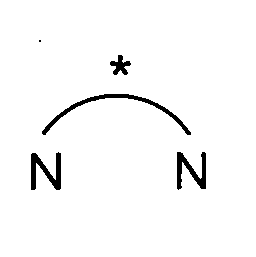
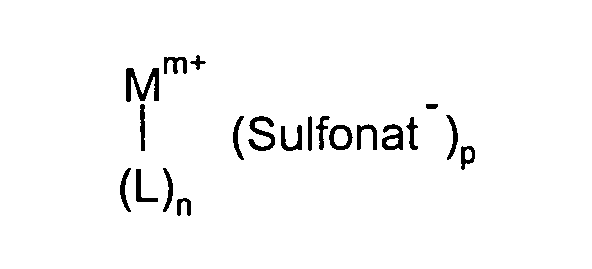
- (M m+)
- für ein Metall mit der Wertigkeit m steht
- L
- für einen anionischen oder neutralen Liganden steht
- (Sulfonat-)
- für das Anion einer Sulfonsäure steht und
- p
- für eins oder zwei steht und
- n
- für eins, zwei, drei oder vier steht,
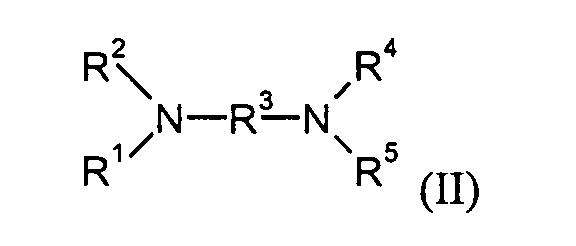
- R1, R2, R4 und R5
- jeweils unabhängig voneinander für Wasserstoff, C1-C8-Alkyl, C5-C15-Arylalkyl oder C4-C14-Aryl stehen oder NR1R2 und/oder NR4R5 als Ganzes für einen cyclischen Aminorest mit insgesamt 4 bis 20 Kohlenstoffatomen steht,
- R3
- für einen divalenten Rest mit insgesamt 2 bis 30 Kohlenstoffatomen stehtoder
- R3
- und mindestens einer der Reste R1, R2, R4, R5 zusammen Teil eines cyclischen Aminorestes mit insgesamt 4 bis 20 Kohlenstoffatomen sind.
- R1, R2, R4 und R5
- jeweils unabhängig voneinander für Wasserstoff, C1-C8-Alkyl, C5-C15-Arylalkyl oder C4-C14-Aryl stehen oder NR1R2 und/oder NR4R5 als Ganzes für einen 5- oder 6-gliedrigen monocyclischen Aminorest steht, der am Kohlenstoffgerüst gegebenenfalls einfach, zweifach, dreifach oder vierfach C1-C4-Alkyl substituiert ist und
- R3
- für einen divalenten Rest steht, der ausgewählt ist aus der Gruppe C2-C8-Alkylen, das gegebenenfalls einfach oder zweifach durch C4-C14-Arylreste weiter substituiert sein kann, C5-C15-Arylalkylen, C4-C14-Arylen oder Bis-(C4-C14-arylen) oder
- R3
- und einer der Reste R1, R2, R4 und R5 zusammen Teil eines 5- oder 6-gliedrigen monocyclischen Aminorestes sind, der am Kohlenstoffgerüst gegebenenfalls zusätzlich einfach, zweifach, dreifach oder vierfach durch C1-C4-Alkyl substituiert ist.
- R1, R2, R4 und R5
- jeweils unabhängig voneinander für Wasserstoff, Methyl oder Ethyl stehen und
- R3
- für einen divalenten Rest steht, der ausgewählt ist aus der Gruppe 1,2-Bis-(C4-C14-aryl)-1,2-ethylen, 1,2-Cyclohexylen, 1,1'-2,2'-Bis-(C4-C14-arylen) oder
- R3
- und einer der Reste R', R2, R4 und R5 zusammen Teil eines Pyrrolidinyl- oder Piperidinyl-Restes sind.
- (M m+)
- vorzugsweise für Cobalt in den formalen Oxidationsstufen 0, +2 und +3, Rhodium und Iridium in den formalen Oxidationsstufen +1 und +3, Nickel, Palladium und Platin in den formalen Oxidationsstufen 0 und +2 sowie Ruthenium in der formalen Oxidationsstufe +2, wobei RhI, IrI und PdII bevorzugt sind.
- L
- steht bevorzugt für folgende Ligandentypen: Monoolefine wie beispielsweise Ethylen, Cycloocten und Cyclohexen, Diolefine wie beispielsweise 1,5-Cyclooctadien (cod), Norbomadien (nbd), und Butadien, Nitrile wie Acetonitril (ACN), Benzonitril und Benzylnitril, Aromaten wie Benzol, Mesitylen und Cymol, sowie anionische Liganden wie Allyl, Methylallyl, Phenylallyl, C1-C8-Alkylacylacetonate, C1-C8-Alkylacylate, Chlorid, Bromid und Iodid.
- (Sulfonat-)
- steht bevorzugt für Salze des Typs R6SO3 -, wobei R6 für C1-C12-Alkyl, C1-C20-Halogenalkyl, C4-C14-Aryl oder C5-C15-Arylalkyl steht. Bevorzugt steht R6 für Methyl, Phenyl, p-Tolyl und C1-C20-Perfluoralkyl, besonders bevorzugt für C1-C4-Perfluoralkyl wie insbesondere Trifluormethyl.


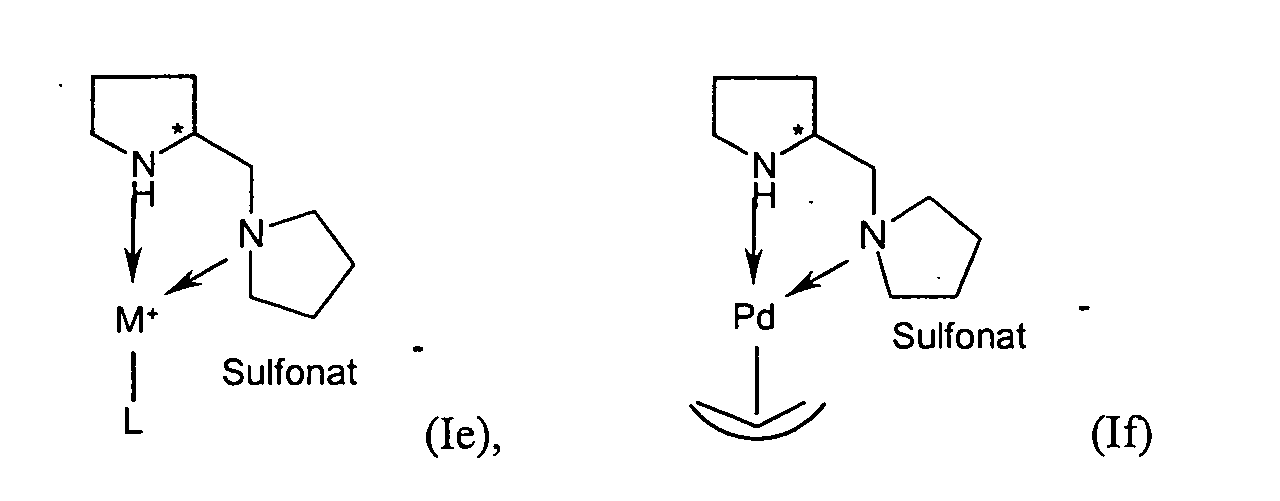
- *
- ein stereogenes Zentrum markiert, das entweder R oder S konfiguriert ist, wobei die Auflage gilt, dass Mesoformen ausgeschlossen sind (Verbindungen der Formel (Ic) und (Id))
- M+
- für RhodiumI oder IridiumI steht und
- L
- für cod oder nbd steht und
- Sulfonat-
- für Trifluormethansulfonat, Mesylat oder Nonafluorbutansulfonat steht.
- M1
- für Ruthenium, Rhodium, Iridium, Nickel, Palladium oder Platin und
- An1
- für Halogenid und
- p1
- für Ruthenium, Rhodium und Iridium für 3, für
Nickel, Palladium und Platin für 2 steht,
- M2
- für Ruthenium, Rhodium, Iridium, Nickel, Palladium oder Platin und
- An2
- für Halogenid oder ein Sulfonat
- p2
- für Rhodium und Iridium für 1, für
Nickel, Palladium, Platin und Ruthenium für 2 steht und - L1
- jeweils für ein C2-C12-Alken wie beispielsweise Ethylen oder Cycloocten, oder ein Nitril wie beispielsweise Acetonitril, Benzonitril oder Benzylnitril steht, oder
- L1 2
- zusammen für ein (C4-C12)-Dien wie beispielsweise Norbomadien oder 1,5-Cyclooctadien steht
- M3
- für Ruthenium und
- L2
- für cod, nbd, Allyl, Methylallyl oder Arylreste wie zum Beispiel Cymol, Mesitylen, Benzol und
- An3
- für Halogenid oder Sulfonat steht
- M5
- für Palladium, Nickel, Iridium oder Rhodium und
- An3
- für Chlorid oder Bromid steht und
- M4
- für Lithium, Natrium, Kalium, Ammonium oder organisches Ammonium steht und
- p3
- für Rhodium und Iridium für 3, für
Nickel, Palladium und Platin für 2 steht,
- M6
- für Iridium oder Rhodium und
- L3
- für ein (C4-C12)-Dien wie beispielsweise Norbomadien oder 1,5-Cyclooctadien steht und
- An4
- für ein Sulfonat steht.
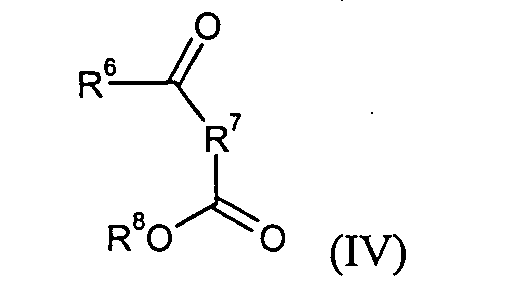
- R6 und R8
- jeweils unabhängig voneinander für C1-C12-Alkyl, C1-C12-Halogenalkyl, C5-C15-Arylalkyl oder C4-C14-Aryl stehen und
- R7
- fehlt oder für 1,1-(C1-C4-Alkylen) steht.
- R6 und R8
- jeweils unabhängig voneinander für gegebenenfalls chloriertes C1-C4-Alkyl oder Phenyl und
- R7
- für Methylen oder fehlt.

- *
- ein stereogenes Zentrum markiert, das S oder R-konfiguriert ist und
- R5, R6 und R7
- die unter der Formel (V) angegebenen Bedeutungen und Vorzugsbereiche besitzen.
| Substrat: Benzoylameisensäuremethylester | ||||||
| Beispiel | Katalysator aus Beispiel | Reaktionstyp | t (h) | Umsatz (%) | TOF (h-1) | ee (%) |
| 17 | 5 | Homogen | 0.5 | 46.2 | 145 | 53 |
| 18 | 10 | Heterogen | 0.5 | 92.8 | 643 | 85 |
| 19 | 10 | Heterogen | 2.0 | 95.8 | 166 | 94 |
| 20 | 11 | Heterogen | 0.5 | 63.0 | 436 | 72 |
| 21 | 11 | Heterogen | 2.0 | 91.5 | 159 | 78 |
| 22 | 12 | Heterogen | 0.5 | 60.7 | 420 | 65 |
| 23 | 12 | Heterogen | 2.0 | 86.9 | 151 | 59 |
| 24 | 1 | Homogen | 2.0 | 62 | 46 | 0 |
| 25 | 13 | Heterogen | 0.5 | 82.6 | 542 | 82 |
| 26 | 13 | Heterogen | 2.0 | 93.3 | 153 | 77 |
| 27 | 14 | Heterogen | 0.5 | 67.1 | 440 | 65 |
| 28 | 14 | Heterogen | 2.0 | 93.9 | 154 | 61 |
| 29 | 15 | Heterogen | 0.5 | 44.6 | 292 | 0 |
| 30 | 15 | Heterogen | 2.0 | 86.1 | 141 | 0 |
| 31 | 3 | Homogen | 2.0 | 69.9 | 60 | 0 |
| 32 | 7 | Heterogen | 0.5 | 77.7 | 596 | 50 |
| 33 | 7 | Heterogen | 2.0 | 98.1 | 188 | 79 |
| 34 | 8 | Heterogen | 0.5 | 59.7 | 458 | 68 |
| 35 | 8 | Heterogen | 1.0 | 75.5 | 290 | 73 |
| 36 | 9 | Heterogen | 0.5 | 38.8 | 298 | 0 |
| 37 | 9 | Heterogen | 2.0 | 83.1 | 159 | 4 |
| 38 | 6 | Homogen | 0.5 | 96.0 | 264 | 55 |
| 39 | 16 | Heterogen | 0.5 | 89.8 | 542 | 62 |
| 40 | 16 | Heterogen | 2.0 | 98.9 | 149 | 67 |
| 41 | 16 (recycliert) | Heterogen | 2.0 | 100 | 151 | 66 |
| Substrat: Phenylglyoxysaüremethylester | |||||
| Beispiel | Katalysator aus Beispiel | Temperatur [°C] | Reaktionsdaner [h] | Umsatz [%] | ee [%] |
| 42 | 3 | 40 | 2 | 82,0 | 0 |
| 43 | 2 | 40 | 2 | 98,9 | 93,3 |
| 44 | 4 | 40 | 2 | 98,3 | 89,1 |
Claims (20)
- Substanzen enthaltend zumindestwobei die Auflage gilt, dass m-p-[Anzahl der anionischen Liganden] = 0 ist.ein mikro-, meso- oder makroporöses Trägermaterial unddaran und/oder darin adsorbierte Verbindungen der Formel (I)in der
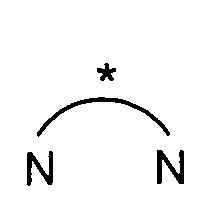
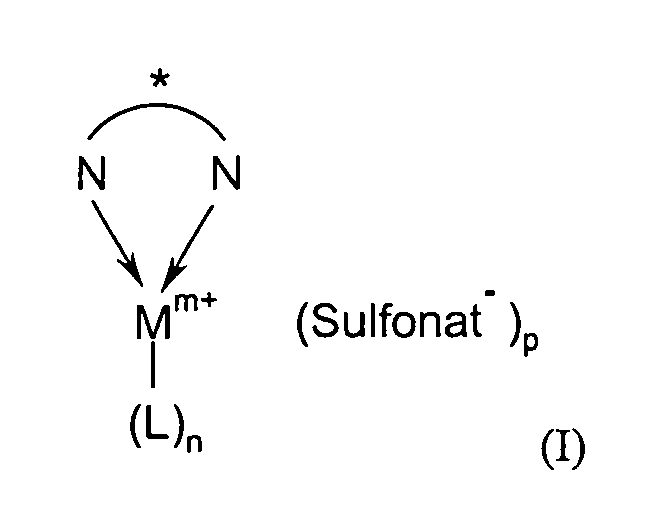 für eine enantiomerenangereicherte chirale Stickstoffverbindung steht,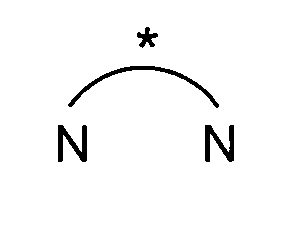
- (M m+)
- für ein Metall mit der Wertigkeit m steht
- L
- für einen anionischen oder neutralen Liganden steht
- (Sulfonat-)
- für das Anion einer Sulfonsäure steht und
- p
- für eins oder zwei steht und
- n
- für eins, zwei, drei oder vier steht,
- Substanzen nach Anspruch 1, dadurch gekennzeichnet, dass die Trägermaterialien eine Porengröße von 15 bis 250 Å aufweisen.
- Substanzen nach mindestens einem der Ansprüche 1 und 2, dadurch gekennzeichnet, dass die Trägermaterialien Silica-Gele oder Zeolithe vom Typ MOR, X, Y, MCM, ZSM, FAU, MFI, L, BEA, FER, A und SBA, AIPO, MAIPO und SAPO sind, wobei die genannten Zeolithe gegebenenfalls isomorph substituiert sein können.
- Substanzen nach mindestens einem der Ansprüche 1 bis 3, dadurch gekennzeichnet, dass in Formel (I)für enantiomerenangereicherte chirale Stickstoffverbindungen der Formel (II) steht
 in der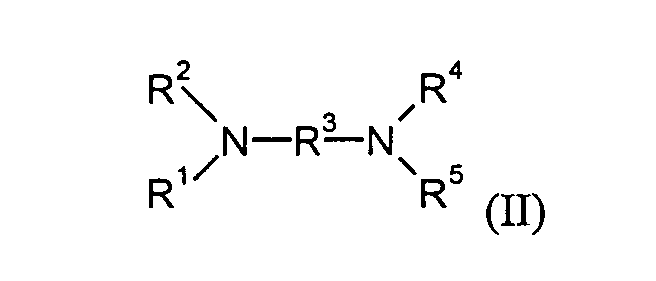
- R1, R2, R4 und R5
- jeweils unabhängig voneinander für Wasserstoff, C1-C8-Alkyl, C5-C15-Arylalkyl oder C4-C14-Aryl stehen oder NR1R2 und/oder NR4R5 als Ganzes für einen cyclischen Aminorest mit insgesamt 4 bis 20 Kohlenstoffatomen steht,
- R3
- für einen divalenten Rest mit 2 bis 30 Kohlenstoffatomen steht oder
- R3
- und mindestens einer der Reste R1, R2, R4, R5 zusammen Teil eines cyclischen Aminorestes mit insgesamt 4 bis 20 Kohlenstoffatomen sind.
- Substanzen nach Anspruch 4, dadurch gekennzeichnet, dass
- R1, R2, R4 und R5
- jeweils unabhängig voneinander für Wasserstoff, C1-C8-Alkyl, C5-C15-Arylalkyl oder C4-C14-Aryl stehen oder NR1R2 und/oder NR4R5 als Ganzes für einen 5- oder 6-gliedrigen monocyclischen Aminorest steht, der am Kohlenstoffgerüst gegebenenfalls einfach, zweifach, dreifach oder vierfach C1-C4-Alkyl substituiert ist und
- R3
- für einen divalenten Rest steht, der ausgewählt ist aus der Gruppe C2-C8-Alkylen, das gegebenenfalls einfach oder zweifach durch C4-C14-Arylreste weiter substituiert sein kann, C5-C15-Arylalkylen, C4-C14-Arylen oder Bis-(C4-C14-arylen) oder
- R3
- und einer der Reste R1, R2, R4 und R5 zusammen Teil eines 5- oder 6-gliedrigen monocyclischen Aminorestes sind, der am Kohlenstoffgerüst gegebenenfalls zusätzlich einfach, zweifach, dreifach oder vierfach durch C1-C4-Alkyl substituiert ist.
- Substanzen nach mindestens einem der Ansprüche 1 bis 5, dadurch gekennzeichnet, dass in Formel (I)
- (M m+)
- für Cobalt in den formalen Oxidationsstufen 0, +2 und +3, Rhodium und Iridium in den formalen Oxidationsstufen +1 und +3, Nickel, Palladium und Platin in den formalen Oxidationsstufen 0 und +2 oder Ruthenium in der formalen Oxidationsstufe +2 steht.
- Substanzen nach mindestens einem der Ansprüche 1 bis 6, dadurch gekennzeichnet, dass in Formel (I)
- L
- für folgende Ligandentypen steht: Monoolefine, Diolefine, Nitrile, Aromaten sowie anionische Liganden.
- Substanzen nach mindestens einem der Ansprüche 1 bis 7, dadurch gekennzeichnet, dass in Formel (I)
- (Sulfonat-)
- für Salze des Typs R6SO3 - steht, wobei R6 für C1-C12-Alkyl, C1-C20-Halogenalkyl, C4-C14-Aryl oder C5-C15-Arylalkyl steht.
- Substanzen nach mindestens einem der Ansprüche 1 bis 8, dadurch gekennzeichnet, dass Verbindungen der Formel (I) solche der Formeln (Ia), (Ib), (Ic), (Id). (e) und (If) sind
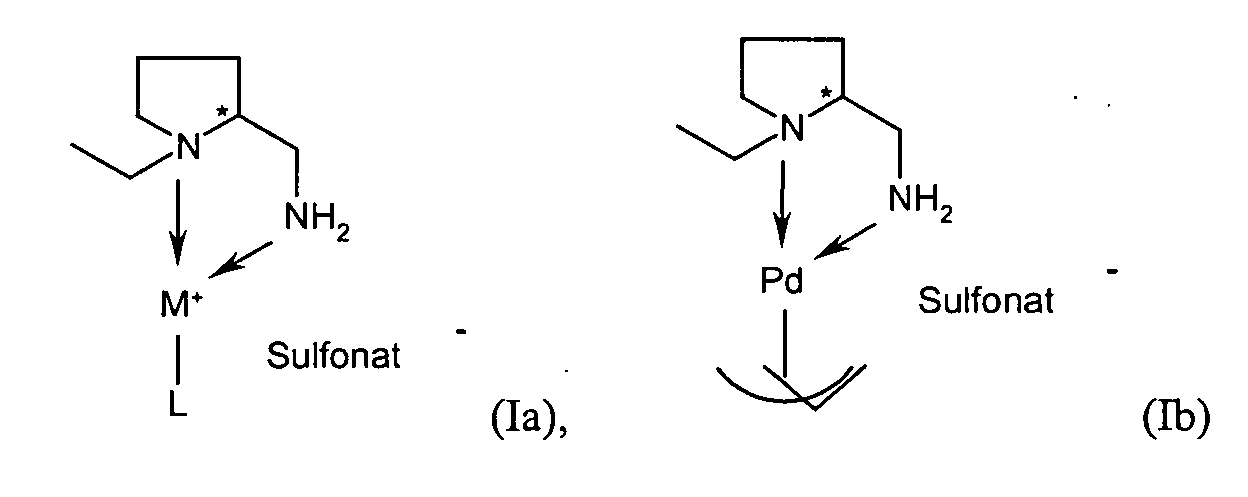
 in denen jeweils
- *
- ein stereogenes Zentrum markiert, das entweder R oder S konfiguriert ist, wobei die Auflage gilt, dass Mesoformen ausgeschlossen sind (Verbindungen der Formel (Ic) und (Id))
- M+
- für RhodiumI oder IridiumI steht und
- L
- für cod oder nbd steht und
- Sulfonat-
- für Trifluormethansulfonat, Mesylat oder Nonafluorbutansulfonat steht.
- Verbindungen der Formel (I) mit der in Anspruch 1 genannten Bedeutung, wobei folgende Verbindungen ausgenommen sind:[Rh(cod)((S)-2-aminomethyl-1-ethylpyrrolidin)]OTf und [Rh(cod)((1R,2R)-1,2-Diphenylethylendiamin)]OTf.
- Verwendung von Substanzen nach mindestens einem der Ansprüche 1 bis 9 als Katalysator für asymmetrische Reaktionen.
- Katalysatoren enthaltend Substanzen nach mindestens einem der Ansprüche 1 bis 9.
- Verfahren zur katalytischen Herstellung von enantiomerenangereicherten Verbindungen ümfasst, das dadurch gekennzeichnet ist, dass Katalysatoren nach Anspruch 12 eingesetzt werden.
- Verfahren nach Anspruch 13, dadurch gekennzeichnet, dass Verfahren zur katalytischen Herstellung von enantiomerenangereicherten Verbindungen asymmetrische Hydrierungen sind.
- Verfahren nach Anspruch 14, dadurch gekennzeichnet, dass asymmetrische Hydrierungen Hydrierungen von prochiralen C=C-Bindungen, C=O-Bindungen und C=N-Bindungen sind.
- Verfahren nach Anspruch 15, dadurch gekennzeichnet, dass Hydrierungen von prochiralen C=O-Bindungen Hydrierungen α- und β-Ketocarbonsäureestern sind.
- Verfahren nach Anspruch 16, dadurch gekennzeichnet, dass α- und β-Ketocarbonsäureester solche der Formel (IV) sindin der
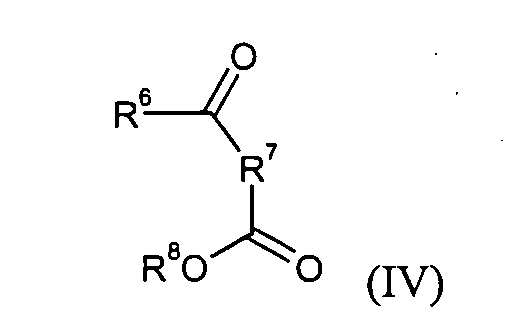
- R6 und R8
- jeweils unabhängig voneinander für C1-C12-Alkyl, C1-C12-Halogenalkyl, C5-C15-Arylalkyl oder C4-C14-Aryl stehen und
- R7
- fehlt oder für 1,1-(C1-C4-Alkylen) steht.
- Verfahren nach mindestens einem der Ansprüche 14 bis 17, dadurch gekennzeichnet, dass für asymmetrische Hydrierungen die Reaktionstemperatur 0 bis 200°C und der Wasserstoffpartialdruck 0,1 bis 200 bar beträgt.
- Verfahren nach mindestens einem der Ansprüche 14 bis 18, dadurch gekennzeichnet, dass für asymmetrische Hydrierungen als aliphatische oder aromatische, gegebenenfalls halogenierte Kohlenwasserstoffe, Ether und/oder Alkohole eingesetzt werden.
- Verfahren nach mindestens einem der Ansprüche 13 bis 19, dadurch gekennzeichnet, dass das Gewichtsverhältnis von Katalysatoren nach Anspruch 12 zu Substrat 1:1 bis 1:10000 beträgt.
Applications Claiming Priority (4)
| Application Number | Priority Date | Filing Date | Title |
|---|---|---|---|
| DE10305943 | 2003-02-12 | ||
| DE10305943 | 2003-02-12 | ||
| DE2003126915 DE10326915A1 (de) | 2003-06-16 | 2003-06-16 | Verfahren zur asymmetrischen Hydrierung von Ketocarbonsäureestern |
| DE10326915 | 2003-06-16 |
Publications (2)
| Publication Number | Publication Date |
|---|---|
| EP1469005A1 true EP1469005A1 (de) | 2004-10-20 |
| EP1469005B1 EP1469005B1 (de) | 2006-08-30 |
Family
ID=32909522
Family Applications (1)
| Application Number | Title | Priority Date | Filing Date |
|---|---|---|---|
| EP04001904A Expired - Lifetime EP1469005B1 (de) | 2003-02-12 | 2004-01-29 | Verfahren zur asymmetrischen Hydrierung von Ketocarbonsäureestern |
Country Status (5)
| Country | Link |
|---|---|
| US (1) | US20040220165A1 (de) |
| EP (1) | EP1469005B1 (de) |
| CN (1) | CN1530171A (de) |
| AT (1) | ATE338050T1 (de) |
| DE (1) | DE502004001300D1 (de) |
Cited By (2)
| Publication number | Priority date | Publication date | Assignee | Title |
|---|---|---|---|---|
| WO2006137167A1 (ja) * | 2005-06-20 | 2006-12-28 | Kanto Kagaku Kabushiki Kaisha | スルホナート触媒及びそれを利用したアルコール化合物の製法 |
| WO2006137165A1 (ja) * | 2005-06-20 | 2006-12-28 | Kanto Kagaku Kabushiki Kaisha | 水素化触媒及びそれを利用したアルコール化合物の製法 |
Families Citing this family (4)
| Publication number | Priority date | Publication date | Assignee | Title |
|---|---|---|---|---|
| JP5087395B2 (ja) * | 2005-06-20 | 2012-12-05 | 関東化学株式会社 | スルホナート触媒及びそれを利用したアルコール化合物の製法 |
| FR2931707B1 (fr) * | 2008-05-30 | 2011-05-20 | Inst Francais Du Petrole | Systeme catalytique d'oligomerisation d'olefines a base de complexes organometalliques et de solide poreux. |
| CN109748788B (zh) * | 2019-01-17 | 2021-05-14 | 南方科技大学 | ɑ-羟基酸制备方法 |
| CN109794297A (zh) * | 2019-03-02 | 2019-05-24 | 重庆工商大学 | 一种离子液中纳米金属催化酮酸酯不对称加氢体系 |
Family Cites Families (3)
| Publication number | Priority date | Publication date | Assignee | Title |
|---|---|---|---|---|
| WO2002038628A2 (en) * | 2000-11-07 | 2002-05-16 | Symyx Technologies, Inc. | Substituted pyridyl amine ligands, complexes and catalysts therefrom; processes for producing polyolefins therewith |
| CN1233648C (zh) * | 2001-06-27 | 2005-12-28 | 尔艾斯特公司 | Salen催化剂、催化剂的制备和通过使用催化剂制备手性化合物的方法 |
| JP4919562B2 (ja) * | 2001-09-28 | 2012-04-18 | 日本曹達株式会社 | ルテニウムヒドリド錯体、アルコール化合物の製造方法およびラセミ体カルボニル化合物の分割方法 |
-
2004
- 2004-01-29 AT AT04001904T patent/ATE338050T1/de not_active IP Right Cessation
- 2004-01-29 EP EP04001904A patent/EP1469005B1/de not_active Expired - Lifetime
- 2004-01-29 DE DE502004001300T patent/DE502004001300D1/de not_active Expired - Fee Related
- 2004-02-04 US US10/772,198 patent/US20040220165A1/en not_active Abandoned
- 2004-02-12 CN CNA2004100313182A patent/CN1530171A/zh active Pending
Non-Patent Citations (6)
| Title |
|---|
| ANN M ET AL: "RHODIUM AMINE COMPLEXES TETHERED ON SILICA-SUPPORTED GOLD-PALLADIUMBIMETAL CATALYSTS. ARENE HYDROGENATION", JOURNAL OF MOLECULAR CATALYSIS. A, CHEMICAL, ELSEVIER, AMSTERDAM, NL, vol. 149, no. 1/2, 1999, pages 99 - 111, XP000923054, ISSN: 1381-1169 * |
| DATABASE CHEMABS [online] CHEMICAL ABSTRACTS SERVICE, COLUMBUS, OHIO, US; NINDAKOVA, L. O. ET AL: "Double stereoselection in hydrogenation of prochiral dehydrocarboxylic acids on Rh(S,S-DIODMA)2+TfO- complex in the presence of (+)-neomenthyldiphenylphosphine", XP002286833, retrieved from STN Database accession no. 2003:278863 * |
| JOHNSON B.F.G. ET AL.: "Superior Performance of Chiral Catalyst Confined with Mesoporous Silicia", CHEMICAL COMMUNICATIONS, 1999, pages 1167 - 1168, XP002286832 * |
| KHIMIYA V INTERESAKH USTOICHIVOGO RAZVITIYA , 11(1), 215-219 CODEN: KIURFI; ISSN: 0869-8538, 2003 * |
| RAJA, ROBERT ET AL: "Constraining Asymmetric Organometallic Catalysts within Mesoporous Supports Boosts Their Enantioselectivity", JOURNAL OF THE AMERICAN CHEMICAL SOCIETY , 125(49), 14982-14983 CODEN: JACSAT; ISSN: 0002-7863, 15 November 2003 (2003-11-15), XP002286830 * |
| TOMMASINO, M.L. ET AL.: "Cationic complexes with chiral diammine or dithiourea ligands as catalysts for molecular asymmetry hydrogenation", TETRAHEDRON ASYMMETRY, vol. 10, 1999, pages 1813 - 1819, XP002286831 * |
Cited By (2)
| Publication number | Priority date | Publication date | Assignee | Title |
|---|---|---|---|---|
| WO2006137167A1 (ja) * | 2005-06-20 | 2006-12-28 | Kanto Kagaku Kabushiki Kaisha | スルホナート触媒及びそれを利用したアルコール化合物の製法 |
| WO2006137165A1 (ja) * | 2005-06-20 | 2006-12-28 | Kanto Kagaku Kabushiki Kaisha | 水素化触媒及びそれを利用したアルコール化合物の製法 |
Also Published As
| Publication number | Publication date |
|---|---|
| US20040220165A1 (en) | 2004-11-04 |
| EP1469005B1 (de) | 2006-08-30 |
| DE502004001300D1 (de) | 2006-10-12 |
| CN1530171A (zh) | 2004-09-22 |
| ATE338050T1 (de) | 2006-09-15 |
Similar Documents
| Publication | Publication Date | Title |
|---|---|---|
| EP3489213B1 (de) | Zusammensetzung zur verwendung in einem verfahren zur herstellung optisch aktiver carbonylverbindungen | |
| DE60123093T2 (de) | Katalysator für asymmetrische hydrogenierung | |
| DE10138140A1 (de) | Verfahren zur Herstellung von Aminen durch reduktive Aminierung von Carbonylverbindungen unter Transfer-Hydrierungsbedingungen | |
| EP2459579A2 (de) | Imidazolgruppenhaltige phosphinoboran-verbindungen und verfahren zur herstellung von imidazolgruppenhaltige phosphorverbindungen | |
| EP3994117A1 (de) | Hydrierung von estern zu alkoholen in gegenwart eines ru-pnn-komplexes | |
| CA3082558A1 (en) | Process for the preparation of enantiomerically and diastereomerically enriched cyclobutane amines and amides | |
| EP0158875B1 (de) | Chirale Rhodium-diphosphinkomplexe für asymmetrische Hydrierungen | |
| DE602004008478T2 (de) | Biphosphinrutheniumkomplexe mit chiralen diaminliganden als katalysatoren | |
| EP1469005B1 (de) | Verfahren zur asymmetrischen Hydrierung von Ketocarbonsäureestern | |
| EP0218970B1 (de) | Chirale Rhodium-diphosphinkomplexe für asymmetrische Hydrierungen | |
| DE602005003572T2 (de) | Ferrocenylliganden für homogene, enantioselektive hydrierungskatalysatoren | |
| DE60109484T2 (de) | P-chirale bisphospholane ligande, deren übergangsmetall-komplexe | |
| DE102005061472A1 (de) | Verfahren zur Herstellung von enantiomerenangereicherten 2-Alkoxy-3-phenylpropionsäuren | |
| DE60129211T2 (de) | Imidazolidinonen-saureadditionssalze als reaktionskatalysatoren | |
| EP1394168A1 (de) | Verfahren zur Herstellung von Phosphiten und Übergangsmetallkomplexen | |
| EP4359372B1 (de) | Hydrierung von estern zu alkoholen in gegenwart eines mn-pnn-komplexes | |
| DE10326915A1 (de) | Verfahren zur asymmetrischen Hydrierung von Ketocarbonsäureestern | |
| EP0915076B1 (de) | Verfahren zur Herstellung von trans-(R,R)-Actinol | |
| EP0691325B1 (de) | Asymmetrische Hydrierung von Ketoisophoron-Derivaten | |
| EP1862446A2 (de) | Verfahren zur Herstellung von enantiomerenangereicherten Hydroxylaminderivaten | |
| EP1469006A2 (de) | Verfahren zur Reduktion von Ketocarbonsäureestern | |
| DE102004022900A1 (de) | Chirale Diphosphorverbindungen und deren Übergangsmetallkomplexe | |
| DE60009518T2 (de) | Substituierte cyclopentene, verfahren zu deren herstellung und deren verwendungals chirale gerüste | |
| DE10326916A1 (de) | Verfahren zur Reduktion von Ketocarbonsäureestern | |
| EP1298136A2 (de) | Chirale Monophosphorverbindungen |
Legal Events
| Date | Code | Title | Description |
|---|---|---|---|
| PUAI | Public reference made under article 153(3) epc to a published international application that has entered the european phase |
Free format text: ORIGINAL CODE: 0009012 |
|
| AK | Designated contracting states |
Kind code of ref document: A1 Designated state(s): AT BE BG CH CY CZ DE DK EE ES FI FR GB GR HU IE IT LI LU MC NL PT RO SE SI SK TR |
|
| AX | Request for extension of the european patent |
Extension state: AL LT LV MK |
|
| 17P | Request for examination filed |
Effective date: 20050420 |
|
| AKX | Designation fees paid |
Designated state(s): AT BE BG CH CY CZ DE DK EE ES FI FR GB GR HU IE IT LI LU MC NL PT RO SE SI SK TR |
|
| RAP1 | Party data changed (applicant data changed or rights of an application transferred) |
Owner name: LANXESS DEUTSCHLAND GMBH |
|
| GRAP | Despatch of communication of intention to grant a patent |
Free format text: ORIGINAL CODE: EPIDOSNIGR1 |
|
| GRAS | Grant fee paid |
Free format text: ORIGINAL CODE: EPIDOSNIGR3 |
|
| GRAA | (expected) grant |
Free format text: ORIGINAL CODE: 0009210 |
|
| RAP1 | Party data changed (applicant data changed or rights of an application transferred) |
Owner name: SALTIGO GMBH |
|
| AK | Designated contracting states |
Kind code of ref document: B1 Designated state(s): AT BE BG CH CY CZ DE DK EE ES FI FR GB GR HU IE IT LI LU MC NL PT RO SE SI SK TR |
|
| PG25 | Lapsed in a contracting state [announced via postgrant information from national office to epo] |
Ref country code: IT Free format text: LAPSE BECAUSE OF FAILURE TO SUBMIT A TRANSLATION OF THE DESCRIPTION OR TO PAY THE FEE WITHIN THE PRESCRIBED TIME-LIMIT;WARNING: LAPSES OF ITALIAN PATENTS WITH EFFECTIVE DATE BEFORE 2007 MAY HAVE OCCURRED AT ANY TIME BEFORE 2007. THE CORRECT EFFECTIVE DATE MAY BE DIFFERENT FROM THE ONE RECORDED. Effective date: 20060830 Ref country code: RO Free format text: LAPSE BECAUSE OF FAILURE TO SUBMIT A TRANSLATION OF THE DESCRIPTION OR TO PAY THE FEE WITHIN THE PRESCRIBED TIME-LIMIT Effective date: 20060830 Ref country code: CZ Free format text: LAPSE BECAUSE OF FAILURE TO SUBMIT A TRANSLATION OF THE DESCRIPTION OR TO PAY THE FEE WITHIN THE PRESCRIBED TIME-LIMIT Effective date: 20060830 Ref country code: SI Free format text: LAPSE BECAUSE OF FAILURE TO SUBMIT A TRANSLATION OF THE DESCRIPTION OR TO PAY THE FEE WITHIN THE PRESCRIBED TIME-LIMIT Effective date: 20060830 Ref country code: GB Free format text: LAPSE BECAUSE OF FAILURE TO SUBMIT A TRANSLATION OF THE DESCRIPTION OR TO PAY THE FEE WITHIN THE PRESCRIBED TIME-LIMIT Effective date: 20060830 Ref country code: FI Free format text: LAPSE BECAUSE OF FAILURE TO SUBMIT A TRANSLATION OF THE DESCRIPTION OR TO PAY THE FEE WITHIN THE PRESCRIBED TIME-LIMIT Effective date: 20060830 Ref country code: SK Free format text: LAPSE BECAUSE OF FAILURE TO SUBMIT A TRANSLATION OF THE DESCRIPTION OR TO PAY THE FEE WITHIN THE PRESCRIBED TIME-LIMIT Effective date: 20060830 Ref country code: IE Free format text: LAPSE BECAUSE OF FAILURE TO SUBMIT A TRANSLATION OF THE DESCRIPTION OR TO PAY THE FEE WITHIN THE PRESCRIBED TIME-LIMIT Effective date: 20060830 Ref country code: NL Free format text: LAPSE BECAUSE OF FAILURE TO SUBMIT A TRANSLATION OF THE DESCRIPTION OR TO PAY THE FEE WITHIN THE PRESCRIBED TIME-LIMIT Effective date: 20060830 |
|
| REG | Reference to a national code |
Ref country code: GB Ref legal event code: FG4D Free format text: NOT ENGLISH |
|
| REG | Reference to a national code |
Ref country code: CH Ref legal event code: NV Representative=s name: E. BLUM & CO. PATENTANWAELTE Ref country code: CH Ref legal event code: EP |
|
| REG | Reference to a national code |
Ref country code: IE Ref legal event code: FG4D Free format text: LANGUAGE OF EP DOCUMENT: GERMAN |
|
| REF | Corresponds to: |
Ref document number: 502004001300 Country of ref document: DE Date of ref document: 20061012 Kind code of ref document: P |
|
| PG25 | Lapsed in a contracting state [announced via postgrant information from national office to epo] |
Ref country code: SE Free format text: LAPSE BECAUSE OF FAILURE TO SUBMIT A TRANSLATION OF THE DESCRIPTION OR TO PAY THE FEE WITHIN THE PRESCRIBED TIME-LIMIT Effective date: 20061130 Ref country code: DK Free format text: LAPSE BECAUSE OF FAILURE TO SUBMIT A TRANSLATION OF THE DESCRIPTION OR TO PAY THE FEE WITHIN THE PRESCRIBED TIME-LIMIT Effective date: 20061130 Ref country code: BG Free format text: LAPSE BECAUSE OF FAILURE TO SUBMIT A TRANSLATION OF THE DESCRIPTION OR TO PAY THE FEE WITHIN THE PRESCRIBED TIME-LIMIT Effective date: 20061130 |
|
| PG25 | Lapsed in a contracting state [announced via postgrant information from national office to epo] |
Ref country code: ES Free format text: LAPSE BECAUSE OF FAILURE TO SUBMIT A TRANSLATION OF THE DESCRIPTION OR TO PAY THE FEE WITHIN THE PRESCRIBED TIME-LIMIT Effective date: 20061211 |
|
| PGFP | Annual fee paid to national office [announced via postgrant information from national office to epo] |
Ref country code: AT Payment date: 20070111 Year of fee payment: 4 |
|
| PGFP | Annual fee paid to national office [announced via postgrant information from national office to epo] |
Ref country code: DE Payment date: 20070125 Year of fee payment: 4 |
|
| PG25 | Lapsed in a contracting state [announced via postgrant information from national office to epo] |
Ref country code: MC Free format text: LAPSE BECAUSE OF NON-PAYMENT OF DUE FEES Effective date: 20070131 |
|
| PG25 | Lapsed in a contracting state [announced via postgrant information from national office to epo] |
Ref country code: PT Free format text: LAPSE BECAUSE OF FAILURE TO SUBMIT A TRANSLATION OF THE DESCRIPTION OR TO PAY THE FEE WITHIN THE PRESCRIBED TIME-LIMIT Effective date: 20070212 |
|
| NLV1 | Nl: lapsed or annulled due to failure to fulfill the requirements of art. 29p and 29m of the patents act | ||
| GBV | Gb: ep patent (uk) treated as always having been void in accordance with gb section 77(7)/1977 [no translation filed] |
Effective date: 20060830 |
|
| REG | Reference to a national code |
Ref country code: IE Ref legal event code: FD4D |
|
| EN | Fr: translation not filed | ||
| PLBE | No opposition filed within time limit |
Free format text: ORIGINAL CODE: 0009261 |
|
| STAA | Information on the status of an ep patent application or granted ep patent |
Free format text: STATUS: NO OPPOSITION FILED WITHIN TIME LIMIT |
|
| 26N | No opposition filed |
Effective date: 20070531 |
|
| REG | Reference to a national code |
Ref country code: CH Ref legal event code: PFA Owner name: SALTIGO GMBH Free format text: SALTIGO GMBH# #51369 LEVERKUSEN (DE) -TRANSFER TO- SALTIGO GMBH# #51369 LEVERKUSEN (DE) |
|
| BERE | Be: lapsed |
Owner name: SALTIGO G.M.B.H. Effective date: 20070131 |
|
| PG25 | Lapsed in a contracting state [announced via postgrant information from national office to epo] |
Ref country code: BE Free format text: LAPSE BECAUSE OF NON-PAYMENT OF DUE FEES Effective date: 20070131 |
|
| PG25 | Lapsed in a contracting state [announced via postgrant information from national office to epo] |
Ref country code: GR Free format text: LAPSE BECAUSE OF FAILURE TO SUBMIT A TRANSLATION OF THE DESCRIPTION OR TO PAY THE FEE WITHIN THE PRESCRIBED TIME-LIMIT Effective date: 20061201 Ref country code: FR Free format text: LAPSE BECAUSE OF FAILURE TO SUBMIT A TRANSLATION OF THE DESCRIPTION OR TO PAY THE FEE WITHIN THE PRESCRIBED TIME-LIMIT Effective date: 20070511 |
|
| PG25 | Lapsed in a contracting state [announced via postgrant information from national office to epo] |
Ref country code: EE Free format text: LAPSE BECAUSE OF FAILURE TO SUBMIT A TRANSLATION OF THE DESCRIPTION OR TO PAY THE FEE WITHIN THE PRESCRIBED TIME-LIMIT Effective date: 20060830 |
|
| REG | Reference to a national code |
Ref country code: CH Ref legal event code: PL |
|
| PG25 | Lapsed in a contracting state [announced via postgrant information from national office to epo] |
Ref country code: CH Free format text: LAPSE BECAUSE OF NON-PAYMENT OF DUE FEES Effective date: 20080131 Ref country code: DE Free format text: LAPSE BECAUSE OF NON-PAYMENT OF DUE FEES Effective date: 20080801 Ref country code: LI Free format text: LAPSE BECAUSE OF NON-PAYMENT OF DUE FEES Effective date: 20080131 |
|
| PG25 | Lapsed in a contracting state [announced via postgrant information from national office to epo] |
Ref country code: FR Free format text: LAPSE BECAUSE OF FAILURE TO SUBMIT A TRANSLATION OF THE DESCRIPTION OR TO PAY THE FEE WITHIN THE PRESCRIBED TIME-LIMIT Effective date: 20060830 Ref country code: AT Free format text: LAPSE BECAUSE OF NON-PAYMENT OF DUE FEES Effective date: 20080129 |
|
| PG25 | Lapsed in a contracting state [announced via postgrant information from national office to epo] |
Ref country code: CY Free format text: LAPSE BECAUSE OF FAILURE TO SUBMIT A TRANSLATION OF THE DESCRIPTION OR TO PAY THE FEE WITHIN THE PRESCRIBED TIME-LIMIT Effective date: 20060830 Ref country code: LU Free format text: LAPSE BECAUSE OF NON-PAYMENT OF DUE FEES Effective date: 20070129 |
|
| PG25 | Lapsed in a contracting state [announced via postgrant information from national office to epo] |
Ref country code: HU Free format text: LAPSE BECAUSE OF FAILURE TO SUBMIT A TRANSLATION OF THE DESCRIPTION OR TO PAY THE FEE WITHIN THE PRESCRIBED TIME-LIMIT Effective date: 20070301 Ref country code: TR Free format text: LAPSE BECAUSE OF FAILURE TO SUBMIT A TRANSLATION OF THE DESCRIPTION OR TO PAY THE FEE WITHIN THE PRESCRIBED TIME-LIMIT Effective date: 20060830 |