EP1463493B1 - Methods of inducing ovulation-using a non-polypeptide camp level modulator - Google Patents
Methods of inducing ovulation-using a non-polypeptide camp level modulator Download PDFInfo
- Publication number
- EP1463493B1 EP1463493B1 EP01274987A EP01274987A EP1463493B1 EP 1463493 B1 EP1463493 B1 EP 1463493B1 EP 01274987 A EP01274987 A EP 01274987A EP 01274987 A EP01274987 A EP 01274987A EP 1463493 B1 EP1463493 B1 EP 1463493B1
- Authority
- EP
- European Patent Office
- Prior art keywords
- ovulation
- administration
- medicament
- use according
- fsh
- Prior art date
- Legal status (The legal status is an assumption and is not a legal conclusion. Google has not performed a legal analysis and makes no representation as to the accuracy of the status listed.)
- Expired - Lifetime
Links
Images

Classifications
-
- A—HUMAN NECESSITIES
- A61—MEDICAL OR VETERINARY SCIENCE; HYGIENE
- A61K—PREPARATIONS FOR MEDICAL, DENTAL OR TOILETRY PURPOSES
- A61K31/00—Medicinal preparations containing organic active ingredients
- A61K31/33—Heterocyclic compounds
- A61K31/395—Heterocyclic compounds having nitrogen as a ring hetero atom, e.g. guanethidine or rifamycins
- A61K31/435—Heterocyclic compounds having nitrogen as a ring hetero atom, e.g. guanethidine or rifamycins having six-membered rings with one nitrogen as the only ring hetero atom
- A61K31/4353—Heterocyclic compounds having nitrogen as a ring hetero atom, e.g. guanethidine or rifamycins having six-membered rings with one nitrogen as the only ring hetero atom ortho- or peri-condensed with heterocyclic ring systems
- A61K31/437—Heterocyclic compounds having nitrogen as a ring hetero atom, e.g. guanethidine or rifamycins having six-membered rings with one nitrogen as the only ring hetero atom ortho- or peri-condensed with heterocyclic ring systems the heterocyclic ring system containing a five-membered ring having nitrogen as a ring hetero atom, e.g. indolizine, beta-carboline
-
- A—HUMAN NECESSITIES
- A61—MEDICAL OR VETERINARY SCIENCE; HYGIENE
- A61K—PREPARATIONS FOR MEDICAL, DENTAL OR TOILETRY PURPOSES
- A61K31/00—Medicinal preparations containing organic active ingredients
-
- A—HUMAN NECESSITIES
- A61—MEDICAL OR VETERINARY SCIENCE; HYGIENE
- A61K—PREPARATIONS FOR MEDICAL, DENTAL OR TOILETRY PURPOSES
- A61K31/00—Medicinal preparations containing organic active ingredients
- A61K31/13—Amines
- A61K31/135—Amines having aromatic rings, e.g. ketamine, nortriptyline
-
- A—HUMAN NECESSITIES
- A61—MEDICAL OR VETERINARY SCIENCE; HYGIENE
- A61K—PREPARATIONS FOR MEDICAL, DENTAL OR TOILETRY PURPOSES
- A61K31/00—Medicinal preparations containing organic active ingredients
- A61K31/13—Amines
- A61K31/135—Amines having aromatic rings, e.g. ketamine, nortriptyline
- A61K31/138—Aryloxyalkylamines, e.g. propranolol, tamoxifen, phenoxybenzamine
-
- A—HUMAN NECESSITIES
- A61—MEDICAL OR VETERINARY SCIENCE; HYGIENE
- A61K—PREPARATIONS FOR MEDICAL, DENTAL OR TOILETRY PURPOSES
- A61K31/00—Medicinal preparations containing organic active ingredients
- A61K31/275—Nitriles; Isonitriles
- A61K31/277—Nitriles; Isonitriles having a ring, e.g. verapamil
-
- A—HUMAN NECESSITIES
- A61—MEDICAL OR VETERINARY SCIENCE; HYGIENE
- A61K—PREPARATIONS FOR MEDICAL, DENTAL OR TOILETRY PURPOSES
- A61K31/00—Medicinal preparations containing organic active ingredients
- A61K31/33—Heterocyclic compounds
- A61K31/335—Heterocyclic compounds having oxygen as the only ring hetero atom, e.g. fungichromin
- A61K31/35—Heterocyclic compounds having oxygen as the only ring hetero atom, e.g. fungichromin having six-membered rings with one oxygen as the only ring hetero atom
- A61K31/352—Heterocyclic compounds having oxygen as the only ring hetero atom, e.g. fungichromin having six-membered rings with one oxygen as the only ring hetero atom condensed with carbocyclic rings, e.g. methantheline
-
- A—HUMAN NECESSITIES
- A61—MEDICAL OR VETERINARY SCIENCE; HYGIENE
- A61K—PREPARATIONS FOR MEDICAL, DENTAL OR TOILETRY PURPOSES
- A61K31/00—Medicinal preparations containing organic active ingredients
- A61K31/33—Heterocyclic compounds
- A61K31/395—Heterocyclic compounds having nitrogen as a ring hetero atom, e.g. guanethidine or rifamycins
- A61K31/41—Heterocyclic compounds having nitrogen as a ring hetero atom, e.g. guanethidine or rifamycins having five-membered rings with two or more ring hetero atoms, at least one of which being nitrogen, e.g. tetrazole
- A61K31/4196—1,2,4-Triazoles
-
- A—HUMAN NECESSITIES
- A61—MEDICAL OR VETERINARY SCIENCE; HYGIENE
- A61K—PREPARATIONS FOR MEDICAL, DENTAL OR TOILETRY PURPOSES
- A61K31/00—Medicinal preparations containing organic active ingredients
- A61K31/33—Heterocyclic compounds
- A61K31/395—Heterocyclic compounds having nitrogen as a ring hetero atom, e.g. guanethidine or rifamycins
- A61K31/435—Heterocyclic compounds having nitrogen as a ring hetero atom, e.g. guanethidine or rifamycins having six-membered rings with one nitrogen as the only ring hetero atom
- A61K31/44—Non condensed pyridines; Hydrogenated derivatives thereof
-
- A—HUMAN NECESSITIES
- A61—MEDICAL OR VETERINARY SCIENCE; HYGIENE
- A61K—PREPARATIONS FOR MEDICAL, DENTAL OR TOILETRY PURPOSES
- A61K31/00—Medicinal preparations containing organic active ingredients
- A61K31/33—Heterocyclic compounds
- A61K31/395—Heterocyclic compounds having nitrogen as a ring hetero atom, e.g. guanethidine or rifamycins
- A61K31/435—Heterocyclic compounds having nitrogen as a ring hetero atom, e.g. guanethidine or rifamycins having six-membered rings with one nitrogen as the only ring hetero atom
- A61K31/44—Non condensed pyridines; Hydrogenated derivatives thereof
- A61K31/445—Non condensed piperidines, e.g. piperocaine
- A61K31/4523—Non condensed piperidines, e.g. piperocaine containing further heterocyclic ring systems
- A61K31/4535—Non condensed piperidines, e.g. piperocaine containing further heterocyclic ring systems containing a heterocyclic ring having sulfur as a ring hetero atom, e.g. pizotifen
-
- A—HUMAN NECESSITIES
- A61—MEDICAL OR VETERINARY SCIENCE; HYGIENE
- A61K—PREPARATIONS FOR MEDICAL, DENTAL OR TOILETRY PURPOSES
- A61K31/00—Medicinal preparations containing organic active ingredients
- A61K31/33—Heterocyclic compounds
- A61K31/395—Heterocyclic compounds having nitrogen as a ring hetero atom, e.g. guanethidine or rifamycins
- A61K31/495—Heterocyclic compounds having nitrogen as a ring hetero atom, e.g. guanethidine or rifamycins having six-membered rings with two or more nitrogen atoms as the only ring heteroatoms, e.g. piperazine or tetrazines
- A61K31/50—Pyridazines; Hydrogenated pyridazines
- A61K31/502—Pyridazines; Hydrogenated pyridazines ortho- or peri-condensed with carbocyclic ring systems, e.g. cinnoline, phthalazine
-
- A—HUMAN NECESSITIES
- A61—MEDICAL OR VETERINARY SCIENCE; HYGIENE
- A61K—PREPARATIONS FOR MEDICAL, DENTAL OR TOILETRY PURPOSES
- A61K31/00—Medicinal preparations containing organic active ingredients
- A61K31/33—Heterocyclic compounds
- A61K31/395—Heterocyclic compounds having nitrogen as a ring hetero atom, e.g. guanethidine or rifamycins
- A61K31/495—Heterocyclic compounds having nitrogen as a ring hetero atom, e.g. guanethidine or rifamycins having six-membered rings with two or more nitrogen atoms as the only ring heteroatoms, e.g. piperazine or tetrazines
- A61K31/505—Pyrimidines; Hydrogenated pyrimidines, e.g. trimethoprim
- A61K31/519—Pyrimidines; Hydrogenated pyrimidines, e.g. trimethoprim ortho- or peri-condensed with heterocyclic rings
-
- A—HUMAN NECESSITIES
- A61—MEDICAL OR VETERINARY SCIENCE; HYGIENE
- A61K—PREPARATIONS FOR MEDICAL, DENTAL OR TOILETRY PURPOSES
- A61K31/00—Medicinal preparations containing organic active ingredients
- A61K31/33—Heterocyclic compounds
- A61K31/395—Heterocyclic compounds having nitrogen as a ring hetero atom, e.g. guanethidine or rifamycins
- A61K31/495—Heterocyclic compounds having nitrogen as a ring hetero atom, e.g. guanethidine or rifamycins having six-membered rings with two or more nitrogen atoms as the only ring heteroatoms, e.g. piperazine or tetrazines
- A61K31/505—Pyrimidines; Hydrogenated pyrimidines, e.g. trimethoprim
- A61K31/519—Pyrimidines; Hydrogenated pyrimidines, e.g. trimethoprim ortho- or peri-condensed with heterocyclic rings
- A61K31/52—Purines, e.g. adenine
- A61K31/522—Purines, e.g. adenine having oxo groups directly attached to the heterocyclic ring, e.g. hypoxanthine, guanine, acyclovir
-
- A—HUMAN NECESSITIES
- A61—MEDICAL OR VETERINARY SCIENCE; HYGIENE
- A61K—PREPARATIONS FOR MEDICAL, DENTAL OR TOILETRY PURPOSES
- A61K38/00—Medicinal preparations containing peptides
- A61K38/16—Peptides having more than 20 amino acids; Gastrins; Somatostatins; Melanotropins; Derivatives thereof
- A61K38/17—Peptides having more than 20 amino acids; Gastrins; Somatostatins; Melanotropins; Derivatives thereof from animals; from humans
- A61K38/22—Hormones
- A61K38/24—Follicle-stimulating hormone [FSH]; Chorionic gonadotropins, e.g. HCG; Luteinising hormone [LH]; Thyroid-stimulating hormone [TSH]
-
- A—HUMAN NECESSITIES
- A61—MEDICAL OR VETERINARY SCIENCE; HYGIENE
- A61K—PREPARATIONS FOR MEDICAL, DENTAL OR TOILETRY PURPOSES
- A61K45/00—Medicinal preparations containing active ingredients not provided for in groups A61K31/00 - A61K41/00
- A61K45/06—Mixtures of active ingredients without chemical characterisation, e.g. antiphlogistics and cardiaca
-
- A—HUMAN NECESSITIES
- A61—MEDICAL OR VETERINARY SCIENCE; HYGIENE
- A61P—SPECIFIC THERAPEUTIC ACTIVITY OF CHEMICAL COMPOUNDS OR MEDICINAL PREPARATIONS
- A61P15/00—Drugs for genital or sexual disorders; Contraceptives
- A61P15/08—Drugs for genital or sexual disorders; Contraceptives for gonadal disorders or for enhancing fertility, e.g. inducers of ovulation or of spermatogenesis
-
- A—HUMAN NECESSITIES
- A61—MEDICAL OR VETERINARY SCIENCE; HYGIENE
- A61P—SPECIFIC THERAPEUTIC ACTIVITY OF CHEMICAL COMPOUNDS OR MEDICINAL PREPARATIONS
- A61P43/00—Drugs for specific purposes, not provided for in groups A61P1/00-A61P41/00
Definitions
- the present invention relates to enhancing fertility in a female host by inducing ovulation with the administration of a non-polypeptide modulator of cAMP levels, which is the phosphodiesterase inhibitor cis-4-cyano-4-(3-(cyclopentyloxy)-4-methoxyphenyl)cyclohexane-1-carboxylic acid.
- a non-polypeptide modulator of cAMP levels which is the phosphodiesterase inhibitor cis-4-cyano-4-(3-(cyclopentyloxy)-4-methoxyphenyl)cyclohexane-1-carboxylic acid.
- Ovulation is the process where an ovum or ova are released from the ovaries.
- the timing of ovulation within the menstrual cycle is of foremost importance for fertilization.
- follicles acquire the ability to ovulate following growth and maturation stimulated by the pituitary gonadotropins.
- Follicle stimulating hormone (FSH) is predominantly responsible for follicular growth and luteinizing hormone (LH) stimulates ovulation.
- FSH Follicle stimulating hormone
- LH luteinizing hormone
- Ovulation is a finely timed process that is driven by pituitary gonadotropin stimulation of the ovary, and modified by the growth and biochemical (e.g., steroidogenic, inhibin secretion, etc.) response of follicles to the gonadotropin stimulation.
- biochemical e.g., steroidogenic, inhibin secretion, etc.
- the menstrual cycle can be functionally divided into three phases; the follicular, the ovulatory and luteal phases.
- the follicular period begins at the end of the luteal phase of the preceding non-conceptive cycle, prior to or coincident with the onset of menses.
- the cycle starts with a transient rise in blood levels of FSH that stimulates development of a cohort of ovarian follicles.
- the size of the follicles recruited to grow is about 5 mm in diameter.
- In a natural menstrual cycle usually one large or dominant follicle is established during the follicular phase, and it is committed to growth to maturation.
- the size of the follicle that is considered ready to ovulate is about 15 mm or more in diameter.
- the second critical event that occurs in the ovary during the follicular phase is that granulosa cells within the ovarian follicles acquire receptors for LH and become increasingly responsive to LH.
- Secretion of estradiol and estrone from the ovary increases slowly at first, in parallel to the increasing diameter of the follicle and sensitivity of the follicle to LH.
- the relatively rising levels of estrogen and inhibin cause inhibition of gonadotropin releasing hormone (GnRH) secretion from the hypothalamus and gonadotropin secretion from the pituitary.
- GnRH gonadotropin releasing hormone
- Estrogen production reaches a maximum on the day before the LH peak and the neuroendocrine response to increased estrogen and gradually increasing concentrations of progesterone is the preovulatory release of gonadotropins which is discussed below.
- the post-ovulatory ovarian follicle cells under the influence of LH are luteinized to form a corpus luteum - the luteal phase.
- the diagnostic markers of the luteal phase of the menstrual cycle are the marked increase in progesterone secretion by the corpus luteum, and the uterine transformation that occurs in response to progesterone.
- luteal progesterone production there is a less pronounced increase in serum estrogen levels.
- progesterone and estrogens increase, LH and FSH decline throughout most of the luteal phase.
- the corpus luteum regresses and serum FSH levels begin to rise to initiate follicular growth for the next cycle.
- FSH and LH are distinguished from each other by their ability to stimulate follicular development or ovulation, respectively. Both agents are known to stimulate an increase in intracellular cAMP concentrations. Agents that mimic cAMP such as forskolin or stable analogs of cAMP have been shown, in vitro, to resemble the effects of FSH in granulosa cells from immature follicles, and to resemble the effects of LH in cells from mature follicles. Although alternative intracellular pathways have been proposed for both FSH and LH, it is well accepted that cAMP is stimulated in response to both gonadotropins.
- mice which are deficient in a particular phosphodiesterase have impaired ovulation and diminished sensitivity of granulosa cells to gonadotropins.
- Clomiphene is a nonsteroidal antiestrogen that competes for estrogens at their binding sites. It is thought that clomiphene binds to estrogen receptors in the hypothalamus and pituitary and blocks the negative feedback exerted by ovarian estrogens. The result is increased output of gonadotropins (FSH and LH) during the early part of the follicular phase.
- FSH and LH gonadotropins
- the effect of clomiphene is to increase endogenous FSH serum levels and to improve the growth and maturation of follicles. Subsequently either endogenous LH or exogenous LH/CG induce ovulation in these patients.
- WO 01/47905 describes Pyrrolidine derivatives which are inhibitors of phosphodiesterase 4 for the treatment of, inter alia, infertility in both females and males. Zussman et al., Journal of Clinical Pharmacology, Vol. 41, No. 9, 2001, pages 950-958 describes the phosphodiesterase 4 inhibitor Cilomilast.
- ovulation induction regimens which include commercial preparations of the human gonadotropins, including follicle stimulating hormone (FSH) and luteinizing hormone (LH) or chorionic gonadotropin (CG), all of which were first obtained by purification of urine from pregnant-women and more recently by recombinant technology.
- FSH follicle stimulating hormone
- LH luteinizing hormone
- CG chorionic gonadotropin
- the ovary can become hyperstimulated, which may result in multiple ovulations and, consequently, multiple births.
- ovarian hyperstimulation be life threatening to the mother, it also typically results in newborns with lower birth weight, who subsequently require intensive care.
- gonadotropins in ovulation induction regimens can result in injection site reactions, both local and systemic. Consequently, the development of ovulation induction regimens using orally active agents with milder gonadotropin-like activity as opposed to therapies that use potent injectables would be of substantial benefit. More importantly, it would be a significant advantage if ovulation induction regimens could be developed which result in less ovarian hyperstimulation and , consequently, present less danger to the mother and produce healthier newborns.
- the invention provides a use of the PDE4 inhibitor (cis-4-cyano-4-(3-(cyclopentyloxy)-4-methoxyphenyl) cyclohexane-1-carboxylic acid for the manufacture of a medicament for the induction of ovulation in a patient.
- the PDE4 inhibitor cis-4-cyano-4-(3-(cyclopentyloxy)-4-methoxyphenyl) cyclohexane-1-carboxylic acid for the manufacture of a medicament for the induction of ovulation in a patient.
- the invention provides a use of the PDE4 inhibitor (cis-4-cyano-4-(3-(cyclopentyloxy)-4-methoxyphenyl) cyclohexane-1-carboxylic acid for the manufacture of a medicament for the induction of ovulation in a patient, in a regimen whereby follicular maturation is induced with clomiphene or an aromatase inhibitor, selected from YM-511, Letrozole, Fadrozole, and Anastrozole, more preferably selected from Letrozole and Anastrozole, prior to ovulation induction.
- PDE4 inhibitor cis-4-cyano-4-(3-(cyclopentyloxy)-4-methoxyphenyl) cyclohexane-1-carboxylic acid
- the invention provides a use of the PDE4 inhibitor as defined in the claims.
- the present invention relates to the use of a composition comprising the phosphodiesterase inhibitor cis-4-cyano-4-(3-(cyclopentyloxy)-4-methoxyphenyl)cyclohexane-1-carboxylic acid in the preparation of a medicament for improving fertility in a female host.
- the invention provides the use of said composition for the preparation of a medicament for inducing ovulation of the dominant mature follicle prior to the luteal phase of an ovulatory cycle.
- a non-polypeptide cAMP level modulator which comprises the administration of an agent which increases FSH concentrations during the follicular phase of the host's ovulatory cycle.
- the objective in increasing FSH relates solely to follicular development and maturation and not ovulation induction.
- Preferred agents include FSH, itself, clomiphene, selective estrogen receptor modulators, aromatase inhibitors and selective modulators of the neuroendocrine regulation of FSH production.
- the invention provides for the use of said first aspect wherein the composition further comprises LH or chorionic gonadotropin (CG) for administration prior to the luteal phase of the female host's ovulatory cycle.
- the invention provides for the use of lower concentrations of LH or CG for administration to the host than concentrations that are used in current ovulation induction regimens and thereby lowering the likelihood of ovarian hyperstimulation.
- the present invention provides use of the phosphodiesterase inhibitor cis-4-cyano-4-(3-(cylopentyloxy)-4-methoxyphenyl) cyclohexane-1-carboxylic acid for the manufacture of a medicament, wherein the medicament is for administration in a method of collecting oocytes for in vitro fertilization.
- the invention provides for the use of said first aspect for administeration orally rather than by injection, the required route of administration for proteins and the mode of administration in current ovulation induction regimens.
- Oral administration avoids the acute and systemic side effect associated with such injections.
- the use of said first aspect is for inducing ovulations and can be for administration alone or with or without LH or CG and alternatively, in lower concentrations of LH or CG than are currently used, and thus, lessen the occurrence of ovarian hyperstimulation and its associated risks. Consequently, multiple births and life threatening complications for the mother and newborns can be averted.
- the present invention is useful for the opportunity of earlier diagnostic testing for pregnancy than current ovulation induction regimens involving the use of CG.
- administering refers to the delivery of a therapeutic agent into a female host. In the context of the present invention, this would include the delivery of a non-polypeptide cAMP level modulator and/or an agent which increases FSH concentrations. This term is more fully described under the section entitled, "Pharmaceutical Compositions" contained herein.
- Ovulation refers to the process where an ovum or ova are released from the ovaries. As midcycle approaches, there is a dramatic rise in estrogen, followed by an LH and to a lesser extent an FSH surge. This triggers the dominant follicle to ovulate. Ovulation consists of rapid follicular enlargement followed by protrusion of the follicle from the surface of the ovarian cortex. Ultimately, rupture of the follicle results in the extrusion of an oocyte-cumulus complex. The remnant of the dominant follicle then reorganizes to become the corpus luteum.
- Non-polypeptide cAMP level modulator refers to compounds that are not composed of amino acids in their entirety, irrespective of glycosylation, and act, directly or indirectly, to increase intracellular levels of cAMP. Such compounds can increase cAMP levels by stimulating cAMP synthesis or by inhibiting its degradation, or both. Examples of modulators which increase the synthesis of cAMP include activators of adenyl cyclase such as forskolin. Examples of modulators that decrease cAMP degradation include inhibitors of phosphodiesterases such theophylline.
- Fully Host means an individual of female gender of a species to which agents are administered in accordance with the present invention. Humans other mammalians and other species such as fish and fowl are included by definition herein.
- Phosphodiesterase inhibitor refers to chemical compounds which block or inhibit phosphodiesterases (PDE's) whose action is to inactivate their cyclic nucleotide targets (i.e., cAMP and cGMP) by hydrolytic cleavage of the 3'-phosphodiester bond, resulting in passive accumulation of specific cyclic nucleotides.
- Inhibitors can be non-selective for all phosphodiesterase isoforms or selective for specific isoforms. See compounds cited herein.
- Phosphodiesterase Isoforms refers to a family of isozymes or isoforms responsible for the metabolism or degradation of the intracellular second messengers, cAMP and cGMP. Specific isoforms can have highly selective cellular and subcellular localizations. Examples of phosphodiesterase isoforms include PDE3 and PDE4.
- Follicular Phase refers to the first part of the menstrual cycle and is characterized by a progressive increase in circulating levels of estradiol and inhibin B by the developing Graafian follicle.
- “Prior to the Luteal Phase” refers to the period of the menstrual cycle before the shift from the estrogen dominated follicular phase to the progesterone dominated luteal phase. Prior to the luteal phase, the estrogen levels are generally greater than or equal to 150 pg/ml/follicle for a follicle of 16 mm in diameter and the follicle size is generally no less than 14 mm in diameter. These criteria are not absolute and will vary from patient to patient.
- the non-polypeptide cAMP level modulator can be administered to a female host at the time point of an existing ovulation induction regimen at which hCG or LH is normally administered to said host.
- “Ovulatory Cycle” or “menstrual cycle” refer to a series of cyclical events over a species-specific period of time including follicular growth and development, recruitment, selection, dominance, ovulation, and corpus luteum formation and demise. Functionally, the cycle can be divided into three phases, the follicular, the ovulatory and the luteal phases. This cycle can also be referred to the menstrual cycle.
- Ovulation Induction refers to the process wherein a polypeptide(s) and/or synthetic chemical is used to bring about ovulation in female hosts who are other wise anovulatory, resulting in induction of follicular rupture and ovulation of fertilizable oocytes. Ovulation induction does not include the preceding events in time during the ovulatory cycle of follicular maturation and development.
- “Ovarian Hyperstimulation” refers to pharmacological intervention of an ovulatory or anovulatory menstrual cycle. It entails maturation of multiple follicles resulting in codominance of numerous follicles and the availability of multiple fertilizable oocytes.
- “Follicle” refers to the fluid filled sac that surrounds the ovum, the sac also containing granulosa cells.
- “Follicular Development” refers to the progressive growth and development of ovarian follicles, particularly during the follicular phase of the ovulatory cycle and leading to the recruitment and dominance of a follicle destined to ovulate.
- FSH Fibre Stimulating Hormone
- isoforms refers to a hormone released by the pituitary that stimulates the growth of ovarian follicles and isoforms of FSH as described, for example, in U.S. Patent No. 5,087,615 .
- “Selective Estrogen Receptor Modulators” refers to chemical compounds or polypeptides that act as an estrogen receptor antagonist at the level of the hypothalamus and the pituitary gland, and as an agonist at the level of the uterus. Examples of such modulators can include tamoxifen, raloxifene, toremifene, clomiphene and droloxifene. Reference, Endocrinology, 1999 December: 138(12): 5476-5484 .
- Aromatase Inhibitors refer to chemical compounds or polypeptides that block or inhibit the activity of aromatase which is an enzyme that converts androgens to estrogens.
- aromatase inhibitors include Letrozole, Anastrozole and Vorozole. References, 1) Journal of Endocrinology, 2000 Feb: 164(2): 225-238 ; and 2) Journal of Steroid Biochemistry and Molecular Biology, 1997 April: 61(3-6): 157-166 .
- Related Steroidogenic enzymes refers to any enzyme that is involved with the catalysis of biochemical reactions leading to the synthesis of estrogen and progesterone including 3- ⁇ -hydroxysteroid dehydrogenase and inhibitors of this enzyme include daidzein, genistein, biochanin A and formononetin. Reference, Journal of Steroid Biochemistry and Molecular Biology, 1996 April: 58(1): 95-101 .
- Clomiphene refers to 2-[4-(2-chloro-1,2-diphenylethenyl)phenoxy]-N,N-diethylethanamine and its salts.
- “Lutenizing Hormone” refers to a hormone released by the pituitary that serves the dual purpose of causing a dominant follicle to release its egg and stimulating the corpus luteum to secrete progesterone.
- Reduced concentrations refers to lower concentrations of an administered agent when compared to standard levels of administered agents. In the context of the present invention, lower concentrations of LH or CG are administered than are administered in existing ovulation induction regimens.
- Existing Ovulation Induction Regimens refers to current methods of inducing ovulation including the use of clomiphene, gonadotropins (i.e., FSH, LH and CG) or a combination of these agents to promote folliculogenesis and induced ovulation in anovulatory females.
- the regimens are varied in terms of the timing, frequency and concentration of the agents administered.
- This definition includes modifications of current regimens which still require the administration of hCG or LH at some time point during the ovulation induction regimen.
- the following treatises are on female infertility, stimulated folliculogenesis and ovulation induction. Reproductive Endocrinology, Surgery, and Technology, Volumes 1 and 2; Editors: E.Y.
- Chorionic Gonadotropin refers to a glycoprotein hormone that is biologically and immunologically similar to pituitary LH. In normal pregnancy, CG is produced by the placenta and can be used as a diagnostic marker of pregnancy by elevated levels in serum concentration.
- the acronym hCG refers to human chorionic gonadotropin.
- Agent which increases FSH concentrations refers to any composition of matter, protein or synthetic chemical, which when administered to a female host increases the serum level concentrations of FSH, either directly or indirectly, by administering FSH itself, or an agent which stimulates its endogenous production or inhibits its endogenous degradation.
- the definition of this phrase and agent includes compounds which may not increase FSH concentrations but have follicle stimulating hormone biological function and activity.
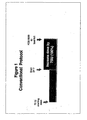
- FIG. 1 illustrates a schematic representation of a generalized ovulation induction regimen. An FSH preparation is given at 75 IU/day for the first 7 days.
- an ultrasound scan is taken to assess follicular diameter and serum estradiol is measured. If the follicle is less than 12 mm, the dose of FSH is doubled, and a subsequent scan is taken in another 5 - 7 days. Patients with follicles ⁇ 15 mm diameter receive an ovulatory bolus dose of hCG.
- Ovulation induction is as much an art as a science. Despite a remarkable array of treatment protocols, no single approach or specific method is uniquely correct. Certain principles do apply, however, and provide the basis for safe and effective treatment. However, it should be noted that the criteria set forth below for inducing ovulation is given for example purposes only and may vary significantly by clinic, patient and the goal of the treatment.
- the first cycle usually involves the administration of FSH daily beginning on day 4 to 7 of a withdrawal bleed. Follicle growth and response are monitored by both estrogen levels and ultrasound. Adequate follicle stimulation is usually achieved by 7 to 14 days of continuous FSH administration. Treatment with FSH for less than 8 days is associated with increased spontaneous abortion rates among pregnant patients.
- hCG 5,000 or 10,000 IU
- the timing of hCG administration is important because the principal complications attributed to gonadotropin-induced hyperstimulation and multiple pregnancies probably result from the prolonged effects of hCG.
- the half-life of hCG is approximately 8 hours, it may be detectable in the patient's blood for 7 to 10 days after injection and misdiagnosed as a successful treatment pregnancy. Following administration of hCG, the couple is instructed to have intercourse on that night and once or twice more over the next 48 hours.
- Estradiol levels generally correlate with the number of growing follicles but not necessarily with the number of mature follicles. Reliance on estradiol levels as the marker for follicle maturity may erroneously suggest follicle maturity in the presence of multiple small follicles, resulting in premature hCG administration. Because follicular growth correlates directly with ovum maturation, ultrasound assessment of mean follicular diameter may be a better indicator in assessing maturity and timing of hCG administration. Estrogen levels should therefore be used to assess early follicular development as an indicator of gonadotropin response, and ultrasound should be used to assess the number and size of maturing follicles. ,
- estradiol levels between 1000 and 1500 pg/ mL appear to be optimal, but actual levels may vary depending on the laboratory used and the physician's experience.
- the risk of hyperstimulation increases with higher estradiol levels.
- serum estradiol exceeds 2000 pg/ mL, hCG should be administered with great caution or withheld to allow follicles to regress.
- hypogonadotropic hypogonadism the risk of severe hyperstimulation for values greater than 2400 pg/mL is 5 % in pregnancy cycles and 1 % in nonpregnant cycles.
- a decision to withhold hCG may be also based on an ultrasound finding of 10 or more developing follicles.
- the invention is useful in that it allows for the use of lower concentrations of LH or CG administered to the host than concentrations that are used in existing ovulation induction regimens and thereby lowering the likelihood of ovarian hyperstimulation, and consequently averting the adverse effects associated with that condition: multiple births, low weight newborns and health complications for the mother.
- non-polypeptide cAMP level modulators have no therapeutic effect on follicular maturation and development during the ovulatory cycle.
- Non-polypeptide cAMP level modulators act, directly or indirectly, to increase intracellular levels of cAMP. Such compounds can increase cAMP levels by stimulating cAMP synthesis or by inhibiting its degradation, or both. Examples of modulators which increase the synthesis of cAMP include activators of adenyl cyclase such as forskolin. Examples of modulators that decrease cAMP degradation include inhibitors of phosphodiesterases such theophylline. Non-polypeptide cAMP level modulators include phosphodiesterase inhibitors, particularly inhibitors of phosphodiesterase 4 isoforms.
- the invention also is useful in that it allows for the stimulation of follicular development prior to the administration of the non-polypeptide cAMP level modulator as defined in the claims for inducing ovulation which comprises the administration of an agent which increases follicular stimulating hormone (FSH) concentrations during the follicular phase of the host's ovulatory cycle.
- FSH follicular stimulating hormone
- Said Agents are defined in the claims.
- non-polypeptide cAMP level modulator as defined in the claims is administered alone and not co-administered with hCG, the present invention provides for the opportunity of earlier diagnostic testing for pregnancy than current ovulation induction regimens involving the use of CG.
- the phosphodiesterase inhibitors used in the invention is Ariflo® (SmithKline Beecham), Cilomilast (SmithKline Beecham).
- the invention provides for the use of said first aspect, for triggering ovulation after follicular growth and maturation has been induced with FSH, Letrozole (Novartis), Anastrozole (AstraZeneca) or Fadrozole (Novartis).
- ART assisted reproductive technologies
- patients are administered an aromatase inhibitor (e.g.
- the aromatase inhibitor may be used as the sole follicle growth stimulating agent (i.e. in the absence of FSH), by using a higher dose of aromatase inhibitor (e.g. 2-10 mg/day of Letrozole or Anastrozole) and/or by prolonging administration (e.g. days 3 to 8, 3 to 9, or 3 to 10).
- a higher dose of aromatase inhibitor e.g. 2-10 mg/day of Letrozole or Anastrozole
- prolonging administration e.g. days 3 to 8, 3 to 9, or 3 to 10.
- an ovulation triggering dose of PDE inhibitor as defined in the claims is given. This regimen permits the collection of multiple oocytes, while avoiding injections, as all the agents used are orally available.
- ovulation induction it is desirable to cause the release of only one ovum. This can be achieved, according to the invention, using FSH to stimulate follicular growth and maturation, followed by administration of the PDE inhibitor defined in the claims to trigger ovulation. Also within the scope of the invention are ovulation induction regimens in which follicular growth and maturation is induced with a substitute for FSH, for example an aromatase inhibitor, as defined in the claims.
- a patient is administered a dose of aromatase inhibitor (e.g. 2.5-5 mg/day of Letrozole or Anastrozole) from at or about day 3 to at or about day 7, or from at or about day 5 to at or about day 9 of the menstrual cycle (in the absence of FSH).
- a single dose of aromatase inhibitor may be given (e.g. 5-30 mg of Letrozole or Anastrozole, preferably 10 or 20 mg), at or about day 3 or day 4 of the menstrual cycle.
- Ovulation is triggered with an ovulation triggering dose of the PDE inhibitor as defined in the claims.
- This regimen provides an ovulation induction protocol that requires no injections.
- compositions suitable for administration can be incorporated into pharmaceutical compositions suitable for administration.
- Such compositions typically comprise the active compounds and a pharmaceutically acceptable carrier.
- pharmaceutically acceptable carrier is intended to include any and all solvents, dispersion media, coatings, antibacterial and antifungal agents, isotonic and absorption delaying agents, compatible with pharmaceutical administration. Suitable carriers are described in the most recent edition of Remington's Pharmaceutical Sciences, a standard reference text in the field.
- Such carriers or diluents include water, saline, Ringer's solutions, dextrose solution, and 5% human serum albumin.
- Liposomes and non-aqueous vehicles such as fixed oils may also be used.
- the use of such media and agents for pharmaceutically active substances is well known in the art. Except insofar as any conventional media or agent is incompatible with the active compound, use thereof in the compositions is contemplated. Supplementary active compounds can also be incorporated into the compositions.
- a pharmaceutical composition of the invention is formulated to be compatible with its intended route of administration.
- routes of administration include parenteral, (e.g., intravenous, intradermal, subcutaneous), oral, inhalation, transdermal (topical), transmucosal, and rectal administration.
- Solutions or suspensions used for parenteral, intradermal, or subcutaneous application can include the following components: a sterile diluent such as water for injection, saline solution, fixed oils, polyethylene glycols, glycerine, propylene glycol or other synthetic solvents; antibacterial agents such as benzyl alcohol or methyl parabens; antioxidants such as ascorbic acid or sodium bisulfite; chelating agents such as ethylenediaminetetraacetic acid; buffers such as acetates, citrates or phosphates, and agents for the adjustment of tonicity such as sodium chloride or dextrose.
- the pH can be adjusted with acids or bases, such as hydrochloric acid or sodium hydroxide.
- the parenteral preparation can be enclosed in ampoules, disposable syringes or multiple dose vials made of glass or plastic.
- compositions suitable for injectable use include sterile aqueous solutions (where water soluble) or dispersions and sterile powders for the extemporaneous preparation of sterile injectable solutions or dispersion.
- suitable carriers include physiological saline, bacteriostatic water, Cremophor ELTM (BASF, Parsippany, N.J.) or phosphate buffered saline (PBS).
- the composition must be sterile and should be fluid to the extent that easy syringeability exists. It must be stable under the conditions of manufacture and storage and must be preserved against the contaminating action of microorganisms such as bacteria and fungi.
- the carrier can be a solvent or dispersion medium containing, for example, water, ethanol, polyol (for example, glycerol, propylene glycol, and liquid polyethylene glycol, and the like), and suitable mixtures thereof.
- the proper fluidity can be maintained, for example, by the use of a coating such as lecithin, by the maintenance of the required particle size in the case of dispersion and by the use of surfactants.
- Prevention of the action of microorganisms can be achieved by various antibacterial and antifungal agents, for example, parabens, chlorobutanol, phenol, ascorbic acid, thimerosal.
- isotonic agents for example, sugars, polyalcohols such as mannitol, sorbitol, sodium chloride in the composition.
- Prolonged absorption of the injectable compositions can be brought about by including in the composition an agent which delays absorption, for example, aluminum monostearate and gelatin.
- Sterile injectable solutions can be prepared by incorporating the active compound in the required amount in an appropriate solvent with one or a combination of ingredients enumerated above, as required, followed by filtered sterilization.
- dispersions are prepared by incorporating the active compound into a sterile vehicle that contains a basic dispersion medium and the required other ingredients from those enumerated above.
- methods of preparation are vacuum drying and freeze-drying that yields a powder of the active ingredient plus any additional desired ingredient from a previously sterile-filtered solution thereof.
- Oral compositions generally include an inert diluent or an edible carrier. They can be enclosed in gelatin capsules or compressed into tablets. For the purpose of oral therapeutic administration, the active compound can be incorporated with excipients and used in the form of tablets, troches, or capsules. Oral compositions can also be prepared using a fluid carrier for use as a mouthwash, wherein the compound in the fluid carrier is applied orally and swished and expectorated or swallowed. Pharmaceutically compatible binding agents, and/or adjuvant materials can be included as part of the composition.
- the tablets, pills, capsules, troches can contain any of the following ingredients, or compounds of a similar nature: a binder such as microcrystalline cellulose, gum tragacanth or gelatin; an excipient such as starch or lactose, a disintegrating agent such as alginic acid, Primogel, or com starch; a lubricant such as magnesium stearate or Sterotes; a glidant such as colloidal silicon dioxide; a sweetening agent such as sucrose or saccharin; or a flavoring agent such as peppermint, methyl salicylate, or orange flavoring.
- a binder such as microcrystalline cellulose, gum tragacanth or gelatin
- an excipient such as starch or lactose, a disintegrating agent such as alginic acid, Primogel, or com starch
- a lubricant such as magnesium stearate or Sterotes
- a glidant such as colloidal silicon dioxide
- a sweetening agent
- the compounds are delivered in the form of an aerosol spray from pressured container or dispenser which contains a suitable propellant, e.g., a gas such as carbon dioxide, or a nebulizer.
- a suitable propellant e.g., a gas such as carbon dioxide, or a nebulizer.
- Systemic administration can also be by transmucosal or transdermal means.
- penetrants appropriate to the barrier to be permeated are used in the formulation.
- penetrants are generally known in the art, and include, for example, for transmucosal administration, detergents, bile salts, and fusidic acid derivatives.
- Transmucosal administration can be accomplished through the use of nasal sprays or suppositories.
- the active compounds are formulated into ointments, salves, gels, or creams as generally known in the art.
- non-polypeptide cAMP level modulator as defined in the claims as well as for clomiphene, selective estrogen receptor modulators, aromatase inhibitors and inhibitors of steroidogenic enzymes as defined in the claims is by oral administration.
- active compounds also can be administered subcutaneously by injection, intravenously or trans-vaginally (for local administration).
- the preferred route of administration of FSH, LH or hCG is by subcutaneous injection, but could also be administered intravenously.
- the compounds can also be prepared in the form of suppositories (e.g., with conventional suppository bases such as cocoa butter and other glycerides) or retention enemas for recta! or vaginal delivery.
- suppositories e.g., with conventional suppository bases such as cocoa butter and other glycerides
- retention enemas for recta! or vaginal delivery.
- the active compounds can be prepared with carriers that will protect the compound against rapid elimination from the body, such as a controlled release formulation, including implants and microencapsulated delivery systems.
- a controlled release formulation including implants and microencapsulated delivery systems.
- Biodegradable, biocompatible polymers can be used, such as ethylene vinyl acetate, polyanhydrides, polyglycolic acid, collagen, polyorthoesters, and polylactic acid. Methods for preparation of such formulations will be apparent to those skilled in the art. The materials can also be obtained commercially from Alza Corporation and Nova Pharmaceuticals, Inc.
- Compounds of the invention can be employed, either alone or in combination with one or more other therapeutic agents as discussed above, as a pharmaceutical composition in mixture with conventional excipient, i.e., pharmaceutically acceptable organic or inorganic carrier substances suitable for oral, parenteral, enteral or topical application which do not deleteriously react with the active compounds and are not deleterious to the recipient thereof.
- conventional excipient i.e., pharmaceutically acceptable organic or inorganic carrier substances suitable for oral, parenteral, enteral or topical application which do not deleteriously react with the active compounds and are not deleterious to the recipient thereof.
- Suitable pharmaceutically acceptable carriers include water, salt solutions, alcohol, vegetable oils, polyethylene glycols, gelatin, lactose, amylose, magnesium stearate, talc, silicic acid, viscous paraffin, perfume oil, fatty acid monoglycerides and diglycerides, petroethral fatty acid esters, hydroxymethyl-cellulose, polyvinylpyrrolidone, etc.
- the pharmaceutical preparations can be sterilized and if desired mixed with auxiliary agents, e.g., lubricants, preservatives, stabilizers, wetting agents, emulsifiers, salts for influencing osmotic pressure, buffers, colorings, flavorings and/or aromatic substances which do not deleteriously react with the active compounds.
- Dosage unit form refers to physically discrete units suited as unitary dosages for the subject to be treated; each unit containing a predetermined quantity of active compound calculated to produce the desired therapeutic effect in association with the required pharmaceutical carrier.
- the specification for the dosage unit forms of the invention are dictated by and directly dependent on the unique characteristics of the active compound and the particular therapeutic effect to be achieved, and the limitations inherent in the art of compounding such an active compound for the treatment of individuals.
- a suitable effective dose of one or more compounds of the invention will be in the range of from 0.01 to 100 milligrams per kilogram of bodyweight of recipient per day, preferably in the range of from 0.01 to 20 milligrams per kilogram bodyweight of recipient per day, more preferably in the range of 0.05 to 4 milligrams per kilogram bodyweight of recipient per day.
- the desired dose is suitably administered once daily, or several sub-doses, e.g. 2 to 4 sub-doses, are administered at appropriate intervals through the day, or other appropriate schedule.
- Such sub-doses may be administered as unit dosage forms, e.g., containing from 0.05 to 10 milligrams of compound(s) of the invention, per unit dosage.
- compositions can be included in a container, pack, or dispenser together with instructions for administration.
- the following examples are illustrative of the invention, and/or comparative.
- Componds 2, 3 and 4 are for comparison.
- Examples 5, 6, 7, 8 and 9 are comparative examples.
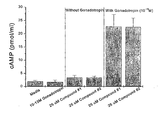
- Ovaries were removed from immature 25 day old, hypophysectomized, diethylstilbesterol treated Sprague-Dawley rats. The ovaries were repeatedly punctured with 27 gauge needles to liberate granulosa cells from the follicles. Cells were washed and re-suspended in McCoys 5A media + 0.1% BSA + 2 ⁇ M androstenedione. Viable cells in number of 100,000 were loaded into 6-well tissue culture dishes in a 1.0 ml volume (with Compound 1 and Compound 2 at a concentration of 25 micromolar, either alone or in conjunction with a low, 0.1pM dose of gonadotropin).
- a single injection of an ovulatory dose of hCG (20 IU) was administered with the final FSH injection.
- the PDE inhibitors were given in conjunction with sub-optimal doses of FSH. All injections were subcutaneously administered. Ovulation was determined 18 hours after hCG administration by counting oocytes in oviduct. Results are expressed as mean plus or minus standard deviations.
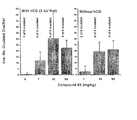
- Mature ovarian follicles generated in immature female rats by treatment with an effective dose of FSH (2.16 IU/rat/injection; bid x 2 days) were induced to ovulate with a single injection of hCG.
- hCG was administered at a sub-effective dose (3 IU) with and without a single injection of Compound 1 (50, 10 and 1 mg/kg) at the time of the final FSH injection.
- Ovulation was determined 18 hours after hCG administration by counting the number of ova in the oviduct.
- a single injection of Compound 1 co-administered with a subovulatory dose of hCG resulted in an induction of ovulation. All injections were subcutaneous.
- Results are expressed as mean plus or minus standard deviations.
- a non-polypeptide cAMP level modulator in this case a PDE inhibitor enhances hCG-stimulated ovulation when a sub-optimal dose of hCG is administered.
- Compound 1 a known PDE inhibitor are shown.
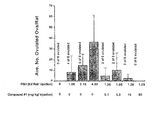
- Compound 1 was injected with and without a sub- effective dose of hCG. Ovulation was determined 18 hours after hCG/Compound 1 administration by counting oocytes in oviduct. Data represent average number of oocytes in oviducts of all rats in each group and frequency of ovulating rats. As seen in Figure 5, a single injection of Compound 1 administered alone, without a subovulatory dose of hCG, resulted in an induction of ovulation in FSH pretreated rats. Results are expressed as mean plus or minus standard deviations.
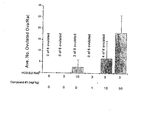
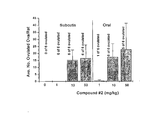
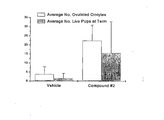
- Compound 2 was either injected subcutaneously ( subcutis ) or administered by oral gavage. Ovulation was determined 18 hours after Compound 2 administration by counting oocytes in oviduct. Data represent average number of oocytes in oviducts of all rats in each group and frequency of ovulating rats. Results are expressed as mean plus or minus standard deviations. As seen in Figure 7, administration of Compound 2 by either subcutaneous or oral route resulted in an induction of ovulation in FSH pretreated rats. This data demonstrates that a non-polypeptide cAMP level modulator, in this case a PDE inhibitor, Compound 2, is able to induce ovulation when administered orally.
- a non-polypeptide cAMP level modulator in this case a PDE inhibitor, Compound 2
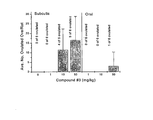
- Compound 3 was either injected subcutaneously ( subcutis ) or administered by oral gavage. Ovulation was determined 18 hours after Compound 3 administration by counting oocytes in oviduct. Data represent average number of oocytes in oviducts of all rats in each group and frequency of ovulating rats. Results are expressed as mean plus or minus standard deviations. As seen in Figure 8, administration of Compound 3 by either subcutaneous or oral route resulted in an induction of ovulation in FSH pretreated rats. This data demonstrates that a non-polypeptide cAMP level modulator, in this case a PDE inhibitor, Compound 3, is able to induce ovulation when administered orally.
- a non-polypeptide cAMP level modulator in this case a PDE inhibitor, Compound 3 is able to induce ovulation when administered orally.
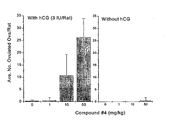
- Compound 4 was injected subcutaneously with and without a sub- effective dose of hCG. Ovulation was determined 18 hours after hCG/Compound 4 administration by counting oocytes in oviduct. Data represent average number of oocytes in oviducts of all rats in each group and frequency of ovulating rats. As seen in Figure 9, a single injection of Compound 4 administered with a subovulatory dose of hCG resulted in an induction of ovulation in FSH pretreated rats. Compound 4 administered alone induced little or no ovulation. Results are expressed as mean plus or minus standard deviations.
- Follicular maturation was induced in immature rats with FSH (4.33 IU/rat/injection; bid X 2 days) and Pregnant Mare's Serum Gonadotropin (PMSG) (1.5 IU/rat/injection; bid X 2 days). This combination was previously found to induce follicular maturation and promote mating behavior while maintaining a low spontaneous ovulation rate in the absence of an additional injection of hCG.
- FSH and PMSG induced rats were then treated with either Compound 2 (12 rats) or vehicle (12 rats) by subcutaneous administration. In one cohort of rats (6 rats per treatment), ovulation was determined 18 hours after Compound 2 or vehicle administration by counting oocytes in oviduct.
Landscapes
- Health & Medical Sciences (AREA)
- Life Sciences & Earth Sciences (AREA)
- Medicinal Chemistry (AREA)
- Chemical & Material Sciences (AREA)
- Veterinary Medicine (AREA)
- Pharmacology & Pharmacy (AREA)
- Animal Behavior & Ethology (AREA)
- General Health & Medical Sciences (AREA)
- Public Health (AREA)
- Epidemiology (AREA)
- Endocrinology (AREA)
- Reproductive Health (AREA)
- Engineering & Computer Science (AREA)
- Bioinformatics & Cheminformatics (AREA)
- Proteomics, Peptides & Aminoacids (AREA)
- Immunology (AREA)
- Zoology (AREA)
- Gastroenterology & Hepatology (AREA)
- Organic Chemistry (AREA)
- Nuclear Medicine, Radiotherapy & Molecular Imaging (AREA)
- General Chemical & Material Sciences (AREA)
- Chemical Kinetics & Catalysis (AREA)
- Pregnancy & Childbirth (AREA)
- Gynecology & Obstetrics (AREA)
- Medicines That Contain Protein Lipid Enzymes And Other Medicines (AREA)
- Pharmaceuticals Containing Other Organic And Inorganic Compounds (AREA)
- Acyclic And Carbocyclic Compounds In Medicinal Compositions (AREA)
- Steroid Compounds (AREA)
- Micro-Organisms Or Cultivation Processes Thereof (AREA)
- Medicines Containing Material From Animals Or Micro-Organisms (AREA)
- Enzymes And Modification Thereof (AREA)
- Measuring Or Testing Involving Enzymes Or Micro-Organisms (AREA)
- Peptides Or Proteins (AREA)
Priority Applications (3)
| Application Number | Priority Date | Filing Date | Title |
|---|---|---|---|
| AT07018904T ATE526013T1 (de) | 2001-12-14 | 2001-12-14 | Verfahren zur herbeiführung einer ovulation über einen nicht-polypeptid-camp-spiegel-modulator |
| DK07018904.8T DK1908463T3 (da) | 2001-12-14 | 2001-12-14 | Fremgangsmåder til at inducere ægløsning ved anvendelse af en ikke polypeptid-CAMP-niveaumodulator |
| EP07018904A EP1908463B1 (en) | 2001-12-14 | 2001-12-14 | Methods of inducing ovulation using a non-polypeptide camp level modulator |
Applications Claiming Priority (1)
| Application Number | Priority Date | Filing Date | Title |
|---|---|---|---|
| PCT/EP2001/014730 WO2003051344A1 (en) | 2001-12-14 | 2001-12-14 | Methods of inducing ovulation_using a non-polypeptide camp level modulator |
Related Child Applications (1)
| Application Number | Title | Priority Date | Filing Date |
|---|---|---|---|
| EP07018904A Division EP1908463B1 (en) | 2001-12-14 | 2001-12-14 | Methods of inducing ovulation using a non-polypeptide camp level modulator |
Publications (2)
| Publication Number | Publication Date |
|---|---|
| EP1463493A1 EP1463493A1 (en) | 2004-10-06 |
| EP1463493B1 true EP1463493B1 (en) | 2007-10-03 |
Family
ID=8164724
Family Applications (2)
| Application Number | Title | Priority Date | Filing Date |
|---|---|---|---|
| EP01274987A Expired - Lifetime EP1463493B1 (en) | 2001-12-14 | 2001-12-14 | Methods of inducing ovulation-using a non-polypeptide camp level modulator |
| EP07018904A Expired - Lifetime EP1908463B1 (en) | 2001-12-14 | 2001-12-14 | Methods of inducing ovulation using a non-polypeptide camp level modulator |
Family Applications After (1)
| Application Number | Title | Priority Date | Filing Date |
|---|---|---|---|
| EP07018904A Expired - Lifetime EP1908463B1 (en) | 2001-12-14 | 2001-12-14 | Methods of inducing ovulation using a non-polypeptide camp level modulator |
Country Status (18)
| Country | Link |
|---|---|
| US (1) | US7507707B2 (enExample) |
| EP (2) | EP1463493B1 (enExample) |
| JP (1) | JP4532115B2 (enExample) |
| KR (2) | KR20040075004A (enExample) |
| CN (1) | CN1582146A (enExample) |
| AT (2) | ATE526013T1 (enExample) |
| AU (1) | AU2002217111B2 (enExample) |
| BR (2) | BRPI0117198B1 (enExample) |
| CA (1) | CA2469939C (enExample) |
| DE (1) | DE60130813T2 (enExample) |
| DK (2) | DK1463493T3 (enExample) |
| EA (1) | EA011213B1 (enExample) |
| ES (1) | ES2293965T3 (enExample) |
| IL (3) | IL162506A0 (enExample) |
| MX (1) | MXPA04005782A (enExample) |
| PT (2) | PT1463493E (enExample) |
| UA (1) | UA80418C2 (enExample) |
| WO (1) | WO2003051344A1 (enExample) |
Cited By (1)
| Publication number | Priority date | Publication date | Assignee | Title |
|---|---|---|---|---|
| CN103169699A (zh) * | 2011-12-22 | 2013-06-26 | 中国农业大学 | 来曲唑在用于制备成年牛超数排卵药物中的应用 |
Families Citing this family (23)
| Publication number | Priority date | Publication date | Assignee | Title |
|---|---|---|---|---|
| US6861422B2 (en) * | 2003-02-26 | 2005-03-01 | Boehringer Ingelheim Pharma Gmbh & Co. Kg | Dihydropteridinones, processes for preparing them and their use as pharmaceutical compositions |
| JP2006522151A (ja) | 2003-04-01 | 2006-09-28 | アプライド リサーチ システムズ エーアールエス ホールディング ナームロゼ フェンノートシャップ | 不妊症におけるホスホジエステラーゼ阻害剤 |
| CA2552540A1 (en) * | 2004-01-17 | 2005-07-28 | Boehringer Ingelheim International Gmbh | Use of substituted pteridines for the treatment of diseases of the respiratory tract |
| DE102004002557A1 (de) * | 2004-01-17 | 2005-08-04 | Boehringer Ingelheim Pharma Gmbh & Co. Kg | Verwendung von substituierten Pyrimido(5,4-d)pyrimidinen zur Behandlung von Atemwegserkrankungen |
| DE102004029784A1 (de) * | 2004-06-21 | 2006-01-05 | Boehringer Ingelheim Pharma Gmbh & Co. Kg | Neue 2-Benzylaminodihydropteridinone, Verfahren zur deren Herstellung und deren Verwendung als Arzneimittel |
| DE102004033670A1 (de) * | 2004-07-09 | 2006-02-02 | Boehringer Ingelheim Pharma Gmbh & Co. Kg | Neue Pyridodihydropyrazinone, Verfahren zu Ihrer Herstellung und Ihre Verwendung als Arzneimittel |
| US20060035903A1 (en) * | 2004-08-14 | 2006-02-16 | Boehringer Ingelheim International Gmbh | Storage stable perfusion solution for dihydropteridinones |
| US20060058311A1 (en) | 2004-08-14 | 2006-03-16 | Boehringer Ingelheim International Gmbh | Combinations for the treatment of diseases involving cell proliferation |
| US7759485B2 (en) * | 2004-08-14 | 2010-07-20 | Boehringer Ingelheim International Gmbh | Process for the manufacture of dihydropteridinones |
| US7728134B2 (en) * | 2004-08-14 | 2010-06-01 | Boehringer Ingelheim International Gmbh | Hydrates and polymorphs of 4[[(7R)-8-cyclopentyl-7-ethyl-5,6,7,8-tetrahydro-5-methyl-6-oxo-2-pteridinyl]amino]-3-methoxy-N-(1-methyl-4-piperidinyl)-benzamide, process for their manufacture and their use as medicament |
| US20060074088A1 (en) * | 2004-08-14 | 2006-04-06 | Boehringer Ingelheim International Gmbh | Dihydropteridinones for the treatment of cancer diseases |
| EP1630163A1 (de) * | 2004-08-25 | 2006-03-01 | Boehringer Ingelheim Pharma GmbH & Co.KG | Dihydropteridinonderivative, Verfahren zu deren Herstellung und deren Verwendung als Arzneimittel |
| EP1632493A1 (de) * | 2004-08-25 | 2006-03-08 | Boehringer Ingelheim Pharma GmbH & Co.KG | Dihydropteridinonderivative, Verfahren zu deren Herstellung und deren Verwendung als Arzneimittel |
| DE102004058337A1 (de) * | 2004-12-02 | 2006-06-14 | Boehringer Ingelheim Pharma Gmbh & Co. Kg | Verfahren zur Herstellung von annelierten Piperazin-2-on Derivaten |
| EP1915155A1 (en) * | 2005-08-03 | 2008-04-30 | Boehringer Ingelheim International GmbH | Dihydropteridinones in the treatment of respiratory diseases |
| US7439358B2 (en) | 2006-02-08 | 2008-10-21 | Boehringer Ingelheim International Gmbh | Specific salt, anhydrous and crystalline form of a dihydropteridione derivative |
| EP2185559A1 (en) * | 2007-08-03 | 2010-05-19 | Boehringer Ingelheim International GmbH | Crystalline form of a dihydropteridione derivative |
| US8546566B2 (en) | 2010-10-12 | 2013-10-01 | Boehringer Ingelheim International Gmbh | Process for manufacturing dihydropteridinones and intermediates thereof |
| US9358233B2 (en) | 2010-11-29 | 2016-06-07 | Boehringer Ingelheim International Gmbh | Method for treating acute myeloid leukemia |
| US9370535B2 (en) | 2011-05-17 | 2016-06-21 | Boehringer Ingelheim International Gmbh | Method for treatment of advanced solid tumors |
| WO2014089913A1 (zh) * | 2012-12-12 | 2014-06-19 | 山东亨利医药科技有限责任公司 | 作为酪氨酸激酶抑制剂的并环化合物 |
| US20150031699A1 (en) | 2013-07-26 | 2015-01-29 | Boehringer Ingelheim International Gmbh | Treatment of myelodysplastic syndrome |
| US9867831B2 (en) | 2014-10-01 | 2018-01-16 | Boehringer Ingelheim International Gmbh | Combination treatment of acute myeloid leukemia and myelodysplastic syndrome |
Family Cites Families (27)
| Publication number | Priority date | Publication date | Assignee | Title |
|---|---|---|---|---|
| US5087615A (en) | 1989-03-17 | 1992-02-11 | Applied Research Systems Ars Holding N.V. | Novel method of ovulation induction in humans |
| US5710170A (en) | 1995-12-15 | 1998-01-20 | Merck Frosst Canada, Inc. | Tri-aryl ethane derivatives as PDE IV inhibitors |
| GB9603723D0 (en) | 1996-02-22 | 1996-04-24 | Merck & Co Inc | Diphenyl pyridyl derivatives as pde iv inhibitors |
| AP1147A (en) | 1996-05-03 | 2003-02-25 | Pfizer | Substituted indazole derivatives and related compounds. |
| HUP0100042A3 (en) | 1996-05-20 | 2003-01-28 | Darwin Discovery Ltd Cambridge | Benzofuran carboxamides medicaments containing the same and their therapeutic use |
| IL126557A (en) | 1996-05-20 | 2002-09-12 | Darwin Discovery Ltd | Quinoline (thio) carboxamides inhibiting TNF or PDE-IV and pharmaceutical preparations containing them |
| JP2000510866A (ja) | 1996-05-20 | 2000-08-22 | ダーウィン・ディスカバリー・リミテッド | Tnfとpde―ivのインヒビターとしてのキノリンスルホンアミド |
| WO1997048697A1 (en) | 1996-06-19 | 1997-12-24 | Rhone-Poulenc Rorer Limited | Substituted azabicylic compounds and their use as inhibitors of the production of tnf and cyclic amp phosphodiesterase |
| SK176598A3 (en) | 1996-06-25 | 2000-06-12 | Pfizer | Indazole derivatives, pharmaceutical composition on their base and methods of treatment |
| GB9614718D0 (en) | 1996-07-12 | 1996-09-04 | Bayer Ag | 3-ureido-pyridofurans and -pyridothiophenes |
| DE69720757T2 (de) | 1996-10-02 | 2004-03-04 | Janssen Pharmaceutica N.V. | Pde-iv hemmende 2-cyanoiminoimidazol-derivate |
| GB9622386D0 (en) | 1996-10-28 | 1997-01-08 | Sandoz Ltd | Organic compounds |
| WO1998020007A1 (en) | 1996-11-06 | 1998-05-14 | Darwin Discovery Limited | Quinolines and their therapeutic use |
| JP3237109B2 (ja) * | 1996-12-13 | 2001-12-10 | 田辺製薬株式会社 | 医薬組成物 |
| US6472425B1 (en) * | 1997-10-31 | 2002-10-29 | Nitromed, Inc. | Methods for treating female sexual dysfunctions |
| AU752415B2 (en) * | 1998-04-23 | 2002-09-19 | Zentaris Ivf Gmbh | Method for the treatment of fertility disorders |
| KR20010043828A (ko) * | 1998-05-26 | 2001-05-25 | 에바-마리아 시마-메이어, 얼설라 멜져, 마거, 하르트만 | cAMP-증강 화합물 단독 또는 감수분열-자극 화합물하나 이상과의 조합에 의한 불임 치료 방법 |
| EP1086096B1 (de) | 1998-06-10 | 2003-07-23 | ALTANA Pharma AG | Benzamide mit tetrahydrofuranyloxy-substituenten als inhibitoren der phosphodiesterase 4 |
| US6316472B1 (en) | 1999-05-13 | 2001-11-13 | Merck Frosst Canada & Co. | Heterosubstituted pyridine derivatives as PDE 4 inhibitors |
| SI1212089T1 (sl) * | 1999-08-21 | 2006-08-31 | Altana Pharma Ag | Sinergisticna kombinacija roflumilasta in salmeterola |
| US6258833B1 (en) * | 1999-12-23 | 2001-07-10 | Icos Corporation | Cyclic AMP-specific phosphodiesterase inhibitors |
| WO2001079526A2 (en) * | 2000-04-17 | 2001-10-25 | Bioimage A/S | Live cell procedures to identify compounds modulating intracellular distribution of phosphodiesterase (pde) enzymes |
| WO2001087287A2 (en) * | 2000-05-19 | 2001-11-22 | Applied Research Systems Ars Holding N.V. | Use of pyrazole derivatives for treating infertility |
| ATE332708T1 (de) * | 2000-06-06 | 2006-08-15 | Glaxo Group Ltd | Krebsbehandlung zusammensetzung, welche ein antineoplastisches mittel und pde4 inhibitor enthält |
| US6953774B2 (en) * | 2000-08-11 | 2005-10-11 | Applied Research Systems Ars Holding N.V. | Methods of inducing ovulation |
| US20020065324A1 (en) * | 2000-08-11 | 2002-05-30 | Stephen Palmer | Methods of inducing ovulation |
| JP2006522151A (ja) * | 2003-04-01 | 2006-09-28 | アプライド リサーチ システムズ エーアールエス ホールディング ナームロゼ フェンノートシャップ | 不妊症におけるホスホジエステラーゼ阻害剤 |
-
2001
- 2001-12-14 ES ES01274987T patent/ES2293965T3/es not_active Expired - Lifetime
- 2001-12-14 DK DK01274987T patent/DK1463493T3/da active
- 2001-12-14 JP JP2003552277A patent/JP4532115B2/ja not_active Expired - Fee Related
- 2001-12-14 KR KR10-2004-7009259A patent/KR20040075004A/ko not_active Ceased
- 2001-12-14 AU AU2002217111A patent/AU2002217111B2/en not_active Ceased
- 2001-12-14 EP EP01274987A patent/EP1463493B1/en not_active Expired - Lifetime
- 2001-12-14 KR KR1020097000508A patent/KR101056916B1/ko not_active Expired - Fee Related
- 2001-12-14 IL IL16250601A patent/IL162506A0/xx unknown
- 2001-12-14 BR BRPI0117198-4A patent/BRPI0117198B1/pt unknown
- 2001-12-14 WO PCT/EP2001/014730 patent/WO2003051344A1/en not_active Ceased
- 2001-12-14 CN CNA01823951XA patent/CN1582146A/zh active Pending
- 2001-12-14 US US10/498,639 patent/US7507707B2/en not_active Expired - Fee Related
- 2001-12-14 BR BR0117198-4A patent/BR0117198A/pt not_active IP Right Cessation
- 2001-12-14 AT AT07018904T patent/ATE526013T1/de active
- 2001-12-14 MX MXPA04005782A patent/MXPA04005782A/es active IP Right Grant
- 2001-12-14 PT PT01274987T patent/PT1463493E/pt unknown
- 2001-12-14 EA EA200400808A patent/EA011213B1/ru not_active IP Right Cessation
- 2001-12-14 AT AT01274987T patent/ATE374606T1/de active
- 2001-12-14 EP EP07018904A patent/EP1908463B1/en not_active Expired - Lifetime
- 2001-12-14 DK DK07018904.8T patent/DK1908463T3/da active
- 2001-12-14 PT PT07018904T patent/PT1908463E/pt unknown
- 2001-12-14 UA UA20040705737A patent/UA80418C2/uk unknown
- 2001-12-14 DE DE60130813T patent/DE60130813T2/de not_active Expired - Lifetime
- 2001-12-14 CA CA2469939A patent/CA2469939C/en not_active Expired - Fee Related
-
2004
- 2004-06-14 IL IL162506A patent/IL162506A/en not_active IP Right Cessation
-
2010
- 2010-04-15 IL IL205106A patent/IL205106A/en not_active IP Right Cessation
Cited By (2)
| Publication number | Priority date | Publication date | Assignee | Title |
|---|---|---|---|---|
| CN103169699A (zh) * | 2011-12-22 | 2013-06-26 | 中国农业大学 | 来曲唑在用于制备成年牛超数排卵药物中的应用 |
| CN103169699B (zh) * | 2011-12-22 | 2014-11-12 | 中国农业大学 | 来曲唑在用于制备成年牛超数排卵药物中的应用 |
Also Published As
Similar Documents
| Publication | Publication Date | Title |
|---|---|---|
| EP1463493B1 (en) | Methods of inducing ovulation-using a non-polypeptide camp level modulator | |
| US7803760B2 (en) | Methods of inducing ovulation | |
| US20060069031A1 (en) | Use of gnrh agonists to support the luteal phase during infertility treatment | |
| JP2005501918A (ja) | 制御下の過排卵刺激におけるhCGの使用 | |
| AU2002331939B2 (en) | Use of LH in controlled ovarian hyperstimulation | |
| US20020065324A1 (en) | Methods of inducing ovulation | |
| EP1383578B1 (en) | Single dose aromatase inhibitor for treating infertility | |
| EP1511537B1 (en) | Method of controlled ovarian hyperstimulation and pharmaceutical kit for use in such method | |
| AU2002331939A1 (en) | Use of LH in controlled ovarian hyperstimulation | |
| HK1160763A (en) | Methods of inducing ovulation using a non-polypeptide camp level modulator | |
| EP1759734A2 (en) | Aromatase inhibition to enhance assisted reproduction |
Legal Events
| Date | Code | Title | Description |
|---|---|---|---|
| PUAI | Public reference made under article 153(3) epc to a published international application that has entered the european phase |
Free format text: ORIGINAL CODE: 0009012 |
|
| 17P | Request for examination filed |
Effective date: 20040705 |
|
| AK | Designated contracting states |
Kind code of ref document: A1 Designated state(s): AT BE CH CY DE DK ES FI FR GB GR IE IT LI LU MC NL PT SE TR |
|
| AX | Request for extension of the european patent |
Extension state: AL LT LV MK RO SI |
|
| GRAP | Despatch of communication of intention to grant a patent |
Free format text: ORIGINAL CODE: EPIDOSNIGR1 |
|
| GRAS | Grant fee paid |
Free format text: ORIGINAL CODE: EPIDOSNIGR3 |
|
| GRAA | (expected) grant |
Free format text: ORIGINAL CODE: 0009210 |
|
| AK | Designated contracting states |
Kind code of ref document: B1 Designated state(s): AT BE CH CY DE DK ES FI FR GB GR IE IT LI LU MC NL PT SE TR |
|
| AX | Request for extension of the european patent |
Extension state: AL LT LV MK RO SI |
|
| RAP1 | Party data changed (applicant data changed or rights of an application transferred) |
Owner name: LABORATOIRES SERONO SA |
|
| REG | Reference to a national code |
Ref country code: GB Ref legal event code: FG4D |
|
| REG | Reference to a national code |
Ref country code: CH Ref legal event code: EP |
|
| REG | Reference to a national code |
Ref country code: IE Ref legal event code: FG4D |
|
| REF | Corresponds to: |
Ref document number: 60130813 Country of ref document: DE Date of ref document: 20071115 Kind code of ref document: P |
|
| REG | Reference to a national code |
Ref country code: PT Ref legal event code: SC4A Free format text: AVAILABILITY OF NATIONAL TRANSLATION Effective date: 20071221 |
|
| REG | Reference to a national code |
Ref country code: SE Ref legal event code: TRGR |
|
| REG | Reference to a national code |
Ref country code: DK Ref legal event code: T3 |
|
| REG | Reference to a national code |
Ref country code: GR Ref legal event code: EP Ref document number: 20070403785 Country of ref document: GR |
|
| REG | Reference to a national code |
Ref country code: ES Ref legal event code: FG2A Ref document number: 2293965 Country of ref document: ES Kind code of ref document: T3 |
|
| ET | Fr: translation filed | ||
| PG25 | Lapsed in a contracting state [announced via postgrant information from national office to epo] |
Ref country code: MC Free format text: LAPSE BECAUSE OF NON-PAYMENT OF DUE FEES Effective date: 20071231 |
|
| PLBE | No opposition filed within time limit |
Free format text: ORIGINAL CODE: 0009261 |
|
| STAA | Information on the status of an ep patent application or granted ep patent |
Free format text: STATUS: NO OPPOSITION FILED WITHIN TIME LIMIT |
|
| 26N | No opposition filed |
Effective date: 20080704 |
|
| REG | Reference to a national code |
Ref country code: CH Ref legal event code: PFA Owner name: MERCK SERONO SA Free format text: LABORATOIRES SERONO SA#CENTRE INDUSTRIEL#1267 COINSINS, VAUD (CH) -TRANSFER TO- MERCK SERONO SA#CENTRE INDUSTRIEL#1267 COINSINS, VAUD (CH) Ref country code: CH Ref legal event code: NV Representative=s name: MERCK SERONO S.A. - GENEVA; IP DEPARTMENT 9 |
|
| PG25 | Lapsed in a contracting state [announced via postgrant information from national office to epo] |
Ref country code: CY Free format text: LAPSE BECAUSE OF FAILURE TO SUBMIT A TRANSLATION OF THE DESCRIPTION OR TO PAY THE FEE WITHIN THE PRESCRIBED TIME-LIMIT Effective date: 20071003 |
|
| PG25 | Lapsed in a contracting state [announced via postgrant information from national office to epo] |
Ref country code: TR Free format text: LAPSE BECAUSE OF FAILURE TO SUBMIT A TRANSLATION OF THE DESCRIPTION OR TO PAY THE FEE WITHIN THE PRESCRIBED TIME-LIMIT Effective date: 20071003 |
|
| REG | Reference to a national code |
Ref country code: FR Ref legal event code: CD |
|
| REG | Reference to a national code |
Ref country code: DE Ref legal event code: R081 Ref document number: 60130813 Country of ref document: DE Owner name: MERCK SERONO SA, CH Free format text: FORMER OWNER: LABORATOIRES SERONO S.A., COINSINS, CH Effective date: 20110427 Ref country code: DE Ref legal event code: R081 Ref document number: 60130813 Country of ref document: DE Owner name: MERCK SERONO SA, COINSINS, CH Free format text: FORMER OWNER: LABORATOIRES SERONO S.A., COINSINS, VAUD, CH Effective date: 20110427 |
|
| REG | Reference to a national code |
Ref country code: ES Ref legal event code: PC2A Owner name: MERCK SERONO SA Effective date: 20110901 |
|
| REG | Reference to a national code |
Ref country code: NL Ref legal event code: TD Effective date: 20111212 |
|
| REG | Reference to a national code |
Ref country code: FR Ref legal event code: PLFP Year of fee payment: 15 |
|
| REG | Reference to a national code |
Ref country code: FR Ref legal event code: PLFP Year of fee payment: 16 |
|
| REG | Reference to a national code |
Ref country code: FR Ref legal event code: PLFP Year of fee payment: 17 |
|
| PGFP | Annual fee paid to national office [announced via postgrant information from national office to epo] |
Ref country code: LU Payment date: 20171128 Year of fee payment: 17 |
|
| PGFP | Annual fee paid to national office [announced via postgrant information from national office to epo] |
Ref country code: NL Payment date: 20171115 Year of fee payment: 17 Ref country code: FR Payment date: 20171113 Year of fee payment: 17 Ref country code: DE Payment date: 20171206 Year of fee payment: 17 Ref country code: FI Payment date: 20171211 Year of fee payment: 17 Ref country code: DK Payment date: 20171212 Year of fee payment: 17 |
|
| PGFP | Annual fee paid to national office [announced via postgrant information from national office to epo] |
Ref country code: IE Payment date: 20171211 Year of fee payment: 17 Ref country code: CH Payment date: 20171212 Year of fee payment: 17 Ref country code: BE Payment date: 20171024 Year of fee payment: 17 Ref country code: PT Payment date: 20171214 Year of fee payment: 17 Ref country code: SE Payment date: 20171213 Year of fee payment: 17 Ref country code: GB Payment date: 20171213 Year of fee payment: 17 Ref country code: AT Payment date: 20171128 Year of fee payment: 17 Ref country code: GR Payment date: 20171113 Year of fee payment: 17 |
|
| PGFP | Annual fee paid to national office [announced via postgrant information from national office to epo] |
Ref country code: ES Payment date: 20180104 Year of fee payment: 17 |
|
| PGFP | Annual fee paid to national office [announced via postgrant information from national office to epo] |
Ref country code: IT Payment date: 20171221 Year of fee payment: 17 |
|
| REG | Reference to a national code |
Ref country code: DE Ref legal event code: R119 Ref document number: 60130813 Country of ref document: DE |
|
| REG | Reference to a national code |
Ref country code: DK Ref legal event code: EBP Effective date: 20181231 |
|
| REG | Reference to a national code |
Ref country code: SE Ref legal event code: EUG |
|
| PG25 | Lapsed in a contracting state [announced via postgrant information from national office to epo] |
Ref country code: FI Free format text: LAPSE BECAUSE OF NON-PAYMENT OF DUE FEES Effective date: 20181214 Ref country code: PT Free format text: LAPSE BECAUSE OF NON-PAYMENT OF DUE FEES Effective date: 20190614 Ref country code: SE Free format text: LAPSE BECAUSE OF NON-PAYMENT OF DUE FEES Effective date: 20181215 |
|
| REG | Reference to a national code |
Ref country code: CH Ref legal event code: PL |
|
| REG | Reference to a national code |
Ref country code: NL Ref legal event code: MM Effective date: 20190101 |
|
| REG | Reference to a national code |
Ref country code: AT Ref legal event code: MM01 Ref document number: 374606 Country of ref document: AT Kind code of ref document: T Effective date: 20181214 |
|
| GBPC | Gb: european patent ceased through non-payment of renewal fee |
Effective date: 20181214 |
|
| PG25 | Lapsed in a contracting state [announced via postgrant information from national office to epo] |
Ref country code: LU Free format text: LAPSE BECAUSE OF NON-PAYMENT OF DUE FEES Effective date: 20181214 |
|
| REG | Reference to a national code |
Ref country code: IE Ref legal event code: MM4A |
|
| PG25 | Lapsed in a contracting state [announced via postgrant information from national office to epo] |
Ref country code: NL Free format text: LAPSE BECAUSE OF NON-PAYMENT OF DUE FEES Effective date: 20190101 |
|
| REG | Reference to a national code |
Ref country code: BE Ref legal event code: MM Effective date: 20181231 |
|
| PG25 | Lapsed in a contracting state [announced via postgrant information from national office to epo] |
Ref country code: FR Free format text: LAPSE BECAUSE OF NON-PAYMENT OF DUE FEES Effective date: 20181231 Ref country code: IE Free format text: LAPSE BECAUSE OF NON-PAYMENT OF DUE FEES Effective date: 20181214 Ref country code: DE Free format text: LAPSE BECAUSE OF NON-PAYMENT OF DUE FEES Effective date: 20190702 Ref country code: IT Free format text: LAPSE BECAUSE OF NON-PAYMENT OF DUE FEES Effective date: 20181214 |
|
| PG25 | Lapsed in a contracting state [announced via postgrant information from national office to epo] |
Ref country code: BE Free format text: LAPSE BECAUSE OF NON-PAYMENT OF DUE FEES Effective date: 20181231 Ref country code: GR Free format text: LAPSE BECAUSE OF NON-PAYMENT OF DUE FEES Effective date: 20190702 |
|
| PG25 | Lapsed in a contracting state [announced via postgrant information from national office to epo] |
Ref country code: GB Free format text: LAPSE BECAUSE OF NON-PAYMENT OF DUE FEES Effective date: 20181214 Ref country code: LI Free format text: LAPSE BECAUSE OF NON-PAYMENT OF DUE FEES Effective date: 20181231 Ref country code: CH Free format text: LAPSE BECAUSE OF NON-PAYMENT OF DUE FEES Effective date: 20181231 Ref country code: AT Free format text: LAPSE BECAUSE OF NON-PAYMENT OF DUE FEES Effective date: 20181214 |
|
| PG25 | Lapsed in a contracting state [announced via postgrant information from national office to epo] |
Ref country code: DK Free format text: LAPSE BECAUSE OF NON-PAYMENT OF DUE FEES Effective date: 20181231 |
|
| REG | Reference to a national code |
Ref country code: ES Ref legal event code: FD2A Effective date: 20200203 |
|
| PG25 | Lapsed in a contracting state [announced via postgrant information from national office to epo] |
Ref country code: ES Free format text: LAPSE BECAUSE OF NON-PAYMENT OF DUE FEES Effective date: 20181215 |