EP1454961A2 - Transparente Formmasse für optische Anwendungen - Google Patents
Transparente Formmasse für optische Anwendungen Download PDFInfo
- Publication number
- EP1454961A2 EP1454961A2 EP20040100090 EP04100090A EP1454961A2 EP 1454961 A2 EP1454961 A2 EP 1454961A2 EP 20040100090 EP20040100090 EP 20040100090 EP 04100090 A EP04100090 A EP 04100090A EP 1454961 A2 EP1454961 A2 EP 1454961A2
- Authority
- EP
- European Patent Office
- Prior art keywords
- optical
- lenses
- molding
- transparent
- optical body
- Prior art date
- Legal status (The legal status is an assumption and is not a legal conclusion. Google has not performed a legal analysis and makes no representation as to the accuracy of the status listed.)
- Withdrawn
Links
Images


Classifications
-
- A—HUMAN NECESSITIES
- A61—MEDICAL OR VETERINARY SCIENCE; HYGIENE
- A61G—TRANSPORT, PERSONAL CONVEYANCES, OR ACCOMMODATION SPECIALLY ADAPTED FOR PATIENTS OR DISABLED PERSONS; OPERATING TABLES OR CHAIRS; CHAIRS FOR DENTISTRY; FUNERAL DEVICES
- A61G5/00—Chairs or personal conveyances specially adapted for patients or disabled persons, e.g. wheelchairs
- A61G5/06—Chairs or personal conveyances specially adapted for patients or disabled persons, e.g. wheelchairs with obstacle mounting facilities, e.g. for climbing stairs, kerbs or steps
- A61G5/061—Chairs or personal conveyances specially adapted for patients or disabled persons, e.g. wheelchairs with obstacle mounting facilities, e.g. for climbing stairs, kerbs or steps for climbing stairs
-
- C—CHEMISTRY; METALLURGY
- C08—ORGANIC MACROMOLECULAR COMPOUNDS; THEIR PREPARATION OR CHEMICAL WORKING-UP; COMPOSITIONS BASED THEREON
- C08K—Use of inorganic or non-macromolecular organic substances as compounding ingredients
- C08K5/00—Use of organic ingredients
- C08K5/0008—Organic ingredients according to more than one of the "one dot" groups of C08K5/01 - C08K5/59
- C08K5/0041—Optical brightening agents, organic pigments
-
- A—HUMAN NECESSITIES
- A61—MEDICAL OR VETERINARY SCIENCE; HYGIENE
- A61G—TRANSPORT, PERSONAL CONVEYANCES, OR ACCOMMODATION SPECIALLY ADAPTED FOR PATIENTS OR DISABLED PERSONS; OPERATING TABLES OR CHAIRS; CHAIRS FOR DENTISTRY; FUNERAL DEVICES
- A61G2203/00—General characteristics of devices
- A61G2203/70—General characteristics of devices with special adaptations, e.g. for safety or comfort
-
- Y—GENERAL TAGGING OF NEW TECHNOLOGICAL DEVELOPMENTS; GENERAL TAGGING OF CROSS-SECTIONAL TECHNOLOGIES SPANNING OVER SEVERAL SECTIONS OF THE IPC; TECHNICAL SUBJECTS COVERED BY FORMER USPC CROSS-REFERENCE ART COLLECTIONS [XRACs] AND DIGESTS
- Y10—TECHNICAL SUBJECTS COVERED BY FORMER USPC
- Y10T—TECHNICAL SUBJECTS COVERED BY FORMER US CLASSIFICATION
- Y10T428/00—Stock material or miscellaneous articles
- Y10T428/31504—Composite [nonstructural laminate]
- Y10T428/31725—Of polyamide
-
- Y—GENERAL TAGGING OF NEW TECHNOLOGICAL DEVELOPMENTS; GENERAL TAGGING OF CROSS-SECTIONAL TECHNOLOGIES SPANNING OVER SEVERAL SECTIONS OF THE IPC; TECHNICAL SUBJECTS COVERED BY FORMER USPC CROSS-REFERENCE ART COLLECTIONS [XRACs] AND DIGESTS
- Y10—TECHNICAL SUBJECTS COVERED BY FORMER USPC
- Y10T—TECHNICAL SUBJECTS COVERED BY FORMER US CLASSIFICATION
- Y10T428/00—Stock material or miscellaneous articles
- Y10T428/31504—Composite [nonstructural laminate]
- Y10T428/31725—Of polyamide
- Y10T428/31728—Next to second layer of polyamide
-
- Y—GENERAL TAGGING OF NEW TECHNOLOGICAL DEVELOPMENTS; GENERAL TAGGING OF CROSS-SECTIONAL TECHNOLOGIES SPANNING OVER SEVERAL SECTIONS OF THE IPC; TECHNICAL SUBJECTS COVERED BY FORMER USPC CROSS-REFERENCE ART COLLECTIONS [XRACs] AND DIGESTS
- Y10—TECHNICAL SUBJECTS COVERED BY FORMER USPC
- Y10T—TECHNICAL SUBJECTS COVERED BY FORMER US CLASSIFICATION
- Y10T428/00—Stock material or miscellaneous articles
- Y10T428/31504—Composite [nonstructural laminate]
- Y10T428/31725—Of polyamide
- Y10T428/31728—Next to second layer of polyamide
- Y10T428/31732—At least one layer is nylon type
Definitions
- the invention relates to a molding compound based on a transparent Polyamides for optical applications that have a low intrinsic color and at the same time has a UV cut-off at around 400 nm.
- the invention further relates to the molded parts made from this molding compound.
- Transparent polyamides are used alongside other plastics, such as polycarbonate (PC) and polymethyl methacrylate (PMMA), as materials for the production of Frames, glasses, lenses, magnifying glasses, sunglasses, but also for visors, Protective masks, viewing and cover panes are used.
- PC polycarbonate
- PMMA polymethyl methacrylate
- Suitable for this purpose are amorphous polyamides that are naturally transparent; even more suitable are transparent but microcrystalline polyamide materials because they are compared to completely amorphous, transparent polyamides, but also for PC or PMMA due to the crystalline content an improved chemical and Stress crack resistance as well as increased scratch and abrasion resistance exhibit.
- the task is to prevent the passage of UV light through the lens to prevent damage to the eye from light to avoid these wavelengths.
- UV absorbers or UV stabilizers solve what also applies to transparent polyamide molding compounds.
- WO 02 090 421 A1 describes transparent thermoplastic polyamide molding compositions, those for the exclusion of UV light below 400 nm with UV absorbers or UV stabilizers can be equipped.
- UV / VIS absorption spectra of those used as UV absorbers or UV stabilizers Connections used show a finite slope in the flank area. This means that there is no sudden drop in absorption from very high values the value zero takes place. If you look at the corresponding transmission curve, this results in an S-shaped course, the curve in the Transition area between the value zero and the substance-specific maximum at given layer thickness increases with finite slope. Should now in one transparent polyamide molding compound an exclusion of wavelengths below 400 nm can be reached, using a commercially available UV absorber or UV stabilizer is used, this leads to the necessarily absorption of the compound used at wavelengths above 400 nm results in a clear yellowing of the molding compound. This is for the intended application disadvantageous.
- a UV absorber is chosen that works with the same Concentration in the molding compound even at lower wavelengths, e.g. B. at 380 nm, which has a significant transmission, can under certain circumstances Molding compounds with low yellowing are obtained, but with UV protection is not sufficiently guaranteed.
- the position of the transmission curve is one Molding mass is influenced by the concentration of the absorber contained. So A lower dose of the same absorber usually leads to one Shift the cut-off to smaller wavelengths, usually one Color improvement results. However, the protective effect is not in given in full.
- b-value is used as a measure of the yellowing CIELAB color system originated (DIN 6174).
- a reduction in b value in the positive value range of b a reduction in the yellowing.
- b-value is negative, there is a blue color.
- Transparent polyamides are known (Kunststoff Handbuch 3/4, ed. G. W. Becker and G. Braun, page 803 ff., Carl Hanser Verlag Kunststoff, Vienna, 1998).
- Transparent polyamides suitable for the invention are also, for example, in the following Writings described: US-A-2 742 496, CH-B-480 381, CH-B-679 861, DE-A-22 25 938, DE-A-26 42 244, DE-A-27 43 515, DE-A-29 36 759, DE-A-27 32 928, DE-A-37 17 928, DE-A-4310 970, EP-A-0053 876, EP-A-0271 308, EP-A-0313 436, EP-A-0 725 100, EP-A-0 725 101 and WO 02/090421.
- Optical brighteners differ in their operating principle from UV absorbers and UV stabilizers, since they release the energy absorbed in the UV range in the form of radiation in the form of longer-wave radiation mainly in the visible range instead of converting it into heat.
- the light is emitted by the brightener mainly in the blue area of the visible spectrum, which can compensate for a yellow tinge and create a white aspect, often with a bluish undertone. Because of this property, such connections have been used for some time, preferably in the textile industry in fiber applications, but also in other areas. These are non-transparent systems.
- the optical brightener is used in conjunction with UV absorbers and UV stabilizers, white pigments such as TiO 2 , bluing agents, etc., the optical brightener is intended to improve the color of the system, but not to exclude UV light.
- UV absorbers and UV stabilizers white pigments such as TiO 2 , bluing agents, etc.
- the optical brightener is intended to improve the color of the system, but not to exclude UV light.
- Optical brighteners are also used in transparent molding compounds, including polycarbonate molding compounds.
- WO 01/92395 A1 shows that the optical brightener is used for Color improvement is used in addition to a UV absorber.
- a corresponding An optical brightener can also be found in EP 0 680 996 A1.
- the targeted use of optical brighteners in is not yet known Molding compounds to block the passage of UV light at the same time Realization of a greatly improved yellowness index.
- Optical brighteners are commercially available, for example, under the product names Uvitex (Fa. Ciba) or Hostalux (Clariant), here for example Hostalux KS, Hostalux KS1, Hostalux KSB (new) or Hostalux KS1B available and based on a series various basic chemical structures, but all of the above Show phenomenon of fluorescence.
- Examples of basic structures are style levels (including Uvitex OB-ONE from Ciba) or Thiophene (among others Uvitex OB from Ciba), which are each substituted with benzoxazole units, bisbenzoxazoles or compounds from the class of biphenyls (among others Uvitex FP from Ciba), coumarins and others. Go to more details from Ullmann's Encyclopedia of Industrial Chemistry, 5th edition, volume A18, VCH Verlagsgesellschaft Weinheim 1991, pages 153 to 176.
- the amount of the optical brightener to be used can be determined by a simple Try it out.
- the properties of the fabric also optimally contribute to the desired effect adjust other concentrations of the optical brightener in the molding compound. It it is expected that the desired effect will range from 0.00001 to 10% by weight occurs.
- mixtures of different optical Brighteners can be used.
- the b-value is determined in accordance with DIN 53 236 on injection-molded sheets with a thickness of 4 mm Incident light measured against a standard white standard as a background.
- the transmission is determined according to ASTM D 1003 on injection molded plates.
- a conventional UV absorber can also be used in the molding composition or stabilizer may be included, even if this embodiment is less preferred.
- concentration of the UV absorber is this way that its presence alone provides the desired UV protection does not occur.
- Such UV absorbers can have a number of basic chemical structures have, for example, benzotriazoles, triazines, benzophenones, Oxalic acid anilides, cyanoacrylates, benzoxazinones and others.
- An improvement, i. H. Reduction of the b-value of the molding compound, which is used as a measure for the yellowing of the polymer is used, while maintaining the UV protection effect can be combined by using an optical brightener with a suitable stabilizer or stabilizer mixtures, for example Antioxidants take place, which act as processing stabilizers.
- a suitable stabilizer or stabilizer mixtures for example Antioxidants take place, which act as processing stabilizers.
- Antioxidants take place, which act as processing stabilizers.
- phosphorus-containing antioxidants compounds from the class of sterically hindered phenols and compounds that have a low sulfur content Oxidation level included.
- HALS stabilizers is particularly advantageous, which are also referred to as UV stabilizers, the Mechanism of action here is another. It is based on chemical interception radicals caused by the effect of UV light on the polymer, the HALS stabilizer being consumed in the reaction.
- Such Compounds are, for example, under the trade names Uvinol 4049 H, Uvinol 4050 H (from BASF), Cyasorb 3853, Cyasorb 3346 (from Cytec), Tinuvin 770 or Tinuvin 622 (from Ciba) available. Stabilizing the molding compound with an or multiple antioxidants and / or HALS compounds not only increases stability the molding compound during processing, but especially the duration of the Functionality of the molding compound in the sense of the invention. Regarding details on Ullmann's Encyclopedia of Industrial Chemistry, 5th edition, volume A20, VCH Verlagsgesellschaft Weinheim 1992, pages 459 to 475.
- the amount of all additives in addition to the mixture of polyamide and optical Brightener is preferably at most 30% by weight, based on the molding composition, particularly preferably at most 20% by weight and very particularly preferably at most 10% by weight
- the molding compound can be compounded, for example, by compounding the brighteners and Additives in a twin-screw extruder or other technical Devices for mixing solids in polymer melts or by Dosing of the additives in devices that are used to manufacture Serve and produce polymer melts.
- brighteners and additives can be used as such or added in the form of a masterbatch.
- the position of the cut-off can be determined by the type and amount of the added optical Whiteners can be controlled.
- the cut-off is in one application-relevant range from about 370 to about 430 nm.
- optical bodies are those through which light either bundled or unbundled, which then exits on the exit side is perceived with the eye.
- Optical bodies are those through which light either bundled or unbundled, which then exits on the exit side is perceived with the eye.
- these are optical lenses for Glasses and in particular sunglasses, cameras, binoculars, magnifying glasses, microscopes, electro-optical measuring and testing devices, optical filters, headlight lenses, Lamp lenses, lenses for projectors and projectors, viewing windows, sight glasses, Protective screens and visors as well as sun protection roofs and glazing in the Residential or automotive sector.
- transparent molded parts, fibers or Films for various, including other, applications can be produced, for example Food packaging, pharmaceutical packaging, cosmetic packaging or Films for agriculture.
- the molded parts are made according to the usual methods of Plastic processing manufactured, for example by injection molding or Extrusion.
- the molding composition according to the invention can also have a transparent coating optical bodies of any composition can be applied. It is also possible to produce a film that contains an optical brightener and then for example is back-injected, so that a lens or a transparent molded part is obtained.
- the transmission between 370 and 430 nm at least in a lower subrange for the given layer thickness of the Molded part at most 10%, particularly preferably at most 6% or at most 5%, 4%, 3%, 2% or 1%.
- TROGAMID® was used to manufacture the transparent polyamide molding compounds CX7323 (Degussa AG) used as starting material.
- the granules showed one Water content of less than 0.1% by weight.
- the additives were dosed via a powder mixture of additive and mixed CX7323; They were incorporated on a Berstorff ZE25-33D twin-screw extruder at a melt temperature of 280 ° C and a speed of 250 s -1 .
- the tool pressure was 40 bar.
- the compounds obtained were granulated and dried at 100 ° C. under vacuum until a water content of at most 0.1% by weight was obtained. The time required for this was typically 12 hours.
- test specimens were produced by injection molding from the obtained ones Granules of the molding compounds. There were rectangular discs 60 x 60 x 2 mm and Round discs made of 60 x 4 mm. The production took place on a Injection molding machine Engel ES 240/65 at a temperature of 280 ° C and one Tool temperature of 80 ° C.
- the transmission values were measured in accordance with ASTM 1003 on a Lambda 19 measuring device from Perkin Elmer. The regular was determined Transmission as described in section 4.3 of ASTM 1003. To this end The test specimens were at a distance of 150 mm during the measurement to the entrance of the Ulbricht ball. Measurements were made on both of the above described test specimens.
- the b-value was measured in accordance with DIN 53 236 using a chroma meter CR-310 from Minolta.
- the measurement geometry was as follows: viewing at 0 ° (d / 0 method) with gloss inclusion. Measurements were taken under supervision against a white reflector CR-A44 (Minolta) with standard illuminant D65; the spectral sensitivity the measuring body corresponded to the 2 ° normal observer. The measurements were carried out the round discs 60 x 4 mm.
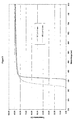
- FIG. 3 a molding compound with UV absorber (VB 5) is compared with a molding compound which additionally contains a small amount of optical brightener (B 7). It can be seen that the amount of UV absorber used alone is not sufficient for the UV cut-off according to the invention.
- Lenses with a diameter of 70 mm and a thickness of 2.3 mm were produced by injection molding from the granules of the molding compositions obtained according to Example 5 and Comparative Example 4.
- An Engel ES 600 injection molding machine was used at a melt temperature of 280 ° C and a mold temperature of 80 ° C.
- An 8-fold lens tool was used.
Landscapes
- Chemical & Material Sciences (AREA)
- Health & Medical Sciences (AREA)
- Chemical Kinetics & Catalysis (AREA)
- Medicinal Chemistry (AREA)
- Polymers & Plastics (AREA)
- Organic Chemistry (AREA)
- Life Sciences & Earth Sciences (AREA)
- Animal Behavior & Ethology (AREA)
- General Health & Medical Sciences (AREA)
- Public Health (AREA)
- Veterinary Medicine (AREA)
- Compositions Of Macromolecular Compounds (AREA)
Abstract
Description
- verzweigte oder unverzweigte aliphatische Diamine mit 6 bis 14 C-Atomen, wie z. B. 1.6-Hexamethylendiamin, 2-Methyl-1.5-diaminopentan, 2.2.4- bzw. 2.4.4-Trimethylhexamethylendiamin, 1.9-Nonamethylendiamin, 1.10-Decamethylendiamin oder 1.12-Dodecamethylendiamin;
- cycloaliphatische Diamine mit 6 bis 22 C-Atomen, wie z. B. 4.4'-Diaminodicyclohexylmethan, 3.3'-Dimethyl-4.4'-diaminodicyclohexylmethan, 4.4'-Diaminodicyclohexylpropan, 1.4-Diaminocyclohexan, 1.4-Bis(aminomethyl)-cyclohexan, 2.6-Bis(aminomethyl)-norbornan oder 3-Aminomethyl-3.5.5-trimethylcyclohexylamin;
- araliphatische Diamine mit 8 bis 22 C-Atomen, wie z. B. m- oder p-Xylylendiamin oder Bis(4-aminophenyl)propan;
- verzweigte oder unverzweigte aliphatische Dicarbonsäuren mit 6 bis 22 C-Atomen, wie z. B. Adipinsäure, 2.2.4- bzw. 2.4.4-Trimethyladipinsäure, Azelainsäure, Sebacinsäure oder 1.12-Dodecandisäure;
- cycloaliphatische Dicarbonsäuren mit 6 bis 22 C-Atomen, wie z. B. Cyclohexan-1.4-dicarbonsäure, 4.4'-Dicarboxyldicyclohexylmethan, 3.3'-Dimethyl-4.4'-dicarboxyldicyclohexylmethan, 4.4'-Dicarboxyldicyclohexylpropan und 1.4-Bis(carboxymethyl)cyclohexan;
- araliphatische Dicarbonsäuren mit 8 bis 22 C-Atomen, wie z. B. 4.4'-Diphenyimethandicarbonsäure;
- aromatische Dicarbonsäuren mit 8 bis 22 C-Atomen, wie z. B. Isophthalsäure, Tributylisophthalsäure, Terephthalsäure, 1.4-, 1.5-, 2.6- bzw. 2.7-Naphthalindicarbonsäure, Diphensäure oder Diphenylether-4.4'-dicarbonsäure;
- Lactame mit 6 bis 12 C-Atomen bzw. die entsprechenden ω-Aminocarbonsäuren, wie z. B. ε-Caprolactam, ε-Aminocapronsäure, Capryllactam, ω-Aminocaprylsäure, ω-Aminoundecansäure, Laurinlactam oder ω-Aminododecansäure.
- das Polyamid aus Terephthalsäure und dem Isomerengemisch aus 2.2.4- und 2.4.4-Trimethylhexamethylendiamin,
- das Polyamid aus Isophthalsäure und 1.6-Hexamethylendiamin,
- das Copolyamid aus einem Gemisch aus Terephthalsäure/Isophthalsäure und 1.6-Hexamethylendiamin,
- das Copolyamid aus Isophthalsäure, 3.3'-Dimethyl-4.4'-diaminodicyclohexylmethan und Laurinlactam oder Caprolactam,
- das (Co)Polyamid aus 1.12-Dodecandisäure oder 1.10-Decandisäure, 3.3'-Dimethyl-4.4'-diaminodicyclohexylmethan und gegebenenfalls Laurinlactam oder Caprolactam,
- das Copolyamid aus Isophthalsäure, 4.4'-Diaminodicyclohexylmethan und Laurinlactam oder Caprolactam,
- das Polyamid aus 1.12-Dodecandisäure und 4.4'-Diaminodicyclohexylmethan,
- das Copolyamid aus einem Terephthalsäure/Isophthalsäure-Gemisch, 3.3'-Dimethyl-4.4'-diaminodicyclohexylmethan und Laurinlactam.
- Weitere Polymere, wie z. B. polymere Fließhilfsmittel, wie sie z. B. aus der EP 1 120 443 A2 bekannt sind, polymere Flammschutzmittel oder Schlagzähmodifikatoren, etwa isorefraktive gepfropfte Kern-Schale-Polymere;
- Füllstoffe bzw. Verstärkungsstoffe, wie z. B. isorefraktive Glasfasern oder Glaskugeln sowie nanoskalige anorganische Materialien;
- Pigmente, andere Farbmittel, Weichmacher, Antistatika, Entformungshilfen, Fließmittel, Flammschutzmittel und dergleichen.
| Zusammensetzung der Formmassen (jeweils Gewichtsteile) | ||||||||||
| CX7323 | A | B | C | D | E | F | G | H | I | |
| R | 100 | |||||||||
| B1 | 100 | 0,03 | ||||||||
| B2 | 100 | 0,03 | ||||||||
| B3 | 100 | 0,03 | ||||||||
| B4 | 100 | 0,03 | ||||||||
| B5 | 100 | 0,03 | 0,5 | |||||||
| B6 | 100 | 0,03 | 0,5 | |||||||
| B7 | 100 | 0,03 | 0,1 | 0,1 | ||||||
| VB1 | 99 | 1 | ||||||||
| VB2 | 99,9 | 0,1 | ||||||||
| VB3 | 99,9 | 0,1 | ||||||||
| VB4 | 99,8 | 0,2 | ||||||||
| VB5 | 100 | 0,1 | 0,1 | |||||||
| R = Referenz | ||||||||||
| B = Beispiel | ||||||||||
| VB = Vergleichsbeispiel |
| Messergebnisse | |||||
| Transmission (%) | |||||
| b @ 4 mm | 380 nm | 390 nm | 400 nm | 410 nm | |
| R | 5,6 | 70,8 | 74,2 | 76,6 | 78,9 |
| B1 | 6,4 | 0,1 | 0,1 | 0,1 | 1,1 |
| B2 | 6,7 | 0,1 | 0,1 | 0,1 | 0,5 |
| B3 | 6,1 | 0,1 | 0,1 | 0,3 | 3,5 |
| B4 | 6,9 | 0,1 | 0,1 | 0,1 | 1,2 |
| B5 | 5,6 | 0,1 | 0,1 | 0,1 | 0,3 |
| B6 | 3,6 | 0,1 | 0,1 | 0,1 | 8,7 |
| B7 | 6,6 | 0,1 | 0,1 | 0,1 | 5,7 |
| VB1 | 8,3 | 0 | 4 | 33,2 | 59,8 |
| VB2 | 6 | 12,7 | 49,7 | 70,3 | 78,3 |
| VB3 | 6,2 | 57,4 | 71,6 | 76,7 | 79,8 |
| VB4 | 13,4 | 0 | 0 | 0,2 | 17 |
| VB5 | 5,7 | 38,6a | 49,5a | 53,2a | 71,8a |
| Messergebnisse Linsen | |||||
| Transmission (%) | |||||
| b @ 2,3 mm | 380 nm | 390 nm | 400 nm | 410 nm | |
| B8 | 3,9 | 0,2 | 0,1 | 0,1 | 2,6 |
| VB6 | 14,3 | 0 | 0 | 1,3 | 31,2 |
Claims (8)
- Formmasse, die zu mindestens 60 Gew.-% aus transparentem Polyamid besteht, wobei die Formmasse eine wirksame Menge eines oder mehrerer optischer Aufheller enthält und wobei die Menge des optischen Aufhellers so bemessen ist, dassa) der b-Wert als Maß für die Gelbfärbung maximal 7 beträgt und weiterhinb) die Transmission zwischen 370 und 430 nm zumindest in einem unteren Teilbereich kleiner als 1 % ist, gemessen bei einer Schichtdicke von 4 mm.
- Verwendung eines oder mehrerer optischer Aufheller zur weitgehenden Verhinderung des Durchtritts von UV-Licht durch einen optischen Körper aus einer Formmasse, die zu mindestens 60 Gew.-% aus transparentem Polyamid besteht.
- Optischer Körper aus einer Formmasse, die zu mindestens 60 Gew.-% aus transparentem Polyamid besteht, wobei die Formmasse eine wirksame Menge eines oder mehrerer optischer Aufheller enthält und wobei die Menge des optischen Aufhellers so bemessen ist, dass der b-Wert als Maß für die Gelbfärbung maximal 7 beträgt.
- Optischer Körper gemäß Anspruch 3,
dadurch gekennzeichnet, dass weiterhin die Transmission zwischen 370 und 430 nm zumindest in einem unteren Teilbereich bei der gegebenen Schichtdicke des Formteils maximal 10 % beträgt. - Optischer Körper gemäß einem der Ansprüche 3 und 4,
dadurch gekennzeichnet, dass er ausgewählt ist aus der Gruppe optische Linsen für Brillen, Kameras, Ferngläser, Lupen, Mikroskope oder elektrooptische Mess- und Prüfgeräte, optische Filter, Scheinwerferlinsen, Lampenlinsen, Linsen für Projektoren oder Beamer, Sichtfenster, Schaugläser, Schutzscheiben und -visiere, Sonnenschutzdächer sowie Verglasungen im Wohn- oder Automobilsektor. - Optischer Körper,
dadurch gekennzeichnet, dass er mehrschichtig aufgebaut ist, wobei eine Schicht aus der Formmasse gemäß Anspruch 1 besteht. - Optischer Körper aus transparentem Polyamid,
dadurch gekennzeichnet, dass auf ihn eine Beschichtung aufgebracht ist, die einen oder mehrere optische Aufheller enthält. - Optischer Körper gemäß Anspruch 7,
dadurch gekennzeichnet, dass die Beschichtung ein Lack ist.
Applications Claiming Priority (2)
| Application Number | Priority Date | Filing Date | Title |
|---|---|---|---|
| DE10308226 | 2003-02-25 | ||
| DE2003108226 DE10308226A1 (de) | 2003-02-25 | 2003-02-25 | Transparente Formmasse für optische Anwendungen |
Publications (2)
| Publication Number | Publication Date |
|---|---|
| EP1454961A2 true EP1454961A2 (de) | 2004-09-08 |
| EP1454961A3 EP1454961A3 (de) | 2004-10-13 |
Family
ID=32797758
Family Applications (1)
| Application Number | Title | Priority Date | Filing Date |
|---|---|---|---|
| EP20040100090 Withdrawn EP1454961A3 (de) | 2003-02-25 | 2004-01-13 | Transparente Formmasse für optische Anwendungen |
Country Status (9)
| Country | Link |
|---|---|
| US (1) | US7133209B2 (de) |
| EP (1) | EP1454961A3 (de) |
| JP (1) | JP2004256812A (de) |
| KR (1) | KR20040076630A (de) |
| CN (1) | CN100379823C (de) |
| AU (1) | AU2004200718B9 (de) |
| CA (1) | CA2458294A1 (de) |
| DE (1) | DE10308226A1 (de) |
| TW (1) | TWI301141B (de) |
Cited By (3)
| Publication number | Priority date | Publication date | Assignee | Title |
|---|---|---|---|---|
| WO2008028217A1 (en) | 2006-09-06 | 2008-03-13 | Carl Zeiss Vision Australia Holdings Limited | Ultraviolet light absorbing optical elements and compositions and methods for manufacture |
| EP2070973A4 (de) * | 2006-10-02 | 2016-02-17 | Sumitomo Elec Fine Polymer Inc | Aus transparentem harz geformter artikel, optische linse und optische folie |
| WO2018055010A1 (en) * | 2016-09-20 | 2018-03-29 | Essilor International | Polycarbonate resin compositions with consistent color and stable blue-cut performance |
Families Citing this family (29)
| Publication number | Priority date | Publication date | Assignee | Title |
|---|---|---|---|---|
| JP4750405B2 (ja) * | 2004-11-16 | 2011-08-17 | 三菱樹脂株式会社 | 脂肪族ポリエステル系樹脂反射フィルム及び反射板 |
| CN1321341C (zh) * | 2005-03-24 | 2007-06-13 | 袁敏华 | 防紫外线的控制近视加深近视镜片或预防白内障老花镜片 |
| US7108913B1 (en) * | 2005-05-09 | 2006-09-19 | Mattel, Inc. | Light reflecting polymeric articles containing benzoxazolyl-napthalene optical brighteners |
| US8018547B2 (en) * | 2006-02-08 | 2011-09-13 | Kevin Ray Stoops | Protective covering for liquid crystal display |
| EP1847569B1 (de) * | 2006-04-21 | 2010-01-06 | Ems-Chemie Ag | Transparente Polyamid-Formmassen |
| US8152727B2 (en) * | 2006-12-11 | 2012-04-10 | Chidicon Medical Center | Method for assessment of color processing mechanism in the human brain for diagnosis and treatment |
| EP1992659B1 (de) * | 2007-05-16 | 2016-07-20 | EMS-Patent AG | Polyamidformmassen-Schmelze zur Herstellung von transparenten Formteilen |
| CN101910872A (zh) | 2007-12-28 | 2010-12-08 | 住友电工超效能高分子股份有限公司 | 光学透镜 |
| FR2932807B1 (fr) * | 2008-06-20 | 2011-12-30 | Arkema France | Polyamide, composition comprenant un tel polyamide et leurs utilisations. |
| EP2547719B1 (de) | 2010-03-17 | 2014-04-30 | Evonik Röhm GmbH | Chemikalienbeständige folien in hoher optischer qualität |
| EP2647671B1 (de) * | 2011-01-28 | 2016-12-21 | Kuraray Co., Ltd. | Polyamidzusammensetzung für Reflektor, Reflektor, lichtemittierende Vorrichtung mit dem Reflektor sowie Beleuchtungsvorrichtung und Bildanzeigevorrichtung mit der lichtemittierenden Vorrichtung |
| US9611387B2 (en) | 2012-12-13 | 2017-04-04 | E I Du Pont De Nemours And Company | Transparent thermoplastic polyamide container |
| US9221975B2 (en) | 2012-12-13 | 2015-12-29 | E I Du Pont De Nemours And Company | Transparent thermoplastic container |
| EP2743080B1 (de) | 2012-12-13 | 2016-10-05 | AIRBUS HELICOPTERS DEUTSCHLAND GmbH | Transparente mehrschichtige Folie und Verfahren zur Herstellung einer solchen Folie |
| WO2014119042A1 (ja) * | 2013-02-04 | 2014-08-07 | 積水化成品工業株式会社 | 樹脂粒子及びその用途 |
| USD741302S1 (en) | 2013-07-19 | 2015-10-20 | Kevin Ray Stoops | Protective covering for a monitor |
| US10642087B2 (en) | 2014-05-23 | 2020-05-05 | Eyesafe, Llc | Light emission reducing compounds for electronic devices |
| US10901125B2 (en) | 2014-05-23 | 2021-01-26 | Eyesafe, Llc | Light emission reducing compounds for electronic devices |
| CN105984186A (zh) * | 2015-03-04 | 2016-10-05 | 赢创特种化学(上海)有限公司 | 纤维增强的聚酰胺复合材料结构件及其制备方法 |
| EP3187528B1 (de) | 2015-12-31 | 2020-08-19 | Samsung Electronics Co., Ltd. | Zusammensetzung zur herstellung von transparenter polymerfolie, transparente polymerfolie und elektronische vorrichtung damit |
| CN110637045B (zh) | 2017-05-11 | 2022-08-26 | 艾德凡斯化学公司 | 用于制造透明物品的聚酰胺三元共聚物 |
| US11810532B2 (en) | 2018-11-28 | 2023-11-07 | Eyesafe Inc. | Systems for monitoring and regulating harmful blue light exposure from digital devices |
| US12321060B1 (en) | 2018-11-28 | 2025-06-03 | Eyesafe Inc. | Color filter enhancements for display devices |
| US11126033B2 (en) | 2018-11-28 | 2021-09-21 | Eyesafe Inc. | Backlight unit with emission modification |
| US11592701B2 (en) | 2018-11-28 | 2023-02-28 | Eyesafe Inc. | Backlight unit with emission modification |
| US10955697B2 (en) | 2018-11-28 | 2021-03-23 | Eyesafe Inc. | Light emission modification |
| CN110079085B (zh) * | 2019-06-03 | 2022-08-19 | 合复新材料科技(无锡)有限公司 | 一种具有耐磨耐老化抗黄变的透明尼龙复合材料、其制备方法及其在通讯设备后盖的应用 |
| US10971660B2 (en) | 2019-08-09 | 2021-04-06 | Eyesafe Inc. | White LED light source and method of making same |
| EP4174532A1 (de) * | 2021-10-27 | 2023-05-03 | Essilor International | Transparenter optischer artikel mit erhöhter blaulichtschneidfähigkeit und überlegener ästhetik |
Family Cites Families (42)
| Publication number | Priority date | Publication date | Assignee | Title |
|---|---|---|---|---|
| US2742496A (en) | 1952-09-19 | 1956-04-17 | California Research Corp | Process for separating hexamethylene diamine salts of isophthalic and terephthalic acids |
| DE1147381B (de) * | 1960-03-31 | 1963-04-18 | Basf Ag | Verfahren zum Stabilisieren bzw. Aufhellen in der Molekuelkette wiederkehrende Amidgruppen aufweisender Polykondensate, Polyaddukte bzw. Polymerisate durch Titansalze und Phosphorverbindungen |
| CH512538A (de) | 1961-06-05 | 1971-09-15 | Grace W R & Co | Verfahren zur Herstellung von linearen Polyamiden |
| FR2040256A1 (de) * | 1969-04-26 | 1971-01-22 | Basf Ag | |
| NL7301734A (de) * | 1972-02-17 | 1973-08-21 | ||
| DE2225938A1 (de) | 1972-05-27 | 1973-12-13 | Hoechst Ag | Transparente polyamide |
| CH624970A5 (en) | 1975-09-22 | 1981-08-31 | Inventa Ag | Process for the preparation of glass-transparent polyamide |
| DE2732928A1 (de) | 1977-07-21 | 1979-02-01 | Bayer Ag | Transparente polyamide |
| DE2743515A1 (de) | 1977-09-28 | 1979-04-05 | Bayer Ag | Polyamide aus isophthalsaeure und hexamethylendiamin |
| DE2936759C2 (de) | 1979-09-12 | 1987-03-26 | Hüls AG, 4370 Marl | Transparente Copolyamide |
| US4369305A (en) | 1980-11-20 | 1983-01-18 | E. I. Du Pont De Nemours And Company | Polyamide molding resin from PACM having specific stereo isomer ratio |
| US4666627A (en) * | 1983-05-08 | 1987-05-19 | Ciba-Geigy Corporation | 4-Heterocyclylvinyl-4-'styryl-biphenyls |
| CH667462A5 (de) * | 1985-01-07 | 1988-10-14 | Inventa Ag | Transparente copolyamide, verfahren zu deren herstellung und deren verwendung zur herstellung von formkoerpern. |
| CH673029A5 (de) * | 1986-11-11 | 1990-01-31 | Inventa Ag | |
| EP0271308B1 (de) | 1986-12-09 | 1994-03-16 | Mitsubishi Kasei Corporation | Durchsichtiges Copolyamid |
| FR2622197B1 (fr) | 1987-10-21 | 1990-03-09 | Atochem | Polyamides transparents, leur procede de fabrication |
| CH679861A5 (en) | 1989-10-26 | 1992-04-30 | Inventa Ag | Thermoplastic co:polyamide compsn. with low melt viscosity - comprises hexa:methylene di:amine, bis:aminoalkyl cyclohexyl methane and isophthalic acid for cable, film, optical fibre sheath and large moulding |
| JP3037974B2 (ja) * | 1990-07-18 | 2000-05-08 | 株式会社日本化学工業所 | すぐれた窒素酸化物耐性を有するポリアミド組成物 |
| FR2685703B1 (fr) * | 1991-12-31 | 1995-02-24 | Atochem | Compositions polyamides transparentes a tenue aux agents chimiques elevee. |
| DE4301808A1 (de) | 1993-01-23 | 1994-07-28 | Huels Chemische Werke Ag | Verfahren zur Einarbeitung von Stabilisatoren in Polykondensate |
| DE4310970A1 (de) | 1993-04-03 | 1994-10-06 | Huels Chemische Werke Ag | Farblose und transparente, amorph zu verarbeitende Polyamidformmassen mit guter Spannungsrißbeständigkeit und Schlagzähigkeit |
| DE4324167A1 (de) * | 1993-07-19 | 1995-01-26 | Hoechst Ag | Polyvinylbutyralfolien mit verbesserten optischen Eigenschaften |
| JPH0782413A (ja) | 1993-09-14 | 1995-03-28 | Teijin Ltd | 紫外線吸収剤及び樹脂組成物 |
| US5512620A (en) | 1994-05-05 | 1996-04-30 | General Electric Company | Benzoxazolyl optical brightners in and for thermoplastic compositions |
| JPH0873735A (ja) * | 1994-09-08 | 1996-03-19 | Mitsubishi Chem Corp | 光学部品用ポリアミド樹脂組成物、および光通信用部品 |
| CH689422A5 (de) | 1995-02-01 | 1999-04-15 | Inventa Ag | Transparente Copolyamide, ihre Herstellung sowie Formkoerper aus den transparenten Copolyamiden. |
| CA2162430A1 (en) | 1995-02-01 | 1996-08-02 | Ems-Inventa Ag | Transparent, colorless, amorphous polyamides and molded articles |
| CH688624A5 (de) | 1995-02-01 | 1997-12-15 | Inventa Ag | Amorphe Polyamid-Formmassen und -Formteile. |
| CA2162429A1 (en) | 1995-02-01 | 1996-08-02 | Hans Dalla Torre | Colorless, transparent copolyamides, their preparation, and molded articles made from these copolyamides, their blends or alloys |
| DE19642885C2 (de) | 1996-10-17 | 2001-08-02 | Inventa Ag | Verwendung von Polyamid-Formmassen zur Herstellung von optischen oder elektrooptischen Formteilen |
| AU751426B2 (en) * | 1998-02-13 | 2002-08-15 | Ciba Speciality Chemicals Pty. Ltd. | Polyamide composition |
| US6312822B1 (en) * | 1998-05-28 | 2001-11-06 | Eastman Chem Co | Dispersion aids for optical brighteners in polyolefins |
| DE10002948A1 (de) | 2000-01-25 | 2001-07-26 | Degussa | Leichtfließende transparente Polyamid-Formmasse |
| DE10007673A1 (de) | 2000-02-19 | 2001-08-23 | Mitsubishi Polyester Film Gmbh | Weiß-opake, UV-stabilisierte Folie mit niedriger Transparenz aus einem kristallisierbaren Thermoplasten |
| DE10009756B4 (de) * | 2000-03-01 | 2004-03-25 | Ems-Chemie Ag | Farblose, hochtransparente Polyamid-Blends mit verbesserter Spannungsrissbeständigkeit |
| DE10026628A1 (de) | 2000-05-29 | 2001-12-06 | Bayer Ag | Transparente thermoplastische Zusammensetzungen |
| JP3870731B2 (ja) * | 2000-07-12 | 2007-01-24 | 東レ株式会社 | 面光源反射部材用白色フィルム |
| DE60137632D1 (de) * | 2000-08-18 | 2009-03-26 | Teijin Chemicals Ltd | Tuchformartige struktur mit attraktiver erscheinung sowie deren anwendung |
| JP2002284978A (ja) * | 2001-03-23 | 2002-10-03 | Mitsubishi Engineering Plastics Corp | ポリカーボネート樹脂組成物 |
| DE10122188B4 (de) | 2001-05-08 | 2007-04-12 | Ems-Chemie Ag | Polyamidformmassen zur Herstellung optischer Linsen |
| US6754030B2 (en) * | 2001-06-27 | 2004-06-22 | Seagate Technology Llc | Optimal reader-to-writer offset measurement of a head in a disc drive for reduced track misregistration |
| DE10214937A1 (de) | 2002-04-04 | 2003-10-16 | Basf Ag | Cyclische Verbindungen und ihre Verwendung als Lichtabsorber, Lichtemitter oder Komplexliganden |
-
2003
- 2003-02-25 DE DE2003108226 patent/DE10308226A1/de not_active Ceased
-
2004
- 2004-01-13 EP EP20040100090 patent/EP1454961A3/de not_active Withdrawn
- 2004-02-19 TW TW93104099A patent/TWI301141B/zh not_active IP Right Cessation
- 2004-02-23 CA CA002458294A patent/CA2458294A1/en not_active Abandoned
- 2004-02-23 JP JP2004046958A patent/JP2004256812A/ja active Pending
- 2004-02-23 AU AU2004200718A patent/AU2004200718B9/en not_active Ceased
- 2004-02-24 KR KR1020040012279A patent/KR20040076630A/ko not_active Withdrawn
- 2004-02-24 CN CNB2004100330120A patent/CN100379823C/zh not_active Expired - Fee Related
- 2004-02-24 US US10/784,712 patent/US7133209B2/en not_active Expired - Fee Related
Non-Patent Citations (1)
| Title |
|---|
| None |
Cited By (5)
| Publication number | Priority date | Publication date | Assignee | Title |
|---|---|---|---|---|
| WO2008028217A1 (en) | 2006-09-06 | 2008-03-13 | Carl Zeiss Vision Australia Holdings Limited | Ultraviolet light absorbing optical elements and compositions and methods for manufacture |
| EP2069830A4 (de) * | 2006-09-06 | 2011-05-25 | Carl Zeiss Vision Au Holding | Ultraviolettlicht absorbierende optische elemente und zusammensetzungen und herstellungsverfahren |
| EP2070973A4 (de) * | 2006-10-02 | 2016-02-17 | Sumitomo Elec Fine Polymer Inc | Aus transparentem harz geformter artikel, optische linse und optische folie |
| WO2018055010A1 (en) * | 2016-09-20 | 2018-03-29 | Essilor International | Polycarbonate resin compositions with consistent color and stable blue-cut performance |
| US11505675B2 (en) | 2016-09-20 | 2022-11-22 | Essilor International | Polycarbonate resin compositions with consistent color and stable blue-cut performance |
Also Published As
| Publication number | Publication date |
|---|---|
| US20040166342A1 (en) | 2004-08-26 |
| AU2004200718A1 (en) | 2004-09-09 |
| AU2004200718B9 (en) | 2009-07-23 |
| DE10308226A1 (de) | 2004-09-23 |
| US7133209B2 (en) | 2006-11-07 |
| CN1534064A (zh) | 2004-10-06 |
| HK1070087A1 (zh) | 2005-06-10 |
| CN100379823C (zh) | 2008-04-09 |
| TW200427780A (en) | 2004-12-16 |
| JP2004256812A (ja) | 2004-09-16 |
| CA2458294A1 (en) | 2004-08-25 |
| TWI301141B (en) | 2008-09-21 |
| EP1454961A3 (de) | 2004-10-13 |
| KR20040076630A (ko) | 2004-09-01 |
| AU2004200718B2 (en) | 2009-03-19 |
Similar Documents
| Publication | Publication Date | Title |
|---|---|---|
| EP1454961A2 (de) | Transparente Formmasse für optische Anwendungen | |
| DE60318308T2 (de) | Polysulfonzusammensetzungen, die reduzierte verfärbung und hohe lichtdurchlässigkeit aufweisen, sowie daraus hergestellte gegenstände | |
| EP0953007B1 (de) | Verfahren zur herstellung farbneutraler polymethylmethacrylat-formmassen | |
| DE69507235T2 (de) | Stabilisierung von pigmentierten Fasern mit einer synergistischen Mischung von UV-Absorber und gehindertem Amin | |
| EP1992659B1 (de) | Polyamidformmassen-Schmelze zur Herstellung von transparenten Formteilen | |
| DE69716789T2 (de) | Brillenglas | |
| EP1570983A1 (de) | Werkstoffverbunde aus einem Formteil aus transparenten oder transluzenten, einfärbbaren Kunststoffformmassen | |
| DE10224947A1 (de) | Transparente Polyamid-Formmassen mit verbesserter Transparenz, Chemikalienbeständigkeit und dynamischer Belastbarkeit | |
| EP2022820A1 (de) | Photochrome Formmassen und daraus hergestellte Gegenstände | |
| EP2719726B1 (de) | Formmassen | |
| EP2746340B1 (de) | Flammgeschützte Polyamid-Formmasse und deren Verwendung | |
| DE19532720A1 (de) | Flammgeschützte thermoplastische Formmassen | |
| EP3247743A1 (de) | Flammgeschützte, glasfaser-haltige formmassen enthaltend siloxan-haltiges polycarbonat-blockcokondensat | |
| EP4119608A1 (de) | Transparente polyamide mit guter witterungsbeständigkeit | |
| DE4034574A1 (de) | Thermoplastmischungen | |
| EP4441132B1 (de) | Polyamid basierte erzeugnisse | |
| EP4190851B1 (de) | Polyamid basierte erzeugnisse | |
| DE10245705A1 (de) | Ein Polycarbonat oder Polyestercarbonat enthaltend optische Aufheller | |
| EP3919562A1 (de) | Polyamid basierte erzeugnisse | |
| EP3838979B1 (de) | Schmelzepolycarbonat mit verbesserten optischen eigenschaften | |
| EP3919564A1 (de) | Polyamid basierte erzeugnisse | |
| EP3728437B1 (de) | Polyamid-formmassen mit verbesserten optischen eigenschaften und verwendung von farbmitteln darin | |
| DE60318903T3 (de) | 4,4'-biphenol-polysulfon-zusammensetzungen, herstellungsverfahren dafür und gegenstände daraus | |
| DE202024001708U1 (de) | Elektromobilitätskomponenten | |
| CH705776A2 (de) | Modifizierte Kabelverschraubung. |
Legal Events
| Date | Code | Title | Description |
|---|---|---|---|
| PUAI | Public reference made under article 153(3) epc to a published international application that has entered the european phase |
Free format text: ORIGINAL CODE: 0009012 |
|
| PUAL | Search report despatched |
Free format text: ORIGINAL CODE: 0009013 |
|
| 17P | Request for examination filed |
Effective date: 20040113 |
|
| AK | Designated contracting states |
Kind code of ref document: A2 Designated state(s): AT BE BG CH CY CZ DE DK EE ES FI FR GB GR HU IE IT LI LU MC NL PT RO SE SI SK TR |
|
| AX | Request for extension of the european patent |
Extension state: AL LT LV MK |
|
| AK | Designated contracting states |
Kind code of ref document: A3 Designated state(s): AT BE BG CH CY CZ DE DK EE ES FI FR GB GR HU IE IT LI LU MC NL PT RO SE SI SK TR |
|
| AX | Request for extension of the european patent |
Extension state: AL LT LV MK |
|
| AKX | Designation fees paid |
Designated state(s): AT BE BG CH CY CZ DE DK EE ES FI FR GB GR HU IE IT LI LU MC NL PT RO SE SI SK TR |
|
| 17Q | First examination report despatched |
Effective date: 20050915 |
|
| RAP1 | Party data changed (applicant data changed or rights of an application transferred) |
Owner name: DEGUSSA GMBH |
|
| GRAP | Despatch of communication of intention to grant a patent |
Free format text: ORIGINAL CODE: EPIDOSNIGR1 |
|
| GRAS | Grant fee paid |
Free format text: ORIGINAL CODE: EPIDOSNIGR3 |
|
| RAP1 | Party data changed (applicant data changed or rights of an application transferred) |
Owner name: EVONIK DEGUSSA GMBH |
|
| RAP1 | Party data changed (applicant data changed or rights of an application transferred) |
Owner name: EVONIK DEGUSSA GMBH |
|
| STAA | Information on the status of an ep patent application or granted ep patent |
Free format text: STATUS: THE APPLICATION IS DEEMED TO BE WITHDRAWN |
|
| 18D | Application deemed to be withdrawn |
Effective date: 20110802 |