EP1453886B1 - Photochemisch und/oder thermisch strukturierbare Harze auf Silanbasis und ein einstufiges Verfahren zu deren Herstellung - Google Patents
Photochemisch und/oder thermisch strukturierbare Harze auf Silanbasis und ein einstufiges Verfahren zu deren Herstellung Download PDFInfo
- Publication number
- EP1453886B1 EP1453886B1 EP02800599A EP02800599A EP1453886B1 EP 1453886 B1 EP1453886 B1 EP 1453886B1 EP 02800599 A EP02800599 A EP 02800599A EP 02800599 A EP02800599 A EP 02800599A EP 1453886 B1 EP1453886 B1 EP 1453886B1
- Authority
- EP
- European Patent Office
- Prior art keywords
- group
- photochemically
- thermally
- silane
- formula
- Prior art date
- Legal status (The legal status is an assumption and is not a legal conclusion. Google has not performed a legal analysis and makes no representation as to the accuracy of the status listed.)
- Expired - Lifetime
Links
Images
Classifications
-
- C—CHEMISTRY; METALLURGY
- C08—ORGANIC MACROMOLECULAR COMPOUNDS; THEIR PREPARATION OR CHEMICAL WORKING-UP; COMPOSITIONS BASED THEREON
- C08G—MACROMOLECULAR COMPOUNDS OBTAINED OTHERWISE THAN BY REACTIONS ONLY INVOLVING UNSATURATED CARBON-TO-CARBON BONDS
- C08G77/00—Macromolecular compounds obtained by reactions forming a linkage containing silicon with or without sulfur, nitrogen, oxygen or carbon in the main chain of the macromolecule
- C08G77/04—Polysiloxanes
- C08G77/14—Polysiloxanes containing silicon bound to oxygen-containing groups
-
- C—CHEMISTRY; METALLURGY
- C08—ORGANIC MACROMOLECULAR COMPOUNDS; THEIR PREPARATION OR CHEMICAL WORKING-UP; COMPOSITIONS BASED THEREON
- C08G—MACROMOLECULAR COMPOUNDS OBTAINED OTHERWISE THAN BY REACTIONS ONLY INVOLVING UNSATURATED CARBON-TO-CARBON BONDS
- C08G77/00—Macromolecular compounds obtained by reactions forming a linkage containing silicon with or without sulfur, nitrogen, oxygen or carbon in the main chain of the macromolecule
- C08G77/04—Polysiloxanes
- C08G77/20—Polysiloxanes containing silicon bound to unsaturated aliphatic groups
Definitions
- the present invention relates to structurable silane resins (also referred to as organically modifiable (hetero) silicic acid polycondensates or organopolysiloxanes) which have improved under radiation (in particular in the UV range) or thermally to inorganic-organic, O-Si-O group-containing hybrid polymers implement dielectric properties and excellent substrate adhesion, in particular to process structured layers. These materials are suitable for use in the high and ultra-high frequency ranges (e.g., as multilayer systems in SBU (SBU sequentially build-up), in thin film multilayer (DSML)).
- SBU single layer multilayer
- DSML thin film multilayer
- a low to high viscosity resin or such a lacquer which / can be brought into a suitable form, for example as a coating of a substrate, as a shaped body or as a membrane, and dried after molding, if necessary, can be further cured by polymerizing the existing organic groups.
- the last-mentioned organic polymerization can be carried out selectively only at intended locations, for example during curing by selective exposure with the aid of actinic radiation, in which case the unpolymerized material is removed with the aid of suitable solvents can be removed. In this way one can obtain photolithographically structured, three-dimensional bodies or surfaces.
- Support materials for thin-film circuits are partly ceramics, Si wafers or organic materials from the printed circuit board and semiconductor technology developed directly for hybrid applications.
- their dielectric or other properties make an application in the ultra-high frequency range unsatisfactory.
- commercially available dielectrics eg, benzocyclobutenes: BCB such as Cyclotene TM 4026-46 from Dow Chemical, Polyimide PI: Pyralin TM 2722 from Du Pont, or glass fiber reinforced PTFE laminate: RT / Duorid TM 5880 from Rogers Corporation
- BCB benzocyclobutenes
- Polyimide PI Pyralin TM 2722 from Du Pont
- glass fiber reinforced PTFE laminate RT / Duorid TM 5880 from Rogers Corporation
- UV-structured resins of the already mentioned DE 199 32 629 A1 which one yes because of their high
- a polymer of diphenylsilanediol and methacryloxypropyltrimethosysilane in this range exhibited a loss factor tan ⁇ of 0.03 in the range of 1 GHz
- the use of such materials as dielectrics for ultrahigh-frequency applications in communication technology (RF transmission and reception modules, multi-chip modules, MCM) or in the automotive industry (distance radar, as thin / thick-film multilayer circuits, DSML) has hitherto been unsatisfactory. Because such applications make extraordinary demands on the properties of the dielectric in the microwave range, in particular for frequencies between 10 and 100 GHz.
- Object of the present invention is to provide materials whose dielectric properties in the high and very high frequency range (especially between 10 and 100 GHz) at ⁇ r ⁇ 3 and tan ⁇ ⁇ 5 ⁇ 10 -3 and beyond at least partially thermal, mechanical and have adhesion properties superior to those of conventional purely organic materials used for ultrahigh frequency applications.
- materials prepared using a monomeric silanediol and at least one other monomeric silane component and in which the silane component carries at least one organo-crosslinkable group bonded to the silicon atom via carbon have the desired dielectric properties when the silanediol used carries no aryl groups.
- the silanediol used is preferably an aliphatic silanediol whose organic radicals particularly preferably have a significant space requirement, e.g. Isobutyl, isopropyl or cyclohexyl.
- the other monomeric silane component is a compound having two or three groups which function as leaving groups in the presence of the hydroxy groups of the silanediol and optionally a catalyst for the condensation (for simplicity, they are often referred to as "leaving groups" hereinafter).
- a catalyst for the condensation for simplicity, they are often referred to as "leaving groups” hereinafter.
- halogen each optionally substituted alkoxy, acyloxy, alkoxycarbonyl or NR 3 2 with R 3 is hydrogen or lower alkyl.
- Alkoxy groups having in particular one to four carbon atoms and lower alkyl groups of the same chain length are preferred.
- the leaving groups can also be OH groups.
- said silane component carries, as mentioned, one or two hydrolysis-stable, organically crosslinkable groups which can be polymerized thermally and / or photochemically, for example in the presence of UV photoinitiators. This group (s) is / are attached via carbon to the silicon atom.
- the process reliably and reproducibly leads to products with the desired material properties such as viscosity, solubility, refractive index, substrate adhesion, temperature resistance and dielectric properties.
- desired material properties such as viscosity, solubility, refractive index, substrate adhesion, temperature resistance and dielectric properties.
- excellent and unexpected temperature resistance can be observed on the materials.
- the reproducibility of the process control is a prerequisite for the success of the large number of process steps that are required in the photolithographic structure production (application method, for example by spin-on, pretreatments such as predrying or pre-curing, photopolymerization, intermediate treatment, eg "postexposure-bake ", Development, post-treatment, eg post-bake”), and thus for use in microsystems technology and for the reliability of the ultimately produced component.
- R is preferably selected from groups with a significant space requirement, for example those from or with styryl, (meth) acryloxyalkyl or glycidoxyalkyl, for example methacryloxypropyl or glycidoxypropyl. More preferably, R is or is a styryl group and / or a methacrylic acid group. It is particularly favorable if a 1 and b denote 1, where R is very particularly preferably styryl.
- the radical R 2 is preferably an alkyl group, most preferably in this combination R 2 is methyl.
- the group R 2 can be voluminous and, for example, optionally substituted i-propyl, i-butyl, t-butyl or cyclohexyl.
- X is preferably selected from C 1 -C 6 alkoxides; Methoxy or ethoxy groups are most preferred.
- Suitable silanediols are silanes of the general formula (II) R 1 2 Si (OH) 2 (II) wherein R 1 may be the same or different and may denote a straight-chain, branched or cyclic, optionally substituted C 1 -C 12 alkyl group. R 1 can instead also be a photochemically or thermally polymerizable group via an organic radical, in particular a cationically or radically in the presence of UV radiation polymerizable group, with the proviso that it contains no aryl radical.
- the groups given as preferred for R in formula (I) are also preferred for the group R 1 , with the exception of the styryl group.
- the silanediol carries no organically crosslinkable group, that R 1 is thus an alkyl group as defined above, the optionally present substituents are selected from those which are not accessible to polymerization, for example halogen.
- the stoichiometric ratio between the silanes of formula (I) and those of formula (II) is preferably exactly or about 1: 1.
- the selection of the two components is carried out so that the mixture contains the largest possible number of aliphatic groups, ie both radicals R 1 of the silanediol are aliphatic groups and the index sum a + b in the compound of formula (I) 2, wherein the group R 2 is then preferably methyl.
- the aliphatic groups in the silane of the formula (II) are at least partially sterically demanding, for example when R 1 is isopropyl, isobutyl or cyclohexyl.
- components e.g., to increase the inorganic bulk density, hardness, and abrasiveness of the resulting polycondensate
- other components e.g., to increase the inorganic bulk density, hardness, and abrasiveness of the resulting polycondensate
- alkoxides of aluminum, boron, and germanium or transition metal alkoxides in amounts of preferably at most 30% by weight.
- Other possible additives are conventional paint additives, fillers, leveling agents and / or pigments.
- the silane components are preferably initially charged in a suitable, preferably anhydrous solvent.
- a suitable, preferably anhydrous solvent preferably anhydrous solvent.
- alkoxylated lower alkanoic acid esters for example acetic acid esters
- their Ester groups are preferably derived from straight-chain or branched C 1 -C 8 -alkyl alcohols, for example isopropyl or isobutyl alcohol.
- the mixture preferably contains a suitable condensation catalyst, eg tetrabutylammonium fluoride trihydrate. Its amount is kept so low that the H 2 O present plays no significant role as reactant of the reaction.
- the mixture is warmed or heated gently. Repeated, prolonged heating below the boiling point of the solvent, e.g. to about 80 ° C and intermediate cooling to room temperature is favorable.
- the initially introduced reaction medium and the readily volatile components such as alcohols formed by the condensation are generally at least partially removed, with suitable viscosity properties also being completely removed, e.g. by distilling off on a rotary evaporator and / or optionally with agents which allow lower pressures in order to complete the condensation and substantially or completely suppress the remaining of SiOH groups in the system.
- the products thus obtained are usually resinous and have viscosities that allow them to be further processed as such. Possibly. (e.g., if their viscosity is too high for intended processing) they may be diluted with a suitable solvent, or a suitable portion of the solvent may be left in the resin.
- the silane resins can be obtained by additionally adding another silicic acid polycondensate, eg in the form of a liquid or particulate resin, before or during and / or during and / or after the condensation of the starting substances as described above organically crosslinked inorganic-organic hybrid polymer, for example in the form of solid particles, is added, wherein these materials were also obtained according to the invention or possibly already additionally polymerized via the existing organic groups.
- these may each be the same condensates as those in which they are incorporated or hybrid polymers produced therefrom. Alternatively, they are made from other starting materials.
- the resins according to the invention can be structured thermally or photochemically by known processes, preferably in the UV range.
- Suitable photoinitiators for this purpose are, for example, the following substances from Ciba-Geigy: Irgacure 184, Irgacure 369, Irgacure 500 and other Irgacure types and the following substances from Merck: Darocure 1173, Darocure 1116, Darocure 1398, Darocure 1174 and Darocure 1020 and Cyracure products from Union-Carbide; benzophenone, 2-chlorothioxanthone, 2-methylthioxanthone, 2-isopropylthioxanthone, benzoin, or 4,4'-dimethoxybenzoin).
- the initiator may be e.g. Camphorquinone can be used.
- Suitable thermal initiators are, in particular, organic peroxides in the form of diacyl peroxides, peroxydicarbonates, alkyl peresters, perketals, ketone peroxides and alkyl hydroperoxides.
- Specific and preferred examples of thermal initiators are dibenzoyl peroxide, t-butyl perbenzoate and azobisisobutyronitrile.
- three-dimensionally structured articles are obtained, which are e.g. suitable for microsystem technology.
- the products show a very good reproducibility of all material properties, e.g. the refractive index, the viscosity, the temperature resistance, the processability in all process steps of UV structuring (layer thicknesses of 1-150 microns are preferred), and dielectric constants of less than 3, preferably less than 2.5.
- the dielectric loss tan ⁇ in the high frequency range at 24 to 42 GHz, 77 GHz is below 0.010, preferably below 0.004.
- the temperature resistance is incredibly high; it is thermogravimetrisch measured according to Example 5, usually above 350 ° C, often (and in particular under a nitrogen atmosphere) even over 400 ° C.
- the resins are Si-OH free and show very good adhesion to a wide variety of substrates, e.g. Silicon, glass, metals, preferably aluminum, and other oxidic surfaces.
- the silanediols used for the preparation of the silane resins are very gently and in good yield by hydrolysis of corresponding dialkyldialkoxysilane compounds (Example 1) at a defined pH which is to be kept very precisely (in order to prevent polymerization reactions and to avoid the To catalyze hydrolysis) and at controlled temperatures, for example from the methoxy, ethoxy or other lower alkoxy compounds.
- water is preferably used in stoichiometric amounts or slightly more than stoichiometrically;
- the solvent acts advantageously an alcohol such as ethanol or isopropyl alcohol, an ether such as diethyl ether, tert.
- Butyl methyl ether, an ester or a ketone such as acetone is catalytically controlled and controlled, preferably by adding an acid such as highly dilute HCl to adjust a slightly acidic pH (especially in the range of 3-4).
- Components (1) - (3) are presented at RT. Then about 3.0 g of a 0.1 N HCl solution are added dropwise until the pH drops to 4.5. This requires careful pH control. The pH increases continuously (5-6), so about another 0.75 g of a 0.1 N HCl solution is added until the pH remains constant at 4. Stirring is continued for 1 d at RT until a white precipitate is precipitated. To dissolve the precipitate, about 14 ml of diethyl ether are added, then about 15 ml Water and 5 ml NaOH (pH 8).
- the 2 phases are separated in a separating funnel - the aqueous phase is extracted with diethyl ether (2 ⁇ 10 ml) and then combined the organic phases and washed again with about 15 ml of water - pH control of the aqueous and organic phase gives 7.
- the organic Phase is then dried with sodium sulfate, anhydrous.
- the organic phase is then filtered off and washed with diethyl ether.
- the ether phase is then distilled off on a rotary evaporator, first at RT.
- the pressure is gradually lowered within 30 minutes: from 600 to 14 mbar.
- the temperature of the water bath is increased from 20 to 65 ° C (at a constant 14 mbar).
- the distillation is stopped because in the template crystal formation is observed, which then crystallize completely on cooling and drying in air.
- the colorless crystals are dissolved in 50 ml of heptane and then allowed to stand at RT for 4 d to form very fine colorless crystal needles. Finally, the crystals are filtered off and washed with heptane.
- the components (3) - (6) are introduced and precooled to 4 ° C, then added dropwise to the likewise pre-cooled to 4 ° C mixture of (1) and (2) within 2.5 h. It is stirred for a further 3 h at 4 ° C. As the pH falls to 5.5, further (7) is added and stirred overnight at room temperature (RT). The precipitate is filtered off and the residue is washed with (2). Most of the solvent in the filtrate ( ⁇ 90%) is distilled off (at 40 ° C). The residue is treated with (8) to form a precipitate, which is filtered off, washed with (8) and finally dried in a desiccator. The yields of the pure product were between 68, 87 and 93% (fine white precipitate). Within these 3 preparations, the melting point varied: 164.9-166.9, 164.7-168.4 and 165.5-168 ° C.
- the components (3) - (6) are initially charged at 4 ° C., and a mixture likewise cooled to 4 ° C. (1) in (2) is added dropwise carefully within 1.5 h and 1 h at 4 ° C further stirred. The white precipitate is completely filtered off (at least 2x).
- the solvent is distilled off from the filtrate at 40 ° C (10 mbar) on a rotary evaporator (40 ° C / 10 mbar), forming a very fine white precipitate, which is then recrystallized in heptane, with "glass wool-like” colorless crystal needles form, which are filtered off and dried 2.08 g (70%) give diisopropylsilanediol.
- the melting point is between 108.5-112.6 ° C.
- Dielectric constant ⁇ r 2.81 and the dielectric loss tan ⁇ : 0.0045 (in the high frequency range at 24 to 42 GHz, 77 GHz)
- IR (NaCl): ⁇ 3500 (w), 2922 (s), 2848 (s), 1721 (s), 1638 (s), 1447 (s), 1322 (s), 1297 (s), 1194 (s ), 1167 (s), 1105 (s), 1020 (s), 939 (s), 911 (s), 893 (s), 847 (s), 818 (s), 785 (s), 748 (s ), 538 (s) cm -1
- Example 4 was repeated; however, barium hydroxide was used as the catalyst instead of tetrabutylammonium fluoride trihydrate. At the end of three days, no implementation could be observed.
- (1) - (4) are introduced and stirred for 51 h at 80 ° C (the approach is clear after about 1 min). Thereafter, the solvent is distilled off on a rotary evaporator (at 40 ° C, the pressure is lowered to 100 mbar within 30 min). The residue is stirred for a further 19.5 h at 80 ° C and then distilled off the residual solvent on a rotary evaporator (at 40 ° C, the pressure is lowered to 6 mbar within 2 h and distilled off for 0.5 h at 6 mbar). The 3.40 g (74%) clear, ocher-colored residue is still relatively fluid.
- the refractive index n 20 of two samples prepared separately according to this example was 1.5054 and 1.5075, respectively.
- the dielectric constant ⁇ r was 2.47; the dielectric loss tan ⁇ was measured once at 0.0038 and once at 0.0035 (in the ultra-high frequency range at 24 to 42 GHz, 77 GHz).
- the material shows a temperature resistance up to at least 415 ° C (measured thermogravimetrically under nitrogen at a heating rate of 5 ° C / min, mass loss ⁇ 5%).
- IR (NaCl): ⁇ 3065 (s), 2954 (s), 2897 (s), 2869 (s), 1746 (s), 1630 (s), 1600 (s), 1545 (s), 1465 (s ), 1391 (s), 1365 (s), 1330 (s), 1260 (s), 1222 (s), 1124 (s), 1078 (s), 1017 (s), 989 (s), 953 (s ), 908 (s), 832. (s), 810 (s), 770 (s) cm -1
- (1) - (4) are initially charged and stirred at RT for 13 d (the reaction becomes clear after 1 d). Thereafter, the solvent is distilled off on a rotary evaporator (at 40 ° C, the pressure is lowered to 120 mbar within 15 min and then left for a further 30 min). The residue is stirred for a further 28 h at RT and then the residual solvent is distilled off on a rotary evaporator (at 40 ° C, the pressure is lowered to 10 mbar within 1.25 h and left for 1 h at 10 mbar). The 4.97 g (88%) clear, amber residue is still very liquid.
- the refractive index n 20 is 1.5043.
- Dielectric constant ⁇ r 2.59 and the dielectric loss tan ⁇ : 0.008 (in the highest frequency range at 24 to 42 GHz, 77 GHz)
- IR (NaCl): ⁇ 2945 (s), 2867 (s), 2869 (s), 1746 (s), 1630 (s), 1600 (s), 1464 (s), 1390 (s), 1260 (s ), 1124 (s), 1090 (s), 1025 (s), 1010 (s), 909 (s), 885 (s), 832 (s), 809 (s), 759 (s), 693 (s ) cm -1
Landscapes
- Chemical & Material Sciences (AREA)
- Health & Medical Sciences (AREA)
- Chemical Kinetics & Catalysis (AREA)
- Medicinal Chemistry (AREA)
- Polymers & Plastics (AREA)
- Organic Chemistry (AREA)
- Silicon Polymers (AREA)
- Ceramic Products (AREA)
Description
- Die vorliegende Erfindung betrifft strukturierbare Silanharze (auch als organisch modifizierbare (Hetero)-Kieselsäurepolykondensate oder Organopolysiloxane zu bezeichnen), die sich unter Strahlung (insbesondere im UV-Bereich) oder thermisch zu anorganisch-organischen, O-Si-O Gruppen enthaltenden Hybridpolymeren mit verbesserten dielektrischen Eigenschaften sowie ausgezeichneter Substrathaftung umsetzen, insbesondere zu strukturierten Schichten verarbeiten lassen. Diese Materialien eignen sich für eine Verwendung im Hoch- und Höchstfrequenzbereich (z.B. als Mehrschichtsysteme in SBU-Technik (SBU: sequentially build-up), in Dünnschichtmehrlagenschaltungen (DSML)). Die Erfindung betrifft ferner ein Verfahren zum Herstellen solcher Silanharze.
- Polymere finden sowohl im Alltag als auch in einer Reihe von Hochtechnologien (z.B. lnformationsgewinnung, -verarbeitung und -übertragung) eine Vielzahl von Anwendungen. Verglichen mit rein organischen Polymeren zeigen organischanorganische Hybridpolymere, z.B. solche, die unter der für die Fraunhofer-Gesellschaft eingetragenen Marke "ORMOCER"e im Handel sind, in der Regel eine sehr gute Temperaturbeständigkeit und Temperaturformbeständigkeit, eine ausgezeichnete Haftung zu einer Vielzahl von Materialien und viele weitere günstige Eigenschaften. Hergestellt werden solche Hybridpolymere in der Regel durch das sogenannte Sol-Gel-Verfahren, bei dem die monomeren oder vorkondensierten Komponenten (in der Regel ggf. organisch modifizierte Silane, teilweise in Kombination mit weiteren Alkoximetallverbindungen und/oder anderen Bestandteilen) einer Hydrolyse und Kondensation der entsprechenden Gruppen unterworfen werden. Nach Entfernung, Austauschen oder Ergänzen des vorhandenen bzw. entstandenen Lösungsmittels erhält man schließlich ein nieder- bis hochviskoses Harz oder einen solchen Lack, das/der in eine geeignete Form gebracht werden kann, z.B. als Beschichtung eines Substrates, als Formkörper oder als Membran, und nach der Formgebung getrocknet, ggf. durch Auspolymerisieren der vorhandenen organischen Gruppen auch weiter gehärtet werden kann. Die letztgenannte organische Polymerisation kann auf Wunsch gezielt nur an vorgesehenen Orten erfolgen, z.B. bei einer Aushärtung durch selektives Belichten mit Hilfe von aktinischer Strahlung, wobei anschließend das nicht polymerisierte Material mit Hilfe geeigneter Lösungsmittel entfernt werden kann. Auf diese Weise kann man photolithographisch strukturierte, dreidimensionale Körper oder Flächen erhalten. Beispielsweise sind aus der
DE 199 32 629 A1 organisch modifizierte, lagerstabile Kieselsäurepolykondensate bekannt, die UV-härtbar und photostrukturierbar sind, und die im nahen Infrarot (NIR) transparent sind. Diese Harze können z.B. als Photoresist, als Photoresist mit Negativresistverhalten oder als Dielektrikum ( i.d.R. isolierender Werkstoff) für die Mikrosystemtechnik (beinhaltet u.a. Mikroelektronik, Mikrooptik und Mikromechanik) eingesetzt werden. - Trägermaterialien für Dünnschichtschaltungen sind teilweise direkt für Hybridanwendungen entwickelte Keramiken, Si-Wafer oder organische Materialien aus der Leiterplatten- und Halbleitertechnik. Deren dielektrische bzw. sonstige Eigenschaften lassen eine Anwendung im Höchstfrequenzbereich jedoch unbefriedigend erscheinen. So weisen kommerziell erhältliche Dielektrika (z.B. Benzocyclobutene: BCB wie Cyclotene™ 4026-46 von Dow Chemical, Polyimide PI: Pyralin™ 2722 von Du Pont oder glasfaserverstärktes PTFE-Laminat: RT/Duorid™ 5880 von Rogers Corporation) im niederen Hochfrequenzbereich (10 kHz) zwar gute dielektrische Eigenschaften auf (z.B. εr < 3 und tanδ = 40-8·10-3). Zudem konnte mit den genannten glasfaserverstärkten PTFE-Laminaten auch schon gezeigt werden, daß Dämpfungswerte tanδ < 3·10-3 im unteren Höchstfrequenzbereich bei ca. 10 GHz erreicht werden können. Die Klasse der UV-strukturierbaren Polyimide und der Benzocyclobutene zeigen zwar eine Stabilität bei höheren Temperaturen, sind allerdings nur für Dünnfilmanwendungen (prozessierbare Schichtdicke pro Lage ≤ 25 µm) ausgelegt und erfordern Aushärtebedingungen, die kritisch zu betrachten sind für sensitive Bauelemente. Ein weiterer Nachteil dieser Materialien besteht darin, daß die Haftfestigkeit sehr stark mit der Substratbeschaffenheit schwankt und sich diese Materialien teilweise nicht mittels konventioneller Lithographie strukturieren lassen. Die vom Dielektrikum erwartete hohe mechanische und thermische Stabilität ist beim Einsatz solcher Materialien nicht gewährleistet.
- Auch anorganisch-organische Hybridpolymere mit O-Si-O-Gruppen sind für Anwendungen in der mikroelektronischen Industrie geeignet. Denn Harze und Lacke aus solchen Materialien können Eigenschaften besitzen, die ihre Anwendung als Dielektrika im niederen Hochfrequenzbereich ermöglicht. Man erzielt mit ihnen z.B. Dielektrizitätszahlen von bis zu εr ≈ 3 und dielektrische Verlustfaktoren von bis zu tanδ ≈ 4·10-3 bei 10 KHz. Für Anwendungen im Hoch- und Höchstfrequenzbereich sind die bekannten Materialien jedoch nicht einsetzbar. So ergab sich, daß UV-strukturierte Harze der bereits erwähnten
DE 199 32 629 A1 , die man ja aufgrund ihrer hohen Transparenz und guten mechanischen Eigenschaften für die Anwendungszwecke der vorliegenden Erfindung als gut geeignet in Erwägung ziehen würde, im Höchstfrequenzbereich (im GHz-Bereich) deutlich schlechtere Werte besitzen: Beispielsweise zeigte ein Polymer aus Diphenylsilandiol und Methacryloxypropyltrimethosysilan in diesem Bereich einen Verlustfaktor tanδ von 0,03. So ist auch ein Einsatz solcher Materialien als Dielektrika für Höchstfrequenzanwendungen in der Kommunikationstechnik (RF-Sende und Empfangsmodule; multi-chip module,MCM) oder in der Automobilindustrie (Abstandsradar, als Dünn-/Dickschicht-MehrlagenSchaltungen, DSML) bisher nicht zufriedenstellend. Denn solche Anwendungen stellen außergewöhnliche Anforderungen an die Eigenschaften des Dielektrikums im Mikrowellenbereich, insbesondere für Frequenzen zwischen 10 und 100 GHz. - Aufgabe der vorliegenden Erfindung ist es, Materialien bereitzustellen, deren dielektrische Eigenschaften im Hoch- und Höchstfrequenzbereich (vor allem zwischen 10 und 100 GHz) bei εr < 3 und tanδ < 5·10-3 liegen und die darüber hinaus zumindest teilweise thermische, mechanische und Haftungseigenschaften besitzen, die denen herkömmlicher für Höchstfrequenzanwendungen verwendeter, rein organischer Materialien überlegen sind.
- Es wurde überraschend gefunden, daß Materialien, die unter Verwendung eines monomeren Silandiols und mindestens einer weiteren monomeren Silankomponente hergestellt sind und in denen die Silankomponente mindestens eine organisch vernetzbare Gruppe trägt, die über Kohlenstoff an das Siliciumatom gebunden ist, die gewünschten dielektrischen Eigenschaften aufweisen, wenn das verwendete Silandiol keine Arylgruppen trägt.
- Bevorzugt handelt es sich bei dem eingesetzten Silandiol um ein aliphatisches Silandiol, dessen organische Reste besonders bevorzugt einen deutlichen Raumbedarf besitzen, z.B. Isobutyl, Isopropyl oder Cyclohexyl.
- Bei der anderen monomeren Silankomponente handelt es sich um eine Verbindung mit zwei oder drei Gruppen, die in Gegenwart der Hydroxygruppen des Silandiols und ggf. eines Katalysators für die Kondensation als Abgangsgruppen fungieren (sie werden nachstehend der Einfachheit halber häufig nur als "Abgangsgruppen" bezeichnet), beispielsweise Halogen, jeweils ggf. substituiertes Alkoxy, Acyloxy, Alkoxycarbonyl oder NR3 2 mit R3 gleich Wasserstoff oder Niederalkyl. Alkoxygruppen mit insbesondere einem bis vier Kohlenstoffatomen und Niederalkylgruppen der gleichen Kettenlänge sind bevorzugt. Prinzipiell können die Abgangsgruppen auch OH-Gruppen sein. Dies ist jedoch weniger günstig, weil dann bei der anorganischen Kondensationsreaktion Wasser entsteht, das seinerseits eine Reversibilität der Reaktionen bewirken kann, so daß Nebenreaktionen nicht mehr auszuschließen sind (siehe auch unten). Außerdem trägt die genannte Silankomponente wie erwähnt eine oder zwei gegen Hydrolyse stabile, organisch vernetzbare Gruppen, die sich thermisch und/oder photochemisch, z.B. in Gegenwart von UV-Photoinitiatoren, polymerisieren lassen. Diese Gruppe(n) ist/sind über Kohlenstoff an das Siliciumatom gebunden.
- Die genannten Hybridmaterialien können durch ein einstufiges Verfahren erzeugt werden, wobei die Reaktion vorzugsweise in Abwesenheit von Wasser abläuft. Dadurch wird eine eindeutige Reaktionsroute erzwungen; Nebenreaktionen werden unterdrückt. Durch die Auswahl geeigneter Kondensationskatalysatoren und definierter Temperaturbereiche und Reaktionszeiten erfolgt die Umsetzung bei Einsatz der Ausgangskomponenten in geeigneten Mengenverhältnissen in engen stöchiometrischen Grenzen. Überraschenderweise hat sich herausgestellt, daß die Auswahl des Kondensationskatalysators dabei in manchen Fällen kritisch sein kann. Insbesondere ist der in der
DE 199 32 629 A1 vorgeschlagene Katalysator Bariumhydroxid in der Regel ungeeignet; dagegen lassen sich z.B. mit Ammoniumfluoriden, insbesondere mit Tetrabutylammoniumfluorid (in der Form des Trihydrats), gute Ergebnisse erhalten. Aufgrund der Abwesenheit von Wasser führt das Verfahren zuverlässig und reproduzierbar zu Produkten mit den gewünschten Materialeigenschaften wie Viskosität, Löslichkeit, Brechungsindex, Substrathaftung, Temperaturbeständigkeit und dielektrischen Eigenschaften. Insbesondere kann an den Materialien eine ausgezeichnete und unerwartete Temperaturbeständigkeit beobachtet werden. Die Reproduzierbarkeit der Verfahrensführung ist Voraussetzung für das Gelingen der Vielzahl von Prozeßschritten, die bei der photolithographischen Strukturerzeugung erforderlich sind (Auftragsverfahren, z.B. durch Aufschleudern ("spin-on"), Vorbehandlungen wie Vortrocknung oder Vorhärtung, Photopolymerisation, Zwischenbehandlung, z.B. "postexposure-bake", Entwicklung, Nachbehandlung, z.B. Nachhärten ("post-bake")), und damit für den Einsatz in der Mikrosystemtechnik und für die Zuverlässigkeit des letztendlich erzeugten Bauteils. - In Chemical Abstracts 1996, 127:293965 wurde die Kinetik der photochemischen Polymerisation des Umsetzungsprodukts von Methacrylsäure-(dihydroxy-methyl-silyl-)methylester mit Dimethylsilandiol untersucht. Dieses Umsetzungsprodukt und sein Polymerisat werden von der vorliegenden Erfindung nicht umfaßt.
-
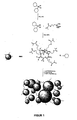
Figur 1 zeigt schematisch die Herstellung eines erfindungsgemäßen Silanharzes unter Verwendung von aus Dicyclohexyldichlorsilan hergestelltem Dicyclohexylsilandiol und Methacryloxypropyltrimethoxysilan. Das Harz kann z.B. mit Hilfe von UV-Licht (nach Zusatz von UV-Photoinitiatoren) organisch polymerisiert und dabei ggf. strukturiert werden, wobei man ein anorganisch-organisches Hybridpolymer erhält. -
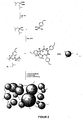
Figur 2 zeigt, ebenfalls schematisch, die Herstellung eines erfindungsgemäßen Silanharzes aus Diisobutylsilandiol, gewonnen aus Düsobutyldimethoxysilan, und Styrylmethyldiethoxysilan sowie das daraus durch UV-Belichtung (nach Zusatz von UV-Photoinitiatoren) erhältliche anorganisch-organische Hybridpolymer. - Die erfindungsgemäßen Silanharze können mit Hilfe des bekannten, "modifizierten" Sol-Gel-Verfahrens hergestellt werden. Hierfür werden die Silankomponenten in einem geeigneten Solvens vorgelegt und gezielt einer Kondensation unterworfen, vorzugsweise in Gegenwart eines geeigneten Katalysators. Als kondensierbare Silankomponente eignen sich Silane der allgemeinen Formel (I)
RaR2 bSiX4-a-b,
worin R eine radikalisch oder kationisch in Gegenwart von Licht, insbesondere von UV-Strahlung, bzw. thermisch organisch polymerisierbare Gruppe ist, R2 eine geradkettige, verzweigte oder cyclische, gegebenenfalls substituierte C1-C12-Alkylgruppe ist, X gleich oder verschieden sein kann und in Gegenwart von OH-Gruppen und ggf. eines Kondensationskatalysators eine Abgangsgruppe ist, a 1 oder 2 bedeutet, b 0 oder 1 bedeutet und a+b nicht mehr als 2 ist. R ist vorzugsweise ausgewählt unter Gruppen mit einem deutlichen Raumbedarf, beispielsweise solchen aus oder mit Styryl, (Meth)Acryloxyalkyl oder Glycidoxyalkyl, z.B. Methacryloxypropyl oder Glycidoxypropyl. Stärker bevorzugt enthält oder ist R eine Styrylgruppe und/oder eine Methacrylsäuregruppe. Es ist besonders günstig, wenn a 1 und b 1 bedeuten, wobei R ganz besonders bevorzugt Styryl ist. In dieser Ausgestaltung stellt der Rest R2 bevorzugt eine Alkylgruppe dar, am meisten bevorzugt ist in dieser Kombination R2 Methyl. Aber auch die Gruppe R2 kann voluminös sein und z.B. ggf. substituiertes i-Propyl, i-Butyl, t-Butyl oder Cyclohexyl bedeuten. X ist vorzugsweise ausgewählt unter C1-C6-Alkoxiden; Methoxy- oder Ethoxygruppen sind am meisten bevorzugt. - Als Silandiol eignen sich Silane der allgemeinen Formel (II)
R1 2Si(OH)2 (II)
worin R1 gleich oder verschieden sein kann und eine geradkettige, verzweigte oder cyclische, gegebenenfalls substituierte C1-C12-Alkylgruppe bedeuten kann. R1 kann statt dessen auch eine photochemisch oder thermisch über einen organischen Rest polymerisierbare, insbesondere eine kationisch oder radikalisch in Gegenwart von UV-Strahlung organisch polymerisierbare Gruppe sein, mit der Maßgabe, daß sie keinen Arylrest enthält. Die für R in Formel (I) als bevorzugt angegebenen Gruppen sind auch für die Gruppe R1 bevorzugt, mit Ausnahme der Styrylgruppe. Es ist allerdings bevorzugt, daß das Silandiol keine organisch vernetzbare Gruppe trägt, daß R1 also eine wie oben definierte Alkylgruppe ist, deren gegebenenfalls vorhandene Substituenten ausgewählt sind unter solchen, die keiner Polymerisation zugänglich sind, z.B. Halogen. - Es können je nach Bedarf eines oder auch mehrere Silane der Formeln (I) bzw. (II) eingesetzt werden. Das stöchiometrische Verhältnis zwischen den Silanen der Formel (I) und denen der Formel (II) ist vorzugsweise genau oder ungefähr 1:1. Bevorzugt erfolgt die Auswahl der beiden Komponenten so, daß das Gemisch eine möglichst große Anzahl von aliphatischen Gruppen enthält, d.h. beide Reste R1 des Silandiols aliphatische Gruppen sind und die Indexsumme a+b in der Verbindung mit der Formel (I) 2 bedeutet, wobei die Gruppe R2 dann vorzugsweise Methyl ist. Außerdem ist es wünschenswert, wenn die aliphatischen Gruppen im Silan der Formel (II) zumindest teilweise sterisch anspruchsvoll sind, wenn z.B. R1 Isopropyl, Isobutyl oder Cyclohexyl bedeutet.
- Außerdem können gegebenenfalls weitere Komponenten (z.B. zur Erhöhung der anorganischen Raumnetzdichte, der Härte und der Abrasionsfähigkeit des resultierenden Polykondensates) beigegeben werden, beispielsweise Alkoxide des Aluminiums, Bors und des Germaniums oder Übergangsmetallalkoxide in Mengen von vorzugsweise maximal 30 Gew.-%. Andere mögliche Zusätze sind übliche Lackadditive, Füllstoffe, Verlaufmittel und/oder Pigmente.
- Die Silankomponenten werden vorzugsweise in einem geeigneten, möglichst wasserfreien Lösungsmittel vorgelegt. Als Lösungsmittel lassen sich vor allem ggf. alkoxylierte Niederalkansäureester einsetzen, z.B. Essigsäureester. Deren Estergruppen leiten sich vorzugsweise von geradkettigen oder verzweigten C1-C8-Alkylalkoholen ab, z.B. Isopropyl oder Isobutylalkohol. Die Mischung enthält in bevorzugter Weise einen geeigneten Kondensationskatalysator, z.B. Tetrabutylammoniumfluorid-Trihydrat. Dessen Menge wird so gering gehalten, daß das enthaltene H2O keine nennenswerte Rolle als Edukt der Reaktion spielt.
- Bei Bedarf wird die Mischung vorsichtig erwärmt oder erhitzt. Wiederholtes, längerdauerndes Erwärmen auf unter den Siedepunkt des Lösungsmittels, z.B. auf etwa 80°C und zwischenzeitliches Abkühlen auf Raumtemperatur ist günstig. Das vorgelegte Reaktionsmedium sowie die durch die Kondensation entstandenen leichtflüchtigen Komponenten wie Alkohole werden in der Regel zumindest teilweise, bei geeigneten Viskositätseigenschaften auch vollständig entfernt, z.B. durch Abdestillation am Rotationsverdampfer und/oder ggf. mit Mitteln, die geringere Drucke erlauben, um die Kondensation zu vervollständigen und das Verbleiben von SiOH-Gruppen im System weitgehend bzw. vollständig zu unterdrücken.
- Die so erhaltenen Produkte sind in der Regel harzartig und besitzen Viskositäten, die es ermöglichen, daß sie als solche weiterverarbeitet werden können. Ggf. (z.B. wenn ihre Viskosität zu hoch für die vorgesehene Weiterverarbeitung ist) können sie mit einem geeigneten Lösemittel verdünnt werden, oder man kann einen geeigneten Teil des Lösemittels im Harz belassen.
- In spezifischen Ausgestaltungen der Erfindung können die Silanharze erhalten werden, indem dem Reaktionsmedium vor und/oder während und/oder nach der Kondensation der wie oben beschriebenen Ausgangssubstanzen zusätzlich ein weiteres Kieselsäurepolykondensat, z.B. in Form eines flüssigen oder partikelförmigen Harzes, oder ggf. auch ein bereits organisch vernetztes anorganisch-organisches Hybridpolymer, z.B. in Form von festen Partikeln, zugesetzt wird, wobei diese Materialien ebenfalls gemäß der Erfindung erhalten bzw. ggf. bereits zusätzlich über die vorhandenen organischen Gruppen polymerisiert wurden. Bei diesen kann es sich jeweils um die gleichen Kondensate wie diejenigen handeln, in die sie eingearbeitet werden, bzw. um daraus erzeugte Hybridpolymere. Alternativ sind sie aus anderen Ausgangsmaterialien hergestellt. Insbesondere dann, wenn sich das weitere Polykondensat oder Hybridpolymer chemisch vom im übrigen verwendeten bzw. herzustellenden bzw. von dessen potentiellem organischem Polymerisationsprodukt unterscheidet, lassen sich durch das Vermischen oder Einbetten dieser zweiten Silanharz- bzw. Hybridpolymerkomponente verschiedene Eigenschaften verschiedener Harz- bzw. Harzpartikel-Systeme kombinieren. Die Eigenschaften der resultierenden Polykondensate, wie z.B. der Brechungsindex, der thermische Ausdehnungskoeffizient oder der Polymerisationsschrumpf, können auf diese Weise den Anforderungen des jeweiligen Anwendungsfalles angepaßt werden.
- Die erfindungsgemäßen Harze können nach bekannten Verfahren thermisch oder photochemisch strukturiert werden, vorzugsweise im UV-Bereich. Als Photoiniatoren eignen sich hierfür beispielsweise die folgenden Substanzen von der Firma Ciba-Geigy: Irgacure 184, Irgacure 369, Irgacure 500 und andere Irgacure-Typen sowie die folgenden Substanzen von der Firma Merck: Darocure 1173, Darocure 1116, Darocure 1398, Darocure 1174 und Darocure 1020 und die Cyracure-Produkte der Firma Union-Carbide; des weiteren Benzophenon, 2-Chlorthioxanthon, 2-Methylthioxanthon, 2-lsopropylthioxanthon, Benzoin, oder 4.4'-Dimethoxybenzoin). Diese Substanzen werden üblicherweise in Mengen von 0.5 bis 5 Gew.-%, bezogen auf die Reaktionsmischung, eingesetzt. Erfolgt die Härtung mit sichtbaren Licht, so kann als Initiator z.B. Campherchinon eingesetzt werden. Als thermische Initiatoren kommen insbesondere organische Peroxide in Form von Diacylperoxiden, Peroxydicarbonaten, Alkylperestem, Perketalen, Ketonperoxiden und Alkylhydroperoxiden in Frage. Konkrete und bevorzugte Beispiele für thermische Initiatoren sind Dibenzoylperoxid, t-Butylperbenzoat und Azobisisobutyronitril.
- Nach dem Entwickeln erhält man hierbei dreidimensional strukturierte Gegenstände, die sich z.B. für die Mikrosystemtechnik eignen. Die Produkte zeigen eine sehr gute Reproduzierbarkeit aller Materialeigenschaften, z.B. des Brechungsindexes, der Viskosität, der Temperaturbeständigkeit, der Verarbeitbarkeit in allen Prozeßschritten der UV-Strukturierung (Schichtdicken von 1-150 µm sind bevorzugt), sowie Dielektrizitätszahlen von unter 3, vorzugsweise unter 2,5. Der dielektrische Verlust tanδ im Höchstfrequenzbereich bei 24 bis 42 GHz, 77 GHz liegt unter 0,010, vorzugsweise unter 0,004. Die Temperaturbeständigkeit ist erstaunlich hoch; sie liegt, thermogravimetrisch gemäß Beispiel 5 gemessen, in der Regel oberhalb von 350°C, oft (und insbesondere unter Stickstoffatmosphäre) sogar über 400°C. Die Harze sind Si-OH-frei und zeigen eine sehr gute Haftung auf unterschiedlichsten Substraten, wie z.B. Silicium, Glas, Metallen, vorzugsweise Aluminium, und weiteren oxidischen Oberflächen.
- Überraschenderweise wurde gefunden, daß sich die für die Herstellung der Silanharze eingesetzten Silandiole sehr schonend und in guter Ausbeute durch Hydrolyse entsprechender Dialkyldialkoxysilanverbindungen (Beispiel 1) bei definiertem, sehr genau einzuhaltendem pH (um Polymerisationsreaktionen zu verhindern und um die Hydrolyse zu katalysieren) und bei kontrollierten Temperaturen herstellen lassen, z.B. aus den Methoxy-, Ethoxy- oder sonstigen Niederalkoxyverbindungen. Für die Hydrolyse wird vorzugsweise Wasser in stöchiometrischen Mengen oder leicht überstöchiometrisch eingesetzt; als Lösungsmittel fungiert in vorteilhafter Weise ein Alkohol wie Ethanol oder Isopropylalkohol, ein Ether wie Diethylether, tert. Butylmethylether, ein Ester oder ein Keton wie Aceton. Die Reaktion wird katalytisch kontrolliert und gesteuert, vorzugsweise durch Zugabe einer Säure wie stark verdünnter HCI zur Einstellung eines leicht sauren pH-Wertes (insbesondere im Bereich von 3-4).
- Überdies wurde gefunden, daß sich die für die Herstellung der Silanharze eingesetzten Silandiole aus den entsprechenden Dialkyldihalogensilanverbindungen (Beispiele 2 und 3) ebenfalls sehr schonend und in guter Ausbeute durch Hydrolyse und bei kontrollierten Temperaturen herstellen lassen, z.B. aus den Fluor-, Chlor- oder BromVerbindungen. Für die Hydrolyse wird vorzugsweise Wasser in stöchiometrischen Mengen oder leicht überstöchiometrisch eingesetzt; dabei ist der ebenfalls stöchiometrische bzw. leicht überstöchiometrische Zusatz von trialkylsubstituierten Aminen, vorzugsweise Triethylamin, zum Abpuffern der entstehenden Säure aus den oben beschriebenen Gründen (Polykondensationsgefahr) unerlässlich. Als Lösungsmittel fungiert hier wiederum in vorteilhafter Weise ein Alkohol wie Ethanol oder Isopropylalkohol, ein Ether wie Diethylether, tert. Butylmethylether, ein Ester oder ein Keton wie Aceton.
- Nachstehend soll die Erfindung anhand von Beispielen näher erläutert werden.
- Reaktionsgleichung: (C4H9)2Si(OCH3)2 + H2O → (C4H9)2Si(OH)2 + 2HOCH3
Ausgangskomponenten:(1) Diisobutyldimethoxysilan 5.11 g (0.025mol) (2) Wasser 0.90 g (0.050 mol) (3) Isopropanol 0.60 g - Die Komponenten (1)-(3) werden bei RT vorgelegt. Dann werden ungefähr 3.0 g einer 0,1n HCl-Lösung zugetropft bis der pH auf 4.5 fällt. Dabei ist eine sorgfältige pH-Kontrolle notwendig. Der pH steigt kontinuierlich an (5-6), weshalb noch ungefähr weitere 0.75 g einer 0.1 n HCl-Lösung zugegeben werden, bis der pH konstant bei 4 bleibt. Es wird 1 d bei RT weitergerührt, bis ein weißer Niederschlag ausfällt. Um den Niederschlag zu lösen, werden ca. 14 ml Diethylether zugegeben, dann noch ca. 15 ml Wasser und 5 ml NaOH (pH8). Die 2 Phasen werden im Scheidetrichter getrennt - die wäßrige Phase wird noch mit Diethylether (2x1 0 ml) extrahiert und die organischen Phasen daraufhin vereinigt und nochmals mit ca. 15 ml Wasser gewaschen - pH-Kontrolle der wäßrigen und organischen Phase ergibt 7. Die organische Phase wird daraufhin mit Natriumsulfat, wasserfrei, getrocknet. Die organische-Phase wird daraufhin abfiltriert und mit Diethylether nachgewaschen.
- Die Etherphase wird dann am Rotationsverdampfer zuerst bei RT abdestilliert. Der Druck wird innerhalb von 30 min sukzessive erniedrigt: von 600 auf 14 mbar. Die Temperatur des Wasserbades wird von 20 auf 65 °C (bei konstanten 14 mbar) erhöht. Hier wird die Destillation abgebrochen, da in der Vorlage Kristallbildung beobachtet wird , die dann bei Abkühlen und Trocknen an der Luft vollständig durchkristallisieren. Die farblosen Kristalle werden in 50 ml Heptan gelöst- danach 4 d bei RT stehengelassen, wobei sich sehr feine farblose Kristallnadeln bilden. Schließlich werden die Kristalle abfiltriert und mit Heptan nachgewaschen.
- Beim Trocknen bilden sich sehr feine, farblose Kristallnadeln, die sehr voluminös erscheinen ("Glaswolleartig"). Die Ausbeute an Diisobutylsilandiol wird zu ca. 3 g bestimmt was in etwa 70 % entspricht. Der Schmelzpunkt liegt zwischen 91-98 °C.
- IR (Poly-(chlortrifluorethylen)): ν̃ = 3265 (w), 2952 (s), 2866 (s), 1464 (s), 1364 (s), 1202 (s), 1125 (s), 1098 (s), 1042 (s), 969 (s), 900 (s), 851 (s), 768 (s), 601 (s) cm-1 1H-NMR (400.1 MHz, CD3COCD3): δ 0.64 (m, 4H, -Si(CH 2CH)2), 0.99 (m, 12H, -Si(CH2CH(CH 3)2)2), 1.88 (m, 2H, -Si(CH2CH)2), 7.30 (s, 2H, -Si(OH)2) ppm 13C-NMR (100.6 MHz, CD3COCD3): δ 24.4 (-CH), 26.2 (-CH3), 26.5 (-CH2) ppm 29Si-NMR (79.5 MHz, CD3COCD3): δ ca. -8,5 ppm
-
(1) Dicyclohexyldichlorsilan 50.7 g (0.19 mol) (2) tert. Butylmethylether 260 ml (3) Triethylamin 39.6 g(0.39 mol) (4) Wasser 7.60 g (0.42 mol) (5) tert. Butylmethylether 600 ml (6) Aceton 60 ml (7) Triethylamin 1.64 g (0.02 mol) (8) Pentan 560 ml - Die Komponenten (3)-(6) werden vorgelegt und auf 4 °C vorgekühlt, dann die ebenfalls auf 4 °C vorgekühlte Mischung aus (1) und (2) innerhalb von 2.5 h langsam zugetropft. Es wird weitere 3 h bei 4 °C weitergerührt. Da der pH-Wert auf 5.5 fällt werden noch weiteres (7) zugefügt und über Nacht bei Raumtemperatur (RT) gerührt. Der Niederschlag wird abfiltriert und der Rückstand mit (2) gewaschen. Das Lösungsmittel im Filtrat wird größtenteils (~ 90 %) abdestilliert (bei 40 °C). Der Rückstand wird mit (8) versetzt, wobei sich ein Niederschlag bildet, der abfiltriert, mit (8) gewaschen und schließlich im Exikkator getrocknet wird. Die Ausbeuten des Reinprodukts lagen dabei zwischen 68, 87 und 93% (feiner weißer Niederschlag). Innerhalb dieser 3 Präparationen schwankte der Schmelzpunkt: 164.9-166.9, 164.7-168.4 und 165.5-168°C.
- Reaktionsgleichung: (C3H7)2SiCl2 + H2O → (C3H7)2Si(OH)2 + 2 HCl
Ausgangskomponenten:(1) Diisopropyldichlorsilan 4.26 g (0.02 mol) (2) Diethylether 70 ml (3) Triethylamin 4.76 g(0.05 mol) (4) Wasser 0.90 g (0.05 mol) (5) Diethylether 30 ml (6) Aceton 7 ml - Ähnlich der Herstellung des bereits bekannten Diisobutylsilandiols werden die Komponenten (3)-(6) bei 4 °C vorgelegt, und eine ebenfalls auf 4 °C gekühlte Mischung von (1) in (2) wird vorsichtig innerhalb von 1.5h zugetropft und 1h bei 4 °C weitergerührt. Der weiße Niederschlag wird vollständig abfiltriert (mind. 2x). Im folgenden wird das Lösungsmittel vom Filtrat bei 40 °C (10 mbar) am Rotationsverdampfer (40 °C /10 mbar) abdestilliert, wobei sich ein sehr feiner weißer Niederschlag bildet, der dann in Heptan umkristallisiert wird, wobei sich "glaswollenartige" farblose Kristallnadeln bilden, die abfiltriert und getrocknet 2.08 g (70 %) Diisopropylsilandiol ergeben. Der Schmelzpunkt liegt zwischen 108.5-112.6 °C .
- IR (KBr): ν̃ = 3226 (w), 2945 (s), 2866 (s), 1464 (s), 1382 (s), 1247 (s), 1031 (s), 996 (s), 877 (s), 831 (s), 730 (s), 677 (s) cm-1
1H-NMR (400.1 MHz, CDCl3): δ 0.85-1.15 (m, 14H, -Si(CH(CH 3)2)2), 2.20-2.70 (s, 2H, -Si(OH)2) ppm
13C-NMR (100.6 MHz, CDCl3): δ 12.7 (-CH), 17.0 (-CH3) ppm
29Si-NMR (79.5 MHz, CDCl3): δ -3.75 ppm -
(1) 3-Methacryloxypropyltrimethoxysilan (NT) 1.88 g (0.008 mol) (2) Dicyclohexylsilandiol 1.72 g (0.008 mol) (3) Tetrabutylammoniumfluorid-Trihydrat 4.70 mg (15.0 µmol) (4) Essigsäureisobutylester 4.50 ml - Die Komponenten (1)-(4) werden bei RT vorgelegt an 6 aufeinanderfolgenden Tagen jeweils für 8 h auf 80 °C erhitzt; dazwischen wird jeweils 16 h bei RT gerührt. Dann wird das Lösungsmittel abdestilliert und der Ansatz an 3 aufeinanderfolgenden Tagen jeweils für 8 h auf 80 °C erhitzt und dazwischen wieder jeweils 16 h bei RT gerührt. Danach werden 2 Tropfen HCl (2 M) zugegeben und wiederum 8 h bei 80 °C erhitzt, nachdem der Ansatz dann klar geworden ist wird das Lösungsmittel wiederum abdestilliert und es verbleiben 3.22 g (90 %) zähes Harz. Der Brechungsindex n20 beträgt 1.4847.
- Dielektrizitätszahl εr: 2.81 und der dielektrische Verlust tanδ: 0.0045 (im Höchstfrequenzbereich bei 24 bis 42 GHz, 77 GHz)
- IR (NaCl): ν̃ =3500 (w), 2922 (s), 2848 (s), 1721 (s), 1638 (s), 1447 (s), 1322 (s), 1297 (s), 1194 (s), 1167 (s), 1105 (s), 1020 (s), 939 (s), 911 (s), 893 (s), 847 (s), 818 (s), 785 (s), 748 (s), 538 (s) cm-1
- Beispiel 4 wurde wiederholt; jedoch wurde anstelle von Tetrabutylammoniumfluorid-Trihydrat Bariumhydroxid als Katalysator verwendet. Am Ende von drei Tagen konnte noch keine Umsetzung beobachtet werden.
-
p-Vinylphenylmethyldiethoxysilan 2.57 g (10.9 mmol) Diisobutylsilandiol 2.00 g (11.4 mmol) Essigsäureisobutylester 5.14 g Tetrabutylammoniumfluorid-Trihydrat 5.90 mg (18.8 µmol) - (1)-(4) werden vorgelegt und 51 h bei 80 °C gerührt (der Ansatz wird nach ca. 1 min klar). Danach wird das Lösungsmittel am Rotationsverdampfer abdestilliert (bei 40 °C wird der Druck auf 100 mbar innerhalb von 30 min erniedrigt). Der Rückstand wird noch weitere 19.5 h bei 80 °C weitergerührt und dann das restliche Lösungsmittel am Rotationsverdampfer abdestilliert (bei 40 °C wird der Druck auf 6 mbar innerhalb von 2h erniedrigt und noch 0.5 h bei 6 mbar abdestilliert). Die 3.40 g (74 %) klarer, ockerfarbener Rückstand sind dabei noch relativ flüssig.
- Der Brechungsindex n20 zweier getrennt nach diesem Beispiel hergestellter Proben betrug 1.5054 bzw. 1.5075. Für beide Proben lag die Dielektrizitätszahl εr bei 2.47; der dielektrische Verlust tanδ wurde einmal mit 0.0038 und einmal mit 0,0035 (im Höchstfrequenzbereich bei 24 bis 42 GHz, 77 GHz) gemessen.
- Das Material zeigt eine Temperaturbeständigkeit bis mindestens 415°C (thermogravimetrisch unter Stickstoff gemessen bei einer Heizrate von 5°C/min; Massenverlust <5%).
- IR (NaCl): ν̃ = 3065 (s), 2954 (s), 2897 (s), 2869 (s), 1746 (s), 1630 (s), 1600 (s), 1545 (s), 1465 (s), 1391 (s), 1365 (s), 1330 (s), 1260 (s), 1222 (s), 1124 (s), 1078 (s), 1017 (s), 989 (s), 953 (s), 908 (s), 832. (s), 810 (s), 770 (s) cm-1
-
p-Vinylphenylmethyldiethoxysilan 3.47 g (14.7 mmol) Diisopropylsilandiol 2.18 g (14.7mmol) Essigsäureisobutylester 6.83 g Tetrabutylammoniumfluorid-Trihydrat 7.70 mg (24.4 µmol) - (1)-(4) werden vorgelegt und 13 d bei RT gerührt (der Ansatz wird nach 1 d klar). Danach wird das Lösungsmittel am Rotationsverdampfer abdestilliert (bei 40 °C wird der Druck auf 120 mbar innerhalb von 15 min erniedrigt und dann weitere 30 min dabei belassen). Der Rückstand wird noch weitere 28 h bei RT weitergerührt und dann das restliche Lösungsmittel am Rotationsverdampfer abdestilliert (bei 40 °C wird der Druck auf 10 mbar innerhalb von 1.25 h erniedrigt und noch 1 h bei 10 mbar belassen). Die 4.97 g (88 %) klarer, bernsteinfarbener Rückstand sind dabei noch sehr flüssig. Der Brechungsindex n20 beträgt 1.5043.
- Dielektrizitätszahl εr: 2.59 und der dielektrische Verlust tanδ: 0.008 (im Höchstfrequenzbereich bei 24 bis 42 GHz, 77 GHz)
- IR (NaCl): ν̃ = 2945 (s), 2867 (s), 2869 (s), 1746 (s), 1630 (s), 1600 (s), 1464 (s), 1390 (s), 1260 (s), 1124 (s), 1090 (s), 1025 (s), 1010 (s), 909 (s), 885 (s), 832 (s), 809 (s), 759 (s), 693 (s) cm-1
Claims (13)
- Photochemisch und/oder thermisch strukturierbares Silanharz, erhalten durch zumindest teilweise Kondensation einer Mischung, enthaltend oder bestehend aus(a) mindestens einer Silanverbindung mit der allgemeinen Formel (I)
RaR2 bSiX4-a-b, (I)
worin R eine photochemisch und/oder thermisch über einen organischen Rest radikalisch oder kationisch polymerisierbare Gruppe ist und R2 eine geradkettige, verzweigte oder cyclische, gegebenenfalls substituierte C1-C12-Alkylgruppe ist, X gleich oder verschieden sein kann und eine Abgangsgruppe ist, a 1 oder 2 bedeutet, b 0 oder 1 bedeutet und a+b nicht mehr als 2 ist, und(b) mindestens einem Silandiol der allgemeinen Formel (II)dadurch gekennzeichnet, dass die Kondensation in einem wasserfreien Lösungs- oder Suspensionsmittel durchgeführt wurde und anschließend sowohl das Lösungs- oder Suspensionsmittel als auch bei der Kondensation entstandene leichtflüssige Komponenten entfernt wurden.
R1 2Si(OH)2 (II)
worin R1 gleich oder verschieden sein kann und eine geradkettige, verzweigte oder cyclische, gegebenenfalls substituierte C1-C12-Alkylgruppe oder eine photochemisch und/oder thermisch über einen organischen Rest radikalisch oder kationisch polymerisierbare Gruppe mit Ausnahme einer solchen ist, die einen Arylrest enthält, - Photochemisch und/oder thermisch strukturierbares Silanharz nach Anspruch 1, ausgenommen ein Harz, das durch zumindest teilweise Kondensation einer Mischung aus Dimethylsilandiol und Methacrylsäure-(methyl-dihydroxysilyl-)methylester erhalten wurde.
- Photochemisch und/oder thermisch strukturierbares Silanharz nach Anspruch 1, dadurch gekennzeichnet, daß die Silanverbindungen der Formel (I) und der Formel (II) im Verhältnis von genau oder ungefähr 1:1,bezogen auf die Monomere, eingesetzt werden.
- Photochemisch und/oder thermisch strukturierbares Silanharz nach einem der Ansprüche 1 bis 3, dadurch gekennzeichnet, daß die Verbindung mit der Formel (I) eine Styrylgruppe oder eine Methacrylatgruppe enthält und daß der Rest X eine Alkoxygruppe, vorzugsweise Methoxy oder Ethoxy, ist, und/oder daß die Reste R1 in der Verbindung mit der Formel (II) ausschließlich geradkettige, verzweigte oder cyclische, gegebenenfalls substituierte C1-C12-Alkylgruppen sind.
- Photochemisch und/oder thermisch strukturierbares Silanharz nach Anspruch 4, dadurch gekennzeichnet, daß R in der Verbindung mit der Formel (I) Styryl und R2 in dieser Verbindung Methyl bedeutet.
- Photochemisch und/oder thermisch strukturierbares Silanharz nach einem der voranstehenden Ansprüche, dadurch gekennzeichnet, daß das Silandiol mit der Formel (II) sterisch anspruchsvolle aliphatische Gruppen enthält.
- Photochemisch und/oder thermisch strukturierbares Silanharz nach Anspruch 6, dadurch gekennzeichnet, daß die sterisch anspruchsvollen Gruppen in Formel (II) ausgewählt sind unter Isopropyl, Isobutyl und Cyclohexyl.
- Verfahren zum Herstellen eines photochemisch und/oder thermisch strukturierbaren Silanharzes nach einem der voranstehenden Ansprüche, dadurch gekennzeichnet, daß eine Mischung, enthaltend oder bestehend aus(a) mindestens einer Silanverbindung mit der allgemeinen Formel (I)
RaR2 bSiX4-a-b, (I)
worin R eine photochemisch und/oder thermisch über einen organischen Rest radikalisch oder kationisch polymerisierbare Gruppe ist und R2 eine geradkettige, verzweigte oder cyclische, gegebenenfalls substituierte C1-C12-Alkylgruppe ist, X gleich oder verschieden sein kann und eine Abgangsgruppe ist, a 1 oder 2 bedeutet, b 0 oder 1 bedeutet und a+b nicht mehr als 2 ist, und(b) mindestens einem Silandiol der allgemeinen Formel (II)in Gegenwart eines im wesentlichen wasserfreien Lösungs- oder Suspensionsmittels zumindest teilweise einer Kondensationsreaktion unterworfen und das Lösungs- oder Suspensionsmittel sowie bei der Reaktion entstandene leichtflüssige Komponenten entfernt werden.
R1 2Si(OH)2 (II)
worin R1 gleich oder verschieden sein kann und eine geradkettige, verzweigte oder cyclische, gegebenenfalls substituierte C1-C12-Alkylgruppe oder eine photochemisch und/oder thermisch über einen organischen Rest radikalisch oder kationisch polymerisierbare Gruppe mit Ausnahme einer solchen ist, die einen Arylrest enthält, - Verfahren nach Anspruch 8, dadurch gekennzeichnet, daß als Kondensationskatalysator ein Ammoniumfluorid, vorzugsweise Tetrabutylammoniumfluorid-Trihydrat, eingesetzt wird.
- Verwendung von photochemisch und/oder thermisch strukturierbaren Silanharzen nach einem der Ansprüche 1 bis 7 zur Herstellung von ggf. strukturierten, zumindest teilweise kondensierten und über organische Gruppen polymerisierten Hybridpolymeren.
- Zumindest teilweise kondensiertes und über organische Gruppen polymerisiertes Hybridpolymer, erhalten aus oder unter Verwendung eines Silanharzes nach einem der Ansprüche 1 bis 7.
- Verwendung gemäß Anspruch 10, wobei die Hybridpolymere für die Hoch- und Höchstfrequenztechnik, und zwar insbesondere als Dielektrika, in Mehrschichtsystemen in SBU-Technik und in Dünn-Dickschicht-Mehrlagenschaltungen (DSML), als Trägermaterialien für Dünnschichtschaltungen und insbesondere in der Kommunikationstechnik, vorzugsweise als RF-Sende- oder Empfangsmodule sowie als Multi-Chip-Module oder für die Automobilindustrie als Abstandsradar vorgesehen sind.
- Verwendung eines Hybridpolymeren gemäß Anspruch 11 in der Hoch- und Höchstfrequenztechnik, und zwar insbesondere als Dielektrikum, in Mehrschichtsystemen in SBU-Technik und in Dünn Dickschicht-Mehrlagenschaltungen (DSML), als Trägermaterialien für Dünnschichtschaltungen und insbesondere in der Kommunikationstechnik, vorzugsweise als RF-Sende- oder Empfangsmodule sowie als Multi-Chip-Module (MCM) oder in der Automobilindustrie als Abstandsradar.
Priority Applications (1)
| Application Number | Priority Date | Filing Date | Title |
|---|---|---|---|
| EP08102931A EP1958978A1 (de) | 2001-10-04 | 2002-10-04 | Verfahren zum Herstellen von Silandiolen sowie neue Silandiole |
Applications Claiming Priority (3)
| Application Number | Priority Date | Filing Date | Title |
|---|---|---|---|
| DE10148894A DE10148894A1 (de) | 2001-10-04 | 2001-10-04 | Photochemisch und/oder thermisch strukturierbare Harze auf Silanbasis, einstufiges Verfahren zu deren Herstellung, dabei einzetzbare Ausgangsverbindungen und Herstellungsverfahren für diese |
| DE10148894 | 2001-10-04 | ||
| PCT/EP2002/011160 WO2003031499A2 (de) | 2001-10-04 | 2002-10-04 | Photochemisch und/oder thermisch strukturierbare harze auf silanbasis, einstufiges verfahren zu deren herstellung, dabei einsetzbare ausgangsverbindungen und herstellungsverfahren für diese |
Related Child Applications (1)
| Application Number | Title | Priority Date | Filing Date |
|---|---|---|---|
| EP08102931A Division EP1958978A1 (de) | 2001-10-04 | 2002-10-04 | Verfahren zum Herstellen von Silandiolen sowie neue Silandiole |
Publications (2)
| Publication Number | Publication Date |
|---|---|
| EP1453886A2 EP1453886A2 (de) | 2004-09-08 |
| EP1453886B1 true EP1453886B1 (de) | 2008-07-02 |
Family
ID=7701330
Family Applications (2)
| Application Number | Title | Priority Date | Filing Date |
|---|---|---|---|
| EP08102931A Withdrawn EP1958978A1 (de) | 2001-10-04 | 2002-10-04 | Verfahren zum Herstellen von Silandiolen sowie neue Silandiole |
| EP02800599A Expired - Lifetime EP1453886B1 (de) | 2001-10-04 | 2002-10-04 | Photochemisch und/oder thermisch strukturierbare Harze auf Silanbasis und ein einstufiges Verfahren zu deren Herstellung |
Family Applications Before (1)
| Application Number | Title | Priority Date | Filing Date |
|---|---|---|---|
| EP08102931A Withdrawn EP1958978A1 (de) | 2001-10-04 | 2002-10-04 | Verfahren zum Herstellen von Silandiolen sowie neue Silandiole |
Country Status (5)
| Country | Link |
|---|---|
| US (2) | US7348393B2 (de) |
| EP (2) | EP1958978A1 (de) |
| AT (1) | ATE399811T1 (de) |
| DE (2) | DE10148894A1 (de) |
| WO (1) | WO2003031499A2 (de) |
Cited By (1)
| Publication number | Priority date | Publication date | Assignee | Title |
|---|---|---|---|---|
| WO2011000828A1 (de) | 2009-06-30 | 2011-01-06 | Fraunhofer-Gesellschaft Zur Foerderung Der Angewandten Forschung E.V. | Mit einem organisch modifizierten (hetero-)kieselsäurepolykondensat beschichtete, einen metallischen, zur wasserstoffspeicherung geeigneten kern enthaltende partikel, damit hergestellte batterien sowie verfahren zu deren herstellung unter verwendung der partikel |
Families Citing this family (15)
| Publication number | Priority date | Publication date | Assignee | Title |
|---|---|---|---|---|
| DE102004046406A1 (de) * | 2004-09-24 | 2006-04-06 | Fraunhofer-Gesellschaft zur Förderung der angewandten Forschung e.V. | Transparente Beschichtungszusammensetzung und Verfahren zu deren Herstellung sowie entsprechend transparent beschichtete Substrate |
| DE102004051616A1 (de) * | 2004-10-22 | 2006-04-27 | Fraunhofer-Gesellschaft zur Förderung der angewandten Forschung e.V. | Halbleiterbauelement, Verfahren zu dessen Herstellung und Verwendung von anorganisch-organischen Hybridpolymeren zur Herstellung von Halbleiterbauelementen |
| JP4938994B2 (ja) * | 2005-04-22 | 2012-05-23 | ペンタックスリコーイメージング株式会社 | シリカエアロゲル膜及びその製造方法 |
| US7390599B2 (en) * | 2005-10-11 | 2008-06-24 | Xerox Corporation | Silicon-containing overcoat layers |
| US20090088547A1 (en) * | 2006-10-17 | 2009-04-02 | Rpo Pty Limited | Process for producing polysiloxanes and use of the same |
| JP5144646B2 (ja) * | 2007-04-04 | 2013-02-13 | 旭化成イーマテリアルズ株式会社 | 感光性樹脂組成物 |
| DE102008015302A1 (de) * | 2008-03-19 | 2009-09-24 | Fraunhofer-Gesellschaft zur Förderung der angewandten Forschung e.V. | Verfahren zum Verkapseln von Latentwärmespeichermaterialien sowie damit erhaltene Produkte |
| US8969219B2 (en) * | 2008-12-03 | 2015-03-03 | Soreq Nuclear Research Center | UV-curable inorganic-organic hybrid resin and method for preparation thereof |
| JP5386314B2 (ja) * | 2009-01-13 | 2014-01-15 | コリア アドバンスト インスティテュート オブ サイエンス アンド テクノロジー | 透明複合体組成物 |
| CN103154053A (zh) * | 2010-10-14 | 2013-06-12 | 旭化成电子材料株式会社 | 感光性树脂组合物及其制造方法 |
| JP5950937B2 (ja) | 2011-01-21 | 2016-07-13 | フラウンホーファー−ゲゼルシャフト・ツール・フェルデルング・デル・アンゲヴァンテン・フォルシュング・アインゲトラーゲネル・フェライン | 重合性組成物、それと共に得られる硬化物及びこれらの材料の使用 |
| DE102013104600B4 (de) * | 2013-01-11 | 2019-10-17 | Fraunhofer-Gesellschaft zur Förderung der angewandten Forschung e.V. | Schichten oder dreidimensionale Formkörper mit zwei Bereichen unterschiedlicher Primär- und/oder Sekundärstruktur, Verfahren zur Herstellung des Formkörpers und Materialien zur Durchführung dieses Verfahrens |
| EP3130950A1 (de) | 2015-08-10 | 2017-02-15 | Multiphoton Optics Gmbh | Strahlumlenkelement sowie optisches bauelement mit strahlumlenkelement |
| JP6603115B2 (ja) * | 2015-11-27 | 2019-11-06 | 信越化学工業株式会社 | ケイ素含有縮合物、ケイ素含有レジスト下層膜形成用組成物、及びパターン形成方法 |
| PL3738479T3 (pl) | 2019-05-14 | 2022-02-14 | Hilgenberg GmbH | Słomki do picia wielokrotnego użytku i ich wytwarzanie |
Family Cites Families (24)
| Publication number | Priority date | Publication date | Assignee | Title |
|---|---|---|---|---|
| DE1163820B (de) | 1962-06-30 | 1964-02-27 | Goldschmidt Ag Th | Verfahren zur Herstellung waessriger Loesungen von Silanolen und deren wasserloeslichen Kondensationsprodukten |
| US3965134A (en) * | 1975-10-10 | 1976-06-22 | General Electric Company | Process for making silarylenesilanediol |
| US4207247A (en) * | 1979-06-01 | 1980-06-10 | Olin Corporation | Preparation of trialkoxysilanols |
| DE3037220A1 (de) | 1980-10-02 | 1982-04-29 | Dynamit Nobel Ag, 5210 Troisdorf | Stabile waessrige impraenierloesungen aus hydrolierten alkyltrialkoxisilanan |
| US4395563A (en) * | 1981-10-29 | 1983-07-26 | General Electric Company | Hydrolysis of alkoxysilanes |
| US4528081A (en) * | 1983-10-03 | 1985-07-09 | Loctite Corporation | Dual curing silicone, method of preparing same and dielectric soft-gel compositions thereof |
| US5110711A (en) * | 1989-10-10 | 1992-05-05 | International Business Machines Corporation | Method for forming a pattern |
| US5115095A (en) * | 1989-10-10 | 1992-05-19 | International Business Machines Corporation | Epoxy functional organosilicon polymer |
| US5098816A (en) * | 1989-10-10 | 1992-03-24 | International Business Machines Corporation | Method for forming a pattern of a photoresist |
| US5059512A (en) * | 1989-10-10 | 1991-10-22 | International Business Machines Corporation | Ultraviolet light sensitive photoinitiator compositions, use thereof and radiation sensitive compositions |
| JPH04279665A (ja) * | 1991-03-07 | 1992-10-05 | Toray Ind Inc | 光硬化性シリコ−ン組成物 |
| JP2992153B2 (ja) * | 1991-11-26 | 1999-12-20 | 東レ・ダウコーニング・シリコーン株式会社 | トリオルガノシロキシジフェニルシラノールおよびその製造方法 |
| EP0576166A2 (de) * | 1992-06-08 | 1993-12-29 | General Electric Company | Hitzehärtbare harte Siloxanbeschichtungszusammensetzungen |
| FR2692274A1 (fr) * | 1992-06-10 | 1993-12-17 | Du Pont | Nouvelle laque à base de silicium, son emploi en tant que revêtement de substrat et les substrats ainsi obtenus. |
| JP3057305B2 (ja) * | 1993-06-22 | 2000-06-26 | 信越化学工業株式会社 | 電子部品用含浸剤 |
| US5412053A (en) * | 1993-08-12 | 1995-05-02 | The University Of Dayton | Polymers containing alternating silsesquioxane and bridging group segments and process for their preparation |
| JP2856377B2 (ja) * | 1993-10-08 | 1999-02-10 | 信越化学工業株式会社 | アクリロキシプロピル基含有シクロトリシロキサンの重合体組成物の製造方法及び重合体組成物 |
| JP2830731B2 (ja) * | 1994-02-23 | 1998-12-02 | 信越化学工業株式会社 | シラノール基を有するオルガノシランの製造方法 |
| JP3633987B2 (ja) * | 1995-02-15 | 2005-03-30 | 沖電気工業株式会社 | 放射線感応性樹脂組成物及び酸化シリコン膜形成方法 |
| DE19613650C1 (de) * | 1996-04-04 | 1997-04-10 | Fraunhofer Ges Forschung | Hydrolisierbare, fluorierte Silane, Verfahren zu deren Herstellung und deren Verwendung zur Herstellung von Kieselsäurepolykondensaten und Kieselsäureheteropolykondensaten |
| DE19834990B4 (de) * | 1998-08-03 | 2005-09-15 | Degussa Ag | Acryloxypropyl- oder Methacryloxypropyl-Gruppen enthaltende Siloxan-Oligomere, Verfahren zu ihrer Herstellung sowie deren Verwendung |
| US6339108B1 (en) * | 1998-09-10 | 2002-01-15 | Fraunhofer-Gesellschaft zur Förderung | Oxygenator membrane |
| DE19932628A1 (de) * | 1998-09-10 | 2000-03-16 | Fraunhofer Ges Forschung | Oxygenatormembran |
| DE19932629A1 (de) | 1999-07-13 | 2001-01-18 | Fraunhofer Ges Forschung | Organisch modifizierte, lagerstabile, UV-härtbare, NIR-durchlässige und in Schichtdicken von 1 bis 150 mum fotostrukturierbare Kieselsäurepolykondensate, deren Herstellung und deren Verwendung |
-
2001
- 2001-10-04 DE DE10148894A patent/DE10148894A1/de not_active Ceased
-
2002
- 2002-10-04 DE DE50212454T patent/DE50212454D1/de not_active Expired - Lifetime
- 2002-10-04 AT AT02800599T patent/ATE399811T1/de active
- 2002-10-04 US US10/491,588 patent/US7348393B2/en not_active Expired - Fee Related
- 2002-10-04 EP EP08102931A patent/EP1958978A1/de not_active Withdrawn
- 2002-10-04 WO PCT/EP2002/011160 patent/WO2003031499A2/de not_active Ceased
- 2002-10-04 EP EP02800599A patent/EP1453886B1/de not_active Expired - Lifetime
-
2008
- 2008-02-12 US US12/029,493 patent/US7687654B2/en not_active Expired - Fee Related
Cited By (2)
| Publication number | Priority date | Publication date | Assignee | Title |
|---|---|---|---|---|
| WO2011000828A1 (de) | 2009-06-30 | 2011-01-06 | Fraunhofer-Gesellschaft Zur Foerderung Der Angewandten Forschung E.V. | Mit einem organisch modifizierten (hetero-)kieselsäurepolykondensat beschichtete, einen metallischen, zur wasserstoffspeicherung geeigneten kern enthaltende partikel, damit hergestellte batterien sowie verfahren zu deren herstellung unter verwendung der partikel |
| DE102009036945A1 (de) | 2009-06-30 | 2011-03-24 | Fraunhofer-Gesellschaft zur Förderung der angewandten Forschung e.V. | Mit einem organisch modifizierten (Hetero-)Kieselsäurepolykondensat beschichtete, einen metallischen, zur Wasserstoffspeicherung geeigneten Kern enthaltende Partikel, damit hergestellte Batterien sowie Verfahren zu deren Herstellung unter Verwendung der Partikel |
Also Published As
| Publication number | Publication date |
|---|---|
| WO2003031499A3 (de) | 2003-11-06 |
| WO2003031499A2 (de) | 2003-04-17 |
| US20040242830A1 (en) | 2004-12-02 |
| DE50212454D1 (de) | 2008-08-14 |
| US7348393B2 (en) | 2008-03-25 |
| ATE399811T1 (de) | 2008-07-15 |
| US7687654B2 (en) | 2010-03-30 |
| EP1958978A1 (de) | 2008-08-20 |
| DE10148894A1 (de) | 2003-04-30 |
| US20080194856A1 (en) | 2008-08-14 |
| EP1453886A2 (de) | 2004-09-08 |
Similar Documents
| Publication | Publication Date | Title |
|---|---|---|
| EP1958978A1 (de) | Verfahren zum Herstellen von Silandiolen sowie neue Silandiole | |
| EP0682033B1 (de) | Hydrolisierbare und polymerisierbare Silane | |
| EP1196478B1 (de) | Organisch modifizierte kieselsaeurepolykondensate, deren herstellung und deren verwendung | |
| EP0781290B1 (de) | Hydrolysierbare und polymerisierbare bzw. polyaddierbare silane | |
| EP0336141B1 (de) | Verfahren zum Beschichten von flächigen Trägern durch Aufbringen von mit (Meth)acrylsäureestergruppen modifizierten härtbaren Organopolysiloxanen | |
| DE69303166T2 (de) | Klebstoffabweisende silikonzusammensetzungen | |
| EP2222687B1 (de) | Spiroverbindungen | |
| EP1900786A1 (de) | Kationisch strahlenhärtende Controlled Release Beschichtungsmassen | |
| DE69121223T2 (de) | Verfahren zur Herstellung löslicher MQ-Polysiloxanharze mit (CH3)3SiO1/2- und SiO2-Kettensegmenten und organofunktionellen Amin- und Amidgruppen | |
| EP0525392B1 (de) | Hydrolysierbare und polymerisierbare Silane | |
| EP0535687A1 (de) | Verfahren zur Herstellung von Organopolysiloxanharz | |
| EP0963398A1 (de) | Hydroxylgruppen-arme organisch/anorganische komposite, verfahren zu deren herstellung und deren verwendung | |
| EP3184569B1 (de) | Härtungsinitiatoren für die kationische polymerisation | |
| DE3447247A1 (de) | Verfahren zur herstellung von aminoalkylsiloxan-polymeren | |
| DE112004000058B4 (de) | Organosilicatpolymer-Verbundmaterial mit niedriger Dielektrizitätskonstante | |
| WO2010142769A1 (de) | Organisch funktionalisierte polysiloxan-nanopartikel, verfahren zu ihrer herstellung und ihre verwendung | |
| EP4034588A1 (de) | Silikon(meth)acrylate, verfahren zu ihrer herstellung und ihre verwendung in härtbaren zusammensetzungen | |
| DE10134634A1 (de) | Über Alkoxygruppen vernetzende RTV-1-Siliconkautschuk-Mischungen | |
| DE112004001135B4 (de) | Neuartiges Polymer und Herstellung von Nanoporösem, niedrig dielektrischem Polymerverbundfilm unter Verwendung desselben | |
| EP0058299B1 (de) | Verfahren zur Herstellung von insbesondere als Elektroisolierharze verwendbaren hitzehärtbaren Siliconharzen | |
| DE19633233B4 (de) | Mittels UV und Elektronenstrahl härtbare Propenylether-Silicon-Trennmittelzusammensetzungen, deren Verwendung, und gehärtete Zusammensetzungen | |
| DE112023000057T5 (de) | Olefinische Bindungen Enthaltendes Benzocyclobuten-Harz und Verfahren zur Herstellung Desselben | |
| DE68926925T2 (de) | MTQ-Polysiloxanharz, Verfahren zur Herstellung und Beschichtungs- oder Einbettungszusammensetzung | |
| EP0617094A2 (de) | Abhäsive Beschichtungsmasse mit einem den Grad der Abhäsivität beeinflussenden Zusatzmittel | |
| EP1020479B1 (de) | Photoinitiatoren zur kationischen Härtung |
Legal Events
| Date | Code | Title | Description |
|---|---|---|---|
| PUAI | Public reference made under article 153(3) epc to a published international application that has entered the european phase |
Free format text: ORIGINAL CODE: 0009012 |
|
| 17P | Request for examination filed |
Effective date: 20040423 |
|
| AK | Designated contracting states |
Kind code of ref document: A2 Designated state(s): AT BE BG CH CY CZ DE DK EE ES FI FR GB GR IE IT LI LU MC NL PT SE SK TR |
|
| RAP1 | Party data changed (applicant data changed or rights of an application transferred) |
Owner name: FRAUNHOFER-GESELLSCHAFT ZUR FOERDERUNG DER ANGEWAN |
|
| 17Q | First examination report despatched |
Effective date: 20070202 |
|
| RTI1 | Title (correction) |
Free format text: SILANE-BASED RESINS THAT CAN BE PHOTOCHEMICALLY AND/OR THERMALLY STRUCTURED AND SINGLE-STEP METHOD FOR THEIR PRODUCTION |
|
| GRAP | Despatch of communication of intention to grant a patent |
Free format text: ORIGINAL CODE: EPIDOSNIGR1 |
|
| GRAS | Grant fee paid |
Free format text: ORIGINAL CODE: EPIDOSNIGR3 |
|
| GRAA | (expected) grant |
Free format text: ORIGINAL CODE: 0009210 |
|
| AK | Designated contracting states |
Kind code of ref document: B1 Designated state(s): AT BE BG CH CY CZ DE DK EE ES FI FR GB GR IE IT LI LU MC NL PT SE SK TR |
|
| REG | Reference to a national code |
Ref country code: GB Ref legal event code: FG4D Free format text: NOT ENGLISH |
|
| REG | Reference to a national code |
Ref country code: CH Ref legal event code: EP |
|
| REF | Corresponds to: |
Ref document number: 50212454 Country of ref document: DE Date of ref document: 20080814 Kind code of ref document: P |
|
| REG | Reference to a national code |
Ref country code: IE Ref legal event code: FG4D Free format text: LANGUAGE OF EP DOCUMENT: GERMAN |
|
| REG | Reference to a national code |
Ref country code: CH Ref legal event code: NV Representative=s name: KELLER & PARTNER PATENTANWAELTE AG |
|
| PG25 | Lapsed in a contracting state [announced via postgrant information from national office to epo] |
Ref country code: NL Free format text: LAPSE BECAUSE OF FAILURE TO SUBMIT A TRANSLATION OF THE DESCRIPTION OR TO PAY THE FEE WITHIN THE PRESCRIBED TIME-LIMIT Effective date: 20080702 |
|
| NLV1 | Nl: lapsed or annulled due to failure to fulfill the requirements of art. 29p and 29m of the patents act | ||
| PG25 | Lapsed in a contracting state [announced via postgrant information from national office to epo] |
Ref country code: PT Free format text: LAPSE BECAUSE OF FAILURE TO SUBMIT A TRANSLATION OF THE DESCRIPTION OR TO PAY THE FEE WITHIN THE PRESCRIBED TIME-LIMIT Effective date: 20081202 Ref country code: ES Free format text: LAPSE BECAUSE OF FAILURE TO SUBMIT A TRANSLATION OF THE DESCRIPTION OR TO PAY THE FEE WITHIN THE PRESCRIBED TIME-LIMIT Effective date: 20081013 |
|
| PG25 | Lapsed in a contracting state [announced via postgrant information from national office to epo] |
Ref country code: BG Free format text: LAPSE BECAUSE OF FAILURE TO SUBMIT A TRANSLATION OF THE DESCRIPTION OR TO PAY THE FEE WITHIN THE PRESCRIBED TIME-LIMIT Effective date: 20081002 Ref country code: FI Free format text: LAPSE BECAUSE OF FAILURE TO SUBMIT A TRANSLATION OF THE DESCRIPTION OR TO PAY THE FEE WITHIN THE PRESCRIBED TIME-LIMIT Effective date: 20080702 |
|
| BERE | Be: lapsed |
Owner name: FRAUNHOFER-GESELLSCHAFT ZUR FORDERUNG DER ANGEWAN Effective date: 20081031 |
|
| PG25 | Lapsed in a contracting state [announced via postgrant information from national office to epo] |
Ref country code: EE Free format text: LAPSE BECAUSE OF FAILURE TO SUBMIT A TRANSLATION OF THE DESCRIPTION OR TO PAY THE FEE WITHIN THE PRESCRIBED TIME-LIMIT Effective date: 20080702 Ref country code: DK Free format text: LAPSE BECAUSE OF FAILURE TO SUBMIT A TRANSLATION OF THE DESCRIPTION OR TO PAY THE FEE WITHIN THE PRESCRIBED TIME-LIMIT Effective date: 20080702 |
|
| PLBE | No opposition filed within time limit |
Free format text: ORIGINAL CODE: 0009261 |
|
| STAA | Information on the status of an ep patent application or granted ep patent |
Free format text: STATUS: NO OPPOSITION FILED WITHIN TIME LIMIT |
|
| PG25 | Lapsed in a contracting state [announced via postgrant information from national office to epo] |
Ref country code: CZ Free format text: LAPSE BECAUSE OF FAILURE TO SUBMIT A TRANSLATION OF THE DESCRIPTION OR TO PAY THE FEE WITHIN THE PRESCRIBED TIME-LIMIT Effective date: 20080702 Ref country code: MC Free format text: LAPSE BECAUSE OF NON-PAYMENT OF DUE FEES Effective date: 20081031 Ref country code: SK Free format text: LAPSE BECAUSE OF FAILURE TO SUBMIT A TRANSLATION OF THE DESCRIPTION OR TO PAY THE FEE WITHIN THE PRESCRIBED TIME-LIMIT Effective date: 20080702 |
|
| 26N | No opposition filed |
Effective date: 20090403 |
|
| PG25 | Lapsed in a contracting state [announced via postgrant information from national office to epo] |
Ref country code: IT Free format text: LAPSE BECAUSE OF FAILURE TO SUBMIT A TRANSLATION OF THE DESCRIPTION OR TO PAY THE FEE WITHIN THE PRESCRIBED TIME-LIMIT Effective date: 20080702 |
|
| PG25 | Lapsed in a contracting state [announced via postgrant information from national office to epo] |
Ref country code: BE Free format text: LAPSE BECAUSE OF NON-PAYMENT OF DUE FEES Effective date: 20081031 |
|
| PG25 | Lapsed in a contracting state [announced via postgrant information from national office to epo] |
Ref country code: SE Free format text: LAPSE BECAUSE OF FAILURE TO SUBMIT A TRANSLATION OF THE DESCRIPTION OR TO PAY THE FEE WITHIN THE PRESCRIBED TIME-LIMIT Effective date: 20081002 |
|
| PG25 | Lapsed in a contracting state [announced via postgrant information from national office to epo] |
Ref country code: CY Free format text: LAPSE BECAUSE OF FAILURE TO SUBMIT A TRANSLATION OF THE DESCRIPTION OR TO PAY THE FEE WITHIN THE PRESCRIBED TIME-LIMIT Effective date: 20080702 Ref country code: LU Free format text: LAPSE BECAUSE OF NON-PAYMENT OF DUE FEES Effective date: 20081004 |
|
| PG25 | Lapsed in a contracting state [announced via postgrant information from national office to epo] |
Ref country code: TR Free format text: LAPSE BECAUSE OF FAILURE TO SUBMIT A TRANSLATION OF THE DESCRIPTION OR TO PAY THE FEE WITHIN THE PRESCRIBED TIME-LIMIT Effective date: 20080702 |
|
| PG25 | Lapsed in a contracting state [announced via postgrant information from national office to epo] |
Ref country code: GR Free format text: LAPSE BECAUSE OF FAILURE TO SUBMIT A TRANSLATION OF THE DESCRIPTION OR TO PAY THE FEE WITHIN THE PRESCRIBED TIME-LIMIT Effective date: 20081003 |
|
| PGFP | Annual fee paid to national office [announced via postgrant information from national office to epo] |
Ref country code: CH Payment date: 20121024 Year of fee payment: 11 Ref country code: IE Payment date: 20121026 Year of fee payment: 11 Ref country code: FR Payment date: 20121113 Year of fee payment: 11 Ref country code: DE Payment date: 20121213 Year of fee payment: 11 |
|
| PGFP | Annual fee paid to national office [announced via postgrant information from national office to epo] |
Ref country code: GB Payment date: 20121023 Year of fee payment: 11 |
|
| PGFP | Annual fee paid to national office [announced via postgrant information from national office to epo] |
Ref country code: AT Payment date: 20121022 Year of fee payment: 11 |
|
| REG | Reference to a national code |
Ref country code: CH Ref legal event code: PL |
|
| REG | Reference to a national code |
Ref country code: AT Ref legal event code: MM01 Ref document number: 399811 Country of ref document: AT Kind code of ref document: T Effective date: 20131004 |
|
| GBPC | Gb: european patent ceased through non-payment of renewal fee |
Effective date: 20131004 |
|
| REG | Reference to a national code |
Ref country code: IE Ref legal event code: MM4A |
|
| PG25 | Lapsed in a contracting state [announced via postgrant information from national office to epo] |
Ref country code: GB Free format text: LAPSE BECAUSE OF NON-PAYMENT OF DUE FEES Effective date: 20131004 Ref country code: CH Free format text: LAPSE BECAUSE OF NON-PAYMENT OF DUE FEES Effective date: 20131031 Ref country code: LI Free format text: LAPSE BECAUSE OF NON-PAYMENT OF DUE FEES Effective date: 20131031 |
|
| REG | Reference to a national code |
Ref country code: DE Ref legal event code: R119 Ref document number: 50212454 Country of ref document: DE Effective date: 20140501 |
|
| REG | Reference to a national code |
Ref country code: FR Ref legal event code: ST Effective date: 20140630 |
|
| PG25 | Lapsed in a contracting state [announced via postgrant information from national office to epo] |
Ref country code: AT Free format text: LAPSE BECAUSE OF NON-PAYMENT OF DUE FEES Effective date: 20131004 Ref country code: DE Free format text: LAPSE BECAUSE OF NON-PAYMENT OF DUE FEES Effective date: 20140501 Ref country code: FR Free format text: LAPSE BECAUSE OF NON-PAYMENT OF DUE FEES Effective date: 20131031 |
|
| PG25 | Lapsed in a contracting state [announced via postgrant information from national office to epo] |
Ref country code: IE Free format text: LAPSE BECAUSE OF NON-PAYMENT OF DUE FEES Effective date: 20131004 |