EP1440960B1 - Verfahren zur Herstellung von 4,4-Biphenol - Google Patents
Verfahren zur Herstellung von 4,4-Biphenol Download PDFInfo
- Publication number
- EP1440960B1 EP1440960B1 EP03025109A EP03025109A EP1440960B1 EP 1440960 B1 EP1440960 B1 EP 1440960B1 EP 03025109 A EP03025109 A EP 03025109A EP 03025109 A EP03025109 A EP 03025109A EP 1440960 B1 EP1440960 B1 EP 1440960B1
- Authority
- EP
- European Patent Office
- Prior art keywords
- reaction
- solvent
- bath
- addition
- reaction bath
- Prior art date
- Legal status (The legal status is an assumption and is not a legal conclusion. Google has not performed a legal analysis and makes no representation as to the accuracy of the status listed.)
- Expired - Lifetime
Links
Images
Classifications
-
- C—CHEMISTRY; METALLURGY
- C07—ORGANIC CHEMISTRY
- C07C—ACYCLIC OR CARBOCYCLIC COMPOUNDS
- C07C37/00—Preparation of compounds having hydroxy or O-metal groups bound to a carbon atom of a six-membered aromatic ring
- C07C37/50—Preparation of compounds having hydroxy or O-metal groups bound to a carbon atom of a six-membered aromatic ring by reactions decreasing the number of carbon atoms
Definitions
- the present invention relates to a method of producing 4,4'-biphenol, more specifically a method of producing 4,4'-biphenol with high efficiency and yield, in which 3,3',5,5'-tetra-t-butyl-4,4'-biphenol is sequentially debutylated under relatively mild reaction conditions using reaction baths arranged in series for two or more steps.
- BP 4,4'-Biphenol
- TBBP 3,3',5,5'-tetra-t-butyl-4,4'-biphenol
- a substituted aromatic hydrocarbon such as diethylbenzene is used as a reaction solvent and an acid catalyst is added in portions to each of the reaction baths for multiple steps in an attempt to solve the abovementioned problem associated with sequential reactions.
- the catalyst has to be added in portions to each of the reaction baths for multiple steps, which makes the reaction and operation complicated. Further, a colored impurity remains in the reaction product due to the catalyst used, which requires a purification process such as washing of the resulting reaction mixture with an alcohol mixture solvent after completing the reaction.
- An object of the present invention is to solve the abovementioned problem in the sequential debutylation reaction of TBBP using serially arranged reaction baths for multiple steps and to provide a method of sequentially producing 4.4'-biphenol under relatively mild reaction conditions with improved production yield and efficiency.
- a method of producing 4,4'-biphenol characterized in that a solvent for addition to a reaction bath for the latter step has a smaller average number of alkyl groups than a solvent for addition to a reaction bath for the former step in the method of producing 4,4'-biphenol in which serially arranged reaction baths for two or more steps are used, a debutylation reaction of 3,3',5,5'-tetra-t-butyl-4,4'-biphenol is sequentially carried out in the presence of an acid catalyst in a reaction solvent by supplying at least one kind of phenol selected from phenol, monoalkylphenols, dialkylphenols, and trialkylphenols (the number of carbon atoms of alkyl groups in alkylphenols, including these monoalkylphenols, dialkylphenols, and trialkylphenols, is each independently in the range of 1 to 4) in a proportion of at least 0.5 mole part to one mole part of material, i.e.
- the 3,3',5,5'-tetra-t-butyl-4,4'-biphenol solution supplied into the first reaction bath contains a solvent which is at least one kind of said phenols, this solvent is to be included into a solvent for addition to the first reaction bath.
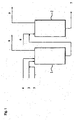
- Figure 1 is one example of an apparatus for a sequential reaction to be preferably used in the present invention.
- a reaction bath for the latter step and “a reaction bath for the former step” are adjacent and accordingly the reaction bath for the latter step means a reaction bath immediately after the reaction bath for the former step.
- a solvent for addition means a solvent to be added into each of the reaction baths, which is at least one kind of solvent selected from phenol, monoalkylphenols, dialkylphenols, and trialkylphenols (the number of carbon atoms in the alkyl groups in these monoalkylphenols, dialkylphenols, wand trialkylphenols is each independently in the range of 1 to 4).
- a TBBP solution supplied into the first reaction bath contains a solvent which is included in the abovementioned solvent for addition, namely at least one kind of solvent selected from phenol, monoalkylphenols, dialkylphenols, and trialkylphenols (the number of carbon atoms in alkyl groups in these monoalkylphenols, dialkylphenols, and trialkylphenols is each independently in the range of 1 to 4), this solvent is to be included into a solvent for addition to the first reaction bath.
- a solvent for addition to reaction baths for the second step and the subsequent steps means the abovementioned solvent to be added into the reaction baths for the second step and the subsequent steps in addition to the solvent contained in a reaction mixture from the reaction bath for the former step.
- reaction solvent implies all solvents contained in an individual reaction bath. Accordingly, the reaction solvent can be the same to or different from a solvent for addition in the first reaction bath; however, it is different from a solvent for addition in the second reaction bath and the subsequent reaction baths.
- the average number of alkyl groups of a solvent for addition is an average expressed by the ratio of the total mole number of substituted alkyl groups to the total mole number of phenol and alkylphenols in the solvent for addition defined above. More specifically, the average number of alkyl groups is 0 for phenol, 1 for monobutylphenol, 2 for dibutylphenol, and 3 for tributylphenol. Accordingly, the average number of alkyl groups of a mixed solvent of 1 mole part of phenol and 1 mole part of monobutylphenol is 0.5 and the average number of alkyl groups of a mixed solvent of 1 mole part of monobutylphenol and 1 mole part of dibutylphenol is 1.5.
- a debutylation reaction of TBBP is sequentially carried out in the presence of an acid catalyst in a reaction solvent by supplying the abovementioned solvents for addition to each reaction bath using serially arranged reaction baths for two or more steps.
- the reaction baths for two or more steps can be independent baths each arranged in series or the interior of a single reaction vessel is serially partitioned into multiple reaction segments each of which forms the reaction bath.
- a material, TBBP is supplied into the first reaction bath together with a catalyst.
- the material TBBP can be in any form as long as it can be continuously supplied into the first reaction bath at a constant rate; however, generally a material solution is prepared by dissolving the material in an appropriate organic solvent and continuously supplied into the first reaction bath at a constant rate.
- An organic solvent contained in such a material solution in particular an organic solvent for use in preparing the material solution, is not particularly limited as long as it does not inhibit a debutylation reaction in the present invention.
- phenol and alkylphenols, in particular butylphenols are preferably used.
- an aromatic hydrocarbon is also used when appropriate.
- examples of such a material solution include a solution in which purified TBBP is dissolved in butylphenol or a mixed solvent of butylphenol and phenol (hereinafter referred to as a "purified TBBP solution”) and a reaction product which is produced by reacting phenol and isobutylene in the presence of aluminium phenoxide to produce 2,6-di-t-butylphenol and reacting the resulting reaction mixture as it is without isolating in the presence of an alkaline catalyst to produce TBBP containing the solvent (hereinafter referred to as a "crude TBBP solution.”)
- butylphenols used as an organic solvent to obtain the abovementioned purified TBBP solution include mono-t-butylphenols, such as p-t-butylphenol and o-t-butylphenol; di-t-butylphenols, such as 2,6-di-t-butylphenol and 2,4-di-t-butylphenol; and tri-t-butylphenols, such as 2,4,6-tri-t-butylphenol.
- mono-, di- or tributylphenols can be used singly or as a mixture of two or more kinds.
- these mono-, di- or tributylphenols to be used as organic solvent to obtain a purified TBBP solution are to be included in a solvent for addition to the reaction bath for the first step.
- a solvent for addition can be supplied to the reaction bath for the first step in addition to these butylphenols used as an organic solvent to obtain a purified TBBP solution.
- the amount of a solvent to be added for the first step is not particularly limited; however, generally, it ranges from 20 to 200% by weight, preferably 70 to 100% by weight.
- the abovementioned crude TBBP solution contains solvents by itself as mentioned above.
- the crude TBBP solution contains, for example, about 1% by weight phenol, about 5% by weight o-t-butylphenol, about 15% by weight 2,4-di-t-butylphenol, and about 15% by weight 2,4,6-tri-t-butylphenol, and the like as solvents from the start along with the TBBP produced by the reaction.
- these phenol, mono-, di- or trialkylphenols contained from the start in the crude TBBP solution are also to be included in solvents for addition in the present invention.
- a solvent for addition may not be newly supplied; however, a solvent for addition may be newly supplied when appropriate.
- At least one kind of phenols selected from phenol, monoalkylphenols, dialkylphenols, and trialkylphenols (the number of carbon atoms in alkyl groups in these monoalkylphenols, dialkylphenols, and trialkylphenols is each independently in the range of 1 to 4) is used as a solvent for addition.
- alkylphenols include t-butylphenols, such as p-t-butylphenol; methylphenols, such as cresols; dimethylphenols, such as xylenol; mono- and diethylphenols; mono- and dipropylphenols; and mono-, di- and tributylphenols.
- t-butylphenols such as p-t-butylphenol
- methylphenols such as cresols
- dimethylphenols such as xylenol
- mono- and diethylphenols mono- and dipropylphenols
- mono-, di- and tributylphenols mono-, di- and tributylphenols.
- at least one kind of phenol selected from monobutylphenols, dibutylphenols and tributylphenols is preferably used as alkylphenol; among them, monobutylphenols, in particular mono-t-butylphenol, are preferably used.
- the average number of alkyl groups of a solvent for addition to a reaction bath of the latter step is smaller than that of a solvent for addition to a reaction bath in the former step.
- phenol, alkylphenols or a mixture thereof supplied as a solvent for addition into a reaction bath for the second step has a smaller average number of alkyl groups than that supplied into a reaction bath for the first step.
- a solvent to be added into a reaction bath for the latter step may vary depending on a solvent to be added into a reaction bath for the former step; in some cases a single solvent can be used, and in some cases various alkylphenols are mixed together with phenol to attain a desired average number of alkyl groups, when appropriate, and used as a solvent for addition.
- a mixture of butylphenols and phenol is preferably used, and in particular a mixed solvent of p-t-butylphenol and phenol is preferably used.
- a solvent for addition having a large average number of alkyl groups for example, a solvent for addition having an average number of alkyl groups ranging from 0.8 to 3, preferably from 1 to 2, is used.
- a solvent for addition having an average number ranging from 0 to 0.5, preferably from 0 to 0.2 is supplied.
- a solvent for addition having a higher butylphenol content and a larger average number of alkyl groups is used in a reaction bath for the former step and a solvent for addition having a higher phenol content, and a smaller average number of alkyl groups is used in a reaction bath for the latter step.
- a solvent for addition in each reaction bath is used in an amount of at least 0.5 mole part per one mole part of material TBBP. That is because it is difficult to obtain BP of interest with high efficiency and yield when the solvent for addition in each reaction bath is used in an amount less than 0.5 mole part per one mole part of material TBBP. Accordingly, for example, when a reaction apparatus comprising reaction baths for two steps is used, a solvent for addition is used preferably in an amount ranging from 0.5 to 5 mole parts per one mole part of material TBBP in the first reaction bath and in an amount ranging from 0.5 to 3 mole parts per one mole part of material TBBP in the second reaction bath.
- a solvent for addition is used in an amount ranging from 2 to 3 mole parts per one mole part of material TBBP in the first reaction bath and in an amount ranging from 1 to 2 mole parts per one mole part of material TBBP in the second reaction bath.
- the total amount of solvents contained in all reaction baths namely the total amount of reaction solvents is not particularly limited; however it generally ranges from 1 to 10 mole parts, preferably 3 to 5 mole parts per one mole part of material TBBP from the viewpoint of transport of reaction mixture obtained in each reaction bath and volumetric efficiency.
- the reaction solvent mean all the solvents contained in an individual reaction bath. Accordingly, for example, when the reaction baths comprise the first and the second reaction baths, the reaction solvent means all solvents including a solvent for addition other than material TBBP in the first reaction bath and all solvents in a reaction mixture from the first reaction bath and a solvent for addition in the second reaction bath.
- an acid catalyst is used as a catalyst for a debutylation reaction.
- this acid catalyst include organic sulfonic acid, such as p-toluenesulfonic acid and benzenesulfonic acid; inorganic acids, such as sulfuric acid; aluminium phenoxides; aluminium chloride; and Lewis acids, such as ferric chloride.
- organic sulfonic acid such as p-toluenesulfonic acid and benzenesulfonic acid
- inorganic acids such as sulfuric acid
- aluminium phenoxides aluminium chloride
- Lewis acids such as ferric chloride.
- p-toluenesulfonic acid is preferably used.
- the amount of such an acid catalyst to be used generally ranges from 0.05 to 5% by weight, preferably from 0.1 to 2% by weight, of purified TBBP, when the purified TBBP is used as a material.
- an excess amount required for neutralization of an alkaline catalyst is added to the abovementioned amount since the crude TBBP usually contains the alkaline catalyst.
- an acid catalyst is continuously supplied into the reaction system; however, it can be supplied only to the first reaction bath or supplied to each reaction bath in portions. However, it is preferable to supply only into the first reaction bath because of easy reaction and operation.
- the reaction temperature for a debutylation reaction of TBBP generally ranges from 150 to 250°C, preferably from 180 to 230°C, and most preferably from 200 to 220°C.
- the reaction in each reaction bath can be carried out under atmospheric pressure or under pressure, for example, at 0.001 to 0.05 MPa (gauge pressure).
- the number of steps in the reaction apparatus using reaction baths ranges preferably from 2 to 5 steps from the viewpoint of control and economic efficiency of the reaction.
- retention time in reaction baths for such multiple steps is 5 to 25 hours, preferably about 10 to 20 hours, as a total retention time for all steps.
- the retention time in a reaction bath for each step varies depending on selection of the reaction temperature and transformation rate in each reaction bath; however, it is generally preferable to set the retention time of the latter step shorter in terms of yield and quality.
- Figure 1 shows an example of a sequential reaction apparatus to be preferably used in the present invention, which comprises a reaction bath 1 for the first step and a reaction bath 2 for the second step arranged in series.
- a material TBBP solution 3 and an acid catalyst 4 together with a new solvent 5 for addition, when appropriate, are sequentially supplied into the reaction bath 1 for the first step, and a reaction mixture obtained in the first reaction bath is consecutively transferred into the reaction bath 2 for the second step.
- a solvent 6 for addition having an average number of alkyl groups smaller than that of a solvent for addition supplied into the first reaction bath 1 is continuously supplied into the reaction bath 2 for the second step.
- a reaction product 7 containing BP of interest is continuously recovered from the second reaction bath 2. Isobutylene 8 and 9 released from the material in each reaction bath is discharged from the top of the reaction bath outside the reaction system.
- a sequential apparatus shown in Figure 1 was constructed by serially connecting two 1 L glass autoclaves equipped with a stirrer, a thermometer and a pressure gauge.
- a crude TBBP solution comprising 65% by weight TBBP, 15% by weight 2,6-di-t-butylphenol, 4% by weight o-t-butylphenol, and 14% by weight 2,4,6-tri-t-butylphenol at a rate of 60 g/hour, p-toluenesulfonic acid (catalyst) at a rate of 0.36 g/hour, and p-t-butylphenol at a rate of 21 g/hour, at a temperature of 210°C and under pressure of 0.05 MPa (gauge pressure).
- the solvents contained in the abovementioned crude TBBP solution i.e., o-t-butylphenol, 2,6-di-t-butylphenol, and 2,4,6-tri-t-butylphenol, are solvents for addition into the first reaction bath, together with p-t-butylphenol and thus, the average number of alkyl groups in the solvents for addition in the first reaction bath was 1.5.
- phenol (its average number of alkyl groups is 0) was supplied at a rate of 15 g/hour as a solvent for addition into the second reaction bath at a tempeature of 220°C and under pressure of 0.05 MPa (gauge pressure). Accordingly the average number of alkyl groups of the solvent for addition into the second reaction bath was 0.
- Retention time was 8 hours each for the first reaction bath and the second reaction bath and thus the total retention time was 16 hours.
- the reaction mixtures released from the first reaction bath and the second reaction bath were analyzed by gas chromatography. The result showed that the BP production yield in the reaction mixture released from the first reaction bath was 65% by mole, and that the BP production yield in the reaction mixture released from the second reaction bath was 95% by mole. Further, the reaction mixtures were smoothly transferred from each reaction bath during reaction.
- the BP production yield is defined as (mole number of BP produced/mole number of TBBP used) ⁇ 100 (%).
- Sequential reaction was carried out in the same manner as described in Example 1, except that phenol and p-t-butylphenol were supplied into the second reaction bath as solvents for addition at a rate of 13 g/hour and 2 g/hour, respectively. Accordingly, the average number of alkyl groups of the solvents for addition into the first reaction bath was the same as in Example 1, i.e., 1.5, and the average number of alkyl groups of the solvents for addition into the second reaction bath was 0.1.
- reaction mixtures released from the first reaction bath and the second reaction bath were analyzed by gas chromatography. The result showed that the BP production yield in the reaction mixture released from the first reaction bath was 65% by mole, and that the BP production yield in the reaction mixture released from the second reaction bath was 92% by mole. Further, the reaction mixtures were smoothly transferred from each reaction bath during reaction.
- Sequential reaction was carried out in the same manner as described in Example 1, except that the reaction temperature of the first reaction bath was set to 215°C and p-t-butylphenol and phenol were supplied into the first reaction bath as solvents for addition at a rate of 18 g/hour and 3 g/hour, respectively. Accordingly, the average number of alkyl groups of the solvents for addition into the first reaction bath was 1.3, and the average number of alkyl groups of the solvent for addition into the second reaction bath was 0.
- reaction mixtures released from the first reaction bath and the second reaction bath were analyzed by gas chromatography.
- the result showed that the BP production yield in the reaction mixture released from the first reaction bath was 68% by mole, and that the BP production yield in the reaction mixture released from the second reaction bath was 94% by mole. Further, the reaction mixture was smoothly transferred between the reaction baths during reaction.
- Sequential reaction was carried out in the same manner as described in Example 1, except that a 35% by weight p-t-butylphenol solution, i.e., purified TBBP solution, in place of the crude TBBP solution at a rate of 60 g/hour, p-toluenesulfonic acid at a rate of 0.06 g/hour in stead of 0.36 g/hour, and p-t-butylphenol at a rate of 21 g/hour instead of 14 g/hour were supplied into the first reaction bath. Accordingly, the average number of alkyl groups of the solvents for addition into the first reaction bath was 1, and the average number of alkyl groups of the solvents for addition into the second reaction bath was 0.
- a 35% by weight p-t-butylphenol solution i.e., purified TBBP solution
- p-toluenesulfonic acid at a rate of 0.06 g/hour in stead of 0.36 g/hour
- reaction mixtures released from the first reaction bath and the second reaction bath were analyzed by gas chromatography. The result showed that the BP production yield in the reaction mixture released from the first reaction bath was 64% by mole, and that the BP production yield in the reaction mixture released from the second reaction bath was 94% by mole. Further, the reaction mixtures were smoothly transferred from each reaction bath during reaction.
- Sequential reaction was carried out in the same manner as described in Example 1, except that the reaction temperature of the first reaction bath was set to 205°C and phenol was supplied as a solvent for addition into the first reaction bath at a rate of 21 g/hour and p-t-butylphenol was supplied as a solvent for addition into the second reaction bath at a rate of 15 g/hour. Accordingly, the average number of alkyl groups of the solvents for addition into the first reaction bath was 0.6, and the average number of alkyl groups of the solvents for addition into the second reaction bath was 1.0.
- reaction mixtures released from the first reaction bath and the second reaction bath were analyzed by gas chromatography. The result showed that the BP production yield in the reaction mixture released from the first reaction bath was 72% by mole, and that the BP production yield in the reaction mixture released from the second reaction bath was 83% by mole. Further, the reaction mixture was smoothly transferred from each reaction bath during reaction.
- BP of interest can be obtained under relatively mild conditions attaining improved production yield and efficiency by making a solvent for addition into a reaction bath for the latter step to have a smaller average number of alkyl groups than a solvent for addition into a reaction bath of the former step in the method of producing BP in which serially arranged reaction baths for two or more steps are used, a debutylation reaction of TBBP is sequentially carried out in the presence of an acid catalyst in a reaction solvent by supplying at least one kind of solvent selected from phenol, monoalkylphenols, dialkylphenols, and trialkylphenols to each reaction bath as a solvent for addition.
Landscapes
- Chemical & Material Sciences (AREA)
- Organic Chemistry (AREA)
- Chemical Kinetics & Catalysis (AREA)
- Organic Low-Molecular-Weight Compounds And Preparation Thereof (AREA)
- Low-Molecular Organic Synthesis Reactions Using Catalysts (AREA)
Claims (10)
- Verfahren zur Herstellung von 4,4'-Biphenol, umfassend die Schritte:Bereitstellen von in Reihe angeordneten Reaktionsbädern für zwei oder mehr Schritte; undAusführen einer schrittweisen Debutylierungsreaktion von 3,3',5,5'-tetra-t-Butyl-4,4'-biphenol in Gegenwart eines sauren Katalysators in einem Reaktionslösungsmittel durch Bereitstellen von mindestens einer Art Phenol, ausgewählt aus Phenol, Monoalkylphenolen, Dialkylphenolen und Trialkylphenolen in einem Verhältnis von mindestens 0,5 Molteilen relativ zu einem Molteil 3,3',5,5'-tetra-t-Butyl-4,4'-biphenol zu jedem Reaktionsbad als Lösungsmittel für die Zugabe,wobei die Zahl der Kohlenstoffatome der Alkylreste in den aus den Monoalkylphenolen, Dialkylphenolen und Trialkylphenolen ausgewählten Alkylphenolen jeweils unabhängig voneinander im Bereich von 1 bis 4 ist, und
wobei ein Lösungsmittel für die Zugabe zu einem Reaktionsbad für den letzteren Schritt mindestens eine Art von den Phenolen ist, die eine niedrigere mittlere Zahl von Alkylgruppen aufweisen als die Phenole, welche als Lösungsmittel für die Zugabe zu einem Reaktionsbad zum vorhergehenden Schritt verwendet werden;
wobei wenn die 3,3',5,5'-tetra-t-Butyl-4,4'-biphenol-Lösung, die in das erste Reaktionsbad eingespeist wird, ein Lösungsmittel enthält, welches mindestens eine Art der genannten Phenole ist, so ist dieses Lösungsmittel in das Lösungsmittel für die Zugabe zum ersten Reaktionsbad einzubeziehen. - Verfahren gemäß Anspruch 1, wobei die Monoalkylphenole, Dialkylphenole und Trialkylphenole jeweils Monobutylphenole, Dibutylphenole und Tributylphenole sind.
- Verfahren gemäß Anspruch 1, wobei die mindestens eine Art von Phenol Phenol, p-t-Butylphenol oder ein Gemisch von Phenol und p-t-Butylphenol ist.
- Verfahren gemäß einem der Ansprüche 1 bis 3, wobei das Lösungsmittel für die Zugabe zu einem Reaktionsbad für den vorhergehenden Schritt ein Lösungsmittel mit einer mittleren Zahl von Alkylresten im Bereich von 0,8 bis 3 ist, und wobei das Lösungsmittel für die Zugabe zu einem Reaktionsbad für den letzteren Schritt ein Lösungsmittel mit einer mittleren Zahl von Alkylresten im Bereich von 0 bis 0,5 ist, wenn eine Reaktionsapparatur verwendet wird, die in Reihe angeordnete Reaktionsbäder für zwei Schritte umfasst.
- Verfahren gemäß einem der Ansprüche 1 bis 4, wobei eine Gesamtmenge der in allen Reaktionsbädern enthaltenen Lösungsmittel von 1 bis 10 Molteilen pro einem Molteil 3,3'5,5'-tetra-t-Butyl-4,4'-biphenol ist.
- Verfahren gemäß einem der Ansprüche 1 bis 5, wobei der saure Katalysator eine organische Sulfonsäure ist.
- Verfahren gemäß einem der Ansprüche 1 bis 6, wobei eine Reaktionstemperatur für die Debutylierungsreaktion 150 bis 250°C beträgt.
- Verfahren gemäß einem der Ansprüche 1 bis 7, wobei die Zahl der Reaktionsbäder 2 bis 5 Schritte beträgt.
- Verfahren gemäß einem der Ansprüche 1 bis 8, wobei die Reaktionsbäder für 2 oder mehr Schritte unabhängige, jeweils in Reihe angeordnete, Bäder sind.
- Verfahren gemäß einem der Ansprüche 1 bis 8, wobei die Reaktionsbäder für 2 oder mehr Schritte durch serielles Unterteilen des Innenraums eines einzigen Reaktionsgefäßes in mehrere Reaktionssegmente gebildet werden.
Applications Claiming Priority (2)
| Application Number | Priority Date | Filing Date | Title |
|---|---|---|---|
| JP2003015260A JP4268810B2 (ja) | 2003-01-23 | 2003-01-23 | 4,4’−ビフェノールの製造方法 |
| JP2003015260 | 2003-01-23 |
Publications (2)
| Publication Number | Publication Date |
|---|---|
| EP1440960A1 EP1440960A1 (de) | 2004-07-28 |
| EP1440960B1 true EP1440960B1 (de) | 2009-03-25 |
Family
ID=32588672
Family Applications (1)
| Application Number | Title | Priority Date | Filing Date |
|---|---|---|---|
| EP03025109A Expired - Lifetime EP1440960B1 (de) | 2003-01-23 | 2003-10-31 | Verfahren zur Herstellung von 4,4-Biphenol |
Country Status (6)
| Country | Link |
|---|---|
| US (1) | US6794548B2 (de) |
| EP (1) | EP1440960B1 (de) |
| JP (1) | JP4268810B2 (de) |
| KR (1) | KR100869060B1 (de) |
| CN (1) | CN100384800C (de) |
| DE (1) | DE60326812D1 (de) |
Families Citing this family (3)
| Publication number | Priority date | Publication date | Assignee | Title |
|---|---|---|---|---|
| WO2009087959A1 (ja) * | 2008-01-08 | 2009-07-16 | Nippon Soda Co., Ltd. | 光学活性2,2’-ビフェノール誘導体及びその製造方法 |
| CN102731261A (zh) * | 2012-07-12 | 2012-10-17 | 华东理工大学 | 一种制备2-叔丁基对苯二酚并联产对苯二酚的方法 |
| KR20260002870A (ko) * | 2023-04-10 | 2026-01-06 | 티코나 엘엘씨 | 바이오-액정 중합체 형성에 사용되는 바이오-바이페놀 |
Family Cites Families (6)
| Publication number | Priority date | Publication date | Assignee | Title |
|---|---|---|---|---|
| JP2524594B2 (ja) | 1987-06-02 | 1996-08-14 | 三菱化学株式会社 | 高純度4,4′−ビフエノ−ル類の製造方法 |
| ATE126191T1 (de) * | 1987-09-22 | 1995-08-15 | Mitsui Petrochemical Ind | Verfahren zur herstellung p,p'-biphenol. |
| JP2582881B2 (ja) * | 1988-12-21 | 1997-02-19 | 本州化学工業株式会社 | テトラブチルビフェノールの脱ブチル化方法 |
| JPH0674227B2 (ja) | 1989-10-06 | 1994-09-21 | 本州化学工業株式会社 | p,p′―ビフェノールの製造方法 |
| JP3264976B2 (ja) * | 1992-05-29 | 2002-03-11 | 三菱化学株式会社 | 4,4’−ビフェノールの製造方法 |
| KR20030074736A (ko) * | 2001-01-31 | 2003-09-19 | 스미또모 가가꾸 고교 가부시끼가이샤 | 4,4'-비페놀의 제조방법 |
-
2003
- 2003-01-23 JP JP2003015260A patent/JP4268810B2/ja not_active Expired - Lifetime
- 2003-08-05 CN CNB03149661XA patent/CN100384800C/zh not_active Expired - Lifetime
- 2003-08-07 KR KR1020030054737A patent/KR100869060B1/ko not_active Expired - Lifetime
- 2003-10-14 US US10/685,193 patent/US6794548B2/en not_active Expired - Lifetime
- 2003-10-31 EP EP03025109A patent/EP1440960B1/de not_active Expired - Lifetime
- 2003-10-31 DE DE60326812T patent/DE60326812D1/de not_active Expired - Lifetime
Also Published As
| Publication number | Publication date |
|---|---|
| US6794548B2 (en) | 2004-09-21 |
| JP2004224736A (ja) | 2004-08-12 |
| CN100384800C (zh) | 2008-04-30 |
| CN1517327A (zh) | 2004-08-04 |
| DE60326812D1 (de) | 2009-05-07 |
| KR100869060B1 (ko) | 2008-11-17 |
| JP4268810B2 (ja) | 2009-05-27 |
| US20040147790A1 (en) | 2004-07-29 |
| KR20040067788A (ko) | 2004-07-30 |
| EP1440960A1 (de) | 2004-07-28 |
Similar Documents
| Publication | Publication Date | Title |
|---|---|---|
| EP0812815B1 (de) | Verfahren zur Herstellung von Bisphenol | |
| CN113544112B (zh) | 脱烷基和烷基转移混合酚以制备甲酚 | |
| US11767280B2 (en) | Process for making phenol and xylenes | |
| US6433236B1 (en) | Acid catalyzed isomerization of substituted diaryls | |
| EP1440960B1 (de) | Verfahren zur Herstellung von 4,4-Biphenol | |
| EP0395360A1 (de) | Verfahren zur Herstellung von sec.-Butylbenzol | |
| KR101520523B1 (ko) | 에너지 저소비를 위한 큐멘 제조장치 및 제조방법 | |
| US4482755A (en) | High yield process for preparing 4,4'-biphenol and para-alkylbenzenes | |
| US4487978A (en) | High yield process for preparing 4,4'-biphenol and tert-alkylated-alkylbenzenes | |
| US6294702B1 (en) | Method for continuous production of dihydroxydiphenylalkanes | |
| US4487977A (en) | High yield process for preparing 3,3',5,5'-tetraalkyl-4,4'-biphenol | |
| EP1809589B1 (de) | Ein verfahren zur herstellung von optisch reinem bisphenol a | |
| KR101090193B1 (ko) | 비스페놀a의 제조방법 | |
| KR101067256B1 (ko) | 비스페놀-a의 정제방법 | |
| EP0363801B1 (de) | Verfahren zur Herstellung von 3,5-dialkyl-4-hydroxybenzyl-substituierten Aromaten | |
| EP1559701B1 (de) | Verfahren zur Herstellung einer alkylaromatischen Verbindung | |
| EP1318133B1 (de) | Verfahren zur herstellung von 1,1-bis-(4-hydroxyphenyl)-3,3,5-trimethylcyclohexan | |
| US6388160B1 (en) | Method for producing of 2,3-dimethylbutene-1 and 2,3-dimethylbutene-2 | |
| US20040122263A1 (en) | Method for continuously producing 3,3',5,5'-tetra-t-butyl-4,4'-biphenol | |
| EP0131897B1 (de) | Verfahren zur Herstellung von 3,3',5,5'-Tetraalkyl-4,4'-diphenol mit hoher Ausbeute | |
| US3928471A (en) | Method for the separation of 5-isopropyl-m-cresol | |
| US4990688A (en) | Removal of cyclohexanol | |
| WO1984002336A1 (en) | Antioxidant synthesis | |
| JP3042366B2 (ja) | メタジイソプロピルベンゼンの製造方法 | |
| KR100425647B1 (ko) | 4,4'-비페놀의 제조 방법 |
Legal Events
| Date | Code | Title | Description |
|---|---|---|---|
| PUAI | Public reference made under article 153(3) epc to a published international application that has entered the european phase |
Free format text: ORIGINAL CODE: 0009012 |
|
| AK | Designated contracting states |
Kind code of ref document: A1 Designated state(s): AT BE BG CH CY CZ DE DK EE ES FI FR GB GR HU IE IT LI LU MC NL PT RO SE SI SK TR |
|
| AX | Request for extension of the european patent |
Extension state: AL LT LV MK |
|
| 17P | Request for examination filed |
Effective date: 20050121 |
|
| AKX | Designation fees paid |
Designated state(s): DE FR GB IT NL |
|
| 17Q | First examination report despatched |
Effective date: 20070206 |
|
| GRAP | Despatch of communication of intention to grant a patent |
Free format text: ORIGINAL CODE: EPIDOSNIGR1 |
|
| GRAS | Grant fee paid |
Free format text: ORIGINAL CODE: EPIDOSNIGR3 |
|
| GRAA | (expected) grant |
Free format text: ORIGINAL CODE: 0009210 |
|
| AK | Designated contracting states |
Kind code of ref document: B1 Designated state(s): DE FR GB IT NL |
|
| REG | Reference to a national code |
Ref country code: GB Ref legal event code: FG4D |
|
| REF | Corresponds to: |
Ref document number: 60326812 Country of ref document: DE Date of ref document: 20090507 Kind code of ref document: P |
|
| PLBE | No opposition filed within time limit |
Free format text: ORIGINAL CODE: 0009261 |
|
| STAA | Information on the status of an ep patent application or granted ep patent |
Free format text: STATUS: NO OPPOSITION FILED WITHIN TIME LIMIT |
|
| 26N | No opposition filed |
Effective date: 20091229 |
|
| PGFP | Annual fee paid to national office [announced via postgrant information from national office to epo] |
Ref country code: GB Payment date: 20141029 Year of fee payment: 12 Ref country code: FR Payment date: 20141008 Year of fee payment: 12 |
|
| PGFP | Annual fee paid to national office [announced via postgrant information from national office to epo] |
Ref country code: NL Payment date: 20141010 Year of fee payment: 12 |
|
| PGFP | Annual fee paid to national office [announced via postgrant information from national office to epo] |
Ref country code: IT Payment date: 20141020 Year of fee payment: 12 |
|
| GBPC | Gb: european patent ceased through non-payment of renewal fee |
Effective date: 20151031 |
|
| REG | Reference to a national code |
Ref country code: NL Ref legal event code: MM Effective date: 20151101 |
|
| PG25 | Lapsed in a contracting state [announced via postgrant information from national office to epo] |
Ref country code: GB Free format text: LAPSE BECAUSE OF NON-PAYMENT OF DUE FEES Effective date: 20151031 Ref country code: IT Free format text: LAPSE BECAUSE OF NON-PAYMENT OF DUE FEES Effective date: 20151031 |
|
| REG | Reference to a national code |
Ref country code: FR Ref legal event code: ST Effective date: 20160630 |
|
| PG25 | Lapsed in a contracting state [announced via postgrant information from national office to epo] |
Ref country code: NL Free format text: LAPSE BECAUSE OF NON-PAYMENT OF DUE FEES Effective date: 20151101 Ref country code: FR Free format text: LAPSE BECAUSE OF NON-PAYMENT OF DUE FEES Effective date: 20151102 |
|
| PGFP | Annual fee paid to national office [announced via postgrant information from national office to epo] |
Ref country code: DE Payment date: 20220921 Year of fee payment: 20 |
|
| REG | Reference to a national code |
Ref country code: DE Ref legal event code: R071 Ref document number: 60326812 Country of ref document: DE |