EP1420240A2 - Waschverfahren zur Entfernung unerwünschter Komponenten in zu analysierenden Proben - Google Patents
Waschverfahren zur Entfernung unerwünschter Komponenten in zu analysierenden Proben Download PDFInfo
- Publication number
- EP1420240A2 EP1420240A2 EP03257208A EP03257208A EP1420240A2 EP 1420240 A2 EP1420240 A2 EP 1420240A2 EP 03257208 A EP03257208 A EP 03257208A EP 03257208 A EP03257208 A EP 03257208A EP 1420240 A2 EP1420240 A2 EP 1420240A2
- Authority
- EP
- European Patent Office
- Prior art keywords
- container
- wash
- wash fluid
- fluid
- analyte
- Prior art date
- Legal status (The legal status is an assumption and is not a legal conclusion. Google has not performed a legal analysis and makes no representation as to the accuracy of the status listed.)
- Granted
Links
Images



Classifications
-
- G—PHYSICS
- G01—MEASURING; TESTING
- G01N—INVESTIGATING OR ANALYSING MATERIALS BY DETERMINING THEIR CHEMICAL OR PHYSICAL PROPERTIES
- G01N1/00—Sampling; Preparing specimens for investigation
- G01N1/28—Preparing specimens for investigation including physical details of (bio-)chemical methods covered elsewhere, e.g. G01N33/50, C12Q
- G01N1/40—Concentrating samples
-
- G—PHYSICS
- G01—MEASURING; TESTING
- G01N—INVESTIGATING OR ANALYSING MATERIALS BY DETERMINING THEIR CHEMICAL OR PHYSICAL PROPERTIES
- G01N35/00—Automatic analysis not limited to methods or materials provided for in any single one of groups G01N1/00 - G01N33/00; Handling materials therefor
- G01N2035/00465—Separating and mixing arrangements
- G01N2035/00564—Handling or washing solid phase elements, e.g. beads
-
- G—PHYSICS
- G01—MEASURING; TESTING
- G01N—INVESTIGATING OR ANALYSING MATERIALS BY DETERMINING THEIR CHEMICAL OR PHYSICAL PROPERTIES
- G01N35/00—Automatic analysis not limited to methods or materials provided for in any single one of groups G01N1/00 - G01N33/00; Handling materials therefor
- G01N35/10—Devices for transferring samples or any liquids to, in, or from, the analysis apparatus, e.g. suction devices, injection devices
- G01N2035/1027—General features of the devices
- G01N2035/1048—General features of the devices using the transfer device for another function
- G01N2035/1058—General features of the devices using the transfer device for another function for mixing
- G01N2035/106—General features of the devices using the transfer device for another function for mixing by sucking and blowing
Definitions
- the present invention relates to a process for removing an undesired component from a bound desired component, in particular for improving the bound-free separation efficiency.
- the present invention relates to a process for separating or washing a bound analyte being analyzed in an automated clinical analyzer from unbound label, particularly without decreasing processing efficiency or speed.
- the sample containing analyte and reagent, e.g., label, is aspirated out of the container after it has been incubated. Wash fluid is then dispensed into and aspirated out of the container one or more times to remove any excess analyte and reagent not bound to the coating, such as streptavidin, at the side of the container.
- Some known surface coated containers have features, such as pockets or ledges, near the top of the container that can trap unbound material, such as unbound label, analyte, etc. These features may be the result of the process used to mold the containers and/or to keep the containers separated in a stack. See, e.g., U.S. Patent No. 5,441,895, which describes stackable containers.
- the incubation, reagent metering and mixing processes involved in immunochemical assay analysis move the sample in the container in a manner that leaves a film of sample containing unbound label and/or analyte on the pockets and ledges that are in the upper regions of the container.
- bound-free separation is controlled by two primary factors:
- a container wash process typically includes multiple wash cycles, such as filling a surface coated container to a first height on the container with a wash fluid and aspirating the wash fluid after a predetermined amount of time.
- a dispensing nozzle fills the container, which has a 300 ⁇ l capacity up to a height of 270 ⁇ l and then sets the soak height to 230 ⁇ l so the well can be transported during the wash incubation step ( ⁇ 37-40 seconds).
- steps, including the incubation step are repeated multiple times (e.g., four times) using the same fluid heights. Unbound material that can be present in the upper regions of the container is only removed by inadvertent exposure to the wash fluid.
- HRP horseradish peroxidase
- One object of the invention is to overcome the disadvantages of the known art described above. Another object of the invention is to provide an improved wash process for washing a container holding a sample being analyzed; in particular, a wash process that allows separation of undesired unbound material from desired bound material. Still another object of the invention is to provide an improved wash process for an immunochemical assay system that removes unbound material without substantially reducing the amount of signal from the bound fraction. Yet another object of the invention is to provide an improved process for analyzing an analyte having a signal strength close to the background noise.
- Another object of the invention is to provide for improved removal of unbound material in a time frame of ⁇ 2.5 seconds (excluding wash incubation time), which enables the test elements to be processed without any significant and preferably no degradation in the system throughput (efficiency or number or tests per hour).
- a method for removing an undesired component from a bound desired component in an analysis that includes the steps of: (a) providing a container having a desired component bound thereto and an undesired component; (b) dispensing a wash fluid in the container at a first level sufficient to contact at least a portion of the bound desired component; (c) oscillating the level of the wash fluid in the container; and (d) removing at least a portion of the wash fluid from the container.
- Another aspect of the invention provides a method for washing an analyte bound to the walls of a surface coated container of an analyzer that includes: (a) providing a surface coated container having an analyte bound thereto; (b) dispensing a wash fluid in the container at a first level sufficient to contact at least a portion of the analyte bound thereto; (c) oscillating the level of the wash fluid in the container; and (d) removing the wash fluid from the surface coated container.
- Still another aspect of the invention provides a method for removing an undesired component from a bound desired component in an analysis that includes the steps of: (a) providing a container having a desired bound component bound thereto and an undesired component; (b) dispensing a wash fluid in the container at a first level sufficient to wash at least a portion of the bound desired component; (c) removing the wash fluid from the container; (d) subsequently dispensing a wash fluid in the container at a subsequent level that is lower than the first level and is sufficient to wash at least a portion of the bound desired substrate; and (e) removing the wash fluid from the container.
- Yet another aspect of the invention provides a method for washing an analyte bound to the walls of a surface coated container of an analyzer that includes the steps of: (a) providing a surface coated container having an analyte bound thereto; (b) dispensing a wash fluid in the container at a first level sufficient to wash at least a portion of the analyte bound thereto; (c) removing the wash fluid from the surface coated container; (d) subsequently dispensing a wash fluid in the sample container at a second level that is lower than the first level and sufficient to wash at least a portion of the analyte bound thereto; and (e) removing the wash fluid from the sample container.
- Still another aspect of the invention provides a method of determining the amount of an analyte in a sample, that includes the steps of: (a) providing a sample containing an analyte in a coated container; (b) providing a reagent in the container; (c) optionally incubating the combined sample and reagent; (d) performing a wash as described above; (e) optionally adding a signal reagent; and (f) analyzing the sample for an analyte.
- the analyte being measured is Troponin I.
- Another aspect of the invention provides the methods described above implemented by a computer program interfacing with a computer, and an article of manufacture that includes a computer usable medium having computer readable program code configured to conduct the methods described above.
- Another aspect of the invention provides for improved removal of unbound material in a time frame of ⁇ 2.5 seconds (excluding wash incubation time), which enables the test elements to be processed without any significant and preferably no degradation in the system throughput (efficiency or number or tests per hour).
- Still another aspect of the invention provides a method for removing an undesired component from a bound desired component in an analysis that includes the steps of: (a) providing a container having a desired component bound thereto and an undesired component; (b) dispensing a fluid into the container, such that at least a portion of the undesired component is on the surface of the fluid; and (c) removing a surface portion of the fluid containing the undesired portion.
- This aspect of the invention can be used by itself, or more preferably, can be used with the other aspects of the invention described above.
- the present invention provides a method for washing a container containing a sample being analyzed, in order to assure that components (such as analyte and bound label) in the sample bound to the substrate remain, while unbound components, such as unbound label, are removed from the container. While much of the foregoing and following description is related to automated immunochemical assay analyzers, the present invention is not so limited. In particular, the present process can be applied to any analysis or separation, chemical, immunological or otherwise.
- the coated container being washed includes those components (single or multiple) of the sample that are bound and those components (single or multiple) of the sample that need to be removed, such as excess analyte (e.g., Troponin I and HBsAg), excess reagents, such as biotin or unbound label (e.g., HRP), the liquid phase, undesired materials/interferents (e.g., hemoglobin), etc.
- the coated container can also include streptavidin coated containers that have not been further modified or treated, such as biotinylation. In this instance, the bound material is the streptavidin coating and the unbound material is any impurity to be removed before further treatment in the process.
- a container suitable for containing a wash fluid and sample is provided.
- the container can include materials such as plastic, glass, metal, etc. and can be configured as a cup, well, cuvette, test tube, etc.
- the container can include features from an injection molding process and/or features from stacking the containers.
- reagent addition or incubation Prior to the wash process, the container and the sample may have been through previous processes, such as reagent addition or incubation as will be described more fully below.
- a "wash cycle" is the dispensing and aspirating of wash fluid into and out of the container and does not include the incubation time, which is generally on the order of ⁇ 37.5 seconds.
- the container Prior to the first dispense of wash fluid, the container may have any liquid phase and/or solids not containing the portion of the sample, e.g., the analyte, not being washed, first removed, such as by aspiration. The wash fluid is then dispensed into the container. It should be understood that in some cases, it is possible for the wash fluid to be first dispensed before the sample is present in the container. However, in a preferred aspect of the invention, the sample, including the analyte and label, are present in the container prior to the first dispense. Upon dispensing, the wash fluid contacts at least a portion of the container containing the bound desired material or component to ensure removal of the undesired and unbound material or component into the wash fluid.
- the wash fluid contacts at least a portion of the container containing the bound desired material or component to ensure removal of the undesired and unbound material or component into the wash fluid.
- the dispense can be accomplished with a dispensing nozzle, or any other satisfactory fluid dispensing apparatus. If a dispense nozzle is used, it can be the same or different than the aspirate nozzle, described below.
- the wash fluid may be of a different composition than the wash fluid typically used.
- the wash fluid for a pre-wash cycle may include a protein, such as bovine serum albumin (BSA) to act as a blocking agent.
- BSA bovine serum albumin
- the wash fluid is removed from the container, such as by aspirating with a nozzle, resulting in the completion of a wash cycle.
- the fluid removal can be accomplished with any other known fluid removal devices, such as inversion of the container, etc.
- the wash cycle can include an oscillating process.
- small amounts i.e., a less than complete emptying of the container, for example,
- wash fluid are dispensed and removed from the container.
- the oscillating action of the wash fluid creates a moving meniscus.
- the moving meniscus reduces the concentration gradient at the boundary layer of the container wall by constantly refreshing the wash fluid at the surface on the container wall in contact with the moving meniscus.
- the meniscus moving along the surface of the container forces the wash fluid to drain from the container surface providing convective transport along the surface. That is, the moving meniscus made possible by the oscillation, enhances the fluid velocity as close as possible to the boundary layer to maximize the concentration gradient at the boundary.
- the present inventors believe that this is the first time such a concept has been applied to the present invention.
- two complete oscillations may be provided, one oscillation being up and down nozzle travel, or vice versa.
- Applicants have found that, even with the oscillation, it is possible to provide a wash cycle that takes approximately the same time as known wash processes, even though there are several additional steps that are required by the oscillation.
- the wash cycle takes approximately 3 seconds, more preferably approximately 2.5 seconds.
- a wash incubation step of approximately 37.5 seconds follows.
- a further dispense and removal wash cycle may be provided.
- the dispense step in the further wash cycle or cycles dispenses fluid into the container at a level which is lower than a previous wash cycle. This ensures that once the upper portion of the container has been cleaned and removed of sufficient undesired material, it will no longer contact subsequent washes and not allow for the possibility of recontamination of the upper reaches of the container in subsequent wash cycles.
- wash cycles as required can be used according to the present invention.
- a preferred number of wash cycles is one to six, more preferably four.
- other steps during the wash cycle can also be performed, if desired.
- the oscillating process embodiment described above can be carried out during one or all of the wash cycles.
- the rate of the nozzle descent is generally balanced with the amount of wash liquid being removed from the container. That is, the aspirating nozzle relative to the surface of the fluid will remain substantially constant.
- the inventors have found that reducing the rate of the aspirate nozzle descent and elimination of any fluid dispense during the aspirate nozzle descent, particularly in the final wash, preferably the fourth wash, reduces the likelihood that the aspirate nozzle will be submerged in the wash fluid.
- the rate of descent is 1/3 slower relative to the rate of descent in previous wash cycles (where the previous wash cycle rate of descent is where the fluid aspirate rate and rate of descent are balanced as described above).
- the wash fluid dispense may be on during the aspirate nozzle descent. This is done to further improve the control of the wash fluid temperature during the soak cycle where the temperature control device is in the wash nozzle head 50 (Fig. 2).
- the nozzle contains fluid ( ⁇ 80 ⁇ l) that is retained by the nozzle after the temperature control element in the wash head so this amount of fluid quickly reaches room temperature.
- the present inventors have found it particularly advantageous to turn off the wash fluid dispense during the final wash aspirate nozzle descent in order to reduce the curvature of the fluid meniscus in the container. This further reduces the likelihood that the aspirate nozzle will be submerged and become contaminated.
- the present invention provides a method for removing an undesired component from a bound desired component by removing, preferably by aspirating, a top layer of fluid that is in the container.
- This aspect of the invention can be used alone, or preferably can be used with the wash process described above during any stage of the wash process before, during or after, and as shown in the description of Figures 6 to 9 below.
- This material can also interfere with any subsequent analysis of the desired bound material. While not being bound by any theory, it is believed that surfactant in wash fluid can trap unbound material. Upon the addition of an additional fluid, such as a signal reagent, the unbound material, can float to the surface of the fluid, where it will interfere with subsequent analysis.
- a preferred signal incubation time is over 4 minutes. This incubation time will provide time for unbound material to become dislodged from the surfaces where it is attached and to float to the surface where it can be removed by the aspiration.
- the unbound material is label, such horseradish peroxidase ("HRP"), which is or is attached to a denatured protein.
- HRP horseradish peroxidase
- the protein may prefer to float on the surface of the signal reagent fluid, where it will combine with the signal producing reagent and create a false signal which will be read, thereby leading to erroneous results.
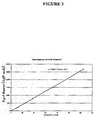
- the dose curve is an expression describing the ratio of the signal of the assay to the amount of component that one is attempting to measure.
- Concentration Signal ng/mL
- Light units 0 6.10678 0.358 34.3152 0.779 73.5325 1.22 120.708 3.43 425.336 12.3 2117.63 37.8 7953.13
- An advantage of the surface removal embodiment (hereinafter also referred to as the aspirate or aspiration embodiment) that employs an incubation of a signal producing reagent is that it enables an overall shorter time to result and better system throughput for the equivalent amount of wash efficiency. This is because the aspirate embodiment makes double use of the signal reagent incubation by turning signal reagent incubation into a supplemental wash process (soak) while incubating at the same time. For example, in a preferred embodiment described above, there is generally a total of 120 seconds of soak time between washes (3 soaks at 40 seconds each).
- an additional soak time of 4 minutes and 40 seconds is added (i.e., the signal incubation time in certain embodiments) is provided resulting in a greater than 4 times increase for soak time.
- the surface film or layer should be removed before the endpoint color is measured.
- a dye detection system results in a buildup of color density with time if there is signal producing material present.
- the aspirate embodiment is used in a colorimetric type assay the method will be somewhat modified.
- the surface of the fluid may be aspirated multiple times during the detection incubation process.
- Another alternative would be to put in a wash fluid and aspirate the surface after an incubation time.
- An advantage of this method over the current state of the art methods having an extended wash soak time is that aspiration of the surface film before removal of the bulk fluid would be expected to remove a concentrated layer of unbound material. This unbound material could get re-deposited on the surface of the container using conventional aspiration methods where an aspiration nozzle removes the bulk fluid without first selectively removing or aspirating the surface film.
- the ultimate timing of the surface film removal depends on the system and chemistry being employed and can be determined by those skilled in the art using the present specification as a guide.
- the processes described above are employed in an immunodiagnostic assay analyzer, such as those described in U.S. Patent No. 6,069,561 and copending U.S. application Serial No. 09/482,599 filed January 13, 2000 entitled “Failure Detection in Automated Clinical Analyzers,” both of which are incorporated by reference in their entireties.
- the container is cup-shaped.
- Preferred containers are 0.35 ml, conical containers coated with a material complementary to the reagents.
- Container coatings can comprise materials such as streptavidin and/or other materials useful for immunochemical analysis as is well known in the art to facilitate binding by a biotinylated antigen or antibody to which an analyte binds as part of the assay chemistry.
- An exemplary container 10 is shown in Figure 1. Also preferred are separate wash dispense and aspirating probes, such as the wash dispense 20 and aspiration nozzles 30 in wash unit 40 shown in Figure 2.
- the analyzer is categorized into systems and subsystems of components that perform different processes in the sequence of measuring a sample for an analyte, such as those described in the '599 application.
- a typical process involves a sample being dispensed into a container that may or may not already have a reagent present in the container that is dispensed by a reagent metering system. After the reagent is added, the sample is diluted, if necessary, and then incubated. After incubation, the container is washed, in this instance according to the inventive wash. After washing, a signal reagent is added, followed by further incubation, if necessary, optionally followed by the surface removal embodiment. The signal produced by the combination bound analyte/signal reagent is read by the appropriate detector, e.g., a luminometer.
- the wash process according to the present invention can be implemented by a computer program, having computer readable program code, interfacing with the computer controller of the analyzer as is known in the art.
- wash sequence (not including the wash incubation) is as follows (with a typical wash sequence shown for comparison).
- Wash # Process step known
- Known wash process Process step (preferred embodiment) of present invention
- Present invention preferred wash process 1 Turn on vacuum before starting nozzle downward travel 1 Starts downward travel with vacuum off 1 2 Starts to dispense fluid when aspirate nozzle is at the top of the incubator ring.
- a particularly preferred aspiration sequence is as follows (with a typical wash sequence shown for comparison).
- Process step Process step (Known) Process step (Preferred embodiment) of present invention Present invention preferred aspiration process 1
- Well with SR is below the wash nozzle at the end of the SR incubation cycle (40 seconds before read)
- Well with signal reagent (SR) is below the wash nozzle at the end of the SR incubation cycle (40 seconds before read) 2
- Wash nozzle is lowered with the vacuum and dispense off with the capacitance level sensing being used to trigger the stop in downward travel of the nozzle 2
- Wash nozzle is lowered with the vacuum and dispense off with the capacitance level sensing being used to trigger the stop in downward travel of the nozzle 3
- When fluid is found the nozzle stops moving down if fluid is not found the nozzle stops at a fixed step count that is just below 175 ⁇ l height) 3
- When fluid is found the nozzle stops moving down if fluid is not found the nozzle stops at a fixed step
- Vacuum or dispense is never turned on 4 If the SR aspirate is part of the process for this well, the aspirate valve opens, the nozzle drops 5 steps and the vacuum remains on for 100ms 5 Wash nozzle then washes the next well presented to it without a well wash prime 5 A total of ⁇ 25 ⁇ l of SR is removed from the well based on test data 6 If there was no well wash scheduled between successive DIVE readings of SR the wash nozzle does a well wash prime process (currently the old process) 6 The wash nozzle then changes direction and lifts with the vacuum on 7 7 7 The vacuum remains on for 500ms to dry the end of the wash probe of any residual SR and to clear to line of residual SR 8 8 Wash nozzle then washes the next well presented to it without a well wash prime 9 If there was no well wash scheduled between successive DIVE readings of SR the wash nozzle does a well wash prime process (the new probe wash process)
- the present invention has proved to be particularly useful in improving the analysis performance of Troponin I (cTnl), a protein detectable in the bloodstream 4 to 6 hours after an acute myocardial infraction.
- cTnl Troponin I
- a protein detectable in the bloodstream 4 to 6 hours after an acute myocardial infraction a protein detectable in the bloodstream 4 to 6 hours after an acute myocardial infraction.
- Biotin reagent was added to streptavidin-coated containers containing samples to initiate a reaction between biotinylated anti-cTnl antibody, the streptavidin coated container and the cTnl present in the sample.
- HRP conjugate reagent was also added to initiate a reaction between HRP-conjugated anti-cTnl antibody and the cTnl in the sample. The sample and reagent were then incubated for 8 minutes and 37°C. After incubation, the containers containing the samples were washed according to the present invention and according to the known wash process.
- the present invention is also useful in improving the analysis performance of HBsAg, (hepatitis B surface antigen).
- Mouse monoclonal anti-HBs antibody coated containers, HRP-labeled mouse monoclonal anti-HBs antibody conjugate and HbsAg in the sample were reacted.
- the sample was then incubated for 29 minutes and 37°C.
- the containers containing the samples were washed according to the oscillating embodiment of the present invention and according to the known wash process.
- signal reagent containing a luminol derivative, a peracid salt and a substituted acetanilide electron transfer agent was added, followed by a signal reagent incubation to produce luminescence that was read using a luminometer.
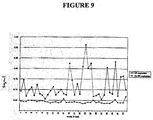
- the surface film was removed using the surface removal embodiment of the invention. Using the above wash processes (both known and the present invention), several runs were carried out to determine levels of HBsAg.
Landscapes
- Physics & Mathematics (AREA)
- Health & Medical Sciences (AREA)
- Life Sciences & Earth Sciences (AREA)
- Chemical & Material Sciences (AREA)
- Analytical Chemistry (AREA)
- Biochemistry (AREA)
- General Health & Medical Sciences (AREA)
- General Physics & Mathematics (AREA)
- Immunology (AREA)
- Pathology (AREA)
- Automatic Analysis And Handling Materials Therefor (AREA)
- Sampling And Sample Adjustment (AREA)
Applications Claiming Priority (4)
| Application Number | Priority Date | Filing Date | Title |
|---|---|---|---|
| US294876 | 1981-08-21 | ||
| US10/294,876 US20040096983A1 (en) | 2002-11-14 | 2002-11-14 | Wash process for a sample being analyzed |
| US417912 | 2003-04-17 | ||
| US10/417,912 US8329475B2 (en) | 2002-11-14 | 2003-04-17 | Wash process for removing undesired components in samples being analyzed |
Publications (3)
| Publication Number | Publication Date |
|---|---|
| EP1420240A2 true EP1420240A2 (de) | 2004-05-19 |
| EP1420240A3 EP1420240A3 (de) | 2006-02-01 |
| EP1420240B1 EP1420240B1 (de) | 2008-07-16 |
Family
ID=32179499
Family Applications (1)
| Application Number | Title | Priority Date | Filing Date |
|---|---|---|---|
| EP20030257208 Expired - Lifetime EP1420240B1 (de) | 2002-11-14 | 2003-11-14 | Waschverfahren zur Entfernung unerwünschter Komponenten in zu analysierenden Proben |
Country Status (3)
| Country | Link |
|---|---|
| EP (1) | EP1420240B1 (de) |
| JP (1) | JP2004184407A (de) |
| CA (1) | CA2449240C (de) |
Families Citing this family (3)
| Publication number | Priority date | Publication date | Assignee | Title |
|---|---|---|---|---|
| JP2014070915A (ja) * | 2012-09-27 | 2014-04-21 | Tosoh Corp | 液体の吸引方法及びそれを用いた固相の洗浄方法 |
| JP6216298B2 (ja) * | 2014-08-29 | 2017-10-18 | 株式会社日立ハイテクノロジーズ | 自動分析装置及びそれを用いた分析方法 |
| CN117881953A (zh) * | 2021-04-13 | 2024-04-12 | 科睿思生物科技有限责任公司 | 用于清洗样品的方法、装置和装置 |
Family Cites Families (10)
| Publication number | Priority date | Publication date | Assignee | Title |
|---|---|---|---|---|
| GB8522872D0 (en) * | 1985-09-16 | 1985-10-23 | Flow Lab | Multi-cavity washing apparatus |
| JP2577350B2 (ja) * | 1986-03-31 | 1997-01-29 | 株式会社東芝 | 自動化学分析装置における洗浄方法 |
| JPH01202664A (ja) * | 1988-02-09 | 1989-08-15 | Toshiba Corp | 容器洗浄装置 |
| US5183638A (en) * | 1989-12-04 | 1993-02-02 | Kabushiki Kaisha Nittec | Automatic immunity analysis apparatus with magnetic particle separation |
| EP0482165A1 (de) * | 1990-05-08 | 1992-04-29 | Source Scientific Systems, Inc. | Laborwaschvorrichtung mit wirbelstrom |
| US5646049A (en) * | 1992-03-27 | 1997-07-08 | Abbott Laboratories | Scheduling operation of an automated analytical system |
| JPH06230014A (ja) * | 1993-02-02 | 1994-08-19 | Olympus Optical Co Ltd | 自動分析装置 |
| US5441895A (en) * | 1993-12-07 | 1995-08-15 | Jakubowicz; Raymond F. | Reagent cup shape allowing stacking without dislodging reagent |
| JP3328048B2 (ja) * | 1994-02-25 | 2002-09-24 | 富士写真フイルム株式会社 | 液体の混合方法 |
| ES2286750T3 (es) * | 1998-05-01 | 2007-12-01 | Gen-Probe Incorporated | Dispositivo para agitar el contenido liquido de un contenedor. |
-
2003
- 2003-11-14 EP EP20030257208 patent/EP1420240B1/de not_active Expired - Lifetime
- 2003-11-14 CA CA2449240A patent/CA2449240C/en not_active Expired - Fee Related
- 2003-11-14 JP JP2003385802A patent/JP2004184407A/ja not_active Withdrawn
Also Published As
| Publication number | Publication date |
|---|---|
| EP1420240B1 (de) | 2008-07-16 |
| CA2449240A1 (en) | 2004-05-14 |
| EP1420240A3 (de) | 2006-02-01 |
| JP2004184407A (ja) | 2004-07-02 |
| CA2449240C (en) | 2016-01-05 |
Similar Documents
| Publication | Publication Date | Title |
|---|---|---|
| JP5285026B2 (ja) | 分析試料中の不要成分を取り除くための洗浄方法 | |
| US8759106B2 (en) | Clinical analyzer wash and method | |
| JP2950698B2 (ja) | 洗浄機能付き自動分析装置 | |
| US7138091B2 (en) | Reaction cuvette having anti-wicking features for use in an automatic clinical analyzer | |
| JP6310767B2 (ja) | 自動分析装置及びノズル洗浄方法 | |
| EP0930495B1 (de) | Aliquotieverfahren zur automatischen probenanalyse | |
| CA2449240C (en) | Wash process for removing undesired components in samples being analyzed | |
| JP3492870B2 (ja) | 自動分析装置 | |
| JPH0688828A (ja) | 免疫自動分析装置 | |
| JPH06109740A (ja) | 免疫比濁分析方法 | |
| JP2515392B2 (ja) | 自動免疫測定装置 | |
| EP3786644B1 (de) | Automatisierter analysator und verfahren zur steuerung des automatisierten analysators | |
| JPH0798321A (ja) | 液体試料分析装置 | |
| US5958789A (en) | Reduction in positive bias in wet assays due to splashing | |
| JPH03230000A (ja) | 液体の減圧吸引装置 | |
| WO2025159045A1 (ja) | 検体分析装置及びノズル洗浄方法 | |
| JP2515391B2 (ja) | 自動免疫測定装置 | |
| JPH02242163A (ja) | 自動免疫測定装置の発光試薬注入装置 | |
| JPH02236454A (ja) | 自動免疫測定装置 | |
| JPH05196625A (ja) | 免疫測定方法及び装置 |
Legal Events
| Date | Code | Title | Description |
|---|---|---|---|
| PUAI | Public reference made under article 153(3) epc to a published international application that has entered the european phase |
Free format text: ORIGINAL CODE: 0009012 |
|
| AK | Designated contracting states |
Kind code of ref document: A2 Designated state(s): AT BE BG CH CY CZ DE DK EE ES FI FR GB GR HU IE IT LI LU MC NL PT RO SE SI SK TR |
|
| AX | Request for extension of the european patent |
Extension state: AL LT LV MK |
|
| PUAL | Search report despatched |
Free format text: ORIGINAL CODE: 0009013 |
|
| AK | Designated contracting states |
Kind code of ref document: A3 Designated state(s): AT BE BG CH CY CZ DE DK EE ES FI FR GB GR HU IE IT LI LU MC NL PT RO SE SI SK TR |
|
| AX | Request for extension of the european patent |
Extension state: AL LT LV MK |
|
| 17P | Request for examination filed |
Effective date: 20060710 |
|
| 17Q | First examination report despatched |
Effective date: 20060831 |
|
| AKX | Designation fees paid |
Designated state(s): AT BE BG CH CY CZ DE DK EE ES FI FR GB GR HU IE IT LI LU MC NL PT RO SE SI SK TR |
|
| GRAP | Despatch of communication of intention to grant a patent |
Free format text: ORIGINAL CODE: EPIDOSNIGR1 |
|
| GRAS | Grant fee paid |
Free format text: ORIGINAL CODE: EPIDOSNIGR3 |
|
| GRAA | (expected) grant |
Free format text: ORIGINAL CODE: 0009210 |
|
| AK | Designated contracting states |
Kind code of ref document: B1 Designated state(s): AT BE BG CH CY CZ DE DK EE ES FI FR GB GR HU IE IT LI LU MC NL PT RO SE SI SK TR |
|
| REG | Reference to a national code |
Ref country code: GB Ref legal event code: FG4D |
|
| REG | Reference to a national code |
Ref country code: CH Ref legal event code: EP Ref country code: CH Ref legal event code: NV Representative=s name: E. BLUM & CO. AG PATENT- UND MARKENANWAELTE VSP |
|
| REF | Corresponds to: |
Ref document number: 60322165 Country of ref document: DE Date of ref document: 20080828 Kind code of ref document: P |
|
| REG | Reference to a national code |
Ref country code: IE Ref legal event code: FG4D |
|
| NLV1 | Nl: lapsed or annulled due to failure to fulfill the requirements of art. 29p and 29m of the patents act | ||
| PG25 | Lapsed in a contracting state [announced via postgrant information from national office to epo] |
Ref country code: ES Free format text: LAPSE BECAUSE OF FAILURE TO SUBMIT A TRANSLATION OF THE DESCRIPTION OR TO PAY THE FEE WITHIN THE PRESCRIBED TIME-LIMIT Effective date: 20081027 Ref country code: PT Free format text: LAPSE BECAUSE OF FAILURE TO SUBMIT A TRANSLATION OF THE DESCRIPTION OR TO PAY THE FEE WITHIN THE PRESCRIBED TIME-LIMIT Effective date: 20081216 Ref country code: NL Free format text: LAPSE BECAUSE OF FAILURE TO SUBMIT A TRANSLATION OF THE DESCRIPTION OR TO PAY THE FEE WITHIN THE PRESCRIBED TIME-LIMIT Effective date: 20080716 |
|
| PG25 | Lapsed in a contracting state [announced via postgrant information from national office to epo] |
Ref country code: AT Free format text: LAPSE BECAUSE OF FAILURE TO SUBMIT A TRANSLATION OF THE DESCRIPTION OR TO PAY THE FEE WITHIN THE PRESCRIBED TIME-LIMIT Effective date: 20080716 Ref country code: FI Free format text: LAPSE BECAUSE OF FAILURE TO SUBMIT A TRANSLATION OF THE DESCRIPTION OR TO PAY THE FEE WITHIN THE PRESCRIBED TIME-LIMIT Effective date: 20080716 Ref country code: SI Free format text: LAPSE BECAUSE OF FAILURE TO SUBMIT A TRANSLATION OF THE DESCRIPTION OR TO PAY THE FEE WITHIN THE PRESCRIBED TIME-LIMIT Effective date: 20080716 Ref country code: BG Free format text: LAPSE BECAUSE OF FAILURE TO SUBMIT A TRANSLATION OF THE DESCRIPTION OR TO PAY THE FEE WITHIN THE PRESCRIBED TIME-LIMIT Effective date: 20081016 |
|
| PG25 | Lapsed in a contracting state [announced via postgrant information from national office to epo] |
Ref country code: BE Free format text: LAPSE BECAUSE OF FAILURE TO SUBMIT A TRANSLATION OF THE DESCRIPTION OR TO PAY THE FEE WITHIN THE PRESCRIBED TIME-LIMIT Effective date: 20080716 |
|
| PG25 | Lapsed in a contracting state [announced via postgrant information from national office to epo] |
Ref country code: EE Free format text: LAPSE BECAUSE OF FAILURE TO SUBMIT A TRANSLATION OF THE DESCRIPTION OR TO PAY THE FEE WITHIN THE PRESCRIBED TIME-LIMIT Effective date: 20080716 Ref country code: DK Free format text: LAPSE BECAUSE OF FAILURE TO SUBMIT A TRANSLATION OF THE DESCRIPTION OR TO PAY THE FEE WITHIN THE PRESCRIBED TIME-LIMIT Effective date: 20080716 |
|
| PLBE | No opposition filed within time limit |
Free format text: ORIGINAL CODE: 0009261 |
|
| STAA | Information on the status of an ep patent application or granted ep patent |
Free format text: STATUS: NO OPPOSITION FILED WITHIN TIME LIMIT |
|
| PG25 | Lapsed in a contracting state [announced via postgrant information from national office to epo] |
Ref country code: CZ Free format text: LAPSE BECAUSE OF FAILURE TO SUBMIT A TRANSLATION OF THE DESCRIPTION OR TO PAY THE FEE WITHIN THE PRESCRIBED TIME-LIMIT Effective date: 20080716 Ref country code: SK Free format text: LAPSE BECAUSE OF FAILURE TO SUBMIT A TRANSLATION OF THE DESCRIPTION OR TO PAY THE FEE WITHIN THE PRESCRIBED TIME-LIMIT Effective date: 20080716 Ref country code: RO Free format text: LAPSE BECAUSE OF FAILURE TO SUBMIT A TRANSLATION OF THE DESCRIPTION OR TO PAY THE FEE WITHIN THE PRESCRIBED TIME-LIMIT Effective date: 20080716 |
|
| 26N | No opposition filed |
Effective date: 20090417 |
|
| PG25 | Lapsed in a contracting state [announced via postgrant information from national office to epo] |
Ref country code: MC Free format text: LAPSE BECAUSE OF NON-PAYMENT OF DUE FEES Effective date: 20081130 |
|
| PG25 | Lapsed in a contracting state [announced via postgrant information from national office to epo] |
Ref country code: IE Free format text: LAPSE BECAUSE OF NON-PAYMENT OF DUE FEES Effective date: 20081114 |
|
| PG25 | Lapsed in a contracting state [announced via postgrant information from national office to epo] |
Ref country code: SE Free format text: LAPSE BECAUSE OF FAILURE TO SUBMIT A TRANSLATION OF THE DESCRIPTION OR TO PAY THE FEE WITHIN THE PRESCRIBED TIME-LIMIT Effective date: 20081016 |
|
| PG25 | Lapsed in a contracting state [announced via postgrant information from national office to epo] |
Ref country code: LU Free format text: LAPSE BECAUSE OF NON-PAYMENT OF DUE FEES Effective date: 20081114 Ref country code: HU Free format text: LAPSE BECAUSE OF FAILURE TO SUBMIT A TRANSLATION OF THE DESCRIPTION OR TO PAY THE FEE WITHIN THE PRESCRIBED TIME-LIMIT Effective date: 20090117 Ref country code: CY Free format text: LAPSE BECAUSE OF FAILURE TO SUBMIT A TRANSLATION OF THE DESCRIPTION OR TO PAY THE FEE WITHIN THE PRESCRIBED TIME-LIMIT Effective date: 20080716 |
|
| PG25 | Lapsed in a contracting state [announced via postgrant information from national office to epo] |
Ref country code: TR Free format text: LAPSE BECAUSE OF FAILURE TO SUBMIT A TRANSLATION OF THE DESCRIPTION OR TO PAY THE FEE WITHIN THE PRESCRIBED TIME-LIMIT Effective date: 20080716 |
|
| PG25 | Lapsed in a contracting state [announced via postgrant information from national office to epo] |
Ref country code: GR Free format text: LAPSE BECAUSE OF FAILURE TO SUBMIT A TRANSLATION OF THE DESCRIPTION OR TO PAY THE FEE WITHIN THE PRESCRIBED TIME-LIMIT Effective date: 20081017 |
|
| REG | Reference to a national code |
Ref country code: FR Ref legal event code: PLFP Year of fee payment: 13 |
|
| PGFP | Annual fee paid to national office [announced via postgrant information from national office to epo] |
Ref country code: GB Payment date: 20151111 Year of fee payment: 13 Ref country code: IT Payment date: 20151124 Year of fee payment: 13 Ref country code: DE Payment date: 20151110 Year of fee payment: 13 Ref country code: CH Payment date: 20151111 Year of fee payment: 13 |
|
| PGFP | Annual fee paid to national office [announced via postgrant information from national office to epo] |
Ref country code: FR Payment date: 20151008 Year of fee payment: 13 |
|
| REG | Reference to a national code |
Ref country code: DE Ref legal event code: R119 Ref document number: 60322165 Country of ref document: DE |
|
| REG | Reference to a national code |
Ref country code: CH Ref legal event code: PL |
|
| GBPC | Gb: european patent ceased through non-payment of renewal fee |
Effective date: 20161114 |
|
| PG25 | Lapsed in a contracting state [announced via postgrant information from national office to epo] |
Ref country code: LI Free format text: LAPSE BECAUSE OF NON-PAYMENT OF DUE FEES Effective date: 20161130 Ref country code: CH Free format text: LAPSE BECAUSE OF NON-PAYMENT OF DUE FEES Effective date: 20161130 |
|
| REG | Reference to a national code |
Ref country code: FR Ref legal event code: ST Effective date: 20170731 |
|
| PG25 | Lapsed in a contracting state [announced via postgrant information from national office to epo] |
Ref country code: IT Free format text: LAPSE BECAUSE OF NON-PAYMENT OF DUE FEES Effective date: 20161114 Ref country code: FR Free format text: LAPSE BECAUSE OF NON-PAYMENT OF DUE FEES Effective date: 20161130 |
|
| PG25 | Lapsed in a contracting state [announced via postgrant information from national office to epo] |
Ref country code: DE Free format text: LAPSE BECAUSE OF NON-PAYMENT OF DUE FEES Effective date: 20170601 Ref country code: GB Free format text: LAPSE BECAUSE OF NON-PAYMENT OF DUE FEES Effective date: 20161114 |