EP1413081B1 - System und verfahren zur rahmenneusendung in einem rundsendekommunikationssystem - Google Patents
System und verfahren zur rahmenneusendung in einem rundsendekommunikationssystem Download PDFInfo
- Publication number
- EP1413081B1 EP1413081B1 EP02746858A EP02746858A EP1413081B1 EP 1413081 B1 EP1413081 B1 EP 1413081B1 EP 02746858 A EP02746858 A EP 02746858A EP 02746858 A EP02746858 A EP 02746858A EP 1413081 B1 EP1413081 B1 EP 1413081B1
- Authority
- EP
- European Patent Office
- Prior art keywords
- wireless communication
- transmission
- frame
- data frame
- predetermined number
- Prior art date
- Legal status (The legal status is an assumption and is not a legal conclusion. Google has not performed a legal analysis and makes no representation as to the accuracy of the status listed.)
- Expired - Lifetime
Links
- 238000004891 communication Methods 0.000 title claims abstract description 83
- 238000000034 method Methods 0.000 title claims description 26
- 230000005540 biological transmission Effects 0.000 claims abstract description 24
- 230000015654 memory Effects 0.000 claims description 22
- 230000001186 cumulative effect Effects 0.000 claims description 14
- 230000007423 decrease Effects 0.000 claims description 3
- 230000003247 decreasing effect Effects 0.000 claims 2
- 230000001413 cellular effect Effects 0.000 description 4
- 238000010586 diagram Methods 0.000 description 4
- 230000011664 signaling Effects 0.000 description 4
- 230000001934 delay Effects 0.000 description 3
- 238000012545 processing Methods 0.000 description 3
- 238000012544 monitoring process Methods 0.000 description 2
- 238000013500 data storage Methods 0.000 description 1
- 238000001514 detection method Methods 0.000 description 1
- 230000006870 function Effects 0.000 description 1
- 238000010295 mobile communication Methods 0.000 description 1
- 238000012986 modification Methods 0.000 description 1
- 230000004048 modification Effects 0.000 description 1
- 230000000153 supplemental effect Effects 0.000 description 1
- 238000012546 transfer Methods 0.000 description 1
Images


Classifications
-
- H—ELECTRICITY
- H04—ELECTRIC COMMUNICATION TECHNIQUE
- H04L—TRANSMISSION OF DIGITAL INFORMATION, e.g. TELEGRAPHIC COMMUNICATION
- H04L1/00—Arrangements for detecting or preventing errors in the information received
- H04L1/12—Arrangements for detecting or preventing errors in the information received by using return channel
- H04L1/16—Arrangements for detecting or preventing errors in the information received by using return channel in which the return channel carries supervisory signals, e.g. repetition request signals
-
- H—ELECTRICITY
- H04—ELECTRIC COMMUNICATION TECHNIQUE
- H04L—TRANSMISSION OF DIGITAL INFORMATION, e.g. TELEGRAPHIC COMMUNICATION
- H04L1/00—Arrangements for detecting or preventing errors in the information received
- H04L1/12—Arrangements for detecting or preventing errors in the information received by using return channel
- H04L1/16—Arrangements for detecting or preventing errors in the information received by using return channel in which the return channel carries supervisory signals, e.g. repetition request signals
- H04L1/18—Automatic repetition systems, e.g. Van Duuren systems
- H04L1/1867—Arrangements specially adapted for the transmitter end
- H04L1/1887—Scheduling and prioritising arrangements
-
- H—ELECTRICITY
- H04—ELECTRIC COMMUNICATION TECHNIQUE
- H04L—TRANSMISSION OF DIGITAL INFORMATION, e.g. TELEGRAPHIC COMMUNICATION
- H04L1/00—Arrangements for detecting or preventing errors in the information received
- H04L2001/0092—Error control systems characterised by the topology of the transmission link
- H04L2001/0093—Point-to-multipoint
Definitions
- the present invention relates to broadcast communications, otherwise known as point-to-multipoint or group communications, in a wireline or a wireless communication system. More particularly, the present invention relates to a system and method for providing frame re-transmission in such a broadcast communication system.
- FDMA frequency division multiple access
- TDMA time division multiple access
- CDMA code division multiple access
- AMPS Advanced Mobile Phone Service
- GSM Global System for Mobile
- IS-95 Interim Standard 95
- IS-95 and its derivatives such as IS-95A, IS-95B (often referred to collectively as IS-95), ANSI J-STD-008, IS-99, IS-2000, IS-657, IS-707, and others, are promulgated by the Telecommunication Industry Association (TIA) and other well known standards bodies.
- TIA Telecommunication Industry Association
- information transmitted in such systems is formatted into discreet packets, otherwise known as data packets or data frames, or simply frames.
- a radio link protocol RLP
- the RLP protocol controls how and when frames are re-transmitted from a transmit system to a receiver.
- an eight-bit sequence number is included as a frame header in each frame transmitted. The sequence number is incremented for each frame from 0 to 256 and then reset back to zero.
- An unsuccessfully received frame is detected when a frame with an out-of-order sequence number is received, or an error is detected using CRC checksum information or other error detection methods.
- the receiver transmits a negative-acknowledgment message (NAK) to the transmit system that includes the sequence number of the frames that were not received correctly. The transmit system then re-transmits the frame including the sequence number as originally transmitted.
- NAK negative-acknowledgment message
- a second re-transmission request is sent to the transmit system, this time requesting that the frame be transmitted twice.
- a third retransmission request is sent to the transmit system, this time requesting that the frame be transmitted three times. If the frame is still not received successfully after the third retransmission request, no further retransmissions are requested, and the frame is ignored at the receiver for use in reconstructing the original data.
- the frame re-transmission scheme just described is an example of a scheme used for point-to-point communications between a transmit system and a receiver.
- Such a re-transmission system is impractical in a broadcast communication system because of the potential for an almost unlimited number of re-transmission requests from the various receivers.
- the probability of a frame being received in error is much higher in a broadcast transmission system than in a point-to-point broadcast system.
- the probability of a retransmission being needed increases dramatically.
- the delay, or latency, of transmitting new information increases to a point at which an application using the information at a receiver is noticeably impacted.
- this retransmission scheme also depends on the existence of a feedback channel. That is, there has to be two-way communication between the transmitter and the receiver for the scheme to function properly. In some systems, such a two-way link might not be available.
- European Patent No 0 876 023 of Sony Corp describes system wherein a transmitter transmits data via a broadcasting link consisting of a satellite link. Receivers receive the data, and verify whether they have successfully received the data. Only when having failed to successfully receive the data, some of the receivers, which can transmit information to the transmitter, transmit retransmission requests for requesting the retransmission of the data via a communication link consisting of the Internet. When retransmission requests are transmitted, the transmitter receives only the retransmission requests and totals them. In addition; the transmitter transmits the data requested to be retransmitted, based on the total via the broadcasting link.
- the present invention is directed to a method and apparatus for providing high speed broadcast communications.
- the present invention is directed to an apparatus, the apparatus comprising a receiver for receiving a message indicative of a frame received in error by a wireless communication device, the message including an identification of the frame.
- a memory is used for storing a predetermined number for determining when tore-transmit each frame.
- a processor is used for determining a cumulative number of times that the frame was received in error and for ordering a re transmission of the frame if the cumulative number of times is greater than the predetermined number.
- the present invention is directed to a method, the method comprising the steps of receiving a message indicative of a data frame received in error by a wireless communication device, the message including a data frame identification; determining a cumulative number of times that said data frame has been received in error; and re-transmitting said data frame if said cumulative number is greater than a predetermined number.
- the present invention is directed to a method and apparatus for providing frame re-transmission in a broadcast communication system.
- a terrestrial-based wireless communication system it should be understood that the present invention could also be used in other wireline and wireless communication systems, such as in a satellite communication system, as well.
- the embodiments described herein could also be used in a number of alternative wireless communication systems, such as in a code division multiple access (CDMA) system, a Global System for Mobile communication (GSM) system, or in other well known wireless communication systems.
- CDMA code division multiple access
- GSM Global System for Mobile communication
- FIG. 1 is an illustration of a wireless communication system 100 in which wireless communication devices (WCDs) 102, 104, and 106 are in communication with base station 108.
- Base station 108 communicates with mobile switching center (MSC) 110.
- MSC 110 interfaces to public switched telephone network 112 and Internet 114 to provide two-way voice and data communications to WCDs 102, 104, and 106.
- Each WCD is capable of receiving broadcast messages intended for multiple recipients over a forward broadcast control channel (F-BCCH), i.e., a logical communication channel from base station 108 to a WCD.
- the messages broadcast over the F-BCCH are generally low-speed data messages typically comprising text messages.
- any WCD to receive a broadcast message over the F-BCCH.
- the methods generally involve the WCD monitoring a predefined frequency, time slot, and/or code (i.e. Walsh code for CDMA systems) to receive a page message indicating the availability of a broadcast message directed to the WCD.
- Instructions for receiving the broadcast message may be transmitted to a WCD via the forward common control channel (F-CCCH), which is a communication channel that is received by each WCD in communication system 100.
- F-CCCH forward common control channel
- Communication system 100 may offer some form of point-to-point high-speed communications.
- a Forward Supplemental Channel F-SCH
- F-SCH Forward Supplemental Channel
- Low-speed data is available through a F-SCH, a Forward Fundamental Channel (F-FCH) or a Forward Dedicated Control Channel (F-DCCH) which is assigned to a particular WCD.
- F-SCH Forward Supplemental Channel
- F-FCH Forward Fundamental Channel
- F-DCCH Forward Dedicated Control Channel
- Communication system 100 introduces a forward high-speed broadcast channel, or F-HSBCH for use in transmitting high-speed data (in one embodiment, 64 kbs or greater), such as Internet Proto ⁇ col (IP) datagrams.
- F-HSBCH allows users to receive streaming audio and video information.
- the F-HSBCH could be used to transfer large computer files over the air.
- push-to-talk communications for either data or voice applications.
- high-speed data is transmitted from one or more base stations to multiple WCDs using the F-HSBCH.
- Each WCD may also monitor one or more paging or control channels to receive signaling and instructions from a base station in order to, for example, receive point to point voice calls, receive high-speed data on a different frequency/time slot/code, to receive SMS or other low speed group messages, etc.
- a WCD may monitor a forward paging channel (F-PCH).
- F-PCH forward paging channel
- each WCD monitors the F-BCCH and F-CCCH channels for such information.
- this information is received by monitoring a F-DCCH which is a signaling channel used to transmit information to WCDs on an individual basis.
- the F-HSBCH may use a re-transmission scheme to ensure reception of information to WCDs.
- retransmission is accomplished by providing feedback from a WCD to a base station.
- RLP Radio Link Protocol
- NAKs negative acknowledgement messages
- such a scheme cannot be used in a broadcast communication system because of the potential for endless re-transmission requests from the various WCDs receiving information. That is as the number of WCDs increase, the probability of any frame requiring transmission increases dramatically.
- the present invention is directed to a re-transmission scheme for use in broadcast communication systems.
- data frame re-transmission occurs only when a predetermined number or percentage of WCDs request re-transmission using NAKs, ACKs (acknowledgement messages), or any other method of signaling known in the art.
- the predetermined number of re-transmission requests may comprise a fixed number or it may be dynamic, based on one or more operating conditions of the communication system. For example, in one embodiment, as the delay of transmitting new frames from the base station increases due to an increasing number of frame re-transmissions, the predetermined number of re-transmission requests needed to trigger frame retransmission decreases, and vice-versa.
- the delay of transmitting new frames may be measured by determining the number of new frames waiting to be transmitted in an electronic memory, or buffer.
- frame re-transmission occurs based on the number of WCDs receiving a specified broadcast. For example, if only 2 WCDs are receiving a streaming audio feed and a single NAK is received from one of the WCDs, the base station will re-transmit the necessary frame(s). However, if 100 WCDs are receiving a data file, the predetermined number of re-transmission requests needed to trigger frame re-transmission would be higher, for example, 10 NAKs would need to be received before re-transmission occurs.
- the number of WCDs receiving a particular broadcast may be determined by accessing a home location register (HLR) or a visitor location register (VLR) associated with a particular base station or base station sector and counting the number of WCDs registered to receive such a broadcast. This information may be used alone or in conjunction with indications from WCDs over reverse signaling links requesting participation in the particular broadcast.
- HLR home location register
- VLR visitor location register
- NAK may be transmitted over any number of reverse communication channels.
- R-ACH reverse access channel
- R-EACH extended reverse access channel
- R-DCCH reverse dedicated control channel
- R-CCCH reverse common control channel
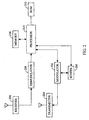
- FIG. 2 illustrates a portion of base station 108 comprising logical elements needed for data transmission and re-transmission request processing.
- buffer 200 comprises a re-writeable electronic memory, such as a random access memory (RAM).
- RAM random access memory
- the stored data in buffer 200 is then supplied to modulator 202, where it is then modulated in accordance with the chosen communication system type.
- Modulator 202 may comprise discrete electronic components, a VLSI microchip, a custom ASIC, a processor executing a series of executable computer instructions, or a combination of the above, for modulating data from buffer 200.
- Modulator 202 modulates data in accordance with the chosen communication system type, for example, CDMA, TDMA, or GSM. Modulator 202 is well-known in the art.
- Modulator 202 generally modulates data frames from buffer 200 at a constant rate and provides the modulated data frames to transmitter 204 where the modulated data frames are upconverted and wirelessly transmitted to one or more WCD's within a coverage area of base station 108.
- the WCD may generate a request for base station 108 to re-transmit the "missing" frame(s).
- the request is generally known as a re-transmission request and, in one embodiment, known as a negative acknowledgement message or NAK.
- NAK generally identifies which frames are missing so that base station 108 can re-transmit the necessary frames.
- a NAK When a NAK is transmitted by a WCD, it is received at base station 108 by receiver 206. Receiver 206 downconverts the NAK and provides it to demodulator 208. Demodulator 208 demodulates the NAK in accordance with the type of communication system used, for example, in accordance with CDMA, TDMA, GSM, or others. The NAK is then provided to processor 210.
- Processor 210 comprises a microcomputer performing a set of executable computer instructions stored in a non-volatile electronic memory, such as read-only memory (ROM) 212.
- ROM 212 could alternatively comprise any number of known electronic memories, including an electrically-erasable programmable read-only memory (EEPROM), an erasable programmable read-only memory (EPROM), or a flash memory.
- EEPROM electrically-erasable programmable read-only memory
- EPROM erasable programmable read-only memory
- processor 210 When a NAK is received by processor 210, processor 210 evaluates which frames are being requested for re-transmission.
- the frames may be identified by any technique known in the art, for example, by numbering data frames as they are transmitted.
- processor 210 After processing the NAK, processor 210 stores pertinent details of the NAK in erasable memory 214.
- Erasable memory 214 typically comprises a random access memory (RAM) or other electronic memory device for non-permanent electronic data storage.
- Processor 210 may store information relating to the received NAK, such as an identification of requested data frames for re-transmission and/or the time of receipt of the NAK. An identification of the WCD which transmitted the NAK may also be stored. Such an identification typically accompanies each NAK, as is well-known in the art.
- Processor 210 determines whether to re-transmit one or more of the data frames requested in the NAK. Re-transmission will occur under certain conditions, described in detail below. If processor 210 determines that frame re-transmission is necessary, it instructs modulator 202 to select the desired data frames from buffer 200. Modulator 202 then modulates the identified frame(s) and provides the modulated frame(s) to transmitter 204 for transmission to one or more WCDs.
- FIG. 3 is a flow diagram illustrating one embodiment of a method for providing frame re-transmissions in a broadcast communication system.
- step 300 one or more data frames are transmitted from base station 108 to one or more WCDs.
- step 302 a first NAK is received from a WCD which identifies one or more data frames which were not successfully received.
- step 304 processor 210 determines whether or not to re-transmit the requested data frames based on previously received NAKs.
- processor 210 instructs modulator 202 to re-transmit an identified number of data frames. If processor 210 determines that a re-transmission is not needed, no action is taken by processor 210 with respect to frame re-transmissions, as shown in step 308.
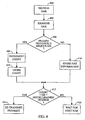
- FIG. 4 is a flow diagram illustrating one embodiment for determining whether or not to re-transmit requested frame(s) when a NAK is received.
- a NAK is received from a WCD.
- processor 210 examines the NAK to determine which frames are being requested for re-transmission and to determine a WCD identification.
- processor 210 examines memory 214 to determine whether or not one or more of the requested data frames have already been requested by another WCD, evidenced by a WCD identification stored in memory 214.
- processor 210 increments a count indicative of the number of times one or more frames have been requested for re-transmission, as shown in step 406. The count is then stored in memory 214 in association with the requested data frames, as shown in step 408.
- processor 210 assigns a count to each data frame identified by a NAK and stores the identity of each frame and its associated count in memory 214. As NAKs are received, processor 210 compares each data frame identified by the NAK to the number of times each data frame has been requested for retransmission as indicated in memory 214. If the number of re-transmission requests associated with a particular data frame is equal to the predetermined number, that data frame is re-transmitted. In another embodiment, a count is not incremented unless its associated frame is being requested by a new WCD, i.e., a WCD that has not previously requested the particular frame. In this embodiment, a WCD identification is stored as each NAK is received so that subsequent retransmission requests can be checked to ensure uniqueness.
- processor 210 stores information associated with the just-received NAK in memory 214, as shown in step 410.
- information includes at least an identification of the data frames requested for re-transmission.
- the information may further include a count associated with the number of times the identified data frames have been requested for retransmission.
- processor 210 compares the count associated with the just-received NAK to a predetermined number to determine whether or not to re-transmit the desired data frames. If the count is greater than or equal to the predetermined number, processor 210 instructs modulator 202 to re-transmit the frames identified in the just-received NAK, as shown in step 414. If the count is less than the predetermined number, processor 210 does not order a retransmission, and processor 210 waits to receive another NAK, as shown in step 416.
- the predetermined number may be a fixed number or a variable number. If it is a fixed number, it is chosen to avoid excessive re-transmissions as this will interrupt the transmission of new information to WCDs.
- the predetermined number may comprise the number 10, so that a re-transmission will not take place until at least 10 WCDs request re-transmission of the same frames.
- the predetermined number is a variable number, it may vary in accordance with one or a number of factors determined by processor 210 or by an external signal provided by another processor (not shown). In general, the predetermined number will vary depending on the delay, or latency, of data frames waiting to be transmitted. In one embodiment, the latency may be measured by examined buffer 200. As the number of data frames awaiting transmission in buffer 200 increases, the latency associated with those data frames increases. Processor 210 , therefore, may measure the current latency by determining the number of data frames stored in buffer 200. If the number of data frames stored in buffer 210 exceeds one or more predetermined thresholds, the predetermined number needed for re-transmissions increases accordingly, and vice-versa.
- the predetermined number may vary based on the number of WCDs receiving a group transmission. In this embodiment, the predetermined number increases as more WCDs receive the transmission, and vice-versa. For example, if only two WCDs are receiving a broadcast transmission and one of the WCDs transmits a NAK, processor 210 may re-transmit the identified data frames based on receipt of a single re-transmission request. In this case, the predetermined number is equal to zero. If one hundred WCDs are receiving a broadcast transmission, then processor 210 may not order a re-transmission until many more NAKs are received identifying the same data frames, for instance 20 such NAKs.
- the predetermined number is based on the type of media being broadcast to WCDs.
- the predetermined number is set to a relatively low number, perhaps even one.
- Non-time sensitive media may include data files such as email and software programs and is generally identified by a small or non-existent impact from a WCD user's perspective.
- Time sensitive media may include voice or video information and is generally categorized by relatively small latency delays causing a noticeable negative impact on a WCD user's application. For example, small latency delays generally have a noticeable negative impact on a user's quality of communication during a voice call.
- processor 210 may adjust the predetermined number in accordance with each media type.
- an indication of the media type is communicated to processor 210 generally by transmitting a message from an originating WCD indicating the type of communication service desired for a group communication.
- processor 210 receives the indication, it adjusts the predetermined number in accordance with the media type identified by the indication.
- the predetermined number could also be adjusted in combination with any of the other fixed or variable techniques discussed above.
Landscapes
- Engineering & Computer Science (AREA)
- Computer Networks & Wireless Communication (AREA)
- Signal Processing (AREA)
- Mobile Radio Communication Systems (AREA)
- Detection And Prevention Of Errors In Transmission (AREA)
- Communication Control (AREA)
- Small-Scale Networks (AREA)
- Radio Relay Systems (AREA)
Claims (19)
- Eine Vorrichtung zum Vorsehen einer erneuten Übertragung eines Rahmens in einem Broadcast-Kommunikationssystem (100), wobei die Vorrichtung Folgendes aufweist:einen Empfänger (206) zum Empfangen einer Nachricht anzeigend für einen fehlerhaft empfangenen Datenrahmen von einem jeden Kommunikationsgerät einer Vielzahl von drahtlosen Kommunikationsgeräten (102, 104, 106), die den Datenrahmen fehlerhaft empfangen haben, wobei die Nachricht eine Identifikation des Datenrahmens enthält sowie eine Identifikation des drahtlosen Kommunikationsgeräts (102,104, 106);
gekennzeichnet durch:einen Prozessor (210) zum Bestimmen einer kumulativen Zahl von drahtlosen Kommunikationsgeräten, die den Rahmen fehlerhaft empfangen haben, wobei die kumulative Zahl jedes Mal, wenn der Rahmen durch nachfolgende Nachrichten von weiteren Geräten identifiziert wird, erhöht wird, und zum Anfordern einer erneuten Übertragung des Datenrahmens, wenn die kumulative Zahl der drahtlosen Kommunikationsgeräte (102, 104, 106) größer ist als eine vorbestimmte Zahl. - Vorrichtung nach Anspruch 1, die weiterhin Folgendes aufweist:einen Speicher (214) zum Speicher der Identifikation des Datenrahmens, der Identifikation des drahtlosen Kommunikationsgeräts und der kumulativen Zahl.
- Vorrichtung nach Anspruch 1, wobei der Prozessor weiterhin Folgendes aufweist:Mittel zum Bestimmen, ob das drahtlose Kommunikationsgerät zuvor ein erneutes Übertragen des Datenrahmens angefragt hat oder nicht; undMittel zum Inkrementieren der kumulativen Zahl, wenn das drahtlose Kommunikationsgerät (102, 104, 106) nicht zuvor ein erneutes Übertragen des Datenrahmens angefragt hat.
- Vorrichtung nach einem der vorhergehenden Ansprüche, wobei eine Nachricht eine negative Bestätigungsnachricht (NAK= negative acknowledgement message) aufweist.
- Vorrichtung nach einem der vorhergehenden Ansprüche, wobei die Identifikation eine Rahmenzahl beinhaltet.
- Vorrichtung nach einem der vorhergehenden Ansprüche, wobei die vorbestimmte Zahl eine Fixzahl aufweist.
- Vorrichtung nach einem der Ansprüche 1 bis 5, wobei die vorbestimmte Zahl eine variable Zahl aufweist.
- Vorrichtung nach Anspruch 7, wobei die vorbestimmte Zahl gemäß einer Latenz variiert, die dem Übertragen von neuen Datenrahmen zu dem drahtlosen Kommunikationsgerät zugeordnet ist.
- Vorrichtung nach Anspruch 8, die weiterhin einen Sendepuffer (200) aufweist, wobei die Latenz bestimmt wird durch Zählen der Zahl von Datenrahmen, die in dem Sendepuffer (200) darauf warten, gesendet zu werden.
- Vorrichtung nach Anspruch 7, wobei die vorbestimmte Zahl gemäß der Zahl von drahtlosen Kommunikationsgeräten variiert, die momentan eine Broadcast- bzw. Rundrufübertragung empfangen.
- Ein Verfahren zum Vorsehen von einer erneuten Übertragung eines Rahmens in einem Broadcast- bzw. Rundrufkommunikationssystem (100), wobei das Verfahren die folgenden Schritte aufweist:Empfangen einer Nachricht anzeigend für einen fehlerhaft empfangenen Datenrahmen von jedem einer Vielzahl von drahtlosen Kommunikationsgeräten (102, 104, 106), die den Datenrahmen fehlerhaft empfangen haben, wobei die Nachricht eine Identifikation eines Datenrahmens und eine Identifikation des drahtlosen Kommunikationsgeräts enthält;wobei das Verfahren durch folgende Schritte gekennzeichnet ist:Bestimmen einer kumulativen Zahl von drahtlosen Kommunikationsgeräten (102, 104, 106), die den Datenrahmen fehlerhaft empfangen haben, wobei die kumulative Zahl jedes Mal erhöht wird, wenn der Rahmen durch nachfolgende Nachrichten von anderen drahtlosen Kommunikationsgeräten identifiziert wird; underneutes Übertragen des Datenrahmens, wenn die kumulative Zahl der drahtlosen Kommunikationsgeräte (102, 104, 106) größer ist als eine vorbestimmte Zahl.
- Verfahren nach Anspruch 11, wobei der Schritt des Bestimmens einer kumulativen Zahl von drahtlosen Kommunikationsgeräten, die den Datenrahmen fehlerhaft empfangen haben, folgende Schritte aufweist:Bestimmen, ob das drahtlose Kommunikationsgerät zuvor ein erneutes Übertragen des Datenrahmens angefragt hat oder nicht; undInkrementieren der kumulativen Zahl, wenn das drahtlose Kommunikationsgerät nicht zuvor ein erneutes Übertragen des Datenrahmens angefragt hat.
- Verfahren nach Anspruch 12, wobei der Schritt des Bestimmens, ob das drahtlose Kommunikationsgerät zuvor ein erneutes Übertragen des Datenrahmens angefragt hat, die folgende Schritte aufweist:Bestimmen, ob die Identifikation des drahtlosen Kommunikationsgeräts in einem elektronischen Speicher gespeichert ist;Bestimmen, ob die Datenrahmenidentifikation in dem elektronischen Speicher im Zusammenhang mit der Identifikation des drahtlosen Kommunikationsgeräts gespeichert ist;Bestimmen, dass das drahtlose Kommunikationsgerät zuvor ein erneutes Übertragen des Datenrahmens angefragt hat, wenn die Identifikation des drahtlosen Kommunikationsgeräts in dem elektronischen Speicher gespeichert ist und wenn die Datenrahmenidentifikation in dem elektronischen Speicher im Zusammenhang mit der Identifikation des drahtlosen Kommunikationsgeräts gespeichert ist.
- Verfahren nach einem der Ansprüche 11 bis 13, wobei die Anzeige eine negative Bestätigungsnachricht (NAK) aufweist.
- Verfahren nach einem der Ansprüche 11 bis 14, das weiterhin folgende Schritte aufweist:Bestimmen einer Latenz, die einer Broadcast-Übertragung zugeordnet ist; undAnpassen der vorbestimmten Zahl gemäß der Latenz.
- Verfahren nach Anspruch 15, wobei der Schritt des Bestimmens der Latenz den Schritt des Bestimmens einer Zahl von Datenrahmen aufweist, die in einem Übertragungspuffer darauf warten, gesendet zu werden.
- Verfahren nach Anspruch 15 oder 16, wobei der Schritt des Anpassens der vorbestimmten Zahl die folgenden Schritte aufweist:Erhöhen der vorbestimmten Zahl, wenn sich die Latenz absenkt; undSenken der vorbestimmten Zahl, wenn sich die Latenz erhöht.
- Verfahren nach einem der Ansprüche 11 bis 17, wobei das Verfahren die folgenden weiteren Schritte aufweist:Bestimmen einer Zahl von drahtlosen Kommunikationsgeräten, die momentan eine Broadcast-Übertragung empfangen; undAnpassen der vorbestimmten Anzahl basierend auf der Zahl von drahtlosen Kommunikationsgeräten, die momentan die Broadcast-Übertragung empfangen.
- Verfahren nach Anspruch 18, wobei der Schritt des Anpassens der vorbestimmten Zahl die folgenden Schritte aufweist:Erhöhen der vorbestimmten Zahl, wenn sich die Zahl der drahtlosen Kommunikationsgeräte, die momentan die Broadcast-Übertragung empfangen, erhöht; undSenken der vorbestimmten Zahl, wenn sich die Zahl der drahtlosen Kommunikationsgeräte, die momentan die Broadcast-Übertragung empfangen, senkt.
Applications Claiming Priority (3)
| Application Number | Priority Date | Filing Date | Title |
|---|---|---|---|
| US898347 | 2001-07-02 | ||
| US09/898,347 US6983410B2 (en) | 2001-07-02 | 2001-07-02 | System and method for a frame re-transmission in a broadcast communication system |
| PCT/US2002/021155 WO2003005631A1 (en) | 2001-07-02 | 2002-07-02 | System and method for frame re-transmission in a broadcast communication system |
Publications (2)
| Publication Number | Publication Date |
|---|---|
| EP1413081A1 EP1413081A1 (de) | 2004-04-28 |
| EP1413081B1 true EP1413081B1 (de) | 2006-01-11 |
Family
ID=25409316
Family Applications (1)
| Application Number | Title | Priority Date | Filing Date |
|---|---|---|---|
| EP02746858A Expired - Lifetime EP1413081B1 (de) | 2001-07-02 | 2002-07-02 | System und verfahren zur rahmenneusendung in einem rundsendekommunikationssystem |
Country Status (8)
| Country | Link |
|---|---|
| US (2) | US6983410B2 (de) |
| EP (1) | EP1413081B1 (de) |
| JP (1) | JP4149916B2 (de) |
| KR (1) | KR100921035B1 (de) |
| CN (2) | CN100353699C (de) |
| AT (1) | ATE315856T1 (de) |
| DE (1) | DE60208681T2 (de) |
| WO (1) | WO2003005631A1 (de) |
Families Citing this family (55)
| Publication number | Priority date | Publication date | Assignee | Title |
|---|---|---|---|---|
| US8352400B2 (en) | 1991-12-23 | 2013-01-08 | Hoffberg Steven M | Adaptive pattern recognition based controller apparatus and method and human-factored interface therefore |
| US7966078B2 (en) | 1999-02-01 | 2011-06-21 | Steven Hoffberg | Network media appliance system and method |
| EP1352492B1 (de) * | 2001-01-16 | 2005-03-23 | Siemens Aktiengesellschaft | Parallele übertragung identischer daten an mehrere endgeräte und rückübertragung von informationen über die übertragungsqualität |
| US8121296B2 (en) * | 2001-03-28 | 2012-02-21 | Qualcomm Incorporated | Method and apparatus for security in a data processing system |
| US7742781B2 (en) * | 2001-03-28 | 2010-06-22 | Qualcomm Incorporated | Power control for point-to-multipoint services provided in communication systems |
| US9100457B2 (en) * | 2001-03-28 | 2015-08-04 | Qualcomm Incorporated | Method and apparatus for transmission framing in a wireless communication system |
| US8077679B2 (en) * | 2001-03-28 | 2011-12-13 | Qualcomm Incorporated | Method and apparatus for providing protocol options in a wireless communication system |
| US6937585B2 (en) * | 2001-07-27 | 2005-08-30 | Motorola, Inc. | Transmission scheme within a communication system |
| US20040120527A1 (en) * | 2001-08-20 | 2004-06-24 | Hawkes Philip Michael | Method and apparatus for security in a data processing system |
| US7185362B2 (en) * | 2001-08-20 | 2007-02-27 | Qualcomm, Incorporated | Method and apparatus for security in a data processing system |
| US7697523B2 (en) * | 2001-10-03 | 2010-04-13 | Qualcomm Incorporated | Method and apparatus for data packet transport in a wireless communication system using an internet protocol |
| US7352868B2 (en) * | 2001-10-09 | 2008-04-01 | Philip Hawkes | Method and apparatus for security in a data processing system |
| US7649829B2 (en) | 2001-10-12 | 2010-01-19 | Qualcomm Incorporated | Method and system for reduction of decoding complexity in a communication system |
| SE0201758D0 (sv) * | 2002-06-05 | 2002-06-05 | Ericsson Telefon Ab L M | Method and system of failure avoidace |
| US20040039781A1 (en) * | 2002-08-16 | 2004-02-26 | Lavallee David Anthony | Peer-to-peer content sharing method and system |
| KR100531008B1 (ko) * | 2002-09-27 | 2005-11-28 | 주식회사 지티앤티 | 재송신장치의 식별번호 부여방법과 이를 구현하는재송신장치 및 수신장치. |
| US7599655B2 (en) * | 2003-01-02 | 2009-10-06 | Qualcomm Incorporated | Method and apparatus for broadcast services in a communication system |
| KR100547844B1 (ko) * | 2003-02-05 | 2006-01-31 | 삼성전자주식회사 | 이동 통신 시스템에서 데이터 브로드캐스팅 방법 |
| US7894468B2 (en) * | 2003-03-20 | 2011-02-22 | Alcatel-Lucent Usa Inc. | Transmission methods for communication systems supporting a multicast mode |
| US8098818B2 (en) * | 2003-07-07 | 2012-01-17 | Qualcomm Incorporated | Secure registration for a multicast-broadcast-multimedia system (MBMS) |
| US8718279B2 (en) * | 2003-07-08 | 2014-05-06 | Qualcomm Incorporated | Apparatus and method for a secure broadcast system |
| US8578040B2 (en) * | 2003-08-14 | 2013-11-05 | International Business Machines Corporation | Method, system and article for client application control of network transmission loss tolerance |
| US8724803B2 (en) * | 2003-09-02 | 2014-05-13 | Qualcomm Incorporated | Method and apparatus for providing authenticated challenges for broadcast-multicast communications in a communication system |
| EP1667395A4 (de) * | 2003-09-18 | 2010-05-26 | Nomura Res Inst Co Ltd | Kommunikationssystem, kommunikationseinrichtung und datenneuübertragungs-steuerverfahren |
| ATE376338T1 (de) * | 2003-09-29 | 2007-11-15 | Nokia Siemens Networks Gmbh | Senden einer information (nack) von einem teilnehmer-endgerät bezüglich des empfangs eines datenblocks in einem punkt-zu-multipunkt- funkübertragungssystem |
| US8687607B2 (en) | 2003-10-08 | 2014-04-01 | Qualcomm Incorporated | Method and apparatus for feedback reporting in a wireless communications system |
| CN100553358C (zh) * | 2003-10-08 | 2009-10-21 | 高通股份有限公司 | 在无线通信系统中用于反馈报告的方法和装置 |
| US7853209B2 (en) * | 2004-03-30 | 2010-12-14 | Mitsubishi Denki Kabushiki Kaisha | Mobile communication station, base station apparatus, and dedicated-short-range-communications system |
| JP2007536868A (ja) * | 2004-05-06 | 2007-12-13 | コーニンクレッカ フィリップス エレクトロニクス エヌ ヴィ | Arqを用いてデータ・パケットを通信する方法、システムおよび局 |
| US7664517B2 (en) * | 2004-06-21 | 2010-02-16 | Qualcomm Incorporated | Wireless communication system utilizing a persistence value for group communication requests to reduce latency |
| KR20060003764A (ko) * | 2004-07-07 | 2006-01-11 | 삼성전자주식회사 | 이동통신시스템에서의 동기 재전송 방법 |
| KR101199352B1 (ko) | 2004-12-27 | 2012-11-12 | 엘지전자 주식회사 | 광대역 무선 접속 시스템에서의 멀티미디어 및 방송서비스를 위한 데이터 전송 제어 방법 |
| KR101128794B1 (ko) | 2005-02-14 | 2012-06-12 | 엘지전자 주식회사 | 광대역 무선접속 시스템에서의 멀티미디어 및 방송 서비스를 위한 데이터 전송 제어 방법 |
| US8169908B1 (en) * | 2005-01-29 | 2012-05-01 | Lsi Corporation | Method for discarding corrupted data packets in a reliable transport fabric |
| US8670359B2 (en) * | 2005-02-14 | 2014-03-11 | Lg Electronics Inc. | Method of controlling data transmission for MBS in broadband wireless access system |
| KR101158430B1 (ko) | 2005-03-10 | 2012-07-02 | 엘지전자 주식회사 | 광대역 무선 접속 시스템에서의 멀티미디어 및 방송 서비스를 위한 데이터 전송 제어 방법 |
| KR100677511B1 (ko) * | 2005-08-12 | 2007-02-02 | 엘지전자 주식회사 | Bcast서비스 시스템 및 이를 이용한 콘텐츠 전송방법 |
| US7499475B2 (en) | 2005-09-08 | 2009-03-03 | Sharp Kabushiki Kaisha | Broadcast station, base station control device, receiver, control method, receiving method, broadcast system, reception program, transmission program, distribution program, and storage medium |
| FI20055514A0 (fi) * | 2005-09-27 | 2005-09-27 | Nokia Corp | Ryhmäviestintä viestintäjärjestelmässä |
| KR100746013B1 (ko) * | 2005-11-15 | 2007-08-06 | 삼성전자주식회사 | 무선 네트워크에서의 데이터 전송 방법 및 장치 |
| US7664198B2 (en) | 2006-03-21 | 2010-02-16 | Kyocera Corporation | System and method for broadcasting data over a wireless network using rateless codes |
| TWI526107B (zh) | 2006-10-10 | 2016-03-11 | 內數位科技公司 | 爲傳送至多數無線傳送/接收單元下鏈分享服務發送反饋之方法及裝置 |
| WO2008097148A1 (en) | 2007-02-07 | 2008-08-14 | Telefonaktiebolaget Lm Ericsson (Publ) | A method and a device for improved retransmissions |
| KR101342424B1 (ko) * | 2007-08-20 | 2013-12-17 | 알까뗄 루슨트 | 멀티캐스트 시스템에서 트리거된 반복 방법 및 장치 |
| US9166715B2 (en) | 2007-09-27 | 2015-10-20 | Qualcomm Incorporated | Methods and apparatuses of user identification and notification of multimedia content |
| US20090205633A1 (en) * | 2008-02-19 | 2009-08-20 | Hussong Manufacturing Company, Inc. | Simulated fire glow lights for fireplace |
| KR101271317B1 (ko) * | 2008-05-09 | 2013-06-04 | 엘지전자 주식회사 | 무선랜에서의 멀티캐스트 장치 및 방법 |
| JP2012501610A (ja) | 2008-08-29 | 2012-01-19 | インターデイジタル パテント ホールディングス インコーポレイテッド | 下りリンク共有サービスのためのフィードバックを送り、ワイヤレス送受信ユニットの数を推定する方法および装置 |
| US8995365B2 (en) | 2009-08-25 | 2015-03-31 | Interdigital Patent Holdings, Inc. | Method and apparatus for managing group communications |
| US9479961B2 (en) * | 2013-09-09 | 2016-10-25 | At&T Intellectual Property I, L.P. | Facilitating multicast traffic collision reduction |
| JP6201669B2 (ja) | 2013-11-15 | 2017-09-27 | 富士通株式会社 | 通信方法、通信装置、通信プログラム、および、通信システム |
| US20160191181A1 (en) * | 2014-12-31 | 2016-06-30 | Qualcomm Technologies International, Ltd. | Audio broadcast retransmissions |
| JP6845628B2 (ja) * | 2016-07-07 | 2021-03-17 | 任天堂株式会社 | 情報処理装置、情報処理方法、情報処理システム、および、制御プログラム |
| CN113934133B (zh) * | 2021-09-28 | 2024-05-31 | 国网电力科学研究院有限公司 | 适用于安控系统的控制命令确认方法及系统 |
| KR20230046801A (ko) * | 2021-09-30 | 2023-04-06 | 삼성전자주식회사 | 디스플레이 장치 및 그 동작 방법 |
Family Cites Families (25)
| Publication number | Priority date | Publication date | Assignee | Title |
|---|---|---|---|---|
| US1350484A (en) | 1917-05-26 | 1920-08-24 | Non Skid Company | Antiskidding device for tires |
| US1932576A (en) | 1932-04-18 | 1933-10-31 | Columbian Rope Co | Antiskid device |
| US1982510A (en) | 1933-07-01 | 1934-11-27 | Jefferson D Frazey | Wader pad |
| JPS62299139A (ja) | 1986-06-19 | 1987-12-26 | Toshiba Corp | 同報通信方式 |
| JPS6342246A (ja) | 1986-08-08 | 1988-02-23 | Toshiba Corp | 同報通信システム |
| US5553083B1 (en) * | 1995-01-19 | 2000-05-16 | Starburst Comm Corp | Method for quickly and reliably transmitting frames of data over communications links |
| US5991410A (en) * | 1995-02-15 | 1999-11-23 | At&T Wireless Services, Inc. | Wireless adaptor and wireless financial transaction system |
| JPH09270790A (ja) | 1996-04-01 | 1997-10-14 | N T T Data Tsushin Kk | ファイル配信方法及び通信制御装置 |
| JPH10257001A (ja) | 1997-03-10 | 1998-09-25 | Xing:Kk | 情報伝送方法及びシステムと、該システムに用いるホスト装置 |
| US6031818A (en) * | 1997-03-19 | 2000-02-29 | Lucent Technologies Inc. | Error correction system for packet switching networks |
| JPH1117737A (ja) | 1997-04-30 | 1999-01-22 | Sony Corp | 送信装置および送信方法、受信装置および受信方法、並びに送受信装置および送受信方法 |
| US6404739B1 (en) * | 1997-04-30 | 2002-06-11 | Sony Corporation | Transmitter and transmitting method, receiver and receiving method, and transceiver and transmitting/receiving method |
| JP3045985B2 (ja) * | 1997-08-07 | 2000-05-29 | インターナショナル・ビジネス・マシーンズ・コーポレイション | 接続確立方法、通信方法、状態変化伝達方法、状態変化実行方法、無線装置、無線デバイス、及びコンピュータ |
| US6076181A (en) * | 1998-03-03 | 2000-06-13 | Nokia Mobile Phones Limited | Method and apparatus for controlling a retransmission/abort timer in a telecommunications system |
| KR100282403B1 (ko) * | 1998-08-20 | 2001-02-15 | 서평원 | 이동통신 시스템에서 전파 회선 프로토콜의 프레임 전송 방법 |
| KR20000040467A (ko) * | 1998-12-18 | 2000-07-05 | 서평원 | 네트워크의 데이터통신 제어방법 |
| US6782490B2 (en) * | 1999-03-17 | 2004-08-24 | At&T Corp. | Network-based service for the repair of IP multicast sessions |
| JP3429707B2 (ja) * | 1999-06-30 | 2003-07-22 | 株式会社次世代情報放送システム研究所 | 送信装置および送信方法、受信装置および受信方法、ならびに、送受信システムおよび送受信方法 |
| KR100424654B1 (ko) * | 1999-08-02 | 2004-03-24 | 삼성전자주식회사 | 이동 통신시스템에서 라디오링크프로토콜에 따른 데이터 재전송 장치 및 방법 |
| JP2001160814A (ja) | 1999-09-22 | 2001-06-12 | Sony Corp | 無線伝送方法、有線伝送方法、無線伝送装置及び有線伝送装置 |
| JP3618600B2 (ja) * | 1999-09-28 | 2005-02-09 | 株式会社東芝 | 無線通信システム、無線通信方法、無線基地局、および無線端末局 |
| JP4330767B2 (ja) * | 2000-06-26 | 2009-09-16 | 株式会社エヌ・ティ・ティ・ドコモ | 自動再送要求を行う通信方法及び基地局装置 |
| US7103817B1 (en) * | 2001-04-19 | 2006-09-05 | Cisco Technology, Inc. | Method and system for dynamically controlling frame retransmissions in a wireless network |
| KR100533024B1 (ko) * | 2003-02-06 | 2005-12-02 | 엘지전자 주식회사 | 무선환경을 고려한 알엘피 프레임 데이터 수신방법 |
| JP2005244897A (ja) * | 2004-02-27 | 2005-09-08 | Fujitsu Ltd | 信頼性のある通信方法及びその装置 |
-
2001
- 2001-07-02 US US09/898,347 patent/US6983410B2/en not_active Expired - Fee Related
-
2002
- 2002-07-02 WO PCT/US2002/021155 patent/WO2003005631A1/en not_active Ceased
- 2002-07-02 AT AT02746858T patent/ATE315856T1/de not_active IP Right Cessation
- 2002-07-02 CN CNB028165306A patent/CN100353699C/zh not_active Expired - Fee Related
- 2002-07-02 DE DE60208681T patent/DE60208681T2/de not_active Expired - Lifetime
- 2002-07-02 JP JP2003511468A patent/JP4149916B2/ja not_active Expired - Fee Related
- 2002-07-02 CN CN2007101682775A patent/CN101159521B/zh not_active Expired - Fee Related
- 2002-07-02 KR KR1020037017314A patent/KR100921035B1/ko not_active Expired - Fee Related
- 2002-07-02 EP EP02746858A patent/EP1413081B1/de not_active Expired - Lifetime
-
2005
- 2005-09-14 US US11/227,887 patent/US7881242B2/en not_active Expired - Fee Related
Also Published As
| Publication number | Publication date |
|---|---|
| CN100353699C (zh) | 2007-12-05 |
| JP2004535124A (ja) | 2004-11-18 |
| KR100921035B1 (ko) | 2009-10-08 |
| US20030005382A1 (en) | 2003-01-02 |
| DE60208681T2 (de) | 2006-08-24 |
| CN101159521A (zh) | 2008-04-09 |
| WO2003005631A1 (en) | 2003-01-16 |
| CN101159521B (zh) | 2013-10-16 |
| CN1547822A (zh) | 2004-11-17 |
| HK1067833A1 (zh) | 2005-04-15 |
| KR20040013015A (ko) | 2004-02-11 |
| EP1413081A1 (de) | 2004-04-28 |
| US20060023715A1 (en) | 2006-02-02 |
| US7881242B2 (en) | 2011-02-01 |
| ATE315856T1 (de) | 2006-02-15 |
| JP4149916B2 (ja) | 2008-09-17 |
| DE60208681D1 (de) | 2006-04-06 |
| US6983410B2 (en) | 2006-01-03 |
Similar Documents
| Publication | Publication Date | Title |
|---|---|---|
| EP1413081B1 (de) | System und verfahren zur rahmenneusendung in einem rundsendekommunikationssystem | |
| EP1971068B1 (de) | Zuverlässiger Empfang von Broadcast-/Multicast-Inhalten | |
| US6567388B1 (en) | Method and apparatus for efficient data retransmission in a voice-over-data communication system | |
| RU2424614C2 (ru) | Канальная архитектура обратной линии связи для системы беспроводной связи | |
| JP4422620B2 (ja) | フレーム受信の否定応答の早期送信のためのアイドルフレームの使用 | |
| KR101168382B1 (ko) | 포인트-대-멀티포인트 데이터 전송 수행 방법, 데이터 전송 시스템, 데이터 전송 시스템용 송신기 및 수신기 | |
| US20080232291A1 (en) | Packet Data Multicast Communication System, a Station, and a Method of Operating the System | |
| US20120102216A1 (en) | Method And Device For Message Retransmission | |
| US20080212615A1 (en) | Method and Apparatus for Communicating Data in a Communications System | |
| US7889742B2 (en) | Method and system for improving data throughput | |
| CN107294661A (zh) | 混合自动重传请求最大重传次数的调整方法、装置及基站 | |
| CN100484264C (zh) | 在点对多点无线电传输系统中由用户终端设备对关于数据块的接收信息(nack)的发送 | |
| CN101048954B (zh) | 控制无线电通信系统发射站的发射功率的方法及相关装置 | |
| US7327694B2 (en) | Adaptive radio link protocol (RLP) to improve performance of TCP in wireless environment for CDMAone and CDMA2000 systems | |
| HK1116955A (en) | System and method for frame re-transmission in a broadcast communication system | |
| HK1067833B (en) | System and method for frame re-transmission in a broadcast communication system | |
| KR20040071554A (ko) | 복합 자동 재전송 방식을 지원하는 이동통신 시스템에서역방향 전력 제어 장치 및 방법 | |
| HK1116310A (en) | Method and apparatus for efficient data retransmission in a voice-over-data communication system |
Legal Events
| Date | Code | Title | Description |
|---|---|---|---|
| PUAI | Public reference made under article 153(3) epc to a published international application that has entered the european phase |
Free format text: ORIGINAL CODE: 0009012 |
|
| 17P | Request for examination filed |
Effective date: 20040128 |
|
| AK | Designated contracting states |
Kind code of ref document: A1 Designated state(s): AT BE BG CH CY CZ DE DK EE ES FI FR GB GR IE IT LI LU MC NL PT SE SK TR |
|
| AX | Request for extension of the european patent |
Extension state: AL LT LV MK RO SI |
|
| RIN1 | Information on inventor provided before grant (corrected) |
Inventor name: CHEN, TAO Inventor name: SINNARAJAH, REGULAN Inventor name: TIEDEMANN, EDWARD, G. Inventor name: LEUNG, NIKOLAI, K., N. |
|
| 17Q | First examination report despatched |
Effective date: 20040730 |
|
| GRAP | Despatch of communication of intention to grant a patent |
Free format text: ORIGINAL CODE: EPIDOSNIGR1 |
|
| GRAS | Grant fee paid |
Free format text: ORIGINAL CODE: EPIDOSNIGR3 |
|
| GRAA | (expected) grant |
Free format text: ORIGINAL CODE: 0009210 |
|
| AK | Designated contracting states |
Kind code of ref document: B1 Designated state(s): AT BE BG CH CY CZ DE DK EE ES FI FR GB GR IE IT LI LU MC NL PT SE SK TR |
|
| PG25 | Lapsed in a contracting state [announced via postgrant information from national office to epo] |
Ref country code: NL Free format text: LAPSE BECAUSE OF FAILURE TO SUBMIT A TRANSLATION OF THE DESCRIPTION OR TO PAY THE FEE WITHIN THE PRESCRIBED TIME-LIMIT Effective date: 20060111 Ref country code: LI Free format text: LAPSE BECAUSE OF FAILURE TO SUBMIT A TRANSLATION OF THE DESCRIPTION OR TO PAY THE FEE WITHIN THE PRESCRIBED TIME-LIMIT Effective date: 20060111 Ref country code: SK Free format text: LAPSE BECAUSE OF FAILURE TO SUBMIT A TRANSLATION OF THE DESCRIPTION OR TO PAY THE FEE WITHIN THE PRESCRIBED TIME-LIMIT Effective date: 20060111 Ref country code: CH Free format text: LAPSE BECAUSE OF FAILURE TO SUBMIT A TRANSLATION OF THE DESCRIPTION OR TO PAY THE FEE WITHIN THE PRESCRIBED TIME-LIMIT Effective date: 20060111 Ref country code: AT Free format text: LAPSE BECAUSE OF FAILURE TO SUBMIT A TRANSLATION OF THE DESCRIPTION OR TO PAY THE FEE WITHIN THE PRESCRIBED TIME-LIMIT Effective date: 20060111 Ref country code: BE Free format text: LAPSE BECAUSE OF FAILURE TO SUBMIT A TRANSLATION OF THE DESCRIPTION OR TO PAY THE FEE WITHIN THE PRESCRIBED TIME-LIMIT Effective date: 20060111 |
|
| RIN1 | Information on inventor provided before grant (corrected) |
Inventor name: TIEDEMANN, EDWARD, G. Inventor name: SINNARAJAH, REGULAN Inventor name: LEUNG, NIKOLAI, K., N. Inventor name: CHEN, TAO |
|
| REG | Reference to a national code |
Ref country code: CH Ref legal event code: EP |
|
| REG | Reference to a national code |
Ref country code: IE Ref legal event code: FG4D |
|
| REG | Reference to a national code |
Ref country code: SE Ref legal event code: TRGR |
|
| REF | Corresponds to: |
Ref document number: 60208681 Country of ref document: DE Date of ref document: 20060406 Kind code of ref document: P |
|
| PG25 | Lapsed in a contracting state [announced via postgrant information from national office to epo] |
Ref country code: BG Free format text: LAPSE BECAUSE OF FAILURE TO SUBMIT A TRANSLATION OF THE DESCRIPTION OR TO PAY THE FEE WITHIN THE PRESCRIBED TIME-LIMIT Effective date: 20060411 Ref country code: DK Free format text: LAPSE BECAUSE OF FAILURE TO SUBMIT A TRANSLATION OF THE DESCRIPTION OR TO PAY THE FEE WITHIN THE PRESCRIBED TIME-LIMIT Effective date: 20060411 |
|
| PG25 | Lapsed in a contracting state [announced via postgrant information from national office to epo] |
Ref country code: ES Free format text: LAPSE BECAUSE OF FAILURE TO SUBMIT A TRANSLATION OF THE DESCRIPTION OR TO PAY THE FEE WITHIN THE PRESCRIBED TIME-LIMIT Effective date: 20060422 |
|
| PG25 | Lapsed in a contracting state [announced via postgrant information from national office to epo] |
Ref country code: PT Free format text: LAPSE BECAUSE OF FAILURE TO SUBMIT A TRANSLATION OF THE DESCRIPTION OR TO PAY THE FEE WITHIN THE PRESCRIBED TIME-LIMIT Effective date: 20060612 |
|
| NLV1 | Nl: lapsed or annulled due to failure to fulfill the requirements of art. 29p and 29m of the patents act | ||
| PG25 | Lapsed in a contracting state [announced via postgrant information from national office to epo] |
Ref country code: IE Free format text: LAPSE BECAUSE OF NON-PAYMENT OF DUE FEES Effective date: 20060703 |
|
| PG25 | Lapsed in a contracting state [announced via postgrant information from national office to epo] |
Ref country code: MC Free format text: LAPSE BECAUSE OF NON-PAYMENT OF DUE FEES Effective date: 20060731 |
|
| REG | Reference to a national code |
Ref country code: CH Ref legal event code: PL |
|
| ET | Fr: translation filed | ||
| PLBE | No opposition filed within time limit |
Free format text: ORIGINAL CODE: 0009261 |
|
| STAA | Information on the status of an ep patent application or granted ep patent |
Free format text: STATUS: NO OPPOSITION FILED WITHIN TIME LIMIT |
|
| 26N | No opposition filed |
Effective date: 20061012 |
|
| PG25 | Lapsed in a contracting state [announced via postgrant information from national office to epo] |
Ref country code: GR Free format text: LAPSE BECAUSE OF FAILURE TO SUBMIT A TRANSLATION OF THE DESCRIPTION OR TO PAY THE FEE WITHIN THE PRESCRIBED TIME-LIMIT Effective date: 20060412 Ref country code: CZ Free format text: LAPSE BECAUSE OF FAILURE TO SUBMIT A TRANSLATION OF THE DESCRIPTION OR TO PAY THE FEE WITHIN THE PRESCRIBED TIME-LIMIT Effective date: 20060111 |
|
| PG25 | Lapsed in a contracting state [announced via postgrant information from national office to epo] |
Ref country code: EE Free format text: LAPSE BECAUSE OF FAILURE TO SUBMIT A TRANSLATION OF THE DESCRIPTION OR TO PAY THE FEE WITHIN THE PRESCRIBED TIME-LIMIT Effective date: 20060111 |
|
| PG25 | Lapsed in a contracting state [announced via postgrant information from national office to epo] |
Ref country code: TR Free format text: LAPSE BECAUSE OF FAILURE TO SUBMIT A TRANSLATION OF THE DESCRIPTION OR TO PAY THE FEE WITHIN THE PRESCRIBED TIME-LIMIT Effective date: 20060111 Ref country code: LU Free format text: LAPSE BECAUSE OF NON-PAYMENT OF DUE FEES Effective date: 20060702 |
|
| PG25 | Lapsed in a contracting state [announced via postgrant information from national office to epo] |
Ref country code: CY Free format text: LAPSE BECAUSE OF FAILURE TO SUBMIT A TRANSLATION OF THE DESCRIPTION OR TO PAY THE FEE WITHIN THE PRESCRIBED TIME-LIMIT Effective date: 20060111 |
|
| PGFP | Annual fee paid to national office [announced via postgrant information from national office to epo] |
Ref country code: FI Payment date: 20100630 Year of fee payment: 9 |
|
| PGFP | Annual fee paid to national office [announced via postgrant information from national office to epo] |
Ref country code: SE Payment date: 20100708 Year of fee payment: 9 |
|
| REG | Reference to a national code |
Ref country code: SE Ref legal event code: EUG |
|
| PG25 | Lapsed in a contracting state [announced via postgrant information from national office to epo] |
Ref country code: FI Free format text: LAPSE BECAUSE OF NON-PAYMENT OF DUE FEES Effective date: 20110702 |
|
| PG25 | Lapsed in a contracting state [announced via postgrant information from national office to epo] |
Ref country code: SE Free format text: LAPSE BECAUSE OF NON-PAYMENT OF DUE FEES Effective date: 20110703 |
|
| REG | Reference to a national code |
Ref country code: FR Ref legal event code: PLFP Year of fee payment: 15 |
|
| PGFP | Annual fee paid to national office [announced via postgrant information from national office to epo] |
Ref country code: GB Payment date: 20160624 Year of fee payment: 15 |
|
| PGFP | Annual fee paid to national office [announced via postgrant information from national office to epo] |
Ref country code: FR Payment date: 20160621 Year of fee payment: 15 |
|
| PGFP | Annual fee paid to national office [announced via postgrant information from national office to epo] |
Ref country code: IT Payment date: 20160720 Year of fee payment: 15 Ref country code: DE Payment date: 20160801 Year of fee payment: 15 |
|
| REG | Reference to a national code |
Ref country code: DE Ref legal event code: R119 Ref document number: 60208681 Country of ref document: DE |
|
| GBPC | Gb: european patent ceased through non-payment of renewal fee |
Effective date: 20170702 |
|
| REG | Reference to a national code |
Ref country code: FR Ref legal event code: ST Effective date: 20180330 |
|
| PG25 | Lapsed in a contracting state [announced via postgrant information from national office to epo] |
Ref country code: GB Free format text: LAPSE BECAUSE OF NON-PAYMENT OF DUE FEES Effective date: 20170702 Ref country code: DE Free format text: LAPSE BECAUSE OF NON-PAYMENT OF DUE FEES Effective date: 20180201 |
|
| PG25 | Lapsed in a contracting state [announced via postgrant information from national office to epo] |
Ref country code: FR Free format text: LAPSE BECAUSE OF NON-PAYMENT OF DUE FEES Effective date: 20170731 |
|
| PG25 | Lapsed in a contracting state [announced via postgrant information from national office to epo] |
Ref country code: IT Free format text: LAPSE BECAUSE OF NON-PAYMENT OF DUE FEES Effective date: 20170702 |