EP1400805B1 - Messvorrichtung und -verfahren für ein Screening bei auf Elektroden immobilisierten Zellen - Google Patents
Messvorrichtung und -verfahren für ein Screening bei auf Elektroden immobilisierten Zellen Download PDFInfo
- Publication number
- EP1400805B1 EP1400805B1 EP03021229.4A EP03021229A EP1400805B1 EP 1400805 B1 EP1400805 B1 EP 1400805B1 EP 03021229 A EP03021229 A EP 03021229A EP 1400805 B1 EP1400805 B1 EP 1400805B1
- Authority
- EP
- European Patent Office
- Prior art keywords
- cell
- electrode
- ion channel
- receptor system
- immobilized
- Prior art date
- Legal status (The legal status is an assumption and is not a legal conclusion. Google has not performed a legal analysis and makes no representation as to the accuracy of the status listed.)
- Expired - Lifetime
Links
Images


Classifications
-
- G—PHYSICS
- G01—MEASURING; TESTING
- G01N—INVESTIGATING OR ANALYSING MATERIALS BY DETERMINING THEIR CHEMICAL OR PHYSICAL PROPERTIES
- G01N33/00—Investigating or analysing materials by specific methods not covered by groups G01N1/00 - G01N31/00
- G01N33/48—Biological material, e.g. blood, urine; Haemocytometers
- G01N33/50—Chemical analysis of biological material, e.g. blood, urine; Testing involving biospecific ligand binding methods; Immunological testing
- G01N33/5005—Chemical analysis of biological material, e.g. blood, urine; Testing involving biospecific ligand binding methods; Immunological testing involving human or animal cells
- G01N33/5008—Chemical analysis of biological material, e.g. blood, urine; Testing involving biospecific ligand binding methods; Immunological testing involving human or animal cells for testing or evaluating the effect of chemical or biological compounds, e.g. drugs, cosmetics
- G01N33/502—Chemical analysis of biological material, e.g. blood, urine; Testing involving biospecific ligand binding methods; Immunological testing involving human or animal cells for testing or evaluating the effect of chemical or biological compounds, e.g. drugs, cosmetics for testing non-proliferative effects
-
- G—PHYSICS
- G01—MEASURING; TESTING
- G01N—INVESTIGATING OR ANALYSING MATERIALS BY DETERMINING THEIR CHEMICAL OR PHYSICAL PROPERTIES
- G01N33/00—Investigating or analysing materials by specific methods not covered by groups G01N1/00 - G01N31/00
- G01N33/48—Biological material, e.g. blood, urine; Haemocytometers
- G01N33/50—Chemical analysis of biological material, e.g. blood, urine; Testing involving biospecific ligand binding methods; Immunological testing
- G01N33/5005—Chemical analysis of biological material, e.g. blood, urine; Testing involving biospecific ligand binding methods; Immunological testing involving human or animal cells
- G01N33/5008—Chemical analysis of biological material, e.g. blood, urine; Testing involving biospecific ligand binding methods; Immunological testing involving human or animal cells for testing or evaluating the effect of chemical or biological compounds, e.g. drugs, cosmetics
-
- G—PHYSICS
- G01—MEASURING; TESTING
- G01N—INVESTIGATING OR ANALYSING MATERIALS BY DETERMINING THEIR CHEMICAL OR PHYSICAL PROPERTIES
- G01N33/00—Investigating or analysing materials by specific methods not covered by groups G01N1/00 - G01N31/00
- G01N33/48—Biological material, e.g. blood, urine; Haemocytometers
- G01N33/50—Chemical analysis of biological material, e.g. blood, urine; Testing involving biospecific ligand binding methods; Immunological testing
- G01N33/53—Immunoassay; Biospecific binding assay; Materials therefor
- G01N33/543—Immunoassay; Biospecific binding assay; Materials therefor with an insoluble carrier for immobilising immunochemicals
- G01N33/54366—Apparatus specially adapted for solid-phase testing
- G01N33/54373—Apparatus specially adapted for solid-phase testing involving physiochemical end-point determination, e.g. wave-guides, FETS, gratings
- G01N33/5438—Electrodes
-
- G—PHYSICS
- G01—MEASURING; TESTING
- G01N—INVESTIGATING OR ANALYSING MATERIALS BY DETERMINING THEIR CHEMICAL OR PHYSICAL PROPERTIES
- G01N33/00—Investigating or analysing materials by specific methods not covered by groups G01N1/00 - G01N31/00
- G01N33/48—Biological material, e.g. blood, urine; Haemocytometers
- G01N33/50—Chemical analysis of biological material, e.g. blood, urine; Testing involving biospecific ligand binding methods; Immunological testing
- G01N33/68—Chemical analysis of biological material, e.g. blood, urine; Testing involving biospecific ligand binding methods; Immunological testing involving proteins, peptides or amino acids
- G01N33/6872—Intracellular protein regulatory factors and their receptors, e.g. including ion channels
-
- G—PHYSICS
- G01—MEASURING; TESTING
- G01N—INVESTIGATING OR ANALYSING MATERIALS BY DETERMINING THEIR CHEMICAL OR PHYSICAL PROPERTIES
- G01N27/00—Investigating or analysing materials by the use of electric, electrochemical, or magnetic means
- G01N27/26—Investigating or analysing materials by the use of electric, electrochemical, or magnetic means by investigating electrochemical variables; by using electrolysis or electrophoresis
- G01N27/403—Cells and electrode assemblies
- G01N27/414—Ion-sensitive or chemical field-effect transistors, i.e. ISFETS or CHEMFETS
Definitions
- the present invention relates to a method and system for screening electrode-immobilized cells using a low salt medium.
- a method is disclosed for determining whether a substance is a modulator of a target component in a cell immobilized on an electrode.
- the US 5,827,655 A describes a sample, method and products based on NK + channel expression. Electrophysiological experiments are performed on 2-electrode voltage-clamp and patch-clamp oocytes. All experiments are carried out at room temperature. For the 2-electrode voltage clamp experiment, cells are bathed in an oocyte-Ringer solution containing 96 mM NaCl. 1.8 mM CaCl 2 , 1 mM MgCl 2 . The pipette solution is 3 M KCl.
- Patch-clamp experiments were performed under identical conditions in oocytes and T cells using a mammalian Ringer's solution containing 160mM NaCl, 4.5mM KCl, 2mM CaCl 2 , 1mM M 9 Cl 2 , 5 mM Hepes; contains pH 7.4.
- the WO 01/94375 A1 describes a calcium-dependent potassium channel with high conductivity as a modulator of alcohol effects and consumption.
- the BK channel is being investigated as a target for drugs that modulate the effects of alcohol as well as alcohol consumption. Furthermore, the use of modulators of the BK channel to modulate alcohol consumption and the effect of alcohol is investigated. Electrophysiological measurements are performed on oocytes using a 2-electrode voltage clamp method.
- the US 2002/0086298 A1 refers to a G protein-activated mammalian potassium KGA channel.
- electrophysiological measurements are performed on oocytes in which the corresponding channel is expressed.
- the oocytes are usually maintained in an ND96 solution containing 96mM NaCl, 2mM KCl, 1mM MgCl 2 , 1mM CaCl 2 , 5mM Hepes and pH 7.5.
- An object of the present invention is to provide an improvement of known measuring devices or measuring methods by which on the one hand the measuring signal is increased and On the other hand, a new method of measurement is possible in cells immobilized on electrodes.
- a measurement is performed in a medium having an increased electrolyte resistance.
- the medium used has a salt concentration of ⁇ 50 mmol / l and most preferably ⁇ 20 mmol / l (expressed as the total concentration of alkali and alkaline earth cations present in the medium).
- the minimum salt concentration is preferably ⁇ 1 mmol / l and more preferably ⁇ 2 mmol / l.
- the measuring medium is substantially free of sodium ions, i.
- the concentration of sodium ions ⁇ 10 mmol / l, more preferably ⁇ 5 mmol / l, and most preferably ⁇ 1 mmol / l.
- Very particularly preferred when measuring on potassium selective ion channels is the use of a completely sodium ion-free measuring medium. Even when measuring on chloride-selective or nonspecific ion channels, the use of a sodium-free medium is particularly preferred.
- the osmolality of the measured medium can be increased by addition of nonionic substances, for example carbohydrates, and adjusted to a range between 250-400 osm, particularly preferably 290-360 osm.
- the concentration of carbohydrates in the measuring medium is preferably 280-340 mM.
- the measurement is preferably carried out as a current, potential or / and voltage measurement at the gap between the electrode and the cell immobilized thereon.
- the conductivity in the gap is at a value of about 10-50 mS / cm 2 , while according to the state of the art values of 200-1000 mS / cm 2 are found.
- the measuring method is preferably carried out on individual cells on a potential-sensitive electrode.
- a first aspect relates to the use of the low-salt measuring medium in a cellular screening method, i. in a method according to claim 1, for determining whether a substance is a modulator of an ion channel / receptor system in a cell.
- the method is suitable for determining the influence of test substances on any target components in the cell, provided that the target component can cause a measurable at the electrode signal or a change in a measurable signal at the electrode.
- the target component can cause a measurable at the electrode signal or a change in a measurable signal at the electrode.
- it is determined whether a substance is a modulator of a membrane-associated target component.
- the targeting component may comprise one or more polypeptides.
- the targeting moiety comprises an ion channel / receptor system comprising an ion channel component, ie, one or more polypeptides that mediate ion transfer, eg, transfer of cations and / or anions through a cell membrane can.
- the ion channel / receptor system comprises a receptor component that can respond to a stimulus. This receptor may be the ion channel or part of the ion channel.
- the receptor may also be a molecule other than the ion channel but in operative association with the ion channel, ie, a change in the functional and / or conformational status of the receptor results in a change in the functional status of the ion channel, thereby producing a detectable change the ionic current is caused by the cell membrane.
- Stimulation of the receptor is preferably effected by changes in potential (inside or outside the cell), by the presence or presence of effectors, by illumination, by mechanical stimulation or combinations thereof.
- Particularly preferred examples of targeting components are voltage-gated, ligand-gated, and mechanically controlled ion channels, such as potassium channels, eg, the human potassium channels hSlo or KV 1.3.
- Further preferred examples of membrane-associated target components are receptors, in particular NMDA, GABA, AMPA or acetylcholine receptors.
- the measurement of the method is performed on a living cell.
- This cell may be a microorganism, eg a bacterial cell, or a yeast or fungal cell.
- the cell is a eukaryotic cell, more preferably a mammalian cell, eg a human cell.
- the cell preferably has a diameter of ⁇ 50 ⁇ m .
- the cell overexpress one or more polypeptides which form the target component or a part thereof or / and which increase the activity of the target component.
- a cell can be obtained, for example, by recombinant methods or mutations and shows a higher activity of the target component than a comparable untreated cell.
- the cell with Transfected nucleic acid molecules which code for the target component.
- the cell comprises heterologous nucleic acid molecules which encode at least a portion of the target component and which allow overexpression of these components.
- a preferred embodiment of the method comprises the use of transgenic cells which are transfected with nucleic acids coding for the ⁇ and / or ⁇ units of the voltage-dependent potassium channel hSlo or for the voltage-dependent potassium channel KV1.3.
- Another preferred embodiment of the invention comprises the use of cells transfected with nucleic acids encoding the NMDA receptor, the AMPA receptor or the GABA receptor or an acetylcholine receptor.
- the cell is cultured on a potential-sensitive electrode, in particular on a planar potential-sensitive electrode.
- Methods for this are, for example Vassanelli and Fromherz (Appl. Phys. A 65 (1997), 85-88 ). In this way, one can obtain cells which grow on the potential-sensitive region of an electrode, resulting in an operative contact between the cell and the electrode.
- the electrode surface on which the cell is immobilized may be silicon oxide, another semiconductor or a metal.
- the electrode may be integrated on a chip, wherein the chip preferably contains a transistor. Particularly preferably, the chip has at least one integrated field effect transistor which contains source and drain.
- the potential sensitive electrode may also be a metal electrode integrated on a chip.
- a transistor or electrode is completely covered by the adhesion surface of the cell.
- an array which comprises a. Variety of on each various immobilized cells comprising extracellular potential sensitive electrodes.
- Such an array with, for example, 10 or more, in particular 50 or more cells can be used for a high-throughput screening, wherein a plurality of test substances are determined in parallel.
- the functional characteristics of the target component in the cell include the generation of a measurable signal at the electrode.
- the target component is an ion channel
- its opening causes an ion current to flow out of the cell and / or into the cell.
- This ionic current also flows in the area of the operative contact between the cell and the electrode, resulting in a detectable signal which can be measured by the extracellular potential-sensitive electrode.
- the detectable signal may be, for example, a voltage drop in the gap between the cell and the electrode or the change of the surface potential of the electrode due to diffuse ion concentration changes in the operative contact area.
- a change in the functional characteristics of the target component leads to a change in the ion current and therefore in the detectable by the electrode electrical signal.
- the presence of a modulator of the target component also results in a change in its functional characteristics as compared to a control determination in the absence of the modulator. If e.g. an ion channel reacts to a modulator, this leads to a change in the ion current and thus to a detectable signal change.
- the method preferably comprises excitation of the target component to produce a signal at the electrode whose modulation is to be detected by the test substance.
- Target components for example ion channels
- Voltage-controlled ion channels change their conductivity depending on the voltage drop across the membrane. By applying an external voltage, such as a DC or AC voltage, the conductivity of voltage-controlled ion channels can be modulated.
- an additional electrode for example a patch-clamp electrode, which is introduced into the cell or is in direct contact with it, can also be used for this purpose. In this way, the voltage drop can be set to a fixed value.
- the target component can also be excited by a ligand.
- ligand-gated ion channels there are two mechanisms, ionotropic and second messenger systems.
- ionotropic systems ligand molecules bind directly to the target component and change their characteristics, for example, intracellular calcium ions can affect the conductivity of potassium channels.
- second messenger systems the ligand molecules bind to a receptor, which first influences the ion channel via a signal cascade.
- Another aspect is a bioelectronic system according to claim 12.
- the bioelectric system may be used to measure signals produced by the target component on the potential sensitive target component signals at the potential sensitive electrode.
- analysis is performed on single cells, with localization and / or characteristics, e.g. the properties of an ion channel on a single cell can be determined.
- the bioelectronic device is suitable as a sensor, e.g. for determining the change of an environmental parameter as a detectable signal at the electrode.
- the device is suitable for determining whether a substance is a modulator, e.g. an activator or inhibitor that is the target component in the cell.
- Another aspect is a method of locating a cell on an array according to claim 18.
- the array preferably comprises a multiplicity of extracellular potential-sensitive electrodes.
- a location-specific measurement is carried out in this method.
- the first embodiment is in illustration 1 and shows a immobilized on a field effect transistor with drain, source and gate cell containing in its membrane an ion channel, eg the KV1.3 potassium channel.
- the surface of the electrode is coated with fibronectin.
- a Patch electrode introduced to set a defined potential.
- the channels located in the cell membrane are excited by applying a DC voltage.
- V j G jm G jm + G j V m - V O
- V m the intracellular voltage
- V o the Nernst potential of the cell.
- the second embodiment relates to the measurement of target components, eg closed or open ion channels, when alternating voltage is applied.
- target components eg closed or open ion channels
- This embodiment is in Figure 2 shown.
- g j is of the order of g m , a change in the membrane conductivity (for example, due to the opening of ligand-controlled channels in the cell membrane) in the phase as well as in the amplitude of the transfer function can be measured.
- a decrease of g j by the new electrolyte composition accomplishes this purpose.
- the membrane conductivity is negligible and a change in these in the transfer function is no longer measurable.
- the device and method are suitable for determining a change in environmental parameters as a detectable signal at the electrode.
- the method is suitable for determining whether a test substance can activate or inhibit the receptor component of an ion channel / receptor system.
- the receptor component can be a pharmaceutically relevant target molecule. For example, the effect of test substances on the release of neurotransmitters can be investigated.
- the method is useful for detecting the presence or amount of a substance that acts as an effector on the receptor component.
- the transfer function V j / V E can be used to localize immobilized single cells (see Figure 3 ).
- an individual cell is preferably tested per electrode.
- curve (1) shows the curve of h without a cell
- curve (2) shows the curve of h with a cell
- Figure 3B the phase of h without cell is shown as curve (1) and with cell as curve (2).
- HEK293 cells were stably transfected by the calcium phosphate method with a plasmid obtained by cloning a human KV1.3 potassium channel-encoding nucleic acid into the vector pcDNA3 (Invitrogen).
- the transfected cells were applied to a fibronectin-coated silicon chip with 62 field-effect transistors. After 1 day in culture, the nutrient solution is equilibrated by a physiological extracellular solution (135 mM NaCl, 5 mM KCl, 1.8 mM CaCl 2 , 1 mM MgCl 2 , osmolality with glucose to 340 mOsmol / kg, pH 7.4). replaced.
- cells may be provided with patch clamp electrodes.
- Figure 4 shows a transfected cell adhered to the gate of an Electrolyte Oxide Silicon Field Effect transistor (EOSFET) before (A) and after (B) measurement by a patch clamp.
- EOSFET Electrolyte Oxide Silicon Field Effect transistor
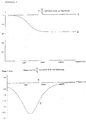
- Figure 5 shows the effect of physiological extracellular solution.
- the voltage in cell V, the current in cell I, and the gate voltage V j which decreases in the gap are plotted against time.
- the pulse length is 50 ms.
- the measurements are carried out in voltage-clamp mode.
- the current shows the typical time behavior of a KV1.3 channel.
Landscapes
- Health & Medical Sciences (AREA)
- Life Sciences & Earth Sciences (AREA)
- Engineering & Computer Science (AREA)
- Immunology (AREA)
- Biomedical Technology (AREA)
- Molecular Biology (AREA)
- Urology & Nephrology (AREA)
- Hematology (AREA)
- Chemical & Material Sciences (AREA)
- Cell Biology (AREA)
- Food Science & Technology (AREA)
- Pathology (AREA)
- Biotechnology (AREA)
- Medicinal Chemistry (AREA)
- Physics & Mathematics (AREA)
- Analytical Chemistry (AREA)
- Biochemistry (AREA)
- General Health & Medical Sciences (AREA)
- General Physics & Mathematics (AREA)
- Microbiology (AREA)
- Bioinformatics & Cheminformatics (AREA)
- Toxicology (AREA)
- Tropical Medicine & Parasitology (AREA)
- Proteomics, Peptides & Aminoacids (AREA)
- Measuring Or Testing Involving Enzymes Or Micro-Organisms (AREA)
- Investigating Or Analysing Biological Materials (AREA)
- Apparatus Associated With Microorganisms And Enzymes (AREA)
Description
- Die vorliegende Erfindung betrifft ein Verfahren und ein System für ein Screening bei auf Elektroden immobilisierten Zellen unter Verwendung eines Niedrigsalz-Mediums. Insbesondere wird ein Verfahren offenbart zur Bestimmung, ob eine Substanz ein Modulator einer Zielkomponente in einer auf einer Elektrode immobilisierten Zelle ist.
- Die
US 5,827,655 A beschreibt eine Probe, ein Verfahren und Produkte basierend auf NK+-Kanalexpression. Elektrophysiologische Experimente werden an Ooyzten mit 2-Elektroden-Voltage-Clamp- und Patch-Clamp-Verfahren durchgeführt. Alle Experimente werden bei Raumtemperatur durchgeführt. Für das 2-Elektroden-Voltage-Clamp-Experiment werden Zellen in einer Oozyten-Ringer-Lösung gebadet, die 96 mM NaCl. 1,8 mM CaCl2, 1 mM MgCl2 enthält. Die Pipettenlösung ist 3 M KCl. Patch-Clamp-Experimente wurden unter identischen Bedingungen in Oozyten und T-Zellen durchgeführt, unter Verwendung einer Säugetier-Ringer-Lösung, die 160 mM NaCl, 4,5 mM KCl, 2 mM CaCl2, 1 mM M9Cl2, 5 mM Hepes; pH 7,4 enthält. - Die
WO 01/94375 A1 - Die
US 2002/0086298 A1 betrifft einen G-Protein-aktivierten Säugetier-Kalium KGA-Kanal. Hierbei werden elektrophysiologische Messungen an Oozyten durchgeführt, in welchen der entsprechende Kanal exprimiert ist. Die Oozyten werden gewöhnlicherweise in einer ND96-Lösung mit 96 mM NaCl, 2 mM KCl, 1 mM MgCl2, 1 mM CaCl2, 5 mM Hepes und pH 7,5 gehalten. - Um pharmazeutische Effekte von Testsubstanzen zu bestimmen, werden oft sogenannte zelluläre Screening-Verfahren verwendet. Darin werden lebende Zellen in kontakt mit den Testsubstanzen gebracht, um deren Funktion als möglicher Effektor auf Zielkomponenten, z.B. Rezeptoren oder/und lonenkanälen, in einer Zelle zu bestimmen. Hierzu wird in der internationalen Patentanmeldung
PCT/EP01/03209 vorgeschlagen, ein System zu verwenden, bei dem die Wirkung einer Testsubstanz auf die Aktivität einer Zelle durch einen darunter liegenden Feldeffekt-Transistor gemessen wird. - Messungen von Analyten unter Verwendung von auf Chips immobilisierten lebenden Zellen werden auch in
WO 96/31774 US-PS 6,051,422, Baumann et al . (Sensors and Activators B55 (1999), 77-89) und Fertig et al. (Biophys. J. 82 (2002), 3056-3062) beschrieben. Problematisch an derartigen Messeinrichtungen ist jedoch, dass oftmals nur ein geringes Messsignal an der mit der Zelle in kontakt stehenden Elektrode erhalten wird. - Eine Aufgabe der vorliegenden Erfindung besteht darin, eine Verbesserung bekannter Messeinrichtungen bzw. Messverfahren bereitzustellen, durch welche einerseits das Messsignal erhöht und
andererseits eine neue Messmethode bei auf Elektroden immobilisierten Zellen ermöglicht wird. - Diese Aufgabe wird durch den Gegenstand der unabhängigen Ansprüche gelöst. Vorteilhafte Ausgestaltungen und Weiterbildungen der Erfindung sind in den Unteransprüchen angegeben.
- Insbesondere wird eine Messung in einem Medium durchgeführt, das einen erhöhten Elektrolytwiderstand aufweist. Dabei kann das Signal/Rausch-Verhältnis bei der Messung bis zu einem Faktor von 5 oder höher verbessert werden. Das verwendete Medium weist eine Salzkonzentration von ≤ 50 mmol/l und am meisten bevorzugt ≤ 20 mmol/l auf (angegeben als Gesamtkonzentration der im Medium vorhandenen Alkali- und Erdalkali-Kationen). Die minimale Salzkonzentration ist vorzugsweise ≥ 1 mmol/l und besonders bevorzugt ≥ 2 mmol/l. Weiterhin ist das Messmedium im Wesentlichen frei von Natriumionen, d.h. es weist eine Konzentration von Natriumionen ≤ 10 mmol/l, besonders bevorzugt ≤ 5 mmol/l und am meisten bevorzugt ≤ 1 mmol/l, auf. Ganz besonders bevorzugt bei Messung an Kaliumselektiven Ionenkanälen ist die Verwendung eines völlig von Natriumionen freien Messmediums. Auch bei der Messung an chloridselektiven oder unspezifischen Ionenkanälen ist die Verwendung eines Natrium-freien Mediums besonders bevorzugt.
- Gegebenenfalls kann die Osmolalität des Messmediums durch Zugabe nichtionischer Substanzen, beispielsweise Kohlenhydrate, erhöht und auf einen Bereich zwischen 250-400 Osm, besonders bevorzugt 290-360 Osm, eingestellt werden. Die Konzentration der Kohlenhydrate im Messmedium beträgt vorzugsweise 280-340 mM.
- Die Messung wird vorzugsweise als Strom-, Potenzial- oder/und Spannungsmessung am Spalt zwischen der Elektrode und der darauf immobilisierten Zelle durchgeführt. Unter Verwendung des Mediums liegt die Leitfähigkeit im Spalt bei einem Wert von ca. 10-50 mS/cm2, während gemäß Stand der Technik Werte von 200-1000 mS/cm2 gefunden werden.
- Das Messverfahren wird vorzugsweise an einzelnen Zellen auf einer potenzialsensitiven Elektrode durchgeführt.
- Ein erster Aspekt betrifft die Anwendung des salzarmen Messmedium in einem zellulären Screening-Verfahren, d.h. in einem Verfahren nach Anspruch 1 zur Bestimmung, ob eine Substanz ein Modulator eines lonenkanal/ Rezeptorsystems in einer Zelle ist.
- Das Verfahren eignet sich zur Bestimmung des Einflusses von Testsubstanzen auf beliebige Zielkomponenten in der Zelle, sofern die Zielkomponente ein an der Elektrode messbares Signal bzw. eine Änderung eines an der Elektrode messbaren Signals hervorrufen kann. Vorzugsweise bestimmt man, ob eine Substanz ein Modulator einer Membran-assoziierten Zielkomponente ist.
- Die Zielkomponente kann ein oder mehrere Polypeptide umfassen. In einer besonders bevorzugten Ausführungsform umfasst die Zielkomponente ein Ionenkanal/Rezeptorsystem, umfassend eine Ionenkanal-Komponente, d.h. ein oder mehrere Polypeptide, die einen Ionentransfer, z.B. einen Transfer von Kationen und/oder Anionen, durch eine Zellmembran vermitteln können. Weiterhin umfasst das Ionenkanal/Rezeptorsystem eine RezeptorKomponente, die auf einen Stimulus reagieren kann. Bei diesem Rezeptor kann es sich um den lonenkanal oder einen Teil des Ionenkanals handeln. Der Rezeptor kann jedoch auch ein Molekül sein, welches von dem Ionenkanal verschieden ist, das aber in operativer Verbindung zum Ionenkanal steht, d.h. eine Änderung des Funktions- und/oder Konformationsstatus des Rezeptors führt zu einer Veränderung im Funktionsstatus des lonenkanals, wodurch eine nachweisbare Änderung des Ionenstroms durch die Zellmembran bewirkt wird. Die Stimulation des Rezeptors wird vorzugsweise durch Änderungen im Potenzial (innerhalb oder außerhalb der Zelle), durch das Vorhandensein bzw. die Anwesenheit von Effektoren, durch Beleuchtung, durch mechanische Stimulation oder Kombinationen davon bewirkt. Besonders bevorzugte Beispiele von Zielkomponenten sind spannungsgesteuerte, ligandengesteuerte und mechanisch gesteuerte lonenkanäle, wie etwa Kaliumkanäle, z.B. die menschlichen Kaliumkanäle hSlo oder KV 1.3. Weitere bevorzugte Beispiele für Membran-assoziierte Zielkomponenten sind Rezeptoren, insbesondere NMDA, GABA, AMPA oder Acetylcholin-Rezeptoren.
- Die Messung des Verfahrens wird an einer lebenden Zelle durchgeführt. Diese Zelle kann ein Mikroorganismus, z.B. eine Bakterienzelle, oder eine Hefe- oder Pilzzelle sein. Vorzugsweise ist die Zelle jedoch eine eukaryontische Zelle, besonders bevorzugt eine Säugerzelle, z.B. eine humane Zelle. Die Zelle hat vorzugsweise einen Durchmesser von ≤ 50 µm.
- Weiterhin ist es bevorzugt, dass die Zelle ein oder mehrere Polypeptide überexprimiert, die die Zielkomponente oder einen Teil davon bilden oder/und die die Aktivität der Zielkomponente erhöhen. Eine derartige Zelle kann beispielsweise durch rekombinante Methoden oder Mutationen erhalten werden und zeigt eine höhere Aktivität der Zielkomponente als eine vergleichbare unbehandelte Zelle. Besonders bevorzugt ist die Zelle mit Nukleinsäure-Molekülen transfiziert, welche für die Zielkomponente kodieren. In dieser Ausführungsform umfasst die Zelle heterologe Nukleinsäure-Moleküle, die mindestens einen Teil der Zielkomponente kodieren und die eine Überexpression dieser Komponenten erlauben.
- Eine bevorzugte Ausführungsform des Verfahrens umfasst die Verwendung von transgenen Zellen, die mit Nukleinsäuren kodierend für die α- und/oder ß-Einheiten des spannungsabhängigen Kaliumkanals hSlo oder für den spannungsabhängigen Kaliumkanal KV1.3 transfiziert sind. Eine weitere bevorzugte Ausführungsform der Erfindung umfasst die Verwendung von Zellen, die mit Nukleinsäuren kodierend für den NMDA-Rezeptor, den AMPA-Rezeptor oder den GABA-Rezeptor oder einen Acetylcholin-Rezeptor transfiziert sind.
- Die Zelle wird auf einer potenzialsensitiven Elektrode, insbesondere auf einer planaren potenzialsensitiven Elektrode, kultiviert. Verfahren hierzu sind beispielsweise bei Vassanelli und Fromherz (Appl. Phys. A 65 (1997), 85-88) beschrieben. Auf diese Weise kann man Zellen erhalten, die auf dem potenzialsensitiven Bereich einer Elektrode wachsen, wodurch ein operativer Kontakt zwischen der Zelle und der Elektrode resultiert.
- Die Elektrodenoberfläche, auf welcher die Zelle immobilisiert ist, kann Siliciumoxid, ein anderer Halbleiter oder ein Metall sein. Die Elektrode kann auf einem Chip integriert sein, wobei der Chip vorzugsweise einen Transistor enthält. Besonders bevorzugt weist der Chip mindestens einen integrierten Feldeffekt-Transistor auf, der Source und Drain enthält. Die potenzialsensitive Elektrode kann jedoch auch eine auf einem Chip integrierte Metallelektrode sein. Vorzugsweise wird ein Transistor oder die Elektrode durch die Adhäsionsfläche der Zelle vollkommen abgedeckt.
- In einer bevorzugten Ausführungsform des Verfahrens wird ein Array bereitgestellt, der eine. Vielzahl von auf jeweils verschiedenen extrazellulären potenzialsensitiven Elektroden immobilisierten Zellen umfasst. Ein solcher Array mit beispielsweise 10 oder mehr, insbesondere 50 oder mehr Zellen kann zu einem Hoch-Durchsatz-Screening verwendet werden, wobei eine Vielzahl von Testsubstanzen parallel bestimmt wird.
- Die funktionellen Charakteristika der Zielkomponente in der Zelle umfassen das Entstehen eines messbaren Signals an der Elektrode. Wenn es sich bei der Zielkomponente beispielsweise um einen lonenkanal handelt, bewirkt dessen Öffnung das Fließen eines lonenstroms aus der Zelle oder/und in die Zelle. Dieser lonenstrom fließt auch im Bereich des operativen Kontakts zwischen der Zelle und der Elektrode, wodurch ein nachweisbares Signal resultiert, das durch die extrazelluläre potenzialsensitive Elektrode gemessen werden kann. Das nachweisbare Signal kann beispielsweise ein Spannungsabfall im Spalt zwischen Zelle und Elektrode oder die Änderung des Oberftächenpotenzials der Elektrode aufgrund diffuser lonenkonzentrationsänderungen im operativen Kontaktbereich sein.
- Eine Änderung der funktionellen Charakteristika der Zielkomponente, z.B. der Leitfähigkeit des lonenkanals, führt zu einer Änderung im lonenstrom und daher in dem durch die Elektrode nachweisbaren elektrischen Signal. Das Vorhandensein eines Modulators der Zielkomponente führt ebenfalls zu einer Änderung deren funktioneller Charakteristika im Vergleich zu einer Kontrollbestimmung in Abwesenheit des Modulators. Wenn z.B. ein lonenkanal auf einen Modulator reagiert, führt dies zu einer Änderung im lonenstrom und somit zu einer nachweisbaren Signaländerung.
- Das Verfahren umfasst vorzugsweise eine Anregung der Zielkomponente, um ein Signal an der Elektrode zu erzeugen, dessen Modulation durch die Testsubstanz nachgewiesen werden soll. Zielkomponenten, beispielsweise lonenkanäle, können durch verschiedene Methoden, z.B. durch Anlegen einer Spannung über die Membran, durch intrazellulär und/oder extrazellulär wirkende Liganden oder durch mechanische Änderungen oder Kombinationen davon, angeregt werden. Spannungsgesteuerte Ionenkanäle ändern ihre Leitfähigkeit abhängig vom Spannungsabfall über die Membran. Durch Anlegen einer äußeren Spannung, z.B. einer Gleich- oder Wechselspannung, kann die Leitfähigkeit von spannungsgesteuerten lonenkanälen moduliert werden. Gegebenenfalls kann hierzu noch eine zusätzliche Elektrode, z.B. eine Patchclamp-Elektrode, verwendet werden, die in die Zelle eingebracht ist oder unmittelbar mit ihr im Kontakt steht. Auf diese Weise kann der Spannungsabfall auf einen festen Wert eingestellt werden.
- Die Zielkomponente kann auch durch einen Liganden angeregt werden. Bei ligandengesteuerten lonenkanälen existieren zwei Mechanismen, nämlich ionotropische und Second-Messenger-Systeme. In ionotropischen Systemen binden Ligandenmoleküle direkt an die Zielkomponente und ändern deren Charakteristika, beispielsweise können intrazelluläre Calcium-lonen die Leitfähigkeit von Kaliumkanälen beeinflussen. In Second-Messenger-Systemen binden die Ligandenmoleküle an einen Rezeptor, der erst über eine Signalkaskade den lonenkanal beeinflusst.
- Selbstverständlich können diese verschiedenen Methoden zur Anregung der Zielkomponenten auch kombiniert werden, um ein wirksames Messsystem für den Einfluss der Änderung von Umgebungsparametern, z.B. von Testsubstanzen, auf eine Zielkomponente in einer Zelle bereitzustellen.
- Ein weiterer Aspekt ist ein bioelektronisches System nach Anspruch 12.
- Das bioelektrische System kann zur Messung von durch die Zielkomponente hervorgerufenen Signalen an der potenzialsensitiven Zielkomponente hervorgerufenen Signalen an der potenzialsensitiven Elektrode verwendet werden. Vorzugsweise wird eine Analyse an Einzelzellen durchgeführt, wobei die Lokalisierung oder/und die Charakteristika, z.B. die Eigenschaften eines lonenkanals an einer einzelnen Zelle, bestimmt werden können. Somit eignet sich die bioelektronische Vorrichtung als Sensor, z.B. zur Bestimmung der Änderung eines Umgebungsparameters als nachweisbares Signal an der Elektrode. Insbesondere eignet sich die Vorrichtung zur Bestimmung, ob eine Substanz ein Modulator, z.B. ein Aktivator oder Inhibitor, der Zielkomponente in der Zelle ist.
- Ein weiterer Aspekt ist ein Verfahren zur Lokalisierung einer Zelle auf einem Array, nach Anspruch 18.
- Hierbei umfasst der Array bevorzugt eine Vielzahl extrazellulärer potenzialsensitiver Elektroden. Vorteilhafterweise wird bei diesem Verfahren eine ortspezifische Messung durchgeführt.
- Im Folgenden werden zwei bevorzugte Ausführungsformen der vorliegenden Erfindung näher erläutert. Die erste Ausführungsform ist in
Abbildung 1 dargestellt und zeigt eine auf einem Feldeffekt-Transistor mit Drain, Source und Gate immobilisierte Zelle, die in ihrer Membran einen lonenkanal, z.B. den KV1.3-Kaliumkanal, enthält. Die Oberfläche der Elektrode ist mit Fibronectin beschichtet. In die Zelle ist weiterhin eine Patch-Elektrode zur Einstellung eines definierten Potenzials eingeführt. Bei dieser Ausführungsform werden die in der Zellmembran lokalisierten Kanäle durch Anlegen einer Gleichspannung angeregt. Der Spannungsabfall in der potenzialsensitiven Elektrode Vj ist durch die spezifische Leitfähigkeit der adhärierten Membran gjm sowie durch die spezifische Leitfähigkeit des Spaltes gj gegeben:
- Die zweite Ausführungsform betrifft die Messung von Zielkomponenten, z.B. geschlossenen bzw. geöffneten lonenkanälen, bei Anlegen von Wechselspannung. Diese Ausführungsform ist in
Abbildung 2 gezeigt. - Das Verhältnis zwischen der anregenden Spannung VE (im Medium) und der vom Transistor gemessenen Spannung im Spalt Vj kann durch folgende Formel bestimmt werden:


- Tj ist die charakteristische Zeitkonstante der Übertragungsfunktion Vj/VE,
- h∞ ist das Verhältnis Vj/VE im Grenzfall hoher Frequenzen,
- ω ist die Frequenz *2*π,
- cm ist die spezifische Membrankapazität,
- cox ist die spezifische Oxidkapazität der Chipoberfläche,
- ß ist das Flächenverhältnis der oberen zur der adhärierten Membran,
- gm ist die spezifische Membranleitfähigkeit,
- gj ist die spezifische Leitfähigkeit im Spalt.
- Ist gj in der Größenordnung von gm, so kann eine Änderung der Membranleitfähigkeit (z.B. durch das Öffnen von ligandengesteuerten Kanälen in der Zellmembran) in der Phase sowie in der Amplitude der Übertragungsfunktion gemessen werden. Eine Senkung von gj durch die neue Elektrolytzusammensetzung erreicht diesen Zweck. In der bisherigen Elektrolytzusammensetzung ist die Membranleitfähigkeit vernachlässigbar und eine Änderung dieser in der Übertragungsfunktion nicht mehr messbar.
- Die Vorrichtung und das Verfahren eignen sich zur Bestimmung einer Veränderung von Umgebungsparametern als nachweisbares Signal an der Elektrode. Insbesondere eignet sich das Verfahren zur Bestimmung, ob eine Testsubstanz die Rezeptorkomponente eines lonenkanal/Rezeptorsystems aktivieren oder inhibieren kann. Die Rezeptorkomponente kann ein pharmazeutisch relevantes Zielmolekül sein. Beispielsweise kann die Wirkung von Testsubstanzen auf die Freisetzung von Neurotransmittern untersucht werden.
- In einer weiteren Ausführungsform eignet sich das Verfahren zum Nachweis des Vorhandenseins oder der Menge einer Substanz, die als Effektor auf die Rezeptorkomponente wirkt.
- Bei der Verwendung eines Elektrodenarrays kann die Übertragungsfunktion Vj/VE zur Lokalisierung von immobilisierten Einzelzellen benutzt werden (siehe
Abbildung 3 ). Dabei wird pro Elektrode vorzugsweise eine Einzelzelle getestet. In Abbildung 3A zeigt Kurve (1) den Verlauf von h ohne Zelle, während Kurve (2) den Verlauf von h mit Zelle zeigt. In Abbildung 3B ist die Phase von h ohne Zelle als Kurve (1) und mit Zelle als Kurve (2) gezeigt. - Weiterhin soll die Erfindung durch die nachfolgenden Beispiele erläutert werden.
- HEK293-Zellen wurden durch die Calciumphosphat-Methode stabil mit einem Plasmid transfiziert, das durch Klonierung einer für den humanen KV1.3-Kaluimkanal kodierenden Nukleinsäure in den Vektor pcDNA3 (Invitrogen) erhalten wurde.
- Die transfizierten Zellen wurden auf einen Fibronectin-beschichteten Siliciumchip mit 62 Feldeffekt-Transistoren aufgebracht. Nach 1 Tag in Kultur wird die Nährflüssigkeit durch eine physiologische Extrazellulärlösung (135 mM NaCl, 5 mM KCl, 1,8 mM CaCl2, 1 mM MgCl2, Osmolalität mit Glucose auf 340 mOsmol/kg ausgeglichen, pH-Wert 7,4) ausgetauscht. Gegebenenfalls können Zellen mit Patchclamp-Elektroden versehen werden.
-
Abbildung 4 zeigt eine transfizierte Zelle, die auf dem Gate eines EOSFET (Electrolyte Oxide Silicon Field Effect Transistor) adhäriert ist, vor (A) und nach (B) der Messung durch eine Patchclamp. -
Abbildung 5 zeigt die Wirkung physiologischer Extrazellulärlösung. Die Spannung in der Zelle V, der Strom in der Zelle I sowie die im Spalt abfallende Gate-Spannung Vj sind gegen die Zeit aufgetragen. Die Pulslänge beträgt 50 ms. Die Messungen sind im Spannungs-Clamp-Modus durchgeführt. Der Strom zeigt das typische zeitliche Verhalten eines KV1.3-Kanals. - Wird nun die physiologische Extrazellulärlösung durch eine NaCl-freie Lösung (0 mM NaCl, 5 mM KCl, 1,8 mM CaCl2, 1 mM MgCl2, Osmolalität mit Glucose auf 340 mOsmol/kg ausgeglichen, pH-Wert 7,4) ausgetauscht, so ergibt dies die in
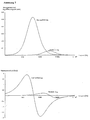
Abbildung 6 gezeigte Messung. Der Austausch der Lösung führt zu einer signifikanten Verbesserung des Signal/Rausch-Verhältnisses durch eine Signalerhöhung um den Faktor 4. Das Verhalten der lonenkanäle wird durch den Lösungstausch nicht beeinflusst (sowohl Maximalstrom als auch das zeitliche Verhalten bleiben unverändert), zudem nehmen die Zellen keinen beobachtbaren Schaden. - Der Unterschied der Messungen bei normalen Lösungen und natriumfreien Lösungen nach Anregung durch Wechselspannung ist in
Abbildung 7 gezeigt.
Claims (18)
- Verfahren zur Bestimmung, ob eine Substanz ein Modulator eines Ionenkanal/Rezeptorsystems in einer Zelle ist, umfassend die Schritte:(a) Bereitstellen einer auf einer planaren extrazellulären potenzialsensitiven Elektrode immobilisierten transgenen Zelle, die das Ionenkanal/Rezeptorsystem enthält, wodurch ein operativer Kontakt zwischen der Zelle und der Elektrode resultiert,(b) Inkontaktbringen einer zu testenden Substanz mit der Zelle in einem Medium, das eine Gesamtkonzentration von Alkali- und Erdalkali-Kationen von ≤ 50 mmol/l aufweist,(c) Messen einer durch das Ionenkanal/Rezeptorsystem hervorgerufenen Signaländerung an der Elektrode aufgrund eines Ionenstroms im Bereich des operativen Kontakts zwischen der Zelle und der Elektrode, und(d) Bestimmen des Einflusses der zu testenden Substanz auf das Messsignal.
- Verfahren nach Anspruch 1, dadurch gekennzeichnet, dass Ionenkanal/Rezeptorsystem ein Membran-assoziiertes Ionenkanal/Rezeptorsystem ist.
- Verfahren nach Anspruch 1 oder 2, dadurch gekennzeichnet, dass das Ionenkanal-Rezeptorsystem einen spannungsgesteuerten, ligandengesteuerten oder mechanisch gesteuerten Ionenkanal enthält.
- Verfahren nach einem der vorhergehenden Ansprüche, dadurch gekennzeichnet, dass der Ionenkanal ein Kaliumkanal ist.
- Verfahren nach einem der vorhergehenden Ansprüche, dadurch gekennzeichnet, dass der Kaliumkanal ausgewählt wird aus hSlo und KV1.3.
- Verfahren nach Anspruch 4, dadurch gekennzeichnet, dass das Ionenkanal-Rezeptorsystem einen NMDA, GABA, AMPA oder Acetylcholin-Rezeptor enthält.
- Verfahren nach einem der vorhergehenden Ansprüche weiterhin umfassend ein Anregen des Ionenkanal/Rezeptorsystems in der Zelle, dadurch gekennzeichnet, dass das Anregen des Ionenkanal/Rezeptorsystems eine elektrische, optische oder/und chemische Anregung umfasst.
- Verfahren nach Anspruch 7, dadurch gekennzeichnet, dass das Anregen des Ionenkanal/Rezeptorsystems das Anlegen einer Gleichspannung oder einer Wechselspannung umfasst.
- Verfahren nach einem der vorhergehenden Ansprüche, dadurch gekennzeichnet, dass die Zelle mit einer zusätzlichen Elektrode, z. B. einer Patchclamp in Kontakt steht.
- Verfahren nach einem der vorhergehenden Ansprüche, dadurch gekennzeichnet, dass die potenzial-sensitive extrazelluläre Elektrode auf einem Chip angeordnet ist.
- Verfahren nach einem der vorhergehenden Ansprüche, dadurch gekennzeichnet, dass man einen Array, umfassend eine Vielzahl von auf verschiedenen Elektroden immobilisierten Zellen bereitstellt und eine Vielzahl von Substanzen testet.
- Bioelektronisches System, umfassend- eine transgene Zelle, die ein Ionenkanal/Rezeptorsystem enthält,- eine planare potenzialsensitive extrazelluläre Elektrode, wobei die Zelle auf der planaren potenzialsensitiven extrazellulären Elektrode immobilisiert ist und das Ionenkanal/Rezeptorsystem ein an der Elektrode messbares Signal aufgrund eines Ionenstroms im Bereich eines operativen Kontakts zwischen der Zelle und der Elektrode hervorrufen kann, und- ein Medium mit einer Gesamtkonzentration von Alkali- und Erdalkali-Kationen von ≤ 50 mmol/l in Kontakt mit der Zelle und der Elektrode.
- Verwendung des bioelektrischen Systems nach Anspruch 12 zur Messung von durch das Ionenkanal/Rezeptorsystem hervorgerufenen Signalen an der potenzialsensitiven Elektrode.
- Verwendung nach Anspruch 13 zur Analyse von Einzelzellen.
- Verwendung nach Anspruch 13 oder 14 als Sensor zur Bestimmung der Änderung eines Umgebungsparameters als nachweisbares Signal an der Elektrode.
- Verwendung nach einem der Ansprüche 13 bis 15, dadurch gekennzeichnet, dass die Änderung eines Umgebungsparameters als nachweisbares Signal an der Elektrode bestimmt wird.
- Verwendung nach einem der Ansprüche 13 bis 16 zur Bestimmung, ob eine Substanz ein Modulator des Ionenkanal/Rezeptorsystems ist.
- Verfahren zur Lokalisierung einer auf einem Array immobilisierten Einzelzelle, wobei der Array eine Vielzahl extrazellulärer potenzialsensitiver Elektroden umfasst, umfassend die Schritte:(a) Bereitstellen einer auf einer planaren extrazellulären potenzialsensitiven Elektrode immobilisierten transgenen Einzelzelle, die ein Ionenkanal/Rezeptorsystem enthält, wodurch ein operativer Kontakt zwischen der Zelle und der Elektrode resultiert,(b) Messen eines Signals an der Elektrode, hervorgerufen durch die Anwesenheit der Zelle, in einem Medium, das eine Gesamtkonzentration von Alkali- und Erdalkali-Kationen von ≤ 50 mmol/l aufweist, und(c) Lokalisieren der Position der immobilisierten transgenen Einzelzelle durch die Messung in (b) und worin Schritt (b) eine ortsspezifische Messung dadurch umfasst, dass Signale von Elektroden mit immobilisierter Einzelzelle und Elektroden ohne immobilisierte Einzelzelle gemessen werden.
Applications Claiming Priority (2)
| Application Number | Priority Date | Filing Date | Title |
|---|---|---|---|
| DE10243599A DE10243599A1 (de) | 2002-09-19 | 2002-09-19 | Messvorrichtung und -verfahren für ein Screening bei auf Elektroden immobilisierten Zellen |
| DE10243599 | 2002-09-19 |
Publications (2)
| Publication Number | Publication Date |
|---|---|
| EP1400805A1 EP1400805A1 (de) | 2004-03-24 |
| EP1400805B1 true EP1400805B1 (de) | 2016-11-09 |
Family
ID=31896202
Family Applications (1)
| Application Number | Title | Priority Date | Filing Date |
|---|---|---|---|
| EP03021229.4A Expired - Lifetime EP1400805B1 (de) | 2002-09-19 | 2003-09-18 | Messvorrichtung und -verfahren für ein Screening bei auf Elektroden immobilisierten Zellen |
Country Status (3)
| Country | Link |
|---|---|
| US (1) | US7326539B2 (de) |
| EP (1) | EP1400805B1 (de) |
| DE (1) | DE10243599A1 (de) |
Families Citing this family (7)
| Publication number | Priority date | Publication date | Assignee | Title |
|---|---|---|---|---|
| US20090032411A1 (en) | 2006-02-10 | 2009-02-05 | Max-Planck-Gesellschaft Zur Foerderung Der Wissenschaften E.V. | Method and system for detecting pharmacologically active substances by measuring membrane currents with extracellular sensors |
| DE102006055990A1 (de) * | 2006-11-24 | 2008-05-29 | Forschungszentrum Jülich GmbH | Vorrichtung und Verfahren zur Messung biologischer und elektronischer Eigenschaften einer Probe |
| DE102007016629A1 (de) * | 2007-04-05 | 2008-10-09 | Micronas Gmbh | Sensor zur Erfassung eines toxischen oder gefährlichen Gasgemisches und Betriebsverfahren |
| CA2742377C (en) | 2008-12-08 | 2018-05-22 | Bayer Healthcare Llc | Low total salt reagent compositions and systems for biosensors |
| CN102520044A (zh) * | 2011-11-07 | 2012-06-27 | 浙江工业大学 | 基于标准cmos工艺的细胞膜电位传感器 |
| US11885793B1 (en) * | 2020-10-19 | 2024-01-30 | National Technology & Engineering Solutions Of Sandia, Llc | Real-time patch-clamp sensing of transport across a barrier tissue |
| EP4423492B1 (de) * | 2021-10-27 | 2026-04-29 | Life Technologies Corporation | Verfahren und system zur elektroskopischen bildgebung zur analyse von zellen |
Family Cites Families (7)
| Publication number | Priority date | Publication date | Assignee | Title |
|---|---|---|---|---|
| IL98932A0 (en) * | 1990-07-27 | 1992-07-15 | Univ California | Assay,kits and methods based on nk+channel expression |
| US5747278A (en) * | 1993-05-21 | 1998-05-05 | California Institute Of Technology | DNA encoding inward rectifier, G-protein activated, mammalian, potassium KGA channel and uses thereof |
| JPH09292438A (ja) | 1996-04-30 | 1997-11-11 | Toshiba Corp | Cmos集積回路装置、その検査方法及び検査装置 |
| US5981268A (en) * | 1997-05-30 | 1999-11-09 | Board Of Trustees, Leland Stanford, Jr. University | Hybrid biosensors |
| US6602399B1 (en) * | 2000-03-22 | 2003-08-05 | Max-Planck-Gesellschaft Zur Forderung Der Wissenchaften E.V. | Signal recording of a receptor-effector-system by an extracellular planar potential-sensitive electrode |
| WO2001094375A1 (en) * | 2000-06-02 | 2001-12-13 | Mcintire Steven L | Large conductance calcium-dependent potassium channel as modulator of alcohol effects and consumption |
| EP1327150A1 (de) * | 2000-10-13 | 2003-07-16 | Bristol-Myers Squibb Company | Verfahren zur detektion von ionenkanalmodulatoren mittels thallium (i) empfindlichen assays |
-
2002
- 2002-09-19 DE DE10243599A patent/DE10243599A1/de not_active Withdrawn
-
2003
- 2003-09-18 EP EP03021229.4A patent/EP1400805B1/de not_active Expired - Lifetime
- 2003-09-22 US US10/666,530 patent/US7326539B2/en not_active Expired - Lifetime
Also Published As
| Publication number | Publication date |
|---|---|
| DE10243599A1 (de) | 2004-04-01 |
| US7326539B2 (en) | 2008-02-05 |
| EP1400805A1 (de) | 2004-03-24 |
| US20050037438A1 (en) | 2005-02-17 |
Similar Documents
| Publication | Publication Date | Title |
|---|---|---|
| DE69832381T2 (de) | Nachweis biologisch aktiver moleküle durch verwendung von voraktivierten zellgestützten biosensoren in trennsystemen auf flüssigkeitsgrundlage | |
| Stett et al. | Biological application of microelectrode arrays in drug discovery and basic research | |
| DE60316044T2 (de) | Markierungsfreies verfahren zur klassifizierung und charakterisierung zellulärer ereignisse | |
| DE2953524C2 (de) | ||
| DE69623006T2 (de) | Sensor | |
| Lapied et al. | Patch-clamp study of the properties of the sodium current in cockroach single isolated adult aminergic neurones | |
| EP3081652B1 (de) | Massenspektrometrischer schnelltest von resistenzen | |
| EP0581081A1 (de) | Verfahren zur Bestimmung von Persäuren | |
| DE69533827T2 (de) | Elektrochemische bewertung des verhaltens von zellen und deren stoffwechselaktivität | |
| EP1400805A1 (de) | Messvorrichtung und -verfahren für ein Screening bei auf Elektroden immobilisierten Zellen | |
| EP1164186B1 (de) | Verfahren zur Untersuchung von membranumschlossenen Biokompartimenten | |
| Gho | Voltage‐clamp analysis of gap junctions between embryonic muscles in Drosophila. | |
| DE102020126759B3 (de) | Piezoelektrisches Membran-Mikroelektroden Array | |
| DE19917052A1 (de) | Vorrichtung und Verfahren zur Bestimmung chem. und biochem. Analyten mittels amplifizierter mikro-elektrochem. Detektion | |
| EP1529215A1 (de) | Vorrichtung und methoden zur durchführung von elektrischen messungen an membrankörpern | |
| WO1991016624A1 (de) | Verfahren zur bestimmung von gaskonzentrationen und gassensor mit festem elektrolyten | |
| EP2122364B1 (de) | Verfahren zur identifizierung der agonistischen aktivität einer zielverbindung auf einen kaliumkanal | |
| EP1910831B1 (de) | Verfahren und system zur konzentrationsbestimmung eines analyt-enzym-komplexes oder analyt-enzym-konjugats, insbesondere zur elektrochemischen detektion des analyten | |
| DE102016121553A1 (de) | Kompetitiver Test eines Enzymsubstrates mit interner Kompensation der Enzymaktivität | |
| DE60117180T2 (de) | Verfahren zur messung des aktivierungszustands von signalwegen in zellen | |
| EP1989543B1 (de) | Verfahren und system zum nachweis pharmakologisch wirksamer substanzen durch messen von membranströmen mit extrazellulären sensoren | |
| DE69315705T2 (de) | Analytisches verfahren und vorrichtung zur bestimmung von hydrogen peroxid | |
| DE60110598T2 (de) | Quantitatives fluoreszenz-bestimmungsverfahren für transportproteinenaktivität | |
| DE60014365T2 (de) | Fluoreszenzpolarizationsbestimmungen unter verwendung von polyionen | |
| DE3913815A1 (de) | Porine enthaltende biospezifische membranen und ihre verwendung |
Legal Events
| Date | Code | Title | Description |
|---|---|---|---|
| PUAI | Public reference made under article 153(3) epc to a published international application that has entered the european phase |
Free format text: ORIGINAL CODE: 0009012 |
|
| AK | Designated contracting states |
Kind code of ref document: A1 Designated state(s): AT BE BG CH CY CZ DE DK EE ES FI FR GB GR HU IE IT LI LU MC NL PT RO SE SI SK TR |
|
| AX | Request for extension of the european patent |
Extension state: AL LT LV MK |
|
| 17P | Request for examination filed |
Effective date: 20040720 |
|
| AKX | Designation fees paid |
Designated state(s): AT BE BG CH CY CZ DE DK EE ES FI FR GB GR HU IE IT LI LU MC NL PT RO SE SI SK TR |
|
| 17Q | First examination report despatched |
Effective date: 20080222 |
|
| RAP3 | Party data changed (applicant data changed or rights of an application transferred) |
Owner name: MAX-PLANCK-GESELLSCHAFT ZUR FOERDERUNG DER WISSENS |
|
| REG | Reference to a national code |
Ref country code: DE Ref legal event code: R079 Ref document number: 50315575 Country of ref document: DE Free format text: PREVIOUS MAIN CLASS: G01N0027414000 Ipc: G01N0033543000 |
|
| RIC1 | Information provided on ipc code assigned before grant |
Ipc: C12Q 1/02 20060101ALI20160407BHEP Ipc: G01N 27/414 20060101ALN20160407BHEP Ipc: G01N 33/68 20060101ALI20160407BHEP Ipc: G01N 33/50 20060101ALI20160407BHEP Ipc: G01N 33/543 20060101AFI20160407BHEP |
|
| RIC1 | Information provided on ipc code assigned before grant |
Ipc: C12Q 1/02 20060101ALI20160412BHEP Ipc: G01N 33/543 20060101AFI20160412BHEP Ipc: G01N 33/68 20060101ALI20160412BHEP Ipc: G01N 33/50 20060101ALI20160412BHEP Ipc: G01N 27/414 20060101ALN20160412BHEP |
|
| GRAP | Despatch of communication of intention to grant a patent |
Free format text: ORIGINAL CODE: EPIDOSNIGR1 |
|
| INTG | Intention to grant announced |
Effective date: 20160520 |
|
| GRAS | Grant fee paid |
Free format text: ORIGINAL CODE: EPIDOSNIGR3 |
|
| GRAA | (expected) grant |
Free format text: ORIGINAL CODE: 0009210 |
|
| AK | Designated contracting states |
Kind code of ref document: B1 Designated state(s): AT BE BG CH CY CZ DE DK EE ES FI FR GB GR HU IE IT LI LU MC NL PT RO SE SI SK TR |
|
| REG | Reference to a national code |
Ref country code: GB Ref legal event code: FG4D Free format text: NOT ENGLISH |
|
| REG | Reference to a national code |
Ref country code: AT Ref legal event code: REF Ref document number: 844409 Country of ref document: AT Kind code of ref document: T Effective date: 20161115 Ref country code: CH Ref legal event code: EP |
|
| REG | Reference to a national code |
Ref country code: CH Ref legal event code: NV Representative=s name: RENTSCH PARTNER AG, CH Ref country code: IE Ref legal event code: FG4D Free format text: LANGUAGE OF EP DOCUMENT: GERMAN |
|
| REG | Reference to a national code |
Ref country code: DE Ref legal event code: R096 Ref document number: 50315575 Country of ref document: DE |
|
| REG | Reference to a national code |
Ref country code: NL Ref legal event code: MP Effective date: 20161109 |
|
| PG25 | Lapsed in a contracting state [announced via postgrant information from national office to epo] |
Ref country code: GR Free format text: LAPSE BECAUSE OF FAILURE TO SUBMIT A TRANSLATION OF THE DESCRIPTION OR TO PAY THE FEE WITHIN THE PRESCRIBED TIME-LIMIT Effective date: 20170210 Ref country code: NL Free format text: LAPSE BECAUSE OF FAILURE TO SUBMIT A TRANSLATION OF THE DESCRIPTION OR TO PAY THE FEE WITHIN THE PRESCRIBED TIME-LIMIT Effective date: 20161109 Ref country code: SE Free format text: LAPSE BECAUSE OF FAILURE TO SUBMIT A TRANSLATION OF THE DESCRIPTION OR TO PAY THE FEE WITHIN THE PRESCRIBED TIME-LIMIT Effective date: 20161109 |
|
| PG25 | Lapsed in a contracting state [announced via postgrant information from national office to epo] |
Ref country code: FI Free format text: LAPSE BECAUSE OF FAILURE TO SUBMIT A TRANSLATION OF THE DESCRIPTION OR TO PAY THE FEE WITHIN THE PRESCRIBED TIME-LIMIT Effective date: 20161109 Ref country code: ES Free format text: LAPSE BECAUSE OF FAILURE TO SUBMIT A TRANSLATION OF THE DESCRIPTION OR TO PAY THE FEE WITHIN THE PRESCRIBED TIME-LIMIT Effective date: 20161109 Ref country code: PT Free format text: LAPSE BECAUSE OF FAILURE TO SUBMIT A TRANSLATION OF THE DESCRIPTION OR TO PAY THE FEE WITHIN THE PRESCRIBED TIME-LIMIT Effective date: 20170309 |
|
| PG25 | Lapsed in a contracting state [announced via postgrant information from national office to epo] |
Ref country code: RO Free format text: LAPSE BECAUSE OF FAILURE TO SUBMIT A TRANSLATION OF THE DESCRIPTION OR TO PAY THE FEE WITHIN THE PRESCRIBED TIME-LIMIT Effective date: 20161109 Ref country code: DK Free format text: LAPSE BECAUSE OF FAILURE TO SUBMIT A TRANSLATION OF THE DESCRIPTION OR TO PAY THE FEE WITHIN THE PRESCRIBED TIME-LIMIT Effective date: 20161109 Ref country code: EE Free format text: LAPSE BECAUSE OF FAILURE TO SUBMIT A TRANSLATION OF THE DESCRIPTION OR TO PAY THE FEE WITHIN THE PRESCRIBED TIME-LIMIT Effective date: 20161109 Ref country code: SK Free format text: LAPSE BECAUSE OF FAILURE TO SUBMIT A TRANSLATION OF THE DESCRIPTION OR TO PAY THE FEE WITHIN THE PRESCRIBED TIME-LIMIT Effective date: 20161109 Ref country code: CZ Free format text: LAPSE BECAUSE OF FAILURE TO SUBMIT A TRANSLATION OF THE DESCRIPTION OR TO PAY THE FEE WITHIN THE PRESCRIBED TIME-LIMIT Effective date: 20161109 |
|
| REG | Reference to a national code |
Ref country code: DE Ref legal event code: R097 Ref document number: 50315575 Country of ref document: DE |
|
| PG25 | Lapsed in a contracting state [announced via postgrant information from national office to epo] |
Ref country code: BG Free format text: LAPSE BECAUSE OF FAILURE TO SUBMIT A TRANSLATION OF THE DESCRIPTION OR TO PAY THE FEE WITHIN THE PRESCRIBED TIME-LIMIT Effective date: 20170209 Ref country code: IT Free format text: LAPSE BECAUSE OF FAILURE TO SUBMIT A TRANSLATION OF THE DESCRIPTION OR TO PAY THE FEE WITHIN THE PRESCRIBED TIME-LIMIT Effective date: 20161109 |
|
| PLBE | No opposition filed within time limit |
Free format text: ORIGINAL CODE: 0009261 |
|
| STAA | Information on the status of an ep patent application or granted ep patent |
Free format text: STATUS: NO OPPOSITION FILED WITHIN TIME LIMIT |
|
| REG | Reference to a national code |
Ref country code: FR Ref legal event code: PLFP Year of fee payment: 15 |
|
| REG | Reference to a national code |
Ref country code: CH Ref legal event code: PCAR Free format text: NEW ADDRESS: BELLERIVESTRASSE 203 POSTFACH, 8034 ZUERICH (CH) |
|
| 26N | No opposition filed |
Effective date: 20170810 |
|
| PG25 | Lapsed in a contracting state [announced via postgrant information from national office to epo] |
Ref country code: SI Free format text: LAPSE BECAUSE OF FAILURE TO SUBMIT A TRANSLATION OF THE DESCRIPTION OR TO PAY THE FEE WITHIN THE PRESCRIBED TIME-LIMIT Effective date: 20161109 |
|
| PG25 | Lapsed in a contracting state [announced via postgrant information from national office to epo] |
Ref country code: MC Free format text: LAPSE BECAUSE OF FAILURE TO SUBMIT A TRANSLATION OF THE DESCRIPTION OR TO PAY THE FEE WITHIN THE PRESCRIBED TIME-LIMIT Effective date: 20161109 |
|
| REG | Reference to a national code |
Ref country code: IE Ref legal event code: MM4A |
|
| REG | Reference to a national code |
Ref country code: BE Ref legal event code: MM Effective date: 20170930 |
|
| PG25 | Lapsed in a contracting state [announced via postgrant information from national office to epo] |
Ref country code: LU Free format text: LAPSE BECAUSE OF NON-PAYMENT OF DUE FEES Effective date: 20170918 |
|
| PG25 | Lapsed in a contracting state [announced via postgrant information from national office to epo] |
Ref country code: IE Free format text: LAPSE BECAUSE OF NON-PAYMENT OF DUE FEES Effective date: 20170918 |
|
| PG25 | Lapsed in a contracting state [announced via postgrant information from national office to epo] |
Ref country code: BE Free format text: LAPSE BECAUSE OF NON-PAYMENT OF DUE FEES Effective date: 20170930 |
|
| REG | Reference to a national code |
Ref country code: FR Ref legal event code: PLFP Year of fee payment: 16 |
|
| REG | Reference to a national code |
Ref country code: AT Ref legal event code: MM01 Ref document number: 844409 Country of ref document: AT Kind code of ref document: T Effective date: 20170918 |
|
| PG25 | Lapsed in a contracting state [announced via postgrant information from national office to epo] |
Ref country code: AT Free format text: LAPSE BECAUSE OF NON-PAYMENT OF DUE FEES Effective date: 20170918 |
|
| PG25 | Lapsed in a contracting state [announced via postgrant information from national office to epo] |
Ref country code: HU Free format text: LAPSE BECAUSE OF FAILURE TO SUBMIT A TRANSLATION OF THE DESCRIPTION OR TO PAY THE FEE WITHIN THE PRESCRIBED TIME-LIMIT; INVALID AB INITIO Effective date: 20030918 |
|
| PG25 | Lapsed in a contracting state [announced via postgrant information from national office to epo] |
Ref country code: CY Free format text: LAPSE BECAUSE OF NON-PAYMENT OF DUE FEES Effective date: 20161109 |
|
| PGFP | Annual fee paid to national office [announced via postgrant information from national office to epo] |
Ref country code: FR Payment date: 20190923 Year of fee payment: 17 |
|
| PGFP | Annual fee paid to national office [announced via postgrant information from national office to epo] |
Ref country code: GB Payment date: 20190924 Year of fee payment: 17 |
|
| PGFP | Annual fee paid to national office [announced via postgrant information from national office to epo] |
Ref country code: CH Payment date: 20190924 Year of fee payment: 17 Ref country code: DE Payment date: 20190927 Year of fee payment: 17 |
|
| PG25 | Lapsed in a contracting state [announced via postgrant information from national office to epo] |
Ref country code: TR Free format text: LAPSE BECAUSE OF FAILURE TO SUBMIT A TRANSLATION OF THE DESCRIPTION OR TO PAY THE FEE WITHIN THE PRESCRIBED TIME-LIMIT Effective date: 20161109 |
|
| REG | Reference to a national code |
Ref country code: DE Ref legal event code: R119 Ref document number: 50315575 Country of ref document: DE |
|
| REG | Reference to a national code |
Ref country code: CH Ref legal event code: PL |
|
| GBPC | Gb: european patent ceased through non-payment of renewal fee |
Effective date: 20200918 |
|
| PG25 | Lapsed in a contracting state [announced via postgrant information from national office to epo] |
Ref country code: FR Free format text: LAPSE BECAUSE OF NON-PAYMENT OF DUE FEES Effective date: 20200930 Ref country code: DE Free format text: LAPSE BECAUSE OF NON-PAYMENT OF DUE FEES Effective date: 20210401 |
|
| PG25 | Lapsed in a contracting state [announced via postgrant information from national office to epo] |
Ref country code: GB Free format text: LAPSE BECAUSE OF NON-PAYMENT OF DUE FEES Effective date: 20200918 Ref country code: LI Free format text: LAPSE BECAUSE OF NON-PAYMENT OF DUE FEES Effective date: 20200930 Ref country code: CH Free format text: LAPSE BECAUSE OF NON-PAYMENT OF DUE FEES Effective date: 20200930 |