EP1394551B1 - ß3 Integrin as a predictor of endometriosis - Google Patents
ß3 Integrin as a predictor of endometriosis Download PDFInfo
- Publication number
- EP1394551B1 EP1394551B1 EP03020599A EP03020599A EP1394551B1 EP 1394551 B1 EP1394551 B1 EP 1394551B1 EP 03020599 A EP03020599 A EP 03020599A EP 03020599 A EP03020599 A EP 03020599A EP 1394551 B1 EP1394551 B1 EP 1394551B1
- Authority
- EP
- European Patent Office
- Prior art keywords
- endometriosis
- integrin
- endometrium
- staining
- day
- Prior art date
- Legal status (The legal status is an assumption and is not a legal conclusion. Google has not performed a legal analysis and makes no representation as to the accuracy of the status listed.)
- Expired - Lifetime
Links
Images




Classifications
-
- A—HUMAN NECESSITIES
- A61—MEDICAL OR VETERINARY SCIENCE; HYGIENE
- A61D—VETERINARY INSTRUMENTS, IMPLEMENTS, TOOLS, OR METHODS
- A61D19/00—Instruments or methods for reproduction or fertilisation
- A61D19/04—Instruments or methods for reproduction or fertilisation for embryo transplantation
-
- A—HUMAN NECESSITIES
- A61—MEDICAL OR VETERINARY SCIENCE; HYGIENE
- A61K—PREPARATIONS FOR MEDICAL, DENTAL OR TOILETRY PURPOSES
- A61K35/00—Medicinal preparations containing materials or reaction products thereof with undetermined constitution
- A61K35/12—Materials from mammals; Compositions comprising non-specified tissues or cells; Compositions comprising non-embryonic stem cells; Genetically modified cells
- A61K35/48—Reproductive organs
-
- A—HUMAN NECESSITIES
- A61—MEDICAL OR VETERINARY SCIENCE; HYGIENE
- A61P—SPECIFIC THERAPEUTIC ACTIVITY OF CHEMICAL COMPOUNDS OR MEDICINAL PREPARATIONS
- A61P13/00—Drugs for disorders of the urinary system
- A61P13/02—Drugs for disorders of the urinary system of urine or of the urinary tract, e.g. urine acidifiers
-
- A—HUMAN NECESSITIES
- A61—MEDICAL OR VETERINARY SCIENCE; HYGIENE
- A61P—SPECIFIC THERAPEUTIC ACTIVITY OF CHEMICAL COMPOUNDS OR MEDICINAL PREPARATIONS
- A61P15/00—Drugs for genital or sexual disorders; Contraceptives
-
- A—HUMAN NECESSITIES
- A61—MEDICAL OR VETERINARY SCIENCE; HYGIENE
- A61P—SPECIFIC THERAPEUTIC ACTIVITY OF CHEMICAL COMPOUNDS OR MEDICINAL PREPARATIONS
- A61P43/00—Drugs for specific purposes, not provided for in groups A61P1/00-A61P41/00
-
- C—CHEMISTRY; METALLURGY
- C07—ORGANIC CHEMISTRY
- C07K—PEPTIDES
- C07K16/00—Immunoglobulins [IG], e.g. monoclonal or polyclonal antibodies
- C07K16/06—Immunoglobulins [IG], e.g. monoclonal or polyclonal antibodies from serum
- C07K16/065—Purification, fragmentation
-
- C—CHEMISTRY; METALLURGY
- C07—ORGANIC CHEMISTRY
- C07K—PEPTIDES
- C07K16/00—Immunoglobulins [IG], e.g. monoclonal or polyclonal antibodies
- C07K16/18—Immunoglobulins [IG], e.g. monoclonal or polyclonal antibodies against material from animals or humans
- C07K16/28—Immunoglobulins [IG], e.g. monoclonal or polyclonal antibodies against material from animals or humans against receptors, cell surface antigens or cell surface determinants
- C07K16/2839—Immunoglobulins [IG], e.g. monoclonal or polyclonal antibodies against material from animals or humans against receptors, cell surface antigens or cell surface determinants against the integrin superfamily
- C07K16/2848—Immunoglobulins [IG], e.g. monoclonal or polyclonal antibodies against material from animals or humans against receptors, cell surface antigens or cell surface determinants against the integrin superfamily against integrin beta3-subunit-containing molecules, e.g. CD41, CD51, CD61
-
- G—PHYSICS
- G01—MEASURING; TESTING
- G01N—INVESTIGATING OR ANALYSING MATERIALS BY DETERMINING THEIR CHEMICAL OR PHYSICAL PROPERTIES
- G01N33/00—Investigating or analysing materials by specific methods not covered by groups G01N1/00 - G01N31/00
- G01N33/48—Biological material, e.g. blood, urine; Haemocytometers
- G01N33/50—Chemical analysis of biological material, e.g. blood, urine; Testing involving biospecific ligand binding methods; Immunological testing
- G01N33/53—Immunoassay; Biospecific binding assay; Materials therefor
- G01N33/566—Immunoassay; Biospecific binding assay; Materials therefor using specific carrier or receptor proteins as ligand binding reagents where possible specific carrier or receptor proteins are classified with their target compounds
- G01N33/567—Immunoassay; Biospecific binding assay; Materials therefor using specific carrier or receptor proteins as ligand binding reagents where possible specific carrier or receptor proteins are classified with their target compounds utilising isolate of tissue or organ as binding agent
-
- G—PHYSICS
- G01—MEASURING; TESTING
- G01N—INVESTIGATING OR ANALYSING MATERIALS BY DETERMINING THEIR CHEMICAL OR PHYSICAL PROPERTIES
- G01N33/00—Investigating or analysing materials by specific methods not covered by groups G01N1/00 - G01N31/00
- G01N33/48—Biological material, e.g. blood, urine; Haemocytometers
- G01N33/50—Chemical analysis of biological material, e.g. blood, urine; Testing involving biospecific ligand binding methods; Immunological testing
- G01N33/53—Immunoassay; Biospecific binding assay; Materials therefor
- G01N33/575—Immunoassay; Biospecific binding assay; Materials therefor for cancer
- G01N33/5755—Immunoassay; Biospecific binding assay; Materials therefor for cancer of the uterine cervix, uterine corpus or endometrium
-
- G—PHYSICS
- G01—MEASURING; TESTING
- G01N—INVESTIGATING OR ANALYSING MATERIALS BY DETERMINING THEIR CHEMICAL OR PHYSICAL PROPERTIES
- G01N33/00—Investigating or analysing materials by specific methods not covered by groups G01N1/00 - G01N31/00
- G01N33/48—Biological material, e.g. blood, urine; Haemocytometers
- G01N33/50—Chemical analysis of biological material, e.g. blood, urine; Testing involving biospecific ligand binding methods; Immunological testing
- G01N33/68—Chemical analysis of biological material, e.g. blood, urine; Testing involving biospecific ligand binding methods; Immunological testing involving proteins, peptides or amino acids
- G01N33/6887—Chemical analysis of biological material, e.g. blood, urine; Testing involving biospecific ligand binding methods; Immunological testing involving proteins, peptides or amino acids from muscle, cartilage or connective tissue
-
- G—PHYSICS
- G01—MEASURING; TESTING
- G01N—INVESTIGATING OR ANALYSING MATERIALS BY DETERMINING THEIR CHEMICAL OR PHYSICAL PROPERTIES
- G01N33/00—Investigating or analysing materials by specific methods not covered by groups G01N1/00 - G01N31/00
- G01N33/48—Biological material, e.g. blood, urine; Haemocytometers
- G01N33/50—Chemical analysis of biological material, e.g. blood, urine; Testing involving biospecific ligand binding methods; Immunological testing
- G01N33/68—Chemical analysis of biological material, e.g. blood, urine; Testing involving biospecific ligand binding methods; Immunological testing involving proteins, peptides or amino acids
- G01N33/6893—Chemical analysis of biological material, e.g. blood, urine; Testing involving biospecific ligand binding methods; Immunological testing involving proteins, peptides or amino acids related to diseases not provided for elsewhere
-
- A—HUMAN NECESSITIES
- A61—MEDICAL OR VETERINARY SCIENCE; HYGIENE
- A61K—PREPARATIONS FOR MEDICAL, DENTAL OR TOILETRY PURPOSES
- A61K38/00—Medicinal preparations containing peptides
-
- G—PHYSICS
- G01—MEASURING; TESTING
- G01N—INVESTIGATING OR ANALYSING MATERIALS BY DETERMINING THEIR CHEMICAL OR PHYSICAL PROPERTIES
- G01N2333/00—Assays involving biological materials from specific organisms or of a specific nature
- G01N2333/435—Assays involving biological materials from specific organisms or of a specific nature from animals; from humans
- G01N2333/705—Assays involving receptors, cell surface antigens or cell surface determinants
- G01N2333/70546—Integrin superfamily, e.g. VLAs, leuCAM, GPIIb/GPIIIa, LPAM
- G01N2333/70557—Integrin beta3-subunit-containing molecules, e.g. CD41, CD51, CD61
-
- G—PHYSICS
- G01—MEASURING; TESTING
- G01N—INVESTIGATING OR ANALYSING MATERIALS BY DETERMINING THEIR CHEMICAL OR PHYSICAL PROPERTIES
- G01N2474/00—Immunochemical assays or immunoassays characterised by detection mode or means of detection
- G01N2474/20—Immunohistochemistry assay
-
- G—PHYSICS
- G01—MEASURING; TESTING
- G01N—INVESTIGATING OR ANALYSING MATERIALS BY DETERMINING THEIR CHEMICAL OR PHYSICAL PROPERTIES
- G01N2800/00—Detection or diagnosis of diseases
- G01N2800/36—Gynecology or obstetrics
- G01N2800/364—Endometriosis, i.e. non-malignant disorder in which functioning endometrial tissue is present outside the uterine cavity
Definitions
- ECM extracellular matrix
- Tabibzadeh reported that dynamic alterations in integrin expression accompany the other histologic changes that temporally mark the menstrual cycle
- Tabibzadeh, S. "Patterns of Expression of Integrin Molecules in Human Endometrium Throughout the Menstrual Cycle", Hum. Reprod. 1992, 7:876
- the search for morphological or biochemical markers for uterine receptivity has been unsuccessful to date as reported by Rogers and Murphy, "Uterine Receptivity for Implantation: Human Studies", in Blastocyst Implantation 1989, Yoshinaga, K. ed., Serono Symposia, p. 231 .
- Yovich suggested that severe endometriosis was associated with a defect in implantation, based on IVF-ET experience, see Yovich et al., "Hormonal Profiles and Embryo Quality in Women with Severe Endometriosis Treated by In Vitro Fertilization and Embryo Transfer", Fertil. Steril. 1988, 50:308 .
- Endometriosis is a disorder that affects an estimated 2-5% of the general fertile female population, yet its prevalence in infertile women approaches 30-50%, Peterson et al., "Laparoscopy of the infertile Patient", Obstet. Gynecol. 1970, 36:667 . While many affected women may have no symptoms, others suffer from dysmenorrhea (painful, difficult menstruation), dyspareunia (pain during intercourse), menstrual disturbances and infertility. That mild or minimal endometriosis is associated with infertility has been suggested by numerous studies, Hasson H.M., "Incidence of Endometriosis in Diagnostic Laparoscopy", J. Reprod. Med.
- peritoneal factors such as prostaglandins, cytokines, and growth factors
- activation of peritoneal macrophages or alterations in immune function such as decreased activity of natural killer cells.
- Kurzrock et al. "LIF: Not Just a Leukemia Inhibitory Factor", Endo. Rev. 1990, 12:208 .
- uterine receptivity to the embryo might be primarily affected by the presence of endometriosis, Muscato, et al., "Sperm Phagocytosis by Human Peritoneal Macrophages: A Possible Cause of Infertility in Endometriosis", Am. J. Obstet. Gynecol.
- Serum markers such as OC-125, ( Barbieri, et al. "Evaluation of a Serological Test for the Diagnosis of Endometriosis using a Monoclonal Antibody OC-125", SGI Annual Meeting 1985; March:331P (abstract )) is increased in women with endometriosis, though the overlap with normal or other disease states severely limits its utility as a diagnostic test, Hornstein, et al., "Menstrual Cyclicity of CA-125 in Patients with Endometriosis", Fertil. Steril. 1992, 58:279 .
- OC-125 has little utility in cases of minimal or mild endometriosis.
- Other modalities such as MRI or ultrasound also have their highest sensitivity in the presence of advanced endometriosis.
- no method other than laparoscopy has been demonstrated to provide proven efficacy for the diagnosis of minimal or mild stages of endometriosis.
- this integrin the ⁇ v ⁇ 3 vitronectin receptor
- endometrial histology is delayed or retarded because of inadequate hormone levels or decreased response to existing levels of hormones
- infertility due to endometriosis may reflect a defect in uterine receptivity
- integrins as diagnostic tools to investigate uterine receptivity proves to be of significant value in identifying affected individuals and assist in understanding the etiology of infertility associated with mild forms endometriosis.
- the present invention is directed to methods of predicting endometriosis. Methods of using monoclonal antibodies to ⁇ 3 integrin are also within the scope of the invention.
- the methods of predicting endometriosis comprise obtaining a sample of endometrium selected from menstrual cycle day 20 to 24, identifying the endometrial sample as nulliparous, contacting the sample with a monoclonal antibody specific for ⁇ 3 integrin, assaying for ⁇ 3 integrin in the sample, and correlating the absence of ⁇ 3 integrin with endometriosis, wherein the endometrium is identified as mild/minimal endometriosis.
- the present invention is also useful in predicting endometriosis in the general infertile female population.
- the methods of using monoclonal antibodies to ⁇ 3 integrin to predict endometriosis comprise obtaining a sample of endometrium selected from menstrual cycle day 20 to 24, contacting the sample with a monoclonal antibody specific for ⁇ 3 integrin, assaying for ⁇ 3 in the sample, correlating the absence of ⁇ 3 with endometriosis, wherein the endometrium is identified as nulliparous or having mild/minimal endometriosis.
- the present invention relies on detecting the optimal window of embryo implantation in the endometrium by detecting the ⁇ 3 subunit of integrin in an endometrial sample, preferably with a monoclonal antibody.
- the present invention is directed to methods of predicting endometriosis. Methods of using monoclonal antibodies to ⁇ 3 integrin are also within the scope of the invention.
- the methods of predicting endometriosis comprise obtaining a sample of endometrium selected from menstrual cycle day 20 to 24, identifying the endometrial sample as nulliparous, contacting the sample with a monoclonal antibody specific for ⁇ 3 integrin, assaying for ⁇ 3 integrin in the sample, and correlating the absence of ⁇ 3 integrin with endometriosis, wherein the endometrium is identified as mild/minimal endometriosis.
- the sample of endometrium is preferably selected from menstrual cycle days 20 to 24, more preferably menstrual cycle days 20 to 23, even more preferably menstrual cycle day 22. Cycle days 20-24 correspond to post-ovulatory days 6-10.
- the present invention is also useful in predicting endometriosis in the general infertile female population.
- the methods of using monoclonal antibodies to ⁇ 3 integrin to predict endometriosis comprise obtaining a sample of endometrium, contacting the sample with a monoclonal antibody specific for ⁇ 3 integrin, assaying for ⁇ 3 in the sample, correlating the absence of ⁇ 3 with endometriosis, wherein the endometrium is identified as nulliparous or having mild/minimal endometriosis.
- the ⁇ 3 subunit may be ⁇ 3 alone or ⁇ 3 in combination with another integrin subunit, ⁇ v for example.
- Integrin is defined as a diverse class of glycoprotein receptors expressed on the cell membrane. Integrins are cell adhesion molecules of the immunoglobulin superfamily. Integrins are composed of heterodimeric ⁇ and ⁇ subunits and are involved in cell - cell and cell - extracellular matrix adhesion.
- the integrin family is a broadly distributed group of receptors composed of non-covalently associated ⁇ / ⁇ heterodimer pairs that mediate leukocyte - leukocyte and leukocyte - endothelial cell adhesion, as well as cellular interactions with extracellular matrix components such as collagen, laminin, fibrinogen and fibronectin, and cell-cell interaction in organized tissues.
- glandular epithelial cells express primarily ⁇ 2 , ⁇ 3 and ⁇ 6 integrin subunits, which are collagen laminin receptors.
- Stromal cells express predominantly ⁇ 5 , a fibronectin receptor.
- ⁇ 1 on glandular epithelial cells is menstrual cycle specific, found only during the secretory phase.
- Expression of both subunits of the vitronectin receptor, ⁇ v / ⁇ 3 also undergoes menstrual cycle specific changes on endometrial epithelial cells.
- ⁇ v increases throughout the menstrual cycle while the ⁇ 3 subunit appears abruptly on menstrual cycle day 20 on luminal and glandular epithelial cells.
- ⁇ 4 expression was also found to turn off on day 23.
- Assaying for the expression of ⁇ 3 with monoclonal antibody SSA6 revealed ⁇ 3 expression from day 20 onward into the cycle.
- ⁇ 4 expression begins on day 14 and is no longer expressed after day 23, as determined by assaying for ⁇ 4 with monoclonal antibody B5G10, provided by Martin Hemler, Dana Farber Cancer Center, Boston, MA. Further, in accordance with the present invention, it has been discovered that ⁇ 4 and ⁇ 3 expression overlap between days 19-21, the window of implantation.
- integrins define the window of implantation in the fertile, reproductive aged female. These cell adhesion molecules are dynamically regulated around the time of implantation and serve as excellent marker proteins for this time of the menstrual cycle.
- ⁇ 4 and ⁇ 3 represent two different integrin species
- the co-expression of ⁇ 4 and ⁇ 3 coincide precisely with the known window of implantation (post ovulatory days 6-9, based on the work of Hertig et al., 1956 and Navot et al., 1992).
- the ⁇ 4 integrin does not.
- the present invention is directed to endometrium of the uterus of a mammal.
- the uterine wall is largely smooth muscle or myometrium.
- the endometrium a glandular layer of variable thickness extremely sensitive to the hormones estrogen/progesterone, lines the myometrium.
- the endometrium is composed of several functional layers. The layer nearest the myometrium is termed the basalis layer, and the layer closer to the surface known as the functionalis.
- This tissue is made of epithelial cells, stromal (or mesenchymal) cells and endometrial leukocytes.
- the epithelial cells are either glandular (forming glands beneath the surface of the endometrium) or luminal (lining the surface of the endometrium).
- epithelium serve different purposes and staining patterns for different marker proteins are not always th same between glandular and luminal. It is the luminal surface that would encounter the human embryo first and is thought to be involved in initial attachment.
- the endometrium of premenopausal girls and postmenopausal women is atrophic due to the lack of the hormones, estrogen and progesterone.
- the endometrium undergoes cyclic developmental changes based on the ovarian cycle of hormone release.
- the first day of menstruation is the first day of the cycle; menstruation is generally completed by day 5.
- the endometrial growth then resumes under the influence of estrogen and progresses through the day 14, proliferative phase, and on to about day 28.
- LPD Luteal phase dysfunction
- Embryo implantation stages include: apposition - when the epithelial cells of the embryo attach to the outer (luminal) epithelial cells of the maternal endometrial surface; adhesion; and invasion of trophoblast into the underlying stroma where it established itself and begins to grow. Contact with maternal blood vessels is made to gain nutrients and oxygenated blood and to rid itself of waste products during the invasion stage.
- the stage of development that the embryo reaches at the time of implantation is the blastocyst stage, which occurs at the same time as hatching. There is evidence that hatching is required before implantation occurs, perhaps because the embryo must have its epithelial cells exposed (out of the zona pellucida shell) to interact with the maternal cell layers. As set forth herein, this interaction occurs via integrins.
- endometriosis is defined as an ectopic occurrence of endometrial tissue, frequently forming cysts containing altered red blood cells. Stages of endometriosis have been established by the American Fertility Society, AFS. American Fertility Society: Revised American Fertility Society Classification of Endometriosis: 1985. Fertil Steril 1985; 43:351-352 . The AFS defines stage I endometriosis as mild and stage II endometriosis as minimal.
- infertility is defined as diminished or absent fertility such that a female mammal has adequate anatomical structures and equivocal function with possibility of pregnancy that may not proceed to term.
- Nulliparous includes, and is not limited to, endometrium from a female mammal who has not borne offspring.
- Nulliparous includes females who have conceived offspring and have not carried beyond 20 weeks gestation, instead having spontaneous abortions.
- Parous is defined in accordance with the present invention as having borne young, alive or dead, after a gestation of 20 weeks and a weight of 500 grams, for humans. Appropriate lengths of gestation and weight are applicable to other mammals such that they would be comparable to those set forth for humans.
- mammals include, but are not limited to the Order Rodentia, such as mice; Order Logomorpha, such as rabbits; more particularly the Order Carnivora, including Felines (cats) and Canines (dogs); even more particularly the Order Artiodactyla, Bovines (cows) and Suines (pigs); and the Order Perissodactyla, including Equines thorses); and most particularly the Order Primates, Ceboids and Simoids (monkeys) and Anthropoids (humans and apes).
- the mammals of most preferred embodiments are humans.
- Monoclonal antibodies useful in the practice of the invention include any monoclonal antibodies having an affinity to or binding to the ⁇ 3 subunit of integrin.
- Monoclonal antibody SSA6 may be produced as described by Bennett et al., PNAS 1983, 80:2417 and Brass et al., J. Biol. Chem. 1985, 260:7876 .
- Monoclonal antibodies which recognize ⁇ 3 combined with another integrin subunit may also be used.
- One such monoclonal antibody is 23C6, which may be prepared according to the method of Davies et al., J. Cell Biol. 1989, 109:1817 .
- Immunostaining with monoclonal antibodies such as 23C6 (specific to the intact ⁇ v / ⁇ 3 integrin, i.e. the vitronectin receptor) produces the identical pattern as SSA6 which only measures the ⁇ 3 subunit.
- monoclonal antibodies can be used.
- the preparation of monoclonal antibodies is known to those in the art. Particularly, the method of Kohler and Milstein, Nature 1975, 256:495 may be used to produce monoclonal antibodies for use in the invention.
- Methods of obtaining endometrial tissue samples for analysis include any surgical and nonsurgical technique known in the art.
- Surgical methods include, but are not limited to biopsy, dilation and curettage.
- Nonsurgical methods include, but are not limited to, uterine washings and uterine brushings with immunocytochemical evaluation.
- Methods of detecting ⁇ 3 in the endometrium include all methods of identifying glycoproteins known in the art. These methods include, but are not limited to, immunohistochemistry techniques such as immunoblotting or Western blotting, immunoperoxidase staining, fluorescein labeling, diaminobenzadine and biotinylation.
- immunohistochemistry involves staining cryosectioned tissue samples.
- endometrium samples may be cryosectioned to about 4-8 ⁇ thick.
- Endometrium is contacted with primary antibody, such as SSA6, followed by contact with secondary antibody, such as biotinylated goat anti-mouse antibody.
- Secondary antibody such as biotinylated goat anti-mouse antibody.
- Endometrium is then incubated in avidin-conjugated horseradish peroxidase macromolecular complex followed by chromagen incubation, such as diaminobenzadine. Fluorescein may then be added to observe integrin distribution.
- Immunoblotting involves the analysis of protein, here integrin, on sodium dodecylsulfate-polyacrylamide gel electrophoresis SDS-PAGE.
- the gel is run under nonreducing conditions and the samples are transferred to a nitrocellulose membrane for example.
- the membrane is incubated in media containing primary antibody, such as SSA6.
- the filter is developed using a secondary antibody, such as alkaline phosphatase-conjugated goat anti-mouse antibody.
- the methods of the present invention directed to predicting endometriosis comprise obtaining a sample of endometrium, identifying the sample of endometrium as nulliparous, contacting the sample with a monoclonal antibody specific for ⁇ 3 integrin, assaying for ⁇ 3 integrin in the sample, and correlating the absence of ⁇ 3 integrin with endometriosis, wherein endometriosis is mild/minimal endometriosis.
- Methods of using monoclonal antibodies to ⁇ 3 integrin to predict endometriosis are also within the scope of the invention and comprise obtaining a sample of endometrium, identifying the sample of endometrium as nulliparous, contacting the sample with a monoclonal antibody specific for ⁇ 3 integrin, assaying for ⁇ 3 integrin in the sample, correlating the absence of ⁇ 3 integrin with endometriosis, wherein the endometrium is identified as mild/minimal endometriosis.
- the ⁇ 3 subunit of integrin appears at day 20 of the menstrual cycle. It is also provided herein that ⁇ v / ⁇ 3 on endometrial epithelium binds fibronectin, vitronectin and osteopontin. These molecules may provide a bridge between the ⁇ v / ⁇ 3 integrin of the endometrium and the embryo. Further, patients with luteal phase dysfunction have delayed endometrial maturation, infertility and negative staining for ⁇ 3 on days 20 through 24.
- peritoneal fluid is now known to contain bioactive agents which appear to be related to defective integrin expression in women with infertility and endometriosis.
- Bioactive components with an abnormal peritoneal milieu may lead to a breakdown in the paracrine crosstalk between endometrial cells within the uterus.
- Candidates include interleukin-1 ⁇ receptor antagonist, elevated in women with minimal and mild endometriosis and recently demonstrated to interfere with implantation in a rodent model, Simon, C., et al., Annual Meeting of the American Fertility Society, Montreal, S2-Abst 0-3, 1993 .
- Open or unobstructed fallopian tube may be a prerequisite to endometriosis-mediated effects of endometrial ⁇ 3 integrin.
- Endometrium was obtained from 35 reproductive age women at the time of hysterectomy. Tissue was obtained from the early proliferative (day 5) through late secretory phase (day 28) and all hysterectomies were performed for benign disease. Endometrial biopsies were performed on women as part of their evaluation for infertility. All patients were cycling normally and none had received hormones for at least 3 months prior to surgery. Dating of the endometrium was assessed according to the criteria of Noyes et al., "Dating the Endometrium", Fertil. Steril. 1950, 1:3 . Endometrial biopsies were evaluated in the context of timing of ovulation and/or the onset of the next menstrual period.
- Samples were judged as "out of phase” if histologic dating was delayed by 3 or more days relative to the predicted day of the menstrual cycle. Proliferative endometrium was categorized based on histology and on last menstrual period. Samples were transported on ice to the laboratory and were snap frozen on dry ice and stored at -70°C.
- Monoclonal antibodies (Mabs) P1H5, P1B5, P1D6 specific to ⁇ 2 , ⁇ 3 , ⁇ 5 subunits, respectively, were acquired from Drs. Elizabeth Wayner and William Carter.
- Mabs TS2/7 and B-5H10 directed against the ⁇ 1 and ⁇ 4 subunits, respectively were acquired from Dr. Martin Hemler. GoH3, a specific Mab directed against ⁇ 6 was acquired from Dr. Arnoud Sonnenberg.
- Mab SSA6 specific to the ⁇ 3 subunit was acquired from Drs. Joel Bennett and James Hoxie.
- Mab LM142 against ⁇ v was acquired from Dr. David Cheresh.
- the ⁇ 4 antibody was acquired from Dr. Steven Kennel.
- the 23C6 antibody which recognizes ⁇ 3 attached to ⁇ v was obtained from Michael Horton.
- a phosphate buffered saline (PBS) pH 7.2 to 7.4 rinse was followed by secondary antibody consisting of biotinylated goat anti-mouse antibody for 30 minutes.
- PBS phosphate buffered saline
- secondary antibody consisting of biotinylated goat anti-mouse antibody for 30 minutes.
- the endogenous peroxidases were quenched with a 30 minute incubation with 0.3% H 2 O 2 in absolute ethanol, followed by a 30 minute rehydration in PBS.
- Avidin:biotinylated horseradish peroxidase macromolecular complex (ABC) was then incubated on the sections for 30 minutes before adding diaminobenzadine for 3 minutes to complete the reaction.
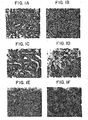
- ⁇ 2 , ⁇ 3 , ⁇ 6 , and ⁇ 4 subunits of integrins which recognize primarily collagen (Col) and/or laminin (LM) is shown in Figure 1 A-D .
- These subunits were present on glandular epithelium ( ⁇ ) throughout the menstrual cycle. Their distribution within the endometrium was typical of that seen for most epithelial tissues.
- the ⁇ 2 and ⁇ 3 subunits were distributed around the entire circumference of the cells, while the ⁇ 6 and ⁇ 4 subunits appeared to be localized at the basolateral surface, adjacent to the basement membrane (BM) of the endometrial glands.
- the expression of these subunits by the mesenchyme (*) was less pronounced.
- Collagen/laminin receptors (col/LM) characterized by ⁇ 2, ⁇ 3 and ⁇ 6 were uniformly expressed throughout the menstrual cycle, see Table 2.
- the pericellular distribution of ⁇ 2 and ⁇ 3 subunits was distinctly different from that of ⁇ 6 subunit. Characteristic of a laminin receptor, ⁇ 6 was concentrated on the basolateral surface.
- the ⁇ 4 subunit which pairs with ⁇ 6 was also found distributed on the basolateral surface of epithelial cells, and its distribution appeared even more restricted to the basal pole.
- the ⁇ 5 / ⁇ 1 integrin, a major fibronectin receptor was also uniformly expressed throughout the menstrual cycle. Unlike the collagen and laminin receptors, the distribution of ⁇ 5 / ⁇ 1 was limited to the mesenchyme.
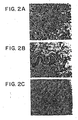
- the temporal pattern of distribution of ⁇ v was varied. Immunostaining was first detected prior to the secretory phase with an increase in intensity throughout the cycle.
- One subunit known to pair with ⁇ v is ⁇ 3 .
- ⁇ 3 is not characteristically present on epithelial cells.
- the abrupt appearance of the ⁇ 3 subunit after day 19 suggests that expression of the vitronectin receptor is regulated in human endometrium.
- the increased epithelial ⁇ v / ⁇ 3 staining in normal cycles correlates to an implantation window within the secretory phase. While the physiologic basis for the implantation window has not been previously established, a proposed role of integrins in the initial interaction between maternal and embryonic cells indicates an endometrial period of receptivity.
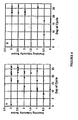
- Samples were immunostained for ⁇ 1 , ⁇ v and ⁇ 3 subunits. All biopsies were performed on days 20 to 24 of the menstrual cycle. In all instances, immunostaining for these three antigens was present on endometrial epithelia from the normal group. In biopsies which were delayed by 3 days or more, ⁇ 1 and ⁇ v staining was present, but epithelial ⁇ 3 staining was absent. The comparison of ⁇ 3 staining intensity in the two groups is shown in Figure 5A .
- immunoblots (Western blots) were performed on samples of enriched endometrial glandular elements from proliferative and secretory phase.
- the resulting suspension was successively passed through a 250 pm sieve and a 38 ⁇ m sieve (Newark Wire Cloth Co, Newark NJ).
- the course (250 ⁇ m) sieve removed undigested material, while the second retained the glandular elements and excluded the individual stromal and blood cells.
- the glandular elements were obtained by backwashing with 10 to 20 ml of DMEM.
- the isolated glandular structures were then transferred to a 1.5 ml microfuge tube and centrifuged 3 times (82 x g) for 2 minutes with intermittent washes with PBS.
- Membrane extracts were prepared by adding small volumes (100-200 ⁇ l) of 10 mM Tris-acetate, pH 8.0, 0.5% NP-40, 0.5 mM Ca 2+ . (TNC) with 2 mM PMSF (phenyl methyl-sulfonyl fluoride) to the final pellet, pipetted and incubated on ice for 15 minutes. The lysate was centrifuged for 5 minutes at 16,000 x g in a microcentrifuge. The resulting supernatant was called NP-40 extract and was frozen at -70°C until use. A portion of the original, undigested tissue was cryosectioned for immunohistochemical localization of ⁇ 3 .
- each NP-40 extract and an extract of platelets was determined using technique described by Lowry et al., "Protein Measurement with Folin Phenol Reagent", J. Biol. Chem. 1951, 193:265 .
- Samples with equal amounts of protein were added to electrophoresis sample buffer (62.5 mM Tris base, 2% SDS, 10% glycerol, pH 6.8).
- Samples were analyzed by SDS-PAGE using 6% polyacrylamide gels, using non-reducing conditions described by Laemmli, U.K., "Cleavage of Structural Proteins During Assembly of the Head of Bacteriophage T4", Nature 1970, 227:680 .
- the gel was transferred to nitrocellulose using a Biorad transfer apparatus (Biorad, Richmond, CA) and blocked with 4% BSA in PBS with 0.2% Na Azide for 1 hour. After addition of primary antibody (SSA6 supernatant) for 2 hours, the gels were developed using an alkaline phosphatase-conjugated secondary antibody (Promega Corp., Madison, WI) according to methods described by Albelda et al., "EndoCAM:A Novel Endothelial Cell-Cell Adhesion Molecule", J. Cell Biol. 1990, 110:1227 .
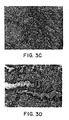
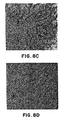
- proliferative phase epithelial structures had little to no immunostaining at 95 kD (lanes 2 and 3), compare to the positive control (platelet extract; lane 1) or to samples from the secretory phase (lanes 4 and 5) which showed strong staining for ⁇ 3 .
- the isolated endometrial glands appeared as tubular structures free of surrounding stroma ( Fig. 6B ).
- Immunofluorescent staining for ⁇ 3 from samples corresponding to lanes 3 and 4 are shown in Fig. 6C and D . Note the absence of glandular staining in the proliferative sample, while both glandular and luminal immunostaining is obvious from the secretory phase.
- Biopsies were obtained from throughout the menstrual cycle from 500 women undergoing evaluation for infertility at the University of Pennsylvania. The biopsies were screened for participation in the study based on criteria including accurate knowledge of menstrual cycle day or "in phase” histology and freedom from menstrual cycle disturbances (anovulation (suspension or cessation of ovulation), perimenopausal state (dysfunctional uterine bleeding), luteal phase defect (histologic evidence of maturational delay of the endometrium), the presence or use of an intrauterine device or endometritis (inflammation of endometrium due to infectious agents or chemical irritation).
- endometrial hyperplasia an increase in the number of cells in endometrium
- neoplasia a pathologic process resulting in formation or growth of abnormal tissue or tumors, benign or malignant
- hormonal therapy including oral contraceptives, estrogen replacement therapy and progants
- Endometrial biopsies of 241 patients were obtained after day 19 (post ovulatory day 6 or greater) based on urinary luteinizing hormone, LH, surge or next menstrual period, a time in the menstrual cycle when epithelial ⁇ 3 is expressed, Lessey, et al., supra .
- the remaining patients were biopsied prior to day 20 and therefore would not be expected to produce the ⁇ 3 integrin.
- Immunoperoxidase staining was performed on the 241 samples as described by Lessey, et al., supra . Briefly, immunoperoxidase staining was performed on cryostat sections of endometrium throughout the menstrual cycle. Serial cryosections 4-8 ⁇ thick were placed onto poly-L lysine coated slides, fixed in -20°C acetone for 10 minutes, and stained using Vectastain Elite ® ABC kits (Vector Laboratories, Burlingame, CA). Diaminobenzadine (DAB; Sigma Chemical Co., St. Louis, MO.) was used as the chromogen.
- DAB Diaminobenzadine
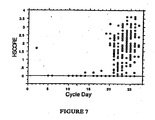
- HSCORE ⁇ Pi i + 1
- i intensity of staining with a value of 1, 2, or 3, weak, moderate, or strong, respectively
- Pi is the percentage of stained epithelial cells for each intensity, varying from 0-100%.
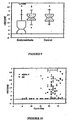
- Infertile endometriosis patients were compared to infertile controls without endometriosis and fertile controls. Comparisons were also made between nulliparous endometriosis patients and parous endometriosis patients on selected characteristics such as age and HSCORE and were performed using the nonparametric Wilcoxon text. Wilcoxon, F., Individual Comparisons by Ranking Methods. Biometrics Bull 1945; 1:80-85 .
- Receiver Operator Characteristic (ROC) analysis was used to determine the optimal cutoff value for HSCORE in women prospectively undergoing laparoscopy. Metz, C. E., Basic Principles of ROC analysis. Sem Nuclear Med 1978; 8:283-298 .
- An HSCORE cutoff value was sought as the highest positive predictive value of endometriosis which meant seeking a high specificity at the cost of moderate sensitivity. A high positive predictive value minimizes the number of women who would otherwise undergo unnecessary surgery, using this test as a diagnostic modality for endometriosis.
- the HSCORE cutoff value was 0.7, which yielded a sensitivity of 38%, specificity of 91%, and a positive predictive value of 86% for the detection of endometriosis.
- HSCORE endometriosis
- endometriosis was first evaluated by a nonparametric test (Wilcoxon test) and further evaluated by multiple logistic regression in the sample of 241 women whose biopsies were histologically cycle day 20 or greater.
- Table 4 the mean HSCORE was significantly lower for the infertile endometriosis group (p ⁇ 0.003) compared to fertile controls (p ⁇ 0.002) and the infertile controls without endometriosis (p ⁇ 0.012; Table 4).
- the present invention identifies a subgroup of infertility patients with a deficit in ⁇ 3 which characterizes women with defective uterine receptivity. This association between endometriosis and defective ⁇ 3 integrin expression may represent the first cycle-specific defect during the putative window of implantation. Detecting the loss of ⁇ 3 may signify patients with endometriosis who are most at risk for infertility due to an endometrial factor. While implantation may be the result of a cascade of different molecules, the present invention reveals the loss of a single component may be sufficient to explain a failure of implantation.
- the present invention reveals the loss of ⁇ 3 , normally expressed at the initiation of the window of implantation, is associated with women who appear to be the most infertile.
- Prospective use of this marker protein has demonstrated that the ⁇ 3 integrin subunit is a useful test with a high specificity and positive predictive value for the nonsurgical diagnosis of minimal or mild endometriosis.
- the study of this subgroup of infertility patients allows greater refinement of diagnosing this enigmatic disease.
- Biopsies will be obtained from throughout the menstrual cycle from women being evaluated for infertility. Women who are parous and nulliparous will be included in the study. The biopsies will be screened for participation in a study based upon criteria including accurate knowledge of menstrual cycle day or "in phase” histology and freedom from menstrual cycle disturbances (anovulation (suspension or cessation of ovulation), perimenopausal state (dysfunctional uterine bleeding), luteal phase defect (histologic evidence of maturational delay of the endometrium), the presence or use of an intrauterine device or endometritis (inflammation of endometrium due to infectious agents or chemical irritation).
- endometrial hyperplasia an increase in the number of cells in endometrium
- neoplasia a pathologic process resulting in formation or growth of abnormal tissue or tumors, benign or malignant
- hormonal therapy including oral contraceptives, estrogen replacement therapy and progants
- those with luteal phase deficiency will be excluded.
- Endometrial biopsies will be obtained after day 19 (post ovulatory day 6 or greater) based on urinary luteinizing hormone, LH, surge or next menstrual period, a time in the menstrual cycle when epithelial ⁇ 3 is expressed, Lessey, et al., supra. Fertile and infertile controls will also be selected.
- Immunoperoxidase staining will be performed on the patient samples as described by Lessey, et al., supra. Briefly, immunoperoxidase staining will be performed on cryostat sections of endometrium throughout the menstrual cycle. Serial cryosections 4-8 ⁇ thick will be placed onto poly-L lysine coated slides, fixed in -20°C acetone for 10 minutes, and stained using Vectastain Elite ® ABC kits (Vector Laboratories, Burlingame, CA). Diaminobenzadine (DAB; Sigma Chemical Co., St. Louis, MO.) will be used as the chromogen.
- DAB Diaminobenzadine
- SSA6 specific to the ⁇ 3 subunit of the vitronectin receptor
- PBS phosphate buffered saline
- secondary antibody consisting of biotinylated goat anti-mouse antibody for 30 minutes.
- the endogenous peroxidases will be quenched with a 30 minute incubation with 0.3% H 2 O 2 in absolute ethanol, followed by a 30 minute rehydration in PBS.
- Biotinylated horseradish peroxidase macromolecular complex (ABC) will then be incubated on the sections for 30 minutes before adding diaminobenzadine for 3 minutes to complete the reaction. Samples will be subsequently washed in PBS and mounted.
- HSCORE cutoff value, sensitivities and specificities values will be determined for the detection of endometriosis in infertile patients.
- the patients will also be separated as to severity of endometriosis based on AFS classification.
- EGRET will be used to evaluate the association between endometriosis and HSCORE, after adjusting for the effects of age and parity status, supra. Crude relative risk and confidence intervals will be calculated for endometriosis.
- integrin expression detected by the absence of ⁇ 3 , will correlate with the diagnosis of endometriosis in infertile females.
Landscapes
- Health & Medical Sciences (AREA)
- Life Sciences & Earth Sciences (AREA)
- Engineering & Computer Science (AREA)
- Chemical & Material Sciences (AREA)
- Immunology (AREA)
- Biomedical Technology (AREA)
- Molecular Biology (AREA)
- Urology & Nephrology (AREA)
- General Health & Medical Sciences (AREA)
- Hematology (AREA)
- Medicinal Chemistry (AREA)
- Biochemistry (AREA)
- Cell Biology (AREA)
- Biotechnology (AREA)
- Organic Chemistry (AREA)
- Physics & Mathematics (AREA)
- General Physics & Mathematics (AREA)
- Microbiology (AREA)
- Pathology (AREA)
- Proteomics, Peptides & Aminoacids (AREA)
- Food Science & Technology (AREA)
- Analytical Chemistry (AREA)
- Veterinary Medicine (AREA)
- Public Health (AREA)
- Animal Behavior & Ethology (AREA)
- Reproductive Health (AREA)
- Pharmacology & Pharmacy (AREA)
- Zoology (AREA)
- Genetics & Genomics (AREA)
- Biophysics (AREA)
- Nuclear Medicine, Radiotherapy & Molecular Imaging (AREA)
- General Chemical & Material Sciences (AREA)
- Chemical Kinetics & Catalysis (AREA)
- Bioinformatics & Cheminformatics (AREA)
- Developmental Biology & Embryology (AREA)
- Wood Science & Technology (AREA)
- Transplantation (AREA)
- Virology (AREA)
- Epidemiology (AREA)
- Endocrinology (AREA)
Priority Applications (1)
| Application Number | Priority Date | Filing Date | Title |
|---|---|---|---|
| EP08002178A EP1927362A3 (en) | 1993-11-19 | 1994-11-18 | Alphavbeta3integrin as a predictor of endometriosis |
Applications Claiming Priority (3)
| Application Number | Priority Date | Filing Date | Title |
|---|---|---|---|
| US08/155,435 US5478725A (en) | 1992-06-12 | 1993-11-19 | αv β3 integrin as a predictor of endometriosis |
| US155435 | 1993-11-19 | ||
| EP95902592A EP0734263B1 (en) | 1993-11-19 | 1994-11-18 | ALPHAvBETA3 INTEGRIN AS A PREDICTOR OF ENDOMETRIOSIS |
Related Parent Applications (1)
| Application Number | Title | Priority Date | Filing Date |
|---|---|---|---|
| EP95902592A Division EP0734263B1 (en) | 1993-11-19 | 1994-11-18 | ALPHAvBETA3 INTEGRIN AS A PREDICTOR OF ENDOMETRIOSIS |
Related Child Applications (1)
| Application Number | Title | Priority Date | Filing Date |
|---|---|---|---|
| EP08002178A Division EP1927362A3 (en) | 1993-11-19 | 1994-11-18 | Alphavbeta3integrin as a predictor of endometriosis |
Publications (3)
| Publication Number | Publication Date |
|---|---|
| EP1394551A2 EP1394551A2 (en) | 2004-03-03 |
| EP1394551A3 EP1394551A3 (en) | 2004-06-16 |
| EP1394551B1 true EP1394551B1 (en) | 2008-10-01 |
Family
ID=22555419
Family Applications (3)
| Application Number | Title | Priority Date | Filing Date |
|---|---|---|---|
| EP03020599A Expired - Lifetime EP1394551B1 (en) | 1993-11-19 | 1994-11-18 | ß3 Integrin as a predictor of endometriosis |
| EP08002178A Withdrawn EP1927362A3 (en) | 1993-11-19 | 1994-11-18 | Alphavbeta3integrin as a predictor of endometriosis |
| EP95902592A Expired - Lifetime EP0734263B1 (en) | 1993-11-19 | 1994-11-18 | ALPHAvBETA3 INTEGRIN AS A PREDICTOR OF ENDOMETRIOSIS |
Family Applications After (2)
| Application Number | Title | Priority Date | Filing Date |
|---|---|---|---|
| EP08002178A Withdrawn EP1927362A3 (en) | 1993-11-19 | 1994-11-18 | Alphavbeta3integrin as a predictor of endometriosis |
| EP95902592A Expired - Lifetime EP0734263B1 (en) | 1993-11-19 | 1994-11-18 | ALPHAvBETA3 INTEGRIN AS A PREDICTOR OF ENDOMETRIOSIS |
Country Status (9)
| Country | Link |
|---|---|
| US (1) | US5478725A (enExample) |
| EP (3) | EP1394551B1 (enExample) |
| JP (1) | JP4155592B2 (enExample) |
| AT (2) | ATE258058T1 (enExample) |
| AU (1) | AU684582B2 (enExample) |
| CA (1) | CA2176926C (enExample) |
| DE (2) | DE69433504T2 (enExample) |
| ES (2) | ES2214495T3 (enExample) |
| WO (1) | WO1995013821A1 (enExample) |
Families Citing this family (33)
| Publication number | Priority date | Publication date | Assignee | Title |
|---|---|---|---|---|
| US6733979B2 (en) | 1993-11-01 | 2004-05-11 | The Trustees Of The University Of Pennsylvania | Determination of endometrial receptivity toward embryo implantation |
| US6979533B2 (en) * | 1992-06-12 | 2005-12-27 | The Trustees Of The University Of Pennsylvania | Determination of endometrial receptivity toward embryo implantation |
| US5863954A (en) * | 1992-06-30 | 1999-01-26 | John B. Davidson | Contraceptive method using ajoene |
| WO1995026734A1 (en) * | 1994-04-04 | 1995-10-12 | Freeman William R | Use of phosphonylmethoxyalkyl nucleosides for the treatment of raised intraocular pressure |
| US5654145A (en) * | 1994-10-04 | 1997-08-05 | La Jolla Cancer Research Foundation | Trophinin and trophinin-assisting nucleic acids and methods of detection thereof |
| US5599918A (en) * | 1994-10-04 | 1997-02-04 | La Jolla Cancer Research Foundation | Nucleic acids encoding trophinin and trophinin-assisting proteins |
| US6743595B1 (en) | 1999-01-25 | 2004-06-01 | Metriogene Biosciences Inc. | Method and diagnostic kit for diagnosis of endometriosis |
| JP2002541124A (ja) * | 1999-04-02 | 2002-12-03 | センター・フォー・モレキュラー・メディシン・アンド・イムノロジー | 子宮内膜症を検出する方法 |
| EP1801236B1 (en) * | 2000-02-25 | 2009-11-18 | Siemens Healthcare Diagnostics Inc. | Endometriosis related markers and uses thereof |
| CA2399259A1 (en) * | 2000-02-25 | 2001-08-30 | Metriogene Biosciences Inc. | Endometriosis-related markers and uses thereof |
| US7045663B2 (en) * | 2001-07-10 | 2006-05-16 | Billings Pharmaceuticals, Inc. | Chiral integrin modulators and methods of use thereof |
| DE10048633A1 (de) * | 2000-09-25 | 2002-04-18 | Schering Ag | Methode zur in vitro Diagnostik von Endometriose |
| US6780594B2 (en) * | 2000-09-25 | 2004-08-24 | Schering Aktiengesellschaft | Method for in vitro diagnosis of endometriosis |
| WO2002070007A1 (en) * | 2001-03-02 | 2002-09-12 | Medimmune, Inc. | Methods of preventing or treating inflammatory or autoimmune disorders by administering integrin alphav beta3 antagonists |
| KR100523835B1 (ko) * | 2002-02-19 | 2005-10-25 | 주식회사 바이오인프라 | PrxⅡ 단백질을 진단 마커로 사용하여 자성 포유동물의불임을 진단하는 방법 |
| JP2005533001A (ja) * | 2002-03-04 | 2005-11-04 | メディミューン,インコーポレーテッド | インテグリンαvβ3アンタゴニストを他の物質と併用投与する癌の予防または治療方法 |
| AU2003213682C1 (en) * | 2002-03-04 | 2008-06-12 | Medimmune, Inc. | Methods of preventing or treating disorders by administering an integrin alphavbeta3 antagonist in combination with an HMG-CoA reductase inhibitor or a bisphosphonate |
| JP2005535572A (ja) | 2002-04-12 | 2005-11-24 | メディミューン,インコーポレーテッド | 組換え抗インターロイキン−9抗体 |
| AU2003303576A1 (en) * | 2002-05-14 | 2004-07-29 | The Board Of Trustees Of The Leland Stanford Junior University | Endometrial genes in endometrial disorders |
| JP2006516635A (ja) * | 2003-01-30 | 2006-07-06 | メディミューン,インコーポレーテッド | インテグリンαvβ3アンタゴニストの使用 |
| KR20120035234A (ko) * | 2003-04-11 | 2012-04-13 | 메디뮨 엘엘씨 | 재조합 il?9 항체 및 그의 용도 |
| US7268117B2 (en) * | 2003-07-11 | 2007-09-11 | Praecis Pharmaceuticals Incorporated | Compositions, kits, and methods for identification, assessment, prevention, and therapy of endometriosis |
| EP1737816A1 (en) * | 2004-03-10 | 2007-01-03 | Billings Pharmaceuticals, Inc. | Integrin modulators and methods for their use |
| US7351739B2 (en) * | 2004-04-30 | 2008-04-01 | Wellgen, Inc. | Bioactive compounds and methods of uses thereof |
| CA2585717A1 (en) | 2004-10-27 | 2006-05-04 | Medimmune Inc. | Modulation of antibody specificity by tailoring the affinity to cognate antigens |
| EP2043603A4 (en) | 2006-07-11 | 2010-10-27 | Arubor Corp | PREVENTION AND THERAPY OF RHINOSINUSITIS WITH PROINFLAMMATORY CYTOKINHERMERS |
| PT2068889T (pt) | 2006-08-10 | 2020-01-30 | Roy C Levitt | Anakinra para uso no tratamento da síndrome da bronquiolite obliterante |
| WO2008137591A2 (en) * | 2007-05-02 | 2008-11-13 | Biocept, Inc. | Non-invasive detection of endometrial cancer |
| US7846680B2 (en) | 2008-01-29 | 2010-12-07 | Albert Einstein College Of Medicine Of Yeshiva University | Detection of the nucleolar channel system of human endometrium and uses thereof |
| DE102012002929A1 (de) | 2012-02-14 | 2013-08-14 | Jürgen Lewald | Minimalinvasives Verfahren für die Diagnose und die Therapieverlaufskontrolle der Endometriose |
| US10234465B2 (en) * | 2014-03-19 | 2019-03-19 | The University Of North Carolina At Chapel Hill | BCL6 expression in eutopic endometrium as a marker for endometriosis and subfertility |
| US11474105B2 (en) | 2016-03-31 | 2022-10-18 | The University Of North Carolina At Chapel Hill | Methods and compositions for SIRT1 expression as a marker for endometriosis and subfertility |
| IT201900013992A1 (it) | 2019-08-05 | 2021-02-05 | Telea Electronic Eng Srl | Metodo per stimolare l’espressione genica in cellule endometriali |
Family Cites Families (2)
| Publication number | Priority date | Publication date | Assignee | Title |
|---|---|---|---|---|
| US5057604A (en) * | 1988-08-03 | 1991-10-15 | Washington University | Novel monoclonal antibodies |
| US5279941A (en) * | 1992-06-12 | 1994-01-18 | Trustees Of The University Of Pennsylvania | Determination of endometrial receptivity toward embryo implantation |
-
1993
- 1993-11-19 US US08/155,435 patent/US5478725A/en not_active Expired - Lifetime
-
1994
- 1994-11-18 DE DE69433504T patent/DE69433504T2/de not_active Expired - Lifetime
- 1994-11-18 EP EP03020599A patent/EP1394551B1/en not_active Expired - Lifetime
- 1994-11-18 JP JP51460395A patent/JP4155592B2/ja not_active Expired - Fee Related
- 1994-11-18 EP EP08002178A patent/EP1927362A3/en not_active Withdrawn
- 1994-11-18 DE DE69435147T patent/DE69435147D1/de not_active Expired - Lifetime
- 1994-11-18 EP EP95902592A patent/EP0734263B1/en not_active Expired - Lifetime
- 1994-11-18 AT AT95902592T patent/ATE258058T1/de active
- 1994-11-18 WO PCT/US1994/013299 patent/WO1995013821A1/en not_active Ceased
- 1994-11-18 AT AT03020599T patent/ATE409864T1/de not_active IP Right Cessation
- 1994-11-18 CA CA002176926A patent/CA2176926C/en not_active Expired - Fee Related
- 1994-11-18 AU AU11809/95A patent/AU684582B2/en not_active Ceased
- 1994-11-18 ES ES95902592T patent/ES2214495T3/es not_active Expired - Lifetime
- 1994-11-18 ES ES03020599T patent/ES2312703T3/es not_active Expired - Lifetime
Also Published As
| Publication number | Publication date |
|---|---|
| EP1394551A2 (en) | 2004-03-03 |
| US5478725A (en) | 1995-12-26 |
| EP1927362A3 (en) | 2009-01-21 |
| DE69433504D1 (de) | 2004-02-26 |
| JP4155592B2 (ja) | 2008-09-24 |
| EP1927362A2 (en) | 2008-06-04 |
| JPH09505569A (ja) | 1997-06-03 |
| ES2312703T3 (es) | 2009-03-01 |
| DE69435147D1 (de) | 2008-11-13 |
| WO1995013821A1 (en) | 1995-05-26 |
| EP1394551A3 (en) | 2004-06-16 |
| EP0734263A4 (en) | 1997-12-03 |
| AU684582B2 (en) | 1997-12-18 |
| ES2214495T3 (es) | 2004-09-16 |
| EP0734263B1 (en) | 2004-01-21 |
| EP0734263A1 (en) | 1996-10-02 |
| CA2176926A1 (en) | 1995-05-26 |
| AU1180995A (en) | 1995-06-06 |
| CA2176926C (en) | 2004-06-22 |
| ATE409864T1 (de) | 2008-10-15 |
| DE69433504T2 (de) | 2004-12-23 |
| ATE258058T1 (de) | 2004-02-15 |
Similar Documents
| Publication | Publication Date | Title |
|---|---|---|
| EP0734263B1 (en) | ALPHAvBETA3 INTEGRIN AS A PREDICTOR OF ENDOMETRIOSIS | |
| US5854401A (en) | Determination of endometrial receptivity toward embryo implantation | |
| Lessey et al. | Aberrant integrin expression in the endometrium of women with endometriosis | |
| Meyer et al. | Hydrosalpinges adversely affect markers of endometrial receptivity. | |
| Creus et al. | Integrin expression in normal and out-of-phase endometria. | |
| Gatea et al. | The ability to predict pregnancy loss in cattle with ELISAs that detect pregnancy associated glycoproteins is antibody dependent | |
| US5665556A (en) | Complement components and binding ligands in fertility | |
| CA2393731C (en) | Sperm quality assay | |
| EP0906575B1 (en) | Marker for male infertility and/or fertility | |
| Shamonki et al. | Immunohistochemical expression of endometrial L-selectin ligand is higher in donor egg recipients with embryonic implantation | |
| US6979533B2 (en) | Determination of endometrial receptivity toward embryo implantation | |
| US6733979B2 (en) | Determination of endometrial receptivity toward embryo implantation | |
| JP2020514772A (ja) | 人工授精における受精能を改善する方法 | |
| Ribatti et al. | Expression of tenascin is related to angiogenesis in pre‐eclampsia | |
| Chapman et al. | Implantation: biological and clinical aspects | |
| Rasweiler IV et al. | Unusual patterns of intermediate filament protein expression by the trophoblast and decidual cells of the short-tailed fruit bat, Carollia perspicillata | |
| Rajashekhar et al. | Expression and secretion of the vascular cell adhesion molecule-1 in human placenta and its decrease in fetal growth restriction | |
| US20040053339A1 (en) | Sperm quality assay | |
| US20030219836A1 (en) | Method of determining endometrial receptivity | |
| Seif | Progress in Immuno-histochemical Analysis of the Endometrial Cycle | |
| Stewart | Endometrial leucocytes and their relation to fertility | |
| TAI | CERVICOVAGINAL FETAL FIBRONECTIN—PREDICTION TO OUTCOMES OF PRE-IDUCTION CERVICAL RIPENING WITH PROSTAGLANDIN E2 | |
| Kalumbi | Endometrial factors in recurrent reproductive failure | |
| CA2075300A1 (en) | Therapeutic and diagnostic applications of fetal fibronectin |
Legal Events
| Date | Code | Title | Description |
|---|---|---|---|
| PUAI | Public reference made under article 153(3) epc to a published international application that has entered the european phase |
Free format text: ORIGINAL CODE: 0009012 |
|
| 17P | Request for examination filed |
Effective date: 20030918 |
|
| AC | Divisional application: reference to earlier application |
Ref document number: 0734263 Country of ref document: EP Kind code of ref document: P |
|
| AK | Designated contracting states |
Kind code of ref document: A2 Designated state(s): AT BE CH DE DK ES FR GB GR IE IT LI LU MC NL PT SE |
|
| PUAL | Search report despatched |
Free format text: ORIGINAL CODE: 0009013 |
|
| RIC1 | Information provided on ipc code assigned before grant |
Ipc: 7G 01N 33/68 A Ipc: 7A 61K 35/48 B Ipc: 7A 61K 39/395 B |
|
| AK | Designated contracting states |
Kind code of ref document: A3 Designated state(s): AT BE CH DE DK ES FR GB GR IE IT LI LU MC NL PT SE |
|
| AKX | Designation fees paid |
Designated state(s): AT BE CH DE DK ES FR GB GR IE IT LI LU MC NL PT SE |
|
| GRAP | Despatch of communication of intention to grant a patent |
Free format text: ORIGINAL CODE: EPIDOSNIGR1 |
|
| RTI1 | Title (correction) |
Free format text: SS3 INTEGRIN AS A PREDICTOR OF ENDOMETRIOSIS |
|
| GRAS | Grant fee paid |
Free format text: ORIGINAL CODE: EPIDOSNIGR3 |
|
| GRAA | (expected) grant |
Free format text: ORIGINAL CODE: 0009210 |
|
| AC | Divisional application: reference to earlier application |
Ref document number: 0734263 Country of ref document: EP Kind code of ref document: P |
|
| AK | Designated contracting states |
Kind code of ref document: B1 Designated state(s): AT BE CH DE DK ES FR GB GR IE IT LI LU MC NL PT SE |
|
| REG | Reference to a national code |
Ref country code: GB Ref legal event code: FG4D |
|
| REG | Reference to a national code |
Ref country code: CH Ref legal event code: EP |
|
| REG | Reference to a national code |
Ref country code: IE Ref legal event code: FG4D |
|
| REF | Corresponds to: |
Ref document number: 69435147 Country of ref document: DE Date of ref document: 20081113 Kind code of ref document: P |
|
| REG | Reference to a national code |
Ref country code: ES Ref legal event code: FG2A Ref document number: 2312703 Country of ref document: ES Kind code of ref document: T3 |
|
| NLV1 | Nl: lapsed or annulled due to failure to fulfill the requirements of art. 29p and 29m of the patents act | ||
| PG25 | Lapsed in a contracting state [announced via postgrant information from national office to epo] |
Ref country code: AT Free format text: LAPSE BECAUSE OF FAILURE TO SUBMIT A TRANSLATION OF THE DESCRIPTION OR TO PAY THE FEE WITHIN THE PRESCRIBED TIME-LIMIT Effective date: 20081001 |
|
| PG25 | Lapsed in a contracting state [announced via postgrant information from national office to epo] |
Ref country code: NL Free format text: LAPSE BECAUSE OF FAILURE TO SUBMIT A TRANSLATION OF THE DESCRIPTION OR TO PAY THE FEE WITHIN THE PRESCRIBED TIME-LIMIT Effective date: 20081001 Ref country code: PT Free format text: LAPSE BECAUSE OF FAILURE TO SUBMIT A TRANSLATION OF THE DESCRIPTION OR TO PAY THE FEE WITHIN THE PRESCRIBED TIME-LIMIT Effective date: 20090302 |
|
| PG25 | Lapsed in a contracting state [announced via postgrant information from national office to epo] |
Ref country code: MC Free format text: LAPSE BECAUSE OF NON-PAYMENT OF DUE FEES Effective date: 20081130 |
|
| REG | Reference to a national code |
Ref country code: CH Ref legal event code: PL |
|
| PG25 | Lapsed in a contracting state [announced via postgrant information from national office to epo] |
Ref country code: BE Free format text: LAPSE BECAUSE OF FAILURE TO SUBMIT A TRANSLATION OF THE DESCRIPTION OR TO PAY THE FEE WITHIN THE PRESCRIBED TIME-LIMIT Effective date: 20081001 Ref country code: DK Free format text: LAPSE BECAUSE OF FAILURE TO SUBMIT A TRANSLATION OF THE DESCRIPTION OR TO PAY THE FEE WITHIN THE PRESCRIBED TIME-LIMIT Effective date: 20081001 |
|
| PLBE | No opposition filed within time limit |
Free format text: ORIGINAL CODE: 0009261 |
|
| STAA | Information on the status of an ep patent application or granted ep patent |
Free format text: STATUS: NO OPPOSITION FILED WITHIN TIME LIMIT |
|
| PG25 | Lapsed in a contracting state [announced via postgrant information from national office to epo] |
Ref country code: SE Free format text: LAPSE BECAUSE OF FAILURE TO SUBMIT A TRANSLATION OF THE DESCRIPTION OR TO PAY THE FEE WITHIN THE PRESCRIBED TIME-LIMIT Effective date: 20090101 |
|
| 26N | No opposition filed |
Effective date: 20090702 |
|
| PG25 | Lapsed in a contracting state [announced via postgrant information from national office to epo] |
Ref country code: IE Free format text: LAPSE BECAUSE OF NON-PAYMENT OF DUE FEES Effective date: 20081118 Ref country code: LI Free format text: LAPSE BECAUSE OF NON-PAYMENT OF DUE FEES Effective date: 20081130 Ref country code: CH Free format text: LAPSE BECAUSE OF NON-PAYMENT OF DUE FEES Effective date: 20081130 |
|
| PG25 | Lapsed in a contracting state [announced via postgrant information from national office to epo] |
Ref country code: LU Free format text: LAPSE BECAUSE OF NON-PAYMENT OF DUE FEES Effective date: 20081118 |
|
| PG25 | Lapsed in a contracting state [announced via postgrant information from national office to epo] |
Ref country code: GR Free format text: LAPSE BECAUSE OF FAILURE TO SUBMIT A TRANSLATION OF THE DESCRIPTION OR TO PAY THE FEE WITHIN THE PRESCRIBED TIME-LIMIT Effective date: 20090102 |
|
| PGFP | Annual fee paid to national office [announced via postgrant information from national office to epo] |
Ref country code: DE Payment date: 20121128 Year of fee payment: 19 Ref country code: FR Payment date: 20121206 Year of fee payment: 19 |
|
| PGFP | Annual fee paid to national office [announced via postgrant information from national office to epo] |
Ref country code: IT Payment date: 20121126 Year of fee payment: 19 Ref country code: GB Payment date: 20121126 Year of fee payment: 19 Ref country code: ES Payment date: 20121126 Year of fee payment: 19 |
|
| GBPC | Gb: european patent ceased through non-payment of renewal fee |
Effective date: 20131118 |
|
| REG | Reference to a national code |
Ref country code: FR Ref legal event code: ST Effective date: 20140731 |
|
| PG25 | Lapsed in a contracting state [announced via postgrant information from national office to epo] |
Ref country code: IT Free format text: LAPSE BECAUSE OF NON-PAYMENT OF DUE FEES Effective date: 20131118 Ref country code: DE Free format text: LAPSE BECAUSE OF NON-PAYMENT OF DUE FEES Effective date: 20140603 |
|
| REG | Reference to a national code |
Ref country code: DE Ref legal event code: R119 Ref document number: 69435147 Country of ref document: DE Effective date: 20140603 |
|
| PG25 | Lapsed in a contracting state [announced via postgrant information from national office to epo] |
Ref country code: FR Free format text: LAPSE BECAUSE OF NON-PAYMENT OF DUE FEES Effective date: 20131202 Ref country code: GB Free format text: LAPSE BECAUSE OF NON-PAYMENT OF DUE FEES Effective date: 20131118 |
|
| REG | Reference to a national code |
Ref country code: ES Ref legal event code: FD2A Effective date: 20150407 |
|
| PG25 | Lapsed in a contracting state [announced via postgrant information from national office to epo] |
Ref country code: ES Free format text: LAPSE BECAUSE OF NON-PAYMENT OF DUE FEES Effective date: 20131119 |