EP1390493B1 - Antisense oligonucleotide against human acetylcholinesterase isoform r (ache-r) and uses thereof - Google Patents
Antisense oligonucleotide against human acetylcholinesterase isoform r (ache-r) and uses thereof Download PDFInfo
- Publication number
- EP1390493B1 EP1390493B1 EP02726406A EP02726406A EP1390493B1 EP 1390493 B1 EP1390493 B1 EP 1390493B1 EP 02726406 A EP02726406 A EP 02726406A EP 02726406 A EP02726406 A EP 02726406A EP 1390493 B1 EP1390493 B1 EP 1390493B1
- Authority
- EP
- European Patent Office
- Prior art keywords
- ache
- antisense
- antisense oligonucleotide
- muscle
- pharmaceutical composition
- Prior art date
- Legal status (The legal status is an assumption and is not a legal conclusion. Google has not performed a legal analysis and makes no representation as to the accuracy of the status listed.)
- Expired - Lifetime
Links
- 108091034117 Oligonucleotide Proteins 0.000 title claims description 88
- 239000000074 antisense oligonucleotide Substances 0.000 title claims description 58
- 238000012230 antisense oligonucleotides Methods 0.000 title claims description 58
- 101000801359 Homo sapiens Acetylcholinesterase Proteins 0.000 title claims description 13
- 102300044917 Acetylcholinesterase isoform R Human genes 0.000 title 1
- 108020004999 messenger RNA Proteins 0.000 claims description 74
- 238000011282 treatment Methods 0.000 claims description 73
- 230000000692 anti-sense effect Effects 0.000 claims description 58
- 210000003205 muscle Anatomy 0.000 claims description 53
- 230000000694 effects Effects 0.000 claims description 46
- 230000008499 blood brain barrier function Effects 0.000 claims description 41
- 210000001218 blood-brain barrier Anatomy 0.000 claims description 41
- 229940046166 oligodeoxynucleotide Drugs 0.000 claims description 40
- 239000008194 pharmaceutical composition Substances 0.000 claims description 38
- 208000037265 diseases, disorders, signs and symptoms Diseases 0.000 claims description 35
- 239000002773 nucleotide Substances 0.000 claims description 35
- 125000003729 nucleotide group Chemical group 0.000 claims description 35
- 239000003814 drug Substances 0.000 claims description 33
- 206010028417 myasthenia gravis Diseases 0.000 claims description 32
- 210000003169 central nervous system Anatomy 0.000 claims description 24
- 230000000750 progressive effect Effects 0.000 claims description 24
- 208000035475 disorder Diseases 0.000 claims description 22
- 238000004519 manufacturing process Methods 0.000 claims description 22
- 208000018360 neuromuscular disease Diseases 0.000 claims description 22
- 229940079593 drug Drugs 0.000 claims description 21
- 101710163270 Nuclease Proteins 0.000 claims description 20
- 210000000715 neuromuscular junction Anatomy 0.000 claims description 20
- 150000001875 compounds Chemical class 0.000 claims description 19
- 230000002265 prevention Effects 0.000 claims description 17
- 241000282414 Homo sapiens Species 0.000 claims description 16
- 108010029485 Protein Isoforms Proteins 0.000 claims description 16
- 102000001708 Protein Isoforms Human genes 0.000 claims description 16
- 239000003795 chemical substances by application Substances 0.000 claims description 14
- 230000007103 stamina Effects 0.000 claims description 14
- 239000004480 active ingredient Substances 0.000 claims description 13
- 201000010099 disease Diseases 0.000 claims description 13
- 230000001684 chronic effect Effects 0.000 claims description 12
- 108090000623 proteins and genes Proteins 0.000 claims description 10
- 229940124596 AChE inhibitor Drugs 0.000 claims description 9
- 206010049565 Muscle fatigue Diseases 0.000 claims description 9
- 239000013543 active substance Substances 0.000 claims description 9
- 230000006735 deficit Effects 0.000 claims description 9
- 208000028173 post-traumatic stress disease Diseases 0.000 claims description 9
- 230000003247 decreasing effect Effects 0.000 claims description 8
- 102000004169 proteins and genes Human genes 0.000 claims description 8
- 239000003085 diluting agent Substances 0.000 claims description 7
- 230000005856 abnormality Effects 0.000 claims description 6
- 239000002671 adjuvant Substances 0.000 claims description 6
- 206010002026 amyotrophic lateral sclerosis Diseases 0.000 claims description 6
- 201000006417 multiple sclerosis Diseases 0.000 claims description 6
- 208000014094 Dystonic disease Diseases 0.000 claims description 5
- 208000010118 dystonia Diseases 0.000 claims description 5
- 201000006938 muscular dystrophy Diseases 0.000 claims description 5
- 206010033799 Paralysis Diseases 0.000 claims description 4
- 208000014674 injury Diseases 0.000 claims description 4
- 238000001356 surgical procedure Methods 0.000 claims description 4
- 230000016978 synaptic transmission, cholinergic Effects 0.000 claims description 4
- 208000029549 Muscle injury Diseases 0.000 claims description 3
- 208000034189 Sclerosis Diseases 0.000 claims description 3
- 208000027418 Wounds and injury Diseases 0.000 claims description 3
- 125000003158 alcohol group Chemical group 0.000 claims description 3
- 125000001931 aliphatic group Chemical group 0.000 claims description 3
- 239000003242 anti bacterial agent Substances 0.000 claims description 3
- 229940088710 antibiotic agent Drugs 0.000 claims description 3
- 239000002246 antineoplastic agent Substances 0.000 claims description 3
- 125000002843 carboxylic acid group Chemical group 0.000 claims description 3
- 239000002872 contrast media Substances 0.000 claims description 3
- 125000004185 ester group Chemical group 0.000 claims description 3
- 238000001415 gene therapy Methods 0.000 claims description 3
- 238000003384 imaging method Methods 0.000 claims description 3
- 239000013598 vector Substances 0.000 claims description 3
- 229940044683 chemotherapy drug Drugs 0.000 claims description 2
- 241000700159 Rattus Species 0.000 description 95
- 102100033639 Acetylcholinesterase Human genes 0.000 description 49
- 241001465754 Metazoa Species 0.000 description 49
- 108010022752 Acetylcholinesterase Proteins 0.000 description 48
- 229940022698 acetylcholinesterase Drugs 0.000 description 48
- JLCPHMBAVCMARE-UHFFFAOYSA-N [3-[[3-[[3-[[3-[[3-[[3-[[3-[[3-[[3-[[3-[[3-[[5-(2-amino-6-oxo-1H-purin-9-yl)-3-[[3-[[3-[[3-[[3-[[3-[[5-(2-amino-6-oxo-1H-purin-9-yl)-3-[[5-(2-amino-6-oxo-1H-purin-9-yl)-3-hydroxyoxolan-2-yl]methoxy-hydroxyphosphoryl]oxyoxolan-2-yl]methoxy-hydroxyphosphoryl]oxy-5-(5-methyl-2,4-dioxopyrimidin-1-yl)oxolan-2-yl]methoxy-hydroxyphosphoryl]oxy-5-(6-aminopurin-9-yl)oxolan-2-yl]methoxy-hydroxyphosphoryl]oxy-5-(6-aminopurin-9-yl)oxolan-2-yl]methoxy-hydroxyphosphoryl]oxy-5-(6-aminopurin-9-yl)oxolan-2-yl]methoxy-hydroxyphosphoryl]oxy-5-(6-aminopurin-9-yl)oxolan-2-yl]methoxy-hydroxyphosphoryl]oxyoxolan-2-yl]methoxy-hydroxyphosphoryl]oxy-5-(5-methyl-2,4-dioxopyrimidin-1-yl)oxolan-2-yl]methoxy-hydroxyphosphoryl]oxy-5-(4-amino-2-oxopyrimidin-1-yl)oxolan-2-yl]methoxy-hydroxyphosphoryl]oxy-5-(5-methyl-2,4-dioxopyrimidin-1-yl)oxolan-2-yl]methoxy-hydroxyphosphoryl]oxy-5-(5-methyl-2,4-dioxopyrimidin-1-yl)oxolan-2-yl]methoxy-hydroxyphosphoryl]oxy-5-(6-aminopurin-9-yl)oxolan-2-yl]methoxy-hydroxyphosphoryl]oxy-5-(6-aminopurin-9-yl)oxolan-2-yl]methoxy-hydroxyphosphoryl]oxy-5-(4-amino-2-oxopyrimidin-1-yl)oxolan-2-yl]methoxy-hydroxyphosphoryl]oxy-5-(4-amino-2-oxopyrimidin-1-yl)oxolan-2-yl]methoxy-hydroxyphosphoryl]oxy-5-(4-amino-2-oxopyrimidin-1-yl)oxolan-2-yl]methoxy-hydroxyphosphoryl]oxy-5-(6-aminopurin-9-yl)oxolan-2-yl]methoxy-hydroxyphosphoryl]oxy-5-(4-amino-2-oxopyrimidin-1-yl)oxolan-2-yl]methyl [5-(6-aminopurin-9-yl)-2-(hydroxymethyl)oxolan-3-yl] hydrogen phosphate Polymers Cc1cn(C2CC(OP(O)(=O)OCC3OC(CC3OP(O)(=O)OCC3OC(CC3O)n3cnc4c3nc(N)[nH]c4=O)n3cnc4c3nc(N)[nH]c4=O)C(COP(O)(=O)OC3CC(OC3COP(O)(=O)OC3CC(OC3COP(O)(=O)OC3CC(OC3COP(O)(=O)OC3CC(OC3COP(O)(=O)OC3CC(OC3COP(O)(=O)OC3CC(OC3COP(O)(=O)OC3CC(OC3COP(O)(=O)OC3CC(OC3COP(O)(=O)OC3CC(OC3COP(O)(=O)OC3CC(OC3COP(O)(=O)OC3CC(OC3COP(O)(=O)OC3CC(OC3COP(O)(=O)OC3CC(OC3COP(O)(=O)OC3CC(OC3COP(O)(=O)OC3CC(OC3COP(O)(=O)OC3CC(OC3COP(O)(=O)OC3CC(OC3CO)n3cnc4c(N)ncnc34)n3ccc(N)nc3=O)n3cnc4c(N)ncnc34)n3ccc(N)nc3=O)n3ccc(N)nc3=O)n3ccc(N)nc3=O)n3cnc4c(N)ncnc34)n3cnc4c(N)ncnc34)n3cc(C)c(=O)[nH]c3=O)n3cc(C)c(=O)[nH]c3=O)n3ccc(N)nc3=O)n3cc(C)c(=O)[nH]c3=O)n3cnc4c3nc(N)[nH]c4=O)n3cnc4c(N)ncnc34)n3cnc4c(N)ncnc34)n3cnc4c(N)ncnc34)n3cnc4c(N)ncnc34)O2)c(=O)[nH]c1=O JLCPHMBAVCMARE-UHFFFAOYSA-N 0.000 description 36
- RVOLLAQWKVFTGE-UHFFFAOYSA-N Pyridostigmine Chemical compound CN(C)C(=O)OC1=CC=C[N+](C)=C1 RVOLLAQWKVFTGE-UHFFFAOYSA-N 0.000 description 26
- 210000004027 cell Anatomy 0.000 description 23
- 238000002347 injection Methods 0.000 description 23
- 239000007924 injection Substances 0.000 description 23
- 229960002290 pyridostigmine Drugs 0.000 description 23
- 108020000948 Antisense Oligonucleotides Proteins 0.000 description 19
- 239000000203 mixture Substances 0.000 description 18
- 210000004556 brain Anatomy 0.000 description 17
- 102000019315 Nicotinic acetylcholine receptors Human genes 0.000 description 16
- 108050006807 Nicotinic acetylcholine receptors Proteins 0.000 description 16
- 210000002569 neuron Anatomy 0.000 description 16
- 210000002966 serum Anatomy 0.000 description 15
- 241000282693 Cercopithecidae Species 0.000 description 14
- 238000007901 in situ hybridization Methods 0.000 description 14
- 210000000278 spinal cord Anatomy 0.000 description 14
- 230000007423 decrease Effects 0.000 description 13
- 230000002232 neuromuscular Effects 0.000 description 13
- 230000002829 reductive effect Effects 0.000 description 13
- 238000000034 method Methods 0.000 description 12
- 230000004044 response Effects 0.000 description 11
- 230000001629 suppression Effects 0.000 description 11
- OIPILFWXSMYKGL-UHFFFAOYSA-N acetylcholine Chemical compound CC(=O)OCC[N+](C)(C)C OIPILFWXSMYKGL-UHFFFAOYSA-N 0.000 description 10
- 229960004373 acetylcholine Drugs 0.000 description 10
- 230000014509 gene expression Effects 0.000 description 10
- 230000001965 increasing effect Effects 0.000 description 10
- 230000035882 stress Effects 0.000 description 10
- 238000010253 intravenous injection Methods 0.000 description 9
- 239000000523 sample Substances 0.000 description 9
- 230000000946 synaptic effect Effects 0.000 description 9
- 241000699666 Mus <mouse, genus> Species 0.000 description 8
- 230000036982 action potential Effects 0.000 description 8
- 230000037396 body weight Effects 0.000 description 8
- 230000000295 complement effect Effects 0.000 description 8
- 230000001538 myasthenic effect Effects 0.000 description 8
- 108020004414 DNA Proteins 0.000 description 7
- 230000005540 biological transmission Effects 0.000 description 7
- 210000004369 blood Anatomy 0.000 description 7
- 239000008280 blood Substances 0.000 description 7
- 239000000544 cholinesterase inhibitor Substances 0.000 description 7
- 230000006870 function Effects 0.000 description 7
- 238000002372 labelling Methods 0.000 description 7
- 230000007774 longterm Effects 0.000 description 7
- 239000012528 membrane Substances 0.000 description 7
- 210000004379 membrane Anatomy 0.000 description 7
- 230000002018 overexpression Effects 0.000 description 7
- IOIMDJXKIMCMIG-UHFFFAOYSA-N Diphosphoramide, N,N',N'',N'''-tetrakis(1-methylethyl)- Chemical compound CC(C)NP(=O)(NC(C)C)OP(=O)(NC(C)C)NC(C)C IOIMDJXKIMCMIG-UHFFFAOYSA-N 0.000 description 6
- FAPWRFPIFSIZLT-UHFFFAOYSA-M Sodium chloride Chemical compound [Na+].[Cl-] FAPWRFPIFSIZLT-UHFFFAOYSA-M 0.000 description 6
- 238000013459 approach Methods 0.000 description 6
- 230000004048 modification Effects 0.000 description 6
- 238000012986 modification Methods 0.000 description 6
- 238000003305 oral gavage Methods 0.000 description 6
- 239000002953 phosphate buffered saline Substances 0.000 description 6
- 108090000765 processed proteins & peptides Proteins 0.000 description 6
- 239000011780 sodium chloride Substances 0.000 description 6
- 208000024891 symptom Diseases 0.000 description 6
- 229940124597 therapeutic agent Drugs 0.000 description 6
- 230000004580 weight loss Effects 0.000 description 6
- 108091032973 (ribonucleotides)n+m Proteins 0.000 description 5
- 108090000994 Catalytic RNA Proteins 0.000 description 5
- 102000053642 Catalytic RNA Human genes 0.000 description 5
- 102000009660 Cholinergic Receptors Human genes 0.000 description 5
- 108010009685 Cholinergic Receptors Proteins 0.000 description 5
- 108091026890 Coding region Proteins 0.000 description 5
- 238000009825 accumulation Methods 0.000 description 5
- 230000001713 cholinergic effect Effects 0.000 description 5
- 230000000763 evoking effect Effects 0.000 description 5
- 230000006872 improvement Effects 0.000 description 5
- 239000003112 inhibitor Substances 0.000 description 5
- 239000002502 liposome Substances 0.000 description 5
- 210000001165 lymph node Anatomy 0.000 description 5
- 230000007383 nerve stimulation Effects 0.000 description 5
- 230000009467 reduction Effects 0.000 description 5
- 230000003252 repetitive effect Effects 0.000 description 5
- 108091092562 ribozyme Proteins 0.000 description 5
- 239000000243 solution Substances 0.000 description 5
- 238000010186 staining Methods 0.000 description 5
- 230000004083 survival effect Effects 0.000 description 5
- 238000012360 testing method Methods 0.000 description 5
- LFQSCWFLJHTTHZ-UHFFFAOYSA-N Ethanol Chemical compound CCO LFQSCWFLJHTTHZ-UHFFFAOYSA-N 0.000 description 4
- WZUVPPKBWHMQCE-UHFFFAOYSA-N Haematoxylin Chemical compound C12=CC(O)=C(O)C=C2CC2(O)C1C1=CC=C(O)C(O)=C1OC2 WZUVPPKBWHMQCE-UHFFFAOYSA-N 0.000 description 4
- 101000609926 Homo sapiens Sister chromatid cohesion protein PDS5 homolog B Proteins 0.000 description 4
- 241000283984 Rodentia Species 0.000 description 4
- 229940055075 anticholinesterase parasympathomimetics Drugs 0.000 description 4
- 230000000903 blocking effect Effects 0.000 description 4
- 239000000872 buffer Substances 0.000 description 4
- 210000000170 cell membrane Anatomy 0.000 description 4
- 230000006378 damage Effects 0.000 description 4
- 238000001514 detection method Methods 0.000 description 4
- MUCZHBLJLSDCSD-UHFFFAOYSA-N diisopropyl fluorophosphate Chemical compound CC(C)OP(F)(=O)OC(C)C MUCZHBLJLSDCSD-UHFFFAOYSA-N 0.000 description 4
- 231100000673 dose–response relationship Toxicity 0.000 description 4
- 238000002474 experimental method Methods 0.000 description 4
- 239000000499 gel Substances 0.000 description 4
- 230000001976 improved effect Effects 0.000 description 4
- 238000001990 intravenous administration Methods 0.000 description 4
- 150000002632 lipids Chemical class 0.000 description 4
- 239000007788 liquid Substances 0.000 description 4
- 230000001404 mediated effect Effects 0.000 description 4
- 210000002161 motor neuron Anatomy 0.000 description 4
- LULNWZDBKTWDGK-UHFFFAOYSA-M neostigmine bromide Chemical compound [Br-].CN(C)C(=O)OC1=CC=CC([N+](C)(C)C)=C1 LULNWZDBKTWDGK-UHFFFAOYSA-M 0.000 description 4
- 102000039446 nucleic acids Human genes 0.000 description 4
- 108020004707 nucleic acids Proteins 0.000 description 4
- 150000007523 nucleic acids Chemical class 0.000 description 4
- 210000004940 nucleus Anatomy 0.000 description 4
- 230000007310 pathophysiology Effects 0.000 description 4
- 230000001242 postsynaptic effect Effects 0.000 description 4
- 238000002360 preparation method Methods 0.000 description 4
- 102000004196 processed proteins & peptides Human genes 0.000 description 4
- 102000005962 receptors Human genes 0.000 description 4
- 108020003175 receptors Proteins 0.000 description 4
- 210000002784 stomach Anatomy 0.000 description 4
- 239000000126 substance Substances 0.000 description 4
- 239000003826 tablet Substances 0.000 description 4
- RYYWUUFWQRZTIU-UHFFFAOYSA-K thiophosphate Chemical compound [O-]P([O-])([O-])=S RYYWUUFWQRZTIU-UHFFFAOYSA-K 0.000 description 4
- 210000001519 tissue Anatomy 0.000 description 4
- GFFIJCYHQYHUHB-UHFFFAOYSA-N 2-acetylsulfanylethyl(trimethyl)azanium Chemical compound CC(=O)SCC[N+](C)(C)C GFFIJCYHQYHUHB-UHFFFAOYSA-N 0.000 description 3
- 208000003174 Brain Neoplasms Diseases 0.000 description 3
- 241000283707 Capra Species 0.000 description 3
- 102000004190 Enzymes Human genes 0.000 description 3
- 108090000790 Enzymes Proteins 0.000 description 3
- 108700024394 Exon Proteins 0.000 description 3
- 241000282567 Macaca fascicularis Species 0.000 description 3
- 241000699660 Mus musculus Species 0.000 description 3
- 101000801361 Mus musculus Acetylcholinesterase Proteins 0.000 description 3
- 241000699670 Mus sp. Species 0.000 description 3
- 208000010428 Muscle Weakness Diseases 0.000 description 3
- 206010028372 Muscular weakness Diseases 0.000 description 3
- 206010028980 Neoplasm Diseases 0.000 description 3
- 241000283973 Oryctolagus cuniculus Species 0.000 description 3
- 241000288906 Primates Species 0.000 description 3
- 238000004458 analytical method Methods 0.000 description 3
- 238000010171 animal model Methods 0.000 description 3
- 239000003184 complementary RNA Substances 0.000 description 3
- 230000004891 conditioned taste aversion Effects 0.000 description 3
- 230000001419 dependent effect Effects 0.000 description 3
- 230000006866 deterioration Effects 0.000 description 3
- 238000009826 distribution Methods 0.000 description 3
- 238000005516 engineering process Methods 0.000 description 3
- 229940088598 enzyme Drugs 0.000 description 3
- 238000011156 evaluation Methods 0.000 description 3
- 238000002509 fluorescent in situ hybridization Methods 0.000 description 3
- 238000009396 hybridization Methods 0.000 description 3
- 230000007062 hydrolysis Effects 0.000 description 3
- 238000006460 hydrolysis reaction Methods 0.000 description 3
- 238000011532 immunohistochemical staining Methods 0.000 description 3
- 238000001727 in vivo Methods 0.000 description 3
- 230000006698 induction Effects 0.000 description 3
- 230000030214 innervation Effects 0.000 description 3
- 210000001153 interneuron Anatomy 0.000 description 3
- 230000007246 mechanism Effects 0.000 description 3
- 238000002844 melting Methods 0.000 description 3
- 230000008018 melting Effects 0.000 description 3
- 229940090002 mestinon Drugs 0.000 description 3
- 230000004220 muscle function Effects 0.000 description 3
- 229960002362 neostigmine Drugs 0.000 description 3
- 210000005036 nerve Anatomy 0.000 description 3
- 230000001537 neural effect Effects 0.000 description 3
- 230000007170 pathology Effects 0.000 description 3
- 150000004713 phosphodiesters Chemical group 0.000 description 3
- 229920002401 polyacrylamide Polymers 0.000 description 3
- 210000002027 skeletal muscle Anatomy 0.000 description 3
- 238000011830 transgenic mouse model Methods 0.000 description 3
- XLYOFNOQVPJJNP-UHFFFAOYSA-N water Substances O XLYOFNOQVPJJNP-UHFFFAOYSA-N 0.000 description 3
- 101150060184 ACHE gene Proteins 0.000 description 2
- 102000002260 Alkaline Phosphatase Human genes 0.000 description 2
- 108020004774 Alkaline Phosphatase Proteins 0.000 description 2
- 206010002091 Anaesthesia Diseases 0.000 description 2
- 108010053652 Butyrylcholinesterase Proteins 0.000 description 2
- 241000252983 Caecum Species 0.000 description 2
- 102100032404 Cholinesterase Human genes 0.000 description 2
- 102000003914 Cholinesterases Human genes 0.000 description 2
- 108090000322 Cholinesterases Proteins 0.000 description 2
- 102000005636 Cyclic AMP Response Element-Binding Protein Human genes 0.000 description 2
- 108010045171 Cyclic AMP Response Element-Binding Protein Proteins 0.000 description 2
- KCXVZYZYPLLWCC-UHFFFAOYSA-N EDTA Chemical compound OC(=O)CN(CC(O)=O)CCN(CC(O)=O)CC(O)=O KCXVZYZYPLLWCC-UHFFFAOYSA-N 0.000 description 2
- ZHNUHDYFZUAESO-UHFFFAOYSA-N Formamide Chemical compound NC=O ZHNUHDYFZUAESO-UHFFFAOYSA-N 0.000 description 2
- GLZPCOQZEFWAFX-UHFFFAOYSA-N Geraniol Chemical compound CC(C)=CCCC(C)=CCO GLZPCOQZEFWAFX-UHFFFAOYSA-N 0.000 description 2
- HLFSDGLLUJUHTE-SNVBAGLBSA-N Levamisole Chemical compound C1([C@H]2CN3CCSC3=N2)=CC=CC=C1 HLFSDGLLUJUHTE-SNVBAGLBSA-N 0.000 description 2
- 208000000112 Myalgia Diseases 0.000 description 2
- WHNWPMSKXPGLAX-UHFFFAOYSA-N N-Vinyl-2-pyrrolidone Chemical compound C=CN1CCCC1=O WHNWPMSKXPGLAX-UHFFFAOYSA-N 0.000 description 2
- 229920001213 Polysorbate 20 Polymers 0.000 description 2
- 108091008103 RNA aptamers Proteins 0.000 description 2
- 108091027981 Response element Proteins 0.000 description 2
- 108091028664 Ribonucleotide Proteins 0.000 description 2
- 239000013504 Triton X-100 Substances 0.000 description 2
- 229920004890 Triton X-100 Polymers 0.000 description 2
- HMNZFMSWFCAGGW-XPWSMXQVSA-N [3-[hydroxy(2-hydroxyethoxy)phosphoryl]oxy-2-[(e)-octadec-9-enoyl]oxypropyl] (e)-octadec-9-enoate Chemical compound CCCCCCCC\C=C\CCCCCCCC(=O)OCC(COP(O)(=O)OCCO)OC(=O)CCCCCCC\C=C\CCCCCCCC HMNZFMSWFCAGGW-XPWSMXQVSA-N 0.000 description 2
- 230000009471 action Effects 0.000 description 2
- 230000004913 activation Effects 0.000 description 2
- 239000000654 additive Substances 0.000 description 2
- 210000004727 amygdala Anatomy 0.000 description 2
- 230000037005 anaesthesia Effects 0.000 description 2
- -1 anti-infectives Substances 0.000 description 2
- 238000003556 assay Methods 0.000 description 2
- 230000001363 autoimmune Effects 0.000 description 2
- 230000004888 barrier function Effects 0.000 description 2
- 230000008901 benefit Effects 0.000 description 2
- 210000000621 bronchi Anatomy 0.000 description 2
- 239000006172 buffering agent Substances 0.000 description 2
- 201000011510 cancer Diseases 0.000 description 2
- 239000000969 carrier Substances 0.000 description 2
- 230000015556 catabolic process Effects 0.000 description 2
- 125000002091 cationic group Chemical group 0.000 description 2
- 210000004534 cecum Anatomy 0.000 description 2
- 210000005056 cell body Anatomy 0.000 description 2
- 230000030833 cell death Effects 0.000 description 2
- 210000001638 cerebellum Anatomy 0.000 description 2
- 210000004720 cerebrum Anatomy 0.000 description 2
- 239000000812 cholinergic antagonist Substances 0.000 description 2
- 229940048961 cholinesterase Drugs 0.000 description 2
- 210000001072 colon Anatomy 0.000 description 2
- 238000013270 controlled release Methods 0.000 description 2
- 230000034994 death Effects 0.000 description 2
- 230000007812 deficiency Effects 0.000 description 2
- 238000006731 degradation reaction Methods 0.000 description 2
- 230000003111 delayed effect Effects 0.000 description 2
- 230000002939 deleterious effect Effects 0.000 description 2
- 238000013461 design Methods 0.000 description 2
- 238000011161 development Methods 0.000 description 2
- 230000018109 developmental process Effects 0.000 description 2
- 239000012154 double-distilled water Substances 0.000 description 2
- 238000001647 drug administration Methods 0.000 description 2
- 239000003596 drug target Substances 0.000 description 2
- 210000001198 duodenum Anatomy 0.000 description 2
- 238000001962 electrophoresis Methods 0.000 description 2
- 238000002001 electrophysiology Methods 0.000 description 2
- 230000007831 electrophysiology Effects 0.000 description 2
- 239000000839 emulsion Substances 0.000 description 2
- 230000002255 enzymatic effect Effects 0.000 description 2
- 239000002532 enzyme inhibitor Substances 0.000 description 2
- YQGOJNYOYNNSMM-UHFFFAOYSA-N eosin Chemical compound [Na+].OC(=O)C1=CC=CC=C1C1=C2C=C(Br)C(=O)C(Br)=C2OC2=C(Br)C(O)=C(Br)C=C21 YQGOJNYOYNNSMM-UHFFFAOYSA-N 0.000 description 2
- 210000003238 esophagus Anatomy 0.000 description 2
- 235000012631 food intake Nutrition 0.000 description 2
- 210000003194 forelimb Anatomy 0.000 description 2
- 239000008187 granular material Substances 0.000 description 2
- 210000002216 heart Anatomy 0.000 description 2
- 229960002897 heparin Drugs 0.000 description 2
- 229920000669 heparin Polymers 0.000 description 2
- 239000001866 hydroxypropyl methyl cellulose Substances 0.000 description 2
- 235000010979 hydroxypropyl methyl cellulose Nutrition 0.000 description 2
- 229920003088 hydroxypropyl methyl cellulose Polymers 0.000 description 2
- UFVKGYZPFZQRLF-UHFFFAOYSA-N hydroxypropyl methyl cellulose Chemical compound OC1C(O)C(OC)OC(CO)C1OC1C(O)C(O)C(OC2C(C(O)C(OC3C(C(O)C(O)C(CO)O3)O)C(CO)O2)O)C(CO)O1 UFVKGYZPFZQRLF-UHFFFAOYSA-N 0.000 description 2
- 210000003405 ileum Anatomy 0.000 description 2
- 238000003119 immunoblot Methods 0.000 description 2
- 238000011534 incubation Methods 0.000 description 2
- 238000001802 infusion Methods 0.000 description 2
- 238000007912 intraperitoneal administration Methods 0.000 description 2
- 210000001630 jejunum Anatomy 0.000 description 2
- 210000003734 kidney Anatomy 0.000 description 2
- 229960001614 levamisole Drugs 0.000 description 2
- 238000011694 lewis rat Methods 0.000 description 2
- 230000000670 limiting effect Effects 0.000 description 2
- 210000004185 liver Anatomy 0.000 description 2
- 239000000314 lubricant Substances 0.000 description 2
- 210000004072 lung Anatomy 0.000 description 2
- 238000012423 maintenance Methods 0.000 description 2
- 239000000463 material Substances 0.000 description 2
- 238000005259 measurement Methods 0.000 description 2
- 230000000639 membranetropic effect Effects 0.000 description 2
- 210000001259 mesencephalon Anatomy 0.000 description 2
- 230000001095 motoneuron effect Effects 0.000 description 2
- 238000000465 moulding Methods 0.000 description 2
- 230000017074 necrotic cell death Effects 0.000 description 2
- 230000001293 nucleolytic effect Effects 0.000 description 2
- 210000000056 organ Anatomy 0.000 description 2
- WEXRUCMBJFQVBZ-UHFFFAOYSA-N pentobarbital Chemical compound CCCC(C)C1(CC)C(=O)NC(=O)NC1=O WEXRUCMBJFQVBZ-UHFFFAOYSA-N 0.000 description 2
- 210000005259 peripheral blood Anatomy 0.000 description 2
- 239000011886 peripheral blood Substances 0.000 description 2
- 239000000546 pharmaceutical excipient Substances 0.000 description 2
- 239000000256 polyoxyethylene sorbitan monolaurate Substances 0.000 description 2
- 235000010486 polyoxyethylene sorbitan monolaurate Nutrition 0.000 description 2
- 229920000036 polyvinylpyrrolidone Polymers 0.000 description 2
- 235000013855 polyvinylpyrrolidone Nutrition 0.000 description 2
- 229940069328 povidone Drugs 0.000 description 2
- 239000000843 powder Substances 0.000 description 2
- 230000035755 proliferation Effects 0.000 description 2
- 238000011002 quantification Methods 0.000 description 2
- 210000000664 rectum Anatomy 0.000 description 2
- 230000002441 reversible effect Effects 0.000 description 2
- 238000012552 review Methods 0.000 description 2
- 239000002336 ribonucleotide Substances 0.000 description 2
- 210000003497 sciatic nerve Anatomy 0.000 description 2
- 230000003248 secreting effect Effects 0.000 description 2
- 231100000161 signs of toxicity Toxicity 0.000 description 2
- 239000011734 sodium Substances 0.000 description 2
- 239000002195 soluble material Substances 0.000 description 2
- 210000000952 spleen Anatomy 0.000 description 2
- 230000000638 stimulation Effects 0.000 description 2
- 239000000758 substrate Substances 0.000 description 2
- 210000000225 synapse Anatomy 0.000 description 2
- 239000012096 transfection reagent Substances 0.000 description 2
- 230000001052 transient effect Effects 0.000 description 2
- OPCHFPHZPIURNA-MFERNQICSA-N (2s)-2,5-bis(3-aminopropylamino)-n-[2-(dioctadecylamino)acetyl]pentanamide Chemical compound CCCCCCCCCCCCCCCCCCN(CC(=O)NC(=O)[C@H](CCCNCCCN)NCCCN)CCCCCCCCCCCCCCCCCC OPCHFPHZPIURNA-MFERNQICSA-N 0.000 description 1
- 102000040650 (ribonucleotides)n+m Human genes 0.000 description 1
- KSXTUUUQYQYKCR-LQDDAWAPSA-M 2,3-bis[[(z)-octadec-9-enoyl]oxy]propyl-trimethylazanium;chloride Chemical compound [Cl-].CCCCCCCC\C=C/CCCCCCCC(=O)OCC(C[N+](C)(C)C)OC(=O)CCCCCCC\C=C/CCCCCCCC KSXTUUUQYQYKCR-LQDDAWAPSA-M 0.000 description 1
- MUSGYEMSJUFFHT-UWABRSFTSA-N 2-[(4R,7S,10S,13S,19S,22S,25S,28S,31S,34R)-34-[[(2S,3S)-2-[[(2R)-2-amino-3-(4-hydroxyphenyl)propanoyl]amino]-3-methylpentanoyl]amino]-4-[[(2S,3S)-1-amino-3-methyl-1-oxopentan-2-yl]-methylcarbamoyl]-25-(3-amino-3-oxopropyl)-7-(3-carbamimidamidopropyl)-10-(1H-imidazol-5-ylmethyl)-19-(1H-indol-3-ylmethyl)-13,17-dimethyl-28-[(1-methylindol-3-yl)methyl]-6,9,12,15,18,21,24,27,30,33-decaoxo-31-propan-2-yl-1,2-dithia-5,8,11,14,17,20,23,26,29,32-decazacyclopentatriacont-22-yl]acetic acid Chemical compound CC[C@H](C)[C@H](NC(=O)[C@H](N)Cc1ccc(O)cc1)C(=O)N[C@H]1CSSC[C@H](NC(=O)[C@H](CCCNC(N)=N)NC(=O)[C@H](Cc2cnc[nH]2)NC(=O)[C@H](C)NC(=O)CN(C)C(=O)[C@H](Cc2c[nH]c3ccccc23)NC(=O)[C@H](CC(O)=O)NC(=O)[C@H](CCC(N)=O)NC(=O)[C@H](Cc2cn(C)c3ccccc23)NC(=O)[C@@H](NC1=O)C(C)C)C(=O)N(C)[C@@H]([C@@H](C)CC)C(N)=O MUSGYEMSJUFFHT-UWABRSFTSA-N 0.000 description 1
- FWBHETKCLVMNFS-UHFFFAOYSA-N 4',6-Diamino-2-phenylindol Chemical compound C1=CC(C(=N)N)=CC=C1C1=CC2=CC=C(C(N)=N)C=C2N1 FWBHETKCLVMNFS-UHFFFAOYSA-N 0.000 description 1
- 229940122720 Alkaline phosphatase inhibitor Drugs 0.000 description 1
- 208000019901 Anxiety disease Diseases 0.000 description 1
- 208000034172 Autoimmune Experimental Myasthenia Gravis Diseases 0.000 description 1
- 208000031648 Body Weight Changes Diseases 0.000 description 1
- 101800001415 Bri23 peptide Proteins 0.000 description 1
- 102400000107 C-terminal peptide Human genes 0.000 description 1
- 101800000655 C-terminal peptide Proteins 0.000 description 1
- OYPRJOBELJOOCE-UHFFFAOYSA-N Calcium Chemical compound [Ca] OYPRJOBELJOOCE-UHFFFAOYSA-N 0.000 description 1
- KXDHJXZQYSOELW-UHFFFAOYSA-M Carbamate Chemical compound NC([O-])=O KXDHJXZQYSOELW-UHFFFAOYSA-M 0.000 description 1
- VEXZGXHMUGYJMC-UHFFFAOYSA-M Chloride anion Chemical compound [Cl-] VEXZGXHMUGYJMC-UHFFFAOYSA-M 0.000 description 1
- 229940122041 Cholinesterase inhibitor Drugs 0.000 description 1
- KRKNYBCHXYNGOX-UHFFFAOYSA-K Citrate Chemical compound [O-]C(=O)CC(O)(CC([O-])=O)C([O-])=O KRKNYBCHXYNGOX-UHFFFAOYSA-K 0.000 description 1
- 206010010071 Coma Diseases 0.000 description 1
- 208000004117 Congenital Myasthenic Syndromes Diseases 0.000 description 1
- 241000557626 Corvus corax Species 0.000 description 1
- 229920002785 Croscarmellose sodium Polymers 0.000 description 1
- 240000000244 Crotalaria pallida Species 0.000 description 1
- 238000000116 DAPI staining Methods 0.000 description 1
- 102000053602 DNA Human genes 0.000 description 1
- 206010012289 Dementia Diseases 0.000 description 1
- 208000016192 Demyelinating disease Diseases 0.000 description 1
- 206010012305 Demyelination Diseases 0.000 description 1
- 229940123907 Disease modifying antirheumatic drug Drugs 0.000 description 1
- VWLHWLSRQJQWRG-UHFFFAOYSA-O Edrophonum Chemical compound CC[N+](C)(C)C1=CC=CC(O)=C1 VWLHWLSRQJQWRG-UHFFFAOYSA-O 0.000 description 1
- 108010067770 Endopeptidase K Proteins 0.000 description 1
- 241000283074 Equus asinus Species 0.000 description 1
- 238000000729 Fisher's exact test Methods 0.000 description 1
- 108010010803 Gelatin Proteins 0.000 description 1
- GLZPCOQZEFWAFX-YFHOEESVSA-N Geraniol Natural products CC(C)=CCC\C(C)=C/CO GLZPCOQZEFWAFX-YFHOEESVSA-N 0.000 description 1
- 239000005792 Geraniol Substances 0.000 description 1
- WQZGKKKJIJFFOK-GASJEMHNSA-N Glucose Natural products OC[C@H]1OC(O)[C@H](O)[C@@H](O)[C@@H]1O WQZGKKKJIJFFOK-GASJEMHNSA-N 0.000 description 1
- 102000008214 Glutamate decarboxylase Human genes 0.000 description 1
- 108091022930 Glutamate decarboxylase Proteins 0.000 description 1
- HTTJABKRGRZYRN-UHFFFAOYSA-N Heparin Chemical compound OC1C(NC(=O)C)C(O)OC(COS(O)(=O)=O)C1OC1C(OS(O)(=O)=O)C(O)C(OC2C(C(OS(O)(=O)=O)C(OC3C(C(O)C(O)C(O3)C(O)=O)OS(O)(=O)=O)C(CO)O2)NS(O)(=O)=O)C(C(O)=O)O1 HTTJABKRGRZYRN-UHFFFAOYSA-N 0.000 description 1
- 206010020751 Hypersensitivity Diseases 0.000 description 1
- 206010021143 Hypoxia Diseases 0.000 description 1
- 206010062016 Immunosuppression Diseases 0.000 description 1
- 208000026350 Inborn Genetic disease Diseases 0.000 description 1
- 241000124008 Mammalia Species 0.000 description 1
- 108091027974 Mature messenger RNA Proteins 0.000 description 1
- 102000003939 Membrane transport proteins Human genes 0.000 description 1
- 108090000301 Membrane transport proteins Proteins 0.000 description 1
- 229920000168 Microcrystalline cellulose Polymers 0.000 description 1
- 241000711408 Murine respirovirus Species 0.000 description 1
- 206010028289 Muscle atrophy Diseases 0.000 description 1
- 241001049988 Mycobacterium tuberculosis H37Ra Species 0.000 description 1
- 208000012902 Nervous system disease Diseases 0.000 description 1
- CTQNGGLPUBDAKN-UHFFFAOYSA-N O-Xylene Chemical compound CC1=CC=CC=C1C CTQNGGLPUBDAKN-UHFFFAOYSA-N 0.000 description 1
- 229930040373 Paraformaldehyde Natural products 0.000 description 1
- 102000003992 Peroxidases Human genes 0.000 description 1
- 102000004160 Phosphoric Monoester Hydrolases Human genes 0.000 description 1
- 108090000608 Phosphoric Monoester Hydrolases Proteins 0.000 description 1
- ZLMJMSJWJFRBEC-UHFFFAOYSA-N Potassium Chemical compound [K] ZLMJMSJWJFRBEC-UHFFFAOYSA-N 0.000 description 1
- 102000007568 Proto-Oncogene Proteins c-fos Human genes 0.000 description 1
- 108010071563 Proto-Oncogene Proteins c-fos Proteins 0.000 description 1
- VNYBTNPBYXSMOO-UHFFFAOYSA-M Pyridostigmine bromide Chemical compound [Br-].CN(C)C(=O)OC1=CC=C[N+](C)=C1 VNYBTNPBYXSMOO-UHFFFAOYSA-M 0.000 description 1
- 101000773726 Rattus norvegicus Acetylcholinesterase Proteins 0.000 description 1
- 208000004756 Respiratory Insufficiency Diseases 0.000 description 1
- 102000006382 Ribonucleases Human genes 0.000 description 1
- 108010083644 Ribonucleases Proteins 0.000 description 1
- 240000004808 Saccharomyces cerevisiae Species 0.000 description 1
- 229920002684 Sepharose Polymers 0.000 description 1
- 241000251131 Sphyrna Species 0.000 description 1
- 229920002472 Starch Polymers 0.000 description 1
- 238000000692 Student's t-test Methods 0.000 description 1
- RYYWUUFWQRZTIU-UHFFFAOYSA-N Thiophosphoric acid Chemical class OP(O)(S)=O RYYWUUFWQRZTIU-UHFFFAOYSA-N 0.000 description 1
- 241001428638 Tobacco ringspot virus satellite RNA Species 0.000 description 1
- 206010044565 Tremor Diseases 0.000 description 1
- 244000025271 Umbellularia californica Species 0.000 description 1
- 241000700605 Viruses Species 0.000 description 1
- 239000002253 acid Substances 0.000 description 1
- 150000007513 acids Chemical class 0.000 description 1
- 230000001154 acute effect Effects 0.000 description 1
- 230000037328 acute stress Effects 0.000 description 1
- 230000002411 adverse Effects 0.000 description 1
- 238000001042 affinity chromatography Methods 0.000 description 1
- 208000026935 allergic disease Diseases 0.000 description 1
- VREFGVBLTWBCJP-UHFFFAOYSA-N alprazolam Chemical compound C12=CC(Cl)=CC=C2N2C(C)=NN=C2CN=C1C1=CC=CC=C1 VREFGVBLTWBCJP-UHFFFAOYSA-N 0.000 description 1
- WLDHEUZGFKACJH-UHFFFAOYSA-K amaranth Chemical compound [Na+].[Na+].[Na+].C12=CC=C(S([O-])(=O)=O)C=C2C=C(S([O-])(=O)=O)C(O)=C1N=NC1=CC=C(S([O-])(=O)=O)C2=CC=CC=C12 WLDHEUZGFKACJH-UHFFFAOYSA-K 0.000 description 1
- 230000001668 ameliorated effect Effects 0.000 description 1
- BFNBIHQBYMNNAN-UHFFFAOYSA-N ammonium sulfate Chemical class N.N.OS(O)(=O)=O BFNBIHQBYMNNAN-UHFFFAOYSA-N 0.000 description 1
- 230000003321 amplification Effects 0.000 description 1
- 238000002266 amputation Methods 0.000 description 1
- 238000000540 analysis of variance Methods 0.000 description 1
- 125000000129 anionic group Chemical group 0.000 description 1
- 230000002924 anti-infective effect Effects 0.000 description 1
- 230000003356 anti-rheumatic effect Effects 0.000 description 1
- 229940065524 anticholinergics inhalants for obstructive airway diseases Drugs 0.000 description 1
- 229940125681 anticonvulsant agent Drugs 0.000 description 1
- 239000001961 anticonvulsive agent Substances 0.000 description 1
- 239000000427 antigen Substances 0.000 description 1
- 108091007433 antigens Proteins 0.000 description 1
- 102000036639 antigens Human genes 0.000 description 1
- 229960005475 antiinfective agent Drugs 0.000 description 1
- 239000003435 antirheumatic agent Substances 0.000 description 1
- 230000036506 anxiety Effects 0.000 description 1
- 230000002238 attenuated effect Effects 0.000 description 1
- 210000003050 axon Anatomy 0.000 description 1
- 210000004227 basal ganglia Anatomy 0.000 description 1
- 230000006399 behavior Effects 0.000 description 1
- 230000027455 binding Effects 0.000 description 1
- 239000011230 binding agent Substances 0.000 description 1
- 230000015572 biosynthetic process Effects 0.000 description 1
- 230000036772 blood pressure Effects 0.000 description 1
- 238000010241 blood sampling Methods 0.000 description 1
- 230000004579 body weight change Effects 0.000 description 1
- 210000001185 bone marrow Anatomy 0.000 description 1
- 201000007983 brain glioma Diseases 0.000 description 1
- 210000004899 c-terminal region Anatomy 0.000 description 1
- 239000011575 calcium Substances 0.000 description 1
- 229910052791 calcium Inorganic materials 0.000 description 1
- 230000003327 cancerostatic effect Effects 0.000 description 1
- 238000005251 capillar electrophoresis Methods 0.000 description 1
- 239000002775 capsule Substances 0.000 description 1
- 229940125692 cardiovascular agent Drugs 0.000 description 1
- 239000002327 cardiovascular agent Substances 0.000 description 1
- 239000004359 castor oil Substances 0.000 description 1
- 235000019438 castor oil Nutrition 0.000 description 1
- 230000003197 catalytic effect Effects 0.000 description 1
- 230000001364 causal effect Effects 0.000 description 1
- 210000003855 cell nucleus Anatomy 0.000 description 1
- 230000001413 cellular effect Effects 0.000 description 1
- 230000007248 cellular mechanism Effects 0.000 description 1
- 230000004700 cellular uptake Effects 0.000 description 1
- 239000001913 cellulose Substances 0.000 description 1
- 229920002678 cellulose Polymers 0.000 description 1
- 235000010980 cellulose Nutrition 0.000 description 1
- 230000008859 change Effects 0.000 description 1
- 239000013043 chemical agent Substances 0.000 description 1
- 239000003153 chemical reaction reagent Substances 0.000 description 1
- 210000000038 chest Anatomy 0.000 description 1
- 239000000064 cholinergic agonist Substances 0.000 description 1
- 230000006949 cholinergic function Effects 0.000 description 1
- 239000007979 citrate buffer Substances 0.000 description 1
- 208000010877 cognitive disease Diseases 0.000 description 1
- 239000003086 colorant Substances 0.000 description 1
- 238000010835 comparative analysis Methods 0.000 description 1
- 239000007891 compressed tablet Substances 0.000 description 1
- 238000007906 compression Methods 0.000 description 1
- 230000006835 compression Effects 0.000 description 1
- 230000001010 compromised effect Effects 0.000 description 1
- 238000012937 correction Methods 0.000 description 1
- 230000008878 coupling Effects 0.000 description 1
- 238000010168 coupling process Methods 0.000 description 1
- 238000005859 coupling reaction Methods 0.000 description 1
- 239000001767 crosslinked sodium carboxy methyl cellulose Substances 0.000 description 1
- 235000010947 crosslinked sodium carboxy methyl cellulose Nutrition 0.000 description 1
- 230000007711 cytoplasmic localization Effects 0.000 description 1
- 229940127089 cytotoxic agent Drugs 0.000 description 1
- 230000007547 defect Effects 0.000 description 1
- 230000002950 deficient Effects 0.000 description 1
- 238000003936 denaturing gel electrophoresis Methods 0.000 description 1
- 238000000326 densiometry Methods 0.000 description 1
- 230000000881 depressing effect Effects 0.000 description 1
- 230000001627 detrimental effect Effects 0.000 description 1
- 238000009792 diffusion process Methods 0.000 description 1
- 239000012895 dilution Substances 0.000 description 1
- 238000010790 dilution Methods 0.000 description 1
- LOKCTEFSRHRXRJ-UHFFFAOYSA-I dipotassium trisodium dihydrogen phosphate hydrogen phosphate dichloride Chemical group P(=O)(O)(O)[O-].[K+].P(=O)(O)([O-])[O-].[Na+].[Na+].[Cl-].[K+].[Cl-].[Na+] LOKCTEFSRHRXRJ-UHFFFAOYSA-I 0.000 description 1
- 239000007884 disintegrant Substances 0.000 description 1
- KAKKHKRHCKCAGH-UHFFFAOYSA-L disodium;(4-nitrophenyl) phosphate;hexahydrate Chemical compound O.O.O.O.O.O.[Na+].[Na+].[O-][N+](=O)C1=CC=C(OP([O-])([O-])=O)C=C1 KAKKHKRHCKCAGH-UHFFFAOYSA-L 0.000 description 1
- 239000002270 dispersing agent Substances 0.000 description 1
- 239000006185 dispersion Substances 0.000 description 1
- 239000003937 drug carrier Substances 0.000 description 1
- 239000000975 dye Substances 0.000 description 1
- 230000004064 dysfunction Effects 0.000 description 1
- 229960003748 edrophonium Drugs 0.000 description 1
- 238000002565 electrocardiography Methods 0.000 description 1
- 238000002567 electromyography Methods 0.000 description 1
- 210000002257 embryonic structure Anatomy 0.000 description 1
- 210000004954 endothelial membrane Anatomy 0.000 description 1
- 239000003623 enhancer Substances 0.000 description 1
- 230000002708 enhancing effect Effects 0.000 description 1
- 239000002702 enteric coating Substances 0.000 description 1
- 238000009505 enteric coating Methods 0.000 description 1
- 229940125532 enzyme inhibitor Drugs 0.000 description 1
- 206010015037 epilepsy Diseases 0.000 description 1
- 230000003628 erosive effect Effects 0.000 description 1
- 239000003797 essential amino acid Substances 0.000 description 1
- 235000020776 essential amino acid Nutrition 0.000 description 1
- 230000005713 exacerbation Effects 0.000 description 1
- 230000007717 exclusion Effects 0.000 description 1
- 239000000835 fiber Substances 0.000 description 1
- 239000000796 flavoring agent Substances 0.000 description 1
- 235000019634 flavors Nutrition 0.000 description 1
- 239000012530 fluid Substances 0.000 description 1
- 238000009472 formulation Methods 0.000 description 1
- 210000005153 frontal cortex Anatomy 0.000 description 1
- 230000000799 fusogenic effect Effects 0.000 description 1
- 210000001035 gastrointestinal tract Anatomy 0.000 description 1
- 239000008273 gelatin Substances 0.000 description 1
- 229920000159 gelatin Polymers 0.000 description 1
- 235000019322 gelatine Nutrition 0.000 description 1
- 235000011852 gelatine desserts Nutrition 0.000 description 1
- 208000016361 genetic disease Diseases 0.000 description 1
- 229940113087 geraniol Drugs 0.000 description 1
- 230000000762 glandular Effects 0.000 description 1
- 239000003862 glucocorticoid Substances 0.000 description 1
- 239000008103 glucose Substances 0.000 description 1
- ZEMPKEQAKRGZGQ-XOQCFJPHSA-N glycerol triricinoleate Natural products CCCCCC[C@@H](O)CC=CCCCCCCCC(=O)OC[C@@H](COC(=O)CCCCCCCC=CC[C@@H](O)CCCCCC)OC(=O)CCCCCCCC=CC[C@H](O)CCCCCC ZEMPKEQAKRGZGQ-XOQCFJPHSA-N 0.000 description 1
- 108090001052 hairpin ribozyme Proteins 0.000 description 1
- 230000035876 healing Effects 0.000 description 1
- 230000003284 homeostatic effect Effects 0.000 description 1
- 102000045310 human ACHE Human genes 0.000 description 1
- 102000054686 human PDS5B Human genes 0.000 description 1
- 230000002209 hydrophobic effect Effects 0.000 description 1
- 230000009610 hypersensitivity Effects 0.000 description 1
- 210000003016 hypothalamus Anatomy 0.000 description 1
- 230000007954 hypoxia Effects 0.000 description 1
- 230000003053 immunization Effects 0.000 description 1
- 238000002649 immunization Methods 0.000 description 1
- 238000003018 immunoassay Methods 0.000 description 1
- 238000003365 immunocytochemistry Methods 0.000 description 1
- 238000012744 immunostaining Methods 0.000 description 1
- 230000001506 immunosuppresive effect Effects 0.000 description 1
- 238000002650 immunosuppressive therapy Methods 0.000 description 1
- 238000000338 in vitro Methods 0.000 description 1
- 238000011065 in-situ storage Methods 0.000 description 1
- 230000001939 inductive effect Effects 0.000 description 1
- 239000003701 inert diluent Substances 0.000 description 1
- 208000015181 infectious disease Diseases 0.000 description 1
- 239000004615 ingredient Substances 0.000 description 1
- 230000002401 inhibitory effect Effects 0.000 description 1
- 230000000977 initiatory effect Effects 0.000 description 1
- 210000000936 intestine Anatomy 0.000 description 1
- 230000035987 intoxication Effects 0.000 description 1
- 231100000566 intoxication Toxicity 0.000 description 1
- 238000007917 intracranial administration Methods 0.000 description 1
- 238000010255 intramuscular injection Methods 0.000 description 1
- 239000007927 intramuscular injection Substances 0.000 description 1
- 239000007928 intraperitoneal injection Substances 0.000 description 1
- 238000007913 intrathecal administration Methods 0.000 description 1
- 230000009545 invasion Effects 0.000 description 1
- 238000011835 investigation Methods 0.000 description 1
- 150000002500 ions Chemical class 0.000 description 1
- 230000002427 irreversible effect Effects 0.000 description 1
- 230000007794 irritation Effects 0.000 description 1
- 208000028867 ischemia Diseases 0.000 description 1
- 210000004731 jugular vein Anatomy 0.000 description 1
- 230000002045 lasting effect Effects 0.000 description 1
- 210000000627 locus coeruleus Anatomy 0.000 description 1
- 230000005923 long-lasting effect Effects 0.000 description 1
- 238000005461 lubrication Methods 0.000 description 1
- 230000014759 maintenance of location Effects 0.000 description 1
- 230000028161 membrane depolarization Effects 0.000 description 1
- 230000009061 membrane transport Effects 0.000 description 1
- 230000006996 mental state Effects 0.000 description 1
- 230000001394 metastastic effect Effects 0.000 description 1
- 206010061289 metastatic neoplasm Diseases 0.000 description 1
- 229940016286 microcrystalline cellulose Drugs 0.000 description 1
- 235000019813 microcrystalline cellulose Nutrition 0.000 description 1
- 239000008108 microcrystalline cellulose Substances 0.000 description 1
- 238000001000 micrograph Methods 0.000 description 1
- 239000007932 molded tablet Substances 0.000 description 1
- 230000009456 molecular mechanism Effects 0.000 description 1
- 239000000178 monomer Substances 0.000 description 1
- 230000000877 morphologic effect Effects 0.000 description 1
- 230000004660 morphological change Effects 0.000 description 1
- 210000000663 muscle cell Anatomy 0.000 description 1
- 201000000585 muscular atrophy Diseases 0.000 description 1
- 210000001087 myotubule Anatomy 0.000 description 1
- 229960001499 neostigmine bromide Drugs 0.000 description 1
- 210000001577 neostriatum Anatomy 0.000 description 1
- 210000002241 neurite Anatomy 0.000 description 1
- 230000001722 neurochemical effect Effects 0.000 description 1
- 230000004770 neurodegeneration Effects 0.000 description 1
- 208000015122 neurodegenerative disease Diseases 0.000 description 1
- 210000004498 neuroglial cell Anatomy 0.000 description 1
- 208000013315 neuromuscular junction disease Diseases 0.000 description 1
- 230000008587 neuronal excitability Effects 0.000 description 1
- 230000007823 neuropathy Effects 0.000 description 1
- 201000001119 neuropathy Diseases 0.000 description 1
- 230000009871 nonspecific binding Effects 0.000 description 1
- 231100000956 nontoxicity Toxicity 0.000 description 1
- 238000010606 normalization Methods 0.000 description 1
- 238000003199 nucleic acid amplification method Methods 0.000 description 1
- 239000003921 oil Substances 0.000 description 1
- 230000003204 osmotic effect Effects 0.000 description 1
- 238000012261 overproduction Methods 0.000 description 1
- 125000000913 palmityl group Chemical group [H]C([*])([H])C([H])([H])C([H])([H])C([H])([H])C([H])([H])C([H])([H])C([H])([H])C([H])([H])C([H])([H])C([H])([H])C([H])([H])C([H])([H])C([H])([H])C([H])([H])C([H])([H])C([H])([H])[H] 0.000 description 1
- 239000012188 paraffin wax Substances 0.000 description 1
- 229920002866 paraformaldehyde Polymers 0.000 description 1
- 230000036961 partial effect Effects 0.000 description 1
- 230000037361 pathway Effects 0.000 description 1
- 230000035515 penetration Effects 0.000 description 1
- 229960001412 pentobarbital Drugs 0.000 description 1
- 230000002093 peripheral effect Effects 0.000 description 1
- 230000035699 permeability Effects 0.000 description 1
- 108040007629 peroxidase activity proteins Proteins 0.000 description 1
- 239000008177 pharmaceutical agent Substances 0.000 description 1
- 230000004962 physiological condition Effects 0.000 description 1
- 239000011591 potassium Substances 0.000 description 1
- 229910052700 potassium Inorganic materials 0.000 description 1
- 238000001556 precipitation Methods 0.000 description 1
- 239000003755 preservative agent Substances 0.000 description 1
- 230000002335 preservative effect Effects 0.000 description 1
- 230000001737 promoting effect Effects 0.000 description 1
- 238000003127 radioimmunoassay Methods 0.000 description 1
- 238000011160 research Methods 0.000 description 1
- 238000012827 research and development Methods 0.000 description 1
- 239000011347 resin Substances 0.000 description 1
- 229920005989 resin Polymers 0.000 description 1
- 201000004193 respiratory failure Diseases 0.000 description 1
- 230000003938 response to stress Effects 0.000 description 1
- 238000003757 reverse transcription PCR Methods 0.000 description 1
- 125000002652 ribonucleotide group Chemical group 0.000 description 1
- 229920002477 rna polymer Polymers 0.000 description 1
- 238000000926 separation method Methods 0.000 description 1
- 235000020183 skimmed milk Nutrition 0.000 description 1
- 239000008109 sodium starch glycolate Substances 0.000 description 1
- 229940079832 sodium starch glycolate Drugs 0.000 description 1
- 229920003109 sodium starch glycolate Polymers 0.000 description 1
- 238000002798 spectrophotometry method Methods 0.000 description 1
- 238000011301 standard therapy Methods 0.000 description 1
- 238000011272 standard treatment Methods 0.000 description 1
- 229940032147 starch Drugs 0.000 description 1
- 239000008107 starch Substances 0.000 description 1
- 235000019698 starch Nutrition 0.000 description 1
- 239000012089 stop solution Substances 0.000 description 1
- 238000003860 storage Methods 0.000 description 1
- 238000010254 subcutaneous injection Methods 0.000 description 1
- 239000007929 subcutaneous injection Substances 0.000 description 1
- 238000006467 substitution reaction Methods 0.000 description 1
- 239000004094 surface-active agent Substances 0.000 description 1
- 239000000725 suspension Substances 0.000 description 1
- 238000003786 synthesis reaction Methods 0.000 description 1
- 230000009885 systemic effect Effects 0.000 description 1
- YLJREFDVOIBQDA-UHFFFAOYSA-N tacrine Chemical compound C1=CC=C2C(N)=C(CCCC3)C3=NC2=C1 YLJREFDVOIBQDA-UHFFFAOYSA-N 0.000 description 1
- 229960001685 tacrine Drugs 0.000 description 1
- 238000002626 targeted therapy Methods 0.000 description 1
- 230000008685 targeting Effects 0.000 description 1
- 238000010257 thawing Methods 0.000 description 1
- 238000002560 therapeutic procedure Methods 0.000 description 1
- 210000000115 thoracic cavity Anatomy 0.000 description 1
- 210000001578 tight junction Anatomy 0.000 description 1
- 238000011200 topical administration Methods 0.000 description 1
- 231100000331 toxic Toxicity 0.000 description 1
- 230000002588 toxic effect Effects 0.000 description 1
- 231100000419 toxicity Toxicity 0.000 description 1
- 230000001988 toxicity Effects 0.000 description 1
- 231100001072 toxicokinetic profile Toxicity 0.000 description 1
- 230000002110 toxicologic effect Effects 0.000 description 1
- 231100000759 toxicological effect Toxicity 0.000 description 1
- 231100000041 toxicology testing Toxicity 0.000 description 1
- 238000012549 training Methods 0.000 description 1
- 238000012546 transfer Methods 0.000 description 1
- 230000009261 transgenic effect Effects 0.000 description 1
- 230000014616 translation Effects 0.000 description 1
- 230000032258 transport Effects 0.000 description 1
- 230000007723 transport mechanism Effects 0.000 description 1
- 230000008733 trauma Effects 0.000 description 1
- 230000000472 traumatic effect Effects 0.000 description 1
- 241000712461 unidentified influenza virus Species 0.000 description 1
- 210000000689 upper leg Anatomy 0.000 description 1
- 230000003827 upregulation Effects 0.000 description 1
- 230000002861 ventricular Effects 0.000 description 1
- 239000000277 virosome Substances 0.000 description 1
- 230000003442 weekly effect Effects 0.000 description 1
- 239000002023 wood Substances 0.000 description 1
- 229920001285 xanthan gum Polymers 0.000 description 1
- 239000008096 xylene Substances 0.000 description 1
Images









Classifications
-
- C—CHEMISTRY; METALLURGY
- C12—BIOCHEMISTRY; BEER; SPIRITS; WINE; VINEGAR; MICROBIOLOGY; ENZYMOLOGY; MUTATION OR GENETIC ENGINEERING
- C12N—MICROORGANISMS OR ENZYMES; COMPOSITIONS THEREOF; PROPAGATING, PRESERVING, OR MAINTAINING MICROORGANISMS; MUTATION OR GENETIC ENGINEERING; CULTURE MEDIA
- C12N15/00—Mutation or genetic engineering; DNA or RNA concerning genetic engineering, vectors, e.g. plasmids, or their isolation, preparation or purification; Use of hosts therefor
- C12N15/09—Recombinant DNA-technology
- C12N15/11—DNA or RNA fragments; Modified forms thereof; Non-coding nucleic acids having a biological activity
- C12N15/113—Non-coding nucleic acids modulating the expression of genes, e.g. antisense oligonucleotides; Antisense DNA or RNA; Triplex- forming oligonucleotides; Catalytic nucleic acids, e.g. ribozymes; Nucleic acids used in co-suppression or gene silencing
- C12N15/1137—Non-coding nucleic acids modulating the expression of genes, e.g. antisense oligonucleotides; Antisense DNA or RNA; Triplex- forming oligonucleotides; Catalytic nucleic acids, e.g. ribozymes; Nucleic acids used in co-suppression or gene silencing against enzymes
-
- A—HUMAN NECESSITIES
- A61—MEDICAL OR VETERINARY SCIENCE; HYGIENE
- A61P—SPECIFIC THERAPEUTIC ACTIVITY OF CHEMICAL COMPOUNDS OR MEDICINAL PREPARATIONS
- A61P21/00—Drugs for disorders of the muscular or neuromuscular system
-
- A—HUMAN NECESSITIES
- A61—MEDICAL OR VETERINARY SCIENCE; HYGIENE
- A61P—SPECIFIC THERAPEUTIC ACTIVITY OF CHEMICAL COMPOUNDS OR MEDICINAL PREPARATIONS
- A61P21/00—Drugs for disorders of the muscular or neuromuscular system
- A61P21/02—Muscle relaxants, e.g. for tetanus or cramps
-
- A—HUMAN NECESSITIES
- A61—MEDICAL OR VETERINARY SCIENCE; HYGIENE
- A61P—SPECIFIC THERAPEUTIC ACTIVITY OF CHEMICAL COMPOUNDS OR MEDICINAL PREPARATIONS
- A61P21/00—Drugs for disorders of the muscular or neuromuscular system
- A61P21/04—Drugs for disorders of the muscular or neuromuscular system for myasthenia gravis
-
- A—HUMAN NECESSITIES
- A61—MEDICAL OR VETERINARY SCIENCE; HYGIENE
- A61P—SPECIFIC THERAPEUTIC ACTIVITY OF CHEMICAL COMPOUNDS OR MEDICINAL PREPARATIONS
- A61P25/00—Drugs for disorders of the nervous system
-
- C—CHEMISTRY; METALLURGY
- C12—BIOCHEMISTRY; BEER; SPIRITS; WINE; VINEGAR; MICROBIOLOGY; ENZYMOLOGY; MUTATION OR GENETIC ENGINEERING
- C12Y—ENZYMES
- C12Y301/00—Hydrolases acting on ester bonds (3.1)
- C12Y301/01—Carboxylic ester hydrolases (3.1.1)
- C12Y301/01007—Acetylcholinesterase (3.1.1.7)
-
- A—HUMAN NECESSITIES
- A61—MEDICAL OR VETERINARY SCIENCE; HYGIENE
- A61K—PREPARATIONS FOR MEDICAL, DENTAL OR TOILETRY PURPOSES
- A61K38/00—Medicinal preparations containing peptides
-
- C—CHEMISTRY; METALLURGY
- C12—BIOCHEMISTRY; BEER; SPIRITS; WINE; VINEGAR; MICROBIOLOGY; ENZYMOLOGY; MUTATION OR GENETIC ENGINEERING
- C12N—MICROORGANISMS OR ENZYMES; COMPOSITIONS THEREOF; PROPAGATING, PRESERVING, OR MAINTAINING MICROORGANISMS; MUTATION OR GENETIC ENGINEERING; CULTURE MEDIA
- C12N2310/00—Structure or type of the nucleic acid
- C12N2310/30—Chemical structure
- C12N2310/31—Chemical structure of the backbone
- C12N2310/315—Phosphorothioates
-
- C—CHEMISTRY; METALLURGY
- C12—BIOCHEMISTRY; BEER; SPIRITS; WINE; VINEGAR; MICROBIOLOGY; ENZYMOLOGY; MUTATION OR GENETIC ENGINEERING
- C12N—MICROORGANISMS OR ENZYMES; COMPOSITIONS THEREOF; PROPAGATING, PRESERVING, OR MAINTAINING MICROORGANISMS; MUTATION OR GENETIC ENGINEERING; CULTURE MEDIA
- C12N2310/00—Structure or type of the nucleic acid
- C12N2310/30—Chemical structure
- C12N2310/32—Chemical structure of the sugar
- C12N2310/321—2'-O-R Modification
-
- C—CHEMISTRY; METALLURGY
- C12—BIOCHEMISTRY; BEER; SPIRITS; WINE; VINEGAR; MICROBIOLOGY; ENZYMOLOGY; MUTATION OR GENETIC ENGINEERING
- C12N—MICROORGANISMS OR ENZYMES; COMPOSITIONS THEREOF; PROPAGATING, PRESERVING, OR MAINTAINING MICROORGANISMS; MUTATION OR GENETIC ENGINEERING; CULTURE MEDIA
- C12N2310/00—Structure or type of the nucleic acid
- C12N2310/50—Physical structure
- C12N2310/53—Physical structure partially self-complementary or closed
Definitions
- the present invention relates to a synthetic antisense oligodeoxynucleotide targeted to the common coding domain of human acetylcholinesterase (AChE) mRNA, and to pharmaceutical or medical compositions comprising the same, particularly for the treatment and/or prevention of a progressive neuromuscular disorder.
- AChE human acetylcholinesterase
- Neuromuscular junctions are highly specialized, morphologically distinct, and well-characterized cholinergic synapses [ Hall and Sanes (1993) Cell 72 Suppl., 99.121 ].
- Chronic impairments in NMJ activity induce neuromuscular disorders characterized by progressive deterioration of muscle structure and function.
- the molecular and cellular mechanisms leading from compromised NMJ activity to muscle wasting have not been elucidated.
- MG myasthenia gravis
- AChR functional post-synaptic muscle nicotinic acetylcholine receptors
- the characteristic electrodiagnostic abnormality is a progressive, rapid, decline in the amplitude of compound muscle action potentials (CMAP) evoked by repetitive nerve stimulation at 3 or 5 Hz.
- CMAP compound muscle action potentials
- the standard treatment for MG includes immunosuppressive therapy combined with chronic administration of multiple daily doses of peripheral AChE inhibitors such as pyridostigmine (MestinonTM). While AChE inhibitors effectively restore muscle performance in MG patients, their effects are short-lived, calling for the development of additional effective treatment.
- Antisense technology offers an attractive, gene-based alternative to conventional anticholinesterase therapeutics.
- Antisense technology exploits the rules of Watson-Crick base pairing to design short oligonucleotides, 15-25 residues in length, whose sequence is complementary to that of a target mRNA [ Agrawal S. and Kandimalla E.R. (2000) Mol. Med. Today, 6, 72-81 ].
- Stretches of double-stranded RNA, resulting from hybridization of the antisense oligonucleotide (ASON) with its target activate RNAse H [ Crooke S.T. (2000) Methods Enzymol. 313, 3-45 ] and promote specific degradation of the duplex mRNA.
- RNA rather than proteins they offer the potential to design highly specific drugs with effective concentrations in the nanomolar range [ Galyam N. et al. (2001) Antisense Nucleic Acid Drug Dev. 11, 51-57 ].
- Phosphorothioated and 3' terminally protected 2'-O-methyl antisense oligonucleotides targeted to mouse AChE mRNA were shown to be effective in blocking AChE expression in vitro in cultured human and rodent cells [ Koenigsberger C. et al. (1997) J. Neurochem. 69, 1389-1397 ; WO 98/26062 ; Grisaru D. et al. (2001) Mol. Med.
- DFP diisopropylfluorophosphonate
- the characteristic electrodiagnostic abnormality is a progressive, rapid decline in the amplitude of muscle action potentials evoked by repetitive nerve stimulation at 3 or 5 Hz. This myasthenic fatigue is caused by decrease in the number of AChR molecules available at the post-synaptic site. Inhibiting anti-AChR antibodies are present in 85% to 90% of patients [Vincent, A. (1999) id ibid ].
- AChE carbamate acetylcholinesterase
- AChE-encoding RNA is subject to 3' alternative splicing yielding mRNAs encoding a "synaptic" (S) isoform, containing exons 1-4 and 6, also designated E6 mRNA herein, an "erythrocytic” (E) isoform, containing exons 1-6, also designated E5 mRNA herein, and the "readthrough" AChE-R derived from the 3'-unspliced transcript, containing exons 1-6 and the pseudo-intron 14, also designated 14 mRNA herein.
- S seynaptic
- E erythrocytic
- RNA aptamers capable of blocking the autoantibodies to the nicotinic Acetylcholine Receptor (nAChR) may be developed and used to treat MG.
- nAChR nicotinic Acetylcholine Receptor
- antisense oligonucleotides against the common coding region of AChE are useful for suppressing AChE production [ WO 98/26062 ].
- This publication also teaches that antisense oligonucleotides against the human AChE are useful in the treatment of memory deficiencies as observed in transgenic mice that expressed human AChE in their brain.
- the observed effects see Table 4-5 in WO 98/26062 ) are similar in their effect, yet considerably longer in the duration of their action than the prior art AChE inhibitor tacrine (see Fig. 9B in WO 98/26062 ).
- WO01/36627 teaches that morphological and functional changes in the NMJ correlate with overexpression of a specific isoform of AChE mRNA, viz., the "readthrough" isoform containing the pseudo-intron I4 in the mature mRNA.
- Said PCT application also shows that antisense oligonucleotides directed to the common coding region of AChE may be used to specifically destroy AChE-R mRNA, and that AChE antisense agents are by far superior to conventional AChE enzyme inhibitor drugs in the treatment of neuromuscular disorders.
- the superiority of these antisense agents may be due to the fact that conventional enzyme inhibitors actively induce 14 AChE mRNA overexpression. According to the teachings of WO01/36627 , this may lead to detrimental changes in the NMJ. This consequence of treatment may be entirely avoided by using the antisense agents of WO01/36627 .
- the Blood-Brain Barrier maintains a homeostatic environment in the central nervous system (CNS).
- the capillaries that supply the blood to the brain have tight junctions which block the passage of most molecules through the capillary endothelial membranes. While the membranes do allow passage of lipid soluble materials, water soluble materials do not generally pass through the BBB. Mediated transport mechanisms exist to transport the water soluble glucose and essential amino acids through the BBB.
- Active support mechanisms remove molecules which become in excess, such as potassium, from the brain [for general review see Betz et al., Blood-Brain-Cerebrospinal Fluid Barriers, Chapter 32, in Basic Neurochemistry, 5th ed., Eds Siegel, Albers Agranoff, Molinoff, pp.681-701 ; Goldstein and Betz (1986) Scientific American, September, pp. 74-83 ].
- the BBB impedes the delivery of drugs to the CNS.
- Methods have been designed to deliver needed drugs such as direct delivery within the CNS by intrathecal delivery can be used with, for example, an Omaya reservoir.
- U.S. Patent No. 5,455,044 provides for the use of a dispersion system for CNS delivery [for description of other CNS delivery mechanisms, see U.S. Patent No. 5,658,852 , Betz et al., ibid ., and Goldstein and Betz, ibid .].
- Tavitan et al. [ Tavitan et al. (1998) Nat Med 4(4): 467-71 ] observed that 2'-O-methyl oligonucleotides are able to penetrate into the brain.
- Other systems make use of specially designed drugs that utilize the structure and function of the BBB itself to deliver the drugs, for example by designing lipid soluble drugs or by coupling to peptides that can penetrate the BBB.
- WO98/22132 relates to compositions for facilitating the passage of compounds through the BBB, comprising the AChE-R splice variant and/or the peptide 14.
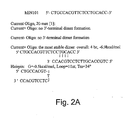
- a synthetic antisense oligodeoxynucleotide having the nucleotide sequence: 5'-CTGCCACGTTCTCCTGCACC-3', herein designated SEQ ID NO:1 is not only useful in selectively suppressing the production of the AChE-R, isoform, but also possesses cross-species specificity, which enables its use in rodent animal models of various diseases and, moreover, remarkably appears to penetrate the BBB, and may thus be useful in treatment of diseases of the central nervous system, alone or in combination with other therapeutic agents.
- the finding that the novel antisense of the invention can penetrate the BBB was unexpected, particularly in view of the expectation that the BBB would be impermeable to large polar molecules.
- oligonucleotides can be delivered by single injections, by repeated administration through an implanted cannula, or by continuous infusion using an osmotic mini-pump such as Alzet (Alza, Palo Alto, CA).
- Oligonucleotides can either be delivered into the CSF or directly into the brain region of interest. In general, oligonucleotides are considered to remain relatively localized following intraparenchymal administration. Thus, a single injection of 24 ⁇ g of an antisense oligonucleotide targeted to the cAMP-response element (CREB) into rat amygdala was reported to diffuse only 0.72 ⁇ 0.04 ⁇ l around the injection site, exerting region-specific effects on conditioned taste aversion (CTA). Injection of the same oligonucleotide into the basal ganglia 2 mm above the amygdala had no effect on CTA.
- CREB cAMP-response element
- oligonucleotides in the brain could be achieved by direct, high-flow intraparenchymal microinfusion.
- the average tissue concentration of oligonucleotide was calculated to be between 3-15 ⁇ M - well within what is considered physiologically significant.
- uptake into neurons it was shown that neurons in the striatum of rats preferentially take up oligonucleotides compared to glia.
- some signal was observed to be transported along projection pathways to distant sites.
- oligonucleotides should be prepared in a way that would enable their stability and free penetrance into the central nervous system following intravenous injection, or yet more preferably, following oral administration.
- the present invention is aimed at a novel, preferably nuclease protected antisense oligodeoxynucleotide targeted to the common coding domain of human AChE, which selectively suppresses the production of AChE-R, with rapid and long-lasting clinical improvements in muscle function, which possesses cross-species specificity and can penetrate the BBB and destroy AChE-R mRNA within central nervous system neurons.
- the invention relates to a pharmaceutical composition comprising the antisense oligonucleotide hEN101, defined by SEQ ID NO:1. Further, the invention relates to a pharmaceutical composition comprising the antisense oligonucleotide hEN101, defined by SEQ ID NO:1, for the treatment and/or prevention of a progressive neuromuscular disorder, for improving stamina and/or for use in chronic muscle fatigue, preferably for the treatment and/or prevention of myastenia gravis, wherein said antisense oligodeoxynucleotide selectively suppresses the production of the AChE-R isoform.
- the invention relates to a pharmaceutical or medical composition for the treatment and/or prevention of a progressive neuromuscular disorder, comprising as active ingredient a synthetic antisense oligodeoxynucleotide targeted against human AChE mRNA having the nucleotide sequence:
- the antisense oligonucleotide preferably causes preferential destruction of AChE-R mRNA, possesses cross-species specificity, was demonstrated to cause no toxicity in rodents or primates, and can penetrate the BBB in primates (monkeys) via both i.v. and p.o. administration routes.
- the invention further relates to a synthetic antisense oligodeoxynucleotide targeted against human AChE-mRNA having the nucleotide sequence: 5' CTGCCACGTTCTCCTGCACC 3' (SEQ ID NO:1), wherein said antisense oligodeoxynucleotide selectively suppresses the production of the AChE-R isoform.
- the synthetic antisense oligodeoxynucleotide having the nucleotide sequence designated SEQ ID NO:1 is nuclease resistant.
- the nuclease resistance may be achieved by modifying the antisense oligodeoxynucleotide of the invention so that it comprises partially unsaturated aliphatic hydrocarbon chain and one or more polar or charged groups including carboxylic acid groups, ester groups, and alcohol groups.
- the nuclease resistant antisense oligodeoxynucleotide of the invention has at least one of the last three 3'-terminus nucleotides is 2'-O-methylated, preferably the last three 3'-terminus nucleotides are 2'-O-methylated.
- the nuclease resistant antisense oligodeoxynucleotide of the invention may have at least one of the last 3'-terminus nucleotides fluoridated.
- nuclease resistant antisense oligodeoxynucleotide of the invention has phosphorothioate bonds linking between at least two of the last 3'-terminus nucleotide bases, preferably has phosphorothioate bonds linking between the last four 3'-terminal nucleotide bases.
- nuclease resistance may be achieved by the synthetic nuclease resistant antisense oligodeoxynucleotide of the invention having a nucleotide loop forming sequence at the 3'-terminus, for example a 9-nucleotide loop having the nucleotide sequence CGCGAAGCG (SEQ ID NO:2).
- the synthetic nuclease resistant antisense oligodeoxynucleotide of the invention is capable of selectively modulating mammalian AChE production, particularly selectively modulating primate AChE production in neurons residing in the central nervous system, including human AChE of interneurons.
- the invention further relates to a synthetic nuclease resistant antisense oligodeoxynucleotide having the nucleotide sequence: 5' CTGCCACGTTCTCCTGCACC 3' (SEQ ID NO:1), wherein said antisense oligodeoxynucleotide selectively suppresses the production of the AChE-R isoform.
- the invention relates to a pharmaceutical composition
- a pharmaceutical composition comprising an antisense oligodeoxynucleotide of the invention, and optionally further comprising pharmaceutically acceptable adjuvant, carrier or diluent.
- the pharmaceutical composition of the invention comprises an antisense oligodeoxynucleotide of SEQ ID NO:1, which is 2'-O-methylated on at least one, preferably the three last 3'-terminus nucleotides.
- the pharmaceutical composition of the invention is useful in the treatment and/or prevention of a progressive neuromuscular disorder, for improving stamina and/or for use in decreasing chronic muscle fatigue.
- the pharmaceutical composition of the invention may be for a once daily use by a patient of a dosage between about 0.001 ⁇ g/g and about 50 ⁇ g/g of active ingredient, preferably a dosage of active ingredient of about 0.01 to about 5.0 ⁇ g/g, more preferably a dosage of active ingredient of about 0.15 to about 0.5 ⁇ g/g.
- the pharmaceutical composition of the invention is particularly intended for use in treating or preventing a progressive neuromuscular disorder, wherein said disorder is associated with an excess of AChE mRNA or protein.
- a progressive neuromuscular disorder wherein said disorder is associated with an excess of AChE mRNA or protein.
- Such a disorder may be, for example, a progressive neuromuscular disorder, wherein said disorder is associated with an excess of AChE-R mRNA.
- the pharmaceutical composition of the invention is thus particularly suitable for treating or preventing a progressive neuromuscular disorder, wherein said disorder is associated with impairment of cholinergic transmission.
- compositions for the treatment of a progressive neuromuscular disorder wherein said disorder involves muscle distortion, muscle re-innervation or NMJ abnormalities, for example myasthenia gravis, Eaton-Lambert disease, muscular dystrophy, amyotrophic lateral sclerosis, post-traumatic stress disorder (PTSD), multiple sclerosis, dystonia, post-stroke sclerosis, post-injury muscle damage, post-surgery paralysis, excessive re-innervation, and post-exposure to AChE inhibitors.
- myasthenia gravis for example myasthenia gravis, Eaton-Lambert disease, muscular dystrophy, amyotrophic lateral sclerosis, post-traumatic stress disorder (PTSD), multiple sclerosis, dystonia, post-stroke sclerosis, post-injury muscle damage, post-surgery paralysis, excessive re-innervation, and post-exposure to AChE inhibitors.
- the pharmaceutical composition of the invention is also useful in improving stamina in physical exercise or in decreasing muscle fatigue.
- the invention relates to a pharmaceutical composition
- a pharmaceutical composition comprising an antisense oligodeoxynucleotide as denoted by SEQ ID NO:1, for facilitating passage of compounds through the BBB, optionally further comprising additional pharmaceutically active agent and/or pharmaceutically acceptable adjuvant, carrier or diluent.
- the additional pharmaceutically active agent is a compound to be transported through the BBB, wherein said compound may be contrast agents used for central nervous system imaging, agents that function to block the effects of abused drugs, antibiotics, chemotherapeutic drugs and vectors to be used in gene therapy.
- This composition would function primarily by suppressing the production of AChE-R, which is apparently involved in BBB maintenance.
- the invention relates to the use of an antisense oligodeoxynucleotide as described herein for the manufacture of a pharmaceutical composition.
- the invention relates to the use of the antisense oligodeoxynucleotide as described herein for the manufacture of a pharmaceutical composition for the treatment and/or prevention of a progressive neuromuscular disorder, for improving stamina and/or for use in chronic muscle fatigue, preferably for the treatement and/or prevention of myastenia gravis.
- the invention relates to the use of an antisense oligodeoxynucleotide as described herein or the use of a pharmaceutical composition as described herein for facilitating passage of compounds through the BBB, optionally further comprising additional pharmaceutically active agent to be transported to the BBB and/or pharmaceutically acceptable adjuvant, carrier or diluent.
- Antisense oligonucleotide A nucleotide comprising essentially a reverse complementary sequence to a sequence of AChE mRNA.
- the nucleotide is preferably an oligodeoxynucleotide, but also ribonucleotides or nucleotide analogues, or mixtures thereof, are contemplated by the invention.
- the antisense oligonucleotide may be modified in order to enhance the nuclease resistance thereof, to improve its membrane crossing capability, or both.
- the antisense oligonucleotide may be linear, or may comprise a secondary structure. It may also comprise enzymatic activity, such as ribozyme activity.
- Progressive neuromuscular disorder A disorder or condition associated with excess AChE mRNA or protein production, characterized by changes in the morphology of the NMJ and impairment in neuromuscular transmission.
- the neuromuscular disorder may involve muscle distortion, muscle re-innervation or NMJ abnormalities. More preferably, the progressive neuromuscular disorder is myasthenia gravis, muscular dystrophy, multiple sclerosis, amyotrophic lateral sclerosis, post-traumatic stress disorder (PTSD), or dystonia.
- the present invention relates to a novel antisense oligodeoxynucleotide substantially as denoted by SEQ ID NO:1, also designated herein as hEN101.
- the antisense oligonucleotide of the invention may also comprise RNA sequences with enzymatic nucleolytic activity, or may be linked to such sequences.
- Preferred nucleolytic sequences are ribozyme sequences, which were shown to specifically interact with mRNA transcripts. They are ribonucleic acid sequences, including RNase active sites flanked by antisense oligonucleotides [ Haseloff and Gerlach (1988) Nature 3, p. 585 , Sarver et al. (1990) Science 247, p. 1222 ].
- Preferred ribozymes are hammerhead ribozymes [ Conaty et al.
- Another preferred ribozyme is the hairpin ribozyme structure, e.g., as derived from tobacco ringspot virus satellite RNA [see Perez-Ruiz (1999) Antisense Nucleic Acid Drug Dev., 9, 33-42 ].
- the novel antisense oligodeoxynucleotide of the invention corresponds to the reverse complement of human AChE mRNA sequence, from nucleotide 795-5' to nucleotide 3'-814 ( Fig. 1 ).
- Prior work by the present inventors has demonstrated the usefulness of antisense oligonucleotide in suppressing AChE production and in the treatment of memory deficiency.
- a number of AChE antisense oligonucleotides have been disclosed.
- Said prior work further discloses desirable features of such antisense oligonucleotides and possible modifications thereof, such as nuclease resistance, modifications to enhance membrane transport of oligonucleotides, and the like.
- the antisense oligodeoxynucleotide of the invention is preferably nuclease resistant.
- nuclease resistant There are a number of modifications that impart nuclease resistance to a given oligonucleotide.
- An example for a loop forming structure is the sequence 5' CGCGAAGCG (SEQ ID NO:2), which may be added to the 3' end of a given antisense oligonucleotide to impart nucleas
- the cells on which the antisense oligonucleotide of the invention exerts its effects are preferably muscle cells and cells of the NMJ, including the nerve axons and endplate structures.
- AChE-R amount and AChE-R mRNA levels are reduced in central nervous system neurons by at least about 30%, preferably by at least about 40%, and more preferably by at least about 50%, within 24 hr of the treatment, and by about 80% under repeated treatment.
- This reduction was shown by fluorescent in situ hybridization (FISH) and immune labeling and its effectiveness was confirmed by electrophysiology and tread mill tests. It exceeded by far all previous reports of AS-ON destruction of AChE-R mRNA in other cells and tissues.
- FISH fluorescent in situ hybridization
- the preferred treatment window of candidate oligonucleotides is evaluated by FISH.
- the technique of in situ hybridization is well known to the man of skill in the art, and is described e.g., In situ Hybridization, Wilkinson, D.G. (Ed.) ISBN: 0199633274 ; In situ Hybridization for the Brain, Wisden W., Morris B.J. (Eds.), ISBN: 0127599207 , PCR in situ Hybridization: A Practical Approach (Practical Approach Series 186), Herrington C.S., John O'Leary J., (Eds.) ISBN:019963632X .
- Detailed protocols relating to in situ hybridization using non-radioactively labeled probes are available from Microsynth GmbH (Balgach, Switzerland).
- Labeled AChE-R cRNA sequences may be used as probes for in situ hybridization.
- the ACHE cRNA probe preferably comprises 14 pseudo-intron sequences.
- the AChE mRNA determination is carried out by using in situ RT-PCR, which technique is described, e.g., in the above-mentioned references, see also PCR in situ hybridization: Protocols and Applications, 3rd ed., by Nuovo, G.J. Lippincott, Raven Press, New York (1996 ).
- Phosphorothioate-modified oligonucleotides are generally regarded as safe and free of side effects.
- Peng et al. teach that undesired in vivo side effects of phosphorothioate antisense oligonucleotides may be reduced when using a mixed phosphodiester-phosphorothioate backbone.
- the antisense oligonucleotides of the present invention have been found to be effective as partially phosphorothioates and yet more effective as partially 2'-O-methyl protected oligonucleotides.
- WO 98/26062 teaches that AChE antisense oligonucleotides containing three phosphorothioate bonds out of about twenty internucleotide bonds are generally safe to use in concentrations of between about 1 and 10 ⁇ M. However, for long-term applications, oligonucleotides that do not release toxic groups when degraded may be preferred. These include 2'-O-methyl protected oligonucleotides, but not phosphorothioate oligonucleotides. A further advantage of 2'-O-methyl protection over phosphorothioate protection is the reduced amount of oligonucleotide that is required for AChE suppression.
- the dosage of the antisense oligodeoxynucleotide is about 0.001 to 50 ⁇ g oligonucleotide per gram of body weight of the treated animal.
- the dosage is about 0.01 to about 5.0 ⁇ g/g. More preferably, the dosage is between about 0.05 to about 0.5 ⁇ g/g.
- the optimal dose range is between 50-500 ⁇ g/kg of body weight of the treated animal, for both rats and monkeys.
- the antisense oligonucleotide of the invention is provided for use in the treatment of a disorder that involves excessive AChE mRNA production.
- the disorder is preferably a disorder involving functional and morphological changes in the NMJ.
- the progressive neuromuscular disorder preferably involves overexpression of AChE-R mRNA.
- the disorder is selected from, but not limited to, multiple sclerosis, PTSD, myasthenia gravis, muscular dystrophy, amyotrophic lateral sclerosis, dystonia, muscle distortion, muscle re-innervation or excessive muscle innervation.
- the excessive muscle innervation is selected preferably from, but not limited to, excessive innervation after trauma, preferably after amputation.
- the invention relates to a pharmaceutical composition for the treatment and/or prevention of a progressive neuromuscular disorder, for improving stamina in physical exercise and /or for use in decreasing chronic muscle fatigue, comprising as active ingredient the synthetic antisense oligodeoxynucleotide hEN101, as denoted by SEQ ID NO:1, and optionally further comprising additional therapeutic agents and/or pharmaceutically acceptable carriers, excipients and/or diluents.
- said pharmaceutical composition is for the treatment and/or prevention of myasthenia gravis.
- the progressive neuromuscular disorder to be treated and/or prevented by the pharmaceutical composition of the invention is associated with an excess of AChE or protein.
- said excessive AChE will be the AChE-R variant or isoform.
- said progressive neuromuscular disorder to be treated and/or prevented by the pharmaceutical composition of the invention is associated with impairment of the cholinergic transmission.
- Said disorder may involve muscle distortion, muscle re-innervation, or neuromuscular junction (NMJ) abnormalities.
- NMJ neuromuscular junction
- the pharmaceutical composition of the invention is for use in the treatment and/or prevention of a disorder such as myasthenia gravis (MG), Eaton-Lambert disease, muscular dystrophy, amyotrophic lateral sclerosis (ALS), post-traumatic stress disorder (PTSD), multiple sclerosis (MS), dystonia, post-stroke sclerosis, post-injury muscle damage, excessive re-innervation, post-surgery paralysis of unknown origin and post-exposure to AChE inhibitors.
- MG myasthenia gravis
- ALS amyotrophic lateral sclerosis
- PTSD post-traumatic stress disorder
- MS multiple sclerosis
- dystonia post-stroke sclerosis
- post-injury muscle damage excessive re-innervation
- the pharmaceutical composition of the invention is for daily use by a patient in need of such treatment, at a dosage of active ingredient between about 0.001 ⁇ g/g and about 50 ⁇ g/g.
- the treatment and/or prevention comprises administering a dosage of active ingredient of about 0.01 to about 5.0 ⁇ g/g.
- said dosage of active ingredient is of between about 0.05 to about 0.50 ⁇ g/g, and even most preferably , the dosage is from 0.15 to 0.50 ⁇ g/g of body weight of the patient.
- the invention relates to a pharmaceutical composition
- a pharmaceutical composition comprising an antisense oligodeoxynucleotide as denoted by SEQ ID NO:1, for facilitating passage of compounds through the BBB, optionally further comprising additional pharmaceutically active agent and/or pharmaceutically acceptable adjuvant, carrier or diluent.
- the additional pharmaceutically active agent is a compound to be transported through the BBB.
- antisense oligonucleotide of the invention As the antisense oligonucleotide of the invention has been shown to penetrate the BBB, brain tumors could be treated by injection or oral administration of the antisense oligonucleotide of the invention, preventing or reducing the need for methods requiring invasion of the CNS.
- Antisense oligonucleotides can be made tumor-specific [ Ratajczak M.Z. et al. Proc. Natl. Acad. Sci. USA 89, 11823-11827 (1992 )]; therefore should they be found to pass the BBB, they may be both specific and effective.
- the additional pharmaceutical agents comprised in these compositions of the invention may be, for example carcinostatic and metastatic drugs.
- a number of compounds are needed for the diagnostic or treatment of conditions affecting the central nervous system, wherein the BBB would normally impede their delivery.
- These conditions can include any disease or pathology, which include but are not limited to infections, neurochemical disorders, brain tumors and gliomas, demyelination, other neuropathies, encephlopathies, coma, ischemia, hypoxia, epilepsy, dementias, cognitive disorders, neuropsychiatric disorders (as for example depression, anxiety, schizofrenia and the like), as well as genetic disorders.
- said compounds or additional pharmaceutically active agent to be transported across the BBB may be, for example, contrast agents (dyes) used for central nervous system imaging, drugs such as antibiotics or chemotherapeutics, gene therapy vectors, or even agents that function to block the effects of abused drugs.
- contrast agents dyes used for central nervous system imaging
- drugs such as antibiotics or chemotherapeutics, gene therapy vectors, or even agents that function to block the effects of abused drugs.
- the administration and dosage of these compounds shall be according to what is known in medical practice, which generally should take into account the clinical condition of the patient in need of such treatment, as well as said patient's age, sex, body weight and other factors known to be important in the medical practice.
- the site and method of administration should also be chosen accordingly.
- the pharmaceutically effective amount for purposes herein is thus determined by such considerations as are known in the art.
- the compound can be administered in several ways as described for the delivery of the composition (see below).
- the compound to be transported through the BBB may be administered simultaneously with the composition of the invention or can be administered at some point during the biologically effective period of the action of the composition.
- the composition of the invention facilitates the disruption of the BBB, i.e. it opens the BBB, for a period of time depending on its dose and the compound can then be administered during this "open" period.
- antisense oligonucleotide of the invention also when comprised in a pharmaceutical composition of the invention, must travel across cell membranes.
- antisense oligonucleotides have the ability to cross cell membranes, apparently by a saturable uptake mechanism linked to specific receptors.
- antisense oligonucleotides are single-stranded molecules, they are to a degree hydrophobic, which enhances passive diffusion through membranes. Modifications may be introduced to an antisense oligonucleotide to improve its ability to cross membranes.
- the oligonucleotide molecule may be linked to a group comprising optionally partially unsaturated aliphatic hydrocarbon chain and one or more polar or charged groups such as carboxylic acid groups, ester groups, and alcohol groups.
- oligonucleotides may be linked to peptide structures, which are preferably membranotropic peptides. Such modified oligonucleotides penetrate membranes more easily, which is critical for their function and may therefore significantly enhance their activity. Palmityl-linked oligonucleotides have been described by Gerster et al. [Anal. Biochem. 262, 177-84 (1998 )].
- compositions of the invention are for use by injection, topical administration or oral uptake.
- Preferred uses of the pharmaceutical compositions of the invention by injection are subcutaneous injection, intraperitoneal injection, and intramuscular injection. As shown in the following Examples, also oral administration proved very effective.
- compositions of the present invention suitable for oral administration may be presented as discrete units such as capsules, sachets or tablets, each containing a predetermined amount of the active ingredient; as a powder or granules; as a solution or suspension in an aqueous or nonaqueous liquid; or as an oil-in-water liquid emulsion or a water-in-oil liquid emulsion.
- the active ingredient may also be presented as a bolus, electuary or paste.
- a tablet may be made by compression or molding, optionally with one or more accessory ingredients.
- Compressed tablets may be prepared by compressing in a suitable machine the active ingredient in a free-flowing form such as a powder or granules, optionally mixed with a binder (e.g., povidone, gelatin, hydroxypropylmethyl cellulose), lubricant, inert diluent, preservative, disintegrant (e.g., sodium starch glycolate, cross-linked povidone, cross-linked sodium carboxymethyl cellulose) surface-active or dispersing agent.
- Molded tablets may be made by molding in a suitable machine a mixture of the powdered compound moistened with an inert liquid diluent.
- the tablets may optionally be coated or scored and may be formulated so as to provide slow or controlled release of the active ingredient therein using, for example, hydroxypropylmethyl cellulose in varying proportions to provide the desired release profile. Tablets may optionally be provided with an enteric coating, to provide release in parts of the gut other than the stomach.
- the pharmaceutical compositions of the invention generally comprise a buffering agent, an agent which adjusts the osmolarity thereof, and optionally, one or more carriers, excipients and/or additives as known in the art, e.g., for the purposes of adding flavors, colors, lubrication, or the like to the pharmaceutical composition.
- a preferred buffering agent is phosphate-buffered saline solution (PBS), which solution is also adjusted for osmolarity.
- Carriers may include starch and derivatives thereof, cellulose and derivatives thereof, e.g., microcrystalline cellulose, xantham gum, and the like.
- Lubricants may include hydrogenated castor oil and the like.
- a preferred pharmaceutical formulation is one lacking a carrier.
- Such formulations are preferably used for administration by injection, including intravenous injection.
- compositions are well known in the art and has been described in many articles and textbooks, see e.g., Remington's Pharmaceutical Sciences, Gennaro A. R. ed., Mack Publishing Co., Easton, PA, 1990, and especially pp. 1521-1712 therein.
- Additives may also be designed to enhance uptake of the antisense oligonucleotide across cell membranes.
- Such agents are generally agents that will enhance cellular uptake of double-stranded DNA molecules.
- certain lipid molecules have been developed for this purpose, including the transfection reagents DOTAP (Roche Diagnostics), Lipofectin, Lipofectam, and Transfectam, which are available commercially.
- DOTAP transfection reagents
- Lipofectin Lipofectam
- Transfectam which are available commercially.
- the antisense oligonucleotide of the invention may also be enclosed within liposomes.
- liposomes e.g., using the above mentioned transfection reagents, is well known in the art.
- Other methods of obtaining liposomes include the use of Sendai virus or of other viruses. Examples of publications disclosing oligonucleotide transfer into cells using the liposome technique are e.g., Meyer et al. [J. Biol. Chem. 273, 15621-7 (1998 )], Kita and Saito [Int. J. Cancer 80, 553-8 (1999 )], Nakamura et al. [Gene Ther. 5, 1455-61 (1998 )] Abe et al.
- Lipofectin in liposome-mediated oligonucleotide uptake is described in Sugawa et al. [J. Neurooncol. 39, 237-44 (1998 )].
- fusogenic cationic-lipid-reconstituted influenza virus envelopes is described in Waelti et al. [Int. J. Cancer, 77, 728-33 (1998 )].
- the above-mentioned cationic or nonionic lipid agents not only serve to enhance uptake of oligonucleotides into cells, but also improve the stability of oligonucleotides that have been taken up by the cell.
- the invention also relates to a method for the treatment or prevention of a progressive neuromuscular disorder or other disease involving excessive production of AChE-R mRNA, comprising administering the oligodeoxynucleotide of the invention or a pharmaceutical composition of the invention or of any of the preferred embodiments thereof, to a patient in need thereof.
- the invention relates to a method of administering to a patient in need of such treatment a therapeutic agent for treatment of a disorder or disease of the CNS, comprising the steps of administering to said patient the antisense oligodeoxynucleotide of the invention and said therapeutic agent.
- the administration of the therapeutic agent may be simultaneous with the administration of that of the antisense oligodeoxynucleotide of the invention, or preceding or following the same.
- Rupture of the BBB by the antisense oligodeoxynucleotide of the invention will facilitate the passage of the therapeutic agent across the BBB and into the CNS, where its effect is required.
- Rats EAMG was induced in female Lewis rats (120-150 g) purchased from the Jackson Laboratory (Bar Harbor, ME), and housed in the Animal Facility at the Hebrew University Faculty of Medicine, in accordance with NIH guidelines. Control FVB/N mice were subjected to confined swim stress as described [Kaufer et al., 1998 id ibid. ] . Transgenic FVB/N mice overexpressing AChE-R were as detailed [ Sternfeld et al. (2000) Proc. Natl.Acad. Sci. USA 97, 8647-8652 ].
- Oligonucleotides HPLC-purified, GLP grade oligonucleotides (purity >90% as verified by capillary electrophoresis) were purchased from Hybridon, Inc. (Worchester, USA). Lyophilized oligonucleotides were resuspended in sterile double distilled water (24 mg/ml), and stored at - 20°C. The oligonucleotides were prepared with phosphodiester linkages at all but the three terminal 3' positions at which 2'-O-methyl ribonucleotide substitutions were made. The primary sequences used in this study were:
- hEN101 Stability of hEN101: hEN101 was found to be stable (>90% of original concentration) after storage for 2 h in human plasma with EDTA at room temperature, following three freeze/thawing cycles, or after 1 month at - 20°C. Exposure at room temperature to Li-heparin-treated blood caused a decay of hEN101 with a half-life in the order of 30 min.
- Antibodies Rabbit polyclonal antibodies against the C-terminal AChE-R were prepared and purified as described [Sternfeld et al. (2000) ibid .] . Goat polyclonal anti-AChR (C-20, S.C.-1448) antibodies were from Santa Cruz, (Santa Cruz, CA).
- T-AChR Torpedo acetylcholine receptor
- Rats were immunized with 40 ⁇ g of purified T-AChR emulsified in complete Freund's adjuvant supplemented with 1 mg of M. tuberculosis H37Ra (Difco, Detroit MI). The animals were injected subcutaneously in the hind footpads and a booster injection of the same amount was given after 30 days. A third injection was administered to animals that did not develop EAMG after the second injection.
- Anti-AChR antibody determination Serum was assayed by direct radioimmunoassay, using 125 I- ⁇ bungarotoxin (BgT) bound to T-AChR and to rat (R) AChR [Boneva et al. (2000) id ibid ]. All the EAMG rats displayed high anti-T-AChR or anti-R-AChR titers, with serum mean ⁇ standard error (SE) values of 82.1 ⁇ 16.0 nM for anti-T-AChR antibodies and 19.9 ⁇ 1.8 nM for anti-R-AChR. Human serum was tested for the level of anti-AChR antibodies as previously described [ Drachman, D.B. (1994) N Engl J Med 330, 1797-810 ].
- SE serum mean ⁇ standard error
- AChR concentration in the gastrocnemius and tibialis muscles was determined using 125 I- ⁇ -BgT binding followed by precipitation by saturated ammonium sulfate as described previously [Boneva et al. (2000) id ibid ].
- primary mouse anti-SC35 antibody was diluted (1:100) in the same buffer as the previous primary antibodies, and slides were incubated 1 h at room temperature following overnight incubation at 4°C. Sections were rinsed and incubated with peroxidase conjugated goat anti-mouse secondary antibody, diluted in the same blocking buffer, for 1 h at room temperature and then overnight at 4°C. Detection was performed with DAB substrate (Sigma). Slides were cover-slipped with Immunomount (Shandon, Pittsburgh, PA).
- Electromyography Rats were anesthetized by i.p. injection of 2.5 mg/Kg pentobarbital, immobilized, and subjected to repetitive sciatic nerve stimulation, using a pair of concentric needle electrodes at 3 Hz.
- Baseline compound muscle action potential (CMAP) was recorded by a concentric needle electrode placed in the gastrocnemius muscle, following a train of repetitive nerve stimulations at supramaximal intensity. Decrease (percent) in the amplitude of the fifth vs. the first muscle action potential was determined in two sets of repetitive stimulations for each animal. A reduction of 10% or more was considered indicative of neuromuscular transmission dysfunction.
- Drug administration Intravenous injections and blood sampling for anti-AChR antibodies testing were via the right jugular vein under anesthesia.
- a special needle for oral gavage feeding was used, which is curved with a ball end (Stoelting, Wood Dale IL).
- Mestinon ® was administered in a dose of 1 mg/kg/day, and purchased from Hoffmann La-Roche, Basel, Switzerland.
- In situ hybridization Tissues were fixed in 4% paraformaldehyde and cut into 7 ⁇ m paraffin embedded sections. Spinal cord sections were deparaffinized, rehydrated using serial ethanol dilutions and permeabilized with proteinase K (10 ⁇ g/ml at room temp.). Slides were exposed to 5' biotinylated, fully 2'-oxymethylated AChE-R or AChE-S-specific 50-mer cRNA probes complementary to human ACHE pseudo-intron 4 or exon 6, respectively [Grisaru et al. (2001) id ibis .].
- Hybridization was performed overnight at 52° C in hybridization mixture containing 10 ⁇ g/ml probe, 50 ⁇ g/ml yeast tRNA, 50 ⁇ g/ml heparin and 50% formamide in 375 mM Na chloride, 37.5 mM Na citrate, pH 4.5.
- the probe was constructed according to the human AChE-R sequence; for rat sections, according to the mouse sequence.
- Serum analyses Blood samples drawn from EAMG rats and MG patients were subjected to non-denaturing gel electrophoresis as described [Kaufer et al. (1998) id ibid ], as well as to catalytic activity measurements of AChE [Shapira et al . (2000) id ibid ].
- Iso-OMPA tetraisopropylpyrophosphoramide, 5x10⁻⁵ ⁇ M
- AChE-R accumulate in blood and muscle of EAMG rats
- the AChE-R variant migrates on non-denaturing polyacrylamide gels faster than the tetrameric synaptic enzyme, AChE-S [Kaufer et al . (1998) id ibid .], and it is present in the serum of MG patients [ WO01/36627 ].
- immunoblot analysis confirmed that in EAMG rats, as compared with healthy rats, there was a massive increase in serum AChE-R ( Fig. 7 ).
- nAChR nicotinic acetylcholine receptor
- AChE-R and AChE-R mRNA levels in muscle respond to rEN101
- AChE-R The soluble and secretory nature of AChE-R predicted that it would degrade acetylcholine before it reaches the post-synaptic membrane, limiting receptor activation.
- rEN101 antisense oligonucleotide was used, which is capable of selective suppression of AChE-R production [ Galyam, N. et al. (2001) Antisense Nucl Acid Drug Dev 11, 51-57 ].
- AChE-R suppression was tested in healthy and EAMG rats with reduced muscle nAChR levels ( Fig. 8B , 1 and 2 ) 24h after a single i.v. injection of 250 ⁇ g/Kg rEN101.
- rEN101 Unlike anticholinesterases, which block all AChE variants, rEN101 was shown to selectively suppress muscle AChE-R production [Lev-Lehman et al . (2000) id ibid ]. Therefore, retrieval of stable CMAP in rEN101-teated EAMG rats may attest to the causal role of AChE-R in the neuromuscular malfunctioning that is characteristic of the myasthenic phenotype. To test this concept, rEN101 was injected i.v. at doses ranging from 10-500 ⁇ g/Kg (2 to 20 nmol/rat). rEN101 did not affect CMAP in healthy animals, but retrieved stable CMAP ratios within 1 h ( Fig.
- CMAP normalization was accompanied by increased mobility, upright posture, stronger grip, and reduced tremulousness of ambulation.
- Table 1 Post-treatment CMAP ratios a Oral b Intravenous b Phenotype Treatment Naive EN101 EAMG EN101 EAMG EN102 EAMG invEN102 EAMG pyridostigmine Naive EN101 EAMG EN101 EAMG EN102 EAMG invEN102 0h 1.01 ⁇ 0.01 (4) 0.84 ⁇ 0.03 (8) 0.82 ⁇ 0.02 (4) 0.78 ⁇ 0.06 (4) 0.90 ⁇ 0.01 (6) 1.00 ⁇ 0.0 (6) 0.87 ⁇ 0.01 (6) 0.85 ⁇ 0.06 (4) 0.89 ⁇ 0.02 (5) 1 h c 1.0 ⁇ 0.02 (4) 0.97 ⁇ 0.02 (8) 0.86 ⁇ 0.04 (3) 0.86 ⁇ 0.05 (4) 0.98 ⁇ 0.01 (6) 0.02 ⁇ 0.01 (7) 1.00 ⁇ 0.01 (4) 1.04 ⁇ 0.01 (4) 0.89 ⁇ 0.03 (5) 5h 1.03 ⁇ 0.0
- rEN101 produced a saturable response with IC 50 of ⁇ 10 ⁇ g/Kg. This effect appeared to be superimposed on a longer lasting and less concentration-dependent effect, which showed no saturation in the range studied ( Fig. 9D ). This phenomenon possibly reflected the altered muscle and/or neuromuscular junction properties under the stable CMAP retrieval afforded by rEN101.
- Antisense prevention of AChE-R accumulation promotes stamina in EAMG rats
- Mandibular lymph nodes were examined for the effect of EN101 on AChE-R mRNA. Compared to the saline-injected control, rEN101 (oral or i.v.) or hEN101 (i.v.) were inconsistent in depressing AChE-R mRNA levels within these lymph nodes (data not shown). In contrast, the administration of rEN101 (oral or i.v.) or hEN101 (i.v.) did not affect the expression of the AChE-S synaptic variant of AChE in these mandibular lymph nodes (data not shown). Thus, the antisense oligodeoxynucleotide of the invention may be used to suppress the AChE-R variant without affecting the expression of the synaptic variant, i.e. without adversely affecting cholinergic transmission.
- AChE-R suppression modifies the course of EAMG pathophysiology
- rEN101 afforded long-term maintenance of stable CMAP. This further enabled the inventors to test whether the cholinergic imbalance contributes to the physiological deterioration that is characteristic of EAMG. Rats were first treated with rEN101 once a day for 5 days, CMAPs being determined prior to each treatment. Both the efficacy of rEN101 in retrieving normal CMAP and its capacity to reduce the inter-animal variability in CMAP values reached similar levels to those of pyridostigmine ( Fig. 11A and 11B ). However, the onset of response to pyridostigmine was more rapid (Table 1), while that observed with rEN101 was longer-lasting.
- EAMG rats receiving oral doses of rEN101 daily presented significant improvement in survival, clinical status and treadmill performance, as compared with pyridostigmine- and saline-treated animals ( Fig. 12 ; P ⁇ 0.041 for 4 weeks survival incidence, Fisher exact test, AS-ON vs. other treatments).
- One way repeated measures ANOVA yielded P ⁇ 0.05 for all other measures (AS vs. other treatments at 4 weeks).
- the effect of rEN101 on clinical symptoms was also corroborated by body weight changes.
- daily rEN101 administration promoted long-term change in the course of EAMG in rats with moderate to severe symptoms, under the same conditions in which untreated or pyridostigmine-treated animals deteriorated.
- AChE-R variant is systemically elevated in MG and EAMG.
- the inventors showed that antisense suppression of AChE-R normalized NMJ responses to repeated nerve stimulation, promoting muscle strength, and recuperating a healthier status in animals otherwise too weak even to eat.
- the toxicology study consisted of checking the animals during the 7 days of treatment for gross signs of toxicity by the following parameters: mortality, body weight, food consumption, electrocardiography, blood pressure, hematology (peripheral blood), and blood chemistry. At 7 days the monkeys were sacrificed and examined post-mortem for macroscopic pathology and organ weight.
- brain Cerebellum, cerebrum, midbrain, medulla
- caecum colon
- duodenum heart (auricular and ventriclar regions), ileum, jejunum, kidneys (cortex, medulla, papilla regions), liver (two main lobes), lungs (two major lobes, including bronchi), lymph nodes (mandibular and mesenteric), esophagus, rectum, sciatic nerve, skeletal muscle (thigh), spinal cord (transverse and longitudinal sections at cervical level), spleen and stomach (body and antrum) were stained with hematoxylin/eosin to reveal necrosis or cell death.
- Paraffin-embedded 7 ⁇ m spinal cord sections where examined, by in situ hybridization for the levels of AChE-R and AChE-S mRNA. Under all three regimens (oral 0.15 and 0.50, and i.v. 0.50 ⁇ g/g/day), there was no apparent reduction in AChE-S mRNA ( Fig. 14 ). However, there was a significant reduction in AChE-R mRNA in increasing hEN101 daily dose from 0.15 (oral) to 0.50 (oral or i.v.) with i.v. dosage being more effective.
- AChE-R-positive sections from monkey spinal cords were analyzed for the relation between cell body diameter and percentage of AChE-R positive cells ( Fig. 15 ). Cells were divided into three categories according to their body diameter, and the percentage of AChE-R-positive cells from each category was evaluated. Treatment with the lower concentration of EN101 (150 ⁇ g/kg/day) caused an increase in the percent of small AChE-R-positive cells ( ⁇ 70 ⁇ m diameter) as compared to naive monkeys, probably due to the injection stress response, which is known to raise AChE-R mRNA levels (Kaufer et al, 1998). Either i.v. or p.o.
- Plasma cholinesterase activities were measured by spectrophotometry assessing the rate of hydrolysis of acetylthiocholine (measured by the Ellman assay, which quantifies the hydrolysis of acetylthiocholine) [ Ellman, G.L., et al. (1961), Biochem. Pharmacol. 7, 88-95 ], in the absence or presence of iso-OMPA (a selective butyrylcholinesterase, BChE, inhibitor).
- iso-OMPA a selective butyrylcholinesterase, BChE, inhibitor
- rEN101 does not suppress AChE-R mRNA in the rat spinal cord ( Fig. 17 ), when assessed by in situ hybridization using a mouse probe. Neither the number of positive cells nor the staining intensity were significantly changed.
- One explanation for this result would be that the blood-brain barrier that isolates the CNS is more permeable in monkeys than rats, at least under the chosen experimental conditions.
Landscapes
- Health & Medical Sciences (AREA)
- Life Sciences & Earth Sciences (AREA)
- Engineering & Computer Science (AREA)
- Chemical & Material Sciences (AREA)
- Organic Chemistry (AREA)
- Bioinformatics & Cheminformatics (AREA)
- Genetics & Genomics (AREA)
- General Health & Medical Sciences (AREA)
- Biomedical Technology (AREA)
- Zoology (AREA)
- Wood Science & Technology (AREA)
- General Engineering & Computer Science (AREA)
- General Chemical & Material Sciences (AREA)
- Neurology (AREA)
- Animal Behavior & Ethology (AREA)
- Nuclear Medicine, Radiotherapy & Molecular Imaging (AREA)
- Public Health (AREA)
- Veterinary Medicine (AREA)
- Biochemistry (AREA)
- Medicinal Chemistry (AREA)
- Molecular Biology (AREA)
- Pharmacology & Pharmacy (AREA)
- Chemical Kinetics & Catalysis (AREA)
- Biotechnology (AREA)
- Orthopedic Medicine & Surgery (AREA)
- Physical Education & Sports Medicine (AREA)
- Biophysics (AREA)
- Plant Pathology (AREA)
- Microbiology (AREA)
- Physics & Mathematics (AREA)
- Virology (AREA)
- Neurosurgery (AREA)
- Pain & Pain Management (AREA)
- Pharmaceuticals Containing Other Organic And Inorganic Compounds (AREA)
- Medicines That Contain Protein Lipid Enzymes And Other Medicines (AREA)
Applications Claiming Priority (3)
| Application Number | Priority Date | Filing Date | Title |
|---|---|---|---|
| IL14337901 | 2001-05-24 | ||
| IL143379A IL143379A (en) | 2001-05-24 | 2001-05-24 | Oligonucleotide against human ache isoform r and its uses |
| PCT/IL2002/000411 WO2003002739A1 (en) | 2001-05-24 | 2002-05-23 | Antisense oligonucleotide against human acetylcholinesterase (ache) and uses thereof |
Publications (2)
| Publication Number | Publication Date |
|---|---|
| EP1390493A1 EP1390493A1 (en) | 2004-02-25 |
| EP1390493B1 true EP1390493B1 (en) | 2012-11-07 |
Family
ID=11075445
Family Applications (1)
| Application Number | Title | Priority Date | Filing Date |
|---|---|---|---|
| EP02726406A Expired - Lifetime EP1390493B1 (en) | 2001-05-24 | 2002-05-23 | Antisense oligonucleotide against human acetylcholinesterase isoform r (ache-r) and uses thereof |
Country Status (9)
| Country | Link |
|---|---|
| US (3) | US7074915B2 (https=) |
| EP (1) | EP1390493B1 (https=) |
| JP (1) | JP4316373B2 (https=) |
| AU (1) | AU2002256873B2 (https=) |
| CA (1) | CA2458806C (https=) |
| ES (1) | ES2397302T3 (https=) |
| IL (1) | IL143379A (https=) |
| NZ (1) | NZ529549A (https=) |
| WO (1) | WO2003002739A1 (https=) |
Families Citing this family (79)
| Publication number | Priority date | Publication date | Assignee | Title |
|---|---|---|---|---|
| IL143379A (en) * | 2001-05-24 | 2013-11-28 | Yissum Res Dev Co | Oligonucleotide against human ache isoform r and its uses |
| AU2003225410A1 (en) | 2003-03-21 | 2004-10-11 | Academisch Ziekenhuis Leiden | Modulation of exon recognition in pre-mrna by interfering with the secondary rna structure |
| US7766902B2 (en) | 2003-08-13 | 2010-08-03 | Wisconsin Alumni Research Foundation | Microfluidic device for drug delivery |
| IL158600A (en) * | 2003-10-26 | 2015-07-30 | Hermona Soreq | Dioxysoligonucleotide Antisense Against Acetylcholinesterase as an Anti-Inflammatory Agent |
| GB2441581B (en) * | 2005-06-24 | 2011-01-19 | Roderic M K Dale | Compositions and methods for the treatment of muscle wasting |
| JP5713377B2 (ja) | 2005-12-28 | 2015-05-07 | ザ スクリプス リサーチ インスティテュート | 薬物標的としての天然アンチセンスおよび非コードrna転写物 |
| GB0605337D0 (en) | 2006-03-17 | 2006-04-26 | Genomica Sau | Treatment of CNS conditions |
| CA2648980A1 (en) * | 2006-04-10 | 2007-10-18 | Ester Neurosciences Ltd. | Antisense oligonucleotides against acetylcholinesterase for treating inflammatory diseases |
| WO2007123391A1 (en) | 2006-04-20 | 2007-11-01 | Academisch Ziekenhuis Leiden | Therapeutic intervention in a genetic disease in an individual by modifying expression of an aberrantly expressed gene. |
| EP1857548A1 (en) | 2006-05-19 | 2007-11-21 | Academisch Ziekenhuis Leiden | Means and method for inducing exon-skipping |
| SI2049664T1 (sl) | 2006-08-11 | 2012-04-30 | Prosensa Technologies Bv | Enojna veriga oligonukleotidov, komplementarna repetitivnim elementom, za zdravljenje genetskih bolezni, povezanih z nestabilnostjo dnk ponovitev |
| ES2639852T3 (es) | 2007-10-26 | 2017-10-30 | Academisch Ziekenhuis Leiden | Medios y métodos para contrarrestar los trastornos musculares |
| USRE48468E1 (en) | 2007-10-26 | 2021-03-16 | Biomarin Technologies B.V. | Means and methods for counteracting muscle disorders |
| EP2250193B1 (en) * | 2008-02-19 | 2019-09-18 | Myocept Inc. | Postsynaptically targeted chemodenervation agents and their methods of use |
| EP2119783A1 (en) | 2008-05-14 | 2009-11-18 | Prosensa Technologies B.V. | Method for efficient exon (44) skipping in Duchenne Muscular Dystrophy and associated means |
| US8795259B2 (en) | 2008-08-01 | 2014-08-05 | Wisconsin Alumni Research Foundation | Drug delivery platform incorporating hydrogel pumping mechanism with guided fluid flow |
| US8986250B2 (en) | 2008-08-01 | 2015-03-24 | Wisconsin Alumni Research Foundation | Drug delivery platform utilizing hydrogel pumping mechanism |
| US20110136897A1 (en) * | 2008-08-14 | 2011-06-09 | Yissum Research Development Company Of The Hebrew University Of Jerusalem Ltd. | Toll-like receptor 9 agonists for the treatment of anxiety-related disorders and inflammatory disorders |
| CN102239260B (zh) | 2008-10-03 | 2017-04-12 | 库尔纳公司 | 通过抑制针对载脂蛋白‑a1的天然反义转录物治疗载脂蛋白‑a1相关疾病 |
| ES2629630T3 (es) | 2008-12-04 | 2017-08-11 | Curna, Inc. | Tratamiento de enfermedades relacionadas con eritropoyetina (EPO) mediante inhibición del transcrito antisentido natural a EPO |
| US20110294870A1 (en) | 2008-12-04 | 2011-12-01 | Opko Curna, Llc | Treatment of tumor suppressor gene related diseases by inhibition of natural antisense transcript to the gene |
| ES2600781T3 (es) | 2008-12-04 | 2017-02-10 | Curna, Inc. | Tratamiento para enfermedades relacionadas con el factor de crecimiento del endotelio vascular (vegf) mediante la inhibición de transcritos antisentido naturales de vegf |
| ES2762610T3 (es) | 2009-02-12 | 2020-05-25 | Curna Inc | Tratamiento de enfermedades relacionadas con el factor neurotrófico derivado de cerebro (BDNF) por inhibición de transcrito antisentido natural para BDNF |
| CN102482677B (zh) | 2009-03-16 | 2017-10-17 | 库尔纳公司 | 通过抑制nrf2的天然反义转录物治疗核因子(红细胞衍生2)‑样2(nrf2)相关疾病 |
| WO2010107740A2 (en) | 2009-03-17 | 2010-09-23 | Curna, Inc. | Treatment of delta-like 1 homolog (dlk1) related diseases by inhibition of natural antisense transcript to dlk1 |
| EP2421971B1 (en) | 2009-04-24 | 2016-07-06 | BioMarin Technologies B.V. | Oligonucleotide comprising an inosine for treating dmd |
| PT3278665T (pt) | 2009-04-29 | 2020-11-19 | Amarin Pharmaceuticals Ie Ltd | Composição farmacêutica estável e métodos de utilização das mesmas |
| SG175390A1 (en) | 2009-04-29 | 2011-12-29 | Amarin Corp Plc | Pharmaceutical compositions comprising epa and a cardiovascular agent and methods of using the same |
| ES2609655T3 (es) | 2009-05-06 | 2017-04-21 | Curna, Inc. | Tratamiento de enfermedades relacionadas con tristetraprolina (TTP) mediante inhibición de transcrito antisentido natural para TTP |
| CN103223177B (zh) | 2009-05-06 | 2016-08-10 | 库尔纳公司 | 通过针对脂质转运和代谢基因的天然反义转录物的抑制治疗脂质转运和代谢基因相关疾病 |
| JP5931720B2 (ja) | 2009-05-08 | 2016-06-08 | クルナ・インコーポレーテッド | Dmdファミリーに対する天然アンチセンス転写物の抑制によるジストロフィンファミリー関連疾患の治療 |
| DK2432881T3 (en) | 2009-05-18 | 2018-02-26 | Curna Inc | TREATMENT OF REPROGRAMMING FACTOR-RELATED DISEASES BY INHIBITING NATURAL ANTISENSE TRANSCRIPTS TO A REPROGRAMMING FACTOR |
| CA2762987A1 (en) | 2009-05-22 | 2010-11-25 | Joseph Collard | Treatment of transcription factor e3 (tfe3) and insulin receptor substrate 2 (irs2) related diseases by inhibition of natural antisense transcript to tfe3 |
| KR101704988B1 (ko) | 2009-05-28 | 2017-02-08 | 큐알엔에이, 인크. | 항바이러스 유전자에 대한 천연 안티센스 전사체의 억제에 의한 항바이러스 유전자 관련된 질환의 치료 |
| WO2010148050A2 (en) | 2009-06-16 | 2010-12-23 | Curna, Inc. | Treatment of collagen gene related diseases by inhibition of natural antisense transcript to a collagen gene |
| US8951981B2 (en) | 2009-06-16 | 2015-02-10 | Curna, Inc. | Treatment of paraoxonase 1 (PON1) related diseases by inhibition of natural antisense transcript to PON1 |
| WO2010151671A2 (en) | 2009-06-24 | 2010-12-29 | Curna, Inc. | Treatment of tumor necrosis factor receptor 2 (tnfr2) related diseases by inhibition of natural antisense transcript to tnfr2 |
| EP2446037B1 (en) | 2009-06-26 | 2016-04-20 | CuRNA, Inc. | Treatment of down syndrome gene related diseases by inhibition of natural antisense transcript to a down syndrome gene |
| CN102712925B (zh) | 2009-07-24 | 2017-10-27 | 库尔纳公司 | 通过抑制sirtuin(sirt)的天然反义转录物来治疗sirtuin(sirt)相关性疾病 |
| CN102762731B (zh) | 2009-08-05 | 2018-06-22 | 库尔纳公司 | 通过抑制针对胰岛素基因(ins)的天然反义转录物来治疗胰岛素基因(ins)相关的疾病 |
| CN104313027B (zh) | 2009-08-11 | 2018-11-20 | 库尔纳公司 | 通过抑制脂连蛋白(adipoq)的天然反义转录物治疗脂连蛋白(adipoq)相关疾病 |
| KR101805213B1 (ko) | 2009-08-21 | 2017-12-06 | 큐알엔에이, 인크. | Chip에 대한 천연 안티센스 전사체의 억제에 의한 “hsp70-상호작용 단백질(chip)의 c-말단” 관련된 질환의 치료 |
| CA2771172C (en) | 2009-08-25 | 2021-11-30 | Opko Curna, Llc | Treatment of 'iq motif containing gtpase activating protein' (iqgap) related diseases by inhibition of natural antisense transcript to iqgap |
| US20120295952A1 (en) | 2009-09-25 | 2012-11-22 | Curna, Inc. | Treatment of filaggrin (flg) related diseases by modulation of flg expression and activity |
| JP6025567B2 (ja) | 2009-12-16 | 2016-11-16 | カッパーアールエヌエー,インコーポレイテッド | 膜結合転写因子ペプチダーゼ、部位1(mbtps1)に対する天然アンチセンス転写物の阻害によるmbtps1関連性疾患の治療 |
| CN102869776B (zh) | 2009-12-23 | 2017-06-23 | 库尔纳公司 | 通过抑制肝细胞生长因子(hgf)的天然反义转录物而治疗hgf相关疾病 |
| RU2619185C2 (ru) | 2009-12-23 | 2017-05-12 | Курна, Инк. | Лечение заболеваний, связанных с разобщающим белком 2 (ucp2), путем ингибирования природного антисмыслового транскрипта к ucp2 |
| EP2519633B1 (en) | 2009-12-29 | 2017-10-25 | CuRNA, Inc. | Treatment of nuclear respiratory factor 1 (nrf1) related diseases by inhibition of natural antisense transcript to nrf1 |
| ES2585829T3 (es) | 2009-12-29 | 2016-10-10 | Curna, Inc. | Tratamiento de las enfermedades relacionadas con la proteína tumoral 63 (p63) por inhibición de transcripción antisentido natural a p63 |
| CA2785727C (en) | 2009-12-31 | 2020-01-07 | Curna, Inc. | Treatment of insulin receptor substrate 2 (irs2) related diseases by inhibition of natural antisense transcript to irs2 and transcription factor e3 (tfe3) |
| CA2785832A1 (en) | 2010-01-04 | 2011-07-07 | Curna, Inc. | Treatment of interferon regulatory factor 8 (irf8) related diseases by inhibition of natural antisense transcript to irf8 |
| KR101853509B1 (ko) | 2010-01-06 | 2018-04-30 | 큐알엔에이, 인크. | 췌장 발달 유전자에 대한 천연 안티센스 전사체의 억제에 의한 췌장 발달 유전자와 관련된 질환의 치료 |
| US8328757B2 (en) | 2010-01-08 | 2012-12-11 | Wisconsin Alumni Research Foundation | Bladder arrangement for microneedle-based drug delivery device |
| JP6027893B2 (ja) | 2010-01-11 | 2016-11-16 | カッパーアールエヌエー,インコーポレイテッド | 性ホルモン結合グロブリン(shbg)に対する天然アンチセンス転写物の阻害による性ホルモン結合グロブリン(shbg)関連疾患の治療 |
| EP2529015B1 (en) | 2010-01-25 | 2017-11-15 | CuRNA, Inc. | Treatment of rnase h1 related diseases by inhibition of natural antisense transcript to rnase h1 |
| CN102844435B (zh) | 2010-02-22 | 2017-05-10 | 库尔纳公司 | 通过抑制吡咯啉‑5‑羧酸还原酶1(pycr1)的天然反义转录物而治疗pycr1相关疾病 |
| RU2612884C2 (ru) | 2010-04-02 | 2017-03-13 | Курна, Инк. | Лечение заболеваний, связанных с колониестимулирующим фактором 3 (csf3), путем ингибирования природного антисмыслового транскрипта k csf3 |
| WO2011127337A2 (en) | 2010-04-09 | 2011-10-13 | Opko Curna Llc | Treatment of fibroblast growth factor 21 (fgf21) related diseases by inhibition of natural antisense transcript to fgf21 |
| WO2011139387A1 (en) | 2010-05-03 | 2011-11-10 | Opko Curna, Llc | Treatment of sirtuin (sirt) related diseases by inhibition of natural antisense transcript to a sirtuin (sirt) |
| TWI531370B (zh) | 2010-05-14 | 2016-05-01 | 可娜公司 | 藉由抑制par4天然反股轉錄本治療par4相關疾病 |
| ES2664585T3 (es) | 2010-05-26 | 2018-04-20 | Curna, Inc. | Tratamiento de enfermedades relacionadas con metionina sulfóxido reductasa (MSRA) mediante inhibición del transcrito antisentido natural a MSRA |
| US8895528B2 (en) | 2010-05-26 | 2014-11-25 | Curna, Inc. | Treatment of atonal homolog 1 (ATOH1) related diseases by inhibition of natural antisense transcript to ATOH1 |
| CN109112126B (zh) | 2010-06-23 | 2024-06-14 | 库尔纳公司 | 通过抑制电压门控钠通道α亚基(SCNA)的天然反义转录物而治疗SCNA相关疾病 |
| JP5998131B2 (ja) | 2010-07-14 | 2016-09-28 | カッパーアールエヌエー,インコーポレイテッド | Discslargehomolog(dlg)dlg1への天然アンチセンス転写物の阻害によるdlg関連疾患の治療 |
| CN103210086B (zh) | 2010-10-06 | 2017-06-09 | 库尔纳公司 | 通过抑制唾液酸酶4(neu4)的天然反义转录物而治疗neu4相关疾病 |
| KR101865433B1 (ko) | 2010-10-22 | 2018-07-13 | 큐알엔에이, 인크. | 알파-l 이두로니다아제 (idua)에 대한 자연 안티센스 전사체의 저해에 의한 idua 관련된 질환의 치료 |
| US10000752B2 (en) | 2010-11-18 | 2018-06-19 | Curna, Inc. | Antagonat compositions and methods of use |
| WO2012071238A2 (en) | 2010-11-23 | 2012-05-31 | Opko Curna Llc | Treatment of nanog related diseases by inhibition of natural antisense transcript to nanog |
| KR102043422B1 (ko) | 2011-06-09 | 2019-11-11 | 큐알엔에이, 인크. | 프라탁신 (fxn)에 대한 자연 안티센스 전사체의 저해에 의한 프라탁신 (fxn) 관련된 질환의 치료 |
| MX365525B (es) | 2011-09-06 | 2019-06-06 | Curna Inc | Compuestos que regulan la expresión de subunidades alfa de canales de sodio regulados por voltaje en enfermedades relacionadas con epilepsia mioclónica severa de la infancia. |
| NZ627896A (en) | 2012-01-27 | 2016-11-25 | Biomarin Technologies B V | Rna modulating oligonucleotides with improved characteristics for the treatment of duchenne and becker muscular dystrophy |
| HK1210211A1 (en) | 2012-03-15 | 2016-04-15 | 科纳公司 | Treatment of brain derived neurotrophic factor (bdnf) related diseases by inhibition of natural antisense transcript to bdnf |
| US20150119447A1 (en) | 2012-05-09 | 2015-04-30 | Yissum Research Development Company Of The Hebrew University Of Jerusalem Ltd. | Clustered single nucleotide polymorphisms in the human acetylcholinesterase gene and uses thereof in diagnosis and therapy |
| US9814733B2 (en) | 2012-12-31 | 2017-11-14 | A,arin Pharmaceuticals Ireland Limited | Compositions comprising EPA and obeticholic acid and methods of use thereof |
| US9283201B2 (en) | 2013-03-14 | 2016-03-15 | Amarin Pharmaceuticals Ireland Limited | Compositions and methods for treating or preventing obesity in a subject in need thereof |
| CA3071377C (en) | 2017-01-09 | 2021-11-30 | Kathleen E. Clarence-Smith | Compositions and methods for improving muscle weakness in patients suffering from myasthenia gravis and other myasthenic syndromes |
| US20200000756A1 (en) * | 2017-01-24 | 2020-01-02 | Gt Biopharma, Inc. | Neostigmine combination and compositions |
| US20200283834A1 (en) * | 2017-10-06 | 2020-09-10 | The Regents Of The University Of California | Rapid in situ detection of dna and rna |
| EP3720856A1 (en) * | 2017-12-04 | 2020-10-14 | BIAL - PORTELA & Cª, S.A. | Dopamine-& x392;-hydroxylase inhibitors |
Family Cites Families (8)
| Publication number | Priority date | Publication date | Assignee | Title |
|---|---|---|---|---|
| IL101600A (en) * | 1992-04-15 | 2000-02-29 | Yissum Res Dev Co | Synthetic partially phosphorothioated antisense oligodeoxynucleotides and pharmaceutical compositions containing them |
| US6110742A (en) * | 1992-04-15 | 2000-08-29 | Yissum Research Development Company Of The Hebrew University Of Jerusalem | Synthetic antisense oligodeoxynucleotides targeted to AChE |
| WO1994021294A1 (en) | 1993-03-19 | 1994-09-29 | Bigner Darell D | Method of treating tumors with antibodies |
| US5455044A (en) | 1993-05-14 | 1995-10-03 | Depotech Corporation | Method for treating neurological disorders |
| WO1998022132A1 (en) | 1996-11-20 | 1998-05-28 | Yissum Res Dev Co | A method and composition for enabling passage through the blood-brain barrier |
| ATE352614T1 (de) * | 1996-12-12 | 2007-02-15 | Yissum Res Dev Co | Synthetische antisense oligodeoxynukleotide und diese enthaltende pharmazeutische zusammensetzungen |
| IL132972A0 (en) * | 1999-11-16 | 2001-03-19 | Yissum Res Dev Co | Pharmaceutical compositions comprising acetylcholinesterase antisense deoxynucleotides for the treatment of muscular and neuromuscular disorders |
| IL143379A (en) * | 2001-05-24 | 2013-11-28 | Yissum Res Dev Co | Oligonucleotide against human ache isoform r and its uses |
-
2001
- 2001-05-24 IL IL143379A patent/IL143379A/en not_active IP Right Cessation
-
2002
- 2002-05-23 CA CA2458806A patent/CA2458806C/en not_active Expired - Fee Related
- 2002-05-23 EP EP02726406A patent/EP1390493B1/en not_active Expired - Lifetime
- 2002-05-23 JP JP2003509100A patent/JP4316373B2/ja not_active Expired - Fee Related
- 2002-05-23 ES ES02726406T patent/ES2397302T3/es not_active Expired - Lifetime
- 2002-05-23 AU AU2002256873A patent/AU2002256873B2/en not_active Ceased
- 2002-05-23 WO PCT/IL2002/000411 patent/WO2003002739A1/en not_active Ceased
- 2002-05-23 NZ NZ529549A patent/NZ529549A/en not_active IP Right Cessation
-
2003
- 2003-03-27 US US10/402,016 patent/US7074915B2/en not_active Expired - Fee Related
-
2006
- 2006-02-01 US US11/346,145 patent/US7456154B2/en not_active Expired - Fee Related
-
2008
- 2008-10-07 US US12/287,274 patent/US20090281165A1/en not_active Abandoned
Also Published As
| Publication number | Publication date |
|---|---|
| US20060178333A1 (en) | 2006-08-10 |
| US20090281165A1 (en) | 2009-11-12 |
| NZ529549A (en) | 2008-07-31 |
| CA2458806A1 (en) | 2003-01-09 |
| JP4316373B2 (ja) | 2009-08-19 |
| IL143379A (en) | 2013-11-28 |
| US7456154B2 (en) | 2008-11-25 |
| EP1390493A1 (en) | 2004-02-25 |
| JP2004536103A (ja) | 2004-12-02 |
| WO2003002739A1 (en) | 2003-01-09 |
| AU2002256873B2 (en) | 2007-07-05 |
| CA2458806C (en) | 2012-10-09 |
| US20030216344A1 (en) | 2003-11-20 |
| ES2397302T3 (es) | 2013-03-06 |
| US7074915B2 (en) | 2006-07-11 |
| IL143379A0 (en) | 2002-04-21 |
Similar Documents
| Publication | Publication Date | Title |
|---|---|---|
| EP1390493B1 (en) | Antisense oligonucleotide against human acetylcholinesterase isoform r (ache-r) and uses thereof | |
| AU2002256873A1 (en) | Antisense oligonucleotide against human acetylcholinesterase (AChE) and uses thereof | |
| JP6579629B2 (ja) | 筋障害を相殺するための手段と方法 | |
| US11965163B2 (en) | HNF4a saRNA compositions and methods of use | |
| US20180258429A1 (en) | Sarna compositions and methods of use | |
| CA2735167A1 (en) | Composition of asymmetric rna duplex as microrna mimetic or inhibitor | |
| CA2357950C (en) | Therapeutic phosphodiesterase inhibitors | |
| RU2663100C2 (ru) | Ми-рнк и их применение в способах и композициях для лечения и/или профилактики глазных состояний | |
| EP0951536B1 (en) | Synthetic antisense oligodeoxynucleotides and pharmaceutical compositions containing them | |
| US20140275215A1 (en) | Anti-clusterin monotherapy for cancer treatment | |
| WO1998049287A2 (en) | Antisense oligonucleotides specific for thymidylate synthase | |
| AU2024231822A1 (en) | Compositions and methods for modulating sptlc1 | |
| WO2026080442A2 (en) | Compositions and methods for treating fibrotic and inflammatory diseases | |
| HK1212377B (en) | Sirna and its use in methods and compositions for the treatment and/or prevention of eye conditions |
Legal Events
| Date | Code | Title | Description |
|---|---|---|---|
| PUAI | Public reference made under article 153(3) epc to a published international application that has entered the european phase |
Free format text: ORIGINAL CODE: 0009012 |
|
| 17P | Request for examination filed |
Effective date: 20031124 |
|
| AK | Designated contracting states |
Kind code of ref document: A1 Designated state(s): AT BE CH CY DE DK ES FI FR GB GR IE IT LI LU MC NL PT SE TR |
|
| AX | Request for extension of the european patent |
Extension state: AL LT LV MK RO SI |
|
| 17Q | First examination report despatched |
Effective date: 20061120 |
|
| REG | Reference to a national code |
Ref country code: DE Ref legal event code: R079 Ref document number: 60243996 Country of ref document: DE Free format text: PREVIOUS MAIN CLASS: C12N0015110000 Ipc: C12N0015113000 |
|
| RIC1 | Information provided on ipc code assigned before grant |
Ipc: C07H 21/02 20060101ALI20110523BHEP Ipc: A61P 21/04 20060101ALN20110523BHEP Ipc: A61P 25/00 20060101ALN20110523BHEP Ipc: A61K 31/711 20060101ALI20110523BHEP Ipc: C12N 15/113 20100101AFI20110523BHEP |
|
| RTI1 | Title (correction) |
Free format text: ANTISENSE OLIGONUCLEOTIDE AGAINST HUMAN ACETYLCHOLINESTERASE ISOFORM R (ACHE-R) AND USES THEREOF |
|
| GRAP | Despatch of communication of intention to grant a patent |
Free format text: ORIGINAL CODE: EPIDOSNIGR1 |
|
| GRAS | Grant fee paid |
Free format text: ORIGINAL CODE: EPIDOSNIGR3 |
|
| GRAA | (expected) grant |
Free format text: ORIGINAL CODE: 0009210 |
|
| RAP1 | Party data changed (applicant data changed or rights of an application transferred) |
Owner name: YISSUM RESEARCH DEVELOPMENT COMPANY OF THE HEBREW |
|
| AK | Designated contracting states |
Kind code of ref document: B1 Designated state(s): AT BE CH CY DE DK ES FI FR GB GR IE IT LI LU MC NL PT SE TR |
|
| REG | Reference to a national code |
Ref country code: GB Ref legal event code: FG4D |
|
| REG | Reference to a national code |
Ref country code: CH Ref legal event code: EP Ref country code: AT Ref legal event code: REF Ref document number: 583031 Country of ref document: AT Kind code of ref document: T Effective date: 20121115 |
|
| REG | Reference to a national code |
Ref country code: IE Ref legal event code: FG4D |
|
| REG | Reference to a national code |
Ref country code: CH Ref legal event code: NV Representative=s name: MARKS AND CLERK (LUXEMBOURG) LLP, CH |
|
| REG | Reference to a national code |
Ref country code: DE Ref legal event code: R096 Ref document number: 60243996 Country of ref document: DE Effective date: 20130103 |
|
| REG | Reference to a national code |
Ref country code: SE Ref legal event code: TRGR |
|
| REG | Reference to a national code |
Ref country code: NL Ref legal event code: T3 Ref country code: ES Ref legal event code: FG2A Ref document number: 2397302 Country of ref document: ES Kind code of ref document: T3 Effective date: 20130306 |
|
| REG | Reference to a national code |
Ref country code: AT Ref legal event code: MK05 Ref document number: 583031 Country of ref document: AT Kind code of ref document: T Effective date: 20121107 |
|
| PG25 | Lapsed in a contracting state [announced via postgrant information from national office to epo] |
Ref country code: FI Free format text: LAPSE BECAUSE OF FAILURE TO SUBMIT A TRANSLATION OF THE DESCRIPTION OR TO PAY THE FEE WITHIN THE PRESCRIBED TIME-LIMIT Effective date: 20121107 |
|
| PG25 | Lapsed in a contracting state [announced via postgrant information from national office to epo] |
Ref country code: BE Free format text: LAPSE BECAUSE OF FAILURE TO SUBMIT A TRANSLATION OF THE DESCRIPTION OR TO PAY THE FEE WITHIN THE PRESCRIBED TIME-LIMIT Effective date: 20121107 Ref country code: GR Free format text: LAPSE BECAUSE OF FAILURE TO SUBMIT A TRANSLATION OF THE DESCRIPTION OR TO PAY THE FEE WITHIN THE PRESCRIBED TIME-LIMIT Effective date: 20130208 Ref country code: PT Free format text: LAPSE BECAUSE OF FAILURE TO SUBMIT A TRANSLATION OF THE DESCRIPTION OR TO PAY THE FEE WITHIN THE PRESCRIBED TIME-LIMIT Effective date: 20130307 Ref country code: CY Free format text: LAPSE BECAUSE OF FAILURE TO SUBMIT A TRANSLATION OF THE DESCRIPTION OR TO PAY THE FEE WITHIN THE PRESCRIBED TIME-LIMIT Effective date: 20121107 |
|
| PG25 | Lapsed in a contracting state [announced via postgrant information from national office to epo] |
Ref country code: AT Free format text: LAPSE BECAUSE OF FAILURE TO SUBMIT A TRANSLATION OF THE DESCRIPTION OR TO PAY THE FEE WITHIN THE PRESCRIBED TIME-LIMIT Effective date: 20121107 |
|
| PG25 | Lapsed in a contracting state [announced via postgrant information from national office to epo] |
Ref country code: DK Free format text: LAPSE BECAUSE OF FAILURE TO SUBMIT A TRANSLATION OF THE DESCRIPTION OR TO PAY THE FEE WITHIN THE PRESCRIBED TIME-LIMIT Effective date: 20121107 |
|
| PLBE | No opposition filed within time limit |
Free format text: ORIGINAL CODE: 0009261 |
|
| STAA | Information on the status of an ep patent application or granted ep patent |
Free format text: STATUS: NO OPPOSITION FILED WITHIN TIME LIMIT |
|
| 26N | No opposition filed |
Effective date: 20130808 |
|
| REG | Reference to a national code |
Ref country code: DE Ref legal event code: R097 Ref document number: 60243996 Country of ref document: DE Effective date: 20130808 |
|
| PG25 | Lapsed in a contracting state [announced via postgrant information from national office to epo] |
Ref country code: MC Free format text: LAPSE BECAUSE OF FAILURE TO SUBMIT A TRANSLATION OF THE DESCRIPTION OR TO PAY THE FEE WITHIN THE PRESCRIBED TIME-LIMIT Effective date: 20121107 |
|
| REG | Reference to a national code |
Ref country code: IE Ref legal event code: MM4A |
|
| PG25 | Lapsed in a contracting state [announced via postgrant information from national office to epo] |
Ref country code: IE Free format text: LAPSE BECAUSE OF NON-PAYMENT OF DUE FEES Effective date: 20130523 |
|
| PG25 | Lapsed in a contracting state [announced via postgrant information from national office to epo] |
Ref country code: TR Free format text: LAPSE BECAUSE OF FAILURE TO SUBMIT A TRANSLATION OF THE DESCRIPTION OR TO PAY THE FEE WITHIN THE PRESCRIBED TIME-LIMIT Effective date: 20121107 |
|
| PG25 | Lapsed in a contracting state [announced via postgrant information from national office to epo] |
Ref country code: LU Free format text: LAPSE BECAUSE OF NON-PAYMENT OF DUE FEES Effective date: 20130523 |
|
| REG | Reference to a national code |
Ref country code: FR Ref legal event code: PLFP Year of fee payment: 15 |
|
| PGFP | Annual fee paid to national office [announced via postgrant information from national office to epo] |
Ref country code: NL Payment date: 20160519 Year of fee payment: 15 |
|
| PGFP | Annual fee paid to national office [announced via postgrant information from national office to epo] |
Ref country code: CH Payment date: 20160519 Year of fee payment: 15 Ref country code: GB Payment date: 20160520 Year of fee payment: 15 Ref country code: DE Payment date: 20160520 Year of fee payment: 15 Ref country code: ES Payment date: 20160520 Year of fee payment: 15 |
|
| PGFP | Annual fee paid to national office [announced via postgrant information from national office to epo] |
Ref country code: FR Payment date: 20160520 Year of fee payment: 15 Ref country code: IT Payment date: 20160524 Year of fee payment: 15 Ref country code: SE Payment date: 20160519 Year of fee payment: 15 |
|
| REG | Reference to a national code |
Ref country code: DE Ref legal event code: R119 Ref document number: 60243996 Country of ref document: DE |
|
| REG | Reference to a national code |
Ref country code: CH Ref legal event code: PL |
|
| REG | Reference to a national code |
Ref country code: SE Ref legal event code: EUG |
|
| REG | Reference to a national code |
Ref country code: NL Ref legal event code: MM Effective date: 20170601 |
|
| GBPC | Gb: european patent ceased through non-payment of renewal fee |
Effective date: 20170523 |
|
| PG25 | Lapsed in a contracting state [announced via postgrant information from national office to epo] |
Ref country code: CH Free format text: LAPSE BECAUSE OF NON-PAYMENT OF DUE FEES Effective date: 20170531 Ref country code: LI Free format text: LAPSE BECAUSE OF NON-PAYMENT OF DUE FEES Effective date: 20170531 Ref country code: SE Free format text: LAPSE BECAUSE OF NON-PAYMENT OF DUE FEES Effective date: 20170524 |
|
| REG | Reference to a national code |
Ref country code: FR Ref legal event code: ST Effective date: 20180131 |
|
| PG25 | Lapsed in a contracting state [announced via postgrant information from national office to epo] |
Ref country code: NL Free format text: LAPSE BECAUSE OF NON-PAYMENT OF DUE FEES Effective date: 20170601 |
|
| PG25 | Lapsed in a contracting state [announced via postgrant information from national office to epo] |
Ref country code: DE Free format text: LAPSE BECAUSE OF NON-PAYMENT OF DUE FEES Effective date: 20171201 Ref country code: GB Free format text: LAPSE BECAUSE OF NON-PAYMENT OF DUE FEES Effective date: 20170523 |
|
| PG25 | Lapsed in a contracting state [announced via postgrant information from national office to epo] |
Ref country code: FR Free format text: LAPSE BECAUSE OF NON-PAYMENT OF DUE FEES Effective date: 20170531 Ref country code: IT Free format text: LAPSE BECAUSE OF NON-PAYMENT OF DUE FEES Effective date: 20170523 |
|
| REG | Reference to a national code |
Ref country code: ES Ref legal event code: FD2A Effective date: 20180703 |
|
| PG25 | Lapsed in a contracting state [announced via postgrant information from national office to epo] |
Ref country code: ES Free format text: LAPSE BECAUSE OF NON-PAYMENT OF DUE FEES Effective date: 20170524 |