EP1370241B1 - Multi-lamellar emulsion(mle) for stabilizing dermatologically useful ingredients and external base preparations for general skin diseases utilizing the same - Google Patents
Multi-lamellar emulsion(mle) for stabilizing dermatologically useful ingredients and external base preparations for general skin diseases utilizing the same Download PDFInfo
- Publication number
- EP1370241B1 EP1370241B1 EP02701793A EP02701793A EP1370241B1 EP 1370241 B1 EP1370241 B1 EP 1370241B1 EP 02701793 A EP02701793 A EP 02701793A EP 02701793 A EP02701793 A EP 02701793A EP 1370241 B1 EP1370241 B1 EP 1370241B1
- Authority
- EP
- European Patent Office
- Prior art keywords
- glyceryl monostearate
- cholesterol
- water
- stearic acid
- mixture
- Prior art date
- Legal status (The legal status is an assumption and is not a legal conclusion. Google has not performed a legal analysis and makes no representation as to the accuracy of the status listed.)
- Expired - Lifetime
Links
- 239000004615 ingredient Substances 0.000 title claims description 60
- 239000000839 emulsion Substances 0.000 title claims description 31
- 238000002360 preparation method Methods 0.000 title description 41
- 208000017520 skin disease Diseases 0.000 title description 7
- 230000000087 stabilizing effect Effects 0.000 title description 6
- HVYWMOMLDIMFJA-DPAQBDIFSA-N cholesterol Chemical compound C1C=C2C[C@@H](O)CC[C@]2(C)[C@@H]2[C@@H]1[C@@H]1CC[C@H]([C@H](C)CCCC(C)C)[C@@]1(C)CC2 HVYWMOMLDIMFJA-DPAQBDIFSA-N 0.000 claims description 87
- VBICKXHEKHSIBG-UHFFFAOYSA-N 1-monostearoylglycerol Chemical compound CCCCCCCCCCCCCCCCCC(=O)OCC(O)CO VBICKXHEKHSIBG-UHFFFAOYSA-N 0.000 claims description 80
- PUPZLCDOIYMWBV-UHFFFAOYSA-N (+/-)-1,3-Butanediol Chemical compound CC(O)CCO PUPZLCDOIYMWBV-UHFFFAOYSA-N 0.000 claims description 76
- 239000000203 mixture Substances 0.000 claims description 73
- XLYOFNOQVPJJNP-UHFFFAOYSA-N water Substances O XLYOFNOQVPJJNP-UHFFFAOYSA-N 0.000 claims description 51
- VYGQUTWHTHXGQB-FFHKNEKCSA-N Retinol Palmitate Chemical compound CCCCCCCCCCCCCCCC(=O)OC\C=C(/C)\C=C\C=C(/C)\C=C\C1=C(C)CCCC1(C)C VYGQUTWHTHXGQB-FFHKNEKCSA-N 0.000 claims description 50
- 235000012000 cholesterol Nutrition 0.000 claims description 44
- PEDCQBHIVMGVHV-UHFFFAOYSA-N Glycerine Chemical compound OCC(O)CO PEDCQBHIVMGVHV-UHFFFAOYSA-N 0.000 claims description 42
- PRAKJMSDJKAYCZ-UHFFFAOYSA-N squalane Chemical compound CC(C)CCCC(C)CCCC(C)CCCCC(C)CCCC(C)CCCC(C)C PRAKJMSDJKAYCZ-UHFFFAOYSA-N 0.000 claims description 42
- 229940075507 glyceryl monostearate Drugs 0.000 claims description 40
- 239000001788 mono and diglycerides of fatty acids Substances 0.000 claims description 40
- 235000021355 Stearic acid Nutrition 0.000 claims description 39
- OQCDKBAXFALNLD-UHFFFAOYSA-N octadecanoic acid Natural products CCCCCCCC(C)CCCCCCCCC(O)=O OQCDKBAXFALNLD-UHFFFAOYSA-N 0.000 claims description 39
- 235000008390 olive oil Nutrition 0.000 claims description 39
- 239000004006 olive oil Substances 0.000 claims description 39
- 239000008117 stearic acid Substances 0.000 claims description 39
- 229940058015 1,3-butylene glycol Drugs 0.000 claims description 38
- 229920002125 Sokalan® Polymers 0.000 claims description 38
- 235000019437 butane-1,3-diol Nutrition 0.000 claims description 38
- 229940082500 cetostearyl alcohol Drugs 0.000 claims description 38
- GLDOVTGHNKAZLK-UHFFFAOYSA-N octadecan-1-ol Chemical compound CCCCCCCCCCCCCCCCCCO GLDOVTGHNKAZLK-UHFFFAOYSA-N 0.000 claims description 38
- QIQXTHQIDYTFRH-UHFFFAOYSA-N octadecanoic acid Chemical compound CCCCCCCCCCCCCCCCCC(O)=O QIQXTHQIDYTFRH-UHFFFAOYSA-N 0.000 claims description 38
- OULAJFUGPPVRBK-UHFFFAOYSA-N tetratriacontyl alcohol Natural products CCCCCCCCCCCCCCCCCCCCCCCCCCCCCCCCCCO OULAJFUGPPVRBK-UHFFFAOYSA-N 0.000 claims description 38
- 239000003921 oil Substances 0.000 claims description 36
- 235000019198 oils Nutrition 0.000 claims description 36
- -1 polyoxyethylene monostearate Polymers 0.000 claims description 36
- 229940108325 retinyl palmitate Drugs 0.000 claims description 25
- 235000019172 retinyl palmitate Nutrition 0.000 claims description 25
- 239000011769 retinyl palmitate Substances 0.000 claims description 25
- 239000003755 preservative agent Substances 0.000 claims description 22
- 230000002335 preservative effect Effects 0.000 claims description 22
- 235000011187 glycerol Nutrition 0.000 claims description 21
- JXTPJDDICSTXJX-UHFFFAOYSA-N n-Triacontane Natural products CCCCCCCCCCCCCCCCCCCCCCCCCCCCCC JXTPJDDICSTXJX-UHFFFAOYSA-N 0.000 claims description 21
- 239000010466 nut oil Substances 0.000 claims description 21
- 229940032094 squalane Drugs 0.000 claims description 21
- 235000018330 Macadamia integrifolia Nutrition 0.000 claims description 20
- 240000000912 Macadamia tetraphylla Species 0.000 claims description 20
- 235000003800 Macadamia tetraphylla Nutrition 0.000 claims description 20
- 150000002632 lipids Chemical class 0.000 claims description 19
- 239000012188 paraffin wax Substances 0.000 claims description 18
- 229940099259 vaseline Drugs 0.000 claims description 18
- 229940057995 liquid paraffin Drugs 0.000 claims description 17
- ATGQXSBKTQANOH-UWVGARPKSA-N N-oleoylphytosphingosine Chemical compound CCCCCCCCCCCCCC[C@@H](O)[C@@H](O)[C@H](CO)NC(=O)CCCCCCC\C=C/CCCCCCCC ATGQXSBKTQANOH-UWVGARPKSA-N 0.000 claims description 12
- JYGXADMDTFJGBT-VWUMJDOOSA-N hydrocortisone Chemical compound O=C1CC[C@]2(C)[C@H]3[C@@H](O)C[C@](C)([C@@](CC4)(O)C(=O)CO)[C@@H]4[C@@H]3CCC2=C1 JYGXADMDTFJGBT-VWUMJDOOSA-N 0.000 claims description 11
- 229940106189 ceramide Drugs 0.000 claims description 10
- YDNKGFDKKRUKPY-JHOUSYSJSA-N C16 ceramide Natural products CCCCCCCCCCCCCCCC(=O)N[C@@H](CO)[C@H](O)C=CCCCCCCCCCCCCC YDNKGFDKKRUKPY-JHOUSYSJSA-N 0.000 claims description 7
- CRJGESKKUOMBCT-VQTJNVASSA-N N-acetylsphinganine Chemical compound CCCCCCCCCCCCCCC[C@@H](O)[C@H](CO)NC(C)=O CRJGESKKUOMBCT-VQTJNVASSA-N 0.000 claims description 7
- ZVEQCJWYRWKARO-UHFFFAOYSA-N ceramide Natural products CCCCCCCCCCCCCCC(O)C(=O)NC(CO)C(O)C=CCCC=C(C)CCCCCCCCC ZVEQCJWYRWKARO-UHFFFAOYSA-N 0.000 claims description 7
- 239000003995 emulsifying agent Substances 0.000 claims description 7
- VVGIYYKRAMHVLU-UHFFFAOYSA-N newbouldiamide Natural products CCCCCCCCCCCCCCCCCCCC(O)C(O)C(O)C(CO)NC(=O)CCCCCCCCCCCCCCCCC VVGIYYKRAMHVLU-UHFFFAOYSA-N 0.000 claims description 7
- SHGAZHPCJJPHSC-YCNIQYBTSA-N all-trans-retinoic acid Chemical compound OC(=O)\C=C(/C)\C=C\C=C(/C)\C=C\C1=C(C)CCCC1(C)C SHGAZHPCJJPHSC-YCNIQYBTSA-N 0.000 claims description 6
- 229960004311 betamethasone valerate Drugs 0.000 claims description 6
- 229960002842 clobetasol Drugs 0.000 claims description 6
- 239000002736 nonionic surfactant Substances 0.000 claims description 6
- 229960001727 tretinoin Drugs 0.000 claims description 6
- SNHRLVCMMWUAJD-SUYDQAKGSA-N betamethasone valerate Chemical compound C1CC2=CC(=O)C=C[C@]2(C)[C@]2(F)[C@@H]1[C@@H]1C[C@H](C)[C@@](C(=O)CO)(OC(=O)CCCC)[C@@]1(C)C[C@@H]2O SNHRLVCMMWUAJD-SUYDQAKGSA-N 0.000 claims description 5
- CBGUOGMQLZIXBE-XGQKBEPLSA-N clobetasol propionate Chemical compound C1CC2=CC(=O)C=C[C@]2(C)[C@]2(F)[C@@H]1[C@@H]1C[C@H](C)[C@@](C(=O)CCl)(OC(=O)CC)[C@@]1(C)C[C@@H]2O CBGUOGMQLZIXBE-XGQKBEPLSA-N 0.000 claims description 5
- 229960000890 hydrocortisone Drugs 0.000 claims description 5
- OYHQOLUKZRVURQ-NTGFUMLPSA-N (9Z,12Z)-9,10,12,13-tetratritiooctadeca-9,12-dienoic acid Chemical compound C(CCCCCCC\C(=C(/C\C(=C(/CCCCC)\[3H])\[3H])\[3H])\[3H])(=O)O OYHQOLUKZRVURQ-NTGFUMLPSA-N 0.000 claims description 4
- 239000001587 sorbitan monostearate Substances 0.000 claims description 4
- 235000011076 sorbitan monostearate Nutrition 0.000 claims description 4
- 229940035048 sorbitan monostearate Drugs 0.000 claims description 4
- 230000003019 stabilising effect Effects 0.000 claims description 4
- HVUMOYIDDBPOLL-XWVZOOPGSA-N Sorbitan monostearate Chemical compound CCCCCCCCCCCCCCCCCC(=O)OC[C@@H](O)[C@H]1OC[C@H](O)[C@H]1O HVUMOYIDDBPOLL-XWVZOOPGSA-N 0.000 claims description 3
- 239000001818 polyoxyethylene sorbitan monostearate Substances 0.000 claims description 2
- 235000010989 polyoxyethylene sorbitan monostearate Nutrition 0.000 claims description 2
- XHRPOTDGOASDJS-XNTGVSEISA-N cholesteryl stearate Chemical compound C([C@@H]12)C[C@]3(C)[C@@H]([C@H](C)CCCC(C)C)CC[C@H]3[C@@H]1CC=C1[C@]2(C)CC[C@H](OC(=O)CCCCCCCCCCCCCCCCC)C1 XHRPOTDGOASDJS-XNTGVSEISA-N 0.000 claims 1
- 239000002585 base Substances 0.000 description 44
- 229940060184 oil ingredients Drugs 0.000 description 27
- 150000003431 steroids Chemical class 0.000 description 20
- 230000000052 comparative effect Effects 0.000 description 17
- 230000000694 effects Effects 0.000 description 15
- 238000000034 method Methods 0.000 description 11
- 230000006866 deterioration Effects 0.000 description 8
- 239000002562 thickening agent Substances 0.000 description 8
- 230000002411 adverse Effects 0.000 description 7
- 239000008213 purified water Substances 0.000 description 7
- 230000036572 transepidermal water loss Effects 0.000 description 7
- 235000014113 dietary fatty acids Nutrition 0.000 description 6
- 239000000194 fatty acid Substances 0.000 description 6
- 229930195729 fatty acid Natural products 0.000 description 6
- 150000004665 fatty acids Chemical class 0.000 description 6
- 230000003020 moisturizing effect Effects 0.000 description 6
- 239000012071 phase Substances 0.000 description 5
- 230000008591 skin barrier function Effects 0.000 description 5
- 150000002191 fatty alcohols Chemical class 0.000 description 4
- 238000009472 formulation Methods 0.000 description 4
- 229910052500 inorganic mineral Inorganic materials 0.000 description 4
- 239000011707 mineral Substances 0.000 description 4
- 238000011580 nude mouse model Methods 0.000 description 4
- 230000037067 skin hydration Effects 0.000 description 4
- 241000196324 Embryophyta Species 0.000 description 3
- 244000027321 Lychnis chalcedonica Species 0.000 description 3
- 229920003171 Poly (ethylene oxide) Polymers 0.000 description 3
- 206010040880 Skin irritation Diseases 0.000 description 3
- 239000002537 cosmetic Substances 0.000 description 3
- 239000006071 cream Substances 0.000 description 3
- 238000005538 encapsulation Methods 0.000 description 3
- 239000006210 lotion Substances 0.000 description 3
- 238000005259 measurement Methods 0.000 description 3
- 230000035515 penetration Effects 0.000 description 3
- 230000036556 skin irritation Effects 0.000 description 3
- 231100000475 skin irritation Toxicity 0.000 description 3
- 230000006641 stabilisation Effects 0.000 description 3
- 238000013112 stability test Methods 0.000 description 3
- 238000011105 stabilization Methods 0.000 description 3
- 150000005846 sugar alcohols Polymers 0.000 description 3
- 238000012360 testing method Methods 0.000 description 3
- 201000004624 Dermatitis Diseases 0.000 description 2
- FPIPGXGPPPQFEQ-OVSJKPMPSA-N all-trans-retinol Chemical compound OC\C=C(/C)\C=C\C=C(/C)\C=C\C1=C(C)CCCC1(C)C FPIPGXGPPPQFEQ-OVSJKPMPSA-N 0.000 description 2
- 230000005540 biological transmission Effects 0.000 description 2
- 230000015572 biosynthetic process Effects 0.000 description 2
- 239000002775 capsule Substances 0.000 description 2
- 239000011248 coating agent Substances 0.000 description 2
- 238000000576 coating method Methods 0.000 description 2
- 238000001816 cooling Methods 0.000 description 2
- 238000004945 emulsification Methods 0.000 description 2
- 235000020778 linoleic acid Nutrition 0.000 description 2
- OYHQOLUKZRVURQ-IXWMQOLASA-N linoleic acid Natural products CCCCC\C=C/C\C=C\CCCCCCCC(O)=O OYHQOLUKZRVURQ-IXWMQOLASA-N 0.000 description 2
- 239000004973 liquid crystal related substance Substances 0.000 description 2
- 238000002156 mixing Methods 0.000 description 2
- 239000002674 ointment Substances 0.000 description 2
- 239000000049 pigment Substances 0.000 description 2
- 239000007787 solid Substances 0.000 description 2
- 239000004094 surface-active agent Substances 0.000 description 2
- 239000007762 w/o emulsion Substances 0.000 description 2
- 239000001993 wax Substances 0.000 description 2
- IIZPXYDJLKNOIY-JXPKJXOSSA-N 1-palmitoyl-2-arachidonoyl-sn-glycero-3-phosphocholine Chemical compound CCCCCCCCCCCCCCCC(=O)OC[C@H](COP([O-])(=O)OCC[N+](C)(C)C)OC(=O)CCC\C=C/C\C=C/C\C=C/C\C=C/CCCCC IIZPXYDJLKNOIY-JXPKJXOSSA-N 0.000 description 1
- FPIPGXGPPPQFEQ-UHFFFAOYSA-N 13-cis retinol Natural products OCC=C(C)C=CC=C(C)C=CC1=C(C)CCCC1(C)C FPIPGXGPPPQFEQ-UHFFFAOYSA-N 0.000 description 1
- HVYWMOMLDIMFJA-UHFFFAOYSA-N 3-cholesterol Natural products C1C=C2CC(O)CCC2(C)C2C1C1CCC(C(C)CCCC(C)C)C1(C)CC2 HVYWMOMLDIMFJA-UHFFFAOYSA-N 0.000 description 1
- FHVDTGUDJYJELY-UHFFFAOYSA-N 6-{[2-carboxy-4,5-dihydroxy-6-(phosphanyloxy)oxan-3-yl]oxy}-4,5-dihydroxy-3-phosphanyloxane-2-carboxylic acid Chemical compound O1C(C(O)=O)C(P)C(O)C(O)C1OC1C(C(O)=O)OC(OP)C(O)C1O FHVDTGUDJYJELY-UHFFFAOYSA-N 0.000 description 1
- 208000002874 Acne Vulgaris Diseases 0.000 description 1
- 229920001817 Agar Polymers 0.000 description 1
- 239000004342 Benzoyl peroxide Substances 0.000 description 1
- OMPJBNCRMGITSC-UHFFFAOYSA-N Benzoylperoxide Chemical compound C=1C=CC=CC=1C(=O)OOC(=O)C1=CC=CC=C1 OMPJBNCRMGITSC-UHFFFAOYSA-N 0.000 description 1
- NLZUEZXRPGMBCV-UHFFFAOYSA-N Butylhydroxytoluene Chemical compound CC1=CC(C(C)(C)C)=C(O)C(C(C)(C)C)=C1 NLZUEZXRPGMBCV-UHFFFAOYSA-N 0.000 description 1
- NSEMEBIRGPXTBH-UHFFFAOYSA-N C(C)O.C(CCCCCCCCCCCCCCCCCCC)(=O)NCCCCCCCCCCCCCC Chemical compound C(C)O.C(CCCCCCCCCCCCCCCCCCC)(=O)NCCCCCCCCCCCCCC NSEMEBIRGPXTBH-UHFFFAOYSA-N 0.000 description 1
- JXAJRAFSSVGVIV-UHFFFAOYSA-N C(C)O.C(CCCCCCCCCCCCCCCCCCC)(=O)NCCCCCCCCCCCCCCCC Chemical compound C(C)O.C(CCCCCCCCCCCCCCCCCCC)(=O)NCCCCCCCCCCCCCCCC JXAJRAFSSVGVIV-UHFFFAOYSA-N 0.000 description 1
- FSMMINOJTRLCJF-UHFFFAOYSA-N C(C)O.O=C(C(=O)NCCCCCCCCCCCCCC)CCCCCCCCCCCCCCCC Chemical compound C(C)O.O=C(C(=O)NCCCCCCCCCCCCCC)CCCCCCCCCCCCCCCC FSMMINOJTRLCJF-UHFFFAOYSA-N 0.000 description 1
- IIERDZSXKXGGPJ-UHFFFAOYSA-N C(C)O.O=C(C(=O)NCCCCCCCCCCCCCCCC)CCCCCCCCCCCCCCCC Chemical compound C(C)O.O=C(C(=O)NCCCCCCCCCCCCCCCC)CCCCCCCCCCCCCCCC IIERDZSXKXGGPJ-UHFFFAOYSA-N 0.000 description 1
- 229920002101 Chitin Polymers 0.000 description 1
- 229920001661 Chitosan Polymers 0.000 description 1
- 102000008186 Collagen Human genes 0.000 description 1
- 108010035532 Collagen Proteins 0.000 description 1
- ZAKOWWREFLAJOT-CEFNRUSXSA-N D-alpha-tocopherylacetate Chemical compound CC(=O)OC1=C(C)C(C)=C2O[C@@](CCC[C@H](C)CCC[C@H](C)CCCC(C)C)(C)CCC2=C1C ZAKOWWREFLAJOT-CEFNRUSXSA-N 0.000 description 1
- 206010013786 Dry skin Diseases 0.000 description 1
- KCXVZYZYPLLWCC-UHFFFAOYSA-N EDTA Chemical compound OC(=O)CN(CC(O)=O)CCN(CC(O)=O)CC(O)=O KCXVZYZYPLLWCC-UHFFFAOYSA-N 0.000 description 1
- LFQSCWFLJHTTHZ-UHFFFAOYSA-N Ethanol Chemical compound CCO LFQSCWFLJHTTHZ-UHFFFAOYSA-N 0.000 description 1
- 108010010803 Gelatin Proteins 0.000 description 1
- OYHQOLUKZRVURQ-HZJYTTRNSA-N Linoleic acid Chemical compound CCCCC\C=C/C\C=C/CCCCCCCC(O)=O OYHQOLUKZRVURQ-HZJYTTRNSA-N 0.000 description 1
- 208000009675 Perioral Dermatitis Diseases 0.000 description 1
- 229920001214 Polysorbate 60 Polymers 0.000 description 1
- 208000003251 Pruritus Diseases 0.000 description 1
- XUIMIQQOPSSXEZ-UHFFFAOYSA-N Silicon Chemical compound [Si] XUIMIQQOPSSXEZ-UHFFFAOYSA-N 0.000 description 1
- 206010040925 Skin striae Diseases 0.000 description 1
- 208000031439 Striae Distensae Diseases 0.000 description 1
- 239000006096 absorbing agent Substances 0.000 description 1
- 206010000496 acne Diseases 0.000 description 1
- 239000008272 agar Substances 0.000 description 1
- 235000010419 agar Nutrition 0.000 description 1
- 230000032683 aging Effects 0.000 description 1
- 229940072056 alginate Drugs 0.000 description 1
- 235000010443 alginic acid Nutrition 0.000 description 1
- 229920000615 alginic acid Polymers 0.000 description 1
- 239000003513 alkali Substances 0.000 description 1
- 229940061720 alpha hydroxy acid Drugs 0.000 description 1
- 150000001280 alpha hydroxy acids Chemical class 0.000 description 1
- NUZWLKWWNNJHPT-UHFFFAOYSA-N anthralin Chemical compound C1C2=CC=CC(O)=C2C(=O)C2=C1C=CC=C2O NUZWLKWWNNJHPT-UHFFFAOYSA-N 0.000 description 1
- 229940121375 antifungal agent Drugs 0.000 description 1
- 239000004599 antimicrobial Substances 0.000 description 1
- 239000003963 antioxidant agent Substances 0.000 description 1
- 230000003078 antioxidant effect Effects 0.000 description 1
- 235000006708 antioxidants Nutrition 0.000 description 1
- 239000003443 antiviral agent Substances 0.000 description 1
- 229940121357 antivirals Drugs 0.000 description 1
- 238000013459 approach Methods 0.000 description 1
- 239000008346 aqueous phase Substances 0.000 description 1
- 239000007864 aqueous solution Substances 0.000 description 1
- 244000052616 bacterial pathogen Species 0.000 description 1
- 235000019400 benzoyl peroxide Nutrition 0.000 description 1
- LWQQLNNNIPYSNX-UROSTWAQSA-N calcipotriol Chemical compound C1([C@H](O)/C=C/[C@@H](C)[C@@H]2[C@]3(CCCC(/[C@@H]3CC2)=C\C=C\2C([C@@H](O)C[C@H](O)C/2)=C)C)CC1 LWQQLNNNIPYSNX-UROSTWAQSA-N 0.000 description 1
- 229960002882 calcipotriol Drugs 0.000 description 1
- 239000004359 castor oil Substances 0.000 description 1
- 235000019438 castor oil Nutrition 0.000 description 1
- 239000013522 chelant Substances 0.000 description 1
- 239000003795 chemical substances by application Substances 0.000 description 1
- 229920001436 collagen Polymers 0.000 description 1
- 238000011109 contamination Methods 0.000 description 1
- GVJHHUAWPYXKBD-UHFFFAOYSA-N d-alpha-tocopherol Natural products OC1=C(C)C(C)=C2OC(CCCC(C)CCCC(C)CCCC(C)C)(C)CCC2=C1C GVJHHUAWPYXKBD-UHFFFAOYSA-N 0.000 description 1
- 238000010586 diagram Methods 0.000 description 1
- 230000037336 dry skin Effects 0.000 description 1
- 229920000159 gelatin Polymers 0.000 description 1
- 239000008273 gelatin Substances 0.000 description 1
- 235000019322 gelatine Nutrition 0.000 description 1
- 235000011852 gelatine desserts Nutrition 0.000 description 1
- ZEMPKEQAKRGZGQ-XOQCFJPHSA-N glycerol triricinoleate Natural products CCCCCC[C@@H](O)CC=CCCCCCCCC(=O)OC[C@@H](COC(=O)CCCCCCCC=CC[C@@H](O)CCCCCC)OC(=O)CCCCCCCC=CC[C@H](O)CCCCCC ZEMPKEQAKRGZGQ-XOQCFJPHSA-N 0.000 description 1
- 238000004128 high performance liquid chromatography Methods 0.000 description 1
- 230000002209 hydrophobic effect Effects 0.000 description 1
- 230000007803 itching Effects 0.000 description 1
- 235000010445 lecithin Nutrition 0.000 description 1
- 239000000787 lecithin Substances 0.000 description 1
- 229940067606 lecithin Drugs 0.000 description 1
- 239000000865 liniment Substances 0.000 description 1
- 229940040145 liniment Drugs 0.000 description 1
- 239000002960 lipid emulsion Substances 0.000 description 1
- 239000012669 liquid formulation Substances 0.000 description 1
- 238000004519 manufacturing process Methods 0.000 description 1
- 238000002844 melting Methods 0.000 description 1
- 230000008018 melting Effects 0.000 description 1
- 239000000693 micelle Substances 0.000 description 1
- 235000019488 nut oil Nutrition 0.000 description 1
- 239000007764 o/w emulsion Substances 0.000 description 1
- 238000005457 optimization Methods 0.000 description 1
- 150000007524 organic acids Chemical class 0.000 description 1
- 230000000149 penetrating effect Effects 0.000 description 1
- 239000002304 perfume Substances 0.000 description 1
- 239000000825 pharmaceutical preparation Substances 0.000 description 1
- 238000010587 phase diagram Methods 0.000 description 1
- 239000000419 plant extract Substances 0.000 description 1
- 239000011505 plaster Substances 0.000 description 1
- 239000000843 powder Substances 0.000 description 1
- 230000001739 rebound effect Effects 0.000 description 1
- 238000011160 research Methods 0.000 description 1
- 235000020944 retinol Nutrition 0.000 description 1
- 229960003471 retinol Drugs 0.000 description 1
- 239000011607 retinol Substances 0.000 description 1
- 201000004700 rosacea Diseases 0.000 description 1
- 229910052710 silicon Inorganic materials 0.000 description 1
- 239000010703 silicon Substances 0.000 description 1
- 230000037380 skin damage Effects 0.000 description 1
- 241000894007 species Species 0.000 description 1
- 230000003637 steroidlike Effects 0.000 description 1
- 239000000516 sunscreening agent Substances 0.000 description 1
- 239000000725 suspension Substances 0.000 description 1
- 235000010384 tocopherol Nutrition 0.000 description 1
- 239000011732 tocopherol Substances 0.000 description 1
- 229960001295 tocopherol Drugs 0.000 description 1
- 229930003799 tocopherol Natural products 0.000 description 1
- 229940042585 tocopherol acetate Drugs 0.000 description 1
- 235000021122 unsaturated fatty acids Nutrition 0.000 description 1
- 150000004670 unsaturated fatty acids Chemical class 0.000 description 1
- 238000009834 vaporization Methods 0.000 description 1
- 230000008016 vaporization Effects 0.000 description 1
- 230000024883 vasodilation Effects 0.000 description 1
- 229940088594 vitamin Drugs 0.000 description 1
- 229930003231 vitamin Natural products 0.000 description 1
- 235000013343 vitamin Nutrition 0.000 description 1
- 239000011782 vitamin Substances 0.000 description 1
- 150000003722 vitamin derivatives Chemical class 0.000 description 1
- GVJHHUAWPYXKBD-IEOSBIPESA-N α-tocopherol Chemical compound OC1=C(C)C(C)=C2O[C@@](CCC[C@H](C)CCC[C@H](C)CCCC(C)C)(C)CCC2=C1C GVJHHUAWPYXKBD-IEOSBIPESA-N 0.000 description 1
Images

Classifications
-
- A—HUMAN NECESSITIES
- A61—MEDICAL OR VETERINARY SCIENCE; HYGIENE
- A61K—PREPARATIONS FOR MEDICAL, DENTAL OR TOILETRY PURPOSES
- A61K8/00—Cosmetics or similar toiletry preparations
- A61K8/18—Cosmetics or similar toiletry preparations characterised by the composition
- A61K8/92—Oils, fats or waxes; Derivatives thereof, e.g. hydrogenation products thereof
-
- A—HUMAN NECESSITIES
- A61—MEDICAL OR VETERINARY SCIENCE; HYGIENE
- A61K—PREPARATIONS FOR MEDICAL, DENTAL OR TOILETRY PURPOSES
- A61K31/00—Medicinal preparations containing organic active ingredients
- A61K31/33—Heterocyclic compounds
- A61K31/335—Heterocyclic compounds having oxygen as the only ring hetero atom, e.g. fungichromin
- A61K31/35—Heterocyclic compounds having oxygen as the only ring hetero atom, e.g. fungichromin having six-membered rings with one oxygen as the only ring hetero atom
- A61K31/352—Heterocyclic compounds having oxygen as the only ring hetero atom, e.g. fungichromin having six-membered rings with one oxygen as the only ring hetero atom condensed with carbocyclic rings, e.g. methantheline
- A61K31/353—3,4-Dihydrobenzopyrans, e.g. chroman, catechin
- A61K31/355—Tocopherols, e.g. vitamin E
-
- A—HUMAN NECESSITIES
- A61—MEDICAL OR VETERINARY SCIENCE; HYGIENE
- A61K—PREPARATIONS FOR MEDICAL, DENTAL OR TOILETRY PURPOSES
- A61K31/00—Medicinal preparations containing organic active ingredients
- A61K31/045—Hydroxy compounds, e.g. alcohols; Salts thereof, e.g. alcoholates
- A61K31/07—Retinol compounds, e.g. vitamin A
-
- A—HUMAN NECESSITIES
- A61—MEDICAL OR VETERINARY SCIENCE; HYGIENE
- A61K—PREPARATIONS FOR MEDICAL, DENTAL OR TOILETRY PURPOSES
- A61K31/00—Medicinal preparations containing organic active ingredients
- A61K31/185—Acids; Anhydrides, halides or salts thereof, e.g. sulfur acids, imidic, hydrazonic or hydroximic acids
- A61K31/19—Carboxylic acids, e.g. valproic acid
- A61K31/20—Carboxylic acids, e.g. valproic acid having a carboxyl group bound to a chain of seven or more carbon atoms, e.g. stearic, palmitic, arachidic acids
- A61K31/201—Carboxylic acids, e.g. valproic acid having a carboxyl group bound to a chain of seven or more carbon atoms, e.g. stearic, palmitic, arachidic acids having one or two double bonds, e.g. oleic, linoleic acids
-
- A—HUMAN NECESSITIES
- A61—MEDICAL OR VETERINARY SCIENCE; HYGIENE
- A61K—PREPARATIONS FOR MEDICAL, DENTAL OR TOILETRY PURPOSES
- A61K31/00—Medicinal preparations containing organic active ingredients
- A61K31/185—Acids; Anhydrides, halides or salts thereof, e.g. sulfur acids, imidic, hydrazonic or hydroximic acids
- A61K31/19—Carboxylic acids, e.g. valproic acid
- A61K31/20—Carboxylic acids, e.g. valproic acid having a carboxyl group bound to a chain of seven or more carbon atoms, e.g. stearic, palmitic, arachidic acids
- A61K31/202—Carboxylic acids, e.g. valproic acid having a carboxyl group bound to a chain of seven or more carbon atoms, e.g. stearic, palmitic, arachidic acids having three or more double bonds, e.g. linolenic
-
- A—HUMAN NECESSITIES
- A61—MEDICAL OR VETERINARY SCIENCE; HYGIENE
- A61K—PREPARATIONS FOR MEDICAL, DENTAL OR TOILETRY PURPOSES
- A61K8/00—Cosmetics or similar toiletry preparations
- A61K8/02—Cosmetics or similar toiletry preparations characterised by special physical form
- A61K8/04—Dispersions; Emulsions
- A61K8/06—Emulsions
- A61K8/066—Multiple emulsions, e.g. water-in-oil-in-water
-
- A—HUMAN NECESSITIES
- A61—MEDICAL OR VETERINARY SCIENCE; HYGIENE
- A61K—PREPARATIONS FOR MEDICAL, DENTAL OR TOILETRY PURPOSES
- A61K8/00—Cosmetics or similar toiletry preparations
- A61K8/18—Cosmetics or similar toiletry preparations characterised by the composition
- A61K8/30—Cosmetics or similar toiletry preparations characterised by the composition containing organic compounds
- A61K8/40—Cosmetics or similar toiletry preparations characterised by the composition containing organic compounds containing nitrogen
- A61K8/42—Amides
-
- A—HUMAN NECESSITIES
- A61—MEDICAL OR VETERINARY SCIENCE; HYGIENE
- A61P—SPECIFIC THERAPEUTIC ACTIVITY OF CHEMICAL COMPOUNDS OR MEDICINAL PREPARATIONS
- A61P17/00—Drugs for dermatological disorders
-
- A—HUMAN NECESSITIES
- A61—MEDICAL OR VETERINARY SCIENCE; HYGIENE
- A61P—SPECIFIC THERAPEUTIC ACTIVITY OF CHEMICAL COMPOUNDS OR MEDICINAL PREPARATIONS
- A61P29/00—Non-central analgesic, antipyretic or antiinflammatory agents, e.g. antirheumatic agents; Non-steroidal antiinflammatory drugs [NSAID]
-
- A—HUMAN NECESSITIES
- A61—MEDICAL OR VETERINARY SCIENCE; HYGIENE
- A61P—SPECIFIC THERAPEUTIC ACTIVITY OF CHEMICAL COMPOUNDS OR MEDICINAL PREPARATIONS
- A61P3/00—Drugs for disorders of the metabolism
- A61P3/02—Nutrients, e.g. vitamins, minerals
-
- A—HUMAN NECESSITIES
- A61—MEDICAL OR VETERINARY SCIENCE; HYGIENE
- A61Q—SPECIFIC USE OF COSMETICS OR SIMILAR TOILETRY PREPARATIONS
- A61Q19/00—Preparations for care of the skin
Definitions
- the present invention relates to a multi-lamellar emulsion (MLE) for stabilizing dermatologically useful ingredients and an external base preparation for general skin disease utilizing the same, and more particularly, to a MLE having an optimized oil composition for stabilizing dermatologically useful oleophilic ingredients and maintaining the shape of the MLE in case of containing pharmaceutical ingredients such as steroids, and an external base preparation containing the dermatologically useful oleophilic ingredients.
- MLE multi-lamellar emulsion
- dermatologically useful oleophilic ingredients including retinol, unsaturated fatty acids, tocopherol and derivatives thereof, oil soluble pigment, vitamin F, etc. are widely used for skin improvement and treatment.
- these dermatologically useful oleophilic ingredients readily become unstable in an aqueous solution or under exposure to the air.
- stabilization of the dermatologically useful oleophilic ingredients is the primary issue in regard to cosmetics and external preparations for skin improvement and treatment, many approaches for stabilizing the dermatologically useful oleophilic ingredients have been contrived.
- the methods for stabilizing dermatologically useful oleophilic ingredients are largely divided into the encapsulation method and the method for utilizing the emulsified formulation.
- the encapsulation method contributes to stabilization of the dermatologically useful oleophilic ingredients by hardening or coating the ingredients by using collagen, alginate, agar, gelatin, chitin or chitosan derivatives to form a primary or secondary capsule and thereby protecting the ingredients against air or water.
- the method for utilizing the emulsified formulation includes a method of using BHT, tocopherol acetate and EDTA chelate in the simple oil in water (o/w) type or water in oil (w/o) type formulation, a method of using a w/o/w type or o/w/o type multiple emulsion, and a method of delivering the ingredients in the unit of multi-lamella vesicle (MLV) using lecithin.
- the encapsulation method provides a relatively high stability to the dermatologically useful oleophilic ingredients but has drawbacks such as unpleasant feeling in use and a need of breaking capsules.
- the method of using the emulsified formulation provides expediency and pleasant feeling in use but poor stability.
- external base preparations include a variety of pharmaceutical preparations such as plaster, lotion, liniment, powder, liquid formulation, ointment, emulsion, suspension, cream, cataplasma, paste, and the like.
- the representative examples of the external base preparations are emulsion preparations such as lotion, ointment, emulsion, and cream.
- emulsion preparations differ greatly in skin penetration of pharmaceutical ingredients depending on the type of base, the emulsion type and the applicability.
- Examples of the base may include wax and solid oil ingredients, oils, surfactant, moisturizing agent, thickener, purified water and alcohol, and additionally, perfume, pigment, preservative, organic acid, alkali, UV-absorber, anti-oxidant, sequesterer, animal/plant extracts, or the like.
- lipid bases are particularly important and greatly affected by wax and solid oil ingredients and oils.
- Lipid base also known as hydrophobic base, is classified into mineral, animal and plant origin lipid bases according to its origin. The lipid base causes no skin irritations and provides skin coating, protection and softening effects due to formation of an airtight oiled layer.
- the mineral origin lipid base is good in the durability of the airtight oiled layer without a moisturizing function.
- Specific examples of the mineral origin lipid base may include vaseline and paraffin.
- the animal/plant origin lipid base is inferior in the durability of the airtight oiled layer to the mineral origin lipid base but has a moisturizing function.
- Specific examples of the animal/plant origin lipid base may include olive oil, castor oil, and lard.
- a silicon-based base can be used.
- W/O emulsion water-in-oil (W/O) emulsion and oil-in-water (O/W) emulsion.
- W/O emulsion is divided into a water-containing W/O emulsion and a water-free W/O emulsion.
- the water-free W/O emulsion is dermatropic and extremely penetrative to the skin, while the water-containing W/O emulsion is excellent in spreadability and applicability to the skin but disadvantageous in regard to the stability of ingredients in water or possibility of contamination with germs.
- the O/W emulsion is greatly spreadable and particularly excellent in skin penetration of pharmaceutical ingredients.
- the O/W emulsion has a skin cooling effect due to vaporization of water and may contain various dermatropic aqueous ingredients. But the O/W emulsion is inferior in skin protection function to the other bases.
- the emulsion preparations are differently applicable depending on the emulsion type and have a great effect on the skin penetration of the pharmaceutical ingredients.
- the lotion preparation can be applied onto a large area of the skin due to its good spreadability and the cream preparation can be spread thick on a small area of the skin to apply a large amount of pharmaceutical ingredients.
- the pharmaceutical ingredients used for the emulsion base may include steroids, antimicrobials, antifungals and antivirals, and additionally, alpha-hydroxyacid, sun-screening agent, benzoyl peroxide, trenchinoine, anthraline, calcipotriol, etc.
- steroids are most typically used.
- Steroids are still widely used for treatment of general dermatitis due to its great efficacy but require cautions in usage because they have adverse side effects, examples of which may include skin deterioration and shrinkage, vasodilation, rebound effect due to interruption of administration, increase in tolerance to steroids, striae distensae(Sort of skin chapping) steroidal acne and rosacea, perioral dermatitis, hyperbrichosis, or the like.
- the steroids which require cautions in usage, are still needed to minimize their adverse side effects depending on the features of the base used.
- compositions may have a bad side effect such as skin deterioration, dry skin or itching, so that the preparations are needed to have a skin protection effect.
- EP0875232 discloses a lipid composition containing a liquid crystal phase. The production of oily micelles dispersed in an aqueous phase is disclosed.
- US5985177 discloses oil-in-water-in-oil emulsion compositions.
- US5980917 discloses an oil-in-water type cosmetic composition containing retinoids stabilised within the core of a liquid crystal formed by a surfactant.
- the English-language abstract of Korean patent no. 2000055082 discloses a cosmetic base of the multi-lamellar emulsion type comprising ceramide-like species, designed for delivering sufficient moisture to the skin and for keeping the skin slightly wet at all times.
- a first object of the present invention to provide a multi-lamellar emulsion (MLE) having an optimized oil composition as a base for stabilising dermatologically useful oleophilic ingredients that provides pleasant feeling in use and high stability and can be prepared in a simple way.
- MLE multi-lamellar emulsion
- MLE multi-lamellar emulsion
- the MLE preparation method includes melting pseudoceramide, natural ceramide, cholesterol, higher fatty acid, higher fatty alcohol, polyalcohol or any mixture thereof together with general oils and a non-ionic surfactant, uniformly mixing these components, adding a warm purified water to the mixture to cause phase inversion emulsification, adding a thickener immediately after the emulsification and uniformly mixing these components, and cooling the resulting mixture at the room temperature.
- the added amount of the purified water is, if not specifically limited to, 50 to 95 wt.%, and preferably 65 to 85 wt.% based on the total weight of the MLE.
- optimization of the oil composition of the MLE involves drawing up a three-phase diagram shown in FIG. 1 ; preparing a skin lipid phase comprising pseudoceramide, natural ceramide, cholesterol, higher fatty acid, higher fatty alcohol, or any mixture thereof, and an emulsifier phase comprising a non-ionic surfactant to form a lipid-emulsion system in which the MLE will be formed; and adding different oils to regulate the oil composition.
- MLE multi-lamellar emulsion
- Various MLE's were prepared depending on the type of the emulsifier (in Examples 1 to 4) or the oil composition (in Examples 5 to 8).
- the MLE's of Comparative Examples 1 and 2 didn't contain pseudoceramide, cholesterol or fatty acid as an intercellular lipid ingredient, the MLE of Comparative Example 3 contained no oil (in Comparative Example 3), and the MLE of Comparative Example 4 was scarcely formed due to the excessively high oil composition.
- the pseudo-ceramide PC-9S had the above-mentioned formula (1), in which R 1 is -C 15 H 31 or C 17 H 35 ; and R 2 is -C 14 H 29 or C 16 H 33 ⁇
- the thickener was carboxy vinyl polymer.
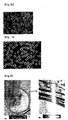
- Example 3 To measure the stability of the lamellar structure of the external MLE preparation containing retinol palmitate, the preparation of Example 3 was placed at 25 °C or 45 °C for 4 weeks and observed with a polarized microscope (Optiphotpol-2, Nikon Company) whether the maltese cross peculiar to the MLE appeared. The results are presented in FIG. 2 .
- the lamellar structure of the MLE according to the present invention was stable after 4 weeks at 45 °C (in FIG. 2b ) as well as after 4 weeks at 25 °C (in FIG. 2a ).
- Such a high stability contributes to effective stabilization of various dermatologically useful oleophilic ingredients such as retinol palmitate.
- Example 6 As is apparent from the results in Table 3, the preparation of Example 6 less Irritated the skin than those of Comparative Examples 1 and 4. Table 3 Sample Number of Testees Results Degree of stimuli Non Uncertain Slightly Yes Severe I II I II I II I II Example 6 30 30 30 30 Comparative Example 1 30 25 30 5 Comparative Example 4 30 24 28 1 0 5 2
- Natural and pseudo- ceramides, cholesterol, higher fatty acid, oils, non-ionic surfactant, higher fatty alcohol, polyalcohol, thickener and purified water were mixed with the composition presented in the following table to prepare a multi-lamellar emulsion (MLE).
- Steroid ingredients as used herein were hydrocortisone, Betamethasone Valerate and Clobetasol Proprionate, and non-steroid ingredients as used herein were tretinoin and linoleic acid.
- the natural ceramide as used herein was ceramide III (Doosan Biotec, Korea, C 36 H 73 NO 4 ) and the pseudoceramide as used herein was PC-9SP (Neo-Pharm, Korea, Pseudoceramide PC-9SP (Mixture of myristyl oxostearamide monoethanol amine, myristyl arachidamide monoethanol amine, palmityl oxostearamide monoethanol amine and palmityl arachidamide monoethanol amine).
- the thickener as used herein was carboxyvinyl polymer.
- Examples 9 to 13 prepared MLEs comprising the pseudoceramide and the pharmaceutical ingredients
- Examples 14 to 18 prepared MLEs comprising the natural ceramide and the pharmaceutical ingredients. Comparative Examples 5 and 6 did not form a MLE but added the pharmaceutical ingredients for the sake of performing a test in comparison with Examples.
- a polarized microscope (Optiphot-2, Nikon) was used to observe a Maltese cross that identifies the lamellar structure of the MLEs as an external base preparation prepared in Examples 9 to 18 irrespective of the added pharmaceutical ingredients.
- the MLEs in Examples 9 to 18 had a lamellar structure.
- a polarized microscope picture of the lamellar structure in Example 13 is shown in FIG. 3 .
- the MLE was formed in the case of using the pharmaceutical ingredients.
- the MLE was formed with a lamellar structure in the case of using the natural ceramide in the preparation of the emulsion.
- Example 10 was dyed with ruthnium and observed with a transmission electron microscope (TEM). As shown in FIG. 4 , a normal MLE was successfully formed.
- TEM transmission electron microscope
- the application of the MLE containing pharmaceutical ingredients for general skin disease provides the efficacy of the pharmaceutical ingredients as well as the MLE on the skin.
- the samples of Examples 9 to 18 were placed in a freeze-thaw cycle at 25 °C and 45°C and observed with a polarized microscope to determine whether the maltese cross peculiar to the MLE appeared. According to the microscopic observation, all the preparations of Examples 9 to 18 maintained a good lamellar structure of the MLE containing pharmaceutical ingredients. As can be seen from the results, the MLEs were allowed to contain different pharmaceutical ingredients due to high stability.
- a nude mouse was used to evaluate the skin barrier function of the MLE of the present invention against the adverse side effects of the pharmaceutical ingredients, particularly, steroids.
- the application of steroids onto the skin may cause side effects such as skin deterioration and shrinkage to deteriorate the skin barrier function, as may be seen by the increase in transepidermal water loss (TEWL) ( Skin Research and Technology 2001; 7:73-77 ).
- TEWL transepidermal water loss
- the MLEs of the present invention as prepared in Examples 9 and 11 had no change in the TEWL level. But the samples as prepared in Examples 5 and 6 that did not form MLE caused a significant increase in the TEWL level, showing a deterioration of the skin barrier function.
- the MLE as a base for external base preparation for treatment of general skin disease can minimize the adverse side effects of the pharmaceutical ingredients such as steroids and provide a dermatologically useful external base preparation.
- the external preparation using the MLE having an optimal oil composition according to the present invention for stabilizing dermatologically useful oleophilic ingredients is incorporated with the dermatologically useful oleophilic ingredients which are effectively stabilized, which exhibits excellent appetence to the skin, thereby providing various external preparations for skin improvement and treatment because it hardly irritates the skin.
- the use of the MLE of the present invention as a base for external base preparations for general skin disease recovers the skin barrier function deteriorated by the pharmaceutical ingredients and minimizes the other adverse side effects of the pharmaceutical ingredients.
- the MLE as a base for external base preparations according to the present invention is so dermatropic as to effectively apply pharmaceutical ingredients onto the skin and has a high efficacy with a small amount. Accordingly, the MLE of the present invention is very useful as a base for the preparations for treatment of general skin diseases.
Landscapes
- Health & Medical Sciences (AREA)
- Life Sciences & Earth Sciences (AREA)
- Veterinary Medicine (AREA)
- Public Health (AREA)
- General Health & Medical Sciences (AREA)
- Animal Behavior & Ethology (AREA)
- Chemical & Material Sciences (AREA)
- Epidemiology (AREA)
- Medicinal Chemistry (AREA)
- Pharmacology & Pharmacy (AREA)
- Nuclear Medicine, Radiotherapy & Molecular Imaging (AREA)
- General Chemical & Material Sciences (AREA)
- Chemical Kinetics & Catalysis (AREA)
- Organic Chemistry (AREA)
- Birds (AREA)
- Oil, Petroleum & Natural Gas (AREA)
- Dermatology (AREA)
- Engineering & Computer Science (AREA)
- Bioinformatics & Cheminformatics (AREA)
- Nutrition Science (AREA)
- Obesity (AREA)
- Hematology (AREA)
- Dispersion Chemistry (AREA)
- Diabetes (AREA)
- Pain & Pain Management (AREA)
- Rheumatology (AREA)
- Medicinal Preparation (AREA)
- Cosmetics (AREA)
- Pharmaceuticals Containing Other Organic And Inorganic Compounds (AREA)
- Acyclic And Carbocyclic Compounds In Medicinal Compositions (AREA)
Description
- The present invention relates to a multi-lamellar emulsion (MLE) for stabilizing dermatologically useful ingredients and an external base preparation for general skin disease utilizing the same, and more particularly, to a MLE having an optimized oil composition for stabilizing dermatologically useful oleophilic ingredients and maintaining the shape of the MLE in case of containing pharmaceutical ingredients such as steroids, and an external base preparation containing the dermatologically useful oleophilic ingredients.
- In general, dermatologically useful oleophilic ingredients, including retinol, unsaturated fatty acids, tocopherol and derivatives thereof, oil soluble pigment, vitamin F, etc. are widely used for skin improvement and treatment. Unfortunately, these dermatologically useful oleophilic ingredients readily become unstable in an aqueous solution or under exposure to the air. Hence stabilization of the dermatologically useful oleophilic ingredients is the primary issue in regard to cosmetics and external preparations for skin improvement and treatment, many approaches for stabilizing the dermatologically useful oleophilic ingredients have been contrived.
- The methods for stabilizing dermatologically useful oleophilic ingredients are largely divided into the encapsulation method and the method for utilizing the emulsified formulation. The encapsulation method contributes to stabilization of the dermatologically useful oleophilic ingredients by hardening or coating the ingredients by using collagen, alginate, agar, gelatin, chitin or chitosan derivatives to form a primary or secondary capsule and thereby protecting the ingredients against air or water. The method for utilizing the emulsified formulation includes a method of using BHT, tocopherol acetate and EDTA chelate in the simple oil in water (o/w) type or water in oil (w/o) type formulation, a method of using a w/o/w type or o/w/o type multiple emulsion, and a method of delivering the ingredients in the unit of multi-lamella vesicle (MLV) using lecithin. The encapsulation method provides a relatively high stability to the dermatologically useful oleophilic ingredients but has drawbacks such as unpleasant feeling in use and a need of breaking capsules. On the other hand, the method of using the emulsified formulation provides expediency and pleasant feeling in use but poor stability.
- On the other hand, external base preparations include a variety of pharmaceutical preparations such as plaster, lotion, liniment, powder, liquid formulation, ointment, emulsion, suspension, cream, cataplasma, paste, and the like. The representative examples of the external base preparations are emulsion preparations such as lotion, ointment, emulsion, and cream.
- These emulsion preparations differ greatly in skin penetration of pharmaceutical ingredients depending on the type of base, the emulsion type and the applicability.
- Examples of the base may include wax and solid oil ingredients, oils, surfactant, moisturizing agent, thickener, purified water and alcohol, and additionally, perfume, pigment, preservative, organic acid, alkali, UV-absorber, anti-oxidant, sequesterer, animal/plant extracts, or the like. Among these bases, lipid bases are particularly important and greatly affected by wax and solid oil ingredients and oils. Lipid base, also known as hydrophobic base, is classified into mineral, animal and plant origin lipid bases according to its origin. The lipid base causes no skin irritations and provides skin coating, protection and softening effects due to formation of an airtight oiled layer. The mineral origin lipid base is good in the durability of the airtight oiled layer without a moisturizing function. Specific examples of the mineral origin lipid base may include vaseline and paraffin. The animal/plant origin lipid base is inferior in the durability of the airtight oiled layer to the mineral origin lipid base but has a moisturizing function. Specific examples of the animal/plant origin lipid base may include olive oil, castor oil, and lard. In addition, a silicon-based base can be used.
- There are largely two emulsion types, i.e., water-in-oil (W/O) emulsion and oil-in-water (O/W) emulsion. W/O emulsion is divided into a water-containing W/O emulsion and a water-free W/O emulsion. The water-free W/O emulsion is dermatropic and extremely penetrative to the skin, while the water-containing W/O emulsion is excellent in spreadability and applicability to the skin but disadvantageous in regard to the stability of ingredients in water or possibility of contamination with germs. The O/W emulsion is greatly spreadable and particularly excellent in skin penetration of pharmaceutical ingredients. Also, the O/W emulsion has a skin cooling effect due to vaporization of water and may contain various dermatropic aqueous ingredients. But the O/W emulsion is inferior in skin protection function to the other bases.
- The emulsion preparations are differently applicable depending on the emulsion type and have a great effect on the skin penetration of the pharmaceutical ingredients. For example, the lotion preparation can be applied onto a large area of the skin due to its good spreadability and the cream preparation can be spread thick on a small area of the skin to apply a large amount of pharmaceutical ingredients.
- Specific examples of the pharmaceutical ingredients used for the emulsion base may include steroids, antimicrobials, antifungals and antivirals, and additionally, alpha-hydroxyacid, sun-screening agent, benzoyl peroxide, trenchinoine, anthraline, calcipotriol, etc. Among these ingredients, steroids are most typically used.
- Steroids are still widely used for treatment of general dermatitis due to its great efficacy but require cautions in usage because they have adverse side effects, examples of which may include skin deterioration and shrinkage, vasodilation, rebound effect due to interruption of administration, increase in tolerance to steroids, striae distensae(Sort of skin chapping) steroidal acne and rosacea, perioral dermatitis, hyperbrichosis, or the like. The steroids, which require cautions in usage, are still needed to minimize their adverse side effects depending on the features of the base used.
- Other pharmaceutical ingredients as used for external base preparations may have a bad side effect such as skin deterioration, dry skin or itching, so that the preparations are needed to have a skin protection effect.
-
EP0875232 discloses a lipid composition containing a liquid crystal phase. The production of oily micelles dispersed in an aqueous phase is disclosed. -
US5985177 discloses oil-in-water-in-oil emulsion compositions. -
US5980917 discloses an oil-in-water type cosmetic composition containing retinoids stabilised within the core of a liquid crystal formed by a surfactant. - The English-language abstract of Korean patent no.
2000055082 - It is, therefore, a first object of the present invention to provide a multi-lamellar emulsion (MLE) having an optimized oil composition as a base for stabilising dermatologically useful oleophilic ingredients that provides pleasant feeling in use and high stability and can be prepared in a simple way.
- It is a second object of the present invention to provide a multi-lamellar emulsion as an external base preparation on the skin for general skin disease according to the first object of the present invention that effectively applies a small amount of pharmaceutical ingredients such as steroids onto the skin and minimises the unfavourable side effects of the pharmaceutical ingredients.
- It is a third object of the present invention to provide an external base preparation for skin improvement and treatment using the multi-lamellar emulsion for stabilising dermatologically useful oleophilic ingredients according to the first and second objects of the present invention.
- To achieve the above objects of the present invention, there is provided a multi-lamellar emulsion (MLE) for stabilising a dermatologically useful oleophilic ingredient, the MLE comprising:
- a skin-lipid based component comprising a lipid ingredient between horny cells,
- an oil-based component, and
- an emulsifier-based component being a non-ionic surfactant wherein the MLE has an oil composition represented by Equation 1:

wherein the skin lipid-based component is the composition comprising: - a pseudoceramide or natural ceramide
- a cholesterol
- stearic acid and
- cetostearyl alcohol,
- wherein the MLE comprises:
- (1) 0.5wt% pseudoceramide PC-9S, 0.25wt% cholesterol, 1.0wt% stearic acid, 2.0wt% cetostearyl alcohol, 3.0wt% polyoxyethylene monostearate, 2.0wt% glyceryl monostearate, 5.0wt% of a mixture of olive oil, liquid paraffin, Vaseline and paraffin wax, 5.0wt% 1,3-butylene glycol, 0.3wt% retinol palmitate, 0.2wt% carboxy vinyl polymer and water; or
- (2) 0.8wt% pseudoceramide PC-9S, 0.4wt% cholesterol, 2.8wt% stearic acid, 2.0wt% cetostearyl alcohol, 3.0wt% polyoxyethylene glyceryl monostearate, 1.0wt% glyceryl monostearate, 5.0wt% of a mixture of olive oil, liquid paraffin, Vaseline and paraffin wax, 5.0wt% 1,3-butylene glycol, 0.3wt% retinol palmitate, 0.2wt% carboxy vinyl polymer and water; or
- (3) 1.0wt% pseudoceramide PC-9S, 0.1wt% cholesterol, 3.5wt% stearic acid, 1.6wt% cetostearyl alcohol, 2.2wt% polyoxyethylene sorbitan monostearate, 0.5wt% sorbitan monostearate, 1.2wt% glyceryl monostearate, 5.0wt% of a mixture of olive oil, liquid paraffin, Vaseline and paraffin wax, 5.0wt% 1,3-butylene glycol, 0.3wt% retinol palmitate, 0.2wt% carboxy vinyl polymer and water; or
- (4) 0.4wt% pseudoceramide PC-9S, 0.15wt% cholesterol, 1.0wt% stearic acid, 2.0wt% cetostearyl alcohol, 2.0wt% polyoxyethylene glyceryl monostearate, 1.0wt% glyceryl monostearate, 4.0wt% of a mixture of olive oil, liquid paraffin, Vaseline and paraffin wax, 5.0wt% 1,3-butylene glycol, 0.3wt% retinol palmitate, 0.2wt% carboxy vinyl polymer and water; or
- (5) 0.5wt% pseudoceramide PC-9S, 0.15wt% cholesterol, 1.2wt% stearic acid, 2.5wt% cetostearyl alcohol, 2.5wt% polyoxyethylene glyceryl monostearate, 1.2wt% glyceryl monostearate, 3.0wt% of a mixture of olive oil, liquid paraffin, Vaseline and paraffin wax, 5.0wt% 1,3-butylene glycol, 0.3wt% retinol palmitate, 0.2wt% carboxy vinyl polymer and water; or
- (6) 0.6wt% pseudoceramide PC-9S, 0.2wt% cholesterol, 1.5wt% stearic acid, 3.0wt% cetostearyl alcohol, 3.0wt% polyoxyethylene glyceryl monostearate, 1.5wt% glyceryl monostearate, 5.0wt% of a mixture of olive oil, liquid paraffin, Vaseline and paraffin wax, 5.0wt% 1,3-butylene glycol, 0.3wt% retinol palmitate, 0.2wt% carboxy vinyl polymer and water; or
- (7) 0.8wt% pseudoceramide PC-9S, 0.3wt% cholesterol, 1.8wt% stearic acid, 3.5wt% cetostearyl alcohol, 3.2wt% polyoxyethylene glyceryl monostearate, 1.8wt% glyceryl monostearate, 8.0wt% of a mixture of olive oil, liquid paraffin, Vaseline and paraffin wax, 5.0wt% 1,3-butylene glycol, 0.3wt% retinol palmitate, 0.2wt% carboxy vinyl polymer and water; or
- (8) 1.0wt% pseudoceramide PC-9S, 0.3wt% cholesterol, 2.0wt% stearic acid, 4.0wt% cetostearyl alcohol, 4.0wt% polyoxyethylene glyceryl monostearate, 2.0wt% glyceryl monostearate, 13.0wt% of a mixture of olive oil, liquid paraffin, Vaseline and paraffin wax, 5.0wt% 1,3-butylene glycol, 0.3wt% retinol palmitate, 0.2wt% carboxy vinyl polymer and water; or
- (9) 0.6wt% pseudoceramide PC-9SP, 0.2wt% cholesterol, 1.5wt% stearic acid, 3.5wt% cetostearyl alcohol, 3.5wt% polyoxyethylene glyceryl monostearate, 1.5wt% glyceryl monostearate, 5.0wt% 1,3-butylene glycol, 5.0wt% glycerine, 5.0wt% of a mixture of squalane, macadamia nut oil, olive oil and oliwax, 0.5wt% hydrocortisone, 0.3wt% preservative, 0.2wt% carboxy vinyl polymer and water; or
- (10) 0.6wt% pseudoceramide PC-9SP, 0.2wt% cholesterol, 1.5wt% stearic acid, 3.5wt% cetostearyl alcohol, 3.5wt% polyoxyethylene glyceryl monostearate, 1.5wt% glyceryl monostearate, 5.0
wt% 1,3-butylene glycol, 5.0wt% glycerine, 5.0wt% of a mixture of squalane, macadamia nut oil, olive oil and oliwax, 0.12wt% betamethasone valerate, 0.3wt% preservative, 0.2wt% carboxy vinyl polymer and water; or - (11) 0.6wt% pseudoceramide PC-9SP, 0.2wt% cholesterol, 1.5wt% stearic acid, 3.5wt% cetostearyl alcohol, 3.5wt% polyoxyethylene glyceryl monostearate, 1.5wt% glyceryl monostearate, 5.0
wt% 1,3-butylene glycol, 5.0wt% glycerine, 5.0wt% of a mixture of squalane, macadamia nut oil, olive oil and oliwax, 0.05wt% clobetasol proprionate, 0.3wt% preservative, 0.2wt% carboxy vinyl polymer and water; or - (12) 0.6wt% pseudoceramide PC-9SP, 0.2wt% cholesterol, 1.5wt% stearic acid, 3.5wt% cetostearyl alcohol, 3.5wt% polyoxyethylene glyceryl monostearate, 1.5wt% glyceryl monostearate, 5.0
wt% 1,3-butylene glycol, 5.0wt% glycerine, 5.0wt% of a mixture of squalane, macadamia nut oil, olive oil and oliwax, 1.0wt% tretinoin, 0.3wt% preservative, 0.2wt% carboxy vinyl polymer and water; or - (13) 0.6wt% pseudoceramide PC-9SP, 0.2wt% cholesterol, 1.5wt% stearic acid, 3.5wt% cetostearyl alcohol, 3.5wt% polyoxyethylene glyceryl monostearate, 1.5wt% glyceryl monostearate, 5.0
wt% 1,3-butylene glycol, 5.0wt% glycerine, 5.0wt% of a mixture of squalane, macadamia nut oil, olive oil and oliwax, 0.5wt% linoleic acid, 0.3wt% preservative, 0.2wt% carboxy vinyl polymer and water; or - (14) 0.6wt% ceramide III, 0.2wt% cholesterol, 1.5wt% stearic acid, 3.5wt% cetostearyl alcohol, 3.5wt% polyoxyethylene glyceryl monostearate, 1.5wt% glyceryl monostearate, 5.0
wt% 1,3-butylene glycol, 5.0wt% glycerine, 5.0wt% of a mixture of squalane, macadamia nut oil, olive oil and oliwax, 0.5wt% hydrocortisone, 0.3wt% preservative, 0.2wt% carboxy vinyl polymer and water; or - (15) 0.6wt% ceramide III, 0.2wt% cholesterol, 1.5wt% stearic acid, 3.5wt% cetostearyl alcohol, 3.5wt% polyoxyethylene glyceryl monostearate, 1.5wt% glyceryl monostearate, 5.0
wt% 1,3-butylene glycol, 5.0wt% glycerine, 5.0wt% of a mixture of squalane, macadamia nut oil, olive oil and oliwax, 0.12wt% betamethasone valerate, 0.3wt% preservative, 0.2wt% carboxy vinyl polymer and water; or - (16) 0.6wt% ceramide III, 0.2wt% cholesterol, 1.5wt% stearic acid, 3.5wt% cetostearyl alcohol, 3.5wt% polyoxyethylene glyceryl monostearate, 1.5wt% glyceryl monostearate, 5.0
wt% 1,3-butylene glycol, 5.0wt% glycerine, 5.0wt% of a mixture of squalane, macadamia nut oil, olive oil and oliwax, 0.05wt% clobetasol proprionate, 0.3wt% preservative, 0.2wt% carboxy vinyl polymer and water; or - (17) 0.6wt% ceramide III, 0.2wt% cholesterol, 1.5wt% stearic acid, 3.5wt% cetostearyl alcohol, 3.5wt% polyoxyethylene glyceryl monostearate, 1.5wt% glyceryl monostearate, 5.0
wt% 1,3-butylene glycol, 5.0wt% glycerine, 5.0wt% of a mixture of squalane, macadamia nut oil, olive oil and oliwax, 1.0wt% tretinoin, 0.3wt% preservative, 0.2wt% carboxy vinyl polymer and water; or - (18) 0.6wt% ceramide III, 0.2wt% cholesterol, 1.5wt% stearic acid, 3.5wt% cetostearyl alcohol, 3.5wt% polyoxyethylene glyceryl monostearate, 1.5wt% glyceryl monostearate, 5.0
wt% 1,3-butylene glycol, 5.0wt% glycerine, 5.0wt% of a mixture of squalane, macadamia nut oil, olive oil and oliwax, 0.5wt% linoleic acid, 0.3wt% preservative, 0.2wt% carboxy vinyl polymer and water.
-
-
FIG. 1 is a three-phase (emulsifier-oil-skin lipid) diagram for preparing a multi-lamellar emulsion having an optimal oil composition according to the present invention; and -
FIGS. 2a and2b are polarized microscopic pictures showing the lamellar structure of an external preparation using the multi-lamellar emulsion according to the present invention, in whichFIGS. 2a and2b show the excellent ageing stability of the lamellar structure after four weeks at 25°C and 45°C, respectively. -
FIG. 3 is a polarized microscope picture showing that a base for the external base preparation of the present invention containing pharmaceutical ingredients has a lamellar structure of MLE; -
FIG. 4 is a transmission electron microscope picture of a base for the external base preparation of the present invention containing pharmaceutical ingredients; -
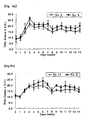
FIGS. 5a and 5b are graphs showing the appliability of a base for the external base preparation of the present invention as a MLE containing steroids as pharmaceutical ingredients, in which a measurement of the transepidermal water loss (TEWL) of a nude mouse evaluated as an index of skin deterioration shows that the MLE containing steroids maintains the normal condition of the skin and that the MLE without steroids causes skin deterioration as an adverse side effect; and -
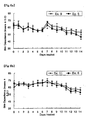
FIGS. 6a and 6b are graphs showing the applicability of a base for the external base preparation of the present invention as a MLE containing steroids as pharmaceutical ingredients, in which a measurement of the skin hydration of a nude mouse evaluated as an index of skin deterioration shows that the MLE containing steroids maintains the normal moisturizing ability of the skin and that the MLE without steroids causes a deterioration of the moisturizing ability of the skin as an adverse side effect. - Hereinafter, a description will be given as to a method for preparing an MLE having a predetermined oil composition according to the present invention.
- The MLE preparation method includes melting pseudoceramide, natural ceramide, cholesterol, higher fatty acid, higher fatty alcohol, polyalcohol or any mixture thereof together with general oils and a non-ionic surfactant, uniformly mixing these components, adding a warm purified water to the mixture to cause phase inversion emulsification, adding a thickener immediately after the emulsification and uniformly mixing these components, and cooling the resulting mixture at the room temperature. The added amount of the purified water is, if not specifically limited to, 50 to 95 wt.%, and preferably 65 to 85 wt.% based on the total weight of the MLE.
- On the other hand, optimization of the oil composition of the MLE involves drawing up a three-phase diagram shown in
FIG. 1 ; preparing a skin lipid phase comprising pseudoceramide, natural ceramide, cholesterol, higher fatty acid, higher fatty alcohol, or any mixture thereof, and an emulsifier phase comprising a non-ionic surfactant to form a lipid-emulsion system in which the MLE will be formed; and adding different oils to regulate the oil composition. - Hereinafter, the present invention will be described in detail by way of the following examples and experimental examples.
- Pseudoceramide PC-9S, cholesterol, higher fatty acid, non-ionic surfactant, higher fatty alcohol, polyalcohol, thickener and purified water were mixed with the composition presented in Table 1 to prepare a multi-lamellar emulsion (MLE). Retinol palmitate was used as an indicator of the dermatologically useful oleophilic ingredient. Various MLE's were prepared depending on the type of the emulsifier (in Examples 1 to 4) or the oil composition (in Examples 5 to 8). The MLE's of Comparative Examples 1 and 2 didn't contain pseudoceramide, cholesterol or fatty acid as an intercellular lipid ingredient, the MLE of Comparative Example 3 contained no oil (in Comparative Example 3), and the MLE of Comparative Example 4 was scarcely formed due to the excessively high oil composition.
- The pseudo-ceramide PC-9S had the above-mentioned formula (1), in which R1 is -C15H31 or C17H35; and R2 is -C14H29 or C16H33· The thickener was carboxy vinyl polymer.
Table 1 Ingredient A1 A2 A3 A4 A5 A6 A7 A8 B1 B2 B3 B4 Pseudo-ceramide 0.5 0.8 1.0 0.4 0.5 0.6 0.8 1.0 - - 1.0 1.0 Natural ceramide III - - - - - - - - 0.3 - - - Cholesterol 0.25 0.4 0.1 0.15 0.15 0.2 0.3 0.3 - - 0.3 0.3 Stearic acid 1.0 2.8 3.5 1.0 1.2 1.5 1.8 2.0 - 1.6 2.0 2.0 Cetostearylacohol 2.0 2.0 1.6 2.0 2.5 3.0 3.5 4.0 3.5 1.4 4.0 4.0 POE mono-stearate 3.0 - - - - - - - - - - - POE sorbitan mono-stearate - - 2.2 - - - - - - - - - Sorbitan mono-stearate - - 0.5 - - - - - - - - - POE glyceryl mono-stearate - 3.0 - 2.0 2.5 3.6 3.2 4.0 2.0 2.0 4.0 4.0 Glyceryl mono-stearate 2.0 1.0 1.2 1.0 1.2 1.5 1.8 2.0 1.0 1.0 2.0 2.0 Oils Olive oil Liquid paraffin Vaseline Paraffin Wax 5.0 5.0 5.0 4.0 3.0 5.0 8.0 13.0 5.0 4.0 0.0 20.0 1,3-butylene glycol 5.0 5.0 5.0 5.0 5.0 5.0 5.0 5.0 5.0 5.0 5.0 5.0 Retinol palmitate 0.3 0.3 0.3 0.3 0.3 0.3 0.3 0.3 0.3 0.3 0.3 0,3 Thickener 0.2 0.2 0.2 0.2 0.2 0.2 0.2 0.2 0.2 0.2 0.2 0.2 Purified water dregs dregs dregs dregs dregs dregs dregs dregs dregs dregs dregs dregs Oil composition 0.57 0.5 0.5 0.61 0.37 0.55 0.70 0.99 0.75 0.67 0 1.50 Note) A: Example
B: Comparative Example
Oil composition = content of oil-based component / (content of emulsifier-based component + content of skin lipid-based component) - A four-week thermal stability test was performed on the MLE's prepared in Examples 1 to 8 and Comparative Examples 1 to 4 in order to measure the stability of retinol palmitate. After 4 weeks at 25 °C and 45 °C, high-performance liquid chromatography (HPLC) was utilized to analyze stable retinol palmitate. The results are presented in Table 2.


- As is apparent from the results of Table 2 (Examples 5 to 8), the stability of retinol palmitate was increased with an increase in the oil composition. However, for Examples 7 and 8, the stability of retinol palmitate was lower at the oil composition of about 1.0 than at the oil composition of about 0.7 (Example 7). This means that there is an optimal oil composition in the MLE of the present invention. Also, as is seen from the results of Examples 1 to 4 and Comparative Examples 1 and 2, the stability of retinol palmitate was low without a proper mixture of horny intercellular lipid gradients, cholesterol and fatty acid even though the oil composition was within the range of 0.3 to 1.0.
- To measure the stability of the lamellar structure of the external MLE preparation containing retinol palmitate, the preparation of Example 3 was placed at 25 °C or 45 °C for 4 weeks and observed with a polarized microscope (Optiphotpol-2, Nikon Company) whether the maltese cross peculiar to the MLE appeared. The results are presented in
FIG. 2 . - As is apparent from
FIG. 2 , the lamellar structure of the MLE according to the present invention was stable after 4 weeks at 45 °C (inFIG. 2b ) as well as after 4 weeks at 25 °C (inFIG. 2a ). Such a high stability contributes to effective stabilization of various dermatologically useful oleophilic ingredients such as retinol palmitate. - To measure the skin Irritation ability of the external MLE preparation of the present invention, 30 healthy adult persons had the lower arm onto which Haye's chambers stained with a predetermined amount (about 2.0 g), which is used for the patch test, of the individual preparations of Example 6 and Comparative Examples 1 and 4 were applied for 48 hours. After an elapse of 30 minutes to one hour since the Haye's chambers were removed, the change of the complexion was observed with unaided eyes for the primary finding, and again after more 48 hours for the secondary finding.
- As is apparent from the results in Table 3, the preparation of Example 6 less Irritated the skin than those of Comparative Examples 1 and 4.
Table 3 Sample Number of Testees Results Degree of stimuli Non Uncertain Slightly Yes Severe I II I II I II I II I II Example 6 30 30 30 Comparative Example 1 30 25 30 5 Comparative Example 4 30 24 28 1 0 5 2 - Natural and pseudo- ceramides, cholesterol, higher fatty acid, oils, non-ionic surfactant, higher fatty alcohol, polyalcohol, thickener and purified water were mixed with the composition presented in the following table to prepare a multi-lamellar emulsion (MLE). Steroid ingredients as used herein were hydrocortisone, Betamethasone Valerate and Clobetasol Proprionate, and non-steroid ingredients as used herein were tretinoin and linoleic acid.
- The natural ceramide as used herein was ceramide III (Doosan Biotec, Korea, C36H73NO4) and the pseudoceramide as used herein was PC-9SP (Neo-Pharm, Korea, Pseudoceramide PC-9SP (Mixture of myristyl oxostearamide monoethanol amine, myristyl arachidamide monoethanol amine, palmityl oxostearamide monoethanol amine and palmityl arachidamide monoethanol amine). The thickener as used herein was carboxyvinyl polymer.
- Examples 9 to 13 prepared MLEs comprising the pseudoceramide and the pharmaceutical ingredients, and Examples 14 to 18 prepared MLEs comprising the natural ceramide and the pharmaceutical ingredients. Comparative Examples 5 and 6 did not form a MLE but added the pharmaceutical ingredients for the sake of performing a test in comparison with Examples.
[Table] Ingredient A9 A10 A11 A12 A13 A14 A15 A16 A17 A18 B5 B6 PC-9SP 0.6 0.6 0.6 0.6 0.6 - - - - - - - Ceramide-III - - - - - 0.6 0.6 0.6 0.6 0.6 - - Cholesterol 0.2 0.2 0.2 0.2 0.2 0.2 0.2 0.2 0.2 0.2 - - Stearic acid 1.5 1.5 1.5 1.5 1.5 1.5 1.5 1.5 1.5 1.5 0.7 0.7 Cetoatearyl acohol 3.5 3.5 3.5 3.5 3.5 3.5 3.5 3.5 3.5 3.5 3.5 3.5 POE glyceryl mono-stearate 3.5 3.5 3.5 3.5 3.5 3.5 3.5 3.5 3.5 3.5 3.5 3.5 Glyceryl mono-stearate 1.5 1.5 1.5 1.5 1.5 1.5 1.5 1.5 1.5 1.5 1.5 1.5 1,3-butylene glycol 5.0 5.0 5.0 5.0 5.0 5.0 5.0 5.0 5.0 5.0 5.0 5.0 Glycerin 5.0 5.0 5.0 5.0 5.0 5.0 5.0 5.0 5.0 5.0 5.0 5.0 Oils Squalane Macademia nut oil Olive oil Oliwax 5.0 5.0 5.0 5.0 5.0 5.0 5.0 5.0 5.0 5.0 5.0 5.0 Hydrocortison 0.5 .5 - - - 0.5 - - - - 5.0 - Betamethasone Valerate - 0.12 - - - - 0.12 - - - - - Clobetasol Proprionate - - 0.05 - - - - 0.05 - - - 0.05 Tretinoin - - - 1.0 - - - - 1.0 - - - Linoleic acid - - - - 0.5 - - - - 0.5 - - Preservative 0.3 0.3 0.3 0.3 0.3 0.3 0.3 0.3 03 0.3 0.3 0.3 Thickener 0.2 0.2 0.2 0.2 0.2 0.2 0.2 0.2 0.2 0.2 0.2 0.2 Purified water dregs dregs dregs dregs dregs dregs dregs dregs dregs dregs dregs Dregs Note) A: Example
B: Comparative Example - A polarized microscope (Optiphot-2, Nikon) was used to observe a Maltese cross that identifies the lamellar structure of the MLEs as an external base preparation prepared in Examples 9 to 18 irrespective of the added pharmaceutical ingredients.
- According to the microscopic observation, all the MLEs in Examples 9 to 18 had a lamellar structure. For example, a polarized microscope picture of the lamellar structure in Example 13 is shown in
FIG. 3 . As seen fromFIG. 3 , the MLE was formed in the case of using the pharmaceutical ingredients. Also, the MLE was formed with a lamellar structure in the case of using the natural ceramide in the preparation of the emulsion. - To identify the formation of the MLE more accurately, the preparations of Example 10 was dyed with ruthnium and observed with a transmission electron microscope (TEM). As shown in
FIG. 4 , a normal MLE was successfully formed. - Accordingly, the application of the MLE containing pharmaceutical ingredients for general skin disease provides the efficacy of the pharmaceutical ingredients as well as the MLE on the skin.
- To measure the stability of the lamellar structure of the external base preparation as the MLE containing pharmaceutical ingredients according to the present invention, the samples of Examples 9 to 18 were placed in a freeze-thaw cycle at 25 °C and 45°C and observed with a polarized microscope to determine whether the maltese cross peculiar to the MLE appeared. According to the microscopic observation, all the preparations of Examples 9 to 18 maintained a good lamellar structure of the MLE containing pharmaceutical ingredients. As can be seen from the results, the MLEs were allowed to contain different pharmaceutical ingredients due to high stability.
- A nude mouse was used to evaluate the skin barrier function of the MLE of the present invention against the adverse side effects of the pharmaceutical ingredients, particularly, steroids.
- Generally, the application of steroids onto the skin may cause side effects such as skin deterioration and shrinkage to deteriorate the skin barrier function, as may be seen by the increase in transepidermal water loss (TEWL) (Skin Research and Technology 2001; 7:73-77).
- The preparations containing steroids in Examples 9 and 11, and those as prepared in Comparative Examples 5 and 6 were applied onto the skin of the nude mouse twice a day for two weeks and the TEWL measurement was periodically performed with a Tewameter TM210 (C+K electronic, Germany).
- To evaluate the moisturizing ability of the skin, a Comeometer (C+K electronic, Germany) was used to measure the change of skin hydration.
- As can be seen from the results of
FIG. 5 , the MLEs of the present invention as prepared in Examples 9 and 11 had no change in the TEWL level. But the samples as prepared in Examples 5 and 6 that did not form MLE caused a significant increase in the TEWL level, showing a deterioration of the skin barrier function. - On the other hand, as shown in
FIG. 6 , the preparations of Examples 9 and 11 maintained a constant skin hydration level but those of Comparative Examples 5 and 6 had a gradual decrease in the skin hydration level due to the skin damage resulting from the side effect of steroids. - Accordingly, the MLE as a base for external base preparation for treatment of general skin disease according to the present invention can minimize the adverse side effects of the pharmaceutical ingredients such as steroids and provide a dermatologically useful external base preparation.
- As described above, the external preparation using the MLE having an optimal oil composition according to the present invention for stabilizing dermatologically useful oleophilic ingredients is incorporated with the dermatologically useful oleophilic ingredients which are effectively stabilized, which exhibits excellent appetence to the skin, thereby providing various external preparations for skin improvement and treatment because it hardly irritates the skin. Furthermore, the use of the MLE of the present invention as a base for external base preparations for general skin disease recovers the skin barrier function deteriorated by the pharmaceutical ingredients and minimizes the other adverse side effects of the pharmaceutical ingredients. Furthermore, the MLE as a base for external base preparations according to the present invention is so dermatropic as to effectively apply pharmaceutical ingredients onto the skin and has a high efficacy with a small amount. Accordingly, the MLE of the present invention is very useful as a base for the preparations for treatment of general skin diseases.
Claims (1)
- A multi-lamellar emulsion (MLE) for stabilising a dermatologically useful oleophilic ingredient, the MLE comprising:a skin-lipid based component comprising a lipid ingredient between horny cells,an oil-based component, andan emulsifier-based component being a non-ionic surfactant wherein the MLE has an oil composition represented by Equation 1:

wherein the skin lipid-based component is the composition comprising:a pseudoceramide or natural ceramidea cholesterolstearic acid andcetostearyl alcohol,wherein the MLE comprises:(1)
0.5wt% pseudoceramide PC-9S, 0.25wt% cholesterol, 1.0wt% stearic acid, 2.0wt% cetostearyl alcohol, 3.0wt% polyoxyethylene monostearate, 2.0wt% glyceryl monostearate, 5.0wt% of a mixture of olive oil, liquid paraffin, Vaseline and paraffin wax, 5.0wt% 1,3-butylene glycol, 0.3wt% retinol palmitate, 0.2wt% carboxy vinyl polymer and water; or(2)
0.8wt% pseudoceramide PC-9S, 0.4wt% cholesterol, 2.8wt% stearic acid, 2.0wt% cetostearyl alcohol, 3.0wt% polyoxyethylene glyceryl monostearate, 1.0wt% glyceryl monostearate, 5.0wt% of a mixture of olive oil, liquid paraffin, Vaseline and paraffin wax, 5.0wt% 1,3-butylene glycol, 0.3wt% retinol palmitate, 0.2wt% carboxy vinyl polymer and water; or(3)
1.0wt% pseudoceramide PC-9S, 0.1wt% cholesterol, 3.5wt% stearic acid, 1.6wt% cetostearyl alcohol, 2.2wt% polyoxyethylene sorbitan monostearate, 0.5wt% sorbitan monostearate, 1.2wt% glyceryl monostearate, 5.0wt% of a mixture of olive oil, liquid paraffin, Vaseline and paraffin wax, 5.0wt% 1,3-butylene glycol, 0.3wt% retinol palmitate, 0.2wt% carboxy vinyl polymer and water;or(4)
0.4wt% pseudoceramide PC-9S, 0.15wt% cholesterol, 1.0wt% stearic acid, 2.0wt% cetostearyl alcohol, 2.0wt% polyoxyethylene glyceryl monostearate, 1.0wt% glyceryl monostearate, 4.0wt% of a mixture of olive oil, liquid paraffin, Vaseline and paraffin wax, 5.0wt% 1,3-butylene glycol, 0.3wt% retinol palmitate, 0.2wt% carboxy vinyl polymer and water; or(5)
0.5wt% pseudoceramide PC-9S, 0.15wt% cholesterol, 1.2wt% stearic acid, 2.5wt% cetostearyl alcohol, 2.5wt% polyoxyethylene glyceryl monostearate, 1.2wt% glyceryl monostearate, 3.0wt% of a mixture of olive oil, liquid paraffin, Vaseline and paraffin wax, 5.0wt% 1,3-butylene glycol, 0.3wt% retinol palmitate, 0.2wt% carboxy vinyl polymer and water; or(6)
0.6wt% pseudoceramide PC-9S, 0.2wt% cholesterol, 1.5wt% stearic acid, 3.0wt% cetostearyl alcohol, 3.0wt% polyoxyethylene glycerol monostearate, 1.5wt% glyceryl monostearate, 5.0wt% of a mixture of olive oil, liquid paraffin, Vaseline and paraffin wax, 5.0wt% 1,3-butylene glycol, 0.3wt% retinol palmitate, 0.2wt% carboxy vinyl polymer and water; or(7)
0.8wt% pseudoceramide PC-9S, 0.3wt% cholesterol, 1.8wt% stearic acid, 3.5wt% cetostearyl alcohol, 3.2wt% polyoxyethylene glyceryl monostearate, 1.8wt% glyceryl monostearate, 8.0wt% of a mixture of olive oil, liquid paraffin, Vaseline and paraffin wax, 5.0wt% 1,3-butylene glycol, 0.3wt% retinol palmitate, 0.2wt% carboxy vinyl polymer and water; or(8)
1.0wt% pseudoceramide PC-9S, 0.3wt% cholesterol, 2.0wt% stearic acid, 4.0wt% cetostearyl alcohol, 4.0wt% polyoxyethylene glyceryl monostearate, 2.0wt% glyceryl monostearate, 13.0wt% of a mixture of olive oil, liquid paraffin, Vaseline and paraffin wax, 5.0wt% 1,3-butylene glycol, 0.3wt% retinol palmitate, 0.2wt% carboxy vinyl polymer and water; or(9)
0.6wt% pseudoceramide PC-9SP, O.2wt% cholesterol, 1.5wt% stearic acid, 3.5wt% cetostearyl alcohol, 3.5wt% polyoxyethylene glyceryl monostearate, 1.5wt% glyceryl monostearate, 5.0wt% 1,3-butylene glycol, 5.0wt% glycerine, 5.0wt% of a mixture of squalane, macadamia nut oil, olive oil and oliwax, 0.5wt% hydrocortisone, 0.3wt% preservative, 0.2wt% carboxy vinyl polymer and water; or(10)
0.6wt% pseudoceramide PC-9SP, 0.2wt% cholesterol, 1.5wt% stearic acid, 3.5wt% cetostearyl alcohol, 3.5wt% polyoxyethylene glyceryl monostearate, 1.5wt% glyceryl monostearate, 5.0wt% 1,3-butylene glycol, 5.0wt% glycerine, 5.0wt% of a mixture of squalane, macadamia nut oil, olive oil and oliwax, 0.12wt% betamethasone valerate, 0.3wt% preservative, 0.2wt% carboxy vinyl polymer and water; or(11)
0.6wt% pseudoceramide PC-9SP, 0.2wt% cholesterol, 1.5wt% stearic acid, 3.5wt% cetostearyl alcohol, 3.5wt% polyoxyethylene glyceryl monostearate, 1.5wt% glyceryl monostearate, 5.0wt% 1,3-butylene glycol, 5.0wt% glycerine, 5.0wt% of a mixture of squalane, macadamia nut oil, olive oil and oliwax, 0.05wt% clobetasol proprionate, 0.3wt% preservative, 0.2wt% carboxy vinyl polymer and water; or(12)
0.6wt% pseudoceramide PC-9SP, 0.2wt% cholesterol, 1.5wt% stearic acid, 3.5wt% cetostearyl alcohol, 3.5wt% polyoxyethylene glyceryl monostearate, 1.5wt% glyceryl monostearate, 5.0wt% 1,3-butylene glycol, 5.0wt% glycerine, 5.0wt% of a mixture of squalane, macadamia nut oil, olive oil and oliwax, 1.0wt% tretinoin, 0.3wt% preservative, 0.2wt% carboxy vinyl polymer and water; or(13)
0.6wt% pseudoceramide PC-9SP, 0.2wt% cholesterol, 1.5wt% stearic acid, 3.5wt% cetostearyl alcohol, 3.5wt% polyoxyethylene glyceryl monostearate, 1.5wt% glyceryl monostearate, 5.0wt% 1,3-butylene glycol, 5.0wt% glycerine, 5.0wt% of a mixture of squalane, macadamia nut oil, olive oil and oliwax, 0.5wt% linoleic acid, 0.3wt% preservative, 0.2wt% carboxy vinyl polymer and water; or(14)
0.6wt% ceramide III, 0.2wt% cholesterol, 1.5wt% stearic acid, 3.5wt% cetostearyl alcohol, 3.5wt% polyoxyethylene glyceryl monostearate, 1.5wt% glyceryl monostearate, 5.0wt% 1,3-butylene glycol, 5.0wt% glycerine, 5.0wt% of a mixture of squalane, macadamia nut oil, olive oil and oliwax, 0.5wt% hydrocortisone, 0.3wt% preservative, 0.2wt% carboxy vinyl polymer and water; or(15)
0.6wt% ceramide III, 0.2wt% cholesterol, 1.5wt% stearic acid, 3.5wt% cetostearyl alcohol, 3.5wt% polyoxyethylene glyceryl monostearate, 1.5wt% glyceryl monostearate, 5.0wt% 1,3-butylene glycol, 5.0wt% glycerine, 5.0wt% of a mixture of squalane, macadamia nut oil, olive oil and oliwax, 0.12wt% betamethasone valerate, 0.3wt% preservative, 0.2wt% carboxy vinyl polymer and water; or(16)
0.6wt% ceramide III, 0.2wt% cholesterol, 1.5wt% stearic acid, 3.5wt% cetostearyl alcohol, 3.5wt% polyoxyethylene glyceryl monostearate, 1.5wt% glyceryl monostearate, 5.0wt% 1,3-butylene glycol, 5.0wt% glycerine, 5.0wt% of a mixture of squalane, macadamia nut oil, olive oil and oliwax, 0.05wt% clobetasol proprionate, 0.3wt% preservative, 0.2wt% carboxy vinyl polymer and water; or(17)
0.6wt% ceramide III, 0.2wt% cholesterol, 1.5wt% stearic acid, 3.5wt% cetostearyl alcohol, 3.5wt% polyoxyethylene glyceryl monostearate, 1.5wt% glyceryl monostearate, 5.0wt% 1,3-butylene glycol, 5.0wt% glycerine, 5.0wt% of a mixture of squalane, macadamia nut oil, olive oil and oliwax, 1.0wt% tretinoin, 0.3wt% preservative, 0.2wt% carboxy vinyl polymer and water; or(18)
0.6wt% ceramide III, 0.2wt% cholesterol, 1.5wt% stearic acid, 3.5wt; cetostearyl alcohol, 3.5wt% polyoxyethylene glyceryl monostearate, 1.5wt% glyceryl monostearate, 5.0wt% 1,3-butylene glycol, 5.0wt% glycerine, 5.0wt% of a mixture of squalane, macadamia nut oil, olive oil and oliwax, 0.5wt% linoleic acid, 0.3wt% preservative, 0.2wt% carboxy vinyl polymer and water.
Applications Claiming Priority (3)
| Application Number | Priority Date | Filing Date | Title |
|---|---|---|---|
| KR2001010460 | 2001-02-28 | ||
| KR20010010460 | 2001-02-28 | ||
| PCT/KR2002/000333 WO2002067900A1 (en) | 2001-02-28 | 2002-02-27 | Multi-lamellar emulsion(mle) for stabilizing dermatologically useful ingredients and external base preparations for general skin diseases utilizing the same |
Publications (3)
| Publication Number | Publication Date |
|---|---|
| EP1370241A1 EP1370241A1 (en) | 2003-12-17 |
| EP1370241A4 EP1370241A4 (en) | 2005-01-26 |
| EP1370241B1 true EP1370241B1 (en) | 2012-11-21 |
Family
ID=19706365
Family Applications (2)
| Application Number | Title | Priority Date | Filing Date |
|---|---|---|---|
| EP01110568A Ceased EP1236462A1 (en) | 2001-02-28 | 2001-04-30 | Multi-lamella based emulsion for stabilizing dermatologically useful ingredients and external preparation containing the same |
| EP02701793A Expired - Lifetime EP1370241B1 (en) | 2001-02-28 | 2002-02-27 | Multi-lamellar emulsion(mle) for stabilizing dermatologically useful ingredients and external base preparations for general skin diseases utilizing the same |
Family Applications Before (1)
| Application Number | Title | Priority Date | Filing Date |
|---|---|---|---|
| EP01110568A Ceased EP1236462A1 (en) | 2001-02-28 | 2001-04-30 | Multi-lamella based emulsion for stabilizing dermatologically useful ingredients and external preparation containing the same |
Country Status (6)
| Country | Link |
|---|---|
| EP (2) | EP1236462A1 (en) |
| JP (2) | JP3887182B2 (en) |
| KR (1) | KR20020070154A (en) |
| CN (1) | CN1198588C (en) |
| TW (1) | TWI248369B (en) |
| WO (1) | WO2002067900A1 (en) |
Cited By (3)
| Publication number | Priority date | Publication date | Assignee | Title |
|---|---|---|---|---|
| US10159637B2 (en) | 2016-06-10 | 2018-12-25 | Clarity Cosmetics Inc. | Non-comedogenic and non-acnegenic hair and scalp care formulations and method for use |
| US10238583B2 (en) | 2015-06-30 | 2019-03-26 | Amorepacific Corporation | Composite powder in which jade powder particles are impregnated in porous polymer, cosmetic composition containing same and manufacturing method for same |
| KR20210068692A (en) | 2019-12-02 | 2021-06-10 | 주식회사 위즈켐 | Multilamella emulsion type cosmetic composition |
Families Citing this family (11)
| Publication number | Priority date | Publication date | Assignee | Title |
|---|---|---|---|---|
| US20060057091A1 (en) * | 2002-11-15 | 2006-03-16 | Kose Corporation | Semitransparent cosmetics |
| JP4778256B2 (en) * | 2005-04-06 | 2011-09-21 | 花王株式会社 | Oil-in-water emulsion and method for producing the same |
| JP4731301B2 (en) * | 2005-12-05 | 2011-07-20 | 株式会社ヤクルト本社 | Moisturizer and cosmetics containing the same |
| DE102006015544A1 (en) * | 2006-03-31 | 2007-10-04 | Kuhs Gmbh | Topical composition, useful for infants or baby e.g. to reduce skin roughness, comprises hydrophilic liquid, anti-inflammatory active agent and a carrier substance with hydrophilic liquid forming lamellar double-membrane layer |
| KR100840905B1 (en) * | 2006-06-09 | 2008-06-24 | (주)네오팜 | Skin external preparations with hexagonal gel structure |
| JP5422956B2 (en) * | 2007-10-01 | 2014-02-19 | 大正製薬株式会社 | Cream for external use of skin |
| KR20140070430A (en) * | 2012-11-29 | 2014-06-10 | (주)네오팜 | Composition for skin external application |
| KR102116709B1 (en) * | 2013-02-19 | 2020-05-29 | (주)네오팜 | Weakly acidic composition for external base application and cosmetics containing the same |
| US9867776B2 (en) | 2013-07-01 | 2018-01-16 | Neopharm Co., Ltd. | Transdermal drug delivery system having multi-lamellar emulsion structure |
| KR20160116877A (en) | 2015-03-31 | 2016-10-10 | (주)아모레퍼시픽 | Multiple emulsion for cosmetic composition having liquid crystal structure |
| WO2019172640A1 (en) * | 2018-03-09 | 2019-09-12 | 코스맥스 주식회사 | Multilamellar emulsion cosmetic composition containing natural ceramide |
Family Cites Families (9)
| Publication number | Priority date | Publication date | Assignee | Title |
|---|---|---|---|---|
| AU603659B2 (en) * | 1987-03-13 | 1990-11-22 | Micro Vesicular Systems, Inc. | Lipid vesicles formed of surfactants and steroids |
| US4999348A (en) * | 1987-12-11 | 1991-03-12 | Estee Lauder Inc. | Liquid crystal containing cosmetic and pharmaceutical compositions and methods for utilizing such compositions |
| GB9100816D0 (en) * | 1991-01-15 | 1991-02-27 | Unilever Plc | Cosmetic composition |
| JP3214888B2 (en) * | 1991-03-15 | 2001-10-02 | エーザイ株式会社 | Multilayer emulsion and method for producing the same |
| US5985177A (en) * | 1995-12-14 | 1999-11-16 | Shiseido Co., Ltd. | O/W/O type multiple emulsion and method of preparing the same |
| KR19980034991A (en) * | 1996-11-11 | 1998-08-05 | 안용찬 | Non-natural ceramide-related compounds and external skin preparations containing them |
| DE69710442T2 (en) * | 1997-05-02 | 2002-10-02 | Takasago International Corp., Tokio/Tokyo | Lipid composition containing liquid crystal phase |
| KR100258674B1 (en) * | 1997-09-12 | 2000-07-01 | 서경배 | A method for preparation of oil-in-water type cosmetic containing retinoids having improved stability |
| KR100527346B1 (en) * | 1999-02-03 | 2005-11-09 | (주)네오팜 | multilamellar emulsion cosmetics containing pseudoceramides |
-
2001
- 2001-04-25 TW TW090110061A patent/TWI248369B/en not_active IP Right Cessation
- 2001-04-30 EP EP01110568A patent/EP1236462A1/en not_active Ceased
- 2001-05-21 CN CNB011161620A patent/CN1198588C/en not_active Expired - Lifetime
- 2001-05-24 JP JP2001155033A patent/JP3887182B2/en not_active Expired - Lifetime
-
2002
- 2002-02-27 WO PCT/KR2002/000333 patent/WO2002067900A1/en not_active Ceased
- 2002-02-27 EP EP02701793A patent/EP1370241B1/en not_active Expired - Lifetime
- 2002-02-27 JP JP2002567268A patent/JP4343533B2/en not_active Expired - Lifetime
- 2002-02-27 KR KR1020020010651A patent/KR20020070154A/en not_active Ceased
Non-Patent Citations (1)
| Title |
|---|
| DATABASE CAPLUS [online] retrieved from STN Database accession no. 2002:312162 * |
Cited By (7)
| Publication number | Priority date | Publication date | Assignee | Title |
|---|---|---|---|---|
| US10238583B2 (en) | 2015-06-30 | 2019-03-26 | Amorepacific Corporation | Composite powder in which jade powder particles are impregnated in porous polymer, cosmetic composition containing same and manufacturing method for same |
| US10624822B2 (en) | 2015-06-30 | 2020-04-21 | Amorepacific Corporation | Composite powder in which jade powder particles are impregnated in porous polymer, cosmetic composition containing same and manufacturing method for same |
| US10159637B2 (en) | 2016-06-10 | 2018-12-25 | Clarity Cosmetics Inc. | Non-comedogenic and non-acnegenic hair and scalp care formulations and method for use |
| US10813872B2 (en) | 2016-06-10 | 2020-10-27 | Clarity Cosmetics Inc. | Hair and scalp formulations |
| US11160746B2 (en) | 2016-06-10 | 2021-11-02 | Clarity Cosmetics Inc. | Non-comedogenic and non-acnegenic hair and scalp care formulations and method for use |
| US12478572B2 (en) | 2016-06-10 | 2025-11-25 | Clarity Cosmetics Inc. | Non-comedogenic and non-acnegenic hair and scalp care formulations and method for use |
| KR20210068692A (en) | 2019-12-02 | 2021-06-10 | 주식회사 위즈켐 | Multilamella emulsion type cosmetic composition |
Also Published As
| Publication number | Publication date |
|---|---|
| JP2004520408A (en) | 2004-07-08 |
| WO2002067900A1 (en) | 2002-09-06 |
| KR20020070154A (en) | 2002-09-05 |
| JP2002255792A (en) | 2002-09-11 |
| CN1372922A (en) | 2002-10-09 |
| CN1198588C (en) | 2005-04-27 |
| EP1236462A1 (en) | 2002-09-04 |
| JP3887182B2 (en) | 2007-02-28 |
| JP4343533B2 (en) | 2009-10-14 |
| EP1370241A1 (en) | 2003-12-17 |
| TWI248369B (en) | 2006-02-01 |
| EP1370241A4 (en) | 2005-01-26 |
Similar Documents
| Publication | Publication Date | Title |
|---|---|---|
| DE69232914T2 (en) | Topical preparation containing a suspension of solid lipid particles | |
| DE3713493C3 (en) | Cosmetic or pharmaceutical composition based on an aqueous dispersion of lipid globules | |
| WO1991008733A1 (en) | Stable cream and lotion bases for lipophilic drug compositions | |
| DE69912760T2 (en) | USE OF TOPICAL FORMULATIONS OF THE OIL-IN-WATER TYPE CONTAINING GALACTOLIPID MATERIAL AS AN EMULSION AGENT TO GIVE A LONG-LASTING EFFECT OF AN ACTIVE ACTIVE SUBSTANCE CONTAINING IT | |
| DE4345186C2 (en) | Hydrocortisone 21-acetate-17-propionate containing W / O lotions | |
| WO2002067900A1 (en) | Multi-lamellar emulsion(mle) for stabilizing dermatologically useful ingredients and external base preparations for general skin diseases utilizing the same | |
| EP0084341B2 (en) | Emulsion-type composition for external use | |
| DE102011076149A1 (en) | Charge generator for a vesicular carrier system of a UV protection agent for the skin or the hair | |
| US20220339090A1 (en) | Retinal-containing multilamellar vesicle and cosmetic composition comprising same | |
| US5654341A (en) | Low pH skin-treatment composition | |
| DE4015108A1 (en) | STABLE EMULSION FOR APPLICATION OF PHARMACOLOGICALLY ACTIVE ACTIVE SUBSTANCES | |
| KR20210059277A (en) | Self-assembled lipid vesicle and cosmetic composition comprising same | |
| EP1047396B1 (en) | Lipoprotein creams | |
| KR102203168B1 (en) | Method for production of o/w gel cream with high content of ethanol | |
| KR100840905B1 (en) | Skin external preparations with hexagonal gel structure | |
| EP0146065B1 (en) | Improved betamethasone dipropionate cream | |
| JP3434911B2 (en) | External preparation for skin | |
| KR100888752B1 (en) | External dermal agent | |
| JP3740090B2 (en) | Water-in-oil external preparation | |
| KR102308743B1 (en) | Cosmetic composition comprising complex for alleviating skin irritation with lamella liquid crystal structure | |
| JP7398211B2 (en) | External composition | |
| US20040062741A1 (en) | Aftershave composition containing phospholipid | |
| JPH0899854A (en) | Skin external agent | |
| EP1021191B1 (en) | Tightening and/or reducing the size of body parts containing fat cells | |
| JP2000001416A (en) | Polyol-containing liposome |
Legal Events
| Date | Code | Title | Description |
|---|---|---|---|
| PUAI | Public reference made under article 153(3) epc to a published international application that has entered the european phase |
Free format text: ORIGINAL CODE: 0009012 |
|
| 17P | Request for examination filed |
Effective date: 20030925 |
|
| AK | Designated contracting states |
Kind code of ref document: A1 Designated state(s): AT BE CH CY DE DK ES FI FR GB GR IE IT LI LU MC NL PT SE TR |
|
| RTI1 | Title (correction) |
Free format text: MULTI-LAMELLAR EMULSION(MLE) FOR STABILIZING DERMATOLOGICALLY USEFUL INGREDIENTS AND EXTERNAL BASE PREPARATIONS FOR GENER |
|
| A4 | Supplementary search report drawn up and despatched |
Effective date: 20041213 |
|
| RBV | Designated contracting states (corrected) |
Designated state(s): DE FR GB IT |
|
| 17Q | First examination report despatched |
Effective date: 20061102 |
|
| REG | Reference to a national code |
Ref country code: DE Ref legal event code: R079 Ref document number: 60244068 Country of ref document: DE Free format text: PREVIOUS MAIN CLASS: A61K0009113000 Ipc: A61K0031215000 |
|
| GRAP | Despatch of communication of intention to grant a patent |
Free format text: ORIGINAL CODE: EPIDOSNIGR1 |
|
| RIC1 | Information provided on ipc code assigned before grant |
Ipc: A61K 8/67 20060101ALI20120416BHEP Ipc: A61K 8/63 20060101ALI20120416BHEP Ipc: A61K 31/355 20060101ALI20120416BHEP Ipc: A61K 31/203 20060101ALI20120416BHEP Ipc: A61K 31/201 20060101ALI20120416BHEP Ipc: A61K 9/113 20060101ALI20120416BHEP Ipc: A61K 31/215 20060101AFI20120416BHEP Ipc: A61K 8/06 20060101ALI20120416BHEP Ipc: A61K 31/07 20060101ALI20120416BHEP Ipc: A61K 31/573 20060101ALI20120416BHEP |
|
| GRAJ | Information related to disapproval of communication of intention to grant by the applicant or resumption of examination proceedings by the epo deleted |
Free format text: ORIGINAL CODE: EPIDOSDIGR1 |
|
| GRAS | Grant fee paid |
Free format text: ORIGINAL CODE: EPIDOSNIGR3 |
|
| GRAP | Despatch of communication of intention to grant a patent |
Free format text: ORIGINAL CODE: EPIDOSNIGR1 |
|
| GRAA | (expected) grant |
Free format text: ORIGINAL CODE: 0009210 |
|
| AK | Designated contracting states |
Kind code of ref document: B1 Designated state(s): DE FR GB IT |
|
| REG | Reference to a national code |
Ref country code: GB Ref legal event code: FG4D |
|
| REG | Reference to a national code |
Ref country code: DE Ref legal event code: R096 Ref document number: 60244068 Country of ref document: DE Effective date: 20130117 |
|
| PLBE | No opposition filed within time limit |
Free format text: ORIGINAL CODE: 0009261 |
|
| STAA | Information on the status of an ep patent application or granted ep patent |
Free format text: STATUS: NO OPPOSITION FILED WITHIN TIME LIMIT |
|
| 26N | No opposition filed |
Effective date: 20130822 |
|
| REG | Reference to a national code |
Ref country code: DE Ref legal event code: R097 Ref document number: 60244068 Country of ref document: DE Effective date: 20130822 |
|
| REG | Reference to a national code |
Ref country code: FR Ref legal event code: PLFP Year of fee payment: 15 |
|
| REG | Reference to a national code |
Ref country code: FR Ref legal event code: PLFP Year of fee payment: 16 |
|
| REG | Reference to a national code |
Ref country code: FR Ref legal event code: PLFP Year of fee payment: 17 |
|
| PGFP | Annual fee paid to national office [announced via postgrant information from national office to epo] |
Ref country code: FR Payment date: 20210216 Year of fee payment: 20 |
|
| PGFP | Annual fee paid to national office [announced via postgrant information from national office to epo] |
Ref country code: GB Payment date: 20210223 Year of fee payment: 20 Ref country code: DE Payment date: 20210216 Year of fee payment: 20 |
|
| PGFP | Annual fee paid to national office [announced via postgrant information from national office to epo] |
Ref country code: IT Payment date: 20210216 Year of fee payment: 20 |
|
| REG | Reference to a national code |
Ref country code: DE Ref legal event code: R071 Ref document number: 60244068 Country of ref document: DE |
|
| REG | Reference to a national code |
Ref country code: GB Ref legal event code: PE20 Expiry date: 20220226 |
|
| PG25 | Lapsed in a contracting state [announced via postgrant information from national office to epo] |
Ref country code: GB Free format text: LAPSE BECAUSE OF EXPIRATION OF PROTECTION Effective date: 20220226 |