EP1348760A2 - Erzeugung von schwach aktiven oder inaktiven Mutanten von Alkalischer Phosphatase und deren Expression in Hefe - Google Patents
Erzeugung von schwach aktiven oder inaktiven Mutanten von Alkalischer Phosphatase und deren Expression in Hefe Download PDFInfo
- Publication number
- EP1348760A2 EP1348760A2 EP03006426A EP03006426A EP1348760A2 EP 1348760 A2 EP1348760 A2 EP 1348760A2 EP 03006426 A EP03006426 A EP 03006426A EP 03006426 A EP03006426 A EP 03006426A EP 1348760 A2 EP1348760 A2 EP 1348760A2
- Authority
- EP
- European Patent Office
- Prior art keywords
- asn
- alkaline phosphatase
- mutant
- mutants
- seq
- Prior art date
- Legal status (The legal status is an assumption and is not a legal conclusion. Google has not performed a legal analysis and makes no representation as to the accuracy of the status listed.)
- Granted
Links
Images
Classifications
-
- C—CHEMISTRY; METALLURGY
- C12—BIOCHEMISTRY; BEER; SPIRITS; WINE; VINEGAR; MICROBIOLOGY; ENZYMOLOGY; MUTATION OR GENETIC ENGINEERING
- C12N—MICROORGANISMS OR ENZYMES; COMPOSITIONS THEREOF; PROPAGATING, PRESERVING, OR MAINTAINING MICROORGANISMS; MUTATION OR GENETIC ENGINEERING; CULTURE MEDIA
- C12N9/00—Enzymes; Proenzymes; Compositions thereof; Processes for preparing, activating, inhibiting, separating or purifying enzymes
- C12N9/14—Hydrolases (3)
- C12N9/16—Hydrolases (3) acting on ester bonds (3.1)
Definitions
- the invention relates to a method for the recombinant production or expression of mutants a eukaryotic alkaline phosphatase that is weakly active or inactive.
- the invention also relates to codon-optimized DNAs based on the nucleic acid sequence, which codes for a highly active alkaline phosphatase and which by targeted mutagenesis was changed so that it is for a weakly active or inactive alkaline phosphatase coded.
- the invention further relates to a method for inserting the mutated DNA into a Vector for expression in yeast cells and a method for the expression of the alkaline phosphatase mutants in yeast.
- Alkaline phosphatases are dimeric, zinc-containing, non-specific phosphomonoesterases that are found in both prokaryotic and eukaryotic organisms, e.g. in E. coli and mammals (McComb et al., 1979 Alkaline Phosphatases Plenum Press, New York ).
- the comparison of the primary structure of different alkaline phosphatases showed a high degree of homology (25-30% homology between E. coli and mammalian AP; Millàn, 1988 Anticancer Res . 8, 995-1004; Harris, 1989 Clin. Chim. Acta 186, 133 -150).
- the AP family consists of four members that are encoded in different gene loci (Millan, 1988 Anticancer Res. 8, 995-1004; Harris 1989 Clin. Chim. Acta 186, 133-150).
- the family of alkaline phosphatases includes the tissue-specific APs (placenta-AP (PLAP), germ cell-AP (GCAP) and intestinal-AP (IAP)) and the non-tissue-specific APs (TnAP), which are mainly localized in the liver, kidney and bone are.
- a decisive characteristic of the APs known to date is the great variability in the catalytic activity of the mammalian APs, which have a k cat s value which is 10-100 times higher than E. coli AP.
- the mammalian APs the APs from the bovine intestine (bIAP) show the highest specific activities. This property makes the bIAPs attractive for biochemical applications such as the use of appropriate enzyme conjugates as a diagnostic reagent or for dephosphorylation of DNA.
- the existence of various alkaline phosphatases from the bovine intestine with different specific activities is described in EP 0 955 369 and Manes et al. (1998), J. Biol. Chem . 273 No.
- eukaryotic low-activity (up to 3000 U / mg) alkaline phosphatases in various eukaryotic cell lines such as CHO cells (bIAP I / WO 93/18139; Weissig et al. 1993, Biochem J. 260, 503-508) , COS cells (human Placenta-AP / Berger et al., 1987 Biochemistry 84, 4885-4889) or baculovirus expression system (human Placenta-AP / Davis et al. 1992, Biotechnology 10, 1148-1150).
- CHO cells bIAP I / WO 93/18139; Weissig et al. 1993, Biochem J. 260, 503-508
- COS cells human Placenta-AP / Berger et al., 1987 Biochemistry 84, 4885-4889
- baculovirus expression system human Placenta-AP / Davis et al. 1992, Biotechnology 10, 1148-1150.
- alkaline phosphatases in prokaryotic expression hosts such as E. coli is possible in principle (human Placenta-AP / Beck and Burtscher, 1994 Protein Expression and Purification 5 , 192-197), but the alkaline phosphatases expressed in prokaryotes have no glycosylation which is essential, especially in the production of enzyme conjugates, depending on the conjugation process.
- alkaline phosphatase as an enzyme conjugate is a complex with an antibody.
- the alkaline phosphatase is conjugated with an antibody that is directed against a specific antigen.
- This antigen is first from one to the vessel wall immobilized antibody that recognizes another epitope on the target antigen than the antibody-AP conjugate, bound in a first reaction.
- This antibody-antigen complex is then in a second reaction by binding the antibody-AP conjugate demonstrated.
- Such tests always give false positive results by non-specific binding of the antibody-AP conjugate to the vessel wall or the first antibody.
- These disorders can be solved by adding a conjugate Avoid an inactive or weakly active AP mutant in excess as a suppressor protein. In order to be able to act very specifically as a suppression protein, however, in addition to the low or lack of activity also a largely identical tertiary and quaternary structure of the AP mutants mandatory requirement.
- the object of the present invention is through targeted mutagenesis To produce mutants of alkaline phosphatase as interference protein that are only very weak or are completely inactive, but only slightly in their amino acid sequence and in the tertiary and Quaternary structure are not changed if possible. Furthermore, an object of the invention is a resistant and stable expression process for the production of glycosylated eukaryotic To develop alkaline phosphatase mutants, which is also due to the high level of expression an economical production of a corresponding alkaline phosphatase mutant allows.
- Mutation of the amino acid sequence means the exchange of the naturally occurring ones Amino acid at the desired position against any other amino acid, the the folding into the correct tertiary and quaternary structure is not hindered, but not functionally are.
- the sequence to be mutated can be, for example, a human intestinal AP or one human placenta AP.
- a low-active or a highly active come as wild-type AP AP from cattle intestine according to the invention. All of these enzymes are at least 77% homologous to SEQ ID NO .: 2. The homology was determined with the software "Open VMS Vax Version V6.2 "; (Copyright (c) 1982-2001, Genetics Computer Group, Inc .; A wholly owned subsidiary of Oxford Molecular Group, Inc. All rights reserved. Published research assisted by this software should cite: Wisconsin Package Version 10.2, Genetics Computer Group (GCG), Madison, Wisc.)
- the position of the amino acid to be mutated relates to the amino acid sequence the native alkaline phosphatase according to SEQ ID NO .: 2, without signal sequence.
- amino acid positions are also on other bovine alkaline phosphatases or transferable to other organisms; the exchanges concern amino acids with highly conserved Functions within the protein and thus only needs the position after that Amino acid sequence can be adjusted.
- Targeted mutagenesis of the DNA sequence means that single or more codons via PCR mutagenesis to be changed. There are as few changes as necessary in the base triplet, in the best case only one base of the codon-optimized gene according to SEQ ID NO .: 3 changed.
- the above-mentioned mutants of the eukaryotic alkalis are preferred Phosphatase, the enzyme according to the wild-type sequence having a specific activity of over 7000 U / mg.
- a gene sequence is a DNA sequence based on the gene which is specific for a eukaryotic alkaline phosphatase mutant with a specific Activity of over 7000 U / mg coded, mutated in a few positions, so that the DNA sequence thus created for an amino acid sequence modified at one or a few positions of the eukaryotic alkaline phosphatase mutants encoding the mutations lead to a strong to total reduction in specific activity.
- mutants of eukaryotic alkalis according to the invention are particularly preferred Phosphatase, the mutant having a AP activity reduced by at least a factor of 1000 compared to the wild-type enzyme.
- Mutants of the invention are also preferred eukaryotic alkaline phosphatase, the mutant being at least one activity reduced by a factor of 10,000 compared to the corresponding wild-type enzyme having. Those mutants in which the Decrease in specific activity is below the detection limit (determined according to the activity tests listed in Example 4).
- the amino acid positions Asp316 / His320 / His432 (binding partner of zinc atom 1), Asp42 / Asp357 / His358 (binding partner of zinc atom 2), Ser155 / Glu311 (binding partner of the magnesium atom), Ser92 (hydroxyl group is deprotonated for nucleophilic attack on the substrate) (Ma and Kantrowitz (1994), J. Biol. Chem, 16 pp. 31614-31619; Ma et al. (1995), Protein Science, 4, pp. 1498-1506; Kimura and Kikuta (2000) JBIC 5, pp .
- the positions described above are considered as single mutants or else in all possible combinations of the positions described above as double, triple or multiple mutants.
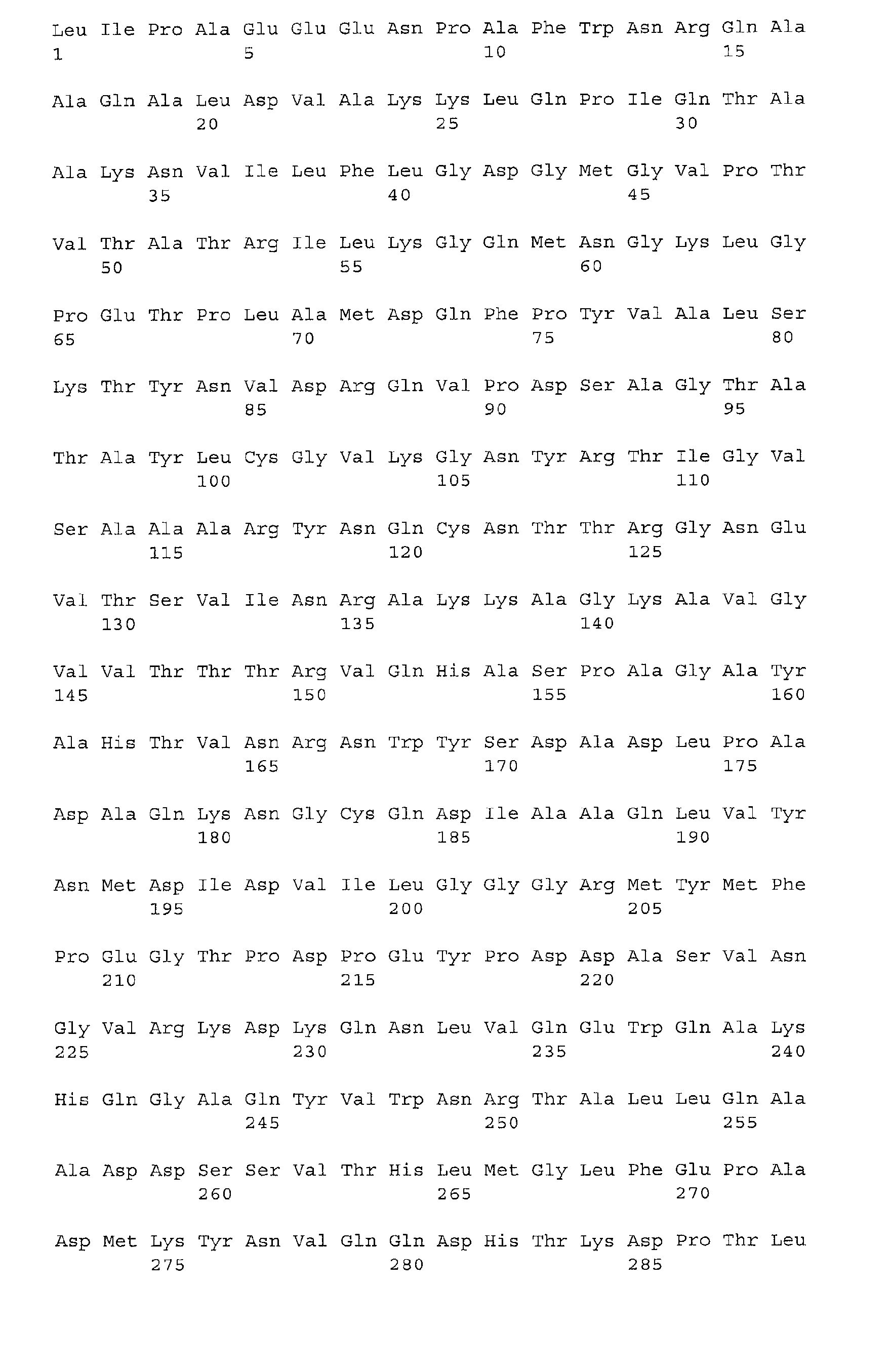
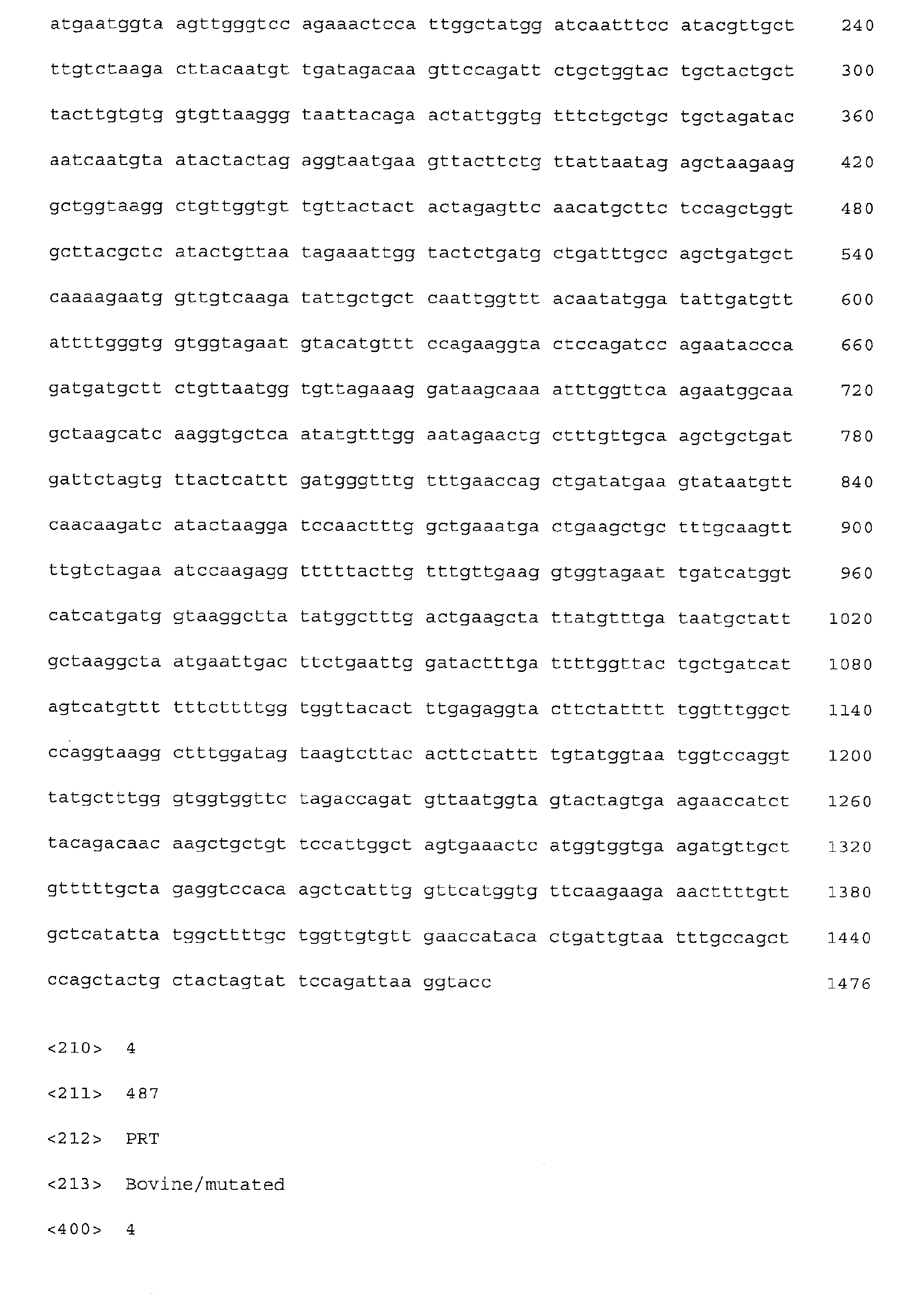
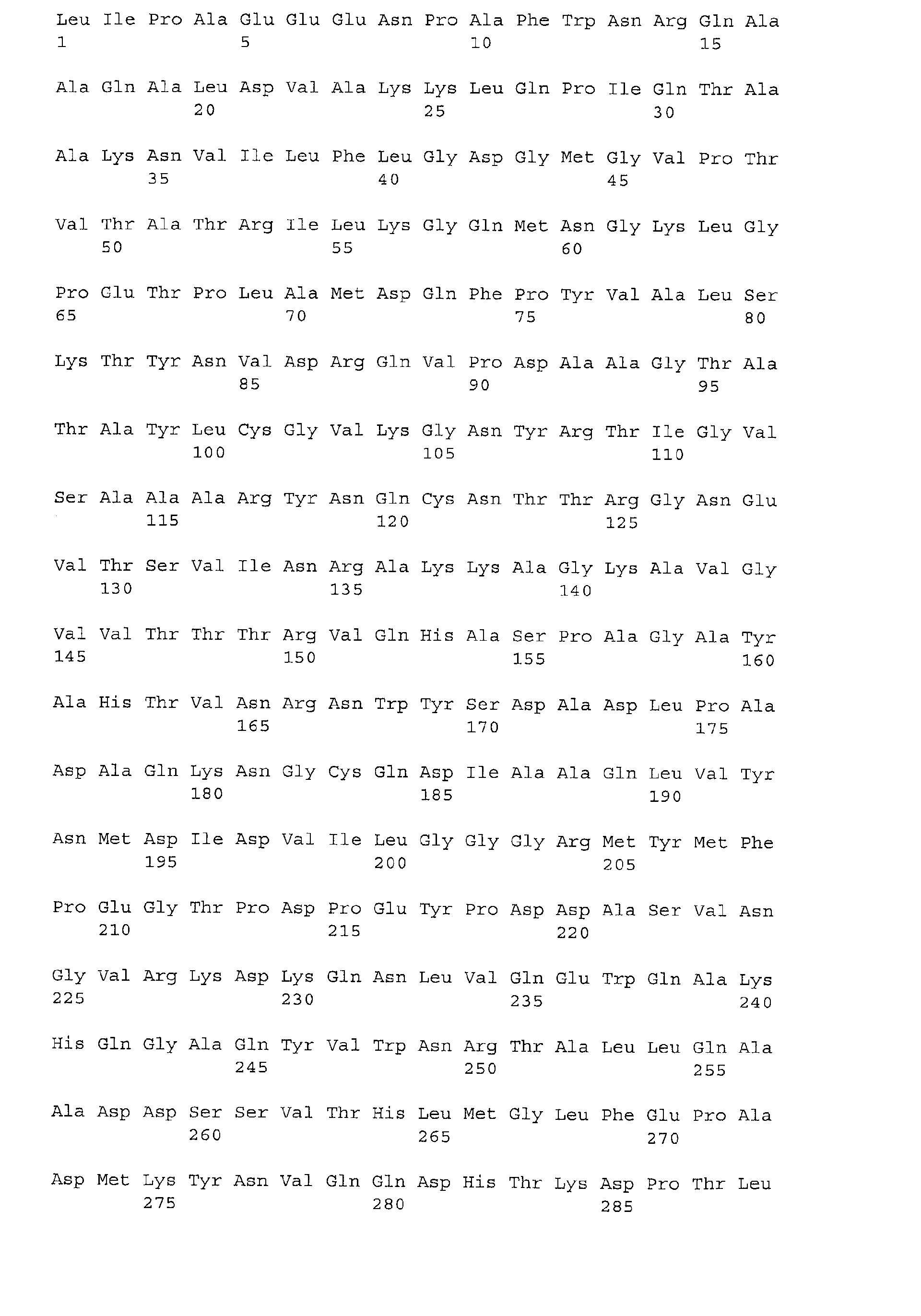
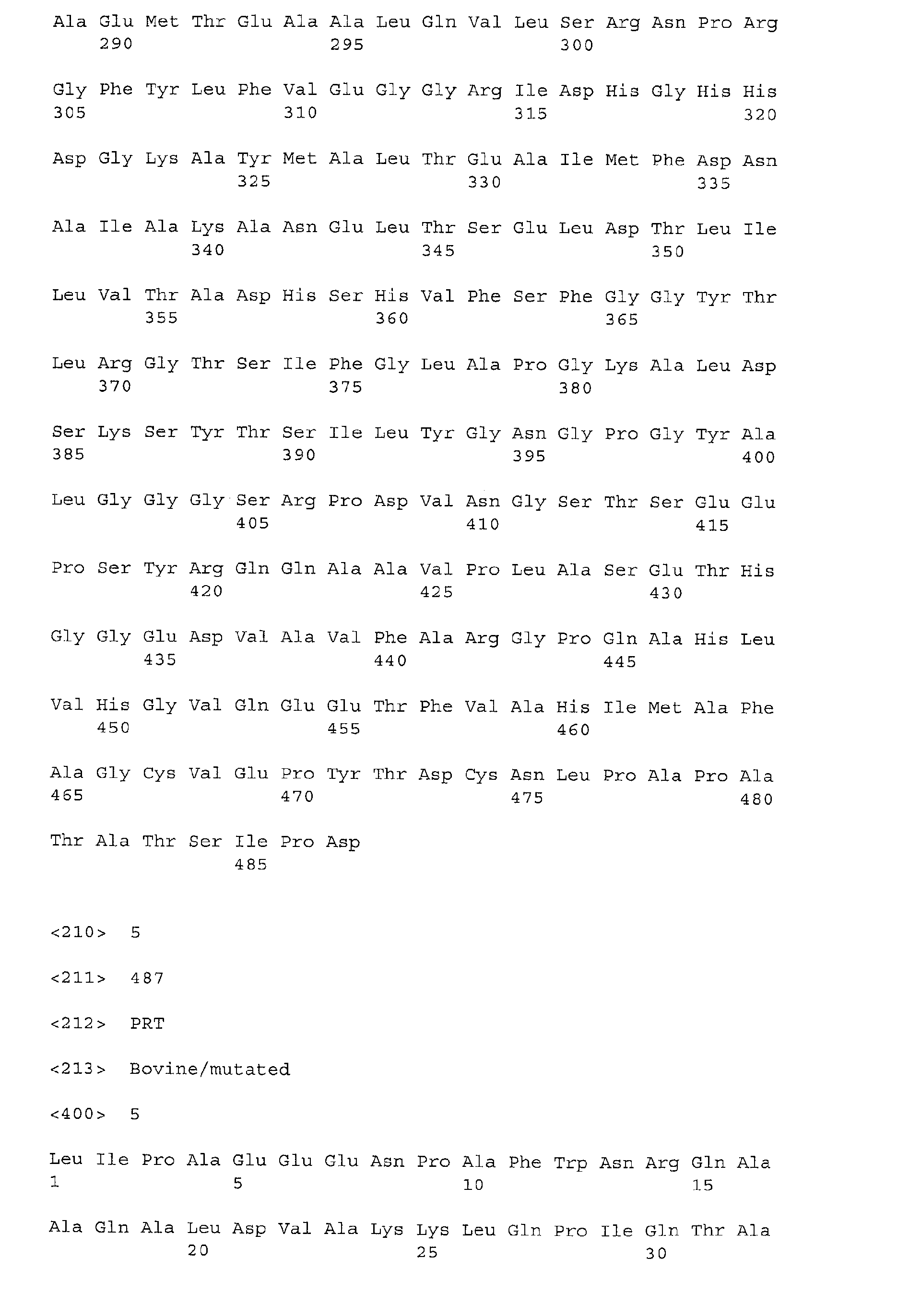
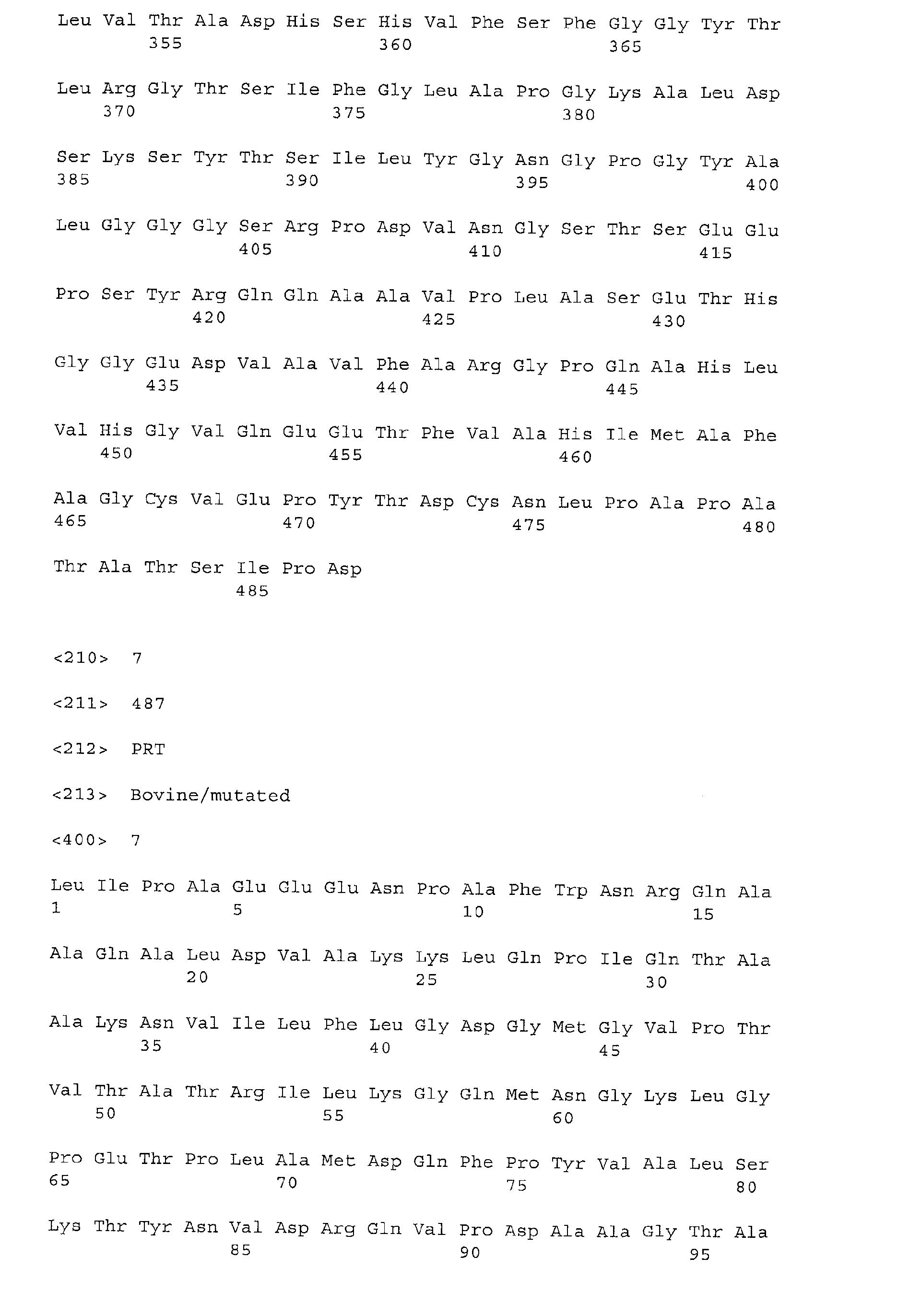
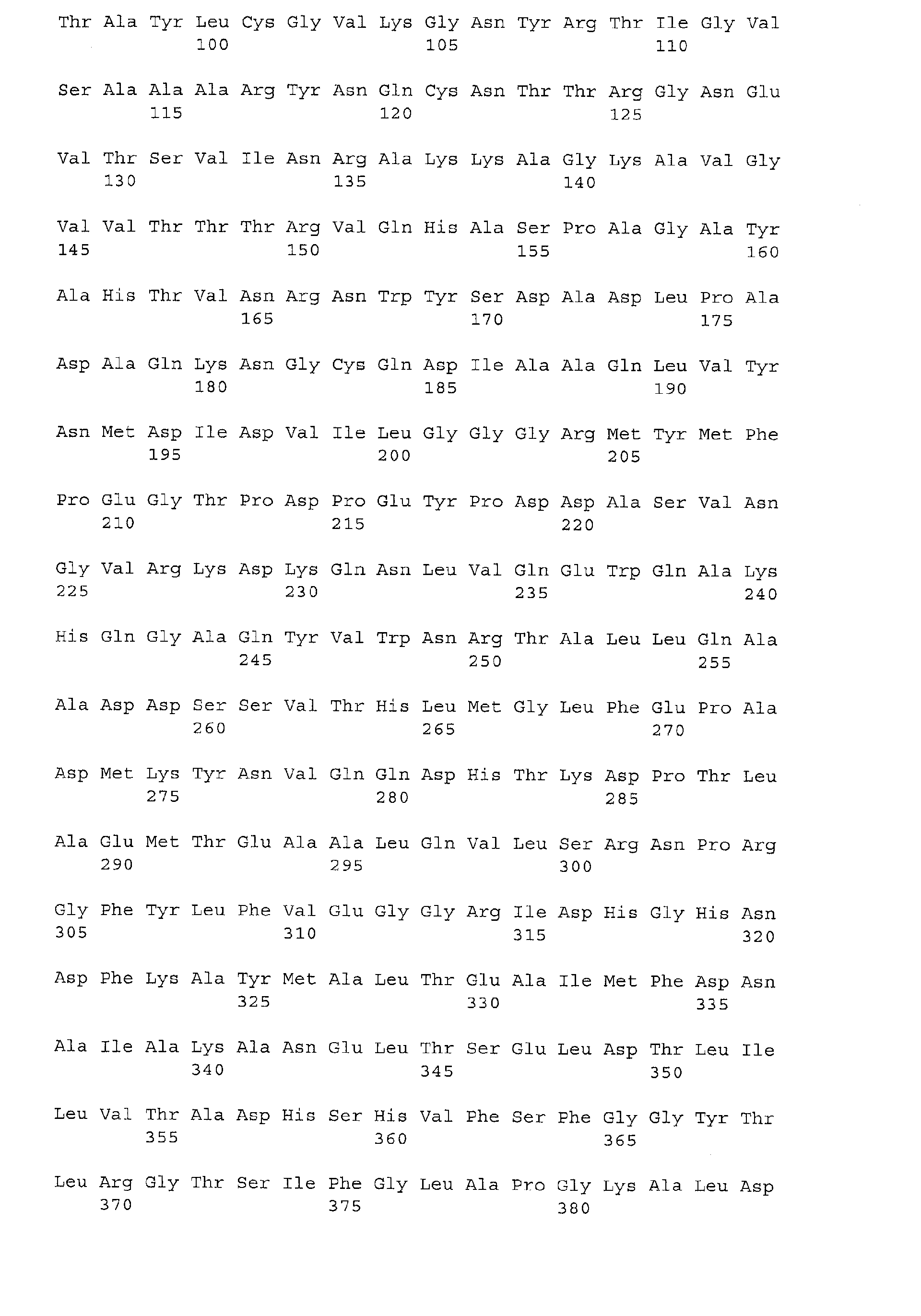
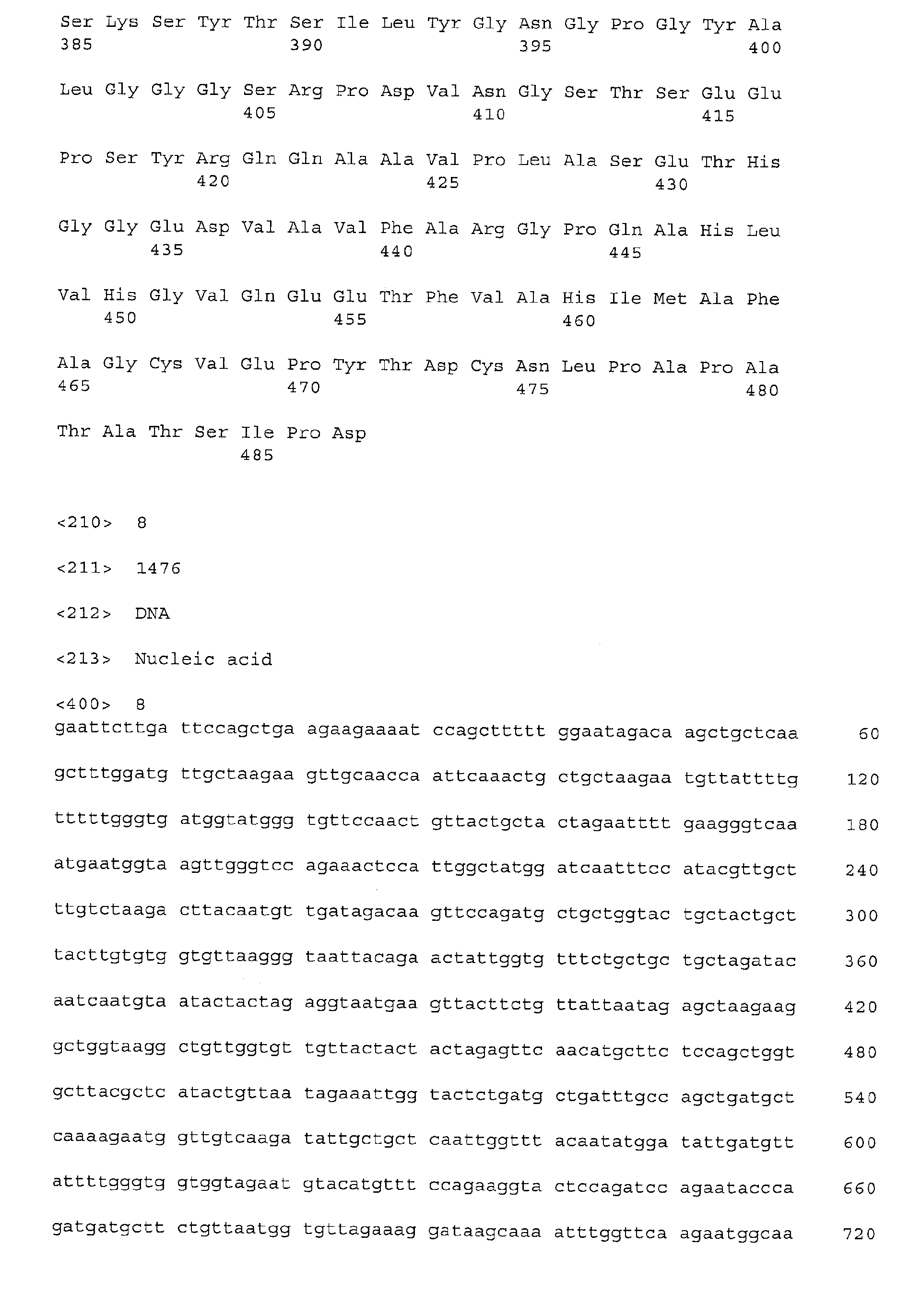
- SEQ ID NO's: 4-7 are particularly preferred, wherein SEQ ID NO .: 4 is a single mutant in position 92 (Ser92Ala), SEQ ID NO .: 5 is a single mutant in position 322 (Gly322Phe), SEQ ID NO .: 6 represents a double mutant in positions 320 and 322 (His320Asn / Gly322Phe) and SEQ ID NO .: 7 represents a triple mutant in positions 92, 320 and 322 (Ser92Ala / His320Asn / Gly322Phe).
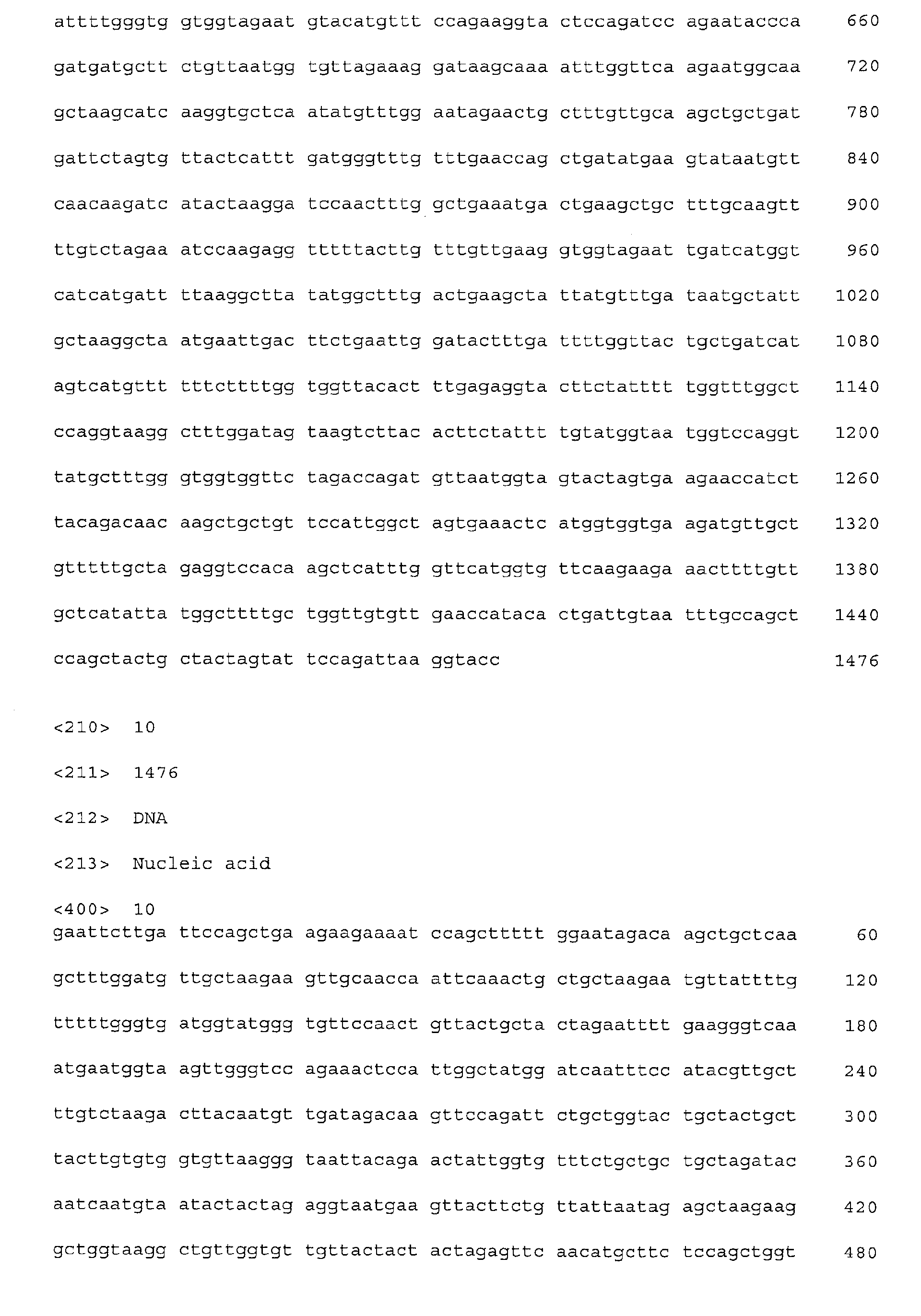
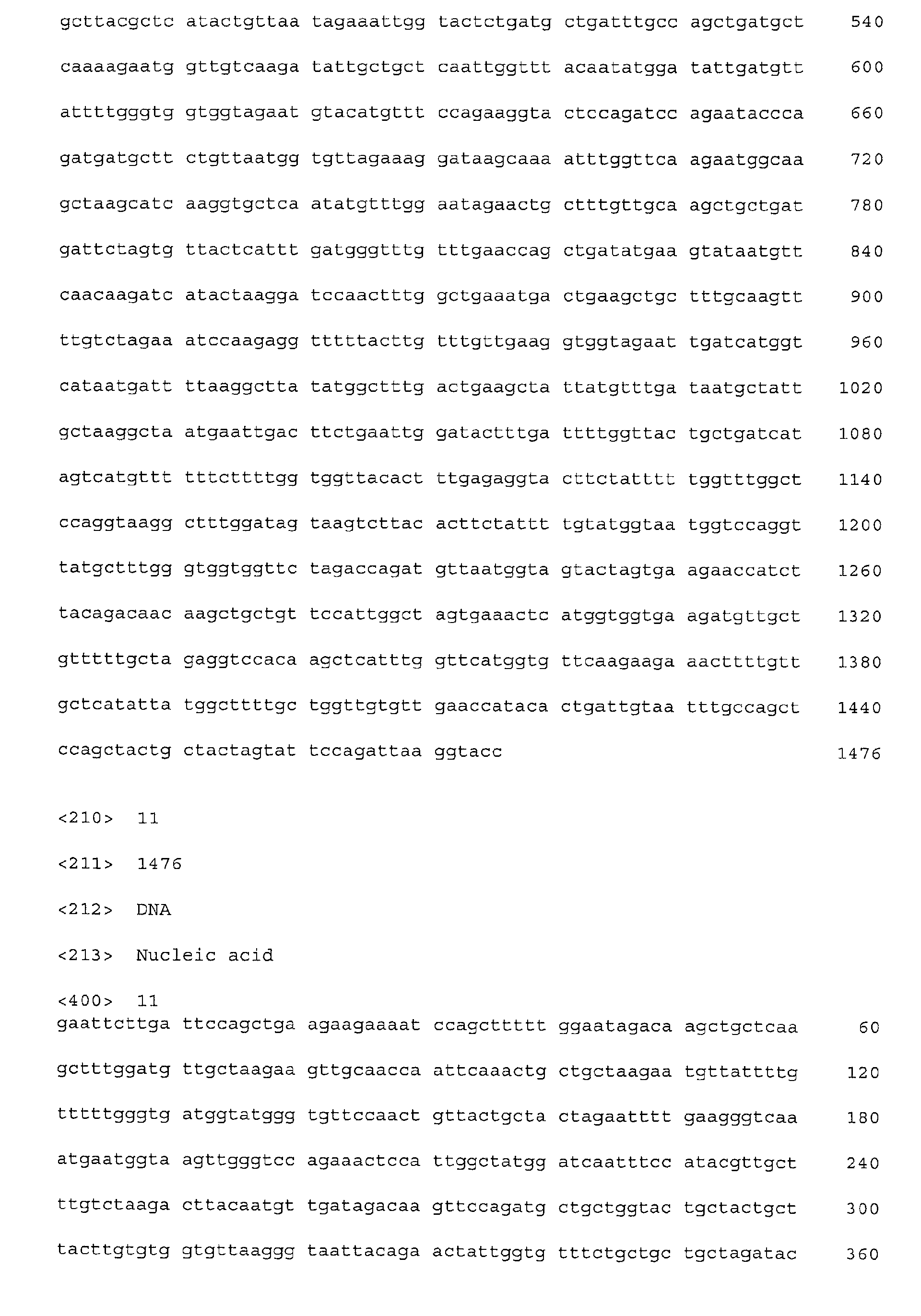
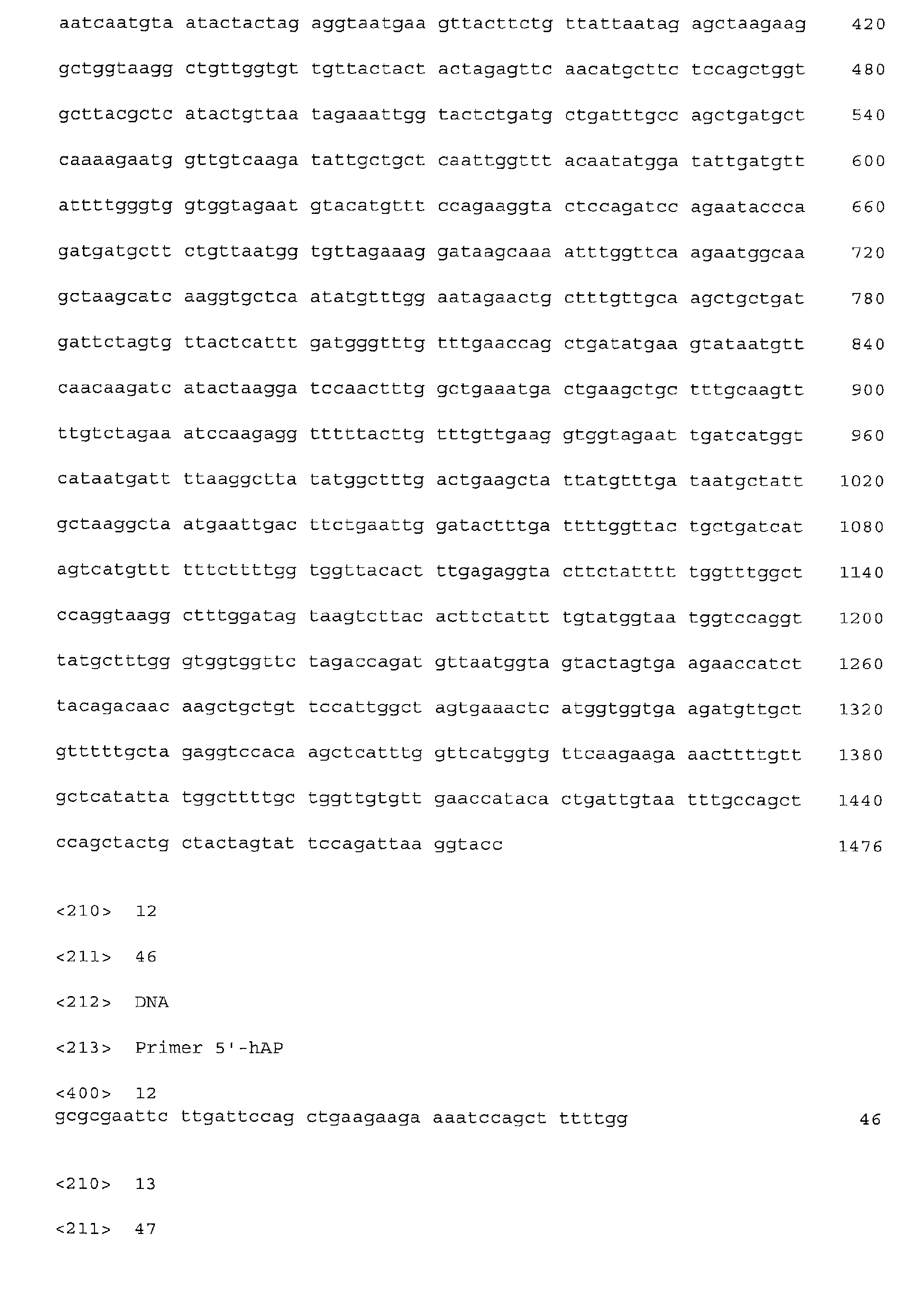
- the associated DNA sequences are shown in SEQ ID NO .: 8-11.
- the present invention furthermore relates to a DNA which is suitable for those described above encoded mutants according to the invention.
- Vectors which contain the nucleic acid sequence according to the invention.
- these are such vectors containing a nucleic acid sequence, the nucleic acid sequence being selected is from SEQ ID NO's: 4-7.
- Suitable vectors are known to the person skilled in the art, for example pPICZ ⁇ A, B, C; pPICZ, pPICZ-E, pPICZ ⁇ -E; pPIC6, pPIC6 ⁇ A, B, C; pGAPZ, pGAPZ ⁇ A, B, C; pPIC9; pPIC9K, pPIC3.5, pPIC3.5K, pAO815, pMET, pMET ⁇ A, B, C; pYES-Dest52, pYES2.1 / V5-His-TOPO, pYC2-E, pYES2.1-E; Yes vectors, pTEF1 / Zeo, pTEF1 / Bsd, pNMT-TOPO (e.g.
- the corresponding gene sequences are cloned, for example into the vectors pPICZ ⁇ A and pPIC9K, which are commercially available (Invitrogen), and the the gene sequences according to the invention according to SEQ ID NO's: 8-11 contain that under control of the AOX1 promoter.
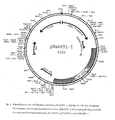
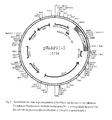
- the vectors produced according to the invention are the vectors pNaAP31-1 (Fig. 1) and pNaAP31-2 (Fig. 2), which the gene sequence according to SEQ ID NO .: 8 each cloned in pPICZ ⁇ A (pNaAP31-1) and pPIC9K (pNaAP31-2).
- vectors pNaAP31-1 and pNaAP31-1 are equally for those produced according to the invention Vectors relevant since the final production clone is a copy of both vectors may contain.
- An expression vector obtained according to the invention is preferably divided into different strains of Yeasts such as Pichia pastoris transformed and stably integrated into the genome.
- the stable integration in the yeast genome has the particular advantage that in later production, for example weakly active or inactive alkaline phosphatase mutants in large volumes No selection pressure is required for fermenters.
- Stable integration into the genome means that the expression vector via homologous recombination in the genome of e.g. Pichia pastoris installed is inherited from generation to generation as an integral part of the yeast genome (Cregg, J.M. et al., Mol. Cell. Biol. 5 (1985), 3376-3385).
- the invention further relates to a host strain transformed with one of the invention Vectors.
- methylotrophic yeasts e.g. yeast Pichia pastoris, Hansenula polymorpha, Saccharomyces cerevisiae, Yarrowia lipolytica or Schizosaccharomyces pombe suitable.
- Pichia is particularly preferred as the host strain pastoris used.
- the Pichia pastoris X-33 strain is particularly preferably transformed with one of the vectors described.
- Methylotrophic yeast cells are preferably used in the method according to the invention.
- Pichia pastoris is particularly preferably used as the yeast cell.
- the vector used is one which which which essentially corresponds to a vector selected from the following Vectors: pPICZ ⁇ A, B, C; pPICZ, pPICZ-E, pPICZ ⁇ -E; pPIC6, pPIC6 ⁇ A, B, C; pGAPZ, pGAPZ ⁇ A, B, C; pPIC9; pPIC9K, pPIC3.5, pPIC3.5K, pAO815, (Invitrogen).
- the increase in the copy number of the mutated gene sequence in the methylotrophic yeast was observed through multiple transformations while increasing the selection pressure with one suitable selection markers, e.g. an antibiotic like Zeocin® or Geneticin (G418), according to which only clones are viable which have multiple copies of the expression vector stable in have integrated the genome.
- one suitable selection markers e.g. an antibiotic like Zeocin® or Geneticin (G418)
- an antibiotic like Zeocin® or Geneticin (G418)
- G418 Geneticin
- the clones to increase resistance proteins to produce. This can be done, for example, by multiple integration of the expression vector take place next to the expression cassette for the respective AP mutant, e.g. the Alkaline phosphatase mutant Ser92Ala, also the resistance gene for the as a selection marker contains the antibiotic used.
- the targeted mutagenesis for producing the mutants according to the invention was as follows performed: Based on the gene for a bovine alkaline phosphatase mutant encoded and that was made synthetically became complementary or overlapping complementary oligonucleotides designed in one or more base positions compared to SEQ ID NO .: 3 were changed. One of these primers then became a partner used with the 5 'or 3' primer described below in the PCR reaction and thus amplified the AP gene in two sections with the desired base exchange (s).
- the two sections were then analyzed by agarose gel electrophoresis, the products isolated from the gel with the expected length using the QIAquick Gel Extraction Kit (Qiagen) and synthesized in a further PCR reaction to the complete gene product.
- the PCR reaction was carried out in the first 5 cycles without adding the primers at the 5 'end and at the 3 'end of the entire gene carried out, so that first few fragments from the two sections of the gene product of the expected length arise.
- the annealing temperature is regulated according to the melting temperature of the overlap area. After that, the terminal ones Primer added and the annealing temperature according to the annealing temperature of the Primers with the lowest melting temperature increased. After that in another 25 cycles Highly amplified gene fragment of the expected length.
- the PCR approach was analyzed using agarose gel electrophoresis and the gene fragment was analyzed the expected size isolated (QIAquick Gel Extraction Kit / Qiagen).
- the recombinant alkaline phosphatase mutants can be extracted by extraction methods that are known in principle to the person skilled in the art, e.g. after “protein Purification ", Springer-Verlag, ed. Robert Scopes (1982).
- suitable chromatographic Methods such as, in particular, using hydrophobic column materials and a cation exchanger, a band-pure product is achieved.
- Oligonucleotides were used to mutagenize the desired base triplet (s) via the PCR reaction designed that have a correspondingly changed base sequence and each other are complementary or complementary to one another partially overlapping. These oligonucleotides subsequently became the corresponding partner for the 5'-primer 5'-hAP according to SEQ ID NO .: 12 or the 3'-primer 3'-hAP according to SEQ ID NO .: 13, each with the 5'-end or the 3'-end of the gene encoding the bovine alkaline phosphatase mutants hybridize, used.
- the mutated gene sequence was in two parts amplified, the first section being the mutation at the 3 'end and the second section being the mutation at the 5 'end and a short base sequence at the 3' end from the first section identical is with a short base sequence of the 5 'end of the second section.
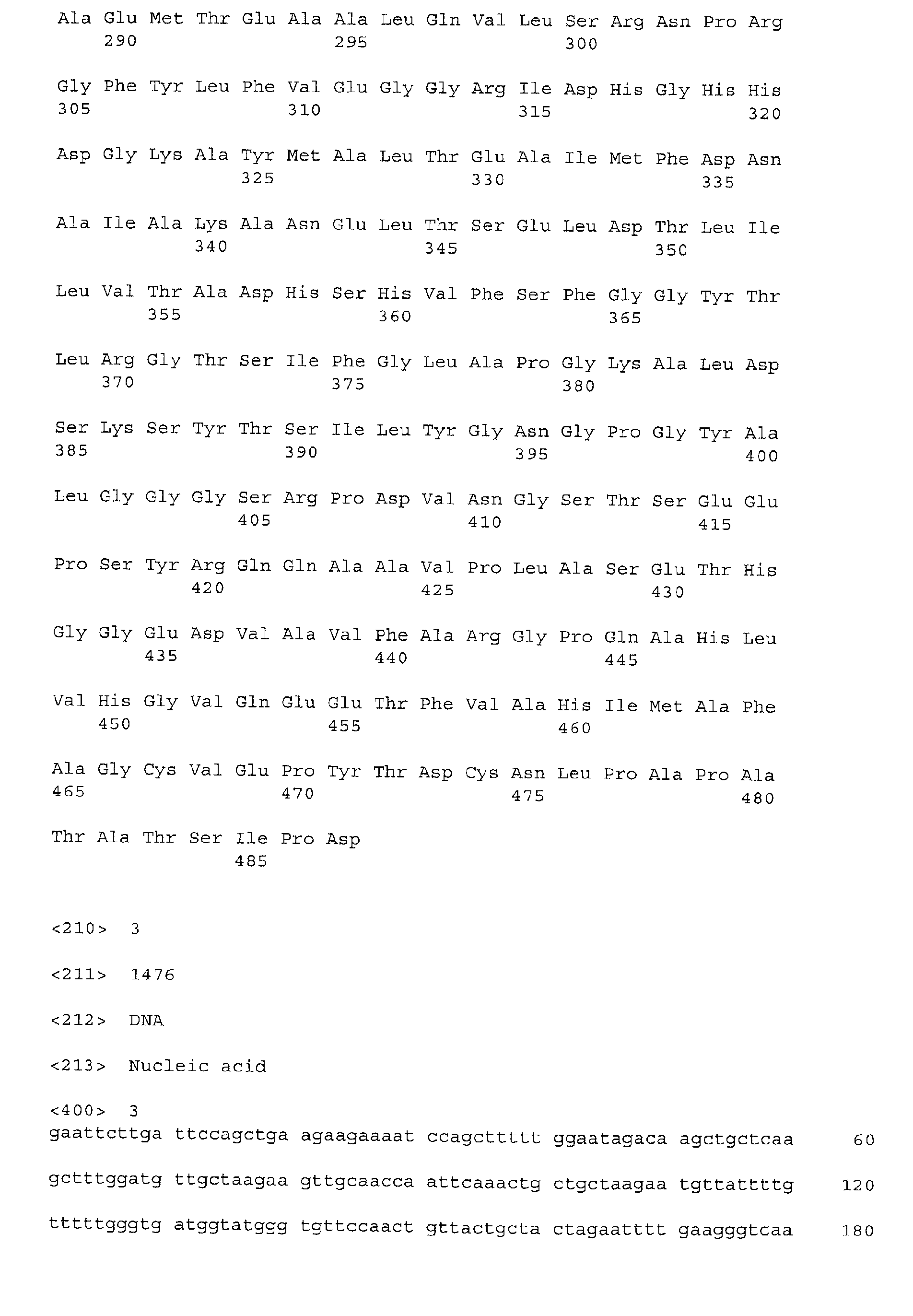
- the base triplet was obtained in position 274-276 to the base triplet TTG according to SEQ ID NO .: 3, which is the first amino acid of the highly active Bovine alkaline phosphatase encoded by TCT in GCT mutated.
- SEQ ID NO .: 3 is the first amino acid of the highly active Bovine alkaline phosphatase encoded by TCT in GCT mutated.
- the mutually complementary primers 5'-S92A according to SEQ ID NO .: 14 and 3'-S92A according to SEQ ID NO .: 15 designed.
- the first PCR reaction was then with the primer pairs 5'-hAP and 3'-S92A and 5'-S92A and 3'-hAP separated from each other with the gene sequence according to SEQ ID NO .: 3 started as a template, so that the mutated gene sequence initially in two Parts was amplified.
- the sections were analyzed using an agarose gel and extracted from the Agarose gel (QIAquick Gel Extraction Kit / Qiagen) isolated and then in the second PCR reaction used. In this second PCR reaction, the two sections became the full-length product merged as described above.
- the resulting mutated gene sequence was corresponding PCR cloning vectors (PCR cloning kit - blunt end / Roche Diagnostics) cloned and checked by restriction analysis and sequencing.
- the base triplet was located in position 964-966 to the first base triplet TTG according to SEQ ID NO .: 3, which for the first amino acid of the highly active bovine alkaline phosphatase coded, mutated from GGT to TTT.
- the first PCR reaction was then with the primer pair 5'-hAP and 3'-G322F and 5'-G322F and 3'-hAP separated from each other with the gene sequence according to SEQ ID NO .: 3 started as a template, so that the mutated gene sequence is initially in two sections was amplified. The sections were analyzed using an agarose gel and analyzed isolated from the agarose gel (QIAquick Gel Extraction Kit / Qiagen) and then into the second PCR reaction used. In this second PCR reaction, the two sections became Full length product fused as described above. The resulting mutated gene sequence appropriate PCR cloning vectors (PCR cloning kit - blunt end / Roche Diagnostics) cloned and checked by restriction analysis and sequencing.
- PCR cloning kit - blunt end / Roche Diagnostics cloned and checked by restriction analysis and sequencing.
- the base triplets were in the positions 958-960 or 964-966, based on the first base triplet TTG according to SEQ ID NO .: 3, the encoded for the first amino acid of bovine highly active alkaline phosphatase, by CAT in AAT or GGT mutated into TTT.
- the primers were partially complementary to each other 5'-H320N / G322F according to SEQ ID NO .: 18 and 3'-H320N / G322F according to SEQ ID NO .: 19.
- the first PCR reaction was then carried out with the primer pairs 5'-hAP and 3'-H320N / G322F and 5'-H320N / G322F and 3'-hAP separately from one another with the gene sequence according to SEQ ID NO .: 3 started as a template, so that the mutated gene sequence initially in two parts was amplified.
- the sections were analyzed using an agarose gel and extracted from the Agarose gel (QIAquick Gel Extraction Kit / Qiagen) isolated and then in the second PCR reaction used. In this second PCR reaction, the two sections became the full-length product merged as described above.
- the resulting mutated gene sequence was corresponding PCR cloning vectors (PCR cloning kit - blunt end / Roche Diagnostics) cloned and checked by restriction analysis and sequencing.
- the triple mutant Ser92Ala / His320Asn / Gly322Phe was generated by combination the single mutant Ser92Ala and the double mutant His320Asn / Gly322Phe.
- each cloned in PCR cloning vectors PCR cloning kit - blunt end / Roche Diagnostics
- the restriction endonucleases MunI and Asp718 cut, the restriction mixture separated by means of agarose gel electrophoresis.
- Mun cuts between the positions of the triplets of Ser92 and His320.
- the checked mutant gene sequences were cut out of the PCR cloning vectors by restriction with the restriction endonucleases EcoRI and Asp718, the restriction mixture was separated by means of agarose gel electrophoresis and the approx. 1480 bp long fragments were isolated from the agarose gel (QIAquick Gel Extraction Kit / Qiagen). The mutated gene sequences were then ligated with a vector fragment from the expression vector pPICZ ⁇ A, likewise linearized with EcoRI and Asp718.
- the necessary restriction endonuclease interfaces for EcoRI and Asp718 were introduced into the mutated gene sequences by the primers 5'-hAP and 3'-hAP, which have the recognition sequences for restriction endonucleases EcoRI and Asp718 upstream and downstream of the coding sequence.
- the resulting expression vectors for alkaline phosphatase mutants were designated as follows: pNaAP31-1 (Ser92Ala), pNaAP43-1 (Gly322Phe), pNaAP51-1 (His320Asn / Gly322Phe) and pNaAP6-1 (Ser92Ala / His320Asn / Gly322Phe).
- the mutated gene sequences are under the control of the AOX 1 promoter (promoter for alcohol oxidase 1 from Pichia pastoris), inducible with methanol and are cloned in the correct reading frame behind the signal peptide of the ⁇ factor from Saccharomyces cerevisiae.
- the gene fragment thus inserted was then examined for error-free base sequence by means of restriction analysis and sequencing.
- the expression vectors thus created, each of which has one of the mutated gene sequences according to SEQ ID NO's .: 8-11 and which code for eukaryotic alkaline phosphatase mutants, are shown by way of example on pNaAP31-1 (see FIG. 1).
- the vectors were initially treated with SacI (Roche Diagnostics GmbH) linearized. The transformation was carried out by means of electroporation with the Gene Pulser II (Biorad) performed.
- a colony of Pichia pastoris wild-type strain was inoculated in 5 ml of YPD medium (Invitrogen) and incubated at 30 ° C. overnight with shaking. The overnight culture was then inoculated 1: 2000 in 200 ml of fresh YPD medium (Invitrogen) and incubated overnight at 30 ° C. with shaking until an OD 600 of 1.3-1.5 was reached. The cells were centrifuged (1500 xg / 5 minutes) and the pellet resuspended in 200 ml ice-cold, sterile water (0 ° C).
- the cells were again centrifuged (1500 ⁇ g / 5 minutes) and resuspended in 100 ml ice-cold, sterile water (0 ° C.). The cells were centrifuged again, resuspended in 10 ml ice-cold (0 ° C) 1 M sorbitol (ICN). The cells were centrifuged again, resuspended in 0.5 ml ice-cold (0 ° C) 1 M sorbitol (ICN). The cells obtained in this way were kept on ice and immediately used for transformation.
- BMMY medium contains methanol (Mallinckrodt Baker BV), which induces the expression of the alkaline phosphatase mutants via the AOX 1 promoter.
- the shake flasks were incubated at 30 ° C. with shaking, samples were taken every 24 hours, the OD 600 was determined, an activity test for expression of the alkaline phosphatase mutants was carried out and in each case refilled with 0.5% methanol (Mallinckrodt Baker BV) for further induction. The expression experiments ran over 96 hours.
- the activity test works according to the following principle: The increase in absorption at 405 nm is measured.
- the membrane was then washed again twice with 20 ml of ultrapure water for 5 minutes, then in 10 ml with Blocking Solution (Invitrogen), this time antibody 1 (Anti-AP-rabbit / Rockland Inc. is diluted 1: 5000 from a stock solution of 10 mg / ml), 1 Incubated for one hour. This was followed four times with 20 ml of an antibody wash solution (Invitrogen) for washed for 5 minutes each and then the membrane with 10 ml of the secondary antibody solution (contains the anti-rabbit antibody / Invitrogen) incubated for 30 min.
- Anti-AP-rabbit / Rockland Inc. is diluted 1: 5000 from a stock solution of 10 mg / ml
- an antibody wash solution Invitrogen
- the membrane with 10 ml of the secondary antibody solution (contains the anti-rabbit antibody / Invitrogen) incubated for 30 min.
- the best clones from the expression experiments were again used for electroporation as in Prepared as described in Example 2 and again with 1 ⁇ g of linearized expression vector vector DNA transformed and the transformation approach on YPDS agar plates (Invitrogen) with 1000 to 2000 ⁇ g / ml Zeocin® (Invitrogen) plated out.
- the Zeocin® resistance protein is the product of the bleomycing gene from Streptoalloteichus hindusstanus (Chalmels, T. et al., Curr. Genet.
- the primers 5'-Expr and 3'-Expr used here are the sequences SEQ ID NO .: 20 and SEQ ID NO .: 21.
- the PCR approach was analyzed by agarose gel electrophoresis, the gene fragment with the expected one Size isolated (QIAquick Gel Extraction Kit / Qiagen), with SacI and NotI (Roche Diagnostics GmbH) cut, then isolated again from the agarose gel (QIAquick Gel Extraction Kit / Qiagen) and also with SacI / NotI (Roche Diagnostics GmbH) linearized and isolated vector fragment of pPIC9K ligated. This ensured that the entire expression cassette from the respective expression vectors is identical in pPIC9K Template. The inserted fragment was analyzed using restriction analysis and sequencing flanking regions checked.
- the resulting expression vectors for alkalis Phosphatase mutants were pNaAP31-2 (Ser92Ala), pNaAP43-2 (Gly322Phe), pNaAP51-2 (His320Asn / Gly322Phe) and pNaAP6-2 (Ser92Ala / His320Asn / Gly322Phe).
- the clones with the maximum AP mutant expression performance from the multiple transformation with the Zeocin® as selection markers were prepared for electroporation as described in Example 2 and vector fragment of pNaAP31-2 and derivatives linearized with 1 ⁇ g with SacI (Roche Diagnostics GmbH) and derivatives as in Example 2 transformed.
- the transformation mixture was then stored for 1 to 3 days at 4 ° C. in 1 M sorbitol (ICN) (to develop G418 resistance) and then 100 to 200 ⁇ l on YPD plates (Invitrogen) with 1, 2 or 4 mg / ml G418 (Roche Diagnostics GmbH) plated out and incubated for 3 to 5 days at 30 ° C.
- Clones resulting therefrom were again examined as described for an increased expression of the eukaryotic alkaline phosphatase mutants via the activity test.
Landscapes
- Life Sciences & Earth Sciences (AREA)
- Chemical & Material Sciences (AREA)
- Health & Medical Sciences (AREA)
- Genetics & Genomics (AREA)
- Organic Chemistry (AREA)
- Engineering & Computer Science (AREA)
- Bioinformatics & Cheminformatics (AREA)
- Zoology (AREA)
- Wood Science & Technology (AREA)
- Molecular Biology (AREA)
- Microbiology (AREA)
- Biotechnology (AREA)
- Biomedical Technology (AREA)
- Biochemistry (AREA)
- General Engineering & Computer Science (AREA)
- General Health & Medical Sciences (AREA)
- Medicinal Chemistry (AREA)
- Micro-Organisms Or Cultivation Processes Thereof (AREA)
- Enzymes And Modification Thereof (AREA)
Abstract
Description
- die zu mutierende Sequenz zu mindestens 77% homolog zur SEQ ID NO.: 2 ist, und
- die Mutante eine um mindestens den Faktor 100 verringerte Aktivität im Vergleich zum Wildtyp aufweist, und
- die Mutante eine oder mehrere der nachfolgend genannten Mutationen aufweist, und wobei
die Position der Mutation relativ zur Position in SEQ ID NO.: 2 definiert ist:
- Asp42:
- gegen Asn, Val, Ala oder Ser
- Ser92:
- gegen Ala, Gly, Val oder Leu
- Ser155:
- gegen Ala, Gly, Val oder Leu
- Glu 311:
- gegen Gln, Asn, Leu, Ile oder Met
- Asp316:
- gegen Asn, Val, Ala oder Ser
- His320:
- gegen Asn, Phe, Asp oder Tyr,
- Gly 322:
- gegen jede größere Aminosäure als Asp, wie z.B. Phe, Trp, Arg, Lys, Glu, Gln, His, Tyr oder Ile
- Asp357:
- gegen Asn, Val, Ala oder Ser
- His358:
- gegen Asn, Phe, Asp oder Tyr
- His432:
- gegen Asn, Phe, Asp oder Tyr
- Asp42:
- gegen Val oder Asn
- Ser92:
- gegen Ala oder Gly
- Ser155:
- gegen Ala oder Gly
- Glu 311:
- gegen Gln oder Leu
- Asp316;
- gegen Val oder Asn
- His320.
- gegen Asn oder Phe
- Gly 322.
- gegen Phe oder Lys
- Asp357:
- gegen Val oder Asn
- His358:
- gegen Asn oder Phe
- His432:
- gegen Asn oder Phe
- ein erster Vektor ein Resistenzgen gegen einen ersten Selektionsmarker aufweist,
- Transformanten, die das Resistenzgen und die gewünschte Gensequenz in das Genom integriert haben, durch Wachstum auf Nährmedium mit einer geringen Konzentration an erstem Selektionsmarker selektioniert werden,
- die Genkopienzahl durch Mehrfachtransformation erhöht wird, wobei Mehrfachtransformanten durch Wachstum auf Nährmedium mit erhöhtem Selektionsdruck selektioniert werden,
- ein zweiter Vektor, welcher ein Resistenzgen gegen einen zweiten Selektionsmarker aufweist, zugegeben wird,
- die Genkopienzahl durch Mehrfachtransformation mit dem zweiten Vektor erhöht wird, wobei Mehrfachtransformanten durch Wachstum auf Nährmedium mit erhöhtem Selektionsdruck selektioniert werden, und
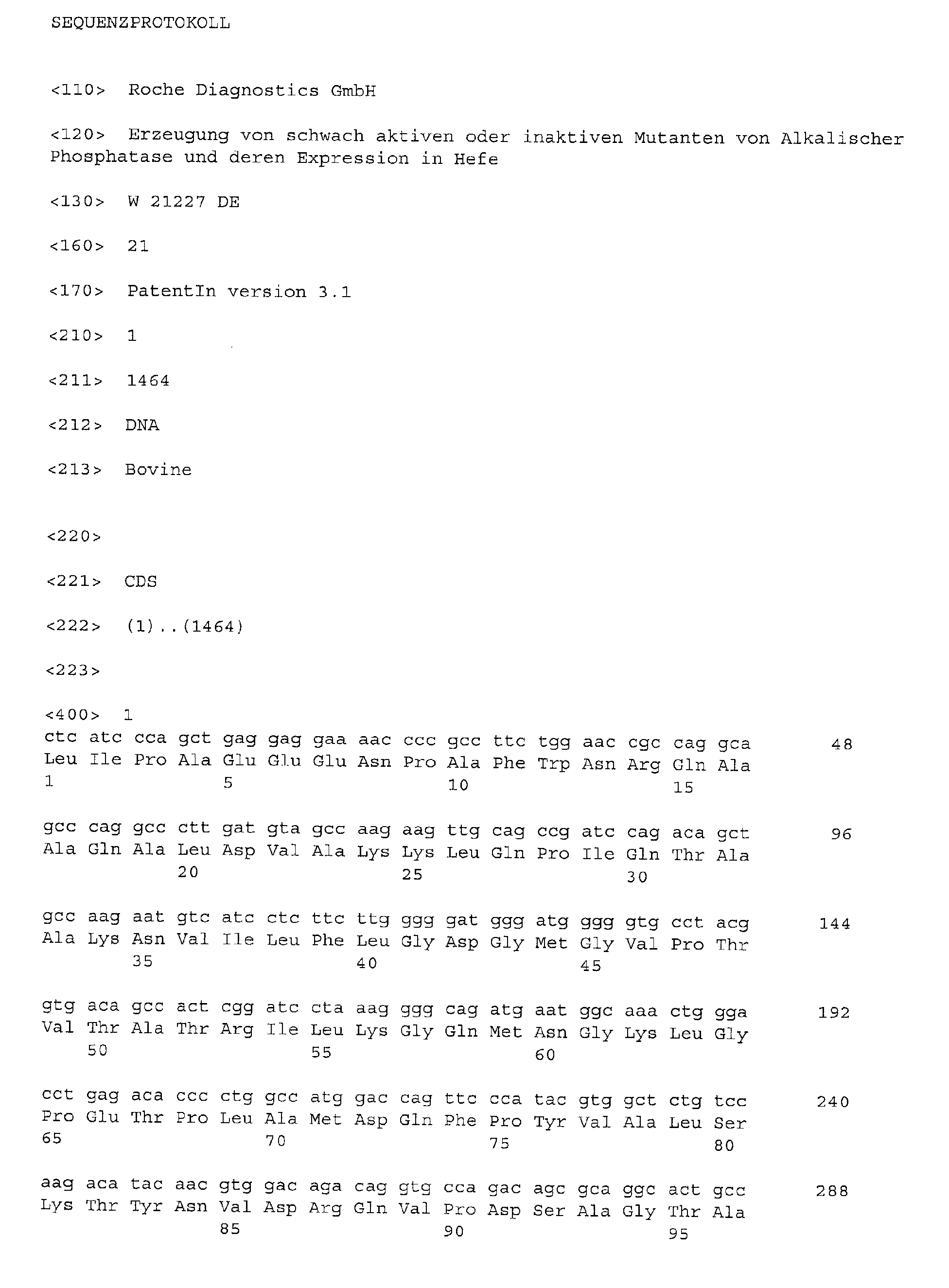
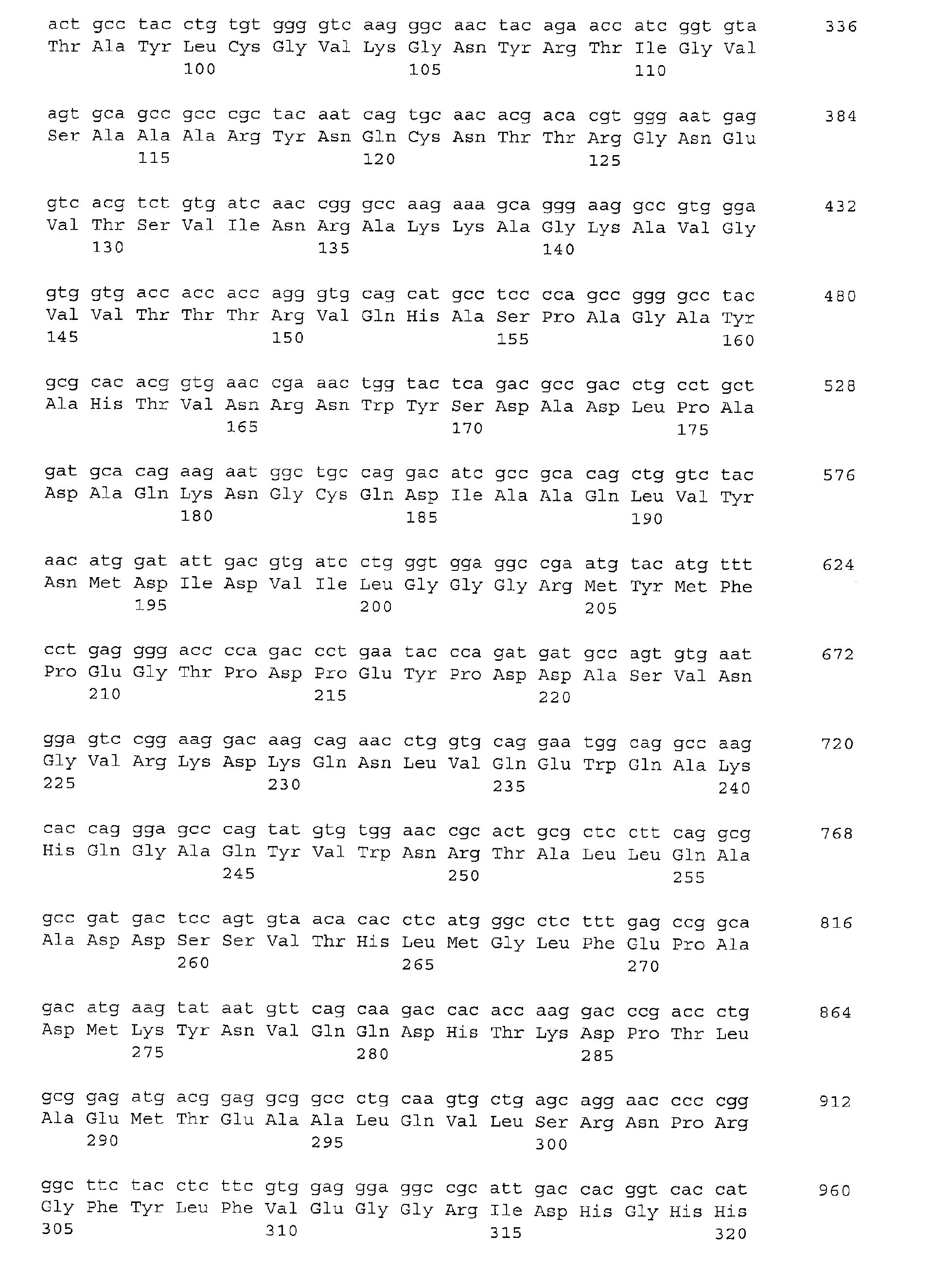
- SEQ ID NO.: 1
- Native DNA-Sequenz kodierend für die hochaktive AP aus Rind, ohne Signalsequenz
- SEQ ID NO.: 2
- Aminosäuresequenz der hochaktiven AP aus Rind
- SEQ ID NO.: 3
- DNA-Sequenz des synthetischen Gens kodierend für eine hochaktive AP, stromaufwärts der kodierenden Sequenz befindet sich die Restriktionsschnittstelle EcoRI, stromabwärts die Restriktionsschnittstelle Asp 718
- SEQ ID NO.: 4
- Aminosäuresequenz der AP-Einzelmutante Ser 92 Ala (Wildtyp: hochaktive AP aus Rind)
- SEQ ID NO.: 5
- Aminosäuresequenz der AP-Einzelmutante Gly 322 Phe (Wildtyp: hochaktive AP aus Rind)
- SEQ ID NO.: 6
- Aminosäuresequenz der AP-Doppelmutante His 320/Gly 322 Phe (Wildtyp: hochaktive AP aus Rind)
- SEQ ID NO.: 7
- Aminosäuresequenz der AP-Dreifachmutante Ser 92 Ala/His 320/Gly 322 Phe (Wildtyp: hochaktive AP aus Rind)
- SEQ ID NO.: 8
- DNA-Sequenz des synthetischen Gens kodierend für die AP-Einzelmutante Ser 92 Ala mit EcoRI- bzw. Asp 718-Schnittstelle, stromaufwärts bzw. stromabwärts der kodierenden Sequenz
- SEQ ID NO.: 9
- DNA-Sequenz des synthetischen Gens kodierend für die AP-Einzelmutante Gly 322 Phe mit EcoRI- bzw. Asp 718-Schnittstelle, stromaufwärts bzw. stromabwärts der kodierenden Sequenz
- SEQ ID NO.: 10
- DNA-Sequenz des synthetischen Gens kodierend für die AP-Doppelmutante His 320 Asn/Gly 322 Phe mit EcoRI- bzw. Asp 718-Schnittstelle, stromaufwärts bzw. stromabwärts der kodierenden Sequenz
- SEQ ID NO.: 11
- DNA-Sequenz des synthetischen Gens kodierend für die AP-Dreifachmutante Ser 92 Ala/His 320 Asn/Gly 322 Phe mit EcoRI- bzw. Asp 718Schnittstelle, stromaufwärts bzw. stromabwärts der kodierenden Sequenz
- SEQ ID NO's.: 12-21
- DNA-Sequenzen die als Primer dienten
- YPD:
- Yeast Peptone Dextrose
- YPDS:
- Yeast Peptone Dextrose Sorbitol
- BMGY:
- Buffered Glyerol-complex medium
- BMMY:
- Buffered Methanol-complex medium
- MTP:
- Microtiterplatten
In diesem Vektor stehen die mutierten Gensequenzen unter Kontrolle des AOX 1-Promotors (Promotor für die Alkoholoxidase 1 aus Pichia pastoris), mit Methanol induzierbar und wird im korrekten Leserahmen hinter das Signalpeptid des α-Faktors aus Saccharomyces cerevisiae kloniert. Das so insertierten Genfragment wurde dann mittels Restriktionsanalyse und Sequenzierung auf fehlerfreie Basensequenz untersucht. Die so entstandene Expressionsvektoren, die jeweils eine der mutierten Gensequenzen gemäß SEQ ID NO's.: 8-11, die für eukaryontische Alkalische Phosphatase-Mutanten kodieren, sind beispielhaft an pNaAP31-1 (s. Fig. 1) gezeigt.

Faktor x = Konzentrierungsfaktor nach Zellaufschluss
Als Positivkontrolle wurden jeweils Überstände von Klonen, die die hochaktive Alkalische Phosphatase gemäß SEQ ID NO.: 3 exprimieren und als Negativkontrolle Klone, die nur mit Ausgangsvektor pPICZαA ohne Zielgen transformiert wurden, mitgeführt.
Mit diesem Aktivitätstest wurden die Restaktivität der Mutanten wie folgt bestimmt:
- Einzelmutante Ser92Ala:
- Reduktion der spezifischen Aktivität um Faktor ca. 5000
- Einzelmutante Gly322Phe:
- Reduktion der spezifischen Aktivität um Faktor ca. 2500
- Doppelmutante His320Asn/Gly322Phe:
- Reduktion der spezifischen Aktivität um Faktor ca. 10000 (nahe der Nachweisgrenze)
- Triplemutante Ser92Ala/His320Asn/Gly322Phe:
- Reduktion der spezifischen Aktivität um Faktor―10000 (nahe der Nachweisgrenze)






Claims (16)
- Mutanten der eukaryontischen Alkalischen Phosphatase, wobeidie Mutante eine oder mehrere der nachfolgend genannten Mutationen aufweist, wobei die Position der Mutation relativ zur Position in SEQ ID NO.: 2 definiert ist:die zu mutierende Sequenz (Wildtyp) zu mindestens 77% homolog zur SEQ ID NO.: 2 ist, unddie Mutante eine um mindestens den Faktor 100 verringerte AP-Aktivität im Vergleich zum Wildtyp aufweist, und
- Asp42:
- gegen Asn, Val, Ala oder Ser
- Ser92:
- gegen Ala, Gly, Val oder Leu
- Ser155:
- gegen Ala, Gly, Val oder Leu
- Glu 311:
- gegen Gln, Asn, Leu, Ile oder Met
- Asp316:
- gegen Asn, Val, Ala oder Ser
- His320:
- gegen Asn, Phe, Asp oder Tyr
- Gly 322:
- gegen jede größere Aminosäure als Asp
- Asp357:
- gegen Asn, Val, Ala oder Ser
- His358:
- gegen Asn, Phe, Asp oder Tyr
- His432:
- gegen Asn, Phe, Asp oder Tyr.
- Mutanten der eukaryontischen Alkalischen Phosphatase gemäß Anspruch 1, wobei die Mutante eine oder mehrere der nachfolgend genannten Mutationen aufweist, und wobei die Position der Mutation relativ zur Position in SEQ ID NO.: 2 definiert ist:
- Asp42:
- gegen Val oder Asn
- Ser92:
- gegen Ala oder Gly
- Ser155:
- gegen Ala oder Gly
- Glu 311:
- gegen Gln oder Leu
- Asp316:
- gegen Val oder Asn
- His320:
- gegen Asn oder Phe
- Gly 322:
- gegen Phe oder Lys
- Asp357:
- gegen Val oder Asn
- His358:
- gegen Asn oder Phe
- His432:
- gegen Asn oder Phe.
- Mutanten der eukaryontischen Alkalischen Phosphatase gemäß Anspruch 1 oder 2, wobei das Enzym nach der Wildtyp-Sequenz eine spezische Aktivität von über 7000 U/mg aufweist.
- Mutanten der eukaryontischen Alkalischen Phosphatase gemäß einem der Ansprüche 1 bis 3 wobei die Mutante eine um mindestens den Faktor 1000 verringerte Aktivität im Vergleich zum Wildtyp aufweist.
- Mutanten der eukaryontischen Alkalischen Phosphatase gemäß einem der Ansprüche 1 bis 4 wobei die Mutante eine um mindestens den Faktor 10000 verringerte Aktivität im Vergleich zum Wildtyp aufweist.
- Mutanten der eukaryontischen Alkalischen Phosphatase gemäß einem der Ansprüche 1 bis 5 wobei diese Mutante im wesentlichen eine Aminosäuresequenz aufweist, welche ausgewählt ist aus den SEQ ID NO's: 4-7.
- Rekombinante DNA kodierend eine Mutante der eukaryontischen Alkalischen Phosphatase gemäß einem der Ansprüche 1-6.
- Rekombinante DNA kodierend eine Mutante der eukaryontischen Alkalischen Phosphatase wobei diese Mutante im wesentlichen eine Nukleinsäuresequenz aufweist, welche ausgewählt ist aus den SEQ ID NO's: 8-11.
- Vektor enthaltend eine Nukleinsäuresequenz , welche ausgewählt ist aus den SEQ ID NO's: 8-11.
- Vektor gemäß Anspruch 9, der im wesentlichen einem Vektor entspricht, welcher ausgewählt ist aus den folgenden Vektoren: pPICZαA , B, C;pPICZ, pPICZ-E, pPICZα-E; pPIC6, pPIC6αA, B, C; pGAPZ, pGAPZαA, B, C; pPIC9; pPIC9K, pPIC3.5, pPIC3.5K, pAO815, pMET, pMETαA, B, C;pYES-Dest52, pYES2.1/V5-His-TOPO, pYC2-E, pYES2.1-E; Yes-Vektoren, pTEF1/Zeo, pTEF1/Bsd, pNMT-TOPO.
- Wirtstamm transformiert mit einem Vektor gemäß Anspruch 9 oder 10.
- Wirtsstamm gemäß Anspruch 11, wobei als Wirtstamm Pichia pastoris verwendet wird.
- Verfahren zur Herstellung einer Mutante der eukaryontischen Alkalischen Phosphatase gemäß einem der Ansprüche 1-6 in Hefezellen, umfassend die Schritte: a) Klonierung einer Gensequenz gemäß Anspruch 7 oder 8 in unterschiedlichen Vektoren, b) Transformation der Hefe, c) Expression der AP-Mutante und d) Reinigung der Alkalischen Phosphatase, dadurch gekennzeichnet, daßsolche Klone selektioniert werden, die mehrere Kopien der Gensequenz und der Selektionsmarker-Resistenzgene stabil in das Genom integriert haben.ein erster Vektor ein Resistenzgen gegen einen ersten Selektionsmarker aufweist,Transformanten, die das Resistenzgen und die gewünschte Gensequenz in das Genom integriert haben, durch Wachstum auf Nährmedium mit einer geringen Konzentration an erstem Selektionsmarker selektioniert werden,die Genkopienzahl durch Mehrfachtransformation erhöht wird, wobei Mehrfachtransformanten durch Wachstum auf Nährmedium mit erhöhtem Selektionsdruck selektioniert werden,ein zweiter Vektor, welcher ein Resistenzgen gegen einen zweiten Selektionsmarker aufweist, zugegeben wird,die Genkopienzahl durch Mehrfachtransformation mit dem zweiten Vektor erhöht wird, wobei Mehrfachtransformanten durch Wachstum auf Nährmedium mit erhöhtem Selektionsdruck selektioniert werden, und
- Verfahren gemäß Anspruch 13, wobei methylotrophe Hefezellen verwendet werden.
- Verfahren gemäß Anspruch 14, wobei als Hefezelle Pichia pastoris verwendet wird.
- Verfahren gemäß einem der Ansprüche 13-15, wobei als Vektor einer verwendet, der im wesentlichen einem Vektor entspricht, welcher ausgewählt ist aus den folgenden Vektoren: pPICZαA, B, C;pPICZ, pPICZ-E, pPICZα-E; pPIC6, pPIC6αA, B, C; pGAPZ, pGAPZαA, B, C; pPIC9; pPIC9K, pPIC3.5, pPIC3.5K, pAO815.
Applications Claiming Priority (2)
| Application Number | Priority Date | Filing Date | Title |
|---|---|---|---|
| DE10213201 | 2002-03-25 | ||
| DE10213201A DE10213201A1 (de) | 2002-03-25 | 2002-03-25 | Erzeugung von schwach aktiven oder inaktiven Mutanten von Alkalischer Phosphatase und deren Expression in Hefe |
Publications (3)
| Publication Number | Publication Date |
|---|---|
| EP1348760A2 true EP1348760A2 (de) | 2003-10-01 |
| EP1348760A3 EP1348760A3 (de) | 2004-01-07 |
| EP1348760B1 EP1348760B1 (de) | 2010-01-13 |
Family
ID=27798164
Family Applications (1)
| Application Number | Title | Priority Date | Filing Date |
|---|---|---|---|
| EP03006426A Expired - Lifetime EP1348760B1 (de) | 2002-03-25 | 2003-03-21 | Erzeugung von schwach aktiven oder inaktiven Mutanten von Alkalischer Phosphatase und deren Expression in Hefe |
Country Status (7)
| Country | Link |
|---|---|
| US (2) | US7202072B2 (de) |
| EP (1) | EP1348760B1 (de) |
| JP (1) | JP3850806B2 (de) |
| AT (1) | ATE455169T1 (de) |
| CA (1) | CA2421592C (de) |
| DE (2) | DE10213201A1 (de) |
| ES (1) | ES2337666T3 (de) |
Families Citing this family (4)
| Publication number | Priority date | Publication date | Assignee | Title |
|---|---|---|---|---|
| PT2592148T (pt) | 2007-10-12 | 2018-11-12 | Hoffmann La Roche | Expressão proteica de múltiplos ácidos nucleicos |
| KR20190124270A (ko) | 2017-03-10 | 2019-11-04 | 에프. 호프만-라 로슈 아게 | 다중특이적 항체의 생산 방법 |
| JP2020043814A (ja) * | 2018-09-19 | 2020-03-26 | 東ソー株式会社 | 無活性アルカリホスファターゼ |
| ES3024384T3 (en) * | 2019-07-18 | 2025-06-04 | Theriva Biologics Inc | Intestinal alkaline phosphatase-based treatments of metabolic disorders |
Family Cites Families (3)
| Publication number | Priority date | Publication date | Assignee | Title |
|---|---|---|---|---|
| EP0584343B1 (de) | 1992-03-10 | 1999-01-20 | La Jolla Cancer Research Foundation | Rekombinierte alkalische phosphatase aus kälberdarm |
| DE19819962A1 (de) * | 1998-05-05 | 1999-11-11 | Roche Diagnostics Gmbh | Hochaktive alkalische Phosphatase |
| DE10036491A1 (de) * | 2000-07-25 | 2002-02-07 | Roche Diagnostics Gmbh | Expression von Alkalischer Phosphatase in Hefe |
-
2002
- 2002-03-25 DE DE10213201A patent/DE10213201A1/de not_active Withdrawn
-
2003
- 2003-03-21 AT AT03006426T patent/ATE455169T1/de not_active IP Right Cessation
- 2003-03-21 EP EP03006426A patent/EP1348760B1/de not_active Expired - Lifetime
- 2003-03-21 DE DE50312336T patent/DE50312336D1/de not_active Expired - Lifetime
- 2003-03-21 ES ES03006426T patent/ES2337666T3/es not_active Expired - Lifetime
- 2003-03-24 US US10/395,790 patent/US7202072B2/en not_active Expired - Lifetime
- 2003-03-24 JP JP2003080470A patent/JP3850806B2/ja not_active Expired - Lifetime
- 2003-03-25 CA CA002421592A patent/CA2421592C/en not_active Expired - Fee Related
-
2007
- 2007-03-01 US US11/712,877 patent/US7303903B2/en not_active Expired - Lifetime
Also Published As
| Publication number | Publication date |
|---|---|
| DE10213201A1 (de) | 2003-10-16 |
| EP1348760A3 (de) | 2004-01-07 |
| CA2421592A1 (en) | 2003-09-25 |
| ES2337666T3 (es) | 2010-04-28 |
| JP2004000170A (ja) | 2004-01-08 |
| ATE455169T1 (de) | 2010-01-15 |
| JP3850806B2 (ja) | 2006-11-29 |
| EP1348760B1 (de) | 2010-01-13 |
| US20070154941A1 (en) | 2007-07-05 |
| CA2421592C (en) | 2008-08-19 |
| DE50312336D1 (de) | 2010-03-04 |
| US7202072B2 (en) | 2007-04-10 |
| US7303903B2 (en) | 2007-12-04 |
| US20040072316A1 (en) | 2004-04-15 |
Similar Documents
| Publication | Publication Date | Title |
|---|---|---|
| EP1792982B1 (de) | Codon-optimierte alkalisch Phosphatase und ihre Expression in Hefe | |
| DE69132701T2 (de) | Klonierung durch Komplementierung und verwandte Prozesse | |
| DE69323131T2 (de) | Rekombinierte alkalische phosphatase aus kälberdarm | |
| DE69728878T2 (de) | Verfahren zur vermehrung der hemoproteinherstellung in filamentösen fungi | |
| DE69738254T2 (de) | Methode zur bereitstellung von dna sequenzen | |
| DE69633343T2 (de) | Verbesserte verfahren zur transformation von phaffiastämmen,transformierte phaffiastämme auf diese weise erhaltend, und rekominante dns in besagtem verfahren verwendbar | |
| EP1360283B1 (de) | Expression der rekombinanten proteinase k aus tritirachium album in hefe | |
| EP0955369B1 (de) | Hochaktive alkalische Phosphatase | |
| WO2016070206A2 (de) | Polypeptid zur enzymatischen detoxifizierung von zearalenon, sowie isoliertes polynukleotid, sowie zusatzstoff, verwendung und verfahren desselben | |
| DE69636649T2 (de) | Für einen Endoglycoceramidase-Aktivator kodierendes Gen | |
| EP2084272B1 (de) | Klonierung, expression und verwendung saurer lysophospholipasen | |
| EP1348760B1 (de) | Erzeugung von schwach aktiven oder inaktiven Mutanten von Alkalischer Phosphatase und deren Expression in Hefe | |
| EP1763578A2 (de) | Polypeptide mit tannase-und/oder lipase-aktivität | |
| EP1504103B1 (de) | Promotoren mit veränderter transkriptionseffizienz aus der methylotrophen hefe hansenula polymorpha | |
| EP0187138B1 (de) | Mikroorganismus und Plasmid für konstitutive Creatinamidino-hydrolase-Bildung sowie Verfahren zur Herstellung derselben | |
| EP0291055B1 (de) | Stabile Creatinamidinohydrolase-Mutanten | |
| DE60126767T2 (de) | Neuartige (r)-2-hydroxy-3-phenylpropionat (d-phenyllaktat) dehydrogenase und für diese kodierendes gen | |
| DE60034575T2 (de) | Enzym- oder Zellzubereitung mit Inulinaseaktivität | |
| DE102004013955B4 (de) | Verfahren zur Herstellung von rekombinanter RNase A | |
| WO2004013321A1 (de) | ESTERASE ESTA (XC4a) AUS XANTHOMONAS VESICATORIA | |
| DE3730712A1 (de) | Expression von mutarotase | |
| DE3532134A1 (de) | Verfahren zur herstellung von proteinen bestimmter n-terminaler struktur mit hilfe von prokaryonten | |
| WO1999060107A2 (de) | Nicotianamin-synthase-gene, ihre isolierung und ihre verwendung | |
| WO2003018789A1 (de) | Esterase est4b1 aus bacillus subtilis | |
| DE3532133A1 (de) | Verfahren zur herstellung von proteinen bestimmter n-terminaler struktur mit hilfe von prokaryonten |
Legal Events
| Date | Code | Title | Description |
|---|---|---|---|
| PUAI | Public reference made under article 153(3) epc to a published international application that has entered the european phase |
Free format text: ORIGINAL CODE: 0009012 |
|
| AK | Designated contracting states |
Kind code of ref document: A2 Designated state(s): AT BE BG CH CY CZ DE DK EE ES FI FR GB GR HU IE IT LI LU MC NL PT RO SE SI SK TR |
|
| AX | Request for extension of the european patent |
Extension state: AL LT LV MK RO |
|
| PUAL | Search report despatched |
Free format text: ORIGINAL CODE: 0009013 |
|
| AK | Designated contracting states |
Kind code of ref document: A3 Designated state(s): AT BE BG CH CY CZ DE DK EE ES FI FR GB GR HU IE IT LI LU MC NL PT RO SE SI SK TR |
|
| AX | Request for extension of the european patent |
Extension state: AL LT LV MK RO |
|
| 17P | Request for examination filed |
Effective date: 20040707 |
|
| 17Q | First examination report despatched |
Effective date: 20040810 |
|
| AKX | Designation fees paid |
Designated state(s): AT BE BG CH CY CZ DE DK EE ES FI FR GB GR HU IE IT LI LU MC NL PT RO SE SI SK TR |
|
| 17Q | First examination report despatched |
Effective date: 20040810 |
|
| GRAP | Despatch of communication of intention to grant a patent |
Free format text: ORIGINAL CODE: EPIDOSNIGR1 |
|
| GRAS | Grant fee paid |
Free format text: ORIGINAL CODE: EPIDOSNIGR3 |
|
| GRAA | (expected) grant |
Free format text: ORIGINAL CODE: 0009210 |
|
| AK | Designated contracting states |
Kind code of ref document: B1 Designated state(s): AT BE BG CH CY CZ DE DK EE ES FI FR GB GR HU IE IT LI LU MC NL PT RO SE SI SK TR |
|
| REG | Reference to a national code |
Ref country code: GB Ref legal event code: FG4D Free format text: NOT ENGLISH |
|
| REG | Reference to a national code |
Ref country code: CH Ref legal event code: EP |
|
| REG | Reference to a national code |
Ref country code: IE Ref legal event code: FG4D |
|
| REF | Corresponds to: |
Ref document number: 50312336 Country of ref document: DE Date of ref document: 20100304 Kind code of ref document: P |
|
| REG | Reference to a national code |
Ref country code: NL Ref legal event code: T3 |
|
| REG | Reference to a national code |
Ref country code: ES Ref legal event code: FG2A Ref document number: 2337666 Country of ref document: ES Kind code of ref document: T3 |
|
| PG25 | Lapsed in a contracting state [announced via postgrant information from national office to epo] |
Ref country code: PT Free format text: LAPSE BECAUSE OF FAILURE TO SUBMIT A TRANSLATION OF THE DESCRIPTION OR TO PAY THE FEE WITHIN THE PRESCRIBED TIME-LIMIT Effective date: 20100513 |
|
| REG | Reference to a national code |
Ref country code: IE Ref legal event code: FD4D |
|
| PG25 | Lapsed in a contracting state [announced via postgrant information from national office to epo] |
Ref country code: SI Free format text: LAPSE BECAUSE OF FAILURE TO SUBMIT A TRANSLATION OF THE DESCRIPTION OR TO PAY THE FEE WITHIN THE PRESCRIBED TIME-LIMIT Effective date: 20100113 Ref country code: FI Free format text: LAPSE BECAUSE OF FAILURE TO SUBMIT A TRANSLATION OF THE DESCRIPTION OR TO PAY THE FEE WITHIN THE PRESCRIBED TIME-LIMIT Effective date: 20100113 |
|
| BERE | Be: lapsed |
Owner name: ROCHE DIAGNOSTICS G.M.B.H. Effective date: 20100331 Owner name: F.HOFFMANN-LA ROCHE A.G. Effective date: 20100331 |
|
| PG25 | Lapsed in a contracting state [announced via postgrant information from national office to epo] |
Ref country code: MC Free format text: LAPSE BECAUSE OF NON-PAYMENT OF DUE FEES Effective date: 20100331 Ref country code: EE Free format text: LAPSE BECAUSE OF FAILURE TO SUBMIT A TRANSLATION OF THE DESCRIPTION OR TO PAY THE FEE WITHIN THE PRESCRIBED TIME-LIMIT Effective date: 20100113 Ref country code: GR Free format text: LAPSE BECAUSE OF FAILURE TO SUBMIT A TRANSLATION OF THE DESCRIPTION OR TO PAY THE FEE WITHIN THE PRESCRIBED TIME-LIMIT Effective date: 20100414 Ref country code: IE Free format text: LAPSE BECAUSE OF FAILURE TO SUBMIT A TRANSLATION OF THE DESCRIPTION OR TO PAY THE FEE WITHIN THE PRESCRIBED TIME-LIMIT Effective date: 20100113 Ref country code: CY Free format text: LAPSE BECAUSE OF FAILURE TO SUBMIT A TRANSLATION OF THE DESCRIPTION OR TO PAY THE FEE WITHIN THE PRESCRIBED TIME-LIMIT Effective date: 20100113 Ref country code: RO Free format text: LAPSE BECAUSE OF FAILURE TO SUBMIT A TRANSLATION OF THE DESCRIPTION OR TO PAY THE FEE WITHIN THE PRESCRIBED TIME-LIMIT Effective date: 20100113 Ref country code: SE Free format text: LAPSE BECAUSE OF FAILURE TO SUBMIT A TRANSLATION OF THE DESCRIPTION OR TO PAY THE FEE WITHIN THE PRESCRIBED TIME-LIMIT Effective date: 20100113 |
|
| REG | Reference to a national code |
Ref country code: CH Ref legal event code: PL |
|
| PLBE | No opposition filed within time limit |
Free format text: ORIGINAL CODE: 0009261 |
|
| STAA | Information on the status of an ep patent application or granted ep patent |
Free format text: STATUS: NO OPPOSITION FILED WITHIN TIME LIMIT |
|
| PG25 | Lapsed in a contracting state [announced via postgrant information from national office to epo] |
Ref country code: CZ Free format text: LAPSE BECAUSE OF FAILURE TO SUBMIT A TRANSLATION OF THE DESCRIPTION OR TO PAY THE FEE WITHIN THE PRESCRIBED TIME-LIMIT Effective date: 20100113 Ref country code: SK Free format text: LAPSE BECAUSE OF FAILURE TO SUBMIT A TRANSLATION OF THE DESCRIPTION OR TO PAY THE FEE WITHIN THE PRESCRIBED TIME-LIMIT Effective date: 20100113 Ref country code: BG Free format text: LAPSE BECAUSE OF FAILURE TO SUBMIT A TRANSLATION OF THE DESCRIPTION OR TO PAY THE FEE WITHIN THE PRESCRIBED TIME-LIMIT Effective date: 20100413 |
|
| 26N | No opposition filed |
Effective date: 20101014 |
|
| PG25 | Lapsed in a contracting state [announced via postgrant information from national office to epo] |
Ref country code: DK Free format text: LAPSE BECAUSE OF FAILURE TO SUBMIT A TRANSLATION OF THE DESCRIPTION OR TO PAY THE FEE WITHIN THE PRESCRIBED TIME-LIMIT Effective date: 20100113 |
|
| PG25 | Lapsed in a contracting state [announced via postgrant information from national office to epo] |
Ref country code: BE Free format text: LAPSE BECAUSE OF NON-PAYMENT OF DUE FEES Effective date: 20100331 Ref country code: LI Free format text: LAPSE BECAUSE OF NON-PAYMENT OF DUE FEES Effective date: 20100331 Ref country code: CH Free format text: LAPSE BECAUSE OF NON-PAYMENT OF DUE FEES Effective date: 20100331 |
|
| PG25 | Lapsed in a contracting state [announced via postgrant information from national office to epo] |
Ref country code: AT Free format text: LAPSE BECAUSE OF NON-PAYMENT OF DUE FEES Effective date: 20100321 |
|
| PGFP | Annual fee paid to national office [announced via postgrant information from national office to epo] |
Ref country code: IT Payment date: 20120316 Year of fee payment: 10 |
|
| PG25 | Lapsed in a contracting state [announced via postgrant information from national office to epo] |
Ref country code: LU Free format text: LAPSE BECAUSE OF NON-PAYMENT OF DUE FEES Effective date: 20100321 Ref country code: HU Free format text: LAPSE BECAUSE OF FAILURE TO SUBMIT A TRANSLATION OF THE DESCRIPTION OR TO PAY THE FEE WITHIN THE PRESCRIBED TIME-LIMIT Effective date: 20100714 |
|
| PG25 | Lapsed in a contracting state [announced via postgrant information from national office to epo] |
Ref country code: TR Free format text: LAPSE BECAUSE OF FAILURE TO SUBMIT A TRANSLATION OF THE DESCRIPTION OR TO PAY THE FEE WITHIN THE PRESCRIBED TIME-LIMIT Effective date: 20100113 |
|
| PGFP | Annual fee paid to national office [announced via postgrant information from national office to epo] |
Ref country code: ES Payment date: 20130315 Year of fee payment: 11 |
|
| PGFP | Annual fee paid to national office [announced via postgrant information from national office to epo] |
Ref country code: NL Payment date: 20130312 Year of fee payment: 11 |
|
| PGFP | Annual fee paid to national office [announced via postgrant information from national office to epo] |
Ref country code: GB Payment date: 20140225 Year of fee payment: 12 |
|
| REG | Reference to a national code |
Ref country code: NL Ref legal event code: V1 Effective date: 20141001 |
|
| PG25 | Lapsed in a contracting state [announced via postgrant information from national office to epo] |
Ref country code: NL Free format text: LAPSE BECAUSE OF NON-PAYMENT OF DUE FEES Effective date: 20141001 |
|
| PG25 | Lapsed in a contracting state [announced via postgrant information from national office to epo] |
Ref country code: IT Free format text: LAPSE BECAUSE OF NON-PAYMENT OF DUE FEES Effective date: 20140321 |
|
| REG | Reference to a national code |
Ref country code: ES Ref legal event code: FD2A Effective date: 20150428 |
|
| PG25 | Lapsed in a contracting state [announced via postgrant information from national office to epo] |
Ref country code: ES Free format text: LAPSE BECAUSE OF NON-PAYMENT OF DUE FEES Effective date: 20140322 |
|
| GBPC | Gb: european patent ceased through non-payment of renewal fee |
Effective date: 20150321 |
|
| PG25 | Lapsed in a contracting state [announced via postgrant information from national office to epo] |
Ref country code: GB Free format text: LAPSE BECAUSE OF NON-PAYMENT OF DUE FEES Effective date: 20150321 |
|
| REG | Reference to a national code |
Ref country code: FR Ref legal event code: PLFP Year of fee payment: 14 |
|
| REG | Reference to a national code |
Ref country code: FR Ref legal event code: PLFP Year of fee payment: 15 |
|
| REG | Reference to a national code |
Ref country code: FR Ref legal event code: PLFP Year of fee payment: 16 |
|
| PGFP | Annual fee paid to national office [announced via postgrant information from national office to epo] |
Ref country code: DE Payment date: 20220210 Year of fee payment: 20 |
|
| PGFP | Annual fee paid to national office [announced via postgrant information from national office to epo] |
Ref country code: FR Payment date: 20220218 Year of fee payment: 20 |
|
| REG | Reference to a national code |
Ref country code: DE Ref legal event code: R071 Ref document number: 50312336 Country of ref document: DE |