EP1347775B1 - Uses for polycationic compounds as vaccine adjuvants - Google Patents
Uses for polycationic compounds as vaccine adjuvants Download PDFInfo
- Publication number
- EP1347775B1 EP1347775B1 EP02700194.0A EP02700194A EP1347775B1 EP 1347775 B1 EP1347775 B1 EP 1347775B1 EP 02700194 A EP02700194 A EP 02700194A EP 1347775 B1 EP1347775 B1 EP 1347775B1
- Authority
- EP
- European Patent Office
- Prior art keywords
- antigen
- cpg
- odn
- poly
- arginine
- Prior art date
- Legal status (The legal status is an assumption and is not a legal conclusion. Google has not performed a legal analysis and makes no representation as to the accuracy of the status listed.)
- Expired - Lifetime
Links
- 150000001875 compounds Chemical class 0.000 title description 51
- 239000012646 vaccine adjuvant Substances 0.000 title description 2
- 229940124931 vaccine adjuvant Drugs 0.000 title description 2
- 239000000427 antigen Substances 0.000 claims description 71
- 108091007433 antigens Proteins 0.000 claims description 71
- 102000036639 antigens Human genes 0.000 claims description 71
- 229940046168 CpG oligodeoxynucleotide Drugs 0.000 claims description 50
- 108090000765 processed proteins & peptides Proteins 0.000 claims description 39
- 229940046166 oligodeoxynucleotide Drugs 0.000 claims description 28
- 230000000694 effects Effects 0.000 claims description 19
- 239000000203 mixture Substances 0.000 claims description 18
- 102000004196 processed proteins & peptides Human genes 0.000 claims description 18
- 206010028980 Neoplasm Diseases 0.000 claims description 10
- 150000001413 amino acids Chemical class 0.000 claims description 9
- 244000052769 pathogen Species 0.000 claims description 9
- 230000002163 immunogen Effects 0.000 claims description 8
- 230000001717 pathogenic effect Effects 0.000 claims description 8
- 241000700605 Viruses Species 0.000 claims description 7
- 108020004707 nucleic acids Proteins 0.000 claims description 7
- 102000039446 nucleic acids Human genes 0.000 claims description 7
- 150000007523 nucleic acids Chemical class 0.000 claims description 7
- 229960005486 vaccine Drugs 0.000 claims description 7
- 201000011510 cancer Diseases 0.000 claims description 6
- 108090000623 proteins and genes Proteins 0.000 claims description 6
- 241000282414 Homo sapiens Species 0.000 claims description 5
- 230000002209 hydrophobic effect Effects 0.000 claims description 5
- 102000004169 proteins and genes Human genes 0.000 claims description 5
- 241000894006 Bacteria Species 0.000 claims description 4
- 241000711549 Hepacivirus C Species 0.000 claims description 4
- 241000701044 Human gammaherpesvirus 4 Species 0.000 claims description 4
- 241000714474 Rous sarcoma virus Species 0.000 claims description 4
- 241000233866 Fungi Species 0.000 claims description 3
- 229930010555 Inosine Natural products 0.000 claims description 3
- UGQMRVRMYYASKQ-KQYNXXCUSA-N Inosine Chemical compound O[C@@H]1[C@H](O)[C@@H](CO)O[C@H]1N1C2=NC=NC(O)=C2N=C1 UGQMRVRMYYASKQ-KQYNXXCUSA-N 0.000 claims description 3
- 230000001363 autoimmune Effects 0.000 claims description 3
- 230000001580 bacterial effect Effects 0.000 claims description 3
- 229960003786 inosine Drugs 0.000 claims description 3
- 241000228257 Aspergillus sp. Species 0.000 claims description 2
- 241000193738 Bacillus anthracis Species 0.000 claims description 2
- 241000222122 Candida albicans Species 0.000 claims description 2
- 241001647372 Chlamydia pneumoniae Species 0.000 claims description 2
- 241000606153 Chlamydia trachomatis Species 0.000 claims description 2
- 241000187479 Mycobacterium tuberculosis Species 0.000 claims description 2
- 241001442539 Plasmodium sp. Species 0.000 claims description 2
- 241000702670 Rotavirus Species 0.000 claims description 2
- 241000191967 Staphylococcus aureus Species 0.000 claims description 2
- 241000193998 Streptococcus pneumoniae Species 0.000 claims description 2
- 241000607626 Vibrio cholerae Species 0.000 claims description 2
- 229940065181 bacillus anthracis Drugs 0.000 claims description 2
- 229940095731 candida albicans Drugs 0.000 claims description 2
- 229940038705 chlamydia trachomatis Drugs 0.000 claims description 2
- 230000007812 deficiency Effects 0.000 claims description 2
- 150000004676 glycans Chemical class 0.000 claims description 2
- 102000035122 glycosylated proteins Human genes 0.000 claims description 2
- 108091005608 glycosylated proteins Proteins 0.000 claims description 2
- 208000005252 hepatitis A Diseases 0.000 claims description 2
- 208000002672 hepatitis B Diseases 0.000 claims description 2
- 150000002632 lipids Chemical class 0.000 claims description 2
- 230000003071 parasitic effect Effects 0.000 claims description 2
- 229920001282 polysaccharide Polymers 0.000 claims description 2
- 239000005017 polysaccharide Substances 0.000 claims description 2
- 229940031000 streptococcus pneumoniae Drugs 0.000 claims description 2
- 241000712461 unidentified influenza virus Species 0.000 claims description 2
- 229940118696 vibrio cholerae Drugs 0.000 claims description 2
- 230000003612 virological effect Effects 0.000 claims description 2
- 229920000724 poly(L-arginine) polymer Polymers 0.000 description 62
- 238000002347 injection Methods 0.000 description 41
- 239000007924 injection Substances 0.000 description 41
- 239000000126 substance Substances 0.000 description 26
- 241000699670 Mus sp. Species 0.000 description 22
- 239000003814 drug Substances 0.000 description 22
- 241000699666 Mus <mouse, genus> Species 0.000 description 21
- 230000009885 systemic effect Effects 0.000 description 20
- 108090001005 Interleukin-6 Proteins 0.000 description 14
- 108060008682 Tumor Necrosis Factor Proteins 0.000 description 14
- 102000000852 Tumor Necrosis Factor-alpha Human genes 0.000 description 14
- MZOFCQQQCNRIBI-VMXHOPILSA-N (3s)-4-[[(2s)-1-[[(2s)-1-[[(1s)-1-carboxy-2-hydroxyethyl]amino]-4-methyl-1-oxopentan-2-yl]amino]-5-(diaminomethylideneamino)-1-oxopentan-2-yl]amino]-3-[[2-[[(2s)-2,6-diaminohexanoyl]amino]acetyl]amino]-4-oxobutanoic acid Chemical compound OC[C@@H](C(O)=O)NC(=O)[C@H](CC(C)C)NC(=O)[C@H](CCCN=C(N)N)NC(=O)[C@H](CC(O)=O)NC(=O)CNC(=O)[C@@H](N)CCCCN MZOFCQQQCNRIBI-VMXHOPILSA-N 0.000 description 13
- 230000015572 biosynthetic process Effects 0.000 description 13
- 229940079593 drug Drugs 0.000 description 13
- 102000004127 Cytokines Human genes 0.000 description 12
- 108090000695 Cytokines Proteins 0.000 description 12
- 238000009826 distribution Methods 0.000 description 11
- 238000004519 manufacturing process Methods 0.000 description 11
- 239000000243 solution Substances 0.000 description 11
- JVJGCCBAOOWGEO-RUTPOYCXSA-N (2s)-2-[[(2s)-2-[[(2s)-2-[[(2s)-2-[[(2s)-4-amino-2-[[(2s,3s)-2-[[(2s,3s)-2-[[(2s)-2-azaniumyl-3-hydroxypropanoyl]amino]-3-methylpentanoyl]amino]-3-methylpentanoyl]amino]-4-oxobutanoyl]amino]-3-phenylpropanoyl]amino]-4-carboxylatobutanoyl]amino]-6-azaniumy Chemical compound OC[C@H](N)C(=O)N[C@@H]([C@@H](C)CC)C(=O)N[C@@H]([C@@H](C)CC)C(=O)N[C@@H](CC(N)=O)C(=O)N[C@H](C(=O)N[C@@H](CCC(O)=O)C(=O)N[C@@H](CCCCN)C(=O)N[C@@H](CC(C)C)C(O)=O)CC1=CC=CC=C1 JVJGCCBAOOWGEO-RUTPOYCXSA-N 0.000 description 10
- 238000001727 in vivo Methods 0.000 description 10
- IAZDPXIOMUYVGZ-UHFFFAOYSA-N Dimethylsulphoxide Chemical compound CS(C)=O IAZDPXIOMUYVGZ-UHFFFAOYSA-N 0.000 description 9
- 108010007004 cathelin Proteins 0.000 description 9
- 210000004027 cell Anatomy 0.000 description 9
- MHMNJMPURVTYEJ-UHFFFAOYSA-N fluorescein-5-isothiocyanate Chemical compound O1C(=O)C2=CC(N=C=S)=CC=C2C21C1=CC=C(O)C=C1OC1=CC(O)=CC=C21 MHMNJMPURVTYEJ-UHFFFAOYSA-N 0.000 description 9
- 230000028993 immune response Effects 0.000 description 9
- 230000003308 immunostimulating effect Effects 0.000 description 9
- 230000006698 induction Effects 0.000 description 7
- 230000005923 long-lasting effect Effects 0.000 description 7
- 230000000770 proinflammatory effect Effects 0.000 description 7
- 210000001744 T-lymphocyte Anatomy 0.000 description 6
- 210000004443 dendritic cell Anatomy 0.000 description 6
- 210000000987 immune system Anatomy 0.000 description 6
- 210000005105 peripheral blood lymphocyte Anatomy 0.000 description 6
- JKMHFZQWWAIEOD-UHFFFAOYSA-N 2-[4-(2-hydroxyethyl)piperazin-1-yl]ethanesulfonic acid Chemical compound OCC[NH+]1CCN(CCS([O-])(=O)=O)CC1 JKMHFZQWWAIEOD-UHFFFAOYSA-N 0.000 description 5
- 108020004414 DNA Proteins 0.000 description 5
- 241001465754 Metazoa Species 0.000 description 5
- 241000251539 Vertebrata <Metazoa> Species 0.000 description 5
- 125000000539 amino acid group Chemical group 0.000 description 5
- 125000000637 arginyl group Chemical group N[C@@H](CCCNC(N)=N)C(=O)* 0.000 description 5
- 210000001165 lymph node Anatomy 0.000 description 5
- 102000043129 MHC class I family Human genes 0.000 description 4
- 108091054437 MHC class I family Proteins 0.000 description 4
- 238000004458 analytical method Methods 0.000 description 4
- 125000002091 cationic group Chemical group 0.000 description 4
- 239000003480 eluent Substances 0.000 description 4
- 238000002372 labelling Methods 0.000 description 4
- 238000004949 mass spectrometry Methods 0.000 description 4
- 238000000034 method Methods 0.000 description 4
- 239000003068 molecular probe Substances 0.000 description 4
- 210000002966 serum Anatomy 0.000 description 4
- 239000007790 solid phase Substances 0.000 description 4
- 230000000638 stimulation Effects 0.000 description 4
- 238000003786 synthesis reaction Methods 0.000 description 4
- 238000002255 vaccination Methods 0.000 description 4
- 238000002965 ELISA Methods 0.000 description 3
- 101000609762 Gallus gallus Ovalbumin Proteins 0.000 description 3
- 239000007995 HEPES buffer Substances 0.000 description 3
- 230000004913 activation Effects 0.000 description 3
- 239000002671 adjuvant Substances 0.000 description 3
- 238000010171 animal model Methods 0.000 description 3
- 210000000612 antigen-presenting cell Anatomy 0.000 description 3
- 210000003719 b-lymphocyte Anatomy 0.000 description 3
- 238000010668 complexation reaction Methods 0.000 description 3
- 210000001151 cytotoxic T lymphocyte Anatomy 0.000 description 3
- GNBHRKFJIUUOQI-UHFFFAOYSA-N fluorescein Chemical compound O1C(=O)C2=CC=CC=C2C21C1=CC=C(O)C=C1OC1=CC(O)=CC=C21 GNBHRKFJIUUOQI-UHFFFAOYSA-N 0.000 description 3
- 238000001943 fluorescence-activated cell sorting Methods 0.000 description 3
- 238000004108 freeze drying Methods 0.000 description 3
- 238000004128 high performance liquid chromatography Methods 0.000 description 3
- 230000003993 interaction Effects 0.000 description 3
- 230000007108 local immune response Effects 0.000 description 3
- 210000003563 lymphoid tissue Anatomy 0.000 description 3
- 229920001184 polypeptide Polymers 0.000 description 3
- 102000044503 Antimicrobial Peptides Human genes 0.000 description 2
- 108700042778 Antimicrobial Peptides Proteins 0.000 description 2
- 102000019034 Chemokines Human genes 0.000 description 2
- 108010012236 Chemokines Proteins 0.000 description 2
- 229920001661 Chitosan Polymers 0.000 description 2
- 108010062580 Concanavalin A Proteins 0.000 description 2
- 102100022297 Integrin alpha-X Human genes 0.000 description 2
- 102100037850 Interferon gamma Human genes 0.000 description 2
- 108010074328 Interferon-gamma Proteins 0.000 description 2
- 108700018351 Major Histocompatibility Complex Proteins 0.000 description 2
- 241000124008 Mammalia Species 0.000 description 2
- 239000013566 allergen Substances 0.000 description 2
- 239000004037 angiogenesis inhibitor Substances 0.000 description 2
- 230000009286 beneficial effect Effects 0.000 description 2
- 210000004369 blood Anatomy 0.000 description 2
- 239000008280 blood Substances 0.000 description 2
- 210000001185 bone marrow Anatomy 0.000 description 2
- 108060001132 cathelicidin Proteins 0.000 description 2
- 102000014509 cathelicidin Human genes 0.000 description 2
- POIUWJQBRNEFGX-XAMSXPGMSA-N cathelicidin Chemical compound C([C@@H](C(=O)N[C@@H](CCCNC(N)=N)C(=O)N[C@@H](CCCCN)C(=O)N[C@@H](CO)C(=O)N[C@@H](CCCCN)C(=O)N[C@@H](CCC(O)=O)C(=O)N[C@@H](CCCCN)C(=O)N[C@@H]([C@@H](C)CC)C(=O)NCC(=O)N[C@@H](CCCCN)C(=O)N[C@@H](CCC(O)=O)C(=O)N[C@@H](CC=1C=CC=CC=1)C(=O)N[C@@H](CCCCN)C(=O)N[C@@H](CCCNC(N)=N)C(=O)N[C@@H]([C@@H](C)CC)C(=O)N[C@@H](C(C)C)C(=O)N[C@@H](CCC(N)=O)C(=O)N[C@@H](CCCNC(N)=N)C(=O)N[C@@H]([C@@H](C)CC)C(=O)N[C@@H](CCCCN)C(=O)N[C@@H](CC(O)=O)C(=O)N[C@@H](CC=1C=CC=CC=1)C(=O)N[C@@H](CC(C)C)C(=O)N[C@@H](CCCNC(N)=N)C(=O)N[C@@H](CC(N)=O)C(=O)N[C@@H](CC(C)C)C(=O)N[C@@H](C(C)C)C(=O)N1[C@@H](CCC1)C(=O)N[C@@H](CCCNC(N)=N)C(=O)N[C@@H]([C@@H](C)O)C(=O)N[C@@H](CCC(O)=O)C(=O)N[C@@H](CO)C(O)=O)NC(=O)[C@H](CC=1C=CC=CC=1)NC(=O)[C@H](CC(O)=O)NC(=O)CNC(=O)[C@H](CC(C)C)NC(=O)[C@@H](N)CC(C)C)C1=CC=CC=C1 POIUWJQBRNEFGX-XAMSXPGMSA-N 0.000 description 2
- 238000011260 co-administration Methods 0.000 description 2
- 230000009918 complex formation Effects 0.000 description 2
- 231100000433 cytotoxic Toxicity 0.000 description 2
- 230000001472 cytotoxic effect Effects 0.000 description 2
- 238000009795 derivation Methods 0.000 description 2
- 238000003114 enzyme-linked immunosorbent spot assay Methods 0.000 description 2
- 238000002474 experimental method Methods 0.000 description 2
- 210000002216 heart Anatomy 0.000 description 2
- 238000000338 in vitro Methods 0.000 description 2
- 238000011534 incubation Methods 0.000 description 2
- 210000003734 kidney Anatomy 0.000 description 2
- 210000004185 liver Anatomy 0.000 description 2
- 210000004072 lung Anatomy 0.000 description 2
- 230000001404 mediated effect Effects 0.000 description 2
- 210000001616 monocyte Anatomy 0.000 description 2
- 230000002085 persistent effect Effects 0.000 description 2
- 230000000144 pharmacologic effect Effects 0.000 description 2
- 229920000729 poly(L-lysine) polymer Polymers 0.000 description 2
- 229920001308 poly(aminoacid) Polymers 0.000 description 2
- 108010011110 polyarginine Proteins 0.000 description 2
- 229920002851 polycationic polymer Polymers 0.000 description 2
- 229940115272 polyinosinic:polycytidylic acid Drugs 0.000 description 2
- 230000008569 process Effects 0.000 description 2
- 230000002035 prolonged effect Effects 0.000 description 2
- 210000005212 secondary lymphoid organ Anatomy 0.000 description 2
- 210000000952 spleen Anatomy 0.000 description 2
- 230000020382 suppression by virus of host antigen processing and presentation of peptide antigen via MHC class I Effects 0.000 description 2
- 230000029663 wound healing Effects 0.000 description 2
- ZYECOAILUNWEAL-NUDFZHEQSA-N (4z)-4-[[2-methoxy-5-(phenylcarbamoyl)phenyl]hydrazinylidene]-n-(3-nitrophenyl)-3-oxonaphthalene-2-carboxamide Chemical compound COC1=CC=C(C(=O)NC=2C=CC=CC=2)C=C1N\N=C(C1=CC=CC=C1C=1)/C(=O)C=1C(=O)NC1=CC=CC([N+]([O-])=O)=C1 ZYECOAILUNWEAL-NUDFZHEQSA-N 0.000 description 1
- 108700031308 Antennapedia Homeodomain Proteins 0.000 description 1
- 102000014133 Antimicrobial Cationic Peptides Human genes 0.000 description 1
- 108010050820 Antimicrobial Cationic Peptides Proteins 0.000 description 1
- 108020000946 Bacterial DNA Proteins 0.000 description 1
- 241000283690 Bos taurus Species 0.000 description 1
- 229920002101 Chitin Polymers 0.000 description 1
- -1 CpG-ODN) Chemical class 0.000 description 1
- 102000000541 Defensins Human genes 0.000 description 1
- 108010002069 Defensins Proteins 0.000 description 1
- 208000030453 Drug-Related Side Effects and Adverse reaction Diseases 0.000 description 1
- 238000011510 Elispot assay Methods 0.000 description 1
- 241000196324 Embryophyta Species 0.000 description 1
- 229920001917 Ficoll Polymers 0.000 description 1
- 102000004269 Granulocyte Colony-Stimulating Factor Human genes 0.000 description 1
- 108010017080 Granulocyte Colony-Stimulating Factor Proteins 0.000 description 1
- 241000282412 Homo Species 0.000 description 1
- 238000012404 In vitro experiment Methods 0.000 description 1
- KDXKERNSBIXSRK-YFKPBYRVSA-N L-lysine Chemical compound NCCCC[C@H](N)C(O)=O KDXKERNSBIXSRK-YFKPBYRVSA-N 0.000 description 1
- 239000004472 Lysine Substances 0.000 description 1
- KDXKERNSBIXSRK-UHFFFAOYSA-N Lysine Natural products NCCCCC(N)C(O)=O KDXKERNSBIXSRK-UHFFFAOYSA-N 0.000 description 1
- 102000007651 Macrophage Colony-Stimulating Factor Human genes 0.000 description 1
- 108010046938 Macrophage Colony-Stimulating Factor Proteins 0.000 description 1
- 108010058846 Ovalbumin Proteins 0.000 description 1
- 102100029251 Phagocytosis-stimulating peptide Human genes 0.000 description 1
- 229920002873 Polyethylenimine Polymers 0.000 description 1
- 108010039918 Polylysine Proteins 0.000 description 1
- 108010084754 Tuftsin Proteins 0.000 description 1
- 239000002253 acid Substances 0.000 description 1
- 239000013543 active substance Substances 0.000 description 1
- 210000005006 adaptive immune system Anatomy 0.000 description 1
- 230000000844 anti-bacterial effect Effects 0.000 description 1
- 230000003110 anti-inflammatory effect Effects 0.000 description 1
- 230000005875 antibody response Effects 0.000 description 1
- 230000037396 body weight Effects 0.000 description 1
- 229910021538 borax Inorganic materials 0.000 description 1
- 238000009566 cancer vaccine Methods 0.000 description 1
- 229940022399 cancer vaccine Drugs 0.000 description 1
- 125000003178 carboxy group Chemical group [H]OC(*)=O 0.000 description 1
- 150000001767 cationic compounds Chemical class 0.000 description 1
- 229920006317 cationic polymer Polymers 0.000 description 1
- 239000003795 chemical substances by application Substances 0.000 description 1
- 238000001212 derivatisation Methods 0.000 description 1
- 238000011161 development Methods 0.000 description 1
- 238000009792 diffusion process Methods 0.000 description 1
- 108010051081 dopachrome isomerase Proteins 0.000 description 1
- 230000003828 downregulation Effects 0.000 description 1
- 230000009881 electrostatic interaction Effects 0.000 description 1
- UYMKPFRHYYNDTL-UHFFFAOYSA-N ethenamine Chemical compound NC=C UYMKPFRHYYNDTL-UHFFFAOYSA-N 0.000 description 1
- 238000009472 formulation Methods 0.000 description 1
- 238000002523 gelfiltration Methods 0.000 description 1
- 210000003714 granulocyte Anatomy 0.000 description 1
- 229910052739 hydrogen Inorganic materials 0.000 description 1
- 239000001257 hydrogen Substances 0.000 description 1
- 210000002865 immune cell Anatomy 0.000 description 1
- 239000012642 immune effector Substances 0.000 description 1
- 230000036039 immunity Effects 0.000 description 1
- 229940121354 immunomodulator Drugs 0.000 description 1
- 230000002779 inactivation Effects 0.000 description 1
- 230000001939 inductive effect Effects 0.000 description 1
- 230000002757 inflammatory effect Effects 0.000 description 1
- 239000002502 liposome Substances 0.000 description 1
- 230000004807 localization Effects 0.000 description 1
- 210000004698 lymphocyte Anatomy 0.000 description 1
- 230000035800 maturation Effects 0.000 description 1
- 230000007721 medicinal effect Effects 0.000 description 1
- 230000000813 microbial effect Effects 0.000 description 1
- 230000004048 modification Effects 0.000 description 1
- 238000012986 modification Methods 0.000 description 1
- 238000010172 mouse model Methods 0.000 description 1
- 210000000822 natural killer cell Anatomy 0.000 description 1
- 210000000440 neutrophil Anatomy 0.000 description 1
- 108700018460 nysyl-leucyl-lysyl-leucyl-leucyl-leucyl-leucyl-leucyl-lysyl-leucyl-lysinamide Proteins 0.000 description 1
- 229940092253 ovalbumin Drugs 0.000 description 1
- GSSMIHQEWAQUPM-AOLPDKKJSA-N ovalbumin peptide Chemical compound C([C@H](NC(=O)[C@H](C(C)C)NC(=O)[C@H](C)NC(=O)[C@H](CCC(N)=O)NC(=O)[C@H](CO)NC(=O)[C@@H](N)[C@@H](C)CC)C(=O)N[C@@H](C)C(=O)N[C@@H](C)C(=O)N[C@@H](CC=1NC=NC=1)C(=O)N[C@@H](C)C(=O)N[C@@H](CCC(O)=O)C(=O)N[C@@H]([C@@H](C)CC)C(=O)N[C@@H](CC(N)=O)C(=O)N[C@@H](CCC(O)=O)C(=O)N[C@@H](C)C(=O)NCC(=O)N[C@@H](CCCNC(N)=N)C(O)=O)C1=CN=CN1 GSSMIHQEWAQUPM-AOLPDKKJSA-N 0.000 description 1
- 239000000825 pharmaceutical preparation Substances 0.000 description 1
- 229920000656 polylysine Polymers 0.000 description 1
- 229920000642 polymer Polymers 0.000 description 1
- 239000013641 positive control Substances 0.000 description 1
- 230000003389 potentiating effect Effects 0.000 description 1
- 238000002360 preparation method Methods 0.000 description 1
- 230000001681 protective effect Effects 0.000 description 1
- 230000002797 proteolythic effect Effects 0.000 description 1
- 238000000746 purification Methods 0.000 description 1
- 238000011002 quantification Methods 0.000 description 1
- 230000004044 response Effects 0.000 description 1
- 230000035939 shock Effects 0.000 description 1
- 235000010339 sodium tetraborate Nutrition 0.000 description 1
- 230000007480 spreading Effects 0.000 description 1
- 238000003892 spreading Methods 0.000 description 1
- 230000006641 stabilisation Effects 0.000 description 1
- 238000006467 substitution reaction Methods 0.000 description 1
- 239000006228 supernatant Substances 0.000 description 1
- 208000011580 syndromic disease Diseases 0.000 description 1
- 210000001519 tissue Anatomy 0.000 description 1
- 230000000699 topical effect Effects 0.000 description 1
- 231100000331 toxic Toxicity 0.000 description 1
- 230000002588 toxic effect Effects 0.000 description 1
- 238000012546 transfer Methods 0.000 description 1
- BSVBQGMMJUBVOD-UHFFFAOYSA-N trisodium borate Chemical compound [Na+].[Na+].[Na+].[O-]B([O-])[O-] BSVBQGMMJUBVOD-UHFFFAOYSA-N 0.000 description 1
- 229940035670 tuftsin Drugs 0.000 description 1
- IESDGNYHXIOKRW-LEOABGAYSA-N tuftsin Chemical compound C[C@@H](O)[C@H](N)C(=O)N[C@@H](CCCCN)C(=O)N1CCC[C@H]1C(=O)N[C@H](CCCNC(N)=N)C(O)=O IESDGNYHXIOKRW-LEOABGAYSA-N 0.000 description 1
- 230000004614 tumor growth Effects 0.000 description 1
- 210000003462 vein Anatomy 0.000 description 1
- XLYOFNOQVPJJNP-UHFFFAOYSA-N water Substances O XLYOFNOQVPJJNP-UHFFFAOYSA-N 0.000 description 1
Images


Classifications
-
- A—HUMAN NECESSITIES
- A61—MEDICAL OR VETERINARY SCIENCE; HYGIENE
- A61K—PREPARATIONS FOR MEDICAL, DENTAL OR TOILETRY PURPOSES
- A61K39/00—Medicinal preparations containing antigens or antibodies
- A61K39/39—Medicinal preparations containing antigens or antibodies characterised by the immunostimulating additives, e.g. chemical adjuvants
-
- A—HUMAN NECESSITIES
- A61—MEDICAL OR VETERINARY SCIENCE; HYGIENE
- A61K—PREPARATIONS FOR MEDICAL, DENTAL OR TOILETRY PURPOSES
- A61K47/00—Medicinal preparations characterised by the non-active ingredients used, e.g. carriers or inert additives; Targeting or modifying agents chemically bound to the active ingredient
- A61K47/50—Medicinal preparations characterised by the non-active ingredients used, e.g. carriers or inert additives; Targeting or modifying agents chemically bound to the active ingredient the non-active ingredient being chemically bound to the active ingredient, e.g. polymer-drug conjugates
- A61K47/51—Medicinal preparations characterised by the non-active ingredients used, e.g. carriers or inert additives; Targeting or modifying agents chemically bound to the active ingredient the non-active ingredient being chemically bound to the active ingredient, e.g. polymer-drug conjugates the non-active ingredient being a modifying agent
- A61K47/62—Medicinal preparations characterised by the non-active ingredients used, e.g. carriers or inert additives; Targeting or modifying agents chemically bound to the active ingredient the non-active ingredient being chemically bound to the active ingredient, e.g. polymer-drug conjugates the non-active ingredient being a modifying agent the modifying agent being a protein, peptide or polyamino acid
- A61K47/64—Drug-peptide, drug-protein or drug-polyamino acid conjugates, i.e. the modifying agent being a peptide, protein or polyamino acid which is covalently bonded or complexed to a therapeutically active agent
- A61K47/645—Polycationic or polyanionic oligopeptides, polypeptides or polyamino acids, e.g. polylysine, polyarginine, polyglutamic acid or peptide TAT
-
- A—HUMAN NECESSITIES
- A61—MEDICAL OR VETERINARY SCIENCE; HYGIENE
- A61P—SPECIFIC THERAPEUTIC ACTIVITY OF CHEMICAL COMPOUNDS OR MEDICINAL PREPARATIONS
- A61P35/00—Antineoplastic agents
-
- A—HUMAN NECESSITIES
- A61—MEDICAL OR VETERINARY SCIENCE; HYGIENE
- A61P—SPECIFIC THERAPEUTIC ACTIVITY OF CHEMICAL COMPOUNDS OR MEDICINAL PREPARATIONS
- A61P37/00—Drugs for immunological or allergic disorders
-
- A—HUMAN NECESSITIES
- A61—MEDICAL OR VETERINARY SCIENCE; HYGIENE
- A61K—PREPARATIONS FOR MEDICAL, DENTAL OR TOILETRY PURPOSES
- A61K39/00—Medicinal preparations containing antigens or antibodies
- A61K2039/555—Medicinal preparations containing antigens or antibodies characterised by a specific combination antigen/adjuvant
- A61K2039/55511—Organic adjuvants
- A61K2039/55516—Proteins; Peptides
-
- A—HUMAN NECESSITIES
- A61—MEDICAL OR VETERINARY SCIENCE; HYGIENE
- A61K—PREPARATIONS FOR MEDICAL, DENTAL OR TOILETRY PURPOSES
- A61K39/00—Medicinal preparations containing antigens or antibodies
- A61K2039/555—Medicinal preparations containing antigens or antibodies characterised by a specific combination antigen/adjuvant
- A61K2039/55511—Organic adjuvants
- A61K2039/55561—CpG containing adjuvants; Oligonucleotide containing adjuvants
-
- A—HUMAN NECESSITIES
- A61—MEDICAL OR VETERINARY SCIENCE; HYGIENE
- A61K—PREPARATIONS FOR MEDICAL, DENTAL OR TOILETRY PURPOSES
- A61K39/00—Medicinal preparations containing antigens or antibodies
- A61K2039/555—Medicinal preparations containing antigens or antibodies characterised by a specific combination antigen/adjuvant
- A61K2039/55511—Organic adjuvants
- A61K2039/55572—Lipopolysaccharides; Lipid A; Monophosphoryl lipid A
-
- A—HUMAN NECESSITIES
- A61—MEDICAL OR VETERINARY SCIENCE; HYGIENE
- A61K—PREPARATIONS FOR MEDICAL, DENTAL OR TOILETRY PURPOSES
- A61K39/00—Medicinal preparations containing antigens or antibodies
-
- Y—GENERAL TAGGING OF NEW TECHNOLOGICAL DEVELOPMENTS; GENERAL TAGGING OF CROSS-SECTIONAL TECHNOLOGIES SPANNING OVER SEVERAL SECTIONS OF THE IPC; TECHNICAL SUBJECTS COVERED BY FORMER USPC CROSS-REFERENCE ART COLLECTIONS [XRACs] AND DIGESTS
- Y02—TECHNOLOGIES OR APPLICATIONS FOR MITIGATION OR ADAPTATION AGAINST CLIMATE CHANGE
- Y02A—TECHNOLOGIES FOR ADAPTATION TO CLIMATE CHANGE
- Y02A50/00—TECHNOLOGIES FOR ADAPTATION TO CLIMATE CHANGE in human health protection, e.g. against extreme weather
- Y02A50/30—Against vector-borne diseases, e.g. mosquito-borne, fly-borne, tick-borne or waterborne diseases whose impact is exacerbated by climate change
Definitions
- polycationic compounds for example the polycationic amino acid polymers poly-L-arginine and poly-L-1y-sine, have been shown to allow very efficient charging of antigen presenting cells (APCs) with antigens in vitro and in vivo. This is thought to be the key event for triggering immune cascades, eventually leading to the induction of antigen specific immune effector cells that are able to destroy or neutralise targets. It has been shown previously that a number of polycationic compounds excert effects on immune cells ( Buschle et al., Gene Ther.Mol.Biol. 1 (1998), 309-321 ; Buschle et al., Proc.Natl.Acad.Sci. USA, 94 (1997), 3256-3261 ).
- the synthetic peptide KLKLLLLLKLK-NH2
- Co-injection of a mixture of poly-L-arginine and poly-L-lysine together with an appropriate antigen as a vaccine also protects animals from tumor growth in several animal models.
- a vaccine consisting of polycationic compounds and antigens is accepted in the art as being a very effective form of treatment ( WO 97/30721 ) .
- polycationic compounds for the preparation of a medicament with retarded in vivo release. It has surprisingly been found that polycationic compounds, if applied together with other pharmaceutically active compounds, which are quickly distributed in the individual, when administered without polycationic compounds, exhibit an effect of a retarded release of the active compound from the site of administration. The polycationic compound seems to keep the active pharmaceutical compound in a depot which allows a retarded in vivo release of the medicament which is often desired for an effective treatment with the pharmaceutically active principle.
- an important field, where such a retarded in vivo release is advantageous is vaccination. If an antigen is presented for an extended period of time to the immune system of an individual to be vaccinated, the immune system has an enhanced possibility to create an efficient immune response against such an antigen. If, on the other hand, such an antigen is quickly distributed throughout the body, the antigen is quickly degraded and diluted so that an efficient immune response may not be achieved for many promising antigens. Polycationic compounds therefore are used for providing a depot of e.g. such an antigen, which allows a long lasting continuous and effective presentation of this antigen to the immune system in order to create a protective immunity. Furthermore, when the antigens are applied in combination with immunostimulatory compounds (e.g. CpG-ODN), the slow release of these immunostimulatory compounds from the depot should result in a continuous stimulation of the immune system.
- immunostimulatory compounds e.g. CpG-ODN
- the invention relates to the embodiments as defined in the claims.
- the invention relates to a combination having a polycationic peptide, an antigen, and an immunogenic nucleic acid molecule that is an inosine-containing ODN (I-ODN) or a mixture of an I-ODN and a CpG-ODN, for use as a vaccine with a depot effect at the site of administration.
- I-ODN inosine-containing ODN
- CpG-ODN CpG-ODN
- the present invention is especially beneficial if the combined medicament is administered, e.g. subcutaneously, intravenously, intranasally, intramusculary, intradermally or transdermally.
- other application forms such as parenteral or topical application, are also suitable for the present disclosure.
- the depot effect seems to be mostly significant if the composition is injected or implanted.
- the present disclosure is preferably used in connection with all medicaments for which a retarded in vivo release is desired, e.g. antigens, allergens, drugs, which include cytokines, chemokines, immunostimulatory nucleic acids, cytotoxic drugs or anti-angiogenic drugs or compounds needed for wound healing.
- antigens e.g. antigens, allergens, drugs, which include cytokines, chemokines, immunostimulatory nucleic acids, cytotoxic drugs or anti-angiogenic drugs or compounds needed for wound healing.
- the antigen to be used within the course of the present invention is not critical, it may preferably be selected from the group consisting of an antigen from a viral, bacterial or a parasitic pathogen, an antigen from an eucaryotic pathogen, a tumor antigen, an autoimmune antigen or mixtures thereof. Especially preferred are negatively charged antigens or hydrophobic antigens. Further examples of antigens are whole-killed organisms, such as inactivated viruses or bacteria, fungi, protozoa or even cancer cells. Antigens may also consist of subtractions of these organisms/tissues, of proteins, or, in their most simple form, of peptides.
- Antigens can also be recognised by the immune system in form of glycosylated proteins or peptides and may also be or contain polysaccharides or lipids.
- Short peptides can be used, since e.g. cytotoxic T cells (CTL) recognise antigens in form of short usually 8-11 amino acids long peptides in conjunction with major histocompatibility complex (MHC).
- CTL cytotoxic T cells
- MHC major histocompatibility complex
- B cells recognise longer peptides starting at around 15 amino acids.
- T cell epitopes the three dimensional structure of B cell antigens may also be important for recognition by antibodies.
- Preferred pathogens are selected from human immune deficiency virus (HIV), hepatitis A and B viruses, hepatitis C virus (HCV), Rous sarcoma virus (RSV), Epstein Barr virus (EBV), Influenza virus, Rotavirus, Staphylococcus aureus, Chlamydia pneumoniae, Chlamydia trachomatis, Mycobacterium tuberculosis, Streptococcus pneumoniae, Bacillus anthracis, Vibrio cholerae, Plasmodium sp. (P1. falcipaxum, P1. vivax, etc.), Aspergillus sp. or Candida albicans.
- HCV human immune deficiency virus
- HCV hepatitis C virus
- RSV Rous sarcoma virus
- EBV Epstein Barr virus
- Influenza virus Influenza virus
- Rotavirus Staphylococcus aureus
- Chlamydia pneumoniae Chla
- Antigens may also be molecules expressed by cancer cells (tumor antigens). Antigens may also be derived antigens. The derivation process may include the purification of a specific protein from the pathogen/cancer cells, the inactivation of the pathogen as well as the proteolytic or chemical derivatisation or stabilisation of such a protein. In the same way also tumor antigens (cancer vaccines) or autoimmune antigens may be used together with a polycationic compound according to the present disclosure.
- the polycationic compound(s) to be used according to the present invention maybe any polycationic compound, which shows e.g. the characteristic effect according to the WO 97/30721 , or others like cationic liposomes, poly-ethylene-amine, chitosan or polycations for DNA transfer.
- Preferred polycationic compounds are selected from basic polypeptides, organic polycations, basic polyaminoacids or mixtures thereof. These polyaminoacids should have a.chain length of at least 4 amino acid residues (see: Tuftsin as described in Goldman et al (1983)).
- substances containing peptidic bounds like polylysine, polyarginine and polypeptides containing more than 20%, especially more than 50% of basic amino acid residues in a range of more than 8, especially more than 20, amino acid residues or mixtures thereof.
- Other preferred polycations and their pharmaceutical compositons are described in WO 97/30721 (e.g. polyethyleneimine) and WO 99/38528 .
- these polypeptides contain between 5 and 500 amino acid residues, especially between 10'and 200 residues.
- polycationic compounds may be produced chemically or recombinantly or may be derived from natural sources.
- Cationic (poly)peptides may also be polycationic anti-bacterial microbial peptides with properties as reviewed in (Ganz and Lehrer, 1999; Hancock, 1999). These (poly)peptides may be of prokaryotic or animal or plant origin or may be produced chemically or recombinantly (Andreu and Rivas, 1998; Ganz and Lehrer, 1999; Simmaco et al., 1998). Peptides may also belong to the class of defensins (Ganz, 1999; Ganz and Lehrer, 1999).
- Such host defense peptides or defensines are also a preferred form of the polycationic polymer according to the present invention.
- a compound allowing for activation (or down-regulation) of the adaptive immune system, preferably mediated by APCs (including dendritic cells) is used as polycationic polymer.
- cathelicidin derived anti-microbial peptides or derivatives thereof are cathelicidin derived anti-microbial peptides or derivatives thereof (A 1416/2000, especially anti-microbial peptides derived from mammal cathelicidin, preferably from human, bovine or mouse.
- Polycationic compounds derived from natural sources include HIV-REV or HIV-TAT (derived cationic peptides, antennapedia peptides, chitosan or other derivatives of chitin) or other peptides derived from these peptides or proteins by biochemical or recombinant production.
- Other preferred polycationic compounds are cathelin or related or derived substances from cathelin.
- mouse cathelin is a peptide which has the amino acid sequence NH 2 -RLAGLLRKGGEKIGEKLKKIGOKIKNFFQKLVPQPE-COOH.
- Related or derived cathelin substances contain the whole or parts of the cathelin sequence with at least 15-20 amino acid residues.
- Derivations may include the substitution or modification of the natural amino acids by amino acids which are not among the 20 standard amino acids. Moreover, further cationic residues may be introduced into such cathelin molecules. These cathelin molecules are preferred to be combined with the antigen and the immunogenic ODNs as disclosed herein. However, these cathelin molecules surprisingly have turned out to be also effective as an adjuvant for an antigen without the addition of further adjuvants. It is therefore possible to use such cathelin molecules as efficient adjuvants in vaccine formulations with or without further immunostimulating substances.
- Another preferred polycationic substance to be used according to the present invention is a synthetic peptide containing at least 2 KLK-motifs separated by a linker of 3 to 7 hydrophobic amino acids (A 1789/2000).
- polycationic compounds may according to the present disclosure be preferably used together with a drug for which side effects due to a quick spread throughout the body of an individual are known.
- the polycationic compound and the drug supposed to be released slowly are administered together at the same time and at the same site.
- such drugs may be e.g. simply mixed with the polycationic compounds or provided as a covalently combined medicament.
- Compounds with inflammatory potential to be used within the course of the present invention are immunogenic nucleic acid molecules. It is known that the immune system of mammals (and probably most if not all vertebrates) recognises DNA of lower organisms, including bacteria probably due to structural and sequence usage differences between pathogen and host DNA. In particular, short stretches of DNA derived from non-vertebrates or short form oligodeoxynucleotides (ODNs) containing non-methylated cytosine-guanine dinucleotides (CpG) in a certain base context, are targeted. CpG motifs are found at the expected frequency in bacterial DNA but are much less frequent in vertebrate DNA. In addition, non-vertebrate (i.e.
- CpG-ODNs can directly activate monocytes and B cells.
- monocytes and NK cells can directly activate monocytes and B cells.
- CpG-ODNs can directly activate monocytes and B cells.
- monocytes and NK cells can directly activate monocytes and B cells.
- the activation of monocytes and NK cells by CpG-ODNs promotes, the induction of a Th1-type response and the development of cytotoxic T cells.
- immunogenic ODNs are used as vaccine adjuvants to enhance the antibody response to specific antigens (e.g. EP 0 468 520 A2 , WO 96/02555 , WO 98/16247 , etc.).
- CpG-ODNs When CpG-ODNs are applied in combination with an antigen to an animal, the CpG-ODN molecules are quickly distributed throughout the body without providing an effective minimum concentration at the site of administration where the desired effect should be initiated. It could be shown by the present animal model that the polycationic compounds inhibit the immediate spread of these molecules and induce the formation of a depot of CpG-ODNs at the injection site which resulted in a strongly prolonged CpG-ODN induced antigen specific immune response in vivo. This CpG-ODN model therefore was excellent for showing the depot effect of polycationic compounds.
- CpG-ODNs are applied in combination with an antigen via injection, the CpG-ODN molecules are quickly distributed throughout the body without providing an effective minimum concentration at the site of administration where the desired effect should be initiated. It could be shown by the present animal model that the polycationic compounds inhibit the immediate spread of these molecules and induce the formation of a depot antigen and CpG-ODNs at the injection site, which resulted in a strongly prolonged CpG-ODN induced antigen-specific immune response in vivo.
- a preferred embodiment of the present disclosure is characterised in that the medicament is to be applied together with the polycationic compound further comprises immunogenic oligodesoxy nucleic acid molecules (ODNs), especially ODNs containing CpG motifs (CpG-ODNs), inosine containing ODNs (I-ODNs) or mixtures or combinations thereof.
- ODNs immunogenic oligodesoxy nucleic acid molecules
- CpG-ODNs ODNs containing CpG motifs
- I-ODNs inosine containing ODNs
- I-ODNs with CpG-ODNs may also be provided as well as combinations of these two principles, e.g. an I-ODN containing CpG motifs.
- Such substances may include antigens, allergens, cytokines, chemokines, immunostimulatory nucleic acids, cytotoxic drugs or anti-angiogenic drugs or compound needed for wound healing.
- the present disclosure also relates to the use of the polycationic substances in combination with substances which otherwise rapidly diffuse from the administration site, i.e. have a rather short pharmacological half life, especially with respect to the site of administration. Therefore, preferred rapidly diffusing substances with a pharmacological half life (drop of the concentration of the substance by half), especially at the site of administration, of below 10 minutes, more preferred below 5 minutes, especially below 1 minute.
- such substances to be applied together with polycationic compounds in order to achieve a depot effect show a certain affinity to the polycationic compound, i.e. hydrophobic interaction, hydrogen bridges, electrostatic interactions, polar or ionic interactions.
- the depot effect may also be achieved by covalent binding of the components in the combined pharmaceutical preparation; although non-covalent interactions of drug and polycationic compounds are preferred.
- this strong local immune response (day 4/draining lymph node cells) induced after one single injection of an antigen with a mixture of polycationic compounds (as an example polyarginine pR 60 is used) and CpG-ODNs converts to a systemic immune response which is very long lasting.
- the complex formation ability of substances such as CpG-ODNs with polycationic compounds is used for preventing a systemic distribution and the subsequent fast resorption of such substances, thereby providing a strong prolongation of the properties of such substances, e.g. a prolongation of the immunostimulatory properties of CpG-ODNs.
- preventing the systemic distribution avoids the induction of potential harmful systemic side effects of immunostmulatory agents.
- Ovalbumin-derived peptide OVA 257-264
- model compound a model antigen
- the present disclosure also relates to treating a patient with a drug, supposed to be retardedly released in vivo comprising administering that drug together with an effective amount of a polycationic compound inducing a depot effect of that drug.
- polycationic compound to be administered is highly depending on the necessities of the individual composition and optionally on the drug to be administered together with the poly-cationic polymer.
- preferred amounts of polycation are 0.001-1000 ⁇ g/administration unit, more preferred 0,1-10 mg/dose, especially around or beyond 0,1 mg/20g body weight (of mice) or the equivalent dose for humans.
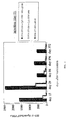
- Fig. 1 shows that the combined application of poly-L-arginine, CpG-ODN and antigen induces strong antigen-specific immune responses which are systemic and very long lasting.
- the figure shows peripheral blood lymphocytes stimulated ex vivo with OVA 257-264 -peptide;
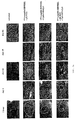
- Fig. 2a shows that poly-L-arginine induces the formation of a depot at the injection site.
- This figure shows photos from the injection sites at the indicated time points after vaccination.
- White lines surround the area where the fluorescence labelled compounds of the vaccine can be detected;
- Fig. 2b shows that the co-application of poly-L-arginine inhibits the spreading of CpG-ODN-Cy5 throughout the body.
- This figure shows FACS analyses of lymphoid and non-lymphoid tissues at day 1 after injection of CpG-ODN-Cy5 (B) or CpG-ODN-Cy5 and pR 60-FITC (C). Untreated mice were used as a control (A);
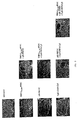
- Fig. 3 shows that poly-L-arginine induces the formation of a depot at the injection site when co-injected at least with one more molecule. This figure shows photos from the injection sites at day 4 after vaccination;
- Fig. 4 shows that co-injected poly-L-arginine prevents the CpG-ODN-induced systemic production of TNF- ⁇ and IL-6 in vivo.
- Mice were injected into the hind footpads and one hour later serum was prepared. The amount of TNF- ⁇ and IL-6 in the sera was determined by ELISA;
- fluorescence-labeled compounds were injected together subcutaneously into the flank of mice. At different time points after this treatment, injection sites were inspected for the presence of labeled compounds.
- OVA 257-264 -peptide unlabeled
- poly-L-arginine-FITC yellow
- CpG-ODN-Cy5 blue
- TRP- 2181 - 188 peptide-FITC yellow
- poly-L-arginine-TRITC red-violet
- CpG-ODN-Cy5 blue
- TRP-2 181-188 -peptide-FITC was injected either alone or in combination with CpG-ODN-Cy5
- the peptide was not detectable at the injection site at day 4.
- the injection of poly-L-arginine-TRITC alone resulted in its distribution all over the skin.
- the injection of CpG-ODN-Cy5 either alone or in combination with TRP-2 181-188 -peptide-FITC resulted in the distribution of CpG-ODN-Cy5 all over the skin.
- This experiment also indicates that poly-L-arginine only induced the formation of a depot when it was injected with at least one more molecule (peptide and/or CpG-ODN).
- CpG-ODNs are described to have potentially harmful side effects in that they induce the systemic release of high amounts of pro-inflammatory cytokines such as TNF- ⁇ and IL-6, which could induce a shock syndrome (Sparwasser 1997, Lipford 1997).
- cytokines such as TNF- ⁇ and IL-6
- Sparwasser 1997, Lipford 1997 a shock syndrome
- CpG-ODNs are not systemically present when injected in combination with poly-L-arginine. Therefore, it was investigated whether the co-administration of poly-L-arginine affects the CpG-ODN-induced systemic production of TNF- ⁇ and IL-6. Serum levels of both cytokines were determined by ELISA one hour after injection.
- Example 4 demonstrates that neither the injection of OVA 257-264 -peptide alone nor in combination with poly-L-arginine led to the induction of significant amounts of TNF- ⁇ and IL-6 in the serum, whereas the injection of OVA 257-264 -peptide in combination with CpG-ODN induces high concentrations of both cytokines. However, upon co-administration of OVA 257-264 -peptide with poly-L-arginine and CpG-ODN, this systemic production of TNF- ⁇ and IL-6 was totally abolished.
- CD11c + dendritic cells were incubated either with poly-L-arginine, CpG-ODN or the combination of poly-L-arginine and CpG-ODN (example 5). The levels of TNF- ⁇ and IL-6 were determined in the supernatants derived from these cultures.
- poly-L-arginine also inhibits the polyinosinic-polycytidylic acid-induced production of pro-inflammatory cytokines by human dendritic cells.
- Ovalbumin-peptide/poly-L-arginine (pR 60)/ CpG-ODN leads to the induction of strong antigen-specific immune responses which are systemic and very long lasting.
- mice were injected into each hind footpad with a total volume of 100 ⁇ l (50 ⁇ l per footpad) containing the above mentioned compounds.
- Blood was taken via the tail vein at the indicated time points and peripheral blood lymphocytes (PBLs) were isolated using a Ficoll gradient. PBLs were stimulated ex vivo with the antigen used for vaccination, with medium (background) and Concanavalin A (positive control).
- IFN- ⁇ -ELISPOTs were carried out as described (Miyahira et al., 1995). This method is a widely used procedure allowing the quantification of antigen-specific T cells. Spots representing single IFN- ⁇ producing T cells were counted and the number of background spots was substracted from all samples. There were many spots detected after the stimulation with Con A (data not shown) indicating a good condition of the used lymphocytes. For each experimental group of mice the number of spots/1x10 6 PBLs are illustrated in Figure 1 .
- Poly-L-arginine induces the formation of a depot at the injection site
- Unreacted dye was separated by running the mixture over a PD10 column(Pharmacia, Uppsala, Sweden), using 50mM Hepes, pH 7,9, as eluent. The solution was then dialysed against 2 x 5 liter aqua dest., pH 7,4(0,1M HCL), over night. After lyophilisation poly-L-arginine FITC was dissolved in aqua bidest. with a concentration of 10mg/ml.
- mice On day 0 mice were injected subcutaneously into the right flank with a total volume of 100 ⁇ l containing the above mentioned compounds. Animals were sacrificed at the indicated time points after injection and photos were taken from the injection sites ( Fig. 2a ).
- FITC fluorescein
- mice were injected subcutaneously into the right flank with a total volume of 100 ⁇ l containing the above mentioned compounds.
- mice were sacrificed and FACS-analyses were performed from secondary lymphoid organs (draining lymph node, spleen) as well as non-lymphoid tissues (lung, liver, kidney, heart) ( Fig. 2b ).
- Poly-L-arginine induces the formation of a depot at the injection site when co-injected at least with one more molecule
- FITC fluorescein
- poly-L-arginine For TRITC-labeling of poly-L-arginine, the poly-L-arginine was dissolved in 50mM HEPES pH 7,9 (10mg/500 ⁇ l). A 5-fold molar excess of FITC (Molecular Probes, Eugene, OR) in an equal volume of DMSO was added to the poly-L-arginine solution. The solution was kept at room temperature in the dark for 2,5 hours. Unreacted dye was separated by running the mixture over a PD10 column (Pharmacia, Uppsala, Sweden), using 50mM Hepes, pH 7,9, as eluent. The solution was then dialysed against 2 x 5 liter aqua dest., pH 7,4 (0,1M HCL), over night.
- FITC Molecular Probes, Eugene, OR
- poly-L-argine-TRITC was dissolved in aqua bidest. with a concentration of 10mg/ml.
- mice On day 0 mice were injected subcutaneously into the right flank with a total volume of 100 ⁇ l containing the above mentioned compounds. Animals were sacrificed at day 4 after injection and photos were taken from the injection sites ( Fig. 3 ).
- mice 4 mice per group
- mice were injected into each hind footpad with a total volume of 100 ⁇ l (50 ⁇ l per footpad), containing the above mentioned compounds.
- the amount of the pro-inflammatory cytokines TNF- ⁇ and IL-6 in the sera was determined by cytokine-specific ELISAs according to the manufacturer's instructions (R&D Systems, Inc., Minneapolis, MN).
Landscapes
- Health & Medical Sciences (AREA)
- Life Sciences & Earth Sciences (AREA)
- Chemical & Material Sciences (AREA)
- Public Health (AREA)
- Veterinary Medicine (AREA)
- Medicinal Chemistry (AREA)
- Pharmacology & Pharmacy (AREA)
- Animal Behavior & Ethology (AREA)
- General Health & Medical Sciences (AREA)
- General Chemical & Material Sciences (AREA)
- Bioinformatics & Cheminformatics (AREA)
- Chemical Kinetics & Catalysis (AREA)
- Engineering & Computer Science (AREA)
- Epidemiology (AREA)
- Proteomics, Peptides & Aminoacids (AREA)
- Nuclear Medicine, Radiotherapy & Molecular Imaging (AREA)
- Organic Chemistry (AREA)
- Immunology (AREA)
- Molecular Biology (AREA)
- Microbiology (AREA)
- Mycology (AREA)
- Medicines Containing Antibodies Or Antigens For Use As Internal Diagnostic Agents (AREA)
- Peptides Or Proteins (AREA)
- Medicines That Contain Protein Lipid Enzymes And Other Medicines (AREA)
Priority Applications (1)
| Application Number | Priority Date | Filing Date | Title |
|---|---|---|---|
| EP02700194.0A EP1347775B1 (en) | 2001-01-05 | 2002-01-07 | Uses for polycationic compounds as vaccine adjuvants |
Applications Claiming Priority (6)
| Application Number | Priority Date | Filing Date | Title |
|---|---|---|---|
| PCT/EP2001/000087 WO2001054720A1 (en) | 2000-01-28 | 2001-01-05 | Pharmaceutical composition for immunomodulation and preparation of vaccines comprising an antigen and an immunogenic oligodeoxynucleotide and a polycationic polymer as adjuvants |
| WOPCT/EP01/00087 | 2001-01-05 | ||
| AT6722001 | 2001-04-25 | ||
| AT6722001 | 2001-04-25 | ||
| EP02700194.0A EP1347775B1 (en) | 2001-01-05 | 2002-01-07 | Uses for polycationic compounds as vaccine adjuvants |
| PCT/EP2002/000062 WO2002053184A2 (en) | 2001-01-05 | 2002-01-07 | Uses for polycationic compounds as vaccine adjuvants |
Publications (2)
| Publication Number | Publication Date |
|---|---|
| EP1347775A2 EP1347775A2 (en) | 2003-10-01 |
| EP1347775B1 true EP1347775B1 (en) | 2016-11-30 |
Family
ID=25608382
Family Applications (1)
| Application Number | Title | Priority Date | Filing Date |
|---|---|---|---|
| EP02700194.0A Expired - Lifetime EP1347775B1 (en) | 2001-01-05 | 2002-01-07 | Uses for polycationic compounds as vaccine adjuvants |
Country Status (4)
| Country | Link |
|---|---|
| EP (1) | EP1347775B1 (enExample) |
| JP (1) | JP2004519452A (enExample) |
| CA (1) | CA2433794A1 (enExample) |
| WO (1) | WO2002053184A2 (enExample) |
Families Citing this family (5)
| Publication number | Priority date | Publication date | Assignee | Title |
|---|---|---|---|---|
| JP2004519452A (ja) | 2001-01-05 | 2004-07-02 | インターツェル・アクチェンゲゼルシャフト | ポリカチオン性化合物の用途 |
| DE602004029657D1 (de) * | 2003-03-24 | 2010-12-02 | Intercell Ag | Verbesserte impfstoffe |
| US8765148B2 (en) | 2010-02-19 | 2014-07-01 | Valneva Austria Gmbh | 1C31 nanoparticles |
| KR101586200B1 (ko) * | 2014-12-31 | 2016-01-18 | 성균관대학교산학협력단 | 면역자극 조성물, 이의 제조 방법, 및 이를 포함하는 면역요법 조성물 |
| CN114450000A (zh) * | 2019-09-19 | 2022-05-06 | Amw公司 | 用于受控制的有效成分释放的挤出式储库剂型 |
Citations (1)
| Publication number | Priority date | Publication date | Assignee | Title |
|---|---|---|---|---|
| WO1992011844A1 (en) * | 1991-01-03 | 1992-07-23 | Alkermes Controlled Therapeutics, Inc. | Stabilization of proteins by cationic biopolymers |
Family Cites Families (10)
| Publication number | Priority date | Publication date | Assignee | Title |
|---|---|---|---|---|
| GB744988A (en) * | 1952-01-31 | 1956-02-15 | Allen & Hanburys Ltd | Improvements in preparations of insulin |
| GB8921470D0 (en) * | 1989-09-22 | 1989-11-08 | Peptide Technology Ltd | Vaccines |
| RS50101B (sr) * | 1996-02-24 | 2009-01-22 | Boehringer Ingelheim International Gmbh., | Farmaceutski preparati za imunomodulaciju |
| EP1143934B1 (en) * | 1999-01-13 | 2003-06-04 | Johns Hopkins University School of Medicine | Genetic immunization with co-delivery of nucleic acid and cytokines |
| WO2000062800A2 (en) * | 1999-04-19 | 2000-10-26 | Smithkline Beecham Biologicals Sa | Adjuvant composition comprising saponin and an immunostimulatory oligonucleotide |
| AT408721B (de) * | 1999-10-01 | 2002-02-25 | Cistem Biotechnologies Gmbh | Pharmazeutische zusammensetzung enthaltend ein antigen |
| AT409085B (de) | 2000-01-28 | 2002-05-27 | Cistem Biotechnologies Gmbh | Pharmazeutische zusammensetzung zur immunmodulation und herstellung von vakzinen |
| IL152959A0 (en) * | 2000-06-08 | 2003-06-24 | Intercell Biomedizinische Forschungs & Entwicklungs Gmbh | Immunostimulatory oligodeoxynucleotides |
| AT410635B (de) * | 2000-10-18 | 2003-06-25 | Cistem Biotechnologies Gmbh | Vakzin-zusammensetzung |
| JP2004519452A (ja) | 2001-01-05 | 2004-07-02 | インターツェル・アクチェンゲゼルシャフト | ポリカチオン性化合物の用途 |
-
2002
- 2002-01-07 JP JP2002554133A patent/JP2004519452A/ja active Pending
- 2002-01-07 CA CA002433794A patent/CA2433794A1/en not_active Abandoned
- 2002-01-07 EP EP02700194.0A patent/EP1347775B1/en not_active Expired - Lifetime
- 2002-01-07 WO PCT/EP2002/000062 patent/WO2002053184A2/en not_active Ceased
Patent Citations (1)
| Publication number | Priority date | Publication date | Assignee | Title |
|---|---|---|---|---|
| WO1992011844A1 (en) * | 1991-01-03 | 1992-07-23 | Alkermes Controlled Therapeutics, Inc. | Stabilization of proteins by cationic biopolymers |
Non-Patent Citations (6)
| Title |
|---|
| CHO J-H ET AL: "ACTIVATION OF HUMAN NEUTROPHILS BY A SYNTHETIC ANTI-MICROBIAL PEPTIDE, KLKLLLLLLKLK-NH2, VIA CELL SURFACE CALRETICULIN", EUROPEAN JOURNAL OF BIOCHEMISTRY, BLACKWELL PUBLISHING, BERLIN, DE, vol. 266, no. 3, 1 December 1999 (1999-12-01), pages 878 - 885, XP001056523, ISSN: 0014-2956, DOI: 10.1046/J.1432-1327.1999.00920.X * |
| COHEN S ET AL: "The pharmacokinetics of, and humoral responses to, antigen delivered by microencapsulated liposomes.", 1 December 1991, PROCEEDINGS OF THE NATIONAL ACADEMY OF SCIENCES OF THE UNITED STATES OF AMERICA 1 DEC 1991 LNKD- PUBMED:1961708, VOL. 88, NR. 23, PAGE(S) 10440 - 10444, ISSN: 0027-8424 * |
| GRAVES PATRICIA M ET AL: "Pathogenesis, prediction and trials for the prevention of insulin-dependent (type 1) diabetes mellitus", ADVANCED DRUG DELIVERY REVIEWS, vol. 35, no. 2-3, 1 February 1999 (1999-02-01), pages 143 - 156, ISSN: 0169-409X * |
| LINGNAU K ET AL: "Poly-L-arginine strongly enhances immune responses induced by oligodeoxynucleotides containing CpG motifs", IMMUNOBIOLOGY, vol. 203, no. 1-2, November 2000 (2000-11-01), & JOINT ANNUAL MEETING OF THE GERMAN AND DUTCH SOCIETIES OF IMMUNOLOGY; DUSELDORF, GERMANY; NOVEMBER 29-DECEMBER 02, 2000, pages 361 - 362, ISSN: 0171-2985 * |
| LINGNAU K ET AL: "Poly-l-arginine synergizes with oligodeoxynucleotides containing CpG-motifs (CpG-ODN) for enhanced and prolonged immune responses and prevents the CpG-ODN-induced systemic release of pro-inflammatory cytokines", VACCINE, ELSEVIER LTD, GB, vol. 20, no. 29-30, 4 October 2002 (2002-10-04), pages 3498 - 3508, XP004381814, ISSN: 0264-410X, DOI: 10.1016/S0264-410X(02)00343-2 * |
| TALMADGE J E ET AL: "IMMUNOMODULATORY EFFECTS IN MICE OF POLYINOSINIC-POLYCYTIDYLIC ACIDCOMPLEXED WITH POLY-L-LYSINE AND CARBOXYMETHYLCELLULOSE", CANCER RESEARCH, AMERICAN ASSOCIATION FOR CANCER RESEARCH, US, vol. 45, no. 3, 1 March 1985 (1985-03-01), pages 1058 - 1065, XP000572254, ISSN: 0008-5472 * |
Also Published As
| Publication number | Publication date |
|---|---|
| WO2002053184A3 (en) | 2002-09-19 |
| JP2004519452A (ja) | 2004-07-02 |
| WO2002053184A2 (en) | 2002-07-11 |
| CA2433794A1 (en) | 2002-07-11 |
| EP1347775A2 (en) | 2003-10-01 |
Similar Documents
| Publication | Publication Date | Title |
|---|---|---|
| US20080025996A1 (en) | Methods and Compositions Comprising Polycationic Compounds | |
| AU784403B2 (en) | Pharmaceutical composition for immunomodulation and preparation of vaccines comprising an antigen and an immunogenic oligodeoxynucleotide and a polycationic polymer as adjuvants | |
| AU2002212326B2 (en) | Vaccine composition comprising an antigen and a peptide having adjuvant properties | |
| JP5271471B2 (ja) | 免疫促進性オリゴデオキシヌクレオチド | |
| US20050070462A1 (en) | Method for stabilising of nucleic acids | |
| AU2002212326A1 (en) | Vaccine composition comprising an antigen and a peptide having adjuvant properties | |
| JP2008222721A6 (ja) | ワクチン組成物 | |
| AU2001281812A1 (en) | Immunostimulatory oligodeoxynucleotides | |
| EP1347775B1 (en) | Uses for polycationic compounds as vaccine adjuvants | |
| WO2002053185A2 (en) | Anti-inflammatory use of polycationic compounds | |
| US20040081655A1 (en) | Methods and compositions comprising polycationic compounds | |
| AU2002233302A1 (en) | Uses for polycationic compounds as vaccine adjuvants | |
| AU2002235820A1 (en) | Anti-inflammatory use of polycationic compounds | |
| HK1055899B (en) | Vaccine composition comprising an antigen and a peptide having adjuvant properties |
Legal Events
| Date | Code | Title | Description |
|---|---|---|---|
| PUAI | Public reference made under article 153(3) epc to a published international application that has entered the european phase |
Free format text: ORIGINAL CODE: 0009012 |
|
| 17P | Request for examination filed |
Effective date: 20030718 |
|
| AK | Designated contracting states |
Kind code of ref document: A2 Designated state(s): AT BE CH CY DE DK ES FI FR GB GR IE IT LI LU MC NL PT SE TR |
|
| AX | Request for extension of the european patent |
Extension state: AL LT LV MK RO SI |
|
| 17Q | First examination report despatched |
Effective date: 20061103 |
|
| RIN1 | Information on inventor provided before grant (corrected) |
Inventor name: SCHMIDT, WALTER Inventor name: LINGNAU, KAREN Inventor name: MATTNER, FRANK Inventor name: BUSCHLE, MICHAEL |
|
| RAP1 | Party data changed (applicant data changed or rights of an application transferred) |
Owner name: VALNEVA AUSTRIA GMBH |
|
| TPAC | Observations filed by third parties |
Free format text: ORIGINAL CODE: EPIDOSNTIPA |
|
| GRAP | Despatch of communication of intention to grant a patent |
Free format text: ORIGINAL CODE: EPIDOSNIGR1 |
|
| INTG | Intention to grant announced |
Effective date: 20160426 |
|
| GRAS | Grant fee paid |
Free format text: ORIGINAL CODE: EPIDOSNIGR3 |
|
| GRAJ | Information related to disapproval of communication of intention to grant by the applicant or resumption of examination proceedings by the epo deleted |
Free format text: ORIGINAL CODE: EPIDOSDIGR1 |
|
| GRAL | Information related to payment of fee for publishing/printing deleted |
Free format text: ORIGINAL CODE: EPIDOSDIGR3 |
|
| INTC | Intention to grant announced (deleted) | ||
| GRAP | Despatch of communication of intention to grant a patent |
Free format text: ORIGINAL CODE: EPIDOSNIGR1 |
|
| GRAA | (expected) grant |
Free format text: ORIGINAL CODE: 0009210 |
|
| INTG | Intention to grant announced |
Effective date: 20161005 |
|
| AK | Designated contracting states |
Kind code of ref document: B1 Designated state(s): AT BE CH CY DE DK ES FI FR GB GR IE IT LI LU MC NL PT SE TR |
|
| AX | Request for extension of the european patent |
Extension state: AL LT LV MK RO SI |
|
| REG | Reference to a national code |
Ref country code: CH Ref legal event code: EP Ref country code: GB Ref legal event code: FG4D |
|
| REG | Reference to a national code |
Ref country code: AT Ref legal event code: REF Ref document number: 849180 Country of ref document: AT Kind code of ref document: T Effective date: 20161215 |
|
| REG | Reference to a national code |
Ref country code: IE Ref legal event code: FG4D |
|
| REG | Reference to a national code |
Ref country code: DE Ref legal event code: R096 Ref document number: 60248523 Country of ref document: DE |
|
| REG | Reference to a national code |
Ref country code: FR Ref legal event code: PLFP Year of fee payment: 16 |
|
| REG | Reference to a national code |
Ref country code: LT Ref legal event code: MG9D |
|
| REG | Reference to a national code |
Ref country code: NL Ref legal event code: MP Effective date: 20161130 |
|
| REG | Reference to a national code |
Ref country code: AT Ref legal event code: MK05 Ref document number: 849180 Country of ref document: AT Kind code of ref document: T Effective date: 20161130 |
|
| PG25 | Lapsed in a contracting state [announced via postgrant information from national office to epo] |
Ref country code: SE Free format text: LAPSE BECAUSE OF FAILURE TO SUBMIT A TRANSLATION OF THE DESCRIPTION OR TO PAY THE FEE WITHIN THE PRESCRIBED TIME-LIMIT Effective date: 20161130 Ref country code: GR Free format text: LAPSE BECAUSE OF FAILURE TO SUBMIT A TRANSLATION OF THE DESCRIPTION OR TO PAY THE FEE WITHIN THE PRESCRIBED TIME-LIMIT Effective date: 20170301 |
|
| PG25 | Lapsed in a contracting state [announced via postgrant information from national office to epo] |
Ref country code: ES Free format text: LAPSE BECAUSE OF FAILURE TO SUBMIT A TRANSLATION OF THE DESCRIPTION OR TO PAY THE FEE WITHIN THE PRESCRIBED TIME-LIMIT Effective date: 20161130 Ref country code: AT Free format text: LAPSE BECAUSE OF FAILURE TO SUBMIT A TRANSLATION OF THE DESCRIPTION OR TO PAY THE FEE WITHIN THE PRESCRIBED TIME-LIMIT Effective date: 20161130 Ref country code: FI Free format text: LAPSE BECAUSE OF FAILURE TO SUBMIT A TRANSLATION OF THE DESCRIPTION OR TO PAY THE FEE WITHIN THE PRESCRIBED TIME-LIMIT Effective date: 20161130 Ref country code: BE Free format text: LAPSE BECAUSE OF NON-PAYMENT OF DUE FEES Effective date: 20170131 Ref country code: PT Free format text: LAPSE BECAUSE OF FAILURE TO SUBMIT A TRANSLATION OF THE DESCRIPTION OR TO PAY THE FEE WITHIN THE PRESCRIBED TIME-LIMIT Effective date: 20170330 |
|
| PG25 | Lapsed in a contracting state [announced via postgrant information from national office to epo] |
Ref country code: NL Free format text: LAPSE BECAUSE OF FAILURE TO SUBMIT A TRANSLATION OF THE DESCRIPTION OR TO PAY THE FEE WITHIN THE PRESCRIBED TIME-LIMIT Effective date: 20161130 |
|
| PG25 | Lapsed in a contracting state [announced via postgrant information from national office to epo] |
Ref country code: DK Free format text: LAPSE BECAUSE OF FAILURE TO SUBMIT A TRANSLATION OF THE DESCRIPTION OR TO PAY THE FEE WITHIN THE PRESCRIBED TIME-LIMIT Effective date: 20161130 |
|
| PG25 | Lapsed in a contracting state [announced via postgrant information from national office to epo] |
Ref country code: IT Free format text: LAPSE BECAUSE OF FAILURE TO SUBMIT A TRANSLATION OF THE DESCRIPTION OR TO PAY THE FEE WITHIN THE PRESCRIBED TIME-LIMIT Effective date: 20161130 Ref country code: BE Free format text: LAPSE BECAUSE OF FAILURE TO SUBMIT A TRANSLATION OF THE DESCRIPTION OR TO PAY THE FEE WITHIN THE PRESCRIBED TIME-LIMIT Effective date: 20161130 |
|
| REG | Reference to a national code |
Ref country code: CH Ref legal event code: PL Ref country code: DE Ref legal event code: R097 Ref document number: 60248523 Country of ref document: DE |
|
| PG25 | Lapsed in a contracting state [announced via postgrant information from national office to epo] |
Ref country code: MC Free format text: LAPSE BECAUSE OF FAILURE TO SUBMIT A TRANSLATION OF THE DESCRIPTION OR TO PAY THE FEE WITHIN THE PRESCRIBED TIME-LIMIT Effective date: 20161130 |
|
| PLBE | No opposition filed within time limit |
Free format text: ORIGINAL CODE: 0009261 |
|
| STAA | Information on the status of an ep patent application or granted ep patent |
Free format text: STATUS: NO OPPOSITION FILED WITHIN TIME LIMIT |
|
| PG25 | Lapsed in a contracting state [announced via postgrant information from national office to epo] |
Ref country code: LI Free format text: LAPSE BECAUSE OF NON-PAYMENT OF DUE FEES Effective date: 20170131 Ref country code: CH Free format text: LAPSE BECAUSE OF NON-PAYMENT OF DUE FEES Effective date: 20170131 |
|
| REG | Reference to a national code |
Ref country code: IE Ref legal event code: MM4A |
|
| 26N | No opposition filed |
Effective date: 20170831 |
|
| PG25 | Lapsed in a contracting state [announced via postgrant information from national office to epo] |
Ref country code: LU Free format text: LAPSE BECAUSE OF NON-PAYMENT OF DUE FEES Effective date: 20170107 |
|
| REG | Reference to a national code |
Ref country code: FR Ref legal event code: PLFP Year of fee payment: 17 |
|
| PG25 | Lapsed in a contracting state [announced via postgrant information from national office to epo] |
Ref country code: IE Free format text: LAPSE BECAUSE OF NON-PAYMENT OF DUE FEES Effective date: 20170107 |
|
| PG25 | Lapsed in a contracting state [announced via postgrant information from national office to epo] |
Ref country code: CY Free format text: LAPSE BECAUSE OF NON-PAYMENT OF DUE FEES Effective date: 20161130 |
|
| PG25 | Lapsed in a contracting state [announced via postgrant information from national office to epo] |
Ref country code: TR Free format text: LAPSE BECAUSE OF FAILURE TO SUBMIT A TRANSLATION OF THE DESCRIPTION OR TO PAY THE FEE WITHIN THE PRESCRIBED TIME-LIMIT Effective date: 20161130 |
|
| PGFP | Annual fee paid to national office [announced via postgrant information from national office to epo] |
Ref country code: FR Payment date: 20210121 Year of fee payment: 20 |
|
| PGFP | Annual fee paid to national office [announced via postgrant information from national office to epo] |
Ref country code: GB Payment date: 20210121 Year of fee payment: 20 Ref country code: DE Payment date: 20210120 Year of fee payment: 20 |
|
| REG | Reference to a national code |
Ref country code: DE Ref legal event code: R071 Ref document number: 60248523 Country of ref document: DE |
|
| REG | Reference to a national code |
Ref country code: GB Ref legal event code: PE20 Expiry date: 20220106 |
|
| PG25 | Lapsed in a contracting state [announced via postgrant information from national office to epo] |
Ref country code: GB Free format text: LAPSE BECAUSE OF EXPIRATION OF PROTECTION Effective date: 20220106 |