EP1329477B1 - Polythiophenes and devices thereof - Google Patents
Polythiophenes and devices thereof Download PDFInfo
- Publication number
- EP1329477B1 EP1329477B1 EP03000429A EP03000429A EP1329477B1 EP 1329477 B1 EP1329477 B1 EP 1329477B1 EP 03000429 A EP03000429 A EP 03000429A EP 03000429 A EP03000429 A EP 03000429A EP 1329477 B1 EP1329477 B1 EP 1329477B1
- Authority
- EP
- European Patent Office
- Prior art keywords
- polythiophene
- polythiophenes
- layer
- devices
- side chains
- Prior art date
- Legal status (The legal status is an assumption and is not a legal conclusion. Google has not performed a legal analysis and makes no representation as to the accuracy of the status listed.)
- Expired - Lifetime
Links
- 229920000123 polythiophene Polymers 0.000 title claims description 100
- -1 oligoarylene Chemical group 0.000 claims description 27
- 125000000217 alkyl group Chemical group 0.000 claims description 12
- 125000000732 arylene group Chemical group 0.000 claims description 12
- 238000006116 polymerization reaction Methods 0.000 claims description 12
- 125000005556 thienylene group Chemical group 0.000 claims description 10
- 125000002529 biphenylenyl group Chemical group C1(=CC=CC=2C3=CC=CC=C3C12)* 0.000 claims description 9
- 125000005567 fluorenylene group Chemical group 0.000 claims description 9
- 125000000843 phenylene group Chemical group C1(=C(C=CC=C1)*)* 0.000 claims description 9
- 239000004721 Polyphenylene oxide Substances 0.000 claims description 7
- 229920000570 polyether Polymers 0.000 claims description 7
- 125000000325 methylidene group Chemical group [H]C([H])=* 0.000 claims description 5
- 125000002947 alkylene group Chemical group 0.000 claims description 4
- 125000005560 phenanthrenylene group Chemical group 0.000 claims description 4
- 239000010410 layer Substances 0.000 description 48
- 239000004065 semiconductor Substances 0.000 description 29
- WYURNTSHIVDZCO-UHFFFAOYSA-N Tetrahydrofuran Chemical compound C1CCOC1 WYURNTSHIVDZCO-UHFFFAOYSA-N 0.000 description 22
- 239000000243 solution Substances 0.000 description 22
- OKKJLVBELUTLKV-UHFFFAOYSA-N Methanol Chemical compound OC OKKJLVBELUTLKV-UHFFFAOYSA-N 0.000 description 21
- 239000010409 thin film Substances 0.000 description 21
- YMWUJEATGCHHMB-UHFFFAOYSA-N Dichloromethane Chemical compound ClCCl YMWUJEATGCHHMB-UHFFFAOYSA-N 0.000 description 18
- YTPLMLYBLZKORZ-UHFFFAOYSA-N Thiophene Chemical group C=1C=CSC=1 YTPLMLYBLZKORZ-UHFFFAOYSA-N 0.000 description 16
- HEDRZPFGACZZDS-MICDWDOJSA-N Trichloro(2H)methane Chemical compound [2H]C(Cl)(Cl)Cl HEDRZPFGACZZDS-MICDWDOJSA-N 0.000 description 16
- 238000000034 method Methods 0.000 description 14
- 239000000463 material Substances 0.000 description 13
- 229920000642 polymer Polymers 0.000 description 13
- 239000000758 substrate Substances 0.000 description 13
- 238000004519 manufacturing process Methods 0.000 description 12
- YLQBMQCUIZJEEH-UHFFFAOYSA-N tetrahydrofuran Natural products C=1C=COC=1 YLQBMQCUIZJEEH-UHFFFAOYSA-N 0.000 description 11
- 239000000203 mixture Substances 0.000 description 10
- YXFVVABEGXRONW-UHFFFAOYSA-N Toluene Chemical compound CC1=CC=CC=C1 YXFVVABEGXRONW-UHFFFAOYSA-N 0.000 description 9
- 238000004528 spin coating Methods 0.000 description 9
- XUIMIQQOPSSXEZ-UHFFFAOYSA-N Silicon Chemical compound [Si] XUIMIQQOPSSXEZ-UHFFFAOYSA-N 0.000 description 8
- QVGXLLKOCUKJST-UHFFFAOYSA-N atomic oxygen Chemical compound [O] QVGXLLKOCUKJST-UHFFFAOYSA-N 0.000 description 8
- MVPPADPHJFYWMZ-UHFFFAOYSA-N chlorobenzene Chemical compound ClC1=CC=CC=C1 MVPPADPHJFYWMZ-UHFFFAOYSA-N 0.000 description 8
- 239000010408 film Substances 0.000 description 8
- 239000000178 monomer Substances 0.000 description 8
- VLKZOEOYAKHREP-UHFFFAOYSA-N n-Hexane Chemical compound CCCCCC VLKZOEOYAKHREP-UHFFFAOYSA-N 0.000 description 8
- 229910052760 oxygen Inorganic materials 0.000 description 8
- 239000001301 oxygen Substances 0.000 description 8
- 230000008569 process Effects 0.000 description 8
- 229910052710 silicon Inorganic materials 0.000 description 8
- 239000010703 silicon Substances 0.000 description 8
- 239000002904 solvent Substances 0.000 description 8
- VEXZGXHMUGYJMC-UHFFFAOYSA-N Hydrochloric acid Chemical compound Cl VEXZGXHMUGYJMC-UHFFFAOYSA-N 0.000 description 7
- VYPSYNLAJGMNEJ-UHFFFAOYSA-N Silicium dioxide Chemical compound O=[Si]=O VYPSYNLAJGMNEJ-UHFFFAOYSA-N 0.000 description 7
- PXHVJJICTQNCMI-UHFFFAOYSA-N nickel Substances [Ni] PXHVJJICTQNCMI-UHFFFAOYSA-N 0.000 description 7
- 238000005160 1H NMR spectroscopy Methods 0.000 description 6
- YNZKCHBXBASBJT-UHFFFAOYSA-N 3,4-dioctyl-2,5-dithiophen-2-ylthiophene Chemical compound CCCCCCCCC=1C(CCCCCCCC)=C(C=2SC=CC=2)SC=1C1=CC=CS1 YNZKCHBXBASBJT-UHFFFAOYSA-N 0.000 description 6
- RTZKZFJDLAIYFH-UHFFFAOYSA-N Diethyl ether Chemical compound CCOCC RTZKZFJDLAIYFH-UHFFFAOYSA-N 0.000 description 6
- 238000011156 evaluation Methods 0.000 description 6
- 229910052751 metal Inorganic materials 0.000 description 6
- 239000002184 metal Substances 0.000 description 6
- 238000007639 printing Methods 0.000 description 6
- 239000011541 reaction mixture Substances 0.000 description 6
- XLYOFNOQVPJJNP-UHFFFAOYSA-N water Substances O XLYOFNOQVPJJNP-UHFFFAOYSA-N 0.000 description 6
- 0 C*(CC*)(*1CC1)c1ccc[n]1 Chemical compound C*(CC*)(*1CC1)c1ccc[n]1 0.000 description 5
- 239000004793 Polystyrene Substances 0.000 description 5
- 125000004432 carbon atom Chemical group C* 0.000 description 5
- 238000006243 chemical reaction Methods 0.000 description 5
- 239000000976 ink Substances 0.000 description 5
- 230000001590 oxidative effect Effects 0.000 description 5
- 229920002223 polystyrene Polymers 0.000 description 5
- 238000002360 preparation method Methods 0.000 description 5
- 229910052814 silicon oxide Inorganic materials 0.000 description 5
- 239000000725 suspension Substances 0.000 description 5
- 238000012360 testing method Methods 0.000 description 5
- 229930192474 thiophene Natural products 0.000 description 5
- BNXJIUWYGDXAOL-UHFFFAOYSA-N 2,5-bis(5-bromothiophen-2-yl)-3,4-dioctylthiophene Chemical compound CCCCCCCCC=1C(CCCCCCCC)=C(C=2SC(Br)=CC=2)SC=1C1=CC=C(Br)S1 BNXJIUWYGDXAOL-UHFFFAOYSA-N 0.000 description 4
- HEDRZPFGACZZDS-UHFFFAOYSA-N Chloroform Chemical compound ClC(Cl)Cl HEDRZPFGACZZDS-UHFFFAOYSA-N 0.000 description 4
- PCLIMKBDDGJMGD-UHFFFAOYSA-N N-bromosuccinimide Chemical compound BrN1C(=O)CCC1=O PCLIMKBDDGJMGD-UHFFFAOYSA-N 0.000 description 4
- 239000002322 conducting polymer Substances 0.000 description 4
- 229920001940 conductive polymer Polymers 0.000 description 4
- 239000011521 glass Substances 0.000 description 4
- PCHJSUWPFVWCPO-UHFFFAOYSA-N gold Chemical compound [Au] PCHJSUWPFVWCPO-UHFFFAOYSA-N 0.000 description 4
- 229910052737 gold Inorganic materials 0.000 description 4
- 239000010931 gold Substances 0.000 description 4
- 238000004377 microelectronic Methods 0.000 description 4
- 125000005010 perfluoroalkyl group Chemical group 0.000 description 4
- 239000000047 product Substances 0.000 description 4
- RIOQSEWOXXDEQQ-UHFFFAOYSA-N triphenylphosphine Chemical compound C1=CC=CC=C1P(C=1C=CC=CC=1)C1=CC=CC=C1 RIOQSEWOXXDEQQ-UHFFFAOYSA-N 0.000 description 4
- 239000011701 zinc Substances 0.000 description 4
- QFMZQPDHXULLKC-UHFFFAOYSA-N 1,2-bis(diphenylphosphino)ethane Chemical compound C=1C=CC=CC=1P(C=1C=CC=CC=1)CCP(C=1C=CC=CC=1)C1=CC=CC=C1 QFMZQPDHXULLKC-UHFFFAOYSA-N 0.000 description 3
- 238000001644 13C nuclear magnetic resonance spectroscopy Methods 0.000 description 3
- HTYVENFRAWYMAH-UHFFFAOYSA-N 2,5-dibromo-3,4-dioctylthiophene Chemical compound CCCCCCCCC1=C(Br)SC(Br)=C1CCCCCCCC HTYVENFRAWYMAH-UHFFFAOYSA-N 0.000 description 3
- WAOUDPOLPWAIGN-UHFFFAOYSA-N 3,4-dioctylthiophene Chemical compound CCCCCCCCC1=CSC=C1CCCCCCCC WAOUDPOLPWAIGN-UHFFFAOYSA-N 0.000 description 3
- QTBSBXVTEAMEQO-UHFFFAOYSA-N Acetic acid Chemical compound CC(O)=O QTBSBXVTEAMEQO-UHFFFAOYSA-N 0.000 description 3
- SNRUBQQJIBEYMU-UHFFFAOYSA-N Dodecane Natural products CCCCCCCCCCCC SNRUBQQJIBEYMU-UHFFFAOYSA-N 0.000 description 3
- ZMXDDKWLCZADIW-UHFFFAOYSA-N N,N-Dimethylformamide Chemical compound CN(C)C=O ZMXDDKWLCZADIW-UHFFFAOYSA-N 0.000 description 3
- 239000004642 Polyimide Substances 0.000 description 3
- PMZURENOXWZQFD-UHFFFAOYSA-L Sodium Sulfate Chemical compound [Na+].[Na+].[O-]S([O-])(=O)=O PMZURENOXWZQFD-UHFFFAOYSA-L 0.000 description 3
- HEMHJVSKTPXQMS-UHFFFAOYSA-M Sodium hydroxide Chemical compound [OH-].[Na+] HEMHJVSKTPXQMS-UHFFFAOYSA-M 0.000 description 3
- 125000000484 butyl group Chemical group [H]C([*])([H])C([H])([H])C([H])([H])C([H])([H])[H] 0.000 description 3
- 238000005266 casting Methods 0.000 description 3
- 239000002800 charge carrier Substances 0.000 description 3
- 125000002704 decyl group Chemical group [H]C([H])([H])C([H])([H])C([H])([H])C([H])([H])C([H])([H])C([H])([H])C([H])([H])C([H])([H])C([H])([H])C([H])([H])* 0.000 description 3
- 238000013461 design Methods 0.000 description 3
- 125000003438 dodecyl group Chemical group [H]C([H])([H])C([H])([H])C([H])([H])C([H])([H])C([H])([H])C([H])([H])C([H])([H])C([H])([H])C([H])([H])C([H])([H])C([H])([H])C([H])([H])* 0.000 description 3
- 238000005227 gel permeation chromatography Methods 0.000 description 3
- 125000003187 heptyl group Chemical group [H]C([*])([H])C([H])([H])C([H])([H])C([H])([H])C([H])([H])C([H])([H])C([H])([H])[H] 0.000 description 3
- 125000004051 hexyl group Chemical group [H]C([H])([H])C([H])([H])C([H])([H])C([H])([H])C([H])([H])C([H])([H])* 0.000 description 3
- 239000003446 ligand Substances 0.000 description 3
- 125000001400 nonyl group Chemical group [H]C([*])([H])C([H])([H])C([H])([H])C([H])([H])C([H])([H])C([H])([H])C([H])([H])C([H])([H])C([H])([H])[H] 0.000 description 3
- 125000002347 octyl group Chemical group [H]C([*])([H])C([H])([H])C([H])([H])C([H])([H])C([H])([H])C([H])([H])C([H])([H])C([H])([H])[H] 0.000 description 3
- 239000004033 plastic Substances 0.000 description 3
- 229920003023 plastic Polymers 0.000 description 3
- 229920000728 polyester Polymers 0.000 description 3
- 229920001721 polyimide Polymers 0.000 description 3
- 229920006395 saturated elastomer Polymers 0.000 description 3
- 238000003756 stirring Methods 0.000 description 3
- 125000002948 undecyl group Chemical group [H]C([*])([H])C([H])([H])C([H])([H])C([H])([H])C([H])([H])C([H])([H])C([H])([H])C([H])([H])C([H])([H])C([H])([H])C([H])([H])[H] 0.000 description 3
- CSCPPACGZOOCGX-UHFFFAOYSA-N Acetone Chemical compound CC(C)=O CSCPPACGZOOCGX-UHFFFAOYSA-N 0.000 description 2
- NLXLAEXVIDQMFP-UHFFFAOYSA-N Ammonium chloride Substances [NH4+].[Cl-] NLXLAEXVIDQMFP-UHFFFAOYSA-N 0.000 description 2
- VHUUQVKOLVNVRT-UHFFFAOYSA-N Ammonium hydroxide Chemical compound [NH4+].[OH-] VHUUQVKOLVNVRT-UHFFFAOYSA-N 0.000 description 2
- VYZAMTAEIAYCRO-UHFFFAOYSA-N Chromium Chemical compound [Cr] VYZAMTAEIAYCRO-UHFFFAOYSA-N 0.000 description 2
- RYGMFSIKBFXOCR-UHFFFAOYSA-N Copper Chemical compound [Cu] RYGMFSIKBFXOCR-UHFFFAOYSA-N 0.000 description 2
- 229910021578 Iron(III) chloride Inorganic materials 0.000 description 2
- CTQNGGLPUBDAKN-UHFFFAOYSA-N O-Xylene Chemical compound CC1=CC=CC=C1C CTQNGGLPUBDAKN-UHFFFAOYSA-N 0.000 description 2
- 229920001609 Poly(3,4-ethylenedioxythiophene) Polymers 0.000 description 2
- 229910052581 Si3N4 Inorganic materials 0.000 description 2
- BQCADISMDOOEFD-UHFFFAOYSA-N Silver Chemical compound [Ag] BQCADISMDOOEFD-UHFFFAOYSA-N 0.000 description 2
- CDBYLPFSWZWCQE-UHFFFAOYSA-L Sodium Carbonate Chemical compound [Na+].[Na+].[O-]C([O-])=O CDBYLPFSWZWCQE-UHFFFAOYSA-L 0.000 description 2
- 238000006069 Suzuki reaction reaction Methods 0.000 description 2
- HCHKCACWOHOZIP-UHFFFAOYSA-N Zinc Chemical compound [Zn] HCHKCACWOHOZIP-UHFFFAOYSA-N 0.000 description 2
- 125000004183 alkoxy alkyl group Chemical group 0.000 description 2
- 229910052782 aluminium Inorganic materials 0.000 description 2
- XAGFODPZIPBFFR-UHFFFAOYSA-N aluminium Chemical compound [Al] XAGFODPZIPBFFR-UHFFFAOYSA-N 0.000 description 2
- 235000011114 ammonium hydroxide Nutrition 0.000 description 2
- 229910021417 amorphous silicon Inorganic materials 0.000 description 2
- 230000015572 biosynthetic process Effects 0.000 description 2
- 238000012512 characterization method Methods 0.000 description 2
- 229910052804 chromium Inorganic materials 0.000 description 2
- 239000011651 chromium Substances 0.000 description 2
- 239000011248 coating agent Substances 0.000 description 2
- 238000000576 coating method Methods 0.000 description 2
- 239000002131 composite material Substances 0.000 description 2
- 229910052802 copper Inorganic materials 0.000 description 2
- 239000010949 copper Substances 0.000 description 2
- 239000012043 crude product Substances 0.000 description 2
- 239000003989 dielectric material Substances 0.000 description 2
- 238000003618 dip coating Methods 0.000 description 2
- 238000001035 drying Methods 0.000 description 2
- 239000007772 electrode material Substances 0.000 description 2
- 239000003480 eluent Substances 0.000 description 2
- 239000003822 epoxy resin Substances 0.000 description 2
- 238000001704 evaporation Methods 0.000 description 2
- 230000008020 evaporation Effects 0.000 description 2
- 230000005669 field effect Effects 0.000 description 2
- 238000003818 flash chromatography Methods 0.000 description 2
- 125000005549 heteroarylene group Chemical group 0.000 description 2
- FFUAGWLWBBFQJT-UHFFFAOYSA-N hexamethyldisilazane Chemical compound C[Si](C)(C)N[Si](C)(C)C FFUAGWLWBBFQJT-UHFFFAOYSA-N 0.000 description 2
- 230000001939 inductive effect Effects 0.000 description 2
- 229910010272 inorganic material Inorganic materials 0.000 description 2
- 239000011147 inorganic material Substances 0.000 description 2
- RBTARNINKXHZNM-UHFFFAOYSA-K iron trichloride Chemical compound Cl[Fe](Cl)Cl RBTARNINKXHZNM-UHFFFAOYSA-K 0.000 description 2
- 239000007788 liquid Substances 0.000 description 2
- AUHZEENZYGFFBQ-UHFFFAOYSA-N mesitylene Substances CC1=CC(C)=CC(C)=C1 AUHZEENZYGFFBQ-UHFFFAOYSA-N 0.000 description 2
- 125000001827 mesitylenyl group Chemical group [H]C1=C(C(*)=C(C([H])=C1C([H])([H])[H])C([H])([H])[H])C([H])([H])[H] 0.000 description 2
- 229910044991 metal oxide Inorganic materials 0.000 description 2
- 150000004706 metal oxides Chemical class 0.000 description 2
- 125000001421 myristyl group Chemical group [H]C([*])([H])C([H])([H])C([H])([H])C([H])([H])C([H])([H])C([H])([H])C([H])([H])C([H])([H])C([H])([H])C([H])([H])C([H])([H])C([H])([H])C([H])([H])C([H])([H])[H] 0.000 description 2
- 229910052759 nickel Inorganic materials 0.000 description 2
- 239000012044 organic layer Substances 0.000 description 2
- 229920000620 organic polymer Polymers 0.000 description 2
- 239000003960 organic solvent Substances 0.000 description 2
- 125000002958 pentadecyl group Chemical group [H]C([*])([H])C([H])([H])C([H])([H])C([H])([H])C([H])([H])C([H])([H])C([H])([H])C([H])([H])C([H])([H])C([H])([H])C([H])([H])C([H])([H])C([H])([H])C([H])([H])C([H])([H])[H] 0.000 description 2
- 125000001147 pentyl group Chemical group C(CCCC)* 0.000 description 2
- 239000002985 plastic film Substances 0.000 description 2
- BASFCYQUMIYNBI-UHFFFAOYSA-N platinum Chemical compound [Pt] BASFCYQUMIYNBI-UHFFFAOYSA-N 0.000 description 2
- 239000004417 polycarbonate Substances 0.000 description 2
- 229920000515 polycarbonate Polymers 0.000 description 2
- 229920000647 polyepoxide Polymers 0.000 description 2
- 238000001556 precipitation Methods 0.000 description 2
- 238000012545 processing Methods 0.000 description 2
- 230000009467 reduction Effects 0.000 description 2
- 238000007650 screen-printing Methods 0.000 description 2
- 239000000741 silica gel Substances 0.000 description 2
- 229910002027 silica gel Inorganic materials 0.000 description 2
- HQVNEWCFYHHQES-UHFFFAOYSA-N silicon nitride Chemical compound N12[Si]34N5[Si]62N3[Si]51N64 HQVNEWCFYHHQES-UHFFFAOYSA-N 0.000 description 2
- KZNICNPSHKQLFF-UHFFFAOYSA-N succinimide Chemical compound O=C1CCC(=O)N1 KZNICNPSHKQLFF-UHFFFAOYSA-N 0.000 description 2
- 238000003786 synthesis reaction Methods 0.000 description 2
- 150000003577 thiophenes Chemical group 0.000 description 2
- 125000002889 tridecyl group Chemical group [H]C([*])([H])C([H])([H])C([H])([H])C([H])([H])C([H])([H])C([H])([H])C([H])([H])C([H])([H])C([H])([H])C([H])([H])C([H])([H])C([H])([H])C([H])([H])[H] 0.000 description 2
- 238000001771 vacuum deposition Methods 0.000 description 2
- 238000005406 washing Methods 0.000 description 2
- 239000008096 xylene Substances 0.000 description 2
- 229910052725 zinc Inorganic materials 0.000 description 2
- WSLDOOZREJYCGB-UHFFFAOYSA-N 1,2-Dichloroethane Chemical compound ClCCCl WSLDOOZREJYCGB-UHFFFAOYSA-N 0.000 description 1
- KXSFECAJUBPPFE-UHFFFAOYSA-N 2,2':5',2''-terthiophene Chemical compound C1=CSC(C=2SC(=CC=2)C=2SC=CC=2)=C1 KXSFECAJUBPPFE-UHFFFAOYSA-N 0.000 description 1
- VGKLVWTVCUDISO-UHFFFAOYSA-N 3,4-dibromothiophene Chemical compound BrC1=CSC=C1Br VGKLVWTVCUDISO-UHFFFAOYSA-N 0.000 description 1
- QGZKDVFQNNGYKY-UHFFFAOYSA-O Ammonium Chemical compound [NH4+] QGZKDVFQNNGYKY-UHFFFAOYSA-O 0.000 description 1
- OKTJSMMVPCPJKN-UHFFFAOYSA-N Carbon Chemical compound [C] OKTJSMMVPCPJKN-UHFFFAOYSA-N 0.000 description 1
- VEXZGXHMUGYJMC-UHFFFAOYSA-M Chloride anion Chemical compound [Cl-] VEXZGXHMUGYJMC-UHFFFAOYSA-M 0.000 description 1
- 239000007818 Grignard reagent Substances 0.000 description 1
- 229920003171 Poly (ethylene oxide) Polymers 0.000 description 1
- 229910052775 Thulium Inorganic materials 0.000 description 1
- RTAQQCXQSZGOHL-UHFFFAOYSA-N Titanium Chemical compound [Ti] RTAQQCXQSZGOHL-UHFFFAOYSA-N 0.000 description 1
- DGEZNRSVGBDHLK-UHFFFAOYSA-N [1,10]phenanthroline Chemical group C1=CN=C2C3=NC=CC=C3C=CC2=C1 DGEZNRSVGBDHLK-UHFFFAOYSA-N 0.000 description 1
- 238000000862 absorption spectrum Methods 0.000 description 1
- 239000002253 acid Substances 0.000 description 1
- 239000011149 active material Substances 0.000 description 1
- 230000002411 adverse Effects 0.000 description 1
- 125000003545 alkoxy group Chemical group 0.000 description 1
- 239000007864 aqueous solution Substances 0.000 description 1
- JRPBQTZRNDNNOP-UHFFFAOYSA-N barium titanate Chemical compound [Ba+2].[Ba+2].[O-][Ti]([O-])([O-])[O-] JRPBQTZRNDNNOP-UHFFFAOYSA-N 0.000 description 1
- 229910002113 barium titanate Inorganic materials 0.000 description 1
- 229910021523 barium zirconate Inorganic materials 0.000 description 1
- DQBAOWPVHRWLJC-UHFFFAOYSA-N barium(2+);dioxido(oxo)zirconium Chemical compound [Ba+2].[O-][Zr]([O-])=O DQBAOWPVHRWLJC-UHFFFAOYSA-N 0.000 description 1
- 230000004888 barrier function Effects 0.000 description 1
- 239000011230 binding agent Substances 0.000 description 1
- 239000012267 brine Substances 0.000 description 1
- 230000005587 bubbling Effects 0.000 description 1
- 239000006229 carbon black Substances 0.000 description 1
- 230000015556 catabolic process Effects 0.000 description 1
- 239000003054 catalyst Substances 0.000 description 1
- 230000008859 change Effects 0.000 description 1
- 239000000084 colloidal system Substances 0.000 description 1
- 230000000052 comparative effect Effects 0.000 description 1
- 239000004020 conductor Substances 0.000 description 1
- 238000005859 coupling reaction Methods 0.000 description 1
- 238000006731 degradation reaction Methods 0.000 description 1
- ZBQUMMFUJLOTQC-UHFFFAOYSA-N dichloronickel;3-diphenylphosphaniumylpropyl(diphenyl)phosphanium Chemical compound Cl[Ni]Cl.C=1C=CC=CC=1[PH+](C=1C=CC=CC=1)CCC[PH+](C=1C=CC=CC=1)C1=CC=CC=C1 ZBQUMMFUJLOTQC-UHFFFAOYSA-N 0.000 description 1
- 239000006185 dispersion Substances 0.000 description 1
- 230000000694 effects Effects 0.000 description 1
- 238000005516 engineering process Methods 0.000 description 1
- 230000007613 environmental effect Effects 0.000 description 1
- 239000000706 filtrate Substances 0.000 description 1
- 229920002457 flexible plastic Polymers 0.000 description 1
- 229920005570 flexible polymer Polymers 0.000 description 1
- 230000006870 function Effects 0.000 description 1
- 229910002804 graphite Inorganic materials 0.000 description 1
- 239000010439 graphite Substances 0.000 description 1
- 150000004795 grignard reagents Chemical class 0.000 description 1
- AMGQUBHHOARCQH-UHFFFAOYSA-N indium;oxotin Chemical compound [In].[Sn]=O AMGQUBHHOARCQH-UHFFFAOYSA-N 0.000 description 1
- 150000007529 inorganic bases Chemical class 0.000 description 1
- 238000011835 investigation Methods 0.000 description 1
- 238000006317 isomerization reaction Methods 0.000 description 1
- 238000011031 large-scale manufacturing process Methods 0.000 description 1
- IOOQQIVFCFWSIU-UHFFFAOYSA-M magnesium;octane;bromide Chemical compound [Mg+2].[Br-].CCCCCCC[CH2-] IOOQQIVFCFWSIU-UHFFFAOYSA-M 0.000 description 1
- 238000003913 materials processing Methods 0.000 description 1
- 238000005259 measurement Methods 0.000 description 1
- 230000001404 mediated effect Effects 0.000 description 1
- 150000002739 metals Chemical class 0.000 description 1
- XKBGEWXEAPTVCK-UHFFFAOYSA-M methyltrioctylammonium chloride Chemical compound [Cl-].CCCCCCCC[N+](C)(CCCCCCCC)CCCCCCCC XKBGEWXEAPTVCK-UHFFFAOYSA-M 0.000 description 1
- 238000005691 oxidative coupling reaction Methods 0.000 description 1
- TWNQGVIAIRXVLR-UHFFFAOYSA-N oxo(oxoalumanyloxy)alumane Chemical compound O=[Al]O[Al]=O TWNQGVIAIRXVLR-UHFFFAOYSA-N 0.000 description 1
- NFHFRUOZVGFOOS-UHFFFAOYSA-N palladium;triphenylphosphane Chemical compound [Pd].C1=CC=CC=C1P(C=1C=CC=CC=1)C1=CC=CC=C1.C1=CC=CC=C1P(C=1C=CC=CC=1)C1=CC=CC=C1.C1=CC=CC=C1P(C=1C=CC=CC=1)C1=CC=CC=C1.C1=CC=CC=C1P(C=1C=CC=CC=1)C1=CC=CC=C1 NFHFRUOZVGFOOS-UHFFFAOYSA-N 0.000 description 1
- 239000002245 particle Substances 0.000 description 1
- 239000003444 phase transfer catalyst Substances 0.000 description 1
- 229920006255 plastic film Polymers 0.000 description 1
- 229910052697 platinum Inorganic materials 0.000 description 1
- 229920000058 polyacrylate Polymers 0.000 description 1
- 125000006684 polyhaloalkyl group Polymers 0.000 description 1
- 229920005596 polymer binder Polymers 0.000 description 1
- 239000002491 polymer binding agent Substances 0.000 description 1
- 239000002861 polymer material Substances 0.000 description 1
- 229920000193 polymethacrylate Polymers 0.000 description 1
- 125000001436 propyl group Chemical group [H]C([*])([H])C([H])([H])C([H])([H])[H] 0.000 description 1
- 238000010992 reflux Methods 0.000 description 1
- 239000011369 resultant mixture Substances 0.000 description 1
- 239000000523 sample Substances 0.000 description 1
- 239000002210 silicon-based material Substances 0.000 description 1
- 229910052709 silver Inorganic materials 0.000 description 1
- 239000004332 silver Substances 0.000 description 1
- 229910000029 sodium carbonate Inorganic materials 0.000 description 1
- HPALAKNZSZLMCH-UHFFFAOYSA-M sodium;chloride;hydrate Chemical compound O.[Na+].[Cl-] HPALAKNZSZLMCH-UHFFFAOYSA-M 0.000 description 1
- 238000009987 spinning Methods 0.000 description 1
- 238000004544 sputter deposition Methods 0.000 description 1
- 239000012258 stirred mixture Substances 0.000 description 1
- 238000003860 storage Methods 0.000 description 1
- 239000000126 substance Substances 0.000 description 1
- 229960002317 succinimide Drugs 0.000 description 1
- 229920001169 thermoplastic Polymers 0.000 description 1
- 239000004416 thermosoftening plastic Substances 0.000 description 1
- 238000004809 thin layer chromatography Methods 0.000 description 1
- UKTDFYOZPFNQOQ-UHFFFAOYSA-N tributyl(thiophen-2-yl)stannane Chemical compound CCCC[Sn](CCCC)(CCCC)C1=CC=CS1 UKTDFYOZPFNQOQ-UHFFFAOYSA-N 0.000 description 1
- 238000007738 vacuum evaporation Methods 0.000 description 1
Images
Classifications
-
- C—CHEMISTRY; METALLURGY
- C08—ORGANIC MACROMOLECULAR COMPOUNDS; THEIR PREPARATION OR CHEMICAL WORKING-UP; COMPOSITIONS BASED THEREON
- C08G—MACROMOLECULAR COMPOUNDS OBTAINED OTHERWISE THAN BY REACTIONS ONLY INVOLVING UNSATURATED CARBON-TO-CARBON BONDS
- C08G61/00—Macromolecular compounds obtained by reactions forming a carbon-to-carbon link in the main chain of the macromolecule
- C08G61/12—Macromolecular compounds containing atoms other than carbon in the main chain of the macromolecule
- C08G61/122—Macromolecular compounds containing atoms other than carbon in the main chain of the macromolecule derived from five- or six-membered heterocyclic compounds, other than imides
- C08G61/123—Macromolecular compounds containing atoms other than carbon in the main chain of the macromolecule derived from five- or six-membered heterocyclic compounds, other than imides derived from five-membered heterocyclic compounds
- C08G61/126—Macromolecular compounds containing atoms other than carbon in the main chain of the macromolecule derived from five- or six-membered heterocyclic compounds, other than imides derived from five-membered heterocyclic compounds with a five-membered ring containing one sulfur atom in the ring
-
- H—ELECTRICITY
- H10—SEMICONDUCTOR DEVICES; ELECTRIC SOLID-STATE DEVICES NOT OTHERWISE PROVIDED FOR
- H10K—ORGANIC ELECTRIC SOLID-STATE DEVICES
- H10K85/00—Organic materials used in the body or electrodes of devices covered by this subclass
- H10K85/10—Organic polymers or oligomers
- H10K85/111—Organic polymers or oligomers comprising aromatic, heteroaromatic, or aryl chains, e.g. polyaniline, polyphenylene or polyphenylene vinylene
- H10K85/113—Heteroaromatic compounds comprising sulfur or selene, e.g. polythiophene
-
- H—ELECTRICITY
- H10—SEMICONDUCTOR DEVICES; ELECTRIC SOLID-STATE DEVICES NOT OTHERWISE PROVIDED FOR
- H10K—ORGANIC ELECTRIC SOLID-STATE DEVICES
- H10K10/00—Organic devices specially adapted for rectifying, amplifying, oscillating or switching; Organic capacitors or resistors having potential barriers
- H10K10/40—Organic transistors
- H10K10/46—Field-effect transistors, e.g. organic thin-film transistors [OTFT]
- H10K10/462—Insulated gate field-effect transistors [IGFETs]
- H10K10/464—Lateral top-gate IGFETs comprising only a single gate
-
- H—ELECTRICITY
- H10—SEMICONDUCTOR DEVICES; ELECTRIC SOLID-STATE DEVICES NOT OTHERWISE PROVIDED FOR
- H10K—ORGANIC ELECTRIC SOLID-STATE DEVICES
- H10K10/00—Organic devices specially adapted for rectifying, amplifying, oscillating or switching; Organic capacitors or resistors having potential barriers
- H10K10/40—Organic transistors
- H10K10/46—Field-effect transistors, e.g. organic thin-film transistors [OTFT]
- H10K10/462—Insulated gate field-effect transistors [IGFETs]
- H10K10/466—Lateral bottom-gate IGFETs comprising only a single gate
-
- H—ELECTRICITY
- H10—SEMICONDUCTOR DEVICES; ELECTRIC SOLID-STATE DEVICES NOT OTHERWISE PROVIDED FOR
- H10K—ORGANIC ELECTRIC SOLID-STATE DEVICES
- H10K85/00—Organic materials used in the body or electrodes of devices covered by this subclass
- H10K85/10—Organic polymers or oligomers
- H10K85/151—Copolymers
Definitions
- the present invention is generally directed to organic microelectronic devices, and more specifically, in embodiments to the use of a class of polythiophenes as active materials in thin film transistors.
- the polythiophenes selected can be comprised of repeating thienylene units in which only certain thienylenes possess side chains, and which thienylene units are arranged in a regioregular manner on the polythiophene backbone.
- the polythiophenes are in embodiments substantially stable enabling their device fabrication to be accomplished at ambient conditions, and wherein the devices provide higher current on/off ratios, and are operationally more stable as their performance usually does not degrade as rapidly as those of known regioregular polythiophenes such as regioregular poly(3-alkylthiophene-2,5-diyl). More specifically, the polythiophenes of the present invention contain in embodiments repeating segments of 3,4-disubstituted-2,5-thienylene units flanked by unsubstituted 2,5-thienylene units and an optional divalent linkage.
- the side chains assist in inducing and facilitating molecular self-organization of the polythiophenes during film fabrication, while the unsubstituted thienylene units and the optional divalent linkage, which have some degree of rotational freedom, can disrupt the extended ⁇ -conjugation along the polythiophene chain, thus suppressing its propensity towards oxidative doping.
- TFTs thin film transistors
- a number of these polymers have reasonably good solubility in organic solvents and are thus able to be fabricated as semiconductor channel layers in TFTs by solution processes, such as spin coating, solution casting, dip coating, screen printing, stamp printing, jet printing, and the like.
- Solution processes such as spin coating, solution casting, dip coating, screen printing, stamp printing, jet printing, and the like.
- Their ability to be fabricated via common solution processes would render their manufacturing simpler and cost effective as compared to the costly conventional photolithographic processes typical of the silicon-based devices such as hydrogenated amorphous silicon TFTs.
- transistors fabricated with polymer materials such as polythiophenes, referred to as polymer TFTs
- polymer TFTs include excellent mechanical durability and structural flexibility, which may be highly desirable for fabricating flexible TFTs on plastic substrates.
- Flexible TFTs would enable the design of electronic devices which usually require structural flexibility and mechanical durability characteristics.
- the use of plastic substrates, together with an organic or polymer transistor component, can transform the traditionally rigid silicon TFT into a mechanically more durable and structurally flexible polymer TFT design. The latter is of particular appeal to large-area devices, such as large-area image sensors, electronic paper and other display media as flexible TFTs, could enable a compact and structurally flexible design.
- polymer TFTs for integrated circuit logic elements for low-end microelectronics, such as smart cards and radio frequency identification (RFID) tags, and memory/storage devices may also greatly enhance their mechanical durability, thus their useful life span. Nonetheless, many of the semiconductor polythiophenes are not stable when exposed to air as they become oxidatively doped by ambient oxygen resulting in increased conductivity. The result is larger off-current and thus lower current on/off ratio for the devices fabricated from these materials. Accordingly, with many of these materials, rigorous precautions have to be undertaken during materials processing and device fabrication to exclude environmental oxygen to avoid oxidative doping. These precautionary measures add to the cost of manufacturing, therefore, offsetting the appeal of certain polymer TFTs as an economical alternative to amorphous silicon technology, particularly for large-area devices. These and other disadvantages are avoided or minimized in embodiments of the present invention.
- ⁇ -conjugated ligand polymers entwined around copper centres discloses ⁇ -conjugated ligand polymers entwined around copper centers.
- a specific suitable ⁇ -conjugated ligand consists of two 3',4'-dihexyl-2,2':5,2"-terthiophenes (DHTT) linked by a phenanthroline unit.
- EP-A-1 279 689 discloses a polythiophene of formula I, comprising units Y, D, and Z, wherein unit D is a 3-(1,1-difuoroalkyl)thiophene of formula, and wherein Y and Z may be optionally substituted arylene or heteroarylene.
- the number of said optionally substituted arylene or heterarylene units may be either 0 or 1.
- a polythiophene that has a repeating unit consisting of the difluoroalkylthiophene unit and an optionally substituted thiophene unit.
- EP-A- 1 279 690 discloses a polythiophene of formula I, comprising units Y, D, and Z, wherein D is a 3-substituted-4-fluorothiophene group, and wherein Y and Z may be optionally substituted arylene or heteroarylene.
- the number of said optionally substituted arylene or heterarylene units may be either 0 or 1.
- a preferred polythiophene having a repeating unit comprising said 3-substituted-4-fluorothiophene group and an additional thiophene unit.
- WO-A-02145184 discloses a field effect transistor in which a continuous semiconductor layer comprises:
- a suitable semiconductor is a polythiophene, wherein the repeating unit consists of three thiophene units, wherein a substituted thiophene unit is sandwiched in between two unsubstituted thiophene units.
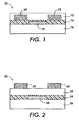
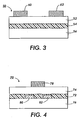
- FIG. 1 to 4 Illustrated in Figures 1 to 4 are various representative embodiments of the present invention and wherein polythiophenes are selected as the channel materials in thin film transistor (TFT) configurations.
- TFT thin film transistor
- polythiophenes which are useful as microelectronic components, and which polythiophenes have reasonable solubility of, for example, at least 0.1 percent by weight in common organic solvents, such as methylene chloride, tetrahydrofuran, toluene, xylene, mesitylene, chlorobenzene, and thus can be economically fabricated by solution processes, such as spin coating, screen printing, stamp printing, dip coating, solution casting, and jet printing.
- solvents such as methylene chloride, tetrahydrofuran, toluene, xylene, mesitylene, chlorobenzene
- Another feature of the present invention resides in providing electronic devices, such as thin film transistors with a polythiophene channel layer, and which layer has a conductivity of from 10 -6 to 10 -9 S/cm (Siemens/centimeter).
- polythiophenes and devices thereof which devices exhibit enhanced resistance to the adverse effects of oxygen, that is, these devices exhibit relatively high current on/off ratios, and their performance does not usually degrade as rapidly or minimal degradation results as those fabricated from regioregular polythiophenes such as regioregular poly(3-alkylthiophene-2,5-diyl).
- a class of polythiophenes with unique structural features which are conducive to molecular self-alignment under appropriate processing conditions, and which structural features also enhance the stability of device performance. Proper molecular alignment can result in higher molecular structural order in thin films, permitting efficient charge carrier transport, and thus higher electrical performance.
- the present invention provides
- aspects of the present invention include polythiophenes of the formula as defined above i ; a polythiophene wherein the number average molecular weight (M n ) of the polythiophenes is from 2,000 to 100,000 and the weight average molecular weight (M w ) is from 4,000 to 500,000, both as measured by gel permeation chromatography using polystyrene standards; a polythiophene wherein the polythiophene is or (6) a polythiophene represented by polythiophene (I) wherein n is from 5 to 3,000; polythiophene (I) wherein the polyhaloalkyl is a perfluoroalkyl; polythiophene (I) wherein M w is from 5,000 to 100,000, M n is from 4,000 to 50,000; the side chain is alkyl with from 3 to 25 carbon atoms, or alkoxy with from 3 to 25 carbon atoms, and A is an arylene; a polythiophene wherein
- the polythiophenes are stable in ambient conditions, and the devices fabricated from these polythiophenes are functionally more stable than regioregular polythiophenes such as regioregular poly(3-alkylthiophene-2,5-diyl).
- the devices fabricated from Formula (I) polythiophenes in embodiments thereof are generally stable for weeks or even months, such as for example 3 weeks to 12 weeks rather than days, such as for example less than 5 days for the devices of regioregular poly(3-alkylthiophene-2,5-diyl) when exposed to ambient oxygen; also the devices fabricated from the polythiophenes provide higher current on/off ratios, and their performance does not change as rapidly as those of poly(3-alkylthiophene-2,5-diyl) when no rigorous procedural precautions are taken to exclude ambient oxygen during material preparation, device fabrication, and evaluation.
- the polythiophenes in embodiments are soluble in common coating solvents; for example, they possess a solubility of at least 0.1 percent by weight, and more specifically, from 0.5 percent to 15 percent by weight in such solvents as methylene chloride, 1,2-dichloroethane, tetrahydrofuran, toluene, xylene, mesitylene, chlorobenzene.
- the polythiophenes when fabricated as semiconductor channel layers in thin film transistor devices provide a stable conductivity of, for example, from 10 -9 S/cm to 10 -6 S/cm, and more specifically, from 10 -8 S/cm to 10 -7 S/cm as determined by conventional four-probe conductivity measurement.
- polythiophenes (Ia) and (IIb) As the monomers ((IIa) and (IIb) carry two side chains on their respectively central thienylene units, their polymerizations, therefore, lead to polythiophenes (Ia) and (Ib) whose side chains are regioregularly positioned on their respective polythiophene backbones. Unlike the preparation of regioregular polythiophenes, such as poly(3-alkylthiophene-2,5-diyl) which require regioregular coupling reaction, the polythiophenes of the present invention can be prepared by general polymerization techniques without regioregularity complications.
- (Ia) can be prepared from monomer (IIa) by FeCl 3 -mediated oxidative coupling polymerization or from monomer (IIb) by treating with Reike zinc, followed by addition of Ni(dppe)Cl 2 catalyst.
- Polythiophene (IIb) can be readily obtained from (IIb) by Suzuki coupling reaction with appropriate arylene diboronate.
- the polymerization of (IIa) can be accomplished by adding a solution of 1 molar equivalent of (IIa) in a chlorinated solvent, such as chloroform, to a suspension of 1 to 5 molar equivalent of anhydrous FeCl 3 in chloroform under a blanket of dried air.
- a chlorinated solvent such as chloroform
- the resultant mixture is allowed to react at a temperature of 25°C to 50°C under a blanket of dried air or with a slow stream of dried air bubbling through the reaction mixture for a period of 30 minutes to 48 hours.
- the polymer product is isolated by washing the reaction mixture with water or dilute aqueous hydrochloric acid solution, stirring with dilute aqueous ammonium solution, followed by washing with water, and then precipitated from methanol or acetone.
- Reike zinc method 10 mmolar equivalents of (IIb) in anhydrous tetrahydrofuran is added dropwise over a period of 20 minutes to 40 minutes to a well-stirred suspension of 11 mmolar equivalent of freshly prepared Reike Zn in anhydrous tetrahydrofuran, and the resulting mixture is then permitted to react for 30 minutes to 2 hours at room temperature, 22°C to 25°C.
- polythiophene (Ib) can be obtained by the Suzuki coupling reaction of monomer (IIb) with an appropriate arylene-diboronate.
- FIG. 1 to 4 Illustrated in Figures 1 to 4 are various representative embodiments of the present invention and wherein the polythiophenes are selected as the channel materials in thin film transistor (TFT) configurations.
- TFT thin film transistor
- an optional protecting layer may be incorporated on top of each of the transistor configurations of Figures 1, 2, 3 and 4.
- the insulating dielectric layer 74 may also be able to function as a protecting layer.
- the substrate layer may generally be a silicon material inclusive of various appropriate forms of silicon, glass plate, plastic film or sheet, depending on the intended applications.
- plastic substrate such as for example polyester, polycarbonate, polyimide sheets may be preferred.
- the thickness of the substrate may be from 10 micrometers to over 10 millimeters with a specific thickness being from 50 to 100 micrometers, especially for a flexible plastic substrate, and from 1 to 10 millimeters for a rigid substrate such as glass or silicon.
- the insulating dielectric layer which separates the gate electrode from the source and drain electrodes and in contact with the semiconductor layer, can generally be an inorganic material film, an organic polymer film, or an organic-inorganic composite film.
- the thickness of the dielectric layer is, for example, from 10 nanometers to 1 micrometer, with the more specific thickness being 100 nanometers to 500 nanometers.
- the gate layer can be prepared by vacuum evaporation, sputtering of metals or conductive metal oxides, coating from conducting polymer solutions or conducting inks by spin coating, casting or printing.
- the thickness of the gate electrode layer is in the range of 10 nanometers to 10 micrometers, and the preferred thickness is in the range of 10 to 200 nanometers for metal films and in the range of 1 to 10 micrometers for polymer conductors.
- the source electrode is grounded and a bias voltage of generally 0 volt to -80 volts is applied to the drain electrode to collect the charge carriers transported across the semiconductor channel when a voltage of generally +10 volts to -80 volts is applied to the gate electrode.
- the bottom-contact test device was comprised of a series of photolithographically pre-patterned transistor's dielectric layers and electrodes with defined channel widths and lengths on a glass substrate.
- the gate electrode on the glass substrate was comprised of chromium of about 80 nanometers in thickness.
- the gate dielectric was a 300 nanometers thick silicon nitride having a capacitance of about 22 nF/cm 2 (nanofarads/square centimeter).
- the source and drain contacts comprised of gold of about 100 nanometers in thickness.
- test polythiophene semiconductor layer of about 30 nanometers to 100 nanometers in thickness was then deposited by spin coating under ambient conditions without taking any precautions to exclude it from exposure to ambient oxygen, moisture, or light.
- the solution used in fabricating the semiconductor layer was comprised of 1 percent by weight of the polythiophene in an appropriate solvent, and was filtered through a 0.45 ⁇ m filter before use.
- the spin coating was accomplished at a spinning speed of 1,000 rpm for about 35 seconds.
- the resulting coated device was dried in vacuo at 80°C for 20 hours, and was then ready for evaluation.
- the top-contact test device was comprised of an n-doped silicon wafer with a thermally grown silicon oxide layer of a thickness of about 110 nanometers thereon.
- the wafer functioned as the gate electrode while the silicon oxide layer acted as the gate dielectric and had a capacitance of about 32 nF/cm 2 .
- the silicon wafer was first cleaned with methanol, air dried, and then immersed in a 0.01 M solution of 1,1,1,3,3,3-hexamethyldisilazane in dichloromethane for 30 minutes at room temperature, 22°C to 25°C. Subsequently, the wafer was washed with dichloromethane and dried.
- the semiconductor polythiophene layer of about 30 nanometers to about 100 nanometers in thickness was then deposited on top of the silicon oxide dielectric layer by spin coating and dried in vacuo at 80°C for 20 hours. No precautions were taken to exclude the materials from exposure to ambient oxygen, moisture, or light during device fabrication. Subsequently, the gold source and drain electrodes were deposited on top of the semiconductor polythiophene layer by vacuum deposition through a shadow mask with various channel lengths and widths, thus creating a series of transistors of various dimensions. For consistency, the devices after fabrication were kept in a dry atmosphere of about 30 percent relative humidity in the dark before and after evaluation.
- I SD C i ⁇ ( W / 2 L ) ( V G - V T ) 2
- I SD the drain current at the saturated regime
- W and L are, respectively, the semiconductor channel width and length
- Ci the capacitance per unit area of the gate dielectric layer
- V G and V T are, respectively, the gate voltage and threshold voltage.
- a property of value for the thin film transistor is its current on/off ratio, which is the ratio of the saturation source-drain current when the gate voltage V G is equal to or greater than the drain voltage V D to the source-drain current when the gate voltage V G is zero.
- This material was purchased from Aldrich Chemical and was purified by three successive precipitations of its solution in chlorobenzene from methanol.
- the semiconductor polythiophene layers were laid down on the devices in ambient conditions by spin coating a 1 percent by weight solution of regioregular poly(3-hexythiophene-2,5-diyl) in chlorobenzene according to the procedures as described herein before.
- the devices were dried in vacuo at 80°C for 20 hours before evaluation. The following summarizes the average properties from at least five transistors for each device:
- the observed low initial current on/off ratios are an indication of the propensity of poly(3-hexythiophene-2,5-diyl) towards oxidative doping, that is the instability of poly(3-hexythiophene-2,5-diyl) in the presence of ambient oxygen.
- the significant reductions in the current on/off ratios over just a five-day period further confirm the extreme functional instability of poly(3-hexythiophene-2,5-diyl) in ambient conditions.
- 3,4-Dioctylthiophene 2 M octylmagnesium bromide (100 milliliters, 0.2 mol) in anhydrous ethyl ether was added to a well-stirred mixture of dichloro[1,3-bis(diphenylphosphino)-propane]nickel(II) (0.2 gram) and 3,4-dibromothiophene (20.16 grams, 0.0833 mol) in 200 milliliters of anhydrous ethyl ether in a 500 milliliter round bottom flask cooled with an ice bath under an inert atmosphere.
- the nickel complex reacted immediately with the Grignard reagent and the resulting reaction mixture was allowed to warm up to room temperature. An exothermic reaction started within 30 minutes and the ethyl ether began to reflux gently. After stirring for another 2 hours at room temperature, the reaction mixture was refluxed for 6 hours, then cooled in an ice bath, and hydrolyzed with aqueous 2N hydrochloric acid. The organic layer was separated and washed successively with water, brine, and again with water, dried over anhydrous sodium sulfate, and filtered. After evaporation of the solvent, the residue was distilled under reduced pressure through Kugelrohr apparatus to provide 21.3 grams of 3,4-dioctylthiophene as a colorless liquid.
- N-bromosuccinimide (4.6 grams, 25.7 mmol) was added to a well-stirred solution of 3,4-dioctylthiophene (3.6 grams, 11.7 mmol) in a mixture of 30 milliliters of dichloromethane and 10 milliliters of acetic acid in a 100 milliliter round-bottomed flask. The reaction was monitored by thin layer chromatography and was complete in about 35 minutes. The mixture was diluted with 160 milliliters of dichloromethane and filtered to remove succinimide.
- 2,5-Bis(2-thienyl)-3,4-dioctylthiophene In a dry box under an inert atmosphere, Pd(PPh 3 ) 2 Cl 2 (0.15 gram, 0.2 mmol) was added to a mixture of 2,5-dibromo-3,4-dioctylthiophene (4.2 grams, 9.0 mmol) and 2-(tributylstannyl)-thiophene (7.4 grams, 19.8 mmol) in anhydrous tetrahydrofuran (50 milliliters) in a 250 milliliter round-bottomed flask. The mixture was then refluxed for 12 hours and the solvent was removed by evaporation. The crude product thus obtained was purified by flash chromatography on silica gel using hexane as eluent to give 3.1 grams of 2,5-bis(2-thienyl)-3,4-dioctylthiophene.
- N-bromo succinimide (2.8 grams, 15.7 mmol) was added to a well-stirred solution of 2,5-bis(2-thienyl)-3,4-dioctylthiophene (3.6 grams, 7.6 mmol) of N,N-dimethylformamide (30 milliliters) in a 100 milliliter round-bottomed flask cooled with an ice-bath. After addition, the mixture was allowed to warm up to room temperature slowly. The reaction was monitored by thin layer chromotography and was stopped after 3 hours of reaction.
Landscapes
- Chemical & Material Sciences (AREA)
- Health & Medical Sciences (AREA)
- Chemical Kinetics & Catalysis (AREA)
- Medicinal Chemistry (AREA)
- Polymers & Plastics (AREA)
- Organic Chemistry (AREA)
- Engineering & Computer Science (AREA)
- Materials Engineering (AREA)
- Thin Film Transistor (AREA)
- Electroluminescent Light Sources (AREA)
- Polyoxymethylene Polymers And Polymers With Carbon-To-Carbon Bonds (AREA)
Applications Claiming Priority (2)
| Application Number | Priority Date | Filing Date | Title |
|---|---|---|---|
| US10/042,359 US6777529B2 (en) | 2002-01-11 | 2002-01-11 | Polythiophenes and devices thereof |
| US42359 | 2002-01-11 |
Publications (2)
| Publication Number | Publication Date |
|---|---|
| EP1329477A1 EP1329477A1 (en) | 2003-07-23 |
| EP1329477B1 true EP1329477B1 (en) | 2006-08-09 |
Family
ID=21921464
Family Applications (1)
| Application Number | Title | Priority Date | Filing Date |
|---|---|---|---|
| EP03000429A Expired - Lifetime EP1329477B1 (en) | 2002-01-11 | 2003-01-10 | Polythiophenes and devices thereof |
Country Status (4)
| Country | Link |
|---|---|
| US (2) | US6777529B2 (OSRAM) |
| EP (1) | EP1329477B1 (OSRAM) |
| JP (1) | JP2003231739A (OSRAM) |
| DE (1) | DE60307333T2 (OSRAM) |
Families Citing this family (30)
| Publication number | Priority date | Publication date | Assignee | Title |
|---|---|---|---|---|
| EP1456892A1 (en) * | 2001-11-30 | 2004-09-15 | Acreo AB | Electrochemical device |
| US7141644B2 (en) * | 2002-01-11 | 2006-11-28 | Xerox Corporation | Polthiophenes and devices thereof |
| US6777529B2 (en) * | 2002-01-11 | 2004-08-17 | Xerox Corporation | Polythiophenes and devices thereof |
| US6770904B2 (en) * | 2002-01-11 | 2004-08-03 | Xerox Corporation | Polythiophenes and electronic devices generated therefrom |
| TWI297553B (OSRAM) * | 2002-08-28 | 2008-06-01 | Ind Tech Res Inst | |
| KR100524552B1 (ko) * | 2002-09-28 | 2005-10-28 | 삼성전자주식회사 | 유기 게이트 절연막 및 이를 이용한 유기박막 트랜지스터 |
| US6803262B2 (en) * | 2002-10-17 | 2004-10-12 | Xerox Corporation | Process using self-organizable polymer |
| US7973313B2 (en) | 2003-02-24 | 2011-07-05 | Semiconductor Energy Laboratory Co., Ltd. | Thin film integrated circuit device, IC label, container comprising the thin film integrated circuit, manufacturing method of the thin film integrated circuit device, manufacturing method of the container, and management method of product having the container |
| US7169883B2 (en) * | 2003-08-22 | 2007-01-30 | Xerox Corporation | Polymers |
| US7157897B2 (en) * | 2003-11-25 | 2007-01-02 | Northwestern University | Method and system for electronic detection of mechanical perturbations using BIMOS readouts |
| US7759924B2 (en) * | 2003-11-25 | 2010-07-20 | Northwestern University | Cascaded MOSFET embedded multi-input microcantilever |
| US7767998B2 (en) * | 2003-12-04 | 2010-08-03 | Alcatel-Lucent Usa Inc. | OFETs with active channels formed of densified layers |
| US7768405B2 (en) * | 2003-12-12 | 2010-08-03 | Semiconductor Energy Laboratory Co., Ltd | Semiconductor device and manufacturing method thereof |
| KR101207442B1 (ko) | 2003-12-15 | 2012-12-03 | 가부시키가이샤 한도오따이 에네루기 켄큐쇼 | 박막 집적회로장치의 제조방법, 비접촉형 박막 집적회로장치 및 그 제조 방법, 비접촉형 박막 집적회로 장치를 가지는 아이디 태그 및 동전 |
| JP4937901B2 (ja) * | 2004-03-17 | 2012-05-23 | ダウ グローバル テクノロジーズ エルエルシー | ペンタチエニル−フルオレンコポリマー |
| US20050211973A1 (en) * | 2004-03-23 | 2005-09-29 | Kiyotaka Mori | Stressed organic semiconductor |
| US7102017B2 (en) * | 2004-06-10 | 2006-09-05 | Xerox Corporation | Processes to prepare small molecular thiophene compounds |
| US7294850B2 (en) * | 2004-06-10 | 2007-11-13 | Xerox Corporation | Device with small molecular thiophene compound having divalent linkage |
| WO2006011643A1 (ja) * | 2004-07-30 | 2006-02-02 | Sumitomo Chemical Company, Limited | 高分子化合物、高分子薄膜およびそれを用いた高分子薄膜素子 |
| CN100583485C (zh) * | 2004-09-24 | 2010-01-20 | 普莱克斯托尼克斯公司 | 含杂原子立体规则性聚(3-取代噻吩)的光电池 |
| GB0428403D0 (en) * | 2004-12-24 | 2005-02-02 | Cambridge Display Tech Ltd | Optical devices and their manufacture |
| US7619242B2 (en) * | 2005-02-25 | 2009-11-17 | Xerox Corporation | Celluloses and devices thereof |
| EP1864300A4 (en) * | 2005-03-16 | 2009-12-02 | Plextronics Inc | COPOLYMERS OF SOLUBLE POLY (THIOPHENES) WITH IMPROVED ELECTRONIC PERFORMANCE |
| US8089062B2 (en) * | 2005-03-23 | 2012-01-03 | Xerox Corporation | Wax encapsulated electronic devices |
| GB2424759A (en) * | 2005-04-01 | 2006-10-04 | Seiko Epson Corp | Inkjet deposition of polythiophene semiconductor material dissolved in halogenated aromatic solvents |
| JP2009503233A (ja) * | 2005-08-01 | 2009-01-29 | プレックストロニクス インコーポレーティッド | 導電性ポリマの潜在的ドーピング |
| TWI261361B (en) * | 2005-08-31 | 2006-09-01 | Ind Tech Res Inst | Organic thin-film transistor structure and method for fabricating the same is provided |
| US20070278453A1 (en) * | 2006-06-02 | 2007-12-06 | Steffen Zahn | Electrically conductive polymers and method of making electrically conductive polymers |
| KR101206659B1 (ko) | 2006-09-21 | 2012-11-30 | 삼성전자주식회사 | 올리고머 화합물을 포함하는 유기반도체 조성물, 이를포함하는 유기 반도체층 형성용 조성물, 이를 이용한유기반도체 박막 및 유기 전자소자 |
| US20100084000A1 (en) * | 2006-09-26 | 2010-04-08 | Sumitomo Chemical Company, Limited | Organic photoelectric conversion device and polymer useful for producing the same |
Citations (2)
| Publication number | Priority date | Publication date | Assignee | Title |
|---|---|---|---|---|
| WO2002045184A1 (en) * | 2000-11-28 | 2002-06-06 | Avecia Limited | Field effect transistors and materials and methods for their manufacture |
| EP1279690A1 (en) * | 2001-07-25 | 2003-01-29 | MERCK PATENT GmbH | Mono-oligo- and poly-3-substituted-4-fluorothiophenes and their use as charge transport materials |
Family Cites Families (10)
| Publication number | Priority date | Publication date | Assignee | Title |
|---|---|---|---|---|
| FR2703359B1 (fr) * | 1993-03-31 | 1995-06-23 | Cis Bio Int | Copolymère nucléotide(s)/polymère conducteur électronique ; son procédé de préparation et son utilisation . |
| US5619357A (en) | 1995-06-06 | 1997-04-08 | International Business Machines Corporation | Flat panel display containing black matrix polymer |
| DE59704301D1 (de) * | 1996-03-06 | 2001-09-20 | Basf Ag | Substituierte polythiophene, verfahren zu deren herstellung, und deren verwendung |
| US5969376A (en) | 1996-08-23 | 1999-10-19 | Lucent Technologies Inc. | Organic thin film transistor having a phthalocyanine semiconductor layer |
| US6107117A (en) | 1996-12-20 | 2000-08-22 | Lucent Technologies Inc. | Method of making an organic thin film transistor |
| US5777070A (en) | 1997-10-23 | 1998-07-07 | The Dow Chemical Company | Process for preparing conjugated polymers |
| JP2001261796A (ja) * | 2000-03-14 | 2001-09-26 | Japan Science & Technology Corp | アルコキシポリチオフェンとアルコキシチオフェン |
| EP1279689B1 (en) | 2001-07-25 | 2008-10-01 | MERCK PATENT GmbH | Mono-, Oligo and Poly-3-(1,1-difluoroalkyl)thiophenes and their use as charge transport materials |
| US6777529B2 (en) * | 2002-01-11 | 2004-08-17 | Xerox Corporation | Polythiophenes and devices thereof |
| US7141644B2 (en) * | 2002-01-11 | 2006-11-28 | Xerox Corporation | Polthiophenes and devices thereof |
-
2002
- 2002-01-11 US US10/042,359 patent/US6777529B2/en not_active Expired - Lifetime
-
2003
- 2003-01-10 EP EP03000429A patent/EP1329477B1/en not_active Expired - Lifetime
- 2003-01-10 JP JP2003004779A patent/JP2003231739A/ja active Pending
- 2003-01-10 DE DE60307333T patent/DE60307333T2/de not_active Expired - Lifetime
-
2004
- 2004-06-23 US US10/874,929 patent/US6992167B2/en not_active Expired - Lifetime
Patent Citations (2)
| Publication number | Priority date | Publication date | Assignee | Title |
|---|---|---|---|---|
| WO2002045184A1 (en) * | 2000-11-28 | 2002-06-06 | Avecia Limited | Field effect transistors and materials and methods for their manufacture |
| EP1279690A1 (en) * | 2001-07-25 | 2003-01-29 | MERCK PATENT GmbH | Mono-oligo- and poly-3-substituted-4-fluorothiophenes and their use as charge transport materials |
Also Published As
| Publication number | Publication date |
|---|---|
| US6992167B2 (en) | 2006-01-31 |
| DE60307333D1 (de) | 2006-09-21 |
| US6777529B2 (en) | 2004-08-17 |
| JP2003231739A (ja) | 2003-08-19 |
| US20030144466A1 (en) | 2003-07-31 |
| EP1329477A1 (en) | 2003-07-23 |
| DE60307333T2 (de) | 2006-12-14 |
| US20040236070A1 (en) | 2004-11-25 |
Similar Documents
| Publication | Publication Date | Title |
|---|---|---|
| EP1329474B1 (en) | Polythiophenes and devices thereof | |
| EP1327646B1 (en) | Polythiophenes and devices thereof | |
| EP1327647B1 (en) | Polythiophenes and devices thereof | |
| US6777529B2 (en) | Polythiophenes and devices thereof | |
| US6770904B2 (en) | Polythiophenes and electronic devices generated therefrom | |
| US7517945B2 (en) | Polythiophenes and devices thereof | |
| US7049629B2 (en) | Semiconductor polymers and devices thereof | |
| US6855951B2 (en) | Fluorinated polythiophenes and devices thereof | |
| US6960643B2 (en) | Fluorinated polythiophenes and devices thereof | |
| US7449542B2 (en) | Polymers | |
| Liu et al. | Ong |
Legal Events
| Date | Code | Title | Description |
|---|---|---|---|
| PUAI | Public reference made under article 153(3) epc to a published international application that has entered the european phase |
Free format text: ORIGINAL CODE: 0009012 |
|
| AK | Designated contracting states |
Designated state(s): AT BE BG CH CY CZ DE DK EE ES FI FR GB GR HU IE IT LI LU MC NL PT SE SI SK TR |
|
| AX | Request for extension of the european patent |
Extension state: AL LT LV MK RO |
|
| 17P | Request for examination filed |
Effective date: 20040123 |
|
| AKX | Designation fees paid |
Designated state(s): BE DE FR GB NL |
|
| 17Q | First examination report despatched |
Effective date: 20050620 |
|
| GRAP | Despatch of communication of intention to grant a patent |
Free format text: ORIGINAL CODE: EPIDOSNIGR1 |
|
| GRAS | Grant fee paid |
Free format text: ORIGINAL CODE: EPIDOSNIGR3 |
|
| GRAA | (expected) grant |
Free format text: ORIGINAL CODE: 0009210 |
|
| AK | Designated contracting states |
Kind code of ref document: B1 Designated state(s): BE DE FR GB NL |
|
| REG | Reference to a national code |
Ref country code: GB Ref legal event code: FG4D |
|
| REF | Corresponds to: |
Ref document number: 60307333 Country of ref document: DE Date of ref document: 20060921 Kind code of ref document: P |
|
| ET | Fr: translation filed | ||
| PLBE | No opposition filed within time limit |
Free format text: ORIGINAL CODE: 0009261 |
|
| STAA | Information on the status of an ep patent application or granted ep patent |
Free format text: STATUS: NO OPPOSITION FILED WITHIN TIME LIMIT |
|
| 26N | No opposition filed |
Effective date: 20070510 |
|
| REG | Reference to a national code |
Ref country code: FR Ref legal event code: PLFP Year of fee payment: 14 |
|
| REG | Reference to a national code |
Ref country code: FR Ref legal event code: PLFP Year of fee payment: 15 |
|
| REG | Reference to a national code |
Ref country code: FR Ref legal event code: PLFP Year of fee payment: 16 |
|
| PGFP | Annual fee paid to national office [announced via postgrant information from national office to epo] |
Ref country code: GB Payment date: 20211216 Year of fee payment: 20 Ref country code: FR Payment date: 20211215 Year of fee payment: 20 |
|
| PGFP | Annual fee paid to national office [announced via postgrant information from national office to epo] |
Ref country code: NL Payment date: 20211216 Year of fee payment: 20 Ref country code: BE Payment date: 20211217 Year of fee payment: 20 |
|
| PGFP | Annual fee paid to national office [announced via postgrant information from national office to epo] |
Ref country code: DE Payment date: 20211215 Year of fee payment: 20 |
|
| REG | Reference to a national code |
Ref country code: DE Ref legal event code: R071 Ref document number: 60307333 Country of ref document: DE |
|
| REG | Reference to a national code |
Ref country code: NL Ref legal event code: MK Effective date: 20230109 |
|
| REG | Reference to a national code |
Ref country code: BE Ref legal event code: MK Effective date: 20230110 |
|
| REG | Reference to a national code |
Ref country code: GB Ref legal event code: PE20 Expiry date: 20230109 |
|
| PG25 | Lapsed in a contracting state [announced via postgrant information from national office to epo] |
Ref country code: GB Free format text: LAPSE BECAUSE OF EXPIRATION OF PROTECTION Effective date: 20230109 |