EP1301999B1 - Freisprecheinrichtung und verfahren zum betrieb einer freisprecheinrichtung - Google Patents
Freisprecheinrichtung und verfahren zum betrieb einer freisprecheinrichtung Download PDFInfo
- Publication number
- EP1301999B1 EP1301999B1 EP01953856A EP01953856A EP1301999B1 EP 1301999 B1 EP1301999 B1 EP 1301999B1 EP 01953856 A EP01953856 A EP 01953856A EP 01953856 A EP01953856 A EP 01953856A EP 1301999 B1 EP1301999 B1 EP 1301999B1
- Authority
- EP
- European Patent Office
- Prior art keywords
- nmea
- interface
- data
- atc
- mobile radio
- Prior art date
- Legal status (The legal status is an assumption and is not a legal conclusion. Google has not performed a legal analysis and makes no representation as to the accuracy of the status listed.)
- Expired - Lifetime
Links
- 238000000034 method Methods 0.000 title claims description 14
- LIWAQLJGPBVORC-UHFFFAOYSA-N ethylmethylamine Chemical compound CCNC LIWAQLJGPBVORC-UHFFFAOYSA-N 0.000 claims description 51
- 230000005540 biological transmission Effects 0.000 description 10
- 238000012544 monitoring process Methods 0.000 description 6
- 238000007726 management method Methods 0.000 description 5
- 238000011161 development Methods 0.000 description 4
- 230000018109 developmental process Effects 0.000 description 4
- 238000005259 measurement Methods 0.000 description 3
- 230000004913 activation Effects 0.000 description 2
- 238000010295 mobile communication Methods 0.000 description 2
- 239000000969 carrier Substances 0.000 description 1
- 230000001413 cellular effect Effects 0.000 description 1
- 238000004891 communication Methods 0.000 description 1
- 230000001419 dependent effect Effects 0.000 description 1
- 238000005516 engineering process Methods 0.000 description 1
- 239000000284 extract Substances 0.000 description 1
- 238000007667 floating Methods 0.000 description 1
- 238000012423 maintenance Methods 0.000 description 1
- 230000007257 malfunction Effects 0.000 description 1
- 238000005057 refrigeration Methods 0.000 description 1
- 238000011160 research Methods 0.000 description 1
Images
Classifications
-
- H—ELECTRICITY
- H04—ELECTRIC COMMUNICATION TECHNIQUE
- H04M—TELEPHONIC COMMUNICATION
- H04M1/00—Substation equipment, e.g. for use by subscribers
- H04M1/60—Substation equipment, e.g. for use by subscribers including speech amplifiers
- H04M1/6033—Substation equipment, e.g. for use by subscribers including speech amplifiers for providing handsfree use or a loudspeaker mode in telephone sets
- H04M1/6041—Portable telephones adapted for handsfree use
- H04M1/6075—Portable telephones adapted for handsfree use adapted for handsfree use in a vehicle
-
- B—PERFORMING OPERATIONS; TRANSPORTING
- B60—VEHICLES IN GENERAL
- B60R—VEHICLES, VEHICLE FITTINGS, OR VEHICLE PARTS, NOT OTHERWISE PROVIDED FOR
- B60R25/00—Fittings or systems for preventing or indicating unauthorised use or theft of vehicles
- B60R25/10—Fittings or systems for preventing or indicating unauthorised use or theft of vehicles actuating a signalling device
- B60R25/102—Fittings or systems for preventing or indicating unauthorised use or theft of vehicles actuating a signalling device a signal being sent to a remote location, e.g. a radio signal being transmitted to a police station, a security company or the owner
-
- B—PERFORMING OPERATIONS; TRANSPORTING
- B60—VEHICLES IN GENERAL
- B60R—VEHICLES, VEHICLE FITTINGS, OR VEHICLE PARTS, NOT OTHERWISE PROVIDED FOR
- B60R2325/00—Indexing scheme relating to vehicle anti-theft devices
- B60R2325/20—Communication devices for vehicle anti-theft devices
- B60R2325/205—Mobile phones
-
- H—ELECTRICITY
- H04—ELECTRIC COMMUNICATION TECHNIQUE
- H04M—TELEPHONIC COMMUNICATION
- H04M2250/00—Details of telephonic subscriber devices
- H04M2250/10—Details of telephonic subscriber devices including a GPS signal receiver
Definitions
- the invention relates to a hands-free device with additional function for a mobile device that is located in a phone holder. Furthermore, the invention relates to a method for operating a hands-free device with additional function for a mobile device that is located in a phone holder.
- positioning systems are known in motor vehicles, which allow a determination of a current position.
- GPS Global Positioning System
- a plurality of satellites are generally targeted via which triangulation is carried out with the aid of different signal propagation times and from this the instantaneous position determination is carried out.
- other satellite-based systems such as Gallileo, or land-based radio navigation systems, such as Loran-C, which works with land-based long-wave transmitters, or a combination of satellite and land-based navigation system, such as DGPS (differential GPS) or GPS / Loran-C combined systems are possible for position determination.
- a hands-free device according to the prior art is known, for example, from EP-A-0 854 584.
- the data of a positioning system should be transmitted in a controlled manner for the purpose of evaluating or informing certain target groups, for example by means of a mobile telephone.
- the corresponding telephone-specific brackets and a corresponding interface are required.
- the object of developing a method is achieved by the features of the first independent method claim, the task of developing a hands-free device is solved by the features of the first independent device claim.
- AT is a command set for remote control of electrical equipment, C stands for Command Set or Cellular.
- a preferred embodiment provides that at least one interface for connecting an external processor-controlled system (external device) is provided.
- PDA Personal Digital Assistant
- the ATC interface is mounted on a plug, preferably on a 6-pin Western plug, the ATC interface uses the usual AT commands of the mobile device.
- a description of the commands can be found at: http://www.siemens.de/ic/products/cd/english/index/products/ mobiles / tips / s25 atc commandset v10.pdf
- the NMEA interface is placed on the plug (ATC / NMEA interface), one pin of the Western plug as a transmitter of the NMEA interface, a second pin as a receiver of the NMEA interface, a third pin as the transmitter ATC interface and a fourth pin acts as a receiver of the ATC interface.
- the two remaining pins are for the power supply of the external device and provided for the ground.
- One embodiment of the hands-free device according to the invention provides a program for generating NMEA data sets, preferably in the NMEA-0183 standard. As a result, the determined position data are converted into NMEA position records and made available to the external device via the NMEA interface.
- NMEA data sets can be made available.
- Each of these data records can be assigned an individual output interval by means of manufacturer-specific NMEA commands.
- An output interval equal to 0 prevents, for example, the output of the respective data record.
- the output interval is stored in a RAM of the handsfree and thus remains as long as the 12 volt supply voltage is applied to the handsfree.
- the data is transmitted in the form of sentences, each starting with a "$" sign. This is followed by two characters that represent the type, for example, of the navigation device. For GPS receivers these are always "GP". Before the actual data come three more characters that indicate the type of record. The following data is separated by commas and may be completed by an optional checksum. Finally, there is a line feed (CR / LF).
- a data record can include up to 82 characters including checksum and line feed. If there is no data for a data field, it is left blank, that is, two commas are sent without a space between them. The length of individual data fields can vary. Therefore, a device that receives NMEA data should locate individual data fields by counting commas.
- the optional checksum preferably consists of the "*" character and two hexadecimal digits representing the exclusive-OR of all characters between the "$" and the "*".
- At least one change-over switch is provided, which controls the ATC interface, that is, for example, activates or deactivates.
- the ATC interface can be controlled, for example, by means of a command, preferably a NMEA command.
- the NMEA command can be issued within the handsfree or external device so that the ATC interface is used by both a processor of the external device and a handsfree processor, for example, to control telematics and fleet management functions can.
- Now has a processor via the ATC interface, the other, decoupled, processor is not informed about the status changes of the mobile device. This results in a downshift of the ATC interface that the current mobile device state is different from the previously set stored mobile device parameters in the processor. This undefined system state can lead to a system crash.
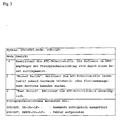
- the NMEA commands for switching and resetting the ATC interface are shown in the table of FIG.
- the input of the NMEA command at the ATC / NMEA interface can be done via two serial interfaces in the external application or by means of a switch (electrical / mechanical) between a single serial interface the external application and the ATC / NMEA interface.
- a dual-band combo antenna for receiving position data and for transmitting / receiving mobile data, which may be embodied, for example, as a roof, window-mounted antenna and as a clamp antenna.
- GSM Global System for Mobile Communication
- GPRS General Packet Radio Service
- UMTS Universal Mobile Telecommunications System
- the hands-free device comprises a microphone, a loudspeaker, an additional handset and a data cable set for the transmission of standardized NMEA data sets.
- a fleet management protocol implemented in the hands-free system can be provided.
- the hands-free device according to the invention can be expanded to a car navigation system.
- the hands-free system outputs the navigation data from the GPS receiver in NMEA-0183 format.
- the data is output at the NMEA interface.
- the embodiment of the hands-free system provides users or system developers with the possibility of defining their own data record formats and thus their own fleet management software adapted to the needs to develop and use the given hardware.
- the inventors propose a method for operating a hands-free device with additional function for a mobile device, which is located in a phone holder, wherein at least position data are received and made available via an antenna, and the position data via an ATC interface of the handsfree automatically over the mobile device, preferably as SMS are sent to a defined destination, wherein the ATC interface is controlled by means of a command, preferably a NMEA command.
- the position data are converted into NMEA position data sets, preferably according to NMEA-0183 standard, and provided via a NMEA interface, as described above.
- the NMEA position data sets are taken from a processor-controlled system and edited and processed system data of the handsfree ATC interface and transmitted via the mobile device to a defined destination, the processed system data at least AT commands for remote control of the mobile device and the processed NMEA Contain position data sets.
- the calculated position data can thus be edited, converted and forwarded with or without additional information of the ATC interface of the speakerphone.
- Additional information is, for example, measurement and status data of the vehicle carrying the hands-free system, such as the state of a cargo door (open / closed), the temperature in a transport vehicle (refrigerated truck, animal transport), a current situation, fire alarm conditions or the pressure and level of a tank truck.
- measurement and status data of the vehicle carrying the hands-free system such as the state of a cargo door (open / closed), the temperature in a transport vehicle (refrigerated truck, animal transport), a current situation, fire alarm conditions or the pressure and level of a tank truck.
- the AT commands are used for remote control of the mobile device, so that the mobile device preferably transmits the NMEA position records and the additional information to a selected by the processor-controlled system target, for example via SMS or fax.
- These destinations may be, for example, transportation companies, service or emergency call centers, service stations or the home address of the user of the hands-free device.
- SMS Short Message Service
- An advantageous embodiment of the method according to the invention provides that the remote control of the mobile device causes a structure of a speech connection with a defined destination.
- an emergency call of a taxi can cause a transmission of the current position data of the taxi via SMS to the taxi center and at the same time establish a speech connection, which transmits the calls of the interior to the taxi center, so that the taxi center an assessment of the Situation and adapted to the situation reaction (notification of a police car or ambulance) is made possible.
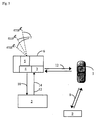
- FIG. 1 shows a preferred exemplary embodiment of the hands-free device 6 according to the invention. Additional functions include a positioning system, here a GPS 5, and an NMEA interface 4 and an ATC interface 3 for connecting an external device, in this case a computer 2, to the hands-free device 6 implemented.
- a positioning system here a GPS 5, and an NMEA interface 4 and an ATC interface 3 for connecting an external device, in this case a computer 2, to the hands-free device 6 implemented.
- the GPS module 5 uses satellite data 7 to calculate the current position. These calculated position data are converted into NMEA position data sets 10 by means of a program or software, output at the NMEA interface 4 of the hands-free device 6 and the computer 2 or an external device, respectively. made available.
- the computer 2 extracts these NMEA position records 10 and can add additional information 11 depending on the application. These are, for example, information about measurement and status data of a system, for example the temperature of refrigerator cars, the pressure and the level of a tank truck, or the vapor pressure of a load, as well as the current, possible fire or door contact of a cargo space.
- the prepared system data that is to say the NMEA position data records 10 and the additional information 11 are forwarded in the form of an AT command 12 to the ATC interface 3.
- the processed system data are only output when the mobile device 1 is in the mobile phone holder.
- a NMEA command 14 is transmitted before the transmission of the AT command 12.
- the AT command 12 causes preferably by SMS 8, the NMEA position data 10 and the additional information 11 are transmitted by mobile phone 1 via the public mobile network.
- the destination 9 of the data transmission via SMS 8 is defined by the computer 2.
- the NMEA interface 4 is common with the ATC interface mounted on a 6-pin Western socket with offset locking nose (ATC / NMEA interface).
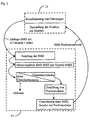
- FIG. 2 shows a sequence of data transmission in fleet monitoring with password protection.
- a fleet management protocol is implemented, which makes it possible to receive via SMS or via the Internet and a provider and SMS position requests and to send fleet management logs.
- a fleet center 13 with a computer containing fleet management software and a telephone query the location of one of the vehicles to be coordinated.
- the software generates a query SMS, sends this over the public mobile network to the mobile device 1 of the vehicle.
- the query SMS contains an AT command (position request command) and also the IMEI, ie the identification number of the mobile device in the corresponding vehicle.
- the hands-free device 6 recognizes that it is a fleet management SMS and compares the IMEI of the query SMS with the IMEI of the mobile device.
- the IMEI of the mobile devices of the vehicles to be coordinated in the software of the fleet center 13 are included.
- the IMEI can thus serve as protection against unauthorized retrieval of vehicle data, so that no information is given in case of missing or incorrect IMEI.
- the current position data are determined and they are automatically sent via an AT command as SMS using the mobile device 1 to the requesting Fleet center 13 returned (SMS position response).
- SMS thus contains the desired data, in this case the current position data, which allow in the fleet control center 13, a representation of the vehicle position on the computer monitor. If the IMEI numbers do not match, the position data will not be transmitted.
- the determined position data can be converted into NMEA data sets and transmitted to an external device connected to the hands-free device, preferably to a computer.
- additional information is determined and sent to the requesting body, as an SMS.
- the speakerphone according to the invention can be used for a variety of applications.
- any kind of location-dependent measurement and status data transmission are possible.
- a remote control of aggregates for example, if an aggregate has overheated, an automatic refrigeration or emergency stop command can be issued, and a system status message is sent to a central office
- self-diagnostics and remote maintenance of Vehicles for example, if an aggregate has overheated, an automatic refrigeration or emergency stop command can be issued, and a system status message is sent to a central office
- self-diagnostics and remote maintenance of Vehicles for example, if an aggregate has overheated, an automatic refrigeration or emergency stop command can be issued, and a system status message is sent to a central office
- self-diagnostics and remote maintenance of Vehicles for example, if an aggregate has overheated, an automatic refrigeration or emergency stop command can be issued, and a system status message is sent to a central office
- self-diagnostics and remote maintenance of Vehicles for example, if an aggregate has overheated, an automatic refrigeration or
- a hands-free device with integrated position determination system and NMEA interface is presented by the invention, which allows remote control of a mobile phone. Furthermore, a method for operating the hands-free device is presented.
- the invention provides a position and remote control tool that enables realization of many GPS applications and developments and thus solves a problem of many system designers, manufacturers and system houses for which a new development of a positioning system is too expensive or unworkable for technical reasons ,
Landscapes
- Engineering & Computer Science (AREA)
- Mechanical Engineering (AREA)
- Signal Processing (AREA)
- Mobile Radio Communication Systems (AREA)
- Position Fixing By Use Of Radio Waves (AREA)
- Navigation (AREA)
- Telephone Function (AREA)
- Traffic Control Systems (AREA)
Description
- Die Erfindung betrifft eine Freisprecheinrichtung mit Zusatzfunktion für ein Mobilfunkgerät, das sich in einer Telefonhalterung befindet. Weiterhin betrifft die Erfindung ein Verfahren zum Betrieb einer Freisprecheinrichtung mit Zusatzfunktion für ein Mobilfunkgerät, das sich in einer Telefonhalterung befindet.
- In Zeiten zunehmender Mobilkommunikation sind Freisprecheinrichtungen in Kraftfahrzeugen zur Erhöhung der Sicherheit der Verkehrsteilnehmer unerläßlich, da sie die Bedienung und die Handhabung eines Mobilfunkgerätes vereinfachen.
- Weiterhin sind Positionsbestimmungssysteme in Kraftfahrzeugen bekannt, die eine Ermittlung einer aktuellen Position ermöglichen. Eine häufig angewandte Methode, erfolgt mit Hilfe der satellitengestützten GPS-Technik (GPS = Global Positioning System). Hierbei werden im allgemeinen eine Mehrzahl von Satelliten angepeilt, über die mit Hilfe verschiedener Signallaufzeiten eine Triangulation vorgenommen und daraus die momentane Positionsbestimmung durchgeführt wird. Aber auch andere satellitengestützte Systeme, wie beispielsweise Gallileo, oder landgestützte Funknavigationssysteme, wie zum Beispiel Loran-C, das mit landgestützten Langwellensendern arbeitet, oder eine Kombination aus satelliten- und landgestützten Navigationssystem, wie zum Beispiel DGPS (Differential GPS) oder GPS/Loran-C kombinierte Systeme sind zur Positionsbestimmung möglich.
- Eine Freisprecheinrichtung nach dem Stand der Technik ist beispielsweise aus EP-A-0 854 584 bekannt.
- Darüber hinaus sollten die Daten eines Positionsbestimmungssystems zur Auswertung oder zur Information bestimmter Zielgruppen kontrolliert übermittelt werden, wie beispielsweise mit Hilfe eines Mobiltelefons. Hierzu werden jedoch die entsprechenden telefonspezifischen Halterungen und eine entsprechende Schnittstelle benötigt.
- Bisher liegen allerdings Freisprecheinrichtungen mit Mobiltelefon und Positionsbestimmungssysteme als separate Systeme vor und eine Erweiterung im Hinblick auf eine Anbindung zusätzlicher externer Geräte ist nicht möglich.
- Es ist daher Aufgabe der Erfindung, eine Freisprecheinrichtung aufzuzeigen, die ein Positionsbestimmungssystem integriert und eine Anbindung externer Geräte ermöglicht. Weiterhin soll ein Verfahren zum Betrieb der Freisprecheinrichtung entwickelt werden.
- Die Aufgabe zur Entwicklung eines Verfahrens wird durch die Merkmale des ersten unabhängigen Verfahrensanspruches, die Aufgabe zur Entwicklung einer Freisprecheinrichtung wird durch die Merkmale des ersten unabhängigen Vorrichtungsanspruches gelöst.
- Demgemäß schlagen die Erfinder eine Freisprecheinrichtung vor, mit Zusatzfunktion für ein Mobilfunkgerät, das sich in einer Telefonhalterung befindet, wobei die Zusatzfunktion zumindest ein Positionsbestimmungssystem, vorzugsweise ein GPS, zur Ermittlung von Positionsdaten und eine NMEA-Schnittstelle (NMEA = National Marine Electronics Association) aufweist, und mindestens eine Antenne zum Senden/Empfangen von Satelliten- und/oder Funksignalen und eine ATC-Schnittstelle zur Fernsteuerung des Mobilfunkgerätes vorgesehen ist. AT ist ein Befehlssatz zur Fernsteuerung von elektrischen Geräten, C steht für Command Set oder Cellular.
- Eine bevorzugte Ausgestaltung sieht vor, daß zumindest eine Schnittstelle zur Anbindung eines externen prozessorgesteuerten Systems (externes Gerät) vorgesehen ist. Vorzugsweise stellt dieses prozessorgesteuerte System, zum Beispiel einen Laptop, einen Computer oder einen PDA (PDA = Personal Digital Assistant) dar, der zumindest eine serielle Schnittstelle enthält zur Verbindung mit der erfindungsgemäßen Freisprecheinrichtung sowie eine Software, zum Erkennen, Senden und Empfangen von NMEA-Daten und zum Senden von AT-Befehlen.
- Die ATC-Schnittstelle ist auf einem Stecker, vorzugsweise auf einem 6-poligen Westernstecker, aufgelegt, wobei die ATC-Schnittstelle die üblichen AT-Befehle des Mobilfunkgerätes nutzt. Eine Beschreibung der Kommandos ist beispielsweise zu finden unter:
http://www.siemens.de/ic/products/cd/english/index/products/ mobiles/tips/s25 atc commandset v10.pdf - In einer vorteilhaften Ausführung ist auf dem Stecker auch die NMEA-Schnittstelle aufgelegt (ATC/NMEA-Schnittstelle), wobei ein Pin des Westernsteckers als Sender der NMEA-Schnittstelle, ein zweiter Pin als Empfänger der NMEA-Schnittstelle, ein dritter Pin als Sender der ATC-Schnittstelle und ein vierter Pin als Empfänger der ATC-Schnittstelle fungiert. Die zwei verbleibenden Pins sind für die Spannungsversorgung des externen Gerätes und für die Masse vorgesehen.
- Eine Ausgestaltung der erfindungsgemäßen Freisprecheinrichtung sieht ein Programm zur Erzeugung von NMEA-Datensätzen, vorzugsweise im NMEA-0183 Standard vor. Hierdurch werden die ermittelten Positionsdaten in NMEA-Positionsdatensätze umgewandelt und über die NMEA-Schnittstelle dem externen Gerät zur Verfügung gestellt.
- Hierbei können insgesamt sieben NMEA-Datensätze zur Verfügung gestellt werden. Jedem dieser Datensätze kann mittels herstellerspezifischer NMEA-Kommandos ein individuelles Ausgabeintervall zugewiesen werden. Ein Ausgabeintervall gleich 0 unterbindet beispielsweise die Ausgabe des jeweiligen Datensatzes. Das Ausgabeintervall wird in einem RAM der Freisprecheinrichtung gespeichert und bleibt somit solange erhalten, wie die 12 Volt Versorgungsspannung an der Freisprecheinrichtung anliegt.
- Der NMEA-0183 Standard legt fest, daß die übertragenen Daten ausschließlich aus druckbaren ASCII-Zeichen bestehen. Die Daten werden in der Form von Sätzen übertragen, die jeweils mit einem "$"-Zeichen starten. Darauf folgen zwei Zeichen, die den Typ beispielsweise des Navigationsgerätes wiedergeben. Bei GPS-Empfängern sind diese immer "GP". Vor den eigentlichen Daten kommen noch drei Zeichen, die den Typ des Datensatzes bezeichnen. Die folgenden Daten sind durch Kommas getrennt und werden eventuell durch eine optionale Checksumme abgeschlossen. Zum Schluß folgt noch ein Zeilenvorschub (CR/LF).
- Ein Datensatz kann inklusive Checksumme und Zeilenvorschub bis zu 82 Zeichen umfassen. Sind für ein Datenfeld keine Daten vorhanden, so wird es leer gelassen, das heißt, es werden zwei Kommas ohne dazwischen liegendes Leerzeichen gesendet. Die Länge einzelner Datenfelder kann variieren. Deshalb sollte ein Gerät, daß NMEA-Daten empfängt, einzelne Datenfelder durch Abzählen von Kommas lokalisieren.
- Die optionale Checksumme besteht vorzugsweise aus dem "*"-Zeichen und zwei hexadezimalen Ziffer, die das Exklusiv-ODER aus allen Zeichen zwischen dem "$" and dem "*" darstellen.
- Dieser Standard erlaubt es beispielsweise Herstellern von Navigationsgeräten, herstellerspezifische Datensatzformate zu definieren. Solche Sätze beginnen also vorzugsweise mit "$P", gefolgt von einem drei Zeichen umfassenden Herstellercode und schließlich einem beliebigen Inhalt, gemäß dem üblichen NMEA-Format.
- In einer Weiterentwicklung der erfindungsgemäßen Freisprecheinrichtung ist zumindest ein Umschalter vorgesehen ist, der die ATC-Schnittstelle steuert, also beispielsweise aktiviert oder deaktiviert.
- Die ATC-Schnittstelle kann zum Beispiel mit Hilfe eines Kommandos, vorzugsweise eines NMEA-Kommandos, angesteuert werden. Das NMEA-Kommando kann innerhalb der Freisprecheinrichtung oder von dem externen Gerät abgesetzt werden, so daß die ATC-Schnittstelle sowohl von einem Prozessor des externen Gerätes als auch von einem Prozessor der Freisprecheinrichtung, beispielsweise zur Steuerung von Telematik- und Flottenmanagement-Funktionen, benutzt werden kann. Verfügt nun ein Prozessor über die ATC-Schnittstelle, wird der jeweils andere, entkoppelte, Prozessor nicht über die Zustandsänderungen des Mobilfunkgerätes in Kenntnis gesetzt. Dies führt bei einer Zurückschaltung der ATC-Schnittstelle dazu, daß der momentane Mobilfunkgerätezustand abweichend von den zuvor eingestellten gespeicherten Mobilfunkgeräteparametern im Prozessor ist. Dieser undefinierte Systemzustand kann bis hin zu einem Systemabsturz führen.
- Um solche Probleme und Fehlfunktionen auszuschließen, kann die ATC-Schnittstelle immer nur von einer Applikation aus bedient werden, das heißt entweder von der Freisprecheinrichtung oder von dem externen Gerät. Hierbei können folgende Maßnahmen getroffen werden:
- gezieltes Umschalten der ATC-Schnittstelle durch Eingabe eines speziell hierfür definierten NMEA-Kommandos;
- gezieltes Zurückschalten der ATC-Schnittstelle durch Eingabe eines speziell hierfür definierten NMEA-Kommandos;
- Zurücksetzen des Gesamtsystems nach Zurückschalten der ATC-Schnittstelle, damit der definierte Ursprungszustand wieder hergestellt ist.
- Die NMEA-Kommandos zum Umschalten und Zurücksetzen der ATC-Schnittstelle sind in der Tabelle der Figur 3 aufgezeigt.
- Die Eingabe des NMEA-Befehls an der ATC/NMEA-Schnittstelle kann über zwei serielle Schnittstellen in der externen Applikation erfolgen oder mit Hilfe eines Umschalters (elektrisch/mechanisch) zwischen einer einzelnen seriellen Schnittstelle der externen Applikation und der ATC/NMEA-Schnittstelle.
- Eine andere Weiterentwicklung sieht eine Dualbandkombiantenne, für den Empfang von Positionsdaten und zum Senden/Empfangen von Mobilfunkdaten vor, die zum Beispiel als Dach-, Scheibenklebeantenne und als Klemmantenne ausgeführt sein kann. Vorzugsweise ist die Kombiantenne neben der Übertragung von beispielsweise GPS-Satellitendaten, für die Übertragung im GSM-Netz (GSM = Global System for Mobile Communication) oder zum Beispiel für GPRS (GPRS = General Packet Radio Service) oder UMTS (UMTS = Universal Mobile Telecommunications System) ausgestaltet.
- In einer anderen Ausgestaltung weist die erfindungsgemäße Freisprecheinrichtung ein Mikrofon, einen Lautsprecher, einen Zusatzhörer und einen Datenkabelsatz, zur Übertragung von genormten NMEA-Datensätzen auf.
- Darüber hinaus kann vorteilhaft ein in der Freisprecheinrichtung implementiertes Flottenmanagementprotokoll vorgesehen sein. Zusammen mit einem Notebook und spezieller PC-Navigationssoftware läßt sich die erfindungsgemäße Freisprecheinrichtung zu einem Kfz-Navigationssystem ausbauen. Die Freisprecheinrichtung gibt hierzu die vom GPS-Empfänger ermittelten Navigationsdaten im NMEA-0183 Format aus. Die Ausgabe der Daten erfolgt an der NMEA-Schnittstelle.
- Durch die erfindungsgemäße Ausgestaltung der Freisprecheinrichtung ergibt sich für Benutzer oder Systementwickler die Möglichkeit, eigene Datensatzformate zu definieren und somit eine eigene, auf die Bedürfnisse angepaßte, Flottenmanagementsoftware zu entwickeln und die vorgegebene Hardware zu nutzen.
- Weiterhin schlagen die Erfinder ein Verfahren vor, zum Betrieb einer Freisprecheinrichtung mit Zusatzfunktion für ein Mobilfunkgerät, das sich in einer Telefonhalterung befindet, wobei zumindest Positionsdaten über eine Antenne empfangen und zur Verfügung gestellt werden, und die Positionsdaten über eine ATC-Schnittstelle der Freisprecheinrichtung automatisch über das Mobilfunkgerät, vorzugsweise als SMS an ein definiertes Ziel gesendet werden, wobei die ATC-Schnittstelle mit Hilfe eines Kommandos, vorzugsweise eines NMEA-Kommandos angesteuert wird.
- In einer vorteilhaften Ausgestaltung des erfindungsgemäßen Verfahrens werden die Positionsdaten in NMEA-Positionsdatensätze umgeformt, vorzugsweise gemäß NMEA-0183 Standard, und über einer NMEA-Schnittstelle, wie voranstehend beschrieben, zur Verfügung gestellt.
- Vorteilhaft werden die NMEA-Positionsdatensätze von einem prozessorgesteuerten System entnommen und bearbeitet und aufbereitete Systemdaten der Freisprecheinrichtung der ATC-Schnittstelle zugeleitet und über das Mobilfunkgerät zu einem definierten Ziel übermittelt, wobei die aufbereiteten Systemdaten zumindest AT-Befehle zur Fernsteuerung des Mobilfunkgerätes und die bearbeiteten NMEA-Positionsdatensätze enthalten. Die berechneten Positionsdaten können also bearbeitet, gewandelt und mit oder ohne Zusatzinformationen der ATC-Schnittstelle der Freisprecheinrichtung zugeleitet werden.
- Zusatzinformationen sind zum Beispiel Meß- und Zustandsdaten des die Freisprecheinrichtung tragenden Fahrzeugs, wie beispielsweise der Zustand einer Laderaumtür (offen/geschlossen), die Temperatur in einem Transportfahrzeug (Kühlwagen, Tiertransport), eine Stromsituation, Feuermeldezustände oder der Druck und der Füllstand eines Tanklasters. Mit Hilfe dieser Orts- und Zusatzinformationen können Überwachungssysteme für Spediteure und Lieferanten ermöglicht werden, um beispielsweise die Routen- und Termintreue, beziehungsweise den Transportfortschritt der Auslieferer zu kontrollieren.
- Die AT-Befehle dienen zur Fernsteuerung des Mobilfunkgerätes, so daß das Mobilfunkgerät vorzugsweise die NMEA-Positionsdatensätze sowie die Zusatzinformationen an ein von dem prozessorgesteuerten System gewähltes Ziel, zum Beispiel über SMS oder Fax, übermittelt. Diese Ziele können zum Beispiel Transportfirmen, Dienste- oder Notrufzentralen, Servicestationen oder die Heimadresse des Benutzers der Freisprecheinrichtung sein. Ein generierter AT-Befehl kann beispielsweise das Aussenden einer SMS (SMS = Short Message Service) bewirken, die die Positionsdaten zum Inhalt hat, und gleichzeitig den Aufbau einer Sprechverbindung herstellen.
- Eine vorteilhafte Ausbildung des erfindungsgemäßen Verfahrens sieht vor, daß die Fernsteuerung des Mobilfunkgerätes einen Aufbau einer Sprechverbindung mit einem definierten Ziel bewirkt. So kann beispielsweise ein Notruf eines Taxis ein Senden der aktuellen Positionsdaten des Taxis über SMS an die Taxizentrale bewirken und gleichzeitig eine Sprechverbindung aufbauen, die die Gespräche des Innenraums an die Taxizentrale übermittelt, so daß der Taxizentrale eine Einschätzung der Situation und eine der Situation angepaßte Reaktion (Verständigung eines Einsatzwagens der Polizei oder eines Krankenwagen) ermöglicht wird.
- Weitere Merkmale der Erfindung ergeben sich aus der nachfolgenden Beschreibung bevorzugter Ausführungsbeispiele unter Bezugnahme auf die Zeichnungen. Es zeigen:
- Figur 1:
- eine erfindungsgemäße Freisprecheinrichtung mit Zusatzfunktionen;
- Figur 2:
- ein erfindungsgemäßer Ablauf einer Datenübertragung bei einem Flottenmonitoring mit Paßwortschutz;
- Figur 3:
- NMEA-Kommandos zum Umschalten und Zurücksetzen der ATC-Schnittstelle.
- Die Figur 1 zeigt ein bevorzugtes Ausführungsbeispiel der erfindungsgemäßen Freisprecheinrichtung 6. Als Zusatzfunktionen sind ein Positionsbestimmungssystem, hier ein GPS 5, sowie eine NMEA-Schnittstelle 4 und eine ATC-Schnittstelle 3 zur Anbindung eines externen Gerätes, hier eines Computers 2, in die Freisprecheinrichtung 6 implementiert.
- Über die ATC-Schnittstelle 3 werden Zugriffe auf ein Mobilfunkgerät 1 ermöglicht, das in eine Handyhalterung eingesteckt ist.
- Zur Positionsbestimmung berechnet das GPS-Modul 5 mit Hilfe von Satellitendaten 7 die aktuelle Position. Diese berechneten Positionsdaten werden mit Hilfe eines Programmes oder einer Software in NMEA-Positionsdatensätze 10 umgewandelt, an der NMEA-Schnittstelle 4 der Freisprecheinrichtung 6 ausgegeben und dem Computer 2 beziehungsweise einem externen Gerät, zur Verfügung gestellt.
- Der Computer 2, beispielsweise ein Laptop, entnimmt diese NMEA-Positionsdatensätze 10 und kann je nach Anwendung Zusatzinformationen 11 hinzufügen. Dies sind beispielsweise Informationen über Meß- und Zustandsdaten eines Systems, also zum Beispiel die Temperatur von Kühlwagen, den Druck und den Füllstand eines Tanklasters, oder den Dampfdruck einer Ladung, sowie den Strom, mögliches Feuer oder den Türkontakt eines Laderaumes.
- Die aufbereiteten Systemdaten, also die NMEA-Positionsdatensätze 10 sowie die Zusatzinformationen 11 werden in Form eines AT-Befehles 12 der ATC-Schnittstelle 3 zugeleitet. Die aufbereiteten Systemdaten werden lediglich dann ausgegeben, wenn sich das Mobilfunkgerät 1 in der Handyhalterung befindet. Zur Aktivierung beziehungsweise Freischaltung der ATC-Schnittstelle 3 wird vor der Übertragung des AT-Befehles 12 ein NMEA-Kommando 14 übertragen.
- Der AT-Befehl 12 bewirkt, daß vorzugsweise per SMS 8 die NMEA-Positionsdaten 10 sowie die Zusatzinformationen 11 per Mobiltelefon 1 über das öffentliche Mobilfunknetz übermittelt werden. Hierbei wird das Ziel 9 der Datenübermittlung per SMS 8 von dem Computer 2 definiert.
- Während über die NMEA-Schnittstelle 4 lediglich Daten in einem NMEA-Format übertragen werden, überträgt die ATC-Schnittstelle 3 die komplette Kommunikation zwischen dem Computer 2, der Freisprecheinrichtung 6 und dem Mobilfunkgerät 1. Hierbei ist die NMEA-Schnittstelle 4 gemeinsam mit der ATC-Schnittstelle auf einer 6-poligen Westernbuchse mit versetzter Rastnase aufgelegt (ATC/NMEA-Schnittstelle).
- Die Figur 2 zeigt einen Ablauf einer Datenübertragung bei einem Flottenmonitoring mit Paßwortschutz. In die erfindungsgemäße Freisprecheinrichtung ist ein Flottenmanagementprotokoll implementiert, das es ermöglicht, über SMS beziehungsweise über das Internet sowie einem Provider und SMS Positionsanfragen zu empfangen und Flottenmanagementprotokolle zu versenden.
- Eine Flottenzentrale 13 mit einem Computer, der eine Flottenmanagementsoftware enthält, und einem Telefon erfragt die Position eines der zu koordinierenden Fahrzeuge. Hierzu generiert die Software ein Abfrage-SMS, schickt dieses über das öffentliche Mobilfunknetz zum Mobilfunkgerät 1 des Fahrzeugs. Das Abfrage-SMS enthält einen AT-Befehl (Positionsanfragebefehl) und darüber hinaus die IMEI, also die Identifizierungsnummer, des Mobilfunkgerätes in dem entsprechenden Fahrzeug. Die erfindungsgemäße Freisprecheinrichtung 6 erkennt, daß es sich um ein Flottenmanagement-SMS handelt und vergleicht die IMEI der Abfrage-SMS mit der IMEI des Mobilfunkgerätes.
- Vorteilhaft sind die IMEI der Mobilfunkgeräte der zu koordinierenden Fahrzeuge in der Software der Flottenzentrale 13 enthalten. Die IMEI kann also als Schutz vor unautorisierter Abfrage von Fahrzeugdaten dienen, so daß bei fehlender oder falscher IMEI keine Auskunft gegeben wird.
- Stimmen diese beiden IMEI-Nummern überein, werden die aktuellen Positionsdaten ermittelt und diese automatisch über einen AT-Befehl als SMS mit Hilfe des Mobilfunkgerätes 1 an die anfragende Flottenzentrale 13 zurückgeschickt (SMS-Positionsantwort). Die SMS enthält also die gewünschten Daten, in diesem Falle die aktuellen Positionsdaten, die in der Flottenzentrale 13 eine Darstellung der Fahrzeugposition am Computermonitor erlauben. Stimmen die IMEI-Nummern nicht überein findet keine Übermittlung der Positionsdaten statt.
- Darüber hinaus können die ermittelten Positionsdaten in NMEA-Datensätze umgewandelt werden und an ein extern an die Freisprecheinrichtung angeschlossenes Gerät, vorzugsweise an einen Computer, übermittelt werden. Je nach Software, die der Computer beinhaltet, werden Zusatzinformationen ermittelt und an die anfragende Stelle, als SMS gesendet.
- Somit kann die erfindungsgemäße Freisprecheinrichtung für die unterschiedlichsten Anwendungsgebiete verwendet werden. Neben einer Ladungszustandsüberwachung und einer Laderaumüberwachung sind jegliche Art von ortsabhängiger Meß- und Zustandsdatenübertragung möglich. Dies sind zum Beispiel eine Fernsteuerung von Aggregaten (ist beispielsweise ein Aggregat heißgelaufen, kann ein Befehl für eine automatische Kühlung oder ein Not-Aus gegeben werden, sowie eine Nachricht über den Zustand des Systems an eine Zentrale übermittelt werden), eine Selbstdiagnose und Fernwartung von Fahrzeugen, ein Taxi-Notruf, eine Fahrtenbuchdatenübertragung, sowie Navigationsanwendungen, Floating Car Data (Telematikzentrale sammelt Verkehrsinformationen), Diebstahlüberwachung (Meldung bei Aufbruch einer Tür), automatische Straßenbenutzungsgebührenabbuchung oder mobile Büros und Forschungsstationen.
- Es versteht sich, daß die vorstehend genannten Merkmale der Erfindung nicht nur in der jeweils angegebenen Kombination, sondern auch in anderen Kombinationen oder in Alleinstellung verwendbar sind, ohne den Rahmen der Erfindung zu verlassen.
- Insgesamt wird durch die Erfindung eine Freisprecheinrichtung mit integriertem Positionsbestimmungssystem und NMEA-Schnittstelle vorgestellt, die eine Fernsteuerbarkeit eines Mobiltelefons erlaubt. Weiterhin wird ein Verfahren zum Betrieb der Freisprecheinrichtung vorgestellt.
- Die Erfindung stellt also ein Positions- und Fernsteuerungstool zur Verfügung, das eine Realisierung vieler GPS-Anwendungen und Entwicklungen ermöglicht und somit ein Problem vieler Systementwickler, -hersteller und Systemhäuser löst, für die eine Neuentwicklung eines Positionsbestimmungssystems zu teuer oder aus technischen Gründen nicht umsetzbar ist.
Claims (10)
- Freisprecheinrichtung (6) mit Zusatzfunktion für ein Mobilfunkgerät (1), das sich in einer Telefonhalterung befindet, wobei die Zusatzfunktion zumindest ein zur Ermittlung von Positionsdaten eingerichtetes Positionsbestimmungssystem (5), vorzugsweise ein GPS, und eine NMEA-Schnittstelle (4) aufweist und wobei mindestens eine Antenne zum Senden/Empfangen von Satelliten- und/oder Funksignalen vorhanden ist,
dadurch gekennzeichnet,
dass die Freisprecheinrichtung eine zur Fernsteuerung des Mobilfunkgerätes (1) eingerichtete ATC-Schnittstelle (3) umfaßt, wobei die ATC-Schnittstelle (3) weiterhin zur Anbindung eines externen prozessorgesteuerten Systems (2) ausgebildet ist. - Freisprecheinrichtung (6) gemäß dem voranstehenden Anspruch 1,
dadurch gekennzeichnet,
daß eine NMEA-Schnittstelle zur Anbindung des externen prozessorgesteuerten Systems (2) vorhanden ist. - Freisprecheinrichtung (6) gemäß einem der voranstehenden Ansprüche 1 bis 2, dadurch gekennzeichnet, daß zumindest ein Umschalter vorgesehen ist, der die ATC-Schnittstelle (3) steuert.
- Freisprecheinrichtung (6) gemäß einem der voranstehenden Ansprüche 1 bis 3, dadurch gekennzeichnet, daß eine Dualbandkombiantenne, für den Empfang von Positionsdaten und zum Senden/Empfangen von Mobilfunkdaten, vorhanden ist.
- Freisprecheinrichtung (6) gemäß einem der voranstehenden Ansprüche 1 bis 4, dadurch gekennzeichnet, daß die Freisprecheinrichtung (6) ein Mikrofon und/oder einen Lautsprecher und/oder einen Zusatzhörer und/oder einen Datenkabelsatz aufweist.
- Freisprecheinrichtung (6) gemäß einem der voranstehenden Ansprüche 1 bis 5, dadurch gekennzeichnet, daß ein Flottenmanagementprotokoll vorhanden ist.
- Verfahren zum Betrieb einer Freisprecheinrichtung (6) mit Zusatzfunktion für ein Mobilfunkgerät (1), das sich in einer Telefonhalterung befindet, wobei zumindest Positionsdaten über eine Antenne empfangen und zur Verfügung gestellt werden und die Positionsdaten über eine ATC-Schnittstelle (3) der Freisprecheinrichtung (6) automatisch über das Mobilfunkgerät (1), vorzugsweise als SMS, an ein definiertes Ziel gesendet werden, wobei die ATC-Schnittstelle (3) mit Hilfe eines Kommandos, vorzugsweise eines NMEA-Kommandos (14), angesteuert wird und die ATC-Schnittstelle (3) weiterhin zur Anbindung eines externen prozessorgesteuerten Systems (2) ausgebildet ist.
- Verfahren gemäß dem voranstehenden Anspruch 7, dadurch gekennzeichnet, daß die Positionsdaten in NMEA-Positionsdatensätze (10) umgeformt und über einer NMEA-Schnittstelle (4) zur verfügung gestellt werden.
- Verfahren gemäß dem voranstehenden Anspruch 8, dadurch gekennzeichnet, daß die NMEA-Positionsdatensätze (10) von dem prozessorgesteuerten System (2) entnommen und bearbeitet werden und aufbereitete Systemdaten der ATC-Schnittstelle (3) der Freisprecheinrichtung (6) zugeleitet und über das Mobilfunkgerät (1) zu einem definierten Ziel (9) übermittelt werden, wobei die aufbereiteten Systemdaten zumindest AT-Befehle (12) zur Fernsteuerung des Mobilfunkgerätes (1) und die bearbeiteten NMEA-Positionsdatensätze (10) enthalten.
- Verfahren gemäß einem der voranstehenden Ansprüche 5 bis 7, dadurch gekennzeichnet, daß die Fernsteuerung des Mobilfunkgerätes (1) eine Sprechverbindung mit einem definierten Ziel (9) aufbaut.
Applications Claiming Priority (3)
| Application Number | Priority Date | Filing Date | Title |
|---|---|---|---|
| DE10034286 | 2000-07-14 | ||
| DE2000134286 DE10034286A1 (de) | 2000-07-14 | 2000-07-14 | Freisprecheinrichtung und Verfahren zum Betrieb einer Freisprecheinrichtung |
| PCT/DE2001/002477 WO2002007410A2 (de) | 2000-07-14 | 2001-07-04 | Freisprecheinrichtung und verfahren zum betrieb einer freisprecheinrichtung |
Publications (2)
| Publication Number | Publication Date |
|---|---|
| EP1301999A2 EP1301999A2 (de) | 2003-04-16 |
| EP1301999B1 true EP1301999B1 (de) | 2006-09-27 |
Family
ID=7648931
Family Applications (1)
| Application Number | Title | Priority Date | Filing Date |
|---|---|---|---|
| EP01953856A Expired - Lifetime EP1301999B1 (de) | 2000-07-14 | 2001-07-04 | Freisprecheinrichtung und verfahren zum betrieb einer freisprecheinrichtung |
Country Status (3)
| Country | Link |
|---|---|
| EP (1) | EP1301999B1 (de) |
| DE (2) | DE10034286A1 (de) |
| WO (1) | WO2002007410A2 (de) |
Families Citing this family (5)
| Publication number | Priority date | Publication date | Assignee | Title |
|---|---|---|---|---|
| US7013133B2 (en) * | 2001-12-21 | 2006-03-14 | Intel Corporation | Portable communication device that may permit one wireless network to communicate with another wireless networks and method therefor |
| US8054971B2 (en) * | 2001-04-27 | 2011-11-08 | Comverse Ltd | Free-hand mobile messaging-method and device |
| WO2010090620A1 (en) * | 2009-02-04 | 2010-08-12 | Beau Giannini | A method of preparing apple chips |
| DE102009023640B4 (de) * | 2009-05-29 | 2011-06-16 | Bury Sp.Z.O.O | Freisprecheinrichtung in einem Fahrzeug |
| CN101726747A (zh) * | 2009-12-15 | 2010-06-09 | 惠州Tcl移动通信有限公司 | 一种gps手机在pc机上实现导航的方法及其系统 |
Family Cites Families (8)
| Publication number | Priority date | Publication date | Assignee | Title |
|---|---|---|---|---|
| US5479479A (en) * | 1991-10-19 | 1995-12-26 | Cell Port Labs, Inc. | Method and apparatus for transmission of and receiving signals having digital information using an air link |
| US5555286A (en) * | 1994-01-31 | 1996-09-10 | Tendler Technologies, Inc. | Cellular phone based automatic emergency vessel/vehicle location system |
| US6226529B1 (en) * | 1994-12-08 | 2001-05-01 | Itt Manufacturing Enterprises, Inc. | System for providing a simultaneous data and voice channel within a single channel of a portable cellular telephone to provide position-enhanced cellular services (PECS) |
| WO1997027697A1 (en) * | 1996-01-25 | 1997-07-31 | Oki Telecom | Portable telephone with terminal mode facility |
| DE19702895C1 (de) * | 1997-01-20 | 1998-07-02 | Mannesmann Ag | Zusatzgerät für ein Mobilfunktelefon |
| RU2219657C2 (ru) * | 1997-12-11 | 2003-12-20 | Эрикссон, Инк. | Портативное устройство связи для транспортного средства |
| US6097974A (en) * | 1997-12-12 | 2000-08-01 | Ericsson Inc. | Combined GPS and wide bandwidth radiotelephone terminals and methods |
| KR100319294B1 (ko) * | 1998-09-14 | 2002-04-22 | 윤종용 | 쌍방향정보송/수신시스템및그서비스방법 |
-
2000
- 2000-07-14 DE DE2000134286 patent/DE10034286A1/de not_active Withdrawn
-
2001
- 2001-07-04 EP EP01953856A patent/EP1301999B1/de not_active Expired - Lifetime
- 2001-07-04 DE DE50111105T patent/DE50111105D1/de not_active Expired - Fee Related
- 2001-07-04 WO PCT/DE2001/002477 patent/WO2002007410A2/de not_active Ceased
Also Published As
| Publication number | Publication date |
|---|---|
| EP1301999A2 (de) | 2003-04-16 |
| DE10034286A1 (de) | 2002-01-24 |
| DE50111105D1 (de) | 2006-11-09 |
| WO2002007410A3 (de) | 2003-01-23 |
| WO2002007410A2 (de) | 2002-01-24 |
Similar Documents
| Publication | Publication Date | Title |
|---|---|---|
| DE602004003789T2 (de) | Verfahren zur Eingabe von Zielortinformationen über ein mobiles Endgerät | |
| EP1204958B2 (de) | Navigationsverfahren und navigationssystem für kraftfahrzeuge | |
| DE102007029597B4 (de) | Automatische Übertragung von Abonnementspezifischen Nachrichten an ein Fahrzeug mit Telematikausstattung | |
| DE102008058442B4 (de) | Verbindungsverwaltung für eine Fahrzeugtelematikeinheit | |
| DE102007059475B4 (de) | Mechanismus eines konfigurierbaren Fahrzeugbus-Speicher-Cache | |
| EP3065447B1 (de) | Verfahren und testgerät zum testen eines kfz-telematik-geräts eines mobilfunkgestützten kfz-notrufsystems | |
| DE19640735A1 (de) | Telematikgerät für ein Kraftfahrzeug | |
| DE4105584C1 (en) | Traffic information system using mobile telephones - provides two=way communication between subscribers and central via organisation channel(s) | |
| EP1031252B1 (de) | Verfahren zur nutzung von einer zentrale angebotener dienste durch ein endgerät und endgerät dafür | |
| DE102011079823A1 (de) | Computerimplementiertes Verfahren zum Kommunizieren von Notfallinformationen zu einem Fahrzeug | |
| EP0685723A2 (de) | Vorrichtung zur Diagnose von Kraftfahrzeugen | |
| DE10048576A1 (de) | Verfahren zur Übermittlung von individuellen Daten an Kraftfahrzeuge | |
| DE10065523A1 (de) | Fahrzeugnavigationssystem | |
| EP0110099A2 (de) | Fahrzeug-Zielführungssystem mit Telefon | |
| EP0955219A2 (de) | Einrichtung zum Fernübertragen von Zustandsdaten eines Objektes | |
| EP1031190B1 (de) | Verfahren zur aktualisierung von in einem mobilen kommunikationsendgerät gespeicherten informationen und kommunikationsendgerät | |
| DE19702895C1 (de) | Zusatzgerät für ein Mobilfunktelefon | |
| EP1800274B1 (de) | Portabler computer für navigationsaufgaben | |
| WO2002007410A2 (de) | Freisprecheinrichtung und verfahren zum betrieb einer freisprecheinrichtung | |
| DE19744602A1 (de) | Telematikmodul für Kraftfahrzeuge | |
| EP1044578B1 (de) | Verfahren zum betrieb eines telekommunikationsendgerätes und telekommunikationsendgerät | |
| DE10021076A1 (de) | Fehlererfassungsanordnung eines Notrufendgeräts | |
| DE19903812A1 (de) | Mobiles Informationssystem | |
| DE102007044802A1 (de) | Verfahren zum Wiederauffinden eines Kraftfahrzeugs | |
| EP1427992B1 (de) | Verfahren zum ermitteln der position einer mobilen vorrichtung, insbesondere einer notrufvorrichtung, notrufsystem sowie notrufvorrichtung |
Legal Events
| Date | Code | Title | Description |
|---|---|---|---|
| PUAI | Public reference made under article 153(3) epc to a published international application that has entered the european phase |
Free format text: ORIGINAL CODE: 0009012 |
|
| 17P | Request for examination filed |
Effective date: 20030109 |
|
| AK | Designated contracting states |
Designated state(s): AT BE CH CY DE DK ES FI FR GB GR IE IT LI LU MC NL PT SE TR |
|
| RBV | Designated contracting states (corrected) |
Designated state(s): DE FR GB |
|
| 17Q | First examination report despatched |
Effective date: 20050405 |
|
| GRAP | Despatch of communication of intention to grant a patent |
Free format text: ORIGINAL CODE: EPIDOSNIGR1 |
|
| GRAS | Grant fee paid |
Free format text: ORIGINAL CODE: EPIDOSNIGR3 |
|
| GRAA | (expected) grant |
Free format text: ORIGINAL CODE: 0009210 |
|
| AK | Designated contracting states |
Kind code of ref document: B1 Designated state(s): DE FR GB |
|
| REG | Reference to a national code |
Ref country code: GB Ref legal event code: FG4D Free format text: NOT ENGLISH |
|
| REF | Corresponds to: |
Ref document number: 50111105 Country of ref document: DE Date of ref document: 20061109 Kind code of ref document: P |
|
| GBT | Gb: translation of ep patent filed (gb section 77(6)(a)/1977) |
Effective date: 20070103 |
|
| ET | Fr: translation filed | ||
| PLBE | No opposition filed within time limit |
Free format text: ORIGINAL CODE: 0009261 |
|
| STAA | Information on the status of an ep patent application or granted ep patent |
Free format text: STATUS: NO OPPOSITION FILED WITHIN TIME LIMIT |
|
| 26N | No opposition filed |
Effective date: 20070628 |
|
| PGFP | Annual fee paid to national office [announced via postgrant information from national office to epo] |
Ref country code: DE Payment date: 20080722 Year of fee payment: 8 |
|
| PGFP | Annual fee paid to national office [announced via postgrant information from national office to epo] |
Ref country code: FR Payment date: 20080715 Year of fee payment: 8 |
|
| PGFP | Annual fee paid to national office [announced via postgrant information from national office to epo] |
Ref country code: GB Payment date: 20080722 Year of fee payment: 8 |
|
| GBPC | Gb: european patent ceased through non-payment of renewal fee |
Effective date: 20090704 |
|
| REG | Reference to a national code |
Ref country code: FR Ref legal event code: ST Effective date: 20100331 |
|
| PG25 | Lapsed in a contracting state [announced via postgrant information from national office to epo] |
Ref country code: FR Free format text: LAPSE BECAUSE OF NON-PAYMENT OF DUE FEES Effective date: 20090731 |
|
| PG25 | Lapsed in a contracting state [announced via postgrant information from national office to epo] |
Ref country code: GB Free format text: LAPSE BECAUSE OF NON-PAYMENT OF DUE FEES Effective date: 20090704 |
|
| PG25 | Lapsed in a contracting state [announced via postgrant information from national office to epo] |
Ref country code: DE Free format text: LAPSE BECAUSE OF NON-PAYMENT OF DUE FEES Effective date: 20100202 |