EP1287014B1 - Verbesserte thermostabilität und temperaturresistenz von proteinen - Google Patents
Verbesserte thermostabilität und temperaturresistenz von proteinen Download PDFInfo
- Publication number
- EP1287014B1 EP1287014B1 EP01928554A EP01928554A EP1287014B1 EP 1287014 B1 EP1287014 B1 EP 1287014B1 EP 01928554 A EP01928554 A EP 01928554A EP 01928554 A EP01928554 A EP 01928554A EP 1287014 B1 EP1287014 B1 EP 1287014B1
- Authority
- EP
- European Patent Office
- Prior art keywords
- shsp
- protein
- pfu
- pcr
- seq
- Prior art date
- Legal status (The legal status is an assumption and is not a legal conclusion. Google has not performed a legal analysis and makes no representation as to the accuracy of the status listed.)
- Expired - Lifetime
Links
- 108090000623 proteins and genes Proteins 0.000 title claims abstract description 62
- 102000004169 proteins and genes Human genes 0.000 title claims abstract description 53
- 108010006785 Taq Polymerase Proteins 0.000 claims abstract description 30
- 102000002812 Heat-Shock Proteins Human genes 0.000 claims abstract description 20
- 108010004889 Heat-Shock Proteins Proteins 0.000 claims abstract description 20
- 102000004190 Enzymes Human genes 0.000 claims abstract description 15
- 108090000790 Enzymes Proteins 0.000 claims abstract description 15
- 239000000203 mixture Substances 0.000 claims description 17
- 238000000034 method Methods 0.000 claims description 15
- 238000009004 PCR Kit Methods 0.000 claims description 10
- 150000007523 nucleic acids Chemical group 0.000 claims description 9
- 108020004707 nucleic acids Proteins 0.000 claims description 6
- 102000039446 nucleic acids Human genes 0.000 claims description 6
- 108091028043 Nucleic acid sequence Proteins 0.000 claims description 5
- 239000005549 deoxyribonucleoside Substances 0.000 claims description 4
- 239000001226 triphosphate Substances 0.000 claims description 4
- 235000011178 triphosphate Nutrition 0.000 claims description 4
- 125000002264 triphosphate group Chemical class [H]OP(=O)(O[H])OP(=O)(O[H])OP(=O)(O[H])O* 0.000 claims description 4
- 239000012807 PCR reagent Substances 0.000 claims description 3
- 230000002708 enhancing effect Effects 0.000 claims description 3
- 239000000463 material Substances 0.000 claims description 3
- 239000002243 precursor Substances 0.000 claims description 3
- 125000003275 alpha amino acid group Chemical group 0.000 claims 4
- 238000009629 microbiological culture Methods 0.000 claims 1
- 108700036708 Pyrococcus furiosus small heat shock Proteins 0.000 abstract description 59
- 102000008063 Small Heat-Shock Proteins Human genes 0.000 abstract description 50
- 108091052270 small heat shock protein (HSP20) family Proteins 0.000 abstract description 12
- 230000002776 aggregation Effects 0.000 abstract description 10
- 238000004220 aggregation Methods 0.000 abstract description 9
- 230000001413 cellular effect Effects 0.000 abstract description 7
- 230000003833 cell viability Effects 0.000 abstract description 5
- 239000000284 extract Substances 0.000 abstract description 5
- 230000008642 heat stress Effects 0.000 abstract description 5
- 238000011534 incubation Methods 0.000 abstract description 4
- 230000000813 microbial effect Effects 0.000 abstract description 4
- 241000205160 Pyrococcus Species 0.000 abstract description 3
- 230000002255 enzymatic effect Effects 0.000 abstract description 3
- 238000001556 precipitation Methods 0.000 abstract description 3
- 230000003413 degradative effect Effects 0.000 abstract description 2
- 102000038379 digestive enzymes Human genes 0.000 abstract description 2
- 108091007734 digestive enzymes Proteins 0.000 abstract description 2
- 230000003834 intracellular effect Effects 0.000 abstract description 2
- 230000002035 prolonged effect Effects 0.000 abstract description 2
- 108010088928 Small Heat-Shock Proteins Proteins 0.000 description 47
- 235000018102 proteins Nutrition 0.000 description 38
- 210000004027 cell Anatomy 0.000 description 34
- 241000588724 Escherichia coli Species 0.000 description 23
- 230000000694 effects Effects 0.000 description 23
- 108020004414 DNA Proteins 0.000 description 22
- 241000205156 Pyrococcus furiosus Species 0.000 description 13
- 238000006243 chemical reaction Methods 0.000 description 12
- 102100034009 Glutamate dehydrogenase 1, mitochondrial Human genes 0.000 description 10
- 238000002415 sodium dodecyl sulfate polyacrylamide gel electrophoresis Methods 0.000 description 10
- 239000000872 buffer Substances 0.000 description 8
- 239000000499 gel Substances 0.000 description 8
- 230000001965 increasing effect Effects 0.000 description 8
- 102000042290 small heat shock protein (HSP20) family Human genes 0.000 description 8
- 239000000047 product Substances 0.000 description 7
- 230000035939 shock Effects 0.000 description 7
- 229920000936 Agarose Polymers 0.000 description 6
- 101000950981 Bacillus subtilis (strain 168) Catabolic NAD-specific glutamate dehydrogenase RocG Proteins 0.000 description 6
- 102000016901 Glutamate dehydrogenase Human genes 0.000 description 6
- 150000001413 amino acids Chemical class 0.000 description 6
- 230000014509 gene expression Effects 0.000 description 6
- 239000000243 solution Substances 0.000 description 6
- 241000283690 Bos taurus Species 0.000 description 5
- 102000007056 Recombinant Fusion Proteins Human genes 0.000 description 5
- 108010008281 Recombinant Fusion Proteins Proteins 0.000 description 5
- 238000004458 analytical method Methods 0.000 description 5
- 230000008901 benefit Effects 0.000 description 5
- 239000000287 crude extract Substances 0.000 description 5
- 238000000338 in vitro Methods 0.000 description 5
- 230000004044 response Effects 0.000 description 5
- 239000013598 vector Substances 0.000 description 5
- 238000000246 agarose gel electrophoresis Methods 0.000 description 4
- OPTASPLRGRRNAP-UHFFFAOYSA-N cytosine Chemical compound NC=1C=CNC(=O)N=1 OPTASPLRGRRNAP-UHFFFAOYSA-N 0.000 description 4
- 238000002474 experimental method Methods 0.000 description 4
- UYTPUPDQBNUYGX-UHFFFAOYSA-N guanine Chemical compound O=C1NC(N)=NC2=C1N=CN2 UYTPUPDQBNUYGX-UHFFFAOYSA-N 0.000 description 4
- 239000002773 nucleotide Substances 0.000 description 4
- 125000003729 nucleotide group Chemical group 0.000 description 4
- 239000013612 plasmid Substances 0.000 description 4
- 239000000523 sample Substances 0.000 description 4
- RWQNBRDOKXIBIV-UHFFFAOYSA-N thymine Chemical compound CC1=CNC(=O)NC1=O RWQNBRDOKXIBIV-UHFFFAOYSA-N 0.000 description 4
- 230000001131 transforming effect Effects 0.000 description 4
- 108091032973 (ribonucleotides)n+m Proteins 0.000 description 3
- 241000894006 Bacteria Species 0.000 description 3
- 102000053602 DNA Human genes 0.000 description 3
- LFQSCWFLJHTTHZ-UHFFFAOYSA-N Ethanol Chemical compound CCO LFQSCWFLJHTTHZ-UHFFFAOYSA-N 0.000 description 3
- 240000004808 Saccharomyces cerevisiae Species 0.000 description 3
- FAPWRFPIFSIZLT-UHFFFAOYSA-M Sodium chloride Chemical compound [Na+].[Cl-] FAPWRFPIFSIZLT-UHFFFAOYSA-M 0.000 description 3
- 230000009471 action Effects 0.000 description 3
- 230000015572 biosynthetic process Effects 0.000 description 3
- 239000003153 chemical reaction reagent Substances 0.000 description 3
- 210000000349 chromosome Anatomy 0.000 description 3
- 230000001120 cytoprotective effect Effects 0.000 description 3
- 238000010790 dilution Methods 0.000 description 3
- 239000012895 dilution Substances 0.000 description 3
- 238000010438 heat treatment Methods 0.000 description 3
- 238000001727 in vivo Methods 0.000 description 3
- 230000006698 induction Effects 0.000 description 3
- 239000003550 marker Substances 0.000 description 3
- 230000007246 mechanism Effects 0.000 description 3
- 239000008188 pellet Substances 0.000 description 3
- 230000008569 process Effects 0.000 description 3
- 239000012429 reaction media Substances 0.000 description 3
- 230000001105 regulatory effect Effects 0.000 description 3
- 238000012163 sequencing technique Methods 0.000 description 3
- 239000006228 supernatant Substances 0.000 description 3
- 238000003786 synthesis reaction Methods 0.000 description 3
- 238000001262 western blot Methods 0.000 description 3
- 229930024421 Adenine Natural products 0.000 description 2
- GFFGJBXGBJISGV-UHFFFAOYSA-N Adenine Chemical compound NC1=NC=NC2=C1N=CN2 GFFGJBXGBJISGV-UHFFFAOYSA-N 0.000 description 2
- 238000009010 Bradford assay Methods 0.000 description 2
- 108091026890 Coding region Proteins 0.000 description 2
- 108010014303 DNA-directed DNA polymerase Proteins 0.000 description 2
- 102000016928 DNA-directed DNA polymerase Human genes 0.000 description 2
- 241001198387 Escherichia coli BL21(DE3) Species 0.000 description 2
- OWXMKDGYPWMGEB-UHFFFAOYSA-N HEPPS Chemical compound OCCN1CCN(CCCS(O)(=O)=O)CC1 OWXMKDGYPWMGEB-UHFFFAOYSA-N 0.000 description 2
- TWRXJAOTZQYOKJ-UHFFFAOYSA-L Magnesium chloride Chemical compound [Mg+2].[Cl-].[Cl-] TWRXJAOTZQYOKJ-UHFFFAOYSA-L 0.000 description 2
- 241001465754 Metazoa Species 0.000 description 2
- 102000005431 Molecular Chaperones Human genes 0.000 description 2
- 108010006519 Molecular Chaperones Proteins 0.000 description 2
- 238000000636 Northern blotting Methods 0.000 description 2
- 241000283973 Oryctolagus cuniculus Species 0.000 description 2
- 241000700605 Viruses Species 0.000 description 2
- 229960000643 adenine Drugs 0.000 description 2
- 230000004931 aggregating effect Effects 0.000 description 2
- 102000013640 alpha-Crystallin B Chain Human genes 0.000 description 2
- 108010051585 alpha-Crystallin B Chain Proteins 0.000 description 2
- 125000000539 amino acid group Chemical group 0.000 description 2
- 229960000723 ampicillin Drugs 0.000 description 2
- AVKUERGKIZMTKX-NJBDSQKTSA-N ampicillin Chemical compound C1([C@@H](N)C(=O)N[C@H]2[C@H]3SC([C@@H](N3C2=O)C(O)=O)(C)C)=CC=CC=C1 AVKUERGKIZMTKX-NJBDSQKTSA-N 0.000 description 2
- 238000003556 assay Methods 0.000 description 2
- 230000001580 bacterial effect Effects 0.000 description 2
- 238000005119 centrifugation Methods 0.000 description 2
- 238000010367 cloning Methods 0.000 description 2
- 238000012258 culturing Methods 0.000 description 2
- 229940104302 cytosine Drugs 0.000 description 2
- 230000003247 decreasing effect Effects 0.000 description 2
- 238000004925 denaturation Methods 0.000 description 2
- 230000036425 denaturation Effects 0.000 description 2
- 210000003527 eukaryotic cell Anatomy 0.000 description 2
- 238000000855 fermentation Methods 0.000 description 2
- 230000004151 fermentation Effects 0.000 description 2
- 239000011521 glass Substances 0.000 description 2
- 230000001939 inductive effect Effects 0.000 description 2
- 230000001404 mediated effect Effects 0.000 description 2
- 239000002609 medium Substances 0.000 description 2
- 238000010369 molecular cloning Methods 0.000 description 2
- 239000004033 plastic Substances 0.000 description 2
- 229920003023 plastic Polymers 0.000 description 2
- 230000008488 polyadenylation Effects 0.000 description 2
- 239000002244 precipitate Substances 0.000 description 2
- 238000002360 preparation method Methods 0.000 description 2
- 230000002265 prevention Effects 0.000 description 2
- 230000012846 protein folding Effects 0.000 description 2
- 230000029983 protein stabilization Effects 0.000 description 2
- 230000010076 replication Effects 0.000 description 2
- 108091008146 restriction endonucleases Proteins 0.000 description 2
- 241000894007 species Species 0.000 description 2
- 229960000268 spectinomycin Drugs 0.000 description 2
- UNFWWIHTNXNPBV-WXKVUWSESA-N spectinomycin Chemical compound O([C@@H]1[C@@H](NC)[C@@H](O)[C@H]([C@@H]([C@H]1O1)O)NC)[C@]2(O)[C@H]1O[C@H](C)CC2=O UNFWWIHTNXNPBV-WXKVUWSESA-N 0.000 description 2
- 230000035882 stress Effects 0.000 description 2
- 229940113082 thymine Drugs 0.000 description 2
- 238000013518 transcription Methods 0.000 description 2
- 230000035897 transcription Effects 0.000 description 2
- 230000009261 transgenic effect Effects 0.000 description 2
- 230000035899 viability Effects 0.000 description 2
- OWEGMIWEEQEYGQ-UHFFFAOYSA-N 100676-05-9 Natural products OC1C(O)C(O)C(CO)OC1OCC1C(O)C(O)C(O)C(OC2C(OC(O)C(O)C2O)CO)O1 OWEGMIWEEQEYGQ-UHFFFAOYSA-N 0.000 description 1
- 229920001817 Agar Polymers 0.000 description 1
- 241000893512 Aquifex aeolicus Species 0.000 description 1
- 241000203069 Archaea Species 0.000 description 1
- 108091035707 Consensus sequence Proteins 0.000 description 1
- 102000004163 DNA-directed RNA polymerases Human genes 0.000 description 1
- 108090000626 DNA-directed RNA polymerases Proteins 0.000 description 1
- 208000005156 Dehydration Diseases 0.000 description 1
- KCXVZYZYPLLWCC-UHFFFAOYSA-N EDTA Chemical compound OC(=O)CN(CC(O)=O)CCN(CC(O)=O)CC(O)=O KCXVZYZYPLLWCC-UHFFFAOYSA-N 0.000 description 1
- 101000738180 Euglena gracilis Chaperonin CPN60, mitochondrial Proteins 0.000 description 1
- WHUUTDBJXJRKMK-UHFFFAOYSA-N Glutamic acid Natural products OC(=O)C(N)CCC(O)=O WHUUTDBJXJRKMK-UHFFFAOYSA-N 0.000 description 1
- 102100032510 Heat shock protein HSP 90-beta Human genes 0.000 description 1
- 101001016856 Homo sapiens Heat shock protein HSP 90-beta Proteins 0.000 description 1
- 238000012404 In vitro experiment Methods 0.000 description 1
- WHUUTDBJXJRKMK-VKHMYHEASA-N L-glutamic acid Chemical compound OC(=O)[C@@H](N)CCC(O)=O WHUUTDBJXJRKMK-VKHMYHEASA-N 0.000 description 1
- 101000839464 Leishmania braziliensis Heat shock 70 kDa protein Proteins 0.000 description 1
- 101000988090 Leishmania donovani Heat shock protein 83 Proteins 0.000 description 1
- 239000006137 Luria-Bertani broth Substances 0.000 description 1
- GUBGYTABKSRVRQ-PICCSMPSSA-N Maltose Natural products O[C@@H]1[C@@H](O)[C@H](O)[C@@H](CO)O[C@@H]1O[C@@H]1[C@@H](CO)OC(O)[C@H](O)[C@H]1O GUBGYTABKSRVRQ-PICCSMPSSA-N 0.000 description 1
- XJLXINKUBYWONI-NNYOXOHSSA-O NADP(+) Chemical compound NC(=O)C1=CC=C[N+]([C@H]2[C@@H]([C@H](O)[C@@H](COP(O)(=O)OP(O)(=O)OC[C@@H]3[C@H]([C@@H](OP(O)(O)=O)[C@@H](O3)N3C4=NC=NC(N)=C4N=C3)O)O2)O)=C1 XJLXINKUBYWONI-NNYOXOHSSA-O 0.000 description 1
- 238000012408 PCR amplification Methods 0.000 description 1
- 239000004698 Polyethylene Substances 0.000 description 1
- 239000004743 Polypropylene Substances 0.000 description 1
- 241000522615 Pyrococcus horikoshii Species 0.000 description 1
- 108020004511 Recombinant DNA Proteins 0.000 description 1
- BQCADISMDOOEFD-UHFFFAOYSA-N Silver Chemical compound [Ag] BQCADISMDOOEFD-UHFFFAOYSA-N 0.000 description 1
- 101710172711 Structural protein Proteins 0.000 description 1
- 108020004566 Transfer RNA Proteins 0.000 description 1
- 101000987816 Triticum aestivum 16.9 kDa class I heat shock protein 1 Proteins 0.000 description 1
- 238000002835 absorbance Methods 0.000 description 1
- 230000008649 adaptation response Effects 0.000 description 1
- 239000008272 agar Substances 0.000 description 1
- 239000011543 agarose gel Substances 0.000 description 1
- 238000005054 agglomeration Methods 0.000 description 1
- 235000001014 amino acid Nutrition 0.000 description 1
- 230000003321 amplification Effects 0.000 description 1
- 210000004102 animal cell Anatomy 0.000 description 1
- 238000005349 anion exchange Methods 0.000 description 1
- 239000003242 anti bacterial agent Substances 0.000 description 1
- 230000000692 anti-sense effect Effects 0.000 description 1
- 229940088710 antibiotic agent Drugs 0.000 description 1
- 238000013459 approach Methods 0.000 description 1
- AQLMHYSWFMLWBS-UHFFFAOYSA-N arsenite(1-) Chemical compound O[As](O)[O-] AQLMHYSWFMLWBS-UHFFFAOYSA-N 0.000 description 1
- 108010058966 bacteriophage T7 induced DNA polymerase Proteins 0.000 description 1
- 238000010364 biochemical engineering Methods 0.000 description 1
- 230000003115 biocidal effect Effects 0.000 description 1
- 125000003178 carboxy group Chemical group [H]OC(*)=O 0.000 description 1
- 238000004113 cell culture Methods 0.000 description 1
- 230000033077 cellular process Effects 0.000 description 1
- 239000003795 chemical substances by application Substances 0.000 description 1
- 230000001332 colony forming effect Effects 0.000 description 1
- 230000000295 complement effect Effects 0.000 description 1
- 108091036078 conserved sequence Proteins 0.000 description 1
- 239000000356 contaminant Substances 0.000 description 1
- 238000001816 cooling Methods 0.000 description 1
- RGWHQCVHVJXOKC-SHYZEUOFSA-J dCTP(4-) Chemical compound O=C1N=C(N)C=CN1[C@@H]1O[C@H](COP([O-])(=O)OP([O-])(=O)OP([O-])([O-])=O)[C@@H](O)C1 RGWHQCVHVJXOKC-SHYZEUOFSA-J 0.000 description 1
- 239000005547 deoxyribonucleotide Substances 0.000 description 1
- 125000002637 deoxyribonucleotide group Chemical group 0.000 description 1
- 238000011161 development Methods 0.000 description 1
- 239000006185 dispersion Substances 0.000 description 1
- 239000003814 drug Substances 0.000 description 1
- 238000001962 electrophoresis Methods 0.000 description 1
- 230000008030 elimination Effects 0.000 description 1
- 238000003379 elimination reaction Methods 0.000 description 1
- 238000005516 engineering process Methods 0.000 description 1
- 239000003623 enhancer Substances 0.000 description 1
- 239000013604 expression vector Substances 0.000 description 1
- 239000011888 foil Substances 0.000 description 1
- 239000012634 fragment Substances 0.000 description 1
- 238000001415 gene therapy Methods 0.000 description 1
- 235000013922 glutamic acid Nutrition 0.000 description 1
- 239000004220 glutamic acid Substances 0.000 description 1
- 238000003306 harvesting Methods 0.000 description 1
- 229910001385 heavy metal Inorganic materials 0.000 description 1
- 210000001822 immobilized cell Anatomy 0.000 description 1
- 238000002649 immunization Methods 0.000 description 1
- 230000003053 immunization Effects 0.000 description 1
- 230000001976 improved effect Effects 0.000 description 1
- 230000000977 initiatory effect Effects 0.000 description 1
- 239000007788 liquid Substances 0.000 description 1
- 229910001629 magnesium chloride Inorganic materials 0.000 description 1
- 238000012423 maintenance Methods 0.000 description 1
- 210000004962 mammalian cell Anatomy 0.000 description 1
- 238000004519 manufacturing process Methods 0.000 description 1
- 239000011159 matrix material Substances 0.000 description 1
- 239000012528 membrane Substances 0.000 description 1
- 108020004999 messenger RNA Proteins 0.000 description 1
- 239000002480 mineral oil Substances 0.000 description 1
- 235000010446 mineral oil Nutrition 0.000 description 1
- 230000011278 mitosis Effects 0.000 description 1
- 238000003199 nucleic acid amplification method Methods 0.000 description 1
- 238000007899 nucleic acid hybridization Methods 0.000 description 1
- 238000002515 oligonucleotide synthesis Methods 0.000 description 1
- 230000002018 overexpression Effects 0.000 description 1
- 230000037361 pathway Effects 0.000 description 1
- 229920000515 polycarbonate Polymers 0.000 description 1
- 239000004417 polycarbonate Substances 0.000 description 1
- -1 polyethylene Polymers 0.000 description 1
- 229920000573 polyethylene Polymers 0.000 description 1
- 108091033319 polynucleotide Proteins 0.000 description 1
- 102000040430 polynucleotide Human genes 0.000 description 1
- 239000002157 polynucleotide Substances 0.000 description 1
- 229920000379 polypropylene carbonate Polymers 0.000 description 1
- 239000008057 potassium phosphate buffer Substances 0.000 description 1
- 239000000843 powder Substances 0.000 description 1
- 238000012545 processing Methods 0.000 description 1
- 230000001737 promoting effect Effects 0.000 description 1
- 230000004845 protein aggregation Effects 0.000 description 1
- 235000004252 protein component Nutrition 0.000 description 1
- 239000012460 protein solution Substances 0.000 description 1
- 230000004844 protein turnover Effects 0.000 description 1
- 238000000746 purification Methods 0.000 description 1
- 230000001698 pyrogenic effect Effects 0.000 description 1
- 239000011541 reaction mixture Substances 0.000 description 1
- 230000009467 reduction Effects 0.000 description 1
- 229910052709 silver Inorganic materials 0.000 description 1
- 239000004332 silver Substances 0.000 description 1
- 239000011780 sodium chloride Substances 0.000 description 1
- 239000007787 solid Substances 0.000 description 1
- 230000000087 stabilizing effect Effects 0.000 description 1
- 230000004083 survival effect Effects 0.000 description 1
- 229940124597 therapeutic agent Drugs 0.000 description 1
- 230000008646 thermal stress Effects 0.000 description 1
- 238000007669 thermal treatment Methods 0.000 description 1
- 210000001519 tissue Anatomy 0.000 description 1
- 230000002103 transcriptional effect Effects 0.000 description 1
- 238000013519 translation Methods 0.000 description 1
- 210000005253 yeast cell Anatomy 0.000 description 1
Images




Classifications
-
- C—CHEMISTRY; METALLURGY
- C12—BIOCHEMISTRY; BEER; SPIRITS; WINE; VINEGAR; MICROBIOLOGY; ENZYMOLOGY; MUTATION OR GENETIC ENGINEERING
- C12N—MICROORGANISMS OR ENZYMES; COMPOSITIONS THEREOF; PROPAGATING, PRESERVING, OR MAINTAINING MICROORGANISMS; MUTATION OR GENETIC ENGINEERING; CULTURE MEDIA
- C12N9/00—Enzymes; Proenzymes; Compositions thereof; Processes for preparing, activating, inhibiting, separating or purifying enzymes
- C12N9/96—Stabilising an enzyme by forming an adduct or a composition; Forming enzyme conjugates
-
- C—CHEMISTRY; METALLURGY
- C07—ORGANIC CHEMISTRY
- C07K—PEPTIDES
- C07K14/00—Peptides having more than 20 amino acids; Gastrins; Somatostatins; Melanotropins; Derivatives thereof
- C07K14/195—Peptides having more than 20 amino acids; Gastrins; Somatostatins; Melanotropins; Derivatives thereof from bacteria
-
- C—CHEMISTRY; METALLURGY
- C12—BIOCHEMISTRY; BEER; SPIRITS; WINE; VINEGAR; MICROBIOLOGY; ENZYMOLOGY; MUTATION OR GENETIC ENGINEERING
- C12Q—MEASURING OR TESTING PROCESSES INVOLVING ENZYMES, NUCLEIC ACIDS OR MICROORGANISMS; COMPOSITIONS OR TEST PAPERS THEREFOR; PROCESSES OF PREPARING SUCH COMPOSITIONS; CONDITION-RESPONSIVE CONTROL IN MICROBIOLOGICAL OR ENZYMOLOGICAL PROCESSES
- C12Q1/00—Measuring or testing processes involving enzymes, nucleic acids or microorganisms; Compositions therefor; Processes of preparing such compositions
- C12Q1/68—Measuring or testing processes involving enzymes, nucleic acids or microorganisms; Compositions therefor; Processes of preparing such compositions involving nucleic acids
- C12Q1/6844—Nucleic acid amplification reactions
- C12Q1/686—Polymerase chain reaction [PCR]
Definitions
- the present invention generally relates to a heat shock protein from Pyrococcus furiosus, and to a PCR kit.
- HSPs heat shock proteins
- thermotolerance that is an organism-specific temperature threshold above which the organisms die. Basal levels of thermotolerance are probably determined by a variety of factors, including, for example, membrane composition and the innate thermal stability of enzymes involved in normal cellular processes. An additional level of thermotolerance can be acquired by exposure of an organism to sublethal processes. Such "acquired thermotolerance" is believed to result from the production of HSPs in response to the sublethal high temperature exposure.
- HSPs have been categorized by size and DNA sequence into families that are evolutionarily conserved. These families include the HSP 100, HSP 90, HSP 70, the HSP 60 and a variable class of low molecular weight proteins that range from 12-42 kDa.
- the HSPs found in this class of low molecular weight proteins are referred to as small heat shock proteins or sHSPs.
- sHSPs small heat shock proteins
- this class of low molecular weight proteins ranges from 20-25 kDA. In the plant kingdom, the corresponding range is 14-20 kDa.
- HSPs low molecular weight HSPs are distinguished by conserved carboxy termini that are highly homologous to the ⁇ B-crystallin structural protein of the eye lens.
- ⁇ B-crystallin is itself capable of acting as a molecular chaperone, and all sHSPs have been demonstrated to exhibit chaperone activities in in vitro experiments. Their role in cells has not yet been demonstrated.
- thermotolerance While it might be assumed that the HSPs play a role in thermotolerance because of the correlation of their abundant synthesis with exposure to increased temperature, earlier work with yeast had suggested that they are unimportant for the development of thermotolerance, as elimination of a single yeast sHSP had no effect on thermotolerance. In addition, in Drosophilia cells, the use of antisense technology caused a specific decrease in the synthesis of the sHSP 26 protein, but such decrease had no effect on thermotolerance.
- HSPs In addition to being induced by temperature stress, many HSPs, including those in the sHSP class, can be induced by other stresses such as exposure to arsenite, ethanol, heavy metals, amino acid analogs ( Lee, Y.R., et al., Plant Physio. 110:241-48 (1996) ; and Nover, L., (ed.) Heat Shock Response, CRC Press (1990 )) and water stress ( Almoguera, C., et al., The Plant Journal 4(6):947-58 (1993) . In addition, increasing numbers of HSPs and HSP homologs are found to be regulated in developmental and tissue-specific ways (see, e.g., Almoguera, C. and J.
- the present invention embodies an advance in the field of sHSPs that correlatively advances the understanding of the mechanism of sHSPs.
- the invention relates to heat shock proteins and their methods of use.
- the invention relates to a purified and isolated nucleic acid sequence encoding a heat shock protein comprising SEQ ID NO. 1.
- Another aspect of the invention relates to the protein encoded by the nucleic acid comprising SEQ ID NO.1, and to compositions comprising same.
- Another aspect of the invention relates to a protein comprising the amino acid sequence of SEQ ID NO. 2, and to compositions comprising same.
- a still further aspect of the invention relates to a PCR kit comprising the protein encoded by the nucleic acid comprising SEQ ID NO- 1, or the protein comprising the amino acid sequence of SEQ ID NO. 2, and one or more other PCR reagents.
- the invention in a further compositional aspect, relates to a composition
- a composition comprising (i) a biological component and (ii) an HSP or a precursor thereof, which is (A) exogenous to the biological component, and (B) thermostabilizingly effective for the biological component in the composition.
- heat shock protein refers to any protein whose synthesis is enhanced when an organism or its cells are exposed to an increased temperature for that species; typically a temperature increase in a range of from about 5 to about 15°C.
- low molecular weight heat shock protein refers to those heat shock proteins that are between 12-42 kilodaltons (kDa) in size.
- sHSP 20 refers to the small heat shock proteins encoded by SEQ ID NO.1.
- the term “thermotolerance” refers to the ability of a cell to survive exposure to temperatures above its normal growth temperature.
- basic thermotolerance refers to the maximum temperature to which an organism or cell can survive when the shift to that temperature is rapid.
- the term "acquired thermotolerance” refers to the increase in thermotolerance that results from a prior (pre) exposure to a sublethal heat shock temperature.
- transgenic cell line or “transgenic culture” refers to a cell or culture that has stably incorporated added DNA sequences into its genome after deliberate introduction of DNA into that cell.
- DNA molecule refers to the polymeric form of deoxyribonucleotides (adenine, guanine, thymine or cytosine) in either single stranded form, or a double-stranded helix. This term refers only to the primary and secondary structure of the molecule, and does not limit it to any particular tertiary forms. Thus, this term includes double-stranded DNA found, inter alia, in linear DNA molecules (e.g., restriction fragments), viruses, plasmids and chromosomes.
- linear DNA molecules e.g., restriction fragments
- viruses e.g., plasmids and chromosomes.
- vector refers to a replicon, such as a plasmid, phage, cosmid or virus to which another DNA or RNA segment may be attached so as to bring about the replication of the attached segment.
- replicon such as a plasmid, phage, cosmid or virus to which another DNA or RNA segment may be attached so as to bring about the replication of the attached segment.
- Specialized vectors were used herein, containing various promoters, polyadenylation signals, genes for selection, etc.
- transcriptional and translational control sequences refer to DNA regulatory sequences, such as promoters, enhancers, polyadenylation signals, terminators, and the like, that provide for the expression of a coding sequence in a host cell.
- promotor sequence is a DNA regulatory region capable of binding RNA polymerase in a cell and initiating transcription of a downstream (3' direction) coding sequence.
- Eukaryotic promoters will often, but not always, contain "TATA” boxes and "CAT'' boxes.
- Prokaryotic promoters contain Shine-Dalgarno sequences in addition to the - 10 and -35 consensus sequences.
- selection gene refers to a gene that enables the discrimination of cells displaying a required phenotype upon implementation of certain conditions. For example, the growth of bacteria in a medium containing antibiotics to select for the bacterial cells containing antibiotic resistance genes.
- restriction endonucleases and “restriction enzymes” refer to bacterial enzymes , each of which cuts double-stranded DNA at or near a specific nucleotide sequence.
- the transforming DNA may or may not be integrated (covalently linked) into the genome of the cell.
- the transforming DNA may be maintained on an episomal element such as a plasmid.
- a stably transformed cell is one in which the transforming DNA has become integrated into a chromosome so that it is inherited by daughter cells through chromosome replication. This stability is demonstrated by the ability of the eukaryotic cell to establish cell lines or clones of a population of daughter cells containing the transforming DNA.
- clone refers to a population of cells derived from a single cell or common ancestor by mitosis.
- cell line is a clone of a primary cell that is capable of stable growth in vitro for many generations.
- the reagents described herein can be packaged in a kit form for carrying out PCR.
- the term "package” refers to a solid matrix or materials customarily utilized in such a kit system in the form of at least one or more enclosure that is capable of holding within fixed limits at least one or more of the reagent components for use in PCR.
- materials include glass and plastic (e.g., polyethylene, polypropylene, and polycarbonate) bottle, vials, paper, plastic, plastic-foil laminated envelopes and the like.
- a package can be a glass vial used to contain the appropriate quantities of polynucleotide primer(s), genomic DNA, vectors and DNA polymerase or a combination thereof, in addition to an appropriate amount of sHSP. An aliquot of each component sufficient to perform at least one complete PCR procedure is provided in each package.
- Kits useful for producing a primer extension product for amplification of a specific nucleic acid sequence using a primer extension reaction methodology also typically includes, in separate container within the kit, dNTPs where N is adenine, thymine, guanine and cytosine and other like agents for performing primer extension reactions.
- the reagent species of any system described herein can be provided in solution, as a liquid dispersion or as a substantively dry powder, e.g., the primers may be provided in lyophilized form.
- the heat shock proteins of the invention Pyrococcus fuiosus (Pfu-sHSP), confer thermotolerance on cellular cultures and on proteins in cellular extracts during prolonged incubation at elevated temperature, demonstrating the ability to protect cellular proteins and maintain cellular viability under heat stress conditions.
- Such heat shock proteins are effective to combat enzymatic aggregation and intracellular precipitation during heat stress, and thereby enable enhancement of the utility and stability of enzymes in various applications, e.g., Taq polymerase in PCR applications, digestive enzymes in microbial degradative applications, etc.
- the cytoprotective character of the heat shock proteins of the invention also enables the commercial exploitation of correspondingly transformed cellular cultures for elevated temperature fermentation and microbial culturing operations that take advantage of improved kinetics associated with higher temperature processing regimes. Such cytoprotective character further facilitates clinical applications in which heat-mediated undesirable side effects of pyrogenic therapeutic agents, thermal treatments and environmental exposure are combated by administration of heat shock proteins of the invention to a human or animal patient in need thereof (or by gene therapy producing in vivo expression of such cytoprotective proteins).
- the present invention comprehends a composition
- a composition comprising (i) a biological component and (ii) an HSP or a precursor thereof, which is (A) exogenous to the biological component, and (B) thermostabilizingly effective for the biological component in the composition.
- the invention also contemplates enhancing the stability of Taq polymerase in a PCR operation, by conducting the PCR operation in the presence of a HSP.
- the PCR operation may be carried out with the provision of a PCR kit including PCR primers, Taq polymerase, deoxyribonucleoside triphosphates and an HSP according to the present invention.
- the small heat shock protein from Pyrococcus furiosus (Pfu-sHSP) is composed of 167 amino acid residues encoded by an ORF of 504 nucleotides (GenBank Accession number AF256212).
- the invention is described more specifically hereinafter, in respect of the present inventors' work involving the gene encoding the small heat shock protein (sHSP) from the hyperthermophile Pyrococcus furiosus, as cloned and overexpressed in E. coli.
- the sHSP gene was found to be inducible by heat shock at 105°C.
- recombinant sHSP prevented the majority of E. coli proteins from aggregating in vitro for up to 40 minutes at 105°C, and also prevented bovine glutamate dehydrogenase from aggregating at 56°C. Survivability of E.
- sHSP small heat shock proteins
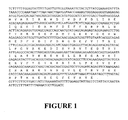
- the region encoding the Pfu-shsp gene (SEQ ID NO. 1; GenBank Accession No. AF 256212) ( Figure 1) was amplified from Pryrococcus furiosus genomic DNA by PCR using two primers: Pfu-shspN with an Ncol site (underlined) (5'GCCATGGTGAGGAGAATAAGAAGATGG) (SEQ ID NO. 3) and Pfu-shspC with an Xhol site (underlined) (5'A CTCGAGC TATTCAACTTTAACTTCGAATCCTTC) (SEQ ID NO. 4).
- the amplified ORF was cloned into the pCR Zero Blunt vector (Invitrogen, Carlsbad, CA). The insert was digested by Ncol and Xhol and then subcloned into the isopropyl-1-thio-(3-D-galacto-pyranoside (IPTG)-inducible pET19b expression vector (Novagen, Madison, WI) designated pPfu-shsp.
- the Pfu-sHSP expression was induced by 1mM isopropyl-1-thio- ⁇ -D-galacgtopyranoside (LPTG) for 3 hours.
- the same strain carrying pET19b and pSJS1240 served as a control.
- SDS PAGE of E. coli overexpressing Pfu-sHSP crude extract reveals an additional protein of 20 kDa in size which corresponds to the protein molecular weight deduced from the predicted amino acid sequence.
- cells overexpressing Pfu-sHSP were harvested and resuspended in 25 mM potassium phosphate buffer, pH 7.0, 2mM DTT, 1 mM EDTA (buffer A). The cells were disrupted using a French Press (SLM instrument, Urbana, IL) at 16, 000 psi and centrifuged at 5000 x g for 15 minutes.
- Pfu-sHSP appeared in a pellet fraction as indicated by SDS PAGE.
- the pellet then was dissolved in buffer A by heating at 85°C for 20 minutes.
- the dissolved pellet was filtered and loaded onto an anion exchange column (MonoQ, Pharmacia Biotech, Uppsala, Sweden) previously equilibrated with buffer A.
- the Pfu-sHSP was eluted using an NaCl gradient, at 0.35 M Nacl. The fractions were pooled and concentrated, and the protein appeared homogeneous by SDS PAGE electrophoresis visualized with silver stain.
- Rabbit polyclonal antibody preparations against the Pfu-sHSP were obtained by immunization of a rabbit with the purified, recombinant Pfu-sHSP (Bio-world, Dublin, OH).
- the Pfu-sHSP containing 167 amino acid residues, was overexpressed in E. coli.
- the SDS PAGE revealed that the molecular weight monomeric Pfu-sHSP was 20 kDa.
- the amino acid sequence of this recombinant protein is shown in Figure 1 (SEQ ID NO. 2) (GenBank Accession No. AF256212).
- the purified Pfu-sHSP was used throughout the experiments.
- Pyrococcus furiosus was grown as described elsewhere (Gonzalez et al., 1998) at 95°C for 3 hours and then shifted to 104°C for 2 hours. The cells were collected and frozen immediately and Western blot analysis was performed (Sambrook et al., 1989) to monitor the Pfu-sHSP induction.
- the 104°C temperature is considered a heat shock temperature for Pyrococcus furiosus at which it grows optimally at 103°C.
- the control culture continued growing at 95°C without shifting to 104°C for another 2 hours.
- a strong signal was observed in the 2-hour heat shocked cells whereas there was no signal observed in the non-heat shocked culture. This indicated that native Pfu-sHSP is heat-inducible, and the protein is not synthesized at sub-inhibitory growth temperatures.
- Figure 2 shows the SDS PAGE (15%) and the Western blot analysis of the recombinant and the native Psf-sHSP.
- Pyrococcus furiosus was cultured in a modified 20L fermentor (New Brunswick) or in with S° in the medium without maltose ( Adams, M.W.W. 1995. Large-scale growth of hyperthermophiles, p. 47-49. In F.T. Robb (ed .) and A.R. Place. Archaea, a laboratory manual, thermophiles. Cold Spring Harbor Laboratory Press, Plainview, NY ). The cultures were incubated at 95°C for 4 hours, then shifted to 105°C for 0, 30, 60, 120 minutes before chilling on ice and harvesting by centrifugation at 7,500 x g for 15 minutes.
- the total protein of the cell extracts were measured and an equal amount of protein was loaded onto each lane of an SDS gel.
- Western blot analysis was conducted. A strong signal at 20 kDa was observed in lanes 2-4, corresponding to 30, 60, and 120 minutes after onset of heat shock whereas no signal was observed in lane 1 corresponding to the non-heat shocked control culture. This indicated that native Pfu-sHSP was strictly heat-inducible, and that protein was not required for rapid growth at the optimal growth temperature.
- RNA was isolated from P. furiosus after exposure to 105°C for 120 minutes, compared to the non-heat shocked control culture.
- Total RNA (4 ⁇ g) was electrophoresed on a 1.5% agarose gel for Northern blot analysis using the radiolabelled PCR probe generated by PCR amplification from primers Pfu-shspN and Pfu-shspC using 32 P labeled dCTP. Hubridization with this probe revealed a transcript of 600 nucleotides corresponding to the size of the putative Pfu-sHSP gene.
- E. coli strains containing either pPfu-sHSP or pET19b were induced as described above.
- the total protection concentration was determined using the Bradford protein assay kit (BioRad, Hercules, CA).
- the total proteins in crude extract were diluted in buffer A to a concentration of 4 mg/ml.
- the crude extract of each sample was covered with mineral oil and heated at 105°C for 0, 20, 30 and 40 minutes. After cooling down at room temperature, the samples were centrifuged at 10,000 x g for 5 minutes and the supernatants were collected.
- the soluble proteins were visualized by SDS PAGE (Sambrook et al., 1989).
- the induced cells were also tested for survivability at 50°C.
- the cultures were shifted rapidly to 50°C in a water-bath shaker. Samples were taken at 0, 20, 40, 60 and 120 minutes. Samples of the culture were diluted at each time point and plated on Lutria-Bertani agar containing 50 ⁇ g/ml of ampicillin and spectinomycin. Cell viability was determined by counting the colony-forming units after overnight incubation.
- Figure 3 shows the SDS PAGE (15%) analysis of the thermal protection of E. coli crude extract by Pfu-sHSP at 105°C.
- the Pfu-sHSP is capable of protecting E. coli proteins from aggregation in vitro, the issue of whether the Pfu-sHSP could protect cell viability was addressed.
- the E. coli culture overexpressing Pfu-sHSP and a control E. coli culture with pET vector and no insert were incubated at 50°C for 2 hours, while viability was measured.
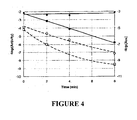
- the single order death rate of E. coli overexpressing Pfu-sHSP was approximately 6-7 fold lower than that of the culture transformed with pET19b and pSJS1240.
- the difference in viability between protected and unprotected cells after 120 minutes at 50°C was approximately 3 orders of magnitude. See Table 1 in respect of the reduction of death rate at 50°C of the E.
- the enzyme was incubated at 56°C with 2.25 mg/ml of the purified Pfu-sHSP for various times. The samples were removed at 0, 2 and 4 minutes and then centrifuged at 10,000 x g for 2 minutes. The supernatants were tested for the residual enzymatic activity following the method described previously (Robb et al., 1992).
- the residual activity of boGDH was determined using a Beckman DU640 spectrophotometer fitted with a temperature controller at 340 nm and 25°C.
- the assay mixture contained 100 mM EPPS pH 8.0, 65 mM glutamic acid and 16.25 mM NADP. There was no detectable GDH activity in the purified Pfu-sHSP.
- the inventors hereof have found that the Pfu-sHSP can protect bovine GDH by aggregation prevention.
- a small heat shock protein can prevent aggregation of mixtures of proteins
- the inventors hereof tested the ability of the recombinant Pfu-sHSP to extend the half-life (t 1/2 ) of a pure enzyme in vitro.
- the mesophilic glutamate dehydrogenase from bovine (boGDH) Sigma, Milwaukee, WI
- the optimal temperature and Tmax of boGDH are 25°C and 48°C, respectively.
- the purified Pfu-sHSP was used to protect boGDH under heat treatment at 56°C.
- the control incubation was without Pfu-sHSP in the same buffer used to store the Pfu-sHSP.
- the Pfu-sHSP preparation was assayed at high concentration for GDH activity using the same method. No GDH activity was detected in the purified Pfu-sHSP.
- the inventors hereof examined the possibility that the activity of boGDH was protected as a result of prevention of aggregation by Pfu-sHSP.
- the absorbance (A 280 ) of the supernatent of boGDH solutions incubated at 56°C with or without the presence of Pfu-sHSP was measured.
- the amount of precipitate had increased and the A 280 of boGDH without Pfu-sHSP was reduced dramatically whereas that of boGDH with Pfu-sHSP was not.
- Taq Polymerase (Sigma, catalog number D1806) was incubated with and without 7.5 ⁇ g of Pfu-sHSP in 40 ⁇ l of Taq polymerase buffer with 15 mM MgCl 2 (Sigma) at -10 and 50°C for 16 hours. PCR was done using the incubated Taq polymerase. The PCR reaction was carried out as follows:
- Cycles 1 cycle 28 cycles 1 cycle Temperature 94°C 94°C 52°C 72°C 52°C 72°C Time 2 minutes 30 seconds 30 seconds 30 seconds 2 minutes 2 minutes
- the PCR products were visualized in 1% agarose gel electrophoresis.
- Taq polymerase was incubated with sHSP at 50°C for 20 hours. PCR of a target containing the gene encoding sHSP was performed using Pfu-sHSP primers and Pfu genomic DNA.
- the results of the agarose gel electrophoresis showed the following: Lane I 100 bp ladder (Promega) Lane 2 PCR with normal Taq polymerase Lane 3 PCR with normal Taq polymerase and 1 ⁇ l of sHSP (final concentration) Lane 4, 5 PCR with Taq incubated at 50°C 20 hours with 1 ⁇ l of dH 2 O Lane 6,7 PCR with Taq incubated with sHSP at 50°C 20 hours
- Figure 5 shows the results of the agarose gel electrophoresis.
- Figure 6 depicts an electrophoretic gel (1% agarose) showing the effect of Pfu-sHSP on Taq polymerase concentration in PCR reaction, at an sHSP concentration of 0.2 ⁇ g/ ⁇ l.
- the respective lanes 1-7 shown in the figure are as follows: Lane 1 100 bp marker Lane 2 0.025 U/ ⁇ l) + sHSP Lane 3 0.025 U/ ⁇ l - sHSP Lane 4 0.005 U/ ⁇ l + sHSP Lane 5 0.005 U/ ⁇ l - sHSP Lane 6 0.0025 U/ ⁇ l + sHSP Lane 7 0.0025 U/ ⁇ l - sHSP
- Figure 7 depicts another electrophoretic gel (1% agarose) showing the effect of Pfu-sHSP on Taq polymerase concentration in PCR reaction, at an sHSP concentration of 0.2 ⁇ g/ ⁇ l.
- the respective lanes 1-7 shown in the figure are as follows: Lane I 100 bp marker Lane 2 0.025 U/ ⁇ l + sHSP Lane 3 0.025 U/ ⁇ l - sHSP Lane 4 0.005 U/ ⁇ l + sHSP Lane 5 0.005 U/ ⁇ l - sHSP Lane 6 0.0025 U/ ⁇ l + sHSP Lane 7 0.0025 U/ ⁇ l - sHSP
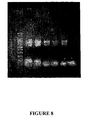
- Figure 8 depicts yet another electrophoretic gel (1 % agarose) showing the effect of Pfu-sHSP on Taq polymerase concentration in PCR reaction, at an sHSP concentration of 0.2 ⁇ g/pl.
- the respective lanes 1-7 shown in the figure are as follows: Lane 1 100 bp marker Lane 2 0.025 U/ ⁇ l + sHSP Lane 3 0.025 U/ ⁇ l - sHSP Lane 4 0.005 U/ ⁇ l + sHSP Lane 5 0.005 U/ ⁇ l - sHSP Lane 6 0.0025 U/ ⁇ l + sHSP Lane 7 0.0025 U/ ⁇ l - sHSP
- the present invention contemplates a PCR kit including a heat shock protein component for use in the PCR reaction medium to resist aggregation and precipitation of the polymerase component of the reaction mixture.
- the PCR kit in a specific embodiment may therefore include PCR primers. Taq polymerase, deoxyribonucleoside triphosphates and an HSP.
- the PCR kit may include an HSP together with at least one other of the components specified in the preceding sentence.
Landscapes
- Chemical & Material Sciences (AREA)
- Health & Medical Sciences (AREA)
- Life Sciences & Earth Sciences (AREA)
- Organic Chemistry (AREA)
- Zoology (AREA)
- Wood Science & Technology (AREA)
- Engineering & Computer Science (AREA)
- Genetics & Genomics (AREA)
- Proteomics, Peptides & Aminoacids (AREA)
- Bioinformatics & Cheminformatics (AREA)
- General Health & Medical Sciences (AREA)
- Molecular Biology (AREA)
- Biochemistry (AREA)
- Biotechnology (AREA)
- Medicinal Chemistry (AREA)
- Microbiology (AREA)
- General Engineering & Computer Science (AREA)
- Chemical Kinetics & Catalysis (AREA)
- Biophysics (AREA)
- Analytical Chemistry (AREA)
- Gastroenterology & Hepatology (AREA)
- Physics & Mathematics (AREA)
- Biomedical Technology (AREA)
- Immunology (AREA)
- Enzymes And Modification Thereof (AREA)
- Compositions Of Macromolecular Compounds (AREA)
- Non-Adjustable Resistors (AREA)
- Inorganic Compounds Of Heavy Metals (AREA)
- Thermistors And Varistors (AREA)
- Investigating Or Analyzing Materials Using Thermal Means (AREA)
- Manufacture Of Macromolecular Shaped Articles (AREA)
- Micro-Organisms Or Cultivation Processes Thereof (AREA)
Claims (13)
- Gereinigte und isolierte Nukleinsäuresequenz, die ein SEQ ID NO. 1 umfassendes Hitzeschockprotein kodiert.
- Protein, das durch die SEQ ID NO. 1 umfassende Nukleinsäure kodiert wird.
- Protein, umfassend die Aminosäuresequenz von SEQ ID NO. 2.
- Zusammensetzung, umfassend das Protein von Anspruch 2.
- Zusammensetzung, umfassend das Protein von Anspruch 3.
- PCR Kit, umfassend ein Protein nach Anspruch 2 und mindestens ein weiteres PCR Reagens.
- PCR Kit, umfassend ein Protein nach Anspruch 3 und mindestens ein weiteres Reagens.
- Verfahren zum Erhöhen der Stabilität von Taq Polymerase in einem PCR Verfahren, umfassend das Durchführen des PCR Verfahrens in Gegenwart eines HSP, wobei das HSP ein Protein umfasst, das durch die SEQ ID NO. 1 umfassende Nukleinsäure kodiert wird, oder wobei HSP ein Protein umfasst, das die Aminosäuresequenz von SEQ ID NO. 2 beinhaltet.
- Zusammensetzung, umfassend (i) eine biologische Komponente und (ii) ein HSP oder einen Vorläufer davon, welches (A) exogen für die biologische Komponente ist und (B) thermostabilisierend wirksam für die biologische Komponente in der Zusammensetzung ist, wobei das HSP ein Protein umfasst, das durch die SEQ ID No. 1 umfassende Nukleinsäure kodiert wird, oder wobei das HSP ein Protein umfasst, das die Aminosäuresequenz von SEQ ID NO. 2 enthält.
- Zusammensetzung nach Anspruch 9, wobei die biologische Komponente ein Material umfasst, das aus der Gruppe bestehend aus biologischen Zellen und Fraktionen und Komponenten davon ausgewählt ist.
- Zusammensetzung nach Anspruch 9, wobei die biologische Komponente ein Enzym umfasst.
- Zusammensetzung nach Anspruch 9, wobei die biologische Komponente eine mikrobielle Kultur umfasst.
- PCR Kit, enthaltend PCR Primer, Taq Polymerase, Desoxyribonukleosidtriphosphate und ein HSP, wobei das HSP ein Protein umfasst, das durch die SEQ ID NO. 1 umfassende Nukleinsäure kodiert ist, oder wobei das HSP ein Protein umfasst, das die Aminosäuresequenz von SEQ ID NO. 2 beinhaltet.
Applications Claiming Priority (3)
| Application Number | Priority Date | Filing Date | Title |
|---|---|---|---|
| US19727400P | 2000-04-14 | 2000-04-14 | |
| US197274P | 2000-04-14 | ||
| PCT/US2001/012290 WO2001079250A1 (en) | 2000-04-14 | 2001-04-16 | Enhanced protein thermostability and temperature resistance |
Publications (3)
| Publication Number | Publication Date |
|---|---|
| EP1287014A1 EP1287014A1 (de) | 2003-03-05 |
| EP1287014A4 EP1287014A4 (de) | 2005-07-27 |
| EP1287014B1 true EP1287014B1 (de) | 2007-12-19 |
Family
ID=22728721
Family Applications (1)
| Application Number | Title | Priority Date | Filing Date |
|---|---|---|---|
| EP01928554A Expired - Lifetime EP1287014B1 (de) | 2000-04-14 | 2001-04-16 | Verbesserte thermostabilität und temperaturresistenz von proteinen |
Country Status (7)
| Country | Link |
|---|---|
| US (1) | US6579703B2 (de) |
| EP (1) | EP1287014B1 (de) |
| AT (1) | ATE381573T1 (de) |
| AU (1) | AU2001255400A1 (de) |
| CA (1) | CA2409347C (de) |
| DE (1) | DE60131969D1 (de) |
| WO (1) | WO2001079250A1 (de) |
Families Citing this family (8)
| Publication number | Priority date | Publication date | Assignee | Title |
|---|---|---|---|---|
| US7247432B2 (en) * | 2000-04-14 | 2007-07-24 | University Of Maryland Biotechnology Institute | Enhanced protein thermostability and temperature resistance |
| ES2344448T3 (es) | 2001-11-19 | 2010-08-27 | Novo Nordisk A/S | Proceso para preparar compuestos de insulina. |
| KR100516389B1 (ko) * | 2003-09-08 | 2005-09-23 | 한국과학기술원 | 작은 열 충격 단백질을 함유하는 단백질 분해 방지용조성물 및 이를 이용한 이차원 전기영동법 |
| CA2662024C (en) * | 2005-08-29 | 2011-11-29 | University Of Maryland Biotechnology Institute | Thermostablization of dna polymerase by protein folding pathway from a hyperthermophile archaeon, pyrococcus furiosus |
| US20110014676A1 (en) * | 2007-06-29 | 2011-01-20 | Battelle Memorial Institute | Protein stabilization |
| GB201209041D0 (en) * | 2012-05-22 | 2012-07-04 | Imp Innovations Ltd | Protein manipulation |
| DE102020126161B4 (de) | 2020-05-29 | 2024-01-25 | Taiwan Semiconductor Manufacturing Co., Ltd. | Reduzierung der Elektromigration |
| US11450609B2 (en) | 2020-05-29 | 2022-09-20 | Taiwan Semiconductor Manufacturing Co., Ltd. | Electro-migration reduction |
Family Cites Families (1)
| Publication number | Priority date | Publication date | Assignee | Title |
|---|---|---|---|---|
| DE4201181A1 (de) | 1992-01-17 | 1993-07-22 | Boehringer Mannheim Gmbh | Verfahren zur stabilisierung von proteinen |
-
2001
- 2001-04-16 WO PCT/US2001/012290 patent/WO2001079250A1/en not_active Ceased
- 2001-04-16 DE DE60131969T patent/DE60131969D1/de not_active Expired - Lifetime
- 2001-04-16 CA CA2409347A patent/CA2409347C/en not_active Expired - Fee Related
- 2001-04-16 US US09/835,909 patent/US6579703B2/en not_active Expired - Lifetime
- 2001-04-16 AU AU2001255400A patent/AU2001255400A1/en not_active Abandoned
- 2001-04-16 AT AT01928554T patent/ATE381573T1/de not_active IP Right Cessation
- 2001-04-16 EP EP01928554A patent/EP1287014B1/de not_active Expired - Lifetime
Also Published As
| Publication number | Publication date |
|---|---|
| EP1287014A1 (de) | 2003-03-05 |
| CA2409347C (en) | 2010-03-30 |
| US20020077459A1 (en) | 2002-06-20 |
| EP1287014A4 (de) | 2005-07-27 |
| ATE381573T1 (de) | 2008-01-15 |
| AU2001255400A1 (en) | 2001-10-30 |
| CA2409347A1 (en) | 2001-10-25 |
| US6579703B2 (en) | 2003-06-17 |
| WO2001079250A1 (en) | 2001-10-25 |
| DE60131969D1 (de) | 2008-01-31 |
Similar Documents
| Publication | Publication Date | Title |
|---|---|---|
| Giese et al. | Changes in oligomerization are essential for the chaperone activity of a small heat shock protein in vivo and in vitro | |
| Gerike et al. | Sequencing and expression of the gene encoding a cold‐active citrate synthase from an Antarctic bacterium, strain DS2‐3R | |
| US20100003723A1 (en) | Rna-dependent dna polymerase from geobacillus stearothermophilus | |
| Carrodeguas et al. | Functional conservation of yeast mtTFB despite extensive sequence divergence | |
| EP1287014B1 (de) | Verbesserte thermostabilität und temperaturresistenz von proteinen | |
| US5932440A (en) | Mammalian ribonuclease inhibitors and use thereof | |
| CN111433373B (zh) | Dna聚合酶 | |
| JP6658796B2 (ja) | 核酸増幅方法 | |
| US7247432B2 (en) | Enhanced protein thermostability and temperature resistance | |
| Osipiuk et al. | Cloning, sequencing, and expression of dnaK-operon proteins from the thermophilic bacterium Thermus thermophilus | |
| Dawes et al. | Cloning, sequence analysis, overproduction in Escherichia coli and enzymatic characterization of the RNase HI from Mycobacterium smegmatis | |
| JP5013375B2 (ja) | メッセンジャーrna干渉酵素が促進する生細胞における単一タンパク質産生 | |
| Trower | PCR cloning, sequence analysis and expression of the cybC genes encoding soluble cytochrome b-562 from Escherichia coli B strain OP7 and K strain NM522 | |
| CA2662024C (en) | Thermostablization of dna polymerase by protein folding pathway from a hyperthermophile archaeon, pyrococcus furiosus | |
| JP3498808B2 (ja) | Dnaポリメラーゼ遺伝子 | |
| Ottonello et al. | High-Level Expression in Escherichia coli and Purification of Yeast Transcription Factor IIIA | |
| Sacchetti et al. | Identification of a GDP-mannose pyrophosphorylase gene from Sulfolobus solfataricus | |
| JP4714848B2 (ja) | Dnaポリメラーゼ変異体 | |
| Sadeghi et al. | Amplification and cloning of Taq DNA polymerase gene from Thermus Aquaticus strain YT-1 | |
| KR100825279B1 (ko) | Dnα 중합효소 활성 증가 단백질 및 이를 암호화 하는유전자 | |
| KR100777228B1 (ko) | 고호열성 디유티피아제 및 이의 제조방법 | |
| US20090259035A1 (en) | Method for producing recombinant RNase A | |
| KR101866810B1 (ko) | 잔티노박테리움 유래 저온 활성 펩티다아제 및 그 제조방법 | |
| JP2006121995A (ja) | Ebna1変異体 | |
| Gholizadeh et al. | Induced expression of Eco RI endonuclease as an active maltose-binding fusion protein in Escherichia coli |
Legal Events
| Date | Code | Title | Description |
|---|---|---|---|
| PUAI | Public reference made under article 153(3) epc to a published international application that has entered the european phase |
Free format text: ORIGINAL CODE: 0009012 |
|
| 17P | Request for examination filed |
Effective date: 20021113 |
|
| AK | Designated contracting states |
Designated state(s): AT BE CH CY DE DK ES FI FR GB GR IE IT LI LU MC NL PT SE TR Kind code of ref document: A1 Designated state(s): AT BE CH CY DE DK ES FI FR GB GR IE IT LI LU MC NL PT SE TR |
|
| AX | Request for extension of the european patent |
Extension state: AL LT LV MK RO SI |
|
| RIN1 | Information on inventor provided before grant (corrected) |
Inventor name: ROBB, FRANK, T. Inventor name: LAKSANALAMAI, PONGPAN |
|
| A4 | Supplementary search report drawn up and despatched |
Effective date: 20050606 |
|
| 17Q | First examination report despatched |
Effective date: 20060306 |
|
| GRAP | Despatch of communication of intention to grant a patent |
Free format text: ORIGINAL CODE: EPIDOSNIGR1 |
|
| GRAS | Grant fee paid |
Free format text: ORIGINAL CODE: EPIDOSNIGR3 |
|
| GRAA | (expected) grant |
Free format text: ORIGINAL CODE: 0009210 |
|
| AK | Designated contracting states |
Kind code of ref document: B1 Designated state(s): AT BE CH CY DE DK ES FI FR GB GR IE IT LI LU MC NL PT SE TR |
|
| REG | Reference to a national code |
Ref country code: GB Ref legal event code: FG4D |
|
| REG | Reference to a national code |
Ref country code: IE Ref legal event code: FG4D |
|
| REG | Reference to a national code |
Ref country code: CH Ref legal event code: EP |
|
| REF | Corresponds to: |
Ref document number: 60131969 Country of ref document: DE Date of ref document: 20080131 Kind code of ref document: P |
|
| PG25 | Lapsed in a contracting state [announced via postgrant information from national office to epo] |
Ref country code: LI Free format text: LAPSE BECAUSE OF FAILURE TO SUBMIT A TRANSLATION OF THE DESCRIPTION OR TO PAY THE FEE WITHIN THE PRESCRIBED TIME-LIMIT Effective date: 20071219 Ref country code: SE Free format text: LAPSE BECAUSE OF FAILURE TO SUBMIT A TRANSLATION OF THE DESCRIPTION OR TO PAY THE FEE WITHIN THE PRESCRIBED TIME-LIMIT Effective date: 20080319 Ref country code: CH Free format text: LAPSE BECAUSE OF FAILURE TO SUBMIT A TRANSLATION OF THE DESCRIPTION OR TO PAY THE FEE WITHIN THE PRESCRIBED TIME-LIMIT Effective date: 20071219 |
|
| PG25 | Lapsed in a contracting state [announced via postgrant information from national office to epo] |
Ref country code: FI Free format text: LAPSE BECAUSE OF FAILURE TO SUBMIT A TRANSLATION OF THE DESCRIPTION OR TO PAY THE FEE WITHIN THE PRESCRIBED TIME-LIMIT Effective date: 20071219 Ref country code: NL Free format text: LAPSE BECAUSE OF FAILURE TO SUBMIT A TRANSLATION OF THE DESCRIPTION OR TO PAY THE FEE WITHIN THE PRESCRIBED TIME-LIMIT Effective date: 20071219 |
|
| NLV1 | Nl: lapsed or annulled due to failure to fulfill the requirements of art. 29p and 29m of the patents act | ||
| REG | Reference to a national code |
Ref country code: CH Ref legal event code: PL |
|
| PG25 | Lapsed in a contracting state [announced via postgrant information from national office to epo] |
Ref country code: AT Free format text: LAPSE BECAUSE OF FAILURE TO SUBMIT A TRANSLATION OF THE DESCRIPTION OR TO PAY THE FEE WITHIN THE PRESCRIBED TIME-LIMIT Effective date: 20071219 |
|
| PG25 | Lapsed in a contracting state [announced via postgrant information from national office to epo] |
Ref country code: ES Free format text: LAPSE BECAUSE OF FAILURE TO SUBMIT A TRANSLATION OF THE DESCRIPTION OR TO PAY THE FEE WITHIN THE PRESCRIBED TIME-LIMIT Effective date: 20080330 |
|
| PG25 | Lapsed in a contracting state [announced via postgrant information from national office to epo] |
Ref country code: BE Free format text: LAPSE BECAUSE OF FAILURE TO SUBMIT A TRANSLATION OF THE DESCRIPTION OR TO PAY THE FEE WITHIN THE PRESCRIBED TIME-LIMIT Effective date: 20071219 |
|
| PG25 | Lapsed in a contracting state [announced via postgrant information from national office to epo] |
Ref country code: PT Free format text: LAPSE BECAUSE OF FAILURE TO SUBMIT A TRANSLATION OF THE DESCRIPTION OR TO PAY THE FEE WITHIN THE PRESCRIBED TIME-LIMIT Effective date: 20080519 |
|
| EN | Fr: translation not filed | ||
| PLBE | No opposition filed within time limit |
Free format text: ORIGINAL CODE: 0009261 |
|
| STAA | Information on the status of an ep patent application or granted ep patent |
Free format text: STATUS: NO OPPOSITION FILED WITHIN TIME LIMIT |
|
| PG25 | Lapsed in a contracting state [announced via postgrant information from national office to epo] |
Ref country code: DE Free format text: LAPSE BECAUSE OF FAILURE TO SUBMIT A TRANSLATION OF THE DESCRIPTION OR TO PAY THE FEE WITHIN THE PRESCRIBED TIME-LIMIT Effective date: 20080320 Ref country code: DK Free format text: LAPSE BECAUSE OF FAILURE TO SUBMIT A TRANSLATION OF THE DESCRIPTION OR TO PAY THE FEE WITHIN THE PRESCRIBED TIME-LIMIT Effective date: 20071219 |
|
| 26N | No opposition filed |
Effective date: 20080922 |
|
| PG25 | Lapsed in a contracting state [announced via postgrant information from national office to epo] |
Ref country code: MC Free format text: LAPSE BECAUSE OF NON-PAYMENT OF DUE FEES Effective date: 20080430 |
|
| GBPC | Gb: european patent ceased through non-payment of renewal fee |
Effective date: 20080416 |
|
| PG25 | Lapsed in a contracting state [announced via postgrant information from national office to epo] |
Ref country code: GR Free format text: LAPSE BECAUSE OF FAILURE TO SUBMIT A TRANSLATION OF THE DESCRIPTION OR TO PAY THE FEE WITHIN THE PRESCRIBED TIME-LIMIT Effective date: 20080320 |
|
| PG25 | Lapsed in a contracting state [announced via postgrant information from national office to epo] |
Ref country code: IE Free format text: LAPSE BECAUSE OF NON-PAYMENT OF DUE FEES Effective date: 20080416 Ref country code: FR Free format text: LAPSE BECAUSE OF FAILURE TO SUBMIT A TRANSLATION OF THE DESCRIPTION OR TO PAY THE FEE WITHIN THE PRESCRIBED TIME-LIMIT Effective date: 20081010 |
|
| PG25 | Lapsed in a contracting state [announced via postgrant information from national office to epo] |
Ref country code: GB Free format text: LAPSE BECAUSE OF NON-PAYMENT OF DUE FEES Effective date: 20080416 |
|
| PG25 | Lapsed in a contracting state [announced via postgrant information from national office to epo] |
Ref country code: CY Free format text: LAPSE BECAUSE OF FAILURE TO SUBMIT A TRANSLATION OF THE DESCRIPTION OR TO PAY THE FEE WITHIN THE PRESCRIBED TIME-LIMIT Effective date: 20071219 |
|
| PG25 | Lapsed in a contracting state [announced via postgrant information from national office to epo] |
Ref country code: LU Free format text: LAPSE BECAUSE OF NON-PAYMENT OF DUE FEES Effective date: 20080416 |
|
| PG25 | Lapsed in a contracting state [announced via postgrant information from national office to epo] |
Ref country code: TR Free format text: LAPSE BECAUSE OF FAILURE TO SUBMIT A TRANSLATION OF THE DESCRIPTION OR TO PAY THE FEE WITHIN THE PRESCRIBED TIME-LIMIT Effective date: 20071219 |
|
| PG25 | Lapsed in a contracting state [announced via postgrant information from national office to epo] |
Ref country code: IT Free format text: LAPSE BECAUSE OF NON-PAYMENT OF DUE FEES Effective date: 20080430 |