EP1282323B1 - Apparatus and method for use in identifying presence of wireless terminals in mobile wireless communication systems - Google Patents
Apparatus and method for use in identifying presence of wireless terminals in mobile wireless communication systems Download PDFInfo
- Publication number
- EP1282323B1 EP1282323B1 EP01307061A EP01307061A EP1282323B1 EP 1282323 B1 EP1282323 B1 EP 1282323B1 EP 01307061 A EP01307061 A EP 01307061A EP 01307061 A EP01307061 A EP 01307061A EP 1282323 B1 EP1282323 B1 EP 1282323B1
- Authority
- EP
- European Patent Office
- Prior art keywords
- timing control
- wireless terminal
- particular wireless
- prescribed
- base station
- Prior art date
- Legal status (The legal status is an assumption and is not a legal conclusion. Google has not performed a legal analysis and makes no representation as to the accuracy of the status listed.)
- Expired - Lifetime
Links
- 238000000034 method Methods 0.000 title description 11
- 230000004044 response Effects 0.000 claims description 10
- 230000005540 biological transmission Effects 0.000 claims description 3
- 238000012544 monitoring process Methods 0.000 claims 5
- 238000010586 diagram Methods 0.000 description 2
- 230000003542 behavioural effect Effects 0.000 description 1
- 230000001419 dependent effect Effects 0.000 description 1
- 238000001514 detection method Methods 0.000 description 1
- 230000003993 interaction Effects 0.000 description 1
- 230000008054 signal transmission Effects 0.000 description 1
- 238000001228 spectrum Methods 0.000 description 1
- 238000000411 transmission spectrum Methods 0.000 description 1
Images

Classifications
-
- H—ELECTRICITY
- H04—ELECTRIC COMMUNICATION TECHNIQUE
- H04W—WIRELESS COMMUNICATION NETWORKS
- H04W68/00—User notification, e.g. alerting and paging, for incoming communication, change of service or the like
Definitions
- This invention relates to wireless communications systems and, more particularly, to wireless communications between mobile wireless terminals and base stations.
- a base station In mobile wireless communications systems base stations and one or more wireless terminals communicate with each other.
- a base station is associated with a so-called cell and communicates with one or more wireless terminals within the area of the cell.
- the wireless terminals may move from one cell to another. This movement may occur without a particular wireless terminal informing the base station associated with a cell that it has left the cell coverage area.
- any particular wireless terminal may have run out of power or has moved into a so-called coverage hole within a cell and, therefore, may not be able to communicate with the current base station associated with the cell.
- the base station Since, the base station has devoted some system resource, for example, bandwidth and/or state variables, to communicate with each wireless terminal, the unexplained loss of communication with the wireless terminal implies that the system resource is being unnecessarily used, i.e., wasted. Thus, it is in the best interest of overall system efficiency to recover use of the wasted resource.
- One way of doing this is to determine if the particular wireless terminal can communicate with the base station. An attempt at realizing this determination is for the base station to transmit a paging message intended for the particular wireless terminal. If the wireless terminal receives the paging message, it transmits a paging response message back to the base station. Lack of such a response message being received by the base station indicates that communication with the wireless terminal has been lost.
- this interaction between the base station and wireless terminals involves setting up communications links between the base station and wireless terminals through a random access process. Unfortunately, this process can turn out to be quite costly in terms of system resource utilization.
- US-A-5 485 463 discloses a time-division multiplexed paging system for transmitting multiple paging messages on the same frequency.
- a geographic area is divided into a plurality of cells having base stations that transmit radio frequency signals in the cells. Each base station is assigned a time slot at which paging messages may be transmitted. The assignment is made such that no base stations having overlapping radio frequency coverage areas transmit during the same time.
- a locate signal is simultaneously broadcast throughout a geographic area in order to locate a paging unit. Upon receipt of the locate signal, the paging unit transmits an acknowledge signal back to the paging system. The cell in which the paging unit is located is determined based upon the signal strength of the received acknowledged signal.
- a paging message is transmitted from the base station in the cell in which the paging unit is located during the time slot that is assigned to the base station.
- GB-A-2 344 202 discloses a packet data communication system in which a fixed infrastructure comprising a packet data routing system and a plurality of base sites transmits a paging message to a communication unit of a plurality of communication units. In response to receiving the paging message, the communication unit transmits an acknowledgement. If the fixed infrastructure fails to receive the acknowledgement within a certain waiting period, the fixed infrastructure waits at least until the expiration of a backoff period before again transmitting a paging message, wherein the length of time of the backoff period is variable and based on a metric of known system behavioural patterns.
- Apparatus for use in a base station and for use in a wireless terminal according to the invention are as set out in the independent claims. Preferred forms are set out in the dependent claims.
- FIG. 1 shows, in simplified form, details of a wireless communications system cell area 101 including a base station 102 and at least one wireless terminal 103 useful in describing the invention.
- wireless terminal 103 originally is within the cell coverage area 101 of base station 102 and either leaves the cell area 101, powers off, enters a coverage "hole" or its battery power is lost. If any of these events occur, it is important that base station 102 be made aware that wireless terminal is no longer communicating within cell coverage area 101. Otherwise, system resources are needlessly used causing inefficient use of system resources.
- FIG. 2 shows, in simplified block diagram form, a wireless multiple access communications system in which the invention may be advantageously employed.
- a wireless multiple access communications system in which the invention may be advantageously employed.
- OFDM Orthogonal Frequency Division Multiplexed
- System 200 includes base station 201 including antenna 202 and one or more remote wireless terminals, i.e., wireless terminals 203-1, 203-2 through 203-Y including associated antennas 204-1, 204-2 and 204-Y, respectively. Transmission of signals is from and to base station 201, to and from remote wireless terminals 203. All of wireless terminals 203 share the transmission spectrum in a dynamic fashion.
- base station 201 including antenna 202 and one or more remote wireless terminals, i.e., wireless terminals 203-1, 203-2 through 203-Y including associated antennas 204-1, 204-2 and 204-Y, respectively.
- Transmission of signals is from and to base station 201, to and from remote wireless terminals 203. All of wireless terminals 203 share the transmission spectrum in a dynamic fashion.
- base station 201 includes transmitter 205, receiver 207 and controller 206 for transmitting and receiving wireless messages via antenna 202. Controller 206 is employed to control operation of transmitter 205 and receiver 207, in accordance with the invention.
- each of wireless terminals 203-1 through 203-Y includes transmitter 208, receiver 210 and controller 209 for transmitting and receiving wireless messages via antenna 204. Controller 209 is employed to control operation of transmitter 208 and receiver 210, in accordance with the invention.
- base station 201 generates and transmits timing control orders and when appropriate terminate orders in paging time slots to wireless terminals 203.
- wireless terminals 203 when not in use are in a standby mode commonly referred to as a "sleep" mode. In the sleep mode most of the circuitry in the wireless terminal 203 is turned off in order to conserve energy and, thereby, extend battery life.
- the particular wireless terminal 203 In order for each of the wireless terminals 203 to detect whether there is a paging message intended for it, the particular wireless terminal 203 must come out of the sleep mode, i.e., wake up, and monitor incoming time slots for an associated timing control order or when appropriate a terminate order. Details of base station 201 processes and wireless terminal 203 processes in generating and utilizing timing control orders, timing signals and terminate orders are described below in relationship to FIGs. 4-7.
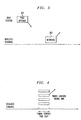
- FIG. 3 graphically illustrates the prior use of a paging message and a response message for identifying whether a wireless terminal is currently in a base station's cell coverage area.
- a paging message 301 is sent in a paging time slot that a wireless terminal 203 supposedly monitors.
- wireless terminal 203 normally would send back a response message to base terminal 201.
- base station 201 would determine whether wireless terminal 203 is in the cell coverage area associated with base station 201 based on whether the response message is received during a prescribed time interval.
- wireless terminal 203 sends back the response message through a random access channel.
- FIG. 4 graphically illustrates timing control signals used by wireless terminals in practicing the invention. Shown are timing control signals 400 which are orthogonal to each other and to the normal data channels. Each of the timing control signals 400 are formed with prescribed waveforms that have minimal resource overhead and are easy to detect at base station 201. A particular timing control signal is identified by a waveform number and a specific time at which it is transmitted. Generation and use of such timing control signals are described in EP-A-1 124 347 and EP-A-1 124 348, both published on 16 th August 2001. Specifically, wireless terminals 203 transmit certain pre-specified, wideband timing control signals in designated timing intervals. Typically, the timing control signal intervals occur regularly within an uplink data stream. All uplink data transmission is suspended during the timing control signal intervals.
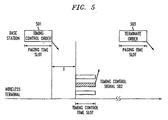
- FIG. 5 graphically illustrates the use of a timing control order, a timing control signal and a terminate order in the operation of an embodiment of the invention.
- base station 201 transmits a timing control order 501 in a prescribed paging time slot.
- the timing control order 501 is transmitted on demand, as desired.
- the timing control order includes a simple message identifying which wireless terminal 203 that it is intended for. It is again noted that the base station 201 is attempting to identify whether the particular wireless terminal 203 is still within its cell coverage area so that wireless resources may be efficiently marshaled.
- the particular wireless terminal 203 may have left the cell coverage area, moved into a so-called coverage hole in the cell or has lost power, i.e., has a "dead" battery.
- the timing control order 501 Upon receiving an addressed wireless terminal 203 receiving the timing control order 501, it transmits back to base station 201 a prescribed timing control signal 502 at a prescribed time interval.
- the specifics of the prescribed timing control signal 502 and the prescribed time interval that it is transmitted in can be specified in the timing control order or may be defined as part of the wireless system parameters that are known a priori to both base station 201 and wireless terminals 203.
- the system is controlled to ensure that no two or more wireless terminals 203 are ordered to transmit the same timing control signal during the same time interval. Consequently, there is no possibility of any collisions between timing control signals from different wireless terminals 203. Indeed, the resource for transmitting timing control signals has been dedicated for use only by the intended particular wireless terminal 203.
- Base station 201 determines whether the particular wireless terminal 203 is reachable, i.e., in the cell coverage area and able to communicate with the associated base station 201, within the cell coverage area by detecting, or not, the prescribed timing control signal 502 in the prescribed time interval. The detection process may be repeated several times in attempting to determine whether the particular wireless terminal 203 is still within the base station 201 cell coverage area.
- the base station 201 If it is determined that the particular wireless terminal 203 is no longer reachable within the base station 201 cell coverage area, the base station 201 performs appropriate house keeping regarding resource and mobility management and, then transmits a terminate order 503 to the particular wireless terminal 203.
- the terminate order 503 ensures state consistency.
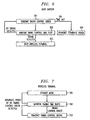
- FIG. 6 is a flow chart illustrating the steps in a process of a base station 201 employing the timing control order 501, timing control signal 502 and terminate order 503 in practicing one embodiment of the invention.
- base station 201 in step 601 transmits a timing control 501 order to a particular wireless terminal 203.
- base station 201 monitors the prescribed timing control time slot assigned to the wireless terminal 203. If step 602 detects a timing control signal 502 from the particular wireless terminal 203 step 603 maintains the status quo, i.e., the base station 201 keeps the wireless terminal 203 as being in its cell coverage area.
- base station 201 If base station 201 does not detect a timing control signal 502 from the particular wireless terminal 203, control is returned to step 601 and steps 601 and 602 are repeated a prescribed number of times until a timing control signal 502 is detected or until a timer times out: Upon time out, base station 201 transmits a terminate order 503 to the particular wireless terminal 203 and performs its house keeping regarding system resources.
- FIG. 7 is a flow chart illustrating the steps in the process of a wireless terminal 203 utilizing the timing control order 501, timing control signal 502 and terminate order 503 in practicing one embodiment of the invention.
- wireless terminal 203 is in a standby, i.e., sleep, mode as indicated in step 701.
- wireless terminal 203 wakes up to monitor its assigned paging time slot for messages.
- the messages include timing control order 501 and terminate order 503.
- Step 702 detects whether a terminate order 503 or a timing control order has been received by the wireless terminal 203.
- wireless terminal 203 returns to the standby mode in step 701 upon receiving a terminate order 503. If step 702 detects a timing control order 501 intended for this wireless terminal 203, step 703 causes a timing control signal to be transmitted to base station 201 having its prescribed waveform and in its prescribed time interval. Thereafter, control is returned to step 702.
Landscapes
- Engineering & Computer Science (AREA)
- Computer Networks & Wireless Communication (AREA)
- Signal Processing (AREA)
- Mobile Radio Communication Systems (AREA)
- Time-Division Multiplex Systems (AREA)
Applications Claiming Priority (2)
| Application Number | Priority Date | Filing Date | Title |
|---|---|---|---|
| US756370 | 2001-01-08 | ||
| US09/756,370 US6934539B2 (en) | 2001-01-08 | 2001-01-08 | Apparatus and method for use in identifying presence of wireless terminals in mobile wireless communication systems |
Publications (3)
| Publication Number | Publication Date |
|---|---|
| EP1282323A1 EP1282323A1 (en) | 2003-02-05 |
| EP1282323A8 EP1282323A8 (en) | 2003-04-09 |
| EP1282323B1 true EP1282323B1 (en) | 2004-04-21 |
Family
ID=25043172
Family Applications (1)
| Application Number | Title | Priority Date | Filing Date |
|---|---|---|---|
| EP01307061A Expired - Lifetime EP1282323B1 (en) | 2001-01-08 | 2001-08-20 | Apparatus and method for use in identifying presence of wireless terminals in mobile wireless communication systems |
Country Status (5)
| Country | Link |
|---|---|
| US (2) | US6934539B2 (enExample) |
| EP (1) | EP1282323B1 (enExample) |
| JP (1) | JP2002262339A (enExample) |
| CA (1) | CA2366253C (enExample) |
| DE (1) | DE60102920T2 (enExample) |
Families Citing this family (13)
| Publication number | Priority date | Publication date | Assignee | Title |
|---|---|---|---|---|
| US20040121781A1 (en) * | 2002-12-19 | 2004-06-24 | Sammarco Anthony J. | Wireless terminals that scan for alternate protocol systems responsive to terminal movement and methods of same |
| US20050124334A1 (en) * | 2003-12-05 | 2005-06-09 | Samsung Electronics Co., Ltd. | Wireless network and wireless mobile stations using variable fade timer value |
| US8144735B2 (en) * | 2004-02-10 | 2012-03-27 | Qualcomm Incorporated | Transmission of signaling information for broadcast and multicast services |
| JP4402722B2 (ja) * | 2004-11-04 | 2010-01-20 | サムスン エレクトロニクス カンパニー リミテッド | 広帯域無線接続通信システムにおけるスリープモードでのダウンリンクチャンネル情報を使用した信号送受信のための装置及び方法 |
| US8072928B2 (en) * | 2006-05-31 | 2011-12-06 | Honeywell International Inc. | Optimal time slot assignment for networks |
| WO2008028284A1 (en) * | 2006-09-05 | 2008-03-13 | Research In Motion Limited | Improved high-capacity paging method, and associated apparatus, with reduced probability of false page match |
| US8244281B2 (en) | 2006-09-11 | 2012-08-14 | Research In Motion Limited | Apparatus, and associated method, for forming a page message including a structure of partial identifiers of differing bit lengths using random or pseudorandom numbers and for using random ATI |
| US8258942B1 (en) | 2008-01-24 | 2012-09-04 | Cellular Tracking Technologies, LLC | Lightweight portable tracking device |
| JP5071228B2 (ja) * | 2008-05-01 | 2012-11-14 | 富士通株式会社 | 移動無線通信システムおよび無線基地局 |
| US8687588B2 (en) * | 2008-07-02 | 2014-04-01 | Qualcomm Incorporated | Low power modes for femto cells |
| US9030941B2 (en) * | 2010-06-16 | 2015-05-12 | Nokia Solutions And Networks Oy | Power saving procedure in communications network |
| KR101784123B1 (ko) | 2012-03-27 | 2017-10-10 | 후지쯔 가부시끼가이샤 | 무선 통신 시스템에서의 프레즌스 표시 |
| WO2016167578A1 (ko) * | 2015-04-15 | 2016-10-20 | 삼성전자 주식회사 | 통신 시스템에서 커버리지 클래스를 기반으로 신호를 송수신하는 방법 및 장치 |
Family Cites Families (15)
| Publication number | Priority date | Publication date | Assignee | Title |
|---|---|---|---|---|
| JP2582369B2 (ja) | 1987-05-13 | 1997-02-19 | 日本電気株式会社 | ロ−ミング登録・解除方式 |
| US5363426A (en) | 1992-07-06 | 1994-11-08 | Motorola, Inc. | Extended range paging for a radio frequency communication system |
| SE470503B (sv) | 1992-10-27 | 1994-06-06 | Ellemtel Utvecklings Ab | Sätt och anordning för aktivitetsövervakning i ett mobiltelefonnät |
| JPH06311094A (ja) | 1993-04-22 | 1994-11-04 | Hitachi Denshi Ltd | 無線通信システム |
| US5485463A (en) * | 1994-09-09 | 1996-01-16 | Glenayre Electronics, Inc. | System for transmitting paging signals using time-division-multiplexing |
| US5602903A (en) * | 1994-09-28 | 1997-02-11 | Us West Technologies, Inc. | Positioning system and method |
| US5828662A (en) * | 1996-06-19 | 1998-10-27 | Northern Telecom Limited | Medium access control scheme for data transmission on code division multiple access (CDMA) wireless systems |
| GB9716626D0 (en) * | 1997-08-07 | 1997-10-15 | Philips Electronics Nv | Wireless network |
| US6044069A (en) * | 1997-10-29 | 2000-03-28 | Conexant Systems, Inc. | Power management system for a mobile station |
| US6587444B1 (en) * | 1997-11-14 | 2003-07-01 | Ericsson Inc. | Fixed frequency-time division duplex in radio communications systems |
| JP3048137B2 (ja) * | 1998-04-13 | 2000-06-05 | 日本電気株式会社 | デュアルバンド携帯電話機及び移動電話システム切替方法 |
| US6678258B1 (en) | 1998-11-30 | 2004-01-13 | Motorola, Inc. | Method and apparatus for paging a communication unit in a packet data communication system |
| JP2001024573A (ja) | 1999-07-02 | 2001-01-26 | Matsushita Electric Ind Co Ltd | 無線通信方式 |
| JP4131890B2 (ja) | 1999-07-19 | 2008-08-13 | 大阪瓦斯株式会社 | 情報送信要求装置およびプログラム記録媒体 |
| US6330234B1 (en) * | 2000-04-27 | 2001-12-11 | Peter A. Tomasi | Method and apparatus for reducing current consumption |
-
2001
- 2001-01-08 US US09/756,370 patent/US6934539B2/en not_active Expired - Lifetime
- 2001-08-20 DE DE60102920T patent/DE60102920T2/de not_active Expired - Lifetime
- 2001-08-20 EP EP01307061A patent/EP1282323B1/en not_active Expired - Lifetime
- 2001-12-27 CA CA002366253A patent/CA2366253C/en not_active Expired - Fee Related
-
2002
- 2002-01-08 JP JP2002001696A patent/JP2002262339A/ja active Pending
-
2005
- 2005-08-08 US US11/199,402 patent/US7502623B2/en not_active Expired - Lifetime
Also Published As
| Publication number | Publication date |
|---|---|
| JP2002262339A (ja) | 2002-09-13 |
| DE60102920T2 (de) | 2005-04-28 |
| CA2366253A1 (en) | 2002-07-08 |
| US7502623B2 (en) | 2009-03-10 |
| EP1282323A8 (en) | 2003-04-09 |
| EP1282323A1 (en) | 2003-02-05 |
| CA2366253C (en) | 2005-10-18 |
| US20050272453A1 (en) | 2005-12-08 |
| US20020090937A1 (en) | 2002-07-11 |
| US6934539B2 (en) | 2005-08-23 |
| DE60102920D1 (de) | 2004-05-27 |
Similar Documents
| Publication | Publication Date | Title |
|---|---|---|
| US20230397108A1 (en) | Wireless communication method and wireless communication terminal using wake-up radio | |
| US11943665B2 (en) | Apparatus and methods for power save in multi-link wireless systems | |
| JP4004797B2 (ja) | 無線通信システムの基地局で用いられるページングメッセージを送信する方法 | |
| KR102295532B1 (ko) | 플로팅 주 링크와의 링크 어그리게이션 | |
| US6952426B2 (en) | Method and apparatus for the transmission of short data bursts in CDMA/HDR networks | |
| CN104039016B (zh) | 业务数据的传输处理、传输方法及装置 | |
| FI109628B (fi) | Menetelmä langattoman päätelaitteen tehonkulutuksen pienentämiseksi, tiedonsiirtojärjestelmä ja langaton päätelaite | |
| US20190028967A1 (en) | Wireless communication method and apparatus using wakeup radio | |
| US9491700B2 (en) | Method by which stations operating in power save mode in wireless LAN systems transmit and receive frames, and apparatus for supporting same | |
| US9094944B2 (en) | Dynamic transmission protection in the presence of multiple modulation schemes | |
| US7197015B2 (en) | Wireless communication method and system for managing the association and deassociation of a wireless transmit/receive unit | |
| EP1282323B1 (en) | Apparatus and method for use in identifying presence of wireless terminals in mobile wireless communication systems | |
| EP1810536A2 (en) | A method of supporting operation of sleep mode in a wideband radio access system | |
| WO2008153365A2 (en) | Downlink reception indication method in packet based mobile communication system | |
| WO2014130191A1 (en) | Link verification in a wireless network | |
| CN107787029A (zh) | 一种无线局域网中唤醒帧的传输方法及装置 | |
| CN108076504A (zh) | 唤醒帧发送方法、节点醒来后发送第一帧的方法及设备 | |
| US6961568B2 (en) | Wireless communication method, wireless communication system, and wireless communication apparatus | |
| EP3412073B1 (en) | Access point device, station, and methods and computer programs therefor | |
| US6469997B1 (en) | Method for transmitting collision-free messages in a digital selective call signaling protocol | |
| US6781978B1 (en) | Method for transmitting collision-free messages in a communication system and apparatus therefor | |
| US20040087344A1 (en) | Wireless LAN base station device having antennas and transmission-reception portion | |
| JP2004201152A (ja) | 移動局装置、固定局装置、無線ネットワークシステム | |
| CN105812091A (zh) | 一种数据传输方法及站点 |
Legal Events
| Date | Code | Title | Description |
|---|---|---|---|
| PUAI | Public reference made under article 153(3) epc to a published international application that has entered the european phase |
Free format text: ORIGINAL CODE: 0009012 |
|
| 17P | Request for examination filed |
Effective date: 20010830 |
|
| AK | Designated contracting states |
Designated state(s): AT BE CH CY DE DK ES FI FR GB GR IE IT LI LU MC NL PT SE TR |
|
| AX | Request for extension of the european patent |
Extension state: AL LT LV MK RO SI |
|
| GRAP | Despatch of communication of intention to grant a patent |
Free format text: ORIGINAL CODE: EPIDOSNIGR1 |
|
| AKX | Designation fees paid |
Designated state(s): DE FR GB |
|
| GRAS | Grant fee paid |
Free format text: ORIGINAL CODE: EPIDOSNIGR3 |
|
| GRAA | (expected) grant |
Free format text: ORIGINAL CODE: 0009210 |
|
| AK | Designated contracting states |
Kind code of ref document: B1 Designated state(s): DE FR GB |
|
| REG | Reference to a national code |
Ref country code: GB Ref legal event code: FG4D |
|
| REG | Reference to a national code |
Ref country code: IE Ref legal event code: FG4D |
|
| REF | Corresponds to: |
Ref document number: 60102920 Country of ref document: DE Date of ref document: 20040527 Kind code of ref document: P |
|
| ET | Fr: translation filed | ||
| PLBE | No opposition filed within time limit |
Free format text: ORIGINAL CODE: 0009261 |
|
| STAA | Information on the status of an ep patent application or granted ep patent |
Free format text: STATUS: NO OPPOSITION FILED WITHIN TIME LIMIT |
|
| 26N | No opposition filed |
Effective date: 20050124 |
|
| REG | Reference to a national code |
Ref country code: IE Ref legal event code: MM4A |
|
| REG | Reference to a national code |
Ref country code: GB Ref legal event code: 732E Free format text: REGISTERED BETWEEN 20131031 AND 20131106 |
|
| REG | Reference to a national code |
Ref country code: FR Ref legal event code: CD Owner name: ALCATEL-LUCENT USA INC. Effective date: 20131122 |
|
| REG | Reference to a national code |
Ref country code: FR Ref legal event code: GC Effective date: 20140410 |
|
| REG | Reference to a national code |
Ref country code: FR Ref legal event code: RG Effective date: 20141015 |
|
| REG | Reference to a national code |
Ref country code: FR Ref legal event code: PLFP Year of fee payment: 15 |
|
| REG | Reference to a national code |
Ref country code: FR Ref legal event code: PLFP Year of fee payment: 16 |
|
| REG | Reference to a national code |
Ref country code: FR Ref legal event code: PLFP Year of fee payment: 17 |
|
| REG | Reference to a national code |
Ref country code: FR Ref legal event code: PLFP Year of fee payment: 18 |
|
| PGFP | Annual fee paid to national office [announced via postgrant information from national office to epo] |
Ref country code: DE Payment date: 20200804 Year of fee payment: 20 Ref country code: GB Payment date: 20200813 Year of fee payment: 20 Ref country code: FR Payment date: 20200715 Year of fee payment: 20 |
|
| REG | Reference to a national code |
Ref country code: DE Ref legal event code: R071 Ref document number: 60102920 Country of ref document: DE |
|
| REG | Reference to a national code |
Ref country code: GB Ref legal event code: PE20 Expiry date: 20210819 |
|
| PG25 | Lapsed in a contracting state [announced via postgrant information from national office to epo] |
Ref country code: GB Free format text: LAPSE BECAUSE OF EXPIRATION OF PROTECTION Effective date: 20210819 |