EP1276483B1 - Compositions and methods for treating amyloidosis using sulphonate derivatives - Google Patents
Compositions and methods for treating amyloidosis using sulphonate derivatives Download PDFInfo
- Publication number
- EP1276483B1 EP1276483B1 EP00922395A EP00922395A EP1276483B1 EP 1276483 B1 EP1276483 B1 EP 1276483B1 EP 00922395 A EP00922395 A EP 00922395A EP 00922395 A EP00922395 A EP 00922395A EP 1276483 B1 EP1276483 B1 EP 1276483B1
- Authority
- EP
- European Patent Office
- Prior art keywords
- propanesulfonic acid
- group
- compound
- amino
- compound according
- Prior art date
- Legal status (The legal status is an assumption and is not a legal conclusion. Google has not performed a legal analysis and makes no representation as to the accuracy of the status listed.)
- Expired - Lifetime
Links
Images


Classifications
-
- A—HUMAN NECESSITIES
- A61—MEDICAL OR VETERINARY SCIENCE; HYGIENE
- A61K—PREPARATIONS FOR MEDICAL, DENTAL OR TOILETRY PURPOSES
- A61K31/00—Medicinal preparations containing organic active ingredients
- A61K31/33—Heterocyclic compounds
- A61K31/395—Heterocyclic compounds having nitrogen as a ring hetero atom, e.g. guanethidine or rifamycins
- A61K31/40—Heterocyclic compounds having nitrogen as a ring hetero atom, e.g. guanethidine or rifamycins having five-membered rings with one nitrogen as the only ring hetero atom, e.g. sulpiride, succinimide, tolmetin, buflomedil
- A61K31/403—Heterocyclic compounds having nitrogen as a ring hetero atom, e.g. guanethidine or rifamycins having five-membered rings with one nitrogen as the only ring hetero atom, e.g. sulpiride, succinimide, tolmetin, buflomedil condensed with carbocyclic rings, e.g. carbazole
- A61K31/404—Indoles, e.g. pindolol
-
- A—HUMAN NECESSITIES
- A61—MEDICAL OR VETERINARY SCIENCE; HYGIENE
- A61K—PREPARATIONS FOR MEDICAL, DENTAL OR TOILETRY PURPOSES
- A61K31/00—Medicinal preparations containing organic active ingredients
- A61K31/16—Amides, e.g. hydroxamic acids
-
- A—HUMAN NECESSITIES
- A61—MEDICAL OR VETERINARY SCIENCE; HYGIENE
- A61K—PREPARATIONS FOR MEDICAL, DENTAL OR TOILETRY PURPOSES
- A61K31/00—Medicinal preparations containing organic active ingredients
-
- A—HUMAN NECESSITIES
- A61—MEDICAL OR VETERINARY SCIENCE; HYGIENE
- A61K—PREPARATIONS FOR MEDICAL, DENTAL OR TOILETRY PURPOSES
- A61K31/00—Medicinal preparations containing organic active ingredients
- A61K31/185—Acids; Anhydrides, halides or salts thereof, e.g. sulfur acids, imidic, hydrazonic or hydroximic acids
-
- A—HUMAN NECESSITIES
- A61—MEDICAL OR VETERINARY SCIENCE; HYGIENE
- A61K—PREPARATIONS FOR MEDICAL, DENTAL OR TOILETRY PURPOSES
- A61K31/00—Medicinal preparations containing organic active ingredients
- A61K31/185—Acids; Anhydrides, halides or salts thereof, e.g. sulfur acids, imidic, hydrazonic or hydroximic acids
- A61K31/19—Carboxylic acids, e.g. valproic acid
- A61K31/192—Carboxylic acids, e.g. valproic acid having aromatic groups, e.g. sulindac, 2-aryl-propionic acids, ethacrynic acid
-
- A—HUMAN NECESSITIES
- A61—MEDICAL OR VETERINARY SCIENCE; HYGIENE
- A61K—PREPARATIONS FOR MEDICAL, DENTAL OR TOILETRY PURPOSES
- A61K31/00—Medicinal preparations containing organic active ingredients
- A61K31/185—Acids; Anhydrides, halides or salts thereof, e.g. sulfur acids, imidic, hydrazonic or hydroximic acids
- A61K31/19—Carboxylic acids, e.g. valproic acid
- A61K31/194—Carboxylic acids, e.g. valproic acid having two or more carboxyl groups, e.g. succinic, maleic or phthalic acid
-
- A—HUMAN NECESSITIES
- A61—MEDICAL OR VETERINARY SCIENCE; HYGIENE
- A61K—PREPARATIONS FOR MEDICAL, DENTAL OR TOILETRY PURPOSES
- A61K31/00—Medicinal preparations containing organic active ingredients
- A61K31/185—Acids; Anhydrides, halides or salts thereof, e.g. sulfur acids, imidic, hydrazonic or hydroximic acids
- A61K31/19—Carboxylic acids, e.g. valproic acid
- A61K31/195—Carboxylic acids, e.g. valproic acid having an amino group
- A61K31/197—Carboxylic acids, e.g. valproic acid having an amino group the amino and the carboxyl groups being attached to the same acyclic carbon chain, e.g. gamma-aminobutyric acid [GABA], beta-alanine, epsilon-aminocaproic acid or pantothenic acid
- A61K31/198—Alpha-amino acids, e.g. alanine or edetic acid [EDTA]
-
- A—HUMAN NECESSITIES
- A61—MEDICAL OR VETERINARY SCIENCE; HYGIENE
- A61K—PREPARATIONS FOR MEDICAL, DENTAL OR TOILETRY PURPOSES
- A61K31/00—Medicinal preparations containing organic active ingredients
- A61K31/185—Acids; Anhydrides, halides or salts thereof, e.g. sulfur acids, imidic, hydrazonic or hydroximic acids
- A61K31/205—Amine addition salts of organic acids; Inner quaternary ammonium salts, e.g. betaine, carnitine
-
- A—HUMAN NECESSITIES
- A61—MEDICAL OR VETERINARY SCIENCE; HYGIENE
- A61K—PREPARATIONS FOR MEDICAL, DENTAL OR TOILETRY PURPOSES
- A61K31/00—Medicinal preparations containing organic active ingredients
- A61K31/33—Heterocyclic compounds
- A61K31/395—Heterocyclic compounds having nitrogen as a ring hetero atom, e.g. guanethidine or rifamycins
- A61K31/40—Heterocyclic compounds having nitrogen as a ring hetero atom, e.g. guanethidine or rifamycins having five-membered rings with one nitrogen as the only ring hetero atom, e.g. sulpiride, succinimide, tolmetin, buflomedil
- A61K31/4015—Heterocyclic compounds having nitrogen as a ring hetero atom, e.g. guanethidine or rifamycins having five-membered rings with one nitrogen as the only ring hetero atom, e.g. sulpiride, succinimide, tolmetin, buflomedil having oxo groups directly attached to the heterocyclic ring, e.g. piracetam, ethosuximide
-
- A—HUMAN NECESSITIES
- A61—MEDICAL OR VETERINARY SCIENCE; HYGIENE
- A61K—PREPARATIONS FOR MEDICAL, DENTAL OR TOILETRY PURPOSES
- A61K31/00—Medicinal preparations containing organic active ingredients
- A61K31/33—Heterocyclic compounds
- A61K31/395—Heterocyclic compounds having nitrogen as a ring hetero atom, e.g. guanethidine or rifamycins
- A61K31/40—Heterocyclic compounds having nitrogen as a ring hetero atom, e.g. guanethidine or rifamycins having five-membered rings with one nitrogen as the only ring hetero atom, e.g. sulpiride, succinimide, tolmetin, buflomedil
- A61K31/403—Heterocyclic compounds having nitrogen as a ring hetero atom, e.g. guanethidine or rifamycins having five-membered rings with one nitrogen as the only ring hetero atom, e.g. sulpiride, succinimide, tolmetin, buflomedil condensed with carbocyclic rings, e.g. carbazole
-
- A—HUMAN NECESSITIES
- A61—MEDICAL OR VETERINARY SCIENCE; HYGIENE
- A61K—PREPARATIONS FOR MEDICAL, DENTAL OR TOILETRY PURPOSES
- A61K31/00—Medicinal preparations containing organic active ingredients
- A61K31/33—Heterocyclic compounds
- A61K31/395—Heterocyclic compounds having nitrogen as a ring hetero atom, e.g. guanethidine or rifamycins
- A61K31/40—Heterocyclic compounds having nitrogen as a ring hetero atom, e.g. guanethidine or rifamycins having five-membered rings with one nitrogen as the only ring hetero atom, e.g. sulpiride, succinimide, tolmetin, buflomedil
- A61K31/403—Heterocyclic compounds having nitrogen as a ring hetero atom, e.g. guanethidine or rifamycins having five-membered rings with one nitrogen as the only ring hetero atom, e.g. sulpiride, succinimide, tolmetin, buflomedil condensed with carbocyclic rings, e.g. carbazole
- A61K31/4035—Isoindoles, e.g. phthalimide
-
- A—HUMAN NECESSITIES
- A61—MEDICAL OR VETERINARY SCIENCE; HYGIENE
- A61K—PREPARATIONS FOR MEDICAL, DENTAL OR TOILETRY PURPOSES
- A61K31/00—Medicinal preparations containing organic active ingredients
- A61K31/33—Heterocyclic compounds
- A61K31/395—Heterocyclic compounds having nitrogen as a ring hetero atom, e.g. guanethidine or rifamycins
- A61K31/41—Heterocyclic compounds having nitrogen as a ring hetero atom, e.g. guanethidine or rifamycins having five-membered rings with two or more ring hetero atoms, at least one of which being nitrogen, e.g. tetrazole
- A61K31/415—1,2-Diazoles
- A61K31/4152—1,2-Diazoles having oxo groups directly attached to the heterocyclic ring, e.g. antipyrine, phenylbutazone, sulfinpyrazone
-
- A—HUMAN NECESSITIES
- A61—MEDICAL OR VETERINARY SCIENCE; HYGIENE
- A61K—PREPARATIONS FOR MEDICAL, DENTAL OR TOILETRY PURPOSES
- A61K31/00—Medicinal preparations containing organic active ingredients
- A61K31/33—Heterocyclic compounds
- A61K31/395—Heterocyclic compounds having nitrogen as a ring hetero atom, e.g. guanethidine or rifamycins
- A61K31/41—Heterocyclic compounds having nitrogen as a ring hetero atom, e.g. guanethidine or rifamycins having five-membered rings with two or more ring hetero atoms, at least one of which being nitrogen, e.g. tetrazole
- A61K31/425—Thiazoles
- A61K31/428—Thiazoles condensed with carbocyclic rings
-
- A—HUMAN NECESSITIES
- A61—MEDICAL OR VETERINARY SCIENCE; HYGIENE
- A61K—PREPARATIONS FOR MEDICAL, DENTAL OR TOILETRY PURPOSES
- A61K31/00—Medicinal preparations containing organic active ingredients
- A61K31/33—Heterocyclic compounds
- A61K31/395—Heterocyclic compounds having nitrogen as a ring hetero atom, e.g. guanethidine or rifamycins
- A61K31/435—Heterocyclic compounds having nitrogen as a ring hetero atom, e.g. guanethidine or rifamycins having six-membered rings with one nitrogen as the only ring hetero atom
- A61K31/4353—Heterocyclic compounds having nitrogen as a ring hetero atom, e.g. guanethidine or rifamycins having six-membered rings with one nitrogen as the only ring hetero atom ortho- or peri-condensed with heterocyclic ring systems
- A61K31/437—Heterocyclic compounds having nitrogen as a ring hetero atom, e.g. guanethidine or rifamycins having six-membered rings with one nitrogen as the only ring hetero atom ortho- or peri-condensed with heterocyclic ring systems the heterocyclic ring system containing a five-membered ring having nitrogen as a ring hetero atom, e.g. indolizine, beta-carboline
-
- A—HUMAN NECESSITIES
- A61—MEDICAL OR VETERINARY SCIENCE; HYGIENE
- A61K—PREPARATIONS FOR MEDICAL, DENTAL OR TOILETRY PURPOSES
- A61K31/00—Medicinal preparations containing organic active ingredients
- A61K31/33—Heterocyclic compounds
- A61K31/395—Heterocyclic compounds having nitrogen as a ring hetero atom, e.g. guanethidine or rifamycins
- A61K31/435—Heterocyclic compounds having nitrogen as a ring hetero atom, e.g. guanethidine or rifamycins having six-membered rings with one nitrogen as the only ring hetero atom
- A61K31/44—Non condensed pyridines; Hydrogenated derivatives thereof
-
- A—HUMAN NECESSITIES
- A61—MEDICAL OR VETERINARY SCIENCE; HYGIENE
- A61K—PREPARATIONS FOR MEDICAL, DENTAL OR TOILETRY PURPOSES
- A61K31/00—Medicinal preparations containing organic active ingredients
- A61K31/33—Heterocyclic compounds
- A61K31/395—Heterocyclic compounds having nitrogen as a ring hetero atom, e.g. guanethidine or rifamycins
- A61K31/435—Heterocyclic compounds having nitrogen as a ring hetero atom, e.g. guanethidine or rifamycins having six-membered rings with one nitrogen as the only ring hetero atom
- A61K31/44—Non condensed pyridines; Hydrogenated derivatives thereof
- A61K31/4409—Non condensed pyridines; Hydrogenated derivatives thereof only substituted in position 4, e.g. isoniazid, iproniazid
-
- A—HUMAN NECESSITIES
- A61—MEDICAL OR VETERINARY SCIENCE; HYGIENE
- A61K—PREPARATIONS FOR MEDICAL, DENTAL OR TOILETRY PURPOSES
- A61K31/00—Medicinal preparations containing organic active ingredients
- A61K31/33—Heterocyclic compounds
- A61K31/395—Heterocyclic compounds having nitrogen as a ring hetero atom, e.g. guanethidine or rifamycins
- A61K31/435—Heterocyclic compounds having nitrogen as a ring hetero atom, e.g. guanethidine or rifamycins having six-membered rings with one nitrogen as the only ring hetero atom
- A61K31/44—Non condensed pyridines; Hydrogenated derivatives thereof
- A61K31/4418—Non condensed pyridines; Hydrogenated derivatives thereof having a carbocyclic group directly attached to the heterocyclic ring, e.g. cyproheptadine
-
- A—HUMAN NECESSITIES
- A61—MEDICAL OR VETERINARY SCIENCE; HYGIENE
- A61K—PREPARATIONS FOR MEDICAL, DENTAL OR TOILETRY PURPOSES
- A61K31/00—Medicinal preparations containing organic active ingredients
- A61K31/33—Heterocyclic compounds
- A61K31/395—Heterocyclic compounds having nitrogen as a ring hetero atom, e.g. guanethidine or rifamycins
- A61K31/435—Heterocyclic compounds having nitrogen as a ring hetero atom, e.g. guanethidine or rifamycins having six-membered rings with one nitrogen as the only ring hetero atom
- A61K31/44—Non condensed pyridines; Hydrogenated derivatives thereof
- A61K31/4427—Non condensed pyridines; Hydrogenated derivatives thereof containing further heterocyclic ring systems
- A61K31/4439—Non condensed pyridines; Hydrogenated derivatives thereof containing further heterocyclic ring systems containing a five-membered ring with nitrogen as a ring hetero atom, e.g. omeprazole
-
- A—HUMAN NECESSITIES
- A61—MEDICAL OR VETERINARY SCIENCE; HYGIENE
- A61K—PREPARATIONS FOR MEDICAL, DENTAL OR TOILETRY PURPOSES
- A61K31/00—Medicinal preparations containing organic active ingredients
- A61K31/33—Heterocyclic compounds
- A61K31/395—Heterocyclic compounds having nitrogen as a ring hetero atom, e.g. guanethidine or rifamycins
- A61K31/435—Heterocyclic compounds having nitrogen as a ring hetero atom, e.g. guanethidine or rifamycins having six-membered rings with one nitrogen as the only ring hetero atom
- A61K31/44—Non condensed pyridines; Hydrogenated derivatives thereof
- A61K31/445—Non condensed piperidines, e.g. piperocaine
-
- A—HUMAN NECESSITIES
- A61—MEDICAL OR VETERINARY SCIENCE; HYGIENE
- A61K—PREPARATIONS FOR MEDICAL, DENTAL OR TOILETRY PURPOSES
- A61K31/00—Medicinal preparations containing organic active ingredients
- A61K31/33—Heterocyclic compounds
- A61K31/395—Heterocyclic compounds having nitrogen as a ring hetero atom, e.g. guanethidine or rifamycins
- A61K31/435—Heterocyclic compounds having nitrogen as a ring hetero atom, e.g. guanethidine or rifamycins having six-membered rings with one nitrogen as the only ring hetero atom
- A61K31/44—Non condensed pyridines; Hydrogenated derivatives thereof
- A61K31/445—Non condensed piperidines, e.g. piperocaine
- A61K31/4453—Non condensed piperidines, e.g. piperocaine only substituted in position 1, e.g. propipocaine, diperodon
-
- A—HUMAN NECESSITIES
- A61—MEDICAL OR VETERINARY SCIENCE; HYGIENE
- A61K—PREPARATIONS FOR MEDICAL, DENTAL OR TOILETRY PURPOSES
- A61K31/00—Medicinal preparations containing organic active ingredients
- A61K31/33—Heterocyclic compounds
- A61K31/395—Heterocyclic compounds having nitrogen as a ring hetero atom, e.g. guanethidine or rifamycins
- A61K31/435—Heterocyclic compounds having nitrogen as a ring hetero atom, e.g. guanethidine or rifamycins having six-membered rings with one nitrogen as the only ring hetero atom
- A61K31/465—Nicotine; Derivatives thereof
-
- A—HUMAN NECESSITIES
- A61—MEDICAL OR VETERINARY SCIENCE; HYGIENE
- A61K—PREPARATIONS FOR MEDICAL, DENTAL OR TOILETRY PURPOSES
- A61K31/00—Medicinal preparations containing organic active ingredients
- A61K31/33—Heterocyclic compounds
- A61K31/395—Heterocyclic compounds having nitrogen as a ring hetero atom, e.g. guanethidine or rifamycins
- A61K31/435—Heterocyclic compounds having nitrogen as a ring hetero atom, e.g. guanethidine or rifamycins having six-membered rings with one nitrogen as the only ring hetero atom
- A61K31/47—Quinolines; Isoquinolines
-
- A—HUMAN NECESSITIES
- A61—MEDICAL OR VETERINARY SCIENCE; HYGIENE
- A61K—PREPARATIONS FOR MEDICAL, DENTAL OR TOILETRY PURPOSES
- A61K31/00—Medicinal preparations containing organic active ingredients
- A61K31/33—Heterocyclic compounds
- A61K31/395—Heterocyclic compounds having nitrogen as a ring hetero atom, e.g. guanethidine or rifamycins
- A61K31/435—Heterocyclic compounds having nitrogen as a ring hetero atom, e.g. guanethidine or rifamycins having six-membered rings with one nitrogen as the only ring hetero atom
- A61K31/47—Quinolines; Isoquinolines
- A61K31/4709—Non-condensed quinolines and containing further heterocyclic rings
-
- A—HUMAN NECESSITIES
- A61—MEDICAL OR VETERINARY SCIENCE; HYGIENE
- A61K—PREPARATIONS FOR MEDICAL, DENTAL OR TOILETRY PURPOSES
- A61K31/00—Medicinal preparations containing organic active ingredients
- A61K31/33—Heterocyclic compounds
- A61K31/395—Heterocyclic compounds having nitrogen as a ring hetero atom, e.g. guanethidine or rifamycins
- A61K31/435—Heterocyclic compounds having nitrogen as a ring hetero atom, e.g. guanethidine or rifamycins having six-membered rings with one nitrogen as the only ring hetero atom
- A61K31/47—Quinolines; Isoquinolines
- A61K31/472—Non-condensed isoquinolines, e.g. papaverine
-
- A—HUMAN NECESSITIES
- A61—MEDICAL OR VETERINARY SCIENCE; HYGIENE
- A61K—PREPARATIONS FOR MEDICAL, DENTAL OR TOILETRY PURPOSES
- A61K31/00—Medicinal preparations containing organic active ingredients
- A61K31/33—Heterocyclic compounds
- A61K31/395—Heterocyclic compounds having nitrogen as a ring hetero atom, e.g. guanethidine or rifamycins
- A61K31/435—Heterocyclic compounds having nitrogen as a ring hetero atom, e.g. guanethidine or rifamycins having six-membered rings with one nitrogen as the only ring hetero atom
- A61K31/47—Quinolines; Isoquinolines
- A61K31/472—Non-condensed isoquinolines, e.g. papaverine
- A61K31/4725—Non-condensed isoquinolines, e.g. papaverine containing further heterocyclic rings
-
- A—HUMAN NECESSITIES
- A61—MEDICAL OR VETERINARY SCIENCE; HYGIENE
- A61K—PREPARATIONS FOR MEDICAL, DENTAL OR TOILETRY PURPOSES
- A61K31/00—Medicinal preparations containing organic active ingredients
- A61K31/33—Heterocyclic compounds
- A61K31/395—Heterocyclic compounds having nitrogen as a ring hetero atom, e.g. guanethidine or rifamycins
- A61K31/435—Heterocyclic compounds having nitrogen as a ring hetero atom, e.g. guanethidine or rifamycins having six-membered rings with one nitrogen as the only ring hetero atom
- A61K31/47—Quinolines; Isoquinolines
- A61K31/473—Quinolines; Isoquinolines ortho- or peri-condensed with carbocyclic ring systems, e.g. acridines, phenanthridines
-
- A—HUMAN NECESSITIES
- A61—MEDICAL OR VETERINARY SCIENCE; HYGIENE
- A61K—PREPARATIONS FOR MEDICAL, DENTAL OR TOILETRY PURPOSES
- A61K31/00—Medicinal preparations containing organic active ingredients
- A61K31/33—Heterocyclic compounds
- A61K31/395—Heterocyclic compounds having nitrogen as a ring hetero atom, e.g. guanethidine or rifamycins
- A61K31/435—Heterocyclic compounds having nitrogen as a ring hetero atom, e.g. guanethidine or rifamycins having six-membered rings with one nitrogen as the only ring hetero atom
- A61K31/47—Quinolines; Isoquinolines
- A61K31/4738—Quinolines; Isoquinolines ortho- or peri-condensed with heterocyclic ring systems
- A61K31/4741—Quinolines; Isoquinolines ortho- or peri-condensed with heterocyclic ring systems condensed with ring systems having oxygen as a ring hetero atom, e.g. tubocuraran derivatives, noscapine, bicuculline
-
- A—HUMAN NECESSITIES
- A61—MEDICAL OR VETERINARY SCIENCE; HYGIENE
- A61K—PREPARATIONS FOR MEDICAL, DENTAL OR TOILETRY PURPOSES
- A61K31/00—Medicinal preparations containing organic active ingredients
- A61K31/66—Phosphorus compounds
- A61K31/675—Phosphorus compounds having nitrogen as a ring hetero atom, e.g. pyridoxal phosphate
-
- A—HUMAN NECESSITIES
- A61—MEDICAL OR VETERINARY SCIENCE; HYGIENE
- A61K—PREPARATIONS FOR MEDICAL, DENTAL OR TOILETRY PURPOSES
- A61K31/00—Medicinal preparations containing organic active ingredients
- A61K31/70—Carbohydrates; Sugars; Derivatives thereof
- A61K31/7042—Compounds having saccharide radicals and heterocyclic rings
- A61K31/7052—Compounds having saccharide radicals and heterocyclic rings having nitrogen as a ring hetero atom, e.g. nucleosides, nucleotides
- A61K31/706—Compounds having saccharide radicals and heterocyclic rings having nitrogen as a ring hetero atom, e.g. nucleosides, nucleotides containing six-membered rings with nitrogen as a ring hetero atom
-
- A—HUMAN NECESSITIES
- A61—MEDICAL OR VETERINARY SCIENCE; HYGIENE
- A61P—SPECIFIC THERAPEUTIC ACTIVITY OF CHEMICAL COMPOUNDS OR MEDICINAL PREPARATIONS
- A61P17/00—Drugs for dermatological disorders
- A61P17/04—Antipruritics
-
- A—HUMAN NECESSITIES
- A61—MEDICAL OR VETERINARY SCIENCE; HYGIENE
- A61P—SPECIFIC THERAPEUTIC ACTIVITY OF CHEMICAL COMPOUNDS OR MEDICINAL PREPARATIONS
- A61P19/00—Drugs for skeletal disorders
-
- A—HUMAN NECESSITIES
- A61—MEDICAL OR VETERINARY SCIENCE; HYGIENE
- A61P—SPECIFIC THERAPEUTIC ACTIVITY OF CHEMICAL COMPOUNDS OR MEDICINAL PREPARATIONS
- A61P25/00—Drugs for disorders of the nervous system
-
- A—HUMAN NECESSITIES
- A61—MEDICAL OR VETERINARY SCIENCE; HYGIENE
- A61P—SPECIFIC THERAPEUTIC ACTIVITY OF CHEMICAL COMPOUNDS OR MEDICINAL PREPARATIONS
- A61P25/00—Drugs for disorders of the nervous system
- A61P25/28—Drugs for disorders of the nervous system for treating neurodegenerative disorders of the central nervous system, e.g. nootropic agents, cognition enhancers, drugs for treating Alzheimer's disease or other forms of dementia
-
- A—HUMAN NECESSITIES
- A61—MEDICAL OR VETERINARY SCIENCE; HYGIENE
- A61P—SPECIFIC THERAPEUTIC ACTIVITY OF CHEMICAL COMPOUNDS OR MEDICINAL PREPARATIONS
- A61P27/00—Drugs for disorders of the senses
- A61P27/16—Otologicals
-
- A—HUMAN NECESSITIES
- A61—MEDICAL OR VETERINARY SCIENCE; HYGIENE
- A61P—SPECIFIC THERAPEUTIC ACTIVITY OF CHEMICAL COMPOUNDS OR MEDICINAL PREPARATIONS
- A61P3/00—Drugs for disorders of the metabolism
-
- A—HUMAN NECESSITIES
- A61—MEDICAL OR VETERINARY SCIENCE; HYGIENE
- A61P—SPECIFIC THERAPEUTIC ACTIVITY OF CHEMICAL COMPOUNDS OR MEDICINAL PREPARATIONS
- A61P3/00—Drugs for disorders of the metabolism
- A61P3/08—Drugs for disorders of the metabolism for glucose homeostasis
- A61P3/10—Drugs for disorders of the metabolism for glucose homeostasis for hyperglycaemia, e.g. antidiabetics
-
- A—HUMAN NECESSITIES
- A61—MEDICAL OR VETERINARY SCIENCE; HYGIENE
- A61P—SPECIFIC THERAPEUTIC ACTIVITY OF CHEMICAL COMPOUNDS OR MEDICINAL PREPARATIONS
- A61P35/00—Antineoplastic agents
-
- A—HUMAN NECESSITIES
- A61—MEDICAL OR VETERINARY SCIENCE; HYGIENE
- A61P—SPECIFIC THERAPEUTIC ACTIVITY OF CHEMICAL COMPOUNDS OR MEDICINAL PREPARATIONS
- A61P5/00—Drugs for disorders of the endocrine system
-
- A—HUMAN NECESSITIES
- A61—MEDICAL OR VETERINARY SCIENCE; HYGIENE
- A61P—SPECIFIC THERAPEUTIC ACTIVITY OF CHEMICAL COMPOUNDS OR MEDICINAL PREPARATIONS
- A61P7/00—Drugs for disorders of the blood or the extracellular fluid
-
- A—HUMAN NECESSITIES
- A61—MEDICAL OR VETERINARY SCIENCE; HYGIENE
- A61P—SPECIFIC THERAPEUTIC ACTIVITY OF CHEMICAL COMPOUNDS OR MEDICINAL PREPARATIONS
- A61P9/00—Drugs for disorders of the cardiovascular system
Definitions
- Amyloidosis refers to a pathological condition characterized by the presence of amyloid.
- Amyloid is a generic term referring to a group of diverse but specific extracellular protein deposits which are seen in a number of different diseases. Though diverse in their occurrence, all amyloid aggregates have common morphologic properties, stain with specific dyes (e.g., Congo red), and have a characteristic red-green birefringent appearance in polarized light after staining. They also share common ultrastructural features and common x-ray diffraction and infrared spectra.
- Amyloidosis can be classified clinically as primary, secondary, familial and/or isolated. Primary amyloidosis appears de novo without any preceding disorder. Secondary amyloidosis is that form which appears as a complication of a previously existing disorder. Familial amyloidosis is a genetically inherited form found in particular geographic populations. Isolated forms of amyloidosis are those that tend to involve a single organ system. Different amyloids are also characterized by the type of protein present in the aggregate.
- neurodegenerative diseases such as scrapie, bovine spongiform encephalitis, Creutzfeldt-Jakob disease, transmissible spongiform encephalitis ("TSE”), and the like are characterized by the appearance and accumulation of a protease-resistant form of a prion protein (referred to as AScr or PrP-27) in the central nervous system.
- AScr protease-resistant form of a prion protein
- Alzheimer's disease another neurodegenerative disorder, is characterized by congophilic angiopathy, neuritic plaques and neurofibrillary tangles, all of which have the characteristics of amyloids.
- the plaques and blood vessel amyloid are formed by the beta protein.
- Other systemic diseases such as adult-onset diabetes, complications of long-term hemodialysis and sequelae of long-standing inflammation or plasma cell dyscrasias are characterized by the accumulation of amyloids systemically. In each of these cases, a different amyloidogenic protein is involved.
- amyloidosis Other harmful effect of amyloidosis include toxicity to cells by the presence of greater than normal levels of amyloid in vivo. It has been noted that once amyloid fibrils are assembled into fibers, e.g., amyloid aggregation, the fibers are known to be toxic to nerve cells and present a risk to the viability of those cells. So in addition to the noted detrimental effects of amyloid plaques in vivo , the presence of amyloid itself can be harmful to the organism.
- Amyloid deposition is inhibited by the administration to a subject of an effective amount of a therapeutic compound comprising an anionic group and a carrier molecule, or a pharmaceutically acceptable salt thereof, such that an interaction between an amyloidogenic protein and a basement membrane constituent is inhibited.
- a therapeutic compound comprising an anionic group and a carrier molecule, or a pharmaceutically acceptable salt thereof, such that an interaction between an amyloidogenic protein and a basement membrane constituent is inhibited.
- Preferred anionic groups are sulfonates and sulfates.
- Preferred carrier molecules include carbohydrates, polymers, peptides, peptide derivatives, aliphatic groups, alicyclic groups, heterocyclic groups, aromatic groups and combinations thereof.
- compositions for use in the treatment of amyloidosis are disclosed for inhibiting, preventing and treating amyloid aggregation.
- amyloidotic aggregates to be treated are, in an embodiment, islet amyloid polypeptide (IAPP)- associated amyloid aggregates, e.g., having at least some ⁇ -sheet structure.
- IAPP islet amyloid polypeptide
- the compositions of the invention are used for inhibiting amyloidosis in disorders in which such amyloid aggregation occurs.
- a method described herein involves administering in vivo or ex vivo an effective amount of a therapeutic compound having the formula (i): or a pharmaceutically acceptable salt or ester, such that modulation of amyloid aggregation occurs.
- the methods described herein involve, in an embodiment, administering to a subject a therapeutic compound which inhibits, reduces or disrupts amyloid deposits, e.g., LAPF-associated amyloids deposits.
- therapeutic compounds in accordance with the present disclosure include those where, within the scope of the definitions of appended claim 1, R 1 is an alkyl, alkenyl, or aryl group, k is one, Z is a carbonyl group, R 2 is a hydrogen atom or an alkyl group, m is zero, p and s are 1, T is an alkylene group, and Y is SO 3 X wherein X is H + or other cation such as cations of alkali metals.
- a group of therapeutic compounds include those where, within the scope of the definitions of appended claim 1, R 1 and R 2 are alkyle, alkenyl, or aryl groups, or R 1 and R 2 are taken together to form an alkylene group, k and m are each one, Z and Q are carbonyl groups, p and s are 1, T is an alkylene group, and Y is SO 3 X where X is H + or other cation such as cations of alkali metals.
- therapeutic compounds in accordance with the present disclosure include those where, within the scope of the definitions of appended claim 1, R 1 is an alkyl, alkenyl, or aryl group, k and m are zero, R 2 is hydrogen or an alkyl group, p and s are each one, T is an alkylene group, and Y is SO 3 X, wherein X is H + or another cation, such as alkali metal cations.
- therapeutic compounds include those where R 1 and R 2 are alkyl, alkenyl, or aryl groups, or R 1 and R 2 are taken together to form an alkylene group, k and m are zero, p and s are each one, T is an alkylene group, Y is SO 3 X, where X is H + or another cation, such as alkali metal cations.
- the therapeutic compounds disclosed herein are administered to a subject by a route which is effective for modulation of amyloid aggregation. Suitable routes of administration include subcutaneous, intravenous and intraperitoneal injection.
- the therapeutic compounds of the invention have been found to be effective when administered orally. Accordingly, a preferred route of administration is oral administration.
- the therapeutic compounds can be administered with a pharmaceutically acceptable vehicle.
- Methods are also disclosed herein for treating a disease state associated with amyloidosis by administering to a subject an effective amount of a therapeutic compound having the formula described supra , such that a disease state associated with amyloidosis is treated.
- the invention further provides pharmaceutical compositions for treating amyloidosis.
- the pharmaceutical compositions include a therapeutic compound of the invention in an amount effective to modulate amyloid aggregation and a pharmaceutically acceptable vehicle.
- Packaged pharmaceutical compositions for treating amyloidosis include a therapeutic compound of the invention and instructions for using the pharmaceutical composition for treatment of amyloidosis.
- the present disclosure pertains to methods and compositions useful for treating amyloidosis.
- the disclosed methods involve administering to a subject a therapeutic compound which modulates amyloid aggregation.
- Modulation of amyloid aggregation is intended to encompass prevention or stopping of amyloid formation, inhibition or slowing down of further amyloid aggregation in a subject with ongoing amyloidosis, e.g., already having amyloid aggregates, and reducing or reversing of amyloid aggregates in a subject with ongoing amyloidosis. Modulation of amyloid aggregation is determined relative to an untreated subject or relative to the treated subject prior to treatment.
- Amyloid includes IAPP-associated amyloid, including, but not limited to, ⁇ -sheet amyloid assembled substantially from IAPP subunits as well as other types f amyloid-related diseases such as Alzheimer's Disease and systemic amyloid disorders.
- a method described herein includes administering to the subject an effective amount of a therapeutic compound which has at least one anionic group covalently attached to a linking group.
- the therapeutic compound has the formula (i): R 1 is or a pharmaceutically acceptable salt or ester thereof.
- the number of amino or amido groups and anionic groups are each independently 1 to 2 selected such that the biodistribution of the compound for an intended target site is not prevented while maintaining activity of the compound. Further, p and s are selected such that a sufficient number of groups, Z, Q, T and/or Y, are presented for treatment of a disease or condition. For example, the number of anionic groups is not so great as to inhibit traversal of an anatomical barrier, such as a cell membrane, or entry across a physiological barrier, such as the blood-brain barrier, in situations where such properties are desired.
- the integers for p and s are 1 to 2.
- Linking group T is of the formula -(CD 1 D 2 ) n -, wherein n is an integer from 1 to 25, C is carbon and D 1 and D 2 are independently hydrogen or halogen atoms; aliphatic, aromatic or heterocyclic groups; alkylamino or arylamino, or alkyloxy or aryloxy.
- a group of therapeutic compounds include those where, within the scope of the definitions of appended claim 1, R 1 is an alkyl, alkenyl, or aryl group, k is one, Z is a carbonyl group, R 2 is a hydrogen atom or an alkyl group, m is zero, p and s are 1, T is an alkylene group, and Y is SO 3 X wherein X is H + or another cation, such as alkali metal cations.
- a group of therapeutic compounds include those where, within the scope of the definitions of appended claim 1, R 1 and R 2 are alkyl, alkenyl, or aryl groups, or R 1 and R 2 are taken together to form an alkylene group, k and m are each one, Z and Q are carbonyl groups, p and s are 1, T is an alkylene group, and Y is SO 3 X where X is H - or another cation, such as alkali metal cations.
- a group of therapeutic compounds include those where, within the scope of the definitions of appended claim 1, R 1 is an alkyl, alkenyl, or aryl group, k and m are zero, R 3 is hydrogen or an alkyl group, p and s are each one, T is an alkylene group, and Y is SO 3 X wherein X is H - or another cation, such as alkali metal cations.
- a group of therapeutic compounds include those where, within the scope of the definitions of appended claim 1, R 1 and R 2 are alkyl, alkenyl, or aryl groups, or R 1 and R 2 are taken together to form an alkylene group, k and m are zero, p and s are each one, T is an alkylene group, Y is SO 3 X where X is H + or another cation, such as alkali metal cations.
- the nitrogen of the therapeutic compound is converted into an ammonium salt.
- acetylated nitrogens are hydrolyzed by an enzyme and conversed into a positively charged ammonium group under normal physiological conditions.
- the amine nitrogen is dialkylated, it is believed that the nitrogen is converted into an ammonium group by enzymatic activity. It is further believed that these conversions better enable the therapeutic compounds of the invention to interact with amyloid aggregates and/or amyloid precursors, e.g., cross the blood brain barrier, cross membranes, solubilize, etc., under physiological conditions in vivo.
- the anionic group is a sulfonate group
- Bioisosteres encompass both classical bioisosteric equivalents and non-classical bioisosteric equivalents.
- Classical and non-classical bioisosteres of sulfate and sulfonate groups are known in the art (see e.g. Silverman, R.B. The Organic Chemisury of Drug Design and Drug Action, Academic Press, Inc.: San Diego, CA, 1992, pp. 19-23 ).
- a therapeutic compound can comprise at least one anionic group including sulfonates, sulfates, sulfamates, phosphonates, phosphates, carboxylates, and heterocyclic groups of the following formulae:
- a therapeutic compound of the invention typically further comprises a counter cation (i.e., X - in formula (i)) .
- Cationic groups include positively charged atoms and moieties. If the cationic group is hydrogen, H - , then the compound is considered an acid, e.g., 3-acetylamino-1-propanesulfonic acid. If hydrogen is replaced by a metal or its equivalent, the compound is a salt of the acid.
- Pharmaceutically acceptable salts of the therapeutic compound are within the scope of the invention.
- X - can be a pharmaceutically acceptable alkali or alkaline earth metal, polycationic counter ion or ammonium.
- a preferred pharmaceutically acceptable salt is a sodium salt but other salts are also contemplated within their pharmaceutically acceptable range.
- Linking group T is of the formula -(CD 1 D 2 ) n -, wherein n is an integer from 1 to 25, C is carbon and D 1 and D 2 are independently hydrogen or halogen atoms; aliphatic, aromatic or heterocyclic groups; alkylamino or arylamino; or alkyloxy or aryloxy.
- aliphatic group is intended to include organic groups characterized by straight or branched chains, typically having between 1 and 22 carbon atoms. Aliphatic groups include alkyl groups, alkenyl groups and alkynyl groups. In complex structures, the chains can be branched or cross-linked. Alkyl groups include saturated hydrocarbons having one or more carbon atoms, including straight-chain alkyl groups and branched-chain alkyl groups. Such hydrocarbon moieties may be substituted on one or more carbons with, for example, a halogen, a hydroxyl, a thiol, an amino, an alkoxy, an alkylcarboxy, an alkylthio, or a nitro group.
- lower aliphatic as used herein means an aliphatic group, as defined above (e.g., lower alkyl, lower alkenyl, lower alkynyl), but having from one to six carbon atoms.
- Representative of such lower aliphatic groups, e.g., lower alkyl groups are methyl, ethyl, n-propyl, isopropyl, 2-chloropropyl, n-butyl, sec-butyl, 2-aminobutyl, isobutyl, tert-butyl, 3-thiopentyl, and the like.
- amino means a -NH 2 ; the term “nitro” means -NO 2 ; the term “halogen” designates -F, -Cl, -Br or -I; the term “thiol” means a -SH; and the term “hydroxyl” means -OH.
- alkylamino as used herein means a -NHR, in which R is an alkyl group as defined above.
- alkylthio refers to a -SR, in which R is an alkyl group as defined above.
- alkylcarboxyl means a -CO 2 R, in which R is an alkyl group as defined above.
- alkoxy as used herein means a -OR, in which R is an alkyl group as defined above. Representative alkoxy groups include methoxy, ethoxy, propoxy, tert-butoxy and the like.
- alkenyl and alkynyl refer to unsaturated aliphatic groups analogous to alkyls, but which contain at least one double or triple bond respectively.
- alicyclic group is intended to include closed ring structures of three or more carbon atoms.
- Alicyclic groups include cycloparaffins or naphthenes which are saturated cyclic hydrocarbons, cycloolefins which are unsaturated with two or more double bonds, and cycloacetylenes which have a triple bond. They do not include aromatic groups.
- Examples of cycloparaffins include cyclopropane, cyclohexane, and cyclopentane.
- cycloolefins include cyclopentadiene and cyclooctatetraene.
- Alicyclic groups also include fused ring structures and substituted alicyclic groups such as alkyl substituted alicyclic groups.
- such substituents can further comprise a lower alkyl, a lower alkenyl, a lower alkoxy, a lower alkylthio, a lower alkylamino, a lower alkylcarboxyl, a nitro, a hydroxyl, -CF 3 , -CN, or the like.
- heterocyclic group is intended to include closed ring structures in which one or more of the atoms in the ring is an element other than carbon, for example, nitrogen, or oxygen.
- Heterocyclic groups can be saturated or unsaturated and heterocyclic groups such as pyrrole and furan can have aromatic character. They include fused ring structures such as quinoline and isoquinoline. Other examples of heterocyclic groups include pyridine and purine.
- Heterocyclic groups can also be substituted at one or more constituent atoms with, for example, a halogen, a lower alkyl, a lower alkenyl, a lower alkoxy, a lower alkylthio, a lower alkylamino, a lower alkylcarboxyl, a nitro, a hydroxyl, -CF 3 , -CN, or the like.
- aromatic group is intended to include unsaturated cyclic hydrocarbons containing one or more rings.
- Aromatic groups include 5- and 6-membered single-ring groups which may include from zero to four heteroatoms, for example, benzene, pyrrole, furan, thiophene, imidazole, oxazole, thiazole, triazole, pyrazole, pyridine, pyrazine, pyridazine and pyrimidine, and the like.
- the aromatic ring may be substituted at one or more ring positions with, for example, a halogen, a lower alkyl, a lower alkenyl, a lower alkoxy, a lower alkylthio, a lower alkylamino, a lower alkylcarboxyl, a nitro, a hydroxyl, -CF 3 , -CN, or the like.
- the therapeutic compound of the invention can be administered in a pharmaceutically acceptable vehicle.
- pharmaceutically acceptable vehicle includes any and all solvents, dispersion media, coatings, antibacterial and antifungal agents, isotonic and absorption delaying agents, and the like which are compatible with the activity of the compound and are physiologically acceptable to the subject.
- An example of a pharmaceutically acceptable vehicle is buffered normal saline (0.15 molar NaCl).
- the use of such media and agents for pharmaceutically active substances is well known in the art. Except insofar as any conventional media or agent is incompatible with the therapeutic compound, use thereof in the compositions suitable for pharmaceutical administration is contemplated. Supplementary active compounds can also be incorporated into the compositions.
- the therapeutic compound administered to the subject is of formula (i) above.
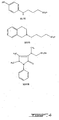
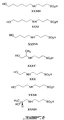
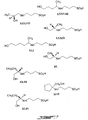
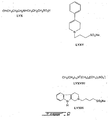
- Preferred therapeutic compounds include 3-(3-hydroxy-1-propyl)amino-1-propanesulfonic acid (LVX) ; 4-Phenyl-1-(3'-sulfopropyl)-1,2,3,6-tetrahydropyridine (LVXV); and 3-dimethylamino-1-propanesulfonic acid (LVXVII), and pharmaceutically acceptable salts thereof.
- LVX 3-(3-hydroxy-1-propyl)amino-1-propanesulfonic acid
- LVXV 4-Phenyl-1-(3'-sulfopropyl)-1,2,3,6-tetrahydropyridine
- LVXVII 3-dimethylamino-1-propanesulfonic acid
- therapeutic compounds include those where within the scope of the definitions of appended claim 1, R 1 is an alkyl, an alkenyl, or an aryl group, k is one, Z is a carbonyl group, R 2 is a hydrogen atom or an alkylene group, m is zero, p and s are 1, T is an alkylene group, and Y is SO 3 X wherein X is H - or another cation, such as alkali metal cations.
- R 1 is an alkyl, an alkenyl, or an aryl group
- R 2 is a hydrogen atom or an alkyl group
- VIII 3-acetylamino-1-propanesulfonic acid
- XXI 2-acrylamido-2-methyl-1-propanesulfonic acid
- X 3-benzoylamino-1-propancsulfonic acid
- a group of therapeutic compounds include those where, within the scope of the definitions of appended claim 1, R 1 and R 2 are alkyl, alkenyl, or aryl, or R 1 and R 2 are linked together to form an alkylene group, k and m are each one, Z and Q are each independently a carbonyl or a sulfonyl group, p and s are 1, T is an alkylene group, and Y is SO 3 X where X is H - or another cation, such as alkali metal cations.
- di- N -acylated compounds including heterocyclic compounds, e.g., R 1 and R 2 are taken together to form an alkylene group
- di- N -acylated compounds including heterocyclic compounds, e.g., R 1 and R 2 are taken together to form an alkylene group
- XXIII 3-phthalimido-1-propanesulfonic acid
- XXV N-(3-sulfopropyl)saccharin sodium salt
- XIX 4-phthalimido-1-butanesulfonic acid
- T is propylene or butylene.
- a group of therapeutic compounds include those where, within the scope of the definitions of appended claim 1, R 1 is an alkyl, alkenyl, or aryl group, k and m are zero, R 2 is hydrogen or an alkyl group, or R 1 and R 2 are taken together to form an alkylene or an alkenylene group, p and s are each one, T is an alkylene group, and Y is SO 3 X wherein X is H - or another cation, such as alkali metal cations.
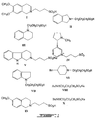
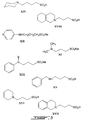
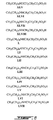
- mono- N -alkylated or arylated compounds such as 3-phenylamino-1-propanesulfonic acid sodium salt (XIII), 3-(4-pyridylamino)]-1-propanesulfonic acid (XII), 3-(benzylamino)-1-propanesulfonic acid (XV), 2-deoxy-2-(3-sulfopropyl)amino-d-glucose (XX), 1-phenyl-2,3,-dimethyl-4-methylamino-pyrazolon-5- N -methylsulfonic acid (XXVII), 3-[(-3,5-d-imethyl-1-adamantyl)-amino]-1-propanesulfonic acid (XXIV), 3-(2-hydroxyethyl)amino-1-propanesulfonic acid (XXX), 3-(3-hydroxy-1-propyl)amino-1-propanesulfonic acid (XXII), (-)
- a group of therapeutic compounds include those where, within the scope of the definitions of appended claim 1, R 1 and R 2 are alkyl, alkenyl, or aryl groups, or R 1 and R 2 are taken together to form an alkylene group, k and m are zero, p and s are each one, T is an alkylene group, Y is SO 3 X where X is H - or other cation such as cations of alkali metals.
- di- N -alkylated compounds including heterocyclic compounds, e.g., R 1 and R 2 are alkylene
- di- N -alkylated compounds such as 3-dimethylamino-1-prapanesulfonic acid (XI), 4-(1-piperidinyl)-1-ethanesulfonic acid (XIV), 3-[1-(1,2,3,6-tetrahydropyridyl)]-1-propanesulfonic acid (XVI), 3-[2-(1,2,3,4-tetrahydroisoquinolinyl)]-1-propanesulfonic acid (XVII), 3-[2-(6,7-dimethoxy-1,2,3,4-tenahydroisoquinolinyl)]-1-propanesulfonie acid (I), 3-[1-(1,2,3,4-tetrahydroquinolinyl)]-1-propanesulfonic acid (III), 2-(3-sulfopropyl)-1,
- R 1 may be a lower alkyl group, R 2 a lower alkyl group and T a lower alkylene group.
- R 1 is a methyl, ethyl, or propyl group
- R 2 is a methyl, ethyl or propyl group
- T is an ethylene, propylene or butylene group.
- the linking group may be substituted, e.g., with one or more amino, nitro, halogen, thiol or hydroxy groups.
- a further aspect of the invention includes pharmaceutical compositions for treating amyloidosis.
- the therapeutic compounds of the invention as described hereinbefore, can be incorporated into a pharmaceutical composition in an amount effective to modulate amyloidosis in a pharmaceutically acceptable vehicle.
- Prodrugs are converted in vivo to the therapeutic compounds of the invention (see, e.g., R.B. Silverman, 1992, “The Organic Chemistry of Drug Design and Drug Action", Academic Press, Chp. 8 ).
- Such prodrugs can be used to alter the biodistribution (e.g., to allow compounds which would not typically cross the blood-brain barrier to cross the blood-brain barrier) or the pharmacokinetics of the therapeutic compound.
- a sulfonate can be esterified, e.g., with a methyl group or a phenyl group, to yield a sulfonate ester.
- the ester When the sulfonate ester is administered to a subject, the ester is cleaved, enzymatically or non-enzymatically, reductively or hydrolyrically, to reveal the anionic group.
- an ester can be cyclic, e.g., a cyclic sultone, or two or more anionic moieties may be esterified through a linking group.
- the prodrug is a cyclic sultone.
- An anionic group can be esterified with moieties (e.g., acyloxymethyl esters) which are cleaved to reveal an intermediate compound which subsequently decomposes to yield the active compound.
- the prodrug is a reduced form of a sulfonate, e.g., a thiol, which is oxidized in vivo to the therapeutic compound.
- a sulfonate e.g., a thiol
- an anionic moiety can be esterified to a group which is actively transported in vivo , or which is selectively taken up by target organs. The ester can be selected to allow specific targeting of the therapeutic moieties to particular organs, as described in more derail below
- Linking group T is of the formula -(CD 1 D 2 ) n -, wherein n is an integer from 1 to 25, C is carbon and D 1 and D 2 are independently hydrogen or halogen atoms; aliphatic, aromatic or heterocyclic groups; alkylamino or arylamino; or alkyloxy or aryloxy.
- Amyloid aggregation in a subject may be modulated by administering a therapeutic compound of the invention to a subject, i.e., in vivo.
- a subject includes living organisms in which amyloidosis can occur. Examples of subjects include humans, monkeys, cows, sheep, goats, dogs, cats, mice, rats, and transgenic species thereof.
- Administration of the compositions of the present invention to a subject to be treated can be carried out using known procedures, at dosages and for periods of time effective to modulate amyloid aggregation in the subject.
- an effective amount of the therapeutic compound necessary to achieve a therapeutic effect may vary according to factors such as the amount of amyloid already deposited at the clinical site in the subject, the age, sex, and weight of the subject, and the ability of the therapeutic compound to modulate amyloid aggregation in the subject. Dosage regimens can be adjusted to provide the optimum therapeutic response. For example, several divided doses may be administered daily or the dose may be proportionally reduced as indicated by the exigencies of the therapeutic situation.
- a non-limiting example of an effective dose range for a therapeutic compound of the invention e.g., 3-acetylamino-1-propylsulfonic acid, sodium salt
- an effective dose range for a therapeutic compound of the invention is between 5 and 500 mg/kg of body weight/per day.
- preferred concentrations for the active compound are between 5 and 500 mM, more preferably between 10 and 100 mM, and still more preferably between 20 and 50 mM.
- preferred aqueous concentrations are between 10 and 20 mM.
- the therapeutic compounds of the invention are effective when administered orally. Accordingly, a preferred route of administration is oral administration. Alternatively, the active compound may be administered by other suitable routes such as subcutaneous, intravenous, intraperitoneal, etc. administration (e.g., by injection). Depending on the route of administration, the active compound may be coated in a material to protect the compound from the action of acids and other natural conditions which may inactivate the compound.
- the compounds of the invention can be formulated to ensure proper distribution in vivo.
- the blood-brain barrier excludes many highly hydrophilic compounds.
- the therapeutic compounds of the invention can be formulated, for example, in liposomes.
- liposomes For methods of manufacturing liposomes, see, e.g., U.S. Patents 4,522,811 ; 5,374,548 ; and 5,399,331 .
- the liposomes may comprise one or more moieties which are selectively transported into specific cells or organs ("targeting moieties"), thus providing targeted drug delivery (see, e.g., V.V. Ranade (1989) J. Clin. Pharmacol. 29:685 ).
- Exemplary targeting moieties include folate or biotin (see, e.g., U.S. Patent 5,416,016 to Low et al. ); mannosides ( Umezawa et al., (1988) Biochem. Biophys. Res. Commun. 153:1038 ); antibodies ( P.G. Bloeman et al. (1995) FEBS Lett. 357:140 ; M. Owais et a/. (1995) Antimicrob. Agents Chemother. 39:180 ); surfactant protein A receptor ( Briscoe et al. (1995) Am. J. Physiol. 1233:134 ); gp120 ( Schreier et al. (1994) J. Biol. Chem.
- the therapeutic compounds of the invention are formulated in liposomes; in a more preferred embodiment, the liposomes include a targeting moiety.
- the therapeutic compound may be administered to a subject in an appropriate carrier, for example, liposomes, or a diluent.
- suitable diluents include saline and aqueous buffer solutions.
- Liposomes include water-in-oil-in-water CGF emulsions as well as conventional liposomes ( Strejan et al., (1984) J. Neuroimmunol. 7:27 ).
- the therapeutic compound may also be administered parenterally, intraperitoneally, intraspinally, or intracerebrally.
- Dispersions can be prepared in glycerol, liquid polyethylene glycols, and mixtures thereof and in oils. Under ordinary conditions of storage and use, these preparations may contain a preservative to prevent the growth of microorganisms.
- compositions suitable for injectable use include sterile aqueous solutions (where water soluble) or dispersions and sterile powders for the extemporaneous preparation of sterile injectable solutions or dispersion.
- the composition must be sterile and must be fluid to the extent that easy syringability exists. It must be stable under the conditions of manufacture and storage and must be preserved against the contaminating action of microorganisms such as bacteria and fungi.
- the vehicle can be a solvent or dispersion medium containing, for example, water, ethanol, polyol (for example, glycerol, propylene glycol, and liquid polyethylene glycol, and the like), suitable mixtures thereof, and vegetable oils.
- the proper fluidity can be maintained, for example, by the use of a coating such as lecithin, by the maintenance of the required particle size in the case of dispersion and by the use of surfactants.
- Prevention of the action of microorganisms can be achieved by various antibacterial and antifungal agents, for example, parabens, chlorobutanol, phenol, ascorbic acid, thimerosal, and the like.
- isotonic agents for example, sugars, sodium chloride, or polyalcohols such as mannitol and sorbitol, in the composition.
- Prolonged absorption of the injectable compositions can be brought about by including in the composition an agent which delays absorption, for example, aluminum monostearate or gelatin.
- Sterile injectable solutions can be prepared by incorporating the therapeutic compound in the required amount in an appropriate solvent with one or a combination of ingredients enumerated above, as required, followed by filtered sterilization.
- dispersions are prepared by incorporating the therapeutic compound into a sterile vehicle which contains a basic dispersion medium and the required other ingredients from those enumerated above.
- the preferred methods of preparation are vacuum drying and freeze-drying which yields a powder of the active ingredient (i.e., the therapeutic compound) plus any additional desired ingredient from a previously sterile-filtered solution thereof.
- the therapeutic compound can be orally administered, for example, with an inert diluent or an assimilable edible carrier.
- the therapeutic compound and other ingredients may also be enclosed in a hard or soft shell gelatin capsule, compressed into tablets, or incorporated directly into the subject's diet.
- the therapeutic compound may be incorporated with excipients and used in the form of ingestible tablets, buccal tablets, troches, capsules, elixirs, suspensions, syrups, wafers, and the like.
- the percentage of the therapeutic compound in the compositions and preparations may, of course, be varied. The amount of the therapeutic compound in such therapeutically useful compositions is such that a suitable dosage will be obtained.
- Dosage unit form refers to physically discrete units suited as unitary dosages for the subjects to be treated; each unit containing a predetermined quantity of therapeutic compound calculated to produce the desired therapeutic effect in association with the required pharmaceutical vehicle.
- the specification for the dosage unit forms of the invention are dictated by and directly dependent on (a) the unique characteristics of the therapeutic compound and the particular therapeutic effect to be achieved, and (b) the limitations inherent in the art of compounding such a therapeutic compound for the treatment of amyloid aggregation in subjects.
- Active compounds are administered at a therapeutically effective dosage sufficient to modulate amyloid aggregation in a subject.
- a "therapeutically effective dosage” preferably modulates amyloid aggregation by at least about 20%, more preferably by at least about 40%, even more preferably by at least about 60%, and still more preferably by at least about 80% relative to untreated subjects.
- the ability of a compound to modulate amyloid aggregation can be evaluated in model systems that may be predictive of efficacy in modulating amyloid solubility and aggregation in human diseases, such as animal model systems known in the art or by in vitro methods including the thioflavine T assay, circular dichroism and electron microscopy.
- soluble amyloidogenic protein binds to the soluble amyloidogenic protein and keep it soluble, such as equilibrium dialysis, NMR and solubilization assays.
- Methods where adherence of soluble or non-soluble (e.g., fibrillary) amyloid protein to cell surface is monitored or determined include immunodetection of the protein at the cell surface, light microscopy, electron microscopy and flow cytometry.
- amyloidosis associated with any disease in which amyloid aggregation occurs.
- amyloidosis can be primary, secondary, familial or isolated.
- Amyloids have been categorized by the type of amyloidogenic protein contained within the amyloid.
- Non-limiting examples of amyloids which can be modulated, as identified by their amyloidogenic protein are as follows (with the associated disease in parentheses after the amyloidogenic protein): ⁇ -amyloid (Alzheimer's disease, Down's syndrome, hereditary cerebral hemorrhage amyloidosis [Dutch]); amyloid A (reactive [secondary] amyloidosis, familial Mediterranean Fever, familial amyloid nephropathy with urticaria and deafness [Muckle-Wells syndrome]); amyloid ⁇ L-chain or amyloid ⁇ L-chain (idiopathic [primary], myeloma or macroglobulinemia-associated); Ab2M (chronic hemodialysis); ATTR (familial amyloid polyneuropathy [Portuguese, Japanese, Swedish], familial amyloid cardiomyopathy [Danish], isolated cardiac amyloid, systemic senile amyloidosis); AIAPP or amy
- the ability of a compound to modulate amyloid aggregation can be evaluated in an animal model system that may be predictive of efficacy in inhibiting amyloid aggregation in human diseases.
- the ability of a compound to inhibit amyloid aggregation can also be evaluated by examining the ability of the compound to inhibit amyloid aggregation in vitro or ex vivo , e.g., using an ELISA assay.
- the effect of a compound on the secondary structure of the amyloid can be further determined by circular dichroism (CD), infrared (IR) spectroscopy, and electron microscopy.
- CD and IR spectroscopy are particularly useful techniques because the information obtained is a direct measure of the ability of a test compound to maintain the amyloid proteins in soluble non ⁇ -sheet form, by determining the structural effect of a compound on amyloid protein folding and/or fibril formation. This contrasts with previously known methods which measure cellular trafficking of amyloid protein precursors or interactions between amyloid and extracellular matrix proteins, providing only indirect evidence of potential amyloid-inhibiting activity. It should further be noted that CD and IR spectroscopy can also detect compounds which cause an increase in, e.g., ⁇ -sheet folding of amyloid protein, and thereby stabilize the formation of amyloid fibrils. Electron microscopy can be used to visualize directly the ability of a compound to maintain the amyloid protein in a soluble non-fibrillar state.
- amyloid aggregation is a multi-stage process. Accordingly, an agent useful for treating amyloidosis has many potential modes of action. An agent which inhibits amyloid aggregation, and the related cellular toxic effect , could act in one or more of the following ways, which are shown by way of illustration and not limitation:
- Categories 1 and 2 correspond to prevention of the formation of amyloid aggregates (slowing down or halting amyloid aggregation), and category 3 corresponds to removal or modification of aggregates already formed (removal or reduction of existing amyloid aggregates).
- Category 4 focuses on the inhibition of the amyloid protein interaction in the cell surface.
- a solubility assay using Bradford detection was conducted to demonstrate the activity of certain therapeutic compounds in preventing or inhibiting A ⁇ fibril formation accordance with the present disclosure.
- a ⁇ peptides were synthesized using standard FMOC chemistry which was performed in conjunction with the Biotechnology Centre, University of Toronto, and purified by HPLC. Alternatively, peptides can also be obtained from a number of commercial sources (e.g., BaChem and Peninsula Laboratories, California).
- the assay was conducted as follows. Stock solution of A ⁇ 42 or A ⁇ 40 peptide at 5 mg/ml in distilled water, pH 7, and stock solutions of each test compound at 2 mg/ml in distilled water, pH 7 were prepared.
- An ELISA solubility assay was conducted to demonstrate the activity of certain therapeutic compounds in preventing or inhibiting A ⁇ fibril formation accordance with the present disclosure.
- the assay was conducted as follows. Stock solution of A ⁇ 42 peptide at 5 mg/ml in distilled water, pH 7, and stock solutions of each test compound at 1 mg/ml in distilled water, pH 7 were prepared.
- Circular dichroism analysis was conducted to demonstrate the activity of certain therapeutic compounds in preventing or inhibiting A ⁇ 40 fibril formation accordance with the present disclosure by determining the presence or absence of ⁇ -sheet conformation.
- the assay is conducted as follows:
- Compound Incubation time 0h 19h 43h XVII - 1,2 + ++ III - + ++ VII + ++++ ++ IX + +++ ++ VIII + ++++ +++ X + ++ ++ XXII (Comparative compound) + ++++ ++ LVXIII (Comparative compound) - ++++ - LVXV + ++++ ++ LVXVI (Comparative compound) + +++ ++ XXXVIII - +++ ++ ++ 1 No effect compared to A ⁇ alone 2 Key: relative inhibition compared to A ⁇ alone : +: 0-25%; ++: 25-50%; +++: 50-75%; ++++: 75-100%
- the in vivo screening is based on the acute AEF-AgNO 3 -induced amyloidosis mouse model. The test is conducted on a total of 6 days and each compound administered in the drinking solution for a 5-day period.
- mice of CBA/J strain are individually identified, weighed and assigned to a group of 5 animals following an acclimation period.
- the amyloidosis is induced by intravenous injection of 100 ⁇ g of AEF (amyloid enhancing factor) concomitantly with a subcutaneous injection of 0.5 ml of 2% of a solution of AgNO 3 .
- Animals in the negative control group are injected with saline only.
- the compound is added to a 1% solution of sucrose (vehicle) and distributed to animals in drinking bottles for a period of 5 days. Animals in the positive control group receive the vehicle only. Drinking solutions are made available ad libitum to each group of animals and the volume measured before and after use to calculate the consumption of each solution. Blood samples are collected for in vitro determination of plasma serum amyloid A levels.
- mice are sacrificed, weighed and organs such as spleen are existed and fixed in acid alcohol.
- Spleen samples are processed, embedded in paraffin wax and cut inyo sections.
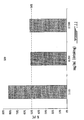
- Spleen sections from each animal are stained with the Congo Red staining solution and the splenic Amyloid A fibrils aggregation evaluated by image analysis. Results are expressed as % of AA fibrils deposited in the splenic perifollicular area. Raw data is analyzed.
- Mean of mouse body weight and the mean consumption of the drinking solution (ml) are compiled. Variation of the body weight before the induction and at the end of the assay is calculated (%). The dose level of the compound consumed (mg/kg/day) is calculated as well.
- the mean of the image analysis reading of spleen serious for a group is expressed as percentage of the mean of the image analysis readings for the positive control group (%PC).
- ThT Thioflavine T binds to amyloid proteins in ⁇ -sheet formation, exhibiting a yellow fluorescence from tissue sections and fibrils in vitro. Detection of ThT fluorescence can be used as a sensitive assay for amyloid fibril formation under different conditions. This assay has been used in experiments to determine the effects of compounds of the invention on amyloid fibril formation.
- IAPP Human IAPP was dissolved in 40% trifluoroethanol and freeze-dried into conveniently-sized aliquots. IAPP was prepared immediately before the measurements by dissolving in 40% 1,1,1,3,3,3-hexafluoro-2-propanol (HFIP) in water to maintain the peptide in alpha helical conformation and soluble. A stock solution of ThT (2.5mM) was prepared, 7.9mg in 10mL Tris-HCl pH 7.0 and filtered (0.22 ⁇ m). Solutions were kept in the dark until use. Fluorescence was examined at 440nm excitation (slit 5nm), and emission at 482nm (slit 10nm) with stirring.
- HFIP 1,1,1,3,3,3-hexafluoro-2-propanol
- ThT stock final concentration 62.5 ⁇ M
- Certain compounds as disclosed herein i.e., 3-(3-hydroxy-1-propyl)amino-1-propanesulfonic acid; DL-2-amino-5-phosphovaleric acid; 4-Phenyl-1-(3'-sulfopropyl)-1,2,3,6-tetrahydropyridine; cyclohexylsulfamic acid; O -phospho- L- serine; 8-methoxyquinoline-5-sulfonic acid; 3-amino-2-hydroxy-1-propanesulfonic acid; and 3-dimethylamino-1-propanesulfonic acid, and 1,2,3,4-tetrahydroisoquinoline, were found to inhibit or prevent IAPP-associated fibril assembly.
- Circular dichroism analysis was conducted to confirm the activity of certain therapeutic compounds in preventing or inhibiting IAPP-associated fibril formation in accordance with the present disclosure by determining the presence or absence of ⁇ -sheet conformation.
- the assay is conducted as follows:
- the assay examines the ability of a compound or substance to inhibit the assembly of amyloid fibrils, e.g., to test for the presence of the amyloidotic ⁇ -sheet conformation in the presence of soluble IAPP.
- Samples are run in the presence and absence (i.e., water alone) of buffering agent, which is done to determine if competitive effects are seen with the ionic buffer (usually phosphate).
- control sample is run with each test group.
- This control contains peptide only in water or buffer at a similar final volume of 400 ⁇ l.
- Spectra for the control are collected initially (first run) and at the end of the test (final run) to ensure that the peptide has not undergone extensive aggregation during the course of the assay.
- Spectra for the controls are used to compare with the measurements obtained with the treated samples.
- the ability of a compound to prevent ⁇ -sheet formation for at least 24h is important, as the non-aggregated amyloid fibrils will be excreted in the soluble form.
- the decrease in CD may indicate that some of the peptide is aggregating under these conditions.
- the mixture was diluted with methanol (200 ml), and neutralized with Amberlite IR-120 ion-exchange resin (H + form, 300 g). A white precipitate was formed. The precipitate and the resin were removed by filtration and treated with distilled water (400 mL) at ⁇ 100 °C. The mixture was filtered and the residual resin was washed with hot distilled water (2 x 200 mL). The filtrates and washings were combined and concentrated to dryness.
- 8-Methoxy-5-quinolinesulfonyl chloride (773 mg, see above) was treated with a solution of sodium hydroxide (120 mg) in water at 50°C for 12h. The resulting sodium salt (700 mg) was recrystallized from H 2 O to give the title compound as a yellow powder (300 mg).
- the NMR spectrum of 8-Methoxy-5-quinolinesulfonyl chloride, sodium salt (in deuterated DMSO) is shown in Figure 10 .
Landscapes
- Health & Medical Sciences (AREA)
- Life Sciences & Earth Sciences (AREA)
- Veterinary Medicine (AREA)
- Animal Behavior & Ethology (AREA)
- Public Health (AREA)
- Chemical & Material Sciences (AREA)
- General Health & Medical Sciences (AREA)
- Pharmacology & Pharmacy (AREA)
- Medicinal Chemistry (AREA)
- Epidemiology (AREA)
- Engineering & Computer Science (AREA)
- Organic Chemistry (AREA)
- General Chemical & Material Sciences (AREA)
- Bioinformatics & Cheminformatics (AREA)
- Chemical Kinetics & Catalysis (AREA)
- Nuclear Medicine, Radiotherapy & Molecular Imaging (AREA)
- Diabetes (AREA)
- Hematology (AREA)
- Biomedical Technology (AREA)
- Neurology (AREA)
- Neurosurgery (AREA)
- Endocrinology (AREA)
- Molecular Biology (AREA)
- Obesity (AREA)
- Heart & Thoracic Surgery (AREA)
- Emergency Medicine (AREA)
- Psychiatry (AREA)
- Dermatology (AREA)
- Physical Education & Sports Medicine (AREA)
- Hospice & Palliative Care (AREA)
- Cardiology (AREA)
- Pharmaceuticals Containing Other Organic And Inorganic Compounds (AREA)
- Acyclic And Carbocyclic Compounds In Medicinal Compositions (AREA)
- Organic Low-Molecular-Weight Compounds And Preparation Thereof (AREA)
- Lubricants (AREA)
Applications Claiming Priority (7)
| Application Number | Priority Date | Filing Date | Title |
|---|---|---|---|
| US13146499P | 1999-04-28 | 1999-04-28 | |
| US131464P | 1999-04-28 | ||
| US13554599P | 1999-05-24 | 1999-05-24 | |
| US135545P | 1999-05-24 | ||
| US14312399P | 1999-07-09 | 1999-07-09 | |
| US143123P | 1999-07-09 | ||
| PCT/CA2000/000494 WO2000064420A2 (en) | 1999-04-28 | 2000-04-28 | Compositions and methods for treating amyloidosis using sulphonate derivatives |
Publications (2)
| Publication Number | Publication Date |
|---|---|
| EP1276483A2 EP1276483A2 (en) | 2003-01-22 |
| EP1276483B1 true EP1276483B1 (en) | 2009-09-02 |
Family
ID=27384158
Family Applications (1)
| Application Number | Title | Priority Date | Filing Date |
|---|---|---|---|
| EP00922395A Expired - Lifetime EP1276483B1 (en) | 1999-04-28 | 2000-04-28 | Compositions and methods for treating amyloidosis using sulphonate derivatives |
Country Status (16)
| Country | Link |
|---|---|
| US (3) | US20040198832A1 (enExample) |
| EP (1) | EP1276483B1 (enExample) |
| JP (1) | JP4726304B2 (enExample) |
| KR (2) | KR20070094996A (enExample) |
| CN (1) | CN100482233C (enExample) |
| AT (1) | ATE441421T1 (enExample) |
| AU (1) | AU4282400A (enExample) |
| BR (1) | BR0010099A (enExample) |
| CA (1) | CA2369997C (enExample) |
| DE (1) | DE60042896D1 (enExample) |
| DK (1) | DK1276483T3 (enExample) |
| ES (1) | ES2331905T3 (enExample) |
| IL (1) | IL146143A0 (enExample) |
| MX (1) | MXPA01010835A (enExample) |
| NZ (1) | NZ543319A (enExample) |
| WO (1) | WO2000064420A2 (enExample) |
Families Citing this family (27)
| Publication number | Priority date | Publication date | Assignee | Title |
|---|---|---|---|---|
| US20040208875A1 (en) * | 1995-03-15 | 2004-10-21 | Queen's University At Kingston | Method for treating amyloidosis |
| US6562836B1 (en) | 1999-05-24 | 2003-05-13 | Queen's University Of Kingston | Methods and compounds for inhibiting amyloid deposits |
| HK1051137A1 (zh) * | 1999-07-09 | 2003-07-25 | Isis Innovation Limited | 抑制疾病的化合物和製備移植用的細胞 |
| US7311893B2 (en) | 2000-07-25 | 2007-12-25 | Neurochem (International) Limited | Amyloid targeting imaging agents and uses thereof |
| US6716589B2 (en) * | 2000-11-20 | 2004-04-06 | Alphabeta Ab | Discordant helix stabilization for prevention of amyloid formation |
| EP1528920B1 (en) * | 2002-08-12 | 2013-07-24 | Yuuichi Murayama | Suppression of abnormal proliferation of prion proteins with leucine, isoleucine or valine |
| KR20050101537A (ko) * | 2002-12-24 | 2005-10-24 | 뉴로켐 (인터내셔널) 리미티드 | 베타-아밀로이드 관련 질환의 치료를 위한 치료 제제 |
| US7414076B2 (en) | 2003-06-23 | 2008-08-19 | Neurochem (International) Limited | Methods and compositions for treating amyloid-related diseases |
| US20050142191A1 (en) * | 2003-06-23 | 2005-06-30 | Neurochem (International) Limited | Pharmaceutical formulations of amyloid inhibiting compounds |
| US7244764B2 (en) | 2003-06-23 | 2007-07-17 | Neurochem (International) Limited | Methods and compositions for treating amyloid-related diseases |
| AU2011250847B2 (en) * | 2003-06-23 | 2013-06-20 | Bhi Limited Partnership | Methods and compositions for treating amyloid-related diseases |
| US7253306B2 (en) | 2003-06-23 | 2007-08-07 | Neurochem (International) Limited | Pharmaceutical drug candidates and methods for preparation thereof |
| EP1646659B1 (en) * | 2003-06-23 | 2014-05-14 | Kiacta Sàrl | Method for the preparation of 1,3-propane disulfonic acid compounds |
| AU2004249529A1 (en) * | 2003-06-23 | 2004-12-29 | Bellus Health (International) Limited | Methods and compositions for treating amyloid-related diseases |
| AU2005310986A1 (en) * | 2004-11-12 | 2006-06-08 | Bellus Health (International) Limited | Methods and fluorinated compositions for treating amyloid-related diseases |
| AU2005310979A1 (en) * | 2004-11-16 | 2006-06-08 | Bellus Health (International) Limited | Compounds for the treatment of CNS and amyloid associated diseases |
| EP1836161B1 (en) * | 2004-12-22 | 2016-07-20 | BHI Limited Partnership | Methods and compositions for treating amyloid-related diseases |
| TW200716088A (en) | 2005-04-15 | 2007-05-01 | Neurochem Int Ltd | Formulations and methods for treating amyloidosis |
| SI2089417T1 (sl) | 2006-10-12 | 2015-04-30 | Bhi Limited Partnership | Metode, spojine, sestavki in vektorji za dostavo 3-amino-1-propansulfonske kisline |
| WO2008051017A1 (en) | 2006-10-24 | 2008-05-02 | Seoul National University Industry Foundation | A cleavage agent selectively acting on soluble assembly of amyloidogenic peptide or protein |
| CA2676715A1 (en) | 2007-02-12 | 2008-08-21 | Merck & Co., Inc. | Piperazine derivatives for treatment of ad and related conditions |
| JP2011527311A (ja) * | 2008-07-10 | 2011-10-27 | ノバルティス アーゲー | Bace阻害薬として有用なアミノベンジル置換環状スルホン誘導体 |
| EA035650B1 (ru) | 2015-08-10 | 2020-07-21 | Алжеон, Инк. | Композиции и способы лечения и предотвращения нейродегенеративных расстройств |
| CA3054370A1 (en) * | 2017-02-24 | 2018-08-30 | Alzheon, Inc. | Methods for treating neurodegenerative disorders |
| USD852236S1 (en) | 2017-08-17 | 2019-06-25 | Samsung Electronics Co., Ltd. | Refrigerator |
| US20250345298A1 (en) | 2022-04-28 | 2025-11-13 | Alzheon, Inc. | Apoe4 correctors and methods of use |
| CN120641092A (zh) | 2022-12-02 | 2025-09-12 | 阿尔泽恩股份有限公司 | 用于用曲米沙特治疗神经变性病症的方法 |
Family Cites Families (62)
| Publication number | Priority date | Publication date | Assignee | Title |
|---|---|---|---|---|
| US2531468A (en) * | 1949-04-14 | 1950-11-28 | Eastman Kodak Co | Polyvinyl sulfonates and process for their preparation |
| DE1122064B (de) * | 1960-01-09 | 1962-01-18 | Basf Ag | Verfahren zur Einfuehrung von alyphatischen Kohlenwasserstoffresten in organische Verbindungen, die Hydroxylgruppen, tertiaere Aminogruppen, aromatische gebundene Sulfhydrylgruppen und bzw. oder aromatisch gebundene primaere oder sekundaere Aminogruppen enthalten |
| US3218352A (en) * | 1962-05-03 | 1965-11-16 | Abbott Lab | Homotaurine process |
| US3658966A (en) * | 1969-09-15 | 1972-04-25 | Kowa Co | Methods of treating hypertension |
| US3920833A (en) * | 1974-08-08 | 1975-11-18 | Stanley Drug Products Inc | Antifibrinolytic agents |
| FR2384751A1 (fr) * | 1977-03-23 | 1978-10-20 | Francaise Coop Pharma | Nouveaux derives de la taurine a activite neuro-musculaire renforcee |
| CA1140049A (en) * | 1977-12-22 | 1983-01-25 | Dke J.E. Helgstran | Pharmaceutical preparations from derivatives of hydroxycarbonylphosphonic acid |
| FR2457281A1 (fr) * | 1979-05-23 | 1980-12-19 | Meram Lab | Nouveaux derives de l'acide 3-aminopropanesulfonique ayant une activite membranaire renforcee |
| US4255448A (en) * | 1979-09-10 | 1981-03-10 | Wisconsin Alumni Research Foundation | Method for reducing epileptiform activity |
| US4448779A (en) * | 1981-07-16 | 1984-05-15 | Sanofi | Use of MS salt in geriatric medicine |
| JPS5879022A (ja) * | 1981-11-04 | 1983-05-12 | Bitamin Kenkyusho:Kk | 第四級窒素原子を含有する新規な金属架橋高分子化合物、その製法及び該高分子化合物を有効成分とする高脂血症治療剤 |
| US4540564A (en) * | 1982-05-18 | 1985-09-10 | University Of Florida | Brain-specific drug delivery |
| US5087618A (en) * | 1982-05-18 | 1992-02-11 | University Of Florida | Redox carriers for brain-specific drug delivery |
| FR2529546A1 (fr) * | 1982-07-05 | 1984-01-06 | Meram Lab | Nouveaux sels d'amino-(et imino-)acides a, o-sulfoniques n-substitues, vecteurs cationiques de haute penetration cellulaire |
| US4522811A (en) * | 1982-07-08 | 1985-06-11 | Syntex (U.S.A.) Inc. | Serial injection of muramyldipeptides and liposomes enhances the anti-infective activity of muramyldipeptides |
| DE3229300A1 (de) * | 1982-08-05 | 1984-02-09 | Haarmann & Reimer Gmbh, 3450 Holzminden | Aliphatische dicarbonsaeureester als riechstoffe und diese enthaltende parfuemkompositionen und parfuemierte produkte |
| US4737353A (en) * | 1984-04-13 | 1988-04-12 | Union Carbide Corporation | Beryllium-aluminum-phosphorus-silicon-oxide molecular sieve compositions |
| US5374548A (en) * | 1986-05-02 | 1994-12-20 | Genentech, Inc. | Methods and compositions for the attachment of proteins to liposomes using a glycophospholipid anchor |
| MX9203291A (es) * | 1985-06-26 | 1992-08-01 | Liposome Co Inc | Metodo para acoplamiento de liposomas. |
| JPH0786122B2 (ja) * | 1986-05-30 | 1995-09-20 | 日本ペイント株式会社 | 三次元架橋された微小樹脂粒子およびその製造法 |
| US4847082A (en) * | 1987-01-21 | 1989-07-11 | Robert Sabin | Method of treatment of Alzheimer's disease using phytic acid |
| US5166320A (en) * | 1987-04-22 | 1992-11-24 | University Of Connecticut | Carrier system and method for the introduction of genes into mammalian cells |
| IT1205042B (it) * | 1987-05-28 | 1989-03-10 | Crinos Industria Farmaco | Composizione farmaceutica ad attivita' terapeutica per il trattamento della demenza senile di tipo alzheimer |
| US5108921A (en) * | 1989-04-03 | 1992-04-28 | Purdue Research Foundation | Method for enhanced transmembrane transport of exogenous molecules |
| US5194654A (en) * | 1989-11-22 | 1993-03-16 | Vical, Inc. | Lipid derivatives of phosphonoacids for liposomal incorporation and method of use |
| US5463092A (en) * | 1989-11-22 | 1995-10-31 | Vestar, Inc. | Lipid derivatives of phosphonacids for liposomal incorporation and method of use |
| US5242932A (en) * | 1991-12-17 | 1993-09-07 | The Rockefeller University | Treatment of amyloidosis associated with alzheimer disease |
| US5385915A (en) * | 1990-05-16 | 1995-01-31 | The Rockefeller University | Treatment of amyloidosis associated with Alzheimer disease using modulators of protein phosphorylation |
| US5668117A (en) * | 1991-02-22 | 1997-09-16 | Shapiro; Howard K. | Methods of treating neurological diseases and etiologically related symptomology using carbonyl trapping agents in combination with previously known medicaments |
| US5164295A (en) * | 1991-03-06 | 1992-11-17 | The Upjohn Company | Method for identifying amyloid protein-extracellular matrix protein affinity altering compounds |
| US5192753A (en) * | 1991-04-23 | 1993-03-09 | Mcgeer Patrick L | Anti-rheumatoid arthritic drugs in the treatment of dementia |
| SG47406A1 (en) * | 1991-12-19 | 1998-04-17 | Ciba Geigy Ag | Aminosulfonic acid derivatives and processes for their preparation |
| US5276059A (en) * | 1992-07-10 | 1994-01-04 | The United States Of America As Represented By The Department Of Health And Human Services | Inhibition of diseases associated with amyloid formation |
| US5972328A (en) * | 1993-03-29 | 1999-10-26 | Queen's University At Kingston | Method for treating amyloidosis |
| US5840294A (en) * | 1993-03-29 | 1998-11-24 | Queen's University At Kingston | Method for treating amyloidosis |
| US5643562A (en) * | 1993-03-29 | 1997-07-01 | Queen's University Of Kingston | Method for treating amyloidosis |
| US5646562A (en) * | 1993-07-21 | 1997-07-08 | Seiko Epson Corporation | Phase synchronization circuit, one-shot pulse generating circuit and signal processing system |
| US5488145A (en) * | 1993-12-23 | 1996-01-30 | Oklahoma Medical Research Foundation | 2,4-disulfonyl phenyl butyl nitrone, its salts, and their use as pharmaceutical free radical traps |
| US5858326A (en) * | 1995-06-06 | 1999-01-12 | Neurochem, Inc. | Methods of increasing amyloid deposition |
| DE19531342B4 (de) * | 1995-08-25 | 2007-11-29 | Merz Pharma Gmbh & Co. Kgaa | Verwendung von Aminoadamantan-Verbindungen als Immunregulatoren |
| AU703540B2 (en) * | 1996-03-26 | 1999-03-25 | Meddiss, Incorporated | Methods for inducing analgesia or anesthesia and treating or preventing ischemic injury of tissues in general |
| CA2217322C (en) * | 1996-10-03 | 2005-01-04 | Coastside Bio Resources | Inhibition of complement pathway by sea cucumber fractions |
| WO1999006545A2 (en) * | 1997-08-01 | 1999-02-11 | MAX-PLANCK-Gesellschaft zur Förderung der Wissenschaften e.V. | Composition and method for the detection of diseases associated with amyloid-like fibril or protein aggregate formation |
| NZ550116A (en) * | 1997-08-18 | 2008-03-28 | Neurochem Int Ltd | Phosphono-carboxylate compounds for treating amyloidosis |
| US6294583B1 (en) * | 1998-01-13 | 2001-09-25 | Synchroneuron, Llc | Methods of treating tardive dyskinesia and other movement disorders |
| DK1054664T3 (da) * | 1998-02-11 | 2012-11-05 | Bhi Ltd Partnership | Fremgangsmåde til modulering af makrofagaktivering |
| US20020022657A1 (en) * | 1998-02-11 | 2002-02-21 | Francine Gervais | Methods for modulating neuronal cell death |
| US6329356B1 (en) * | 1998-04-10 | 2001-12-11 | Neurochem, Inc. | Phosphono-carboxylate compounds for treating amyloidosis |
| US6310073B1 (en) * | 1998-07-28 | 2001-10-30 | Queen's University At Kingston | Methods and compositions to treat glycosaminoglycan-associated molecular interactions |
| US6562836B1 (en) * | 1999-05-24 | 2003-05-13 | Queen's University Of Kingston | Methods and compounds for inhibiting amyloid deposits |
| US20070135337A2 (en) * | 1999-11-29 | 2007-06-14 | Neurochem (International) Limited | Vaccine for the Prevention and Treatment of Alzheimer's and Amyloid Related Diseases |
| US6376557B1 (en) * | 2000-03-16 | 2002-04-23 | Chanda Bhuwalka Zaveri | Methods for treating alopecia |
| CA2440834A1 (en) * | 2001-03-13 | 2002-09-19 | Queen's University At Kingston | Anti-epileptogenic agents |
| US20040006092A1 (en) * | 2001-08-31 | 2004-01-08 | Neurochem, Inc. | Amidine derivatives for treating amyloidosis |
| US20040096553A1 (en) * | 2002-11-20 | 2004-05-20 | James E. Lynch | Ice cream cone drip guard |
| US20050142191A1 (en) * | 2003-06-23 | 2005-06-30 | Neurochem (International) Limited | Pharmaceutical formulations of amyloid inhibiting compounds |
| US7253306B2 (en) * | 2003-06-23 | 2007-08-07 | Neurochem (International) Limited | Pharmaceutical drug candidates and methods for preparation thereof |
| US7244764B2 (en) * | 2003-06-23 | 2007-07-17 | Neurochem (International) Limited | Methods and compositions for treating amyloid-related diseases |
| US20070010573A1 (en) * | 2003-06-23 | 2007-01-11 | Xianqi Kong | Methods and compositions for treating amyloid-related diseases |
| US7262223B2 (en) * | 2004-01-23 | 2007-08-28 | Neurochem (International) Limited | Amidine derivatives for treating amyloidosis |
| WO2006008661A2 (en) * | 2004-07-19 | 2006-01-26 | Neurochem (International) Limited | Diagnostic methods of multiple organ amyloidosis |
| EP1836161B1 (en) * | 2004-12-22 | 2016-07-20 | BHI Limited Partnership | Methods and compositions for treating amyloid-related diseases |
-
2000
- 2000-04-28 CA CA002369997A patent/CA2369997C/en not_active Expired - Fee Related
- 2000-04-28 AT AT00922395T patent/ATE441421T1/de not_active IP Right Cessation
- 2000-04-28 NZ NZ543319A patent/NZ543319A/en not_active IP Right Cessation
- 2000-04-28 KR KR1020077021102A patent/KR20070094996A/ko not_active Abandoned
- 2000-04-28 DK DK00922395T patent/DK1276483T3/da active
- 2000-04-28 WO PCT/CA2000/000494 patent/WO2000064420A2/en not_active Ceased
- 2000-04-28 JP JP2000613411A patent/JP4726304B2/ja not_active Expired - Fee Related
- 2000-04-28 MX MXPA01010835A patent/MXPA01010835A/es active IP Right Grant
- 2000-04-28 BR BR0010099-4A patent/BR0010099A/pt not_active IP Right Cessation
- 2000-04-28 EP EP00922395A patent/EP1276483B1/en not_active Expired - Lifetime
- 2000-04-28 KR KR1020017013824A patent/KR100822525B1/ko not_active Expired - Fee Related
- 2000-04-28 DE DE60042896T patent/DE60042896D1/de not_active Expired - Lifetime
- 2000-04-28 ES ES00922395T patent/ES2331905T3/es not_active Expired - Lifetime
- 2000-04-28 AU AU42824/00A patent/AU4282400A/en not_active Abandoned
- 2000-04-28 CN CNB008094152A patent/CN100482233C/zh not_active Expired - Fee Related
- 2000-04-28 IL IL14614300A patent/IL146143A0/xx unknown
-
2003
- 2003-08-11 US US10/639,609 patent/US20040198832A1/en not_active Abandoned
-
2008
- 2008-07-07 US US12/217,580 patent/US20090099100A1/en not_active Abandoned
-
2011
- 2011-04-14 US US13/066,451 patent/US20110281951A1/en not_active Abandoned
Also Published As
| Publication number | Publication date |
|---|---|
| IL146143A0 (en) | 2002-07-25 |
| US20090099100A1 (en) | 2009-04-16 |
| WO2000064420A2 (en) | 2000-11-02 |
| CN100482233C (zh) | 2009-04-29 |
| KR100822525B1 (ko) | 2008-04-16 |
| KR20070094996A (ko) | 2007-09-27 |
| CA2369997A1 (en) | 2000-11-02 |
| NZ543319A (en) | 2007-06-29 |
| WO2000064420A3 (en) | 2002-11-07 |
| JP2003517458A (ja) | 2003-05-27 |
| BR0010099A (pt) | 2002-06-04 |
| ES2331905T3 (es) | 2010-01-20 |
| JP4726304B2 (ja) | 2011-07-20 |
| EP1276483A2 (en) | 2003-01-22 |
| US20110281951A1 (en) | 2011-11-17 |
| ATE441421T1 (de) | 2009-09-15 |
| US20040198832A1 (en) | 2004-10-07 |
| HK1054862A1 (en) | 2003-12-19 |
| KR20020010138A (ko) | 2002-02-02 |
| CN1523992A (zh) | 2004-08-25 |
| DE60042896D1 (de) | 2009-10-15 |
| DK1276483T3 (da) | 2009-12-14 |
| AU4282400A (en) | 2000-11-10 |
| MXPA01010835A (es) | 2003-07-14 |
| CA2369997C (en) | 2009-11-17 |
Similar Documents
| Publication | Publication Date | Title |
|---|---|---|
| US20110281951A1 (en) | Compositions and methods for treating amyloidosis | |
| EP1227803B1 (en) | compounds for inhibiting iapp-associated amyloid deposits | |
| US5869469A (en) | Phosphonocarboxylate compounds for treating amyloidosis | |
| US20080004244A1 (en) | Phosphono-carboxylate compounds for treating amyloidosis | |
| EP1237547A2 (en) | Compounds for inhibiting diseases and preparing cells for transplantation | |
| WO1999008685A1 (en) | Phosphono-carboxylate compounds for treating amyloidosis | |
| HK1054862B (en) | Compositions and methods for treating amyloidosis using sulphonate derivatives | |
| AU2005202454B2 (en) | Compositions and methods for treating amyloidosis | |
| AU2005203635B2 (en) | Methods and compounds for inhibiting amyloid deposits |
Legal Events
| Date | Code | Title | Description |
|---|---|---|---|
| PUAI | Public reference made under article 153(3) epc to a published international application that has entered the european phase |
Free format text: ORIGINAL CODE: 0009012 |
|
| 17P | Request for examination filed |
Effective date: 20011124 |
|
| AK | Designated contracting states |
Kind code of ref document: A2 Designated state(s): AT BE CH CY DE DK ES FI FR GB GR IE IT LI LU MC NL PT SE |
|
| AX | Request for extension of the european patent |
Free format text: AL PAYMENT 20011128;LT PAYMENT 20011128;LV PAYMENT 20011128;MK PAYMENT 20011128;RO PAYMENT 20011128;SI PAYMENT 20011128 |
|
| 17Q | First examination report despatched |
Effective date: 20040224 |
|
| RAP1 | Party data changed (applicant data changed or rights of an application transferred) |
Owner name: QUEEN'S UNIVERSITY AT KINGSTON Owner name: NEUROCHEM (INTERNATIONAL) LIMITED |
|
| RAP1 | Party data changed (applicant data changed or rights of an application transferred) |
Owner name: NEUROCHEM (INTERNATIONAL) LIMITED |
|
| RAP1 | Party data changed (applicant data changed or rights of an application transferred) |
Owner name: BELLUS HEALTH (INTERNATIONAL) LIMITED |
|
| GRAP | Despatch of communication of intention to grant a patent |
Free format text: ORIGINAL CODE: EPIDOSNIGR1 |
|
| GRAS | Grant fee paid |
Free format text: ORIGINAL CODE: EPIDOSNIGR3 |
|
| GRAA | (expected) grant |
Free format text: ORIGINAL CODE: 0009210 |
|
| RIN1 | Information on inventor provided before grant (corrected) |
Inventor name: KONG, XIANQI Inventor name: SZAREK, WALTER Inventor name: WEAVER, DONALD Inventor name: GORDON, HEATHER |
|
| AK | Designated contracting states |
Kind code of ref document: B1 Designated state(s): AT BE CH CY DE DK ES FI FR GB GR IE IT LI LU MC NL PT SE |
|
| AX | Request for extension of the european patent |
Extension state: AL LT LV MK RO SI |
|
| REG | Reference to a national code |
Ref country code: CH Ref legal event code: EP |
|
| REG | Reference to a national code |
Ref country code: IE Ref legal event code: FG4D |
|
| REF | Corresponds to: |
Ref document number: 60042896 Country of ref document: DE Date of ref document: 20091015 Kind code of ref document: P |
|
| REG | Reference to a national code |
Ref country code: CH Ref legal event code: NV Representative=s name: NOVAGRAAF INTERNATIONAL SA |
|
| REG | Reference to a national code |
Ref country code: DK Ref legal event code: T3 |
|
| REG | Reference to a national code |
Ref country code: ES Ref legal event code: FG2A Ref document number: 2331905 Country of ref document: ES Kind code of ref document: T3 |
|
| PG25 | Lapsed in a contracting state [announced via postgrant information from national office to epo] |
Ref country code: SE Free format text: LAPSE BECAUSE OF FAILURE TO SUBMIT A TRANSLATION OF THE DESCRIPTION OR TO PAY THE FEE WITHIN THE PRESCRIBED TIME-LIMIT Effective date: 20090902 Ref country code: FI Free format text: LAPSE BECAUSE OF FAILURE TO SUBMIT A TRANSLATION OF THE DESCRIPTION OR TO PAY THE FEE WITHIN THE PRESCRIBED TIME-LIMIT Effective date: 20090902 |
|
| NLV1 | Nl: lapsed or annulled due to failure to fulfill the requirements of art. 29p and 29m of the patents act | ||
| LTIE | Lt: invalidation of european patent or patent extension |
Effective date: 20090902 |
|
| PG25 | Lapsed in a contracting state [announced via postgrant information from national office to epo] |
Ref country code: NL Free format text: LAPSE BECAUSE OF FAILURE TO SUBMIT A TRANSLATION OF THE DESCRIPTION OR TO PAY THE FEE WITHIN THE PRESCRIBED TIME-LIMIT Effective date: 20090902 |
|
| PG25 | Lapsed in a contracting state [announced via postgrant information from national office to epo] |
Ref country code: CY Free format text: LAPSE BECAUSE OF FAILURE TO SUBMIT A TRANSLATION OF THE DESCRIPTION OR TO PAY THE FEE WITHIN THE PRESCRIBED TIME-LIMIT Effective date: 20090902 |
|
| REG | Reference to a national code |
Ref country code: HK Ref legal event code: GR Ref document number: 1054862 Country of ref document: HK |
|
| PG25 | Lapsed in a contracting state [announced via postgrant information from national office to epo] |
Ref country code: PT Free format text: LAPSE BECAUSE OF FAILURE TO SUBMIT A TRANSLATION OF THE DESCRIPTION OR TO PAY THE FEE WITHIN THE PRESCRIBED TIME-LIMIT Effective date: 20100104 |
|
| PG25 | Lapsed in a contracting state [announced via postgrant information from national office to epo] |
Ref country code: AT Free format text: LAPSE BECAUSE OF FAILURE TO SUBMIT A TRANSLATION OF THE DESCRIPTION OR TO PAY THE FEE WITHIN THE PRESCRIBED TIME-LIMIT Effective date: 20090902 Ref country code: BE Free format text: LAPSE BECAUSE OF FAILURE TO SUBMIT A TRANSLATION OF THE DESCRIPTION OR TO PAY THE FEE WITHIN THE PRESCRIBED TIME-LIMIT Effective date: 20090902 |
|
| PLBE | No opposition filed within time limit |
Free format text: ORIGINAL CODE: 0009261 |
|
| STAA | Information on the status of an ep patent application or granted ep patent |
Free format text: STATUS: NO OPPOSITION FILED WITHIN TIME LIMIT |
|
| 26N | No opposition filed |
Effective date: 20100603 |
|
| PG25 | Lapsed in a contracting state [announced via postgrant information from national office to epo] |
Ref country code: GR Free format text: LAPSE BECAUSE OF FAILURE TO SUBMIT A TRANSLATION OF THE DESCRIPTION OR TO PAY THE FEE WITHIN THE PRESCRIBED TIME-LIMIT Effective date: 20091203 |
|
| PG25 | Lapsed in a contracting state [announced via postgrant information from national office to epo] |
Ref country code: MC Free format text: LAPSE BECAUSE OF NON-PAYMENT OF DUE FEES Effective date: 20100430 |
|
| PG25 | Lapsed in a contracting state [announced via postgrant information from national office to epo] |
Ref country code: IE Free format text: LAPSE BECAUSE OF NON-PAYMENT OF DUE FEES Effective date: 20100428 |
|
| REG | Reference to a national code |
Ref country code: CH Ref legal event code: PFA Owner name: BELLUS HEALTH (INTERNATIONAL) LIMITED Free format text: BELLUS HEALTH (INTERNATIONAL) LIMITED#PARC SCIENTIFIQUE EPFL, PSE ECUBLENS#1015 LAUSANNE (CH) -TRANSFER TO- BELLUS HEALTH (INTERNATIONAL) LIMITED#PARC SCIENTIFIQUE EPFL, PSE ECUBLENS#1015 LAUSANNE (CH) |
|
| REG | Reference to a national code |
Ref country code: DE Ref legal event code: R082 Ref document number: 60042896 Country of ref document: DE Representative=s name: HOFFMANN - EITLE, DE |
|
| REG | Reference to a national code |
Ref country code: DE Ref legal event code: R082 Ref document number: 60042896 Country of ref document: DE Representative=s name: HOFFMANN - EITLE PATENT- UND RECHTSANWAELTE PA, DE Effective date: 20120515 Ref country code: DE Ref legal event code: R081 Ref document number: 60042896 Country of ref document: DE Owner name: BHI LIMITED PARTNERSHIP, LAVAL, CA Free format text: FORMER OWNER: BELLUS HEALTH (INTERNATIONAL) LTD., LAUSANNE, CH Effective date: 20120515 Ref country code: DE Ref legal event code: R081 Ref document number: 60042896 Country of ref document: DE Owner name: BHI LIMITED PARTNERSHIP, LAVAL, CA Free format text: FORMER OWNER: BELLUS HEALTH INC., LAVAL, QUEBEC, CA Effective date: 20120629 Ref country code: DE Ref legal event code: R082 Ref document number: 60042896 Country of ref document: DE Representative=s name: HOFFMANN - EITLE PATENT- UND RECHTSANWAELTE PA, DE Effective date: 20120629 Ref country code: DE Ref legal event code: R082 Ref document number: 60042896 Country of ref document: DE Representative=s name: HOFFMANN - EITLE, DE Effective date: 20120629 Ref country code: DE Ref legal event code: R082 Ref document number: 60042896 Country of ref document: DE Representative=s name: HOFFMANN - EITLE, DE Effective date: 20120515 Ref country code: DE Ref legal event code: R081 Ref document number: 60042896 Country of ref document: DE Owner name: BHI LIMITED PARTNERSHIP, CA Free format text: FORMER OWNER: BELLUS HEALTH (INTERNATIONAL) LTD., LAUSANNE, CH Effective date: 20120515 Ref country code: DE Ref legal event code: R081 Ref document number: 60042896 Country of ref document: DE Owner name: BHI LIMITED PARTNERSHIP, CA Free format text: FORMER OWNER: BELLUS HEALTH INC., LAVAL, CA Effective date: 20120629 |
|
| REG | Reference to a national code |
Ref country code: ES Ref legal event code: PC2A Owner name: BELLUS HEALTH INC. Effective date: 20120702 |
|
| REG | Reference to a national code |
Ref country code: GB Ref legal event code: 732E Free format text: REGISTERED BETWEEN 20120628 AND 20120704 |
|
| REG | Reference to a national code |
Ref country code: GB Ref legal event code: 732E Free format text: REGISTERED BETWEEN 20120705 AND 20120711 |
|
| REG | Reference to a national code |
Ref country code: ES Ref legal event code: PC2A Owner name: BHI LIMITED PARTNERSHIP Effective date: 20120816 |
|
| REG | Reference to a national code |
Ref country code: CH Ref legal event code: PUE Owner name: BELLUS HEALTH INC. Free format text: BELLUS HEALTH (INTERNATIONAL) LIMITED#PARC SCIENTIFIQUE EPFL, PSE ECUBLENS#1015 LAUSANNE (CH) -TRANSFER TO- BELLUS HEALTH INC.#275 ARMAND-FRAPPIER BOULEVARD#LAVAL, QUEBEC H7V 4A7 (CA) Ref country code: CH Ref legal event code: PUE Owner name: BHI LIMITED PARTNERSHIP Free format text: BELLUS HEALTH INC.#275 ARMAND-FRAPPIER BOULEVARD#LAVAL, QUEBEC H7V 4A7 (CA) -TRANSFER TO- BHI LIMITED PARTNERSHIP#275 ARMAND-FRAPPIER BOULEVARD#LAVAL, QUEBEC H7V 4A7 (CA) |
|
| PG25 | Lapsed in a contracting state [announced via postgrant information from national office to epo] |
Ref country code: LU Free format text: LAPSE BECAUSE OF NON-PAYMENT OF DUE FEES Effective date: 20100428 |
|
| REG | Reference to a national code |
Ref country code: FR Ref legal event code: PLFP Year of fee payment: 17 |
|
| PGFP | Annual fee paid to national office [announced via postgrant information from national office to epo] |
Ref country code: CH Payment date: 20160420 Year of fee payment: 17 Ref country code: DE Payment date: 20160421 Year of fee payment: 17 Ref country code: ES Payment date: 20160413 Year of fee payment: 17 Ref country code: GB Payment date: 20160421 Year of fee payment: 17 |
|
| PGFP | Annual fee paid to national office [announced via postgrant information from national office to epo] |
Ref country code: DK Payment date: 20160420 Year of fee payment: 17 Ref country code: FR Payment date: 20160421 Year of fee payment: 17 Ref country code: IT Payment date: 20160427 Year of fee payment: 17 |
|
| REG | Reference to a national code |
Ref country code: DE Ref legal event code: R119 Ref document number: 60042896 Country of ref document: DE |
|
| REG | Reference to a national code |
Ref country code: DK Ref legal event code: EBP Effective date: 20170430 |
|
| REG | Reference to a national code |
Ref country code: CH Ref legal event code: PL |
|
| GBPC | Gb: european patent ceased through non-payment of renewal fee |
Effective date: 20170428 |
|
| REG | Reference to a national code |
Ref country code: FR Ref legal event code: ST Effective date: 20171229 |
|
| PG25 | Lapsed in a contracting state [announced via postgrant information from national office to epo] |
Ref country code: DE Free format text: LAPSE BECAUSE OF NON-PAYMENT OF DUE FEES Effective date: 20171103 Ref country code: FR Free format text: LAPSE BECAUSE OF NON-PAYMENT OF DUE FEES Effective date: 20170502 |
|
| PG25 | Lapsed in a contracting state [announced via postgrant information from national office to epo] |
Ref country code: CH Free format text: LAPSE BECAUSE OF NON-PAYMENT OF DUE FEES Effective date: 20170430 Ref country code: GB Free format text: LAPSE BECAUSE OF NON-PAYMENT OF DUE FEES Effective date: 20170428 Ref country code: LI Free format text: LAPSE BECAUSE OF NON-PAYMENT OF DUE FEES Effective date: 20170430 |
|
| PG25 | Lapsed in a contracting state [announced via postgrant information from national office to epo] |
Ref country code: DK Free format text: LAPSE BECAUSE OF NON-PAYMENT OF DUE FEES Effective date: 20170430 |
|
| PG25 | Lapsed in a contracting state [announced via postgrant information from national office to epo] |
Ref country code: IT Free format text: LAPSE BECAUSE OF NON-PAYMENT OF DUE FEES Effective date: 20170428 |
|
| REG | Reference to a national code |
Ref country code: ES Ref legal event code: FD2A Effective date: 20180626 |
|
| PG25 | Lapsed in a contracting state [announced via postgrant information from national office to epo] |
Ref country code: ES Free format text: LAPSE BECAUSE OF NON-PAYMENT OF DUE FEES Effective date: 20170429 |