EP1272623B1 - Novel subtilase enzymes having an improved wash performance on egg stains - Google Patents
Novel subtilase enzymes having an improved wash performance on egg stains Download PDFInfo
- Publication number
- EP1272623B1 EP1272623B1 EP01913739A EP01913739A EP1272623B1 EP 1272623 B1 EP1272623 B1 EP 1272623B1 EP 01913739 A EP01913739 A EP 01913739A EP 01913739 A EP01913739 A EP 01913739A EP 1272623 B1 EP1272623 B1 EP 1272623B1
- Authority
- EP
- European Patent Office
- Prior art keywords
- subtilase
- polynucleotide
- amino acid
- seq
- acid sequence
- Prior art date
- Legal status (The legal status is an assumption and is not a legal conclusion. Google has not performed a legal analysis and makes no representation as to the accuracy of the status listed.)
- Expired - Lifetime
Links
Images
Classifications
-
- C—CHEMISTRY; METALLURGY
- C12—BIOCHEMISTRY; BEER; SPIRITS; WINE; VINEGAR; MICROBIOLOGY; ENZYMOLOGY; MUTATION OR GENETIC ENGINEERING
- C12N—MICROORGANISMS OR ENZYMES; COMPOSITIONS THEREOF; PROPAGATING, PRESERVING, OR MAINTAINING MICROORGANISMS; MUTATION OR GENETIC ENGINEERING; CULTURE MEDIA
- C12N9/00—Enzymes; Proenzymes; Compositions thereof; Processes for preparing, activating, inhibiting, separating or purifying enzymes
- C12N9/14—Hydrolases (3)
- C12N9/48—Hydrolases (3) acting on peptide bonds (3.4)
- C12N9/50—Proteinases, e.g. Endopeptidases (3.4.21-3.4.25)
-
- C—CHEMISTRY; METALLURGY
- C12—BIOCHEMISTRY; BEER; SPIRITS; WINE; VINEGAR; MICROBIOLOGY; ENZYMOLOGY; MUTATION OR GENETIC ENGINEERING
- C12Y—ENZYMES
- C12Y304/00—Hydrolases acting on peptide bonds, i.e. peptidases (3.4)
- C12Y304/21—Serine endopeptidases (3.4.21)
- C12Y304/21062—Subtilisin (3.4.21.62)
-
- C—CHEMISTRY; METALLURGY
- C12—BIOCHEMISTRY; BEER; SPIRITS; WINE; VINEGAR; MICROBIOLOGY; ENZYMOLOGY; MUTATION OR GENETIC ENGINEERING
- C12N—MICROORGANISMS OR ENZYMES; COMPOSITIONS THEREOF; PROPAGATING, PRESERVING, OR MAINTAINING MICROORGANISMS; MUTATION OR GENETIC ENGINEERING; CULTURE MEDIA
- C12N9/00—Enzymes; Proenzymes; Compositions thereof; Processes for preparing, activating, inhibiting, separating or purifying enzymes
- C12N9/14—Hydrolases (3)
- C12N9/48—Hydrolases (3) acting on peptide bonds (3.4)
- C12N9/50—Proteinases, e.g. Endopeptidases (3.4.21-3.4.25)
- C12N9/52—Proteinases, e.g. Endopeptidases (3.4.21-3.4.25) derived from bacteria or Archaea
- C12N9/54—Proteinases, e.g. Endopeptidases (3.4.21-3.4.25) derived from bacteria or Archaea bacteria being Bacillus
Definitions
- the present invention relates to novel subtilases having an improved wash performance on egg stains. These subtilases are useful exhibiting excellent or improved wash performance on egg stains when used in e.g. cleaning or detergent compositions, such as laundry detergent compositions and dish wash compositions, including automatic dish wash compositions.
- the present invention also relates to isolated polynucleotides encoding the subtilases, nucleic acid constructs, recombinant expression vectors, host cells comprising the nucleic acid construct, and methods for producing and using the subtilases of the invention. Further, the present invention relates to cleaning and detergent compositions comprising the subtilase enzymes of the invention as well as to use of such enzymes in detergent compositions and for removal of egg stains.
- Enzymes used in such formulations comprise proteases, lipases, amylases, cellulases, as well as other enzymes, or mixtures thereof. Commercially most important enzymes are proteases.
- proteases protein engineered variants of naturally occurring wild type proteases, e.g. DURAZYM® (Novo Nordisk A/S), RELASE® (Novo Nordisk A/S), MAXAPEM® (Gist-Brocades N.V.), PURAFECT® (Genencor International, Inc.).
- protease variants are described in the art, such as in EP 130756 (GENENTECH)(corresponding to US Reissue Patent No. 34,606 (GENENCOR)); EP 214435 (HENKEL); WO 87/04461 (AMGEN); WO 87/05050 (GENEX); EP 260105 (GENENCOR); Thomas, Russell, and Fersht (1985) Nature 318 375-376; Thomas, Russell, and Fersht (1987) J. Mol. Biol .
- an object of the present invention is to provide improved subtilase enzymes, which are suitable for removal of egg stains from, for example, laundry and/or hard surfaces.
- the present invention relates to a subtilase enzyme having improved wash performance on egg stains, the subtilase being selected from the group consisting of
- the present invention relates to an isolated polynucleotide comprising a nucleic acid sequence that encodes for the subtilases according to the invention.
- the present invention relates to an isolated polynucleotide encoding a subtilase, selected from the group consisting of
- the present invention relates to a nucleic acid construct comprising the nucleic acid sequence according to the invention operably linked to one or more control sequences capable of directing the expression of the subtilase in a suitable host.
- the present invention relates to a recombinant expression vector comprising the nucleic acid construct according to the invention, a promoter, and transcriptional and translational stop signals.
- the present invention relates to a recombinant host cell comprising the nucleic acid construct of the invention.
- the present invention relates to a method for producing the subtilase according to the invention, the method comprising:
- the present invention relates to a cleaning or detergent composition, preferably a laundry or dish wash composition, comprising the subtilase according to the invention.
- subtilases according to the invention relate to use of the subtilases according to the invention in a cleaning or detergent composition; use of the subtilases or the compositions according to the invention for removal of egg stains; a method for cleaning or washing, including a method for removal of egg stains from, a hard surface or laundry comprising contacting the hard surface or the laundry with the composition of the invention.
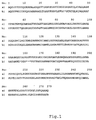
- FIG. 1 shows alignments between subtilisin BPN' (a) (BASBPN) and the novel subtilase of the invention (b).
- subtilase enzyme variants produced or contemplated according to the invention, the following nomenclatures and conventions have been adapted for ease of reference:
- Another method is to use known recognized alignments between subtilases, such as the alignment indicated in WO 91/00345. In most cases the differences will not be of any importance.
- subtilisin BPN' subtilisin BPN'
- Fig. 1 Such an alignments between subtilisin BPN' (BASBPN) and the novel subtilase of the invention is indicated in Fig. 1.
- the novel subtilase according to the invention has 6 deletions in positions 36, 58, 158, 162, 163, and 164 in comparison to BASBPN. These deletions are in Fig. 1 indicated by asterixes (*).
- the notation G195E thus means a substitution of a glycine in position 195 with a glutamic acid.
- the original amino acid residue may be any amino acid residue
- a short hand notation may at times be used indicating only the position and substituted amino acid:
- both the original amino acid(s) and substituted amino acid(s) may comprise any amino acid, then only the position is indicated, e.g. : 170.
- the specific three or one letter codes are used, including the codes Xaa and X to indicate any amino acid residue.
- 170Ser is thus meant to comprise e.g. both a Lys170Ser modification in BASBPN and Arg170Ser modification in the subtilase according to the invention (cf. Fig. 1).
- the substitution of glycine, alanine, serine or threonine for arginine in position 170 would be indicated by to indicate the variants R170G, R170A, R170S, and R170T.
- a deletion of glycine in position 195 will be indicated by:
- deletion of more than one amino acid residue such as the deletion of glycine and leucine in positions 195 and 196 will be designated
- the inserted amino acid residue(s) are numbered by the addition of lower case letters to the position number of the amino acid residue preceding the inserted amino acid residue(s).
- the sequences 194 to 196 would thus be: 194 195 196 BLSAVI A - G - L 194 195 195a 195b 196 Variant A - G - K - A - L
- Variants comprising multiple modifications are separated by pluses, e.g .:
- Tyr167 ⁇ Gly,Ala,Ser,Thr ⁇ +Arg170 ⁇ Gly,Ala,Ser,Thr ⁇ designates the following variants: Tyr167Gly+Arg170Gly, Tyr167Gly+Arg170Ala, Tyr167Gly+Arg170Ser, Tyr167Gly+Arg170Thr, Tyr167Ala+Arg170Gly, Tyr167Ala+Arg170Ala, Tyr167Ala+Arg170Ser, Tyr167Ala+Arg170Thr, Tyr167Ser+Arg170Gly, Tyr167Ser+Arg170Ala, Tyr167Ser+Arg170Ser, Tyr167Ser+Arg170Thr, Tyr167Thr+Arg170Gly, Tyr167Thr+Arg170Ala, Tyr167Thr+Arg170Ser, and Tyr167Thr+Arg170Thr.
- Enzymes cleaving the amide linkages in protein substrates are classified as proteases, or (interchangeably) peptidases (see Walsh, 1979, Enzymatic Reaction Mechanisms . W.H. Freeman and Company, San Francisco, Chapter 3).
- subtilase BPN subtilase BPN'
- a serine protease is an enzyme which catalyzes the hydrolysis of peptide bonds, and in which there is an essential serine residue at the active site (White, Handler and Smith, 1973 "Principles of Biochemistry,” Fifth Edition, McGraw-Hill Book Company, NY, pp. 271-272).
- the bacterial serine proteases have molecular weights in the 20,000 to 45,000 Dalton range. They are inhibited by diisopropyl fluorophosphate. They hydrolyze simple terminal esters and are similar in activity to eukaryotic chymotrypsin, also a serine protease.
- Siezen et al have proposed a sub-group of the serine proteases tentatively designated subtilases, Protein Engng, 4 (1991) 719-737 and Siezen et al. Protein Science 6 (1997) 501-523. They are defined by homology analysis of more than 170 amino acid sequences of serine proteases previously referred to as subtilisin-like proteases. A subtilisin was previously often defined as a serine protease produced by Gram-positive bacteria or fungi, and according to Siezen et al . now is a subgroup of the subtilases. A wide variety of subtilases have been identified, and the amino acid sequence of a number of subtilases has been determined. For a more detailed description of such subtilases and their amino acid sequences reference is made to Siezen et al . (1997).
- subtilisin 168 subtilisin 168
- BASBPN subtilisin BPN'
- BLSCAR subtilisin Carlsberg
- AZCAhASE® AZCAhASE®
- NOVO NORDISK A/S subtilisin DY
- subtilases I-S2 or high alkaline subtilisins
- Sub-group I-S2 proteases are described as highly alkaline subtilisins and comprises enzymes such as subtilisin PB92 (BAALKP) (MAXACAL®, Gist-Brocades NV), subtilisin 309 (BLSAVI)(SAVINASE®, NOVO NORDISK A/S), subtilisin 147 (BLS147) (ESPERASE®, NOVO NORDISK A/S), and alkaline elastase YaB (BSEYAB).
- BAALKP subtilisin PB92
- BLSAVI subtilisin 309
- subtilisin 147 subtilisin 147
- BSEYAB alkaline elastase YaB
- parent subtilase describes a subtilase defined according to Siezen et al. (1991 and 1997). For further details see description of "SUBTILASES" immediately above.
- a parent subtilase may also be a subtilase isolated from a natural source, wherein subsequent modifications have been made while retaining the characteristic of a subtilase.
- a parent subtilase may also be a subtilase which has been prepared by the DNA shuffling technique, such as described by J.E. Ness et al., Nature Biotechnology, 17 , 893-896 (1999). Alternatively the term "parent subtilase” may be termed "wild type subtilase".
- modification(s) used herein is defined to include chemical modification of a subtilase as well as genetic manipulation of the DNA encoding a subtilase.
- the modification(s) can be replacement(s) of the amino acid side chain(s), substitution(s), deletion(s) and/or insertions in or at the amino acid(s) of interest.
- subtilase variant or mutated subtilase means a subtilase that has been produced by an organism which is expressing a mutant gene derived from a parent microorganism which possessed an original or parent gene and which produced a corresponding parent enzyme, the parent gene having been mutated in order to produce the mutant gene from which said mutated subtilase protease is produced when expressed in a suitable host.
- the mutant gene may also be derived from a parent gene produced by DNA shuffling technique.
- the GAP routine of the GCG package version 9.1 can be applied (infra) using the same settings.
- the output from the routine is besides the amino acid alignment the calculation of the "Percent Identity" between the two sequences.
- isolated polynucleotide refers to a polynucleotide, which has been isolated and purified and is thus in a form suitable for use within genetically engineered protein production systems.
- isolated molecules may be those that are separated from their natural environment and include cDNA and genomic clones as well as polynucleotides derived from DNA shuffling experiments or from site-directed autogenesis experiments.
- Isolated polynucleotides of the present invention are free of other genes with which they are ordinarily associated, but may include 5' and 3' untranslated regions such as promoters and terminators.
- isolated nucleic acid sequence may alternatively be termed “isolated DNA sequence, "cloned nucleic acid sequence” or "cloned DNA sequence”.
- isolated indicates that the protein has been removed from its native environment.
- the isolated protein is substantially free of other proteins, particularly other homologous proteins (i.e . "homologous impurities” (see below)).
- An isolated protein is more than 10% pure, preferably more than 20% pure, more preferably more than 30% pure, as determined by SDS-PAGE. Further it is preferred to provide the protein in a highly purified form, i.e., more than 40% pure, more than 60% pure, more than 80% pure, more preferably more than 95% pure, and most preferably more than 99% pure, as determined by SDS-PAGE.
- isolated protein may alternatively be termed “purified protein”.
- homologous impurities means any impurity (e.g. another polypeptide than the subtilase of the invention), which originate from the homologous cell where the subtilase of the invention is originally obtained from.
- the term "obtained from” as used herein in connection with a specific microbial source means that the polynucleotide and/or subtilase produced by the specific source, or by a cell in which a gene from the source has been inserted.
- substrate used in connection with a substrate for a protease should be interpreted in its broadest form as comprising a compound containing at least one peptide bond susceptible to hydrolysis by a subtilisin protease.
- product used in connection with a product derived from a protease enzymatic reaction should, in the context of the present invention, be interpreted to include the products of a hydrolysis reaction involving a subtilase protease.
- a product may be the substrate in a subsequent hydrolysis reaction.
- wash performance is used as an enzyme's ability to remove egg stains present on the object to the cleaned during e.g. wash or hard surface cleaning. See also the "Model Detergent Wash Performance Test” in Example 2, herein.
- the subtilase enzyme having improved wash performance on egg stains is an isolated subtilase which has at least 88% identity with the amino acid sequence shown as amino acids 1 to 269 of SEQ ID NO:2 (i.e. the mature subtilase).
- the subtilase has at least 90%, at least 91%, at least 92%, at least 93%, at least 94%, at least 95%, at least 96%, at least 97%, at least 98%, or at least 99% identity with the amino acid sequence shown as amino acids 1 to 269 of SEQ ID NO:2 (hereinafter "homologous subtilases").
- the isolated subtilase consists of the amino acid sequence shown as amino acids 1 to 269 of SEQ ID NO:2.
- Alignments of sequences and calculation of identity scores can be done using a full Smith-Waterman alignment, useful for both protein and DNA alignments.
- the default scoring matrices BLO-SUM50 and the identity matrix are used for protein and DNA alignments respectively.
- the penalty for the first residue in a gap is -12 for proteins and -16 for DNA, while the penalty for additional residues in a gap is -2 for proteins and -4 for DNA.
- Align is from the Fasta package version v20u6 (W. R. Pearson and D. J. Lipman (1988), "Improved Tools for Biological Sequence Analysis", PNAS 85:2444-2448, and W. R. Pearson (1990) "Rapid and Sensitive Sequence Comparison with FASTP and FASTA” Methods in Enzymology 183:63-98).
- subtilase having the amino acid sequence of SEQ ID NO:2 and various known subtilases were found: BLSAVI BLAP BASBPN BLSCAR SEQ ID NO:2 BLSAVI 100 BLAP 1) 98.1 100 BASBPN 60.4 60.7 100 BLSCAR 60.9 61.3 69.5 100 SEQ ID NO:2 86.6 87.4 59.3 55.8 100 1) BLAP ( Bacillus lentus Alkaline Protease) has been described in US 5,352,604
- the subtilases may also be allelic variants or fragments of the subtilases that have proteolytic activity.
- the polynucleotide of SEQ ID NO:1 or a subsequence or fragment thereof, as well as the amino acid sequence of SEQ ID NO:2 or a fragment thereof, may be used to design a nucleic acid probe to identify and clone DNA encoding subtilases having proteolytic activity from strains of different genera or species according to methods well known in the art.
- probes can be used for hybridization with the genomic or cDNA of the genus or species of interest, following standard Southern blotting procedures, in order to identify and isolate the corresponding gene therein.
- Such probes can be considerably shorter than the entire sequence, but should be at least 15, preferably at least 25, and more preferably at least 35 nucleotides in length. Longer probes can also be used. Both DNA and RNA probes can be used.
- the probes are typically labelled for detecting the corresponding gene (for example, with 32 P, 3 H, 35 S, biotin, or avidin). Such probes are encompassed by the present invention.
- genomic DNA or cDNA library prepared from such other organisms may be screened for DNA that hybridizes with the probes described above and which encodes a subtilase according to the invention.
- Genomic or other DNA from such other organisms may be separated by agarose or polyacrylamide gel electrophoresis, or other separation techniques known by the skilled person.
- DNA from the libraries or the separated DNA may be transferred to and immobilized on nitrocellulose or other suitable carrier materials.
- the carrier material is used in a Southern blot.
- hybridization indicates that the polynucleotide hybridizes to a labelled nucleic acid probe corresponding to the nucleic acid sequence shown in SEQ ID NO:1, its complementary strand, or a subsequence thereof, under low to high stringency conditions. Molecules to which the nucleic acid probe hybridizes under these conditions are detected using X-ray film.
- low to high stringency conditions are defined as pre-hybridization and hybridization at 42°C in 5X SSPE, 0.3% SDS, 200 ⁇ g/ml sheared and denatured salmon sperm DNA, and either 25% formamide for low stringency, 35% formamide for medium stringency, or 50% formamide for high stringency, following standard Southern blotting procedures.
- the carrier material is finally washed three times each for 15 minutes using 2 x SSC, 0.2% SDS preferably at least at 50°C (low stringency), more preferably at least at 55°C (medium stringency), even more preferably at least at 65°C (high stringency).
- stringency conditions are defined as pre-hybridization, hybridization, and washing post-hybridization at 5°C to 10°C below the calculated T m using the calculation according to Bolton and McCarthy (1962, Proceedings of the National Academy of Sciences USA 48:1390) in 0.9 M NaCl, 0.09 M Tris-HCl pH 7.6, 6 mM EDTA, 0.5% NP-40, 1X Denhardt's solution, 1 mM sodium pyrophosphate, 1 mM sodium monobasic phosphate, 0.1 mM ATP, and 0.2 mg of yeast RNA per ml, following standard Southern blotting procedures.
- the carrier material is washed once in 6X SCC plus 0.1% SDS for 15 minutes and twice each for 15 minutes using 6X SSC at 5°C to 10°C below the calculated T m .
- subtilase having the amino acid sequence of SEQ ID NO:2 is combined with a substitution, deletion and/or insertion of one or more amino acid residues in one or more of the following positions (in BASBPN numbering): 27, 36, 56, 76, 87, 97, 101, 104, 120, 123, 167, 170, 222, 224, 235 and 274.
- subtilase variants with different improved properties and a number of those are mentioned in the "Background of the invention” section herein ( vide supra ).
- subtilase of the invention are considered appropriate for combination (in BASBPN numbering):
- insertion of at least one additional amino acid residue in the active site (b) loop region corresponding to insertion of at least one additional amino acid residue from position 95 to position 103 (BASBPN numbering), will confer additional wash performance to the subtilase of the invention.
- at least one additional amino acid residue such as one additional amino acid residue, in the following positions: between positions 98 and 99, and between positions 99 and 100.
- Immunochemical properties are determined by immunological cross-reaction identity tests by the well-known Ouchterlony double immunodiffusion procedure. Specifically, an antiserum containing polyclonal antibodies which are immunoreactive or bind to epitopes of the subtilase having the amino acid sequence of SEQ ID NO:2 are prepared by immunizing rabbits (or other rodents) according to the procedure described by Harboe and Ingild, In N.H. Axelsen, J. Kr ⁇ ll, and B. Weeks, editors, A Manual of Quantitative Immunoelectrophoresis , Blackwell Scientific Publications, 1973, Chapter 23, or Johnstone and Thorpe, Immunochemistry in Practice , Blackwell Scientific Publications, 1982 (more specifically pages 27-31).
- a subtilase having immunochemical identity is a subtilase, which reacts with the antiserum in an identical fashion such as total fusion of precipitates, identical precipitate morphology, and/or identical electrophoretic mobility using a specific immunochemical technique.
- Axelsen, Bock, and Kr ⁇ ll describe a further explanation of immunochemical identity in N.H. Axelsen, J. Kr ⁇ ll, and B. Weeks, editors, A Manual of Quantitative Immunoelectrophoresis, Blackwell Scientific Publications, 1973, Chapter 10.
- a subtilase having partial immunochemical identity is a subtilase, which reacts with the antiserum in a partially identical fashion such as partial fusion of precipitates, partially identical precipitate morphology, and/or partially identical electrophoretic mobility using a specific immunochemical technique.
- Bock and Axelsen describe partial immunochemical identity in N.H. Axelsen, J. Kr ⁇ ll, and B. Weeks, editors, A Manual of Quantitative Immunoelectrophoresis, Blackwell Scientific Publications, 1973, Chapter 11.
- the antibody may also be a monoclonal antibody.
- Monoclonal antibodies may be prepared and used, e.g., according to the methods of E. Harlow and D. Lane, editors, 1988, Antibodies, A Laboratory Manual , Cold Spring Harbor Press, Cold Spring Harbor, New York.
- the present inventors have isolated the gene encoding the subtilase having the amino acid sequence shown in SEQ ID NO:2 and inserted it into E. coli MT173.
- the E. coli MT173 strain harbouring the gene was deposited according to the Budapest Treaty on the International Recognition of the Deposits of Microorganisms for the Purpose of Patent Procedures on 10 February 2000 at the Deutsche Sammlung vpn Mikroorganismen und Zellkulturen GmbH, Mascheroder Weg 1 B, D-38124 Braunschweig, Germany, and designated the accession No. DSM 13306.
- the subtilase has at least 90%, at least 91%, at least 92%, at least 93%, at least 94%, at least 95%, at least 96%, at least 97%, at least 98%, or at least 99% identity with the subtilase encoded by the subtilase encoding part of the polynucleotide cloned into a plasmid fragment present in E. coli MT173 deposited under the accession No. DSM 13306.
- the subtilase of the invention exhibits excellent wash performance on egg stains. Therefore, in order to enable the skilled person - at an early stage of his development work - to select effective and preferred subtilases for this purpose, the present inventors have provided a suitable preliminary test, which can easily be carried out by the skilled person in order to initially assess the performance of the subtilase in question.
- the test "Model Detergent Wash Performance Test” disclosed in Example 2, herein may be employed to assess the efficiency of the selected subtilase.
- the "Model Detergent Wash Performance Test” may be employed to assess the ability of a subtilase, when incorporated in a standard detergent composition, to remove egg stains from a standard textile as compared to a reference system, in this case Savinase® (incorporated in the same model detergent system and tested under identical conditions).
- Savinase® incorporated in the same model detergent system and tested under identical conditions.
- the suitability of a selected subtilase to remove egg stains can be initially investigated, the rationale being that if a selected subtilase does not show a significant improvement in the test compared to Savinase®, it is normally not necessary to carry out further test experiments.
- subtilases which are particular interesting for the purposes described herein, are such subtilases which, when tested in a model detergent composition comprising 6.2% LAS (Nansa 80S) 2% Sodium salt of C 16 -C 18 fatty acid 4% Non-ionic surfactant (Plurafax LF404) 22% Zeolite P 10.5% Na 2 CO 3 4% Na 2 Si 2 O 5 2% Carboxymethylcellulose (CMC) 6.8% Acrylate liquid CP5 40% 20% Sodium perborate (empirical formula NaBO 2 .H 2 O 2 ) 0.2% EDTA 21% Na 2 SO 4 Water (balance) as described in the "Model Detergent Wash Performance Test" herein, shows an improved wash performance on egg stains as compared to Savinase® tested under identical conditions.
- LAS Korean 80S
- Sodium salt of C 16 -C 18 fatty acid 4%
- Non-ionic surfactant Plurafax LF404
- Zeolite P 10.5% Na 2 CO 3 4% Na 2 Si 2 O
- the improvement in the wash performance may be quantified by employing the so-called "Performance Factor" defined in Example 2, herein.
- the subtilase of the invention when tested in the "Wash Performance Test" has a Performance Factor of at least 1, such as at least 1.5, e.g. at least 2, preferably at least 2.5, such as at least 3, e.g. at least 3.5, in particular at least 4, such as at least 4.5, e.g. at least 5.
- subtilase of the invention fulfils the above criteria on at least the stated lowest level, more preferably at the stated intermediate level and most preferably on the stated highest level.
- the subtilase of the invention may be constructed by standard techniques for artificial creation of diversity, such as by DNA shuffling of different subtilase genes (see WO 95/22625 and J.E. Ness et al., Nature Biotechnology, 17 , 893-896 (1999)).
- subtilase of the invention may also be isolated from a natural source, i.e. the subtilase of the invention may, for example, be a bacterial subtilase, e.g. a gram positive bacterial subtilase such as a Bacillus polypeptide, e.g., a Bacillus alkalophilus, Bacillus amyloliquefaciens, Bacillus brevis, Bacillus circulans, Bacillus coagulans, Bacillus lautus, Bacillus lentus, Bacillus licheniformis, Bacillus megaterium, Bacillus stearothermophilus, Bacillus subtilis, or Bacillus thuringiensis subtilase; or a Streptomyces subtilase, e.g., a Streptomyces lividans or Streptomyces murinus subtilase; or a gram negative bacterial subtilase, e.g., an E. coli or
- the subtilase of the present invention may also be a fungal polypeptide, and more preferably a yeast subtilase such as a Candida, Kluyveromyces, Pichia, Saccharomyces, Schizosaccharomyces, or Yarrowia subtilase; or more preferably a filamentous fungal subtilase such as an Acremonium, Aspergillus, Aureobasidium, Cryptococcus, Filibasidium, Fusarium, Humicola, Magnaporthe, Mucor, Myceliophthora, Neocallimastix, Neurospora, Paecilomyces, Penicillium, Piromyces, Schizophyllum, Talaromyces, Thermoascus, Thielavia, Tolypocladium , or Trichoderma subtilase.
- yeast subtilase such as a Candida, Kluyveromyces, Pichia, Saccharomyces, Schizosaccharomyces,
- subtilase is a Saccharomyces carlsbergensis, Saccharomyces cerevisiae, Saccharomyces diastaticus, Saccharomyces douglasii, Saccharomyces kluyveri, Saccharomyces norbensis or Saccharomyces oviformis subtilase.
- the subtilase is an Aspergillus aculeatus, Aspergillus awamori, Aspergillus foetidus, Aspergillus japonicus, Aspergillus nidulans, Aspergillus niger, Aspergillus oryzae, Fusarium bactridioides, Fusarium cerealis, Fusarium crookwellense, Fusarium culmorum, Fusarium graminea - rum, Fusarium graminum, Fusarium heterosporum, Fusarium negundi, Fusarium oxysporum, Fusarium reticulatum, Fusarium roseum, Fusarium sambucinum, Fusarium sarcochroum, Fusarium sporotrichioides, Fusarium sulphureum, Fusarium torulosum, Fusarium trichothecioides, Fusarium fungal bacter
- the invention encompasses both the perfect and imperfect states, and other taxonomic equivalents, e.g. , anamorphs, regardless of the species name by which they are known. Those skilled in the art will readily recognize the identity of appropriate equivalents.
- ATCC American Type Culture Collection
- DSM Deutsche Sammlung von Mikroorganismen und Zellkulturen GmbH
- CBS Centraalbureau Voor Schimmel-cultures
- NRRL Northern Regional Research Center
- subtilases may be identified and obtained from other sources including microorganisms isolated from nature (e.g. , soil, composts, water, etc.) using the above-mentioned probes. Techniques for isolating microorganisms from natural habitats are well known in the art. Similarly screening a genomic or cDNA library of another microorganism may then derive the polynucleotide. Once a polynucleotide encoding a subtilase has been detected with the probe(s), the sequence may be isolated or cloned by utilizing techniques which are known to those of ordinary skill in the art (see, e.g. , Sambrook et al ., 1989, supra) .
- subtilase genes Many methods for cloning a subtilase of the invention and for introducing insertions into genes (e.g. subtilase genes) are well known in the art, cf. the references cited in the "BACKGROUND OF THE INVENTION" section.
- subtilase enzyme of the invention In general standard procedures for cloning of genes and introducing insertions (random and/or site directed) into said genes may be used in order to obtain a subtilase enzyme of the invention.
- suitable techniques reference is made to Examples herein (vide infra) and (Sambrook et al. (1989) Molecular cloning: A laboratory manual, Cold Spring Harbor lab., Cold Spring Harbor, NY; Ausubel, F. M. et al. (eds.) "Current protocols in Molecular Biology”. John Wiley and Sons, 1995; Harwood, C. R., and Cutting, S. M. (eds.) "Molecular Biological Methods for Bacillus”. John Wiley and Sons, 1990); and WO 96/34946.
- a subtilase enzyme of the invention may be constructed by standard techniques for artificial creation of diversity, such as by DNA shuffling of different subtilase genes (WO 95/22625; Stemmer WPC, Nature 370:389-91 (1994)). DNA shuffling of e . g . the gene encoding Savinase® with one or more partial subtilase sequences identified in nature will, after subsequent screening for improved wash performance, provide subtilases according to the invention.
- the present invention also relates to an isolated polynucleotide, which encodes a subtilase of the present invention.
- the polynucleotide has at least 90% identity with the polynucleotide shown as nucleotides 1 to 807 of SEQ ID NO:1.
- the polynucleotide has at least 91%, at least 92%, at least 93%, at least 94%, at least 95%, at least 96%, at least 97%, at least 98% or at least 99% identity with the polynucleotide shown as nucleotides 1 to 807 of SEQ ID NO:1.
- the polynucleotide comprises the polynucleotide shown as nucleotides 1 to 807 of SEQ ID NO:1, an allelic variant thereof, or a fragment thereof capable of encoding a subtilase according to the invention.
- the polynucleotide may consist of the polynucleotide shown as nucleotides 1 to 807 of SEQ ID NO:1.
- the present invention also encompasses polynucleotides that encode a polypeptide having the amino acid sequence of SEQ ID NO:2, which differ from SEQ ID NO:1 by virtue of the degeneracy of the genetic code.
- the present invention also relates to subsequences of SEQ ID NO:1 that encode fragments of SEQ ID NO:2 that have proteolytic activity.
- a subsequence of SEQ ID NO:1 is a polynucleotide encompassed by nucleotides 1 to 807 SEQ ID NO:1 except that one or more nucleotidee from the 5' and/or 3' end have been deleted.
- the techniques used to isolate or clone a polynucleotide encoding a polypeptide include isolation from genomic DNA, preparation from cDNA, or a combination thereof.
- the cloning of the polynucleotides of the present invention from such genomic DNA can be effected, e . g ., by using the well-known polymerase chain reaction (PCR) or antibody screening of expression libraries to detect cloned DNA fragments with shared structural features.
- PCR polymerase chain reaction
- Other nucleic acid amplification procedures such as ligase chain reaction (LCR), ligated activated transcription (LAT) and nucleic acid sequence-based amplification (NASBA) may be used.
- An isolated polynucleotide can, for example, be obtained by standard cloning procedures used in genetic engineering to relocate the polynucleotide from its natural location to a different site where it will be reproduced.
- the cloning procedures may involve excision and isolation of a desired nucleic acid fragment comprising the polynucleotide encoding the subtilase, insertion of the fragment into a vector molecule, and incorporation of the recombinant vector into a host cell where multiple copies or clones of the polynucleotide will be replicated.
- the polynucleotide may be of genomic, cDNA, RNA, semisynthetic, synthetic origin, or any combinations thereof.
- the degree of identity between two polynucleotides is determined is described above.
- subtilases substantially similar to the subtilase may be necessary for the synthesis of subtilases substantially similar to the subtilase.
- the term "substantially similar" to the subtilase refers to non-naturally occurring forms of the subtilase.
- These subtilases may differ in some engineered way from the subtilase isolated from its native source, e.g. , variants that differ in specific activity, thermostability, pH optimum, or the like.
- the variant sequence may be constructed on the basis of the polynucleotide presented as the polypeptide encoding part of SEQ ID NO:1, e.g.
- nucleotide substitutions which do not give rise to another amino acid sequence of the subtilase encoded by the nucleic acid sequence, but which correspond to the codon usage of the host organism intended for production of the enzyme, or by introduction of nucleotide substitutions which may give rise to a different amino acid sequence.
- nucleotide substitution see, e.g. , Ford et al ., 1991, Protein Expression and Purification 2: 95-107.
- amino acid residues essential to the activity of the polypeptide encoded by the isolated polynucleotide of the invention may be identified according to procedures known in the art, such as site-directed mutagenesis or alanine-scanning mutagenesis (see, e.g ., Cunningham and Wells, 1989, Science 244: 1081-1085). In the latter technique, mutations are introduced at every positively charged residue in the molecule, and the resultant mutant molecules are tested for proteolytic activity to identify amino acid residues that are critical to the activity of the molecule.
- Sites of substrate-enzyme interaction can also be determined by analysis of the three-dimensional structure as determined by such techniques as nuclear magnetic resonance analysis, crystallography or photoaffinity labelling (see, e.g ., de Vos et al., 1992, Science 255: 306-312; Smith et al., 1992, Journal of Molecular Biology 224: 899-904; Wlodaver et al., 1992, FEBS Letters 309: 59-64).
- the present invention also relates to nucleic acid constructs comprising a polynucleotide of the present invention operably linked to one or more control sequences capable of directing the expression of the polypeptide in a suitable host cell.
- An isolated polynucleotide encoding a subtilase of the present invention may be manipulated in a variety of ways to provide for expression of the subtilase. Manipulation of the polynucleotide prior to its insertion into a vector may be desirable or necessary depending on the expression vector. The techniques for modifying polynucleotides utilizing recombinant DNA methods are well known in the art.
- control sequences include all components that are necessary or advantageous for the expression of a subtilase of the present invention.
- Each control sequence may be native or foreign to the polynucleotide encoding the subtilase.
- control sequences include, but are not limited to, a leader, polyadenylation sequence, propeptide sequence, promoter, signal peptide sequence, and transcription terminator.
- the control sequences include a promoter, and transcriptional and translational stop signals.
- the control sequences may be provided with linkers for the purpose of introducing specific restriction sites facilitating ligation of the control sequences with the coding region of the polynucleotide encoding a subtilase.
- the control sequence may be an appropriate promoter sequence, a polynucleotide that is recognized by a host cell for expression of the nucleic acid sequence.
- the promoter sequence contains transcriptional control sequences that mediate the expression of the subtilase.
- the promoter may be any polynucleotide that shows transcriptional activity in the host cell of choice including mutant, truncated, and hybrid promoters, and may be obtained from genes encoding extracellular or intracellular subtilases either homologous or heterologous to the host cell.
- Suitable promoters for directing the transcription of the nucleic acid constructs of the present invention are the promoters obtained from the E. coli lac operon, Streptomyces coelicolor agarase gene (dagA), Bacillus subtilis levansucrase gene (sacB), Bacillus licheniformis alpha-amylase gene ( amyL ), Bacillus stearothermophilus maltogenic amylase gene ( amyM ), Bacillus amyloliquefaciens alpha-amylase gene ( amyQ ), Bacillus licheniformis penicillinase gene (penP), Bacillus subtilis xylA and xylB genes, and prokaryotic beta-lactamase gene (Villa-Kamaroff et al., 1978, Proceedings of the National Academy of Sciences USA 75: 3727-3731), as well as the tac promoter (DeBoer et al.
- promoters for directing the transcription of the nucleic acid constructs of the present invention in a filamentous fungal host cell are promoters obtained from the genes for Aspergillus oryzae TAKA amylase, Rhizomucor miehei aspartic proteinase, Aspergillus niger neutral alpha-amylase, Aspergillus niger acid stable alpha-amylase, Aspergillus niger or Aspergillus awamori glucoamylase ( glaA ), Rhizomucor miehei lipase, Aspergillus oryzae alkaline protease, Aspergillus oryzae triose phosphate isomerase, Aspergillus nidulans acetamidase, and Fusarium oxysporum trypsin-like protease (WO 96/00787), as well as the NA2-tpi promoter (a hybrid of the promoters from the genes
- useful promoters are obtained from the genes for Saccharomyces cerevisiae enolase (ENO-1), Saccharomyces cerevisiae galactokinase (GALI), Saccharomyces cerevisiae alcohol dehydrogenase/glyceraldehyde-3-phosphate dehydrogenase (ADH2/GAP), and Saccharomyces cerevisiae 3-phosphoglycerate kinase.
- ENO-1 Saccharomyces cerevisiae enolase
- GALI Saccharomyces cerevisiae galactokinase
- ADH2/GAP Saccharomyces cerevisiae alcohol dehydrogenase/glyceraldehyde-3-phosphate dehydrogenase
- Saccharomyces cerevisiae 3-phosphoglycerate kinase Other useful promoters for yeast host cells are described by Romanos et al., 1992, Yeast 8: 423-488
- the control sequence may also be a suitable transcription terminator sequence, a sequence recognized by a host cell to terminate transcription.
- the terminator sequence is operably linked to the 3' terminus of the polynucleotide encoding the subtilase. Any terminator that is functional in the host cell of choice may be used in the present invention.
- Preferred terminators for filamentous fungal host cells are obtained from the genes for Aspergillus oryzae TAKA amylase, As pergillus niger glucoamylase, Aspergillus nidulans anthranilate synthase, Aspergillus niger alpha-glucosidase, and Fusarium oxysporum trypsin-like protease.
- Preferred terminators for yeast host cells are obtained from the genes for Saccharomyces cerevisiae enolase, Saccharomyces cerevisiae cytochrome C (CYC1), and Saccharomyces cerevisiae glyceraldehyde-3-phosphate dehydrogenase. Romanos et al., 1992, supra, describe other useful terminators for yeast host cells.
- the control sequence may also be a suitable leader sequence, a non-translated region of an mRNA that is important for translation by the host cell.
- the leader sequence is operably linked to the 5' terminus of the polynucleotide encoding the polypeptide. Any leader sequence that is functional in the host cell of choice may be used in the present invention.
- Preferred leaders for filamentous fungal host cells are obtained from the genes for Aspergillus oryzae TAKA amylase and Aspergillus nidulans triose phosphate isomerase.
- Suitable leaders for yeast host cells are obtained from the genes for Saccharomyces cerevisiae enolase (ENO-1), Saccharomyces cerevisiae 3-phosphoglycerate kinase, Saccharomyces cerevisiae alpha-factor, and Saccharomyces cerevisiae alcohol dehydrogenase/glyceraldehyde-3-phosphate dehydrogenase (ADH2/GAP).
- the control sequence may also be a polyadenylation sequence, a sequence operably linked to the 3' terminus of the polynucleotide and which, when transcribed, is recognized by the host cell as a signal to add polyadenosine residues to transcribed mRNA. Any polyadenylation sequence that is functional in the host cell of choice may be used in the present invention.
- Preferred polyadenylation sequences for filamentous fungal host cells are obtained from the genes for Aspergillus oryzae TAKA amylase, Aspergillus niger glucoamylase, Aspergillus nidulans anthranilate synthase, Fusarium oxysporum trypsin-like protease, and Aspergillus niger alpha-glucosidase.
- the control sequence may also be a signal peptide coding region that codes for an amino acid sequence linked to the amino terminus of a subtilase and directs the encoded subtilase into the cell's secretory pathway.
- the 5' end of the coding sequence of the polynucleotide may inherently contain a signal peptide coding region naturally linked in translation reading frame with the segment of the coding region that encodes the secreted subtilase.
- the 5' end of the coding sequence may contain a signal peptide coding region that is foreign to the coding sequence.
- the foreign signal peptide coding region may be required where the coding sequence does not naturally contain a signal peptide coding region.
- the foreign signal peptide coding region may simply replace the natural signal peptide coding region in order to enhance secretion of the subtilase.
- any signal peptide coding region that directs the expressed subtilase into the secretory pathway of a host cell of choice may be used in the present invention.
- Effective signal peptide coding regions for bacterial host cells are the signal peptide coding regions obtained from the genes for Bacillus NCIB 11837 maltogenic amylase, Bacillus stearothermophilus alpha-amylase, Bacillus licheniformis subtilisin, Bacillus licheniformis beta-lactamase, Bacillus stearothermophilus neutral proteases ( nprT, nprS, nprM ), and Bacillus subtilis prsA. Further signal peptides are described by Simonen and Palva, 1993, Microbiological Reviews 57: 109-137.
- Effective signal peptide coding regions for filamentous fungal host cells are the signal peptide coding regions obtained from the genes for Aspergillus oryzae TAKA amylase, Aspergillus niger neutral amylase, Aspergillus niger glucoamylase, Rhizomucor miehei aspartic proteinase, Humicola insolens cellulase, and Humicola lanuginosa lipase.
- Useful signal peptides for yeast host cells are obtained from the genes for Saccharomyces cerevisiae alpha-factor and Saccharomyces cerevisiae invertase. Romanos et al., 1992, supra, describe other useful signal peptide coding regions.
- the control sequence may also be a propeptide coding region that codes for an amino acid sequence positioned at the amino terminus of a subtilase.
- the resultant polypeptide is known as a proenzyme or propolypeptide (or a zymogen in some cases).
- a propolypeptide is generally inactive and can be converted to a mature active polypeptide by catalytic or autocatalytic cleavage of the propeptide from the propolypeptide.
- the propeptide coding region may be obtained from the genes for Bacillus subtilis alkaline protease (aprE), Bacillus subtilis neutral protease (nprT) , Saccharomyces cerevisiae alpha-factor, Rhizomucor miehei aspartic proteinase, and Myceliophthora thermophila laccase (WO 95/33836).
- aprE Bacillus subtilis alkaline protease
- nprT Bacillus subtilis neutral protease
- Saccharomyces cerevisiae alpha-factor Saccharomyces cerevisiae alpha-factor
- Rhizomucor miehei aspartic proteinase Rhizomucor miehei aspartic proteinase
- Myceliophthora thermophila laccase WO 95/33836
- the propeptide region is positioned next to the amino terminus of a subtilase and the signal peptide region is positioned next to the amino terminus of the propeptide region.
- regulatory sequences that allow the regulation of the expression of the polypeptide relative to the growth of the host cell.
- regulatory systems are those which cause the expression of the gene to be turned on or off in response to a chemical or physical stimulus, including the presence of a regulatory compound.
- Regulatory systems in prokaryotic systems include the lac, tac , and trp operator systems.
- yeast the ADH2 system or GAL1 system may be used.
- filamentous fungi the TAKA alpha-amylase promoter, Aspergillus niger glucoamylase promoter, and Aspergillus oryzae glucoamylase promoter may be used as regulatory sequences.
- Other examples of regulatory sequences are those that allow for gene amplification.
- these include the dihydrofolate reductase gene that is amplified in the presence of methotrexate, and the metallothionein genes that are amplified with heavy metals.
- the polynucleotide encoding the polypeptide would be operably linked with the regulatory sequence.
- the present invention also relates to a recombinant expression vector comprising the nucleic acid construct of the invention, a promoter, and transcriptional and translational stop signals.
- the recombinant expression vector comprising the nucleic acid construct encoding the enzyme of the invention may be any vector that may conveniently be subjected to recombinant DNA procedures.
- the choice of vector will often depend on the host cell into which it is to be introduced.
- the vector may be an autonomously replicating vector, i.e. a vector that exists as an extrachromosomal entity, the replication of which is independent of chromosomal replication, e.g. a plasmid.
- the vector may be one that on introduction into a host cell is integrated into the host cell genome in part or in its entirety and replicated together with the chromosome(s) into which it has been integrated.
- the vector is preferably an expression vector in which the DNA sequence encoding the enzyme of the invention is operably linked to additional segments required for transcription of the DNA.
- the expression vector is derived from plasmid or viral DNA, or may contain elements of both.
- operably linked indicates that the segments are arranged so that they function in concert for their intended purposes, e.g. transcription initiates in a promoter and proceeds through the DNA sequence coding for the enzyme.
- the promoter may be any DNA sequence that shows transcriptional activity in the host cell of choice and may be derived from genes encoding proteins either homologous or heterologous to the host cell.
- suitable promoters for use in bacterial host cells include the promoter of the Bacillus stearothermophilus maltogenic amylase gene, the Bacillus licheniformis alpha-amylase gene, the Bacillus amyloliquefaciens alpha-amylase gene, the Bacillus subtilis alkaline protease gene, or the Bacillus pumilus xylosidase gene, or the phage Lambda P R or P L promoters or the E. coli lac , trp or tac promoters.
- the DNA sequence encoding the enzyme of the invention may also, if necessary, be operably connected to a suitable terminator.
- the recombinant vector of the invention may further comprise a DNA sequence enabling the vector to replicate in the host cell in question.
- the vector may also comprise a selectable marker, e.g. a gene the product of which complements a defect in the host cell, or a gene encoding resistance to e.g. antibiotics like kanamycin, chloramphenicol, erythromycin, tetracycline, spectinomycine, or the like, or resistance to heavy metals or herbicides.
- a selectable marker e.g. a gene the product of which complements a defect in the host cell, or a gene encoding resistance to e.g. antibiotics like kanamycin, chloramphenicol, erythromycin, tetracycline, spectinomycine, or the like, or resistance to heavy metals or herbicides.
- a secretory signal sequence (also known as a leader sequence, prepro sequence or pre sequence) may be provided in the recombinant vector.
- the secretory signal sequence is joined to the DNA sequence encoding the enzyme in the correct reading frame.
- Secretory signal sequences are commonly positioned 5' to the DNA sequence encoding the enzyme.
- the secretory signal sequence may be that normally associated with the enzyme or may be from a gene encoding another secreted protein.
- the present invention also relates to a recombinant host cell comprising the nucleic acid construct of the invention.
- the DNA sequence encoding the present enzyme introduced into the host cell may be either homologous or heterologous to the host in question. If homologous to the host cell, i.e. produced by the host cell in nature, it will typically be operably connected to another promoter sequence or, if applicable, another secretory signal sequence and/or terminator sequence than in its natural environment.
- the term "homologous” is intended to include a DNA sequence encoding an enzyme native to the host organism in question.
- heterologous is intended to include a DNA sequence not expressed by the host cell in nature.
- the DNA sequence may be from another organism, or it may be a synthetic sequence.
- the host cell into which the DNA construct or the recombinant vector of the invention is introduced may be any cell that is capable of producing the present enzyme and includes bacteria, yeast, fungi and higher eukaryotic cells including plants.
- Examples of bacterial host cells which, on cultivation, are capable of producing the enzyme of the invention are gram-positive bacteria such as strains of Bacillus, such as strains of B. subtilis, B. licheniformis, B. lentus, B. brevis, B. stearothermophilus, B. alkalophilus, B. amyloliquefaciens, B. coagulans, B. circulans, B. lautus, B. megaterium or B. thuringiensis, in particular B. lentus, or strains of Streptomyces, such as S. lividans or S. murinus , or gramnegative bacteria such as Escherichia coli.
- Bacillus such as strains of B. subtilis, B. licheniformis, B. lentus, B. brevis, B. stearothermophilus, B. alkalophilus, B. amyloliquefaciens, B. coagulans, B. circulans, B. lautus,
- the transformation of the bacteria may be effected by protoplast transformation, electroporation, conjugation, or by using competent cells in a manner known per se (cf. Sambrook et al., supra).
- the enzyme When expressing the enzyme in bacteria such as E. coli, the enzyme may be retained in the cytoplasm, typically as insoluble granules (known as inclusion bodies), or may be directed to the periplasmic space by a bacterial secretion sequence. In the former case, the cells are lysed and the granules are recovered and denatured after which the enzyme is refolded by diluting the denaturing agent. In the latter case, the enzyme may be recovered from the periplasmic space by disrupting the cells, e.g. by sonication or osmotic shock, to release the contents of the periplasmic space and recovering the enzyme.
- the enzyme When expressing the enzyme in gram-positive bacteria such as Bacillus or Streptomyces strains, the enzyme may be retained in the cytoplasm, or may be directed to the extracellular medium by a bacterial secretion sequence. In the latter case, the enzyme may be recovered from the medium as described below.
- the fungal host cell is a yeast cell.
- yeast as used herein includes ascosporogenous yeast (Endomycetales), basidiosporogenous yeast, and yeast belonging to the Fungi Imperfecti (Blastomycetes). Since the classification of yeast may change in the future, for the purposes of this invention, yeast shall be defined as described in Biology and Activities of Yeast (Skinner, F.A., Passmore, S.M., and Davenport, R.R., eds., Soc. App. Bacteriol. Symposium Series No. 9, 1980).
- the yeast host cell is a Candida, Hansenula , Kluyveromyces, Pichia, Saccharomyces, Schizosaccharomyces , or Yarrowia cell.
- the yeast host cell is a Saccharomyces carlsbergensis, Saccharomyces cerevisiae, Saccharomyces diastaticus, Saccharomyces douglasii, Saccharomyces kluyveri, Saccharomyces norbensis or Saccharomyces oviformis cell.
- the yeast host cell is a Kluyveromyces lactis cell.
- the yeast host cell is a Yarrowia lipolytica cell.
- the fungal host cell is a filamentous fungal cell.
- filamentous fungi include all filamentous forms of the subdivision Eumycota and Oomycota (as defined by Hawksworth et al ., 1995, supra ).
- the filamentous fungi are characterized by a mycelial wall composed of chitin, cellulose, glucan, chitosan, mannan, and other complex polysaccharides.
- Vegetative growth is by hyphal elongation and carbon catabolism is obligately aerobic.
- vegetative growth by yeasts such as Saccharomyces cerevisiae is by budding of a unicellular thallus and carbon catabolism may be fermentative.
- the filamentous fungal host cell is a cell of a species of, but not limited to, Acre monium, Aspergillus, Fusarium, Humicola, Mucor, Myceliophthora, Neurospora, Penicillium, Thielavia, Tolypocladium, or Trichoderma.
- the filamentous fungal host cell is an Aspergillus awamori, Aspergillus foetidus, Aspergillus japonicus, Aspergillus nidulans, Aspergillus niger or As pergillus oryzae cell.
- the filamentous fungal host cell is a Fusarium bactridioides, Fusarium cerealis, Fusarium crookwellense, Fusarium culmorum, Fusarium graminearum, Fusarium graminum, Fusarium heterosporum, Fusarium negundi, Fusarium oxysporum, Fusarium reticulatum, Fusarium roseum , Fusarium sambucinum , Fusarium sarcochroum, Fusarium sporotrichioides, Fusarium sulphureum, Fusarium torulosum, Fusarium trichothecioides, or Fusarium venenatum cell.
- Fusarium bactridioides Fusarium cerealis, Fusarium crookwellense, Fusarium culmorum, Fusarium graminearum, Fusarium graminum, Fusarium heterosporum, Fus
- the filamentous fungal parent cell is a Fusarium venenatum (Nirenberg sp. nov.) cell.
- the filamentous fungal host cell is a Humicola insolens, Humicola lanuginosa, Mucor miehei, Myceliophthora thermophila, Neurospora crassa , Penicillium purpurogenum, Thielavia terrestris, Trichoderma harzianum, Trichoderma koningii , Trichoderma longibrachiatum, Trichoderma reesei, or Trichoderma viride cell.
- Fungal cells may be transformed by a process involving protoplast formation, transformation of the protoplasts, and regeneration of the cell wall in a manner known per se. Suitable procedures for transformation of Aspergillus host cells are described in EP 238 023 and Yelton et al., 1984, Proceedings of the National Academy of Sciences USA 81: 1470-1474. Suitable methods for transforming Fusarium species are described by Malardier et al., 1989, Gene 78: 147-156 and WO 96/00787. Yeast may be transformed using the procedures described by Becker and Guarente, In Abelson, J.N.
- the present invention further relates to a method for producing a subtilase of the invention, the method comprising:
- subtilase composition characterized in being free from homologous impurities.
- homologous impurities means any impurities (e.g. other polypeptides than the enzyme of the invention) that originate from the homologous cell where the enzyme of the invention is originally obtained from.
- the medium used to culture the transformed host cells may be any conventional medium suitable for growing the host cells in question.
- the expressed subtilase may conveniently be secreted into the culture medium and may be recovered therefrom by well-known procedures including separating the cells from the medium by centrifugation or filtration, precipitating proteinaceous components of the medium by means of a salt such as ammonium sulfate, followed by chromatographic procedures such as ion exchange chromatography, affinity chromatography, or the like.
- a subtilase enzyme of the invention may be used for a number of industrial applications, in particular within the detergent industry.
- the present invention also relates to a cleaning or detergent composition, preferably a laundry or dish washing composition, comprising the subtilase enzyme of the invention.
- cleaning and detergent compositions are well described in the art and reference is made to WO 96/34946; WO 97/07202; WO 95/30011 for further description of suitable cleaning and detergent compositions.
- the enzyme of the invention may be added to and thus become a component of a cleaning or detergent composition.
- the detergent composition of the invention may for example be formulated as a hand or machine laundry detergent composition including a laundry additive composition suitable for pretreatment of stained fabrics and a rinse added fabric softener composition, or be formulated as a detergent composition for use in general household hard surface cleaning operations, or be formulated for hand or machine dishwashing operations.
- the invention provides a detergent additive comprising the subtilase enzyme of the invention.
- the detergent additive as well as the detergent composition may comprise one or more other enzymes such as another protease, a lipase, a cutinase, an amylase, a carbohydrase, a cellulase, a pectinase, a mannanase, an arabinase, a galactanase, a xylanase, an oxidase, e.g., a laccase, and/or a peroxidase.
- another protease such as another protease, a lipase, a cutinase, an amylase, a carbohydrase, a cellulase, a pectinase, a mannanase, an arabinase, a galactanase, a xylanase,
- the properties of the chosen enzyme(s) should be compatible with the selected detergent, (i.e. pH-optimum, compatibility with other enzymatic and non-enzymatic ingredients, etc.), and the enzyme(s) should be present in effective amounts.
- proteases include those of animal, vegetable or microbial origin. Microbial origin is preferred. Chemically modified or protein engineered mutants are included.
- the protease may be a serine protease or a metallo protease, preferably an alkaline microbial protease or a trypsin-like protease.
- alkaline proteases are subtilisins, especially those derived from Bacillus, e.g., subtilisin Novo, subtilisin Carlsberg, subtilisin 309, subtilisin 147 and subtilisin 168 (described in WO 89/06279).
- trypsin-like proteases are trypsin (e.g. of porcine or bovine origin) and the Fusarium protease described in WO 89/06270 and WO 94/25583.
- Examples of useful proteases are the variants described in WO 92/19729, WO 98/20115, WO 98/20116, and WO 98/34946, especially the variants with substitutions in one or more of the following positions: 27, 36, 57, 76, 87, 97, 101, 104, 120, 123, 167, 170, 194, 206, 218, 222, 224, 235 and 274.
- Preferred commercially available protease enzymes include AlcalaseTM, SavinaseTM, PrimaseTM, DuralaseTM, EsperaseTM, and KannaseTM (Novo Nordisk A/S), MaxataseTM, MaxacalTM, MaxapemTM, ProperaseTM, PurafectTM, Purafect OxPTM, FN2TM, and FN3TM (Genencor International Inc.).
- Suitable lipases include those of bacterial or fungal origin. Chemically modified or protein engineered mutants are included. Examples of useful lipases include lipases from Humicola ( synonym Thermomyces), e.g. from H. lanuginosa (T. lanuginosus) as described in EP 258 068 and EP 305 216 or from H. insolens as described in WO 96/13580, a Pseudomonas lipase, e.g. from P. alcaligenes or P. pseudoalcaligenes (EP 218 272), P. cepacia (EP 331 376), P. stutzeri (GB 1,372,034), P.
- Humicola synonym Thermomyces
- H. lanuginosa T. lanuginosus
- P. insolens as described in WO 96/13580
- Pseudomonas lipase e.g. from P. alcaligenes or P.
- lipase variants such as those described in WO 92/05249, WO 94/01541, EP 407 225, EP 260 105, WO 95/35381, WO 96/00292, WO 95/30744, WO 94/25578, WO 95/14783, WO 95/22615, WO 97/04079 and WO 97/07202.
- LipolaseTM and Lipolase UltraTM are preferred commercially available lipase enzymes.
- Amylases include those of bacterial or fungal origin. Chemically modified or protein engineered mutants are included. Amylases include, for example, ⁇ -amylases obtained from Bacillus, e.g. a special strain of B. licheniformis , described in more detail in GB 1,296,839.
- Examples of useful amylases are the variants described in WO 94/02597, WO 94/18314, WO 96/23873, and WO 97/43424, especially the variants with substitutions in one or more of the following positions: 15, 23, 105, 106, 124, 128, 133, 154, 156, 181, 188, 190, 197, 202, 208, 209, 243, 264, 304, 305, 391, 408, and 444.
- amylases are DuramylTM, TermamylTM, FungamylTM and BANTM (Novo Nordisk A/S), RapidaseTM and PurastarTM (from Genencor International Inc.).
- Suitable cellulases include those of bacterial or fungal origin. Chemically modified or protein engineered mutants are included. Suitable cellulases include cellulases from the genera Bacillus , Pseudomonas, Humicola, Fusarium, Thielavia, Acremonium, e.g. the fungal cellulases produced from Humicola insolens, Myceliophthora thermophila and Fusarium oxysporum disclosed in US 4,435,307, US 5,648,263, US 5,691,178, US 5,776,757 and WO 89/09259.
- cellulases are the alkaline or neutral cellulases having colour care benefits.
- Examples of such cellulases are cellulases described in EP 0 495 257, EP 0 531 372, WO 96/11262, WO 96/29397, WO 98/08940.
- Other examples are cellulase variants such as those described in WO 94/07998, EP 0 531 315, US 5,457,046, US 5,686,593, US 5,763,254, WO 95/24471, WO 98/12307 and PCT/DK98/00299.
- cellulases include CelluzymeTM, and CarezymeTM (Novo Nordisk A/S), ClazinaseTM, and Puradax HATM (Genencor International Inc.), and KAC-500(B)TM (Kao Corporation).
- Peroxidases/Oxidases include those of plant, bacterial or fungal origin. Chemically modified or protein engineered mutants are included. Examples of useful peroxidases include peroxidases from Coprinus, e.g. from C. cinereus, and variants thereof as those described in WO 93/24618, WO 95/10602, and WO 98/15257.
- peroxidases include GuardzymeTM (Novo Nordisk A/S).
- the detergent enzyme(s) may be included in a detergent composition by adding separate additives containing one or more enzymes, or by adding a combined additive comprising all of these enzymes.
- a detergent additive of the invention i.e. a separate additive or a combined additive, can be formulated e.g. as a granulate, a liquid, a slurry, etc.
- Preferred detergent additive formulations are granulates, in particular non-dusting granulates, liquids, in particular stabilized liquids, or slurries.
- Non-dusting granulates may be produced, e.g., as disclosed in US 4,106,991 and 4,661,452 and may optionally be coated by methods known in the art.
- waxy coating materials are poly(ethylene oxide) products (polyethylene glycol, PEG) with mean molar weights of 1000 to 20000; ethoxylated nonylphenols having from 16 to 50 ethylene oxide units; ethoxylated fatty alcohols in which the alcohol contains from 12 to 20 carbon atoms and in which there are 15 to 80 ethylene oxide units; fatty alcohols; fatty acids; and mono- and di- and triglycerides of fatty acids.
- film-forming coating materials suitable for application by fluid bed techniques are given in GB 1483591.
- Liquid enzyme preparations may, for instance, be stabilized by adding a polyol such as propylene glycol, a sugar or sugar alcohol, lactic acid or boric acid according to established methods.
- Protected enzymes may be prepared according to the method disclosed in EP 238,216.
- the detergent composition of the invention may be in any convenient form, e.g., a bar, a tablet, a powder, a granule, a paste or a liquid.
- a liquid detergent may be aqueous, typically containing up to 70% water and 0-30% organic solvent, or non-aqueous.
- the detergent composition typically comprises one or more surfactants, which may be non-ionic including semi-polar and/or anionic and/or cationic and/or zwitterionic.
- the surfactants are typically present at a level of from 0.1% to 60% by weight.
- the detergent will usually contain from about 1% to about 40% of an anionic surfactant such as linear alkylbenzenesulfonate, alpha-olefinsulfonate, alkyl sulfate (fatty alcohol sulfate), alcohol ethoxysulfate, secondary alkanesulfonate, alpha-sulfo fatty acid methyl ester, alkyl- or alkenylsuccinic acid or soap.
- an anionic surfactant such as linear alkylbenzenesulfonate, alpha-olefinsulfonate, alkyl sulfate (fatty alcohol sulfate), alcohol ethoxysulfate, secondary alkanesulfonate, alpha
- the detergent When included therein the detergent will usually contain from about 0.2% to about 40% of a non-ionic surfactant such as alcohol ethoxylate, nonylphenol ethoxylate, alkylpolyglycoside, alkyldimethylamineoxide, ethoxylated fatty acid monoethanolamide, fatty acid monoethanolamide, polyhydroxy alkyl fatty acid amide, or N-acyl N-alkyl derivatives of glucosamine (“glucamides").
- a non-ionic surfactant such as alcohol ethoxylate, nonylphenol ethoxylate, alkylpolyglycoside, alkyldimethylamineoxide, ethoxylated fatty acid monoethanolamide, fatty acid monoethanolamide, polyhydroxy alkyl fatty acid amide, or N-acyl N-alkyl derivatives of glucosamine (“glucamides”).
- glucamides N-acyl N-alkyl derivatives of glucosamine
- the detergent may contain 0-65% of a detergent builder or complexing agent such as zeolite, diphosphate, triphosphate, phosphonate, carbonate, citrate, nitrilotriacetic acid, ethylenediaminetetraacetic acid, diethylenetriaminepentaacetic acid, alkyl- or alkenylsuccinic acid, soluble silicates or layered silicates (e.g. SKS-6 from Hoechst).
- a detergent builder or complexing agent such as zeolite, diphosphate, triphosphate, phosphonate, carbonate, citrate, nitrilotriacetic acid, ethylenediaminetetraacetic acid, diethylenetriaminepentaacetic acid, alkyl- or alkenylsuccinic acid, soluble silicates or layered silicates (e.g. SKS-6 from Hoechst).
- the detergent may comprise one or more polymers.
- examples are carboxymethylcellulose, poly(vinylpyrrolidone), poly (ethylene glycol), poly(vinyl alcohol), poly(vinylpyridine-N-oxide), poly(vinylimidazole), polycarboxylates such as polyacrylates, maleic/acrylic acid copolymers and lauryl methacrylate/acrylic acid copolymers.
- the detergent may contain a bleaching system that may comprise a H2O2 source such as perborate or percarbonate that may be combined with a peracid-forming bleach activator such as tetraacetylethylenediamine or nonanoyloxybenzenesulfonate.
- a bleaching system may comprise peroxyacids of e.g. the amide, imide, or sulfone type.
- the enzyme(s) of the detergent composition of the invention may be stabilized using conventional stabilizing agents, e.g., a polyol such as propylene glycol or glycerol, a sugar or sugar alcohol, lactic acid, boric acid, or a boric acid derivative, e.g., an aromatic borate ester, or a phenyl boronic acid derivative such as 4-formylphenyl boronic acid, and the composition may be formulated as described in e.g. WO 92/19709 and WO 92/19708.
- a polyol such as propylene glycol or glycerol
- a sugar or sugar alcohol lactic acid, boric acid, or a boric acid derivative, e.g., an aromatic borate ester, or a phenyl boronic acid derivative such as 4-formylphenyl boronic acid
- the detergent may also contain other conventional detergent ingredients such as e.g. fabric conditioners including clays, foam boosters, suds suppressors, anti-corrosion agents, soil-suspending agents, anti-soil redeposition agents, dyes, bactericides, optical brighteners, hydrotropes, tarnish inhibitors, or perfumes.
- fabric conditioners including clays, foam boosters, suds suppressors, anti-corrosion agents, soil-suspending agents, anti-soil redeposition agents, dyes, bactericides, optical brighteners, hydrotropes, tarnish inhibitors, or perfumes.
- any enzyme in particular the enzyme of the invention, may be added in an amount corresponding to 0.01-100 mg of enzyme protein per litre of wash liquor, preferably 0.05-5 mg of enzyme protein per litre of wash liquor, in particular 0.1-1 mg of enzyme protein per litre of wash liquor.
- the enzyme of the invention may additionally be incorporated in the detergent formulations disclosed in WO 97/07202, which is hereby incorporated as reference.
- a granular fabric cleaning composition in accordance with the invention may be prepared as follows: Sodium linear C 12 alkyl benzene sulfonate 6.5 Sodium sulfate 15.0 Zeolite A 26.0 Sodium nitrilotriacetate 5.0 Enzyme 0.1 PVP 0.5 TAED 3.0 Boric acid 4.0 Perborate 18.0 Phenol sulfonate 0.1 Minors up to 100%
- a compact granular fabric cleaning composition in accord with the invention may be prepared as follows: 45AS 8.0 25E3S 2.0 25E5 3.0 25E3 3.0 TFAA 2.5 Zeolite A 17.0 NaSKS-6 12.0 Citric acid 3.0 Carbonate 7.0 MA/AA 5.0 CMC 0.4 Enzyme 0.1 TAED 6.0 Percarbonate 22.0 EDDS 0.3 Granular suds suppressor 3.5 water/minors Up to 100%
- Granular fabric cleaning compositions in accordance with the invention that are especially useful in the laundering of coloured fabrics were prepared as follows: LAS 10.7 - TAS 2.4 - TFAA - 4.0 45AS 3.1 10.0 45E7 4.0 - 25E3S - 3.0 68E11 1.8 - 25E5 - 8.0 Citrate 15.0 7.0 Carbonate - 10.0 Citric acid 2.5 3.0 Zeolite A 32.1 25.0 Na-SKS-6 - 9.0 MA/AA 5.0 5.0 DETPMP 0.2 0.8 Enzyme 0.10 0.05 Silicate 2.5 - Sulphate 5.2 3.0 PVP 0.5 - Poly (4-vinylpyridine)-N-Oxide/copolymer of vinylimidazole and vinylpyrrolidone - 0.2 Perborate 1.0 - Phenol sulfonate 0.2 - Water/Minors Up to 100%
- Granular fabric cleaning compositions in accordance with the invention which provide "Softening through the wash” capability may be prepared as follows: 45AS - 10.0 LAS 7.6 - 68AS 1.3 - 45E7 4.0 - 25E3 - 5.0 Coco-alkyl-dimethyl hydroxyethyl ammonium chloride 1.4 1.0 Citrate 5.0 3.0 Na-SKS-6 - 11.0 Zeolite A 15.0 15.0 MA/AA 4.0 4.0 DETPMP 0.4 0.4 Perborate 15.0 - Percarbonate - 15.0 TAED 5.0 5.0 Smectite clay 10.0 10.0 HMWPEO - 0.1 Enzyme 0.10 0.05 Silicate 3.0 5.0 Carbonate 10.0 10.0 Granular suds suppressor 1.0 4.0 CMC 0.2 0.1 Water/Minors Up to 100%
- Heavy duty liquid fabric cleaning compositions in accordance with the invention may be prepared as follows: LAS acid form - 25.0 Citric acid 5.0 2.0 25AS acid form 8.0 - 25AE2S acid form 3.0 - 25AE7 8.0 - CFAA 5 - DETPMP 1.0 1.0 Fatty acid 8 - Oleic acid - 1.0 Ethanol 4.0 6.0 Propanediol 2.0 6.0 Enzyme 0.10 0.05 Coco-alkyl dimethyl - 3.0 Hydroxy ethyl ammonium Chloride Smectite clay - 5.0 PVP 2.0 - Water / Minors Up to 100%
- Non-ionic surfactant 0.4 - 2.5% Sodium metasilicate 0 - 20% Sodium disilicate 3 - 20% Sodium triphosphate 20 - 40% Sodium carbonate 0 - 20% Sodium perborate 2 - 9% Tetra acetyl ethylene diamine (TAED) 1 - 4% Sodium sulphate 5 - 33% Enzymes 0.0001 -0.1%
- Non-ionic surfactant e.g. alcohol ethoxylate 1 - 2% Sodium disilicate 2 - 30% Sodium carbonate 10 - 50% Sodium phosphonate 0 - 5% Trisodium citrate dihydrate 9 - 30% Nitrilotrisodium acetate (NTA) 0 - 20% Sodium perborate monohydrate 5 - 10% Tetra-acetyl ethylene diamine (TAED) 1 - 2% Polyacrylate polymer (e.g. maleic acid/acrylic acid copolymer) 6 - 25% Enzymes 0.0001 - 0.1% Perfume 0.1 - 0.5% Water 5 - 10
- NTAED Nitrilotrisodium acetate
- Polyacrylate polymer e.g. maleic acid/acrylic acid copolymer 6 - 25% Enzymes 0.0001 - 0.1% Perfume 0.1 - 0.5% Water 5 - 10
- Non-ionic surfactant 0.5 - 2.0% Sodium disilicate 25 - 40% Sodium citrate 30 - 55% Sodium carbonate 0 - 29% Sodium bicarbonate 0 - 20% Sodium perborate monohydrate 0 - 15% Tetra acetyl ethylene diamine (TAED) 0 - 6% Maleic acid/acrylic acid copolymer 0 - 5% Clay 1 - 3% Polyamino acids 0 - 20% Sodium polyacrylate 0 - 8% Enzymes 0.0001 - 0.1%
- Non-ionic surfactant 1 - 7% Sodium disilicate 18 - 30% Trisodium citrate 10 - 24% Sodium carbonate 12 - 20% Monopersulphate (2 KHSO 5 .KHSO 4 .K 2 SO 4 ) 15 - 21% Bleach stabilizer 0.1 - 2% Maleic acid/acrylic acid copolymer 0 - 6% Diethylene triamine pentaacetate, pentasodium salt 0 - 2.5% Enzymes 0.0001 - 0.1% Sodium sulphate, water Balance
- Non-ionic surfactant 0 - 1.5% Octadecyl dimethylamine N-oxide di-hydrate 0 - 5% 80:20 wt.C18/C16 blend of octadecyl dimethylamine N-oxide dihydrate and hexadecyldimethyl amine N-oxide di-hydrate 0 - 4% 70:30 wt.C18/C16 blend of octadecyl bis (hydroxyethyl)amine N-oxide anhydrous and hexadecyl bis (hydroxyethyl)amine N-oxide anhydrous 0 - 5% C 13 -C 15 alkyl ethoxysulfate with an average degree of ethoxylation of 3 0 - 10% C 12 -C 15 alkyl ethoxysulfate with an average degree of ethoxylation of 3 0 - 5% C 13 -C 15 ethoxylated alcohol with an average degree of eth
- Liquid non-ionic surfactant e.g. alcohol ethoxylates
- Liquid carrier selected from higher glycols, polyglycols, polyoxides, glycol ethers 25.0 - 45.0%
- Stabilizer e.g. a partial ester of phosphoric acid and a C 16 -C 18 alkanol
- Foam suppressor e.g. silicone
- Liquid non-ionic surfactant e.g. alcohol ethoxylates 2.0 - 10.0% Sodium silicate 3.0 - 15.0% Alkali metal carbonate 7.0 - 20.0% Sodium citrate 0.0 - 1.5%
- Stabilizing system e.g. mixtures of finely divided silicone and low molecular weight dialkyl polyglycol ethers
- Low molecule weight polyacrylate polymer 5.0 - 15.0%
- Clay gel thickener e.g. bentonite
- Liquid automatic dishwashing composition X Liquid automatic dishwashing composition X
- XIII Automatic dishwashing compositions as described in I-VI, which additionally contain a manganese catalyst.
- the manganese catalyst may, e.g., be one of the compounds described in "Efficient manganese catalysts for low-temperature bleaching", Nature , (1994), 369 , 637-639.
- proteolytic activity is expressed in Kilo NOVO Protease Units (KNPU).
- KNPU Kilo NOVO Protease Units
- the activity is determined relatively to an enzyme standard (SAVINASE®), and the determination is based on the digestion of a dimethyl casein (DMC) solution by the proteolytic enzyme at standard conditions, i.e. 50°C, pH 8.3, 9 min. reaction time, 3 min. measuring time.
- DMC dimethyl casein
- a folder AF 220/1 is available upon request to Novo Nordisk A/S, Denmark, which folder is hereby included by reference.
- a GU is a Glycine Unit, defined as the proteolytic enzyme activity that, under standard conditions, during a 15 minutes' incubation at 40°C, with N-acetyl casein as substrate, produces an amount of NH 2 -group equivalent to 1 mmole of glycine.
- Enzyme activity can also be measured using the PNA assay, according to reaction with the soluble substrate succinyl-alanine-alanine-proline-phenyl-alanine-para-nitro-phenol, which is described in the Journal of American Oil Chemists Society, Rothgeb, T.M., Goodlander, B.D., Garrison, P.H., and Smith, L.A., (1988).
- the subtilisin having the amino acid sequence shown in SEQ ID NO:2 was located in vector pJRoC112, which is very similar to plasmid pKH400 (previously described in WO 98/41623).
- the plasmids are identical outside the regions encoding the mature subtilisin, i.e. the origin of replication, the cat gene conferring resistance towards chloramphenicol, the promoter directing the initiation of transcription of the subtilisin and the pre/pro regions from Savinase® are identical in these plasmids. Differences are only found within the part of the gene encoding the mature subtilisin.
- This plasmid replicates both in E. coli and in Bacillus subtilis.
- Bacillus subtilis the subtilisin according to the invention was expressed from this plasmid. Fermentation and purification of the protease is described below.
- PKH400 was constructed from pJS3 ( E. coli - B. subtilis shuttle vector containing a synthetic gene encoding for subtilase 309 (Savinase®) as described by J. Schi ⁇ dt et al. in Protein and Peptide Letters , 3 , 39-44 (1996)) by introduction of two BamHI sites at positions 1841 and 3730.
- pJS3 E. coli - B. subtilis shuttle vector containing a synthetic gene encoding for subtilase 309 (Savinase®) as described by J. Schi ⁇ dt et al. in Protein and Peptide Letters , 3 , 39-44 (1996)
- the mature gene has been subcloned into plasmid pzero-2 (Invitrogen, Groningen, The Netherlands).
- An approximately 1240 bp PmeI-BamHI fragment containing the complete mature region of the subtilase having the amino acid sequence shown in SEQ ID NO:2 was ligated with vector pZero-2 and digested with restriction endonucleases BamHI-EcoRV.
- the ligation mixture was transformed into competent E . coli cells. Transformants, were analysed by PCR to verify the presence of the inserted fragment and the part of this fragment encoding the mature subtilisin was sequenced.
- the resulting plasmid, denoted pTVB364 was deposited on 10 February 2000 at DSMZ and was given the accession number DSM 13306.
- Fermentations for the production of subtilase enzymes were performed at 30°C on a rotary shaking table (300 r.p.m.) in 500 ml baffled Erlenmeyer flasks containing 100 ml BPX medium for 5 days.
- BPX Medium Composition (per litre) Potato starch 100 g Ground barley 50 g Soybean flour 20 g Na 2 HPO 4 ⁇ 12 H 2 O 9 g Pluronic 0.1 g Sodium caseinate 10 g
- the starch in the medium was liquefied with ⁇ -amylase and the medium was sterilized by heating at 120°C for 45 minutes. After sterilization the pH of the medium was adjusted to 9 by addition of NaHCO 3 to 0.1 M.
- This procedure relates to purification of a 2 litre scale fermentation for the production of the subtilases of the invention in a Bacillus host cell.
- the filtrates were concentrated to approximately 400 ml using an Amicon CH2A UF unit equipped with an Amicon S1Y10 UF cartridge.
- the UF concentrate was centrifuged and filtered at room temperature prior to absorption on a Bacitracin affinity column at pH 7.
- the subtilase was eluted from the Bacitracin column at room temperature using 25% 2-propanol and 1 M sodium chloride in a buffer solution with 0.01 dimethylglutaric acid, 0.1 M boric acid and 0.002 M calcium chloride adjusted to pH 7.
- the fractions with protease activity from the Bacitracin purification step were combined and applied to a 750 ml Sephadex G25 column (5 cm diameter) equilibrated with a buffer containing 0.01 M dimethylglutaric acid, 0.2 M boric acid and 0.002 M calcium chloride adjusted to pH 6.5.
- the protease was eluted using a linear gradient of 0-0.1 M sodium chloride in 2 litres of the same buffer.
- protease-containing fractions from the CM Sepharose column were combined and concentrated in an Amicon ultra filtration cell equipped with a GR81PP membrane (from the Danish Sugar Factories Inc.).
- novel subtilase having the amino acid sequence set forth in SEQ ID NO:2 was produced and isolated.
- Measurement of the reflectance (R subtilase ) on the test material is performed at 460 nm using a Macbeth ColorEye 7000 photometer (Macbeth, Division of Kollmorgen Instruments Corporation, Germany). The measurements are performed accordance with the manufacturer's protocol.
- P Performance Factor
- subtilase according to the invention exhibits improved wash performance on egg stains in comparison to Savinase®.
- subtilase of the invention was tested in a commercial available household dish wash composition (Somat Turbo, from Henkel Waschsch GmbH) using standard conditions.
- the soil used was an egg/milk mixture coated on a steel plate. Further, a ballast soil containing various foodstuffs was added.
- Temperature 55°C Enzyme concentration: 20 nM and 40 nM, based on the total volume of wash water in the machine
- Test method Egg/milk soiling on steel plates as described below
- Machine Cylinda Compact Wash program: Program 4 without pre-flush
- the Somat Turbo dish wash composition was heated at 85°C for 5 minutes in a microwave oven in order to inactivate enzyme activity in the composition.
- the plates were dried overnight at room temperature in an upright position. The dried plates were then heated at 120°C for 45 minutes in order to denature the proteins on the surface.
- ballast slurry was added to the machine.
- the composition of the slurry was as follows:
- Potato starch (5.43%), wheat flour (4.38%), vegetable oil (4.32%), margarine (4.32%), lard (4.32%), cream (8.76%), full cream milk (8.76%), eggs (8.76%), tomato ketchup (3.00%), barbecue sauce (2.19%), mustard (4.00%), benzoic acid (0.73%), water (3 mM Ca 2+ + Mg 2+ ) (36.71%).
- the light reflection values were measured at six different locations on the plates using a Minolta Chroma Meter (Type: CR-300). Measurements were made on clean plates (R clean ), on soiled plates after heating (R soiled ) and on plates after wash (R after wash ).
- %RPF 100 % ⁇ ( R after ⁇ wash - R soiled ) / ( R clean - R soiled )
- the enzyme of the invention has a superior performance as compared to Savinase®.
Landscapes
- Chemical & Material Sciences (AREA)
- Life Sciences & Earth Sciences (AREA)
- Health & Medical Sciences (AREA)
- Organic Chemistry (AREA)
- Genetics & Genomics (AREA)
- Engineering & Computer Science (AREA)
- Bioinformatics & Cheminformatics (AREA)
- Zoology (AREA)
- Wood Science & Technology (AREA)
- General Health & Medical Sciences (AREA)
- Biochemistry (AREA)
- General Engineering & Computer Science (AREA)
- Microbiology (AREA)
- Biotechnology (AREA)
- Biomedical Technology (AREA)
- Molecular Biology (AREA)
- Medicinal Chemistry (AREA)
- Enzymes And Modification Thereof (AREA)
- Detergent Compositions (AREA)
- Micro-Organisms Or Cultivation Processes Thereof (AREA)
Applications Claiming Priority (3)
| Application Number | Priority Date | Filing Date | Title |
|---|---|---|---|
| DK200000405 | 2000-03-14 | ||
| DKPA200000405 | 2000-03-14 | ||
| PCT/DK2001/000163 WO2001068821A2 (en) | 2000-03-14 | 2001-03-12 | Novel subtilase enzymes having an improved wash performance on egg stains |
Publications (2)
| Publication Number | Publication Date |
|---|---|
| EP1272623A2 EP1272623A2 (en) | 2003-01-08 |
| EP1272623B1 true EP1272623B1 (en) | 2006-01-11 |
Family
ID=8159324
Family Applications (1)
| Application Number | Title | Priority Date | Filing Date |
|---|---|---|---|
| EP01913739A Expired - Lifetime EP1272623B1 (en) | 2000-03-14 | 2001-03-12 | Novel subtilase enzymes having an improved wash performance on egg stains |
Country Status (9)
| Country | Link |
|---|---|
| US (1) | US6777218B1 (enExample) |
| EP (1) | EP1272623B1 (enExample) |
| JP (1) | JP4927286B2 (enExample) |
| CN (1) | CN1252258C (enExample) |
| AT (1) | ATE315640T1 (enExample) |
| AU (2) | AU2001239214B8 (enExample) |
| CA (1) | CA2402866C (enExample) |
| DE (1) | DE60116605T2 (enExample) |
| WO (1) | WO2001068821A2 (enExample) |
Families Citing this family (21)
| Publication number | Priority date | Publication date | Assignee | Title |
|---|---|---|---|---|
| DK6488D0 (da) * | 1988-01-07 | 1988-01-07 | Novo Industri As | Enzymer |
| US6682924B1 (en) * | 1995-05-05 | 2004-01-27 | Novozymes A/S | Protease variants and compositions |
| US20120165241A1 (en) * | 1995-05-05 | 2012-06-28 | Unilever Plc | Subtilase Variants |
| JP2004508011A (ja) * | 2000-04-03 | 2004-03-18 | マキシジェン, インコーポレイテッド | スブチリシン変異体 |
| EP1555322B1 (en) * | 2000-04-28 | 2010-06-16 | Novozymes A/S | Lipolytic enzyme variant |
| DE10162728A1 (de) | 2001-12-20 | 2003-07-10 | Henkel Kgaa | Neue Alkalische Protease aus Bacillus gibsonii (DSM 14393) und Wasch-und Reinigungsmittel enthaltend diese neue Alkalische Protease |
| DE10162727A1 (de) * | 2001-12-20 | 2003-07-10 | Henkel Kgaa | Neue Alkalische Protease aus Bacillus gibsonii (DSM 14391) und Wasch-und Reinigungsmittel enthaltend diese neue Alkalische Protease |
| PT1523553E (pt) * | 2002-01-16 | 2010-03-03 | Genencor Int | Variantes de protease de substituições múltiplas |
| BRPI0409992A (pt) * | 2003-05-07 | 2006-05-09 | Novozymes As | enzima subtilase, polinucleotìdeo isolado, construção de ácido nucleico, vetor de expressão recombinante, célula hospedeira recombinante, método para produzir a subtilase, composição limpadora ou detergente, usos de uma subtilase e de uma composição limpadora ou detergente, e, métodos para limpar ou lavar louças, lavar uma superfìcie dura ou lavar roupas e para remover manchas de ovo de uma superfìcie dura ou de roupas para lavar |
| JP2009534022A (ja) | 2006-04-20 | 2009-09-24 | ノボザイムス アクティーゼルスカブ | 卵のシミに対する洗浄能力が向上したサビナーゼ変異体 |
| DK2059591T3 (da) * | 2006-07-18 | 2012-10-29 | Danisco Us Inc | Opvaskemiddel, som indeholder en proteasevariant |
| EP2089065B1 (en) * | 2006-10-27 | 2015-01-21 | E.I. Du Pont De Nemours And Company | Method for prion decontamination |
| FI121851B (fi) * | 2009-07-08 | 2011-05-13 | Ab Enzymes Oy | Sieniperäinen proteaasi ja sen käyttö |
| DE102011005354A1 (de) * | 2011-03-10 | 2012-09-13 | Henkel Ag & Co. Kgaa | Leistungsverbesserte Proteasevarianten |
| CA2963331C (en) * | 2014-12-04 | 2024-09-10 | Novozymes A/S | VARIANTS OF SUBTILASE AND THE POLYNUCLEOTIDES CODING FOR THESE |
| DK3399031T3 (da) * | 2014-12-15 | 2020-01-20 | Henkel Ag & Co Kgaa | Detergentsammensætning med subtilasevarianter |
| AU2018292104B2 (en) | 2017-06-30 | 2025-03-27 | Codexis, Inc. | T7 RNA polymerase variants |
| US10793841B2 (en) | 2017-06-30 | 2020-10-06 | Codexis, Inc. | T7 RNA polymerase variants |
| US20250311734A1 (en) | 2022-05-14 | 2025-10-09 | Novozymes A/S | Compositions and Methods for Preventing, Treating, Suppressing and/or Eliminatting Phytopathogenic Infestations and Infections |
| CN120712348A (zh) * | 2023-03-06 | 2025-09-26 | 丹尼斯科美国公司 | 枯草杆菌蛋白酶变体和使用方法 |
| WO2025085351A1 (en) * | 2023-10-20 | 2025-04-24 | Danisco Us Inc. | Subtilisin variants and methods of use |
Family Cites Families (46)
| Publication number | Priority date | Publication date | Assignee | Title |
|---|---|---|---|---|
| GB1519148A (en) * | 1974-11-19 | 1978-07-26 | Gist Brocades Nv | Compositions of matter |
| US4760025A (en) | 1984-05-29 | 1988-07-26 | Genencor, Inc. | Modified enzymes and methods for making same |
| IE81141B1 (en) | 1983-06-24 | 2000-04-05 | Genencor Int | Procaryotic carbonyl hydrolases |
| DE3527913A1 (de) | 1985-08-03 | 1987-02-12 | Henkel Kgaa | Alkalische protease, verfahren zur herstellung von hybridvektoren und genetisch transformierte mikroorganismen |
| EP0254735B2 (en) | 1986-01-15 | 1998-06-17 | Amgen Inc. | METHOD FOR PRODUCTION OF THERMALLY STABLE AND pH STABLE SUBTILISIN ANALOGS |
| JPS63502959A (ja) | 1986-02-12 | 1988-11-02 | ジェネックス、コ−ポレ−ション | 突然変異誘発及びスクリ−ニング方法並びに生成物 |
| IE65767B1 (en) | 1986-04-30 | 1995-11-15 | Genencor Int | Non-human carbonyl hydrolase mutants DNA sequences and vectors encoding same and hosts transformed with said vectors |
| NZ221627A (en) | 1986-09-09 | 1993-04-28 | Genencor Inc | Preparation of enzymes, modifications, catalytic triads to alter ratios or transesterification/hydrolysis ratios |
| BR8805647A (pt) * | 1987-02-27 | 1989-10-31 | Gist Brocades Nv | Processo para clonagem molecular e expressao de genes que codificam para enzimas proteoliticas |
| WO1988008028A1 (en) | 1987-04-06 | 1988-10-20 | Genex Corporation | The engineering of electrostatic interactions at metal ion binding sites for the stabilization of proteins |
| US4914031A (en) | 1987-04-10 | 1990-04-03 | Amgen, Inc. | Subtilisin analogs |
| DK6488D0 (da) * | 1988-01-07 | 1988-01-07 | Novo Industri As | Enzymer |
| CN1056187C (zh) * | 1988-02-11 | 2000-09-06 | 金克克国际有限公司 | 新的蛋白水解酶及其在洗涤剂中的应用 |
| US5324653A (en) * | 1988-02-11 | 1994-06-28 | Gist-Brocades N.V. | Recombinant genetic means for the production of serine protease muteins |
| US6287841B1 (en) * | 1988-02-11 | 2001-09-11 | Genencor International, Inc. | High alkaline serine protease |
| US5543302A (en) | 1988-05-27 | 1996-08-06 | Solvay Enzymes, Inc. | Proteases of altered stability to autolytic degradation |
| DK316989D0 (da) | 1989-06-26 | 1989-06-26 | Novo Nordisk As | Enzymer |
| CA2034486A1 (en) * | 1989-06-26 | 1990-12-27 | Eric Casteleijn | Enzymatic detergent compositions |
| US5665587A (en) * | 1989-06-26 | 1997-09-09 | Novo Nordisk A/S | Modified subtilisins and detergent compositions containing same |
| DK0493398T3 (da) * | 1989-08-25 | 2000-05-22 | Henkel Research Corp | Alkalisk, proteolytisk enzym og fremgangsmåde til fremstilling deraf |
| US5352603A (en) * | 1989-08-31 | 1994-10-04 | Kali-Chemie Ag | Highly alkaline proteases |
| US6271012B1 (en) * | 1989-10-11 | 2001-08-07 | Genencor International, Inc. | Protease muteins and their use in detergents |
| DK97190D0 (da) * | 1990-04-19 | 1990-04-19 | Novo Nordisk As | Oxidationsstabile detergentenzymer |
| DK271490D0 (da) * | 1990-11-14 | 1990-11-14 | Novo Nordisk As | Detergentkomposition |
| US5482849A (en) * | 1990-12-21 | 1996-01-09 | Novo Nordisk A/S | Subtilisin mutants |
| DE69226182T2 (de) * | 1991-05-01 | 1999-01-21 | Novo Nordisk A/S, Bagsvaerd | Stabilisierte enzyme und waschmittelzusammensetzungen |
| US5340735A (en) * | 1991-05-29 | 1994-08-23 | Cognis, Inc. | Bacillus lentus alkaline protease variants with increased stability |
| EP0995801A1 (de) * | 1991-07-27 | 2000-04-26 | Genencor International GmbH | Verfahren zur Verbesserung des Stabilität von Enzymen und stabilisierte Enzyme |
| EP0717778B1 (en) | 1992-07-17 | 2007-10-17 | Genencor International, Inc. | High alkaline serine proteases |
| US6436690B1 (en) | 1993-09-15 | 2002-08-20 | The Procter & Gamble Company | BPN′ variants having decreased adsorption and increased hydrolysis wherein one or more loop regions are substituted |
| ES2287931T3 (es) * | 1993-10-14 | 2007-12-16 | THE PROCTER & GAMBLE COMPANY | Composiciones limpiadoras que contienen proteasa. |
| MA23346A1 (fr) | 1993-10-14 | 1995-04-01 | Genencor Int | Variantes de la subtilisine |
| CN1177921C (zh) * | 1993-10-14 | 2004-12-01 | 普罗格特-甘布尔公司 | 含有蛋白酶的漂白组合物 |
| US5691295A (en) | 1995-01-17 | 1997-11-25 | Cognis Gesellschaft Fuer Biotechnologie Mbh | Detergent compositions |
| ES2364776T3 (es) * | 1994-02-24 | 2011-09-14 | HENKEL AG & CO. KGAA | Enzimas mejoradas y detergentes que las contienen. |
| DE4411223A1 (de) | 1994-03-31 | 1995-10-05 | Solvay Enzymes Gmbh & Co Kg | Verwendung alkalischer Proteasen in gewerblichen Textilwaschverfahren |
| ZA952220B (en) | 1994-05-02 | 1995-12-14 | Procter & Gamble | Bpn' variants having decreased adsorption and increased hydrolysis wherein one or more loop regions are substituted |
| US6599730B1 (en) | 1994-05-02 | 2003-07-29 | Procter & Gamble Company | Subtilisin 309 variants having decreased adsorption and increased hydrolysis |
| US5837517A (en) * | 1995-05-05 | 1998-11-17 | Novo Nordisk A/S | Protease variants and compositions |
| JP2001503269A (ja) * | 1996-11-04 | 2001-03-13 | ノボ ノルディスク アクティーゼルスカブ | ズブチラーゼ変異体及び、組成物 |
| ATE338823T1 (de) | 1997-06-04 | 2006-09-15 | Genecor Int Inc | Protease zur gründlichen reinigung und/oder flecken- und filmreduktion und zusammensetzungen damit |
| AR016969A1 (es) | 1997-10-23 | 2001-08-01 | Procter & Gamble | VARIANTE DE PROTEASA, ADN, VECTOR DE EXPRESIoN, MICROORGANISMO HUESPED, COMPOSICIoN DE LIMPIEZA, ALIMENTO PARA ANIMALES Y COMPOSICIoN PARA TRATAR UN TEXTIL |
| EP1032655B1 (en) | 1997-11-21 | 2005-06-29 | Novozymes A/S | Protease variants and compositions |
| WO2000037599A1 (en) * | 1998-12-18 | 2000-06-29 | Novozymes A/S | Subtilase enzymes of the i-s1 and i-s2 sub-groups having an additional amino acid residue in the active site loop region |
| EP1141256B1 (en) * | 1998-12-18 | 2006-10-18 | Novozymes A/S | Subtilase enzymes of the i-s1 and i-s2 sub-groups having an additional amino acid residue in an active site loop region |
| JP2003516751A (ja) * | 1999-12-15 | 2003-05-20 | ノボザイムス アクティーゼルスカブ | 卵の染みに及ぼす洗浄性能改良を示すズブチラーゼ変異体 |
-
2000
- 2000-03-23 US US09/533,480 patent/US6777218B1/en not_active Expired - Fee Related
-
2001
- 2001-03-12 WO PCT/DK2001/000163 patent/WO2001068821A2/en not_active Ceased
- 2001-03-12 AU AU2001239214A patent/AU2001239214B8/en not_active Ceased
- 2001-03-12 EP EP01913739A patent/EP1272623B1/en not_active Expired - Lifetime
- 2001-03-12 JP JP2001567305A patent/JP4927286B2/ja not_active Expired - Fee Related
- 2001-03-12 CN CNB018065317A patent/CN1252258C/zh not_active Expired - Fee Related
- 2001-03-12 CA CA2402866A patent/CA2402866C/en not_active Expired - Fee Related
- 2001-03-12 AT AT01913739T patent/ATE315640T1/de not_active IP Right Cessation
- 2001-03-12 AU AU3921401A patent/AU3921401A/xx active Pending
- 2001-03-12 DE DE60116605T patent/DE60116605T2/de not_active Expired - Lifetime
Also Published As
| Publication number | Publication date |
|---|---|
| CN1418249A (zh) | 2003-05-14 |
| AU2001239214B8 (en) | 2006-07-20 |
| US6777218B1 (en) | 2004-08-17 |
| DE60116605D1 (de) | 2006-04-06 |
| CN1252258C (zh) | 2006-04-19 |
| JP2003526363A (ja) | 2003-09-09 |
| ATE315640T1 (de) | 2006-02-15 |
| CA2402866A1 (en) | 2001-09-20 |
| CA2402866C (en) | 2016-02-09 |
| JP4927286B2 (ja) | 2012-05-09 |
| EP1272623A2 (en) | 2003-01-08 |
| AU2001239214B2 (en) | 2006-06-08 |
| AU3921401A (en) | 2001-09-24 |
| DE60116605T2 (de) | 2006-09-14 |
| WO2001068821A2 (en) | 2001-09-20 |
| WO2001068821A3 (en) | 2002-04-04 |
Similar Documents
| Publication | Publication Date | Title |
|---|---|---|
| EP1313846B1 (en) | Subtilase enzymes | |
| US7507569B2 (en) | Variant subtilisin enzymes (subtilases) | |
| EP1678296B1 (en) | Protease with improved stability in detergents | |
| US9200239B2 (en) | Savinase variants having an improved wash performance on egg stains | |
| US6777218B1 (en) | Subtilase enzymes having an improved wash performance on egg stains | |
| AU2001279614A1 (en) | Subtilase enzymes | |
| AU2001239214A1 (en) | Novel subtilase enzymes having an improved wash performance on egg stains | |
| US7109016B2 (en) | Subtilase enzymes | |
| US20070010416A1 (en) | Protease with improved stability in detergents |
Legal Events
| Date | Code | Title | Description |
|---|---|---|---|
| PUAI | Public reference made under article 153(3) epc to a published international application that has entered the european phase |
Free format text: ORIGINAL CODE: 0009012 |
|
| 17P | Request for examination filed |
Effective date: 20021014 |
|
| AK | Designated contracting states |
Kind code of ref document: A2 Designated state(s): AT BE CH CY DE DK ES FI FR GB GR IE IT LI LU MC NL PT SE TR |
|
| AX | Request for extension of the european patent |
Free format text: AL;LT;LV;MK;RO;SI |
|
| 17Q | First examination report despatched |
Effective date: 20040416 |
|
| GRAP | Despatch of communication of intention to grant a patent |
Free format text: ORIGINAL CODE: EPIDOSNIGR1 |
|
| GRAS | Grant fee paid |
Free format text: ORIGINAL CODE: EPIDOSNIGR3 |
|
| GRAA | (expected) grant |
Free format text: ORIGINAL CODE: 0009210 |
|
| RIN1 | Information on inventor provided before grant (corrected) |
Inventor name: GIVER, LORRAINE J. Inventor name: WELCH, MARK D. Inventor name: HANSEN, PETER, KAMP Inventor name: MINSHULL, JEREMY S. Inventor name: CHERRY, JOEL Inventor name: FAN, TINA, SEJERSGAARD Inventor name: HANSEN, LINE, BLOCH Inventor name: BORCHERT, TORBEN V. Inventor name: MIKKELSEN, FRANK Inventor name: NESS, JON E. Inventor name: MADSEN, MADS, NOERREGAARD |
|
| RAP1 | Party data changed (applicant data changed or rights of an application transferred) |
Owner name: NOVOZYMES A/S Owner name: MAXYGEN, INC. |
|
| AK | Designated contracting states |
Kind code of ref document: B1 Designated state(s): AT BE CH CY DE DK ES FI FR GB GR IE IT LI LU MC NL PT SE TR |
|
| PG25 | Lapsed in a contracting state [announced via postgrant information from national office to epo] |
Ref country code: LI Free format text: LAPSE BECAUSE OF FAILURE TO SUBMIT A TRANSLATION OF THE DESCRIPTION OR TO PAY THE FEE WITHIN THE PRESCRIBED TIME-LIMIT Effective date: 20060111 Ref country code: CH Free format text: LAPSE BECAUSE OF FAILURE TO SUBMIT A TRANSLATION OF THE DESCRIPTION OR TO PAY THE FEE WITHIN THE PRESCRIBED TIME-LIMIT Effective date: 20060111 Ref country code: AT Free format text: LAPSE BECAUSE OF FAILURE TO SUBMIT A TRANSLATION OF THE DESCRIPTION OR TO PAY THE FEE WITHIN THE PRESCRIBED TIME-LIMIT Effective date: 20060111 Ref country code: IT Free format text: LAPSE BECAUSE OF FAILURE TO SUBMIT A TRANSLATION OF THE DESCRIPTION OR TO PAY THE FEE WITHIN THE PRESCRIBED TIME-LIMIT;WARNING: LAPSES OF ITALIAN PATENTS WITH EFFECTIVE DATE BEFORE 2007 MAY HAVE OCCURRED AT ANY TIME BEFORE 2007. THE CORRECT EFFECTIVE DATE MAY BE DIFFERENT FROM THE ONE RECORDED. Effective date: 20060111 |
|
| REG | Reference to a national code |
Ref country code: CH Ref legal event code: EP |
|
| REG | Reference to a national code |
Ref country code: IE Ref legal event code: FG4D |
|
| PG25 | Lapsed in a contracting state [announced via postgrant information from national office to epo] |
Ref country code: IE Free format text: LAPSE BECAUSE OF NON-PAYMENT OF DUE FEES Effective date: 20060313 |
|
| PG25 | Lapsed in a contracting state [announced via postgrant information from national office to epo] |
Ref country code: LU Free format text: LAPSE BECAUSE OF NON-PAYMENT OF DUE FEES Effective date: 20060331 Ref country code: MC Free format text: LAPSE BECAUSE OF NON-PAYMENT OF DUE FEES Effective date: 20060331 |
|
| REF | Corresponds to: |
Ref document number: 60116605 Country of ref document: DE Date of ref document: 20060406 Kind code of ref document: P |
|
| PG25 | Lapsed in a contracting state [announced via postgrant information from national office to epo] |
Ref country code: DK Free format text: LAPSE BECAUSE OF FAILURE TO SUBMIT A TRANSLATION OF THE DESCRIPTION OR TO PAY THE FEE WITHIN THE PRESCRIBED TIME-LIMIT Effective date: 20060411 Ref country code: SE Free format text: LAPSE BECAUSE OF FAILURE TO SUBMIT A TRANSLATION OF THE DESCRIPTION OR TO PAY THE FEE WITHIN THE PRESCRIBED TIME-LIMIT Effective date: 20060411 |
|
| PG25 | Lapsed in a contracting state [announced via postgrant information from national office to epo] |
Ref country code: ES Free format text: LAPSE BECAUSE OF FAILURE TO SUBMIT A TRANSLATION OF THE DESCRIPTION OR TO PAY THE FEE WITHIN THE PRESCRIBED TIME-LIMIT Effective date: 20060422 |
|
| PG25 | Lapsed in a contracting state [announced via postgrant information from national office to epo] |
Ref country code: PT Free format text: LAPSE BECAUSE OF FAILURE TO SUBMIT A TRANSLATION OF THE DESCRIPTION OR TO PAY THE FEE WITHIN THE PRESCRIBED TIME-LIMIT Effective date: 20060612 |
|
| REG | Reference to a national code |
Ref country code: CH Ref legal event code: PL |
|
| ET | Fr: translation filed | ||
| PLBE | No opposition filed within time limit |
Free format text: ORIGINAL CODE: 0009261 |
|
| STAA | Information on the status of an ep patent application or granted ep patent |
Free format text: STATUS: NO OPPOSITION FILED WITHIN TIME LIMIT |
|
| 26N | No opposition filed |
Effective date: 20061012 |
|
| PG25 | Lapsed in a contracting state [announced via postgrant information from national office to epo] |
Ref country code: GR Free format text: LAPSE BECAUSE OF FAILURE TO SUBMIT A TRANSLATION OF THE DESCRIPTION OR TO PAY THE FEE WITHIN THE PRESCRIBED TIME-LIMIT Effective date: 20060412 |
|
| PG25 | Lapsed in a contracting state [announced via postgrant information from national office to epo] |
Ref country code: TR Free format text: LAPSE BECAUSE OF FAILURE TO SUBMIT A TRANSLATION OF THE DESCRIPTION OR TO PAY THE FEE WITHIN THE PRESCRIBED TIME-LIMIT Effective date: 20060111 |
|
| PG25 | Lapsed in a contracting state [announced via postgrant information from national office to epo] |
Ref country code: CY Free format text: LAPSE BECAUSE OF FAILURE TO SUBMIT A TRANSLATION OF THE DESCRIPTION OR TO PAY THE FEE WITHIN THE PRESCRIBED TIME-LIMIT Effective date: 20060111 |
|
| REG | Reference to a national code |
Ref country code: FR Ref legal event code: PLFP Year of fee payment: 16 |
|
| PGFP | Annual fee paid to national office [announced via postgrant information from national office to epo] |
Ref country code: DE Payment date: 20160308 Year of fee payment: 16 Ref country code: NL Payment date: 20160310 Year of fee payment: 16 |
|
| PGFP | Annual fee paid to national office [announced via postgrant information from national office to epo] |
Ref country code: BE Payment date: 20160125 Year of fee payment: 16 Ref country code: FR Payment date: 20160208 Year of fee payment: 16 Ref country code: GB Payment date: 20160309 Year of fee payment: 16 Ref country code: FI Payment date: 20160309 Year of fee payment: 16 |
|
| REG | Reference to a national code |
Ref country code: DE Ref legal event code: R119 Ref document number: 60116605 Country of ref document: DE |
|
| PG25 | Lapsed in a contracting state [announced via postgrant information from national office to epo] |
Ref country code: FI Free format text: LAPSE BECAUSE OF NON-PAYMENT OF DUE FEES Effective date: 20170312 |
|
| REG | Reference to a national code |
Ref country code: NL Ref legal event code: MM Effective date: 20170401 |
|
| GBPC | Gb: european patent ceased through non-payment of renewal fee |
Effective date: 20170312 |
|
| REG | Reference to a national code |
Ref country code: FR Ref legal event code: ST Effective date: 20171130 |
|
| PG25 | Lapsed in a contracting state [announced via postgrant information from national office to epo] |
Ref country code: FR Free format text: LAPSE BECAUSE OF NON-PAYMENT OF DUE FEES Effective date: 20170331 Ref country code: NL Free format text: LAPSE BECAUSE OF NON-PAYMENT OF DUE FEES Effective date: 20170401 Ref country code: DE Free format text: LAPSE BECAUSE OF NON-PAYMENT OF DUE FEES Effective date: 20171003 |
|
| PG25 | Lapsed in a contracting state [announced via postgrant information from national office to epo] |
Ref country code: GB Free format text: LAPSE BECAUSE OF NON-PAYMENT OF DUE FEES Effective date: 20170312 |
|
| REG | Reference to a national code |
Ref country code: BE Ref legal event code: MM Effective date: 20170331 |
|
| PG25 | Lapsed in a contracting state [announced via postgrant information from national office to epo] |
Ref country code: BE Free format text: LAPSE BECAUSE OF NON-PAYMENT OF DUE FEES Effective date: 20170331 |