EP1266072B1 - Raw material for printing paper, method to produce it and printing paper - Google Patents
Raw material for printing paper, method to produce it and printing paper Download PDFInfo
- Publication number
- EP1266072B1 EP1266072B1 EP00985293A EP00985293A EP1266072B1 EP 1266072 B1 EP1266072 B1 EP 1266072B1 EP 00985293 A EP00985293 A EP 00985293A EP 00985293 A EP00985293 A EP 00985293A EP 1266072 B1 EP1266072 B1 EP 1266072B1
- Authority
- EP
- European Patent Office
- Prior art keywords
- stock
- accept
- reject
- refining
- stock portion
- Prior art date
- Legal status (The legal status is an assumption and is not a legal conclusion. Google has not performed a legal analysis and makes no representation as to the accuracy of the status listed.)
- Expired - Lifetime
Links
- 238000000034 method Methods 0.000 title claims description 113
- 238000007639 printing Methods 0.000 title claims description 37
- 239000002994 raw material Substances 0.000 title claims description 30
- 238000007670 refining Methods 0.000 claims description 40
- 238000012216 screening Methods 0.000 claims description 19
- 239000002023 wood Substances 0.000 claims description 13
- 239000000945 filler Substances 0.000 claims description 9
- 229920001131 Pulp (paper) Polymers 0.000 claims description 7
- 238000004519 manufacturing process Methods 0.000 claims description 7
- 230000000930 thermomechanical effect Effects 0.000 claims 1
- 239000000123 paper Substances 0.000 description 52
- 239000000835 fiber Substances 0.000 description 22
- 238000005265 energy consumption Methods 0.000 description 12
- 239000000523 sample Substances 0.000 description 11
- 241000218657 Picea Species 0.000 description 10
- 238000012545 processing Methods 0.000 description 9
- 230000015572 biosynthetic process Effects 0.000 description 8
- XLYOFNOQVPJJNP-UHFFFAOYSA-N water Substances O XLYOFNOQVPJJNP-UHFFFAOYSA-N 0.000 description 8
- 241000894007 species Species 0.000 description 7
- 239000000126 substance Substances 0.000 description 6
- 238000000149 argon plasma sintering Methods 0.000 description 4
- 238000002360 preparation method Methods 0.000 description 4
- 235000005018 Pinus echinata Nutrition 0.000 description 3
- 241001236219 Pinus echinata Species 0.000 description 3
- 235000017339 Pinus palustris Nutrition 0.000 description 3
- 230000031700 light absorption Effects 0.000 description 3
- 230000001105 regulatory effect Effects 0.000 description 3
- 230000000717 retained effect Effects 0.000 description 3
- 239000011122 softwood Substances 0.000 description 3
- 238000012360 testing method Methods 0.000 description 3
- VTYYLEPIZMXCLO-UHFFFAOYSA-L Calcium carbonate Chemical compound [Ca+2].[O-]C([O-])=O VTYYLEPIZMXCLO-UHFFFAOYSA-L 0.000 description 2
- 235000008124 Picea excelsa Nutrition 0.000 description 2
- 235000008331 Pinus X rigitaeda Nutrition 0.000 description 2
- 235000011613 Pinus brutia Nutrition 0.000 description 2
- 241000018646 Pinus brutia Species 0.000 description 2
- 238000005452 bending Methods 0.000 description 2
- 230000007423 decrease Effects 0.000 description 2
- 238000009826 distribution Methods 0.000 description 2
- 239000000203 mixture Substances 0.000 description 2
- 238000002203 pretreatment Methods 0.000 description 2
- 239000000047 product Substances 0.000 description 2
- 239000013074 reference sample Substances 0.000 description 2
- GEHJYWRUCIMESM-UHFFFAOYSA-L sodium sulfite Chemical compound [Na+].[Na+].[O-]S([O-])=O GEHJYWRUCIMESM-UHFFFAOYSA-L 0.000 description 2
- 230000000007 visual effect Effects 0.000 description 2
- 239000005995 Aluminium silicate Substances 0.000 description 1
- 235000005205 Pinus Nutrition 0.000 description 1
- 241000218602 Pinus <genus> Species 0.000 description 1
- 241000218680 Pinus banksiana Species 0.000 description 1
- 235000008582 Pinus sylvestris Nutrition 0.000 description 1
- 241000218626 Pinus sylvestris Species 0.000 description 1
- LSNNMFCWUKXFEE-UHFFFAOYSA-N Sulfurous acid Chemical class OS(O)=O LSNNMFCWUKXFEE-UHFFFAOYSA-N 0.000 description 1
- 230000002159 abnormal effect Effects 0.000 description 1
- 230000002730 additional effect Effects 0.000 description 1
- 235000012211 aluminium silicate Nutrition 0.000 description 1
- 229910000019 calcium carbonate Inorganic materials 0.000 description 1
- 238000003490 calendering Methods 0.000 description 1
- 239000007795 chemical reaction product Substances 0.000 description 1
- 238000010411 cooking Methods 0.000 description 1
- 230000007812 deficiency Effects 0.000 description 1
- 238000010586 diagram Methods 0.000 description 1
- 238000007865 diluting Methods 0.000 description 1
- 238000010790 dilution Methods 0.000 description 1
- 239000012895 dilution Substances 0.000 description 1
- NLYAJNPCOHFWQQ-UHFFFAOYSA-N kaolin Chemical compound O.O.O=[Al]O[Si](=O)O[Si](=O)O[Al]=O NLYAJNPCOHFWQQ-UHFFFAOYSA-N 0.000 description 1
- 230000014759 maintenance of location Effects 0.000 description 1
- 230000003287 optical effect Effects 0.000 description 1
- 150000002978 peroxides Chemical class 0.000 description 1
- JTJMJGYZQZDUJJ-UHFFFAOYSA-N phencyclidine Chemical class C1CCCCN1C1(C=2C=CC=CC=2)CCCCC1 JTJMJGYZQZDUJJ-UHFFFAOYSA-N 0.000 description 1
- 239000001839 pinus sylvestris Substances 0.000 description 1
- 239000011148 porous material Substances 0.000 description 1
- 238000005086 pumping Methods 0.000 description 1
- 229920006395 saturated elastomer Polymers 0.000 description 1
- -1 sodium sulphite Chemical class 0.000 description 1
- 235000010265 sodium sulphite Nutrition 0.000 description 1
- 238000012546 transfer Methods 0.000 description 1
Images



Classifications
-
- D—TEXTILES; PAPER
- D21—PAPER-MAKING; PRODUCTION OF CELLULOSE
- D21D—TREATMENT OF THE MATERIALS BEFORE PASSING TO THE PAPER-MAKING MACHINE
- D21D5/00—Purification of the pulp suspension by mechanical means; Apparatus therefor
- D21D5/02—Straining or screening the pulp
-
- D—TEXTILES; PAPER
- D21—PAPER-MAKING; PRODUCTION OF CELLULOSE
- D21B—FIBROUS RAW MATERIALS OR THEIR MECHANICAL TREATMENT
- D21B1/00—Fibrous raw materials or their mechanical treatment
- D21B1/04—Fibrous raw materials or their mechanical treatment by dividing raw materials into small particles, e.g. fibres
- D21B1/12—Fibrous raw materials or their mechanical treatment by dividing raw materials into small particles, e.g. fibres by wet methods, by the use of steam
Definitions
- the present invention relates to a pulp stock, a method for preparing it, the use of the stock as a raw material for producing printing paper, especially newsprint, and a printing paper.
- the stock produced in accordance with the method of the present invention can be used as a raw material for producing different papers, such as SC paper (supercalendered) comprising both offset and gravure grades, coated paper of low grammage or LWC paper (light weight coated) comprising both offset and gravure grades, and newsprint or corresponding printing papers.
- Newsprint also comprises other grades of paper than those used in newspapers, e.g. catalogue papers and gravure papers.
- a known method for producing mechanical pulp is presented in patent publication US-A-4.938,843 .
- the process involves the production of chemithermomechanical pulp.
- the chips treated with chemicals and heat are refined to a freeness value of 100-700 ml CSF. usually in a two-stage refining process and screened to-form a first accept stock portion and a first reject stock portion. so that at least 30% of the stock goes into the reject stock portion.
- the first accept stock portion is screened for a second time, whereby a second accept stock portion and a second reject stock portion are obtained.
- the first and the second reject stock portions are combined, thereby producing a long-fibre fraction with a freeness value of 200-750 ml CSF, which can be used separately to produce coarse-fibred products, for example cardboard, or it can be further refined and returned to the first screening.
- One known method is the method for preparing stock described in the introductory part of patent claim 1 of the present application, in which method the process begins with two-stage refining.
- the chips are fed into the first refiner, from which they are fed into the second refiner after the primary refining is complete.
- the freeness value of the stock is about 120 ml CSF.
- the consistency is typically 50% at the first refiner and 45% at the second refiner.
- the measured average fibre length, when using spruce as the raw material is approximately 1.7 mm
- the second refiner the average fibre length when using the same raw material, is approximately 1.5 mm.
- the second refiner there is a latency chest, in which the fibres are straightened by diluting the consistency to 1-2%.
- the fibres are treated in the latency chest for one hour.
- the fibres are conveyed to the first screen, which screens the stock to form an accept portion and a reject portion.
- the freeness value of the accept stock portion is about 20 ml CSF.
- Water is removed from the reject stock portion until a consistency of 45% is reached.
- the reject stock portion which comprises 40-50% of the total stock, is conveyed to a third refiner, from which the reject stock, diluted to a consistency of 1%, is transported on to a second screen. Again the stock is fractionated into an accept stock portion and a reject stock portion.
- the reject stock portion is conveyed, after removal of water, at a consistency of 45%, to a fourth refiner, and further diluted to a consistency of 1%, on to a third screen.
- the reject stock portion from this screen is fed again to the fourth refiner.
- the stock obtained from the process has a freeness value of 30-70 ml CSF.
- the pressure used in the refiners is 350-400 kPa.
- the process consumes about 3.3 MWh/t of energy (using spruce as the raw material), 0.3 MWh/t of which is used for regulating the consistency to a suitable level for every stage of the process.
- the problems include high energy consumption, relatively short average fibre length of the obtained stock, and mainly due to this, deficiencies in the tensile strength and tear resistance of the printing paper produced from the stock.
- the above-mentioned problems can be reduced by the method of the present invention for producing stock, the stock itself, the use of the stock in producing printing paper and the printing paper itself.
- the method of producing stock in accordance with the present invention is characterised in that the stock is refined in the first refining stage at a superatmospheric pressure of over 400 kPa (over 4 bar) to form a stock that has a freeness value of 250-700 ml SCF.
- the stock produced in accordance with the present invention is characterised in that at least 40% by weight of the fibres do not pass through a Bauer-McNett screen with a mesh size of 28.
- the printing paper produced in accordance with the present invention is characterised in that it has been made of stock produced according to patent claims 38-41.
- the basic idea of the stock preparation method in accordance with the description is to produce mechanical pulp stock with a high relative proportion of long fibres.
- mechanical stock is used in this application to indicate stock produced by refining wood raw material, such as chips.
- the wood raw material and/or stock is heat-treated, in which case the process is that of producingthermomechanical pulp.
- the wood raw material may have also been treated with chemicals before refining, in which case the process is that of producingchemithermomechanical pulp.
- the total specific area of the pulp increases as the freeness decreases, i.e. the freeness gives a clear indication of the refining degree because, as the proportion of fines grows, the specific area of fibres increases.
- printing paper manufactured from the stock Due to the relatively high proportion of long fibres in this stock produced from virgin (primary) fibres, printing paper manufactured from the stock has better tensile and tear properties. Thanks to the better strength properties, printing paper of lower grammage than before can be manufactured. In addition more fillers can be added to replace more expensive fibre and/or to give additional properties to the printing paper. For supercalendered paper, the filler content used can be approximately 30%, and for newsprint 7-15%, advantageously approximately 10%. Fillers reduce the strength of the paper but they are cheaper than fibre raw material and improve, for example, the light scattering coefficient and opacity of the paper.
- the stock can be used to manufacture, for example, newsprint, with a grammage of 30-40 g/m 2 , measured at a temperature of 23°C and at a relative humidity of 50%.
- Important properties required of newsprint grades are runnability, printability and visual appearance. What is meant by good runnability is that the paper can be conveyed through a printing machine without breaks in the web. Paper properties affecting the runnability of paper include tear resistance, formation, tensile strength, elongation and variation in grammage.
- Printability means the ability of the paper to receive the print and to retain it. Printing ink must not come off when rubbed, transfer from one sheet to another or show through the paper. Paper properties affecting the printability of paper include, for example, smoothness, absorbency, moisture content, formation, opacity, brightness, porosity and pore size distribution.
- the visual appearance of the paper can be judged by its optical properties, such as brightness, whiteness, purity and opacity.
- the tree species that have been presented in this application as suitable raw materials for use are spruce (Picea abies), pine (Pinus sylvestris) and southern pine (genus Pinus, several different species). It is also feasible that the stock made of wood raw material may contain stock obtained from at least two different tree species and/or stock prepared in at least two different ways, which at a suitable stage of preparation are mixed with each other. For example in supercalendered paper and in low-grammage coated papers, chemical pulp obtained by chemical cooking is generally one of the raw materials used, whereas it is not usually used in newsprint. The amount of chemical pulp in supercalendered paper is usually 10-20%, and in low-grammage coated papers 20-50% of the pulp composition.
- the pulp composition refers to the total fibre stock used for the manufacture of paper.
- the preparation of stock by the method according to the description comprises the primary refining of a suitable wood raw material and the following refining and screening stages.
- the so-called primary or first stage of refining is carried out at a high temperature of 165-175°C, and under a high pressure of 600-700 kPa (6-7 bar) for a short time, as a result of which the stock remains quite coarse.
- the average retention time of the raw material in the high-pressure refiner is only 5-10 seconds.
- the temperature at which refining takes place is determined by the pressure of the saturated steam.
- the first stage of refining is advantageously a one-stage process. There may however be several parallel refiners at the same stage. After the first stage of refining, the stock has a freeness value of 250-700 ml CSF. After the first stage of refining the stock is screened so as to produce a first accept stock portion and a first reject stock portion. When the stock has been screened into a first accept stock portion and a first reject stock portion, there are different possible procedures for continuing the process, such as
- one step consists of a successive refiner and screen.
- the above-mentioned embodiments are described in detail below.
- the accept stock portions obtained at different stages of the process are combined and mixed, possibly bleached, and used as raw material for making paper in a paper machine.
- the machinery for preparing the stock may consist of several parallel processing lines, from which all the obtained accept stock portions are combined.
- the chips are pre-treated in hot steam under pressure, whereby the chips are softened.
- the pressure used in the pre-treatment is advantageously 50-800 kPa.
- Chemicals e.g. alkaline peroxide or sulphites, such as sodium sulphite, can also be used in the pre-treatment of the chips.
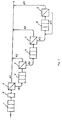
- the chips are conveyed at a consistency of 40-60%, for example about 50%, to refiner 1, from which is obtained stock with a freeness value of 250-700 ml CSF.
- refiner 1 When spruce ( Picea abies ) is used as the raw material, the average fibre length after refiner 1 is not less than 2.0 mm.
- the pressure in refiner 1 is high, a superatmospheric pressure of more than 400 kPa (over 4 bar), advantageously 600-700 kPa.
- Superatmospheric pressure means pressure that is higher than normal atmospheric pressure.
- the refiner can be a conical or a disc refiner, advantageously a conical refiner. In comparison to a disc refiner, a conical refiner gives stock with a longer fibre length.
- the energy consumption of refiner 1 is 0.4-1.2 MWh/t.
- the stock is fed via latency chest 2 to screen 3.
- latency chest 2 the fibres that have become twisted during refining are straightened when they are kept in hot water for about an hour.
- the stock consistency in latency chest 2 is 1.5%.
- the first accept stock portion A1 which has a freeness value of 20-50 ml CSF.
- the first reject stock portion R1 comprises 60-90%, advantageously about 80%, of the total stock.
- the first reject stock portion R1 is fed after water removal at a consistency of 30-60%, advantageously at a consistency of about 50%, to refiner 4 and from there onwards at a consistency off 1-5% to screen 5.
- the energy consumption of refiner 4 is 0.5-1.8 MWh/t.
- the second accept stock portion A2 and the second reject stock portion R2 which comprises 60-80% of the stock R1 rejected at screen 5 in the previous stage.
- the second reject stock portion R2 is fed, at a consistency of 30-60%, advantageously at a consistency of 50%, to refiner 6 and from there onwards at a consistency of 1-5% to screen 7, from which are obtained the third accept stock portion A3 and the third reject stock portion R3, which is returned to the inlet of refiner 6.
- the energy consumption of the refiner is 0.5-1.8 MWh/t.
- the total stock, which is obtained by combining the accept stock portions A1, A2 and A3, has a freeness value of 30-70 ml CSF.
- the above energy consumption values concerning the process according to Figure 1 are the energy consumption when the chips have not been chemically treated, i.e. the pulp is TMP.
- the pressure can be high, at least over 400 kPa (over 4 bar), advantageously 600-700 kPa (6-7 bar), or it can be at a normal level, not more than 400 kPa, advantageously 300-400 kPa.
- Water removal before the refiners in order to obtain a consistency of 30-60%, advantageously about 50%, is carried out with a screw press or similar means, which enables enough water to be removed from the process so that the above mentioned high consistency is obtained.
- Dilution of the stock before screening is carried out by pumping water into the process with a pump suitable for the purpose.
- the stock is screened by known methods using, for example, a screen with a slotted sieve having a slot size of 0.10-0-20 mm and a profile height chosen to suit the screening situation and the desired result.
- a screen with a slotted sieve having a slot size of 0.10-0-20 mm and a profile height chosen to suit the screening situation and the desired result.
- the size of the sieve slots generally increases towards the end of the process.
- the properties of the sieves must be chosen so that the screens do not get blocked in abnormal running situations, for example, when the process is started up.
- the consistency when using a slotted sieve is usually 1-5%
- centrifugal cleaner In which case the consistency must be regulated to be lower than when using a slotted sieve.
- the consistency is advantageously about 0.5%.
- the ready-made stock which has been obtained by combining and mixing the accept stock portions A1, A2 and A3, has a fibre distribution, measured by the Bauer-McNett method, as follows:
- the average fibre length of the fibres that are retained in the 16 mesh screen is 2.75 mm, that of fibres retained by the 48 mesh screen 1.23 mm and that of fibres retained in the 200 mesh screen 0.35 mm.
- the stock thus obtained contains 40-50% of fibres with an average fibre length of over 2.0 mm, 15-20% of fibres with an average fibre length of over 0.35 mm, and 35-40% of fibres with an average fibre length of less than 0.35 mm.
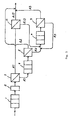
- Figure 2 shows another embodiment of the invention.
- the initial stage of the process is like the process shown in Figure 1 , but the third reject stock portion R3 is, instead, conveyed to refiner 8 and from there on to screen 9.
- the fourth accept stock portion A4, obtained from screen 9, is taken to be combined with the other accept stock portions A1, A2 and A3.
- the fourth reject stock portion R4 is returned to the inlet of refiner 8. This kind of arrangement may be necessary when aiming at a low freeness level, e.g. a level of 30 ml CSF.
- Figure 3 shows a third embodiment of the invention.
- the initial stage of the process is like the process shown in Figure 2 , but the fourth reject stock portion R4 is conveyed to low-consistency-refiner LC.
- the consistency of the stock portion R4 fed into low-consistency-refiner LC is 3-5%.
- the accept stock portions A1, A2, A3, A4 and A5 obtained are combined and mixed to form a ready-made stock.
- Figure 4 shows a fourth embodiment of the invention.
- the reject stock portion R1 obtained from screen 3 is conveyed to refiner 4 and from there onwards to screen 5.
- the reject stock portion obtained from screen 5 is conveyed back to the inlet of refiner 4.
- the accept stock portion A2 obtained from screen 5 is taken out of the process.
- the accept stock portion A1, obtained from screen 3, is conveyed for re-screening to screen 10.
- the accept stock portion A11 obtained from screen 10 is taken out of the process.
- the reject stock portion R11 obtained from screen 10 is conveyed to refiner 11 and from there on to screen 12.
- the reject stock portion R12, obtained from screen 12 is conveyed back to the inlet of refiner 11.
- the accept stock portion A12 obtained from screen 12 is taken out of the process to be combined with the other accept stock portions A11 and A2.
- Figure 5 shows a fifth embodiment of the invention.
- the process is otherwise like the process shown in Figure 1 . but the accept stock portion A1 obtained from screen 3 is conveyed for re-screening to screen 13.
- the accept stock portion A13 obtained from screen 13, the accept stock portion A2 obtained from screen 5 and the accept stock portion A3 obtained from screen 7. are combined and mixed together and conveyed to be used in the paper making process.
- the reject stock portion R13 obtained from screen 13 is combined with the reject stock portions R2 and R3, and the combined stock is conveyed to refiner 6.
- the wood raw material used in the process can be any species of wood, but it is usually softwood, advantageously spruce, but e.g. pine and southern pine are also suitable wood raw materials for the purpose.
- the energy consumption is approximately 2.8 MWh/t, of which about 0.3 MWh/t is used for regulating the stock consistency to be suitable for every stage of the process.
- the energy consumption at the first stage of refining is 0.4-1.2 MWh/t. at the second stage of refining 0.5-1.8 MWh/t, and at the third stage of refining 0.5-1.8 MWh/t.
- the required amount of energy is higher when processing pine than when processing spruce, e.g. processing southern pine requires approximately 1 MWh/t more energy than spruce.
- changes in the size of chips affect energy consumption. The energy consumption rates mentioned above are calculated according to chip screening tests where the average length of a chip was 21.4 mm and the average thickness 4.6 mm.
- Sample 1 was manufactured from stock prepared according to the known method described at the beginning of the patent application, said stock containing 42% deinked pulp, and sample 2 was manufactured from primary fibre stock prepared according to the method described.
- sample 1 kaolin was used as the filler
- sample 2 powdered calcium carbonate was used as the filler.
- Table 1 The properties of uncalendered printing paper manufactured from the stock prepared according to a known method (sample 1) and the properties of uncalendered printing paper manufactured from stock prepared according to the description (sample 2).
- the above does not limit the invention but the scope of protection of the invention varies within the patent claims.
- the invention is not limited as regards the wood raw material to the tree species mentioned, but other tree species can be used, although, for example, the energy consumption of the process and the average fibre length obtained vary depending on the wood raw material.
- the same stock can contain fibres from different tree species.
- the method for preparing stock may vary after the first stage of refining.
- the stock can be used for producing various types of printing paper.
- the core idea described is that the stock refined by a certain new method, is suitable as a raw material for printing papers and makes it possible to produce printing paper more cost-officiently than before.
Landscapes
- Engineering & Computer Science (AREA)
- Mechanical Engineering (AREA)
- Life Sciences & Earth Sciences (AREA)
- Wood Science & Technology (AREA)
- Paper (AREA)
Applications Claiming Priority (3)
| Application Number | Priority Date | Filing Date | Title |
|---|---|---|---|
| FI992641A FI113552B (fi) | 1999-12-09 | 1999-12-09 | Menetelmä painopaperin valmistamiseksi |
| FI992641 | 1999-12-09 | ||
| PCT/FI2000/001055 WO2001046516A1 (en) | 1999-12-09 | 2000-12-01 | Raw material for printing paper, method to produce it and printing paper |
Publications (2)
| Publication Number | Publication Date |
|---|---|
| EP1266072A1 EP1266072A1 (en) | 2002-12-18 |
| EP1266072B1 true EP1266072B1 (en) | 2008-03-12 |
Family
ID=8555721
Family Applications (1)
| Application Number | Title | Priority Date | Filing Date |
|---|---|---|---|
| EP00985293A Expired - Lifetime EP1266072B1 (en) | 1999-12-09 | 2000-12-01 | Raw material for printing paper, method to produce it and printing paper |
Country Status (7)
| Country | Link |
|---|---|
| US (1) | US6878236B2 (enExample) |
| EP (1) | EP1266072B1 (enExample) |
| JP (1) | JP2003518207A (enExample) |
| CA (1) | CA2393858C (enExample) |
| DE (1) | DE60038316T2 (enExample) |
| FI (1) | FI113552B (enExample) |
| WO (1) | WO2001046516A1 (enExample) |
Cited By (1)
| Publication number | Priority date | Publication date | Assignee | Title |
|---|---|---|---|---|
| EP3415687A1 (en) * | 2013-03-15 | 2018-12-19 | FiberLean Technologies Limited | Paper composition |
Families Citing this family (15)
| Publication number | Priority date | Publication date | Assignee | Title |
|---|---|---|---|---|
| FI113670B (fi) * | 1999-12-09 | 2004-05-31 | Upm Kymmene Corp | Menetelmä painopaperin valmistamiseksi |
| FI113552B (fi) * | 1999-12-09 | 2004-05-14 | Upm Kymmene Corp | Menetelmä painopaperin valmistamiseksi |
| FI109550B (fi) * | 2001-05-23 | 2002-08-30 | Upm Kymmene Corp | Painopaperi |
| US20050028951A1 (en) * | 2003-06-17 | 2005-02-10 | Brelsford Gregg L. | Smooth base stock composed of nonstandard fibers |
| WO2005042830A1 (en) * | 2003-10-02 | 2005-05-12 | Andritz Inc. | Multi-stage ap mechanical pulping with refiner flow line treatment |
| US20070215301A1 (en) * | 2006-03-17 | 2007-09-20 | Weyerhaeuser Co. | Method for making a low density multi-ply paperboard with high internal bond strength |
| US20100175840A1 (en) * | 2007-06-12 | 2010-07-15 | Hart Peter W | High yield and enhanced performance fiber |
| US20080308239A1 (en) * | 2007-06-12 | 2008-12-18 | Hart Peter W | Fiber blend having high yield and enhanced pulp performance and method for making same |
| WO2008153565A1 (en) | 2007-06-12 | 2008-12-18 | Meadwestvaco Corporation | A fiber blend having high yield and enhanced pulp performance and method for making same |
| DE102007036379A1 (de) * | 2007-07-31 | 2009-02-05 | Voith Patent Gmbh | Verfahren zum Herstellen von Feinstoff aus Faserstoff-Rejekts |
| FI20075731L (fi) * | 2007-10-17 | 2009-04-18 | Upm Kymmene Oyj | Menetelmä painopaperin valmistamiseksi |
| ATE520820T1 (de) | 2007-12-20 | 2011-09-15 | Stora Enso Oyj | Anordnung für die pressenpartie einer maschine zur herstellung einer materialbahn und in einer solchen anordnung hergestellter karton oder papier |
| JP5746519B2 (ja) * | 2011-03-02 | 2015-07-08 | デュポン帝人アドバンスドペーパー株式会社 | 耐熱性電気絶縁シート材料及びその製造方法 |
| JP5729095B2 (ja) * | 2011-03-31 | 2015-06-03 | 日本製紙株式会社 | 広葉樹機械パルプの製造方法 |
| CN105239439B (zh) * | 2015-10-14 | 2017-06-23 | 东莞玖龙纸业有限公司 | 一种环保型低定量高耐破灰底白板纸的制备方法 |
Family Cites Families (25)
| Publication number | Priority date | Publication date | Assignee | Title |
|---|---|---|---|---|
| SE377476B (enExample) * | 1972-02-18 | 1975-07-07 | P J I Ahrel | |
| SE397851B (sv) * | 1976-04-02 | 1977-11-21 | Sca Development Ab | Sett att fran vedmaterial framstella en kemiskt modifierad termomekanisk raffinormassa |
| US4116758A (en) * | 1976-05-14 | 1978-09-26 | Canadian International Paper Co. | Method of producing high yield chemimechanical pulps |
| SE422818B (sv) * | 1978-03-31 | 1982-03-29 | Modo Chemetrics Ab | Forfarande for foredling av allulosamassa genom blekning eller extrahering |
| SE435941B (sv) * | 1983-03-14 | 1984-10-29 | Mo Och Domsjoe Ab | Forfarande for framstellning av forbettrad slipmassa |
| CA1240456A (en) | 1983-10-20 | 1988-08-16 | Kamyr, Inc. | Mechanical pulping |
| SE441282B (sv) * | 1984-02-22 | 1985-09-23 | Mo Och Domsjoe Ab | Forfarande for framstellning av forbettrad hogutbytesmassa |
| US4562969A (en) * | 1984-03-05 | 1986-01-07 | Mooch Domsjo Aktiebolag | Process for preparing groundwood pulp as short fiber and long fiber fractions |
| SE444825B (sv) * | 1984-09-10 | 1986-05-12 | Mo Och Domsjoe Ab | Forfarande for framstellning av forbettrad hogutbytesmassa |
| US4718980A (en) * | 1985-12-30 | 1988-01-12 | Weyerhaeuser Company | Interstage treatment of mechanical pulp |
| US4966651A (en) * | 1988-01-14 | 1990-10-30 | P.H. Glatfelter Company | Method of paper making using an abrasive refiner for refining bleached thermochemical hardwood pulp |
| SE459924B (sv) * | 1988-01-22 | 1989-08-21 | Sunds Defibrator | Saett foer framstaellning av mekanisk massa |
| SE465377B (sv) * | 1990-01-15 | 1991-09-02 | Mo Och Domsjoe Ab | Barrvedssulfatmassa, foefarande foer dess framstaellning och anvaendning av massan |
| SE466060C (sv) * | 1990-02-13 | 1995-09-11 | Moelnlycke Ab | Absorberande kemitermomekanisk massa och framställning därav |
| US5607546A (en) * | 1990-02-13 | 1997-03-04 | Molnlycke Ab | CTMP-process |
| JP3067332B2 (ja) * | 1991-10-07 | 2000-07-17 | 王子製紙株式会社 | オフセット用中質塗工紙 |
| SE500761C2 (sv) * | 1993-02-09 | 1994-08-29 | Aga Ab | Sätt att framställa kemimekanisk massa varvid oxygen tillföres slipkammaren |
| US5394600A (en) * | 1994-02-14 | 1995-03-07 | Chen; Chao-Ho | Method for making a screen |
| SE9402101L (sv) * | 1994-06-15 | 1995-12-16 | Moelnlycke Ab | Lättavvattnad, bulkig, kemimekanisk massa med låg spet- och finmaterialhalt |
| US5799798A (en) | 1996-08-23 | 1998-09-01 | Chen; Chao-Ho | Screen cylinder for screening high consistency pulp |
| WO1999061696A1 (en) * | 1998-05-27 | 1999-12-02 | Pulp And Paper Research Institute Of Canada | Low speed low intensity chip refining |
| SE513140C2 (sv) * | 1998-11-19 | 2000-07-10 | Valmet Fibertech Ab | Förfarande för framställning av uppgraderad tidningspappersmassa till SC/LWC kvalitet |
| FI113552B (fi) * | 1999-12-09 | 2004-05-14 | Upm Kymmene Corp | Menetelmä painopaperin valmistamiseksi |
| FI113670B (fi) * | 1999-12-09 | 2004-05-31 | Upm Kymmene Corp | Menetelmä painopaperin valmistamiseksi |
| US6752904B2 (en) * | 2000-02-09 | 2004-06-22 | Akzo Nobel N.V. | Process for removal of lignin from lignocellulosic material |
-
1999
- 1999-12-09 FI FI992641A patent/FI113552B/fi not_active IP Right Cessation
-
2000
- 2000-12-01 CA CA002393858A patent/CA2393858C/en not_active Expired - Fee Related
- 2000-12-01 JP JP2001547002A patent/JP2003518207A/ja active Pending
- 2000-12-01 WO PCT/FI2000/001055 patent/WO2001046516A1/en not_active Ceased
- 2000-12-01 EP EP00985293A patent/EP1266072B1/en not_active Expired - Lifetime
- 2000-12-01 DE DE60038316T patent/DE60038316T2/de not_active Expired - Lifetime
-
2002
- 2002-06-07 US US10/165,192 patent/US6878236B2/en not_active Expired - Fee Related
Cited By (2)
| Publication number | Priority date | Publication date | Assignee | Title |
|---|---|---|---|---|
| EP3415687A1 (en) * | 2013-03-15 | 2018-12-19 | FiberLean Technologies Limited | Paper composition |
| US10865524B2 (en) | 2013-03-15 | 2020-12-15 | Fiberlean Technologies Limited | Paper composition |
Also Published As
| Publication number | Publication date |
|---|---|
| EP1266072A1 (en) | 2002-12-18 |
| US20030015305A1 (en) | 2003-01-23 |
| JP2003518207A (ja) | 2003-06-03 |
| US6878236B2 (en) | 2005-04-12 |
| CA2393858A1 (en) | 2001-06-28 |
| WO2001046516A1 (en) | 2001-06-28 |
| DE60038316D1 (de) | 2008-04-24 |
| FI113552B (fi) | 2004-05-14 |
| CA2393858C (en) | 2008-07-22 |
| DE60038316T2 (de) | 2009-03-26 |
| FI19992641L (fi) | 2001-06-10 |
Similar Documents
| Publication | Publication Date | Title |
|---|---|---|
| US6923889B2 (en) | Printing paper | |
| US10975520B2 (en) | Fiber blend having high yield and enhanced pulp performance and method for making same | |
| CA2690571C (en) | High yield and enhanced performance fiber | |
| EP2061932B1 (en) | Method of manufacturing a multilayer fibrous product | |
| EP0908557B1 (en) | Method for producing a coated fine paper | |
| US6878236B2 (en) | Raw material for printing paper, a method for producing said raw material and a printing paper | |
| US6818099B2 (en) | Raw material for printing paper, method to produce it and printing paper | |
| EP3502348B1 (en) | Fibre fractionation | |
| EP2443279B1 (en) | Method of making paper | |
| US20100175840A1 (en) | High yield and enhanced performance fiber | |
| EP2877634B1 (en) | A method and a system for preventing calender blackening | |
| Sampson et al. | An investigation into the pilot scale refining of blended papermaking furnishes |
Legal Events
| Date | Code | Title | Description |
|---|---|---|---|
| PUAI | Public reference made under article 153(3) epc to a published international application that has entered the european phase |
Free format text: ORIGINAL CODE: 0009012 |
|
| 17P | Request for examination filed |
Effective date: 20020625 |
|
| AK | Designated contracting states |
Kind code of ref document: A1 Designated state(s): AT BE CH CY DE DK ES FI FR GB GR IE IT LI LU MC NL PT SE TR |
|
| AX | Request for extension of the european patent |
Free format text: AL;LT;LV;MK;RO;SI |
|
| RBV | Designated contracting states (corrected) |
Designated state(s): AT BE CH CY DE ES FR GB IT LI |
|
| 17Q | First examination report despatched |
Effective date: 20050228 |
|
| 17Q | First examination report despatched |
Effective date: 20050228 |
|
| GRAP | Despatch of communication of intention to grant a patent |
Free format text: ORIGINAL CODE: EPIDOSNIGR1 |
|
| RBV | Designated contracting states (corrected) |
Designated state(s): DE ES FR GB IT |
|
| GRAS | Grant fee paid |
Free format text: ORIGINAL CODE: EPIDOSNIGR3 |
|
| GRAA | (expected) grant |
Free format text: ORIGINAL CODE: 0009210 |
|
| AK | Designated contracting states |
Kind code of ref document: B1 Designated state(s): DE ES FR GB IT |
|
| REG | Reference to a national code |
Ref country code: GB Ref legal event code: FG4D |
|
| REF | Corresponds to: |
Ref document number: 60038316 Country of ref document: DE Date of ref document: 20080424 Kind code of ref document: P |
|
| ET | Fr: translation filed | ||
| PG25 | Lapsed in a contracting state [announced via postgrant information from national office to epo] |
Ref country code: ES Free format text: LAPSE BECAUSE OF FAILURE TO SUBMIT A TRANSLATION OF THE DESCRIPTION OR TO PAY THE FEE WITHIN THE PRESCRIBED TIME-LIMIT Effective date: 20080623 |
|
| PLBE | No opposition filed within time limit |
Free format text: ORIGINAL CODE: 0009261 |
|
| STAA | Information on the status of an ep patent application or granted ep patent |
Free format text: STATUS: NO OPPOSITION FILED WITHIN TIME LIMIT |
|
| 26N | No opposition filed |
Effective date: 20081215 |
|
| PG25 | Lapsed in a contracting state [announced via postgrant information from national office to epo] |
Ref country code: IT Free format text: LAPSE BECAUSE OF FAILURE TO SUBMIT A TRANSLATION OF THE DESCRIPTION OR TO PAY THE FEE WITHIN THE PRESCRIBED TIME-LIMIT Effective date: 20080312 |
|
| PGFP | Annual fee paid to national office [announced via postgrant information from national office to epo] |
Ref country code: FR Payment date: 20110107 Year of fee payment: 11 |
|
| PGFP | Annual fee paid to national office [announced via postgrant information from national office to epo] |
Ref country code: GB Payment date: 20101229 Year of fee payment: 11 |
|
| PGFP | Annual fee paid to national office [announced via postgrant information from national office to epo] |
Ref country code: DE Payment date: 20101229 Year of fee payment: 11 |
|
| GBPC | Gb: european patent ceased through non-payment of renewal fee |
Effective date: 20111201 |
|
| REG | Reference to a national code |
Ref country code: FR Ref legal event code: ST Effective date: 20120831 |
|
| REG | Reference to a national code |
Ref country code: DE Ref legal event code: R119 Ref document number: 60038316 Country of ref document: DE Effective date: 20120703 |
|
| PG25 | Lapsed in a contracting state [announced via postgrant information from national office to epo] |
Ref country code: DE Free format text: LAPSE BECAUSE OF NON-PAYMENT OF DUE FEES Effective date: 20120703 Ref country code: GB Free format text: LAPSE BECAUSE OF NON-PAYMENT OF DUE FEES Effective date: 20111201 |
|
| PG25 | Lapsed in a contracting state [announced via postgrant information from national office to epo] |
Ref country code: FR Free format text: LAPSE BECAUSE OF NON-PAYMENT OF DUE FEES Effective date: 20120102 |