EP1252520B1 - Nitroreductase reporter gene assay involving fluorescence enhancement - Google Patents
Nitroreductase reporter gene assay involving fluorescence enhancement Download PDFInfo
- Publication number
- EP1252520B1 EP1252520B1 EP01902521A EP01902521A EP1252520B1 EP 1252520 B1 EP1252520 B1 EP 1252520B1 EP 01902521 A EP01902521 A EP 01902521A EP 01902521 A EP01902521 A EP 01902521A EP 1252520 B1 EP1252520 B1 EP 1252520B1
- Authority
- EP
- European Patent Office
- Prior art keywords
- nitroreductase
- fluorescence
- group
- cyanine dye
- dye molecule
- Prior art date
- Legal status (The legal status is an assumption and is not a legal conclusion. Google has not performed a legal analysis and makes no representation as to the accuracy of the status listed.)
- Expired - Lifetime
Links
- 108020001162 nitroreductase Proteins 0.000 title claims abstract description 87
- 102000004459 Nitroreductase Human genes 0.000 title claims abstract description 84
- 238000003571 reporter gene assay Methods 0.000 title claims description 4
- ANRHNWWPFJCPAZ-UHFFFAOYSA-M thionine Chemical compound [Cl-].C1=CC(N)=CC2=[S+]C3=CC(N)=CC=C3N=C21 ANRHNWWPFJCPAZ-UHFFFAOYSA-M 0.000 claims abstract description 42
- 238000000034 method Methods 0.000 claims abstract description 35
- 230000014509 gene expression Effects 0.000 claims abstract description 24
- 230000009467 reduction Effects 0.000 claims abstract description 9
- 210000004027 cell Anatomy 0.000 claims description 55
- 125000000449 nitro group Chemical group [O-][N+](*)=O 0.000 claims description 35
- 238000003556 assay Methods 0.000 claims description 22
- 150000001875 compounds Chemical class 0.000 claims description 15
- -1 ketal Chemical group 0.000 claims description 15
- 238000004458 analytical method Methods 0.000 claims description 14
- IJGRMHOSHXDMSA-UHFFFAOYSA-N Atomic nitrogen Chemical compound N#N IJGRMHOSHXDMSA-UHFFFAOYSA-N 0.000 claims description 12
- 150000007523 nucleic acids Chemical class 0.000 claims description 9
- 108020004707 nucleic acids Proteins 0.000 claims description 8
- 102000039446 nucleic acids Human genes 0.000 claims description 8
- 125000002924 primary amino group Chemical group [H]N([H])* 0.000 claims description 8
- 150000003839 salts Chemical class 0.000 claims description 8
- 125000003118 aryl group Chemical group 0.000 claims description 7
- QVGXLLKOCUKJST-UHFFFAOYSA-N atomic oxygen Chemical compound [O] QVGXLLKOCUKJST-UHFFFAOYSA-N 0.000 claims description 7
- JXLHNMVSKXFWAO-UHFFFAOYSA-N azane;7-fluoro-2,1,3-benzoxadiazole-4-sulfonic acid Chemical group N.OS(=O)(=O)C1=CC=C(F)C2=NON=C12 JXLHNMVSKXFWAO-UHFFFAOYSA-N 0.000 claims description 7
- 229910052760 oxygen Inorganic materials 0.000 claims description 7
- 239000001301 oxygen Substances 0.000 claims description 7
- QAOWNCQODCNURD-UHFFFAOYSA-L Sulfate Chemical group [O-]S([O-])(=O)=O QAOWNCQODCNURD-UHFFFAOYSA-L 0.000 claims description 6
- 125000004429 atom Chemical group 0.000 claims description 6
- 125000003178 carboxy group Chemical group [H]OC(*)=O 0.000 claims description 6
- 229910052739 hydrogen Inorganic materials 0.000 claims description 6
- 239000001257 hydrogen Substances 0.000 claims description 6
- 125000004435 hydrogen atom Chemical group [H]* 0.000 claims description 6
- 229910052757 nitrogen Inorganic materials 0.000 claims description 6
- 125000001453 quaternary ammonium group Chemical group 0.000 claims description 6
- 229910021653 sulphate ion Inorganic materials 0.000 claims description 6
- 230000001580 bacterial effect Effects 0.000 claims description 5
- 125000004178 (C1-C4) alkyl group Chemical group 0.000 claims description 4
- NINIDFKCEFEMDL-UHFFFAOYSA-N Sulfur Chemical group [S] NINIDFKCEFEMDL-UHFFFAOYSA-N 0.000 claims description 4
- DHKHKXVYLBGOIT-UHFFFAOYSA-N acetaldehyde Diethyl Acetal Chemical group CCOC(C)OCC DHKHKXVYLBGOIT-UHFFFAOYSA-N 0.000 claims description 4
- 150000001408 amides Chemical class 0.000 claims description 4
- 125000002915 carbonyl group Chemical group [*:2]C([*:1])=O 0.000 claims description 4
- 150000007942 carboxylates Chemical group 0.000 claims description 4
- 125000004093 cyano group Chemical group *C#N 0.000 claims description 4
- 125000002485 formyl group Chemical group [H]C(*)=O 0.000 claims description 4
- 125000001475 halogen functional group Chemical group 0.000 claims description 4
- 125000001072 heteroaryl group Chemical group 0.000 claims description 4
- 125000002887 hydroxy group Chemical group [H]O* 0.000 claims description 4
- LFGREXWGYUGZLY-UHFFFAOYSA-N phosphoryl Chemical group [P]=O LFGREXWGYUGZLY-UHFFFAOYSA-N 0.000 claims description 4
- 150000003140 primary amides Chemical class 0.000 claims description 4
- 125000003396 thiol group Chemical group [H]S* 0.000 claims description 4
- 125000000008 (C1-C10) alkyl group Chemical group 0.000 claims description 3
- 229910019142 PO4 Inorganic materials 0.000 claims description 3
- 239000002202 Polyethylene glycol Chemical group 0.000 claims description 3
- 210000000170 cell membrane Anatomy 0.000 claims description 3
- 230000001935 permeabilising effect Effects 0.000 claims description 3
- 229920001223 polyethylene glycol Chemical group 0.000 claims description 3
- BUGBHKTXTAQXES-UHFFFAOYSA-N Selenium Chemical class [Se] BUGBHKTXTAQXES-UHFFFAOYSA-N 0.000 claims description 2
- 239000005864 Sulphur Chemical class 0.000 claims description 2
- 125000004442 acylamino group Chemical group 0.000 claims description 2
- 150000001721 carbon Chemical class 0.000 claims description 2
- 229910052799 carbon Inorganic materials 0.000 claims description 2
- 125000004432 carbon atom Chemical group C* 0.000 claims description 2
- NBIIXXVUZAFLBC-UHFFFAOYSA-K phosphate Chemical compound [O-]P([O-])([O-])=O NBIIXXVUZAFLBC-UHFFFAOYSA-K 0.000 claims description 2
- 239000010452 phosphate Substances 0.000 claims description 2
- UEZVMMHDMIWARA-UHFFFAOYSA-M phosphonate Chemical group [O-]P(=O)=O UEZVMMHDMIWARA-UHFFFAOYSA-M 0.000 claims description 2
- 229910052711 selenium Inorganic materials 0.000 claims description 2
- 239000011669 selenium Chemical class 0.000 claims description 2
- 125000003003 spiro group Chemical group 0.000 claims description 2
- LMBFAGIMSUYTBN-MPZNNTNKSA-N teixobactin Chemical compound C([C@H](C(=O)N[C@@H]([C@@H](C)CC)C(=O)N[C@@H](CO)C(=O)N[C@H](CCC(N)=O)C(=O)N[C@H]([C@@H](C)CC)C(=O)N[C@@H]([C@@H](C)CC)C(=O)N[C@@H](CO)C(=O)N[C@H]1C(N[C@@H](C)C(=O)N[C@@H](C[C@@H]2NC(=N)NC2)C(=O)N[C@H](C(=O)O[C@H]1C)[C@@H](C)CC)=O)NC)C1=CC=CC=C1 LMBFAGIMSUYTBN-MPZNNTNKSA-N 0.000 claims description 2
- 125000002777 acetyl group Chemical group [H]C([H])([H])C(*)=O 0.000 claims 2
- 239000000758 substrate Substances 0.000 abstract description 33
- 230000000694 effects Effects 0.000 abstract description 20
- 238000001514 detection method Methods 0.000 abstract description 8
- 238000009739 binding Methods 0.000 abstract description 4
- 230000009471 action Effects 0.000 abstract description 2
- 239000000203 mixture Substances 0.000 abstract description 2
- 239000000975 dye Substances 0.000 description 44
- XLYOFNOQVPJJNP-UHFFFAOYSA-N water Substances O XLYOFNOQVPJJNP-UHFFFAOYSA-N 0.000 description 23
- 108090000790 Enzymes Proteins 0.000 description 21
- 230000005284 excitation Effects 0.000 description 21
- 239000000047 product Substances 0.000 description 21
- 229910001868 water Inorganic materials 0.000 description 21
- 102000004190 Enzymes Human genes 0.000 description 20
- 238000006243 chemical reaction Methods 0.000 description 19
- WEVYAHXRMPXWCK-UHFFFAOYSA-N Acetonitrile Chemical compound CC#N WEVYAHXRMPXWCK-UHFFFAOYSA-N 0.000 description 18
- DTQVDTLACAAQTR-UHFFFAOYSA-N Trifluoroacetic acid Chemical compound OC(=O)C(F)(F)F DTQVDTLACAAQTR-UHFFFAOYSA-N 0.000 description 16
- 238000005259 measurement Methods 0.000 description 14
- 239000002953 phosphate buffered saline Substances 0.000 description 13
- RTZKZFJDLAIYFH-UHFFFAOYSA-N Diethyl ether Chemical compound CCOCC RTZKZFJDLAIYFH-UHFFFAOYSA-N 0.000 description 12
- 108700008625 Reporter Genes Proteins 0.000 description 11
- 238000004128 high performance liquid chromatography Methods 0.000 description 11
- 238000011534 incubation Methods 0.000 description 10
- 230000001413 cellular effect Effects 0.000 description 9
- 238000002866 fluorescence resonance energy transfer Methods 0.000 description 8
- 239000007850 fluorescent dye Substances 0.000 description 8
- 238000001840 matrix-assisted laser desorption--ionisation time-of-flight mass spectrometry Methods 0.000 description 8
- 229930027945 nicotinamide-adenine dinucleotide Natural products 0.000 description 8
- 238000002360 preparation method Methods 0.000 description 8
- 230000002829 reductive effect Effects 0.000 description 8
- 230000001105 regulatory effect Effects 0.000 description 8
- 239000000243 solution Substances 0.000 description 8
- JINXFUDPGIICQE-UHFFFAOYSA-N 2-[1-[(3,5-dinitrophenyl)methyl]-3h-indol-1-ium-5-yl]acetic acid;bromide Chemical compound [Br-].C=1C(CC(=O)O)=CC=C2C=1CC=[N+]2CC1=CC([N+]([O-])=O)=CC([N+]([O-])=O)=C1 JINXFUDPGIICQE-UHFFFAOYSA-N 0.000 description 7
- 239000013592 cell lysate Substances 0.000 description 7
- BOPGDPNILDQYTO-NNYOXOHSSA-N nicotinamide-adenine dinucleotide Chemical compound C1=CCC(C(=O)N)=CN1[C@H]1[C@H](O)[C@H](O)[C@@H](COP(O)(=O)OP(O)(=O)OC[C@@H]2[C@H]([C@@H](O)[C@@H](O2)N2C3=NC=NC(N)=C3N=C2)O)O1 BOPGDPNILDQYTO-NNYOXOHSSA-N 0.000 description 7
- 108090000623 proteins and genes Proteins 0.000 description 7
- 238000006722 reduction reaction Methods 0.000 description 7
- 239000007787 solid Substances 0.000 description 7
- 238000001228 spectrum Methods 0.000 description 7
- YBJHBAHKTGYVGT-ZKWXMUAHSA-N (+)-Biotin Chemical compound N1C(=O)N[C@@H]2[C@H](CCCCC(=O)O)SC[C@@H]21 YBJHBAHKTGYVGT-ZKWXMUAHSA-N 0.000 description 6
- 238000005160 1H NMR spectroscopy Methods 0.000 description 6
- QTBSBXVTEAMEQO-UHFFFAOYSA-N Acetic acid Chemical compound CC(O)=O QTBSBXVTEAMEQO-UHFFFAOYSA-N 0.000 description 6
- WFDIJRYMOXRFFG-UHFFFAOYSA-N Acetic anhydride Chemical compound CC(=O)OC(C)=O WFDIJRYMOXRFFG-UHFFFAOYSA-N 0.000 description 6
- 241000588724 Escherichia coli Species 0.000 description 6
- LFQSCWFLJHTTHZ-UHFFFAOYSA-N Ethanol Chemical compound CCO LFQSCWFLJHTTHZ-UHFFFAOYSA-N 0.000 description 6
- XEKOWRVHYACXOJ-UHFFFAOYSA-N Ethyl acetate Chemical compound CCOC(C)=O XEKOWRVHYACXOJ-UHFFFAOYSA-N 0.000 description 6
- HEMHJVSKTPXQMS-UHFFFAOYSA-M Sodium hydroxide Chemical compound [OH-].[Na+] HEMHJVSKTPXQMS-UHFFFAOYSA-M 0.000 description 6
- HEDRZPFGACZZDS-MICDWDOJSA-N Trichloro(2H)methane Chemical compound [2H]C(Cl)(Cl)Cl HEDRZPFGACZZDS-MICDWDOJSA-N 0.000 description 6
- 239000011541 reaction mixture Substances 0.000 description 6
- 238000004366 reverse phase liquid chromatography Methods 0.000 description 6
- BMMHVLDVUYSAMK-UHFFFAOYSA-N 2-(1,2,3,3-tetramethylindol-1-ium-5-yl)acetic acid;iodide Chemical compound [I-].C1=C(CC(O)=O)C=C2C(C)(C)C(C)=[N+](C)C2=C1 BMMHVLDVUYSAMK-UHFFFAOYSA-N 0.000 description 5
- 108020004774 Alkaline Phosphatase Proteins 0.000 description 5
- 102000002260 Alkaline Phosphatase Human genes 0.000 description 5
- 102100026189 Beta-galactosidase Human genes 0.000 description 5
- 230000004913 activation Effects 0.000 description 5
- 108010005774 beta-Galactosidase Proteins 0.000 description 5
- 239000003795 chemical substances by application Substances 0.000 description 5
- 238000003018 immunoassay Methods 0.000 description 5
- 238000000338 in vitro Methods 0.000 description 5
- 239000000126 substance Substances 0.000 description 5
- VEXZGXHMUGYJMC-UHFFFAOYSA-N Hydrochloric acid Chemical compound Cl VEXZGXHMUGYJMC-UHFFFAOYSA-N 0.000 description 4
- JUJWROOIHBZHMG-UHFFFAOYSA-N Pyridine Chemical compound C1=CC=NC=C1 JUJWROOIHBZHMG-UHFFFAOYSA-N 0.000 description 4
- CZPLANDPABRVHX-UHFFFAOYSA-N cascade blue Chemical compound C=1C2=CC=CC=C2C(NCC)=CC=1C(C=1C=CC(=CC=1)N(CC)CC)=C1C=CC(=[N+](CC)CC)C=C1 CZPLANDPABRVHX-UHFFFAOYSA-N 0.000 description 4
- LOKCTEFSRHRXRJ-UHFFFAOYSA-I dipotassium trisodium dihydrogen phosphate hydrogen phosphate dichloride Chemical compound P(=O)(O)(O)[O-].[K+].P(=O)(O)([O-])[O-].[Na+].[Na+].[Cl-].[K+].[Cl-].[Na+] LOKCTEFSRHRXRJ-UHFFFAOYSA-I 0.000 description 4
- 239000003480 eluent Substances 0.000 description 4
- 230000002255 enzymatic effect Effects 0.000 description 4
- 238000000684 flow cytometry Methods 0.000 description 4
- GNBHRKFJIUUOQI-UHFFFAOYSA-N fluorescein Chemical compound O1C(=O)C2=CC=CC=C2C21C1=CC=C(O)C=C1OC1=CC(O)=CC=C21 GNBHRKFJIUUOQI-UHFFFAOYSA-N 0.000 description 4
- 238000002189 fluorescence spectrum Methods 0.000 description 4
- 229940002612 prodrug Drugs 0.000 description 4
- 239000000651 prodrug Substances 0.000 description 4
- 239000000523 sample Substances 0.000 description 4
- 239000002904 solvent Substances 0.000 description 4
- 238000012360 testing method Methods 0.000 description 4
- 238000013518 transcription Methods 0.000 description 4
- 230000035897 transcription Effects 0.000 description 4
- 210000004881 tumor cell Anatomy 0.000 description 4
- IAZDPXIOMUYVGZ-WFGJKAKNSA-N Dimethyl sulfoxide Chemical compound [2H]C([2H])([2H])S(=O)C([2H])([2H])[2H] IAZDPXIOMUYVGZ-WFGJKAKNSA-N 0.000 description 3
- 108090000204 Dipeptidase 1 Proteins 0.000 description 3
- OKKJLVBELUTLKV-UHFFFAOYSA-N Methanol Chemical compound OC OKKJLVBELUTLKV-UHFFFAOYSA-N 0.000 description 3
- ZMXDDKWLCZADIW-UHFFFAOYSA-N N,N-Dimethylformamide Chemical compound CN(C)C=O ZMXDDKWLCZADIW-UHFFFAOYSA-N 0.000 description 3
- 102000006635 beta-lactamase Human genes 0.000 description 3
- 229960002685 biotin Drugs 0.000 description 3
- 235000020958 biotin Nutrition 0.000 description 3
- 239000011616 biotin Substances 0.000 description 3
- 230000008859 change Effects 0.000 description 3
- 238000003776 cleavage reaction Methods 0.000 description 3
- 231100000433 cytotoxic Toxicity 0.000 description 3
- 230000001472 cytotoxic effect Effects 0.000 description 3
- FVTCRASFADXXNN-SCRDCRAPSA-N flavin mononucleotide Chemical compound OP(=O)(O)OC[C@@H](O)[C@@H](O)[C@@H](O)CN1C=2C=C(C)C(C)=CC=2N=C2C1=NC(=O)NC2=O FVTCRASFADXXNN-SCRDCRAPSA-N 0.000 description 3
- 238000009396 hybridization Methods 0.000 description 3
- 238000001727 in vivo Methods 0.000 description 3
- 238000005462 in vivo assay Methods 0.000 description 3
- 210000004962 mammalian cell Anatomy 0.000 description 3
- 238000010369 molecular cloning Methods 0.000 description 3
- 239000000843 powder Substances 0.000 description 3
- KXXXUIKPSVVSAW-UHFFFAOYSA-K pyranine Chemical compound [Na+].[Na+].[Na+].C1=C2C(O)=CC(S([O-])(=O)=O)=C(C=C3)C2=C2C3=C(S([O-])(=O)=O)C=C(S([O-])(=O)=O)C2=C1 KXXXUIKPSVVSAW-UHFFFAOYSA-K 0.000 description 3
- HCYIOKVZAATOEW-UHFFFAOYSA-M 1,2,3,3-tetramethylindol-1-ium;iodide Chemical compound [I-].C1=CC=C2C(C)(C)C(C)=[N+](C)C2=C1 HCYIOKVZAATOEW-UHFFFAOYSA-M 0.000 description 2
- QUBPDPHWANFEJB-UHFFFAOYSA-N 2-(2,3,3-trimethylindol-5-yl)acetic acid Chemical compound C1=C(CC(O)=O)C=C2C(C)(C)C(C)=NC2=C1 QUBPDPHWANFEJB-UHFFFAOYSA-N 0.000 description 2
- 230000005778 DNA damage Effects 0.000 description 2
- 231100000277 DNA damage Toxicity 0.000 description 2
- IAZDPXIOMUYVGZ-UHFFFAOYSA-N Dimethylsulphoxide Chemical compound CS(C)=O IAZDPXIOMUYVGZ-UHFFFAOYSA-N 0.000 description 2
- 108010001336 Horseradish Peroxidase Proteins 0.000 description 2
- JGFZNNIVVJXRND-UHFFFAOYSA-N N,N-Diisopropylethylamine (DIPEA) Chemical compound CCN(C(C)C)C(C)C JGFZNNIVVJXRND-UHFFFAOYSA-N 0.000 description 2
- 206010028980 Neoplasm Diseases 0.000 description 2
- HCHKCACWOHOZIP-UHFFFAOYSA-N Zinc Chemical compound [Zn] HCHKCACWOHOZIP-UHFFFAOYSA-N 0.000 description 2
- XJLXINKUBYWONI-DQQFMEOOSA-N [[(2r,3r,4r,5r)-5-(6-aminopurin-9-yl)-3-hydroxy-4-phosphonooxyoxolan-2-yl]methoxy-hydroxyphosphoryl] [(2s,3r,4s,5s)-5-(3-carbamoylpyridin-1-ium-1-yl)-3,4-dihydroxyoxolan-2-yl]methyl phosphate Chemical compound NC(=O)C1=CC=C[N+]([C@@H]2[C@H]([C@@H](O)[C@H](COP([O-])(=O)OP(O)(=O)OC[C@@H]3[C@H]([C@@H](OP(O)(O)=O)[C@@H](O3)N3C4=NC=NC(N)=C4N=C3)O)O2)O)=C1 XJLXINKUBYWONI-DQQFMEOOSA-N 0.000 description 2
- 150000001241 acetals Chemical class 0.000 description 2
- 125000003668 acetyloxy group Chemical group [H]C([H])([H])C(=O)O[*] 0.000 description 2
- 239000000556 agonist Substances 0.000 description 2
- 125000003277 amino group Chemical group 0.000 description 2
- 238000004166 bioassay Methods 0.000 description 2
- 238000000423 cell based assay Methods 0.000 description 2
- 230000033077 cellular process Effects 0.000 description 2
- 239000007795 chemical reaction product Substances 0.000 description 2
- 230000007613 environmental effect Effects 0.000 description 2
- 150000002148 esters Chemical class 0.000 description 2
- 238000000799 fluorescence microscopy Methods 0.000 description 2
- 238000001506 fluorescence spectroscopy Methods 0.000 description 2
- 239000000383 hazardous chemical Substances 0.000 description 2
- 238000013537 high throughput screening Methods 0.000 description 2
- 230000003993 interaction Effects 0.000 description 2
- 230000003834 intracellular effect Effects 0.000 description 2
- 239000006166 lysate Substances 0.000 description 2
- 230000014759 maintenance of location Effects 0.000 description 2
- 230000000873 masking effect Effects 0.000 description 2
- 239000012528 membrane Substances 0.000 description 2
- 125000000956 methoxy group Chemical group [H]C([H])([H])O* 0.000 description 2
- 239000003068 molecular probe Substances 0.000 description 2
- LQNUZADURLCDLV-UHFFFAOYSA-N nitrobenzene Chemical compound [O-][N+](=O)C1=CC=CC=C1 LQNUZADURLCDLV-UHFFFAOYSA-N 0.000 description 2
- 230000007030 peptide scission Effects 0.000 description 2
- 125000001997 phenyl group Chemical group [H]C1=C([H])C([H])=C(*)C([H])=C1[H] 0.000 description 2
- 238000003752 polymerase chain reaction Methods 0.000 description 2
- 239000002244 precipitate Substances 0.000 description 2
- 108090000765 processed proteins & peptides Proteins 0.000 description 2
- 238000000159 protein binding assay Methods 0.000 description 2
- BBEAQIROQSPTKN-UHFFFAOYSA-N pyrene Chemical compound C1=CC=C2C=CC3=CC=CC4=CC=C1C2=C43 BBEAQIROQSPTKN-UHFFFAOYSA-N 0.000 description 2
- UMJSCPRVCHMLSP-UHFFFAOYSA-N pyridine Natural products COC1=CC=CN=C1 UMJSCPRVCHMLSP-UHFFFAOYSA-N 0.000 description 2
- 238000010791 quenching Methods 0.000 description 2
- 230000000171 quenching effect Effects 0.000 description 2
- 230000035945 sensitivity Effects 0.000 description 2
- 230000011664 signaling Effects 0.000 description 2
- URGAHOPLAPQHLN-UHFFFAOYSA-N sodium aluminosilicate Chemical class [Na+].[Al+3].[O-][Si]([O-])=O.[O-][Si]([O-])=O URGAHOPLAPQHLN-UHFFFAOYSA-N 0.000 description 2
- JHJLBTNAGRQEKS-UHFFFAOYSA-M sodium bromide Chemical compound [Na+].[Br-] JHJLBTNAGRQEKS-UHFFFAOYSA-M 0.000 description 2
- 241000894007 species Species 0.000 description 2
- 238000004611 spectroscopical analysis Methods 0.000 description 2
- 239000007858 starting material Substances 0.000 description 2
- HXJUTPCZVOIRIF-UHFFFAOYSA-N sulfolane Chemical compound O=S1(=O)CCCC1 HXJUTPCZVOIRIF-UHFFFAOYSA-N 0.000 description 2
- 239000003104 tissue culture media Substances 0.000 description 2
- 238000001890 transfection Methods 0.000 description 2
- 238000012546 transfer Methods 0.000 description 2
- 239000013598 vector Substances 0.000 description 2
- IMZBXSAKACGTPH-UHFFFAOYSA-N (3-oxo-6'-phosphonooxyspiro[2-benzofuran-1,9'-xanthene]-3'-yl) dihydrogen phosphate Chemical compound O1C(=O)C2=CC=CC=C2C21C1=CC=C(OP(O)(O)=O)C=C1OC1=CC(OP(O)(=O)O)=CC=C21 IMZBXSAKACGTPH-UHFFFAOYSA-N 0.000 description 1
- BDNKZNFMNDZQMI-UHFFFAOYSA-N 1,3-diisopropylcarbodiimide Chemical compound CC(C)N=C=NC(C)C BDNKZNFMNDZQMI-UHFFFAOYSA-N 0.000 description 1
- SMJODKZAFKWUJG-UHFFFAOYSA-N 1-(chloromethyl)-3,5-dinitrobenzene Chemical compound [O-][N+](=O)C1=CC(CCl)=CC([N+]([O-])=O)=C1 SMJODKZAFKWUJG-UHFFFAOYSA-N 0.000 description 1
- ASOKPJOREAFHNY-UHFFFAOYSA-N 1-Hydroxybenzotriazole Chemical compound C1=CC=C2N(O)N=NC2=C1 ASOKPJOREAFHNY-UHFFFAOYSA-N 0.000 description 1
- BFCFYVKQTRLZHA-UHFFFAOYSA-N 1-chloro-2-nitrobenzene Chemical compound [O-][N+](=O)C1=CC=CC=C1Cl BFCFYVKQTRLZHA-UHFFFAOYSA-N 0.000 description 1
- DEEULBIVHZVMHX-UHFFFAOYSA-N 1-nitroacridine Chemical compound C1=CC=C2C=C3C([N+](=O)[O-])=CC=CC3=NC2=C1 DEEULBIVHZVMHX-UHFFFAOYSA-N 0.000 description 1
- SPSSULHKWOKEEL-UHFFFAOYSA-N 2,4,6-trinitrotoluene Chemical compound CC1=C([N+]([O-])=O)C=C([N+]([O-])=O)C=C1[N+]([O-])=O SPSSULHKWOKEEL-UHFFFAOYSA-N 0.000 description 1
- QKNYBSVHEMOAJP-UHFFFAOYSA-N 2-amino-2-(hydroxymethyl)propane-1,3-diol;hydron;chloride Chemical compound Cl.OCC(N)(CO)CO QKNYBSVHEMOAJP-UHFFFAOYSA-N 0.000 description 1
- OALHHIHQOFIMEF-UHFFFAOYSA-N 3',6'-dihydroxy-2',4',5',7'-tetraiodo-3h-spiro[2-benzofuran-1,9'-xanthene]-3-one Chemical compound O1C(=O)C2=CC=CC=C2C21C1=CC(I)=C(O)C(I)=C1OC1=C(I)C(O)=C(I)C=C21 OALHHIHQOFIMEF-UHFFFAOYSA-N 0.000 description 1
- VHYFNPMBLIVWCW-UHFFFAOYSA-N 4-Dimethylaminopyridine Chemical compound CN(C)C1=CC=NC=C1 VHYFNPMBLIVWCW-UHFFFAOYSA-N 0.000 description 1
- OBJOZRVSMLPASY-UHFFFAOYSA-N 8-hydroxypyrene-1,3,6-trisulfonic acid Chemical compound C1=C2C(O)=CC(S(O)(=O)=O)=C(C=C3)C2=C2C3=C(S(O)(=O)=O)C=C(S(O)(=O)=O)C2=C1 OBJOZRVSMLPASY-UHFFFAOYSA-N 0.000 description 1
- 101150076489 B gene Proteins 0.000 description 1
- 108010001857 Cell Surface Receptors Proteins 0.000 description 1
- 102000011724 DNA Repair Enzymes Human genes 0.000 description 1
- 108010076525 DNA Repair Enzymes Proteins 0.000 description 1
- 229920002307 Dextran Polymers 0.000 description 1
- 241001522878 Escherichia coli B Species 0.000 description 1
- 108090000371 Esterases Proteins 0.000 description 1
- 108010074122 Ferredoxins Proteins 0.000 description 1
- 102000003688 G-Protein-Coupled Receptors Human genes 0.000 description 1
- 108090000045 G-Protein-Coupled Receptors Proteins 0.000 description 1
- 108700039691 Genetic Promoter Regions Proteins 0.000 description 1
- 206010056740 Genital discharge Diseases 0.000 description 1
- 108010063907 Glutathione Reductase Proteins 0.000 description 1
- 102100036442 Glutathione reductase, mitochondrial Human genes 0.000 description 1
- 206010021143 Hypoxia Diseases 0.000 description 1
- 102000043136 MAP kinase family Human genes 0.000 description 1
- 108091054455 MAP kinase family Proteins 0.000 description 1
- 108091028043 Nucleic acid sequence Proteins 0.000 description 1
- 240000007817 Olea europaea Species 0.000 description 1
- 229910006069 SO3H Inorganic materials 0.000 description 1
- 108010090804 Streptavidin Proteins 0.000 description 1
- 108700025695 Suppressor Genes Proteins 0.000 description 1
- 102100033220 Xanthine oxidase Human genes 0.000 description 1
- 108010093894 Xanthine oxidase Proteins 0.000 description 1
- 239000008351 acetate buffer Substances 0.000 description 1
- 239000002253 acid Substances 0.000 description 1
- 230000003321 amplification Effects 0.000 description 1
- 239000012491 analyte Substances 0.000 description 1
- 230000000259 anti-tumor effect Effects 0.000 description 1
- 239000000427 antigen Substances 0.000 description 1
- 108091007433 antigens Proteins 0.000 description 1
- 102000036639 antigens Human genes 0.000 description 1
- ZYGHJZDHTFUPRJ-UHFFFAOYSA-N benzo-alpha-pyrone Natural products C1=CC=C2OC(=O)C=CC2=C1 ZYGHJZDHTFUPRJ-UHFFFAOYSA-N 0.000 description 1
- 238000010256 biochemical assay Methods 0.000 description 1
- 239000012620 biological material Substances 0.000 description 1
- NHYXMAKLBXBVEO-UHFFFAOYSA-N bromomethyl acetate Chemical compound CC(=O)OCBr NHYXMAKLBXBVEO-UHFFFAOYSA-N 0.000 description 1
- 239000001506 calcium phosphate Substances 0.000 description 1
- 229910000389 calcium phosphate Inorganic materials 0.000 description 1
- 235000011010 calcium phosphates Nutrition 0.000 description 1
- 244000309466 calf Species 0.000 description 1
- 201000011510 cancer Diseases 0.000 description 1
- 230000003197 catalytic effect Effects 0.000 description 1
- 230000005779 cell damage Effects 0.000 description 1
- 230000010261 cell growth Effects 0.000 description 1
- 208000037887 cell injury Diseases 0.000 description 1
- 239000006285 cell suspension Substances 0.000 description 1
- 230000036755 cellular response Effects 0.000 description 1
- 125000003636 chemical group Chemical group 0.000 description 1
- 230000007073 chemical hydrolysis Effects 0.000 description 1
- 238000007385 chemical modification Methods 0.000 description 1
- 239000003638 chemical reducing agent Substances 0.000 description 1
- 210000004978 chinese hamster ovary cell Anatomy 0.000 description 1
- 230000000295 complement effect Effects 0.000 description 1
- 239000002299 complementary DNA Substances 0.000 description 1
- 239000013068 control sample Substances 0.000 description 1
- 238000007796 conventional method Methods 0.000 description 1
- 235000001671 coumarin Nutrition 0.000 description 1
- 150000004775 coumarins Chemical class 0.000 description 1
- 238000000502 dialysis Methods 0.000 description 1
- 230000003467 diminishing effect Effects 0.000 description 1
- 230000008034 disappearance Effects 0.000 description 1
- 238000006911 enzymatic reaction Methods 0.000 description 1
- 125000004494 ethyl ester group Chemical group 0.000 description 1
- 238000011156 evaluation Methods 0.000 description 1
- 239000013613 expression plasmid Substances 0.000 description 1
- 239000013604 expression vector Substances 0.000 description 1
- 238000001914 filtration Methods 0.000 description 1
- 238000003818 flash chromatography Methods 0.000 description 1
- GVEPBJHOBDJJJI-UHFFFAOYSA-N fluoranthrene Natural products C1=CC(C2=CC=CC=C22)=C3C2=CC=CC3=C1 GVEPBJHOBDJJJI-UHFFFAOYSA-N 0.000 description 1
- 238000001917 fluorescence detection Methods 0.000 description 1
- 238000002795 fluorescence method Methods 0.000 description 1
- 238000003633 gene expression assay Methods 0.000 description 1
- 231100000206 health hazard Toxicity 0.000 description 1
- 239000005556 hormone Substances 0.000 description 1
- 229940088597 hormone Drugs 0.000 description 1
- 238000006460 hydrolysis reaction Methods 0.000 description 1
- 230000002209 hydrophobic effect Effects 0.000 description 1
- AVXURJPOCDRRFD-UHFFFAOYSA-N hydroxylamine group Chemical group NO AVXURJPOCDRRFD-UHFFFAOYSA-N 0.000 description 1
- 230000001146 hypoxic effect Effects 0.000 description 1
- 238000003384 imaging method Methods 0.000 description 1
- 238000011065 in-situ storage Methods 0.000 description 1
- INQOMBQAUSQDDS-UHFFFAOYSA-N iodomethane Chemical compound IC INQOMBQAUSQDDS-UHFFFAOYSA-N 0.000 description 1
- 230000002147 killing effect Effects 0.000 description 1
- 229910052747 lanthanoid Inorganic materials 0.000 description 1
- 230000007246 mechanism Effects 0.000 description 1
- 102000006240 membrane receptors Human genes 0.000 description 1
- 230000004048 modification Effects 0.000 description 1
- 238000012986 modification Methods 0.000 description 1
- 239000002808 molecular sieve Substances 0.000 description 1
- ZQUVDXMUKIVNOW-UHFFFAOYSA-N n,n'-diphenylmethanimidamide Chemical compound C=1C=CC=CC=1NC=NC1=CC=CC=C1 ZQUVDXMUKIVNOW-UHFFFAOYSA-N 0.000 description 1
- FLMLOZWXXPLHIE-UHFFFAOYSA-N n,n'-diphenylpropane-1,3-diimine;hydrochloride Chemical compound Cl.C=1C=CC=CC=1N=CCC=NC1=CC=CC=C1 FLMLOZWXXPLHIE-UHFFFAOYSA-N 0.000 description 1
- UPSFMJHZUCSEHU-JYGUBCOQSA-N n-[(2s,3r,4r,5s,6r)-2-[(2r,3s,4r,5r,6s)-5-acetamido-4-hydroxy-2-(hydroxymethyl)-6-(4-methyl-2-oxochromen-7-yl)oxyoxan-3-yl]oxy-4,5-dihydroxy-6-(hydroxymethyl)oxan-3-yl]acetamide Chemical compound CC(=O)N[C@@H]1[C@@H](O)[C@H](O)[C@@H](CO)O[C@H]1O[C@H]1[C@H](O)[C@@H](NC(C)=O)[C@H](OC=2C=C3OC(=O)C=C(C)C3=CC=2)O[C@@H]1CO UPSFMJHZUCSEHU-JYGUBCOQSA-N 0.000 description 1
- 239000012299 nitrogen atmosphere Substances 0.000 description 1
- 238000003199 nucleic acid amplification method Methods 0.000 description 1
- XAEFZNCEHLXOMS-UHFFFAOYSA-M potassium benzoate Chemical compound [K+].[O-]C(=O)C1=CC=CC=C1 XAEFZNCEHLXOMS-UHFFFAOYSA-M 0.000 description 1
- 230000008569 process Effects 0.000 description 1
- 102000004196 processed proteins & peptides Human genes 0.000 description 1
- 238000012545 processing Methods 0.000 description 1
- 230000002250 progressing effect Effects 0.000 description 1
- 238000001243 protein synthesis Methods 0.000 description 1
- 102000004169 proteins and genes Human genes 0.000 description 1
- 238000000746 purification Methods 0.000 description 1
- 150000003220 pyrenes Chemical class 0.000 description 1
- 230000005855 radiation Effects 0.000 description 1
- 238000005067 remediation Methods 0.000 description 1
- 238000011160 research Methods 0.000 description 1
- 230000000717 retained effect Effects 0.000 description 1
- 238000012552 review Methods 0.000 description 1
- 210000002966 serum Anatomy 0.000 description 1
- DREOJRVDBCALEG-MJKYAOJXSA-M sodium;1-[5-[(3as,6ar)-2-oxo-1,3,3a,4,6,6a-hexahydrothieno[3,4-d]imidazol-4-yl]pentanoyloxy]-2,5-dioxopyrrolidine-3-sulfonate Chemical compound [Na+].O=C1C(S(=O)(=O)[O-])CC(=O)N1OC(=O)CCCCC1[C@H]2NC(=O)N[C@H]2CS1 DREOJRVDBCALEG-MJKYAOJXSA-M 0.000 description 1
- 238000000527 sonication Methods 0.000 description 1
- 125000001424 substituent group Chemical group 0.000 description 1
- 125000000020 sulfo group Chemical group O=S(=O)([*])O[H] 0.000 description 1
- 239000000725 suspension Substances 0.000 description 1
- 230000008685 targeting Effects 0.000 description 1
- 238000002560 therapeutic procedure Methods 0.000 description 1
- 230000036962 time dependent Effects 0.000 description 1
- 239000012096 transfection reagent Substances 0.000 description 1
- 230000014616 translation Effects 0.000 description 1
- QORWJWZARLRLPR-UHFFFAOYSA-H tricalcium bis(phosphate) Chemical compound [Ca+2].[Ca+2].[Ca+2].[O-]P([O-])([O-])=O.[O-]P([O-])([O-])=O QORWJWZARLRLPR-UHFFFAOYSA-H 0.000 description 1
- 230000001960 triggered effect Effects 0.000 description 1
- 239000000015 trinitrotoluene Substances 0.000 description 1
Images




Classifications
-
- C—CHEMISTRY; METALLURGY
- C09—DYES; PAINTS; POLISHES; NATURAL RESINS; ADHESIVES; COMPOSITIONS NOT OTHERWISE PROVIDED FOR; APPLICATIONS OF MATERIALS NOT OTHERWISE PROVIDED FOR
- C09B—ORGANIC DYES OR CLOSELY-RELATED COMPOUNDS FOR PRODUCING DYES, e.g. PIGMENTS; MORDANTS; LAKES
- C09B23/00—Methine or polymethine dyes, e.g. cyanine dyes
- C09B23/02—Methine or polymethine dyes, e.g. cyanine dyes the polymethine chain containing an odd number of >CH- or >C[alkyl]- groups
- C09B23/08—Methine or polymethine dyes, e.g. cyanine dyes the polymethine chain containing an odd number of >CH- or >C[alkyl]- groups more than three >CH- groups, e.g. polycarbocyanines
-
- C—CHEMISTRY; METALLURGY
- C09—DYES; PAINTS; POLISHES; NATURAL RESINS; ADHESIVES; COMPOSITIONS NOT OTHERWISE PROVIDED FOR; APPLICATIONS OF MATERIALS NOT OTHERWISE PROVIDED FOR
- C09B—ORGANIC DYES OR CLOSELY-RELATED COMPOUNDS FOR PRODUCING DYES, e.g. PIGMENTS; MORDANTS; LAKES
- C09B67/00—Influencing the physical, e.g. the dyeing or printing properties of dyestuffs without chemical reactions, e.g. by treating with solvents grinding or grinding assistants, coating of pigments or dyes; Process features in the making of dyestuff preparations; Dyestuff preparations of a special physical nature, e.g. tablets, films
- C09B67/0033—Blends of pigments; Mixtured crystals; Solid solutions
-
- G—PHYSICS
- G01—MEASURING; TESTING
- G01N—INVESTIGATING OR ANALYSING MATERIALS BY DETERMINING THEIR CHEMICAL OR PHYSICAL PROPERTIES
- G01N33/00—Investigating or analysing materials by specific methods not covered by groups G01N1/00 - G01N31/00
- G01N33/48—Biological material, e.g. blood, urine; Haemocytometers
- G01N33/50—Chemical analysis of biological material, e.g. blood, urine; Testing involving biospecific ligand binding methods; Immunological testing
- G01N33/84—Chemical analysis of biological material, e.g. blood, urine; Testing involving biospecific ligand binding methods; Immunological testing involving inorganic compounds or pH
Definitions
- the present invention relates to methods for generating molecules with a high fluorescence output from molecules with a lower or negligible fluorescence and which may be catalysed by enzymatic action.
- the invention relates to methods for achieving fluorescence detection of analytes by using enzymatic means to generate fluorescent reporter molecules.
- fluorescence as a detection modality in biological assays is widespread, and a diverse variety of procedures are available to generate fluorescence in assay conditions for detection by a wide range of techniques. These techniques include fluorescence microscopy, fluorescence immunoassay and flow cytometry.
- the enzyme may be coupled to an assay component, for example to an antibody in an immunoassay or to a nucleic acid molecule in a nucleic acid hybridisation assay, and is typically used to generate a fluorescence signal from a non-fluorescent substrate.
- the fluorescence intensity of the product provides the assay signal, and correlates with the amount of analyte in the assay (e.g. an antigen in an immunoassay or a complementary nucleic acid sequence in a nucleic acid hybridisation assay). Examples of such enzyme based fluorescence method assays are described in "Applications of Fluorescence in Immunoassays", Chapter 9, pages 223-232, I.A.
- the enzyme may be generated by protein synthesis in the course of the assay.
- the enzyme in an in vivo gene expression assay the enzyme is synthesised from a gene, usually termed a reporter gene, which is inserted into a cell or organism in which it does not occur naturally or is only found at low levels, in such a way that expression of the reporter gene is linked to the expression of a cellular gene of interest. Consequent processing of the enzyme's non-fluorescent substrate to a fluorescent product correlates with the expression of the reporter gene, and hence provides an indirect measure of the expression of the cellular gene of interest.
- Enzymes that are synthesised from reporter genes and currently used in fluorescent assays for the measurement of in vivo gene expression include ⁇ -galactosidase, alkaline phosphatase and ⁇ -lactamase.
- ⁇ -galactosidase is a bacterial enzyme and has been well characterised for use in such enzyme-reporter assays in combination with substrates which can be rendered fluorescent by enzyme activity.
- the detection of ⁇ -galactosidase expression is described in "Fluorescence Microscopy and Fluorescent Probes", pages 211-215, J. Slavik, Plenum Press, London, 1996.
- a non-fluorescent substrate, CMFDG is microinjected into cells expressing the enzyme where it is hydrolysed into a fluorescent form giving a measure of enzyme activity.
- Mammalian cells can also have some endogenous alkaline phosphatase enzyme activity again leading to a background of activation of a non-fluorescent substrate into its fluorescent form in in vivo assays based on alkaline phosphatase expression.
- the fluorescent substrate is, typically, fluorescein diphosphate.
- optimal alkaline phosphatase activity requires pH 9.8 which limits the use of this enzyme in in situ assays.
- a fluorescent substrate for ⁇ -lactamase has been documented (see US patent no. 5,955,604, Tsien et al.).
- the substrate described therein, CCF2 is suitable for use in a FRET based assay (as described below) in which the donor and acceptor molecules in the fluorescent substrate are separated by the enzyme activity of ⁇ -lactamase to generate a fluorescent signal from the donor molecule.
- fluorochromes used in these techniques are, typically, fluorescein and its derivatives (Handbook of Fluorescent Probes and Research Chemicals, Molecular Probes, 6 th Edition, 1996 or see www.probes.com ).
- Fluorescein-based fluorochromes typically have excitation wavelengths in the UV to blue region of the spectrum and emission wavelengths in the blue to green region of the spectrum (i.e. excitation at approx. 488nm and emission at approx. 510nm). These characteristics confer certain restrictions on the use of these fluorochromes with biological materials as these wavelengths coincide with the excitation and emission ranges of a number of biological molecules. This can give high background fluorescence in biological assays with a resultant reduced sensitivity of detection.
- Dyes based on fluorescein have a number of other disadvantages, including their tendency to photobleach when illuminated by strong excitation sources. Furthermore, some products from enzyme substrates based on these fluorochromes are pH sensitive, which can lead to variation in fluorescence in different environments. Problems may arise using these fluorochromes in intracellular assays as excitation in the UV region, requiring high energy excitation at a short wavelength, may give rise to cell damage which can, in turn, lead to misleading results.
- a molecule which is the substrate for a non-ubiquitous enzyme and which has zero or low fluorescence in a first form and which, on reaction with the enzyme, yields an environmentally stable fluorescent product which can emit light over a broad range of the spectrum.
- the range of emission could be, for example in the range of 500-900 nm region of the spectrum.
- Cyanine dyes (sometimes referred to as "Cy dyeTM"), described, for example, in US Patent 5,268,486, are a series of biologically compatible fluorophores which are characterised by high fluorescence emission, environmental stability and a range of emission wavelengths extending into the near infra-red which can be selected by varying the internal molecular skeleton of the fluorophore.
- FRET Fluorescence Resonance Energy Transfer
- the principle has been used in the detection of binding events or cleavage reactions in assays which employ FRET.
- a fluorescent donor molecule and a fluorescent acceptor molecule are attached to a peptide substrate on either side of the peptide bond to be cleaved and at such a distance that energy transfer takes place.
- a peptide cleavage reaction will separate the donor and acceptor molecules and thus the fluorescence of the donor molecule will be restored.
- a fluorescent moiety is caused to be in close proximity with a "quencher” molecule such that the energy from the excited donor fluorophore is transferred to the quencher and dissipated as heat rather than fluorescence energy.
- quencher a fluorescent moiety
- residual fluorescence is minimised when the two components of the donor-quencher pair are in close proximity and a large change in signal can be obtained when they are separated.
- Cyanine dyes suitable for use as acceptor or "quencher” molecules in a FRET assay have been developed (see PCT/GB99/01746) by making certain modifications to cyanine dyes through introduction of chemical groups which have the effect of diminishing or abolishing the fluorescence of the molecule.
- One example of such a chemical modification is the introduction of -NO 2 groups.
- Such quenched Cy dyes are referred to as Cy-Q dyes or "dark dyes”.
- nitroreductases have been shown to catalyse the general reaction set out below in reaction scheme 1: where, in the presence of NADH or NADPH, one or more -NO 2 groups on an organic molecule are reduced to a hydroxylamine group which may subsequently be converted to an amine group.
- Bacterial nitroreductases have been used, in anti-tumour therapy, to convert prodrug molecules into their corresponding cytotoxic forms (Anlezark et al 1995, Biochem-Pharmacol 50(5), 609-18) by removing or reducing one or more NO 2 groups on the prodrug substrate.
- Such substrates include p-nitrobenzyloxycarbonyl derivatives of cytotoxic compounds.
- Selective killing of tumour cells can be achieved by targeting expression of the nitroreductase gene to tumour cells and administering the prodrug to the affected tissue (as described, for example, in US Patent No.5,780,585).
- the prodrug substrate is converted to its cytotoxic form in the tumour cells expressing nitroreductase while the surrounding cells (which do not contain the nitroreductase) remain unaffected.
- Nitroreductases have also been used in bio-remediation processes for clearing nitroaromatic compounds which may create environmental or health hazards.
- US Patent No. 5,777,190 describes a catalytic method involving oxygen-sensitive nitroreductases for reducing nitroaromatic compounds which may be controlled, to prevent the reaction from progressing to completion, by the addition of oxygen.
- Suggested substrates include nitrobenzene, trinitrotoluene and orthochloronitrobenzene with preferred oxygen sensitive nitroreductase enzymes including ferredoxin NADP, xanthine oxidase and glutathione reductase.
- the present invention provides a method for increasing fluorescence of a modified cyanine dye comprising at least one NO 2 (nitro) group, for example, a Cy-Q dye in a reporter gene assay.
- NTR nitroreductase
- the fluorescence emission from the product of the Cy-Q/NTR reaction may occur across a wide range of wavelengths, typically 500-900nm, in contrast to existing reporters which emit only in the blue-green region of the spectrum. This emission at longer wavelengths is advantageous in avoiding background fluorescence and increasing sensitivity in biological systems.
- the fluorescence emission characteristics of the Cy-Q/NTR reaction product can be altered to suit the application by making changes to the internal structure of the Cy-Q molecule, without changing the extremities of the molecule, e.g. the NO 2 groups, that are involved in reaction with nitroreductase.
- fluorescent reporters compatible for use with other fluors in multiplex systems can be provided.
- the invention accordingly provides in a first aspect, a method for increasing the fluorescence of a dye molecule comprising at least one NO 2 group by the reduction of said at least one NO 2 group to NHOH or NH 2 characterised in that said method is carried out in a nitroreductase reporter gene assay.
- Suitable NO 2 -containing dyes include fluorescent dyes such as cyanine derivates, Cy-Q (described in PCT/GB99/017460), NO 2 -lanthanide chelates (described, for example, in Latra, M.J., Lumin. 1997, 75,149-169 and Blasse, G., J. Phys. Chem. 1998; 92; 2419-2422) and NO 2 -containing fluoresceins, pyrenes, rhodamines, coumarins or BODIPYTM dyes.
- fluorescent dyes such as cyanine derivates, Cy-Q (described in PCT/GB99/017460), NO 2 -lanthanide chelates (described, for example, in Latra, M.J., Lumin. 1997, 75,149-169 and Blasse, G., J. Phys. Chem. 1998; 92; 2419-2422) and NO 2 -containing fluoresceins, pyrenes
- the dye molecule comprising at least one NO 2 group for use in the present invention is a modified cyanine dye compound having the Formula I: wherein groups R 3 , R 4 , R 5 and R 6 are attached to the rings containing X and Y or, optionally, are attached to atoms of the Z 1 and Z 2 ring structures and n is an integer from 1-3; Z 1 and Z 2 each represent a bond or the atoms necessary to complete one or two fused aromatic rings each ring having five or six atoms, selected from carbon atoms and, optionally, no more than two oxygen, nitrogen and sulphur atoms;
- groups R 1 and R 2 are selected from C 1 -C 10 alkyl which may be unsubstituted or substituted; characterised in that at least one of the groups R 1 , R 2 , R 3 , R 4 , R 5 , R 6 and R 7 comprises at least one nitro group which reduces the fluorescence emission of said dye such that it is essentially non-fluorescent.
- the at least one nitro group comprised in the dyes of Formula I may be attached directly to the rings containing X and Y.
- a mono- or di-nitro-substituted benzyl group may be attached to the rings containing X and Y, which optionally may be further substituted with one or more nitro groups attached directly to the aromatic rings.
- R 1 and R 2 may be selected from C 1 -C 10 alkyl which may be substituted with groups including NH 2 , OH, COOH, SO 3 H, PO 4 H, SH, polyethylene glycol and phenyl. Where phenyl is substituted, it may optionally be substituted by up to two substituents selected from carboxyl, sulphonate and nitro groups.
- NO 2 -containing "dark dye” forms of any of the following Cy dyes are particularly preferred.
- the excitation (Abs) and emission (Em) characteristics of the unmodified dye molecules are shown: Dye Fluorescence Colour Abs (nm) Em (nm) Cy2 Green 489 506 Cy3 Orange 550 570 Cy3.5 Scarlet 581 596 Cy5 Far red 649 670 Cy5.5 Near-IR 675 694 Cy7 Near-IR 743 767
- the reduction of a NO 2 group is catalysed by a bacterial nitroreductase.
- cyanine-based dyes can be used in such an enzyme-substrate reaction at the same time as any of the conventional enzyme-substrate reactions which give a fluorescence readout in the blue/green region of the spectrum. Measurements can be made simultaneously using two different wavelengths; for example, fluorescein-based molecules could be detected at Abs 488/Em 510 whereas reduced cyanine-based molecules, such as those based on Cy5, could be detected at Abs 649/Em 670. This would allow multiplexing i.e. measuring a number of different in vitro or in vivo effects simultaneously.
- non-fluorescent dyes i.e. those dyes which have an intrinsic low efficiency for converting absorbed incident light into fluorescence.
- the effectiveness of a non-fluorescent dye as a nitroreductase substrate is the extent to which it can convert incident light to fluorescence after a reduction reaction.
- An increase in fluorescence can be measured relative to a control sample comprising an NO 2 -containing cyanine dye molecule substrate in the absence of a nitroreductase enzyme.
- Typical conditions for nitroreductase activity comprise incubation of the composition and a cyanine dye molecule comprising at least one NO 2 group at approximately 37°C in the presence of NADH and FMN.
- Cell based assays are increasingly attractive over in vitro biochemical assays for use in high throughput screening (HTS). This is because cell based assays require minimal manipulation and the readouts can be examined in a biological context that more faithfully mimics the normal physiological situation.
- Such in vivo assays require an ability to measure a cellular process and a means to measure its output. For example, a change in the pattern of transcription of a number of genes can be induced by cellular signals triggered, for example, by the interaction of an agonist with its cell surface receptor or by internal cellular events such as DNA damage. The induced changes in transcription can be identified by fusing a reporter gene to a promoter region which is known to be responsive to the specific activation signal.
- the method comprises:
- reporter gene is chosen to allow the product of the gene to be measurable in the presence of other cellular proteins and is introduced into the cell under the control of a chosen regulatory sequence which is responsive to changes in gene expression in the host cell.
- Typical regulatory sequences include those responsive to hormones, second messengers and other cellular control and signalling factors.
- agonist binding to seven transmembrane receptors is known to modulate promoter elements including the cAMP responsive element, NFAT, SRE and AP1; MAP kinase activation leads to modulation of SRE leading to Fos and Jun transcription; DNA damage leads to activation of transcription of DNA repair enzymes and the tumour suppressor gene p53.
- promoter elements including the cAMP responsive element, NFAT, SRE and AP1; MAP kinase activation leads to modulation of SRE leading to Fos and Jun transcription; DNA damage leads to activation of transcription of DNA repair enzymes and the tumour suppressor gene p53.
- the nitroreductase gene may be isolated by common methods, for example by amplification from a cDNA library by use of the polymerase chain reaction (PCR) (Molecular Cloning, A Laboratory Manual 2 nd Edition, Cold Spring Harbour Laboratory Press 1989 pp 14.5-14.20). Once isolated, the nitroreductase gene may be inserted into a vector suitable for use with mammalian promoters (Molecular Cloning, A Laboratory Manual 2 nd Edition, Cold Spring Harbour Laboratory Press 1989 pp 16.56-16.57) in conjunction with and under the control of the gene regulatory sequence under study.
- PCR polymerase chain reaction
- the vector containing the nitroreductase reporter and associated regulatory sequences may then be introduced into the host cell by transfection using well known techniques, for example by use of DEAE-Dextran or Calcium Phosphate (Molecular Cloning, A Laboratory Manual 2 nd Edition, Cold Spring Harbour Laboratory Press 1989 pp 16.30-16.46). Other suitable techniques will be well known to those skilled in the art.
- Nitroreductase has been shown to be retained in cells when expressed in this manner (see Bridgewater et al. Eur. J. Cancer 31a, 2362-70).
- the cyanine dye molecule comprising at least one NO 2 group is permeable to cells.
- at least one of groups R 1 , R 2 , R 3 , R 4 , R 5 , R 6 and R 7 of the cyanine dye molecule of Formula I comprises a cell membrane permeabilising group.
- Membrane permeant compounds can be generated by masking hydrophilic groups to provide more hydrophobic compounds. The masking groups can be designed to be cleaved from the fluorogenic substrate within the cell to generate the derived substrate intracellularly. Because the substrate is more hydrophilic than the membrane permeant derivative it is then trapped in the cell.
- Suitable cell membrane permeabilising groups may be selected from acetoxymethyl ester which is readily cleaved by endogenous mammalian intracellular esterases (Jansen, A.B.A. and Russell, T.J., J.Chem Soc. 2127-2132 (1965) and Daehne W. et al. J.Med-.Chem. 13, 697-612 (1970)) and pivaloyl ester (Madhu et al., J. Ocul. Pharmacol. Ther. 1998, 14, 5, pp 389-399) although other suitable groups including delivery molecules (such as delivery peptides) will be recognised by those skilled in the art.
- an NO 2 -containing compound in accordance with Formula I wherein said compound has been modified so as to be capable of entering a cell. Accordingly, in a particularly preferred embodiment, there is provided an NO 2 -containing compound selected from compounds of Formula IIIa or Formula IIIb.
- cells transfected with the nitroreductase reporter are incubated with the test agent, followed by addition of a cell-permeant cyanine dye substrate, such as a cyanine dye molecule comprising at least one NO 2 group.
- a cell-permeant cyanine dye substrate such as a cyanine dye molecule comprising at least one NO 2 group.
- the fluorescence emission from the cells is measured at a wavelength appropriate for the chosen cyanine dye. For example, for the compound Cy-Q F (shown in Figure 1a), fluorescence emission would be monitored at 690nm with excitation at 650nm.
- Measurement of fluorescence may be readily achieved by use of a range of detection instruments including fluorescence microscopes (e.g. LSM 410, Zeiss), microplate readers (e.g. CytoFluor 4000, Perkin Elmer), CCD imaging systems (e.g.
- fluorescence microscopes e.g. LSM 410, Zeiss
- microplate readers e.g. CytoFluor 4000, Perkin Elmer
- CCD imaging systems e.g.
- the measured fluorescence is compared with fluorescence from control cells not exposed to the test agent and the effects, if any, of the test agent on gene expression modulated through the regulatory sequence is determined from the ratio of fluorescence in the test cells to the fluorescence in the control cells.
- a cell extract can be prepared using conventional methods.
- the method comprises:
- the cyanine dye is a compound of Formula I as hereinbefore described.
- increased fluorescence of the cyanine dye molecule is identified by analysis of fluorescence emission in the range 500 to 900 nm, preferably 550-780nm, and, most preferably 665-725 nm.
- kits for a reporter system comprising a means for expressing a nitroreductase enzyme and a dye molecule comprising at least one NO 2 group.
- Suitable means for expressing a nitroreductase enzyme include an expression plasmid or other expression construct. Methods for preparing such expression constructs are well known to those skilled in the art.
- a reaction mixture was prepared containing 0.8mg/ml E.coli B nitroreductase, 1mM NADH, 0.4 ⁇ m FMN and 0.05mM Cyanine-Q F (Cy-Q F, Figure 1a) in phosphate buffered saline on ice. A sample was removed immediately for analysis by fluorescence spectroscopy, and further samples were removed for analysis after incubation of the reaction mixture at 37°C for 1, 2, and 5 hours.
- a reaction mixture was prepared containing 0.8mg/ml E.coli B nitroreductase, 1mM NADH, 0.4 ⁇ m FMN, and 0.05mM Cyanine-Q F (Cy-Q G, Figure 2a) in phosphate buffered saline on ice. A sample was removed immediately for analysis by fluorescence spectroscopy, and further samples were removed for analysis after incubation of the reaction mixture at 37°C for 1, 2, and 5 hours.
- E.coli B nitroreductase 500ng was incubated in the presence of increasing concentrations of Cy5Q ( Figure 6) in 200 ⁇ l of 10mM Tris.HCl pH 7.5 containing 1mM NADH and incubated at room temperature for 30 minutes.
- Nitroreductase 400ug, 16.7nmol was labelled with 334nmol Sulpho-NHS-biotin (Pierce) in PBS pH 8.0 for 2 hours on ice. Free biotin was removed by dialysis overnight against PBS pH7.4 at 4°C.
- biotin Sigma
- concentrations of biotin from 0-100nmol/well were added to duplicate wells of a streptavidin-coated microtitre plate (Pierce) in 100 ⁇ l PBS pH7.4, followed by 100 ⁇ l of PBS containing 0.5 ⁇ g biotinylated nitroreductase, and the plate incubated for 1 hour at room temperature.
- the E.coli nitroreductase B gene was cloned into the p-Target mammalian expression vector (Promega) under the control of a CMV promoter and transfected into CHO cells using Effectene (Qiagen) transfection reagent according to the suppliers instructions.
- cell lysates were prepared from transfected and non-transfected control cells by sonication in phosphate buffered saline. Nitroreductase activity was determined by addition of 2 ⁇ M Cy5Q and incubating at room temperature for 90 minutes followed by measurement of fluorescence in a CytoStar (PerSeptive Biosystems) plate reader ( Figure 9) using 610/20nm excitation and 670/40nm emission filters. Results showed a strong increase in fluorescence in lysate samples from nitroreductase expressing cells which was proportional to the amount of cell lysates assayed.
- CytoStar PerSeptive Biosystems
- Methyl iodide (3ml, 48.19mmol) was added to a solution of 2,3,3-trimethyl-3 H -indol-5-yl-acetic acid (2.5g, 11.52mmol) in sulfolan (15ml). The reaction was heated at 48°C for 18 hours, then cooled to room temperature. The crude reaction mixture was added dropwise to an excess of diethyl ether and the precipitate was collected by filtration and dried in vacuo to obtain the product as a beige solid (3.27g, 79% yield).
- 3,5-Dinitrobenzyl chloride (12.46g, 57.5mmol) was added to a solution of 2,3,3-trimethyl-3 H -indol-5-yl-acetic acid (2.5g, 11.5mmol) with sodium bromide (5.92g, 57.5mmol) in sulfolan (10ml). The reaction was heated at 100°C for 20hrs, then cooled to room temperature. The crude reaction mixture was added dropwise to an excess of ethyl acetate and the dark brown solid was filtered OFF and dissolved in dimethylsulfoxide before purification by reverse phase chromatography. The product was isolated as beige solid (54% yield).
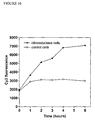
- Cy3Qee (Formula IIIa) and Cy5Qee (Formula IIIb) were evaluated as cell permeable fluorescence substrates for nitroreductase measurement in living cells.
- Nitroreductase expressing cells and control cells were cultured at 10,000 cells/well in 96 well plates in tissue culture medium containing 10% foetal calf serum and incubated at 37°C in the presence of 10 ⁇ M Cy3Qee or 30 ⁇ M Cy5Qee. Fluorescence measurements were made using a CytoStar (PerSeptive Biosystems) plate reader using 530/25nm excitation and 580/50nm emission filters for Cy3Qee and 610/20nm excitation and 670/40nm emission filters for Cy5Qee.
- CytoStar PerSeptive Biosystems
- Nitroreductase expressing cells and control cells were incubated for 2 hours at 37°C in tissue culture media containing 30 ⁇ M Cy3Qee. Following incubation cells were washed with phosphate buffered saline and trypsinised to produce cell suspensions for flow cytometry.
- Cy5Q mono free acid potassium salt obtained from Amersham Pharmacia Biotech Ltd
- Cascade blue ® (Molecular Probes)
- 8-hydroxypyrene-1,3,6-trisulfonic acid sodium salt (8.8mg, 0.018 mmol) (Fluka)
- N,N diisopropylcarbodiimide (10 ⁇ l, 0.065mmol
- 1-hydroxybenzotriazole 1mg, 0.007 mmol
- 4-(dimethylamino)pyridine 0.0.9mg, 0.007 mmol
- activated molecular sieves powder 250mg
- Cy5Q-Cascade blue cassette (0.8mM in acetate buffer pH5.0) was diluted to 8 ⁇ M in PBS pH7.4 containing 1mM NADH.
- a cell lysate was prepared from 2 x10 7 SKOV cells by re-suspension of scraped cells in 5ml PBS at 4°C and repeated passage through a 25 gauge syringe needle. Aliquots (1ml) of Cy5Q-Cascade blue were incubated with 500 ⁇ l of cell lysate or PBS for 20 minutes at 37°C. Following incubation 100 ⁇ l of a 1 ng/ ⁇ l solution of E.coli B nitroreductase was added to one sample and incubation continued for 5 minutes.
- Figure 16 shows an increase of fluorescence emission at 530nm (i.e. of Cascade Blue) when the cassette is incubated in the presence of cell lysate and an increase in fluorescence emission at 670nm (i.e. Cy5) when nitroreductase enzyme is present.
- 530nm i.e. of Cascade Blue
- 670nm i.e. Cy5
Landscapes
- Chemical & Material Sciences (AREA)
- Health & Medical Sciences (AREA)
- Life Sciences & Earth Sciences (AREA)
- Engineering & Computer Science (AREA)
- Urology & Nephrology (AREA)
- Hematology (AREA)
- Organic Chemistry (AREA)
- Biomedical Technology (AREA)
- Molecular Biology (AREA)
- Immunology (AREA)
- Physics & Mathematics (AREA)
- Biochemistry (AREA)
- Microbiology (AREA)
- Biotechnology (AREA)
- Chemical Kinetics & Catalysis (AREA)
- Food Science & Technology (AREA)
- Medicinal Chemistry (AREA)
- Inorganic Chemistry (AREA)
- Analytical Chemistry (AREA)
- Cell Biology (AREA)
- General Health & Medical Sciences (AREA)
- General Physics & Mathematics (AREA)
- Pathology (AREA)
- Measuring Or Testing Involving Enzymes Or Micro-Organisms (AREA)
- Investigating Or Analysing Materials By The Use Of Chemical Reactions (AREA)
- Preparation Of Compounds By Using Micro-Organisms (AREA)
- Investigating, Analyzing Materials By Fluorescence Or Luminescence (AREA)
- Investigating Materials By The Use Of Optical Means Adapted For Particular Applications (AREA)
- Investigating Or Analysing Biological Materials (AREA)
- Enzymes And Modification Thereof (AREA)
Priority Applications (1)
| Application Number | Priority Date | Filing Date | Title |
|---|---|---|---|
| EP05021689A EP1698900A1 (en) | 2000-02-02 | 2001-02-01 | Methods employing increased dye-fluorescence upon nitroreduction |
Applications Claiming Priority (3)
| Application Number | Priority Date | Filing Date | Title |
|---|---|---|---|
| GB0002261 | 2000-02-02 | ||
| GBGB0002261.6A GB0002261D0 (en) | 2000-02-02 | 2000-02-02 | Fluorescent detection method & reagent |
| PCT/GB2001/000396 WO2001057237A2 (en) | 2000-02-02 | 2001-02-01 | Methods employing increased dye-fluorescence upon nitroreduction |
Related Child Applications (1)
| Application Number | Title | Priority Date | Filing Date |
|---|---|---|---|
| EP05021689A Division EP1698900A1 (en) | 2000-02-02 | 2001-02-01 | Methods employing increased dye-fluorescence upon nitroreduction |
Publications (2)
| Publication Number | Publication Date |
|---|---|
| EP1252520A2 EP1252520A2 (en) | 2002-10-30 |
| EP1252520B1 true EP1252520B1 (en) | 2005-10-12 |
Family
ID=9884728
Family Applications (2)
| Application Number | Title | Priority Date | Filing Date |
|---|---|---|---|
| EP01902521A Expired - Lifetime EP1252520B1 (en) | 2000-02-02 | 2001-02-01 | Nitroreductase reporter gene assay involving fluorescence enhancement |
| EP05021689A Withdrawn EP1698900A1 (en) | 2000-02-02 | 2001-02-01 | Methods employing increased dye-fluorescence upon nitroreduction |
Family Applications After (1)
| Application Number | Title | Priority Date | Filing Date |
|---|---|---|---|
| EP05021689A Withdrawn EP1698900A1 (en) | 2000-02-02 | 2001-02-01 | Methods employing increased dye-fluorescence upon nitroreduction |
Country Status (12)
| Country | Link |
|---|---|
| US (1) | US7662973B2 (enExample) |
| EP (2) | EP1252520B1 (enExample) |
| JP (2) | JP3984475B2 (enExample) |
| AT (1) | ATE306669T1 (enExample) |
| AU (2) | AU782381B2 (enExample) |
| CA (1) | CA2399368C (enExample) |
| DE (1) | DE60115205T2 (enExample) |
| DK (1) | DK1252520T3 (enExample) |
| ES (1) | ES2250349T3 (enExample) |
| GB (1) | GB0002261D0 (enExample) |
| IL (1) | IL150947A0 (enExample) |
| WO (1) | WO2001057237A2 (enExample) |
Families Citing this family (24)
| Publication number | Priority date | Publication date | Assignee | Title |
|---|---|---|---|---|
| EP1437386A4 (en) * | 2001-09-27 | 2005-01-26 | Fuji Photo Film Co Ltd | ASYMMETRIC CYANINE DYE |
| GB0123856D0 (en) * | 2001-10-05 | 2001-11-28 | Amersham Pharm Biotech Uk Ltd | Method for determining cell cycle position |
| WO2003082988A1 (en) * | 2002-03-29 | 2003-10-09 | The General Hospital Corporation | Nir-fluorescent cyanine dyes, their synthesis and biological use |
| WO2004043417A2 (en) * | 2002-11-14 | 2004-05-27 | L'oreal | Composition for dyeing keratin fibres containing a dye precursor and an enzyme with nitroreductase activity |
| FR2847161B1 (fr) * | 2002-11-14 | 2005-01-07 | Oreal | Composition de teinture des fibres keratiniques contenant un precurseur de colorant et une enzyme a activite nitroreductase et procede mettant en oeuvre cette composition |
| US20070166695A1 (en) * | 2004-02-09 | 2007-07-19 | Novozymes A/S | Method for testing or screening for an enzyme of interest |
| JP4965434B2 (ja) * | 2004-04-23 | 2012-07-04 | ジーイー・ヘルスケア・アクスイェ・セルスカプ | 蛍光共鳴エネルギー移動酵素基質 |
| GB0411993D0 (en) * | 2004-05-28 | 2004-06-30 | Amersham Biosciences Uk Ltd | Method and reagent for measuring nitroreductase enzyme activity |
| US7671218B2 (en) * | 2004-08-13 | 2010-03-02 | Elitech Holdings B.V. | Phosphonate fluorescent dyes and conjugates |
| US7767834B2 (en) * | 2004-08-13 | 2010-08-03 | Elitech Holding B.V. | Phosphonylated fluorescent dyes and conjugates |
| US7445902B2 (en) * | 2004-09-30 | 2008-11-04 | Ge Healthcare Uk Limited | Fluorescent nucleotide analogues |
| GB0505777D0 (en) * | 2005-03-22 | 2005-04-27 | Amersham Biosciences Uk Ltd | Enzyme detection method and reagent |
| EP1954763B1 (en) * | 2005-11-28 | 2016-11-16 | Dako Denmark A/S | Cyanine dyes and methods for detecting a target using said dyes |
| US20100173332A1 (en) * | 2006-09-07 | 2010-07-08 | Auckland Uniservices Limited | Method for the Fluorescent Detection of Nitroreductase Activity Using Nitro-Substituted Aromatic Compounds |
| US20080226160A1 (en) * | 2007-03-12 | 2008-09-18 | Conversion Works, Inc. | Systems and methods for filling light in frames during 2-d to 3-d image conversion |
| US7906106B2 (en) * | 2007-06-27 | 2011-03-15 | General Electric Company | In vivo cell trafficking |
| US8021647B2 (en) * | 2007-06-29 | 2011-09-20 | General Electric Company | In vivo optical imaging |
| JP2013530699A (ja) | 2010-06-15 | 2013-08-01 | セルラー ダイナミクス インターナショナル, インコーポレイテッド | 生物学的応答の調査のための既製の幹細胞モデルの概要 |
| US8828678B2 (en) | 2010-11-16 | 2014-09-09 | Enzo Life Sciences, Inc. | Self-immolative probes for enzyme activity detection |
| EP2732029B1 (en) | 2011-07-11 | 2019-01-16 | FUJIFILM Cellular Dynamics, Inc. | Methods for cell reprogramming and genome engineering |
| CN102516793B (zh) * | 2011-11-22 | 2014-02-05 | 大连理工大学 | 一类双苄基五甲川菁荧光染料、其制备方法及应用 |
| WO2014132137A2 (en) | 2013-03-01 | 2014-09-04 | Université De Genève | Transgenic cell selection |
| US11662312B2 (en) * | 2017-06-27 | 2023-05-30 | Coriolis Pharma Research GmbH | Polysorbate quantification assay |
| JPWO2025211296A1 (enExample) * | 2024-04-05 | 2025-10-09 |
Family Cites Families (7)
| Publication number | Priority date | Publication date | Assignee | Title |
|---|---|---|---|---|
| SU1004428A1 (ru) * | 1981-12-30 | 1983-03-15 | Предприятие П/Я Р-6496 | 4-Амино-N-пиразолилнафталимиды в качестве органических люминофоров желто-зеленого свечени |
| US5633158A (en) * | 1991-10-23 | 1997-05-27 | Cancer Research Campaign Technology Limited | Bacterial nitroreductase for the reduction of CB 1954 and analogues thereof to a cytotoxic form |
| US5658751A (en) * | 1993-04-13 | 1997-08-19 | Molecular Probes, Inc. | Substituted unsymmetrical cyanine dyes with selected permeability |
| US5534416A (en) * | 1993-04-13 | 1996-07-09 | Molecular Probes, Inc. | Fluorescent viability assay using cyclic-substituted unsymmetrical cyanine dyes |
| DE69821289T2 (de) * | 1997-06-24 | 2004-11-25 | Eastman Kodak Co. | Sensibilisierungsfarbstoffe für verbesserte Lichtabsorption |
| CA2325050A1 (en) * | 1998-04-06 | 1999-10-14 | Dalhousie University | A novel nitroreductase and therapeutic uses therefor |
| GB9812596D0 (en) * | 1998-06-11 | 1998-08-12 | Amersham Pharm Biotech Uk Ltd | Energy transfer assay method |
-
2000
- 2000-02-02 GB GBGB0002261.6A patent/GB0002261D0/en not_active Ceased
-
2001
- 2001-02-01 WO PCT/GB2001/000396 patent/WO2001057237A2/en not_active Ceased
- 2001-02-01 ES ES01902521T patent/ES2250349T3/es not_active Expired - Lifetime
- 2001-02-01 AU AU30376/01A patent/AU782381B2/en not_active Ceased
- 2001-02-01 AT AT01902521T patent/ATE306669T1/de not_active IP Right Cessation
- 2001-02-01 DK DK01902521T patent/DK1252520T3/da active
- 2001-02-01 IL IL15094701A patent/IL150947A0/xx unknown
- 2001-02-01 JP JP2001558049A patent/JP3984475B2/ja not_active Expired - Fee Related
- 2001-02-01 EP EP01902521A patent/EP1252520B1/en not_active Expired - Lifetime
- 2001-02-01 US US10/182,996 patent/US7662973B2/en not_active Expired - Fee Related
- 2001-02-01 EP EP05021689A patent/EP1698900A1/en not_active Withdrawn
- 2001-02-01 CA CA002399368A patent/CA2399368C/en not_active Expired - Fee Related
- 2001-02-01 DE DE60115205T patent/DE60115205T2/de not_active Expired - Lifetime
-
2005
- 2005-10-14 AU AU2005222569A patent/AU2005222569A1/en not_active Abandoned
-
2007
- 2007-02-01 JP JP2007023109A patent/JP2007183284A/ja active Pending
Non-Patent Citations (3)
| Title |
|---|
| CELL NOTES (PROMEGA), no. 8, 2004, pages 1 - 6 * |
| PROMEGA TECHNICAL BULLETIN, no. 084, August 2004 (2004-08-01), pages 1 - 10 * |
| PROMEGA TECHNICAL BULLETIN, no. 097, May 2002 (2002-05-01), USA, pages 1 - 9 * |
Also Published As
| Publication number | Publication date |
|---|---|
| DE60115205D1 (de) | 2005-12-29 |
| EP1252520A2 (en) | 2002-10-30 |
| US7662973B2 (en) | 2010-02-16 |
| WO2001057237A2 (en) | 2001-08-09 |
| AU3037601A (en) | 2001-08-14 |
| EP1698900A1 (en) | 2006-09-06 |
| DK1252520T3 (da) | 2006-02-06 |
| JP2003522333A (ja) | 2003-07-22 |
| AU782381B2 (en) | 2005-07-21 |
| CA2399368A1 (en) | 2001-08-09 |
| IL150947A0 (en) | 2003-02-12 |
| AU2005222569A1 (en) | 2005-11-10 |
| WO2001057237A3 (en) | 2002-05-16 |
| JP3984475B2 (ja) | 2007-10-03 |
| JP2007183284A (ja) | 2007-07-19 |
| GB0002261D0 (en) | 2000-03-22 |
| DE60115205T2 (de) | 2006-07-20 |
| CA2399368C (en) | 2007-04-10 |
| US20030186348A1 (en) | 2003-10-02 |
| ATE306669T1 (de) | 2005-10-15 |
| ES2250349T3 (es) | 2006-04-16 |
Similar Documents
| Publication | Publication Date | Title |
|---|---|---|
| EP1252520B1 (en) | Nitroreductase reporter gene assay involving fluorescence enhancement | |
| US6828116B1 (en) | Energy transfer assay method and reagent | |
| US7335771B2 (en) | Quinacridone derivatives as labelling reagents for fluorescence detection of biological materials | |
| US8034558B2 (en) | Acridone derivatives as labels for fluorescence detection of target materials | |
| US6133445A (en) | Rigidized trimethine cyanine dyes | |
| EP1042407B1 (en) | Rigidized trimethine cyanine dyes | |
| US8227621B2 (en) | Cyanine dyes and methods of use | |
| EP0977766A1 (en) | Glycoconjugated fluorescent labeling reagents | |
| AU2002314302A1 (en) | Quinacridone labelling reagents for fluorescence detection of biological materials | |
| US8378120B2 (en) | Method and reagent for measuring nitroreductase enzyme activity | |
| WO2006100417A1 (en) | Enzyme detection method and reagent | |
| AU2002257963A1 (en) | Acridone derivatives as labels for fluorescence detection of target materials |
Legal Events
| Date | Code | Title | Description |
|---|---|---|---|
| PUAI | Public reference made under article 153(3) epc to a published international application that has entered the european phase |
Free format text: ORIGINAL CODE: 0009012 |
|
| 17P | Request for examination filed |
Effective date: 20020724 |
|
| AK | Designated contracting states |
Kind code of ref document: A2 Designated state(s): AT BE CH CY DE DK ES FI FR GB GR IE IT LI LU MC NL PT SE TR |
|
| AX | Request for extension of the european patent |
Free format text: AL;LT;LV;MK;RO;SI |
|
| RIN1 | Information on inventor provided before grant (corrected) |
Inventor name: BRIGGS, MARK AMERSHAM BIOSCIENCES UK LTD. Inventor name: THOMAS, NICHOLAS AMERSHAM BIOSCIENCES UK LIMITED Inventor name: DAVIES, BETH AMERSHAM BIOSCIENCES UK LTD. Inventor name: MILLAR, VALERIE AMERSHAM BIOSCIENCES UK LTD. Inventor name: MICHAEL, NIGEL PAUL AMERSHAM BIOSCIENCES UK LTD. |
|
| 17Q | First examination report despatched |
Effective date: 20030903 |
|
| GRAP | Despatch of communication of intention to grant a patent |
Free format text: ORIGINAL CODE: EPIDOSNIGR1 |
|
| RTI1 | Title (correction) |
Free format text: NITROREDUCTASE REPORTER GENE ASSAY INVOLVING FLUORESCENCE ENHANCEMENT |
|
| GRAS | Grant fee paid |
Free format text: ORIGINAL CODE: EPIDOSNIGR3 |
|
| GRAA | (expected) grant |
Free format text: ORIGINAL CODE: 0009210 |
|
| AK | Designated contracting states |
Kind code of ref document: B1 Designated state(s): AT BE CH CY DE DK ES FI FR GB GR IE IT LI LU MC NL PT SE TR |
|
| REG | Reference to a national code |
Ref country code: GB Ref legal event code: FG4D |
|
| REG | Reference to a national code |
Ref country code: CH Ref legal event code: EP |
|
| BECN | Be: change of holder's name |
Owner name: *GE HEALTHCARE UK LTD Effective date: 20051012 |
|
| REG | Reference to a national code |
Ref country code: IE Ref legal event code: FG4D |
|
| REG | Reference to a national code |
Ref country code: SE Ref legal event code: TRGR |
|
| REF | Corresponds to: |
Ref document number: 60115205 Country of ref document: DE Date of ref document: 20051229 Kind code of ref document: P |
|
| PG25 | Lapsed in a contracting state [announced via postgrant information from national office to epo] |
Ref country code: GR Free format text: LAPSE BECAUSE OF FAILURE TO SUBMIT A TRANSLATION OF THE DESCRIPTION OR TO PAY THE FEE WITHIN THE PRESCRIBED TIME-LIMIT Effective date: 20060112 |
|
| REG | Reference to a national code |
Ref country code: CH Ref legal event code: NV Representative=s name: ISLER & PEDRAZZINI AG |
|
| PG25 | Lapsed in a contracting state [announced via postgrant information from national office to epo] |
Ref country code: IE Free format text: LAPSE BECAUSE OF NON-PAYMENT OF DUE FEES Effective date: 20060201 |
|
| REG | Reference to a national code |
Ref country code: DK Ref legal event code: T3 |
|
| PG25 | Lapsed in a contracting state [announced via postgrant information from national office to epo] |
Ref country code: LU Free format text: LAPSE BECAUSE OF NON-PAYMENT OF DUE FEES Effective date: 20060228 Ref country code: MC Free format text: LAPSE BECAUSE OF NON-PAYMENT OF DUE FEES Effective date: 20060228 |
|
| REG | Reference to a national code |
Ref country code: CH Ref legal event code: PFA Owner name: GE HEALTHCARE LIMITED Free format text: AMERSHAM BIOSCIENCES UK LIMITED#AMERSHAM PLACE LITTLE CHALFONT,#BUCKINGHAMSHIRE HP7 9NA (GB) -TRANSFER TO- GE HEALTHCARE LIMITED#AMERSHAM PLACE#LITTLE CHALFONT, BUCKINGHAMSHIRE HP7 9NA (GB) |
|
| REG | Reference to a national code |
Ref country code: ES Ref legal event code: FG2A Ref document number: 2250349 Country of ref document: ES Kind code of ref document: T3 |
|
| NLT1 | Nl: modifications of names registered in virtue of documents presented to the patent office pursuant to art. 16 a, paragraph 1 |
Owner name: GE HEALTHCARE UK LIMITED |
|
| REG | Reference to a national code |
Ref country code: PT Ref legal event code: PD4A Owner name: GE HEALTHCARE UK LIMITED, GB Effective date: 20060315 |
|
| ET | Fr: translation filed | ||
| PLBE | No opposition filed within time limit |
Free format text: ORIGINAL CODE: 0009261 |
|
| STAA | Information on the status of an ep patent application or granted ep patent |
Free format text: STATUS: NO OPPOSITION FILED WITHIN TIME LIMIT |
|
| 26N | No opposition filed |
Effective date: 20060713 |
|
| REG | Reference to a national code |
Ref country code: IE Ref legal event code: MM4A |
|
| REG | Reference to a national code |
Ref country code: FR Ref legal event code: CD |
|
| REG | Reference to a national code |
Ref country code: CH Ref legal event code: PCAR Free format text: ISLER & PEDRAZZINI AG;POSTFACH 1772;8027 ZUERICH (CH) |
|
| BECN | Be: change of holder's name |
Owner name: *GE HEALTHCARE UK LTD Effective date: 20051012 |
|
| PGFP | Annual fee paid to national office [announced via postgrant information from national office to epo] |
Ref country code: DK Payment date: 20080228 Year of fee payment: 8 Ref country code: ES Payment date: 20080226 Year of fee payment: 8 |
|
| PGFP | Annual fee paid to national office [announced via postgrant information from national office to epo] |
Ref country code: FI Payment date: 20080228 Year of fee payment: 8 Ref country code: IT Payment date: 20080226 Year of fee payment: 8 Ref country code: NL Payment date: 20080224 Year of fee payment: 8 Ref country code: PT Payment date: 20080122 Year of fee payment: 8 |
|
| PGFP | Annual fee paid to national office [announced via postgrant information from national office to epo] |
Ref country code: AT Payment date: 20080122 Year of fee payment: 8 |
|
| PG25 | Lapsed in a contracting state [announced via postgrant information from national office to epo] |
Ref country code: TR Free format text: LAPSE BECAUSE OF FAILURE TO SUBMIT A TRANSLATION OF THE DESCRIPTION OR TO PAY THE FEE WITHIN THE PRESCRIBED TIME-LIMIT Effective date: 20051012 |
|
| PGFP | Annual fee paid to national office [announced via postgrant information from national office to epo] |
Ref country code: BE Payment date: 20080306 Year of fee payment: 8 |
|
| PG25 | Lapsed in a contracting state [announced via postgrant information from national office to epo] |
Ref country code: CY Free format text: LAPSE BECAUSE OF FAILURE TO SUBMIT A TRANSLATION OF THE DESCRIPTION OR TO PAY THE FEE WITHIN THE PRESCRIBED TIME-LIMIT Effective date: 20051012 |
|
| REG | Reference to a national code |
Ref country code: PT Ref legal event code: MM4A Free format text: LAPSE DUE TO NON-PAYMENT OF FEES Effective date: 20090803 |
|
| BERE | Be: lapsed |
Owner name: *GE HEALTHCARE UK LTD Effective date: 20090228 |
|
| REG | Reference to a national code |
Ref country code: DK Ref legal event code: EBP |
|
| PG25 | Lapsed in a contracting state [announced via postgrant information from national office to epo] |
Ref country code: FI Free format text: LAPSE BECAUSE OF NON-PAYMENT OF DUE FEES Effective date: 20090201 Ref country code: PT Free format text: LAPSE BECAUSE OF NON-PAYMENT OF DUE FEES Effective date: 20090803 Ref country code: AT Free format text: LAPSE BECAUSE OF NON-PAYMENT OF DUE FEES Effective date: 20090201 |
|
| NLV4 | Nl: lapsed or anulled due to non-payment of the annual fee |
Effective date: 20090901 |
|
| PG25 | Lapsed in a contracting state [announced via postgrant information from national office to epo] |
Ref country code: NL Free format text: LAPSE BECAUSE OF NON-PAYMENT OF DUE FEES Effective date: 20090901 |
|
| PG25 | Lapsed in a contracting state [announced via postgrant information from national office to epo] |
Ref country code: BE Free format text: LAPSE BECAUSE OF NON-PAYMENT OF DUE FEES Effective date: 20090228 |
|
| REG | Reference to a national code |
Ref country code: ES Ref legal event code: FD2A Effective date: 20090202 |
|
| PG25 | Lapsed in a contracting state [announced via postgrant information from national office to epo] |
Ref country code: ES Free format text: LAPSE BECAUSE OF NON-PAYMENT OF DUE FEES Effective date: 20090202 Ref country code: DK Free format text: LAPSE BECAUSE OF NON-PAYMENT OF DUE FEES Effective date: 20090831 |
|
| PG25 | Lapsed in a contracting state [announced via postgrant information from national office to epo] |
Ref country code: IT Free format text: LAPSE BECAUSE OF NON-PAYMENT OF DUE FEES Effective date: 20090201 |
|
| REG | Reference to a national code |
Ref country code: DE Ref legal event code: R082 Ref document number: 60115205 Country of ref document: DE Representative=s name: J D REYNOLDS & CO., GB |
|
| PGFP | Annual fee paid to national office [announced via postgrant information from national office to epo] |
Ref country code: SE Payment date: 20140227 Year of fee payment: 14 Ref country code: CH Payment date: 20140227 Year of fee payment: 14 Ref country code: DE Payment date: 20140227 Year of fee payment: 14 |
|
| PGFP | Annual fee paid to national office [announced via postgrant information from national office to epo] |
Ref country code: FR Payment date: 20140220 Year of fee payment: 14 |
|
| PGFP | Annual fee paid to national office [announced via postgrant information from national office to epo] |
Ref country code: GB Payment date: 20140227 Year of fee payment: 14 |
|
| REG | Reference to a national code |
Ref country code: DE Ref legal event code: R119 Ref document number: 60115205 Country of ref document: DE |
|
| REG | Reference to a national code |
Ref country code: SE Ref legal event code: EUG |
|
| REG | Reference to a national code |
Ref country code: CH Ref legal event code: PL |
|
| GBPC | Gb: european patent ceased through non-payment of renewal fee |
Effective date: 20150201 |
|
| PG25 | Lapsed in a contracting state [announced via postgrant information from national office to epo] |
Ref country code: CH Free format text: LAPSE BECAUSE OF NON-PAYMENT OF DUE FEES Effective date: 20150228 Ref country code: LI Free format text: LAPSE BECAUSE OF NON-PAYMENT OF DUE FEES Effective date: 20150228 |
|
| REG | Reference to a national code |
Ref country code: FR Ref legal event code: ST Effective date: 20151030 |
|
| PG25 | Lapsed in a contracting state [announced via postgrant information from national office to epo] |
Ref country code: SE Free format text: LAPSE BECAUSE OF NON-PAYMENT OF DUE FEES Effective date: 20150202 |
|
| PG25 | Lapsed in a contracting state [announced via postgrant information from national office to epo] |
Ref country code: DE Free format text: LAPSE BECAUSE OF NON-PAYMENT OF DUE FEES Effective date: 20150901 Ref country code: GB Free format text: LAPSE BECAUSE OF NON-PAYMENT OF DUE FEES Effective date: 20150201 |
|
| PG25 | Lapsed in a contracting state [announced via postgrant information from national office to epo] |
Ref country code: FR Free format text: LAPSE BECAUSE OF NON-PAYMENT OF DUE FEES Effective date: 20150302 |