EP1251738B1 - Novel diphenylethylene compounds - Google Patents
Novel diphenylethylene compounds Download PDFInfo
- Publication number
- EP1251738B1 EP1251738B1 EP01905454A EP01905454A EP1251738B1 EP 1251738 B1 EP1251738 B1 EP 1251738B1 EP 01905454 A EP01905454 A EP 01905454A EP 01905454 A EP01905454 A EP 01905454A EP 1251738 B1 EP1251738 B1 EP 1251738B1
- Authority
- EP
- European Patent Office
- Prior art keywords
- phenyl
- insulin
- compound
- dimethoxy
- concentrations
- Prior art date
- Legal status (The legal status is an assumption and is not a legal conclusion. Google has not performed a legal analysis and makes no representation as to the accuracy of the status listed.)
- Expired - Lifetime
Links
Images












Classifications
-
- C—CHEMISTRY; METALLURGY
- C07—ORGANIC CHEMISTRY
- C07C—ACYCLIC OR CARBOCYCLIC COMPOUNDS
- C07C43/00—Ethers; Compounds having groups, groups or groups
- C07C43/02—Ethers
- C07C43/20—Ethers having an ether-oxygen atom bound to a carbon atom of a six-membered aromatic ring
- C07C43/23—Ethers having an ether-oxygen atom bound to a carbon atom of a six-membered aromatic ring containing hydroxy or O-metal groups
-
- A—HUMAN NECESSITIES
- A61—MEDICAL OR VETERINARY SCIENCE; HYGIENE
- A61P—SPECIFIC THERAPEUTIC ACTIVITY OF CHEMICAL COMPOUNDS OR MEDICINAL PREPARATIONS
- A61P3/00—Drugs for disorders of the metabolism
- A61P3/08—Drugs for disorders of the metabolism for glucose homeostasis
- A61P3/10—Drugs for disorders of the metabolism for glucose homeostasis for hyperglycaemia, e.g. antidiabetics
-
- C—CHEMISTRY; METALLURGY
- C07—ORGANIC CHEMISTRY
- C07C—ACYCLIC OR CARBOCYCLIC COMPOUNDS
- C07C233/00—Carboxylic acid amides
- C07C233/01—Carboxylic acid amides having carbon atoms of carboxamide groups bound to hydrogen atoms or to acyclic carbon atoms
- C07C233/45—Carboxylic acid amides having carbon atoms of carboxamide groups bound to hydrogen atoms or to acyclic carbon atoms having the nitrogen atom of at least one of the carboxamide groups bound to a carbon atom of a hydrocarbon radical substituted by carboxyl groups
- C07C233/53—Carboxylic acid amides having carbon atoms of carboxamide groups bound to hydrogen atoms or to acyclic carbon atoms having the nitrogen atom of at least one of the carboxamide groups bound to a carbon atom of a hydrocarbon radical substituted by carboxyl groups with the substituted hydrocarbon radical bound to the nitrogen atom of the carboxamide group by a carbon atom of a six-membered aromatic ring
- C07C233/54—Carboxylic acid amides having carbon atoms of carboxamide groups bound to hydrogen atoms or to acyclic carbon atoms having the nitrogen atom of at least one of the carboxamide groups bound to a carbon atom of a hydrocarbon radical substituted by carboxyl groups with the substituted hydrocarbon radical bound to the nitrogen atom of the carboxamide group by a carbon atom of a six-membered aromatic ring having the carbon atom of the carboxamide group bound to a hydrogen atom or to a carbon atom of a saturated carbon skeleton
-
- C—CHEMISTRY; METALLURGY
- C07—ORGANIC CHEMISTRY
- C07C—ACYCLIC OR CARBOCYCLIC COMPOUNDS
- C07C59/00—Compounds having carboxyl groups bound to acyclic carbon atoms and containing any of the groups OH, O—metal, —CHO, keto, ether, groups, groups, or groups
- C07C59/40—Unsaturated compounds
- C07C59/58—Unsaturated compounds containing ether groups, groups, groups, or groups
- C07C59/64—Unsaturated compounds containing ether groups, groups, groups, or groups containing six-membered aromatic rings
Definitions
- the field of the invention is novel diphenylethylene compounds and their use for the treatment of diabetes and related conditions.
- Extracts of the leaves, flowers, and gum of the tree Pterocarpus marsupium Roxb have been used traditionally to treat diarrhea, toothaches, fever, and urinary and skin infections. Extracts of the bark have been long regarded as useful for treating diabetes.
- Manickam et al. J. Nat. Prod. 1997; 60:609-610 ) reported some hypoglycemic activity of a naturally occurring pterostilbene, trans-1-(3,5-dimethoxyphenyl)-2-(4-hydroxyphenyl)-ethylene, isolated from the heartwood of Pterocarpus marsupium.
- this pterostilbene is insoluble in water and has not been shown to be efficacious in the treatment of diabetes.
- Type I diabetes or insulin-dependent diabetes
- Type II diabetes also referred to as non-insulin dependent diabetes mellitus, NIDDM
- NIDDM non-insulin dependent diabetes mellitus
- Subjects with diabetes usually have one or more of the following defects:
- WO 00/69430 discloses certain diphenylethylene and styrene compounds and their oral administration to decrease blood glucose levels in rats. The compounds are stated to be effective anti-diabetic agents.
- the present invention relates to the following compounds, namely: 3-(3,4-dimethoxy-phenyl)-2-(4-hydroxy-phenyl)-acrylic acid; 3-(3,5-dimethoxyphenyl)-2-(4-fluoro-p-phenyl)-acrylic acid; 2-(4-acetylamino-phenyl)-3-(3,5-dimethoxy-phenyl)-acrylic acid; or 3-(3,4-dimethoxy-phenyl)-2-(4-hydroxy-phenyl)-propionic acid.
- the present invention relates to a pharmaceutical composition for treatment of diabetes comprising a therapeutically effective amount of a compound, or a mixture of compounds, in accordance with the first aspect of the invention as defined above.
- the present invention relates to the use of a compound or a mixture of compounds in accordance with the first aspect of the invention as defined above, in the preparation of a medicament for treating diabetes.
- compounds in accordance with the present invention may be prepared by the condensation of:
- compositions suitable for oral or parenteral delivery may be combined with pharmaceutically acceptable carriers and vehicles in various compositions suitable for oral or parenteral delivery.
- the particularly preferred form of composition is either an orally administered capsule or solution in which the compound is delivered in water, saline, or a phosphate buffer; or lyophilized powder in the form of tablets or capsules also containing various fillers and binders.
- the effective dosages of the compound in a composition will be selected by those of ordinary skill in the art and may be determined empirically.
- the compounds of the present invention are useful for the treatment of diseases characterized by the presence of elevated blood glucose concentrations, i.e., hyperglycemic disorders such as diabetes mellitus, including both Type I and Type II diabetes, as well as other disorders related to hyperglycemia, such as obesity, increased cholesterol concentrations, and renal disorders.
- hyperglycemic disorders such as diabetes mellitus, including both Type I and Type II diabetes, as well as other disorders related to hyperglycemia, such as obesity, increased cholesterol concentrations, and renal disorders.
- Treatment means that the compound is administered at least to reduce the blood glucose concentration in the subject suffering from the hyperglycemic disorder; the compound may also reduce insulin or lipid concentrations or both.
- the compound is administered in an amount sufficient to reduce blood glucose concentration to an acceptable range, wherein an acceptable range means within about ⁇ 10% of the normal average blood glucose concentration for a subject of that species.
- a variety of subjects in addition to humans may be treated with the compounds to reduce blood glucose concentrations, such as livestock, valuable or rare animals, and pets.
- the compounds may be administered to the subject suffering from the hyperglycemic disorder using any administration technique, including intravenous, intradermal, intramuscular, subcutaneous, or oral. However the oral route of administration is particularly preferred.
- the dosage delivered to the subject will depend on the route by which the compound is delivered, but generally ranges from 5 to 500 mg for a 70-kg human, typically about 50 to 200 mg for a 70-kg human.
- the compound is administered to the human suffering from the hyperglycemic disorder to at least reduce the blood glucose concentration of the subject to about the normal blood glucose range for a human; the compound may also reduce insulin or lipid concentrations or both.
- the Z-acid 1b was synthesized by a procedure described by Kessar et al., supra, who showed that E-a-phenyl cinnamic acids can be converted to similar Z- ⁇ -phenyl cinnamic acids by prolonged heating under basic conditions.
- the E-acid la (1.2 g, 4.0 mmol) was dissolved in a mixture of triethylamine (5.0ml) and acetic anhydride (0.5 ml) and heated to reflux for 24 hours. The mixture was then cooled, diluted with ethyl acetate, and extracted sequentially first with 5% HCl (aqueous) then with 2 N NaOH and water.
- the combined basic aqueous solutions were acidified to a pH of 5 with acetic acid and cooled, and the solid was filtered. The filtrate was further acidified with concentrated HCl. Precipitation occurred upon cooling. The solid was collected by filtration and washed with fresh water. The solid compound was air dried to yield 1b.
- the free acid form of the E-isomer showed a chemical shift for the olefinic proton (in DMSO-d 6 ) of ⁇ 7.59.
- the free acid has a melting point of 225-227°C and a pKa of 6.2.
- the 1 H NMR analysis of the Z-isomer produced as described above showed the chemical shift of the olefinic proton to be ⁇ 6.81 as a free acid in DMSO-d 6 .
- the free acid form has a melting point of 135-137°C and a pKa of 5.3.
- Each isomer has a distinct UV spectrum.
- the ⁇ max values for the E- isomer are 227 nm and 284 nm, and those for the Z- isomer are 221 nm and 303 nm.
- 3-(3,4-Dimethoxy-phenyl)-2-(4-hydroxy-phenyl)-acrylic acid was dissolved in ethanol (100mL) and palladium-charcoal (10%, 50% wet, 0.3g) was added. The mixture was stirred overnight under hydrogen at room temperature. The reaction mixture was filtered through a bed of Celite® diatomaceous earth and the solvent evaporated.
- PBS phosphate-buffered saline
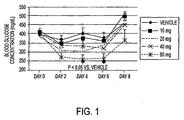
- la was administered daily in doses of 0 (vehicle only), 10, 20, 40, or 80 mg/kg of body weight to ob/ob mice for 4 days.
- the blood glucose concentrations or the animals given la were lower than those of the animals given the vehicle only; the differences were statistically significant for the groups given 20 and 40 mg/kg. Results shown in FIG. 2 .
- Serum concentrations of insulin, triglyceride, and free fatty acids (FFA) in ob/ob mice were measured on Day 8 following daily oral treatment with a dose of 20 mg/kg body weight for 7 days. Serum insulin concentrations were 42% lower in the la treated animals than they were in the vehicle-treated animals (A). Serum triglyceride concentrations were 24% lower in the la-treated mice than in the vehicle-treated mice (B). Serum FFA concentrations did not decrease significantly (C). Results shown in FIGS. 3A , B, C.
- mice Eight-week-old db/db mice with average blood glucose concentrations of 280-300 mg/dL were treated with vehicle or la (single 20-mg/kg doses daily, for 20 days; two 20-mg/kg doses daily for 8 days; and two 50-mg/kg doses daily for 5 days). Blood glucose concentrations in the mice given la were reduced 20% from those in the mice given the vehicle at the end of the first 20 days of treatment. Treatment with la at higher doses did not improve the glucose-lowering effect. Results shown in FIG. 4 .
- FIGS. 5A , B, C show the serum insulin, triglyceride, and free fatty acid (FFA) concentrations found in the db/db mice treated with la from the experiment shown in Figure 4 (the analyses were done at the end of the experiment).
- the insulin concentrations in the 1A-treated and vehicle-treated groups did not differ (A)
- the triglyceride (B) and FFA (C) concentrations were significantly lower in the mice treated with la than they were in the mice treated with vehicle
- triglyceride concentrations were reduced 32% from those in the vehicle-treated mice
- free fatty acid concentrations were reduced 28% from those in the vehicle-treated mice.
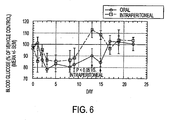
- IP intraperitoneally
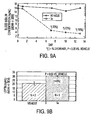
- Serum concentrations of triglyceride, free fatty acid, and cholesterol were also measured in the Zucker fa/fa rats given vehicle or la (20 mg/kg) daily for 58 days (see also Figures 7 and 9 ).
- the triglyceride, free fatty acid, and cholesterol concentrations found in the rats given la were reduced 70%, 89%, and 68% from those of the rats given vehicle. Results shown in FIG. 10 .
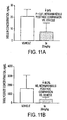
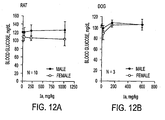
- Compound la does not lower blood glucose concentrations in normal animals. This was demonstrated in two studies using rats and dogs. Daily oral administration of la for 28 days did not cause any hypoglycemic activity of this compound, even at very high doses (up to 1000 mg/kg). Results shown in FIG. 12A , B.
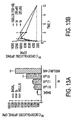
- Glucose uptake was measured in normal adipocytes freshly prepared from the epididimal fat pad of Sprague-Dawley (SD) rats (170 g) in the presence of la at the indicated concentrations (A), and in differentiated 3T3-L1 adipocytes (B). Insulin was used as a positive control in both experiments. In both cases la stimulated glucose uptake in a manner similar to insulin. Results shown in FIGS 13A , B.
- 3T3-L1 adipocytes were treated with la, insulin or vehicle alone.
- Cells were lysed, subjected to 4-20% gradient SDS-PAGE, electroblotted, and probed with anti-GLUT-1 or anti-GLUT-4 monoclonal antibodies.
- both GLUT-1 (A) and GLUT-4 (B) were up-regulated in 3T3-L 1 cells following exposure of cells to la. Results shown in FIGS. 14A-D .
- Differentiated 3T3-L 1 adipocytes were serum starved for 3 hours and then treated with either vehicle (medium alone) or la at a concentration of 10 ⁇ M for 30 minutes at 37°C.
- Cells were washed with phosphate-buffered saline (PBS), fixed with methanol at -20°C for 20 minutes, rinsed with PBS three times, and incubated with PBS containing 10% calf serum for 30 min at 37°C.
- the slides were incubated with anti-GLUT-4 polyclonal antibody (1 :50 dilution) in 10% calf serum for 2 hours at 37°C.
- the slides were rinsed with PBS three times and then incubated with secondary antibody coupled with Alexa-Fluor (EX max 495 nm; Em max 519 nm) for 30 min. Finally, the slides were rinsed with PBS and mounted with prolonged antifade mounting media.
- the pictures generated using a Nikon confocal PCM 2000 microscope linked to an image analyzer showed high fluorescence in the la-treated cells. The fluorescence staining appeared in the cell membrane, indicating that treatment with la promoted translocation of GLUT-4 glucose transporters to the cell surface.
- FIG. 15A Nine healthy male Swiss Webster mice were divided into three study groups of three.
- the first study group ( FIG. 15A ) received the compound of la at a dose of 16.7 mg/kgBW
- the second study group ( FIG. 15B ) received a dose of 167 mg/kg/BW
- the third study group ( FIG. 15C ) received a dose of 333 mg/kgBW on day zero of the study.
- the mice were kept on regular food and water during the entire study period. During the study, the mice were under close observation and their behaviour, gross physiology and mortality/survival were monitored.
- FIGS. 15A, 15B and 15C show that the survival rate in these mice in the course of the study period was 100%.
- Wortmannin is a known inhibitor of phosphatidylinositol 3-kinase (PI 3-kinase), an enzyme required for the insulin-signaling pathway.
- PI 3-kinase phosphatidylinositol 3-kinase
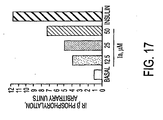
- CHO.IR cells Chinese hamster ovary cells that overexpress the human insulin receptor (CHO.IR cells) were grown in F12 Ham's medium with 10% fetal bovine serum (FBS) at 37°C in 5% CO 2 . Cells were serum-starved for 6 hours, and then incubated with vehicle, insulin (10 nM), or la (12.5, 25, or 50 ⁇ M) for 30 minutes at 37°C.
- FBS fetal bovine serum
- CHO.IGF-IR cells Chinese hamster ovary cells that overexpress the human insulin-like growth factor 1 receptor (CHO.IGF-IR cells) were grown in F12 Ham's medium with 10 % FBS at 37°C in 5% CO 2 . Cells were serum-starved for 6 hours, and then incubated with vehicle, IGF-1 (100 nM), tolbutamide (50 ⁇ M], or la (12.5, 25, or 50 ⁇ M) for 30 minutes at 37°C.
- IGF-1 100 nM
- tolbutamide 50 ⁇ M
- la 12.5, 25, or 50 ⁇ M
- CHO.IR human insulin receptor
- FBS fetal bovine serum
- Cells were serum starved for 6 hours and incubated with vehicle, insulin (10 nM), tolbutamide (50 ⁇ M), or one of 3 different doses of la (12.5,25, or 50 ⁇ M) for 30 min at 37°C.
- CHO cells Chinese hamster ovary (CHO) cells that had been serum-starved for 6 h were incubated with vehicle, insulin (10 nM), tolbutamide (50 ⁇ M), or one of three doses of la (12.5, 25, or 50 ⁇ M) for 30 minutes at 37°C. Two groups had been, preincubated with 100 nM Wortmannin (Lanes 7 and 8), and had the insulin (10 nM) and la (50 ⁇ M) added at this time.
- insulin 10 nM
- tolbutamide 50 ⁇ M
- la 12.5, 25, or 50 ⁇ M
- PPAR- ⁇ peroxisome proliferator activated receptor- ⁇
- 3T3-L 1 adipocytes were incubated with vehicle, la (5 ⁇ M), or troglitazone (5 ⁇ M), for 48 hours.
- PPAR- ⁇ expression was assessed by immunoblotting. Western blots were developed using an enhanced chemiluminescence detection system, and the results were quantified by scanning and then expressed as arbitrary units. The results in the figure show that troglitazone induced an increase in PPAR- ⁇ , while la did not induce an increase in PPAR- ⁇ over the basal level of this transcription factor. Results shown in FIG. 21 .
- fibroblasts to adipocytes involves the expression of PPAR- ⁇ . All members of the thiazolidinedione class of antidiabetic compounds stimulate PPAR- ⁇ expression and promote the differentiation of fibroblasts to adipocytes. Similarly, insulin also stimulates the differentiation of fibroblasts to adipocytes. To examine the effect of la on this differentiation process, 3T3-11 fibroblasts were incubated with la (1 ⁇ M), insulin (0.17 mM) or a combination of both. Following incubation, the cells were lysed, and the quantity of expressed PPAR- ⁇ was analyzed by ECL blot analysis using anti-PPAR- ⁇ antibody. Treatment of fibroblasts with la did not enhance the differentiation process. In a positive control, insulin treatment of fibroblasts stimulated the differentiation of these cells to adipocytes in association with increased levels of PPAR- ⁇ .
- FIG. 22 shows the results of three tests conducted to determine whether or not la is an agonist of nuclear PPAR receptors.
- the ability of la to bind human recombinant PPAR- ⁇ , PPAR- ⁇ , or PPAR- ⁇ was shown using a radioligand-binding assay that measures the displacement of an established radiolabeled ligand.
- the IC values for all three nuclear receptors were greater than 50 ⁇ M.
- the cofactor association was measured by the time-resolved fluorescence (HTRF) assay that uses energy transfer between two adjacent molecules to measure the ability of la to promote the association of PPARs with cofactor proteins.
- HTRF time-resolved fluorescence
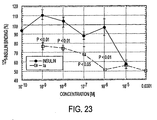
- Differentiated 3T3-11 cells (in triplicate wells) were treated with either la or cold insulin for one hour at 37°C at the indicated concentrations. After incubation, excess compounds were washed away, and the cells were incubated with a fixed amount of 125 I-insulin [10 pM; 2000 Ci/mmol) for 12 hours at 4°C. The cells were washed and then lysed with 0.1 % SDS and counted in a scintillation counter. As expected, increasing the dose of cold insulin inhibited the binding of radioactive insulin, while a 45% inhibition occurred with pre-incubation with la. Results shown in FIG. 23 .
- Glucose uptake was measured in normal adipocytes freshly prepared from the epididimal fat pad of SD rats in the presence of E or Z isomers of la or 1b. After the cells were preincubated with the isomers at the indicated concentrations for 30 min. 14 C-deoxy glucose was added, and the preparations were incubated for an additional 5 min.
- FIG. 24A shows the extent of glucose uptake stimulated by the two isomers was similar.
- FIG. 24B shows the stimulatory effect of the Z form (Ib) was additive to that of insulin, and the effect was blocked by Wortmannin (15minute preincubation), as was shown earlier for the E form of (la) (see Figure 16 ).
- SD rat serum A highly sensitive method for detecting la in Sprague-Dawley (SD) rat serum was developed in which la can be detected at a level of 10-25 ng.
- the kinetics of drug absorption and clearance from the circulation were studied in a rat model.
- SD rats were given oral doses of la (20 mg/kg).
- blood was collected and serum was analyzed for IA.
- 1a was absorbed maximally at 1 hour following oral delivery of the drug and is cleared from the circulation by 24 hours. Results shown in FIGS. 25A , B.
Landscapes
- Chemical & Material Sciences (AREA)
- Organic Chemistry (AREA)
- Health & Medical Sciences (AREA)
- Diabetes (AREA)
- Chemical Kinetics & Catalysis (AREA)
- Nuclear Medicine, Radiotherapy & Molecular Imaging (AREA)
- Engineering & Computer Science (AREA)
- Bioinformatics & Cheminformatics (AREA)
- Hematology (AREA)
- Obesity (AREA)
- Emergency Medicine (AREA)
- General Chemical & Material Sciences (AREA)
- Medicinal Chemistry (AREA)
- Endocrinology (AREA)
- Pharmacology & Pharmacy (AREA)
- Life Sciences & Earth Sciences (AREA)
- Animal Behavior & Ethology (AREA)
- General Health & Medical Sciences (AREA)
- Public Health (AREA)
- Veterinary Medicine (AREA)
- Acyclic And Carbocyclic Compounds In Medicinal Compositions (AREA)
- Organic Low-Molecular-Weight Compounds And Preparation Thereof (AREA)
- Pharmaceuticals Containing Other Organic And Inorganic Compounds (AREA)
Applications Claiming Priority (5)
| Application Number | Priority Date | Filing Date | Title |
|---|---|---|---|
| US642618 | 1984-08-20 | ||
| US18034000P | 2000-02-04 | 2000-02-04 | |
| US180340P | 2000-02-04 | ||
| US09/642,618 US6624197B1 (en) | 1998-05-08 | 2000-08-17 | Diphenylethylene compounds |
| PCT/US2001/003797 WO2001056382A1 (en) | 2000-02-04 | 2001-02-05 | Novel diphenylethylene compounds |
Publications (3)
| Publication Number | Publication Date |
|---|---|
| EP1251738A1 EP1251738A1 (en) | 2002-10-30 |
| EP1251738A4 EP1251738A4 (en) | 2005-08-10 |
| EP1251738B1 true EP1251738B1 (en) | 2008-12-17 |
Family
ID=40157708
Family Applications (1)
| Application Number | Title | Priority Date | Filing Date |
|---|---|---|---|
| EP01905454A Expired - Lifetime EP1251738B1 (en) | 2000-02-04 | 2001-02-05 | Novel diphenylethylene compounds |
Country Status (10)
| Country | Link |
|---|---|
| EP (1) | EP1251738B1 (https=) |
| JP (1) | JP2003521500A (https=) |
| CN (1) | CN100484400C (https=) |
| AT (1) | ATE417503T1 (https=) |
| AU (1) | AU784974B2 (https=) |
| CA (1) | CA2397076A1 (https=) |
| DE (1) | DE60137020D1 (https=) |
| MX (1) | MXPA02007514A (https=) |
| NZ (1) | NZ520829A (https=) |
| WO (1) | WO2001056382A1 (https=) |
Families Citing this family (5)
| Publication number | Priority date | Publication date | Assignee | Title |
|---|---|---|---|---|
| RU2356226C2 (ru) | 2003-04-22 | 2009-05-27 | Иэмди Кроп Байосайенс Кэнада Инк. | Применение липохитоолигосахаридов для инициирования раннего цветения и развития плодов у растений |
| DE102004027912A1 (de) * | 2004-06-09 | 2005-12-29 | Grünenthal GmbH | Substituierte Cyclopenten-Verbindungen |
| CN1723884A (zh) * | 2004-07-21 | 2006-01-25 | 中国人民解放军军事医学科学院放射医学研究所 | 顺式-1,2-取代的二苯乙烯衍生物用于制备治疗或预防糖尿病的药物的用途 |
| PL2519100T3 (pl) | 2009-12-29 | 2017-09-29 | Mapi Pharma Limited | Związki pośrednie i sposoby wytwarzania tapentadolu i pokrewnych związków |
| CN117736099A (zh) * | 2022-09-22 | 2024-03-22 | 中国科学院上海药物研究所 | 用于防治血管扩张性疾病的化合物及其制法和用途 |
Family Cites Families (11)
| Publication number | Priority date | Publication date | Assignee | Title |
|---|---|---|---|---|
| US2524827A (en) * | 1948-05-13 | 1950-10-10 | Schering Corp | Halogen substituted polycyclic aryl aliphatic acids |
| US5430062A (en) * | 1992-05-21 | 1995-07-04 | Research Corporation Technologies, Inc. | Stilbene derivatives as anticancer agents |
| AU669279B2 (en) * | 1993-03-10 | 1996-05-30 | Morinaga Milk Industry Company Limited | Stilbene derivative and stilbene analog derivative, and use thereof |
| US5686478A (en) * | 1993-07-20 | 1997-11-11 | Merck & Co. Inc. | Endothelin antagonists |
| TW325458B (en) * | 1993-09-08 | 1998-01-21 | Ajinomoto Kk | Stilbene derivatives and pharmaceutical compositions comprising the same for anti-cancer |
| JPH0959245A (ja) * | 1995-08-25 | 1997-03-04 | Yamanouchi Pharmaceut Co Ltd | N−(2−プロペノイル)グアニジン誘導体 |
| US5827898A (en) * | 1996-10-07 | 1998-10-27 | Shaman Pharmaceuticals, Inc. | Use of bisphenolic compounds to treat type II diabetes |
| US6855726B1 (en) * | 1998-03-31 | 2005-02-15 | Warner-Lambert Company Llc | Quinolones as serine protease inhibitors |
| US7105552B2 (en) * | 1998-05-08 | 2006-09-12 | Theracos, Inc. | Heterocyclic analogs of diphenylethylene compounds |
| JP2002544227A (ja) * | 1999-05-18 | 2002-12-24 | カリックス セラピューティックス インコーポレイテッド | 新規ジフェニルエチレン化合物 |
| US6413504B1 (en) * | 2000-06-30 | 2002-07-02 | Calyx Therapeutics, Inc. | Alpha-arylated cinnamic esters and 1,4-bis(alpha-carboxyl-beta-styryl)benzene esters an UV-blocking agents |
-
2001
- 2001-02-05 NZ NZ520829A patent/NZ520829A/xx unknown
- 2001-02-05 CN CNB018056083A patent/CN100484400C/zh not_active Expired - Fee Related
- 2001-02-05 MX MXPA02007514A patent/MXPA02007514A/es active IP Right Grant
- 2001-02-05 JP JP2001556090A patent/JP2003521500A/ja not_active Withdrawn
- 2001-02-05 CA CA002397076A patent/CA2397076A1/en not_active Abandoned
- 2001-02-05 AU AU33332/01A patent/AU784974B2/en not_active Ceased
- 2001-02-05 DE DE60137020T patent/DE60137020D1/de not_active Expired - Fee Related
- 2001-02-05 AT AT01905454T patent/ATE417503T1/de not_active IP Right Cessation
- 2001-02-05 WO PCT/US2001/003797 patent/WO2001056382A1/en not_active Ceased
- 2001-02-05 EP EP01905454A patent/EP1251738B1/en not_active Expired - Lifetime
Also Published As
| Publication number | Publication date |
|---|---|
| EP1251738A1 (en) | 2002-10-30 |
| CN1437441A (zh) | 2003-08-20 |
| AU3333201A (en) | 2001-08-14 |
| ATE417503T1 (de) | 2009-01-15 |
| NZ520829A (en) | 2004-12-24 |
| AU784974B2 (en) | 2006-08-10 |
| JP2003521500A (ja) | 2003-07-15 |
| CN100484400C (zh) | 2009-05-06 |
| MXPA02007514A (es) | 2004-02-26 |
| DE60137020D1 (de) | 2009-01-29 |
| CA2397076A1 (en) | 2001-08-09 |
| EP1251738A4 (en) | 2005-08-10 |
| WO2001056382A1 (en) | 2001-08-09 |
Similar Documents
| Publication | Publication Date | Title |
|---|---|---|
| US20020002200A1 (en) | Novel diphenylethylene compounds | |
| CA2295599C (en) | Novel heterocyclic analogs of diphenylethylene compounds | |
| US6245814B1 (en) | Diphenylethylene compounds | |
| US6624197B1 (en) | Diphenylethylene compounds | |
| KR101192272B1 (ko) | 대사 질환의 치료용 화합물 | |
| AU778767C (en) | Novel diphenylethylene compounds | |
| US20080051321A1 (en) | Substituted arylalcanoic acid derivatives as ppar pan agonists with potent antihyperglycemic and antihyperlipidemic activity | |
| EP1251738B1 (en) | Novel diphenylethylene compounds | |
| AU1760701A (en) | Novel compounds to treat diabetes and associated conditions | |
| EP1572180B1 (en) | Use of alpha-phenylthiocarboxylic acids with serum-glucose-lowering and serum-lipid-lowering activity | |
| KR100784958B1 (ko) | 신규한 디페닐에틸렌 화합물 | |
| CA2654530A1 (en) | Compounds for the treatment of metabolic disorders | |
| US20070142427A1 (en) | Noncyclic 1,3-Dicarbonyl compounds as dual PPAR agonists with potent antihyperglycemic and antihyperlipidemic activity | |
| NZ511065A (en) | Diphenylethylene (stillbenzenes) compounds for treating diabetes | |
| CN120570882A (zh) | 代谢功能障碍相关的脂肪性肝炎治疗药物 |
Legal Events
| Date | Code | Title | Description |
|---|---|---|---|
| PUAI | Public reference made under article 153(3) epc to a published international application that has entered the european phase |
Free format text: ORIGINAL CODE: 0009012 |
|
| 17P | Request for examination filed |
Effective date: 20020812 |
|
| AK | Designated contracting states |
Kind code of ref document: A1 Designated state(s): AT BE CH CY DE DK ES FI FR GB GR IE IT LI LU MC NL PT SE TR |
|
| AX | Request for extension of the european patent |
Free format text: AL;LT;LV;MK;RO;SI |
|
| A4 | Supplementary search report drawn up and despatched |
Effective date: 20050629 |
|
| RIC1 | Information provided on ipc code assigned before grant |
Ipc: 7A 01N 37/10 A Ipc: 7C 07C 233/54 B Ipc: 7C 07C 59/64 B |
|
| 17Q | First examination report despatched |
Effective date: 20060724 |
|
| 17Q | First examination report despatched |
Effective date: 20060724 |
|
| GRAP | Despatch of communication of intention to grant a patent |
Free format text: ORIGINAL CODE: EPIDOSNIGR1 |
|
| GRAS | Grant fee paid |
Free format text: ORIGINAL CODE: EPIDOSNIGR3 |
|
| GRAA | (expected) grant |
Free format text: ORIGINAL CODE: 0009210 |
|
| RAP1 | Party data changed (applicant data changed or rights of an application transferred) |
Owner name: THERACOS, INC. |
|
| AK | Designated contracting states |
Kind code of ref document: B1 Designated state(s): AT BE CH CY DE DK ES FI FR GB GR IE IT LI LU MC NL PT SE TR |
|
| REG | Reference to a national code |
Ref country code: GB Ref legal event code: FG4D |
|
| REG | Reference to a national code |
Ref country code: CH Ref legal event code: EP |
|
| REG | Reference to a national code |
Ref country code: IE Ref legal event code: FG4D |
|
| REF | Corresponds to: |
Ref document number: 60137020 Country of ref document: DE Date of ref document: 20090129 Kind code of ref document: P |
|
| PG25 | Lapsed in a contracting state [announced via postgrant information from national office to epo] |
Ref country code: NL Free format text: LAPSE BECAUSE OF FAILURE TO SUBMIT A TRANSLATION OF THE DESCRIPTION OR TO PAY THE FEE WITHIN THE PRESCRIBED TIME-LIMIT Effective date: 20081217 Ref country code: FI Free format text: LAPSE BECAUSE OF FAILURE TO SUBMIT A TRANSLATION OF THE DESCRIPTION OR TO PAY THE FEE WITHIN THE PRESCRIBED TIME-LIMIT Effective date: 20081217 |
|
| PGFP | Annual fee paid to national office [announced via postgrant information from national office to epo] |
Ref country code: DE Payment date: 20090129 Year of fee payment: 9 |
|
| NLV1 | Nl: lapsed or annulled due to failure to fulfill the requirements of art. 29p and 29m of the patents act | ||
| PGFP | Annual fee paid to national office [announced via postgrant information from national office to epo] |
Ref country code: GB Payment date: 20090204 Year of fee payment: 9 |
|
| PG25 | Lapsed in a contracting state [announced via postgrant information from national office to epo] |
Ref country code: BE Free format text: LAPSE BECAUSE OF FAILURE TO SUBMIT A TRANSLATION OF THE DESCRIPTION OR TO PAY THE FEE WITHIN THE PRESCRIBED TIME-LIMIT Effective date: 20081217 Ref country code: ES Free format text: LAPSE BECAUSE OF FAILURE TO SUBMIT A TRANSLATION OF THE DESCRIPTION OR TO PAY THE FEE WITHIN THE PRESCRIBED TIME-LIMIT Effective date: 20090328 |
|
| PG25 | Lapsed in a contracting state [announced via postgrant information from national office to epo] |
Ref country code: SE Free format text: LAPSE BECAUSE OF FAILURE TO SUBMIT A TRANSLATION OF THE DESCRIPTION OR TO PAY THE FEE WITHIN THE PRESCRIBED TIME-LIMIT Effective date: 20090317 Ref country code: AT Free format text: LAPSE BECAUSE OF FAILURE TO SUBMIT A TRANSLATION OF THE DESCRIPTION OR TO PAY THE FEE WITHIN THE PRESCRIBED TIME-LIMIT Effective date: 20081217 Ref country code: PT Free format text: LAPSE BECAUSE OF FAILURE TO SUBMIT A TRANSLATION OF THE DESCRIPTION OR TO PAY THE FEE WITHIN THE PRESCRIBED TIME-LIMIT Effective date: 20090518 |
|
| PG25 | Lapsed in a contracting state [announced via postgrant information from national office to epo] |
Ref country code: MC Free format text: LAPSE BECAUSE OF NON-PAYMENT OF DUE FEES Effective date: 20090228 |
|
| REG | Reference to a national code |
Ref country code: CH Ref legal event code: PL |
|
| PLBE | No opposition filed within time limit |
Free format text: ORIGINAL CODE: 0009261 |
|
| STAA | Information on the status of an ep patent application or granted ep patent |
Free format text: STATUS: NO OPPOSITION FILED WITHIN TIME LIMIT |
|
| PG25 | Lapsed in a contracting state [announced via postgrant information from national office to epo] |
Ref country code: DK Free format text: LAPSE BECAUSE OF FAILURE TO SUBMIT A TRANSLATION OF THE DESCRIPTION OR TO PAY THE FEE WITHIN THE PRESCRIBED TIME-LIMIT Effective date: 20081217 Ref country code: LI Free format text: LAPSE BECAUSE OF NON-PAYMENT OF DUE FEES Effective date: 20090228 Ref country code: CH Free format text: LAPSE BECAUSE OF NON-PAYMENT OF DUE FEES Effective date: 20090228 |
|
| PGFP | Annual fee paid to national office [announced via postgrant information from national office to epo] |
Ref country code: FR Payment date: 20090213 Year of fee payment: 9 |
|
| 26N | No opposition filed |
Effective date: 20090918 |
|
| REG | Reference to a national code |
Ref country code: IE Ref legal event code: MM4A |
|
| PG25 | Lapsed in a contracting state [announced via postgrant information from national office to epo] |
Ref country code: IE Free format text: LAPSE BECAUSE OF NON-PAYMENT OF DUE FEES Effective date: 20090205 |
|
| REG | Reference to a national code |
Ref country code: HK Ref legal event code: WD Ref document number: 1050817 Country of ref document: HK |
|
| GBPC | Gb: european patent ceased through non-payment of renewal fee |
Effective date: 20100205 |
|
| PG25 | Lapsed in a contracting state [announced via postgrant information from national office to epo] |
Ref country code: GR Free format text: LAPSE BECAUSE OF FAILURE TO SUBMIT A TRANSLATION OF THE DESCRIPTION OR TO PAY THE FEE WITHIN THE PRESCRIBED TIME-LIMIT Effective date: 20090318 |
|
| REG | Reference to a national code |
Ref country code: FR Ref legal event code: ST Effective date: 20101029 |
|
| PG25 | Lapsed in a contracting state [announced via postgrant information from national office to epo] |
Ref country code: FR Free format text: LAPSE BECAUSE OF NON-PAYMENT OF DUE FEES Effective date: 20100301 |
|
| PG25 | Lapsed in a contracting state [announced via postgrant information from national office to epo] |
Ref country code: DE Free format text: LAPSE BECAUSE OF NON-PAYMENT OF DUE FEES Effective date: 20100901 |
|
| PG25 | Lapsed in a contracting state [announced via postgrant information from national office to epo] |
Ref country code: GB Free format text: LAPSE BECAUSE OF NON-PAYMENT OF DUE FEES Effective date: 20100205 Ref country code: IT Free format text: LAPSE BECAUSE OF FAILURE TO SUBMIT A TRANSLATION OF THE DESCRIPTION OR TO PAY THE FEE WITHIN THE PRESCRIBED TIME-LIMIT Effective date: 20081217 |
|
| PG25 | Lapsed in a contracting state [announced via postgrant information from national office to epo] |
Ref country code: LU Free format text: LAPSE BECAUSE OF NON-PAYMENT OF DUE FEES Effective date: 20090205 |
|
| PG25 | Lapsed in a contracting state [announced via postgrant information from national office to epo] |
Ref country code: TR Free format text: LAPSE BECAUSE OF FAILURE TO SUBMIT A TRANSLATION OF THE DESCRIPTION OR TO PAY THE FEE WITHIN THE PRESCRIBED TIME-LIMIT Effective date: 20081217 |
|
| PG25 | Lapsed in a contracting state [announced via postgrant information from national office to epo] |
Ref country code: CY Free format text: LAPSE BECAUSE OF FAILURE TO SUBMIT A TRANSLATION OF THE DESCRIPTION OR TO PAY THE FEE WITHIN THE PRESCRIBED TIME-LIMIT Effective date: 20081217 |