EP1229389A1 - Photosensitive resin composition, photosensitive element using the same, method for producing resist pattern, resist pattern and substrate having the resist pattern laminated thereon - Google Patents
Photosensitive resin composition, photosensitive element using the same, method for producing resist pattern, resist pattern and substrate having the resist pattern laminated thereon Download PDFInfo
- Publication number
- EP1229389A1 EP1229389A1 EP00969991A EP00969991A EP1229389A1 EP 1229389 A1 EP1229389 A1 EP 1229389A1 EP 00969991 A EP00969991 A EP 00969991A EP 00969991 A EP00969991 A EP 00969991A EP 1229389 A1 EP1229389 A1 EP 1229389A1
- Authority
- EP
- European Patent Office
- Prior art keywords
- photosensitive resin
- resin composition
- composition according
- group
- weight
- Prior art date
- Legal status (The legal status is an assumption and is not a legal conclusion. Google has not performed a legal analysis and makes no representation as to the accuracy of the status listed.)
- Withdrawn
Links
- 0 CC*(C(C)(CC1)CC(C)CC(*)CC1C(C)(C)*)N(C)CCC* Chemical compound CC*(C(C)(CC1)CC(C)CC(*)CC1C(C)(C)*)N(C)CCC* 0.000 description 7
- XDTMQSROBMDMFD-UHFFFAOYSA-N C1CCCCC1 Chemical compound C1CCCCC1 XDTMQSROBMDMFD-UHFFFAOYSA-N 0.000 description 2
Images

Classifications
-
- G—PHYSICS
- G03—PHOTOGRAPHY; CINEMATOGRAPHY; ANALOGOUS TECHNIQUES USING WAVES OTHER THAN OPTICAL WAVES; ELECTROGRAPHY; HOLOGRAPHY
- G03F—PHOTOMECHANICAL PRODUCTION OF TEXTURED OR PATTERNED SURFACES, e.g. FOR PRINTING, FOR PROCESSING OF SEMICONDUCTOR DEVICES; MATERIALS THEREFOR; ORIGINALS THEREFOR; APPARATUS SPECIALLY ADAPTED THEREFOR
- G03F7/00—Photomechanical, e.g. photolithographic, production of textured or patterned surfaces, e.g. printing surfaces; Materials therefor, e.g. comprising photoresists; Apparatus specially adapted therefor
- G03F7/004—Photosensitive materials
- G03F7/027—Non-macromolecular photopolymerisable compounds having carbon-to-carbon double bonds, e.g. ethylenic compounds
-
- C—CHEMISTRY; METALLURGY
- C08—ORGANIC MACROMOLECULAR COMPOUNDS; THEIR PREPARATION OR CHEMICAL WORKING-UP; COMPOSITIONS BASED THEREON
- C08F—MACROMOLECULAR COMPOUNDS OBTAINED BY REACTIONS ONLY INVOLVING CARBON-TO-CARBON UNSATURATED BONDS
- C08F2/00—Processes of polymerisation
- C08F2/46—Polymerisation initiated by wave energy or particle radiation
- C08F2/48—Polymerisation initiated by wave energy or particle radiation by ultraviolet or visible light
- C08F2/50—Polymerisation initiated by wave energy or particle radiation by ultraviolet or visible light with sensitising agents
-
- C—CHEMISTRY; METALLURGY
- C08—ORGANIC MACROMOLECULAR COMPOUNDS; THEIR PREPARATION OR CHEMICAL WORKING-UP; COMPOSITIONS BASED THEREON
- C08L—COMPOSITIONS OF MACROMOLECULAR COMPOUNDS
- C08L61/00—Compositions of condensation polymers of aldehydes or ketones; Compositions of derivatives of such polymers
- C08L61/20—Condensation polymers of aldehydes or ketones with only compounds containing hydrogen attached to nitrogen
- C08L61/26—Condensation polymers of aldehydes or ketones with only compounds containing hydrogen attached to nitrogen of aldehydes with heterocyclic compounds
- C08L61/28—Condensation polymers of aldehydes or ketones with only compounds containing hydrogen attached to nitrogen of aldehydes with heterocyclic compounds with melamine
-
- C—CHEMISTRY; METALLURGY
- C08—ORGANIC MACROMOLECULAR COMPOUNDS; THEIR PREPARATION OR CHEMICAL WORKING-UP; COMPOSITIONS BASED THEREON
- C08L—COMPOSITIONS OF MACROMOLECULAR COMPOUNDS
- C08L61/00—Compositions of condensation polymers of aldehydes or ketones; Compositions of derivatives of such polymers
- C08L61/34—Condensation polymers of aldehydes or ketones with monomers covered by at least two of the groups C08L61/04, C08L61/18 and C08L61/20
-
- G—PHYSICS
- G03—PHOTOGRAPHY; CINEMATOGRAPHY; ANALOGOUS TECHNIQUES USING WAVES OTHER THAN OPTICAL WAVES; ELECTROGRAPHY; HOLOGRAPHY
- G03F—PHOTOMECHANICAL PRODUCTION OF TEXTURED OR PATTERNED SURFACES, e.g. FOR PRINTING, FOR PROCESSING OF SEMICONDUCTOR DEVICES; MATERIALS THEREFOR; ORIGINALS THEREFOR; APPARATUS SPECIALLY ADAPTED THEREFOR
- G03F7/00—Photomechanical, e.g. photolithographic, production of textured or patterned surfaces, e.g. printing surfaces; Materials therefor, e.g. comprising photoresists; Apparatus specially adapted therefor
- G03F7/004—Photosensitive materials
- G03F7/027—Non-macromolecular photopolymerisable compounds having carbon-to-carbon double bonds, e.g. ethylenic compounds
- G03F7/028—Non-macromolecular photopolymerisable compounds having carbon-to-carbon double bonds, e.g. ethylenic compounds with photosensitivity-increasing substances, e.g. photoinitiators
- G03F7/029—Inorganic compounds; Onium compounds; Organic compounds having hetero atoms other than oxygen, nitrogen or sulfur
-
- G—PHYSICS
- G03—PHOTOGRAPHY; CINEMATOGRAPHY; ANALOGOUS TECHNIQUES USING WAVES OTHER THAN OPTICAL WAVES; ELECTROGRAPHY; HOLOGRAPHY
- G03F—PHOTOMECHANICAL PRODUCTION OF TEXTURED OR PATTERNED SURFACES, e.g. FOR PRINTING, FOR PROCESSING OF SEMICONDUCTOR DEVICES; MATERIALS THEREFOR; ORIGINALS THEREFOR; APPARATUS SPECIALLY ADAPTED THEREFOR
- G03F7/00—Photomechanical, e.g. photolithographic, production of textured or patterned surfaces, e.g. printing surfaces; Materials therefor, e.g. comprising photoresists; Apparatus specially adapted therefor
- G03F7/004—Photosensitive materials
- G03F7/027—Non-macromolecular photopolymerisable compounds having carbon-to-carbon double bonds, e.g. ethylenic compounds
- G03F7/028—Non-macromolecular photopolymerisable compounds having carbon-to-carbon double bonds, e.g. ethylenic compounds with photosensitivity-increasing substances, e.g. photoinitiators
- G03F7/031—Organic compounds not covered by group G03F7/029
-
- G—PHYSICS
- G03—PHOTOGRAPHY; CINEMATOGRAPHY; ANALOGOUS TECHNIQUES USING WAVES OTHER THAN OPTICAL WAVES; ELECTROGRAPHY; HOLOGRAPHY
- G03F—PHOTOMECHANICAL PRODUCTION OF TEXTURED OR PATTERNED SURFACES, e.g. FOR PRINTING, FOR PROCESSING OF SEMICONDUCTOR DEVICES; MATERIALS THEREFOR; ORIGINALS THEREFOR; APPARATUS SPECIALLY ADAPTED THEREFOR
- G03F7/00—Photomechanical, e.g. photolithographic, production of textured or patterned surfaces, e.g. printing surfaces; Materials therefor, e.g. comprising photoresists; Apparatus specially adapted therefor
- G03F7/004—Photosensitive materials
- G03F7/027—Non-macromolecular photopolymerisable compounds having carbon-to-carbon double bonds, e.g. ethylenic compounds
- G03F7/032—Non-macromolecular photopolymerisable compounds having carbon-to-carbon double bonds, e.g. ethylenic compounds with binders
- G03F7/033—Non-macromolecular photopolymerisable compounds having carbon-to-carbon double bonds, e.g. ethylenic compounds with binders the binders being polymers obtained by reactions only involving carbon-to-carbon unsaturated bonds, e.g. vinyl polymers
-
- G—PHYSICS
- G03—PHOTOGRAPHY; CINEMATOGRAPHY; ANALOGOUS TECHNIQUES USING WAVES OTHER THAN OPTICAL WAVES; ELECTROGRAPHY; HOLOGRAPHY
- G03F—PHOTOMECHANICAL PRODUCTION OF TEXTURED OR PATTERNED SURFACES, e.g. FOR PRINTING, FOR PROCESSING OF SEMICONDUCTOR DEVICES; MATERIALS THEREFOR; ORIGINALS THEREFOR; APPARATUS SPECIALLY ADAPTED THEREFOR
- G03F7/00—Photomechanical, e.g. photolithographic, production of textured or patterned surfaces, e.g. printing surfaces; Materials therefor, e.g. comprising photoresists; Apparatus specially adapted therefor
- G03F7/004—Photosensitive materials
- G03F7/038—Macromolecular compounds which are rendered insoluble or differentially wettable
-
- G—PHYSICS
- G03—PHOTOGRAPHY; CINEMATOGRAPHY; ANALOGOUS TECHNIQUES USING WAVES OTHER THAN OPTICAL WAVES; ELECTROGRAPHY; HOLOGRAPHY
- G03F—PHOTOMECHANICAL PRODUCTION OF TEXTURED OR PATTERNED SURFACES, e.g. FOR PRINTING, FOR PROCESSING OF SEMICONDUCTOR DEVICES; MATERIALS THEREFOR; ORIGINALS THEREFOR; APPARATUS SPECIALLY ADAPTED THEREFOR
- G03F7/00—Photomechanical, e.g. photolithographic, production of textured or patterned surfaces, e.g. printing surfaces; Materials therefor, e.g. comprising photoresists; Apparatus specially adapted therefor
- G03F7/004—Photosensitive materials
- G03F7/0045—Photosensitive materials with organic non-macromolecular light-sensitive compounds not otherwise provided for, e.g. dissolution inhibitors
-
- H—ELECTRICITY
- H05—ELECTRIC TECHNIQUES NOT OTHERWISE PROVIDED FOR
- H05K—PRINTED CIRCUITS; CASINGS OR CONSTRUCTIONAL DETAILS OF ELECTRIC APPARATUS; MANUFACTURE OF ASSEMBLAGES OF ELECTRICAL COMPONENTS
- H05K3/00—Apparatus or processes for manufacturing printed circuits
- H05K3/22—Secondary treatment of printed circuits
- H05K3/28—Applying non-metallic protective coatings
- H05K3/285—Permanent coating compositions
- H05K3/287—Photosensitive compositions
Definitions
- the present invention relates to a photosensitive resin composition, a photosensitive element using this, a method of manufacturing a resist pattern, a resist pattern, and a resist pattern laminated substrate.
- solder mask resists in the manufacturing of printed wiring boards have been produced by the screen printing of thermosetting or ultraviolet-curing resist inks.
- a photosensitive resin composition comprising a photosensitive resin (A), a photopolymerization initiator (B), and a flame retardant (C), in which a content of halogen atoms or antimony atoms in the flame retardant is 5% or less by weight.
- a photosensitive resin composition comprising a photosensitive resin (A), a photopolymerization initiator (B), and a zinc compound (C1).
- a photosensitive resin composition comprising a photosensitive resin (A), a photopolymerization initiator (B), and an organic nitrogen-based compound (C2).
- a photosensitive resin composition comprising a photosensitive resin (A), a photopolymerization initiator (B), and a metal hydroxide (C3).
- a photosensitive resin composition comprising a photosensitive resin (A), a photopolymerization initiator (B), and an organic phosphorus-based compound (C4).
- the photosensitive resin composition according to the present invention is superior in flame retardancy in spite of being substantially free from halogens and antimony, which allows the photosensitive resin composition to be used suitably in realizing non-halogen type manufacturing of printed wiring boards, semiconductor packages, and the like, and use of the photosensitive resin composition yields a solder resist cured film superior in flame retardancy as well as heat resistance, mechanical characteristics, adhesion, and chemical resistance.
- a photosensitive element obtained by forming a resist layer formed by the photosensitive resin composition according to the present invention onto a substrate.
- This photosensitive element employs the photosensitive resin composition according to the present invention as a resist layer, which can yield a solder resist cured film superior in flame retardancy as well as heat resistance, mechanical characteristics, adhesion, chemical resistance, workability, and productivity and which can be used suitably in realizing non-halogen type manufacturing of printed wiring boards, semiconductor packages, and the like.
- a manufacturing method of a resist pattern comprising the following steps:
- a resist pattern produced by the above-mentioned manufacturing method of a resist pattern is provided.
- a resist pattern which is superior in flame retardancy as well as heat resistance, mechanical characteristics, adhesion, chemical resistance, workability, and productivity and which can be used suitably in realizing non-halogen type manufacturing of printed wiring boards, semiconductor packages, and the like.
- a resist pattern laminated substrate is obtained by laminating a resist pattern obtained by using a resist layer formed by the photosensitive resin composition according to the present invention onto a substrate.
- This laminated substrate employs the photosensitive resin composition according to the present invention as a resist layer, and therefore is superior in flame retardancy as well as heat resistance, mechanical characteristics, adhesion, chemical resistance, workability, and productivity and can be used suitably in realizing non-halogen type manufacturing of printed wiring boards, semiconductor packages, and the like.
- (meth)acrylic acid refers to acrylic acid and corresponding methacrylic acid
- (meth)acrylate refers to acrylate and corresponding methacrylate
- (meth)acryloyl group refers to methacryloyl group and corresponding methacryloyl group.
- the photosensitive resin composition according to the present invention (hereinafter referred to as 'composition X') comprises a photosensitive resin (A), a photopolymerization initiator (B), and a flame retardant (C), in which a content of halogen atoms or antimony atoms in the above-mentioned flame retardant is 5% or less by weight.
- the content of halogen atoms or antimony atoms in the above-mentioned flame retardant is the amount of either or both halogen atoms and antimony atoms in the molecule, relative to the molecular weight of the flame retardant, in which the amount of halogen atoms or antimony atoms present in the flame retardant as impurities (for example, halogen atoms or antimony atoms in the catalyst used in the synthesis of the flame retardant compound) is not included.
- a flame-retardant photosensitive resin composition becomes substantially halogen- and antimony-free so that there is no damaging impact on the environment.
- the content of halogen atoms or antimony atoms in the flame retardant is preferably 3% or less by weight, more preferably 1% by weigh or less, even more preferably 0.5% or less by weight, and still more preferably 0.1% or less by weight.
- a flame retardant that contains neither halogen atoms nor antimony atoms is used.
- the flame retardancy of the photosensitive resin composition X is preferably such that it can impart flame retardancy which satisfies UL94V-0 or V-1 in UL94V standards to a laminate formed by laminating a 50 ⁇ m thick layer of the photosensitive resin composition to the both sides of a 0.3 mm thick non-halogen copper-clad laminate.
- a highly flame-retardant printed wiring board by using it in combination with a non-halogen substrate, for example.
- the above-mentioned non-halogen copper-clad laminate is 'MCR-RO-67G' manufactured by Hitachi Chemical Co., Ltd.
- a photosensitive resin composition according to another aspect of the present invention (hereinafter referred to as 'composition I') comprises a photosensitive resin (A), a photopolymerization initiator (B), and a zinc compound (C1).
- a photosensitive resin composition according to another aspect of the present invention (hereinafter referred to as 'composition II') comprises a photosensitive resin (A), a photopolymerization initiator (B), and an organic nitrogen-based compound (C2).
- a photosensitive resin composition according to another aspect of the present invention (hereinafter referred to as 'composition III') comprises a photosensitive resin (A), a photopolymerization initiator (B), and a metal hydroxide (C3).
- a photosensitive resin composition according to another aspect of the present invention (hereinafter referred to as 'composition IV') comprises a photosensitive resin (A), a photopolymerization initiator (B), and an organic phosphorus-based compound (C4).
- compositions I to IV preferably have the same characteristics of the content of halogen atoms and antimony atoms and the flame retardancy as described for the above-mentioned composition X.
- the photosensitive resin can be obtained, for example, by reacting a reaction product (A') of epoxy resin (a1) and unsaturated group-containing monocarboxylic acid (a2), with anhydride (a3) of saturated or unsaturated group-containing polybasic acid.
- an epoxy group of the epoxy resin (a1) and a carboxylic group of the unsaturated group-containing monocarboxylic acid (a2) undergo an addition reaction in the first reaction to form a hydroxyl group, and the resultant hydroxyl group and an anhydride group of the anhydride (a3) of saturated or unsaturated group-containing polybasic acid undergo a half-ester reaction in the next reaction.
- Examples of the above-mentioned epoxy resin (a1) include novolac-type epoxy resins, bisphenol-type epoxy resins, salicylic aldehyde-type epoxy resins, and rubber-modified epoxy resins. These compounds may be used singly or with two or more in combination.
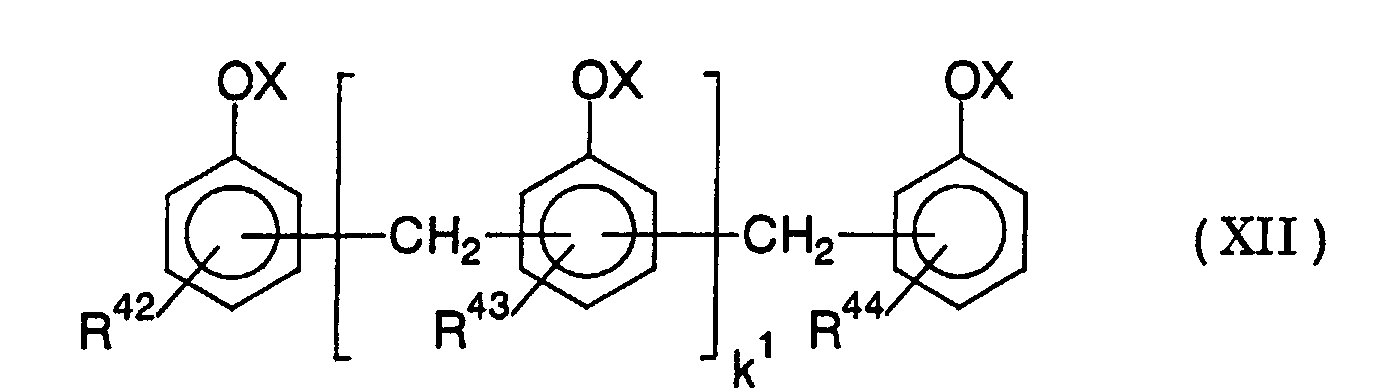
- novolac-type epoxy resins preferably include phenol novolac-type epoxy resins, cresol novolac-type epoxy resins, and epoxy resins represented by the general formula (XII): (wherein X represents a hydrogen atom or a glycidyl group; each one of R 42 to R 44 independently represents a hydrogen atom or an alkyl group with 1-5 carbon atoms; and k 1 is an integer greater than or equal to 1).
- phenol novolac-type epoxy resins and cresol novolac-type epoxy resins can be obtained, for example, by reacting phenol novolac resins or cresol novolac resins with epichlorohydrin.
- Examples of available novolac-type epoxy resins include EOCN-102S, EOCN-103S, EOCN-104S, EOCN-1020, EOCN-1025, EOCN-1027, EOCN-100, EOCN-3300, EOCN-4400, EP PN-201, RE-305, RE-306 (product names of Nippon Kayaku Co., Ltd.), YDPN-638, YDPN-638P, YDCN-701, YDCN-702, YDCN-703, YDCN-704, YDCN-500 (product names of Tohto Kasei Corporation), ESCN-195XL, ESCN-195XF, ESCN-195XHH, ESCN-220L, ESCN-220F, ESCN-220HH, ESCN-200L (product names of Sumitomo Chemical Co., Ltd.), 'EPICLON' series of N-660, N-665, N-667, N-670, N-673,
- Examples of the above-mentioned bisphenol-type epoxy resins preferably include bisphenol A-type epoxy resins, bisphenol F-type epoxy resins, bisphenol S-type epoxy resins, and epoxy resins represented by the general formula (XIII): (wherein X has the same meaning as X in the general formula (XII); Y represents -CH 2 -, -C(CH 3 ) 2 -, or -SO 2 -; R 45 to R 60 have the same meaning as R 42 in the general formula (XII); and k 2 is an integer greater than or equal to 1). These compounds may be used singly or with two or more in combination.
- bisphenol-type epoxy resin for example, a compound obtained by reacting a hydroxyl group of bisphenol-type resin with epichlorohydrin can be used.
- the reaction is preferably conducted in a polar organic solvent such as dimethylformamide, dimethylacetoamide, and dimethylsulfoxide in the presence of an alkali metal hydroxide at a reaction temperature of about 50°C to about 120°C to accelerate the reaction of the hydroxyl group and epichlorohydrin.
- a reaction temperature of about 50°C to about 120°C to accelerate the reaction of the hydroxyl group and epichlorohydrin.
- Examples of available bisphenol-type epoxy resins include RE-310S, RE-304S, RE-404S (product names of Nippon Kayaku Co., Ltd.), YD-115, YD-115G, YD-115CA, YD-118P, YD-127, YD-128, YD-128G, YD-128S, YD-128CA, YD-134, YD-134N, YD-011, YD-012, YD-013, YD-014, YD-017, YD-019, YD-020, YD-8125, YD-7011R, YD-7014R, YD-7017, YD-7019, YD-7020, YD-900, YD-901, YD-902, YD-903, YD-904, YD-907, YD-909, YD-927H, ZX-1059, YDF-8170
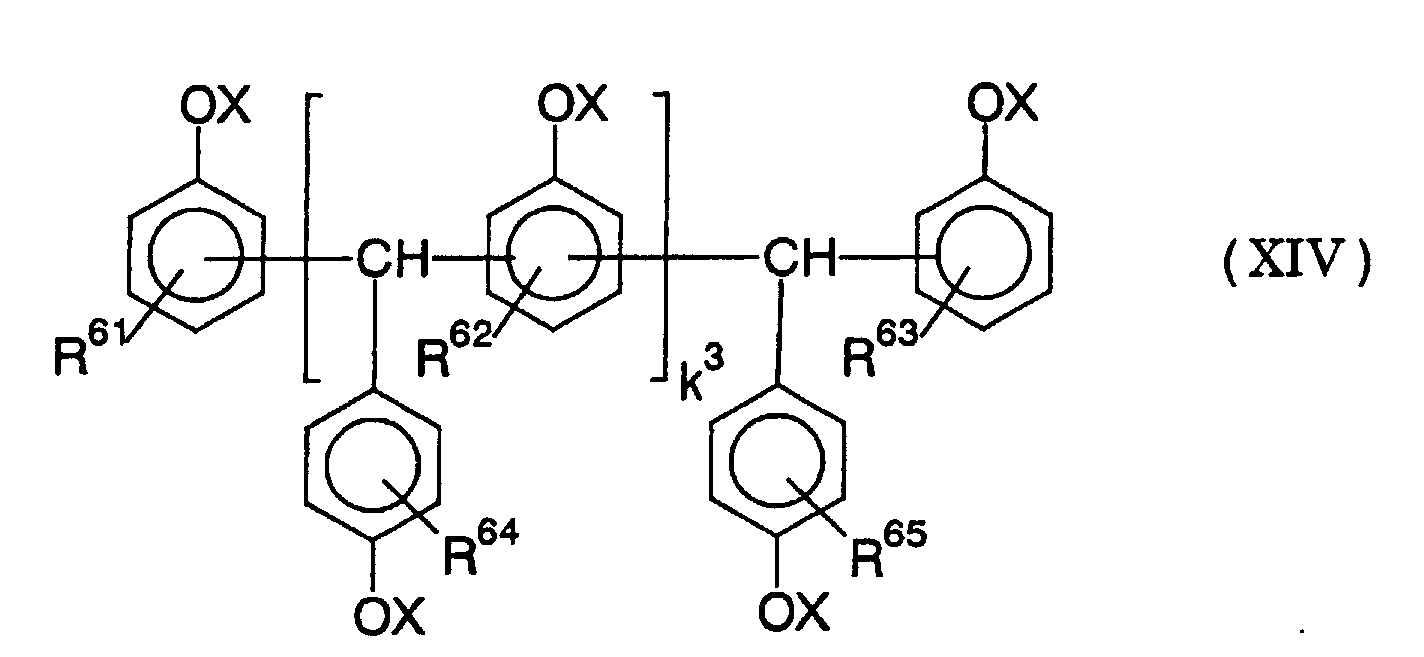
- the above-mentioned salicylic aldehyde-type epoxy resins can be obtained, for example, by reacting a reaction product of salicylic aldehyde and phenol or cresol (salicylic aldehyde-type resin) with epichlorohydrin, and preferably include epoxy resins represented by the general formula (XIV): (wherein X has the same meaning as X in the general formula (XII); R 61 to R 65 have the same meaning as R 42 in the general formula (XII); and k 3 is an integer greater than or equal to 1).
- Examples of available salicylic aldehyde-type epoxy resins include EPPN-501H, EPPN-501HY, EPPN-502H, and FAE-2500 (product names of Nippon Kayaku Co., Ltd.). These compounds may be used singly or with two or more in combination.
- the above-mentioned rubber-modified epoxy resins can be obtained, for example, by modifying a part or all of the epoxy groups of the above-mentioned bisphenol F-type epoxy resins, bisphenol A-type epoxy resins, bisphenol S-type epoxy resins, salicylic aldehyde-type epoxy resins, phenol novolac-type epoxy resins, cresol novolac-type epoxy resins, and the like with butadiene-acrylonitrile rubber modified by carboxylic acid at both terminals (for example, CTBN, Hycar CTB and the like manufactured by Goodrich Corp.), silicone rubber having an amino-modified terminal, and the like.
- Examples of available rubber modified epoxy resins include epoxydated polybutadiene modified epoxy resin: EPOLEAD PB3600, PB4700 (product names of Daicel Chemical Industries, Ltd.), EPB-13, EPB-1054 (product names of Nippon Soda Co., Ltd.), epoxydated butadiene-styrene modified epoxy resin: EPOFRIEND AT014, AT015, AT000 (product names of Daicel Chemical Industries, Ltd.), epoxy compounds of polydimethylsiloxane: X22-163B, KF100T (product names of Shin-Etsu Silicon Co., Ltd.), epoxy compounds obtained by reacting the above-mentioned epoxy compound with an ⁇ , ⁇ -polybutadiene dicarboxylic acid, and epoxy compounds obtained by reacting part of the above-mentioned bisphenol F-type epoxy resins, bisphenol A-type epoxy resins, and bisphenol S-type epoxy resins with acrylonitrile-butadiene rubber modified by carboxylic acid at both terminals.
- the bisphenol F-type epoxy resins and rubber-modified epoxy resins are preferred among these epoxy resins (a1) in view of their mechanical properties, adhesion, and development properties.
- hydrogenated bisphenol A-type epoxy resins and the like can be used as a part of the component (a1) as required.
- Examples of the unsaturated group-containing monocarboxylic acid (a2) include acrylic acid, a dimer of acrylic acid, methacrylic acid, ⁇ -furfurylacrylic acid, ⁇ -styrylacrylic acid, cinnamic acid, crotonic acid, ⁇ -cyanocinnamic acid, half-ester compounds which are reaction products of hydroxyl group-containing acrylate and saturated or unsaturated dibasic acid anhydride, and half-esters which are reaction products of unsaturated group-containing monoglycidyl ether and saturated or unsaturated dibasic acid anhydride. These compounds may be used singly or with two or more in combination.
- the above-mentioned half-esters can be obtained, for example, by reacting hydroxyl group-containing acrylate or unsaturated group-containing monoglycidyl ether with saturated or unsaturated dibasic acid anhydride in an equal mol ratio.
- hydroxyl group-containing acrylate and the unsaturated group-containing monoglycidyl ether examples include hydroxyethyl acrylate, hydroxyethyl methacrylate, hydroxypropyl acrylate, hydroxypropyl methacrylate, hydroxybutyl acrylate, hydroxybutyl methacrylate, polyethylene glycol monoacrylate, polyethylene glycol monomethacrylate, trimethylol propane diacrylate, trimethylol propane dimethacrylate, pentaerythritol triacrylate, pentaerythritol trimethacrylate, dipentaerythritol pentaacrylate, dipentaerythritol pentamethacrylate, glycidyl acrylate, and glycidyl methacrylate. These compounds may be used singly or with two or more in combination.
- Examples of the above-mentioned saturated or unsaturated dibasic acid anhydride include succinic anhydride, maleic anhydride, tetrahydrophthalic anhydride, phthalic anhydride, methyltetrahydrophthalic anhydride, ethyltetrahydrophthalic anhydride, hexahydrophthalic anhydride, methylhexahydrophthalic anhydride, ethylhexahydrophthalic anhydride, and itaconic anhydride. These compounds may be used singly or with two or more in combination.
- polybasic acid anhydride such as trimellitic anhydride, pyromellitic anhydride, benzophenonetetracarboxylic acid anhydride, and biphenyltetracarboxylic acid anhydride can be used as a part of the component (a2) as required.
- the component (a1) and the component (a2) can be reacted, for example, in an organic solvent.
- the organic solvent include ketones such as methyl ethyl ketone and cyclohexanone; aromatic hydrocarbons such as toluene, xylene, and tetramethylbenzene; glycol ethers such as methyl cellosolve, butyl cellosolve, methyl carbitol, butyl carbitol, propylene glycol monomethyl ether, dipropylene glycol monoethyl ether, dipropylene glycol diethyl ether, and triethylene glycol monoethyl ether; esters such as ethyl acetate, butyl acetate, butyl cellosolve acetate, and carbitol acetate; aliphatic hydrocarbons such as octane and decane; petroleum solvents such as petroleum ether, petroleum naphtha, hydrogenated petroleum naphtha, and solvent
- a catalyst is preferably used to accelerate the reaction of the component (a1) and the component (a2), and examples of the catalyst include triethylamine, benzylmethylamine, methyltriethylammonium chloride, benzyltrimethylammonium chloride, benzyltrimethylammonium bromide, benzyltrimethylammonium iodide, and triphenylphosphine. These compounds may be used singly or with two or more in combination.
- the catalyst is preferably used in an amount of about 0.1 to about 10 parts by weight based on 100 parts by weight of the total of the component (a1) and the component (a2).
- a polymerization inhibitor is preferably used in order to inhibit the polymerization of the component (a1) and the component (a2) during the reaction, and examples of the polymerization inhibitor include hydroquinone, methylhydroquinone, hydroquinone monomethyl ether, catechol, and pyrogallol. These compounds may be used singly or with two or more in combination.
- the polymerization inhibitor is preferably used in an amount of about 0.01 to about 1 parts by weight based on 100 parts by weight of the total of the component (a1) and the component (a2).
- the temperature of the reaction of the above-mentioned component (a1) and component (a2) is preferably about 60°C to about 150°C, and more preferably about 80°C to about 120°C.
- Examples of the saturated or unsaturated group-containing polybasic acid anhydride (a3), which is to be reacted with the reaction product A' of the component (a1) and the component (a2), include succinic anhydride, maleic anhydride, tetrahydrophthalic anhydride, phthalic anhydride, methyltetrahydrophthalic anhydride, ethyltetrahydrophthalic anhydride, hexahydrophthalic anhydride, methylhexahydrophthalic anhydride, ethylhexahydrophthalic anhydride, and itaconic anhydride. These compounds may be used singly or with two or more in combination.
- the acid value of the photosensitive resin (A) can be adjusted by reacting 0.1 to 1.0 equivalent of the component (a3) relative to one equivalent of the hydroxyl group of the reaction product (A').
- the acid value of the photosensitive resin (A) is preferably 30 mgKOH/g or more in view of the solubility of the photosensitive resin composition in a dilute alkali solution, preferably 150 mgKOH/g or less in view of the electric properties of the resultant cured film, and more preferably 50 to 120 mgKOH/g.
- the temperature of reaction of the reaction product (A') and the component (a3) is preferably about 60°C to about 120°C.
- photosensitive resin (A) is preferably incorporated in an amount of 10 to 90% by weight based on the total amount of the photosensitive resin composition.
- the photopolymerization initiator (B) will be described hereinafter.
- Examples of the photopolymerization initiator (B) include benzoins such as benzoin, benzoin methyl ether, and benzoin isopropyl ether; acetophenones such as acetophenone, 2,2-dimethoxy-2-phenylacetophenone, 2,2-diethoxy-2-phenylacetophenone, 1,1-dichloroacetophenone, 1-hydroxycyclohexyl phenyl ketone, 2-methyl-1-[4-(methylthio)phenyl]-2-morpholino-1-propanone, and N,N-dimethylaminoacetophenone: anthraquinones such as 2-methylanthraquinone, 2-ethylanthraquinone, 2-tert-butylanthraquinone, 1-chloroanthraquinone, 2-amylanthraquinone, and 2-aminoanthraquinone; thioxanthones such as 2,4-dimethyl
- the photosensitive resin composition of the present invention may contain a photopolymerization initiator auxiliary as required.
- the photopolymerization initiator include tertiary amines such as ethyl N,N-dimethylaminobenzoate, isoamyl N,N-dimethylaminobenzoate, pentyl-4-dimethylaminobenzoate, triethylamine, and triethanolamine. These compounds may be used singly or with two or more in combination.
- the component (B) is preferably included in an amount of 0.5% or more by weight in order to ensure the photopolymerizability of the photosensitive resin, preferably 20% or less by weight in view of the heat resistance of the resultant cured material, and more preferably 2 to 15% by weight, based on the total amount of the photosensitive resin composition.
- the content of the photopolymerization initiator is below 0.5% by weight, unexposed portions are prone to dissolve during development.
- the flame retardant (C) will next be described. Any flame retardant can be used provided it's content of halogen atoms or antimony atoms is 5% or less by weight and that it can impart necessary flame retardancy to the photosensitive resin composition. Although compounds that do not contain halogen atoms or antimony atoms in the molecule are especially preferable, the flame retardant may contain these atoms as substituents or the like up to the above-mentioned limit.
- Preferred flame retardants include, for example, a zinc compound (C1), an organic nitrogen-based compound (C2), a metal hydroxide (C3), and an organic phosphorus-based compound (C4). These compounds may be used singly or with two or more in combination.
- the above-mentioned zinc compound (C1) is used as an essential component of the photosensitive resin composition I according to the present invention and may be optionally incorporated in each one of the photosensitive resin compositions II, III and IV according to the present invention.
- the zinc compound (C1) can be synthesized from zinc and an acid such as molybdic acid, phosphoric acid, hexahydrooxostannic acid, stannic acid, and boric acid.
- the zinc compound include calcium zinc molybdate, zinc molybdate, zinc oxide, zinc phosphate, zinc hexahydrooxostannate, zinc stannate, and zinc borate, with zinc molybdate, zinc stannate, and zinc borate being preferred. These compounds may be used singly or with two or more in combination.
- the above-mentioned zinc compound is preferably coated onto fillers such as talc by wet process and the like, in view of costs.
- Examples of available zinc compound include KEMGARD911A, KEMGARD911B. KEMGARD911C, KEMGARD981, KEMGARD425 (product names of Sherwin-Williams Japan Co., Ltd.), FLAMTARD-H, FLAMTARD-S (product names of Nippon Light Metal Co., Ltd.) and HA-1, SZB-2335, HA-S1, and HA-1T (product names of Sakai Chemical Industry Co., Ltd.).
- the above-mentioned component (C1) is preferably used in an amount of 0.5% or more by weight in view of the flame retardancy of the resultant cured material, preferably 20% or less by weight in terms of the heat resistance, and more preferably 1 to 15% by weight, based on the total amount of the photosensitive resin composition.
- the above-mentioned organic nitrogen-based compound (C2) is used as an essential component in the photosensitive resin composition II according to the present invention, and may be optionally incorporated into each one of the photosensitive resin compositions I, III and IV according to the present invention.
- the organic nitrogen-based compound (C2) is an organic compound having one or more nitrogen atoms in the molecule, and is preferably an organic compound having at least three nitrogen atoms in the molecule, and more preferably a triazine-based compound having a six-member ring structure having three nitrogen atoms in the molecule (triazine ring including hydrotriazine ring).
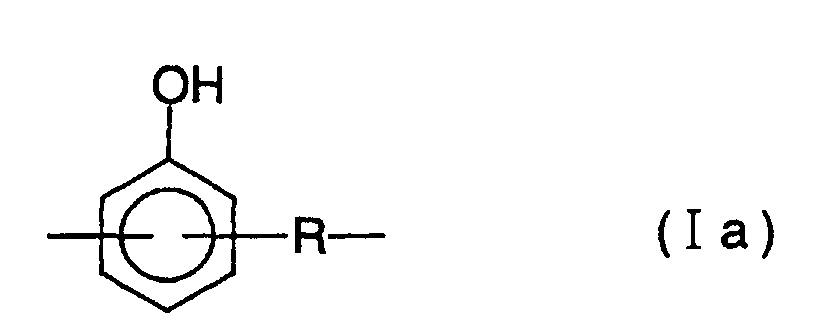
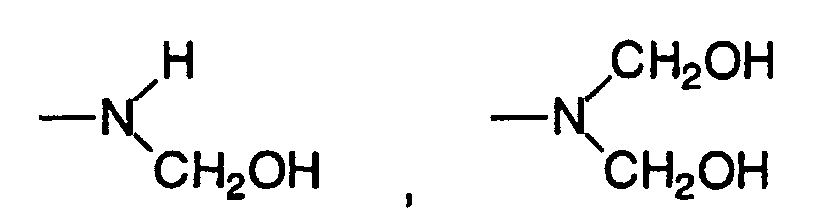
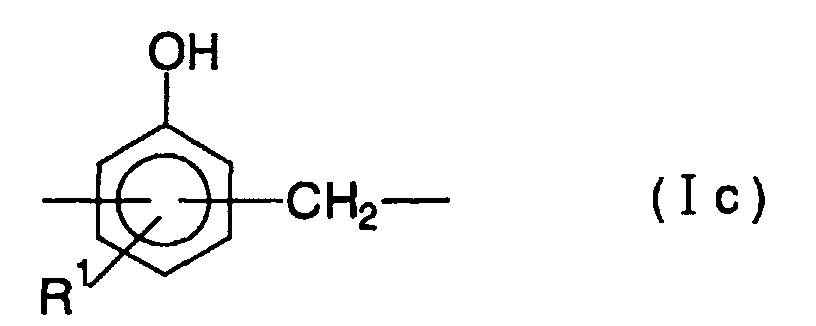
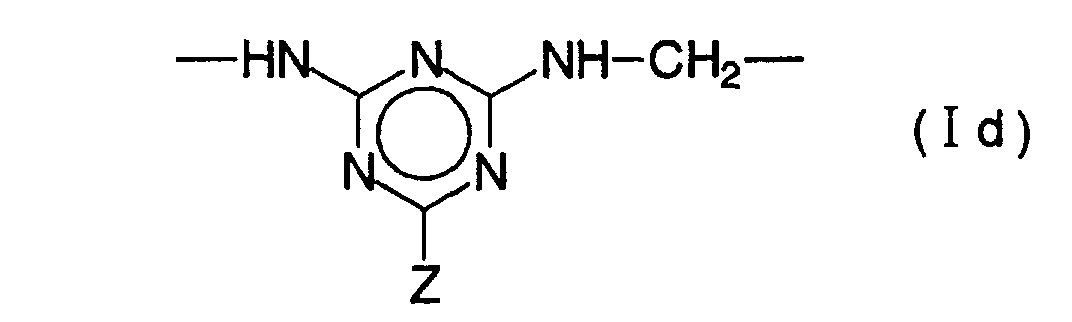
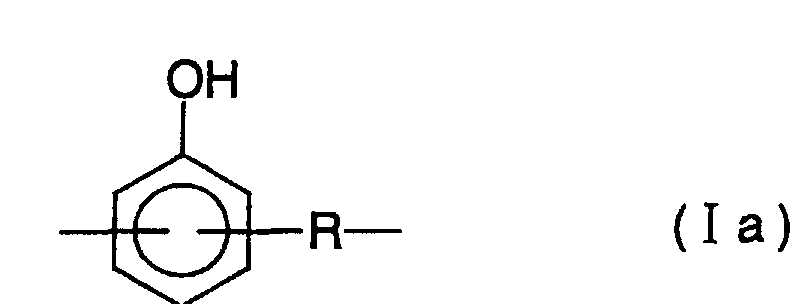
- melamine phenol compounds with repeating units represented by the general formulae (Ia) and (Ib) and melamine phenol compounds with repeating units represented by the general formulae (Ic) and (Id) are preferably used.
- R represents a divalent organic group
- R' represents a divalent organic group and Z represents -NH 2 , or an aryl group having 6 to 18 carbon atoms
- R 1 represents a hydrogen atom or a methyl group
- Z is the same as Z in the above-mentioned general formula (Ib)).
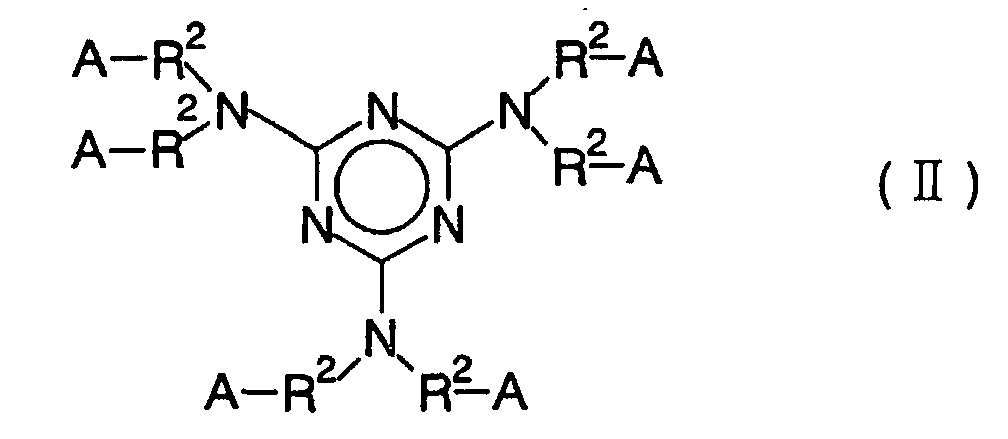
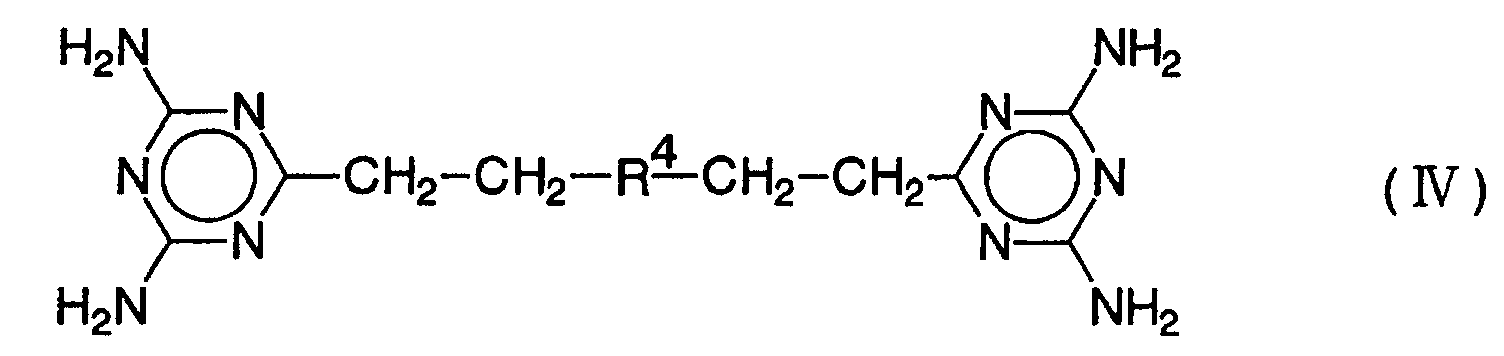
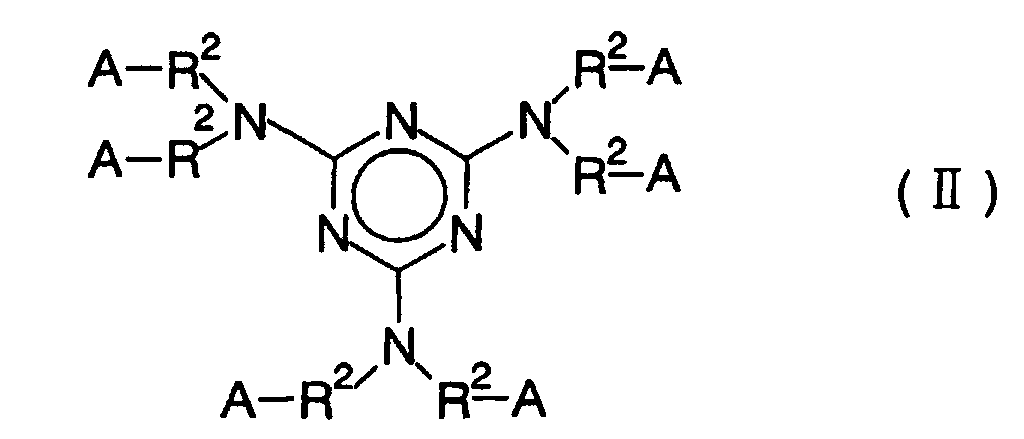
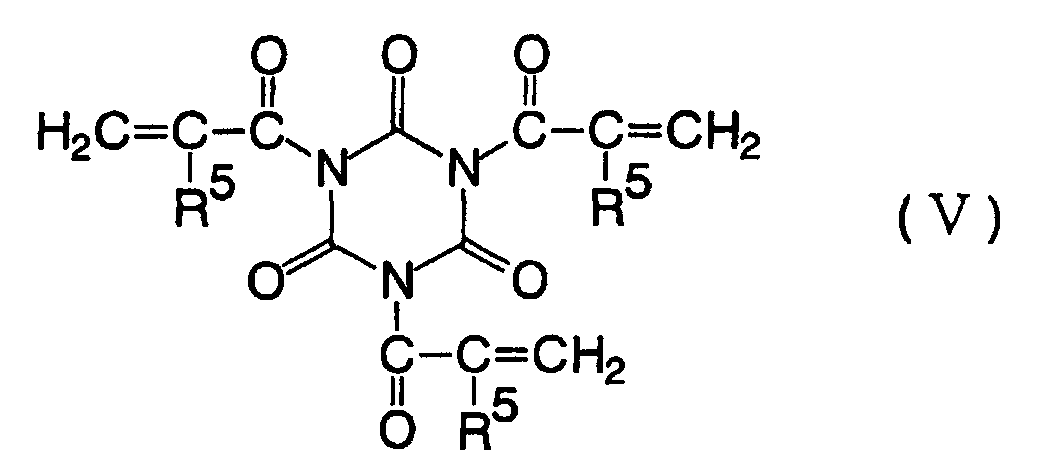
- examples of the above-mentioned triazine-based compound include melamine acrylate compounds represented by the general formula (II): (wherein each one of six A independently represents a (meth)acryloyl group and each one of six R 2 independently represents a divalent organic group) triazine derivatives represented by the general formula (III): (wherein R 3 represents a monovalent aliphatic group having 1 to 10 carbon atoms or an aryl group having 6 to 18 carbon atoms) triazine derivatives represented by the general formula (IV): (wherein R 4 represents a divalent aliphatic group having 1 to 10 carbon atoms or an arylene group having 6 to 18 carbon atoms) isocyanurate derivatives represented by the general formula (V): (wherein each one of three R 5 independently represents a hydrogen atom or a methyl group) isocyanurate derivatives represented by the general formula (VI): (wherein each one of three R 6 independently represents a hydrogen atom or a methyl group
- 1,3,5-Triaminotriazine is preferably used in view of adhesion of the photosensitive resin composition film.
- Triazine derivatives represented by the general formula (III), which can preferably be benzoguanamine (a compound of the general formula (III) with R 3 being a phenyl group), for example, are preferably used in view of availability.
- preferred compounds include melamine phenol compounds represented by the general formulae (Ia) to (Id), melamine acrylate compounds represented by the general formula (III), triazine derivatives represented by the general formula (IV), isocyanurate derivatives represented by the general formula (V), isocyanurate derivatives represented by the general formula (VI), triazine derivatives represented by the general formula (VII), triazine derivatives represented by the general formula (VIII), triazine derivatives represented by the general formula (IX), melamine phosphate compounds which are copolymers of 1,3,5-triaminotriazine and phosphoric acid, melamine formaldehyde resins which are copolymers of 1,3,5-triaminotriazine and formaldehyde, compounds obtained by the reaction of 1,3,5-triaminotriazine and pyrophosphoric acid, sulfuric acid-2-melamine, melamine resins which are copolymers of benzoguanamine and
- melamine phenol compounds with repeating units represented by the general formulae (Ia) to (Id), provided at least one melamine unit and at least one phenol unit are present in the molecule. Furthermore, when a repeating number of melamine units and phenol units is plural, the melamine units and the phenol units may be linked either as blocks or in a random configuration.
- Examples of the alkyl group having 1 to 10 carbon atoms in the general formulae (I) to (IX) include a methyl group, an ethyl group, an n-propyl group, an isopropyl group, an n-butyl group, an isobutyl group, a sec-butyl group, a tert-butyl group, a pentyl group, an isopentyl group, a neopentyl group, a hexyl group, a heptyl group, an octyl group, a nonyl group, a decyl group, and structural isomers thereof.
- Examples of the alkylene group having 1 to 10 carbon atoms in the general formulae (I) to (IX) include a methylene group, an ethylene group, an n-propylene group, an isopropylene group, an n-butylene group, an isobutylene group, a sec-butylene group, a tert-butylene group, a pentylene group, an isopentylene group, a neopentylene group, a hexylene group, a heptylene group, an octylene group, a nonylene group, a decylene group, and structural isomers thereof.
- Examples of the aryl group having 6 to 18 carbon atoms in the general formulae (I) to (IX) include a phenyl group, a tolyl group, a xylyl group, a biphenyl group, a naphthyl group, an anthryl group, and a phenanthryl group, and these groups may be substituted with a halogen atom, an amino group, a nitro group, a cyano group, a mercapto group, an allyl group, or an alkyl group having 1 to 20 carbon atoms.
- Examples of the arylene group having 6 to 18 carbon atoms in the general formulae (I) to (IX) include a phenylene group, a tolylene group, a xylylene group, a biphenylene group, a naphthylene group, an anthrylene group, and a phenanthrylene group, and these groups may be substituted with a halogen atom, an amino group, a nitro group, a cyano group, a mercapto group, an allyl group, or an alkyl group having 1 to 20 carbon atoms.
- the compounds represented by the general formulae (I) to (IX) may be substituted with a substitutable substituent such as an amino group, a nitro group, a cyano group, a mercapto group, an allyl group, or an alkyl group having 1 to 20 carbon atoms.
- a substitutable substituent such as an amino group, a nitro group, a cyano group, a mercapto group, an allyl group, or an alkyl group having 1 to 20 carbon atoms.
- Examples of available organic nitrogen-based compound (C2) include 1,3,5-triaminotriazine, benzoguanamine, 1,3,5-triacryloylhexahydro-S-trizine (TAF), tris(acryloxyethyl) isocyanurate (a compound of the general formula (VI) with R 6 being a hydrogen atom and R 7 being an ethyl group), tris(methacryloxyethyl) isocyanurate (a compound of the general formula (VI) with R 6 being a methyl group and R 7 being an ethyl group), caprolactone-modified tris(acryloxyethyl) isocyanurate, hexamethoxymelamine, hexabutoxymelamine, hexamethylolmelamine, N-3A, N-6A, N-6M (product names of Shin-Nakamura Chemical Co., Ltd.), SetaCure 590, SetaCure 591 (product names of Akzo Nobel KK), Mel
- the component (C2) is used preferably in an amount of 0.2% or more by weight in view of the flame retardancy of the resultant cured film, preferably 10% or less by weight in view of heat resistance, and more preferably 0.5 to 8% by weight, based on the total amount of the photosensitive resin composition.
- the above-mentioned metal hydroxide (C3) is used in the photosensitive resin composition III according to the present invention as an essential component and may be optionally incorporated in each one of the photosensitive resin compositions I, II and IV according to the present invention.
- metal hydroxide (C3) examples include aluminum hydroxide, magnesium hydroxide, aluminum hydroxide magnesium carbonate hydrate, nickel hydroxide, titanium hydroxide, and iridium hydroxide. These compounds may be used singly or with two or more in combination.
- the component (C3) is preferably used in an amount of 5% or more by weight in view of the flame retardancy of the resultant cured film, preferably 50% or less by weight in view of heat resistance, and more preferably 10 to 40% by weight, based on the total amount of the photosensitive resin composition.
- the above-mentioned organic phosphorus-based compound (C4) is used in the photosensitive resin composition IV according to the present invention as an essential component and may be optionally incorporated in each one of the photosensitive resin compositions I, II and III according to the present invention.
- organic phosphorus-based compound examples include aromatic polyphosphates such as CR-733S, CR-741, CR-747, PX-200 (product names of Daihachi Chemical Industry Co., Ltd.), SP-703, SP-601 (product names of Shikoku Corporation), and 'REOFOS' series 35, 50, 65, 95, and 110 (product names of Ajinomoto Co., Inc.).
- aromatic polyphosphates such as CR-733S, CR-741, CR-747, PX-200 (product names of Daihachi Chemical Industry Co., Ltd.), SP-703, SP-601 (product names of Shikoku Corporation), and 'REOFOS' series 35, 50, 65, 95, and 110 (product names of Ajinomoto Co., Inc.).
- phosphorus-containing epoxy resins examples include ZX-1548 series 1, 2, 3, and 4 (product names of Tohto Kasei Corporation). These compounds may be used singly or with two or more in combination.
- the component (C4) is preferably used in an amount of 2% or more by weight in view of the flame retardancy of the resultant cured film, preferably 50% or less by weight in view of heat resistance, and more preferably 5 to 40% by weight, based on the total amount of the photosensitive resin composition.
- the photosensitive resin composition of the present invention may contain a curing agent (D) as required.
- the curing agent preferably cures itself by the action of heat or ultraviolet or reacts with carboxyl groups, hydroxyl groups, and the like of the photosensitive resin component in the photosensitive resin composition of the present invention to cure by the action of heat or ultraviolet.
- Use of the above-mentioned curing agent can improve the heat resistance, adhesion, chemical resistance etc. of the final cured film.
- Examples of the above-mentioned curing agent (D) include epoxy compounds, urea compounds, and oxazoline compounds.
- Examples of the epoxy compounds include bisphenol A-type epoxy resins, bisphenol F-type epoxy resins, hydrogenated bisphenol A-type epoxy resins, novolac type-epoxy resins, bisphenol S-type epoxy resins, heterocyclic epoxy resins such as triglycidyl isocyanurate, and bixylenol-type epoxy resins such as bixylenyl glycidyl ether of YX4000 (manufactured by Yuka Shell Epoxy Kabushiki Kaisha).
- Examples of the above-mentioned urea compounds include dimethylol urea and the like. These compounds may be used singly or with two or more in combination.
- component (D) When the component (D) is to be incorporated, its content is preferably 2% or more by weight in view of the heat resistance of the resultant cured film, preferably 50% or less by weight in view of development properties, and more preferably 10 to 40% by weight, based on the total amount of the photosensitive resin composition.
- the photosensitive resin composition of the present invention may contain an epoxy resin curing agent in order to improve various properties in the final cured film such as heat resistance, adhesion, chemical resistance and the like.
- epoxy resin curing agent examples include imidazoles such as 2-methylimidazole, 2-ethyl-4-methylimidazole, 1-benzyl-2-methylimidazole, 2-phenylimidazole, and 2-phenyl-4-methyl-5-hydroxymethylimidazole; amines such as diaminodiphenylmethane, phenylenediamine, xylylenediamine, diaminodiphenylsulfone, dicyandiamide, urea, and urea derivatives; organic acid salts or epoxy adducts thereof; amine complexes of trifluoroborane; triazine derivatives such as ethyldiamino-S-triazine, 2,4-diamino-S-triazine, and 2,4-diamino-6-xylyl-S-triazine; tertiary amines such as triethylamine, triethanolamine, N,N-di
- the epoxy resin curing agent is preferably used in an amount of 0.01 to 20% by weight, and more preferably 0.1 to 10% by weight, based on the total amount of the photosensitive resin composition. These epoxy resin curing agents may be used singly or with two or more in combination.
- a diluent can be used for the photosensitive resin composition of the present invention as required.
- Organic solvents and photopolymerizable compounds can be used, for example, as the diluent.
- the organic solvent the above-mentioned organic solvents used for the reaction of the component (a1) and the component (a2) can be used.
- hydroxyalkyl (meth)acrylates such as 2-hydroxyethyl (meth)acrylates and 2-hydroxypropyl (meth)acrylates
- mono or di(meth)acrylates of glycols such as ethylene glycol, methoxytetraethylene glycol, and polyethylene glycol
- (meth)acrylamides such as N,N-dimethyl(meth)acrylamide and N-methylol(meth)acrylamide
- aminoalkyl (meth)acrylates such as N,N-methylaminoethyl (meth)acrylate
- polyvalent (meth)acrylates of polyols such as hexanediol, trimethylol propane, pentaerythritol, ditrimethylol propane, dipentaerythritol, and trishydroxyethyl isocyanurate or ethylene oxide or propylene oxide adducts of these polyol
- a diluent When a diluent is to be used, its content is preferably 5% or more by weight in view of photosensitivity, preferably 80% or less by weight in view of heat resistance, and more preferably 10 to 70% by weight, based on the total amount of the photosensitive resin composition.
- the photosensitive resin composition of the present invention may contain a known inorganic filler such as barium sulfate, barium titanate, silica, talc, calcined kaoline, magnesium carbonate, aluminum oxide, aluminum hydroxide, and mica, as required, in order to further improve properties such as adhesion and the hardness of the film.
- the filler is preferably included in an amount of 2 to 80% by weight and more preferably 5 to 50% by weight, based on the total amount of the photosensitive resin composition. These fillers may be used singly or with two or more in combination.
- the photosensitive resin composition of the present invention may contain well-known and conventionally used additives, for example a known colorant such as phthalocyanine blue, phthalocyanine green, iodine green, disazo yellow, crystal violet, titanium oxide, carbon black, and naphthalene black; a polymerization inhibitor such as hydroquinone, methylhydroquinone, hydroquinone monomethyl ether, catechol, and pyrogallol; a thickening agent such as bentone and montmorillonite; a silicone-based, fluorine-based, or vinyl resin-based anti-foaming agent; and a silane coupling agent, as required.
- additives may be used singly or with two or more in combination.
- halogen atoms or antimony atoms it is preferable to use components such as the above-mentioned additives that contain no halogen atoms or antimony atoms.
- the content of halogen atoms or antimony atoms is preferably 1% or less by weight, and more preferably 0.5% or less by weight, based on the total solid content of the photosensitive resin composition (when the composition contains solvents such as a diluent, the weight of the solvents are excluded and a dry weight is used).
- the photosensitive resin composition of the present invention which contains the components mentioned above, can be obtained, for example, by kneading and mixing the components to homogeneity with a roll mill, a bead mill etc.
- the resultant photosensitive resin composition is subjected to image formation and used for the preparation of cured films as follows.
- the photosensitive resin composition is applied for a thickness of about 10 ⁇ m to about 200 ⁇ m onto a substrate such as flexible printed wiring boards by methods such as screen printing, spraying, roll coating, curtain coating, and electrostatic coating.
- a negative film is placed directly onto the film (alternatively, via a transparent film) and active rays such as ultraviolet ray is irradiated and unexposed portions are removed by being dissolved in a dilute alkali aqueous solution (development).
- the exposed portions are subjected to post exposure such as UV exposure or post heating, as required, to obtain a fully cured film.
- post exposure is preferably conducted at about 1 J/cm to about 5 J/cm and the post heating is preferably conducted at about 100°C to about 200°C for about 30 minutes to about 12 hours.
- the layer of the photosensitive resin composition is laminated onto a substrate to obtain a photosensitive element, as is described in detail later.
- the photosensitive resin composition of the present invention can be used in electric and electronic materials such as printed wiring boards, semiconductors and the like, and is suitable as a non-halogen, non-antimony-based photosensitive resin composition to be used as a solder mask resist, an interlayer insulating film (a build-up material), and a plating resist, which do not contain halogen-based compounds or antimony-based compounds and are superior in flame retardancy, heat resistance, mechanical properties, adhesion, and chemical resistance, in applications such as wiring boards for ball grid array, wiring boards for chip size package, flexible printed wiring boards, high-density multi-layer substrates, and tape carriers.
- the photosensitive element according to the present invention i.e., a photosensitive element obtained by forming a resist layer formed by any one of the above-mentioned photosensitive resin composition X and the photosensitive resin compositions I to IV onto a substrate, will be described with reference to the drawings.
- Figure 1 schematically shows an embodiment of the photosensitive element, in which the photosensitive element 1 contains a substrate 11 and a resist layer (the photosensitive resin composition layer) 12 formed thereon.
- a polymer film such as polyethylene terephthalate, polypropylene, polyethylene, and polyester can suitably be used.
- the polymer film is preferably about 5 ⁇ m to about 100 ⁇ m thick.
- the resist layer 12 can preferably be obtained by coating a solution of the photosensitive resin composition and then drying.
- the thickness of the photosensitive resin composition coated varies depending on the application and is preferably about 10 ⁇ m to about 100 ⁇ m after drying.
- the coating can be conducted by the known method such as roll coater, comma coater, gravure coater, air-knife coater, die coater, bar coater, and the like.
- the drying can be performed at about 70°C to about 150°C for about 5 minutes to about 30 minutes.
- the amount of the organic solvent left in the resist layer 12 is preferably 2% or less by weight in order to prevent diffusion of the organic solvent in subsequent steps.
- the surface of the resist layer may be coated with a protective film comprising a polymer film such as polyethylene and polypropylene.
- a resist layer formed by any one of the above-mentioned photosensitive resin composition X and the photosensitive resin compositions I to IV is laminated onto a substrate as a step (i).
- Any lamination methods may be used, and for example, as shown in Fig. 2(A) the above-mentioned photosensitive element 1 is laminated onto a substrate 2 that contains a base 21 comprising a glass fiber-filled epoxy resin and the like with a layer-to-be-processed 22 comprising copper and the like formed thereon, such that the resist layer 12 adheres to the surface of the layer-to-be-processed 22.
- a protective film (not shown) is present on the resist layer 12 of the photosensitive element 1, the protective layer is removed before lamination.
- the lamination method can be, for example, such that the resist layer 12 is contact-bonded to the substrate 2 under a pressure of about 0.1 MPa to about 1 MPa (about 1 kgf/cm 2 to about 10 kgf/cm 2 ) while being heated to about 70°C to about 130°C. Lamination under reduced pressure is also employable.
- active rays are irradiated in an image shape to photo-cure the resist layer at exposed portions as step (ii).
- An example of the method of irradiating active rays in an image shape utilizes active rays being irradiated through a mask pattern 3 to the resist layer 12 in an image shape to photo-cure the exposed portions of the resist layer 12, as shown in Fig. 2(B).
- the mask pattern 3 may be either negative-type or positive-type, and those generally used can be used.
- the light source of the active rays known light sources which effectively radiate ultraviolet rays, visible rays, and the like such as carbon arc lamp, mercury-vapor lamp, high pressure mercury vapor lamp, xenon lamp, and the like are employable.
- a laser beam direct imaging method is also applicable in which no mask pattern is needed.
- step (iii) the resist layer at unexposed portions is selectively removed by development to form a resist pattern 121 as shown in Figure 2(C).
- the exposure in the step (ii) can be performed in the presence of the support 11 provided the support does not interfere with irradiation to the resist layer 12, in which case the support 11 is removed before the development.
- the development is performed by removing the unexposed portions by wet development with developers such as alkaline aqueous solutions, water-based developers, organic solvents etc., dry development, and the like.
- the above-mentioned alkaline aqueous solutions are preferably used and their examples include 0.1 to 5 % by weight dilute solutions of sodium carbonate, 0.1 to 5 % by weight dilute solutions of potassium carbonate, and 0.1 to 5 % by weight dilute solutions of sodium hydroxide.
- the pH of the alkaline aqueous solutions is preferably adjusted to the range of 9 to 11, and the temperature is adjusted to the development properties of the layer of the photosensitive resin composition.
- the alkaline aqueous solution may contain a surfactant, an antifoaming agent, an organic solvent, etc.
- Methods for the above-mentioned development can be any one of dipping-method, spray-method, brushing, and slapping, for example.
- heating to about 60°C to about 250°C or exposure in about 0.2 J/cm 2 to about 10 J/cm 2 may be conducted as required to further cure the resultant resist pattern.
- the resist pattern laminated substrate according to the present invention is obtained by laminating the resist pattern obtained using the resist layer formed by any one of the above-mentioned photosensitive resin compositions X and I to IV according to the present invention onto a substrate.
- the laminated substrate can be produced by any known methods.
- YDCN704 manufactured by Tohto Kasei Corporation, a cresol novolac-type epoxy resin
- 72 parts of acrylic acid, 1.0 part of hydroquinone, and 180 parts of carbitol acetate were mixed, heated to 90°C, and stirred to dissolve the reaction mixture.
- the resultant mixture was then cooled to 60°C, and 1 part of benzyltrimethylammonium chloride was added to the mixture, which was heated to 100°C and allowed to react till the acid value reached 1 mgKOH/g.
- EPPN502H manufactured by Nippon Kayaku Co., Ltd., a salicylic aldehyde-type epoxy resin
- acrylic acid 1.5 part of hydroquinone
- carbitol acetate 250 parts
- the resultant mixture was then cooled to 60°C, and 2 parts of benzyltrimethylammonium chloride were added to the mixture, which was heated to 100°C and allowed to react till the acid value reached 1 mgKOH/g.
- YDF2001 manufactured by Tohto Kasei Corporation, a bisphenol F-type epoxy resin
- 72 parts of acrylic acid, 0.5 part of hydroquinone, and 120 parts of carbitol acetate were mixed, heated to 90°C, and stirred to dissolve the reaction mixture.
- the resultant mixture was then cooled to 60°C, and 2 parts of benzyltrimethylammonium chloride were added to the mixture, which was heated to 100°C and allowed to react till the acid value reached 1 mgKOH/g.
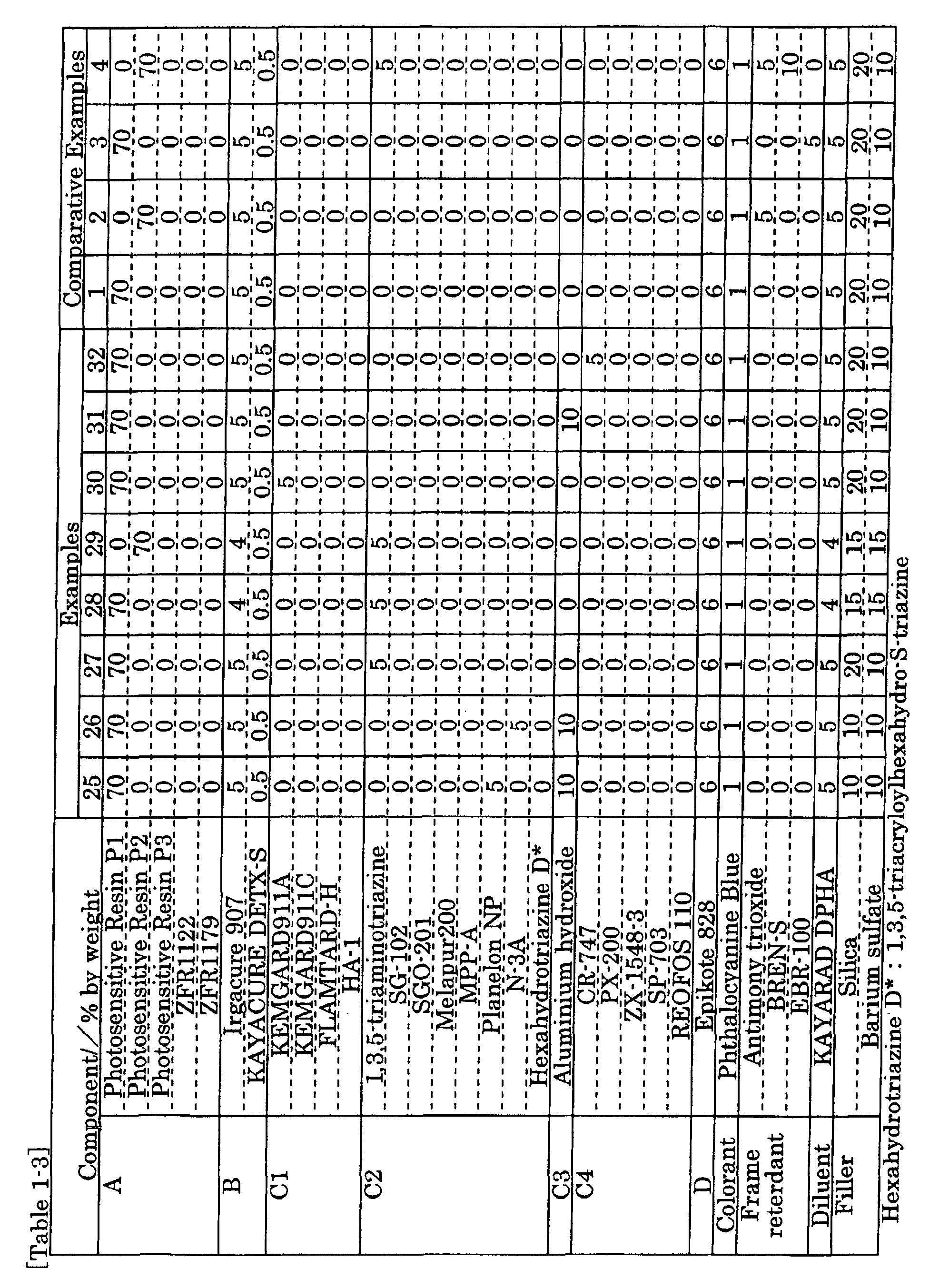
- compositions were mixed according to the formulation shown in Table 1 and kneaded with a triple roll mill to obtain compositions.
- Each composition was coated onto a copper-clad laminate (MCL-RO-67G, 0.3 mm thick, manufactured by Hitachi Chemical Co., Ltd.) using a 120-mesh Tetron screen by screen printing such that it had a thickness of 30 ⁇ m after drying, which was dried in a convection type drier at 80°C for 30 minutes.
- a copper-clad laminate MCL-RO-67G, 0.3 mm thick, manufactured by Hitachi Chemical Co., Ltd.
- a negative mask with a predetermined pattern was allowed to adhere to the coating, which was then subjected to ultraviolet ray in 500 mJ/cm 2 by a UV exposing equipment.
- spray development was conducted by spraying 1% sodium carbonate aqueous solution at a pressure of 0.18 MPa for 60 seconds to dissolve and remove unexposed portions.
- the resultant image was evaluated for development properties and photosensitivity, and then heated at 150°C for 1 hour to prepare a test board.
- test board was tested for adhesion, acid resistance, alkali resistance, solder thermal resistance, and thermal shock resistance, as described hereinafter.
- Table2 summarizes the test results.
- test methods and evaluation methods are as follows.
- JIS Japanese Industrial Standards
- test piece was immersed in 10% hydrochloric acid aqueous solution at room temperature for 30 minutes and a pattern of one hundred 1 mm-square checks was formed on each test piece according to JIS K5400, and the test piece was subjected to a peeling test using cellophane tape. The number of checks that peeled off was counted and graded according to the following standards.
- test piece was immersed in 5% sodium hydroxide aqueous solution at room temperature for 30 minutes and a pattern of one hundred 1 mm-square checks was formed on each test piece according to JIS K5400, and the test piece was subjected to a peeling test using cellophane tape. The number of checks that peeled off was counted and graded according to the following standards.
- test piece was coated with a rosin-based flux or a water-soluble flux and immersed in a solder bath at 260°C for 10 seconds, which was taken as a cycle. Each test piece was subjected to six cycles and visually inspected to evaluate the appearance of the coating.
- test piece was subjected to a thermal hysteresis of 1000 cycles, a cycle being -55°C/30 minutes and 125°C/30 minutes, after which the test piece was visually and microscopically inspected.
- MCL-RO-67G non-halogen copper-clad laminate
Landscapes
- Physics & Mathematics (AREA)
- Chemical & Material Sciences (AREA)
- General Physics & Mathematics (AREA)
- Spectroscopy & Molecular Physics (AREA)
- Chemical Kinetics & Catalysis (AREA)
- Medicinal Chemistry (AREA)
- Organic Chemistry (AREA)
- Polymers & Plastics (AREA)
- Health & Medical Sciences (AREA)
- Inorganic Chemistry (AREA)
- Materials For Photolithography (AREA)
- Non-Metallic Protective Coatings For Printed Circuits (AREA)
- Macromonomer-Based Addition Polymer (AREA)
- Epoxy Resins (AREA)
Abstract
Description








Claims (50)
- A photosensitive resin composition comprising a photosensitive resin (A), a photopolymerization initiator (B), and a flame retardant (C), wherein a content of halogen atoms or antimony atoms in the flame retardant is 5% or less by weight.
- The photosensitive resin composition according to Claim 1, wherein the content of halogen atoms or antimony atoms in the flame retardant is 3% or less by weight.
- The photosensitive resin composition according to Claim 1, wherein the content of halogen atoms or antimony atoms in the flame retardant is 1% or less by weight.
- The photosensitive resin composition according to Claim 1, wherein the content of halogen atoms or antimony atoms in the flame retardant is 0.5% or less by weight.
- The photosensitive resin composition according to Claim 1, wherein the content of halogen atoms or antimony atoms in the flame retardant is 0.1% or less by weight.
- The photosensitive resin composition according to Claim 1, wherein a flame retardancy of a laminate formed by laminating a 50 µm thick layer of the photosensitive resin composition onto both sides of a 0.3 mm thick non-halogen copper-clad laminate satisfies UL94V-0 or V-1 in UL94V standards.
- A photosensitive resin composition comprising a photosensitive resin (A), a photopolymerization initiator (B), and a zinc compound (C1).
- The photosensitive resin composition according to Claim 7, wherein the zinc compound (C1) is synthesized from an acid and zinc.
- The photosensitive resin composition according to Claim 8, wherein the acid is selected from the group consisting of molybdic acid, phosphoric acid, hexahydrooxostannic acid, stannic acid, and boric acid.
- The photosensitive resin composition according to Claim 7, wherein the zinc compound (C1) is selected from the group consisting of calcium zinc molybdate, zinc molybdate, zinc oxide, zinc phosphate, zinc hexahydrooxostannate, zinc stannate, and zinc borate.
- The photosensitive resin composition according to Claim 7, further comprising at least one of an organic nitrogen-based compound (C2), a metal hydroxide (C3), and an organic phosphorus-based compound (C4).
- The photosensitive resin composition according to Claim 7, wherein the component (A) is included in an amount of 10 to 90% by weight, the component (B) is included in an amount of 0.5 to 20% by weight, and the component (C1) is included in an amount of 0.5 to 20% by weight, based on the total amount of the composition.
- The photosensitive resin composition according to Claim 11, wherein a content of the component (C2) is 0.2 to 10% by weight based on the total amount of the composition when the component (C2) is included, a content of the component (C3) is 5 to 50% by weight based on the total amount of the composition when the component (C3) is included, and a content of the component (C4) is 2 to 50% by weight based on the total amount of the composition when the component (C4) is included.
- A photosensitive resin composition comprising a photosensitive resin (A), a photopolymerization initiator (B), and an organic nitrogen-based compound (C2).
- The photosensitive resin composition according to Claim 14, wherein the organic nitrogen-based compound (C2) has at least three nitrogen atoms in the molecule.
- The photosensitive resin composition according to Claim 14, wherein the organic nitrogen-based compound (C2) is a triazine-based compound.
- The photosensitive resin composition according to Claim 16, wherein the triazine-based compound is a melamine phenol compound with repeating units represented by the general formulae (Ia) and (Ib):(wherein R represents a divalent organic group)
 (wherein R' represents a divalent organic group and Z represents -NH2,
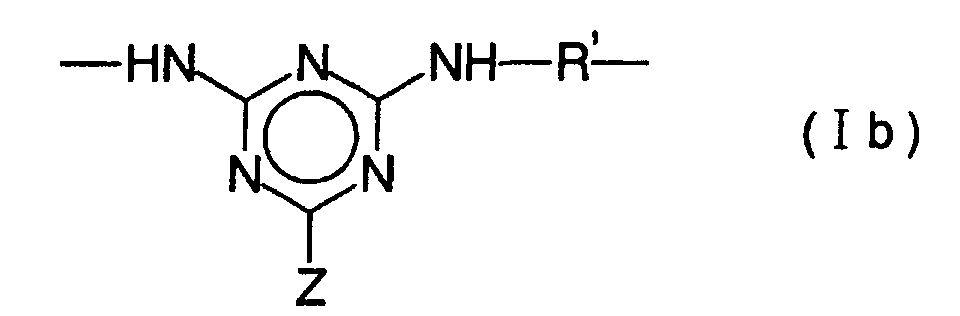 or an aryl group having 6 to 18 carbon atoms)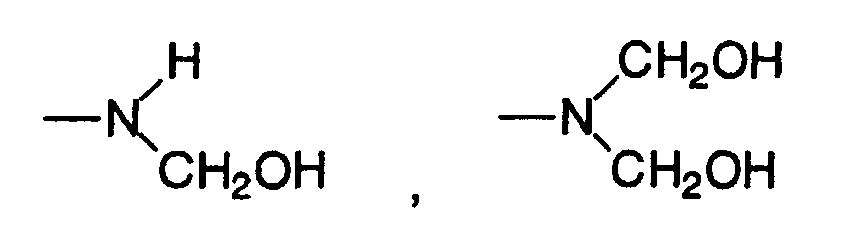
- The photosensitive resin composition according to Claim 16, wherein the triazine-based compound is a melamine phenol compound with repeating units represented by the general formulae (Ic) and (Id):(wherein R1 represents a hydrogen atom or a methyl group)
 (wherein Z is the same as Z in the above-mentioned general formula (Ib)).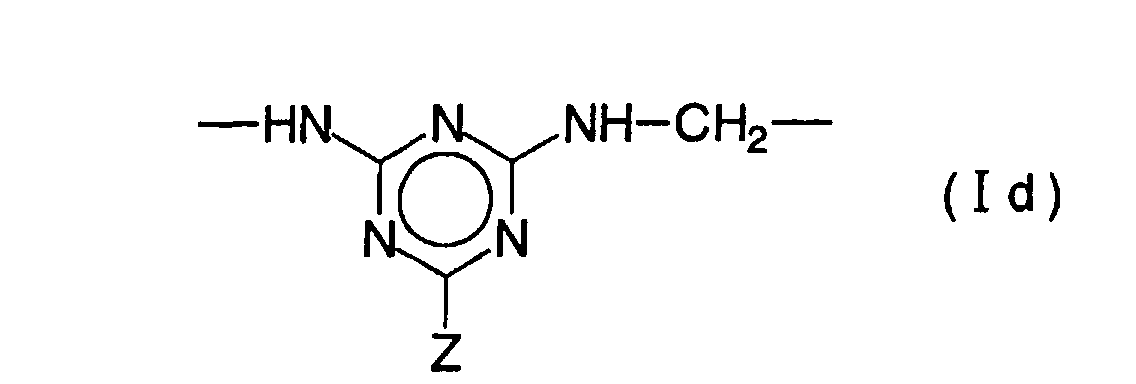
- The photosensitive resin composition according to Claim 16, wherein the triazine-based compound is a melamine acrylate compound represented by the general formula (II):(wherein each one of six A independently represents a (meth)acryloyl group and each one of six R2 independently represents a divalent organic group).
- The photosensitive resin composition according to Claim 16, wherein the triazine-based compound is a triazine derivative represented by the general formula (III):(wherein R3 represents a monovalent aliphatic group having 1 to 10 carbon atoms or an aryl group having 6 to 18 carbon atoms).

- The photosensitive resin composition according to Claim 16, wherein the triazine-based compound is a triazine derivative represented by the general formula (IV):(wherein R4 represents a divalent aliphatic group having 1 to 10 carbon atoms or an arylene group having 6 to 18 carbon atoms).

- The photosensitive resin composition according to Claim 16, wherein the triazine-based compound is an isocyanurate derivative represented by the general formula (V):(wherein each one of three R5 independently represents a hydrogen atom or a methyl group).
- The photosensitive resin composition according to Claim 16, wherein the triazine-based compound is an isocyanurate derivative represented by the general formula (VI):(wherein each one of three R6 independently represents a hydrogen atom or a methyl group and each one of three R7 independently represents an alkylene group having 1 to 10 carbon atoms).

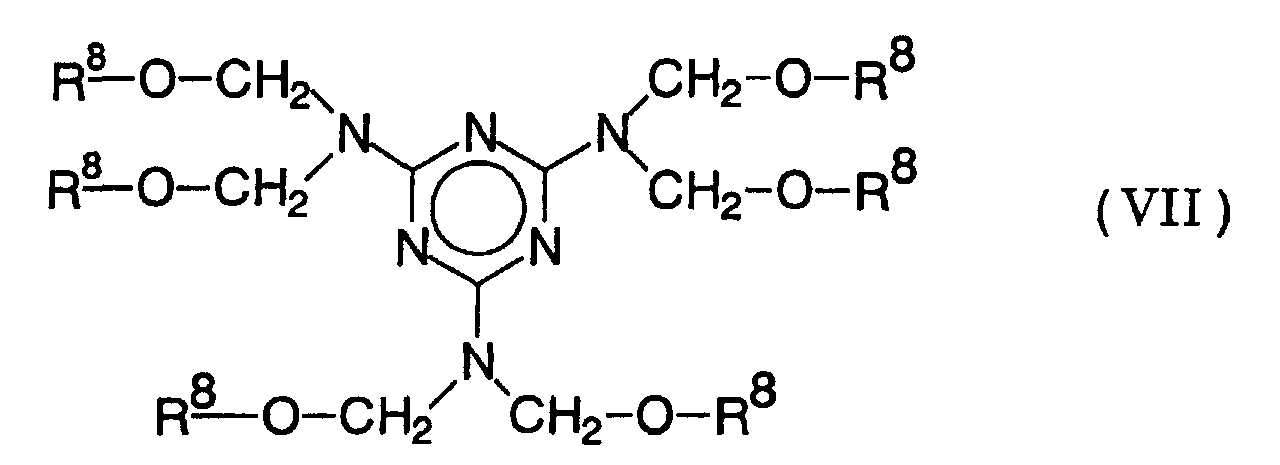
- The photosensitive resin composition according to Claim 16, wherein the triazine-based compound is a triazine derivative represented by the general formula (VII):(wherein each one of six R8 independently represents an alkyl group having 1 to 10 carbon atoms).
- The photosensitive resin composition according to Claim 16, wherein the triazine-based compound is a triazine derivative represented by the general formula (VIII):(wherein each one of m1 to m6 is independently 0, 1, or 2 and (m1+m2)=(m3+m4)=(m5+m6)=2).

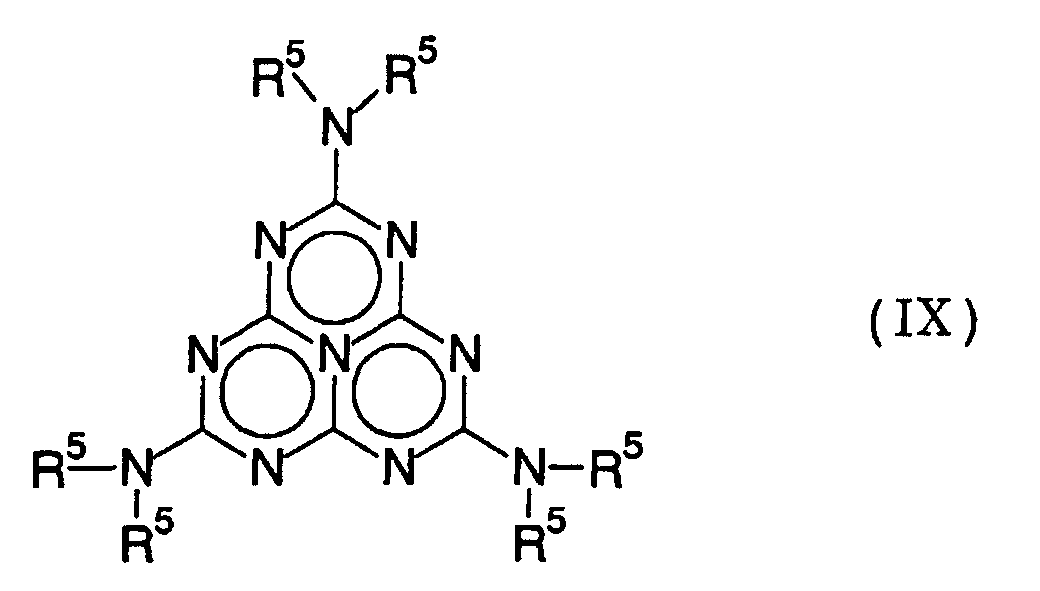
- The photosensitive resin composition according to Claim 16, wherein the triazine-based compound is a triazine derivative represented by the general formula (IX):(wherein each one of six R5 independently the same as R5 in the above-mentioned general formula (V)).
- The photosensitive resin composition according to Claim 16, wherein the triazine-based compound is selected from the group consisting of melamine formaldehyde resins which are copolymers of 1,3,5-triaminotriazine and formaldehyde, melamine phosphate compounds which are copolymers of 1,3,5-triaminotriazine and phosphoric acid, compounds of 1,3,5-triaminotriazine and pyrophosphoric acid, sulfuric acid-2-melamine, melamine resins which are copolymers of benzoguanamine and formaldehyde, melamine polyphosphate, and triglycidyl isocyanurate.
- The photosensitive resin composition according to Claim 16, wherein the triazine-based compound is 1,3,5-triaminotriazine.
- The photosensitive resin composition according to Claim 14, further comprising at least one of a metal hydroxide (C3) and an organic phosphorus-based compound (C4).
- The photosensitive resin composition according to Claim 14, wherein the component (A) is included in an amount of 10 to 90% by weight, the component (B) is included in an amount of 0.5 to 20% by weight, and the component (C2) is included in an amount of 0.2 to 10% by weight, based on the total amount of the composition.
- The photosensitive resin composition according to Claim 29, wherein a content of the component (C3) is 5 to 50% by weight based on the total amount of the composition when the component (C3) is included, and a content of the component (C4) is 2 to 50% by weight based on the total amount of the composition when the component (C4) is included.
- A photosensitive resin composition comprising a photosensitive resin (A), a photopolymerization initiator (B), and a metal hydroxide (C3).
- The photosensitive resin composition according to Claim 32, wherein the metal hydroxide (C3) is selected from the group consisting of aluminum hydroxide, magnesium hydroxide, aluminum hydroxide magnesium carbonate hydrate, nickel hydroxide, titanium hydroxide, and iridium hydroxide.
- The photosensitive resin composition according to Claim 32, further comprising an organic phosphorus-based compound (C4).
- The photosensitive resin composition according to Claim 32, wherein the component (A) is included in an amount of 10 to 90% by weight, the component (B) is included in an amount of 0.5 to 20% by weight, and the component (C3) is included in an amount of 5 to 50% by weight, based on the total amount of the composition.
- The photosensitive resin composition according to Claim 32, wherein a content of the component (C4) is 2 to 50% by weight based on the total amount of the composition.
- A photosensitive resin composition comprising a photosensitive resin (A), a photopolymerization initiator (B), and an organic phosphorus-based compound (C4).
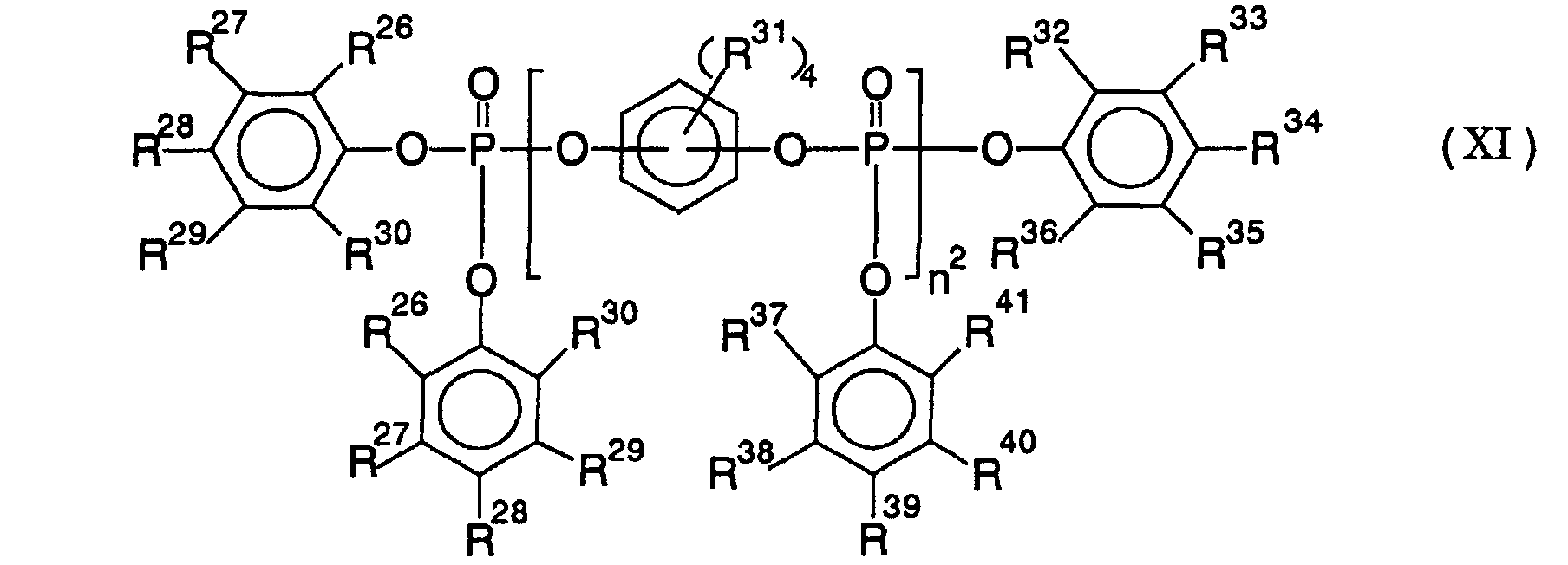
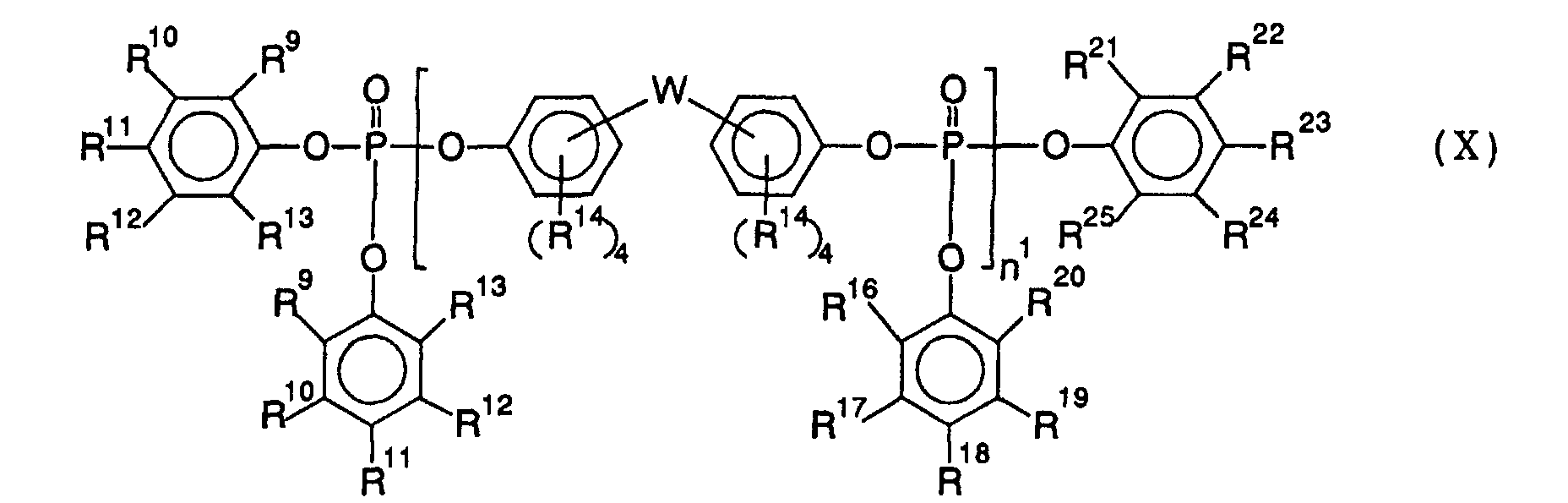
- The photosensitive resin composition according to Claim 37, wherein the organic phosphorus-based compound (D) is selected from the group consisting of phosphate-based compounds represented by the general formula (X):(wherein each one of R9 to R25 independently represents a hydrogen atom or an alkyl group having 1 to 10 carbon atoms; W represents a single bond, an alkylene group having 1 to 10 carbon atoms, -S-, -SO2-, -O-, -CO- or -N=N-; and n1 is an integer greater than or equal to 1), phosphate-based compounds represented by the general formula (XI):
 (wherein each one of R26 to R41 independently represents a hydrogen atom or an alkyl group having 1 to 10 carbon atoms; and n2 is an integer greater than or equal to 1), and phosphorus-containing epoxy resins.
- The photosensitive resin composition according to Claim 37, wherein the component (A) is included in an amount of 10 to 90% by weight, the component (B) is included in an amount of 0.5 to 20% by weight, and the component (C4) is included in an amount of 2 to 50% by weight, based on the total amount of the composition.
- The photosensitive resin composition according to any one of Claims 7, 14, 32, and 37, further comprising a curing agent (D).
- The photosensitive resin composition according to Claim 40, wherein a content of the component (D) is 2 to 50% by weight based on the total amount of the composition.
- The photosensitive resin composition according to any one of Claims 1, 7, 14, 32, and 37, wherein the photosensitive resin (A) is obtained by reacting a reaction product of epoxy resin (a1) and unsaturated group-containing monocarboxylic acid (a2), with anhydride (a3) of saturated or unsaturated group-containing polybasic acid.
- The photosensitive resin composition according to Claim 42, wherein the epoxy resin (a1) is selected from the group consisting of novolac-type epoxy resins, bisphenol-type epoxy resins, salicylic aldehyde-type epoxy resins, and rubber-modified epoxy resins.
- A photosensitive element obtained by forming onto a substrate a resist layer formed by a photosensitive resin composition comprising a photosensitive resin (A), a photopolymerization initiator (B), and a flame retardant (C), wherein a content of halogen atoms or antimony atoms in the flame retardant is 5% or less by weight.
- The photosensitive element according to Claim 44, wherein the flame retardant (C) is selected from the group consisting of a zinc compound (C1), an organic nitrogen-based compound (C2), a metal hydroxide (C3), and an organic phosphorus-based compound (C4).
- A manufacturing method of a resist pattern comprising the following steps:i) a step of laminating a resist layer formed by the photosensitive resin composition comprising a photosensitive resin (A), a photopolymerization initiator (B), and a flame retardant (C), wherein a content of halogen atoms or antimony atoms in the flame retardant is 5% or less by weight, onto a substrate;ii) a step of irradiating active rays in an image shape to photo-cure the resist layer at exposed portions; andiii) a step of selectively removing the resist layer at unexposed portions by development to form a resist pattern.
- The manufacturing method of a resist pattern according to Claim 46, wherein the flame retardant (C) is selected from the group consisting of a zinc compound (C1), an organic nitrogen-based compound (C2), a metal hydroxide (C3), and an organic phosphorus-based compound (C4).
- The resist pattern manufactured by the manufacturing method of a resist pattern according to Claim 46.
- The resist pattern laminated substrate obtained by laminating, onto a substrate, a resist pattern obtained using a resist layer formed by a photosensitive resin composition comprising a photosensitive resin (A), a photopolymerization initiator (B), and a flame retardant (C), wherein a content of halogen atoms or antimony atoms in the flame retardant is 5% or less by weight.
- The resist pattern laminated substrate according to Claim 49, wherein the flame retardant (C) is selected from the group consisting of a zinc compound (C1), an organic nitrogen-based compound (C2), a metal hydroxide (C3), and an organic phosphorus-based compound (C4).
Applications Claiming Priority (11)
| Application Number | Priority Date | Filing Date | Title |
|---|---|---|---|
| JP30099599 | 1999-10-22 | ||
| JP30099599 | 1999-10-22 | ||
| JP30751699 | 1999-10-28 | ||
| JP30751699 | 1999-10-28 | ||
| JP30794699 | 1999-10-29 | ||
| JP30794799 | 1999-10-29 | ||
| JP30794799 | 1999-10-29 | ||
| JP30794699 | 1999-10-29 | ||
| JP2000196492 | 2000-06-29 | ||
| JP2000196492 | 2000-06-29 | ||
| PCT/JP2000/007380 WO2001029616A1 (en) | 1999-10-22 | 2000-10-23 | Photosensitive resin composition, photosensitive element using the same, method for producing resist pattern, resist pattern and substrate having the resist pattern laminated thereon |
Publications (2)
| Publication Number | Publication Date |
|---|---|
| EP1229389A1 true EP1229389A1 (en) | 2002-08-07 |
| EP1229389A4 EP1229389A4 (en) | 2003-01-02 |
Family
ID=27530930
Family Applications (1)
| Application Number | Title | Priority Date | Filing Date |
|---|---|---|---|
| EP00969991A Withdrawn EP1229389A4 (en) | 1999-10-22 | 2000-10-23 | PHOTOSENSITIVE RESIN COMPOSITION, PHOTOSENSITIVE ELEMENT USING THE SAME, PROCESS FOR PRODUCING RESIST PATTERN, RESIST PATTERN, AND SUBSTRATE ON WHICH RESIST PATTERN IS LAID |
Country Status (7)
| Country | Link |
|---|---|
| EP (1) | EP1229389A4 (en) |
| JP (2) | JP4720063B2 (en) |
| KR (1) | KR100525984B1 (en) |
| CN (2) | CN1284046C (en) |
| AU (1) | AU7954400A (en) |
| TW (1) | TWI258634B (en) |
| WO (1) | WO2001029616A1 (en) |
Cited By (6)
| Publication number | Priority date | Publication date | Assignee | Title |
|---|---|---|---|---|
| WO2003005126A1 (en) * | 2001-07-04 | 2003-01-16 | Showa Denko K.K. | Resist curable resin composition and cured article thereof |
| WO2003041465A1 (en) * | 2001-10-18 | 2003-05-15 | 3M Innovative Properties Company | Photoimageable dielectric material for circuit protection |
| WO2007105781A1 (en) * | 2006-03-09 | 2007-09-20 | Showa Denko K.K. | Thermosetting resin composition and uses thereof |
| WO2011095441A1 (en) | 2010-02-02 | 2011-08-11 | Bayer Materialscience Ag | Photopolymer formulation having triazine-based writing monomers |
| CN101512437B (en) * | 2006-09-13 | 2011-12-14 | 日立化成工业株式会社 | Photosensitive resin composition, photosensitive element, method for forming resist pattern, and method for producing printed wiring board |
| EP3498788A1 (en) * | 2017-12-18 | 2019-06-19 | Agfa-Gevaert | Solder mask inkjet inks for manufacturing printed circuit boards |
Families Citing this family (20)
| Publication number | Priority date | Publication date | Assignee | Title |
|---|---|---|---|---|
| JP2005298613A (en) * | 2004-04-09 | 2005-10-27 | Taiyo Ink Mfg Ltd | Thermosetting resin composition and its cured film |
| KR101145592B1 (en) * | 2004-04-09 | 2012-05-15 | 다이요 홀딩스 가부시키가이샤 | Curable Resin Composition and Cured Film Thereof |
| JP2006091243A (en) * | 2004-09-22 | 2006-04-06 | Mitsubishi Gas Chem Co Inc | Resin resin composition |
| JP4846356B2 (en) * | 2005-12-02 | 2011-12-28 | 株式会社フジクラ | Photo-curing / thermosetting resin composition |
| JP4832874B2 (en) * | 2005-12-02 | 2011-12-07 | 株式会社フジクラ | Photo-curing / thermosetting resin composition |
| TWI331625B (en) * | 2007-12-04 | 2010-10-11 | Ind Tech Res Inst | Fire resistant material and formulation thereof |
| TW200728908A (en) * | 2006-01-25 | 2007-08-01 | Kaneka Corp | Photosensitive dry film resist, printed wiring board using same, and method for producing printed wiring board |
| JP5209888B2 (en) * | 2006-03-09 | 2013-06-12 | 昭和電工株式会社 | Thermosetting resin composition and use thereof |
| CN101681107B (en) * | 2007-05-11 | 2012-12-26 | 日立化成工业株式会社 | Photosensitive resin composition, photosensitive element, method for forming resist pattern, and method for manufacturing printed circuit board |
| JP5377021B2 (en) * | 2009-03-23 | 2013-12-25 | 太陽ホールディングス株式会社 | Curable resin composition, dry film and printed wiring board using the same |
| JP5521800B2 (en) * | 2010-06-08 | 2014-06-18 | Jsr株式会社 | Radiation-sensitive resin composition, cured film, method for forming cured film, and display element |
| DE102010026973A1 (en) * | 2010-07-13 | 2012-01-19 | Clariant International Ltd. | Flame retardant stabilizer combination for thermoplastic polymers |
| JP2011116988A (en) * | 2010-12-28 | 2011-06-16 | Hitachi Chem Co Ltd | Insulating resin composition and method for producing multilayer wiring board using the same |
| CN110058490A (en) * | 2011-08-10 | 2019-07-26 | 日立化成株式会社 | The manufacturing method of photosensitive polymer combination, photosensitive film, permanent resist and permanent resist |
| JP6073007B2 (en) * | 2012-02-08 | 2017-02-01 | 株式会社タムラ製作所 | Curable resin composition |
| MY173225A (en) * | 2012-03-23 | 2020-01-07 | Taiyo Ink Suzhou Co Ltd | Photosensitive resin composition and its cured product, and printed circuit board |
| JP6577176B2 (en) * | 2014-10-14 | 2019-09-18 | 旭化成株式会社 | Negative photosensitive resin composition and transfer material |
| JP6738335B2 (en) * | 2015-08-05 | 2020-08-12 | 太陽インキ製造株式会社 | Laminated structure, dry film and flexible printed wiring board |
| KR102214895B1 (en) * | 2017-12-26 | 2021-02-09 | 삼성에스디아이 주식회사 | Resist underlayer composition, and method of forming patterns using the composition |
| CN110903437A (en) * | 2019-11-04 | 2020-03-24 | 杭州乐一新材料科技有限公司 | High-efficiency DLP photosensitive resin with flame retardant property |
Family Cites Families (16)
| Publication number | Priority date | Publication date | Assignee | Title |
|---|---|---|---|---|
| US3899611A (en) * | 1972-05-22 | 1975-08-12 | Scm Corp | Curing by actinic radiation |
| JPS592018B2 (en) * | 1975-03-26 | 1984-01-17 | 住友化学工業株式会社 | KARIYOSARETAKANKOSEIJIYUSHISOSAIBUTSUKARANARUGENKEI |
| GB2163172B (en) * | 1984-06-30 | 1987-11-25 | Yokohama Rubber Co Ltd | Ultraviolet-curing resin composition |
| JPS6291544A (en) * | 1985-10-17 | 1987-04-27 | Mitsubishi Cable Ind Ltd | Flame-retardant composition |
| US5124234A (en) * | 1989-01-20 | 1992-06-23 | Fuji Photo Film Co., Ltd. | Liquid light-sensitive resin composition |
| JPH02294371A (en) * | 1989-05-09 | 1990-12-05 | Toshiba Corp | Flame-retardant solder resist composition |
| JP3343704B2 (en) * | 1994-11-29 | 2002-11-11 | 住友ベークライト株式会社 | Epoxy resin composition |
| JP3134037B2 (en) * | 1995-01-13 | 2001-02-13 | 太陽インキ製造株式会社 | Thermosetting or photocuring / thermosetting coating composition using melamine organic acid salt |
| CN1147868A (en) * | 1995-03-13 | 1997-04-16 | 互応化学工业株式会社 | Photosensitive resin composition and its application to coating film, resist ink, resist protection film, solder resist protection film and printed circuit substrate |
| JPH08292567A (en) * | 1995-04-25 | 1996-11-05 | Hitachi Chem Co Ltd | Photosensitive resin composition and multilayered printed circuit board using its cured body as interlaminar insulating layer |
| EP0751442B1 (en) * | 1995-06-30 | 2010-11-03 | Canon Kabushiki Kaisha | Image heating apparatus |
| US5858616A (en) * | 1995-10-13 | 1999-01-12 | Hitachi Chemical Company, Ltd. | Photosensitive resin composition, photosensitive film and process for preparing fluorescent pattern using the same, and phosphor subjected to surface treatment and process for preparing the same |
| JPH09258446A (en) * | 1996-03-22 | 1997-10-03 | Toshiba Chem Corp | Photosensitive resin composition |
| JPH11184087A (en) * | 1997-12-19 | 1999-07-09 | Sumitomo Bakelite Co Ltd | Photosensitive additive adhesive composition |
| JPH11288090A (en) * | 1998-04-03 | 1999-10-19 | Hitachi Chem Co Ltd | Photosensitive resin composition |
| JP2000003039A (en) * | 1998-06-16 | 2000-01-07 | Fuji Photo Film Co Ltd | Photosensitive resin composition, photosensitive element, insulating resin material, and production of multilayer interconnection board using the same |
-
2000
- 2000-10-21 TW TW089122156A patent/TWI258634B/en not_active IP Right Cessation
- 2000-10-23 CN CNB2004100742760A patent/CN1284046C/en not_active Expired - Lifetime
- 2000-10-23 CN CNB008155313A patent/CN100365508C/en not_active Expired - Lifetime
- 2000-10-23 KR KR10-2002-7005163A patent/KR100525984B1/en not_active Expired - Lifetime
- 2000-10-23 WO PCT/JP2000/007380 patent/WO2001029616A1/en not_active Ceased
- 2000-10-23 AU AU79544/00A patent/AU7954400A/en not_active Abandoned
- 2000-10-23 JP JP2001532150A patent/JP4720063B2/en not_active Expired - Lifetime
- 2000-10-23 EP EP00969991A patent/EP1229389A4/en not_active Withdrawn
-
2010
- 2010-05-06 JP JP2010106681A patent/JP5585192B2/en not_active Expired - Lifetime
Cited By (11)
| Publication number | Priority date | Publication date | Assignee | Title |
|---|---|---|---|---|
| WO2003005126A1 (en) * | 2001-07-04 | 2003-01-16 | Showa Denko K.K. | Resist curable resin composition and cured article thereof |
| US7195857B2 (en) * | 2001-07-04 | 2007-03-27 | Showa Denko K.K. | Resist curable resin composition and cured article thereof |
| WO2003041465A1 (en) * | 2001-10-18 | 2003-05-15 | 3M Innovative Properties Company | Photoimageable dielectric material for circuit protection |
| WO2007105781A1 (en) * | 2006-03-09 | 2007-09-20 | Showa Denko K.K. | Thermosetting resin composition and uses thereof |
| US7935752B2 (en) | 2006-03-09 | 2011-05-03 | Showa Denko K.K. | Thermosetting resin composition and uses thereof |
| CN101512437B (en) * | 2006-09-13 | 2011-12-14 | 日立化成工业株式会社 | Photosensitive resin composition, photosensitive element, method for forming resist pattern, and method for producing printed wiring board |
| WO2011095441A1 (en) | 2010-02-02 | 2011-08-11 | Bayer Materialscience Ag | Photopolymer formulation having triazine-based writing monomers |
| US9366957B2 (en) | 2010-02-02 | 2016-06-14 | Covestro Deutschland Ag | Photopolymer formulation having triazine-based writing monomers |
| EP3498788A1 (en) * | 2017-12-18 | 2019-06-19 | Agfa-Gevaert | Solder mask inkjet inks for manufacturing printed circuit boards |
| WO2019121098A1 (en) * | 2017-12-18 | 2019-06-27 | Agfa-Gevaert Nv | Solder mask inkjet inks for manufacturing printed circuit boards |
| US11492509B2 (en) | 2017-12-18 | 2022-11-08 | Agfa-Gevaert Nv | Solder mask inkjet inks for manufacturing printed circuit boards |
Also Published As
| Publication number | Publication date |
|---|---|
| JP5585192B2 (en) | 2014-09-10 |
| JP2010231220A (en) | 2010-10-14 |
| KR100525984B1 (en) | 2005-11-08 |
| CN1284046C (en) | 2006-11-08 |
| EP1229389A4 (en) | 2003-01-02 |
| WO2001029616A1 (en) | 2001-04-26 |
| AU7954400A (en) | 2001-04-30 |
| KR20020092920A (en) | 2002-12-12 |
| TWI258634B (en) | 2006-07-21 |
| CN1390318A (en) | 2003-01-08 |
| CN1595297A (en) | 2005-03-16 |
| CN100365508C (en) | 2008-01-30 |
| JP4720063B2 (en) | 2011-07-13 |
Similar Documents
| Publication | Publication Date | Title |
|---|---|---|
| JP5585192B2 (en) | Photosensitive resin composition, photosensitive element using the same, method for producing resist pattern, resist pattern and resist pattern laminated substrate | |
| US6399277B1 (en) | Photopolymerizable thermosetting resin composition | |
| EP0323563B1 (en) | Photosensitive thermosetting resin composition and method of forming solder resist pattern by use thereof | |
| KR101836309B1 (en) | Liquid solder resist composition and printed wiring board | |
| JPWO2001029616A1 (en) | Photosensitive resin composition, photosensitive element using the same, method for producing resist pattern, resist pattern, and resist pattern laminated substrate | |
| JP4213043B2 (en) | Curable resin and curable resin composition containing the same | |
| US12189290B2 (en) | Photosensitive resin composition, dry film using same, printed wiring board, and printed wiring board manufacturing method | |
| KR20120060938A (en) | Photosensitive resin composition, dry film solder resist and circuit board | |
| JP4878597B2 (en) | Photosensitive resin composition, printed wiring board, and semiconductor package substrate | |
| KR101900355B1 (en) | Dry film layered product | |
| WO2010016256A1 (en) | Flame-retardant photocurable resin composition, dry film and cured product of the same, and printed wiring board using the composition, dry film or cured product | |
| KR20240054181A (en) | Photosensitive resin composition, dry film, cured product, and printed wiring board | |
| TW202103923A (en) | Layered structure body, cured object, printed circuit board and electronic component | |
| JP4042198B2 (en) | Photocurable resin composition and photosensitive element using the same | |
| CN114945611B (en) | Curable composition, dry film and cured product thereof | |
| US7049036B1 (en) | Photosensitive resin composition, photosensitive element using the same, method for producing resist pattern, resist pattern and substrate having the resist pattern laminated thereon | |
| JP3953852B2 (en) | Photo-curing / thermosetting resin composition | |
| JP4439614B2 (en) | Alkali-developable photocurable / thermosetting composition | |
| JP2002121245A (en) | Flame retardant resin composition | |
| KR100499836B1 (en) | Photopolymerizable Thermosetting Resin Composition | |
| JPH11327139A (en) | Resin composition and its hardened material | |
| JP2003277470A (en) | Flame-retardant photocurable and heat-curable resin composition | |
| JP2000265043A (en) | Photocurable resin composition | |
| EP3742871A1 (en) | Curable resin composition, dry film, cured product thereof, and printed circuit board | |
| US20250289975A1 (en) | Cured product and printed wiring board |
Legal Events
| Date | Code | Title | Description |
|---|---|---|---|
| PUAI | Public reference made under article 153(3) epc to a published international application that has entered the european phase |
Free format text: ORIGINAL CODE: 0009012 |
|
| 17P | Request for examination filed |
Effective date: 20020503 |
|
| AK | Designated contracting states |
Kind code of ref document: A1 Designated state(s): AT BE CH CY DE DK ES FI FR GB GR IE IT LI LU MC NL PT SE |
|
| AX | Request for extension of the european patent |
Free format text: AL;LT;LV;MK;RO;SI |
|
| A4 | Supplementary search report drawn up and despatched |
Effective date: 20021115 |
|
| AK | Designated contracting states |
Kind code of ref document: A4 Designated state(s): AT BE CH CY DE DK ES FI FR GB GR IE IT LI LU MC NL PT SE |
|
| RIC1 | Information provided on ipc code assigned before grant |
Free format text: 7G 03F 7/004 A, 7C 08L 61/34 B, 7C 08L 61/28 B, 7C 08L 101/12 B, 7G 03F 7/038 B, 7G 03F 7/027 B, 7C 08K 5/00 B, 7C 08K 3/00 B |
|
| 17Q | First examination report despatched |
Effective date: 20070228 |
|
| STAA | Information on the status of an ep patent application or granted ep patent |
Free format text: STATUS: THE APPLICATION IS DEEMED TO BE WITHDRAWN |
|
| 18D | Application deemed to be withdrawn |
Effective date: 20070711 |