EP1223578A2 - Data processing method using error-correcting code and an apparatus using the same method - Google Patents
Data processing method using error-correcting code and an apparatus using the same method Download PDFInfo
- Publication number
- EP1223578A2 EP1223578A2 EP01107172A EP01107172A EP1223578A2 EP 1223578 A2 EP1223578 A2 EP 1223578A2 EP 01107172 A EP01107172 A EP 01107172A EP 01107172 A EP01107172 A EP 01107172A EP 1223578 A2 EP1223578 A2 EP 1223578A2
- Authority
- EP
- European Patent Office
- Prior art keywords
- error
- data
- correcting
- correcting code
- memory
- Prior art date
- Legal status (The legal status is an assumption and is not a legal conclusion. Google has not performed a legal analysis and makes no representation as to the accuracy of the status listed.)
- Withdrawn
Links
Images





Classifications
-
- G—PHYSICS
- G11—INFORMATION STORAGE
- G11B—INFORMATION STORAGE BASED ON RELATIVE MOVEMENT BETWEEN RECORD CARRIER AND TRANSDUCER
- G11B20/00—Signal processing not specific to the method of recording or reproducing; Circuits therefor
- G11B20/10—Digital recording or reproducing
- G11B20/18—Error detection or correction; Testing, e.g. of drop-outs
-
- G—PHYSICS
- G06—COMPUTING OR CALCULATING; COUNTING
- G06F—ELECTRIC DIGITAL DATA PROCESSING
- G06F11/00—Error detection; Error correction; Monitoring
- G06F11/07—Responding to the occurrence of a fault, e.g. fault tolerance
- G06F11/08—Error detection or correction by redundancy in data representation, e.g. by using checking codes
- G06F11/10—Adding special bits or symbols to the coded information, e.g. parity check, casting out 9's or 11's
- G06F11/1008—Adding special bits or symbols to the coded information, e.g. parity check, casting out 9's or 11's in individual solid state devices
- G06F11/1012—Adding special bits or symbols to the coded information, e.g. parity check, casting out 9's or 11's in individual solid state devices using codes or arrangements adapted for a specific type of error
-
- G—PHYSICS
- G06—COMPUTING OR CALCULATING; COUNTING
- G06F—ELECTRIC DIGITAL DATA PROCESSING
- G06F11/00—Error detection; Error correction; Monitoring
- G06F11/07—Responding to the occurrence of a fault, e.g. fault tolerance
- G06F11/08—Error detection or correction by redundancy in data representation, e.g. by using checking codes
- G06F11/10—Adding special bits or symbols to the coded information, e.g. parity check, casting out 9's or 11's
- G06F11/1076—Parity data used in redundant arrays of independent storages, e.g. in RAID systems
-
- H—ELECTRICITY
- H03—ELECTRONIC CIRCUITRY
- H03M—CODING; DECODING; CODE CONVERSION IN GENERAL
- H03M13/00—Coding, decoding or code conversion, for error detection or error correction; Coding theory basic assumptions; Coding bounds; Error probability evaluation methods; Channel models; Simulation or testing of codes
- H03M13/03—Error detection or forward error correction by redundancy in data representation, i.e. code words containing more digits than the source words
-
- H—ELECTRICITY
- H03—ELECTRONIC CIRCUITRY
- H03M—CODING; DECODING; CODE CONVERSION IN GENERAL
- H03M13/00—Coding, decoding or code conversion, for error detection or error correction; Coding theory basic assumptions; Coding bounds; Error probability evaluation methods; Channel models; Simulation or testing of codes
- H03M13/03—Error detection or forward error correction by redundancy in data representation, i.e. code words containing more digits than the source words
- H03M13/05—Error detection or forward error correction by redundancy in data representation, i.e. code words containing more digits than the source words using block codes, i.e. a predetermined number of check bits joined to a predetermined number of information bits
- H03M13/13—Linear codes
- H03M13/15—Cyclic codes, i.e. cyclic shifts of codewords produce other codewords, e.g. codes defined by a generator polynomial, Bose-Chaudhuri-Hocquenghem [BCH] codes
-
- H—ELECTRICITY
- H03—ELECTRONIC CIRCUITRY
- H03M—CODING; DECODING; CODE CONVERSION IN GENERAL
- H03M13/00—Coding, decoding or code conversion, for error detection or error correction; Coding theory basic assumptions; Coding bounds; Error probability evaluation methods; Channel models; Simulation or testing of codes
- H03M13/03—Error detection or forward error correction by redundancy in data representation, i.e. code words containing more digits than the source words
- H03M13/05—Error detection or forward error correction by redundancy in data representation, i.e. code words containing more digits than the source words using block codes, i.e. a predetermined number of check bits joined to a predetermined number of information bits
- H03M13/13—Linear codes
- H03M13/15—Cyclic codes, i.e. cyclic shifts of codewords produce other codewords, e.g. codes defined by a generator polynomial, Bose-Chaudhuri-Hocquenghem [BCH] codes
- H03M13/151—Cyclic codes, i.e. cyclic shifts of codewords produce other codewords, e.g. codes defined by a generator polynomial, Bose-Chaudhuri-Hocquenghem [BCH] codes using error location or error correction polynomials
- H03M13/1515—Reed-Solomon codes
-
- H—ELECTRICITY
- H03—ELECTRONIC CIRCUITRY
- H03M—CODING; DECODING; CODE CONVERSION IN GENERAL
- H03M13/00—Coding, decoding or code conversion, for error detection or error correction; Coding theory basic assumptions; Coding bounds; Error probability evaluation methods; Channel models; Simulation or testing of codes
- H03M13/29—Coding, decoding or code conversion, for error detection or error correction; Coding theory basic assumptions; Coding bounds; Error probability evaluation methods; Channel models; Simulation or testing of codes combining two or more codes or code structures, e.g. product codes, generalised product codes, concatenated codes, inner and outer codes
-
- H—ELECTRICITY
- H03—ELECTRONIC CIRCUITRY
- H03M—CODING; DECODING; CODE CONVERSION IN GENERAL
- H03M13/00—Coding, decoding or code conversion, for error detection or error correction; Coding theory basic assumptions; Coding bounds; Error probability evaluation methods; Channel models; Simulation or testing of codes
- H03M13/29—Coding, decoding or code conversion, for error detection or error correction; Coding theory basic assumptions; Coding bounds; Error probability evaluation methods; Channel models; Simulation or testing of codes combining two or more codes or code structures, e.g. product codes, generalised product codes, concatenated codes, inner and outer codes
- H03M13/2903—Methods and arrangements specifically for encoding, e.g. parallel encoding of a plurality of constituent codes
-
- H—ELECTRICITY
- H03—ELECTRONIC CIRCUITRY
- H03M—CODING; DECODING; CODE CONVERSION IN GENERAL
- H03M13/00—Coding, decoding or code conversion, for error detection or error correction; Coding theory basic assumptions; Coding bounds; Error probability evaluation methods; Channel models; Simulation or testing of codes
- H03M13/29—Coding, decoding or code conversion, for error detection or error correction; Coding theory basic assumptions; Coding bounds; Error probability evaluation methods; Channel models; Simulation or testing of codes combining two or more codes or code structures, e.g. product codes, generalised product codes, concatenated codes, inner and outer codes
- H03M13/2906—Coding, decoding or code conversion, for error detection or error correction; Coding theory basic assumptions; Coding bounds; Error probability evaluation methods; Channel models; Simulation or testing of codes combining two or more codes or code structures, e.g. product codes, generalised product codes, concatenated codes, inner and outer codes using block codes
- H03M13/2909—Product codes
-
- G—PHYSICS
- G11—INFORMATION STORAGE
- G11B—INFORMATION STORAGE BASED ON RELATIVE MOVEMENT BETWEEN RECORD CARRIER AND TRANSDUCER
- G11B20/00—Signal processing not specific to the method of recording or reproducing; Circuits therefor
- G11B20/10—Digital recording or reproducing
- G11B20/10527—Audio or video recording; Data buffering arrangements
- G11B2020/1062—Data buffering arrangements, e.g. recording or playback buffers
Definitions
- This invention relates to an error-correcting code creating method effective in recording video data, audio data, or computer data onto a medium (such as an optical disk or a magnetic disk) or in reproducing the data recorded on a medium.
- the invention further relates to an error-correcting code creating method effective in transmitting or receiving the video data or the like.
- the invention still further relates to a recording device, a reproducing device, and a receiving device which employ the error-correcting code creating method.
- the invention is particularly characterized by a method of correcting errors using a buffer memory in carrying out an error correcting process.
- error-correcting code is added to the data blocks.
- a data block is temporarily stored in a memory and the error-correcting codes for the rows and columns of the data block are created.
- An error-correcting code added to a row is usually called inner parity and abbreviated as PI.
- An error-correcting code added to a column is usually called outer parity and abbreviated as PO.
- part of the data on the memory can be destroyed (or an error can occur).
- the destruction may be ascribed to the data pattern or the mounting state of the memory.
- external sudden noise may have an adverse effect.
- the error occurred at that time is called a memory error.
- an error-correcting code for a data block where a memory error has occurred (hereinafter, referred to as an altered data block) is created.
- the error-correcting code is added to the altered data block and the resulting block is recorded on a recording medium.
- the error-correcting circuit uses the error-correcting code to perform an error-correcting process on the altered data block. That is, the altered data block is reproduced correctly. This means that the data block including the memory error has been reproduced correctly. The memory error, however, is unnecessary for the original data.
- an object of the present invention to provide a data processing method using error-correcting code capable of restoring the original data correctly even when a date error (memory error) has occurred on memory, a recording-system or reproducing-system unit employing the method, and a transmission-system and a reception-system unit using the method.
- the invention is characterized in that the transmission or recording system creates an error-correcting code PI for each row in a data block with a matrix structure and stores both the error-correcting code PI and the data block in a memory and that, when the error-correcting code PI-added data block is added is read from the memory, the error-correcting process is performed on the rows of the data blocks on the basis of the error-correcting code PI.
- the invention is characterized in that, when the matrix-structured data block subjected to the error-correcting process using the error-correcting code PI is read from the memory, the reception or reproducing system performs the error-correcting process again using the error-correcting code PI on the rows of the data block.
- the invention when storing the data in a memory (first memory), uses a separate second memory (a memory with a structure free from damage to the data, such as SRAM) beforehand to create an error-correcting code PI and writes the resulting data together with the data into the first memory.
- a separate second memory a memory with a structure free from damage to the data, such as SRAM
- an error-correcting code PO is created for the data and PI and added to them.
- a PI correcting process is performed, each time the PI series is taken out. This enables the data to be restored to its original state, even if damage to the data on the first memory is caused (or a memory error occurs).
- the reproduced data is temporarily stored in the memory and the PI and PO error-correcting processes are carried out.
- the PI correcting process is performed again on the data read from the first memory. This enables the data to be restored to its original state, even if damage to the data on the memory is caused (or a memory error occurs).
- an object of the present invention is to provide a data processing device capable of restoring the original data correctly, even when a data error (or memory error) occurs on the memory, and of assuring the reliability of operation by improving the method of using the memory.
- the present invention is characterized in that the transmission or recording system creates an error-correcting code PI for each row in a data block with a matrix structure and stores both the error-correcting code PI and the data block in a memory and that, when the error-correcting code PI-added data block is read from the memory, an error correcting process is performed on the rows in the data block on the basis of the error-correcting code PI.
- the memory area in which the relevant row or data block has been stored is changed, thereby avoiding the occurrence of a memory error. Moreover, the area where a memory error has occurred is learned and thereafter is not used.
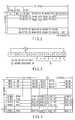
- FIG. 1 shows the sequence of data processing to obtain physical sectors in a DVD. Sectors are called “data sectors,” “recording sectors”, or “physical sectors” according to the stage of signal processing.
- a data sector includes 2048 bytes of main data, 4 bytes of identification data (ID), 2 bytes of ID error sensing code (IED) (code for sensing an error in ID), 6 bytes of copyright management information (CPR_MAI), and 4 bytes of error sensing signal (EDC) (signal for sensing an error in this data sector).
- ID identification data
- IED ID error sensing code
- CPR_MAI copyright management information
- EDC error sensing signal
- EDC for the main data is calculated.
- the EDC is added to the main data.
- scramble data is added to the main data (containing 2048 bytes) in the data sector (steps A4, A5, A6).
- 16 data sectors after the scramble are put together.
- a cross Reed-Solomon error-correcting code is created and added to the 16 data sectors (step A6).
- the recording sector, an ECC-added sector is a data sector to which error-correcting code PI and error-correcting code PO are added (step A7).
- the physical sector is a sector subjected to 8/16 modification whereby a synchronizing code (SYNC code) is added to the head at intervals of 91 bytes in the recording sector (step A8).
- SYNC code synchronizing code
- FIG. 2 the structure of a DVD data sector will be explained.
- a data sector contains 2064 bytes including the main data of 2048 bytes long or is composed 172 bytes ⁇ 12 rows. That is, a data sector includes 2048 byte of main data, 4 bytes of identification data (ID), 2 bytes of ID error sensing code (IED), 6 bytes of copyright management information (CPR_MAI), and 4 bytes of error sensing code (EDC).
- ID identification data
- IED ID error sensing code
- CPR_MAI copyright management information
- EDC error sensing code
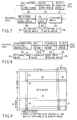
- FIG. 3 shows a feedback shift register that creates scramble data Sk used to scramble the main data (containing 2048 bytes) at step A4. For example, part of the ID of the data sector is used as the initial value for creating scramble data Sk.
- the scramble data Sk is used to scramble the main data (2048 bytes) of the data sector.
- a data block is formed so as to have 172 columns ⁇ 192 rows, a collection of 16 data sectors each containing 172 bytes ⁇ 12 rows.
- Reed-Solomon error-correcting code is created and added to the 172 columns ⁇ 192 rows.
- a 16-byte error-correcting code PO is created and added to each of the 172 columns.
- Each column in the PO series contains 192 bytes + 16 bytes, or 208 bytes.
- a 10-byte error-correcting code PI is created and added to each of the 208 rows including the row of the error-correcting code PO.
- the 182 columns ⁇ 208 rows to which the error-correcting codes PI and PO have been added forms an ECC block. Even when the order of creating PO and PI is reversed, the identical code pattern is obtained.
- a PO series contains 192 bytes + 16 bytes, or 208 bytes. In one PO series, errors up to 8 bytes long can be corrected.
- a PI series contains 172 bytes + 10 bytes, or 182 bytes. In one PI series, as many as 5 bytes of errors can be corrected.
- the 16 rows constituting the error-correcting code PO is separated row by row.
- the separated rows are inserted one by one at intervals of 12 rows of the 192-row data section, resulting in the rearranged form as shown in FIG. 6. This is called the row interleaving of PO.
- a recording sector is a sector composed of PI-added data (for 12 rows) + PO (for one row), that is, (13 rows ⁇ 182 bytes).
- the ECC block after the row interleaving is composed of 16 recording sectors as shown in FIG. 6.
- a physical sector is such that, in a recording sector (2366 bytes) of 13 rows ⁇ 182 bytes, a synchronizing (SYNC) code is added to the head at intervals of 91 bytes in each row and modulation is effected row by row, starting at row 0. What is obtained by adding the SYNC code to the head of the 91-byte data is called an SYNC frame.
- a physical sector is composed of 16 groups ⁇ 2 SYNC frames.
- the user data transmitted from the host is stored sequentially in a buffer memory 201.
- the stored user data is processed by sector information adding means 202, EDC creating and adding means 203, and scrambling means 204. This process is carried out at intervals of the 2048-byte main data, thereby converting the data into one data sector.
- the sector information adding means 202 adds 4 bytes of identification data (ID), 2 bytes of ID error sensing code (IED), and 6 bytes of copyright management information (CPR_MAI) to the main data.
- the EDC creating and adding means 203 creates and adds 4 bytes of error sensing code (EDC) to a total of 2060 bytes of data, thereby creating a data sector containing 2064 bytes in total.
- the scrambling means 204 scrambles the main data in the data sector.
- the scrambled data sector is stored sequentially in an ECC memory 205.
- ECC memory 205 a data block of 172 columns ⁇ 192 rows, a collection of 16 data sectors of 172 bytes ⁇ 12 rows, is formed.
- PI creating and adding means 206 and PO creating and adding means 207 create and add error correcting codes to the 172 columns ⁇ 192 rows data block, thereby creating one ECC block.
- the ECC block is subjected to row interleaving and then transmitted to modulation/synchronization adding means 208.
- the modulation/synchronization adding means 208 converts the 8-bit input data into 16-bit code words in the inputted row-interleaved ECC block. That is, 8/16 modulation is effected.
- an SYNC code is added to the head at intervals of 91 bytes of the input data, thereby forming a physical sector.
- the formed physical sector is transmitted as recording data and recorded on a medium.
- a data reproducing system including error sensing and correcting means reproduces recording data.
- this means corrects the error in the error-containing ECC block using an error-correcting code.
- the error sensing and correcting means can restore the original EEC block without any error in the range of its correcting capability.
- the playback data read from a recording medium is separated from a synchronizing code by synchronization separating/demodulating means 221, the 8/16 modulation data is demodulated, which extracts the recording sector. Because errors (playback signal errors) occur due to defects in the disk, noise, jitters, crosstalk, or the like in recording or reproducing the recording data, the playback data includes errors.
- the read-out recording sectors are stored sequentially in the ECC memory 205, thereby constructing an ECC block with a 182 columns ⁇ 208 rows composed of 16 recording sectors.
- PO correction means 222 and PI correction means 223 perform error correction on the 182 columns ⁇ 192 rows ECC block, thereby correcting errors in the playback signal.
- the PI correction means 223 calculates an error pattern sense value syndrome for each row of the ECC block. If an error is sensed, it performs error correction.
- the syndrome takes the value of 0, when the original data is reproduced without any error.
- the syndrome takes the value determined by the error location indicating the position where the error has occurred and the error pattern representing the state of the error.
- the PO correction means 222 reads 208 bytes of data in the PO series from the memory 205 and performs specific operation on the data. When the syndrome does not become 0 as a result of the operation, the PO correction means 222 performs error correction on the PO series. In the error correcting process, a 16-byte error-correcting code PO enables errors up to 8 bytes long to be corrected in the series. When the data to be corrected is subjected to error correction, thereby restoring the data at the time that the error-correcting code was created, the syndrome takes the value of 0. The above operation is performed on all of the 182 columns of the ECC block.
- the PO correction means 222 cannot correct errors. In this case, however, since the PI correction means 223 can correct errors up to 5 bytes long in a PI series, if the length of errors included in one PI series is 5 bytes or less at the time that PO correction was performed on the 182 columns, the errors can be corrected.
- the error-corrected ECC block is transmitted to scrambling cancel means 224.
- the scramble canceling means 224 adds scramble data to (or exclusively ORs scramble data with) the main data of 2048 bytes long in the scrambled data sector to cancel the scrambling of the main data and stores the resulting data in the buffer memory 201.
- EDC error sensing means 225 senses an error in the data sector on the basis of the 4-byte error sensing code (EDC) included in the data sector. When an error is sensed, the sector is reproduced again. The data sector stored in the buffer memory 201 is transmitted sequentially to the host.
- EDC error sensing code
- DRAMs Dynamic RAMs
- the buffer memories 205, 201 are used as the buffer memories 205, 201. Because of the structure of the DRAM, it can happen that the data on the memory is destroyed (or a memory error occurs), depending on the pattern of the data or the mounting state of the memory. In a state where part of the data on the memory has been destroyed (or a memory error has occurred) and the data block has been altered, when error-correcting codes PI, PO are created and added, the error-correcting codes PI, PO become the correct error-correcting codes for the data altered by the memory error. When the ECC block having the error-correcting codes created for the altered data is recorded as it is and then is reproduced, the altered data is reproduced, even if the error correcting process is carried out after reproduction.
- PO creating and adding means 9 creates an error-correcting code PO for each of the 172 columns and adds the PO to the column.
- the PI creating and adding circuit 8 creates a 10-byte error-correcting code PI to each of the 208 rows including the error-correcting code PO and adds the PI to the row.
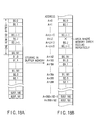
- the error-correcting code PI 36 (10 bytes) created for row 34 is created on the basis of the data altered by the memory error 32.
- an error-correcting code PI 37 created for the error-correcting code PO for 16 rows are created on the basis of the data including the error-correcting code PO 33 created on the basis of the data altered by the memory error 32.
- the playback data is subjected to an error correcting process using an error-correcting code.
- an error occurred in the reproduced data is corrected in the range of the correcting capability, thereby restoring the playback data.
- the memory error included before the recording cannot be corrected. That is, even if an error in the PO series 31 is corrected using the error-correcting code PO 33, the data including the memory error 32 is reproduced and thereafter the error correction is completed properly, which makes it impossible to restore the original user data.
- the memory for storing the data has to be realized by a memory with a structure that prevents the data from being destroyed, such as an S-RAM, or the like.
- This structure is undesirable in terms of cost.
- an object of the present invention is to provide a method of and a device for enabling an error-correcting code to be created without losing the original data even if errors occur on memory, and a recording device, a reproducing device, a transmitting device, and a receiving device which use the method and the device.
- An error-correcting code creating system comprises a sector memory (for example, composed of an SRAM), PI creating and adding means for creating and adding PI, a buffer memory for storing PI-added data, PO creating and adding means for creating and adding PO, a row memory (for example, composed of an SRAM), PI correction means for effecting PI correction, and PO correction means for effecting PO correction.
- the system uses the sector memory to add an error-correcting code PI to the data, stores the PI-added data in the buffer memory, performs PI correction using the row memory before transmitting the PI-added data or recording it onto a recording medium, and thereby enables memory errors to be corrected.
- the PI correction is effected again before the data is transmitted to the host, which enables memory errors to be corrected.
- an error-correcting code creating system comprises the sector memory, PI creating and adding means, buffer memory, PO creating and adding means, PI correction means, and PO correction means.
- the system uses the sector memory to add an error-correcting code PI to the data to create a data block (PI-added data), stores the PI-added data in the buffer memory, performs PI correction using the buffer memory before transmitting the PI-added data or recording it onto a recording medium, and thereby enables memory errors to be corrected.
- an error-correcting code creating system comprises the PI creating and adding means, buffer memory, PO creating and adding means, row memory, PI correction means, and PO correction means.
- the system creates an error-correcting code PI using the data to be stored in the buffer memory, creates an data block where the error-correcting code PI is added to the data (PI-added data), stores the block in the buffer memory, performs PI correction using the row memory before transmitting or recording the PI-added data from the buffer memory, and thereby enables memory errors to be corrected.
- an error-correcting code creating system comprises the sector memory, PI creating and adding means, PO creating and adding means, PI correction means, and PO correction means.
- the system adds an error-correcting code PI to the data using the sector memory to create a data block (PI-added data), stores the PI-added data in the buffer memory, transmits or records the PI-added data from the buffer memory, then performs PI correction on the PI-added data on the reproduction side before transmitting the data to the host computer, and thereby enables memory errors to be corrected.
- sector information adding means 5 adds 4 bytes of identification data (ID), 2 bytes of ID error-sensing code (IED), and 6 bytes of copyright management information (CPR_MAI) to the 2048 bytes of main data.
- EDC creating and adding means 6 creates 4 bytes of error-sensing code for a total of 2060 bytes of data including ID, IED, CPR_MAI and adds the error-sensing code to the 2060 bytes of data.
- Scrambling means 7 adds scramble data to the main data of 2048 bytes long (or exclusive-ORs the main data with scramble data), thereby creating the scrambled data sector.
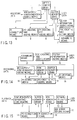
- PI creating and adding means 8 creates an error-correcting code PI (10 bytes) for each row (172 bytes) in the scrambled data sector (or data block) stored in the sector memory 1 and adds the PI to the row, thereby creating a 182 bytes ⁇ 12 rows PI-added data sector (data block).
- the sector memory 1 has a capacity to store the PI-added data sector (182 bytes ⁇ 12 rows) and is composed of, for example, an SRAM (Static-RAM).
- SRAM Static-RAM
- the SRAM has such a structure as seldom allows errors to occur in the stored data, which guarantees that the error-correcting code PI created using the sector memory 1 is the correct code created for the user data without any error.
- the PI-added data (or referred to as the data block with 182 bytes ⁇ 12 rows) from the sector memory 1 is stored sequentially in the buffer memory 2.
- 16 data sectors (PI-added data) with 182 bytes ⁇ 12 rows are gathered together to construct 182 bytes ⁇ 192 rows of collective PI-added data (or collective data block).
- the PO creating and adding means 9 creates an error-correcting code PO (16 bytes) for each column (192 bytes) in the collective data block (182 bytes ⁇ 192 rows) stored in the buffer memory 2 and adds the PO to the column.
- an ECC block to which error-correcting codes PI, PO have been added is constructed for the collective data block stored in the buffer memory 2.
- the buffer memory 2 has such a sufficient capacity as holds a plurality of ECC blocks to assure the function of storing the data transmitted from the host computer until it has been recorded onto a recording medium and is composed of, for example, a DRAM. It may happen that the data on the memory is destroyed or memory errors occur, depending on the pattern of the data or the mounting state of the DRAM. A data processing method according to the present invention, however, removes the memory errors as described later.
- the ECC block in the buffer memory 2 is read row by row (in units of 182 bytes) and stored in the row memory 3.
- the PI correction means 10 carries out PI correction using the row memory 3, thereby correcting the memory error, which restores the original data (or the correct ECC block).
- the row memory 3 is composed of, for example, an SRAM and has a capacity to store one row (182 bytes) of the PI series.
- the row data outputted from the row memory 3 is sent sequentially to modulation/synchronization adding means 4, which processes 8/16 modulation and synchronizing code adding and outputs the resulting data as recording data to the recording medium.
- FIG. 11 shows a case where errors (such as the aforementioned memory error or errors 42 caused by external noise) have occurred in part of the data in the ECC block outputted from the buffer memory 2.
- an error-correcting code PI is created using the data memory 1 before the data is stored in the buffer memory.
- the error-correcting code PI is an error-correcting code created on the basis of the original data. That is, the error-correcting code P1 is an error-correcting code created for the data without error 42.
- the PO creating and adding means 9, together with the buffer memory 2, creates an error-correcting code PO on the basis of the data in each column (192 bytes).
- the error-correcting code PO 44 (16 bytes) for column 41 is an error-correcting code created on the basis of the data including memory error 42.
- a product code is such that, in the part 48 (marked with circle symbols) of an error-correcting code for an error-correcting code, even if code PI is first created and added and then code PO is created and added, or code PO is first created and added and then code PI is created and added, the identical code pattern will be obtained.
- the error-correcting code PI is the correct error-correcting code added to the original data before errors have occurred.
- the error-correcting code PO created and added to the block of error-correcting code PI is the correct error-correcting code for the original data.
- the error-correcting code PO added to other columns (171) excluding column 41 in the 172 columns shown in FIG. 11 is the correct error-correcting code.
- PI correction is performed on all the rows in the ECC block at the row memory 3.
- the PI correction is not limited to this and may be effected on only each row at the position marked with a rectangular symbol to shorten the processing time. This is because the memory error 42 can be corrected easily later, if the PO series at the position of a rectangular symbol in the figure is the correct error-correcting code.
- FIG. 12 shows reproduction means for performing an error correcting process on the ECC block obtained by the above process (the process carried out by the circuit of FIG. 10) and reproduced from a recording medium.
- the playback data read by the optical head from the recording medium is introduced into synchronization separating/demodulating means 11.
- the synchronization separating/demodulating means 11 senses synchronization from the playback data and demodulates the data subjected to 8/16 modulation, thereby producing a recording sector. Because errors occur in the data due to flaws in the disk or noise in recording or reproducing the data onto or from the recording medium, errors may be included in the data in the recording sector.
- the read-out recording sectors are stored sequentially in the buffer memory 2 and 16 recording sectors are put together, thereby forming an ECC block with 182 columns ⁇ 208 rows in the buffer memory 2.
- the PO correction means 14 and PI correction means 10 subject the ECC block with 182 columns ⁇ 208 rows to error correction.
- the error-corrected ECC block is read from the buffer memory 2 row by row (in units of 182 bytes) in the order of data transmission and stored in the sector memory 1.
- the PI correction means 10 performs PI correction on the 172 byte in each row using the sector memory 1. This is because, when a memory error has occurred in the buffer memory 2 in effecting PO correction, the PI correction is effective in correcting the error.
- the scramble canceling means 13 multiplies the scrambled data for the main data (2048 bytes) in the scrambled data sector and the scrambling data, (or processes exclusive-ORs between both data), thereby creating a data sector before scrambling.
- EDC error sensing means 12 uses a 4-byte error sensing code (EDC) included in the data sector to sense an error in the data sector. If it is sensed that there is no error in the data sector, the data sector will be transmitted to the host.
- EDC error sensing code
- the PI correction means 10 when the data is stored from the buffer memory 2 into the sector memory 1, the PI correction means 10 performs PI correction.
- the PI correction may be performed only when an error has been sensed using the EDC.
- the sense value syndrome (10 bytes) of the error pattern of each row only part of the syndrome may be calculated to sense an error and, only when it has been judged that an error is present, PI correction be performed. That is, in the error correcting process using error-correcting code PI, only part (R bytes, R ⁇ P) of the error pattern sense value (P bytes) obtained from the P-byte the error-correcting code PI is calculated and error sensing is done. Only when it has been judge that an error is present, error correction is effected.
- FIG. 13 shows another embodiment of the present invention.
- the PI correction means 10 performs PI correction using the buffer memory 2. Because the remaining configuration is the same as that of the embodiment of FIG. 10, explanation will be omitted.
- the error-correcting code PO created by the PO creating and adding means 9 becomes an error-correcting code created on the basis of the data including a memory error.
- Performing PI correction on all the rows of the error-correcting code PO enables the error-correcting code PO created on the basis of the data including a memory error to be restored to the error-correcting code PO created on the basis of the original data.
- FIG. 14 shows still another embodiment of the present invention.
- the user data from the host computer is converted by sector information adding means 15 in units of 2048 bytes of the main data into one data sector.
- the sector information adding means 15 adds four bytes of identification data (ID), 2 bytes of ID error sensing code (IED), and 6 bytes of copyright management information (CPR_MAI) to the main data.
- EDC creating and adding means 16 creates 4 bytes of error-correcting code (EDC) for a total of 2060 bytes of data and adds the code to the latter, thereby creating data sectors containing a total of 2064 bytes.
- Scrambling means 17 scrambles the main data in the data sector.
- the scrambled data sector is stored sequentially in the buffer memory 2.
- 16 data sectors with 172 bytes ⁇ 12 rows are gathered together to form a data block with 172 columns ⁇ 192 rows.
- PI creating and adding means 18 receives the data sector from the scrambling means 17, then creates a 10-byte error-correcting code PI sequentially for each row (172 bytes) of data, and supplies the PI to the buffer memory 2.
- a PI-added block with 182 bytes ⁇ 192 rows is constructed.
- the error-correcting code PI at this time is an error-correcting code created on the basis of the original data. Because the remaining parts are the same as those in the above-described embodiments, explanation will be omitted.
- FIG. 15 is an error correcting circuit corresponding to the error-correcting code creating circuit.
- This embodiment is almost the same as the embodiment of FIG. 12 except that the output of the buffer memory 2 is given to the row memory 3.
- the PI correction means 10 performs error correction on a row including at least PO using the buffer memory 2, which turns the error-correcting code PO into correct error-correcting code.
- PO correction means 14 carries out a PO correcting process.
- the data after the PO correcting process is supplied to the row memory 3 in the order of transmission.
- the PI correction means 10 performs PI correction using the row memory 3. This enables the memory error to be corrected at the row memory 3, even if the memory error has occurred into the buffer memory during PO correction.
- the scrambling of the data outputted from the row memory 3 is canceled by scramble canceling means, producing a data sector.
- This data sector is subjected to error sensing by EDC error sensing means 12.
- FIG. 16 shows still another embodiment of the present invention.
- This embodiment is obtained by eliminating the PI correction means 10 using the buffer memory 2 in the embodiment of FIG. 13. The remaining part is the same as that of the embodiment of FIG. 13.
- the PI correction means 10 carries out PI correction before PO correction.
- the present invention is effective in a signal transmission/recording and reproducing device capable of carrying out an error-correcting code creating process without losing the original data, even when an error has occurred on the memory. Furthermore, the invention is applied effectively to an inexpensive signal transmission/recording and reproducing device capable of recording the data onto a recording medium without losing the original data, even when the incidence of memory errors is permitted to rise instead of raising the yield by simplifying the inspection of defective memories.
- the invention may be further applied to various devices of a transmission/reception system in the field of digital communication. They include a radio unit, such as a cellular phone, transmission/reception terminals between computers, and a television transmitter/receiver unit. In the field of recording and reproducing systems, the invention is effective in a DVD unit, a CD unit, and further a memory device or the like that employs a communication function.
- the user data from the host computer is converted in units of 2048 bytes by sector information adding means 15 into one data sector.
- the sector information adding means 15 adds 4 bytes of identification data (ID), 2 bytes of ID error-sensing code (IED), and 6 bytes of copyright management information (CPR_MAI) to the main data (containing 2048 bytes).
- EDC creating and adding means 16 creates a 4-byte error-correcting code (EDC) for a total of 2060 bytes of data including ID, IED, and CPR_MAI, thereby creating data sectors containing a total of 2064 bytes.
- Scrambling means 17 adds scramble data to the main data (2048 bytes) (or exclusive-ORs the main data with scramble data), thereby scrambling the main data.
- the error-correcting code PI created in the above process is the correct error-correcting code created on the basis of the original data.
- the PO creating and adding means 9 creates an error-correcting code PO (16 bytes) for each column (192 bytes) in the collective data block (182 bytes ⁇ 192 rows) stored in the buffer memory 2.
- an ECC block to which the error-correcting codes PI and PO have been added is constructed for the collective data block stored in the buffer memory 2.
- the buffer memory 2 has such a sufficient capacity as holds a plurality of ECC blocks to assure the function of storing the data transmitted from the host computer until it has been recorded onto a recording medium and is composed of, for example, a DRAM. It may happen that the data on the memory is destroyed or memory errors occur, depending on the pattern of the data or the mounting state of the memory. When the error-correcting code PO is created in that state, this error-correcting code PO becomes an error-correcting code created on the basis of the data including memory errors.
- the ECC block in the buffer memory 2 is read row by row (in units of 182 bytes) and stored in the row memory 3.
- the PI correction means 10 carries out PI correction using the row memory 3, thereby correcting the memory errors, which restores the original data (or the correct ECC block).
- the row memory 3 is composed of, for example, an SRAM (Static-RAM) and has a capacity to store one row (182 bytes) of a PI series.
- the row data outputted from the row memory 3 is sent sequentially to modulation/synchronization adding means 4, which processes 8/16 modulation and synchronizing code adding and outputs the resulting data as recording data to the recording medium.
- FIG. 11 shows a case where an error (such as the aforementioned memory error or an error 42 caused by external noise) has occurred in part of the data in the ECC block outputted from the buffer memory 2.
- an error such as the aforementioned memory error or an error 42 caused by external noise
- an error-correcting code PI is created using the data memory 1 before the data is stored in the buffer memory 2.
- the error-correcting code PI is an error-correcting code created on the basis of the original data. That is, the error-correcting code PI of FIG. 11 is an error-correcting code created for the data without error 42.
- the PO creating and adding means 9, together with the buffer memory 2, creates an error-correcting code PO on the basis of the data in each column (192 bytes).
- the error-correcting code PO 44 (16 bytes) for column 41 is an error-correcting code created on the basis of the data including memory error 42.
- a product code is such that, in the part 48 of an error-correcting code for an error-correcting code, even if code PI is first created and added and then code PO is created and added, or code PO is first created and added and then code PI is created and added, the identical code pattern will be obtained.
- the error-correcting code PI is the correct error-correcting code added to the original data before the error has occurred.
- the error-correcting code PO created and added to the block of error-correcting code PI is the correct error-correcting code created on the basis of the original data.
- the error-correcting code PO added to other columns (171) excluding column 41 in the 172 columns shown in FIG. 11 is the correct error-correcting code.
- PI correction is performed on all the rows in the ECC block using the row memory 3.
- the PI correction is not limited to this and may be effected on only each row at the position marked with a rectangular symbol to shorten the processing time. This is because the memory error 42 can be corrected easily later, if the PO series at the position of a rectangular symbol in the figure is the correct error-correcting code.
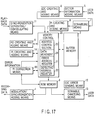
- the function of memory control means 20 will be described.
- the memory control means 20 receives a request to store or read the data from the PI creating and adding means 8, synchronization separating/demodulating means 11, PO creating and adding means 9, PO correction means 9, PI correction means 10, and row memory 3. According to the request, the memory control means 20 writes the data into the buffer memory 2 or reads the data from the buffer memory 2. In this case, the memory control means 20 controls the data storage location so as not to use a defective memory area of the buffer memory 2.
- the PI correction means 10 requests the memory control means 20 to read the data and one row of data is stored in the row memory 3. Then, the PI correction means 10 is further assumed to perform error correction on the data in the row memory 3. At this time, if an error has been sensed, the PI correction means 10 sends information on the position of the error to the memory control means 20.
- the memory control means 20 registers the address at which the data including the error has been stored, in an error address register 21.
- the error address register 21 when errors occurred at the same address, the number of times the error occurred is also registered. For example, a memory error occurred twice at the same address, the memory control means 20 judges that the address is a defective address. Then, the memory control means 20 registers the defective address information in a defective-address register 22.
- the criterion in registering the defective address information in the defective-address register 22 may be three repetitions or more.
- the defective-address information registered in the defective-address register 22 is referred to by a data write address and read address control section 23, which prevents the defective address from being used.
- the using memory area is changed and the reprocessing is done.
- the host computer is requested to transmit the data again.
- the error-correcting code PI-added data is stored in the buffer memory 20 via the memory control means 20.
- the using memory area is the area replaced with the error area where the error has been occurred or an empty area different the error area.
- the reprocessing is effected by the following method.
- the 192 row ⁇ 182 bytes collective data block (including error-correcting code PI) with stored in a first storage area in the buffer memory 2 is moved to a second storage area in the buffer memory 2.
- the second storage area in the buffer memory 2 is used to perform the PO creating and adding process again.
- the reprocessing can be done inside the system without requesting the host computer to transmit the data again.
- FIG. 19 is a diagram to help explain the movement of the data on the buffer memory 2.
- Data moving means 24 moves the ECC block (n) stored, starting at A0, to an empty area with address A3 at its head.
- the moved data includes the memory error included in the area of address A0.
- Performing the PI correction on each row causes these memory errors to be corrected.
- a PO creating and adding process is carried out. If the number of memory errors occurred at that time is 5 or less, the created error-correcting code PO can be corrected by the PI correcting process.
- the playback data read by the optical head from the recording medium is introduced into synchronization separating/demodulating means 11.
- the synchronization separating/demodulating means 11 senses and separates synchronization from the playback data and demodulates the data subjected to 8/16 modulation, thereby producing a recording sector. Because errors occur in the data due to flaws in the disk or noise in recording or reproducing the data onto or from the recording medium, errors may be included in the data in the recording sector.
- the read-out recording sectors are stored sequentially in the buffer memory 2 via the memory means 20 and 16 recording sectors are put together, thereby forming an ECC block with 182 columns ⁇ 208 rows in the buffer memory 2.
- the PO correction means 14 and PI correction means 10 subjects the ECC block with 208 columns ⁇ 182 rows to error correction.
- the error-corrected ECC block is read from the buffer memory 2 row by row (in units of 172 bytes) in the order of data transmission and stored in the row memory 3.
- the PI correction means 10 performs PI correction on the 172 bytes in each row using the row memory 3. As a result, even if a memory error occurs in the scrambled data sector in the buffer memory 2, the error will be corrected by PI correction.
- the scramble canceling means 13 multiplies the scrambled data for the main data (2048 bytes) in the scrambled data sector and the scrambling data, (or exclusive-ORs between both data), thereby creating a data sector before scrambling.
- EDC error sensing means 12 uses a 4-byte error sensing code (EDC) included in the data sector to sense an error in the data sector. If it is sensed that there is no error in the data sector, the data sector will be transmitted to the host.
- EDC error sensing code
- the present invention is effective in a signal transmission/recording and reproducing device capable of carrying out an error-correcting code creating process without losing the original data, even when an error has occurred on the memory. Furthermore, the invention is applied effectively to an inexpensive signal transmission/recording and reproducing device capable of recording the data onto a recording medium without losing the original data, even when the incidence of memory errors is permitted to rise instead of raising the yield by simplifying the inspection of defective memories.
- the invention may be further applied to various devices of a transmission/reception system in the field of digital communication. They include a radio unit, such as a cellular phone, transmission/reception terminals between computers, and a television transmitter/receiver unit. In the field of recording and reproducing systems, the invention is effective in a DVD unit, a CD unit, and further a memory device or the like that employs a communication function.
Landscapes
- Engineering & Computer Science (AREA)
- Physics & Mathematics (AREA)
- Theoretical Computer Science (AREA)
- Probability & Statistics with Applications (AREA)
- General Physics & Mathematics (AREA)
- Mathematical Physics (AREA)
- Quality & Reliability (AREA)
- General Engineering & Computer Science (AREA)
- Algebra (AREA)
- Pure & Applied Mathematics (AREA)
- Signal Processing (AREA)
- Detection And Correction Of Errors (AREA)
- Error Detection And Correction (AREA)
- Techniques For Improving Reliability Of Storages (AREA)
Abstract
Description
Claims (36)
- A data processing method using error-correcting code, characterized by comprising the steps of:creating a P-byte error-correcting code PI for each row in a data block composed of (M × N) bytes in M rows × N columns and adding the error-correcting code PI to the row by use of a first memory (1);gathering together K error-correcting code PI-added data blocks composed of (M × (N + P)) bytes in M rows × (N + P) columns in a second memory (2) to create a collective data block containing (K× (M × (N + P))) bytes;creating an S-byte error-correcting code PO for each column in said collective data block and adding the error-correcting code PO to the column by use of said second memory to create an error-correcting product code block (ECC block);performing an error correcting process (3, 10) using the error-correcting code PI added to each row before reading said ECC block from said second memory and transmitting the ECC block; andtransmitting the ECC block subjected to said error correcting process or recording the ECC block onto a recording medium sequentially in the order of row.
- A data processing method using error-correcting code, characterized by comprising the steps of:creating a P-byte error-correcting code PI for each row in a data block composed of (M × N) bytes in M rows × N columns and adding the error-correcting code PI to the row by use of a first memory (1);gathering together K error-correcting code PI-added data blocks composed of (M × (N + P)) bytes in M rows × (N + P) columns in a second memory (2) to create a collective data block containing (K × (M × (N + P)));creating an (S = K × Q)-byte error-correcting code PO for each column in said collective data block and adding the error-correcting code PO to the column by use of said second memory (2);distributing said error-correcting code PO in units of Q bytes to the K error-correcting code PI-added data blocks to cause each block to constitute an error-correcting product code block (ECC block) which is composed of data and error-correcting code and contains a constant value of (M + Q) × (N + P) bytes;performing an error correcting process (3, 10) using the error-correcting code PI added to each row before reading said ECC block from said second memory and transmitting the ECC block; andtransmitting the ECC block subjected to said error correcting process or recording the ECC block onto a recording medium sequentially in the order of row.
- A data processing method using error-correcting code, characterized by comprising the steps of:when an error-correcting code PI is created for each row in a data block composed of (M × N) bytes in M rows × N columns and added to the row,including a first process of receiving the data in each row (containing N bytes) from a host computer and storing the transmitted N bytes of data sequentially in a second memory (2) and a second process of creating a P-byte error-correcting code for each of said rows on the basis of said transmitted N bytes of data in parallel with the first process and storing the created P-byte error-correcting code PI sequentially into said second memory, and creating an error-correcting code PI-added data block composed of (M × (N + P)) bytes in M rows × (N × P) columns;gathering together K error-correcting code PI-added data blocks composed of (M × (N + P)) bytes in M rows × (N + P) columns in a second memory (2) to create a collective data block containing (K × (M × (N + P))) bytes;creating an S-byte error-correcting code PO for each column in said collective data block and adding the error-correcting code PO to the column by use of said second memory (2) to create an error-correcting product code block (ECC block);performing an error correcting process (3, 10) using the error-correcting code PI added to each row before reading said ECC block from said second memory (2) and transmitting the ECC block; andtransmitting the ECC block subjected to said error correcting process or recording the ECC block onto a recording medium sequentially in the order of row.
- The data processing method according to claim 1, 2, or 3, characterized in that only the rows of the error-correcting code PO are subjected to the error correcting process, when the error correcting process is performed on said ECC block on the basis of said error-correcting code PI.
- The data processing method according to claim 1, 2, or 3, characterized in that
each row of said ECC block is read sequentially from said second memory (2) and stored in a third memory (3),
the error correcting process is performed on either each row in the data block stored in said third memory or the row of the error-correcting code PO, when the error correction process is performed on a unit block stored in said third memory on the basis of the error-correcting code PI, and
transmitting the unit block subjected to said error correcting process or recording the unit block onto a recording medium sequentially in the order of row. - A data processing method using error-correcting code, characterized by comprising the steps of:when an error-correcting code PI-added collective data block containing (K × M × (N + P)) bytes and an error-correcting code PO block containing (S × (N + P)) bytes are transmitted or read from a recording medium and received, the collective data block being such that a P-byte error-correcting code PI is added to each row of a collective data block putting together K data blocks composed of (M × N) bytes in M rows × N columns and containing (K × (M × N)) bytes, and said error-correcting code PO block being such that an S-byte error-correcting code PO is created for each column of said collective data block included error-correcting code PI block,performing a first error correcting process on error data bytes in said collective data block on the basis of said error-correcting codes PI and PO by use of a second memory (2); andperforming a row error correcting process on the data subjected to said first error correcting process, on the basis of said error-correcting code PI by use of a first memory (1).
- A data processing method using error-correcting code, characterized by comprising the steps of:when an error-correcting product code block (ECC block) is transmitted or read from an recording medium and received, said ECC block being such that a P-byte error-correcting code PI is created for each row in a data block composed of (M × N) bytes in M rows × N columns and the error-correcting code PI is added to the row, that K error-correcting code PI-added data blocks composed of (M × (N + P)) bytes in M rows × (N + P) columns are gathered together to create a collective data block containing (K × (M × (N + P))) bytes, that an (S = K × Q)-byte error-correcting code PO is created for each column in said collective data block and added to the column, and that said error-correcting code PO is distributed in units of Q bytes to the K error-correcting code PI-added data blocks to cause each data block to be composed of data and error-correcting code, containing a constant value of (M + Q) × (N + P) bytes,performing an error correcting process on error data bytes in said data block on the basis of said error-correcting codes PI and PO by use of a second memory (2), and thereafterperforming a row error correcting process on the data subjected to said first error correcting process, on the basis of said error-correcting code PI by use of a first memory (1).
- The data processing method according to claim 6 or 7, characterized in that the error correcting process using said first memory (1) is carried out only when it is judged in reading the data from said second memory (2) from the error-correcting code (EDC) added to said data block that an error is present in said data block.
- A data processing method using error-correcting code, characterized by comprising the steps of:creating a P-byte error-correcting code PI for each row in a data block composed of (M × N) bytes in M rows N × columns and adding the error-correcting code PI to the row by use of a first memory (1) to form a data block;gathering together K units of said error-correcting code PI-added data block composed of (M × (N + P) bytes in M rows × (N + P) columns in a second memory (2) to form a collective data block containing (K × (M × (N + P))) bytes and creating an S-byte error-correcting code PO for each column in said collective data block and adding the error-correcting code PO to the column by use of said second memory to form an error-correcting product code block (ECC block);carrying out an error correcting process using the error-correcting code PI added to each row of said ECC block before the ECC block is read from said second memory and transmitted;transmitting the ECC block subjected to said error correcting process or recording the ECC block onto a recording medium sequentially in the order of row;performing a first error correcting process on error data bytes in said data block on the basis of said error-correcting codes PI and PO by use of said second memory (2), when the ECC block subjected to said error correcting process is transmitted or read from an recording medium and received; andperforming a row error correcting process on the data subjected to said first error correcting process on the basis of said error-correcting code PI by use of a first memory (1).
- A data processing method using error-correcting code, characterized by comprising the steps of:creating a P-byte error-correcting code PI for each row in a data block composed of (M × N) bytes in M rows × N columns and adding the error-correcting code PI to the row by use of a first memory (1) to form a collective data block;gathering together K units of said error-correcting code PI-added data block composed of (M × (N + P) bytes in M rows x (N + P) columns in a second memory (2) to form a collective data block containing (K × (M × (N + P))) bytes and creating an (S = K × Q)-byte error-correcting code PO for each column in said collective data block and adding the error-correcting code PO to the column by use of said second memory (2);distributing said error-correcting code PO in units of Q bytes to the K error-correcting code PI-added data blocks to construct an error-correcting product code block (ECC block) in such a manner that each data block contains a constant value of (M + Q) × (N + P) bytes composed of a data block and error-correcting code;carrying out an error correcting process using the error-correcting code PI added to each row in said ECC block before the ECC block is read from said second memory and transmitted;transmitting the ECC block subjected to said error correcting process or recording the ECC block onto a recording medium sequentially in the order of row;performing a first error correcting process on error data bytes in said data block on the basis of said error-correcting codes PI and PO by use of said second memory (2), when the ECC block subjected to said error correcting process is transmitted or read from an recording medium and received; andperforming a row error correcting process on the data subjected to said first error correcting process on the basis of said error-correcting code PI by use of a first memory (1).
- The data processing method according to claim 9 or 10, characterized in that the error correcting process is performed on error data bytes including memory errors in recording on the basis of the error-correcting code PI by use of said second memory (2), before the first error correcting process is performed on error data bytes in said data block on the basis of said error-correcting codes PI and PO by use of said second memory (2).
- The data processing method according to any one of claims 1, 2, 3, 6, 7, 9, and 10, characterized in that said first memory (1) is an SRAM (Static-RRM).
- The data processing method according to any one of claims 1, 2, 3, 6, 7, 9, and 10, characterized in that the error correcting process using said error-correcting code PI is to sense an error by calculating only part (R bytes, R < P) of the pattern sense value (P bytes) obtained from the P-byte error-correcting code PI and, only when it is judged that there is an error, carry out a correcting process.
- A data processing device which obtains error-correcting-code-added data using a data processing method according to any one of claims 1, 2, and 3, when the error-correcting-code-added data is transmitted or recorded onto a recording medium.
- A data processing device which obtains error-corrected output data using a data processing method according to claim 6 or 7, when the error-correcting-code-added data is transmitted or read from a recording medium and received.
- A data processing device which obtains error-correcting-code-added data or error-corrected output data using a data processing method according to claim 9 or 10, when the error-correcting-code-added data is transmitted or recorded onto a recording medium or when error-correcting-code-added data is transmitted or read from a recording medium and received.
- A data processing device using error-correcting code, characterized by comprising:means (8) for creating a P-byte error-correcting code PI for each row in a data block composed of (M × N) bytes in M rows × N columns and adding the error-correcting code PI to the row by use of a first memory (1);means (2) for gathering together K error-correcting code PI-added data blocks composed of (M × (N + P)) bytes in M rows × (N + P) columns in a second memory to create a collective data block containing (K × (M × (N + P))) bytes;means (9) for creating an S-byte error-correcting code PO for each column in said collective data block and adding the error-correcting code PO to the column by use of said second memory to create an error-correcting product code block (ECC block);means (2, 10) for performing an error correcting process using the error-correcting code PI added to each row before reading said ECC block from said second memory and transmitting the ECC block; andmeans (4) for transmitting the ECC block subjected to said error correcting process sequentially or recording the ECC block onto a recording medium in the order of row.
- A data processing device using error-correcting code, characterized by comprising:means (8) for creating a P-byte error-correcting code PI for each row in a data block composed of (M × N) bytes in M rows × N columns and adding the error-correcting code PI to the row by use of a first memory (1);means (2) for gathering together K error-correcting code PI-added data blocks composed of (M × (N + P)) bytes in M rows × (N + P) columns in a second memory to create a collective data block containing (K × (M × (N + P))) bytes;means (2, 9) for creating an (S = K × Q)-byte error-correcting code PO for each column in said collective data block and adding the error-correcting code PO to the column by use of said second memory;means (2, 9) for distributing said error-correcting code PO in units of Q bytes to the K error-correcting code PI-added data blocks to cause each data block to constitute an error-correcting product code block (ECC block) which is composed of data and error-correcting code and contains a constant value of (M + Q) × (N + P) bytes;means (3, 10) for performing an error correcting process using the error-correcting code PI added to each row before reading said ECC block from said second memory and transmitting the ECC block; andmeans (4) for transmitting the ECC block subjected to said error correcting process or recording the ECC block onto a recording medium sequentially in the order of row.
- A data processing device using error-correcting code, characterized by comprising:when an error-correcting code PI is created for each row in a data block composed of (M × N) bytes in M rows × N columns and added to the row,means (2, 18) for including a first process of receiving the data in each row (containing N bytes) from a host computer and storing the transmitted N bytes of data sequentially in a second memory and a second process of creating a P-byte error-correcting code for each of said rows on the basis of said transmitted N bytes of data and storing the created P-byte error-correcting code PI sequentially into said second memory in parallel with the first process, and creating a error-correcting code PI-added data block composed of (M × (N + P)) bytes in M rows × (N × P) columns;means (2) for gathering together K error-correcting code PI-added data blocks composed of (M × (N + P)) bytes in M rows × (N + P) columns in a second memory to create a collective data block containing (K × (M × (N + P))) bytes;means (9) for creating an S-byte error-correcting code PO for each column in said collective data block and adding the error-correcting code PO to the column by use of said second memory to create an error-correcting product code block (ECC block);means (3, 10) for performing an error correcting process using the error-correcting code PI added to each row before reading said ECC block from said second memory and transmitting the ECC block; andtransmitting (4) the ECC block subjected to said error correcting process or recording the ECC block onto a recording medium sequentially in the order of row.
- The data processing device according to claim 17, 18, or 19, characterized in that only the rows of the error-correcting code PO are subjected to the error correcting process, when the error correcting process is performed on said ECC block on the basis of said error-correcting code PI.
- The data processing device according to claim 17, 18, or 19, characterized by further comprisingmeans (3) for reading each row of said ECC block sequentially from said second memory and storing the row in a third memory,means (10) for performing the error correcting process on either each row in the data block stored in said third memory or the row of the error-correcting code PO, when the error correcting process is performed on a unit block stored in said third memory on the basis of the error-correcting code PI, andmeans (4) for transmitting the unit block subjected to said error correcting process or recording the unit block onto a recording medium sequentially in the order of row.
- A data processing device using error-correcting code, characterized by comprising:when an error-correcting code PI-added collective data block containing (K × M × (N + P)) bytes and an error-correcting code PO block containing (S × (N + P)) bytes are transmitted or read from a recording medium and received, the collective data block being such that a P-byte error-correcting code PI is added to each of a collective data block putting together K data blocks composed of (M × N) bytes in M rows × N columns and containing (K × (M × N))) bytes, and said error-correcting code PO block being such that an S-byte error-correcting code PO is created for each column of said collective data block and of said error-correcting code PI-added block,means (2, 10, 14) for performing a first error correcting process on error data bytes in said collective data block on the basis of said error-correcting codes PI and PO by use of a second memory; andmeans (3, 10) for performing a row error correcting process on the data subjected to said first error correcting process, on the basis of said error-correcting code PI by use of a first memory.
- A data processing device using error-correcting code, characterized by comprising:when an error-correcting product code block (ECC block) is transmitted or read from an recording medium and received, said ECC block being such that a P-byte error-correcting code PI is created for each row in a data block composed of (M × N) bytes in M rows × N columns and the error-correcting code PI is added to the row, that K error-correcting code PI-added data blocks composed of (M × (N + P)) bytes in M rows × (N + P) columns are gathered together to create a collective data block containing (K × (M × (N + P))) bytes, that an (S = K × Q)-byte error-correcting code PO for each column in said collective data block is created and added to the column, and that said error-correcting code PO is distributed in units of Q bytes to the K error-correcting code PI-added data blocks to cause each data block to be composed of data and error-correcting code, containing a constant value of (M + Q) × (N + P) bytes,means (2, 14) for performing an error correcting process on error data bytes in said data block on the basis of said error-correcting codes PI and PO by use of a second memory; andmeans (1, 10) for performing a row error correcting process on the data subjected to said first error correcting process, on the basis of said error-correcting code PI by use of a first memory.
- The data processing device according to claim 22 or 23, characterized in that the error correcting process using said first memory is carried out only when it is judged in reading the data from said second memory from the error-correcting code (EDC) added to said data block that an error is present in said data block.
- A data processing device using error-correcting code, characterized by comprising:means (1, 8) for creating a P-byte error-correcting code PI for each row in a data block composed of (M × N) bytes in M rows × N columns and adding the error-correcting code PI to the row by use of a first memory to form a data block;means (2, 9) for gathering together K units of said error-correcting code PI-added data block composed of (M × (N + P) bytes in M rows × (N + P) columns in a second memory to form a collective data block containing (K × (M × (N + P))) bytes and creating an S-byte error-correcting code PO for each column in said collective data block and adding the error-correcting code PO to the column by use of said second memory to form an error-correcting product code block (ECC block);means (3, 10) for carrying out an error correcting process using the error-correcting code PI added to each row in said ECC block before the ECC block is read from said second memory and transmitted;means (4) for transmitting the ECC block subjected to said error correcting process or recording the ECC block onto a recording medium sequentially in the order of row;means (2, 14) for performing a first error correcting process on error data bytes in said data block on the basis of said error-correcting codes PI and PO by use of said second memory, when the ECC block subjected to said error correcting process is transmitted or read from an recording medium and received; andmeans (1, 10) for performing a row error correcting process on the data subjected to said first error correcting process on the basis of said error-correcting code PI by use of a first memory.
- A data processing device using error-correcting code, characterized by comprising:means (1, 8) for creating a P-byte error-correcting code PI for each row in a data block composed of (M × N) bytes in M rows × N columns and adding the error-correcting code PI to the row by use of a first memory to form a collective data block;means (2) for gathering together K units of said error-correcting code PI-added data block composed of (M × (N + P) bytes in M rows × (N + P) columns in a second memory to form a collective data block containing (K × (M × (N + P))) bytes;means (2, 9) for creating an (S = K × Q)-byte error-correcting code PO for each column in said collective data block and adding the error-correcting code PO to the column by use of said second memory;means (2) for distributing said error-correcting code PO in units of Q bytes to the K error-correcting code PI-added data blocks to construct an error-correcting product code block (ECC block) in such a manner that each data block contains a constant value of (M + Q) × (N + P) bytes composed of a data block and error-correcting code;means (2, 10) for carrying out an error correcting process using the error-correcting code PI added to each row in said ECC block before the ECC block is read from said second memory and transmitted;means (4) for transmitting the ECC block subjected to said error correcting process or recording the ECC block onto a recording medium sequentially in the order of row;means (2, 10, 14) for performing a first error correcting process on error data bytes in said data block on the basis of said error-correcting codes PI and PO by use of said second memory, when the ECC block subjected to said error correcting process is transmitted or read from an recording medium and received; andmeans (3, 10) for performing a row error correcting process on the data subjected to said first error correcting process on the basis of said error-correcting code PI by use of a first memory.
- The data processing device according to claim 25 or 26, characterized by further comprising means for performing the error correcting process on error data bytes including memory errors in recording on the basis of the error-correcting code PI by use of said second memory, before the first error correcting process is performed on error data bytes in said data block on the basis of said error-correcting codes PI and PO by use of said second memory.
- The data processing device according to any one of claims 17, 18, 19, 22, 23, 25, and 26, characterized in that said first memory is an SRAM (Static-RRM).
- The data processing device according to any one of claims 17, 18, 19, 22, 23, 25, and 26, characterized in that said means for performing the error correcting process using said error-correcting code PI senses an error by calculating only part (R bytes, R < P) of the pattern sense value (P bytes) obtained from the P-byte error-correcting code PI and, only when it is judged that there is an error, carries out a correcting process.
- A data processing device characterized by comprising:means (1, 2, 8) for creating an error-correcting code PI for each row in a data block and storing both the error-correcting code PI and said data block into a memory; andmeans (2, 3, 10) for performing an error correcting process on the rows of the data block on the basis of said error-correcting code PI, when an error-correcting code PI-added data block is read from said memory in a transmission or recording system.
- A data processing device comprising means (2, 10, 3) for, when a collective data block subjected to an error correcting process using an error-correcting code PI is read from a memory, performing the error correcting process using said error-correcting code PI again on the rows of the collective data block.
- A data processing device using error-correcting code, characterized by comprising:PI creating and adding means (8) for creating an error-correcting code PI (containing P bytes) for each row in a plurality of rows of data, one row containing N bytes, and adding the error-correcting code PI to the row;a buffer memory (2) for storing the error-correcting code PI-added data obtained by said PI creating and adding means, one row containing N + P bytes;PI error correcting means (10) for correcting errors in each row using the error-correcting code PI added to each row before reading said data from said buffer memory and transmitting the data; andmemory control means (20) for, when the PI error correcting means has performed error correction, memorizing information on the memory area in said buffer memory where the data in which an error was sensed is stored and replacing the memory area in said buffer memory where the data in which an error was sensed repeatedly is stored with another memory area.
- A data processing device using error-correcting code, characterized by comprising:PI creating and adding means (8) for creating an error-correcting code PI (containing P bytes) for each row in a plurality of rows of data sent from a host computer, one row containing N bytes, and adding the error-correcting code PI to the row;a buffer memory (2) for storing the error-correcting code PI-added data obtained by said PI creating and adding means, one row containing N + P bytes;PO creating and adding means (9) for gathering together K error-correcting code PI-added data blocks, each data block composed of (M × (N + P)) bytes in M rows × (N + P) columns, to form a collective data block containing (K × (M × (N + P))) bytes, and creating an S-byte error-correcting code PO for each column in said collective data block and adding the error-correcting code PO to the column to form an error-correcting product code block (ECC block);PI error correcting means (3, 10) for correcting errors in each row using the error-correcting code PI added to each row before reading said data from said buffer memory and transmitting the data; andcontrol means (20) for requesting the data before the addition of said error-correcting code PI from said host computer again and making this data the error-correcting code PI-added data in a case where it is sensed that the correctable number of errors has been exceeded when the PI error correcting means has performed error correction, and specifying a second storage area different from a first storage area in which said data was stored last time, when storing the error-correcting code PI-added data in said buffer memory.
- A data processing device using error-correcting code, characterized by comprising:PI creating and adding means (8) for creating an error-correcting code PI (containing P bytes) for each row in a plurality of rows of data, one row containing N bytes, and adding the error-correcting code PI to the row;a buffer memory (2) for storing the PI error-correcting code-added data obtained by said PI creating and adding means, one row containing N + P bytes;PO creating and adding means (9) for gathering together K error-correcting code PI-added data blocks, each data block composed of (M × (N + P)) bytes in M rows × (N + P) columns, to form a collective data block containing (K × (M × (N + P))) bytes, and creating an S-byte error-correcting code PO for each column in said collective data block and adding the error-correcting code PO to the column to form an error-correcting product code block (ECC block);PI error correcting means (10) for correcting errors in each row using the error-correcting code PI added to each row before reading said data from said buffer memory and transmitting the data; andcontrol means (20) for moving said collective data block containing (K × (M × (N + P))) bytes stored in a first area in said buffer memory to a second area in said buffer memory in a case where it is sensed that the correctable number of errors has been exceeded when the PI error correcting means has corrected errors in the row in which said error-correcting code PO is present, and creating an S-byte error-correcting code PO for each column in said collective data block containing (K × (M × (N + P))) bytes in said second area and adding the error-correcting code PO to the column via said PO creating and adding means.
- A data processing device using error-correcting code, characterized by comprising:when an error-correcting code PI-added collective data block containing (K × M × (N + P)) bytes and an error-correcting code PO block containing (S × (N + P)) bytes are received from transmission means or a recording medium, the collective data block being such that a P-byte error-correcting code PI is added to each of a collective data block putting together K data blocks composed of (M × N) bytes in M rows × N columns and containing (K × (M × N)) bytes, and said error-correcting code PO block being such that an S-byte error-correcting code PO is created for each column of said collective data block and of said error-correcting code PI-added block,first means (2, 9, 14) for performing a first error correcting process on error data bytes in said collective data block on the basis of said error-correcting codes PI and PO by use of a buffer memory;second means (10, 3) for performing a second error correcting process on the rows in the data subjected to said first error correcting process, on the basis of said error-correcting code PI by use of a small memory smaller in capacity than that of said buffer memory; andmemory control means (20) for, when the second means performs error correction in the PI series, memorizing information on the memory area in said buffer memory where the data in which an error was sensed is stored and replacing the memory area in said buffer memory where the data in which an error was sensed repeatedly is stored with another memory area.
- A data processing device using error-correcting code, characterized by comprising:when an error-correcting product code block (ECC block) is received from transmission means or an recording medium, said ECC block being such that a P-byte error-correcting code PI is created for each row in a data block composed of (M × N) bytes in M rows × N columns and the error-correcting code PI is added to the row, that K error-correcting code PI-added data blocks composed of (M × (N + P)) bytes in M rows × (N + P) columns are gathered together to create a collective data block containing (K × (M × (N + P))) bytes, that an (S = K × Q)-byte error-correcting code PO is created for each column in said collective data block and added to the column, and that said error-correcting code PO is distributed in units of Q bytes to the K error-correcting code PI-added data blocks to cause each data block to be composed of data and error-correcting code containing a constant value of (M + Q) × (N + P) bytes,first means (2, 9, 14) for performing a first error correcting process on error data bytes in said data block on the basis of said error-correcting codes PI and PO by use of a buffer memory;second means (10, 3) for performing a second error correcting process on the rows in the data subjected to said first error correcting process, on the basis of said error-correcting code PI by use of a small memory smaller in capacity than that of said buffer memory; andcontrol means (20) for requesting the data added said error-correcting code PI from said transmission means or recording medium again in a case where it is sensed that the correctable number of errors has been exceeded when the second means has performed PI correction, and specifying a second storage area different from a first storage area in which said data was stored last time, when storing the data in said buffer memory.
Applications Claiming Priority (4)
| Application Number | Priority Date | Filing Date | Title |
|---|---|---|---|
| JP2000377838A JP3619151B2 (en) | 2000-12-12 | 2000-12-12 | Data processing method using error correction code and apparatus using the method |
| JP2000377838 | 2000-12-12 | ||
| JP2000401172A JP3519684B2 (en) | 2000-12-28 | 2000-12-28 | Data processing device using error correction code |
| JP2000401172 | 2000-12-28 |
Publications (2)
| Publication Number | Publication Date |
|---|---|
| EP1223578A2 true EP1223578A2 (en) | 2002-07-17 |
| EP1223578A3 EP1223578A3 (en) | 2008-07-16 |
Family
ID=26605688
Family Applications (1)
| Application Number | Title | Priority Date | Filing Date |
|---|---|---|---|
| EP01107172A Withdrawn EP1223578A3 (en) | 2000-12-12 | 2001-03-22 | Data processing method using error-correcting code and an apparatus using the same method |
Country Status (5)
| Country | Link |
|---|---|
| US (1) | US6983413B2 (en) |
| EP (1) | EP1223578A3 (en) |
| KR (1) | KR100482939B1 (en) |
| CN (1) | CN1199178C (en) |
| TW (1) | TW579499B (en) |
Families Citing this family (33)
| Publication number | Priority date | Publication date | Assignee | Title |
|---|---|---|---|---|
| JP3752995B2 (en) * | 2000-09-27 | 2006-03-08 | 日本ビクター株式会社 | Information recording / reproducing device |
| KR20030059914A (en) * | 2002-01-03 | 2003-07-12 | 삼성전자주식회사 | Error correcting code block generating method and apparatus, and optical storage medium thereby |
| TWI227869B (en) * | 2002-11-04 | 2005-02-11 | Mediatek Inc | Data coding method and system |
| JP2004206798A (en) * | 2002-12-25 | 2004-07-22 | Ricoh Co Ltd | Encoding data encoding circuit for optical disk device |
| CN100466086C (en) * | 2003-06-13 | 2009-03-04 | 联发科技股份有限公司 | Data encoding method and system |
| FR2861517B1 (en) * | 2003-10-23 | 2006-01-27 | Thomson Licensing Sa | METHOD OF RECONSTRUCTING LOST PACKETS AND APPARATUSES IMPLEMENTING THE METHOD |
| US7543218B2 (en) * | 2004-01-31 | 2009-06-02 | Samsung Electronics Co., Ltd. | DVD decoding method and apparatus using selective po-correction |
| US7480828B2 (en) | 2004-06-10 | 2009-01-20 | International Business Machines Corporation | Method, apparatus and program storage device for extending dispersion frame technique behavior using dynamic rule sets |
| JP4095587B2 (en) * | 2004-06-30 | 2008-06-04 | 株式会社東芝 | Data processing apparatus and data processing method |
| KR100604909B1 (en) * | 2004-10-11 | 2006-07-28 | 삼성전자주식회사 | Digital signal processing method with variable repetition error correction number |
| US7899986B2 (en) * | 2004-11-10 | 2011-03-01 | Nokia Corporation | Method and system for controlling a hard disk drive using a multimediacard physical interface |
| JP4643978B2 (en) | 2004-12-01 | 2011-03-02 | ルネサスエレクトロニクス株式会社 | Scramble circuit, descramble circuit and method, and disk device |
| US7725779B2 (en) * | 2005-01-25 | 2010-05-25 | Ternarylogic Llc | Multi-valued scrambling and descrambling of digital data on optical disks and other storage media |
| JP4036338B2 (en) * | 2005-03-04 | 2008-01-23 | 国立大学法人東京工業大学 | Method and apparatus for correcting and detecting multiple spotty byte errors in a byte with a limited number of error bytes |
| TW200641802A (en) * | 2005-05-17 | 2006-12-01 | Realtek Semiconductor Corp | Method and apparatus for accessing data stored on an optical disc |
| US7774676B2 (en) * | 2005-06-16 | 2010-08-10 | Mediatek Inc. | Methods and apparatuses for generating error correction codes |
| US7430701B2 (en) * | 2005-06-16 | 2008-09-30 | Mediatek Incorporation | Methods and systems for generating error correction codes |
| KR100688574B1 (en) * | 2005-09-16 | 2007-03-02 | 삼성전자주식회사 | Data processing device and processing method of optical disc |
| JP2008033995A (en) * | 2006-07-26 | 2008-02-14 | Matsushita Electric Ind Co Ltd | Memory system |
| KR100840195B1 (en) * | 2006-11-28 | 2008-06-23 | 쎄텍 주식회사 | How to create a read error when making a standard DVD disc |
| CN100458718C (en) * | 2006-12-29 | 2009-02-04 | 福昭科技(深圳)有限公司 | Method of correcting error code for multiple sector |
| CN101651448B (en) * | 2009-09-04 | 2013-05-01 | 京信通信系统(中国)有限公司 | Method and system for protecting data information of power amplifier |
| JP2013109567A (en) * | 2011-11-21 | 2013-06-06 | Toshiba Corp | Storage device and error correction method |
| US9720766B2 (en) | 2012-04-19 | 2017-08-01 | Industry-Academic Cooperation Foundation Chosun University | Self-healing, fault-tolerant FPGA computation and architecture |
| WO2013157693A1 (en) * | 2012-04-19 | 2013-10-24 | 조선대학교산학협력단 | Self-healing, fault-tolerant fpga computation unit and structure |
| US10221553B2 (en) | 2012-10-02 | 2019-03-05 | As Ip Holdco, Llc | Toilet flush valve assemblies |
| US20150311921A1 (en) * | 2014-04-25 | 2015-10-29 | Kabushiki Kaisha Toshiba | Memory controller, storage device and decoding method |
| US10541780B2 (en) * | 2015-03-15 | 2020-01-21 | Qualcomm Incorporated | Code block level error correction and media access control (MAC) level hybrid automatic repeat requests to mitigate bursty puncturing and interference in a multi-layer protocol wireless system |
| CN107453759B (en) * | 2016-06-01 | 2020-08-28 | 卡斯柯信号有限公司 | A Safe Processing Method for Data Delayed Transmission in a Secure Coding System |
| KR102511903B1 (en) * | 2018-02-26 | 2023-03-21 | 에스케이하이닉스 주식회사 | Memory system capable of performing reconfigurable error correction using ECC engine with fixed ECC capability |
| US10877835B2 (en) * | 2018-07-19 | 2020-12-29 | Micron Technology, Inc. | Write buffer management |
| US11914469B2 (en) * | 2021-07-16 | 2024-02-27 | Vmware, Inc. | Resiliency and performance for cluster memory |
| US11789813B2 (en) * | 2021-12-16 | 2023-10-17 | Micron Technology, Inc. | Memory device crossed matrix parity |
Family Cites Families (25)
| Publication number | Priority date | Publication date | Assignee | Title |
|---|---|---|---|---|
| US4525308A (en) | 1983-05-20 | 1985-06-25 | Pennwalt Corporation | Hydroxy-t-alkyl peroxyesters |
| JPS60176136A (en) | 1984-02-23 | 1985-09-10 | Fujitsu Ltd | Data recording method in magnetic recording and reproducing device |
| US5247523A (en) * | 1989-07-12 | 1993-09-21 | Hitachi, Ltd. | Code error correction apparatus |
| DE4033981A1 (en) | 1989-10-26 | 1991-05-02 | Olympus Optical Co | Memory circuit board with semiconductor recording medium - has SRAM or EEPROM with preset wafer size for estimated storage capacity |
| JPH04205133A (en) | 1990-11-30 | 1992-07-27 | Hitachi Ltd | Disk controller |
| JP3314387B2 (en) | 1991-04-22 | 2002-08-12 | 日本電気株式会社 | Magnetic tape controller |
| US6125466A (en) * | 1992-01-10 | 2000-09-26 | Cabletron Systems, Inc. | DRAM parity protection scheme |
| KR0150971B1 (en) * | 1993-05-31 | 1998-10-15 | 김광호 | Digital magnetic recording and reproducing apparatus and method |
| KR0155736B1 (en) * | 1993-07-16 | 1998-12-15 | 김광호 | Digital recording/reproducing method and apparatus |
| US5623459A (en) * | 1993-09-29 | 1997-04-22 | Sony Corporation | Method and apparatus for error correcting reproduced data |
| KR100224806B1 (en) * | 1994-01-31 | 1999-10-15 | 윤종용 | Apparatus for error correction in a digital video reproducting system |
| CA2190985C (en) | 1995-04-12 | 2000-11-28 | Tadashi Kojima | Method and apparatus for generating, recording and transmitting an errorproduct code block having an improved check code arrangement |
| JPH08335370A (en) * | 1995-06-07 | 1996-12-17 | Sony Corp | Data recording method and reproducing method |
| JP3562544B2 (en) * | 1996-08-13 | 2004-09-08 | ソニー株式会社 | Decoding device and decoding method |
| KR100196927B1 (en) * | 1996-11-08 | 1999-06-15 | 윤종용 | Error correction method of digital video signal recording / playback device |
| KR19980065723A (en) * | 1997-01-14 | 1998-10-15 | 김광호 | Method and apparatus for processing data in digital video disc system |
| JPH113290A (en) | 1997-06-11 | 1999-01-06 | Hitachi Ltd | Memory control method |
| KR100223821B1 (en) * | 1997-06-18 | 1999-10-15 | 구자홍 | The circuit and method for error correction in a dvd |
| US5974580A (en) * | 1997-07-23 | 1999-10-26 | Cirrus Logic, Inc. | Concurrent row/column syndrome generator for a product code |
| KR100272541B1 (en) * | 1997-07-25 | 2000-12-01 | 구자홍 | Data decoder for digital video disc-rom |
| KR100257196B1 (en) * | 1997-09-02 | 2000-06-01 | 구자홍 | Data decoding device for digital video disk-ROM |
| US6041430A (en) * | 1997-11-03 | 2000-03-21 | Sun Microsystems, Inc. | Error detection and correction code for data and check code fields |
| KR100272708B1 (en) * | 1997-12-30 | 2000-11-15 | 전주범 | Method for encoding and decoding of digital data by using a shuffling in d-vhs system |
| CN100383886C (en) | 1998-02-25 | 2008-04-23 | 松下电器产业株式会社 | Error correction device and error correction method |
| US6718506B1 (en) * | 2000-10-02 | 2004-04-06 | Zoran Corporation | High speed DVD error correction engine |
-
2001
- 2001-03-22 EP EP01107172A patent/EP1223578A3/en not_active Withdrawn
- 2001-03-22 US US09/813,782 patent/US6983413B2/en not_active Expired - Fee Related
- 2001-11-29 TW TW090129583A patent/TW579499B/en not_active IP Right Cessation
- 2001-12-12 CN CNB011435593A patent/CN1199178C/en not_active Expired - Fee Related
- 2001-12-12 KR KR10-2001-0078530A patent/KR100482939B1/en not_active Expired - Fee Related
Also Published As
| Publication number | Publication date |
|---|---|
| CN1199178C (en) | 2005-04-27 |
| EP1223578A3 (en) | 2008-07-16 |
| US20020073376A1 (en) | 2002-06-13 |
| TW579499B (en) | 2004-03-11 |
| CN1359103A (en) | 2002-07-17 |
| KR20020046979A (en) | 2002-06-21 |
| US6983413B2 (en) | 2006-01-03 |
| KR100482939B1 (en) | 2005-04-15 |
Similar Documents
| Publication | Publication Date | Title |
|---|---|---|
| US6983413B2 (en) | Data processing method using error-correcting code and an apparatus using the same method | |
| AU604836B2 (en) | Method and apparatus for error correction | |
| US6553533B2 (en) | Method and apparatus for detecting and correcting errors and erasures in product ECC-coded data arrays for DVD and similar storage subsystems | |
| US6718510B2 (en) | Data processing method and apparatus, recording medium, reproducing method and apparatus using the same method | |
| KR20010080966A (en) | Signal processor for correcting and detecting errors | |
| US7047476B2 (en) | Code error corrector | |
| KR100539261B1 (en) | Digital Data Coding and Recording Device for DVD and Method thereof | |
| JP4140344B2 (en) | Decoding device and computer program | |
| JP3619151B2 (en) | Data processing method using error correction code and apparatus using the method | |
| JP3519684B2 (en) | Data processing device using error correction code | |
| US5325364A (en) | Method for error correction and circuit for realizing same | |
| JP2000010807A (en) | Digital data playback device | |
| JP2664267B2 (en) | Code error correction device | |
| KR100196927B1 (en) | Error correction method of digital video signal recording / playback device | |
| US20040139379A1 (en) | Data processing apparatus and method | |
| US20020078415A1 (en) | Error correction coding and decoding apparatuses | |
| JP2001094543A (en) | Key information transmission and recording system | |
| JP2004152337A (en) | Recording and reproducing device, computer program and transmitting and receiving system | |
| JP2000106530A (en) | Error correction method and device | |
| JPH09330569A (en) | Digital signal reproducing method and digital signal reproducing apparatus | |
| JP2003173633A (en) | Optical disk drive | |
| JP2006191378A (en) | Error correction apparatus, reproducing apparatus and reproducing method | |
| JPS63298776A (en) | Error correction processing system | |
| JPS6320921A (en) | Error correction method | |
| JP2003203420A (en) | Digital information recording / reproducing device |
Legal Events
| Date | Code | Title | Description |
|---|---|---|---|
| PUAI | Public reference made under article 153(3) epc to a published international application that has entered the european phase |
Free format text: ORIGINAL CODE: 0009012 |
|
| 17P | Request for examination filed |
Effective date: 20010322 |
|
| AK | Designated contracting states |
Kind code of ref document: A2 Designated state(s): AT BE CH CY DE DK ES FI FR GB GR IE IT LI LU MC NL PT SE TR |
|
| AX | Request for extension of the european patent |
Free format text: AL;LT;LV;MK;RO;SI |
|
| PUAL | Search report despatched |
Free format text: ORIGINAL CODE: 0009013 |
|
| AK | Designated contracting states |
Kind code of ref document: A3 Designated state(s): AT BE CH CY DE DK ES FI FR GB GR IE IT LI LU MC NL PT SE TR |
|
| AX | Request for extension of the european patent |
Extension state: AL LT LV MK RO SI |
|
| AKX | Designation fees paid |
Designated state(s): DE FR GB |
|
| 17Q | First examination report despatched |
Effective date: 20081229 |
|
| STAA | Information on the status of an ep patent application or granted ep patent |
Free format text: STATUS: THE APPLICATION IS DEEMED TO BE WITHDRAWN |
|
| 18D | Application deemed to be withdrawn |
Effective date: 20100930 |