EP1215135B1 - Flacon pour colorants photosensibles - Google Patents
Flacon pour colorants photosensibles Download PDFInfo
- Publication number
- EP1215135B1 EP1215135B1 EP01430036A EP01430036A EP1215135B1 EP 1215135 B1 EP1215135 B1 EP 1215135B1 EP 01430036 A EP01430036 A EP 01430036A EP 01430036 A EP01430036 A EP 01430036A EP 1215135 B1 EP1215135 B1 EP 1215135B1
- Authority
- EP
- European Patent Office
- Prior art keywords
- bottle
- phycoerythrin
- radiation
- fluorochrome
- cyanine
- Prior art date
- Legal status (The legal status is an assumption and is not a legal conclusion. Google has not performed a legal analysis and makes no representation as to the accuracy of the status listed.)
- Expired - Lifetime
Links
Images



Classifications
-
- B—PERFORMING OPERATIONS; TRANSPORTING
- B65—CONVEYING; PACKING; STORING; HANDLING THIN OR FILAMENTARY MATERIAL
- B65D—CONTAINERS FOR STORAGE OR TRANSPORT OF ARTICLES OR MATERIALS, e.g. BAGS, BARRELS, BOTTLES, BOXES, CANS, CARTONS, CRATES, DRUMS, JARS, TANKS, HOPPERS, FORWARDING CONTAINERS; ACCESSORIES, CLOSURES, OR FITTINGS THEREFOR; PACKAGING ELEMENTS; PACKAGES
- B65D81/00—Containers, packaging elements, or packages, for contents presenting particular transport or storage problems, or adapted to be used for non-packaging purposes after removal of contents
- B65D81/24—Adaptations for preventing deterioration or decay of contents; Applications to the container or packaging material of food preservatives, fungicides, pesticides or animal repellants
- B65D81/30—Adaptations for preventing deterioration or decay of contents; Applications to the container or packaging material of food preservatives, fungicides, pesticides or animal repellants by excluding light or other outside radiation
-
- Y—GENERAL TAGGING OF NEW TECHNOLOGICAL DEVELOPMENTS; GENERAL TAGGING OF CROSS-SECTIONAL TECHNOLOGIES SPANNING OVER SEVERAL SECTIONS OF THE IPC; TECHNICAL SUBJECTS COVERED BY FORMER USPC CROSS-REFERENCE ART COLLECTIONS [XRACs] AND DIGESTS
- Y10—TECHNICAL SUBJECTS COVERED BY FORMER USPC
- Y10T—TECHNICAL SUBJECTS COVERED BY FORMER US CLASSIFICATION
- Y10T428/00—Stock material or miscellaneous articles
- Y10T428/13—Hollow or container type article [e.g., tube, vase, etc.]
- Y10T428/131—Glass, ceramic, or sintered, fused, fired, or calcined metal oxide or metal carbide containing [e.g., porcelain, brick, cement, etc.]
- Y10T428/1317—Multilayer [continuous layer]
-
- Y—GENERAL TAGGING OF NEW TECHNOLOGICAL DEVELOPMENTS; GENERAL TAGGING OF CROSS-SECTIONAL TECHNOLOGIES SPANNING OVER SEVERAL SECTIONS OF THE IPC; TECHNICAL SUBJECTS COVERED BY FORMER USPC CROSS-REFERENCE ART COLLECTIONS [XRACs] AND DIGESTS
- Y10—TECHNICAL SUBJECTS COVERED BY FORMER USPC
- Y10T—TECHNICAL SUBJECTS COVERED BY FORMER US CLASSIFICATION
- Y10T428/00—Stock material or miscellaneous articles
- Y10T428/13—Hollow or container type article [e.g., tube, vase, etc.]
- Y10T428/131—Glass, ceramic, or sintered, fused, fired, or calcined metal oxide or metal carbide containing [e.g., porcelain, brick, cement, etc.]
- Y10T428/1317—Multilayer [continuous layer]
- Y10T428/1321—Polymer or resin containing [i.e., natural or synthetic]
-
- Y—GENERAL TAGGING OF NEW TECHNOLOGICAL DEVELOPMENTS; GENERAL TAGGING OF CROSS-SECTIONAL TECHNOLOGIES SPANNING OVER SEVERAL SECTIONS OF THE IPC; TECHNICAL SUBJECTS COVERED BY FORMER USPC CROSS-REFERENCE ART COLLECTIONS [XRACs] AND DIGESTS
- Y10—TECHNICAL SUBJECTS COVERED BY FORMER USPC
- Y10T—TECHNICAL SUBJECTS COVERED BY FORMER US CLASSIFICATION
- Y10T428/00—Stock material or miscellaneous articles
- Y10T428/13—Hollow or container type article [e.g., tube, vase, etc.]
- Y10T428/1352—Polymer or resin containing [i.e., natural or synthetic]
-
- Y—GENERAL TAGGING OF NEW TECHNOLOGICAL DEVELOPMENTS; GENERAL TAGGING OF CROSS-SECTIONAL TECHNOLOGIES SPANNING OVER SEVERAL SECTIONS OF THE IPC; TECHNICAL SUBJECTS COVERED BY FORMER USPC CROSS-REFERENCE ART COLLECTIONS [XRACs] AND DIGESTS
- Y10—TECHNICAL SUBJECTS COVERED BY FORMER USPC
- Y10T—TECHNICAL SUBJECTS COVERED BY FORMER US CLASSIFICATION
- Y10T428/00—Stock material or miscellaneous articles
- Y10T428/13—Hollow or container type article [e.g., tube, vase, etc.]
- Y10T428/1352—Polymer or resin containing [i.e., natural or synthetic]
- Y10T428/139—Open-ended, self-supporting conduit, cylinder, or tube-type article
- Y10T428/1393—Multilayer [continuous layer]
Definitions
- the present invention relates to new packaging for photosensitive dyes and a novel method of conditioning fluorochrome-based reagents for cytometry.
- Flow cytometry is a widely used cell analysis technique for decades. This technique involves at least one fluorochrome.
- the main fluorochromes used in cytometry are fluorescein isothiocyanate (FITC), phycoerythrin (PE), allophycocyanin (APC), PercP, tandems phycoerythrin-cyanine (PC5), phycoerythrin-cyanine 7 (PC7) and phycoerythrin- texas red (ECD or PETR).
- FITC fluorescein isothiocyanate
- PE phycoerythrin
- API allophycocyanin
- PercP PercP
- PC5 tandems phycoerythrin-cyanine
- PC7 phycoerythrin-cyanine 7
- ECD or PETR phycoerythrin- texas red
- the PC5, PC7, ECD tandems use the principle of energy transfer, ie the cytometer laser excites the molecule in the spectral zone of phycoerythrin which restores the energy absorbed to the acceptor molecule (cyanine 5, cyanine 7 or Texas red) which will itself restore it in radiative form at its emission wavelength.
- Tandem dyes nevertheless absorb light throughout the spectral zone and particularly in the visible zone (400-800 nm) and the applicant realized that these fluorochromes, alone or in tandem, were subject to significant degradation during their conservation.
- GB-A-2,086,342 discloses a container for products which are sensitive to radiations of the light spectrum including milk, characterized in that the container comprises two layers which carry out the retention of light with a wavelength of less than 800 nm and 800 nm or upper.
- the invention is based on the use of opaque flasks with excitatory light radiation tandems, that is to say between 200 and 900 nm and more particularly between 400 and 800 nm.
- the subject of the present application is a packaging comprising a fluorochrome sensitive to wavelengths ranging from 200 to 900 nanometers and singularly to wavelengths ranging from 400 to 600 nanometers placed in a bottle, at least the sidewalls of which form an effective radiation shield of the light spectrum between 200 and 900 nm, particularly at wavelengths ranging from 400 to 800 nanometers, more particularly from 400 to 700 nanometers and singularly between 400 and 600 nm.
- visible light-sensitive fluorochrome denote a fluorochrome whose structure is degraded by an emission at the indicated wavelengths, for example fluorescein isothiocyanate (FITC), phycoerythrin ( PE), allophycocyanin (APC), PercP, tandems phycoerythrin-cyanine 7 (PC7), phycoerythrin-cyanine 5 (PC5) and phycoerythrin-texas red (ECD or PETR), preferably the latter two.
- FITC fluorescein isothiocyanate
- PE phycoerythrin
- APC allophycocyanin
- PercP PercP
- PC7 tandems phycoerythrin-cyanine 7
- PC5 phycoerythrin-cyanine 5
- ECD or PETR phycoerythrin-texas red
- the terms “form a radiation shield” mean that at least 95%, preferably at least 98%, especially at least 99% and most particularly 100% of the visible radiation are stopped by the side walls of the bottle because of their structure (nature, treatment or cladding in particular).
- the term “bottle” preferably denotes a small bottle preferably screw, equipped with a cap with or without septum.
- the bottle may be polyethylene, polypropylene, polycarbonate, but preferably glass. Its capacity may preferably range from 50 ⁇ l to 50 ml, in particular from 100 ⁇ l to 20 ml, particularly from 500 ⁇ l to 10 ml and more particularly from 1 ml to 10 ml. For example, a 5 ml vial may be filled with 1 to 2 ml of solution.
- the bottom of the flask also forms an effective radiation shield of the visible spectrum.
- the electrostatic powder coating consists of enclosing the vials with a septum which is pierced by an electrode which is installed in the vial to be coated.
- the flasks are placed in an enclosure in which there is a powder spray, charged with a sign opposite to that of the flask.
- the powder is then deposited on the bottle on which it is fixed for example by baking in an oven at about 180 ° C.
- an epoxy resin powder preferably absorbing in the wavelengths indicated above, particularly 600 to 800 nanometers, of black or blue color in particular.
- the bottle can also be sheathed with a heat-shrinkable sheath that preferably also covers the bottom of the bottle.
- Some types of glasses can still be irradiated by gamma radiation.
- the packages object of the present invention have very interesting properties.
- the use of bottles covered or treated as described above removes the phenomenon of photoinduced oxidation and confers excellent stability to fluorochrome conjugates-antibodies or tandems-antibodies.
- the present application also relates to a method of protecting fluorochromes sensitive to visible light and singularly to wavelengths ranging from 400 to 600 nanometers during their storage, in which the packaging according to the present invention is used.
- Example 3 Manufacture of a glass vial coated with epoxy resin filled with a solution of anti-CD3-Phycoerythrin-cyanine antibody conjugates in PBS, BSA 2 mg / ml, 0.1% sodium azide.
- Vials made according to Example 1 were filled with each 2 ml of an anti-CD3-Phycoerythrin-cyanine antibody conjugate solution in phosphate buffer / bovine serum albumin (2 mg / ml) / sodium azide O, 1%.
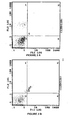
- the figure 1 shows the excellent protection of the contents of the flasks by implementing the invention.
- the tandems introduced into the BeckmanCoulter Immunotech bottle of the IOTEST range coated with a layer of epoxy varnish according to the electrostatic powdering method exhibit FL2 autofluorescence identical to that of the non-irradiated control.
- all the other types of bottles show a luminous permeability which is translated by a "leakage" in FL2, ie an increase of the autofluorescence with appearance of false positive cells.
- Example 5 combined conservation test anti-CD19 antibodies phycoerythrin-texas red
Landscapes
- Engineering & Computer Science (AREA)
- Food Science & Technology (AREA)
- Mechanical Engineering (AREA)
- Packages (AREA)
- Investigating, Analyzing Materials By Fluorescence Or Luminescence (AREA)
- Treatments Of Macromolecular Shaped Articles (AREA)
- Silver Salt Photography Or Processing Solution Therefor (AREA)
- Organic Low-Molecular-Weight Compounds And Preparation Thereof (AREA)
- Compositions Of Macromolecular Compounds (AREA)
Description
- La présente invention concerne de nouveaux conditionnements pour colorants photosensibles et une nouvelle méthode de conditionnement de réactifs à base de fluorochromes pour la cytométrie.
- La cytométrie de flux est une technique d'analyse de cellules très utilisée depuis des décennies. Cette technique met en jeu au moins un fluorochrome.
- C'est un outil puissant pour l'analyse antigénique cellulaire. Cette technique permet d'analyser plusieurs cibles antigéniques en même temps grâce à des combinaisons d'anticorps conjugués à des fluorochromes. Les principaux fluorochromes utilisés en cytométrie sont la fluorescéine isothiocyanate (FITC), la phycoérythrine (PE), l'allophycocyanine (APC), le PercP, les tandems phycoérythrine-cyanine 5 (PC5), phycoérythrine-cyanine 7 (PC7) et phycoérythrine-texas red (ECD ou PETR). Ces fluorochromes absorbent les radiations lumineuses particulièrement à 488 nm et 633 nm qui sont les principales longueurs d'ondes d'émission des lasers utilisés sur les cytomètres. Les tandems PC5, PC7, ECD utilisent le principe du transfert d'énergie, c'est à dire que le laser du cytomètre excite la molécule dans la zone spectrale de la phycoérythrine qui restitue l'énergie absorbée à la molécule accepteuse (cyanine 5, cyanine 7 ou Texas red) qui va elle même la restituer sous forme radiative à sa longueur d'onde d'émission.
- Les colorants tandems absorbent néanmoins la lumière dans toute la zone spectrale et particulièrement dans la zone du visible (400-800 nm) et la demanderesse s'est rendue compte que ces fluorochromes, seuls ou en tandem, faisaient l'objet de dégradations sensibles pendant leur conservation.
- Ces dégradations induisent une détérioration de l'efficacité du transfert énergétique qui conduit à une augmentation de l'intensité de fluorescence de la phycoérythrine à 580 nm. Ce phénomène se traduit en cytométrie par une augmentation de fluorescence (appelée fuite) dans le canal de la phycoérythrine (FL2) pouvant conduire à différents problèmes :
- Apparition de cellules faussement positives
- Nécessité d'augmenter les compensations afin de retrouver les valeurs d'intensité de fluorescence initiales.
- Le dernier point est particulièrement crucial dans le cas des systèmes informatiques de compensation automatique.
-
GB-A-2 086 342 - Le tandem phycoérythrine-allophycocyanine a été décrit depuis près de 20 ans (Glazer et al. Biophys. J. (1983) 83, 383-386 et les tandems phycoérythrine-cyanine 5 depuis près de 10 ans Lanier et al. Methods (1991) Vol 2 N°3 192-199. Depuis, ce genre de produits est commercialisé dans des flacons de verre brun ou ambré par les Sociétés BECTON DICKINSON, PHARMINGEN, DAKO, IQP, ou CALTAG.
- Il serait donc souhaitable de disposer d'un conditionnement de fluorochromes assurant la conservation desdits fluorochromes pendant une durée prolongée.
- Après un certain nombre de tests, la demanderesse a émis l'hypothèse que ces fluorochromes pourraient être sensibles à la lumière visible. Elle a alors recouvert les parois latérales des flacons de fluorochromes d'une gaine thermorétractable absorbant la lumière visible. Une amélioration très sensible a alors été observée, ne donnant toutefois pas encore totale satisfaction. Elle a alors procédé à d'autres essais qui n'apportaient pas de progrès supplémentaire.
- En poursuivant encore ses recherches, la demanderesse a découvert avec étonnement que le fait que le fond des flacons gainés ne soit pas protégés suffisait à dégrader les fluorochromes, lorsque les flacons étaient manipulés ou renversés à plat sur leur côté au lieu d'être posés sur leur fond. Elle a alors compris que ces fluorochromes étaient très sensibles aux longueurs d'onde allant de 200 à 900 nanomètres, notamment à la lumière visible, particulièrement aux longueurs d'onde allant de 400 à 700 nanomètres et singulièrement aux longueurs d'onde allant de 400 à 600 nanomètres.
- Selon la demanderesse, la dégradation des tandems aurait pour origine un phénomène d'oxydation photo induit dans lequel les molécules jouent le rôle de photo sensibilisateur, c'est à dire qu'elles sont capables d'activer l'oxygène :
- par transfert de l'énergie lumineuse absorbée avec génération d'oxygène singulet (mécanisme dit de type II),
- par transfert d'électron à l'état excité avec génération de radicaux oxygénés (mécanisme dit de type I).
- L'invention repose sur l'utilisation de flacons opaques aux radiations lumineuses excitatrices des tandems, c'est à dire entre 200 et 900 nm et plus particulièrement entre 400 et 800 nm.
- C'est pourquoi la présente demande a pour objet un conditionnement comprenant un fluorochrome sensible aux longueurs d'onde allant de 200 à 900 nanomètres et singulièrement aux longueurs d'onde allant de 400 à 600 nanomètres placé dans un flacon dont au moins les parois latérales forment un écran efficace aux radiations du spectre lumineux entre 200 et 900 nm, particulièrement aux longueurs d'onde allant de 400 à 800 nanomètres, plus particulièrement de 400 à 700 nanomètres et singulièrement entre 400 et 600 nm.
- Dans la présente demande et dans ce qui suit, les termes «fluorochrome sensible à la lumière visible» désignent un fluorochrome dont la structure est dégradée par une émission aux longueurs d'onde indiquée , par exemple la fluorescéine isothiocyanate (FITC), la phycoérythrine (PE), l'allophycocyanine (APC), le PercP, les tandems phycoérythrine-cyanine 7 (PC7), phycoérythrine-cyanine 5 (PC5) et phycoérythrine-texas red (ECD ou PETR), de préférence ces deux derniers. Les termes «forment un écran efficace aux radiations» signifient que au moins 95 %, de préférence au moins 98 %, particulièrement au moins 99 % et tout particulièrement 100% des radiations du visible sont stoppées par les parois latérales du flacon en raison de leur structure (nature, traitement ou gainage notamment). Le terme « flacon» désigne de préférence une petite bouteille de préférence à vis, équipée d'un bouchon avec ou sans septum. Le flacon peut être en polyéthylène, polypropylène, polycarbonate, mais de préférence en verre. Sa capacité peut aller de préférence de 50 µl à 50 ml, notamment de 100 µl à 20 ml, particulièrement de 500 µl à 10 ml et tout particulièrement de 1 ml à 10 ml. Un flacon de 5 ml peut par exemple être rempli par 1 à 2 ml de solution.
- On préfère tout particulièrement des flacons de verre de 5 ml environ.
- Dans des conditions préférentielles de mise en oeuvre de l'invention, le fond du flacon forme également un écran efficace aux radiations du spectre visible.
- Il est déjà connu en parfumerie des techniques de gainage ou revêtement de flacons formant un écran efficace aux radiations du spectre visible, utilisées à des fins esthétiques.
- On peut citer par exemple le revêtement par poudrage électrostatique qui consiste à entourer les flacons d'un septum qui est transpercé par une électrode qui est installée dans le flacon à recouvrir. Les flacons sont placés dans une enceinte dans laquelle se trouve une poudre pulvérisée, chargée d'un signe opposé à celui du flacon. La poudre se dépose alors sur le flacon sur lequel elle est fixée par exemple par cuisson dans un four à environ 180°C. Dans le cadre de l'invention, on peut utiliser par exemple une poudre de résine époxy absorbant de préférence dans les longueurs d'ondes ci-dessus indiquées, particulièrement 600 à 800 nanomètres, de couleur noire ou bleue notamment.
- On peut aussi gainer le flacon d'une gaine avantageusement thermorétractable recouvrant de préférence également le fond du flacon.
- On peut encore irradier certains types de verres par rayonnement gamma.
- On peut tout autant effectuer un surmoulage à l'aide d'un film plastique, ce qui offre l'avantage de pouvoir recouvrir le fond des flacons.
- Les conditionnements objet de la présente invention possèdent de très intéressantes propriétés. L'utilisation de flaconnages recouverts ou traités comme décrit ci-dessus supprime le phénomène d'oxydation photoinduit et confère une excellente stabilité aux conjugués fluorochromes-anticorps ou tandems-anticorps.
- Ces propriétés sont illustrées ci-après dans la partie expérimentale.
- La présente demande a aussi pour objet un procédé de protection de fluorochromes sensibles à la lumière visible et singulièrement aux longueurs d'onde allant de 400 à 600 nanomètres lors de leur conservation, dans lequel on utilise le conditionnement selon la présente invention.
- Les conditions préférentielles de mise en oeuvre des conditionnements ci-dessus décrites s'appliquent également aux autres objets de l'invention visés ci-dessus, notamment au procédé de protection de fluorochromes.
- Les exemples qui suivent illustrent la présente demande.
- les
figures 1A , B, C, D et E représentent les résultats de fluorescence obtenus avec des échantillons de conjugués Anticorps anti-CD3-Phycoérythrine-cyanine 5 contenus dans leur flacon d'origine ou d'un flacon selon l'invention, et soumis à l'action de la lumière, et - les
figures 2A , B, C et D représentent les résultats de fluorescence obtenus avec des échantillons de conjugués Anticorps anti-CD19-Phycoérythrine-texas red contenus dans leur flacon d'origine ou d'un flacon selon l'invention, et soumis à l'action de la lumière. - Plus précisément,
- les
figures 1A et2A concernent un conjugué protégé de la lumière, servant de témoin, - les
figures 1B et2B concernent un conjugué conditionné dans un flacon de verre commercial BeckmanCoulter Immunotech de la gamme IOTEST, - les
figures 1C et2C concernent un conjugué conditionné dans un flacon de verre commercial BeckmanCoulter Immunotech de la gamme Cytostat, - la
figure 1D concerne un conjugué conditionné dans un flacon de verre commercial BECTON DICKINSON Pharmingen, et - les
figures 1E et2D concernent un conjugué conditionné dans un flacon de verre commercial BeckmanCoulter Immunotech de la gamme IOTEST recouvert d'une couche de vernis époxy selon le procédé de poudrage électrostatique de l'exemple 1. - On place des flacons commerciaux en verre destinés à recevoir des conjugués Anticorps anti-CD3-Phycoérythrine-cyanine 5 de BeckmanCoulter Immunotech de la gamme IOTEST dans une chaîne mettant en oeuvre les étapes suivantes :
- On lave les flacons.
- On les passe dans un four de séchage.
- On les passe ensuite dans une cabine dans laquelle les flacons sont recouverts d'un septum transpercé par une électrode.
- La poudre de résine époxy Noir mat AKZO référence NOIR MAT 1P200 8391 (nouvelle référence AN052F) de charge opposée à celle de l'électrode pulvérisée dans la cabine s'applique par phénomène électrostatique sur la surface des flacons que l'on fait alors passer dans un four de cuisson à 180°C.
- On a recouvert les côtés et le col de flacons commerciaux de 6ml en verre destinés à recevoir des conjugués Anticorps anti-CD3-Phycoérythrine-cyanine 5 de Beckman Coulter Immunotech de la gamme IOTEST à l'aide de gaine thermo-rétractable de polyéthylène commercialisée par la société SLEEVER INTERNATIONAL.
- On a rempli des flacons fabriqués selon l'exemple 1 avec chacun 2 ml d'une solution de conjugués Anticorps anti-CD3-Phycoérythrine-cyanine 5 dans du tampon phosphate / sérum albumine bovine (2 mg/ml) / azoture de sodium 0,1%.
- Afin de démontrer l'efficacité du procédé de l'invention, des flacons commerciaux et modifiés contenant des anticorps anti-CD3 conjugués à des fluorochromes PC5 et ECD ont subi un test de dégradation forcé selon la méthode décrite dans les bonnes pratiques de fabrication (Good Manufacturing Practice (GMP)) de la Food and Drug Administration américaine.
- Différents conditionnements ont été testés :
- Flacon commercial BeckmanCoulter Immunotech de la gamme IOTEST
- Flacon commercial BeckmanCoulter Immunotech de la gamme Cytostat
- Flacon commercial BeckmanCoulter Immunotech de la gamme IOTEST recouvert d'une couche de vernis époxy selon le procédé de poudrage électrostatique
- Flacon commercial BECTON DICKINSON Pharmingen.
- Ces flacons contenant les conjugués anticorps-tandems ont été introduits dans une chambre équipée de tubes fluorescents et ont été soumis à une dose lumineuse totale de 1,2.106 lux.h.
- La
figure 1 montre l'excellente protection du contenu des flacons en mettant en oeuvre l'invention. En effet les tandems introduits dans le flacon BeckmanCoulter Immunotech de la gamme IOTEST recouvert d'une couche de vernis époxy selon le procédé de poudrage électrostatique présentent une autofluorescence en FL2 identique à celle du témoin non irradié. En revanche tous les autres types de flaconnage montrent une perméabilité lumineuse qui se traduit par une « fuite » en FL2, c'est à dire une augmentation de l'autofluorescence avec apparition de cellules faussement positives. - On a opéré comme à l'exemple 4, mais avec des conjugués Anticorps anti-CD19-phycoérythrine-texas red. Les résultats sont donnés à la
figure 2 . - L'analyse des résultats conduit aux mêmes conclusions qu'à l'exemple 4.
Claims (5)
- Un conditionnement comprenant un ensemble constitué d'un fluorochrome sensible à la lumière visible et d'un flacon dans lequel il est placé, au moins les parois latérales dudit flacon formant un écran efficace aux radiations du spectre lumineux entre 200 et 900 nm, caractérisé en ce que le fluorochrome est choisi parmi la fluorescéine isothiocyanate (FITC), la phycoérytrine (PE), l'allophycocyanine (APC), le PercP et caractérisé en ce que les parois latérales du flacon ont une structure stoppant au moins 95% des radiations du visible.
- Un conditionnement selon la revendication 1, caractérisé en ce que le fond du flacon forme également un écran efficace aux radiations du spectre visible.
- Un conditionnement selon la revendication 1 ou 2, caractérisé en ce que l'effet écran efficace aux radiations est obtenu par revêtement par poudrage électrostatique, par gainage du flacon d'une gaine, par irradiation de certains types de verres par rayonnement gamma, ou par surmoulage.
- Un conditionnement selon l'une des revendications 1 à 3, caractérisé en ce que le fluorochrome fait partie des tandems phycoérythrine-cyanine 7 (PC7), phycoérythrine-cyanine 5 (PC5) et phycoérythrine-texas red (ECD ou PETR).
- Un procédé de protection de fluorochromes sensibles à la lumière visible lors de leur conservation, dans lequel on utilise le conditionnement selon l'une des revendications 1 à 4.
Applications Claiming Priority (2)
| Application Number | Priority Date | Filing Date | Title |
|---|---|---|---|
| FR0016445A FR2818254B1 (fr) | 2000-12-15 | 2000-12-15 | Conditionnement pour colorants photosensibles |
| FR0016445 | 2000-12-15 |
Publications (3)
| Publication Number | Publication Date |
|---|---|
| EP1215135A1 EP1215135A1 (fr) | 2002-06-19 |
| EP1215135A8 EP1215135A8 (fr) | 2002-09-11 |
| EP1215135B1 true EP1215135B1 (fr) | 2010-11-17 |
Family
ID=8857759
Family Applications (1)
| Application Number | Title | Priority Date | Filing Date |
|---|---|---|---|
| EP01430036A Expired - Lifetime EP1215135B1 (fr) | 2000-12-15 | 2001-12-05 | Flacon pour colorants photosensibles |
Country Status (9)
| Country | Link |
|---|---|
| US (1) | US6686004B2 (fr) |
| EP (1) | EP1215135B1 (fr) |
| JP (1) | JP4421154B2 (fr) |
| AT (1) | ATE488451T1 (fr) |
| AU (1) | AU780749B2 (fr) |
| DE (1) | DE60143468D1 (fr) |
| ES (1) | ES2353270T3 (fr) |
| FR (1) | FR2818254B1 (fr) |
| NZ (1) | NZ516118A (fr) |
Families Citing this family (5)
| Publication number | Priority date | Publication date | Assignee | Title |
|---|---|---|---|---|
| FR2818254B1 (fr) * | 2000-12-15 | 2003-02-28 | Immunotech Sa | Conditionnement pour colorants photosensibles |
| FR2994740B1 (fr) * | 2012-08-21 | 2015-03-27 | Horiba Abx Sas | Procede de compensation du vieillissement d'un reactif lors de mesures de fluorescence sur des particules, et dispositif d'analyse biologique mettant en œuvre le procede. |
| US9583364B2 (en) | 2012-12-31 | 2017-02-28 | Sunedison Semiconductor Limited (Uen201334164H) | Processes and apparatus for preparing heterostructures with reduced strain by radial compression |
| CN105819108B (zh) * | 2016-05-18 | 2018-03-20 | 万臣塑料制品(上海)有限公司 | 用于日化品行业的变色包装瓶制造工艺及产品 |
| CN113416022B (zh) * | 2021-06-30 | 2022-04-26 | 西安中核核仪器股份有限公司 | 一种γ探测器能量响应补偿材料及使用方法 |
Family Cites Families (7)
| Publication number | Priority date | Publication date | Assignee | Title |
|---|---|---|---|---|
| FR2491825A1 (fr) * | 1980-10-14 | 1982-04-16 | Raffinage Cie Francaise | Recipient a paroi multicouche |
| US5110643A (en) * | 1987-01-23 | 1992-05-05 | Fuji Photo Film Co., Ltd. | Packaging material for photosensitive materials |
| JPH05127526A (ja) * | 1991-11-06 | 1993-05-25 | Mita Ind Co Ltd | トナー容器 |
| US5750226A (en) * | 1994-03-02 | 1998-05-12 | Abbott Laboratories | Light excluding multi-layer plastic barrier bottle |
| US6117506A (en) * | 1994-03-30 | 2000-09-12 | Silgan Plastics Corporation | Multilayer bottle with encapsulated dark layer |
| FR2818254B1 (fr) * | 2000-12-15 | 2003-02-28 | Immunotech Sa | Conditionnement pour colorants photosensibles |
| FR2830253B1 (fr) * | 2001-09-28 | 2005-02-04 | Air Liquide | Nouveau procede de preparation de macrocycles azotes c-fonctionnalises et nouveaux intermediaires obtenus |
-
2000
- 2000-12-15 FR FR0016445A patent/FR2818254B1/fr not_active Expired - Lifetime
-
2001
- 2001-12-05 EP EP01430036A patent/EP1215135B1/fr not_active Expired - Lifetime
- 2001-12-05 DE DE60143468T patent/DE60143468D1/de not_active Expired - Lifetime
- 2001-12-05 ES ES01430036T patent/ES2353270T3/es not_active Expired - Lifetime
- 2001-12-05 AT AT01430036T patent/ATE488451T1/de not_active IP Right Cessation
- 2001-12-12 AU AU97198/01A patent/AU780749B2/en not_active Expired
- 2001-12-13 NZ NZ516118A patent/NZ516118A/xx unknown
- 2001-12-17 US US10/015,938 patent/US6686004B2/en not_active Expired - Lifetime
- 2001-12-17 JP JP2001383093A patent/JP4421154B2/ja not_active Expired - Fee Related
Also Published As
| Publication number | Publication date |
|---|---|
| JP2002234581A (ja) | 2002-08-20 |
| JP4421154B2 (ja) | 2010-02-24 |
| EP1215135A8 (fr) | 2002-09-11 |
| ES2353270T3 (es) | 2011-02-28 |
| DE60143468D1 (de) | 2010-12-30 |
| FR2818254B1 (fr) | 2003-02-28 |
| FR2818254A1 (fr) | 2002-06-21 |
| EP1215135A1 (fr) | 2002-06-19 |
| AU9719801A (en) | 2002-06-20 |
| ATE488451T1 (de) | 2010-12-15 |
| US6686004B2 (en) | 2004-02-03 |
| AU780749B2 (en) | 2005-04-14 |
| US20020127356A1 (en) | 2002-09-12 |
| NZ516118A (en) | 2003-04-29 |
Similar Documents
| Publication | Publication Date | Title |
|---|---|---|
| Jamin et al. | Chemical heterogeneity in cell death: combined synchrotron IR and fluorescence microscopy studies of single apoptotic and necrotic cells | |
| Stoeckenius et al. | A morphological study of Halobacterium halobium and its lysis in media of low salt concentration | |
| Cambi et al. | The C‐type lectin DC‐SIGN (CD209) is an antigen‐uptake receptor for Candida albicans on dendritic cells | |
| Devine et al. | Spore coat proteins of Dictyostelium discoideum are packaged in prespore vesicles | |
| FR2732769A1 (fr) | Dispositif de dosage | |
| FR3002945A1 (fr) | Materiaux scintillateurs plastiques, scintillateurs plastiques comprenant ces materiaux et procede pour discriminer les neutrons des rayons gamma utilisant ces scintillateurs. | |
| EP1215135A1 (fr) | Flacon pour colorants photosensibles | |
| Armstrong et al. | Drug migration into soft gelatin capsule shells and its effect on in‐vitro availability | |
| FR2491825A1 (fr) | Recipient a paroi multicouche | |
| AU2003260064A1 (en) | Closure integrity test method for hot-fill bottling operation | |
| JPS62834A (ja) | 遠心分離装置の試料チヤンバ | |
| EP0266278A1 (fr) | Procédé et dispositif de dosage de substances d'intérêt clinique réactives immunologiquement | |
| EP0418335A1 (fr) | Procede de dosage, au moyen de radicaux libres, des proprietes anti-oxydantes d'un organisme vivant ou d'un agent potentiellement agressif. | |
| EP2491437B1 (fr) | Procédé de coloration sélective, composant transparent a structure cellulaire resultant d'un tel procede | |
| CN101573102A (zh) | 测试眼部药物递送系统扩散率的方法和装置 | |
| BRPI0609480A2 (pt) | métodos de inspeção de lentes oftálmicas | |
| FR2817969A1 (fr) | Dispositif et procede d'analyse immunologique | |
| EP1568989A1 (fr) | Utilisation d'un composé organique pour l'absorption de rayonnements ionisants | |
| BE1003489A6 (fr) | Flacon a dispositif distributeur, notamment pour produits de beaute liquides, semi-liquides,pateux et similaires. | |
| EP2926110A1 (fr) | Procédé de formation d'un film liquide sur un support | |
| FR3166145A3 (fr) | Revêtement anti-uv | |
| Ackerman et al. | Effects of multiple antibody layers on Arbacia eggs | |
| EP0006049A1 (fr) | Film transparent et son application à l'emballage de produits susceptibles d'être détériorés par le rayonnement ultra-violet | |
| FR2775962A1 (fr) | Conditionnement a atmosphere controlee pour produits almentaires | |
| Chundoo | Synthesis and evaluation of nanoparticle-polymer composites |
Legal Events
| Date | Code | Title | Description |
|---|---|---|---|
| PUAI | Public reference made under article 153(3) epc to a published international application that has entered the european phase |
Free format text: ORIGINAL CODE: 0009012 |
|
| AK | Designated contracting states |
Kind code of ref document: A1 Designated state(s): AT BE CH CY DE DK ES FI FR GB GR IE IT LI LU MC NL PT SE TR |
|
| AX | Request for extension of the european patent |
Free format text: AL;LT;LV;MK;RO;SI |
|
| RIN1 | Information on inventor provided before grant (corrected) |
Inventor name: DAZIANO, JEAN-PIERRE Inventor name: VAN AGTHOVEN, ANDRE |
|
| AKX | Designation fees paid |
Designated state(s): AT BE CH CY DE DK ES FI FR GB GR IE IT LI LU MC NL PT SE TR |
|
| 17P | Request for examination filed |
Effective date: 20030102 |
|
| 17Q | First examination report despatched |
Effective date: 20090206 |
|
| GRAP | Despatch of communication of intention to grant a patent |
Free format text: ORIGINAL CODE: EPIDOSNIGR1 |
|
| GRAS | Grant fee paid |
Free format text: ORIGINAL CODE: EPIDOSNIGR3 |
|
| GRAA | (expected) grant |
Free format text: ORIGINAL CODE: 0009210 |
|
| AK | Designated contracting states |
Kind code of ref document: B1 Designated state(s): AT BE CH CY DE DK ES FI FR GB GR IE IT LI LU MC NL PT SE TR |
|
| REG | Reference to a national code |
Ref country code: GB Ref legal event code: FG4D Free format text: NOT ENGLISH |
|
| REG | Reference to a national code |
Ref country code: CH Ref legal event code: EP |
|
| REG | Reference to a national code |
Ref country code: IE Ref legal event code: FG4D |
|
| REF | Corresponds to: |
Ref document number: 60143468 Country of ref document: DE Date of ref document: 20101230 Kind code of ref document: P |
|
| REG | Reference to a national code |
Ref country code: ES Ref legal event code: FG2A Effective date: 20110216 |
|
| REG | Reference to a national code |
Ref country code: NL Ref legal event code: VDEP Effective date: 20101117 |
|
| PG25 | Lapsed in a contracting state [announced via postgrant information from national office to epo] |
Ref country code: PT Free format text: LAPSE BECAUSE OF FAILURE TO SUBMIT A TRANSLATION OF THE DESCRIPTION OR TO PAY THE FEE WITHIN THE PRESCRIBED TIME-LIMIT Effective date: 20110317 Ref country code: AT Free format text: LAPSE BECAUSE OF FAILURE TO SUBMIT A TRANSLATION OF THE DESCRIPTION OR TO PAY THE FEE WITHIN THE PRESCRIBED TIME-LIMIT Effective date: 20101117 Ref country code: FI Free format text: LAPSE BECAUSE OF FAILURE TO SUBMIT A TRANSLATION OF THE DESCRIPTION OR TO PAY THE FEE WITHIN THE PRESCRIBED TIME-LIMIT Effective date: 20101117 Ref country code: SE Free format text: LAPSE BECAUSE OF FAILURE TO SUBMIT A TRANSLATION OF THE DESCRIPTION OR TO PAY THE FEE WITHIN THE PRESCRIBED TIME-LIMIT Effective date: 20101117 Ref country code: CY Free format text: LAPSE BECAUSE OF FAILURE TO SUBMIT A TRANSLATION OF THE DESCRIPTION OR TO PAY THE FEE WITHIN THE PRESCRIBED TIME-LIMIT Effective date: 20101117 Ref country code: NL Free format text: LAPSE BECAUSE OF FAILURE TO SUBMIT A TRANSLATION OF THE DESCRIPTION OR TO PAY THE FEE WITHIN THE PRESCRIBED TIME-LIMIT Effective date: 20101117 |
|
| REG | Reference to a national code |
Ref country code: IE Ref legal event code: FD4D |
|
| BERE | Be: lapsed |
Owner name: IMMUNOTECH Effective date: 20101231 |
|
| PG25 | Lapsed in a contracting state [announced via postgrant information from national office to epo] |
Ref country code: GR Free format text: LAPSE BECAUSE OF FAILURE TO SUBMIT A TRANSLATION OF THE DESCRIPTION OR TO PAY THE FEE WITHIN THE PRESCRIBED TIME-LIMIT Effective date: 20110218 |
|
| PG25 | Lapsed in a contracting state [announced via postgrant information from national office to epo] |
Ref country code: MC Free format text: LAPSE BECAUSE OF NON-PAYMENT OF DUE FEES Effective date: 20101231 Ref country code: IE Free format text: LAPSE BECAUSE OF FAILURE TO SUBMIT A TRANSLATION OF THE DESCRIPTION OR TO PAY THE FEE WITHIN THE PRESCRIBED TIME-LIMIT Effective date: 20101117 |
|
| REG | Reference to a national code |
Ref country code: CH Ref legal event code: PL |
|
| PG25 | Lapsed in a contracting state [announced via postgrant information from national office to epo] |
Ref country code: DK Free format text: LAPSE BECAUSE OF FAILURE TO SUBMIT A TRANSLATION OF THE DESCRIPTION OR TO PAY THE FEE WITHIN THE PRESCRIBED TIME-LIMIT Effective date: 20101117 |
|
| PLBE | No opposition filed within time limit |
Free format text: ORIGINAL CODE: 0009261 |
|
| STAA | Information on the status of an ep patent application or granted ep patent |
Free format text: STATUS: NO OPPOSITION FILED WITHIN TIME LIMIT |
|
| PG25 | Lapsed in a contracting state [announced via postgrant information from national office to epo] |
Ref country code: BE Free format text: LAPSE BECAUSE OF NON-PAYMENT OF DUE FEES Effective date: 20101231 |
|
| 26N | No opposition filed |
Effective date: 20110818 |
|
| PG25 | Lapsed in a contracting state [announced via postgrant information from national office to epo] |
Ref country code: CH Free format text: LAPSE BECAUSE OF NON-PAYMENT OF DUE FEES Effective date: 20101231 Ref country code: LI Free format text: LAPSE BECAUSE OF NON-PAYMENT OF DUE FEES Effective date: 20101231 |
|
| REG | Reference to a national code |
Ref country code: DE Ref legal event code: R097 Ref document number: 60143468 Country of ref document: DE Effective date: 20110818 |
|
| PG25 | Lapsed in a contracting state [announced via postgrant information from national office to epo] |
Ref country code: IT Free format text: LAPSE BECAUSE OF FAILURE TO SUBMIT A TRANSLATION OF THE DESCRIPTION OR TO PAY THE FEE WITHIN THE PRESCRIBED TIME-LIMIT Effective date: 20101117 |
|
| REG | Reference to a national code |
Ref country code: ES Ref legal event code: FD2A Effective date: 20120220 |
|
| PG25 | Lapsed in a contracting state [announced via postgrant information from national office to epo] |
Ref country code: ES Free format text: LAPSE BECAUSE OF NON-PAYMENT OF DUE FEES Effective date: 20101206 |
|
| PG25 | Lapsed in a contracting state [announced via postgrant information from national office to epo] |
Ref country code: LU Free format text: LAPSE BECAUSE OF NON-PAYMENT OF DUE FEES Effective date: 20101205 |
|
| PG25 | Lapsed in a contracting state [announced via postgrant information from national office to epo] |
Ref country code: TR Free format text: LAPSE BECAUSE OF FAILURE TO SUBMIT A TRANSLATION OF THE DESCRIPTION OR TO PAY THE FEE WITHIN THE PRESCRIBED TIME-LIMIT Effective date: 20101117 |
|
| REG | Reference to a national code |
Ref country code: FR Ref legal event code: PLFP Year of fee payment: 15 |
|
| REG | Reference to a national code |
Ref country code: FR Ref legal event code: PLFP Year of fee payment: 16 |
|
| REG | Reference to a national code |
Ref country code: FR Ref legal event code: PLFP Year of fee payment: 17 |
|
| PGFP | Annual fee paid to national office [announced via postgrant information from national office to epo] |
Ref country code: FR Payment date: 20201112 Year of fee payment: 20 Ref country code: DE Payment date: 20201124 Year of fee payment: 20 Ref country code: GB Payment date: 20201125 Year of fee payment: 20 |
|
| PGFP | Annual fee paid to national office [announced via postgrant information from national office to epo] |
Ref country code: ES Payment date: 20210108 Year of fee payment: 20 |
|
| REG | Reference to a national code |
Ref country code: DE Ref legal event code: R071 Ref document number: 60143468 Country of ref document: DE |
|
| REG | Reference to a national code |
Ref country code: GB Ref legal event code: PE20 Expiry date: 20211204 |
|
| PG25 | Lapsed in a contracting state [announced via postgrant information from national office to epo] |
Ref country code: GB Free format text: LAPSE BECAUSE OF EXPIRATION OF PROTECTION Effective date: 20211204 |
|
| REG | Reference to a national code |
Ref country code: ES Ref legal event code: FD2A Effective date: 20220405 |
|
| PG25 | Lapsed in a contracting state [announced via postgrant information from national office to epo] |
Ref country code: ES Free format text: LAPSE BECAUSE OF EXPIRATION OF PROTECTION Effective date: 20211206 |