EP1212352B1 - Peptide analogs as selective inhibitors of thrombin activation of protease activated receptor 1 - Google Patents
Peptide analogs as selective inhibitors of thrombin activation of protease activated receptor 1 Download PDFInfo
- Publication number
- EP1212352B1 EP1212352B1 EP00968987A EP00968987A EP1212352B1 EP 1212352 B1 EP1212352 B1 EP 1212352B1 EP 00968987 A EP00968987 A EP 00968987A EP 00968987 A EP00968987 A EP 00968987A EP 1212352 B1 EP1212352 B1 EP 1212352B1
- Authority
- EP
- European Patent Office
- Prior art keywords
- seq
- arg
- gly
- cys
- asp
- Prior art date
- Legal status (The legal status is an assumption and is not a legal conclusion. Google has not performed a legal analysis and makes no representation as to the accuracy of the status listed.)
- Expired - Lifetime
Links
Images



Classifications
-
- C—CHEMISTRY; METALLURGY
- C07—ORGANIC CHEMISTRY
- C07K—PEPTIDES
- C07K7/00—Peptides having 5 to 20 amino acids in a fully defined sequence; Derivatives thereof
- C07K7/04—Linear peptides containing only normal peptide links
- C07K7/06—Linear peptides containing only normal peptide links having 5 to 11 amino acids
-
- A—HUMAN NECESSITIES
- A61—MEDICAL OR VETERINARY SCIENCE; HYGIENE
- A61P—SPECIFIC THERAPEUTIC ACTIVITY OF CHEMICAL COMPOUNDS OR MEDICINAL PREPARATIONS
- A61P7/00—Drugs for disorders of the blood or the extracellular fluid
- A61P7/02—Antithrombotic agents; Anticoagulants; Platelet aggregation inhibitors
-
- C—CHEMISTRY; METALLURGY
- C07—ORGANIC CHEMISTRY
- C07K—PEPTIDES
- C07K14/00—Peptides having more than 20 amino acids; Gastrins; Somatostatins; Melanotropins; Derivatives thereof
- C07K14/435—Peptides having more than 20 amino acids; Gastrins; Somatostatins; Melanotropins; Derivatives thereof from animals; from humans
- C07K14/745—Blood coagulation or fibrinolysis factors
-
- A—HUMAN NECESSITIES
- A61—MEDICAL OR VETERINARY SCIENCE; HYGIENE
- A61K—PREPARATIONS FOR MEDICAL, DENTAL OR TOILETRY PURPOSES
- A61K38/00—Medicinal preparations containing peptides
Definitions
- This invention relates to the inhibition of ⁇ - and ⁇ -thrombin-induced cell activation.
- Bradykinin (Arg-Pro-Pro-Gly-Phe-Ser-Pro-Phe-Arg) (SEQ ID NO: 40) is a vasoactive peptide released from the precursor plasma kininogens by plasma and tissue kallikreins and other enzymes (Silva et al., Amer. J. Physiol. 156: 261-274 (1949)).
- the parent proteins of bradykinin, high (HK) and low (LK) molecular weight kininogens were recognized to have the ability to inhibit ⁇ - and ⁇ -thrombin-induced platelet activation (Meloni et al., J Biol. Chem.
- Both low and high molecular weight kininogens have identical amino acid sequences from their amino-terminus through 12 amino acids beyond the carboxy-terminus of bradykinin.
- Both LK and HK share a common heavy chain (62 kDa), the bradykinin (BK) moiety (0.9 kDa), and the first 12 amino acids of the amino terminal portion of each of their "light chains” (Takagaki et al., J. Biol. Chem. 260, 8601-8609 (1985); Kitamura et al., J. Biol. Chem., 260, 8610-8617 (1985)).
- the thrombin inhibitory activity of the kininogens appeared to be localized to an isolated domain 3 of the kininogens' heavy chain, because domain 3 retained all the thrombin inhibitory activity of the whole protein (Jiang et al., J. Biol. Chem. 267, 3712 (1992)).
- the thrombin inhibitory activity of the kininogens was later found to be associated with domain 4, the bradykinin sequence, which was attached to the carboxyterminal end of isolated domain 3 prepared by proteolytic cleavage of whole LK (Hasan et al., Circulation 94, 517-528 (1996); Tayeh et al., J. Biol. Chem.
- the thrombin inhibitory region of domain 4 demonstrated a number of features. This sequence did not prevent thrombin from binding to platelets and it did not prevent the thrombin receptor activation peptide (TRAP), SFLLRN (SEQ ID NO: 46), from stimulating calcium mobilization and platelet aggregation in platelets. This sequence from domain 4 prevented thrombin-activated platelets from losing an epitope to monoclonal antibody SPAN12. Monoclonal antibody SPAN12 is directed to the thrombin cleavage site on protease activated receptor 1 (PAR1) (Hasan et al.
- PAR1 protease activated receptor 1
- bradykinin analog peptides prevented ⁇ -thrombin from cleaving the peptide, NATLDPRSFLLR (Asn-Ala-Thr-Leu-Asp-Pro-Arg-Ser-Phe-Leu-Leu-Arg) (SEQ ID NO: 41), between arginine and serine, the identical place on PAR1 that thrombin cleaves to activate this receptor.
- RPPGF Arg-Pro-Pro-Gly-Phe
- RPPG Arg-Pro-Pro-Gly
- RPP Arg-Pro-Pro
- FITC-Iabeled (fluorescein isothiocyanate) RPPGF (Arg-Pro-Pro-Gly-Phe) (SEQ ID NO: 39) has the ability to directly bind to platelets (Hasan et al., Thromb Haemost. 82, 1182-1187 (1999)).
- RPPGF SEQ ID NO: 39
- bradykinin analog peptides have the ability to bind to platelets to prevent thrombin-induced platelet activation.
- WO 98/47522 discloses bradykinin analogs as selective inhibitors of cell activation.
- WO 99/40214 discloses nucleic acid delivery vehicles.
- the present invention relates to inhibition of thrombin-induced activation in human cells.
- Inhibition of thrombin activation of platelets can be either through an inhibitor of thrombin directed to the thrombin molecule itself or an inhibitor directed to substrates of thrombin.
- Protease activated receptor 1 (PAR1) is a specific substrate of thrombin to which this class of inhibitor is directed.
- the present invention is directed to inhibition of this thrombin substrate on any cell that expresses PAR1.
- These cells include platelets, endothelial cells, smooth muscle cells, fibroblasts, neuronal cells, or any other cell that contains this receptor.
- the present invention does not address inhibition of ADP-induced platelet activation as related to the thienopyridines class of agents, ticlopidine and clopidogrel. Similarly, the present invention does not address inhibition of platelet aggregation by preventing the formation of the heterodimeric complex of platelet glycoprotein IIb/IIIa (i.e. integrin ⁇ IIb ⁇ 3 ). These compounds include the human-mouse chimeric monoclonal antibody 7E3c (ReoPro, abciximab), eptifibatide (Integrilin), and tirofiban (Aggrastat). This invention does not address aspirin inhibition of platelet activation by inhibition of platelet cyclooxygenase.
- the invention relates to a series of compounds to inhibit thrombin-induced platelet or human cell activation upon administering an effective amount of a peptide that inhibits thrombin activation of platelets or human cells, wherein said compound comprises at least one segment with the amino acid sequence of Formula I or II wherein Formula I is: Arg-Gly-Lys-Z 4 -Cys (SEQ ID NO: 42) wherein Z 4 is any naturally occurring amino acid, excluding cysteine or asparagine; and wherein Formula II is: Arg-Gly-Asp-Z 4 -Cys (SEQ ID NO: 44) wherein Z 4 is any naturally occurring amino acid, excluding cysteine; wherein the compound contains at most 10 amino acids in sequence; and wherein the compound is not Arg-Gly-Asp-Phe-Cys (SEQ ID NO: 21).
- One embodiment of the invention is an in vitro method for inhibiting thrombin activation in a human cell expressing PAR1, comprising:
- Another embodiment of the invention is a method for inhibiting thrombin activation in a sample comprising blood platelets, comprising:
- RGKWC RGKKC
- RGKLC RGKTC
- RGKRC RGDWC
- RGDFC RGDEC
- RGDNC RGDNC
- An object of administration of the compounds of the invention to cells is to prevent thrombosis, i.e., an occlusion of a vessel due to formation of a platelet-rich, fibrin rich or a mixed platelet-fibrin thrombus. Accordingly, the invention relates to the foregoing analogs, and to the contact of these analogs with platelets and human cells which express the thrombin receptor to prevent thrombosis.
- the invention relates to the peptide analogs of Formulae I and II above (and recited in claim 12).
- Peptides of the invention are produced by conventional solid phase peptide synthesis techniques using automated synthesis. Each reference cited herein is incorporated by reference as if each were individually incorporated by reference
- the segments of interest may also be prepared by recombinant DNA techniques. Accordingly, the method of the present invention can be implemented with polypeptides prepared by peptide synthetic methods or by recombinant techniques.
- naturally occurring or synthetic amino acids having the general formula - CO 2 (RCHCH(NH 3 ) + are produced by addition of the group to either the carboxyl or amino terminus of a peptide comprising the core sequence in order to form chain expansion analogs.
- the peptides of Formula I and Formula II comprise at most ten (10) amino acids in sequence.
- the peptide compound and the segment comprise five amino acids in sequence.
- the synthetic peptide combinatorial libraries (SPCL) of H-R-O 2 -X-X-C-NH 2 , H-R-X-O 3 -X-C-NH 2 , H-R-X-X-O 4 -C-NH 2 , H-R-G-O 3 -X-C-NH 2 , and H-R-G-X-O 4 -C-NH 2 , in positional scanning format and H-R-G-K-O 4 -C-NH 2 and H-R-G-D-O 4 -C-NH 2 (SEQ ID NOS 43 & 44, respectively) in iterative format were synthesized according to the published method (Houghten et al., BioTechniques 13(3): 412-421(1992).
- O 2 , O 3 , and O 4 are the defined positions in which one of any naturally occurring amino acid, except cysteine, is placed. The cysteine was excluded to prevent dimer or oligomer formation.
- "X" represents the equimolar mixture (Houghten et al., BioTechniques 13(3): 412-421(1992)) of the naturally occurring amino acids, except cysteine. Here again, cysteine was omitted to avoid dimerization or oligomerization.
- the first positional scanning library was composed of three sublibraries (H-R-O 2- X-X-C-NH 2 , H-R-X-O 3 -X-C-NH 2 , and H-R-X-X-O 4 -C-NH 2 ), each composed of 19 separate peptide mixtures, which represent a total of 19 3 or 6859 individual peptides.
- Each sublibrary contained the same individual sequence but grouped in a different way.
- the screening of the first library i.e., all three first sublibraries, provided the information about the most effective amino acid at each position and the relative specificity of each position.
- a second library was synthesized in positional scanning format having the first and second position defined as arginine (R) and glycine (G), respectively.
- the second library was synthesized following the same method of the SPCL synthesis referenced above.
- This second library was composed of two sublibraries (H-R-G-O 3 -X-C-NH 2 and H-R-G-X-O 4 -C-NH 2 ), each composed of 19 separate peptide mixtures, which represented a total of 19 2 or 361 individual peptides.
- O 3 , O 4 , and X are used as described above for the first library.
- the peptide analogs that act as selective antithrombins may be used in a method for preventing thrombosis. These peptide analogs are selective antithrombins because they are, able to inhibit human ⁇ -thrombin and ⁇ -thrombin from activating platelets or other cells by cleaving PAR1 at or near its thrombin cleavage site to prevent thrombin induced stimulus-response coupling and activation of platelets and other cells.
- the relative concentrations of thrombin to platelets used to induce platelet activation or aggregation ranged from about 0.05 to about 3 nM of ⁇ -thrombin or about 15 to about 70 nM of ⁇ -thrombin.
- Compounds of Formula I and Formula II are a first generation of compounds that achieve selectivity in inhibiting thrombin activation by being directed to a substrate of thrombin rather than the enzyme itself.
- Use of these known proteolytic inhibitors to block ⁇ -thrombin activation of platelets and other cells expressing PAR1 may result in excessive anticoagulation, hemorrhage, and interference with other important biologic activities such as mitogenesis and cell proliferation.
- the peptide analogs utilized in the present method allow for inhibition of thrombin induced platelet or other cell stimulus-response coupling and activation mediated by one substrate of thrombin, PAR1, without interfering with other ⁇ -thrombin activities such as activation of factors V and XIII.
- thrombin receptor PAR1 which is expressed on platelets, fibroblasts and other human cells.
- the peptides described here have the ability to inhibit thrombin-induced platelet activation by blocking cleavage of PAR1 and subsequent activation of platelets by exposure of the new amino terminus of the cleaved receptor.
- Administration of a peptide analog described herein comprises a method for inhibiting thrombin-induced activation of platelets, endothelial cells, brain cells, fibroblasts, smooth muscle cells, or other cells that contain the PAR1 receptor for thrombin. This function inhibits platelet thrombus formation and other activities mediated by the thrombin receptor.
- peptide analogs described here do not inhibit platelet activation by the same mechanism as intact kininogens or isolated domain 3.
- One mM peptide analogs do not block 125 I- ⁇ -thrombin binding to platelets, as do molar excess purified HK, LK, or isolated domain 3.
- the peptide analogs that are used in a method of the invention represent an amino acid substitution in the fourth position of the parent peptide that has the sequence RGKZ 4 C (Arg-Gly-Lys-Z 4 -Cys) (SEQ ID NO: 43) and comprise at most 10 amino acids in sequence.
- the fourth position can be any naturally occurring amino acid, except cysteine.
- the peptide analogs that are used in a method of the invention represent an amino acid substitution in the fourth position of the parent peptide that have the sequence RGDZ 4 C (Arg-Gly-Asp-Z 4 -Cys) (SEQ ID NO: 44) and comprise at most 10 amino acids in sequence.
- the fourth position can be any naturally occurring amino acid, except cysteine.
- ⁇ -thrombin (10-70 nM) (Haematologic Technologies, Essex Junction, VT) was added to determine the minimal concentration of the agonist necessary to achieve full platelet aggregation. All investigations with peptides were performed using threshold concentrations of ⁇ -thrombin. Aggregation was allowed to proceed for 5 minutes before stopping. When ADP-induced platelet aggregation studies were performed, 1-5 ⁇ M ADP (Sigma) was added to the cuvette containing platelet-rich plasma.
- RGKWC ⁇ -thrombin-induced platelet aggregation returned to levels seen without any inhibitor.
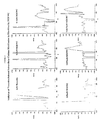
- Table I shows a list of RGKO 4 C (SEQ ID NO: 43) peptides which inhibit ⁇ -thrombin-induced platelet aggregation.
- the most potent to least potent inhibitors of ⁇ -thrombin-induced platelet aggregation are RGKLC, RGKTC, RGKRC, RGKIC, RGKWC, RGKYC, and RGKMC (SEQ ID NOS 1-7, respectively) in decreasing order.
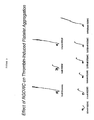
- FIG. 3 shows results with the RGDWC (SEQ ID NO: 20) peptide on ⁇ -thrombin-induced platelet aggregation. Seventy nM ⁇ -thrombin induced threshold platelet aggregation. One mM RPPGF (SEQ ID NO: 39) abolished ⁇ -thrombin-induced platelet aggregation. Peptide RGDWC (SEQ ID NO: 20) inhibited ⁇ -thrombin-induced platelet aggregation down to a concentration of 25 ⁇ M. At 6.25 ⁇ M RGDWC (SEQ ID NO: 20), ⁇ -thrombin-induced platelet aggregation returned to normal. Table IV lists all the RGDO 4 C (SEQ ID NO: 44) peptides from most potent to weakest that inhibit ⁇ -thrombin-induced platelet aggregation.
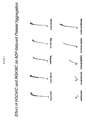
- Figure 5 compares the ability of RGKWC (SEQ ID NO: 5) and RGDWC (SEQ ID NO: 20) peptides on ADP-induced platelet aggregation.
- Untreated platelets had full platelet aggregation with 4.5 ⁇ M ADP.
- One mM RPPGF (SEQ ID NO: 39), MAP4RPPGF (MaP 4 ), and RGKWC (SEQ ID NO: 5) did not inhibit ADP-induced platelet aggregation.
- RGDWC (SEQ ID NO: 20) at ⁇ 0.5 mM completely inhibited ADP-induced platelet aggregation.
- RGKO 4 C (SEQ ID NO: 43) group of compounds was more specifically directed to thrombin-induced platelet aggregation than the RGDO 4 C (SEQ ID NO: 44) group of compounds which could be influencing thrombin-induced platelet aggregation, but also were influencing ADP-induced platelet aggregation. It is believed that the RGD-based compounds partially inhibit thrombin-induced platelet aggregation by blocking the final common pathway of platelet aggregation, i.e., the binding of fibrinogen to the heterodimeric complex of glycoprotein IIb/IIIa, i.e., ⁇ IIb ⁇ 3 integrin.
- the second assay developed to assess peptides from the combinatorial libraries uses inhibition of ⁇ -thrombin-induced calcium mobilization in fibroblasts.
- Normal human lung fibroblasts (NHLF) were purchased from Clonetics, San Diego, CA, an affiliate of Bio-Wittaker, Walkersville, MD.
- the cytoplasmic free Ca 2+ concentration ([Ca 2+ ] i ) was measured using the fluorescent Ca 2+ indicator fura-2 (Molecular Probes, Inc., Eugene, OR).
- Reagents test peptide (from 0.2 mM to effective lower concentration), and ⁇ -thrombin (2-4 nM), were sequentially added directly to the cuvette.
- the excitation wavelengths varied between 340 and 380 nm. Fluorescence was measured by recording emitted light at 510 nm as reported by Fisher et al., Mol Pharm. 35, 195 (1989). The minimum emission was determined on a solubilized fibroblast sample in the presence of 10 mM EDTA; maximum emission was determined on the same sample with 10 mM Ca 2+ added.
- the intrafibroblast free Ca 2+ concentration was calculated by the method of Grykiewicz et al., J. Biol. Chem. 260, 3440 (1985).
- the K D for fura-2 was assumed to be 224 nM.
- R max and R min are the maximum and minimum fluorescence ratios measured at the end of the experiment, respectively;
- S f2 and S b2 are the fluorescence values at 380 nm in the absence and presence of saturating [Ca 2+ ], respectively.
- the reaction was monitored for 3-5 minutes.
- peptide RGKWC (SEQ ID NO: 5) blocked 2 nM ⁇ -thrombin-induced Ca 2+ mobilization in fibroblasts at concentrations ⁇ 50 ⁇ M.
- Table II lists all the RGKO 4 C (SEQ ID NO: 43) peptides from the most potent to the least potent inhibitor of thrombin-induced Ca 2+ mobilization. The table shows, in decreasing potency, the percent inhibition of thrombin-induced calcium mobilization using 0.2 mM of each of the peptides.
- RGKWC RGKKC
- RGKRC RGKHC
- RGKPC RGKQC
- RGKTC RGKTC
- RGKDC RGKDC
- peptide SEQ ID NO: 20
- RGDWC at 0.2 mM inhibited 31% of 4 nM ⁇ -thrombin-induced Ca 2+ mobilization in fibroblasts.
- Table V shows the list of RGDO 4 C (SEQ ID NO: 44) peptides from the most potent to least potent inhibitors of thrombin-induced Ca 2+ mobilization.
- the table shows, in decreasing potency, the percentage of inhibition of thrombin-induced calcium mobilization using 0.2 mM of each of the peptides.
- the seven most potent peptides in decreasing order of potency include: RGDNC, RGDWC, RGDFC, RGDKC, RGDMC, RGDYC, and RGDAC (SEQ ID NOS 32, 20, 21, 29, 24, 35, & 37, respectively).
- a third assay was developed to ascertain the ability of biotin-NAT12 (NATLDPRSFLLR) (SEQ ID NO: 41) to directly bind to peptides linked to microtiter plates.
- peptide analogs were linked to microtiter plate cuvette wells by incubation of the peptide in 0.1 M Na 2 CO 3 , pH 9.6 buffer overnight at 4°C. After coupling the peptide to the cuvette well, the wells were dumped and each well was blocked with 1% bovine serum albumin in 0.01 M Na 3 PO 4 , 0.15 M NaCl, at pH 7.4. After incubation for 4 hour, the wells were dumped and washed three times with PBS-Tween. The wells were then incubated with biotin-NAT12. The amount of biotin-NAT12 bound was determined by adding streptavidin-peroxidase followed by adding turbo TMB (Pierce).
- Figure 5 shows that peptide RGKWC (SEQ ID NO: 5) binds to a greater extent than peptide (SEQ ID NO: 20) RGDWC.
- the level of binding of RGKWC (SEQ ID NO: 5) was greater than RPPGF (SEQ ID NO: 39). However, its level of binding was less than that seen with the multiple branched peptide MAP4RPPGF.
- Table III shows the RGKO 4 C (SEQ ID NO: 43) peptides that bind biotin-NAT12.
- these peptides include: RGKSC, RGKMC, RGKHC, RGKKC, RGKFC, RGKLC, RGKWC, and RGKVC (SEQ ID NOS 18, 7, 13, 14, 11, 1, 5 & 19, respectively).
- Table VI shows the RGDO 4 C (SEQ ID NO: 44) peptides that bind biotin-NAT12.
- the best RGDO 4 C (SEQ ID NO: 44) peptide (RGDSC) (SEQ ID NO: 34) to bind biotin-NAT12 was equivalent to the ability of RGKWC (SEQ ID NO: 5) to bind biotin-NAT12.
- RGDO 4 C (SEQ ID NO: 44) peptides to bind biotin-NAT12 listed in Table VI are: RGDSC, RGDGC, RGDQC, RGDEC, RGDIC, RGDPC, RGDDC, and RGDYC (SEQ ID NOS 34, 28, 23, 22, 36, 38, 27 & 35, respectively).
- a solid phase peptide-peptide binding assay was used to determine biotin-NAT12 binding to library peptides. Test peptides in 0.1 M Na 2 CO 3 , pH 9.6 buffer, at 10 ⁇ g/well in 50 ⁇ l volume, were coupled to microtiter plate wells by overnight incubation at 4°C.
- the absorbance was measured at 450 nm using a Microplate Auto Reader EL311 (Bio-Tek, Winooski, VT). The extent of biotin-NAT12 binding to test peptides from the libraries was assessed by the degree of absorbance displayed.
- the first library started with the peptide RPPGF (Arg-Pro-Pro-Gly-Phe) (SEQ ID NO: 39). Investigations showed that an alanine substitution in the peptide at position 1 at the amino terminal end resulted in marked loss of thrombin inhibitory activity. Alternatively, substitution in the fifth position at the carboxyterminal end of a cysteine for a phenylalanine did not result in any loss of activity. Since cysteine in this fifth position promoted binding of the peptides to plastic plates, all subsequent peptides had cysteine placed at this position.
- RPPGF Arg-Pro-Pro-Gly-Phe
- the initial positional peptide combinatorial library consisted of H-RO 2 XXC-NH 2 , H-RXO 3 XC-NH 2 , and H-RXXO 4 C-NH 2 , where O 2 , O 3 , or O 4 represents all L-amino acids from A to Y, except cysteine, and X is an equimolar mixture of L-amino acids from A to Y, except cysteine (Houghten et al., BioTechniques 13(3): 412-421(1992)).
- a third library was prepared where the third positions were fixed as a lysine or aspartic acid: H-RGKO 4 C-NH 2 and H-RGDO 4 C-NH 2 (SEQ ID NOS 43 & 44, respectively), where O 4 is all L-amino acids except cysteine.
- the peptides from this third combinatorial library are the peptide analogs being described herein.
- a standard solid phase automated peptide synthesis was utilized to prepare the peptide libraries.
- the synthetic peptide libraries were prepared using methylbenzhydrylamine (MBHA) polystyrene resin and standard t -Boc chemistry in combination with simultaneous multiple peptide synthesis (SMPS) (Houghten et al., Nature. 354, 84-86 (1991); Houghten et al., BioTechniques. 13, 412-421 (1992); Dooley et al., Science. 266, 2019-2022 (1994)).
- the resin mixture was then separated into 19 portions of equal weight which were then placed into porous polypropylene packets, followed by N - ⁇ - t -Boc protecting group removal and neutralization of the resulting amine TFA salts.
- the resin packets were then reacted with solutions of the individual activated amino acids to yield the various peptide combinations.
- the peptide mixtures were deprotected and then cleaved from their respective resins using low-high hydrogen fluoride (HF) (Cuervo et al., Peptide Res. 1, 81-86 (1991); Tam, J.P., et al., J. Am. Chem. Soc. 105, 6442-6455 (1983); Houghten et al., Int. J.
- HF low-high hydrogen fluoride
- the compounds of the present invention are intended for use in individuals with acute coronary syndromes (crescendo angina, myocardial infarction) and in individuals who have acute coronary syndromes and receive percutaneous transluminal coronary angioplasty (PTCA) with an artificial stent placement.
- the compounds of the present invention can be used as a single agent alone or in combinations with other agents. These other agents may include any one or number of the following drugs (including all of them): standard heparin, low molecular weight heparin, aspirin, ticlopidine, clopidogrel, abciximab, tirofiban, or eptifibatide.
- the compounds of the present invention may be administered intravenously with the other agent(s) to treat individuals for acute coronary syndromes and during the related management.
- This compounds of the invention also could be useful in the management of individuals with dacron grafts from peripheral bypass surgery and individuals with stents for carotid or renal artery stenosis.
- Agents such as those being presented here may be useful in the management of patients with transient ischemic attacks, stroke in progression, and complete stroke in the brain.
- Purified peptides of the invention may be administered under circumstances where inhibition of thrombin-induced platelet activation or platelet aggregation is sought.
- the analogs are for use and administration to subjects experiencing platelet thrombosis from any cause, and may be used prophylactically in surgery or catheterization for insertion of artificial dacron grafts and stents to prevent reocclusion events due to platelet thrombi.
- the analogs may be infused into individuals to prevent strokes and cerebral edema.
- the analogs may be administered by any convenient means, which will result in substantial delivery into the blood stream.
- the administration is parenterally.
- the administration of analogs can be executed by any means which will introduce the analogs into the bloodstream, including, intravenous, intranasal, and oral administration, as well as administration via a dermal patch or rectal suppositories.
- Intravenous administration is presently contemplated as the preferred administration route, although intranasal administration may also be utilized.
- the peptide analogs may be combined with any pharmaceutical carrier, which is physiologically acceptable to the host.
- the pharmaceutical composition may be compounded according to conventional pharmaceutical techniques.
- the carrier may be provided in a variety of forms depending on the form of preparation desired for administration.
- the carrier can comprise sterile water, and optionally other ingredients to aid solubility or preservative purposes.
- the analogs may be dissolved in appropriate intravenous delivery vehicles containing physiologically compatible substances, such as sterile sodium chloride having a buffered pH compatible with physiologic conditions, e.g. saline.
- injectable suspension may also be prepared, in which case appropriate liquid carriers, suspending agents and the like may be employed.
- the dosage of administration will depend on the size and weight of the patient. Those skilled in the art of infusion therapy in ICU or in interventional cardiology can derive appropriate dosages and schedules of administration to suit the specific circumstances and needs of the patient.
- the physiologically acceptable dosages range from about 10 to 30 mg per day per kg of body weight. In preferred intravenous administration, the dosage is 10 mg/kg body weight in 5 ml of normal saline or in any suitable vehicle given at a rate of 1 ml/min.
- the therapeutically optimal amounts of dosage may be determined by monitoring pre- and post- infusion platelet function by determining ex vivo ⁇ -thrombin induced platelet aggregation and secretion, and also by measuring hemostatic parameters like activated partial thromboplastin time (APTT), prothombin time (PT), thrombin time (TT), and template bleeding time (BT).
- APTT activated partial thromboplastin time
- PT prothombin time
- TT thrombin time
- BT template bleeding time
Landscapes
- Chemical & Material Sciences (AREA)
- Health & Medical Sciences (AREA)
- Organic Chemistry (AREA)
- Life Sciences & Earth Sciences (AREA)
- Medicinal Chemistry (AREA)
- General Health & Medical Sciences (AREA)
- Proteomics, Peptides & Aminoacids (AREA)
- Molecular Biology (AREA)
- Genetics & Genomics (AREA)
- Biophysics (AREA)
- Biochemistry (AREA)
- Hematology (AREA)
- Zoology (AREA)
- Toxicology (AREA)
- Gastroenterology & Hepatology (AREA)
- Veterinary Medicine (AREA)
- Animal Behavior & Ethology (AREA)
- Public Health (AREA)
- Nuclear Medicine, Radiotherapy & Molecular Imaging (AREA)
- Pharmacology & Pharmacy (AREA)
- General Chemical & Material Sciences (AREA)
- Chemical Kinetics & Catalysis (AREA)
- Diabetes (AREA)
- Bioinformatics & Cheminformatics (AREA)
- Engineering & Computer Science (AREA)
- Medicines That Contain Protein Lipid Enzymes And Other Medicines (AREA)
- Peptides Or Proteins (AREA)
Applications Claiming Priority (3)
| Application Number | Priority Date | Filing Date | Title |
|---|---|---|---|
| US09/375,808 US6544750B1 (en) | 1999-08-17 | 1999-08-17 | Peptide analogs as selective inhibitors of thrombin activation of protease activated receptor 1 |
| US375808 | 1999-08-17 | ||
| PCT/US2000/040669 WO2001012656A1 (en) | 1999-08-17 | 2000-08-17 | Peptide analogs as selective inhibitors of thrombin activation of protease activated receptor 1 |
Publications (3)
| Publication Number | Publication Date |
|---|---|
| EP1212352A1 EP1212352A1 (en) | 2002-06-12 |
| EP1212352A4 EP1212352A4 (en) | 2002-12-04 |
| EP1212352B1 true EP1212352B1 (en) | 2006-10-18 |
Family
ID=23482441
Family Applications (1)
| Application Number | Title | Priority Date | Filing Date |
|---|---|---|---|
| EP00968987A Expired - Lifetime EP1212352B1 (en) | 1999-08-17 | 2000-08-17 | Peptide analogs as selective inhibitors of thrombin activation of protease activated receptor 1 |
Country Status (9)
| Country | Link |
|---|---|
| US (1) | US6544750B1 (enExample) |
| EP (1) | EP1212352B1 (enExample) |
| JP (1) | JP2003507389A (enExample) |
| AT (1) | ATE342914T1 (enExample) |
| AU (1) | AU764707B2 (enExample) |
| CA (1) | CA2382056A1 (enExample) |
| DE (1) | DE60031422T2 (enExample) |
| IL (1) | IL148173A0 (enExample) |
| WO (1) | WO2001012656A1 (enExample) |
Families Citing this family (11)
| Publication number | Priority date | Publication date | Assignee | Title |
|---|---|---|---|---|
| US6346510B1 (en) | 1995-10-23 | 2002-02-12 | The Children's Medical Center Corporation | Therapeutic antiangiogenic endostatin compositions |
| US6841354B2 (en) * | 2000-12-21 | 2005-01-11 | Philadelphia, Health & Education Corporation | Screening assay for anti-thrombotic/anti-platelet activity |
| JP2005537245A (ja) * | 2002-06-26 | 2005-12-08 | エントレメッド インコーポレイテッド | タンパク質活性化レセプターのアンタゴニストを含む組成物および方法 |
| US7074765B2 (en) | 2003-05-01 | 2006-07-11 | The Regents Of The University Of Michigan | Synthetic peptide analogs of Arg-Pro-Pro-Gly-Phe as selective inhibitors of thrombin and thrombin activation of protease activated receptors 1 and 4 |
| WO2006023844A2 (en) * | 2004-08-20 | 2006-03-02 | Entremed, Inc. | Compositions and methods comprising proteinase activated receptor antagonists |
| WO2006045503A1 (en) | 2004-10-19 | 2006-05-04 | Lonza Ag | Method for solid phase peptide synthesis |
| AU2011336345B2 (en) | 2010-12-02 | 2016-07-07 | Becton, Dickinson And Company | Blood collection devices containing blood stabilization agent |
| EP2988130A1 (en) * | 2014-08-20 | 2016-02-24 | Eppendorf Ag | Method for coating a solid support |
| US20180214476A1 (en) * | 2017-02-01 | 2018-08-02 | North Carolina State University | Thrombin-responsive hydrogels and devices for auto-anticoagulant regulation |
| CN113429459B (zh) * | 2021-06-16 | 2022-07-26 | 昆明医科大学第一附属医院 | 一种抗血小板多肽及其药物组合物与其应用 |
| CN116370339A (zh) * | 2023-05-24 | 2023-07-04 | 南京百沃锐医药研究院有限公司 | 一种环肽用作抗皮肤光老化活性因子及用于制备抗光老化化妆品的用途 |
Family Cites Families (15)
| Publication number | Priority date | Publication date | Assignee | Title |
|---|---|---|---|---|
| EP0410540A1 (en) * | 1989-07-28 | 1991-01-30 | Merck & Co. Inc. | Fibrinogen receptor antagonists |
| WO1992007269A1 (en) | 1990-10-11 | 1992-04-30 | Pro-Soma S.A.R.L. | Diagnostic method |
| US5461032A (en) * | 1991-03-01 | 1995-10-24 | Fmc Corporation | Insecticidally effective peptides |
| IE20030749A1 (en) | 1991-05-03 | 2003-11-12 | Indiana University Foundation | Human notch and delta binding domains in torporythmic proteins, and methods based thereon |
| AU2548992A (en) | 1991-08-13 | 1993-03-16 | Temple University - Of The Commonwealth System Of Higher Education | Modulation of blood pressure and inhibition of platelet activation with kininogen fragment |
| US5225531A (en) * | 1992-04-09 | 1993-07-06 | Washington University | Hexapeptide Lys Gly Ala Gly Asp Val |
| US5747447A (en) * | 1992-04-30 | 1998-05-05 | Cor Therapeutics | Stable polypeptide composition |
| US5589458A (en) | 1992-11-13 | 1996-12-31 | Thomas Jefferson University | Compounds that inhibit T cell proliferation and methods for using the same |
| US5631131A (en) | 1993-03-19 | 1997-05-20 | Universite De Montreal | cDNA probes and antibodies for human methenyltetrahydrofolate synthetase |
| US5491086A (en) | 1993-05-14 | 1996-02-13 | Hoffmann-La Roche Inc. | Purified thermostable nucleic acid polymerase and DNA coding sequences from pyrodictium species |
| US5762939A (en) | 1993-09-13 | 1998-06-09 | Mg-Pmc, Llc | Method for producing influenza hemagglutinin multivalent vaccines using baculovirus |
| ATE235912T1 (de) * | 1995-06-09 | 2003-04-15 | Univ Michigan | Bradikininanaloge als selektive thrombininhibitoren |
| IL132546A0 (en) | 1997-04-23 | 2001-03-19 | Univ Michigan | Bradykinin analogs as selective inhibitors of cell activation |
| AU2662999A (en) | 1998-02-09 | 1999-08-23 | Genzyme Corporation | Nucleic acid delivery vehicles |
| US6111075A (en) | 1998-04-01 | 2000-08-29 | Zymogenetics, Inc. | Protese-activated receptor PAR4 (ZCHEMR2) |
-
1999
- 1999-08-17 US US09/375,808 patent/US6544750B1/en not_active Expired - Fee Related
-
2000
- 2000-08-17 WO PCT/US2000/040669 patent/WO2001012656A1/en not_active Ceased
- 2000-08-17 AT AT00968987T patent/ATE342914T1/de not_active IP Right Cessation
- 2000-08-17 CA CA002382056A patent/CA2382056A1/en not_active Abandoned
- 2000-08-17 IL IL14817300A patent/IL148173A0/xx unknown
- 2000-08-17 DE DE60031422T patent/DE60031422T2/de not_active Expired - Fee Related
- 2000-08-17 EP EP00968987A patent/EP1212352B1/en not_active Expired - Lifetime
- 2000-08-17 AU AU78822/00A patent/AU764707B2/en not_active Ceased
- 2000-08-17 JP JP2001517554A patent/JP2003507389A/ja active Pending
Also Published As
| Publication number | Publication date |
|---|---|
| IL148173A0 (en) | 2002-09-12 |
| JP2003507389A (ja) | 2003-02-25 |
| ATE342914T1 (de) | 2006-11-15 |
| WO2001012656A1 (en) | 2001-02-22 |
| AU764707B2 (en) | 2003-08-28 |
| DE60031422D1 (de) | 2006-11-30 |
| EP1212352A1 (en) | 2002-06-12 |
| AU7882200A (en) | 2001-03-13 |
| EP1212352A4 (en) | 2002-12-04 |
| DE60031422T2 (de) | 2007-08-23 |
| US6544750B1 (en) | 2003-04-08 |
| CA2382056A1 (en) | 2001-02-22 |
Similar Documents
| Publication | Publication Date | Title |
|---|---|---|
| Berndt et al. | Identification of aspartic acid 514 through glutamic acid 542 as a glycoprotein Ib-IX complex receptor recognition sequence in von Willebrand factor. Mechanism of modulation of von Willebrand factor by ristocetin and botrocetin | |
| Wiley et al. | Peptidomimetics derived from natural products | |
| RU2183642C2 (ru) | Ингибиторы сериновых протеаз | |
| EP1212352B1 (en) | Peptide analogs as selective inhibitors of thrombin activation of protease activated receptor 1 | |
| Stewart | Bradykinin antagonists: discovery and development | |
| US6982249B1 (en) | Bradykinin analogs as selective inhibitors of cell activation | |
| US7074765B2 (en) | Synthetic peptide analogs of Arg-Pro-Pro-Gly-Phe as selective inhibitors of thrombin and thrombin activation of protease activated receptors 1 and 4 | |
| HUT74873A (en) | Factor vii-derived peptides | |
| US6703364B2 (en) | Thrombin generation inhibitors | |
| US7879792B2 (en) | Synthetic peptide inhibitors of thrombin and thrombin activation of protease activated receptors 1 and 4 | |
| AU735722B2 (en) | Peptidomimetics containing 6-peptidylamino-1-naphthalenesulfonamide moieties | |
| WO1992013887A1 (en) | New cell adhesion peptides | |
| Scicli et al. | Relationship between structure and correcting activity of bovine high molecular weight kininogen upon the clotting time of Fitzgerald-trait plasma | |
| Cho et al. | Cyclic and linear oligocarbamate ligands for human thrombin | |
| WO1998022125A9 (en) | Peptidomimetics containing 6-peptidylamino-1-naphthalenesulfonamide moieties | |
| CA2223143A1 (en) | Peptide fragments of tissue factor and their use for treatment and prevention of clotting disorders | |
| WO1998047522A1 (en) | Bradykinin analogs as selective inhibitors of cell activation | |
| AU761624B2 (en) | Bradykinin analogs as selective inhibitors of cell activation | |
| AU734935C (en) | Bradykinin analogs as selective inhibitors of cell activation | |
| HK1006716B (en) | Peptides having a brady kinine-inhibiting activity | |
| HK1006716A1 (en) | Peptides having a brady kinine-inhibiting activity | |
| HK1016090B (en) | Bradykinin analogs as selective thrombin inhibitors |
Legal Events
| Date | Code | Title | Description |
|---|---|---|---|
| PUAI | Public reference made under article 153(3) epc to a published international application that has entered the european phase |
Free format text: ORIGINAL CODE: 0009012 |
|
| 17P | Request for examination filed |
Effective date: 20020315 |
|
| AK | Designated contracting states |
Kind code of ref document: A1 Designated state(s): AT BE CH CY DE DK ES FI FR GB GR IE IT LI LU MC NL PT SE |
|
| AX | Request for extension of the european patent |
Free format text: AL;LT;LV;MK;RO;SI |
|
| A4 | Supplementary search report drawn up and despatched |
Effective date: 20021022 |
|
| AK | Designated contracting states |
Kind code of ref document: A4 Designated state(s): AT BE CH CY DE DK ES FI FR GB GR IE IT LI LU MC NL PT SE |
|
| 17Q | First examination report despatched |
Effective date: 20030310 |
|
| RAP1 | Party data changed (applicant data changed or rights of an application transferred) |
Owner name: THE REGENTS OF THE UNIVERSITY OF MICHIGAN Owner name: THROMGEN, INC. |
|
| GRAP | Despatch of communication of intention to grant a patent |
Free format text: ORIGINAL CODE: EPIDOSNIGR1 |
|
| GRAS | Grant fee paid |
Free format text: ORIGINAL CODE: EPIDOSNIGR3 |
|
| RAP1 | Party data changed (applicant data changed or rights of an application transferred) |
Owner name: THE REGENTS OF THE UNIVERSITY OF MICHIGAN Owner name: THROMGEN, INC. |
|
| GRAA | (expected) grant |
Free format text: ORIGINAL CODE: 0009210 |
|
| AK | Designated contracting states |
Kind code of ref document: B1 Designated state(s): AT BE CH CY DE DK ES FI FR GB GR IE IT LI LU MC NL PT SE |
|
| PG25 | Lapsed in a contracting state [announced via postgrant information from national office to epo] |
Ref country code: AT Free format text: LAPSE BECAUSE OF FAILURE TO SUBMIT A TRANSLATION OF THE DESCRIPTION OR TO PAY THE FEE WITHIN THE PRESCRIBED TIME-LIMIT Effective date: 20061018 Ref country code: NL Free format text: LAPSE BECAUSE OF FAILURE TO SUBMIT A TRANSLATION OF THE DESCRIPTION OR TO PAY THE FEE WITHIN THE PRESCRIBED TIME-LIMIT Effective date: 20061018 Ref country code: FI Free format text: LAPSE BECAUSE OF FAILURE TO SUBMIT A TRANSLATION OF THE DESCRIPTION OR TO PAY THE FEE WITHIN THE PRESCRIBED TIME-LIMIT Effective date: 20061018 Ref country code: CH Free format text: LAPSE BECAUSE OF FAILURE TO SUBMIT A TRANSLATION OF THE DESCRIPTION OR TO PAY THE FEE WITHIN THE PRESCRIBED TIME-LIMIT Effective date: 20061018 Ref country code: BE Free format text: LAPSE BECAUSE OF FAILURE TO SUBMIT A TRANSLATION OF THE DESCRIPTION OR TO PAY THE FEE WITHIN THE PRESCRIBED TIME-LIMIT Effective date: 20061018 Ref country code: LI Free format text: LAPSE BECAUSE OF FAILURE TO SUBMIT A TRANSLATION OF THE DESCRIPTION OR TO PAY THE FEE WITHIN THE PRESCRIBED TIME-LIMIT Effective date: 20061018 |
|
| REG | Reference to a national code |
Ref country code: GB Ref legal event code: FG4D |
|
| REG | Reference to a national code |
Ref country code: CH Ref legal event code: EP Ref country code: IE Ref legal event code: FG4D |
|
| REF | Corresponds to: |
Ref document number: 60031422 Country of ref document: DE Date of ref document: 20061130 Kind code of ref document: P |
|
| PG25 | Lapsed in a contracting state [announced via postgrant information from national office to epo] |
Ref country code: SE Free format text: LAPSE BECAUSE OF FAILURE TO SUBMIT A TRANSLATION OF THE DESCRIPTION OR TO PAY THE FEE WITHIN THE PRESCRIBED TIME-LIMIT Effective date: 20070118 Ref country code: DK Free format text: LAPSE BECAUSE OF FAILURE TO SUBMIT A TRANSLATION OF THE DESCRIPTION OR TO PAY THE FEE WITHIN THE PRESCRIBED TIME-LIMIT Effective date: 20070118 |
|
| PG25 | Lapsed in a contracting state [announced via postgrant information from national office to epo] |
Ref country code: ES Free format text: LAPSE BECAUSE OF FAILURE TO SUBMIT A TRANSLATION OF THE DESCRIPTION OR TO PAY THE FEE WITHIN THE PRESCRIBED TIME-LIMIT Effective date: 20070129 |
|
| PG25 | Lapsed in a contracting state [announced via postgrant information from national office to epo] |
Ref country code: PT Free format text: LAPSE BECAUSE OF FAILURE TO SUBMIT A TRANSLATION OF THE DESCRIPTION OR TO PAY THE FEE WITHIN THE PRESCRIBED TIME-LIMIT Effective date: 20070319 |
|
| NLV1 | Nl: lapsed or annulled due to failure to fulfill the requirements of art. 29p and 29m of the patents act | ||
| ET | Fr: translation filed | ||
| REG | Reference to a national code |
Ref country code: CH Ref legal event code: PL |
|
| PLBE | No opposition filed within time limit |
Free format text: ORIGINAL CODE: 0009261 |
|
| STAA | Information on the status of an ep patent application or granted ep patent |
Free format text: STATUS: NO OPPOSITION FILED WITHIN TIME LIMIT |
|
| 26N | No opposition filed |
Effective date: 20070719 |
|
| PG25 | Lapsed in a contracting state [announced via postgrant information from national office to epo] |
Ref country code: MC Free format text: LAPSE BECAUSE OF NON-PAYMENT OF DUE FEES Effective date: 20070831 Ref country code: GR Free format text: LAPSE BECAUSE OF FAILURE TO SUBMIT A TRANSLATION OF THE DESCRIPTION OR TO PAY THE FEE WITHIN THE PRESCRIBED TIME-LIMIT Effective date: 20070119 |
|
| PG25 | Lapsed in a contracting state [announced via postgrant information from national office to epo] |
Ref country code: IE Free format text: LAPSE BECAUSE OF NON-PAYMENT OF DUE FEES Effective date: 20070817 |
|
| PGFP | Annual fee paid to national office [announced via postgrant information from national office to epo] |
Ref country code: DE Payment date: 20080829 Year of fee payment: 9 |
|
| PGFP | Annual fee paid to national office [announced via postgrant information from national office to epo] |
Ref country code: FR Payment date: 20080807 Year of fee payment: 9 Ref country code: IT Payment date: 20080816 Year of fee payment: 9 |
|
| PGFP | Annual fee paid to national office [announced via postgrant information from national office to epo] |
Ref country code: GB Payment date: 20080708 Year of fee payment: 9 |
|
| PG25 | Lapsed in a contracting state [announced via postgrant information from national office to epo] |
Ref country code: LU Free format text: LAPSE BECAUSE OF NON-PAYMENT OF DUE FEES Effective date: 20070817 Ref country code: CY Free format text: LAPSE BECAUSE OF FAILURE TO SUBMIT A TRANSLATION OF THE DESCRIPTION OR TO PAY THE FEE WITHIN THE PRESCRIBED TIME-LIMIT Effective date: 20061018 |
|
| GBPC | Gb: european patent ceased through non-payment of renewal fee |
Effective date: 20090817 |
|
| REG | Reference to a national code |
Ref country code: FR Ref legal event code: ST Effective date: 20100430 |
|
| PG25 | Lapsed in a contracting state [announced via postgrant information from national office to epo] |
Ref country code: DE Free format text: LAPSE BECAUSE OF NON-PAYMENT OF DUE FEES Effective date: 20100302 Ref country code: FR Free format text: LAPSE BECAUSE OF NON-PAYMENT OF DUE FEES Effective date: 20090831 |
|
| PG25 | Lapsed in a contracting state [announced via postgrant information from national office to epo] |
Ref country code: GB Free format text: LAPSE BECAUSE OF NON-PAYMENT OF DUE FEES Effective date: 20090817 |
|
| PG25 | Lapsed in a contracting state [announced via postgrant information from national office to epo] |
Ref country code: IT Free format text: LAPSE BECAUSE OF NON-PAYMENT OF DUE FEES Effective date: 20090817 |