EP1186619A2 - Polar group-containing olefin copolymer, process for preparing the same, thermoplastic resin composition contaning the copolymer, and uses thereof - Google Patents
Polar group-containing olefin copolymer, process for preparing the same, thermoplastic resin composition contaning the copolymer, and uses thereof Download PDFInfo
- Publication number
- EP1186619A2 EP1186619A2 EP01120773A EP01120773A EP1186619A2 EP 1186619 A2 EP1186619 A2 EP 1186619A2 EP 01120773 A EP01120773 A EP 01120773A EP 01120773 A EP01120773 A EP 01120773A EP 1186619 A2 EP1186619 A2 EP 1186619A2
- Authority
- EP
- European Patent Office
- Prior art keywords
- group
- carbon atoms
- atom
- hydrocarbon group
- methyl
- Prior art date
- Legal status (The legal status is an assumption and is not a legal conclusion. Google has not performed a legal analysis and makes no representation as to the accuracy of the status listed.)
- Granted
Links
- 0 *CC1C(C2)C(*)C(**C***)C(*)(*)C2C1C* Chemical compound *CC1C(C2)C(*)C(**C***)C(*)(*)C2C1C* 0.000 description 24
- VKZBJXVWOAGZQZ-UHFFFAOYSA-N BC(C)(C)c1cc(C(F)(F)F)cc(C(F)(F)F)c1 Chemical compound BC(C)(C)c1cc(C(F)(F)F)cc(C(F)(F)F)c1 VKZBJXVWOAGZQZ-UHFFFAOYSA-N 0.000 description 1
- JFNLZVQOOSMTJK-UHFFFAOYSA-N C(C1)C2C=CC1C2 Chemical compound C(C1)C2C=CC1C2 JFNLZVQOOSMTJK-UHFFFAOYSA-N 0.000 description 1
- AGKXEJXQWQZXOC-UHFFFAOYSA-N CC(C(C)C1C2)C2C2C1C1C=CC2C1 Chemical compound CC(C(C)C1C2)C2C2C1C1C=CC2C1 AGKXEJXQWQZXOC-UHFFFAOYSA-N 0.000 description 1
- LALBVIZFDOQKSE-UHFFFAOYSA-N CCC(C1C)C2C=C1C1C2C2CC1CC2 Chemical compound CCC(C1C)C2C=C1C1C2C2CC1CC2 LALBVIZFDOQKSE-UHFFFAOYSA-N 0.000 description 1
- MJTHWEYARUUXMT-UHFFFAOYSA-N N#CC1C(C2)C(C3CC4CC3)C4C2C1 Chemical compound N#CC1C(C2)C(C3CC4CC3)C4C2C1 MJTHWEYARUUXMT-UHFFFAOYSA-N 0.000 description 1
Classifications
-
- C—CHEMISTRY; METALLURGY
- C08—ORGANIC MACROMOLECULAR COMPOUNDS; THEIR PREPARATION OR CHEMICAL WORKING-UP; COMPOSITIONS BASED THEREON
- C08F—MACROMOLECULAR COMPOUNDS OBTAINED BY REACTIONS ONLY INVOLVING CARBON-TO-CARBON UNSATURATED BONDS
- C08F297/00—Macromolecular compounds obtained by successively polymerising different monomer systems using a catalyst of the ionic or coordination type without deactivating the intermediate polymer
- C08F297/02—Macromolecular compounds obtained by successively polymerising different monomer systems using a catalyst of the ionic or coordination type without deactivating the intermediate polymer using a catalyst of the anionic type
-
- C—CHEMISTRY; METALLURGY
- C08—ORGANIC MACROMOLECULAR COMPOUNDS; THEIR PREPARATION OR CHEMICAL WORKING-UP; COMPOSITIONS BASED THEREON
- C08F—MACROMOLECULAR COMPOUNDS OBTAINED BY REACTIONS ONLY INVOLVING CARBON-TO-CARBON UNSATURATED BONDS
- C08F210/00—Copolymers of unsaturated aliphatic hydrocarbons having only one carbon-to-carbon double bond
-
- C—CHEMISTRY; METALLURGY
- C08—ORGANIC MACROMOLECULAR COMPOUNDS; THEIR PREPARATION OR CHEMICAL WORKING-UP; COMPOSITIONS BASED THEREON
- C08F—MACROMOLECULAR COMPOUNDS OBTAINED BY REACTIONS ONLY INVOLVING CARBON-TO-CARBON UNSATURATED BONDS
- C08F210/00—Copolymers of unsaturated aliphatic hydrocarbons having only one carbon-to-carbon double bond
- C08F210/02—Ethene
-
- C—CHEMISTRY; METALLURGY
- C08—ORGANIC MACROMOLECULAR COMPOUNDS; THEIR PREPARATION OR CHEMICAL WORKING-UP; COMPOSITIONS BASED THEREON
- C08F—MACROMOLECULAR COMPOUNDS OBTAINED BY REACTIONS ONLY INVOLVING CARBON-TO-CARBON UNSATURATED BONDS
- C08F210/00—Copolymers of unsaturated aliphatic hydrocarbons having only one carbon-to-carbon double bond
- C08F210/16—Copolymers of ethene with alpha-alkenes, e.g. EP rubbers
-
- C—CHEMISTRY; METALLURGY
- C08—ORGANIC MACROMOLECULAR COMPOUNDS; THEIR PREPARATION OR CHEMICAL WORKING-UP; COMPOSITIONS BASED THEREON
- C08J—WORKING-UP; GENERAL PROCESSES OF COMPOUNDING; AFTER-TREATMENT NOT COVERED BY SUBCLASSES C08B, C08C, C08F, C08G or C08H
- C08J5/00—Manufacture of articles or shaped materials containing macromolecular substances
- C08J5/18—Manufacture of films or sheets
-
- C—CHEMISTRY; METALLURGY
- C08—ORGANIC MACROMOLECULAR COMPOUNDS; THEIR PREPARATION OR CHEMICAL WORKING-UP; COMPOSITIONS BASED THEREON
- C08L—COMPOSITIONS OF MACROMOLECULAR COMPOUNDS
- C08L53/00—Compositions of block copolymers containing at least one sequence of a polymer obtained by reactions only involving carbon-to-carbon unsaturated bonds; Compositions of derivatives of such polymers
-
- C—CHEMISTRY; METALLURGY
- C09—DYES; PAINTS; POLISHES; NATURAL RESINS; ADHESIVES; COMPOSITIONS NOT OTHERWISE PROVIDED FOR; APPLICATIONS OF MATERIALS NOT OTHERWISE PROVIDED FOR
- C09J—ADHESIVES; NON-MECHANICAL ASPECTS OF ADHESIVE PROCESSES IN GENERAL; ADHESIVE PROCESSES NOT PROVIDED FOR ELSEWHERE; USE OF MATERIALS AS ADHESIVES
- C09J153/00—Adhesives based on block copolymers containing at least one sequence of a polymer obtained by reactions only involving carbon-to-carbon unsaturated bonds; Adhesives based on derivatives of such polymers
-
- C—CHEMISTRY; METALLURGY
- C08—ORGANIC MACROMOLECULAR COMPOUNDS; THEIR PREPARATION OR CHEMICAL WORKING-UP; COMPOSITIONS BASED THEREON
- C08F—MACROMOLECULAR COMPOUNDS OBTAINED BY REACTIONS ONLY INVOLVING CARBON-TO-CARBON UNSATURATED BONDS
- C08F210/00—Copolymers of unsaturated aliphatic hydrocarbons having only one carbon-to-carbon double bond
- C08F210/04—Monomers containing three or four carbon atoms
- C08F210/06—Propene
-
- C—CHEMISTRY; METALLURGY
- C08—ORGANIC MACROMOLECULAR COMPOUNDS; THEIR PREPARATION OR CHEMICAL WORKING-UP; COMPOSITIONS BASED THEREON
- C08F—MACROMOLECULAR COMPOUNDS OBTAINED BY REACTIONS ONLY INVOLVING CARBON-TO-CARBON UNSATURATED BONDS
- C08F210/00—Copolymers of unsaturated aliphatic hydrocarbons having only one carbon-to-carbon double bond
- C08F210/04—Monomers containing three or four carbon atoms
- C08F210/08—Butenes
-
- C—CHEMISTRY; METALLURGY
- C08—ORGANIC MACROMOLECULAR COMPOUNDS; THEIR PREPARATION OR CHEMICAL WORKING-UP; COMPOSITIONS BASED THEREON
- C08F—MACROMOLECULAR COMPOUNDS OBTAINED BY REACTIONS ONLY INVOLVING CARBON-TO-CARBON UNSATURATED BONDS
- C08F210/00—Copolymers of unsaturated aliphatic hydrocarbons having only one carbon-to-carbon double bond
- C08F210/14—Monomers containing five or more carbon atoms
-
- C—CHEMISTRY; METALLURGY
- C08—ORGANIC MACROMOLECULAR COMPOUNDS; THEIR PREPARATION OR CHEMICAL WORKING-UP; COMPOSITIONS BASED THEREON
- C08F—MACROMOLECULAR COMPOUNDS OBTAINED BY REACTIONS ONLY INVOLVING CARBON-TO-CARBON UNSATURATED BONDS
- C08F4/00—Polymerisation catalysts
- C08F4/42—Metals; Metal hydrides; Metallo-organic compounds; Use thereof as catalyst precursors
- C08F4/44—Metals; Metal hydrides; Metallo-organic compounds; Use thereof as catalyst precursors selected from light metals, zinc, cadmium, mercury, copper, silver, gold, boron, gallium, indium, thallium, rare earths or actinides
- C08F4/60—Metals; Metal hydrides; Metallo-organic compounds; Use thereof as catalyst precursors selected from light metals, zinc, cadmium, mercury, copper, silver, gold, boron, gallium, indium, thallium, rare earths or actinides together with refractory metals, iron group metals, platinum group metals, manganese, rhenium technetium or compounds thereof
- C08F4/62—Refractory metals or compounds thereof
- C08F4/64—Titanium, zirconium, hafnium or compounds thereof
- C08F4/659—Component covered by group C08F4/64 containing a transition metal-carbon bond
- C08F4/65912—Component covered by group C08F4/64 containing a transition metal-carbon bond in combination with an organoaluminium compound
-
- C—CHEMISTRY; METALLURGY
- C08—ORGANIC MACROMOLECULAR COMPOUNDS; THEIR PREPARATION OR CHEMICAL WORKING-UP; COMPOSITIONS BASED THEREON
- C08F—MACROMOLECULAR COMPOUNDS OBTAINED BY REACTIONS ONLY INVOLVING CARBON-TO-CARBON UNSATURATED BONDS
- C08F4/00—Polymerisation catalysts
- C08F4/42—Metals; Metal hydrides; Metallo-organic compounds; Use thereof as catalyst precursors
- C08F4/44—Metals; Metal hydrides; Metallo-organic compounds; Use thereof as catalyst precursors selected from light metals, zinc, cadmium, mercury, copper, silver, gold, boron, gallium, indium, thallium, rare earths or actinides
- C08F4/60—Metals; Metal hydrides; Metallo-organic compounds; Use thereof as catalyst precursors selected from light metals, zinc, cadmium, mercury, copper, silver, gold, boron, gallium, indium, thallium, rare earths or actinides together with refractory metals, iron group metals, platinum group metals, manganese, rhenium technetium or compounds thereof
- C08F4/62—Refractory metals or compounds thereof
- C08F4/64—Titanium, zirconium, hafnium or compounds thereof
- C08F4/659—Component covered by group C08F4/64 containing a transition metal-carbon bond
- C08F4/6592—Component covered by group C08F4/64 containing a transition metal-carbon bond containing at least one cyclopentadienyl ring, condensed or not, e.g. an indenyl or a fluorenyl ring
-
- C—CHEMISTRY; METALLURGY
- C08—ORGANIC MACROMOLECULAR COMPOUNDS; THEIR PREPARATION OR CHEMICAL WORKING-UP; COMPOSITIONS BASED THEREON
- C08J—WORKING-UP; GENERAL PROCESSES OF COMPOUNDING; AFTER-TREATMENT NOT COVERED BY SUBCLASSES C08B, C08C, C08F, C08G or C08H
- C08J2351/00—Characterised by the use of graft polymers in which the grafted component is obtained by reactions only involving carbon-to-carbon unsaturated bonds; Derivatives of such polymers
- C08J2351/06—Characterised by the use of graft polymers in which the grafted component is obtained by reactions only involving carbon-to-carbon unsaturated bonds; Derivatives of such polymers grafted on to homopolymers or copolymers of aliphatic hydrocarbons containing only one carbon-to-carbon double bond
-
- C—CHEMISTRY; METALLURGY
- C08—ORGANIC MACROMOLECULAR COMPOUNDS; THEIR PREPARATION OR CHEMICAL WORKING-UP; COMPOSITIONS BASED THEREON
- C08J—WORKING-UP; GENERAL PROCESSES OF COMPOUNDING; AFTER-TREATMENT NOT COVERED BY SUBCLASSES C08B, C08C, C08F, C08G or C08H
- C08J2371/00—Characterised by the use of polyethers obtained by reactions forming an ether link in the main chain; Derivatives of such polymers
- C08J2371/02—Polyalkylene oxides
-
- C—CHEMISTRY; METALLURGY
- C08—ORGANIC MACROMOLECULAR COMPOUNDS; THEIR PREPARATION OR CHEMICAL WORKING-UP; COMPOSITIONS BASED THEREON
- C08J—WORKING-UP; GENERAL PROCESSES OF COMPOUNDING; AFTER-TREATMENT NOT COVERED BY SUBCLASSES C08B, C08C, C08F, C08G or C08H
- C08J2387/00—Characterised by the use of unspecified macromolecular compounds, obtained otherwise than by polymerisation reactions only involving unsaturated carbon-to-carbon bonds
-
- C—CHEMISTRY; METALLURGY
- C08—ORGANIC MACROMOLECULAR COMPOUNDS; THEIR PREPARATION OR CHEMICAL WORKING-UP; COMPOSITIONS BASED THEREON
- C08L—COMPOSITIONS OF MACROMOLECULAR COMPOUNDS
- C08L2666/00—Composition of polymers characterized by a further compound in the blend, being organic macromolecular compounds, natural resins, waxes or and bituminous materials, non-macromolecular organic substances, inorganic substances or characterized by their function in the composition
- C08L2666/02—Organic macromolecular compounds, natural resins, waxes or and bituminous materials
Definitions
- the present invention relates to a polar group-containing olefin copolymer, a process for preparing the copolymer, a thermoplastic resin composition containing the copolymer and uses thereof. More particularly, the invention relates to a polar group-containing olefin copolymer having excellent adhesion properties to metals or polar resins and excellent flexibility, a process for preparing the copolymer, a thermoplastic resin composition containing the copolymer and uses thereof.
- Polyolefins generally have advantages such as excellent moldability, heat resistance, mechanical properties, hygienic qualities, water vapor permeation resistance and appearance of molded articles thereof, and hence they are broadly used for extrusion molded articles, blow molded articles and injection molded articles.
- the polyolefins however, contain no polar group in the molecule, so that they have low compatibility with polar resins such as nylon and EVOH and low adhesion properties to polar resins and metals. Therefore, it is difficult to use the polyolefins by blending or laminating them with these materials. In addition, molded products of the polyolefins have problems of poor surface hydrophilic properties and poor antistatic properties.
- Engineering plastics such as nylon have excellent heat resistance and strength, and hence they are used for electronic/electric parts.
- the engineering plastics such as nylon generally have low impact resistance, so that they are sometimes blended with olefin copolymers to improve the impact resistance.
- the polyolefins however, contain no polar group in the molecule and show low compatibility with polar resins, and therefore a method of grafting polar monomers on the polyolefins to improve compatibility with the polar resins has been heretofore widely used.
- orientation of the polar groups toward the interface between the copolymer and the polar material may be unsatisfactory, and adhesion properties to the polar materials and compatibility therewith may be insufficient.
- effects in adhesion properties and compatibility are not exhibited unless a graft copolymer is added in a large amount.
- the present inventors have studied in the light of the above problems. As a result, they have found that a copolymer having a specific molecular structure and a composition containing the copolymer are excellent in compatibility with polar resins and adhesion properties to polar resins and metals, and they have also found that the copolymer and the composition have excellent surface hydrophilic properties and antistatic properties. Moreover, the present inventors have found the copolymer and the composition can be favorably applied to various uses.
- an olefin polymer such as an ethylene homopolymer, an ethylene/ ⁇ -olefin copolymer, a propylene homopolymer or a propylene/ ⁇ -olefin copolymer
- a process comprising polymerizing an olefin in the presence of a titanium catalyst comprising a solid titanium catalyst component containing magnesium, halogen and an electron donor, and an organoaluminum compound, or a vanadium catalyst comprising a vanadium compound and an organoaluminum compound has been heretofore known.
- an olefin is polymerized in the presence of a metallocene catalyst comprising a transition metal compound such as zirconocene and an organoaluminum oxy-compound (aluminoxane). It is also known that if the metallocene catalyst is used, an olefin polymer having a high molecular weight is obtained with high activity and the resulting olefin polymer has narrow molecular weight distribution and narrow composition distribution.
- a metallocene catalyst comprising a transition metal compound such as zirconocene and an organoaluminum oxy-compound (aluminoxane).
- a process using a metallocene catalyst is also known.
- polymerization of an OH group-containing olefin is conducted using a metallocene compound having a ligand of non-crosslinked cyclopentadienyl group, crosslinked or non-crosslinked bisindenyl group, or ethylene crosslinked unsubstituted indenyl group/fluorenyl group, as described in Macromolecules, 28, 5351 (1995), Macromolecules, 29, 5255 (1966), and Polymer Preprints, Japan, 49(2), 215 (2000).
- polymerization of an olefin having NR 2 (R: alkyl group) as a polar group is conducted using a metallocene compound having a ligand of non-crosslinked cyclopentadienyl group, crosslinked or non-crosslinked bisindenyl group, or crosslinked unsubstituted indenyl group/cyclopentadienyl group, as described in Macromolecules, 31, 2019 (1998) and Macromolecules, 32, 14(1999).
- an olefin polymer containing a polar group can be prepared with high polymerization activity by copolymerizing an olefin and a polar group-containing monomer in the presence of a transition metal catalyst into which a cyclopentadienyl group or other special ligands have been introduced, without using radical polymerization or a Ziegler polymerization catalyst. Based on the finding, the present invention has been accomplished.
- a method of selectively introducing the polar group at only one end of the polymer chain or inside of the main chain and at one end of the main chain has been heretofore unknown. Then, the present inventors have found a method of selectively introducing the polar group at only one end of the polymer chain or inside of the main chain and at one end of the main chain, and accomplished the present invention.
- the first embodiment of the polar group-containing olefin copolymer according to the present invention comprises a constituent unit represented by the following formula (1), a constituent unit represented by the following formula (2) and a constituent unit represented by the following formula (3), has a molecular weight distribution (Mw/Mn) of not more than 3, and has an intensity ratio of T ⁇ to T ⁇ +T ⁇ (T ⁇ /(T ⁇ +T ⁇ )), as determined from a 13 C-NMR spectrum of said copolymer, of not more than 1.0: wherein R 1 and R 2 may be the same or different and are each a hydrogen atom or a straight-chain or branched aliphatic hydrocarbon group of 1 to 18 carbon atoms; R 3 is a hydrocarbon group; R 4 is a hetero atom or a group containing a hetero atom; r is 0 or 1; X is a polar group selected from an alcoholic hydroxyl group, a phenolic hydroxyl group, a carboxylic acid group, a carboxylic
- R 3 in the constituent unit represented by the formula (3) is preferably a hydrocarbon group of 11 or more carbon atoms.
- X in the constituent unit represented by the formula (3) is preferably a polar group selected from a phenolic hydroxyl group, a carboxylic ester group, an acid anhydride group, an amino group, an amide group, an epoxy group and a mercapto group
- R 1 in the constituent unit represented by the formula (1) and R 2 in the constituent unit represented by the formula (2) are each a hydrocarbon group of 2 or more carbon atoms, preferably 2 to 18 carbon atoms, and the crystallinity of said copolymer, as determined by X-ray diffractometry, is not less than 10 %.
- R 1 in the constituent unit represented by the formula (1) and R 2 in the constituent unit represented by the formula (2) are each a hydrocarbon group of 2 or more carbon atoms, preferably 2 to 18 carbon atoms, and the crystallinity of said copolymer, as determined by X-ray diffractometry, is preferably less than 10 %.
- the second embodiment of the polar group-containing olefin copolymer according to the present invention is a branched type copolymer comprising a constituent unit represented by the following formula (1) and a constituent unit represented by the following formula (4), and optionally a constituent unit represented by the following formula (5), having a molecular weight distribution (Mw/Mn) of not more than 3, and having an intensity ratio of T ⁇ to T ⁇ +T ⁇ (T ⁇ /(T ⁇ +T ⁇ )), as determined from a 13 C-NMR spectrum of said copolymer, of not more than 1.0: wherein R 1 is a hydrogen atom or a straight-chain or branched aliphatic hydrocarbon group of 1 to 18 carbon atoms; R 5 is a hydrocarbon group; R 6 is a hetero atom or a group containing a hetero atom; r is 0 or 1; Z is a polymer segment obtained by any one of anionic polymerization, ring-opening polymerization and polycondensation; W is
- r is 0 and Z is a polymer segment obtained by anionic polymerization.
- Z is a polymer segment obtained by ring-opening polymerization or polycondensation.
- the third embodiment of the polar group-containing olefin copolymer according to the present invention comprises a constituent unit represented by the following formula (1) and a constituent unit represented by the following formula (6), and optionally a constituent unit represented by the following formula (3), has a molecular weight distribution (Mw/Mn) of not more than 3, and has an intensity ratio of T ⁇ to T ⁇ +T ⁇ (T ⁇ /(T ⁇ +T ⁇ )), as determined from a 13 C-NMR spectrum of said copolymer, of not more than 1.0: wherein R 1 is a hydrogen atom or a straight-chain or branched aliphatic hydrocarbon group of 1 to 18 carbon atoms; R 3 is a hydrocarbon group; R 4 is a hetero atom or a group containing a hetero atom; R 7 is a direct bond or an aliphatic hydrocarbon group of 1 or more carbon atoms; R 8 is a hydrogen atom, a direct bond or an aliphatic hydrocarbon group of 1 or more carbon atoms;
- the first embodiment of the process for preparing a polar group containing olefin copolymer according to the present invention comprises copolymerizing at least one ⁇ -olefin selected from ⁇ -olefins of 2 to 20 carbon atoms and at least one polar group-containing monomer selected from a polar group-containing monomer represented by the following formula (7) and a polar group-containing monomer represented by the following formula (8) in the presence of a catalyst comprising:
- the transition metal compound (A) is represented by any one of the following formulas (11), (12), (13), (14), (15) and (16) and the polar group-containing monomer is a polar group-containing monomer of the formula (7) wherein X is -OH or an amino group; wherein M 1 is a transition metal atom of Group 4 of the periodic table; R 25 , R 26 , R 27 and R 28 may be the same or different and are each a hydrogen atom, a nitrogen-containing group, a phosphorus-containing group, a hydrocarbon group of 1 to 20 carbon atoms, a halogenated hydrocarbon group of 1 to 20 carbon atoms, an oxygen-containing group, a sulfur-containing group, a silicon-containing group or a halogen atom; of the groups indicated by R 25 , R 26 , R 27 and R 28 , a part of the groups indicated by R 25 , R 26 , R 27 and R 28 , a part of the groups indicated by R 25 , R 26 , R 27
- the transition metal compound (A) is represented by any one of the above formulas (11), (12), (13), (14), (15) and (16) and the polar group-containing monomer is a polar group-containing monomer of the above formula (7) wherein X is -NR'R" (R' and R" may be the same or different and are each a hydrogen atom or an alkyl group).
- the second embodiment of the process for preparing a polar group-containing olefin copolymer according to the present invention comprises copolymerizing at least one ⁇ -olefin selected from ⁇ -olefins of 2 to 20 carbon atoms and at least one polar group-containing monomer selected from a polar group-containing monomer represented by the following formula (7), a polar group-containing monomer represented by the following formula (8) and a macromonomer represented by the following formula (9) in the presence of a catalyst comprising:
- the third embodiment of the process for preparing a branched type polar group-containing olefin copolymer according to the present invention comprises copolymerizing at least one olefin selected from ⁇ -olefins of 2 to 20 carbon atoms, a polar group-containing monomer represented by the following formula (10), and optionally, a polar group-containing monomer represented by the above formula (8) in the presence of a catalyst comprising:
- thermoplastic resin composition according to the present invention contains the polar group-containing olefin copolymer.
- the adhesive resin according to the present invention comprises the polar group-containing olefin copolymer or the thermoplastic resin composition.
- the compatibilizing agent according to the present invention comprises the polar group-containing olefin copolymer or the thermoplastic resin composition.
- the resin modifier according to the present invention comprises the polar group-containing olefin copolymer or the thermoplastic resin composition.
- the filler dispersant according to the present invention comprises the polar group-containing olefin copolymer or the thermoplastic resin composition.
- the dispersant according to the present invention comprises the polar group-containing olefin copolymer or the thermoplastic resin composition.
- the film or the sheet according to the invention comprises the polar group-containing olefin copolymer or the thermoplastic resin composition.
- the first embodiment of the polar group-containing olefin copolymer of the invention comprises a constituent unit represented by the following formula (1) (also referred to as a "constituent unit (1)” hereinafter), a constituent unit represented by the following formula (2) (also referred to as a “constituent unit (2)” hereinafter) and a constituent unit represented by the following formula (3) (also referred to as a “constituent unit (3)” hereinafter).
- R 1 and R 2 may be the same or different and are each a hydrogen atom or a straight-chain or branched aliphatic hydrocarbon group of 1 to 18 carbon atoms.
- Examples of the straight-chain or branched aliphatic hydrocarbon groups of 1 to 18 carbon atoms include methyl, ethyl, n-propyl, isopropyl, 2-methylpropyl, n-butyl, isobutyl, sec-butyl, tert-butyl, 1,1-dimethylpropyl, 2,2-dimethylpropyl, pentyl, neopentyl, n-hexyl, 1-ethyl-1-methylpropyl, 1,1-diethylpropyl, 2-ethylhexyl, octyl, decyl and dodecyl.
- hydrocarbon groups of 1 to 10 carbon atoms particularly 1 to 6 carbon atoms.
- R 3 is a hydrocarbon group, such as a saturated or unsaturated aliphatic hydrocarbon group, an alicyclic hydrocarbon group or an aromatic hydrocarbon group.
- the saturated or unsaturated hydrocarbon group is, for example, a straight-chain or branched hydrocarbon group of 1 to 20 carbon atoms, and examples thereof include methylene, ethylene, trimethylene, methylethylene, tetramethylene, methyltrimethylene, pentamethylene, hexamethylene, heptamethylene, octamethylene, nonamethylene, decamethylene, undecamethylene, dodecamethylene, tetradecamethylene, pentadecamethylene, hexadecamethylene, heptadecamethylene, octadecamethylene, nonadecamethylene and eicosamethylene.
- the alicyclic hydrocarbon group is preferably a group having an alicyclic structure as a part of its structure and having 3 to 20 carbon atoms, and examples thereof include cyclopropylene, cyclopentylene, cyclohexylene and cyclooctylene.
- the aromatic hydrocarbon group is preferably a group having an aromatic ring as a part of its structure and having 6 to 20 carbon atoms, and examples thereof include -Ph-, -Ph-CH 2 -, -Ph-(CH 2 ) 2 -, -Ph-(CH 2 ) 3 -, -Ph-(CH 2 ) 6 -, -Ph-(CH 2 ) 10 -, -Ph-(CH 2 ) 11 -, -Ph-(CH 2 ) 12 - and -Ph-(CH 2 ) 14 -.
- R 4 is a hetero atom or a group containing a hetero atom.
- the hetero atom is, for example, an oxygen atom, a nitrogen atom or a sulfur atom, preferably an oxygen atom or a nitrogen atom.
- R 4 contains a carbon atom
- the number of carbon atoms to form R 4 is in the range of preferably 1 to 20, more preferably 1 to 10, particularly preferably 1 to 5.
- r is 0 or 1. When r is 0, X is bonded to any one of carbon atoms for forming R 3 . When r is 1, X is bonded to any one of carbon atoms for forming R 4 .
- X is a polar group selected from an alcoholic hydroxyl group, a phenolic hydroxyl group, a carboxylic acid group, a carboxylic ester group, an acid anhydride group, an amino group (primary, secondary and tertiary), an amide group, an epoxy group and a mercapto group.
- the polar group-containing olefin copolymer is excellent in coating properties, surface hydrophilic properties (anti-fogging properties), antistatic properties, adhesion properties to polar resins (urethane resin, epoxy resin, etc.), filler dispersibility, moisture absorption properties, gas barrier properties (in case of high content), water absorption properties (in case of high content of alcoholic hydroxyl group), dispersibility in water and oil resistance (in case of high content of alcoholic hydroxyl group).
- the polar group-containing olefin copolymer is excellent in adhesion properties to polar resins (aromatic polymer, phenolic resin, etc.) and compatibility with polar resins (aromatic polymer, phenolic resin, etc.).
- the polar group-containing olefin copolymer is excellent in adhesion properties to metals, dispersibility in water (particularly in case of metallic salt), pigment dispersibility, filler dispersibility and oil resistance (in case of high content of carboxyl group).
- the polar group-containing olefin copolymer is excellent in adhesion properties to polar resins (nylon, EVOH, etc.), compatibility with polar resins (nylon, EVOH, etc.) and surface hydrophilic properties.
- the polar group-containing olefin copolymer is excellent in adhesion properties to metals, adhesion properties to polar resins (polyester, epoxy resin, nylon, EVOH, urea resin, etc.), compatibility with polar resins (polyester, epoxy resin, nylon, EVOH, urea resin, etc.), pigment dispersibility and coating properties.
- the polar group-containing olefin copolymer is excellent in adhesion properties to metals, adhesion properties to polar resins (nylon, EVOH, polyester, etc.), compatibility with polar resins (nylon, EVOH, polyester, etc.), pigment dispersibility, filler dispersibility and dispersibility in water (particularly in case of metallic salt).
- the polar group-containing olefin copolymer is excellent in adhesion properties to polar resins (epoxy resin, polyketone, polyurethane, etc.), coating properties, antifungal properties (in case of ammonium salt), ion exchange properties (in case of ammonium salt), surface hydrophilic properties (particularly in case of ammonium salt), antistatic properties (particularly in case of ammonium salt), pigment dispersibility and filler dispersibility (particularly in case of ammonium salt).
- polar resins epoxy resin, polyketone, polyurethane, etc.
- coating properties antifungal properties (in case of ammonium salt), ion exchange properties (in case of ammonium salt), surface hydrophilic properties (particularly in case of ammonium salt), antistatic properties (particularly in case of ammonium salt), pigment dispersibility and filler dispersibility (particularly in case of ammonium salt).
- the polar group-containing olefin copolymer is excellent in adhesion properties to polyamide and compatibility with polyamide.
- the polar group-containing olefin copolymer is excellent in adhesion properties to rear periodic transition metals such as Fe, Cu, Co, Ni, Cd and Zn, compatibility with polyamide and polyester, and adhesion properties to polyamide and polyester.
- p is an integer of 1 to 3, and when p is 2 or 3, each X may be the same or different. When p is 2 or 3 and r is 0, X may be bonded to the same or different atom of R 3 , and when p is 2 or 3 and r is 1, X may be bonded to the same or different atom of R 4 .
- the constituent unit (1), the constituent unit (2) and the constituent unit (3) are bonded usually at random.
- the molar ratio ((1)+(2):(3)) between the total of the constituent unit (1) and the constituent unit (2), and the constituent unit (3) is in the range of usually 99.99:0.01 to 0.01:99.99, preferably 99.95:0.05 to 10:90, more preferably 99.9:0.1 to 30:70.
- the molar ratio ((1): (2)) between the constituent unit (1) and the constituent unit (2) is in the range of usually 99.99:0.01 to 0.01:99.99, preferably 99:1 to 1:99, more preferably 90:10 to 10:90.
- the polar group-containing olefin copolymer of the invention may contain two or more kinds of the constituent units (1), may contain two or more kinds of the constituent units (2), and may contain two or more kinds of the constituent units (3).
- the polar group-containing olefin copolymer of the invention may contain constituent units other than the constituent unit (1), the constituent unit (2) and the constituent unit (3), within limits not detrimental to the objects of the present invention.
- constituent units which may be contained include constituent units derived from cyclic olefins other than the polar group-containing monomer represented by the formula (8), non-conjugated polyenes, hydroxyl group-containing ethylenically unsaturated compounds, amino group-containing ethylenically unsaturated compounds, epoxy group-containing ethylenically unsaturated compounds, aromatic vinyl compounds, unsaturated carboxylic acids and their derivatives, vinyl ester compounds, and vinyl chloride.
- the amount thereof is not more than 30 mol %, preferably not more than 20 mol %, more preferably not more than 10 mol %, based on all constituent units to constitute the polar group-containing olefin copolymer.
- the weight-average molecular weight (Mw) of the polar group-containing olefin copolymer of the invention is in the range of usually 500 to 2,000,000, preferably 800 to 1,500,000, more preferably 1,000 to 1,300,000, and the molecular weight distribution (Mw/Mn) thereof is usually not more than 3, preferably not more than 2.8, more preferably not more than 2.7.
- the polar group-containing olefin copolymer is excellent in orientation of the polar groups toward the interface between said copolymer and a polar material and has excellent adhesion properties to a polar material and excellent compatibility with a polar material.
- the Mw and Mw/Mn were determined from data obtained by the measurement at 140°C in an orthodichlorobenzene solvent using GPC (gel permeation chromatography).
- the intensity ratio (T ⁇ /(T ⁇ +T ⁇ )) of T ⁇ to T ⁇ +T ⁇ in the 13 C-NMR spectrum of the polar group-containing olefin copolymer is not more than 1.0, preferably not more than 0.8, more preferably not more than 0.5.
- the polar group-containing olefin copolymer is excellent in orientation of the polar groups toward the interface between said copolymer and a polar material.
- T ⁇ and T ⁇ in the 13 C-NMR spectrum are each a peak intensity of CH2 present in the constituent unit derived from an ⁇ -olefin of 4 or more carbon atoms, and as shown below, they mean two kinds of CH 2 different in the position to the tertiary carbon.
- the T ⁇ /(T ⁇ +T ⁇ ) intensity ratio can be determined in the following manner.
- a 13 C-NMR spectrum of the polar group-containing olefin copolymer is measured by the use of, for example, a Japan Electron Optics Laboratory JEOL-GX270 NMR measuring device. The measurement is made using a mixed solution of hexachlorobutadiene/d6-benzene (2/1, by volume) having a sample concentration of 5 weight % under the conditions of 67.8 MHz, 25°C and d6-benzene as a standard (128 ppm).
- the 13 C-NMR spectrum measured is analyzed in accordance with the proposals by Lindemann Adams (Analysis Chemistry 43, p. 1245 (1971)) and J.C. Randall (Review Macromolecular Chemistry Physics, C29, 201 (1989)) to determine the T ⁇ /(T ⁇ +T ⁇ ) intensity ratio.
- Examples of the polar group-containing olefin copolymer according to the first embodiment of the invention include the following polar group-containing olefin copolymers (I) to (VI).
- R 1 in the formula (1) and R 2 in the formula (2) are each a hydrogen atom or a methyl group and R 1 and R 2 are the same as each other.
- a preferred combination of the constituent unit (1), the constituent unit (2) and the constituent unit (3) is, for example, a combination of a constituent unit selected from examples of the constituent units (1) shown in Table 1 and a constituent unit selected from examples of the constituent units (3) shown in Table 1.
- Specific examples of such combinations include combinations of 1-A, 1-B, 1-C, 1-D, 1-E, 1-F, 1-G, 1-H, 1-I, 1-J, 1-K, 1-L, 1-M, 2-A, 2-B, 2-C, 2-D, 2-E, 2-F, 2-G, 2-H, 2-I, 2-J, 2-K, 2-L and 2-M.
- the polar group-containing olefin copolymer (I) according to the invention is excellent in adhesion properties to polar materials such as metals and polar resins, compatibility and flexibility.
- R 1 in the formula (1) and R 2 in the formula (2) are different from each other.
- a preferred combination of the constituent unit (1), the constituent unit (2) and the constituent unit (3) is, for example, a combination of a constituent unit selected from examples of the constituent units (1) and the constituent units (2) shown in Table 2 and a constituent unit selected from examples of the constituent units (3) shown in Table 2.
- Such combinations include combinations of 1-A, 1-B, 1-C, 1-D, 1-E, 1-F, 1-G, 1-H, 1-I, 1-J, 1-K, 1-L, 1-M, 2-A, 2-B, 2-C, 2-D, 2-E, 2-F, 2-G, 2-H, 2-I, 2-J, 2-K, 2-L, 2-M, 3-A, 3-B, 3-C, 3-D, 3-E, 3-F, 3-G, 3-H, 3-I, 3-J, 3-K, 3-L, 3-M, 4-A, 4-B, 4-C, 4-D, 4-E, 4-F, 4-G, 4-H, 4-I, 4-J, 4-K, 4-L, 4-M, 5-A, 5-B, 5-C, 5-D, 5-E, 5-F, 5-G, 5-H, 5-I, 5-J, 5-K, 5-L, 5-M, 6-A, 6-B, 6-C, 6-D, 6-E, 6-F, 6-G, 6-H, 6-I, 6-J, 6-K, 6-L, 6-M, 7-A, 7-B, 7-C, 7
- numerals indicate examples of the constituent units (1) and (2), and alphabets indicate examples of the constituent units (3).
- the polar group-containing olefin copolymer (II) contains no other copolymerizable components previously mentioned and is formed from only the constituent unit (1), the constituent unit (2) and the constituent unit (3).
- X is an alcoholic hydroxyl group, a phenolic hydroxyl group or an amino group
- the polar group-containing olefin copolymer is particularly preferably formed from only the constituent unit (1), the constituent unit (2) and the constituent unit (3).
- the polar group-containing olefin copolymer (II) according to the invention is excellent in adhesion properties to polar materials such as metals and polar resins, compatibility and flexibility.
- R 3 in the formula (3) is a hydrocarbon group of 11 or more carbon atoms.
- a preferred combination of the constituent unit (1), the constituent unit (2) and the constituent unit (3) is, for example, a combination of a constituent unit selected from examples of the constituent units (1) and (2) shown in Table 3 and a constituent unit selected from examples of the constituent units (3) shown in Table 3.
- Specific examples of such combinations include combinations of 1-A, 1-B, 1-C, 2-A, 2-B, 2-C, 3-A, 3-B, 3-C, 4-A, 4-B, 4-C, 5-A, 5-B, 5-C, 6-A, 6-B, 6-C, 7-A, 7-B, 7-C, 8-A, 8-B, 8-C, 9-A, 9-B, 9-C, 10-A, 10-B and 10-C.
- numerals indicate examples of the constituent units (1) and (2), and alphabets indicate examples of the constituent units (3).
- the polar group-containing olefin copolymer (III) contains no other copolymerizable components previously mentioned and is formed from only the constituent unit (1), the constituent unit (2) and the constituent unit (3).
- X is an alcoholic hydroxyl group, a phenolic hydroxyl group or an amino group
- the polar group-containing olefin copolymer is particularly preferably formed from only the constituent unit (1), the constituent unit (2) and the constituent unit (3).
- the polar group-containing olefin copolymer (III) according to the invention is excellent in adhesion properties to polar materials such as metals and polar resins and compatibility.
- X in the formula (3) is a polar group selected from a phenolic hydroxyl group, a carboxylic ester group, an acid anhydride group, an amino group, an amide group, an epoxy group and a mercapto group.
- a preferred combination of the constituent unit (1), the constituent unit (2) and the constituent unit (3) is, for example, a combination of a constituent unit selected from examples of the constituent units (1) shown in Table 4 and a constituent unit selected from examples of the constituent units (3) shown in Table 4.
- Such combinations include combinations of 1-A, 1-B, 1-C, 1-D, 2-A, 2-B, 2-C, 2-D, 3-A, 3-B, 3-C, 3-D, 4-A, 4-B, 4-C, 4-D, 5-A, 5-B, 5-C, 5-D, 6-A, 6-B, 6-C, 6-D, 7-A, 7-B, 7-C, 7-D, 8-A, 8-B, 8-C, 8-D, 9-A, 9-B, 9-C, 9-D, 10-A, 10-B, 10-C and 10-D.
- the polar group-containing olefin copolymer (IV) according to the invention is excellent in adhesion properties to polar materials such as metals and polar resins and compatibility.
- R 1 in the formula (1) and R 2 in the formula (2) are each a hydrocarbon group of 2 or more carbon atoms, preferably 2 to 18 carbon atoms, and the crystallinity of the copolymer, as determined by X-ray diffractometry, is not less than 10 %, preferably 15 to 80 %, more preferably 20 to 70 %.
- the crystallinity can be measured by X-ray diffractometry (in accordance with S.L. AGGARWAL, J. Polymer Sci., 18, 17 (1955)) or the like.
- the stereoregularity (isotacticity) of the polar group-containing olefin copolymer (V) is usually not less than 20 %, preferably 30 to 100 %, more preferably 40 to 100 %.
- a preferred combination of the constituent unit (1), the constituent unit (2) and the constituent unit (3) is, for example, a combination of a constituent unit selected from examples of the constituent units (1) shown in Table 5 and a constituent unit selected from examples of the constituent units (3) shown in Table 5.
- Specific examples of such combinations include combinations of 1-A, 1-B, 1-C, 1-D, 1-E, 1-F, 1-G, 1-H, 1-I, 1-J, 1-K, 1-L, 1-M, 2-A, 2-B, 2-C, 2-D, 2-E, 2-F, 2-G, 2-H, 2-I, 2-J, 2-K, 2-L and 2-M.
- the polar group-containing olefin copolymer (V) according to the invention is excellent in adhesion properties to polar materials such as metals and polar resins, compatibility and rigidity.
- R 1 in the formula (1) and R 2 in the formula (2) are each a hydrocarbon group of 2 or more carbon atoms, preferably 2 to 18 carbon atoms, and the crystallinity of the copolymer, as determined by X-ray diffractometry, is less than 10 %, preferably not more than 5 %, more preferably not more than 2 %.
- the polar group-containing olefin copolymer (VI) contains no other copolymerizable components previously mentioned and is formed from only the constituent unit (1), the constituent unit (2) and the constituent unit (3).
- X is an alcoholic hydroxyl group, a phenolic hydroxyl group or an amino group
- the polar group-containing olefin copolymer is particularly preferably formed from only the constituent unit (1), the constituent unit (2) and the constituent unit (3).
- a preferred combination of the constituent unit (1), the constituent unit (2) and the constituent unit (3) is, for example, a combination of a constituent unit selected from examples of the constituent units (1) shown in Table 6 and a constituent unit selected from examples of the constituent units (3) shown in Table 6.
- Specific examples of such combinations include combinations of 1-A, 1-B, 1-C, 1-D, 1-E, 1-F, 1-G, 1-H, 1-I, 1-J, 1-K, 1-L, 1-M, 2-A, 2-B, 2-C, 2-D, 2-E, 2-F, 2-G, 2-H, 2-I, 2-J, 2-K, 2-L and 2-M.
- the polar group-containing olefin copolymer (VI) according to the invention is excellent in adhesion properties to polar materials such as metals and polar resins, compatibility, tackiness and flexibility.
- the second embodiment of the polar group-containing olefin copolymer of the invention is a branched type polar group-containing olefin copolymer comprising a constituent unit represented by the following formula (1) and a constituent unit represented by the following formula (4) (also referred to as a "constituent unit (4)), and optionally a constituent unit represented by the following formula (5) (also referred to as a "constituent unit (5)).
- the constituent unit represented by the formula (1) is identical with the aforesaid constituent unit (1).
- R 5 is a hydrocarbon group, such as a saturated or unsaturated hydrocarbon group, an alicyclic hydrocarbon group or an aromatic hydrocarbon group, and examples of such hydrocarbon groups include the same groups as previously described with respect to R 3 in the formula (3).
- R 5 in the formula (4) and R 5 in the formula (5) may be the same or different, they preferably are the same as each other.
- R 6 is a hetero atom or a group containing a hetero atom, and examples the hetero atoms and the groups containing the hetero atom include the same atoms and groups as previously described with respect to R 4 in the formula (3).
- R is methylene, phenylene or cyclohexylene.
- R is methylene, phenylene or cyclohexylene.
- R 6 contains a carbon atom in the formulas (4) and (5)
- the number of carbon atoms to form R 6 is in the range of preferably 1 to 20, more preferably 1 to 10, particularly preferably 1 to 5.
- R 6 in the formula (4) and R 6 in the formula (5) may be the same or different, they preferably are the same as each other.
- r is 0 or 1. When r is 0,-O-Z is bonded to any one of carbon atoms for forming R 5 . When r is 1, -O-Z is bonded to any one of carbon atoms for forming R 6 .
- m is 0 or 1.
- W is bonded to any one of carbon atoms for forming R 5 .
- W is bonded to any one of carbon atoms for forming R 6 .
- Z is a polymer segment obtained by anionic polymerization, ring-opening polymerization or polycondensation.
- polymer segments examples include segments obtained by anionic polymerization of one or more monomers selected from methyl methacrylate, ethyl methacrylate, butyl acrylate, acrylonitrile and acrylamide, segments obtained by ring-opening polymerization of lactone, lactide, siloxane, lactam, cyclic ether, oxazoline, ethylene oxide, propylene oxide, etc., and segments obtained by polycondensation of monomers, such as polycarboxylic acid and polyhydric alcohol, polycarboxylic acid and polyamine, or hydroxycarboxylic acid.
- monomers such as polycarboxylic acid and polyhydric alcohol, polycarboxylic acid and polyamine, or hydroxycarboxylic acid.
- polar monomers employed in formation of the polymer segment include:
- (meth)acrylonitriles examples include acrylonitrile and methacrylonitrile.
- Acrylamides include acrylamide, N-monosubstituted or N,N-disubstituted acrylamides, for example,
- vinylpyridines include vinyl- or isopropenyl-substituted pyridines, such as 2-vinylpyridine, 2-isopropenylpyridine and 4-vinylpyridine.
- N-substituted maleimide examples include:
- vinyl ketones include: methyl vinyl ketone, isopropenyl methyl ketone, ethyl vinyl ketone, ethyl isopropenyl ketone, butyl vinyl ketone and phenyl vinyl ketone.
- styrene derivatives include: p-methoxycarbonyl styrene, p-tertiary-butoxycarbonyl styrene and p-cyano styrene.
- Examples of the polar monomer include alkylene oxide compounds, for example, epoxy compounds, such as ethylene oxide, propylene oxide, 1,2-butylene oxide, 2,3-butylene oxide, styrene oxide, cyclohexene oxide, epichlorohydrin, epibromohydrin, methylglycidylether, allylglycidylether and phenylglycidylether.
- alkylene oxide compounds for example, epoxy compounds, such as ethylene oxide, propylene oxide, 1,2-butylene oxide, 2,3-butylene oxide, styrene oxide, cyclohexene oxide, epichlorohydrin, epibromohydrin, methylglycidylether, allylglycidylether and phenylglycidylether.
- epoxy compounds such as ethylene oxide, propylene oxide, 1,2-butylene oxide, 2,3-butylene oxide, styrene oxide, cyclohexene oxide,
- polymer segments obtained by anionic polymerization of (meth)acrylic esters and polymer segments obtained by ring-opening polymerization of ethylene oxide or propylene oxide.
- the weight-average molecular weight of the polymer segment is in the range of 200 to 1,000,000, preferably 500 to 100,000.
- the polar group-containing olefin copolymer is excellent in coating properties, surface hydrophilic properties (anti-fogging properties), antistatic properties, adhesion properties to polar resins (urethane resin, epoxy resin, etc.), compatibility with the polar resins, moisture absorption properties, water absorption properties (in case of high content of Z), dispersibility in water and oil resistance (in case of high content of Z).
- the polar group-containing olefin copolymer is excellent in surface hardness, adhesion properties to metals, pigment dispersibility, filler dispersibility, oil resistance (in case of high content of Z), adhesion properties to polar resins (acrylic resin, nylon, EVOH, etc.) and compatibility with the polar resins.
- the polar group-containing olefin copolymer is excellent in surface hardness, surface hydrophilic properties (anti-fogging properties), antistatic properties, coating properties, adhesion properties to metals, adhesion properties to polar resins (polyacrylonitrile, polyacrylamide, polyamide, polyester, etc.), compatibility with the polar resins, dispersibility in water, biocompatibility, stimulation response, moisture absorption properties and water absorption properties.
- the polar group-containing olefin copolymer is excellent in adhesion properties to metals, adhesion properties to polar resins (acrylic resin, nylon, EVOH, etc.), compatibility with the polar resins and oil resistance.
- the polar group-containing olefin copolymer is excellent in adhesion properties to polar resins (polyamide, etc.), compatibility with the polar resins, gas barrier properties and oil resistance.
- the polar group-containing olefin copolymer is excellent in adhesion properties to polar resins (polyester, etc.), compatibility with the polar resins and gas barrier properties.
- p is an integer of 1 to 3, and when p is 2 or 3, each -O-Z may be the same or different. When p is 2 or 3 and r is 0, -O-Z may be bonded to the same or different atom of R 5 . When p is 2 or 3 and r is 1, -O-Z may be bonded to the same or different atom of R 6 .
- W is a hydroxyl group or an epoxy group.
- W in the formula (4) and W in the formula (5) may be the same or different, they are preferably the same as each other.
- each W may be the same or different.
- W may be bonded to the same or different atom of R 5 .
- W may be bonded to the same or different atom of R 6 .
- W and -O-Z may be each bonded to the same or different atom of R 5
- W and -O-Z may be each bonded to the same or different atom of R 6
- n is an integer of 1 to 3, and when n is 2 or 3, each W may be the same or different. When n is 2 or 3 and m is 0, W may be bonded to the same or different atom of R 5 . When n is 2 or 3 and m is 1, W may be bonded to the same or different atom of R 6 .
- the constituent unit (1), the constituent unit (4), and optionally, the constituent unit (5) are bonded usually at random.
- the molar ratio ((1):(4)+(5)) between the constituent unit (1) and the total of the constituent unit (4) and the constituent unit (5) is in the range of usually 99.99:0.01 to 0.01:99.99, preferably 99.95:0.05 to 10:90, more preferably 99.9:0.1 to 30:70.
- the molar ratio ((4):(5)) between the constituent unit (4) and the constituent unit (5) is in the range of usually 100:0 to 0.01:99.99, preferably 100:0 to 1:99, more preferably 100:0 to 10:90.
- the second embodiment of the polar group-containing olefin copolymer of the invention may contain two or more kinds of the constituent units (1), may contain two or more kinds of the constituent units (4), and may contain two or more kinds of the constituent units (5).
- a preferred combination of the constituent unit (1), the constituent unit (4) and the constituent unit (5) is, for example, a combination of a constituent unit selected from examples of the constituent units (1) shown in Table 7, a constituent unit selected from examples of the -R 5 -(R 6 ) r -O- portions and examples of the Z portions of constituent units (4) shown in Table 7, and a constituent unit selected from examples of the constituent units (5) shown in Table 7.
- Specific examples of such combinations include combinations of:
- numerals indicate examples of the constituent units (1)
- A, B and C indicate examples of the -R 5 -(R 6 ) r -O-portions of the constituent units (4)
- Z1 to Z7 indicate examples of the Z portions of the constituent units (4)
- a, b and C indicate examples of the -R 5 -(R 6 ) m -W n - portions of the constituent units (5).
- the branched type polar group-containing olefin copolymer of the invention may contain constituent units other than the constituent unit (1), the constituent unit (4) and the constituent unit (5), within limits not detrimental to the objects of the present invention.
- constituent units which may be contained include constituent units derived from cyclic olefins other than the polar group-containing monomer represented by the following formula (10), non-conjugated polyenes, hydroxyl group-containing ethylenically unsaturated compounds, amino group-containing ethylenically unsaturated compounds, epoxy group-containing ethylenically unsaturated compounds, aromatic vinyl compounds, unsaturated carboxylic acids and their derivatives, vinyl ester compounds, and vinyl chloride.
- the amount thereof is not more than 30 mol %, preferably not more than 20 mol %, more preferably not more than 10 mol %, based on all constituent units to constitute the polar group-containing olefin copolymer.
- the weight-average molecular weight (Mw) of the polar group-containing olefin copolymer of the second embodiment of the invention is in the range of usually 500 to 2,000,000, preferably 1,000 to 1,500,000, more preferably 5,000 to 1,300,000, and the molecular weight distribution (Mw/Mn) thereof is usually not more than 3, preferably not more than 2.8, more preferably not more than 2.5.
- the polar group-containing olefin copolymer is excellent in orientation of the polar groups toward the interface between said copolymer and a polar material and has excellent adhesion properties to a polar material and excellent compatibility with a polar material.
- the intensity ratio (T ⁇ /(T ⁇ +T ⁇ )) of T ⁇ to T ⁇ +T ⁇ in the 13 C-NMR spectrum of the polar group-containing olefin copolymer is not more than 1.0, preferably not more than 0.8, more preferably not more than 0.5.
- the polar group-containing olefin copolymer is excellent in orientation of the polar groups toward the interface between said copolymer and a polar material.
- the second embodiment of the polar group-containing olefin copolymer of the invention is excellent in adhesion properties to metals and polar materials such as polar resins, compatibility therewith, surface hydrophilic properties, coating properties, printability, anti-fogging properties, antistatic properties, oil resistance, biocompatibility, dispersibility in water, dispersibility in solvent, pigment dispersibility, filler dispersibility, transparency, mechanical strength and moldability.
- polar resins such as polar resins, compatibility therewith, surface hydrophilic properties, coating properties, printability, anti-fogging properties, antistatic properties, oil resistance, biocompatibility, dispersibility in water, dispersibility in solvent, pigment dispersibility, filler dispersibility, transparency, mechanical strength and moldability.
- the third embodiment of the polar group-containing olefin copolymer of the invention comprises a constituent unit represented by the following formula (1) and a constituent unit represented by the following formula (6) (also referred to as a "constituent unit (6)), and optionally a constituent unit represented by the following formula (3).
- the constituent unit represented by the formula (1) is identical with the aforesaid constituent unit (1), and the constituent unit represented by the formula (3) is identical with the aforesaid constituent unit (3).
- the constituent unit represented by the formula (3) is also preferably a constituent unit represented by the following formula (3').
- R 3 ' is a hydrocarbon group, preferably a hydrocarbon group of 1 to 20 carbon atoms, more preferably a hydrocarbon group of 3 to 20 carbon atoms.
- p is an integer of 1 to 3, preferably 1.
- X' is a polar group containing O and/or N, preferably -OR, -COOR, -CRO, -NR2, an epoxy group, (R is hydrogen or hydrocarbon group) -C ⁇ N, -OH, -COOH or NH 2 .
- the constituent unit represented by the formula (3') is, for example, a constituent unit derived from the polar group-containing monomer represented by the following formula (7').
- R 7 is a direct bond or an aliphatic hydrocarbon group of 1 or more carbon atoms, preferably a direct bond or a hydrocarbon group of 1 to 10 carbon atoms.
- R 8 is a hydrogen atom, a direct bond or an aliphatic hydrocarbon group of 1 or more carbon atoms, preferably a direct bond or a hydrocarbon group of 1 to 10 carbon atoms.
- Y is a polar group containing O and/or N, and preferred examples of such polar groups include the same groups as previously described with respect to X'.
- n and n are each an integer of 0 to 2, and m+n is not 0.
- s is 0 or 1.
- the constituent unit represented by the formula (6) is, for example, a constituent unit derived from the polar group-containing monomer represented by the following formula (8).
- the constituent unit (1), the constituent unit (3) and the constituent unit (6) are bonded usually at random.
- the molar ratio ((1):(3)+(6)) between the constituent unit (1) and the total of the constituent unit (3) and the constituent unit (6) is in the range of usually 99.99:0.01 to 0.01:99.99, preferably 99.95:0.05 to 10:90, more preferably 99.9:0.1 to 30:70.
- the molar ratio ((3):(6)) between the constituent unit (3) and the constituent unit (6) is in the range of usually 0:100 to 99.99:0.01, preferably 0:100 to 99:1, more preferably 0:100 to 90:10.
- the third embodiment of the polar group-containing olefin copolymer of the invention may contain two or more kinds of the constituent units (1), may contain two or more kinds of the constituent units (3), and may contain two or more kinds of the constituent units (6).
- the polar group-containing olefin copolymer of the invention may contain constituent units other than the constituent unit (1), the constituent unit (3) and the constituent unit (6), within limits not detrimental to the objects of the present invention.
- constituent units which may be contained include constituent units derived from cyclic olefins other than the polar group-containing monomer represented by the following formula (8) or (7), non-conjugated polyenes, hydroxyl group-containing ethylenically unsaturated compounds, amino group-containing ethylenically unsaturated compounds, epoxy group-containing ethylenically unsaturated compounds, aromatic vinyl compounds, unsaturated carboxylic acids and their derivatives, vinyl ester compounds, and vinyl chloride.
- the amount thereof is not more than 30 mol %, preferably not more than 20 mol %, more preferably not more than 10 mol %, based on all constituent units to constitute the polar group-containing olefin copolymer.
- the weight-average molecular weight (Mw) of the third embodiment of the polar group-containing olefin copolymer of the invention is in the range of usually 500 to 2,000,000, preferably 1,000 to 1,500,000, more preferably 5,000 to 1,300,000, and the molecular weight distribution (Mw/Mn) thereof is usually not more than 3, preferably not more than 2.8, more preferably not more than 2.5.
- the polar group-containing olefin copolymer is excellent in orientation of the polar groups toward the interface between said copolymer and a polar material and has excellent adhesion properties to a polar material and excellent compatibility with a polar material.
- the intensity ratio (T ⁇ /(T ⁇ +T ⁇ )) of T ⁇ to T ⁇ +T ⁇ in the 13 C-NMR spectrum of the polar group-containing olefin copolymer is not more than 1.0, preferably not more than 0.8, more preferably not more than 0.5.
- the polar group-containing olefin copolymer is excellent in orientation of the polar groups toward the interface between said copolymer and a polar material.
- the third embodiment of the polar group-containing olefin copolymer of the invention is excellent in adhesion properties to metals and polar materials such as polar resins, compatibility and flexibility.
- the first embodiment of the process for preparing a polar-group containing olefin copolymer according to the invention comprises copolymerizing at least one ⁇ -olefin selected from ⁇ -olefins of 2 to 20 carbon atoms and at least one polar group-containing monomer selected from a polar group-containing monomer represented by the following formula (7) and a polar group-containing monomer represented by the following formula (8) in the presence of an olefin polymerization catalyst comprising:
- the transition metal compound (A) for use in the invention is a compound of a transition metal selected from Group 3 (including lanthanoid and actinoid) to Group 10 of the periodic table.
- transition metals selected from Group 3 (including lanthanoid and actinoid) to Group 10 of the periodic table include scandium, titanium, zirconium, hafnium, vanadium, niobium, tantalum, palladium, nickel, cobalt, rhodium, yttrium, chromium, molybdenum, tungsten, manganese, rhenium, iron and ruthenium.
- scandium, titanium, zirconium, hafnium, vanadium, niobium, tantalum, palladium, nickel, cobalt and rhodium Particularly preferable are titanium, zirconium and hafnium.
- transition metal compound (A) not only Ziegler-Natta catalyst and a metallocene catalyst but also a known organometallic complex is employable in the invention.
- transition metal compounds (A) preferably used are any compounds represented by the following formulae (11) to (16).
- the transition metal compound represented by the formula (11) is described below.
- M 1 is a transition metal atom of Group 3 (including lanthanoid and actinoid) to Group 10 of the periodic table, preferably a transition metal atom of Group 4, specifically zirconium, titanium or hafnium, preferably zirconium.
- R 25 , R 26 , R 27 and R 28 may be the same or different and are each a hydrogen atom, a nitrogen-containing group, a phosphorus-containing group, a hydrocarbon group of 1 to 20 carbon atoms, a halogenated hydrocarbon group of 1 to 20 carbon atoms, an oxygen-containing group, a sulfur-containing group, a silicon-containing group or a halogen atom.
- nitrogen-containing groups examples include amino group; primary amino group; alkylamino groups, such as methylamino, dimethylamino, diethylamino, dipropylamino, dibutylamino and dicyclohexylamino; and arylamino groups or alkylaryl amino groups, such as phenylamino, diphenylamino, ditolylamino, dinaphthylamino and methylphenylamino.
- alkylamino groups such as methylamino, dimethylamino, diethylamino, dipropylamino, dibutylamino and dicyclohexylamino
- arylamino groups or alkylaryl amino groups such as phenylamino, diphenylamino, ditolylamino, dinaphthylamino and methylphenylamino.
- Examples of the phosphorus-containing groups include phosphino groups, such as dimethylphosphino and diphenylphosphino.
- hydrocarbon groups of 1 to 20 carbon atoms include alkyl groups, cycloalkyl groups, alkenyl groups, arylalkyl groups and aryl groups. More specifically, there can be mentioned alkyl groups, such as methyl, ethyl, propyl, butyl, hexyl, octyl, nonyl, dodecyl and eicosyl; cycloalkyl groups, such as cyclopentyl, cyclohexyl, norbornyl and adamantyl; alkenyl groups, such as vinyl, propenyl and cyclohexenyl; arylalkyl groups, such as benzyl, phenylethyl and phenylpropyl; and aryl groups, such as phenyl, tolyl, dimethylphenyl, trimethylphenyl, ethylphenyl, propylphenyl, biphenylyl, naphthyl
- halogenated hydrocarbon groups of 1 to 20 carbon atoms include groups wherein the above-mentioned hydrocarbon groups of 1 to 20 carbon atoms are substituted with halogens.
- oxygen-containing groups examples include hydroxyl group; alkoxyl groups, such as methoxy, ethoxy, propoxy and butoxy; aryloxy groups, such as phenoxy, methylphenoxy, dimethylphenoxy and naphthoxy; and arylalkoxyl groups, such as phenylmethoxy and phenylethoxy.
- sulfur-containing groups include groups wherein oxygen is replaced with sulfur in the above-mentioned oxygen-containing groups; sulfonate groups, such as methylsulfonate, trifluoromethanesulfonate, phenylsulfonate, benzylsulfonate, p-toluenesulfonate, trimethylbenzenesulfonate, triisobutylbenzenesulfonate, p-chlorobenzenesulfonate and pentafluorobenzenesulfonate; and sulfinate groups, such as methylsulfinate, phenylsulfinate, benzylsulfinate, p-toluenesulfinate, trimethylbenzenesulfinate and pentafluorobenzenesulfinate.
- sulfonate groups such as methylsulfonate, trifluoromethanesulfonate, phenyls
- silicon-containing groups examples include monohydrocarbon-substituted silyls, such as methylsilyl and phenylsilyl; dihydrocarbon-substituted silyls, such as dimethylsilyl and diphenylsilyl; trihydrocarbon-substituted silyls, such as trimethylsilyl, triethylsilyl, tripropylsilyl, tricyclohexylsilyl, triphenylsilyl, dimethylphenylsilyl, methyldiphenylsilyl, tritolylsilyl and trinaphthylsilyl; silyl ethers of hydrocarbon-substituted silyls, such as trimethylsilyl ether; silicon-substituted alkyl groups, such as trimethylsilylmethyl; and silicon-substituted aryl groups, such as trimethylsilylphenyl.
- halogen atoms include a fluorine atom, a chlorine atom, a bromine atom and an iodine atom.
- R 25 , R 26 , R 27 and R 28 a part of the groups neighboring with each other may be bonded to form a ring together with carbon atoms to which those groups are bonded.
- R 25 , R 26 , R 27 and R 28 are each shown at two positions, and for example, R 25 and R 25 may be the same groups or different groups. Of the groups indicted by R 25 to R 28 , the groups with the same symbols are a preferred combination of groups which are linked to form a ring.
- Examples of the rings formed from a part of the neighboring groups out of R 25 , R 26 , R 27 and R 28 together with carbon atoms to which those groups are bonded include condensed rings, such as benzene ring, naphthalene ring, acenaphthene ring and indene ring; and groups wherein hydrogen atoms on these rings are replaced with alkyl groups such as methyl, ethyl, propyl and butyl.
- a hydrocarbon group of 1 to 20 carbon atoms or a hydrogen atom preferable is a hydrocarbon group of 1 to 4 carbon atoms such as methyl, ethyl, propyl or butyl, a benzene ring formed by bonding of a hydrocarbon group, or a group wherein a hydrogen atom on a benzene ring formed by bonding of a hydrocarbon group is replaced with an alkyl group such as methyl, ethyl, n-propyl, isopropyl, n-butyl, isobutyl or tert-butyl.
- X 1 and X 2 may be the same or different and are each the same hydrocarbon group of 1 to 20 carbon atoms, halogenated hydrocarbon group of 1 to 20 carbon atoms, oxygen-containing group, sulfur-containing group, silicon-containing group, hydrogen atom or halogen atom as described above with respect to R 25 , R 26 , R 27 and R 28 .
- a halogen atom a hydrocarbon group of 1 to 20 carbon atoms or a sulfonate group.
- Y 1 is a divalent hydrocarbon group of 1 to 20 carbon atoms, a divalent halogenated hydrocarbon group of 1 to 20 carbon atoms, a divalent silicon-containing group, a divalent germanium-containing group, a divalent tin-containing group, -O-, -CO-, -S-, -SO-, -SO 2 -, -Ge-, -Sn-, -NR 21 -, -P(R 21 )-, -P(O)(R 21 )-, -BR 21 - or -AlR 21 - (each R 21 may be the same or different and is a hydrocarbon group of 1 to 20 carbon atoms, a halogenated hydrocarbon group of 1 to 20 carbon atoms, a hydrogen atom or a halogen atom).
- divalent hydrocarbon groups of 1 to 20 carbon atoms examples include alkylene groups, such as methylene, dimethylmethylene, 1,2-ethylene, dimethyl-1,2-ethylene, 1,3-trimethylene, 1,4-tetramethylene, 1,2-cyclohexylene and 1,4-cyclohexylene; and arylalkylene groups, such as diphenylmethylene and diphenyl-1,2-ethylene.
- divalent halogenated hydrocarbon groups of 1 to 20 carbon atoms examples include groups wherein the above-mentioned divalent hydrocarbon groups of 1 to 20 carbon atoms are halogenated, such as chloromethylene.
- divalent silicon-containing groups examples include alkylsilylene groups, such as silylene, methylsilylene, dimethylsilylene, diethylsilylene, di(n-propyl)silylene, di(i-propyl)silylene, di(cyclohexyl)silylene, methylphenylsilylene, diphenylsilylene, di(p-tolyl)silylene and di(p-chlorophenyl)silylene; alkylarylsilylene groups; arylsilylene groups; alkyldisilylene groups, such as tetramethyl-1,2-disilylene and tetraphenyl-1,2-disilylene; alkylaryldisilylene groups; and aryldisilylene groups.
- alkylsilylene groups such as silylene, methylsilylene, dimethylsilylene, diethylsilylene, di(n-propyl)silylene, di(i-propyl)
- divalent germanium-containing groups examples include groups wherein silicon is replaced with germanium in the above-mentioned divalent silicon-containing groups.
- divalent tin-containing groups examples include groups wherein silicon is replaced with tin in the above-mentioned divalent silicon-containing groups.
- R 21 is the same hydrocarbon group of 1 to 20 carbon atoms, halogenated hydrocarbon group of 1 to 20 carbon atoms or halogen atom as described above with respect to R 25 , R 26 , R 27 and R 28 , or a nitrogen compound residue in which one or two hydrocarbon groups of 1 to 20 carbon atoms are bonded to the nitrogen atom.
- a substituted silylene group such as dimethylsilylene, diphenylsilylene or methylphenylsilylene, is particularly preferable as Y 1 .
- Examples of the transition metal compounds represented by the formula (11) include
- the transition metal compound represented by the formula (11) is more specifically a transition metal compound represented by the following formula (11a) or (11b).
- M 1 is a transition metal atom of Group 4 of the periodic table, specifically zirconium, titanium or hafnium, preferably zirconium.
- Each R 31 may be the same or different and is a hydrocarbon group of 1 to 6 carbon atoms.
- hydrocarbon groups include alkyl groups, such as methyl, ethyl, n-propyl, isopropyl, n-butyl, isobutyl, sec-butyl, tert-butyl, n-pentyl, neopentyl, n-hexyl and cyclohexyl; and alkenyl groups, such as vinyl and propenyl.
- alkyl groups such as methyl, ethyl, n-propyl, isopropyl, n-butyl, isobutyl, sec-butyl, tert-butyl, n-pentyl, neopentyl, n-hexyl and cyclohexyl
- alkenyl groups such as vinyl and propenyl.
- preferable are alkyl groups whose carbon atoms
- R 32 , R 34 , R 35 and R 36 may be the same or different and are each a hydrogen atom, a halogen atom or the same hydrocarbon group of 1 to 6 carbon atoms as described above with respect to R 31 .
- Each R 33 may be the same or different and is a hydrogen atom or an aryl group of 6 to 16 carbon atoms.
- aryl groups include phenyl, ⁇ -naphthyl, ⁇ -naphthyl, anthryl, phenanthryl, pyrenyl, acenaphthyl, phenalenyl, aceanthrylenyl, tetrahydronaphthyl, indanyl and biphenylyl. Of these, preferable are phenyl, naphthyl, anthryl and phenanthryl.
- aryl groups may be substituted with:
- X 1 and X 2 may be the same or different and have the same meanings as those of X 1 and X 2 in the formula (11).
- atoms and groups preferable is a halogen atom or a hydrocarbon group of 1 to 20 carbon atoms.
- Y 1 has the same meaning as that of Y 1 in the formula (11).
- a divalent silicon-containing group a divalent germanium-containing group, a divalent alkylene group or a divalent boron-containing boronyl group
- more preferable is a divalent silicon-containing group or a divalent alkylene group
- particularly preferable is alkylsilylene, alkylarylsilylene, arylsilylene, alkylakylene or arylalkylene.
- transition metal compounds represented by the formula (11a) include rac-dimethylsilylene-bis[1-(2-methyl-4-phenylindenyl)]zirconium dichloride, rac-dimethylsilylene-bis[1-(2-methyl-4-( ⁇ -naphthyl)indenyl)]zirconium dichloride, rac-dimethylsilylene-bis[1-(2-methyl-4-( ⁇ -naphthyl)indenyl)]zirconium dichloride, rac-dimethylsilylene-bis[1-(2-methyl-4-(1-anthryl)indenyl)]zirconium dichloride, rac-dimethylsilylene-bis[1-(2-methyl-4-(2-anthryl)indenyl)]zirconium dichloride, rac-dimethylsilylene-bis[1-(2-methyl-4-(2-anthryl)indenyl)]zirconium dichloride,
- a racemic modification of the transition metal compound represented by the formula (11a) is usually used as a catalyst component, but R-form or S-form is also employable.
- the transition metal compound represented by the formula (11a) can be prepared in accordance with the specification and examples of European Patent A No. 0,320,762 described in Journal of Organometallic Chem ., 288, pp. 63-67 (1985).
- M 1 is a transition metal atom of Group 4 of the periodic table, specifically titanium, zirconium or hafnium, preferably zirconium.
- R 37 and R 38 may be the same or different and are each a hydrogen atom or the same nitrogen-containing group, phosphorus-containing group, hydrocarbon group of 1 to 20 carbon atoms, halogenated hydrocarbon group of 1 to 20 carbon atoms, oxygen-containing group, sulfur-containing group, silicon-containing group or halogen atom as described above with respect to R 25 , R 26 , R 27 and R 28 in the formula (11).
- R 37 is preferably a hydrocarbon group of 1 to 20 carbon atoms, particularly preferably a hydrocarbon group of 1 to 3 carbon atoms such as methyl, ethyl or propyl.
- R 38 is preferably a hydrogen atom or a hydrocarbon group of 1 to 20 carbon atoms, particularly preferably a hydrogen atom or a hydrocarbon group of 1 to 3 carbon atoms such as methyl, ethyl or propyl.
- R 39 and R 40 may be the same or different and are each an alkyl group of 1 to 20 carbon atoms.
- alkyl groups include straight-chain or branched alkyl groups, such as methyl, ethyl, n-propyl, isopropyl, n-butyl, isobutyl, sec-butyl, tert-butyl, n-pentyl, neopentyl, n-hexyl, cyclohexyl, octyl, nonyl, dodecyl and eicosyl; and cycloalkyl groups, such as norbornyl and adamantyl.
- R 39 is preferably a secondary or tertiary alkyl group.
- X 1 and X 2 may be the same or different and have the same meanings as those of X 1 and X 2 in the formula (11).
- Y 1 has the same meaning as that of Y 1 in the formula (11).
- transition metal compounds represented by the formula (11b) include rac-dimethylsilylene-bis[1-(2,7-dimethyl-4-ethylindenyl)]zirconium dichloride, rac-dimethylsilylene-bis[1-(2,7-dimethyl-4-n-propylindenyl)]zirconium dichloride, rac-dimethylsilylene-bis[1-(2,7-dimethyl-4-i-propylindenyl)]zirconium dichloride, rac-dimethylsilylene-bis[1-(2,7-dimethyl-4-n-butylindenyl)]zirconium dichloride, rac-dimethylsilylene-bis[1-(2,7-dimethyl-4-sec-butylindenyl)]zirconium dichloride, rac-dimethylsilylene-bis[1-(2,7-dimethyl-4-t-butylindenyl)]zirconium dich
- a racemic modification of the transition metal compound represented by the formula (11b) is usually used as a catalyst component, but R-form or S-form is also employable.
- the transition metal compound represented by the formula (11b) can be synthesized from an indene derivative by a known process, for example, a process described in Japanese Patent Laid-Open Publication No. 268307/1992.
- M 1 is a transition metal atom selected from Group 3 to Group 10 of the periodic table, preferably a transition metal atom selected from Group 4 of the periodic table, more preferably zirconium, titanium or hafnium, particularly preferably zirconium.
- Cp is a cyclopentadienyl group or its derivative that is ⁇ -bonded to M 1 .
- Y 1 is a ligand containing a nitrogen atom, a phosphorus atom, an oxygen atom or a sulfur atom, for example, -N(R 23 )-, -O-, -S- or -P(R 23 )-.
- Z 1 and Y 1 may together form a condensed ring.
- R 22 is a hydrogen atom, an alkyl, aryl, silyl, halogenated alkyl or halogenated aryl group having up to 20 of non-hydrogen atoms, or a combination of such groups.
- R 23 is an alkyl group of 1 to 10 carbon atoms, an aryl group of 6 to 10 carbon atom or an aralkyl group of 7 to 10 carbon atoms, or may form a condensed ring of up to 30 non-hydrogen atoms together with one or more R 22 .
- Each X 1 may be the same or different and is a hydrogen atom, a halogen atom, a hydrocarbon group which has 20 or less carbon atoms and may contain 1 or more double bonds, a silyl group containing 20 or less silicon atoms, a germyl group containing 20 or less germanium atoms or a boronyl group containing 20 or less boron atoms.
- transition metal compounds represented by the formula (12) include (tert-butylamide)(tetramethyl- ⁇ 5 -cyclopentadienyl)-1,2-ethanediylzirconium dichloride, (tert-butylamide)(tetramethyl- ⁇ 5 -cyclopentadienyl)-1,2-ethanediyltitanium dichloride, (methylamide)(tetramethyl- ⁇ 5 -cyclopentadienyl)-1,2-ethanediylzirconium dichloride, (methylamide)(tetramethyl- ⁇ 5 -cyclopentadienyl)-1,2-ethanediyltinanium dichloride, (ethylamide)(tetramethyl- ⁇ 5 -cyclopentadienyl)methylenetitanium dichloride, (tert-butylamide)dimethyl(tetramethyl- ⁇ 5 -cyclopentadienyl)s, (
- M 1 is a transition metal atom selected from Group 3 to Group 10 of the periodic table, preferably a transition metal atom selected from Group 4 of the periodic table, more preferably titanium, zirconium or hafnium, particularly preferably zirconium.
- R 11 to R 14 , R 17 to R 20 , and R 41 may be the same or different and are each a hydrocarbon group of 1 to 40 carbon atoms, a halogenated hydrocarbon group of 1 to 40 carbon atoms, an oxygen-containing group, a sulfur-containing group, a silicon-containing group, a halogen atom or a hydrogen atom; of the groups indicated by R 11 , R 12 , R 13 , R 14 , R 17 , R 18 , R 19 , R 20 and R 41 , a part of the groups neighboring with each other may be bonded to form a ring together with carbon atoms to which those groups are bonded (except a case where all of R 11 , R 12 , R 13 , R 14 , R 17 , R 18 , R 19 , R 20 and R 41 are hydrogen atoms and a case where R 12 or R 13 is a tert-butyl group and the residual R 11 , R 12 , R 13 , R 14 , R 17
- hydrocarbons of 1 to 40 carbon atoms are examples of hydrocarbons of 1 to 40 carbon atoms.
- halogenated hydrocarbon groups of 1 to 40 carbon atoms include groups wherein the above-mentioned hydrocarbon groups of 1 to 40 carbon atoms are substituted with halogens.
- oxygen-containing groups examples include the same groups and atoms as previously described with respect to R 25 , R 26 , R 27 and R 28 in the formula (11).
- X 1 and X 2 may be the same or different and have the same meanings as those of X 1 and X 2 in the formula (11).
- Y 1 has the same meaning as that of Y 1 in the formula (11).
- transition metal compounds represented by the formula (13) include isopropylidene-(cyclopentadienyl)(fluorenyl)zirconium dichloride, dimethylsilylene-(3-tert-butylcyclopentadienyl)(fluorenyl)zirconium dichloride, isopropylidene-(3-tert-butylcyclopentadienyl)(fluorenyl)zirconium dichloride, isopropylidene-(cyclopentadienyl)(2,7-tert-butylfluorenyl)zirconium dichloride, dimethylsilylene-(2-methyl-cyclopentadienyl)(2,7-tert-butylfluorenyl)zirconium dichloride, dimethylsilylene-(2-methylcyclopentadienyl)(fluorenyl)zirconium dichloride, dimethylsilylene-(2-methylcyclopenta
- M 1 is a transition metal atom selected from Group 3 to Group 10 of the periodic table, preferably a transition metal atom selected from Group 4 of the periodic table, more preferably titanium, zirconium or hafnium, particularly preferably zirconium.
- R 11 , R 12 , R 41 and R 42 may be the same or different and are each a hydrocarbon group of 1 to 40 carbon atoms, a halogenated hydrocarbon group of 1 to 40 carbon atoms, an oxygen-containing group, a sulfur-containing group, a silicon-containing group, a halogen atom or a hydrogen atom.
- hydrocarbon groups of 1 to 40 carbon atoms include the same groups as previously described with respect to R 11 to R 14 , R 17 to R 20 and R 41 in the formula (13).
- Examples of the oxygen-containing groups, the sulfur-containing group, the silicon-containing groups and the halogen atoms include the same groups and atoms as previously described with respect to R 25 , R 26 , R 27 and R 28 in the formula (11).
- groups indicated by R 11 , R 12 , R 41 and R 42 a part of the groups neighboring with each other may be bonded to form a ring together with carbon atoms to which those groups are bonded.
- a part of the groups neighboring with each other may be bonded to form a ring together with carbon atoms to which those groups are bonded.
- X 1 and X 2 may be the same or different and have the same meanings as those of X 1 and X 2 in the formula (11).
- Y 1 has the same meaning as that of Y 1 in the formula (11), but when all of R 11 , R 12 , R 41 and R 42 are hydrogen atoms, Y 1 is not ethylene.
- transition metal compounds represented by the formula (14) include Ethylene[2-methyl-4(9-phenanthryl)-1-indenyl](9-fluorenyl)zirconium dichloride, Ethylene[2-methyl-4(9-phenanthryl)-1-indenyl](2,7-dimethyl-9-fluorenyl)zirconium dichloride, Ethylene[2-methyl-4(9-phenanthryl)-1-indenyl](2,7-di-t-butyl-9-fluorenyl)zirconium dichloride, ethylene(2-methyl-4,5-benzo-1-indenyl)(9-fluorenyl)zirconium dichloride, ethylene(2-methyl-4,5-benzo-1-indenyl)(2,7-dimethyl-9-fluorenyl)zirconium dichloride, ethylene(2-methyl-4,5-benzo-1-indenyl)(2,7-dimethyl-9-fluorenyl)zi
- M 1 is a transition metal atom selected from Group 3 to Group 10 of the periodic table, preferably a transition metal atom selected from Group 4 of the periodic table, more preferably titanium, zirconium or hafnium, particularly preferably zirconium.
- R 41 and R 42 may be the same or different and are each a hydrocarbon group of 1 to 40 carbon atoms, a halogenated hydrocarbon group of 1 to 40 carbon atoms, an oxygen-containing group, a sulfur-containing group, a silicon-containing group, a halogen atom or a hydrogen atom.
- hydrocarbon groups of 1 to 40 carbon atoms include the same groups as previously described with respect to R 11 to R 14 , R 17 to R 20 and R 41 in the formula (13).
- oxygen-containing groups, the sulfur-containing group, the silicon-containing groups and the halogen atoms include the same groups and atoms as previously described with respect to R 25 , R 26 , R 27 and R 28 in the formula (11).
- R 41 and R 42 a part of the groups neighboring with each other may be bonded to form a ring together with carbon atoms to which those groups are bonded
- X 1 and X 2 may be the same or different and have the same meanings as those of X 1 and X 2 in the formula (11).
- Y 1 has the same meaning as that of Y 1 in the formula (11).
- transition metal compounds represented by the formula (15) include ethylene-bis(fluorenyl)dimethyl zirconium, ethylene-bis(fluorenyl)zirconium dichloride, ethylene-bis(fluorenyl)zirconium-bis(trifluoromethanesulfonate), ethylene-bis(fluorenyl)zirconium-bis(methanesulfonate), dimethylsilylene-bis(fluorenyl)zirconium dichloride, dimethylsilylene-bis(fluorenyl)zirconium-bis(trifluoromethanesulfonate), diphenylsilylene-bis(fluorenyl)zirconium dichloride, dimethylmethylene-bis(fluorenyl)zirconium dichloride, dimethylmethylene-bis(2,7-tert-butylfluorenyl)zirconium dichloride, dimethylsilylene-bis(2,7-tert-butyl
- M 1 is a transition metal atom selected from Group 4 of the periodic table, specifically titanium, zirconium or hafnium, preferably zirconium.
- R 11 , R 12 , R 15 to R 20 , and R 42 may be the same or different and are each a hydrocarbon group of 1 to 40 carbon atoms, a halogenated hydrocarbon group of 1 to 40 carbon atoms, an oxygen-containing group, a sulfur-containing group, a silicon-containing group, a halogen atom or a hydrogen atom.
- hydrocarbon groups of 1 to 40 carbon atoms include the same groups as previously described with respect to R 11 to R 14 , R 17 to R 20 and R 41 in the formula (13).
- Examples of the oxygen-containing groups, the sulfur-containing group, the silicon-containing groups and the halogen atoms include the same groups and atoms as previously described with respect to R 25 , R 26 , R 27 and R 28 in the formula (11).
- a part of the groups neighboring with each other may be bonded to form a ring together with carbon atoms to which those groups are bonded.
- X 1 and X 2 may be the same or different and have the same meanings as those of X 1 and X 2 in the formula (11).
- Y 1 has the same meaning as that of Y 1 in the formula (11).
- transition metal compounds represented by the formula (16) include the same compounds as previously exemplified with respect to the compounds of the formula (11a) or (11b).
- the transition metal compounds (A) mentioned above can be used singly or in combination of two or more kinds.
- the organoaluminum oxy-compound (B-1) for use in the invention may be conventional aluminoxane (also referred to as "alumoxane") or such a benzene-insoluble organoaluminum oxy-compound as exemplified in Japanese Patent Laid-Open Publication No. 78687/1990.
- the conventional aluminoxane can be prepared by, for example, the following processes, and is generally obtained as a hydrocarbon solvent solution.
- the aluminoxane may contain a small amount of an organometallic component. Further, it is possible that the solvent or the unreacted organoaluminum compound is distilled off from the recovered solution of aluminoxane and the remainder is redissolved in a solvent.
- organoaluminum compounds used for preparing the aluminoxane include
- trialkylaluminums and tricycloalkylaluminums are preferable.
- organoaluminum compounds used for preparing the aluminoxane include isoprenylaluminum represented by the formula (i-C 4 H 9 ) x Al y (C 5 H 10 ) z (wherein x, y and z are each a positive number, and z ⁇ 2x).
- the organoaluminum compounds are used singly or in combination of two or more kinds.
- solvents used for preparing the aluminoxane include aromatic hydrocarbons, such as benzene, toluene, xylene, cumene and cymene; aliphatic hydrocarbons, such as pentane, hexane, heptane, octane, decane, dodecane, hexadecane and octadecane; alicyclic hydrocarbons, such as cyclopentane, cyclohexane, cyclooctane and methylcyclopentane; petroleum fractions, such as gasoline, kerosine and gas oil; and halogenated products of these aromatic, aliphatic and alicyclic hydrocarbons (e.g., chlorinated or brominated products thereof). Also employable are ethers such as ethyl ether and tetrahydrofuran. Of the solvents, particularly preferable are aromatic hydrocarbons.
- the organoaluminum oxy-compound for use in the invention is, for example, an organoaluminum oxy-compound containing boron and represented by the following formula (17): wherein R 8 is a hydrocarbon group of 1 to 10 carbon atoms; and each R 9 may be the same or different and is a hydrogen atom, a halogen atom or a hydrocarbon group of 1 to 10 carbon atoms.
- Examples of the compound (B-2) which reacts with the transition metal compound (A) to form an ion pair include Lewis acid, an ionic compound, a borane compound and a carborane compound, which are described in National Publications of International Patents No. 501950/1989 and No. 502036/1989, Japanese Patent Laid-Open Publications No. 179005/1991, No. 179006/1991, No. 207703/1991 and No. 207704/1991, and U.S. Patent No. 5,321,106.
- a heteropoly compound and an isopoly compound are also available.
- the Lewis acid examples include magnesium-containing Lewis acid, aluminum-containing Lewis acid and boron-containing Lewis acid. Of these, boron-containing Lewis acid is preferable.
- the ionic compound is a salt comprising a cationic compound and an anionic compound. The anion reacts with the transition metal compound to make the transition metal compound cationic and thereby form an ion pair, whereby the transition metal cationic species are stabilized.
- examples of such anions include organoboron compound anion, organoarsenic compound anion and organoaluminum compound anion. Preferable are those which are relatively bulky and stabilize the transition metal cationic species.
- the Lewis acids containing boron atoms are, for example, compounds represented by the following formula (18); BR'R''R'' wherein R', R'' and R''' may be the same or different and are each a fluorine atom or a phenyl group which may have a substituent such as a fluorine atom, a methyl group or a trifluoromethyl group.
- Examples of compounds represented by the formula (18) include trifluoroboron, triphenylboron, tris(4-fluorophenyl)boron, tris(3,5-difluorophenyl)boron, tris(4-fluoromethylphenyl)boron, tris(pentafluorophenyl)boron, tris(p-tolyl)boron, tris(o-tolyl)boron, tris(3,5-dimethylphenyl)boron and tris[3,5-di(trifluoromethylphenyl)]boron. Of these, preferable is tris(pentafluorophenyl)boron.
- the ionic compound is a salt comprising a cationic compound and an anionic compound.
- An anion is reacted with the above transition metal compound to cationize it and form an ion pair which has a function of stabilizing the cation species of the transition metal compound.
- Examples of such anions include organic boron compound anion, organic arsenic compound anion and organic aluminum compound anion, and preferable are relatively bulky and can stabilize the transition metal cationic species.
- Cations include metal cation, organic metal cation, carbonium cation, tropylium cation, oxisonium cation, sulfonium cation, phosphonium cation and ammonium cation and, more in detail, triphenylcarbenium cation, tributylammonium cation, N,N-dimethylammonium cation and ferrocenium cation.
- preferable anions are ionic compounds containing boron compounds as anion.
- trialkyl-substituted ammonium salts include; triethylammoniumtetra(phenyl)boron, tripropylammoniumtetra(phenyl)boron, tri(n-butyl)ammoniumtetra(phenyl)boron, trimethylammoniumtetra(p-tolyl)boron, trimethylammoniumtetra(o-tolyl)boron, tributylammoniumtetra(pentafluorophenyl)boron, tripropylammoniumtetra(o,p-dimethylphenyl)boron, tributylammoniumtetra(m,m-dimethylphenyl)boron, tributylammoniumtetra(p-trifluoromethylphenyl)boron, tri(n-butyl)ammoniumtetra(o-tolyl)boron and tri(n-butyl)ammoniumtetra(
- N,N-dialkylanilinium salts examples include N,N-dimethylaniliniumtetra(phenyl)boron, N,N-diethylaniliniumtetra(phenyl)boron and N,N-2,4,6-pentamethylaniliniumtetra(phenyl)boron.
- dialkylammonium salts examples include di(n-propyl)ammoniumtetra(pentafluorophenyl)boron and dicyclohexylammoniumtetra(phenyl)boron.
- triarylphosphonium salts examples include triphenylphosphoniumtetra(phenyl)boron, tri(methylphenyl)phosphoniumtetra(phenyl)boron and tri(dimethylphenyl)phosphoniumtetra(phenyl)boron.
- ionic compounds containing boron are triphenylcarbeniumtetrakis(pentafluorophenyl)borate, N, N-dimethylaniliniumtetrakis(pentafluorophenyl)borate, ferroceniumtetra(pentafluorophenyl)borate triphenylcarbeniumpentaphenylcyclopentadienyl complex, N,N-diethylaniliniumpentaphenylcyclopentadienyl complex and a boron compound represented by the following formula (19) or (20) :
- the ionic compounds having a boron atom are the following compounds.
- the counter ion is tri(n-butyl)ammonium but not restricted.
- salts of anions include
- Examples of salts of borane compounds, carborane compolex compounds and carborane anion include decaborane(14), 7,8-dicarbaundecaborane(13), 2,7-dicarbaundecaborane(13), undecahydrido-7,8-dimethyl-7,8-dicarbaundecaborane, dodecahydrido-11-methyl-2,7-dicarbaundecaborane, tri(n-butyl)ammonium-6-carbadecaborate(14), tri(n-butyl)ammonium-6-carbadecaborate(12), tri(n-butyl)ammonium-7-carbaundecaborate(13), tri(n-butyl)ammonium-7,8-dicarbaundecaborate(12), tri(n-butyl)ammonium-2,9-dicarbaundecaborate(12), tri(n-butyl)ammoniumdodecahydrido-8-methyl-7,9
- salts of carborane compounds and carborane include 4-carbanonaborane(14), 1, 3-dicarbanonaborane(13), 6,9-dicarbadecaborane(14), dodecahydrido-1-phenyl-1,3-dicarbanonaborane, dodecahydrido-1-methyl-1,3-dicarbanonaborane and undecahydrido-1,3-dimethyl-1,3-dicarbanonaborane.
- ionic compounds containing a boron atom are following metallic carborane salts and metallic boran anion.
- the counter ion is tri(n-butyl)ammonium but not restricted.
- ionic compounds containing a boron atom include following compounds such as triphenylcarbeniumtetrakis[(2,3,5,6-tetrafluoro-4-triisopropylsilyl)phenyl]borate, N,N-dimethylaniliniumtetrakis[(2,3,5,6-tetrafluoro-4-triisopropylsilyl)phenyl]borate, triphenylcarbeniumtetrakis[(2,3,5,6-tetrafluoro-4-dimethyl-t-butylsilyl)phenyl]borate, N,N-dimethylaniliniumtetrakis[(2,3,5,6-tetrafluoro-4-dimethyl-t-butylsilyl)phenyl]borate, triphenylcarbeniumbis(octafluorobiphenylene)borate, N,N-dimethylaniliniumbis(octafluorobiphenylene
- the heteropoly compound comprises an atom selected from silicon, phosphorus, titanium, germanium, arsenic or tin and one or more atoms selected from vanadium, niobium, molybdenum and tungsten.
- examples of such compounds include phosphovanadic acid, germanovanadic acid, arsenovanadic acid, phosphoniobic acid, germanoniobic acid, silicomolybdic acid, phosphomolybdic acid, titanomolybdic acid, germanomolybdic acid, arsenomolybdic acid, stannomolybdic acid, phosphotungstic acid, germanotungstic acid, stannotungstic acid, phosphomolybdovanadic acid, phosphotungstovanadic acid, germanotaungstovanadic acid, phosphomolybdotungstovanadic acid, germanomolybdotungstovanadic acid, phosphomolybdoniobic acid
- the ionizing ionic compounds may be used singly or in combination of two or more kinds.
- the organoaluminum compounds (B-3) used in the present invention can be represented by the following formula (21): R a n AlX 3-n wherein Ra is a hydrocarbon group of 1 to 12 carbon atoms, X is a halogen atom or a hydrogen atom, and n is 1 to 3.
- R a is a hydrocarbon group of 1 to 12 carbon atoms, for example, an alkyl group, a cycloalkyl group or an aryl group. Examples include a methyl group, ethyl group, n-propyl group, isopropyl group, isobutyl group, pentyl group, hexyl group, octyl group, cyclopentyl group, cyclohexyl group, phenyl group and tolyl group.
- organoaluminum compounds examples include
- organoaluminum compounds (B-3) can be also represented by the following formula (22): R a n AlY 3-n wherein R a is the same as previously described, Y is a -OR b group, -OSiR c 3 group, -OAlR d 2 group, -NR e 2 group, -SiR f 3 group or -N(R g )AlR h 2 group, n is 1 to 2, and R b , R c , R d and R h are each a methyl group, ethyl group, isopropyl group, isobutyl group, cyclohexyl group and phenyl group, R e is hydrogen, a methyl group, ethyl group, isopropyl group, phenyl group and trimethyl group, and R f and R g are each a methyl group and ethyl group.
- organoaluminum compounds examples include
- organoaluminum compounds represented by R a 3 Al, R a n Al(OR b ) 3-n , and R a n Al(OAlR d 2 ) 3-n .
- the organoaluminum compounds can be used in combination of two or more kinds.
- the olefin polymerization catalyst used in the present invention comprises the transition metal compound (A) and at least one compound selected from the group consisting of the organoaluminum-oxy compound (B-1), the ionizing ionic compound (B-2) and the organoaluminum compound (B-3).
- the catalyst comprises said compound (A) and the organoaluminum-oxy compound (B-1) and/or the ionizing ionic compound (B-2), and optionally the organoaluminum compound (B-3).
- the olefin polymerization catalyst for use in the invention may be a solid catalyst in which the transition metal compound (A) and at least one component selected from the organoaluminum oxy-compound (B-1), the ionizing ionic compound (B-2) and the organoaluminum compound (B-3) are supported on a particle carrier, or a prepolymerized catalyst comprising a particle carrier, the transition metal.compound (A), the organoaluminum oxy-compound (B-1) (or the ionizing ionic compound (B-2)), an olefin polymer produced by prepolymerization, and if necessary, the organoaluminum compound (B-3).
- An particulate carriers used in the solid catalyst and the prepolymerized catalyst is an inorganic or organic compound in the form of granular or particulate solid having a particle diameter of 10 to 300 ⁇ m, preferably 20 to 200 ⁇ m.
- the inorganic carrier are porous oxides, inorganic chlorides, clay, clay minerals and ion-exchange layred compounds.
- Ecamples of porous oxides include SiO 2 , Al 2 O 3 , MgO, ZrO, TiO 2 , B 2 O 3 , CaO, ZnO, BaO, ThO 2 , and mixtures containing these oxides, such as SiO 2 -MgO, SiO 2 -Al 2 O 3 , SiO 2 -TiO 2 , SiO 2 -V 2 O 5 , SiO 2 -Cr 2 O 3 and SiO 2 -TiO 2 -MgO.
- preferable are compounds containing SiO 2 and/or Al 2 O 3 as the main component.
- the inorganic oxides may contain small amounts of carbonate, sulfate, nitrate and oxide components, such as Na 2 CO 3 , K 2 CO 3 , CaCO 3 , MgCO 3 , Na 2 SO 4 , Al 2 (SO 4 ) 3 , BaSO 4 , KNO 3 , Mg(NO 3 ) 2 , Al(NO 3 ) 3 , Na 2 O, K 2 O and Li 2 O.
- carbonate, sulfate, nitrate and oxide components such as Na 2 CO 3 , K 2 CO 3 , CaCO 3 , MgCO 3 , Na 2 SO 4 , Al 2 (SO 4 ) 3 , BaSO 4 , KNO 3 , Mg(NO 3 ) 2 , Al(NO 3 ) 3 , Na 2 O, K 2 O and Li 2 O.
- the particulate carrier preferably has a specific surface area of 50 to 1,000 m 2 /g, preferably 100 to 700 m 2 /g, and a pore volume of 0.3 to 2.5 cm 3 /g. If necessary, the particulate carrier may be calcined at 100 to 1,000 °C, preferably 150 to 700 °C, prior to use.
- the particulate carrier is, for example, a granular or particulate solid organic compound having a particle diameter of 10 to 300 ⁇ m.
- organic compounds include (co)polymers produced using an ⁇ -olefin of 2 to 14 carbon atoms such as ethylene, propylene, 1-butene or 4-methyl-1-pentene as a main ingredient and (co)polymers produced using vinylcyclohexane or styrene as a main ingredient.
- Examples of the inorganic chlorides employable in the invention include MgCl 2 , MgBr 2 , MnCl 2 and MnBr2.
- the inorganic chloride may be used as it is, or may be used after pulverized by, for example, a ball mill or an oscillating mill.
- the inorganic chloride may also be used as fine particles of a obtained by dissolving the inorganic chloride in a solvent such as alcohol and then precipitating using a precipitant.
- the clay is generally composed mainly of clay minerals.
- the ion-exchange layered compounds are compounds having a crystal structure wherein planes formed by ionic bonding or the like are laminated in parallel to one another with a weak bond strength, and the ions contained therein are exchangeable. Most of clay minerals are ion-exchange layered compounds.
- the clay, the clay minerals and the ion-exchange layered compounds employable in the invention are not limited to natural ones but include synthetic ones.
- clay, clay minerals and ion-exchange layered compounds examples include clay, clay minerals and ion crystalline compounds having layered crystal structures such as hexagonal closest packing type, antimony type, CdCl2 type and CdI 2 type.
- the clay and the clay minerals include kaolin, bentonite, kibushi clay, gairome clay, allophane, hisingerite, pyrophyllite, mica, montmorillonite, vermiculite, chlorite, palygorskite, kaolinite, nacrite, dickite and halloysite.
- ion-exchange layered compounds include crystalline acid salts of polyvalent metals, such as ⁇ -Zr(HAsO 4 ) 2 ⁇ H 2 O, ⁇ -Zr(HPO 4 ) 2 , ⁇ -Zr(KPO 4 ) 2 ⁇ 3H 2 O, ⁇ -Ti(HPO 4 ) 2 , ⁇ -Ti(HAsO 4 ) 2 ⁇ H 2 O, ⁇ -Sn(HPO 4 ) 2 ⁇ H 2 O, ⁇ -Zr(HPO 4 ) 2 , ⁇ -Ti(HPO 4 ) 2 and ⁇ -Ti(NH 4 PO 4 ) 2 ⁇ H 2 O.
- polyvalent metals such as ⁇ -Zr(HAsO 4 ) 2 ⁇ H 2 O, ⁇ -Zr(HPO 4 ) 2 , ⁇ -Zr(KPO 4 ) 2 ⁇ 3H 2 O, ⁇ -Ti(HPO 4 ) 2 , ⁇ -Ti(HAs
- the clay, the clay minerals and the ion-exchange layered compounds are preferably those having a pore volume, as measured on pores having a radius of not less than 20 ⁇ by a mercury penetration method, of not less than 0.1 cc/g, and are particularly preferably those having a pore volume of 0.3 to 5 cc/g.
- the pore volume is measured on the pores having a radius of 20 to 3 ⁇ 10 4 ⁇ by a mercury penetration method using a mercury porosimeter.
- the clay and the clay minerals are subjected to chemical treatments. Any of surface treatments, for example, to remove impurities attached to the surface and to influence on the crystal structure of the clay, are employable.
- Examples of such chemical treatments include acid treatment, alkali treatment, salt treatment and organic substance treatment.
- the acid treatment can contribute to not only removing impurities from the surface but also eluting cations such as Al, Fe and Mg present in the crystal structure to increase the surface area.
- the alkali treatment can destroy crystal structure of clay to bring about change in the structure of the clay.
- the salt treatment and the organic substance treatment can produce, for example, ionic composites, molecular composites, or organic derivative to change the surface area or the distance between layers.
- the ion-exchange layered compound may be a layered compound in which the exchangeable ions between layers have been exchanged with other large and bulky ions utilizing ion exchange properties to enlarge the distance between the layers.
- the bulky ion plays a pillar-like roll to support the layer structure and is generally called a "pillar".
- Introduction of other substances between layers of a layered compound is called "intercalation”.
- Examples of the guest compounds to be intercalated include cationic inorganic compounds, such as TiCl 4 and ZrCl 4 ; metallic alkoxides, such as Ti(OR) 4 , Zr(OR) 4 , PO(OR) 3 and B(OR) 3 (R is a hydrocarbon group or the like); and metallic hydroxide ions, such as [Al 13 O 4 (OH) 24 ] 7+ , [Zr 4 (OH) 14 ] 2+ and [Fe 3 O(OCOCH 3 ) 6 ] + .
- the compounds mentioned above may be used singly or in combination of two or more kinds.
- the intercalation of the compounds may be carried out in the presence of polymers obtained by hydrolysis of metallic alkoxides such as Si(OR) 4 , Al(OR) 3 and Ge(OR) 4 (R is a hydrocarbon group or the like) or in the presence of colloidal inorganic compounds such as SiO 2 .
- the pillars include oxides produced by intercalation of the above-mentioned metallic hydroxide ions between layers, followed by dehydration under heating.
- the clay, clay minerals and ion-exchange layered compounds mentioned above may be used as they are, or may be used after they are subjected to a treatment of ball milling, sieving or the like. Moreover, they may be used after they are subjected to water adsorption or dehydration under heating.
- the clay, clay minerals and ion-exchange layered compounds may be used singly or in combination of two or more kinds.
- clay and clay minerals are preferable, and particularly preferable are montmorillonite, vermiculite, hectorite, taeniolite and synthetic mica.
- the olefin polymerization catalyst for use in the invention may contain the following organosilicon compound (C) and/or the following dialkylzinc compound (D).
- the organosilicon compound (C) which is used optionally is represented by the following formula (22): R 1 R 2 R 3 SiH wherein R 1 , R 2 and R 3 may be the same or different and are each a hydrogen atom, an alkyl group of 1 to 4 carbon atoms, such as methyl, ethyl, propyl, isopropyl, butyl, isobutyl or tert-butyl, an aryl group of 6 to 12 carbon atoms, such as phenyl or tolyl, an alkylaryl group of 7 to 20 carbon atoms, such as ethylphenyl or ethyltolyl, an arylalkyl group of 7 to 20 carbon atoms, such as phenylethyl or benzyl, an alkoxyl group of 1 to 4 carbon atoms, such as methoxy, ethoxy, propoxy or butoxy, a fluorinated alkyl group of 3 to 6 carbon atoms, such
- preferable is a hydrogen atom, methyl, ethyl, isopropyl, isobutyl, 3,3,3-trifluoropropyl dimethyamino or a group represented by R 6 3 SiO(SiR 6 2 O) n -.
- organosilicon compounds represented by the formula (22) include phenylsilane, diphenylsilane, phenylmethylsilane, pentamethyldisiloxane, methylsilane and dimethylsilane.
- organosilicon compounds mentioned above can be used singly or in combination of two or more kinds.
- the dialkylzinc compound (D) which is used optionally is represented by the following formula (23): ZnR 4 R 5 wherein R 4 and R 5 may be the same or different and are each an alkyl group of 1 to 20 carbon atoms, such as methyl, ethyl, propyl, isopropyl, butyl, isobutyl, tert-butyl, hexyl, octyl, nonyl, decyl, dodecyl or eicosyl.
- R 4 and R 5 may be the same or different and are each an alkyl group of 1 to 20 carbon atoms, such as methyl, ethyl, propyl, isopropyl, butyl, isobutyl, tert-butyl, hexyl, octyl, nonyl, decyl, dodecyl or eicosyl.
- preferable is an alkyl group of 1 to 12 carbon atoms, and more preferable is an alkyl group of 1 to 6 carbon atoms.
- dialkylzinc compounds represented by the formula (23) include diethylzinc, diisobutylzinc an di-n-decylzinc. Of these, diethylzinc is particularly preferable.
- dialkylzinc compounds (D) mentioned above can be used singly or in combination of two or more kinds.
- the organosilicon compound (C) and the dialkylzinc compound (D) can be each used as a chain transfer agent in combination with hydrogen.
- the organosilicon compound (C) is used as a chain transfer agent, an olefin polymer having a silyl group at the end is obtained.
- Examples of the ⁇ -olefins of 2 to 20 carbon atoms include ethylene, propylene, 1-butene, 2-butene, 1-pentene, 3-methyl-1-butene, 1-hexene, 4-methyl-1-pentene, 3-methyl-1-pentene, 3-ethyl-1-pentene, 4,4-dimethyl-1-pentene, 4-methyl-1-hexene, 4,4-dimethyl-1-hexene, 4-ethyl-1-hexene, 3-ethyl-1-hexene, 1-octene, 1-decene, 1-dodecene, 1-tetradecene, 1-hexadecene, 1-octadecene and 1-eicosene. Of these, preferable is an ⁇ -olefin selected from ethylene, propylene, 1-butene, 4-methyl-1-pentene, 1-hexene and 1-octene.
- Examples of the polar group-containing monomers include:
- polar group-containing monomers examples include compounds represented by the following formulas.
- n-nonyl-1-ol n-nonyl-1-carboxylic acid, n-nonyl-1-carboethoxy, 1,2-epoxy-nonyl, (6-hexen-1-yl)succinic anhydride, n-undecyl-1-ol, n-dodecyl-1-carboxylic acid, n-dodecyl-1-carboethoxy, 4-hexenyloxyphenol, 4-hexenyloxy-thiophenol, n-nonyl-1-carboxamide, n-nonyl-1-amino and n-nonyl-1-N-methylamino.
- the polar group-containing monomer represented by the formula (7) may be the polar group-containing monomer represented by the following formula (7'); wherein R 3' , p and X' have the same meanings as those of R 3' , p and X', respectively, in the formula (3').
- Examples of polar group-containing monomers of the formula (7') wherein X' is -OR include:
- Examples of the polar group-containing monomer of the formula (7') wherein X' is -COOR include:
- polar group-containing monomers of the formula (7') wherein X' is -CRO include:
- Examples of the polar group-containing monomer of the formula (7') wherein X' is -NR'R'' (R' and R'' may be the same or different and are a hydrogen atom and/or a hydrocarbon group) include:
- Examples of polar group-containing monomers of the formula (7') wherein X' is -CONR 2 (R is a hydrogen atom or a hydrocarbon group) include:
- Examples of the polar group-containing monomer of the formula (7') wherein X' is -CN include:
- Examples of the polar group-containing monomers of the formula (7') wherein X' is -OH include:
- Examples of the polar group-containing monomer of the formula (7') wherein X' is -CHO include:
- Examples of the polar group-containing monomers of the formula (7') wherein X' is -COOH include:
- Examples of the polar group-containing monomer of the formula (7') wherein X' is an epoxy group include:
- R 7 and R 8 are preferably a direct bond or a hydrocarbon group of 1 to 10 carbon atoms and Y is preferably -OR, -COOR, -CRO, -NR 2 , an epoxy group, (R is a hydrogen atom or a hydrocarbon group), -C ⁇ N, -OH, -COOH or -NH 2 .
- Examples of polar group-containing monomer represented by the formula (8) wherein Y is -OR (R is a hydrogen atom or a hydrocarbon group) include
- Examples of polar group-containing monomer represented by the formula (8) wherein Y is -COOR (R is a hydrogen atom or a hydrocarbon group) include
- Examples of polar group-containing monomer represented by the formula (8) wherein Y is -CRO (R is a hydrocarbon group) include
- Examples of polar group-containing monomer represented by the formula (8) wherein Y is -NR 2 (R is a hydrogen atom or a hydrocarbon group) include
- Examples of polar group-containing monomer represented by the formula (8) wherein Y is (R is a hydrogen atom or a hydrocarbon group) include
- Examples of polar group-containing monomer represented by the formula (8) wherein Y is (R is a hydrogen atom or a hydrocarbon group) include
- Examples of polar group-containing monomer represented by the formula (8) wherein Y is -C ⁇ N include
- Examples of polar group-containing monomer represented by the formula (8) wherein Y is -OH include
- Examples of polar group-containing monomer represented by the formula (8) wherein Y is -COOH include
- Examples of polar group-containing monomer represented by the formula (8) wherein Y is -CHO include
- Examples of polar group-containing monomer represented by the formula (8) wherein Y is -NH 2 include
- polyenes with the ⁇ -olefins and the polar group-containing monomers.
- Exemplified polyenes are olefins having an aliphatic ring or an aromatic ring, such as cyclopentene, cycloheptene, 2-methyl-1,4,5,8-dimethano-1,2,3,4,4a,5,8,8a-octahydronaphthalene, styrene and vinylcyclohexane; chain or cyclic diene, such as butadiene, isoprene, 1,4-hexadiene, dicyclopentadiene, 5-ethylidene-2-norbornene, 7-methyl-1,6-octadiene; chain or cyclic triene, such as 6,10-dimethyl-1,5,9-undecatriene and 5,9-dimethyl-1,4,8-decatriene; and chain or cyclic t
- At least one olefin selected from the above-mentioned ⁇ -olefin of 2 to 20 carbon atoms is polymerized with a polar group-containing monomer represented by the formula (7) and/or a polar group-containing monomer represented by the formula (8) in the presence of the aforesaid olefin polymerization catalyst under the following polymerization conditions.
- the polar group-containing monomer is such a monomer that X in the formula (7) is -OH and Y in the formula (8) is -OH
- X in the formula (7) is -NR'R'' (R' and R'' may be the same as or different from each other and are a hydrogen atom and an alkyl group) and Y in the formula (8) is -NR2 (R is hydrogen or an alkyl group)
- a transition metal compound (A) represented by any one of the formulas (11) to (16) more preferably a transition metal compound (A) represented by any one of the formulas (11), (12), (14), (15) and (16).
- a polar group in the process for preparing a polar group-containing copolymer according to the first embodiment of the invention, can be selectively introduced to a terminal end of a polymer chain or inside of the main chain by the selection of type of polar group and reaction conditions. Further, characteristics of the polar group-containing polymer can be diversified by using two or more kinds of olefins at polymerization.
- Deactivation of the catalyst by the functional group-containing monomer can be made as low as possible by previously contacting the transition metal compound (A) and/or the polar group-containing monomer with the organoaluminum compound.
- the transition metal compound (A) is used in an amount of usually about 0.00005 to 0.1 mmol, preferably about 0.0001 to 0.05 mmol, in terms of the transition metal atom, based on 1 liter of the polymerization volume.
- the organoaluminum oxy-compound (B-1) is used in such an amount that the amount of the aluminum atom becomes usually about 1 to 10,000 mol, preferably 10 to 5,000 mol, based on 1 mol of the transition metal atom.
- the ionizing ionic compound (B-2) is used in such an amount that the amount of the boron atom becomes usually about 0.5 to 500 mol, preferably 1 to 100 mol, based on 1 mol of the transition metal atom.
- the organoaluminum compound (B-3) is used in such an amount that the amount of the aluminum atom becomes usually about 10 to 500 mol, preferably about 20 to 200 mol, based on 1 mol of the transition metal atom.
- the organoaluminum compound (B-3) is used when needed in an amount of usually about 0 to 200 mol, preferably about 0 to 100 mol, based on 1 mol of the aluminum atom in the organoaluminum oxy-compound (B-1).
- the organoaluminum compound (B-3) is used when needed in an amount of usually about 0 to 1000 mol, preferably about 0 to 500 mol, based on 1 mol of the boron atom in the ionizing ionic compound (B-2).
- this compound is used in an amount of 1 to 10000 mol, preferably 10 to 5000 mol, based on 1 mol of the transition metal atom.
- dialkylzinc compound (D) When the dialkylzinc compound (D) is used, this compound is used in an amount of 1 to 10000 mol, preferably 10 to 5000 mol, based on 1 mol of the transition metal atom.
- the hydrogen is used in an amount of 10 -5 to 1 mol, preferably 10 -4 to 10 -1 mol, based on 1 mol of the total of the olefin and the polar group-containing monomer used in the polymerization.
- the polar group-containing monomer/transition metal atom molar ratio is in the range of usually 1/100 to 10000/1, preferably 1/10 to 5000/1.
- Copolymerization of an olefin and the polar group-containing monomer can be carried out by any of a liquid phase polymerization process such as suspension polymerization or solution polymerization, a gas phase polymerization process and a high-pressure process.
- a liquid phase polymerization process such as suspension polymerization or solution polymerization
- a gas phase polymerization process and a high-pressure process.
- an inert hydrocarbon medium in the liquid phase polymerization, and examples thereof include aliphatic hydrocarbons, such as propane, butane, pentane, hexane, heptane, octane, decane, dodecane and kerosine; alicyclic hydrocarbons, such as cyclopentane, cyclohexane and methylcyclopentane; aromatic hydrocarbons, such as benzene, toluene and xylene; and halogenated hydrocarbons, such as ethylene chloride, chlorobenzene and dichloromethane.
- the olefin itself can be sued as a solvent. These solvents may be used in combination.
- the polymerization temperature is usually in the range of -50 to 100°C, preferably 0 to 90°C; when the solution polymerization is conducted, the polymerization temperature is usually in the range of 0 to 300°C, preferably 20 to 250°C; when the gas phase polymerization is conducted, the polymerization temperature is usually in the range of 0 to 120°C, preferably 20 to 100°C; and when the high-pressure process is conducted, the polymerization temperature is usually in the range of 50 to 1000°C, preferably 100 to 500°C.
- the polymerization pressure is usually in the range of atmospheric pressure to 100 kg/cm 2 , preferably atmospheric pressure to 50 kg/cm 2 .
- the pressure is usually in the range of 100 to 10000 kg/cm 2 , preferably 500 to 5000 kg/cm 2 .
- the polymerization reaction can be carried out by any of batchwise, semi-continuous and continuous processes. Further, the polymerization can be carried out in two or more steps under different reaction conditions.
- the molecular weight of the resulting polar group-containing olefin copolymer can be regulated by controlling the amount of hydrogen, the organosilicon compound or the dialkylzinc compound or changing the polymerization temperature or the polymerization pressure.
- an ⁇ -olefin of 2 to 20 carbon atoms and a polar group-containing monomer represented by the following formula (7'') and/or (8') are copolymerized in the presence of a catalyst comprising:
- Examples of macromonomers represented by the formula (9) include the following macromonomers. etc.
- the macromonomer can be prepared by the use of, for example, the polar monomer (later described), and specifically, the macromonomer can be prepared by producing a polymer segment from the polar group of the polar group-containing monomer through anionic polymerization, ring-opening polymerization or polycondensation similarly to the following process (i).
- the copolymerization of the ⁇ -olefin of 2 to 20 carbon atoms and the macromonomer represented by the formula (9) is carried out using the same olefin polymerization catalyst as used in the copolymerization of an ⁇ -olefin of 2 to 20 carbon atoms and the polar group-containing monomer represented by the formula (10) in the following process (i) under the same conditions as used in the copolymerization of an ⁇ -olefin of 2 to 20 carbon atoms and the polar group-containing monomer represented by the formula (10) in the following process (i).
- At least one olefin selected from the above-mentioned ⁇ -olefin of 2 to 20 carbon atoms, a macromonomer represented by the formula (9) and at least one polar group-containing monomer selected from the group consisting of a polar group-containing monomer represented by the formula (7) and a polar group-containing monomer represented by the formula (8) are polymerized in the presence of the aforesaid olefin polymerization catalyst under the same polymerization conditions as in the process for preparing the polar group-containing olefin copolymer according to the first embodiment.
- the process for preparing a polar group-containing olefin copolymer according to the third embodiment of the invention comprises copolymerizing at least one ⁇ -olefin selected from ⁇ -olefins of 2 to 20 carbon atoms, a polar group-containing monomer represented by the following formula (10) (also referred to as a "polar group-containing monomer (10)" hereinafter), and optionally, a polar group-containing monomer represented by the above formula (8) in the presence of the catalyst comprising:
- an ⁇ -olefin of 2 to 20 carbon atoms and the polar group-containing monomer (10), and optionally a polar group-containing monomer represented by the formula (8) are copolymerized to prepare a functional group-containing olefin copolymer, and then from the polar group contained in the W portion of the copolymerized functional group-containing monomer, a polymer segment (Z) is formed by anionic polymerization, ring-opening polymerization or polycondensation.
- Examples of the ⁇ -olefins of 2 to 20 carbon atoms include ethylene. propylene, 1-butene, 2-butene, 1-pentene, 3-methyl-1-butene, 1-hexene, 4-methyl-1-pentene, 3-methyl-1-pentene, 3-ethyl-1-pentene, 4,4-dimethyl-1-pentene, 4-methyl-1-hexene, 4,4-dimethyl-1-hexene, 4-ethyl-1-hexene, 3-ethyl-1-hexene, 1-octene, 1-decene, 1-dodecene, 1-tetradecene, 1-hexadecene, 1-octadecene and 1-eicosene. Of these, preferable are at least two ⁇ -olefins selected from ethylene, propylene, 1-butene, 4-methyl-1-pentene, 1-hexene and 1-octene.
- Examples of the polar group-containing monomer (10) include:
- examples of the polar group-containing monomer (10) also include the following compounds.
- n-nonyl-1-ol 1,2-epoxy-nonyl, n-undecyl-1-ol, and 4-hexenyloxyphenol.
- the copolymerization of the ⁇ -olefin of 2 to 20 carbon atoms and the polar group-containing monomer (10), and optionally a polar group-containing monomer represented by the formula (8) is carried out in the presence of, for example, the above mentioned olefin polymerization catalyst comprising:
- a Z portion is formed by anionic polymerization, ring-opening polymerization or polycondensation.
- a polar monomer is subjected to anionic polymerization in the presence of the polar group-containing olefin copolymer and a proton abstracting agent or in the presence of the polar group-containing olefin copolymer, a proton abstracting agent and an active hydrogen compound.
- Examples of the polar monomers include the examples at the aforesaid constituent unit (4) such as (meth)acrylic esters, (meth)acrylonitriles, acrylamides, vinylpyridines, N-substituted maleimides, vinyl ketones and styrene derivatives.
- polar monomers compounds having two or more ethylenically unsaturated bonds in one molecule give highly crosslinked polymers in the polymerization of the compounds themselves, but when the compounds are copolymerized with polar group-containing ethylenically unsaturated monomers having only one ethylenically unsaturated bond, main chains of the polymers produced from the polar group-containing ethylenically unsaturated monomers having only one ethylenically unsaturated bond can be crosslinked to each other.
- polar monomers preferable are monoesters of monohydric alcohols and acrylic acid or methacrylic acid, monoesters of dihydric alcohols having one end protected by an ether bond and acrylic acid or methacrylic acid, polyesters wherein all hydroxyl groups of dihydric or higher alcohols and acrylic acid or methacrylic acid are esterified, acrylonitrile, methacrylonitrile, N,N-disubstituted monoacrylamides, vinyl or isopropenyl substituted pyridines, N-aromatic substituted maleimides and vinyl ketones.
- Examples of the polar monomers include examples at the aforesaid constituent unit (4) such as alkylene oxide compounds.
- the polar monomers can be used singly or in combination of two or more kinds.
- a combination of two or more polar monomers a combination of the above polar monomer other than the alkylene oxide compound (such a monomer being sometimes referred to as an "ethylenically unsaturated monomer” hereinafter) and an alkylene oxide compound is preferable.
- a polymer segment composed of a copolymer of relatively high randomness is obtained, though it depends upon a difference between reactivities of the compounds used. If two or more monomers are copolymerized successively, a polymer segment composed of a block copolymer containing two or more blocks is obtained. If such successive addition is repeated, a polymer segment composed of a complicated copolymer is obtained.
- the alkylene oxide compound is propylene oxide or ethylene oxide, and it is still more preferable that the alkylene oxide is propylene oxide.
- the active hydrogen compound is, for example, an active hydrogen compound having active hydrogen on the carbon atom, an active hydrogen compound having active hydrogen on the oxygen atom, an active hydrogen compound having active hydrogen on the nitrogen atom, or an active hydrogen compound having active hydrogen on the sulfur atom.
- Examples of the active hydrogen compounds having active hydrogen on the carbon atom include hydrogen cyanide; monocarboxylic esters, such as ethyl acetate, cyclohexyl propionate, isopropyl butyrate, methyl isobutyrate, tert-butyl isobutyrate, hexyl caproate, butyl laurate, methyl stearate, ethyl oleate, methyl phenylacetate, methyl cyclohexanecarboxylate, 1,2-bis(2-propylcarbonyloxy)ethane and 1,2,3-tris(2-propylcarbonyloxy)propane; polycarboxylic esters, such as dimethyl malonate, dimethyl methylmalonate, diethyl succinate, butyl 2,3-dimethylsuccinate, methyl adipate, ethyl suberate, methyl butanetetracarboxylate, 1,2-bis(2-methoxycarbony
- Examples of the active hydrogen compounds having active hydrogen on the oxygen atom include water; monohydric alcohols, such as methanol, ethanol, n-propanol, isopropanol, n-butyl alcohol, sec-butyl alcohol, tert-butyl alcohol, isopentyl alcohol, tert-pentyl alcohol, n-octyl alcohol, lauryl alcohol, cetyl alcohol, cyclopentanol, cyclohexanol, allyl alcohol, crotyl alcohol, methylvinylcarbinol, benzyl alcohol, 1-phenylethyl alcohol, triphenylcarbinol, cinnamyl alcohol, perfluoro-tert-butyl alcohol, ⁇ -hydroxyisopropyl phenyl ketone, ⁇ -hydroxycyclohexyl phenyl ketone, ⁇ -hydroxyisopropyl naphthyl ketone and methyl ⁇ -hydroxyisobut
- Examples of the active hydrogen compounds having active hydrogen on the nitrogen atom include aliphatic or aromatic primary amines, such as methylamine, ethylamine, n-propylamine, isopropylamine, n-butylamine, isobutylamine, sec-butylamine, tert-butylamine, cyclohexylamine, benzylamine, ⁇ -phenylethylamine, aniline, o-toluidine, m-toluidine and p-toluidine; aliphatic or aromatic secondary amines, such as dimethylamine, methylethylamine, diethylamine, di-n-propylamine, ethyl-n-butylamine, methyl-sec-butylamine, dipentylamine, dicyclohexylamine, N-methylaniline and dipheylamine; polyamines having primary or secondary amino group, such as ethylenediamine, di(2-aminoethy
- Examples of the active hydrogen compounds having active hydrogen on the sulfur atom include monothiols, such as methanethiol, ethanethiol, n-butanethiol, tert-butanethiol, hexanethiol, decanethiol, cyclopentylmercaptan and cyclohexylmercaptan; polythiols, such as 1,2-ethanedithiol, 1,3-propanedithiol, 2,3-butanedithiol, 1,6-hexanedithiol, 1,2,3-propanetrithiol and 2,3-di(mercaptomethyl)-1,4-butanedithiol; and aromatic mercapto compounds, such as thiophenol, o-thiocresol, thionaphthol and 1,2-benzenedithiol.
- monothiols such as methanethiol, ethanethiol, n-but
- active hydrogen compounds are, for example, poly(alkylene oxides) having active hydrogen at the end, such as polyethylene oxide and polypropylene oxide; polymers obtained by anionic polymerization or other polymerization of (meth)acrylic esters, (meth)acrylonitriles, acrylamides, vinylpyridines, N-substituted maleimdes, vinyl ketones and styrene derivatives; polymers obtained by ring-opening polymerization of lactones, lactams, lactides and cyclic siloxanes; polymers having active hydrogen at the end and/or in the main chain, such as poly((meth)acrylic esters), poly((meth)acrylonitriles), poly(acrylamides), poly(vinylpyridines), poly(N-substituted maleimdes), poly(vinyl ketones) and poly(styrene derivatives), polyesters, polyamides, polylactides and polysiloxanes; and copolymers thereof
- hydrogen cyanide monocarboxylic esters, polycarboxylic esters, water, monohydric alcohols, polyhydric alcohols, monothiols, polymers having active hydrogen at the end and/or in the main chain, such as poly(alkylene oxides), poly((meth)acrylic esters), poly((meth)acrylonitriles), poly(acrylamides), poly(vinylpyridines), poly(N-substituted maleimdes), poly(vinyl ketones) and poly(styrene derivatives), and copolymers thereof.
- the proton abstracting agents may be used singly or as a mixture of two or more kinds.
- At least a polar monomer is subjected to anionic polymerization in the presence of a proton abstracting agent and an active hydrogen compound or in the presence of a proton abstracting agent.
- anionic polymerization in the presence of a proton abstracting agent and an active hydrogen compound or in the presence of a proton abstracting agent.
- ring-opening polymerization can be carried out.
- the phosphazenium compound can be prepared by the process described in EP0791600, pp. 12-13, or its analogous process.
- the process for preparing a Z portion from the W portion of the polar group-containing monomer (10) by anionic polymerization is not specifically limited, as far as at least the proton abstracting agent and the polar monomer can be effectively contacted, and any of a batchwise process and a process comprising feeding the polar monomer intermittently or continuously is employable.
- the polymerization reaction can be carried out when the polar monomer is in a molten state or can be carried out in a liquid phase using an appropriate solvent.
- the liquid phase may be a homogeneous phase or a suspension phase.
- the solvents employable herein include aliphatic or alicyclic hydrocarbons, such as n-hexane, n-heptane and cyclohexane; aromatic hydrocarbons, such as benzene, toluene and xylene; aromatic halides, such as chlorobenzene and dichlorobenzene; ethers, such as diethyl ether, diphenyl ether, tetrahydrofuran, tetrahydropyran, 1,4-dioxane, ethylene glycol dimethyl ether and diethylene glycol diethyl ether; and aprotic polar solvents, such as dimethylformamide, dimethylsulfoxide, sulfolane and N,N'-
- the amount of the proton abstracting agent used is in the range of usually 1 ⁇ 10 -6 to 1 ⁇ 10 -1 mol, preferably 1 ⁇ 10 -4 to 3 ⁇ 10 -1 mol.
- the polymerization reaction temperature is in the range of usually -50 to 250°C, preferably -20 to 150°C, though it varies depending upon the types and amounts of the proton abstracting agent and the polar monomer used, etc.
- the polymerization reaction pressure is in the range of usually not more than 3.0 MPa (absolute pressure expressed in megapascal, the same shall apply hereinafter), preferably 0.01 to 1.5 MPa, more preferably 0.1 to 1.0 MPa, though it varies depending upon the type and amount of the polar monomer used, the reaction temperature, etc.
- the polymerization reaction time is usually not more than 50 hours, preferably 0.1 to 24 hours, though it varies depending upon the types and amounts of the proton abstracting agent and the polar monomer, the reaction temperature, etc.
- an ⁇ -olefin of 2 to 20 carbon atoms and a polar group-containing monomer (10), and optionally the polar group-containing monomer represented by the formula (8) are copolymerized to prepare a polar group-containing olefin copolymer, and then the W portion of the copolymerized polar group-containing monomer (10) is allowed to react with a terminal functional group of the polymer obtained by anionic polymerization, ring-opening polymerization or polycondensation.
- the terminal functional group-containing olefin copolymer can be prepared in the same manner as in the process (i).
- Examples of the polymers (sometimes referred to as "terminal functional group-containing polymer” hereinafter) obtained by anionic polymerization, ring-opening polymerization or polycondensation include segments obtained by anionic polymerization of one or more monomers selected from methyl methacrylate, ethyl methacrylate, butyl acrylate, acrylonitrile and acrylamide, segments obtained by ring-opening polymerization of lactone, lactide, siloxane, lactam, cyclic ether, oxazoline, ethylene oxide, propylene oxide, etc., and polymers obtained by polycondensation of monomers, such as polycarboxylic acid and polyhydric alcohol, or polycarboxylic acid and polyamide or hydroxycarboxylic acid. Of these, preferable are segments obtained by anionic polymerization of acrylic esters or methacrylic esters and polymers obtained by ring-opening polymerization of ethylene oxide or propylene oxide.
- Such a terminal functional group-containing polymer can be prepared by, for example, subjecting the same polar monomer as used in the process (i) to anionic polymerization, ring-opening polymerization or polycondensation in the presence of the proton abstracting agent or in the presence of the proton abstracting agent and the active hydrogen compound.
- the polar group-containing olefin copolymer obtained as above is copolymerized with the terminal functional group-containing polymer.
- thermoplastic resin composition of the invention may be formed from two or more copolymers selected from the polar group-containing olefin copolymers or may be formed from the polar group-containing olefin copolymer and a thermoplastic resin other than the polar group-containing olefin copolymer.
- thermoplastic resin preferably used in the invention is one kind of a thermoplastic resin selected from polyolefin, polyamide, polyester, polyacetal, polystyrene, acrylonitrile/butadiene/styrene copolymer (ABS), polymethacrylate, polycarbonate, polyphenylene oxide, polyvinyl chloride, polyvinylidene chloride, polyvinyl acetate, ethylene/(meth)acrylic ester copolymer and diene rubber.
- a thermoplastic resin selected from polyolefin, polyamide, polyester, polyacetal, polystyrene, acrylonitrile/butadiene/styrene copolymer (ABS), polymethacrylate, polycarbonate, polyphenylene oxide, polyvinyl chloride, polyvinylidene chloride, polyvinyl acetate, ethylene/(meth)acrylic ester copolymer and diene rubber.
- polystyrene resins examples include olefin homopolymers, such as polyethylene, polypropylene, poly-1-butene, polymethylpentene and polymethylbutene; and olefin copolymers, such as an ethylene/ ⁇ -olefin random copolymer, an ethylene/propylene/diene terpolymer, a propylene/ethylene random copolymer, a propylene/ ⁇ -olefin random copolymer and a propylene/ethylene/ ⁇ -olefin terpolymer.
- olefin homopolymers such as polyethylene, polypropylene, poly-1-butene, polymethylpentene and polymethylbutene
- olefin copolymers such as an ethylene/ ⁇ -olefin random copolymer, an ethylene/propylene/diene terpolymer, a propylene/ethylene random copolymer, a propylene/ ⁇ -olefin
- polyethylene polypropylene, an ethylene/ ⁇ -olefin random copolymer, an ethylene/propylene/diene terpolymer, a propylene/ethylene random copolymer and a propylene/ ⁇ -olefin random copolymer.
- polyolefin is a polyolefin obtained from an olefin of 3 or more carbon atoms, this polyolefin may be an isotactic polymer or may be a syndiotactic polymer.
- any of Ziegler-Natta catalyst, a metallocene catalyst and a known catalyst may be used.
- polystyrene resins examples include aliphatic polyamides, such as nylon-6, nylon-66, nylon-10, nylon-12 and nylon-46; and aromatic polyamides prepared from aromatic dicarboxylic acids and aliphatic diamines. Of these, nylon-6 is preferable.
- polyesters examples include aromatic polyesters, such as polyethylene terephthalate, polyethylene naphthalate and polybutylene terephthalate; polycaprolactone; and polyhydroxybutyrate. Of these, polyethylene terephthalate is preferable.
- polyacetals examples include polyformaldehyde (polyoxymethylene), polyacetaldehyde, polypropionaldehyde and polybutylaldehyde. Of these, polyformaldehyde is preferable.
- the polystyrene may be a homopolymer of styrene or may be a copolymer of styrene and acrylonitrile, methyl methacrylate, ⁇ -methylstyrene or the like, such as an acrylonitrile/styrene copolymer.
- ABS preferably used is ABS comprising constituent units derived from acrylonitrile in amounts of 20 to 35 mol %, constituent units derived from butadiene in amounts of 20 to 30 mol % and constituent units derived from styrene in amounts of 40 to 60 mol %.
- polymethyl methacrylate PMMA
- PMMA polymethyl methacrylate
- polycarbonates examples include those obtained from bis(4-hydroxyphenyl)methane, 1,1-bis(4-hydroxyphenyl)ethane, 2,2-bis(4-hydroxyphenyl)propane and 2,2-bis(4-hydroxyphenyl)butane. Of these, polycarbonate obtained from 2,2-bis(4-hydroxyphenyl)propane is preferable.
- poly(2,6-dimethyl-1,4-phenylene oxide) is preferable.
- the polyvinyl chloride may be a homopolymer of vinyl chloride or may be a copolymer of vinyl chloride and vinylidene chloride, acrylic ester, acrylonitrile, propylene or the like.
- polyvinylidene chloride a copolymer comprising vinylidene chloride and vinyl chloride, acrylonitrile, (meth)acrylic ester, allyl ester, unsaturated ether, styrene or the like and generally containing vinylidene chloride units in amounts of not less than 85 % is used.
- the polyvinyl acetate may be a homopolymer of vinyl acetate or may be a copolymer of vinyl acetate and ethylene or vinyl chloride. Of these, an ethylene/vinyl acetate copolymer is preferable.
- ethylene/(meth)acrylic ester copolymer preferable is an ethylene/methyl acrylate copolymer, an ethylene/ethyl acrylate copolymer, an ethylene/methyl methacrylate copolymer or an ethylene/ethyl methacrylate copolymer.
- diene rubbers examples include conjugated polydienes sych as polybutadiene, polyisoprene, an elastomer type styrene/butadiene copolymer that is known as SBR (styrene/butadiene rubber).
- SBR styrene/butadiene rubber
- at least a part of double bonds in the molecule may be hydrogenated.
- thermoplastic resins mentioned above can be used singly or in combination of two or more kinds.
- thermoplastic resins polyolefin, polyester, polyamide or polystyrene is preferably used.
- thermoplastic resin composition of the invention can be prepared by blending the polar group-containing olefin copolymer with the thermoplastic resin using, for example, a ribbon blender, a tumbling blender or a Henschel blender.
- thermoplastic resin composition of the invention can be prepared also by melt kneading the polar group-containing olefin copolymer and the thermoplastic resin by the use of a melt kneading device, for example, a kneader such as a co-kneader, a Banbury mixer, a Brabender, a single-screw extruder or a twin-screw extruder, a horizontal stirrer such as a twin-screw surface replacement machine or a twin-screw multi-disc device, or a vertical stirrer such as a double helical ribbon stirrer.
- a melt kneading device for example, a kneader such as a co-kneader, a Banbury mixer, a Brabender, a single-screw extruder or a twin-screw extruder, a horizontal stirrer such as a twin-screw surface replacement machine or
- additives such as inorganic filler, organic filler, nucleating agent, heat stabilizer, weathering stabilizer, antistatic agent, colorant, lubricant, flame retardant and blooming inhibitor, may be added within limits not detrimental to the objects of the invention.
- inorganic fillers examples include silica, diatomaceous earth, alumina, titanium oxide, magnesium oxide, pumice powder, pumice balloon, aluminum hydroxide, magnesium hydroxide, basic magnesium carbonate, dolomite, calcium sulfate, calcium titanate, barium sulfate, calcium sulfite, talc, clay, mica, asbestos, glass fiber, glass flake, glass bead, calcium silicate, montmorillonite, bentonite, graphite, aluminum powder and molybdenum sulfide.
- the clay minerals are generally classified into a type of two-layer structure consisting of a tetrahedral layer of silica and an octahedral layer containing aluminum or magnesium as a central metal provided on the tetrahedral layer, and a type of three-layer structure consisting of tetrahedral layers of silica and an octahedral layer containing aluminum or magnesium as a central metal sandwiched between the tetrahedral layers.
- the two-layer structure type is, for example, a kaolinite group or an antigorite group
- the three-layer structure type is, for example, a smectite group, a vermiculite group or a mica group that are grouped according to the number of interlaminar cations.
- clay minerals include kaolinite, dickite, nacrite, halloysite, antigorite, chrysotile, pyrophyllite, montmorillonite, beidellite, nontronite, saponite, sauconite, stevensite, hectorite, tetrasilicic mica, sodium taeniorite, muscovite, margarite, talc, vermiculite, phlogopite, xanthophyllite and chlorite.
- kaolinite dickite, nacrite, halloysite, antigorite, chrysotile, pyrophyllite, montmorillonite, beidellite, nontronite, saponite, sauconite, stevensite, hectorite, tetrasilicic mica, sodium taeniorite, muscovite, margarite, talc, vermiculite, phlogopite, xan
- Clay minerals having been treated with organic materials are also employable as the inorganic layered compounds. (On the clay minerals having been treated with organic materials, see “Dictionary of Clay” by Asakura Shoten.)
- smectite group a smectite group, a vermiculite group and a mica group, and more preferable is a smectite group, from the viewpoints of swelling properties or cleavage properties.
- smectite group clay minerals include montmorillonite, beidellite, nontronite, saponite, sauconite, stevensite and hectorite.
- Examples of the dispersion media to swell or cleave the inorganic layered compounds in the case of natural swelling clay minerals are water; alcohols, such as methanol, ethanol, propanol, isopropanol, ethylene glycol and diethylene glycol; Dimethylformamide; dimethyl sulfoxide and acetone. Of these, water and an alcohol such as methanol are preferable.
- aromatic hydrocarbons such as benzene, toluene and xylene
- ethers such as ethyl ether and tetrahydrofuran
- ketones such as acetone, methyl ethyl ketone and methyl isobutyl ketone
- aliphatic hydrocarbons such as n-pentane, n-hexane and n-octane
- halogenated hydrocarbons such as chlorobenzene, carbon tetrachloride, chloroform, dichloromethane, 1,2-dichloroethane and perchloroethylene
- MMA methyl methacrylate
- DOP dioctyl phthalate
- nucleating agents various nucleating agents hitherto known are used without specific limitation.
- the nucleating agents include the following aromatic phosphoric ester salt, benzylidenesorbitol, aromatic carboxylic acid and rosin nucleating agent.
- aromatic phosphoric ester salt examples are compounds represented by the following formula (A).
- R 11 is an oxygen atom, a sulfur atom or a hydrocarbon group of 1 to 10 carbon atoms
- R 12 and R 13 are each hydrogen or a hydrocarbon group of 1 to 10 carbon atoms and may be the same or different, and R 12 s, R 13 s or R 12 and R 13 may be bonded to each other to form a ring
- M is a metal atom having a valency of 1 to 3
- n is an integer of 1 to 3.
- aromatic phosphoric ester salt examples are compounds represented by the following formula (B).
- R 14 denotes hydrogen or a hydrocarbon group of 1 to 10 carbon atoms; M is a metal atom having a valency of 1 to 3; and n is an integer of 1 to 3.
- Exemplary benzylidenesorbitol is a compound represented by the following formula (C).
- each R 15 may be the same or different and denotes a hydrogen atom or a hydrocarbon group of 1 to 10 carbon atoms, and m and n are each an integer of 0 to 5.
- Examples of the compounds represented by the formula (C) include 1,3,2,4-dibenzylidenesorbitol, 1,3-benzylidene-2,4-p-methylbenzylidenesorbitol, 1,3-benzylidene-2,4-p-ethylbenzylidenesorbitol, 1,3-p-methylbenzylidene-2,4-benzylidenesorbitol, 1,3-p-ethylbenzylidene-2,4-benzylidenesorbitol, 1,3-p-methylbenzylidene-2,4-p-ethylbenzylidenesorbitol, 1,3-p-ethylbenzylidene-2,4-p-methylbenzylidenesorbitol, 1,3,2,4-di(p-methylbenzylidene)sorbitol, 1,3,2,4-di(p-ethylbenzylidene)sorbitol, 1,3,2,4-di(p-
- 1,3,2,4-dibenzylidenesorbitol 1,3,2,4-di(p-methylbenzylidene)sorbitol, 1,3,2,4-di(p-ethylbenzylidene)sorbitol, 1,3-p-chlorobenzylidene-2-4-p-methylbenzylidenesorbitol, 1,3,2,4-di(p-chlorobenzylidene)sorbitol, and mixtures of two or more of these compounds.
- each R 15 may be the same or different and denotes a methyl group or an ethyl group.
- the aromatic carboxylic acid is, for example, aluminumhydroxydipara-t-butyl benzoate represented by the following formula (E).
- the rosin type nucleating agent is, for example, a metallic salt of a rosin acid
- the metallic salt of a rosin acid is a reaction product of a rosin acid and a metallic compound.
- the rosin acids include natural rosins, such as gum rosin, tall oil rosin and wood rosin; various modified rosins, such as disproportionated rosin, hydrogenated rosin, dehydrogenated rosin, polymerized rosin and ⁇ , ⁇ -ethylenically unsaturated carboxylic acid-modified rosin; purified products of the natural rosins; and purified products of the modified rosins.
- Examples of unsaturated carboxylic acids used to prepare the ⁇ , ⁇ -ethylenically unsaturated carboxylic acid-modified rosins include maleic acid, maleic anhydride, fumaric acid, itaconic acid, itaconic anhydride, citraconic acid, acrylic acid ad methacrylic acid.
- rosins preferable is at least one rosin acid selected from the group consisting of a natural rosin, a modified rosin, a purified product of a natural rosin and a purified product of a modified rosin.
- the rosin acid comprises plural resin acids selected from pimaric acid, sandarachpimaric acid, parastric acid, isopimaric acid, abietic acid, dehydroabietic acid, neoabietic acid, dihydropimaric acid, dihydroabietic acid and tetrahydroabietic acid.
- the metallic compound which reacts with the rosin acid to form a metallic salt is, for example, a compound which comprises a metallic element, such as sodium, potassium and magnesium, and forms a salt together with the rosin acid.
- a metallic element such as sodium, potassium and magnesium
- the metallic salts include chlorides, nitrates, acetates, sulfates, carbonates, oxides and hydroxides of the above metals.
- nucleating agents include high-melting point polymers, metallic salts of aromatic carboxylic acids or aliphatic carboxylic acids, and inorganic compounds.
- high-melting point polymers examples include polyvinylcycloalkanes, such as polyvinylcyclohexane and Polyvinylcyclopentane; poly-3-methyl-1-pentene, poly-3-methyl-1-butene, and polyalkenylsilanes.
- metallic salts of aromatic carboxylic acids or aliphatic carboxylic acids include aluminum benzoate, aluminum p-t-butylbenzoate, sodium adipate, sodium thiophenecarboxylate and sodium pyrrolecarboxylate.
- the polar group-containing olefin copolymer and the thermoplastic resin composition of the invention can be produced by various molding methods such as calendering extrusion molding, injection molding, blow molding, press molding and stamping.
- the polar group-containing olefin copolymer and the thermoplastic resin composition can be molded into sheets or films (unstretched) by extrusion molding.
- Stretched films can be obtained by stretching the extruded sheets or extruded films (unstretched) through tentering (lengthwise-crosswise stretching, crosswise-lengthwise stretching), simultaneous biaxial orientation or monoaxial stretching. From the polar group-containing olefin copolymer or the thermoplastic resin composition of the invention, inflation films can also be produced.
- Filaments can be produced by, for example, extruding a molten composition through spinneret.
- the filaments may be produced by a melt blown method.
- Injection molded products can be produced by injection molding the composition into various shapes by the use of hitherto known injection molding machines under the known conditions.
- the injection molded products obtained from the polar group-containing olefin copolymer or the thermoplastic resin composition of the invention are hardly electrostatically charged and have excellent rigidity, heat resistance, impact resistance, surface gloss, chemical resistance and abrasion resistance, so that they can be broadly used as automobile interior trim, automobile exterior trim, housings of electric appliances, containers and the likes.
- Blow molded products can be produced by the use of hitherto known blow molding machines under the known conditions.
- the polar group-containing olefin copolymer or the thermoplastic resin composition of the invention is injected into a parison mold at a resin temperature of 100 to 300°C to form a parison, then the parison is held in a mold of desired shape, and air is blown into the parison to fit the parison into the mold, whereby a blow molded product can be produced.
- the press molded product is, for example, a mold stamping product.
- the polar group-containing olefin copolymer and the thermoplastic resin composition according to the invention can be applied to various uses, for example, the following uses.
- X in the formula (3) is preferably an acid anhydride group, an epoxy group, an amino group or a hydroxyl group
- Y in the formula (6) is preferably an epoxy group, an amino group or a hydroxyl group.
- R 3 in the formula (3) is a straight-chain or branched aliphatic hydrocarbon group of 11 or more carbon atoms, an adhesive resin having particularly excellent adhesion properties can be obtained.
- the adhesive resin of the invention comprises the polar group-containing olefin copolymer or the thermoplastic resin composition, so that it shows excellent adhesion properties to metals, such as iron and aluminum, and polar group-containing polymers, such as polyamide, polyester, polyacetal, polystyrene, acrylonitrile/butadiene/styrene copolymer (ABS), polymethacrylate, polycarbonate, polyphenylene oxide, polyvinyl chloride, polyvinylidene chloride, polyvinyl acetate, polyvinyl alcohol, complete or partial saponification product of ethylene/vinyl acetate copolymer, and ethylene/(meth)acrylic acid ester copolymer.
- polar group-containing polymers such as polyamide, polyester, polyacetal, polystyrene, acrylonitrile/butadiene/styrene copolymer (ABS), polymethacrylate, polycarbonate, polyphenylene oxide, polyvin
- the adhesive resin of the invention has excellent adhesion properties also to polyolefins and can be used as an adhesive resin between the polar materials or the polar material and a polyolefin.
- a polyolefin and a thermoplastic resin containing a polar group can be mixed in an arbitrary mixing ratio.
- the polar group-containing olefin copolymer or the thermoplastic resin composition of the invention has a main chain of a polyolefin and a side chain having a polar group, and therefore, components which are inherently incompatible can be compatibilized with each other. Hence, elongation at break can be remarkably improved as compared with the case where the polar group-containing olefin copolymer or the thermoplastic resin composition is not used.
- X in the formula (3) is preferably an acid anhydride group, an epoxy group, an amino group, a carboxylic acid group, a carboxylic acid ester group or a hydroxyl group, particularly preferably an acid anhydride group, an epoxy group, an amino group or a carboxylic acid ester group, and Y in the formula (6) is preferably an epoxy group, an amino group or a hydroxyl group.
- the compatibilizing agent shows an excellent balance between flowability and compatibility.
- R 3 is a hydrocarbon group of 11 or more carbon atoms, preferably 12 or more carbon atoms, more preferably 13 or more carbon atoms, in the formula (3), effects of improvement in compatibility can be particularly enhanced.
- X in the formula (3) is preferably a hydroxyl group, a carboxylic acid group, an amide group, an amino group, an acid anhydride group or a carboxylic ester group.
- X in the formula (3) is preferably a hydroxyl group, a carboxylic acid group, an amide group, an amino group, an epoxy group or an acid anhydride group
- Y in the formula (6) is preferably an epoxy group, an amino group or a hydroxyl group.
- the improver shows an excellent balance between flowability and coating properties or printability.
- X is a hydroxyl group and R 3 is an aliphatic hydrocarbon group of 11 or more carbon atoms, preferably 12 or more carbon atoms, more preferably 13 or more carbon atoms, in the formula (3), effects of improvement in coating properties and printability can be further enhanced.
- the polar group-containing olefin copolymer and the thermoplastic resin composition of the invention can be favorably used as a filler dispersant for improving dispersibility of a filler or an additive for preparing a filler having improved dispersibility.
- the filler dispersant is used when a thermoplastic resin is mixed with a filler.
- thermoplastic resins include the aforesaid thermoplastic resins, and preferable are polyolefins.
- fillers used in the invention include fibers, such as all aromatic polyamide fibers, aliphatic polyamide fibers, polyester fibers and cellulose fibers; organic fillers, such as fine dispersion of liquid polyester or polyamide, and the aforesaid inorganic fillers.
- the amount of the filler used is used in an amount of 0.01 to 100 parts by weight, preferably 0.1 to 20 parts by weight, based on 100 parts by weight of the thermoplastic resin.
- the filler dispersant of the invention has high affinity with a filler and is capable of improving dispersibility of a filler.
- a thermoplastic resin composition containing a filler can be improved in mechanical properties such as rigidity, hardness, heat resistance, impact resistance and elongation.
- the filler dispersant can be used for a thermoplastic resin or a thermosetting resin using a filler, and is preferably used for a polyolefin.
- the polar group-containing olefin copolymer and the thermoplastic resin composition containing the filler dispersant of the invention can be molded by any of known processes, for example, the aforesaid processes.
- the molded products obtained by such processes are applied to wide uses such as domestic articles to industrial goods.
- Examples of the molded products obtained by such processes include electrical parts, electronic parts, automobile parts, mechanical mechanism parts, food containers, films, sheets and fibers. More specifically, there can be mentioned office and OA supplies, such as printer, personal computer, word processor, keyboard, PDA (potable data terminal), telephone, facsimile, copy machine, ECR (electronic cash register), electronic calculator, electronic notebook, electronic dictionary, card, holder and stationary; electric appliances, such as washing machine, refrigerator, cleaner, electronic oven, lighting fixture, game machine, iron and foot warmer; AV equipments, such as TV, VTR, video camera, radio cassette recorder, taper recorder, mini disc, CD player, speaker and liquid crystal display; and electric or electronic parts and communications equipments, such as connector, relay, condenser, switch, printed board, coil bobbin, semiconductor sealing material, electric wire, cable, transformer, deflecting yoke, cabinet panel and timepiece.
- office and OA supplies such as
- Other examples include materials for automobiles, ships or air crafts and building materials, such as seats (stuffing, cover), belt, roof foam lining, convertible top, arm rest, door trim, rear package tray, carpet, mat, sun visor, wheel cover, mattress cover, air bag, insulating material, hanger, hand strap, wire coating material, electrical insulating material, coating, coating material, facing material, floor material, corner wall, deck panel, coverings, plywood, ceiling board, partition board, side wall, carpet, wall paper, wall trim material, exterior trim material, interior trim material, roofing material, soundproof material, heat insulating material and window material; and daily or sporting goods, such as clothing, curtain, sheeting, plywood, synthetic fiber board, rug, entrance mat, sheet, bucket, hose, container, eyeglasses, bag, case, goggle, skis, racket, tent and musical instrument.
- seats shuffing, cover
- roof foam lining convertible top
- arm rest door trim
- rear package tray carpet
- carpet mat
- sun visor sun visor
- wheel cover mattress
- bottles of shampoo and detergent bottles of seasonings such as cooking oil and soy source
- bottles of beverages such as mineral water and juice
- heat-resistant food containers such as lunch box and cooking bowl
- tableware such as plate and chopsticks
- other various food containers such as packaging films, and packaging bags.
- the polar group-containing olefin copolymer or the thermoplastic resin composition of the invention can be used as an aqueous resin dispersion by dispersing it in water or can be used as a solvent dispersion by dispersing it in a solvent
- the aqueous resin dispersion of the invention comprises water and the polar group-containing olefin copolymer or the thermoplastic resin composition dispersed therein.
- the aqueous resin dispersion of the invention may contain a modified polyolefin and/or a surface active agent when needed, within limits not detrimental to the objects of the invention.
- the modified polyolefin is a polyolefin obtained by graft modifying a polymer of an ⁇ -olefin of 2 to 20 carbon atoms with an ethylenically unsaturated carboxylic acid compound.
- the viscosity-average molecular weight of the polyolefin (starting polyolefin) that is a material of the modified polyolefin is in the range of usually 1,000 to 50,000, preferably 2,000 to 30,000, more preferably 5,000 to 10,000.
- the melt viscosity thereof, as measured at 180°C is in the range of usually 10 to 5,000 cps, preferably 20 to 2,000 cps, more preferably 30 to 1,000 cps.
- a process wherein an ⁇ -olefin is polymerized so as to obtain a desired molecular weight using a transition metal catalyst such as a known metallocene catalyst and a process wherein a high-molecular weight polyolefin prepared by the use of a transition metal catalyst is heated to perform degradation are available.
- Examples of the ethylenically unsaturated carboxylic acid compounds for use in the graft modification of a starting polyolefin include compounds having an ethylenically unsaturated bond in its molecule and containing a carboxylic acid or a carboxylic anhydride, and their derivatives.
- ethylenically unsaturated carboxylic acids such as acrylic acid, methacrylic acid, ⁇ -ethylacrylic acid, maleic acid, fumaric acid, itaconic acid, citraconic acid, tetrahydrophthalic acid, methyltetrahydrophthalic acid, endocis-bicyclo[2.2.1]hept-5-ene-2,3-dicarboxylic acid (nadic acidTM) and methyl-endocis-bicyclo[2.2.1]hept-5-ene-2,3-dicarboxylic acid (methylnadic acidTM); and ethylenically unsaturated carboxylic acid derivatives, such as acid halides, amides, imides, acid anhydrides and esters of the above acids.
- Specific examples of the ethylenically unsaturated carboxylic acid derivatives include malenyl chloride, maleimide, maleic anhydride, citraconic anhydride, monomethyl maleate and dimethyl
- acrylic acid methacrylic acid, maleic anhydride, methyl acrylate, ethyl acrylate, methyl methacrylate and ethyl methacrylate.
- the ethylenically unsaturated carboxylic acid compounds can be used singly or in combination of two or more kinds, or they can be used in combination with other monomers within limits not detrimental to the effects of the present invention.
- Examples of the monomers employable in combination with the ethylenically unsaturated carboxylic acid compound include amino group-containing ethylenically unsaturated compounds, such as dimethylaminoethyl acrylate, acrylamine, aminoethyl methacrylate, dimethylaminoethyl methacrylate, aminopropyl methacrylate, N,N-dimethylaminopropylacrylamide and aminostyrene; hydroxyl group-containing ethylenically unsaturated compounds, such as 2-hydroxyethyl acrylate, 2-hydroxypropyl acrylate, 2-hydroxyethyl methacrylate and allyl alcohol; and styrene type hydrocarbon compounds, such as styrene, ⁇ -methylstyrene, o-methylstyrene, m-methylstyrene, p-methylstyrene, m-ethylstyrene, p-ethyl
- the modified polyolefin can be prepared in accordance with a known process, for example, a process described in Japanese Patent Publication No. 22988/1977. Specifically, the starting polyolefin is heated at a temperature higher than the melting point to be molten, and thereto are added the ethylenically unsaturated carboxylic acid compound and a peroxide at the same time or successively with stirring to perform graft copolymerization reaction.
- the viscosity-average molecular weight of the modified polyolefin is in the range of usually 1,000 to 50,000, preferably 2,000 to 20,000, more preferably 5,000 to 10,000.
- the amount of the ethylenically unsaturated carboxylic acid compound contained in the modified polyolefin is in the range of usually 1.0 ⁇ 10 -3 to 0.2 mol equivalent, preferably 5.0 ⁇ 10 -3 to 0.15 mol equivalent, more preferably 0.01 to 0.1 mol equivalent, based on 100 g of the modified polyolefin.
- the modified polyolefins can be used singly or in combination of two or more kinds.
- the surface active agents include sulfonic acid or carboxylic acid type anionic surface active agents, such as alkylnaphthalenesulfonic acid salt, Na salt of naphthalenesulfonic acid formaldehyde condensate, Na salt of cresol Shaffer's acid formaldehyde condensate, alkyldiphenyl ether disulfonic acid Na salt, ligninsulfonic acid Ca salt, melanin resin sulfonic acid Na salt, special polyacrylic acid salt, gluconic acid salt, olefin/maleic acid salt copolymer, carboxymethyl cellulose Na salt, metallic soap (Zn, Al, Na or K salt), oleic acid K salt, oleic acid Na salt, stearic acid K salt, stearic acid Na salt, beef tallow acid K salt, beef tallow acid Na salt and triethanol stearate amine salt; nonionic surface active agents, such as fatty acid monoglyceride, sorbit
- anionic surface active agents are preferably used because more stable aqueous resin dispersion is obtained.
- higher fatty acids still more preferable are salts of saturated or unsaturated higher fatty acids of 1 to 20 carbon atoms, and particularly preferable are alkali metal salts thereof.
- the surface active agents can be used singly or in combination of two or more kinds.
- the aqueous resin dispersion of the invention can be prepared by, for example, dispersing the polar group-containing olefin copolymer or the thermoplastic resin composition, and optionally, the modified polyolefin, the surface active agent and various additives in an aqueous dispersing medium. Specifically, the following processes (1) and (2) are available.
- the process (2) is preferably used to prepare the aqueous resin dispersion.
- the process (2) is described below in more detail.
- the polar group-containing olefin copolymer or the thermoplastic resin composition is melt kneaded.
- the temperature in the melt kneading is higher than the melting point of the polar group-containing olefin copolymer or higher than the melting point of a resin having the highest melting point among the resins contained in the thermoplastic resin composition, preferably such a temperature that the melt viscosity becomes not more than 10 5 poise.
- Examples of the basic substances include substances functioning as base in water, such as alkali metals, alkaline earth metals, ammonia and amines; substances functioning as base in water, such as oxides, hydroxides, weak acid salts or hydrides of alkali metals, and oxides, hydroxides, weak acid salts or hydrides of alkaline earth metals; and alkoxides of these metals. Specific examples of such substances are given below.
- alkali metals include sodium and potassium; examples of the alkaline earth metals include calcium, strontium and barium; examples of amines include inorganic amines such as hydroxylamine and hydrazine, methylamine, ethylamine, ethanolamine and cyclohexylamine; examples of the oxides, hydroxides and hydrides of alkali metals and alkaline earth metals include sodium oxide, sodium peroxide, potassium oxide, potassium peroxide, calcium oxide, strontium oxide, barium oxide, sodium hydroxide, potassium hydroxide, calcium hydroxide, strontium hydroxide, barium hydroxide, sodium hydroxide, potassium hydroxide and calcium hydride; examples of the weak acid salts of alkali metals and alkaline earth metals include sodium carbonate, potassium carbonate, sodium hydrogencarbonate, potassium hydrogencarbonate, calcium hydrogencarbonate, sodium acetate, potassium acetate and calcium acetate; and examples of ammonia and amine compounds include quaternary ammoni
- the basic substance may be added as such, it is preferably added as an aqueous solution.
- the step of forming dispersed particles from the resin solids and the step of neutralizing the unneutralized and/or unsaponified modified polyolefin may be carried out successively or at the same time.
- melt kneading may be carried out by any known means, preferred examples of the melt kneading means include a kneader, a Banbury mixer and a multi-screw extruder.
- the aqueous dispersion which is obtained by successively adding water and melt kneading and in which the molten resin is dispersed, is then cooled to room temperature naturally or artificially. At this time, the dispersed particles are hardened to obtain a stable aqueous resin dispersion.
- aqueous resin dispersions such as stabilizer, wetting agent, foaming agent, antifoaming agent, coagulating agent, gelatinizer, anti-aging agent, plasticizer, filler, colorant, aromatizing agent, anti-blocking agent and release agent, may be used in combination.
- the dispersed particle contained in the aqueous resin dispersion of the invention obtained as above is generally spherical, but they do not always need to be spherical.
- the mean diameter of the dispersed particles is not specifically limited, but it is in the range of usually 1 to 20 ⁇ m, preferably 5 to 15 ⁇ m.
- the particle concentration (solids concentration) of the aqueous resin dispersion is not specifically limited, but it is in the range of usually 5 to 40 % by weight.
- the aqueous resin dispersion of the invention is suitable for bonding of polyolefins which have been difficult to bond, such as polyethylene and polypropylene, and the dispersion is useful for bonding a polyolefin to a polyolefin or a polyolefin to other material.
- an arbitrary material such as cloth, fiber, plastic, paper or metal is employable.
- cloths or the fibers examples include natural fibers such as cotton and hemp; inorganic fibers, such as glass fiber, carbon fiber, asbestos fiber and metallic fiber; regenerated fibers, such as viscose rayon and cupra; semi-synthetic fibers, such as di- or tri-acetate fiber; nylon-6, nylon-66 and polyester (polyethylene terephthalate) fibers; and aromatic polyamide fiber, acrylic fiber, polyvinyl chloride fiber, polyolefin fiber, and insolubilized or sparingly solubilized polyvinyl alcohol fiber. Short fibers are applicable to adhesion bonding through flocking.
- plastics not only polyolefins but also other arbitrary plastics, such as polyvinyl chloride, ABS, polyester, polyamide, polycarbonate and an epoxy resin, are available.
- the plastic molded product to be bonded may be in any shape such as sheet, film or other shape.
- the adhesion bonding can be carried out by applying the aqueous resin dispersion of the invention to an adherend surface similarly to a conventional aqueous dispersion type adhesive and then heating the dispersion to dryness when needed.
- the solvent dispersion of the invention comprises an organic medium and the polar group-containing olefin copolymer or the thermoplastic resin composition dispersed therein in a solid state.
- aromatic hydrocarbons such as benzene, toluene and xylene
- aliphatic hydrocarbons such as hexane, heptane, octane and decane
- alicyclic hydrocarbons
- Examples of the organic media which are poor solvents to polyolefins include alcohols, ketones, ethers, esters and cellosolves. Specifically, there can be mentioned methanol, ethanol, propanol, butanol, pentanol, hexanol, propanediol, phenol, diethyl ether, dipropyl ether, dibutyl ether, anisole, dioxane, tetrahydrofuran, acetone, methyl ethyl ketone, methyl isobutyl ketone, pentanone, hexanone, isophorone, acetophenone, anhydrous acetic acid, methyl acetate, ethyl acetate, butyl acetate, methyl propionate, butyl formate, ethyl cellosolve and methyl cellosolve.
- the organic media can be used singly or in combination of two or more kinds, and it is preferable to use a mixture of a good solvent and a poor solvent from the viewpoints of low-temperature flowability and dispersion stability.
- a good solvent and a poor solvent There is no specific limitation on the ratio between a good solvent and a poor solvent.
- additives such as pigment, filler and stabilizer, can be added when needed, within limits not detrimental to the objects of the invention.
- the polar group-containing olefin copolymer or the thermoplastic resin composition is mixed with the organic medium and heated to be completely dissolved.
- the temperature for the melting is in the range of usually 100 to 150°C.
- the solution is cooled to precipitate the polar group-containing olefin copolymer or the thermoplastic resin composition.
- the dispersed particles contained in the solvent dispersion of the invention obtained as above are generally spherical, but they do not always need to be spherical.
- the mean diameter of the dispersed particles is not specifically limited, but it is in the range of usually 1 to 20 ⁇ m, preferably 5 to 15 ⁇ m.
- the particle concentration (solids concentration) of the solvent dispersion is not specifically limited, but it is in the range of usually 5 to 40 % by weight.
- the resin dispersion used as an adhesive for bonding metal to metal, polyolefin to polyolefin or metal to polyolefin exhibits excellent adhesion properties, and hence it is effectively used as an adhesive for PTP packaging of medicines, an adhesive for lamination, a coating material or a primer.
- the film and the sheet comprising the polar group-containing olefin copolymer or the thermoplastic resin composition may be a stretched one or an unstretched one, and can be produced by an appropriate known method.
- Examples of the methods to produce the film and the sheet of the invention include extrusion molding, injection molding, inflation molding, blow molding, extrusion blow molding, injection blow molding, press molding, vacuum molding, calendering and expansion molding.
- the film and the sheet comprising the polar group-containing olefin copolymer or the thermoplastic resin composition are produced by extrusion molding, an extrusion molding device and molding conditions hitherto known are adoptable.
- an extrusion molding device and molding conditions hitherto known are adoptable.
- the molten polar group-containing olefin copolymer or the molten thermoplastic resin composition is extruded from a T-die, whereby an unstretched film or sheet can be produced.
- the film and the sheet of the invention may be those produced'by inflation molding.
- the film and the sheet of the invention comprising the polar group-containing olefin copolymer or the thermoplastic resin composition are produced by inflation molding, drawdown is hardly brought about.
- the film and the sheet of the invention comprising the polar group-containing olefin copolymer or the thermoplastic resin composition
- an injection molding device and molding conditions hitherto known are adoptable.
- the polar group-containing olefin copolymer or the thermoplastic resin composition can be injection molded into a film or a sheet having desired shape and thickness.
- the film and the sheet obtained by injection molding may be stretched.
- the stretched film or sheet can be obtained by stretching an unstretched film or sheet such as the above-mentioned extruded film or sheet through a known stretching method such as tentering (lengthwise-crosswise stretching, crosswise-lengthwise stretching), simultaneous biaxial orientation or monoaxial stretching.
- a known stretching method such as tentering (lengthwise-crosswise stretching, crosswise-lengthwise stretching), simultaneous biaxial orientation or monoaxial stretching.
- the stretch ratio is desired to be in the range of usually 20 to 70 times in case of biaxial orientation and usually 2 to 10 times in case of monoaxial stretching, though it depends upon the thickness of the unstretched film or sheet.
- the thickness of the stretched film or sheet is preferably in the range of 5 to 200 ⁇ m, though it depends upon use of the film or sheet.
- the film or the sheet of a multi-layer structure according to the invention is a film or a sheet of a multi-layer structure consisting of two or more layers having different compositions, and at least one layer of those layers may be formed from the polar group-containing olefin copolymer.
- the film or the sheet of the invention is a film or a sheet of a multi-layer structure consisting of two or more layers having different compositions, and at least one layer of those layers may be formed from the thermoplastic resin composition.
- the film or the sheet of a multi-layer structure according to the invention also preferably consists of (a) a layer comprising the polar group-containing olefin copolymer and (b) a thermoplastic resin layer, or also preferably consists of (b) a thermoplastic resin layer and (c) a layer comprising the thermoplastic resin composition.
- the laminate of the invention is a film or a sheet of a multi-layer structure consisting of two or more layers having different compositions, and at least one layer of those layers may be formed from the polar group-containing olefin copolymer or the thermoplastic resin composition.
- the laminate desirably consists of:
- thermoplastic resins for forming the thermoplastic resin layer (b) in the film or the sheet of a multi-layer structure include resins used for the aforesaid thermoplastic resin composition, such as polyolefin, polyamide, polyester, polyacetal, polystyrene, acrylonitrile/butadiene/styrene copolymer (ABS), polycarbonate, polyphenylene oxide, polyacrylate and polyvinyl chloride. These thermoplastic resins can be used singly or in combination.
- the thermoplastic resin layer (b) preferably comprises a thermoplastic resin containing at least one resin selected from polyolefin, polyamide, polyester, polyacetal, polyvinyl chloride, polystyrene, acrylonitrile/butadiene/styrene copolymer (ABS) and polycarbonate, and more preferably comprises a thermoplastic resin selected from polyolefin, ethylene/polar group-containing vinyl copolymer, polyester, polycarbonate and polyamide.
- a thermoplastic resin containing at least one resin selected from polyolefin, polyamide, polyester, polyacetal, polyvinyl chloride, polystyrene, acrylonitrile/butadiene/styrene copolymer (ABS) and polycarbonate and more preferably comprises a thermoplastic resin selected from polyolefin, ethylene/polar group-containing vinyl copolymer, polyester, polycarbonate and polyamide.
- the polyester resin is a polyester formed from dihydroxy compound units and dicarboxylic acid units.
- the dihydroxy compound units are derived from aliphatic glycols, such as ethylene glycol, propylene glycol, 1,4-butanediol, neopentyl glycol and hexamethylene glycol, alicyclic glycols, such as cyclohexanedimethanol, aromatic dihydroxy compounds, such as bisphenol, or derived from two or more dihydroxy compounds selected from these compounds.
- the dicarboxylic acid units are derived from aromatic dicarboxylic acids, such as terephthalic acid, isophthalic acid and 2,6-naphthalenedicarboxylic acid, aliphatic dicarboxylic acids, such as oxalic acid, succinic acid, adipic acid, sebacic acid and undecadicarboxylic acid, alicyclic dicarboxylic acids, such as hexahydroterephthalic acid, or derived from two or more dicarboxylic acids selected from these acids.
- the polyester resin may be modified with a small amount of a trivalent or higher polyhydroxy compound or a polycarboxylic acid, such as triol or tricarboxylic acid.
- thermoplastic polyester resin polyethylene terephthalate, polybutylene terephthalate, a polyethylene isophthalate/terephthalate copolymer or the like is preferably used.
- any of various polycarbonates and copolycarbontes obtained by allowing dihydroxy compounds to react with phosgene or diphenyl carbonate by known processes is employable.
- dihydroxy compounds examples include hydroquinone, resorcinol, 4,4'-dihydroxydiphenylmethane, 4,4'-dihydroxydiphenylethane, 4,4'-dihydroxydiphenyl-n-butane, 4,4'-dihydroxydiphenylheptane, 4,4'-dihydroxydiphenylphenylmethane, 4,4'-dihydroxydiphenyl-2,2-propane (bisphenol A), 4,4'-dihydroxy-3.3'-dimethyldiphenyl-2,2-propane, 4,4'-dihydroxy-3,3'-diphenyldiphenyl-2,2-propane, 4,4'-dihydroxydichlorodiphenyl-2,2-propane, 4,4'-dihydroxydiphenyl-1,1-cyclopentane, 4,4'-dihydroxydiphenyl-1,1-cyclohexane, 4,4'-dihydroxydiphenylmethylphenylme
- Polycarbonate using 4,4'-dihydroxydiphenyl-2,2-propane (bisphenol A) out of the above compounds is preferable because of its excellent mechanical properties and transparency.
- polyamide resin any of various polyamides and copolyamides obtained by ring-opening polymerization of caprolactam or polycondensation reaction of diamines with dicarboxylic acids by known processes is employable.
- nylon-6, nylon-6,6 or a m-xylenediamine/adipic acid condensation polymer is preferably used.
- polystyrene resins examples include an ethylene (co)polymer, a propylene (co)polymer, a butene (co)polymer, a 4-methyl-1-pentene (co)polymer, a 3-methyl-1-butene (co)polymer and a hexene (co)polymer.
- an ethylene (co)polymer, a propylene (co)polymer or a 4-methyl-1-pentene (co)polymer is preferable.
- the ethylene (co)polymer an ethylene/vinyl acetate copolymer or an ethylene/vinyl acetate copolymer saponification product is more preferable.
- the ethylene content of the ethylene/vinyl acetate copolymer is desired to be in the range of 15 to 60 % by mol, preferably 25 to 50 % by mol.
- the melt flow rate of the ethylene/vinyl acetate copolymer, as measured at 190°C, is in the range of 0.1 to 500 g/10 min, preferably 0.1 to 400 g/10 min, more preferably 0.1 to 300 g/10 min.
- the ethylene/vinyl acetate copolymer saponification product preferably used is one obtained by saponifying an ethylene/vinyl acetate copolymer having an ethylene content of 15 to 60 % by mol, preferably 25 to 50 % by mol, in such a manner that the degree of saponification should become not less than 50 %, preferably not less than 90 %.
- the ethylene content is in the above range, the saponification product is hardly thermally decomposed, easily melt molded and has excellent extensibility, water resistance and gas permeation resistance.
- the degree of saponification is not less than 50 %, the saponification product has excellent gas permeation resistance and is preferable.
- thermoplastic resin layer (b) and the polar group olefin copolymer layer (a) or the thermoplastic resin composition layer (c) can be interposed, for example, an ethylene (co)polymer or a propylene polymer having been graft copolymerized with maleic anhydride.
- the film and the sheet of a multi-layer structure (laminate) according to the invention may be produced by any process.
- materials for forming layers are subjected to integral molding such as co-extrusion to form a film or a sheet, or a material for forming one layer of the multi-layer structure to form a film or a sheet, followed by molding a material for forming another layer thereon to form a sheet or a film, or materials for forming layers are each molded to films or sheets, followed by laminating them by contact bonding, fusion bonding, adhesion bonding or the like.
- the laminate of the invention desirably consists of the polar group-containing olefin copolymer layer (a) or the thermoplastic resin composition layer (c), and the thermoplastic resin layer (b).
- a co-extrusion molding process wherein a thermoplastic resin for forming the thermoplastic resin layer (b) and the polar group-containing olefin copolymer or the thermoplastic resin composition are independently melted by different extruders, then fed to a die of two-layer or three-layer structure and co-extruded so that the polar group-containing olefin copolymer or the adhesive resin composition forms an intermediate layer, or a sandwich laminating process wherein the thermoplastic resin layer (b), and the polar group-containing olefin copolymer layer (a) or the thermoplastic resin composition layer (c) are each previously formed and between those layers an adhesive resin composition is melt extruded.
- the co-extrusion molding process is preferable from the viewpoint of interlaminar strength.
- the co-extrusion molding process includes a T-die process using a flat die and an inflation process using a circular die.
- the flat die any of single-manifold type using black box and multi-manifold type is employable.
- the die for the inflation process any of known dies is employable.
- each layer of the laminate can be properly determined according to the use of the laminate.
- the thermoplastic resin layer (b) has a thickness of usually 0.01 to 1 mm
- the adhesive layer functioning as an adhesive has a thickness of usually 0.005 to 1 mm
- the polar group-containing olefin copolymer layer (a) or the thermoplastic resin composition layer (c) is usually 0.01 to 5 mm.
- the structure of the laminate may be a two-layer structure, i.e., (a)/(b), a structure wherein the layer (a) is arranged on each side, i.e., (a)/(b)/(a), or a structure wherein another layer (x) such as a polyolefin layer is added, i.e., (a)/(b)/(x)/(b)/(a), (x)/(a)/(b) or (x)/(b)/(a).
- the film or the sheet of the invention wherein at least one layer is the polar group-containing olefin copolymer layer (a) or the thermoplastic resin composition layer (c) is favorably used as agricultural, wrapping, shrink or protective film or sheet.
- the film or the sheet of the invention can be favorably used as selective separating film, such as blood plasma separating film, water permselective vaporization film, ion exchange membrane, battery separator or optical resolution film.
- the sheet or the film of the invention can be applied to various uses such as microcapsule, PTP packaging, chemical bulb and drug delivery system.
- the polar group-containing olefin copolymer or the thermoplastic resin composition according to the invention is excellent in adhesion properties to polar materials such as metals and polar resins, compatibility and flexibility.
- an aluminum sheet having a thickness of 0.1 mm, a polyimide sheet and an aluminum sheet having a thickness of 100 ⁇ m from the center of which a square of 20 cm ⁇ 20 cm had been cut away were superposed in this order, and on the center (cut portion) was placed 4.0 g of a sample (polar group-containing olefin copolymer). Then, a polyimide sheet, an aluminum sheet and a press plate were further superposed thereon in this order.
- the sample interposed between the press plates were placed in a hot press at 190°C and preheated for about 5 minutes.
- operations of pressurizing (50 kg/cm 2 -G) and pressure release were repeated several times.
- the pressure was increased to 100 kg/cm 2 -G, and the sample was heated for 5 minutes under pressure.
- the press plates were taken out of the pressing machine and transferred into a different pressing machine with a compression section kept at 20°C, followed by cooling for 5 minutes under a pressure of 100 kg/cm 2 -G.
- the sample was taken out.
- a portion having a uniform thickness of about 150 to 170 ⁇ m was used to measure adhesion strength.
- the polar group-containing olefin copolymer film was sandwiched between two square aluminum sheets of 20 cm x 20 cm (thickness: 50 ⁇ m), and the aluminum sheets and the polar group-containing olefin copolymer film were laminated under the same pressing conditions as in the above "Production of film".
- the resulting laminate was cut to give a strip having a width of 15 mm, and the aluminum sheet and the polar group-containing olefin copolymer film were peeled from each other at the adhesive interface at a peel angle of 180°, to measure peel strength.
- the polar group-containing olefin copolymer film was sandwiched between two square homopolyethylene terephthalate (PET) films of 20 cm ⁇ 20 cm (thickness: 100 ⁇ m), and the PET films and the polar group-containing olefin copolymer film were laminated under the same pressing conditions as in the above "Production of film” except that the press temperature was changed to 280°C and the preset temperature of the cooling press was changed to - 8°C.
- the resulting laminate was cut to give a strip having a width of 15 mm, and the PET film and the polar group-containing olefin copolymer film were peeled from each other at the adhesive interface at a peel angle of 180°, to measure peel strength.
- the polar group-containing olefin copolymer film was sandwiched between two square nylon 6 films of 20 cm ⁇ 20 cm (thickness: 100 ⁇ m), and the nylon 6 films and the polar group-containing olefin copolymer film were laminated under the same pressing conditions as in the above "Production of film” except that the press temperature was changed to 250°C.
- the resulting laminate was cut to give a strip having a width of 15 mm, and the nylon 6 film and the polar group-containing olefin copolymer film were peeled from each other at the adhesive interface at a peel angle of 180°, to measure peel strength.
- the polar group-containing olefin copolymer film was sandwiched between two square ethylene/vinyl alcohol copolymer films of 20 cm ⁇ 20 cm (thickness: 100 ⁇ m), and the ethylene/vinyl alcohol copolymer films and the polar group-containing olefin copolymer film were laminated under the same pressing conditions as in the above "Production of film” except that the press temperature was changed to 200°C.
- the resulting laminate was cut to give a strip having a width of 15 mm, and the ethylene/vinyl alcohol copolymer film and the polar group-containing olefin copolymer film were peeled from each other at the adhesive interface at a peel angle of 180°, to measure peel strength.
- the impact strength was measured at 23°C in accordance with ASTM D 256.
- a dumbbell specimen punched out of a pressed sheet was subjected to a tensile test under the conditions of a temperature of 23°C, a span of 30 mm and a pulling rate of 30 mm/min in accordance with ASTM D 638, to measure tensile strength and elongation at break.
- a PET sheet and an aluminum sheet having a thickness of 100 ⁇ m from the center of which a square of 20 cm ⁇ 20 cm had been cut away were superposed in this order, and on the center (cut portion) was placed 3.3 g of a sample (polar group-containing olefin copolymer). Then, a PET sheet, an aluminum sheet and a press plate were further superposed thereon in this order.
- the sample interposed between the press plates were placed in a hot press at 200°C and preheated for about 7 minutes.
- operations of pressurizing (50 kg/cm 2 -G) and pressure release were repeated several times.
- the pressure was increased to 100 kg/cm 2 -G, and the sample was heated for 2 minutes under pressure.
- the press plates were taken out of the pressing machine and transferred into a different pressing machine with a compression section kept at 0°C, followed by cooling for 4 minutes under a pressure of 100 kg/cm 2 -G.
- the sample was taken out.
- the resulting polar group-containing olefin copolymer film was used to evaluate initial anti-fogging properties.
- a specimen provided with cross cuts in accordance with the cross-cut adhesion test described in JIS K5400 was prepared.
- Cellotape (trade name, available from Nichiban Co., Ltd.) was attached. Then, the Cellotape was rapidly pulled up at an angle of 90° and thereby separated from the specimen. The number of cross cuts with the coating film remaining thereon was counted and taken as an indication of adhesion properties.
- the pellets were injection molded under the conditions of a cylinder temperature of 200°C, a mold temperature of 40°C and an injection pressure of 1000 kg/cm 2 to obtain specimens for various property evaluation.
- the specimens were maintained at 23°C for 168 hours and then subjected to tests.
- flexural modulus was measured in accordance with ASTM D 638.
- Izod impact strength was measured at 23°C in accordance with ASTM D 258.
- heat distortion temperature was measured in accordance with ASTM D 648.
- the dispersed particle diameter was measured using a microtrack manufactured by Honeywell Co.
- the aqueous resin dispersion obtained in each example was placed in a glass bottle capable of being closed, and allowed to stand still at room temperature. After one month, separation between the aqueous phase and the resin phase was observed.
- Each dispersion was coated on an aluminum foil (50 ⁇ m) by a bar coater, air dried and then heated for 10 seconds in an air oven preset at 200°C to obtain a coated foil having a uniform coating film.
- the coated foil and a LLDPE sheet (available from Akosu Kogyo K.K., thickness: 300 ⁇ m) were heat bonded at a temperature of 180°C for 1 second under a pressure of 1 kg/cm 2 by the method in accordance with JIS Z1707, and then cut to give a specimen having a width of 15 mm.
- the specimen was subjected to a 180° peel test at a measuring temperature of 23°C to measure adhesion strength (pulling rate: 300 mm/min).
- the dispersed particle diameter was measured using a microtrack manufactured by Honeywell Co.
- the solvent dispersion obtained in each example was placed in a glass bottle capable of being closed, and allowed to stand still at room temperature. After one month, separation between the solvent phase and the resin phase was observed.
- Each dispersion was coated on an aluminum foil (50 ⁇ m) by a bar coater, air dried and then heated for 10 seconds in an air oven preset at 200°C to obtain a coated foil having a uniform coating film.
- the coated foil and a LLDPE sheet (available from Akosu Kogyo K.K., thickness: 300 ⁇ m) were heat bonded at a temperature of 180°C for 1 second under a pressure of 1 kg/cm 2 by the method in accordance with JIS Z1707, and then cut to give a specimen having a width of 15 mm.
- the specimen was subjected to a 180° peel test at a measuring temperature of 23°C to measure adhesion strength (pulling rate: 300 mm/min).
- the polar group-containing olefin copolymer was measured on the adhesion strength (to Al) by the aforesaid method. The result is set forth in Table 9.
- the polar group-containing olefin copolymer was measured on the adhesion strength (to PET) by the aforesaid method. The result is set forth in Table 9.
- the polar group-containing olefin copolymer was measured on the adhesion strength (to Ny) by the aforesaid method. The result is set forth in Table 9.
- Copolymerization of propylene and a polar group-containing monomer was carried out in the same manner as in Example 1, except that 0.00075 mmol of dimethylsilylene(2-methyl-4-phenanthryl-1-indenyl)zirconium dichloride was used instead of dimethylsilylene(2,7-dimethyl-4,5-(2-methyl-benzo)-1-indenyl)(2,7-di-tert-butylfluorenyl)zirconium dichloride, pentapropenyl succinic anhydride represented by the following formula was used as the polar group-containing monomer, and polymerization was conducted at 60°C for 30 minutes with passing propylene instead of ethylene.
- the polar group-containing olefin copolymer was measured on the adhesion strength (to EVOH) by the aforesaid method. The result is set forth in Table 9.
- thermoplastic resin composition was prepared by melting 20 weight % of the polar group-containing olefin copolymer obtained above, 80 weight % of nylon 6 (relative viscosity: 2.35 dl/g) was added, and the mixture was melt kneaded by a twin-screw extruder with a diameter of 20 mm at 250°C to prepare a thermoplastic resin composition.
- the thermoplastic resin composition was subjected to an impact resistance test and a tensile test by the aforesaid methods. The results are set forth in Table 9.
- thermoplastic resin composition To 10 weight % of the polar group-containing olefin copolymer obtained in Example 4, 30 weight % of nylon 6 (relative viscosity: 2.35 dl/g) and 60 weight % of a propylene homopolymer (MFR (230°C, load of 2.16 kg): 2.2 g/10 min) were added, and the mixture was melt kneaded by a twin-screw extruder with a diameter of 20 mm at 250°C to prepare a thermoplastic resin composition. The thermoplastic resin composition was subjected to an impact resistance test and a tensile test by the aforesaid methods. The results are set forth in Table 9.
- thermoplastic resin composition was prepared by melting a propylene homopolymer (MFR (230°C, load of 2.16 kg): 2.2 g/10 min), 30 weight % of nylon 6 (relative viscosity: 2.35 dl/g) was added, and the mixture was melt kneaded by a twin-screw extruder with a diameter of 20 mm at 250°C to prepare a thermoplastic resin composition.
- the thermoplastic resin composition was subjected to an impact resistance test and a tensile test by the aforesaid methods. The results are set forth in Table 9.
- the polar group-containing olefin copolymer was evaluated on the coating properties by the aforesaid method. The result is set forth in Table 9.
- Example 9 Using the polar group-containing olefin copolymer obtained in Example 1, a water dispersion was prepared in the aforesaid manner, and dispersibility in water was evaluated by the aforesaid method. The result is set forth in Table 9.
- Copolymerization of ethylene and a polar group-containing monomer was carried out in the same manner as in Example 1, except that undecylenic acid represented by the following formula was used instead of undecen-1-ol.
- Dispersed particle diameter 0.6 ⁇ m Dispersion stability not separated Heat-sealing strength to Al 2.5 Kgf/15mm
- Dispersed particle diameter 10 ⁇ m Dispersion stability not separated Heat-sealing strength to Al 3 Kgf/15mm
- the polymer solution obtained was introduced into a large excess of methanol to precipitate a polymer and then vacuum dried at 80°C for 12 hours. As a result, 10.40 g of a polymer was obtained.
- the polymerization activity was 83 kg/mmol ⁇ Zr ⁇ hr.
- the polar group-containing olefin copolymer was evaluated on the coating properties by the aforesaid method. The result is set forth in Table 11.
- Ethylene, 1-butene and a polar group-containing monomer were polymerized in the same manner as in Example 13, except that undecylenic acid represented by the following formula was used instead of undecen-1-ol.
- the polar group-containing olefin copolymer was evaluated on the adhesion strength (to Al) by the aforesaid method. The result is set forth in Table 11.
- Ethylene, 1-butene and a polar group-containing monomer were polymerized in the same manner as in Example 13, except that 1,2-epoxy-9-decene represented by the following formula was used instead of undecen-1-ol and 550 Nml of hydrogen was used.
- thermoplastic resin composition To 20 weight % of the polar group-containing olefin copolymer obtained above, 80 weight % of nylon 6 (relative viscosity: 2.35 dl/g) was added, and the mixture was melt kneaded by a twin-screw extruder with a diameter of 20 mm at 250°C to prepare a thermoplastic resin composition.
- the thermoplastic resin composition was subjected to an impact resistance test and a tensile test by the aforesaid methods. The results are set forth in Table 11.
- Ethylene, 1-butene and a polar group-containing monomer were polymerized in the same manner as in Example 13, except that (2,7-octadien-1-yl)succinic anhydride represented by the following formula was used instead of undecen-1-ol and 550 Nml of hydrogen was used.
- thermoplastic resin composition To 20 weight % of the polar group-containing olefin copolymer obtained above, 80 weight % of nylon 6 (relative viscosity: 2.35 dl/g) was added, and the mixture was melt kneaded by a twin-screw extruder with a diameter of 20 mm at 250°C to prepare a thermoplastic resin composition.
- the thermoplastic resin composition was subjected to an impact resistance test and a tensile test by the aforesaid methods. The results are set forth in Table 11.
- Ethylene, propylene and a polar group-containing monomer were polymerized in the same manner as in Example 16, except that propylene was injected at an initial partial pressure of 3 kg/cm 2 instead of 1-butene, hydrogen was not added, and polymerization was conducted at a polymerization temperature of 80°C.
- thermoplastic resin composition was prepared by melting a thermoplastic resin composition.
- the thermoplastic resin composition was subjected to an impact resistance test and a tensile test by the aforesaid methods. The results are set forth in Table 11.
- Property items Property value Unit Ex. 13 Cross-cut adhesion test 100/100 number of cuts/number of cuts Ex. 14 Ex. 14 Adhesion strength (to Al) 3.6 3.6 Kgf/15mm Kgf/15mm Ex.
- the polar group-containing olefin copolymer was evaluated on the coating properties by the aforesaid method. The result is set forth in Table 13.
- Propylene and a polar group-containing monomer were copolymerized in the same manner as in Example 18, except that 0.00075 mmol of dimethylsilylene(2-methyl-4-phenanthryl-1-indenyl)zirconium dichloride was used instead of dimethylsilylene(2,7-dimethyl-4,5-(2-methyl-benzo)-1-indenyl)(2,7-di-tert-butylfluorenyl)zirconium dichloride and polymerization was conducted at 60°C for 30 minutes with passing propylene instead of ethylene.
- the polar group-containing olefin copolymer was evaluated on the coating properties by the aforesaid method. The result is set forth in Table 13.
- the polymer solution obtained was introduced into a large excess of methanol to precipitate a polymer and then vacuum dried at 80°C for 12 hours. As a result, 10.40 g of a polymer was obtained.
- the polymerization activity was 83 kg/mmol ⁇ Zr ⁇ hr.
- the polar group-containing olefin copolymer was evaluated on the coating properties by the aforesaid method. The result is set forth in Table 13.
- Ethylene and a polar group-containing monomer were copolymerized in the same manner as in Example 18, except that pentadec-14-enoic acid represented by the following formula was used instead of delta 12-tridecenol.
- the polar group-containing olefin copolymer was evaluated on the adhesion strength (to Al) by the aforesaid method. The result is set forth in Table 13.
- Propylene and a polar group-containing monomer were copolymerized in the same manner as in Example 19, except that pentapropenyl succinic anhydride represented by the following formula was used instead of delta 12-tridecenol.
- the polar group-containing olefin copolymer was evaluated on the adhesion strength (to Al) by the aforesaid method. The result is set forth in Table 13. Evaluation items Property value Unit Unit Ex. 18 Cross-cut adhesion test 100/100 number of cuts/number of cuts Ex. 19 Cross-cut adhesion test 100/100 number of cuts/number of cuts Ex. 20 Cross-cut adhesion test 100/100 number of cuts/number of cuts Ex. 21 Adhesion strength (to Al) 3 Kgf/15mm Ex. 22 Adhesion strength (to Al) 3.5 Kgf/15mm
- the polar group-containing olefin copolymer was evaluated on the adhesion strength (to Al) by the aforesaid method. The result is set forth in Table 15.
- the polar group-containing olefin copolymer was evaluated on the adhesion strength (to Al) by the aforesaid method. The result is set forth in Table 15.
- Ethylene and a polar group-containing monomer were copolymerized in the same manner as in Example 24, except that 4-hex-5-enyloxy-phenol represented by the following formula was used instead of 1,2-epoxy-9-decene.
- the polar group-containing olefin copolymer was evaluated on the coating properties by the aforesaid method. The result is set forth in Table 17.
- the polar group-containing olefin copolymer was evaluated on the adhesion strength (to PET) by the aforesaid method. The result is set forth in Table 17.
- the polar group-containing olefin copolymer was evaluated on the adhesion strength (to Al) by the aforesaid method. The result is set forth in Table 17.
- the polar group-containing olefin copolymer was evaluated on the coating properties by the aforesaid method. The result is set forth in Table 19.
- 1-Octene and a polar group-containing monomer were polymerized in the same manner as in Example 30, except that 1,2-epoxy-9-decene represented by the following formula was used instead of undecen-1-ol.
- the polar group-containing olefin copolymer was subjected to an impact resistance test and a tensile test by the aforesaid methods. The results are set forth in Table 19.
- 1-Octene and a polar group-containing monomer were polymerized in the same manner as in Example 30, except that 1.35 mmol of undecylenic acid represented by the following formula was used instead of undecen-1-ol and 1.5 mmol of triisobutylaluminum was used.
- the polar group-containing olefin copolymer was subjected to an impact resistance test and a tensile test by the aforesaid methods. The results are set forth in Table 19.
- 1-Octene and a polar group-containing monomer were polymerized in the same manner as in Example 30, except that (2,7-octadien-1-yl)succinic anhydride represented by the following formula was used instead of undecen-1-ol.
- a graft copolymer obtained in the example was molded by a 55-ton injection molding machine (IS55EPN manufactured by Toshiba Machine Co., Ltd.) at a cylinder temperature of 200°C and a mold temperature of 40°C.
- the flexural modulus was measured using a specimen having a thickness of 1/8 inch under the conditions of a span of 51 mm and a flexural rate of 20 mm/min in accordance with ASTM C790.
- the Rockwell hardness was measured using a square plate of 2 mm (thickness) ⁇ 120 mm (length) ⁇ 130 mm (width) in accordance with ASTM D785.
- the pencil hardness was measured using a specimen having a thickness of 1/8 inch under the conditions of a temperature of 23°C in accordance with JIS K5401.
- the contents were heated to 125°C and allowed to undergo reaction at the same temperature for 12 hours with intermittently feeding 3.1 g of ethylene oxide so as to maintain the pressure at 0.9 MPa (absolute pressure). Subsequently, the unreacted ethylene oxide remaining in the autoclave was distilled off at the same temperature under reduced pressure. Then, the contents were cooled to room temperature and poured into 800 ml of methanol. The white solid precipitated was separated by filtration, and to the solid was further added 20 ml of methanol, followed by heating under reflux for 30 minutes.
- the mixture was subjected to hot filtration, and the resulting solid was dried at 60°C under reduced pressure, to obtain 10.1 g of a graft copolymer in which about 13 ethylene oxide units were graft polymerized based on one hydroxyl group.
- Example 34 polymerization was carried out in the same manner as in Example 34, except that 12.0 g of the polymer obtained above and 15.1 g of ethylene oxide was used. As a result, 11.8 g of a graft copolymer in which about 65 ethylene oxide units were graft polymerized based on one hydroxyl group was obtained.
- Example 34 The procedure of Example 34 was repeated, except that 5.0 g of propylene oxide was used instead of ethylene oxide. As a result, 10.3 g of a graft copolymer in which about 10 propylene oxide units were graft polymerized based on one hydroxyl group was obtained.
- Example 34 The procedure of Example 34 was repeated, except that 7.75 g of ⁇ -hydroxyisopropyl phenyl ketone was further charged in addition to the starting materials, the pressure was changed to 0.2 MPa from 0.9 MPa, 5.8 g of methyl methacrylate was used instead of ethylene oxide, and tetrahydrofuran was used instead of methanol. As a result, 11.3 g of a graft copolymer in which about 20 methyl methacrylate units were graft polymerized based on one hydroxyl group was obtained.
- the polymerization activity was 0.03 kg/mmol ⁇ Zr ⁇ hr, [ ⁇ ] of the polymer was 3.55 dl/g, the melting point thereof was 129°C, and the polar group introduction ratio thereof, as measured by 1 H-NMR, was 0.25 mol %.
- Polar group-containing olefin copolymers were prepared under the same conditions as in Example 40, except that the types and the amounts of the ⁇ -olefin and the polar group-containing monomer, the type and the amount of the trialkylaluminum compound, and the polymerization temperature and the polymerization time were changed as shown in Table 22. The results are set forth in Table 22.
- the polymer solution obtained was introduced into a large excess of methanol to precipitate a polymer and then vacuum dried at 80°C for 12 hours. As a result, 10.40 g of a polymer was obtained.
- the polymerization activity was 83 kg/mmol ⁇ Zr ⁇ hr.
- Ethylene, 1-butene and a polar group-containing monomer were polymerized in the same manner as in Example 59, except that undecylenic acid represented by the following formula was used instead of undecen-1-ol.
- Ethylene, 1-butene and a polar group-containing monomer were polymerized in the same manner as in Example 59, except that 1,2-epoxy-9-decene represented by the following formula was used instead of undecen-1-ol and 550 Nml of hydrogen was used.
- Ethylene, 1-butene and a polar group-containing monomer were polymerized in the same manner as in Example 59, except that (2,7-octadien-1-yl)succinic anhydride represented by the following formula was used instead of undecen-1-ol and 550 Nml of hydrogen was used.
Landscapes
- Chemical & Material Sciences (AREA)
- Chemical Kinetics & Catalysis (AREA)
- Organic Chemistry (AREA)
- Medicinal Chemistry (AREA)
- Polymers & Plastics (AREA)
- Health & Medical Sciences (AREA)
- Manufacturing & Machinery (AREA)
- Engineering & Computer Science (AREA)
- Inorganic Chemistry (AREA)
- Materials Engineering (AREA)
- Addition Polymer Or Copolymer, Post-Treatments, Or Chemical Modifications (AREA)
- Transition And Organic Metals Composition Catalysts For Addition Polymerization (AREA)
- Compositions Of Macromolecular Compounds (AREA)
Abstract
Description
Therefore, it is difficult to use the polyolefins by blending or laminating them with these materials. In addition, molded products of the polyolefins have problems of poor surface hydrophilic properties and poor antistatic properties.
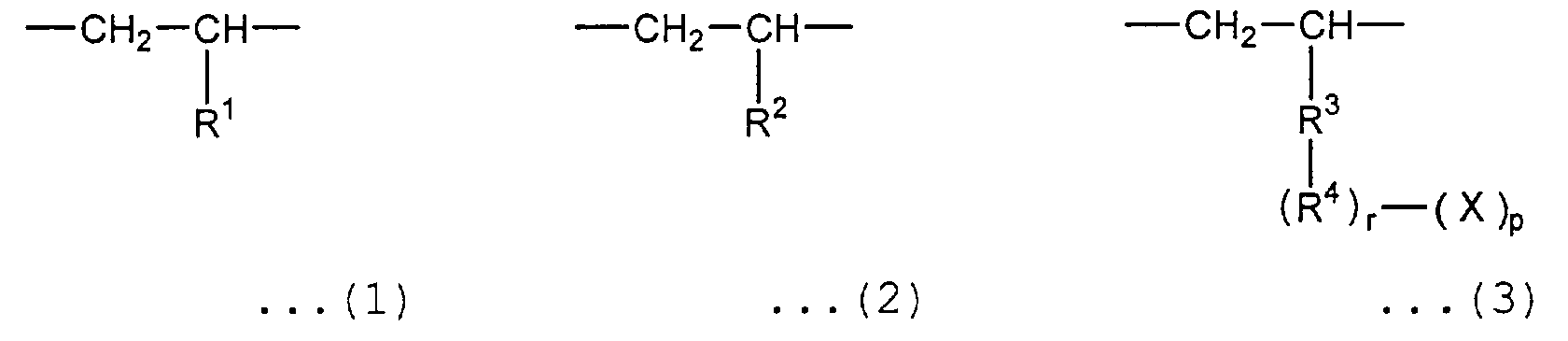
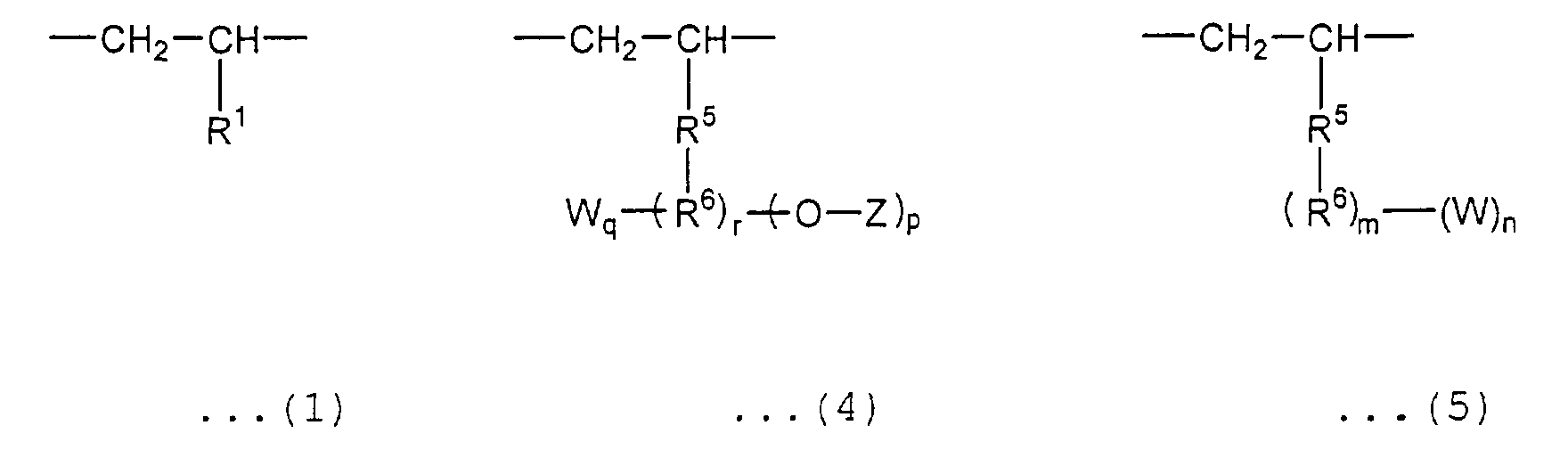
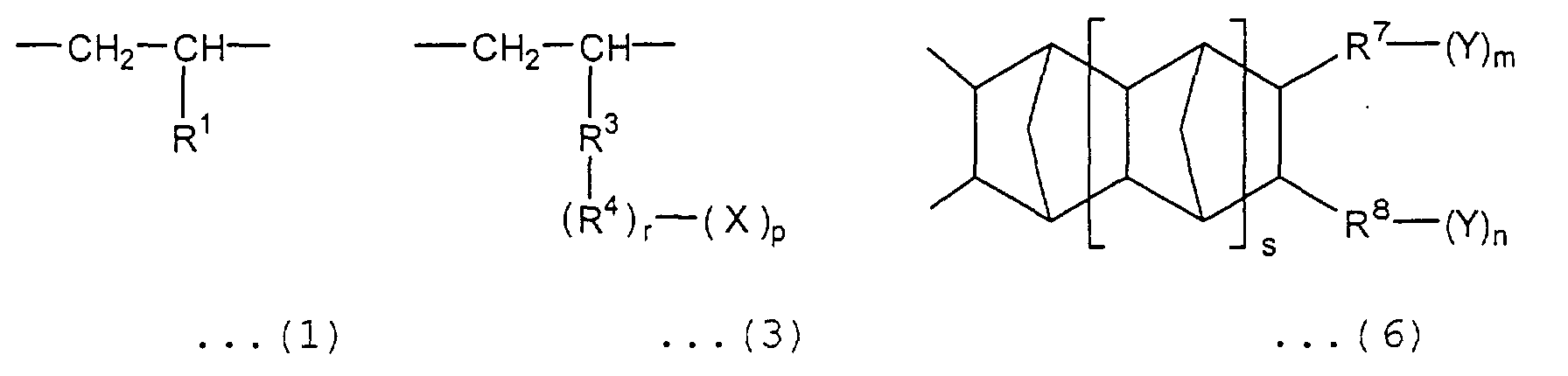
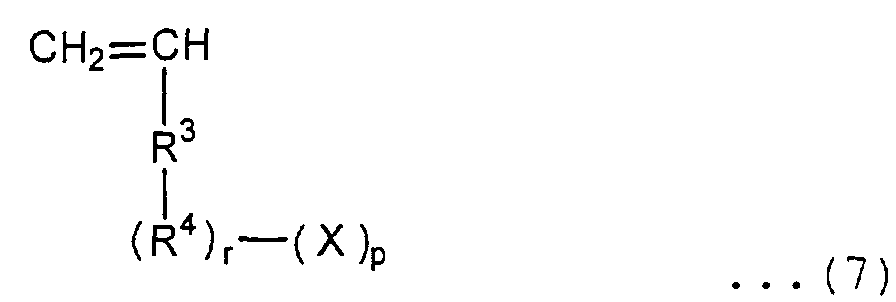
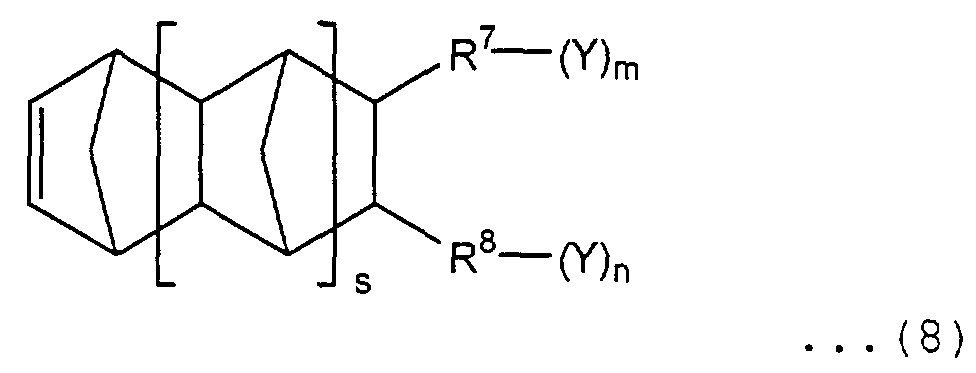


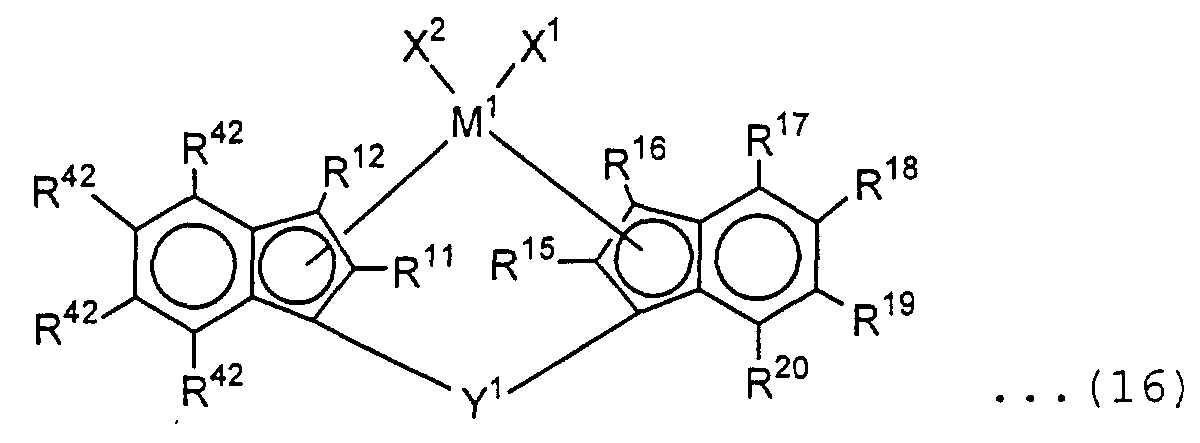


- (i) from the W portion of the copolymerized polar group-containing monomer, a Z portion is formed by anionic polymerization, ring-opening polymerization or polycondensation;
- (ii) the W portion of the copolymerized polar group-containing monomer is allowed to react with a terminal functional group of a polymer obtained by anionic polymerization, ring-opening polymerization and polycondensation.
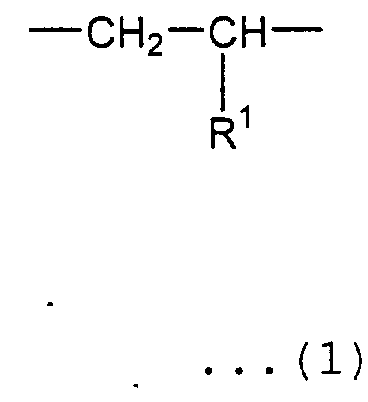

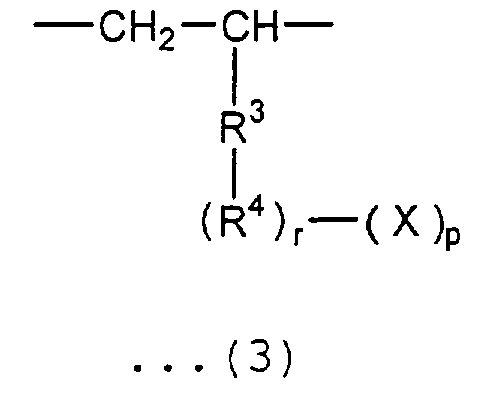
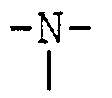

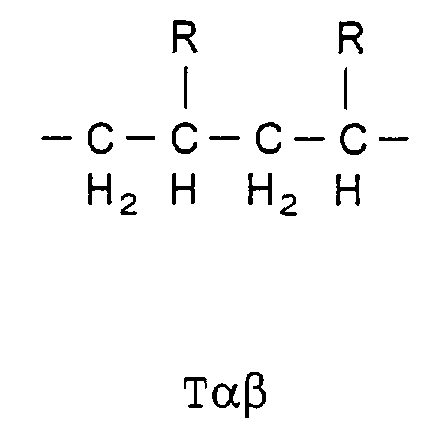
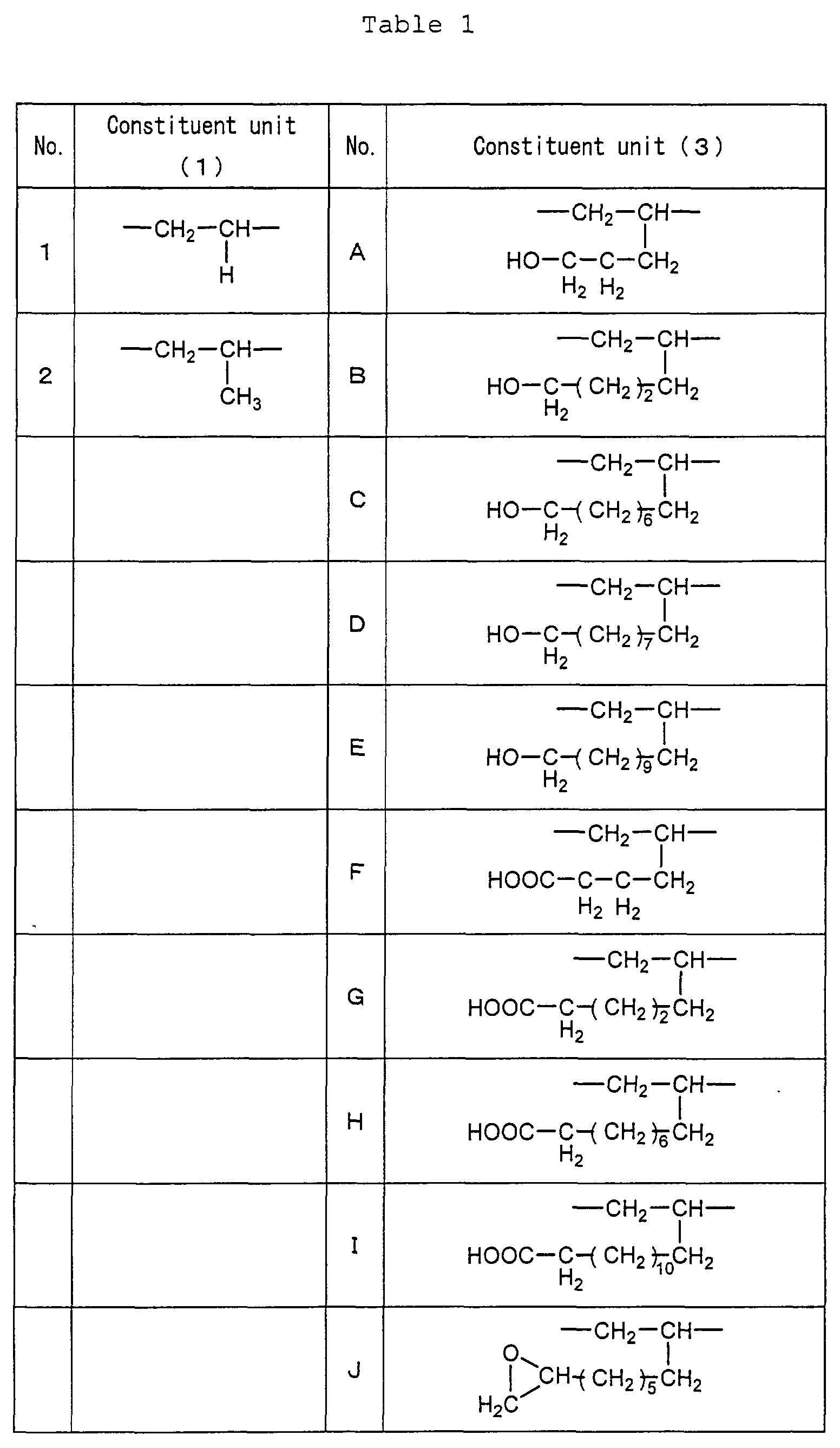


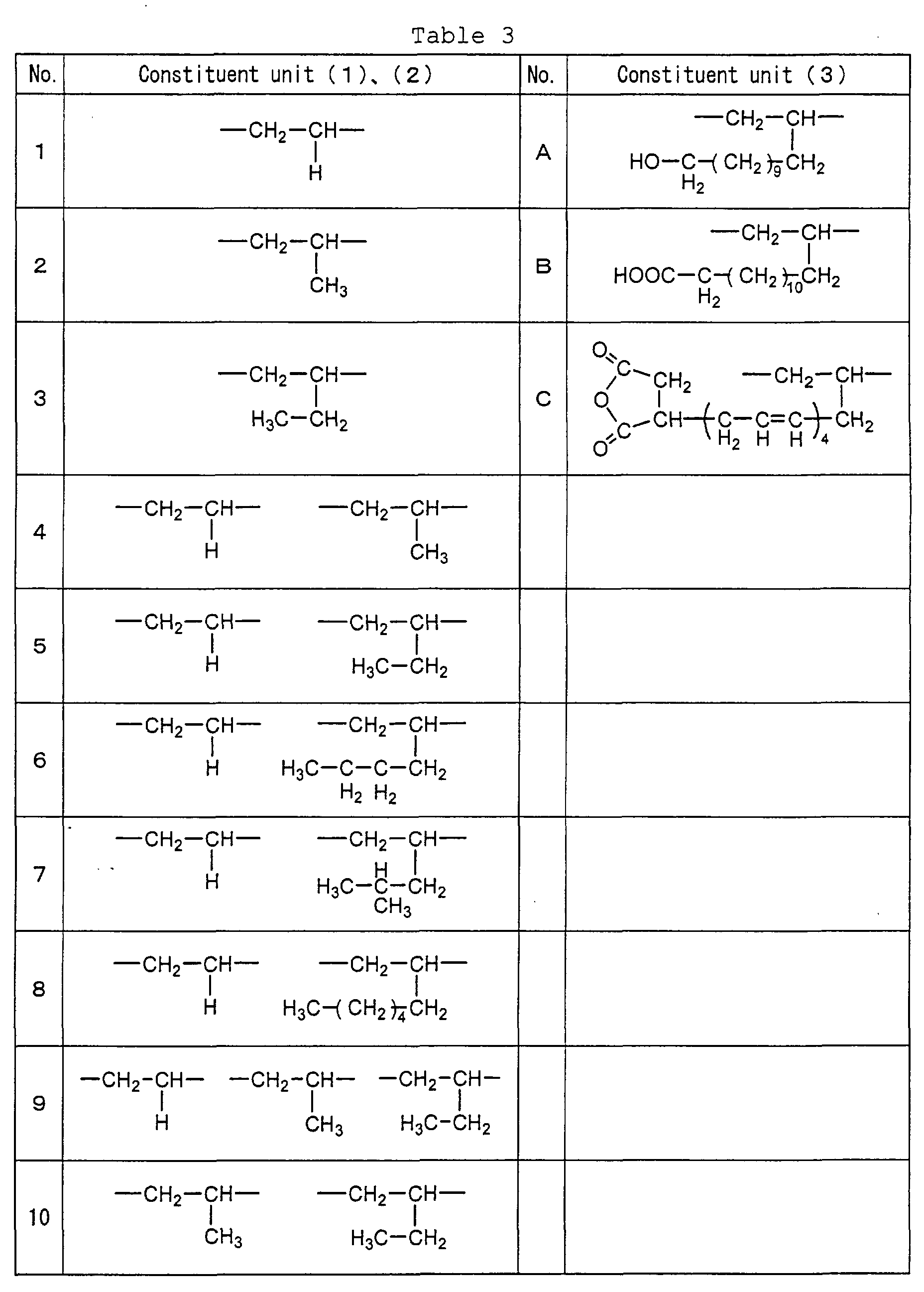
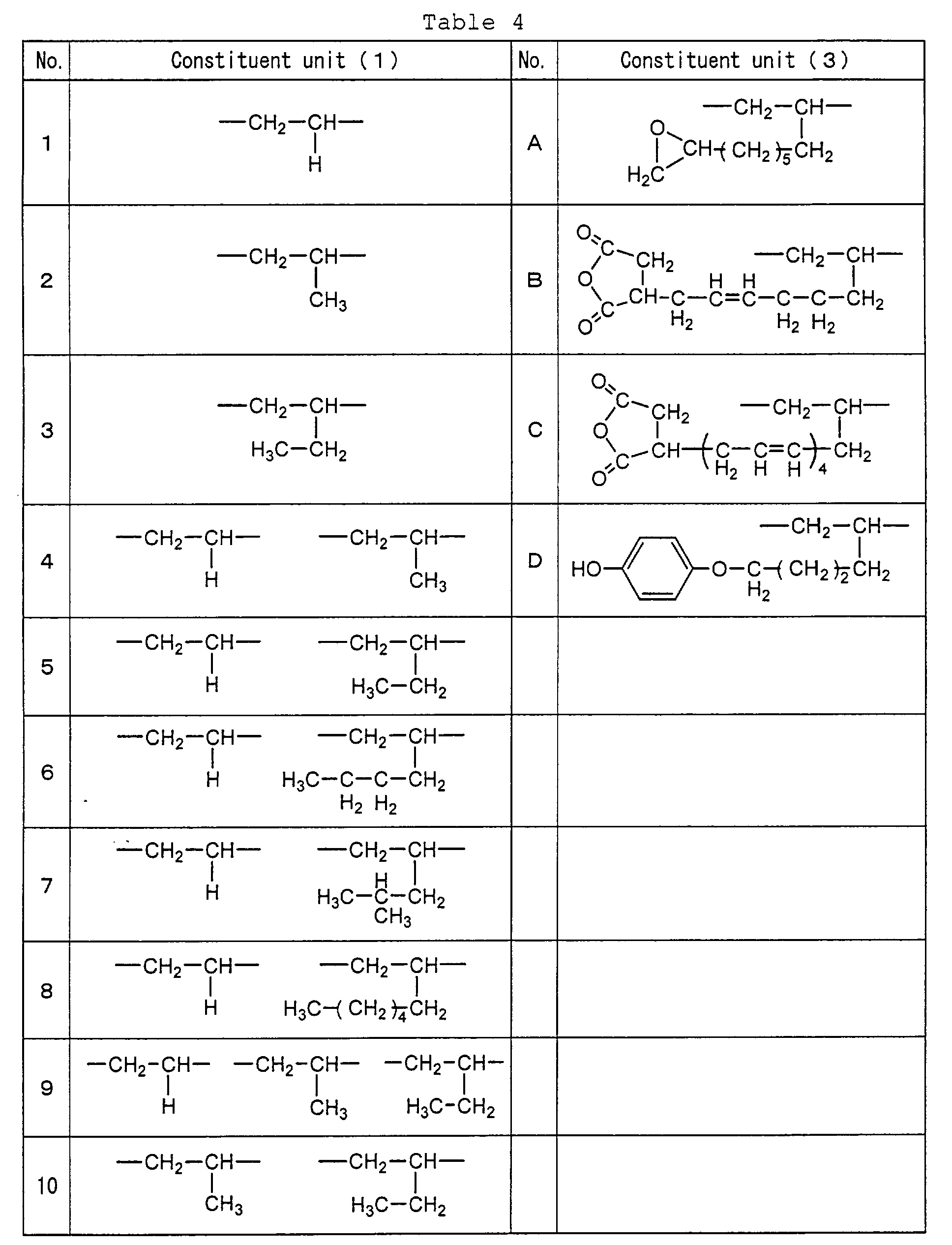
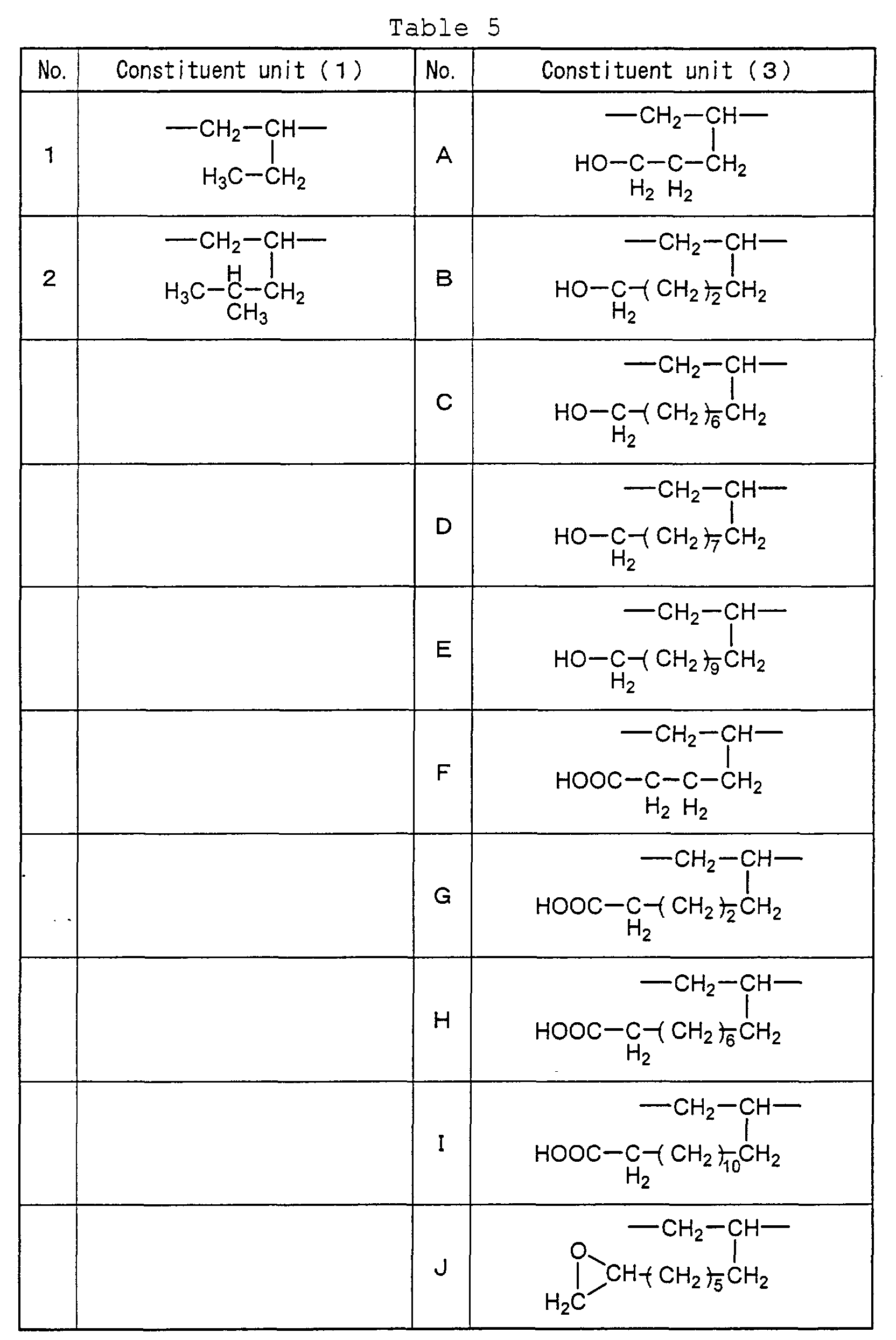


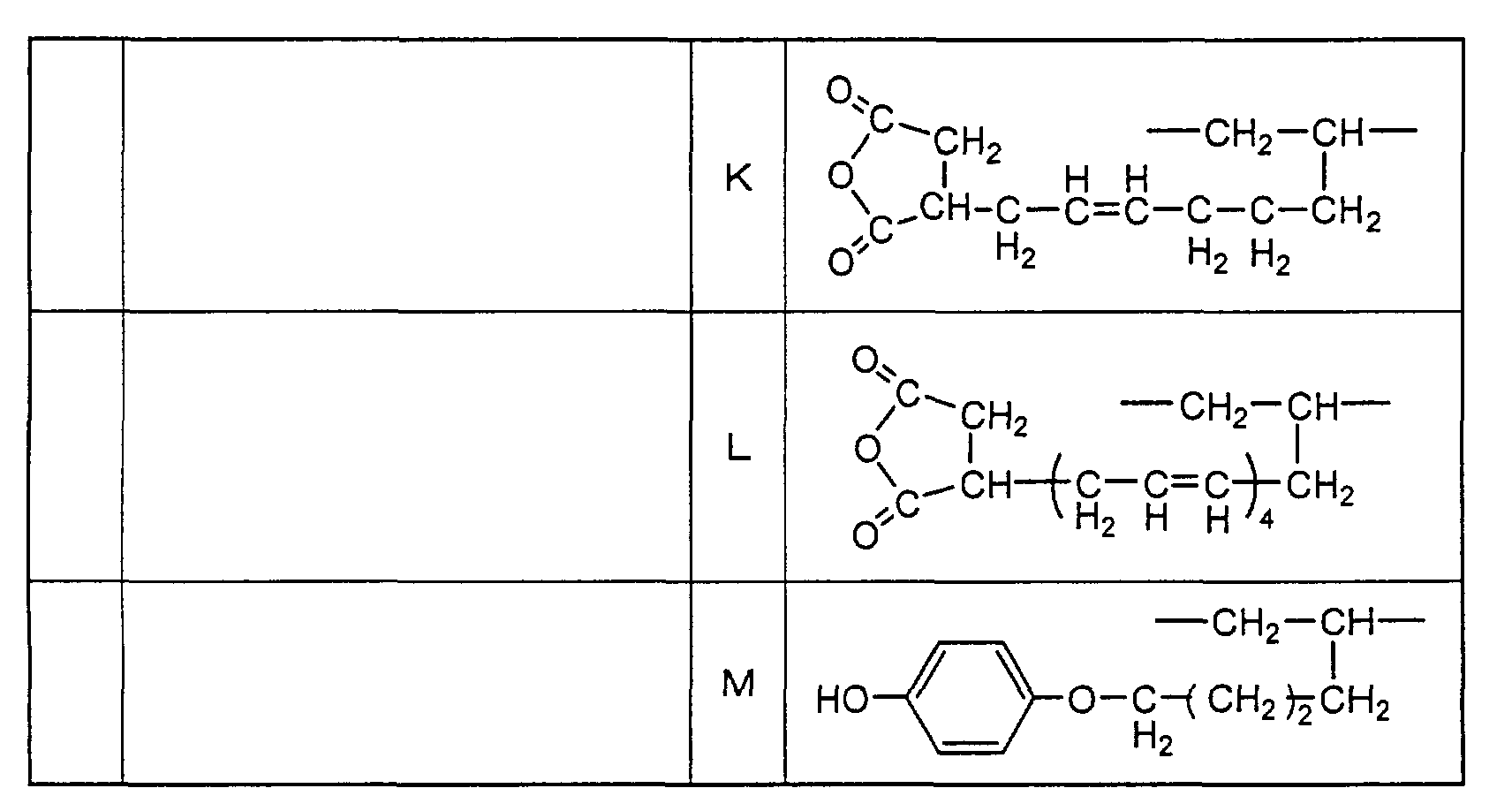

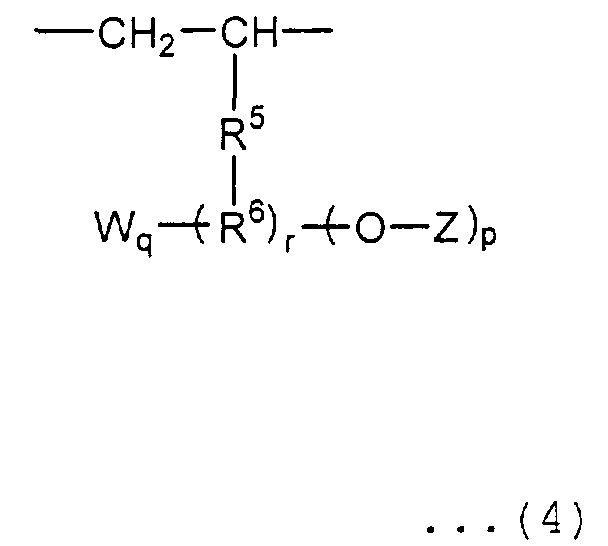

2-tertial-butyl-5-ethyl-5-vinylcarbonyloxymethyl-1,3-dioxycyclohexane-2'(2)-ylacrylate;
2-ethylpropylaminoethyl methacrylate; and
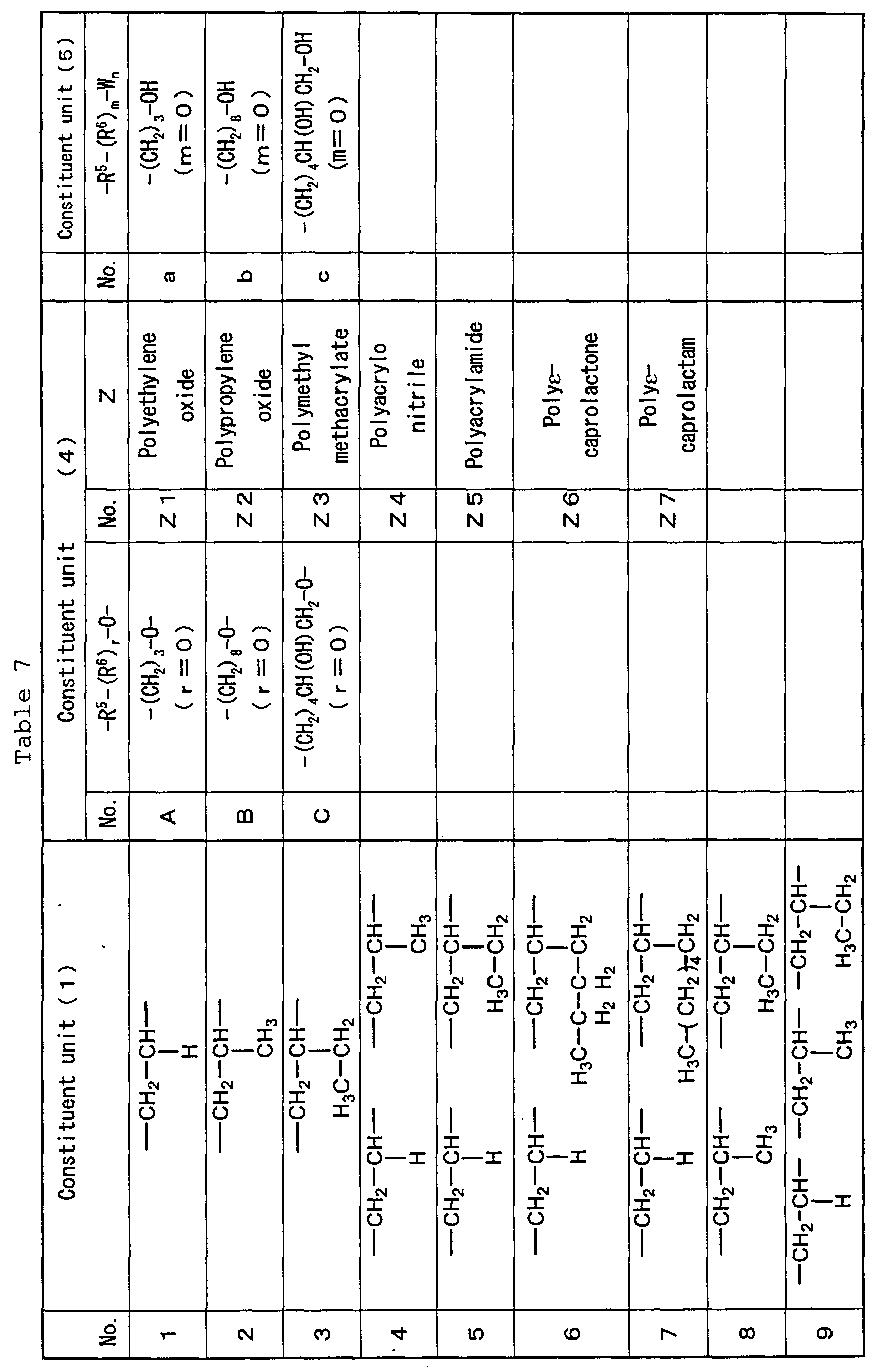
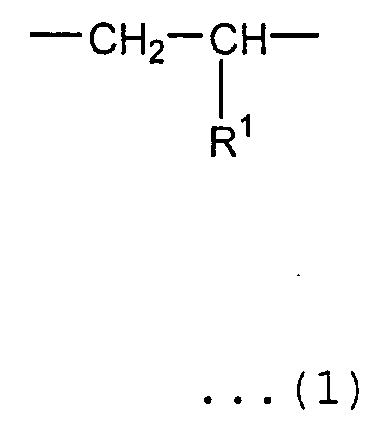
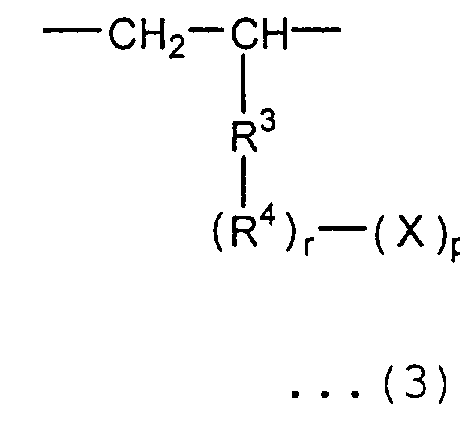
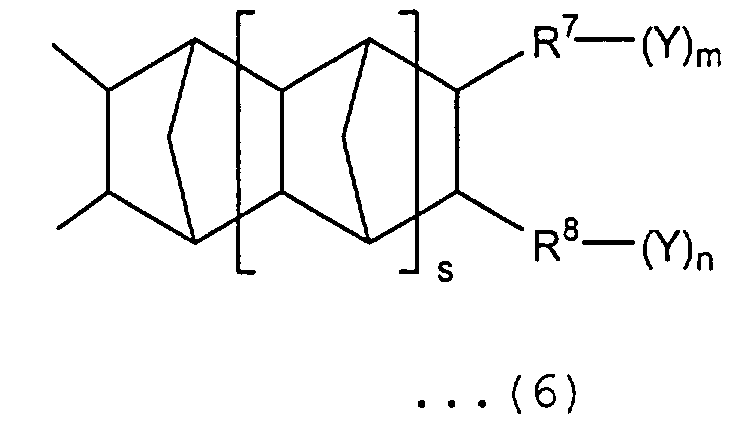
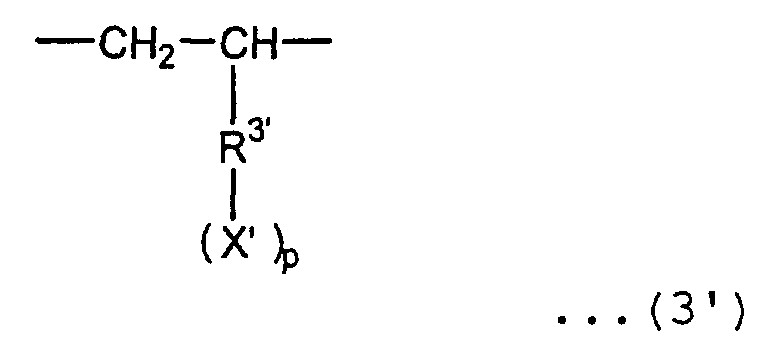
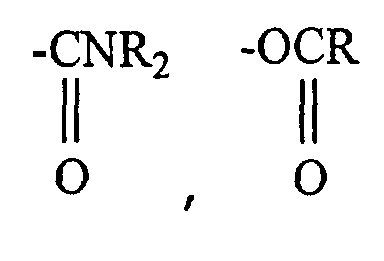


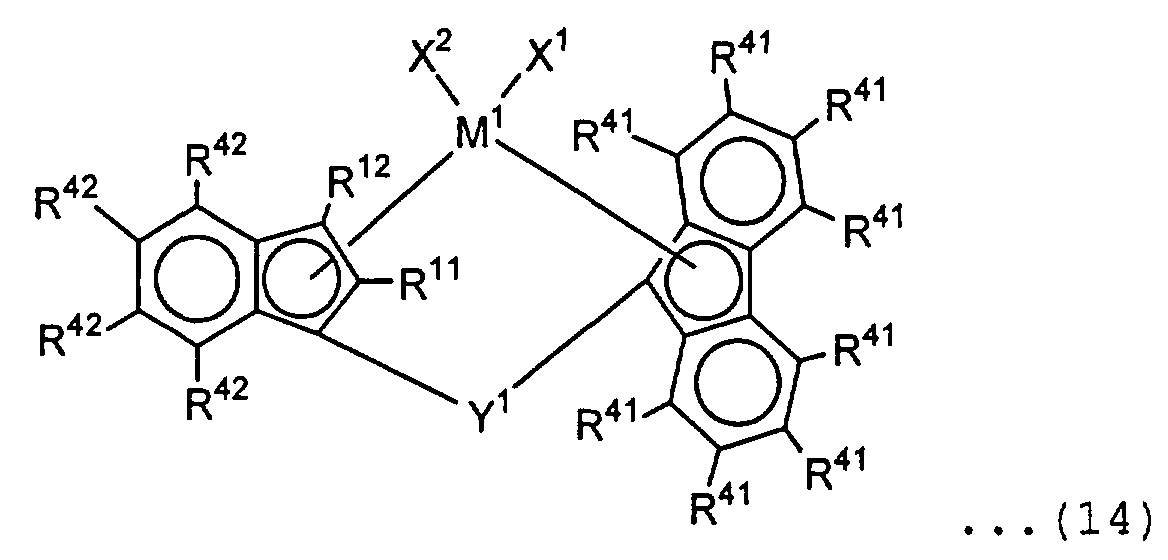

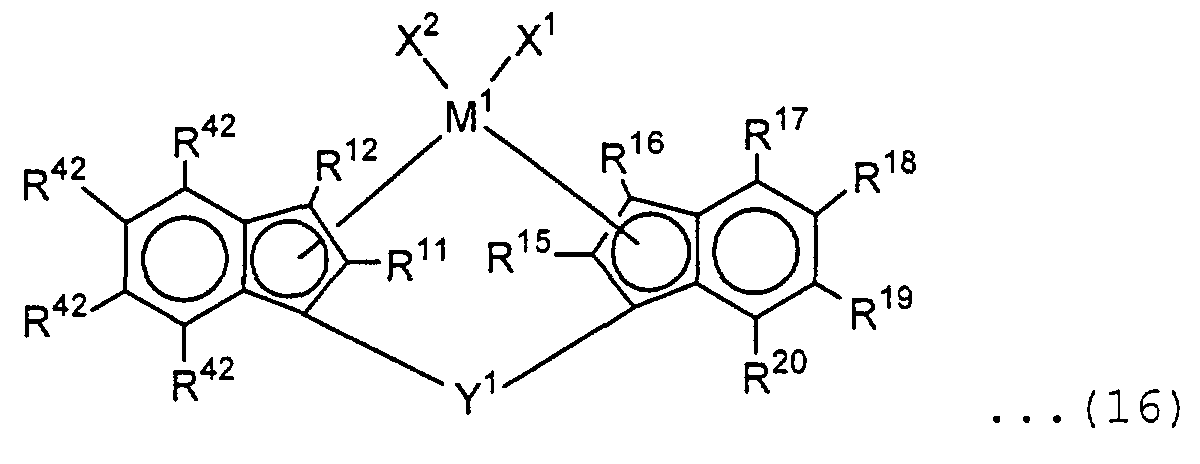

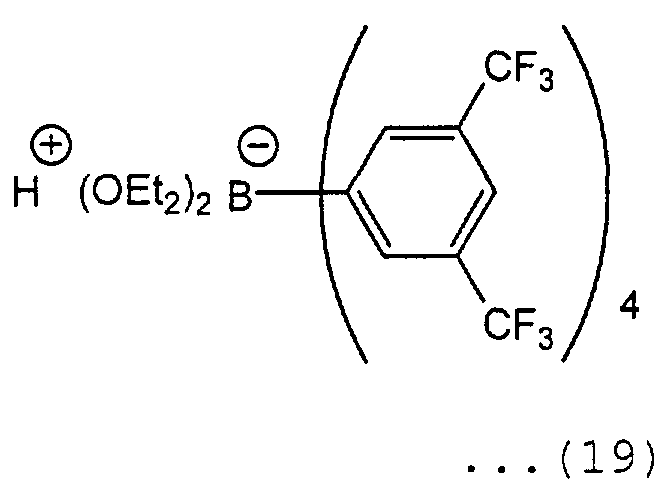
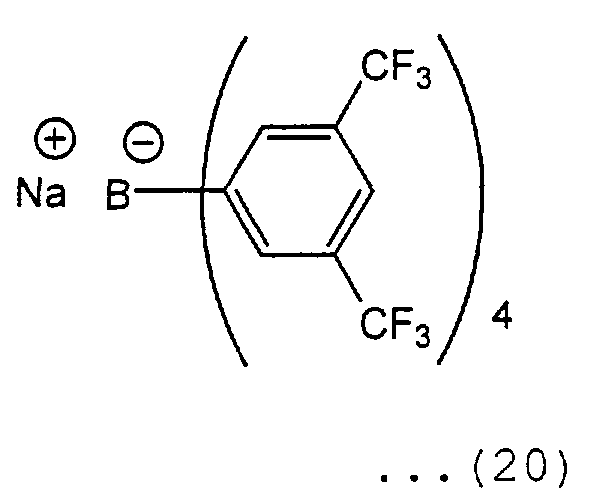
decaborane(14), 7,8-dicarbaundecaborane(13), 2,7-dicarbaundecaborane(13), undecahydrido-7,8-dimethyl-7,8-dicarbaundecaborane, dodecahydrido-11-methyl-2,7-dicarbaundecaborane, tri(n-butyl)ammonium-6-carbadecaborate(14), tri(n-butyl)ammonium-6-carbadecaborate(12), tri(n-butyl)ammonium-7-carbaundecaborate(13), tri(n-butyl)ammonium-7,8-dicarbaundecaborate(12), tri(n-butyl)ammonium-2,9-dicarbaundecaborate(12), tri(n-butyl)ammoniumdodecahydrido-8-methyl-7,9-dicarbaundecaborate, tri(n-butyl)ammoniumundecahydrido-8-ethyl-7,9-dicarbaundecaborate, tri(n-butyl)ammoniumundecahydrido-8-butyl-7,9-dicarbaundecaborate, tri(n-butyl)ammoniumundecahydrido-8-allyl-7,9-dicarbaundecaborate, tri(n-butyl)ammoniumundecahydrido-9-trimethylsilyl-7,8-dicarbaundecaborate and tri(n-butyl)ammoniumundecahydrido-4,6-dibromo-7-carbaundecaborate.
4-carbanonaborane(14), 1, 3-dicarbanonaborane(13), 6,9-dicarbadecaborane(14), dodecahydrido-1-phenyl-1,3-dicarbanonaborane, dodecahydrido-1-methyl-1,3-dicarbanonaborane and undecahydrido-1,3-dimethyl-1,3-dicarbanonaborane.
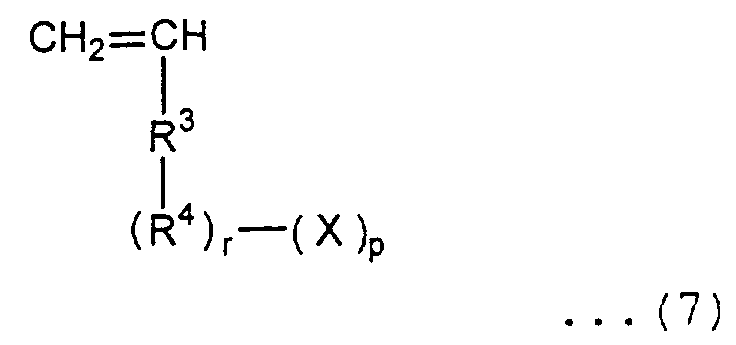
11-dodecene amine;
10-undecene amide and 11-dodecene amide;


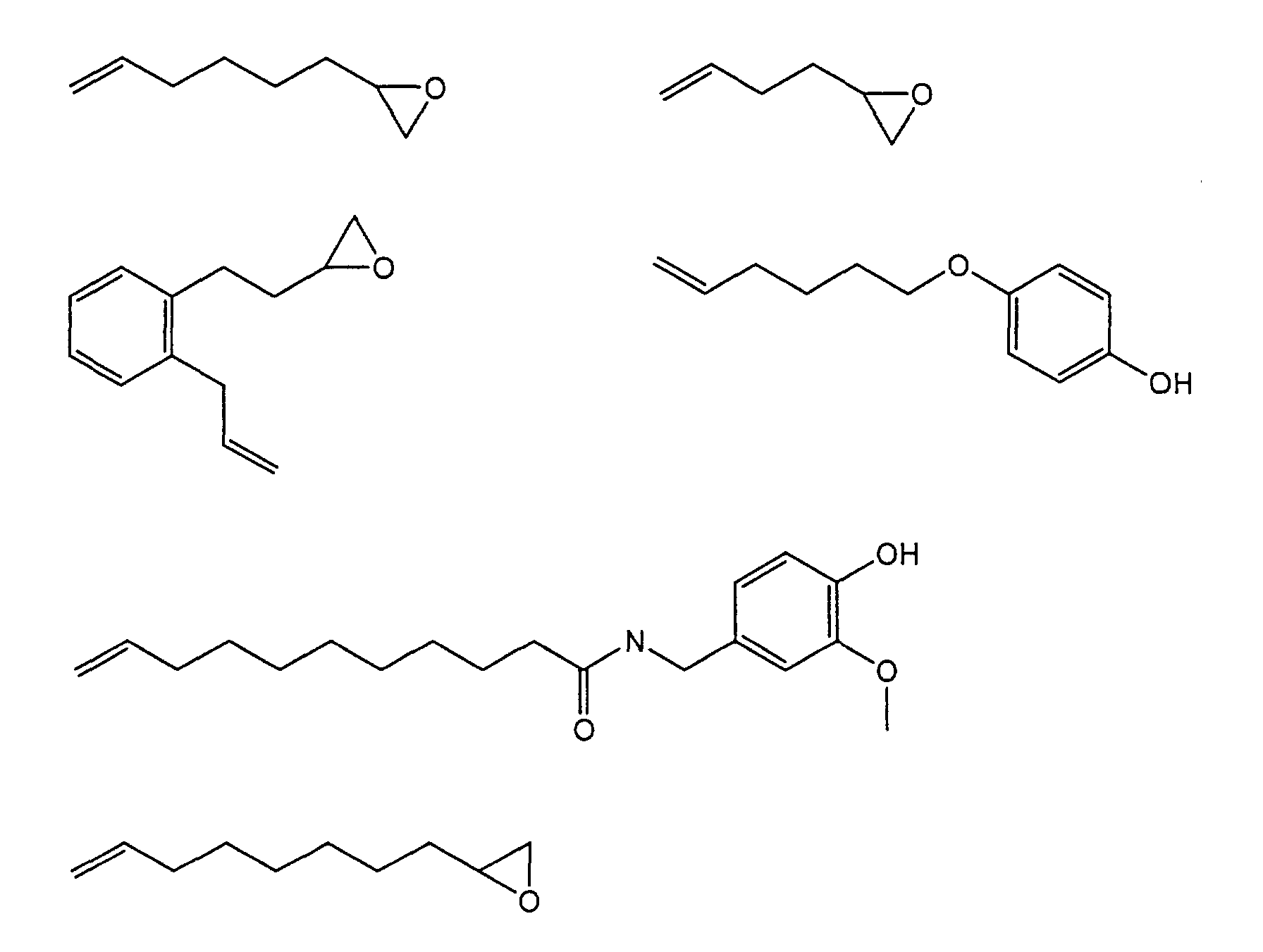

9,10,11-trimethoxy-1-undecene.


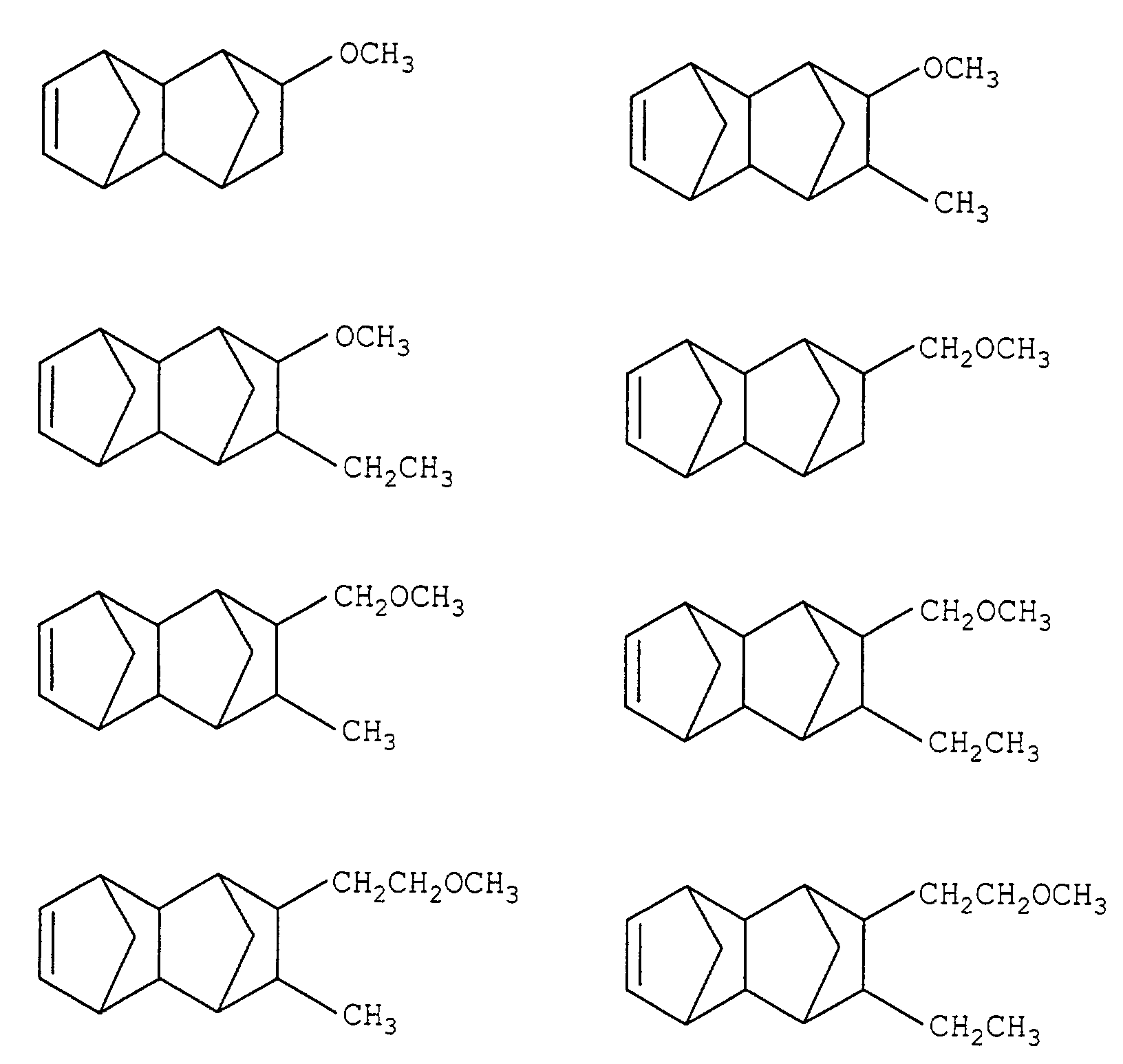
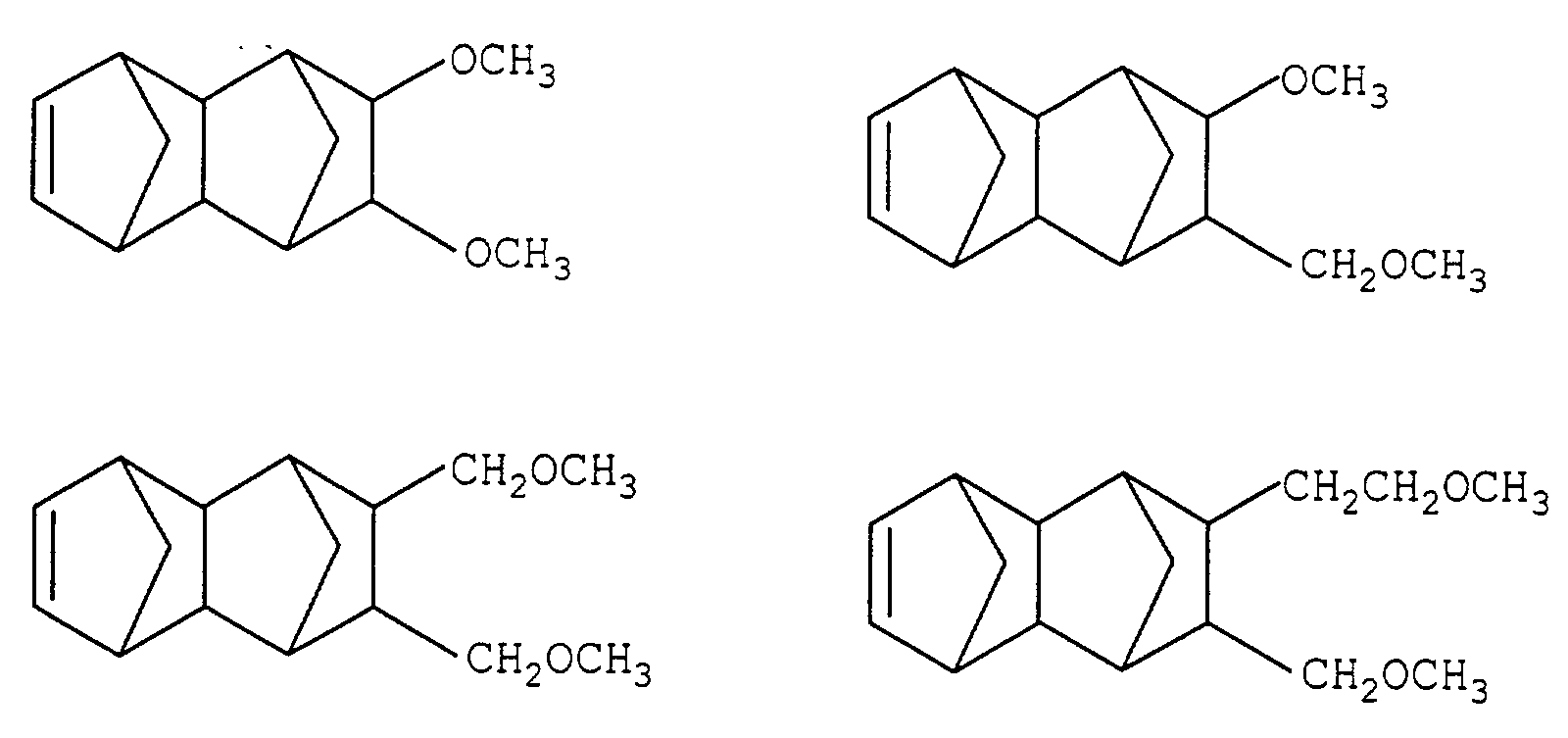
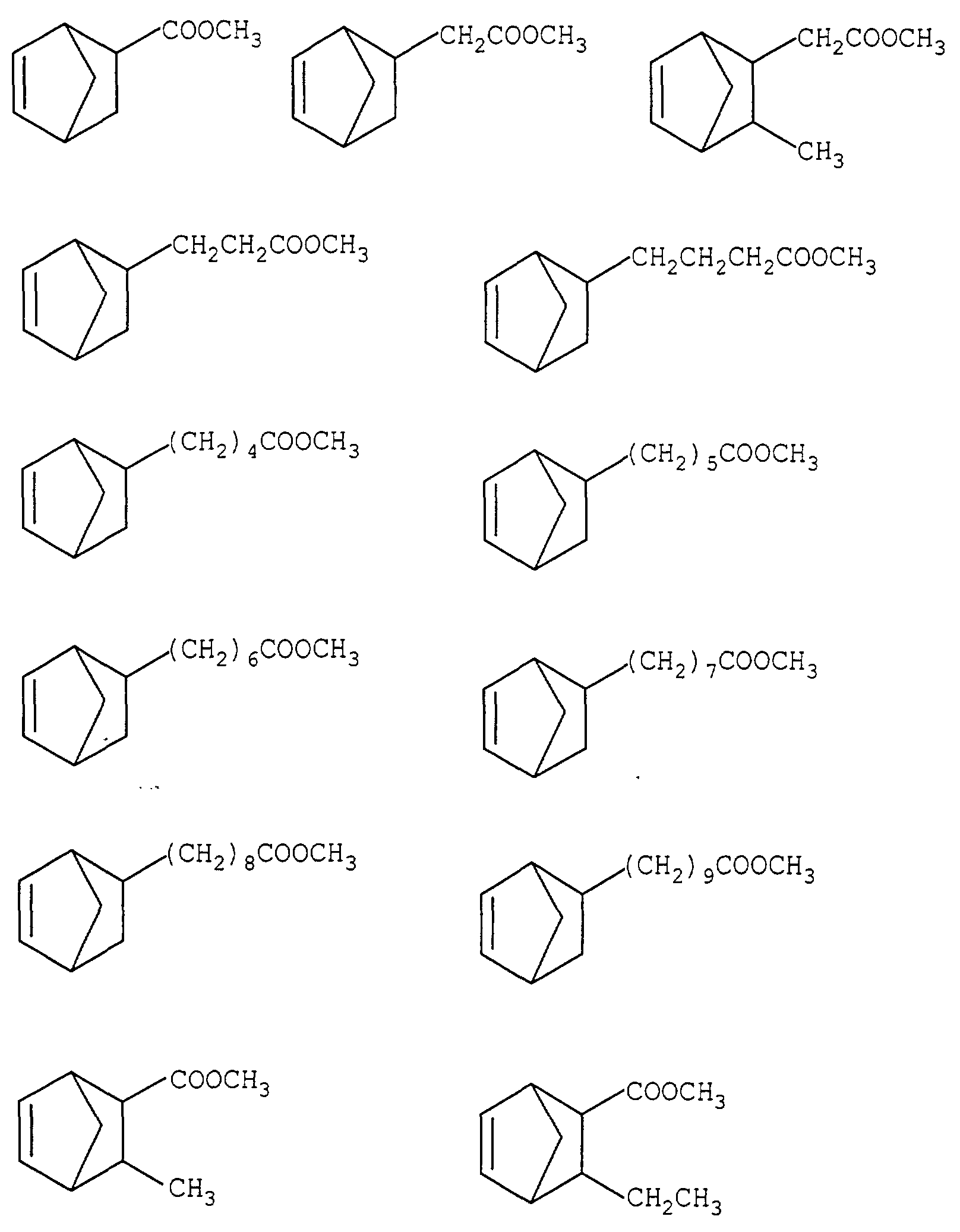
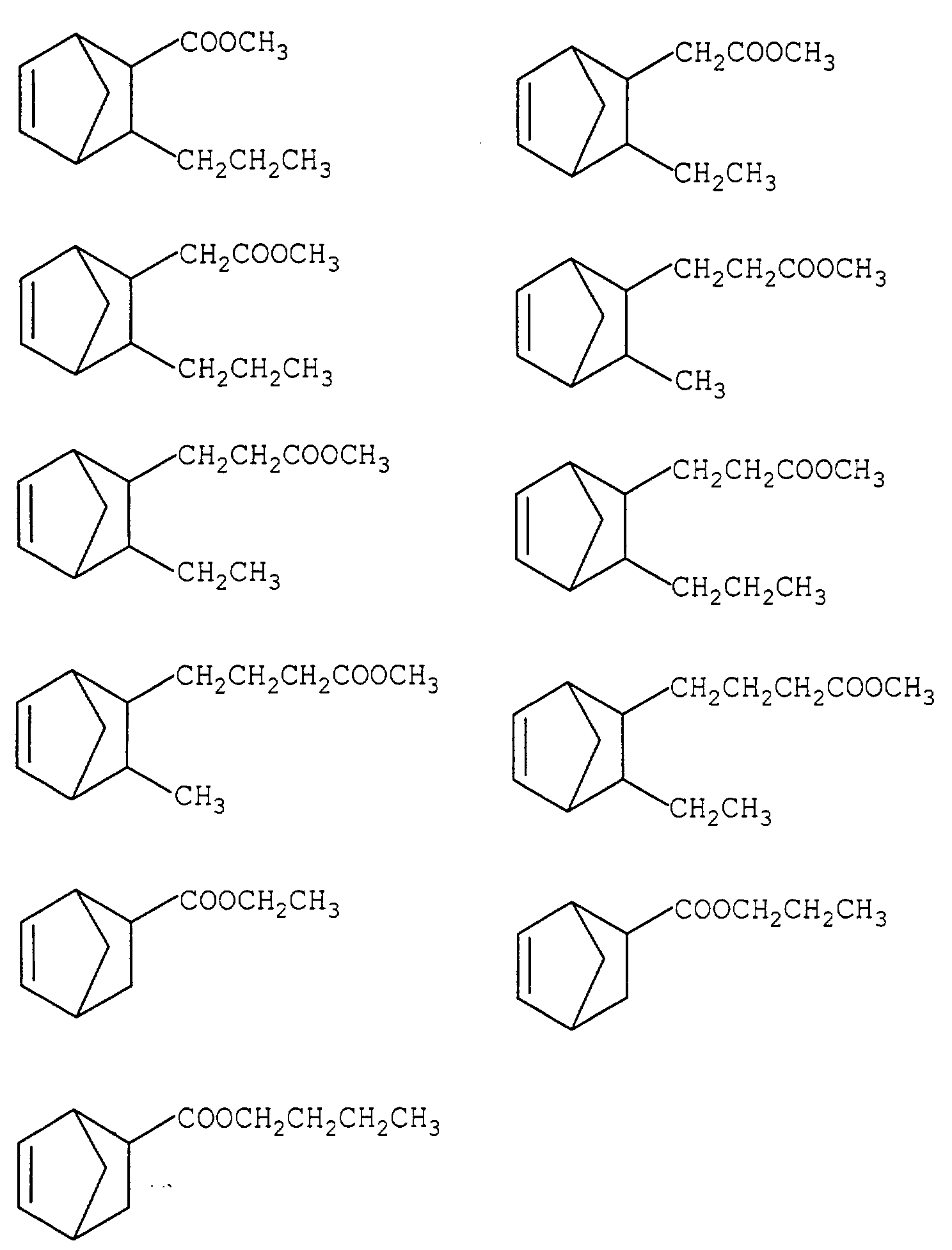

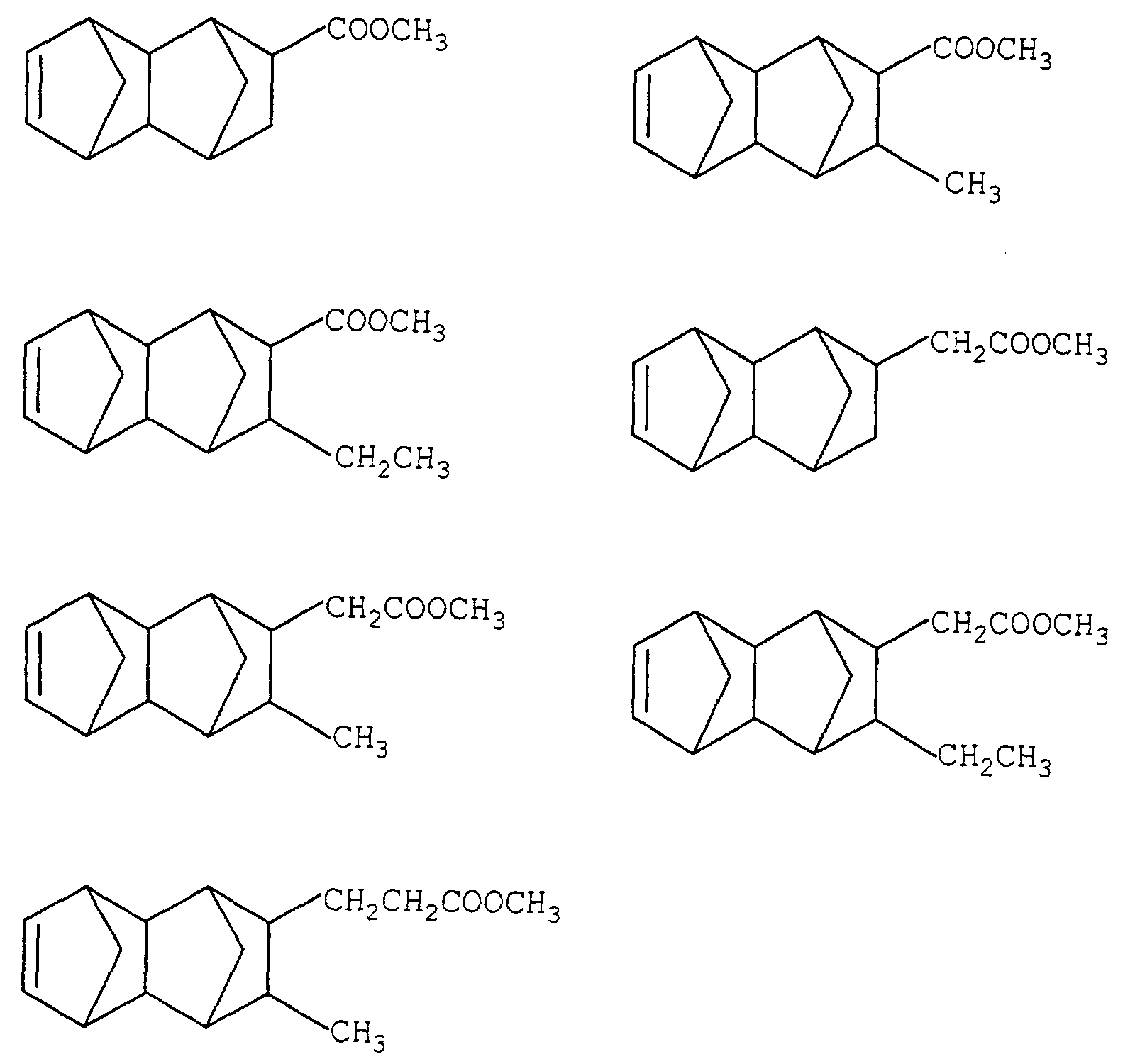


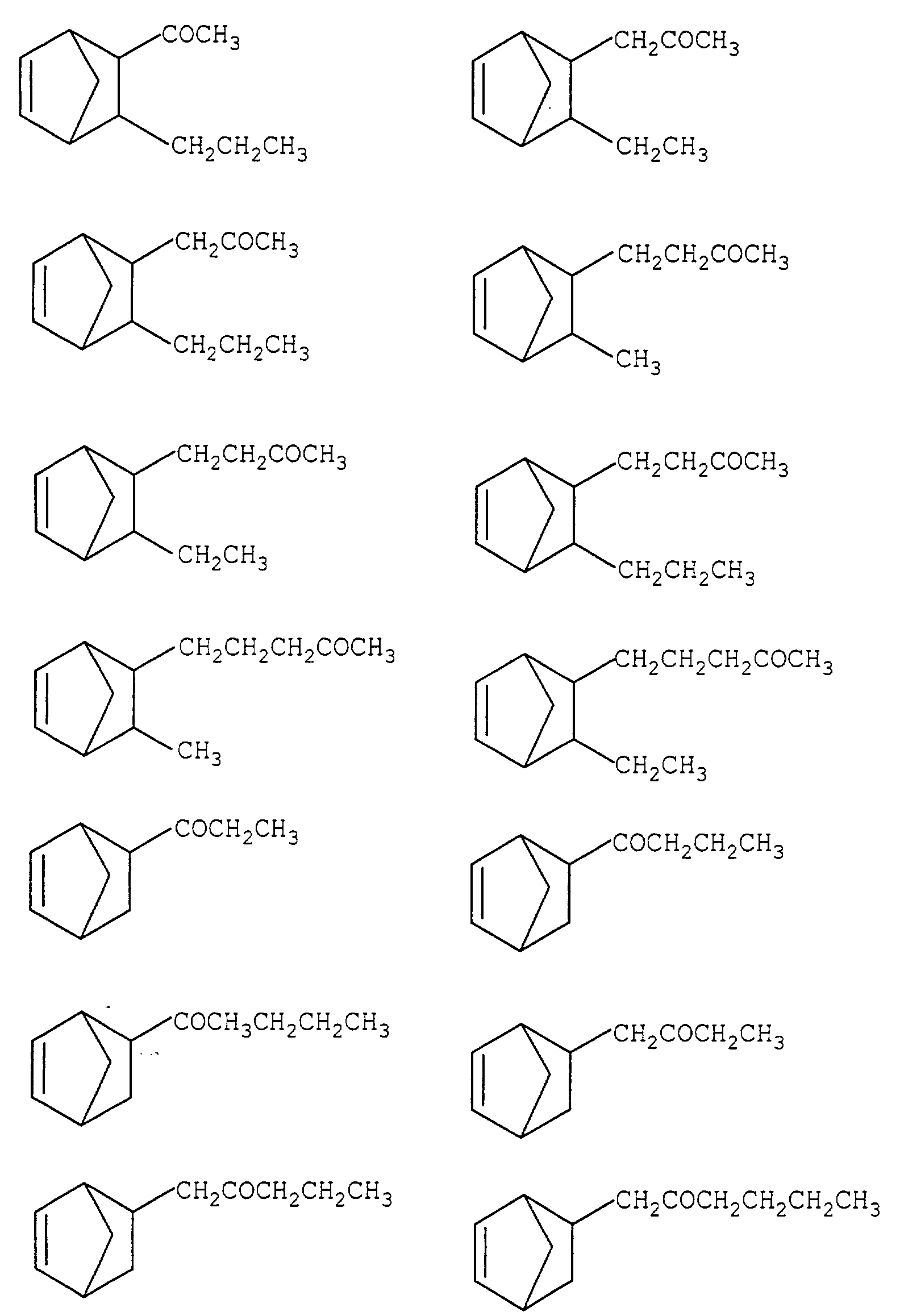

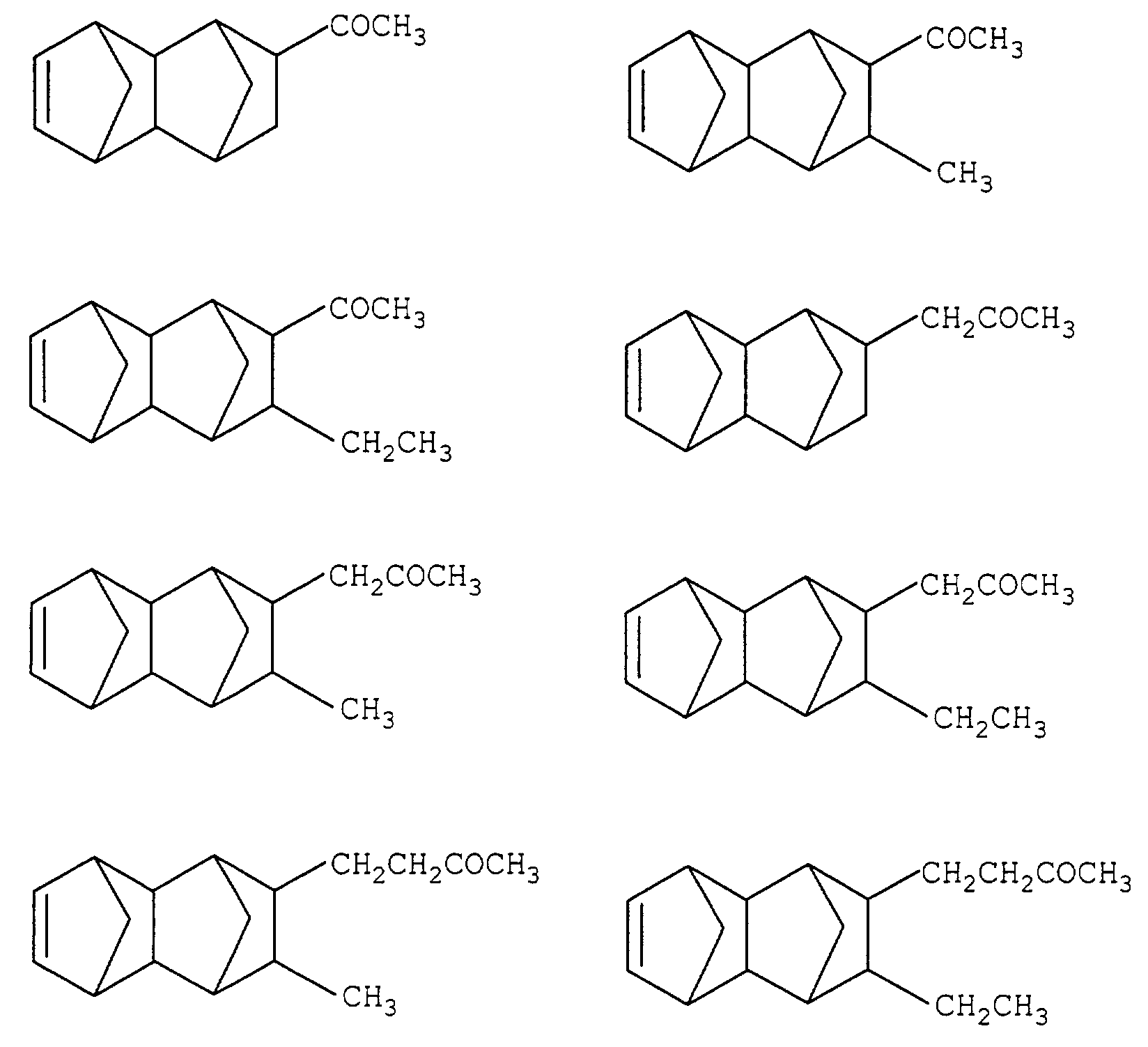
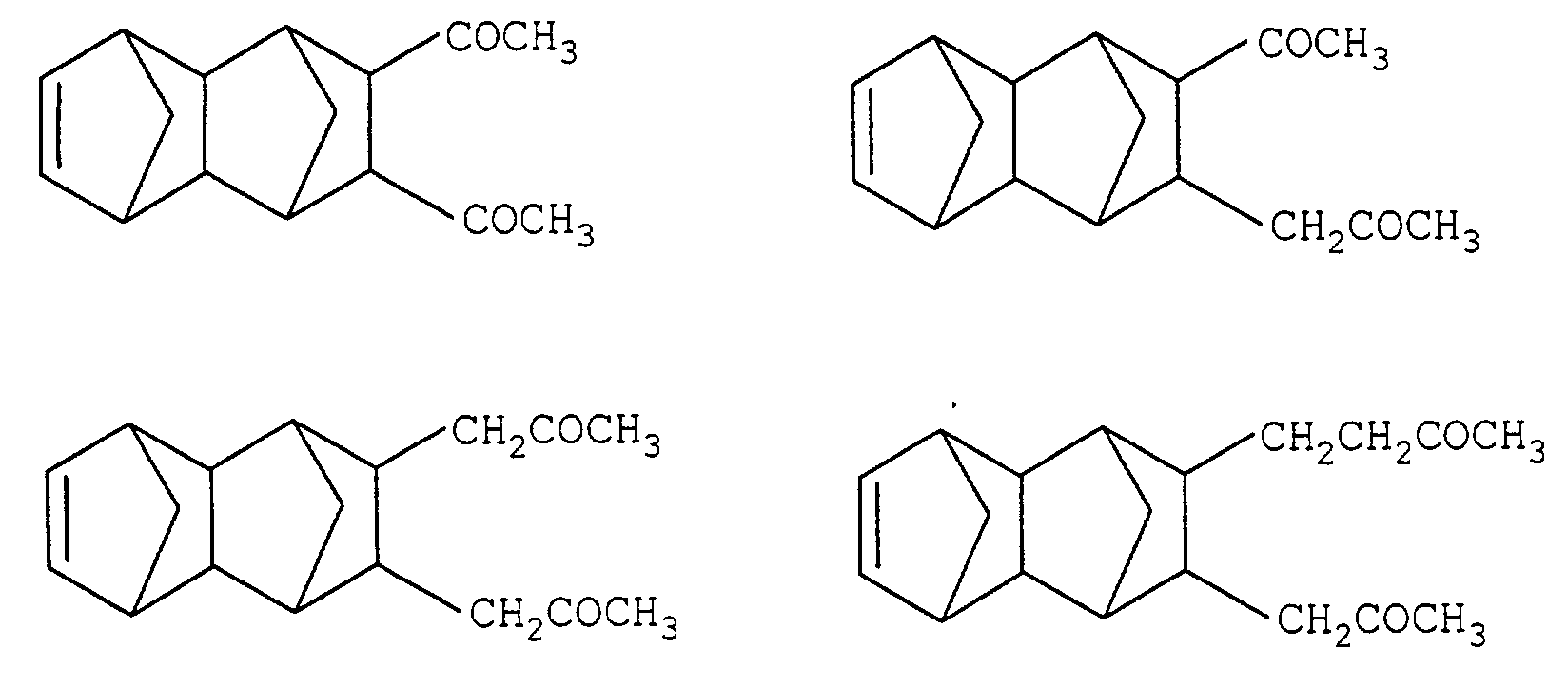
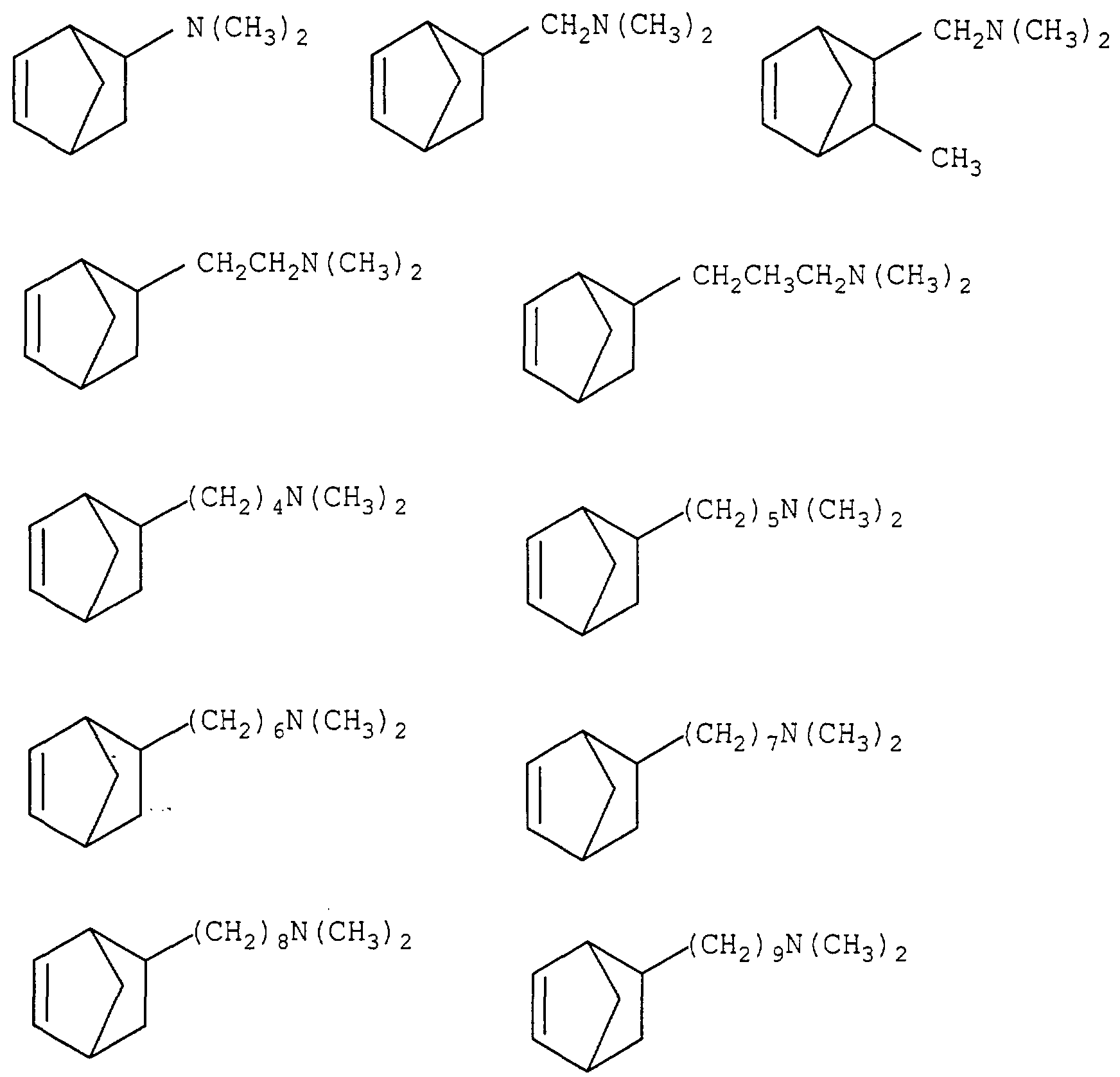


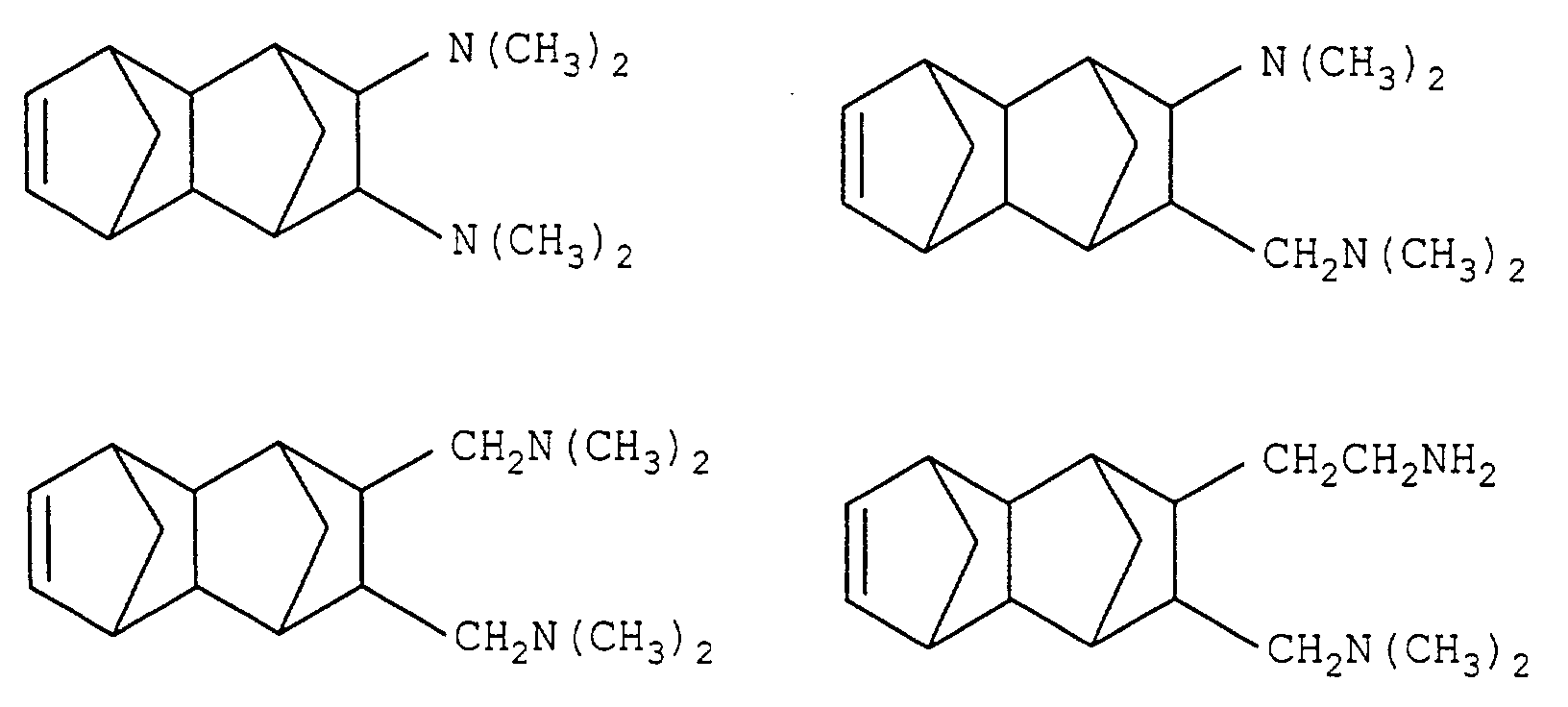
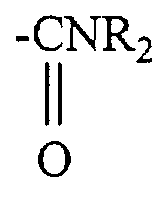

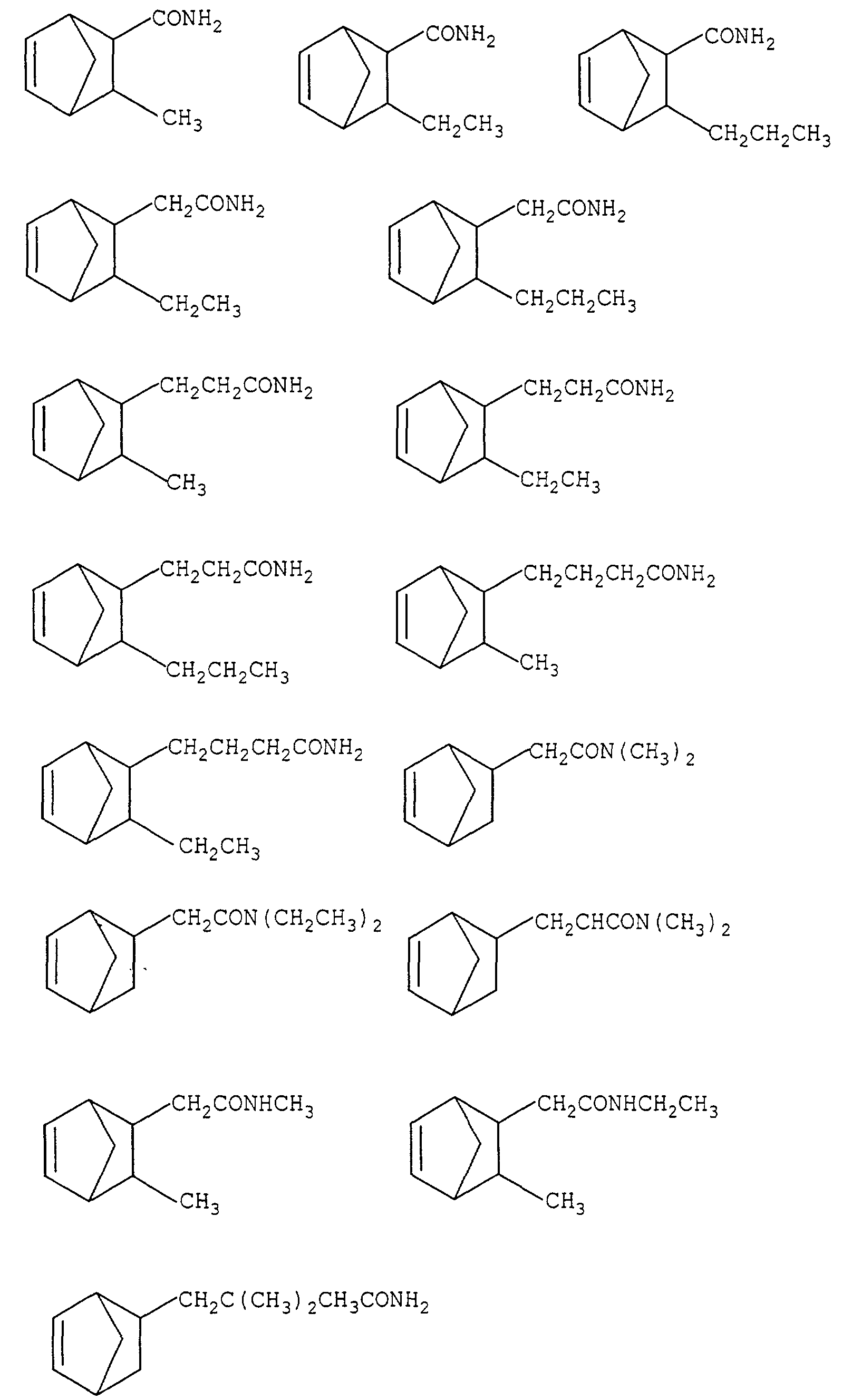
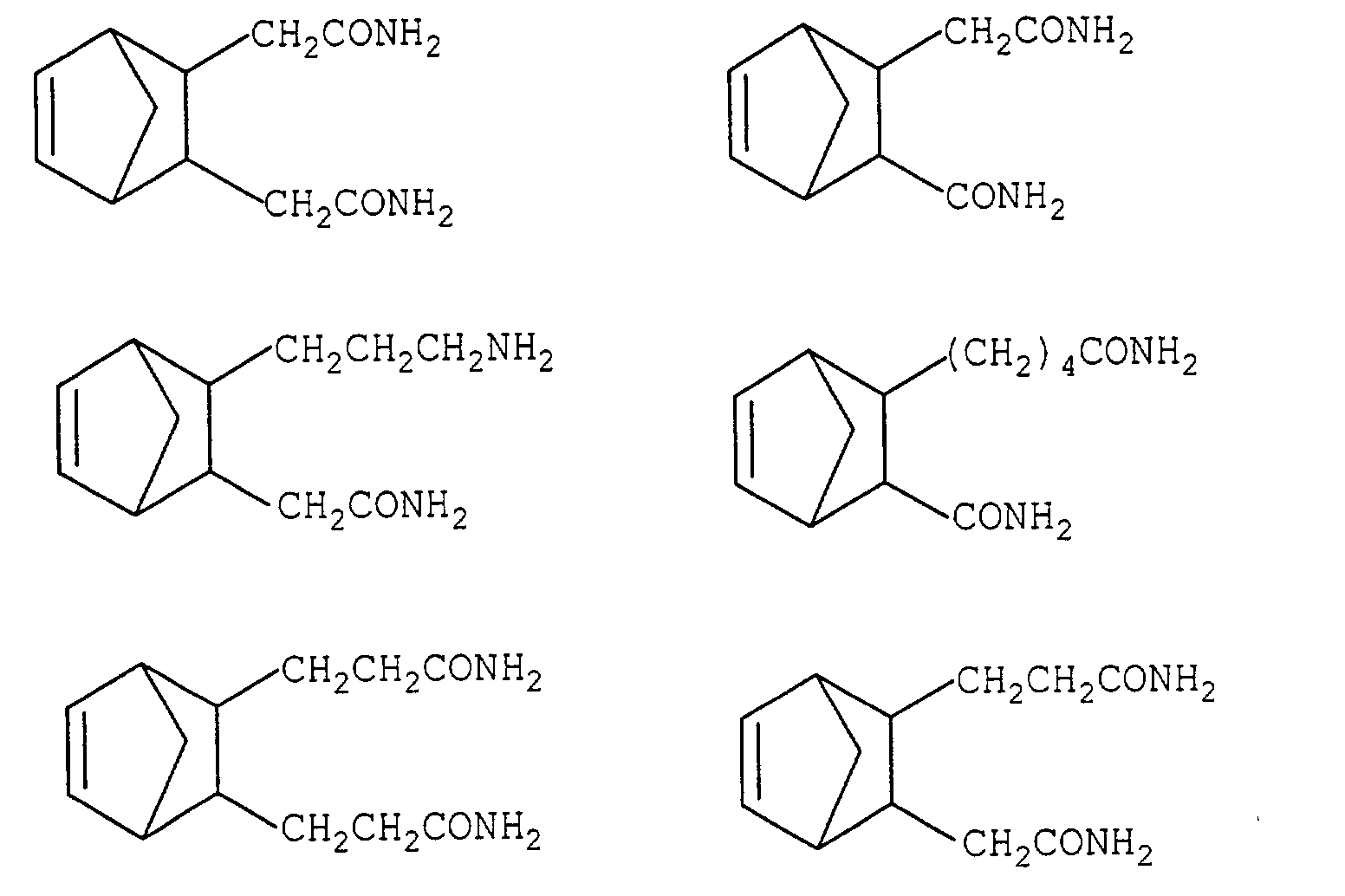
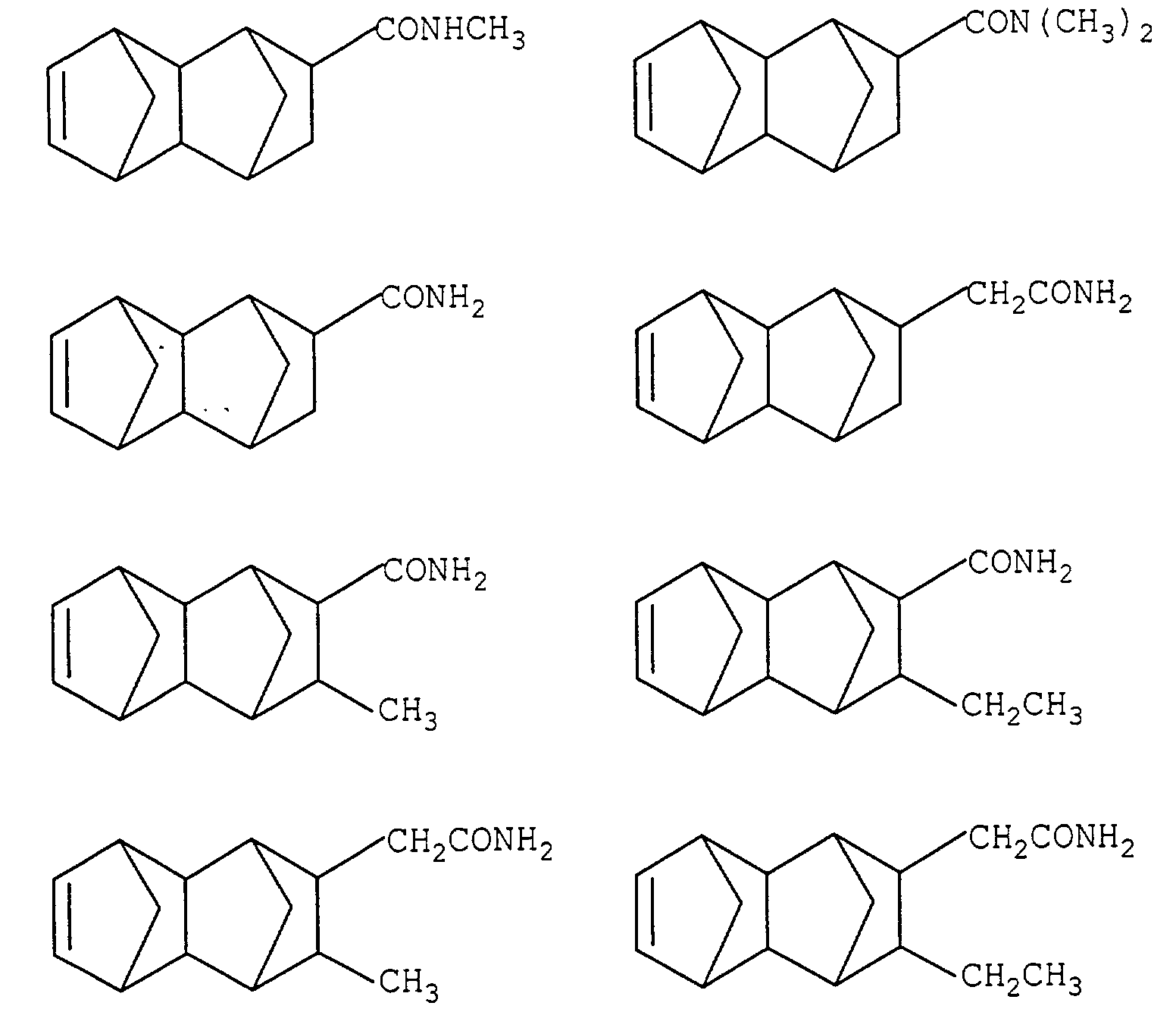

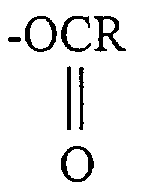
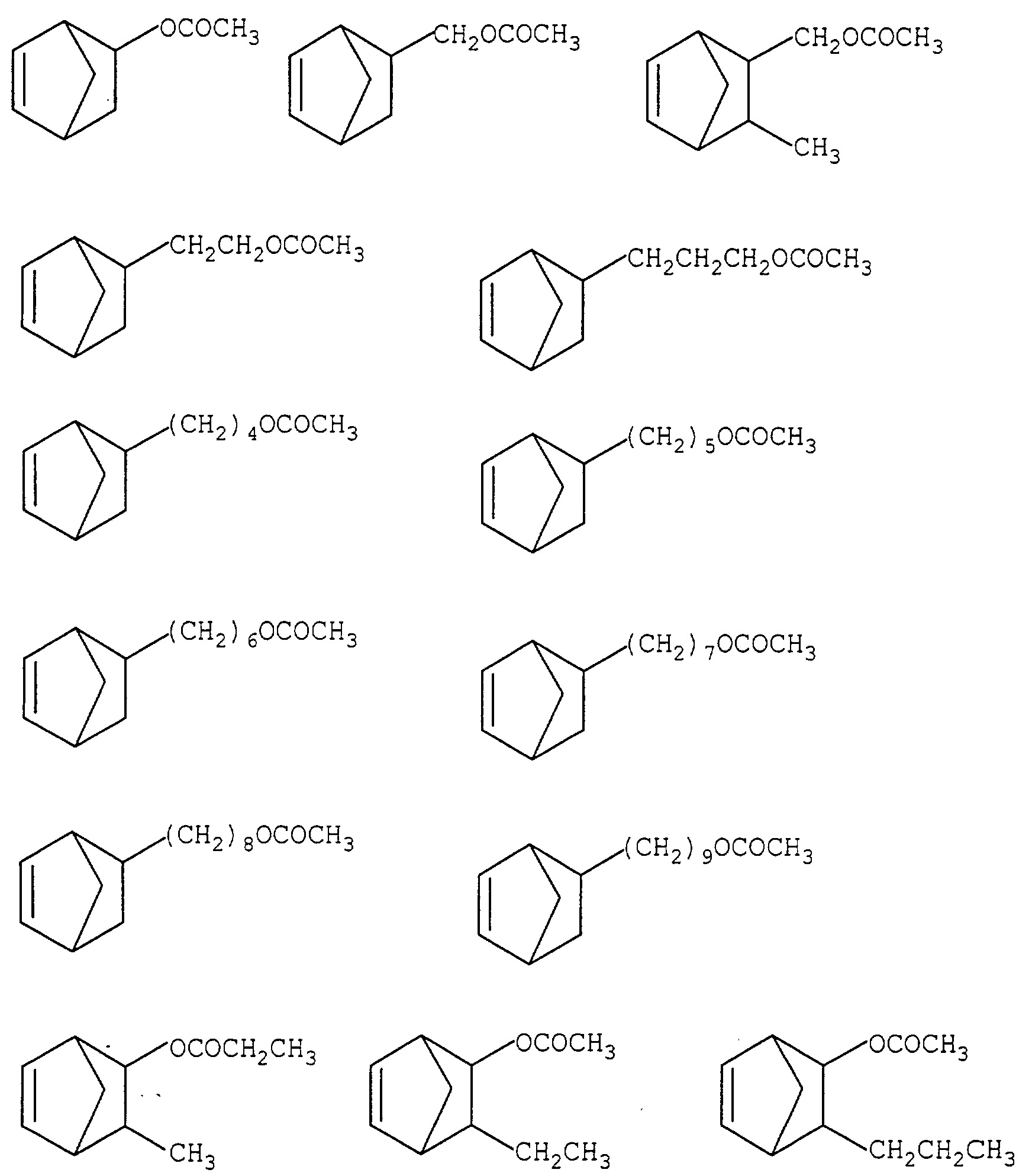
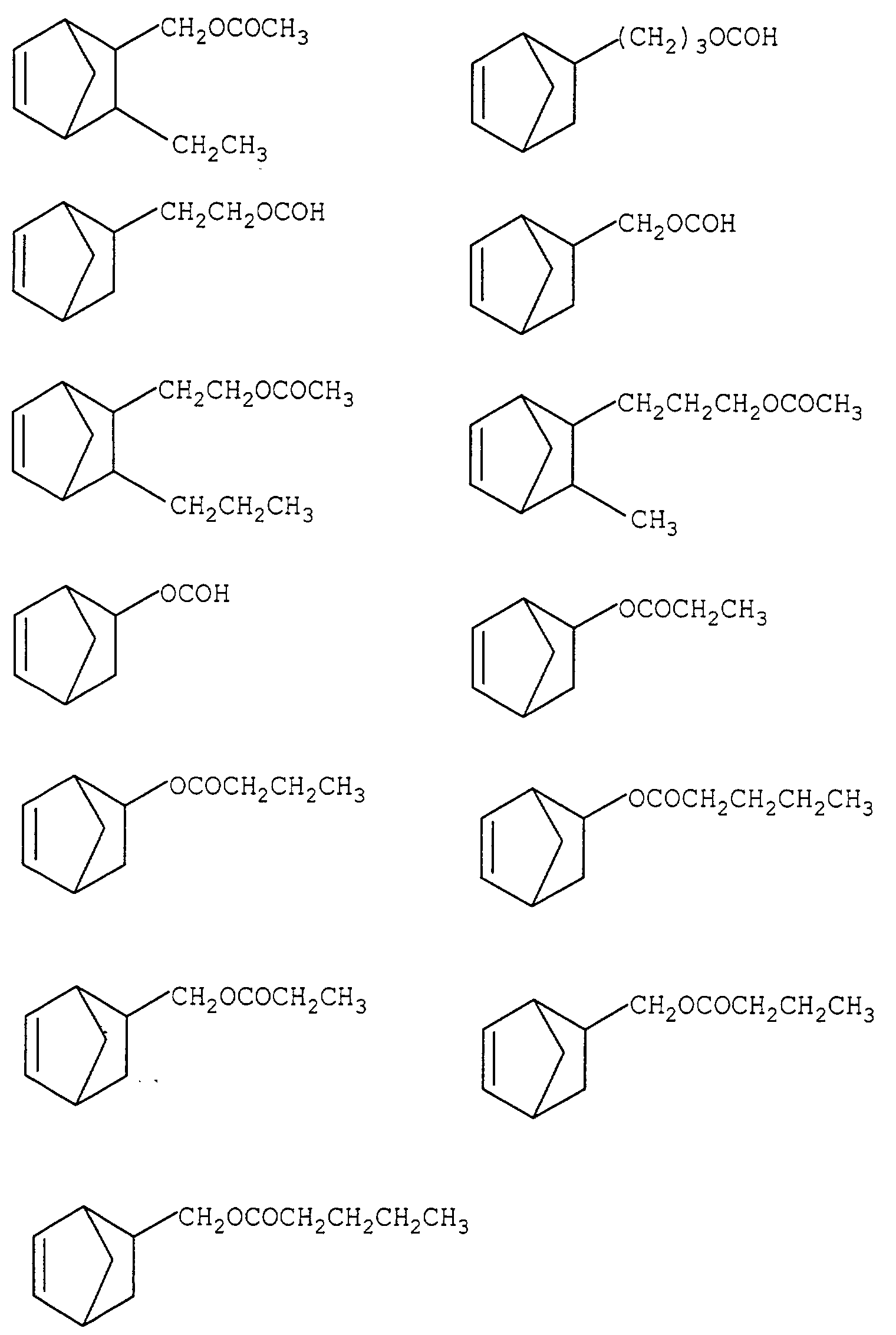


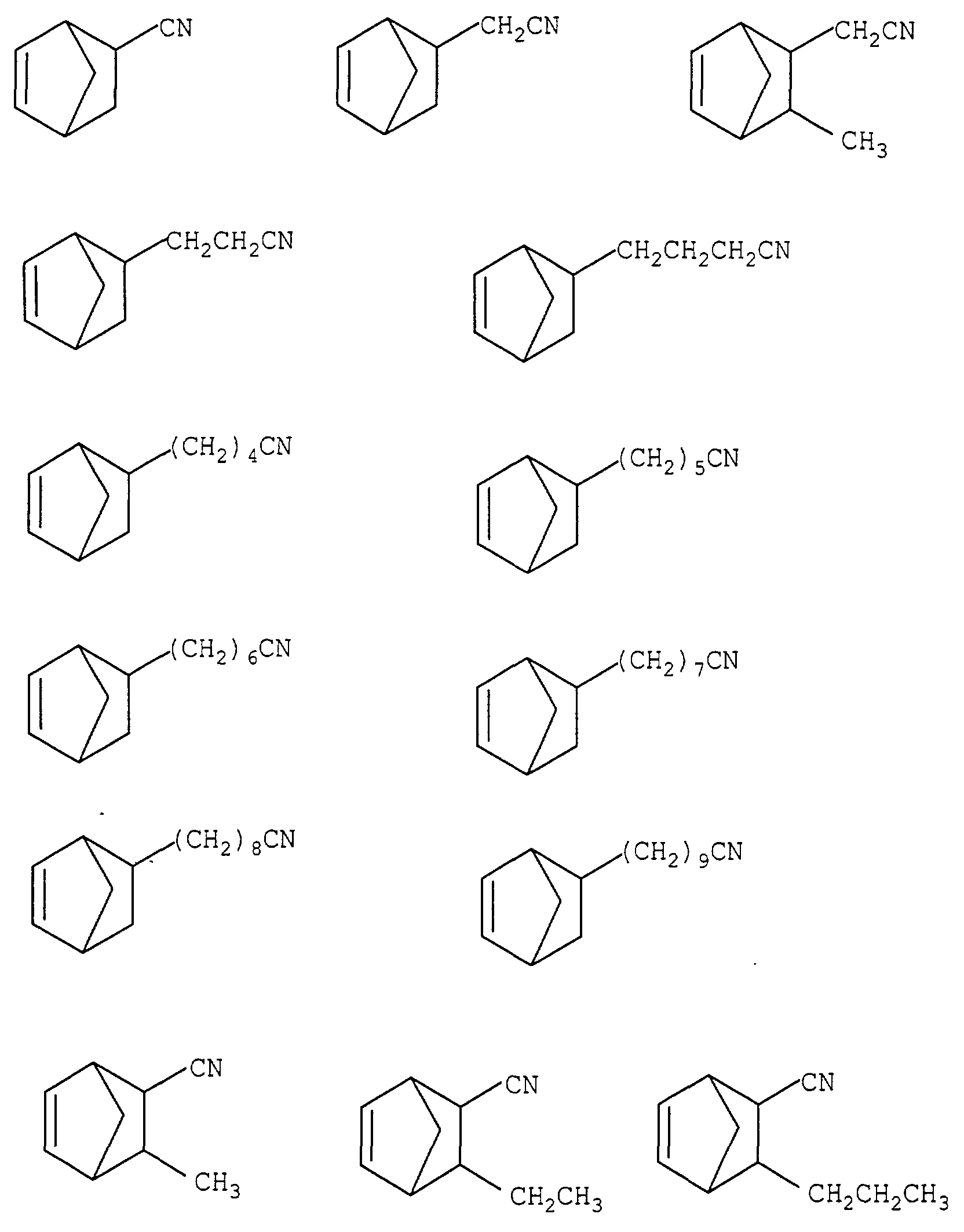
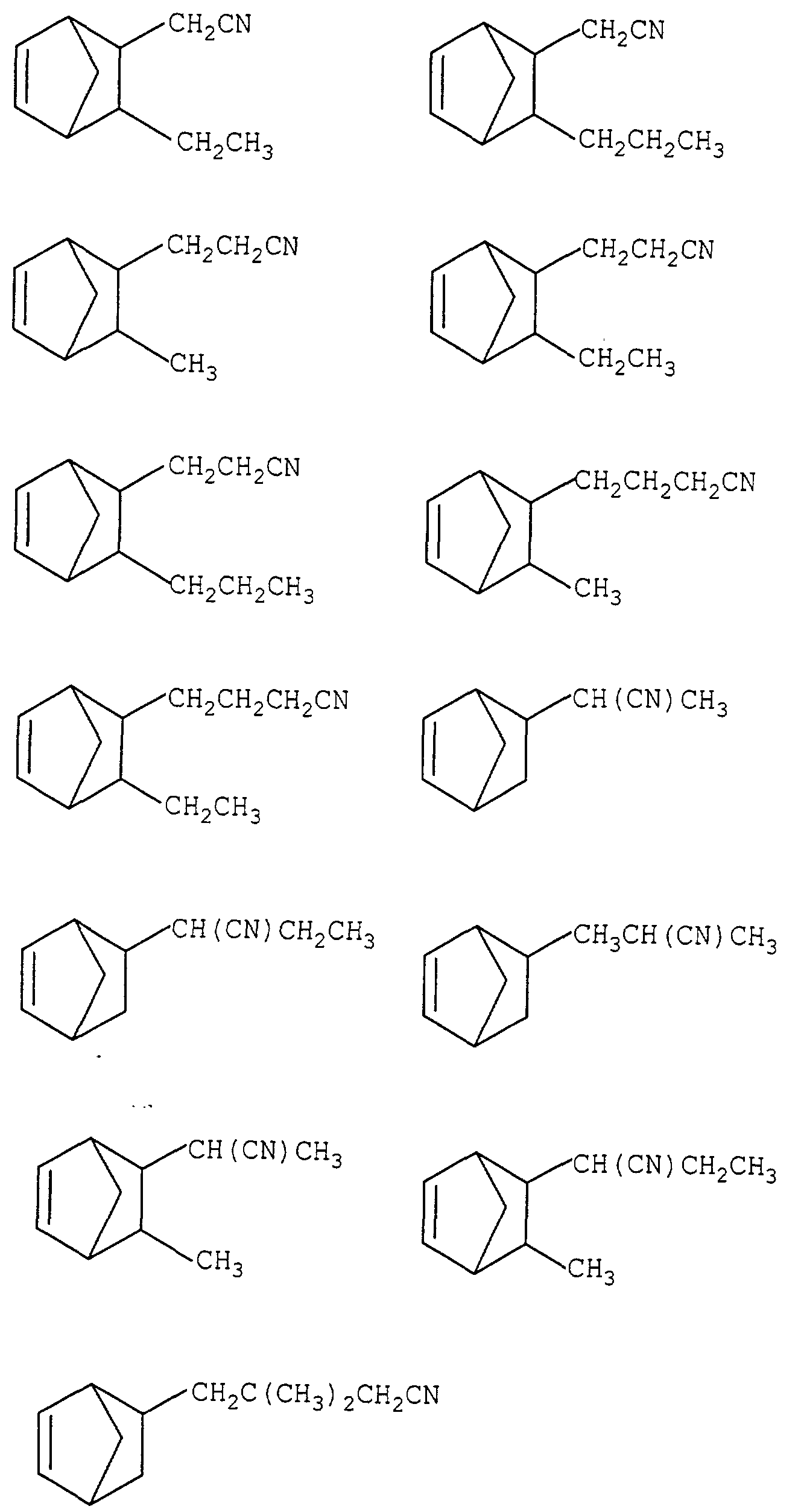


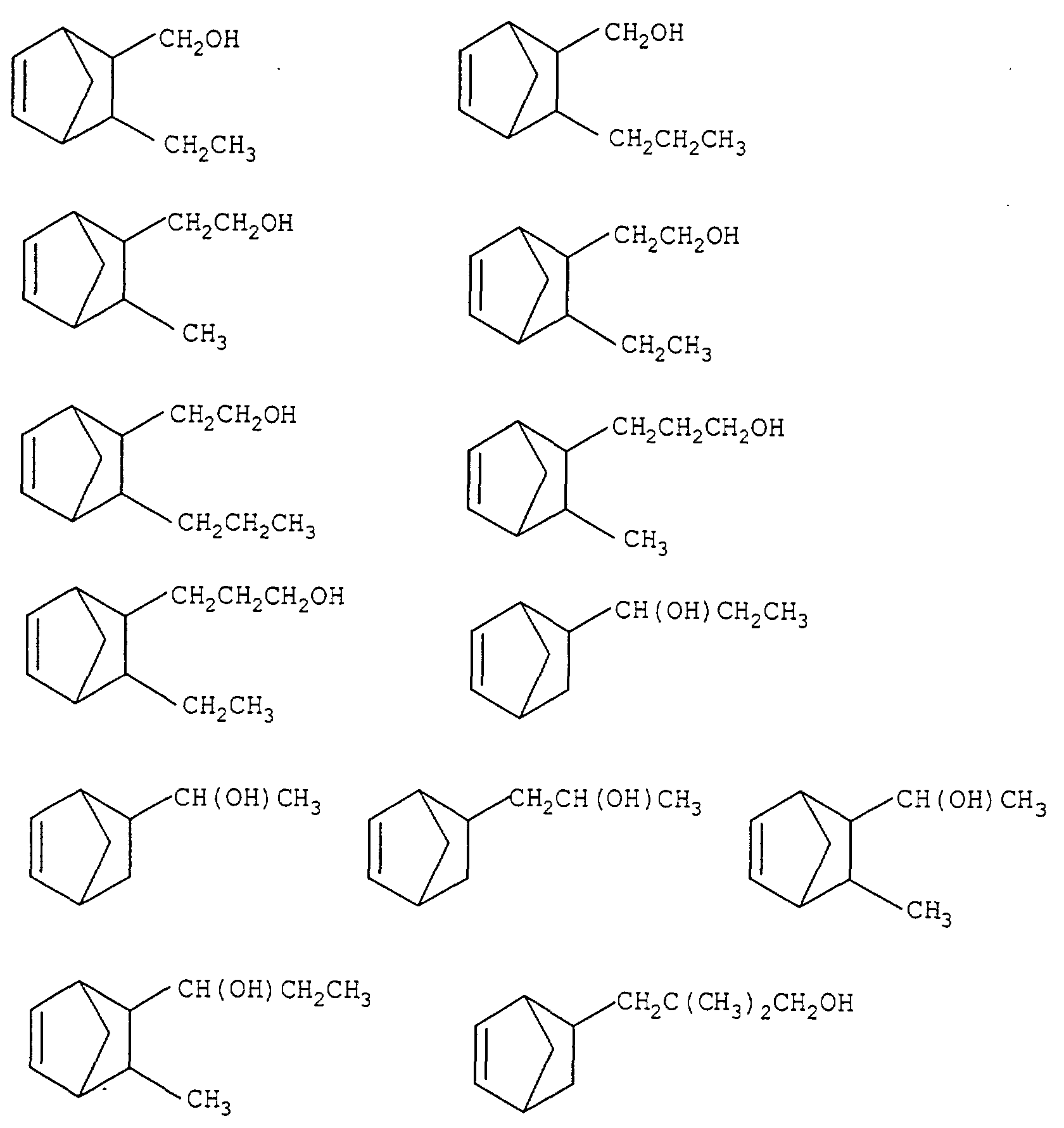
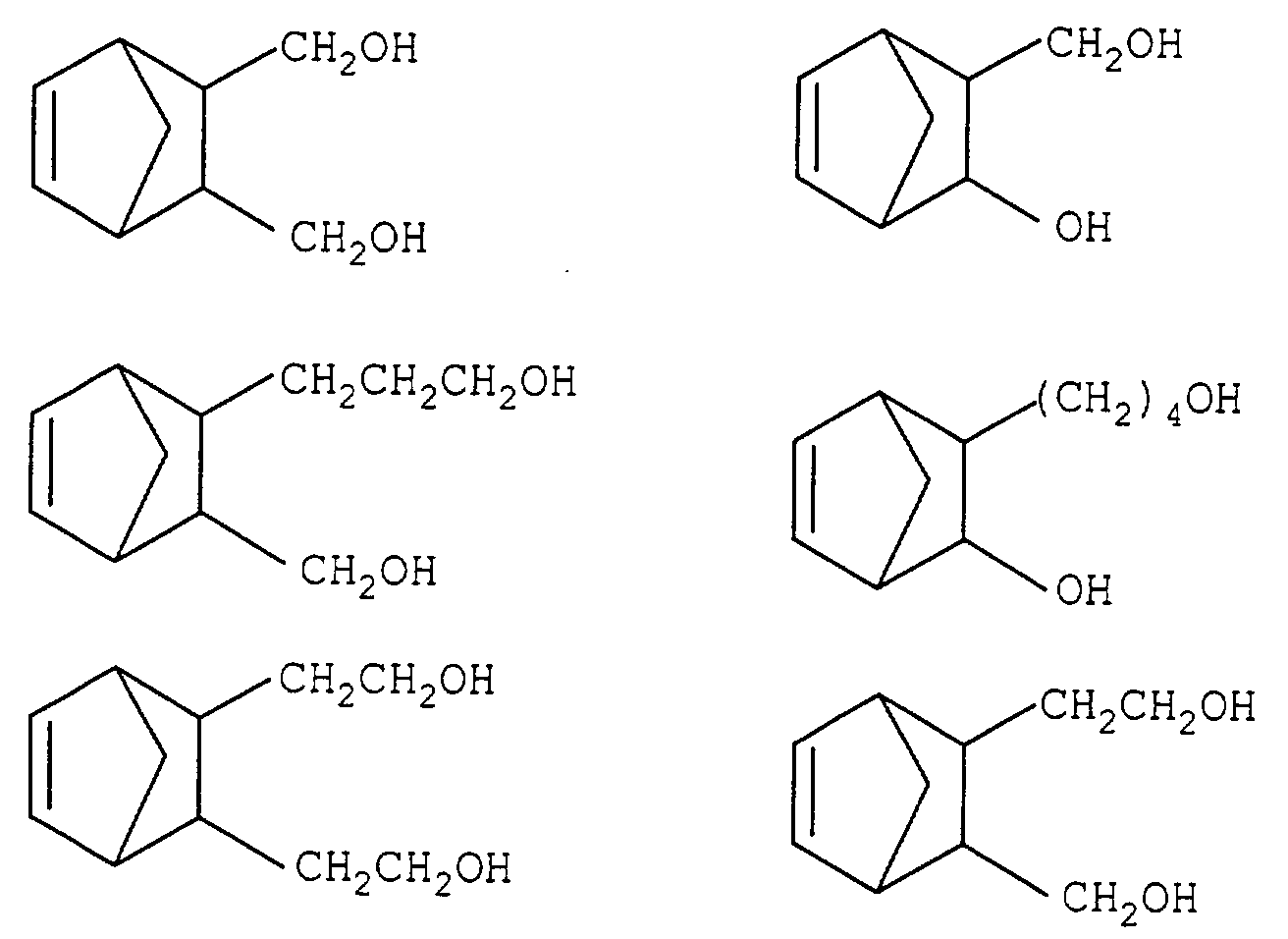
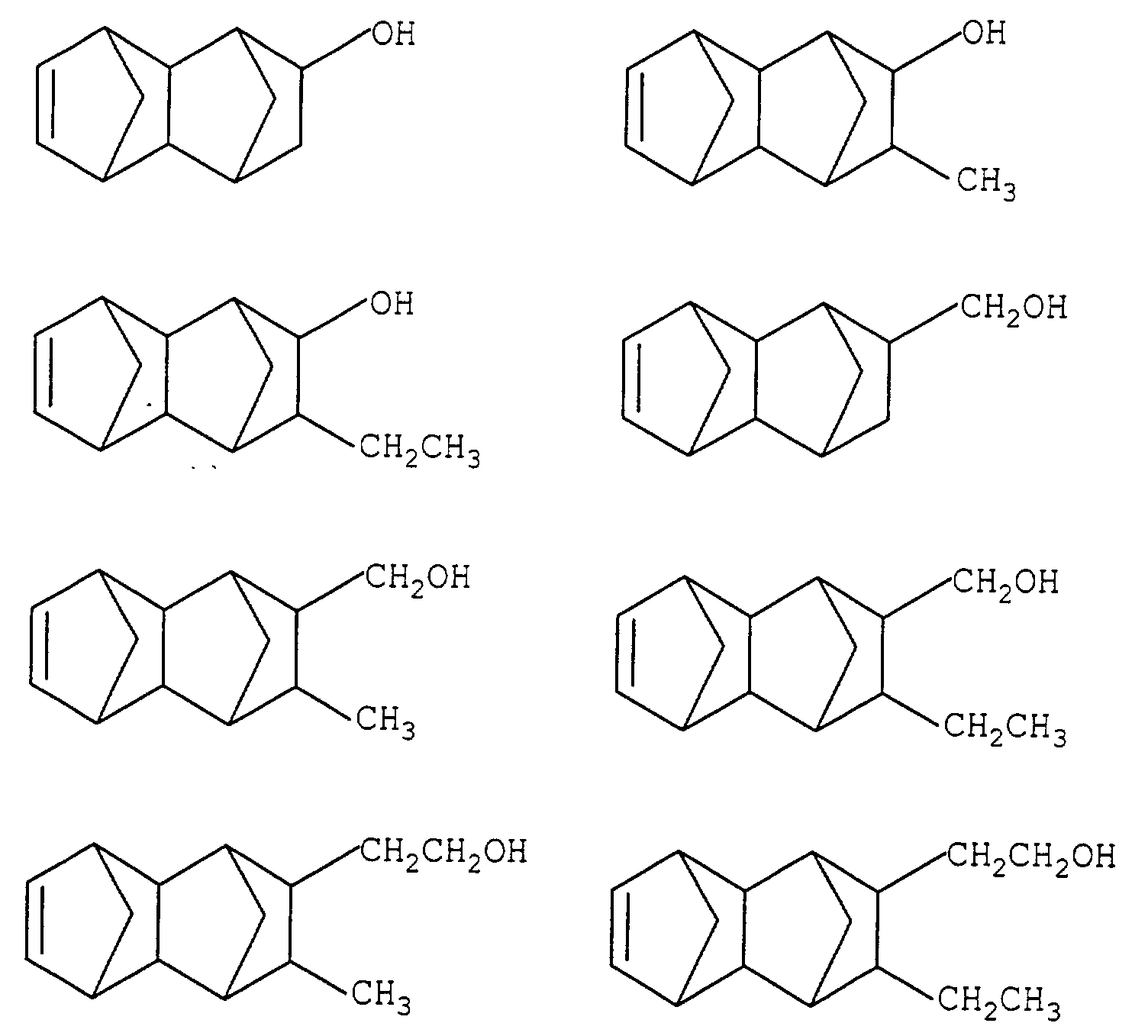
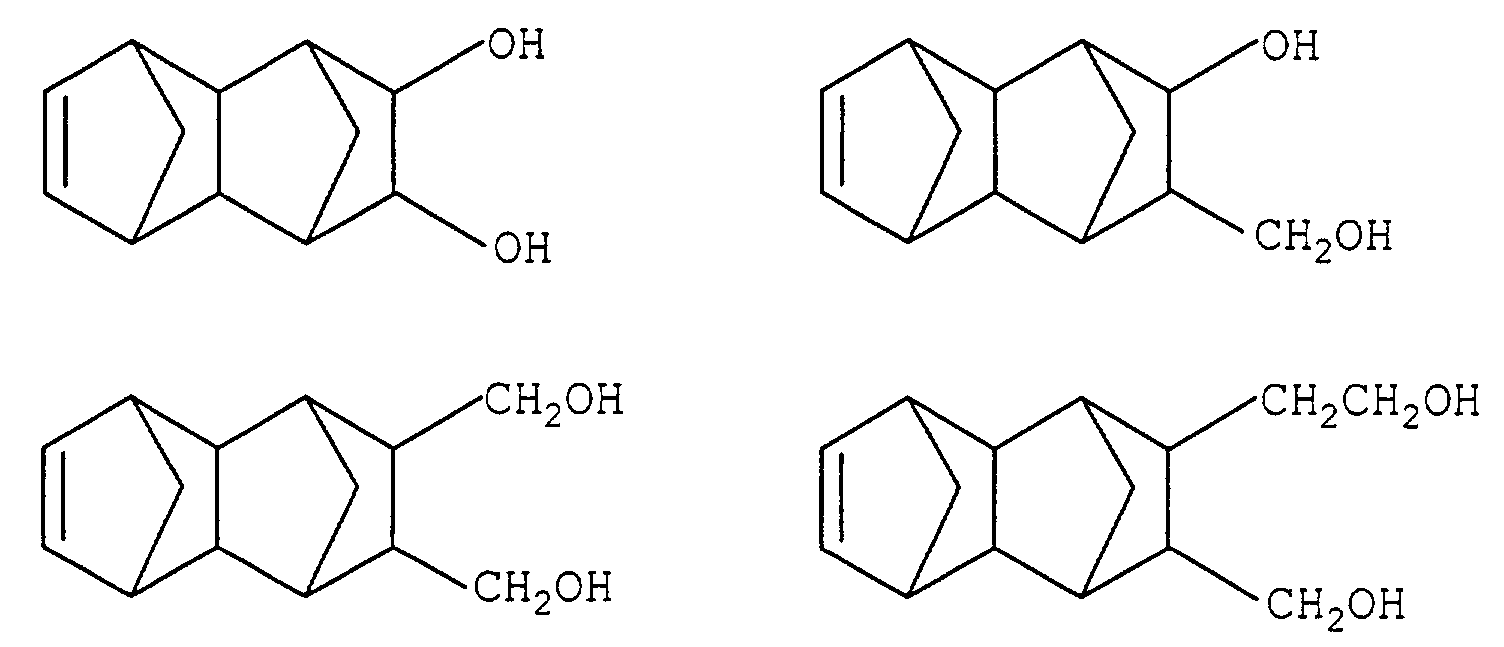

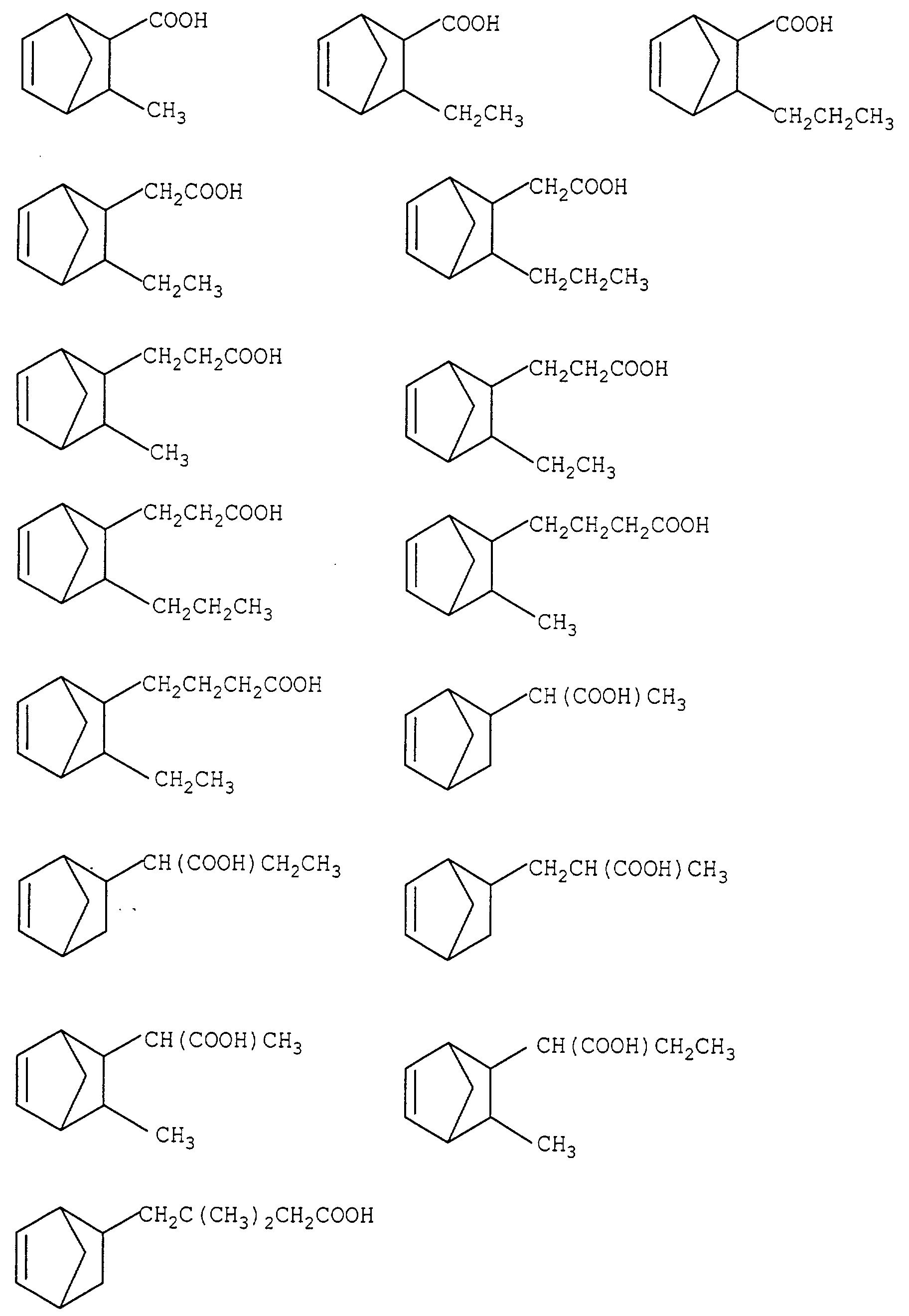
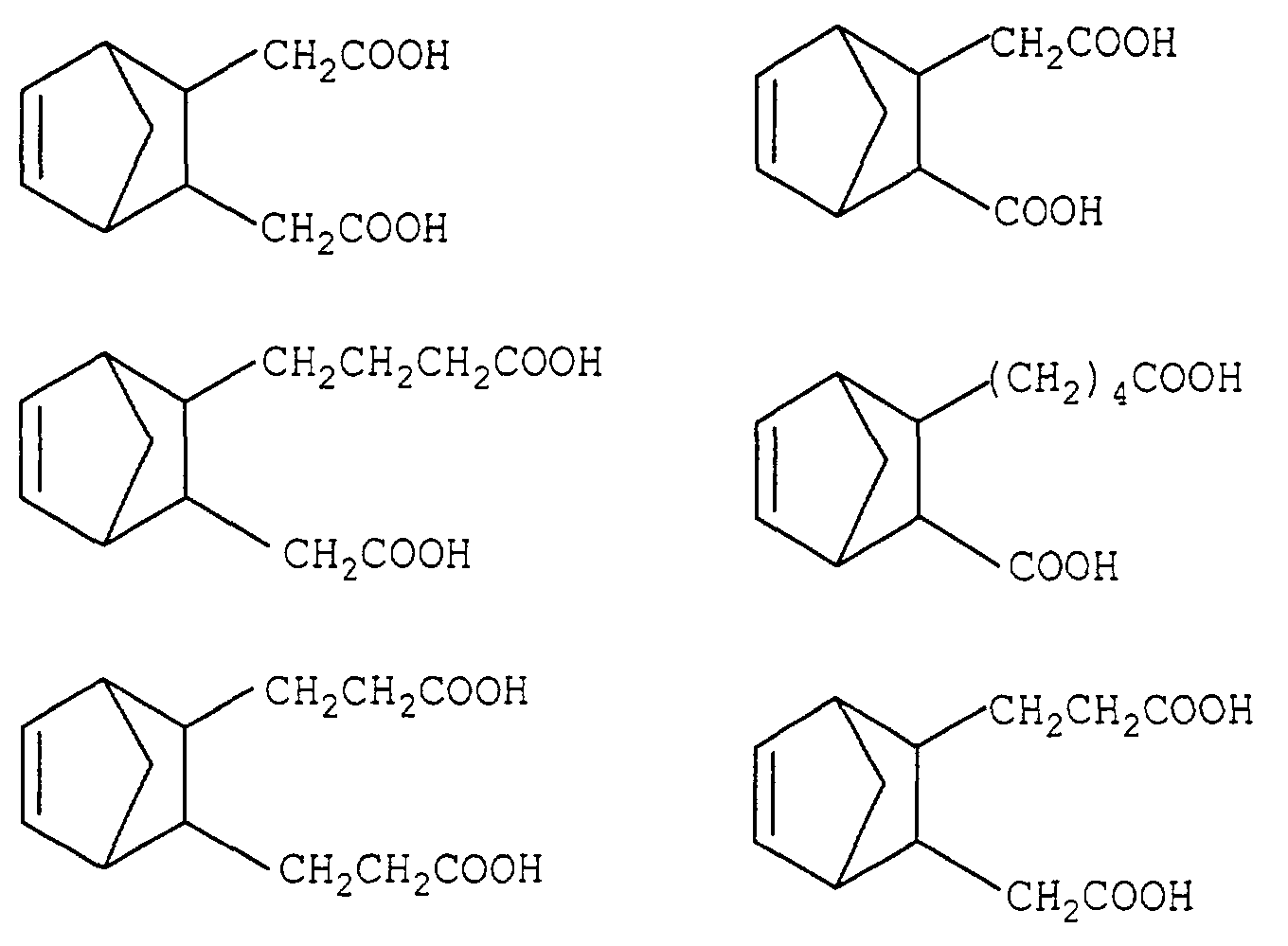
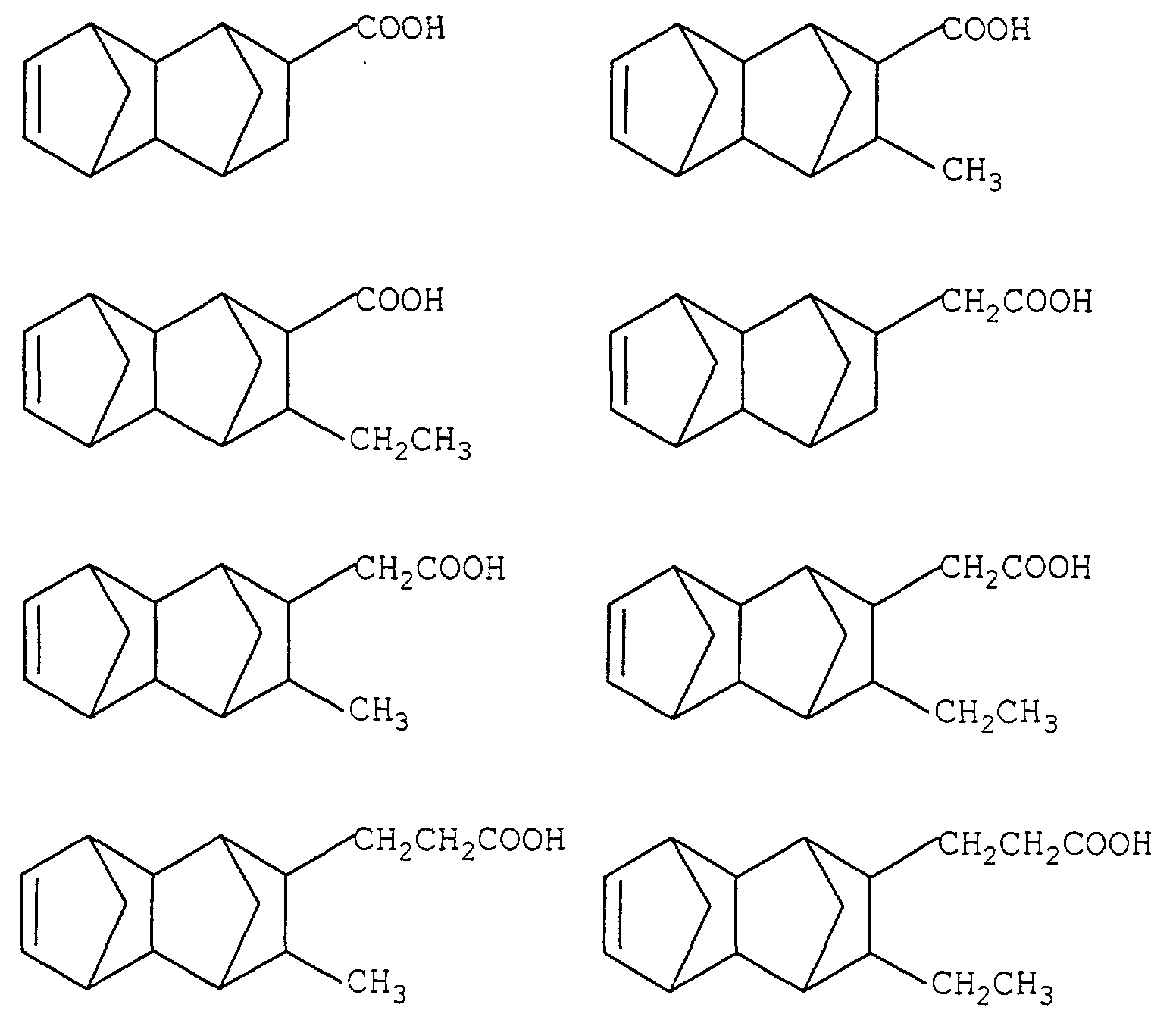
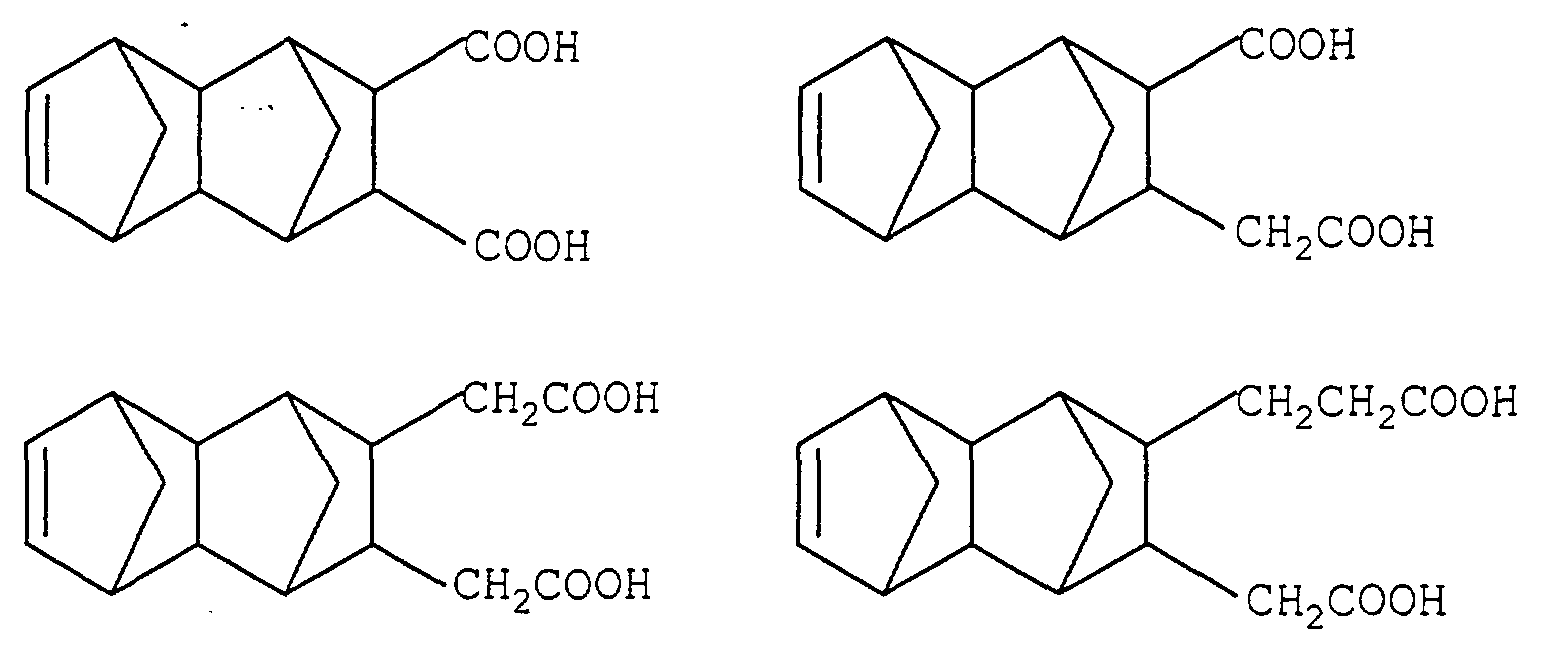

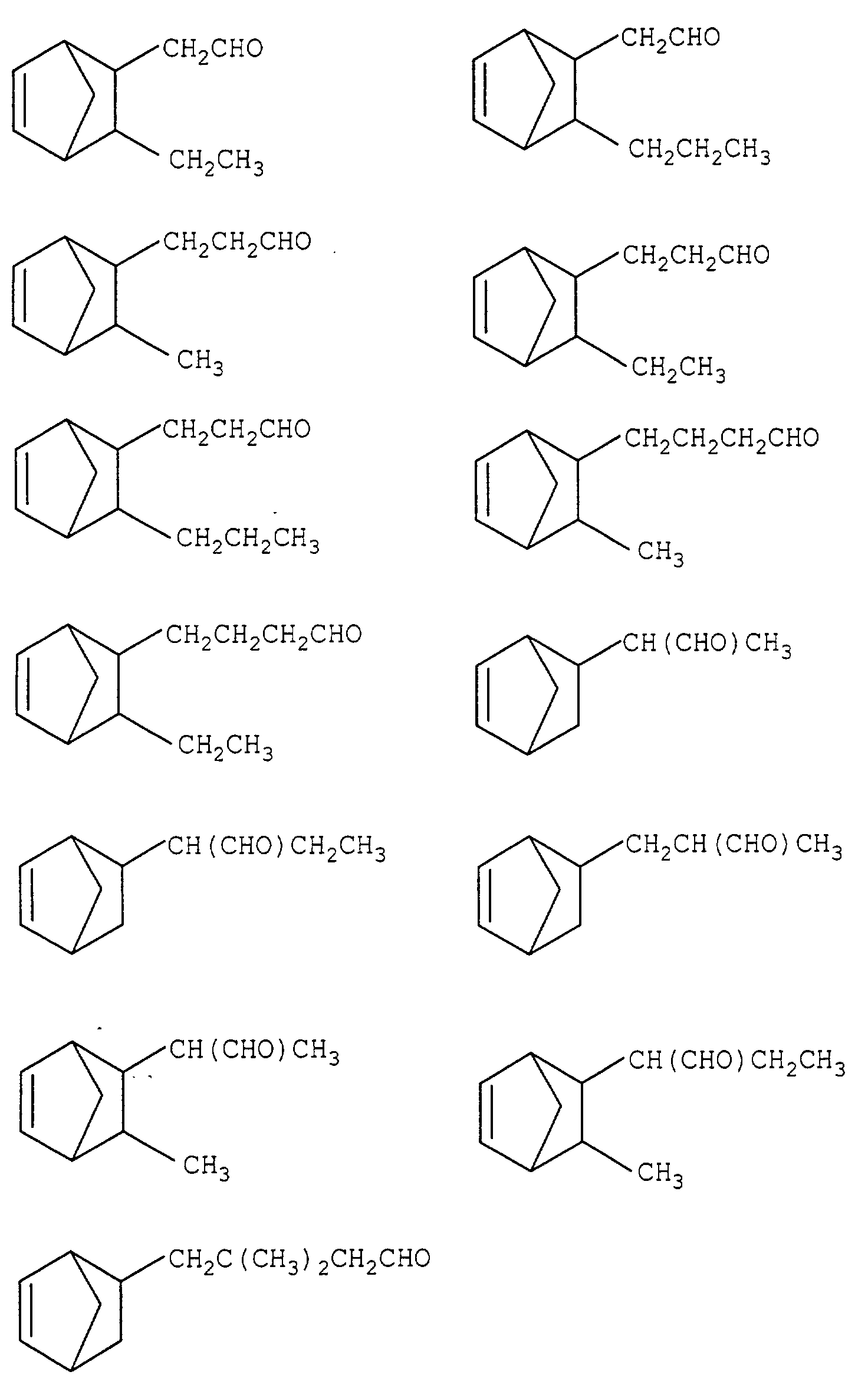
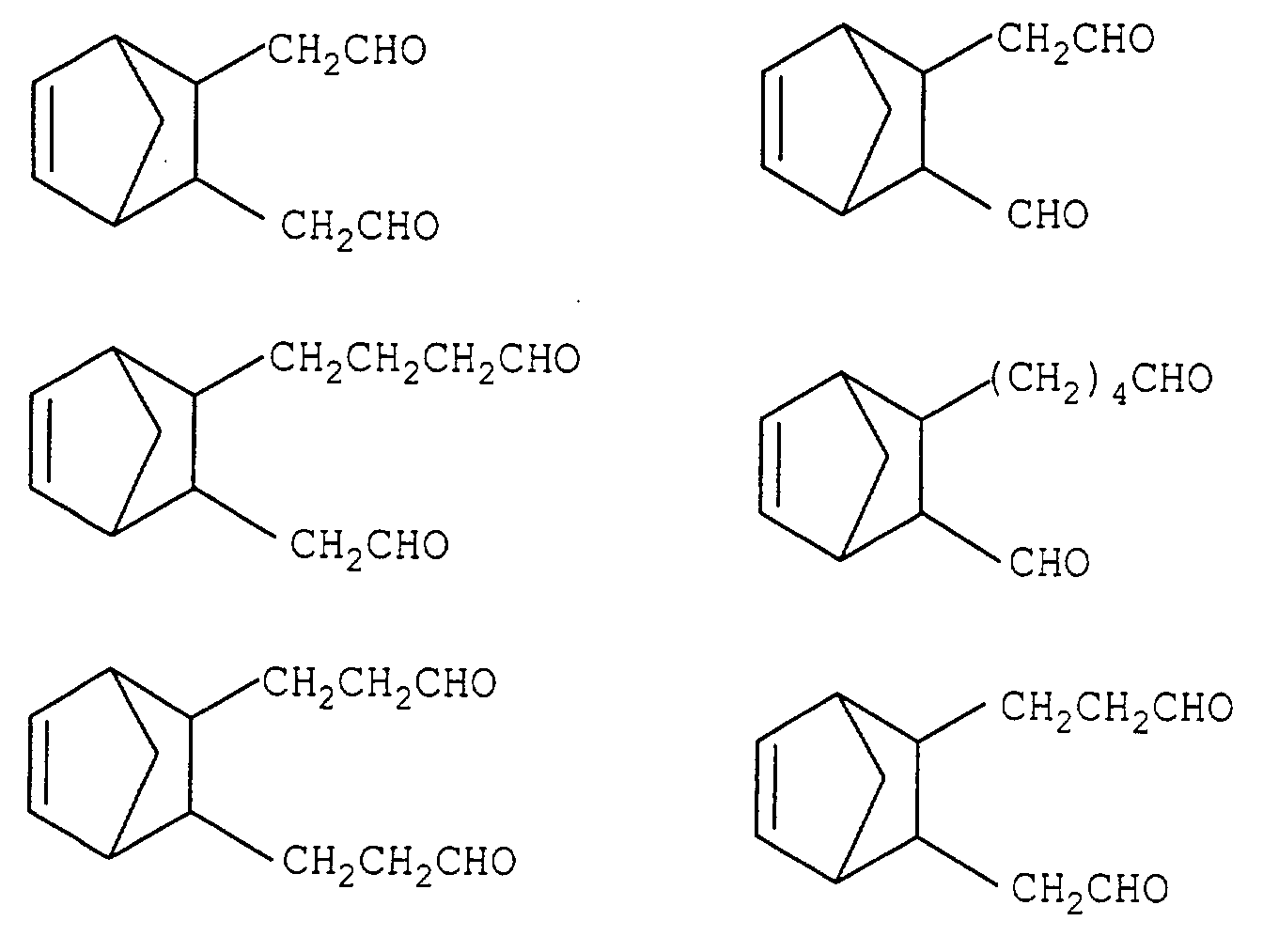
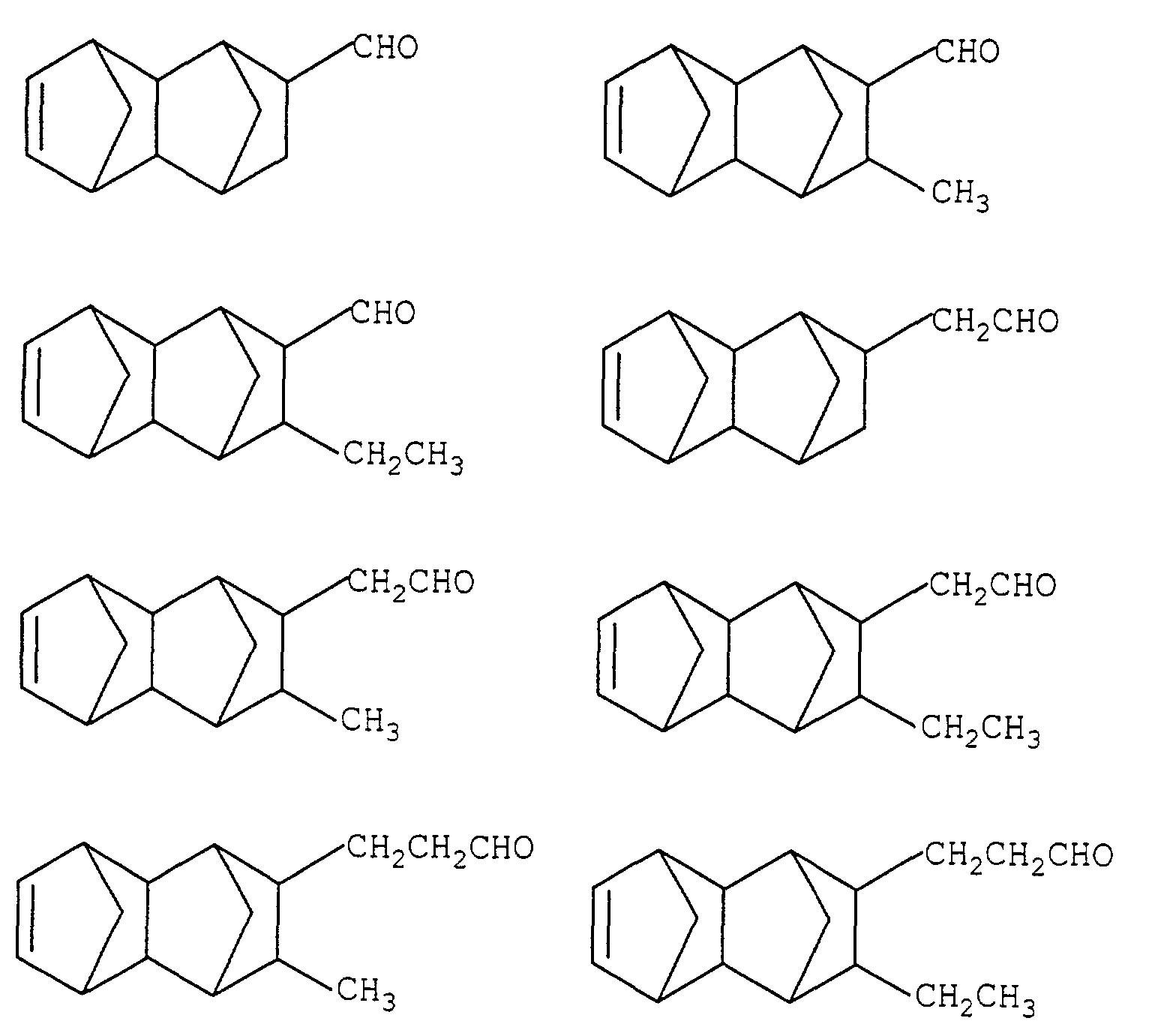
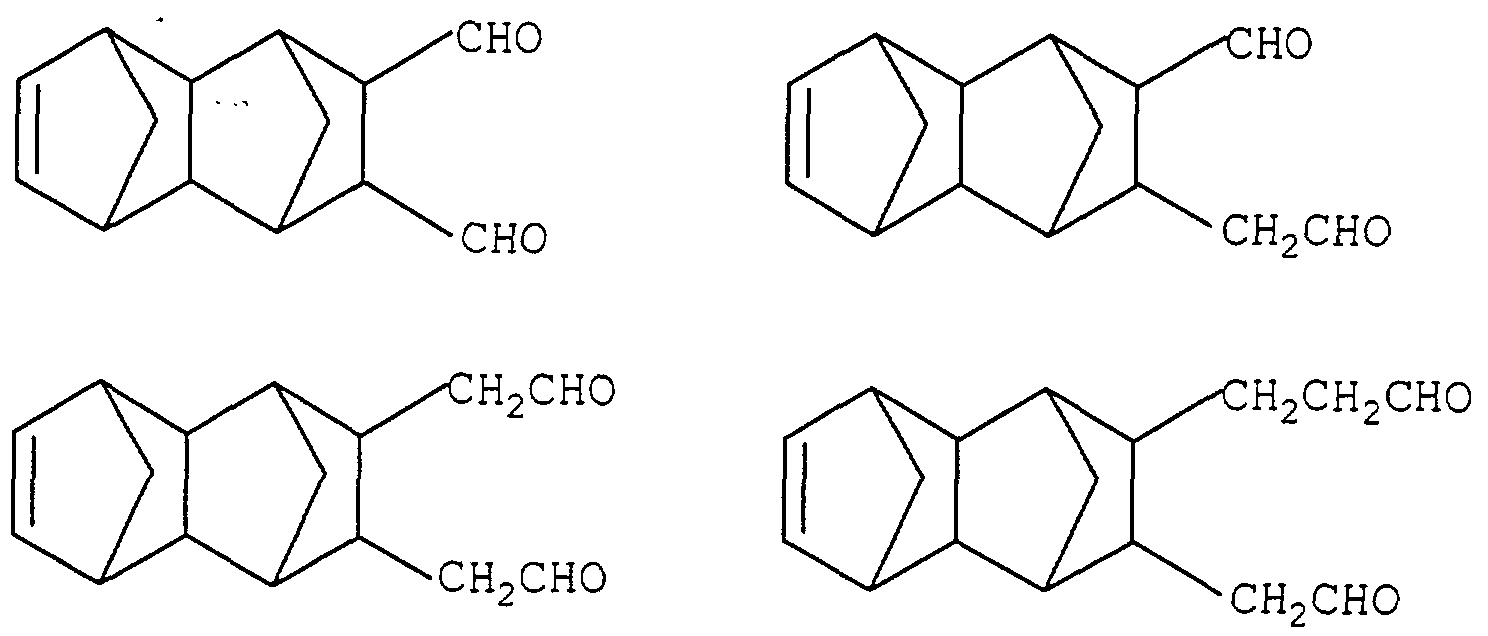


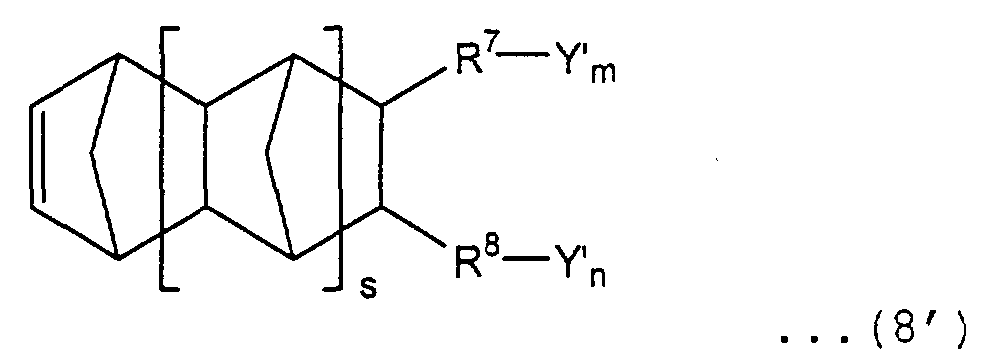
and
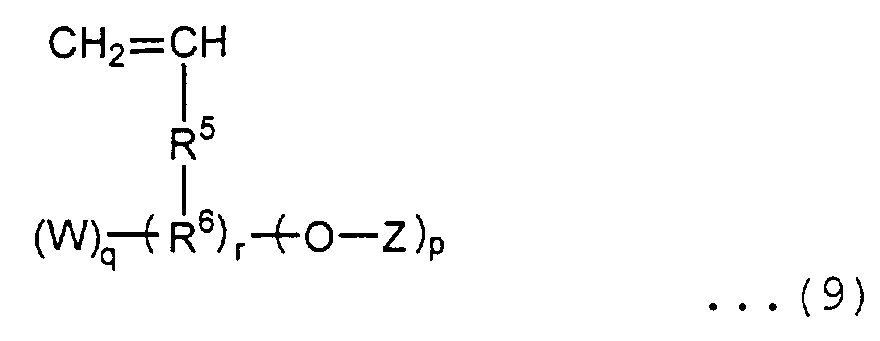
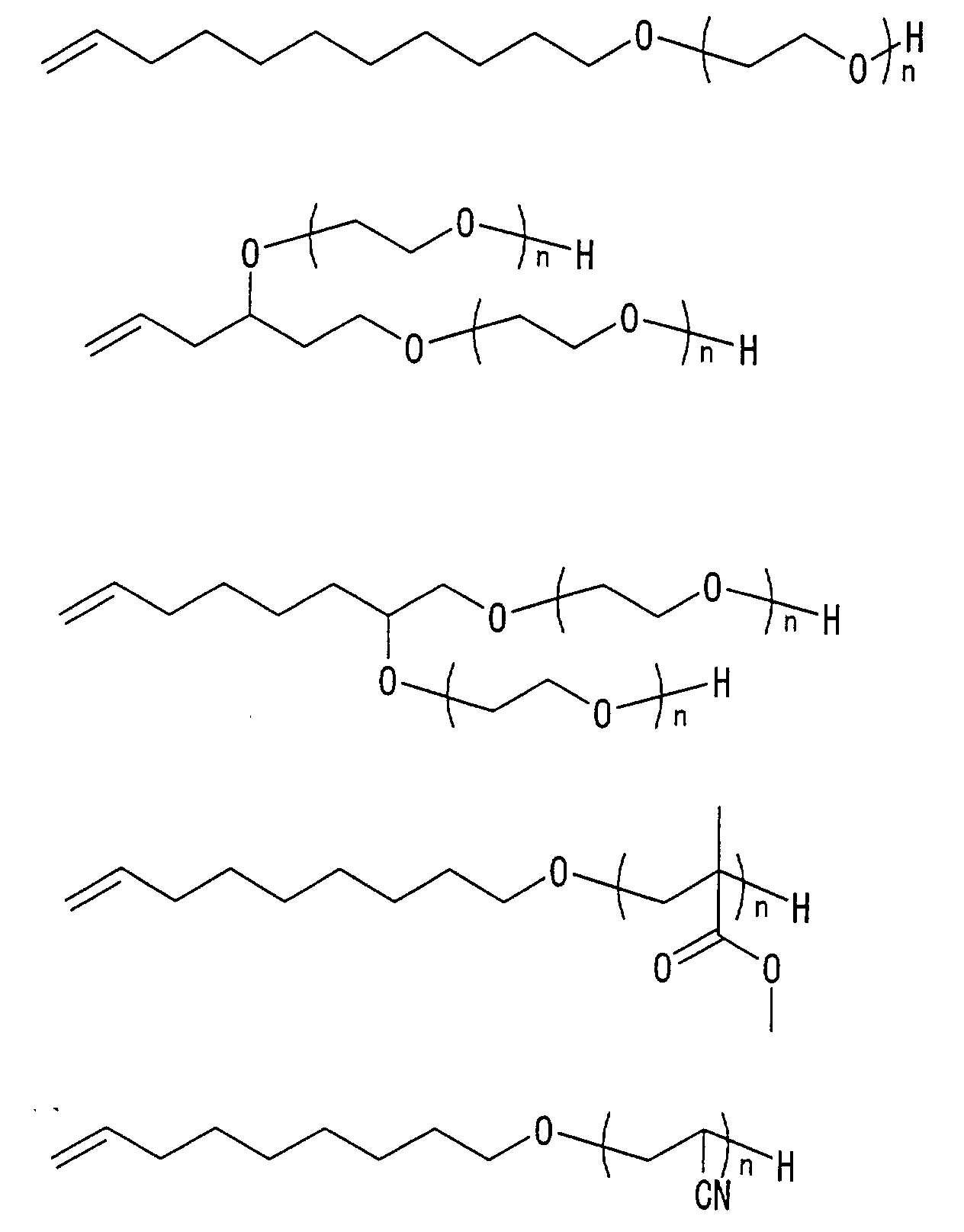

the periodic table, and

- (i) from the W portion of the copolymerized polar group-containing monomer (10), a Z portion is formed by anionic polymerization, ring-opening polymerization or polycondensation;
- (ii) the W portion of the copolymerized polar group-containing monomer (10) is allowed to react with a terminal functional group of a polymer obtained by anionic polymerization, ring-opening polymerization and polycondensation.


Dimethylformamide; dimethyl sulfoxide and acetone. Of these, water and an alcohol such as methanol are preferable.
perchloroethylene; ethyl acetate; methyl methacrylate (MMA); dioctyl phthalate (DOP); dimethylformamide; dimethyl sulfoxide; methyl cellosolve and silicone oil.


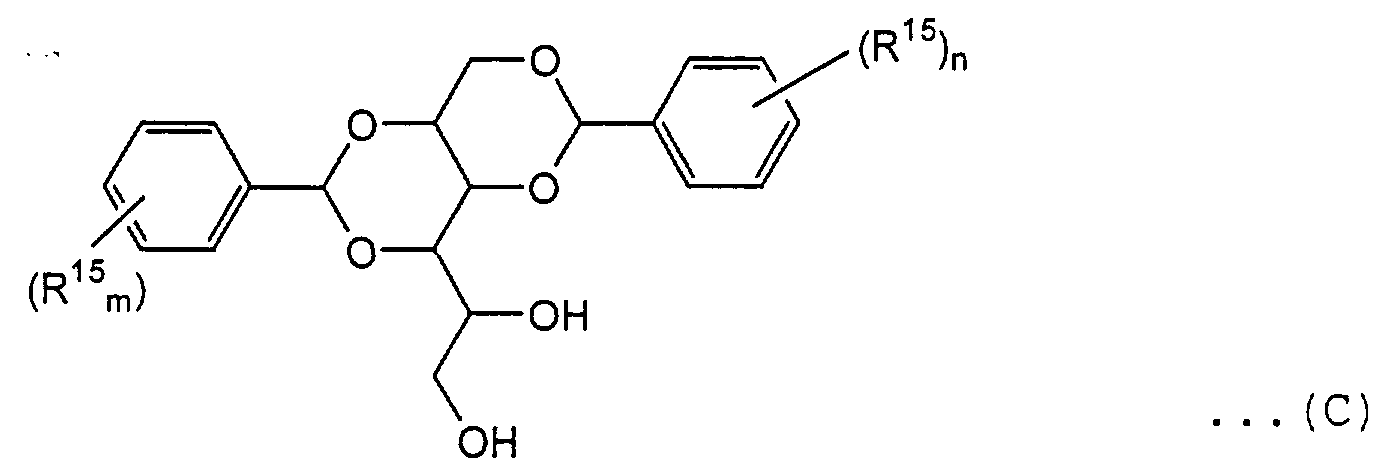
1,3,2,4-dibenzylidenesorbitol, 1,3-benzylidene-2,4-p-methylbenzylidenesorbitol, 1,3-benzylidene-2,4-p-ethylbenzylidenesorbitol, 1,3-p-methylbenzylidene-2,4-benzylidenesorbitol, 1,3-p-ethylbenzylidene-2,4-benzylidenesorbitol, 1,3-p-methylbenzylidene-2,4-p-ethylbenzylidenesorbitol, 1,3-p-ethylbenzylidene-2,4-p-methylbenzylidenesorbitol, 1,3,2,4-di(p-methylbenzylidene)sorbitol, 1,3,2,4-di(p-ethylbenzylidene)sorbitol, 1,3,2,4-di(p-n-propylbenzylidene)sorbitol, 1,3,2,4-di(p-i-propylbenzylidene)sorbitol, 1,3,2,4-di(p-n-butylbenzylidene)sorbitol, 1,3,2,4-di(p-s-butylbenzylidene)sorbitol, 1,3,2,4-di(p-t-butylbenzylidene)sorbitol, 1,3,2,4-di(2',4'-dimethylbenzylidene)sorbitol, 1,3,2,4-di(p-methoxybenzylidene)sorbitol, 1,3,2,4-di(p-ethoxybenzylidene)sorbitol, 1,3-benzylidene-2-4-p-chlorobenzylidenesorbitol, 1,3-p-chlorobenzylidene-2-4-benzylidenesorbitol, 1,3-p-chlorobenzylidene-2-4-p-methylbenzylidenesorbitol, 1,3-p-chlorobenzylidene-2-4-p-ethylbenzylidenesorbitol, 1,3-p-methylbenzylidene-2-4-p-chlorobenzylidenesorbitol, 1,3-p-ethylbenzylidene-2-4-p-chlorobenzylidenesorbitol, 1,3,2,4-di(p-chlorobenzylidene)sorbitol, and mixtures of two or more of these compounds. Of these, preferable are 1,3,2,4-dibenzylidenesorbitol, 1,3,2,4-di(p-methylbenzylidene)sorbitol, 1,3,2,4-di(p-ethylbenzylidene)sorbitol, 1,3-p-chlorobenzylidene-2-4-p-methylbenzylidenesorbitol, 1,3,2,4-di(p-chlorobenzylidene)sorbitol, and mixtures of two or more of these compounds.

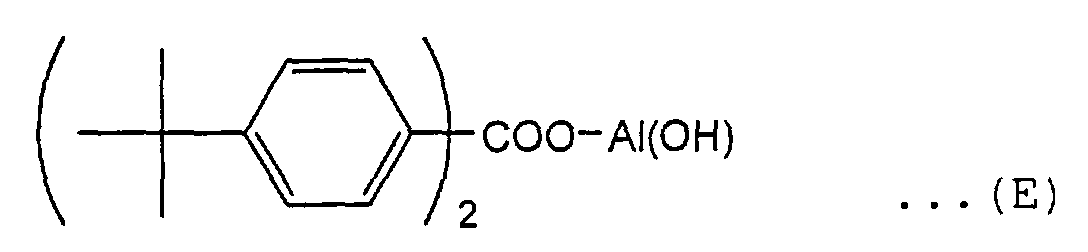
(lengthwise-crosswise stretching, crosswise-lengthwise stretching), simultaneous biaxial orientation or monoaxial stretching. From the polar group-containing olefin copolymer or the thermoplastic resin composition of the invention, inflation films can also be produced.
or
(b) a thermoplastic resin layer, and


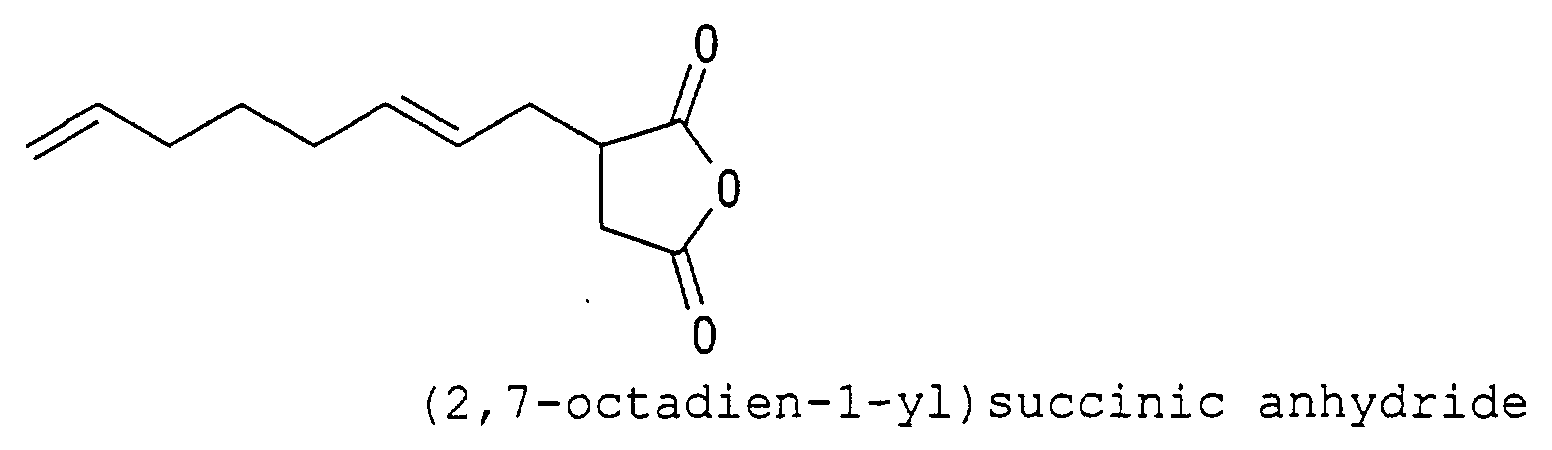




| Property items | Property value | Unit | |
| Ex. 1 | Adhesion strength (to Al) | 2 | Kgf/15mm |
| Ex. 2 | Adhesion strength (to PET) | broken substrate | Kgf/15mm |
| Ex. 3 | Adhesion strength (to Ny) | 6.2 | Kgf/15mm |
| Ex. 4 | Adhesion strength (to EVOH) | 6.5 | Kgf/15mm |
| Ex. 5 | IZ | 32 | J/m |
| Tensile strength | 41 | MPa | |
| Elongation at break | 11 | % | |
| Ex. 6 | IZ | 28 | J/m |
| Tensile strength | 40 | MPa | |
| Elongation at break | 13 | % | |
| Comp Ex.1 | IZ | 15 | J/m |
| Tensile strength | 22 | MPa | |
| Elongation at break | 4 | % | |
| Ex. 7 | Anti-fogging properties (visual observation) | AA | - |
| Ex. 8 | Cross-cut adhesion test | 100/100 | number of cuts/ number of cuts |
| Ex. 9 | FM | 1900 | MPa |
| IZ | 55 | J/m | |
| HDT | 129 | °C | |
| Comp Ex. 2 | FM | 1250 | MPa |
| IZ | 52 | J/m | |
| HDT | 115 | °C | |
| Ex. 10 | Dispersed particle diameter | 0.7 | µm |
| Dispersion stability | not separated | ||
| Heat-sealing strength to Al | 2 | Kgf/15mm | |
| Ex. 11 | Dispersed particle diameter | 0.6 | µm |
| Dispersion stability | not separated | ||
| Heat-sealing strength to Al | 2.5 | Kgf/15mm | |
| Ex. 12 | Dispersed particle diameter | 10 | µm |
| Dispersion stability | not separated | ||
| Heat-sealing strength to Al | 3 | Kgf/15mm |



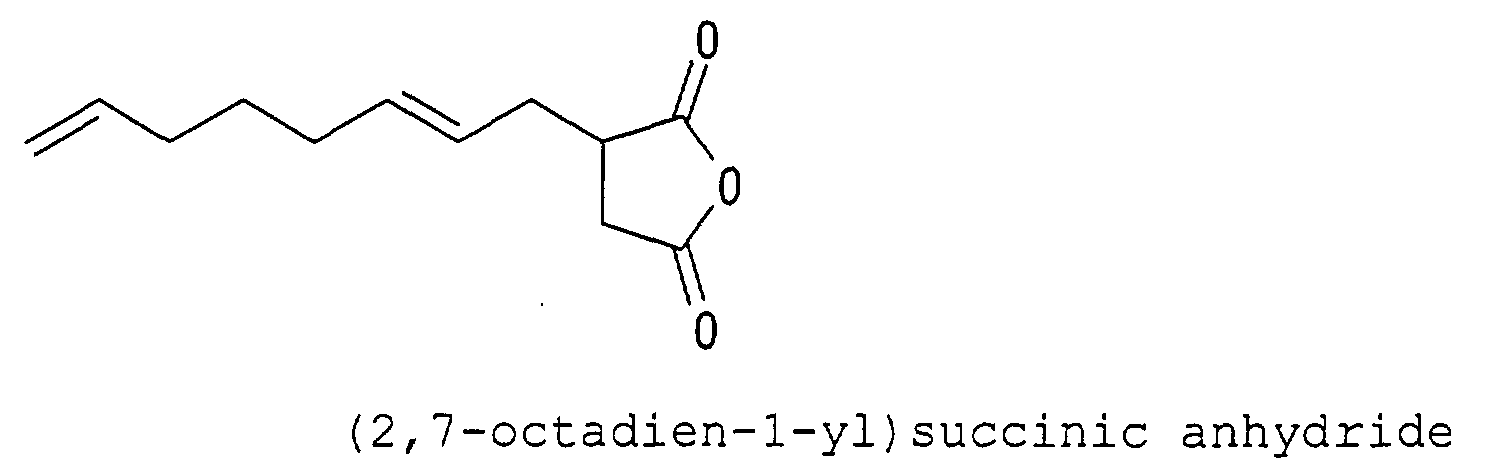

| Property items | Property value | Unit | |
| Ex. 13 | Cross-cut adhesion test | 100/100 | number of cuts/number of cuts |
| Ex. 14 Ex. 14 | Adhesion strength (to Al) | 3.6 3.6 | Kgf/15mm Kgf/15mm |
| Ex. 15 | IZ | 490 | J/m |
| Tensile strength | 40 | MPa | |
| Elongation at break | 40 | % | |
| Ex. 16 | IZ | 260 | J/m |
| Tensile strength | 45 | MPa | |
| Elongation at break | 120 | % | |
| Ex. 17 | IZ | 265 | J/m |
| Tensile strength | 46 | MPa | |
| Elongation at break | 122 | % |


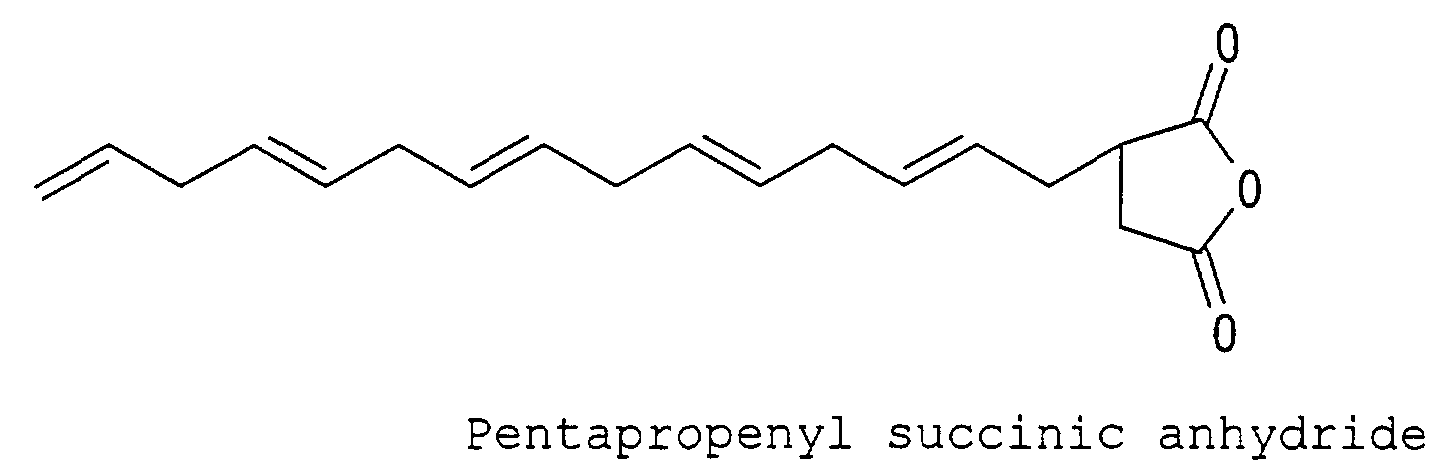
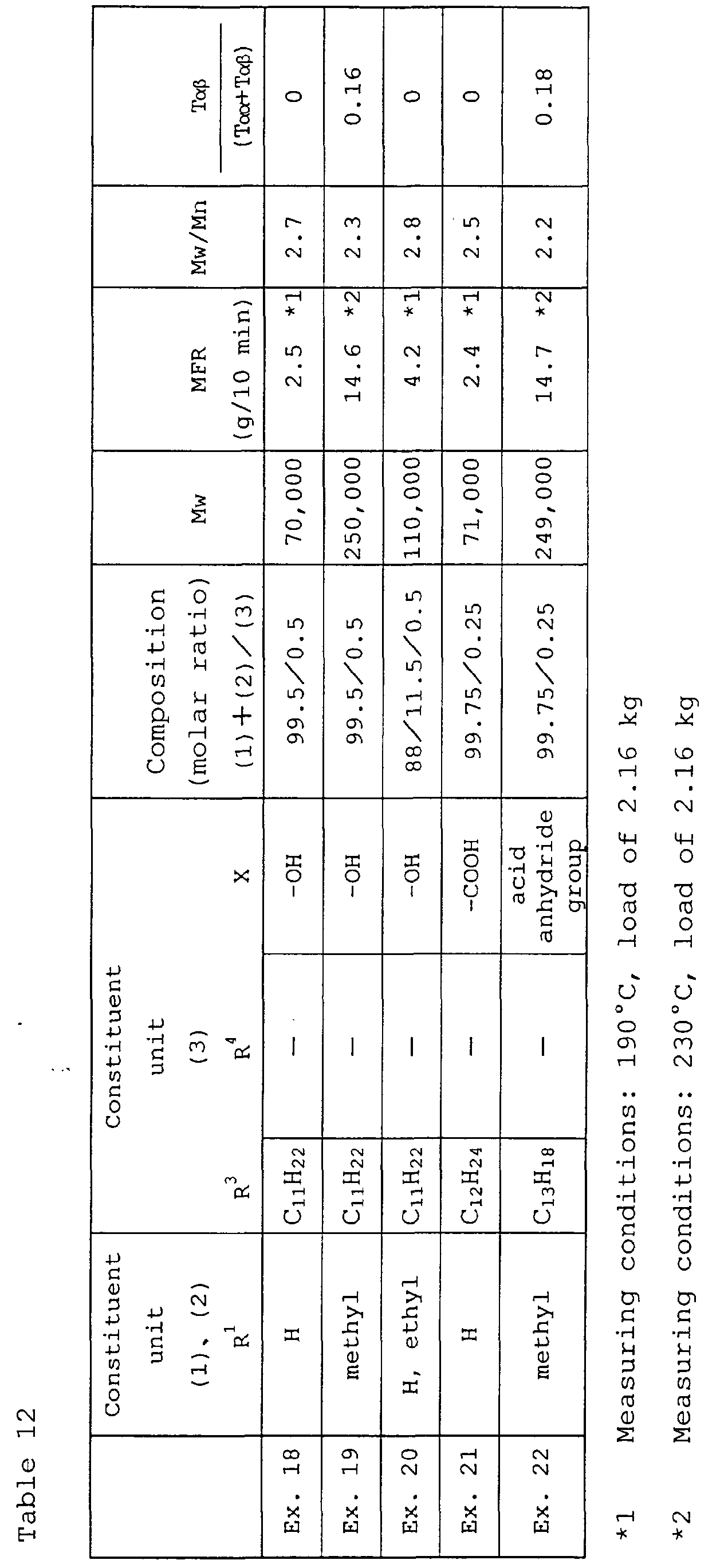
| Evaluation items | Property value | Unit Unit | |
| Ex. 18 | Cross-cut adhesion test | 100/100 | number of cuts/number of cuts |
| Ex. 19 | Cross-cut adhesion test | 100/100 | number of cuts/number of cuts |
| Ex. 20 | Cross-cut adhesion test | 100/100 | number of cuts/number of cuts |
| Ex. 21 | Adhesion strength (to Al) | 3 | Kgf/15mm |
| Ex. 22 | Adhesion strength (to Al) | 3.5 | Kgf/15mm |


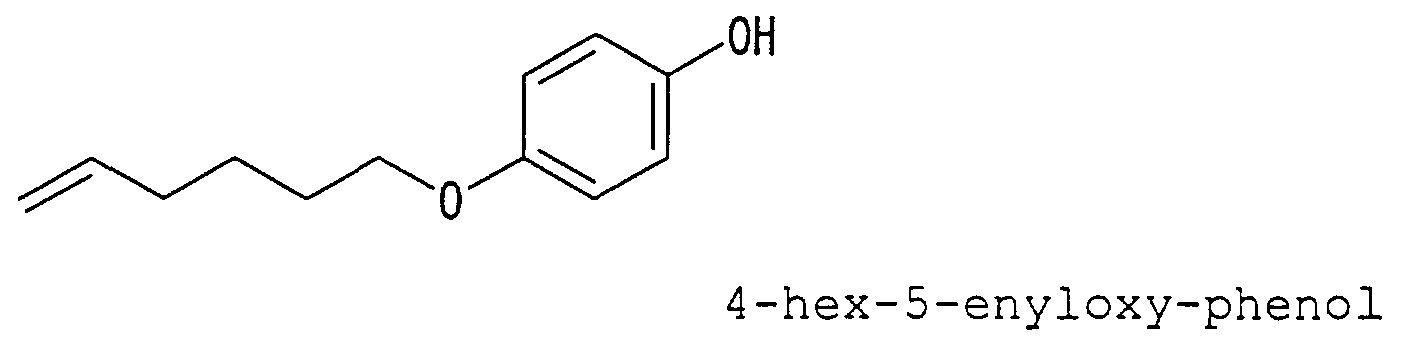

| Evaluation items | Property value | Unit | |
| Ex. 23 | Adhesion strength (to Al) | 3.6 | Kgf/15mm |
| Ex. 24 | Adhesion strength (to PET) | broken substrate | Kgf/15mm |
| Ex. 25 | Adhesion strength (to PET) | 3 | Kgf/15mm |




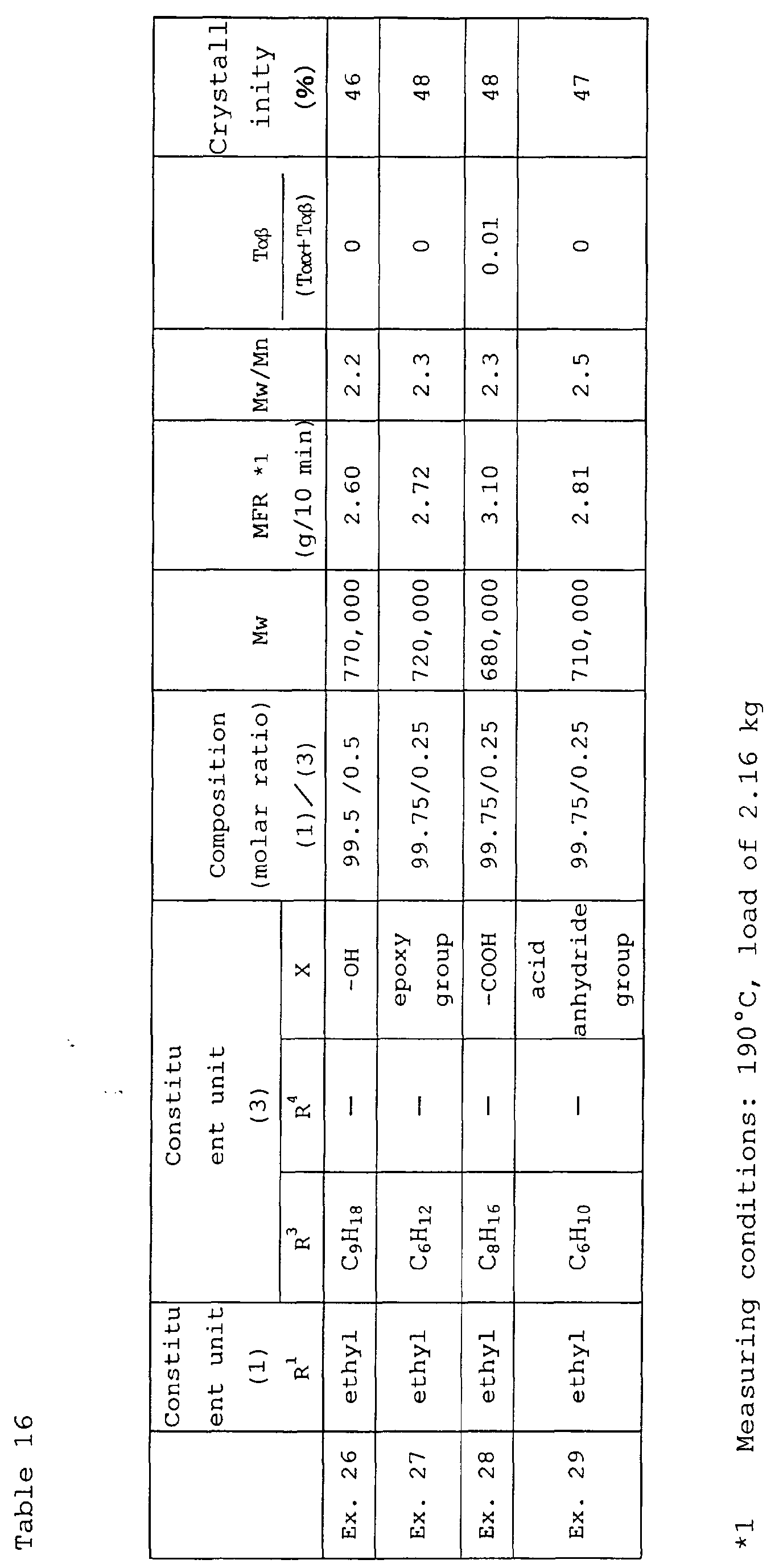
| Evaluation items | Property value | Unit | |
| Ex. 26 | Cross-cut adhesion test | 100/100 | number of cuts/number of cuts |
| Ex. 27 | Adhesion strength 23°C substrate | broken | - |
| (to PET) 80°C substrate | broken | - | |
| Ex. 28 | Adhesion strength 23°C | 2.8 | Kgf/15mm |
| (to Al) 80°C | 2.8 | Kgf/15mm | |
| Ex. 29 | Adhesion strength 23°C | 3.5 | Kgf/15mm |
| (to Al) 80°C | 3.5 | Kgf/15mm |




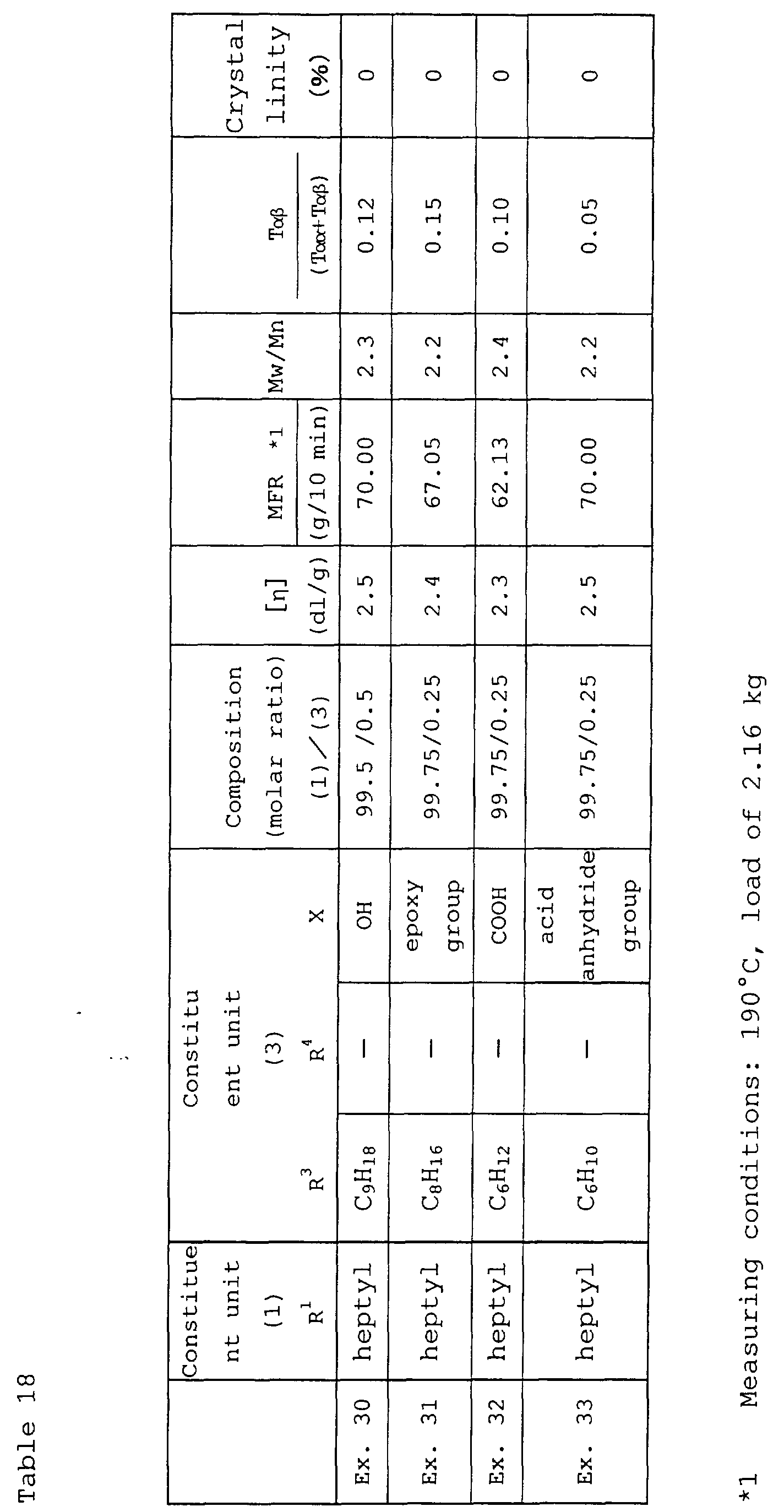
| Evaluation items | Property value | Unit Unit | |
| Ex. 30 | Cross-cut adhesion test | 100/100 | number of cuts/number of cuts |
| Ex. 31 | IZ | 260 | J/m |
| Tensile strength | 42 | MPa | |
| Elongation at break | 125 | % | |
| Ex. 32 | IZ | 505 | J/m |
| Tensile strength | 35 | MPa | |
| Elongation at break | 42 | % | |
| Ex. 33 | Adhesion strength (to Al) | 2 | Kgf/15mm |

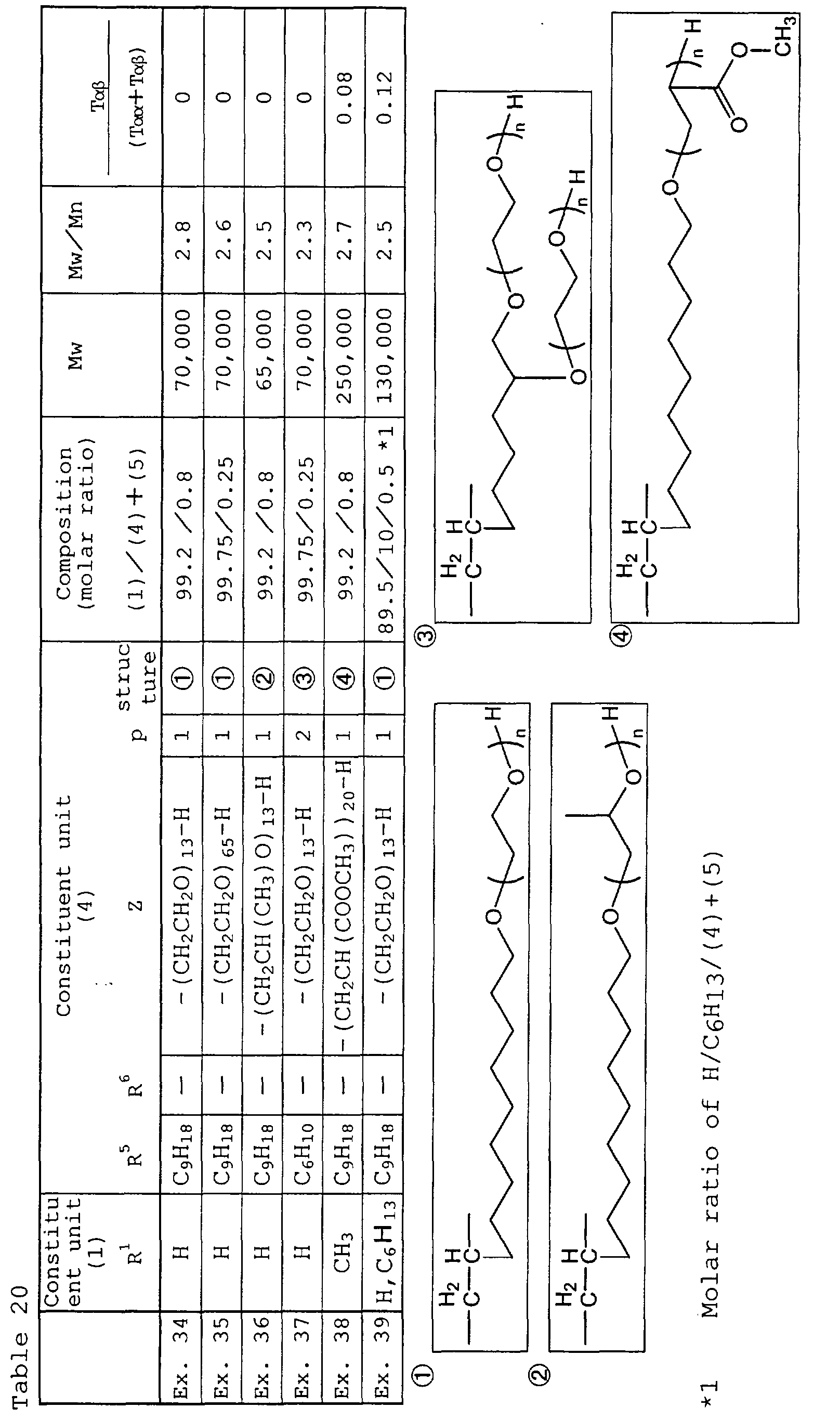
| Evaluation items | Property value | Unit | |
| Ex. 34 | Anti-fogging properties (visual observation) | AA | - |
| Ex. 35 | Anti-fogging properties (visual observation) | AA | - |
| Ex. 36 | Anti-fogging properties (visual observation) | AA | - |
| Ex. 37 | Anti-fogging properties (visual observation) | AA | - |
| Ex. 38 | FM | 2500 | MPa |
| Rockwell hardness | 115 | ||
| Pencil hardness | 2H | ||
| HDT | 130 | °C | |
| Ex. 39 | Dispersed particle diameter | 0.4 | µm |
| Dispersion stability | not separated |




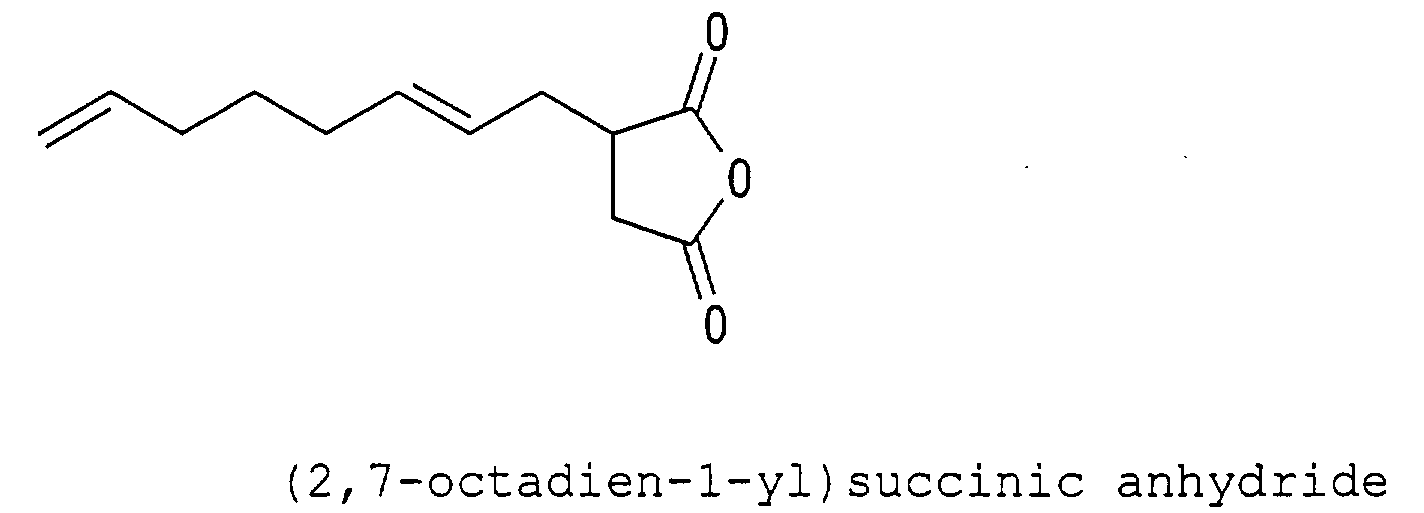

Claims (27)
- A polar group-containing olefin copolymer comprising a constituent unit represented by the following formula (1), a constituent unit represented by the following formula (2) and a constituent unit represented by the following formula (3), having a molecular weight distribution (Mw/Mn) of not more than 3, and having an intensity ratio of Tαβ to Tαα+Tαβ (Tαβ/(Tαα+Tαβ)), as determined from a 13C-NMR spectrum of said copolymer, of not more than 1.0:wherein R1 and R2 may be the same or different and are each a hydrogen atom or a straight-chain or branched aliphatic hydrocarbon group of 1 to 18 carbon atoms; R3 is a hydrocarbon group; R4 is a hetero atom or a group containing a hetero atom; r is 0 or 1; X is a polar group selected from an alcoholic hydroxyl group, a phenolic hydroxyl group, a carboxylic acid group, a carboxylic acid ester group, an acid anhydride group, an amino group, an amide group, an epoxy group and a mercapto group; p is an integer of 1 to 3; and when p is 2 or 3, each X may be the same or different, and in this case, if r is 0, X may be bonded to the same or different atom of R3, and if r is 1, X may be bonded to the same or different atom of R4.

- The polar group-containing olefin copolymer as claimed in claim 1, wherein R3 in the constituent unit represented by the formula (3) is a hydrocarbon group of 11 or more carbon atoms.
- The polar group-containing olefin copolymer as claimed in claims 1 or 2, wherein X in the constituent unit represented by the formula (3) is a polar group selected from a phenolic hydroxyl group, a carboxylic acid ester group, an acid anhydride group, an amino group, an amide group, an epoxy group and a mercapto group.
- The polar group-containing olefin copolymer as claimed in claims 1 to 3, wherein R1 in the constituent unit represented by the formula (1) and R2 in the constituent unit represented by the formula (2) are each a hydrocarbon group of 2 or more carbon atoms and the crystallinity of said copolymer, as determined by X-ray diffractometry, is not less than 10 %.
- The polar group-containing olefin copolymer as claimed in claims i to 3, wherein R1 in the constituent unit represented by the formula (1) and R2 in the constituent unit represented by the formula (2) are each a hydrocarbon group of 2 or more carbon atoms and the crystallinity of said copolymer, as determined by X-ray diffractometry, is less than 10 %.
- A branched type polar group-containing olefin copolymer comprising a constituent unit represented by the following formula (1) and a constituent unit represented by the following formula (4), and optionally a constituent unit represented by the following formula (5), having a molecular weight distribution (Mw/Mn) of not more than 3, and having an intensity ratio of Tαβ to Tαα+Tαβ (Tαβ/(Tαα+Tαβ)), as determined from a 13C-NMR spectrum of said copolymer, of not more than 1.0:wherein R1 is a hydrogen atom or a straight-chain or branched aliphatic hydrocarbon group of 1 to 18 carbon atoms; R5 is a hydrocarbon group; R6 is a hetero atom or a group containing a hetero atom; r is 0 or 1; Z is a polymer segment obtained by any one of anionic polymerization, ring-opening polymerization and polycondensation; W is a hydroxyl group or an epoxy group; p is an integer of 1 to 3, q is 0, 1 or 2, and p+q ≤ 3; when p is 2 or 3, each -O-Z may be the same or different, and in this case, if r is 0, -O-Z may be bonded to the same or different atom of R5, and if r is 1, -O-Z may be bonded to the same or different atom of R6; when q is 2, each W may be the same or different, and in this case, if r is 0, W may be bonded to the same or different atom of R5, and if r is 1, W may be bonded to the same or different atom of R6; in case of p≥1 and q≥1, if r is 0, W and -O-Z may be bonded to the same or different atom of R5, and if r is 1, W and -O-Z may be bonded to the same or different atom of R6; m is 0 or 1; n is an integer of 1 to 3; and when n is 2 or 3, each W may be the same or different, and in this case, if m is 0, W may be bonded to the same or different atom of R6, and if m is 1, W may be bonded to the same or different atom of R7.

- The branched type polar group-containing olefin copolymer as claimed in claim 6, wherein, in the formula (4), r is 0 and Z is a polymer segment obtained by anionic polymerization.
- The branched type polar group-containing olefin copolymer as claimed in claim 6, wherein, in the formula (4), Z is a polymer segment obtained by ring-opening polymerization or polycondensation.
- A polar group-containing olefin copolymer comprising a constituent unit represented by the following formula (1) and a constituent unit represented by the following formula (6) and, optionally a constituent unit represented by the following formula (3), having a molecular weight distribution (Mw/Mn) of not more than 3, and having an intensity ratio of Tαβ to Tαα+Tαβ (Tαβ/(Tαα+Tαβ)), as determined from a 13C-NMR spectrum of said copolymer, of not more than 1.0:wherein R1 is a hydrogen atom or a straight-chain or branched aliphatic hydrocarbon group of 1 to 18 carbon atoms; R3 is a hydrocarbon group; R4 is a hetero atom or a group containing a hetero atom; R7 is a direct bond or an aliphatic hydrocarbon group of 1 or more carbon atoms; R8 is a hydrogen atom, a direct bond or an aliphatic hydrocarbon group of 1 or more carbon atoms; Y is a polar group containing O and/or N; m and n are each an integer of 0 to 2, and m+n is not 0; s is 0 or 1; r is 0 or 1; X is a polar group selected from an alcoholic hydroxyl group, a phenolic hydroxyl group, a carboxylic acid group, a carboxylic acid ester group, an acid anhydride group, an amino group, an amide group, an epoxy group and a mercapto group; p is an integer of 1 to 3; when p is 2 or 3, each X may be the same or different, and in this case, if r is 0, X may be bonded to the same or different atom of R3, and if r is 1, X may be bonded to the same or different atom of R4.
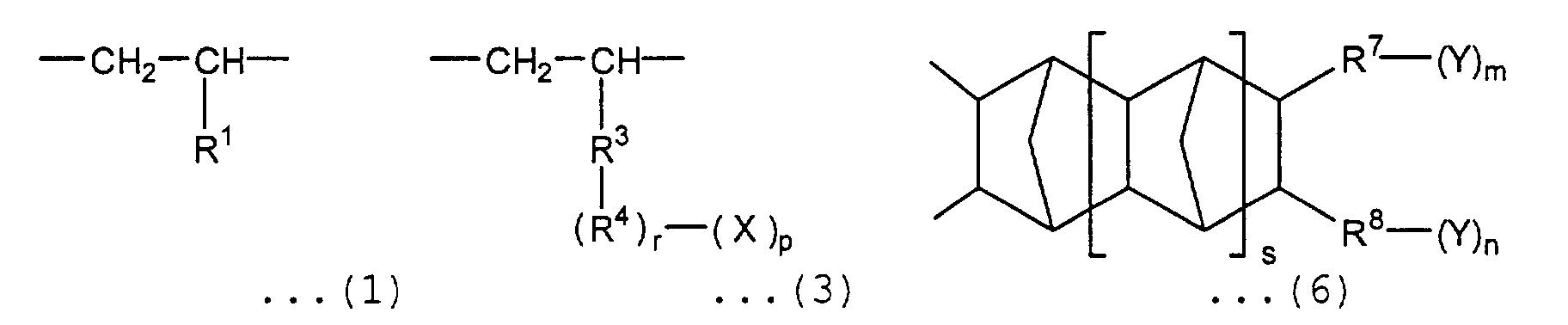
- A process for preparing a polar group containing olefin copolymer, comprising copolymerizing at least one α-olefin selected from α-olefins of 2 to 20 carbon atoms and at least one polar group-containing monomer selected from a polar group-containing monomer represented by the following formula (7) and a polar group-containing monomer represented by the following formula (8) in the presence of a catalyst comprising:(A) a compound of a transition metal selected from Group 3 (including lanthanoid and actinoid) to Group 10 of the periodic table, and(B) at least one compound selected from:wherein R3 is a hydrocarbon group; R4 is a hetero atom or a group containing a hetero atom; r is 0 or 1; X is a polar group selected from an alcoholic hydroxyl group, a phenolic hydroxyl group, a carboxylic acid group, a carboxylic acid ester group, an acid anhydride group, an amino group, an amide group, an epoxy group and a mercapto group; p is an integer of 1 to 3; when p is 2 or 3, each X may be the same or different, and in this case, if r is 0, X may be bonded to the same or different atom of R3, and if r is 1, X may be bonded to the same or different atom of R4;(B-1) an organoaluminum oxy-compound,(B-2) a compound which reacts with the compound (A) to form an ion pair, and(B-3) an organoaluminum compound;
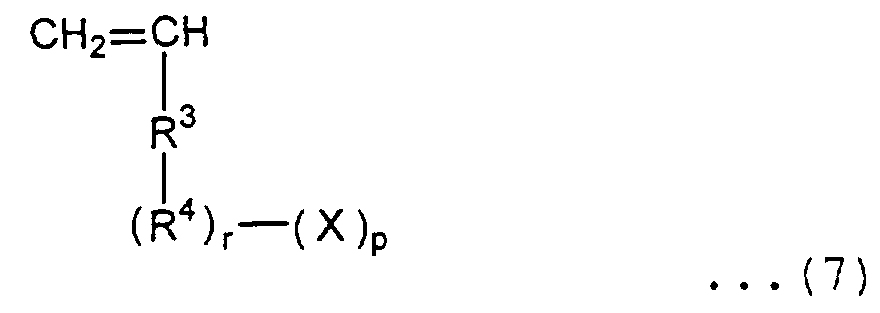 wherein R7 is a direct bond or an aliphatic hydrocarbon group of 1 or more carbon atoms; R8 is a hydrogen atom, a direct bond or an aliphatic hydrocarbon group of 1 or more carbon atoms; Y is a polar group containing O and/or N; m and n are each an integer of 0 to 2, and m+n is not 0; and s is 0 or 1.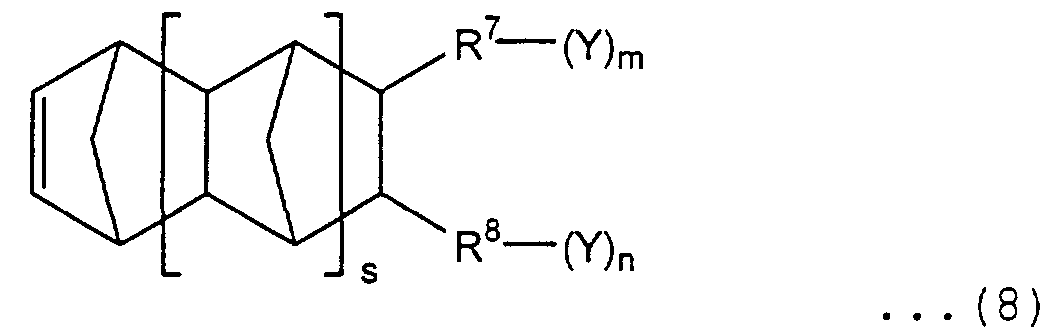
- The process for preparing a polar group-containing olefin copolymer as claimed in claim 10, wherein the transition metal compound (A) is represented by any one of the following formulas (11), (12), (13), (14), (15) and (16) and the polar group-containing monomer is a polar group-containing monomer of the formula (7) wherein X is -OH;wherein M1 is a transition metal atom of Group 4 of the periodic table; R25, R26, R27 and R28 may be the same or different and are each a hydrogen atom, a nitrogen-containing group, a phosphorus-containing group, a hydrocarbon group of 1 to 20 carbon atoms, a halogenated hydrocarbon group of 1 to 20 carbon atoms, an oxygen-containing group, a sulfur-containing group, a silicon-containing group or a halogen atom; of the groups indicated by R25, R26, R27 and R28, a part of the groups neighboring with each other may be bonded to form a ring together with carbon atoms to which those groups are bonded; X1 and X2 may be the same or different and are each a hydrocarbon group of 1 to 20 carbon atoms, a halogenated hydrocarbon group of 1 to 20 carbon atoms, an oxygen-containing group, a sulfur-containing group, a silicon-containing group, a hydrogen atom or a halogen atom; and Y1 is a divalent hydrocarbon group of 1 to 20 carbon atoms, a divalent halogenated hydrocarbon group of 1 to 20 carbon atoms, a divalent silicon-containing group, a divalent germanium-containing group, a divalent tin-containing group, -O-, -CO-, -S-, -SO-, -SO2-, -Ge-, -Sn-, -NR21-, -P(R21)-, -P(O)(R21)-, -BR21- or -AlR21- (each R21 may be the same or different and is a hydrocarbon group of 1 to 20 carbon atoms, a halogenated hydrocarbon group of 1 to 20 carbon atoms, a hydrogen atom, a halogen atom or a nitrogen compound residue in which one or two hydrocarbon groups of 1 to 20 carbon atoms are bonded to the nitrogen atom);
 wherein M1 is a transition metal atom selected from Group 4 of the periodic table; Cp is a cyclopentadienyl group or its derivative that is π-bonded to M1; Z1 is a ligand containing an oxygen atom, a sulfur atom, a boron atom or an element of Group 14 of the periodic table; Y1 is a ligand containing an atom selected from a nitrogen atom, a phosphorus atom, an oxygen atom and a sulfur atom; and each X1 may be the same or different and is a hydrogen atom, a halogen atom, a hydrocarbon group which has 20 or less carbon atoms and may contain 1 or more double bonds, a silyl group containing 20 or less silicon atoms, a germyl group containing 20 or less germanium atoms or a boronyl group containing 20 or less boron atoms;
 wherein M1 is a transition metal atom selected from Group 4 of the periodic table; R11 to R14, R17 to R20, and R41 may be the same or different and are each a hydrocarbon group of 1 to 40 carbon atoms, a halogenated hydrocarbon group of 1 to 40 carbon atoms, an oxygen-containing group, a sulfur-containing group, a silicon-containing group, a halogen atom or a hydrogen atom; of the groups indicated by R11, R12, R13, R14, R17, R18, R19, R20 and R41, a part of the groups neighboring with each other may be bonded to form a ring together with carbon atoms to which those groups are bonded (except a case where all of R11, R12, R13, R14, R17, R18, R19, R20 and R41 are hydrogen atoms and a case where R12 or R13 is a tert-butyl group and the residual R11, R12, R13, R14, R17, R18, R19, R20 and R41 are hydrogen atoms); X1 and X2 may be the same or different and are each a hydrocarbon group of 1 to 20 carbon atoms, a halogenated hydrocarbon group of 1 to 20 carbon atoms, an oxygen-containing group, a sulfur-containing group, a silicon-containing group, a hydrogen atom or a halogen atom; and Y1 is a divalent hydrocarbon group of 1 to 20 carbon atoms, a divalent halogenated hydrocarbon group of 1 to 20 carbon atoms, a divalent silicon-containing group, a divalent germanium-containing group, a divalent tin-containing group, -O-, -CO-, -S-, -SO-, -SO2-, -Ge-, -Sn-, -NR21-, -P(R21)-, -P(O)(R21)-, -BR21- or -AlR21- (each R21 may be the same or different and is a hydrocarbon group of 1 to 20 carbon atoms, a halogenated hydrocarbon group of 1 to 20 carbon atoms, a hydrogen atom, a halogen atom or a nitrogen compound residue in which one or two hydrocarbon groups of 1 to 20 carbon atoms are bonded to the nitrogen atom);
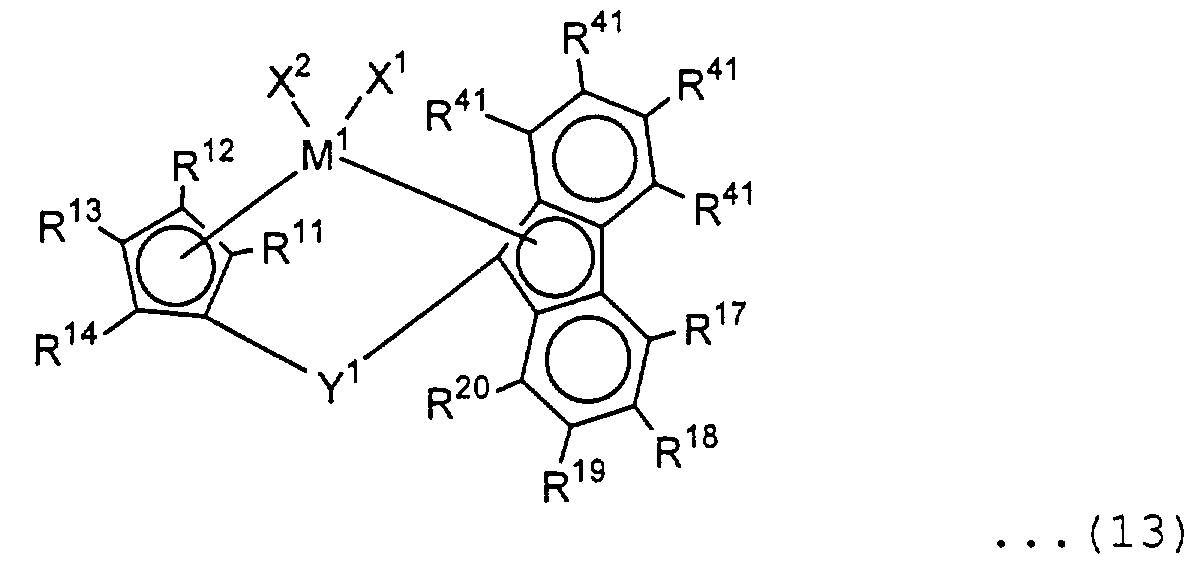 wherein M1 is a transition metal atom selected from Group 4 of the periodic table; R11, R12, R41 and R42 may be the same or different and are each a hydrocarbon group of 1 to 40 carbon atoms, a halogenated hydrocarbon group of 1 to 40 carbon atoms, an oxygen-containing group, a sulfur-containing group, a silicon-containing group, a halogen atom or a hydrogen atom; of the groups indicated by R11, R12, R41 and R42, a part of the groups neighboring with each other may be bonded to form a ring together with carbon atoms to which those groups are bonded; X1 and X2 may be the same or different and are each a hydrocarbon group of 1 to 20 carbon atoms, a halogenated hydrocarbon group of 1 to 20 carbon atoms, an oxygen-containing group, a sulfur-containing group, a silicon-containing group, a hydrogen atom or a halogen atom; and Y1 is a divalent hydrocarbon group of 1 to 20 carbon atoms (when all of R11, R12, R41 and R42 are hydrogen atoms, Y1 is not ethylene), a divalent halogenated hydrocarbon group of 1 to 20 carbon atoms, a divalent silicon-containing group, a divalent germanium-containing group, a divalent tin-containing group, -O-, -CO-, -S-, -SO-,-SO2-, -Ge-, -Sn-, -NR21-, -P(R21)-, -P(O)(R21)-, -BR21-or -AlR21- (each R21 may be the same or different and is a hydrocarbon group of 1 to 20 carbon atoms, a halogenated hydrocarbon group of 1 to 20 carbon atoms, a hydrogen atom, a halogen atom or a nitrogen compound residue in which one or two hydrocarbon groups of 1 to 20 carbon atoms are bonded to the nitrogen atom);
 wherein M1 is a transition metal atom selected from Group 4 of the periodic table; R41 and R42 may be the same or different and are each a hydrocarbon group of 1 to 40 carbon atoms, a halogenated hydrocarbon group of 1 to 40 carbon atoms, an oxygen-containing group, a sulfur-containing group, a silicon-containing group, a halogen atom or a hydrogen atom; of the groups indicated by R41 and R42, a part of the groups neighboring with each other may be bonded to form a ring together with carbon atoms to which those groups are bonded; X1 and X2 may be the same or different and are each a hydrocarbon group of 1 to 20 carbon atoms, a halogenated hydrocarbon group of 1 to 20 carbon atoms, an oxygen-containing group, a sulfur-containing group, a silicon-containing group, a hydrogen atom or a halogen atom; and Y1 is a divalent hydrocarbon group of 1 to 20 carbon atoms, a divalent halogenated hydrocarbon group of 1 to 20 carbon atoms, a divalent silicon-containing group, a divalent germanium-containing group, a divalent tin-containing group, -O-, -CO-, -S-, -SO-, -SO2-, -Ge-, -Sn-, -NR21-, -P(R21)-,-P(O)(R21)-, -BR21- or -AlR21- (each R21 may be the same or different and is a hydrocarbon group of 1 to 20 carbon atoms, a halogenated hydrocarbon group of 1 to 20 carbon atoms, a hydrogen atom, a halogen atom or a nitrogen compound residue in which one or two hydrocarbon groups of 1 to 20 carbon atoms are bonded to the nitrogen atom);
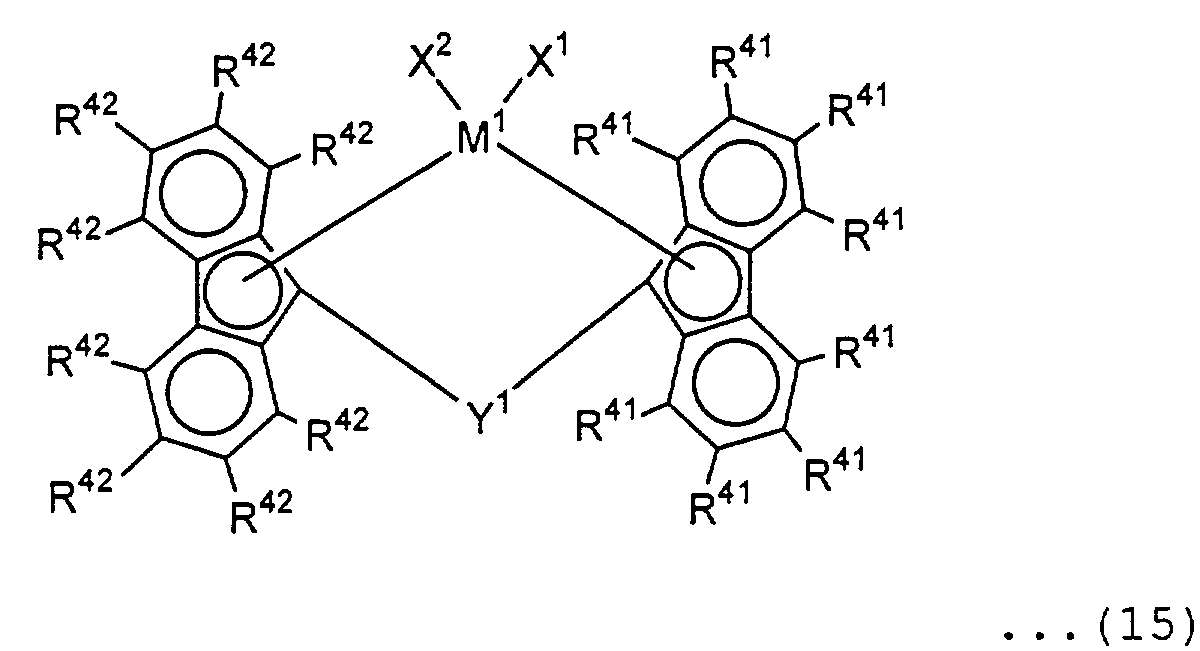 wherein M1 is a transition metal atom selected from Group 4 of the periodic table; R11, R12, R15 to R20, and R42 may be the same or different and are each a hydrocarbon group of 1 to 40 carbon atoms, a halogenated hydrocarbon group of 1 to 40 carbon atoms, an oxygen-containing group, a sulfur-containing group, a silicon-containing group, a halogen atom or a hydrogen atom; of the groups indicated by R11, R12, R15, R16, R17, R18, R19, R2° and R42, a part of the groups neighboring with each other may be bonded to form a ring together with carbon atoms to which those groups are bonded; X1 and X2 may be the same or different and are each a hydrocarbon group of 1 to 20 carbon atoms, a halogenated hydrocarbon group of 1 to 20 carbon atoms, an oxygen-containing group, a sulfur-containing group, a silicon-containing group, a hydrogen atom or a halogen atom; and Y1 is a divalent hydrocarbon group of 1 to 20 carbon atoms (when all of R11, R12, R15, R16, R17, R18, R19, R20 and R42 are hydrogen atoms, Y1 is not ethylene), a divalent halogenated hydrocarbon group of 1 to 20 carbon atoms, a divalent silicon-containing group, a divalent germanium-containing group, a divalent tin-containing group, -O-, -CO-, -S-, -SO-,-SO2-, -Ge-, -Sn-, -NR21-, -P(R21)-, -P(O)(R21)-, -BR21-or -AlR21- (each R21 may be the same or different and is a hydrocarbon group of 1 to 20 carbon atoms, a halogenated hydrocarbon group of 1 to 20 carbon atoms, a hydrogen atom, a halogen atom or a nitrogen compound residue in which one or two hydrocarbon groups of 1 to 20 carbon atoms are bonded to the nitrogen atom).
- The process for preparing a polar group-containing olefin copolymer as claimed in claim 10, wherein the transition metal compound (A) is represented by any one of the following formulas (11), (12), (13), (14), (15) and (16) and the polar group-containing monomer is a polar group-containing monomer of the formula (7) wherein X is -NR'R" (R' and R" may be the same or different and are each a hydrogen atom or an alkyl group);wherein M1 is a transition metal atom of Group 4 of the periodic table; R25, R26, R27 and R28 may be the same or different and are each a hydrogen atom, a nitrogen-containing group, a phosphorus-containing group, a hydrocarbon group of 1 to 20 carbon atoms, a halogenated hydrocarbon group of 1 to 20 carbon atoms, an oxygen-containing group, a sulfur-containing group, a silicon-containing group or a halogen atom; of the groups indicated by R25, R26, R27 and R28, a part of the groups neighboring with each other may be bonded to form a ring together with carbon atoms to which those groups are bonded; X1 and X2 may be the same or different and are each a hydrocarbon group of 1 to 20 carbon atoms, a halogenated hydrocarbon group of 1 to 20 carbon atoms, an oxygen-containing group, a sulfur-containing group, a silicon-containing group, a hydrogen atom or a halogen atom; and Y1 is a divalent hydrocarbon group of 1 to 20 carbon atoms, a divalent halogenated hydrocarbon group of 1 to 20 carbon atoms, a divalent silicon-containing group, a divalent germanium-containing group, a divalent tin-containing group, -O-, -CO-, -S-, -SO-, -SO2-, -Ge-, -Sn-, -NR21-, -P(R21)-, -P(O)(R21)-, -BR21- or -AlR21- (each R21 may be the same or different and is a hydrocarbon group of 1 to 20 carbon atoms, a halogenated hydrocarbon group of 1 to 20 carbon atoms, a hydrogen atom, a halogen atom or a nitrogen compound residue in which one or two hydrocarbon groups of 1 to 20 carbon atoms are bonded to the nitrogen atom);
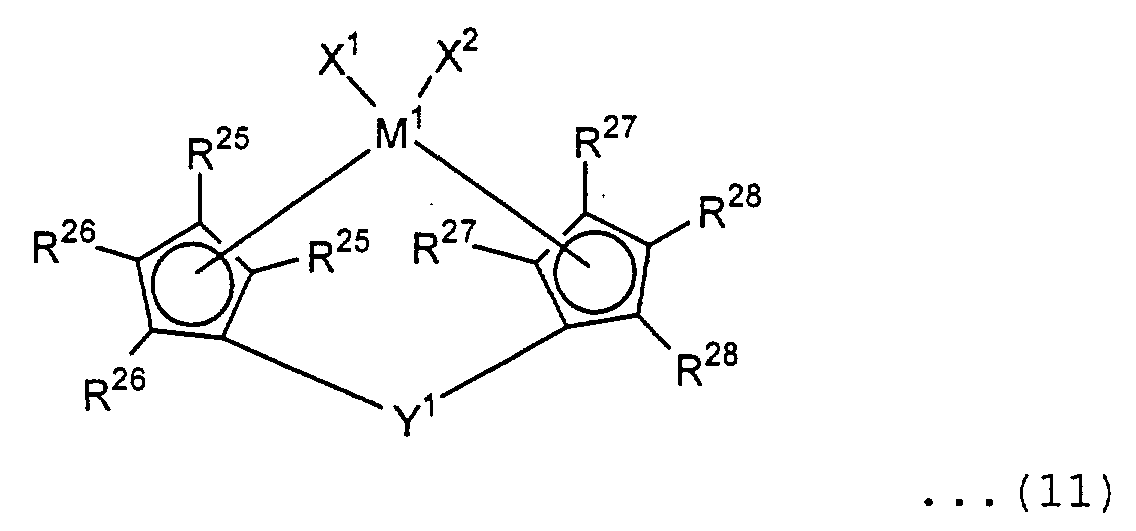 wherein M1 is a transition metal atom selected from Group 4 of the periodic table; Cp is a cyclopentadienyl group or its derivative that is π-bonded to M1; Z1 is a ligand containing an oxygen atom, a sulfur atom, a boron atom or an element of Group 14 of the periodic table; Y1 is a ligand containing an atom selected from a nitrogen atom, a phosphorus atom, an oxygen atom and a sulfur atom; and each X1 may be the same or different and is a hydrogen atom, a halogen atom, a hydrocarbon group which has 20 or less carbon atoms and may contain 1 or more double bonds, a silyl group containing 20 or less silicon atoms, a germyl group containing 20 or less germanium atoms or a boronyl group containing 20 or less boron atoms;
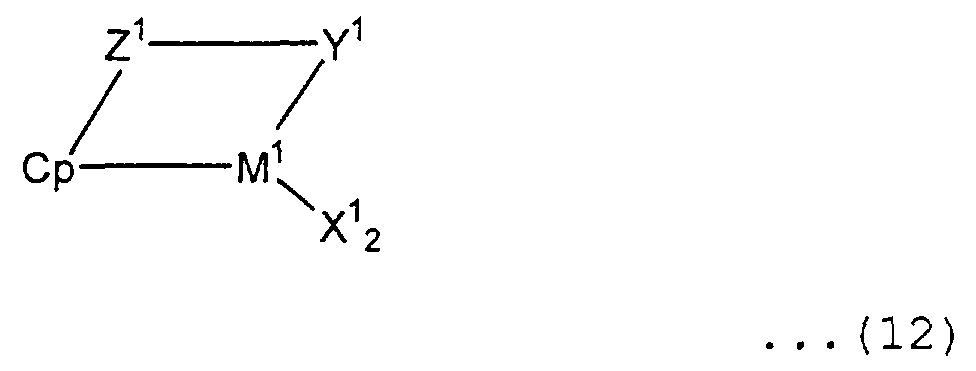 wherein M1 is a transition metal atom selected from Group 4 of the periodic table; R11 to R14, R17 to R20, and R41 may be the same or different and are each a hydrocarbon group of 1 to 40 carbon atoms, a halogenated hydrocarbon group of 1 to 40 carbon atoms, an oxygen-containing group, a sulfur-containing group, a silicon-containing group, a halogen atom or a hydrogen atom; of the groups indicated by R11, R12, R13, R14, R17, R18, R19, R20 and R41, a part of the groups neighboring with each other may be bonded to form a ring together with carbon atoms to which those groups are bonded (except a case where all of R11, R12, R13, R14, R17, R18, R19, R20 and R41 are hydrogen atoms and a case where R12 or R13 is a tert-butyl group and the residual R11, R12, R13, R14, R17, R18, R19, R20 and R41 are hydrogen atoms); X1 and X2 may be the same or different and are each a hydrocarbon group of 1 to 20 carbon atoms, a halogenated hydrocarbon group of 1 to 20 carbon atoms, an oxygen-containing group, a sulfur-containing group, a silicon-containing group, a hydrogen atom or a halogen atom; and Y1 is a divalent hydrocarbon group of 1 to 20 carbon atoms, a divalent halogenated hydrocarbon group of 1 to 20 carbon atoms, a divalent silicon-containing group, a divalent germanium-containing group, a divalent tin-containing group, -O-, -CO-, -S-, -SO-, -SO2-, -Ge-, -Sn-, -NR21-, -P(R21)-, -P(O)(R21)-, -BR21- or -AlR21- (each R21 may be the same or different and is a hydrocarbon group of 1 to 20 carbon atoms, a halogenated hydrocarbon group of 1 to 20 carbon atoms, a hydrogen atom, a halogen atom or a nitrogen compound residue in which one or two hydrocarbon groups of 1 to 20 carbon atoms are bonded to the nitrogen atom);
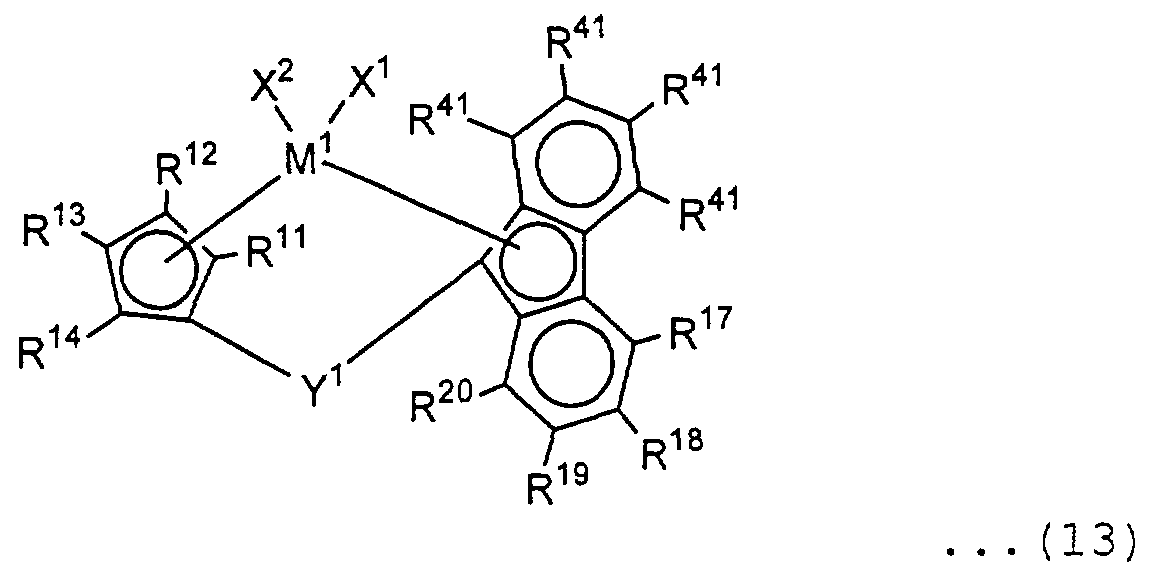 wherein M1 is a transition metal atom selected from Group 4 of the periodic table; R11, R12, R41 and R42 may be the same or different and are each a hydrocarbon group of 1 to 40 carbon atoms, a halogenated hydrocarbon group of 1 to 40 carbon atoms, an oxygen-containing group, a sulfur-containing group, a silicon-containing group, a halogen atom or a hydrogen atom; of the groups indicated by R11, R12, R41 and R42, a part of the groups neighboring with each other may be bonded to form a ring together with carbon atoms to which those groups are bonded; X1 and X2 may be the same or different and are each a hydrocarbon group of 1 to 20 carbon atoms, a halogenated hydrocarbon group of 1 to 20 carbon atoms, an oxygen-containing group, a sulfur-containing group, a silicon-containing group, a hydrogen atom or a halogen atom; and Y1 is a divalent hydrocarbon group of 1 to 20 carbon atoms (when all of R11, R12, R41 and R42 are hydrogen atoms, Y1 is not ethylene), a divalent halogenated hydrocarbon group of 1 to 20 carbon atoms, a divalent silicon-containing group, a divalent germanium-containing group, a divalent tin-containing group, -O-, -CO-, -S-, -SO-,-SO2-, -Ge-, -Sn-, -NR21-, -P(R21)-, -P(O)(R21)-, -BR21-or -AlR21- (each R21 may be the same or different and is a hydrocarbon group of 1 to 20 carbon atoms, a halogenated hydrocarbon group of 1 to 20 carbon atoms, a hydrogen atom, a halogen atom or a nitrogen compound residue in which one or two hydrocarbon groups of 1 to 20 carbon atoms are bonded to the nitrogen atom);
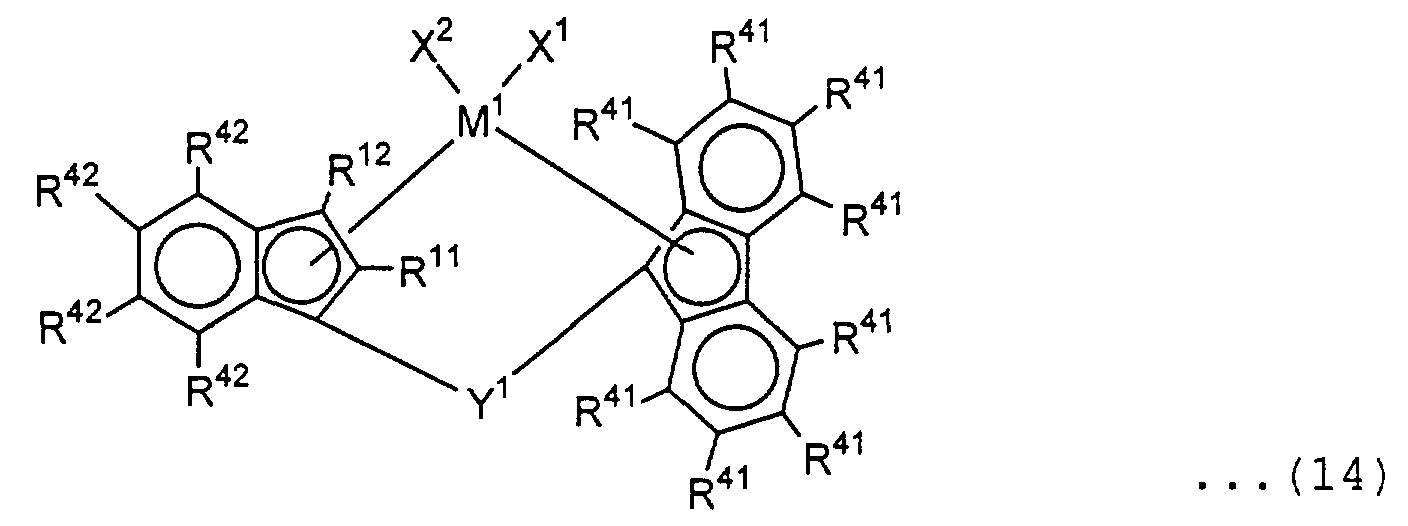 wherein M1 is a transition metal atom selected from Group 4 of the periodic table; R41 and R42 may be the same or different and are each a hydrocarbon group of 1 to 40 carbon atoms, a halogenated hydrocarbon group of 1 to 40 carbon atoms, an oxygen-containing group, a sulfur-containing group, a silicon-containing group, a halogen atom or a hydrogen atom; of the groups indicated by R41 and R42, a part of the groups neighboring with each other may be bonded to form a ring together with carbon atoms to which those groups are bonded; X1 and X2 may be the same or different and are each a hydrocarbon group of 1 to 20 carbon atoms, a halogenated hydrocarbon group of 1 to 20 carbon atoms, an oxygen-containing group, a sulfur-containing group, a silicon-containing group, a hydrogen atom or a halogen atom; and Y1 is a divalent hydrocarbon group of 1 to 20 carbon atoms, a divalent halogenated hydrocarbon group of 1 to 20 carbon atoms, a divalent silicon-containing group, a divalent germanium-containing group, a divalent tin-containing group, -O-, -CO-, -S-, -SO-, -SO2-, -Ge-, -Sn-, -NR21-, -P(R21)-,-P(O)(R21)-, -BR21- or -AlR21- (each R21 may be the same or different and is a hydrocarbon group of 1 to 20 carbon atoms, a halogenated hydrocarbon group of 1 to 20 carbon atoms, a hydrogen atom, a halogen atom or a nitrogen compound residue in which one or two hydrocarbon groups of 1 to 20 carbon atoms are bonded to the nitrogen atom);
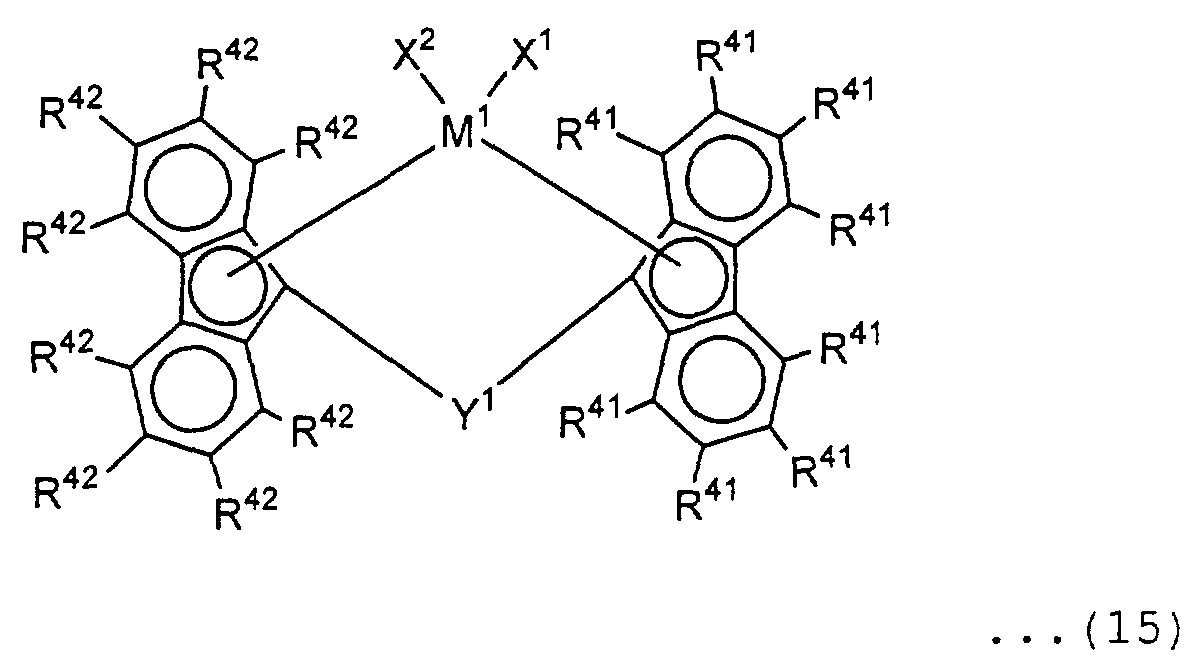 wherein M1 is a transition metal atom selected from Group 4 of the periodic table; R11, R12, R15 to R20, and R42 may be the same or different and are each a hydrocarbon group of 1 to 40 carbon atoms, a halogenated hydrocarbon group of 1 to 40 carbon atoms, an oxygen-containing group, a sulfur-containing group, a silicon-containing group, a halogen atom or a hydrogen atom; of the groups indicated by R11, R12, R15, R16, R17, R18, R19, R20 and R42, a part of the groups neighboring with each other may be bonded to form a ring together with carbon atoms to which those groups are bonded; X1 and X2 may be the same or different and are each a hydrocarbon group of 1 to 20 carbon atoms, a halogenated hydrocarbon group of 1 to 20 carbon atoms, an oxygen-containing group, a sulfur-containing group, a silicon-containing group, a hydrogen atom or a halogen atom; and Y1 is a divalent hydrocarbon group of 1 to 20 carbon atoms (when all of R11, R12, R15, R16, R17, R18, R19, R20 and R42 are hydrogen atoms, Y1 is not ethylene), a divalent halogenated hydrocarbon group of 1 to 20 carbon atoms, a divalent silicon-containing group, a divalent germanium-containing group, a divalent tin-containing group, -O-, -CO-, -S-, -SO-,-SO2-, -Ge-, -Sn-, -NR21-, -P(R21)-, -P(O)(R21)-, -BR21-or -AlR21- (each R21 may be the same or different and is a hydrocarbon group of 1 to 20 carbon atoms, a halogenated hydrocarbon group of 1 to 20 carbon atoms, a hydrogen atom, a halogen atom or a nitrogen compound residue in which one or two hydrocarbon groups of 1 to 20 carbon atoms are bonded to the nitrogen atom).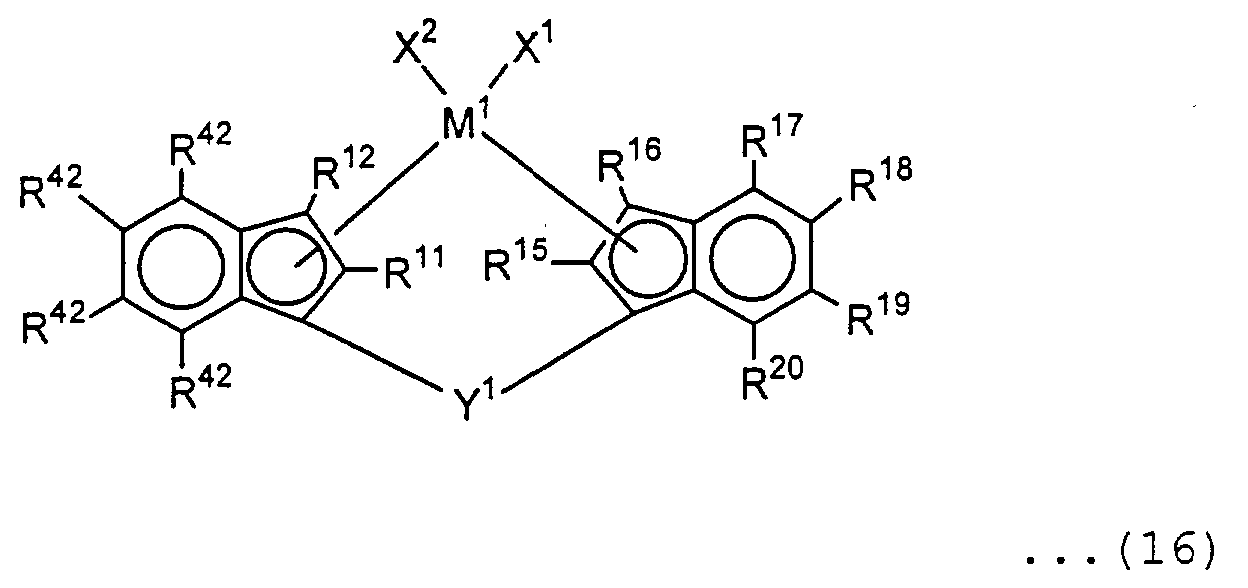
- A process for preparing a polar group-containing olefin copolymer, comprising copolymerizing at least one α-olefin selected from α-olefins of 2 to 20 carbon atoms and at least one polar group-containing monomer selected from a polar group-containing monomer represented by the following formula (7), a polar group-containing monomer represented by the following formula (8) and a macromonomer represented by the following formula (9) in the presence of a catalyst comprising:wherein R3 is a hydrocarbon group; R4 is a hetero atom or a group containing a hetero atom; r is 0 or 1; X is -OR, -COOR, -CRO, -C(O)NR2, -C(O)R (R is a hydrogen atom or a hydrocarbon group), an epoxy group, -C≡N or-NR'R" (R' and R" may be the same or different and are each a hydrogen atom or an alkyl group); p is an integer of 1 to 3; and when p is 2 or 3, each X may be the same or different, and in this case, if r is 0, X may be bonded to the same or different atom of R3, and if r is 1, X may be bonded to the same or different atom of R4;(A) a compound of a transition metal selected from Group 3 (including lanthanoid and actinoid) to Group 10 of the periodic table, and(B) at least one compound selected from:(B-1) an organoaluminum oxy-compound,(B-2) a compound which reacts with the compound (A) to form an ion pair, and(B-3) an organoaluminum compound;
 wherein R7 is a direct bond or an aliphatic hydrocarbon group of 1 or more carbon atoms; R8 is a hydrogen atom, a direct bond or an aliphatic hydrocarbon group of 1 or more carbon atoms; Y is -OR, -COOR, -CRO, -C(O)NR2,-C(O)R (R is a hydrogen atom or a hydrocarbon group), an epoxy group, -C≡N or -NR'R" (R' and R" may be the same or different and are each a hydrogen atom or an alkyl group); m and n are each an integer of 0 to 2, and m+n is not 0; and s is 0 or 1;
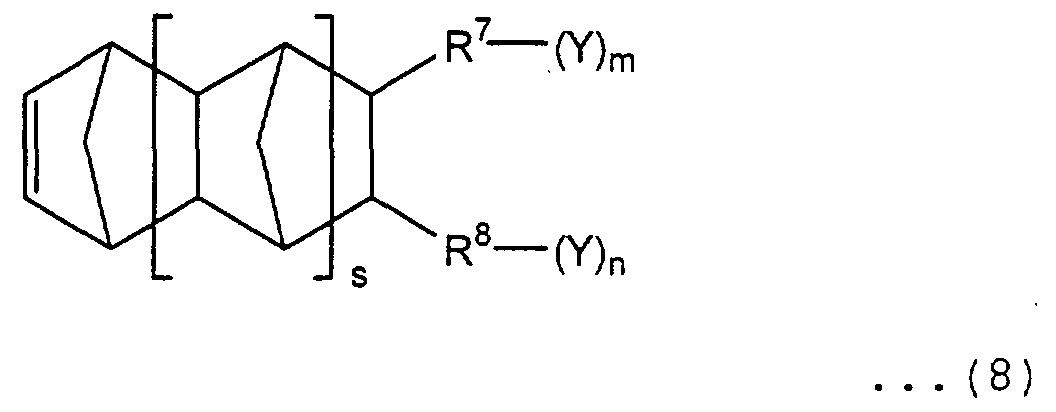 wherein R5 is a hydrocarbon group; R6 is a hetero atom or a group containing a hetero atom; r is 0 or 1; Z is a polymer segment obtained by any one of anionic polymerization, ring-opening polymerization and polycondensation; W is a hydroxyl group or an epoxy group; p is an integer of 1 to 3, q is 0, 1 or 2, and p+q ≤ 3; when p is 2 or 3, each -O-Z may be the same or different, and in this case, if r is 0, -O-Z may be bonded to the same or different atom of R5, and if r is 1, -O-Z may be bonded to the same or different atom of R6; when q is 2, each W may be the same or different, and in this case, if r is 0, W may be bonded to the same or different atom of R5, and if r is 1, W may be bonded to the same or different atom of R6; and in case of p≥1 and q≥1, if r is 0, W and -O-Z may be each bonded to the same or different atom of R5, and if r is 1, W and -O-Z may be each bonded to the same or different atom of R6.
- A process for preparing a branched type polar group-containing olefin copolymer, comprising copolymerizing at least one α-olefin selected from α-olefins of 2 to 20 carbon atoms, a polar group-containing monomer represented by the following formula (10), and optionally, a polar group-containing monomer represented by the following formula (8) in the presence of a catalyst comprising:wherein R5 is a hydrocarbon group; R6 is a hetero atom or a group containing a hetero atom; m is 0 or 1; W is a hydroxyl group or an epoxy group; n is an integer of 1 to 3; and when n is 2 or 3, each W may be the same or different, and in this case, if m is 0, W may be bonded to the same or different atom of R5, and if m is 1, W may be bonded to the same or different atom of R6;(A) a compound of a transition metal selected from Group 3 (including lanthanoid and actinoid) to Group 10 of the periodic table, and(B) at least one compound selected from:and then conducting any one of the following steps (i) and (ii);(B-1) an organoaluminum oxy-compound,(B-2) a compound which reacts with the compound (A) to form an ion pair, and(B-3) an organoaluminum compound,
 wherein R7 is a direct bond or an aliphatic hydrocarbon group of 1 or more carbon atoms; R8 is a hydrogen atom, a direct bond or an aliphatic hydrocarbon group of 1 or more carbon atoms; Y is -OR, -COOR, -CRO, -C(O)NR2,-C(O)R (R is a hydrogen atom or a hydrocarbon group), an epoxy group, -C≡N or -NR'R" (R' and R" may be the same or different and are each a hydrogen atom or an alkyl group); m and n are each an integer of 0 to 2, and m+n is not 0; and s is 0 or 1;
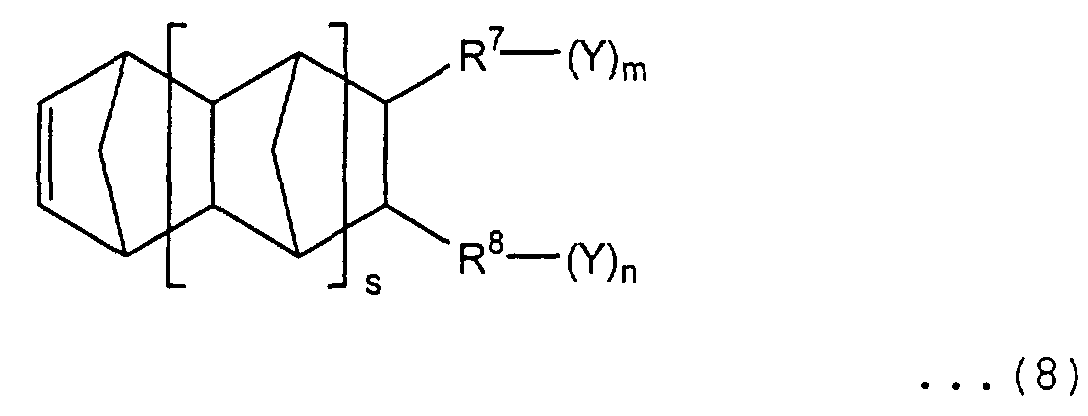 (i) from the W portion of the copolymerized polar group-containing monomer, a Z portion is formed by anionic polymerization, ring-opening polymerization or polycondensation;(ii) the W portion of the copolymerized polar group-containing monomer is reacted with a terminal functional group of a polymer obtained by anionic polymerization, ring-opening polymerization and polycondensation.
 - A thermoplastic resin composition containing the polar group-containing olefin copolymer of any one of claims 1 to 9.
- An adhesive resin comprising the polar group-containing olefin copolymer of any one of claims 1 to 9.
- A compatibilizing agent comprising the polar group-containing olefin copolymer of any one of claims 1 to 9.
- A resin modifier comprising the polar group-containing olefin copolymer of any one of claims 1 to 9.
- A filler dispersant comprising the polar group-containing olefin copolymer of any one of claims 1 to 9.
- A dispersion comprising the polar group-containing olefin copolymer of any one of claims 1 to 9.
- A film or a sheet comprising the polar group-containing olefin copolymer of any one of claims 1 to 9.
- An adhesive resin comprising the thermoplastic resin composition of claim 15.
- A compatibilizing agent comprising the thermoplastic resin composition of claim 15.
- A resin modifier comprising the thermoplastic resin composition of claim 15.
- A filler dispersant comprising the thermoplastic resin composition of claim 15.
- A dispersion comprising the thermoplastic resin composition of claim 15.
- A film or a sheet comprising the thermoplastic resin composition of claim 15.
Priority Applications (1)
| Application Number | Priority Date | Filing Date | Title |
|---|---|---|---|
| EP06019869A EP1734061B1 (en) | 2000-09-07 | 2001-09-07 | Polar group-containing olefin copolymer, process for preparing the same, thermoplastic resin composition containing the copolymer and uses thereof |
Applications Claiming Priority (16)
| Application Number | Priority Date | Filing Date | Title |
|---|---|---|---|
| JP2000272345 | 2000-09-07 | ||
| JP2000272345 | 2000-09-07 | ||
| JP2000345737A JP4409078B2 (en) | 2000-11-13 | 2000-11-13 | Polar group-containing olefin copolymer |
| JP2000345738A JP2002145946A (en) | 2000-11-13 | 2000-11-13 | Polar group-containing olefin copolymer and thermoplastic resin composition containing the copolymer |
| JP2000345737 | 2000-11-13 | ||
| JP2000345738 | 2000-11-13 | ||
| JP2000345816 | 2000-11-13 | ||
| JP2000345814 | 2000-11-13 | ||
| JP2000345736A JP2002145944A (en) | 2000-11-13 | 2000-11-13 | Polar group-containing olefin copolymer and thermoplastic resin composition containing the copolymer |
| JP2000345816A JP2002145949A (en) | 2000-11-13 | 2000-11-13 | Polar group-containing olefin copolymer and thermoplastic resin composition containing the copolymer |
| JP2000345815A JP2002145948A (en) | 2000-11-13 | 2000-11-13 | Polar group-containing olefin copolymer and thermoplastic resin composition containing the copolymer |
| JP2000345736 | 2000-11-13 | ||
| JP2000345814A JP2002145947A (en) | 2000-11-13 | 2000-11-13 | Polar group-containing olefin copolymer, thermoplastic resin composition containing the copolymer and use thereof |
| JP2000345815 | 2000-11-13 | ||
| JP2000362632A JP4343420B2 (en) | 2000-11-29 | 2000-11-29 | Polar group-containing branched olefin copolymer and thermoplastic resin composition containing the copolymer |
| JP2000362632 | 2000-11-29 |
Related Child Applications (1)
| Application Number | Title | Priority Date | Filing Date |
|---|---|---|---|
| EP06019869A Division EP1734061B1 (en) | 2000-09-07 | 2001-09-07 | Polar group-containing olefin copolymer, process for preparing the same, thermoplastic resin composition containing the copolymer and uses thereof |
Publications (3)
| Publication Number | Publication Date |
|---|---|
| EP1186619A2 true EP1186619A2 (en) | 2002-03-13 |
| EP1186619A3 EP1186619A3 (en) | 2003-10-29 |
| EP1186619B1 EP1186619B1 (en) | 2006-11-29 |
Family
ID=27573718
Family Applications (2)
| Application Number | Title | Priority Date | Filing Date |
|---|---|---|---|
| EP06019869A Expired - Lifetime EP1734061B1 (en) | 2000-09-07 | 2001-09-07 | Polar group-containing olefin copolymer, process for preparing the same, thermoplastic resin composition containing the copolymer and uses thereof |
| EP01120773A Expired - Lifetime EP1186619B1 (en) | 2000-09-07 | 2001-09-07 | Polar group-containing olefin copolymer, process for preparing the same, thermoplastic resin composition contaning the copolymer, and uses thereof |
Family Applications Before (1)
| Application Number | Title | Priority Date | Filing Date |
|---|---|---|---|
| EP06019869A Expired - Lifetime EP1734061B1 (en) | 2000-09-07 | 2001-09-07 | Polar group-containing olefin copolymer, process for preparing the same, thermoplastic resin composition containing the copolymer and uses thereof |
Country Status (7)
| Country | Link |
|---|---|
| US (3) | US20020156207A1 (en) |
| EP (2) | EP1734061B1 (en) |
| KR (2) | KR100806765B1 (en) |
| CN (3) | CN100357330C (en) |
| DE (2) | DE60124829T2 (en) |
| ES (1) | ES2276731T3 (en) |
| SG (1) | SG102636A1 (en) |
Cited By (26)
| Publication number | Priority date | Publication date | Assignee | Title |
|---|---|---|---|---|
| EP1408077A1 (en) * | 2002-10-09 | 2004-04-14 | Borealis Technology Oy | Polymer composition comprising nanofillers |
| EP1408058A1 (en) * | 2002-10-11 | 2004-04-14 | Mitsui Chemicals, Inc. | Branched olefin copolymer, process for producing the same, and use thereof |
| EP1550704A1 (en) * | 2003-12-24 | 2005-07-06 | Rohm and Haas Electronic Materials, L.L.C. | Improved adhesive |
| EP1719794A4 (en) * | 2004-01-30 | 2010-04-28 | Mitsui Chemicals Inc | Novel polymers and uses thereof |
| US8092821B2 (en) * | 2006-08-25 | 2012-01-10 | Boston Scientific Scimed, Inc. | Medical devices having polymeric regions with improved adhesion |
| JP2014208810A (en) * | 2013-03-27 | 2014-11-06 | 日本ポリエチレン株式会社 | Polar group-containing olefin copolymer, adhesive using the same, laminate, and composite product |
| JP2015025126A (en) * | 2013-06-21 | 2015-02-05 | 日本ポリエチレン株式会社 | Compatibilizer, modifier and resin composition for thermoplastic resin |
| CN104527866A (en) * | 2014-12-04 | 2015-04-22 | 苏州欣航微电子有限公司 | Waterproof and heat insulation type liquid crystal display panel of motorcycle |
| EP2796480A4 (en) * | 2011-12-23 | 2016-03-02 | Japan Polyethylene Corp | OLEFIN COPOLYMER CONTAINING A POLAR GROUP, POLYMER POLYOLE OLEFIN COPOLYMER, OLEFIN RESIN COMPOSITION, AND ADHESIVE MATERIAL, LAMINATE, AND OTHER APPLICATION PRODUCTS USING THE SAME |
| EP3034544A1 (en) * | 2014-12-17 | 2016-06-22 | SABIC Global Technologies B.V. | A process for the preparation of a graft copolymer comprising a polyolefin main chain and one or a multiple polymer side chains and the products obtained therefrom |
| EP2980107A4 (en) * | 2013-03-27 | 2017-04-19 | Japan Polyethylene Corporation | Polar-group-containing olefin copolymer, multinary polar-group-containing olefin copolymer, olefin-based resin composition, and adhesive and layered product comprising same |
| CN107207711A (en) * | 2014-12-17 | 2017-09-26 | Sabic环球技术有限责任公司 | Process for the preparation of graft copolymers comprising a polyolefin backbone and one or more polymer side chains and products obtained therefrom |
| WO2018104211A1 (en) * | 2016-12-06 | 2018-06-14 | Sabic Global Technologies B.V. | Process for the preparation of an olefinic copolymer having polar groups and the products obtained therefrom |
| WO2019122459A1 (en) | 2017-12-22 | 2019-06-27 | Sabic Global Technologies B.V. | Process for preparation of functionalized ethylene and propylene copolymer |
| WO2019122455A1 (en) | 2017-12-22 | 2019-06-27 | Sabic Global Technologies B.V. | Process for preparation of amorphous functionalized olefin copolymer |
| US10526434B2 (en) | 2014-12-17 | 2020-01-07 | Sabic Global Technologies B.V. | Process for the preparation of a block copolymer comprising a first polyolefin block and a second polymer block as well as the products obtained therefrom |
| US10533075B2 (en) | 2014-12-17 | 2020-01-14 | Sabic Global Technologies B.V. | Process for the preparation of a block copolymer comprising a first polyolefin block and a second polymer block and the products obtained therefrom |
| WO2020200688A1 (en) | 2019-03-29 | 2020-10-08 | Sabic Global Technologies B.V. | Film from graft copolymer having a polypropylene backbone, and nanoporous polypropylene membrane |
| WO2020212129A1 (en) | 2019-04-16 | 2020-10-22 | Sabic Global Technologies B.V. | Sensor based on a polyolefin matrix and a sensing compound |
| CN112121853A (en) * | 2020-09-08 | 2020-12-25 | 重庆邮电大学 | A kind of mesoporous hollow silica nanosphere supporting prolinol catalyst and its preparation method and application |
| EP3660105A4 (en) * | 2017-07-25 | 2021-04-21 | Showa Denko K.K. | GAS BARRIER RESIN COMPOSITION AND ITS USE |
| WO2022238519A1 (en) | 2021-05-11 | 2022-11-17 | Sabic Global Technologies B.V. | Polyurethane based hot melt adhesive |
| WO2022238352A1 (en) | 2021-05-11 | 2022-11-17 | Sabic Global Technologies B.V. | Hot melt adhesive comprising functionalized polyolefins |
| WO2024088806A1 (en) | 2022-10-24 | 2024-05-02 | Sabic Global Technologies B.V. | Hot melt adhesive comprising siloxide-functionalized polyolefins |
| EP4484516A1 (en) | 2023-06-27 | 2025-01-01 | SABIC Global Technologies B.V. | Hot melt adhesives based on blends comprising non-functionalized and functionalized polyolefins |
| EP4484457A1 (en) | 2023-06-27 | 2025-01-01 | SABIC Global Technologies B.V. | Hot melt adhesives based on blends comprising non-functionalized and functionalized polyolefins |
Families Citing this family (76)
| Publication number | Priority date | Publication date | Assignee | Title |
|---|---|---|---|---|
| DE10025290B4 (en) * | 2000-05-22 | 2005-03-24 | Fico I.T.M. S.A. | Sun visor outer surfaces |
| US20020156207A1 (en) * | 2000-09-07 | 2002-10-24 | Junichi Imuta | Polar group-containing olefin copolymer, process for preparing the same, thermoplastic resin composition containing the copolymer, and uses thereof |
| KR100643250B1 (en) * | 2001-12-28 | 2006-11-10 | 가부시키가이샤 아데카 | Polylactic Acid-Based Resin Compositions, Molded Products and Manufacturing Method Thereof |
| US7795347B2 (en) * | 2003-03-14 | 2010-09-14 | Mitsui Chemicals, Inc. | Multi-branched polymer, process for producing the same, and applications thereof |
| GB0412196D0 (en) * | 2004-06-02 | 2004-07-07 | Hexcel Composites Ltd | Cure accelerators |
| US7358221B1 (en) * | 2004-06-10 | 2008-04-15 | Sandia Corporation | Metathesis depolymerizable surfactants |
| KR100733923B1 (en) * | 2004-07-07 | 2007-07-02 | 주식회사 엘지화학 | Catalysts for polymerizing cyclic olefin having polar funtional group, polymerizing methods using the catalysts, olefin polymer produced by the methods and optical anisotropic film comprising the same |
| JP2006064803A (en) * | 2004-08-25 | 2006-03-09 | Konica Minolta Opto Inc | Stretched cellulose ester film, polarizing plate and liquid crystal display device using the same |
| WO2006031067A1 (en) | 2004-09-16 | 2006-03-23 | Lg Chem, Ltd. | Catalyst system for polymerizing cyclic olefin having polar functional group, polymerizing method using the catalyst system, olefin polymer produced by the method and optical anisotropic film comprising the olefin polymer |
| US7691932B2 (en) * | 2004-09-27 | 2010-04-06 | 3M Innovative Properties Company | Method of making a composition and nanocomposites therefrom |
| US20060100356A1 (en) * | 2004-09-29 | 2006-05-11 | Klosiewicz Daniel W | Alicyclic carboxylic acid-containing functionalized polyolefins and emulsions prepared therefrom |
| US8193270B2 (en) * | 2004-12-14 | 2012-06-05 | 3M Innovative Properties Company | Method of making composites and nanocomposites |
| WO2006090688A1 (en) * | 2005-02-25 | 2006-08-31 | Mitsui Chemicals, Inc. | Polymerization catalyst composition and process for production of polymer |
| US20060208062A1 (en) * | 2005-03-16 | 2006-09-21 | Osborn Warren R | Injection molded gift case for debit, credit and smart cards |
| CA2611701A1 (en) * | 2005-06-15 | 2006-12-21 | Fuji Seal International, Inc | Battery packaging labels |
| JP5216326B2 (en) * | 2005-12-06 | 2013-06-19 | ポリプラスチックス株式会社 | Anti-fogging agent for amorphous cyclic olefin resin, resin composition, and optical component |
| US7390351B2 (en) * | 2006-02-09 | 2008-06-24 | 3M Innovative Properties Company | Electrets and compounds useful in electrets |
| JP4717661B2 (en) * | 2006-02-24 | 2011-07-06 | Mgcフィルシート株式会社 | Optical laminate including melanin-containing layer and optical product including the laminate |
| US20070275174A1 (en) * | 2006-05-24 | 2007-11-29 | Hanson Eric L | Fishing fly and fly fishing line with fluorocarbon coating |
| JP5406174B2 (en) * | 2007-03-30 | 2014-02-05 | エルジー・ケム・リミテッド | Copolymer containing alkene, acrylate and unsaturated organic acid, and method for producing the same |
| EP1997608A3 (en) | 2007-05-16 | 2009-05-27 | Entex Rust & Mitschke GmbH | Method for machining products to be degassed |
| DE102008006391B4 (en) * | 2008-01-28 | 2016-11-17 | Airbus Operations Gmbh | Chromate-free composition, its use as corrosion protection and thus produced corrosion protection coating for fuel tanks |
| SG169305A1 (en) * | 2009-08-26 | 2011-03-30 | Siemens Pte Ltd | Ion exchange membranes |
| JP5055397B2 (en) * | 2010-03-10 | 2012-10-24 | 株式会社ユニックスジャパン | Dental molded body and dental resin material |
| WO2012051610A1 (en) | 2010-10-15 | 2012-04-19 | Siemens Industry, Inc. | Process for making a monomer solution for making cation exchange membranes |
| EP2627447B1 (en) | 2010-10-15 | 2019-12-11 | Evoqua Water Technologies LLC | Anion exchange membranes and process for making |
| ES2623543T3 (en) | 2010-10-25 | 2017-07-11 | Stepan Company | Fatty amides and derivatives of a natural oil metathesis |
| KR101309816B1 (en) * | 2010-12-17 | 2013-09-23 | 제일모직주식회사 | Optical filter and liquid crystal display comprising the same |
| US8846587B2 (en) | 2011-03-24 | 2014-09-30 | Elevance Renewable Sciences, Inc. | Functionalized monomers and polymers |
| US9902125B2 (en) | 2011-03-24 | 2018-02-27 | Lululemon Athletica Canada Inc. | Methods for making an exercise mat |
| KR101151467B1 (en) | 2011-10-18 | 2012-06-01 | 한국생산기술연구원 | Graft copolymer having high performance and a preparation method thereof |
| JP6215211B2 (en) * | 2011-10-18 | 2017-10-18 | エンパイア テクノロジー ディベロップメント エルエルシー | Barriers and films |
| CN102490509B (en) * | 2011-12-09 | 2013-12-18 | 上海欣旺壁纸有限公司 | Wallpaper and production process thereof |
| KR101402964B1 (en) * | 2011-12-13 | 2014-06-11 | 한국생산기술연구원 | Nanocomposites comprising graft copolymer and nano-particles, and a preparation method thereof |
| CN102558928B (en) * | 2011-12-16 | 2014-07-16 | 展辰涂料集团股份有限公司 | Aqueous ultraviolet (UV) coating for melamine |
| US9012385B2 (en) | 2012-02-29 | 2015-04-21 | Elevance Renewable Sciences, Inc. | Terpene derived compounds |
| US10131121B2 (en) * | 2012-06-05 | 2018-11-20 | Dow Global Technologies Llc | Films containing functional ethylene-based polymer composition |
| CN104703697B (en) | 2012-10-04 | 2018-11-23 | 懿华水处理技术有限责任公司 | High-performance anion-exchange membrane and its manufacturing method |
| SG11201502697YA (en) | 2012-10-11 | 2015-05-28 | Evoqua Water Technologies Llc | Coated ion exchange membranes |
| US9169334B2 (en) | 2013-01-30 | 2015-10-27 | Exxonmobil Chemical Patents Inc. | Preparation of bottlebrush polymers via ring-opening metathesis polymerization |
| WO2014120433A1 (en) * | 2013-01-30 | 2014-08-07 | Exxonmobil Chemical Patents Inc. | Preparation of bottlebrush polymers via ring-opening metathesis polymerization |
| KR102038709B1 (en) * | 2013-05-15 | 2019-10-30 | 한국전력공사 | Power cable |
| KR102020068B1 (en) * | 2013-04-29 | 2019-11-04 | 한국전력공사 | Power cable |
| KR102020069B1 (en) * | 2013-04-29 | 2019-11-04 | 한국전력공사 | Compact power cable with increased capacitance |
| US9339770B2 (en) | 2013-11-19 | 2016-05-17 | Applied Membrane Technologies, Inc. | Organosiloxane films for gas separations |
| CN103730207B (en) * | 2013-11-26 | 2016-08-17 | 沃太能源南通有限公司 | A kind of preparation method of monocrystaline silicon solar cell aluminium paste |
| WO2016006773A1 (en) * | 2014-07-10 | 2016-01-14 | 삼성에스디아이 주식회사 | Curable polyorgano-siloxane composition, encapsulation and optical instrument |
| CN106661216B (en) * | 2014-09-30 | 2018-12-07 | 三菱瓦斯化学株式会社 | Polycarbonate resin and optical lens |
| KR101719042B1 (en) * | 2014-11-25 | 2017-03-22 | 주식회사 엘지화학 | Method for preparing polyolefin and polyolefin prepared thereby |
| CN107428956B (en) * | 2015-03-20 | 2022-05-17 | 三井化学株式会社 | Thermoplastic elastomer composition, use thereof, process for producing the same, ethylene-alpha-olefin-nonconjugated polyene copolymer, and use thereof |
| CN107535056B (en) * | 2015-07-06 | 2020-12-04 | 三菱瓦斯化学株式会社 | Manufacturing method of printed circuit board, and resin composition |
| WO2017097571A1 (en) * | 2015-12-09 | 2017-06-15 | Sabic Global Technologies B.V. | Process for the preparation of polyolefin-based graft copolymers comprising a first functionalized short chain branched polyolefin block and one or multiple polymer side chains |
| CN105400439B (en) * | 2015-12-14 | 2018-08-21 | 广东志高空调有限公司 | A kind of hanging air conditioner evaporator sealing technology |
| CN108770506A (en) * | 2016-08-04 | 2018-11-09 | 苏州灵垦农业科技有限公司 | A kind of anti abrasive straw crusher device people |
| CN107868152B (en) * | 2016-09-23 | 2020-09-15 | 中国石油化工股份有限公司 | Catalyst component for olefin polymerization, catalyst and application thereof |
| CN108610446B (en) * | 2016-12-09 | 2021-04-13 | 中国石油化工股份有限公司 | Polar cycloolefin copolymer and method for producing the same |
| US11028192B2 (en) | 2017-03-27 | 2021-06-08 | Exxonmobil Chemical Patents Inc. | Solution process to make ethylene copolymers |
| BR112019021216B8 (en) * | 2017-04-12 | 2023-03-14 | Quimikao S A De C V | HOT MIX ASPHALT ADDITIVE, HOT MIX ASPHALT BINDER COMPOSITION, HOT MIX ASPHALT COMPOSITION, THEIR PREPARATION METHODS, THEIR USES, SURFACE TREATMENT PAVING METHOD AND HOT MIX ASPHALT ADDITIVE KIT |
| CN107263624A (en) * | 2017-06-27 | 2017-10-20 | 六安三创建筑材料有限公司 | One kind carbonization glued board and preparation method thereof |
| CN109694435A (en) * | 2017-10-24 | 2019-04-30 | 中国石油化工股份有限公司 | A kind of alkene-unsaturated carboxylic acid polymer and preparation method thereof |
| CN109694438A (en) * | 2017-10-24 | 2019-04-30 | 中国石油化工股份有限公司 | A kind of alkene-alkene alkoxide polymer and preparation method thereof |
| CN109694434A (en) * | 2017-10-24 | 2019-04-30 | 中国石油化工股份有限公司 | A kind of alkene-unsaturated carboxylic acid polymer and preparation method thereof |
| CN109694436A (en) * | 2017-10-24 | 2019-04-30 | 中国石油化工股份有限公司 | A kind of alkene-alkene alkoxide polymer and preparation method thereof |
| CN109694433A (en) * | 2017-10-24 | 2019-04-30 | 中国石油化工股份有限公司 | For alkene-alkene alcohol copolymerization catalyst system and alkene-alkene alcohol copolymerization process and polymer |
| EP3719865A4 (en) * | 2017-11-28 | 2021-01-13 | Asahi Kasei Kabushiki Kaisha | SEPARATOR FOR ENERGY STORAGE DEVICE AND ITS PRODUCTION PROCESS, AND ENERGY STORAGE DEVICE AND ITS PRODUCTION PROCESS |
| CN112752789A (en) | 2018-09-25 | 2021-05-04 | 懿华水处理技术有限责任公司 | Ion exchange membranes by UV initiated polymerization |
| CN111116803B (en) * | 2018-10-31 | 2022-03-15 | 中国石油化工股份有限公司 | A kind of preparation method of olefin-unsaturated carboxylic acid copolymer |
| CN111116801B (en) * | 2018-10-31 | 2022-03-15 | 中国石油化工股份有限公司 | Preparation method of olefin-unsaturated carboxylic acid copolymer |
| CN111116802B (en) * | 2018-10-31 | 2022-03-15 | 中国石油化工股份有限公司 | Preparation method of olefin-unsaturated carboxylic acid copolymer |
| CN111116804B (en) * | 2018-10-31 | 2022-11-18 | 中国石油化工股份有限公司 | Preparation method of olefin-olefin alcohol copolymer |
| CN112573880B (en) * | 2020-12-29 | 2022-06-21 | 广东省科学院稀有金属研究所 | A kind of colored fluorescent diatom mud and preparation method thereof |
| CN115449146B (en) * | 2021-06-09 | 2023-10-20 | 中国石油化工股份有限公司 | Metallocene polyethylene film composition |
| CN113528216B (en) * | 2021-06-29 | 2022-07-29 | 广西大学 | By using nano TiO 2 Preparation of anti-charge accumulation insulating oil from modified sunflower seed oil |
| WO2023198649A1 (en) * | 2022-04-14 | 2023-10-19 | Sabic Global Technologies B.V. | Ethylene polymerisation catalyst system. |
| CN115028763B (en) * | 2022-07-28 | 2023-06-30 | 中国科学院长春应用化学研究所 | Cycloolefin copolymer and preparation method thereof |
| CN115368787B (en) * | 2022-08-10 | 2023-06-16 | 中国辐射防护研究院 | Tritium-proof paint and preparation method thereof |
Family Cites Families (59)
| Publication number | Priority date | Publication date | Assignee | Title |
|---|---|---|---|---|
| JPS5222988A (en) | 1975-08-14 | 1977-02-21 | Sumitomo Electric Ind Ltd | Method of determining characteristics of extruders |
| JPS5910683B2 (en) * | 1978-12-11 | 1984-03-10 | 三井化学株式会社 | Polymerization method of olefins |
| JPS56811A (en) * | 1979-06-18 | 1981-01-07 | Mitsui Petrochem Ind Ltd | Preparation of olefin polymer or copolymer |
| JPS6063240A (en) * | 1983-09-19 | 1985-04-11 | Mitsui Petrochem Ind Ltd | Highly adhesive copolymer composition |
| DE3429180A1 (en) | 1984-08-08 | 1986-02-20 | Hoechst Ag, 6230 Frankfurt | METHOD FOR PRODUCING ACETIC ACID ANHYDRIDE AND GGF. ACETIC ACID |
| US4715975A (en) * | 1984-08-20 | 1987-12-29 | Texaco Inc. | Oil containing dispersant VII olefin copolymer |
| PL276385A1 (en) | 1987-01-30 | 1989-07-24 | Exxon Chemical Patents Inc | Method for polymerization of olefines,diolefins and acetylene unsaturated compounds |
| IL85097A (en) | 1987-01-30 | 1992-02-16 | Exxon Chemical Patents Inc | Catalysts based on derivatives of a bis(cyclopentadienyl)group ivb metal compound,their preparation and their use in polymerization processes |
| US5239030A (en) * | 1987-05-08 | 1993-08-24 | Aristech Chemical Corporation | Amine/propylene copolymers |
| JPS6478687A (en) | 1987-09-21 | 1989-03-24 | Kawasaki Steel Co | Manufacture of aluminum covered steel plate |
| DE3742934A1 (en) | 1987-12-18 | 1989-06-29 | Hoechst Ag | METHOD FOR PRODUCING A CHIRAL, STEREORIGIDAL METALLOCEN COMPOUND |
| JPH01259012A (en) * | 1988-04-08 | 1989-10-16 | Mitsui Petrochem Ind Ltd | Production of olefinic copolymer containing functional group |
| US5155080A (en) | 1988-07-15 | 1992-10-13 | Fina Technology, Inc. | Process and catalyst for producing syndiotactic polyolefins |
| JPH0251511A (en) | 1988-08-15 | 1990-02-21 | Mitsui Petrochem Ind Ltd | Polar cyclic olefin copolymer and production thereof |
| JPH0251510A (en) * | 1988-08-15 | 1990-02-21 | Mitsui Petrochem Ind Ltd | Polar cyclic olefin copolymer and production thereof |
| JP2693517B2 (en) | 1988-09-14 | 1997-12-24 | 三井石油化学工業株式会社 | Method for producing benzene-insoluble organoaluminum oxy compound |
| JP2613169B2 (en) | 1989-03-23 | 1997-05-21 | 出光石油化学株式会社 | Soft polypropylene resin composition |
| CA2027145C (en) | 1989-10-10 | 2002-12-10 | Michael J. Elder | Metallocene catalysts with lewis acids and aluminum alkyls |
| DE3935978A1 (en) * | 1989-10-28 | 1991-05-02 | Hoechst Ag | PROCESS FOR PREPARING ALTERNATIVE COPOLYMERS FROM UNSATURATED POLAR COMPOUNDS AND OLEFINS |
| ES2086397T5 (en) | 1989-10-30 | 2005-07-16 | Fina Technology, Inc. | ADDITION OF ALKILOALUMINIO FOR AN IMPROVED METALOCENE CATALYST. |
| EP0426637B2 (en) | 1989-10-30 | 2001-09-26 | Fina Technology, Inc. | Preparation of metallocene catalysts for polymerization of olefins |
| US6156846A (en) * | 1989-11-28 | 2000-12-05 | Idemitsu Petrochemical Co., Ltd. | Flexible polypropylene resins, propylene bases elastomer compositions and process for production of olefin polymers |
| JPH03177403A (en) * | 1989-12-05 | 1991-08-01 | Mitsui Petrochem Ind Ltd | Higher alpha-olefinic copolymer and its preparation |
| JP2545006B2 (en) | 1990-07-03 | 1996-10-16 | ザ ダウ ケミカル カンパニー | Addition polymerization catalyst |
| GB9019513D0 (en) * | 1990-09-06 | 1990-10-24 | Shell Int Research | Reinforced thermoplastic composites |
| ES2091273T3 (en) | 1990-11-12 | 1996-11-01 | Hoechst Ag | PROCEDURE FOR THE PREPARATION OF A HIGH MOLECULAR WEIGHT OLEPHINIC POLYMER. |
| DE69208085T2 (en) * | 1991-03-20 | 1996-11-14 | Minnesota Mining & Mfg | Radiation-curable vinyl / silicone release agent coating |
| JP3094656B2 (en) | 1992-05-27 | 2000-10-03 | 住友化学工業株式会社 | Internal release agent |
| JPH0625320A (en) | 1992-07-09 | 1994-02-01 | Mitsui Toatsu Chem Inc | Production of olefin copolymer |
| US6001941A (en) * | 1992-11-19 | 1999-12-14 | Mitsui Chemicals, Inc. | Ethylene α-olefin copolymer obtained by copolymerizing ethylene with an α-olefin |
| US5464905A (en) | 1992-11-19 | 1995-11-07 | Mitsui Petrochemical Industries, Ltd. | Ethylene/α-olefin copolymer composition, graft modified ethylene/α-olefin copolymer composition, ethylene copolymer composition, and multi-stage olefin polymerization process |
| JP3378282B2 (en) | 1992-12-09 | 2003-02-17 | 三菱化学株式会社 | Method for producing α-olefin copolymer |
| US5563219A (en) * | 1993-07-16 | 1996-10-08 | Mitsui Toatsu Chemicals, Inc. | Process for Preparing block copolymer of monoolefin |
| US5639716A (en) * | 1994-06-09 | 1997-06-17 | Exxon Chemical Patents Inc. | Oil soluble dispersant additives based on 1-butene-α olefin copolymers |
| US5451483A (en) * | 1994-06-30 | 1995-09-19 | Xerox Corporation | Liquid developer compositions |
| JPH0853516A (en) | 1994-08-10 | 1996-02-27 | Mitsubishi Chem Corp | Propylene copolymer |
| JP3177403B2 (en) | 1995-04-12 | 2001-06-18 | 富士重工業株式会社 | Equipment for removing and removing paint film from painted resin products |
| JPH0977826A (en) | 1995-09-08 | 1997-03-25 | Mitsui Petrochem Ind Ltd | Hydroxylated ethylene / α-olefin / non-conjugated polyene random copolymer |
| JPH0977823A (en) | 1995-09-08 | 1997-03-25 | Mitsui Petrochem Ind Ltd | Epoxidized ethylene / α-olefin / non-conjugated polyene copolymer |
| FI954475L (en) * | 1995-09-21 | 1997-03-22 | Borealis As | Olefin polymers containing polar groups and a method for their preparation |
| JP3122745B2 (en) | 1996-02-05 | 2001-01-09 | 大日精化工業株式会社 | Ethylene-vinyl alcohol copolymer resin and method for producing the same |
| US5990352A (en) | 1996-02-20 | 1999-11-23 | Mitsui Chemicals, Inc. | Phosphazenium salt and preparation process thereof, and process for producing poly(alkylene oxide) |
| US5723084A (en) * | 1996-03-08 | 1998-03-03 | E. I. Du Pont De Nemours And Company | Flash spinning process |
| AU2653097A (en) * | 1996-05-03 | 1997-11-26 | Dsm N.V. | Process for the production of functional polyolefins |
| US6066603A (en) * | 1996-06-17 | 2000-05-23 | Exxon Chemical Patents Inc. | Polar monomer containing copolymers derived from olefins useful as lubricant and useful as lubricant and fuel oil additivies process for preparation of such copolymers and additives and use thereof |
| US6169152B1 (en) * | 1996-07-05 | 2001-01-02 | Jsr Corporation | Olefin polymerization catalyst comprising transition metal compound containing a cyclic ligand having at least two nitrogen atoms in its main chain skeleton |
| US6100224A (en) * | 1997-10-01 | 2000-08-08 | Exxon Chemical Patents Inc | Copolymers of ethylene α-olefin macromers and dicarboxylic monomers and derivatives thereof, useful as additives in lubricating oils and in fuels |
| JPH11140238A (en) | 1997-11-07 | 1999-05-25 | Sumitomo Chem Co Ltd | Molded body |
| WO1999030822A1 (en) * | 1997-12-16 | 1999-06-24 | Exxon Research And Engineering Company | Group 11 transition metal amine catalysts for olefin polymerization |
| DE19927347A1 (en) * | 1999-06-16 | 2000-12-21 | Basf Ag | Process for the production of graft copolymers with an elastic graft copolymer backbone |
| US6403742B2 (en) * | 1999-12-27 | 2002-06-11 | Jsr Corporation | Olefin copolymer having functional group, production process thereof and rubber composition |
| TW541318B (en) * | 2000-07-04 | 2003-07-11 | Mitsui Chemicals Inc | Process for producing polar olefin copolymer and polar olefin copolymer obtained thereby |
| JP2002145944A (en) | 2000-11-13 | 2002-05-22 | Mitsui Chemicals Inc | Polar group-containing olefin copolymer and thermoplastic resin composition containing the copolymer |
| JP2002145947A (en) | 2000-11-13 | 2002-05-22 | Mitsui Chemicals Inc | Polar group-containing olefin copolymer, thermoplastic resin composition containing the copolymer and use thereof |
| JP4409078B2 (en) | 2000-11-13 | 2010-02-03 | 三井化学株式会社 | Polar group-containing olefin copolymer |
| US20020156207A1 (en) * | 2000-09-07 | 2002-10-24 | Junichi Imuta | Polar group-containing olefin copolymer, process for preparing the same, thermoplastic resin composition containing the copolymer, and uses thereof |
| JP2002145949A (en) | 2000-11-13 | 2002-05-22 | Mitsui Chemicals Inc | Polar group-containing olefin copolymer and thermoplastic resin composition containing the copolymer |
| JP2002145948A (en) | 2000-11-13 | 2002-05-22 | Mitsui Chemicals Inc | Polar group-containing olefin copolymer and thermoplastic resin composition containing the copolymer |
| JP2002145946A (en) | 2000-11-13 | 2002-05-22 | Mitsui Chemicals Inc | Polar group-containing olefin copolymer and thermoplastic resin composition containing the copolymer |
-
2001
- 2001-09-07 US US09/947,460 patent/US20020156207A1/en not_active Abandoned
- 2001-09-07 ES ES01120773T patent/ES2276731T3/en not_active Expired - Lifetime
- 2001-09-07 CN CNB2005100996494A patent/CN100357330C/en not_active Expired - Fee Related
- 2001-09-07 SG SG200105472A patent/SG102636A1/en unknown
- 2001-09-07 CN CNB011326905A patent/CN1219800C/en not_active Expired - Fee Related
- 2001-09-07 EP EP06019869A patent/EP1734061B1/en not_active Expired - Lifetime
- 2001-09-07 CN CNB2005100996507A patent/CN100335509C/en not_active Expired - Fee Related
- 2001-09-07 KR KR1020010055003A patent/KR100806765B1/en not_active Expired - Fee Related
- 2001-09-07 DE DE60124829T patent/DE60124829T2/en not_active Expired - Lifetime
- 2001-09-07 DE DE60141777T patent/DE60141777D1/en not_active Expired - Lifetime
- 2001-09-07 EP EP01120773A patent/EP1186619B1/en not_active Expired - Lifetime
-
2003
- 2003-11-17 US US10/713,278 patent/US7393907B2/en not_active Expired - Lifetime
-
2007
- 2007-08-22 KR KR1020070084493A patent/KR100854011B1/en not_active Expired - Fee Related
-
2008
- 2008-05-12 US US12/153,003 patent/US7714087B2/en not_active Expired - Fee Related
Cited By (56)
| Publication number | Priority date | Publication date | Assignee | Title |
|---|---|---|---|---|
| EP1408077A1 (en) * | 2002-10-09 | 2004-04-14 | Borealis Technology Oy | Polymer composition comprising nanofillers |
| WO2004033549A1 (en) * | 2002-10-09 | 2004-04-22 | Borealis Technology Oy | Polymer composition comprising nanofillers |
| CN100535042C (en) * | 2002-10-09 | 2009-09-02 | 波利亚里斯技术有限公司 | Polymer composition comprising nanofillers |
| EP1408058A1 (en) * | 2002-10-11 | 2004-04-14 | Mitsui Chemicals, Inc. | Branched olefin copolymer, process for producing the same, and use thereof |
| US7022763B2 (en) | 2002-10-11 | 2006-04-04 | Mitsui Chemicals, Inc. | Branched olefin copolymer, process for producing the same, and use thereof |
| EP1550704A1 (en) * | 2003-12-24 | 2005-07-06 | Rohm and Haas Electronic Materials, L.L.C. | Improved adhesive |
| EP1719794A4 (en) * | 2004-01-30 | 2010-04-28 | Mitsui Chemicals Inc | Novel polymers and uses thereof |
| US7977429B2 (en) | 2004-01-30 | 2011-07-12 | Mitsui Chemicals, Inc. | Polymers and uses thereof |
| US8092821B2 (en) * | 2006-08-25 | 2012-01-10 | Boston Scientific Scimed, Inc. | Medical devices having polymeric regions with improved adhesion |
| EP2796480A4 (en) * | 2011-12-23 | 2016-03-02 | Japan Polyethylene Corp | OLEFIN COPOLYMER CONTAINING A POLAR GROUP, POLYMER POLYOLE OLEFIN COPOLYMER, OLEFIN RESIN COMPOSITION, AND ADHESIVE MATERIAL, LAMINATE, AND OTHER APPLICATION PRODUCTS USING THE SAME |
| JP2014208810A (en) * | 2013-03-27 | 2014-11-06 | 日本ポリエチレン株式会社 | Polar group-containing olefin copolymer, adhesive using the same, laminate, and composite product |
| US11084957B2 (en) | 2013-03-27 | 2021-08-10 | Japan Polyethylene Corporation | Polar-group-containing olefin copolymer, polar-group-containing multinary olefin copolymer, olefin-based resin composition, and adhesive and layered product each using the same |
| EP2980107A4 (en) * | 2013-03-27 | 2017-04-19 | Japan Polyethylene Corporation | Polar-group-containing olefin copolymer, multinary polar-group-containing olefin copolymer, olefin-based resin composition, and adhesive and layered product comprising same |
| JP2015025126A (en) * | 2013-06-21 | 2015-02-05 | 日本ポリエチレン株式会社 | Compatibilizer, modifier and resin composition for thermoplastic resin |
| CN104527866A (en) * | 2014-12-04 | 2015-04-22 | 苏州欣航微电子有限公司 | Waterproof and heat insulation type liquid crystal display panel of motorcycle |
| US10526434B2 (en) | 2014-12-17 | 2020-01-07 | Sabic Global Technologies B.V. | Process for the preparation of a block copolymer comprising a first polyolefin block and a second polymer block as well as the products obtained therefrom |
| EP3034544A1 (en) * | 2014-12-17 | 2016-06-22 | SABIC Global Technologies B.V. | A process for the preparation of a graft copolymer comprising a polyolefin main chain and one or a multiple polymer side chains and the products obtained therefrom |
| CN107207711A (en) * | 2014-12-17 | 2017-09-26 | Sabic环球技术有限责任公司 | Process for the preparation of graft copolymers comprising a polyolefin backbone and one or more polymer side chains and products obtained therefrom |
| CN107207712A (en) * | 2014-12-17 | 2017-09-26 | Sabic环球技术有限责任公司 | Process for the preparation of graft copolymers comprising a polyolefin backbone and one or more polymer side chains and products obtained therefrom |
| CN107207712B (en) * | 2014-12-17 | 2020-08-07 | Sabic环球技术有限责任公司 | Process for preparing a graft copolymer comprising a polyolefin backbone and one or more polymeric side chains and product obtained from said process |
| US10533075B2 (en) | 2014-12-17 | 2020-01-14 | Sabic Global Technologies B.V. | Process for the preparation of a block copolymer comprising a first polyolefin block and a second polymer block and the products obtained therefrom |
| WO2016097207A1 (en) * | 2014-12-17 | 2016-06-23 | Sabic Global Technologies B.V. | A process for the preparation of a graft copolymer comprising a polyolefin main chain and one or a multiple polymer side chains and the products obtained therefrom |
| US10519267B2 (en) | 2014-12-17 | 2019-12-31 | Sabic Global Technologies B.V. | Process for the preparation of a graft copolymer comprising a polyolefin main chain and one or a multiple polymer side chains and the products obtained therefrom |
| US10472447B2 (en) | 2014-12-17 | 2019-11-12 | Sabic Global Technologies B.V. | Process for the preparation of a graft copolymer comprising a polyolefin main chain and one or a multiple polymer side chains and the products obtained therefrom |
| US11603419B2 (en) | 2016-12-06 | 2023-03-14 | Sabic Global Technologies B.V. | Process for the preparation of an olefinic copolymer having polar groups and the products obtained therefrom |
| EP3551676A1 (en) * | 2016-12-06 | 2019-10-16 | SABIC Global Technologies B.V. | Process for the preparation of an olefinic copolymer having polar groups and the products obtained therefrom |
| WO2018104211A1 (en) * | 2016-12-06 | 2018-06-14 | Sabic Global Technologies B.V. | Process for the preparation of an olefinic copolymer having polar groups and the products obtained therefrom |
| EP3660105A4 (en) * | 2017-07-25 | 2021-04-21 | Showa Denko K.K. | GAS BARRIER RESIN COMPOSITION AND ITS USE |
| WO2019122456A1 (en) | 2017-12-22 | 2019-06-27 | Sabic Global Technologies B.V. | Process for preparation of semi-crystalline functionalized olefin copolymer |
| WO2019122453A1 (en) | 2017-12-22 | 2019-06-27 | Sabic Global Technologies B.V. | Process for preparation of amorphous polyolefinic ionomers |
| WO2019122459A1 (en) | 2017-12-22 | 2019-06-27 | Sabic Global Technologies B.V. | Process for preparation of functionalized ethylene and propylene copolymer |
| CN111511785A (en) * | 2017-12-22 | 2020-08-07 | Sabic环球技术有限责任公司 | Process for preparing functionalized ethylene and propylene copolymers |
| WO2019122458A1 (en) | 2017-12-22 | 2019-06-27 | Sabic Global Technologies B.V. | Process for preparation of semi-crystalline polyolefinic ionomers |
| US11773195B2 (en) | 2017-12-22 | 2023-10-03 | Sabic Global Technologies B.V. | Process for preparation of semi-crystalline functionalized olefin copolymer |
| US11472900B2 (en) | 2017-12-22 | 2022-10-18 | Sabic Global Technologies B.V. | Process for preparation of ethylene and propylene ionomer |
| WO2019122457A1 (en) | 2017-12-22 | 2019-06-27 | Sabic Global Technologies B.V. | Process for preparation of ethylene and propylene ionomer |
| WO2019122455A1 (en) | 2017-12-22 | 2019-06-27 | Sabic Global Technologies B.V. | Process for preparation of amorphous functionalized olefin copolymer |
| US11396565B2 (en) | 2017-12-22 | 2022-07-26 | Sabic Global Technologies B.V. | Process for preparation of semi-crystalline functionalized olefin copolymer |
| US11401360B2 (en) | 2017-12-22 | 2022-08-02 | Sabic Global Technologies B.V. | Process for preparation of amorphous polyolefinic ionomers |
| US11447585B2 (en) | 2017-12-22 | 2022-09-20 | Sabic Global Technologies B.V. | Process for preparation of functionalized ethylene and propylene copolymer |
| US11466109B2 (en) | 2017-12-22 | 2022-10-11 | Sabic Global Technologies B.V. | Process for preparation of amorphous functionalized olefin copolymer |
| US11466110B2 (en) | 2017-12-22 | 2022-10-11 | Sabic Global Technologies B.V. | Process for preparation of semi-crystalline polyolefinic ionomers |
| WO2020200688A1 (en) | 2019-03-29 | 2020-10-08 | Sabic Global Technologies B.V. | Film from graft copolymer having a polypropylene backbone, and nanoporous polypropylene membrane |
| US12215199B2 (en) | 2019-03-29 | 2025-02-04 | Sabic Global Technologies B.V. | Polypropylene backbone, and nanoporous polypropylene membrane |
| WO2020212129A1 (en) | 2019-04-16 | 2020-10-22 | Sabic Global Technologies B.V. | Sensor based on a polyolefin matrix and a sensing compound |
| CN112121853A (en) * | 2020-09-08 | 2020-12-25 | 重庆邮电大学 | A kind of mesoporous hollow silica nanosphere supporting prolinol catalyst and its preparation method and application |
| CN112121853B (en) * | 2020-09-08 | 2023-03-28 | 重庆邮电大学 | Mesoporous hollow silica nanosphere loaded with prolinol catalyst as well as preparation method and application of mesoporous hollow silica nanosphere |
| US20240263052A1 (en) * | 2021-05-11 | 2024-08-08 | Sabic Global Technologies B.V. | Hot melt adhesive comprising functionalized polyolefins |
| WO2022238519A1 (en) | 2021-05-11 | 2022-11-17 | Sabic Global Technologies B.V. | Polyurethane based hot melt adhesive |
| WO2022238352A1 (en) | 2021-05-11 | 2022-11-17 | Sabic Global Technologies B.V. | Hot melt adhesive comprising functionalized polyolefins |
| US12384946B2 (en) * | 2021-05-11 | 2025-08-12 | Sabic Global Technologies B.V. | Hot melt adhesive comprising functionalized polyolefins |
| WO2024088806A1 (en) | 2022-10-24 | 2024-05-02 | Sabic Global Technologies B.V. | Hot melt adhesive comprising siloxide-functionalized polyolefins |
| EP4484516A1 (en) | 2023-06-27 | 2025-01-01 | SABIC Global Technologies B.V. | Hot melt adhesives based on blends comprising non-functionalized and functionalized polyolefins |
| EP4484457A1 (en) | 2023-06-27 | 2025-01-01 | SABIC Global Technologies B.V. | Hot melt adhesives based on blends comprising non-functionalized and functionalized polyolefins |
| WO2025002626A1 (en) | 2023-06-27 | 2025-01-02 | Sabic Global Technologies B.V. | Hot melt adhesives based on blends comprising non- functionalized and functionalized polyolefins |
| WO2025002627A1 (en) | 2023-06-27 | 2025-01-02 | Sabic Global Technologies B.V. | Hot melt adhesives based on blends comprising non-functionalized and functionalized polyolefins |
Also Published As
| Publication number | Publication date |
|---|---|
| US20020156207A1 (en) | 2002-10-24 |
| DE60141777D1 (en) | 2010-05-20 |
| EP1186619A3 (en) | 2003-10-29 |
| CN1737016A (en) | 2006-02-22 |
| DE60124829T2 (en) | 2007-06-28 |
| ES2276731T3 (en) | 2007-07-01 |
| US7714087B2 (en) | 2010-05-11 |
| US7393907B2 (en) | 2008-07-01 |
| CN1342715A (en) | 2002-04-03 |
| EP1734061A2 (en) | 2006-12-20 |
| CN1737017A (en) | 2006-02-22 |
| KR100854011B1 (en) | 2008-08-26 |
| CN100357330C (en) | 2007-12-26 |
| KR20020020255A (en) | 2002-03-14 |
| SG102636A1 (en) | 2004-03-26 |
| KR20070101185A (en) | 2007-10-16 |
| EP1734061A3 (en) | 2007-05-09 |
| EP1734061B1 (en) | 2010-04-07 |
| KR100806765B1 (en) | 2008-02-27 |
| CN100335509C (en) | 2007-09-05 |
| EP1186619B1 (en) | 2006-11-29 |
| DE60124829D1 (en) | 2007-01-11 |
| US20090137757A1 (en) | 2009-05-28 |
| CN1219800C (en) | 2005-09-21 |
| US20040122192A1 (en) | 2004-06-24 |
Similar Documents
| Publication | Publication Date | Title |
|---|---|---|
| US7393907B2 (en) | Polar group-containing olefin copolymer, process for preparing the same, thermoplastic resin composition containing the copolymer, and uses thereof | |
| EP2267045B1 (en) | Olefin polymer of very low polydispersity and process for preparing the same | |
| KR100307037B1 (en) | Unsaturated copolymer, preparation method of the copolymer and composition containing the copolymer | |
| KR101626845B1 (en) | Farnesene interpolymers | |
| CN100424107C (en) | propylene-based soft resin composition | |
| CN102127264B (en) | Propylene polymer thin film and sheet | |
| JP2002053615A (en) | Ethylene (co)polymer and its use | |
| WO1997038024A1 (en) | Olefin polymerization catalyst, olefin polymerization method, olefin polymer compositions, and thermoformed articles | |
| DE69330437T2 (en) | Graft modified ethylene / alpha olefin copolymers and ethylene copolymer composition | |
| EP1394187B1 (en) | Process for producing olefin/aromatic vinyl copolymer | |
| DE69924833T2 (en) | Resin dispersion, process for the preparation thereof, reclaimed metal sheet produced therefrom, and method for producing lamines | |
| JP2002145948A (en) | Polar group-containing olefin copolymer and thermoplastic resin composition containing the copolymer | |
| JPH0665443A (en) | Ethylene copolymer composition | |
| JP4610784B2 (en) | Olefin block copolymer | |
| JP6666089B2 (en) | Propylene resin composition and molded article | |
| JP2001278928A (en) | Films and sheets | |
| CN113366036A (en) | Resin composition | |
| JP2001278929A (en) | Automotive interior and exterior material and gasoline tank | |
| JP4772201B2 (en) | Olefin block copolymer | |
| JP3506537B2 (en) | Graft-modified propylene polymer | |
| ES2343645T3 (en) | OLEFINE COPOLYMER CONTAINING POLAR GROUP, PROCEDURE TO PREPARE THE SAME, COMPOSITION OF THERMOPLASTIC RESIN CONTAINING THE COPOLYMER, AND USES OF THE SAME. | |
| JP3549868B2 (en) | Ethylene polymer, method for producing the same, and molded article using the same | |
| JP4684453B2 (en) | Olefin block copolymer | |
| JP2001270922A (en) | Sundries molded | |
| JP2000109637A (en) | Polypropylene resin composition and injection molded product |
Legal Events
| Date | Code | Title | Description |
|---|---|---|---|
| PUAI | Public reference made under article 153(3) epc to a published international application that has entered the european phase |
Free format text: ORIGINAL CODE: 0009012 |
|
| AK | Designated contracting states |
Kind code of ref document: A2 Designated state(s): AT BE CH CY DE DK ES FI FR GB GR IE IT LI LU MC NL PT SE TR |
|
| AX | Request for extension of the european patent |
Free format text: AL;LT;LV;MK;RO;SI |
|
| PUAL | Search report despatched |
Free format text: ORIGINAL CODE: 0009013 |
|
| AK | Designated contracting states |
Kind code of ref document: A3 Designated state(s): AT BE CH CY DE DK ES FI FR GB GR IE IT LI LU MC NL PT SE TR |
|
| AX | Request for extension of the european patent |
Extension state: AL LT LV MK RO SI |
|
| 17P | Request for examination filed |
Effective date: 20040130 |
|
| 17Q | First examination report despatched |
Effective date: 20040603 |
|
| AKX | Designation fees paid |
Designated state(s): BE DE ES FR NL |
|
| RAP1 | Party data changed (applicant data changed or rights of an application transferred) |
Owner name: MITSUI CHEMICALS, INC. |
|
| GRAP | Despatch of communication of intention to grant a patent |
Free format text: ORIGINAL CODE: EPIDOSNIGR1 |
|
| RIC1 | Information provided on ipc code assigned before grant |
Ipc: C08F 210/02 20060101AFI20060621BHEP Ipc: C08L 23/00 20060101ALI20060621BHEP |
|
| GRAS | Grant fee paid |
Free format text: ORIGINAL CODE: EPIDOSNIGR3 |
|
| GRAA | (expected) grant |
Free format text: ORIGINAL CODE: 0009210 |
|
| AK | Designated contracting states |
Kind code of ref document: B1 Designated state(s): BE DE ES FR NL |
|
| REF | Corresponds to: |
Ref document number: 60124829 Country of ref document: DE Date of ref document: 20070111 Kind code of ref document: P |
|
| ET | Fr: translation filed | ||
| REG | Reference to a national code |
Ref country code: ES Ref legal event code: FG2A Ref document number: 2276731 Country of ref document: ES Kind code of ref document: T3 |
|
| PLBE | No opposition filed within time limit |
Free format text: ORIGINAL CODE: 0009261 |
|
| STAA | Information on the status of an ep patent application or granted ep patent |
Free format text: STATUS: NO OPPOSITION FILED WITHIN TIME LIMIT |
|
| 26N | No opposition filed |
Effective date: 20070830 |
|
| REG | Reference to a national code |
Ref country code: FR Ref legal event code: PLFP Year of fee payment: 15 |
|
| REG | Reference to a national code |
Ref country code: FR Ref legal event code: PLFP Year of fee payment: 16 |
|
| REG | Reference to a national code |
Ref country code: FR Ref legal event code: PLFP Year of fee payment: 17 |
|
| REG | Reference to a national code |
Ref country code: FR Ref legal event code: PLFP Year of fee payment: 18 |
|
| PGFP | Annual fee paid to national office [announced via postgrant information from national office to epo] |
Ref country code: DE Payment date: 20190918 Year of fee payment: 19 Ref country code: FR Payment date: 20190925 Year of fee payment: 19 Ref country code: NL Payment date: 20190918 Year of fee payment: 19 |
|
| PGFP | Annual fee paid to national office [announced via postgrant information from national office to epo] |
Ref country code: BE Payment date: 20190918 Year of fee payment: 19 |
|
| PGFP | Annual fee paid to national office [announced via postgrant information from national office to epo] |
Ref country code: ES Payment date: 20191022 Year of fee payment: 19 |
|
| REG | Reference to a national code |
Ref country code: DE Ref legal event code: R119 Ref document number: 60124829 Country of ref document: DE |
|
| REG | Reference to a national code |
Ref country code: NL Ref legal event code: MM Effective date: 20201001 |
|
| REG | Reference to a national code |
Ref country code: BE Ref legal event code: MM Effective date: 20200930 |
|
| PG25 | Lapsed in a contracting state [announced via postgrant information from national office to epo] |
Ref country code: NL Free format text: LAPSE BECAUSE OF NON-PAYMENT OF DUE FEES Effective date: 20201001 |
|
| PG25 | Lapsed in a contracting state [announced via postgrant information from national office to epo] |
Ref country code: DE Free format text: LAPSE BECAUSE OF NON-PAYMENT OF DUE FEES Effective date: 20210401 Ref country code: FR Free format text: LAPSE BECAUSE OF NON-PAYMENT OF DUE FEES Effective date: 20200930 |
|
| PG25 | Lapsed in a contracting state [announced via postgrant information from national office to epo] |
Ref country code: BE Free format text: LAPSE BECAUSE OF NON-PAYMENT OF DUE FEES Effective date: 20200930 |
|
| REG | Reference to a national code |
Ref country code: ES Ref legal event code: FD2A Effective date: 20220114 |
|
| PG25 | Lapsed in a contracting state [announced via postgrant information from national office to epo] |
Ref country code: ES Free format text: LAPSE BECAUSE OF NON-PAYMENT OF DUE FEES Effective date: 20200908 |