EP1184993B1 - Verfahren und Schaltung zur Zellsuche in W-CDMA-Systemen - Google Patents
Verfahren und Schaltung zur Zellsuche in W-CDMA-Systemen Download PDFInfo
- Publication number
- EP1184993B1 EP1184993B1 EP20010250309 EP01250309A EP1184993B1 EP 1184993 B1 EP1184993 B1 EP 1184993B1 EP 20010250309 EP20010250309 EP 20010250309 EP 01250309 A EP01250309 A EP 01250309A EP 1184993 B1 EP1184993 B1 EP 1184993B1
- Authority
- EP
- European Patent Office
- Prior art keywords
- unit
- maximum value
- cell search
- correlation
- code
- Prior art date
- Legal status (The legal status is an assumption and is not a legal conclusion. Google has not performed a legal analysis and makes no representation as to the accuracy of the status listed.)
- Expired - Lifetime
Links
- 238000000034 method Methods 0.000 title claims description 27
- 238000004364 calculation method Methods 0.000 claims description 18
- 238000010295 mobile communication Methods 0.000 claims 1
- 238000010586 diagram Methods 0.000 description 7
- 230000000694 effects Effects 0.000 description 3
- 238000001228 spectrum Methods 0.000 description 2
- 230000005540 biological transmission Effects 0.000 description 1
- 230000001413 cellular effect Effects 0.000 description 1
- 230000001186 cumulative effect Effects 0.000 description 1
- 238000001514 detection method Methods 0.000 description 1
- 238000010845 search algorithm Methods 0.000 description 1
Images



Classifications
-
- H—ELECTRICITY
- H04—ELECTRIC COMMUNICATION TECHNIQUE
- H04B—TRANSMISSION
- H04B1/00—Details of transmission systems, not covered by a single one of groups H04B3/00 - H04B13/00; Details of transmission systems not characterised by the medium used for transmission
- H04B1/69—Spread spectrum techniques
- H04B1/707—Spread spectrum techniques using direct sequence modulation
- H04B1/7073—Synchronisation aspects
- H04B1/7083—Cell search, e.g. using a three-step approach
-
- H—ELECTRICITY
- H04—ELECTRIC COMMUNICATION TECHNIQUE
- H04B—TRANSMISSION
- H04B1/00—Details of transmission systems, not covered by a single one of groups H04B3/00 - H04B13/00; Details of transmission systems not characterised by the medium used for transmission
- H04B1/69—Spread spectrum techniques
- H04B1/707—Spread spectrum techniques using direct sequence modulation
- H04B1/709—Correlator structure
-
- H—ELECTRICITY
- H04—ELECTRIC COMMUNICATION TECHNIQUE
- H04B—TRANSMISSION
- H04B1/00—Details of transmission systems, not covered by a single one of groups H04B3/00 - H04B13/00; Details of transmission systems not characterised by the medium used for transmission
- H04B1/69—Spread spectrum techniques
- H04B1/707—Spread spectrum techniques using direct sequence modulation
- H04B1/7073—Synchronisation aspects
- H04B1/7075—Synchronisation aspects with code phase acquisition
- H04B1/708—Parallel implementation
-
- H—ELECTRICITY
- H04—ELECTRIC COMMUNICATION TECHNIQUE
- H04B—TRANSMISSION
- H04B2201/00—Indexing scheme relating to details of transmission systems not covered by a single group of H04B3/00 - H04B13/00
- H04B2201/69—Orthogonal indexing scheme relating to spread spectrum techniques in general
- H04B2201/707—Orthogonal indexing scheme relating to spread spectrum techniques in general relating to direct sequence modulation
- H04B2201/70702—Intercell-related aspects
-
- H—ELECTRICITY
- H04—ELECTRIC COMMUNICATION TECHNIQUE
- H04B—TRANSMISSION
- H04B2201/00—Indexing scheme relating to details of transmission systems not covered by a single group of H04B3/00 - H04B13/00
- H04B2201/69—Orthogonal indexing scheme relating to spread spectrum techniques in general
- H04B2201/707—Orthogonal indexing scheme relating to spread spectrum techniques in general relating to direct sequence modulation
- H04B2201/70707—Efficiency-related aspects
Definitions
- This invention relates to a method and apparatus for implementing a cell search in a mobile wireless communication system. More particularly, the invention relates to a cell search method and circuit in W-CDMA (Wideband CDMA) system.
- W-CDMA Wideband CDMA
- a cell search operation is required at an initial sync establishment(an initial acquisition) in a power on sequence of the mobile terminal or at a time of cell exchange accompanied by a movement of the mobile terminal.
- Fig. 7 is a block diagram illustrating an example of the structure of a cell search circuit 2 accommodated in a conventional mobile terminal.
- the cell search circuit 2 includes a matched filter 23, the input to which is a baseband receive signal (RX).
- the matched filter 23 is used for executing despread processing only in Step 1 (slot timing identification) of a cell search method in W-CDMA(IMT-2000) FDD mode proposed by the ITU (International Telecommunication Union).
- Step 1 slot timing identification
- W-CDMA(IMT-2000) FDD mode proposed by the ITU (International Telecommunication Union).
- SS Spread Spectrum
- despreadding indicates spread demodulation in a receiver side using the same spread code(PN code) as that of a transmission side.
- a matched filter which performs the initial acquisition, etc., at high speed, comprises plural stages of registers, a plurality of multipliers for multiplying the output of each stage register by a coefficient, and an adder for adding the outputs of the plurality multipliers and outputting the sum.
- a 256-stage matched filter is composed of 512 adders and a 512-word register for an I-component (in-phase component) and Q-component (quadrature component).
- Step 2 frame timing identification
- Step 3 scrambling code identification
- the correlating unit 21 is used commonly at both Steps 2 and 3. That is, the correlating unit 21 includes a code generator 22 which generates a code for frame timing identification in step 2 and a code for scrambling code identification in step 3, and a correlator in the correlating unit 21 calculates the correlation between the code generated by the code generator 22 and the baseband receive signal.
- a selector 24 selectively outputs one of the outputs of the correlating unit 21 and matched filter 23.
- a memory 26 comprises a 2560-word RAM (Random-Access Memory). The memory 26 is shared in the processing of Steps 1, 2 and 3.
- a detect unit 27 searches for a maximum (peak) value among correlation values written to the memory 26 by the matched filter 23 and correlating unit 21.
- a decision unit 28 compares the average value stored in memory 26 and the peak value using a threshold coefficient.
- a control unit 20 which receives a system counter signal, controls the operation timing of each of the circuit components.
- the matched filter 23 of Step 1 outputs one correlation value chip by chip and finishes calculation at 2560 chips (one slot).
- EP 1 028 552 A1 discloses a cell search method according to the preamble of claim 1.
- the ITU International Telecommunication Union
- W-CDMA IMT-2000
- FDD Frequency Division Multiplexing
- the method includes a Step 1 (slot timing identification), a Step 2 (frame timing identification) and a Step 3 (scrambling code identification).
- the invention has the following features with regard to these steps of the proposed cell search method:
- Step 1 slot timing identification
- Step 2 frame timing identification
- frame timing identification of Step 2 frame timing identification is performed with respect to all candidates based upon the plurality of candidates obtained in Step 1.
- One candidate for frame timing indicating a maximum value is selected from among a plurality of candidates for frame timing obtained in Step 2.
- a threshold decision is performed to achieve identification with regard to the one candidate for frame timing in Step 2.
- Step 1 the matched filter, used only in Step 1 in the conventional cell search method, is eliminated, and the correlator used in Steps 2 and 3 is shared to implement Step 1. This makes it possible to reduce the scale of the circuitry and power consumption.
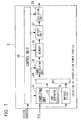
- the cell search circuit includes a correlating unit 11 having a code generator 12, which generates a P-search code in a first step of identifying slot timing, an S-search code in a second step of identifying frame timing and a P-scrambling code in a third step of identifying a scrambling code, and a plurality of correlators provided in parallel, correlating unit 11 executing despread processing utilizing P-search code in the first step, despread processing utilizing S-search code in the second step and despread processing using the P-scrambling code in the third step; a power calculating unit 13 for calculating correlation power from the output of the correlating unit 11 and outputting the calculated correlation power; a memory 14 for storing the output of the power calculating unit 13 ; a detect unit 15 for detecting a maximum value of correlation powers stored in the memory 14 in each of the above-mentioned steps; a decision unit 16 for comparing an average value of correlation power stored in the memory with the maximum value
- the cell search circuit 1 is not provided with a matched filter of the kind shown in Fig. 7 illustrative of the conventional cell search circuit.
- a correlating unit 11 which receives a baseband receive signal (RX), executes Step 1 (identification of slot timing), a Step 2 (identification of frame timing) and a Step 3 (identification of scrambling code).
- the correlating unit 11 comprises a code generator 12 for generating a P-search code (first search code; "P" indicates “Pre") in case of Step 1, an S-search code (second search code; “S” indicates “Secondary”) in case of Step 2 and a P-scrambling code (third search code) in case of Step 3.
- the P-search code, S-search code and P-scrambling code are codes defined by the 3GPP (Third Generation Partnership Project). Refer to the 3GPP specifications (3G TS 25.231 Chapters 5.22, 5.23).
- the correlating unit 11 which has 32 correlators, executes despread processing utilizing the P-search code generated by the code generator 12 in Step 1, despread processing utilizing the S-search code generated by the code generator 12 in Step 2 and despread processing using the P-scrambling code generated by the code generator 12 in Step 3.
- the correlating unit 11 is used by being shared in Steps 1, 2 and 3.
- a power calculation unit 13 to which the output of the correlating unit 11 is input, calculates the square value of I and Q components.
- a memory 14 comprises a RAM (Random-Access Memory) the capacity of which is 2560 words in a case where one symbol is composed of 256 chips and one slot is composed of 10 symbols.
- the memory 14 is shared for use in Steps 1, 2 and 3.
- a detect unit 15 searches for a maximum value based upon correlation values that have been written to the memory 14 by the correlating unit 11.
- a decision unit 16 compares the average value stored in the memory 14 and the maximum value using a threshold coefficient. In Step 1, however, processing of the decision unit 16 is omitted. That is, the output of the detect unit 15 is delivered via a selector 17 and is not subjected to processing by the decision unit 16.
- a control unit 10 to which a system counter signal is input, controls the operation timing of each of the blocks 11 to 17.
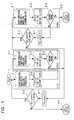
- Step 1 The operation of the cell search circuit 1 according to this embodiment will now be described in detail. It will be assumed that one slot timing candidate in Step 1 is detected on a per-symbol basis, for a total of ten candidates in one slot.
- the cell search is carried out by three steps, namely steps 1, 2 and 3.
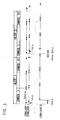
- the 32 parallel correlators 1 to 32 provided in the correlating unit 11 start operating chip by chip while each shifts the despreading position by one chip to thereby execute despreading over the duration of one symbol (256 chips). These results are delivered as the output.
- each of the correlators 1 to 32 performs the same operation (1) again.
- the output (correlation value) of the correlating unit 11 is provided to the power calculating unit 13, which calculates a correlation power by summing the squares of the I and Q components.
- the calculated correlation power value is written to the memory 14.
- the detect unit 15 starts the search for the peak value (step 1-2).
- the method includes detecting one candidate representing a maximum value over the duration of one symbol (256 chips), and detecting a total of ten candidates with regard to respective ones of ten symbols. This ends the processing of step 1.
- step 2 the correlating unit 11 starts the creation of correlation power profile using the S-search code. This is performed at the timings of all ten candidates detected in step 1.
- the 32 correlators in the correlating unit 11 operate upon being divided into two groups, namely correlators 1 to 16 and correlators 17 to 32. Correlators in the same group operate at the same timing.
- the first group of correlators 1 to 16 perform despreading by all codes of code numbers 1 to 16 of correlators 1 to 16, respectively.
- the second group of correlators 17 to 32 perform despreading by all codes of code numbers 1 to 16 of correlators 17 to 32, respectively.
- the first group of correlators 1 to 16 perform despreading of odd-numbered symbols and the second group of correlators 17 to 32 perform despreading of even-numbered symbols, with despreading being executed over the duration of one symbol (256 chips).
- the correlators output the results of despreading. This processing is executed over 15 slots, whereby despreading is completed.
- the output of the correlating unit 11 is fed to the power calculating unit 13, which proceeds to calculate power and to-write the power value to the memory 14.
- the detect unit 15 begins to search for the maximum value and detects one candidate representing a maximum value (step 2-2).
- the decision unit 16 evaluates this candidate (step 2-3).
- the decision unit 16 makes its decision using the average of the power values, which have been written to the memory 14, the maximum value and a predetermined threshold value.
- Rst_count1 which is for managing loop counts of step 1
- rst1_param a parameter for managing loop counts of step 1
- the restart count (Rst_count1) is incremented at step 4-1 and it is determined at step 4-2 whether the restart count (Rst_count1) is smaller than the parameter (rst1_param). If the restart count (Rst_count1) is equal to or greater than the parameter (rst1_param), it is judged that the cell search failed (step 4-3). If the restart count (Rst_count1) is smaller that the parameter (rst1_param), processing is executed from step 1-1 onward.
- the correlating unit 11 starts the creation of the correlation power profile using the P-scrambling code at the timing of the single candidate detected at step 2.
- the output (correlation value) of correlating unit 11 is supplied to the power calculating unit 13, which calculates power and write the calculated value to the memory 14.
- the detect unit 15 starts the search for the maximum value and detects one candidate representing a maximum value (step 3-2).
- the decision unit 16 evaluates this candidate (step 3-3).
- the decision unit 16 makes its decision using the average of the power values that have been written to the memory 14, the maximum value and a predetermined threshold value.
- control returns to step 3.
- a restart count (Rst_count2) which is for managing the loop count of step 3 is equal to or greater than a number of times specified by a parameter (rst2_param)
- control returns to step 1. In other words, if the decision rendered at step 3-3 is NG, then the restart count (Rst_count2) is incremented at step 5-1. If the restart count (Rst_count2) is greater than the parameter (rst2_param), control branches to step 4-1. If the restart count (Rst_count2) is smaller than the parameter (rst2_param), processing is executed from step 3-1 onward. The restart count (Rst_count1), which is for managing the loop count of step 1 is repeated, is incremented at step 4-1. If it is found at step 4-2 that the restart count (Rst_count1) is equal to or greater than a number of times specified by the parameter (rst1_param), then it is judged that the cell search failed.
- the correlating unit has twice the number of correlators as the correlating unit 11 of the first embodiment.
- the 64 correlators 1 to 64 provided in the correlating unit initiate operation chip by chip while each shifts the despreading position by one chip to thereby execute despreading over the duration of one symbol (256 chips) and output the results.
- each of the correlators After processing is halted for the duration of 64 chips, each of the correlators performs the same operation again.
- the second embodiment has circuitry of a scale somewhat larger than that of the first embodiment, there is a higher probability that an "OK" decision will be rendered at step 2-3.
- a third embodiment of the invention will now be described.
- the basic structure of the third embodiment is similar to that of the first embodiment but the number of slot timing candidates detected in Step 1 is one on a per-symbol basis, for a total of five candidates.
- the number of correlators in the correlating unit can be made 16.
- the operation of the detect unit 15 is such that slot timing candidates are all selected from even-numbered symbols if the symbol indicative of a maximum value is even-numbered and from odd-numbered symbols if the symbol indicative of a maximum value is odd-numbered.
- the third embodiment results in a somewhat lower probability that an "OK" decision will be rendered at step 2-3 but makes it possible to reduce the scale of the circuitry.
- a first effect is that the scale of the circuitry can be reduced.
- the correlator used in Step 2 (identification of frame timing) and in Step 3 (identification of scrambling code) in the conventional cell search circuit is shared in Step 1 (identification of slot timing), Step 2 (identification of frame timing) and Step 3 (identification of scrambling code) to implement the cell search.
- the invention dispenses with a matched filter. If the matched filter is a 256-stage filter, then 512 adders and a 512-word register can be eliminated for the I and Q components. The end result is that the circuitry can be reduced by about 15,000 gates.
- a second effect of the invention is that power consumption( amount of electric current consumed) can be reduced by a sharp cut of the circuitry scale.
Landscapes
- Engineering & Computer Science (AREA)
- Computer Networks & Wireless Communication (AREA)
- Signal Processing (AREA)
- Mobile Radio Communication Systems (AREA)
- Synchronisation In Digital Transmission Systems (AREA)
Claims (21)
- Zellsuchverfahren zur Verwendung in einem CDMA (Code Division Multiple Access; Codemultiplexverfahren)-Mobilkommunikationssystem, umfassend: einen ersten Schritt des Identifizierens von Schlitz-Zeiteinteilung, einen zweiten Schritt des Identifizierens von Rahmen-Zeiteinteilung, und einen dritten Schritt des Identifizierens eines Verwürfelungscodes, dadurch gekennzeichnet, dass:eine Korrelationseinheit (11) Entspreizverarbeitung unter Verwendung eines P-Suchcodes in dem ersten Schritt des Identifizierens von Schlitz-Zeiteinteilung ausführt,die Korrelationseinheit (11) Entspreizverarbeitung unter Verwendung eines S-Suchcodes in dem zweiten Schritt des Identifizierens von Rahmen-Zeiteinteilung ausführt, unddie Korrelationseinheit (11) Entspreizverarbeitung unter Verwendung eines P-Verwürfelungscodes in dem dritten Schritt des Identifizierens eines Verwürfelungscodes ausführt,wobei die Korrelationseinheit (11) Korrelationswerte in jedem der ersten, zweiten und dritten Schritte berechnet.
- Zellsuchverfahren nach Anspruch 1, dadurch gekennzeichnet, dass:eine Berechnung von Korrelationswerten in jedem der ersten, zweiten und dritten Schritte durch die Korrelationseinheit (11) durchgeführt wird,eine Mehrzahl an Schlitz-Zeiteinteilungskandidaten bei dem ersten Schritt des Identifizierens von Schlitz-Zeiteinteilung ermittelt wird, ohne die Ergebnisse der Schlitz-Zeiteinteilungsidentifikation auf einen Kandidaten einzuengen, wobei die Mehrzahl an Schlitz-Zeiteinteilungskandidaten in einem Schlitzzeitraum durch Ermitteln eines Kandidaten, für den eine Korrelationsleistung einen Höchstwert anzeigt, in vorbestimmten konstanten Zeitintervallen ermittelt wird,eine Rahmen-Zeiteinteilungsidentifikation in Bezug auf alle Schlitz-Zeiteinteilungskandidaten in dem zweiten Schritt des Identifizierens von Rahmen-Zeiteinteilung basierend auf der Mehrzahl an Schlitz-Zeiteinteilungskandidaten durchgeführt wird, und ein Rahmen-Zeiteinteilungskandidat, der auf einen Höchstwert hinweist, aus einer Mehrzahl an Kandidaten für Rahmen-Zeiteinteilung ausgewählt wird, undeine Korrelationsleistung im Hinblick auf den einen Zeiteinteilungskandidaten erhalten wird, der in dem zweiten Schritt ausgewählt wird, und eine Identifikation durch Vergleichen der ausgewählten Korrelationsleistung mit einer Schwelle bei dem dritten Schritt des Identifizierens eines Verwürfelungscodes erreicht wird.
- Zellsuchverfahren nach Anspruch 1, wobei die Korrelationseinheit (11), die ein Basisband-Empfangssignal empfängt, mit einem Codeerzeuger (12) versehen ist, der den P-Suchcode in dem ersten Schritt des Identifizierens von Schlitz-Zeiteinteilung, den S-Suchkode in dem zweiten Schritt des Identifizierens von Rahmen-Zeiteinteilung und den P-Verwürfelungscode in dem dritten Schritt des Identifizierens eines Verwürfelungscodes erzeugt,
eine Leistungsberechnungseinheit (13), die einen Korrelationswert empfängt, der von der Korrelationseinheit (11) ausgegeben wird, eine Leistungsberechnung durchführt und Korrelationsleistung in einem Speicher (14) speichert,
eine Ermittlungseinheit (15) nach einem Höchstwert von Korrelationsleistungen sucht, die in den ersten bis dritten Schritten in dem Speicher (14) gespeichert wurden, und
eine Entscheidungseinheit (16) einen Mittelwert der Korrelationsleistungen, die in dem Speicher (14) gespeichert wurden, mit dem Höchstwert unter Verwendung eines vorbestimmten Schwellenkoeffizienten in den zweiten und dritten Schritten vergleicht,
dadurch gekennzeichnet, dass in dem ersten Schritt die Ermittlungseinheit (15) einen Schlitz-Zeiteinteilungskandidaten, der einen Höchstwert annimmt, während der Dauer eines Symbols ermittelt und eine Mehrzahl an Schlitz-Zeiteinteilungskandidaten im Hinblick auf eine Mehrzahl an Symbolen ermittelt, und
in dem zweiten Schritt eine Rahmen-Zeiteinteilungsidentifikation in Bezug auf alle Schlitz-Zeiteinteilungskandidaten basierend auf der Mehrzahl an Schlitz-Zeiteinteilungskandidaten durchgeführt wird, und die Ermittlungseinheit (15) einen Rahmen-Zeiteinteilungskandidaten, der auf einen Höchstwert hinweist, aus einer Mehrzahl an Kandidaten zur Rahmen-Zeiteinteilung auswählt. - Zellsuchverfahren wie in Anspruch 3 definiert, dadurch gekennzeichnet, dass die Korrelationseinheit (11) ein Korrelationsleistungsprofil basierend auf dem P-Suchcode in dem ersten Schritt erzeugt, wobei die Korrelationseinheit (11) intern mit einer Mehrzahl an parallel verbundenen Korrelatoren versehen ist, die eine Verarbeitung zum Starten eines Arbeitsablaufs Chip für Chip ausführen, während jede eine Entspreizposition um einen Chip verschiebt, ein Entspreizen während der Dauer eines Symbols ausführt und die Ergebnisse ausgibt, wobei die Verarbeitung sukzessive während eines Schlitzes ausgeführt wird, der eine Mehrzahl an Symbolen umfasst,
nachdem diese Verarbeitung für die Dauer einer Anzahl an Chips angehalten wird, die der Anzahl der Mehrzahl an Korrelatoren äquivalent ist, eine Verarbeitung, die der des vorangegangenen Schlitzes ähnlich ist, in dem nächsten Schlitz wieder ausgeführt wird,
die Verarbeitung während einer vorbestimmten Mehrzahl an Schlitzen ausgeführt wird, wobei ein Entspreizen bei einer vorbestimmten Anzahl an Chippositionen abgeschlossen wird, und,
wenn eine Berechnung von Korrelationswerten durch die Korrelationseinheit (11) und eine Berechnung von Leistungen durch die Leistungsberechnungseinheit (13) enden und die Korrelationsleistungen bei allen Zeiteinteilungen von Chippositionen der vorbestimmten Anzahl in den Speicher (14) geschrieben werden, die Ermittlungseinheit (15) anfängt, nach einem Höchstwert zu suchen, während der Dauer eines Symbols einen Kandidaten ermittelt, der einen Höchstwert annimmt, und eine Mehrzahl an Kandidaten im Hinblick auf eine Mehrzahl an Symbolen ermittelt. - Zellsuchverfahren wie in Anspruch 3 definiert, dadurch gekennzeichnet, dass in dem zweiten Schritt die Korrelationseinheit (11), die einen Korrelationswert erhält, der auf dem S-Suchcode basiert, eine Mehrzahl (2N) an Korrelatoren aufweist, die arbeiten, nachdem sie in erste und zweite Gruppen unterteilt werden, wobei die Korrelatoren in jeder Gruppe bei identischen Zeiteinteilungen arbeiten,
die Korrelatoren der ersten Gruppe ein Entspreizen jeweils für alle Codes der Codenummern 1 bis N der Reihe nach durchführen, die Korrelatoren der zweiten Gruppe ein Entspreizen jeweils für alle Codes der Codenummern 1 bis N der Reihe nach durchführen, die Korrelatoren der ersten Gruppe ein Entspreizen von Symbolen mit ungeraden Nummern durchführen und die Ergebnisse ausgeben, und die zweite Gruppe von Korrelatoren ein Entspreizen von Symbolen mit geraden Nummern durchführt und die Ergebnisse ausgibt, wobei ein Entspreizen während der Dauer eines Symbols ausgeführt wird, wobei diese Verarbeitung während einer festgelegten Anzahl an Schlitzen ausgeführt wird, um dabei ein Entspreizen abzuschließen, und, wenn eine Berechnung von Korrelationsleistungen durch die Korrelationseinheit (11) und die Leistungsberechnungseinheit (13) endet und die Korrelationsleistungen bei allen Zeiteinteilungskandidaten in den Speicher (14) geschrieben werden, die Ermittlungseinheit (15) beginnt, nach einem Höchstwert von Korrelationsleistung zu suchen, und ermittelt einen Kandidaten, der einen Höchstwert annimmt, und
die Entscheidungseinheit (16) den einen Kandidaten unter Verwendung eines Durchschnitts der Leistungswerte, die in den Speicher (14) geschrieben wurden, des Höchstwerts und eines vorbestimmten Schwellenwerts auswertet. - Zellsuchverfahren wie in Anspruch 5 definiert, dadurch gekennzeichnet, dass die Entscheidungseinheit (16) eine Steuerung veranlasst, zu dem dritten Schritt vorzurücken, wenn der Höchstwert den (Schwellenwert) X (Mittelwert) überschreitet, und eine Steuerung veranlasst, zu dem ersten Schritt zurückzukehren, wenn der Höchstwert den (Schwellenwert) X (Mittelwert) nicht überschreitet.
- Zellsuchverfahren wie in Anspruch 6 definiert, dadurch gekennzeichnet, dass die Zellsuche als fehlgeschlagen beurteilt wird und die Zellsuche beendet wird, wenn eine Anzahl an Malen, die der erste Schritt erneut gestartet wird, eine Anzahl an Malen überschreitet, die durch einen vorbestimmten Parameter angegeben ist.
- Zellsuchverfahren wie in Anspruch 3 definiert, dadurch gekennzeichnet, dass bei dem dritten Schritt ein Korrelationsleistungsprofil basierend auf dem P-Suchcode bei der Zeiteinteilung des einen Kandidaten, der in dem zweiten Schritt ermittelt wird, erzeugt wird,
wenn eine Berechnung von Korrelationsleistungen durch die Korrelationseinheit (11) und die Leistungsberechnungseinheit (13) endet und die Korrelationsleistungen in den Speicher geschrieben werden, die Ermittlungseinheit beginnt, nach einem Höchstwert zu suchen, und einen Kandidaten ermittelt, der einen Höchstwert annimmt, und
die Entscheidungseinheit (16) den einen Kandidaten unter Verwendung eines Durchschnitts der Leistungswerte, die in den Speicher (14) geschrieben wurden, des Höchstwerts und eines vorbestimmten Schwellenwerts auswertet. - Zellsuchverfahren wie in Anspruch 3 definiert, dadurch gekennzeichnet, dass die Zellsuche gewöhnlich endet, wenn der Höchstwert den (Schwellenwert) X (Mittelwert) überschreitet, und eine Steuerung ausgeführt wird, um zu dem dritten Schritt zurückzukehren, wenn der Höchstwert den (Schwellenwert) X (Mittelwert) nicht überschreitet.
- Zellsuchverfahren wie in Anspruch 3 oder 4 definiert, dadurch gekennzeichnet, dass die Ermittlungseinheit (15) eine Mehrzahl an Schlitz-Zeiteinteilungskandidaten während der Dauer eines Symbols anstatt eines Schlitz-Zeiteinteilungskandidaten während der Dauer eines Symbols in dem ersten Schritt ermittelt.
- Zellsuchverfahren wie in Anspruch 3 oder 4 definiert, dadurch gekennzeichnet, dass die Ermittlungseinheit (15) einen Schlitz-Zeiteinteilungskandidaten während der Dauer einer Mehrzahl an Symbolen anstatt eines Schlitz-Zeiteinteilungskandidaten während der Dauer eines Symbols in dem ersten Schritt ermittelt.
- Zellsuchschaltung, umfassend:eine Korrelationseinheit (11), umfassend:dadurch gekennzeichnet, dass:einen Codeerzeuger (12), der einen P-Suchcode in einem ersten Schritt des Identifizierens von Schlitz-Zeiteinteilung, einen S-Suchcode in einem zweiten Schritt des Identifizierens von Rahmen-Zeiteinteilung und einen P-Verwürfelungscode in einem dritten Schritt des Identifizierens von Verwürfelungscode erzeugt, undeine Mehrzahl an Korrelatoren, die parallel angeordnet sind,die Korrelationseinheit (11) angepasst ist, um Entspreizverarbeitung unter Verwendung des P-Suchcodes in dem ersten Schritt, Entspreizverarbeitung unter Verwendung des S-Suchcodes in dem zweiten Schritt und Entspreizverarbeitung unter Verwendung des P-Verwürfelungscodes in dem dritten Schritt auszuführen,wobei die Zellsuchschaltung überdies umfasst:eine Leistungsberechnungseinheit (13), die aus der Ausgabe der Korrelationseinheit (11) Korrelationsleistung berechnet und die berechnete Korrelationsleistung ausgibt, einen Speicher (14), der die Ausgabe der Leistungsberechnungseinheit speichert,eine Ermittlungseinheit (15), die nach einem Höchstwert von Korrelationsleistungen sucht, die in dem Speicher (14) in jedem der ersten, zweiten und dritten Schritte gespeichert wurden,eine Entscheidungseinheit (16), die einen Mittelwert von Korrelationsleistungen, die in dem Speicher (14) gespeichert wurden, mit dem Höchstwert unter Verwendung eines vorbestimmten Schwellenkoeffizienten in den zweiten und dritten Schritten vergleicht, undeine Steuereinheit (10), die die Arbeitsablauf-Zeiteinteilung von jeder der Einheiten steuert.
- Zellsuchschaltung wie in Anspruch 12 definiert, dadurch gekennzeichnet, dass die Korrelationseinheit (11) ein Korrelationsleistungsprofil basierend auf dem P-Suchcode in dem Schritt 1 erzeugt, eine Mehrzahl an Korrelatoren, die in der Korrelationseinheit parallel angeordnet sind, die jeweils einen Arbeitsablauf zum Starten eines Arbeitsablaufs Chip für Chip ausführt, während jede eine Entspreizposition um einen Chip verschiebt, Ausführen eines Entspreizens während der Dauer eines Symbols und Ausgeben der Ergebnisse, wobei der Arbeitsablauf sukzessive während eines Schlitzes ausgeführt wird, der eine Mehrzahl an Symbolen umfasst, und die Korrelatoren dann den Arbeitsablauf für die Dauer einer Anzahl an Chips anhalten, die der Anzahl der Mehrzahl an Korrelatoren äquivalent ist, und anschließend eine Verarbeitung ähnlich der des vorhergehenden Schlitzes in dem nächsten Schlitz ausführen,
die Verarbeitung über eine vorbestimmte Mehrzahl an Schlitzen ausgeführt wird, wobei ein Entspreizen bei einer vorbestimmten Anzahl an Chippositionen abgeschlossen wird, und, wenn eine Berechnung von Korrelationswerten durch die Korrelationseinheit und eine Berechnung von Leistungen durch die Leistungsberechnungseinheit (13) enden und die Korrelationsleistungen zu allen Zeiteinteilungen von Chippositionen der vorbestimmten Anzahl in den Speicher (14) geschrieben werden, die Ermittlungseinheit (15) beginnt, nach einem Höchstwert zu suchen, einen Kandidaten, der einen Höchstwert annimmt, während der Dauer eines Symbols ermittelt und eine Mehrzahl an Kandidaten im Hinblick auf eine Mehrzahl an Symbolen ermittelt. - Zellsuchschaltung, wie in Anspruch 12 definiert, dadurch gekennzeichnet, dass in dem zweiten Schritt ein Korrelationsleistungsprofil basierend auf dem P-Suchcode bei allen Zeiteinteilungen der Mehrzahl an Kandidaten, die bei dem ersten Schritt ermittelt werden, erzeugt wird, die Korrelationseinheit eine Mehrzahl (2N) an Korrelatoren aufweist, die arbeiten, nachdem sie in erste und zweite Gruppen unterteilt werden, wobei die Korrelatoren in jeder Gruppe bei identischen Zeiteinteilungen arbeiten,
die Korrelatoren der ersten Gruppe ein Entspreizen jeweils für alle Codes der Codenummern 1 bis N der Reihe nach durchführen, die Korrelatoren der zweiten Gruppe ein Entspreizen jeweils für alle Codes der Codenummern 1 bis N der Reihe nach durchführen, die Korrelatoren der ersten Gruppe ein Entspreizen von Symbolen mit ungeraden Nummern durchführen und die Ergebnisse ausgeben, und die zweite Gruppe von Korrelatoren ein Entspreizen von Symbolen mit geraden Nummern durchführt und die Ergebnisse ausgibt, wobei ein Entspreizen während der Dauer eines Symbols ausgeführt wird,
diese Verarbeitung während einer festgelegten Anzahl an Schlitzen ausgeführt wird, um dabei ein Entspreizen abzuschließen, und
wenn eine Berechnung von Korrelationswerten durch die Korrelationseinheit (11) und eine Berechnung von Leistungen durch die Leistungsberechnungseinheit (13) endet und die Korrelationsleistungen bei allen Zeiteinteilungen in den Speicher (14) geschrieben werden, die Ermittlungseinheit (15) beginnt, nach einem Höchstwert zu suchen, und einen Kandidaten ermittelt, der einen Höchstwert annimmt, und
die Entscheidungseinheit (16) den Kandidaten unter Verwendung eines Durchschnitts der Leistungswerte, die in den Speicher (14) geschrieben wurden, des Höchstwerts und eines vorbestimmten Schwellenwerts auswertet. - Zellsuchschaltung wie in Anspruch 14 definiert, dadurch gekennzeichnet, dass die Zellsuchschaltung überdies Mittel umfasst, um eine Steuerung in einer Weise auszuüben, dass eine Steuerung zu der Verarbeitung des dritten Schritts übergeht, wenn der Höchstwert den (Schwellenwert) X (Mittelwert) überschreitet, und eine Verarbeitung von dem ersten Schritt ausgeführt wird, wenn der Höchstwert nicht den (Schwellenwert) X (Mittelwert) überschreitet.
- Zellsuchschaltung wie in Anspruch 14 oder 15 definiert, dadurch gekennzeichnet, dass die Zellsuchschaltung überdies Mittel umfasst, um eine Steuerung in einer Weise auszuüben, dass die Zellsuche als fehlgeschlagen beurteilt wird und die Zellsuche beendet wird, wenn eine Anzahl an Malen, die der erste Schritt erneut gestartet wird, eine Anzahl an Malen überschreitet, die durch einen vorbestimmten Parameter angegeben ist.
- Zellsuchschaltung wie in Anspruch 12 definiert, dadurch gekennzeichnet, dass bei dem dritten Schritt die Korrelationseinheit (11) ein Korrelationsleistungsprofil basierend auf dem P-Suchcode bei der Zeiteinteilung des einen Kandidaten erzeugt, der in dem zweiten Schritt ermittelt wird,
wenn eine Berechnung von Korrelationswerten durch die Korrelationseinheit (11) und eine Berechnung von Leistungen durch die Leistungsberechnungseinheit (13) enden und die Korrelationsleistungen in den Speicher (14) geschrieben werden, die Ermittlungseinheit (15) beginnt, nach einem Höchstwert zu suchen, und einen Kandidaten ermittelt, der einen Höchstwert annimmt, und
die Entscheidungseinheit (16) den einen Kandidaten unter Verwendung eines Durchschnitts der Leistungswerte, die in den Speicher (14) geschrieben wurden, des Höchstwerts und eines vorbestimmten Schwellenwerts auswertet. - Zellsuchschaltung wie in Anspruch 17 definiert, dadurch gekennzeichnet, dass die Zellsuchschaltung überdies Mittel umfasst, um eine Steuerung in einer Weise auszuüben, dass die Zellsuche gewöhnlich endet, wenn der Höchstwert den (Schwellenwert) X (Mittelwert) überschreitet, und eine Steuerung zu dem dritten Schritt zurückkehrt, wenn der Höchstwert den (Schwellenwert) X (Mittelwert) nicht überschreitet.
- Zellsuchschaltung wie in Anspruch 12 oder 13 definiert, dadurch gekennzeichnet, dass die Ermittlungseinheit angepasst ist, eine Mehrzahl an Schlitz-Zeiteinteilungskandidaten während der Dauer eines Symbols in dem ersten Schritt zu ermitteln.
- Zellsuchschaltung wie in Anspruch 12 oder 13 definiert, dadurch gekennzeichnet, dass die Ermittlungseinheit angepasst ist, einen Schlitz-Zeiteinteilungskandidaten während der Dauer einer Mehrzahl an Symbolen in dem ersten Schritt zu ermitteln und eine Mehrzahl an Kandidaten in einem Schlitz zu ermitteln.
- Mobiles Endgerät, dadurch gekennzeichnet, dass das mobile Endgerät eine Zellsuchschaltung wie in einem Ansprüche 12 bis 20 definiert umfasst.
Applications Claiming Priority (2)
| Application Number | Priority Date | Filing Date | Title |
|---|---|---|---|
| JP2000260608A JP3473695B2 (ja) | 2000-08-30 | 2000-08-30 | W−cdmaシステムにおけるセルサーチ方法及び回路 |
| JP2000260608 | 2000-08-30 |
Publications (3)
| Publication Number | Publication Date |
|---|---|
| EP1184993A2 EP1184993A2 (de) | 2002-03-06 |
| EP1184993A3 EP1184993A3 (de) | 2005-02-09 |
| EP1184993B1 true EP1184993B1 (de) | 2008-08-20 |
Family
ID=18748592
Family Applications (1)
| Application Number | Title | Priority Date | Filing Date |
|---|---|---|---|
| EP20010250309 Expired - Lifetime EP1184993B1 (de) | 2000-08-30 | 2001-08-25 | Verfahren und Schaltung zur Zellsuche in W-CDMA-Systemen |
Country Status (4)
| Country | Link |
|---|---|
| US (1) | US20020024942A1 (de) |
| EP (1) | EP1184993B1 (de) |
| JP (1) | JP3473695B2 (de) |
| DE (1) | DE60135419D1 (de) |
Families Citing this family (35)
| Publication number | Priority date | Publication date | Assignee | Title |
|---|---|---|---|---|
| KR100342483B1 (ko) * | 2000-09-09 | 2002-06-28 | 윤종용 | 비동기방식 이동 통신 시스템에서의 기지국 탐색 장치 및방법 |
| US6836839B2 (en) * | 2001-03-22 | 2004-12-28 | Quicksilver Technology, Inc. | Adaptive integrated circuitry with heterogeneous and reconfigurable matrices of diverse and adaptive computational units having fixed, application specific computational elements |
| US7653710B2 (en) | 2002-06-25 | 2010-01-26 | Qst Holdings, Llc. | Hardware task manager |
| US8843928B2 (en) | 2010-01-21 | 2014-09-23 | Qst Holdings, Llc | Method and apparatus for a general-purpose, multiple-core system for implementing stream-based computations |
| US7400668B2 (en) * | 2001-03-22 | 2008-07-15 | Qst Holdings, Llc | Method and system for implementing a system acquisition function for use with a communication device |
| US7752419B1 (en) | 2001-03-22 | 2010-07-06 | Qst Holdings, Llc | Method and system for managing hardware resources to implement system functions using an adaptive computing architecture |
| US7489779B2 (en) * | 2001-03-22 | 2009-02-10 | Qstholdings, Llc | Hardware implementation of the secure hash standard |
| US20040133745A1 (en) | 2002-10-28 | 2004-07-08 | Quicksilver Technology, Inc. | Adaptable datapath for a digital processing system |
| US7962716B2 (en) | 2001-03-22 | 2011-06-14 | Qst Holdings, Inc. | Adaptive integrated circuitry with heterogeneous and reconfigurable matrices of diverse and adaptive computational units having fixed, application specific computational elements |
| US6577678B2 (en) | 2001-05-08 | 2003-06-10 | Quicksilver Technology | Method and system for reconfigurable channel coding |
| US7046635B2 (en) * | 2001-11-28 | 2006-05-16 | Quicksilver Technology, Inc. | System for authorizing functionality in adaptable hardware devices |
| US6986021B2 (en) | 2001-11-30 | 2006-01-10 | Quick Silver Technology, Inc. | Apparatus, method, system and executable module for configuration and operation of adaptive integrated circuitry having fixed, application specific computational elements |
| US8412915B2 (en) * | 2001-11-30 | 2013-04-02 | Altera Corporation | Apparatus, system and method for configuration of adaptive integrated circuitry having heterogeneous computational elements |
| US7602740B2 (en) * | 2001-12-10 | 2009-10-13 | Qst Holdings, Inc. | System for adapting device standards after manufacture |
| US7215701B2 (en) * | 2001-12-12 | 2007-05-08 | Sharad Sambhwani | Low I/O bandwidth method and system for implementing detection and identification of scrambling codes |
| US7139256B2 (en) * | 2001-12-12 | 2006-11-21 | Quicksilver Technology, Inc. | Method and system for detecting and identifying scrambling codes |
| US20030108012A1 (en) * | 2001-12-12 | 2003-06-12 | Quicksilver Technology, Inc. | Method and system for detecting and identifying scrambling codes |
| US7088825B2 (en) * | 2001-12-12 | 2006-08-08 | Quicksilver Technology, Inc. | Low I/O bandwidth method and system for implementing detection and identification of scrambling codes |
| US7231508B2 (en) * | 2001-12-13 | 2007-06-12 | Quicksilver Technologies | Configurable finite state machine for operation of microinstruction providing execution enable control value |
| US7403981B2 (en) * | 2002-01-04 | 2008-07-22 | Quicksilver Technology, Inc. | Apparatus and method for adaptive multimedia reception and transmission in communication environments |
| US7493375B2 (en) | 2002-04-29 | 2009-02-17 | Qst Holding, Llc | Storage and delivery of device features |
| US7328414B1 (en) * | 2003-05-13 | 2008-02-05 | Qst Holdings, Llc | Method and system for creating and programming an adaptive computing engine |
| US7660984B1 (en) | 2003-05-13 | 2010-02-09 | Quicksilver Technology | Method and system for achieving individualized protected space in an operating system |
| US8108656B2 (en) | 2002-08-29 | 2012-01-31 | Qst Holdings, Llc | Task definition for specifying resource requirements |
| US7937591B1 (en) | 2002-10-25 | 2011-05-03 | Qst Holdings, Llc | Method and system for providing a device which can be adapted on an ongoing basis |
| US7478031B2 (en) | 2002-11-07 | 2009-01-13 | Qst Holdings, Llc | Method, system and program for developing and scheduling adaptive integrated circuity and corresponding control or configuration information |
| US8276135B2 (en) | 2002-11-07 | 2012-09-25 | Qst Holdings Llc | Profiling of software and circuit designs utilizing data operation analyses |
| US7225301B2 (en) | 2002-11-22 | 2007-05-29 | Quicksilver Technologies | External memory controller node |
| JP2004320253A (ja) * | 2003-04-14 | 2004-11-11 | Matsushita Electric Ind Co Ltd | 相関値演算回路 |
| US7609297B2 (en) * | 2003-06-25 | 2009-10-27 | Qst Holdings, Inc. | Configurable hardware based digital imaging apparatus |
| US7200837B2 (en) * | 2003-08-21 | 2007-04-03 | Qst Holdings, Llc | System, method and software for static and dynamic programming and configuration of an adaptive computing architecture |
| KR100584337B1 (ko) * | 2003-09-16 | 2006-05-26 | 삼성전자주식회사 | 이동통신 시스템에서 셀 탐색 및 다중경로 탐색 장치 및방법 |
| US7561543B2 (en) * | 2004-03-16 | 2009-07-14 | Nec Corporation | Cell search process for wireless communication system |
| CN101938813B (zh) * | 2009-06-30 | 2013-02-27 | 中兴通讯股份有限公司 | 联合辅同步信号检测与帧定时同步的方法 |
| CN104754697B (zh) * | 2013-12-31 | 2018-08-03 | 联芯科技有限公司 | 一种宽带码分多址扰码匹配的方法及装置 |
Family Cites Families (10)
| Publication number | Priority date | Publication date | Assignee | Title |
|---|---|---|---|---|
| US6885652B1 (en) * | 1995-06-30 | 2005-04-26 | Interdigital Technology Corporation | Code division multiple access (CDMA) communication system |
| US6167037A (en) * | 1996-03-05 | 2000-12-26 | Ntt Mobile Communications Networks Inc. | Signal transmitting method, transmitter, receiver, and spread-spectrum code synchronizing method for mobile communication system |
| JP3373746B2 (ja) * | 1997-01-07 | 2003-02-04 | 株式会社鷹山 | Ds−cdma基地局間非同期セルラ方式における初期同期方法および受信機 |
| JP3856261B2 (ja) * | 1998-03-18 | 2006-12-13 | ソニー株式会社 | 同期検出装置 |
| US6879571B1 (en) * | 1998-05-13 | 2005-04-12 | Hitachi, Ltd. | Code division multiple access mobile communication system |
| CA2308207A1 (en) * | 1998-08-28 | 2000-03-09 | Matsushita Electric Industrial Co., Ltd. | Apparatus and method for synchronization acquisition |
| JP2000209124A (ja) | 1999-01-13 | 2000-07-28 | Kokusai Electric Co Ltd | スペクトラム拡散通信用相関回路 |
| KR100513710B1 (ko) * | 1999-05-25 | 2005-09-07 | 삼성전자주식회사 | Cdma 통신시스템의 코드동기 취득방법 및 그 장치 |
| JP3322253B2 (ja) | 1999-10-27 | 2002-09-09 | 日本電気株式会社 | Cdma受信装置及びそれに用いるパス検出方法並びにその制御プログラムを記録した記録媒体 |
| JP3464642B2 (ja) | 2000-06-13 | 2003-11-10 | 松下電器産業株式会社 | 同期捕捉装置および同期捕捉方法 |
-
2000
- 2000-08-30 JP JP2000260608A patent/JP3473695B2/ja not_active Expired - Fee Related
-
2001
- 2001-08-25 EP EP20010250309 patent/EP1184993B1/de not_active Expired - Lifetime
- 2001-08-25 DE DE60135419T patent/DE60135419D1/de not_active Expired - Lifetime
- 2001-08-28 US US09/939,675 patent/US20020024942A1/en not_active Abandoned
Also Published As
| Publication number | Publication date |
|---|---|
| JP2002076986A (ja) | 2002-03-15 |
| EP1184993A3 (de) | 2005-02-09 |
| US20020024942A1 (en) | 2002-02-28 |
| JP3473695B2 (ja) | 2003-12-08 |
| EP1184993A2 (de) | 2002-03-06 |
| DE60135419D1 (de) | 2008-10-02 |
Similar Documents
| Publication | Publication Date | Title |
|---|---|---|
| EP1184993B1 (de) | Verfahren und Schaltung zur Zellsuche in W-CDMA-Systemen | |
| EP1173931B1 (de) | Verfahren und vorrichtung zur zellsuche in einem mobilen cdma-übertragungssystem | |
| US6813478B2 (en) | Method and apparatus for searching a gated pilot | |
| US7072384B2 (en) | Fixed pattern detection apparatus and fixed pattern detection method | |
| US8345714B2 (en) | Cell search method and apparatus for asynchronous mobile communication system | |
| EP1211816B1 (de) | CDMA Mobilfunkgerät und bezugliche benutze Methode für die Basisstationerkennung | |
| US7130331B2 (en) | Method and apparatus for searching time-division multiplexed synchronization sequences | |
| US7949036B2 (en) | Determining a detection signal in a spread spectrum communications system | |
| KR100584337B1 (ko) | 이동통신 시스템에서 셀 탐색 및 다중경로 탐색 장치 및방법 | |
| KR20060025589A (ko) | 멀티-스테이지 상관기를 사용해서 주파수 오프셋으로파일럿 신호를 검출하는 방법 및 장치 | |
| US7257097B2 (en) | Apparatus for searching a signal in mobile communication system and method thereof | |
| US7224718B2 (en) | Slot synchronization for a CDMA system | |
| EP1612958A1 (de) | Korrelationswert-berechnungsschaltung | |
| US20050147157A1 (en) | Method for wcdma frame synchronization and related device | |
| CN101103547A (zh) | 使用执行扰码确定的瑞克搜索器的小区搜索 | |
| EP1391999A1 (de) | Synchronisations- und Zellsuchverfahren und -Vorrichtung für ein WCDMA-System | |
| KR100322744B1 (ko) | 코드분할다중접속 신호의 역확산 장치 및 방법 | |
| KR100332064B1 (ko) | 순환코드를 이용한 파일럿/트래픽 채널신호 전송장치 및 그 방법과 그에 따른 기지국 코드 획득장치 및 그 방법 | |
| US7042924B2 (en) | Synchronization establishing and tracking circuit for CDMA base station | |
| KR100640337B1 (ko) | 부호분할 다중접속 방식을 사용하는 이동통신 시스템의 역확산장치 | |
| KR100618331B1 (ko) | 이동통신시스템에서 초기 탐색 장치 및 방법 | |
| KR100551857B1 (ko) | 이동통신 시스템에서 다중경로 탐색 방법 및 장치 | |
| JP3824482B2 (ja) | Cdma受信装置 | |
| JPH1168616A (ja) | 逆拡散装置及び受信機 | |
| KR100362558B1 (ko) | 멀티캐리어 부호분할다중접속 방식의 이동통신 시스템에서의사잡음시퀀스 포착장치 및 방법 |
Legal Events
| Date | Code | Title | Description |
|---|---|---|---|
| PUAI | Public reference made under article 153(3) epc to a published international application that has entered the european phase |
Free format text: ORIGINAL CODE: 0009012 |
|
| AK | Designated contracting states |
Kind code of ref document: A2 Designated state(s): AT BE CH CY DE DK ES FI FR GB GR IE IT LI LU MC NL PT SE TR |
|
| AX | Request for extension of the european patent |
Free format text: AL;LT;LV;MK;RO;SI |
|
| RAP1 | Party data changed (applicant data changed or rights of an application transferred) |
Owner name: NEC ELECTRONICS CORPORATION |
|
| PUAL | Search report despatched |
Free format text: ORIGINAL CODE: 0009013 |
|
| AK | Designated contracting states |
Kind code of ref document: A3 Designated state(s): AT BE CH CY DE DK ES FI FR GB GR IE IT LI LU MC NL PT SE TR |
|
| AX | Request for extension of the european patent |
Extension state: AL LT LV MK RO SI |
|
| 17P | Request for examination filed |
Effective date: 20050218 |
|
| AKX | Designation fees paid |
Designated state(s): DE |
|
| GRAP | Despatch of communication of intention to grant a patent |
Free format text: ORIGINAL CODE: EPIDOSNIGR1 |
|
| GRAS | Grant fee paid |
Free format text: ORIGINAL CODE: EPIDOSNIGR3 |
|
| GRAA | (expected) grant |
Free format text: ORIGINAL CODE: 0009210 |
|
| AK | Designated contracting states |
Kind code of ref document: B1 Designated state(s): DE |
|
| REF | Corresponds to: |
Ref document number: 60135419 Country of ref document: DE Date of ref document: 20081002 Kind code of ref document: P |
|
| PLBE | No opposition filed within time limit |
Free format text: ORIGINAL CODE: 0009261 |
|
| STAA | Information on the status of an ep patent application or granted ep patent |
Free format text: STATUS: NO OPPOSITION FILED WITHIN TIME LIMIT |
|
| 26N | No opposition filed |
Effective date: 20090525 |
|
| REG | Reference to a national code |
Ref country code: DE Ref legal event code: R082 Ref document number: 60135419 Country of ref document: DE Representative=s name: STORK BAMBERGER PATENTANWAELTE, DE |
|
| REG | Reference to a national code |
Ref country code: DE Ref legal event code: R081 Ref document number: 60135419 Country of ref document: DE Owner name: RENESAS ELECTRONICS CORPORATION, JP Free format text: FORMER OWNER: NEC ELECTRONICS CORP., KAWASAKI, JP Effective date: 20120828 Ref country code: DE Ref legal event code: R082 Ref document number: 60135419 Country of ref document: DE Representative=s name: STORK BAMBERGER PATENTANWAELTE, DE Effective date: 20120828 Ref country code: DE Ref legal event code: R081 Ref document number: 60135419 Country of ref document: DE Owner name: RENESAS ELECTRONICS CORPORATION, KAWASAKI-SHI, JP Free format text: FORMER OWNER: NEC ELECTRONICS CORP., KAWASAKI, KANAGAWA, JP Effective date: 20120828 |
|
| PGFP | Annual fee paid to national office [announced via postgrant information from national office to epo] |
Ref country code: DE Payment date: 20130821 Year of fee payment: 13 |
|
| REG | Reference to a national code |
Ref country code: DE Ref legal event code: R119 Ref document number: 60135419 Country of ref document: DE |
|
| REG | Reference to a national code |
Ref country code: DE Ref legal event code: R119 Ref document number: 60135419 Country of ref document: DE Effective date: 20150303 |
|
| PG25 | Lapsed in a contracting state [announced via postgrant information from national office to epo] |
Ref country code: DE Free format text: LAPSE BECAUSE OF NON-PAYMENT OF DUE FEES Effective date: 20150303 |