EP1182880A2 - Bildkodierungsvorrichtung und -verfahren, Bilddekodierungsvorrichtung und -verfahren, und Aufzeichnungsmedium - Google Patents
Bildkodierungsvorrichtung und -verfahren, Bilddekodierungsvorrichtung und -verfahren, und Aufzeichnungsmedium Download PDFInfo
- Publication number
- EP1182880A2 EP1182880A2 EP01304794A EP01304794A EP1182880A2 EP 1182880 A2 EP1182880 A2 EP 1182880A2 EP 01304794 A EP01304794 A EP 01304794A EP 01304794 A EP01304794 A EP 01304794A EP 1182880 A2 EP1182880 A2 EP 1182880A2
- Authority
- EP
- European Patent Office
- Prior art keywords
- video stream
- stream
- video
- coding
- additional information
- Prior art date
- Legal status (The legal status is an assumption and is not a legal conclusion. Google has not performed a legal analysis and makes no representation as to the accuracy of the status listed.)
- Granted
Links
Images









Classifications
-
- H—ELECTRICITY
- H04—ELECTRIC COMMUNICATION TECHNIQUE
- H04N—PICTORIAL COMMUNICATION, e.g. TELEVISION
- H04N7/00—Television systems
- H04N7/01—Conversion of standards, e.g. involving analogue television standards or digital television standards processed at pixel level
- H04N7/0117—Conversion of standards, e.g. involving analogue television standards or digital television standards processed at pixel level involving conversion of the spatial resolution of the incoming video signal
- H04N7/0122—Conversion of standards, e.g. involving analogue television standards or digital television standards processed at pixel level involving conversion of the spatial resolution of the incoming video signal the input and the output signals having different aspect ratios
-
- H—ELECTRICITY
- H04—ELECTRIC COMMUNICATION TECHNIQUE
- H04N—PICTORIAL COMMUNICATION, e.g. TELEVISION
- H04N19/00—Methods or arrangements for coding, decoding, compressing or decompressing digital video signals
- H04N19/10—Methods or arrangements for coding, decoding, compressing or decompressing digital video signals using adaptive coding
- H04N19/102—Methods or arrangements for coding, decoding, compressing or decompressing digital video signals using adaptive coding characterised by the element, parameter or selection affected or controlled by the adaptive coding
- H04N19/115—Selection of the code volume for a coding unit prior to coding
-
- H—ELECTRICITY
- H04—ELECTRIC COMMUNICATION TECHNIQUE
- H04N—PICTORIAL COMMUNICATION, e.g. TELEVISION
- H04N19/00—Methods or arrangements for coding, decoding, compressing or decompressing digital video signals
- H04N19/10—Methods or arrangements for coding, decoding, compressing or decompressing digital video signals using adaptive coding
- H04N19/134—Methods or arrangements for coding, decoding, compressing or decompressing digital video signals using adaptive coding characterised by the element, parameter or criterion affecting or controlling the adaptive coding
- H04N19/146—Data rate or code amount at the encoder output
- H04N19/149—Data rate or code amount at the encoder output by estimating the code amount by means of a model, e.g. mathematical model or statistical model
-
- H—ELECTRICITY
- H04—ELECTRIC COMMUNICATION TECHNIQUE
- H04N—PICTORIAL COMMUNICATION, e.g. TELEVISION
- H04N19/00—Methods or arrangements for coding, decoding, compressing or decompressing digital video signals
- H04N19/10—Methods or arrangements for coding, decoding, compressing or decompressing digital video signals using adaptive coding
- H04N19/134—Methods or arrangements for coding, decoding, compressing or decompressing digital video signals using adaptive coding characterised by the element, parameter or criterion affecting or controlling the adaptive coding
- H04N19/162—User input
-
- H—ELECTRICITY
- H04—ELECTRIC COMMUNICATION TECHNIQUE
- H04N—PICTORIAL COMMUNICATION, e.g. TELEVISION
- H04N19/00—Methods or arrangements for coding, decoding, compressing or decompressing digital video signals
- H04N19/10—Methods or arrangements for coding, decoding, compressing or decompressing digital video signals using adaptive coding
- H04N19/169—Methods or arrangements for coding, decoding, compressing or decompressing digital video signals using adaptive coding characterised by the coding unit, i.e. the structural portion or semantic portion of the video signal being the object or the subject of the adaptive coding
- H04N19/17—Methods or arrangements for coding, decoding, compressing or decompressing digital video signals using adaptive coding characterised by the coding unit, i.e. the structural portion or semantic portion of the video signal being the object or the subject of the adaptive coding the unit being an image region, e.g. an object
- H04N19/172—Methods or arrangements for coding, decoding, compressing or decompressing digital video signals using adaptive coding characterised by the coding unit, i.e. the structural portion or semantic portion of the video signal being the object or the subject of the adaptive coding the unit being an image region, e.g. an object the region being a picture, frame or field
-
- H—ELECTRICITY
- H04—ELECTRIC COMMUNICATION TECHNIQUE
- H04N—PICTORIAL COMMUNICATION, e.g. TELEVISION
- H04N19/00—Methods or arrangements for coding, decoding, compressing or decompressing digital video signals
- H04N19/10—Methods or arrangements for coding, decoding, compressing or decompressing digital video signals using adaptive coding
- H04N19/169—Methods or arrangements for coding, decoding, compressing or decompressing digital video signals using adaptive coding characterised by the coding unit, i.e. the structural portion or semantic portion of the video signal being the object or the subject of the adaptive coding
- H04N19/177—Methods or arrangements for coding, decoding, compressing or decompressing digital video signals using adaptive coding characterised by the coding unit, i.e. the structural portion or semantic portion of the video signal being the object or the subject of the adaptive coding the unit being a group of pictures [GOP]
-
- H—ELECTRICITY
- H04—ELECTRIC COMMUNICATION TECHNIQUE
- H04N—PICTORIAL COMMUNICATION, e.g. TELEVISION
- H04N19/00—Methods or arrangements for coding, decoding, compressing or decompressing digital video signals
- H04N19/10—Methods or arrangements for coding, decoding, compressing or decompressing digital video signals using adaptive coding
- H04N19/169—Methods or arrangements for coding, decoding, compressing or decompressing digital video signals using adaptive coding characterised by the coding unit, i.e. the structural portion or semantic portion of the video signal being the object or the subject of the adaptive coding
- H04N19/188—Methods or arrangements for coding, decoding, compressing or decompressing digital video signals using adaptive coding characterised by the coding unit, i.e. the structural portion or semantic portion of the video signal being the object or the subject of the adaptive coding the unit being a video data packet, e.g. a network abstraction layer [NAL] unit
-
- H—ELECTRICITY
- H04—ELECTRIC COMMUNICATION TECHNIQUE
- H04N—PICTORIAL COMMUNICATION, e.g. TELEVISION
- H04N19/00—Methods or arrangements for coding, decoding, compressing or decompressing digital video signals
- H04N19/40—Methods or arrangements for coding, decoding, compressing or decompressing digital video signals using video transcoding, i.e. partial or full decoding of a coded input stream followed by re-encoding of the decoded output stream
-
- H—ELECTRICITY
- H04—ELECTRIC COMMUNICATION TECHNIQUE
- H04N—PICTORIAL COMMUNICATION, e.g. TELEVISION
- H04N19/00—Methods or arrangements for coding, decoding, compressing or decompressing digital video signals
- H04N19/44—Decoders specially adapted therefor, e.g. video decoders which are asymmetric with respect to the encoder
-
- H—ELECTRICITY
- H04—ELECTRIC COMMUNICATION TECHNIQUE
- H04N—PICTORIAL COMMUNICATION, e.g. TELEVISION
- H04N19/00—Methods or arrangements for coding, decoding, compressing or decompressing digital video signals
- H04N19/46—Embedding additional information in the video signal during the compression process
-
- H—ELECTRICITY
- H04—ELECTRIC COMMUNICATION TECHNIQUE
- H04N—PICTORIAL COMMUNICATION, e.g. TELEVISION
- H04N19/00—Methods or arrangements for coding, decoding, compressing or decompressing digital video signals
- H04N19/50—Methods or arrangements for coding, decoding, compressing or decompressing digital video signals using predictive coding
- H04N19/59—Methods or arrangements for coding, decoding, compressing or decompressing digital video signals using predictive coding involving spatial sub-sampling or interpolation, e.g. alteration of picture size or resolution
-
- H—ELECTRICITY
- H04—ELECTRIC COMMUNICATION TECHNIQUE
- H04N—PICTORIAL COMMUNICATION, e.g. TELEVISION
- H04N19/00—Methods or arrangements for coding, decoding, compressing or decompressing digital video signals
- H04N19/70—Methods or arrangements for coding, decoding, compressing or decompressing digital video signals characterised by syntax aspects related to video coding, e.g. related to compression standards
-
- H—ELECTRICITY
- H04—ELECTRIC COMMUNICATION TECHNIQUE
- H04N—PICTORIAL COMMUNICATION, e.g. TELEVISION
- H04N21/00—Selective content distribution, e.g. interactive television or video on demand [VOD]
- H04N21/20—Servers specifically adapted for the distribution of content, e.g. VOD servers; Operations thereof
- H04N21/23—Processing of content or additional data; Elementary server operations; Server middleware
- H04N21/236—Assembling of a multiplex stream, e.g. transport stream, by combining a video stream with other content or additional data, e.g. inserting a URL [Uniform Resource Locator] into a video stream, multiplexing software data into a video stream; Remultiplexing of multiplex streams; Insertion of stuffing bits into the multiplex stream, e.g. to obtain a constant bit-rate; Assembling of a packetised elementary stream
- H04N21/23614—Multiplexing of additional data and video streams
-
- H—ELECTRICITY
- H04—ELECTRIC COMMUNICATION TECHNIQUE
- H04N—PICTORIAL COMMUNICATION, e.g. TELEVISION
- H04N21/00—Selective content distribution, e.g. interactive television or video on demand [VOD]
- H04N21/40—Client devices specifically adapted for the reception of or interaction with content, e.g. set-top-box [STB]; Operations thereof
- H04N21/43—Processing of content or additional data, e.g. demultiplexing additional data from a digital video stream; Elementary client operations, e.g. monitoring of home network or synchronising decoder's clock; Client middleware
- H04N21/433—Content storage operation, e.g. storage operation in response to a pause request, caching operations
- H04N21/4334—Recording operations
-
- H—ELECTRICITY
- H04—ELECTRIC COMMUNICATION TECHNIQUE
- H04N—PICTORIAL COMMUNICATION, e.g. TELEVISION
- H04N21/00—Selective content distribution, e.g. interactive television or video on demand [VOD]
- H04N21/40—Client devices specifically adapted for the reception of or interaction with content, e.g. set-top-box [STB]; Operations thereof
- H04N21/43—Processing of content or additional data, e.g. demultiplexing additional data from a digital video stream; Elementary client operations, e.g. monitoring of home network or synchronising decoder's clock; Client middleware
- H04N21/434—Disassembling of a multiplex stream, e.g. demultiplexing audio and video streams, extraction of additional data from a video stream; Remultiplexing of multiplex streams; Extraction or processing of SI; Disassembling of packetised elementary stream
- H04N21/4341—Demultiplexing of audio and video streams
-
- H—ELECTRICITY
- H04—ELECTRIC COMMUNICATION TECHNIQUE
- H04N—PICTORIAL COMMUNICATION, e.g. TELEVISION
- H04N21/00—Selective content distribution, e.g. interactive television or video on demand [VOD]
- H04N21/40—Client devices specifically adapted for the reception of or interaction with content, e.g. set-top-box [STB]; Operations thereof
- H04N21/43—Processing of content or additional data, e.g. demultiplexing additional data from a digital video stream; Elementary client operations, e.g. monitoring of home network or synchronising decoder's clock; Client middleware
- H04N21/434—Disassembling of a multiplex stream, e.g. demultiplexing audio and video streams, extraction of additional data from a video stream; Remultiplexing of multiplex streams; Extraction or processing of SI; Disassembling of packetised elementary stream
- H04N21/4348—Demultiplexing of additional data and video streams
-
- H—ELECTRICITY
- H04—ELECTRIC COMMUNICATION TECHNIQUE
- H04N—PICTORIAL COMMUNICATION, e.g. TELEVISION
- H04N21/00—Selective content distribution, e.g. interactive television or video on demand [VOD]
- H04N21/40—Client devices specifically adapted for the reception of or interaction with content, e.g. set-top-box [STB]; Operations thereof
- H04N21/43—Processing of content or additional data, e.g. demultiplexing additional data from a digital video stream; Elementary client operations, e.g. monitoring of home network or synchronising decoder's clock; Client middleware
- H04N21/44—Processing of video elementary streams, e.g. splicing a video clip retrieved from local storage with an incoming video stream or rendering scenes according to encoded video stream scene graphs
- H04N21/4402—Processing of video elementary streams, e.g. splicing a video clip retrieved from local storage with an incoming video stream or rendering scenes according to encoded video stream scene graphs involving reformatting operations of video signals for household redistribution, storage or real-time display
- H04N21/440263—Processing of video elementary streams, e.g. splicing a video clip retrieved from local storage with an incoming video stream or rendering scenes according to encoded video stream scene graphs involving reformatting operations of video signals for household redistribution, storage or real-time display by altering the spatial resolution, e.g. for displaying on a connected PDA
-
- H—ELECTRICITY
- H04—ELECTRIC COMMUNICATION TECHNIQUE
- H04N—PICTORIAL COMMUNICATION, e.g. TELEVISION
- H04N21/00—Selective content distribution, e.g. interactive television or video on demand [VOD]
- H04N21/60—Network structure or processes for video distribution between server and client or between remote clients; Control signalling between clients, server and network components; Transmission of management data between server and client, e.g. sending from server to client commands for recording incoming content stream; Communication details between server and client
- H04N21/63—Control signaling related to video distribution between client, server and network components; Network processes for video distribution between server and clients or between remote clients, e.g. transmitting basic layer and enhancement layers over different transmission paths, setting up a peer-to-peer communication via Internet between remote STB's; Communication protocols; Addressing
- H04N21/633—Control signals issued by server directed to the network components or client
- H04N21/6332—Control signals issued by server directed to the network components or client directed to client
-
- H—ELECTRICITY
- H04—ELECTRIC COMMUNICATION TECHNIQUE
- H04N—PICTORIAL COMMUNICATION, e.g. TELEVISION
- H04N21/00—Selective content distribution, e.g. interactive television or video on demand [VOD]
- H04N21/60—Network structure or processes for video distribution between server and client or between remote clients; Control signalling between clients, server and network components; Transmission of management data between server and client, e.g. sending from server to client commands for recording incoming content stream; Communication details between server and client
- H04N21/63—Control signaling related to video distribution between client, server and network components; Network processes for video distribution between server and clients or between remote clients, e.g. transmitting basic layer and enhancement layers over different transmission paths, setting up a peer-to-peer communication via Internet between remote STB's; Communication protocols; Addressing
- H04N21/637—Control signals issued by the client directed to the server or network components
- H04N21/6373—Control signals issued by the client directed to the server or network components for rate control, e.g. request to the server to modify its transmission rate
-
- H—ELECTRICITY
- H04—ELECTRIC COMMUNICATION TECHNIQUE
- H04N—PICTORIAL COMMUNICATION, e.g. TELEVISION
- H04N21/00—Selective content distribution, e.g. interactive television or video on demand [VOD]
- H04N21/60—Network structure or processes for video distribution between server and client or between remote clients; Control signalling between clients, server and network components; Transmission of management data between server and client, e.g. sending from server to client commands for recording incoming content stream; Communication details between server and client
- H04N21/63—Control signaling related to video distribution between client, server and network components; Network processes for video distribution between server and clients or between remote clients, e.g. transmitting basic layer and enhancement layers over different transmission paths, setting up a peer-to-peer communication via Internet between remote STB's; Communication protocols; Addressing
- H04N21/637—Control signals issued by the client directed to the server or network components
- H04N21/6377—Control signals issued by the client directed to the server or network components directed to server
-
- H—ELECTRICITY
- H04—ELECTRIC COMMUNICATION TECHNIQUE
- H04N—PICTORIAL COMMUNICATION, e.g. TELEVISION
- H04N21/00—Selective content distribution, e.g. interactive television or video on demand [VOD]
- H04N21/60—Network structure or processes for video distribution between server and client or between remote clients; Control signalling between clients, server and network components; Transmission of management data between server and client, e.g. sending from server to client commands for recording incoming content stream; Communication details between server and client
- H04N21/65—Transmission of management data between client and server
- H04N21/654—Transmission by server directed to the client
-
- H—ELECTRICITY
- H04—ELECTRIC COMMUNICATION TECHNIQUE
- H04N—PICTORIAL COMMUNICATION, e.g. TELEVISION
- H04N21/00—Selective content distribution, e.g. interactive television or video on demand [VOD]
- H04N21/60—Network structure or processes for video distribution between server and client or between remote clients; Control signalling between clients, server and network components; Transmission of management data between server and client, e.g. sending from server to client commands for recording incoming content stream; Communication details between server and client
- H04N21/65—Transmission of management data between client and server
- H04N21/658—Transmission by the client directed to the server
-
- H—ELECTRICITY
- H04—ELECTRIC COMMUNICATION TECHNIQUE
- H04N—PICTORIAL COMMUNICATION, e.g. TELEVISION
- H04N5/00—Details of television systems
- H04N5/76—Television signal recording
- H04N5/91—Television signal processing therefor
-
- H—ELECTRICITY
- H04—ELECTRIC COMMUNICATION TECHNIQUE
- H04N—PICTORIAL COMMUNICATION, e.g. TELEVISION
- H04N9/00—Details of colour television systems
- H04N9/79—Processing of colour television signals in connection with recording
- H04N9/80—Transformation of the television signal for recording, e.g. modulation, frequency changing; Inverse transformation for playback
- H04N9/82—Transformation of the television signal for recording, e.g. modulation, frequency changing; Inverse transformation for playback the individual colour picture signal components being recorded simultaneously only
- H04N9/8205—Transformation of the television signal for recording, e.g. modulation, frequency changing; Inverse transformation for playback the individual colour picture signal components being recorded simultaneously only involving the multiplexing of an additional signal and the colour video signal
-
- H—ELECTRICITY
- H04—ELECTRIC COMMUNICATION TECHNIQUE
- H04N—PICTORIAL COMMUNICATION, e.g. TELEVISION
- H04N5/00—Details of television systems
- H04N5/76—Television signal recording
- H04N5/78—Television signal recording using magnetic recording
- H04N5/781—Television signal recording using magnetic recording on disks or drums
-
- H—ELECTRICITY
- H04—ELECTRIC COMMUNICATION TECHNIQUE
- H04N—PICTORIAL COMMUNICATION, e.g. TELEVISION
- H04N9/00—Details of colour television systems
- H04N9/79—Processing of colour television signals in connection with recording
- H04N9/80—Transformation of the television signal for recording, e.g. modulation, frequency changing; Inverse transformation for playback
- H04N9/804—Transformation of the television signal for recording, e.g. modulation, frequency changing; Inverse transformation for playback involving pulse code modulation of the colour picture signal components
- H04N9/8042—Transformation of the television signal for recording, e.g. modulation, frequency changing; Inverse transformation for playback involving pulse code modulation of the colour picture signal components involving data reduction
-
- H—ELECTRICITY
- H04—ELECTRIC COMMUNICATION TECHNIQUE
- H04N—PICTORIAL COMMUNICATION, e.g. TELEVISION
- H04N9/00—Details of colour television systems
- H04N9/79—Processing of colour television signals in connection with recording
- H04N9/80—Transformation of the television signal for recording, e.g. modulation, frequency changing; Inverse transformation for playback
- H04N9/82—Transformation of the television signal for recording, e.g. modulation, frequency changing; Inverse transformation for playback the individual colour picture signal components being recorded simultaneously only
- H04N9/8205—Transformation of the television signal for recording, e.g. modulation, frequency changing; Inverse transformation for playback the individual colour picture signal components being recorded simultaneously only involving the multiplexing of an additional signal and the colour video signal
- H04N9/8227—Transformation of the television signal for recording, e.g. modulation, frequency changing; Inverse transformation for playback the individual colour picture signal components being recorded simultaneously only involving the multiplexing of an additional signal and the colour video signal the additional signal being at least another television signal
-
- H—ELECTRICITY
- H04—ELECTRIC COMMUNICATION TECHNIQUE
- H04N—PICTORIAL COMMUNICATION, e.g. TELEVISION
- H04N9/00—Details of colour television systems
- H04N9/79—Processing of colour television signals in connection with recording
- H04N9/80—Transformation of the television signal for recording, e.g. modulation, frequency changing; Inverse transformation for playback
- H04N9/82—Transformation of the television signal for recording, e.g. modulation, frequency changing; Inverse transformation for playback the individual colour picture signal components being recorded simultaneously only
- H04N9/8205—Transformation of the television signal for recording, e.g. modulation, frequency changing; Inverse transformation for playback the individual colour picture signal components being recorded simultaneously only involving the multiplexing of an additional signal and the colour video signal
- H04N9/8233—Transformation of the television signal for recording, e.g. modulation, frequency changing; Inverse transformation for playback the individual colour picture signal components being recorded simultaneously only involving the multiplexing of an additional signal and the colour video signal the additional signal being a character code signal
Definitions
- the present invention relates generally to an image coding apparatus and method, an image decoding apparatus and method, and a recording medium. More specifically, but not exclusively, the present invention relates to an image coding apparatus and method, an image decoding apparatus and method, and a recording medium which are suitably for use in apparatuses for re-encoding video streams and recording and reproducing the re-encoded video streams.
- Digital television broadcasts such as European DVB (Digital Video Broadcast), American DTV (Digital Television) broadcast, and Japanese BS (Broadcast Satellite) digital broadcast use MPEG (Moving Picture Expert Group) 2 transport streams.
- a transport stream consists of continuous transport packets, each packet carrying video data or audio data for example.
- the data length of one transport packet is 188 bytes.
- the digital television broadcast is capable of providing services added with multimedia coding data.
- data such as video data, audio data, character graphics data, and still picture data for example are associated with each other by the multimedia coding data for transmission.
- multimedia coding data a coding method based on XML (Extensible Markup Language) is used in the Japanese BS digital broadcast for example. The details of this method is disclosed in ARIB STD-B24 Data Coding And Transmission Specification for Digital Broadcasting, for example.
- the data such as video data, audio data, character graphics data, and still picture data are each packetized into a transport packet for transmission.
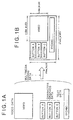
- FIGS. 1A and 1B an example of synthesizing data to be transferred between the sending and receiving sides and a multimedia screen.
- the sending side sends to the receiving side video data, character graphics data for displaying buttons A through C, text data for displaying "XYZABC...,” and multimedia coding data for relating these data each other.
- the sending side generally denotes a television broadcast station for example. However, it herein denotes a television broadcast station which includes a recording apparatus (the recording side) which receives and records data transmitted from broadcast stations, the example illustrated in FIG. 1A including the data which is outputted from this recording apparatus.
- the multimedia coding data includes data which can synthesize on the receiving side video data, character graphics data, and text data and display the synthesized data.
- the multimedia coding data includes the data associated with the display positions of the video, character graphics, and text which are displayed by the size-associated data such as multimedia plane (the display area of images on the television receiver for example) size (plane_height and plane_width) and video display size (video_height and video_width), video data, character graphics data, and text data as shown in FIG. 1B.
- the receiving side processes the video data, the character graphics data, and the text data to display a resultant image as shown in FIG. 1B.
- the user can receive services such as displaying desired information in the video section by clicking button A corresponding to that information and obtaining, from the text data displayed in the bottom of the screen, the information associated with a matter displayed in the video section, for example.
- a television program carried by a transport stream transmitted from a digital television broadcast is recorded without changed to a recording medium on the received side, the program can be recorded without its picture and audio qualities being deteriorated at all.
- the received video stream in order to record a program as long as possible to a recording medium of a limited recording capacity by presupposing a certain degree of picture quality deterioration, the received video stream must be decoded and then encoded again to lower the bit rate of the transport stream.
- the re-encoding of the video stream of a television program attached with multimedia coding data to lower its bit rate for recording may be implemented by sub-sampling the image to change writing blocks.
- this approach presents a problem of causing a mismatch in the relationship between the video stream resulted from re-encoding and the multimedia coding data. The following describes an example of this mismatch with reference to FIGS. 2A and 2B.
- the sending side converts the original video writing block to a smaller picture frame at the time of re-encoding. Therefore, as shown in FIG. 2B, on the receiving side (the reproducing side), changes occur in video display size and position, resulting in a display screen which is different from the display screen intended by the sending side (the display screen to be displayed on the basis of the data before being re-encoded).
- a first image coding apparatus comprising: inputting means for inputting a multiplexed stream containing multimedia coding data; separating means for separating a video stream from the multiplexed stream inputted by the inputting means; converting means for performing a predetermined converting process on the video stream separated by the separating means; generating means for generating additional information indicating that a mismatch will occur when the converted video stream is displayed on the basis of the multimedia coding data; and outputting means for outputting the converted video stream, the multimedia coding data, and the additional information.
- Embodiments of the present invention can provide an image coding apparatus and method, an image decoding apparatus and method, and a recording medium, wherein information that no mismatch is caused or at least the possibility of mismatch is reduced in the relationship between a video stream after re-encoding and other data is generated and recorded on the recording side, and wherein it is prevented a shrunk picture frame, for example, from occurring on the reproducing side by referencing the information generated on the recording side.
- the first image coding apparatus may further comprise: coding means for coding the additional information generated by the generating means as data separate from the multiplexed stream containing the converted video stream.
- the first image coding apparatus may further comprise: coding means for multiplexing the additional information generated by the generating means with the multiplexed stream containing the converted video stream and then coding a multiplexed result.
- the converting means may convert a video stream picture frame parameter.
- the conversion by the converting means may include at least a process of decoding the video stream separated by the separating means and a process of encoding the decoded video stream.
- the additional information generated by the generating means may contain at least one of original picture frame information and an original screen aspect ratio.
- the additional information generated by the generating means may contain an original video format and a video format after the conversion.
- the additional information generated by the generating means may contain an original screen aspect ratio and a screen aspect ratio after the conversion.
- the additional information generated by the generating means may contain at least one of information indicating whether or not a picture frame of the video stream has been converted by the converting means, information about an original picture frame of the video stream separated by the separating means, and an original screen aspect ratio.
- a first image coding method comprising the steps of: inputting a multiplexed stream containing multimedia coding data; separating a video stream from the multiplexed stream inputted in the inputting step; performing a predetermined converting process on the video stream separated in the separating step; generating additional information indicating that a mismatch will occur when the converted video stream is displayed on the basis of the multimedia coding data; and outputting the converted video stream, the multimedia coding data, and the additional information.
- the first image coding method may further comprise the step of: coding the additional information generated in the generating step as data separate from the multiplexed stream containing the converted video stream.
- the first image coding method may further comprise: a coding step of multiplexing the additional information generated in the generating step with the multiplexed stream containing the converted video stream and then coding a multiplexed result.
- a video stream picture frame parameter may be converted in the converting step.
- the conversion in the converting step may include at least a process of decoding the video stream separated in the separating step and a process of encoding the decoded video stream.
- the additional information generated in the generating step may contain at least one of original picture frame information and an original screen aspect ratio.
- the additional information generated in the generating step may contain an original video format and a video format after the conversion.
- the additional information generated in the generating step may contain an original screen aspect ratio and a screen aspect ratio after the conversion.
- the additional information generated in the generating step may contain at least one of information indicating whether or not a picture frame of the video stream has been converted in the converting step, information about an original picture frame of the video stream separated in the separating step, and an original screen aspect ratio.
- a first recording medium recorded a computer-readable program, the program comprising the steps of: inputting a multiplexed stream containing multimedia coding data; separating a video stream from the multiplexed stream inputted in the inputting step; performing a predetermined converting process on the video stream separated in the separating step; generating additional information indicating that a mismatch will occur when the converted video stream is displayed on the basis of the multimedia coding data; and outputting the converted video stream, the multimedia coding data, and the additional information.
- a second recording medium recorded a video stream converted by a predetermined conversion process, multimedia coding data, and additional information indicating occurrence of a mismatch at displaying the converted video stream on the basis of the multimedia coding data.
- the additional information may be coded and recorded as data different from a multiplexed stream containing the converted video stream.
- the additional information may be coded and recorded as multiplexed with a multiplexed stream containing the converted video stream.
- the video stream may be converted in its picture frame parameter.
- the video stream may be decoded and then encoded.
- the additional information may contain at least one of original picture frame information and an original screen aspect ratio.
- the additional information may contain information about an original video format and information about a video format after the conversion.
- the additional information may contain information about an original screen aspect ratio and information about a screen aspect ratio after the conversion.
- the additional information may contain at least one of information indicating whether or not a picture frame of the video stream has been converted, information about an original picture frame of the video stream, and information about an original screen aspect ratio.
- a first image decoding apparatus comprising: inputting means for inputting a multiplexed stream containing multimedia coding data; separating means for separating a video stream from the multiplexed stream inputted by the inputting means; decoding means for decoding the video stream separated by the separating means; and processing means for performing a predetermined conversion process on the decoded video stream in accordance with additional information indicating occurrence of a mismatch at displaying the decoded video stream on the basis of the multimedia decoding data.
- the first image decoding apparatus may further comprise: acquiring means for acquiring the additional information from data different from the multiplexed stream.
- the first image decoding apparatus may further comprise: acquiring means for acquiring the additional information from a multiplexed stream with which the additional information is multiplexed.
- the processing means may convert a picture frame parameter of the video stream.
- the conversion by the processing means may include at least a process of decoding the video stream separated by the separating means and a process of encoding the decoded video stream.
- the additional information may contain at least one of information about an original picture frame and information about an original screen aspect ratio.
- the additional information may contain an original video format and information about a video format after the conversion.
- the additional information may contain information about an original screen aspect ratio and information about a screen aspect ratio after the conversion.
- the additional information may contain at least one of information indicating whether or not a picture frame of the video stream has been converted by the converting means, information about an original picture frame of the video stream separated by the separating means, and information about an original screen aspect ratio.
- a first image decoding method comprising the steps of: inputting a multiplexed stream containing multimedia coding data; separating a video stream from the multiplexed stream inputted in the inputting step; decoding the video stream separated in the separating step; and performing a predetermined conversion process on the decoded video stream in accordance with additional information indicating occurrence of a mismatch at displaying the decoded video stream on the basis of the multimedia decoding data.
- the first image decoding method may further comprise the step of: acquiring the additional information from data different from the multiplexed stream.
- the first image decoding method may further comprise the step of: acquiring the additional information from a multiplexed stream with which the additional information is multiplexed.
- a picture frame parameter of the video stream may be converted in the processing step.
- the conversion in the processing step may include at least a process of decoding the video stream separated in the separating step and a process of encoding the decoded video stream.
- the additional information may contain at least one of information about an original picture frame and information about an original screen aspect ratio.
- the additional information may contain an original video format and information about a video format after the conversion.
- the additional information may contain information about an original screen aspect ratio and information about a screen aspect ratio after the conversion.
- the additional information may contain at least one of information indicating whether or not a picture frame of the video stream has been converted in the converting step, information about an original picture frame of the video stream separated in the separating step, and information about an original screen aspect ratio.
- a third recording medium recorded a computer-readable program, the program comprising the steps of: inputting a multiplexed stream containing multimedia coding data; separating a video stream from the multiplexed stream inputted in the inputting step; decoding the video stream separated in the separating step; and performing a predetermined conversion process on the decoded video stream in accordance with additional information indicating occurrence of a mismatch at displaying the decoded video stream on the basis of the multimedia decoding data.
- a second image coding apparatus comprising: inputting means for inputting a multiplexed stream; separating means for separating a video stream from the multiplexed stream inputted by the inputting means; determining means for determining whether or not multimedia coding data is contained in the multiplexed stream inputted by the inputting means; generating means, if it is determined by the determining means that the multimedia coding data is contained in the multiplexed stream, for generating coding control information for instructing not to change a display format of the video stream separated by the separating means; converting means for performing a predetermined conversion process on the video stream separated by the separating means on the basis of the coding control information generated by the generating means; and multiplexing means for generating a multiplexed stream which contains the video stream converted by the converting means.
- the generating means may instruct not to change any of a picture frame, a video format, and an aspect ratio.
- a second image coding method comprising the steps of: inputting a multiplexed stream; separating a video stream from the multiplexed stream inputted in the inputting step; determining whether or not multimedia coding data is contained in the multiplexed stream inputted in the inputting step; generating coding control information for instructing not to change a display format of the video stream separated in the separating step, if it is determined in the determining step that the multimedia coding data is contained in the multiplexed stream; performing a predetermined conversion process on the video stream separated in the separating step on the basis of the coding control information generated in the generating step; and generating a multiplexed stream which contains the video stream converted in the converting step.
- Coding control information for instructing not to change any of a picture frame, a video format, and an aspect ratio may be generated in the generating step.
- a fourth recording medium recorded a computer-readable program, the program comprising the steps of: inputting a multiplexed stream; separating a video stream from the multiplexed stream inputted in the inputting step; determining whether or not multimedia coding data is contained in the multiplexed stream inputted in the inputting step; generating coding control information for instructing not to change a display format of the video stream separated in the separating step, if it is determined in the determining step that the multimedia coding data is contained in the multiplexed stream; performing a predetermined conversion process on the video stream separated in the separating step on the basis of the coding control information generated in the generating step; and generating a multiplexed stream which contains the video stream converted in the converting step.
- a fifth recording medium recorded coding control information instructing not to change a display format of a video stream and a multiplexed stream containing a video stream on which a predetermined conversion process has been performed on the basis of the coding control information.
- a video steam is separated from a multiplexed stream containing multimedia coding data, and a predetermined conversion process is performed on the separated video stream, and additional information indicating that a mismatch will occur when displaying the converted video stream on the basis of the multimedia coding data.
- the second recording medium stores a video stream converted by a predetermined conversion process, the multimedia coding data, and the additional information indicating that a mismatch will occur when displaying the converted video stream on the basis of the above-mentioned multimedia coding data.
- the image decoding apparatus and method and the program stored in the third recording medium when a video stream is separated from an inputted multiplexed stream, the separated video stream is decoded, and the decoded video stream is displayed on the basis of multimedia coding data, a mismatch occurs. On the basis of the additional information about this mismatch occurrence, a predetermined conversion process is performed on the decoded video stream.
- This novel configuration prevents the mismatch from occurring between the video stream and the multimedia coding data.
- a video stream is separated from an inputted multiplexed stream, the inputted multiplexed stream is checked whether or not multimedia coding data is contained and, if the multimedia coding data is contained, coding control information for giving an instruction not to change the display format of the separated video stream is generated, and a predetermined conversion process is performed on the separated video stream on the basis of the generated coding control information.
- the fifth recording medium also stores the above-mentioned coding control information giving instruction not to change the display format of a video stream and a multiplexed stream containing the video stream on which a predetermined conversion process has been performed on the basis of the coding control information.
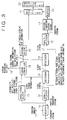
- FIG. 3 there is shown a block diagram illustrating an exemplary configuration of a recording apparatus 1 practiced as one embodiment of the invention.
- a transport stream received at an antenna, not shown, is inputted in a selector 10.
- a program number (a channel number) specified by the user is also inputted from a terminal 11 to the selector 10.
- the selector 10 extracts the specified program from the received transport stream and outputs a partial transport stream.
- the partial transport stream is inputted in a demultiplexer 12 and an analyzing block 13.
- the partial transport stream inputted in the demultiplexer 12 is separated into a video stream and other streams (audio, still picture, character graphics, and multimedia coding data for example).
- the video stream thus obtained is outputted to a decoder 14.
- the other streams are outputted to a multiplexer 16.
- the demultiplexer 12 outputs the output timing information in the input transport stream of these transport packets to the multiplexer 16.
- the decoder 14 applies a predetermined decoding scheme, for example, MPEG2 to the inputted video stream and outputs the decoded video data to an encoder 15. Also, the decoder 14 outputs the stream information about the video stream obtained at decoding to a coding controller 18.
- a predetermined decoding scheme for example, MPEG2
- the analyzing block 13 analyzes the inputted transport stream to obtain the stream information about the non-video streams, for example, a bit rate and outputs it to the coding controller 18.
- the stream information about the non-video streams outputted from the analyzing block 13, the video stream information outputted from decoder 14, and a stream recording bit rate outputted from a terminal 19 are inputted in the coding controller 18.
- the coding controller 18 sets the video data coding conditions (coding control information) to be executed by the encoder 15 and outputs these coding conditions to the encoder 15 and a coding block 20.
- the coding controller 18 uses, as a bit rate to be allocated to the video data encoding, a value obtained by subtracting a total value (the data inputted from the analyzing block 13) of the bit rates of the non-video streams from a stream recording bit rate (the data inputted, via the terminal 19, from a controller, not shown, for controlling the operation of the recording apparatus 1, for example).
- the coding controller 18 sets coding control information such as bit rate and picture frame such that an optimum picture quality can be achieved with the bit rate thus obtained and outputs this coding control information to the encoder 15 and the coding block 20.
- the details of the coding control information will be described later with reference to FIGS. 15 through 20.
- this stream recording bit rate becomes the fixed rate; if a stream is recorded with a variable bit rate, this stream recording bit rate is a mean bit rate per predetermined time.
- the maximum value of the variable bit rate in this case needs to be lower than the maximum recording bit rate ensured by the recording medium concerned.
- the encoder 15 encodes (on the basis of MPEG2 for example) the video data outputted from the decoder 14 on the basis of the coding control information outputted from the coding controller 18 and outputs the resultant video data to the multiplexer 16.
- the video stream from the encoder 15, the transport stream packets other than video from the demultiplexer 12, and the information about the occurrence timing of the transport stream packets other than video are inputted in the multiplexer 16.
- the multiplexer 16 multiplexes the video stream with the transport stream packets other than video and outputs the result to the arrival timestamp adding block 17 as a transport stream.
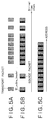
- FIGS. 4A and 4B schematically illustrate the above-mentioned processing to be executed by the multiplexer 16.
- FIG. 4A shows the timing of the inputted transport stream packets.
- the cross-hatched portions indicate the video packets while the white portions indicate the stream packets other than video.
- the inputted transport stream packets are continuous; however, the data volume of the video data is reduced by the re-encoding of video data by the encoder 15. Consequently, the number of video packets is reduced.
- the multiplexer 16 does not change the timing of the stream packets other than video but causes only the timing of the video packets to be different from the original state (shown in FIG. 4A).
- the arrival timestamp adding block 17 adds a header (TP_extra_header) including an arrival timestamp to each of the packets (FIG. 5A) of the inputted transport stream to generate a source packet (FIG. 5B), arranges the generated source packets continuously (FIG. 5C), and outputs them to a writing block 21.
- the arrival timestamp is information indicative of the timing with which the transport stream packets occur in a transport stream.
- the writing block 21 puts the inputted source packet stream consisting of continuous source packets and records the file to a recording medium 22. It should be noted that the recording medium 22 may be any type of recording medium.
- the information outputted from the coding block 20 is also inputted in the writing block 21.
- the coding block 20 On the basis of the video coding information from the coding controller 18, the coding block 20 generates multimedia display sub information and outputs the same to the writing block 21.
- the multimedia display sub information to be outputted to the writing block 21 is information for keeping the video display position and display size unchanged on multimedia plane from those of the image (the image which would be displayed without re-encoding) intended by the sending side even if the picture frame size has changed by transcoding (decoding by the decoder 14 and then encoding by the encoder 15) a video stream. This information is also used at time of reproduction in combination with multimedia coding data.
- the multimedia display sub information consists of three flags of a mismatch flag (mismatch_MMinfo_flag), a re-encoded flag (Re_encoded_flag), and a frame size change flag (changed_frame_size_flag), data associated with two sizes indicative of an original horizontal size (original_horizontal_size) and an original vertical size (original_vertical_size), and an original screen aspect ratio (original_display_aspect_ratio).
- the mismatch flag indicates whether there exists a mismatch in the relationship between video and multimedia coding data.
- the re-encoded flag indicates whether the video has been re-encoded at the time of recording.
- the frame size change flag indicates whether the picture frame of video has been changed by re-encoding for example.
- the original horizontal size indicates the horizontal size of a picture frame before re-encoding.
- the original vertical size indicates the vertical size of a picture frame before re-encoding.
- the original screen aspect ratio indicates the aspect ratio of a frame screen before re-encoding.
- multimedia display sub information is illustrative only. Therefore, information other than shown in FIG. 6 may be included in or part of the information shown in FIG. 6 may be excluded from the multimedia display sub information.
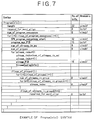
- the multimedia display sub information is stored in a ProgramInfo() syntax shown in FIG. 7.
- the following describes the fields associated with the present invention in the ProgramInfo() syntax.
- number_of_program_sequences indicates the number of program sequences in the an AV stream file.
- a source packet sequence with which the program contents specified by this format in the AV stream file are constant is referred to as a program sequence.
- SPM_program_sequence_start indicates an address at which the program sequence starts in the AV stream file.
- SPM_program_sequence_start is of a size in unit of source packet number and counted from the initial value 0 starting with the first packet of the AV stream file.
- program_map_PID is value of the PID of a transport packet having PMT (Program Map Table) applicable to that program sequence.
- number_of_streams_in_ps indicates the number of elementary streams defined in that program sequence.
- stream_PID indicates the value of the PID for the elementary stream defined in the PMT which is referenced by the program map PID of that program sequence.
- StreamCodingInfo() indicates the information about the elementary stream indicated by the above-mentioned stream PID.
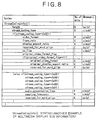
- FIG. 8 shows the syntax of StreamCodingInfo(). "length" indicates the number of bytes between the byte just after this length field and the last byte of StreamCodingInfo() inclusive.
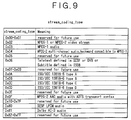
- stream_coding_type indicates the coding type of the elementary stream indicated by the stream PID for this StreamCodingInfo().
- the meanings of the individual types are shown in FIG. 9.
- stream coding type indicates that the elementary stream indicated by the stream PID is a video stream.
- stream coding type is 0x0A, 0x0B, or 0x0D, it indicates that the elementary stream indicated by the stream PID is multimedia coding data.
- stream coding type indicates that the elementary stream indicated by the stream PID is subtitles or teletext.
- video_format indicates the video format of a video stream indicated by the stream PID for this StreamCodingInfo().
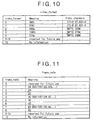
- the meanings of the individual video formats are shown in FIG. 10.
- 480i indicates video display of NTSC standard TV (interlace frame of 720 pixels x 480 lines).
- 576i indicates video display of PAL standard TV (interlace frame of 720 pixels x 576 lines).
- 480p indicates video display of progressive frame of 720 pixels x 480 lines.
- 1080i indicates video display of interlace frame of 1920 pixels x 1080 lines.
- 720p indicates video display of progressive frame of 1230 pixels x 720 lines.
- frame_rate indicates the frame rate of a video stream indicated by the stream PID for this StreamCodingInfo().
- the meanings of the individual frame rates are shown in FIG. 11.
- display_aspct_ratio indicates the display aspect ratio of a video stream indicated by the stream PID for this StreamCodingIndo().
- the meaning of the individual aspect ratios are shown in FIG. 12.
- original_video_format_flag indicates whether there exist original video format and original display aspect ratio in this StreamCodingInfo().
- original_video_format indicates a video format before a video stream indicated by the stream PID for this StreamCodingInfo() is coded.
- the meanings of the individual original video formats are the same as shown in FIG. 10.
- original_display_aspect_ratio is the display aspect ratio before a video stream indicated by the stream PID for this StreamCodingInfo() is coded.
- the meanings of the individual aspect ratios are the same as shown in FIG. 12.
- the re-encoding of the video stream changes its video format (for example, from 1080i to 480i), while the multimedia data stream retain its original stream contents.
- a mismatch in information may occur between a new video stream and the multimedia data stream.
- the parameters associated with the display of the multimedia data stream are determined on the supposition of the video format of the original video stream, the video format may be changed by the re-encoding of the video stream.
- the video format of the original video stream is indicated by the video format and the display aspect ratio.
- the video format of the re-encoded video stream is indicated by the original video format and the original display aspect ratio.
- the stream PID in which the stream coding type indicates multimedia coding data and subtitles is included in ProgramInfo(), it indicates that the multimedia data is multiplexed in an AV stream file (a transport stream).
- ProgramInfo() indicates that a video format change has been caused by the re-encoding of video at the time of recording and multimedia data is multiplexed in the AV stream file, then it is determined that there exists a mismatch in display between the video stream (re-encoded) and the multimedia data (the original multimedia data) in the AV stream file.
- the reproducing apparatus generates a display screen from the above-mentioned new video stream and multimedia data stream as follows.
- the multimedia display sub information generated by the coding block 20 is recorded by the writing block 21 to the recording medium 22 but stored as a file which is different from the source packet stream file outputted from the arrival timestamp adding block 17. If the multimedia display sub information is recorded by the writing block 21 to the recording medium 22 as a file different from the source packet stream file, the filed multimedia display sub information is outputted from the coding block 20.
- FIG. 13 is a flowchart describing the processing of coding an AV stream and multimedia display sub information.
- step 50 a multiplexed stream including multimedia coding data is inputted in the recording apparatus 1.
- step 51 the demultiplexer 12 separates the video stream from the multiplexed stream.
- step 52 the encoder 15 re-encodes the video stream decoded by the decoder 14.
- step 53 the multiplexer 16 multiplexes the above-mentioned video stream and multimedia coding data to generate a multiplexed stream.
- step 54 the coding block 20 generates multimedia display sub information.
- the coding controller 18 generates the coding control information including bit rate and picture frame on the basis of the inputted data.
- the coding controller 18 may generate the following information as alternative coding control information. Namely, if the inputted transport stream is found including multimedia coding data by the analyzing block 13, then the coding controller 18 may generate coding control information, when encoding is executed by the encoder 15, for instructing the encoder 15 to execute the re-encoding with a picture frame (the picture frame before re-encoding) of the same size as that of the picture frame of the original video and output the generated coding control information to the encoder 15.
- the encoder 15 re-encodes the video data supplied from the decoder 14 with the same value as that of the picture frame of the original video stream on the basis of the inputted coding control information. If such coding control information is generated and the re-encoding is executed on the basis of the coding control information, no picture frame change is caused by the re-encoding, thereby preventing a mismatch from occurring in the relationship between the video stream obtained by re-encoding and the multimedia coding data.
- the following information may be generated as the coding control information generated by the coding controller 18. Namely, if the inputted transport stream is found including multimedia coding data by the analyzing block 13, then the coding controller 18 may generate coding control information, when encoding is executed by the encoder 15, for instructing the encoder 15 to execute the re-encoding under the same conditions as the video format (shown in FIG. 10) and screen aspect ratio (shown in FIG. 12) of the original video and output the coding control information to the encoder 15.
- the encoder 15 re-encodes the video supplied from the decoder 14 under the same conditions as the video format (shown in FIG. 10) and screen aspect ratio (shown in FIG. 12) of the original video on the basis of the inputted coding control information. If such coding control information is generated and the re-encoding is executed on the basis of the coding control information, no video format and no screen aspect ratio change is caused by the re-encoding, thereby preventing a mismatch from occurring in the relationship between the video stream obtained by re-encoding and the multimedia coding data.
- FIG. 14 is a flowchart describing the coding for restricting the re-encoding of the video of a multiplexed stream including multimedia coding data.
- step 70 a multiplexed stream is inputted in the recording apparatus 1.
- step 71 the demultiplexer 12 separates the video stream from the multiplexed stream.
- step 72 the analyzing block 13 checks if the multimedia coding data is included in the video stream. If the multimedia coding data is included, the analyzing block 13 sends the coding control information to the encoder 15 instructing the same to re-encode the video stream without changing the display format. On the basis of the supplied control information, the encoder 15 re-encodes the video stream.
- step 73 the multiplexer 16 generates a multiplexed stream including the above-mentioned video stream.
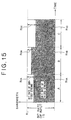
- a transport stream to be inputted in the selector 10 have a constant bit rate R I as shown in FIG. 15 for example.
- the video stream and the non-video streams are coded by variable bit rates.
- the bit rate of the video stream in unit time (for example, GOP) A, the bit rate of the video stream is R VA and the bit rate of non-video streams is R OA .
- the bit rate of the video stream is R VB and the bit rate of non-video streams is R OB .
- the bit rate of the video stream is R VC and the bit rate of non-video streams is R OC .
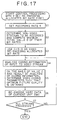
- the coding controller 18 executes the processing described by the flowchart shown in FIG. 17.
- step S1 the coding controller 18 sets to S the bit rate (recording rate) of a transport stream to be outputted from the multiplexer 16 on the basis of a control signal inputted from a controller, not shown, via the terminal 19.
- step S2 the coding controller 18 determines non-video streams to be recorded and computes a maximum total value D of the bit rates of the determined streams.
- the maximum value D is determined from the stream specification of the input transport stream. For example, if two audio streams are to be recorded in addition to the video stream, the maximum value D is 384 x 2 Kbps since the maximum value of the bit rate of one audio stream is 384 Kbps according to the Japanese digital BS broadcast stream specification.
- step S4 the coding controller 18 analyzes the coding information such as the video stream bit rate and picture frame from the video stream information outputted from the decoder 14.
- step S5 the coding controller 18 determines, on the basis of the value C computed in step S3 and the video stream coding information analyzed in step S4, a video coding parameter (video coding control information) such that an optimum picture quality is achieved.
- value S is 1/2 of value R I .
- bit rate of steams other than video is the maximum value D, which is used without change as the bit rate of non-video steams in a multiplexed stream after re-encoding.
- video coding parameters are determined such that an optimum picture quality can be achieved within the range of (S - D). If the picture frame is controlled, the horizontal direction of a picture frame of 720 x 480 pixels for example is sampled by 1/2 into 360 x 480 pixels.
- the determined coding parameters (bit rate and picture angle) are supplied to the encoder 15 as video coding control information.
- step S6 on the basis of the video coding control information supplied from the coding controller 18, the encoder 15 re-encodes the video data of unit time (in this example, unit time A) to be processed now.
- the actual bit rate R OA is smaller than the maximum value D in unit time A; however, since the maximum value D is fixed, the video allocated bit rate becomes (S - D).
- a wasted portion Rsa which cannot be used for video coding occurs because the maximum value D is fixed, the wasted portion being filled with stuffing bits.
- step S7 the coding controller 18 determines whether there remains any stream to be re-encoded. If there still remains any stream to be re-encoded, the procedure returns to step S4 to repeat the above-mentioned processes.
- step S7 If, in step S7, there remains no more stream to be re-encoded, this processing comes to an end.
- bit rate of non-video streams is D also in unit time B and the video stream allocated bit rate is S - D because it is fixed.
- the video stream is coded with a fixed bit rate.
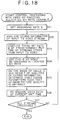
- FIG. 18 is a flowchart describing a processing example in which the video re-encoding allocated bit rate is variable.
- the coding controller 18 sets recording rate S on the basis of the information supplied via the terminal 19.
- the coding controller 18 analyzes the coding information of the video stream on the basis of the video stream information supplied from the decoder 14.
- the processes of steps S21 and S22 are the same as those of steps S1 and S4 of FIG. 17.
- step S23 the coding controller 18 computes, from the output of the analyzing block 13, the total bit rate B in each unit time of non-video streams.
- step S25 the coding controller 18 determines, on the basis of value C obtained in step S24 and a result of analysis of the video stream coding information obtained in step S22, video coding parameters such that an optimum picture quality is obtained.
- the determined coding parameters are outputted to the encoder 15.
- step S27 the coding controller 18 determines whether there remains any stream to be processed. If there still remains any stream to be processed, the procedure returns to step S22 to repeat the above-mentioned processes. If there remains no more stream to be processed, this processing comes to an end.
- the bit rate of the video stream is variable and therefore no stuffing bit is needed or the number of stuffing bits can be reduced, thereby coding the video stream more efficiently.
- the input transport stream has a fixed bit rate.
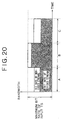
- the present invention is also applicable to an example in which the bit rate of the input transport stream is variable as shown in FIG. 20.
- the above-mentioned novel constitution prevents the qualities of audio data, still picture and character graphics data, multimedia coding data, and other non-video data from being conspicuously deteriorated.
- These non-video data is basically smaller in data volume than video data, so that reducing their bit rate in the same ratio as the bit rate of video data makes the effects on these non-video data relatively greater than those on video data.
- the novel constitution can prevents these effects from being caused.
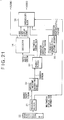
- FIG. 21 there is shown a block diagram illustrating the configuration of a reproducing apparatus practiced as one embodiment of the invention.
- a source packet stream file recorded on the recording medium 22 is read by a reading block 31.
- the reading block 31 also reads multimedia display sub information recorded on the recording medium 22 as a file separate from the source packet stream file.
- the source packet stream read by the reading block 31 is outputted to a arrival timestamp separating block 32 and the multimedia display sub information to a synthesizing block 36.
- the arrival timestamp separating block 32 incorporates a reference clock.
- the arrival time stamp separating block 32 compares the reference clock with the value of the arrival timestamp added to the source packet of the inputted source packet stream and, when a match is found, removes the arrival timestamp from the source packet having the matching arrival timestamp, outputting the resultant packet to a demultiplexer 33 as a transport stream packet.
- the demultiplexer 33 separates the inputted transport stream into a video/audio stream and data streams such as multimedia coding data, character graphics, text, and still picture. Of these separated data, the video/audio stream is outputted to an AV decoder 34, the multimedia coding data to the synthesizing block 36, and the data stream such as character graphics, text, and still picture to a character graphics/still picture decoder 35.
- the AV decoder 34 separates the inputted video/audio stream into video data and audio data, decodes each data, and outputs the decoded audio data to an audio reproducing device, not shown, and the decoded video data to the synthesizing block 36.
- the character graphics/still picture decoder 35 decodes the inputted data stream such as character graphics, text, and still picture and outputs the decoded character graphics data, text data, and still picture data to the synthesizing block 36.
- the synthesizing block 36 determines whether there exits a mismatch in the relationship between the inputted video signal and the multimedia coding data.
- the synthesizing block 36 determines that a video format change has been caused by the video re-encoding at the time of recording, detecting a mismatch in the relationship between the input video signal and the multimedia encoding data. If there exists no mismatch between the value of video format and the value of original video format and no mismatch between the value of display aspect radio and the value of original display aspect ratio, the synthesizing block 36 determines that there exists no mismatch in the relationship between the input video signal and the multimedia coding data.
- the synthesizing block 36 further references the original horizontal size and vertical size of the multimedia display sub information or references the original video format and the original display aspect ratio. Then, the synthesizing block 36 scale-converts the inputted video signal so that it can be displayed in a frame of the referenced size. On the basis of the multimedia coding data, the synthesizing block 36 outputs the video signal with the scale-converted video signal and the data such as character graphics synthesized on a multimedia plane to a television receiver, not shown, which servers as a display device.
- the synthesizing block 36 synthesizes the input video signal with other data on a multimedia plane without scale conversion and outputs the synthesized data.
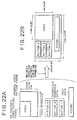
- recording the multimedia display sub information and using it at the time of reproduction allow the receiving side to display a screen as intended on the sending side.
- the sending side recording side
- the size reduction is recorded as multimedia display sub information, which is referenced at the time of reproduction. Consequently, because there exists no mismatch between video data and other data, the receiving side (the reproduction side) can display the same screen as the original.
- FIG. 24 is a flowchart describing AV stream reproduction processing which uses multimedia display sub information.
- step 60 a multiplexed stream including multimedia coding data is read from a recording medium and inputted in a reproduction device.
- step 61 multimedia display sub information is inputted. This information is read from the recording medium in the case of the reproducing device shown in FIG. 21; in the case of a reproducing device shown in FIG. 25, this information is separated from the multiplexed stream.
- step 62 a video stream is separated from the multiplexed stream.
- step 63 the video stream is decoded.
- step S64 if there exists a mismatch is display between the video data and the multimedia coding data, the synthesizing block 36 scale-converts the video data on the basis of the multimedia display sub information.
- step 65 the synthesizing block 36 synthesizes the processed image and the multimedia data to generate a display image.
- the multimedia display sub information may be recorded on the recording medium 2 as a file which is different from the source packet stream file containing character graphics data and video signals.
- the mutlimedia display sub information may be embedded in a source packet stream file and then recorded on the recording medium 22.
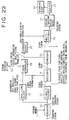
- FIG. 23 shows the configuration of the recording apparatus 1 in which the multimedia display sub information is embedded in a source packet stream file.
- the former outputs the multimedia display sub information outputted from the coding block 20 is supplied to the multiplexer 16.
- the multiplexer 16 then generates a transport packet of the inputted multimedia display sub information embeds it into a source packet stream file, outputting the same to the arrival timestamp adding block 17.
- the multimedia display sub information may be written to a user data area in an MPEG video stream.
- video data may be re-encoded in other methods than that described above; for example, an inputted video stream may be converted in the DCT area to covert the coding parameters such as picture frame.
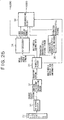
- FIG. 25 shows the configuration of the reproducing apparatus 30 in which the multimedia display sub information is embedded in a source packet stream file to be recorded on the recording medium 22.
- the former reads through the reading block 31 only the source packet stream.
- the source packet stream read by the reading block 31 is inputted in the demultiplexer 33 via the arrival timestamp separating block 32.
- the demultiplexer 33 extracts the multimedia display sub information from the inputted source packet stream file and outputs the extracted information to the synthesizing block 36.
- the further processing is the same as that of the configuration shown in FIG. 5.
- the receiving side can also obtain the video picture size and display position intended by the sending side.
- a transport stream was used for example.
- the present invention is also applicable to multiplexed streams such as a program stream.
- the recording apparatus 1 (and the reproducing apparatus 30) is constituted by a personal computer as shown in FIG. 26.
- a CPU (Central Processing Unit) 101 executes various processing operations as instructed by programs stored in a ROM (Read Only Memory) 102 or loaded from a storage block 108 into a RAM (Random Access Memory) 103.
- the RAM 103 also stores, as required, the data necessary for the CPU 101 to execute various processing operations.
- the CPU 101, the ROM 102, and the RAM 103 are interconnected via a bus 104.
- the bus 104 is also connected to an input/output interface 105.
- the input/output interface 105 is connected to an input block 106 such as a keyboard and a mouse, a display device such as CRT or LCD, an output block 107 such as a speaker, a storage block 108 such as hard disk, and a communication block 109 such as modem or terminal adapter.
- the communication block 109 executes communication processing via a network.
- the input/output interface 105 is also connected to a drive 110 as required, in which a magnetic disc 121, an optical disc 122, a magneto-optical disc 123, or a semiconductor memory 124 is loaded. Computer programs read from these storage media are installed in the storage block 108 as required.
- the execution of a sequence of processing operations by software requires the use of a computer having a dedicated hardware device storing beforehand the programs constituting the software or a general-purpose computer in which these programs are installed as required from a recording medium.
- the program recording medium for storing computer-readable and executable programs may be a package medium which is distributed to users providing programs and constituted by the magnetic disk 121 or (including floppy disk), the optical disc 122 (including CD-ROM (Compact Disc-Read Only Memory) and DVD (Digital Versatile Disc)), the magneto-optical disk 123 (including MD (Mini Disk)), or the semiconductor memory 124 or a ROM 102 or a hard disk which is preinstalled in a personal computer and provided for users and on which the programs are stored temporarily or permanently as shown in FIG. 26.
- the magnetic disk 121 or including floppy disk
- the optical disc 122 including CD-ROM (Compact Disc-Read Only Memory) and DVD (Digital Versatile Disc)
- the magneto-optical disk 123 including MD (Mini Disk)
- semiconductor memory 124 or a ROM 102 or a hard disk which is preinstalled in a personal computer and provided for users and on which the programs are stored temporarily or permanently as shown
- a video steam is separated from a multiplexed stream containing multimedia coding data, a predetermined conversion process is performed on the separated video stream, and additional information indicative that a mismatch will occur when displaying the converted video stream on the basis of the multimedia coding data.
- the first recording medium stores the converted video stream, the multimedia coding data, and the additional information indicative that a mismatch will occur when displaying the converted video stream on the basis of the above-mentioned multimedia coding data.
- the reproducing side can prevent a mismatch from occurring between the video stream and the multimedia coding data.
- the image decoding apparatus and method and the program stored in the second recording medium when a video stream is separated from an inputted multiplexed stream, the separated video stream is decoded, and the decoded video stream is displayed on the basis of multimedia coding information, a mismatch occurs. On the basis of the additional information about this mismatch occurrence, a predetermined conversion process is performed on the decoded video stream.
- This novel configuration prevents the mismatch from occurring between the video stream and the multimedia coding data.
- a video stream is separated from an inputted multiplexed stream, the inputted multiplexed stream is checked for multimedia coding data and, if the multimedia coding data is found, coding control information for giving an instruction not to change the display format of the separated video stream is generated, and a predetermined conversion process is performed on the separated video stream on the basis of the generated coding control information.
- the second recording medium also stores the above-mentioned coding control information giving instruction not to change the display format of a video stream and a multiplexed stream containing the video stream on which a predetermined conversion process has been performed on the basis of the coding control information.
- the reproduction side can prevent a mismatch from occurring between the video stream and the multimedia coding data.
Landscapes
- Engineering & Computer Science (AREA)
- Multimedia (AREA)
- Signal Processing (AREA)
- General Physics & Mathematics (AREA)
- Physics & Mathematics (AREA)
- Algebra (AREA)
- Computer Graphics (AREA)
- Mathematical Analysis (AREA)
- Mathematical Optimization (AREA)
- Pure & Applied Mathematics (AREA)
- Compression Or Coding Systems Of Tv Signals (AREA)
- Two-Way Televisions, Distribution Of Moving Picture Or The Like (AREA)
- Television Signal Processing For Recording (AREA)
- Editing Of Facsimile Originals (AREA)
Priority Applications (1)
| Application Number | Priority Date | Filing Date | Title |
|---|---|---|---|
| EP20100176823 EP2262265B1 (de) | 2000-06-02 | 2001-05-31 | Vorrichtung und Verfahren zur Informationsverarbeitung, und Aufzeichnungsmedium |
Applications Claiming Priority (4)
| Application Number | Priority Date | Filing Date | Title |
|---|---|---|---|
| JP2000165298 | 2000-06-02 | ||
| JP2000165298 | 2000-06-02 | ||
| JP2001001031 | 2001-01-09 | ||
| JP2001001031 | 2001-01-09 |
Related Child Applications (2)
| Application Number | Title | Priority Date | Filing Date |
|---|---|---|---|
| EP20100176823 Division-Into EP2262265B1 (de) | 2000-06-02 | 2001-05-31 | Vorrichtung und Verfahren zur Informationsverarbeitung, und Aufzeichnungsmedium |
| EP20100176823 Division EP2262265B1 (de) | 2000-06-02 | 2001-05-31 | Vorrichtung und Verfahren zur Informationsverarbeitung, und Aufzeichnungsmedium |
Publications (3)
| Publication Number | Publication Date |
|---|---|
| EP1182880A2 true EP1182880A2 (de) | 2002-02-27 |
| EP1182880A3 EP1182880A3 (de) | 2004-06-23 |
| EP1182880B1 EP1182880B1 (de) | 2014-01-29 |
Family
ID=26593196
Family Applications (2)
| Application Number | Title | Priority Date | Filing Date |
|---|---|---|---|
| EP20100176823 Expired - Lifetime EP2262265B1 (de) | 2000-06-02 | 2001-05-31 | Vorrichtung und Verfahren zur Informationsverarbeitung, und Aufzeichnungsmedium |
| EP20010304794 Expired - Lifetime EP1182880B1 (de) | 2000-06-02 | 2001-05-31 | Bildkodierungsvorrichtung und -verfahren, Bilddekodierungsvorrichtung und -verfahren, und Aufzeichnungsmedium |
Family Applications Before (1)
| Application Number | Title | Priority Date | Filing Date |
|---|---|---|---|
| EP20100176823 Expired - Lifetime EP2262265B1 (de) | 2000-06-02 | 2001-05-31 | Vorrichtung und Verfahren zur Informationsverarbeitung, und Aufzeichnungsmedium |
Country Status (6)
| Country | Link |
|---|---|
| US (5) | US7224890B2 (de) |
| EP (2) | EP2262265B1 (de) |
| JP (1) | JP5516488B2 (de) |
| KR (1) | KR100827887B1 (de) |
| CN (1) | CN1174607C (de) |
| TW (1) | TW519840B (de) |
Cited By (3)
| Publication number | Priority date | Publication date | Assignee | Title |
|---|---|---|---|---|
| WO2004064392A3 (en) * | 2003-01-14 | 2005-03-24 | Matsushita Electric Industrial Co Ltd | Data-transceiving equipment, image processor, and image-processing method |
| WO2007143981A3 (de) * | 2006-06-12 | 2008-02-28 | Attag Gmbh | Verfahren und vorrichtung zum erzeugen eines digitalen transportstroms für ein video-programm |
| CN101355706B (zh) * | 2008-08-15 | 2010-06-16 | 中兴通讯股份有限公司 | 一种适用于复用器的复用码流分析方法及装置 |
Families Citing this family (83)
| Publication number | Priority date | Publication date | Assignee | Title |
|---|---|---|---|---|
| US6808709B1 (en) * | 1994-12-30 | 2004-10-26 | The Regents Of The University Of California | Immunoglobulins containing protection proteins and their use |
| KR100448452B1 (ko) | 2000-06-09 | 2004-09-13 | 엘지전자 주식회사 | 고밀도 광 기록매체의 메뉴 지원방법 |
| DE10055937A1 (de) * | 2000-11-10 | 2002-05-23 | Grundig Ag | Verfahren und Vorrichtung zur Aufzeichnung |
| KR100888587B1 (ko) * | 2001-09-27 | 2009-03-16 | 삼성전자주식회사 | 영상 데이터가 기록된 정보저장매체, 그 기록방법,기록장치, 재생방법 및 재생장치 |
| US7577333B2 (en) | 2001-08-04 | 2009-08-18 | Samsung Electronics Co., Ltd. | Method and apparatus for recording and reproducing video data, and information storage medium in which video data is recorded by the same |
| TW578083B (en) * | 2001-10-25 | 2004-03-01 | Samsung Electronics Co Ltd | Storage medium adaptable to changes in screen aspect ratio and reproducing method thereof |
| FR2840424B1 (fr) * | 2002-05-30 | 2004-09-03 | Thomson Licensing Sa | Procede et dispositif de fragmentation de donnees multimedia |
| KR20040000290A (ko) | 2002-06-24 | 2004-01-03 | 엘지전자 주식회사 | 고밀도 광디스크의 멀티 경로 데이터 스트림 관리방법 |
| CN101350215B (zh) | 2002-06-24 | 2012-08-29 | Lg电子株式会社 | 记录和再现用于视频数据的再现的数据结构的方法及装置 |
| US20040033821A1 (en) * | 2002-08-16 | 2004-02-19 | Visteon Global Technologies, Inc. | In-vehicle entertainment system |
| CN100533577C (zh) * | 2002-09-05 | 2009-08-26 | Lg电子株式会社 | 记录和再现用于管理静止图象的数据结构的方法及装置 |
| CA2462193C (en) * | 2002-09-06 | 2012-11-06 | Lg Electronics Inc. | Recording medium having data structure for managing reproduction of still images recorded thereon and recording and reproducing methods and apparatuses |
| CA2462192C (en) * | 2002-09-07 | 2013-07-30 | Lg Electronics Inc. | Recording medium having data structure for managing reproduction of still images from a clip file recorded thereon and recording and reproducing methods and apparatuses |
| AU2003264988B2 (en) * | 2002-10-02 | 2009-12-03 | Lg Electronics Inc. | Recording medium having a data structure for managing reproduction of graphic data and recording and reproducing methods and apparatuses |
| WO2004032136A1 (en) * | 2002-10-04 | 2004-04-15 | Lg Electronics Inc. | Recording medium having a data structure for managing reproduction of graphic data and recording and reproducing methods and apparatuses |
| WO2004036578A1 (en) * | 2002-10-15 | 2004-04-29 | Lg Electronics Inc. | Recording medium having data structure for managing reproduction of multiple graphics streams recorded thereon and recording and reproducing methods and apparatuses |
| WO2004047104A1 (en) * | 2002-11-20 | 2004-06-03 | Lg Electronics Inc. | Recording medium having data structure for managing reproduction of data recorded thereon and recording and reproducing methods and apparatuses |
| EP1579411B1 (de) * | 2002-12-20 | 2012-10-10 | Trident Microsystems (Far East) Ltd. | Vorrichtung zum umordnen von videodaten für displays anhand zweier umsetzungsschritte sowie der speicherung von teilweise umgeordneten videozwischendaten |
| JP4224690B2 (ja) * | 2002-12-27 | 2009-02-18 | ソニー株式会社 | 記録方法、記録装置、再生方法、再生装置および撮像装置 |
| EP1595253A4 (de) * | 2003-01-20 | 2009-09-30 | Lg Electronics Inc | Aufzeichnungsmedium mit datenstruktur zur verwaltung der wiedergabe von darauf aufgezeichneten standbildern sowie verfahren und vorrichtungen zur aufzeichnung und wiedergabe |
| US8050538B2 (en) * | 2003-01-20 | 2011-11-01 | Lg Electronics Inc. | Recording medium having data structure for managing reproduction of still pictures recorded thereon and recording and reproducing methods and apparatuses |
| US8145033B2 (en) * | 2003-02-05 | 2012-03-27 | Lg Electronics Inc. | Recording medium having data structure for managing reproducton duration of still pictures recorded thereon and recording and reproducing methods and apparatuses |
| US7734154B2 (en) * | 2003-02-14 | 2010-06-08 | Lg Electronics Inc. | Recording medium having data structure for managing reproduction duration of still pictures recorded thereon and recording and reproducing methods and apparatuses |
| US8055117B2 (en) | 2003-02-15 | 2011-11-08 | Lg Electronics Inc. | Recording medium having data structure for managing reproduction duration of still pictures recorded thereon and recording and reproducing methods and apparatuses |
| US8041179B2 (en) * | 2003-02-24 | 2011-10-18 | Lg Electronics Inc. | Methods and apparatuses for reproducing and recording still picture and audio data and recording medium having data structure for managing reproduction of still picture and audio data |
| WO2004084535A2 (en) * | 2003-03-14 | 2004-09-30 | Starz Encore Group Llc | Video aspect ratio manipulation |
| RU2388073C2 (ru) * | 2003-04-29 | 2010-04-27 | Эл Джи Электроникс Инк. | Носитель записи со структурой данных для управления воспроизведением графических данных и способы и устройства записи и воспроизведения |
| US7616865B2 (en) * | 2003-04-30 | 2009-11-10 | Lg Electronics Inc. | Recording medium having a data structure for managing reproduction of subtitle data and methods and apparatuses of recording and reproducing |
| JP4068509B2 (ja) * | 2003-06-05 | 2008-03-26 | アルパイン株式会社 | 映像再生装置および方法 |
| KR100617178B1 (ko) | 2003-06-13 | 2006-08-30 | 엘지전자 주식회사 | 텔레비전 시스템의 화면 크기 변환 장치 및 방법 |
| KR20050005074A (ko) * | 2003-07-01 | 2005-01-13 | 엘지전자 주식회사 | 고밀도 광디스크의 그래픽 데이터 관리방법 및 그에 따른고밀도 광디스크 |
| KR20050004339A (ko) * | 2003-07-02 | 2005-01-12 | 엘지전자 주식회사 | 고밀도 광디스크의 그래픽 데이터 관리방법 및 그에 따른고밀도 광디스크 |
| KR20050064150A (ko) * | 2003-12-23 | 2005-06-29 | 엘지전자 주식회사 | 고밀도 광디스크의 메뉴 구성방법 및 실행방법과기록재생장치 |
| US20060075449A1 (en) * | 2004-09-24 | 2006-04-06 | Cisco Technology, Inc. | Distributed architecture for digital program insertion in video streams delivered over packet networks |
| EP1842378A1 (de) * | 2005-01-24 | 2007-10-10 | Thomson Licensing | Verfahren, vorrichtung und system zur visuellen untersuchung von transcodiertem video |
| US8677504B2 (en) | 2005-07-14 | 2014-03-18 | Qualcomm Incorporated | Method and apparatus for encrypting/decrypting multimedia content to allow random access |
| KR100743247B1 (ko) * | 2005-09-23 | 2007-07-27 | 엠텍비젼 주식회사 | 더미 데이터 블록을 이용한 이미지 부가 정보 제공 방법,장치 및 이를 구현하기 위한 프로그램이 기록된 기록매체 |
| US7680047B2 (en) * | 2005-11-22 | 2010-03-16 | Cisco Technology, Inc. | Maximum transmission unit tuning mechanism for a real-time transport protocol stream |
| US20070212578A1 (en) * | 2006-03-13 | 2007-09-13 | More Energy Ltd. | Direct liquid fuel cell comprising a hydride fuel and a gel electrolyte |
| US8326927B2 (en) * | 2006-05-23 | 2012-12-04 | Cisco Technology, Inc. | Method and apparatus for inviting non-rich media endpoints to join a conference sidebar session |
| KR100754225B1 (ko) * | 2006-08-07 | 2007-09-03 | 삼성전자주식회사 | 디지털 방송의 인터랙티브 서비스 저장 및 재생 방법과, 그장치 |
| US8358763B2 (en) * | 2006-08-21 | 2013-01-22 | Cisco Technology, Inc. | Camping on a conference or telephony port |
| US8416859B2 (en) * | 2006-11-13 | 2013-04-09 | Cisco Technology, Inc. | Signalling and extraction in compressed video of pictures belonging to interdependency tiers |
| US8875199B2 (en) * | 2006-11-13 | 2014-10-28 | Cisco Technology, Inc. | Indicating picture usefulness for playback optimization |
| US8873932B2 (en) | 2007-12-11 | 2014-10-28 | Cisco Technology, Inc. | Inferential processing to ascertain plural levels of picture interdependencies |
| US20090180546A1 (en) * | 2008-01-09 | 2009-07-16 | Rodriguez Arturo A | Assistance for processing pictures in concatenated video streams |
| US20080115175A1 (en) * | 2006-11-13 | 2008-05-15 | Rodriguez Arturo A | System and method for signaling characteristics of pictures' interdependencies |
| US8121277B2 (en) * | 2006-12-12 | 2012-02-21 | Cisco Technology, Inc. | Catch-up playback in a conferencing system |
| US8804845B2 (en) * | 2007-07-31 | 2014-08-12 | Cisco Technology, Inc. | Non-enhancing media redundancy coding for mitigating transmission impairments |
| US8958486B2 (en) * | 2007-07-31 | 2015-02-17 | Cisco Technology, Inc. | Simultaneous processing of media and redundancy streams for mitigating impairments |
| EP2373050A3 (de) * | 2007-08-09 | 2012-10-10 | Cisco Technology, Inc. | Bewahrung von Untertiteln bei der Videotranscodierung |
| US8457214B2 (en) * | 2007-09-10 | 2013-06-04 | Cisco Technology, Inc. | Video compositing of an arbitrary number of source streams using flexible macroblock ordering |
| US8422411B2 (en) * | 2007-10-07 | 2013-04-16 | Motorola Mobility Llc | Flexible frame structure in wireless communication system |
| WO2009052262A2 (en) * | 2007-10-16 | 2009-04-23 | Cisco Technology, Inc. | Conveyance of concatenation properties and picture orderness in a video stream |
| CN101868977B (zh) * | 2007-11-15 | 2014-07-30 | 汤姆森特许公司 | 用于对视频进行编码的系统和方法 |
| US8045827B2 (en) * | 2007-12-14 | 2011-10-25 | Xerox Corporation | Image downsampling during processing |
| US8000562B2 (en) * | 2007-12-14 | 2011-08-16 | Xerox Corporation | Image downsampling for print job processing |
| US9118465B2 (en) * | 2008-02-21 | 2015-08-25 | Google Technology Holdings LLC | Method for supporting flexible frame structures in wireless communication systems |
| US8311101B2 (en) * | 2008-02-28 | 2012-11-13 | Lsi Corporation | Rate control for real time transcoding of subtitles for application with limited memory |
| US8416858B2 (en) * | 2008-02-29 | 2013-04-09 | Cisco Technology, Inc. | Signalling picture encoding schemes and associated picture properties |
| WO2009152450A1 (en) | 2008-06-12 | 2009-12-17 | Cisco Technology, Inc. | Picture interdependencies signals in context of mmco to assist stream manipulation |
| US8699578B2 (en) * | 2008-06-17 | 2014-04-15 | Cisco Technology, Inc. | Methods and systems for processing multi-latticed video streams |
| US8705631B2 (en) * | 2008-06-17 | 2014-04-22 | Cisco Technology, Inc. | Time-shifted transport of multi-latticed video for resiliency from burst-error effects |
| US8971402B2 (en) | 2008-06-17 | 2015-03-03 | Cisco Technology, Inc. | Processing of impaired and incomplete multi-latticed video streams |
| WO2009158550A2 (en) * | 2008-06-25 | 2009-12-30 | Cisco Technology, Inc. | Support for blocking trick mode operations |
| EP2356812B1 (de) * | 2008-11-12 | 2015-06-10 | Cisco Technology, Inc. | Verarbeitung eines videoprogramms mit mehreren verarbeiteten darstellungen eines einzelvideosignals für rekonstruktion und ausgabe |
| GB2469528B (en) * | 2009-04-18 | 2011-10-05 | Saffron Digital Ltd | Transcoding video data |
| US8949883B2 (en) | 2009-05-12 | 2015-02-03 | Cisco Technology, Inc. | Signalling buffer characteristics for splicing operations of video streams |
| US8279926B2 (en) | 2009-06-18 | 2012-10-02 | Cisco Technology, Inc. | Dynamic streaming with latticed representations of video |
| US20110222837A1 (en) * | 2010-03-11 | 2011-09-15 | Cisco Technology, Inc. | Management of picture referencing in video streams for plural playback modes |
| JP5400009B2 (ja) * | 2010-09-27 | 2014-01-29 | ルネサスエレクトロニクス株式会社 | トランスコード装置及びトランコード方法並びにプログラム |
| US9001886B2 (en) | 2010-11-22 | 2015-04-07 | Cisco Technology, Inc. | Dynamic time synchronization |
| US20120176540A1 (en) * | 2011-01-10 | 2012-07-12 | Cisco Technology, Inc. | System and method for transcoding live closed captions and subtitles |
| JP5685969B2 (ja) * | 2011-02-15 | 2015-03-18 | ソニー株式会社 | 表示制御方法、表示制御装置 |
| JP2013055587A (ja) * | 2011-09-06 | 2013-03-21 | Sony Corp | 画像処理装置、画像処理方法、および画像処理システム |
| US9532080B2 (en) | 2012-05-31 | 2016-12-27 | Sonic Ip, Inc. | Systems and methods for the reuse of encoding information in encoding alternative streams of video data |
| JP5949204B2 (ja) * | 2012-06-21 | 2016-07-06 | ソニー株式会社 | 電子機器、電子機器におけるストリーム送受信方法、プログラム、ホストデバイスおよびホストデバイスにおけるストリーム送受信方法 |
| CN103873888A (zh) * | 2012-12-12 | 2014-06-18 | 深圳市快播科技有限公司 | 一种媒体文件直播方法及直播源服务器 |
| US9357210B2 (en) | 2013-02-28 | 2016-05-31 | Sonic Ip, Inc. | Systems and methods of encoding multiple video streams for adaptive bitrate streaming |
| US9253490B2 (en) * | 2013-05-31 | 2016-02-02 | Qualcomm Technologies International, Ltd. | Optimizing video transfer |
| CN107242882A (zh) * | 2017-06-05 | 2017-10-13 | 上海瓴舸网络科技有限公司 | 一种b超显示辅助设备及其控制方法 |
| CN111814000A (zh) * | 2020-07-10 | 2020-10-23 | 东软集团(上海)有限公司 | 一种基于模板过滤的异构数据分析方法及系统 |
| CN116781918A (zh) * | 2022-03-08 | 2023-09-19 | 海信电子科技(深圳)有限公司 | 一种网页实时通信的数据处理方法、装置及显示设备 |
Family Cites Families (41)
| Publication number | Priority date | Publication date | Assignee | Title |
|---|---|---|---|---|
| US5231492A (en) * | 1989-03-16 | 1993-07-27 | Fujitsu Limited | Video and audio multiplex transmission system |
| GB2264417B (en) * | 1992-02-17 | 1995-12-06 | Sony Broadcast & Communication | Video standards conversion |
| JP2591437B2 (ja) * | 1993-09-13 | 1997-03-19 | 日本電気株式会社 | 高精細動画像信号符号化復号化装置 |
| US5519446A (en) * | 1993-11-13 | 1996-05-21 | Goldstar Co., Ltd. | Apparatus and method for converting an HDTV signal to a non-HDTV signal |
| JPH07202820A (ja) | 1993-12-28 | 1995-08-04 | Matsushita Electric Ind Co Ltd | ビットレート制御システム |
| US5754235A (en) * | 1994-03-25 | 1998-05-19 | Sanyo Electric Co., Ltd. | Bit-rate conversion circuit for a compressed motion video bitstream |
| US6055270A (en) | 1994-04-20 | 2000-04-25 | Thomson Cosumer Electronics, Inc. | Multiplexer system using constant bit rate encoders |
| JPH08322046A (ja) * | 1995-03-20 | 1996-12-03 | Sony Corp | データ符号化/復号化方法および装置、および符号化データ記録媒体 |
| JPH08321828A (ja) * | 1995-05-25 | 1996-12-03 | Matsushita Electric Ind Co Ltd | 符号化信号伝送装置 |
| JP3608582B2 (ja) * | 1995-07-07 | 2005-01-12 | ソニー株式会社 | 画像符号化装置および方法、画像復号装置および方法 |
| JP3326670B2 (ja) * | 1995-08-02 | 2002-09-24 | ソニー株式会社 | データ符号化/復号化方法および装置、および符号化データ記録媒体 |
| EP0765082A3 (de) * | 1995-09-25 | 1999-04-07 | Sony Corporation | Kodierung/Dekodierung eines Untertitelsignals |
| US6011598A (en) * | 1996-03-28 | 2000-01-04 | Sanyo Electric Co., Ltd. | Decoding start controller, decoder, and decoding system |
| BE1010193A3 (nl) * | 1996-04-17 | 1998-02-03 | Philips Electronics Nv | Encodeer-inrichting voor het encoderen van een programma en opteken-inrichting. |
| WO1997042758A1 (en) * | 1996-05-09 | 1997-11-13 | Matsushita Electric Industrial Co., Ltd. | Multimedia optical disk, reproducing device, and reproducing method capable of superposing sub-video upon main video in well-balanced state irrespective of position of main video on screen |
| JPH10134548A (ja) * | 1996-10-31 | 1998-05-22 | Sony Corp | 記録媒体再生装置および方法 |
| JP3742167B2 (ja) * | 1996-12-18 | 2006-02-01 | 株式会社東芝 | 画像表示制御装置 |
| US6900845B1 (en) * | 1996-12-18 | 2005-05-31 | Thomson Licensing S.A. | Memory architecture for a multiple format video signal processor |
| US6473903B2 (en) * | 1996-12-30 | 2002-10-29 | Koninklijke Philips Electronics N.V. | Method and system for implementing interactive broadcast programs and commercials |
| US6788347B1 (en) * | 1997-03-12 | 2004-09-07 | Matsushita Electric Industrial Co., Ltd. | HDTV downconversion system |
| US6115420A (en) * | 1997-03-14 | 2000-09-05 | Microsoft Corporation | Digital video signal encoder and encoding method |
| KR100246762B1 (ko) * | 1997-07-19 | 2000-03-15 | 윤종용 | 비디오데이터 디코딩방법 |
| JP3544105B2 (ja) | 1997-09-26 | 2004-07-21 | 富士ゼロックス株式会社 | 受信情報記録装置および受信情報記録方法 |
| US6549577B2 (en) * | 1997-09-26 | 2003-04-15 | Sarnoff Corporation | Computational resource allocation in an information stream decoder |
| US5970072A (en) * | 1997-10-02 | 1999-10-19 | Alcatel Usa Sourcing, L.P. | System and apparatus for telecommunications bus control |
| CA2308147C (en) * | 1997-11-04 | 2009-04-14 | Collaboration Properties, Inc. | Scalable networked multimedia system and applications |
| JPH11196414A (ja) | 1997-11-06 | 1999-07-21 | Thomson Broadcast Syst | コード化されたビデオデータを処理する装置及びその装置を使用したプログラムを配布するシステム |
| JPH11285002A (ja) * | 1998-02-02 | 1999-10-15 | Sony Corp | 動画像符号化装置及び動画像符号化方法 |
| JP3724205B2 (ja) | 1998-03-10 | 2005-12-07 | ソニー株式会社 | 復号装置および方法、並びに記録媒体 |
| JP2000102007A (ja) * | 1998-09-28 | 2000-04-07 | Matsushita Electric Ind Co Ltd | マルチメディア情報合成装置、及び圧縮映像信号生成装置 |
| US6483851B1 (en) * | 1998-11-13 | 2002-11-19 | Tektronix, Inc. | System for network transcoding of multimedia data flow |
| US6310915B1 (en) * | 1998-11-20 | 2001-10-30 | Harmonic Inc. | Video transcoder with bitstream look ahead for rate control and statistical multiplexing |
| US7010032B1 (en) * | 1999-03-12 | 2006-03-07 | Kabushiki Kaisha Toshiba | Moving image coding apparatus and decoding apparatus |
| JP4723145B2 (ja) * | 1999-11-04 | 2011-07-13 | トムソン ライセンシング | テレビ番組配信システムにおけるテレビジョン受信器のためのシステムおよびユーザ・インターフェース |
| US7020195B1 (en) * | 1999-12-10 | 2006-03-28 | Microsoft Corporation | Layered coding and decoding of image data |
| KR100351817B1 (ko) * | 2000-01-13 | 2002-09-11 | 엘지전자 주식회사 | 오픈케이블 수신 시스템 및 시스템 진단 방법 |
| US6490320B1 (en) * | 2000-02-02 | 2002-12-03 | Mitsubishi Electric Research Laboratories Inc. | Adaptable bitstream video delivery system |
| JP4240785B2 (ja) * | 2000-08-31 | 2009-03-18 | キヤノン株式会社 | 受信装置、及び受信装置の制御方法 |
| US20030001981A1 (en) * | 2001-05-21 | 2003-01-02 | Sony Corporation | Modular digital television architecture |
| EP1655966A3 (de) * | 2004-10-26 | 2011-04-27 | Samsung Electronics Co., Ltd. | Verfahren und Vorrichtung zur Verarbeitung eines Bildsignals in einem digitalen Rundfunkempfänger |
| US7872668B2 (en) * | 2005-08-26 | 2011-01-18 | Nvidia Corporation | Video image processing with programmable scripting and remote diagnosis |
-
2001
- 2001-05-29 TW TW90112936A patent/TW519840B/zh not_active IP Right Cessation
- 2001-05-31 EP EP20100176823 patent/EP2262265B1/de not_active Expired - Lifetime
- 2001-05-31 KR KR1020010030279A patent/KR100827887B1/ko not_active Expired - Fee Related
- 2001-05-31 EP EP20010304794 patent/EP1182880B1/de not_active Expired - Lifetime
- 2001-06-01 US US09/872,147 patent/US7224890B2/en not_active Expired - Fee Related
- 2001-06-02 CN CNB011218045A patent/CN1174607C/zh not_active Expired - Lifetime
-
2006
- 2006-11-06 US US11/593,388 patent/US20070053665A1/en not_active Abandoned
-
2007
- 2007-02-21 US US11/708,774 patent/US8625958B2/en not_active Expired - Fee Related
- 2007-03-13 US US11/717,443 patent/US8644672B2/en not_active Expired - Fee Related
- 2007-03-13 US US11/717,442 patent/US8625959B2/en not_active Expired - Fee Related
-
2011
- 2011-04-18 JP JP2011092191A patent/JP5516488B2/ja not_active Expired - Lifetime
Non-Patent Citations (1)
| Title |
|---|
| HORI; MOHAN; MARUYAMA; SINGHAI: "Annotation of Web Content for Transcoding", W3C NOTE, 10 July 1999 (1999-07-10) |
Cited By (4)
| Publication number | Priority date | Publication date | Assignee | Title |
|---|---|---|---|---|
| WO2004064392A3 (en) * | 2003-01-14 | 2005-03-24 | Matsushita Electric Industrial Co Ltd | Data-transceiving equipment, image processor, and image-processing method |
| US7599563B2 (en) | 2003-01-14 | 2009-10-06 | Panasonic Corporation | Data-transceiving equipment, image processor, and image-processing method |
| WO2007143981A3 (de) * | 2006-06-12 | 2008-02-28 | Attag Gmbh | Verfahren und vorrichtung zum erzeugen eines digitalen transportstroms für ein video-programm |
| CN101355706B (zh) * | 2008-08-15 | 2010-06-16 | 中兴通讯股份有限公司 | 一种适用于复用器的复用码流分析方法及装置 |
Also Published As
| Publication number | Publication date |
|---|---|
| KR20010110147A (ko) | 2001-12-12 |
| US20070206932A1 (en) | 2007-09-06 |
| CN1336764A (zh) | 2002-02-20 |
| US7224890B2 (en) | 2007-05-29 |
| JP2011166813A (ja) | 2011-08-25 |
| US8625958B2 (en) | 2014-01-07 |
| US20070053665A1 (en) | 2007-03-08 |
| EP2262265A3 (de) | 2012-05-02 |
| US8644672B2 (en) | 2014-02-04 |
| TW519840B (en) | 2003-02-01 |
| KR100827887B1 (ko) | 2008-05-07 |
| US8625959B2 (en) | 2014-01-07 |
| JP5516488B2 (ja) | 2014-06-11 |
| US20070206930A1 (en) | 2007-09-06 |
| CN1174607C (zh) | 2004-11-03 |
| US20020006165A1 (en) | 2002-01-17 |
| US20070147789A1 (en) | 2007-06-28 |
| EP1182880A3 (de) | 2004-06-23 |
| EP1182880B1 (de) | 2014-01-29 |
| EP2262265A2 (de) | 2010-12-15 |
| EP2262265B1 (de) | 2014-02-12 |
Similar Documents
| Publication | Publication Date | Title |
|---|---|---|
| EP2262265B1 (de) | Vorrichtung und Verfahren zur Informationsverarbeitung, und Aufzeichnungsmedium | |
| US6377309B1 (en) | Image processing apparatus and method for reproducing at least an image from a digital data sequence | |
| EP2177037B1 (de) | Bewahrung von untertiteln durch videotranskodierung | |
| US6671323B1 (en) | Encoding device, encoding method, decoding device, decoding method, coding system and coding method | |
| US20070165676A1 (en) | Information processing device, information processing method, program, and data structure | |
| JP4724919B2 (ja) | 記録装置および記録方法、再生装置および再生方法、並びに記録媒体 | |
| CN1168601A (zh) | 电视信号发送、接收方法及其发送、接收装置 | |
| JP2005354361A (ja) | 符号化装置および符号化方法、復号装置および復号方法、プログラムおよびプログラム記録媒体、データ記録媒体およびデータ構造、並びに再生装置 | |
| JP4765192B2 (ja) | 画像符号化装置および方法、画像復号化装置および方法、並びに記録媒体 | |
| KR101154743B1 (ko) | 부호화 장치 및 부호화 방법, 복호 장치 및 복호 방법, 기록 매체, 및 재생 장치 | |
| KR100998449B1 (ko) | Dmb 수신장치 및 그 버퍼제어 방법 | |
| JP4538445B2 (ja) | トランスコードシステム,トランスコード方法及びその方法を実装したトランスコードプログラム,そのプログラムを記憶した記憶媒体 | |
| KR100601603B1 (ko) | Mpeg 데이터 재생량 표시 방법 및 그 장치 | |
| JPH0974547A (ja) | データ多重化装置 | |
| KR101158435B1 (ko) | 이동통신 단말기와 우선순위 정보 데이터를 이용한 방송시스템 및 이를 이용한 방송 방법 | |
| JP3671969B2 (ja) | データ多重方法及び多重データ復号方法 | |
| JPH11346349A (ja) | 番組伝送方法、番組伝送装置、番組受信装置および媒体 | |
| JP2001346162A (ja) | 多重化ストリーム変換装置および方法、並びに記録媒体 | |
| JP2002112221A (ja) | データ伝送方法及び装置、データ伝送システム、伝送媒体 | |
| JP2008010997A (ja) | 情報処理装置、情報処理方法及び半導体集積回路 |
Legal Events
| Date | Code | Title | Description |
|---|---|---|---|
| PUAI | Public reference made under article 153(3) epc to a published international application that has entered the european phase |
Free format text: ORIGINAL CODE: 0009012 |
|
| AK | Designated contracting states |
Kind code of ref document: A2 Designated state(s): AT BE CH CY DE DK ES FI FR GB GR IE IT LI LU MC NL PT SE TR |
|
| AX | Request for extension of the european patent |
Free format text: AL;LT;LV;MK;RO;SI |
|
| RIC1 | Information provided on ipc code assigned before grant |
Ipc: 7H 04N 7/52 B Ipc: 7H 04N 7/24 A Ipc: 7H 04N 7/26 B |
|
| PUAL | Search report despatched |
Free format text: ORIGINAL CODE: 0009013 |
|
| AK | Designated contracting states |
Kind code of ref document: A3 Designated state(s): AT BE CH CY DE DK ES FI FR GB GR IE IT LI LU MC NL PT SE TR |
|
| AX | Request for extension of the european patent |
Extension state: AL LT LV MK RO SI |
|
| 17P | Request for examination filed |
Effective date: 20041206 |
|
| AKX | Designation fees paid |
Designated state(s): DE FR GB |
|
| 17Q | First examination report despatched |
Effective date: 20050331 |
|
| GRAP | Despatch of communication of intention to grant a patent |
Free format text: ORIGINAL CODE: EPIDOSNIGR1 |
|
| INTG | Intention to grant announced |
Effective date: 20130830 |
|
| GRAS | Grant fee paid |
Free format text: ORIGINAL CODE: EPIDOSNIGR3 |
|
| GRAA | (expected) grant |
Free format text: ORIGINAL CODE: 0009210 |
|
| AK | Designated contracting states |
Kind code of ref document: B1 Designated state(s): DE FR GB |
|
| REG | Reference to a national code |
Ref country code: GB Ref legal event code: FG4D |
|
| REG | Reference to a national code |
Ref country code: DE Ref legal event code: R096 Ref document number: 60148581 Country of ref document: DE Effective date: 20140306 |
|
| PGFP | Annual fee paid to national office [announced via postgrant information from national office to epo] |
Ref country code: GB Payment date: 20140521 Year of fee payment: 14 |
|
| PGFP | Annual fee paid to national office [announced via postgrant information from national office to epo] |
Ref country code: FR Payment date: 20140527 Year of fee payment: 14 |
|
| REG | Reference to a national code |
Ref country code: DE Ref legal event code: R097 Ref document number: 60148581 Country of ref document: DE |
|
| PLBE | No opposition filed within time limit |
Free format text: ORIGINAL CODE: 0009261 |
|
| STAA | Information on the status of an ep patent application or granted ep patent |
Free format text: STATUS: NO OPPOSITION FILED WITHIN TIME LIMIT |
|
| 26N | No opposition filed |
Effective date: 20141030 |
|
| REG | Reference to a national code |
Ref country code: DE Ref legal event code: R097 Ref document number: 60148581 Country of ref document: DE Effective date: 20141030 |
|
| REG | Reference to a national code |
Ref country code: DE Ref legal event code: R084 Ref document number: 60148581 Country of ref document: DE |
|
| REG | Reference to a national code |
Ref country code: DE Ref legal event code: R084 Ref document number: 60148581 Country of ref document: DE Effective date: 20150410 |
|
| GBPC | Gb: european patent ceased through non-payment of renewal fee |
Effective date: 20150531 |
|
| REG | Reference to a national code |
Ref country code: FR Ref legal event code: ST Effective date: 20160129 |
|
| PG25 | Lapsed in a contracting state [announced via postgrant information from national office to epo] |
Ref country code: GB Free format text: LAPSE BECAUSE OF NON-PAYMENT OF DUE FEES Effective date: 20150531 |
|
| PG25 | Lapsed in a contracting state [announced via postgrant information from national office to epo] |
Ref country code: FR Free format text: LAPSE BECAUSE OF NON-PAYMENT OF DUE FEES Effective date: 20150601 |
|
| PGFP | Annual fee paid to national office [announced via postgrant information from national office to epo] |
Ref country code: DE Payment date: 20200520 Year of fee payment: 20 |
|
| REG | Reference to a national code |
Ref country code: DE Ref legal event code: R071 Ref document number: 60148581 Country of ref document: DE |