EP1163745B1 - Synchronization and cell search method and apparatus for wireless communications - Google Patents
Synchronization and cell search method and apparatus for wireless communications Download PDFInfo
- Publication number
- EP1163745B1 EP1163745B1 EP00917728A EP00917728A EP1163745B1 EP 1163745 B1 EP1163745 B1 EP 1163745B1 EP 00917728 A EP00917728 A EP 00917728A EP 00917728 A EP00917728 A EP 00917728A EP 1163745 B1 EP1163745 B1 EP 1163745B1
- Authority
- EP
- European Patent Office
- Prior art keywords
- synchronization
- signal
- synchronization signal
- detection signal
- interference
- Prior art date
- Legal status (The legal status is an assumption and is not a legal conclusion. Google has not performed a legal analysis and makes no representation as to the accuracy of the status listed.)
- Expired - Lifetime
Links
Images

Classifications
-
- H—ELECTRICITY
- H04—ELECTRIC COMMUNICATION TECHNIQUE
- H04B—TRANSMISSION
- H04B1/00—Details of transmission systems, not covered by a single one of groups H04B3/00 - H04B13/00; Details of transmission systems not characterised by the medium used for transmission
- H04B1/69—Spread spectrum techniques
- H04B1/707—Spread spectrum techniques using direct sequence modulation
- H04B1/7073—Synchronisation aspects
- H04B1/7083—Cell search, e.g. using a three-step approach
-
- H—ELECTRICITY
- H04—ELECTRIC COMMUNICATION TECHNIQUE
- H04B—TRANSMISSION
- H04B1/00—Details of transmission systems, not covered by a single one of groups H04B3/00 - H04B13/00; Details of transmission systems not characterised by the medium used for transmission
- H04B1/69—Spread spectrum techniques
- H04B1/707—Spread spectrum techniques using direct sequence modulation
- H04B1/7097—Interference-related aspects
- H04B1/7103—Interference-related aspects the interference being multiple access interference
- H04B1/7107—Subtractive interference cancellation
-
- H—ELECTRICITY
- H04—ELECTRIC COMMUNICATION TECHNIQUE
- H04B—TRANSMISSION
- H04B2201/00—Indexing scheme relating to details of transmission systems not covered by a single group of H04B3/00 - H04B13/00
- H04B2201/69—Orthogonal indexing scheme relating to spread spectrum techniques in general
- H04B2201/707—Orthogonal indexing scheme relating to spread spectrum techniques in general relating to direct sequence modulation
- H04B2201/70702—Intercell-related aspects
Definitions
- the present invention relates to wireless communications systems and methods, and more particularly, to apparatus and methods for synchronization and cell search in wireless communications systems.
- Wireless communications systems are commonly employed to provide voice and data communications to subscribers.
- analog cellular radiotelephone systems such as those designated AMPS, ETACS, NMT-450, and NMT-900
- Digital cellular radiotelephone systems such as those conforming to the North American standard IS-54 and the European standard GSM have been in service since the early 1990's.
- PCS Personal Communications Services
- digital cellular systems conforming to standards such as IS-136 and IS-95, lower-power systems such as DECT (Digital Enhanced Cordless Telephone) and data communications services such as CDPD (Cellular Digital Packet Data).
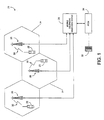
- FIG 1 illustrates a typical terrestrial cellular radiotelephone communication system 20.
- the cellular radiotelephone system 20 may include one or more radiotelephones (terminals) 22 , communicating with a plurality of cells 24 served by base stations 26 and a mobile telephone switching office (MTSO) 28.
- MTSO mobile telephone switching office
- the cells 24 generally serve as nodes in the communication system 20, from which links are established between radiotelephones 22 and the MTSO 28 , by way of the base stations 26 serving the cells 24 .
- Each cell 24 will have allocated to it one or more dedicated control channels and one or more traffic channels.
- a control channel is a dedicated channel used for transmitting cell identification and paging information.
- the traffic channels carry the voice and data information.
- a duplex radio communication link may be effected between two mobile terminals 22 or between a mobile terminal 22 and a landline telephone user 32 through a public switched telephone network (PSTN) 34 .
- PSTN public switched telephone network
- the function of a base station 26 is to handle radio communication between a cell 24 and mobile terminals 22 . In this capacity, a base station 26 functions as a relay station for data and voice signals.
- cells may have configurations other than the omnidirectional cells 24 illustrated in FIG. 1.
- the coverage areas conceptually illustrated as a hexagonally-shaped area served by a base station 26 may actually be subdivided into three sectors using separate directional antennas mounted at the base station 26 , with the sector antenna having patterns extending in three different directions. Each of these sectors may in itself be considered a "cell.”
- other cell configurations are also possible, including, for example, overlaid cells, microcells, picocells and the like.
- a satellite 42 may be employed to perform similar functions to those performed by a conventional terrestrial base station, for example, to serve areas in which population is sparsely distributed or which have rugged topography that tends to make conventional landline telephone or terrestrial cellular telephone infrastructure technically or economically impractical.
- a satellite radiotelephone system 40 typically includes one or more satellites 42 that serve as relays or transponders between one or more earth stations 44 and terminals 23 .
- the satellite conveys radiotelephone communications over duplex links 46 to terminals 23 and an earth station 44.
- the earth station 44 may in turn be connected to a public switched telephone network 34, allowing communications between satellite radiotelephones, and communications between satellite radio telephones and conventional terrestrial cellular radiotelephones or landline telephones.
- the satellite radiotelephone system 40 may utilize a single antenna beam covering the entire area served by the system, or, as shown, the satellite may be designed such that it produces multiple minimally-overlapping beams 48, each serving distinct geographical coverage areas 50 in the system's service region.
- the coverage areas 50 serve a similar function to the cells 24 of the terrestrial cellular system 20 of FIG. 1.
- FDMA frequency division multiple access
- radiotelephone communications signals being modulated waveforms, typically are communicated over predetermined frequency bands in a spectrum of carrier frequencies.
- each of these discrete frequency bands serves as a channel over which cellular radiotelephones communicate with a cell, through the base station or satellite serving the cell.
- the limitations on the available frequency spectrum present several challenges as the number of subscribers increases. Increasing the number of subscribers in a cellular radiotelephone system requires more efficient utilization of the limited available frequency spectrum in order to provide more total channels while maintaining communications quality. This challenge is heightened because subscribers may not be uniformly distributed among cells in the system. More channels may be needed for particular cells to handle potentially higher local subscriber densities at any given time. For example, a cell in an urban area might conceivably contain hundreds or thousands of subscribers at any one time, easily exhausting the number of channels available in the cell.
- Frequency reuse involves allocating frequency bands to each cell, with cells employing the same frequencies geographically separated to allow radiotelephones in different cells to simultaneously use the same frequency without interfering with each other. By so doing, many thousands of subscribers may be served by a system having only several hundred allocated frequency bands.
- a TDMA system may be implemented by subdividing the frequency bands employed in conventional FDMA systems into sequential time slots. Communications over a frequency band typically occur on a repetitive TDMA frame structure that includes a plurality of time slots. Examples of systems employing TDMA are those conforming to the dual analog/digital IS-54B standard employed in the United States, in which each of the frequency bands of the traditional analog cellular spectrum are subdivided into 3 time slots, and systems conforming to the GSM standard, which divides each of a plurality of frequency bands into 8 time slots. In these TDMA systems, each user communicates with the base station using bursts of digital data transmitted during the user's assigned time slots.
- a channel may be defined by modulating a data-modulated carrier signal by a unique spreading code, i.e., a code that spreads an original data-modulated carrier over a wide portion of the frequency spectrum in which the communications system operates. Data may be recovered from the transmitted signal by demodulating the signal using the same spreading code. Because the transmitted signal is spread across a wide bandwidth, spread spectrum communications can be less vulnerable to coherent noise sources which might "jam" other communications signals. The use of unique spreading codes for channels allows several users to effectively share the same bandwidth without undue interference.
- direct sequence modulation a data-modulated carrier is directly modulated by a spreading code or sequence before being transmitted in a communications medium, e.g., an air interface.
- the spreading code typically includes a sequence of "chips" occurring at a chip rate that typically is much higher than the bit rate of the data being transmitted.
- a direct sequence spread spectrum receiver typically includes a local sequence generator that locally produces a replica of a spreading sequence. This locally generated sequence is used to recover information from a transmitted spread spectrum signal that is modulated according to the same spreading sequence. Before information in a transmitted signal can be recovered, however, the locally generated spreading sequence typically must be synchronized with the spreading sequence that modulates the transmitted signal.
- Synchronization of terminals is commonly achieved by transmitting a synchronization signal in each cell that a terminal can acquire to obtain a timing reference for synchronizing its de-spreading operations.
- a "pilot channel" including a fixed carrier modulated by a known sequence is transmitted in each cell of the system, with a respective timing offset applied in a respective cell.
- a common synchronization code (or a code from a common set of synchronization codes) is embedded within time slots defined in data frames of a downlink channel at known locations. This sequence, sometimes referred to as a "first synchronization code” (FSC) or a "primary synchronization code” (PSC), is detected by a terminal and used to aid the terminal in determining slot timing.
- FSC first synchronization code
- PSC primary synchronization code
- a terminal As a terminal operates in a wireless cellular system, it typically seeks to identify new cells, usually neighboring cells, with which it can communicate should the signal quality of the link between the terminal and the cell with which it currently is communicating become degraded. For example, a terminal actively engaged in a call via a base station serving one cell typically needs to identify other base stations to which the call can be handed over as the terminal moves through the system. Terminals emerging from a sleep mode may also engage in cell search operations, as the synchronization signals of a set of "candidate cells" identified by the terminal before going to sleep may have degraded or even disappeared while the terminal was asleep.
- a base station transmits over a downlink channel according to a cell-specific "long" (e.g., 40,960 chip) scrambling code that serves to identify the cell.
- the scrambling codes are typically divided into groups to make cell search more efficient.
- a base station typically transmits a secondary synchronization code (SSC) associated with a group to which the cell belongs, in parallel with the primary synchronization code.
- SSC secondary synchronization code
- the SSC also typically has a period of one frame, and thus provides a reference for determining frame boundaries.
- the functions of the SSC are incorporated into the PSC by transmitting the PSC in one of a set of predetermined patterns within a frame of a synchronization signal, with the pattern representing the scrambling code group to which the cell belongs.
- a terminal To perform a cell search in a system in which the PSC is transmitted at a fixed position at the beginning of a slot of a data frame, a terminal first identifies a candidate slot boundaries by correlating a received signal with the common primary synchronization code (FSC or PSC) over a predetermined time interval, e.g., 30 msec. The correlations generated are examined for peaks that indicate the presence of the PSC. Once candidate slot boundaries have been identified, a second stage is initiated in which the terminal correlates the received signal with each of the SSCs using the candidate slot boundaries.
- FSC common primary synchronization code
- the terminal can then correlate the received signal with a relatively small set of long codes. In this manner, a cell associated with a synchronization signal can be identified in an efficient manner, without correlating a received signal with all possible long codes.
- the above-described cell search procedure can be adversely affected by characteristics of the radio propagation environment. For example, as the same common synchronization sequence is typically transmitted by base stations serving all of the cells of the system, the synchronization signals transmitted by the stations may interfere with one another, which can make it difficult to identify slot boundaries for a particular synchronization signal associated with a particular cell. This problem may be exacerbated in dispersive channels, where multipath components may cause additional interference.
- WCDMA wideband CDMA
- a received communications signal representing a combination of synchronization signals transmitted for cells in a wireless communications system is correlated with a common synchronization code, such as the first synchronization code (FSC) or primary synchronization code (PSC) used in a WCDMA system.
- FSC first synchronization code
- PSC primary synchronization code
- a component associated with a known synchronization signal such as a synchronization signal transmitted by a base station serving a cell maintained in a "neighbor" list at the receiving terminal, is canceled from the correlation to produce an interference canceled correlation that may be used for determining timing, e.g., slot boundaries, of a synchronization signal.
- the timing information may be further used to determining the identity of a cell for which the synchronization signal is transmitted, for example, by providing a timing basis for determining a scrambling group code or secondary synchronization code (SSC), which in turn is used to guide detection of a cell-specific scrambling (long) code.
- SSC secondary synchronization code
- the interference cancellation and timing determination techniques of the present invention may also be advantageous, for example, for determining timing of synchronization signals such as the pilot channel signals broadcast in IS-95 systems.
- the methods and apparatus of the present invention offer improved timing determination and cell search techniques that are potentially more efficient than conventional search techniques. Canceling signal components associated with known synchronization signals can aid in detecting slot boundaries of a desired synchronization signal, and can thus speed a cell search process. According to additional aspects of the present invention, the cells identified in a cell search process can in turn provide increase knowledge about potentially interfering synchronization signals that may be used to enhance an interference cancellation process.
- a received communications signal representing a combination of synchronization signals transmitted in cells of a wireless communications system is processed.
- the received communications signal is correlated with a common synchronization code to produce a synchronization detection signal.
- a component of the synchronization detection signal associated with a known synchronization signal is canceled from the synchronization detection signal to produce an interference-canceled synchronization detection signal. Timing of a synchronization signal is determined from the interference-canceled synchronization detection signal.
- interference cancellation is achieved by generating a correlation of an estimated received known synchronization signal with the common synchronization code, canceling the correlation of the estimated received known synchronization signal with the common synchronization code from the synchronization detection signal to produce the interference-canceled synchronization detection signal. Timing of a synchronization signal may then be determined by accumulating the interference-canceled synchronization detection signal over a time interval, detecting a peak in the accumulated interference-canceled synchronization detection signal, and determining timing of a synchronization signal from the detected peak.
- the correlation of an estimated received known synchronization signal with the common synchronization code be generated by processing filtering a representation of the known synchronization signal with an estimate of a channel over which the known synchronization signal is transmitted to produce an estimated received known synchronization signal, and correlating the estimated received known synchronization signal with the synchronization code.
- interference cancellation is achieved by accumulating the synchronization detection signal over a time interval, and identifying a peak in the accumulated synchronization detection signal not associated with a known synchronization signal. Timing of a synchronization signal is determined from the identified peak. Identification of the peak may be conditioned upon the peak meeting a predetermined criterion.
- the known synchronization signal may include a synchronization signal associated with a previously identified cell, such as a synchronization signal associated with a cell with which the terminal is currently communicating over a traffic channel.
- interference cancellation may be preceded by identification of a set of synchronization signals associated with a set of candidate cells.
- Interference cancellation may then include canceling a component of the synchronization detection signal corresponding to a synchronization signal associated with a cell of the set of candidate cells from the synchronization detection signal to produce an interference-canceled synchronization detection signal.
- the set of known synchronization signals may be identified by receiving a communications signal from the communications medium, identifying a synchronization signal in the received communications signal, and identifying a cell with which the identified synchronization signal is associated.
- the identified cell may be added to the set of candidate cells if the identified synchronization signal associated with the identified cell meets a predetermined criterion.
- a respective synchronization signal may include a portion encoded according to the common synchronization code, such as the first search code (FSC) or primary search code (PSC) transmitted in a wideband CDMA (WCDMA) system.
- FSC first search code
- PSC primary search code
- WCDMA wideband CDMA
- a common synchronization signal may also be transmitted in each of the cells over a pilot channel, such as conventionally done in IS-95 systems.
- the correlating,. canceling and determining are performed in response to the terminal awaking from a sleep mode.
- a terminal may awaken from a sleep mode, receive a communications signal and evaluating a set of candidate cells based on the received communications signal.
- the received signal may then be correlated with the common synchronization code to produce a synchronization detection signal if the evaluated candidate cells fail to meet a predetermined criterion.
- the synchronization detection signal is accumulated over a time interval, and a peak in the accumulated synchronization detection signal not associated with a known synchronization signal associated with one of the candidate cells is identified. Timing for a synchronization signal may then be determined from the identified peak, and the determined timing may be used in identifying a new candidate cell associated with a synchronization signal associated with the identified peak.
- a terminal includes an apparatus including a first correlator, e.g., a sliding correlator, operative to correlate a received communications signal with a common synchronization code to produce a synchronization detection signal.
- An interference canceler is responsive to the first correlator and operative to cancel a component of the synchronization detection signal associated with a known synchronization signal from the synchronization detection signal to produce an interference-canceled synchronization detection signal.
- a timing determiner operative to determine timing of a synchronization signal from the interference-canceled synchronization detection signal.
- the interference canceler includes a received known synchronization signal estimator that is operative to generate an estimated received known synchronization signal.
- a second correlator is responsive to the received known synchronization signal estimator and operative to generate a correlation of an estimated received known synchronization signal with the common synchronization code.
- a canceler is responsive to the first correlator and to the second correlator and operative to cancel the correlation of the estimated received known synchronization signal with the common synchronization code from the synchronization detection signal to produce the interference-canceled synchronization detection signal.
- the timing determiner includes an accumulator responsive to the canceler and operative to accumulate the interference-canceled synchronization detection signal over a time interval.
- a peak detector is responsive to the accumulator and operative to detect a peak in the accumulated interference-canceled synchronization detection signal.
- the interference canceler includes an accumulator responsive to the first correlator and operative to accumulate the synchronization detection signal over a time interval.
- a peak detector is responsive to the accumulator and operative to detect a peak in the accumulated synchronization detection signal not associated with a known synchronization signal.
- the timing determiner is responsive to the peak detector and operative to determine timing of a synchronization signal from the detected peak.
- a "cell” refers to a mobility management entity defined in a cellular system with which terminals communicate. Cells may include cells served by respective single base stations having omnidirectional coverage, "sector cells" served by base stations having sectorized antenna arrays, and various other coverage configurations.
- candidate cell generally refers to cells having synchronization signals associated therewith which have been identified, and may thus be used in the interference cancellation techniques described herein.
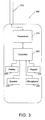
- FIG. 3 illustrates a wireless terminal 300 in which apparatus and methods according to the present invention may be embodied.
- the terminal 300 includes an antenna 310 for receiving radio frequency (RF) signals.
- the terminal 300 provides a user interface including a display 320 for displaying information such as dialed numbers, short messages, directory listings and the like, and a keypad 330 for entering dialed numbers and accepting other user inputs for controlling the terminal 300.
- the user interface also includes a speaker 340 for producing audio signals and a microphone 350 for receiving voice information from a user.
- the terminal 300 also includes a controller 360 that controls and/or monitors the display 320, the keypad 330, the speaker 340, the microphone 350 and a radio transceiver 370 tied to the antenna 310.
- the controller 360 may include, for example, a microprocessor, microcontroller or other data processing device that is operative to load and execute computer instructions for performing the timing determination, cell search and other functions described herein.
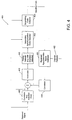
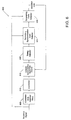
- FIG. 4 illustrates an exemplary cell-identification apparatus 400 that may be implemented, for example, using the controller 360 and transceiver 370 of FIG. 3.
- a signal received, for example, at the antenna 310 of FIG. 4 and processed to a baseband received signal by the transceiver 370 of FIG. 4 is correlated with a common synchronization code, e.g., the code used for the primary or first synchronization code (PSC or FSC) used in a WCDMA system, in a correlator 405 , producing a synchronization detection signal.
- the correlator 405 may comprise, for example, a sliding correlator or other conventionally known correlator.
- a component corresponding to a correlation of an estimate of a received, known synchronization signal is then subtracted from the synchronization detection signal produced by the correlator 405 , and fed into an accumulator 410 .
- the subtracted component may be generated by correlating the common synchronization code with an estimated received known synchronization signal generated by a received synchronization signal estimator 430 in a second correlator 435 .
- the received known synchronization signal estimator 430 and the correlator 435 preferably produce a correlation that approximates the result of correlating a known synchronization signal produced by a previously identified cell as received at the terminal with the common synchronization code.
- the estimate of the known signal may be constructed using a channel estimate 402 for a channel over which the known synchronization sequence is communicated. It will be appreciated that knowledge of characteristics of a known synchronization signal other than a channel estimate may be used as well, such as knowledge of signal strength, path loss, and coding applied to the known synchronization signal.
- the component subtracted from the synchronization detection signal produced by the correlator 405 may be generated in other ways than shown in FIG. 4.
- the functions of the received known synchronization signal estimator 435 and the correlator 435 may be combined.
- Computations, e.g., search code autocorrelations, used to produce the subtracted component may be precomputed and stored in the terminal.
- the accumulated correlation produced by the accumulator 410 is then supplied to a timing detector 415, for example, a peak detector that identifies peaks in the accumulated correlation that may correspond to slot boundaries near which the common synchronization code is transmitted.
- a timing detector 415 for example, a peak detector that identifies peaks in the accumulated correlation that may correspond to slot boundaries near which the common synchronization code is transmitted.
- Candidate slot boundaries thus identified may then be input to a second synchronization sequence code detector 420 that, for example, correlates the received signal with the set of secondary synchronization codes (SSCs) or "group codes'' and detects the SSC having the highest correlation with the received signal.
- the detected SSC may then be used by a scrambling sequence detector 425 to identify a cell-specific scrambling sequence or "long code" in the set of scrambling codes associated with the detected SSC, thus identifying the cell associated with the synchronization signal.
- Estimates of received synchronization signals associated with the cells thus identified can then
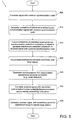
- FIGS. 5, 7 and 8 are flowchart illustrations illustrating exemplary operations for determining timing of synchronization signal and for identifying a cell associated with the synchronization signal. It will be understood that blocks of the flowchart illustrations, and combinations of blocks in the flowchart illustrations, can be implemented by computer program instructions which may be loaded onto a computer or other programmable data processing apparatus, such as the controller 360 of the terminal 300 of FIG. 3, to produce a machine such that the instructions which execute on the computer or other programmable data processing apparatus create means for implementing the functions specified in the flowchart block or blocks.
- the computer program instructions may also be loaded onto a computer or other programmable data processing apparatus to cause a series of operational steps to be performed on the computer or other programmable apparatus to produce a computer implemented process such that the instructions which execute on the computer or other programmable apparatus provide steps for implementing the functions specified in the flowchart block or blocks.
- blocks of the flowchart illustrations of FIGS. 5, 7 and 8 support combinations of means for performing the specified functions and combinations of steps for performing the specified functions. It will also be understood that each block of the flowchart illustrations of FIGS. 5, 7 and 8, and combinations of blocks therein, can be implemented by special purpose hardware-based computer systems which perform the specified functions or steps, or combinations of special purpose hardware and computer instructions.
- exemplary operations for determining timing of a synchronization signal and identifying a cell associated with the synchronization sequence include correlating a received signal with a common synchronization code (Block 505 ). A correlation of an estimated known synchronization signal with the common synchronization code is also generated (Block 510 ). The correlation of the estimated known synchronization signal is then canceled from the correlation of the received signal to generate an interference-canceled correlation of the received signal with the common synchronization code (Block 515 ). The interference-canceled correlation is then accumulated over a time interval (Block 520 ), and slot boundaries for a synchronization signal are determined from the accumulated interference-canceled correlation, e.g., by peak detection (Block 525).
- the received signal is then correlated with the set of SSCs or scrambling group code to identify the SSC used to transmit a synchronization signal and to identify frame boundaries, based on the detected slot boundaries (Block 530 ).
- the identified SSC is then used to guide scrambling code detection (Block 535 ).
- the apparatus 400 of FIG. 4 and the operations 500 of FIG. 5 may be particularly advantageous for canceling interference associated with synchronization signals transmitted by base stations serving cells with which the terminal is currently communicating, sometimes referred to as the terminal's "active set.”
- the terminal typically will have more detailed knowledge of channel characteristics, the cell-specific scrambling sequence used, and the like. This information may be advantageously used, for example, in constructing the estimated received synchronization signal produced by the estimator 430 of FIG. 4.
- FIG. 6 illustrates an exemplary cell-identification apparatus 600 according to another embodiment of the present invention.
- the apparatus 600 of FIG. 6 may also be implemented using the controller 360 and transceiver 370 of FIG. 3.
- a received signal is correlated with a common synchronization code, e.g., the code used for the primary or first synchronization code (PSC or FSC) used in a WCDMA system, in a correlator 605 .
- the correlation thus produced is accumulated in an accumulator 610 .
- a peak detector 615 detects peaks in the accumulated correlation that are not associated with a known synchronization signal, i.e., a synchronization signal transmitted for a previously identified cell.
- a number of different techniques may be employed in the peak detector 615 to determine whether a peak in the accumulated correlation is associated with a known synchronization signal. For example, in a first pass, candidate slot boundaries may be identified for peaks in the accumulated correlation that meet a predetermined criterion. Cell identification (e.g., SSC detection followed by scrambling code detection) may then be performed for each identified peak to identify candidate cells. The peak locations associated with the candidate cells may then be used in the peak detector 615 to identify peaks that are not associated with the candidate cells, as peaks arising from unknown synchronization signals generally will not coincide with the peak locations associated with the candidate cells.
- Cell identification e.g., SSC detection followed by scrambling code detection
- the terminal may need to only intermittently verify the continued presence of the known synchronization signals associated with these peak locations to update the peak locations.
- the update procedure may be streamlined by intermittently verifying a selected subset of the peak locations using a full-blown cell identification procedure.
- the peaks associated with an unknown synchronization signal may be input to a timing detector 620 , e.g., a slot boundary detector that produces candidate slot boundaries.
- the candidate slot boundaries are used by a secondary synchronization code detector 625 that, for example, correlates the received signal with the set of secondary synchronization codes (SSCs) or "group codes" and detects the SSC having the highest correlation with the received signal.
- the detected SSC may then be used by a scrambling code detector 630 to identify a scrambling code (long code) in the set of scrambling codes associated with the detected SSC.
- the cells thus identified can then be used to guide the interference canceling peak selection process performed by the peak detector 615.
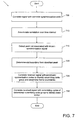
- FIG. 7 illustrates exemplary operations 700 for determining timing of a synchronization signal and identifying a cell associated therewith according to another aspect of the present invention.
- a received signal is correlated with a common synchronization code (Block 705).
- the correlation is accumulated over a time interval (Block 710), a peak that is not associated with a known synchronization signal is detected (Block 715 ), and a slot boundary is determined from the detected peak (Block 720).
- the determined slot boundary is then used to guide correlation with the set of secondary synchronization codes to identify a scrambling code group and to determined frame boundaries (Block 725 ).
- the identified code group and frame boundaries are then used in correlating the received signal with a select number of scrambling codes to thereby identify a cell associated with the detected synchronization signal (Block 730 ).
- the identification techniques illustrated in FIGS. 6 and 7 may be particularly advantageous in canceling interference associated with synchronization signals for which a terminal has limited knowledge.
- the apparatus 600 and operations 700 may be advantageously used for canceling interference from synchronization signals transmitted by base stations serving cells with which the terminal is not currently communicating, and thus has limited information.
- the cancellation techniques illustrated in FIGS. 6 and 7 may also be combined with the techniques illustrated in FIGS. 4 and 5.
- the cancellation techniques of FIGS. 4 and 5 may be used for cancellation of components of the correlation of the received signal that are associated with synchronization signals for which the terminals has detailed knowledge of channel conditions, scrambling code and the like, while the simplified techniques of FIGS. 6 and 7 may be used to cancel components associated with signals for which the terminal has limited information.
- the methods and apparatus of the present invention are also applicable to synchronization signal timing determination and cell identification in environments other than the WCDMA-compliant environments described with reference to FIGS. 4-7.
- the techniques of the present invention are applicable to determining timing of a pilot channel synchronization signal used in an IS-95 compliant wireless communications system.
- the present invention is also applicable for timing determination and cell search in newly proposed WCDMA systems in which the SSC is eliminated by employing a pattern of transmission of the PSC in a frame as a means for identifying code groups and frame boundaries.
- the interference cancellation techniques of the present invention may be used to determine both the timing and position of the PSC in a synchronization frame.
- a system may transmit a synchronization signal encoded with a primary synchronization code selected from a common set of primary synchronization codes.
- multiple parallel correlations and interference cancellations may be performed in place of the single correlations and cancellations illustrated in FIGS. 4 and 6, and interference cancellation performed on each of the parallel correlations.
- a terminal in an active mode i.e., when the terminal is actively communicating with one or more base stations.
- a terminal in sleep mode may also need to engage in a cell search in order to update the list of cells with which it may communicate. It will be understood that a terminal in sleep mode may, for example, engage in one or both the of the cell search techniques described above in reference to FIGS. 4-7.
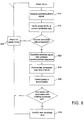
- Exemplary operations 800 for performing a simplified cell search upon awakening from sleep mode are illustrated in FIG. 8.
- the terminal receives a communications signal (Block 810 ).
- the terminal attempts to verify the quality of synchronization signals associated with cells in a list of candidate cells (Block 815 ). For example, a quality criterion based on the number of candidate cells and the signal quality of the synchronization signals associated therewith may be used, wherein greater signal is required as the number of candidate cells decreases and lesser signal quality is required as the number of candidate cells increases. It will be understood that other criteria may be used as well.
- the terminal returns to sleep mode (Block 840). If not, however, the received signal is correlated with a common synchronization sequence (Block 820 ), the correlation accumulated (Block 825 ), and peaks detected in the accumulated correlation (Block 830 ). If all of identified peaks are associated with previously identified candidate cells, the terminal returns to sleep mode (Block 840). If a peak is not associated with a known candidate, however, a cell search is performed based on the identified peak, and the cells thus identified added to the candidate list (Block 835) before the terminal returns to sleep mode (Block 840 ).
Landscapes
- Engineering & Computer Science (AREA)
- Computer Networks & Wireless Communication (AREA)
- Signal Processing (AREA)
- Mobile Radio Communication Systems (AREA)
- Synchronisation In Digital Transmission Systems (AREA)
Applications Claiming Priority (3)
| Application Number | Priority Date | Filing Date | Title |
|---|---|---|---|
| US09/271,074 US6480558B1 (en) | 1999-03-17 | 1999-03-17 | Synchronization and cell search methods and apparatus for wireless communications |
| US271074 | 1999-03-17 | ||
| PCT/US2000/005669 WO2000055992A1 (en) | 1999-03-17 | 2000-03-03 | Synchronization and cell search method and apparatus for wireless communications |
Publications (2)
| Publication Number | Publication Date |
|---|---|
| EP1163745A1 EP1163745A1 (en) | 2001-12-19 |
| EP1163745B1 true EP1163745B1 (en) | 2004-10-06 |
Family
ID=23034091
Family Applications (1)
| Application Number | Title | Priority Date | Filing Date |
|---|---|---|---|
| EP00917728A Expired - Lifetime EP1163745B1 (en) | 1999-03-17 | 2000-03-03 | Synchronization and cell search method and apparatus for wireless communications |
Country Status (13)
| Country | Link |
|---|---|
| US (1) | US6480558B1 (enExample) |
| EP (1) | EP1163745B1 (enExample) |
| JP (1) | JP2002539711A (enExample) |
| KR (1) | KR100835047B1 (enExample) |
| CN (1) | CN1188966C (enExample) |
| AT (1) | ATE279053T1 (enExample) |
| AU (1) | AU3865700A (enExample) |
| DE (1) | DE60014601T2 (enExample) |
| HK (1) | HK1045031B (enExample) |
| IL (2) | IL144969A0 (enExample) |
| MY (1) | MY125408A (enExample) |
| PL (1) | PL196542B1 (enExample) |
| WO (1) | WO2000055992A1 (enExample) |
Families Citing this family (107)
| Publication number | Priority date | Publication date | Assignee | Title |
|---|---|---|---|---|
| KR100287896B1 (ko) * | 1999-02-06 | 2001-04-16 | 서평원 | 이동 통신 시스템에서 셀 탐색 방법 |
| US6831929B1 (en) * | 1999-03-22 | 2004-12-14 | Texas Instruments Incorporated | Multistage PN code aquisition circuit and method |
| KR100421142B1 (ko) * | 1999-04-28 | 2004-03-04 | 삼성전자주식회사 | 이동통신시스템의 셀탐색 장치 및 방법 |
| KR100369791B1 (ko) * | 1999-04-29 | 2003-01-29 | 삼성전자 주식회사 | 비동기 방식의 부호분할다중접속 통신시스템의 동기장치및 방법 |
| US6930995B1 (en) * | 1999-06-23 | 2005-08-16 | Cingular Wireless Ii, Llc | Apparatus and method for synchronization in a multiple-carrier communication system by observing a plurality of synchronization indicators |
| US6834046B1 (en) * | 1999-10-05 | 2004-12-21 | Texas Instruments Incorporated | Acquisition of an unevenly spaced synchronization channel in a wireless communication system |
| US6665288B1 (en) * | 1999-11-08 | 2003-12-16 | Ericsson Inc. | Method and apparatus for reducing synchronization code interference in CDMA communications systems |
| US6711224B1 (en) * | 2000-03-27 | 2004-03-23 | Lucent Technologies Inc. | Timing acquisition algorithm for an adaptive antenna array |
| US6801567B1 (en) * | 2000-03-30 | 2004-10-05 | Texas Instruments Incorporated | Frequency bin method of initial carrier frequency acquisition |
| CN101005312B (zh) * | 2000-04-07 | 2012-08-15 | 交互数字技术公司 | 用于无线通信系统的基站同步 |
| US7139262B1 (en) * | 2000-05-18 | 2006-11-21 | Bbn Technologies Corp. | Systems and methods for creating wireless small world networks |
| EP1463216A3 (en) * | 2000-08-04 | 2008-12-31 | Interdigital Technology Corporation | Periodic cell search |
| JPWO2002032029A1 (ja) * | 2000-10-06 | 2004-02-26 | 株式会社鷹山 | 受信装置 |
| US6931030B1 (en) * | 2000-11-30 | 2005-08-16 | Arraycomm, Inc. | Training sequence with a random delay for a radio communications system |
| JP3510589B2 (ja) * | 2000-12-15 | 2004-03-29 | Necエレクトロニクス株式会社 | セルサーチ方法およびセルサーチ装置 |
| US7012977B2 (en) * | 2000-12-29 | 2006-03-14 | Telefonaktiebolaget Lm Ericsson (Publ) | System, method and apparatus for wireless channel parameter estimation in spread spectrum communication systems |
| DE10102709B4 (de) * | 2001-01-22 | 2014-02-06 | Rohde & Schwarz Gmbh & Co. Kg | Verfahren und Vorrichtung zur Synchronisation auf eine Pilotsequenz eines CDMA-Signals |
| US6826244B2 (en) * | 2001-02-27 | 2004-11-30 | Interdigital Technology Corporation | Initial cell search algorithm for 3G FDD wireless communication systems |
| GB2374252A (en) * | 2001-04-04 | 2002-10-09 | Ubinetics Ltd | Identification of neighbouring cell scrambling codes |
| US6728203B2 (en) * | 2001-05-18 | 2004-04-27 | Telefonaktiebolaget L.M. Ericsson | Systems and methods for selecting a cell in a communications network |
| EP1826933A3 (en) * | 2001-06-22 | 2007-09-05 | Interdigital Technology Corporation | Apparatus and method for performing initial cell search in a wireless communications system |
| US6894995B2 (en) * | 2001-06-22 | 2005-05-17 | Interdigital Technology Corporation | Apparatus and method for performing initial cell search in wireless communication systems |
| US6744747B2 (en) * | 2001-08-22 | 2004-06-01 | Qualcomm, Incorporated | Method & apparatus for W-CDMA handoff searching |
| US6768768B2 (en) * | 2001-09-19 | 2004-07-27 | Qualcomm Incorporated | Method and apparatus for step two W-CDMA searching |
| KR100454961B1 (ko) * | 2001-10-10 | 2004-11-06 | 삼성전자주식회사 | 이동통신시스템의 불연속 수신모드에서의 셀 탐색 장치 및방법 |
| US7548506B2 (en) | 2001-10-17 | 2009-06-16 | Nortel Networks Limited | System access and synchronization methods for MIMO OFDM communications systems and physical layer packet and preamble design |
| US7756085B2 (en) * | 2001-11-20 | 2010-07-13 | Qualcomm Incorporated | Steps one and three W-CDMA and multi-mode searching |
| US7065064B2 (en) * | 2001-12-20 | 2006-06-20 | Interdigital Technology Corporation | Cell search using peak quality factors |
| CN1192531C (zh) * | 2001-12-21 | 2005-03-09 | 华为技术有限公司 | 一种宽带码分多址系统同步的实现方法 |
| US7813311B2 (en) * | 2002-02-05 | 2010-10-12 | Interdigital Technology Corporation | Method and apparatus for synchronizing base stations |
| US7453863B2 (en) * | 2002-04-04 | 2008-11-18 | Lg Electronics Inc. | Cell searching apparatus and method in asynchronous mobile communication system |
| ATE448490T1 (de) * | 2002-06-17 | 2009-11-15 | Cambridge Positioning Sys Ltd | Funkortungssystem mit interferenzunterdrückung |
| WO2004010573A1 (en) * | 2002-07-19 | 2004-01-29 | Interdigital Technology Corporation | Groupwise successive interference cancellation for block transmission with reception diversity |
| TWI324023B (en) * | 2002-07-31 | 2010-04-21 | Interdigital Tech Corp | Start-up automatic frequency control (afc) method and apparatus |
| US7643596B2 (en) * | 2002-09-09 | 2010-01-05 | Infineon Technologies Ag | Method and device for synchronizing a mobile radio receiver with a base station involving parallel verification |
| EP1537678A4 (en) * | 2002-09-12 | 2005-12-21 | Interdigital Tech Corp | REDUCTION OF DISORDERS IN CELL SEARCH BY WIRELESS TRANSMISSION AND RECEIVING UNITS |
| TW578409B (en) * | 2002-10-25 | 2004-03-01 | Benq Corp | Method and apparatus for synchronizing with base station |
| US7308258B2 (en) * | 2003-01-23 | 2007-12-11 | Interdigital Technology Corporation | Unsuitable cell exclusion in wireless communication systems |
| US7061966B2 (en) * | 2003-02-27 | 2006-06-13 | Motorola, Inc. | Frame synchronization and scrambling code indentification in wireless communications systems and methods therefor |
| US7474648B2 (en) * | 2003-06-18 | 2009-01-06 | Telefonaktiebolaget L M Ericsson (Publ) | Filtering multipath propagation delay values for use in a mobile communications system |
| US7302278B2 (en) * | 2003-07-03 | 2007-11-27 | Rotani, Inc. | Method and apparatus for high throughput multiple radio sectorized wireless cell |
| SE0302233D0 (sv) * | 2003-08-18 | 2003-08-18 | Infineon Technologies Ag | Sliding window |
| US7822105B2 (en) | 2003-09-02 | 2010-10-26 | Sirf Technology, Inc. | Cross-correlation removal of carrier wave jamming signals |
| KR20070019940A (ko) | 2003-09-02 | 2007-02-16 | 서프 테크놀러지, 인코포레이티드 | 위성 위치결정 시스템 수신기에 대한 제어 및 특징들 |
| US7620029B2 (en) * | 2003-10-09 | 2009-11-17 | Qualcomm Incorporated | Parallel cell ID acquisition in frequency division multiple access systems |
| US7321749B2 (en) * | 2003-10-09 | 2008-01-22 | Qualcomm Incorporated | Cell selection techniques for frequency division multiple access systems |
| WO2005040848A1 (en) * | 2003-10-20 | 2005-05-06 | Sirf Technology, Inc. | Cross-correlation removal of carrier wave jamming signals |
| CN100337508C (zh) * | 2004-01-12 | 2007-09-12 | 大唐移动通信设备有限公司 | 移动通信系统中搜索下行同步信号位置的方法 |
| US7864725B2 (en) | 2004-01-29 | 2011-01-04 | Neocific, Inc. | Methods and apparatus for overlaying multi-carrier and direct sequence spread spectrum signals in a broadband wireless communication system |
| WO2005081439A1 (en) | 2004-02-13 | 2005-09-01 | Neocific, Inc. | Methods and apparatus for multi-carrier communication systems with adaptive transmission and feedback |
| WO2005109705A1 (en) | 2004-05-01 | 2005-11-17 | Neocific, Inc. | Methods and apparatus for communication with time-division duplexing |
| US8009660B2 (en) * | 2004-01-29 | 2011-08-30 | Neocific, Inc. | Methods and apparatus using cell-specific and common pilot subcarriers in multi-carrier, multi-cell wireless communication networks |
| KR100672090B1 (ko) * | 2004-12-31 | 2007-01-19 | 영남대학교 산학협력단 | 엠아이엠오 브이-블라스트 시스템의 에이치에스씨 검출 방법 |
| US7489282B2 (en) * | 2005-01-21 | 2009-02-10 | Rotani, Inc. | Method and apparatus for an antenna module |
| US8611305B2 (en) | 2005-08-22 | 2013-12-17 | Qualcomm Incorporated | Interference cancellation for wireless communications |
| US9071344B2 (en) * | 2005-08-22 | 2015-06-30 | Qualcomm Incorporated | Reverse link interference cancellation |
| US20090274112A1 (en) * | 2005-09-30 | 2009-11-05 | Nortel Networks Limited | Initial Access Channel for Scalable Wireless Mobile Communication Networks |
| CN100417048C (zh) * | 2005-10-18 | 2008-09-03 | 中兴通讯股份有限公司 | 同步码分多址系统中提高同步检测性能的方法与装置 |
| KR100827064B1 (ko) * | 2006-01-18 | 2008-05-02 | 삼성전자주식회사 | Ofdm 기반 셀룰러 무선통신시스템의 동기 신호 송신 방법 및 장치 |
| CA2867303C (en) | 2006-02-28 | 2015-07-14 | Helvetia Ip Ag | Methods and apparatus for overlapping mimo antenna physical sectors |
| US8031745B2 (en) * | 2006-04-20 | 2011-10-04 | Texas Instruments Incorporated | Downlink synchronization channel and methods for cellular systems |
| US7738416B2 (en) | 2006-04-28 | 2010-06-15 | Research In Motion Limited | Data burst communication techniques for mobile communication devices operating in packet data sessions |
| EP2044720B1 (en) * | 2006-07-25 | 2015-10-21 | Electronics and Telecommunications Research Institute | Cell search method, forward link frame transmission method, apparatus using the same and forward link frame structure |
| EP1895800A1 (en) * | 2006-08-31 | 2008-03-05 | France Télécom | Determination of a list of preferred mobile access networks |
| WO2008075881A2 (en) * | 2006-12-19 | 2008-06-26 | Lg Electronics Inc. | Sequence generating method for efficient detection and method for transmitting and receiving signals using the same |
| GB2458418B (en) | 2006-12-19 | 2011-08-03 | Lg Electronics Inc | Sequence generating method for efficient detection and method for transmitting and receiving signals using the same |
| JP5113242B2 (ja) * | 2007-05-17 | 2013-01-09 | エルジー エレクトロニクス インコーポレイティド | 無線通信システムにおいて同期信号を伝送する方法 |
| KR100938756B1 (ko) * | 2007-07-06 | 2010-01-26 | 엘지전자 주식회사 | 무선통신 시스템에서 셀 탐색 과정을 수행하는 방법 |
| RU2434329C2 (ru) * | 2007-07-06 | 2011-11-20 | Эл Джи Электроникс Инк. | Способ осуществления поиска ячейки в беспроводной системе связи |
| US8169992B2 (en) * | 2007-08-08 | 2012-05-01 | Telefonaktiebolaget Lm Ericsson (Publ) | Uplink scrambling during random access |
| JP5106969B2 (ja) * | 2007-10-01 | 2012-12-26 | 株式会社エヌ・ティ・ティ・ドコモ | ユーザ装置及びセルサーチ方法 |
| US9119132B2 (en) * | 2007-10-10 | 2015-08-25 | Qualcomm Incorporated | Efficient system identification schemes for communication systems |
| US9094986B2 (en) * | 2008-02-07 | 2015-07-28 | Qualcomm, Incorporated | Synchronous and asynchronous interference management |
| US20090203320A1 (en) * | 2008-02-07 | 2009-08-13 | Qualcomm Incorporated | Asynchronous interference management based on timeslot overlap |
| US8483620B2 (en) * | 2008-02-07 | 2013-07-09 | Qualcomm Incorporated | Asynchronous interference management |
| US20100046660A1 (en) * | 2008-05-13 | 2010-02-25 | Qualcomm Incorporated | Interference cancellation under non-stationary conditions |
| US9408165B2 (en) | 2008-06-09 | 2016-08-02 | Qualcomm Incorporated | Increasing capacity in wireless communications |
| US8565775B2 (en) * | 2008-06-25 | 2013-10-22 | Qualcomm Incorporated | Methods and apparatus for common channel cancellation in wireless communications |
| US20100085913A1 (en) * | 2008-07-02 | 2010-04-08 | Qualcomm Incorporated | System acquisition with interference cancellation in the presence of femtocells |
| US9237515B2 (en) * | 2008-08-01 | 2016-01-12 | Qualcomm Incorporated | Successive detection and cancellation for cell pilot detection |
| US9277487B2 (en) * | 2008-08-01 | 2016-03-01 | Qualcomm Incorporated | Cell detection with interference cancellation |
| US8503591B2 (en) | 2008-08-19 | 2013-08-06 | Qualcomm Incorporated | Enhanced geran receiver using channel input beamforming |
| US8509293B2 (en) * | 2008-08-19 | 2013-08-13 | Qualcomm Incorporated | Semi-coherent timing propagation for GERAN multislot configurations |
| US8107443B2 (en) * | 2009-02-10 | 2012-01-31 | Mediatek Inc. | Method of performing cell search for a wireless communications system |
| JP5178580B2 (ja) * | 2009-02-27 | 2013-04-10 | 富士通株式会社 | 移動局、セルサーチ方法 |
| WO2010123295A2 (ko) * | 2009-04-24 | 2010-10-28 | 한국전자통신연구원 | 셀룰라 무선 통신 시스템에서의 협력 통신 방법 및 이를 수행하는 단말기 |
| US9160577B2 (en) * | 2009-04-30 | 2015-10-13 | Qualcomm Incorporated | Hybrid SAIC receiver |
| US8787509B2 (en) | 2009-06-04 | 2014-07-22 | Qualcomm Incorporated | Iterative interference cancellation receiver |
| US10090956B2 (en) | 2009-06-16 | 2018-10-02 | Qualcomm Incorporated | Mechanisms for information exchange across cells to facilitate reception in a heterogeneous network |
| US8831149B2 (en) | 2009-09-03 | 2014-09-09 | Qualcomm Incorporated | Symbol estimation methods and apparatuses |
| US8619928B2 (en) * | 2009-09-03 | 2013-12-31 | Qualcomm Incorporated | Multi-stage interference suppression |
| US8938268B2 (en) | 2009-11-24 | 2015-01-20 | Qualcomm Incorporated | Method and apparatus for facilitating a layered cell search for Long Term Evolution systems |
| JP6091895B2 (ja) | 2009-11-27 | 2017-03-08 | クゥアルコム・インコーポレイテッドQualcomm Incorporated | 無線通信における容量の増加 |
| KR101363016B1 (ko) | 2009-11-27 | 2014-02-13 | 퀄컴 인코포레이티드 | 무선 통신들에서의 용량 증가 |
| US8515440B2 (en) * | 2010-02-19 | 2013-08-20 | Qualcomm Incorporated | Computation of channel state feedback in systems using common reference signal interference cancelation |
| US8942223B2 (en) | 2010-04-08 | 2015-01-27 | Qualcomm Incorporated | Interference cancelation using edge signals for synchronization signal detection |
| KR20120042138A (ko) * | 2010-10-22 | 2012-05-03 | 한국전자통신연구원 | 이동통신 시스템에서의 셀 탐색 방법 |
| KR101443191B1 (ko) | 2010-11-17 | 2014-09-25 | 한국전자통신연구원 | 이동 단말의 셀 탐색기 및 그것의 주변 셀 탐색 방법 |
| US8767708B2 (en) * | 2010-12-30 | 2014-07-01 | Motorola Mobility Llc | Methods for cell search in synchronous interference limited channels |
| US8805271B2 (en) * | 2011-09-21 | 2014-08-12 | Telefonaktiebolaget L M Ericsson (Publ) | System and method for configuring a repeater |
| WO2013075298A1 (zh) * | 2011-11-23 | 2013-05-30 | 中兴通讯股份有限公司 | 一种小区搜索干扰消除的方法和装置 |
| US9066257B2 (en) * | 2012-04-12 | 2015-06-23 | Intel Mobile Communications GmbH | Correlation based cell search and measurement for LTE and LTE-A |
| US8954032B1 (en) * | 2012-08-21 | 2015-02-10 | Sprint Communications Company L.P. | Creating accurate billing records in a carrier-aggregation network |
| EP2965452B1 (en) | 2013-03-06 | 2018-08-08 | Telefonaktiebolaget LM Ericsson (publ) | Channel estimation for interference cancellation |
| US9237513B2 (en) | 2014-06-13 | 2016-01-12 | Hong Kong Applied Science And Technology Research Institute Co., Ltd. | Method for performing a cell search in multiple antenna wireless systems |
| JP6757323B2 (ja) * | 2015-09-01 | 2020-09-16 | 株式会社Nttドコモ | 端末及び無線通信方法 |
| WO2018016710A1 (ko) * | 2016-07-21 | 2018-01-25 | 엘지전자 주식회사 | Fdr 모드로 동작하는 상황에서 자기간섭 신호를 제거하기 위한 방법 및 이를 위한 장치 |
Family Cites Families (5)
| Publication number | Priority date | Publication date | Assignee | Title |
|---|---|---|---|---|
| JP2802870B2 (ja) * | 1993-03-10 | 1998-09-24 | エヌ・ティ・ティ移動通信網株式会社 | 符号分割多重移動通信機及び符号分割多重移動通信のセル選択方法 |
| US5822359A (en) | 1994-10-17 | 1998-10-13 | Motorola, Inc. | Coherent random access channel in a spread-spectrum communication system and method |
| US5568473A (en) | 1994-12-08 | 1996-10-22 | Comsat Corporation | Method and apparatus for simple and efficient interference cancellation for chip synchronized CDMA |
| JPH09307951A (ja) | 1996-03-15 | 1997-11-28 | Matsushita Electric Ind Co Ltd | スペクトル拡散通信装置 |
| US6067292A (en) | 1996-08-20 | 2000-05-23 | Lucent Technologies Inc | Pilot interference cancellation for a coherent wireless code division multiple access receiver |
-
1999
- 1999-03-17 US US09/271,074 patent/US6480558B1/en not_active Expired - Lifetime
-
2000
- 2000-03-03 HK HK02106599.0A patent/HK1045031B/zh not_active IP Right Cessation
- 2000-03-03 AU AU38657/00A patent/AU3865700A/en not_active Abandoned
- 2000-03-03 CN CNB008050104A patent/CN1188966C/zh not_active Expired - Fee Related
- 2000-03-03 PL PL350861A patent/PL196542B1/pl unknown
- 2000-03-03 WO PCT/US2000/005669 patent/WO2000055992A1/en not_active Ceased
- 2000-03-03 EP EP00917728A patent/EP1163745B1/en not_active Expired - Lifetime
- 2000-03-03 DE DE60014601T patent/DE60014601T2/de not_active Expired - Lifetime
- 2000-03-03 AT AT00917728T patent/ATE279053T1/de not_active IP Right Cessation
- 2000-03-03 KR KR1020017011765A patent/KR100835047B1/ko not_active Expired - Fee Related
- 2000-03-03 JP JP2000605326A patent/JP2002539711A/ja active Pending
- 2000-03-03 IL IL14496900A patent/IL144969A0/xx active IP Right Grant
- 2000-03-14 MY MYPI20000986A patent/MY125408A/en unknown
-
2001
- 2001-08-19 IL IL144969A patent/IL144969A/en not_active IP Right Cessation
Also Published As
| Publication number | Publication date |
|---|---|
| KR20010112338A (ko) | 2001-12-20 |
| HK1045031B (zh) | 2005-09-30 |
| IL144969A (en) | 2006-08-20 |
| ATE279053T1 (de) | 2004-10-15 |
| DE60014601D1 (de) | 2004-11-11 |
| KR100835047B1 (ko) | 2008-06-03 |
| MY125408A (en) | 2006-07-31 |
| DE60014601T2 (de) | 2006-03-09 |
| CN1188966C (zh) | 2005-02-09 |
| PL196542B1 (pl) | 2008-01-31 |
| AU3865700A (en) | 2000-10-04 |
| JP2002539711A (ja) | 2002-11-19 |
| WO2000055992A1 (en) | 2000-09-21 |
| HK1045031A1 (en) | 2002-11-08 |
| IL144969A0 (en) | 2002-06-30 |
| EP1163745A1 (en) | 2001-12-19 |
| US6480558B1 (en) | 2002-11-12 |
| PL350861A1 (en) | 2003-02-10 |
| CN1343406A (zh) | 2002-04-03 |
Similar Documents
| Publication | Publication Date | Title |
|---|---|---|
| US6480558B1 (en) | Synchronization and cell search methods and apparatus for wireless communications | |
| EP1547414B1 (en) | Mobile terminals and methods for performing fast initial frequency scans and cell searches | |
| KR100756574B1 (ko) | 무선통신 시스템에서 아이들 핸드오프를 개시하는 방법 및시스템 | |
| US5703873A (en) | Method and apparatus for synchronizing subscriber equipment with base stations in a CDMA radio network | |
| EP2485545B1 (en) | Communications in an asynchronous wireless network | |
| JP3192428B2 (ja) | Cdmaセルラー無線システムにおいてハンドオーバーを行う方法および移動ステーション | |
| KR100298277B1 (ko) | 셀룰라통신시스템용코드분할다중억세스방법및시스템 | |
| EP1216514B1 (en) | Apparatus and methods for receiving information using variable length accumulation searchers | |
| EP1599984B1 (en) | Frame synchronization and scrambling code identification in wireless communications systems and methods therefor | |
| US6421371B1 (en) | Modulation sequence synchronization methods and apparatus employing partial sequence correlation | |
| US20100054311A1 (en) | WCDMA terminal baseband processing module having multi-path scanner module | |
| WO2000003501A1 (en) | Method and aparatus for performing an inter-frequency search | |
| JP3311609B2 (ja) | 移動通信システム | |
| US6973063B1 (en) | Methods, systems and apparatus for precompensating for interference among transmitted coded signals |
Legal Events
| Date | Code | Title | Description |
|---|---|---|---|
| PUAI | Public reference made under article 153(3) epc to a published international application that has entered the european phase |
Free format text: ORIGINAL CODE: 0009012 |
|
| 17P | Request for examination filed |
Effective date: 20011017 |
|
| AK | Designated contracting states |
Kind code of ref document: A1 Designated state(s): AT BE CH CY DE DK ES FI FR GB GR IE IT LI LU MC NL PT SE |
|
| AX | Request for extension of the european patent |
Free format text: AL;LT;LV;MK;RO;SI |
|
| RIN1 | Information on inventor provided before grant (corrected) |
Inventor name: OTTOSSON, TONY Inventor name: WANG, YI-PIN, ERIC |
|
| GRAP | Despatch of communication of intention to grant a patent |
Free format text: ORIGINAL CODE: EPIDOSNIGR1 |
|
| GRAS | Grant fee paid |
Free format text: ORIGINAL CODE: EPIDOSNIGR3 |
|
| GRAA | (expected) grant |
Free format text: ORIGINAL CODE: 0009210 |
|
| AK | Designated contracting states |
Kind code of ref document: B1 Designated state(s): AT BE CH CY DE DK ES FI FR GB GR IE IT LI LU MC NL PT SE |
|
| PG25 | Lapsed in a contracting state [announced via postgrant information from national office to epo] |
Ref country code: IT Free format text: LAPSE BECAUSE OF FAILURE TO SUBMIT A TRANSLATION OF THE DESCRIPTION OR TO PAY THE FEE WITHIN THE PRESCRIBED TIME-LIMIT;WARNING: LAPSES OF ITALIAN PATENTS WITH EFFECTIVE DATE BEFORE 2007 MAY HAVE OCCURRED AT ANY TIME BEFORE 2007. THE CORRECT EFFECTIVE DATE MAY BE DIFFERENT FROM THE ONE RECORDED. Effective date: 20041006 Ref country code: FI Free format text: LAPSE BECAUSE OF FAILURE TO SUBMIT A TRANSLATION OF THE DESCRIPTION OR TO PAY THE FEE WITHIN THE PRESCRIBED TIME-LIMIT Effective date: 20041006 Ref country code: NL Free format text: LAPSE BECAUSE OF FAILURE TO SUBMIT A TRANSLATION OF THE DESCRIPTION OR TO PAY THE FEE WITHIN THE PRESCRIBED TIME-LIMIT Effective date: 20041006 Ref country code: LI Free format text: LAPSE BECAUSE OF FAILURE TO SUBMIT A TRANSLATION OF THE DESCRIPTION OR TO PAY THE FEE WITHIN THE PRESCRIBED TIME-LIMIT Effective date: 20041006 Ref country code: AT Free format text: LAPSE BECAUSE OF FAILURE TO SUBMIT A TRANSLATION OF THE DESCRIPTION OR TO PAY THE FEE WITHIN THE PRESCRIBED TIME-LIMIT Effective date: 20041006 Ref country code: CH Free format text: LAPSE BECAUSE OF FAILURE TO SUBMIT A TRANSLATION OF THE DESCRIPTION OR TO PAY THE FEE WITHIN THE PRESCRIBED TIME-LIMIT Effective date: 20041006 Ref country code: FR Free format text: LAPSE BECAUSE OF NON-PAYMENT OF DUE FEES Effective date: 20041006 Ref country code: BE Free format text: LAPSE BECAUSE OF FAILURE TO SUBMIT A TRANSLATION OF THE DESCRIPTION OR TO PAY THE FEE WITHIN THE PRESCRIBED TIME-LIMIT Effective date: 20041006 |
|
| REG | Reference to a national code |
Ref country code: GB Ref legal event code: FG4D |
|
| RIN1 | Information on inventor provided before grant (corrected) |
Inventor name: OTTOSSON, TONY Inventor name: WANG, YI-PIN, ERIC |
|
| REG | Reference to a national code |
Ref country code: CH Ref legal event code: EP |
|
| REG | Reference to a national code |
Ref country code: IE Ref legal event code: FG4D |
|
| REF | Corresponds to: |
Ref document number: 60014601 Country of ref document: DE Date of ref document: 20041111 Kind code of ref document: P |
|
| PG25 | Lapsed in a contracting state [announced via postgrant information from national office to epo] |
Ref country code: GR Free format text: LAPSE BECAUSE OF FAILURE TO SUBMIT A TRANSLATION OF THE DESCRIPTION OR TO PAY THE FEE WITHIN THE PRESCRIBED TIME-LIMIT Effective date: 20050106 Ref country code: SE Free format text: LAPSE BECAUSE OF FAILURE TO SUBMIT A TRANSLATION OF THE DESCRIPTION OR TO PAY THE FEE WITHIN THE PRESCRIBED TIME-LIMIT Effective date: 20050106 Ref country code: DK Free format text: LAPSE BECAUSE OF FAILURE TO SUBMIT A TRANSLATION OF THE DESCRIPTION OR TO PAY THE FEE WITHIN THE PRESCRIBED TIME-LIMIT Effective date: 20050106 |
|
| PG25 | Lapsed in a contracting state [announced via postgrant information from national office to epo] |
Ref country code: ES Free format text: LAPSE BECAUSE OF FAILURE TO SUBMIT A TRANSLATION OF THE DESCRIPTION OR TO PAY THE FEE WITHIN THE PRESCRIBED TIME-LIMIT Effective date: 20050117 |
|
| PG25 | Lapsed in a contracting state [announced via postgrant information from national office to epo] |
Ref country code: CY Free format text: LAPSE BECAUSE OF FAILURE TO SUBMIT A TRANSLATION OF THE DESCRIPTION OR TO PAY THE FEE WITHIN THE PRESCRIBED TIME-LIMIT Effective date: 20050303 Ref country code: LU Free format text: LAPSE BECAUSE OF NON-PAYMENT OF DUE FEES Effective date: 20050303 Ref country code: IE Free format text: LAPSE BECAUSE OF NON-PAYMENT OF DUE FEES Effective date: 20050303 Ref country code: GB Free format text: LAPSE BECAUSE OF NON-PAYMENT OF DUE FEES Effective date: 20050303 |
|
| LTIE | Lt: invalidation of european patent or patent extension |
Effective date: 20041006 |
|
| PG25 | Lapsed in a contracting state [announced via postgrant information from national office to epo] |
Ref country code: MC Free format text: LAPSE BECAUSE OF NON-PAYMENT OF DUE FEES Effective date: 20050331 |
|
| NLV1 | Nl: lapsed or annulled due to failure to fulfill the requirements of art. 29p and 29m of the patents act | ||
| REG | Reference to a national code |
Ref country code: CH Ref legal event code: PL |
|
| RAP2 | Party data changed (patent owner data changed or rights of a patent transferred) |
Owner name: ERICSSON INC. |
|
| PLBE | No opposition filed within time limit |
Free format text: ORIGINAL CODE: 0009261 |
|
| STAA | Information on the status of an ep patent application or granted ep patent |
Free format text: STATUS: NO OPPOSITION FILED WITHIN TIME LIMIT |
|
| 26N | No opposition filed |
Effective date: 20050707 |
|
| EN | Fr: translation not filed | ||
| GBPC | Gb: european patent ceased through non-payment of renewal fee |
Effective date: 20050303 |
|
| REG | Reference to a national code |
Ref country code: IE Ref legal event code: MM4A |
|
| PG25 | Lapsed in a contracting state [announced via postgrant information from national office to epo] |
Ref country code: PT Free format text: LAPSE BECAUSE OF NON-PAYMENT OF DUE FEES Effective date: 20050306 |
|
| REG | Reference to a national code |
Ref country code: DE Ref legal event code: R082 Ref document number: 60014601 Country of ref document: DE Representative=s name: HOFFMANN - EITLE, DE |
|
| REG | Reference to a national code |
Ref country code: DE Ref legal event code: R082 Ref document number: 60014601 Country of ref document: DE Representative=s name: HOFFMANN - EITLE, DE Effective date: 20140623 Ref country code: DE Ref legal event code: R081 Ref document number: 60014601 Country of ref document: DE Owner name: OPTIS WIRELESS TECHNOLOGY, LLC, PLANO, US Free format text: FORMER OWNER: ERICSSON INC., PLANO, TEX., US Effective date: 20140623 Ref country code: DE Ref legal event code: R082 Ref document number: 60014601 Country of ref document: DE Representative=s name: GRUENECKER, KINKELDEY, STOCKMAIR & SCHWANHAEUS, DE Effective date: 20140623 Ref country code: DE Ref legal event code: R082 Ref document number: 60014601 Country of ref document: DE Representative=s name: GRUENECKER PATENT- UND RECHTSANWAELTE PARTG MB, DE Effective date: 20140623 |
|
| REG | Reference to a national code |
Ref country code: DE Ref legal event code: R082 Ref document number: 60014601 Country of ref document: DE Representative=s name: GRUENECKER, KINKELDEY, STOCKMAIR & SCHWANHAEUS, DE Ref country code: DE Ref legal event code: R082 Ref document number: 60014601 Country of ref document: DE Representative=s name: GRUENECKER PATENT- UND RECHTSANWAELTE PARTG MB, DE |
|
| PGFP | Annual fee paid to national office [announced via postgrant information from national office to epo] |
Ref country code: DE Payment date: 20170222 Year of fee payment: 18 |
|
| REG | Reference to a national code |
Ref country code: DE Ref legal event code: R119 Ref document number: 60014601 Country of ref document: DE |
|
| PG25 | Lapsed in a contracting state [announced via postgrant information from national office to epo] |
Ref country code: DE Free format text: LAPSE BECAUSE OF NON-PAYMENT OF DUE FEES Effective date: 20181002 |