EP1138632B1 - Dotiertes Titandioxid - Google Patents
Dotiertes Titandioxid Download PDFInfo
- Publication number
- EP1138632B1 EP1138632B1 EP00106687A EP00106687A EP1138632B1 EP 1138632 B1 EP1138632 B1 EP 1138632B1 EP 00106687 A EP00106687 A EP 00106687A EP 00106687 A EP00106687 A EP 00106687A EP 1138632 B1 EP1138632 B1 EP 1138632B1
- Authority
- EP
- European Patent Office
- Prior art keywords
- aerosol
- titanium dioxide
- doped
- toc
- flame
- Prior art date
- Legal status (The legal status is an assumption and is not a legal conclusion. Google has not performed a legal analysis and makes no representation as to the accuracy of the status listed.)
- Expired - Lifetime
Links
Images
Classifications
-
- B—PERFORMING OPERATIONS; TRANSPORTING
- B01—PHYSICAL OR CHEMICAL PROCESSES OR APPARATUS IN GENERAL
- B01J—CHEMICAL OR PHYSICAL PROCESSES, e.g. CATALYSIS OR COLLOID CHEMISTRY; THEIR RELEVANT APPARATUS
- B01J21/00—Catalysts comprising the elements, oxides, or hydroxides of magnesium, boron, aluminium, carbon, silicon, titanium, zirconium, or hafnium
- B01J21/06—Silicon, titanium, zirconium or hafnium; Oxides or hydroxides thereof
- B01J21/063—Titanium; Oxides or hydroxides thereof
-
- B—PERFORMING OPERATIONS; TRANSPORTING
- B01—PHYSICAL OR CHEMICAL PROCESSES OR APPARATUS IN GENERAL
- B01D—SEPARATION
- B01D53/00—Separation of gases or vapours; Recovering vapours of volatile solvents from gases; Chemical or biological purification of waste gases, e.g. engine exhaust gases, smoke, fumes, flue gases, aerosols
- B01D53/34—Chemical or biological purification of waste gases
- B01D53/74—General processes for purification of waste gases; Apparatus or devices specially adapted therefor
- B01D53/86—Catalytic processes
-
- B—PERFORMING OPERATIONS; TRANSPORTING
- B01—PHYSICAL OR CHEMICAL PROCESSES OR APPARATUS IN GENERAL
- B01J—CHEMICAL OR PHYSICAL PROCESSES, e.g. CATALYSIS OR COLLOID CHEMISTRY; THEIR RELEVANT APPARATUS
- B01J23/00—Catalysts comprising metals or metal oxides or hydroxides, not provided for in group B01J21/00
- B01J23/06—Catalysts comprising metals or metal oxides or hydroxides, not provided for in group B01J21/00 of zinc, cadmium or mercury
-
- B—PERFORMING OPERATIONS; TRANSPORTING
- B01—PHYSICAL OR CHEMICAL PROCESSES OR APPARATUS IN GENERAL
- B01J—CHEMICAL OR PHYSICAL PROCESSES, e.g. CATALYSIS OR COLLOID CHEMISTRY; THEIR RELEVANT APPARATUS
- B01J23/00—Catalysts comprising metals or metal oxides or hydroxides, not provided for in group B01J21/00
- B01J23/38—Catalysts comprising metals or metal oxides or hydroxides, not provided for in group B01J21/00 of noble metals
- B01J23/40—Catalysts comprising metals or metal oxides or hydroxides, not provided for in group B01J21/00 of noble metals of the platinum group metals
- B01J23/42—Platinum
-
- B—PERFORMING OPERATIONS; TRANSPORTING
- B01—PHYSICAL OR CHEMICAL PROCESSES OR APPARATUS IN GENERAL
- B01J—CHEMICAL OR PHYSICAL PROCESSES, e.g. CATALYSIS OR COLLOID CHEMISTRY; THEIR RELEVANT APPARATUS
- B01J35/00—Catalysts, in general, characterised by their form or physical properties
- B01J35/30—Catalysts, in general, characterised by their form or physical properties characterised by their physical properties
- B01J35/39—Photocatalytic properties
-
- B—PERFORMING OPERATIONS; TRANSPORTING
- B01—PHYSICAL OR CHEMICAL PROCESSES OR APPARATUS IN GENERAL
- B01J—CHEMICAL OR PHYSICAL PROCESSES, e.g. CATALYSIS OR COLLOID CHEMISTRY; THEIR RELEVANT APPARATUS
- B01J37/00—Processes, in general, for preparing catalysts; Processes, in general, for activation of catalysts
- B01J37/02—Impregnation, coating or precipitation
- B01J37/0215—Coating
- B01J37/0232—Coating by pulverisation
-
- B—PERFORMING OPERATIONS; TRANSPORTING
- B01—PHYSICAL OR CHEMICAL PROCESSES OR APPARATUS IN GENERAL
- B01J—CHEMICAL OR PHYSICAL PROCESSES, e.g. CATALYSIS OR COLLOID CHEMISTRY; THEIR RELEVANT APPARATUS
- B01J37/00—Processes, in general, for preparing catalysts; Processes, in general, for activation of catalysts
- B01J37/08—Heat treatment
- B01J37/082—Decomposition and pyrolysis
- B01J37/088—Decomposition of a metal salt
-
- B—PERFORMING OPERATIONS; TRANSPORTING
- B01—PHYSICAL OR CHEMICAL PROCESSES OR APPARATUS IN GENERAL
- B01J—CHEMICAL OR PHYSICAL PROCESSES, e.g. CATALYSIS OR COLLOID CHEMISTRY; THEIR RELEVANT APPARATUS
- B01J37/00—Processes, in general, for preparing catalysts; Processes, in general, for activation of catalysts
- B01J37/34—Irradiation by, or application of, electric, magnetic or wave energy, e.g. ultrasonic waves ; Ionic sputtering; Flame or plasma spraying; Particle radiation
- B01J37/349—Irradiation by, or application of, electric, magnetic or wave energy, e.g. ultrasonic waves ; Ionic sputtering; Flame or plasma spraying; Particle radiation making use of flames, plasmas or lasers
-
- C—CHEMISTRY; METALLURGY
- C01—INORGANIC CHEMISTRY
- C01G—COMPOUNDS CONTAINING METALS NOT COVERED BY SUBCLASSES C01D OR C01F
- C01G23/00—Compounds of titanium
- C01G23/04—Oxides; Hydroxides
- C01G23/047—Titanium dioxide
- C01G23/07—Producing by vapour phase processes, e.g. halide oxidation
-
- C—CHEMISTRY; METALLURGY
- C02—TREATMENT OF WATER, WASTE WATER, SEWAGE, OR SLUDGE
- C02F—TREATMENT OF WATER, WASTE WATER, SEWAGE, OR SLUDGE
- C02F1/00—Treatment of water, waste water, or sewage
- C02F1/30—Treatment of water, waste water, or sewage by irradiation
- C02F1/32—Treatment of water, waste water, or sewage by irradiation with ultraviolet light
-
- C—CHEMISTRY; METALLURGY
- C02—TREATMENT OF WATER, WASTE WATER, SEWAGE, OR SLUDGE
- C02F—TREATMENT OF WATER, WASTE WATER, SEWAGE, OR SLUDGE
- C02F1/00—Treatment of water, waste water, or sewage
- C02F1/72—Treatment of water, waste water, or sewage by oxidation
- C02F1/725—Treatment of water, waste water, or sewage by oxidation by catalytic oxidation
-
- C—CHEMISTRY; METALLURGY
- C09—DYES; PAINTS; POLISHES; NATURAL RESINS; ADHESIVES; COMPOSITIONS NOT OTHERWISE PROVIDED FOR; APPLICATIONS OF MATERIALS NOT OTHERWISE PROVIDED FOR
- C09C—TREATMENT OF INORGANIC MATERIALS, OTHER THAN FIBROUS FILLERS, TO ENHANCE THEIR PIGMENTING OR FILLING PROPERTIES ; PREPARATION OF CARBON BLACK ; PREPARATION OF INORGANIC MATERIALS WHICH ARE NO SINGLE CHEMICAL COMPOUNDS AND WHICH ARE MAINLY USED AS PIGMENTS OR FILLERS
- C09C1/00—Treatment of specific inorganic materials other than fibrous fillers; Preparation of carbon black
- C09C1/36—Compounds of titanium
- C09C1/3607—Titanium dioxide
-
- C—CHEMISTRY; METALLURGY
- C01—INORGANIC CHEMISTRY
- C01P—INDEXING SCHEME RELATING TO STRUCTURAL AND PHYSICAL ASPECTS OF SOLID INORGANIC COMPOUNDS
- C01P2002/00—Crystal-structural characteristics
- C01P2002/50—Solid solutions
- C01P2002/52—Solid solutions containing elements as dopants
-
- C—CHEMISTRY; METALLURGY
- C01—INORGANIC CHEMISTRY
- C01P—INDEXING SCHEME RELATING TO STRUCTURAL AND PHYSICAL ASPECTS OF SOLID INORGANIC COMPOUNDS
- C01P2006/00—Physical properties of inorganic compounds
- C01P2006/11—Powder tap density
-
- C—CHEMISTRY; METALLURGY
- C01—INORGANIC CHEMISTRY
- C01P—INDEXING SCHEME RELATING TO STRUCTURAL AND PHYSICAL ASPECTS OF SOLID INORGANIC COMPOUNDS
- C01P2006/00—Physical properties of inorganic compounds
- C01P2006/12—Surface area
-
- C—CHEMISTRY; METALLURGY
- C02—TREATMENT OF WATER, WASTE WATER, SEWAGE, OR SLUDGE
- C02F—TREATMENT OF WATER, WASTE WATER, SEWAGE, OR SLUDGE
- C02F2101/00—Nature of the contaminant
- C02F2101/30—Organic compounds
- C02F2101/36—Organic compounds containing halogen
-
- C—CHEMISTRY; METALLURGY
- C02—TREATMENT OF WATER, WASTE WATER, SEWAGE, OR SLUDGE
- C02F—TREATMENT OF WATER, WASTE WATER, SEWAGE, OR SLUDGE
- C02F2305/00—Use of specific compounds during water treatment
- C02F2305/10—Photocatalysts
Definitions
- the invention relates to doped titanium dioxide, a process for its preparation and its use.
- Pyrogenic titanium oxide (commercially available as Degussa TiO2 P 25) is characterized by its wide range of applications in the field of photocatalysis.
- the invention relates to an aerosol-doped pyrogenic by flame hydrolysis produced titanium dioxide having a BET surface area of 65 to 80 m 2 / g, which is an oxide from the group zinc oxide, platinum oxide, magnesium oxide and / or alumina as a doping component in an amount of 40 to Contains 800 ppm.
- Another object of the invention is a method for producing the aerosol-doped titanium dioxide, which is characterized in that is fed into a flame, as used for the production of pyrogenic titanium dioxide by means of flame hydrolysis, an aerosol, this aerosol before or during the reaction mixed homogeneously with the gas mixture of the flame hydrolysis, the aerosol gas mixture can react in a flame and the resulting doped pyrogenically produced oxides are separated in a known manner from the gas stream, wherein the starting material of the aerosol is a salt solution or suspension comprising the component of the substance to be doped, a metal salt or metalloid salt or mixtures of both or a suspension of an insoluble metal or metalloid compound or may be a mixture of both, wherein the aerosol is prepared by atomization by means of a two-fluid nozzle or by an aerosol generator, preferably after the ultrasonic nebulization.
- salts of zinc, magnesium, aluminum and / or precious metals such as platinum, palladium, silver, gold can be used. Preference is given to using aqueous solutions of these salts, which may optionally be acidified.
- the salts used may preferably be zinc chloride, hexachloroplatinic acid, magnesium chloride, aluminum chloride.
- the method of doping by means of aerosol can be carried out essentially as described in the document EP 0 850 876 A1 is described.
- the BET surface area is from 65 to 80 m 2 / g. there the amount of the doping component is 40 to 800 ppm.
- the aerosol-doped titanium dioxides according to the invention if they have an increased photocatalytic activity, can be used to purify exhaust air.
- the titanium dioxides according to the invention can, if they have an increased photocatalytic activity, be used for the degradation of impurities in waste water and / or exhaust air.
- the titanium dioxides can be suspended both in the wastewater and / or the exhaust air and used fixed on a support.
- the titanium dioxides according to the invention can be used for application to glasses, to plastics, for removing impurities from air, water, etc.
- the titanium dioxides according to the invention with increased photocatalytic activity can furthermore be used for sterilizing water under UV irradiation.
- the aerosol-doped titanium dioxides according to the invention are tested for their photocatalytic activity in the photocatalytic degradation of chlorinated hydrocarbons under UV irradiation in optionally acidified, aqueous suspension.
- the photocatalytic activity of the titanium dioxides according to the invention in optionally acidified aqueous suspension can be increased by doping with oxides of metals / precious metals or metalloids.
- the photocatalytic activity is increased in the degradation of chlorinated hydrocarbons in aqueous suspension, although a homogeneous mixing of doping component and titanium dioxide has taken place.
- the doping component is thus not only on the titanium dioxide, but also in the titanium dioxide.
- the change in the amount of the doping component leads to a change in the rate of photocatalytic degradation of the chlorinated hydrocarbons under UV irradiation.
- the photocatalytic degradation rate of chlorinated hydrocarbons under UV irradiation in optionally acidified aqueous suspension using pure titanium dioxide Degussa P 25 is used as a photocatalyst.
- the duration of the experiments with Degussa P 25 is a maximum of 360 minutes.
- the initial reaction rate of the photocatalytic degradation of chlorinated hydrocarbons in optionally acidified aqueous suspension is determined.
- a pure TiO 2 having a BET surface area of 82 m 2 / g as a photocatalyst is also tested to preclude increasing the initial reaction rate of the photocatalytic degradation of 4-chlorophenol and dichloroacetic acid in a pure aqueous or acidified aqueous suspension under UV irradiation, compared with Degussa titanium oxide P 25, based solely on the surface elevation.
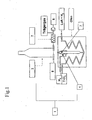
- FIG. 1 The burner assembly used in Examples 1-6 is in FIG FIG. 1 shown schematically.
- FIG. 1 is the core of the apparatus of the open burner (1) of known type, as it is commonly used for the production of pyrogenic oxides.
- the burner (1) consists of an inner nozzle (3), from which the main gas stream flows into the flame tube (2) and burns off.
- the inner nozzle (3) is surrounded by a further nozzle (4) (jacket nozzle), from which ring or secondary hydrogen flows out to prevent caking.
- a diaphragm (5) is mounted, through which the aerosol is fed, wherein the aerosol gas stream from the diaphragm is homogeneously mixed with the gas flow of the inner nozzle and the sheath.
- the aerosol is generated in an aerosol generator (6) (ultrasonic nebulizer).
- the aerosol educt used is an aqueous salt solution which contains the metal / noble metal or metalloid to be doped as salt or chloro acid in dissolved or dispersed / suspended form.
- the aerosol generated by the aerosol generator (6) is passed by means of a Traggasstroms through the heating zone (7), in which the water evaporates and in the gas phase small Salzkristallite remain in finely divided form.
- the aerosol is an aluminum chloride salt aerosol generated by ultrasonic nebulization of a 1% AlCl 3 x6H 2 O aqueous solution in the aerosol generator in an amount of 126 g / hr.
- the aluminum salt aerosol is guided with the aid of the carrier gas of 0.04 Nm 3 / h of nitrogen through a heated line, wherein the aerosol passes at temperatures of about 215 ° C in a gas and a salt crystal aerosol.
- reaction gases, additional ambient air sucked in through the open burner and the resulting Al 2 O 3 doped, pyrogenically produced titanium dioxide are sucked through the cooling system by means of reduced pressure and are cooled to 100.degree.-160.degree.
- the solid is separated off before the gas stream.
- the obtained, doped with Al 2 O 3 , pyrogenic titanium dioxide is a white finely divided powder.
- the adhering hydrochloric acid residues are removed from the titanium dioxide at elevated temperature by treatment with water vapor-containing air.
- the BET surface of this doped, pyrogenic produced titanium dioxide is 75 m 2 / g. Further analytical data are listed in Table 2.
- the aerosol is a hexachloroplatinic acid aerosol produced by sonicating a 0.5% aqueous H 2 PtCl 6 solution in the aerosol generator in an amount of 27.0 g / h.
- the hexachloroplatinic acid aerosol is guided by means of the carrier gas of 0.04 Nm 3 / h of nitrogen through a heated line, wherein the aerosol passes at temperatures of about 344 ° C in a gas and a salt crystal aerosol.
- reaction gases, additional ambient air drawn in through the open burner and the resulting pyrogenic titanium dioxide doped with PtO 2 are sucked through a cooling system by means of reduced pressure and cooled to 100.degree.-160.degree.
- a filter or cyclone By means of a filter or cyclone, the solid is separated from the gas stream.
- the pyrogenic titanium dioxide doped with PtO 2 is a white finely divided powder.
- the adhering hydrochloric acid residues are removed from the titanium dioxide at elevated temperature by treatment with water vapor-containing air.
- the BET surface area of this PtO 2 doped pyrogenic titanium dioxide is 73 m 2 / g. Further analytical data are summarized in Table 2.
- the aerosol is a magnesium chloride salt aerosol produced by sonicating a 0.5% aqueous solution of MgCl 2 .6H 2 O in the aerosol generator in an amount of 21.4 g / h.
- the magnesium salt aerosol is guided by means of the carrier gas of 0.04 Nm 3 / h of nitrogen through a heated line, wherein the aerosol passes at temperatures of about 331 ° C in a gas and a salt crystal aerosol.
- reaction gases, additional ambient air drawn in through the open burner and the resulting MgO-doped, pyrogenically produced titanium dioxide are sucked through a cooling system by means of reduced pressure and are cooled to 100.degree.-160.degree.
- a filter or cyclone By means of a filter or cyclone, the solid is separated from the gas stream. That with MgO doped, pyrogenic titanium dioxide is a white finely divided powder.
- the adhering hydrochloric acid residues are removed from the titanium dioxide at elevated temperature by treatment with water vapor-containing air.
- the BET surface area of this MgO-doped pyrogenic titanium dioxide is 77 m 2 / g. Further analytical data are summarized in Table 2.
- the aerosol is a zinc chloride salt aerosol generated by ultrasonic nebulization of a 3% aqueous ZnCl 2 solution in the aerosol generator at a rate of 31.7 g / hr.
- the zinc salt aerosol is guided by means of the carrier gas of 0.04 Nm 3 / h of nitrogen through a heated line, wherein the aerosol passes at temperatures of about 303 ° C in a gas and a salt crystal aerosol.
- the reaction gases, additional ambient air drawn in through the open burner and the resulting ZnO-doped, pyrogenic titanium dioxide are sucked through a cooling system by means of negative pressure cooled to 100 - 160 ° C.
- a filter or cyclone By means of a filter or cyclone, the solid is separated from the gas stream.
- the ZnO doped, pyrogenic titanium dioxide is a white finely divided powder.
- the adhering hydrochloric acid residues are removed from the titanium dioxide at elevated temperature by treatment with water vapor-containing air.
- the BET surface area of this ZnO-doped pyrogenic titanium dioxide is 78 m 2 / g. Further analytical data are summarized in Table 2.
- the aerosol is a zinc chloride salt aerosol produced by ultrasonic nebulization of a 2% aqueous ZnCl 2 solution in the aerosol generator in an amount of 112.6 g / hr.
- the zinc salt aerosol is guided by means of the carrier gas of 0.04 Nm 3 / h nitrogen through a heated line, wherein the aerosol passes at temperatures of about 215 ° C in a gas and a salt crystal aerosol.
- the reaction gases, additional, sucked through the open burner ambient air and the resulting with ZnO doped, pyrogenic titanium dioxide are sucked by means of negative pressure through the cooling system and thereby cooled to 100-160 ° C.
- the solid is separated from the gas stream.
- the ZnO doped, pyrogenic titanium dioxide is a white finely divided powder.
- the adhering hydrochloric acid residues are removed from the titanium dioxide at elevated temperature by treatment with water vapor-containing air.
- the BET surface area of this ZnO-doped pyrogenic titanium dioxide is 56 m 2 / g. Further analytical data are summarized in Table 2.
- reaction gases, additional ambient air sucked in through the open burner and the resulting pyrogenic titanium dioxide are sucked through a cooling system by means of negative pressure while cooling to 100.degree.-160.degree.
- a filter or cyclone By means of a filter or cyclone, the solid is separated from the gas stream.
- the pyrogenically produced, high surface area titanium dioxide is a white finely divided powder.
- the total running time of the tests for checking the rate of photocatalytic degradation of chlorinated hydrocarbons such as 4-chlorophenol (4-CP) and dichloroacetic acid (DCA) under UV irradiation in a purely aqueous or acidified aqueous suspension is max. 360 minutes.
- the degradation reaction is carried out in a stirred reactor.
- the suspension to be tested is pumped from the reservoir to the stirred reactor and back so that uniform UV irradiation is ensured.
- the temperature in the stirred reactor is in the range of 25-40 ° C, preferably between 30 and 35 ° C.
- the concentration of the respectively used photocatalytically active or less active titanium dioxide, ie pure titanium dioxide P 25 or according to Example 6, Tables 3 and 4 or doped titanium dioxide as described in Tables 3 - 4, is 1 g / l.
- the temperature is kept constant by means of continuous pumping from the storage vessel to the UV irradiation unit and back, as well as by cooling the UV lamp system by means of cooling water in said area. For the entire duration of the degradation reaction, a continuous control of the degradation progress of the chlorinated hydrocarbons under UV irradiation takes place.
- TOC 0 initial concentration of organically bound carbon in suspension
- Air secondary air
- H 2 nucleus hydrogen in the central tube
- H 2 jacket jacket hydrogen
- N 2 nucleus nitrogen in the central tube
- Gas Temp. Gas temperature in the nozzle of the central tube
- Amount of aerosol mass flow of the aerosolized saline solution
- N 2 aerosol amount of carrier gas (nitrogen) of the aerosol example BET surface area Amount of doping comp.
- TiO2 0 206.76 catalyst Doping component / amount BET surface area [m 2 / g] DCA increase in% (compare to P 25) 4-CP increase in% (compare to P 25) P25 / 50 0 0 According to Example 1.
Landscapes
- Chemical & Material Sciences (AREA)
- Engineering & Computer Science (AREA)
- Organic Chemistry (AREA)
- Chemical Kinetics & Catalysis (AREA)
- Materials Engineering (AREA)
- Environmental & Geological Engineering (AREA)
- Physics & Mathematics (AREA)
- Health & Medical Sciences (AREA)
- Life Sciences & Earth Sciences (AREA)
- Hydrology & Water Resources (AREA)
- Toxicology (AREA)
- Water Supply & Treatment (AREA)
- Biomedical Technology (AREA)
- General Chemical & Material Sciences (AREA)
- General Life Sciences & Earth Sciences (AREA)
- Geology (AREA)
- Inorganic Chemistry (AREA)
- Thermal Sciences (AREA)
- Oil, Petroleum & Natural Gas (AREA)
- Analytical Chemistry (AREA)
- Optics & Photonics (AREA)
- Plasma & Fusion (AREA)
- Catalysts (AREA)
- Inorganic Compounds Of Heavy Metals (AREA)
- Compositions Of Oxide Ceramics (AREA)
- Glass Compositions (AREA)
Description
- Die Erfindung betrifft dotiertes Titandioxid, ein Verfahren zu seiner Herstellung sowie seine Verwendung.
- Pyrogenes Titanoxid (kommerziell erhältlich als Degussa TiO2 P 25) zeichnet sich durch seine vielfältigen Anwendungsmöglichkeiten im Bereich der Photokatalyse aus.
- (R.W. Matthews, S.R. McEvoy, J. Photochem. Photobiol.A: Chem., 64 (1992) 231-246.;
- R.I. Bickley et.al., Journal of Solid State Chemistry, 92 (1991), 178-190.;
- R. Franke, C. Franke, Chemosphere, Vol. 39, No. 15 (1999), 2651-2659.
- H. Zen, JETI (1998), 46 (10), 66-67.
- Es wird als Vergleichsmaterial mit hoher photokatalytischer Aktivität benutzt.
- (V. Loddo et.al., Applied Catalysis B: Environmental 20 (1999), 29 - 45.)
- Gegenstand der Erfindung ist ein mittels Aerosol dotiertes pyrogen mittels Flammenhydrolyse hergestelltes Titandioxid mit einer BET-Oberfläche von 65 bis 80 m2/g, welches ein Oxid aus der Gruppe Zinkoxid, Platinoxid, Magnesiumoxid und/oder Aluminiumoxid als Dotierungskomponente in einer Menge von 40 bis 800 ppm enthält.
- Ein weiterer Gegenstand der Erfindung ist ein Verfahren zur Herstellung des mittels Aerosol dotierten Titandioxides, welches dadurch gekennzeichnet ist, dass man in eine Flamme, wie sie zur Herstellung von pyrogenem Titandioxid mittels Flammenhydrolyse verwendet wird, ein Aerosol einspeist, dieses Aerosol vor oder während der Reaktion mit dem Gasgemisch der Flammenhydrolyse homogen mischt, das Aerosol-Gasgemisch in einer Flamme abreagieren lässt und die entstandenen dotierten pyrogen hergestellten Oxide in bekannter Weise von dem Gasstrom abtrennt, wobei als Ausgangsprodukt des Aerosols eine Salzlösung oder Suspension, die die Komponente der zu dotierenden Substanz, die ein Metallsalz-oder Metalloidsalz oder Mischungen von beiden oder eine Suspension einer unlöslichen Metall- oder Metalloidverbindung oder einer Mischung aus beiden sein kann, enthält, dient, wobei das Aerosol durch Vernebelung mittels einer Zweistoffdüse oder durch einen Aerosolgenerator vorzugsweise nach der Ultraschallvernebelung hergestellt wird.
- Als zu dotierende Substanz können Salze von Zink, Magnesium, Aluminium und/oder Edelmetallen wie Platin, Palladium, Silber, Gold eingesetzt werden. Bevorzugt können wässrige Lösungen dieser Salze, die gegebenenfalls angesäuert sein können, eingesetzt werden. Bevorzugt können als Salze Zinkchlorid, Hexachloroplatinsäure, Magnesiumchlorid, Aluminiumchlorid eingesetzt werden.
- Das Verfahren der Dotierung mittels Aerosol kann im wesentlichen so durchgeführt werden, wie es in dem Dokument
EP 0 850 876 A1 beschrieben wird. - Das Verfahren zu der Flammenhydrolyse zur Herstellung von pyrogenen Titandioxid ist bekannt aus Ullmann's Enzyklopädie der technischen Chemie, 4 Auflage, Band 21, Seite 464.
- Zur Erzeugung einer erhöhten photokatalytischen Aktivität beträgt die BET-Oberfläche von 65 bis 80 m2/g. Dabei beträgt die Menge der Dotierungskomponente 40 bis 800 ppm.
- Die erfindungsgemäßen, mittels Aerosol dotierten Titandioxide können, wenn sie eine erhöhte photokatalytische Aktivität aufweisen, zur Reinigung von Abluft eingesetzt werden.
- Sie können auf einem Träger fixiert sein.
- Die erfindungsgemäßen Titandioxide können, wenn sie eine erhöhte photokatalytische Aktivität aufweisen, zum Abbau von Verunreinigungen in Abwässern und/oder Abluft eingesetzt werden. Dabei können die Titandioxide sowohl in dem Abwasser und/oder der Abluft suspendiert als auch auf einem Träger fixiert eingesetzt werden.
- Auch bei einer erhöhten photokatalytischen Aktivität können die erfindungsgemäßen Titandioxide zum Auftragen auf Gläser, auf Kunststoffe, zum Entfernen von Verunreinigungen aus Luft, Wasser etc. eingesetzt werden.
- Die erfindungsgemäßen Titandioxide mit erhöhter photokatalytischer Aktivität können weiterhin zur Sterilisierung von Wasser unter UV-Bestrahlung eingesetzt werden.
- Die erfindungsgemäßen mittels Aerosol dotierten Titandioxide werden bei dem photokatalytischen Abbau von chlorierten Kohlenwasserstoffen unter UV-Bestrahlung in gegebenenfalls angesäuerter, wässriger Suspension auf ihre photokatalytische Aktivität getestet.
- Dabei wird gefunden, dass die photokatalytische Aktivität der erfindungsgemäßen Titandioxide in gegebenenfalls angesäuerter wässriger Suspension durch die Dotierung mit Oxiden von Metallen/Edelmetallen oder Metalloiden erhöht werden kann.
- Überraschenderweise wird die photokatalytische Aktivität beim Abbau von chlorierten Kohlenwasserstoffen in wässriger Suspension erhöht, obwohl eine homogene Durchmischung von Dotierungskomponente und Titandioxid stattgefunden hat. Die Dotierungskomponente befindet sich hier also nicht ausschließlich auf dem Titandioxid, sondern auch in dem Titandioxid.
- Darüber hinaus führt die Änderung der Menge der Dotierungskomponente zu einer Veränderung der Geschwindigkeit des photokatalytischen Abbaus der chlorierten Kohlenwasserstoffe unter UV-Bestrahlung.
- Es werden die Anfangsreaktionsgeschwindigkeiten (nach den ersten 30 Minuten) ausgewählter dotierter Titandioxid-Katalysatoren [mg TOC* 1-1min-1 (TOC = Total Organic Carbon = organisch gebundener Kohlenstoff)] von DCA (Dichloressigsäure) und 4-CP (4-Chlorphenol) in einer gegebenenfalls angesäuerten wässrigen Suspension unter UV-Bestrahlung gemessen.
- Als Vergleichswert (Nullwert) wird die photokatalytische Abbaugeschwindigkeit von chlorierten Kohlenwasserstoffen unter UV-Bestrahlung in gegebenenfalls angesäuerter wässriger Suspension beim Einsatz von reinem Titandioxid Degussa P 25 als Photokatalysator benutzt. Die Dauer der Versuche mit Degussa P 25 beträgt maximal 360 Minuten. Die Anfangsreaktionsgeschwindigkeit des photokatalytischen Abbaus von chlorierten Kohlenwasserstoffen in gegebenenfalls angesäuerter wässriger Suspension wird bestimmt.
- Ebenfalls wird der photokatalytische Abbau von chlorierten Kohlenwasserstoffen unter UV-Bestrahlung in rein wässriger oder angesäuerter wässriger Suspension, also ohne Zusatz von Titandioxid, über einige Stunden (max. 360 Minuten = min.) verfolgt.
- Die Ergebnisse der Anfangsreaktionsgeschwindigkeit und die Ergebnisse zum photokatalytischen Abbau von chlorierten Kohlenwasserstoffen in rein wässriger oder angesäuerter Suspension sind in Tabelle 3, Tabelle 4 und Tabelle 5 aufgeführt.
- Eine besonders hohe Anfangsreaktionsgeschwindigkeit des Abbaus von Dichloressigsäure und 4-Chlorphenol (Anfangskonzentration beider chlorierter Kohlenwasserstoffe: c= 120 mg/l) in rein wässriger oder angesäuerter wässriger Suspension unter UV-Bestrahlung weisen Dotierungen mit Al2O3, PtO2 oder MgO im Vergleich mit Degussa P 25 auf (siehe Tabelle 5).
- Wird ZnO als Dotierungssubstanz benutzt, dann werden je nach BET-Oberfläche und Dotierungsmenge unterschiedliche Effekte erzielt.
- Bei einer BET-Oberfläche von 78 m2/g und einer ZnO-Dotierungsmenge von 430 ± 20 ppm wird die Anfangsreaktionsgeschwindigkeit der Dichloressigsäure- und des 4-Chlorphenol-Abbaus in rein wässriger oder angesäuerter wässriger Suspension unter UV-Bestrahlung im Vergleich mit Degussa P 25 stark heraufgesetzt.
- Bei einer BET-Oberfläche von 56 m2/g und einer ZnO-Dotierungsmenge von 0,13 (±0,02)% wird die Anfangsreaktionsgeschwindigkeit beim Abbau von Dichloressigsäure in rein wässriger oder angesäuerter wässriger Suspension unter UV-Bestrahlung nur um 29 % verglichen mit Degussa P 25 erhöht.
- Bei dem Abbau von 4-Chlorphenol wird die Anfangsreaktionsgeschwindigkeit in rein wässriger oder angesäuerter wässriger Suspension unter UV-Bestrahlung um 31 % im Vergleich mit Degussa P 25 vermindert (siehe Tabelle 5).
- Es wird darüber hinaus auch ein reines TiO2 mit einer BET-Oberfläche von 82 m2/g als Photokatalysator getestet, um auszuschließen, dass die Erhöhung der Anfangsreaktionsgeschwindigkeit des photokatalytischen Abbaus von 4-Chlorphenol und Dichloressigsäure in rein wässriger oder angesäuerter wässriger Suspension unter UV-Bestrahlung, im Vergleich mit Degussa Titanoxid P 25, ausschließlich auf der Oberflächenerhöhung beruht.
- Durch die Erhöhung der Oberfläche kommt es zwar zu einem erhöhten photokatalytischen Abbau von 4-Chlorphenol und Dichloressigsäure, aber nicht in dem Masse, wie Dotierungen es bewirken (siehe Tabelle 5).
- Herstellung der dotierten Titandioxide
- Die Brenneranordnung, die in den Beispielen 1 - 6 verwendet wird, ist in
Figur 1 schematisch dargestellt. - Gemäss
Figur 1 ist das Kernstück der Apparatur der offene Brenner (1) bekannter Bauart, wie er üblicherweise zur Herstellung von pyrogenen Oxiden verwendet wird. Der Brenner (1) besteht aus einer inneren Düse (3), aus der der Hauptgasstrom in das Flammrohr (2) strömt und abbrennt. Die innere Düse (3) ist von einer weiteren Düse (4) (Manteldüse), aus der zur Vermeidung von Anbackungen Ring-oder Sekundär-Wasserstoff ausströmt, umgeben. Zwischen dem Düsenausgang und dem Flammrohr wird eine Blende (5) angebracht, durch die das Aerosol eingespeist wird, wobei der Aerosol-Gasstrom aus der Blende mit dem Gasstrom der inneren Düse und der Manteldrüse homogen gemischt wird. Das Aerosol wird in einem Aerosol-Generator (6) (Ultraschallvernebler) erzeugt. Als Aerosol-Edukt wird eine wässrige Salzlösung, die das zu dotierende Metall/Edelmetall oder Metalloid als Salz oder Chlorosäure in gelöster oder dispergierter/suspendierter Form enthält, verwendet. - Das vom Aerosol-Generator (6) erzeugte Aerosol wird mittels eines Traggasstroms durch die Heizzone (7), in der das Wasser verdampft und in der Gasphase kleine Salzkristallite in feinverteilter Form zurückbleiben, geleitet.
- Die einzelnen Bedingungen der Herstellung der Oxide sind in der Tabelle 1 aufgeführt.
- Es werden 0,66 kg/h TiCl4 bei 280°C verdampft und in das Zentralrohr des Brenners eingeführt. In das Zentralrohr werden zusätzlich 0,54 Nm3/h Wasserstoff und 3,41 Nm3/h Luft eingespeist. Das Gasgemisch strömt aus der inneren Düse des Brenners und brennt, da es sich um einen offenen Brenner handelt, in das Flammrohr. In die Manteldüse, die die Zentraldüse umgibt, werden zur Vermeidung von Anbackungen an den Düsen 0,23 Nm3/h Mantel- oder Sekundärwasserstoff eingespeist.
- Aus der Blende (Durchmesser: 35 mm; Schlitzbreite: 0,4mm), die sich zwischen dem Ausgang des Brennerkopfes und dem Flammrohr in waagerechter Anordnung befindet, wird das Aerosol aufgebracht. Das Aerosol ist ein Aluminiumchloridsalz-Aerosol, das durch Ultraschallverneblung einer 1 %igen wässrigen AlCl3x6H2O-Lösung im Aerosol-Generator in einer Menge von 126 g/h erzeugt wird. Das Aluminiumsalz-Aerosol wird mit Hilfe des Traggases von 0,04 Nm3/h Stickstoff durch eine beheizte Leitung geführt, wobei das Aerosol bei Temperaturen um ca. 215 °C in ein Gas und ein Salzkristall-Aerosol übergeht.
- Die Reaktionsgase, zusätzliche, durch den offenen Brenner angesaugte Luft aus der Umgebung und das entstandene mit Al2O3 dotierte, pyrogen hergestellte Titandioxid werden mittels Unterdruck durch das Kühlsystem gesaugt und dabei auf 100 - 160 °C abgekühlt. Mittels Filter oder Zyklon wird der Feststoff vor dem Gasstrom abgetrennt. Das erhaltene, mit Al2O3 dotierte, pyrogen hergestellte Titandioxid ist ein weißes feinteiliges Pulver.
- In einem anschließenden Schritt werden bei erhöhter Temperatur durch Behandlung mit wasserdampfhaltiger Luft die anhaftenden Salzsäurereste von dem Titandioxid entfernt. Die BET-Oberfläche dieses dotierten, pyrogen hergestellten Titandioxids beträgt 75 m2/g. Weitere analytische Daten sind in Tabelle 2 aufgeführt.
- Es werden 0,65 kg/h TiCl4 bei 280 °C verdampft und in das Zentralrohr des Brenners eingeführt. In das Zentralrohr werden zusätzlich 0,54 Nm3/h Wasserstoff und 3,41 Nm3/h Luft eingespeist. Das Gasgemisch strömt aus der inneren Düse des Brenners und brennt, da es sich um einen offenen Brenner handelt, in das Flammrohr. In die Manteldüse, die die Zentraldüse umgibt, werden zur Vermeidung von Anbackungen an den Düsen 0,23 Nm3/h Mantel- oder Sekundärwasserstoff eingespeist.
- Aus der Blende (Durchmesser: 35 mm; Schlitzbreite: 0,4mm), die sich zwischen dem Ausgang des Brennerkopfes und dem Flammrohr in waagerechter Anordnung befindet, wird das Aerosol aufgebracht. Das Aerosol ist ein Hexachloroplatinsäure-Aerosol, das durch Ultraschallverneblung einer 0,5 %igen wässrigen H2PtCl6-Lösung im Aerosol-Generator in einer Menge von 27,0 g/h erzeugt wird. Das Hexachloroplatinsäure-Aerosol wird mit Hilfe des Traggases von 0,04 Nm3 /h Stickstoff durch eine beheizte Leitung geführt, wobei das Aerosol bei Temperaturen um ca. 344 °C in ein Gas und ein Salzkristall-Aerosol übergeht.
- Die Reaktionsgase, zusätzliche, durch den offenen Brenner angesaugte Luft aus der Umgebung und das entstandene, mit PtO2 dotierte, pyrogen hergestellte Titandioxid werden mittels Unterdruck durch ein Kühlsystem gesaugt und dabei auf 100 - 160 °C abgekühlt. Mittels Filter oder Zyklon wird der Feststoff von dem Gasstrom abgetrennt. Das mit PtO2 dotierte, pyrogen hergestellte Titandioxid ist ein weißes feinteiliges Pulver.
- In einem anschließenden Schritt werden bei erhöhter Temperatur durch Behandlung mit wasserdampfhaltiger Luft die anhaftenden Salzsäurereste von dem Titandioxid entfernt. Die BET-Oberfläche dieses mit PtO2 dotierten, pyrogen hergestellten Titandioxids beträgt 73 m2/g. Weitere analytische Daten sind in Tabelle 2 zusammengefasst.
- Es werden 0,66 kg/h TiCl4 bei 280 °C verdampft und in das Zentralrohr des Brenners eingeführt. In das Zentralrohr werden zusätzlich 0,54 Nm3/h Wasserstoff und 3,41 Nm3/h Luft eingespeist. Das Gasgemisch strömt aus der inneren Düse des Brenners und brennt, da es sich um einen offenen Brenner handelt, in das Flammrohr. In die Manteldüse, die die Zentraldüse umgibt, werden zur Vermeidung von Anbackungen an den Düsen 0,23 Nm3/h Mantel- oder Sekundärwasserstoff eingespeist.
- Aus der Blende (Durchmesser: 35 mm; Schlitzbreite: 0,4mm), die sich zwischen dem Ausgang des Brennerkopfes und dem Flammrohr in waagerechter Anordnung befindet, wird das Aerosol aufgebracht. Das Aerosol ist ein Magnesiumchloridsalz-Aerosol, das durch Ultraschallverneblung einer 0,5 %igen wässrigen MgCl2 x6H2O-Lösung im Aerosol-Generator in einer Menge von 21,4 g/h erzeugt wird. Das Magnesiumsalz-Aerosol wird mit Hilfe des Traggases von 0,04 Nm3/h Stickstoff durch eine beheizte Leitung geführt, wobei das Aerosol bei Temperaturen um ca. 331 °C in ein Gas und ein Salzkristall-Aerosol übergeht.
- Die Reaktionsgase, zusätzliche, durch den offenen Brenner angesaugte Luft aus der Umgebung und das entstandene mit MgO dotierte, pyrogen hergestellte Titandioxid werden mittels Unterdruck durch ein Kühlsystem gesaugt und dabei auf 100 - 160 °C abgekühlt. Mittels Filter oder Zyklon wird der Feststoff von dem Gasstrom abgetrennt. Das mit MgO dotierte, pyrogen hergestellte Titandioxid ist ein weißes feinteiliges Pulver.
- In einem anschließenden Schritt werden bei erhöhter Temperatur durch Behandlung mit wasserdampfhaltiger Luft die anhaftenden Salzsäurereste von dem Titandioxid entfernt. Die BET-Oberfläche dieses mit MgO dotierten, pyrogen hergestellten Titandioxids beträgt 77 m2/g. Weitere analytische Daten sind in Tabelle 2 zusammengefasst.
- Es werden 0,65 kg/h TiCl4 bei 280 °C verdampft und in das Zentralrohr des Brenners eingeführt. In das Zentralrohr werden zusätzlich 0,54 Nm3/h Wasserstoff und 3,41 Nm3/h Luft eingespeist. Das Gasgemisch strömt aus der inneren Düse des Brenners und brennt, da es sich um einen offenen Brenner handelt, in das Flammrohr. In die Manteldüse, die die Zentraldüse umgibt, werden zur Vermeidung von Anbackungen an den Düsen 0,23 Nm3/h Mantel- oder Sekundärwasserstoff eingespeist.
- Aus der Blende (Durchmesser: 35 mm; Schlitzbreite: 0,4mm) , die sich zwischen dem Ausgang des Brennerkopfes und dem Flammrohr in waagerechter Anordnung befindet, wird das Aerosol aufgebracht. Das Aerosol ist ein Zinkchloridsalz-Aerosol, das durch Ultraschallverneblung einer 3 %igen wässrigen ZnCl2-Lösung im Aerosol-Generator mit einer Menge von 31,7 g/h erzeugt wird. Das Zinksalz-Aerosol wird mit Hilfe des Traggases von 0,04 Nm3 /h Stickstoff durch eine beheizte Leitung geführt, wobei das Aerosol bei Temperaturen um ca. 303 °C in ein Gas und ein Salzkristall-Aerosol übergeht.
- Die Reaktionsgase, zusätzliche, durch den offenen Brenner angesaugte Luft aus der Umgebung und das entstandene mit ZnO dotierte, pyrogen hergestellte Titandioxid werden mittels Unterdruck durch ein Kühlsystem gesaugt und dabei auf 100 - 160 °C abgekühlt. Mittels Filter oder Zyklon wird der Feststoff von dem Gasstrom abgetrennt. Das mit ZnO dotierte, pyrogen hergestellte Titandioxid ist ein weißes feinteiliges Pulver.
- In einem anschließenden Schritt werden bei erhöhter Temperatur durch Behandlung mit wasserdampfhaltiger Luft die anhaftenden Salzsäurereste von dem Titandioxid entfernt. Die BET-Oberfläche dieses mit ZnO dotierten, pyrogen hergestellten Titandioxids beträgt 78 m2/g. Weitere analytische Daten sind in Tabelle 2 zusammengefasst.
- Es werden 1,32 kg/h TiCl4 bei 280 °C verdampft und in das Zentralrohr des Brenners eingeführt. In das Zentralrohr werden zusätzlich 0,33 Nm3/h Wasserstoff und 2,68 Nm3/h Luft eingespeist. Das Gasgemisch strömt aus der inneren Düse des Brenners und brennt, da es sich um einen offenen Brenner handelt, in das Flammrohr. In die Manteldüse, die die Zentraldüse umgibt, werden zur Vermeidung von Anbackungen an den Düsen 0,1 Nm3/h Mantel- oder Sekundärwasserstoff eingespeist.
- Aus der Blende (Durchmesser: 35 mm; Schlitzbreite: 0,4mm), die sich zwischen dem Ausgang des Brennerkopfes und dem Flammrohr in waagerechter Anordnung befindet, wird das Aerosol aufgebracht. Das Aerosol ist ein Zinkchloridsalz-Aerosol, das durch Ultraschallverneblung einer 2 %igen wässrigen ZnCl2-Lösung im Aerosol-Generator in einer Menge von 112,6 g/h erzeugt wird. Das Zinksalz-Aerosol wird mit Hilfe des Traggases von 0,04 Nm3/h Stickstoff durch eine beheizte Leitung geführt, wobei das Aerosol bei Temperaturen um ca. 215 °C in ein Gas und ein Salzkristall-Aerosol übergeht.
- Die Reaktionsgase, zusätzliche, durch den offenen Brenner angesaugte Umgebungsluft und das entstandene mit ZnO dotierte, pyrogen hergestellte Titandioxid werden mittels Unterdruck durch das Kühlsystem gesaugt und dabei auf 100-160 °C abgekühlt. Mittels Filter oder Zyklon wird der Feststoff von dem Gasstrom abgetrennt. Das mit ZnO dotierte, pyrogen hergestellte Titandioxid ist ein weißes feinteiliges Pulver.
- In einem anschließenden Schritt werden bei erhöhter Temperatur durch Behandlung mit wasserdampfhaltiger Luft die anhaftenden Salzsäurereste von dem Titandioxid entfernt. Die BET-Oberfläche dieses mit ZnO dotierten, pyrogen hergestellten Titandioxids beträgt 56 m2/g. Weitere analytische Daten sind in Tabelle 2 zusammengefasst.
- Es werden 0,42 kg/h TiCl4 bei 280 °C verdampft und in das Zentralrohr des Brenners eingeführt. In das Zentralrohr werden zusätzlich 0,21 Nm3/h Wasserstoff, 3,78 Nm3/h Luft und 0,04 Nm3/h Stickstoff eingespeist. Das Gasgemisch strömt aus der inneren Düse des Brenners und brennt, da es sich um einen offenen Brenner handelt, in das Flammrohr. In die Manteldüse, die die Zentraldüse umgibt, werden zur Vermeidung von Anbackungen an den Düsen 0,23 Nm3 /h Mantel-oder Sekundärwasserstoff eingespeist.
- Die Reaktionsgase, zusätzliche, durch den offenen Brenner angesaugte Luft aus der Umgebung und das entstandene pyrogen hergestellte Titandioxid werden mittels Unterdruck durch ein Kühlsystem gesaugt und dabei auf 100 - 160 °C abgekühlt. Mittels Filter oder Zyklon wird der Feststoff von dem Gasstrom abgetrennt. Das pyrogen hergestellte, hochoberflächige Titandioxid ist ein weißes feinteiliges Pulver.
- In einem anschließenden Schritt werden bei erhöhter Temperatur durch Behandlung mit wasserdampfhaltiger Luft die anhaftenden Salzsäurereste von dem Titandioxid entfernt. Die BET-Oberfläche dieses pyrogen hergestellten Titanoxids beträgt 82 m2/g. Weitere analytische Daten sind in Tabelle 2 zusammengefasst.
- Versuchsdurchführung zur Bestimmung der Geschwindigkeit des photokatalytischen Abbaus von chlorierten Kohlenwasserstoffen in Suspension.
- Die Gesamtlaufzeit der Versuche zur Überprüfung der Geschwindigkeit des photokatalytischen Abbaus von chlorierten Kohlenwasserstoffen wie 4-Chlorphenol (4-CP) und Dichloressigsäure (DCA) unter UV-Bestrahlung in rein wässriger oder angesäuerter wässriger Suspension liegt bei max. 360 Minuten.
- Die Abbaureaktion wird in einem Rührreaktor durchgeführt. Zusätzlich wird die zu untersuchende Suspension von dem Vorratsbehälter zu dem Rührreaktor und zurück gepumpt, so dass eine gleichmäßige UV-Bestrahlung gewährleistet ist. Der pH-Wert der Suspension liegt in dem Bereich von 4 - 7, bevorzugt bei pH = 5. Die Temperatur in dem Rührreaktor liegt in dem Bereich von 25 - 40 °C, bevorzugt zwischen 30 und 35 °C. Die Konzentration des jeweils eingesetzten photokatalytisch aktiven oder wenig aktiven Titandioxids, also reines Titandioxid P 25 oder gemäss Beispiel 6, Tabellen 3 und 4 oder dotiertes Titandioxid wie in Tabellen 3 - 4 beschrieben, beträgt 1 g/l. Die Temperatur wird mittels kontinuierlichem Pumpen von dem Vorratsgefäß zur UV-Bestrahlungseinheit und zurück, sowie durch Kühlung des UV-Lampensystems mittels Kühlwasser in dem genannten Bereich konstant gehalten. Für die gesamte Dauer der Abbaureaktion findet eine kontinuierliche Kontrolle des Abbaufortschrittes der chlorierten Kohlenwasserstoffe unter UV-Bestrahlung statt.
- Aus dieser in regelmäßigen Abständen stattfindenden Bestimmung des TOC-Wertes (TOC = Total Organic Carbon = organisch gebundener Kohlenstoff) lässt sich der Faktor TOC/TOC0 bestimmen (TOC0 = Anfangskonzentration des organisch gebundenen Kohlenstoffs in Suspension). TOC/TOC0 gibt den prozentualen TOC-Gehalt zu einem bestimmten Entnahmezeitpunkt an.
- In einer TOC/TOC0-Zeit-Kurve wird der Verlauf des Abbaus von chlorierten Kohlenwasserstoffen aufgetragen. Die Abbaugeschwindigkeit von Degussa P 25 wird als Standard ebenfalls unter den gleichen Bedingungen getestet.
- Der Gesamtkurvenverlauf wird aufgenommen.
- Es werden weiterhin Blindversuche zum Abbau von 4-Chlorphenol und Dichloressigsäure unter UV-Bestrahlung, aber ohne Zusatz von Titandioxiden durchgeführt.
- Wird auf Titandioxid verzichtet, dann liegen die noch vorhandenen TOC/TOC0-Werte über 89 %, so dass hier nahezu kein Abbau stattfindet.
- Versuchsergebnisse des photokatalytischen Abbaus von 4-Chlorphenol.
- In das Vorratsgefäß und den Rührreaktor wird nur 4-Chlorphenol in angesäuerter wässriger Lösung gegeben und behandelt. Es wird kein TiO2 hinzugefügt. Eine TOC/TOC0-Zeit-Kurve wird aufgenommen. Nach 300 min. sind noch 89,82 % des Anfangs-TOC-Gehaltes vorhanden. Eine Anfangsreaktionsgeschwindigkeit wird nicht bestimmt.
- In das Vorratsgefäß und den Rührreaktor werden 4-Chlorphenol und 1 g/l Titandioxid P 25 in angesäuerter wässriger Suspension gegeben und wie oben angegeben behandelt. Eine TOC/TOC0-Zeit-Kurve wird aufgenommen. Nach 300 min. sind nur noch 20,91 % des Anfangs-TOC-Gehaltes vorhanden. Die Anfangsreaktionsgeschwindigkeit wird als Standard verwendet und als Null angesetzt. Alle bei den Titandioxiden gemäss den Beispielen 9 - 14 erhaltenen Werte beziehen sich auf diesen P 25-Wert.
- In das Vorratsgefäß und den Rührreaktor werden 4-Chlorphenol und 1 g/l Katalysator gemäss Beispiel 1 in angesäuerter wässriger Suspension gegeben und wie oben angegeben behandelt. Eine TOC/TOC0-Zeit-Kurve wird aufgenommen. Nach 300 min. sind nur noch 8,36 % des Anfangs-TOC-Gehaltes von dem 4-Chlorphenol vorhanden. Die Anfangsreaktionsgeschwindigkeit ist im Vergleich mit P 25 (Beispiel 8) um 51 % erhöht.
- In das Vorratsgefäß und den Rührreaktor werden 4-Chlorphenol und 1 g/l Katalysator gemäss Beispiel 2 in angesäuerter wässriger Suspension gegeben und wie oben angegeben behandelt. Eine TOC/TOC0-Zeit-Kurve wird aufgenommen. Nach 300 min. sind nur noch 17,73 % des Anfangs-TOC-Gehaltes vom 4-Chlorphenol vorhanden. Die Anfangsreaktionsgeschwindigkeit ist im Vergleich mit P 25 (Beispiel 8) um 26 % erhöht.
- In das Vorratsgefäß und den Rührreaktor werden 4-Chlorphenol und 1 g/l Katalysator gemäss Beispiel 3 in angesäuerter wässriger Suspension gegeben und wie oben angegeben behandelt. Eine TOC/TOC0-Zeit-Kurve wird aufgenommen. Nach 300 min. sind nur noch 10,91 % des Anfangs-TOC-Gehaltes von dem 4-Chlorphenol vorhanden. Die Anfangsreaktionsgeschwindigkeit ist im Vergleich mit P 25 gemäss Beispiel 8 um 36 % erhöht.
- In das Vorratsgefäß und den Rührreaktor werden 4-Chlorphenol und 1 g/l Katalysator gemäss Beispiel 4 in angesäuerter wässriger Suspension gegeben und wie oben angegeben behandelt. Eine TOC/TOC0-Zeit-Kurve wird aufgenommen. Nach 300 min. sind nur noch 9,55 % des Anfangs-TOC-Gehaltes von dem 4-Chlorphenol vorhanden. Die Anfangsreaktionsgeschwindigkeit ist im Vergleich mit P 25 gemäss Beispiel 8 um 36 % erhöht.
- In das Vorratsgefäß und den Rührreaktor werden 4-Chlorphenol und 1 g/l Katalysator gemäss Beispiel 5 in angesäuerter wässriger Suspension gegeben und wie oben angegeben behandelt. Eine TOC/TOC0-Zeit-Kurve wird aufgenommen. Nach 300 min. sind noch 37,65 % des Anfangs-TOC-Gehaltes von dem 4-Chlorphenol vorhanden. Die Anfangsreaktionsgeschwindigkeit ist im Vergleich mit P 25 gemäss Beispiel 8 um 31 % erniedrigt.
- In das Vorratsgefäß und den Rührreaktor werden 4-Chlorphenol und 1 g/l Katalysator gemäss Beispiel 6 in angesäuerter wässriger Suspension gegeben und wie oben angegeben behandelt. Eine TOC/TOC0-Zeit-Kurve wird aufgenommen. Nach 300 min. sind nur noch 18,18 % des Anfangs-TOC-Gehaltes von dem 4-Chlorphenol vorhanden. Die Anfangsreaktionsgeschwindigkeit ist im Vergleich mit P 25 gemäss Beispiel 8 um 12 % erhöht.
- Versuchsergebnisse des photokatalytischen Abbaus von Dichloressigsäure (DCA).
- In das Vorratsgefäß und den Rührreaktor wird nur Dichloressigsäure in angesäuerter wässriger Lösung gegeben und wie oben angegeben behandelt. Es wird kein TiO2 hinzugefügt. Eine TOC/TOC0-Zeit-Kurve wird aufgenommen. Nach 245 min. sind noch 95,45 % des Anfangs-TOC-Gehaltes vorhanden. Eine Anfangsreaktionsgeschwindigkeit wird nicht bestimmt.
- In das Vorratsgefäß und den Rührreaktor werden Dichloressigsäure und 1 g/l Titandioxid P 25 in angesäuerter wässriger Suspension gegeben und wie oben angegeben behandelt. Eine TOC/TOC0-Zeit-Kurve wird aufgenommen. Nach 245 min. sind 0 % des Anfangs-TOC-Gehaltes vorhanden. Die Anfangsreaktionsgeschwindigkeit wird als Standard verwendet und als Null angesetzt. Alle bei den Titandioxiden gemäss den Beispielen 17 - 22 erhaltenen Werte beziehen sich auf diesen P 25-Wert.
- In das Vorratsgefäß und den Rührreaktor werden Dichloressigsäure und 1 g/l Katalysator gemäss Beispiel 1 in angesäuerter wässriger Suspension gegeben und wie oben angegeben behandelt. Eine TOC/TOC0-Zeit-Kurve wird aufgenommen. Nach 201,89 min. waren 0 % des Anfangs-TOC-Gehaltes von der Dichloressigsäure vorhanden. Die Anfangsreaktionsgeschwindigkeit ist im Vergleich mit P 25 gemäss Beispiel 16 um 84 % erhöht.
- In das Vorratsgefäß und den Rührreaktor werden Dichloressigsäure und 1 g/l Katalysator gemäss Beispiel 2 in angesäuerter wässriger Suspension gegeben und wie oben angegeben behandelt. Eine TOC/TOC0-Zeit-Kurve wird aufgenommen. Nach 206,76 min. sind 0 % des Anfangs-TOC-Gehaltes von der Dichloressigsäure vorhanden. Die Anfangsreaktionsgeschwindigkeit ist im Vergleich mit P 25 gemäss Beispiel 16 um 80 % erhöht.
- In das Vorratsgefäß und den Rührreaktor werden Dichloressigsäure und 1 g/l Katalysator 3 in angesäuerter wässriger Suspension gegeben und wie oben angegeben behandelt. Eine TOC/TOC0-Zeit-Kurve wird aufgenommen. Nach 200,27 min. ist 0 % des Anfangs-TOC-Gehaltes von der Dichloressigsäure vorhanden. Die Anfangsreaktionsgeschwindigkeit ist im Vergleich mit P 25 gemäss Beispiel 16 um 73 % erhöht.
- In das Vorratsgefäß und den Rührreaktor werden Dichloressigsäure und 1 g/l Katalysator gemäss Beispiel 4 in angesäuerter wässriger Suspension gegeben und wie oben angegeben behandelt. Eine TOC/TOC0-Zeit-Kurve wird aufgenommen. Nach 189,73 min. sind 0 % des Anfangs-TOC-Gehaltes von der Dichloressigsäure vorhanden. Die Anfangsreaktionsgeschwindigkeit ist im Vergleich mit P 25 gemäss Beispiel 16 um 76 % erhöht.
- In das Vorratsgefäß und den Rührreaktor werden Dichloressigsäure und 1 g/l Katalysator gemäss Beispiel 5 in angesäuerter wässriger Suspension gegeben und wie oben angegeben behandelt. Nach 245 min. ist ein Rest TOC/TOC0-Wert von 14,54 % vorhanden. Es ist nach 245 min. kein vollständiger Abbau der Dichloressigsäure zu beobachten. Die Anfangsreaktionsgeschwindigkeit ist im Vergleich mit P 25 gemäss Beispiel 16 nur um 29 % erhöht.
- In das Vorratsgefäß und den Rührreaktor werden Dichloressigsäure und 1 g/l Katalysator gemäss Beispiel 6 in angesäuerter wässriger Suspension gegeben und wie oben angegeben behandelt. Eine TOC/TOC0-Zeit-Kurve wird aufgenommen. Nach 206,76 min. sind 0 % des Anfangs-TOC-Gehaltes der Dichloressigsäure vorhanden. Die Anfangsreaktionsgeschwindigkeit ist im Vergleich mit P 25 gemäss Beispiel 16 um 55 % erhöht.
Tabelle 1: Experimentelle Bedingungen bei der Herstellung der Oxide Beispiel TiCl4 Primärluft Sek. Luft H2 Kern H2 Mantel N2 Kern Gas-Temp. Salzlösung Aerosolmenge N2-Aerosol BET-Oberfläche Nr. [kg/h] [Nm3 /h] [Nm3 /h] [Nm3 /h] [Nm3 /h] [Nm3 /h] [°C] [g/h] [Nm3 /h] [m2/g] 1 0,66 3,41 0 0,54 0,23 0 235 1 % AlCl3 x 6H2O 126,0 0,04 75 2 0,65 3,41 0 0,54 0,23 0 240 0, 5 % H2PtCl6 27,0 0,04 73 3 0,66 3,41 0 0,54 0,23 0 240 0,5 % MgCl2 x 6H2O 21,4 0,04 77 4 0,65 3,41 0 0,54 0,23 0 235 3 % ZnCl2 31,7 0,04 78 5 1,32 2,68 0 0,33 0,10 0 247 2 % ZnCl2 112,6 0,04 56 6 0,42 3,78 0 0,21 0,23 0,04 230 keine Dotierung 0 82 Erläuterung:
Primärluft = Luftmenge im Zentralrohr; Sek. Luft = Sekundärluft; H2 Kern = Wasserstoff im Zentralrohr; H2 Mantel = Mantelwasserstoff; N2 Kern = Stickstoff im Zentralrohr; Gas-Temp. = Gastemperatur in der Düse des Zentralrohres; Aerosolmenge = Massenstrom der in Aerosolform überführten Salzlösung; N2 Aerosol = Traggasmenge (Stickstoff) des AerosolsTabelle 2: Analytische Daten der nach Beispiel 1 bis 6 erhaltenen Oxide Beispiel BET-Oberfläche Menge Dotierungskomp. Cl Gehalt TV GV pH Stampfdichte Nr [m2/g] [ppm] [ppm] [Gew.-%] [Gew.-%] [4 % Sus.] [g/l] 1 75 606 130 0,55 1,26 5,09 209 2 73 93 53 0,63 1,75 4,96 241 3 77 48 57 1,3 0,85 5,79 220 4 78 415 44 0,77 1,26 6,05 219 5 56 1270 1320 1,01 1,23 4,93 315 6 82 / 0,84 1,79 5,01 152 Erläuterung:
Dotierungskomponenten (siehe Tabelle 4) in µg/g (ppm); TV = Trockenverlust (2h bei 105 °C), in Anlehnung an DIN/ISO 787/II, ASTM D 280, JIS K 5101/21); GV = Glühverlust (2h bei 1000 °C); in Anlehnung an DIN 55921, ASTM D 1208, JIS K 5101/23, bezogen auf die bei 105 °C getrocknete Substanz; Stampfdichte in Anlehnung an DIN/ISO 787/IX, JIS K 5101/18 (nicht gesiebt).Tabelle 3 Versuchsergebnisse des photokatalytischen Abbaus von 4-CP (4-Chlorphenol) mittels Titandioxid und dotierten Titandioxiden nach 300 Minuten ( min.). Beispiel Katalysator Rest -TOC/TOC0 bei t = 300 min. [%] 7 Blindversuch mit Bestrahlung (ohne TiO2) 89,82 8 P25 20,91 9 1. TiO2/A1203 8,36 10 2. TiO2/PtO2 17,73 11 3. TiO2/MgO 10,91 12 4. TiO2/ZnO 9,55 13 5. TiO2/ZnO 37,65 14 6. TiO2 18,18 Tabelle 4 Versuchsergebnisse des photokatalytischen Abbaus von DCA (Dichloressigsäure) mittels Titandioxid oder dotierten Titandioxiden Beispiel Katalysator Rest TOC/TOC0 [%] Zeit [min.] 15 Blindversuch mit Bestrahlung (ohne TiO2) 95,45 245 16 P25 0 245 17 1. TiO2/Al2O3 0 201,89 18 2. TiO2/PtO2 0 206,76 19 3. TiO2/MgO 0 200,27 20 4. TiO2/ZnO 0 189,73 21 5. TiO2/ZnO 14,54 245 22 6. TiO2 0 206,76 Tabelle 5: Anfangsreaktionsgeschwindigkeiten der Titandioxide Katalysator Dotierungs-komponente / Menge BET-Oberfläche [m2/g] DCA Erhöhung in % (vgl. zu P 25) 4-CP Erhöhung in % (vgl. zu P 25) P25 / 50 0 0 Gemäss Beispiel 1. TiO2 / Al2O3 Al2O3 / 606 ppm 75 84 51 Gemäss Beispiel 2. TiO2 / PtO2 PtO2 / 93 ppm 73 80 26 Gemäss Beispiel 3. TiO2 / MgO MgO / 48 ppm 77 73 36 Gemäss Beispiel 4. TiO2 / ZnO ZnO / 415 ppm 78 76 36 Gemäss Beispiel 5. TiO2 / ZnO ZnO / 0,127 % 56 29 - 31(Erniedrigung) Gemäss Beispiel 6. TiO2 / 82 55 12
Strahler: UVH1022 Z4 Eisendotierte
Quecksilberhochdrucklampe;
Ausschlußleistung 500 W (Heraeus)
Katalysatorkonzentration: 1 g/l
Anfangskonzentration der chlorierten Kohlenwasserstoffe: 120 mg/l - Die Versuche zur Bestimmung der Anfangsreaktionsgeschwindigkeiten des photokatalytischen Abbaus der chlorierten Kohlenwasserstoffen unter UV-Bestrahlung und unter Nutzung von flammenhydrolytisch hergestellten, auch dotierten Titandioxiden werden in rein wässriger oder angesäuerter wässriger Suspension durchgeführt. Die Suspension wird ständig gerührt und kontinuierlich mit der eisendotierten Quecksilberhochdrucklampe UVH1022 Z4 bestrahlt. Eine Kühlung für die Lampe ist vorhanden, um konstante Bedingungen zu gewährleisten. Ebenso wird die Suspension durch kontinuierliches Pumpen aus Vorratsbehälter zum Reaktor und zurück und durch Kühlung auf konstanter Temperatur gehalten.
Claims (6)
- Mittels Aerosol dotiertes, pyrogen mittels Flammenhydrolyse hergestelltes Titandioxid, mit einer BET-Oberfläche von 65 bis 80 m2/g, welches ein Oxid aus der Gruppe Zinkoxid, Platinoxid, Magnesiumoxid und/oder Aluminiumoxid als Dotierungskomponente in einer Menge von 40 bis 800 ppm enthält.
- Verfahren zur Herstellung des mittels Aerosol dotierten, pyrogen hergestellten Titandioxides gemäss Anspruch 1, dadurch gekennzeichnet, dass man in eine Flamme, wie sie zur Herstellung von pyrogenem Titandioxid mittels Flammenhydrolyse verwendet wird, ein Aerosol einspeist, dieses Aerosol vor oder während der Reaktion mit dem Gasgemisch der Flammenhydrolyse bestehend aus Titantetrachlorid, Wasserstoff und Luft, homogen mischt, das Aerosol-Gasgemisch in einer Flamme abreagieren lässt und die entstandenen dotierten pyrogen hergestellten Oxide in bekannter Weise von dem Gasstrom abtrennt, wobei als Ausgangsprodukt des Aerosols eine Salzlösung oder Suspension, die die Komponente der zu dotierenden Substanz, die ein Metallsalz- oder Metalloidsalz oder Mischungen von beiden oder eine Suspension einer unlöslichen Metall-oder Metalloidverbindung oder einer Mischung aus beiden sein kann, enthält, dient, wobei das Aerosol durch Vernebelung mittels einer Zweistoffdüse oder durch einen Aerosolgenerator vorzugsweise nach der Ultraschallvernebelung hergestellt wird.
- Verwendung des mittels Aerosol dotierten, pyrogen hergestellten Titandioxides gemäss Anspruch 1 als Photokatalysator.
- Verwendung des mittels Aerosol dotierten, pyrogen hergestellten Titandioxides gemäss Anspruch 1 als Adsorbens für UV-Strahlung.
- Verwendung des mittels Aerosol dotierten, pyrogen hergestellten Titandioxides gemäss Anspruch 1 zur Reinigung von Abwasser.
- Verwendung des mittels Aerosol dotierten, pyrogen hergestellten Titandioxides gemäss Anspruch 1 zur Reinigung von Abluft und Abgasen.
Priority Applications (9)
| Application Number | Priority Date | Filing Date | Title |
|---|---|---|---|
| ES00106687T ES2335187T3 (es) | 2000-03-29 | 2000-03-29 | Dioxido de titanio dopado. |
| DE50015763T DE50015763D1 (de) | 2000-03-29 | 2000-03-29 | Dotiertes Titandioxid |
| EP00106687A EP1138632B1 (de) | 2000-03-29 | 2000-03-29 | Dotiertes Titandioxid |
| AT00106687T ATE445568T1 (de) | 2000-03-29 | 2000-03-29 | Dotiertes titandioxid |
| JP2001087980A JP2001316115A (ja) | 2000-03-28 | 2001-03-26 | ドーピングされた二酸化チタン |
| KR10-2001-0015920A KR100445543B1 (ko) | 2000-03-28 | 2001-03-27 | 도핑된 이산화티탄, 이의 제조방법, 이를 포함하는 광촉매 및 자외선 흡수제, 및 이를 사용한 정화방법 |
| US09/817,789 US6627173B2 (en) | 2000-03-28 | 2001-03-27 | Doped titanium dioxide |
| CNB011095113A CN1206024C (zh) | 2000-03-28 | 2001-03-28 | 掺杂二氧化钛 |
| US10/435,038 US6992042B2 (en) | 2000-03-28 | 2003-05-12 | Doped titanium oxides |
Applications Claiming Priority (1)
| Application Number | Priority Date | Filing Date | Title |
|---|---|---|---|
| EP00106687A EP1138632B1 (de) | 2000-03-29 | 2000-03-29 | Dotiertes Titandioxid |
Publications (2)
| Publication Number | Publication Date |
|---|---|
| EP1138632A1 EP1138632A1 (de) | 2001-10-04 |
| EP1138632B1 true EP1138632B1 (de) | 2009-10-14 |
Family
ID=8168267
Family Applications (1)
| Application Number | Title | Priority Date | Filing Date |
|---|---|---|---|
| EP00106687A Expired - Lifetime EP1138632B1 (de) | 2000-03-28 | 2000-03-29 | Dotiertes Titandioxid |
Country Status (4)
| Country | Link |
|---|---|
| EP (1) | EP1138632B1 (de) |
| AT (1) | ATE445568T1 (de) |
| DE (1) | DE50015763D1 (de) |
| ES (1) | ES2335187T3 (de) |
Cited By (1)
| Publication number | Priority date | Publication date | Assignee | Title |
|---|---|---|---|---|
| US20230170450A1 (en) * | 2021-11-26 | 2023-06-01 | Industrial Technology Research Institute | Composite material, film, and light-emitting device |
Families Citing this family (14)
| Publication number | Priority date | Publication date | Assignee | Title |
|---|---|---|---|---|
| GB0122933D0 (en) * | 2001-09-24 | 2001-11-14 | Snowball Malcolm R | High efficiency microbiological disinfection and pollution removal system |
| TW200422260A (en) * | 2002-11-07 | 2004-11-01 | Sustainable Titania Technology | Titania-metal complex and method for preparation thereof, and film forming method using dispersion comprising the complex |
| DE10259860A1 (de) * | 2002-12-20 | 2004-07-08 | Degussa Ag | Pulvergemisch bestehend aus Titandioxid, Zinkoxid und Zink-Titan-Mischoxid |
| CN100532274C (zh) * | 2003-12-31 | 2009-08-26 | 科学与工业研究委员会 | 超细金红石型二氧化钛颗粒的低温合成 |
| DE102004061703A1 (de) * | 2004-12-22 | 2006-07-06 | Degussa Ag | Titan-Aluminium-Mischoxidpulver |
| DE102004061702A1 (de) * | 2004-12-22 | 2006-07-06 | Degussa Ag | Titan-Aluminium-Mischoxidpulver |
| DE102004062104A1 (de) * | 2004-12-23 | 2006-07-13 | Degussa Ag | Titan-Aluminium-Mischoxidpulver |
| EP2185656A2 (de) * | 2007-08-28 | 2010-05-19 | Basf Se | HERSTELLUNG VON SiO2-BESCHICHTETEN TITANDIOXIDPARTIKELN MIT EINSTELLBARER BESCHICHTUNG |
| DE102012013288A1 (de) * | 2012-07-05 | 2014-01-09 | Man Truck & Bus Ag | Katalysator, Verfahren zur Herstellung des Katalysators, Verwendung des Katalysators |
| EP2842627A1 (de) * | 2013-08-30 | 2015-03-04 | ETH Zurich | Im sichtbaren Licht photoaktive Nanopartikel und Verfahren zu ihrer Herstellung |
| CN106382647B (zh) * | 2016-11-24 | 2018-04-27 | 河北聚日实业有限公司 | 一种简易民用炉具烟气超声净化器 |
| US11434146B2 (en) | 2017-01-09 | 2022-09-06 | Evonik Operations Gmbh | Method for producing metal oxides by means of spray pyrolysis |
| EP3424883A1 (de) * | 2017-07-05 | 2019-01-09 | Evonik Degussa GmbH | Sprühverdampfung eines flüssigen rohstoffes zur herstellung von siliciumdioxid und metalloxiden |
| EP3495321A1 (de) | 2017-12-07 | 2019-06-12 | Evonik Degussa GmbH | Herstellung von pulverförmigen, porösen kristallinen metallsilikaten mittels flammensprühpyrolyse |
Family Cites Families (3)
| Publication number | Priority date | Publication date | Assignee | Title |
|---|---|---|---|---|
| DE4235996A1 (de) * | 1992-10-24 | 1994-04-28 | Degussa | Flammenhydrolytisch hergestelltes Titandioxid-Mischoxid, Verfahren zu seiner Herstellung und Verwendung |
| US5698177A (en) * | 1994-08-31 | 1997-12-16 | University Of Cincinnati | Process for producing ceramic powders, especially titanium dioxide useful as a photocatalyst |
| DE19650500A1 (de) * | 1996-12-05 | 1998-06-10 | Degussa | Dotierte, pyrogen hergestellte Oxide |
-
2000
- 2000-03-29 DE DE50015763T patent/DE50015763D1/de not_active Expired - Lifetime
- 2000-03-29 EP EP00106687A patent/EP1138632B1/de not_active Expired - Lifetime
- 2000-03-29 AT AT00106687T patent/ATE445568T1/de not_active IP Right Cessation
- 2000-03-29 ES ES00106687T patent/ES2335187T3/es not_active Expired - Lifetime
Cited By (2)
| Publication number | Priority date | Publication date | Assignee | Title |
|---|---|---|---|---|
| US20230170450A1 (en) * | 2021-11-26 | 2023-06-01 | Industrial Technology Research Institute | Composite material, film, and light-emitting device |
| US12509595B2 (en) * | 2021-11-26 | 2025-12-30 | Industrial Technology Research Institute | Composite material comprising an oxide of zinc and titanium, film and light-emitting device |
Also Published As
| Publication number | Publication date |
|---|---|
| DE50015763D1 (de) | 2009-11-26 |
| ES2335187T3 (es) | 2010-03-23 |
| ATE445568T1 (de) | 2009-10-15 |
| EP1138632A1 (de) | 2001-10-04 |
Similar Documents
| Publication | Publication Date | Title |
|---|---|---|
| US6627173B2 (en) | Doped titanium dioxide | |
| EP1321432B1 (de) | Flammenhydrolytisch hergestelltes Silicium-Titan-Mischoxidpulver mit an der Oberfläche angereichertem Siliciumdioxid, dessen Herstellung und Verwendung | |
| US6517804B1 (en) | TiO2 ultrafine powder, and process for preparing thereof | |
| EP1038833B1 (de) | Verfahren zur Herstellung von Wasserstoffperoxid durch Direktsynthese | |
| DE69422627T2 (de) | Zinkoxid und ein verfahren zu seiner herstellung | |
| EP0595078B1 (de) | Flammenhydrolytisch hergestelltes Titandioxid-Mischoxid, Verfahren zu seiner Herstellung und Verwendung | |
| EP0850876B1 (de) | Mittels Aerosol dotierte, pyrogen hergestellte Oxide | |
| DE69509396T2 (de) | Verfahren zur herstellung von keramischen pulvern, insbesondere titandioxid zur verwendung als photokatalysator | |
| EP1236773B1 (de) | Oberflächenmodifizierte, dotierte, pyrogen hergestellte Oxide | |
| DE19841679C2 (de) | Verfahren zur Herstellung ultrafeiner TiO¶2¶-Pulver | |
| DE69917099T2 (de) | Katalysatorträger und Katalysator und Verfahren zur deren Herstellung aus einer Wasser in Öl Emulsion | |
| EP1138632A1 (de) | Dotiertes Titandioxid | |
| EP0603627B1 (de) | Feinteiliges, hochreines, neutrales Zinkoxidpulver, Verfahren zu dessen Herstellung und seine Verwendung | |
| EP1083146B1 (de) | Bakterizides, mit Silber dotiertes Siliciumdioxid | |
| EP1438361B1 (de) | Beschichtete titandioxid-teilchen | |
| DE10259860A1 (de) | Pulvergemisch bestehend aus Titandioxid, Zinkoxid und Zink-Titan-Mischoxid | |
| DE102005059405A1 (de) | Zinkoxid-Ceroxid-Kompositpartikel | |
| EP0961757A2 (de) | Verfahren zur entfernung von chlorationen aus lösungen | |
| EP1533027A2 (de) | Verfahren zur Herstellung eines hochtemperaturstabilen, TiO2-haltigen Katalysators oder Katalysatorträgers | |
| DE60037138T2 (de) | Feine titanoxidpartikel und verfahren zur herstellung derselben | |
| EP1162179B1 (de) | Photokatalytisches Verfahren | |
| WO2009133165A1 (de) | Photokatalytisch aktive tio2-formkörper | |
| EP2696975A1 (de) | Verfahren zur herstellung eines photokatalysators auf basis von titandioxid | |
| DE102004055165A1 (de) | Flammenhydrolytisch hergestelltes Titandioxidpulver | |
| EP1364697A1 (de) | Nickelhaltige Gasreinigungsmasse und Verfahren zur Reinigung von einem Gas oder kälteverflüssigtem Gas unter Verwendung der Reinigungsmasse |
Legal Events
| Date | Code | Title | Description |
|---|---|---|---|
| PUAI | Public reference made under article 153(3) epc to a published international application that has entered the european phase |
Free format text: ORIGINAL CODE: 0009012 |
|
| AK | Designated contracting states |
Kind code of ref document: A1 Designated state(s): AT BE CH CY DE DK ES FI FR GB GR IE IT LI LU MC NL PT SE |
|
| AX | Request for extension of the european patent |
Free format text: AL;LT;LV;MK;RO;SI |
|
| 17P | Request for examination filed |
Effective date: 20011024 |
|
| AKX | Designation fees paid |
Free format text: AT BE CH CY DE DK ES FI FR GB GR IE IT LI LU MC NL PT SE |
|
| 17Q | First examination report despatched |
Effective date: 20021004 |
|
| APBN | Date of receipt of notice of appeal recorded |
Free format text: ORIGINAL CODE: EPIDOSNNOA2E |
|
| APBR | Date of receipt of statement of grounds of appeal recorded |
Free format text: ORIGINAL CODE: EPIDOSNNOA3E |
|
| APBV | Interlocutory revision of appeal recorded |
Free format text: ORIGINAL CODE: EPIDOSNIRAPE |
|
| RAP1 | Party data changed (applicant data changed or rights of an application transferred) |
Owner name: DEGUSSA GMBH |
|
| RAP1 | Party data changed (applicant data changed or rights of an application transferred) |
Owner name: EVONIK DEGUSSA GMBH |
|
| GRAP | Despatch of communication of intention to grant a patent |
Free format text: ORIGINAL CODE: EPIDOSNIGR1 |
|
| GRAS | Grant fee paid |
Free format text: ORIGINAL CODE: EPIDOSNIGR3 |
|
| RAP1 | Party data changed (applicant data changed or rights of an application transferred) |
Owner name: EVONIK DEGUSSA GMBH |
|
| GRAA | (expected) grant |
Free format text: ORIGINAL CODE: 0009210 |
|
| AK | Designated contracting states |
Kind code of ref document: B1 Designated state(s): AT BE CH CY DE DK ES FI FR GB GR IE IT LI LU MC NL PT SE |
|
| REG | Reference to a national code |
Ref country code: GB Ref legal event code: FG4D Free format text: NOT ENGLISH |
|
| REG | Reference to a national code |
Ref country code: CH Ref legal event code: EP |
|
| REG | Reference to a national code |
Ref country code: IE Ref legal event code: FG4D |
|
| REF | Corresponds to: |
Ref document number: 50015763 Country of ref document: DE Date of ref document: 20091126 Kind code of ref document: P |
|
| REG | Reference to a national code |
Ref country code: ES Ref legal event code: FG2A Ref document number: 2335187 Country of ref document: ES Kind code of ref document: T3 |
|
| NLV1 | Nl: lapsed or annulled due to failure to fulfill the requirements of art. 29p and 29m of the patents act | ||
| PG25 | Lapsed in a contracting state [announced via postgrant information from national office to epo] |
Ref country code: SE Free format text: LAPSE BECAUSE OF FAILURE TO SUBMIT A TRANSLATION OF THE DESCRIPTION OR TO PAY THE FEE WITHIN THE PRESCRIBED TIME-LIMIT Effective date: 20091014 Ref country code: PT Free format text: LAPSE BECAUSE OF FAILURE TO SUBMIT A TRANSLATION OF THE DESCRIPTION OR TO PAY THE FEE WITHIN THE PRESCRIBED TIME-LIMIT Effective date: 20100215 Ref country code: FI Free format text: LAPSE BECAUSE OF FAILURE TO SUBMIT A TRANSLATION OF THE DESCRIPTION OR TO PAY THE FEE WITHIN THE PRESCRIBED TIME-LIMIT Effective date: 20091014 |
|
| REG | Reference to a national code |
Ref country code: IE Ref legal event code: FD4D |
|
| PG25 | Lapsed in a contracting state [announced via postgrant information from national office to epo] |
Ref country code: DK Free format text: LAPSE BECAUSE OF FAILURE TO SUBMIT A TRANSLATION OF THE DESCRIPTION OR TO PAY THE FEE WITHIN THE PRESCRIBED TIME-LIMIT Effective date: 20091014 Ref country code: IE Free format text: LAPSE BECAUSE OF FAILURE TO SUBMIT A TRANSLATION OF THE DESCRIPTION OR TO PAY THE FEE WITHIN THE PRESCRIBED TIME-LIMIT Effective date: 20091014 |
|
| PLBE | No opposition filed within time limit |
Free format text: ORIGINAL CODE: 0009261 |
|
| STAA | Information on the status of an ep patent application or granted ep patent |
Free format text: STATUS: NO OPPOSITION FILED WITHIN TIME LIMIT |
|
| 26N | No opposition filed |
Effective date: 20100715 |
|
| BERE | Be: lapsed |
Owner name: EVONIK DEGUSSA G.M.B.H. Effective date: 20100331 |
|
| PG25 | Lapsed in a contracting state [announced via postgrant information from national office to epo] |
Ref country code: MC Free format text: LAPSE BECAUSE OF NON-PAYMENT OF DUE FEES Effective date: 20100331 Ref country code: GR Free format text: LAPSE BECAUSE OF FAILURE TO SUBMIT A TRANSLATION OF THE DESCRIPTION OR TO PAY THE FEE WITHIN THE PRESCRIBED TIME-LIMIT Effective date: 20100115 |
|
| REG | Reference to a national code |
Ref country code: CH Ref legal event code: PL |
|
| GBPC | Gb: european patent ceased through non-payment of renewal fee |
Effective date: 20100329 |
|
| REG | Reference to a national code |
Ref country code: FR Ref legal event code: ST Effective date: 20101130 |
|
| PG25 | Lapsed in a contracting state [announced via postgrant information from national office to epo] |
Ref country code: FR Free format text: LAPSE BECAUSE OF NON-PAYMENT OF DUE FEES Effective date: 20100331 |
|
| PG25 | Lapsed in a contracting state [announced via postgrant information from national office to epo] |
Ref country code: BE Free format text: LAPSE BECAUSE OF NON-PAYMENT OF DUE FEES Effective date: 20100331 Ref country code: CH Free format text: LAPSE BECAUSE OF NON-PAYMENT OF DUE FEES Effective date: 20100331 Ref country code: LI Free format text: LAPSE BECAUSE OF NON-PAYMENT OF DUE FEES Effective date: 20100331 |
|
| PG25 | Lapsed in a contracting state [announced via postgrant information from national office to epo] |
Ref country code: GB Free format text: LAPSE BECAUSE OF NON-PAYMENT OF DUE FEES Effective date: 20100329 Ref country code: IT Free format text: LAPSE BECAUSE OF FAILURE TO SUBMIT A TRANSLATION OF THE DESCRIPTION OR TO PAY THE FEE WITHIN THE PRESCRIBED TIME-LIMIT Effective date: 20091014 |
|
| PG25 | Lapsed in a contracting state [announced via postgrant information from national office to epo] |
Ref country code: AT Free format text: LAPSE BECAUSE OF NON-PAYMENT OF DUE FEES Effective date: 20100329 |
|
| PG25 | Lapsed in a contracting state [announced via postgrant information from national office to epo] |
Ref country code: CY Free format text: LAPSE BECAUSE OF FAILURE TO SUBMIT A TRANSLATION OF THE DESCRIPTION OR TO PAY THE FEE WITHIN THE PRESCRIBED TIME-LIMIT Effective date: 20091014 |
|
| PG25 | Lapsed in a contracting state [announced via postgrant information from national office to epo] |
Ref country code: LU Free format text: LAPSE BECAUSE OF NON-PAYMENT OF DUE FEES Effective date: 20100329 Ref country code: NL Free format text: LAPSE BECAUSE OF FAILURE TO SUBMIT A TRANSLATION OF THE DESCRIPTION OR TO PAY THE FEE WITHIN THE PRESCRIBED TIME-LIMIT Effective date: 20091014 |
|
| PGFP | Annual fee paid to national office [announced via postgrant information from national office to epo] |
Ref country code: ES Payment date: 20150317 Year of fee payment: 16 Ref country code: DE Payment date: 20150320 Year of fee payment: 16 |
|
| REG | Reference to a national code |
Ref country code: DE Ref legal event code: R119 Ref document number: 50015763 Country of ref document: DE |
|
| PG25 | Lapsed in a contracting state [announced via postgrant information from national office to epo] |
Ref country code: DE Free format text: LAPSE BECAUSE OF NON-PAYMENT OF DUE FEES Effective date: 20161001 |
|
| REG | Reference to a national code |
Ref country code: ES Ref legal event code: FD2A Effective date: 20170427 |
|
| PG25 | Lapsed in a contracting state [announced via postgrant information from national office to epo] |
Ref country code: ES Free format text: LAPSE BECAUSE OF NON-PAYMENT OF DUE FEES Effective date: 20160330 |