EP1115748B1 - Carrageenan compositions, and processes for their production - Google Patents
Carrageenan compositions, and processes for their production Download PDFInfo
- Publication number
- EP1115748B1 EP1115748B1 EP98943291A EP98943291A EP1115748B1 EP 1115748 B1 EP1115748 B1 EP 1115748B1 EP 98943291 A EP98943291 A EP 98943291A EP 98943291 A EP98943291 A EP 98943291A EP 1115748 B1 EP1115748 B1 EP 1115748B1
- Authority
- EP
- European Patent Office
- Prior art keywords
- carrageenan
- composition
- mol
- exhibiting
- aqueous gel
- Prior art date
- Legal status (The legal status is an assumption and is not a legal conclusion. Google has not performed a legal analysis and makes no representation as to the accuracy of the status listed.)
- Expired - Lifetime
Links
- 229920001525 carrageenan Polymers 0.000 title claims abstract description 283
- 235000010418 carrageenan Nutrition 0.000 title claims abstract description 279
- 239000000679 carrageenan Substances 0.000 title claims abstract description 257
- 229940113118 carrageenan Drugs 0.000 title claims abstract description 257
- UHVMMEOXYDMDKI-JKYCWFKZSA-L zinc;1-(5-cyanopyridin-2-yl)-3-[(1s,2s)-2-(6-fluoro-2-hydroxy-3-propanoylphenyl)cyclopropyl]urea;diacetate Chemical compound [Zn+2].CC([O-])=O.CC([O-])=O.CCC(=O)C1=CC=C(F)C([C@H]2[C@H](C2)NC(=O)NC=2N=CC(=CC=2)C#N)=C1O UHVMMEOXYDMDKI-JKYCWFKZSA-L 0.000 title claims abstract description 255
- 239000000203 mixture Substances 0.000 title claims abstract description 216
- 238000000034 method Methods 0.000 title claims abstract description 47
- 230000008569 process Effects 0.000 title description 18
- 238000004519 manufacturing process Methods 0.000 title description 4
- 230000008018 melting Effects 0.000 claims abstract description 16
- 238000002844 melting Methods 0.000 claims abstract description 16
- 239000000499 gel Substances 0.000 claims description 158
- 230000001747 exhibiting effect Effects 0.000 claims description 38
- XLYOFNOQVPJJNP-UHFFFAOYSA-N water Substances O XLYOFNOQVPJJNP-UHFFFAOYSA-N 0.000 claims description 31
- 108010010803 Gelatin Proteins 0.000 claims description 27
- 239000008273 gelatin Substances 0.000 claims description 27
- 229920000159 gelatin Polymers 0.000 claims description 27
- 235000019322 gelatine Nutrition 0.000 claims description 27
- 235000011852 gelatine desserts Nutrition 0.000 claims description 27
- CDBYLPFSWZWCQE-UHFFFAOYSA-L Sodium Carbonate Chemical compound [Na+].[Na+].[O-]C([O-])=O CDBYLPFSWZWCQE-UHFFFAOYSA-L 0.000 claims description 25
- 239000003349 gelling agent Substances 0.000 claims description 25
- 230000008859 change Effects 0.000 claims description 21
- 238000001644 13C nuclear magnetic resonance spectroscopy Methods 0.000 claims description 20
- -1 poly(ethylene oxide) Polymers 0.000 claims description 20
- 239000007858 starting material Substances 0.000 claims description 20
- 125000002091 cationic group Chemical group 0.000 claims description 17
- 239000000463 material Substances 0.000 claims description 14
- 229920003171 Poly (ethylene oxide) Polymers 0.000 claims description 13
- 229910000029 sodium carbonate Inorganic materials 0.000 claims description 13
- 238000001542 size-exclusion chromatography Methods 0.000 claims description 12
- BVKZGUZCCUSVTD-UHFFFAOYSA-L Carbonate Chemical compound [O-]C([O-])=O BVKZGUZCCUSVTD-UHFFFAOYSA-L 0.000 claims description 11
- ZNOZWUKQPJXOIG-XSBHQQIPSA-L [(2r,3s,4r,5r,6s)-6-[[(1r,3s,4r,5r,8s)-3,4-dihydroxy-2,6-dioxabicyclo[3.2.1]octan-8-yl]oxy]-4-[[(1r,3r,4r,5r,8s)-8-[(2s,3r,4r,5r,6r)-3,4-dihydroxy-6-(hydroxymethyl)-5-sulfonatooxyoxan-2-yl]oxy-4-hydroxy-2,6-dioxabicyclo[3.2.1]octan-3-yl]oxy]-5-hydroxy-2-( Chemical compound O[C@@H]1[C@@H](O)[C@@H](OS([O-])(=O)=O)[C@@H](CO)O[C@H]1O[C@@H]1[C@@H]2OC[C@H]1O[C@H](O[C@H]1[C@H]([C@@H](CO)O[C@@H](O[C@@H]3[C@@H]4OC[C@H]3O[C@H](O)[C@@H]4O)[C@@H]1O)OS([O-])(=O)=O)[C@@H]2O ZNOZWUKQPJXOIG-XSBHQQIPSA-L 0.000 claims description 11
- 150000001768 cations Chemical class 0.000 claims description 11
- 235000011850 desserts Nutrition 0.000 claims description 11
- BWHMMNNQKKPAPP-UHFFFAOYSA-L potassium carbonate Chemical compound [K+].[K+].[O-]C([O-])=O BWHMMNNQKKPAPP-UHFFFAOYSA-L 0.000 claims description 10
- 235000017550 sodium carbonate Nutrition 0.000 claims description 10
- 239000000825 pharmaceutical preparation Substances 0.000 claims description 8
- BVKZGUZCCUSVTD-UHFFFAOYSA-M Bicarbonate Chemical compound OC([O-])=O BVKZGUZCCUSVTD-UHFFFAOYSA-M 0.000 claims description 7
- 229910052799 carbon Inorganic materials 0.000 claims description 7
- 229920000161 Locust bean gum Polymers 0.000 claims description 6
- BVKZGUZCCUSVTD-UHFFFAOYSA-N carbonic acid Chemical class OC(O)=O BVKZGUZCCUSVTD-UHFFFAOYSA-N 0.000 claims description 6
- 238000001035 drying Methods 0.000 claims description 6
- 235000010420 locust bean gum Nutrition 0.000 claims description 6
- 239000000711 locust bean gum Substances 0.000 claims description 6
- 229910000027 potassium carbonate Inorganic materials 0.000 claims description 5
- 235000013336 milk Nutrition 0.000 claims description 4
- 239000008267 milk Substances 0.000 claims description 4
- 210000004080 milk Anatomy 0.000 claims description 4
- 235000011181 potassium carbonates Nutrition 0.000 claims description 4
- 230000000699 topical effect Effects 0.000 claims description 4
- 238000005406 washing Methods 0.000 claims description 4
- FHVDTGUDJYJELY-UHFFFAOYSA-N 6-{[2-carboxy-4,5-dihydroxy-6-(phosphanyloxy)oxan-3-yl]oxy}-4,5-dihydroxy-3-phosphanyloxane-2-carboxylic acid Chemical compound O1C(C(O)=O)C(P)C(O)C(O)C1OC1C(C(O)=O)OC(OP)C(O)C1O FHVDTGUDJYJELY-UHFFFAOYSA-N 0.000 claims description 3
- 229920001817 Agar Polymers 0.000 claims description 3
- ATRRKUHOCOJYRX-UHFFFAOYSA-N Ammonium bicarbonate Chemical compound [NH4+].OC([O-])=O ATRRKUHOCOJYRX-UHFFFAOYSA-N 0.000 claims description 3
- 229920002148 Gellan gum Polymers 0.000 claims description 3
- UIIMBOGNXHQVGW-DEQYMQKBSA-M Sodium bicarbonate-14C Chemical compound [Na+].O[14C]([O-])=O UIIMBOGNXHQVGW-DEQYMQKBSA-M 0.000 claims description 3
- 239000008272 agar Substances 0.000 claims description 3
- 239000002386 air freshener Substances 0.000 claims description 3
- 229940072056 alginate Drugs 0.000 claims description 3
- 235000010443 alginic acid Nutrition 0.000 claims description 3
- 229920000615 alginic acid Polymers 0.000 claims description 3
- 239000001099 ammonium carbonate Substances 0.000 claims description 3
- 235000012501 ammonium carbonate Nutrition 0.000 claims description 3
- 238000004140 cleaning Methods 0.000 claims description 3
- 229940014259 gelatin Drugs 0.000 claims description 3
- 235000010492 gellan gum Nutrition 0.000 claims description 3
- 239000000216 gellan gum Substances 0.000 claims description 3
- 239000011736 potassium bicarbonate Substances 0.000 claims description 3
- 235000015497 potassium bicarbonate Nutrition 0.000 claims description 3
- 229910000028 potassium bicarbonate Inorganic materials 0.000 claims description 3
- TYJJADVDDVDEDZ-UHFFFAOYSA-M potassium hydrogencarbonate Chemical compound [K+].OC([O-])=O TYJJADVDDVDEDZ-UHFFFAOYSA-M 0.000 claims description 3
- 235000020991 processed meat Nutrition 0.000 claims description 3
- 239000000606 toothpaste Substances 0.000 claims description 3
- 229940034610 toothpaste Drugs 0.000 claims description 3
- 239000000230 xanthan gum Substances 0.000 claims description 3
- 229920001285 xanthan gum Polymers 0.000 claims description 3
- 235000010493 xanthan gum Nutrition 0.000 claims description 3
- 229940082509 xanthan gum Drugs 0.000 claims description 3
- 241001474374 Blennius Species 0.000 description 35
- 239000000243 solution Substances 0.000 description 33
- 239000000523 sample Substances 0.000 description 30
- 238000000605 extraction Methods 0.000 description 29
- 239000000047 product Substances 0.000 description 28
- 238000004458 analytical method Methods 0.000 description 12
- 235000021185 dessert Nutrition 0.000 description 12
- 238000006243 chemical reaction Methods 0.000 description 11
- 230000000052 comparative effect Effects 0.000 description 11
- 238000005259 measurement Methods 0.000 description 10
- 238000006386 neutralization reaction Methods 0.000 description 10
- 239000000920 calcium hydroxide Substances 0.000 description 9
- 229910001861 calcium hydroxide Inorganic materials 0.000 description 9
- 238000012360 testing method Methods 0.000 description 8
- 238000011282 treatment Methods 0.000 description 8
- 241000940372 Eucheuma denticulatum Species 0.000 description 7
- KFZMGEQAYNKOFK-UHFFFAOYSA-N Isopropanol Chemical compound CC(C)O KFZMGEQAYNKOFK-UHFFFAOYSA-N 0.000 description 7
- 239000003513 alkali Substances 0.000 description 7
- AXCZMVOFGPJBDE-UHFFFAOYSA-L calcium dihydroxide Chemical compound [OH-].[OH-].[Ca+2] AXCZMVOFGPJBDE-UHFFFAOYSA-L 0.000 description 7
- 238000001914 filtration Methods 0.000 description 7
- VEXZGXHMUGYJMC-UHFFFAOYSA-N Hydrochloric acid Chemical compound Cl VEXZGXHMUGYJMC-UHFFFAOYSA-N 0.000 description 6
- DTQVDTLACAAQTR-UHFFFAOYSA-N Trifluoroacetic acid Chemical compound OC(=O)C(F)(F)F DTQVDTLACAAQTR-UHFFFAOYSA-N 0.000 description 6
- KRKNYBCHXYNGOX-UHFFFAOYSA-N citric acid Chemical compound OC(=O)CC(O)(C(O)=O)CC(O)=O KRKNYBCHXYNGOX-UHFFFAOYSA-N 0.000 description 6
- 238000012986 modification Methods 0.000 description 6
- 230000004048 modification Effects 0.000 description 6
- 235000000346 sugar Nutrition 0.000 description 6
- 238000010998 test method Methods 0.000 description 6
- QTBSBXVTEAMEQO-UHFFFAOYSA-N Acetic acid Chemical compound CC(O)=O QTBSBXVTEAMEQO-UHFFFAOYSA-N 0.000 description 5
- 230000006835 compression Effects 0.000 description 5
- 238000007906 compression Methods 0.000 description 5
- 235000013305 food Nutrition 0.000 description 5
- 230000002829 reductive effect Effects 0.000 description 5
- 230000035945 sensitivity Effects 0.000 description 5
- 230000001953 sensory effect Effects 0.000 description 5
- 239000000126 substance Substances 0.000 description 5
- 241001465754 Metazoa Species 0.000 description 4
- 238000005481 NMR spectroscopy Methods 0.000 description 4
- 241001364096 Pachycephalidae Species 0.000 description 4
- WYURNTSHIVDZCO-UHFFFAOYSA-N Tetrahydrofuran Chemical compound C1CCOC1 WYURNTSHIVDZCO-UHFFFAOYSA-N 0.000 description 4
- WQZGKKKJIJFFOK-PHYPRBDBSA-N alpha-D-galactose Chemical group OC[C@H]1O[C@H](O)[C@H](O)[C@@H](O)[C@H]1O WQZGKKKJIJFFOK-PHYPRBDBSA-N 0.000 description 4
- 238000009835 boiling Methods 0.000 description 4
- 239000002537 cosmetic Substances 0.000 description 4
- 239000013078 crystal Substances 0.000 description 4
- 230000006870 function Effects 0.000 description 4
- 238000001879 gelation Methods 0.000 description 4
- 238000010438 heat treatment Methods 0.000 description 4
- 230000007062 hydrolysis Effects 0.000 description 4
- 238000006460 hydrolysis reaction Methods 0.000 description 4
- 239000004615 ingredient Substances 0.000 description 4
- 230000007935 neutral effect Effects 0.000 description 4
- 238000001556 precipitation Methods 0.000 description 4
- 238000002360 preparation method Methods 0.000 description 4
- 238000003756 stirring Methods 0.000 description 4
- WZYRMLAWNVOIEX-BGPJRJDNSA-N 3,6-anhydro-D-galactose Chemical group O=C[C@H](O)[C@H]1OC[C@@H](O)[C@@H]1O WZYRMLAWNVOIEX-BGPJRJDNSA-N 0.000 description 3
- CURLTUGMZLYLDI-UHFFFAOYSA-N Carbon dioxide Chemical compound O=C=O CURLTUGMZLYLDI-UHFFFAOYSA-N 0.000 description 3
- 241000196324 Embryophyta Species 0.000 description 3
- LFQSCWFLJHTTHZ-UHFFFAOYSA-N Ethanol Chemical compound CCO LFQSCWFLJHTTHZ-UHFFFAOYSA-N 0.000 description 3
- OKKJLVBELUTLKV-UHFFFAOYSA-N Methanol Chemical compound OC OKKJLVBELUTLKV-UHFFFAOYSA-N 0.000 description 3
- QAOWNCQODCNURD-UHFFFAOYSA-N Sulfuric acid Chemical compound OS(O)(=O)=O QAOWNCQODCNURD-UHFFFAOYSA-N 0.000 description 3
- 239000002253 acid Substances 0.000 description 3
- 229960004543 anhydrous citric acid Drugs 0.000 description 3
- 238000005102 attenuated total reflection Methods 0.000 description 3
- LLSDKQJKOVVTOJ-UHFFFAOYSA-L calcium chloride dihydrate Chemical compound O.O.[Cl-].[Cl-].[Ca+2] LLSDKQJKOVVTOJ-UHFFFAOYSA-L 0.000 description 3
- 239000000470 constituent Substances 0.000 description 3
- 238000010828 elution Methods 0.000 description 3
- 238000005342 ion exchange Methods 0.000 description 3
- 239000007788 liquid Substances 0.000 description 3
- KJONHKAYOJNZEC-UHFFFAOYSA-N nitrazepam Chemical compound C12=CC([N+](=O)[O-])=CC=C2NC(=O)CN=C1C1=CC=CC=C1 KJONHKAYOJNZEC-UHFFFAOYSA-N 0.000 description 3
- 229920001282 polysaccharide Polymers 0.000 description 3
- 239000001508 potassium citrate Substances 0.000 description 3
- QEEAPRPFLLJWCF-UHFFFAOYSA-K potassium citrate (anhydrous) Chemical compound [K+].[K+].[K+].[O-]C(=O)CC(O)(CC([O-])=O)C([O-])=O QEEAPRPFLLJWCF-UHFFFAOYSA-K 0.000 description 3
- 239000002904 solvent Substances 0.000 description 3
- 235000015870 tripotassium citrate Nutrition 0.000 description 3
- WZYRMLAWNVOIEX-MOJAZDJTSA-N (2s)-2-[(2r,3r,4s)-3,4-dihydroxyoxolan-2-yl]-2-hydroxyacetaldehyde Chemical compound O=C[C@@H](O)[C@@H]1OC[C@H](O)[C@H]1O WZYRMLAWNVOIEX-MOJAZDJTSA-N 0.000 description 2
- NWUYHJFMYQTDRP-UHFFFAOYSA-N 1,2-bis(ethenyl)benzene;1-ethenyl-2-ethylbenzene;styrene Chemical compound C=CC1=CC=CC=C1.CCC1=CC=CC=C1C=C.C=CC1=CC=CC=C1C=C NWUYHJFMYQTDRP-UHFFFAOYSA-N 0.000 description 2
- 241000283690 Bos taurus Species 0.000 description 2
- 241001428166 Eucheuma Species 0.000 description 2
- GRYLNZFGIOXLOG-UHFFFAOYSA-N Nitric acid Chemical compound O[N+]([O-])=O GRYLNZFGIOXLOG-UHFFFAOYSA-N 0.000 description 2
- WZFRHMDPXGHNFG-ZKPQGQHUSA-N O[C@@H]1[C@H](O)[C@@H]2[C@@H](O)[C@H](O1)CO2.S(=O)(=O)(O)O[C@@H]2[C@@H]([C@H]([C@H](O)O[C@@H]2CO)O)O Chemical compound O[C@@H]1[C@H](O)[C@@H]2[C@@H](O)[C@H](O1)CO2.S(=O)(=O)(O)O[C@@H]2[C@@H]([C@H]([C@H](O)O[C@@H]2CO)O)O WZFRHMDPXGHNFG-ZKPQGQHUSA-N 0.000 description 2
- NBIIXXVUZAFLBC-UHFFFAOYSA-N Phosphoric acid Chemical compound OP(O)(O)=O NBIIXXVUZAFLBC-UHFFFAOYSA-N 0.000 description 2
- VYPSYNLAJGMNEJ-UHFFFAOYSA-N Silicium dioxide Chemical compound O=[Si]=O VYPSYNLAJGMNEJ-UHFFFAOYSA-N 0.000 description 2
- 229930006000 Sucrose Natural products 0.000 description 2
- CZMRCDWAGMRECN-UGDNZRGBSA-N Sucrose Chemical compound O[C@H]1[C@H](O)[C@@H](CO)O[C@@]1(CO)O[C@@H]1[C@H](O)[C@@H](O)[C@H](O)[C@@H](CO)O1 CZMRCDWAGMRECN-UGDNZRGBSA-N 0.000 description 2
- 241000282898 Sus scrofa Species 0.000 description 2
- LOTQRUGOUKUSEY-DGPNFKTASA-N [(2r,3r,4r,5r,6r)-4,5,6-trihydroxy-2-(hydroxymethyl)oxan-3-yl] hydrogen sulfate Chemical compound OC[C@H]1O[C@@H](O)[C@H](O)[C@@H](O)[C@H]1OS(O)(=O)=O LOTQRUGOUKUSEY-DGPNFKTASA-N 0.000 description 2
- MOGKHCGKIJXABF-FPRJBGLDSA-N [(2r,3r,4s,5r,6r)-2,4,5-trihydroxy-6-(hydroxymethyl)oxan-3-yl] hydrogen sulfate Chemical compound OC[C@H]1O[C@@H](O)[C@H](OS(O)(=O)=O)[C@@H](O)[C@H]1O MOGKHCGKIJXABF-FPRJBGLDSA-N 0.000 description 2
- RKCHVCSZBOFYKE-PHYPRBDBSA-N [(2s,3r,4s,5r,6r)-2,4,5-trihydroxy-6-(sulfooxymethyl)oxan-3-yl] hydrogen sulfate Chemical compound O[C@H]1O[C@H](COS(O)(=O)=O)[C@H](O)[C@H](O)[C@H]1OS(O)(=O)=O RKCHVCSZBOFYKE-PHYPRBDBSA-N 0.000 description 2
- 229960000583 acetic acid Drugs 0.000 description 2
- 150000001298 alcohols Chemical class 0.000 description 2
- 230000036760 body temperature Effects 0.000 description 2
- 238000011088 calibration curve Methods 0.000 description 2
- 229910002092 carbon dioxide Inorganic materials 0.000 description 2
- 239000007795 chemical reaction product Substances 0.000 description 2
- 238000009826 distribution Methods 0.000 description 2
- 239000003814 drug Substances 0.000 description 2
- 230000000694 effects Effects 0.000 description 2
- 238000002474 experimental method Methods 0.000 description 2
- FBPFZTCFMRRESA-GUCUJZIJSA-N galactitol Chemical compound OC[C@H](O)[C@@H](O)[C@@H](O)[C@H](O)CO FBPFZTCFMRRESA-GUCUJZIJSA-N 0.000 description 2
- 150000004676 glycans Chemical class 0.000 description 2
- 238000000227 grinding Methods 0.000 description 2
- 229960000443 hydrochloric acid Drugs 0.000 description 2
- 239000003456 ion exchange resin Substances 0.000 description 2
- 229920003303 ion-exchange polymer Polymers 0.000 description 2
- 229910017604 nitric acid Inorganic materials 0.000 description 2
- 239000003960 organic solvent Substances 0.000 description 2
- 229940127557 pharmaceutical product Drugs 0.000 description 2
- 239000004033 plastic Substances 0.000 description 2
- 229920000642 polymer Polymers 0.000 description 2
- 239000005017 polysaccharide Substances 0.000 description 2
- 239000011148 porous material Substances 0.000 description 2
- 238000000926 separation method Methods 0.000 description 2
- 239000011877 solvent mixture Substances 0.000 description 2
- 239000005720 sucrose Substances 0.000 description 2
- YLQBMQCUIZJEEH-UHFFFAOYSA-N tetrahydrofuran Natural products C=1C=COC=1 YLQBMQCUIZJEEH-UHFFFAOYSA-N 0.000 description 2
- 230000008719 thickening Effects 0.000 description 2
- JNYAEWCLZODPBN-BGPJRJDNSA-N (2r,3s,4r)-2-[(1s)-1,2-dihydroxyethyl]oxolane-3,4-diol Chemical group OC[C@H](O)[C@H]1OC[C@@H](O)[C@@H]1O JNYAEWCLZODPBN-BGPJRJDNSA-N 0.000 description 1
- HNSDLXPSAYFUHK-UHFFFAOYSA-N 1,4-bis(2-ethylhexyl) sulfosuccinate Chemical compound CCCCC(CC)COC(=O)CC(S(O)(=O)=O)C(=O)OCC(CC)CCCC HNSDLXPSAYFUHK-UHFFFAOYSA-N 0.000 description 1
- 241000251468 Actinopterygii Species 0.000 description 1
- 241001380357 Agardhiella <land snail> Species 0.000 description 1
- OYPRJOBELJOOCE-UHFFFAOYSA-N Calcium Chemical compound [Ca] OYPRJOBELJOOCE-UHFFFAOYSA-N 0.000 description 1
- 241000206576 Chondrus Species 0.000 description 1
- 235000008733 Citrus aurantifolia Nutrition 0.000 description 1
- 102000008186 Collagen Human genes 0.000 description 1
- 108010035532 Collagen Proteins 0.000 description 1
- 208000020406 Creutzfeldt Jacob disease Diseases 0.000 description 1
- 208000003407 Creutzfeldt-Jakob Syndrome Diseases 0.000 description 1
- 208000010859 Creutzfeldt-Jakob disease Diseases 0.000 description 1
- 238000005033 Fourier transform infrared spectroscopy Methods 0.000 description 1
- 241001467355 Gigartina Species 0.000 description 1
- 241001134782 Gigartinales Species 0.000 description 1
- 241001428248 Gymnogongrus Species 0.000 description 1
- DGAQECJNVWCQMB-PUAWFVPOSA-M Ilexoside XXIX Chemical compound C[C@@H]1CC[C@@]2(CC[C@@]3(C(=CC[C@H]4[C@]3(CC[C@@H]5[C@@]4(CC[C@@H](C5(C)C)OS(=O)(=O)[O-])C)C)[C@@H]2[C@]1(C)O)C)C(=O)O[C@H]6[C@@H]([C@H]([C@@H]([C@H](O6)CO)O)O)O.[Na+] DGAQECJNVWCQMB-PUAWFVPOSA-M 0.000 description 1
- 239000005909 Kieselgur Substances 0.000 description 1
- 239000002033 PVDF binder Substances 0.000 description 1
- 241001147478 Phyllophora <Rhodophyta> Species 0.000 description 1
- KWYUFKZDYYNOTN-UHFFFAOYSA-M Potassium hydroxide Chemical compound [OH-].[K+] KWYUFKZDYYNOTN-UHFFFAOYSA-M 0.000 description 1
- 229920001131 Pulp (paper) Polymers 0.000 description 1
- QJEPMRMELCJFMW-PWWLWCFVSA-N S(=O)(=O)(O)O[C@H]1[C@@H](O)O[C@H]2[C@@H]([C@@H]1OC2)O.S(=O)(=O)(O)O[C@@H]2[C@@H]([C@H]([C@H](O)O[C@@H]2CO)O)O Chemical compound S(=O)(=O)(O)O[C@H]1[C@@H](O)O[C@H]2[C@@H]([C@@H]1OC2)O.S(=O)(=O)(O)O[C@@H]2[C@@H]([C@H]([C@H](O)O[C@@H]2CO)O)O QJEPMRMELCJFMW-PWWLWCFVSA-N 0.000 description 1
- 235000011941 Tilia x europaea Nutrition 0.000 description 1
- MOGKHCGKIJXABF-PHYPRBDBSA-N [(2s,3r,4s,5r,6r)-2,4,5-trihydroxy-6-(hydroxymethyl)oxan-3-yl] hydrogen sulfate Chemical compound OC[C@H]1O[C@H](O)[C@H](OS(O)(=O)=O)[C@@H](O)[C@H]1O MOGKHCGKIJXABF-PHYPRBDBSA-N 0.000 description 1
- 238000005903 acid hydrolysis reaction Methods 0.000 description 1
- 238000010306 acid treatment Methods 0.000 description 1
- 150000008044 alkali metal hydroxides Chemical class 0.000 description 1
- 229910001860 alkaline earth metal hydroxide Inorganic materials 0.000 description 1
- 238000005904 alkaline hydrolysis reaction Methods 0.000 description 1
- OKUVUONOJCDUJY-PHYPRBDBSA-N alpha-D-galactose 6-sulfate Chemical compound O[C@H]1O[C@H](COS(O)(=O)=O)[C@H](O)[C@H](O)[C@H]1O OKUVUONOJCDUJY-PHYPRBDBSA-N 0.000 description 1
- 229920005603 alternating copolymer Polymers 0.000 description 1
- 229910000147 aluminium phosphate Inorganic materials 0.000 description 1
- 238000005349 anion exchange Methods 0.000 description 1
- 239000002518 antifoaming agent Substances 0.000 description 1
- WQZGKKKJIJFFOK-FPRJBGLDSA-N beta-D-galactose Chemical compound OC[C@H]1O[C@@H](O)[C@H](O)[C@@H](O)[C@H]1O WQZGKKKJIJFFOK-FPRJBGLDSA-N 0.000 description 1
- 210000000988 bone and bone Anatomy 0.000 description 1
- KXTGULZDUSATCW-UHFFFAOYSA-N boron;4-methylmorpholine Chemical compound [B].CN1CCOCC1 KXTGULZDUSATCW-UHFFFAOYSA-N 0.000 description 1
- 230000005587 bubbling Effects 0.000 description 1
- 239000011575 calcium Substances 0.000 description 1
- 229910052791 calcium Inorganic materials 0.000 description 1
- 229910001424 calcium ion Inorganic materials 0.000 description 1
- 150000001720 carbohydrates Chemical class 0.000 description 1
- 235000014633 carbohydrates Nutrition 0.000 description 1
- 239000001569 carbon dioxide Substances 0.000 description 1
- 238000001460 carbon-13 nuclear magnetic resonance spectrum Methods 0.000 description 1
- 230000015556 catabolic process Effects 0.000 description 1
- 238000005341 cation exchange Methods 0.000 description 1
- 238000005119 centrifugation Methods 0.000 description 1
- 238000012512 characterization method Methods 0.000 description 1
- 239000002738 chelating agent Substances 0.000 description 1
- 229920001429 chelating resin Polymers 0.000 description 1
- 239000003795 chemical substances by application Substances 0.000 description 1
- 238000004587 chromatography analysis Methods 0.000 description 1
- 229960004106 citric acid Drugs 0.000 description 1
- 229920001436 collagen Polymers 0.000 description 1
- 239000003086 colorant Substances 0.000 description 1
- 150000001875 compounds Chemical class 0.000 description 1
- 239000012141 concentrate Substances 0.000 description 1
- 238000006731 degradation reaction Methods 0.000 description 1
- 238000013461 design Methods 0.000 description 1
- 238000001514 detection method Methods 0.000 description 1
- 238000004090 dissolution Methods 0.000 description 1
- 239000012153 distilled water Substances 0.000 description 1
- 239000003792 electrolyte Substances 0.000 description 1
- 239000003995 emulsifying agent Substances 0.000 description 1
- 238000005886 esterification reaction Methods 0.000 description 1
- 238000011156 evaluation Methods 0.000 description 1
- 239000012467 final product Substances 0.000 description 1
- 239000000796 flavoring agent Substances 0.000 description 1
- 235000019634 flavors Nutrition 0.000 description 1
- 229960003082 galactose Drugs 0.000 description 1
- 229930182830 galactose Natural products 0.000 description 1
- 239000012362 glacial acetic acid Substances 0.000 description 1
- 229910052734 helium Inorganic materials 0.000 description 1
- 239000001307 helium Substances 0.000 description 1
- SWQJXJOGLNCZEY-UHFFFAOYSA-N helium atom Chemical compound [He] SWQJXJOGLNCZEY-UHFFFAOYSA-N 0.000 description 1
- 239000008241 heterogeneous mixture Substances 0.000 description 1
- 238000004128 high performance liquid chromatography Methods 0.000 description 1
- 230000003301 hydrolyzing effect Effects 0.000 description 1
- 150000004679 hydroxides Chemical class 0.000 description 1
- 230000006872 improvement Effects 0.000 description 1
- 238000002347 injection Methods 0.000 description 1
- 239000007924 injection Substances 0.000 description 1
- 150000002576 ketones Chemical class 0.000 description 1
- 210000003041 ligament Anatomy 0.000 description 1
- 239000004571 lime Substances 0.000 description 1
- XIXADJRWDQXREU-UHFFFAOYSA-M lithium acetate Chemical compound [Li+].CC([O-])=O XIXADJRWDQXREU-UHFFFAOYSA-M 0.000 description 1
- 239000006210 lotion Substances 0.000 description 1
- 230000014759 maintenance of location Effects 0.000 description 1
- 230000007246 mechanism Effects 0.000 description 1
- 239000000155 melt Substances 0.000 description 1
- 239000012528 membrane Substances 0.000 description 1
- 150000004682 monohydrates Chemical class 0.000 description 1
- 238000010979 pH adjustment Methods 0.000 description 1
- 229920001223 polyethylene glycol Polymers 0.000 description 1
- 229920002981 polyvinylidene fluoride Polymers 0.000 description 1
- 229940072033 potash Drugs 0.000 description 1
- 235000015320 potassium carbonate Nutrition 0.000 description 1
- 239000002244 precipitate Substances 0.000 description 1
- 238000011085 pressure filtration Methods 0.000 description 1
- 238000012545 processing Methods 0.000 description 1
- 230000006916 protein interaction Effects 0.000 description 1
- 108090000623 proteins and genes Proteins 0.000 description 1
- 102000004169 proteins and genes Human genes 0.000 description 1
- 235000021251 pulses Nutrition 0.000 description 1
- 238000011084 recovery Methods 0.000 description 1
- 238000009877 rendering Methods 0.000 description 1
- 238000011160 research Methods 0.000 description 1
- 150000003839 salts Chemical class 0.000 description 1
- SBIBMFFZSBJNJF-UHFFFAOYSA-N selenium;zinc Chemical compound [Se]=[Zn] SBIBMFFZSBJNJF-UHFFFAOYSA-N 0.000 description 1
- 229920002545 silicone oil Polymers 0.000 description 1
- 210000003491 skin Anatomy 0.000 description 1
- 239000011734 sodium Substances 0.000 description 1
- 229910052708 sodium Inorganic materials 0.000 description 1
- 239000007787 solid Substances 0.000 description 1
- 238000010561 standard procedure Methods 0.000 description 1
- 125000001424 substituent group Chemical group 0.000 description 1
- 239000000758 substrate Substances 0.000 description 1
- 150000005846 sugar alcohols Chemical class 0.000 description 1
- 150000008163 sugars Chemical class 0.000 description 1
- 150000003467 sulfuric acid derivatives Chemical class 0.000 description 1
- 239000000725 suspension Substances 0.000 description 1
- 210000002435 tendon Anatomy 0.000 description 1
- 239000002562 thickening agent Substances 0.000 description 1
- 239000010409 thin film Substances 0.000 description 1
- 238000012549 training Methods 0.000 description 1
- 238000000108 ultra-filtration Methods 0.000 description 1
- 238000003828 vacuum filtration Methods 0.000 description 1
- 235000013311 vegetables Nutrition 0.000 description 1
- 238000010792 warming Methods 0.000 description 1
- 239000002699 waste material Substances 0.000 description 1
- 239000003643 water by type Substances 0.000 description 1
Images

Classifications
-
- C—CHEMISTRY; METALLURGY
- C08—ORGANIC MACROMOLECULAR COMPOUNDS; THEIR PREPARATION OR CHEMICAL WORKING-UP; COMPOSITIONS BASED THEREON
- C08L—COMPOSITIONS OF MACROMOLECULAR COMPOUNDS
- C08L5/00—Compositions of polysaccharides or of their derivatives not provided for in groups C08L1/00 or C08L3/00
-
- A—HUMAN NECESSITIES
- A61—MEDICAL OR VETERINARY SCIENCE; HYGIENE
- A61K—PREPARATIONS FOR MEDICAL, DENTAL OR TOILETRY PURPOSES
- A61K47/00—Medicinal preparations characterised by the non-active ingredients used, e.g. carriers or inert additives; Targeting or modifying agents chemically bound to the active ingredient
- A61K47/30—Macromolecular organic or inorganic compounds, e.g. inorganic polyphosphates
- A61K47/36—Polysaccharides; Derivatives thereof, e.g. gums, starch, alginate, dextrin, hyaluronic acid, chitosan, inulin, agar or pectin
-
- A—HUMAN NECESSITIES
- A23—FOODS OR FOODSTUFFS; TREATMENT THEREOF, NOT COVERED BY OTHER CLASSES
- A23L—FOODS, FOODSTUFFS OR NON-ALCOHOLIC BEVERAGES, NOT OTHERWISE PROVIDED FOR; PREPARATION OR TREATMENT THEREOF
- A23L29/00—Foods or foodstuffs containing additives; Preparation or treatment thereof
- A23L29/20—Foods or foodstuffs containing additives; Preparation or treatment thereof containing gelling or thickening agents
- A23L29/206—Foods or foodstuffs containing additives; Preparation or treatment thereof containing gelling or thickening agents of vegetable origin
- A23L29/256—Foods or foodstuffs containing additives; Preparation or treatment thereof containing gelling or thickening agents of vegetable origin from seaweeds, e.g. alginates, agar or carrageenan
-
- A—HUMAN NECESSITIES
- A61—MEDICAL OR VETERINARY SCIENCE; HYGIENE
- A61K—PREPARATIONS FOR MEDICAL, DENTAL OR TOILETRY PURPOSES
- A61K9/00—Medicinal preparations characterised by special physical form
- A61K9/0012—Galenical forms characterised by the site of application
- A61K9/0014—Skin, i.e. galenical aspects of topical compositions
Definitions
- the present invention relates to carrageenan compositions, and to methods for producing carrageenan compositions.
- the present invention further relates to products containing carrageenan compositions.
- aqueous gels that have a high degree of temperature sensitivity.
- a gel which has a gummy texture, a high degree of cohesiveness and displays bounciness at low temperatures of about 5 to 15°C, yet readily melts in the mouth of the consumer at temperatures of about 25 to 37°C.
- a gel component that is firm at lower temperatures yet softens at or near human body temperature.
- gelatin a heterogeneous mixture of water-soluble proteins of high average molecular weight.
- Gelatin does not occur naturally, but is derived from collagen using a hydrolytic process. Gelatin is usually obtained by boiling bovine or swine skin, tendons, ligaments, bones, etc., but may also be obtained from fish skin.
- gelatin In its gelling qualities, gelatin is unsurpassed. It is superlative in its gel strength, gel strength loss, lack of gumminess, and "ring.” However, because it is necessarily derived from animals, it suffers its own unique drawbacks. For example, gelatin is unacceptable to those of Jewish and Muslim faith, as it is usually prepared from swine skin. Additionally, the safety of the use of gelatin in foods has recently been questioned because of the possible link between consumption of foods prepared from bovine renderings and the occurrence of the fatal Creutzfeldt-Jakob disease. Finally, there are those who are ethically opposed to the consumption of animals or animal-derived products.
- Carrageenan is polysaccharides, and specifically galactans, comprising alternating copolymers of ⁇ (1-3)-D-galactose and ⁇ (1 ⁇ 4)-3,6-anhydro-D-galactose units.
- NIJENHUIS A general formula for carrageenan is disclosed by NIJENHUIS. K. in Advanced Polymer Science 130, 203-218, (1997) (hereinafter NIJENHUIS), which is hereby expressly incorporated by reference as though set forth in full herein, STORTZ. C.A. and CEREZO, A.S.
- LEGLOAHEC LEGLOAHEC
- U.S. Patent No. 2,624,727, to LEGLOAHEC is an early example of a method for extracting carrageenan from seaweeds.
- LEGLOAHEC emphasizes the need for having cations present in the extraction step for cation exchange.
- STANLEY STANLEY
- STANLEY presents an extensive discussion of the role of alkaline hydrolysis in the extraction procedure. Calcium hydroxide is described as preferable for the extraction procedure.
- U.S. Patent No. 3,176,003 to STANICOFF is directed to a process for extracting kappa and lambda carrageenans from seaweed using hydroxide salts.
- U.S. Patent No. 3,342,612, to FOSTER et al. discloses extractives derived from sea plants and their recovery and treatment, as well as compositions comprising such extractives including aqueous gels.
- FOSTER discloses that an extractive may be obtained from Eucheuma spinosum and Agarchiella tenera and emphasizes that, as compared to conventional processes, the amount of calcium hydroxide is important, as is the temperature.
- the quantity of calcium hydroxide is disclosed to be about 7% by weight, based on the weight of the dry sea plant.
- the preferred temperature is disclosed to be from about 90°-100°C.
- U.S. Patent No. 3,907,770, to STRONG is directed to a process for extracting carrageenan from seaweed using a process which includes digesting at elevated temperatures a mixture of seaweed with water and an alkaline earth metal hydroxide or an alkali metal hydroxide.
- the seaweed content is disclosed to be equal to at least about 9% by weight, based on the dry weight of the seaweed.
- U.S. Patent No. 5,502,179, to LARSEN discloses a carrageenan product which is disclosed to be useful as an emulsifier and for thickening or gelling aqueous systems.
- the product is apparently made by subjecting a carrageenan-containing material in which 6-sulfated galactose units have been converted into 3,6-anhydro galactose units to a shear stress treatment.
- nu carrageenan which is present in the seaweed
- iota carrageenan which is also present in the seaweed. This conversion is generally seen as desirable when iota carrageenan is the desired end product.
- This reaction is described in WHISTLER and shown diagrammatically as follows:
- the present invention is directed to carrageenan compositions.
- the present invention is further directed to carrageenan compositions exhibiting superior rheological behavior and desirable organoleptic qualities, when used in concentrations which are desirable.
- the present invention is further directed to carrageenan compositions which exhibit a pronounced temperature sensitivity in the temperature range 5 to 25°C,
- the present invention is further directed to gelling agents which are vegetable based.
- the present invention is further directed to methods of producing carrageenan compositions
- the present invention is further directed to methods of producing carrageenan compositions which exhibit superior rheological behavior and desirable organoleptic qualities.
- the present invention is further directed to methods of producing carrageenan compositions, which methods exhibit improved production efficiency.
- the present invention is still further directed to compositions comprising carrageenan compositions which exhibit superior rheological behavior and desirable organoleptic qualities.
- the present invention is directed to the use of carrageenan compositions in foods. pharmaceuticals and personal care products.
- compositions comprising from about 79 mol% to about 95 mol% iota carrageenan and from about 0.1 mol% to about 10 mol% nu carrageenan, when measured using 13 C-NMR.
- the composition comprises from about 82 mol% to about 92 mol% iota carrageenan, and most preferably, from about 85 mol% to about 89 mol% iota carrageenan, when measured using 13 C-NMR.
- the composition comprises from about 3 mol% to about 8.5 mol% nu carrageenan, and most preferably from about 5 mol% to about 7 mol% nu carrageenan, when measured using 13 C-NMR.
- the composition exhibits a molecular weight of higher than about 600 kD, and more preferably from about 600 kD to about 1,000 kD, when measured with size exclusion chromatography. and as compared to poly(ethylene oxide) standards.
- composition may be used in combination with a gelling agent comprising at least one member selected from the group consisting of low-methoxyl pectin, locust bean gum, furcellaran, agar, gellan gum, kappa carrageenan, gelatin, xanthan gum, alginate, and combinations thereof.
- a gelling agent comprising at least one member selected from the group consisting of low-methoxyl pectin, locust bean gum, furcellaran, agar, gellan gum, kappa carrageenan, gelatin, xanthan gum, alginate, and combinations thereof.
- the gelling agent comprises kappa carrageenan.
- the composition exhibits a melting point of less than 60°C, more preferably from about 45°C to less than 60°C, even more preferably from about 45°C to about 55°C, and most preferably from about 45°C to about 50°C, in a 1.2 wt% aqueous gel.
- the composition exhibits an elastic modulus, G'-1 Hz at 5°C, of greater than about 200 Pa, more preferably from greater than about 200 Pa to about 400 Pa, more preferably from about 250 Pa to about 350 Pa. even more preferably from about 250 Pa to about 325 Pa, and most preferably from about 250 Pa to about 300 Pa, in a 1.2 wt% aqueous gel.
- the composition exhibits an elastic modulus, G'-1 Hz at 25°C, of less than about 200 Pa, more preferably from about 80 Pa to less than about 200 Pa, more preferably from about 80 Pa to about 180 Pa. even more preferably from about 80 Pa to about 160 Pa, and most preferably from about 80 Pa to about 120 Pa, in a 1.2 wt% aqueous gel.
- G'-1 Hz elastic modulus
- the composition exhibits loss of elastic modulus, % ⁇ G' between 5°C and 25°C, of greater than about 20%, more preferably from greater than about 20% to about 80%, more preferably from about 35% to about 80%, even more preferably from about 50% to about 80%, and most preferably from about 55% to about 80%, in a 1.2 wt% aqueous gel.
- the composition exhibits a viscous modulus, G"-0.2Hz at 5°C, of greater than about 5 Pa, more preferably from greater than about 5 Pa to about 25 Pa, more preferably from about 10 Pa to about 25 Pa, even more preferably from about 15 Pa to about 25 Pa, and most preferably from about 20 Pa to about 25 Pa, in a 1.2 wt% aqueous gel.
- G"-0.2Hz viscous modulus
- the composition exhibits a break strength (in grams of force), at 5°C, of from about 200 to about 600 g, more preferably from about 350 to about 600 g, and most preferably from about 500 to about 600 g, in a 1.2 wt% aqueous gel.
- the composition exhibits a break strength, at 25°C, of from about 110 to about 160 g. more preferably from about 110 to about 145 g, and most preferably from about 110 to about 130 g, in a 1.2 wt% aqueous gel.
- the composition exhibits change in break strength, from 5°C to 25°C, of from about 40 to about 80%, more preferably from about 50 to about 80%, and most preferably from about 60 to about 80%, in a 1.2 wt% aqueous gel.
- the composition exhibits gel strength (in grams of force), at a 2 mm compression distance, at 5°C, of from about 10 to about 25 g, more preferably from about 15 to about 25 g, and most preferably from about 20 to about 25 g, in a 1.2 wt% aqueous gel.
- the composition exhibits gel strength, 2 mm, at 25°C, of from about 7 to about 15 g, more preferably from about 7 to about 12 g, and most preferably from about 7 to about 9 g, in a 1.2 wt% aqueous gel.
- the composition exhibits change in gel strength, 2 mm, from 5°C to 25°C, of from about 20 to about 60%, more preferably from about 35 to about 60%, and most preferably from about 50 to about 60%, in a 1.2 wt% aqueous gel.
- the composition exhibits gel strength (in grams of force), at a 15 mm compression distance, at 5°C, of from about 100 to about 300 g, more preferably from about 150 to about 300 g, and most preferably from about 200 to about 300 g, in a 1.2 wt% aqueous gel.
- the composition exhibits gel strength, 15 mm, at 25°C, of from about 60 to about 90 g, more preferably from about 60 to about 80 g, and most preferably from about 60 to about 70 g, in a 1.2 wt% aqueous gel.
- the composition exhibits change in gel strength, 15 mm, from 5°C to 25°C, of from about 20 to about 60%, more preferably from about 35 to about 60%, and most preferably from about 50 to about 60%, in a 1.2 wt% aqueous gel.
- the composition exhibits break distance, at 5°C, of from about 20 to about 30 mm, more preferably from about 25 to about 30 mm, and most preferably from about 28 to 30 mm, in a 1.2 wt% aqueous gel.
- the composition exhibits break distance, at 25°C, of from about 20 to about 26 mm, more preferably from about 20 to about 25 mm, and most preferably from about 20 to 24 mm, in a 1.2 wt% aqueous gel.
- the composition exhibits change in break distance, from 5°C to 25°C, of from about 5 to about 20%, more preferably from about 10 to about 20%, and most preferably from about 15 to about 20%, in a 1.2 wt% aqueous gel.
- the composition exhibits negative force-time area, at 5°C, of from about -1500 to about -4000 g ⁇ sec, more preferably from about -2500 to about -4000 g ⁇ sec, and most preferably from about -3500 to about -4000 g ⁇ sec, in a 1.2 wt% aqueous gel.
- the composition exhibits negative area, at 25°C, of from about -900 to about -1200 g ⁇ sec, more preferably from about -900 to about -1100 g ⁇ sec, and most preferably from about -900 to about -1000 g ⁇ sec, in a 1.2 wt% aqueous gel.
- the composition exhibits change in negative area, from 5°C to 25°C, of from about 50 to about 80%, more preferably from about 60 to about 80%, and most preferably from about 70 to about 80%, in a 1.2 wt% aqueous gel.
- compositions comprising iota carrageenan and nu carrageenan, wherein the molar ratio of iota carrageenan to nu carrageenan is greater than about 6:1; exhibiting loss of elastic modulus, % ⁇ G' between 5°C and 25°C, of greater than about 20%, in a 1.2 wt% aqueous gel; and exhibiting change in gel strength, 2 mm, from 5°C to 25°C, of greater than about 20%, in a 1.2 wt% aqueous gel.
- the molar ratio of iota carrageenan to nu carrageenan is from greater than about 6:1 to about 1000:1, more preferably, from about 8:1 to about 100:1, even more preferably, from about 9:1 to about 25:1, and most preferably, from about 10:1 to about 20:1.
- the present invention is further achieved by the provision of a composition
- a composition comprising from about 79 mol% to about 95 mol% iota carrageenan and from about 0.1 mol% to about 10 mol% nu carrageenan, when measured using 13 C-NMR, exhibiting elastic modulus, G'-1 Hz at 5°C, of greater than about 200 Pa, elastic modulus, G'-1 Hz at 25°C, of less than about 200 Pa, viscous modulus, G"-0.2Hz at 5°C, of greater than about 5 Pa, and melting point of less than 60 °C, in a 1.2 wt% aqueous gel.
- the composition exhibits a molecular weight of greater than about 600 kD when measured with size exclusion chromatography, as compared to poly(ethylene oxide) standards.
- the present invention is still further achieved by the provision of a method of producing a carrageenan composition
- a method of producing a carrageenan composition comprising contacting carrageenan-containing material with a basic monovalent cationic solution under time. temperature, pH, and ionic conditions, to obtain carrageenan composition having from about 79 mol% to about 95 mol% iota carrageenan and from about 0.1 mol% to about 10 mol% nu carrageenan, when measured using 13 C-NMR.
- the method comprises contacting carrageenan-containing material with a basic monovalent cationic solution for a period of from about 10 minutes to about 200 minutes, at a temperature of from about 65°C to about 135°C.
- the basic monovalent cationic solution has a pH of from about 8 to about 11.5, and a concentration of carbonate or bicarbonate of from about 0.05 M to about 0.5 M, to obtain carrageenan composition having from about 79 mol% to about 95 mol% iota carrageenan and from about 0.1 mol% to about 10 mol% nu carrageenan, when measured using 13 C-NMR.
- the method comprises contacting carrageenan-containing material with a basic monovalent cationic solution for a period of from about 20 minutes to about 120 minutes, at a temperature of from about 95°C to about 125°C, wherein the basic monovalent cationic solution has a pH of from about 8.5 to about 10.5, and a concentration of carbonate or bicarbonate of from about 0.06 M to about 0.4 M, to obtain carrageenan composition having from about 79 mol% to about 95 mol% iota carrageenan and from about 0.1 mol% to about 10 mol% nu carrageenan, when measured using 13 C-NMR.
- the method comprises contacting carrageenan-containing material with a basic monovalent cationic solution for a period of from about 30 minutes to about 60 minutes. at a temperature of from about 95°C to about 125°C, wherein the basic monovalent cationic solution has a pH of from about 9 to about 10, and a concentration of carbonate or bicarbonate of from about 0.07 M to about 0.3 M, to obtain carrageenan composition having from about 79 mol% to about 95 mol% iota carrageenan and from about 0.1 mol% to about 10 mol% nu carrageenan, when measured using 13 C-NMR.
- the method comprises contacting carrageenan-containing material with a basic monovalent cationic solution for a period of from about 30 minutes to about 60 minutes, at a temperature of from about 110°C to about 121°C, wherein the basic monovalent cationic solution has a pH of from about 9 to about 10, and a concentration of carbonate or bicarbonate of from about 0.07 M to about 0.3 M, to obtain carrageenan composition having from about 79 mol% to about 95 mol% iota carrageenan and from about 0.1 mol% to about 10 mol% nu carrageenan, when measured using 13 C-NMR.
- the basic monovalent cationic solution may comprise at least one member selected from the group consisting of sodium carbonate, potassium carbonate, sodium bicarbonate, potassium bicarbonate, ammonium carbonate. and combinations thereof.
- the solution comprises carbonate or bicarbonate salt of monovalent cation in an amount which is from about 5% to about 20%, more preferably from about 5% to about 15%, and most preferably from about 5% to about 11%, of the dry weight of the starting material.
- Also provided is a method of producing a carrageenan composition comprising treating carrageenan-containing material with a basic monovalent cationic solution under time, temperature, pH, and ionic conditions, to obtain carrageenan composition exhibiting elastic modulus, G'-1 Hz at 5°C, of greater than about 200 Pa, elastic modulus, G'-1 Hz at 25°C, of less than about 200 Pa, viscous modulus, G"-0.2Hz at 5°C, of greater than about 5 Pa, and melting point of less than 60°C, in a 1.2 wt% aqueous gel.
- Also provided is a method of producing a carrageenan composition comprising treating carrageenan-containing material with solution having a pH of from about 8 to about 11.5, at a temperature of from about 65°C to about 90°C, for a period of from about 10 minutes to about 200 minutes, to produce from about 79 mol% to about 95 mol% iota carrageenan and from about 0.1 mol% to about 10 mol% nu carrageenan, when measured using 13 C-NMR; separating treated starting material from the solution; adjusting the pH of the starting material; washing treated starting material: and drying treated starting material.
- the present invention is further achieved by the provision of a foodstuffs, pharmaceutical preparations, cosmetics, household products. and personal care products, comprising any of the aforementioned carrageenan compositions.
- the foodstuffs preferably comprise from about 0.4 to about 2.6 wt%, and more preferably from about 0.6 to 1.3 wt% carrageenan composition.
- Such foodstuffs include water desserts, milk desserts, or processed meat products.
- Pharmaceutical preparations include oral, topical, or veterinary.
- Personal care products include toothpaste and skin care preparations.
- Household products include air-freshener gels or cleaning gels.
- the present invention is directed to carrageenan compositions which exhibit desirable physical qualities. Specifically, gels prepared using carrageenan compositions of the present invention exhibit desirable firmness at lower temperatures, yet desirable softness at higher temperatures. These qualities make carrageenan compositions of the present invention especially desirable for use in products such as foodstuffs, pharmaceuticals, cosmetics, and other similar products.
- the present invention is directed to carrageenan compositions which exhibit superior rheological behavior and/or textural qualities and/or organoleptic qualities.
- rheological, and textural qualities are in reference to a gel having the following components (in parts by weight, with the total weight comprising 100 parts): 15.00 parts by weight tine mesh (30 mesh) sugar (sucrose); 0.30 parts by weight tri-potassium citrate. monohydrate; 0.15 parts by weight calcium chloride, dihydrate; 0.20 parts by weight citric acid, anhydrous; 1.2 parts by weight carrageenan (neat): and 83.15 parts by weight demineralized water.
- the dry ingredients are weighed and mixed well and boiling water is added while stirring vigorously to form a solution.
- the solution is allowed to cool to form a gel.
- the properties can be tested either during or after gelation.
- the rheological parameters which are of interest include 1) elastic modulus, G'-1 Hz at 5°C ("gel strength''), 2) elastic modulus, G'-1Hz at 25°C (“gumminess"), 3) loss of elastic modulus, % ⁇ G' between 5°C and 25°C (“softening"), and 4) viscous modulus, G"-0.2 Hz, 5°C ("ring").
- the elastic modulus, G' indicates the solid behavior of a gel.
- the elastic moduli measured at 5°C can be referred to as "gel strength.”
- Carrageenan compositions of the present invention, in a 1.2 wt% aqueous gel exhibit gel strength elastic moduli (G'-1 Hz at 5°C) of greater than about 200 Pa, more preferably, from greater than about 200 to about 400 Pa, more preferably from about 250 to about 350 Pa, even more preferably from about 250 to about 325 Pa, and most preferably from about 250 to about 300 Pa.
- the elastic modulus measured at 25°C can be referred to as "gumminess.”
- Carrageenan compositions of the present invention in a 1.2 wt% aqueous gel, exhibit gumminess elastic moduli (G'-1 Hz at 25°C) of less than about 200 Pa, more preferably, from about 80 to less than about 200 Pa. more preferably from about 80 to about 180 Pa, even more preferably from about 80 to about 160 Pa, and most preferably from about 80 to about 120 Pa.
- the loss in gel strength measured as a function of temperature. indicates the extent to which the gel is perceived to liquefy on warming, and is thus a measure of the watery feel or fluidity in the mouth.
- Gel strength loss is defined herein as the loss in elastic modulus in the temperature interval from 5°C to 25°C.
- gel strength loss % [ G'(5°C) - G'(25°C) G'(5°C) ] x
- Carrageenan compositions of the present invention in a 1.2 wt% aqueous gel, exhibit loss of elastic moduli (% ⁇ G' between 5°C and 25°C) of greater than about 20%, more preferably from greater than about 20% to about 80%, more preferably from about 35% to about 80%, even more preferably from about 50% to about 80%, and most preferably from about 55% to about 80%.
- the viscous modulus, G"-0.2 Hz. 5°C indicates the liquid behavior of the gel, and can be referred to as "ring.”
- Carrageenan compositions of the present invention in a 1.2 wt% aqueous gel, exhibit viscous moduli (G"-0.2 Hz. 5°C) of greater than about 5 Pa, more preferably from greater than about 5 Pa to about 25 Pa, more preferably from about 10 to about 25 Pa, even more preferably from about 15 to about 25 Pa, and most preferably from about 20 to about 25 Pa.
- carrageenan compositions of the present invention can be characterized by melting point.
- Carrageenan compositions of the present invention in a 1.2 wt% aqueous gel, exhibit a melting point of less than 60°C, more preferably from about 45°C to less than 60°C, even more preferably from about 45°C to about 55°C, and most preferably from about 45°C to about 50°C.
- carrageenan compositions of the present invention exhibit desirable textural properties.
- carrageenan compositions of the present invention exhibit desirable break strength, gel strength, break time, and negative area, all of which can be measured on a texture analyzer, such as. for example. a TA-XT2 Texture Analyzer manufactured by Stable Micro Systems (Godalming, Surrey. UK).
- Break strength is the force (in grams) required to compress the gel to the point of break with a one inch diameter probe.
- Carrageenan compositions of the present invention in a 1.2 wt% aqueous gel, exhibit break strength, at 5°C, of from about 200 to about 600 g. more preferably from about 350 to about 600 g, and most preferably from about 500 to about 600.
- Carrageenan compositions of the present invention, in a 1.2 wt% aqueous gel exhibit break strengths at 25°C of from about 110 to about 160 g, more preferably from about 110 to about 145 g, and most preferably from about 110 to about 130 g.
- Carrageenan compositions of the present invention in a 1.2 wt% aqueous gel, exhibit change in break strength from 5°C to 25°C of from about 40 to about 80%, more preferably from about 50 to about 80%, and most preferably from about 60 to about 80%.
- Gel strength is the force (in grams) required to compress the gel to a depth of 2mm and 15 mm with a one inch diameter probe.
- Carrageenan compositions of the present invention in, a 1.2 wt% aqueous gel exhibit gel strength, 2 mm, at 5°C, of from about 10 to about 25 g, more preferably from about 15 to about 25 g, and most preferably from about 20 to about 25 g.
- Carrageenan compositions of the present invention, in a 1.2 wt% aqueous gel exhibit gel strength, 2 mm, at 25°C, of from about 7 to about 15 g, more preferably from about 7 to about 12 g, and most preferably from about 7 to about 9 g.
- Carrageenan compositions of the present invention in a 1.2 wt% aqueous gel, exhibit change in gel strength, 2 mm, from 5°C to 25°C, of greater than about 20%, preferably from greater than about 20% to about 60%, more preferably from about 35 to about 60%, and most preferably from about 50 to about 60%.
- Carrageenan compositions of the present invention in a 1,2 wt% aqueous gel, exhibit gel strength, 15 mm, at 5°C, of from about 100 to about 300 g, more preferably from about 150 to about 300 g, and most preferably from about 200 to about 300 g.
- Carrageenan compositions of the present invention in a 1.2 wt% aqueous gel, exhibit gel strength, 15 mm, at 25°C, of from about 60 to about 90 g, more preferably from about 60 to about 80 g, and most preferably from about 60 to about 70 g.
- Carrageenan compositions of the present invention in a 1.2 wt% aqueous gel, exhibit change in gel strength, 15 mm, from 5°C to 25°C, of from about 20 to about 60%, more preferably from about 35 to about 60%, and most preferably from about 50 to about 60%.
- Break distance is the distance (in mm) the one inch diameter probe travels to break a gel. Break distance is measured with a probe speed of 1 mm/sec.
- Carrageenan compositions of the present invention, in a 1.2 wt% aqueous gel can exhibit break distance, at 5°C, of from about 20 to about 30 mm.
- Carrageenan compositions of the present invention, in a 1.2 wt% aqueous gel can exhibit break distance, at 25°C, of from about 20 to about 26 mm.
- Carrageenan compositions of the present invention, in a 1.2 wt% aqueous gel can exhibit change in break distance, from 5°C to 25°C, of from about 5 to about 20%.
- Negative area is the area below the x-axis when a plot of force as a function of compression distance is plotted as the probe is withdrawn from the sample.
- Carrageenan compositions of the present invention in a 1.2 wt% aqueous gel, exhibit negative area, at 5°C, of from about -1500 to about -4000 g ⁇ sec, more preferably from about -2500 to about -4000 g ⁇ sec. and most preferably from about -3500 to about -4000 g ⁇ sec.
- Carrageenan compositions of the present invention in a 1.2 wt% aqueous gel, exhibit negative area, at 25°C, of from about -900 to about -1200 g ⁇ sec, more preferably from about -900 to about -1100 g ⁇ sec, and most preferably from about -900 to about -1000 g ⁇ sec.
- Carrageenan compositions of the present invention, in a 1.2 wt% aqueous gel exhibit change in negative area, from 5°C to 25°C, of from about 50 to about 80%. more preferably from about 60 to about 80%, and most preferably from about 70 to about 80%.
- carrageenan compositions of the present invention exhibit all of the aforementioned desirable qualities.
- carrageenan compositions of the present invention may exhibit one or more of these preferred properties.
- carrageenan compositions produced in accordance with the present invention may exhibit an elastic modulus, G'-1 Hz at 5°C ("gel strength"), elastic modulus, G'-1Hz at 25°C (“gumminess”), break strength, and gel strength, with preferred values, yet may exhibit a melting point which is higher than is preferable.
- a carrageenan composition produced in accordance with the present invention may exhibit a preferred melting point, yet fall outside any or all of the preferred ranges for elastic and viscous moduli and negative area.
- carrageenan compositions produced in accordance with the present invention can be characterized in terms of their physical qualities, yet the physical qualities are not necessarily determinative of carrageenan compositions produced in accordance with the present invention. Most preferably, however. carrageenan compositions of the present invention exhibit all of the preferred physical qualities.
- Carrageenan compositions of the present invention comprise at least nu and iota carrageenans.
- Carrageenan compositions of the present invention comprise iota carrageenan in amounts of from about 79 mol% to about 95 mol%, more preferably from about 82 mol% to about 92 mol%, and most preferably from about 85 mol% to about 89 mol%.
- Carrageenan compositions of the present invention comprise nu carrageenan in amounts of from about 0.1 mol% to about 10 mol%, more preferably from about 3 mol% to about 8.5 mol%, and most preferably from about 5 mol% to about 7 mol%.
- the levels of carrageenan constituents in a carrageenan composition can be measured in a number of different manners: however, most preferred for measurement of carrageenan components is NMR, and values presented herein for carrageenan compositions defining the invention are those based on NMR measurements. Additionally, chemical analysis and IR measurements may also be used to determine the levels of the carrageenan constituents. Details of these procedures are presented below under "Test Methods," and IR measurements, in addition to NMR measurements. are included in some Examples.
- Carrageenan compositions of the present invention may also be characterized by other qualities, including molecular weight.
- Molecular weight is preferably determined using size exclusion chromatography (SEC) using poly(ethylene oxide) (PEO) standards, and molecular weight values presented herein are those determined using SEC with PEO standards. Details of these procedures are presented below under “Test Methods.”
- SEC size exclusion chromatography
- PEO poly(ethylene oxide)
- the molecular weight of the carrageenan components of the carrageenan compositions of the present invention preferably exceed about 600 kilodaltons (kD), and are more preferably between about 600 kD and about 1,000 kD.
- the present invention also relates to compositions comprising a combination of carrageenan compositions as defined above and at least one other component.
- additional components can comprise salts, sugars, colorants, flavorings, chelators, or may comprise another gelling agent. This kind of combination may be used to tailor the gelling properties of the mixture, and thereby change the qualities of the end product.
- a combination of the novel carrageenan composition according to the present invention and another gelling agent, such as a kappa carrageenan results in a product which can be tailored precisely to specific applications.
- the additional gelling agent may be selected from a variety of gelling agents, and preferably comprises a member selected from the group consisting of low-methoxyl pectin, locust bean gum, furcellaran, agar, gellan gum, kappa carrageenan, gelatin, xanthan gum, alginate, and mixtures thereof, but is most preferably a kappa carrageenan or locust bean gum.
- the present invention also relates to compositions comprising iota carrageenan and nu carrageenan in molar ratios wherein the ratio of iota carrageenan to nu carrageenan is greater than about 6:1, Preferably the ratio of iota carrageenan to nu carrageenan ranges from greater than about 6:1 to about 1000:1, more preferably from about 8:1 to about 100:1, even more preferably from about 9:1 to about 25:1, and most preferably from about 10:1 to about 20:1.
- Carrageenan compositions of the present invention may be obtained from a variety of sources.
- carrageenan compositions of the present invention are obtained from seaweed of the order Gigartinales, preferably from the genera Eucheuma , Agardhiella, Callihlepharis, Gymnogongrus, Uncinanum, Isiforme or Phyllophora , most preferably from the species Eucheuma deuticulaium, also know as Eucheuma spinosum.
- Carrageenans made from these seaweeds are characterized by forming gels that show very little syneresis, are freeze-thaw stable. cohesive, soft. rubbery and show a considerable yield point at low concentrations.
- Processes for production of carrageenan compositions of the present invention are not particularly limited, as long as a product which exhibits the desired characteristics is obtained.
- processes for production of carrageenan compositions of the present invention comprise extraction from a carrageenan-containing substrate, or starting material.
- the starting material is preferably seaweed, and is most preferably Eucheuma spinosum .
- processes of the present invention may further comprise additional processes, including but not limited to, ion exchange, filtration, neutralization or pH adjustment, precipitation, drying, and/or grinding.
- Extraction in accordance with the present invention comprises heating a carrageenan-containing starting material in a solution at a mildly alkaline pH.
- the pH of the extraction is basic, and is preferably from about 8 to about 11.5, more preferably from about 8.5 to about 10.5, and most preferably from about 9 to about 10. Because the temperature can have an effect on the pH, the pH should be determined at operating temperature. Heating is preferably performed at a temperature of from about 65°C to about 135°C, more preferably from about 95°C to about 125°C, and most preferably from about 110°C to about 121°C.
- the extraction time will vary, depending on the temperature and pH, but preferably ranges from about 10 minutes to about 200 minutes, more preferably, from about 20 minutes to about 120 minutes, and most preferably. from about 30 minutes to about 60 minutes.
- the solution at mildly alkaline pH comprises a monovalent cationic solution.
- polyvalent cation is present in no more than trace amounts.
- the solution is substantially free of polyvalent cation, such as divalent cation.
- polyvalent cation is present at less than about 5 mg/g of carrageenan-containing starting material, more preferably less than 3 mg/g, even more preferably less than 1 mg/g, and most preferably less than 0.75 mg/g.
- polyvalent cations are not added to the solution, and the only polycations present are the trace amounts present from the starting materials.
- the solution at mildly alkaline pH preferably comprises carbonate and/or bicarbonate salt of monovalent cation.
- the carbonate or bicarbonate salt comprises sodium carbonate, potassium carbonate, sodium bicarbonate, potassium bicarbonate, and/or ammonium carbonate.
- the concentration of the carbonate or bicarbonate is preferably from about 0.05 M to about 0.5 M. more preferably, from about 0.06 M to about 0.4 M, and is most preferably, from about 0.07 M to about 0.3 M.
- the carbonate or bicarbonate is preferably present in amounts of from about 5% to about 20%, more preferably from about 5% to about 15%, and most preferably from about 5% to about 11%, of the dry weight of the starting material.
- the resulting mixture is preferably neutralized.
- the manner in which the neutralization is effected will vary, depending on the pH of the mixture following extraction.
- the neutralization may be performed by washing with water, or by addition of acid, including any acid, either organic or inorganic, including but not limited to, acetic acid, citric acid, hydrochloric acid (HCl), sulfuric acid (H 2 SO 4 ), phosphoric acid (H 2 PO 4 ), nitric acid (HNO 3 ), and carbonic acid (H 2 CO 3 ).
- the neutralization may be performed by bubbling CO 2 through the mixture.
- the pH of the mixture following neutralization is from about 7 to about 9.5.
- the extracted carrageenan may be separated from the undissolved seaweed residue. This may be performed in a variety of manners.
- the filtration may be performed by methods including, but not limited to, vacuum filtration, pressure filtration or centrifugation.
- paper pulp. diatomaceous earth or other filtering aids may be added to the extraction mixture prior to filtration in an amount sufficient to obtain a clear extract.
- the carrageenan may be isolated by drying or precipitation from the solvent. This may be performed in a variety of manners, including but not limited to. addition of organic solvent.
- the organic solvent is one which is miscible with water, including but not limited to, alcohols and/or ketones.
- alcohols for this purpose include isopropanol, ethanol or methanol, but more preferably isopropanol.
- the precipitated carrageenan may then be separated from the solvent mixture. After separation, the carrageenan composition may be dried.
- the level of polyvalent cations be reduced to less than trace amounts.
- an antifoaming agent such as silicone oil is sometimes desirable during the extraction of the carrageenan composition from the carrageenan-containing starting material.
- another gelling agent such as, for example, kappa carrageenan, may be added to the processed mixture prior to drying, if desired.
- the variations are numerous. and the present invention is not limited thereby.
- the above-described process may be performed, but without separating the carrageenan composition from the insoluble seaweed fraction. Briefly, extraction is performed as described above, i.e., extraction is preformed by heating the starting material in a solution at a mildly alkaline pH, and at a temperature sufficient to extract the carrageenan composition. Following extraction, the resulting mixture may be neutralized in a manner as described above. Preferably, the pH of the mixture following neutralization is from about 7 to about 9.5.
- the mixture of extracted carrageenan and seaweed residue may be isolated by drying or by precipitation from the solvent. Precipitation may be performed as described above. The precipitated carrageenan and seaweed mixture may then be separated from the solvent mixture. After separation, the carrageenan and seaweed mixture may be dried.
- the seaweed (carrageenan-containing starting material) is exposed to conditions which are sufficient to modify the carrageenan within, i.e., convert iota carrageenan to nu carrageenan in the proper ratio, yet not result in removal of the carrageenan from the seaweed.
- temperatures for this variation are from about 65°C to about 90°C, more preferably from about 65°C to about 80°C, and most preferably from about 65°C to about 75°C.
- the alkali solution is then separated from the seaweed.
- the pH of the alkali-treated seaweed may be adjusted with an appropriate acid or through washing with water.
- the seaweed may then be washed and dried.
- the separated alkali solution can be recycled to be used in subsequent alkali treatments of seaweed. This process has industrial importance because it is simple. efficient, cost effective, reduces waste and results in reduced impact on the environment.
- Carrageenan compositions of the present invention may be used in a variety of products, including foodstuffs for humans and animals, pharmaceutical products, veterinary products. cosmetics, personal care products and household products.
- Foodstuffs produced in accordance with the present invention may be a water dessert comprising as a gelling agent a water-soluble carrageenan composition according to the present invention, preferably in an amount of about 0.4 to about 2.5% by weight of the final product, more particularly in an amount of about 0.6 to 1.3% by weight.
- an amount of water-soluble product according to the invention of 0.4 to 2.5% by weight in a water dessert is a cost-effective replacement of gelatin, yet providing the desirable properties of a gelatin-based water dessert in terms of temperature sensitivity, gumminess and ring at and below room temperatures and a watery mouth feel.
- the present invention also relates to the use of the product as defined above in a milk desserts or processed meat products. Furthermore, the present invention relates to the use of the product in personal care products such as an oral care product, e.g., in toothpaste or skin care products. In addition. the present invention relates to the use of the products of the present invention in pharmaceutical applications, e.g., in topicals, lotions, and liquid gels suspensions and in household applications, e.g., air freshener gels, cleaning gels and the like.
- pharmaceutical applications e.g., in topicals, lotions, and liquid gels suspensions and in household applications, e.g., air freshener gels, cleaning gels and the like.
- carrageenan compositions are prepared in accordance with the present invention. These carrageenan compositions are compared with comparative carrageenan compositions. A variety of tests are performed on the inventive and comparative carrageenan compositions. Additionally, carrageenan compositions of the present invention, comparative carrageenan compositions, and gelatin are compared in dessert gels. A variety of tests are performed on these dessert gels as well. Details of the test methods for testing the carrageenan compositions and the dessert gels are presented below.
- a 250 mg sample of the carrageenan composition was dissolved in 10 ml d 2 -H 2 O (deuterated) and mixed for 8 hours on a rotating mixer. The sample pH was then measured and adjusted if necessary to a final pH of 8. Ultrasonic degradation was performed for a total of 16 minutes at a temperature not exceeding 35°C.
- the chemical analysis is based on the principle that galactose and 3,6-anhydro-galactose residues are converted to galactitol and 3,6-anhydro-galactictol by acid treatment of carrageenan. This treatment includes two reductive hydrolysis steps.
- the crystal is then placed under a heat lamp and the liquid was evaporated to dryness, forming a thin film of carrageenan on the top of the ATR crystal.
- the sample and crystal were then placed into a Nicolet MAGNA 550 FT-IR and analyzed using 100 scans at 4 cm -1 resolution.
- Size exclusion chromatography was performed according to the following procedures.
- the column set consisted of four TosoHaas TSK-Gel columns in series (3 GMPWXL mixed bed columns (Part No. 08025) and 1 G3000PWXL low pore size column (Part No. 08021)) available from Supelco, Bellefont, PA.
- the relative molecular weight calibration was calculated from the peak elution times of a standard set of narrow molecular weight distribution poly (ethylene oxide) standards available from American Polymer Standards Corporation, Mentor, OH.
- the calibration set encompassed 22 standards ranging in peak molecular weight from 106 to 1,702,000.
- the peak molecular weight of a narrow molecular weight standard is equal to the square root of (Mw/Mn) (ASTM test method D3536-76).
- the calibration curve is defined by a third degree polynomial curve fit of a plot of log MW vs. Ve/Vr, where Ve is elution volume of the standard and Vr is the elution volume of the reference peak. tetrahydrofuran (THF).
- the columns and detector cell were maintained at 40°C.
- the solvent (mobile phase) used was 0.10M lithium acetate with 0.10M glacial acetic acid (Aldrich Chemical Company, Milwaukee, W1).
- the final pH of the mobile phase is 4.8.
- the mobile phase reservoir is purged with helium.
- the flow rate of the analysis is 1 milliliter per minute. Samples were dissolved in the mobile phase at 0.20% wt/vol and filtered through a 0.45 micron pore size PVDF membrane filter (Millipore Corporation, Bedford, MA) prior to injection (200 microliters) into the chromatograph.
- the reported molecular weights are the PEO equivalent molecular weights as calculated from the calibration curve. Data acquisition and analysis is performed using the Millennium 2020 Chromatography Data System GPC Package (Waters Corporation, Milford, MA).
- Elastic modulus (G' - 1 Hz, 5°C) is determined as follows: from frequency sweep at 5°C a reading of the strain is taken at 1 Hz. The strain sweep is then taken at 5 °C and a reading of the elastic modulus, G', is made at this strain.
- Elastic modulus (G' - 1 Hz. 25°C) is determined as follows: from frequency sweep at 25°C a reading of the strain is taken at 1 Hz. The strain sweep is then taken at 5°C and a reading of the elastic modulus, G', is made at this strain.
- Viscous modulus (G" - 0.2 Hz. 5°C) is determined as follows: from frequency sweep at 5°C a reading of the viscous modulus, G", is made at 0.2 Hz.
- Break strength is the force (in grams) required to compress the gel to the point of break with a one inch diameter probe.
- Gel strength (GS) is the force (in grams) required to compress the gel to a predetermined depth of 2 mm, 8 mm, and 15 mm with a one inch diameter probe.
- Break distance is the distance (in mm) the probe travels to break a gel. In these experiments the probe speed is 1 mm/sec.
- Negative area (NA) is the area (g ⁇ sec) below the x-axis when a plot of force as a function of compression time is plotted as the probe is withdrawn from the sample.
- the pressure was reduced in the autoclave and the mixture was cooled to about 95 °C, after which the mixture was diluted with three volumes of water to facilitate filtration.
- the mixture was allowed to stand at 95°C for an additional three hours, and then the mixture was neutralized with carbon dioxide to a pH of about 9 - 9.5.
- the carrageenan extract was separated from the seaweed residue by filtration on CeliteTM 545 filter aid manufactured by Celite, Iceland.
- the carrageenan was precipitated with three volumes of 80% isopropyl alcohol, and the precipitate was dried in a heating chamber overnight.
- the yield was 12.7 grams per liter, corresponding to 49.9% of 100% seaweed dry matter.
- Example 1 The carrageenans produced in Example 1 and Comparative Example 1 have been evaluated in a model water dessert as described below.
- the dry ingredients were weighed and mixed well and boiling water was added while stirring vigorously to form a solution. At this point the solution was divided into two portions for rheological and textural analysis.
- the rheological characteristics of the dessert preparation was determined at 5°C and 25°C by means of a rheometer Bohlin VOR, available from Bohlin Rheologi AB, SE using a Bohlin measuring cup C-25.
- the first portion was transferred hot (min. 80°C) to the cup and gelled in a controlled manner.
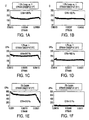
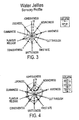
- a temperature sweep (gelation) a setting rate determination, frequency sweep ( Figure 2 ), strain sweep ( Figures 1A-1F ) and temperature sweep (melting) were measured.
- G'/in is read from the linear portion of the G' vs. Strain curve, and G'/in is the value, in Pa, at the linear portion of the curve.
- Example V shows rheological characteristics of certain Examples, including Examples 59-63.
- the examples were prepared as in Example 64, and the gelling agent was present at 1.2 wt% in each Example. That is, a solution having the following components (in parts per hundred by weight), was prepared for each example: fine sugar - 15.00; tri-potassium citrate, monohydrate - 0.30; calcium chloride, dihydrate - 0.15; citric acid, anhydrous - 0.20; gelling agent (carrageenan composition of the present invention or comparative carrageenan composition) - 1.20; and demineralized water - 83.15.
- the dry ingredients were weighed and mixed well and boiling water was added while stirring vigorously to form a solution. The solution was transferred hot to the cop of the Bohlin VOR rheometer and tested as described above.
- a second portion of the samples from Example 64 was poured into crystallizing dishes and allowed to cool and gel for measurement of textural properties outlined below.
- the gelling agent was present at 1.2 wt%.
- the gels were tested on a TA-XT2 Texture Analyzer, manufactured by Stable Micro Systems. This device was used for measurement of break strength, gel strength, break distance, and negative area.
- Break strength (BS) is the force (in grams) required to compress the gel to the point of break with a one inch diameter probe.
- Gel strength (GS) is the force (in grams) required to compress the gel to a predetermined depth of 2 mm, 8 mm, and 15 mm with a one inch diameter probe.
- Break distance is the distance (in mm) the probe travels to break a gel. In these experiments the probe speed is 1 mm/sec.
- Negative area (NA) is the area (g ⁇ sec) below the x-axis when a plot of force as a function of compression time is plotted as the probe is withdrawn from the sample (see Tables VI-VIII). Measurements at 5°C Sample GS, 2 mm GS, 15 mm BS BD NA Example 1 17.0 157.8 410.3 28.4 -3460.5 Compar.
- Figures 3 and 4 illustrate the results of the trained sensory panel testing of water gels consistent with Example 1, Comparative Example 1 and gelatin, as well as other examples consistent with the carrageenan compositions described.
- Figure 3 shows a comparison between gelatin and GENUGELTM WP-81.
- Figure 4 shows a comparison of dessert gels produced in accordance with Example 64.
- the amount used is 2 parts by weight.
- the gelling agent is 1.2 parts by weight, and comprises 93% carrageenan produced in accordance with Example 1, and 7% kappa carrageenan.
- the gelling agent is 0.462 parts by weight and comprises 53.7% carrageenan composition of Example 1,27.6% kappa carrageenan, and 18.6% locust bean gum.
- fine mesh (30 mesh) sugar is 15.738 parts by weight and demineralized water is 83.15 parts by weight.
- the gelling agent is 1.2 parts by weight, and the gelling agent comprises 100% of the carrageenan composition of Example 1.
- Example 1 is superior in performance to other carrageenans. as embodied in Comparative Example 1.
- the data for NA at 5 °C as well as at 25°C also show that carrageenan compositions according to the present invention show a higher degree of adhesiveness and that the other carrageenan, particularly at 5°C, shows substantially lower adhesiveness.
- the carrageenan compositions according to the present invention produce break strengths considerably closer to gelatin than the other carrageenans. and when comparing the change in break strength from 5°C to 25°C, it is seen that the carrageenan compositions according to the present invention show a substantially higher degree of temperature sensitivity than other carrageenans.
Landscapes
- Health & Medical Sciences (AREA)
- Chemical & Material Sciences (AREA)
- Life Sciences & Earth Sciences (AREA)
- Medicinal Chemistry (AREA)
- Animal Behavior & Ethology (AREA)
- Pharmacology & Pharmacy (AREA)
- Epidemiology (AREA)
- General Health & Medical Sciences (AREA)
- Public Health (AREA)
- Veterinary Medicine (AREA)
- Polymers & Plastics (AREA)
- Engineering & Computer Science (AREA)
- Food Science & Technology (AREA)
- Dispersion Chemistry (AREA)
- Inorganic Chemistry (AREA)
- Nutrition Science (AREA)
- Dermatology (AREA)
- Organic Chemistry (AREA)
- Chemical Kinetics & Catalysis (AREA)
- Cosmetics (AREA)
- Jellies, Jams, And Syrups (AREA)
- Polysaccharides And Polysaccharide Derivatives (AREA)
- Medicinal Preparation (AREA)
- Dairy Products (AREA)
- Fertilizers (AREA)
- Meat, Egg Or Seafood Products (AREA)
- Processing Of Solid Wastes (AREA)
- Confectionery (AREA)
- Biological Depolymerization Polymers (AREA)
- Pharmaceuticals Containing Other Organic And Inorganic Compounds (AREA)
- Preparation Of Compounds By Using Micro-Organisms (AREA)
- Agricultural Chemicals And Associated Chemicals (AREA)
Priority Applications (1)
| Application Number | Priority Date | Filing Date | Title |
|---|---|---|---|
| DK98943291T DK1115748T3 (da) | 1998-07-30 | 1998-08-27 | Carragenenansammensætninger og fremgangsmåde til deres fremstilling |
Applications Claiming Priority (3)
| Application Number | Priority Date | Filing Date | Title |
|---|---|---|---|
| US09/124,970 US6063915A (en) | 1998-07-30 | 1998-07-30 | Carrageenan compositions and methods for their production |
| US124970 | 1998-07-30 | ||
| PCT/US1998/017337 WO2000006609A1 (en) | 1998-07-30 | 1998-08-27 | Carrageenan compositions, and processes for their production |
Publications (2)
| Publication Number | Publication Date |
|---|---|
| EP1115748A1 EP1115748A1 (en) | 2001-07-18 |
| EP1115748B1 true EP1115748B1 (en) | 2004-10-20 |
Family
ID=22417653
Family Applications (1)
| Application Number | Title | Priority Date | Filing Date |
|---|---|---|---|
| EP98943291A Expired - Lifetime EP1115748B1 (en) | 1998-07-30 | 1998-08-27 | Carrageenan compositions, and processes for their production |
Country Status (17)
| Country | Link |
|---|---|
| US (1) | US6063915A (enExample) |
| EP (1) | EP1115748B1 (enExample) |
| JP (1) | JP4565745B2 (enExample) |
| KR (1) | KR100540103B1 (enExample) |
| CN (1) | CN1131271C (enExample) |
| AT (1) | ATE280184T1 (enExample) |
| AU (1) | AU760455B2 (enExample) |
| BR (1) | BR9815997B1 (enExample) |
| CA (1) | CA2338629C (enExample) |
| DE (1) | DE69827168T2 (enExample) |
| DK (1) | DK1115748T3 (enExample) |
| ES (1) | ES2232017T3 (enExample) |
| HK (1) | HK1040089B (enExample) |
| ID (1) | ID29540A (enExample) |
| MX (1) | MXPA01001050A (enExample) |
| PT (1) | PT1115748E (enExample) |
| WO (1) | WO2000006609A1 (enExample) |
Cited By (2)
| Publication number | Priority date | Publication date | Assignee | Title |
|---|---|---|---|---|
| WO2019137717A1 (en) | 2018-01-10 | 2019-07-18 | Cp Kelco Aps | Carrageenan-based compositions for films and capsules |
| IT202200026643A1 (it) * | 2022-12-23 | 2024-06-23 | Giulia Maria Donida | Materiale naturale biodegradabile e relativo uso nella produzione di stampi flessibili |
Families Citing this family (41)
| Publication number | Priority date | Publication date | Assignee | Title |
|---|---|---|---|---|
| US7022683B1 (en) | 1998-05-13 | 2006-04-04 | Carrington Laboratories, Inc. | Pharmacological compositions comprising pectins having high molecular weights and low degrees of methoxylation |
| GB2342030A (en) * | 1998-10-01 | 2000-04-05 | Nestle Sa | Confectionery containing iota-carrageenan |
| EP1181375A2 (en) * | 1999-05-10 | 2002-02-27 | CP Kelco APS | Sulfohydrolases, corresponding amino acid and nucleotide sequences, sulfohydrolase preparations, processes, and products thereof |
| US6387354B1 (en) * | 2000-03-06 | 2002-05-14 | Shemberg Marketing Corporation | Semi-refined carrageenan dentifrice binder |
| DE10033975B4 (de) * | 2000-07-06 | 2004-08-12 | Coty B.V. | Gelierte feste kosmetische Zusammensetzung mit spezifischer Rheologie und deren Verwendung |
| US6586032B2 (en) * | 2000-10-12 | 2003-07-01 | Cp Kelco U.S. Inc. | Gelatin-free gummy confection using gellan gum and carrageenan |
| US6479649B1 (en) | 2000-12-13 | 2002-11-12 | Fmc Corporation | Production of carrageenan and carrageenan products |
| US6777000B2 (en) * | 2001-02-28 | 2004-08-17 | Carrington Laboratories, Inc. | In-situ gel formation of pectin |
| US7494669B2 (en) * | 2001-02-28 | 2009-02-24 | Carrington Laboratories, Inc. | Delivery of physiological agents with in-situ gels comprising anionic polysaccharides |
| US7887838B2 (en) | 2002-01-18 | 2011-02-15 | Banner Pharmacaps, Inc. | Non-gelatin film and method and apparatus for producing same |
| US6949256B2 (en) | 2002-01-18 | 2005-09-27 | Banner Pharmacaps, Inc. | Non-gelatin capsule shell formulation |
| US20030161929A1 (en) * | 2002-02-28 | 2003-08-28 | Kuo-Liang Chen | Method for manufacturing cold/hot elastic gel |
| WO2004091537A2 (en) * | 2003-04-14 | 2004-10-28 | Fmc Corporation | Process for making gel films |
| US7816341B2 (en) * | 2003-04-14 | 2010-10-19 | Fmc Corporation | Homogeneous, thermoreversible gel containing reduced viscosity carrageenan and products made therefrom |
| US20050013847A1 (en) * | 2003-04-14 | 2005-01-20 | Fmc Corporation | Delivery systems of homogeneous, thermoreversible alginate films |
| US20050008677A1 (en) * | 2003-04-14 | 2005-01-13 | Fmc Corporation | Delivery system of homogeneous, thermoreversible gel film containing kappa-2 carrageenan |
| US20050048185A1 (en) * | 2003-04-14 | 2005-03-03 | Fmc Corporation | Delivery systems of homogeneous, thermoreversible low viscosity polymannan gum films |
| US20050019294A1 (en) * | 2003-04-14 | 2005-01-27 | Fmc Corporation | Homogeneous, thermoreversible alginate films and soft capsules made therefrom |
| US20050019295A1 (en) * | 2003-04-14 | 2005-01-27 | Fmc Corporation | Homogeneous, thermoreversible low viscosity polymannan gum films and soft capsules made therefrom |
| IES20030531A2 (en) | 2003-07-17 | 2005-09-21 | Medtronic Vascular Connaught | Methods and devices for placing a fistula device in fluid communication with a target vessel |
| US20060068074A1 (en) * | 2004-09-30 | 2006-03-30 | Stefandl Roland E | Shelf stable gelatinous product |
| CN100441629C (zh) * | 2004-11-24 | 2008-12-10 | 保能科技股份有限公司 | 胶囊组合物及其制备方法 |
| AU2006326266B2 (en) * | 2005-12-12 | 2009-02-12 | Unilever Plc | Concentrate for preparing a bouillon, soup, sauce, gravy or for use as a seasoning, the concentrate comprising particulates and xanthan and locust bean gum |
| CN101528194B (zh) * | 2006-09-26 | 2013-06-12 | 巴斯夫美容护理公司 | 用于化妆品中的海洋提取物和生物发酵物 |
| US20080317790A1 (en) * | 2007-06-25 | 2008-12-25 | Cp Kelco U.S., Inc. | Process for Treatment of Kappa Carrageenan |
| US20080317926A1 (en) * | 2007-06-25 | 2008-12-25 | Cp Kelco U.S., Inc. | Carrageenan Process |
| WO2009002817A1 (en) * | 2007-06-25 | 2008-12-31 | Cp Kelco U.S., Inc. | Carrageenan |
| US20080317791A1 (en) * | 2007-06-25 | 2008-12-25 | Cp Kelco U.S., Inc. | Kappa Carrageenan |
| US20080317927A1 (en) * | 2007-06-25 | 2008-12-25 | Cp Kelco U.S., Inc. | Process for Treatment of Kappa Carrageenan |
| US8268808B2 (en) * | 2007-06-25 | 2012-09-18 | Cp Kelco U.S., Inc. | Carrageenan and carrageenan-containing products |
| US20080317789A1 (en) * | 2007-06-25 | 2008-12-25 | Cp Kelco U.S., Inc. | Carrageenan Process |
| US8293285B2 (en) | 2008-03-14 | 2012-10-23 | Cp Kelco U.S., Inc. | Carrageenan modified by ion-exchange process |
| US9452135B2 (en) | 2012-03-20 | 2016-09-27 | Particle Dynamics International, Llc | Gelling agent-based dosage form |
| CN103018268B (zh) * | 2012-12-10 | 2015-06-03 | 广东海洋大学 | 一种利用低场nmr测定琼胶凝胶强度的方法 |
| KR102645438B1 (ko) * | 2018-10-29 | 2024-03-11 | (주)아모레퍼시픽 | 푸딩 제형의 화장료 조성물 및 이의 제조 방법 |
| CN109651653A (zh) * | 2018-11-20 | 2019-04-19 | 上海海洋大学 | 三维卡拉胶/海藻酸钠双网络结构凝胶球的制备方法 |
| CN115551460A (zh) * | 2020-05-29 | 2022-12-30 | 莱雅公司 | 用于清洁皮肤的可变形固体组合物 |
| US20230389583A1 (en) * | 2020-10-14 | 2023-12-07 | Dupont Nutrition Biosciences Aps | Food ingredient |
| CN116456839A (zh) * | 2020-10-14 | 2023-07-18 | 杜邦营养生物科学有限公司 | 食品成分 |
| CN116531343B (zh) * | 2023-05-16 | 2023-12-01 | 秦皇岛稷中食品有限公司 | 一种含卡拉胶的胶凝组合物及其制备方法 |
| US20250288841A1 (en) * | 2024-03-14 | 2025-09-18 | Black Finch Group, LLC | Fire retardant compositions and products and methods for preparing the same |
Family Cites Families (20)
| Publication number | Priority date | Publication date | Assignee | Title |
|---|---|---|---|---|
| US2624727A (en) * | 1947-12-09 | 1953-01-06 | Algin Corp Of America | Recovery of seaweed mucilage |
| US2620335A (en) * | 1949-12-08 | 1952-12-02 | Kraft Foods Co | Process of extraction from irish moss |
| US3094517A (en) * | 1958-12-29 | 1963-06-18 | Marine Colloids Inc | Process for treating a polysaccharide of seaweeds of the gigartinaceae and solieriaceae families |
| US3176003A (en) * | 1961-08-15 | 1965-03-30 | Marine Colloids Inc | Selective extraction of hydrocolloid fractions from sea plants |
| US3342612A (en) * | 1965-01-26 | 1967-09-19 | Marine Colloids Inc | Dessert gel |
| US3556810A (en) * | 1969-05-14 | 1971-01-19 | Marine Colloids Inc | Dessert gel and gelling agent therefor |
| CA991171A (en) * | 1973-02-05 | 1976-06-15 | Uniroyal Ltd. | Process of extracting carrageenan from seaweed |
| US4276320A (en) * | 1980-01-25 | 1981-06-30 | Fmc Corporation | Compositions and method for preparing dessert gels |
| JPS57131202A (en) * | 1981-02-06 | 1982-08-14 | Mitsubishi Rayon Co Ltd | Production of carrageenan |
| JPS59113002A (ja) * | 1982-12-21 | 1984-06-29 | Mitsubishi Acetate Co Ltd | カラギ−ナンの製造法 |
| CN85104000B (zh) * | 1985-05-21 | 1988-02-17 | 中国科学院广州化学研究所 | 制造卡拉胶改良法 |
| GB8628068D0 (en) * | 1986-11-24 | 1986-12-31 | Unilever Plc | Aqueous gel comprising carrageenan |
| JPS647602A (en) * | 1987-06-30 | 1989-01-11 | Matsushita Electric Industrial Co Ltd | Variable resistor |
| JPS647081A (en) * | 1987-06-30 | 1989-01-11 | Toshiba Corp | Developing device |
| JPS6459282A (en) * | 1987-08-31 | 1989-03-06 | Toshiba Corp | Waste toner recovering mechanism for image forming device |
| JPH0768102B2 (ja) * | 1990-05-21 | 1995-07-26 | 新田ゼラチン株式会社 | 化粧料用の添加剤の製造方法および化粧料 |
| EP0480305A1 (en) * | 1990-10-11 | 1992-04-15 | Abbott Laboratories | Liquid nutritional products containing iota-carrageenan |
| CN1023605C (zh) * | 1991-06-02 | 1994-01-26 | 范炳基 | 卡拉胶制造方法的改进 |
| US5502179A (en) * | 1993-04-06 | 1996-03-26 | Grinsted Products A/S (Danisco A/S) | Carrageenan product and a method of producing same |
| CN1037067C (zh) * | 1994-05-27 | 1998-01-21 | 华东理工大学 | 从卡拉胶混合物中提纯k-卡拉胶的方法 |
-
1998
- 1998-07-30 US US09/124,970 patent/US6063915A/en not_active Expired - Lifetime
- 1998-08-27 CN CN98814248A patent/CN1131271C/zh not_active Expired - Lifetime
- 1998-08-27 MX MXPA01001050A patent/MXPA01001050A/es unknown
- 1998-08-27 DK DK98943291T patent/DK1115748T3/da active
- 1998-08-27 ES ES98943291T patent/ES2232017T3/es not_active Expired - Lifetime
- 1998-08-27 CA CA002338629A patent/CA2338629C/en not_active Expired - Lifetime
- 1998-08-27 JP JP2000562405A patent/JP4565745B2/ja not_active Expired - Fee Related
- 1998-08-27 WO PCT/US1998/017337 patent/WO2000006609A1/en not_active Ceased
- 1998-08-27 PT PT98943291T patent/PT1115748E/pt unknown
- 1998-08-27 DE DE69827168T patent/DE69827168T2/de not_active Expired - Lifetime
- 1998-08-27 BR BRPI9815997-6A patent/BR9815997B1/pt not_active IP Right Cessation
- 1998-08-27 KR KR1020017001202A patent/KR100540103B1/ko not_active Expired - Lifetime
- 1998-08-27 ID IDW20010473A patent/ID29540A/id unknown
- 1998-08-27 HK HK02101547.4A patent/HK1040089B/zh not_active IP Right Cessation
- 1998-08-27 EP EP98943291A patent/EP1115748B1/en not_active Expired - Lifetime
- 1998-08-27 AU AU91120/98A patent/AU760455B2/en not_active Expired
- 1998-08-27 AT AT98943291T patent/ATE280184T1/de active
Cited By (3)
| Publication number | Priority date | Publication date | Assignee | Title |
|---|---|---|---|---|
| WO2019137717A1 (en) | 2018-01-10 | 2019-07-18 | Cp Kelco Aps | Carrageenan-based compositions for films and capsules |
| IT202200026643A1 (it) * | 2022-12-23 | 2024-06-23 | Giulia Maria Donida | Materiale naturale biodegradabile e relativo uso nella produzione di stampi flessibili |
| WO2024134589A1 (en) * | 2022-12-23 | 2024-06-27 | Donida Giulia Maria | Natural biodegradable material and its use in the production of flexible moulds |
Also Published As
| Publication number | Publication date |
|---|---|
| CN1131271C (zh) | 2003-12-17 |
| CA2338629C (en) | 2008-02-19 |
| CA2338629A1 (en) | 2000-02-10 |
| KR20010074786A (ko) | 2001-08-09 |
| HK1040089A1 (en) | 2002-05-24 |
| AU760455B2 (en) | 2003-05-15 |
| DK1115748T3 (da) | 2005-02-14 |
| HK1040089B (zh) | 2004-10-08 |
| KR100540103B1 (ko) | 2006-01-16 |
| PT1115748E (pt) | 2005-01-31 |
| JP4565745B2 (ja) | 2010-10-20 |
| BR9815997A (pt) | 2001-05-08 |
| ATE280184T1 (de) | 2004-11-15 |
| US6063915A (en) | 2000-05-16 |
| AU9112098A (en) | 2000-02-21 |
| EP1115748A1 (en) | 2001-07-18 |
| DE69827168D1 (de) | 2004-11-25 |
| BR9815997B1 (pt) | 2011-05-31 |
| WO2000006609A1 (en) | 2000-02-10 |
| ES2232017T3 (es) | 2005-05-16 |
| ID29540A (id) | 2001-09-06 |
| MXPA01001050A (es) | 2002-08-20 |
| DE69827168T2 (de) | 2006-02-23 |
| CN1310725A (zh) | 2001-08-29 |
| JP2002521054A (ja) | 2002-07-16 |
Similar Documents
| Publication | Publication Date | Title |
|---|---|---|
| US6063915A (en) | Carrageenan compositions and methods for their production | |
| Stephen et al. | Gums and mucilages | |
| Stanley | 7 Agars | |
| US6242035B1 (en) | Reduced molecular weight native gellan gum | |
| Buchholt et al. | Preparation and properties of enzymatically and chemically modified sugar beet pectins | |
| Majdoub et al. | Polysaccharides from prickly pear peel and nopals of Opuntia ficus‐indica: extraction, characterization and polyelectrolyte behaviour | |
| Goycoolea et al. | Pectins from Opuntia spp.: A short review | |
| Salarbashi et al. | An update on physicochemical and functional properties of newly seed gums | |
| BRPI0720297A2 (pt) | Gomas gelana clarificadas de altíssimo desempenho | |
| US11272725B2 (en) | Low methoxyl pectin from jelly fig and method for producing the same | |
| Wang et al. | Physicochemical and rheological properties of pomelo albedo pectin and its interaction with konjac glucomannan | |
| Kurt | Salep glucomannan: properties and applications | |
| BRPI0312418B1 (pt) | Processo para produzir pectina com baixo teor de éster, pectina amidada obtida pelo mesmo e seus usos | |
| Williams et al. | 13 gums and mucilages | |
| Dasaesamoh et al. | Extraction and enzymatic depolymerization of gum from Artocarpus heterophyllus Lam. seeds | |
| CN103006458A (zh) | 保护皮肤的碱度控制组合物及其应用 | |
| Besson et al. | Cinnamon apple pectins: Structural and rheological properties | |
| EP4223144B1 (de) | Verwendung einer aktivierbaren, entesterten, pektin-konvertierten fruchtfaser zur herstellung einer kochpökelware | |
| JP7455990B2 (ja) | ヒアルロン酸粉末 | |
| Laksono et al. | THE IMPACT OF ISOPROPYL ALCOHOL AND POTASSIUM CHLORIDE ON THE PRECIPITATION OF ENZYMATICALLY EXTRACTED CARRAGEENAN FROM Kappaphycus striatum | |
| SUSANTI et al. | Current Research in Nutrition and Food Science | |
| Dhull et al. | ingredient with promising properties and applications in food and pharmaceuticals—A review | |
| AGAR | Nagano State Research Laboratory of Food Technology Nagano, Japan | |
| MXPA01005139A (en) | Reduced molecular weight native gellan gum | |
| Yaseen | Rheological and surface properties of hydrocolloids in solution |
Legal Events
| Date | Code | Title | Description |
|---|---|---|---|
| PUAI | Public reference made under article 153(3) epc to a published international application that has entered the european phase |
Free format text: ORIGINAL CODE: 0009012 |
|
| 17P | Request for examination filed |
Effective date: 20010129 |
|
| AK | Designated contracting states |
Kind code of ref document: A1 Designated state(s): AT BE CH CY DE DK ES FI FR GB GR IE IT LI LU MC NL PT SE |
|
| RAP1 | Party data changed (applicant data changed or rights of an application transferred) |
Owner name: CP KELCO APS |
|
| GRAP | Despatch of communication of intention to grant a patent |
Free format text: ORIGINAL CODE: EPIDOSNIGR1 |
|
| GRAS | Grant fee paid |
Free format text: ORIGINAL CODE: EPIDOSNIGR3 |
|
| GRAA | (expected) grant |
Free format text: ORIGINAL CODE: 0009210 |
|
| AK | Designated contracting states |
Kind code of ref document: B1 Designated state(s): AT BE CH CY DE DK ES FI FR GB GR IE IT LI LU MC NL PT SE |
|
| PG25 | Lapsed in a contracting state [announced via postgrant information from national office to epo] |
Ref country code: LI Free format text: LAPSE BECAUSE OF FAILURE TO SUBMIT A TRANSLATION OF THE DESCRIPTION OR TO PAY THE FEE WITHIN THE PRESCRIBED TIME-LIMIT Effective date: 20041020 Ref country code: FI Free format text: LAPSE BECAUSE OF FAILURE TO SUBMIT A TRANSLATION OF THE DESCRIPTION OR TO PAY THE FEE WITHIN THE PRESCRIBED TIME-LIMIT Effective date: 20041020 Ref country code: CH Free format text: LAPSE BECAUSE OF FAILURE TO SUBMIT A TRANSLATION OF THE DESCRIPTION OR TO PAY THE FEE WITHIN THE PRESCRIBED TIME-LIMIT Effective date: 20041020 |
|
| REG | Reference to a national code |
Ref country code: GB Ref legal event code: FG4D |
|
| REG | Reference to a national code |
Ref country code: CH Ref legal event code: EP |
|
| REG | Reference to a national code |
Ref country code: IE Ref legal event code: FG4D |
|
| REF | Corresponds to: |
Ref document number: 69827168 Country of ref document: DE Date of ref document: 20041125 Kind code of ref document: P |
|
| PG25 | Lapsed in a contracting state [announced via postgrant information from national office to epo] |
Ref country code: SE Free format text: LAPSE BECAUSE OF FAILURE TO SUBMIT A TRANSLATION OF THE DESCRIPTION OR TO PAY THE FEE WITHIN THE PRESCRIBED TIME-LIMIT Effective date: 20050120 Ref country code: GR Free format text: LAPSE BECAUSE OF FAILURE TO SUBMIT A TRANSLATION OF THE DESCRIPTION OR TO PAY THE FEE WITHIN THE PRESCRIBED TIME-LIMIT Effective date: 20050120 |
|
| REG | Reference to a national code |
Ref country code: PT Ref legal event code: SC4A Effective date: 20041112 |
|
| REG | Reference to a national code |
Ref country code: DK Ref legal event code: T3 |
|
| REG | Reference to a national code |
Ref country code: CH Ref legal event code: PL |
|
| REG | Reference to a national code |
Ref country code: ES Ref legal event code: FG2A Ref document number: 2232017 Country of ref document: ES Kind code of ref document: T3 |
|
| ET | Fr: translation filed | ||
| PG25 | Lapsed in a contracting state [announced via postgrant information from national office to epo] |
Ref country code: CY Free format text: LAPSE BECAUSE OF FAILURE TO SUBMIT A TRANSLATION OF THE DESCRIPTION OR TO PAY THE FEE WITHIN THE PRESCRIBED TIME-LIMIT Effective date: 20050827 |
|
| PLBE | No opposition filed within time limit |
Free format text: ORIGINAL CODE: 0009261 |
|
| STAA | Information on the status of an ep patent application or granted ep patent |
Free format text: STATUS: NO OPPOSITION FILED WITHIN TIME LIMIT |
|
| 26N | No opposition filed |
Effective date: 20050721 |
|
| PGFP | Annual fee paid to national office [announced via postgrant information from national office to epo] |
Ref country code: IE Payment date: 20130826 Year of fee payment: 16 Ref country code: LU Payment date: 20130906 Year of fee payment: 16 Ref country code: AT Payment date: 20130801 Year of fee payment: 16 Ref country code: MC Payment date: 20130801 Year of fee payment: 16 Ref country code: PT Payment date: 20130227 Year of fee payment: 16 |
|
| PGFP | Annual fee paid to national office [announced via postgrant information from national office to epo] |
Ref country code: BE Payment date: 20130827 Year of fee payment: 16 |
|
| REG | Reference to a national code |
Ref country code: PT Ref legal event code: MM4A Free format text: LAPSE DUE TO NON-PAYMENT OF FEES Effective date: 20150227 |
|
| PG25 | Lapsed in a contracting state [announced via postgrant information from national office to epo] |
Ref country code: MC Free format text: LAPSE BECAUSE OF NON-PAYMENT OF DUE FEES Effective date: 20140901 Ref country code: LU Free format text: LAPSE BECAUSE OF NON-PAYMENT OF DUE FEES Effective date: 20140827 |
|
| REG | Reference to a national code |
Ref country code: AT Ref legal event code: MM01 Ref document number: 280184 Country of ref document: AT Kind code of ref document: T Effective date: 20140827 |
|
| PG25 | Lapsed in a contracting state [announced via postgrant information from national office to epo] |
Ref country code: PT Free format text: LAPSE BECAUSE OF NON-PAYMENT OF DUE FEES Effective date: 20150227 Ref country code: BE Free format text: LAPSE BECAUSE OF NON-PAYMENT OF DUE FEES Effective date: 20140831 |
|
| REG | Reference to a national code |
Ref country code: IE Ref legal event code: MM4A |
|
| PG25 | Lapsed in a contracting state [announced via postgrant information from national office to epo] |
Ref country code: AT Free format text: LAPSE BECAUSE OF NON-PAYMENT OF DUE FEES Effective date: 20140827 |
|
| PG25 | Lapsed in a contracting state [announced via postgrant information from national office to epo] |
Ref country code: IE Free format text: LAPSE BECAUSE OF NON-PAYMENT OF DUE FEES Effective date: 20140827 |
|
| REG | Reference to a national code |
Ref country code: FR Ref legal event code: PLFP Year of fee payment: 19 |
|
| REG | Reference to a national code |
Ref country code: FR Ref legal event code: PLFP Year of fee payment: 20 |
|
| PGFP | Annual fee paid to national office [announced via postgrant information from national office to epo] |
Ref country code: NL Payment date: 20170818 Year of fee payment: 20 |
|
| PGFP | Annual fee paid to national office [announced via postgrant information from national office to epo] |
Ref country code: FR Payment date: 20170830 Year of fee payment: 20 Ref country code: IT Payment date: 20170817 Year of fee payment: 20 Ref country code: ES Payment date: 20170913 Year of fee payment: 20 Ref country code: DE Payment date: 20170831 Year of fee payment: 20 Ref country code: GB Payment date: 20170731 Year of fee payment: 20 |
|
| PGFP | Annual fee paid to national office [announced via postgrant information from national office to epo] |
Ref country code: DK Payment date: 20170831 Year of fee payment: 20 |
|
| REG | Reference to a national code |
Ref country code: DE Ref legal event code: R071 Ref document number: 69827168 Country of ref document: DE |
|
| REG | Reference to a national code |
Ref country code: NL Ref legal event code: MK Effective date: 20180826 |
|
| REG | Reference to a national code |
Ref country code: DK Ref legal event code: EUP Effective date: 20180827 |
|
| REG | Reference to a national code |
Ref country code: GB Ref legal event code: PE20 Expiry date: 20180826 |
|
| PG25 | Lapsed in a contracting state [announced via postgrant information from national office to epo] |
Ref country code: GB Free format text: LAPSE BECAUSE OF EXPIRATION OF PROTECTION Effective date: 20180826 |
|
| REG | Reference to a national code |
Ref country code: ES Ref legal event code: FD2A Effective date: 20200721 |
|
| PG25 | Lapsed in a contracting state [announced via postgrant information from national office to epo] |
Ref country code: ES Free format text: LAPSE BECAUSE OF EXPIRATION OF PROTECTION Effective date: 20180828 |