EP1106689A2 - Nukleinsäuren, die für Acetylcholinrezeptor-beta-Untereinheiten für Insekten kodieren - Google Patents
Nukleinsäuren, die für Acetylcholinrezeptor-beta-Untereinheiten für Insekten kodieren Download PDFInfo
- Publication number
- EP1106689A2 EP1106689A2 EP00125300A EP00125300A EP1106689A2 EP 1106689 A2 EP1106689 A2 EP 1106689A2 EP 00125300 A EP00125300 A EP 00125300A EP 00125300 A EP00125300 A EP 00125300A EP 1106689 A2 EP1106689 A2 EP 1106689A2
- Authority
- EP
- European Patent Office
- Prior art keywords
- nucleic acid
- host cell
- sequence
- sequences
- polypeptide
- Prior art date
- Legal status (The legal status is an assumption and is not a legal conclusion. Google has not performed a legal analysis and makes no representation as to the accuracy of the status listed.)
- Withdrawn
Links
Images

Classifications
-
- C—CHEMISTRY; METALLURGY
- C07—ORGANIC CHEMISTRY
- C07K—PEPTIDES
- C07K14/00—Peptides having more than 20 amino acids; Gastrins; Somatostatins; Melanotropins; Derivatives thereof
- C07K14/435—Peptides having more than 20 amino acids; Gastrins; Somatostatins; Melanotropins; Derivatives thereof from animals; from humans
- C07K14/705—Receptors; Cell surface antigens; Cell surface determinants
- C07K14/70571—Receptors; Cell surface antigens; Cell surface determinants for neuromediators, e.g. serotonin receptor, dopamine receptor
-
- C—CHEMISTRY; METALLURGY
- C07—ORGANIC CHEMISTRY
- C07K—PEPTIDES
- C07K14/00—Peptides having more than 20 amino acids; Gastrins; Somatostatins; Melanotropins; Derivatives thereof
- C07K14/435—Peptides having more than 20 amino acids; Gastrins; Somatostatins; Melanotropins; Derivatives thereof from animals; from humans
- C07K14/43504—Peptides having more than 20 amino acids; Gastrins; Somatostatins; Melanotropins; Derivatives thereof from animals; from humans from invertebrates
- C07K14/43563—Peptides having more than 20 amino acids; Gastrins; Somatostatins; Melanotropins; Derivatives thereof from animals; from humans from invertebrates from insects
- C07K14/43577—Peptides having more than 20 amino acids; Gastrins; Somatostatins; Melanotropins; Derivatives thereof from animals; from humans from invertebrates from insects from flies
- C07K14/43581—Peptides having more than 20 amino acids; Gastrins; Somatostatins; Melanotropins; Derivatives thereof from animals; from humans from invertebrates from insects from flies from Drosophila
-
- A—HUMAN NECESSITIES
- A01—AGRICULTURE; FORESTRY; ANIMAL HUSBANDRY; HUNTING; TRAPPING; FISHING
- A01K—ANIMAL HUSBANDRY; AVICULTURE; APICULTURE; PISCICULTURE; FISHING; REARING OR BREEDING ANIMALS, NOT OTHERWISE PROVIDED FOR; NEW BREEDS OF ANIMALS
- A01K2217/00—Genetically modified animals
- A01K2217/05—Animals comprising random inserted nucleic acids (transgenic)
Definitions
- the invention relates to nucleic acids for acetylcholine receptor ⁇ subunits of insects, as well as polypeptides, which the biological function of such Exercise acetylcholine receptor ⁇ subunits, and especially their use to find active ingredients for crop protection.
- Nicotinic acetylcholine receptors are ligand-gated ion channels, one Play a role in neurotransmission in the animal kingdom.
- the binding of acetylcholine or other agonists to the receptor causes a temporary opening of the channel and allows the flow of cations.
- Receptor consists of five subunits, which are grouped around a pore. Each this subunit is a protein that consists of an extracellular N-terminal part consists of three transmembrane regions, an intracellular part, and a fourth transmembrane region and a short extracellular C-terminal Part. Certain subunits carry the binding site on their extracellular part for ligands such as acetylcholine.
- Acetylcholine receptors have been well studied, especially in vertebrates. Based on their anatomical location and their functional properties (conduction properties of the channel, desensitization, sensitivity to agonists and antagonists, as well as to toxins such as ⁇ -bungarotoxin), three groups can be distinguished. The classification correlates with the molecular composition of the receptors. There are heterooligomeric receptors with the subunit composition ⁇ 2 ⁇ that occur in muscle (Noda et al. 1982, Claudio et al. 1983, Devillers-Thiery et al. 1983, Noda et al.
- heterooligomeric receptors the subunits from the group ⁇ 2 - ⁇ 6 and ⁇ 2 - ⁇ 4, and which occur in the nervous system (Schoepfer et al. 1990, Heinemann et al. 1997), as well as homooligomeric receptors that contain subunits from the group ⁇ 7 - ⁇ 9, and also in the nervous system occur (Lindstrom et al. 1997, Elgoyhen et al. 1997). This division is also supported by considering the relationship of the gene sequences of the various subunits. Typically, the sequences of functionally homologous subunits from different species are more similar than sequences from subunits from different groups but of the same species.
- acetylcholine receptor subunits are not only somewhat similar to one another, but also to those of some other ligand-gated ion channels (e.g. the 5HT 3 serotonin receptors, the GABA-gated chloride channels, the glycine-gated chloride channels). It is therefore assumed that all of these receptors are derived from a common precursor and are classified in a supergene family (Ortells et al. 1995).
- Acetylcholine is the most important excitatory neurotransmitter in insects central nervous system. Accordingly, acetylcholine receptors can be turned on Detect specimens of central ganglia from insects electrophysiologically. The Detection succeeds at both post- and presynaptic nerve endings as well as on the cell bodies of interneurons, motor neurons and modulatory Neurons (Breer et al. 1987, Buckingham et al. 1997). There are among the receptors those that are inhibited by ⁇ -bungarotoxin and those that are insensitive (Schleton et al. 1988). The acetylcholine receptors are also the molecular ones Target of important natural (e.g. nicotine) and synthetic insecticides (e.g. Chloronicotinyls).
- important natural e.g. nicotine
- synthetic insecticides e.g. Chloronicotinyls
- nicotinic receptors from insects has proven to be proven more difficult than that of the analogue receptors from vertebrates or C. elegans. So far, it has generally not been possible to use nicotinic receptors consist only of subunits of insects, so that their express functional properties such as Sensitivity of those of natural receptors same (Amar et al. 1995, Hermsen et al. 1998, Sgard et al. 1998). At least however, some ⁇ subunits from different insect species contribute to one functional receptor when, instead of an insect ⁇ subunit, a ⁇ 2 subunit of the chicken is coexpressed in Xenopus oocytes (Marshall et al. 1990, Schulz et al. 1998, Matsuda et al. 1998). This, and the fact that im essentially only one beta subunit is known from insects, suggests to the presence of further, previously unknown ⁇ subunits.
- the present invention is therefore based in particular on the object to provide nucleic acids for new acetylcholine receptor ⁇ subunits of insects. These new nucleic acids are said to enable recombinant expression of nicotinic acetylcholine receptors, which consist only of subunits of insects.
- the nucleic acids according to the invention are in particular single-stranded or double-stranded deoxyribonucleic acids (DNA) or ribonucleic acids (RNA).
- DNA deoxyribonucleic acids
- RNA ribonucleic acids
- Preferred embodiments are fragments of genomic DNA, which can contain introns, and cDNAs.
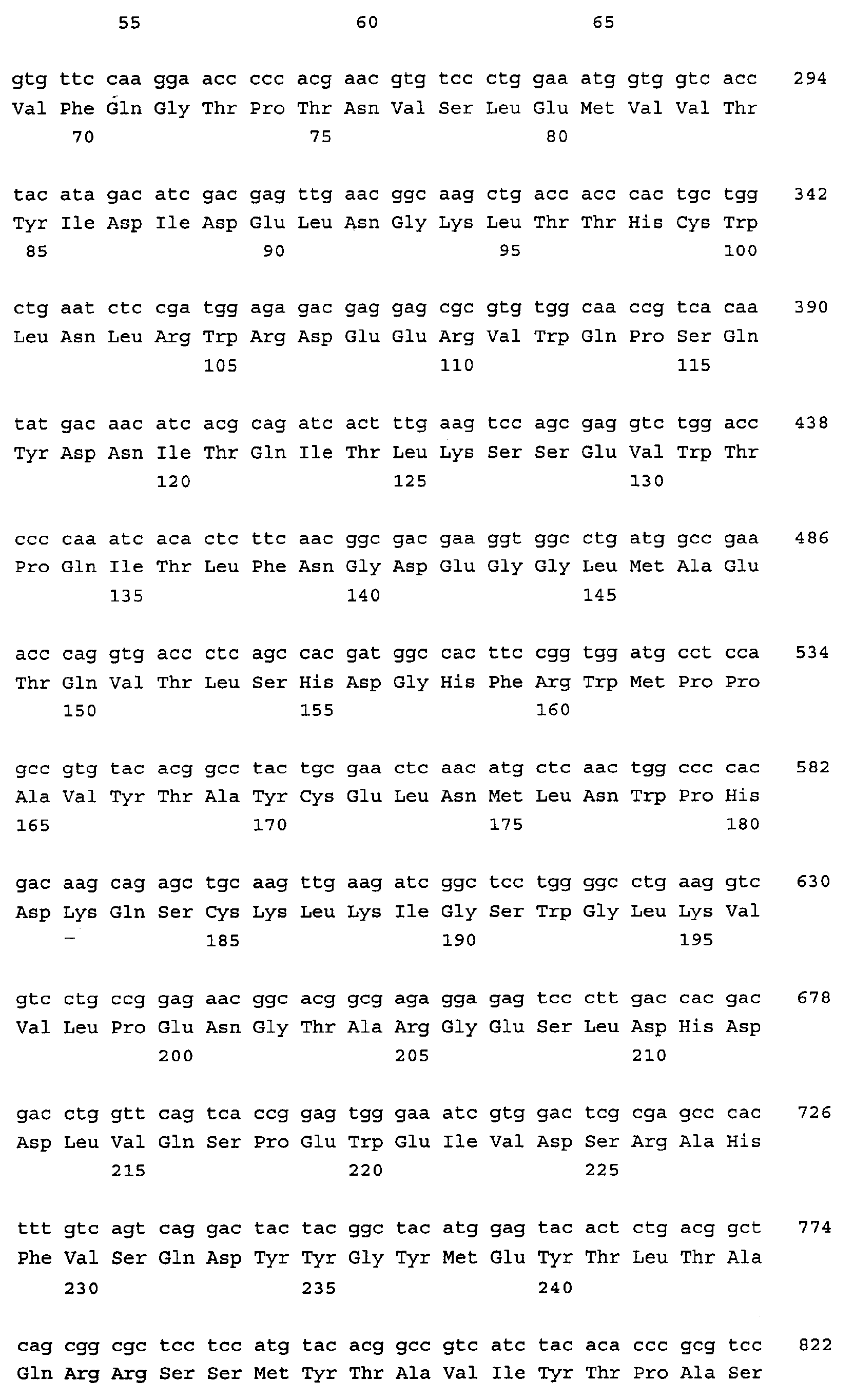
- a preferred embodiment of the nucleic acids according to the invention is the cDNA which has the nucleic acid sequence according to SEQ ID NO: 1.
- the degree of identity of the nucleic acid sequences is preferably determined using Help of the program GAP from the program package GCG, version 10.0 under Standard settings (Devereux et al. 1984).
- hybridize describes the process in which a single-stranded nucleic acid molecule with a complementary Strand paired.
- DNA fragments from others Insects are isolated as Drosophila melanogaster, which are responsible for the polypeptides with the encode biological function of acetylcholine receptor ⁇ subunits.
- the present invention encompasses nucleic acids, at least one 70% identity, preferably an at least 80% identity, particularly preferred an at least 90% identity, very particularly preferably at least one 95% identity, with the sequence between position 43 and position 1368 of the Sequence according to SEQ ID NO: 1 preferably over a length of at least 100, particularly preferably at least 500 consecutive nucleotides and very particularly preferably have over the entire length.
- the invention furthermore relates to vectors which contain at least one of the nucleic acids according to the invention.
- All plasmids, phasmids, cosmids, YACs or artificial chromosomes used in molecular biological laboratories can be used as vectors.
- the nucleic acid according to the invention it can be linked to conventional regulatory sequences. The selection of such regulatory sequences depends on whether pro- or eukaryotic cells or cell-free systems are used for expression.
- the expression control sequence are, for example, the early or late promoter of SV40 or adenovirus, cytomegalovirus, the lac system, the trp system, the main operator and promoter regions of phage lambda, the control regions of the fd coat protein, the promoter the 3-phosphoglycerate kinase, the promoter of the acid phosphatase and the promoter of the ⁇ -mating factor of the yeast, the immediate early promoter from baculovirus, the metallothionine promoter from Drosophila melanogaster.
- prokaryotic cells are suitable as host cells, preferably E. coli, as well as eukaryotic cells, preferably mammalian or insect cells.
- eukaryotic cells preferably mammalian or insect cells.
- suitable unicellular host cells are: Pseudomonas, Bacillus, Streptomyces, yeast, HEK-293, Schneider S2, SF9, CHO-, COS1-, COS7-, Cells, plant cells in cell culture and amphibian cells, especially oocytes.
- the present invention also relates to the polypeptides derived from the invention Nucleic acid can be encoded.
- the present invention furthermore relates to polypeptides which contain a Amino acid sequence comprising an at least 40% identity, preferably an at least 60% identity, particularly preferably an at least 80% identity, with the sequence according to SEQ ID NO: 2 over a length of at least 20, preferably at least 25, particularly preferably at least 30 consecutive Amino acids and very particularly preferably have over the entire length.
- the degree of identity of the amino acid sequences is preferably determined using Help of the program GAP from the program package GCG, version 10.0 under Standard settings (Devereux et al. 1984).
- the present invention further relates to acetylcholine receptors which comprise polypeptides according to the invention.
- polypeptides refers to both short amino acid chains, commonly called peptides, oligopeptides, or oligomers are referred to, as well as to longer amino acid chains, usually called Proteins are called. It includes amino acid chains that are either natural Processes, such as post-translational processing, or by chemical processes, which are state of the art, can be modified. Such modifications can occur in different locations and multiple times in a polypeptide, such as for example on the peptide backbone, on the amino acid side chain, on the amino and / or at the carboxy terminus.
- acetylations include, for example, acetylations, Acylations, ADP ribosylations, amidations, covalent linkages with Flavins, heme components, nucleotides or nucleotide derivatives, lipids or lipid derivatives or phosphatidylinositol, cyclizations, disulfide bridging, Demethylation, cystine formation, formylation, gamma-carboxylation, Glycosylations, hydroxylations, iodinations, methylations, myristylations, Oxidations, proteolytic processing, phosphorylation, Selenylation and tRNA-mediated addition of amino acids.
- polypeptides according to the invention can be in the form of "mature” proteins or as Parts of larger proteins, e.g. as fusion proteins. Furthermore, they can Secreting or "leader” sequences, pro sequences, sequences that are simple Allow purification, such as multiple histidine residues, or additional stabilizing ones Have amino acids.
- polypeptides according to the invention do not have to be complete acetylcholine receptor ⁇ subunits represent, but can only be fragments of it as long at least the biological function of the complete subunits can exercise.
- polypeptides of the invention do not have to be of acetylcholine receptor ⁇ subunits can be derived from Drosophila melanogaster. As according to the invention also consider polypeptides that contain acetylcholine receptor ⁇ subunits of other insects or fragments thereof that are still biological Can perform the function of these subunits.
- biological function of an acetylcholine receptor beta subunit means participating in building functional ones Acetylcholine receptors, i.e. the ability to interact with other receptor subunits to be able to interact.
- a preferred embodiment of the polypeptides according to the invention is a Acetylcholine receptor ⁇ subunit from Drosophila melanogaster, which is the Has amino acid sequence according to SEQ ID NO: 2.
- the present invention furthermore relates to methods for producing the polypeptides according to the invention.
- the nucleic acid according to the invention can be encoded, host cells which contain the inventive Contain nucleic acid, can be cultivated under suitable conditions. The desired polypeptides can then be removed from the cells or in the usual way be isolated from the culture medium.
- a rapid method for isolating the polypeptides of the invention begins with the expression of a fusion protein, the fusion partner can be easily cleaned of affinity.
- the fusion partner can, for example Be glutathione S-transferase.
- the fusion protein can then on one Glutathione affinity column can be purified.
- the merger partner can by partial proteolytic cleavage, for example, on linkers between the fusion partner and the polypeptide of the invention to be purified.
- the linker can be designed to target amino acids such as arginine and lysine residues includes defining sites for trypsin cleavage. About such linkers can generate standard cloning methods using oligonucleotides be applied.
- the purification of the polypeptides according to the invention can isolate Membranes starting from host cells which contain the nucleic acids according to the invention express, include. Such cells preferably express those of the invention Polypeptides in a sufficient number of copies so that the amount of Polypeptides in a membrane fraction is at least 10 times higher than that in comparable membranes of cells are found, the acetylcholine receptors express naturally; the amount is particularly preferably at least 100 times, very particularly preferably at least 1000 times higher.
- insulation or cleaning means that the polypeptides according to the invention from other proteins or other macromolecules of the cell or tissue are separated.
- polypeptides according to the invention can also be used without fusion partners using Antibodies that bind to the polypeptides are affinity purified.
- the invention furthermore relates to antibodies which are specific to the above bind mentioned polypeptides or receptors.
- Such antibodies are produced in the usual way.
- such antibodies can be produced are injected with a substantially immunocompetent host with a for the antibody production effective amount of an acetylcholine receptor polypeptide according to the invention or a fragment thereof and by subsequent extraction of this antibody.
- one can in a manner known per se receive immortalized cell line that produces monoclonal antibodies.
- the Antibodies can optionally be labeled with a detection reagent.
- Preferred examples of such a detection reagent are enzymes, radioactive labeled elements, fluorescent chemicals or biotin.
- the full Antibody can also be used fragments that have the desired possess specific binding properties.
- the nucleic acid according to the invention can in particular be used to produce transgenic Invertebrates can be used. These can be used in test systems that on a wild-type expression of the receptors according to the invention or variants thereof. This also includes all transgenic invertebrates, where by modifying other genes or gene control sequences (Promoters) a change in the expression of the receptors according to the invention or their variants occur.
- transgenic invertebrates are produced, for example, in Drosophila melanogaster by P-element-mediated gene transfer (Hay et al. 1997) or in Caenorhabditis elegans by transposon-mediated gene transfer (e.g. by Tcl, Plasterk 1996).
- the invention thus also relates to transgenic invertebrates which have at least one of the nucleic acids according to the invention preferably contain transgenic invertebrates of the species Drosophila melanogaster or Caenorhabditis elegans, and their transgenic Progeny.
- the transgenic invertebrates preferably contain those according to the invention Receptors in a form that differs from the wild type.
- the nucleic acid according to the invention can be produced in the usual way.
- the nucleic acid molecule can be completely chemically synthesized. It is also possible to chemically synthesize only short pieces of the sequence according to the invention and to label such oligonucleotides radioactively or with a fluorescent dye.
- the labeled oligonucleotides can be used to search cDNA libraries made from insect mRNA. Clones to which the labeled oligonucleotides hybridize are selected to isolate the DNA in question. After characterizing the isolated DNA, the nucleic acid according to the invention is obtained in a simple manner.
- the nucleic acid according to the invention can also be used by means of PCR methods chemically synthesized oligonucleotides.
- oligonucleotide (s) as used herein means DNA molecules, which consist of 10 to 50 nucleotides, preferably 15 to 30 nucleotides. They are chemically synthesized and can be used as probes.
- the nucleic acid according to the invention can be used to isolate and characterize the regulatory regions that are naturally adjacent to the coding region occur. Such regulatory regions are therefore also Subject of the present invention.
- nucleic acid With the help of the nucleic acid according to the invention, new active ingredients for the Plant protection or active pharmaceutical ingredients for the treatment of humans and / or animal, such as compounds which act as modulators, in particular as agonists or antagonists, the conduction properties of the acetylcholine receptors according to the invention change, be identified.
- a recombinant DNA molecule which comprises the nucleic acid according to the invention, in a suitable host cell brought in.
- the host cell is in the presence of a compound or sample, which comprises a variety of compounds, cultivated under conditions that the Allow expression of the receptors according to the invention.
- a change in receptor properties can be detected as described in Example 2 below. In this way it is possible to find insecticidal substances.
- the nucleic acid according to the invention also makes it possible to find compounds that bind to the receptors of the invention. These can also be used as Insecticides can be applied.
- host cells that are the invention Contain nucleic acid and the corresponding receptors or polypeptides express or the gene products themselves with a compound or mixture of compounds contacted under conditions that affect the interaction at least one connection with the host cells, the receptors or the individual Allow polypeptides.
- Regions can also be used to find genes which code for polypeptides which are involved in the construction of functionally similar acetylcholine receptors are involved in insects.
- receptors are understood to be polypeptides which, in terms of the amino acid sequence, differ from those herein described polypeptides differ, but essentially the same functions to have.
- SEQ ID NO: 1 shows the nucleotide sequence of the isolated Db3 cDNA starting with Position 1 and ending with position 1539. Show SEQ ID NO: 1 and SEQ ID NO: 2 also the amino acid sequences of that derived from the Db3 cDNA sequence Protein.
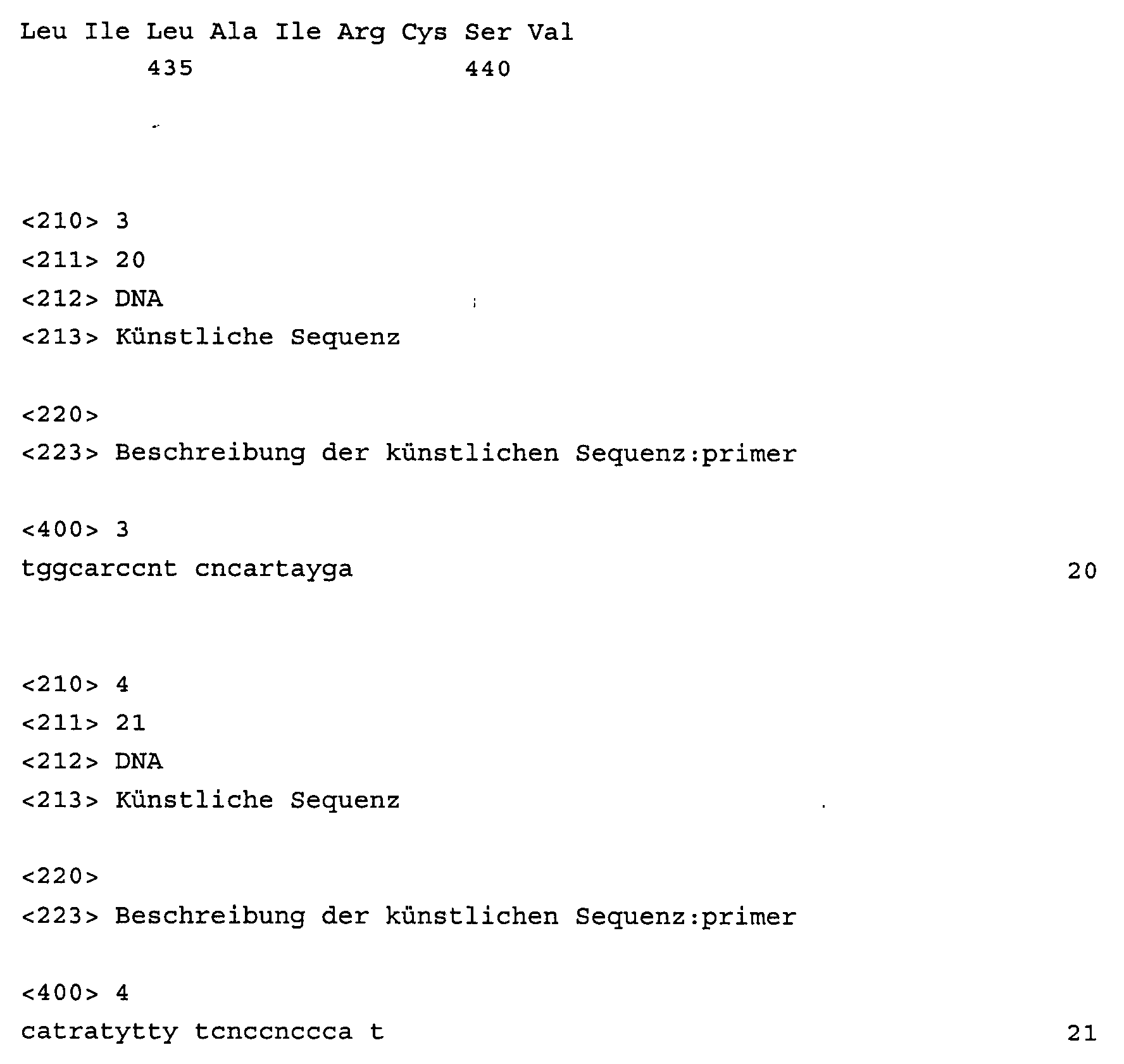
- SEQ ID NO: 3 and SEQ ID NO: 4 show those described in Example 1 Oligodeoxynucleotides.
- Fig. 1 shows the acetylcholine-induced currents that help in Xenopus oocytes of whole-cell derivatives were plotted against time. Currents are shown in nano amps, time in seconds.
- the oocytes were with cDNA expression plasmids injected for the ⁇ 1, ⁇ 2 and ⁇ 3 subunit of Drosophila encoded. The times of the acetylcholine applications are with Crossbar marked.
- RNA 10 ⁇ g were used in a first strand cDNA synthesis (Superscript pre-amplification system for cDNA first strand synthesis, Gibco BRL, according to the manufacturer, 45 ° C Reaction temperature) used. Subsequently, 1/100 of the above First strand cDNA in a polymerase chain reaction (PCR) with the oligonucleotides dglsense and dg2anti used (Taq DNA polymerase, recombinant, Gibco BRL). The PCR parameters were as follows: 94 ° C, 1 min; 35 times (94 ° C, 30 s; 55 ° C, 30 s; 72 ° C, 45 s) This resulted in a band of approx. 1% in the agarose gel (1%) 0.6 kb. This was subcloned using the pCR TOPO kit (Invitrogen).
- RNA for the cDNA library was made from Drosophila melanogaster embryos and larvae isolated with trizole (Gibco BRL) according to the manufacturer. Out this RNA became the poly-A-containing RNAs by purification using Dyna Beads 280 (Dynal) isolated. 5 ug of these poly A containing RNAs were then in the construction of the cDNA library with the ⁇ -ZAP-CMV Vector used (cDNA synthesis kit, ZAP-cDNA synthesis kit and ZAP-cDNA Gigapack III Gold Cloning Kit, all Stratagene).
- the screen with 10 6 plaque forming units was carried out using the DIG system (all reagents and consumables Boehringer Mannheim, according to the information in the "The DIG System User's Guide for Filter Hybridization", Boehringer Mannheim).
- the DNA probe used was prepared by PCR using digoxygenin-labeled dUTP.
- the hybridizations were carried out in DIG Easy Hyb (Boehringer Mannheim) at 42 ° C. overnight. Labeled DNA was detected on nylon membranes by chemiluminescence (CDP-Star, Boehringer Mannheim) using X-ray films (Hyperfilm MP, Amersham).
- Isolated and positive hybridization plaques were transformed into plasmids (pCMV) by in vivo excision (Stratagene, ZAP-cDNA Synthesis Kit).
- the isolated plasmids were sequenced for identification using T3 and T7 primers (ABI Prism Dye Terminator Cycle Sequencing Kit, ABI, with ABI Prism 310 Genetic Analyzer).
- the complete polynucleotide sequences of the DB3 were determined by primer walking using the ABI Prism Dye Terminator Cycle Sequencing Kit, ABI, with the ABI Prism 310 Genetic Analyzer.
- Oocytes were injected concurrently with cDNA expression plasmids, which are suitable for the ⁇ 1, ⁇ 2 and ⁇ 3 subunit encoded by Drosophila.
- the ⁇ subunits were cloned in pcDNA3, the ⁇ subunit in pCMV as described above.
- the currents were through the cell membrane of the oocytes measured with whole cell leads as described (Cooper et al. 1996).
- To the potential difference across the cell membrane was kept constant at -80mV and stimulated the cells with acetylcholine (10 ⁇ M).
- acetylcholine (10 ⁇ M).
- acetylcholine 10 ⁇ M
- a nicotinic acetylcholine receptor subunit from insect brain forms a non-desensitizing homo-oligomeric nicotinic acetylcholine receptor when expressed in Xenopus oocytes, Neuroscience Letters 199, 107-110
- the ARD protein is a component of a high-affinity ⁇ -bungarotoxin binding complex, EMBO J 7, 2889-2984
Landscapes
- Health & Medical Sciences (AREA)
- Life Sciences & Earth Sciences (AREA)
- Chemical & Material Sciences (AREA)
- Organic Chemistry (AREA)
- Zoology (AREA)
- Insects & Arthropods (AREA)
- Biophysics (AREA)
- Medicinal Chemistry (AREA)
- Proteomics, Peptides & Aminoacids (AREA)
- Gastroenterology & Hepatology (AREA)
- Molecular Biology (AREA)
- Biochemistry (AREA)
- Toxicology (AREA)
- General Health & Medical Sciences (AREA)
- Genetics & Genomics (AREA)
- Neurology (AREA)
- Cell Biology (AREA)
- Immunology (AREA)
- Biomedical Technology (AREA)
- Engineering & Computer Science (AREA)
- Tropical Medicine & Parasitology (AREA)
- Micro-Organisms Or Cultivation Processes Thereof (AREA)
- Peptides Or Proteins (AREA)
- Preparation Of Compounds By Using Micro-Organisms (AREA)
- Agricultural Chemicals And Associated Chemicals (AREA)
- Investigating Or Analysing Biological Materials (AREA)
- Measuring Or Testing Involving Enzymes Or Micro-Organisms (AREA)
Abstract
Description
- 1. Waschschritt: 2X SSC bei 40°C,
- 2. Waschschritt: 2X SSC bei 45°C; bevorzugter 2. Waschschritt: 0,6X SSC bei 55°C; besonders bevorzugter 2. Waschschritt: 0,3X SSC bei 65°C.
Die Auswahl solcher regulatorischen Sequenzen ist davon abhängig, ob zur Expression pro- oder eukaryotische Zellen bzw. zellfreie Systeme verwendet werden. Besonders bevorzugt als Expressionskontrollsequenz sind z.B. der frühe oder späte Promotor des SV40 oder des Adenovirus, des Cytomegalovirus, das lac-System, das trp-System, die Haupt-Operator- und Promotorregionen des Phagen lambda, die Kontrollregionen des fd-Hüllproteins, der Promotor der 3-Phosphoglyceratkinase, der Promotor der Sauren Phosphatase und der Promotor des α-Mating-Faktors der Hefe, der immediate early Promoter aus Baculovirus, der Metallothionin Promoter aus Drosophila melanogaster.
| Ursprünglicher Rest | Substitution |
| Ala | Gly, Ser |
| Arg | Lys |
| Asn | Gln, His |
| Asp | Glu |
| Cys | Ser |
| Gln | Asn |
| Glu | Asp |
| Gly | Ala, Pro |
| His | Asn, Gln |
| Ile | Leu, Val |
| Leu | Ile, Val |
| Lys | Arg, Gln, Glu |
| Met | Leu, Tyr, Ile |
| Phe | Met, Leu, Tyr |
| Ser | Thr |
| Thr | Ser |
| Trp | Tyr |
| Tyr | Trp, Phe |
| Val | Ile, Leu |
Beispielsweise kann das Nukleinsäuremolekül vollständig chemisch synthetisiert werden. Man kann auch nur kurze Stücke der erfindungsgemäßen Sequenz chemisch synthetisieren und solche Oligonukleotide radioaktiv oder mit einem Fluoreszenzfarbstoff markieren. Die markierten Oligonukleotide können verwendet werden, um ausgehend von Insekten-mRNA hergestellte cDNA-Banken zu durchsuchen. Klone, an die die markierten Oligonukleotide hybridisieren, werden zur Isolierung der betreffenden DNA ausgewählt. Nach der Charakterisierung der isolierten DNA erhält man auf einfache Weise die erfindungsgemäße Nukleinsäure.



Claims (22)
- Nukleinsäure umfassend eine Sequenz ausgewählt aus(a) der Sequenz gemäß SEQ ID NO: 1,(b) zumindest 14 Basenpaare langen Teilsequenzen der unter (a) definierten Sequenz,(c) Sequenzen, welche an die unter (a) definierte Sequenz hybridisieren,(d) Sequenzen, welche eine zumindest 70 %ige Identität mit der Sequenz zwischen Position 43 und Position 1368 der unter (a) definierten Sequenz aufweisen,(e) Sequenzen, welche zu der unter (a) definierten Sequenz komplementär sind und(f) Sequenzen, welche aufgrund der Degeneriertheit des genetischen Codes für dieselbe Aminosäuresequenz kodieren wie die unter (a) bis (d) definierten Sequenzen.
- Vektor umfassend zumindest eine Nukleinsäure gemäß Anspruch 1.
- Vektor nach Anspruch 2, dadurch gekennzeichnet, dass das Nukleinsäuremolekül funktionell mit regulatorischen Sequenzen verknüpft ist, die die Expression der Nukleinsäure in pro- oder eukaryotischen Zellen gewährleisten.
- Wirtszelle enthaltend eine Nukleinsäure gemäß Anspruch 1 oder einen Vektor gemäß Anspruch 2 oder 3.
- Wirtszelle nach Anspruch 4, dadurch gekennzeichnet, dass es sich um eine pro- oder eukaryotische Zelle handelt.
- Wirtszelle nach Anspruch 5, dadurch gekennzeichnet, dass die prokaryotische Zelle E.coli ist.
- Wirtszelle nach Anspruch 5, dadurch gekennzeichnet, dass die eukaryotische Zelle eine Säuger- oder Insektenzelle ist.
- Polypeptid, welches von einer Nukleinsäure gemäß Anspruch 1 kodiert wird.
- Polypeptid, welches die biologische Funktion einer Acetylcholinrezeptor-β-Untereinheit ausübt und eine Aminosäuresequenz umfasst, die eine zumindest 40%ige Identität mit der Sequenz gemäß SEQ ID NO: 2 aufweist.
- Acetylcholinrezeptor umfassend zumindest ein Polypeptid gemäß Anspruch 8 oder 9.
- Verfahren zum Herstellen eines Polypeptids gemäß Anspruch 8 oder 9 umfassend(a) das Kultivieren einer Wirtszelle gemäß einem der Ansprüche 4 bis 7 unter Bedingungen, die die Expression der Nukleinsäure gemäß Anspruch 1 gewährleisten, und(b) die Gewinnung des Polypeptids aus der Zelle oder dem Kulturmedium.
- Antikörper, welcher spezifisch mit dem Polypeptid gemäß Anspruch 8 oder 9, oder mit dem Rezeptor gemäß Anspruch 10 reagiert.
- Transgener Invertebrat enthaltend eine Nukleinsäure gemäß Anspruch 1.
- Transgener Invertebrat nach Anspruch 13, dadurch gekennzeichnet, dass es sich um Drosophila melanogaster oder Caenorhabditis elegans handelt.
- Verfahren zum Herstellen eines transgenen Invertebraten gemäß Anspruch 13 oder 14 umfassend das Einbringen einer Nukleinsäure gemäß Anspruch 1 oder eines Vektors gemäß Anspruch 2 oder 3.
- Transgene Nachkommen eines Invertebraten gemäß Anspruch 13 oder 14.
- Verfahren zum Herstellen einer Nukleinsäure gemäß Anspruch 1 umfassend die folgenden Schritte:(a) Vollständige chemische Synthese auf an sich bekannte Weise oder(b) chemische Synthese von Oligonukleotiden, Markieren der Oligonukleotide, Hybridisieren der Oligonukleotide an DNA einer Insekten-cDNA-Bank, Selektieren von positiven Klonen und Isolieren der hybridisierenden DNA aus positiven Klonen oder(c) chemische Synthese von Oligonukleotiden und Amplifizierung der Ziel-DNA mittels PCR.
- Regulatorische Region, welche natürlicherweise die Transkription einer Nukleinsäure gemäß Anspruch 1 in Insektenzellen kontrolliert und eine spezifische Expression gewährleistet.
- Verfahren zum Auffinden neuer Wirkstoffe für den Pflanzenschutz oder von pharmazeutischen Wirkstoffen für die Behandlung von Mensch oder Tier, insbesondere von Verbindungen, welche die Leitungseigenschaften von Rezeptoren gemäß Anspruch 10 verändern, umfassend die folgenden Schritte:(a) Bereitstellen einer Wirtszelle gemäß einem der Ansprüche 4 bis 7,(b) Kultivieren der Wirtszelle in der Gegenwart einer Verbindung oder eines Gemisches von Verbindungen, und(c) Detektieren veränderter Leitungseigenschaften.
- Verfahren zum Auffinden einer Verbindung, die an Rezeptoren gemäß Anspruch 10 bindet, umfassend die folgenden Schritte:(a) Inkontaktbringen einer Wirtszelle gemäß einem der Ansprüche 4 bis 7, eines Polypeptids gemäß Anspruch 8 oder 9, oder eines Rezeptors gemäß Anspruch 10 mit einer Verbindung oder einem Gemisch von Verbindungen unter Bedingungen, die die Interaktion zumindest einer Verbindung mit der Wirtszelle, dem Polypeptid oder dem Rezeptor erlauben, und(b) Bestimmen der Verbindung(en), die spezifisch an die Rezeptoren binden.
- Verfahren zum Auffinden von Verbindungen, die die Expression von Rezeptoren gemäß Anspruch 10 verändern, umfassend die folgenden Schritte:(a) Inkontaktbringen einer Wirtszelle gemäß einem der Ansprüche 4 bis 7 oder eines transgenen Invertebraten gemäß Anspruch 13 oder 14 mit einer Verbindung oder einem Gemisch von Verbindungen,(b) Bestimmen der Rezeptorkonzentration, und(c) Bestimmen der Verbindung(en), die die Expression des Rezeptors spezifisch beeinflussen.
- Verwendung einer Nukleinsäure gemäß Anspruch 1, eines Vektors gemäß Anspruch 2 oder 3, einer Wirtszelle gemäß einem der Ansprüche 4 bis 7, eines Polypeptids gemäß Anspruch 8 oder 9, eines Acetylcholinrezeptors gemäß Anspruch 10, eines Antikörpers gemäß Anspruch 12, eines transgenen Invertebraten gemäß Anspruch 13 oder 14 oder einer regulatorischen Region gemäß Anspruch 18 zum Auffinden neuer Wirkstoffe für den Pflanzenschutz oder von pharmazeutischen Wirkstoffen für die Behandlung von Mensch oder Tier.
Applications Claiming Priority (2)
| Application Number | Priority Date | Filing Date | Title |
|---|---|---|---|
| DE19959582A DE19959582A1 (de) | 1999-12-10 | 1999-12-10 | Nukleinsäuren, die für neue Acetylcholinrezeptor-beta-Untereinheiten von Insekten kodieren |
| DE19959582 | 1999-12-10 |
Publications (2)
| Publication Number | Publication Date |
|---|---|
| EP1106689A2 true EP1106689A2 (de) | 2001-06-13 |
| EP1106689A3 EP1106689A3 (de) | 2002-11-20 |
Family
ID=7932141
Family Applications (1)
| Application Number | Title | Priority Date | Filing Date |
|---|---|---|---|
| EP00125300A Withdrawn EP1106689A3 (de) | 1999-12-10 | 2000-11-28 | Nukleinsäuren, die für Acetylcholinrezeptor-beta-Untereinheiten für Insekten kodieren |
Country Status (4)
| Country | Link |
|---|---|
| US (1) | US20020046412A1 (de) |
| EP (1) | EP1106689A3 (de) |
| JP (1) | JP2001224383A (de) |
| DE (1) | DE19959582A1 (de) |
Cited By (2)
| Publication number | Priority date | Publication date | Assignee | Title |
|---|---|---|---|---|
| US5762413A (en) * | 1996-01-29 | 1998-06-09 | Alternate Realities Corporation | Tiltable hemispherical optical projection systems and methods having constant angular separation of projected pixels |
| US6231189B1 (en) | 1996-01-29 | 2001-05-15 | Elumens Corporation | Dual polarization optical projection systems and methods |
Family Cites Families (3)
| Publication number | Priority date | Publication date | Assignee | Title |
|---|---|---|---|---|
| JP3628691B2 (ja) * | 1993-03-08 | 2005-03-16 | メルク エンド カンパニー インコーポレーテッド | ヒト神経細胞性ニコチン性アセチルコリン受容体組成物およびそれらの使用方法 |
| US6485967B1 (en) * | 1995-06-07 | 2002-11-26 | Merck & Co., Inc. | Human neuronal nicotinic acetylcholine receptor α6 and β3 nucleic acid |
| DE19819829A1 (de) * | 1998-05-04 | 1999-11-11 | Bayer Ag | Nukleinsäuren, die für Acetylcholinrezeptor-Untereinheiten von Insekten kodieren |
-
1999
- 1999-12-10 DE DE19959582A patent/DE19959582A1/de not_active Withdrawn
-
2000
- 2000-11-28 EP EP00125300A patent/EP1106689A3/de not_active Withdrawn
- 2000-12-01 JP JP2000366880A patent/JP2001224383A/ja active Pending
- 2000-12-08 US US09/732,680 patent/US20020046412A1/en not_active Abandoned
Cited By (2)
| Publication number | Priority date | Publication date | Assignee | Title |
|---|---|---|---|---|
| US5762413A (en) * | 1996-01-29 | 1998-06-09 | Alternate Realities Corporation | Tiltable hemispherical optical projection systems and methods having constant angular separation of projected pixels |
| US6231189B1 (en) | 1996-01-29 | 2001-05-15 | Elumens Corporation | Dual polarization optical projection systems and methods |
Also Published As
| Publication number | Publication date |
|---|---|
| DE19959582A1 (de) | 2001-06-13 |
| US20020046412A1 (en) | 2002-04-18 |
| EP1106689A3 (de) | 2002-11-20 |
| JP2001224383A (ja) | 2001-08-21 |
Similar Documents
| Publication | Publication Date | Title |
|---|---|---|
| Gaillard et al. | Olfactory receptors | |
| Fleming et al. | Caenorhabditis elegans levamisole resistance genes lev-1, unc-29, and unc-38 encode functional nicotinic acetylcholine receptor subunits | |
| CH694428A5 (de) | GABA-B-Rezeptoren. | |
| Sattelle et al. | Edit, cut and paste in the nicotinic acetylcholine receptor gene family of Drosophila melanogaster | |
| DE69819345T2 (de) | Für den capsaicin rezeptor kodierende nukleinsäuresequenzen und dem capsaicin rezeptor ähnliche polypeptide und ihre verwendung | |
| DE69837267T2 (de) | Kcnq kaliumkanäle und verfahren zur deren modulierung | |
| DE69838784T2 (de) | Säureempfindlicher neuronaler säugetierkationenkanal, dessen klonierung und anwendung | |
| DE60036548T2 (de) | Neue kalium-kanäle und dafür kodierende gene | |
| EP0962528A2 (de) | Nukleisäuren, die für Acetylcholinrezeptor-Untereinheiten von Insekten kodieren | |
| DE10042177A1 (de) | Acetylcholinrezeptor-Untereinheiten | |
| Fleming et al. | Molecular cloning and in vitro expression of C. elegans and parasitic nematode ionotropic receptors | |
| DE19959582A1 (de) | Nukleinsäuren, die für neue Acetylcholinrezeptor-beta-Untereinheiten von Insekten kodieren | |
| Dederer et al. | Differential sensitivity of Ctenocephalides felis and Drosophila melanogaster nicotinic acetylcholine receptor α1 and α2 subunits in recombinant hybrid receptors to nicotinoids and neonicotinoid insecticides | |
| DE60038025T2 (de) | Hochaffinitäts-cholintransporter | |
| EP1182212A2 (de) | Ultraspiracle (USP)-Protein von Heliothis virescens | |
| EP1136501A2 (de) | Rezeptoren für Peptide aus Insekten | |
| DE60126940T2 (de) | Heliothis glutamate receptor | |
| WO2001070797A1 (de) | Ligandengesteuerte anionenkanäle von insekten | |
| Chen et al. | Molecular characterization of the Notch homologue from the Australian sheep blowfly, Lucilia cuprina | |
| Ffrench-Constant | Cloning of a putative GABAA receptor from cyclodiene-resistant Drosophila: a case study in the use of insecticide-resistant mutants to isolate neuroreceptors | |
| EP1136504A1 (de) | Rezeptor für Latrotoxin aus Insekten | |
| EP1497427A2 (de) | Helicokinin-rezeptor aus insekten | |
| EP1132476A1 (de) | Anorganische Pyrophosphatasen aus Lepidopteren | |
| Coburn | tax-2: A putative cyclic nucleotide-gated channel required for sensory neuron function and development in Caenorhabditis elegans | |
| Schlimgen | The genetic and molecular characterization of Hk, a gene affecting neuronal excitability in Drosophila melanogaster |
Legal Events
| Date | Code | Title | Description |
|---|---|---|---|
| PUAI | Public reference made under article 153(3) epc to a published international application that has entered the european phase |
Free format text: ORIGINAL CODE: 0009012 |
|
| AK | Designated contracting states |
Kind code of ref document: A2 Designated state(s): AT BE CH CY DE DK ES FI FR GB GR IE IT LI LU MC NL PT SE TR |
|
| AX | Request for extension of the european patent |
Free format text: AL;LT;LV;MK;RO;SI |
|
| PUAL | Search report despatched |
Free format text: ORIGINAL CODE: 0009013 |
|
| AK | Designated contracting states |
Kind code of ref document: A3 Designated state(s): AT BE CH CY DE DK ES FI FR GB GR IE IT LI LU MC NL PT SE TR |
|
| AX | Request for extension of the european patent |
Free format text: AL;LT;LV;MK;RO;SI |
|
| RAP1 | Party data changed (applicant data changed or rights of an application transferred) |
Owner name: BAYER CROPSCIENCE AG |
|
| 17P | Request for examination filed |
Effective date: 20030520 |
|
| AKX | Designation fees paid |
Designated state(s): AT BE CH CY DE DK ES FI FR GB GR IE IT LI LU MC NL PT SE TR |
|
| 17Q | First examination report despatched |
Effective date: 20030714 |
|
| STAA | Information on the status of an ep patent application or granted ep patent |
Free format text: STATUS: THE APPLICATION IS DEEMED TO BE WITHDRAWN |
|
| 18D | Application deemed to be withdrawn |
Effective date: 20040904 |