EP1087590B1 - Network peripheral server - Google Patents
Network peripheral server Download PDFInfo
- Publication number
- EP1087590B1 EP1087590B1 EP00308051A EP00308051A EP1087590B1 EP 1087590 B1 EP1087590 B1 EP 1087590B1 EP 00308051 A EP00308051 A EP 00308051A EP 00308051 A EP00308051 A EP 00308051A EP 1087590 B1 EP1087590 B1 EP 1087590B1
- Authority
- EP
- European Patent Office
- Prior art keywords
- peripheral
- server
- block
- network
- client
- Prior art date
- Legal status (The legal status is an assumption and is not a legal conclusion. Google has not performed a legal analysis and makes no representation as to the accuracy of the status listed.)
- Expired - Lifetime
Links
- 230000002093 peripheral effect Effects 0.000 title claims description 97
- 238000000034 method Methods 0.000 claims description 15
- 230000004044 response Effects 0.000 claims description 5
- 238000004891 communication Methods 0.000 description 14
- 241001393742 Simian endogenous retrovirus Species 0.000 description 5
- 230000008569 process Effects 0.000 description 3
- 238000010586 diagram Methods 0.000 description 2
- 230000001419 dependent effect Effects 0.000 description 1
- 239000000284 extract Substances 0.000 description 1
Images




Classifications
-
- H—ELECTRICITY
- H04—ELECTRIC COMMUNICATION TECHNIQUE
- H04N—PICTORIAL COMMUNICATION, e.g. TELEVISION
- H04N1/00—Scanning, transmission or reproduction of documents or the like, e.g. facsimile transmission; Details thereof
- H04N1/00127—Connection or combination of a still picture apparatus with another apparatus, e.g. for storage, processing or transmission of still picture signals or of information associated with a still picture
- H04N1/00204—Connection or combination of a still picture apparatus with another apparatus, e.g. for storage, processing or transmission of still picture signals or of information associated with a still picture with a digital computer or a digital computer system, e.g. an internet server
- H04N1/00209—Transmitting or receiving image data, e.g. facsimile data, via a computer, e.g. using e-mail, a computer network, the internet, I-fax
-
- H—ELECTRICITY
- H04—ELECTRIC COMMUNICATION TECHNIQUE
- H04L—TRANSMISSION OF DIGITAL INFORMATION, e.g. TELEGRAPHIC COMMUNICATION
- H04L9/00—Cryptographic mechanisms or cryptographic arrangements for secret or secure communications; Network security protocols
- H04L9/40—Network security protocols
-
- H—ELECTRICITY
- H04—ELECTRIC COMMUNICATION TECHNIQUE
- H04N—PICTORIAL COMMUNICATION, e.g. TELEVISION
- H04N1/00—Scanning, transmission or reproduction of documents or the like, e.g. facsimile transmission; Details thereof
- H04N1/00127—Connection or combination of a still picture apparatus with another apparatus, e.g. for storage, processing or transmission of still picture signals or of information associated with a still picture
- H04N1/00204—Connection or combination of a still picture apparatus with another apparatus, e.g. for storage, processing or transmission of still picture signals or of information associated with a still picture with a digital computer or a digital computer system, e.g. an internet server
-
- H—ELECTRICITY
- H04—ELECTRIC COMMUNICATION TECHNIQUE
- H04N—PICTORIAL COMMUNICATION, e.g. TELEVISION
- H04N2201/00—Indexing scheme relating to scanning, transmission or reproduction of documents or the like, and to details thereof
- H04N2201/0008—Connection or combination of a still picture apparatus with another apparatus
- H04N2201/0034—Details of the connection, e.g. connector, interface
Definitions
- the present invention generally relates to a network peripheral server, for example for software and firmware control of a multifunction peripheral in a network through a server that connects to the network, and software and firmware of a peripheral server that provides access to a plurality of functions of a multifunction peripheral in a network.
- Multifunction peripherals are becoming increasingly popular, because they provide a number of different functions such as scanning, printing, copying, and sending and receiving faxes, for example, in a single device.
- MFP Multifunction peripherals
- an MFP had to be attached directly to a single computer to access all the services offered by the MFP. This arrangement, however, excluded other computers from accessing the MFP.
- the MFP is implemented in a network through a conventional peripheral server, only the print function of the MFP is accessible by the clients, which are typically personal computers (PC).
- PC personal computers
- peripheral server of the above Kumpf et al. disclosure still does not allow access any other functions of an MFP other than the print and the scan functions. Additional shortcoming of known servers is that they communicate with the attached MFP only through known I/O channels. Any MFP that utilized different I/O channels would not work with these servers without first being updated by the user, which is inconvenient.
- EP 0859321 discloses a multifunction peripheral controller coupled by a communications channel to a single multifunction peripheral. Each of the functions of the multifunction peripheral is separately addressable by the controller using a unique logical unit number.
- EP 0843440 discloses a network device which maintains a list of device addresses.
- a system is described for providing a network device on a LAN which operates as a list manager which maintains a list of device addresses for the LAN.
- the present invention seeks to provide an improved network peripheral server, for example which can provide access to a plurality of functions supported by a multifunction peripheral connected to a network.
- a network peripheral server as specified in claim 1.
- the preferred server can provide access to a plurality of functions of the multifunction peripheral in addition to the print and scan functions.
- a network peripheral server including a general purpose gateway which provides data pass-through for a plurality of functions of the multifunction peripheral, thereby eliminating the need to create a separate gateway corresponding to each accessed functions.
- the server provides network access to the functions of the multifunction peripheral on any channel supported by the multifunction peripheral.
- the described embodiment is directed to a network peripheral server which is adapted to enable a plurality of client devices connected in a network to access all the functions or services offered by a multifunction peripheral also connected in the same network.
- the server obtains from the peripheral the address and the corresponding peripheral communication channel of a particular function requested by a client, and connects the requesting client to the peripheral through that peripheral channel, so that the desired function is available to the client.
- the server includes a network interface for communicating with the clients on the network according to a predetermined network protocol, a peripheral interface for communicating with the multifunction peripheral via a plurality of peripheral channels corresponding to the plurality of functions supported by the multifunction peripheral, and a gateway communicatively connected between the network interface and the peripheral interface for transferring data between the network interface and the peripheral interface.
- firmware and/or software which is responsive to predetermined instructions from one or more of the plurality of clients for operatively connecting the client with one or more selected functions of the plurality of functions supported by the multifunction peripheral via a corresponding channel of the plurality of peripheral channels.
- the described embodiments also provide a method for enabling a plurality of clients connected to a network via a peripheral server to access a plurality of functions supported by a multifunction peripheral connected to the network.
- the method includes sending a service name lookup instruction from any of the plurality of clients for requesting a peripheral channel of the server corresponding to the selected function of the multifunction peripheral, opening the corresponding peripheral channel to communicatively connect the client to the selected function, and transferring data between the client and the multifunction peripheral through the peripheral server.
- a server 10 is adapted to be connected to a network 12 along with a plurality of client devices 14 (two shown).
- the server 10 is also connected to a multifunction peripheral (MFP) 16.
- MFP multifunction peripheral
- the MFP 16 is connected to the network 12 via the server 10.
- the server 10 includes a network interface 18 which preferably includes at least one TCP port and/or at least one SPX socket for connection to the network 12 using a conventional TCP protocol and/or an SPX protocol, respectively.
- a peripheral interface 20 which is preferably a known BIO interface, although other known interfaces such as EIO and MIO, for example, are also contemplated.
- the interface 20 is adapted to connect the server 10 to the MFP 16, and enable the client 14 to access each of the functions supported by the MFP via a plurality of corresponding peripheral channels 22, which are preferably IEEE 1284.4 channels. Communication links such as PCI, a serial link such as USB or other known links are also contemplated.
- a general purpose gateway (GGW) 24 is connected between the network interface 18 and the peripheral interface 20 and provides a bi-directional data pass-through between the network interface and the peripheral interface for the desired functions.
- the GGW 24 also allows the client 14 to request a specific peripheral channel 22 corresponding to a particular function of the MFP 16, thereby eliminating the need to establish a new gateway for each of the desired function.
- FIG. 3 the operation of a software program in the client device 14 which enables the client to access a particular MFP function is illustrated.
- a user on a networked client requests an access to a particular function of the MFP 16 (block 26)
- a network connection is established between the client 14 and the server 10 (block 31).
- the server 10 is initially in command mode and listens for commands from the client 14 on the TCP port(s) and the SPX socket(s).
- the server 10 issues a response, preferably with a three digit outcome code number which follows the FTP and the SMTP conventions. For example, any number that begins with a "2" is a successful outcome, and that with a "4" or a "5" is an unsuccessful outcome. The remaining digits give more detail about the outcome.
- the client 14 sends a TIME command (block 34) which sets the idle timeout of the established connection in seconds. If no data is exchanged between the client 14 and the MFP 16 for the set seconds, the server 10 closes the connection between them.
- the client 14 sends a SERV command to the server 10 to request a peripheral Service Name Lookup (block 38), i.e., to gather information about the MFP 16 and to configure a connection between the client and the MFP for a requested function or service supported by the MFP.
- the client 14 issues an OPEN command to the server 10 to open the peripheral channel that corresponds to the requested function of the MFP (block 42).
- the client 14 When that channel has been opened (block 44), the client 14 issues a DATA command (block 46), requesting that that server 10 go into a data pass-through mode. When placed in this mode (block 48), the client 14 communicates directly with the MFP 16 to access the desired functions and the GGW 24 of the server 10 merely passes data between the client and the MFP (block 50) until the connection is closed (block 30). It should be noted that once in the pass-through mode, the client 14 must close the connection to terminate data being transmitted through the GGW 24. However, in the event the MFP 16 closes the channel, the server 10 closes the connection.
- the server 10 If at any of the Blocks 28, 32, 36, 40, 44 and 48, the server 10 outputs a response indicating an unsuccessful outcome, i.e., sends a number that begins with a "4" or a "5", an error message is displayed to the user (block 52), and the process is terminated (block 30).
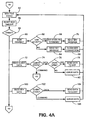
- the server 10 is event driven, and as such, it waits for an event, i.e., a command or a reply, from the client 14 or the MFP 16 after initializing (block 54).
- an event i.e., a command or a reply
- the server 10 resets the idle timeout, initially set by the client 14 (block 56), and determines which event has occurred (block 58).
- the server 10 then completes each event procedure before the next event is handled.
- the server 10 determines if it can accept the new connection request (block 62).
- the server 10 is capable of supporting two simultaneous connections, although more simultaneous connections are contemplated. If the maximum number of connections is already established, the server sends a '421' error message to the client (block 64), closes the network connection (block 66), and waits for another event to occur (block 54). If the server 10 is able to accept the connection, it sets the connection state to COMMAND (block 68), sends a '200' success message to the client 14 (block 70) and waits for an event (block 54).
- the server 10 determines whether the client is sending data to the MFP 16, i.e., the client is in DATA mode, or issuing a command, i.e., the client is in COMMAND mode (block 74). If the client 14 is in DATA mode, the server 10 checks if the channel 22 requested in the data is open to the MFP 16 (block 76), If so, the data is sent to the MFP 16 over that channel 22 (block 78). If not, the data is queued until that channel 22 is open (block 80). After the completion of either procedure, the server 10 waits for another event (block 54). On the other hand, if the client 14 is in COMMAND mode, the server 10 invokes the appropriate command processing procedures shown in FIG. 4B.
- a line of text is any sequence of characters preferably ending with an optional Carriage Return (CR) character (ASCII code 13) followed by a mandatory Line Feed (LF) character (ASCII code 10).
- CR Carriage Return
- LF Line Feed
- the server 10 accumulates the characters of the line until it receives the end-of-line sequence CR-LF or just LF (block 84).
- the server 10 checks the first four characters for a recognized command (block 86). If a TIME command is received (block 88), the server 10 parses a number argument following the command (block 90) and sets the new idle timeout to that value (block 92). In the preferred embodiment, the value zero indicates an infinite timeout that never expires and the default timeout is 90 seconds. Then the server 10 sends a '200' success message to the client 14 (block 94) and waits for another event (block 54).
- the client 14 sends a MPCT command to the server 10 in a number argument to set the minimum number of packet credits required by the MFP (block 96). If the state of the requested channel is not IDLE (block 98), the server 10 sends a '452' error message to the client 14 (block 100). Otherwise, the server 10 parses the number argument (block 102), saves it for later use when the client issues an OPEN command (block 104), and sends a '200' success message (block 106).
- the server 10 checks if that channel is in IDLE state (block 110). If the channel state is not IDLE, the server 10 sends a '452' error message (block 112). Otherwise, the server 10 parses the number argument following the OPEN command (block 114), sets the channel state to OPEN-WAIT (block 116), and sends an open-channel request to the MFP 16 (block 118).
- the MFP 16 operates asynchronously from the server 10 so the server does not immediately know the result of the open-channel request.
- a reply from the MFP 16 generally arrives shortly and is processed as a separate event as described below at Block 176 in FIG. 4D. No result message is sent to the client 14 until that time.
- the server 10 checks if the channel 22 requested by the OPEN command is either in an OPEN state or an OPEN-WAIT state (block 122). If the channel state is OPEN or OPEN-WAIT, the server 10 sets the client state to DATA (block 124), sends a '200' success message (block 126), and then sends any MFP data queued in the server (block 128) (see blocks 160-166 in FIG. 4A described below for responding to data received from the MFP 16 to the client 14). Otherwise, the server 10 sends a '453 error message and waits for another event (block 54).
- a SERV command is received from the client 14 (block 132), requesting a Service Name Lookup for a particular service supported by the MFP 16, the server 10 parses the word following the SERV command (block 134) and sends a Service Name Lookup request to the MFP 14 with that word as the name to be looked up (block 136). The server 10 then waits for an event (block 54), since a reply will arrive later as a separate event as described below and illustrated at blocks 168-174 of FIG. 4D.
- a Service Name Lookup is a feature of many communication protocols used between an MFP server such as the HP JetDirect and an MFP.
- the IEEE 1284.4 protocol for parallel ports is used by the MFP 14.
- the communication link can also be a backplane such as PCI, a serial link such as USB, or many others. This command utilizes whatever Service Name Lookup protocol is supported by the communication link to the MFP 16. If the communication protocol does not support any Service Name Lookup protocol (block 138), the server 10 immediately returns a '451' error message to the client 14 and does not send any request to the MFP 14 (block 140).
- the server 10 parses the word following the command for specifying the "socket ID,” (block 144) and sends a Socket ID Lookup request to the MFP 16 with that number as the socket to be looked up (block 146), but only if the communication protocol supports the Socket ID Lookup request (block 148). Otherwise, the server 10 immediately returns a '451' error message to the client 14 and does not send any request to the MFP 14 (block 150). The reply arrives later as a separate event as described below and illustrated at Blocks 168-174 of FIG. 4D.
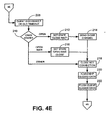
- the server When a QUIT command is received (block 152), the server sends a '200' success message to the client 14 (block 154) and then invokes the close procedure described below and illustrated in FIG. 4E. If the command received is not recognized (block 156), the server 10 sends a '500' error message to the client (block 158) and ignores the command. The server 10 then waits for another event (block 54).
- the server 10 when the server 10 receives data from the MFP 16 while waiting for an event (block 160), it simply forwards the MFP data to the client 14 (block 164), if the client is in DATA mode (block 162). If the client 14 is in COMMAND mode (block 162), the server 10 queues the data until the client issues a DATA command (block 166).
- the server 10 when the server 10 receives a reply from the MFP 14 (block 168) in response to either the Service Name Lookup or the Socket ID Lookup commands described above at blocks 138-150 of FIG. 4C, the server 10 extracts the returned socket ID or the service name, respectively, and sends it to the client 14 in a '250' message (block 172), if the MFP returns a successful lookup (block 170). Otherwise, the server 10 sends a '451' error message to the client 14 (block 174). In this manner, the socket ID of the desired service is obtained by the client 14, which can then open a communication channel to that socket ID for using the desired service. Reversely, the client 14 obtains the name of the service associated with a particular socket ID from the service name returned by the MFP 14.
- the server 10 When the server 10 receives a reply from the MFP 16 in response to an OPEN command from the client 14 as described above at blocks 108-118 in FIG. 4B (block 176), the server 10 checks the outcome of the request (block 178). If it was successful, the server 10 then checks the channel state (block 180). If the state is OPEN-WAIT, the server 10 sets the state to OPEN (block 182), sends to the MFP 16 any data that was queued in the server waiting for the OPEN state (block 184) (described above in blocks 72-76 and 80 in FIG. 4A), and sends a '200' success message to the client 14 to respond to the OPEN command. If the channel state is OPEN-WAIT-CLOSE, as described below at block 218 of FIG.
- the server 10 sets the state to OPEN and then immediately invokes the close connection procedure described below and shown in FIG. 4E (block 188). If the open-channel request was unsuccessful (block 178), the server 10 checks the channel state (block 190). If the state is OPEN-WAIT, the server 10 sets the state to IDLE (block 192) and sends a '450' error message to the client 14 (block 194). If the state is OPEN-WAIT-CLOSE, the server 10 simply sets the state to IDLE (block 196).
- the server 10 When the server 10 receives a channel close reply from the MFP 16 (block 198), the server immediately sets the channel state to IDLE (block 200). In the event the communication link to the MFP 16 fail for any reason (block 202), for example, the communication cable being disconnected or the MFP being shut down, the server 10 immediately closes all network connections (block 204) and flushes any queued data (block 206).
- the server 10 initiates a procedure for closing the connection to the MFP 16 whenever a QUIT command is issued by the client as at Block152 above in FIG. 4C, any time the server wishes to initiate a close due to an error or some other unrecoverable condition or when the idle timeout expires (block 208).
- the server 10 first checks the state of the communication channel 22 to the MFP 16 (block 210). If it is OPEN, the server 10 sets it to CLOSE-WAIT (block 212) and sends a close-channel request to the MFP 16 (block 214).
- the server 10 sets it to OPEN-WAIT-CLOSE state (block 218), which results in a close-request being sent as soon as an open reply is received (see description above of blocks 176-180 and 188 of FIG. 4D). No channel actions are needed in any other state (block 220). After dealing with the channel state, the server 10 closes, or finishes closing the network connection (block 220). Finally, the server 10 deletes any data queued for either the MFP 16 or the network client 14 (blocks 222, 224), and waits for another event (block 54).
- an improved peripheral server has been shown and described which has many desirables attributes and advantages. It is designed to enable a plurality of clients in a network to access a plurality of functions supported by a multifunction peripheral connected to the network.
- the server can allow the client to select at least one function, which is then made to be accessible to the client by a peripheral communication channel that corresponds to the address of the selected function.
- a single gateway is preferably used to connect the client to any of the communication channel selected.
Landscapes
- Engineering & Computer Science (AREA)
- Signal Processing (AREA)
- General Engineering & Computer Science (AREA)
- Computer Security & Cryptography (AREA)
- Computing Systems (AREA)
- Multimedia (AREA)
- Computer Networks & Wireless Communication (AREA)
- Computer And Data Communications (AREA)
- Facsimiles In General (AREA)
- Stored Programmes (AREA)
- Small-Scale Networks (AREA)
Applications Claiming Priority (2)
| Application Number | Priority Date | Filing Date | Title |
|---|---|---|---|
| US407129 | 1982-08-11 | ||
| US09/407,129 US6581098B1 (en) | 1999-09-27 | 1999-09-27 | Server providing access to a plurality of functions of a multifunction peripheral in a network |
Publications (3)
| Publication Number | Publication Date |
|---|---|
| EP1087590A2 EP1087590A2 (en) | 2001-03-28 |
| EP1087590A3 EP1087590A3 (en) | 2002-08-07 |
| EP1087590B1 true EP1087590B1 (en) | 2006-06-28 |
Family
ID=23610722
Family Applications (1)
| Application Number | Title | Priority Date | Filing Date |
|---|---|---|---|
| EP00308051A Expired - Lifetime EP1087590B1 (en) | 1999-09-27 | 2000-09-15 | Network peripheral server |
Country Status (4)
| Country | Link |
|---|---|
| US (1) | US6581098B1 (enExample) |
| EP (1) | EP1087590B1 (enExample) |
| JP (1) | JP2001156828A (enExample) |
| DE (1) | DE60029066T2 (enExample) |
Families Citing this family (34)
| Publication number | Priority date | Publication date | Assignee | Title |
|---|---|---|---|---|
| US6502128B1 (en) * | 1999-10-01 | 2002-12-31 | Hewlett-Packard Company | Server and a method for communicating event messages from the server connected to a peripheral device and a client computer |
| US7644119B1 (en) * | 2000-02-04 | 2010-01-05 | Canon Kabushiki Kaisha | Computer network scanning |
| US6711558B1 (en) | 2000-04-07 | 2004-03-23 | Washington University | Associative database scanning and information retrieval |
| JP2001358880A (ja) * | 2000-06-13 | 2001-12-26 | Fuji Xerox Co Ltd | 画像入出力制御装置および画像入出力システム |
| US20020178295A1 (en) * | 2001-05-23 | 2002-11-28 | Joseph Buczek | Distributed gateways for remote management of USB-compatible devices |
| US7716330B2 (en) * | 2001-10-19 | 2010-05-11 | Global Velocity, Inc. | System and method for controlling transmission of data packets over an information network |
| US20090006659A1 (en) * | 2001-10-19 | 2009-01-01 | Collins Jack M | Advanced mezzanine card for digital network data inspection |
| US7158248B2 (en) * | 2002-02-07 | 2007-01-02 | Hewlett-Packard Development Company, L.P. | Control of software via bundling |
| US20040047355A1 (en) * | 2002-09-06 | 2004-03-11 | Brauel Eric S. | Method of providing low cost network storage |
| US10572824B2 (en) | 2003-05-23 | 2020-02-25 | Ip Reservoir, Llc | System and method for low latency multi-functional pipeline with correlation logic and selectively activated/deactivated pipelined data processing engines |
| US20070277036A1 (en) | 2003-05-23 | 2007-11-29 | Washington University, A Corporation Of The State Of Missouri | Intelligent data storage and processing using fpga devices |
| US20050015220A1 (en) * | 2003-07-17 | 2005-01-20 | Sun Microsystems, Inc. | Automatic application programming interface (api) detection and methods of use thereof |
| US7602785B2 (en) * | 2004-02-09 | 2009-10-13 | Washington University | Method and system for performing longest prefix matching for network address lookup using bloom filters |
| TWI247690B (en) * | 2004-06-03 | 2006-01-21 | Avision Inc | Multi-functional peripheral |
| US7954114B2 (en) * | 2006-01-26 | 2011-05-31 | Exegy Incorporated | Firmware socket module for FPGA-based pipeline processing |
| US7921046B2 (en) | 2006-06-19 | 2011-04-05 | Exegy Incorporated | High speed processing of financial information using FPGA devices |
| US7647446B2 (en) * | 2006-10-03 | 2010-01-12 | Silex Technology, Inc. | Networked isochronous USB communication |
| FR2912233B1 (fr) * | 2007-02-01 | 2009-08-21 | Sagem Comm | Dispositif client leger et procede d'utilisation |
| US10229453B2 (en) | 2008-01-11 | 2019-03-12 | Ip Reservoir, Llc | Method and system for low latency basket calculation |
| US8711396B2 (en) * | 2008-12-12 | 2014-04-29 | Ricoh Company, Ltd. | Managing multiple web services on a single device |
| CA3059606C (en) | 2008-12-15 | 2023-01-17 | Ip Reservoir, Llc | Method and apparatus for high-speed processing of financial market depth data |
| US8719112B2 (en) * | 2009-11-24 | 2014-05-06 | Microsoft Corporation | Invocation of accessory-specific user experience |
| US7865629B1 (en) * | 2009-11-24 | 2011-01-04 | Microsoft Corporation | Configurable connector for system-level communication |
| US8380889B2 (en) | 2010-03-31 | 2013-02-19 | Oki Data Americas, Inc. | Distributed peripheral device management system |
| CN102845046B (zh) * | 2010-04-14 | 2015-11-25 | 微软技术许可有限责任公司 | 用于系统级通信的连接器的动态配置 |
| US10037568B2 (en) | 2010-12-09 | 2018-07-31 | Ip Reservoir, Llc | Method and apparatus for managing orders in financial markets |
| KR101864593B1 (ko) * | 2011-10-18 | 2018-06-11 | 에이치피프린팅코리아 주식회사 | 스캔 작업을 수행하는 사용자 단말 장치와 서버 장치, 이들을 포함하는 스캔 시스템 및 그 스캔 수행 방법들 |
| US9047243B2 (en) | 2011-12-14 | 2015-06-02 | Ip Reservoir, Llc | Method and apparatus for low latency data distribution |
| US9990393B2 (en) | 2012-03-27 | 2018-06-05 | Ip Reservoir, Llc | Intelligent feed switch |
| US10121196B2 (en) | 2012-03-27 | 2018-11-06 | Ip Reservoir, Llc | Offload processing of data packets containing financial market data |
| US11436672B2 (en) | 2012-03-27 | 2022-09-06 | Exegy Incorporated | Intelligent switch for processing financial market data |
| US10650452B2 (en) | 2012-03-27 | 2020-05-12 | Ip Reservoir, Llc | Offload processing of data packets |
| WO2018119035A1 (en) | 2016-12-22 | 2018-06-28 | Ip Reservoir, Llc | Pipelines for hardware-accelerated machine learning |
| WO2024199449A1 (zh) * | 2023-03-31 | 2024-10-03 | 北京罗克维尔斯科技有限公司 | 通信管理方法、装置、设备、存储介质及车辆 |
Family Cites Families (12)
| Publication number | Priority date | Publication date | Assignee | Title |
|---|---|---|---|---|
| US4821259A (en) * | 1986-09-05 | 1989-04-11 | American Telephone And Telegraph Company, At&T Bell Laboratories | Control information communication arrangement for a distributed control switching system |
| US5933580A (en) * | 1991-09-04 | 1999-08-03 | Canon Kabushiki Kaisha | Scanner printer server |
| JP3720439B2 (ja) * | 1995-01-06 | 2005-11-30 | キヤノン株式会社 | データ入出力制御装置及びデータ入出力制御方法 |
| US6021429A (en) | 1996-11-18 | 2000-02-01 | Canon Information Systems, Inc. | Network device which maintains a list of device addresses |
| US5903733A (en) | 1997-02-13 | 1999-05-11 | Toshiba America Information Systems, Inc. | Multifunction peripheral controller |
| JP3832015B2 (ja) * | 1997-04-04 | 2006-10-11 | 富士ゼロックス株式会社 | 複合機、サーバ及び複合機を有するネットワークシステム |
| US6125372A (en) * | 1997-10-03 | 2000-09-26 | Hewlett-Packard Company | Server system and method of updating server software |
| JPH11177755A (ja) * | 1997-12-15 | 1999-07-02 | Fuji Xerox Co Ltd | 複合機能装置 |
| US6289371B1 (en) * | 1998-09-30 | 2001-09-11 | Hewlett-Packard Company | Network scan server support method using a web browser |
| US6412022B1 (en) | 1998-09-30 | 2002-06-25 | Hewlett-Packard Company | Simultaneous print and scan logical channel network multifunction peripheral |
| US6223223B1 (en) * | 1998-09-30 | 2001-04-24 | Hewlett-Packard Company | Network scanner contention handling method |
| US6487611B1 (en) * | 1999-02-19 | 2002-11-26 | Compaq Computer Corporation, Inc. | Seamless distributed job control between a multifunction peripheral and a host |
-
1999
- 1999-09-27 US US09/407,129 patent/US6581098B1/en not_active Expired - Fee Related
-
2000
- 2000-09-15 EP EP00308051A patent/EP1087590B1/en not_active Expired - Lifetime
- 2000-09-15 DE DE60029066T patent/DE60029066T2/de not_active Expired - Lifetime
- 2000-09-25 JP JP2000291041A patent/JP2001156828A/ja active Pending
Also Published As
| Publication number | Publication date |
|---|---|
| EP1087590A2 (en) | 2001-03-28 |
| EP1087590A3 (en) | 2002-08-07 |
| DE60029066T2 (de) | 2007-01-04 |
| DE60029066D1 (de) | 2006-08-10 |
| JP2001156828A (ja) | 2001-06-08 |
| US6581098B1 (en) | 2003-06-17 |
Similar Documents
| Publication | Publication Date | Title |
|---|---|---|
| EP1087590A2 (en) | Network peripheral server | |
| US6349336B1 (en) | Agent/proxy connection control across a firewall | |
| US7155497B2 (en) | Configuring a network parameter to a device | |
| US4574284A (en) | Communication bus interface unit | |
| US5768525A (en) | Transparent support of protocol and data compression features for data communication | |
| EP0991257B1 (en) | Network scanner contention handling method | |
| US8560734B2 (en) | Secure communication port redirector | |
| US20040184073A1 (en) | Wireless wide area network printing | |
| US20080177829A1 (en) | Data Communications Through A Split Connection Proxy | |
| CA2248920C (en) | Security apparatus and method for a data communications system | |
| US6470390B1 (en) | Method and apparatus for a dual connection communication session | |
| EP1087569A2 (en) | Appliance communications manager | |
| EP0991240B1 (en) | Multiple access prevention for datagram-based control protocols method | |
| EP0572843B1 (en) | Distribution of modem error correction and compression processing | |
| CN100484070C (zh) | 通信控制装置及方法 | |
| US6697895B1 (en) | Network attached tape storage system | |
| JPH069361B2 (ja) | メツセージ伝送方法 | |
| JP3531419B2 (ja) | 画像入力方法 | |
| JPH11164466A (ja) | 保護継電装置のメンテナンスツール | |
| JPH0816493A (ja) | スキャナプリンタサーバーシステムのデータ通信制御方法 | |
| JP2522847B2 (ja) | プログラマブルコントロ―ラシステム | |
| CA2272666A1 (en) | Method for enabling a remote user at remote computer to access a computer selectively connected to a local computer network | |
| JP3006763B2 (ja) | 携帯型電子機器及びその通信方法 | |
| JP2000181662A (ja) | 分散印刷システムおよびアプリケーションサーバ装置ならびに印刷サーバ装置 | |
| Pung et al. | Development of a facsimile service for TCP/IP networks |
Legal Events
| Date | Code | Title | Description |
|---|---|---|---|
| PUAI | Public reference made under article 153(3) epc to a published international application that has entered the european phase |
Free format text: ORIGINAL CODE: 0009012 |
|
| AK | Designated contracting states |
Kind code of ref document: A2 Designated state(s): AT BE CH CY DE DK ES FI FR GB GR IE IT LI LU MC NL PT SE |
|
| AX | Request for extension of the european patent |
Free format text: AL;LT;LV;MK;RO;SI |
|
| RAP1 | Party data changed (applicant data changed or rights of an application transferred) |
Owner name: HEWLETT-PACKARD COMPANY, A DELAWARE CORPORATION |
|
| PUAL | Search report despatched |
Free format text: ORIGINAL CODE: 0009013 |
|
| AK | Designated contracting states |
Kind code of ref document: A3 Designated state(s): AT BE CH CY DE DK ES FI FR GB GR IE IT LI LU MC NL PT SE |
|
| AX | Request for extension of the european patent |
Free format text: AL;LT;LV;MK;RO;SI |
|
| RIC1 | Information provided on ipc code assigned before grant |
Free format text: 7H 04L 29/06 A, 7G 06F 13/12 B, 7G 06F 9/46 B, 7G 06F 3/12 B, 7H 04N 1/00 B |
|
| 17P | Request for examination filed |
Effective date: 20021202 |
|
| AKX | Designation fees paid |
Designated state(s): DE FR GB |
|
| 17Q | First examination report despatched |
Effective date: 20040329 |
|
| GRAP | Despatch of communication of intention to grant a patent |
Free format text: ORIGINAL CODE: EPIDOSNIGR1 |
|
| GRAS | Grant fee paid |
Free format text: ORIGINAL CODE: EPIDOSNIGR3 |
|
| GRAA | (expected) grant |
Free format text: ORIGINAL CODE: 0009210 |
|
| AK | Designated contracting states |
Kind code of ref document: B1 Designated state(s): DE FR GB |
|
| REG | Reference to a national code |
Ref country code: GB Ref legal event code: FG4D |
|
| REF | Corresponds to: |
Ref document number: 60029066 Country of ref document: DE Date of ref document: 20060810 Kind code of ref document: P |
|
| ET | Fr: translation filed | ||
| PLBE | No opposition filed within time limit |
Free format text: ORIGINAL CODE: 0009261 |
|
| STAA | Information on the status of an ep patent application or granted ep patent |
Free format text: STATUS: NO OPPOSITION FILED WITHIN TIME LIMIT |
|
| 26N | No opposition filed |
Effective date: 20070329 |
|
| REG | Reference to a national code |
Ref country code: GB Ref legal event code: 732E Free format text: REGISTERED BETWEEN 20120329 AND 20120404 |
|
| PGFP | Annual fee paid to national office [announced via postgrant information from national office to epo] |
Ref country code: DE Payment date: 20130820 Year of fee payment: 14 |
|
| PGFP | Annual fee paid to national office [announced via postgrant information from national office to epo] |
Ref country code: GB Payment date: 20130823 Year of fee payment: 14 |
|
| PGFP | Annual fee paid to national office [announced via postgrant information from national office to epo] |
Ref country code: FR Payment date: 20130920 Year of fee payment: 14 |
|
| REG | Reference to a national code |
Ref country code: DE Ref legal event code: R119 Ref document number: 60029066 Country of ref document: DE |
|
| GBPC | Gb: european patent ceased through non-payment of renewal fee |
Effective date: 20140915 |
|
| REG | Reference to a national code |
Ref country code: DE Ref legal event code: R119 Ref document number: 60029066 Country of ref document: DE Effective date: 20150401 |
|
| REG | Reference to a national code |
Ref country code: FR Ref legal event code: ST Effective date: 20150529 |
|
| PG25 | Lapsed in a contracting state [announced via postgrant information from national office to epo] |
Ref country code: DE Free format text: LAPSE BECAUSE OF NON-PAYMENT OF DUE FEES Effective date: 20150401 Ref country code: GB Free format text: LAPSE BECAUSE OF NON-PAYMENT OF DUE FEES Effective date: 20140915 |
|
| PG25 | Lapsed in a contracting state [announced via postgrant information from national office to epo] |
Ref country code: FR Free format text: LAPSE BECAUSE OF NON-PAYMENT OF DUE FEES Effective date: 20140930 |