EP1073895B1 - Dextranbeschichtete oberfläche - Google Patents
Dextranbeschichtete oberfläche Download PDFInfo
- Publication number
- EP1073895B1 EP1073895B1 EP99920697A EP99920697A EP1073895B1 EP 1073895 B1 EP1073895 B1 EP 1073895B1 EP 99920697 A EP99920697 A EP 99920697A EP 99920697 A EP99920697 A EP 99920697A EP 1073895 B1 EP1073895 B1 EP 1073895B1
- Authority
- EP
- European Patent Office
- Prior art keywords
- dextran
- coated
- bsa
- sensor
- coated surface
- Prior art date
- Legal status (The legal status is an assumption and is not a legal conclusion. Google has not performed a legal analysis and makes no representation as to the accuracy of the status listed.)
- Expired - Lifetime
Links
Images


Classifications
-
- C—CHEMISTRY; METALLURGY
- C12—BIOCHEMISTRY; BEER; SPIRITS; WINE; VINEGAR; MICROBIOLOGY; ENZYMOLOGY; MUTATION OR GENETIC ENGINEERING
- C12Q—MEASURING OR TESTING PROCESSES INVOLVING ENZYMES, NUCLEIC ACIDS OR MICROORGANISMS; COMPOSITIONS OR TEST PAPERS THEREFOR; PROCESSES OF PREPARING SUCH COMPOSITIONS; CONDITION-RESPONSIVE CONTROL IN MICROBIOLOGICAL OR ENZYMOLOGICAL PROCESSES
- C12Q1/00—Measuring or testing processes involving enzymes, nucleic acids or microorganisms; Compositions therefor; Processes of preparing such compositions
- C12Q1/001—Enzyme electrodes
- C12Q1/002—Electrode membranes
-
- G—PHYSICS
- G01—MEASURING; TESTING
- G01N—INVESTIGATING OR ANALYSING MATERIALS BY DETERMINING THEIR CHEMICAL OR PHYSICAL PROPERTIES
- G01N33/00—Investigating or analysing materials by specific methods not covered by groups G01N1/00 - G01N31/00
- G01N33/48—Biological material, e.g. blood, urine; Haemocytometers
- G01N33/50—Chemical analysis of biological material, e.g. blood, urine; Testing involving biospecific ligand binding methods; Immunological testing
- G01N33/53—Immunoassay; Biospecific binding assay; Materials therefor
- G01N33/543—Immunoassay; Biospecific binding assay; Materials therefor with an insoluble carrier for immobilising immunochemicals
- G01N33/54366—Apparatus specially adapted for solid-phase testing
- G01N33/54373—Apparatus specially adapted for solid-phase testing involving physiochemical end-point determination, e.g. wave-guides, FETS, gratings
-
- G—PHYSICS
- G01—MEASURING; TESTING
- G01N—INVESTIGATING OR ANALYSING MATERIALS BY DETERMINING THEIR CHEMICAL OR PHYSICAL PROPERTIES
- G01N33/00—Investigating or analysing materials by specific methods not covered by groups G01N1/00 - G01N31/00
- G01N33/48—Biological material, e.g. blood, urine; Haemocytometers
- G01N33/50—Chemical analysis of biological material, e.g. blood, urine; Testing involving biospecific ligand binding methods; Immunological testing
- G01N33/53—Immunoassay; Biospecific binding assay; Materials therefor
- G01N33/543—Immunoassay; Biospecific binding assay; Materials therefor with an insoluble carrier for immobilising immunochemicals
- G01N33/54366—Apparatus specially adapted for solid-phase testing
- G01N33/54373—Apparatus specially adapted for solid-phase testing involving physiochemical end-point determination, e.g. wave-guides, FETS, gratings
- G01N33/5438—Electrodes
-
- Y—GENERAL TAGGING OF NEW TECHNOLOGICAL DEVELOPMENTS; GENERAL TAGGING OF CROSS-SECTIONAL TECHNOLOGIES SPANNING OVER SEVERAL SECTIONS OF THE IPC; TECHNICAL SUBJECTS COVERED BY FORMER USPC CROSS-REFERENCE ART COLLECTIONS [XRACs] AND DIGESTS
- Y10—TECHNICAL SUBJECTS COVERED BY FORMER USPC
- Y10S—TECHNICAL SUBJECTS COVERED BY FORMER USPC CROSS-REFERENCE ART COLLECTIONS [XRACs] AND DIGESTS
- Y10S530/00—Chemistry: natural resins or derivatives; peptides or proteins; lignins or reaction products thereof
- Y10S530/81—Carrier - bound or immobilized peptides or proteins and the preparation thereof, e.g. biological cell or cell fragment as carrier
-
- Y—GENERAL TAGGING OF NEW TECHNOLOGICAL DEVELOPMENTS; GENERAL TAGGING OF CROSS-SECTIONAL TECHNOLOGIES SPANNING OVER SEVERAL SECTIONS OF THE IPC; TECHNICAL SUBJECTS COVERED BY FORMER USPC CROSS-REFERENCE ART COLLECTIONS [XRACs] AND DIGESTS
- Y10—TECHNICAL SUBJECTS COVERED BY FORMER USPC
- Y10S—TECHNICAL SUBJECTS COVERED BY FORMER USPC CROSS-REFERENCE ART COLLECTIONS [XRACs] AND DIGESTS
- Y10S530/00—Chemistry: natural resins or derivatives; peptides or proteins; lignins or reaction products thereof
- Y10S530/81—Carrier - bound or immobilized peptides or proteins and the preparation thereof, e.g. biological cell or cell fragment as carrier
- Y10S530/811—Peptides or proteins is immobilized on, or in, an inorganic carrier
Definitions
- the invention relates to a dextran-coated surface, as it O 'Shannessy, DJ; Brigham-Burke, M .; Peck, K .; Anal. Biochem. 205 (1992) 132-136 is known.
- SAW Surface acoustic wave
- Such sensors are z. B. from the DE 43 19 215 A1 known.
- the object of the invention is to provide a layering by means of which a dextran layer is fixed on a carrier layer.
- dextran species such as carboxy-dextran, biotinylated dextran
- Any other kind of functionalized dextran, being one or more reactive groups are attached to the dextran can also be used.
- this method is easily transferable to any other system. Only a single protein (the BSA) needs to be modified, not the substance itself, which is supposed to be immobilized.
- the T-BSA used for photoimmobilization also serves to block non-specific binding sites on the protective-coated surface.
- Photoimmobilization is a very simple, fast and well reproducible method compared to the binding of dextrans via thiols.
- FIG. 1 the schematic layer structure and the FIGS. 2 to 4 some exemplary measurements with coated SAW sensors.
- the SAW surface In order to use commercially available SAW components as mass-sensitive transducers in biosensors, the SAW surface must be coated with a biosensitive layer of proteins, which then detect the corresponding analyte molecules in the sample.
- An improved protective effect can be obtained by coating with a thin film of parylene.
- Parylene is a group name for thermoplastic polymers having 1,4-linked ethylene linkages in phenylene radicals. Parylene are solvent resistant below their melting points, have excellent dielectric properties, and are excellent barrier plastics. They are mainly used as interlayers for insulators, for passivation of semiconductors and crater-free coating of printed circuit boards.
- parylene-coated components have a number of advantages over polyimide-coated components.
- the additional damping by the applied polymer layer is low, the amount of parylene and polyimide approximately the same.
- the protection-coated components have attenuations of -2.5 to -3.0 dB (at a phase transition of -10 °).
- the reproducibility of the parylene coating is significantly better than the coating of the SAW components with polyimide.
- the parylene film is extremely smooth, unlike the polyimide film, which is very important in the use of SAW devices, since the propagation of the surface wave is disturbed by surface irregularities, resulting in additional loss of attenuation and reduced sensitivity.
- the protective coating is intended to protect the SAW component from corrosive attack by aqueous solutions, acids, bases and aggressive reagents.
- parylene film thus has excellent protection of the component against corrosive attacks.
- FIG. 1 A schematic layer structure in the immobilization of biomolecules on dextran-coated SAW sensor surfaces by coimmobilisation with photoactive T-BSA is described in Fig. 1 shown.
- dextran is covalently attached to the protective-coated sensor surface by photo-coimmobilization using T-BSA.
- T-BSA is prepared from bovine serum albumin (BSA) by reacting it with a diazirine derivative, 3-trifluoromethyl-3- (m-isothiocyano-phenyl) -diazirine (TRIMID), thus providing the photoactive (at the amino groups of the lysine side chains) TRIMID is introduced ( M. Dolder, H. Michel, H. Sigrist; J. Prot. Chem. 9 (1990) 407-415 and Sigrist, H .; Mühlemann, M .; Dolder, M .; J. Photochem. and Photobiol., B 7 (1990) 277-287 ). Up to 7 TRIMID groups can be introduced in this way per molecule of BSA.
- BSA bovine serum albumin
- the T-BSA is now irradiated with light of wavelength 348 nm, the diazirine ring cleaves nitrogen and a triplet carbene is formed.
- This triplet carbene is highly reactive and inserted into a variety of chemical bonds.
- the T-BSA serves as photocrosslinker, ie the T-BSA is applied to the protective-coated SAW component together with the dextran. Since, as mentioned above, up to 7 TRIMID units are present per BSA molecule, the triplet carbenes formed during the irradiation can then effect both a linkage with the protective layer and with the dextran. Thus, the dextran is covalently attached to the surface.
- T-BSA is mixed with the dissolved dextran and applied to the protective coated component. Then the water is drawn off in vacuo for 2 hours, so that the carbenes formed later during the exposure actually react with polymer and dextran and do not react with the surrounding water. After the water is removed as quantitatively as possible, is exposed for 45 min with a Hg-vapor lamp. So you have then so after a maximum of 4 hours, the dextran covalently attached to the surface.
- the Fig. 4 shows some control experiments with non-specific antigens.
Landscapes
- Health & Medical Sciences (AREA)
- Life Sciences & Earth Sciences (AREA)
- Immunology (AREA)
- Engineering & Computer Science (AREA)
- Chemical & Material Sciences (AREA)
- Molecular Biology (AREA)
- Biomedical Technology (AREA)
- Hematology (AREA)
- Urology & Nephrology (AREA)
- Biochemistry (AREA)
- Biotechnology (AREA)
- Organic Chemistry (AREA)
- Microbiology (AREA)
- General Health & Medical Sciences (AREA)
- Physics & Mathematics (AREA)
- Analytical Chemistry (AREA)
- Medicinal Chemistry (AREA)
- Zoology (AREA)
- General Physics & Mathematics (AREA)
- Pathology (AREA)
- Food Science & Technology (AREA)
- Proteomics, Peptides & Aminoacids (AREA)
- Cell Biology (AREA)
- Wood Science & Technology (AREA)
- Biophysics (AREA)
- Bioinformatics & Cheminformatics (AREA)
- General Engineering & Computer Science (AREA)
- Genetics & Genomics (AREA)
- Measurement Of The Respiration, Hearing Ability, Form, And Blood Characteristics Of Living Organisms (AREA)
- Investigating Or Analysing Materials By Optical Means (AREA)
- Investigating Or Analysing Biological Materials (AREA)
- Measuring Or Testing Involving Enzymes Or Micro-Organisms (AREA)
- Immobilizing And Processing Of Enzymes And Microorganisms (AREA)
Description
- Die Erfindung betrifft eine dextranbeschichtete Oberfläche, wie sie aus O' Shannessy, D.J.; Brigham-Burke, M.; Peck, K.; Anal. Biochem. 205 (1992) 132-136 bekannt ist.
- Aus S. Löfas, B. Johnsson; J. Chem. Soc. Chem. Commun. (1990) 1526-1528 ist bekannt, daß Dextrane über self-assembled Monolayers von 1,ω-Hydroxyalkylthiolen an Goldoberflächen angebunden werden können.
- Einige Sensoren jedoch, wie z. B. Oberflächenwellen (SAW) Sensoren erlauben keine leitfähige Zwischenschicht, wodurch Gold als intermediäre Schicht nicht verwendet werden kann.
- Solche Sensoren sind z. B. aus der
DE 43 19 215 A1 bekannt. - Aufgabe der Erfindung ist es, eine Schichtung anzugeben mit deren Hilfe eine Dextranschicht auf einer Trägerschicht fixiert wird.
- Gelöst wird diese Aufgabe durch die Merkmale des Patentanspruchs 1.
- Die Unteransprüche beschreiben vorteilhafte Ausgestaltungen der Erfindung.
- Die erfindungsgemäße Schichtung hat folgende Vorteile:
- Die extrem flexible Dextran-Methode kann auf SAW-Sensoren und vielen anderen Sensoren verwendet werden.
- Es können nahezu alle Proteine mit Hilfe einer standardisierte Methode (Carbodiimid-Chemie) am Dextran immobilisiert werden.
- Anstelle von Dextran können auch jegliche modifizierte Dextranspezies verwendet werden, wie Carboxy-Dextran, biotyniliertes Dextran. Jede andere Art von funktionalisierten Dextran, wobei eine oder mehrere reaktive Gruppen an das Dextran gebunden sind, kann ebenfalls zum Einsatz kommen.
- Anwender bisheriger Biosensorsysteme müssen sich bei der Einführung Dextran-beschichteter SAW-Biosensoren bezüglich der Sensorchemie nicht umstellen.
- Außerdem ist diese Methode auf beliebige andere Systeme einfach übertragbar. Es muß nur ein einziges Protein (das BSA) modifiziert werden und nicht die Substanz selbst, die eigentlich immobilisiert werden soll.
- Das zur Photoimmobilisation verwendete T-BSA dient gleichzeitig zur Blockierung unspezifischer Bindungsstellen auf der schutzbeschichteten Oberfläche.
- Mit Hilfe von SAW-Sensorarrays ist es möglich, verschiedene Biokomponenten gleichzeitig zu detektieren und somit ein Screening einer ganzen Klasse von Substanzen durchzuführen, was bei den käuflichen Biosensorsystemen (z. B. BIAcore oder Iasys) aufgrund der aufwendigen optischen Methodik nicht oder nur erschwert (und kostenintensiv) möglich ist.
- Die Photoimmobilisation stellt im Vergleich zur Anbindung der Dextrane über Thiole eine sehr einfache, schnelle und gut reproduzierbare Methode dar.
- Die Erfindung wird im folgenden anhand eines Ausführungsbeispiels mit Hilfe der Figuren näher erläutert.
- Dabei zeigt die
Figur 1 den schematischen Schichtaufbau und dieFiguren 2 bis 4 einige exemplarische Meßergebnisse mit beschichteten SAW- Sensoren. - Um kommerziell erhältliche SAW-Bauteile als massesensitive Transducer in der Biosensorik zum Einsatz zu bringen muß die SAW-Oberfläche mit einer biosensitiven Schicht aus Proteinen belegt werden, die dann die entsprechenden Analyt-Moleküle in der Probe nachweisen.
- Diese Reaktionen erfolgen in wäßrigen Medien.
- Der Einsatz in diesen wäßrigen Medien und auch die erforderlichen Immobilisationsprozeduren erfordern jedoch einen Schutz der auf dem Bauteil vorhandenen Strukturen und Bonddrähte aus Aluminium, da diese ansonsten den jeweiligen chemischen Bedingungen nicht standhalten.
- Aus der
DE 196 18 82 ist eine dünne Beschichtung des kompletten Bauteils mit Polyimid durch Spin-Coating bekannt, das auch schon eine relativ gute Schutzwirkung aufweist. - Nach Betreiben der Bauteile in sauren bzw. alkalischen Medien kann es jedoch zu erhebliche Korrosionen der Strukturen kommen.
- Eine verbesserte Schutzwirkung kann durch eine Beschichtung mit einem dünnen Film von Parylen erhalten werden.
- Parylen ist eine Gruppenbezeichnung für thermoplastische Polymere mit über Ethylen-Brücken in 1,4-Position verknüpften Phenylen-Resten. Parylene sind unterhalb ihrer Schmelzpunkte lösungsmittelbeständig, besitzen hervorragende dielektrische Eigenschaften und sind ausgezeichnete Barrierekunststoffe. Sie werden hauptsächlich verwendet als Zwischenschichten für Isolatoren, zur Passivierung von Halbleitern und kraterfreien Beschichtung von gedruckten Leiterplatten.
- Hergestellt werden sie durch dehydrierende Dimerisierung von p-Xylol zum Paracyclophan über intermediär sich bildendes 1,4-Chinodimethan, das bei Kondensation aus der Gasphase auf geeigneten Substraten zu dünnen Filmen aus Poly(p-xylylen) polymerisiert.
- Neben Poly(p-xylylen) sind u. a. noch die aus den entsprechenden p-Xylol-Derivaten zugänglichen Parylene Poly(2-chlor-p-xylylen)e und Poly(dichlor-p-xylylen)e für eine Beschichtung geeignet.
- Die parylenbeschichteten Bauteile weisen gegenüber polyimidbeschichteten Bauteilen eine Reihe von Vorteilen auf.
- Die zusätzliche Bedämpfung durch die aufgebrachte Polymerschicht ist gering, der Betrag bei Parylen und Polyimid ungefähr gleich. Die schutzbeschichteten Bauelemente weisen Dämpfungen von -2.5 bis -3.0 dB (bei einem Phasendurchgang von -10°) auf.
- Die Reproduzierbarkeit der Parylenbeschichtung ist deutlich besser als die Beschichtung der SAW-Bauteile mit Polyimid.
- Der Parylenfilm ist im Gegensatz zum Polyimidfilm extrem glatt, was bei der Verwendung von SAW-Bauteilen sehr wichtig ist, da die Ausbreitung der Oberflächenwelle durch Unregelmäßigkeiten der Oberfläche gestört wird und es damit zu zusätzlichen Dämpfungsverlusten und zu verringerter Empfindlichkeit kommt.
- Die Schutzbeschichtung soll das SAW-Bauteil vor dem korrosiven Angriff durch wäßrige Lösungen, Säuren, Basen und aggressive Reagenzien schützen.
- Bei polyimidbeschichteten Bauteilen war schon nach wenigen Minuten eine Gasentwicklung vor allem an den Kontaktstellen der Bonddrähte mit den Bondpads zu beobachten, die auf einen korrosiven Angriff der Säure auf das Aluminium schließen ließ. Nach ca. 15 - 30 min kam es dann zur vollständigen Zerstörung der Bonddrähte und zu einem deutlich erkennbaren Angriff auf die Interdigitalstruktur.
- Dagegen konnte bei parylenbeschichteten Bauelementen auch nach mehrstündiger Einwirkzeit und sogar nach Erhitzen des Sensors in der Säure kein Angriff beobachtet werden. Der Parylenfilm weist damit einen ausgezeichneten Schutz des Bauteils vor korrosiven Angriffen auf.
- Ein schematischer Schichtaufbau bei der Immobilisation von Biomolekülen an dextranbeschichteten SAW-Sensoroberflächen durch Coimmobilisation mit photoaktivem T-BSA wird in
Fig. 1 gezeigt. Dabei ist Dextran kovalent an der schutzbeschichteten Sensoroberfläche durch Photo-Coimmobilisation mit Hilfe von T-BSA angebunden. - Zu dieser kovalenten Anbindung werden folgende Schritte durchgeführt:
- Mischung aus T-BSA und Dextran auf den schutzbeschichteten Sensor aufbringen,
- Inkubation 60 min bei Raumtemperatur,
2 h im Vakuum trocknen (10-3 mbar)
45 min Belichtung mit einer Hg-Dampflampe. - T-BSA wird aus Rinderserumalbumin (BSA) hergestellt, indem es mit einem Diazirin-Derivat, dem 3-Trifluoromethyl-3-(m-isothiocyano-phenyl)-diazirin (TRIMID), umgesetzt wird und somit an den Aminogruppen der Lysinseitenketten das photoaktive TRIMID eingeführt wird (M. Dolder, H. Michel, H. Sigrist; J. Prot. Chem. 9 (1990) 407-415 und Sigrist, H.; Mühlemann, M.; Dolder, M.; J. Photochem. and Photobiol., B 7 (1990) 277-287). Pro Molekül BSA können auf diese Weise bis zu 7 TRIMID-Gruppen eingeführt werden. Bestrahlt man nun das T-BSA mit Licht der Wellenlänge 348 nm, so spaltet der Diazirin-Ring Stickstoff ab und es entsteht ein Triplett-Carben. Dieses Triplett-Carben ist sehr reaktiv und insertiert in eine Vielzahl chemischer Bindungen. Bei der Coimmobilisation dient das T-BSA als Photovernetzer, d. h. das T-BSA wird zusammen mit dem Dextran auf das schutzbeschichtete SAW-Bauteil aufgebracht. Da - wie oben erwähnt - pro BSA-Molekül bis zu 7 TRIMID-Einheiten vorhanden sind, können die bei der Bestrahlung gebildeten Triplett-Carbene dann sowohl eine Verknüpfung mit der Schutzschicht als auch mit dem Dextran bewirken. Damit wird das Dextran kovalent an die Oberfläche angebunden.
- Die Coimmobilisation von Dextran über T-BSA weist verschiedene Vorteile auf.
- Zum einen handelt es sich hierbei um eine sehr einfache und schnelle Prozedur. Das T-BSA wird mit dem gelösten Dextran gemischt und auf das schutzbeschichtete Bauteil aufgebracht. Dann wird 2 h lang das Wasser im Vakuum abgezogen, damit die später bei der Belichtung gebildeten Carbene auch tatsächlich mit Polymer und Dextran reagieren und nicht mit dem umgebenden Wasser abreagieren. Nachdem das Wasser möglichst quantitativ entfernt ist, wird 45 min mit einer Hg-Dampflampe belichtet. Damit hat man dann also nach maximal 4 Stunden das Dextran kovalent an die Oberfläche angebunden.
- Um einen Biosensor zu erhalten, muß das gewünschte rezeptive Biomolekül am Dextran immobilisiert werden. Eine einfache und schnelle Anbindung nahezu beliebiger Biomoleküle ist mit Hilfe der folgenden Prozedur möglich (Johnsson, B.; Löfas, S.; Lindquist, G.; Anal. Biochem. 198 (1991) 268-277).
- 1) Das durch Photoimmobilisation an der schutzbeschichteten Oberfläche angebundene carboxymethylierte Dextran wird in einer 1-Schritt-Aktivierung durch N-(3-Dimethylaminopropyl)-N'-ethylcarbodiimid (EDC) und N-Hydroxysuccinimid (NHS) in NHS-Ester umgewandelt. Die NHS-Ester sind sehr aktiv und haben eine Halbwertszeit auf der Sensoroberfläche von etwa 15 Minuten. Wird nun ein Biomolekül zugegeben, so bindet dieses über eine seiner Aminogruppe unter Abspaltung von N-Hydroxysuccinimid am Dextran an. Bei der 1-Schritt-Aktivierung werden etwa 30 bis 40 % der Carboxygruppen des Dextrans in NHS-Ester überführt, daher ist nach der Anbindung der Biomoleküle im allgemeinen noch immer eine Vielzahl von aktiven NHS-Estergruppen am Dextran vorhanden. Da aber beispielsweise im Fall eines immobilisierten Antikörpers bei der Immunoreaktion das Antigen durch den Antikörper gebunden und nicht über den NHS-Ester kovalent angebunden werden soll, müssen die überschüssigen NHS-Ester desaktiviert werden. Dies geschieht mit 1 M Ethanolamin. Dabei werden die NHS-Ester in 2-Hydroxy-Ethanamid-Derivate überführt und man erhält so schließlich den fertigen Biosensor.
- 2) Die
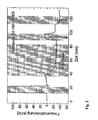
Fig. 2 zeigt beispielhaft eine Immobilisation mit Sensorantwort.
Der Sensor wird zunächst mit 10 mM HEPES-Puffer (pH 7.5) gespült, um die Basislinie aufzunehmen. Die 1-Schritt-Aktivierung erfolgt mit einer frisch zubereiteten Mischung aus 100 mM NHS und 400 mM EDC. Diese Lösung hat eine Leitfähigkeit von 14.4 mS/cm, was gegenüber den 550 µS/cm des HEPES-Puffers eine deutliche Leitfähigkeitserhöhung darstellt. Der Sensor reagiert darauf mit einer Frequenzzunahme von etwa 110 kHz. Anschließend wird wieder mit HEPES-Puffer gespült und dann mit der Lösung des zu immobilisierenden Biomoleküls beprobt. Das Biomolekül - in diesem Fall monoklonale Antikörper gegen Urease - liegt in einem 10 mM Acetatpuffer bei pH 5.0 vor. Man erkennt eine Frequenzabnahme, was auf eine Massenzunahme auf der Sensoroberfläche durch die Immobilisation des Biomoleküls zurüchzuführen ist. Man erkennt am Sensorverhalten die langsame Einstellung des Gleichgewichts, die nach etwa 45 bis 50 Minuten erreicht ist. Daraufhin wird wiederum mit HEPES-Puffer gespült und anschließend die überschüssigen NHS-Estergruppen durch Ethanolamin desaktiviert. Als letzter Schritt zur Präparation des Biosensors wird mit 4 mg/ml BSA beprobt, um die unspezifischen Bindungsstellen zu blocken. - 3) Die
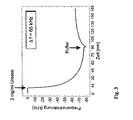
Fig. 3 zeigt die Beobachtung einer Immunoreaktion.
An einem so vorbereiteten Sensor wurden nun erste Versuche zur Beobachtung der Immunoreaktion durchgeführt. Dazu wurde ein mit monoklonalen Antikörpern gegen Urease beschichteter Sensor zunächst mit 10 mM HEPES-Puffer (pH 7.5) gespült und die Basislinie aufgenommen. Anschließend wurde mit einer Lösung von 2 mg/ml Urease beprobt. Man erkennt eine Frequenzabnahme, die nach etwa 90 Minuten beendet ist. Nach dem Rückspülen mit HEPES-Puffer wurde eine Frequenzänderung von etwa 65 kHz erhalten, die auf die Immunoreaktion zwischen den immobilisierten Antikörpern und dem Antigen Urease zurückzuführen ist. - Die
Fig. 4 zeigt einige Kontrollversuche mit nicht-spezifischen Antigenen. - Es wurden im weiteren mehrere Kontrollexperimente durchgeführt. Dazu wurden gleichbehandelte Sensoren mit nicht-spezifischen Antigenen beprobt und die Sensorantwort beobachtet. Bei der Beprobung eines solchen Sensors mit immobilisierten monoklonalen Antikörpern gegen Urease mit L-Tryptophan ist keine Frequenzänderung zu beobachten. Die schnelle aber reversible Frequenzänderung bei der Beprobung mit Analyt bzw. beim Zurückspülen mit Puffer ist auf eine unterschiedliche Leitfähigkeit beider Lösungen zurückzuführen. Bei der Beprobung mit Glucoseoxidase (GOD) bzw. mit BSA erhält man jeweils eine Frequenzänderung von etwa 8 kHz. Ein Sensor, der keine immobilisierten Antikörper an der Dextranmatrix enthält, machte bei Beprobung mit Urease eine Frequenzänderung von etwa 15 kHz, die auf die unspezifische Reaktion von Urease zurückzuführen ist. All diese Frequenzänderungen sind aber deutlich niedriger als die der spezifischen Immunoreaktion zwischen Urease und Antikörpern gegen Urease, die zu 65 kHz bestimmt wurde.
Claims (7)
- Dextranbeschichtete Oberfläche auf einem Träger, dadurch gekennzeichnet, dass die Verbindung von Dextran und der Trägeroberfläche durch einen Photolinker vermittelt wird, wobei die Dextranbeschichtung durch Coimmobilisation eines Gemisches aus Dextran und dem Photolinker T-BSA erfolgt.
- Dextranbeschichtete Oberfläche nach Anspruch 1, dadurch gekennzeichnet, dass die Photo-Coimmobilisation mit Hilfe von 3-Trifluoromethyl-3-(m-isothiocyanophenyl)-diazirin (TRIMID) modifiziertem T-BSA erfolgt.
- Dextranbeschichtete Oberfläche nach Anspruch 1 oder 2, dadurch gekennzeichnet, dass die Trägeroberfläche mit einem Polymerfilm beschichtet ist.
- Dextranbeschichtete Oberfläche nach einem der Ansprüche 1 bis 5, dadurch gekennzeichnet, dass der Polymerfilm aus Polyimid oder Poly-(p-xylylen) ist.
- Dextranbeschichtete Oberfläche nach einem der Ansprüche 1 bis 4, dadurch gekennzeichnet, dass die Trägeroberfläche die Oberfläche eines massesensitiven Sensors ist.
- Dextranbeschichtete Oberfläche nach einem der Ansprüche 1 bis 5, dadurch gekennzeichnet, dass der massesensitive Sensor ein Bauelement ist, das akustische Oberflächenwellen (SAW) nutzt.
- Dextranbeschichtete Oberfläche nach einem der Ansprüche 1 bis 4, dadurch gekennzeichnet, dass die Trägeroberfläche die Oberfläche eines optischen oder elektrochemischen Sensors ist.
Applications Claiming Priority (3)
| Application Number | Priority Date | Filing Date | Title |
|---|---|---|---|
| DE19818360A DE19818360C2 (de) | 1998-04-24 | 1998-04-24 | Dextranbeschichtete Oberfläche |
| DE19818360 | 1998-04-24 | ||
| PCT/EP1999/002599 WO1999056119A1 (de) | 1998-04-24 | 1999-04-19 | Dextranbeschichtete oberfläche |
Publications (2)
| Publication Number | Publication Date |
|---|---|
| EP1073895A1 EP1073895A1 (de) | 2001-02-07 |
| EP1073895B1 true EP1073895B1 (de) | 2012-03-28 |
Family
ID=7865678
Family Applications (1)
| Application Number | Title | Priority Date | Filing Date |
|---|---|---|---|
| EP99920697A Expired - Lifetime EP1073895B1 (de) | 1998-04-24 | 1999-04-19 | Dextranbeschichtete oberfläche |
Country Status (6)
| Country | Link |
|---|---|
| US (1) | US6974707B1 (de) |
| EP (1) | EP1073895B1 (de) |
| JP (1) | JP2002513153A (de) |
| AT (1) | ATE551600T1 (de) |
| DE (1) | DE19818360C2 (de) |
| WO (1) | WO1999056119A1 (de) |
Families Citing this family (16)
| Publication number | Priority date | Publication date | Assignee | Title |
|---|---|---|---|---|
| DE10064146A1 (de) * | 2000-12-22 | 2002-07-04 | Andreas Hofmann | Biosensor und verfahren zu seiner Herstellung |
| GB2371304A (en) * | 2001-01-16 | 2002-07-24 | Suisse Electronique Microtech | Surface passivation of organic polymers and elastomers |
| DE10108483A1 (de) | 2001-02-22 | 2002-09-05 | Bayer Ag | Phosphorhaltige Polymere für optischen Signalwandler |
| AU2003226633A1 (en) * | 2003-03-31 | 2004-10-25 | Council Of Scientific And Industrial Research | Method for preparing photoreactive polymers for immobilizing biomolecules thereon |
| DE10334097A1 (de) * | 2003-07-25 | 2005-02-24 | Hahn-Meitner-Institut Berlin Gmbh | Biosensor mit einer Anordnung von mehreren Schichten und Verfahren zum Messen von Eigenschaften einer Testkomponente |
| GB0319929D0 (en) * | 2003-08-26 | 2003-09-24 | Suisse Electronique Microtech | Yarn and textile products |
| JP4566189B2 (ja) * | 2004-03-15 | 2010-10-20 | テルモ株式会社 | 癒着防止材 |
| EP1756562A1 (de) * | 2004-05-21 | 2007-02-28 | Atonomics A/S | Ein hydrogel umfassender oberflächenschallwellensensor |
| JP4943888B2 (ja) * | 2006-02-27 | 2012-05-30 | 富士フイルム株式会社 | バイオセンサーの製造方法 |
| EP1826564B1 (de) | 2006-02-27 | 2013-03-27 | FUJIFILM Corporation | Verfahren zur Herstellung eines Biosensors |
| GB0620504D0 (en) * | 2006-10-16 | 2006-11-22 | Queen Mary & Westfield College | Method |
| JP5021408B2 (ja) * | 2007-09-26 | 2012-09-05 | 富士フイルム株式会社 | バイオセンサー |
| US8960004B2 (en) | 2010-09-29 | 2015-02-24 | The George Washington University | Synchronous one-pole surface acoustic wave resonator |
| US9253822B2 (en) * | 2013-06-25 | 2016-02-02 | International Business Machines Corporation | Phase change material variable capacitor |
| US11325112B2 (en) * | 2016-04-01 | 2022-05-10 | Research Foundation Of The City University Of New York | Method of forming inorganic nanocages |
| EP3784822A1 (de) * | 2018-04-24 | 2021-03-03 | CSEM Centre Suisse d'Electronique et de Microtechnique SA - Recherche et Développement | Verfahren zur metallbeschichtung von polymerhaltigen substraten |
Family Cites Families (16)
| Publication number | Priority date | Publication date | Assignee | Title |
|---|---|---|---|---|
| EP0124676A1 (de) * | 1983-05-04 | 1984-11-14 | IRD-Biomaterial AB | Oberflächlich modifiziertes festes Substrat und Verfahren zu dessen Herstellung |
| US5154808A (en) * | 1987-06-26 | 1992-10-13 | Fuji Photo Film Co., Ltd. | Functional organic thin film and process for producing the same |
| AU4529289A (en) * | 1988-10-17 | 1990-05-14 | Sepracor, Inc. | Process for the covalent surface modification of hydrophobic polymers and articles made therefrom |
| SE462454B (sv) * | 1988-11-10 | 1990-06-25 | Pharmacia Ab | Maetyta foer anvaendning i biosensorer |
| WO1991016425A1 (de) * | 1990-04-12 | 1991-10-31 | Hans Sigrist | Verfahren zur lichtinduzierten immobilisierung von biomolekülen an chemisch 'inerten' oberflächen |
| US5529914A (en) * | 1990-10-15 | 1996-06-25 | The Board Of Regents The Univeristy Of Texas System | Gels for encapsulation of biological materials |
| US5639620A (en) * | 1990-10-31 | 1997-06-17 | Coulter Corporation | Polymeric particles having a biodegradable gelatin or aminodextran coating and process for making same |
| JPH06507709A (ja) * | 1991-06-04 | 1994-09-01 | ファイスンズ ピーエルシー | 分析装置 |
| JP3455217B2 (ja) * | 1992-02-13 | 2003-10-14 | バイオ−メトリック システムズ インコーポレイテッド | 架橋マトリックス中の化学種の固定 |
| CA2098960C (en) * | 1992-07-10 | 2004-11-02 | Richard Barner | Bio specifically recognizing surfaces on solid supports and method for their preparation |
| DE4319215C3 (de) * | 1993-06-09 | 1998-02-12 | Karlsruhe Forschzent | Akustoelektrischer Flüssigkeitssensor |
| TW353086B (en) * | 1994-12-30 | 1999-02-21 | Novartis Ag | Method for multistep coating of a surface |
| ES2153097T3 (es) * | 1995-04-07 | 2001-02-16 | Mogens Havsteen Jakobsen | Procedimiento de inmovilizacion fotoquimica de ligandos usando quinonas. |
| FR2737012B1 (fr) * | 1995-07-19 | 1997-09-12 | Suisse Electronique Microtech | Dispositif comprenant une substance biologiquement active immobilisee sur un substrat nitrure covalent par un agent de liaison bifonctionnel |
| DE19618812C1 (de) * | 1996-05-10 | 1997-11-20 | Karlsruhe Forschzent | Sensor zum Nachweis von Proteinen und Verfahren zu dessen Herstellung |
| EP0886141A1 (de) * | 1997-06-23 | 1998-12-23 | C.S.E.M. Centre Suisse D'electronique Et De Microtechnique Sa | Optische Sensorvorrichtung und Verfahren zur hochempfindlichen Detektion von chemischen oder biochemischen Analyten |
-
1998
- 1998-04-24 DE DE19818360A patent/DE19818360C2/de not_active Expired - Fee Related
-
1999
- 1999-04-19 AT AT99920697T patent/ATE551600T1/de active
- 1999-04-19 JP JP2000546229A patent/JP2002513153A/ja active Pending
- 1999-04-19 WO PCT/EP1999/002599 patent/WO1999056119A1/de not_active Ceased
- 1999-04-19 EP EP99920697A patent/EP1073895B1/de not_active Expired - Lifetime
-
2000
- 2000-10-23 US US09/694,241 patent/US6974707B1/en not_active Expired - Fee Related
Non-Patent Citations (1)
| Title |
|---|
| SIGRIST H ET AL: "SURFACE IMMOBILIZATION OF BIOMOLECULES BY LIGHT", OPTICAL ENGINEERING, SOC. OF PHOTO-OPTICAL INSTRUMENTATION ENGINEERS, BELLINGHAM, vol. 34, no. 8, 1 August 1995 (1995-08-01), pages 2339 - 2348, XP000518229, ISSN: 0091-3286, DOI: 10.1117/12.201815 * |
Also Published As
| Publication number | Publication date |
|---|---|
| DE19818360C2 (de) | 2000-05-31 |
| US6974707B1 (en) | 2005-12-13 |
| JP2002513153A (ja) | 2002-05-08 |
| WO1999056119A1 (de) | 1999-11-04 |
| ATE551600T1 (de) | 2012-04-15 |
| DE19818360A1 (de) | 1999-11-04 |
| EP1073895A1 (de) | 2001-02-07 |
Similar Documents
| Publication | Publication Date | Title |
|---|---|---|
| DE19818360C2 (de) | Dextranbeschichtete Oberfläche | |
| EP0562370B1 (de) | Biosensor | |
| EP0562372B1 (de) | Biosensor | |
| DE69429606T2 (de) | Immobilisierter kohlehydrat-biosensor | |
| DE68916423T2 (de) | Enzymatisch verstärkter, piezoelektrischer, spezifischer bindungstest. | |
| DE69404653T2 (de) | Sensoren beruhend auf polymerumwandlung | |
| EP0809111A2 (de) | Bestimmungsverfahren mit oligomerisierten Rezeptoren | |
| EP0596421A1 (de) | Biologisch erkennende Elemente auf neuen TiO2-Wellenleitern für die Anwendung in der Biosensorik | |
| EP1637882B1 (de) | Lateralflussmessvorrichtung und Messverfahren für Analyten | |
| EP0491362B1 (de) | Verwendung von Peptidpaaren mit extrem hoher spezifischer Affinität zueinander im Bereich der in vitro Diagnostik | |
| DE10036907A1 (de) | Beschichtung für verschiedenartige Substrate sowie Verfahren zu deren Herstellung | |
| DE19741716A1 (de) | Adressierbares modulares Erkennungssystem, seine Herstellung und Verwendung | |
| EP0979408A1 (de) | Cluster verstärkter optischer sensor | |
| DE602004011028T2 (de) | Verfahren und vorrichtung zum nachweis von biomolekülen | |
| EP0578148A2 (de) | Biologisch erkennende Schichten auf Festphasen sowie ein Verfahren zur Herstellung dieser Schichten | |
| DE4343479A1 (de) | Acylierte Proteinaggregate und deren Verwendung zur Entstörung von Immunoassays | |
| EP1032826A1 (de) | Verfahren zur bildung lateral organisierter strukturen auf trägeroberflächen | |
| DE10108483A1 (de) | Phosphorhaltige Polymere für optischen Signalwandler | |
| DE19618812C1 (de) | Sensor zum Nachweis von Proteinen und Verfahren zu dessen Herstellung | |
| EP0784791B1 (de) | Biosensor mit auf einer signalaktiven oberfläche kovalent fixiertem biomaterial | |
| DE60317571T2 (de) | Verfahren zur herstellung von photoreaktiven polymeren zur immobilisierung von biomolekülen | |
| EP1230213A1 (de) | Artikel mit aktivierter oberfläche zur immobilisierung von makromolekülen und verfahren zur herstellung solcher artikel | |
| DE4418926C1 (de) | Verfahren zum Beschichten akustoelektrischer Sensoren | |
| DE19826617C1 (de) | Verfahren zur Herstellung von Immunosensoren | |
| DE3887074T2 (de) | Fühler mit einer immunochemischen Membran, die mit einem Halbleiter chemisch verbunden ist. |
Legal Events
| Date | Code | Title | Description |
|---|---|---|---|
| PUAI | Public reference made under article 153(3) epc to a published international application that has entered the european phase |
Free format text: ORIGINAL CODE: 0009012 |
|
| 17P | Request for examination filed |
Effective date: 20000926 |
|
| AK | Designated contracting states |
Kind code of ref document: A1 Designated state(s): AT CH DE DK FR GB IT LI SE |
|
| 17Q | First examination report despatched |
Effective date: 20071009 |
|
| RAP1 | Party data changed (applicant data changed or rights of an application transferred) |
Owner name: C.S.E.M. CENTRE SUISSE D'ELECTRONIQUE ET DE MICROT Owner name: KARLSRUHER INSTITUT FUER TECHNOLOGIE |
|
| GRAP | Despatch of communication of intention to grant a patent |
Free format text: ORIGINAL CODE: EPIDOSNIGR1 |
|
| RAP1 | Party data changed (applicant data changed or rights of an application transferred) |
Owner name: ARRAYON BIOTECHNOLGY SA |
|
| GRAS | Grant fee paid |
Free format text: ORIGINAL CODE: EPIDOSNIGR3 |
|
| GRAA | (expected) grant |
Free format text: ORIGINAL CODE: 0009210 |
|
| AK | Designated contracting states |
Kind code of ref document: B1 Designated state(s): AT CH DE DK FR GB IT LI SE |
|
| REG | Reference to a national code |
Ref country code: GB Ref legal event code: FG4D Free format text: NOT ENGLISH |
|
| REG | Reference to a national code |
Ref country code: CH Ref legal event code: EP |
|
| REG | Reference to a national code |
Ref country code: AT Ref legal event code: REF Ref document number: 551600 Country of ref document: AT Kind code of ref document: T Effective date: 20120415 |
|
| REG | Reference to a national code |
Ref country code: DE Ref legal event code: R096 Ref document number: 59915332 Country of ref document: DE Effective date: 20120516 |
|
| REG | Reference to a national code |
Ref country code: CH Ref legal event code: NV Representative=s name: GLN S.A. |
|
| RAP2 | Party data changed (patent owner data changed or rights of a patent transferred) |
Owner name: ARRAYON BIOTECHNOLOGY SA |
|
| PG25 | Lapsed in a contracting state [announced via postgrant information from national office to epo] |
Ref country code: SE Free format text: LAPSE BECAUSE OF FAILURE TO SUBMIT A TRANSLATION OF THE DESCRIPTION OR TO PAY THE FEE WITHIN THE PRESCRIBED TIME-LIMIT Effective date: 20120328 |
|
| REG | Reference to a national code |
Ref country code: CH Ref legal event code: PCAR Free format text: NEW ADDRESS: AVENUE EDOUARD-DUBOIS 20, 2000 NEUCHATEL (CH) |
|
| PG25 | Lapsed in a contracting state [announced via postgrant information from national office to epo] |
Ref country code: DK Free format text: LAPSE BECAUSE OF FAILURE TO SUBMIT A TRANSLATION OF THE DESCRIPTION OR TO PAY THE FEE WITHIN THE PRESCRIBED TIME-LIMIT Effective date: 20120328 |
|
| PLBE | No opposition filed within time limit |
Free format text: ORIGINAL CODE: 0009261 |
|
| STAA | Information on the status of an ep patent application or granted ep patent |
Free format text: STATUS: NO OPPOSITION FILED WITHIN TIME LIMIT |
|
| PG25 | Lapsed in a contracting state [announced via postgrant information from national office to epo] |
Ref country code: IT Free format text: LAPSE BECAUSE OF FAILURE TO SUBMIT A TRANSLATION OF THE DESCRIPTION OR TO PAY THE FEE WITHIN THE PRESCRIBED TIME-LIMIT Effective date: 20120328 |
|
| 26N | No opposition filed |
Effective date: 20130103 |
|
| REG | Reference to a national code |
Ref country code: DE Ref legal event code: R097 Ref document number: 59915332 Country of ref document: DE Effective date: 20130103 |
|
| REG | Reference to a national code |
Ref country code: AT Ref legal event code: MM01 Ref document number: 551600 Country of ref document: AT Kind code of ref document: T Effective date: 20120419 |
|
| PG25 | Lapsed in a contracting state [announced via postgrant information from national office to epo] |
Ref country code: AT Free format text: LAPSE BECAUSE OF NON-PAYMENT OF DUE FEES Effective date: 20120419 |
|
| PGFP | Annual fee paid to national office [announced via postgrant information from national office to epo] |
Ref country code: DE Payment date: 20140429 Year of fee payment: 16 |
|
| REG | Reference to a national code |
Ref country code: DE Ref legal event code: R119 Ref document number: 59915332 Country of ref document: DE |
|
| PG25 | Lapsed in a contracting state [announced via postgrant information from national office to epo] |
Ref country code: DE Free format text: LAPSE BECAUSE OF NON-PAYMENT OF DUE FEES Effective date: 20151103 |
|
| REG | Reference to a national code |
Ref country code: FR Ref legal event code: PLFP Year of fee payment: 18 |
|
| PGFP | Annual fee paid to national office [announced via postgrant information from national office to epo] |
Ref country code: GB Payment date: 20160426 Year of fee payment: 18 Ref country code: CH Payment date: 20160426 Year of fee payment: 18 |
|
| PGFP | Annual fee paid to national office [announced via postgrant information from national office to epo] |
Ref country code: FR Payment date: 20160426 Year of fee payment: 18 |
|
| REG | Reference to a national code |
Ref country code: CH Ref legal event code: PFA Owner name: ARRAYON BIOTECHNOLOGY SA, CH Free format text: FORMER OWNER: ARRAYON BIOTECHNOLOGY SA, CH |
|
| REG | Reference to a national code |
Ref country code: CH Ref legal event code: PL |
|
| GBPC | Gb: european patent ceased through non-payment of renewal fee |
Effective date: 20170419 |
|
| REG | Reference to a national code |
Ref country code: FR Ref legal event code: ST Effective date: 20171229 |
|
| PG25 | Lapsed in a contracting state [announced via postgrant information from national office to epo] |
Ref country code: FR Free format text: LAPSE BECAUSE OF NON-PAYMENT OF DUE FEES Effective date: 20170502 |
|
| PG25 | Lapsed in a contracting state [announced via postgrant information from national office to epo] |
Ref country code: CH Free format text: LAPSE BECAUSE OF NON-PAYMENT OF DUE FEES Effective date: 20170430 Ref country code: LI Free format text: LAPSE BECAUSE OF NON-PAYMENT OF DUE FEES Effective date: 20170430 Ref country code: GB Free format text: LAPSE BECAUSE OF NON-PAYMENT OF DUE FEES Effective date: 20170419 |