EP1047801B1 - Hochwarmfeste, oxidationsbeständige knetbare nickellegierung - Google Patents
Hochwarmfeste, oxidationsbeständige knetbare nickellegierung Download PDFInfo
- Publication number
- EP1047801B1 EP1047801B1 EP98954347A EP98954347A EP1047801B1 EP 1047801 B1 EP1047801 B1 EP 1047801B1 EP 98954347 A EP98954347 A EP 98954347A EP 98954347 A EP98954347 A EP 98954347A EP 1047801 B1 EP1047801 B1 EP 1047801B1
- Authority
- EP
- European Patent Office
- Prior art keywords
- max
- nickel alloy
- alloys
- temperature range
- nickel
- Prior art date
- Legal status (The legal status is an assumption and is not a legal conclusion. Google has not performed a legal analysis and makes no representation as to the accuracy of the status listed.)
- Expired - Lifetime
Links
Images




Classifications
-
- C—CHEMISTRY; METALLURGY
- C22—METALLURGY; FERROUS OR NON-FERROUS ALLOYS; TREATMENT OF ALLOYS OR NON-FERROUS METALS
- C22C—ALLOYS
- C22C19/00—Alloys based on nickel or cobalt
- C22C19/03—Alloys based on nickel or cobalt based on nickel
- C22C19/05—Alloys based on nickel or cobalt based on nickel with chromium
- C22C19/058—Alloys based on nickel or cobalt based on nickel with chromium without Mo and W
Definitions
- the invention relates to a kneadable, austenitic nickel alloy for objects with high resistance to isothermal and cyclic high temperature oxidation, high heat resistance and creep resistance up to 1 200 ° C, in particular but in the temperature range from 700 to 900 ° C.
- Components in flying and stationary gas turbines such as combustion chamber linings, Guide vanes, honey combs, heat shields and plates as well the rotating disks and blades just in this temperature range mechanically particularly stressed.
- Good oxidation resistance and hot gas corrosion resistance protects the material without complex coating systems must be applied.
- An austenitic alloy has first become known from US Pat. No. 3,607,243 with contents in mass% to 0.1% carbon, 58 - 63% nickel, 21 - 25% Chromium, 1 - 1.7% aluminum and optionally up to 0.5% silicon, up to 1.0% manganese, up to 0.6% titanium, up to 0.006% boron, up to 0.1% magnesium, up to 0.05% calcium, balance Iron, the phosphorus content below 0.030%, the sulfur content below 0.015% should be, which is a good resistance especially against cyclic oxidation Has temperatures up to 1 093 ° C.
- the heat resistance values are given as follows: 80 MPa for 982 ° C, 45 MPa for 1 093 ° C and 43 MPa for 1 149 ° C.
- the creep rupture strength is after 1,000 Hours 32 MPa for 871 ° C, 16 MPa for 982 ° C and 7 MPa for 1 093 ° C.
- This material has proven itself particularly when used in the temperature range above 1,000 ° C. This is based on the formation of a protective chromium oxide-aluminum oxide layer and especially on the low slope of the oxide layer to flake off when exposed to temperature changes.
- the material has become one important alloy for industrial furnace construction. Typical applications are jet pipes for gas and oil-fired ovens and transport rollers in roller hearth ovens for firing ceramic products.
- the Material also for parts in exhaust gas detoxification plants and petrochemical plants suitable
- the material known from US Pat. No. 3,607,243 is used in amounts of 0 , 04 to 0.1% and at the same time a titanium content of 0.2 to 1.0% is mandatory.
- the chrome contents are 19-28% and the aluminum contents 0.75-2.0% with nickel contents of 55-65%.
- the carbon content should not exceed 0.1% in order to avoid the formation of carbides, in particular of the M 23 C 6 type, since these adversely affect the microstructure of the structure and the properties of the alloy at very high temperatures.
- the oxidation resistance expressed by the so-called specific mass change in g / m 2 ⁇ h in air at high test temperatures, for example 1 093 ° C, as described in US Pat. No. 4,784,830, is not the only decisive factor, but rather also the heat resistance and the creep rupture strength at the respective application temperatures.
- EP-A 0 508 058 discloses the alloying of Carbon contents from 0.12 to 0.30% in connection with the stable carbide formers Titanium (0.01 to 1.0%), niobium (0.01 to 1.0%) and zirconium (0.01 to 0.20%) a nickel alloy with 23 to 30% chromium, 8 to 11% iron, 1.8 to 2.4% aluminum, 0.01 to 0.15% yttrium, 0.001 to 0.015% magnesium, 0.001 to 0.010% Calcium, at maximum levels of 0.030% for nitrogen, 0.50% for silicon, 0.25% for manganese, 0.020% for phosphorus and 0.010% for sulfur. To make sure sufficient oxidation resistance at temperatures above 1 100 ° C chrome contents of at least 23% are prescribed.
- the hot and creep rupture strengths achieved with this material exceed the 1% creep limits (R p1.0 / 104 ) and creep rupture strengths (R m / 104 ) as well as the thermal strengths (Rm) and 1% yield strength (R p1.0) ) in the temperature range from 850 to 1 200 ° C.
- European patent application EP-A 0 752 481 attempts to solve this problem by means of an austenitic carbide-strengthened nickel-chromium-iron wrought alloy.
- the nickel alloy should contain 2.3 to 3.0% aluminum and 0.01 to 0.15% yttrium, additions of titanium (0.01 to 0.20%), niobium (0.01 to 0.20%) and zirconium (0.01 to 0.10%) are used for the primary excretion of carbonitrides.
- the strength increases described in EP-A 0 752 481 relate exclusively to the temperature range 850 - 1 200 ° C, while in the temperature range from 700 - 900 ° C no increase in strength could be achieved. Just this temperature range is, however, the materials especially in stationary and exposed to flying gas turbines.
- a kneadable nickel alloy To be designed so that with sufficient resistance to oxidation, the creep rupture strength and the time stretch limits, especially in the temperature range of 700 - 900 ° C, sustainably improved, either reducing the lifespan of objects manufactured in such alloys is significantly increased or at same lifetime due to the higher temperature resistance a significantly improved Economy is achieved.
- a kneadable, austenitic nickel alloy for objects with high resistance to isothermal and cyclic high temperature oxidation, high heat resistance and creep resistance up to 1200 ° C, but especially in the temperature range between 700 and 900 ° C, consisting of (in% by weight ) 0.20 to 0.40% carbon 25 to 30% chrome 7.5 to 8.5% tantalum 2.3 to 3.0% aluminum 0.01 to 0.15% yttrium 0.01 to 0.20% titanium 0.01 to 0.20% niobium 0.01 to 0.15% zirconium 0.001 to 0.015% magnesium 0.001 to 0.010% calcium Max. 0.030% nitrogen Max. 0.50% silicon Max. 0.25% manganese Max. 0.020% phosphorus Max. 0.010% sulfur Max. 1% iron Balance nickel, including unavoidable melting impurities.
- the tantalum carbide-strengthened nickel-chromium wrought alloy according to the invention has the addition of 7.5 to 8.5% tantalum.
- This surprisingly leads to the excretion of primary tantalum carbides of the TaC type, which likewise separate between the liquidus and solidus temperatures during the solidification of the melt, but which result in a significantly higher strength increase compared to the primarily eliminated chromium carbides of the type Cr 7 C 3 they are smaller and more uniformly distributed and have a higher thermal stability, which manifests itself in the fact that no reaction with the matrix could be observed for the operating temperature range of the new material up to 1200 ° C.
- the lower limit of the claimed Ta content is determined by the transition from chromium carbide to tantalum carbide. For example, only chromium carbide is present in the matrix up to 7.5% tantalum no longer separates in favor of tantalum carbide at higher tantalum contents. In contrast, tantalum contents of more than 8.5% no longer allow hot forming.
- yttrium in the range of 0.01 to 0.15% is particularly good the cyclical resistance to oxidation is sustainably improved. Keep under 0.01% have no significant influence on the adhesive strength of the oxide layers out. On the other hand, yttrium levels above 0.15% due to local Meltings lead to restricted hot forming.
- the silicon content should be kept as low as possible to prevent the formation of to avoid low-melting phases. So the silicon content should be lower be equal to 0.50%, which is technically manageable today without any problems.
- the manganese content should not exceed 0.25% in order to have negative effects to avoid the oxidation resistance of the material.
- Additions of magnesium and calcium serve to improve the hot formability and also improve the oxidation resistance.
- the upper limits should be 0.015% for magnesium and 0.010% for calcium however, not to be exceeded as the levels are above these limit values of magnesium and calcium favor the appearance of low-melting phases and in turn deteriorate the hot formability.
- the nickel alloy according to the invention is largely free of iron, which up to a maximum of 1% may be represented.
- Table 1 contains analyzes of four prior art alloys A, B, C, D and three alloys E, F and G covered by the invention.
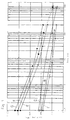
- Fig. 1 shows the tensile strengths for the temperature range from room temperature to 1 000 ° C for the state of the art alloys A - D and for the alloys E - G according to the invention Alloys E - G over the entire examined temperature range significantly higher tensile strengths.
- the alloys E - G according to the invention show significantly higher 0.1% proof stresses over the entire temperature range examined, up to 1000 ° C., compared to the prior art.
- Figures 3 to 5 show the 0.1% strain limits for alloys B - D and for the alloys E - G according to the invention for 700 ° C., 800 ° C. and 900 ° C. for test times up to 1,000 hours. The proved at all test temperatures Alloys E - G according to the invention represent the state of the art Alloys B - D clearly superior.
- Figures 6 to 8 show the temporal development of the specific mass change in cyclic oxidation tests in air at 1 000 ° C, 1 100 ° C and 1 200 ° C up to test times of approx. 1 100 hours.
- the alloy F according to the invention exhibits the smallest change in mass at 1200 ° C. at the end of the test and can therefore be classified as the most resistant to oxidation.
- the specific change in mass of the alloy F according to the invention is 1,000 ° C. at a very low level, but higher than that of the comparative alloys B and C, but shows the desired parabolic behavior of the mass change over the Time. Because the higher test temperatures of 1 100 ° C and 1 200 ° C the highest stress conditions represent, it can be said that the invention Alloy F has the best oxidation behavior over the entire temperature range up to 1 200 ° C having.
- the objects mentioned can be made from the material according to the invention easy to manufacture, as it is not only well thermoformable, but also for cold forming processes, such as. Cold rolling to thin dimensions, folding, deep drawing, Flaring and stretching, which has the necessary formability.
Landscapes
- Chemical & Material Sciences (AREA)
- Engineering & Computer Science (AREA)
- Materials Engineering (AREA)
- Mechanical Engineering (AREA)
- Metallurgy (AREA)
- Organic Chemistry (AREA)
- Turbine Rotor Nozzle Sealing (AREA)
Description
| 0,20 bis | 0,40 % Kohlenstoff |
| 25 bis | 30 % Chrom |
| 7,5 bis | 8,5 % Tantal |
| 2,3 bis | 3,0 % Aluminium |
| 0,01 bis | 0,15 % Yttrium |
| 0,01 bis | 0,20 % Titan |
| 0,01 bis | 0,20 % Niob |
| 0,01 bis | 0,15 % Zirkonium |
| 0,001 bis | 0,015 % Magnesium |
| 0,001 bis | 0,010 % Calcium |
| max. | 0,030 % Stickstoff |
| max. | 0,50 % Silizium |
| max. | 0,25 % Mangan |
| max. | 0,020 % Phosphor |
| max. | 0,010 % Schwefel |
| max. | 1% Eisen |
- Fig. 1
- die Zugfestigkeiten für den Temperaturbereich von Raumtemperatur bis 1 000 °C für die Legierungen A - D sowie für die erfindungsgemäßen Legierungen E - G
- Fig. 2
- die Rp0,1-Dehngrenzen für den Temperaturbereich von Raumtemperatur bis 1 000 °C für die Legierungen A - D sowie für die erfindungsgemäßen Legierungen E - G
- Fig. 3
- die Rp0,1-Zeitdehngrenzen für 700 °C für die Legierungen B - D sowie für die erfindungsgemäßen Legierungen E - G
- Fig. 4
- die Rp0,1-Zeitdehngrenzen für 800 °C für die Legierungen B - D sowie für die erfindungsgemäßen Legierungen E - G
- Fig. 5
- die Rp0,1-Zeitdehngrenzen für 900 °C für die Legierungen B - D sowie für die erfindungsgemäßen Legierungen E - G
- Tabelle 2
- Standzeiten in den bei 815 °C und 165 MPa Belastung, 870 °C und 90 MPa Belastung sowie bei 927 °C und 75,8 MPa Belastung an den Legierungen A - D und den erfindungsgemäßen Legierungen E - G durchgeführten Stress-Rupture-Versuchen
- Fig. 6
- die spezifische Massenänderung in g/m2 in zyklischen Oxidationsversuchen in Luft bei 1 000 °C für die Legierungen B und C sowie für die erfindungsgemäße Legierung F
- Fig. 7
- die spezifische Massenänderung in g/m2 in zyklischen Oxidationsversuchen in Luft bei 1 100 °C für die Legierungen B und C sowie für die erfindungsgemäße Legierung F
- Fig. 8
- die spezifische Massenänderung in g/m2 in zyklischen Oxidationsversuchen in Luft bei 1 200 °C für die Legierungen B und C sowie für die erfindungsgemäße Legierung F.
- Kassetten und Tragegestelle für stationäre Glühungen
- Gasturbinengehäuse und -ringe
- Leit- und Laufschaufeln von fliegenden und stationären Gasturbinen
- Honey combs
- Abgasführungssysteme in fliegenden und stationären Gasturbinen
- Hitzeschilder
- Schubumkehrklappen in fliegenden Gasturbinen.
| Legierungen | |||||||
| Elemente in % | A | B | C | D | E | F | G |
| Ni | Rest | Rest | Rest | Rest | Rest | Rest | Rest |
| Cr | 25,2 | 22,0 | 21,0 | 20,5 | 25,01 | 25,0 | 27,5 |
| Mn | 0,09 | 0,10 | 0,2 | 0,2 | 0,01 | 0,01 | 0,08 |
| Si | 0,03 | 0,10 | 0,35 | 0,2 | 0,07 | 0,08 | 0,09 |
| Ti | 0,16 | 0,40 | 0,09 | 2,2 | 0,04 | 0,04 | 0,10 |
| Nb | 0,01 | 0,01 | 0,01 | 0,10 | 0,01 | 0,01 | 0,01 |
| Cu | 0,01 | 0,01 | 0,01 | 0,10 | 0,008 | 0,011 | 0,005 |
| Fe | 9,60 | 0,10 | 0,9 | 0,6 | 0,16 | 0,14 | 0,11 |
| S | 0,002 | 0,003 | 0,004 | 0,005 | 0,003 | 0,003 | 0,002 |
| P | 0,007 | 0,007 | 0,005 | 0,010 | 0,002 | 0,003 | 0,005 |
| Al | 2,78 | 1,0 | 0,40 | 0,40 | 2,8 | 2,97 | 2,40 |
| Mg | 0,008 | 0,01 | 0,009 | 0,009 | 0,005 | 0,006 | 0,005 |
| C | 0,225 | 0,06 | 0,09 | 0,05 | 0,247 | 0,244 | 0,315 |
| N | 0,029 | - | 0,005 | 0,01 | 0,007 | 0,006 | 0,020 |
| Ca | 0,002 | 0,01 | 0,002 | 0,008 | 0,001 | 0,001 | 0,002 |
| Zr | 0,070 | - | 0,01 | 0,015 | 0,13 | 0,09 | 0,10 |
| Y | 0,080 | - | - | - | 0,04 | 0,07 | 0,11 |
| Ta | - | - | - | - | 8,05 | 8,01 | 8,45 |
| Mo | - | 8,8 | 2,1 | 5,8 | - | - | - |
| W | - | - | 14,1 | - | - | - | - |
| Co | - | 11,7 | 0,9 | 19,8 | - | - | - |
| La | - | - | 0,045 | - | - | - | - |
| Standzeit in Stunden | |||
| Legierung | 815 °C, 165 MPa | 870 °C, 90 MPa | 927 °C, 75,8 MPa |
| A | 29 | 40 | 19 |
| B | 61 | 47 | 16 |
| C | 32 | 157 | 43 |
| D | 70 | 99 | 39 |
| E | 135 | 229 | 254 |
| F | 122 | 201 | 213 |
| G | 127 | 217 | 241 |
Claims (4)
- Knetbare, austenitische Nickellegierung für Gegenstände mit hoher Beständigkeit gegenüber isothermer und zyklischer Hochtemperaturoxidation, hoher Warmfestigkeit und Zeitstandfestigkeit bis zu 1 200 °C, insbesondere aber im Temperaturbereich zwischen 700 und 900 °C, bestehend aus (in Gewichts-%)
0,20 bis 0,40 % Kohlenstoff 25 bis 30 % Chrom 7,5 bis 8,5 % Tantal 2,3 bis 3,0 % Aluminium 0,01 bis 0,15 % Yttrium 0,01 bis 0,20 % Titan 0,01 bis 0,20 % Niob 0,01 bis 0,15 % Zirkonium 0,001 bis 0,015 % Magnesium 0,001 bis 0,010 % Calcium max. 0,030 % Stickstoff max. 0,50 % Silizium max. 0,25 % Mangan max. 0,020 % Phosphor max. 0,010 % Schwefel max. 1 % Eisen - Anwendung der Nickellegierung nach Anspruch 1, als Form- und/oder Schleudergußkörper.
- Anwendung der Nickellegierung nach Anspruch 1, als gegossene vielkristalline, einkristalline und gerichtet erstarrte Leit- und/oder Laufschaufeln in fliegenden und stationären Gasturbinen.
- Anwendung der Nickellegierung nach einem der Ansprüche 1 bis 3, im lösungsgeglühten und ausgehärteten Zustand, wobei die Aushärtung ein- oder mehrstufig, vorzugsweise jedoch im Temperaturbereich von 600 °C bis 900 °C erfolgt.
Applications Claiming Priority (3)
| Application Number | Priority Date | Filing Date | Title |
|---|---|---|---|
| DE19753539 | 1997-12-03 | ||
| DE19753539A DE19753539C2 (de) | 1997-12-03 | 1997-12-03 | Hochwarmfeste, oxidationsbeständige knetbare Nickellegierung |
| PCT/EP1998/006335 WO1999028515A1 (de) | 1997-12-03 | 1998-10-05 | Hochwarmfeste, oxidationsbeständige knetbare nickellegierung |
Publications (2)
| Publication Number | Publication Date |
|---|---|
| EP1047801A1 EP1047801A1 (de) | 2000-11-02 |
| EP1047801B1 true EP1047801B1 (de) | 2001-12-19 |
Family
ID=7850555
Family Applications (1)
| Application Number | Title | Priority Date | Filing Date |
|---|---|---|---|
| EP98954347A Expired - Lifetime EP1047801B1 (de) | 1997-12-03 | 1998-10-05 | Hochwarmfeste, oxidationsbeständige knetbare nickellegierung |
Country Status (4)
| Country | Link |
|---|---|
| EP (1) | EP1047801B1 (de) |
| DE (2) | DE19753539C2 (de) |
| WO (1) | WO1999028515A1 (de) |
| ZA (1) | ZA9810883B (de) |
Families Citing this family (1)
| Publication number | Priority date | Publication date | Assignee | Title |
|---|---|---|---|---|
| CN116219269B (zh) * | 2021-12-06 | 2025-04-15 | 宝武特种冶金有限公司 | 一种镍基合金热轧厚板及其制备方法 |
Family Cites Families (6)
| Publication number | Priority date | Publication date | Assignee | Title |
|---|---|---|---|---|
| US4312682A (en) * | 1979-12-21 | 1982-01-26 | Cabot Corporation | Method of heat treating nickel-base alloys for use as ceramic kiln hardware and product |
| US4439248A (en) * | 1982-02-02 | 1984-03-27 | Cabot Corporation | Method of heat treating NICRALY alloys for use as ceramic kiln and furnace hardware |
| US4891183A (en) * | 1986-12-03 | 1990-01-02 | Chrysler Motors Corporation | Method of preparing alloy compositions |
| DE4014614A1 (de) * | 1990-05-07 | 1991-11-14 | Pm Hochtemperatur Metall Gmbh | Superlegierung auf nickelbasis |
| DE4111821C1 (de) * | 1991-04-11 | 1991-11-28 | Vdm Nickel-Technologie Ag, 5980 Werdohl, De | |
| DE19524234C1 (de) * | 1995-07-04 | 1997-08-28 | Krupp Vdm Gmbh | Knetbare Nickellegierung |
-
1997
- 1997-12-03 DE DE19753539A patent/DE19753539C2/de not_active Expired - Fee Related
-
1998
- 1998-10-05 WO PCT/EP1998/006335 patent/WO1999028515A1/de not_active Ceased
- 1998-10-05 EP EP98954347A patent/EP1047801B1/de not_active Expired - Lifetime
- 1998-10-05 DE DE59802586T patent/DE59802586D1/de not_active Expired - Lifetime
- 1998-11-27 ZA ZA9810883A patent/ZA9810883B/xx unknown
Also Published As
| Publication number | Publication date |
|---|---|
| EP1047801A1 (de) | 2000-11-02 |
| DE59802586D1 (de) | 2002-01-31 |
| DE19753539A1 (de) | 1999-06-17 |
| DE19753539C2 (de) | 2000-06-21 |
| ZA9810883B (en) | 1999-05-18 |
| WO1999028515A1 (de) | 1999-06-10 |
Similar Documents
| Publication | Publication Date | Title |
|---|---|---|
| DE102012011161B4 (de) | Nickel-Chrom-Aluminium-Legierung mit guter Verarbeitbarkeit, Kriechfestigkeit und Korrosionsbeständigkeit | |
| DE102012011162B4 (de) | Nickel-Chrom-Legierung mit guter Verarbeitbarkeit, Kriechfestigkeit und Korrosionsbeständigkeit | |
| DE4111821C1 (de) | ||
| EP1501953B1 (de) | Hitze- und korrosionsbeständige nickel-chrom-grusslegierung | |
| DE102007062417B4 (de) | Austenitische warmfeste Nickel-Basis-Legierung | |
| EP3775308B1 (de) | Verwendung einer nickel-chrom-eisen-aluminium-legierung | |
| DE2809081C3 (de) | Verwendung einer Legierung des Eisen-Nickel-Chrom-Molybdän-Systems | |
| EP0752481B1 (de) | Knetbare Nickellegierung | |
| DE102020132193A1 (de) | Verwendung einer Nickel-Chrom-Eisen-Aluminium-Legierung mit guter Verarbeitbarkeit, Kriechfestigkeit und Korrosionsbeständigkeit | |
| DE69821493T2 (de) | Verwendung eines hitzebeständigen Gussstahles für Bauteile von Turbinengehäuse n | |
| CH699205A1 (de) | Schutzrohre für Thermoelemente. | |
| EP0657558A1 (de) | Superlegierung auf Fe-Basis | |
| AT399165B (de) | Legierung auf chrombasis | |
| DE3331806C2 (de) | ||
| DE2456857B2 (de) | Verwendung einer Nickelbasislegierung für unbeschichtete Bauteile im Heißgasteil von Turbinen | |
| DE69021692T2 (de) | Hitzestabile Edelstahlfolie für Katalysatorträger in Verbrennungsabgasreinigern. | |
| EP2240619A1 (de) | Kriechfester stahl | |
| DE19753539C9 (de) | Hochwarmfeste, oxidationsbeständige knetbare Nickellegierung | |
| DE69501344T2 (de) | Wärmebeständiger Stahl | |
| EP1047801A1 (de) | Hochwarmfeste, oxidationsbeständige knetbare nickellegierung | |
| DE4411228A1 (de) | Hochwarmfeste Nickelbasislegierung und Verwendung derselben | |
| DE112013000549B4 (de) | Rostfreier ferritischer Stahl und Verfahren zur Herstellung eines Hochtemperaturbauteils | |
| EP0690140B1 (de) | Hochtemperatur-Knetlegierung | |
| DE10228210B4 (de) | Hitzebeständiges Stahlblech oder -band und daraus hergestellte Bauteile | |
| DE2719166C3 (de) | Kühlelement für einen metallurgischen Ofen |
Legal Events
| Date | Code | Title | Description |
|---|---|---|---|
| PUAI | Public reference made under article 153(3) epc to a published international application that has entered the european phase |
Free format text: ORIGINAL CODE: 0009012 |
|
| 17P | Request for examination filed |
Effective date: 20000523 |
|
| AK | Designated contracting states |
Kind code of ref document: A1 Designated state(s): DE FR GB |
|
| GRAG | Despatch of communication of intention to grant |
Free format text: ORIGINAL CODE: EPIDOS AGRA |
|
| 17Q | First examination report despatched |
Effective date: 20010110 |
|
| GRAG | Despatch of communication of intention to grant |
Free format text: ORIGINAL CODE: EPIDOS AGRA |
|
| GRAH | Despatch of communication of intention to grant a patent |
Free format text: ORIGINAL CODE: EPIDOS IGRA |
|
| GRAH | Despatch of communication of intention to grant a patent |
Free format text: ORIGINAL CODE: EPIDOS IGRA |
|
| GRAA | (expected) grant |
Free format text: ORIGINAL CODE: 0009210 |
|
| AK | Designated contracting states |
Kind code of ref document: B1 Designated state(s): DE FR GB |
|
| REG | Reference to a national code |
Ref country code: GB Ref legal event code: IF02 |
|
| REF | Corresponds to: |
Ref document number: 59802586 Country of ref document: DE Date of ref document: 20020131 |
|
| ET | Fr: translation filed | ||
| GBT | Gb: translation of ep patent filed (gb section 77(6)(a)/1977) |
Effective date: 20020219 |
|
| PLBE | No opposition filed within time limit |
Free format text: ORIGINAL CODE: 0009261 |
|
| STAA | Information on the status of an ep patent application or granted ep patent |
Free format text: STATUS: NO OPPOSITION FILED WITHIN TIME LIMIT |
|
| 26N | No opposition filed | ||
| PGFP | Annual fee paid to national office [announced via postgrant information from national office to epo] |
Ref country code: GB Payment date: 20071023 Year of fee payment: 10 Ref country code: FR Payment date: 20071016 Year of fee payment: 10 |
|
| GBPC | Gb: european patent ceased through non-payment of renewal fee |
Effective date: 20081005 |
|
| REG | Reference to a national code |
Ref country code: FR Ref legal event code: ST Effective date: 20090630 |
|
| PG25 | Lapsed in a contracting state [announced via postgrant information from national office to epo] |
Ref country code: FR Free format text: LAPSE BECAUSE OF NON-PAYMENT OF DUE FEES Effective date: 20081031 |
|
| PG25 | Lapsed in a contracting state [announced via postgrant information from national office to epo] |
Ref country code: GB Free format text: LAPSE BECAUSE OF NON-PAYMENT OF DUE FEES Effective date: 20081005 |
|
| PGFP | Annual fee paid to national office [announced via postgrant information from national office to epo] |
Ref country code: DE Payment date: 20101022 Year of fee payment: 13 |
|
| PG25 | Lapsed in a contracting state [announced via postgrant information from national office to epo] |
Ref country code: DE Free format text: LAPSE BECAUSE OF NON-PAYMENT OF DUE FEES Effective date: 20130501 |
|
| REG | Reference to a national code |
Ref country code: DE Ref legal event code: R119 Ref document number: 59802586 Country of ref document: DE Effective date: 20130501 |