EP1032281B1 - Aqueous solution for disinfecting an animal product, a method and a plant for such disinfection - Google Patents
Aqueous solution for disinfecting an animal product, a method and a plant for such disinfection Download PDFInfo
- Publication number
- EP1032281B1 EP1032281B1 EP98956144A EP98956144A EP1032281B1 EP 1032281 B1 EP1032281 B1 EP 1032281B1 EP 98956144 A EP98956144 A EP 98956144A EP 98956144 A EP98956144 A EP 98956144A EP 1032281 B1 EP1032281 B1 EP 1032281B1
- Authority
- EP
- European Patent Office
- Prior art keywords
- solution
- anolyte
- animal product
- aqueous
- catholyte
- Prior art date
- Legal status (The legal status is an assumption and is not a legal conclusion. Google has not performed a legal analysis and makes no representation as to the accuracy of the status listed.)
- Expired - Lifetime
Links
- 241001465754 Metazoa Species 0.000 title claims abstract description 40
- 230000000249 desinfective effect Effects 0.000 title claims abstract description 11
- 239000007864 aqueous solution Substances 0.000 title claims abstract description 6
- 238000000034 method Methods 0.000 title claims description 35
- 238000004659 sterilization and disinfection Methods 0.000 title description 2
- 239000000243 solution Substances 0.000 claims abstract description 73
- XLYOFNOQVPJJNP-UHFFFAOYSA-N water Substances O XLYOFNOQVPJJNP-UHFFFAOYSA-N 0.000 claims abstract description 35
- 238000011282 treatment Methods 0.000 claims abstract description 31
- 238000005868 electrolysis reaction Methods 0.000 claims abstract description 10
- 239000000203 mixture Substances 0.000 claims abstract description 8
- 150000003839 salts Chemical class 0.000 claims abstract description 5
- 239000012266 salt solution Substances 0.000 claims abstract description 3
- 230000000844 anti-bacterial effect Effects 0.000 claims description 9
- 238000007865 diluting Methods 0.000 claims description 3
- 238000007598 dipping method Methods 0.000 claims description 3
- 238000002791 soaking Methods 0.000 claims description 3
- 238000010790 dilution Methods 0.000 claims description 2
- 239000012895 dilution Substances 0.000 claims description 2
- 238000007710 freezing Methods 0.000 claims description 2
- 230000008014 freezing Effects 0.000 claims description 2
- 150000001450 anions Chemical class 0.000 abstract description 6
- 238000012360 testing method Methods 0.000 description 20
- 108010029165 Metmyoglobin Proteins 0.000 description 12
- FAPWRFPIFSIZLT-UHFFFAOYSA-M Sodium chloride Chemical compound [Na+].[Cl-] FAPWRFPIFSIZLT-UHFFFAOYSA-M 0.000 description 12
- 235000015278 beef Nutrition 0.000 description 9
- 235000013372 meat Nutrition 0.000 description 8
- 238000005406 washing Methods 0.000 description 8
- 238000009825 accumulation Methods 0.000 description 7
- 239000011780 sodium chloride Substances 0.000 description 6
- 241000894007 species Species 0.000 description 6
- 238000007619 statistical method Methods 0.000 description 6
- 241000251468 Actinopterygii Species 0.000 description 4
- 238000002845 discoloration Methods 0.000 description 4
- 230000035622 drinking Effects 0.000 description 4
- 230000002906 microbiologic effect Effects 0.000 description 4
- 241000287828 Gallus gallus Species 0.000 description 3
- HEMHJVSKTPXQMS-UHFFFAOYSA-M Sodium hydroxide Chemical compound [OH-].[Na+] HEMHJVSKTPXQMS-UHFFFAOYSA-M 0.000 description 3
- 150000001768 cations Chemical class 0.000 description 3
- 235000013330 chicken meat Nutrition 0.000 description 3
- 230000000694 effects Effects 0.000 description 3
- 230000004580 weight loss Effects 0.000 description 3
- 241000283690 Bos taurus Species 0.000 description 2
- WCUXLLCKKVVCTQ-UHFFFAOYSA-M Potassium chloride Chemical compound [Cl-].[K+] WCUXLLCKKVVCTQ-UHFFFAOYSA-M 0.000 description 2
- 238000000540 analysis of variance Methods 0.000 description 2
- 230000001580 bacterial effect Effects 0.000 description 2
- 238000005352 clarification Methods 0.000 description 2
- 238000011109 contamination Methods 0.000 description 2
- 235000013305 food Nutrition 0.000 description 2
- 150000005838 radical anions Chemical class 0.000 description 2
- 150000005839 radical cations Chemical class 0.000 description 2
- 150000003254 radicals Chemical class 0.000 description 2
- 238000004064 recycling Methods 0.000 description 2
- 238000005070 sampling Methods 0.000 description 2
- 235000013580 sausages Nutrition 0.000 description 2
- 238000003307 slaughter Methods 0.000 description 2
- 241000894006 Bacteria Species 0.000 description 1
- 241000283707 Capra Species 0.000 description 1
- 206010011732 Cyst Diseases 0.000 description 1
- 241001494479 Pecora Species 0.000 description 1
- 239000004793 Polystyrene Substances 0.000 description 1
- 241000271567 Struthioniformes Species 0.000 description 1
- 241000282887 Suidae Species 0.000 description 1
- 238000004458 analytical method Methods 0.000 description 1
- 230000000845 anti-microbial effect Effects 0.000 description 1
- 239000003899 bactericide agent Substances 0.000 description 1
- 210000000481 breast Anatomy 0.000 description 1
- 230000001413 cellular effect Effects 0.000 description 1
- 208000031513 cyst Diseases 0.000 description 1
- 238000005202 decontamination Methods 0.000 description 1
- 230000003588 decontaminative effect Effects 0.000 description 1
- 229910001905 dichlorine hexoxide Inorganic materials 0.000 description 1
- 238000011156 evaluation Methods 0.000 description 1
- 238000002474 experimental method Methods 0.000 description 1
- 210000003746 feather Anatomy 0.000 description 1
- 238000013100 final test Methods 0.000 description 1
- 235000019688 fish Nutrition 0.000 description 1
- 238000005189 flocculation Methods 0.000 description 1
- 230000016615 flocculation Effects 0.000 description 1
- QWPPOHNGKGFGJK-UHFFFAOYSA-N hypochlorous acid Chemical compound ClO QWPPOHNGKGFGJK-UHFFFAOYSA-N 0.000 description 1
- 239000007788 liquid Substances 0.000 description 1
- 210000004185 liver Anatomy 0.000 description 1
- 210000003141 lower extremity Anatomy 0.000 description 1
- 230000000813 microbial effect Effects 0.000 description 1
- 244000005700 microbiome Species 0.000 description 1
- 230000007935 neutral effect Effects 0.000 description 1
- 230000003647 oxidation Effects 0.000 description 1
- 238000007254 oxidation reaction Methods 0.000 description 1
- 230000033116 oxidation-reduction process Effects 0.000 description 1
- 238000004806 packaging method and process Methods 0.000 description 1
- 229920002223 polystyrene Polymers 0.000 description 1
- 239000001103 potassium chloride Substances 0.000 description 1
- 235000011164 potassium chloride Nutrition 0.000 description 1
- 238000002203 pretreatment Methods 0.000 description 1
- 238000012545 processing Methods 0.000 description 1
- 230000003134 recirculating effect Effects 0.000 description 1
- 239000000126 substance Substances 0.000 description 1
- 230000002195 synergetic effect Effects 0.000 description 1
- 239000008399 tap water Substances 0.000 description 1
- 235000020679 tap water Nutrition 0.000 description 1
- 238000011144 upstream manufacturing Methods 0.000 description 1
- 230000003612 virological effect Effects 0.000 description 1
- 239000002699 waste material Substances 0.000 description 1
Images




Classifications
-
- A—HUMAN NECESSITIES
- A23—FOODS OR FOODSTUFFS; TREATMENT THEREOF, NOT COVERED BY OTHER CLASSES
- A23B—PRESERVATION OF FOODS, FOODSTUFFS OR NON-ALCOHOLIC BEVERAGES; CHEMICAL RIPENING OF FRUIT OR VEGETABLES
- A23B4/00—Preservation of meat, sausages, fish or fish products
- A23B4/26—Apparatus for preserving using liquids ; Processes therefor
- A23B4/30—Apparatus for preserving using liquids ; Processes therefor by spraying of liquids
- A23B4/305—Apparatus for preserving using liquids ; Processes therefor by spraying of liquids with inorganic salts
-
- A—HUMAN NECESSITIES
- A01—AGRICULTURE; FORESTRY; ANIMAL HUSBANDRY; HUNTING; TRAPPING; FISHING
- A01N—PRESERVATION OF BODIES OF HUMANS OR ANIMALS OR PLANTS OR PARTS THEREOF; BIOCIDES, e.g. AS DISINFECTANTS, AS PESTICIDES OR AS HERBICIDES; PEST REPELLANTS OR ATTRACTANTS; PLANT GROWTH REGULATORS
- A01N59/00—Biocides, pest repellants or attractants, or plant growth regulators containing elements or inorganic compounds
- A01N59/08—Alkali metal chlorides; Alkaline earth metal chlorides
-
- A—HUMAN NECESSITIES
- A22—BUTCHERING; MEAT TREATMENT; PROCESSING POULTRY OR FISH
- A22C—PROCESSING MEAT, POULTRY, OR FISH
- A22C17/00—Other devices for processing meat or bones
- A22C17/08—Cleaning, e.g. washing, meat or sausages
-
- A—HUMAN NECESSITIES
- A22—BUTCHERING; MEAT TREATMENT; PROCESSING POULTRY OR FISH
- A22C—PROCESSING MEAT, POULTRY, OR FISH
- A22C21/00—Processing poultry
- A22C21/0061—Cleaning or disinfecting poultry
-
- A—HUMAN NECESSITIES
- A23—FOODS OR FOODSTUFFS; TREATMENT THEREOF, NOT COVERED BY OTHER CLASSES
- A23B—PRESERVATION OF FOODS, FOODSTUFFS OR NON-ALCOHOLIC BEVERAGES; CHEMICAL RIPENING OF FRUIT OR VEGETABLES
- A23B2/00—Preservation of foods or foodstuffs, in general
- A23B2/60—Preservation of foods or foodstuffs, in general by treatment with electric currents without heating effect
- A23B2/605—Preservation of foods or foodstuffs, in general by treatment with electric currents without heating effect by electrolysis
-
- A—HUMAN NECESSITIES
- A23—FOODS OR FOODSTUFFS; TREATMENT THEREOF, NOT COVERED BY OTHER CLASSES
- A23B—PRESERVATION OF FOODS, FOODSTUFFS OR NON-ALCOHOLIC BEVERAGES; CHEMICAL RIPENING OF FRUIT OR VEGETABLES
- A23B2/00—Preservation of foods or foodstuffs, in general
- A23B2/70—Preservation of foods or foodstuffs, in general by treatment with chemicals
- A23B2/725—Preservation of foods or foodstuffs, in general by treatment with chemicals in the form of liquids or solids
- A23B2/788—Inorganic compounds
-
- A—HUMAN NECESSITIES
- A23—FOODS OR FOODSTUFFS; TREATMENT THEREOF, NOT COVERED BY OTHER CLASSES
- A23B—PRESERVATION OF FOODS, FOODSTUFFS OR NON-ALCOHOLIC BEVERAGES; CHEMICAL RIPENING OF FRUIT OR VEGETABLES
- A23B4/00—Preservation of meat, sausages, fish or fish products
- A23B4/015—Preserving by irradiation or electric treatment without heating effect
-
- A—HUMAN NECESSITIES
- A23—FOODS OR FOODSTUFFS; TREATMENT THEREOF, NOT COVERED BY OTHER CLASSES
- A23B—PRESERVATION OF FOODS, FOODSTUFFS OR NON-ALCOHOLIC BEVERAGES; CHEMICAL RIPENING OF FRUIT OR VEGETABLES
- A23B4/00—Preservation of meat, sausages, fish or fish products
- A23B4/14—Preserving with chemicals not covered by groups A23B4/02 or A23B4/12
- A23B4/18—Preserving with chemicals not covered by groups A23B4/02 or A23B4/12 in the form of liquids or solids
-
- A—HUMAN NECESSITIES
- A23—FOODS OR FOODSTUFFS; TREATMENT THEREOF, NOT COVERED BY OTHER CLASSES
- A23B—PRESERVATION OF FOODS, FOODSTUFFS OR NON-ALCOHOLIC BEVERAGES; CHEMICAL RIPENING OF FRUIT OR VEGETABLES
- A23B4/00—Preservation of meat, sausages, fish or fish products
- A23B4/14—Preserving with chemicals not covered by groups A23B4/02 or A23B4/12
- A23B4/18—Preserving with chemicals not covered by groups A23B4/02 or A23B4/12 in the form of liquids or solids
- A23B4/24—Inorganic compounds
-
- A—HUMAN NECESSITIES
- A23—FOODS OR FOODSTUFFS; TREATMENT THEREOF, NOT COVERED BY OTHER CLASSES
- A23B—PRESERVATION OF FOODS, FOODSTUFFS OR NON-ALCOHOLIC BEVERAGES; CHEMICAL RIPENING OF FRUIT OR VEGETABLES
- A23B4/00—Preservation of meat, sausages, fish or fish products
- A23B4/26—Apparatus for preserving using liquids ; Processes therefor
-
- A—HUMAN NECESSITIES
- A23—FOODS OR FOODSTUFFS; TREATMENT THEREOF, NOT COVERED BY OTHER CLASSES
- A23B—PRESERVATION OF FOODS, FOODSTUFFS OR NON-ALCOHOLIC BEVERAGES; CHEMICAL RIPENING OF FRUIT OR VEGETABLES
- A23B4/00—Preservation of meat, sausages, fish or fish products
- A23B4/26—Apparatus for preserving using liquids ; Processes therefor
- A23B4/30—Apparatus for preserving using liquids ; Processes therefor by spraying of liquids
Definitions
- This invention relates to a composition for disinfecting an animal product, to a method of disinfecting an animal product, to a treatment plant and to an animal product disinfected with such a composition.
- animal product should be construed to include within its meaning the carcass or a product obtained from the carcass of an animal, including its skin, coat, hide or feathers and the word “animal” should be construed to include within its meaning sheep, cattle, goats, pigs, chickens, ostriches, fish and the like from which a carcass or a product could be obtained.
- the Applicant envisages further that the invention will be applicable particularly, but not exclusively, to the treatment of animal products in the form of food and food-related products.
- Such products include fish, meat and meat-related products such as sausage casings, offal, waste produced in meat-producing plants such as fisheries, abattoirs and the like. It is also envisaged that treatment would result in shelf life extension through decontamination of the various products.
- a method of disinfecting an animal product comprising the steps of producing electrochemically activated bactericidal aqueous anolyte and catholyte solutions with an electrochemical reactor, wherein the electrochemical reactor includes a through flow, electrochemical cell having two co-axial cylindrical electrodes with a co-axial diaphragm between them so as to separate an annular inter electrode space into a cathodic and an anodic chamber, such that the electrochemically activated bactericidal aqueous anolyte and catholyte solutions are produced; separating the aqueous anolyte solution from the aqueous catholyte solution; and exposing the animal product to a composition comprising the electrochemically activated, aqueous anolyte solution.
- the solution may be an aqueous solution of a salt.
- the salt may be sodium chloride. In particular, it may be non-iodated sodium chloride or potassium chloride.
- the method may include the steps of diluting the anolyte solution to a pre-determined concentration and exposing the animal product to an appropriate quantity of the diluted anolyte solution and for a predetermined time period in a treatment facility.
- the method may include a preliminary step of washing or rinsing the animal product in a washing vessel prior to treatment in the treatment container. Washing or rinsing may be with water obtained from the said source of water. The method may then include collecting effluent water from the washing vessel, clarifying the effluent water by exposing it to an appropriate quantity of the catholyte solution, disinfecting the clarified water by treating it with an appropriate quantity of the diluted anolyte solution and recirculating the clarified and disinfected water.
- the anion-containing solution and the cation-containing solution are produced by an electrochemical reactor or so-called electrolysis device.
- the electrochemical reactor includes a through flow, electrochemical cell having two co-axial cylindrical electrodes with a coaxial diaphragm between them so as to separate an annular inter-electrode space into a catholic and an anodic chamber.
- the anion-containing solution is referred to for brevity as the "anolyte solution” and the cation-containing solution is referred to for brevity as the "catholyte solution”.
- radical cation and radical anion species are produced.
- a 10% aqueous NaCl solution of water is added to tap water where it is electrolysed in the anodic and cathodic chambers to produce radical cation and radical anion species having extremely high redox potentials of between +500 and +1170 mV and about -980 mV respectively.
- These species may be labile after about 96 hours with no residues so as to disappear being produced.
- the anolyte solution generally may have a pH of about 2 to 8 and a redox potential of about +1170 mV.
- the species present in the anolyte solution may include ClO; ClO - ; HClO; OH - ; HO 2 - ; H 2 O 2 ; O 3 ; S 2 O 8 2- and Cl 2 O 6 2-
- the catholyte solution generally may have a pH of about 12 to 13.
- the species present in the catholyte solution may include NaOH; KOH; CA(OH) 2 ; Mg (OH) 2 ; HO - ; H 3 O 2 - ; HO 2 - ; H 2 O 3 - ; O 2 - ; OH - ; O 2 2- .
- Exposing the animal product or carcass to the anolyte solution may include soaking, rinsing or dipping the animal product in the anolyte solution, applying the anolyte solution via an atomising or fogging process or freezing the anolyte solution and using the ice produced to pack the animal product
- the soaking, rinsing or dipping process is suitable for products such as offal which can be handled with relative ease, either manually or mechanically.
- the redox potential of the anolyte solution can be monitored during the process so that the disinfecting process can be monitored and controlled on a continuous basis.
- the atomising or fogging process is suitable for products such as carcasses when suspended in a chiller.
- the atomising or fogging process may include the step of atomising the anolyte solution into the atmosphere in an enclosure to be treated, forming droplets of between 5 and 100 micrometres.
- the atomising or fogging process is preferably repeated-at pre-determined intervals so as to maintain a suitable level of anolyte solution concentration in the atmosphere, thus using the optimum microcidal and other properties of the anolyte solution in accordance with the required administration rate.
- the anolyte solution also may be applied by an atomising process in air ducting systems to destroy air-borne micro-organisms.
- the use of frozen anolyte solution has been found to extend the usable life of animal products packed in the frozen anolyte solution, e.g. fish.
- a treatment plant for treating an animal product in accordance with the method of the invention, the treatment plant including: supply means for supplying water, feed means for feeding a suitable salt into the water to produce an aqueous salt solution; an electrolysis device for electrolysing the aqueous solution to produce an anolyte and a catholyte solution wherein the electrolysis device includes a through flow, electrochemical cell having two co-axial cylindrical electrodes with a co-axial diaphragm between them so as to separate an annular inter electrode space into a cathodic and an anodic chamber, such that the electrochemically activated bactericidal aqueous anolyte and catholyte solutions are produced; a mixing and dilution tank for mixing and diluting the anolyte solution; and means for applying the anolyte solution to a product.
- the treatment plant may include recycling means for recycling anolyte and catholyte solution into spent process water to disinfect the spent process water.
- composition for disinfecting an animal product comprising an electrochemically activated, aqueous anolyte solution.
- an animal product characterised in having been disinfected by the method of the first aspect of the invention.
- an animal product characterised in having been disinfected in the treatment plant of the second aspect of the invention.
- an animal product characterised in having been disinfected by the composition of the third aspect of the invention.
- drinking quality water is provided as shown at 11 in a water reservoir 12. If the process and the plant is to be operated with water inferior to drinking quality water, a pre-treatment step may be executed in the water reservoir 12, or in a container upstream of the water reservoir 12 to raise the quality of the water to that of drinking quality water.
- a mother line 14 conducts water from the water reservoir 12 to wherever drinking quality water is required in the process as will become apparent hereinafter.
- Reference numeral 18 indicates an electrochemical reactor or so-called electrolysis device: Water from the motherline 14 is exposed to sodium chloride as indicated at 16 to produce a sodium chloride solution. The sodium chloride solution is fed into the electrolysis device 18, as well as water from the water reservoir as indicated by reference numeral 20. By electrolysis, an anion-containing solution or anolyte solution is produced as indicated by reference numeral 22. Also a cation-containing solution or catholyte solution is produced as indicated by reference numeral 24.
- the anolyte solution at 22 is admixed with water from the motherline in a manifold valve 26 to produce an anolyte solution of predetermined strength which can selectively be directed into an anion mixing tank 28.
- Animal product to be treated in accordance with the invention for example an offal in an abattoir, is introduced into a washing container 36 as indicated by reference numeral 44.
- a washing container 36 water is drawn from the motherline 14 as indicated at 38 to wash the animal product.
- the animal product is transported as indicated by reference numeral 40 into a treatment container 30.
- Effluent water is collected from the washing container 36 as indicated by reference numeral 42.
- the pre-washed animal product is exposed in the treatment container 30 to an appropriate quantity of the anolyte solution from the mixing tank 28 to disinfect the animal product.
- the disinfected animal product is transported to a product processing and packaging station 32 where it is further processed. Used solution after disinfection is collected from the treatment container 30 as indicated by reference numeral 34.
- the effluent water at 42 and the used solution at 34 are added and are conducted as indicated by reference numeral 46 to a clarification container 48 where it is exposed to an appropriate quantity of the catholyte solution 24 to clarify it by means of flocculation, clarification or the like.
- the clarified water is conducted as indicated by reference numeral 50 to a disinfecting container 52 where an appropriate quantity of the anolyte solution of predetermined strength is obtained via the manifold valve 26 to produce disinfected water which is re-circulated to the water reservoir 12 as indicated by reference numeral 54.
- An electrochemical reactor including a through flow electrochemical cell having coaxial cylindrical electrodes with a coaxial diaphragm between them so as to separate an annular inter electrode space into a cathodic and an anodic chamber, was used to produce anolyte and catholyte for the tests.
- a further test was conducted to determine the microbiological quality of beef carcasses after having been fogged with anolyte.
- beef carcasses were used, 12 for a control group and 12 for a test group.
- the 12 carcasses from the control group and the 12 carcasses from the test group were all microbiologically sampled directly after slaughter. After the carcasses had been placed in the respective chillers, the 12 beef carcasses from the test group were fogged with anolyte. All the beef carcasses. (treated and controls) were microbiologically monitored after the fogging process was completed.
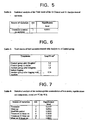
- Table 3 clearly indicates that the total count of the control group of carcasses vs the test group of carcasses were at a similar levels just after slaughter (log 1,6/24 cm 2 ). However, the total count of the test group was significantly reduced after fogging from log 1,6/24 cm 2 to log 0,54/24cm 2 . The test group beef carcasses therefore had significantly lower total counts than the control group beef carcasses.
- the treatment groups were as follows :
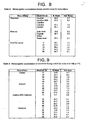
- Metmyoglobin accumulation (brown discoloration) for main effects is shown in Table 5.
- Metmyoglobin accumulation of topside mince during a shelf life study of 0 - 96 h at 4°C is shown in Table 7.
- Metmyoglobin accumulation of rump steaks during a shelf life study of 0 - 96 h at 4°C is shown in Table 8.
- a discoloration level of 20% indicates a reduction of 50% in the amount of sales. If a cut off point of ca. 20 - 25% metmyoglobin is taken as the end of retail acceptability, the topside mince treated with anolyte in this trial achieved a 48 hour shelf life. In contract, all the other mince samples treated (control, catholyte anolyte-catholyte combination) only achieved a 24 hour retail shelf life according to this criteria.
- the carcasses were stored at about -3°C in a cold room.
- An anolyte atmosphere was produced by means of fogging.
- the anolyte generated at a total flowrate of about 750ml/min, had the following characteristics: TDS : 6,04 g/l pH : 6-8 ORP : +762mV Application: 150 ml/m 3
- the Applicant believes that the oxidising free radicals present in the anolyte solution act synergistically at a bacterial cellular level.
- the effectiveness of the anolyte solution depends upon the flow rate through the reactor which determines the concentration of the anolyte, as measured by the oxidation-reduction potential (ORP), or redox potential of the anolyte solutions, the flow rate through the reactor the exposure time, i.e. the contact time between the contaminated product surface and the anolyte solution and the temperature during application.
- ORP oxidation-reduction potential
- a flow rate of 750ml/min through a pair of electrochemical cells have been found to be most effective.
- the available free radical concentration can be determined and monitored.
- Anolyte has been found to be more effective at lower than at higher temperatures and at neutral pH ranges.
Landscapes
- Life Sciences & Earth Sciences (AREA)
- Engineering & Computer Science (AREA)
- Chemical & Material Sciences (AREA)
- Wood Science & Technology (AREA)
- Zoology (AREA)
- Food Science & Technology (AREA)
- Polymers & Plastics (AREA)
- Inorganic Chemistry (AREA)
- General Chemical & Material Sciences (AREA)
- Chemical Kinetics & Catalysis (AREA)
- Dentistry (AREA)
- Plant Pathology (AREA)
- General Health & Medical Sciences (AREA)
- Environmental Sciences (AREA)
- Pest Control & Pesticides (AREA)
- Agronomy & Crop Science (AREA)
- Health & Medical Sciences (AREA)
- Water Treatment By Electricity Or Magnetism (AREA)
- Meat, Egg Or Seafood Products (AREA)
- Agricultural Chemicals And Associated Chemicals (AREA)
- Food Preservation Except Freezing, Refrigeration, And Drying (AREA)
- Apparatus For Disinfection Or Sterilisation (AREA)
- Detergent Compositions (AREA)
- Fodder In General (AREA)
- Pharmaceuticals Containing Other Organic And Inorganic Compounds (AREA)
Applications Claiming Priority (3)
| Application Number | Priority Date | Filing Date | Title |
|---|---|---|---|
| ZA979488 | 1997-10-23 | ||
| ZA9709488 | 1997-10-23 | ||
| PCT/US1998/022370 WO1999020129A1 (en) | 1997-10-23 | 1998-10-23 | Aqueous solution for disinfecting an animal product, a method and a plant for such disinfection |
Publications (3)
| Publication Number | Publication Date |
|---|---|
| EP1032281A1 EP1032281A1 (en) | 2000-09-06 |
| EP1032281A4 EP1032281A4 (en) | 2001-04-25 |
| EP1032281B1 true EP1032281B1 (en) | 2007-04-18 |
Family
ID=25586654
Family Applications (1)
| Application Number | Title | Priority Date | Filing Date |
|---|---|---|---|
| EP98956144A Expired - Lifetime EP1032281B1 (en) | 1997-10-23 | 1998-10-23 | Aqueous solution for disinfecting an animal product, a method and a plant for such disinfection |
Country Status (7)
| Country | Link |
|---|---|
| EP (1) | EP1032281B1 (da) |
| AT (1) | ATE359717T1 (da) |
| AU (1) | AU1273299A (da) |
| DE (2) | DE69837616T2 (da) |
| DK (1) | DK1032281T3 (da) |
| ES (1) | ES2286861T3 (da) |
| WO (1) | WO1999020129A1 (da) |
Families Citing this family (7)
| Publication number | Priority date | Publication date | Assignee | Title |
|---|---|---|---|---|
| WO2000024265A1 (en) * | 1998-10-23 | 2000-05-04 | Radical Waters Ip (Pty) Limited | Bactericidal treatment of sausage casings |
| NL1024926C2 (nl) * | 2003-12-02 | 2005-06-06 | Townsend Engineering B V | Inrichting en werkwijze voor het met vloeistof bewerken van voedingsmiddelen. |
| EP1858338A1 (fr) * | 2005-03-18 | 2007-11-28 | Carlo Frederico Cattani | Procede systemique d'hygiene rapprochee et dispositif avec cellule d'aseptisation a basse temperature notamment pour denrees alimentaires |
| DE102007020977A1 (de) * | 2007-05-04 | 2008-11-06 | Actides Gmbh | Verfahren zum Behandeln von Lebensmitteln |
| DE102009016821A1 (de) * | 2009-04-09 | 2010-10-14 | Simply Water Gmbh | Vorrichtung zum Behandeln von Lebensmitteln |
| EP2632857A4 (en) | 2010-10-28 | 2016-01-13 | Anolytech Ab | METHOD AND SYSTEM FOR PREPARING ANOLYT FRACTION |
| CN110301473A (zh) * | 2019-05-28 | 2019-10-08 | 江苏益客食品集团股份有限公司 | 电解水在肉鸡屠宰中的杀菌与保鲜应用 |
Family Cites Families (11)
| Publication number | Priority date | Publication date | Assignee | Title |
|---|---|---|---|---|
| JPS4899954A (da) * | 1972-03-31 | 1973-12-17 | ||
| US3958020A (en) * | 1975-01-16 | 1976-05-18 | Quad Corporation | Bactericidal wash for meat |
| US4374714A (en) * | 1982-03-15 | 1983-02-22 | Continental Packaging Company, Inc. | Process for the preservation of color and flavor in liquid containing comestibles |
| US4540616A (en) * | 1984-01-03 | 1985-09-10 | The Stearns & Foster Company | Carcass shroud and method of application |
| FR2588190B1 (fr) * | 1985-10-08 | 1989-03-03 | F Tec Sarl | Procede de desinfection de milieux interstitiels charges en germes pathogenes |
| SU1409190A1 (ru) * | 1985-12-29 | 1988-07-15 | Эстонская Сельскохозяйственная Академия | Способ очистки свиных туш от щетины |
| DE3728155A1 (de) * | 1986-12-03 | 1987-12-10 | Inst Hochseefischerei | Verfahren und anlage zur herstellung strukturierter erzeugnisse |
| RU1818163C (ru) * | 1991-02-27 | 1993-05-30 | Научно-Производственное Объединение "Конструктор" | Установка дл мойки оборотной тары |
| JPH07116664A (ja) * | 1993-10-29 | 1995-05-09 | Yoshimi Sano | 電解式殺菌洗浄装置 |
| US5783052A (en) * | 1996-03-11 | 1998-07-21 | Rscecat, Usa, Inc. | Electrochemical cell |
| JPH1056956A (ja) * | 1996-08-20 | 1998-03-03 | Nippon Sanso Kk | 食材の処理方法 |
-
1998
- 1998-10-23 DK DK98956144T patent/DK1032281T3/da active
- 1998-10-23 ES ES98956144T patent/ES2286861T3/es not_active Expired - Lifetime
- 1998-10-23 DE DE69837616T patent/DE69837616T2/de not_active Expired - Lifetime
- 1998-10-23 EP EP98956144A patent/EP1032281B1/en not_active Expired - Lifetime
- 1998-10-23 AT AT98956144T patent/ATE359717T1/de active
- 1998-10-23 WO PCT/US1998/022370 patent/WO1999020129A1/en not_active Ceased
- 1998-10-23 AU AU12732/99A patent/AU1273299A/en not_active Abandoned
- 1998-10-23 DE DE29825265U patent/DE29825265U1/de not_active Expired - Lifetime
Also Published As
| Publication number | Publication date |
|---|---|
| DE29825265U1 (de) | 2007-12-13 |
| WO1999020129A1 (en) | 1999-04-29 |
| WO1999020129A9 (en) | 1999-07-15 |
| ATE359717T1 (de) | 2007-05-15 |
| AU1273299A (en) | 1999-05-10 |
| DK1032281T3 (da) | 2007-09-17 |
| DE69837616D1 (de) | 2007-05-31 |
| ES2286861T3 (es) | 2007-12-01 |
| DE69837616T2 (de) | 2007-12-27 |
| EP1032281A1 (en) | 2000-09-06 |
| EP1032281A4 (en) | 2001-04-25 |
Similar Documents
| Publication | Publication Date | Title |
|---|---|---|
| US6610249B1 (en) | Aqueous solution for disinfecting an animal product, a method and a plant for such disinfection | |
| Cichoski et al. | Ultrasound and slightly acid electrolyzed water application: An efficient combination to reduce the bacterial counts of chicken breast during pre-chilling | |
| US4021585A (en) | Chlorine dioxide spray process for chilling meat carcasses | |
| Wang et al. | Combination of a novel designed spray cabinet and electrolyzed water to reduce microorganisms on chicken carcasses | |
| JP4226778B2 (ja) | 鳥肉及びその他の食肉のための亜塩素酸消毒用スプレーの効力を最適化する方法 | |
| US6605253B1 (en) | Intervention techniques for reducing carcass contamination | |
| AU2015359113B2 (en) | Electrolyzed water composition | |
| US20090208616A1 (en) | Intervention techniques for reducing carcass contamination | |
| JP7098323B2 (ja) | 獣鳥肉処理のための活性塩素系剤の再利用 | |
| EP1032281B1 (en) | Aqueous solution for disinfecting an animal product, a method and a plant for such disinfection | |
| JP2003250436A (ja) | 生鮮食品等の洗浄殺菌方法とその装置 | |
| Klein et al. | Mitigation strategies for Campylobacter spp. in broiler at pre-harvest and harvest level | |
| US20030100254A1 (en) | Method of sterilizing mammal carcasses | |
| US20210289799A1 (en) | Meat processing methods | |
| US11324226B2 (en) | Carcass cleaning system | |
| HK1041600A1 (zh) | 应用杀菌溶液的方法 | |
| JPH07163325A (ja) | 食材殺菌および鮮度維持装置およびその方法 | |
| WO2000024275A1 (en) | Bactericidal treatment of food storage containers by using electrochemically activated bactericidal aqueous solution | |
| El-Meleeh et al. | Surface Decontamination of Some Foodborne Pathogens at Bovine Carcasses | |
| Bügener et al. | Effect of electrolyzed oxidizing water on reducing Campylobacter spp. in broiler chikken at primary production | |
| Brychcy et al. | Impact of low-concentrated acidic electrolysed water obtained by membrane electrolysis on the decontamination of meat microbiota | |
| GB2535568B (en) | Electrolyzed water composition | |
| RU2501500C1 (ru) | Способ обеззараживания поверхности тушек птицы путем обработки их водным раствором "тм формодез" | |
| JPWO2006043351A1 (ja) | ラジカル含有水の調製装置及びその用途 | |
| EFSA Scientific Panel on Biological Hazards (BIOHAZ) et al. | Scientific Opinion on the safety and efficacy of using recycled hot water as a decontamination technique for meat carcasses |
Legal Events
| Date | Code | Title | Description |
|---|---|---|---|
| PUAI | Public reference made under article 153(3) epc to a published international application that has entered the european phase |
Free format text: ORIGINAL CODE: 0009012 |
|
| 17P | Request for examination filed |
Effective date: 20000523 |
|
| AK | Designated contracting states |
Kind code of ref document: A1 Designated state(s): AT BE CH CY DE DK ES FI FR GB GR IE IT LI LU MC NL PT SE |
|
| A4 | Supplementary search report drawn up and despatched |
Effective date: 20010314 |
|
| AK | Designated contracting states |
Kind code of ref document: A4 Designated state(s): AT BE CH CY DE DK ES FI FR GB GR IE IT LI LU MC NL PT SE |
|
| RIC1 | Information provided on ipc code assigned before grant |
Free format text: 7A 23L 3/00 A, 7B 65B 1/04 B, 7A 23B 4/015 B, 7A 23B 4/02 B, 7A 23B 4/26 B, 7A 61L 2/03 B, 7A 61L 2/00 B, 7C 14C 3/00 B |
|
| 17Q | First examination report despatched |
Effective date: 20030704 |
|
| GRAP | Despatch of communication of intention to grant a patent |
Free format text: ORIGINAL CODE: EPIDOSNIGR1 |
|
| GRAS | Grant fee paid |
Free format text: ORIGINAL CODE: EPIDOSNIGR3 |
|
| GRAA | (expected) grant |
Free format text: ORIGINAL CODE: 0009210 |
|
| AK | Designated contracting states |
Kind code of ref document: B1 Designated state(s): AT BE CH CY DE DK ES FI FR GB GR IE IT LI LU MC NL PT SE |
|
| PG25 | Lapsed in a contracting state [announced via postgrant information from national office to epo] |
Ref country code: FI Free format text: LAPSE BECAUSE OF FAILURE TO SUBMIT A TRANSLATION OF THE DESCRIPTION OR TO PAY THE FEE WITHIN THE PRESCRIBED TIME-LIMIT Effective date: 20070418 |
|
| REG | Reference to a national code |
Ref country code: CH Ref legal event code: EP |
|
| REG | Reference to a national code |
Ref country code: IE Ref legal event code: FG4D |
|
| REF | Corresponds to: |
Ref document number: 69837616 Country of ref document: DE Date of ref document: 20070531 Kind code of ref document: P |
|
| PG25 | Lapsed in a contracting state [announced via postgrant information from national office to epo] |
Ref country code: SE Free format text: LAPSE BECAUSE OF FAILURE TO SUBMIT A TRANSLATION OF THE DESCRIPTION OR TO PAY THE FEE WITHIN THE PRESCRIBED TIME-LIMIT Effective date: 20070718 |
|
| REG | Reference to a national code |
Ref country code: DK Ref legal event code: T3 |
|
| PG25 | Lapsed in a contracting state [announced via postgrant information from national office to epo] |
Ref country code: PT Free format text: LAPSE BECAUSE OF FAILURE TO SUBMIT A TRANSLATION OF THE DESCRIPTION OR TO PAY THE FEE WITHIN THE PRESCRIBED TIME-LIMIT Effective date: 20070918 |
|
| REG | Reference to a national code |
Ref country code: CH Ref legal event code: NV Representative=s name: ISLER & PEDRAZZINI AG |
|
| ET | Fr: translation filed | ||
| REG | Reference to a national code |
Ref country code: ES Ref legal event code: FG2A Ref document number: 2286861 Country of ref document: ES Kind code of ref document: T3 |
|
| PLBE | No opposition filed within time limit |
Free format text: ORIGINAL CODE: 0009261 |
|
| STAA | Information on the status of an ep patent application or granted ep patent |
Free format text: STATUS: NO OPPOSITION FILED WITHIN TIME LIMIT |
|
| 26N | No opposition filed |
Effective date: 20080121 |
|
| REG | Reference to a national code |
Ref country code: GB Ref legal event code: 732E |
|
| PG25 | Lapsed in a contracting state [announced via postgrant information from national office to epo] |
Ref country code: IT Free format text: LAPSE BECAUSE OF NON-PAYMENT OF DUE FEES Effective date: 20071023 Ref country code: GR Free format text: LAPSE BECAUSE OF FAILURE TO SUBMIT A TRANSLATION OF THE DESCRIPTION OR TO PAY THE FEE WITHIN THE PRESCRIBED TIME-LIMIT Effective date: 20070719 |
|
| NLS | Nl: assignments of ep-patents |
Owner name: RADICAL WATERS IP (PTY) LTD Effective date: 20080305 |
|
| PG25 | Lapsed in a contracting state [announced via postgrant information from national office to epo] |
Ref country code: MC Free format text: LAPSE BECAUSE OF NON-PAYMENT OF DUE FEES Effective date: 20071031 |
|
| PGRI | Patent reinstated in contracting state [announced from national office to epo] |
Ref country code: IT Effective date: 20090101 |
|
| PG25 | Lapsed in a contracting state [announced via postgrant information from national office to epo] |
Ref country code: CY Free format text: LAPSE BECAUSE OF FAILURE TO SUBMIT A TRANSLATION OF THE DESCRIPTION OR TO PAY THE FEE WITHIN THE PRESCRIBED TIME-LIMIT Effective date: 20070418 |
|
| PG25 | Lapsed in a contracting state [announced via postgrant information from national office to epo] |
Ref country code: LU Free format text: LAPSE BECAUSE OF NON-PAYMENT OF DUE FEES Effective date: 20071023 |
|
| PGFP | Annual fee paid to national office [announced via postgrant information from national office to epo] |
Ref country code: DK Payment date: 20131028 Year of fee payment: 16 |
|
| PGFP | Annual fee paid to national office [announced via postgrant information from national office to epo] |
Ref country code: AT Payment date: 20131028 Year of fee payment: 16 Ref country code: DE Payment date: 20131016 Year of fee payment: 16 Ref country code: FR Payment date: 20131023 Year of fee payment: 16 Ref country code: GB Payment date: 20131023 Year of fee payment: 16 Ref country code: BE Payment date: 20131023 Year of fee payment: 16 Ref country code: CH Payment date: 20131028 Year of fee payment: 16 |
|
| PGFP | Annual fee paid to national office [announced via postgrant information from national office to epo] |
Ref country code: NL Payment date: 20131031 Year of fee payment: 16 Ref country code: ES Payment date: 20131029 Year of fee payment: 16 Ref country code: IT Payment date: 20131025 Year of fee payment: 16 |
|
| REG | Reference to a national code |
Ref country code: DE Ref legal event code: R119 Ref document number: 69837616 Country of ref document: DE |
|
| REG | Reference to a national code |
Ref country code: NL Ref legal event code: V1 Effective date: 20150501 |
|
| REG | Reference to a national code |
Ref country code: DK Ref legal event code: EBP Effective date: 20141031 |
|
| REG | Reference to a national code |
Ref country code: CH Ref legal event code: PL |
|
| REG | Reference to a national code |
Ref country code: AT Ref legal event code: MM01 Ref document number: 359717 Country of ref document: AT Kind code of ref document: T Effective date: 20141023 |
|
| GBPC | Gb: european patent ceased through non-payment of renewal fee |
Effective date: 20141023 |
|
| PG25 | Lapsed in a contracting state [announced via postgrant information from national office to epo] |
Ref country code: BE Free format text: LAPSE BECAUSE OF NON-PAYMENT OF DUE FEES Effective date: 20141031 |
|
| PG25 | Lapsed in a contracting state [announced via postgrant information from national office to epo] |
Ref country code: DE Free format text: LAPSE BECAUSE OF NON-PAYMENT OF DUE FEES Effective date: 20150501 Ref country code: LI Free format text: LAPSE BECAUSE OF NON-PAYMENT OF DUE FEES Effective date: 20141031 Ref country code: CH Free format text: LAPSE BECAUSE OF NON-PAYMENT OF DUE FEES Effective date: 20141031 Ref country code: GB Free format text: LAPSE BECAUSE OF NON-PAYMENT OF DUE FEES Effective date: 20141023 |
|
| REG | Reference to a national code |
Ref country code: FR Ref legal event code: ST Effective date: 20150630 |
|
| PG25 | Lapsed in a contracting state [announced via postgrant information from national office to epo] |
Ref country code: FR Free format text: LAPSE BECAUSE OF NON-PAYMENT OF DUE FEES Effective date: 20141031 Ref country code: AT Free format text: LAPSE BECAUSE OF NON-PAYMENT OF DUE FEES Effective date: 20141023 Ref country code: NL Free format text: LAPSE BECAUSE OF NON-PAYMENT OF DUE FEES Effective date: 20150501 Ref country code: IT Free format text: LAPSE BECAUSE OF NON-PAYMENT OF DUE FEES Effective date: 20141023 |
|
| PG25 | Lapsed in a contracting state [announced via postgrant information from national office to epo] |
Ref country code: DK Free format text: LAPSE BECAUSE OF NON-PAYMENT OF DUE FEES Effective date: 20141031 |
|
| REG | Reference to a national code |
Ref country code: ES Ref legal event code: FD2A Effective date: 20151127 |
|
| PGFP | Annual fee paid to national office [announced via postgrant information from national office to epo] |
Ref country code: IE Payment date: 20151026 Year of fee payment: 18 |
|
| PG25 | Lapsed in a contracting state [announced via postgrant information from national office to epo] |
Ref country code: ES Free format text: LAPSE BECAUSE OF NON-PAYMENT OF DUE FEES Effective date: 20141024 |
|
| REG | Reference to a national code |
Ref country code: IE Ref legal event code: MM4A |
|
| PG25 | Lapsed in a contracting state [announced via postgrant information from national office to epo] |
Ref country code: IE Free format text: LAPSE BECAUSE OF NON-PAYMENT OF DUE FEES Effective date: 20161023 |