EP1007058B1 - Use of (n)-substituted-1,5-dideoxy-1,5-imino-d-glucitol compounds in combination therapy for treating hepatitis virus infections - Google Patents
Use of (n)-substituted-1,5-dideoxy-1,5-imino-d-glucitol compounds in combination therapy for treating hepatitis virus infections Download PDFInfo
- Publication number
- EP1007058B1 EP1007058B1 EP98906475A EP98906475A EP1007058B1 EP 1007058 B1 EP1007058 B1 EP 1007058B1 EP 98906475 A EP98906475 A EP 98906475A EP 98906475 A EP98906475 A EP 98906475A EP 1007058 B1 EP1007058 B1 EP 1007058B1
- Authority
- EP
- European Patent Office
- Prior art keywords
- dideoxy
- imino
- glucitol
- nonyl
- hepatitis
- Prior art date
- Legal status (The legal status is an assumption and is not a legal conclusion. Google has not performed a legal analysis and makes no representation as to the accuracy of the status listed.)
- Expired - Lifetime
Links
Images


Classifications
-
- A—HUMAN NECESSITIES
- A61—MEDICAL OR VETERINARY SCIENCE; HYGIENE
- A61K—PREPARATIONS FOR MEDICAL, DENTAL OR TOILETRY PURPOSES
- A61K45/00—Medicinal preparations containing active ingredients not provided for in groups A61K31/00 - A61K41/00
- A61K45/06—Mixtures of active ingredients without chemical characterisation, e.g. antiphlogistics and cardiaca
-
- A—HUMAN NECESSITIES
- A61—MEDICAL OR VETERINARY SCIENCE; HYGIENE
- A61K—PREPARATIONS FOR MEDICAL, DENTAL OR TOILETRY PURPOSES
- A61K31/00—Medicinal preparations containing organic active ingredients
- A61K31/33—Heterocyclic compounds
- A61K31/395—Heterocyclic compounds having nitrogen as a ring hetero atom, e.g. guanethidine or rifamycins
- A61K31/435—Heterocyclic compounds having nitrogen as a ring hetero atom, e.g. guanethidine or rifamycins having six-membered rings with one nitrogen as the only ring hetero atom
- A61K31/44—Non condensed pyridines; Hydrogenated derivatives thereof
- A61K31/445—Non condensed piperidines, e.g. piperocaine
-
- A—HUMAN NECESSITIES
- A61—MEDICAL OR VETERINARY SCIENCE; HYGIENE
- A61K—PREPARATIONS FOR MEDICAL, DENTAL OR TOILETRY PURPOSES
- A61K31/00—Medicinal preparations containing organic active ingredients
- A61K31/70—Carbohydrates; Sugars; Derivatives thereof
-
- A—HUMAN NECESSITIES
- A61—MEDICAL OR VETERINARY SCIENCE; HYGIENE
- A61P—SPECIFIC THERAPEUTIC ACTIVITY OF CHEMICAL COMPOUNDS OR MEDICINAL PREPARATIONS
- A61P1/00—Drugs for disorders of the alimentary tract or the digestive system
- A61P1/16—Drugs for disorders of the alimentary tract or the digestive system for liver or gallbladder disorders, e.g. hepatoprotective agents, cholagogues, litholytics
-
- A—HUMAN NECESSITIES
- A61—MEDICAL OR VETERINARY SCIENCE; HYGIENE
- A61P—SPECIFIC THERAPEUTIC ACTIVITY OF CHEMICAL COMPOUNDS OR MEDICINAL PREPARATIONS
- A61P31/00—Antiinfectives, i.e. antibiotics, antiseptics, chemotherapeutics
- A61P31/12—Antivirals
Definitions
- the present invention relates to compositions for treating hepatitis virus infections, especially hepatitis B virus infections, in mammals, especially humans.
- the compositions comprise N -substituted-1,5-dideoxy-1,5-imino-D-glucitol compounds in combination with nucleoside antiviral agents.
- Such combinations of anti-hepatitis viral agents show unexpected efficacy in inhibiting replication and secretion of hepatitis viruses in cells of mammals infected with these viruses.
- Hepatitis B Virus is a causative agent of acute and chronic liver disease including liver fibrosis, cirrhosis, inflammatory liver disease, and hepatic cancer that can lead to death in some patients (Joklik, Wolfgang K., Virology, Third Edition, Appleton & Lange, Norwalk, Connecticut, 1988 (ISBN 0-8385-9462-X)).
- effective vaccines are available, there are still more than 300 million people worldwide, i.e., 5% of the world's population, chronically infected with the virus (Locarnini, S. A., et. al., Antiviral Chemistry & Chemotherapy (1996) 7(2):53-64).
- hepatitis viruses significant as agents of human disease include Hepatitis A, Hepatitis B, Hepatitis C, Hepatitis Delta, Hepatitis E, Hepatitis F, and Hepatitis G (Coates, J. A. V., et.al., Exp. Opin. Ther. Patents (1995) 5(8):747-756).
- animal hepatitis viruses that are species-specific. These include, for example, those infecting ducks, woodchucks, and mice.
- 1,5-dideoxy-1,5-imino-D-glucitol also known as 1-deoxynojirimycin, DNJ
- N -alkyl derivatives are known inhibitors of the N -linked oligosaccharide processing enzymes alpha glucosidase I and II (Saunier et al., J. Biol.Chem . (1982) 257:14155-14161 (1982); Elbein, Ann. Rev. Biochem . (1987) 56:497-534).
- glucose analogs they also have potential to inhibit glucose transport, glucosyl-transferases, and/or glycolipid synthesis (Newbrun et al., Arch. Oral Biol .
- Glucosidase inhibitors such as N -alkyl-1,5-dideoxy-1,5-imino-D-glucitol compounds wherein the alkyl group contains between three and six carbon atoms have been shown to be effective in the treatment of Hepatitis B infection (PCT International Publication WO 95/19172).
- PCT International Publication WO 95/19172 n-butyl-deoxynojirimycin
- n-butyl-DNJ N -butyl-1-5-dideoxy-1,5-imino-D-glucitol
- Reverse transcriptase inhibitors including the class of nucleoside and nucleotide analogs, were first developed as drugs for the treatment of retroviruses such as human immunodeficiency virus (HIV), the causative agent of AIDS. Increasingly, these compounds have found use against other viruses, including both RNA and DNA viruses, via viral screening and chemical modification strategies. Nucleoside and nucleotide analogs exert their antiviral activities by inhibiting the corresponding DNA and RNA polymerases responsible for synthesis of viral DNA and RNA, respectively. Because viruses contain different forms of polymerases, the same nucleoside/nucleotide compound can have a dramatically different effect against different viruses.
- retroviruses such as human immunodeficiency virus (HIV)
- HIV human immunodeficiency virus
- Nucleoside and nucleotide analogs exert their antiviral activities by inhibiting the corresponding DNA and RNA polymerases responsible for synthesis of viral DNA and RNA, respectively. Because viruses contain different forms of polymer
- lamivudine (3TCTM) appears to be useful against HBV infection
- zidovudine (AZTTM) appears to have little use against the same virus (Gish, R.G., et al., Exp. Opin. Invest. Drugs (1995) 4 (2) :95-115) .
- Immunomodulators/immunostimulators such as interferon alfa and other cytokines have been used for the treatment of HBV infection with promising results. Unfortunately, the response rates are lower than desired. Interferon treatment is currently approved by the FDA for the treatment of Hepatitis B. Other immune system-affecting drug candidates are presently being investigated. These include thymic pepides for use in the treatment of chronic hepatitis B (CHB), isoprinosine, steroids, Shiff base-forming salicylaldehyde derivatives such as Tucaresol, levamisol, and the like (Gish, R. G., et.al., Exp. Opin. Invest. Drugs (1995) 4(2):95-115; Coates, J.A.V., et.al., Exp. Opin. Ther. Patents (1995) 5(8):747-765).
- CHB chronic hepatitis B
- isoprinosine steroids
- N -substituted-imino-D-glucitol compounds in combination with immunomodulating/immunostimulating agents is novel.
- N -substituted-imino-D-glucitol compounds and derivatives thereof with other anti-hepatitis virus compounds has, to the present inventor's knowledge, neither been suggested nor disclosed.
- the use of two or more anti-viral agents to provide improved therapy for the treatment of hepatitis B virus infections is desirable due to the morbidity and mortality of the disease.
- Combination therapy is also desirable since it should reduce toxicity in patients as it enables the physician to administer lower doses of one or more of the drugs being given to a patient.
- Combination therapy can also help to prevent the development of drug resistance in patients (Wiltink, E. H. H., Pharmaceutish Weekblads Scientific Edition (1992) 14(4A):268-274). The result of an improved efficacy configuration combined with a relative lack of toxicity and development of resistance would provide a much improved drug treatment profile.
- the present inventor has surprisingly discovered that the combined use of N -substituted-1,5-dideoxy-1,5-imino-D-glucitol compounds and nucleoside antiviral compounds, or combinations thereof, results in unexpectedly greater anti-hepatitis virus effectiveness of the compounds compared to the combined antiviral activities expected of the individual compounds alone. Whether this is due to different mechanisms of action of the different classes of drugs employed or some other biological phenomenon is presently unclear.
- the present invention provides a pharmaceutical composition for treating a hepatitis virus infection in a mammal, comprising a first amount of an N -substituted-1,5-dideoxy-1,5-imino-D-glucitol compound of Formula I: wherein:
- the present invention also provides a method of treating a hepatitis B virus infection in a human patient, comprising administering to said human patient from about 0.1 mg/kg/day to about 100 mg/kg/day of N -(n-nonyl-)-1,5-dideoxy-1,5-imino-D-glucitol and from about 0.1 mg/person/day to about 500 mg/person/day of (-)-2'-deoxy-3'-thiocytidine-5'-triphosphate.
- the invention further provides a pharmaceutical composition for treating a hepatitis B virus infection in a mammal, comprising from about 0.1 mg to about 100 mg of an N -substituted-1,5-dideoxy-1,5-imino-D-glucitol compound of Formula I, as above, and from about 0.1 mg to about 500 mg of a compound selected from the group consisting of a a nucleoside antiviral.
- the present inventor has discovered that combinations of N -substituted-1,5-dideoxy-1,5-imino-D-glucitol compounds with anti-hepatitis virus nucleoside analogs are more effective in inhibiting hepatitis virus replication than that which would be expected via the combined use of the individual compounds.
- the present invention thus provides pharmaceutical compositions and methods of treating hepatitis virus infections, especially hepatitis B virus infections, in humans, other mammals, and cells using a combination of an N -substituted-1,5-dideoxy-1,5-imino-D-glucitol compound with an antiviral nucleoside.
- the N -substituted-1,5-dideoxy-1,5-imino-D-glucitol compounds have basic nitrogen atoms and may be used in the form of a pharmaceutically acceptable salt.
- the drug combinations of this invention may be provided to a cell or cells, or to a human or other mammalian patient, either in separate pharmaceutically acceptable formulations, formulations containing more than one therapeutic agent, or by an assortment of single agent and multiple agent formulations. However administered, these drug combinations form an anti-hepatitis virus effective amount of components.
- anti-hepatitis-virus effective amount refers to a combined amount of (1) an N -substituted-1,5-dideoxy-1,5-imino-D-glucitol compound with an antiviral nucleoside, effective in treating hepatitis virus infection.
- the antiviral effectiveness of the aforementioned combinations may involve a variety of different phenomena associated with viral replication and assembly. These may include, for example, blocking hepatitis viral DNA synthesis; blocking viral transcription; blocking virion assembly; blocking virion release or secretion from infected cells; blocking or altering viral protein function, including the function of viral envelope protein(s); and/or the production of immature or otherwise non-functional virions.
- the overall effect is an inhibition of viral replication and infection of additional cells, and therefore inhibition of the progress of infection in the patient.
- N -substituted-1,5-dideoxy-1,5-imino-D-glucitol compounds useful in the present invention are represented by structure I below: wherein R is selected from straight chain alkyl having a chain length of C 6 to C 12 . W, X, Y and Z are independently selected from hydrogen and butanoyl.
- N -substituted-imino-D-glucitol compounds useful in the present invention include, but are not limited to:
- Preferred compounds are N -(n-nonyl-)-1,5-dideoxy-1,5-imino-D-glucitol and N -(n-nonyl-)-1,5-dideoxy-1,5-imino-D-glucitol, tetrabutyrate.
- N -substituted-imino-D-glucitol compounds useful in the present invention can be prepared by methods well known in the art as described in, for example, U.S. Patents Nos. 4,182,767, 4,639,436, and 5,003,072, as well as PCT International Publication WO 95/19172 and the references cited therein. Methods for introducing oxygen into alkyl side chains are disclosed in Tan et al., (1994) Glycobiology 4(2):141-149. Non-limiting illustrative preparation procedures are presented below in Examples 1 and 2.
- salts include but are not limited to the following: acetate, adipate, alginate, citrate, aspartate, benzoate, benzenesulfonate, bisulfate, butyrate, camphorate, camphorsulfonate, digluconate, cyclopentanepropionate, dodecylsulfate, ethanesulfonate, glucoheptanoate, glycerophosphate, hemisulfate, heptanoate, hexanoate, fumarate, hydrochloride, hydrobromide, hydroiodide, 2-hydroxy-ethanesulfonate, lactate, maleate, methanesulfonate, nicotinate, 2-naphthalenesulfonate, oxalate,
- the basic nitrogen-containing groups can be quaternized with agents such as lower alkyl halides, such as methyl, ethyl, propyl, and butyl chloride, bromides, and iodides; dialkyl sulfates such as dimethyl, diethyl, dibuytl, and diamyl sulfates; long chain halides such as decyl, lauryl, myristyl, and stearyl chlorides, bromides, and iodides; aralkyl halides such as benzyl and phenethyl bromides, and others. Water- or oil-soluble or dispersible products are thereby obtained as desired.
- the salts are formed by combining the basic compounds with the desired acid.
- salts can also form salts.
- examples include salts with alkali metals or alkaline earth metals, such as sodium, potassium, calcium, or magnesium, or with organic bases or basic quaternary ammonium salts.
- Compounds of the combinations of this invention may be acids or bases. As such, they may be used to form salts with one another.
- the phosphoric acid form of (-)-2'-deoxy-3'-thiocytidine-5'-triphosphate will form a salt with the base form of N -(n-nonyl)-1,5-dideoxy-1,5-imino-D-glucitol or N -(n-nonyl)-1,5-dideoxy-1,5-imino-D-glucitol, tetrabutyrate.
- This type of salt can then be provided to the patient in a pharmaceutically acceptable formulation or as a pure single salt.
- the salts can also be used as an aid in the isolation, purification, or resolution of the compounds of this invention.
- Nucleosides useful in the present invention are (-)-2'-deoxy-3'-thiocytidine-5'-triphosphate (3TC); (-)2',3', dideoxy-3'-thiacytidine [(-)-SddC]; dideoxy-cytidine;
- a preferred compound is (-)-2'-deoxy-3'-thiocytidine-5'-triphosphate (3TC).
- nucleoside analogs are generally employed as antiviral agents as is, nucleotides (nucleoside phosphates) must sometimes have to be converted to nucleosides in order to facilitate their transport across cell membranes.
- nucleoside phosphates An example of a chemically modified nucleotide capable of entering cells is S-1-3-hydroxy-2-phosphonylmethoxypropyl cytosine (HPMPC, Gilead Sciences).
- N -substituted-1,5-dideoxy-1,5-imino-D-glucitol compounds useful in the present invention can be administered to humans in an amount in the range of from about 0.1 mg/kg/day to about 100 mg/kg/day, more preferably from about 1 mg/kg/day to about 75 mg/kg/day, and most preferably from about 5 mg/kg/day to about 50 mg/kg/day.
- the nucleoside antiviral compound can be administered to humans in an amount in the range of from about 0.1 mg/person/day to about 500 mg/person/day, preferably from about 10 mg/person/day to about 300 mg/person/day, more preferably from about 25 mg/person/day to about 200 mg/person/day, even more preferably from about 50 mg/person/day to about 150 mg/person/day, and most preferably in the range of from about 1 mg/person/day to about 50 mg/person/day.
- Patients can be monitored during combination therapy employing N -substituted-1,5-dideoxy-1,5-imino-D-glucitol compounds and nucleoside antiviral agents to determine the lowest effective doses of each.
- doses described above can be administered to a patient in a single dose or in proportionate multiple subdoses.
- dosage unit compositions can contain such amounts of submultiples thereof to make up the daily dose. Multiple doses per day can also increase the total daily dose should this be desired by the person prescribing the drug.
- compositions can be administered orally, parenterally, by inhalation spray, rectally, intradermally, transdermally, or topically in dosage unit formulations containing conventional nontoxic pharmaceutically acceptable carriers, adjuvants, and vehicles as desired. Topical administration may also involve the use of transdermal administration such as transdermal patches or iontophoresis devices.
- parenteral as used herein includes subcutaneous, intravenous, intramuscular, or intrasternal injection, or infusion techniques. Formulation of drugs is discussed in, for example, Hoover, John E., Remington's Pharmaceutical Sciences, Mack Publishing Co., Easton, Pennsylvania (1975), and Liberman, H.A. and Lachman, L., Eds., Pharmaceutical Dosage Forms, Marcel Decker, New York, N.Y. (1980).
- Injectable preparations for example, sterile injectable aqueous or oleaginous suspensions, can be formulated according to the known art using suitable dispersing or wetting agents and suspending agents.
- the sterile injectable preparation may also be a sterile injectable solution or suspension in a nontoxic parenterally acceptable diluent or solvent, for example, as a solution in 1,3-butanediol.
- acceptable vehicles and solvents that may be employed are water, Ringer's solution, and isotonic sodium chloride solution.
- sterile, fixed oils are conventionally employed as a solvent or suspending medium.
- any bland fixed oil may be employed, including synthetic mono- or diglycerides.
- fatty acids such as oleic acid are useful in the preparation of injectables.
- Dimethyl acetamide, surfactants including ionic and non-ionic detergents, and polyethylene glycols can be used. Mixtures of solvents and wetting agents such as those discussed above are also useful.
- Suppositories for rectal administration of the compounds discussed herein can be prepared by mixing the active agent with a suitable non-irritating excipient such as cocoa butter, synthetic mono-, di-, or triglycerides, fatty acids, or polyethylene glycols which are solid at ordinary temperatures but liquid at the rectal temperature, and which will therefore melt in the rectum and release the drug.
- a suitable non-irritating excipient such as cocoa butter, synthetic mono-, di-, or triglycerides, fatty acids, or polyethylene glycols which are solid at ordinary temperatures but liquid at the rectal temperature, and which will therefore melt in the rectum and release the drug.
- Solid dosage forms for oral administration may include capsules, tablets, pills, powders, and granules.
- the compounds of this invention are ordinarily combined with one or more adjuvants appropriate to the indicated route of administration.
- the compounds can be admixed with lactose, sucrose, starch powder, cellulose esters of alkanoic acids, cellulose alkyl esters, talc, stearic acid, magnesium stearate, magnesium oxide, sodium and calcium salts of phosphoric and sulfuric acids, gelatin, acacia gum, sodium alginate, polyvinylpyrrolidone, and/or polyvinyl alcohol, and then tableted or encapsulated for convenient administration.
- Such capsules or tablets can contain a controlled-release formulation as can be provided in a dispersion of active compound in hydroxypropylmethyl cellulose.
- the dosage forms can also comprise buffering agents such as sodium citrate, or magnesium or calcium carbonate or bicarbonate. Tablets and pills can additionally be prepared with enteric coatings.
- formulations for parenteral administration can be in the form of aqueous or nonaqueous isotonic sterile injection solutions or suspensions.
- solutions and suspensions can be prepared from sterile powders or granules having one or more of the carriers or diluents mentioned for use in the formulations for oral administration.
- the compounds can be dissolved in water, polyethylene glycol, propylene glycol, ethanol, corn oil, cottonseed oil, peanut oil, sesame oil, benzyl alcohol, sodium chloride, and/or various buffers.
- Other adjuvants and modes of administration are well and widely known in the pharmaceutical art.
- Liquid dosage forms for oral administration can include pharmaceutically acceptable emulsions, solutions, suspensions, syrups, and elixirs containing inert diluents commonly used in the art, such as water.
- Such compositions can also comprise adjuvants, such as wetting agents, emulsifying and suspending agents, and sweetening, flavoring, and perfuming agents.
- the amount of active ingredient that can be combined with the carrier materials to produce a single dosage form will vary depending upon the patient and the particular mode of administration.
- Prodrugs are drugs that can be chemically converted in vivo or in vitro by biological systems into an active derivative or derivatives. Prodrugs are administered in essentially the same fashion as the other pharmaceutical compounds of the invention.
- Non-limiting examples are the esters of the N -substituted-1,5-dideoxy-1,5-imino-D-glucitol compounds of this invention.
- the regimen for treating a patient suffering from a hepatitis virus infection with the compounds and/or compositions of the present invention is selected in accordance with a variety of factors, including the age, weight, sex, diet, and medical condition of the patient, the severity of the infection, the route of administration, pharmacological considerations such as the activity, efficacy, pharmacokinetic, and toxicology profiles of the particular compounds employed, and whether a drug delivery system is utilized.
- Administration of the drug combinations disclosed herein should generally be continued over a period of several weeks to several months or years until virus titers reach acceptable levels, indicating that infection has been controlled or eradicated.
- patients undergoing treatment with the drug combinations disclosed herein can be routinely monitored by measuring hepatitis viral DNA in patients' serum by slot-blot, dot-blot, or PCR techniques, or by measurement of hepatitis antigens, such as hepatitis B surface antigen (HBsAg) and hepatitis B e antigen (HBeAg), in serum to determine the effectiveness of therapy.
- hepatitis B surface antigen hepatitis B surface antigen (HBsAg)
- HBeAg hepatitis B e antigen
- remissions are characterized by the disappearance of hepatitis B viral DNA, i.e., reduction to undetectable levels as measured by hybridization tests capable of detecting levels ⁇ 10 5 genomes per ml of serum, and HBeAg from serum despite the continued presence of HBsAg.
- These serologic events are followed by improvement in the biochemical and histologic features of the disease.
- the end point of successful treatment in most trials of antiviral therapy is the disappearance of HBeAg and viral DNA from serum.
- remission is usually sustained, and results in an inactive HBsAg carrier state. Many patients eventually become HBsAg-negative (see Hoofnagle et al., (1997) New Engl. Jour. Med . 336(5):347-356 for a review).
- Continuous analysis of the data obtained by these methods permits modification of the treatment regimen during therapy so that optimal amounts of each component in the combination are administered, and so that the duration of treatment can be determined as well.
- the treatment regimen/dosing schedule can be rationally modified over the course of therapy so that the lowest amounts of each of the antiviral compounds used in combination which together exhibit satisfactory anti-hepatitis virus effectiveness are administered, and so that administration of such antiviral compounds in combination is continued only so long as is necessary to successfully treat the infection.
- Acetic anhydride (1.08 g, 0.0106 mole) was added to the title compound of Example 1 (0.50 g, 0.0023 mole) in 5 ml pyridine and stirred for 17 days at room temperature. The product was evaporated under nitrogen gas. The resulting title compound was purified by silica gel chromatography. Structure assignment was supported by NMR, infrared spectra and elemental analysis.
- the anti-hepatitis B virus effect of (-)-2'-deoxy-3'-thiocytidine-5'-triphosphate (3TC) alone and in combination with N -nonyl-DNJ was determined according to Korba ((1996) Antiviral Research 29(1):49-51), using the "combostat" strategy (Comstat Program, Combostat Corp., Duluth, MN).
- the combostat method involves serially diluting the IC-90 of each compound.
- the IC-90 of N -nonyl-DNJ has been determined to be between 4 and 10 ⁇ g/ml (T. Block and G. Jacob, unpublished observation).
- the accepted IC-90 for 3TC in HepG 2.2.15 (2.2.15) cells is 300nM to 500nM (Doong et al. (1991) Proc. Natl. Acad. Sci. USA 88:8495-8499).
- 2.2.15 cells described in Sells et al. (1987) Proc. Natl. Acad. Sci. USA 84:1005-1009, were maintained in RPMI 1640 medium (Gibco BRL, #31800-022) supplemented with 10% fetal bovine serum, 200 ⁇ g/ml G418 (Gibco BRL 066-1811). Cells were seeded into 25 cm 2 flasks at 80% confluency. Five days later, flasks in triplicate received either no compound, serial dilutions of 3TC alone, or serial dilutions of 3TC plus N -nonyl-DNJ.
- HBV hepatitis B virus
- N -nonyl-DNJ In order to evaluate the efficacy of N -nonyl-DNJ in combination with 3TC (or other nucleoside or nucleotide analogs) against Hepatitis B virus in a woodchuck animal model, an monotherapy experiment using N -nonyl-DNJ alone was first conducted. This was necessary to determine if N -nonyl-DNJ has any anti-HBV effect in the woodchuck and, if N -nonyl-DNJ has a beneficial effect, to design a combination study based on the dose-response relationship of this drug alone.
- N -nonyl-DNJ had no effect on total HBV DNA measurements, which were essentially constant for all dose levels over the pre-dose and dosed portions of the study.
- IPDNA levels were not constant over the study period.
- the low dose animals tended to have increasing levels of IPDNA over the dosing period (weeks 0-4), while high dose animals tended to have decreasing levels of IPDNA over the same period.
- Fitting a straight line to each animal's weekly responses gave a significant difference in the slope of these lines due to either dose or plasma level of drug.
- the plasma levels of drug were also quite variable: animals with the lowest plasma levels in their dose group had lower plasma levels than the animals with the highest plasma levels from the next lower dose group. There were no differences between responses of males and females on any of the measures.
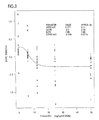
- a four parameter logistic model is fit with the slope to week as the response and the dose as the predictor. Again, run is considered a block, but because no run has all weeks, it is not possible to fully reflect the blocking in the nonlinear approach. Even so, the nonlinear model yields an EC50 of 7.88 mg/kg/BID dose.
- the average maximum slope observed was 2.71 additional Log(IPDNA ⁇ g/mL)/week, or an increase of about 150%/week, the average minimum slope observed with N -nonyl-DNJ is 0.31 fewer Log(IPDNA ⁇ g/mL)/week), or about a decrease of about 25%/week.
- the slopes, the fitted model, the parameter estimates from the model, and the approximate standard errors for these parameters are all shown in Figure 3.
- the data indicate an approximate effective monotherapy dose of N -nonyl-DNJ in woodchucks of about 16 mg/kg/day. Whether in woodchucks or humans, the effective dose of both the N -alkyl-DNJ and nucleoside or nucleotide antiviral agent administered in combination therewith can be administered in two equal daily subdoses (i.e., B.I.D.).
- Figures 2 and 3 show letters to indicate animals. Table 2 shows two of the animal codes, the sex, and the dose. Animal Codes, Sex, and Dose Animal Number Letter Code Sex Dose F95343 b F 0 M96364 n M 0 F96304 k F 0 F96301 j F 0 M96285 h M 6.25 F96283 g F 6.25 F96391 o F 6.25 M96305 l M 6.25 F96271 f F 12.5 M96256 e M 12.5 M96404 s M 12.5 F96392 p F 12.5 F96163 c F 25 M96414 t M 25 F96393 q F 25 M95322 a M 25 M96286 i M 50 F96231 d F 50 F96402 r F 50 M96363 m M 50
- the combined activity of N -nonyl-DNJ and the nucleoside analog 3TC can be assessed using the woodchuck model of hepatitis B virus infection. Twenty-eight woodchucks with persistent woodchuck hepatitis virus (WHV) infection can be utilized. Groups of woodchucks can be treated orally with 3TC alone (s.i.d.), with N -nonyl-DNJ alone (b.i.d.), or with combinations of the two drugs. The antiviral activity of the individual drugs and combinations can be assessed by measuring serum WHV DNA during treatment, and comparing the results of treated groups to placebo treated controls.
- WHV woodchuck model of hepatitis B virus infection. Twenty-eight woodchucks with persistent woodchuck hepatitis virus (WHV) infection can be utilized. Groups of woodchucks can be treated orally with 3TC alone (s.i.d.), with N -nonyl-DNJ alone (b.i.d.), or with combinations of the two drugs.
- Twenty-eight woodchucks with established persistent WHV infection can be used, all of which were experimentally infected with WHV during the first week of life. All can be WHsAg positive at the time the study is initiated.
- Woodchucks in each group can be stratified on the basis of gender, body weight, and age.
- 3TC can be administered orally as an aqueous suspension of Epivir (Glaxo-Wellcome) tablets one time per day.
- N -nonyl-DNJ can also be administered orally in aqueous solution, in two divided doses. Treatment with both drugs can be followed by the administration of 4 to 5 mls of semisynthetic liquid woodchuck diet to insure complete ingestion of the drugs.
- the experimental groups can be as follows: Group ID No. 3TC (mg/kg/day) N -nonyl-DNJ (mg/kg/day) 1 4 0.0 0.0 2 3 3.0 0.0 3 3 9.0 0.0 4 3 0.0 4.0 5 3 0.0 12.0 6 4 1.5 2.0 7 4 4.5 6.0 8 4 9.0 12.0
- Woodchucks can be anesthetized (50mg/kg ketamine, 5mg/kg zylazine), weighed, and blood samples obtained prior to initial treatment, at weekly intervals during the six week period of treatment, and at 1, 2, and 4 weeks following treatment. Serum can be harvested and divided into aliquots. One aliquot can be used for analysis of WHV DNA by dot blot hybridization and for WHsAg by ELISA. CBCs and clinical biochemical profiles can be obtained prior to treatment and at the end of treatment. A second aliquot can be maintained as an archive sample. Other aliquots of serum can be used for drug analysis and special WHV DNA analyses.
Landscapes
- Health & Medical Sciences (AREA)
- Life Sciences & Earth Sciences (AREA)
- Veterinary Medicine (AREA)
- General Health & Medical Sciences (AREA)
- Public Health (AREA)
- Chemical & Material Sciences (AREA)
- Animal Behavior & Ethology (AREA)
- Pharmacology & Pharmacy (AREA)
- Medicinal Chemistry (AREA)
- Epidemiology (AREA)
- Nuclear Medicine, Radiotherapy & Molecular Imaging (AREA)
- Organic Chemistry (AREA)
- General Chemical & Material Sciences (AREA)
- Chemical Kinetics & Catalysis (AREA)
- Virology (AREA)
- Oncology (AREA)
- Communicable Diseases (AREA)
- Gastroenterology & Hepatology (AREA)
- Engineering & Computer Science (AREA)
- Bioinformatics & Cheminformatics (AREA)
- Molecular Biology (AREA)
- Pharmaceuticals Containing Other Organic And Inorganic Compounds (AREA)
- Medicines That Contain Protein Lipid Enzymes And Other Medicines (AREA)
Applications Claiming Priority (3)
| Application Number | Priority Date | Filing Date | Title |
|---|---|---|---|
| US4122197P | 1997-02-14 | 1997-02-14 | |
| US41221P | 1997-02-14 | ||
| PCT/US1998/003004 WO1998035685A1 (en) | 1997-02-14 | 1998-02-12 | Use of n-substituted-1,5-dideoxy-1,5-imino-d-glucitol compounds in combination therapy for treating hepatitis virus infections |
Publications (2)
| Publication Number | Publication Date |
|---|---|
| EP1007058A1 EP1007058A1 (en) | 2000-06-14 |
| EP1007058B1 true EP1007058B1 (en) | 2005-05-18 |
Family
ID=21915395
Family Applications (1)
| Application Number | Title | Priority Date | Filing Date |
|---|---|---|---|
| EP98906475A Expired - Lifetime EP1007058B1 (en) | 1997-02-14 | 1998-02-12 | Use of (n)-substituted-1,5-dideoxy-1,5-imino-d-glucitol compounds in combination therapy for treating hepatitis virus infections |
Country Status (8)
| Country | Link |
|---|---|
| EP (1) | EP1007058B1 (https=) |
| JP (1) | JP2001512462A (https=) |
| CN (1) | CN100382804C (https=) |
| AT (1) | ATE295732T1 (https=) |
| AU (1) | AU6169298A (https=) |
| DE (1) | DE69830241T2 (https=) |
| ES (1) | ES2244048T3 (https=) |
| WO (1) | WO1998035685A1 (https=) |
Families Citing this family (16)
| Publication number | Priority date | Publication date | Assignee | Title |
|---|---|---|---|---|
| US20030100532A1 (en) | 1997-02-14 | 2003-05-29 | Gary S. Jacob | Use of n-substituted-1,5-dideoxy-1,5-imino-d-glucitol compounds in combination therapy for treating hepatitis virus infections |
| DK1030839T3 (da) | 1997-11-10 | 2004-05-03 | Searle & Co | Anvendelse af alkylerede iminosukkere til behandling af multidrugresistens |
| BR9813508A (pt) * | 1997-12-11 | 2000-10-03 | Univ Oxford | Inibição de replicação viral associada com membrana |
| US6465488B1 (en) | 1997-12-11 | 2002-10-15 | Chancellor, Masters & Scholars Of The University Of Oxford | Inhibition of glycolipid biosynthesis |
| US6689759B1 (en) | 1998-02-12 | 2004-02-10 | G. D. Searle & Co. | Methods of Treating hepatitis virus infections with N-substituted-1,5-dideoxy-1,5-imino-d-glucitol compounds in combination therapy |
| EP1714676A3 (en) * | 1998-02-12 | 2006-11-15 | G.D. Searle LLC. | Use of N-substituted-1,5-dideoxy-1,5-imino-D-glucitol compounds for treating hepatitis virus infections |
| US6809083B1 (en) * | 1998-02-12 | 2004-10-26 | Richard A. Mueller | Use of N-substituted-1, 5-dideoxy-1, 5-imino-D-glucitol compounds for treating hepatitis virus infections |
| WO2001008672A2 (en) * | 1999-02-12 | 2001-02-08 | G.D. Searle & Co. | Glucamine compounds for treating hepatitis virus infections |
| JP2002536407A (ja) | 1999-02-12 | 2002-10-29 | ジー・ディー・サール・アンド・カンパニー | 肝炎ウィルス感染の治療のための置換−1,5−ジデオキシ−1,5−イミノ−d−グルシトール化合物の使用 |
| EP1658846B1 (en) * | 1999-02-12 | 2008-07-30 | United Therapeutics Corporation | N-(8,8,8-trifluorooctyl)-1,5-dideoxy-1,5-imino-D-glucitol for treating hepatitis virus infections |
| AU1840101A (en) | 1999-08-10 | 2001-03-05 | Chancellor, Masters And Scholars Of The University Of Oxford, The | Long chain n-alkyl compounds and oxo-derivatives thereof |
| US7256005B2 (en) | 1999-08-10 | 2007-08-14 | The Chancellor, Masters And Scholars Of The University Of Oxford | Methods for identifying iminosugar derivatives that inhibit HCV p7 ion channel activity |
| WO2001060366A1 (en) * | 2000-02-14 | 2001-08-23 | Pharmacia Corporation | Use of n-substituted-1,5-dideoxy-1,5-imino-d-glucitol compounds for treating hepatitis virus infections |
| CN1694696A (zh) * | 2002-09-23 | 2005-11-09 | 牛津大学校委会 | 亚氨基糖衍生物在抑制离子通道活性中的应用 |
| AU2019339777B2 (en) | 2018-09-12 | 2022-09-01 | Novartis Ag | Antiviral pyridopyrazinedione compounds |
| AU2020353055B2 (en) | 2019-09-26 | 2024-03-07 | Gilead Sciences, Inc. | Antiviral pyrazolopyridinone compounds |
Family Cites Families (1)
| Publication number | Priority date | Publication date | Assignee | Title |
|---|---|---|---|---|
| AU7518694A (en) * | 1993-08-20 | 1995-03-21 | G.D. Searle & Co. | Retroviral protease inhibitors and combinations thereof |
-
1998
- 1998-02-12 AU AU61692/98A patent/AU6169298A/en not_active Abandoned
- 1998-02-12 WO PCT/US1998/003004 patent/WO1998035685A1/en not_active Ceased
- 1998-02-12 JP JP53598798A patent/JP2001512462A/ja active Pending
- 1998-02-12 CN CNB988039427A patent/CN100382804C/zh not_active Expired - Fee Related
- 1998-02-12 AT AT98906475T patent/ATE295732T1/de not_active IP Right Cessation
- 1998-02-12 DE DE69830241T patent/DE69830241T2/de not_active Expired - Lifetime
- 1998-02-12 EP EP98906475A patent/EP1007058B1/en not_active Expired - Lifetime
- 1998-02-12 ES ES98906475T patent/ES2244048T3/es not_active Expired - Lifetime
Also Published As
| Publication number | Publication date |
|---|---|
| ES2244048T3 (es) | 2005-12-01 |
| DE69830241D1 (de) | 2005-06-23 |
| HK1027509A1 (en) | 2001-01-19 |
| EP1007058A1 (en) | 2000-06-14 |
| JP2001512462A (ja) | 2001-08-21 |
| CN100382804C (zh) | 2008-04-23 |
| ATE295732T1 (de) | 2005-06-15 |
| CN1251993A (zh) | 2000-05-03 |
| AU6169298A (en) | 1998-09-08 |
| WO1998035685A1 (en) | 1998-08-20 |
| DE69830241T2 (de) | 2006-01-26 |
Similar Documents
| Publication | Publication Date | Title |
|---|---|---|
| EP1061922B9 (en) | Use of n-substituted-1,5-dideoxy-1,5-imino-d-glucitol compounds for treating hepatitis virus infections | |
| US6689759B1 (en) | Methods of Treating hepatitis virus infections with N-substituted-1,5-dideoxy-1,5-imino-d-glucitol compounds in combination therapy | |
| EP1007058B1 (en) | Use of (n)-substituted-1,5-dideoxy-1,5-imino-d-glucitol compounds in combination therapy for treating hepatitis virus infections | |
| US20030220299A1 (en) | Use of substituted-1,5-dideoxy-1,5-imino-D-glucitol compounds for treating hepatitis virus infections | |
| US20050119310A1 (en) | Use of n-substituted-1,5-dideoxy-1,5-imino-d-glucitol compounds for treating hepatitis virus infections | |
| EP1835916A1 (en) | Compounds useful in the treatment of hiv | |
| US7612093B2 (en) | Compositions of treating hepatitis virus infections with N-substituted-1,5-dideoxy-1,5-imino-D-glucitol compounds in combination therapy | |
| EP1173161A2 (en) | Glucamine compounds for treating hepatitis virus infections | |
| EP1714676A2 (en) | Use of N-substituted-1,5-dideoxy-1,5-imino-D-glucitol compounds for treating hepatitis virus infections | |
| JP2008526713A5 (https=) | ||
| HK1027509B (en) | Use of n-substituted-1,5-dideoxy-1,5-imino-d-glucitol compounds in manueacturing a medicament for treating hepatitis virus infections | |
| EP1658846B1 (en) | N-(8,8,8-trifluorooctyl)-1,5-dideoxy-1,5-imino-D-glucitol for treating hepatitis virus infections | |
| HK1107518B (en) | Compounds useful in the treatment of hiv |
Legal Events
| Date | Code | Title | Description |
|---|---|---|---|
| PUAI | Public reference made under article 153(3) epc to a published international application that has entered the european phase |
Free format text: ORIGINAL CODE: 0009012 |
|
| 17P | Request for examination filed |
Effective date: 19990728 |
|
| AK | Designated contracting states |
Kind code of ref document: A1 Designated state(s): AT BE CH DE DK ES FI FR GB GR IE IT LI LU NL PT SE |
|
| 17Q | First examination report despatched |
Effective date: 20020920 |
|
| GRAP | Despatch of communication of intention to grant a patent |
Free format text: ORIGINAL CODE: EPIDOSNIGR1 |
|
| RIC1 | Information provided on ipc code assigned before grant |
Ipc: 7A 61K 31/445 B Ipc: 7A 61K 31/70 A |
|
| RTI1 | Title (correction) |
Free format text: USE OF (N)-SUBSTITUTED-1,5-DIDEOXY-1,5-IMINO-D-GLUCITOL COMPOUNDS IN COMBINATION THERAPY FOR TREATING HEPATITIS VIRUS INF |
|
| RIC1 | Information provided on ipc code assigned before grant |
Ipc: 7A 61K 31/445 B Ipc: 7A 61K 31/70 A |
|
| GRAS | Grant fee paid |
Free format text: ORIGINAL CODE: EPIDOSNIGR3 |
|
| GRAA | (expected) grant |
Free format text: ORIGINAL CODE: 0009210 |
|
| RAP1 | Party data changed (applicant data changed or rights of an application transferred) |
Owner name: G.D. SEARLE LLC. |
|
| RIN1 | Information on inventor provided before grant (corrected) |
Inventor name: DWEK, RAYMOND A. Inventor name: BLOCK, TIMOTHY, M. Inventor name: JACOB, GARY, S. |
|
| AK | Designated contracting states |
Kind code of ref document: B1 Designated state(s): AT BE CH DE DK ES FI FR GB GR IE IT LI LU NL PT SE |
|
| PG25 | Lapsed in a contracting state [announced via postgrant information from national office to epo] |
Ref country code: FI Free format text: LAPSE BECAUSE OF FAILURE TO SUBMIT A TRANSLATION OF THE DESCRIPTION OR TO PAY THE FEE WITHIN THE PRESCRIBED TIME-LIMIT Effective date: 20050518 Ref country code: AT Free format text: LAPSE BECAUSE OF FAILURE TO SUBMIT A TRANSLATION OF THE DESCRIPTION OR TO PAY THE FEE WITHIN THE PRESCRIBED TIME-LIMIT Effective date: 20050518 |
|
| REG | Reference to a national code |
Ref country code: GB Ref legal event code: FG4D |
|
| REG | Reference to a national code |
Ref country code: CH Ref legal event code: EP |
|
| REG | Reference to a national code |
Ref country code: IE Ref legal event code: FG4D |
|
| REF | Corresponds to: |
Ref document number: 69830241 Country of ref document: DE Date of ref document: 20050623 Kind code of ref document: P |
|
| PG25 | Lapsed in a contracting state [announced via postgrant information from national office to epo] |
Ref country code: SE Free format text: LAPSE BECAUSE OF FAILURE TO SUBMIT A TRANSLATION OF THE DESCRIPTION OR TO PAY THE FEE WITHIN THE PRESCRIBED TIME-LIMIT Effective date: 20050818 Ref country code: GR Free format text: LAPSE BECAUSE OF FAILURE TO SUBMIT A TRANSLATION OF THE DESCRIPTION OR TO PAY THE FEE WITHIN THE PRESCRIBED TIME-LIMIT Effective date: 20050818 Ref country code: DK Free format text: LAPSE BECAUSE OF FAILURE TO SUBMIT A TRANSLATION OF THE DESCRIPTION OR TO PAY THE FEE WITHIN THE PRESCRIBED TIME-LIMIT Effective date: 20050818 |
|
| PG25 | Lapsed in a contracting state [announced via postgrant information from national office to epo] |
Ref country code: PT Free format text: LAPSE BECAUSE OF FAILURE TO SUBMIT A TRANSLATION OF THE DESCRIPTION OR TO PAY THE FEE WITHIN THE PRESCRIBED TIME-LIMIT Effective date: 20051024 |
|
| REG | Reference to a national code |
Ref country code: ES Ref legal event code: FG2A Ref document number: 2244048 Country of ref document: ES Kind code of ref document: T3 |
|
| PG25 | Lapsed in a contracting state [announced via postgrant information from national office to epo] |
Ref country code: LU Free format text: LAPSE BECAUSE OF NON-PAYMENT OF DUE FEES Effective date: 20060228 |
|
| PLBE | No opposition filed within time limit |
Free format text: ORIGINAL CODE: 0009261 |
|
| STAA | Information on the status of an ep patent application or granted ep patent |
Free format text: STATUS: NO OPPOSITION FILED WITHIN TIME LIMIT |
|
| ET | Fr: translation filed | ||
| REG | Reference to a national code |
Ref country code: CH Ref legal event code: NV Representative=s name: ISLER & PEDRAZZINI AG |
|
| 26N | No opposition filed |
Effective date: 20060221 |
|
| REG | Reference to a national code |
Ref country code: CH Ref legal event code: PCAR Free format text: ISLER & PEDRAZZINI AG;POSTFACH 1772;8027 ZUERICH (CH) |
|
| REG | Reference to a national code |
Ref country code: DE Ref legal event code: R082 Ref document number: 69830241 Country of ref document: DE Representative=s name: WEICKMANN & WEICKMANN PATENT- UND RECHTSANWAEL, DE Ref country code: DE Ref legal event code: R082 Ref document number: 69830241 Country of ref document: DE Representative=s name: WEICKMANN & WEICKMANN PATENTANWAELTE - RECHTSA, DE Ref country code: DE Ref legal event code: R082 Ref document number: 69830241 Country of ref document: DE Representative=s name: PATENTANWAELTE WEICKMANN & WEICKMANN, DE |
|
| REG | Reference to a national code |
Ref country code: FR Ref legal event code: PLFP Year of fee payment: 19 |
|
| PGFP | Annual fee paid to national office [announced via postgrant information from national office to epo] |
Ref country code: CH Payment date: 20160211 Year of fee payment: 19 Ref country code: ES Payment date: 20160113 Year of fee payment: 19 Ref country code: IE Payment date: 20160209 Year of fee payment: 19 Ref country code: IT Payment date: 20160222 Year of fee payment: 19 Ref country code: DE Payment date: 20160209 Year of fee payment: 19 |
|
| PGFP | Annual fee paid to national office [announced via postgrant information from national office to epo] |
Ref country code: NL Payment date: 20160210 Year of fee payment: 19 Ref country code: BE Payment date: 20160113 Year of fee payment: 19 Ref country code: GB Payment date: 20160210 Year of fee payment: 19 |
|
| REG | Reference to a national code |
Ref country code: FR Ref legal event code: PLFP Year of fee payment: 20 |
|
| PGFP | Annual fee paid to national office [announced via postgrant information from national office to epo] |
Ref country code: FR Payment date: 20170223 Year of fee payment: 20 |
|
| PG25 | Lapsed in a contracting state [announced via postgrant information from national office to epo] |
Ref country code: BE Free format text: LAPSE BECAUSE OF NON-PAYMENT OF DUE FEES Effective date: 20170228 |
|
| REG | Reference to a national code |
Ref country code: DE Ref legal event code: R119 Ref document number: 69830241 Country of ref document: DE |
|
| REG | Reference to a national code |
Ref country code: CH Ref legal event code: PL |
|
| REG | Reference to a national code |
Ref country code: NL Ref legal event code: MM Effective date: 20170301 |
|
| GBPC | Gb: european patent ceased through non-payment of renewal fee |
Effective date: 20170212 |
|
| PG25 | Lapsed in a contracting state [announced via postgrant information from national office to epo] |
Ref country code: LI Free format text: LAPSE BECAUSE OF NON-PAYMENT OF DUE FEES Effective date: 20170228 Ref country code: CH Free format text: LAPSE BECAUSE OF NON-PAYMENT OF DUE FEES Effective date: 20170228 |
|
| REG | Reference to a national code |
Ref country code: IE Ref legal event code: MM4A |
|
| PG25 | Lapsed in a contracting state [announced via postgrant information from national office to epo] |
Ref country code: NL Free format text: LAPSE BECAUSE OF NON-PAYMENT OF DUE FEES Effective date: 20170301 |
|
| PG25 | Lapsed in a contracting state [announced via postgrant information from national office to epo] |
Ref country code: DE Free format text: LAPSE BECAUSE OF NON-PAYMENT OF DUE FEES Effective date: 20170901 |
|
| REG | Reference to a national code |
Ref country code: BE Ref legal event code: MM Effective date: 20170228 |
|
| PG25 | Lapsed in a contracting state [announced via postgrant information from national office to epo] |
Ref country code: GB Free format text: LAPSE BECAUSE OF NON-PAYMENT OF DUE FEES Effective date: 20170212 Ref country code: IT Free format text: LAPSE BECAUSE OF NON-PAYMENT OF DUE FEES Effective date: 20170212 Ref country code: IE Free format text: LAPSE BECAUSE OF NON-PAYMENT OF DUE FEES Effective date: 20170212 |
|
| REG | Reference to a national code |
Ref country code: ES Ref legal event code: FD2A Effective date: 20180507 |
|
| PG25 | Lapsed in a contracting state [announced via postgrant information from national office to epo] |
Ref country code: ES Free format text: LAPSE BECAUSE OF NON-PAYMENT OF DUE FEES Effective date: 20170213 |