EP0989623A1 - Hermetisch verschlossene Lithiumionensekundärbatterie - Google Patents
Hermetisch verschlossene Lithiumionensekundärbatterie Download PDFInfo
- Publication number
- EP0989623A1 EP0989623A1 EP99307454A EP99307454A EP0989623A1 EP 0989623 A1 EP0989623 A1 EP 0989623A1 EP 99307454 A EP99307454 A EP 99307454A EP 99307454 A EP99307454 A EP 99307454A EP 0989623 A1 EP0989623 A1 EP 0989623A1
- Authority
- EP
- European Patent Office
- Prior art keywords
- carbonate
- electrochemical cell
- positive electrode
- negative electrode
- group
- Prior art date
- Legal status (The legal status is an assumption and is not a legal conclusion. Google has not performed a legal analysis and makes no representation as to the accuracy of the status listed.)
- Withdrawn
Links
Images

Classifications
-
- H—ELECTRICITY
- H01—ELECTRIC ELEMENTS
- H01M—PROCESSES OR MEANS, e.g. BATTERIES, FOR THE DIRECT CONVERSION OF CHEMICAL ENERGY INTO ELECTRICAL ENERGY
- H01M4/00—Electrodes
- H01M4/02—Electrodes composed of, or comprising, active material
- H01M4/13—Electrodes for accumulators with non-aqueous electrolyte, e.g. for lithium-accumulators; Processes of manufacture thereof
-
- H—ELECTRICITY
- H01—ELECTRIC ELEMENTS
- H01M—PROCESSES OR MEANS, e.g. BATTERIES, FOR THE DIRECT CONVERSION OF CHEMICAL ENERGY INTO ELECTRICAL ENERGY
- H01M10/00—Secondary cells; Manufacture thereof
- H01M10/05—Accumulators with non-aqueous electrolyte
- H01M10/052—Li-accumulators
- H01M10/0525—Rocking-chair batteries, i.e. batteries with lithium insertion or intercalation in both electrodes; Lithium-ion batteries
-
- H—ELECTRICITY
- H01—ELECTRIC ELEMENTS
- H01M—PROCESSES OR MEANS, e.g. BATTERIES, FOR THE DIRECT CONVERSION OF CHEMICAL ENERGY INTO ELECTRICAL ENERGY
- H01M10/00—Secondary cells; Manufacture thereof
- H01M10/05—Accumulators with non-aqueous electrolyte
- H01M10/056—Accumulators with non-aqueous electrolyte characterised by the materials used as electrolytes, e.g. mixed inorganic/organic electrolytes
- H01M10/0564—Accumulators with non-aqueous electrolyte characterised by the materials used as electrolytes, e.g. mixed inorganic/organic electrolytes the electrolyte being constituted of organic materials only
- H01M10/0566—Liquid materials
- H01M10/0569—Liquid materials characterised by the solvents
-
- H—ELECTRICITY
- H01—ELECTRIC ELEMENTS
- H01M—PROCESSES OR MEANS, e.g. BATTERIES, FOR THE DIRECT CONVERSION OF CHEMICAL ENERGY INTO ELECTRICAL ENERGY
- H01M50/00—Constructional details or processes of manufacture of the non-active parts of electrochemical cells other than fuel cells, e.g. hybrid cells
- H01M50/10—Primary casings; Jackets or wrappings
- H01M50/116—Primary casings; Jackets or wrappings characterised by the material
- H01M50/117—Inorganic material
- H01M50/119—Metals
-
- H—ELECTRICITY
- H01—ELECTRIC ELEMENTS
- H01M—PROCESSES OR MEANS, e.g. BATTERIES, FOR THE DIRECT CONVERSION OF CHEMICAL ENERGY INTO ELECTRICAL ENERGY
- H01M50/00—Constructional details or processes of manufacture of the non-active parts of electrochemical cells other than fuel cells, e.g. hybrid cells
- H01M50/50—Current conducting connections for cells or batteries
- H01M50/543—Terminals
- H01M50/545—Terminals formed by the casing of the cells
-
- H—ELECTRICITY
- H01—ELECTRIC ELEMENTS
- H01M—PROCESSES OR MEANS, e.g. BATTERIES, FOR THE DIRECT CONVERSION OF CHEMICAL ENERGY INTO ELECTRICAL ENERGY
- H01M6/00—Primary cells; Manufacture thereof
- H01M6/04—Cells with aqueous electrolyte
- H01M6/06—Dry cells, i.e. cells wherein the electrolyte is rendered non-fluid
- H01M6/10—Dry cells, i.e. cells wherein the electrolyte is rendered non-fluid with wound or folded electrodes
- H01M2006/106—Elliptic wound cells
-
- H—ELECTRICITY
- H01—ELECTRIC ELEMENTS
- H01M—PROCESSES OR MEANS, e.g. BATTERIES, FOR THE DIRECT CONVERSION OF CHEMICAL ENERGY INTO ELECTRICAL ENERGY
- H01M2300/00—Electrolytes
- H01M2300/0017—Non-aqueous electrolytes
- H01M2300/0025—Organic electrolyte
- H01M2300/0028—Organic electrolyte characterised by the solvent
- H01M2300/0037—Mixture of solvents
- H01M2300/0042—Four or more solvents
-
- H—ELECTRICITY
- H01—ELECTRIC ELEMENTS
- H01M—PROCESSES OR MEANS, e.g. BATTERIES, FOR THE DIRECT CONVERSION OF CHEMICAL ENERGY INTO ELECTRICAL ENERGY
- H01M4/00—Electrodes
- H01M4/02—Electrodes composed of, or comprising, active material
- H01M4/13—Electrodes for accumulators with non-aqueous electrolyte, e.g. for lithium-accumulators; Processes of manufacture thereof
- H01M4/131—Electrodes based on mixed oxides or hydroxides, or on mixtures of oxides or hydroxides, e.g. LiCoOx
-
- H—ELECTRICITY
- H01—ELECTRIC ELEMENTS
- H01M—PROCESSES OR MEANS, e.g. BATTERIES, FOR THE DIRECT CONVERSION OF CHEMICAL ENERGY INTO ELECTRICAL ENERGY
- H01M4/00—Electrodes
- H01M4/02—Electrodes composed of, or comprising, active material
- H01M4/13—Electrodes for accumulators with non-aqueous electrolyte, e.g. for lithium-accumulators; Processes of manufacture thereof
- H01M4/133—Electrodes based on carbonaceous material, e.g. graphite-intercalation compounds or CFx
-
- H—ELECTRICITY
- H01—ELECTRIC ELEMENTS
- H01M—PROCESSES OR MEANS, e.g. BATTERIES, FOR THE DIRECT CONVERSION OF CHEMICAL ENERGY INTO ELECTRICAL ENERGY
- H01M4/00—Electrodes
- H01M4/02—Electrodes composed of, or comprising, active material
- H01M4/13—Electrodes for accumulators with non-aqueous electrolyte, e.g. for lithium-accumulators; Processes of manufacture thereof
- H01M4/136—Electrodes based on inorganic compounds other than oxides or hydroxides, e.g. sulfides, selenides, tellurides, halogenides or LiCoFy
-
- H—ELECTRICITY
- H01—ELECTRIC ELEMENTS
- H01M—PROCESSES OR MEANS, e.g. BATTERIES, FOR THE DIRECT CONVERSION OF CHEMICAL ENERGY INTO ELECTRICAL ENERGY
- H01M50/00—Constructional details or processes of manufacture of the non-active parts of electrochemical cells other than fuel cells, e.g. hybrid cells
- H01M50/10—Primary casings; Jackets or wrappings
- H01M50/102—Primary casings; Jackets or wrappings characterised by their shape or physical structure
- H01M50/103—Primary casings; Jackets or wrappings characterised by their shape or physical structure prismatic or rectangular
-
- H—ELECTRICITY
- H01—ELECTRIC ELEMENTS
- H01M—PROCESSES OR MEANS, e.g. BATTERIES, FOR THE DIRECT CONVERSION OF CHEMICAL ENERGY INTO ELECTRICAL ENERGY
- H01M50/00—Constructional details or processes of manufacture of the non-active parts of electrochemical cells other than fuel cells, e.g. hybrid cells
- H01M50/10—Primary casings; Jackets or wrappings
- H01M50/102—Primary casings; Jackets or wrappings characterised by their shape or physical structure
- H01M50/107—Primary casings; Jackets or wrappings characterised by their shape or physical structure having curved cross-section, e.g. round or elliptic
-
- H—ELECTRICITY
- H01—ELECTRIC ELEMENTS
- H01M—PROCESSES OR MEANS, e.g. BATTERIES, FOR THE DIRECT CONVERSION OF CHEMICAL ENERGY INTO ELECTRICAL ENERGY
- H01M6/00—Primary cells; Manufacture thereof
- H01M6/04—Cells with aqueous electrolyte
- H01M6/06—Dry cells, i.e. cells wherein the electrolyte is rendered non-fluid
- H01M6/10—Dry cells, i.e. cells wherein the electrolyte is rendered non-fluid with wound or folded electrodes
-
- Y—GENERAL TAGGING OF NEW TECHNOLOGICAL DEVELOPMENTS; GENERAL TAGGING OF CROSS-SECTIONAL TECHNOLOGIES SPANNING OVER SEVERAL SECTIONS OF THE IPC; TECHNICAL SUBJECTS COVERED BY FORMER USPC CROSS-REFERENCE ART COLLECTIONS [XRACs] AND DIGESTS
- Y02—TECHNOLOGIES OR APPLICATIONS FOR MITIGATION OR ADAPTATION AGAINST CLIMATE CHANGE
- Y02E—REDUCTION OF GREENHOUSE GAS [GHG] EMISSIONS, RELATED TO ENERGY GENERATION, TRANSMISSION OR DISTRIBUTION
- Y02E60/00—Enabling technologies; Technologies with a potential or indirect contribution to GHG emissions mitigation
- Y02E60/10—Energy storage using batteries
Definitions
- the present invention generally relates to the conversion of chemical energy to electrical energy, and more particularly, to a rechargeable alkali metal electrochemical cell, particularly a lithium-ion secondary cell, designed for use in the vicinity of a Magnetic Resonance Imaging (MRI) system.
- MRI Magnetic Resonance Imaging
- Lithium secondary cells have been under development for many years. Early efforts focused on the use of a lithium anode coupled with metal oxide and metal sulfide cathode materials such as manganese dioxide, titanium disulfide, and others-. Despite the enormous amount of research performed on lithium secondary systems, they have not found widespread commercial use. Of concern are the inherent safety problems associated with them. During use, lithium plating can occur in an undesirable manner with dendritic lithium penetrating through the separator and short circuiting the cell. In addition to rendering the cell inoperative, this condition can cause the cell to vent or, in extreme cases, to explode.
- Electrodes which are capable of more effectively intercalating and de-intercalating lithium ions than the previously used metal oxides and metal sulfides.
- Cells incorporating such second generation electrode materials are typically referred to as lithium-ion or lithium-rocking chair systems.
- the energy density of these secondary cells is lower than that of primary cells containing lithium metal anodes, they exhibit a higher open circuit voltage, an acceptably high operating voltage and, in many causes, equivalent or better rate capability than many previously developed lithium secondary systems. Most importantly, their safety is generally accepted to be much better.
- lithium-ion secondary cells are used in a large number of commercial applications including telephones, camcorders and other portable electronic equipment. They have been made in a variety of shapes, sizes and configurations including coin, button, cylindrical and prismatic cells. There are several other applications, however, for which rechargeable lithium cells and, in particular, lithium-ion secondary cells may be used but for which present day constructions are unsuitable. Such applications include medical instruments, implantable medical devices and surgical tools.
- lithium-ion secondary cells For many of these applications, the use of prior art lithium-ion secondary cells is unacceptable due to their shape and construction. For instance, modern technology enables surgeons to operate within the confines of an MRI system. One requirement for using battery powered surgical instruments and tools within or near this equipment is that they have as low a magnetic susceptibility as possible so as not to distort the visual image provided by the MRI system to the surgeon. Because present day lithium-ion cells are constructed using a nickel plated steel case, they are too magnetic; therefore, they cannot be used in the vicinity of an MRI system. Also, many implantable devices such as cardiac defibrillators, left-ventricular assist devices, implantable neurostimulators and the like require the use of a hermetically sealed power source. Present day lithium-ion cells are not hermetically sealed but are crimp sealed, precluding their use in these types of applications. Furthermore, in certain types of medical applications, prismatic cells which are sized and shaped for use within the human body are most preferred.
- lithium-ion secondary dells which are, among other things, hermetic, have a shape suitable for use with medical instruments, implantable medical devices, surgical tools and the like, and, preferably, have a magnetic susceptibility that makes them acceptable for use in the vicinity of an MRI system.
- the object of the present invention is, therefore, to provide a hermetic lithium-ion secondary cell suitable for powering medical instruments, implantable medical devices, surgical tools and the like, and which has been constructed of low magnetic susceptibility materials.
- the non-magnetic characteristics enable the secondary cell to be used within the confines of a Magnetic Resonance Imaging system.
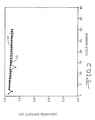
- Fig. 1 is a graph constructed from the charge and discharge cycle of a representative lithium-ion secondary cell constructed according to the present invention.
- Fig. 2 is a graph constructed from representative lithium-ion secondary cells constructed according to the present invention and cycled numerous times between a charged and a discharged state at 22°C and 37°C, respectfully.
- a secondary electrochemical cell constructed according to the present invention includes an anode active material selected from Groups IA, IIA, or IIIB of the Periodic Table of Elements, including the alkali metals lithium, sodium, potassium, etc.
- the preferred anode active material comprises lithium.
- the anode electrode comprises a material capable of intercalating and de-intercalating the alkali metal, and preferably lithium.
- a carbonaceous anode comprising any of the various forms of carbon (e.g., coke, graphite, acetylene black, carbon black, glassy carbon, pitch carbon,. synthetic carbon, mesocarbon microbeads, and mixtures thereof) which are capable of reversibly retaining the lithium species, is preferred.
- Graphite is particularly preferred due to its relatively high lithium-retention capacity.
- fibers of the carbonaceous material are particularly advantageous because the fibers have excellent mechanical properties which permit them to be fabricated into rigid electrodes that are capable of withstanding degradation during repeated charge/discharge cycling. Moreover, the high surface area of carbon fibers allows for rapid charge/discharge rates.
- a preferred carbonaceous material for the anode of a secondary electrochemical cell is described in U.S. Patent No. 5,443,928 to Takeuchi et al., which is assigned to the assignee of the present invention and incorporated herein by reference.
- a typical secondary cell anode is fabricated by mixing about 90 to 97 weight percent graphite with about 3 to 10 weight percent of a binder material which is preferably a fluoro-resin powder such as polytetrafluoroethylene (PTFE), polyvinylidene fluoride (PVDE), polyethylenetetrafluoroethylene (ETFE), a polyamide or a polyimide, and mixtures thereof.
- a binder material which is preferably a fluoro-resin powder such as polytetrafluoroethylene (PTFE), polyvinylidene fluoride (PVDE), polyethylenetetrafluoroethylene (ETFE), a polyamide or a polyimide, and mixtures thereof.
- PTFE polytetrafluoroethylene
- PVDE polyvinylidene fluoride
- ETFE polyethylenetetrafluoroethylene
- a polyamide or a polyimide polyamide or a polyimide
- the current collector may also be chemically etched, perforated, or of expanded metal screen.
- the anode current collector may or may not be coated or treated to prevent corrosion.
- the carbonaceous anode mixture may be associated with the current collector by casting, pressing, rolling or otherwise contacting the active admixture thereto.
- the anode electrode further has a metallic lead welded to the anode current collector.
- the lead material may consist of copper, nickel, nickel plated steel, stainless steel or titanium, depending on the anode current collector material used, the case and lid materials used and the degree of magnetic susceptibility required for the cell.
- the anode lead may be welded to the current collector using various methods including, but not limited to, resistance welding, plasma welding, ultrasonic welding or laser welding.
- the anode lead is then weld contacted to a cell case of conductive metal in a case-negative electrical configuration, as will be described hereinafter.
- the anode may be formed in some other geometry, such as a bobbin shape, cylinder or pellet to allow an alternate low surface cell design.
- the cathode of a secondary cell includes a metal oxide, a metal sulfide, a metal selenide or a metal telluride of a transition metal element.
- metals include vanadium, titanium, chromium, copper, molybdenum, niobium, iron, -nickel, cobalt and manganese.
- the cathode active material is preferably lithiated when the cell is manufactured and may or may not be used in combination with other metal oxide or metal sulfide materials. Lithiated materials are preferred because they are stable in air and readily handled.
- the more preferred oxides include LiNiO 2 , LiMn 2 O 4 , LiCoO 2 , LiCo 0.92 Sn 0.08 O 2 and LiCo 1-x Ni x O 2 .
- lithium cobalt oxide is most preferred due to its relatively high voltage, high rate capability, high energy density and good cycle life; however, any material which is suitable for intercalating and de-intercalating lithium ions and which is stable within the cell environment will suffice.
- the lithiated active material is preferably mixed with a conductive additive.
- Suitable conductive additives include acetylene black, carbon black and/or graphite.
- Metals such as nickel, aluminum, titanium and stainless steel in powder form are also useful as conductive diluents when mixed with the above listed active materials.
- the cathode electrode further comprises a fluoro-resin binder, preferably in a powder form, such as PTFE, PVDF, ETFE, a polyamide or a polyimide, and mixtures thereof.
- the cathode active material, conductive agent and the binder material are mixed and subsequently contacted to a metallic current collector.
- the current collector is usually made from a thin metallic foil.
- Aluminum is a particularly preferred material for the cathode current collector since it is very conductive, has a relatively low magnetic susceptibility and is relatively inexpensive and stable within the confines of the cell environment. Additionally, other forms of a current collector may be used including a chemically etched, perforated or expanded metal screen, depending on the particular requirements of the processes used to manufacture the cell.
- the cathode current collector may or may not be coated or treated to prevent corrosion.
- the inclusion of a lead on the cathode current collector may be desirable for contact to the terminal pin; however, this is not necessary.
- the cathode current collector may be welded directly to the terminal pin.
- the lead material is usually aluminum or a high ferritic stainless steel such as 29-4-2 stainless steel, and is welded to the current collector by one of several methods including resistance welding, plasma welding, ultrasonic welding or laser welding.
- lithium-ions comprising the lithiated cathode active material are intercalated into the carbonaceous anode by applying an externally generated electrical potential to recharge the cell.
- the applied recharging electrical potential serves to draw lithium ions from the cathode material, through the electrolyte and into the carbonaceous anode to saturate the carbon comprising the anode.
- the resulting Li x C 6 electrode can have an x ranging between 0.1 and 1.0.
- the cell is then provided with an electrical potential and discharged in a normal manner.
- An alternate secondary cell construction comprises intercalating the carbonaceous material with the active alkali material before the anode is incorporated into the cell.
- the cathode body can be solid and comprise, but not be limited to, such materials as manganese dioxide, silver vanadium oxide, copper silver vanadium oxide, titanium disulfide, copper oxide, copper sulfide, iron sulfide, iron disulfide and fluorinated carbon.
- this approach is compromised by the problems associated with handling lithiated carbon outside of the cell. Lithiated'carbon tends to react when contacted by air.
- the secondary cell of the present invention includes a separator to provide physical segregation between the anode and cathode active electrodes.
- the separator is of an electrically insulative material to prevent an internal electrical short circuit between the electrodes, and the separator material also is chemically unreactive with the anode and cathode active materials and both chemically unreactive with and insoluble in the electrolyte.
- the separator material has a degree of porosity sufficient to allow flow therethrough of the electrolyte during the electrochemical reaction of the cell.
- the form of the separator typically is a sheet which is placed between the anode and cathode electrodes.
- Illustrative separator materials include fabrics woven from fluoropolymeric fibers of polyethylenetetrafluoroethylene and polyethylenechlorotrifluoroethylene used either alone or laminated with a fluoropolymeric microporous film.
- Other suitable separator materials include non-woven glass, polypropylene, polyethylene, polyamides, polyimides, glass fiber materials, ceramics, a polytetrafluoroethylene membrane commercially available under the designation ZITEX (Chemplast Inc.), a polypropylene membrane commercially available under the designation CELGARD (Celanese Plastic Company, Inc.) and a membrane commercially available under the designation DEXIGLAS (C.H. Dexter, Div., Dexter Corp.).
- Suitable nonaqueous electrolytes are comprised of an inorganic salt dissolved in a nonaqueous solvent and more preferably an alkali metal salt dissolved in a mixture of organic carbonate solvents comprising dialkyl (non-cyclic) carbonates selected from dimethyl carbonate (DMC), diethyl carbonate (DEC), dipropyl carbonate (DPC), ethylmethyl carbonate (EMC), methylpropyl carbonate (MPC) and ethylpropyl carbonate (EPC), and mixtures thereof, and a cyclic carbonate selected from propylene carbonate (PC), ethylene carbonate (EC), butylene carbonate (BC) and vinylene carbonate (VC), and mixtures thereof.
- DMC dimethyl carbonate
- DEC diethyl carbonate
- DPC dipropyl carbonate
- EMC ethylmethyl carbonate
- MPC methylpropyl carbonate
- EPC methylpropyl carbonate
- EPC methylpropy
- Organic carbonates are generally used in the electrolyte solvent system for such battery chemistries because they exhibit high oxidative stability toward cathode materials and good kinetic stability toward anode materials.
- the ester ⁇ -butyrolactone is also a useful solvent for activating a lithium-ion secondary cell according to the present invention.
- Preferred electrolytes comprise solvent mixtures of EC:DMC:EMC:DEC.
- Preferred volume percent ranges for the various carbonate solvents include EC in the range of about 10% to about 50%; DMC in the range of about 5% to about 75%; EMC in the range of about 5% to about 50%; and DEC in the range of about 3% to about 45%.
- Electrolytes containing this quaternary carbonate mixture exhibit freezing points below -50°C, and lithium-ion secondary cells activated with such carbonate solvent mixtures have very good cycling behavior at room temperature as well as very good discharge and charge/discharge cycling behavior at temperatures below -20°C.
- a most preferred electrolyte solvent system comprises a volume percent mixture of about 45% EC, about 22% DMC, about 24.8% EMC and about 8.2% DEC.
- lithium salts that are useful as a vehicle for transport of alkali metal ions from the anode to the cathode, and back again include LiPF 6 , LiBF 4 , LiAsF 6 , LiSbF 6 , LiClO 4 , LiAlCl 4 , LiGaCl 4 , LiC(SO 2 CF 3 ) 3 , LiNO 3 , LiN(SO 2 CF 3 ) 2 , LiSCN, LiO 3 SCF 2 CF 3 , LiC 6 F 5 SO 3 , LiO 2 CCF 3 , LiSO 3 F, LiB(C 6 H 5 ) 4 and LiCF 3 SO 3 , and mixtures thereof.
- Suitable salt concentrations typically range between about 0.8 to 1.5 molar.
- lithium-ion secondary cells constructed according to the present invention are housed in a case constructed of Type 304 austenitic stainless steel and variants such as 304L, Type 316 austenitic stainless steel and variants such as 316L, or titanium and its alloys. It is known that Type 304, 304L, 316 and 316L stainless steel have a magnetic susceptibility of about 3,520 to 6,700 x 10 6 while titanium has a magnetic susceptibility of about 182 x 10 6 .
- the stainless steel may be in a fully annealed, partially annealed or unannealed state although an annealed state is preferred.
- the case is annealed by heating in hydrogen, vacuum or an other suitable non-oxidizing atmosphere to a temperature of about 1,040°C to about 1,090°C, followed by rapid cooling in the same or other suitable non-oxidizing atmosphere.
- the rate of cooling through the temperature range of about 780°C to about 450°C is critical to the avoidance of detrimental changes in alloy microstructure.
- cooling through the above-mentioned temperature range in about 15 minutes or less avoids all detrimental changes.
- the present cell includes a hermetic header assembly that consists of a lid, a glassed preform and a terminal pin.
- the lid material is preferably identical to the case material, i.e. stainless steel or titanium.
- the terminal pin must be stable and corrosion resistant at the high cell voltage which is characteristic of the lithium-ion system. Two materials which may be used include 29-4-C stainless steel and molybdenum.
- the glass preform must also be corrosion resistant and possess a thermal expansion coefficient that allows it to hermetically seal to the lid and terminal pin materials. Suitable glasses may include TA-23, CABAL-12, FUSITE 425 or FUSITE 435.
- the welding method for connecting the cathode current collector and the cathode lead to the terminal pin include resistance welding, plasma welding, ultrasonic welding or laser welding.
- t-he pin may be rounded, flattened, chemically etched, mechanically roughened, or partially split, depending upon the thickness of the terminal pin, the thickness of the current collector foil or screen and the geometry of the cell design.
- a tubular couple may be welded to the terminal pin with the electrode assembly subsequently welded to the tubular couple. This latter terminal pin construction is shown in U.S. Patent No. 5,250,373 to Muffoletto et al., which is assigned to the assignee of the present invention and incorporated herein by reference.
- the anode assembly, the separator and the cathode assembly are wound around a mandrel into a prismatic spiral or elongated "jellyroll" configuration.
- the electrode assembly may be wound into an elliptical configuration and then flattened into the prismatic spiral shape to conform to the geometry of the case enclosure.
- a cylindrical jellyroll electrode assembly is also useful with the present invention. Regardless of the shape of the electrode assembly, in order to provide for maximum safety in the cell design, the height and length of the cathode electrode comprising the lithiated material is smaller than that of the anode electrode comprising the carbonaceous material such that the cathode active material is completely bounded by the anode active material to thereby prevent lithium plating.
- the lithiated positive electrode material is provided in a sheet form having spaced apart first and second ends meeting with first and second edges extending to opposed sides to provide the positive electrode having a width between the edges, a length between the ends and a thickness between the sides.
- the carbonaceous negative electrode is also provided in a sheet form having spaced apart first and second ends meeting with first and second edges extending to opposed sides to provide the negative electrode having a width between the edges, a length between the ends and a thickness between the sides.
- the negative electrode is provided side-by-side with the positive electrode having an intermediate separator such that the length and width of the negative electrode extend beyond the length and width of the positive electrode to provide the positive electrode bounded by the negative electrode.
- the separator length and width extend beyond that of the anode electrode.
- the anode lead is welded to the interior of the casing at one or more of a number of locations.
- the anode lead may be welded to the inside of the case or to the underside of the header.
- the anode lead may be pinched between the lid and the case and subsequently fused as the lid and case are hermetically welded together.
- Methods of welding the anode lead to the case, to the lid or to both include resistance welding, plasma welding, ultrasonic welding and laser welding. Regardless of where the anode lead is welded to the case, the header assembly is hermetically welded to the case.
- An alternate method of assembling the cell involves winding the anode and cathode electrodes on a mandrel, removing the mandrel from the wind and inserting the wound electrode assembly into a suitably shaped cell case or container.
- an elongated terminal pin is not required.
- a cathode lead is welded to the current collector by one of numerous welding methods such as resistance welding, plasma welding, ultrasonic welding or laser welding.
- the cell is thereafter filled with the electrolyte solution described hereinabove, and hermetically sealed such as by close-welding a stainless steel ball over the fill hole, but not limited thereto.
- This above assembly describes a case-negative cell which is the preferred construction for the lithium-ion secondary cell of the present invention.
- the electrochemical system of the present invention can also be constructed in a case-positive configuration.
- hermetic, lithium-ion secondary cells constructed according to the present invention preferably comprise a casing of a material having a magnetic susceptibility of at least about 182 x 10 6 , or greater; a carbonaceous material as a negative electrode active material contacted to a copper current collector; lithium cobalt oxide as a positive electrode active material contacted to an aluminum current collector, wherein the negative electrode and the positive electrode are electrochemically associated with each other housed in the casing; and an electrolyte solution activating the negative and the positive electrodes, the electrolyte solution including an alkali metal salt dissolved in a quaternary, nonaqueous carbonate solvent mixture consisting of about 45% ethylene carbonate, 22% dimethyl carbonate, about 24.8% ethylmethyl carbonate and about 8.2% diethyl carbonate, by volume, and wherein a periphery of the positive electrode is completely bounded by a periphery of the negative electrode to prevent lithium from plating as the cell is repeatedly cycled between a charged
- Fig. 1 A representative plot of a single discharge and charge cycle is shown in Fig. 1. As illustrated by curve 10, the traditional charge and voltage discharge profile is observed wherein the lithium-ion cell is charged to about 4.1 volts and subsequently discharged to about 2.75 volts. When discharged, the cell provided high operating voltage throughout. Curve 20 in Fig. 2 was constructed from the cycling discharge of a representative one of the present invention lithium-ion cells discharged at 22°C while curve 22 in that figure was constructed from a second one of the cells cycled at 37°C. Both cells exhibit a relatively low fade rate.
Landscapes
- Chemical & Material Sciences (AREA)
- General Chemical & Material Sciences (AREA)
- Chemical Kinetics & Catalysis (AREA)
- Electrochemistry (AREA)
- Engineering & Computer Science (AREA)
- Inorganic Chemistry (AREA)
- Materials Engineering (AREA)
- Manufacturing & Machinery (AREA)
- Physics & Mathematics (AREA)
- Condensed Matter Physics & Semiconductors (AREA)
- General Physics & Mathematics (AREA)
- Secondary Cells (AREA)
- Cell Electrode Carriers And Collectors (AREA)
- Battery Electrode And Active Subsutance (AREA)
Applications Claiming Priority (4)
| Application Number | Priority Date | Filing Date | Title |
|---|---|---|---|
| US10121898P | 1998-09-21 | 1998-09-21 | |
| US101218P | 1998-09-21 | ||
| US09/211,419 US6245464B1 (en) | 1998-09-21 | 1998-12-15 | Hermetically sealed lithium-ion secondary electrochemical cell |
| US211419 | 1998-12-15 |
Publications (1)
| Publication Number | Publication Date |
|---|---|
| EP0989623A1 true EP0989623A1 (de) | 2000-03-29 |
Family
ID=26798032
Family Applications (1)
| Application Number | Title | Priority Date | Filing Date |
|---|---|---|---|
| EP99307454A Withdrawn EP0989623A1 (de) | 1998-09-21 | 1999-09-21 | Hermetisch verschlossene Lithiumionensekundärbatterie |
Country Status (3)
| Country | Link |
|---|---|
| US (1) | US6245464B1 (de) |
| EP (1) | EP0989623A1 (de) |
| JP (1) | JP2000100474A (de) |
Cited By (16)
| Publication number | Priority date | Publication date | Assignee | Title |
|---|---|---|---|---|
| EP1160894A1 (de) | 2000-05-04 | 2001-12-05 | Wilson Greatbatch Ltd. | Kompressions-Glas-Metall-Dichtung |
| EP1255308A3 (de) * | 2001-04-23 | 2003-12-17 | Wilson Greatbatch Limited | Glas-Metall-Dichtung für elektrochemische Zelle |
| KR20040036817A (ko) * | 2002-10-25 | 2004-05-03 | 한국전기연구원 | 리튬이차전지 |
| US7041413B2 (en) | 2000-02-02 | 2006-05-09 | Quallion Llc | Bipolar electronics package |
| US7166388B2 (en) | 2000-02-02 | 2007-01-23 | Quallion Llc | Brazed ceramic seal for batteries |
| US7285355B2 (en) | 2000-04-26 | 2007-10-23 | Quallion Llc | Battery |
| US7561915B1 (en) | 2004-12-17 | 2009-07-14 | Cardiac Pacemakers, Inc. | MRI system having implantable device safety features |
| US8014867B2 (en) | 2004-12-17 | 2011-09-06 | Cardiac Pacemakers, Inc. | MRI operation modes for implantable medical devices |
| US8032228B2 (en) | 2007-12-06 | 2011-10-04 | Cardiac Pacemakers, Inc. | Method and apparatus for disconnecting the tip electrode during MRI |
| US8086321B2 (en) | 2007-12-06 | 2011-12-27 | Cardiac Pacemakers, Inc. | Selectively connecting the tip electrode during therapy for MRI shielding |
| US8160717B2 (en) | 2008-02-19 | 2012-04-17 | Cardiac Pacemakers, Inc. | Model reference identification and cancellation of magnetically-induced voltages in a gradient magnetic field |
| US8311637B2 (en) | 2008-02-11 | 2012-11-13 | Cardiac Pacemakers, Inc. | Magnetic core flux canceling of ferrites in MRI |
| US8565874B2 (en) | 2009-12-08 | 2013-10-22 | Cardiac Pacemakers, Inc. | Implantable medical device with automatic tachycardia detection and control in MRI environments |
| US8571661B2 (en) | 2008-10-02 | 2013-10-29 | Cardiac Pacemakers, Inc. | Implantable medical device responsive to MRI induced capture threshold changes |
| US8639331B2 (en) | 2009-02-19 | 2014-01-28 | Cardiac Pacemakers, Inc. | Systems and methods for providing arrhythmia therapy in MRI environments |
| CN116727211A (zh) * | 2023-08-14 | 2023-09-12 | 江苏睿恩新能源科技有限公司 | 一种锂离子电池钢壳的表面防腐处理方法 |
Families Citing this family (52)
| Publication number | Priority date | Publication date | Assignee | Title |
|---|---|---|---|---|
| KR100329560B1 (ko) * | 1999-04-16 | 2002-03-20 | 김순택 | 집전체와 전극 및 이 전극을 이용한 이차전지 |
| US6553263B1 (en) | 1999-07-30 | 2003-04-22 | Advanced Bionics Corporation | Implantable pulse generators using rechargeable zero-volt technology lithium-ion batteries |
| US7295878B1 (en) * | 1999-07-30 | 2007-11-13 | Advanced Bionics Corporation | Implantable devices using rechargeable zero-volt technology lithium-ion batteries |
| US6607843B2 (en) * | 2000-02-02 | 2003-08-19 | Quallion Llc | Brazed ceramic seal for batteries with titanium-titanium-6A1-4V cases |
| US6596439B1 (en) * | 2000-04-26 | 2003-07-22 | Quallion Llc | Lithium ion battery capable of being discharged to zero volts |
| JP2002260726A (ja) * | 2000-12-28 | 2002-09-13 | Japan Storage Battery Co Ltd | 非水電解質二次電池 |
| US6849360B2 (en) | 2002-06-05 | 2005-02-01 | Eveready Battery Company, Inc. | Nonaqueous electrochemical cell with improved energy density |
| US6852449B2 (en) * | 2002-08-29 | 2005-02-08 | Quallion Llc | Negative electrode including a carbonaceous material for a nonaqueous battery |
| US6998192B1 (en) | 2002-08-29 | 2006-02-14 | Quallion Llc | Negative electrode for a nonaqueous battery |
| US7020519B2 (en) * | 2003-01-24 | 2006-03-28 | Gentcorp Ltd | Hybrid battery power source for implantable medical use |
| US6909915B2 (en) * | 2003-01-24 | 2005-06-21 | Gentcorp Ltd. | Hybrid battery power source for implantable medical use |
| US7136701B2 (en) * | 2003-01-24 | 2006-11-14 | Gentcorp Ltd. | Hybrid battery power source for implantable medical use |
| US6936377B2 (en) * | 2003-05-13 | 2005-08-30 | C. Glen Wensley | Card with embedded IC and electrochemical cell |
| US20040247927A1 (en) * | 2003-06-06 | 2004-12-09 | Kurz Douglas L. | Method of producing seamless, multi-layer, bonded, metallic, laminate strips or coils of arbitrarily long length |
| US7342770B2 (en) * | 2003-07-09 | 2008-03-11 | Maxwell Technologies, Inc. | Recyclable dry particle based adhesive electrode and methods of making same |
| US7295423B1 (en) | 2003-07-09 | 2007-11-13 | Maxwell Technologies, Inc. | Dry particle based adhesive electrode and methods of making same |
| US7508651B2 (en) | 2003-07-09 | 2009-03-24 | Maxwell Technologies, Inc. | Dry particle based adhesive and dry film and methods of making same |
| US20060147712A1 (en) * | 2003-07-09 | 2006-07-06 | Maxwell Technologies, Inc. | Dry particle based adhesive electrode and methods of making same |
| US7791860B2 (en) | 2003-07-09 | 2010-09-07 | Maxwell Technologies, Inc. | Particle based electrodes and methods of making same |
| US7352558B2 (en) * | 2003-07-09 | 2008-04-01 | Maxwell Technologies, Inc. | Dry particle based capacitor and methods of making same |
| US20050250011A1 (en) * | 2004-04-02 | 2005-11-10 | Maxwell Technologies, Inc. | Particle packaging systems and methods |
| US20050017055A1 (en) * | 2003-07-24 | 2005-01-27 | Kurz Douglas L. | Electrochemical fuel cell component materials and methods of bonding electrochemical fuel cell components |
| US7920371B2 (en) | 2003-09-12 | 2011-04-05 | Maxwell Technologies, Inc. | Electrical energy storage devices with separator between electrodes and methods for fabricating the devices |
| US7495349B2 (en) * | 2003-10-20 | 2009-02-24 | Maxwell Technologies, Inc. | Self aligning electrode |
| US20080145753A1 (en) * | 2003-12-31 | 2008-06-19 | Spillman David M | Non-magnetic lithium ion secondary electrochemical cell |
| US7090946B2 (en) | 2004-02-19 | 2006-08-15 | Maxwell Technologies, Inc. | Composite electrode and method for fabricating same |
| US7384433B2 (en) | 2004-02-19 | 2008-06-10 | Maxwell Technologies, Inc. | Densification of compressible layers during electrode lamination |
| US7227737B2 (en) | 2004-04-02 | 2007-06-05 | Maxwell Technologies, Inc. | Electrode design |
| TW200606970A (en) * | 2004-05-10 | 2006-02-16 | Nippon Catalytic Chem Ind | Material for electrolytic solution, ionic material-containing composition and use thereof |
| US7245478B2 (en) | 2004-08-16 | 2007-07-17 | Maxwell Technologies, Inc. | Enhanced breakdown voltage electrode |
| US7174207B2 (en) * | 2004-09-23 | 2007-02-06 | Quallion Llc | Implantable defibrillator having reduced battery volume |
| US7440258B2 (en) | 2005-03-14 | 2008-10-21 | Maxwell Technologies, Inc. | Thermal interconnects for coupling energy storage devices |
| US7492574B2 (en) | 2005-03-14 | 2009-02-17 | Maxwell Technologies, Inc. | Coupling of cell to housing |
| US20060263686A1 (en) * | 2005-05-19 | 2006-11-23 | Medtronic, Inc. | Lithium battery manufacturing method |
| KR101338814B1 (ko) * | 2005-06-20 | 2013-12-06 | 미쓰비시 가가꾸 가부시키가이샤 | 디플루오로인산염의 제조 방법, 2 차 전지용 비수계 전해액 및 비수계 전해액 2 차 전지 |
| US20070077496A1 (en) * | 2005-10-05 | 2007-04-05 | Medtronic, Inc. | Lithium-ion battery |
| JP5034240B2 (ja) * | 2006-01-25 | 2012-09-26 | 株式会社Gsユアサ | 電池の製造方法 |
| KR100800375B1 (ko) * | 2006-07-14 | 2008-02-01 | (주)비피에스 | 알루미늄 다층 필름을 외관으로 사용한 전지의 제조방법 |
| US8518573B2 (en) * | 2006-09-29 | 2013-08-27 | Maxwell Technologies, Inc. | Low-inductive impedance, thermally decoupled, radii-modulated electrode core |
| EP2109902B1 (de) * | 2007-01-09 | 2019-03-13 | Johnson Controls Advanced Power Solutions LLC | Batteriezelle |
| US20080201925A1 (en) | 2007-02-28 | 2008-08-28 | Maxwell Technologies, Inc. | Ultracapacitor electrode with controlled sulfur content |
| US8142928B2 (en) * | 2008-06-04 | 2012-03-27 | Basvah Llc | Systems and methods for rechargeable battery collector tab configurations and foil thickness |
| US9005808B2 (en) | 2011-03-01 | 2015-04-14 | Uchicago Argonne, Llc | Electrode materials for rechargeable batteries |
| US9601228B2 (en) * | 2011-05-16 | 2017-03-21 | Envia Systems, Inc. | Silicon oxide based high capacity anode materials for lithium ion batteries |
| US9142989B2 (en) | 2012-09-07 | 2015-09-22 | Greatbatch Ltd. | Method of minimizing interruptions to implantable medical device recharging |
| US9209634B2 (en) | 2012-09-07 | 2015-12-08 | Greatbatch Ltd. | Method of improving battery recharge efficiency by statistical analysis |
| US9225190B2 (en) | 2012-09-07 | 2015-12-29 | Manufacturers And Traders Trust Company | Implant current controlled battery charging based on temperature |
| US9899655B2 (en) | 2012-09-14 | 2018-02-20 | Greatbatch Ltd. | Electrochemical current collector screen designs utilizing ultrasonic welding |
| TWI563716B (en) * | 2014-07-16 | 2016-12-21 | Prologium Technology Co Ltd | Anode electrode |
| CN114050322B (zh) | 2016-05-02 | 2022-11-29 | 心脏起搏器股份公司 | 电池锂簇生长控制 |
| US11831030B2 (en) | 2018-05-22 | 2023-11-28 | Pacesetter, Inc. | Method of forming a brazed joint having molybdenum material |
| EP4205225A4 (de) | 2020-08-26 | 2025-07-30 | Fenwood Labs Inc | Sicher einnehmbare batterien zur schnellen deaktivierung in biologischen umgebungen und verfahren zur herstellung davon |
Citations (7)
| Publication number | Priority date | Publication date | Assignee | Title |
|---|---|---|---|---|
| JPH01128371A (ja) * | 1987-11-11 | 1989-05-22 | Sony Corp | 非水電解液二次電池 |
| US5455128A (en) * | 1992-09-25 | 1995-10-03 | Fuji Photo Film Co., Ltd. | Nonaqueous battery |
| EP0690520A1 (de) * | 1994-05-30 | 1996-01-03 | Canon Kabushiki Kaisha | Wiederaufladbare Batterien |
| JPH08162153A (ja) * | 1994-12-08 | 1996-06-21 | Toshiba Battery Co Ltd | 非水溶媒二次電池 |
| US5534369A (en) * | 1994-03-10 | 1996-07-09 | Hival Ltd. | Battery having divided electrode portions |
| EP0870975A2 (de) * | 1997-04-11 | 1998-10-14 | Wilson Greatbatch Ltd. | Taschenlampe mit geringer magnetischer Suszebilität |
| EP0878861A1 (de) * | 1997-05-16 | 1998-11-18 | Moli Energy (1990) Limited | Polymisierbare Zusatzstoffe zum überladeschutz nichtwässrigen aufladbaren Lithiumbatterien |
Family Cites Families (32)
| Publication number | Priority date | Publication date | Assignee | Title |
|---|---|---|---|---|
| US4252876A (en) | 1979-07-02 | 1981-02-24 | Eic Corporation | Lithium battery |
| US4802275A (en) | 1987-03-12 | 1989-02-07 | Saft, S.A. | Method of manufacturing an electrochemical cell having an alkaline electrolyte and spiral-wound electrodes |
| US4863815A (en) | 1988-06-06 | 1989-09-05 | Altus Corporation | Cell design for spirally wound rechargeable alkaline metal cell |
| US4957833A (en) | 1988-12-23 | 1990-09-18 | Bridgestone Corporation | Non-aqueous liquid electrolyte cell |
| JP2797390B2 (ja) | 1989-04-03 | 1998-09-17 | ソニー株式会社 | 非水電解質二次電池 |
| DE69127251T3 (de) | 1990-10-25 | 2005-01-13 | Matsushita Electric Industrial Co., Ltd., Kadoma | Nichtwässrige elektrochemische Sekundärbatterie |
| FR2677175B1 (fr) | 1991-05-31 | 1997-01-31 | Alsthom Cge Alcatel | Generateur electrochimique rechargeable a electrolyte liquide et a anode lithium/carbone. |
| US5250373A (en) | 1991-09-10 | 1993-10-05 | Wilson Greatbatch Ltd. | Internal electrode and assembly method for electrochemical cells |
| US5474862A (en) | 1991-09-13 | 1995-12-12 | Matsushita Electric Industrial Co., Ltd. | Nonaqueous electrolyte secondary batteries |
| US5256504A (en) | 1991-09-13 | 1993-10-26 | Matsushita Electric Industrial Co., Ltd. | Monaqueous electrolyte secondary batteries |
| US5484669A (en) | 1991-12-27 | 1996-01-16 | Matsushita Electric Industrial Co., Ltd. | Nonaqueous electrolyte secondary batteries |
| FR2707426B1 (fr) | 1993-07-09 | 1995-08-18 | Accumulateurs Fixes | Générateur électrochimique rechargeable au lithium et son procédé de réalisation. |
| CA2126883C (en) | 1993-07-15 | 2005-06-21 | Tomoari Satoh | Cathode material for lithium secondary battery and method for producing lithiated nickel dioxide and lithium secondary battery |
| DE69415911T2 (de) | 1993-09-17 | 1999-06-10 | Kabushiki Kaisha Toshiba, Kawasaki, Kanagawa | Lithium Sekundärbatterie |
| US5486215A (en) | 1993-11-19 | 1996-01-23 | Medtronic, Inc. | Electrode assembly and method |
| US5439760A (en) | 1993-11-19 | 1995-08-08 | Medtronic, Inc. | High reliability electrochemical cell and electrode assembly therefor |
| DE4342039A1 (de) | 1993-12-09 | 1995-06-14 | Varta Batterie | Elektrochemisches Sekundärelement |
| CA2114492C (en) | 1994-01-28 | 2000-09-05 | Wu Li | Aqueous electrochemical preparation of insertion compounds and use in non-aqueous rechargeable batteries |
| CA2114493C (en) | 1994-01-28 | 1999-01-12 | Jeffrey Raymond Dahn | Method for increasing the reversible capacity of lithium transition metal oxide cathodes |
| US5443928A (en) | 1994-02-18 | 1995-08-22 | Wilson Greatbatch Ltd. | Carbon electrode for a nonaqueous secondary electrochemical cell |
| FR2719161B1 (fr) | 1994-04-22 | 1996-08-02 | Accumulateurs Fixes | Générateur électrochimique rechargeable au lithium à anode de carbone. |
| CA2122770C (en) | 1994-05-03 | 2000-10-03 | Moli Energy (1990) Limited | Carbonaceous host compounds and use as anodes in rechargeable batteries |
| US5571632A (en) | 1994-06-22 | 1996-11-05 | Sony Corporation | Nonaqueous electrolyte solution secondary cell and method for producing the same |
| JP3204291B2 (ja) | 1994-07-21 | 2001-09-04 | シャープ株式会社 | 非水系二次電池用炭素体電極、その製造方法及びそれを用いた非水系二次電池 |
| US5595839A (en) | 1994-10-13 | 1997-01-21 | Yardney Technical Products, Inc. | Bipolar lithium-ion rechargeable battery |
| US5714280A (en) * | 1994-11-09 | 1998-02-03 | Furukawa Denchi Kabushiki Kaisha | Lithium secondary battery |
| JP3419119B2 (ja) | 1994-11-15 | 2003-06-23 | 日本電池株式会社 | 非水電解質二次電池 |
| US5523179A (en) | 1994-11-23 | 1996-06-04 | Polyplus Battery Company | Rechargeable positive electrode |
| US5603737A (en) | 1995-06-02 | 1997-02-18 | Pacesetter, Inc. | Electrode structure for electrochemical cell having a rectangular housing |
| US5712059A (en) | 1995-09-26 | 1998-01-27 | Valence Technology, Inc. | Carbonaceous electrode and compatible electrolyte solvent |
| US5989747A (en) * | 1996-07-10 | 1999-11-23 | Fuji Photo Film Co., Ltd. | Cell electrode with thick tip portions |
| US5750286A (en) | 1996-07-31 | 1998-05-12 | Wilson Greatbatch Ltd. | Dual connection tab current collector |
-
1998
- 1998-12-15 US US09/211,419 patent/US6245464B1/en not_active Expired - Lifetime
-
1999
- 1999-09-21 JP JP11267114A patent/JP2000100474A/ja active Pending
- 1999-09-21 EP EP99307454A patent/EP0989623A1/de not_active Withdrawn
Patent Citations (7)
| Publication number | Priority date | Publication date | Assignee | Title |
|---|---|---|---|---|
| JPH01128371A (ja) * | 1987-11-11 | 1989-05-22 | Sony Corp | 非水電解液二次電池 |
| US5455128A (en) * | 1992-09-25 | 1995-10-03 | Fuji Photo Film Co., Ltd. | Nonaqueous battery |
| US5534369A (en) * | 1994-03-10 | 1996-07-09 | Hival Ltd. | Battery having divided electrode portions |
| EP0690520A1 (de) * | 1994-05-30 | 1996-01-03 | Canon Kabushiki Kaisha | Wiederaufladbare Batterien |
| JPH08162153A (ja) * | 1994-12-08 | 1996-06-21 | Toshiba Battery Co Ltd | 非水溶媒二次電池 |
| EP0870975A2 (de) * | 1997-04-11 | 1998-10-14 | Wilson Greatbatch Ltd. | Taschenlampe mit geringer magnetischer Suszebilität |
| EP0878861A1 (de) * | 1997-05-16 | 1998-11-18 | Moli Energy (1990) Limited | Polymisierbare Zusatzstoffe zum überladeschutz nichtwässrigen aufladbaren Lithiumbatterien |
Non-Patent Citations (2)
| Title |
|---|
| PATENT ABSTRACTS OF JAPAN vol. 013, no. 374 (E - 808) 18 August 1989 (1989-08-18) * |
| PATENT ABSTRACTS OF JAPAN vol. 1996, no. 10 31 October 1996 (1996-10-31) * |
Cited By (24)
| Publication number | Priority date | Publication date | Assignee | Title |
|---|---|---|---|---|
| US7041413B2 (en) | 2000-02-02 | 2006-05-09 | Quallion Llc | Bipolar electronics package |
| US7166388B2 (en) | 2000-02-02 | 2007-01-23 | Quallion Llc | Brazed ceramic seal for batteries |
| US7410512B2 (en) | 2000-02-02 | 2008-08-12 | Quallion Llc | Bipolar electronics package |
| US7285355B2 (en) | 2000-04-26 | 2007-10-23 | Quallion Llc | Battery |
| EP1160894A1 (de) | 2000-05-04 | 2001-12-05 | Wilson Greatbatch Ltd. | Kompressions-Glas-Metall-Dichtung |
| EP1255308A3 (de) * | 2001-04-23 | 2003-12-17 | Wilson Greatbatch Limited | Glas-Metall-Dichtung für elektrochemische Zelle |
| KR20040036817A (ko) * | 2002-10-25 | 2004-05-03 | 한국전기연구원 | 리튬이차전지 |
| US8886317B2 (en) | 2004-12-17 | 2014-11-11 | Cardiac Pacemakers, Inc. | MRI operation modes for implantable medical devices |
| US7561915B1 (en) | 2004-12-17 | 2009-07-14 | Cardiac Pacemakers, Inc. | MRI system having implantable device safety features |
| US8543207B2 (en) | 2004-12-17 | 2013-09-24 | Cardiac Pacemakers, Inc. | MRI operation modes for implantable medical devices |
| US8014867B2 (en) | 2004-12-17 | 2011-09-06 | Cardiac Pacemakers, Inc. | MRI operation modes for implantable medical devices |
| US8032228B2 (en) | 2007-12-06 | 2011-10-04 | Cardiac Pacemakers, Inc. | Method and apparatus for disconnecting the tip electrode during MRI |
| US8086321B2 (en) | 2007-12-06 | 2011-12-27 | Cardiac Pacemakers, Inc. | Selectively connecting the tip electrode during therapy for MRI shielding |
| US8554335B2 (en) | 2007-12-06 | 2013-10-08 | Cardiac Pacemakers, Inc. | Method and apparatus for disconnecting the tip electrode during MRI |
| US8897875B2 (en) | 2007-12-06 | 2014-11-25 | Cardiac Pacemakers, Inc. | Selectively connecting the tip electrode during therapy for MRI shielding |
| US8311637B2 (en) | 2008-02-11 | 2012-11-13 | Cardiac Pacemakers, Inc. | Magnetic core flux canceling of ferrites in MRI |
| US8160717B2 (en) | 2008-02-19 | 2012-04-17 | Cardiac Pacemakers, Inc. | Model reference identification and cancellation of magnetically-induced voltages in a gradient magnetic field |
| US8571661B2 (en) | 2008-10-02 | 2013-10-29 | Cardiac Pacemakers, Inc. | Implantable medical device responsive to MRI induced capture threshold changes |
| US9561378B2 (en) | 2008-10-02 | 2017-02-07 | Cardiac Pacemakers, Inc. | Implantable medical device responsive to MRI induced capture threshold changes |
| US8639331B2 (en) | 2009-02-19 | 2014-01-28 | Cardiac Pacemakers, Inc. | Systems and methods for providing arrhythmia therapy in MRI environments |
| US8977356B2 (en) | 2009-02-19 | 2015-03-10 | Cardiac Pacemakers, Inc. | Systems and methods for providing arrhythmia therapy in MRI environments |
| US8565874B2 (en) | 2009-12-08 | 2013-10-22 | Cardiac Pacemakers, Inc. | Implantable medical device with automatic tachycardia detection and control in MRI environments |
| US9381371B2 (en) | 2009-12-08 | 2016-07-05 | Cardiac Pacemakers, Inc. | Implantable medical device with automatic tachycardia detection and control in MRI environments |
| CN116727211A (zh) * | 2023-08-14 | 2023-09-12 | 江苏睿恩新能源科技有限公司 | 一种锂离子电池钢壳的表面防腐处理方法 |
Also Published As
| Publication number | Publication date |
|---|---|
| US6245464B1 (en) | 2001-06-12 |
| JP2000100474A (ja) | 2000-04-07 |
Similar Documents
| Publication | Publication Date | Title |
|---|---|---|
| US6245464B1 (en) | Hermetically sealed lithium-ion secondary electrochemical cell | |
| US6635381B2 (en) | Electrochemical lithium ion secondary cell having a scalloped electrode assembly | |
| EP1309018B1 (de) | Elektrochemische Zelle mit einer mehrplattigen Elektrodeneinheit in einem unregelmässig gestalteten Gehäuse | |
| US6641953B2 (en) | Secondary cell with high rate pulse capability | |
| US6136477A (en) | Nitrate additives for nonaqueous electrolyte rechargeable cells | |
| US20120282519A1 (en) | Dissimilar Material Battery Enclosure for Improved Weld Structure | |
| EP0980108A1 (de) | Nichtwässrige organische Elektrolyten zur Entladung von ladbaren elektrochemischen Zellen bei niedriger Temperatur | |
| US10224518B2 (en) | Electrochemical cell casing having an open-ended main body portion of grade 5 or 23 titanium closed by upper and lower lids of grade 1 or 2 titanium | |
| EP1207573A2 (de) | Verfahren zur Sandwich-Kathode Herstellung | |
| US11670816B2 (en) | Glass-to-metal seal terminal pin for an electrochemical cell | |
| EP0989624A1 (de) | Lithiumsekundärbatterie mit niedrigem magnetischen Suszeptibilitätmaterial | |
| US6984468B2 (en) | Hermetically sealed coin cell | |
| EP1244160A1 (de) | Elektrochemische Zelle mit einer Elektrode umfassend Karbonate als Zusatz für die active Mischung der Elektrode | |
| EP1318555B1 (de) | Positive Elektrodenanordnung mit doppeltem Stromkollektor für elektrochemische Alkalimetallionen-Zellen | |
| US6623884B1 (en) | Electrochemical lithium ion secondary cell having multiplate and jellyroll electrodes with differing discharge rate regions | |
| US9325029B1 (en) | Lithium battery having irregularly shaped casing | |
| EP1324418A1 (de) | Wiederaufladbare Batterie mit hoher Energiedichte für die Anwendung in medizinischen Geräten | |
| KR20020024770A (ko) | 재충전가능한 전기화학 셀들의 저온 방전을 위한 비수성유기 전해질 | |
| CA2298417C (en) | Nitrite additives for nonaqueous electrolyte rechargeable cells | |
| US12249726B2 (en) | Method for manufacturing a co-axial glass-to-metal seal for a case-neutral electrochemical cell | |
| US12142775B1 (en) | Method for manufacturing a co-axial glass-to-metal seal feedthrough for a case-neutral electrochemical cell | |
| US20080145753A1 (en) | Non-magnetic lithium ion secondary electrochemical cell |
Legal Events
| Date | Code | Title | Description |
|---|---|---|---|
| PUAI | Public reference made under article 153(3) epc to a published international application that has entered the european phase |
Free format text: ORIGINAL CODE: 0009012 |
|
| AK | Designated contracting states |
Kind code of ref document: A1 Designated state(s): AT BE CH CY DE DK ES FI FR GB GR IE IT LI LU MC NL PT SE |
|
| AX | Request for extension of the european patent |
Free format text: AL;LT;LV;MK;RO;SI |
|
| 17P | Request for examination filed |
Effective date: 20000918 |
|
| AKX | Designation fees paid |
Free format text: AT BE CH CY DE DK ES FI FR GB GR IE IT LI LU MC NL PT SE |
|
| 17Q | First examination report despatched |
Effective date: 20031201 |
|
| STAA | Information on the status of an ep patent application or granted ep patent |
Free format text: STATUS: THE APPLICATION HAS BEEN WITHDRAWN |
|
| 18W | Application withdrawn |
Effective date: 20040503 |