EP0986642B1 - Hbv-gerichtete antisense-nukleinsäuren - Google Patents
Hbv-gerichtete antisense-nukleinsäuren Download PDFInfo
- Publication number
- EP0986642B1 EP0986642B1 EP98932158A EP98932158A EP0986642B1 EP 0986642 B1 EP0986642 B1 EP 0986642B1 EP 98932158 A EP98932158 A EP 98932158A EP 98932158 A EP98932158 A EP 98932158A EP 0986642 B1 EP0986642 B1 EP 0986642B1
- Authority
- EP
- European Patent Office
- Prior art keywords
- rna
- antisense
- antisense nucleic
- nucleic acid
- hbv
- Prior art date
- Legal status (The legal status is an assumption and is not a legal conclusion. Google has not performed a legal analysis and makes no representation as to the accuracy of the status listed.)
- Expired - Lifetime
Links
- 230000000692 anti-sense effect Effects 0.000 title claims description 32
- 150000007523 nucleic acids Chemical class 0.000 title claims description 26
- 102000039446 nucleic acids Human genes 0.000 title claims description 25
- 108020004707 nucleic acids Proteins 0.000 title claims description 25
- 230000008685 targeting Effects 0.000 title 1
- 239000013598 vector Substances 0.000 claims description 9
- 239000003814 drug Substances 0.000 claims description 4
- 241000282414 Homo sapiens Species 0.000 claims description 3
- 208000015181 infectious disease Diseases 0.000 claims description 3
- 230000002401 inhibitory effect Effects 0.000 claims description 2
- 238000004519 manufacturing process Methods 0.000 claims 1
- 108091032973 (ribonucleotides)n+m Proteins 0.000 description 44
- 108020005544 Antisense RNA Proteins 0.000 description 25
- 239000003184 complementary RNA Substances 0.000 description 23
- 241000700721 Hepatitis B virus Species 0.000 description 17
- 238000000338 in vitro Methods 0.000 description 14
- 125000003729 nucleotide group Chemical group 0.000 description 8
- 108020004999 messenger RNA Proteins 0.000 description 7
- 239000002773 nucleotide Substances 0.000 description 7
- 238000013518 transcription Methods 0.000 description 6
- 230000035897 transcription Effects 0.000 description 6
- 102000040650 (ribonucleotides)n+m Human genes 0.000 description 5
- 238000012360 testing method Methods 0.000 description 5
- 239000000499 gel Substances 0.000 description 4
- 238000000034 method Methods 0.000 description 4
- 108020004414 DNA Proteins 0.000 description 3
- KCXVZYZYPLLWCC-UHFFFAOYSA-N EDTA Chemical compound OC(=O)CN(CC(O)=O)CCN(CC(O)=O)CC(O)=O KCXVZYZYPLLWCC-UHFFFAOYSA-N 0.000 description 3
- 239000007983 Tris buffer Substances 0.000 description 3
- 238000005904 alkaline hydrolysis reaction Methods 0.000 description 3
- 238000000376 autoradiography Methods 0.000 description 3
- 210000004027 cell Anatomy 0.000 description 3
- 238000006243 chemical reaction Methods 0.000 description 3
- 238000012869 ethanol precipitation Methods 0.000 description 3
- 238000009396 hybridization Methods 0.000 description 3
- 239000003112 inhibitor Substances 0.000 description 3
- 230000010076 replication Effects 0.000 description 3
- LENZDBCJOHFCAS-UHFFFAOYSA-N tris Chemical compound OCC(N)(CO)CO LENZDBCJOHFCAS-UHFFFAOYSA-N 0.000 description 3
- IJGRMHOSHXDMSA-UHFFFAOYSA-N Atomic nitrogen Chemical compound N#N IJGRMHOSHXDMSA-UHFFFAOYSA-N 0.000 description 2
- 108020004394 Complementary RNA Proteins 0.000 description 2
- 108091028043 Nucleic acid sequence Proteins 0.000 description 2
- ISWSIDIOOBJBQZ-UHFFFAOYSA-N Phenol Chemical compound OC1=CC=CC=C1 ISWSIDIOOBJBQZ-UHFFFAOYSA-N 0.000 description 2
- OAICVXFJPJFONN-UHFFFAOYSA-N Phosphorus Chemical compound [P] OAICVXFJPJFONN-UHFFFAOYSA-N 0.000 description 2
- 108010065868 RNA polymerase SP6 Proteins 0.000 description 2
- 229920005654 Sephadex Polymers 0.000 description 2
- 239000012507 Sephadex™ Substances 0.000 description 2
- FAPWRFPIFSIZLT-UHFFFAOYSA-M Sodium chloride Chemical compound [Na+].[Cl-] FAPWRFPIFSIZLT-UHFFFAOYSA-M 0.000 description 2
- 239000007984 Tris EDTA buffer Substances 0.000 description 2
- XSQUKJJJFZCRTK-UHFFFAOYSA-N Urea Chemical compound NC(N)=O XSQUKJJJFZCRTK-UHFFFAOYSA-N 0.000 description 2
- 101150003160 X gene Proteins 0.000 description 2
- 239000000872 buffer Substances 0.000 description 2
- 239000004202 carbamide Substances 0.000 description 2
- 230000000295 complement effect Effects 0.000 description 2
- 238000002523 gelfiltration Methods 0.000 description 2
- 238000001727 in vivo Methods 0.000 description 2
- 230000010354 integration Effects 0.000 description 2
- 238000002372 labelling Methods 0.000 description 2
- 238000000329 molecular dynamics simulation Methods 0.000 description 2
- 239000013612 plasmid Substances 0.000 description 2
- 238000004445 quantitative analysis Methods 0.000 description 2
- 238000010839 reverse transcription Methods 0.000 description 2
- ATHGHQPFGPMSJY-UHFFFAOYSA-N spermidine Chemical compound NCCCCNCCCN ATHGHQPFGPMSJY-UHFFFAOYSA-N 0.000 description 2
- 230000001052 transient effect Effects 0.000 description 2
- 230000003612 virological effect Effects 0.000 description 2
- QKNYBSVHEMOAJP-UHFFFAOYSA-N 2-amino-2-(hydroxymethyl)propane-1,3-diol;hydron;chloride Chemical compound Cl.OCC(N)(CO)CO QKNYBSVHEMOAJP-UHFFFAOYSA-N 0.000 description 1
- 229920000936 Agarose Polymers 0.000 description 1
- 238000001712 DNA sequencing Methods 0.000 description 1
- 108090000790 Enzymes Proteins 0.000 description 1
- 102000004190 Enzymes Human genes 0.000 description 1
- 241000282412 Homo Species 0.000 description 1
- 108091034117 Oligonucleotide Proteins 0.000 description 1
- 208000037581 Persistent Infection Diseases 0.000 description 1
- 102000004160 Phosphoric Monoester Hydrolases Human genes 0.000 description 1
- 108090000608 Phosphoric Monoester Hydrolases Proteins 0.000 description 1
- 108010021757 Polynucleotide 5'-Hydroxyl-Kinase Proteins 0.000 description 1
- 102000008422 Polynucleotide 5'-hydroxyl-kinase Human genes 0.000 description 1
- 108091028664 Ribonucleotide Proteins 0.000 description 1
- 238000012300 Sequence Analysis Methods 0.000 description 1
- 101710137500 T7 RNA polymerase Proteins 0.000 description 1
- 241000700605 Viruses Species 0.000 description 1
- ZKHQWZAMYRWXGA-KNYAHOBESA-N [[(2r,3s,4r,5r)-5-(6-aminopurin-9-yl)-3,4-dihydroxyoxolan-2-yl]methoxy-hydroxyphosphoryl] dihydroxyphosphoryl hydrogen phosphate Chemical compound C1=NC=2C(N)=NC=NC=2N1[C@@H]1O[C@H](COP(O)(=O)OP(O)(=O)O[32P](O)(O)=O)[C@@H](O)[C@H]1O ZKHQWZAMYRWXGA-KNYAHOBESA-N 0.000 description 1
- 238000000246 agarose gel electrophoresis Methods 0.000 description 1
- 230000015572 biosynthetic process Effects 0.000 description 1
- 230000000903 blocking effect Effects 0.000 description 1
- UDSAIICHUKSCKT-UHFFFAOYSA-N bromophenol blue Chemical compound C1=C(Br)C(O)=C(Br)C=C1C1(C=2C=C(Br)C(O)=C(Br)C=2)C2=CC=CC=C2S(=O)(=O)O1 UDSAIICHUKSCKT-UHFFFAOYSA-N 0.000 description 1
- 238000004364 calculation method Methods 0.000 description 1
- 244000309466 calf Species 0.000 description 1
- 230000015556 catabolic process Effects 0.000 description 1
- 238000005119 centrifugation Methods 0.000 description 1
- 238000003776 cleavage reaction Methods 0.000 description 1
- 238000006731 degradation reaction Methods 0.000 description 1
- 239000005547 deoxyribonucleotide Substances 0.000 description 1
- 125000002637 deoxyribonucleotide group Chemical group 0.000 description 1
- 238000001514 detection method Methods 0.000 description 1
- 239000003085 diluting agent Substances 0.000 description 1
- 201000010099 disease Diseases 0.000 description 1
- 208000037265 diseases, disorders, signs and symptoms Diseases 0.000 description 1
- 239000003937 drug carrier Substances 0.000 description 1
- 239000003623 enhancer Substances 0.000 description 1
- 238000002474 experimental method Methods 0.000 description 1
- 238000000605 extraction Methods 0.000 description 1
- 239000012634 fragment Substances 0.000 description 1
- 206010073071 hepatocellular carcinoma Diseases 0.000 description 1
- 238000011534 incubation Methods 0.000 description 1
- 230000005764 inhibitory process Effects 0.000 description 1
- 230000000968 intestinal effect Effects 0.000 description 1
- 239000007788 liquid Substances 0.000 description 1
- 239000000203 mixture Substances 0.000 description 1
- 229910052757 nitrogen Inorganic materials 0.000 description 1
- 229940046166 oligodeoxynucleotide Drugs 0.000 description 1
- 230000008506 pathogenesis Effects 0.000 description 1
- 230000008488 polyadenylation Effects 0.000 description 1
- 108090000623 proteins and genes Proteins 0.000 description 1
- 102000004169 proteins and genes Human genes 0.000 description 1
- 239000011535 reaction buffer Substances 0.000 description 1
- 239000011541 reaction mixture Substances 0.000 description 1
- 230000001105 regulatory effect Effects 0.000 description 1
- 108091008146 restriction endonucleases Proteins 0.000 description 1
- 239000002336 ribonucleotide Substances 0.000 description 1
- 125000002652 ribonucleotide group Chemical group 0.000 description 1
- 150000003839 salts Chemical class 0.000 description 1
- 230000007017 scission Effects 0.000 description 1
- 238000010187 selection method Methods 0.000 description 1
- 238000000926 separation method Methods 0.000 description 1
- 239000011780 sodium chloride Substances 0.000 description 1
- 229940063673 spermidine Drugs 0.000 description 1
- 238000003786 synthesis reaction Methods 0.000 description 1
- 230000001225 therapeutic effect Effects 0.000 description 1
- 238000001890 transfection Methods 0.000 description 1
- 230000009466 transformation Effects 0.000 description 1
- 238000013519 translation Methods 0.000 description 1
Images


Classifications
-
- C—CHEMISTRY; METALLURGY
- C12—BIOCHEMISTRY; BEER; SPIRITS; WINE; VINEGAR; MICROBIOLOGY; ENZYMOLOGY; MUTATION OR GENETIC ENGINEERING
- C12N—MICROORGANISMS OR ENZYMES; COMPOSITIONS THEREOF; PROPAGATING, PRESERVING, OR MAINTAINING MICROORGANISMS; MUTATION OR GENETIC ENGINEERING; CULTURE MEDIA
- C12N15/00—Mutation or genetic engineering; DNA or RNA concerning genetic engineering, vectors, e.g. plasmids, or their isolation, preparation or purification; Use of hosts therefor
- C12N15/09—Recombinant DNA-technology
- C12N15/11—DNA or RNA fragments; Modified forms thereof; Non-coding nucleic acids having a biological activity
- C12N15/113—Non-coding nucleic acids modulating the expression of genes, e.g. antisense oligonucleotides; Antisense DNA or RNA; Triplex- forming oligonucleotides; Catalytic nucleic acids, e.g. ribozymes; Nucleic acids used in co-suppression or gene silencing
- C12N15/1131—Non-coding nucleic acids modulating the expression of genes, e.g. antisense oligonucleotides; Antisense DNA or RNA; Triplex- forming oligonucleotides; Catalytic nucleic acids, e.g. ribozymes; Nucleic acids used in co-suppression or gene silencing against viruses
-
- A—HUMAN NECESSITIES
- A61—MEDICAL OR VETERINARY SCIENCE; HYGIENE
- A61K—PREPARATIONS FOR MEDICAL, DENTAL OR TOILETRY PURPOSES
- A61K38/00—Medicinal preparations containing peptides
-
- C—CHEMISTRY; METALLURGY
- C12—BIOCHEMISTRY; BEER; SPIRITS; WINE; VINEGAR; MICROBIOLOGY; ENZYMOLOGY; MUTATION OR GENETIC ENGINEERING
- C12N—MICROORGANISMS OR ENZYMES; COMPOSITIONS THEREOF; PROPAGATING, PRESERVING, OR MAINTAINING MICROORGANISMS; MUTATION OR GENETIC ENGINEERING; CULTURE MEDIA
- C12N2310/00—Structure or type of the nucleic acid
- C12N2310/10—Type of nucleic acid
- C12N2310/11—Antisense
- C12N2310/111—Antisense spanning the whole gene, or a large part of it
Definitions
- the present invention relates to an antisense nucleic acid which acts against an specific sequence of HBV-derived RNA molecules and vectors containing this antisense nucleic acid.
- HBV hepatitis B virus
- Hepadnaviruses which HBV belongs to replicate their DNA genome by reverse transcription an RNA intermediate, the so-called pregenomic RNA.
- the Use of antisense inhibitors is a particularly specific one therapeutic possibility of HBV infection.
- the multiplication of HBV can be done using the antisense strategy both by inhibiting the reverse Transcription, with the pregenomic RNA as a target, as well as by blocking translation, with the viral mRNAs as targets.
- the most sensible RNA target represents the pregenomic RNA, since it is in the replication cycle of the virus is the earliest target for an antisense nucleic acid.
- HBV-directed antisense sequences have been arbitrarily particular against 5 'regions of the viral mRNAs, their cap structure or the polyadenylation signal directed (Goodarzi et al., 1990; Blum et al., 1991; Wu and Wu, 1992; Reinis et al., 1993; Yao et al., 1994; Yao et al., 1995; Moriya et al., 1996).
- WO 90/13367 describes a sandwich hybridization system for the detection of HBV in the soluble phase.
- the present invention is therefore based on the object of an antisense nucleic acid to provide the particularly effective especially with the pregenomic RNA of human HBV hybridized.
- an antisense nucleic acid with the sequence SEQ ID No. 1 is provided which is directed against a specific sequence of an RNA molecule derived from HBV as a target or target molecule, the antisense nucleic acid being smaller than the RNA molecule and one Association constant k of at least 5 x 10 3 M -1 s -1 has.
- the association constant k is preferably at least 2 ⁇ 10 4 M -1 s -1 .
- antisense nucleic acid means a native, semi-synthetic, synthetic or modified nucleic acid molecule from deoxyribonucleotides and / or ribonucleotides and / or modified nucleotides.
- the HBV-derived RNA molecule can be pregenomic RNA, preC mRNA, preS1 mRNA, preS2 / S mRNA or the transcript of the X gene.
- the RNA molecule is the pregenomic RNA of HBV.
- the Antisense nucleic acid the antisense oligodeoxynucleotide labeled SEQ ID No. 1.
- the antisense nucleic acid sequence labeled with SEQ ID No. 1 hybridizes above-average rapidly with the pregenomic RNA in vitro and is therefore an excellent inhibitor of HBV replication in vivo .
- the preferred antisense nucleic acid has a selectivity towards pregenomic RNA from HBV, even if identical target sequence regions occur on the mRNAs of HBV.
- Another object of the present invention is a vector that the antisense nucleic acid according to the invention defined above contains or which is a corresponding DNA sequence complementary to the antisense nucleic acid contains that after a transcription in suitable host cells to before antisense nucleic acid according to the invention.
- the vector according to the invention can preferably contain suitable regulatory elements, such as promoters, enhancers, termination sequences.
- the vector can be used for stable Integration of the nucleic acid according to the invention into the genetic material of a Host cell can be used.
- Another object of the present invention is a medicament which the antisense nucleic acid according to the invention or the invention Vector, optionally in a pharmaceutically acceptable carrier and / or Contains diluent.
- the medicament according to the invention can be used for inhibition or eliminating disease states caused by HBV infections by transient or stable integration of the invention
- Antisense nucleic acid by means of transformation or transfection in with HBV infected host cells can be used.
- HBVadw2 DNA was cleaved with the restriction enzyme Sau3Al, and the restriction fragments were cloned into the BamHI cleavage site of the transcription vector pGEM-7Zf + (from Promega) and confirmed by DNA sequencing.
- Two of these clones, pSau3 and pSau5-1 contained strands of HBVadw2 (pSau3: 334 nucleotides, positions 944-1266; pSau5-1: 260 nucleotides, positions 29-288) in antisense orientation with respect to the SP6 promoter.
- the derived antisense RNAs (Sau3 and Sau 5-1) of these constructs contain additional polylinker sequences at their 5 'ends (41 nucleotides) and their 3' ends (6 nucleotides).
- the RNA strand which contains the complementary sequences of Sau3 and Sau5-1, was transcribed in vitro using the SP6-RNA polymerase.
- the sense transcript contains 3320 of 3321 nucleotides of the pregenomic RNA (positions 2-3321) and additional non-specific sequences at the 5 'end (3 nucleotides) and at the 3' end (209 nucleotides).
- the plasmids were linearized by the following enzymes: pSau3 and pSau5-1 by HindIII, PSP6HBV by Pvull.
- SP6 RNA polymerase (from Boehringer Mannheim) was used for in vitro transcription.
- 5 ⁇ g of linearized template RNA were in a reaction buffer containing 40 mM Tris-HCL, pH 8.0 (20 ° C.), 6 mM MgCl 2 , 10 mM DTT and 2 mM spermidine, in a total volume of 200 ⁇ l at 37 ° C incubated for 90 min.
- RNAs were purified by gel filtration (Sephadex G50 medium, Pharmacia), phenol extraction and ethanol precipitation.
- the 5 'ends of the in vitro transcribed antisense RNA molecules (10 ng) were treated with calf intestinal phosphatase and with 100 ⁇ Ci [ ⁇ -32P] -ATP (10.0 mCi / ml, 3000 Ci / mmol) and polynucleotide kinase (Boehringer Mannheim) 32 P-marked by methods known in the art.
- RNA molecules were dissolved in TE buffer.
- the variable mixtures of RNA molecules were then heated to 75 ° C for 10 min and slowly cooled to 37 ° C before use in hybridization tests in order to obtain a native folding of the RNA molecules.
- RNA was treated with a 10 or 20-fold molar excess (25 or 50 pmol, conditions of the pseudo-first order of reaction) of HBV-pregenomic RNA in a final volume of 60 ⁇ l and under approximately physiological salt conditions (100 mM NaCl , 20 mM Tris / HCl, pH 7.4 and 10 mM MgCl 2 ) at 37 ° C. to promote the selection of physiologically active molecules.
- physiological salt conditions 100 mM NaCl , 20 mM Tris / HCl, pH 7.4 and 10 mM MgCl 2
- RNA was dissolved in stop buffer and single strand and hybridized fractions were analyzed by denaturing PAGE (10% PAA, 7M urea, TBE). The gels were dried and exposed to an X-ray film or a phosphor lean screen for further computer-aided quantitative analysis.
- the dried PAA gels were used for quantitative analysis of the band intensities scanned by means of a phosphor lean (Molecular Dynamics). Under Using the program “Image Quant” (Molecular Dynamics) the band intensities measured and the data on the program “EXCEL” (Fa. Microsoft) transferred. The band intensities were for individual RNA molecules plotted against the time axis and a curve for a single exponential Decay was determined by nonlinear regression using the Program "GRAFIT" (Fa. Erithacus Software, London, Great Britain) adapted. By plotting the calculated association constants (calculation due to conditions of the pseudo first order of reaction) against length The antisense RNA molecules were different groups of fast hybridizing Antisense RNA molecules detected.
- Antisense RNA directed against the pregenomic RNA of human HBV of type adw2
- the first target area positions 29-288, which is sequence-homologous with sections of the 5 ′ ends of the preS1 and preS2 / S mRNAs, was already known as an effective target or target of antisense nucleic acids and, due to its high folding energy, became the RNA secondary structure selected.
- the pregenomic RNA is approximately 10 times longer than these two antisense RNA molecules. As a result, the single-strand fraction can be separated from the double-strand fraction in the course of the in vitro selection test.
- the original antisense RNAs were synthesized by in vitro transcription and 32 P labeling at the 5 'end. Limited alkaline hydrolysis resulted in a pool of antisense RNA molecules that shared the 5 'end but had a successively truncated 3' end. The association constants for these molecules were measured at 37 ° C and physiological ionic strength.
- the in vitro selection and identification of rapidly hybridizing antisense RNA molecules is shown schematically in FIG. 1.
- the fast hybridizing molecules are the first to disappear from the single strand fraction trace and are detected by their chain length.
- the experimental identification of fast-binding, complementary RNA molecules is shown in FIGS. 2 and 3.
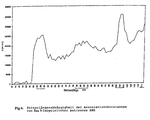
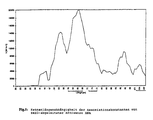
- the association constants based on the chain length of related molecules derived from one of the two original antisense constructs, are shown in Figures 4 and 5.
- the maximum association constants reach values of 2 to 4 x 10 4 M -1 s -1 , and they are higher even for relatively small antisense RNA molecules than for the full length original RNA and 3 times higher than the average of all association constants of each of the initial pools.
- Accessibility of the target RNA computer-aided prediction of the secondary structure the target RNA
Landscapes
- Life Sciences & Earth Sciences (AREA)
- Genetics & Genomics (AREA)
- Health & Medical Sciences (AREA)
- Engineering & Computer Science (AREA)
- Biomedical Technology (AREA)
- General Engineering & Computer Science (AREA)
- Wood Science & Technology (AREA)
- Organic Chemistry (AREA)
- Chemical & Material Sciences (AREA)
- Biotechnology (AREA)
- Molecular Biology (AREA)
- Zoology (AREA)
- Bioinformatics & Cheminformatics (AREA)
- Virology (AREA)
- Microbiology (AREA)
- Plant Pathology (AREA)
- Biophysics (AREA)
- Biochemistry (AREA)
- General Health & Medical Sciences (AREA)
- Physics & Mathematics (AREA)
- Pharmaceuticals Containing Other Organic And Inorganic Compounds (AREA)
- Measuring Or Testing Involving Enzymes Or Micro-Organisms (AREA)
- Micro-Organisms Or Cultivation Processes Thereof (AREA)
Description

Claims (4)
- Antisense-Nukleinsäure mit der Sequenz SEQ ID Nr.1, welche gegen eine spezifische Sequenz eines von HBV stammenden RNA-Moleküls gerichtet ist, wobei die Antisense-Nukleinsäure kleiner als das RNA-Molekül ist und eine Assoziationskonstante k von mindestens 5 x 10³ M-1 s-1 aufweist.
- Vektor, enthaltend mindestens die Antisense-Nukleinsäure nach Anspruch 1.
- Arzneimittel, enthaltend die Antisense-Nukleinsäure nach Anspruch 1 oder den Vektor nach Anspruch 2.
- Verwendung der Antisense-Nukleinsäure nach Anspruch 1 oder des Vektors nach Anspruch 2 zur Herstellung eines Medikaments zur Hemmung oder Beseitigung von durch HBV-Infektion verursachte Krankheitszustände beim Menschen.
Applications Claiming Priority (3)
| Application Number | Priority Date | Filing Date | Title |
|---|---|---|---|
| DE19725803A DE19725803C1 (de) | 1997-06-18 | 1997-06-18 | HBV-gerichtete Antisense-Nukleinsäuren |
| DE19725803 | 1997-06-18 | ||
| PCT/EP1998/003632 WO1998058055A2 (de) | 1997-06-18 | 1998-06-16 | Hbv-gerichtete antisense-nukleinsäuren |
Publications (2)
| Publication Number | Publication Date |
|---|---|
| EP0986642A2 EP0986642A2 (de) | 2000-03-22 |
| EP0986642B1 true EP0986642B1 (de) | 2003-09-24 |
Family
ID=7832874
Family Applications (1)
| Application Number | Title | Priority Date | Filing Date |
|---|---|---|---|
| EP98932158A Expired - Lifetime EP0986642B1 (de) | 1997-06-18 | 1998-06-16 | Hbv-gerichtete antisense-nukleinsäuren |
Country Status (4)
| Country | Link |
|---|---|
| US (1) | US6518417B1 (de) |
| EP (1) | EP0986642B1 (de) |
| DE (2) | DE19725803C1 (de) |
| WO (1) | WO1998058055A2 (de) |
Families Citing this family (11)
| Publication number | Priority date | Publication date | Assignee | Title |
|---|---|---|---|---|
| US20020193685A1 (en) | 2001-06-08 | 2002-12-19 | Calypso Medical, Inc. | Guided Radiation Therapy System |
| US7015317B2 (en) * | 2002-05-02 | 2006-03-21 | Abbott Laboratories | Polynucleotides for the detection and quantification of hepatitis B virus nucleic acids |
| US8575327B2 (en) | 2003-06-12 | 2013-11-05 | Alnylam Pharmaceuticals, Inc. | Conserved HBV and HCV sequences useful for gene silencing |
| EP2284268A3 (de) * | 2003-06-12 | 2012-05-30 | Alnylam Pharmaceuticals Inc. | Konservierte HBV- und HCV-Sequenzen zur Genausschaltung |
| WO2005009346A2 (en) * | 2003-06-24 | 2005-02-03 | Mirus Corporation | Inhibition of gene function by delivery of polynucleotide-based gene expression inhibitors to mammalian cells in vivo |
| US8642752B2 (en) | 2011-04-21 | 2014-02-04 | Isis Pharmaceuticals, Inc. | Modulation of Hepatitis B virus (HBV) expression |
| EP2890403A4 (de) | 2012-08-30 | 2016-03-09 | Replicor Inc | Verfahren zur behandlung von hepatitis-b-und hepatitis-d-infektionen |
| RU2015121940A (ru) * | 2012-11-09 | 2016-12-27 | Индиана Юниверсити Рисерч Энд Текнолоджи Корпорейшн | Альтернативные применения эффекторов сборки вируса гепатита в (hbv) |
| SG11201703638XA (en) | 2014-11-10 | 2017-06-29 | Alnylam Pharmaceuticals Inc | Hepatitis b virus (hbv) irna compositions and methods of use thereof |
| US11324820B2 (en) | 2017-04-18 | 2022-05-10 | Alnylam Pharmaceuticals, Inc. | Methods for the treatment of subjects having a hepatitis b virus (HBV) infection |
| MA70658B1 (fr) | 2018-08-13 | 2026-04-30 | Alnylam Pharmaceuticals, Inc. | Compositions d'agent d'arndb du virus de l'hépatite b (vhb) et leurs méthodes d'utilisation |
Family Cites Families (5)
| Publication number | Priority date | Publication date | Assignee | Title |
|---|---|---|---|---|
| US5124246A (en) * | 1987-10-15 | 1992-06-23 | Chiron Corporation | Nucleic acid multimers and amplified nucleic acid hybridization assays using same |
| US5646262A (en) * | 1994-07-28 | 1997-07-08 | Georgetown University | Antisense oligonucleotides against hepatitis B viral replication |
| US5985662A (en) * | 1995-07-13 | 1999-11-16 | Isis Pharmaceuticals Inc. | Antisense inhibition of hepatitis B virus replication |
| GB9603152D0 (en) | 1996-02-15 | 1996-04-17 | Forrest Nigel J | Improvements in angler's tackle |
| US5981274A (en) * | 1996-09-18 | 1999-11-09 | Tyrrell; D. Lorne J. | Recombinant hepatitis virus vectors |
-
1997
- 1997-06-18 DE DE19725803A patent/DE19725803C1/de not_active Expired - Fee Related
-
1998
- 1998-06-16 WO PCT/EP1998/003632 patent/WO1998058055A2/de not_active Ceased
- 1998-06-16 DE DE59809733T patent/DE59809733D1/de not_active Expired - Fee Related
- 1998-06-16 US US09/446,289 patent/US6518417B1/en not_active Expired - Fee Related
- 1998-06-16 EP EP98932158A patent/EP0986642B1/de not_active Expired - Lifetime
Also Published As
| Publication number | Publication date |
|---|---|
| WO1998058055A3 (de) | 1999-03-18 |
| DE19725803C1 (de) | 1999-02-11 |
| US6518417B1 (en) | 2003-02-11 |
| EP0986642A2 (de) | 2000-03-22 |
| DE59809733D1 (de) | 2003-10-30 |
| WO1998058055A2 (de) | 1998-12-23 |
Similar Documents
| Publication | Publication Date | Title |
|---|---|---|
| DE69303712T2 (de) | Gezielte spaltung von rna mittels eukaryontischer rnase p und externe führungssequenz | |
| EP0387775B1 (de) | Genetische Einheiten zur Inhibierung der Funktion von RNA | |
| DE3751567T2 (de) | Rns-ribozym restriktionsendoribonukleasen und verfahren. | |
| DE69123979T2 (de) | Abgeänderte ribozyme | |
| EP0519463B1 (de) | Synthetische katalytische Oligonukleotide | |
| DE3852539T3 (de) | Ribozyme. | |
| DE69126710T2 (de) | Oligonukleotide zur modulation der effekte von cytomegalovirusinfektionen | |
| DE69126311T2 (de) | Therapeutische zusammensetzungen auf der basis von ribozymen | |
| DE69330162T2 (de) | VERFAHREN ZUR SYNTHESE VOLLSTÄNDIGER cDNA, VERFAHREN ZUR HERSTELLUNG VON INTERMEDIATEN UND ZUR HERSTELLUNG EINES REKOMBINANTEN VEKTORS, DER DIE VOLLSTÄNDIGE cDNA ENTHÄLT | |
| EP1214945B1 (de) | Verfahren und Medikament zur Hemmung der Expression eines vorgegebenen Gens | |
| DE69011101T2 (de) | Methoden zur in vitro-dna-amplifikation, zum genomischen klonieren und zur genkartierung. | |
| DE19725803C1 (de) | HBV-gerichtete Antisense-Nukleinsäuren | |
| DE69634698T2 (de) | Gewebespezifische und ziel-rna-spezifische ribozyme | |
| WO1998005770A2 (de) | Anti-sinn-rna mit sekundärstruktur | |
| EP1047706A2 (de) | Verfahren zur synthese von nucleinsäuremolekülen | |
| WO2003062423A2 (de) | Verfahren zur hemmung der expression eines durch eine chromosomen-aberration entstandenen zielgens | |
| DE69613336T2 (de) | Chimere ribozym-snRNA Moleküle mit katalytischen Aktivität nuklearer RNAs | |
| EP0776363A1 (de) | Ribozym-bibliothek, ihre herstellung und ihre verwendung | |
| EP1951870B1 (de) | Dna-konstrukte zur spezifischen hemmung der genexpression durch rna-interferenz | |
| DE69114844T2 (de) | Enzymatisches amplifizierungsverfahren in vitro. | |
| WO1994029443A1 (de) | Analyse von rna sequenzen mittels pcr | |
| WO2003022858A2 (de) | Verfahren zum screenen von inhibitoren für die protein-protein-wechselwirkung sowie ribozyme hierzu | |
| DE69302369T2 (de) | Erhöhung der katalytischen Aktivität von Ribozymen mit einem benachbartem Oligonukleotid als Heffer | |
| DE4332463A1 (de) | Verfahren zur spezifischen Klonierung von Nukleinsäuren | |
| DE19633427C2 (de) | Verfahren zur Synthese von Nukleinsäuremolekülen mit zumindest teilweise vorbestimmter Nukleotidsequenz |
Legal Events
| Date | Code | Title | Description |
|---|---|---|---|
| PUAI | Public reference made under article 153(3) epc to a published international application that has entered the european phase |
Free format text: ORIGINAL CODE: 0009012 |
|
| 17P | Request for examination filed |
Effective date: 19991223 |
|
| AK | Designated contracting states |
Kind code of ref document: A2 Designated state(s): CH DE FR GB LI SE |
|
| 17Q | First examination report despatched |
Effective date: 20020503 |
|
| GRAH | Despatch of communication of intention to grant a patent |
Free format text: ORIGINAL CODE: EPIDOS IGRA |
|
| GRAS | Grant fee paid |
Free format text: ORIGINAL CODE: EPIDOSNIGR3 |
|
| GRAA | (expected) grant |
Free format text: ORIGINAL CODE: 0009210 |
|
| RAP1 | Party data changed (applicant data changed or rights of an application transferred) |
Owner name: PATZEL, VOLKER, DR. |
|
| AK | Designated contracting states |
Kind code of ref document: B1 Designated state(s): CH DE FR GB LI SE |
|
| PG25 | Lapsed in a contracting state [announced via postgrant information from national office to epo] |
Ref country code: GB Free format text: LAPSE BECAUSE OF FAILURE TO SUBMIT A TRANSLATION OF THE DESCRIPTION OR TO PAY THE FEE WITHIN THE PRESCRIBED TIME-LIMIT Effective date: 20030924 Ref country code: FR Free format text: LAPSE BECAUSE OF FAILURE TO SUBMIT A TRANSLATION OF THE DESCRIPTION OR TO PAY THE FEE WITHIN THE PRESCRIBED TIME-LIMIT Effective date: 20030924 |
|
| REG | Reference to a national code |
Ref country code: GB Ref legal event code: FG4D Free format text: NOT ENGLISH |
|
| REG | Reference to a national code |
Ref country code: CH Ref legal event code: EP |
|
| REF | Corresponds to: |
Ref document number: 59809733 Country of ref document: DE Date of ref document: 20031030 Kind code of ref document: P |
|
| PG25 | Lapsed in a contracting state [announced via postgrant information from national office to epo] |
Ref country code: SE Free format text: LAPSE BECAUSE OF FAILURE TO SUBMIT A TRANSLATION OF THE DESCRIPTION OR TO PAY THE FEE WITHIN THE PRESCRIBED TIME-LIMIT Effective date: 20031224 |
|
| GBV | Gb: ep patent (uk) treated as always having been void in accordance with gb section 77(7)/1977 [no translation filed] |
Effective date: 20030924 |
|
| PG25 | Lapsed in a contracting state [announced via postgrant information from national office to epo] |
Ref country code: LI Free format text: LAPSE BECAUSE OF NON-PAYMENT OF DUE FEES Effective date: 20040630 Ref country code: CH Free format text: LAPSE BECAUSE OF NON-PAYMENT OF DUE FEES Effective date: 20040630 |
|
| PLBE | No opposition filed within time limit |
Free format text: ORIGINAL CODE: 0009261 |
|
| STAA | Information on the status of an ep patent application or granted ep patent |
Free format text: STATUS: NO OPPOSITION FILED WITHIN TIME LIMIT |
|
| 26N | No opposition filed |
Effective date: 20040625 |
|
| EN | Fr: translation not filed | ||
| REG | Reference to a national code |
Ref country code: CH Ref legal event code: PL |
|
| PGFP | Annual fee paid to national office [announced via postgrant information from national office to epo] |
Ref country code: DE Payment date: 20080627 Year of fee payment: 11 |
|
| PG25 | Lapsed in a contracting state [announced via postgrant information from national office to epo] |
Ref country code: DE Free format text: LAPSE BECAUSE OF NON-PAYMENT OF DUE FEES Effective date: 20100101 |