EP0985682B1 - Polysaccharide und Oligosaccharide vernetzt mit Disilane-, Dithioether-, Disulphone- oder Butane-diylderivaten und ihre Formgebung als Trägermaterialien - Google Patents
Polysaccharide und Oligosaccharide vernetzt mit Disilane-, Dithioether-, Disulphone- oder Butane-diylderivaten und ihre Formgebung als Trägermaterialien Download PDFInfo
- Publication number
- EP0985682B1 EP0985682B1 EP99402204A EP99402204A EP0985682B1 EP 0985682 B1 EP0985682 B1 EP 0985682B1 EP 99402204 A EP99402204 A EP 99402204A EP 99402204 A EP99402204 A EP 99402204A EP 0985682 B1 EP0985682 B1 EP 0985682B1
- Authority
- EP
- European Patent Office
- Prior art keywords
- general formula
- radical
- radicals
- carbon atoms
- cross
- Prior art date
- Legal status (The legal status is an assumption and is not a legal conclusion. Google has not performed a legal analysis and makes no representation as to the accuracy of the status listed.)
- Expired - Lifetime
Links
- 150000004676 glycans Chemical class 0.000 title claims abstract description 72
- 229920001282 polysaccharide Polymers 0.000 title claims abstract description 72
- 239000005017 polysaccharide Substances 0.000 title claims abstract description 72
- 239000000463 material Substances 0.000 title claims abstract description 34
- 229920001542 oligosaccharide Polymers 0.000 title claims abstract description 25
- 150000002482 oligosaccharides Chemical class 0.000 title claims abstract description 25
- 238000007493 shaping process Methods 0.000 title 1
- 239000000758 substrate Substances 0.000 title 1
- 229920006037 cross link polymer Polymers 0.000 claims abstract description 39
- 125000000449 nitro group Chemical group [O-][N+](*)=O 0.000 claims abstract description 9
- 229910052760 oxygen Inorganic materials 0.000 claims abstract description 8
- 229910052717 sulfur Inorganic materials 0.000 claims abstract description 8
- 125000000732 arylene group Chemical group 0.000 claims abstract description 5
- 150000005690 diesters Chemical class 0.000 claims abstract description 4
- 229910000077 silane Inorganic materials 0.000 claims abstract description 4
- 150000003254 radicals Chemical class 0.000 claims description 102
- 150000001875 compounds Chemical class 0.000 claims description 81
- -1 alkyl radical Chemical class 0.000 claims description 63
- 125000004432 carbon atom Chemical group C* 0.000 claims description 47
- 238000006243 chemical reaction Methods 0.000 claims description 38
- 239000011324 bead Substances 0.000 claims description 29
- 239000002904 solvent Substances 0.000 claims description 25
- 238000000034 method Methods 0.000 claims description 21
- 238000000926 separation method Methods 0.000 claims description 20
- 125000004429 atom Chemical group 0.000 claims description 19
- 239000000725 suspension Substances 0.000 claims description 19
- 239000000203 mixture Substances 0.000 claims description 16
- 239000003999 initiator Substances 0.000 claims description 15
- 239000003495 polar organic solvent Substances 0.000 claims description 15
- 239000000243 solution Substances 0.000 claims description 15
- 239000003960 organic solvent Substances 0.000 claims description 14
- 239000002798 polar solvent Substances 0.000 claims description 11
- 238000002360 preparation method Methods 0.000 claims description 11
- 125000004430 oxygen atom Chemical group O* 0.000 claims description 10
- 230000008569 process Effects 0.000 claims description 10
- OZXIZRZFGJZWBF-UHFFFAOYSA-N 1,3,5-trimethyl-2-(2,4,6-trimethylphenoxy)benzene Chemical group CC1=CC(C)=CC(C)=C1OC1=C(C)C=C(C)C=C1C OZXIZRZFGJZWBF-UHFFFAOYSA-N 0.000 claims description 9
- 125000005843 halogen group Chemical group 0.000 claims description 9
- SHOJXDKTYKFBRD-UHFFFAOYSA-N mesityl oxide Natural products CC(C)=CC(C)=O SHOJXDKTYKFBRD-UHFFFAOYSA-N 0.000 claims description 9
- HBAQYPYDRFILMT-UHFFFAOYSA-N 8-[3-(1-cyclopropylpyrazol-4-yl)-1H-pyrazolo[4,3-d]pyrimidin-5-yl]-3-methyl-3,8-diazabicyclo[3.2.1]octan-2-one Chemical class C1(CC1)N1N=CC(=C1)C1=NNC2=C1N=C(N=C2)N1C2C(N(CC1CC2)C)=O HBAQYPYDRFILMT-UHFFFAOYSA-N 0.000 claims description 8
- NINIDFKCEFEMDL-UHFFFAOYSA-N Sulfur Chemical group [S] NINIDFKCEFEMDL-UHFFFAOYSA-N 0.000 claims description 8
- 125000004435 hydrogen atom Chemical group [H]* 0.000 claims description 8
- 230000009471 action Effects 0.000 claims description 7
- 239000003431 cross linking reagent Substances 0.000 claims description 7
- 229910052739 hydrogen Inorganic materials 0.000 claims description 7
- 238000006116 polymerization reaction Methods 0.000 claims description 7
- 239000000843 powder Substances 0.000 claims description 7
- 238000003786 synthesis reaction Methods 0.000 claims description 7
- 239000003054 catalyst Substances 0.000 claims description 6
- 239000000839 emulsion Substances 0.000 claims description 6
- DBMJMQXJHONAFJ-UHFFFAOYSA-M Sodium laurylsulphate Chemical group [Na+].CCCCCCCCCCCCOS([O-])(=O)=O DBMJMQXJHONAFJ-UHFFFAOYSA-M 0.000 claims description 5
- 150000005840 aryl radicals Chemical class 0.000 claims description 5
- 125000004122 cyclic group Chemical group 0.000 claims description 5
- 239000001257 hydrogen Substances 0.000 claims description 5
- 239000001301 oxygen Substances 0.000 claims description 5
- 235000019333 sodium laurylsulphate Nutrition 0.000 claims description 5
- 239000003945 anionic surfactant Substances 0.000 claims description 4
- 239000007864 aqueous solution Substances 0.000 claims description 4
- 238000004519 manufacturing process Methods 0.000 claims description 4
- 229910052751 metal Inorganic materials 0.000 claims description 4
- 239000002184 metal Substances 0.000 claims description 4
- 239000007800 oxidant agent Substances 0.000 claims description 4
- 239000011148 porous material Substances 0.000 claims description 4
- QVGXLLKOCUKJST-UHFFFAOYSA-N atomic oxygen Chemical compound [O] QVGXLLKOCUKJST-UHFFFAOYSA-N 0.000 claims description 3
- 239000007788 liquid Substances 0.000 claims description 3
- 239000012528 membrane Substances 0.000 claims description 3
- 238000007254 oxidation reaction Methods 0.000 claims description 3
- 239000002245 particle Substances 0.000 claims description 3
- 229910052710 silicon Inorganic materials 0.000 claims description 3
- 239000003381 stabilizer Substances 0.000 claims description 3
- XUIMIQQOPSSXEZ-UHFFFAOYSA-N Silicon Chemical group [Si] XUIMIQQOPSSXEZ-UHFFFAOYSA-N 0.000 claims description 2
- 238000005325 percolation Methods 0.000 claims description 2
- 125000001997 phenyl group Chemical group [H]C1=C([H])C([H])=C(*)C([H])=C1[H] 0.000 claims description 2
- 229920003053 polystyrene-divinylbenzene Polymers 0.000 claims description 2
- 239000005977 Ethylene Substances 0.000 claims 6
- 238000011065 in-situ storage Methods 0.000 claims 2
- 229910052500 inorganic mineral Inorganic materials 0.000 claims 2
- 239000011707 mineral Substances 0.000 claims 2
- 238000004808 supercritical fluid chromatography Methods 0.000 claims 2
- VGGSQFUCUMXWEO-UHFFFAOYSA-N Ethene Chemical compound C=C VGGSQFUCUMXWEO-UHFFFAOYSA-N 0.000 claims 1
- 239000005864 Sulphur Substances 0.000 claims 1
- 238000011209 electrochromatography Methods 0.000 claims 1
- 238000001962 electrophoresis Methods 0.000 claims 1
- 125000000843 phenylene group Chemical group C1(=C(C=CC=C1)*)* 0.000 claims 1
- 229910052736 halogen Inorganic materials 0.000 abstract description 3
- 125000003118 aryl group Chemical group 0.000 abstract description 2
- 150000002367 halogens Chemical class 0.000 abstract description 2
- 150000003457 sulfones Chemical class 0.000 abstract description 2
- 125000000217 alkyl group Chemical group 0.000 abstract 4
- 125000003545 alkoxy group Chemical group 0.000 abstract 1
- 125000002877 alkyl aryl group Chemical group 0.000 abstract 1
- 125000002947 alkylene group Chemical group 0.000 abstract 1
- 150000004804 polysaccharides Polymers 0.000 abstract 1
- WYURNTSHIVDZCO-UHFFFAOYSA-N Tetrahydrofuran Chemical compound C1CCOC1 WYURNTSHIVDZCO-UHFFFAOYSA-N 0.000 description 37
- YXFVVABEGXRONW-UHFFFAOYSA-N Toluene Chemical compound CC1=CC=CC=C1 YXFVVABEGXRONW-UHFFFAOYSA-N 0.000 description 36
- VYPSYNLAJGMNEJ-UHFFFAOYSA-N Silicium dioxide Chemical compound O=[Si]=O VYPSYNLAJGMNEJ-UHFFFAOYSA-N 0.000 description 25
- LFQSCWFLJHTTHZ-UHFFFAOYSA-N Ethanol Chemical compound CCO LFQSCWFLJHTTHZ-UHFFFAOYSA-N 0.000 description 21
- IMNFDUFMRHMDMM-UHFFFAOYSA-N N-Heptane Chemical compound CCCCCCC IMNFDUFMRHMDMM-UHFFFAOYSA-N 0.000 description 20
- HEDRZPFGACZZDS-UHFFFAOYSA-N Chloroform Chemical compound ClC(Cl)Cl HEDRZPFGACZZDS-UHFFFAOYSA-N 0.000 description 19
- 229920002678 cellulose Polymers 0.000 description 16
- 235000010980 cellulose Nutrition 0.000 description 16
- 239000001913 cellulose Substances 0.000 description 15
- YLQBMQCUIZJEEH-UHFFFAOYSA-N tetrahydrofuran Natural products C=1C=COC=1 YLQBMQCUIZJEEH-UHFFFAOYSA-N 0.000 description 15
- VLKZOEOYAKHREP-UHFFFAOYSA-N n-Hexane Chemical compound CCCCCC VLKZOEOYAKHREP-UHFFFAOYSA-N 0.000 description 12
- YMWUJEATGCHHMB-UHFFFAOYSA-N Dichloromethane Chemical compound ClCCl YMWUJEATGCHHMB-UHFFFAOYSA-N 0.000 description 11
- 229920000642 polymer Polymers 0.000 description 11
- 239000000741 silica gel Substances 0.000 description 11
- 229910002027 silica gel Inorganic materials 0.000 description 11
- XLYOFNOQVPJJNP-UHFFFAOYSA-N water Substances O XLYOFNOQVPJJNP-UHFFFAOYSA-N 0.000 description 10
- OMPJBNCRMGITSC-UHFFFAOYSA-N Benzoylperoxide Chemical compound C=1C=CC=CC=1C(=O)OOC(=O)C1=CC=CC=C1 OMPJBNCRMGITSC-UHFFFAOYSA-N 0.000 description 9
- OKKJLVBELUTLKV-UHFFFAOYSA-N Methanol Chemical compound OC OKKJLVBELUTLKV-UHFFFAOYSA-N 0.000 description 9
- 239000003795 chemical substances by application Substances 0.000 description 9
- RYHBNJHYFVUHQT-UHFFFAOYSA-N 1,4-Dioxane Chemical compound C1COCCO1 RYHBNJHYFVUHQT-UHFFFAOYSA-N 0.000 description 8
- 229910052799 carbon Inorganic materials 0.000 description 8
- 238000004128 high performance liquid chromatography Methods 0.000 description 8
- 239000012071 phase Substances 0.000 description 8
- 238000010992 reflux Methods 0.000 description 8
- 239000004342 Benzoyl peroxide Substances 0.000 description 7
- 239000002253 acid Substances 0.000 description 7
- 235000019400 benzoyl peroxide Nutrition 0.000 description 7
- CSCPPACGZOOCGX-UHFFFAOYSA-N Acetone Chemical compound CC(C)=O CSCPPACGZOOCGX-UHFFFAOYSA-N 0.000 description 6
- WKBOTKDWSSQWDR-UHFFFAOYSA-N Bromine atom Chemical compound [Br] WKBOTKDWSSQWDR-UHFFFAOYSA-N 0.000 description 6
- ZAMOUSCENKQFHK-UHFFFAOYSA-N Chlorine atom Chemical compound [Cl] ZAMOUSCENKQFHK-UHFFFAOYSA-N 0.000 description 6
- MHAJPDPJQMAIIY-UHFFFAOYSA-N Hydrogen peroxide Chemical compound OO MHAJPDPJQMAIIY-UHFFFAOYSA-N 0.000 description 6
- KFZMGEQAYNKOFK-UHFFFAOYSA-N Isopropanol Chemical compound CC(C)O KFZMGEQAYNKOFK-UHFFFAOYSA-N 0.000 description 6
- JUJWROOIHBZHMG-UHFFFAOYSA-N Pyridine Chemical compound C1=CC=NC=C1 JUJWROOIHBZHMG-UHFFFAOYSA-N 0.000 description 6
- 230000015572 biosynthetic process Effects 0.000 description 6
- 238000004132 cross linking Methods 0.000 description 6
- 239000000377 silicon dioxide Substances 0.000 description 6
- DHBXNPKRAUYBTH-UHFFFAOYSA-N 1,1-ethanedithiol Chemical compound CC(S)S DHBXNPKRAUYBTH-UHFFFAOYSA-N 0.000 description 5
- UNQHMFJVBBWADE-UHFFFAOYSA-N butane-1,1-dithiol Chemical compound CCCC(S)S UNQHMFJVBBWADE-UHFFFAOYSA-N 0.000 description 5
- 150000004657 carbamic acid derivatives Chemical class 0.000 description 5
- 239000012948 isocyanate Substances 0.000 description 5
- 150000002513 isocyanates Chemical class 0.000 description 5
- 229920002451 polyvinyl alcohol Polymers 0.000 description 5
- 235000019422 polyvinyl alcohol Nutrition 0.000 description 5
- 0 CC(C1*)*(C)C(C*)O[C@]1O*(*)* Chemical compound CC(C1*)*(C)C(C*)O[C@]1O*(*)* 0.000 description 4
- OKTJSMMVPCPJKN-UHFFFAOYSA-N Carbon Chemical compound [C] OKTJSMMVPCPJKN-UHFFFAOYSA-N 0.000 description 4
- 239000004372 Polyvinyl alcohol Substances 0.000 description 4
- 238000001816 cooling Methods 0.000 description 4
- 238000006459 hydrosilylation reaction Methods 0.000 description 4
- BSCCSDNZEIHXOK-UHFFFAOYSA-N phenyl carbamate Chemical compound NC(=O)OC1=CC=CC=C1 BSCCSDNZEIHXOK-UHFFFAOYSA-N 0.000 description 4
- 125000004434 sulfur atom Chemical group 0.000 description 4
- ZWEHNKRNPOVVGH-UHFFFAOYSA-N 2-Butanone Chemical compound CCC(C)=O ZWEHNKRNPOVVGH-UHFFFAOYSA-N 0.000 description 3
- WEVYAHXRMPXWCK-UHFFFAOYSA-N Acetonitrile Chemical compound CC#N WEVYAHXRMPXWCK-UHFFFAOYSA-N 0.000 description 3
- KXDHJXZQYSOELW-UHFFFAOYSA-M Carbamate Chemical compound NC([O-])=O KXDHJXZQYSOELW-UHFFFAOYSA-M 0.000 description 3
- 229920000858 Cyclodextrin Polymers 0.000 description 3
- XEKOWRVHYACXOJ-UHFFFAOYSA-N Ethyl acetate Chemical compound CCOC(C)=O XEKOWRVHYACXOJ-UHFFFAOYSA-N 0.000 description 3
- 230000005526 G1 to G0 transition Effects 0.000 description 3
- XSQUKJJJFZCRTK-UHFFFAOYSA-N Urea Chemical compound NC(N)=O XSQUKJJJFZCRTK-UHFFFAOYSA-N 0.000 description 3
- 238000013019 agitation Methods 0.000 description 3
- 150000001298 alcohols Chemical class 0.000 description 3
- 238000004458 analytical method Methods 0.000 description 3
- GDTBXPJZTBHREO-UHFFFAOYSA-N bromine Substances BrBr GDTBXPJZTBHREO-UHFFFAOYSA-N 0.000 description 3
- 229910052794 bromium Inorganic materials 0.000 description 3
- 238000010382 chemical cross-linking Methods 0.000 description 3
- 239000000460 chlorine Substances 0.000 description 3
- 229910052801 chlorine Inorganic materials 0.000 description 3
- 150000001805 chlorine compounds Chemical class 0.000 description 3
- 238000004587 chromatography analysis Methods 0.000 description 3
- 238000005886 esterification reaction Methods 0.000 description 3
- 150000002148 esters Chemical class 0.000 description 3
- 238000001914 filtration Methods 0.000 description 3
- 125000002887 hydroxy group Chemical group [H]O* 0.000 description 3
- 150000002540 isothiocyanates Chemical class 0.000 description 3
- 238000010907 mechanical stirring Methods 0.000 description 3
- 230000007246 mechanism Effects 0.000 description 3
- 150000002894 organic compounds Chemical class 0.000 description 3
- UMJSCPRVCHMLSP-UHFFFAOYSA-N pyridine Natural products COC1=CC=CN=C1 UMJSCPRVCHMLSP-UHFFFAOYSA-N 0.000 description 3
- 238000003756 stirring Methods 0.000 description 3
- 239000000126 substance Substances 0.000 description 3
- 238000006467 substitution reaction Methods 0.000 description 3
- 150000003568 thioethers Chemical group 0.000 description 3
- KWEKXPWNFQBJAY-UHFFFAOYSA-N (dimethyl-$l^{3}-silanyl)oxy-dimethylsilicon Chemical compound C[Si](C)O[Si](C)C KWEKXPWNFQBJAY-UHFFFAOYSA-N 0.000 description 2
- WSLDOOZREJYCGB-UHFFFAOYSA-N 1,2-Dichloroethane Chemical compound ClCCCl WSLDOOZREJYCGB-UHFFFAOYSA-N 0.000 description 2
- 229920000856 Amylose Polymers 0.000 description 2
- RTZKZFJDLAIYFH-UHFFFAOYSA-N Diethyl ether Chemical compound CCOCC RTZKZFJDLAIYFH-UHFFFAOYSA-N 0.000 description 2
- MYMOFIZGZYHOMD-UHFFFAOYSA-N Dioxygen Chemical compound O=O MYMOFIZGZYHOMD-UHFFFAOYSA-N 0.000 description 2
- DGAQECJNVWCQMB-PUAWFVPOSA-M Ilexoside XXIX Chemical compound C[C@@H]1CC[C@@]2(CC[C@@]3(C(=CC[C@H]4[C@]3(CC[C@@H]5[C@@]4(CC[C@@H](C5(C)C)OS(=O)(=O)[O-])C)C)[C@@H]2[C@]1(C)O)C)C(=O)O[C@H]6[C@@H]([C@H]([C@@H]([C@H](O6)CO)O)O)O.[Na+] DGAQECJNVWCQMB-PUAWFVPOSA-M 0.000 description 2
- SMWDFEZZVXVKRB-UHFFFAOYSA-N Quinoline Chemical compound N1=CC=CC2=CC=CC=C21 SMWDFEZZVXVKRB-UHFFFAOYSA-N 0.000 description 2
- MCMNRKCIXSYSNV-UHFFFAOYSA-N Zirconium dioxide Chemical compound O=[Zr]=O MCMNRKCIXSYSNV-UHFFFAOYSA-N 0.000 description 2
- 150000001335 aliphatic alkanes Chemical class 0.000 description 2
- 150000001412 amines Chemical class 0.000 description 2
- 239000003125 aqueous solvent Substances 0.000 description 2
- 239000000969 carrier Substances 0.000 description 2
- 125000005442 diisocyanate group Chemical group 0.000 description 2
- 239000000499 gel Substances 0.000 description 2
- 239000011521 glass Substances 0.000 description 2
- NDDAHWYSQHTHNT-UHFFFAOYSA-N indapamide Chemical compound CC1CC2=CC=CC=C2N1NC(=O)C1=CC=C(Cl)C(S(N)(=O)=O)=C1 NDDAHWYSQHTHNT-UHFFFAOYSA-N 0.000 description 2
- 229960004569 indapamide Drugs 0.000 description 2
- 230000003287 optical effect Effects 0.000 description 2
- 230000003647 oxidation Effects 0.000 description 2
- 150000002978 peroxides Chemical class 0.000 description 2
- BASFCYQUMIYNBI-UHFFFAOYSA-N platinum Chemical compound [Pt] BASFCYQUMIYNBI-UHFFFAOYSA-N 0.000 description 2
- 229920002401 polyacrylamide Polymers 0.000 description 2
- 239000000047 product Substances 0.000 description 2
- 230000005855 radiation Effects 0.000 description 2
- 230000035484 reaction time Effects 0.000 description 2
- 238000004626 scanning electron microscopy Methods 0.000 description 2
- 239000011734 sodium Substances 0.000 description 2
- 229910052708 sodium Inorganic materials 0.000 description 2
- JQWHASGSAFIOCM-UHFFFAOYSA-M sodium periodate Chemical compound [Na+].[O-]I(=O)(=O)=O JQWHASGSAFIOCM-UHFFFAOYSA-M 0.000 description 2
- 125000001424 substituent group Chemical group 0.000 description 2
- 150000003462 sulfoxides Chemical class 0.000 description 2
- 150000003512 tertiary amines Chemical class 0.000 description 2
- 150000003573 thiols Chemical class 0.000 description 2
- UMGDCJDMYOKAJW-UHFFFAOYSA-N thiourea Chemical compound NC(N)=S UMGDCJDMYOKAJW-UHFFFAOYSA-N 0.000 description 2
- SBTVLCPCSXMWIQ-UHFFFAOYSA-N (3,5-dimethylphenyl) carbamate Chemical compound CC1=CC(C)=CC(OC(N)=O)=C1 SBTVLCPCSXMWIQ-UHFFFAOYSA-N 0.000 description 1
- KPCOLEDDUNYSQA-UHFFFAOYSA-N (3,5-dimethylphenyl)carbamic acid Chemical compound CC1=CC(C)=CC(NC(O)=O)=C1 KPCOLEDDUNYSQA-UHFFFAOYSA-N 0.000 description 1
- SCYULBFZEHDVBN-UHFFFAOYSA-N 1,1-Dichloroethane Chemical compound CC(Cl)Cl SCYULBFZEHDVBN-UHFFFAOYSA-N 0.000 description 1
- MYRTYDVEIRVNKP-UHFFFAOYSA-N 1,2-Divinylbenzene Chemical compound C=CC1=CC=CC=C1C=C MYRTYDVEIRVNKP-UHFFFAOYSA-N 0.000 description 1
- MNCMBBIFTVWHIP-UHFFFAOYSA-N 1-anthracen-9-yl-2,2,2-trifluoroethanone Chemical group C1=CC=C2C(C(=O)C(F)(F)F)=C(C=CC=C3)C3=CC2=C1 MNCMBBIFTVWHIP-UHFFFAOYSA-N 0.000 description 1
- VFWCMGCRMGJXDK-UHFFFAOYSA-N 1-chlorobutane Chemical compound CCCCCl VFWCMGCRMGJXDK-UHFFFAOYSA-N 0.000 description 1
- DZSGDHNHQAJZCO-UHFFFAOYSA-N 1-isocyanato-3,5-dimethylbenzene Chemical compound CC1=CC(C)=CC(N=C=O)=C1 DZSGDHNHQAJZCO-UHFFFAOYSA-N 0.000 description 1
- CDRQOYRPWJULJN-UHFFFAOYSA-N 1-naphthalen-1-ylethanol Chemical compound C1=CC=C2C(C(O)C)=CC=CC2=C1 CDRQOYRPWJULJN-UHFFFAOYSA-N 0.000 description 1
- VHYFNPMBLIVWCW-UHFFFAOYSA-N 4-Dimethylaminopyridine Chemical compound CN(C)C1=CC=NC=C1 VHYFNPMBLIVWCW-UHFFFAOYSA-N 0.000 description 1
- IRQWEODKXLDORP-UHFFFAOYSA-N 4-ethenylbenzoic acid Chemical compound OC(=O)C1=CC=C(C=C)C=C1 IRQWEODKXLDORP-UHFFFAOYSA-N 0.000 description 1
- 229920001450 Alpha-Cyclodextrin Polymers 0.000 description 1
- TWTOVLBFXSTOHO-UHFFFAOYSA-N C(C)C(=O)C.CC(=O)C.[N+](=O)([O-])C Chemical compound C(C)C(=O)C.CC(=O)C.[N+](=O)([O-])C TWTOVLBFXSTOHO-UHFFFAOYSA-N 0.000 description 1
- KXDHJXZQYSOELW-UHFFFAOYSA-N Carbamic acid Chemical group NC(O)=O KXDHJXZQYSOELW-UHFFFAOYSA-N 0.000 description 1
- 229920001661 Chitosan Polymers 0.000 description 1
- 235000021513 Cinchona Nutrition 0.000 description 1
- 241000157855 Cinchona Species 0.000 description 1
- 239000002841 Lewis acid Substances 0.000 description 1
- 239000002879 Lewis base Substances 0.000 description 1
- ATTZFSUZZUNHBP-UHFFFAOYSA-N Piperonyl sulfoxide Chemical group CCCCCCCCS(=O)C(C)CC1=CC=C2OCOC2=C1 ATTZFSUZZUNHBP-UHFFFAOYSA-N 0.000 description 1
- ARCJQKUWGAZPFX-KBPBESRZSA-N S-trans-stilbene oxide Chemical compound C1([C@H]2[C@@H](O2)C=2C=CC=CC=2)=CC=CC=C1 ARCJQKUWGAZPFX-KBPBESRZSA-N 0.000 description 1
- GNVMUORYQLCPJZ-UHFFFAOYSA-M Thiocarbamate Chemical compound NC([S-])=O GNVMUORYQLCPJZ-UHFFFAOYSA-M 0.000 description 1
- ATJFFYVFTNAWJD-UHFFFAOYSA-N Tin Chemical class [Sn] ATJFFYVFTNAWJD-UHFFFAOYSA-N 0.000 description 1
- UKLDJPRMSDWDSL-UHFFFAOYSA-L [dibutyl(dodecanoyloxy)stannyl] dodecanoate Chemical compound CCCCCCCCCCCC(=O)O[Sn](CCCC)(CCCC)OC(=O)CCCCCCCCCCC UKLDJPRMSDWDSL-UHFFFAOYSA-L 0.000 description 1
- 238000007259 addition reaction Methods 0.000 description 1
- 229930013930 alkaloid Natural products 0.000 description 1
- HFHDHCJBZVLPGP-RWMJIURBSA-N alpha-cyclodextrin Chemical compound OC[C@H]([C@H]([C@@H]([C@H]1O)O)O[C@H]2O[C@@H]([C@@H](O[C@H]3O[C@H](CO)[C@H]([C@@H]([C@H]3O)O)O[C@H]3O[C@H](CO)[C@H]([C@@H]([C@H]3O)O)O[C@H]3O[C@H](CO)[C@H]([C@@H]([C@H]3O)O)O3)[C@H](O)[C@H]2O)CO)O[C@@H]1O[C@H]1[C@H](O)[C@@H](O)[C@@H]3O[C@@H]1CO HFHDHCJBZVLPGP-RWMJIURBSA-N 0.000 description 1
- HIGRAKVNKLCVCA-UHFFFAOYSA-N alumine Chemical compound C1=CC=[Al]C=C1 HIGRAKVNKLCVCA-UHFFFAOYSA-N 0.000 description 1
- PNEYBMLMFCGWSK-UHFFFAOYSA-N aluminium oxide Inorganic materials [O-2].[O-2].[O-2].[Al+3].[Al+3] PNEYBMLMFCGWSK-UHFFFAOYSA-N 0.000 description 1
- 150000001408 amides Chemical class 0.000 description 1
- 125000000129 anionic group Chemical group 0.000 description 1
- 238000010533 azeotropic distillation Methods 0.000 description 1
- 239000002585 base Substances 0.000 description 1
- 230000008901 benefit Effects 0.000 description 1
- 150000001558 benzoic acid derivatives Chemical class 0.000 description 1
- 230000001588 bifunctional effect Effects 0.000 description 1
- 238000009835 boiling Methods 0.000 description 1
- 125000000484 butyl group Chemical group [H]C([*])([H])C([H])([H])C([H])([H])C([H])([H])[H] 0.000 description 1
- 239000004202 carbamide Substances 0.000 description 1
- 150000001720 carbohydrates Chemical class 0.000 description 1
- 235000014633 carbohydrates Nutrition 0.000 description 1
- 239000012876 carrier material Substances 0.000 description 1
- 239000003093 cationic surfactant Substances 0.000 description 1
- 239000003153 chemical reaction reagent Substances 0.000 description 1
- 238000011208 chromatographic data Methods 0.000 description 1
- 150000004696 coordination complex Chemical class 0.000 description 1
- 230000018044 dehydration Effects 0.000 description 1
- 238000006297 dehydration reaction Methods 0.000 description 1
- 238000000151 deposition Methods 0.000 description 1
- 238000009795 derivation Methods 0.000 description 1
- 150000008049 diazo compounds Chemical class 0.000 description 1
- 239000012975 dibutyltin dilaurate Substances 0.000 description 1
- HPNMFZURTQLUMO-UHFFFAOYSA-N diethylamine Chemical compound CCNCC HPNMFZURTQLUMO-UHFFFAOYSA-N 0.000 description 1
- SBZXBUIDTXKZTM-UHFFFAOYSA-N diglyme Chemical compound COCCOCCOC SBZXBUIDTXKZTM-UHFFFAOYSA-N 0.000 description 1
- NVYQDQZEMGUESH-UHFFFAOYSA-N dimethylsilyloxy(dimethyl)silane Chemical compound C[SiH](C)O[SiH](C)C NVYQDQZEMGUESH-UHFFFAOYSA-N 0.000 description 1
- 230000003292 diminished effect Effects 0.000 description 1
- 238000004821 distillation Methods 0.000 description 1
- 238000009826 distribution Methods 0.000 description 1
- MOTZDAYCYVMXPC-UHFFFAOYSA-N dodecyl hydrogen sulfate Chemical compound CCCCCCCCCCCCOS(O)(=O)=O MOTZDAYCYVMXPC-UHFFFAOYSA-N 0.000 description 1
- 229940043264 dodecyl sulfate Drugs 0.000 description 1
- 239000003814 drug Substances 0.000 description 1
- 238000000921 elemental analysis Methods 0.000 description 1
- 239000003480 eluent Substances 0.000 description 1
- 238000003821 enantio-separation Methods 0.000 description 1
- 230000032050 esterification Effects 0.000 description 1
- IDGUHHHQCWSQLU-UHFFFAOYSA-N ethanol;hydrate Chemical compound O.CCO IDGUHHHQCWSQLU-UHFFFAOYSA-N 0.000 description 1
- 125000000816 ethylene group Chemical group [H]C([H])([*:1])C([H])([H])[*:2] 0.000 description 1
- 239000000706 filtrate Substances 0.000 description 1
- 125000000524 functional group Chemical group 0.000 description 1
- 125000002791 glucosyl group Chemical group C1([C@H](O)[C@@H](O)[C@H](O)[C@H](O1)CO)* 0.000 description 1
- 238000001033 granulometry Methods 0.000 description 1
- 238000010438 heat treatment Methods 0.000 description 1
- 150000002430 hydrocarbons Chemical group 0.000 description 1
- 150000002466 imines Chemical group 0.000 description 1
- 239000012442 inert solvent Substances 0.000 description 1
- 239000002563 ionic surfactant Substances 0.000 description 1
- ULYZAYCEDJDHCC-UHFFFAOYSA-N isopropyl chloride Chemical compound CC(C)Cl ULYZAYCEDJDHCC-UHFFFAOYSA-N 0.000 description 1
- TWNIBLMWSKIRAT-VFUOTHLCSA-N levoglucosan Chemical group O[C@@H]1[C@@H](O)[C@H](O)[C@H]2CO[C@@H]1O2 TWNIBLMWSKIRAT-VFUOTHLCSA-N 0.000 description 1
- 150000007517 lewis acids Chemical class 0.000 description 1
- 150000007527 lewis bases Chemical class 0.000 description 1
- 230000014759 maintenance of location Effects 0.000 description 1
- 125000005395 methacrylic acid group Chemical group 0.000 description 1
- 125000000325 methylidene group Chemical group [H]C([H])=* 0.000 description 1
- 230000004048 modification Effects 0.000 description 1
- 238000012986 modification Methods 0.000 description 1
- IJDNQMDRQITEOD-UHFFFAOYSA-N n-butane Chemical group CCCC IJDNQMDRQITEOD-UHFFFAOYSA-N 0.000 description 1
- LYGJENNIWJXYER-UHFFFAOYSA-N nitromethane Chemical compound C[N+]([O-])=O LYGJENNIWJXYER-UHFFFAOYSA-N 0.000 description 1
- 239000012074 organic phase Substances 0.000 description 1
- 150000004965 peroxy acids Chemical class 0.000 description 1
- DGTNSSLYPYDJGL-UHFFFAOYSA-N phenyl isocyanate Chemical compound O=C=NC1=CC=CC=C1 DGTNSSLYPYDJGL-UHFFFAOYSA-N 0.000 description 1
- 229910052697 platinum Inorganic materials 0.000 description 1
- 239000012286 potassium permanganate Substances 0.000 description 1
- 239000002244 precipitate Substances 0.000 description 1
- ZELXIZZQKWOJTM-UHFFFAOYSA-N propanenitrile;2-propan-2-yloxypropane Chemical compound CCC#N.CC(C)OC(C)C ZELXIZZQKWOJTM-UHFFFAOYSA-N 0.000 description 1
- 238000007342 radical addition reaction Methods 0.000 description 1
- 239000007870 radical polymerization initiator Substances 0.000 description 1
- 239000012429 reaction media Substances 0.000 description 1
- 239000011541 reaction mixture Substances 0.000 description 1
- 230000009257 reactivity Effects 0.000 description 1
- 230000009467 reduction Effects 0.000 description 1
- 229910052703 rhodium Inorganic materials 0.000 description 1
- 239000010948 rhodium Substances 0.000 description 1
- MHOVAHRLVXNVSD-UHFFFAOYSA-N rhodium atom Chemical compound [Rh] MHOVAHRLVXNVSD-UHFFFAOYSA-N 0.000 description 1
- CVHZOJJKTDOEJC-UHFFFAOYSA-N saccharin Chemical compound C1=CC=C2C(=O)NS(=O)(=O)C2=C1 CVHZOJJKTDOEJC-UHFFFAOYSA-N 0.000 description 1
- 235000011152 sodium sulphate Nutrition 0.000 description 1
- 239000007787 solid Substances 0.000 description 1
- 238000005063 solubilization Methods 0.000 description 1
- 230000007928 solubilization Effects 0.000 description 1
- 125000001174 sulfone group Chemical group 0.000 description 1
- 239000011593 sulfur Substances 0.000 description 1
- 239000004094 surface-active agent Substances 0.000 description 1
- 238000001308 synthesis method Methods 0.000 description 1
- 230000009897 systematic effect Effects 0.000 description 1
- 150000003558 thiocarbamic acid derivatives Chemical class 0.000 description 1
- DVKJHBMWWAPEIU-UHFFFAOYSA-N toluene 2,4-diisocyanate Chemical compound CC1=CC=C(N=C=O)C=C1N=C=O DVKJHBMWWAPEIU-UHFFFAOYSA-N 0.000 description 1
- 125000002221 trityl group Chemical group [H]C1=C([H])C([H])=C([H])C([H])=C1C([*])(C1=C(C(=C(C(=C1[H])[H])[H])[H])[H])C1=C([H])C([H])=C([H])C([H])=C1[H] 0.000 description 1
- 150000003667 tyrosine derivatives Chemical class 0.000 description 1
- 238000000825 ultraviolet detection Methods 0.000 description 1
- MZFGYVZYLMNXGL-UHFFFAOYSA-N undec-10-enoyl chloride Chemical compound ClC(=O)CCCCCCCCC=C MZFGYVZYLMNXGL-UHFFFAOYSA-N 0.000 description 1
- RCFUFEMQNKVAGF-UHFFFAOYSA-N undec-2-enoyl chloride Chemical compound CCCCCCCCC=CC(Cl)=O RCFUFEMQNKVAGF-UHFFFAOYSA-N 0.000 description 1
- KOZCZZVUFDCZGG-UHFFFAOYSA-N vinyl benzoate Chemical group C=COC(=O)C1=CC=CC=C1 KOZCZZVUFDCZGG-UHFFFAOYSA-N 0.000 description 1
- 125000000391 vinyl group Chemical group [H]C([*])=C([H])[H] 0.000 description 1
- 229920002554 vinyl polymer Polymers 0.000 description 1
- 238000005406 washing Methods 0.000 description 1
Images

Classifications
-
- C—CHEMISTRY; METALLURGY
- C08—ORGANIC MACROMOLECULAR COMPOUNDS; THEIR PREPARATION OR CHEMICAL WORKING-UP; COMPOSITIONS BASED THEREON
- C08B—POLYSACCHARIDES; DERIVATIVES THEREOF
- C08B15/00—Preparation of other cellulose derivatives or modified cellulose, e.g. complexes
- C08B15/10—Crosslinking of cellulose
-
- C—CHEMISTRY; METALLURGY
- C07—ORGANIC CHEMISTRY
- C07B—GENERAL METHODS OF ORGANIC CHEMISTRY; APPARATUS THEREFOR
- C07B57/00—Separation of optically-active compounds
-
- C—CHEMISTRY; METALLURGY
- C08—ORGANIC MACROMOLECULAR COMPOUNDS; THEIR PREPARATION OR CHEMICAL WORKING-UP; COMPOSITIONS BASED THEREON
- C08B—POLYSACCHARIDES; DERIVATIVES THEREOF
- C08B15/00—Preparation of other cellulose derivatives or modified cellulose, e.g. complexes
- C08B15/005—Crosslinking of cellulose derivatives
Definitions
- the invention relates to novel crosslinked polymers based on bis-silane derivatives, bis-thioethers, bis-sulfoxides, bis-sulfones and butane-di-yl polysaccharides and oligosaccharides, and their forming into materials useful supports for the separation or preparation of enantiomers.
- the invention also relates to a process for the preparation of said compounds cross-linked polymers and a process for preparing material balls carriers containing said crosslinked polymer compounds.
- the invention also relates to a method for obtaining support materials useful in chromatography or organic synthesis.
- the invention also relates to the use of said support materials containing the crosslinked polymeric compounds in separation or in preparation enantiomers, by use in chromatographic processes or of organic synthesis in a heterogeneous medium.
- the invention also relates to the use of said polymer compounds crosslinked in the form of membranes in processes using percolation through membranes for the separation or preparation of enantiomers.
- Enantiomeric separation is an expanding field since twenty years, both preparatory and analytical. This is true especially for use in pharmacy, where legislation requires the separate study of the optical isomers of any compound entering the composition of a medicine.
- the substituted polysaccharides have been the subject of numerous studies, and celluloses physically deposited on silica gel are marketed. Such compounds, however, have the disadvantage of being most often soluble in polar solvents organic, which singularly limits their use.
- N being the number of trays determined from chromatographic quantities measured on the chromatogram.
- the loss in grafting rate between the cellulose deposited on silica (2) and the Cellulose-bound cellulose phenylcarbamate (4) is important since the rate of (4) calculated from (2) is of the order of 14% carbon. So we can estimate the loss of 80% hydrocarbon units since the completion of the covalent bond, between cellulose and silica, by the diisocyanate arm followed by the derivation of OH with phenyl isocyanate and the final wash at chloroform.
- JP-A-06-206,893 a bound oligosaccharide chemically to silica gel via reduced imine function in amine.
- the amylose is then regenerated chemoenzymatically from of this oligosaccharide.
- the available hydroxyl functions are then derivatives with carbamate functions. No example of separation in a Pure polar solvent is given.
- the pure polymer beads are soluble in polar solvents such as halogenated solvents, tetrahydrofuran, dioxane, etc. It is therefore impossible to use these pure solvents or mixtures with strong proportions of these, to achieve isomer separations.
- Minguillon et al. have described the synthesis of cellulose carbamates partially derived with undecenoyl chloride. However, the structure the support is not explained (J. of Chromatog.A 728 (1996), 407-414 and 415-422).
- Oliveros et al. disclose polysaccharide derivatives having an ethylenic radical and deposited on a silica gel support comprising vinyl groups and then polymerized. No example of separation is given with a pure polar solvent.
- US-A-2682482 is known, which describes in particular derivatives of carbohydrates consisting of substituted anhydroglucose units carrying especially substituents consisting of dimerizable functional groups by peroxide catalysts.
- the invention relates to novel polymeric compounds crosslinked by via covalent bonds between separate chains of a a combination of polysaccharide derivatives or oligosaccharides, said covalent bonds having butane functions di-yl, bis-silanes, bis-thioethers, bis-sulfoxides or bis-sulfones.
- novel crosslinked polymeric compounds are insoluble in solvents polar organic compounds such as tetrahydrofuran, 1,4-dioxane, chloroform, dichloromethane, dichloroethane, isopropyl chloride, chlorobutane, acetone, methyl ethyl ketone, acetonitrile, nitromethane, alcohols such as methanol and ethanol, and esters such as ethyl acetate or butyl.
- solvents polar organic compounds such as tetrahydrofuran, 1,4-dioxane, chloroform, dichloromethane, dichloroethane, isopropyl chloride, chlorobutane, acetone, methyl ethyl ketone, acetonitrile, nitromethane, alcohols such as methanol and ethanol, and esters such as ethyl acetate or butyl.
- Beads of support materials containing said polymer compounds crosslinked are useful for the separation of enantiomers by chromatography liquid or supercritical.
- a heat treatment, up to 80 ° C, in polar organic solvents, said support materials does not alter their property of chiral discrimination when they are implemented in enantioselective separation processes.
- R 5 represents a linear or branched alkyl radical having from 1 to 5 carbon atoms or hydrogen
- R 4 represents the radical where R 6 is (CH 2 ) n 2 or oxygen and where n 1 ranges from 0 to 3,000 and n 2 from 0 to 10.
- arylene radicals contained respectively in the radicals of the formula (I) and (II) may be substituted by one or more atoms or radicals, identical or different, chosen from among the atoms halogen, alkyl radicals containing from 1 to 4 carbon atoms, alkoxy radicals containing from 1 to 4 carbon atoms and nitro groups.
- the arylene radicals contained in the radicals of general formula (I) and (II) are preferably phenylene radicals or naphthylene radicals, optionally substituted with one or more identical atoms or radicals or different, chosen from halogen atoms and alkyl radicals containing from 1 to 4 carbon atoms, the alkyloxy radicals containing from 1 to 4 carbon atoms and nitro groups.
- crosslinked polymeric compounds according to the invention having a radical of general formula (II), and more particularly a radical of bis-thioether type of general formula (IIIa), can be converted into compounds comprising the general formulas (IIIb) or (IIIc) by oxidation using compounds oxidants to lead to bis-sulfoxide or type-type functionalities bis-sulfone.
- thioether functions into sulfoxide and sulfone functions is known per se and uses several oxidizing agents.
- Obtaining sulfoxides from thioethers can be achieved using hydrogen peroxide ("Organic Compounds of Bivalent Sulfur" vol.2, pp 64-66, Chemical Publishing Company, New York, 1960), or indobenzene dichloride (Barbieri, J. Chem Soc., C659, 1968), or sodium metaperiodate (Leonard, J. Org Chem 27 , 282, 1962) or tert-butyloxychloride (Walling, J. Org Chem 32 , 1286, 1967) or peracids.
- hydrogen peroxide Organic Compounds of Bivalent Sulfur
- indobenzene dichloride Barbieri, J. Chem Soc., C659, 1968
- sodium metaperiodate Leonard, J. Org Chem 27 , 282, 1962
- tert-butyloxychloride
- the sulphoxide functions obtained can be subsequently converted into sulphone functions by means of potassium permanganate or hydrogen peroxide (Heubert, Chem., Comm., 1036, 1968 and Curci, Tetrahedron Lett., 1749 , 1963).
- the oxidizing agent preferentially used is hydrogen peroxide.
- Solvent reaction is usually water, an alcohol or a miscible organic solvent with water. The reaction is conducted at a temperature of between 10 and 40 ° C and the reaction time varies from 1 to 8 hours.
- crosslinked polymer compounds according to the invention are characterized in that the radicals of general formula (I) and (II) are linked to chiral units of a linear, branched or cyclic chain of a polysaccharide derivative or of oligosaccharide according to the following general formulas (VII) and (VIII).
- the support materials obtained have a stability remarkable in all organic solvents, and more particularly in polar organic solvents with high dissolving power for derivatives benzoates and carbamates of polysaccharides, such as chloroform, acetone, tetrahydrofuran, dioxane or toluene.
- these support materials are stable in the above-mentioned solvents up to temperatures exceeding 80 ° C.
- arylenes or aryl radicals contained respectively in the radicals of general formula (XI) and (XII) may be optionally substituted by one or several atoms or radicals, identical or different, chosen from halogen atoms, alkyl radicals containing from 1 to 4 carbon atoms carbon, alkoxy radicals containing from 1 to 4 carbon atoms and nitro groups.
- the arylene radicals contained in the radicals of formula (XI) are preferably phenyl radicals or radicals naphthylenes optionally substituted by one or more atoms or radicals identical or different chosen from halogen atoms and radicals alkyl containing 1 to 4 carbon atoms, the alkyloxy radicals containing 1 to 4 carbon atoms and nitro groups.
- aryl radicals contained in the radicals of general formulas (XII) are preferably radicals phenyls or naphthyl radicals, optionally substituted with one or several atoms or radicals, identical or different, chosen from halogen atoms, alkyl radicals containing from 1 to 4 carbon atoms carbon, alkyloxy radicals containing 1 to 4 carbon atoms and nitro groups.
- the polysaccharide derivatives according to the invention have a degree polymerization rate of between 5 and 20,000 and preferably between 10 and 500.
- the polysaccharide derivatives according to the invention contain 0 to 3, preferably from 0.05 to 2.95 groups of general formula (XI) per unit osidic compound of general formula (Xa) to (Xk), and from 0 to 3, preferably from 0.05 to 2.95 groups of general formula (XII) per structural unit of formula general (Xa) to (Xk).
- polysaccharide derivatives according to the invention derive from amylose, cellulose, chitosan or ⁇ , ⁇ or ⁇ cyclodextrins.
- radicals of general formula (XI) and / or (XII) is carried out under the usual conditions used to prepare an ether, an ester, an amide, a carbamate, a thiocarbamate, a urea or a thiourea, from the corresponding alcohol or amine.
- polysaccharide derivatives according to the invention are obtained from polysaccharides, that is to say possessing in their structure the repetition of a same chiral osidic unit, as symbolized in the general formulas (Xa) to (Xk).
- cyclomaltohexaose, heptaose and octaose or ⁇ , ⁇ , ⁇ -cyclodextrins contained in the invention is simpler insofar as n is determined and identical for all the (cyclic) sequences.
- polysaccharide derivatives according to the invention are soluble in the polar organic solvents such as those shown in the table of the page 11.
- polysaccharide derivatives carrying ethylenic double bonds are symbolized by the compounds of general formulas (Xa) to (Xk) having a ethylenic radical of general formula (XI).
- the reaction between ethylenic double bonds is known per se and can be carried out by means of an intermediate free radical addition mechanism (Advanced Organic Chemistry, Jerry March, 2nd Edition, Chapter 15, MacGraw-Hill Series in Advanced Chemistry) .
- the free radical initiator is generally a peroxide, such as benzoyl peroxide or a diazo compound such as ⁇ , ⁇ '-azo-isobutyronitrile.
- the reaction is carried out in an organic solvent such as tetrahydrofuran or toluene at temperatures ranging from 20 to 200 ° C.
- Rosini et al. described the immobilization of cinchona alkaloids via a thioether linkage in Tetrahedron Lett. 26 , 3361-3364, 1985. More recently, Tambute et al. have described the immobilization of tyrosine derivatives according to the same technique in New J. Chem. 13 ; 625-637, 1989. More recently, Caude et al. presented the results of their work and showed the advantage of a covalent thioether bond in terms of chemical stability in J. Chromatogr. 550 , 357-382, 1991.
- the ethylenic compounds containing the radicals of general formula (XI) are dissolved in a solvent such as, for example, toluene, chloroform or tetrahydrofuran, in the presence of a bis-thiol compound of general formula: HS-W 1 -W 2 -W 3 -SH where W 1 , W 2 , and W 3 represent symbols identical to the symbols of the compounds of general formula (IIIa), (IIIb) or (IIIc).
- a solvent such as, for example, toluene, chloroform or tetrahydrofuran
- the preferred bis-thiols are chosen from commercially available compounds such as ethane-dithiol or butane-dithiol.
- the reaction is conducted at a temperature of 20 to 110 ° C in the presence of a free radical initiator, such as benzoyl peroxide for example.
- a free radical initiator such as benzoyl peroxide for example.
- the chemical reaction involved is as follows: where X, Y, A, R, are symbols identical to those described in formula (II); the radicals of general formula (XVIII) represent a particular case of radical of general formula (II) in which L represents a radical of general formula (IIIa), which can be subsequently converted into a radical of general formula (IIIb) or (IIIc) by oxidation.
- hydrosilylation polymerization is known per se and has been described in J. Chromatogr. 1992, 594, 283-290.
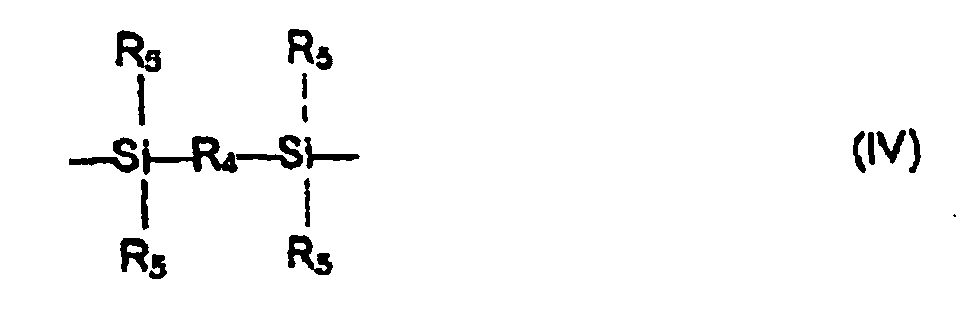
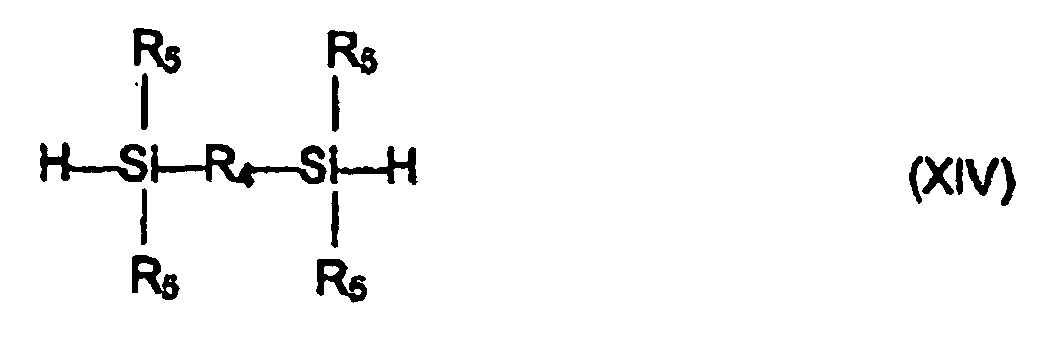
- This reaction uses hydrosilanes or hydrosiloxanes which may be represented by the following general formula: where R 4 represents a radical of general formula (VI) defined above and R 5 has the same meaning as in the radical of general formula (IV) defined above.
- Radicals of general formula (XIX) represent a particular case of radical of general formula (II) in which L represents a radical of general formula (IV).
- the hydrosilylation reaction is carried out in a solvent which is inert with respect to hydrosilylation such as toluene, dioxane, chloroform, tetrahydrofuran or mixtures of these solvents.
- a metal catalyst is necessary to promote the kinetics of the reaction, such as a complex of platinum or rhodium.
- the preferred metal complex is hexachloroplatinic acid.
- the preferred hydrogen silanes are bis-hydrogen silanes such as 1,1,4,4-tetramethyldisilylethylene or 1,1,3,3-tetramethyldisiloxane.
- the temperature of the reaction varies from 50 to 180 ° C, the temperature preferred being 100 ° C.
- crosslinked polymer compounds according to the invention possess their property insolubility in organic solvents by the fact that the crosslinking is between the polymer chains and the interchain links comprise a radical of general formula (I) or (II).
- the general structure of a crosslinked polymer can be represented by the general formula (VII) or (VIII) where the symbol chiral unit of general formula (IX) represents a saccharine chiral unit, of a derivative chain of polysaccharide or oligosaccharide of general formula (Xa) to (Xk), having ethylenic radicals of the general formula (XI), the latter having been subsequently reacted on themselves or with bis-thiols of general formula (XIII) or bis-hydrogenosilanes of general formula (XIV) to lead to the formation of radicals of general formulas (XVII), (XVIII) and (XIX), and which may be represented by the radicals of general formula (I) and (II).
- the invention also relates to an organic phase synthesis method heterogeneous in which the heterogeneous phase consists of a material support as defined above.
- esterification of polysaccharides as well as the production of carbamates and thiocarbonates of polysaccharides are carried out respectively by reaction of polysaccharides with acid chlorides, isocyanates and isothiocyanates.
- An inert solvent that does not react with acid chlorides and isocyanates is used.
- the reaction is usually conducted in the presence of a catalyst such as a tertiary amine, for example 4- (N, N-dimethylamino) pyridine, in the esterification reaction, and a Lewis base, for example a tertiary amine, or a Lewis acid, for example a tin derivative such as dibutyltin dilaurate, in the case of the reaction of obtaining carbamates and thiocarbamates.
- a catalyst such as a tertiary amine, for example 4- (N, N-dimethylamino) pyridine
- a Lewis base for example a tertiary amine
- a Lewis acid for example a tin derivative such as dibutyltin dilaurate
- a preferred method of obtaining consists in conducting the esterification reaction or for obtaining carbamate in a tertiary base type organic solvent like pyridine or quinoline.
- Acid chlorides or isocyanates preferred groups contain aryl groups, of phenyl type in particular, and may be substituted, the preferred substituents being halogens, and the methylene or ethylene groups.
- the previously obtained beads are suspended in 4 ml of toluene.
- the reaction mass is refluxed with toluene and 60 ml is added.
- ethane dithiol and 10 mg of benzoyl peroxide. Reflux is maintained for 24 hours. 10 mg of benzoyl peroxide are added together the 3 hours.
- the suspension is cooled, filtered and then washed with tetrahydrofuran and ethanol.
- the beads are dried for 24 hours at 60 ° C. under vacuum.
- Example 1 20 ml of the solution of Example 1 containing 1 g of compound Xd-E1 and SOL (Xd-E1) is poured onto a stirred aqueous solution of sodium dodecyl sulphate at 1% by weight and containing 1.5% by weight of alcohol polyvinyl mass of between 13 000 and 23 000.
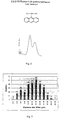
- the two phases are emulsified by mechanical stirring at 800 rpm at room temperature ambient for 30 minutes, then the reaction mass is brought to reflux mesityl oxide. The latter is evaporated at ordinary pressure. After cooling, the suspension is filtered and washed with water. The powder is dried. The diameter of the beads is measured by laser granulometry (Mastersizer Malvern's microphone). The diameter distribution is shown in Figure 3.
- the balls obtained previously are suspended in a mixture toluene / heptane 50/50 (4ml / 4ml). 300 mg of tetramethyldisilylethylene are as well as 50 mg of hexachloroplatinic acid.
- the reaction medium is refluxed 48 hours.
- the suspension is cooled, filtered and washed with tetrahydrofuran and ethanol.
- the beads are dried for 24 hours at 60 ° C. empty.
- Example 1 20 ml of the solution of Example 1, referenced SOL (Xd-E1) and containing 1 g of Xd-E1 compound is poured onto a stirred aqueous solution of dodecyl sulfate of sodium at 1% by weight and containing 1.5% by weight of polyvinyl alcohol between 13 000 and 23 000.
- the two phases are emulsified by mechanical stirring at 800 rpm for 30 minutes at room temperature.
- the reaction mass is then raised to 50.degree. mesityl oxide evaporated under vacuum from the water tube (between 10 and 50 After cooling, the suspension is filtered and washed with water. The powder is dried.
- the balls obtained previously are suspended in a mixture toluene / heptane 50/50 (4 ml / 4 ml) and the reaction mass is brought to reflux during 5 days. 10 mg of benzoyl peroxide are added every 6 hours. The suspension is filtered and then washed with tetrahydrofuran and ethanol. The beads are dried for 24 hours at 60 ° C. under vacuum. The appearance of the marbles is controlled by scanning electron microscopy (M.E.B.). The diameter of beads ranges from 1 to 50 ⁇ m.
- a 100 x 4.6 mm HPLC column is then filled with the beads and the column is introduced into an HPLC system.
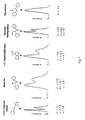
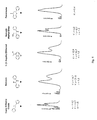
- a first series of tests is carried out in a 90/10 heptane / isopropanol mixture (see FIG. 6).
Landscapes
- Chemical & Material Sciences (AREA)
- Organic Chemistry (AREA)
- Medicinal Chemistry (AREA)
- Polymers & Plastics (AREA)
- Biochemistry (AREA)
- Materials Engineering (AREA)
- Health & Medical Sciences (AREA)
- Chemical Kinetics & Catalysis (AREA)
- Life Sciences & Earth Sciences (AREA)
- Engineering & Computer Science (AREA)
- Polysaccharides And Polysaccharide Derivatives (AREA)
- Silicon Polymers (AREA)
- Laminated Bodies (AREA)
- Addition Polymer Or Copolymer, Post-Treatments, Or Chemical Modifications (AREA)
- Organic Low-Molecular-Weight Compounds And Preparation Thereof (AREA)
- Solid-Sorbent Or Filter-Aiding Compositions (AREA)
Claims (28)
- In einem reidimensionalen Netzwerk vernetzte Polymer-Verbindung, dadurch gekennzeichnet, dass sie ein Radikal der allgemeinen Formel (I) oder (II) umfasst:

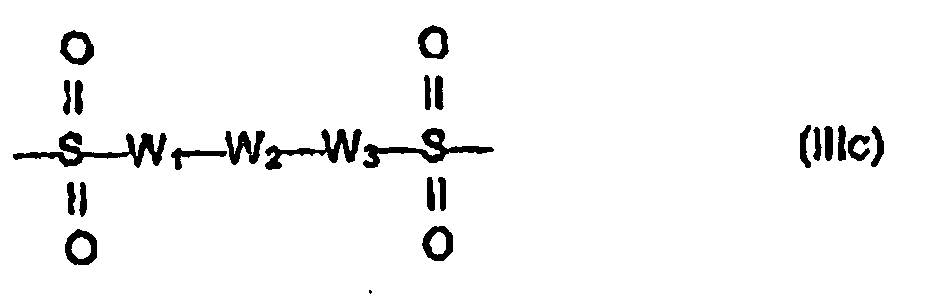 wobei S ein Schwefel-Atom, O ein Sauerstoff-Atom und Si ein Silizium-Atom repräsentiert, und wobei
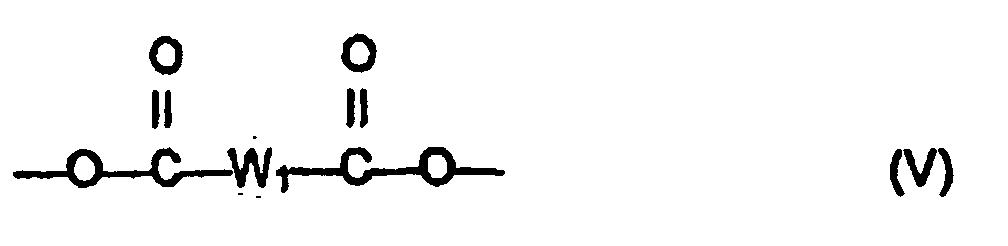
 wobei n1 von 0 bis 3000 variiert und n2 von 0 bis 10 variiert, wobei die jeweils in den Radikalen der allgemeinen Formeln (I) und (II) enthaltenen Arylen-Radikale mit einem oder mehreren identischen oder unterschiedlichen Atomen oder Radikalen substituiert werden können, welche aus den Wasserstoff-Atomen, den Alkyl-Radikalen, welche 1 bis 4 Kohlenstoff-Atome aufweisen, den Alkoxy-Radikalen, welche 1 bis 4 Kohlenstoff-Atome aufweisen, und den Nitro-Gruppen ausgewählt sind.W1 und W3, welche identisch oder unterschiedlich sind, jeweils repräsentieren:ein lineares oder verzweigtes Alkylen-Radikal, welches von 1 bis 21 Kohlenstoff-Atome aufweist, ein Arylen-Radikal, welches von 6 bis 18 Kohlenstoff-Atome aufweist, oder ein Aralkylen-Radikal, welches von 7 bis 40 Kohlenstoff-Atome aufweist;W2 eine einfache Verbindung, W1, ein Sauerstoff-Atom, ein Schwefel-Atom oder einen symmetrischen Di-Ester der Formelrepräsentiert,
 R5 ein lineares oder verzweigtes Alkyl-Radikal, welches von 1 bis 5 Kohlenstoff-Atome aufweist, oder Wasserstoff repräsentiert, und R4 das Radikalrepräsentiert, wobei R6 (CH2)n2 oder Sauerstoff ist, und

- Vernetzte Polymer-Verbindung gemäß Anspruch 1, dadurch gekennzeichnet, dass sie in den polaren organischen Lösungsmitteln unlösbar ist.
- Vernetzte Polymer-Verbindung gemäß Anspruch 1 oder 2, dadurch gekennzeichnet, dass die Radikale der allgemeinen Formeln (I) und (II) mit osidischen chiralen Einheiten einer linearen, verzweigten oder zyklischen Kette eines Polysacharid-Derivates oder eines Oligosacharid-Derivates gemäß der allgemeinen Formeln (VII) und (VIII):
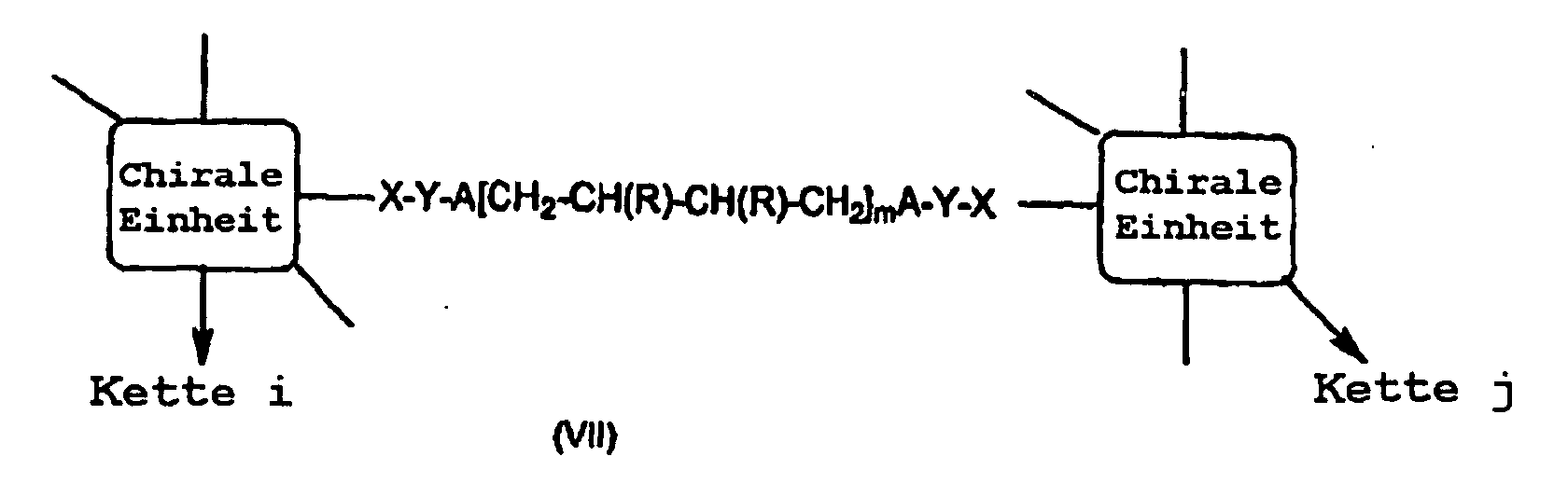 verbunden sind, wobei X, Y, A, R, L und m jeweils die gleiche Bedeutung haben wie in Anspruch 1, und wobei das Symbol der allgemeinen Formel (IX)
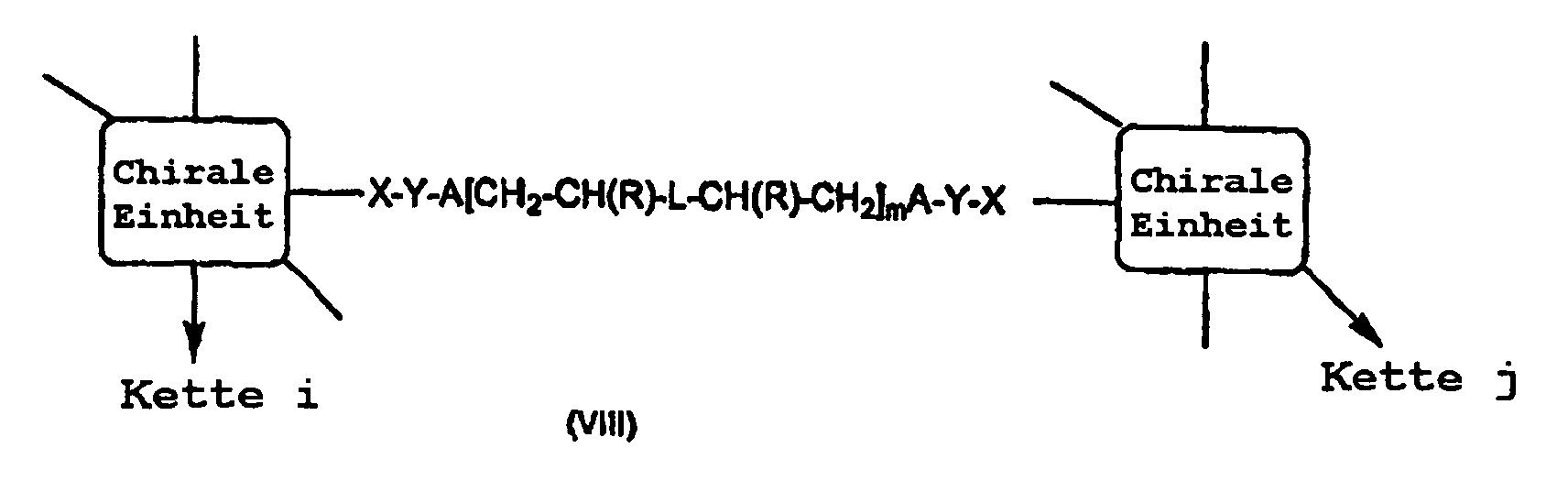 eine chirale, osidische Einheit einer linearen, verzweigten oder zyklischen Kette eines Polysacharid-Derivates oder eines Oligosacharid-Derivates repräsentiert, wobei "Kette i" und "Kette j" die Tatsache symbolisieren, dass die chiralen Einheiten an jedem Ende der Radikale der Formel (I) und (II) auf verschienenen Ketten oder auf Verkettungen verschiedener osidischer Einheiten mitten im Polysacharid oder Oligosacharid angeordnet sind.

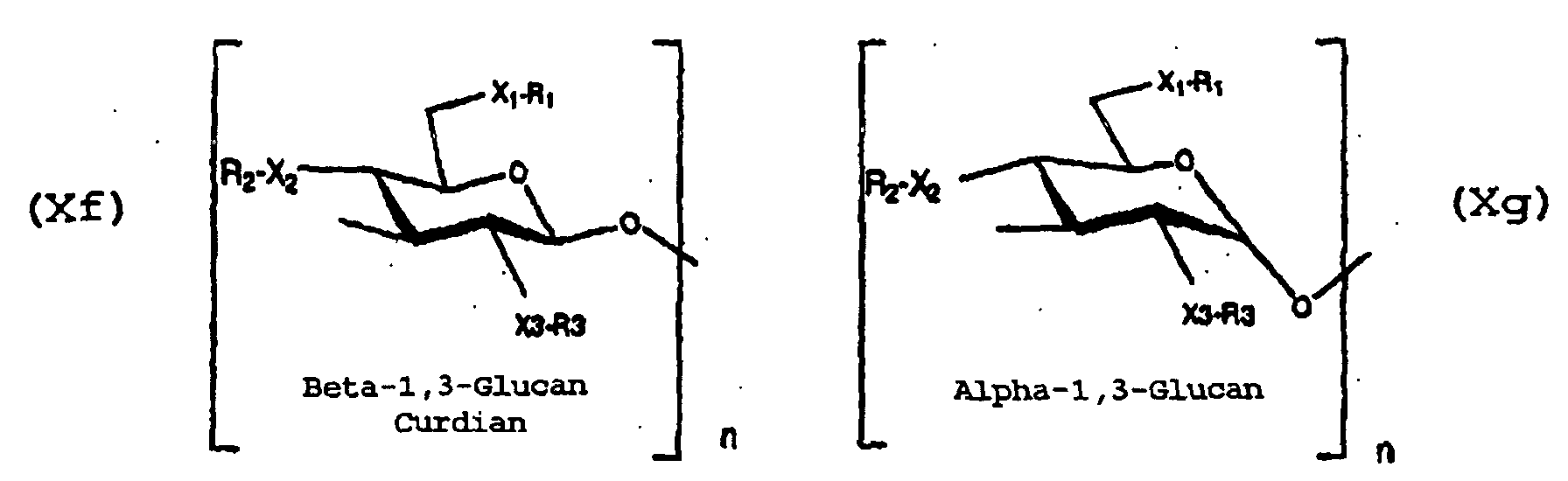
- Vernetzte Polymer-Verbindung gemäß Anspruch 3, dadurch gekennzeichnet, dass die chirale osidische Einheit der allgemeinen Formel (IX) wenigstens einer chiralen osidischen Einheit eines Polysacharid-Derivates oder Oligosacharid-Derivates zugeordnet ist, welche(s)| einer der allgemeinen Formeln (Xa) bis (Xk) genügt:
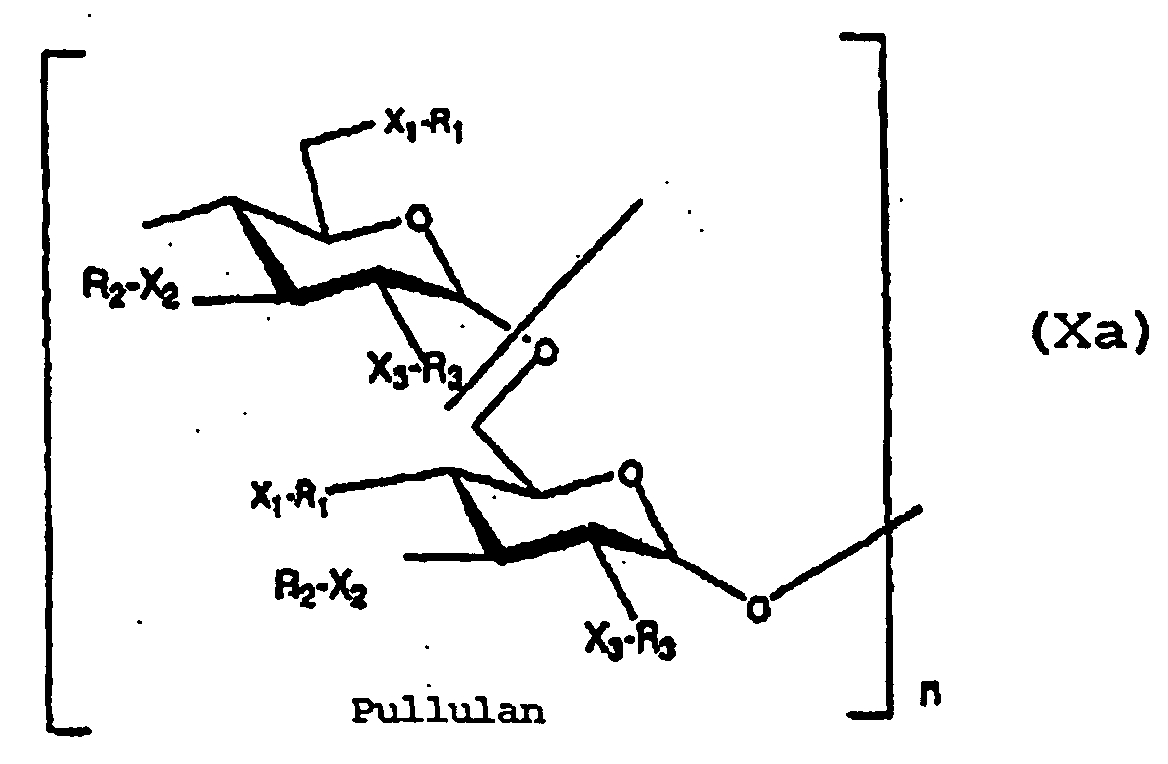
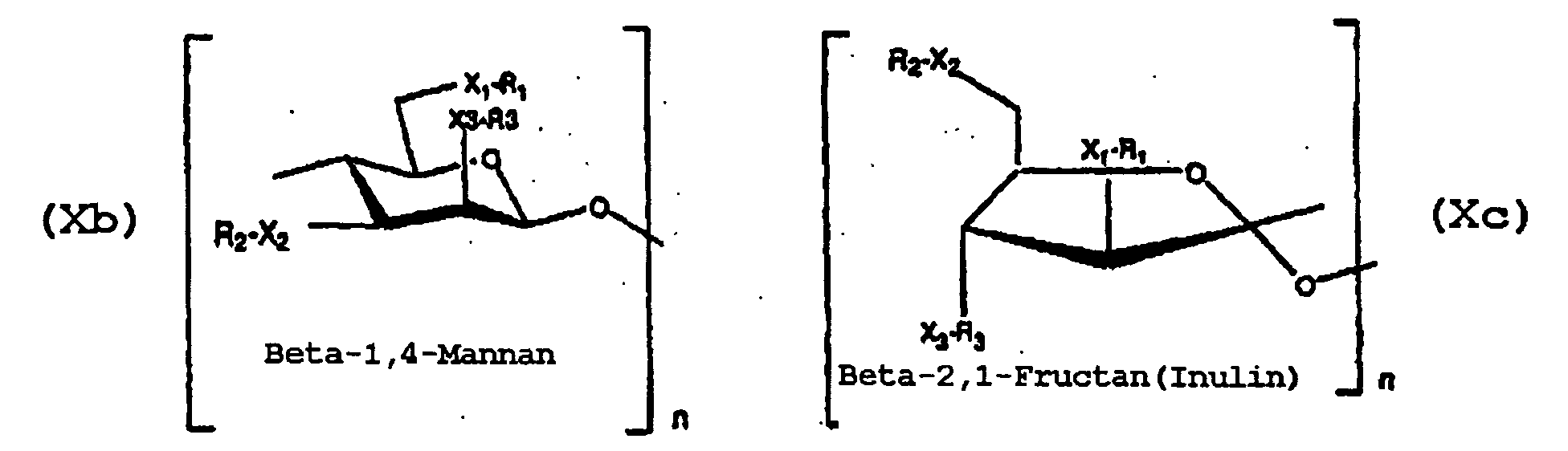

 in welchen:
 wobei n eine ganze Zahl ist, welche zwischen 5 und 20 000 enthalten ist, wobei| in jeder chiralen osidischen Einheit (Xa) bis (Xk) wenigstens eines der Symbole X1, X2 und X3 ein Sauerstoff-Atom repräsentiert, und in wenigstens einem Teil der chiralen osidischen Einheiten, welche Ketten aus Polysacharid-Derivat bilden, wenigstens eines der Symbole R1, R2 oder R3 ein Radikal der allgemeinen Formel (XI) repräsentiert, und wenigstens eines der Symbole R1, R2 oder R3 ein Radikal der allgemeinen Formel (XII) repräsentiert.a) die Symbole X1, X2 und X3, welche identisch oder verschieden sind, jeweils ein Sauerstoff-Atom oder die -NH- Gruppe repräsentieren;b) jedes der Symbole R1, R2 und R3 unabhängig voneinander repräsentiert: - ein Ethylen-Radikal, welches die allgemeine Formel- oder ein Radikal, welches die Formel A2-A1-CX5- (XII) aufweist, in welcher X5 ein Sauerstoff-Atom oder Schwefel-Atom repräsentiert, A1 eine einfache Verbindung oder eine -NH- Gruppe repräsentiert, und A2 ein Aryl-Radikal, welches 6 bis 24 Kohlenstoff-Atome aufweist, oder ein Aralkyl-Radikal, welches 7 bis 36 Kohlenstoff-Atome aufweist, ein Alkylaryl-Radikal, welches 7 bis 18 Kohlenstoff-Atome aufweist repräsentiert;- oder ein Wasserstoff-Atom oder eine NO2 Gruppe;
- Vernetzte Polymer-Verbindungen gemäß Anspruch 4, dadurch gekennzeichnet, dass die in Anspruch 3 definierten Verbindungen der allgemeinen Formel (VII) und (VIII) durch Reagieren-Lassen eines Polysacharid-Derivates oder Oligosacharid-Derivates mit sich selber oder mit einer Verbindung der allgemeinen Formelerhalten werden, wobei S, Si, W1, W2, W3, R4 und R5 die gleiche Bedeutung haben wie in Anspruch 1.
- Vernetzte Polymer-Verbindung gemäß Anspruch 5, dadurch gekennzeichnet, dass die in Anspruch 3 definierten Verbindungen der allgemeinen Formeln (VII) und (VIII) durch Reagieren-Lassen von in Anspruch 4 definierten Ethylen-Radikalen der allgemeinen Formel (XI) mit den in Anspruch 5 definierten Verbindungen der allgemeinen Formeln (XIII) und (XIV) erhalten werden.
- Vernetzte Polymer-Verbindung gemäß Anspruch 3, dadurch gekennzeichnet, dass die chiralen osidischen Einheiten der allgemeinen Formel (IX) auf verschiedenen Ketten oder unterschiedlichen osidischen Verkettungen eines Polysacharid-Derivates oder Oligosacharid-Derivates angeordnet sind, wie in Anspruch 4 definiert.
- Vernetzte Polymer-Verbindung gemäß einem der Ansprüche 1 bis 7, dadurch gekennzeichnet, dass die Radikale der allgemeinen Formeln (IIIb) und (IIIc) durch OxidationsReaktion der Verbindungen, welche die Radikale der allgemeinen Formel (IIIa) aufweisen, erhalten werden.
- Vernetzte Polymer-Verbindung gemäß einem der Ansprüche 4 bis 8, wobei die in den Radikalen der allgemeinen Formel (XI) und (XII) enthaltenen Arylen-Radikale beziehungsweise Aryl-Radikale mit einem oder mehreren gleichen oder verschiedenen Atomen oder Radikalen substituiert werden, welche aus den Wasserstoff-Atomen, den Alkyl-Radikalen, welche von 1 bis 4 Kohlenstoff-Atome aufweisen, den Alkoxy-Radikalen, welche von 1 bis 4 Kohlenstoff-Atome aufweisen und den Nitro-Gruppen ausgewählt sind.
- Vernetzte Polymer-Verbindung gemäß Anspruch 9, dadurch gekennzeichnet, dass die Aryl-Radikale die Phenyl-Radikale oder Naphtyl-Radikale sind, und/oder dass die Arylen-Radikale die Phenylen-Radikale oder Naphtylen-Radikale sind.
- Vernetzte Polymer-Verbindung gemäß einem der Ansprüche 4 bis 10, dadurch gekennzeichnet, dass der Polymerisations-Grad zwischen 5 und 2000 enthalten ist.
- Vernetzte Polymer-Verbindung gemäß einem der Ansprüche 9 bis 11, dadurch gekennzeichnet, dass sie von 0,05 bis 2,95 Gruppen der allgemeinen Formel (XI) pro Struktur-Einheit und von 0,05 bis 2,95 Gruppen der allgemeinen Formel (XII) pro Struktur-Einheit enthält.
- Verfahren zum Herstellen einer vernetzten Polymer-Verbindung gemäß einem der Ansprüche 4 bis 12, dadurch gekennzeichnet, dass in einem polaren organischen Lösungsmittel wenigstens ein in Anspruch 4 definiertes aktives Polyscacharid-Derivat oder Oligoscacharid-Derivat gelöst wird, und dass hierauf eingewirkt wird:sei es mittels Reaktion der Ethylen-Radikale der allgemeinen Formel (XI) untereinander, mittels Einwirkens eines Initiators freier Radikale, zum Erzeugen eines dreidimensionalen Netzes zwischen den Ketten des Polysacharid-Derivates, und dadurch gekennzeichnet, dass das Netz ein Radikal der allgemeinen Formel (I) enthält;sei es mittels Reaktion von Ethylen-Radikalen der allgemeinen Formel (XI) mit Bi-Sulfydryl-Verbindungen der allgemeinen Formel (XIII); in Anwesenheit eines Initiators freier Radikale, zum Erzeugen eines dreidimensionalen Netzes zwischen den Ketten der Polysacharid-Derivate, und dadurch gekennzeichnet, dass das Netz ein Radikal der allgemeinen Formel (II) enthält, und wobei das Symbol (L) von einem Bis-Thio-Ether-Radikal der allgemeinen Formel (IIIa) repräsentiert wird, wobei die Radikale der allgemeinen Formel (IIIa) anschließend mittels Zufügen einer ausreichenden Menge Oxidations-Mittels, bezogen auf die in diesen Verbindungen vorhandene Menge an Schwefel, in Radikale der allgemeinen Formel (IIIb) oder (IIIc) umgewandelt werden können;sei es mittels Reaktion der Ethylen-Radikale der allgemeinen Formel (XI) mit Bis-Wasserstoff-Silan-Verbindungen der allgemeinen Formel (IV) in Anwesenheit eines metallischen Katalysators zum Erzeugen eines dreidimensionalen Netzes zwischen den Ketten der Polysacharid-Derivate, und dadurch gekennzeichnet, dass dieses Netz ein Radikal der allgemeinen Formel (II) enthält, und wobei das Symbol (L) von einem Bis-Silan der allgemeinen Formel (IV) repräsentiert wird.
- Trägermaterialien, dadurch gekennzeichnet, dass sie im Wesentlichen die Verbindungen gemäß einem der Ansprüche 1 bis 12 enthalten.
- Trägermaterialien gemäß Anspruch 14, dadurch gekennzeichnet, dass sie in Form von Kugeln| vorliegen.
- Trägermaterialien gemäß Anspruch 14, dadurch gekennzeichnet, dass sie einen Prozentsatz kleiner als 80% von vernetzter Polymer-Verbindung gemäß einem der Ansprüche 1 bis 8 enthalten.
- Trägermaterialien gemäß Anspruch 16, dadurch gekennzeichnet, dass sie teilweise ausgehend von kommerziellen porösen Trägern mineralischer oder organischer Natur erhalten werden.
- Verfahren zum Herstellen von Trägermaterialien gemäß einem der Ansprüche 14 und 15, im Wesentlichen die vernetzten Polymer-Verbindungen enthaltend, dadurch gekennzeichnet, dass ein Polysacharid-Derivat oder Oligosacharid-Derivat gemäß einem der Ansprüche 9 bis 13 in einem polaren organischen Lösungsmittel in Lösung gebracht und dann in Form von Kugeln ausgefällt wird, wobei diese Kugeln durch Reagieren-Lassen von Ethylen-Radikalen der allgemeinen Formel (XI) untereinander, oder durch Reagieren-Lassen mit den Verbindungen der allgemeinen Formel (XIII) oder (XIV) anschließend derart in-situ vernetzt werden, dass Kugeln von TrägerMaterialien erhalten werden, welche im Wesentlichen die vernetzten Polymer-Verbindungen gemäß einem der Ansprüche 1 bis 12 enthalten.
- Verfahren zum Herstellen von Trägermaterialien gemäß Anspruch 15 in Form ausgefällter Kugeln, dadurch gekennzeichnet, dass ein Polysacharid-Derivat oder Oligosacharid-Derivat in einem polaren organischen Lösungsmittel aufgelöst wird, und dass die erhaltene organische Lösung auf eine wässrige Lösung fließen gelassen wird, welche ein tensioaktives anionisches Agens und einen Emulsions-Stabilisator aufweist, und dass die erhaltene Emulsion erwärmt wird, um das organische Lösungsmittel zu eliminieren.
- Herstellungs-Verfahren gemäß Anspruch 19, dadurch gekennzeichnet, dass das polare organische Lösungsmittel Mesityloxid ist, dass das tensioaktive anionische Agens Natrium-Dodecylsulfat ist, und dass der Emulsions-Stabilisator ein polyhydroxyliertes Derivat ist, welches eine Anzahl von Kohlenstoff-Atomen größer als 16 aufweist.
- Herstellungs-Verfahren gemäß einem der Ansprüche 19 und 20, dadurch gekennzeichnet, dass die Kugeln eine Größe wischen 0,1 und 300 µm und eine spezifische Oberfläche von 10 bis 100 m2/g aufweisen.
- Herstellungs-Verfahren gemäß einem der Ansprüche 19 bis 21, dadurch gekennzeichnet, dass die ausgefällten Kugeln aus Polysacharid-Derivaten durch Reagieren-Lassen von Ethylen-Radikalen der allgemeinen Formel (XI) untereinander, unter Einwirken eines Freie-Radikale-Initiators oder mittels Reagieren-Lassen mit Verbindungen der allgemeinen Formel (XIII) oder (XIV) derart in-situ vernetzt werden, dass die vernetzten Polymer-Verbindungen in Form von Kugeln erhalten werden, welche ein in den polaren organischen Lösungsmitteln unlösliches Träger-Material bilden, und dass die Trägermaterial-Kugeln eine Größe, welche zwischen 0,1 µm und 300 µm enthalten ist, und eine spezifische Oberfläche von 10 bis 100m2/g aufweisen.
- Verfahren zum Herstellen von Trägermaterialien gemäß einem der Ansprüche 16 und 17, dadurch gekennzeichnet, dass eine Lösung in organischem Lösungsmittel, welche das Polysacharid-Derivat oder Oligosacharid-Derivat enthält, einem pulverförmigen, porösen kommerziellen Träger zugefügt wird, wobei das Mittel erwärmt wird, um das Lösungsmittel zu verdampfen, wobei das erhaltene Pulver, welches das Polysacharid-Derivat oder Oligosacharid-Derivat enthält, in einem Lösungsmittel in Suspension gebracht wird, in welchem diese Verbindungen unlöslich sind, und wobei das Mittel einem Rückfluss unterworfen wird; wobei ein Vernetzungs-Agens, wie ein Initiator freier Radikale oder eine Verbindung der allgemeinen Formel (XIII) oder (XIV) zugefügt wird; wobei nach der Reaktion die Suspension filtriert und in einem polaren organischen Lösungsmittel, in welchem die Polysacharid-Derivate oder Oligosacharid-Derivate lösbar sind, gewaschen wird, um letztere zu entfernen.
- Verfahren zum Herstellen von Trägermaterialien gemäß Anspruch 23, dadurch gekennzeichnet, dass die kommerziellen, pulverförmigen, porösen Träger mineralische Oxide oder Polystyren-Divinyl-Benzole sind, und dass sie einen Partikel-Durchmesser aufweisen, welcher zwischen 1 und 300 µm enthalten ist, und einen Poren-Durchmesser aufweisen, welcher zwischen 30 und 10 000 ? enthalten ist.
- Verwendung eines Trägermaterials gemäß einem der Ansprüche 14 bis 17 zur Präparation und Trennung von Enantiomeren mittels Einsatz von Mitteln zur Flüssigkeits-Chromatographie, Gas-Chromatographie oder superkritischen Chromatographie, oder von Mitteln zur Elektrophorese oder Elektro-Chromatographie.
- Verwendung eines Trägermaterials gemäß einem der Ansprüche 14 bis 17 zur Präparation und Trennung von Enantiomeren mittels Einsatz von Mitteln zur Flüssigkeits-Chromatographie oder superkritischen Chromatographie unter Verwendung der polaren organischen Lösungsmittel.
- Verwendung einer vernetzten Polymer-Verbindung gemäß einem der Ansprüche 1 bis 12 für den Aufbau von Perkolations-Membranen.
- Verfahren zur organischen Synthese in heterogener Phase, dadurch gekennzeichnet, dass die heterogene Phase von einem Träger-Material gemäß einem der Ansprüche 14 bis 17 gebildet wird.
Applications Claiming Priority (2)
| Application Number | Priority Date | Filing Date | Title |
|---|---|---|---|
| FR9811376 | 1998-09-11 | ||
| FR9811376A FR2784108A1 (fr) | 1998-09-11 | 1998-09-11 | Nouveaux polymeres reticules a base de derives bis-silanes, bis-thioethers, bis-sulfoxydes, bis-sulfones et butane di-yl de polysaccharides et d'oligosaccharides, et leur mise en forme en materiaux supports |
Publications (3)
| Publication Number | Publication Date |
|---|---|
| EP0985682A1 EP0985682A1 (de) | 2000-03-15 |
| EP0985682B1 true EP0985682B1 (de) | 2005-12-07 |
| EP0985682B9 EP0985682B9 (de) | 2006-06-21 |
Family
ID=9530349
Family Applications (1)
| Application Number | Title | Priority Date | Filing Date |
|---|---|---|---|
| EP99402204A Expired - Lifetime EP0985682B9 (de) | 1998-09-11 | 1999-09-07 | Polysaccharide und Oligosaccharide vernetzt mit Disilane-, Dithioether-, Disulphone- oder Butane-diylderivaten und ihre Formgebung als Trägermaterialien |
Country Status (11)
| Country | Link |
|---|---|
| US (2) | US6677446B2 (de) |
| EP (1) | EP0985682B9 (de) |
| JP (1) | JP4210813B2 (de) |
| AT (1) | ATE312121T1 (de) |
| AU (1) | AU769244B2 (de) |
| CA (1) | CA2281973C (de) |
| DE (1) | DE69928733T2 (de) |
| DK (1) | DK0985682T3 (de) |
| ES (1) | ES2252924T3 (de) |
| FR (1) | FR2784108A1 (de) |
| NO (1) | NO325906B1 (de) |
Families Citing this family (12)
| Publication number | Priority date | Publication date | Assignee | Title |
|---|---|---|---|---|
| FR2767834B1 (fr) * | 1997-08-29 | 1999-12-03 | Inst Francais Du Petrole | Mono et di-derives de cyclodextrines, leurs synthese et purification et leur utilisation en support |
| FR2810978B1 (fr) * | 2000-06-29 | 2004-05-28 | Chiralsep Sarl | Procede de dedoublement de l'intermediaire tetralone de la sertraline |
| FR2829947B1 (fr) | 2001-09-21 | 2004-10-15 | Chiralsep Sarl | Reseau polymere tridimensionnel reticule, son procede de preparation, materiau support comportant ce reseau et leurs utilisations |
| FR2834227A1 (fr) | 2001-12-27 | 2003-07-04 | Chiralsep Sarl | Materiaux supports optiquement actifs, leur procede de preparation et leurs utilisations |
| GB0219681D0 (en) * | 2002-08-23 | 2002-10-02 | Anglo Platinum Ltd | Chromatographic medium |
| KR101013252B1 (ko) * | 2003-03-26 | 2011-02-09 | 나고야 인더스트리얼 사이언스 리서치 인스티튜트 | 크로마토그래피용 분리제 및 그의 제조 방법 |
| DE602004006975D1 (de) * | 2003-03-27 | 2007-07-26 | Chirosep | Dreidimensionales vernetztes polymernetzwerk, verfahren zu dessen herstellung, dieses enthaltender trägermaterial und ihre verwendung |
| WO2006069376A2 (en) * | 2004-12-22 | 2006-06-29 | University Of Cincinnati | Improved superprimer |
| WO2008136512A1 (ja) | 2007-05-07 | 2008-11-13 | National University Corporation Nagoya University | 光学異性体用分離剤 |
| JP2013016455A (ja) * | 2011-01-13 | 2013-01-24 | Jnc Corp | 透明導電膜の形成に用いられる塗膜形成用組成物 |
| EP2716687A4 (de) | 2011-05-30 | 2015-02-25 | Dow Corning Toray Co Ltd | Durch ein mono-/diglycerinderivat modifiziertes organopolysiloxan-elastomer und seine verwendung |
| JP5756344B2 (ja) * | 2011-05-30 | 2015-07-29 | 東レ・ダウコーニング株式会社 | 新規液状オルガノポリシロキサン及びその利用 |
Citations (2)
| Publication number | Priority date | Publication date | Assignee | Title |
|---|---|---|---|---|
| US2682482A (en) * | 1951-06-30 | 1954-06-29 | Hercules Powder Co Ltd | Method of insolubilizing the surface of carbohydrate bodies |
| WO1995018833A1 (fr) * | 1994-01-05 | 1995-07-13 | Conservatoire National Des Arts Et Metiers | Derives polysaccharidiques et leur emploi pour la preparation de phases stationnaires chirales utiles pour la separation d'isomeres |
Family Cites Families (11)
| Publication number | Priority date | Publication date | Assignee | Title |
|---|---|---|---|---|
| US2598407A (en) * | 1947-09-25 | 1952-05-27 | Du Pont | Cross-linked polymeric materials and method of making same |
| US3720500A (en) * | 1959-12-31 | 1973-03-13 | Deering Milliken Res Corp | Textile materials and processes for making the same |
| DE1494348A1 (de) | 1960-07-11 | 1969-03-20 | Stevens & Co Inc J P | Verfahren zur Behandlung polymerer Stoffe |
| FR1307274A (fr) * | 1961-07-10 | 1962-10-26 | Stevens & Co Inc J P | Polymères polyfonctionnels modifiés utilisés notamment pour former dans les fibres une torsion permanente |
| SE358894B (de) * | 1961-10-25 | 1973-08-13 | Pharmacia Ab | |
| BE610935A (de) * | 1964-03-18 | |||
| US3627872A (en) * | 1968-04-08 | 1971-12-14 | Upjohn Co | Oral treatment of hyper-cholesteremia in mammals and birds with ether-type anion exchangers of polysaccharides |
| SE470099B (sv) * | 1984-05-17 | 1993-11-08 | Jerker Porath | Sulfonaktiverade tioeteradsorbenter för separation av t ex protein |
| JP3034352B2 (ja) * | 1991-08-08 | 2000-04-17 | 生化学工業株式会社 | 安定な一重らせん構造の分子内架橋(1→3)−β−D−グルカン類及びその製造法 |
| US5772876A (en) | 1994-07-07 | 1998-06-30 | Daicel Chemical Industries, Ltd. | Separating agent |
| ATE261453T1 (de) * | 1996-06-27 | 2004-03-15 | Novartis Pharma Gmbh | Thermisch immobilisierte polysaccharidderivate |
-
1998
- 1998-09-11 FR FR9811376A patent/FR2784108A1/fr not_active Withdrawn
-
1999
- 1999-09-02 AU AU47345/99A patent/AU769244B2/en not_active Ceased
- 1999-09-07 DE DE69928733T patent/DE69928733T2/de not_active Expired - Lifetime
- 1999-09-07 ES ES99402204T patent/ES2252924T3/es not_active Expired - Lifetime
- 1999-09-07 DK DK99402204T patent/DK0985682T3/da active
- 1999-09-07 EP EP99402204A patent/EP0985682B9/de not_active Expired - Lifetime
- 1999-09-07 AT AT99402204T patent/ATE312121T1/de active
- 1999-09-10 CA CA2281973A patent/CA2281973C/fr not_active Expired - Fee Related
- 1999-09-10 NO NO19994411A patent/NO325906B1/no not_active IP Right Cessation
- 1999-09-13 JP JP25855099A patent/JP4210813B2/ja not_active Expired - Fee Related
-
2001
- 2001-04-20 US US09/838,284 patent/US6677446B2/en not_active Expired - Fee Related
-
2003
- 2003-10-29 US US10/694,844 patent/US7825240B2/en not_active Expired - Fee Related
Patent Citations (2)
| Publication number | Priority date | Publication date | Assignee | Title |
|---|---|---|---|---|
| US2682482A (en) * | 1951-06-30 | 1954-06-29 | Hercules Powder Co Ltd | Method of insolubilizing the surface of carbohydrate bodies |
| WO1995018833A1 (fr) * | 1994-01-05 | 1995-07-13 | Conservatoire National Des Arts Et Metiers | Derives polysaccharidiques et leur emploi pour la preparation de phases stationnaires chirales utiles pour la separation d'isomeres |
Also Published As
| Publication number | Publication date |
|---|---|
| JP4210813B2 (ja) | 2009-01-21 |
| ATE312121T1 (de) | 2005-12-15 |
| DE69928733T2 (de) | 2006-08-17 |
| EP0985682A1 (de) | 2000-03-15 |
| CA2281973A1 (fr) | 2000-03-11 |
| US20040068106A1 (en) | 2004-04-08 |
| US20010029282A1 (en) | 2001-10-11 |
| ES2252924T3 (es) | 2006-05-16 |
| AU4734599A (en) | 2000-06-08 |
| US6677446B2 (en) | 2004-01-13 |
| DK0985682T3 (da) | 2006-04-18 |
| DE69928733D1 (de) | 2006-01-12 |
| US7825240B2 (en) | 2010-11-02 |
| NO994411D0 (no) | 1999-09-10 |
| CA2281973C (fr) | 2010-12-07 |
| JP2000086702A (ja) | 2000-03-28 |
| AU769244B2 (en) | 2004-01-22 |
| EP0985682B9 (de) | 2006-06-21 |
| NO325906B1 (no) | 2008-08-11 |
| FR2784108A1 (fr) | 2000-04-07 |
| NO994411L (no) | 2000-03-13 |
Similar Documents
| Publication | Publication Date | Title |
|---|---|---|
| EP0985682B9 (de) | Polysaccharide und Oligosaccharide vernetzt mit Disilane-, Dithioether-, Disulphone- oder Butane-diylderivaten und ihre Formgebung als Trägermaterialien | |
| FR2767834A1 (fr) | Mono et di-derives de cyclodextrines, leurs synthese et purification et leur utilisation en support | |
| FR2834227A1 (fr) | Materiaux supports optiquement actifs, leur procede de preparation et leurs utilisations | |
| EP0985681B1 (de) | Polymerisierbare und vernetzbare Chlor-, Hydroxyl- und Alkoxysilanderivate von Polysacchariden oder Oligosacchariden, ihre Herstellung und Verwendung als Trägermaterialien | |
| EP0864586B1 (de) | Chirale Träger und deren Verwendung in der Hertsellung oder Trennung von Enantiomeren | |
| US6514407B2 (en) | Chloro-, hydroxy- and alkoxysilane derivatives of polysaccharides or oligosaccharides, polymerizable and cross-linkable, their synthesis and their use as sources of novel support materials | |
| EP0738284B1 (de) | Polysaccharidderivate und deren verwendung zur herstellung chiraler stationärer phasen zur trennung von isomeren | |
| CN101171512B (zh) | 旋光异构体拆分用珠及其制造方法 | |
| JP4409511B2 (ja) | クロマトグラフィー用分離剤及びその製造方法 | |
| WO2003062250A1 (fr) | Derives ureido ou carbamates d'ethers-couronnes et de silicium, utilisables pour preparer des supports destines a la separation par chromatographie de cations metalliques et de molecules organiques comportant des fonctions amines | |
| EP0564570A1 (de) | Cyclodextrin-epichlorhydrinpolymere verwendbar zur trennung und adsorption von verbindungen | |
| WO2003085000A1 (fr) | Derives de polysaccharides reticules sur un support et leur mode d'obtention | |
| CZ278997A3 (en) | Process for preparing derivatives of polysaccharides substituted by an aromatic carbonyl group and their use as carriers for chromatographic splitting of enantiomers | |
| CN113891899A (zh) | 壳聚糖化合物及光学异构体用分离剂 | |
| JPH10249191A (ja) | 分離剤 | |
| FR2810978A1 (fr) | Procede de dedoublement de l'intermediaire tetralone de la sertraline |
Legal Events
| Date | Code | Title | Description |
|---|---|---|---|
| PUAI | Public reference made under article 153(3) epc to a published international application that has entered the european phase |
Free format text: ORIGINAL CODE: 0009012 |
|
| AK | Designated contracting states |
Kind code of ref document: A1 Designated state(s): AT BE CH CY DE DK ES FI FR GB GR IE IT LI LU MC NL PT SE |
|
| AX | Request for extension of the european patent |
Free format text: AL;LT;LV;MK;RO;SI |
|
| 17P | Request for examination filed |
Effective date: 20000915 |
|
| AKX | Designation fees paid |
Free format text: AT BE CH CY DE DK ES FI FR GB GR IE IT LI LU MC NL PT SE |
|
| 17Q | First examination report despatched |
Effective date: 20030610 |
|
| RAP1 | Party data changed (applicant data changed or rights of an application transferred) |
Owner name: CHIRALSEP SAERL |
|
| RAP1 | Party data changed (applicant data changed or rights of an application transferred) |
Owner name: CHIROSEP |
|
| RAP1 | Party data changed (applicant data changed or rights of an application transferred) |
Owner name: EKA CHEMICALS AB |
|
| GRAP | Despatch of communication of intention to grant a patent |
Free format text: ORIGINAL CODE: EPIDOSNIGR1 |
|
| GRAS | Grant fee paid |
Free format text: ORIGINAL CODE: EPIDOSNIGR3 |
|
| GRAA | (expected) grant |
Free format text: ORIGINAL CODE: 0009210 |
|
| AK | Designated contracting states |
Kind code of ref document: B1 Designated state(s): AT BE CH CY DE DK ES FI FR GB GR IE IT LI LU MC NL PT SE |
|
| PG25 | Lapsed in a contracting state [announced via postgrant information from national office to epo] |
Ref country code: FI Free format text: LAPSE BECAUSE OF FAILURE TO SUBMIT A TRANSLATION OF THE DESCRIPTION OR TO PAY THE FEE WITHIN THE PRESCRIBED TIME-LIMIT Effective date: 20051207 |
|
| REG | Reference to a national code |
Ref country code: GB Ref legal event code: FG4D Free format text: NOT ENGLISH |
|
| REG | Reference to a national code |
Ref country code: CH Ref legal event code: EP |
|
| REG | Reference to a national code |
Ref country code: IE Ref legal event code: FG4D Free format text: LANGUAGE OF EP DOCUMENT: FRENCH |
|
| REF | Corresponds to: |
Ref document number: 69928733 Country of ref document: DE Date of ref document: 20060112 Kind code of ref document: P |
|
| REG | Reference to a national code |
Ref country code: CH Ref legal event code: NV Representative=s name: BOVARD AG PATENTANWAELTE |
|
| GBT | Gb: translation of ep patent filed (gb section 77(6)(a)/1977) |
Effective date: 20060201 |
|
| PG25 | Lapsed in a contracting state [announced via postgrant information from national office to epo] |
Ref country code: GR Free format text: LAPSE BECAUSE OF FAILURE TO SUBMIT A TRANSLATION OF THE DESCRIPTION OR TO PAY THE FEE WITHIN THE PRESCRIBED TIME-LIMIT Effective date: 20060307 |
|
| REG | Reference to a national code |
Ref country code: SE Ref legal event code: TRGR |
|
| REG | Reference to a national code |
Ref country code: DK Ref legal event code: T3 |
|
| PG25 | Lapsed in a contracting state [announced via postgrant information from national office to epo] |
Ref country code: PT Free format text: LAPSE BECAUSE OF FAILURE TO SUBMIT A TRANSLATION OF THE DESCRIPTION OR TO PAY THE FEE WITHIN THE PRESCRIBED TIME-LIMIT Effective date: 20060508 |
|
| REG | Reference to a national code |
Ref country code: ES Ref legal event code: FG2A Ref document number: 2252924 Country of ref document: ES Kind code of ref document: T3 |
|
| PG25 | Lapsed in a contracting state [announced via postgrant information from national office to epo] |
Ref country code: MC Free format text: LAPSE BECAUSE OF NON-PAYMENT OF DUE FEES Effective date: 20060930 |
|
| PLBE | No opposition filed within time limit |
Free format text: ORIGINAL CODE: 0009261 |
|
| STAA | Information on the status of an ep patent application or granted ep patent |
Free format text: STATUS: NO OPPOSITION FILED WITHIN TIME LIMIT |
|
| 26N | No opposition filed |
Effective date: 20060908 |
|
| PG25 | Lapsed in a contracting state [announced via postgrant information from national office to epo] |
Ref country code: LU Free format text: LAPSE BECAUSE OF NON-PAYMENT OF DUE FEES Effective date: 20060907 |
|
| PG25 | Lapsed in a contracting state [announced via postgrant information from national office to epo] |
Ref country code: CY Free format text: LAPSE BECAUSE OF FAILURE TO SUBMIT A TRANSLATION OF THE DESCRIPTION OR TO PAY THE FEE WITHIN THE PRESCRIBED TIME-LIMIT Effective date: 20051207 |
|
| PGFP | Annual fee paid to national office [announced via postgrant information from national office to epo] |
Ref country code: DE Payment date: 20100929 Year of fee payment: 12 |
|
| REG | Reference to a national code |
Ref country code: CH Ref legal event code: PFA Owner name: EKA CHEMICALS AB Free format text: EKA CHEMICALS AB# #445 80 BOHUS (SE) -TRANSFER TO- EKA CHEMICALS AB# #445 80 BOHUS (SE) |
|
| PGFP | Annual fee paid to national office [announced via postgrant information from national office to epo] |
Ref country code: CH Payment date: 20110926 Year of fee payment: 13 Ref country code: IE Payment date: 20110926 Year of fee payment: 13 |
|
| PGFP | Annual fee paid to national office [announced via postgrant information from national office to epo] |
Ref country code: ES Payment date: 20110926 Year of fee payment: 13 Ref country code: GB Payment date: 20110926 Year of fee payment: 13 Ref country code: SE Payment date: 20110928 Year of fee payment: 13 |
|
| PGFP | Annual fee paid to national office [announced via postgrant information from national office to epo] |
Ref country code: NL Payment date: 20110929 Year of fee payment: 13 |
|
| PGFP | Annual fee paid to national office [announced via postgrant information from national office to epo] |
Ref country code: BE Payment date: 20110927 Year of fee payment: 13 Ref country code: DK Payment date: 20110927 Year of fee payment: 13 |
|
| PGFP | Annual fee paid to national office [announced via postgrant information from national office to epo] |
Ref country code: FR Payment date: 20121001 Year of fee payment: 14 Ref country code: IT Payment date: 20120924 Year of fee payment: 14 |
|
| PGFP | Annual fee paid to national office [announced via postgrant information from national office to epo] |
Ref country code: AT Payment date: 20120821 Year of fee payment: 14 |
|
| BERE | Be: lapsed |
Owner name: *EKA CHEMICALS A.B. Effective date: 20120930 |
|
| REG | Reference to a national code |
Ref country code: NL Ref legal event code: V1 Effective date: 20130401 |
|
| PG25 | Lapsed in a contracting state [announced via postgrant information from national office to epo] |
Ref country code: SE Free format text: LAPSE BECAUSE OF NON-PAYMENT OF DUE FEES Effective date: 20120908 |
|
| REG | Reference to a national code |
Ref country code: CH Ref legal event code: PL Ref country code: SE Ref legal event code: EUG |
|
| GBPC | Gb: european patent ceased through non-payment of renewal fee |
Effective date: 20120907 |
|
| REG | Reference to a national code |
Ref country code: DK Ref legal event code: EBP |
|
| REG | Reference to a national code |
Ref country code: IE Ref legal event code: MM4A |
|
| REG | Reference to a national code |
Ref country code: DE Ref legal event code: R119 Ref document number: 69928733 Country of ref document: DE Effective date: 20130403 |
|
| PG25 | Lapsed in a contracting state [announced via postgrant information from national office to epo] |
Ref country code: BE Free format text: LAPSE BECAUSE OF NON-PAYMENT OF DUE FEES Effective date: 20120930 Ref country code: LI Free format text: LAPSE BECAUSE OF NON-PAYMENT OF DUE FEES Effective date: 20120930 Ref country code: CH Free format text: LAPSE BECAUSE OF NON-PAYMENT OF DUE FEES Effective date: 20120930 Ref country code: GB Free format text: LAPSE BECAUSE OF NON-PAYMENT OF DUE FEES Effective date: 20120907 Ref country code: IE Free format text: LAPSE BECAUSE OF NON-PAYMENT OF DUE FEES Effective date: 20120907 Ref country code: DE Free format text: LAPSE BECAUSE OF NON-PAYMENT OF DUE FEES Effective date: 20130403 |
|
| PG25 | Lapsed in a contracting state [announced via postgrant information from national office to epo] |
Ref country code: NL Free format text: LAPSE BECAUSE OF NON-PAYMENT OF DUE FEES Effective date: 20130401 |
|
| REG | Reference to a national code |
Ref country code: ES Ref legal event code: FD2A Effective date: 20131021 |
|
| PG25 | Lapsed in a contracting state [announced via postgrant information from national office to epo] |
Ref country code: ES Free format text: LAPSE BECAUSE OF NON-PAYMENT OF DUE FEES Effective date: 20120908 Ref country code: DK Free format text: LAPSE BECAUSE OF NON-PAYMENT OF DUE FEES Effective date: 20121001 |
|
| REG | Reference to a national code |
Ref country code: AT Ref legal event code: MM01 Ref document number: 312121 Country of ref document: AT Kind code of ref document: T Effective date: 20130907 |
|
| REG | Reference to a national code |
Ref country code: FR Ref legal event code: ST Effective date: 20140530 |
|
| PG25 | Lapsed in a contracting state [announced via postgrant information from national office to epo] |
Ref country code: FR Free format text: LAPSE BECAUSE OF NON-PAYMENT OF DUE FEES Effective date: 20130930 Ref country code: AT Free format text: LAPSE BECAUSE OF NON-PAYMENT OF DUE FEES Effective date: 20130907 Ref country code: IT Free format text: LAPSE BECAUSE OF NON-PAYMENT OF DUE FEES Effective date: 20130907 |