EP0978087B1 - System und verfahren für ocr-unterstützte strichkodedekodierung - Google Patents
System und verfahren für ocr-unterstützte strichkodedekodierung Download PDFInfo
- Publication number
- EP0978087B1 EP0978087B1 EP98918431A EP98918431A EP0978087B1 EP 0978087 B1 EP0978087 B1 EP 0978087B1 EP 98918431 A EP98918431 A EP 98918431A EP 98918431 A EP98918431 A EP 98918431A EP 0978087 B1 EP0978087 B1 EP 0978087B1
- Authority
- EP
- European Patent Office
- Prior art keywords
- bar code
- character
- human readable
- characters
- code symbol
- Prior art date
- Legal status (The legal status is an assumption and is not a legal conclusion. Google has not performed a legal analysis and makes no representation as to the accuracy of the status listed.)
- Expired - Lifetime
Links
Images


Classifications
-
- G—PHYSICS
- G06—COMPUTING OR CALCULATING; COUNTING
- G06K—GRAPHICAL DATA READING; PRESENTATION OF DATA; RECORD CARRIERS; HANDLING RECORD CARRIERS
- G06K7/00—Methods or arrangements for sensing record carriers, e.g. for reading patterns
- G06K7/10—Methods or arrangements for sensing record carriers, e.g. for reading patterns by electromagnetic radiation, e.g. optical sensing; by corpuscular radiation
- G06K7/14—Methods or arrangements for sensing record carriers, e.g. for reading patterns by electromagnetic radiation, e.g. optical sensing; by corpuscular radiation using light without selection of wavelength, e.g. sensing reflected white light
-
- G—PHYSICS
- G06—COMPUTING OR CALCULATING; COUNTING
- G06K—GRAPHICAL DATA READING; PRESENTATION OF DATA; RECORD CARRIERS; HANDLING RECORD CARRIERS
- G06K7/00—Methods or arrangements for sensing record carriers, e.g. for reading patterns
- G06K7/10—Methods or arrangements for sensing record carriers, e.g. for reading patterns by electromagnetic radiation, e.g. optical sensing; by corpuscular radiation
- G06K7/14—Methods or arrangements for sensing record carriers, e.g. for reading patterns by electromagnetic radiation, e.g. optical sensing; by corpuscular radiation using light without selection of wavelength, e.g. sensing reflected white light
- G06K7/1404—Methods for optical code recognition
- G06K7/146—Methods for optical code recognition the method including quality enhancement steps
- G06K7/1473—Methods for optical code recognition the method including quality enhancement steps error correction
-
- G—PHYSICS
- G06—COMPUTING OR CALCULATING; COUNTING
- G06V—IMAGE OR VIDEO RECOGNITION OR UNDERSTANDING
- G06V10/00—Arrangements for image or video recognition or understanding
- G06V10/98—Detection or correction of errors, e.g. by rescanning the pattern or by human intervention; Evaluation of the quality of the acquired patterns
Definitions
- the present invention relates to bar code decoding systems, and more particularly relates to systems for using associated human readable text to decode unreadable bar code data.
- Bar codes are used to provide machine readable identification labels on a wide variety of items. For example, bar codes are used to identify goods and merchandise that are sold in stores or stored in warehouses. Bar codes are also used to provide machine readable tracking numbers on shipping labels in order to identify packages that are handled by package delivery companies.
- a computer may use the decoded number to access associated data that has been stored in a database. For example, with goods and merchandise, each product has a unique bar code number, and the associated data would identify the product and its price, manufacturer, etc. With a package, the label number would uniquely identify the package, and the associated data would include information such as the size and weight of the package, the origin and destination addresses, and type of service selected (e.g., overnight delivery, second day delivery, etc.).
- Bar codes are read by laser scanners or by decoding an image that has been captured by an electronic camera. Most stores rely on laser scanners to scan and decode bar codes. Small package delivery companies such as the assignee of the present invention increasingly utilize electronic cameras to capture two-dimensional images of package surfaces. Once an image is captured, it may be processed to identify and decode a variety of indicia, including bar codes, two-dimensional dense codes, and alphanumeric characters.
- the human readable characters that correspond to the bar code characters are printed adjacent to the bar code.
- the human readable text may be read by an operator and the data manually entered into a system.
- Small package delivery companies image and decode bar codes as packages travel along conveyor belts through terminal facilities.
- the tracking number which is decoded from the bar code data, is used by automatic sorting equipment to sort the package and to track its movement through the package delivery company's package handling system.
- bar codes are read and decoded very quickly and, in most cases, there are no operators positioned at each imaging station. In these circumstances, there is no convenient method for an operator to read the human readable text and manually enter the tracking number into the tracking computer system.
- failure to decode a bar code is followed by an attempt to perform optical character recognition (OCR) on the entire string of human readable characters associated with the bar code.
- OCR optical character recognition
- this approach provides an alternative to manual entry of the bar code data, the likelihood that the entire string of human readable text will be decoded correctly decreases as the length of the character string increases. For example, if an OCR algorithm has a 90% probability of recognizing a given character, the probability that the algorithm will correctly decode a string of 10 human readable characters is 0.9 to the 10th power, which equals approximately 35%.
- US-A-4856820 discloses a technique for reading a label consisting of a preprinted message having identical information written as a bar code and as a human readable text. The information is written in opposite direction to permit decoding partly from the bar code and partly by OCR reading of the human readable text.
- the present invention as set forth in the appended claims satisfies the above-described need by providing a system and method for performing OCR assisted bar code decoding.
- the invention employs OCR techniques to supplement conventional bar code reading techniques when they are unable to successfully decode one or more characters in the bar code symbol.
- conventional bar code reading techniques are unable to recognize a bar code character or have an insufficient "confidence factor”
- the invention locates the human readable text associated with the unsuccessfully decoded bar code symbol and maps the failed bar code character to one or more of the human readable characters.
- the corresponding human readable characters are decoded using OCR techniques and the resulting substitute bar code character is used to complete the bar code decoding process with checksum verification.
- the present invention provides a method for decoding data from an object, corresponding to claim 1 appended hereto.
- the present invention provides a system for reading data from an object corresponding to claim 6 appended hereto.
- the present invention provides a computer-readable medium corresponding to claim 11 appended hereto.
- OCR optical character recognition
- the present invention provides a novel system and method for performing OCR assisted bar code decoding.
- the invention relies on OCR techniques to supplement conventional bar code reading techniques when they are unable to successfully decode one or more characters in the bar code symbol.
- conventional bar code reading techniques fail to successfully decode a bar code character
- the invention locates the human readable text associated with the bar code and maps the unsuccessfully decoded bar code character to one or more of the human readable characters.
- the corresponding human readable characters are decoded using OCR techniques and the resulting data is used to complete the bar code decoding process.
- a process or portions thereof may be generally conceived to be a sequence of computer-executed steps leading to a desired result. These steps generally require physical manipulations of physical quantities. Usually, though not necessarily, these quantities take the form of electrical, magnetic, or optical signals capable of being stored, transferred, combined, compared, or otherwise manipulated. It is conventional for those skilled in the art to refer to these signals as bits, bytes, values, elements, symbols, characters, terms, objects, numbers, records, files or the like. It should be kept in mind, however, that these and similar terms should be associated with appropriate physical quantities for computer operations, and that these terms are merely conventional labels applied to physical quantities that exist within and during operation of the computer.
- the imaging system 12 includes a package height sensor 26, and an illumination source 28.
- the package height sensor 26 is a commercially available light curtain, and is used to determined the height of the package before it passes beneath the OTB camera 16.
- the height information from the height sensor 26 is used by the camera's focusing system. This permits the OTB camera 16 to accurately focus on the top surface of the package 20 c as it moves beneath the camera.
- the illumination source 28 illuminates the top surface of the package 20 c as it passes beneath the OTB camera 16.
- the conveyor belt system is used to transport packages through a terminal facility.
- the conveyor belt 18 is 24-40 inches wide and carries up to 5,000 packages per hour while moving at a rate of up to 500 feet per minute.
- the packages 20 a-c vary in height and may be arbitrarily oriented on the conveyor belt 18.
- the conveyor belt 18 moves each package beneath the OTB camera 16 in single file, and with some amount of space between them.
- the packages are separated by a device known as a singulator.
- a suitable singulator is described in U.S. Patent No. 5,372,238 to Bonnet , entitled "Method and Apparatus for Singularizing Objects.”
- the conveyor belt 18 includes a belt encoder 44 that is used to determine the speed and position the associated conveyor belt. Those skilled in the art will appreciate that the speed and position of the conveyor are needed in order to synchronize the package height information and the position of the package as it passes beneath the OTB camera 16.
- the belt encoder supplies a signal indicating the speed of the conveyor 18 to the OTB camera 16.
- the belt encoder 44 is selected to provide a pulse for each cycle of the OTB camera 16.
- the signal from the encoder allows the line images captured by the OTB camera 16 to be assembled by the label decoding system 14 into two-dimensional images with the correct aspect ratios.
- the OTB camera 16 is preferably a monochrome, 4,096 pixel line-scan type camera. Each pixel measures approximately 10 mils by 10 mils.
- the CCD array is sufficiently wide to scan the entire width of the conveyor belt.
- the image of the package is captured one "slice" at a time as the package moves beneath the camera.
- the OTB camera 16 transmits an eight-bit gray-scale video signal corresponding to the captured image to the label decoding system 14.
- Illumination source 28 provides bright white light in order to illuminate the package as it is conveyed through the viewing area of the OTB camera 16, which captures an image of the surface of a package.
- Suitable components for the imaging system 12, including camera systems, illumination sources, and the like, are described in U.S. Patent Nos. 5,245,172 to Esslinger , entitled “Voice Coil Focusing System Having an Image Receptor Mounted on a Pivotally-Rotatable Frame,” 5,308,960 to Smith et al ., entitled “Combined Camera System,” 5,327,171 to Smith et al ., entitled “Camera System Optics,” and 5,510,603 to Hess et al ., entitled “Method and Apparatus for Detecting and Decoding Information Bearing Symbols Encoded Using Multiple Optical Codes,” all of which are assigned to the assignee of the present invention and incorporated herein by reference.
- the label decoding system 14 processes the data provided by the imaging system 12.
- the label decoding system 14 includes input/output devices for receiving data from the OTB camera 16.
- the label decoding system includes both general purpose computers and high performance computers.
- the high performance computers are used to run the OCR algorithms that are used to decode the human readable text 38. Suitable high performance computers include single board computers for imaging and signal processing, such as the "SUPER CARD" single board computer from CSPI.
- the general purpose computers such as Motorola's MVME147 single board computer, are used to detect and decode the bar code that includes the package tracking information.
- the label decoding system includes storage devices such as memory, disk drives and tape drives. The label decoding system may also be connected to other computing equipment that is used for package tracking, sorting, billing, etc.
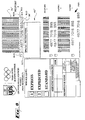
- Fig. 3 is a magnified view of the tracking number that appears on the shipping document shown in Fig. 2 .
- Fig. 3 illustrates the bar code 36, which employs the Code 39 bar code symbology, and the corresponding human readable text 38.
- Code 39 is an alphanumeric bar code that is designed to encode 26 upper case letters, 10 digits, and seven special characters. The symbol can be as long as necessary to store the encoded data. Each character in a Code 39 symbol is made up of five bars and four spaces. A space appears between each character. Each bar or space is either "wide” or "narrow.” Three out of the nine elements in each character are always wide.
- a Code 39 symbol includes a leading quiet zone, a start character (*), the encoded data, a stop character (*), and a trailing quiet zone. The asterisk is only used as a start and stop character.
- Code 39 does not normally include a check character, the Code 39 standard provides that one may be used if needed. To derive the check character, the value of each data character is summed up and divided by 43. The remainder is the value that is used as the check character.
- each Code 39 character includes five bars and four spaces.
- the bar code 36 includes 13 characters or code words, as indicated along the top of the bar code symbol. This symbol is used to encode the 11 characters that appear in the human readable text 38.
- the start and stop characters are referred to as non-printable characters and do not appear in the human readable text 38.
- Detailed information about Code 39 and the specific bar/space patterns for each character may be found in The Bar Code Book: Reading, Printing, & Specification of Bar Code Symbols , by Roger C. Palmer, published by Helmers Publishing, which is incorporated herein by reference.
- Fig. 4 is a magnified view of the tracking number that appears on an alternate shipping document employed by the assignee of the present invention.
- Fig. 4 illustrates a bar code 36', which employs the Code 128 bar code symbology, and the corresponding human readable text 38'.
- Code 128 is a high density alphanumeric bar code that is designed to encode all 128 ASCII characters. The symbol can be as long as necessary to store the encoded data. Each character in a Code 128 symbol is made up of three bars and three spaces. Each bar and space can be between one and four modules wide. Each character includes a total of 11 modules. The stop character is made up of 13 modules. A Code 128 symbol includes a leading quiet zone, a start character, the encoded data, a check character, the stop character, and a trailing quiet zone.
- Code 128 includes 106 different 3 bar/3 space combinations. Each combination can be assigned one of three different character sets by using one of three different start characters.
- Start Code A allows encoding all the standard alphanumeric keyboard characters plus control characters and special characters.
- Start Code B includes all standard alphanumeric keyboard characters plus lower case alpha and special characters.
- Start Code C includes a set of 100 pairs of digits from 00 to 99 and can be used to double the density of encoding numeric-only data. Within a symbol, the data can shift between code sets by using a CODE character. The CODE character shifts to a different code set for all subsequent characters.
- each character has a value ranging from 0 to 105. This value is used to calculate the check character for each symbol.
- the check character is a Modulo 103 checksum. To calculate the checksum, the start code value is summed with the product of each character position and the character value of the character at that position. This sum is divided by 103 and the remainder is used as the value of the check character.
- each Code 128 character includes three bars and three spaces.
- the bar code 36' includes 10 characters or code words, as indicated along the top of the bar code symbol. Although the symbol includes only 10 characters, it is used to encode the 11 characters that appears in the human readable text 38'. Ten of the 11 numeric characters are encoded using five two-digit pairs, which are provided by Code 128's character set C. The remaining numeric character is encoded using character set B. The start character, code shift character (from code set B to code set C), checksum, and stop character are non-printable characters. Thus, the Code 128 symbol is used to efficiently represent 11 human readable characters 38' plus the overhead characters required by the Code 128 symbology. Detailed information about Code 128, and other bar code symbologies is provided in The Bar Code Book: Reading, Printing, & Specification of Bar Code Symbols , by Roger C. Palmer.
- the present invention provides a system and method for performing OCR assisted bar code decoding.
- the method is useful for decoding bar codes that are degraded or partially obliterated, and in conjunction with relatively low resolution cameras where, for example, the pixel size may be on the order of 1.5 times the width of a narrow bar.
- the invention employs OCR techniques to supplement conventional bar code reading techniques when those techniques fail to successfully decode one or more characters in the bar code symbol.
- conventional bar code reading techniques fail (i.e., fail to recognize a bar code character or have an insufficient confidence factor)
- the invention locates the human readable text associated with the bar code and maps the failed bar code character to one or more of the human readable characters.
- the corresponding human readable character is decoded using OCR techniques and the resulting data is used to complete the bar code decoding process and provide the tracking number data.
- Fig. 5 is a flow chart illustrating an exemplary method 500 for carrying out the present invention.
- the method 500 attempts to decode the package tracking number from a shipping label that includes a bar code and corresponding human readable text.
- the tracking number is provided as the output of the method.
- the method 500 is carried out by the label decoding system 14 that forms a part of the system 10 for reading package information ( Fig. 1 ).
- a bar code symbol is decoded one code word at a time. If a code word is properly decoded using bar code decoding techniques, the method proceeds to the next code word. If a code word is not properly decoded using bar code techniques, the method resorts to OCR techniques in an effort to decode that particular code word. The method then attempts to decode the remaining code words using bar code reading techniques. Once all of the code words are decoded using bar code or OCR techniques, the method attempts to validate the bar code symbol as a whole and provides output data.
- the method 500 begins at step 505 and proceeds to step 510.
- the label decoding system forms an image of a package surface from the data provided by the OTB camera 16 that forms a part of the imaging system 12.
- the image data is provided one line at a time as a package moves beneath the OTB camera 16.
- step 515 attempts to locate the bar code symbol and decode the constituent code words using conventional bar code processing techniques.
- these techniques attempt to locate the bar code symbol in the captured image.
- a suitable decoding algorithm is used to read the bar code symbol by decoding the constituent code words one at a time.
- the steps associated with the decoding algorithm typically include making several passes at decoding the symbol. If none of the passes is successful, the data may be merged in a process known as stitching, which attempts to extract valid bar code characters from each pass and combine them to reconstruct a full and valid set of bar code characters.
- bar codes can be printed with great precision
- the images captured by cameras such as the OTB camera 16 include some amount of distortion and imprecision. This is attributable to the camera's resolution and a variety of other factors.
- the measurements between bar code characters or elements seldom, if ever, turn out to be precisely what is expected. Therefore, bar code processing techniques typically attempt to determine which expected pattern most closely matches the measurements in the image.
- the pattern matching process results in a "confidence factor” that describes how close the imaged character is to an expected pattern.
- the confidence factor must be above a predetermined threshold in order for the algorithm to determine that it has properly decoded the character.
- the decode algorithm will "fail” if it is unable to recognize a character or if it recognizes the character, but the "confidence factor” is too low.
- step 515 is conventional bar code decoding techniques that will be familiar to those skilled in the art. Examples of various bar code processing techniques may be found in U.S. Patent Nos. 5,276,315 , entitled “Method and Apparatus for Processing Low Resolution Images of Degraded Bar Code Symbols," 5,329,015 , entitled “Method and Apparatus for Determining the Width of Elements of Bar Code Symbols," 5,343,028 , entitled “Method and Apparatus for Detecting and Decoding Bar Code Symbols Using Two-Dimensional Digital Pixel Images," 5,352,878 entitled “Method and Apparatus for Decoding Bar Code Symbols Using Independent Bar and Space Analysis," 5,384,451 , entitled “Method and Apparatus for Decoding Bar Code Symbols Using Composite Signals," 5,404,003 , entitled “Method and Apparatus for Decoding Bar Code Symbols Using Byt
- step 520 the label decoding system 14 determines whether the code word was properly decoded. If so, the method proceeds to step 525 and determines whether the bar code symbol includes additional code words that need to be decoded. If so, the method returns to step 515 and attempts to decode the next code word in the bar code symbol. If not, the method proceeds to step 565.
- step 520 If, at step 520, the code word has not be properly decoded using bar code decoding techniques, the method 500 proceeds to step 530 and attempts to decode the code word using OCR techniques.
- the label decoding system locates the human readable text that is associated with the bar code and determines the boundaries of the data.
- this step operates on several assumptions regarding the position of the human readable text relative to the bar code symbol. First, it is assumed that the human readable text is located beneath the bar code symbol. Second, it is assumed that the human readable text is parallel to the longitudinal axis of the bar code symbol. Third, if the text is not located beneath the bar code, it is located directly above the center of the bar code and at the same angle as the bar code.
- the present invention provides two methods that may be used to locate the human readable text, depending on the layout of the shipping labels used.
- the first method 530 is described in conjunction with the illustration of Fig. 6 and the flow diagram of Fig. 7 .
- the second method 530' is described in conjunction with the illustration of Fig. 8 and the flow diagram of Fig. 9 .
- Fig. 6 depicts an image of the lower right corner of the shipping document 40 ( Fig. 2 ), which includes a bar code symbol 36 and associated human readable text 38.
- the first method 530 is intended for use with labels that have a large, relatively dark area 600 located beneath the human readable text. Relying on the two assumptions and the assumption that the dark area 600 forms the bottom edge of a box that encloses the text 38, the method projects two imaginary lines 605 downward from the first and last bars of the bar code symbol 36 ( Fig. 7 , step 705). Because of the layout of the shipping document 40, the human readable text 38 is then enclosed in a box formed by the bottom edge of the bar code symbol 36, the top edge of dark area 600, and the two imaginary lines 605.
- the method proceeds to draw an imaginary line 610 parallel to the bottom edge of the bar code symbol and located half way between the bottom of the bar code symbol and the dark area 600 ( Fig. 7 , step 710).
- the label decoding system identifies the left and right edges of the human readable text by detecting transitions between white and dark pixels ( Fig. 7 , step 715 ).
- FIG. 8 illustrates the top right portion of a second type of shipping document 40' used by the assignee of the present invention.
- This document includes a bar code 36' and associated human readable text 38', but does not include a dark area beneath the bar code. Therefore, this method relies on the first two assumptions discussed above, but does not utilize or require a large, dark area beneath the human readable text 38'.
- the method 530' projects two imaginary lines 805 downward from the first and last bars of the bar code symbol 36' ( Fig. 9 , step 905). Because of the layout of the shipping document 40' the method assumes that the human readable text is located beneath the bar code symbol and within the area bounded by the two imaginary lines 805. The method proceeds to scan along a line 810 located just beneath the bar code symbol and parallel to the longitudinal axis of the bar code symbol. As each line is scanned, the method determines the number of transitions between black and white pixels in each line. If the number of transitions between black and white pixels exceeds a predetermined threshold, the top of the human readable text 38' has been located. If not, the method drops down and scans another line ( Fig. 9 , steps 910, 915, 920, and 925).
- the method continues to scan additional lines in order to locate the bottom of the human readable text. As each line is scanned, the method counts the number of transitions between black and white pixels in each line. If the number of transitions is below the predetermined threshold, the bottom of the human readable text has been located. If not, the method drops down and scans another line. ( Fig. 9 , steps 930, 935, 940, and 945).
- This process may be described as constructing a histogram for each line scanned beneath the bar code symbol.
- the number of transitions between black and white pixels exceeds a predetermined threshold, it indicates that the current line 815 marks the approximate top of the human readable text.
- the transition back to a small number of transitions indicates that the current line 820 marks the approximate bottom of the human readable text.
- the method draws a line 825 located half way between the top line 815 and bottom line 820 ( Fig. 9 , step 950). Starting from the center of the line 825 the method proceeds outward from the center and finds the left and right edges of the human readable text ( Fig. 9 , step 955). The result of this process may be described as identifying the corners of a box that encloses the human readable text 38'.
- step 535 segments the human readable text into individual images. In the method 500, this is accomplished by calling conventional OCR algorithms, which will be familiar to those skilled in the art.
- This step 535 results in a small box being drawn around each character in the human readable text and allows the method to determine how many characters are included in the human readable text. At this point, the human readable characters have not been decoded to form their ASCII code representations.
- steps 530 and 535 are performed no more than once per bar code symbol.
- the OCR text is located and segmented only after a first code word fails to be properly decoded using bar code reading techniques. This information is stored and is available for use if and when additional code words fail to be decoded using bar code reading techniques. In the case of the second or subsequent failed code word, the method 500 would proceed from step 520 to step 540.
- the label decoding system 14 attempts to map the failed bar code character or code word to the corresponding character from the human readable text.
- the failed bar code character is identified by the bar code decoding algorithms applied at step 515. In an exemplary system, this is accomplished by calling a function and indicating which code word is unreadable. The function returns the position of the corresponding human readable character or characters.
- the label decoding system knows several pieces of information about the bar code.
- the label decoding system should know the number of code words or characters in the bar code symbol. In most cases, this may be determined by the bar code decoding algorithms (step 515 ), even if one or more code words are unreadable, by measuring the width of the bar code symbol or counting the number of transitions between black and white.
- the label decoding system should also know the number of characters in the human readable text (step 535).
- the label decoding system will know which bar code symbology is being used. Once these three pieces of information are known, it will be possible to map the failed bar code character to the corresponding human readable character in most cases.
- the mapping process proceeds on the basis of the information known to the label decoding system. For example, if the failed bar code is a Code 39 bar code, the number of bar code characters or code words equals two plus the number of human readable characters. The start and stop characters are non-printable characters and do not map to any human readable characters. Thus, the nth bar code character maps to the (n-1)th human readable character.
- the non-printable characters includes the start and stop characters, a checksum characters, and, possibly, one or more code shift characters.
- the bar code character "01" is unreadable.
- the label decoding system would recognize that the symbol is a Code 128 symbol, that there are 10 bar code characters, and that there are 11 human readable characters. Of the 10 bar code characters, at least three are non-printable characters. That leaves seven bar code characters to encode 11 human readable characters.
- the label decoding system can determine that the bar code characters must include five characters in character set C, one character in character set A or B, and one character set shift character.
- the start character indicates that the symbol starts in character set B. Therefore, the first (and only) character in character set A must be followed by a character set shift character that shifts to character set C.
- the "01" character is the third character set C character, and would map to the sixth and seventh human readable characters.
- step 545 the label decoding system converts the appropriate human readable character or characters into their ASCII equivalent. In the preferred system, this is accomplished by providing a conventional OCR routine with the position of the character or characters that should be decoded. The OCR routine returns the ASCII value of the human readable characters.
- step 550 the ASCII value of the decoded human readable character is mapped or converted to the corresponding value in the proper bar code symbology, thereby creating a substitute bar code character or code word.
- the label decoding system assigns a confidence factor to the newly created substitute bar code character.
- OCR routines typically provide a confidence value or confidence factor that indicates the likelihood that the character was properly decoded from the human readable text. This confidence factor is used by the method 500 at step 560.
- the label decoding system selects the bar code characters for the failed character position. This selection is made from the characters provided by the bar code decoding routines (step 515 ) and the characters provided by the OCR routine (step 545 ).
- the label decoding system determines which character to use based on the same selection criteria used by the bar code decoding algorithms at step 515 to select from among multiple choices for a given character position. These criteria include threshold confidence factor values.
- the confidence factor associated with the OCR character must be on a scale that is compatible with the bar code decoding software.
- the bar code and OCR decoding engines may be set up to provide confidence factors on a scale of 1-10, with each number representing a specified error rate.
- the choice of a character is made from among the substitute bar code characters and the characters provided by the bar code decoding routines as if all choices had been provided by separate passes of the bar code decoding algorithm.
- the method attempts to ensure that the chosen character is sufficiently different than the other choices. This may be done, for example, by selecting a character only if the sum of its confidence factors is greater than twice the sum of the other characters.
- step 525 determines whether there are more code words to be decoded. If so, the method returns to step 515 and attempts to decode the next code word using bar code decoding techniques. If not, the method proceeds to step 565.
- the selected bar code character is validated by checksumming or other means.
- this step includes verifying the checksum character provided as part of Code 128 symbols.
- this step is not implemented in conjunction with bar code symbols that do not include checksum characters.
- step 570 the label decoding system determines whether the checksum indicates that the bar code symbol was properly decoded. If so, the method proceeds to step 575. If not, the method proceeds to step 580 and returns an "error" message. From step 580 the method terminates at step 585.
- the label decoding system validates the decoded tracking number by checksumming, template matching, or other means.
- the tracking numbers include check digits that may be checked to ensure that the tracking number was properly recorded.
- the label decoding system will apply the appropriate checksum algorithm to ensure that the tracking number decoded from the bar code and human readable text appears to be a valid tracking number. This step provides further assurances that the tracking number was properly decoded from the bar code and human readable characters.
- step 590 the label decoding system determines whether the validation test of step 575 indicates that the tracking number decoded from the bar code symbol and human readable text is a valid tracking number. If so, the method proceeds to step 595, where it provides the tracking number as an output. If not, the method proceeds to step 580 and returns an "error" message. From step 595 or step 580 the method terminates at step 585.
- the present invention provides an efficient method for using OCR techniques to assist in the decoding of bar code symbols.
- the present invention attempts to decode failed bar code symbols by applying OCR techniques to the human readable character or characters that correspond to the failed bar code character.
- OCR techniques to the human readable character or characters that correspond to the failed bar code character.
Landscapes
- Engineering & Computer Science (AREA)
- Physics & Mathematics (AREA)
- General Physics & Mathematics (AREA)
- Theoretical Computer Science (AREA)
- Computer Vision & Pattern Recognition (AREA)
- Quality & Reliability (AREA)
- Health & Medical Sciences (AREA)
- Electromagnetism (AREA)
- General Health & Medical Sciences (AREA)
- Toxicology (AREA)
- Artificial Intelligence (AREA)
- Multimedia (AREA)
- Character Discrimination (AREA)
- Character Input (AREA)
- Non-Silver Salt Photosensitive Materials And Non-Silver Salt Photography (AREA)
- Credit Cards Or The Like (AREA)
Claims (11)
- Verfahren zur Datendekodierung von einem Gegenstand (20), der ein Balkencodesymbol (36) und diesem zugeordnete, von Menschen lesbare Zeichen (38) enthält, wobei das Balkencodesymbol den vom Menschen lesbaren Zeichen entsprechende Codezeichen aufweist, mit den Schritten:Gewinnen eines Bildes der Daten auf dem Gegenstand (20),Lokalisieren des Balkencodesymbols (36) in dem Bild,Versuchen, das Balkencodezeichen zu dekodieren,Bestimmen, ob das Balkencodezeichen erfolgreich dekodiert worden ist,dadurch gekennzeichnet, dass
das Balkencodesymbol eine Prüfsumme enthält, und dass bei nicht erfolgreicher Dekodierung des Balkencodezeichens das Verfahren die folgenden Schritte durchführt:
Identifizierung der vom Menschen lesbaren Zeichen (38) in dem Bild, Zuordnung des erfolglos dekodierten Balkencodezeichens zumindest einem der vom Menschen lesbaren Zeichen,
Umwandlung des mindestens einen vom Menschen lesbaren Zeichens in mindestens ein Textzeichen, unter Anwendung einer optischen Zeichenerkennungsroutine auf das mindestens eine vom Menschen lesbare Zeichen,
Erzeugung eines Ersatzbalkencodezeichens entsprechend dem mindestens einem Textzeichen unter Verwendung des Ersatzbalkencodezeichens zur Dekodierung des Balkencodesymbols und
Validieren des Balkencodesymbols (36) nach Dekodierung aller Balkencodezeichen durch Verifizierung der Prüfsumme. - Verfahren nach Anspruch 1, bei welchem die Identifizierung der von Menschen lesbaren Zeichen (38) die Schritte aufweist:Identifizieren eines die vom Menschen lesbaren Zeichen enthaltenden Bereichs undUnterteilung des Bereichs in einzelne Bilder entsprechend jedem der vom Menschen lesbaren Zeichen.
- Verfahren nach Anspruch 2, bei welchem die Bereichsidentifizierung die Schritte aufweist:Lokalisierung eines dunklen Bereichs (600) unterhalb des Balkencodesymbols (36) undAbtasten einer Linie in der Mitte zwischen der Unterseite des Balkencodesymbols und der Oberseite des dunklen Bereiches.
- Verfahren nach Anspruch 3, bei welchem die Bereichsidentifizierung die Schritte enthält:Abtasten einer Mehrzahl von Linien unterhalb des Balkencodesymbols (36), wobei die Abtastlinien parallel zum Balkencode verlaufen und voneinander um eine vorbestimmte Anzahl von Pixeln getrennt sind,Bestimmen der Anzahl von Übergängen zwischen schwarzen und weißen Pixeln auf jeder der abgetasteten Linien undLokalisieren der Oberseite und Unterseite der vom Menschen lesbaren Zeichen (38) anhand der Anzahl von Übergängen zwischen schwarzen und weißen Pixeln in jeder der abgetasteten Linien.
- Verfahren nach Anspruch 1 mit den weiteren Schritten:Vorsehen eines dem Ersatzbalkencodezeichen zugeordneten Konfidenzfaktors undAuswählen des Ersatzbalkencodezeichens aufgrund des Konfidenzfaktors.
- Verfahren zum Lesen von Daten auf einem Gegenstand (20), welcher ein Balkencodesymbol (36) und daneben befindliche vom Menschen lesbare Zeichen (38) enthält, wobei das Balkencodesymbol den vom Menschen lesbaren Zeichen entsprechende Balkencodezeichen aufweist, mit- einem Bildgebersystem (12) mit einer Kamera (16) zur Gewinnung eines Bildes des Gegenstandes, welches das Balkencodesymbol und die vom Menschen lesbaren Zeichen enthält, und- einem der Verarbeitung des Bildes dienenden Etikettdekodiersystem (14), welches so programmiert ist, dass esdadurch gekennzeichnet,- das Balkencodesymbol im Bild lokalisiert,- jedes Zeichen im Balkencodesymbol zu dekodieren versucht, und- bestimmt, ob ein Balkencodezeichen erfolgreich dekodiert worden ist,
dass das Balkencodesymbol eine Prüfsumme enthält und dass das Etikettdekodiersystem weiterhin so programmiert ist, dass es bei nicht erfolgreicher Dekodierung des Balkencodes- die vom Menschen lesbaren Zeichen im Bild lokalisiert,- das erfolglos dekodierte Balkencodezeichen mindestens einem der vom Menschen lesbaren Zeichen zuordnet,- das zugeordnete mindestens eine vom Menschen lesbare Zeichen in mindestens ein Textzeichen umwandelt, wobei eine optische Zeichenerkennungsroutine auf das mindestens eine vom Menschen lesbare Zeichen angewendet wird,- ein dem mindestens einen Textzeichen entsprechendes Ersatzbalkencodezeichen erzeugt,- das Ersatzbalkencodezeichen zur Dekodierung des Balkencodesymbols benutzt und- das dekodierte Balkencodesymbol durch Verifizierung der Prüfsumme validiert, nachdem alle der Balkencodezeichen dekodiert worden sind. - System nach Anspruch 6, bei welchem das Etikettdekodiersystem (14) die vom Menschen lesbaren Zeichen unter Ausführung der folgenden Schritte lokalisiert:Identifizieren eines die vom Menschen lesbaren Zeichen enthaltenden Bereichs undUnterteilung des Bereichs in einzelne Bilder entsprechend jedem der vom Menschen lesbaren Zeichen.
- System nach Anspruch 7, bei welchem das Etikettdekodiersystem (14) den Bereich unter Ausführung der folgenden Schritte identifiziert:Lokalisieren eines dunklen Bereiches unterhalb des Balkencodesymbols und Abtasten einer Linie in der Mitte zwischen der Unterseite des Balkencodesymbols und der Oberseite des dunklen Bereichs.
- System nach Anspruch 8, bei welchem das Etikettdekodiersystem (14) den Bereich unter Ausführung folgender Schritte identifiziert:Abtasten einer Mehrzahl von Linien unterhalb des Balkencodesymbols, wobei die Abtastlinien parallel zum Balkencodesymbol verlaufen und voneinander durch eine vorbestimmte Anzahl von Pixeln beabstandet sind, Bestimmen der Anzahl von Übergängen zwischen schwarzen und weißen Pixeln auf jeder der abgetasteten Linie undLokalisieren der Ober- und Unterseite der vom Menschen lesbaren Zeichen aufgrund der Anzahl von Übergängen in jeder der Abtastlinien.
- System nach Anspruch 6, bei welchem das Etikettdekodiersystem (14) weiterhin programmiert ist, um
einen dem Ersatzbalkencodezeichen zugeordneten Konfidenzfaktor zu liefern, und
das Ersatzbalkencodezeichen aufgrund des Konfidenzfaktors auszuwählen. - Computerlesbares Medium, auf welchem ein Computerprogramm zur Dekodierung von Daten von einem Gegenstand gespeichert ist, welcher ein Balkencodesymbol und diesem zugeordnete vom Menschen lesbare Zeichen enthält, wobei das Balkencodesymbol den vom Menschen lesbaren Zeichen entsprechende Balkencodezeichen aufweist, und wobei das Computerprogramm Befehle enthält, die bei Ausführung durch einen Computer die Schritte des Verfahrens nach einem der Ansprüche 1 - 5 durchführt.
Applications Claiming Priority (3)
| Application Number | Priority Date | Filing Date | Title |
|---|---|---|---|
| US08/840,051 US5880451A (en) | 1997-04-24 | 1997-04-24 | System and method for OCR assisted bar code decoding |
| US840051 | 1997-04-24 | ||
| PCT/US1998/007867 WO1998048373A1 (en) | 1997-04-24 | 1998-04-16 | System and method for ocr assisted bar code decoding |
Publications (2)
| Publication Number | Publication Date |
|---|---|
| EP0978087A1 EP0978087A1 (de) | 2000-02-09 |
| EP0978087B1 true EP0978087B1 (de) | 2009-06-10 |
Family
ID=25281330
Family Applications (1)
| Application Number | Title | Priority Date | Filing Date |
|---|---|---|---|
| EP98918431A Expired - Lifetime EP0978087B1 (de) | 1997-04-24 | 1998-04-16 | System und verfahren für ocr-unterstützte strichkodedekodierung |
Country Status (8)
| Country | Link |
|---|---|
| US (1) | US5880451A (de) |
| EP (1) | EP0978087B1 (de) |
| JP (1) | JP2000511320A (de) |
| AT (1) | ATE433589T1 (de) |
| CA (1) | CA2282764C (de) |
| DE (1) | DE69840893D1 (de) |
| ES (1) | ES2328192T3 (de) |
| WO (1) | WO1998048373A1 (de) |
Cited By (3)
| Publication number | Priority date | Publication date | Assignee | Title |
|---|---|---|---|---|
| US20110293183A1 (en) * | 2010-05-26 | 2011-12-01 | Hin Leong Tan | Scanning system with optical character recognition |
| US8792748B2 (en) | 2010-10-12 | 2014-07-29 | International Business Machines Corporation | Deconvolution of digital images |
| US9411789B1 (en) | 2015-08-12 | 2016-08-09 | International Business Machines Corporation | Clickable links within live collaborative web meetings |
Families Citing this family (99)
| Publication number | Priority date | Publication date | Assignee | Title |
|---|---|---|---|---|
| US6889903B1 (en) | 1988-08-31 | 2005-05-10 | Intermec Ip Corp. | Method and apparatus for optically reading information |
| US6681994B1 (en) * | 1988-08-31 | 2004-01-27 | Intermec Ip Corp. | Method and apparatus for optically reading information |
| US5974147A (en) * | 1996-11-07 | 1999-10-26 | Pitney Bowes Inc. | Method of verifying unreadable indicia for an information-based indicia program |
| US6134561A (en) * | 1997-12-29 | 2000-10-17 | Pitney Bowes Inc. | System for tracking the receipt and internal delivery of items such as packages |
| US6151423A (en) * | 1998-03-04 | 2000-11-21 | Canon Kabushiki Kaisha | Character recognition with document orientation determination |
| US6685095B2 (en) * | 1998-05-05 | 2004-02-03 | Symagery Microsystems, Inc. | Apparatus and method for decoding damaged optical codes |
| DE19840455A1 (de) * | 1998-09-04 | 2000-03-09 | Sick Ag | Verfahren zum Betreiben eines Strichcodelesers |
| US6924781B1 (en) * | 1998-09-11 | 2005-08-02 | Visible Tech-Knowledgy, Inc. | Smart electronic label employing electronic ink |
| US6539360B1 (en) | 1999-02-05 | 2003-03-25 | United Parcel Service Of America, Inc. | Special handling processing in a package transportation system |
| US6357658B1 (en) * | 1999-04-28 | 2002-03-19 | Peripheral Dynamics, Inc. | Apparatus and methods for scanning documents including OMR, bar-code, and image data |
| US6778683B1 (en) * | 1999-12-08 | 2004-08-17 | Federal Express Corporation | Method and apparatus for reading and decoding information |
| US6865560B1 (en) * | 1999-12-28 | 2005-03-08 | Pitney Bowes Inc. | Method and system for reporting carrier delivery status to a mailer |
| US7401030B1 (en) * | 1999-12-30 | 2008-07-15 | Pitney Bowes Inc. | Method and system for tracking disposition status of an item to be delivered within an organization |
| US6744938B1 (en) | 2000-03-06 | 2004-06-01 | Ncr Corporation | Retail terminal utilizing an imaging scanner for product attribute identification and consumer interactive querying |
| US20060082557A1 (en) * | 2000-04-05 | 2006-04-20 | Anoto Ip Lic Hb | Combined detection of position-coding pattern and bar codes |
| US6751352B1 (en) | 2000-05-25 | 2004-06-15 | Hewlett-Packard Development Company, L.P. | Method and apparatus for generating and decoding a visually significant barcode |
| US7107453B2 (en) * | 2000-05-25 | 2006-09-12 | Hewlett-Packard Development Company, L.P. | Authenticatable graphical bar codes |
| WO2002041170A2 (en) * | 2000-11-16 | 2002-05-23 | Interlegis, Inc. | System and method of managing documents |
| US6938017B2 (en) * | 2000-12-01 | 2005-08-30 | Hewlett-Packard Development Company, L.P. | Scalable, fraud resistant graphical payment indicia |
| WO2002069224A1 (en) | 2001-02-21 | 2002-09-06 | United States Postal Service | Systems and methods for utilizing a tracking label in an item delivery system |
| US7364079B2 (en) * | 2001-02-21 | 2008-04-29 | United States Postal Service | Tracking label |
| DE10115585B4 (de) * | 2001-03-29 | 2008-09-11 | Siemens Ag | Verfahren zum Frankieren und Bearbeiten von Postsendungen mit einer Datenübermittlung zwischen einer Zentrale und dem Versender |
| US7185824B2 (en) * | 2001-04-13 | 2007-03-06 | The Code Corporation | System and method for associating pre-printed machine-readable graphical codes with electronically-accessible data |
| US6895116B2 (en) * | 2001-06-07 | 2005-05-17 | Hewlett-Packard Development Company, L.P. | Automatically extracting graphical bar codes |
| US7118042B2 (en) * | 2002-01-18 | 2006-10-10 | Microscan Systems Incorporated | Method and apparatus for rapid image capture in an image system |
| US8146823B2 (en) * | 2002-01-18 | 2012-04-03 | Microscan Systems, Inc. | Method and apparatus for rapid image capture in an image system |
| DE60322048D1 (de) * | 2002-05-16 | 2008-08-21 | United Parcel Service Inc | Systemen und verfahren für sortierung und lieferung von paketen unter verwendung von rfid technik |
| EP1927938B1 (de) * | 2002-05-16 | 2014-07-16 | United Parcel Service Of America, Inc. | Verfahren zur Packetsortierung und Zustellung unter Verwendung von RFID Technologie |
| US7069253B2 (en) * | 2002-09-26 | 2006-06-27 | Neopost Inc. | Techniques for tracking mailpieces and accounting for postage payment |
| WO2004095195A2 (en) * | 2003-04-21 | 2004-11-04 | Document Images, Llc | System and method for managing imaged freight documents |
| US20050006469A1 (en) * | 2003-07-10 | 2005-01-13 | United Parcel Service Of America, Inc. | Methods, systems, and computer-readable media for linking object identification data to package identification data |
| DE602004032172D1 (de) * | 2003-09-03 | 2011-05-19 | Visible Tech Knowledgy Inc | Elektronisch aktualisierbares label und display |
| US20050274806A1 (en) * | 2004-06-05 | 2005-12-15 | Intermec Ip Corp. | System, method and article for enhancing aiming in machine-readable symbol readers, such as barcode readers |
| US7520434B2 (en) * | 2004-06-25 | 2009-04-21 | Intermec Ip Corp. | Reader for reading machine-readable symbols, for example bar code symbols |
| US20060043188A1 (en) * | 2004-08-27 | 2006-03-02 | Gregg Kricorissian | Imaging method and apparatus for object identification |
| US7963448B2 (en) | 2004-12-22 | 2011-06-21 | Cognex Technology And Investment Corporation | Hand held machine vision method and apparatus |
| US9552506B1 (en) | 2004-12-23 | 2017-01-24 | Cognex Technology And Investment Llc | Method and apparatus for industrial identification mark verification |
| US7568628B2 (en) | 2005-03-11 | 2009-08-04 | Hand Held Products, Inc. | Bar code reading device with global electronic shutter control |
| US7873243B2 (en) * | 2005-03-18 | 2011-01-18 | The Invention Science Fund I, Llc | Decoding digital information included in a hand-formed expression |
| US8102383B2 (en) * | 2005-03-18 | 2012-01-24 | The Invention Science Fund I, Llc | Performing an action with respect to a hand-formed expression |
| US7809215B2 (en) * | 2006-10-11 | 2010-10-05 | The Invention Science Fund I, Llc | Contextual information encoded in a formed expression |
| US7791593B2 (en) | 2005-03-18 | 2010-09-07 | The Invention Science Fund I, Llc | Machine-differentiatable identifiers having a commonly accepted meaning |
| US8599174B2 (en) * | 2005-03-18 | 2013-12-03 | The Invention Science Fund I, Llc | Verifying a written expression |
| US8290313B2 (en) * | 2005-03-18 | 2012-10-16 | The Invention Science Fund I, Llc | Electronic acquisition of a hand formed expression and a context of the expression |
| US8232979B2 (en) * | 2005-05-25 | 2012-07-31 | The Invention Science Fund I, Llc | Performing an action with respect to hand-formed expression |
| US8229252B2 (en) * | 2005-03-18 | 2012-07-24 | The Invention Science Fund I, Llc | Electronic association of a user expression and a context of the expression |
| US8787706B2 (en) * | 2005-03-18 | 2014-07-22 | The Invention Science Fund I, Llc | Acquisition of a user expression and an environment of the expression |
| US8340476B2 (en) * | 2005-03-18 | 2012-12-25 | The Invention Science Fund I, Llc | Electronic acquisition of a hand formed expression and a context of the expression |
| US20070273674A1 (en) * | 2005-03-18 | 2007-11-29 | Searete Llc, A Limited Liability Corporation | Machine-differentiatable identifiers having a commonly accepted meaning |
| US7392951B2 (en) * | 2005-05-17 | 2008-07-01 | Intermec Ip Corp. | Methods, apparatuses and articles for automatic data collection devices, for example barcode readers, in cluttered environments |
| US7770799B2 (en) | 2005-06-03 | 2010-08-10 | Hand Held Products, Inc. | Optical reader having reduced specular reflection read failures |
| US7967206B2 (en) * | 2005-08-18 | 2011-06-28 | Intermec Ip Corp. | Functional aiming system for an automatic data collection device, such as an image acquisition device |
| US7490776B2 (en) * | 2005-11-16 | 2009-02-17 | Intermec Scanner Technology Center | Sensor control of an aiming beam of an automatic data collection device, such as a barcode reader |
| US20070164112A1 (en) * | 2006-01-04 | 2007-07-19 | Intermec Ip Corp. | Method and system for facilitating aiming of a machine-readable symbol reader, such as barcode reader |
| DE602007003697D1 (de) * | 2006-02-10 | 2010-01-21 | Janssen Pharmaceutica Nv | Ffner |
| KR100789983B1 (ko) * | 2006-04-21 | 2008-01-02 | 주식회사 칼라짚미디어 | 텍스트를 이용한 이미지 코드 전송 시스템 및 그 방법 |
| US8036773B2 (en) * | 2006-05-10 | 2011-10-11 | Mckesson Automation Inc. | System, method and corresponding apparatus for storing, retrieving and delivering unit dose blisters |
| US20070261997A1 (en) * | 2006-05-11 | 2007-11-15 | Hmc Solutions, Llc, D/B/A Hmc Solutions | Automated dry cleaning assembly conveyor system |
| US8108176B2 (en) | 2006-06-29 | 2012-01-31 | Cognex Corporation | Method and apparatus for verifying two dimensional mark quality |
| US8169478B2 (en) * | 2006-12-14 | 2012-05-01 | Cognex Corporation | Method and apparatus for calibrating a mark verifier |
| US7775431B2 (en) * | 2007-01-17 | 2010-08-17 | Metrologic Instruments, Inc. | Method of and apparatus for shipping, tracking and delivering a shipment of packages employing the capture of shipping document images and recognition-processing thereof initiated from the point of shipment pickup and completed while the shipment is being transported to its first scanning point to facilitate early customs clearance processing and shorten the delivery time of packages to point of destination |
| US8009913B2 (en) * | 2007-05-29 | 2011-08-30 | Mckesson Automation, Inc. | System, method, apparatus and computer program product for capturing human-readable text displayed on a unit dose package |
| US8496177B2 (en) | 2007-06-28 | 2013-07-30 | Hand Held Products, Inc. | Bar code reading terminal with video capturing mode |
| US9734376B2 (en) | 2007-11-13 | 2017-08-15 | Cognex Corporation | System and method for reading patterns using multiple image frames |
| US7743991B2 (en) * | 2007-11-14 | 2010-06-29 | Hand Held Products, Inc. | Automatic image transmission of difficult to read symbols |
| US7886971B2 (en) * | 2008-06-04 | 2011-02-15 | Hmc Solutions, Llc | Automated dry cleaning delivery system |
| CN101339599A (zh) * | 2008-08-14 | 2009-01-07 | 深圳华为通信技术有限公司 | 一种获取二维码的方法和终端 |
| US8873829B1 (en) | 2008-09-26 | 2014-10-28 | Amazon Technologies, Inc. | Method and system for capturing and utilizing item attributes |
| IT1394202B1 (it) * | 2008-12-15 | 2012-06-01 | Meccanotecnica Spa | Riconoscimento articoli basato su combinazione di codici ed immagini |
| US20100177750A1 (en) * | 2009-01-13 | 2010-07-15 | Metrologic Instruments, Inc. | Wireless Diplay sensor communication network |
| US20100177080A1 (en) * | 2009-01-13 | 2010-07-15 | Metrologic Instruments, Inc. | Electronic-ink signage device employing thermal packaging for outdoor weather applications |
| US8457013B2 (en) | 2009-01-13 | 2013-06-04 | Metrologic Instruments, Inc. | Wireless dual-function network device dynamically switching and reconfiguring from a wireless network router state of operation into a wireless network coordinator state of operation in a wireless communication network |
| US8234507B2 (en) | 2009-01-13 | 2012-07-31 | Metrologic Instruments, Inc. | Electronic-ink display device employing a power switching mechanism automatically responsive to predefined states of device configuration |
| US20100177076A1 (en) * | 2009-01-13 | 2010-07-15 | Metrologic Instruments, Inc. | Edge-lit electronic-ink display device for use in indoor and outdoor environments |
| US8929641B2 (en) | 2009-03-17 | 2015-01-06 | Aesynt Incorporated | System and method for determining the orientation of a unit dose package |
| KR20110040108A (ko) * | 2009-10-13 | 2011-04-20 | 삼성전자주식회사 | 화상형성장치 및 화상형성장치의 문서 관리방법 |
| US20110292463A1 (en) * | 2010-05-31 | 2011-12-01 | Silverbrook Research Pty Ltd | System for identifying physical page containing printed text |
| TWI369637B (en) * | 2010-06-17 | 2012-08-01 | Mstar Semiconductor Inc | Barcode image recognition system and associated method for hand-held device |
| EP2668614B1 (de) | 2011-01-24 | 2018-05-30 | Datalogic USA, Inc. | Ausnahmenerkennung und -handhabung in automatisierten systemen zum lesen optischer codes |
| KR101322953B1 (ko) * | 2011-05-31 | 2013-10-29 | 라쿠텐 인코포레이티드 | 화상 처리 장치, 화상 처리 방법 및 기록 매체 |
| US9679268B2 (en) | 2011-10-17 | 2017-06-13 | United Parcel Service Of America, Inc. | Systems, methods, and computer program products for processing a package for shipping with a common carrier on a wireless computing device |
| US20130300562A1 (en) * | 2012-05-11 | 2013-11-14 | Sap Ag | Generating delivery notification |
| US9113235B2 (en) | 2012-11-14 | 2015-08-18 | Symbol Technologies, Llc | Device and method for functionality sequencing |
| JP5914313B2 (ja) * | 2012-12-10 | 2016-05-11 | 日立オムロンターミナルソリューションズ株式会社 | 光学読取装置、光学的シンボルを読み取る方法、プログラム、記録紙葉類 |
| JP6330388B2 (ja) * | 2014-03-14 | 2018-05-30 | オムロン株式会社 | 画像処理方法、画像処理装置、並びに、当該方法を実行するプログラム、及び、当該プログラムを記録する記録媒体 |
| US9973671B2 (en) | 2014-08-27 | 2018-05-15 | Symbol Technologies, Llc | Method and apparatus for directing data capture devices in a mobile unit with a single operation |
| US9679180B2 (en) | 2014-12-23 | 2017-06-13 | Symbol Technologies, Llc | Portable data capture device |
| JP6484127B2 (ja) * | 2015-06-26 | 2019-03-13 | シグマ紙業株式会社 | 識別子を含む媒体 |
| ES2574029B1 (es) * | 2015-07-03 | 2016-10-21 | Francisco ANDRÉS MARTÍNEZ | Sistema y método para la recuperación de objetos perdidos |
| JP2017187988A (ja) | 2016-04-07 | 2017-10-12 | 東芝テック株式会社 | コード認識装置 |
| EP3428835B1 (de) | 2017-07-13 | 2019-05-15 | Sick AG | Verfahren zum lesen eines optischen codes |
| US10679101B2 (en) * | 2017-10-25 | 2020-06-09 | Hand Held Products, Inc. | Optical character recognition systems and methods |
| JP7172351B2 (ja) * | 2018-09-21 | 2022-11-16 | 富士フイルムビジネスイノベーション株式会社 | 文字列認識装置及び文字列認識プログラム |
| US10706249B1 (en) | 2018-12-28 | 2020-07-07 | Datalogic Usa, Inc. | Assisted identification of ambiguously marked objects |
| CN109978093A (zh) * | 2019-03-28 | 2019-07-05 | 尤尼泰克(嘉兴)信息技术有限公司 | 一种基于二维码的信息传播方法 |
| JP7304992B2 (ja) * | 2020-09-01 | 2023-07-07 | 東芝テック株式会社 | コード認識装置 |
| EP4222674A1 (de) | 2020-09-30 | 2023-08-09 | United States Postal Service | System und verfahren zur verbesserung der artikelabtastraten in einem verteilungsnetzwerk |
| CN112989862A (zh) * | 2021-02-08 | 2021-06-18 | 北京声智科技有限公司 | 条形码校验方法、装置、存储介质和电子设备 |
| US20230042611A1 (en) * | 2021-08-05 | 2023-02-09 | Zebra Technologies Corporation | Systems and Methods for Enhancing Trainable Optical Character Recognition (OCR) Performance |
Citations (4)
| Publication number | Priority date | Publication date | Assignee | Title |
|---|---|---|---|---|
| US4844509A (en) * | 1987-01-21 | 1989-07-04 | Wright Line, Inc. | Coding system |
| US4856820A (en) * | 1987-01-21 | 1989-08-15 | Wright Line Inc. | Coding system |
| US4889982A (en) * | 1987-08-19 | 1989-12-26 | Storage Technology Corporation | Encoded label having redundant and scrambled indicia for identifying a magnetic tape cartridge |
| WO1997011790A1 (en) * | 1995-09-29 | 1997-04-03 | United Parcel Service Of America, Inc. | System and method for reading package information |
Family Cites Families (11)
| Publication number | Priority date | Publication date | Assignee | Title |
|---|---|---|---|---|
| US3744025A (en) * | 1971-02-25 | 1973-07-03 | I Bilgutay | Optical character reading system and bar code font therefor |
| US3949363A (en) * | 1974-06-28 | 1976-04-06 | Recognition Equipment, Incorporated | Bar-Code/MICR/OCR merge |
| US4402088A (en) * | 1981-04-09 | 1983-08-30 | Recognition Equipment Incorporated | OCR And bar code reading using area array |
| US4408344A (en) * | 1981-04-09 | 1983-10-04 | Recognition Equipment Incorporated | OCR and Bar code reader using multi port matrix array |
| US4542528A (en) * | 1981-04-09 | 1985-09-17 | Recognition Equipment Incorporated | OCR and bar code reader with optimized sensor |
| US4411016A (en) * | 1981-06-01 | 1983-10-18 | Recognition Equipment Incorporated | Barcode width measurement system |
| JPH0775028B2 (ja) * | 1990-08-15 | 1995-08-09 | インターナショナル・ビジネス・マシーンズ・コーポレイション | バーコードによる基板のマーク方法、その方法によってマークされた基板及び識別情報を有する基板 |
| US5412194A (en) * | 1992-03-25 | 1995-05-02 | Storage Technology Corporation | Robust coding system |
| US5307423A (en) * | 1992-06-04 | 1994-04-26 | Digicomp Research Corporation | Machine recognition of handwritten character strings such as postal zip codes or dollar amount on bank checks |
| JPH06103400A (ja) * | 1992-09-22 | 1994-04-15 | Hitachi Electron Eng Co Ltd | Ocrのバーコードチェック方法 |
| JPH09237312A (ja) * | 1996-02-29 | 1997-09-09 | Toshiba Corp | 光学的文字読取装置 |
-
1997
- 1997-04-24 US US08/840,051 patent/US5880451A/en not_active Expired - Lifetime
-
1998
- 1998-04-16 ES ES98918431T patent/ES2328192T3/es not_active Expired - Lifetime
- 1998-04-16 EP EP98918431A patent/EP0978087B1/de not_active Expired - Lifetime
- 1998-04-16 CA CA002282764A patent/CA2282764C/en not_active Expired - Fee Related
- 1998-04-16 DE DE69840893T patent/DE69840893D1/de not_active Expired - Lifetime
- 1998-04-16 WO PCT/US1998/007867 patent/WO1998048373A1/en not_active Ceased
- 1998-04-16 JP JP10546210A patent/JP2000511320A/ja active Pending
- 1998-04-16 AT AT98918431T patent/ATE433589T1/de not_active IP Right Cessation
Patent Citations (4)
| Publication number | Priority date | Publication date | Assignee | Title |
|---|---|---|---|---|
| US4844509A (en) * | 1987-01-21 | 1989-07-04 | Wright Line, Inc. | Coding system |
| US4856820A (en) * | 1987-01-21 | 1989-08-15 | Wright Line Inc. | Coding system |
| US4889982A (en) * | 1987-08-19 | 1989-12-26 | Storage Technology Corporation | Encoded label having redundant and scrambled indicia for identifying a magnetic tape cartridge |
| WO1997011790A1 (en) * | 1995-09-29 | 1997-04-03 | United Parcel Service Of America, Inc. | System and method for reading package information |
Cited By (10)
| Publication number | Priority date | Publication date | Assignee | Title |
|---|---|---|---|---|
| US20110293183A1 (en) * | 2010-05-26 | 2011-12-01 | Hin Leong Tan | Scanning system with optical character recognition |
| US8798404B2 (en) * | 2010-05-26 | 2014-08-05 | Hin Leong Tan | Making available to a user machine editable text extracted from an image |
| US8792748B2 (en) | 2010-10-12 | 2014-07-29 | International Business Machines Corporation | Deconvolution of digital images |
| US9508116B2 (en) | 2010-10-12 | 2016-11-29 | International Business Machines Corporation | Deconvolution of digital images |
| US10140495B2 (en) | 2010-10-12 | 2018-11-27 | International Business Machines Corporation | Deconvolution of digital images |
| US10803275B2 (en) | 2010-10-12 | 2020-10-13 | International Business Machines Corporation | Deconvolution of digital images |
| US9411789B1 (en) | 2015-08-12 | 2016-08-09 | International Business Machines Corporation | Clickable links within live collaborative web meetings |
| US9547631B1 (en) | 2015-08-12 | 2017-01-17 | International Business Machines Corporation | Clickable links within live collaborative web meetings |
| US9864734B2 (en) | 2015-08-12 | 2018-01-09 | International Business Machines Corporation | Clickable links within live collaborative web meetings |
| US9870346B2 (en) | 2015-08-12 | 2018-01-16 | International Business Machines Corporation | Clickable links within live collaborative web meetings |
Also Published As
| Publication number | Publication date |
|---|---|
| US5880451A (en) | 1999-03-09 |
| DE69840893D1 (de) | 2009-07-23 |
| ES2328192T3 (es) | 2009-11-10 |
| WO1998048373A1 (en) | 1998-10-29 |
| EP0978087A1 (de) | 2000-02-09 |
| ATE433589T1 (de) | 2009-06-15 |
| CA2282764A1 (en) | 1998-10-29 |
| JP2000511320A (ja) | 2000-08-29 |
| CA2282764C (en) | 2003-06-10 |
Similar Documents
| Publication | Publication Date | Title |
|---|---|---|
| US5880451A (en) | System and method for OCR assisted bar code decoding | |
| CA2231450C (en) | System and method for reading package information | |
| JP6869208B2 (ja) | 光電式コードリーダ及び光学コードの読み取り方法 | |
| US6895116B2 (en) | Automatically extracting graphical bar codes | |
| US4988852A (en) | Bar code reader | |
| US4874936A (en) | Hexagonal, information encoding article, process and system | |
| US6782144B2 (en) | Document scanner, system and method | |
| US3868634A (en) | Reading of contrasting data by means of continuously attempting to decode read signals | |
| US7305131B2 (en) | Extracting graphical bar codes from an input image | |
| EP0685809A2 (de) | Verfahren und Gerät zur Dekodierung zweidimensionaler Strichkodierungen | |
| US5805740A (en) | Bar-code field detecting apparatus performing differential process and bar-code reading apparatus | |
| US8295583B2 (en) | System and method for automatic recognition of undetected assets | |
| JPH04225485A (ja) | バーコードを認識する方法 | |
| HUT69107A (en) | Indentification system | |
| JP6852518B2 (ja) | 宛先認識装置、小包自動区分システム、宛先認識方法及びプログラム | |
| KR100388061B1 (ko) | 4-상태 바코드 인쇄 및 판독 시스템과 그 제어 방법 | |
| US7415131B2 (en) | Method and system for image processing | |
| CN112560535A (zh) | 一种全景排序的解码输出方法 | |
| US20250265432A1 (en) | Reading an optical code | |
| JP2007511342A (ja) | 検査行列によるビデオコード化方法及び装置 | |
| JP2000057250A (ja) | 2次元コードの読取方法 | |
| US20250156662A1 (en) | Reading Optical Codes | |
| JPH11184965A (ja) | 帳票識別登録装置 | |
| KR100309243B1 (ko) | 심벌정보판독장치 | |
| JPH08164365A (ja) | 宛名読取装置 |
Legal Events
| Date | Code | Title | Description |
|---|---|---|---|
| PUAI | Public reference made under article 153(3) epc to a published international application that has entered the european phase |
Free format text: ORIGINAL CODE: 0009012 |
|
| 17P | Request for examination filed |
Effective date: 19991008 |
|
| AK | Designated contracting states |
Kind code of ref document: A1 Designated state(s): AT BE CH CY DE DK ES FI FR GB GR IE IT LI LU MC NL PT SE |
|
| GRAP | Despatch of communication of intention to grant a patent |
Free format text: ORIGINAL CODE: EPIDOSNIGR1 |
|
| GRAS | Grant fee paid |
Free format text: ORIGINAL CODE: EPIDOSNIGR3 |
|
| GRAA | (expected) grant |
Free format text: ORIGINAL CODE: 0009210 |
|
| AK | Designated contracting states |
Kind code of ref document: B1 Designated state(s): AT BE CH CY DE DK ES FI FR GB GR IE IT LI LU MC NL PT SE |
|
| REG | Reference to a national code |
Ref country code: GB Ref legal event code: FG4D |
|
| REG | Reference to a national code |
Ref country code: CH Ref legal event code: EP |
|
| REG | Reference to a national code |
Ref country code: IE Ref legal event code: FG4D |
|
| REF | Corresponds to: |
Ref document number: 69840893 Country of ref document: DE Date of ref document: 20090723 Kind code of ref document: P |
|
| PG25 | Lapsed in a contracting state [announced via postgrant information from national office to epo] |
Ref country code: FI Free format text: LAPSE BECAUSE OF FAILURE TO SUBMIT A TRANSLATION OF THE DESCRIPTION OR TO PAY THE FEE WITHIN THE PRESCRIBED TIME-LIMIT Effective date: 20090610 Ref country code: AT Free format text: LAPSE BECAUSE OF FAILURE TO SUBMIT A TRANSLATION OF THE DESCRIPTION OR TO PAY THE FEE WITHIN THE PRESCRIBED TIME-LIMIT Effective date: 20090610 |
|
| NLV1 | Nl: lapsed or annulled due to failure to fulfill the requirements of art. 29p and 29m of the patents act | ||
| REG | Reference to a national code |
Ref country code: ES Ref legal event code: FG2A Ref document number: 2328192 Country of ref document: ES Kind code of ref document: T3 |
|
| PG25 | Lapsed in a contracting state [announced via postgrant information from national office to epo] |
Ref country code: SE Free format text: LAPSE BECAUSE OF FAILURE TO SUBMIT A TRANSLATION OF THE DESCRIPTION OR TO PAY THE FEE WITHIN THE PRESCRIBED TIME-LIMIT Effective date: 20090910 Ref country code: NL Free format text: LAPSE BECAUSE OF FAILURE TO SUBMIT A TRANSLATION OF THE DESCRIPTION OR TO PAY THE FEE WITHIN THE PRESCRIBED TIME-LIMIT Effective date: 20090610 |
|
| PG25 | Lapsed in a contracting state [announced via postgrant information from national office to epo] |
Ref country code: PT Free format text: LAPSE BECAUSE OF FAILURE TO SUBMIT A TRANSLATION OF THE DESCRIPTION OR TO PAY THE FEE WITHIN THE PRESCRIBED TIME-LIMIT Effective date: 20091010 |
|
| PLBE | No opposition filed within time limit |
Free format text: ORIGINAL CODE: 0009261 |
|
| STAA | Information on the status of an ep patent application or granted ep patent |
Free format text: STATUS: NO OPPOSITION FILED WITHIN TIME LIMIT |
|
| PG25 | Lapsed in a contracting state [announced via postgrant information from national office to epo] |
Ref country code: DK Free format text: LAPSE BECAUSE OF FAILURE TO SUBMIT A TRANSLATION OF THE DESCRIPTION OR TO PAY THE FEE WITHIN THE PRESCRIBED TIME-LIMIT Effective date: 20090610 |
|
| 26N | No opposition filed |
Effective date: 20100311 |
|
| PG25 | Lapsed in a contracting state [announced via postgrant information from national office to epo] |
Ref country code: GR Free format text: LAPSE BECAUSE OF FAILURE TO SUBMIT A TRANSLATION OF THE DESCRIPTION OR TO PAY THE FEE WITHIN THE PRESCRIBED TIME-LIMIT Effective date: 20090911 |
|
| PG25 | Lapsed in a contracting state [announced via postgrant information from national office to epo] |
Ref country code: MC Free format text: LAPSE BECAUSE OF NON-PAYMENT OF DUE FEES Effective date: 20100430 |
|
| REG | Reference to a national code |
Ref country code: CH Ref legal event code: PL |
|
| PG25 | Lapsed in a contracting state [announced via postgrant information from national office to epo] |
Ref country code: IE Free format text: LAPSE BECAUSE OF NON-PAYMENT OF DUE FEES Effective date: 20100416 |
|
| PG25 | Lapsed in a contracting state [announced via postgrant information from national office to epo] |
Ref country code: LI Free format text: LAPSE BECAUSE OF NON-PAYMENT OF DUE FEES Effective date: 20100430 Ref country code: CH Free format text: LAPSE BECAUSE OF NON-PAYMENT OF DUE FEES Effective date: 20100430 |
|
| PG25 | Lapsed in a contracting state [announced via postgrant information from national office to epo] |
Ref country code: CY Free format text: LAPSE BECAUSE OF FAILURE TO SUBMIT A TRANSLATION OF THE DESCRIPTION OR TO PAY THE FEE WITHIN THE PRESCRIBED TIME-LIMIT Effective date: 20090610 |
|
| PG25 | Lapsed in a contracting state [announced via postgrant information from national office to epo] |
Ref country code: LU Free format text: LAPSE BECAUSE OF NON-PAYMENT OF DUE FEES Effective date: 20100416 |
|
| PGFP | Annual fee paid to national office [announced via postgrant information from national office to epo] |
Ref country code: ES Payment date: 20120510 Year of fee payment: 15 |
|
| PGFP | Annual fee paid to national office [announced via postgrant information from national office to epo] |
Ref country code: GB Payment date: 20130410 Year of fee payment: 16 Ref country code: BE Payment date: 20130415 Year of fee payment: 16 Ref country code: DE Payment date: 20130508 Year of fee payment: 16 |
|
| PGFP | Annual fee paid to national office [announced via postgrant information from national office to epo] |
Ref country code: FR Payment date: 20130625 Year of fee payment: 16 Ref country code: IT Payment date: 20130417 Year of fee payment: 16 |
|
| REG | Reference to a national code |
Ref country code: DE Ref legal event code: R119 Ref document number: 69840893 Country of ref document: DE |
|
| GBPC | Gb: european patent ceased through non-payment of renewal fee |
Effective date: 20140416 |
|
| REG | Reference to a national code |
Ref country code: DE Ref legal event code: R119 Ref document number: 69840893 Country of ref document: DE Effective date: 20141101 |
|
| REG | Reference to a national code |
Ref country code: FR Ref legal event code: ST Effective date: 20141231 |
|
| PG25 | Lapsed in a contracting state [announced via postgrant information from national office to epo] |
Ref country code: DE Free format text: LAPSE BECAUSE OF NON-PAYMENT OF DUE FEES Effective date: 20141101 Ref country code: GB Free format text: LAPSE BECAUSE OF NON-PAYMENT OF DUE FEES Effective date: 20140416 |
|
| PG25 | Lapsed in a contracting state [announced via postgrant information from national office to epo] |
Ref country code: FR Free format text: LAPSE BECAUSE OF NON-PAYMENT OF DUE FEES Effective date: 20140430 |
|
| PG25 | Lapsed in a contracting state [announced via postgrant information from national office to epo] |
Ref country code: IT Free format text: LAPSE BECAUSE OF NON-PAYMENT OF DUE FEES Effective date: 20140416 |
|
| REG | Reference to a national code |
Ref country code: ES Ref legal event code: FD2A Effective date: 20150527 |
|
| PG25 | Lapsed in a contracting state [announced via postgrant information from national office to epo] |
Ref country code: ES Free format text: LAPSE BECAUSE OF NON-PAYMENT OF DUE FEES Effective date: 20140417 |
|
| PG25 | Lapsed in a contracting state [announced via postgrant information from national office to epo] |
Ref country code: BE Free format text: LAPSE BECAUSE OF NON-PAYMENT OF DUE FEES Effective date: 20140430 |