EP0977896B1 - Diagnosesystem und verfahren zur bestimmung des vorhandenseins einer genotoxischen verbindung in einer probe - Google Patents
Diagnosesystem und verfahren zur bestimmung des vorhandenseins einer genotoxischen verbindung in einer probe Download PDFInfo
- Publication number
- EP0977896B1 EP0977896B1 EP99918988A EP99918988A EP0977896B1 EP 0977896 B1 EP0977896 B1 EP 0977896B1 EP 99918988 A EP99918988 A EP 99918988A EP 99918988 A EP99918988 A EP 99918988A EP 0977896 B1 EP0977896 B1 EP 0977896B1
- Authority
- EP
- European Patent Office
- Prior art keywords
- micro
- organism
- signal
- genotoxic
- transformed
- Prior art date
- Legal status (The legal status is an assumption and is not a legal conclusion. Google has not performed a legal analysis and makes no representation as to the accuracy of the status listed.)
- Expired - Lifetime
Links
Images


Classifications
-
- C—CHEMISTRY; METALLURGY
- C12—BIOCHEMISTRY; BEER; SPIRITS; WINE; VINEGAR; MICROBIOLOGY; ENZYMOLOGY; MUTATION OR GENETIC ENGINEERING
- C12Q—MEASURING OR TESTING PROCESSES INVOLVING ENZYMES, NUCLEIC ACIDS OR MICROORGANISMS; COMPOSITIONS OR TEST PAPERS THEREFOR; PROCESSES OF PREPARING SUCH COMPOSITIONS; CONDITION-RESPONSIVE CONTROL IN MICROBIOLOGICAL OR ENZYMOLOGICAL PROCESSES
- C12Q1/00—Measuring or testing processes involving enzymes, nucleic acids or microorganisms; Compositions therefor; Processes of preparing such compositions
- C12Q1/02—Measuring or testing processes involving enzymes, nucleic acids or microorganisms; Compositions therefor; Processes of preparing such compositions involving viable microorganisms
-
- C—CHEMISTRY; METALLURGY
- C12—BIOCHEMISTRY; BEER; SPIRITS; WINE; VINEGAR; MICROBIOLOGY; ENZYMOLOGY; MUTATION OR GENETIC ENGINEERING
- C12Q—MEASURING OR TESTING PROCESSES INVOLVING ENZYMES, NUCLEIC ACIDS OR MICROORGANISMS; COMPOSITIONS OR TEST PAPERS THEREFOR; PROCESSES OF PREPARING SUCH COMPOSITIONS; CONDITION-RESPONSIVE CONTROL IN MICROBIOLOGICAL OR ENZYMOLOGICAL PROCESSES
- C12Q1/00—Measuring or testing processes involving enzymes, nucleic acids or microorganisms; Compositions therefor; Processes of preparing such compositions
- C12Q1/68—Measuring or testing processes involving enzymes, nucleic acids or microorganisms; Compositions therefor; Processes of preparing such compositions involving nucleic acids
- C12Q1/6897—Measuring or testing processes involving enzymes, nucleic acids or microorganisms; Compositions therefor; Processes of preparing such compositions involving nucleic acids involving reporter genes operably linked to promoters
Definitions
- the present invention is related to a diagnostic system and to a method for determining the presence of a genotoxic compound in a sample.
- the International Patent Application WO9741251 describes a recombinant nucleic acid sequence, a host micro-organism comprising said nucleic acid sequence and the use of said host micro-organism for detecting the presence of genotoxic compounds in a sample.
- Said bacterial genotoxicity test is based on bioluminescence and allows an easy, very rapid and low cost detection of genotoxic compounds. The test was shown to be at least as sensitive as the Ames test and SOS-chromotest and to allow genotoxicity kinetics measurements as well as a simultaneous evaluation of the toxicity of the test compound or -material (van der Lelie et al., 1997). This new test, referred to as the VITOTOX ® test was therefore considered to be a valuable short-term genotoxicity and toxicity test for many different purposes.
- the test is based on bacteria that contain the lux operon of Vibrio fischeri under transcriptional control of the rec N gene, that is part of the SOS-system. After incubation of the bacteria in the presence of a genotoxic compound, the recN promoter is derepressed, resulting in expression of the lux operon. This expression results in light production in function of genotoxicity.
- Salmonella typhimurium strains (TA98, TA100 and TA104) were further used, as the bacteria are well known for mutagenicity testing and because the same bacteria could also be used for a classical Ames test, should this be required.
- the present invention aims to provide a new diagnostic system and method for the detection of environmental insults such as the presence of a genotoxic compound into a sample, which do not present the drawbacks of the state of the art.
- a main aim of the present invention is to provide a new diagnostic system and method which will exclude false-positive and false-negative results.
- a further aim of the present invention is to provide such a diagnostic system and method which could be used for the screening of genotoxic compounds obtained in the chemical, cosmetical or pharmaceutical industry field, as a prevalidation study of intermediate or active chemical, cosmetical and/or pharmaceutical compounds.
- a last aim of the present invention is to provide such a diagnostic system and method which allow an automatic screening upon very small volume of sample.
- the present invention is related to a diagnostic system made of
- both transformed micro-organisms are bioluminescent micro-organisms and the signal can be assayed as light production.
- Other possibilities are the peroxydase, alkaline phosphatase, ⁇ -gal and gus genetic sequence, where the signal will be assayed as a colorimetric modification or a chemiluminescent light production by using a colorimetry analyser or a photomultiplier device.
- the diagnostic system according to the invention is made of two transformed bioluminescent micro-organisms, the first bioluminescent micro-organism is "activated” in the presence of a genotoxic compound and results in a signal that can be assayed as light production, while the light production of the second bioluminescent micro-organism is not influenced by the presence of a genotoxic compound in the sample.
- the transformed bioluminescent micro-organisms according to the invention comprise luciferase A and B genes, also identified as expressive lux genes complex, comprising the luxA and luxB genes or a translational luxAB fusion gene.
- the transformed bioluminescent micro-organisms may also comprise the luciferase C, D and E genes, required for production of limiting fatty acid substrate that is used in recycling.
- the transformed bioluminescent micro-organisms are selected from the group consisting of E. coli or Salmonella typhimurium, and are advantageously suitable Ames test micro-organism(s), preferably selected from the group consisting of TA98, TA100, TA102, TA104, TA1535, TA1538, TA7001 to TA7006, and TA7041 to TA7046, or having the micro-organism deposit number LMG P-18318.
- the micro-organism with deposit number LMG P-18318 will be identified hereafter as the "pr1" strain.
- the stress inducible promoter sequence in the transformed bioluminescent micro-organism of the diagnostic system according to the invention is selected from the group consisting of groEL, dnaK, grpE, phoA, glnA, lon, lysU, rpoD, clpB, clpP, uspA, katG, uvrA, frdA, micF, fabA, lac, his, sodA, sodB, soi-28, recA, xthA, narG, recF, recJ, recN, recO, recQ, ruv, uvrD, ars, cad, mer, pco, and sfiA.
- the stress inducible promoter sequence is recN, advantageously recN2-4.
- Said micro-organism will be identified hereafter as the "recN2-4" strain
- the diagnostic system according to the invention comprises a transformed bioluminescent micro-organism having a stress inducible promoter sequence being a SOS regulator promoter sequence, having preferably an induction ration higher than 40, and comprising advantageously a mutation improving the promoter strength or regulation, said mutation not destroying the SOS regulation.
- a stress inducible promoter sequence being a SOS regulator promoter sequence, having preferably an induction ration higher than 40, and comprising advantageously a mutation improving the promoter strength or regulation, said mutation not destroying the SOS regulation.
- Said stress inducible promoter sequence comprises also a promoter up-mutation, preferably a promoter up-mutation in the -35 region of said promoter, described in the International Patent Application PCT/EP96/01745, incorporated hereafter by reference.
- the present invention is also related to a diagnostic kit comprising the elements of the diagnostic system according to the invention and possibly the necessary additional reactants, diluants and/or solid supports for said diagnostic such as a buffer solution, a solution comprising a specific marker such as the X-gal (5-bromo-4-chloro-3-indoyl- ⁇ -galactoside) for a diagnostic based upon the use of a ⁇ -gal genetic sequence, the luminol for a diagnostic based upon the use of a peroxydase genetic sequence, etc...
- the present invention is also related to a general method for the diagnostic of an environmental stress or insult, preferably for determining the presence of a genotoxic compound in a sample.
- Said method comprises the steps of exposing the diagnostic system according to the invention to said environmental insult (preferably comprising the steps of exposing the diagnostic system to the genotoxic compound present in the sample) and measuring a signal, preferably a change in luminescence of said diagnostic system.
- the present invention is also related to a method for determining the kinetics of genotoxicity of a compound into a sample, based upon the above-identified method, wherein the measuring of luminescence of both inducible and constitutive transformed micro-organisms occurs at multiple points in time, preferably continuously, and in addition carrying out the step of determining the signal-to-noise (S/N) ratio for the transformed micro-organisms at said point and time, dividing the S/N ratio of the inducible micro-organism by that of the constitutive micro-organisms and plotting these data, said plotting representing the corrected kinetics of genotoxicity of the genotoxic compound in the sample.
- S/N signal-to-noise
- the diagnostic system and method according to the invention can be combined with the Ames and/or SOS chromotest(s) and method(s), as described hereafter.
- the present invention is also related to an analysis method of an environmental insult, comprising the steps of:
- the SOS chromotest and the Ames test are well known and widely used bacterial genotoxicity tests (e.g., Quillardet & Hofnung, 1993; Mersch-Sundermann et al., 1994; Mortelmans et al., 1986).
- the "classical" Ames test was routinely performed with Salmonella typhimurium strains TA98 and TA100 using the standard protocol described by Maron and Ames (1983).
- the SOS-chromotest was purchased as a test kit from Orgenics ltd (Yavne, Israel). The test was performed as indicated in the manufacturers instructions.
- Salmonella typhimurium strains Salmonella typhimurium strains
- the recN promotor region that was part of the E . coli recN gene (Rostas et al., 1987) contains two LexA binding sites. One LexA binding site overlaps with the -35 region while the second overlaps with the -10 region and the transcription start point of the recN promoter.
- the E . coli recN promoter was cloned upstream of the lux CDABE operon of the expression vector pMOL877 (van der Lelie et al., 1997). This resulted in pMOL1066. Since the recN promoter is under control of the bacterial SOS system, the expression of the lux operon became SOS regulated. This results in light production in the presence of genotoxins.
- recN promoter derivatives were also cloned in pMOL877.
- pMOL1067 One lacking the LexA2 site resulted in pMOL1067, one having a promoter up mutation (pMOL1068) and one being a combination of both (pMOL1069).
- All constructs were introduced in the Ames test strains TA98, TA100 and TA104 and were able to detect genotoxic compounds. However, as the best results were obtained with strain TA104 (pMOL1068) this strain was further used in the so-called VITOTOX ® test. It was extensively described before and was designated as TA104 recN2-4 as it contains the recN2-4 PCR fragment (van der Lelie et al., 1997).
- Plasmid pMOL1046 was constructed by cloning at random Eco RI digested DNA fragments from Alcaligenes eutrophus CH34 in the lux CDABE-expression vector (pMOL877).
- a . eutrophus CH34 (ATCC 43123) is a gram-negative non-pathogenic soil bacterium derived from a decantation tank of a zinc factory (Mergeay et al., 1985, J.Bact). After transformation into E . coli 1106 (Murray et al., 1977, Mol.
- clones were selected for light production.
- the pr1 strain is used in parallel with the recN2-4 strain and cultivated and treated in exactly the same way.
- Bacteria were incubated overnight on a rotative shaker at 37°C in 869 medium; this is a normal growth medium equivalent to Luria Broth medium supplemented with extra CaCl 2 to allow optimal bacterial growth and is described in van der Lelie et al.(1997, Mutation Res.). The next morning the bacterial suspension was diluted 10 times in 869 medium and 50 ⁇ l of the dilution was then inoculated in 2.5ml of 869 medium and incubated for one more hour at 37°C on a rotative shaker (170 rpm).
- 96-well plates were prepared so as to contain 10 ⁇ l of either the solvent, different concentrations of the test compound or the positive control for genotoxicity testing with (2-AF) or without (4-NQO) S9-mix.
- the S9 mixture prepared according to Maron and Ames (1983, Mutation Res.), is used to detect the presence of compounds that only become genotoxic after metabolic activation.
- the S9-mix was prepared freshly before use.
- 140 ⁇ l of the bacteria (recN2-4 or prl) was added to 860 ⁇ l poor 869 medium and 400 ⁇ l S9-mix. From this mixture 90 ⁇ l was then added to the 10 ⁇ l solution already present in the wells.
- 1260 ⁇ l of poor 869 medium was added to 140 ⁇ l of the bacterial suspension and 90 ⁇ l of the mixture was then transferred to wells containing 10 ⁇ l of the test compound or controls.
- a 96-well microplate luminometer (Luminoscan from Berthold) was used for the measurements of the light production following exposure to the test compounds. Light emission from each of the wells was measured every 5 minutes during 5 hours (30°C, 1sec/well, 60 cycles of 300sec each). After completing the measurements, the data were transferred into an MS Excel macro sheet and the signal-to-noise ratio (S/N), being the light production of exposed cells divided by the light production of non-exposed cells, was calculated for each measurement.
- S/N signal-to-noise ratio
- the S/N was calculated for the Rec N2-4 and pr1 strains separately as well as the ratio between the maximum and mean S/N values of the rec N2-4 and pr1 strains ( rec / pr1 ) . All calculations were performed between 60 and 240 minutes of incubation.
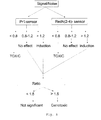
- a compound is considered genotoxic when the S/N in the recN2-4 strain is greater than 1.5x the solvent control value (and not "2" as was initially done), but only when this increase is not accompanied by a comparable increase in the pr1 strain (that would indicate a non-genotoxic induction mechanism).
- a compound is genotoxic when the S/N ratio's of the recN2-4 over the pr1 strain is equal or higher than 1.5 (limit set on experimental grounds). In this way "false positive" results can be avoided.
- the pr1 strain is furthermore also very valuable for toxicity evaluation. Bacterial toxicity is assumed when the light emission is substantially decreasing in a dose-dependent way and attains S/N values lower than 0.8 within the first 30 minutes of the test.
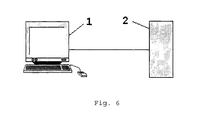
- An detection apparatus (2) comprising at least a detector for the signal that is emitted from a diagnostic system as above described, is linked to a computer (1) which receives and processes the detector data according to the analysis method as above described and as clarified in figure 5. This way, an automised analysis of samples and classification as toxic and/or genotoxic is possible.
- Table 1 VITOTOX test results for selected chemicals concentration at which S/R's of rec/pri >1.5 COMPOUND* S9** DOSE RANGE TESTED S/R>2 (recN2-4) MAX MEAN Toxic (pri) Furazolidone - 0.125-32ppb 0.25ppb 0.5ppb 0.25ppb 4NQO - 0.4-102ppb 0.8ppb 1.6ppb 0.8ppb - Nifuroxazide - 2-256ppb 8ppb 16ppb 8ppb + MMC - 3.9-500ppb 31.2ppb 31.2ppb 15.6ppb - 3-Nitrofluoranthene - 7.9-1000ppb 15.7ppb 31.3ppb 15.7ppb - 3-Nitrofluoranthene +25 7.9-1000ppb 15.7ppb 31.2ppb 15.7ppb - Nifuroxazide - 0.04-5.12ppm 0.04ppm 0.04ppm 0.04ppm + 3Nit
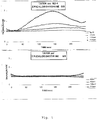
- Figure 1 gives the S/N curves for epichlorohydrine in the rec N2-4 and pr1 strains. In the recN2-4 strain the S/N values became greater than 2 at the dose of 256 ppm, (not shown) whereas S/N values in the pr1 strain did not greatly deflect from 1.
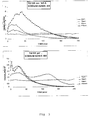
- Figure 2 gives the results for ZnCl 2 that is non-genotoxic but toxic for Salmonella typhimurium TA104 at concentrations higher than 7.4 ⁇ M. (not shown) Sodium azide is given as a third example in figure 3.
- the VITOTOX ® -test is a sensitive and rapid method to detect genotoxic compounds (van der Lelie et al., 1997). However, if only the recN2-4 strain is used (as was initially done) some misinterpretations were possible.
- the present invention is based upon the use of the pr1 strain. The added value of the pr1 strain was illustrated by a few examples. In figure 1 an example is given of a genotoxic compound (epichlorohydrine) that was not toxic in the given dose-range. Based on the results obtained from the recN2-4 strain alone one may conclude that the compound was genotoxic as a dose-dependent increase in light production was observed that exceeded the "noise" value by more than a factor of two (S/N>2).
- VITOTOX ® -test is essentially based on detection of a SOS signal. It should therefore theoretically produce results that are more in agreement with the SOS chromotest than with the Ames test. Yet, some differences were previously found. The Inventors have reported for example a "positive" response for sodium azide while this compound normally scores "negative” in the SOS chromotest (van der Lelie et al, 1997). One reason for this discrepancy could be that the VITOTOX ® -test uses the Ames-test's Salmonella typhimurium TA104 strain and therefore has the same characteristics, e.g., reduced DNA repair capability and increased permeability for complex molecules (as most pharmaceutical compounds).
- the Inventors have tested and compared much more pharmaceutical compounds with the other bacterial tests. Results obtained by the different tests were most often completely in agreement with each other.
- the VITOTOX ® test usually is also much more sensitive than the Ames or SOS chromotest as the minimal detectable concentrations are 1-100 times lower in the VITOTOX ® test.
- Another advantage of using the pr1 strain is that besides genotoxicity, toxicity can be better evaluated than with the recN2-4 strain alone.
- a genotoxic compound that is investigated at dose levels around the toxicity threshold can show S/N ratio's in the recN2-4 strain that are "intermediate" between genotoxicity and toxicity as increase in light production (due to genotoxicity) competes with a decrease (due to toxicity) resulting in a S/N ⁇ 1.
- the compound would therefore be interpreted as neither genotoxic or toxic (false negative result).
- the pr1 strain will clearly show a decrease in the light emission indicating that the compound is already toxic at the given dose.
- VITOTOX ® -test gives the same results as the Microtox ® -test but the former is more easy to perform and is often much more sensitive.
- the VITOTOX ® -test, or only its prl-element, may therefore also be considered as an extremely valuable toxicity test, at least when these preliminary results can be confirmed.
- test compound only very small volumes of the test compound are required (less than 20 mg). This is particularly important for the pharmaceutical industry where only a few hundred milligrams of a compound are available in the discovery phase. It is just impossible to screen such new chemicals with (most) other test systems.
Landscapes
- Chemical & Material Sciences (AREA)
- Life Sciences & Earth Sciences (AREA)
- Organic Chemistry (AREA)
- Health & Medical Sciences (AREA)
- Zoology (AREA)
- Wood Science & Technology (AREA)
- Proteomics, Peptides & Aminoacids (AREA)
- Engineering & Computer Science (AREA)
- Genetics & Genomics (AREA)
- Molecular Biology (AREA)
- Biochemistry (AREA)
- Microbiology (AREA)
- Biotechnology (AREA)
- Biophysics (AREA)
- Analytical Chemistry (AREA)
- Physics & Mathematics (AREA)
- Immunology (AREA)
- Bioinformatics & Cheminformatics (AREA)
- General Engineering & Computer Science (AREA)
- General Health & Medical Sciences (AREA)
- Measuring Or Testing Involving Enzymes Or Micro-Organisms (AREA)
- Micro-Organisms Or Cultivation Processes Thereof (AREA)
- Investigating Or Analysing Biological Materials (AREA)
- Nitrogen And Oxygen Or Sulfur-Condensed Heterocyclic Ring Systems (AREA)
Claims (13)
- Diagnosesystem bestehend aus:- transformiertem Mikroorganismus, der, wenn dieser einer Beschädigung der Umgebung ausgesetzt ist, zu einer angestiegenen Reporter-Aktivität befähigt ist, wobei der Mikroorganismus eine unter Druck induzierbare Promoter-Sequenz hat, die operativ mit einem Reporter verknüpft ist, der die Nuklidsäuresequenz entschlüsselt, wobei ein Reporter-Molekül entschlüsselt wird, was in einem Signal resultiert, das analysiert werden kann, und- transformiertem Mikroorganismus, der eine richtunggebende und nicht durch Druck induzierbar Promoter-Sequenz hat, die operativ mit einem Reporter verknüpft ist, der die Nukleidsäuresequenz entschlüsselt, wobei ein Reporter-Molekül entschlüsselt wird, was in einem Signal resultiert, das analysiert werden kann,der Mikroorganismus ist geeignet, unter Eliminierung falscher positiver und falscher negativer Ergebnisse, die Beschädigung der Umgebung zusammenwirkend nachzuweisen.
- System gemäß Anspruch 1, wobei das Signal als Lichterzeugung und/oder kalorimetrischer Änderung analysiert wird.
- System gemäß Anspruch 1 oder 2, wobei der transformierte bioluminiszente Mikroorganismus eine E. Coli - Bakterie ist.
- System gemäß Anspruch 1 oder 2, wobei der transformierte bioluminiszente Mikroorganismus eine Salmonella thyphimurium - Bakterie ist, ein bestens für den Ames-Test geeigneter Mikroorganismus, der vorteilhafterweise aus einer Gruppe ausgewählt ist, die aus TA98, TA100, TA102, TA104, TA1535, TA1538, TA7001 bis TA7006 und TA7041 bis TA7046 besteht oder die die Hinterlegungsnummer für Mikroorganismen LMG P-18318 hat.
- System gemäß irgendeinem der vorangegangenen Ansprüche 1 bis 4, wobei die durch Druck induzierbare Promoter-Sequenz aus der Gruppe ausgewählt ist, die aus groEL, dnaK, grpE, phoA, glnA, lon, lysU, rpoD, clpB, clpP, uspA, katG, uvrA, frdA, micF, fabA, lac, his, sodA, sodB, soi-28, recA, xthA, narG, recF, recJ, recN, recO, recQ, ruv, uvrD, ars, cad, mer, pco und sfiA besteht.
- System gemäß irgendeinem der vorangegangenen Ansprüche 1 bis 5, wobei die richtunggebende und nicht durch Druck induzierbare Promoter-Sequenz eine Sequenz mit einer Sigma 70 Konsenssequenz (TTGACA (-35).....17/18 bp .....TATAAT (-10)) ist und deren Umschrift nicht positiv oder negativ auf dem Promoter-Niveau reguliert wird.
- System gemäß irgendeinem der vorangegangenen Ansprüche 1 bis 6, wobei der Reporter, der die Nukleidsäuresequenz entschlüsselt, die Luziferasegene A und B oder ein luxAB Übersetzungsfusionsgen umfasst.
- System gemäß irgendeinem der vorangegangenen Ansprüche 1 bis 7, wobei der Reporter, der die Nukleidsäuresequenz entschlüsselt, die Luziferasegene A und B sowie die Luziferasegene C, D und E umfasst, die zur Herstellung des begrenzenden Fettsäuresubstrates benötigt werden, das beim Aufarbeiten verwandt wird.
- System gemäß irgendeinem der vorangegangenen Ansprüche 1 bis 8, wobei die Beschädigung der Umgebung die Gegenwart einer genotoxischen und/oder toxischen Komponente in einer Probe ist.
- Diagnoseausrüstung, die die Bestandteile des Diagnosesystems umfasst, gemäß irgendeinem der vorangegangenen Ansprüche 1 bis 9 und möglicherweise die notwendigen zusätzlichen Reaktanten, Verdünnungsmittel und/oder festen Träger umfasst.
- Verfahren zur Diagnose einer Beschädigung der Umgebung, vorzugsweise zur Bestimmung der Gegenwart einer genotoxischen und/oder einer toxischen Komponente in einer Probe, das diese Schritte umfasst:- Aussetzen des Diagnosesystems dieser Beschädigung der Umgebung gemäß irgendeinem der vorangegangenen Ansprüche 1 bis 8, und- Messen des Diagnosesystems eines Signals vom transformierten bioluminiszenten Mikroorganismus.
- Verfahren zur Bestimmung der Kinetik der Genotoxidität einer Komponent in einer Probe mittels eines diagnosesystems irgeneiner der Ansprüche 1 bis 9, wobei das Messen von Luminiszenz beider induzierbarer und richtunggebender transformierter Mikroorganismen zu multiplen Zeitpunkten vorzugsweise stetig stattfindet, und ferner der Schritt der Bestimmung des Signal-zu-Untergrund (S/U)-Verhältnisses für den transformierten Mikroorganismus an diesem Ort und zu dieser Zeit ausführt wird, wobei das S/U-Verhältnis des induzierbaren Mikroorganismus durch das der richtunggebenden Mikroorganismen geteilt wird, und Ausdrucken dieser Daten, wobei dieser Ausdruck die korrigierte Kinetik der Genotoxidität der genotoxischen Komponente in der Probe darstellt.
- Analyseverfahren einer Beschädigung der Umgebung, das diese Schritte umfasst:- Ausführung der wie in Anspruch 11 beschriebenen Diagnose der Beschädigung der Umgebung,- Berechnung des Signal-zu-Untergrund-Verhältnisses beider transformierter Mikroorganismen,- Klassifizierung der Beschädigung der Umgebung als toxisch, wenn wenigstens eines der berechneten Signal-zu-Untergrund-Verhältnisse niedriger als 0,8 ist,- Klassifizierung der Beschädigung der Umgebung als hätte es keine Wirkung, wenn das Signal-zu-Untergrund-Verhältnis des Mikroorganismus, das die durch Druck induzierbare Promoter-Sequenz umfasst, zwischen 0,8 und 1,2 liegt, und- Klassifizierung der Beschädigung der Umgebung als induzierend und genotoxisch, wenn das Signal zu-Untergrund-Verhältnis des Mikroorganismus, das die durch Druck induzierbare Promoter-Sequenz umfasst, höher ist als 1,2 und wenigstens 50 % höher ist als das Signal-zu-Untergrund-Verhältnis des Mikroorganismus, der die richtunggebende Promoter-Sequenz umfasst.
Priority Applications (1)
| Application Number | Priority Date | Filing Date | Title |
|---|---|---|---|
| EP99918988A EP0977896B1 (de) | 1998-04-14 | 1999-04-12 | Diagnosesystem und verfahren zur bestimmung des vorhandenseins einer genotoxischen verbindung in einer probe |
Applications Claiming Priority (4)
| Application Number | Priority Date | Filing Date | Title |
|---|---|---|---|
| EP98870081 | 1998-04-14 | ||
| EP98870081A EP0950717A1 (de) | 1998-04-14 | 1998-04-14 | Diagnostisches System und Verfahren zur Bestimmung genotoxischer Substanzen in einer Probe |
| EP99918988A EP0977896B1 (de) | 1998-04-14 | 1999-04-12 | Diagnosesystem und verfahren zur bestimmung des vorhandenseins einer genotoxischen verbindung in einer probe |
| PCT/BE1999/000049 WO1999053092A1 (en) | 1998-04-14 | 1999-04-12 | Diagnostic system and method for determining the presence of a genotoxic compound in a sample |
Publications (2)
| Publication Number | Publication Date |
|---|---|
| EP0977896A1 EP0977896A1 (de) | 2000-02-09 |
| EP0977896B1 true EP0977896B1 (de) | 2007-01-17 |
Family
ID=8237025
Family Applications (2)
| Application Number | Title | Priority Date | Filing Date |
|---|---|---|---|
| EP98870081A Withdrawn EP0950717A1 (de) | 1998-04-14 | 1998-04-14 | Diagnostisches System und Verfahren zur Bestimmung genotoxischer Substanzen in einer Probe |
| EP99918988A Expired - Lifetime EP0977896B1 (de) | 1998-04-14 | 1999-04-12 | Diagnosesystem und verfahren zur bestimmung des vorhandenseins einer genotoxischen verbindung in einer probe |
Family Applications Before (1)
| Application Number | Title | Priority Date | Filing Date |
|---|---|---|---|
| EP98870081A Withdrawn EP0950717A1 (de) | 1998-04-14 | 1998-04-14 | Diagnostisches System und Verfahren zur Bestimmung genotoxischer Substanzen in einer Probe |
Country Status (13)
| Country | Link |
|---|---|
| US (1) | US6472152B1 (de) |
| EP (2) | EP0950717A1 (de) |
| JP (1) | JP4272265B2 (de) |
| CN (1) | CN1227367C (de) |
| AT (1) | ATE351922T1 (de) |
| AU (1) | AU3694499A (de) |
| BR (1) | BR9906356A (de) |
| CA (1) | CA2290354C (de) |
| DE (1) | DE69934847T2 (de) |
| DK (1) | DK0977896T3 (de) |
| ES (1) | ES2281173T3 (de) |
| PT (1) | PT977896E (de) |
| WO (1) | WO1999053092A1 (de) |
Families Citing this family (7)
| Publication number | Priority date | Publication date | Assignee | Title |
|---|---|---|---|---|
| US6642057B1 (en) * | 1989-03-30 | 2003-11-04 | Solomon Zaromb | Methods for the detection of harmful substances or traces thereof |
| AUPP438598A0 (en) | 1998-06-29 | 1998-07-23 | Garvan Institute Of Medical Research | NPY-Y7 receptor gene |
| DE10061872A1 (de) * | 2000-12-12 | 2002-06-20 | Lichtenberg Frate Hella | Hefestamm zur Prüfung der Geno- und Zytotoxizität komplexer Umweltkontaminationen |
| US7455375B2 (en) | 2001-08-23 | 2008-11-25 | Hewlett-Packard Development Company, L.P. | Removable media storage method and device for a data storage system |
| KR20030040923A (ko) * | 2001-11-17 | 2003-05-23 | 광주과학기술원 | 산화적 손상과 관련된 유해성 탐지를 위한 재조합발광박테리아 대장균DH5@/pSodaLux(EBHJ1)[KCTC10098BP] |
| GB0415963D0 (en) * | 2004-07-16 | 2004-08-18 | Cxr Biosciences Ltd | Detection of cellular stress |
| EP1817427B1 (de) * | 2004-11-24 | 2010-09-08 | F. Hoffmann-La Roche AG | Verfahren zur bestimmung von genotoxizität |
Family Cites Families (6)
| Publication number | Priority date | Publication date | Assignee | Title |
|---|---|---|---|---|
| WO1992015687A1 (en) | 1991-03-01 | 1992-09-17 | Vito | Fused genes and their use for determining the presence of metals or of xenobiotic compounds |
| SG77101A1 (en) * | 1992-07-06 | 2000-12-19 | Harvard College | Methods and diagnostic kits for determining toxicity utilizing bacterial stress promoters fused to reporter genes |
| IL107815A (en) * | 1992-12-04 | 2003-12-10 | Du Pont | Genetic constructs comprising a stress-responsive promoter linked to a lux reporter operon and methods of use in environmental testing |
| US5702883A (en) * | 1993-10-22 | 1997-12-30 | Kabushiki Kaisha Toyota Chuo Kenkyusho | Methods for detection of mutagens using luminescence gene |
| JPH10509049A (ja) * | 1994-11-23 | 1998-09-08 | イー・アイ・デユポン・ドウ・ヌムール・アンド・カンパニー | 毒物検出のための凍結乾燥生物発光細菌試薬 |
| WO1997041251A1 (en) * | 1996-04-25 | 1997-11-06 | Vlaamse Instelling Voor Technologisch Onderzoek (Vito) | Recombinant nucleic acid sequences and methods for determining both genotoxicity and mutagenicity of a sample and the kinetics of the genetoxicity |
-
1998
- 1998-04-14 EP EP98870081A patent/EP0950717A1/de not_active Withdrawn
-
1999
- 1999-04-12 CA CA002290354A patent/CA2290354C/en not_active Expired - Lifetime
- 1999-04-12 DE DE69934847T patent/DE69934847T2/de not_active Expired - Lifetime
- 1999-04-12 CN CNB998005495A patent/CN1227367C/zh not_active Expired - Lifetime
- 1999-04-12 EP EP99918988A patent/EP0977896B1/de not_active Expired - Lifetime
- 1999-04-12 US US09/424,031 patent/US6472152B1/en not_active Expired - Lifetime
- 1999-04-12 AT AT99918988T patent/ATE351922T1/de active
- 1999-04-12 JP JP55096499A patent/JP4272265B2/ja not_active Expired - Lifetime
- 1999-04-12 ES ES99918988T patent/ES2281173T3/es not_active Expired - Lifetime
- 1999-04-12 WO PCT/BE1999/000049 patent/WO1999053092A1/en not_active Ceased
- 1999-04-12 AU AU36944/99A patent/AU3694499A/en not_active Abandoned
- 1999-04-12 PT PT99918988T patent/PT977896E/pt unknown
- 1999-04-12 DK DK99918988T patent/DK0977896T3/da active
- 1999-04-12 BR BR9906356-5A patent/BR9906356A/pt not_active Application Discontinuation
Also Published As
| Publication number | Publication date |
|---|---|
| CA2290354A1 (en) | 1999-10-21 |
| JP2002509446A (ja) | 2002-03-26 |
| DE69934847D1 (de) | 2007-03-08 |
| US6472152B1 (en) | 2002-10-29 |
| EP0977896A1 (de) | 2000-02-09 |
| PT977896E (pt) | 2007-04-30 |
| EP0950717A1 (de) | 1999-10-20 |
| DK0977896T3 (da) | 2007-05-21 |
| BR9906356A (pt) | 2000-09-19 |
| AU3694499A (en) | 1999-11-01 |
| CN1263561A (zh) | 2000-08-16 |
| CN1227367C (zh) | 2005-11-16 |
| ES2281173T3 (es) | 2007-09-16 |
| WO1999053092A1 (en) | 1999-10-21 |
| ATE351922T1 (de) | 2007-02-15 |
| CA2290354C (en) | 2009-09-22 |
| JP4272265B2 (ja) | 2009-06-03 |
| DE69934847T2 (de) | 2007-11-08 |
Similar Documents
| Publication | Publication Date | Title |
|---|---|---|
| Verschaeve et al. | VITOTOX® bacterial genotoxicity and toxicity test for the rapid screening of chemicals | |
| AU687353B2 (en) | Methods and diagnostic kits for determining toxicity utilizing bacterial stress promoters fused to reporter genes | |
| Prest et al. | The construction and application of a lux‐based nitrate biosensor | |
| US6472152B1 (en) | Diagnostic systems and method for determining the presence of a genotoxic and/or toxic compound in a sample | |
| EP0922106A1 (de) | Lichtproduzierender biosensor | |
| Zhang et al. | Transcriptional regulation by Lge1p requires a function independent of its role in histone H2B ubiquitination | |
| EP0469021B1 (de) | Bestimmung der die genregelung und/oder genreplikation betreffenden faktoren | |
| Crabeel et al. | Arginine-specific repression in Saccharomyces cerevisiae: kinetic data on ARG1 and ARG3 mRNA transcription and stability support a transcriptional control mechanism | |
| JPH0412118B2 (de) | ||
| EP1222312B1 (de) | Multiplex-pcr zum nachweis von ehec-infektionen | |
| EP2576599A1 (de) | Genetisch modifiziertes bakterium der gattung listeria monocytogenes | |
| EP1367134A1 (de) | Verfahren zum Nachweis von Arsenionen durch Indikatorbakterien | |
| CN101454672A (zh) | 高质粒生产性e.coli克隆的遗传选择的方法 | |
| AU2007200488B2 (en) | Diagnostic system and method for determining the presence of a genotoxic compound in a sample | |
| EP0907748B1 (de) | Rekombinante nukleinsäuresequenzen und methoden für die bestimmung der gentoxizität und mutagenität einer probe sowie der kinetik der gentoxizität | |
| EP1761644A1 (de) | Verfahren und kits zur detektion, identifizierung und quantifizierung von bakterien und hefen in wein, bier und säften | |
| US6602666B2 (en) | Recombinant nucleic acid sequences and methods for determining both genotoxicity and mutagenicity of a sample and the kinetics of the genotoxicity | |
| US20050070006A1 (en) | Method for detecting mutagenic substances | |
| JP4819545B2 (ja) | マルチプレックスpcr用人工陽性対照dna群の作製法 | |
| US20260117324A1 (en) | Biosensor and Assays for Rapid Detection of Antibiotic Resistance | |
| CN119242832A (zh) | 一种用于鉴定单增李斯特菌生物被膜表型的遗传标志物及其应用 | |
| JP3277426B2 (ja) | 無試薬変異原検出法 | |
| CN121518676A (zh) | 一种检测病原微生物的多重pcr引物探针组合物、多重pcr检测产品 |
Legal Events
| Date | Code | Title | Description |
|---|---|---|---|
| PUAI | Public reference made under article 153(3) epc to a published international application that has entered the european phase |
Free format text: ORIGINAL CODE: 0009012 |
|
| 17P | Request for examination filed |
Effective date: 19991203 |
|
| AK | Designated contracting states |
Kind code of ref document: A1 Designated state(s): AT BE CH CY DE DK ES FI FR GB GR IE IT LI LU MC NL PT SE |
|
| RBV | Designated contracting states (corrected) |
Designated state(s): AT BE CH CY DE DK ES FI FR GB GR IE IT LI LU MC NL PT SE |
|
| 17Q | First examination report despatched |
Effective date: 20020226 |
|
| GRAP | Despatch of communication of intention to grant a patent |
Free format text: ORIGINAL CODE: EPIDOSNIGR1 |
|
| GRAS | Grant fee paid |
Free format text: ORIGINAL CODE: EPIDOSNIGR3 |
|
| GRAA | (expected) grant |
Free format text: ORIGINAL CODE: 0009210 |
|
| RBV | Designated contracting states (corrected) |
Designated state(s): AT BE CH DE DK ES FI FR GB GR IE IT LI LU MC NL PT SE |
|
| AK | Designated contracting states |
Kind code of ref document: B1 Designated state(s): AT BE CH DE DK ES FI FR GB GR IE IT LI LU MC NL PT SE |
|
| REG | Reference to a national code |
Ref country code: GB Ref legal event code: FG4D |
|
| REG | Reference to a national code |
Ref country code: CH Ref legal event code: EP |
|
| REG | Reference to a national code |
Ref country code: IE Ref legal event code: FG4D |
|
| REF | Corresponds to: |
Ref document number: 69934847 Country of ref document: DE Date of ref document: 20070308 Kind code of ref document: P |
|
| REG | Reference to a national code |
Ref country code: PT Ref legal event code: SC4A Free format text: AVAILABILITY OF NATIONAL TRANSLATION Effective date: 20070417 |
|
| REG | Reference to a national code |
Ref country code: SE Ref legal event code: TRGR |
|
| REG | Reference to a national code |
Ref country code: DK Ref legal event code: T3 |
|
| REG | Reference to a national code |
Ref country code: GR Ref legal event code: EP Ref document number: 20070401186 Country of ref document: GR |
|
| ET | Fr: translation filed | ||
| REG | Reference to a national code |
Ref country code: ES Ref legal event code: FG2A Ref document number: 2281173 Country of ref document: ES Kind code of ref document: T3 |
|
| PLBE | No opposition filed within time limit |
Free format text: ORIGINAL CODE: 0009261 |
|
| STAA | Information on the status of an ep patent application or granted ep patent |
Free format text: STATUS: NO OPPOSITION FILED WITHIN TIME LIMIT |
|
| 26N | No opposition filed |
Effective date: 20071018 |
|
| REG | Reference to a national code |
Ref country code: FR Ref legal event code: PLFP Year of fee payment: 18 |
|
| REG | Reference to a national code |
Ref country code: FR Ref legal event code: PLFP Year of fee payment: 19 |
|
| REG | Reference to a national code |
Ref country code: FR Ref legal event code: PLFP Year of fee payment: 20 |
|
| PGFP | Annual fee paid to national office [announced via postgrant information from national office to epo] |
Ref country code: FI Payment date: 20180322 Year of fee payment: 20 Ref country code: GB Payment date: 20180321 Year of fee payment: 20 Ref country code: DK Payment date: 20180322 Year of fee payment: 20 Ref country code: NL Payment date: 20180326 Year of fee payment: 20 Ref country code: CH Payment date: 20180326 Year of fee payment: 20 Ref country code: LU Payment date: 20180323 Year of fee payment: 20 |
|
| PGFP | Annual fee paid to national office [announced via postgrant information from national office to epo] |
Ref country code: FR Payment date: 20180322 Year of fee payment: 20 Ref country code: IT Payment date: 20180326 Year of fee payment: 20 Ref country code: SE Payment date: 20180326 Year of fee payment: 20 Ref country code: IE Payment date: 20180323 Year of fee payment: 20 Ref country code: MC Payment date: 20180326 Year of fee payment: 20 Ref country code: BE Payment date: 20180323 Year of fee payment: 20 Ref country code: GR Payment date: 20180326 Year of fee payment: 20 |
|
| PGFP | Annual fee paid to national office [announced via postgrant information from national office to epo] |
Ref country code: ES Payment date: 20180504 Year of fee payment: 20 Ref country code: DE Payment date: 20180320 Year of fee payment: 20 Ref country code: PT Payment date: 20180402 Year of fee payment: 20 |
|
| PGFP | Annual fee paid to national office [announced via postgrant information from national office to epo] |
Ref country code: AT Payment date: 20180322 Year of fee payment: 20 |
|
| REG | Reference to a national code |
Ref country code: DE Ref legal event code: R071 Ref document number: 69934847 Country of ref document: DE |
|
| REG | Reference to a national code |
Ref country code: CH Ref legal event code: PL Ref country code: DK Ref legal event code: EUP Effective date: 20190412 |
|
| REG | Reference to a national code |
Ref country code: NL Ref legal event code: MK Effective date: 20190411 |
|
| REG | Reference to a national code |
Ref country code: GB Ref legal event code: PE20 Expiry date: 20190411 |
|
| REG | Reference to a national code |
Ref country code: BE Ref legal event code: MK Effective date: 20190412 |
|
| REG | Reference to a national code |
Ref country code: SE Ref legal event code: EUG |
|
| REG | Reference to a national code |
Ref country code: IE Ref legal event code: MK9A |
|
| REG | Reference to a national code |
Ref country code: AT Ref legal event code: MK07 Ref document number: 351922 Country of ref document: AT Kind code of ref document: T Effective date: 20190412 |
|
| PG25 | Lapsed in a contracting state [announced via postgrant information from national office to epo] |
Ref country code: IE Free format text: LAPSE BECAUSE OF EXPIRATION OF PROTECTION Effective date: 20190412 Ref country code: PT Free format text: LAPSE BECAUSE OF EXPIRATION OF PROTECTION Effective date: 20190424 |
|
| PG25 | Lapsed in a contracting state [announced via postgrant information from national office to epo] |
Ref country code: GB Free format text: LAPSE BECAUSE OF EXPIRATION OF PROTECTION Effective date: 20190411 |
|
| REG | Reference to a national code |
Ref country code: ES Ref legal event code: FD2A Effective date: 20200902 |
|
| PG25 | Lapsed in a contracting state [announced via postgrant information from national office to epo] |
Ref country code: ES Free format text: LAPSE BECAUSE OF EXPIRATION OF PROTECTION Effective date: 20190413 |