EP0973541B1 - Verwendung von histonen zur herstellung von arzneimitteln - Google Patents
Verwendung von histonen zur herstellung von arzneimitteln Download PDFInfo
- Publication number
- EP0973541B1 EP0973541B1 EP98919254A EP98919254A EP0973541B1 EP 0973541 B1 EP0973541 B1 EP 0973541B1 EP 98919254 A EP98919254 A EP 98919254A EP 98919254 A EP98919254 A EP 98919254A EP 0973541 B1 EP0973541 B1 EP 0973541B1
- Authority
- EP
- European Patent Office
- Prior art keywords
- histone
- histones
- membrane
- cells
- proteins
- Prior art date
- Legal status (The legal status is an assumption and is not a legal conclusion. Google has not performed a legal analysis and makes no representation as to the accuracy of the status listed.)
- Expired - Lifetime
Links
- 239000003814 drug Substances 0.000 title claims description 7
- 238000004519 manufacturing process Methods 0.000 title claims 2
- 108010033040 Histones Proteins 0.000 claims abstract description 74
- 102000006947 Histones Human genes 0.000 claims abstract description 56
- 206010028980 Neoplasm Diseases 0.000 claims abstract description 27
- 201000011510 cancer Diseases 0.000 claims abstract description 24
- 210000000170 cell membrane Anatomy 0.000 claims description 8
- 238000002560 therapeutic procedure Methods 0.000 claims description 2
- 229940079593 drug Drugs 0.000 claims 4
- 201000010099 disease Diseases 0.000 claims 1
- 208000037265 diseases, disorders, signs and symptoms Diseases 0.000 claims 1
- 239000012528 membrane Substances 0.000 abstract description 15
- 102000004169 proteins and genes Human genes 0.000 abstract description 12
- 108090000623 proteins and genes Proteins 0.000 abstract description 12
- 230000001225 therapeutic effect Effects 0.000 abstract description 7
- 101710141836 DNA-binding protein HU homolog Proteins 0.000 abstract description 4
- 101710174628 Modulating protein YmoA Proteins 0.000 abstract description 4
- 108010007568 Protamines Proteins 0.000 abstract description 2
- 102000007327 Protamines Human genes 0.000 abstract description 2
- 230000006378 damage Effects 0.000 abstract description 2
- 229940070353 protamines Drugs 0.000 abstract description 2
- 239000003795 chemical substances by application Substances 0.000 abstract 2
- 230000000069 prophylactic effect Effects 0.000 abstract 2
- 241000203069 Archaea Species 0.000 abstract 1
- 108010052285 Membrane Proteins Proteins 0.000 abstract 1
- 102000018697 Membrane Proteins Human genes 0.000 abstract 1
- 239000000539 dimer Substances 0.000 abstract 1
- 210000004027 cell Anatomy 0.000 description 50
- 102000005962 receptors Human genes 0.000 description 18
- 108020003175 receptors Proteins 0.000 description 18
- 230000036961 partial effect Effects 0.000 description 15
- 210000004899 c-terminal region Anatomy 0.000 description 10
- 239000012634 fragment Substances 0.000 description 8
- 208000032839 leukemia Diseases 0.000 description 7
- 206010025323 Lymphomas Diseases 0.000 description 6
- 238000000034 method Methods 0.000 description 6
- 230000003013 cytotoxicity Effects 0.000 description 5
- 231100000135 cytotoxicity Toxicity 0.000 description 5
- 238000004132 cross linking Methods 0.000 description 4
- 206010035226 Plasma cell myeloma Diseases 0.000 description 3
- 230000001472 cytotoxic effect Effects 0.000 description 3
- 238000003745 diagnosis Methods 0.000 description 3
- 230000000694 effects Effects 0.000 description 3
- 238000002474 experimental method Methods 0.000 description 3
- 201000000050 myeloid neoplasm Diseases 0.000 description 3
- 108090000765 processed proteins & peptides Proteins 0.000 description 3
- 238000011282 treatment Methods 0.000 description 3
- 241000287828 Gallus gallus Species 0.000 description 2
- ONIBWKKTOPOVIA-BYPYZUCNSA-N L-Proline Chemical compound OC(=O)[C@@H]1CCCN1 ONIBWKKTOPOVIA-BYPYZUCNSA-N 0.000 description 2
- 108010047956 Nucleosomes Proteins 0.000 description 2
- ONIBWKKTOPOVIA-UHFFFAOYSA-N Proline Natural products OC(=O)C1CCCN1 ONIBWKKTOPOVIA-UHFFFAOYSA-N 0.000 description 2
- 238000013459 approach Methods 0.000 description 2
- 230000015572 biosynthetic process Effects 0.000 description 2
- 244000309466 calf Species 0.000 description 2
- 230000030833 cell death Effects 0.000 description 2
- 231100000433 cytotoxic Toxicity 0.000 description 2
- 230000007850 degeneration Effects 0.000 description 2
- 210000003743 erythrocyte Anatomy 0.000 description 2
- 238000004949 mass spectrometry Methods 0.000 description 2
- 210000001623 nucleosome Anatomy 0.000 description 2
- 229920001184 polypeptide Polymers 0.000 description 2
- 239000011148 porous material Substances 0.000 description 2
- 102000004196 processed proteins & peptides Human genes 0.000 description 2
- 239000000126 substance Substances 0.000 description 2
- 210000001541 thymus gland Anatomy 0.000 description 2
- 210000004881 tumor cell Anatomy 0.000 description 2
- 241000894006 Bacteria Species 0.000 description 1
- 241000283690 Bos taurus Species 0.000 description 1
- 208000011691 Burkitt lymphomas Diseases 0.000 description 1
- 201000009030 Carcinoma Diseases 0.000 description 1
- 108010077544 Chromatin Proteins 0.000 description 1
- 101001035279 Gallus gallus Histone H5 Proteins 0.000 description 1
- 102100037487 Histone H1.0 Human genes 0.000 description 1
- 101001026554 Homo sapiens Histone H1.0 Proteins 0.000 description 1
- 101001067880 Homo sapiens Histone H4 Proteins 0.000 description 1
- 206010039491 Sarcoma Diseases 0.000 description 1
- 238000012300 Sequence Analysis Methods 0.000 description 1
- 239000013543 active substance Substances 0.000 description 1
- 230000001154 acute effect Effects 0.000 description 1
- 238000001042 affinity chromatography Methods 0.000 description 1
- 230000002776 aggregation Effects 0.000 description 1
- 238000004220 aggregation Methods 0.000 description 1
- 150000001413 amino acids Chemical class 0.000 description 1
- 230000001640 apoptogenic effect Effects 0.000 description 1
- 210000004369 blood Anatomy 0.000 description 1
- 239000008280 blood Substances 0.000 description 1
- 230000015556 catabolic process Effects 0.000 description 1
- 210000003850 cellular structure Anatomy 0.000 description 1
- 230000008859 change Effects 0.000 description 1
- 150000001793 charged compounds Chemical group 0.000 description 1
- 210000003483 chromatin Anatomy 0.000 description 1
- 230000001609 comparable effect Effects 0.000 description 1
- 230000000052 comparative effect Effects 0.000 description 1
- 210000004292 cytoskeleton Anatomy 0.000 description 1
- 238000006731 degradation reaction Methods 0.000 description 1
- 238000003795 desorption Methods 0.000 description 1
- 238000001514 detection method Methods 0.000 description 1
- 238000012631 diagnostic technique Methods 0.000 description 1
- 238000010586 diagram Methods 0.000 description 1
- 230000008482 dysregulation Effects 0.000 description 1
- 238000001962 electrophoresis Methods 0.000 description 1
- 239000002158 endotoxin Substances 0.000 description 1
- 238000010353 genetic engineering Methods 0.000 description 1
- 230000009422 growth inhibiting effect Effects 0.000 description 1
- 239000001963 growth medium Substances 0.000 description 1
- 210000000777 hematopoietic system Anatomy 0.000 description 1
- 150000002500 ions Chemical class 0.000 description 1
- 230000002147 killing effect Effects 0.000 description 1
- 230000001926 lymphatic effect Effects 0.000 description 1
- 239000000463 material Substances 0.000 description 1
- 239000011159 matrix material Substances 0.000 description 1
- 238000001906 matrix-assisted laser desorption--ionisation mass spectrometry Methods 0.000 description 1
- 230000007246 mechanism Effects 0.000 description 1
- 230000010534 mechanism of action Effects 0.000 description 1
- 239000002609 medium Substances 0.000 description 1
- 201000001441 melanoma Diseases 0.000 description 1
- 239000000203 mixture Substances 0.000 description 1
- 230000004048 modification Effects 0.000 description 1
- 238000012986 modification Methods 0.000 description 1
- 210000004897 n-terminal region Anatomy 0.000 description 1
- 230000001613 neoplastic effect Effects 0.000 description 1
- 231100000065 noncytotoxic Toxicity 0.000 description 1
- 230000006320 pegylation Effects 0.000 description 1
- -1 polyoxyethylene chains Polymers 0.000 description 1
- 238000002360 preparation method Methods 0.000 description 1
- 230000008569 process Effects 0.000 description 1
- 238000011321 prophylaxis Methods 0.000 description 1
- 238000000746 purification Methods 0.000 description 1
- 230000002829 reductive effect Effects 0.000 description 1
- 230000019491 signal transduction Effects 0.000 description 1
- 238000002415 sodium dodecyl sulfate polyacrylamide gel electrophoresis Methods 0.000 description 1
- 238000001228 spectrum Methods 0.000 description 1
- 230000001629 suppression Effects 0.000 description 1
- 238000002626 targeted therapy Methods 0.000 description 1
- 229940124597 therapeutic agent Drugs 0.000 description 1
Images
Classifications
-
- C—CHEMISTRY; METALLURGY
- C07—ORGANIC CHEMISTRY
- C07K—PEPTIDES
- C07K14/00—Peptides having more than 20 amino acids; Gastrins; Somatostatins; Melanotropins; Derivatives thereof
- C07K14/435—Peptides having more than 20 amino acids; Gastrins; Somatostatins; Melanotropins; Derivatives thereof from animals; from humans
- C07K14/705—Receptors; Cell surface antigens; Cell surface determinants
-
- A—HUMAN NECESSITIES
- A61—MEDICAL OR VETERINARY SCIENCE; HYGIENE
- A61K—PREPARATIONS FOR MEDICAL, DENTAL OR TOILETRY PURPOSES
- A61K38/00—Medicinal preparations containing peptides
- A61K38/16—Peptides having more than 20 amino acids; Gastrins; Somatostatins; Melanotropins; Derivatives thereof
-
- A—HUMAN NECESSITIES
- A61—MEDICAL OR VETERINARY SCIENCE; HYGIENE
- A61K—PREPARATIONS FOR MEDICAL, DENTAL OR TOILETRY PURPOSES
- A61K38/00—Medicinal preparations containing peptides
- A61K38/16—Peptides having more than 20 amino acids; Gastrins; Somatostatins; Melanotropins; Derivatives thereof
- A61K38/164—Peptides having more than 20 amino acids; Gastrins; Somatostatins; Melanotropins; Derivatives thereof from bacteria
-
- A—HUMAN NECESSITIES
- A61—MEDICAL OR VETERINARY SCIENCE; HYGIENE
- A61K—PREPARATIONS FOR MEDICAL, DENTAL OR TOILETRY PURPOSES
- A61K38/00—Medicinal preparations containing peptides
- A61K38/16—Peptides having more than 20 amino acids; Gastrins; Somatostatins; Melanotropins; Derivatives thereof
- A61K38/17—Peptides having more than 20 amino acids; Gastrins; Somatostatins; Melanotropins; Derivatives thereof from animals; from humans
- A61K38/1703—Peptides having more than 20 amino acids; Gastrins; Somatostatins; Melanotropins; Derivatives thereof from animals; from humans from vertebrates
- A61K38/1709—Peptides having more than 20 amino acids; Gastrins; Somatostatins; Melanotropins; Derivatives thereof from animals; from humans from vertebrates from mammals
-
- A—HUMAN NECESSITIES
- A61—MEDICAL OR VETERINARY SCIENCE; HYGIENE
- A61P—SPECIFIC THERAPEUTIC ACTIVITY OF CHEMICAL COMPOUNDS OR MEDICINAL PREPARATIONS
- A61P35/00—Antineoplastic agents
-
- A—HUMAN NECESSITIES
- A61—MEDICAL OR VETERINARY SCIENCE; HYGIENE
- A61P—SPECIFIC THERAPEUTIC ACTIVITY OF CHEMICAL COMPOUNDS OR MEDICINAL PREPARATIONS
- A61P7/00—Drugs for disorders of the blood or the extracellular fluid
Definitions
- the invention relates to the use of histones or their therapeutically effective sections for the preparation of medicaments according to claim 1.
- the effect of histone H1 on cancer cells is explained by the fact that cancer cells killed by histone H1 possess in their cell membrane a so-called receptor protein capable of binding the administered histone H1 ,
- the receptor protein was isolated by affinity chromatography on immobilized histone H1.
- the receptor protein has a phoretic mobility corresponding to a molecular mass in the range of 33000 Da (33 kDa) ⁇ 2000 Da.
- H1 binding of H1 with the membrane-bound receptor protein leads to a destruction of the membrane integrity, so that soluble cell components, such as dissolved proteins, ions and other substances uncontrolled escaped from the cancer cell to the outside or other substances can flow into the cell and the cell dies.
- the invention is based on the consideration that tumor cells of different histological origin, eg leukemias, lymphomas, sarcomas, carcinomas, melanomas, among others have special individual properties and that with closer knowledge of these individual cell-line-specific properties, these approaches to a new one can provide effective therapy.
- tumor cells of different histological origin eg leukemias, lymphomas, sarcomas, carcinomas, melanomas, among others have special individual properties and that with closer knowledge of these individual cell-line-specific properties, these approaches to a new one can provide effective therapy.
- the receptor is not characteristic of one or more specific cell types, but represents an individual cell-cell characteristic of cancer cells that could be made accessible to targeted therapy.
- the aim of the invention is to obtain more detailed information about the receptor, which teaches a new teaching for the therapeutic and prophylactic treatment or suppression of such individual cancer cells with such receptors.
- the objective thus also includes a diagnosis for the detection of cancers, which contain such receptors as an individual property, so that the success of the new doctrine for the therapeutic treatment of such individual cancer cells is also predictable and thus can be selectively applied.
- the histone-containing therapeutic is also prophylactically applicable. This will be especially the case when in these people the natural histone level in the blood is recognized as too low.
- the invention is based on the finding that the above receptor in the membrane of individual cancer cells, especially cancer cells of the hematopoietic system, such as leukemias, lymphomas, myelomas, various histones and / or their therapeutically effective parts containing a binding or crosslinking with added histones or the effective sections of which can be used, for diagnosis also suitable antibodies can be used.
- cancer cells of the hematopoietic system such as leukemias, lymphomas, myelomas, various histones and / or their therapeutically effective parts containing a binding or crosslinking with added histones or the effective sections of which can be used, for diagnosis also suitable antibodies can be used.
- a mass spectrometric analysis using the MALDI-MS technique revealed that the electrophoretically uniform protein band three proteins with molecular weights 11.2; 13.7 and 15 kDa.
- the mean values are calculated from singly and doubly charged molecular ion signals and from four to six sum spectra recorded by the examined sample.
- the following human histone sequences have the following molecular weights: H4 11282 Da H2B 13774 There H3 15324 There and H2A 14004 Da
- the said receptor consists of proteins or contains proteins which can be assigned to histones H4, H2B and H3 or are very similar to them. Their presence in the membrane of individual cancer cells is most likely due to tumor-related degeneration, as is their quantitative composition and possible structural differences with the nucleosomes in the histone.
- the histones of the classes H2A, H2B, H3 and / or H4 (the so-called core histones) occurring on the membrane of cancer cells in relatively high concentrations can be made larger by external addition of histones, in particular histone H1 or therapeutically effective sequence parts thereof Aggregates aggregates, destroying membrane integrity and killing cancer cells.
- the histones may be natural histones, e.g. from bovine material or also to recombinant histones. They may also be covalently modified histones or histone segments or functionally and structurally similar proteins. As suitable covalent modifications, e.g. Derivatives with polyoxyethylene chains (“PEGylation”) serve. Functionally or structurally similar proteins are z. Proteins or histone-like proteins from prokaryotes or ark.
- histone H1 molecules can further link the aggregates of the core histones organized to the so-called nucleosomes, resulting in the condensed form of the chromatin.
- nucleosomes resulting in the condensed form of the chromatin.
- largely intact H1 molecules are necessary, which have a compact folded middle part (the "globular” part) and the connected flexible, N- and C-terminal domains.
- histone H5 from chicken erythrocytes, which represents an erythrocyte-specific variant of H1
- erythrocyte-specific variant of H1 was used in some cases as active substances in cytotoxicity studies.
- Partly fragments of this histone were used, in which either both of the terminal domains were greatly reduced, or the C-terminal domain was successively shortened.
- the following figure shows the H5 fragments used and their structural makeup, although the complete molecule H5, essentially only its globular portion (GH5), the globular portion in conjunction with the N-terminal domain (NGH5), the globular portion in connection with the N-terminal domain and C-terminal portion 98-131 (NGC1H5) and finally the globular portion in conjunction with the N-terminal domain and C-terminal portion 98-151 (NGC2H5). All proteins and culture media used were tested for endotoxin freedom.
- H1 histone subsequences from H5.
- the patient's primary leukemia cells were tested with AML, the leukemia cells of the IM9 line and the lymphoma cells of the QH77 cell line.
- H1 was cytotoxic at a concentration of 250 ⁇ g / ml.
- the longer subsequences NGC1 H5 and NGC2H5 had comparable effects in the case of AML and the lymphoma cells to H1, and even stronger effects in the cells of the cell line IM9 than histone H1.
- the globular part GH5 and the partial sequence NGH5 provoked the least growth-inhibiting effects in all cell types.
- the partial sequences were used in equimolar amounts in H1 in each case. The results are summarized below in Examples 1 to 5.
- the above diagram shows the cytotoxicity of histone H1 and histone subsequences for primary leukemia cells of a patient with AML (acute myeloma leukemia).
- Examples 6 to 10 below show the cytotoxicity of histone H1 and histone subsequences for the cells of a myeloma leukemia of the cell line IM9.
- Examples 11 to 15 below show the cytotoxicity of histone H1 and histone partial sequences for the cells of a lymphoma of the cell line OH77.
- the globular domain of the H1 (or H5) molecule GH5 has little or no cytotoxic effect (cytotoxicity index below 20).
- H5 histone H5
- human subtypes of H1 e.g. in particular H1.1; H1.2; H1.3; H1.4 and H1.O or their parts to use according to the invention.
- Examples 16 and 17 show the efficacy of the recombinant (rh) derived human subtypes H1.0 and H1.2 compared to calf thymus (bov) histones H1 on cells of a Burkitt lymphoma of the Daudi cell line (Example 18).
- Table 2 below shows the mentioned human H1 subtypes with their N- and C-terminal domains in each case in conjunction with the globular domain between the N- and C-terminal domains, not mentioned here, as well as the necessary N- and C-terminal portions which, in analogy to the above results with chicken histone H5, are expected to have cytotoxic activity against cancer cells with membrane-bound core histone receptors.
- the C and N-terminal regions have been defined as those which contain proline (P) in their sequences because proline prevents the formation of helices since it causes an extension of the polypeptide chain.
- P proline
- the proteins of the individual cancer cell receptor represents, according to current knowledge, an aggregate of the core histones H2A, H2B, H3 and / or H4 or contains such histones or core-like histones. Whether DNA on the membrane surface occurs can not be said with certainty. It is not excluded.
- protamines can be synthesized and localized in place of the core histones or together with them in the cell membrane, which are crosslinkable or bindable with histones or histone-like proteins.
- core histones are strongly bound together by non-covalent forces and thus simulate a higher molecular weight. They are also associated with each other on the cell membrane, where they pass through tumor-induced dysregulation.
- the mechanism of action of the therapeutic according to the invention is based on a further crosslinking of the membrane-bound histones by (a) histones offered from the outside, in particular H1 and its crosslinkable parts, (b) by effective covalently modified histones or (c) by functionally and / or structurally histone-like proteins.
- Crosslinking or binding gives rise to larger aggregates in the cell membrane which have a pore character or cause pore formation in the membrane or else cause mechanical deformations of cell membrane components associated with the structures of the cytoskeleton, leading to disruption of membrane integrity and ultimately to cell membrane disruption Cell death leads.
- the involvement of signal transduction mechanisms and apoptotic progression is possible but is not the major process leading to cell death.
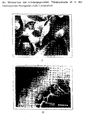
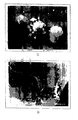
- Photograph A shows untreated cells of lymphoma cell line OH77 magnified 2000 times, while photograph B shows a section of A magnified 20,000 times. This clarifies the typical surface structure of an intact lymphatic tumor cell.
- Photograph D shows a drastic change of this cell section after a 12-hour exposure time with 200 ⁇ g / ml histone H1 at a magnification of 20,000 times. It turns out here that the cells contract to a spherical shape until they disintegrate after a treatment time with histone H1 after 24 hours as shown in photograph C.
- the added pure histone H1 was used in the concentration indicated above in each case in a normal medium for the cultivation of cells, as described in the cited reference.
- the individual cancer cells with the said receptor proteins in the membranes of these cancer cells can be diagnosed.
- histones, in particular H1 or its active parts or suitable antibodies are used which bind to the receptor protein, thus allowing for the first time a classification of individual cancer cells having the said receptors.
- the diagnostic techniques to be used in this case belong to the prior art.
- the prior art also includes the discovery of suitable antibodies which recognize the receptor proteins in the membrane of the cancer cells or the structures resulting from the aggregation.
Landscapes
- Health & Medical Sciences (AREA)
- Life Sciences & Earth Sciences (AREA)
- Chemical & Material Sciences (AREA)
- Medicinal Chemistry (AREA)
- General Health & Medical Sciences (AREA)
- Veterinary Medicine (AREA)
- Public Health (AREA)
- Animal Behavior & Ethology (AREA)
- Pharmacology & Pharmacy (AREA)
- Immunology (AREA)
- Organic Chemistry (AREA)
- Proteomics, Peptides & Aminoacids (AREA)
- Engineering & Computer Science (AREA)
- Gastroenterology & Hepatology (AREA)
- Bioinformatics & Cheminformatics (AREA)
- Epidemiology (AREA)
- Zoology (AREA)
- Chemical Kinetics & Catalysis (AREA)
- General Chemical & Material Sciences (AREA)
- Nuclear Medicine, Radiotherapy & Molecular Imaging (AREA)
- Genetics & Genomics (AREA)
- Cell Biology (AREA)
- Toxicology (AREA)
- Biochemistry (AREA)
- Biophysics (AREA)
- Marine Sciences & Fisheries (AREA)
- Molecular Biology (AREA)
- Diabetes (AREA)
- Hematology (AREA)
- Peptides Or Proteins (AREA)
- Medicines That Contain Protein Lipid Enzymes And Other Medicines (AREA)
- Medicines Containing Material From Animals Or Micro-Organisms (AREA)
- Pharmaceuticals Containing Other Organic And Inorganic Compounds (AREA)
Description
- Die Erfindung betrifft die Verwendung von Histonen oder deren therapeutisch wirksamen Abschnitten zur Herstellung von Arzneimitteln gemäß des Anspruches 1.
- Nach Reiner Class et al. in Am. J. Clin. Oncol. (CCT) 19 (5) 1996, S. 552-531 ist die Wirkung von Histon H1 auf Krebszellen dadurch erklärt, daß Krebszellen, welche von Histon H1 abgetötet werden, in ihrer Zellmembran ein sogenanntes Rezeptorprotein besitzen, welche das verabreichte Histon H1 binden kann. Das Rezeptorprotein wurde durch Affinitätschromatographie an immobilisiertem Histon H1 isoliert. Nach Ergebnissen der SDS-PAGE Elektrophoresetechnik besitzt das Rezeptorprotein eine phoretische Beweglichkeit, die einer Molmasse im Bereich von 33000 Da (33 kDa) ± 2000 Da entspricht.
- Die Bindung von H1 mit dem membranständigen Rezeptorprotein führt zu einer Zerstörung der Membranintegrität, so daß lösliche Zellbestandteile, wie gelöste Proteine, lonen und andere Stoffe unkontrolliert aus der Krebszelle nach außen entweichen oder anderer Stoffe in die Zelle einströmen können und die Zelle dadurch abstirbt.
- Die Erfindung geht von der Überlegung aus, daß Tumorzellen unterschiedlichen histologischen Ursprunges, z.B. Leukämien, Lymphome, Sarkome, Carcinome, Melanome u.a. besondere individuelle Eigenschaften besitzen und daß bei näherer Kenntnis dieser individuellen zellinienspezifischen Eigenschaften diese einen Ansatz für eine neue wirksame Therapie bieten können. Es konnte gezeigt werden, daß das Rezeptor überraschenderweise nicht charakteristisch ist für einen oder mehrere bestimmte Zelltypen, sondern eine individuelle zellinientypische Eigenschaft von Krebszellen darstellt, die einer gezielten Therapie zugänglich gemacht werden konnte.
- Die Erfindung hat sich damit zum Ziel gesetzt, nähere Kenntnisse über den Rezeptor zu erhalten, die eine neue Lehre zur therapeutischen und prophylaktischen Behandlung bzw. Unterdrückung von solchen individuellen Krebszellen mit derartigen Rezeptoren vermitteln.
- Die zielsetzung umfaßt damit auch eine Diagnose zur Erkennung von Krebserkrankungen, die als individuelle Eigenschaft solche Rezeptoren enthalten, so daß der Erfolg der neuen Lehre zur therapeutischen Behandlung solcher individueller Krebszellen auch vorherbestimmbar ist und damit gezielt zur Anwendung gebracht werden kann. Dies bedeutet, daß das Krankheitsbild nach Maßgabe des Erfolges einer Behandlung mit dem histonhaltigen Therapeutikum auf eine neue Weise klassifizierbar ist. Sobald gesicherte Erkenntnisse vorliegen, die die Neigung von bestimmten Menschen zu derartigen individuellen Krebszellen vorhersehen lassen, ist das histonhaltige Therapeutikum auch prophylaktisch anwendbar. Das wird vor allem dann der Fall sein, wenn bei diesen Menschen der natürliche Histonspiegel im Blut als zu niedrig erkannt ist.
- Der Erfindung liegt die Erkenntnis zugrunde, daß der vorstehende Rezeptor in der Membran von individuellen Krebszellen, insbesondere Krebszellen des blutbildenden Systems, wie Leukämien, Lymphome, Myelome, verschiedene Histone und/oder deren therapeutisch wirksame Teile enthält die eine Bindung oder Vernetzung mit zugeführten Histonen oder deren wirksamen Abschnitten eingehen, zur diagnose können auch geeignete Antikörper verwendet werden.
- Die Erfindung ist durch die kennzeichnenden Merkmale des Anspruchs 1 gelöst. Vorteilhafte Ausführungen ergeben sich aus den Merkmalen der Unteransprüche.
- Es wurde zunächst der vorstehend erwähnte Rezeptor in der Membran von individuellen Krebszellen charakterisiert.
- Eine massenspektrometrische Analyse mittels der MALDI-MS Technik (matrix-assisted laser desorption/ionization mass spectrometry) ergab, daß die elektrophoretisch einheitliche Proteinbande drei Proteine mit den Molmassen 11,2; 13,7 und 15 kDa enthielt.
- Im einzelnen ergaben sich folgende Mittelwerte:
11175 ± 40 Da 13730 ± 40 Da und 15035 ± 80 Da - Die Mittelwerte berechnen sich aus einfach- und doppelt geladenen Molekülionensignalen und vier bis sechs Summenspektren, die von der untersuchten Probe aufgenommen werden.
- Im Vergleich zu den vorstehenden drei Molmassen der Polypeptide des Rezeptors weisen die nachstehenden humanen Histonsequenzen folgende Molmassen auf:
H4 11282 Da H2B 13774 Da H3 15324 Da und H2A 14004 Da - Die Sequenzanalyse mittels automatisiertem Edman-Abbau identifizierte eine Peptidsequenz, welche dem Abschnitt 23-59 des humanen Histons H4 entspricht, sich aber in den Positionen 23 und 35 unterscheidet, was einer Homologie von 97,2% bezogen auf die bekannte Sequenz des Histons H4 in gesunden Zellen entspricht.
- Diese Befunde lassen den überraschenden Schluß zu, daß der besagte Rezeptor aus Proteinen besteht oder solche Proteine enhält, die den Histonen H4, H2B und H3 zugeordnet werden können oder ihnen sehr ähnlich sind. Ihr Vorkommen in der Membran von individuellen Krebszellen ist mit großer Wahrscheinlichkeit auf die tumorbedingte Entartung zurückzuführen, desgleichen ihre mengenmäßige Zusammensetzung und möglichen Strukturunterschiede zu den im Nucleosom befindlichen Histonen.
- Hiermit lassen sich die auf der Zehmembran von Krebszellen in vergleichsweiser hoher Konzentration vorkommenden Histone der Klassen H2A, H2B, H3 und/oder H4 (die sog. Core-Histone) durch äußere Zugabe von Histonen, insbesondere Histon H1 oder therapeutisch wirksamen Sequenzteilen derselben zu größeren Aggregaten vernetzen, wodurch die Membranintegrität zerstört wird und die Krebszellen abgetötet werden. Bei den Histonen kann es sich um natürliche Histone, z.B. aus bovinem Material oder auch um rekombinante Histone handeln. Es kann sich auch um kovalent modifizierte Histone oder Histonabschnitte oder funktionell und strukturell ähnliche Proteine handeln. Als geeignete kovalente Modifikationen können z.B. Derivate mit Polyoxyethylenketten ("PEGylierung") dienen. Funktionell oder strukturell ähnliche Proteine sind z. B. Protamine oder histonähnliche Proteine aus Prokaryonten oder Arche.
- Es ist bekannt, daß die Histon H1-Moleküle die zu den sog. Nucleosomen organisierten Aggregate der Core-Histone weiter verknüpfen können, wodurch die kondensierte Form des Chromatins entsteht. Dazu sind weitgehend intakte H1-Moleküle notwendig, welche einen kompakt gefalteten Mittelteil (den "globulären" Teil) und die angeschlossenen flexiblen, N- und C-terminalen Domänen aufweisen.
- Aus dieser Erkenntnis ließ sich eine Methode ableiten, den zytotoxisch wirksamen Bereich des Histon H1 Moleküls zu ermitteln, der eine Vernetzung oder Bindung mit dem Core-Histonen in Zellmembranen von individuellen Krebszellen weitgehend sicherstellt.
- Hierzu wurden in Zytotoxizitätsstudien als wirksame Substanzen teils das rekombinant gewonnene Histon H5 aus Hühnererythrozyten eingesetzt, welches eine erythrozytenspezifische Variante des H1 darstellt. Teils wurden Fragmente dieses Histons eingesetzt, bei welchen entweder beide der terminalen Domänen stark gekürzt wurden, oder die C-terminale Domäne sukzessive verkürzt wurde. Diese Fragmente und ihre gentechnische Herstellung wurden von Gerchman et al in Protein Expression & Purification, 5 (1994), Seiten 242-251 beschrieben.
- Die nachstehende Abbildung zeigt die verwendeten H5 Fragmente und ihren strukturellen Aufbauend zwar das vollständige Molekül H5, im wesentlichen nur seinen globularen Abschnitt (GH5), den globularen Abschnitt in Verbindung mit der N-terminalen Domäne (NGH5), den globulären Abschnitt in Verbindung mit der N-terminalen Domäne und demC-terminalen Abschnitt 98-131 (NGC1H5) und schließlich den globulären Abschnitt in Verbindung mit der N-terminalen Domäne und dem C-terminalen Abschnitt 98-151 (NGC2H5). Alle eingesetzten Proteine und Kulturmedien waren auf Endotoxinfreiheit getestet.

- Die vorstehende schematische Darstellung der 3 strukturellen Domänen des Moleküls Histon H5, GH5, NGH5, NGC1H5 und NGC2H5 bezeichnen rekombinant gewonnene Histonfragmente.
- Zur Untersuchung möglicher Struktur-Funktionsbeziehungen der Wirkung von H1 aus Kalbsthymus auf entartete Zellen wurden Vergleichsexperimente mit den zur Verfügung stehenden, rekombinant gewonnenen Histonteilsequenzen aus H5 gemacht. Es wurden die primären Leukämiezellen einer Patientin mit AML, die Leukämiezellen der Linie IM9 und die Lymphomzellen der Zellinie QH77 getestet. In allen Ansätzen wirkte H1 in einer Konzentration von 250 µg/ml zytotoxisch. Die längeren Teilsequenzen NGC1 H5 und NGC2H5 hatten im Fall der AML und der Lymphomzellen zu H1 vergleichbare, bei den Zellen der Zellinie IM9 sogar stärkere Wirkung als Histon H1. Der globuläre Teil GH5 und die Teilsequenz NGH5 provozierten bei allen Zelltypen die geringsten, wachstumshemmenden Effekte. Die Teilsequenzen wurden jeweils in zu H1 äquimolaren Mengen eingesetzt. Die Ergebnisse sind nachstehend in den Beispielen 1 bis 5 zusammengefaßt.

- Das vorstehende Diagramm zeigt die Zytotoxizität von Histon H1 und Histonteilsequenzen für Primäre Leukämiezellen einer Patientin mit AML (akute myelomische Leukämie).
- In den Beispielen 1 bis 5 wurden 1 x 10⁶ Zellen/ml für 48h unter Standardbedingungen wie folgt inkubiert:
- H1: Histon H1; rekombinante Teilsequenzen von Histon H5: GH5: Teilsequenz GH5; NGH5: Teilsequenz NGH5; C1: Teilsequenz NGC1 H5; C2: Teilsequenz NGC2H5. H1, bzw die Histonteilsequenzen wurden 12 µM eingesetzt. Die Vitalität der Zellen wurde mit der MTT-Methode bestimmt. Dargestellt sind die Mittelwerte aus je 4 Parallelexperimenten.
- Die nachstehenden Beispiele 6 bis 10zeigen die Zytotoxizität von Histon H1 und Histonteilsequenzen für die Zellen einer myelomischen Leukämie der Zellinie IM9.

- Weiterhin zeigen die nachstehenden Beispiele 11 bis 15die Zytotoxizität von Histon H1 und Histonteilsequenzen für die Zellen eines Lymphoms der Zellinie OH77.

- In den Beispielen 6 bis 15 wurden 5 x 10⁴ Zellen/ml für 48h unter Standardbedingungen wie folgt inkubiert:
- H1: Histon H1; rekombinante Teilsequenzen von Histon H5: GH5: Teilsequenz GH5; NGH5: Teilsequenz NGH5; C1: Teilsequenz NGC1H5; C2: Teilsequenz NGC2H5. H1, bzw. die Histonteilsequenzen wurden 12 µM eingesetzt. Die Vitalität der Zellen wurde mit der MTT-Methode bestimmt. Dargestellt sind die Mittelwerte aus je 4 Parallelexperimenten.
- Aus den Beispielen geht hervor, daß die globuläre Domäne des H1 (oder H5) Moleküls GH5 eine nur geringe oder keine zytotoxische Wirkung aufweist (Cytotoxizitätsindex unter 20). Ähnliches gilt für das Fragment NGH5, bei welchem die C-terminale Domäne fast völlig fehlt. Wenn diese Domäne mit wenigstens den Resten 108 - 131 vertreten ist und die N terminale Domäne intakt ist (NGC1 H5), dann liegt ein Fragment vor, dessen Wirksamkeit die des intakten Histonmoleküls erreichen oder übertreffen kann (Beispiele 4 und 9). Ein Gleiches gilt für das Fragment NGc2H5 in welchem nur noch 38 Aminosäuren der C-terminalen Domäne fehlen.
- Ähnliche Beziehungen gelten entsprechend für Fragmente mit verkürzter N-terminaler Domäne und intakter C-Domäne.
- Es liegt nahe, statt Histon H5 humane Subtypen von H1, z.B. insbesondere H1.1; H1.2; H1.3; H1.4 und H1.O oder deren Teile erfindungsgemäß einzusetzen.
-

- Die Beispiele 16 und 17 zeigen die Wirksamkeit der rekombinant (rh) gewonnen humanen Subtypen H1.0 und H1.2 im Vergleich zu den aus Kalbsthymus (bov) gewonnenen Histonen H1 auf Zellen eines Burkitt-Lymphoms der Zellinie Daudi (Beispiel 18).
- Die nachstehende Tabelle 2 zeigt die genannten humanen H1-Subtypen mit ihren N- und C-terminalen Domänen jeweils in Verbindung mit der hier nicht genannten globulären Domäne zwischen den N- und C-terminalen Domänen sowie den notwendigen N- und C-terminalen Abschnitten bei denen in Analogie zu den vorstehenden Ergebnissen mit dem Histon H5 vom Huhn zytotoxische Wirkung gegenüber Krebszellen mit membranständigen Core-Histonrezeptoren zu erwarten sind.
TABELLE 2 N-termin. C-termin. notwendige. notwendige. Domäne Domäne N-Domäne C-Domäne H 1.1. 1-40 118-214 ab 16;20-26 118-138 H 1.2. 1-38 105-212 ab 16;20-26 105-125 H 1.3. 1-39 117-220 ab 16;20-26 117-137 H 1.4. 1-38 116-218 ab 16;20-26 116-136 H 1.0. 1-25 99-193 ab 11;16-20 99-119 - In der hier vorgenommenen Einteilung wurden als C- und N-terminale Bereiche diejenigen definiert, welche in ihren Sequenzen Prolin (P) enthalten, weil Prolin die Ausbildung von Helices verhindert, da es eine Streckung der Polypeptid-Kette bewirkt.
- Die Grenzen für die Domänen werden in der Literatur unterschiedlich angegeben. Beim H5 des Huhns zählen manche Autoren den N-Terminus von 1-18 und die globuläre Domäne 19-108, während Gerchman et al. in der vorstehenden Literaturstelle diese als die Sequenz 24-96 definieren.
- Zusammenfassend ergibt sich, daß die Proteine des individuellen Krebszellenrezeptors nach derzeitigen Erkenntnissen ein Aggregat aus den Core-Histonen H2A, H2B, H3 und/oder H4 darstellt oder solche Histone oder coreähnliche Histone enhält. Ob auch DNA an der Membranoberfläche vorkommt kann derzeit nicht mit Bestimmtheit gesagt werden. Ausgeschlossen ist es nicht.
- Es ist ebenfalls nicht ausgeschlossen, daß infolge der neoplastischen Entartung in der Krebszelle Protamine synthetisiert werden können und statt der Core-Histone oder gemeinsam mit ihnen in der Zellmembran lokalisiert werden, die mit Histonen oder histonähnlichen Proteinen vernetzbar oder bindbar sind.
- Die dem Kern des Nukleosoms angehörenden Histone (Core-Histone) sind durch nichtkovalente Kräfte stark aneinander gebunden und täuschen somit ein höheres Molekulargewicht vor. Auch auf der Zellmembran, in die sie durch eine tumorbedingte Fehlregulation gelangen, sind sie miteinander assoziiert.
- Der Wirkungsmechanismus des erfindungsgemäßen Therapeutikums beruht auf einer weiteren Vernetzung der membranständigen Histone durch (a) von außen angebotene Histone, insbesondere H1 und deren vernetzbaren Teile, (b) durch wirksame kovalent modifizierte Histone oder (c) durch funktionell und/oder strukturell histonähnliche Proteine. Durch die Vernetzung oder Bindung entstehen in der Zellmembran größere Aggregate, die Porencharakter besitzen oder zu Porenbildung in der Membran Anlaß geben oder auch mechanische Deformationen von Zellmembrankomponenten, die mit den Strukturen des Zytoskeletts assoziiert sind, hervorrufen, was zu einer Zerstörung der Membranintegrität und letztlich zum Zelltod führt. Die Beteiligung von Signalweiterleitungsmechanismen und apoptotischen Progressen ist möglich, ist aber nicht der maßgebliche Prozeß, der zum Zelltod führt.
- Die Wirksamkeit des erfindungsgemäßen Therapeutikums ist in den nachfolgenden Photografien A bis D verdeutlicht:


- Die Fotografie A zeigt unbehandelte Zellen der Lymphomzellinie OH77 in 2000-facher Vergrößerung, die Fotografie B zeigt einen Ausschnitt aus A in 20.000-facher Vergrößerung. Hierdurch wird die typische Oberflächenstruktur einer intakten lymphatischen Tumorzelle verdeutlicht. Die Photografie D zeigt in 20.000-facher Vergrößerung eine drastische Veränderung dieses Zellausschnittes nach einer 12 Std. Einwirkzeit mit 200µg/ml Histon H1. Es zeigt sich hier, das die Zellen zu einer kugeligen Gestalt kontrahieren, bis sie nach einer Behandlungszeit mit Histon H1 nach 24 Std. disintegrieren wie die Photografie C zeigt.
- Verwendet wurde das zugesetzte reine Histon H1 in der oben angegebenen Konzentration jeweils in einem normalen Medium für die Kultivierung von Zellen, wie es in der eingangs genannten Literaturstelle beschrieben ist.
- Die individuellen Krebszellen mit den besagten Rezeptorproteinen in den Membranen dieser Krebszellen können diagnostiziert werden. Zur Diagnose werden Histone, insbesondere H1 oder deren wirksamen Teile oder geeignete Antikörper verwendet, die an das Reszeptorprotein binden, wodurch erstmals eine Klassifizierung von individuellen Krebszellen ermöglicht ist, die die besagten Rezeptoren aufweisen. Die hierbei zu verwendenden Diagnosetechniken gehören zum Stand der Technik. Zum Stand der Technik gehört auch die Auffindung geeigneter Antikörper, welche die Rezeptorproteine in der Membran der Krebszellen oder die durch die Aggregation entstehenden Strukturen erkennen.
Claims (4)
- Verwendung von Histonen oder deren therapeutisch wirksamen Abschnitten zur Herstellung eines Arzneimittels zur Therapie von Krebserkrankungen welche dadurch charakterisiert sind, daß die Membranen der Krebszellen Rezeptoren enthalten, die aus den Histonen H2A, H2B, H3 und/oder H4 bestehen.
- Verwendung nach Anspruch 1, dadurch gekennzeichnet, daß das Arzneimittel Histon H1 oder Histon H5 enthält.
- Verwendung nach Anspruch 2 dadurch gekennzeichnet, daß das Arzneimittel wenigstens einen humanen Histon H1-Subtyp enthält.
- Verwendung nach Anspruch 2, dadurch gekennzeichnet, daß das Arzneimittel wenigstens einen rekombinanten Histon H1-Subtyp enthält.
Applications Claiming Priority (3)
| Application Number | Priority Date | Filing Date | Title |
|---|---|---|---|
| DE19715149 | 1997-04-11 | ||
| DE19715149A DE19715149A1 (de) | 1997-04-11 | 1997-04-11 | Krebstherapeutikum und Diagnose zur Charakterisierung von Krebszellen mit individueller Eigenschaft |
| PCT/EP1998/002112 WO1998046252A1 (de) | 1997-04-11 | 1998-04-09 | Krebstherapeutikum/prophylaktikum und diagnose zur charakterisierung von krebszellen mit individueller eigenschaft |
Publications (2)
| Publication Number | Publication Date |
|---|---|
| EP0973541A1 EP0973541A1 (de) | 2000-01-26 |
| EP0973541B1 true EP0973541B1 (de) | 2006-11-29 |
Family
ID=7826225
Family Applications (1)
| Application Number | Title | Priority Date | Filing Date |
|---|---|---|---|
| EP98919254A Expired - Lifetime EP0973541B1 (de) | 1997-04-11 | 1998-04-09 | Verwendung von histonen zur herstellung von arzneimitteln |
Country Status (7)
| Country | Link |
|---|---|
| EP (1) | EP0973541B1 (de) |
| JP (1) | JP3647473B2 (de) |
| AT (1) | ATE346604T1 (de) |
| AU (1) | AU8311098A (de) |
| CA (1) | CA2292757C (de) |
| DE (2) | DE19715149A1 (de) |
| WO (1) | WO1998046252A1 (de) |
Families Citing this family (3)
| Publication number | Priority date | Publication date | Assignee | Title |
|---|---|---|---|---|
| US6565854B2 (en) * | 1998-08-13 | 2003-05-20 | Philadelphia Health And Education Corporation | Antimicrobial histone H1 compositions, kits, and methods of use thereof |
| EP1593385A1 (de) | 2004-05-07 | 2005-11-09 | SYMBIOTEC Gesellschaft zur Forschung und Entwicklung auf dem Gebiet der Biotechnologie mbH | Verwendung von Histonen zur Frühdiagnose und/oder Präventivtherapie virusinfizierter lebender Zellen und ein Biochip zur Durchführung der Diagnose |
| DE102005022319A1 (de) | 2005-05-10 | 2006-11-23 | Symbiotec Gesellschaft Zur Forschung Und Entwicklung Auf Dem Gebiet Der Biotechnologie Mbh | Verwendung von Histonen zu therapeutischen Zwecken |
Family Cites Families (4)
| Publication number | Priority date | Publication date | Assignee | Title |
|---|---|---|---|---|
| EP0149468B1 (de) * | 1984-01-12 | 1990-10-31 | SYMBIOTEC Gesellschaft zur Forschung und Entwicklung auf dem Gebiet der Biotechnologie GmbH | Biologisch wirksame Substanz mit hormonellen Eigenschaften, Verfahren zu ihrer Herstellung und Verwendung von Histonen für medizinische Zwecke |
| DE3737274A1 (de) * | 1987-11-03 | 1989-06-01 | Rusch Volker | Verwendung von reinem h2a- und/oder h2b-histon als wirksubstanz zur herstellung von arzneimitteln |
| DE4000154A1 (de) * | 1990-01-04 | 1991-07-11 | Symbiotec Gmbh | Chemotherapeutisches mittel, insbesondere zur behandlung von krebserkrankungen |
| GB9209874D0 (en) * | 1992-05-07 | 1992-06-24 | Ml Lab Plc | Pharmaceutical compositions |
-
1997
- 1997-04-11 DE DE19715149A patent/DE19715149A1/de not_active Withdrawn
-
1998
- 1998-04-09 EP EP98919254A patent/EP0973541B1/de not_active Expired - Lifetime
- 1998-04-09 DE DE59813829T patent/DE59813829D1/de not_active Expired - Lifetime
- 1998-04-09 AT AT98919254T patent/ATE346604T1/de active
- 1998-04-09 JP JP54207498A patent/JP3647473B2/ja not_active Expired - Fee Related
- 1998-04-09 CA CA002292757A patent/CA2292757C/en not_active Expired - Fee Related
- 1998-04-09 WO PCT/EP1998/002112 patent/WO1998046252A1/de not_active Ceased
- 1998-04-09 AU AU83110/98A patent/AU8311098A/en not_active Abandoned
Also Published As
| Publication number | Publication date |
|---|---|
| ATE346604T1 (de) | 2006-12-15 |
| AU8311098A (en) | 1998-11-11 |
| WO1998046252A1 (de) | 1998-10-22 |
| EP0973541A1 (de) | 2000-01-26 |
| JP3647473B2 (ja) | 2005-05-11 |
| DE59813829D1 (de) | 2007-01-11 |
| DE19715149A1 (de) | 1998-10-15 |
| JP2000512311A (ja) | 2000-09-19 |
| CA2292757C (en) | 2009-12-08 |
| CA2292757A1 (en) | 1998-10-22 |
Similar Documents
| Publication | Publication Date | Title |
|---|---|---|
| DE69030956T2 (de) | Inhibierung des Transformierenden Wachstumsfaktors zur Verhinderung der Anhäufung Extrazellulärer Matrix | |
| EP0149468B1 (de) | Biologisch wirksame Substanz mit hormonellen Eigenschaften, Verfahren zu ihrer Herstellung und Verwendung von Histonen für medizinische Zwecke | |
| DE69619369T2 (de) | Antifungizide peptide auf der grundlage von d-aminosäuren enthaltendem histatin | |
| DE3689191T2 (de) | Gereinigtes protein mit angiogenischer wirkung und dessen herstellung. | |
| DE69830582T2 (de) | Verwendung von lactoferrin in der behandlung von beschwerden, die von allergenen verursacht sind | |
| DE3650088T2 (de) | Inhibin und dessen reinigung. | |
| DE60307881T2 (de) | Positionelle isomeren von pegyliertem interferon alpha 2a | |
| WO1997035873A2 (de) | Peptide mit antiproliferativen eigenschaften | |
| WO1999032620A9 (de) | Insulin-like growth factor binding protein fragmente und ihre verwendung | |
| DE4435392A1 (de) | Hochmolekulare und niedermolekulare Fraktionen des von Willebrand-Faktors | |
| EP1054899A2 (de) | Mittel zur therapie von menschlichen erkrankungen, ausgehend von beta-catenin, seine herstellung und seine verwendung | |
| DE102004051014A1 (de) | Chemisch modifizierte Peptidanaloga | |
| DE69233451T2 (de) | Ein verfahren zur herstellung therapeutisch wirksamer bruchstücke von von willebrand-faktor | |
| EP0438756B1 (de) | Cytostatische und cytotoxische Wirkstoffkombination zur Anwendung in therapeutischen Verfahren | |
| DE69922535T2 (de) | Komplex, bestehend aus einem chaperon und beta-amyloidprotein sowie verfahren, die diesen komplex benutzen | |
| DE60318749T2 (de) | Paralytisches peptid von der spitzmaus sowie dessen nutzung in der therapie von neuromuskulären krankheiten | |
| DE102008014880A1 (de) | Antientzündliches Polypeptid | |
| DE69329190T2 (de) | Autotaxin : ein das selbständige zellbewegungsvermögen stimulierendes protein nützlich in der krebs-diagnostik und therapie | |
| EP1423425B1 (de) | Rezeptor, dessen verwendung sowie mausantikörper | |
| EP0973541A1 (de) | Krebstherapeutikum/prophylaktikum und diagnose zur charakterisierung von krebszellen mit individueller eigenschaft | |
| AT400444B (de) | Verfahren zur herstellung von oncostatin m | |
| US7902146B2 (en) | Therapeutic, prophylactic, and diagnostic agent for cancer, useful for characterizing cancer cells with individual properties | |
| DE69634138T2 (de) | HGF Mutant und dessen Verwendung als Antikrebsmittel | |
| DE3687246T2 (de) | Antitumor-polypeptid und dessen methode zur herstellung. | |
| EP1214345A2 (de) | Mittel zur therapie von menschlichen erkrankungen, insbesondere für die therapie von tumoren wie kolonkarzinomen und melanomen oder zur geweberegeneration und förderung des haarwuchses |
Legal Events
| Date | Code | Title | Description |
|---|---|---|---|
| PUAI | Public reference made under article 153(3) epc to a published international application that has entered the european phase |
Free format text: ORIGINAL CODE: 0009012 |
|
| AK | Designated contracting states |
Kind code of ref document: A1 Designated state(s): AT BE CH DE DK ES FI FR GB GR IE IT LI LU NL PT SE |
|
| AX | Request for extension of the european patent |
Free format text: AL PAYMENT 19990929;LT PAYMENT 19990929;LV PAYMENT 19990929;RO PAYMENT 19990929;SI PAYMENT 19990929 |
|
| 17P | Request for examination filed |
Effective date: 20000112 |
|
| 17Q | First examination report despatched |
Effective date: 20011112 |
|
| RIC1 | Information provided on ipc code assigned before grant |
Ipc: A61P 35/00 20060101ALI20060330BHEP Ipc: C07K 14/705 20060101ALI20060330BHEP Ipc: G01N 33/574 20060101ALI20060330BHEP Ipc: A61K 38/16 20060101AFI20060330BHEP |
|
| RTI1 | Title (correction) |
Free format text: USE OF HISTONS FOR THE PRODUCTION OF MEDICAMENTS |
|
| GRAP | Despatch of communication of intention to grant a patent |
Free format text: ORIGINAL CODE: EPIDOSNIGR1 |
|
| GRAS | Grant fee paid |
Free format text: ORIGINAL CODE: EPIDOSNIGR3 |
|
| GRAA | (expected) grant |
Free format text: ORIGINAL CODE: 0009210 |
|
| AK | Designated contracting states |
Kind code of ref document: B1 Designated state(s): AT BE CH DE DK ES FI FR GB GR IE IT LI LU NL PT SE |
|
| AX | Request for extension of the european patent |
Extension state: AL LT LV RO SI |
|
| PG25 | Lapsed in a contracting state [announced via postgrant information from national office to epo] |
Ref country code: NL Free format text: LAPSE BECAUSE OF FAILURE TO SUBMIT A TRANSLATION OF THE DESCRIPTION OR TO PAY THE FEE WITHIN THE PRESCRIBED TIME-LIMIT Effective date: 20061129 Ref country code: IE Free format text: LAPSE BECAUSE OF FAILURE TO SUBMIT A TRANSLATION OF THE DESCRIPTION OR TO PAY THE FEE WITHIN THE PRESCRIBED TIME-LIMIT Effective date: 20061129 Ref country code: FI Free format text: LAPSE BECAUSE OF FAILURE TO SUBMIT A TRANSLATION OF THE DESCRIPTION OR TO PAY THE FEE WITHIN THE PRESCRIBED TIME-LIMIT Effective date: 20061129 |
|
| REG | Reference to a national code |
Ref country code: GB Ref legal event code: FG4D Free format text: NOT ENGLISH |
|
| REG | Reference to a national code |
Ref country code: IE Ref legal event code: FG4D Free format text: LANGUAGE OF EP DOCUMENT: GERMAN Ref country code: CH Ref legal event code: EP |
|
| RAP2 | Party data changed (patent owner data changed or rights of a patent transferred) |
Owner name: SYMBIOTEC GESELLSCHAFT ZUR FORSCHUNG UND ENTWICKLU |
|
| REG | Reference to a national code |
Ref country code: IE Ref legal event code: FG4D Free format text: LANGUAGE OF EP DOCUMENT: GERMAN |
|
| REF | Corresponds to: |
Ref document number: 59813829 Country of ref document: DE Date of ref document: 20070111 Kind code of ref document: P |
|
| REG | Reference to a national code |
Ref country code: CH Ref legal event code: PFA Owner name: SYMBIOTEC GESELLSCHAFT ZUR FORSCHUNG UND ENTWICKL Free format text: SYMBIOTEC GESELLSCHAFT ZUR FORSCHUNG UND ENTWICKLUNG AUF DEM GEBIET DER BIOTECHNOLOGIE GMBH#AUF DEN LUEPPEN 8#D-35745 HERBORN-HOERBACH (DE) -TRANSFER TO- SYMBIOTEC GESELLSCHAFT ZUR FORSCHUNG UND ENTWICKLUNG AUF DEM GEBIET DER BIOTECHNOLOGIE GMBH#SCIENCE PARK SAAR 1#66123 SAARBRUECKEN (DE) Ref country code: CH Ref legal event code: NV Representative=s name: SAEGER & PARTNER |
|
| PG25 | Lapsed in a contracting state [announced via postgrant information from national office to epo] |
Ref country code: SE Free format text: LAPSE BECAUSE OF FAILURE TO SUBMIT A TRANSLATION OF THE DESCRIPTION OR TO PAY THE FEE WITHIN THE PRESCRIBED TIME-LIMIT Effective date: 20070228 Ref country code: DK Free format text: LAPSE BECAUSE OF FAILURE TO SUBMIT A TRANSLATION OF THE DESCRIPTION OR TO PAY THE FEE WITHIN THE PRESCRIBED TIME-LIMIT Effective date: 20070228 |
|
| NLT2 | Nl: modifications (of names), taken from the european patent patent bulletin |
Owner name: SYMBIOTEC GESELLSCHAFT ZUR FORSCHUNG UND Effective date: 20070110 |
|
| PG25 | Lapsed in a contracting state [announced via postgrant information from national office to epo] |
Ref country code: ES Free format text: LAPSE BECAUSE OF FAILURE TO SUBMIT A TRANSLATION OF THE DESCRIPTION OR TO PAY THE FEE WITHIN THE PRESCRIBED TIME-LIMIT Effective date: 20070312 |
|
| GBT | Gb: translation of ep patent filed (gb section 77(6)(a)/1977) |
Effective date: 20070228 |
|
| PG25 | Lapsed in a contracting state [announced via postgrant information from national office to epo] |
Ref country code: PT Free format text: LAPSE BECAUSE OF FAILURE TO SUBMIT A TRANSLATION OF THE DESCRIPTION OR TO PAY THE FEE WITHIN THE PRESCRIBED TIME-LIMIT Effective date: 20070430 |
|
| ET | Fr: translation filed | ||
| LTIE | Lt: invalidation of european patent or patent extension |
Effective date: 20061129 |
|
| NLV1 | Nl: lapsed or annulled due to failure to fulfill the requirements of art. 29p and 29m of the patents act | ||
| REG | Reference to a national code |
Ref country code: IE Ref legal event code: FD4D |
|
| PLBE | No opposition filed within time limit |
Free format text: ORIGINAL CODE: 0009261 |
|
| STAA | Information on the status of an ep patent application or granted ep patent |
Free format text: STATUS: NO OPPOSITION FILED WITHIN TIME LIMIT |
|
| 26N | No opposition filed |
Effective date: 20070830 |
|
| BERE | Be: lapsed |
Owner name: SYMBIOTEC G.- ZUR FORSCHUNG UND ENTWICKLUNG AUF D Effective date: 20070430 |
|
| PG25 | Lapsed in a contracting state [announced via postgrant information from national office to epo] |
Ref country code: BE Free format text: LAPSE BECAUSE OF NON-PAYMENT OF DUE FEES Effective date: 20070430 |
|
| PG25 | Lapsed in a contracting state [announced via postgrant information from national office to epo] |
Ref country code: GR Free format text: LAPSE BECAUSE OF FAILURE TO SUBMIT A TRANSLATION OF THE DESCRIPTION OR TO PAY THE FEE WITHIN THE PRESCRIBED TIME-LIMIT Effective date: 20070301 |
|
| REG | Reference to a national code |
Ref country code: CH Ref legal event code: PCAR Free format text: MANFRED SAEGER;POSTFACH 5;7304 MAIENFELD (CH) |
|
| PG25 | Lapsed in a contracting state [announced via postgrant information from national office to epo] |
Ref country code: LU Free format text: LAPSE BECAUSE OF NON-PAYMENT OF DUE FEES Effective date: 20070409 |
|
| REG | Reference to a national code |
Ref country code: CH Ref legal event code: PFA Owner name: SYMBIOTEC GESELLSCHAFT ZUR FORSCHUNG UND ENTWICKL Free format text: SYMBIOTEC GESELLSCHAFT ZUR FORSCHUNG UND ENTWICKLUNG AUF DEM GEBIET DER BIOTECHNOLOGIE GMBH#SCIENCE PARK SAAR 1#66123 SAARBRUECKEN (DE) -TRANSFER TO- SYMBIOTEC GESELLSCHAFT ZUR FORSCHUNG UND ENTWICKLUNG AUF DEM GEBIET DER BIOTECHNOLOGIE GMBH#SCIENCE PARK SAAR 1#66123 SAARBRUECKEN (DE) |
|
| REG | Reference to a national code |
Ref country code: DE Ref legal event code: R082 Ref document number: 59813829 Country of ref document: DE Representative=s name: VOSSIUS & PARTNER PATENTANWAELTE RECHTSANWAELT, DE Ref country code: DE Ref legal event code: R082 Ref document number: 59813829 Country of ref document: DE Representative=s name: VOSSIUS & PARTNER, DE |
|
| REG | Reference to a national code |
Ref country code: CH Ref legal event code: PCAR Free format text: NEW ADDRESS: FELDGUEETLIWEG 130, 8706 MEILEN (CH) |
|
| REG | Reference to a national code |
Ref country code: FR Ref legal event code: PLFP Year of fee payment: 18 |
|
| REG | Reference to a national code |
Ref country code: FR Ref legal event code: PLFP Year of fee payment: 19 |
|
| PGFP | Annual fee paid to national office [announced via postgrant information from national office to epo] |
Ref country code: GB Payment date: 20160421 Year of fee payment: 19 Ref country code: CH Payment date: 20160425 Year of fee payment: 19 Ref country code: DE Payment date: 20160426 Year of fee payment: 19 |
|
| PGFP | Annual fee paid to national office [announced via postgrant information from national office to epo] |
Ref country code: AT Payment date: 20160426 Year of fee payment: 19 Ref country code: IT Payment date: 20160428 Year of fee payment: 19 Ref country code: FR Payment date: 20160426 Year of fee payment: 19 |
|
| REG | Reference to a national code |
Ref country code: DE Ref legal event code: R119 Ref document number: 59813829 Country of ref document: DE |
|
| REG | Reference to a national code |
Ref country code: CH Ref legal event code: PL |
|
| REG | Reference to a national code |
Ref country code: AT Ref legal event code: MM01 Ref document number: 346604 Country of ref document: AT Kind code of ref document: T Effective date: 20170409 |
|
| GBPC | Gb: european patent ceased through non-payment of renewal fee |
Effective date: 20170409 |
|
| REG | Reference to a national code |
Ref country code: FR Ref legal event code: ST Effective date: 20171229 |
|
| PG25 | Lapsed in a contracting state [announced via postgrant information from national office to epo] |
Ref country code: DE Free format text: LAPSE BECAUSE OF NON-PAYMENT OF DUE FEES Effective date: 20171103 Ref country code: FR Free format text: LAPSE BECAUSE OF NON-PAYMENT OF DUE FEES Effective date: 20170502 Ref country code: AT Free format text: LAPSE BECAUSE OF NON-PAYMENT OF DUE FEES Effective date: 20170409 |
|
| PG25 | Lapsed in a contracting state [announced via postgrant information from national office to epo] |
Ref country code: GB Free format text: LAPSE BECAUSE OF NON-PAYMENT OF DUE FEES Effective date: 20170409 Ref country code: CH Free format text: LAPSE BECAUSE OF NON-PAYMENT OF DUE FEES Effective date: 20170430 Ref country code: LI Free format text: LAPSE BECAUSE OF NON-PAYMENT OF DUE FEES Effective date: 20170430 |
|
| PG25 | Lapsed in a contracting state [announced via postgrant information from national office to epo] |
Ref country code: IT Free format text: LAPSE BECAUSE OF NON-PAYMENT OF DUE FEES Effective date: 20170409 |