EP0963450B1 - Materiaux nanocristallins lixivies, leur fabrication et leurs usages dans le secteur energetique - Google Patents
Materiaux nanocristallins lixivies, leur fabrication et leurs usages dans le secteur energetique Download PDFInfo
- Publication number
- EP0963450B1 EP0963450B1 EP98901279A EP98901279A EP0963450B1 EP 0963450 B1 EP0963450 B1 EP 0963450B1 EP 98901279 A EP98901279 A EP 98901279A EP 98901279 A EP98901279 A EP 98901279A EP 0963450 B1 EP0963450 B1 EP 0963450B1
- Authority
- EP
- European Patent Office
- Prior art keywords
- nanocrystalline
- alloy
- prepared
- composite
- leached
- Prior art date
- Legal status (The legal status is an assumption and is not a legal conclusion. Google has not performed a legal analysis and makes no representation as to the accuracy of the status listed.)
- Expired - Lifetime
Links
Images
Classifications
-
- C—CHEMISTRY; METALLURGY
- C01—INORGANIC CHEMISTRY
- C01B—NON-METALLIC ELEMENTS; COMPOUNDS THEREOF; METALLOIDS OR COMPOUNDS THEREOF NOT COVERED BY SUBCLASS C01C
- C01B3/00—Hydrogen; Gaseous mixtures containing hydrogen; Separation of hydrogen from mixtures containing it; Purification of hydrogen; Reversible storage of hydrogen
- C01B3/0005—Reversible storage of hydrogen, e.g. by hydrogen getters or electrodes
- C01B3/001—Reversible storage of hydrogen, e.g. by hydrogen getters or electrodes characterised by the uptaking media; Treatment thereof
- C01B3/0018—Inorganic elements or compounds, e.g. oxides, nitrides, borohydrides or zeolites; Solutions thereof
- C01B3/0031—Intermetallic compounds; Metal alloys
-
- B—PERFORMING OPERATIONS; TRANSPORTING
- B01—PHYSICAL OR CHEMICAL PROCESSES OR APPARATUS IN GENERAL
- B01J—CHEMICAL OR PHYSICAL PROCESSES, e.g. CATALYSIS OR COLLOID CHEMISTRY; THEIR RELEVANT APPARATUS
- B01J25/00—Catalysts of the Raney type
-
- B—PERFORMING OPERATIONS; TRANSPORTING
- B01—PHYSICAL OR CHEMICAL PROCESSES OR APPARATUS IN GENERAL
- B01J—CHEMICAL OR PHYSICAL PROCESSES, e.g. CATALYSIS OR COLLOID CHEMISTRY; THEIR RELEVANT APPARATUS
- B01J37/00—Processes, in general, for preparing catalysts; Processes, in general, for activation of catalysts
- B01J37/06—Washing
-
- B—PERFORMING OPERATIONS; TRANSPORTING
- B22—CASTING; POWDER METALLURGY
- B22F—WORKING METALLIC POWDER; MANUFACTURE OF ARTICLES FROM METALLIC POWDER; MAKING METALLIC POWDER; APPARATUS OR DEVICES SPECIALLY ADAPTED FOR METALLIC POWDER
- B22F1/00—Metallic powder; Treatment of metallic powder, e.g. to facilitate working or to improve properties
- B22F1/05—Metallic powder characterised by the size or surface area of the particles
- B22F1/054—Nanosized particles
-
- B—PERFORMING OPERATIONS; TRANSPORTING
- B22—CASTING; POWDER METALLURGY
- B22F—WORKING METALLIC POWDER; MANUFACTURE OF ARTICLES FROM METALLIC POWDER; MAKING METALLIC POWDER; APPARATUS OR DEVICES SPECIALLY ADAPTED FOR METALLIC POWDER
- B22F9/00—Making metallic powder or suspensions thereof
- B22F9/16—Making metallic powder or suspensions thereof using chemical processes
-
- B—PERFORMING OPERATIONS; TRANSPORTING
- B82—NANOTECHNOLOGY
- B82Y—SPECIFIC USES OR APPLICATIONS OF NANOSTRUCTURES; MEASUREMENT OR ANALYSIS OF NANOSTRUCTURES; MANUFACTURE OR TREATMENT OF NANOSTRUCTURES
- B82Y30/00—Nanotechnology for materials or surface science, e.g. nanocomposites
-
- C—CHEMISTRY; METALLURGY
- C01—INORGANIC CHEMISTRY
- C01B—NON-METALLIC ELEMENTS; COMPOUNDS THEREOF; METALLOIDS OR COMPOUNDS THEREOF NOT COVERED BY SUBCLASS C01C
- C01B3/00—Hydrogen; Gaseous mixtures containing hydrogen; Separation of hydrogen from mixtures containing it; Purification of hydrogen; Reversible storage of hydrogen
- C01B3/0005—Reversible storage of hydrogen, e.g. by hydrogen getters or electrodes
- C01B3/001—Reversible storage of hydrogen, e.g. by hydrogen getters or electrodes characterised by the uptaking media; Treatment thereof
- C01B3/0018—Inorganic elements or compounds, e.g. oxides, nitrides, borohydrides or zeolites; Solutions thereof
- C01B3/0031—Intermetallic compounds; Metal alloys
- C01B3/0042—Intermetallic compounds; Metal alloys only containing magnesium and nickel
-
- H—ELECTRICITY
- H01—ELECTRIC ELEMENTS
- H01M—PROCESSES OR MEANS, e.g. BATTERIES, FOR THE DIRECT CONVERSION OF CHEMICAL ENERGY INTO ELECTRICAL ENERGY
- H01M4/00—Electrodes
- H01M4/86—Inert electrodes with catalytic activity, e.g. for fuel cells
- H01M4/90—Selection of catalytic material
-
- H—ELECTRICITY
- H01—ELECTRIC ELEMENTS
- H01M—PROCESSES OR MEANS, e.g. BATTERIES, FOR THE DIRECT CONVERSION OF CHEMICAL ENERGY INTO ELECTRICAL ENERGY
- H01M4/00—Electrodes
- H01M4/86—Inert electrodes with catalytic activity, e.g. for fuel cells
- H01M4/90—Selection of catalytic material
- H01M4/92—Metals of platinum group
- H01M4/921—Alloys or mixtures with metallic elements
-
- H—ELECTRICITY
- H01—ELECTRIC ELEMENTS
- H01M—PROCESSES OR MEANS, e.g. BATTERIES, FOR THE DIRECT CONVERSION OF CHEMICAL ENERGY INTO ELECTRICAL ENERGY
- H01M8/00—Fuel cells; Manufacture thereof
- H01M8/06—Combination of fuel cells with means for production of reactants or for treatment of residues
- H01M8/0606—Combination of fuel cells with means for production of reactants or for treatment of residues with means for production of gaseous reactants
- H01M8/065—Combination of fuel cells with means for production of reactants or for treatment of residues with means for production of gaseous reactants by dissolution of metals or alloys; by dehydriding metallic substances
-
- B—PERFORMING OPERATIONS; TRANSPORTING
- B22—CASTING; POWDER METALLURGY
- B22F—WORKING METALLIC POWDER; MANUFACTURE OF ARTICLES FROM METALLIC POWDER; MAKING METALLIC POWDER; APPARATUS OR DEVICES SPECIALLY ADAPTED FOR METALLIC POWDER
- B22F9/00—Making metallic powder or suspensions thereof
- B22F9/02—Making metallic powder or suspensions thereof using physical processes
- B22F9/04—Making metallic powder or suspensions thereof using physical processes starting from solid material, e.g. by crushing, grinding or milling
- B22F2009/041—Making metallic powder or suspensions thereof using physical processes starting from solid material, e.g. by crushing, grinding or milling by mechanical alloying, e.g. blending, milling
-
- B—PERFORMING OPERATIONS; TRANSPORTING
- B22—CASTING; POWDER METALLURGY
- B22F—WORKING METALLIC POWDER; MANUFACTURE OF ARTICLES FROM METALLIC POWDER; MAKING METALLIC POWDER; APPARATUS OR DEVICES SPECIALLY ADAPTED FOR METALLIC POWDER
- B22F2998/00—Supplementary information concerning processes or compositions relating to powder metallurgy
- B22F2998/10—Processes characterised by the sequence of their steps
-
- B—PERFORMING OPERATIONS; TRANSPORTING
- B22—CASTING; POWDER METALLURGY
- B22F—WORKING METALLIC POWDER; MANUFACTURE OF ARTICLES FROM METALLIC POWDER; MAKING METALLIC POWDER; APPARATUS OR DEVICES SPECIALLY ADAPTED FOR METALLIC POWDER
- B22F2999/00—Aspects linked to processes or compositions used in powder metallurgy
-
- Y—GENERAL TAGGING OF NEW TECHNOLOGICAL DEVELOPMENTS; GENERAL TAGGING OF CROSS-SECTIONAL TECHNOLOGIES SPANNING OVER SEVERAL SECTIONS OF THE IPC; TECHNICAL SUBJECTS COVERED BY FORMER USPC CROSS-REFERENCE ART COLLECTIONS [XRACs] AND DIGESTS
- Y02—TECHNOLOGIES OR APPLICATIONS FOR MITIGATION OR ADAPTATION AGAINST CLIMATE CHANGE
- Y02E—REDUCTION OF GREENHOUSE GAS [GHG] EMISSIONS, RELATED TO ENERGY GENERATION, TRANSMISSION OR DISTRIBUTION
- Y02E60/00—Enabling technologies; Technologies with a potential or indirect contribution to GHG emissions mitigation
- Y02E60/30—Hydrogen technology
- Y02E60/32—Hydrogen storage
-
- Y—GENERAL TAGGING OF NEW TECHNOLOGICAL DEVELOPMENTS; GENERAL TAGGING OF CROSS-SECTIONAL TECHNOLOGIES SPANNING OVER SEVERAL SECTIONS OF THE IPC; TECHNICAL SUBJECTS COVERED BY FORMER USPC CROSS-REFERENCE ART COLLECTIONS [XRACs] AND DIGESTS
- Y02—TECHNOLOGIES OR APPLICATIONS FOR MITIGATION OR ADAPTATION AGAINST CLIMATE CHANGE
- Y02E—REDUCTION OF GREENHOUSE GAS [GHG] EMISSIONS, RELATED TO ENERGY GENERATION, TRANSMISSION OR DISTRIBUTION
- Y02E60/00—Enabling technologies; Technologies with a potential or indirect contribution to GHG emissions mitigation
- Y02E60/30—Hydrogen technology
- Y02E60/50—Fuel cells
-
- Y—GENERAL TAGGING OF NEW TECHNOLOGICAL DEVELOPMENTS; GENERAL TAGGING OF CROSS-SECTIONAL TECHNOLOGIES SPANNING OVER SEVERAL SECTIONS OF THE IPC; TECHNICAL SUBJECTS COVERED BY FORMER USPC CROSS-REFERENCE ART COLLECTIONS [XRACs] AND DIGESTS
- Y02—TECHNOLOGIES OR APPLICATIONS FOR MITIGATION OR ADAPTATION AGAINST CLIMATE CHANGE
- Y02P—CLIMATE CHANGE MITIGATION TECHNOLOGIES IN THE PRODUCTION OR PROCESSING OF GOODS
- Y02P70/00—Climate change mitigation technologies in the production process for final industrial or consumer products
- Y02P70/50—Manufacturing or production processes characterised by the final manufactured product
-
- Y—GENERAL TAGGING OF NEW TECHNOLOGICAL DEVELOPMENTS; GENERAL TAGGING OF CROSS-SECTIONAL TECHNOLOGIES SPANNING OVER SEVERAL SECTIONS OF THE IPC; TECHNICAL SUBJECTS COVERED BY FORMER USPC CROSS-REFERENCE ART COLLECTIONS [XRACs] AND DIGESTS
- Y10—TECHNICAL SUBJECTS COVERED BY FORMER USPC
- Y10S—TECHNICAL SUBJECTS COVERED BY FORMER USPC CROSS-REFERENCE ART COLLECTIONS [XRACs] AND DIGESTS
- Y10S420/00—Alloys or metallic compositions
- Y10S420/90—Hydrogen storage
-
- Y—GENERAL TAGGING OF NEW TECHNOLOGICAL DEVELOPMENTS; GENERAL TAGGING OF CROSS-SECTIONAL TECHNOLOGIES SPANNING OVER SEVERAL SECTIONS OF THE IPC; TECHNICAL SUBJECTS COVERED BY FORMER USPC CROSS-REFERENCE ART COLLECTIONS [XRACs] AND DIGESTS
- Y10—TECHNICAL SUBJECTS COVERED BY FORMER USPC
- Y10S—TECHNICAL SUBJECTS COVERED BY FORMER USPC CROSS-REFERENCE ART COLLECTIONS [XRACs] AND DIGESTS
- Y10S502/00—Catalyst, solid sorbent, or support therefor: product or process of making
- Y10S502/523—Miscellaneous specific techniques of general applicability
-
- Y—GENERAL TAGGING OF NEW TECHNOLOGICAL DEVELOPMENTS; GENERAL TAGGING OF CROSS-SECTIONAL TECHNOLOGIES SPANNING OVER SEVERAL SECTIONS OF THE IPC; TECHNICAL SUBJECTS COVERED BY FORMER USPC CROSS-REFERENCE ART COLLECTIONS [XRACs] AND DIGESTS
- Y10—TECHNICAL SUBJECTS COVERED BY FORMER USPC
- Y10S—TECHNICAL SUBJECTS COVERED BY FORMER USPC CROSS-REFERENCE ART COLLECTIONS [XRACs] AND DIGESTS
- Y10S977/00—Nanotechnology
- Y10S977/70—Nanostructure
- Y10S977/778—Nanostructure within specified host or matrix material, e.g. nanocomposite films
- Y10S977/779—Possessing nanosized particles, powders, flakes, or clusters other than simple atomic impurity doping
Definitions
- the subject of the present invention is new materials. nanocrystallines with a large specific surface.
- the invention also relates to the use of said new materials nanocrystallines with large specific surface in the energy sector, and more specifically for hydrogen storage and / or electrode manufacturing for catalysis or electrocatalysis, such as those used in battery cells fuel or for the production of hydrogen.
- the invention finally relates to certain composites or alloys of nanocrystalline structure usable as intermediates for the setting implementing said method.
- nanocrystalline is used to designate a material consisting of crystallites whose grain size is less than 100 nm.
- nanocrystalline materials thus obtained by mechanical grinding have advantages, they usually have specific surfaces less than 1 m 2 / g, which makes them unusable for certain applications where a large specific surface is required, as is the case with example to obtain a good catalysis or electrocatalysis effect.
- the second object of the invention as described is the nanocrystalline materials obtained by this process. These materials have a crystal structure with crystals less than 100 nm in size. They also have a specific surface greater than or equal to 2 m 2 / g, and preferably greater than or equal to 10 m 2 / g.
- the invention as described has for third object certain uses new nanocrystalline materials thus produced in the sector Energy.
- the materials in question include at least one phase or chemical element known to absorb reversibly hydrogen, they can be used for the storage of hydrogen. Their great specific surface significantly improves their kinetics absorption / desorption.
- the materials in question include at least one phase or a chemical element usable as catalysts or electrocatalysts, these materials can be used for manufacturing electrode. Their large specific surface improves substantially their effectiveness.
- the invention as claimed also covers materials nanocrystallines obtained by this specific process and their uses.
- the method according to the invention includes two steps.
- the first is to prepare a composite or alloy metastable of several distinct chemical elements, the structure of which is nanocrystalline and the crystals are less than 100 nm in size.
- This first step therefore consists in preparing, by an "out of equilibrium” technique, an alloy nanocrystalline or nanocomposite having a micro structure on the scale nanoscale.
- this alloy or composite can be performed in various ways.
- the nanocrystalline material can be prepared by grinding intense mechanics. If the elements are highly soluble in each other, a solid solution or a nanocrystalline alloy will be obtained. If the elements have positive mixing heat and therefore low solubility in each other, we will obtain a nanocomposite whose chemical elements will be finely nested one inside the other.
- a nanocrystalline material When a nanocrystalline material is thus produced, it occurs in the form of a powder.
- the preparation of this powder can be carried out in one step or in two steps.
- the material nanocrystalline can be prepared by subjecting to a first mechanical grinding intense the non-leachable element (s) chosen until a nanocrystalline powder. Then add the leach element to the powder as well obtained and subjected to a second intense mechanical grinding.
- Nanocrystalline material can also be prepared by quenching rapid (solidification from a liquid state), followed, if necessary, by heat treatment of the precursor material obtained if it is not lens.
- the nanocrystalline material can also be prepared by vapor phase condensation. This condensation can be carried out to evaporation in an inert gas, in order to form agglomerates which settle down. It can also be carried out under vacuum by spraying cathodic followed by condensation of the vapor produced on a substrate. In all cases, the only requirement is that the product thus obtained has a nanocrystalline structure.
- the second step of the process according to the invention consists in leaching at least one of the chemical elements of the nanocrystalline material previously product, with a view to eliminating it and giving the resulting material a structure porous and, hence, a larger specific surface.
- the finest size of the pores or asperities thus obtained is of the order of a few nanometers, since the structure of the nanocrystalline material is subject to leach is itself nanocrystalline. From a practical point of view, this leaching can be carried out in various ways: in liquid phase, in phase gas or by anodic polarization. It can also be partial or whole, depending on the needs.
- the leaching element is chosen from the group consisting by H, C, N, O, F, Cl, P and S.
- the leaching of this element is performed by heat treatment or pyrolysis in the presence or absence of a gas capable of reacting with said element to form another gas and eliminating it, or alternatively by reaction with a liquid or gas phase. So, when the leaching element is carbon, an air heat treatment ambient will allow it to be leached out in the form of a dioxide of carbon while treatment with hydrogen may lead to formation of methane.
- the leaching in gas phase can be carried out using, as an additional element, a organometallic compound.
- the present invention provides a simple, flexible way large-scale nanocrystalline materials with a large surface specific, which makes them particularly useful for catalysis, electrocatalysis and energy production and storage (fuel cells, hydrogen storage, etc.).
- the invention can be used for the manufacture of electrodes for catalysis and electrocatalysis, such as, for example, electrodes used in electrocatalysts for the production of hydrogen, production of sodium chlorate or the electrodes used in battery cells combustible.
- the invention can also be used for the manufacture of materials absorbents and / or adsorbents, which require large specific surfaces, to be effective. It can be, for example, metallic hydrides or hydrogen storage materials, porous, mesoporous materials, molecular sieves or membranes for filtration.
- Y is the element leachable.
- the quantity of elements to be leached combined with the other elements of the composite or of the alloy thus prepared can be extremely variable.
- This quantity is preferably chosen so that the atomic percentage of the element (s) to leach in the composite or the alloy is greater than 2% and less than 95%. We will prefer however, minimize the amount of leaching material.
- a mixture of 2.21 g of a PtCl 2 powder and 4.79 g of an Al 4 C 3 powder corresponding to an average composition (PtCl 2 ) 0.2 (Al 4 C 3 ) 0.8 was ground under argon for 40 h in a WC crucible with 3 WC balls in a SPEX 8000 ® brand grinder.
- the beads weighed approximately 30 g and the weight ratio of the beads to the total weight of the powders (7 g) was 4: 1.
- the nanocrystalline compound thus obtained was then deposited very slowly and gently in a beaker of water under an inert atmosphere. NaOH was then added by mechanically stirring the mixture to a concentration of 1M (this slow addition is necessary because Al 4 C 3 reacts exothermically with water and forms with it hydrocarbons susceptible to ignition or d 'explosion).
- the leached product thus obtained was then filtered, rinsed and dried.
- the product was then applied as a catalyst to the anode of a fuel cell at the rate of 4 mg / cm 2 .
- the cathode of this cell was made of ELAT® (0.37 mg Pt / cm 2 and 0.6 mg NAFION® / cm 2 ).
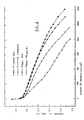
- Figure 2 shows the absorption curve at 300 ° C under a pressure of 200 psi, after a cycle absorption / desorption.
- the process was carried out preparation of a nanocrystalline alloy.
- the grinding has been carried out hot (200 ° C) for 8 hours.
- Figure 2 shows the absorption rate of this powder at 300 ° C at 200 psi pressure after an absorption / desorption cycle. We notes that the absorption kinetics are much higher than those obtained at part (a) and this although the grinding was shorter (but hot).
- Example 2 By proceeding as in Example 2, a material was prepared nanocrystalline composition MgLi 10% by weight. To do this, we used 3.3 g of Mg and 0.331 g of Li as starting material.
- the charge was ground for 50 hours.
- the powder obtained has was leached in distilled water with magnetic stirring then ultrasonic.
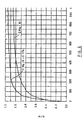
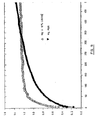
- Figure 4 shows the absorption rate of the powder nanocrystalline thus obtained after leaching (curve ⁇ ).
- curve ⁇ the results obtained with pure nanocrystalline Mg powder are also given (curve ⁇ ). These tests were carried out at 400 ° C under a pressure of 36 bars. As can be seen, the absorption kinetics of the powder of Mg leached is much higher than that of powder of Mg not leached.
Landscapes
- Chemical & Material Sciences (AREA)
- Engineering & Computer Science (AREA)
- Chemical Kinetics & Catalysis (AREA)
- Organic Chemistry (AREA)
- Materials Engineering (AREA)
- General Chemical & Material Sciences (AREA)
- Inorganic Chemistry (AREA)
- Nanotechnology (AREA)
- Electrochemistry (AREA)
- Combustion & Propulsion (AREA)
- Physics & Mathematics (AREA)
- Crystallography & Structural Chemistry (AREA)
- Condensed Matter Physics & Semiconductors (AREA)
- Composite Materials (AREA)
- Life Sciences & Earth Sciences (AREA)
- Manufacturing & Machinery (AREA)
- Sustainable Development (AREA)
- Sustainable Energy (AREA)
- General Physics & Mathematics (AREA)
- Hydrogen, Water And Hydrids (AREA)
- Catalysts (AREA)
- Manufacture Of Metal Powder And Suspensions Thereof (AREA)
- Crystals, And After-Treatments Of Crystals (AREA)
- Inert Electrodes (AREA)
- Powder Metallurgy (AREA)
- Manufacture And Refinement Of Metals (AREA)
- Electrodes For Compound Or Non-Metal Manufacture (AREA)
- Battery Electrode And Active Subsutance (AREA)
Description
Dans le procédé de ce document, la taille des cristaux, qui est de 20 nm après broyage, croít lors du traitement thermique intermédiaire. Cependant, la taille des cristaux après traitement thermique, c'est-à-dire avant lixiviation, n'est pas divulguée.
Pour des traitements thermiques à température moins élevées comme par exemple 400°C, il apparaít dans ce document que le caractère métastable du matériau (FeS2) peut être conservé.
- dans une première étape, on prépare un matériau nanocristallin constitué d'un composite ou alliage métastable d'au moins deux éléments chimiques distincts, ce matériau ayant une structure cristalline avec des cristaux de taille inférieure à 100 nm; et
- dans une seconde étape, on soumet le matériau nanocristallin ainsi préparé à une lixiviation de façon à éliminer partiellement ou totalement au moins un des éléments du composite ou de l'alliage, cette lixiviation donnant au matériau résultant une structure poreuse et, de là, une grande surface spécifique.
- dans une première étape, on prépare un matériau nanocristallin constitué d'un composite ou alliage d'au moins deux composés ou éléments chimiques distincts, le matériau ainsi préparé ayant une structure nanocristalline avec des cristaux de taille inférieure à 100 nm; et
- dans une seconde étape, on soumet ledit matériau nanocristallin à une lixiviation de façon à éliminer partiellement ou totalement au moins un desdits éléments ou composés du composite ou de l'alliage, cette lixiviation donnant au matériau résultant une structure avec une grande surface spécifique,
- A est Pt, Ru ou un composé de Pt ou de Ru;
- X est au moins un élément choisis dans le groupe constitué par Ru, Ge, Si, W, Sn, Ga, As, Sb, Mo, Ti, Ta, Cr, Mn, Fe, Co, Ni, Cu, Rh, V, Pd, Ag, In, Os, Ir, Au, Pb, C, Cd, N, P, Bi, Nb et Zr; et
- Y est au moins un élément choisi dans le groupe constitué par H, C, N, O, F, Cl, P et S; ou
- Y est une combinaison des divers éléments Y ci-dessus énumérés avec au moins un élément choisi dans le groupe constitué par Al, Mg, Zn, Li, Na, K, Ca, Ti, Zr, Mo, U et leurs oxydes
- A' est Mg, Be ou un composé de Mg ou Be;
- X' est au moins un élément choisi dans le groupe constitué par Li, Ca, Ti, V, Cr, Mn, Fe, Co, Ni, Cu, Zn, Y, Zr, Nb, Mo, In, Sn, O, Si, B et F; et
- Y' est au moins un élément choisi dans le groupe constitué par H, C, N, O, F, Cl, P et S, ou est un composé organométallique dans lequel l'élément métallique est un des métaux énumérés dans la définition du X' ou un métal choisi dans le groupe constitué par Ru, Rh, Pd, Ir et Pt, et la partie organique est lixiviable (ce composé organométallique peut être, par exemple, une phthalocyanine); ou
- Y' est une combinaison des éléments Y' ci-dessus énumérés avec est au moins un élément choisi dans le groupe constitué par Al, Mg, Zn, Li, Na, K, Ca, Ti, Zr, Mo et leurs oxydes
Claims (12)
- Procédé de fabrication d'un matériau nanocristallin ayant une grande surface spécifique, du type dans lequel:caractérisé en ce que le composite ou alliage préparé à la première étape est de type métastable et en ce que les composés ou éléments chimiques distincts qui le composent incluent au moins un élément métallique et au moins un élément non métallique choisi dans le groupe constitué par H, C, N, O, F, Cl, P et S.dans une première étape, on prépare un matériau nanocristallin constitué d'un composite ou alliage d'au moins deux composés ou éléments chimiques distincts, le matériau ainsi préparé ayant une structure nanocristalline avec des cristaux de taille inférieure à 100 nm; etdans une seconde étape, on soumet ledit matériau nanocristallin à une lixiviation de façon à éliminer partiellement ou totalement au moins un desdits éléments ou composés du composite ou de l'alliage, cette lixiviation donnant au matériau résultant une structure avec une grande surface spécifique,
- Procédé selon la revendication 1, caractérisé en ce que:le ou les éléments lixiviés dans la seconde étape incluent le ou lesdits éléments non métalliques H, C, N, O, F, Cl, P et S; etla lixiviation de ce ou ces éléments est effectuée par traitement thermique ou pyrolyse ou par réaction avec une phase liquide ou gazeuse.
- Procédé selon la revendication 1, caractérisé en ce que:le ou les éléments lixiviés dans la seconde étape sont choisis dans les groupes constitués par, d'une part, Mg, Li, Na, K, Ca, Ti, Zr, Mo et Zn et, d'autre part, les éléments non métalliques H, C, N, O, F, Cl, P et S; etla lixiviation de ce ou ces éléments est effectuée par traitement thermique ou pyrolyse, par réaction avec une phase liquide ou gazeuse ou par une combinaison de traitement thermique ou pyrolyse et réaction avec une phase liquide ou gazeuse.
- Procédé selon la revendication 1, caractérisé en ce que:dans la première étape, le matériau nanocristallin fabriqué, est constitué d'un alliage ou d'un composite incorporant un composé organométallique comprenant un métal et une partie organique, etdans la deuxième étape, on lixivie la partie organique du matériau par traitement thermique ou pyrolyse ou par réaction avec une phase liquide ou gazeuse.
- Procédé selon l'une quelconque des revendications 1 à 4, caractérisé en ce que:dans la première étape, le matériau nanocristallin est préparé sous forme de poudre par broyage mécanique intense.
- Procédé selon la revendication 5, caractérisé en ce que:dans la première étape, le matériau nanocristallin est préparé en soumettant à un premier broyage mécanique intense le ou les composés et éléments du matériau jusqu'à l'obtention d'une poudre nanocristalline, en ajoutant le ou les composés ou éléments à lixivier à la poudre ainsi obtenue et en soumettant le tout à un second broyage mécanique intense.
- Procédé selon l'une quelconque des revendications 1 à 4, caractérisé en ce que:dans la première étape, le matériau nanocristallin est préparé par trempe rapide.
- Procédé selon l'une quelconque des revendications 1 à 4, caractérisé en ce que:dans la première étape, le matériau nanocristallin est préparé par condensation en phase vapeur.
- Procédé selon l'une quelconque des revendications 1 à 8, caractérisé en ce que:dans la première étape, la quantité d'élément ou composé à lixivier combiné au(x) autre(s) élément(s) ou composé(s) du composite ou de l'alliage est choisie de façon à ce que le pourcentage atomique dudit élément ou composé à lixivier dans ledit composite ou alliage soit compris entre 2 et 95%.
- Matériau nanocristallin à grande surface spécifique, caractérisé en ce qu'il a une structure cristalline avec des cristaux de taille inférieure à 100 nm et une surface spécifique supérieure ou égale à 2 m2/g, et en ce qu'il est fabriqué par un procédé selon l'une quelconque des revendications 1 à 9.
- Usage pour le stockage de l'hydrogène d'un matériau nanocristallin selon la revendication 10, comprenant au moins un élément ou composé chimique connu pour absorber de façon réversible l'hydrogène.
- Usage comme catalyseur ou électrocatalyseur d'un matériau nanocristallin selon la revendication 10, comprenant au moins un élément ou composé chimique connu comme étant utilisable comme catalyseur ou électrocatalyseur.
Applications Claiming Priority (3)
| Application Number | Priority Date | Filing Date | Title |
|---|---|---|---|
| US08/788,301 US5872074A (en) | 1997-01-24 | 1997-01-24 | Leached nanocrystalline materials process for manufacture of the same, and use thereof in the energetic field |
| US788301 | 1997-01-24 | ||
| PCT/CA1998/000042 WO1998032885A1 (fr) | 1997-01-24 | 1998-01-21 | Materiaux nanocristallins lixivies, leur fabrication et leurs usages dans le secteur energetique |
Publications (2)
| Publication Number | Publication Date |
|---|---|
| EP0963450A1 EP0963450A1 (fr) | 1999-12-15 |
| EP0963450B1 true EP0963450B1 (fr) | 2002-08-21 |
Family
ID=25144069
Family Applications (1)
| Application Number | Title | Priority Date | Filing Date |
|---|---|---|---|
| EP98901279A Expired - Lifetime EP0963450B1 (fr) | 1997-01-24 | 1998-01-21 | Materiaux nanocristallins lixivies, leur fabrication et leurs usages dans le secteur energetique |
Country Status (8)
| Country | Link |
|---|---|
| US (1) | US5872074A (fr) |
| EP (1) | EP0963450B1 (fr) |
| JP (1) | JP4490510B2 (fr) |
| AT (1) | ATE222609T1 (fr) |
| CA (1) | CA2269902C (fr) |
| DE (1) | DE69807320T2 (fr) |
| ES (1) | ES2182263T3 (fr) |
| WO (1) | WO1998032885A1 (fr) |
Families Citing this family (42)
| Publication number | Priority date | Publication date | Assignee | Title |
|---|---|---|---|---|
| FR2768638B1 (fr) * | 1997-09-23 | 1999-12-17 | Centre Nat Rech Scient | Particules polymetalliques ultrafines, leur preparation et leur utilisation pour l'hydrogenation d'olefines ou pour le couplage de derives halogenes aromatiques |
| US6239065B1 (en) * | 1998-12-22 | 2001-05-29 | Hydro-Quebec | Process for the preparation of a supported catalyst |
| DE19948548B4 (de) * | 1999-04-19 | 2006-04-13 | Fraunhofer-Gesellschaft zur Förderung der angewandten Forschung e.V. | Pastöse Massen mit nanokristallinen Materialien für elektrochemische Bauelemente und daraus hergestellte Schichten und elektrochemische Bauelemente |
| US6613213B1 (en) | 2000-03-27 | 2003-09-02 | Brookhaven Science Associates, Llc | Method for producing electrodes using microscale or nanoscale materials obtained from hydrogendriven metallurgical reactions |
| US6680042B1 (en) | 2000-11-07 | 2004-01-20 | Hydro-Quebec | Method of rapidly carrying out a hydrogenation of a hydrogen storage material |
| US6620550B2 (en) * | 2001-01-23 | 2003-09-16 | The Gillette Company | Battery cathode and method of manufacture therefor |
| US7211350B2 (en) * | 2001-01-29 | 2007-05-01 | Rutgers University Foundation | Nanostructure lithium titanate electrode for high cycle rate rechargeable electrochemical cell |
| JP4098508B2 (ja) * | 2001-08-20 | 2008-06-11 | 財団法人 ひろしま産業振興機構 | 炭化水素と水蒸気とを反応させるための触媒の製造方法および当該触媒を使用した炭化水素から水素を製造する方法 |
| US6840961B2 (en) * | 2001-12-21 | 2005-01-11 | Etex Corporation | Machinable preformed calcium phosphate bone substitute material implants |
| KR100512451B1 (ko) * | 2002-02-28 | 2005-09-05 | (주)에프이에이 코퍼레이션 | 자성체 나노입자에 지지된 재사용가능한 유기금속촉매 및 그 제조방법 |
| JP2005532670A (ja) * | 2002-07-01 | 2005-10-27 | イー・アイ・デュポン・ドウ・ヌムール・アンド・カンパニー | 蒸着触媒および燃料電池におけるその使用 |
| DE10231577B4 (de) * | 2002-07-11 | 2008-02-21 | Rösler, Hans-Joachim, Prof. Dr.rer.nat. | Verfahren zum Erzeugen von Poren oder Kanälen in einem metallischen Werkstoffkörper und nach dem Verfahren hergestellter Metallkörper |
| AU2003259288A1 (en) * | 2002-07-29 | 2004-02-16 | Cornell Research Foundation, Inc. | Intermetallic compounds for use as catalysts and catalytic systems |
| US7419741B2 (en) * | 2003-09-29 | 2008-09-02 | 3M Innovative Properties Company | Fuel cell cathode catalyst |
| US20060024535A1 (en) * | 2004-02-04 | 2006-02-02 | Figueroa Juan C | CO tolerant catalyst |
| EP1849200A2 (fr) * | 2005-02-16 | 2007-10-31 | 3M Innovative Properties Company | Catalyseur pour piles a combustible |
| CA2618689A1 (fr) * | 2005-08-09 | 2007-02-15 | The University Of British Columbia | Metaux microporeux et procedes destines a la production d'hydrogene a partir d'une reaction de separation aqueuse |
| US20100261090A1 (en) * | 2005-08-11 | 2010-10-14 | Alexandrovichserov Alexey | Cathode catalyst for fuel cell, and membrane-electrode assembly for fuel cell and fuel cell system comprising same |
| KR100709189B1 (ko) | 2005-08-11 | 2007-04-18 | 삼성에스디아이 주식회사 | 연료 전지의 캐소드용 촉매, 및 이를 포함하는 연료 전지용막-전극 어셈블리 및 연료 전지 시스템 |
| US20070082814A1 (en) * | 2005-10-12 | 2007-04-12 | 3M Innovative Properties Company | Ternary nanocatalyst and method of making |
| US7906251B2 (en) * | 2006-04-20 | 2011-03-15 | 3M Innovative Properties Company | Oxygen-reducing catalyst layer |
| US7740902B2 (en) * | 2006-04-20 | 2010-06-22 | 3M Innovative Properties Company | Method for making oxygen-reducing catalyst layers |
| KR100786869B1 (ko) | 2006-06-29 | 2007-12-20 | 삼성에스디아이 주식회사 | 연료 전지용 캐소드 촉매, 이를 포함하는 연료 전지용막-전극 어셈블리 및 연료 전지 시스템 |
| US20090215615A1 (en) * | 2006-07-11 | 2009-08-27 | 3M Innovative Properties Company | Method of forming supported nanoparticle catalysts |
| JP4374036B2 (ja) * | 2007-03-27 | 2009-12-02 | 株式会社東芝 | 高分子固体電解質型燃料電池用触媒、膜電極複合体および燃料電池 |
| WO2008127828A1 (fr) | 2007-04-12 | 2008-10-23 | 3M Innovative Properties Company | Catalyseurs de pile à combustible en métal non précieux à haute performance et à durabilité élevée |
| JP5017007B2 (ja) * | 2007-07-25 | 2012-09-05 | 株式会社東芝 | 触媒、触媒の製造方法、膜電極複合体及び燃料電池 |
| CN101861412B (zh) * | 2007-11-16 | 2013-04-24 | 阿克佐诺贝尔股份有限公司 | 电极 |
| US8101005B2 (en) * | 2007-12-21 | 2012-01-24 | Cima Nanotech Israel Ltd. | Process of making metal nanoparticles |
| JP5114777B2 (ja) * | 2008-02-22 | 2013-01-09 | 国立大学法人広島大学 | 水素貯蔵材料の製造方法 |
| US8545994B2 (en) * | 2009-06-02 | 2013-10-01 | Integran Technologies Inc. | Electrodeposited metallic materials comprising cobalt |
| US8309233B2 (en) * | 2009-06-02 | 2012-11-13 | Integran Technologies, Inc. | Electrodeposited metallic-materials comprising cobalt on ferrous-alloy substrates |
| US8367217B2 (en) * | 2009-06-02 | 2013-02-05 | Integran Technologies, Inc. | Electrodeposited metallic-materials comprising cobalt on iron-alloy substrates with enhanced fatigue performance |
| JP5869479B2 (ja) * | 2009-08-12 | 2016-02-24 | インテリジェント エナジー リミテッドIntelligent Energy Limited | マグネシウムおよび珪素を含む組成物を用いた水素生成 |
| US8486319B2 (en) | 2010-05-24 | 2013-07-16 | Integran Technologies Inc. | Articles with super-hydrophobic and/or self-cleaning surfaces and method of making same |
| US9303322B2 (en) | 2010-05-24 | 2016-04-05 | Integran Technologies Inc. | Metallic articles with hydrophobic surfaces |
| JP2011092940A (ja) * | 2010-12-27 | 2011-05-12 | Furukawa Electric Co Ltd:The | 燃料電池用カソード電極触媒及びこれを用いた燃料電池 |
| US9249521B2 (en) | 2011-11-04 | 2016-02-02 | Integran Technologies Inc. | Flow-through consumable anodes |
| US10090516B2 (en) | 2012-04-24 | 2018-10-02 | National University Of Singapore | Electrode material and method of synthesizing |
| JP5531125B1 (ja) * | 2013-02-04 | 2014-06-25 | 田中貴金属工業株式会社 | 固体高分子形燃料電池用の触媒及びその製造方法 |
| KR102355824B1 (ko) * | 2018-12-27 | 2022-01-26 | 코웨이 주식회사 | 팔라듐, 이리듐 및 탄탈럼으로 구성된 전극용 촉매층 및 상기 전극용 촉매가 코팅된 살균수 생성 모듈 |
| CN111940750B (zh) * | 2019-05-15 | 2022-02-22 | 刘丽 | 一种合金粉体材料的制备方法 |
Family Cites Families (5)
| Publication number | Priority date | Publication date | Assignee | Title |
|---|---|---|---|---|
| DE3505024A1 (de) * | 1985-02-14 | 1986-08-14 | Norbert Dipl.-Ing. Fenten | Verfahren zur ultrafeinstzerkleinerung eines feststoffes |
| US5433797A (en) * | 1992-11-30 | 1995-07-18 | Queen's University | Nanocrystalline metals |
| JPH0724318A (ja) * | 1993-07-16 | 1995-01-27 | Tanaka Kikinzoku Kogyo Kk | 銀を含む触媒用合金微粒子及びその製造方法 |
| EP0815273B1 (fr) * | 1995-02-02 | 2001-05-23 | Hydro-Quebec | Materiaux nanocristallises a base de mg et leur utilisation pour le transport et le stockage de l'hydrogene |
| TW340806B (en) * | 1995-03-28 | 1998-09-21 | Mitsui Toatsu Chemicals | Modified Raney catalyst and process for preparation thereof |
-
1997
- 1997-01-24 US US08/788,301 patent/US5872074A/en not_active Expired - Lifetime
-
1998
- 1998-01-21 ES ES98901279T patent/ES2182263T3/es not_active Expired - Lifetime
- 1998-01-21 AT AT98901279T patent/ATE222609T1/de active
- 1998-01-21 WO PCT/CA1998/000042 patent/WO1998032885A1/fr not_active Ceased
- 1998-01-21 DE DE69807320T patent/DE69807320T2/de not_active Expired - Lifetime
- 1998-01-21 CA CA002269902A patent/CA2269902C/fr not_active Expired - Lifetime
- 1998-01-21 JP JP53144498A patent/JP4490510B2/ja not_active Expired - Fee Related
- 1998-01-21 EP EP98901279A patent/EP0963450B1/fr not_active Expired - Lifetime
Also Published As
| Publication number | Publication date |
|---|---|
| US5872074A (en) | 1999-02-16 |
| CA2269902C (fr) | 2007-03-27 |
| DE69807320D1 (de) | 2002-09-26 |
| WO1998032885A1 (fr) | 1998-07-30 |
| ATE222609T1 (de) | 2002-09-15 |
| EP0963450A1 (fr) | 1999-12-15 |
| ES2182263T3 (es) | 2003-03-01 |
| JP4490510B2 (ja) | 2010-06-30 |
| JP2001511217A (ja) | 2001-08-07 |
| DE69807320T2 (de) | 2003-04-17 |
| CA2269902A1 (fr) | 1998-07-30 |
Similar Documents
| Publication | Publication Date | Title |
|---|---|---|
| CA2269902C (fr) | Materiaux nanocristallins lixivies, leur fabrication et leurs usages dans le secteur energetique | |
| EP0671357B1 (fr) | Alliages nanocristallins à base de nickel et usage de ceux-ci pour le transport et le stockage de l'hydrogène | |
| EP2242129B1 (fr) | Composition de matière active pour électrode négative d'accumulateur lithium-ion | |
| EP1709702B1 (fr) | Procede de preparation de materiaux composites comprenant un compose actif d'electrode et un compose conducteur electronique tel que le carbone notamment pour accumulateurs au lithium | |
| EP2024274B1 (fr) | Composite nanocristallin pour le stockage de l'hydrogène et son procédé de préparation | |
| WO2006008385A1 (fr) | Procede de fabrication selective de nanotubes de carbone ordonne | |
| CA2154428C (fr) | Alliages a base de ti, ru, fe et o et usage de ceux-ci pour la fabrication de cathodes pour la synthese electrochimique du chlorate de sodium | |
| US7259124B2 (en) | Hydrogen storage composite and preparation thereof | |
| EP1144111B1 (fr) | Procede de fabrication d'un catalyseur supporte | |
| EP2122720B1 (fr) | Nouveaux materiaux comprenant des elements du groupe 14 | |
| EP1993949B1 (fr) | Materiaux intermetalliques pulverulents pour le stockage reversible de l'hydrogene | |
| CA2325262C (fr) | Materiau fortement active contenant de l'hydrogene et methode de production dudit materiau | |
| CH658258A5 (en) | Electrode covered with a catalyst exhibiting a low overvoltage for the release of oxygen, capable of being used especially for the electrolysis of water in an alkaline medium and process for its preparation | |
| JP5515148B2 (ja) | 水素吸蔵材料及びその製造方法 | |
| FR2917732A1 (fr) | Nouveaux materiaux comprenant des elements du groupe 14 | |
| FR2691981A1 (fr) | Matériau hydrurable pour électrode négative d'accumulateur nickel-hydrure et son procédé de préparation. | |
| JP2004290810A (ja) | 水素貯蔵材およびその製造方法 | |
| FR3033553A1 (fr) | Composes solides, generateurs d'hydrogene par combustion auto-entretenue, comprenant du borazane, au moins un oxydant inorganique et au moins un metal ; procede de generation d'hydrogene |
Legal Events
| Date | Code | Title | Description |
|---|---|---|---|
| PUAI | Public reference made under article 153(3) epc to a published international application that has entered the european phase |
Free format text: ORIGINAL CODE: 0009012 |
|
| 17P | Request for examination filed |
Effective date: 19990707 |
|
| AK | Designated contracting states |
Kind code of ref document: A1 Designated state(s): AT BE CH DE ES FR GB IT LI NL SE |
|
| RIN1 | Information on inventor provided before grant (corrected) |
Inventor name: DODELET, JEAN-POL Inventor name: GUAY, DANIEL Inventor name: VAN NESTE, ANDRE Inventor name: LIANG, GUOXIAN Inventor name: DENIS, MARIE-CHANTAL Inventor name: HUOT, JACQUES Inventor name: LALANDE, GUY Inventor name: SCHULZ, ROBERT |
|
| 17Q | First examination report despatched |
Effective date: 20000912 |
|
| GRAG | Despatch of communication of intention to grant |
Free format text: ORIGINAL CODE: EPIDOS AGRA |
|
| GRAG | Despatch of communication of intention to grant |
Free format text: ORIGINAL CODE: EPIDOS AGRA |
|
| GRAG | Despatch of communication of intention to grant |
Free format text: ORIGINAL CODE: EPIDOS AGRA |
|
| GRAH | Despatch of communication of intention to grant a patent |
Free format text: ORIGINAL CODE: EPIDOS IGRA |
|
| GRAH | Despatch of communication of intention to grant a patent |
Free format text: ORIGINAL CODE: EPIDOS IGRA |
|
| RIN1 | Information on inventor provided before grant (corrected) |
Inventor name: DODELET, JEAN-POL Inventor name: GUAY, DANIEL Inventor name: VAN NESTE, ANDRE Inventor name: LIANG, GUOXIAN Inventor name: DENIS, MARIE-CHANTAL Inventor name: HUOT, JACQUES Inventor name: LALANDE, GUY Inventor name: SCHULZ, ROBERT |
|
| GRAA | (expected) grant |
Free format text: ORIGINAL CODE: 0009210 |
|
| AK | Designated contracting states |
Kind code of ref document: B1 Designated state(s): AT BE CH DE ES FR GB IT LI NL SE |
|
| REF | Corresponds to: |
Ref document number: 222609 Country of ref document: AT Date of ref document: 20020915 Kind code of ref document: T |
|
| REG | Reference to a national code |
Ref country code: GB Ref legal event code: FG4D Free format text: NOT ENGLISH |
|
| REG | Reference to a national code |
Ref country code: CH Ref legal event code: EP |
|
| REF | Corresponds to: |
Ref document number: 69807320 Country of ref document: DE Date of ref document: 20020926 |
|
| GBT | Gb: translation of ep patent filed (gb section 77(6)(a)/1977) |
Effective date: 20021130 |
|
| REG | Reference to a national code |
Ref country code: ES Ref legal event code: FG2A Ref document number: 2182263 Country of ref document: ES Kind code of ref document: T3 |
|
| PLBE | No opposition filed within time limit |
Free format text: ORIGINAL CODE: 0009261 |
|
| STAA | Information on the status of an ep patent application or granted ep patent |
Free format text: STATUS: NO OPPOSITION FILED WITHIN TIME LIMIT |
|
| 26N | No opposition filed |
Effective date: 20030522 |
|
| PGFP | Annual fee paid to national office [announced via postgrant information from national office to epo] |
Ref country code: FR Payment date: 20140120 Year of fee payment: 17 |
|
| PGFP | Annual fee paid to national office [announced via postgrant information from national office to epo] |
Ref country code: GB Payment date: 20141219 Year of fee payment: 18 Ref country code: CH Payment date: 20141223 Year of fee payment: 18 |
|
| PGFP | Annual fee paid to national office [announced via postgrant information from national office to epo] |
Ref country code: NL Payment date: 20141217 Year of fee payment: 18 |
|
| PGFP | Annual fee paid to national office [announced via postgrant information from national office to epo] |
Ref country code: IT Payment date: 20141222 Year of fee payment: 18 |
|
| PGFP | Annual fee paid to national office [announced via postgrant information from national office to epo] |
Ref country code: DE Payment date: 20141218 Year of fee payment: 18 Ref country code: ES Payment date: 20150119 Year of fee payment: 18 |
|
| PGFP | Annual fee paid to national office [announced via postgrant information from national office to epo] |
Ref country code: AT Payment date: 20141219 Year of fee payment: 18 |
|
| PGFP | Annual fee paid to national office [announced via postgrant information from national office to epo] |
Ref country code: BE Payment date: 20141217 Year of fee payment: 18 |
|
| REG | Reference to a national code |
Ref country code: FR Ref legal event code: ST Effective date: 20150930 |
|
| PG25 | Lapsed in a contracting state [announced via postgrant information from national office to epo] |
Ref country code: FR Free format text: LAPSE BECAUSE OF NON-PAYMENT OF DUE FEES Effective date: 20150202 |
|
| PG25 | Lapsed in a contracting state [announced via postgrant information from national office to epo] |
Ref country code: BE Free format text: LAPSE BECAUSE OF NON-PAYMENT OF DUE FEES Effective date: 20160131 |
|
| REG | Reference to a national code |
Ref country code: DE Ref legal event code: R119 Ref document number: 69807320 Country of ref document: DE |
|
| REG | Reference to a national code |
Ref country code: CH Ref legal event code: PL |
|
| REG | Reference to a national code |
Ref country code: AT Ref legal event code: MM01 Ref document number: 222609 Country of ref document: AT Kind code of ref document: T Effective date: 20160121 |
|
| GBPC | Gb: european patent ceased through non-payment of renewal fee |
Effective date: 20160121 |
|
| REG | Reference to a national code |
Ref country code: NL Ref legal event code: MM Effective date: 20160201 |
|
| PG25 | Lapsed in a contracting state [announced via postgrant information from national office to epo] |
Ref country code: CH Free format text: LAPSE BECAUSE OF NON-PAYMENT OF DUE FEES Effective date: 20160131 Ref country code: LI Free format text: LAPSE BECAUSE OF NON-PAYMENT OF DUE FEES Effective date: 20160131 Ref country code: GB Free format text: LAPSE BECAUSE OF NON-PAYMENT OF DUE FEES Effective date: 20160121 Ref country code: DE Free format text: LAPSE BECAUSE OF NON-PAYMENT OF DUE FEES Effective date: 20160802 |
|
| PG25 | Lapsed in a contracting state [announced via postgrant information from national office to epo] |
Ref country code: NL Free format text: LAPSE BECAUSE OF NON-PAYMENT OF DUE FEES Effective date: 20160201 Ref country code: AT Free format text: LAPSE BECAUSE OF NON-PAYMENT OF DUE FEES Effective date: 20160121 |
|
| PG25 | Lapsed in a contracting state [announced via postgrant information from national office to epo] |
Ref country code: IT Free format text: LAPSE BECAUSE OF NON-PAYMENT OF DUE FEES Effective date: 20160121 |
|
| REG | Reference to a national code |
Ref country code: ES Ref legal event code: FD2A Effective date: 20170224 |
|
| PGFP | Annual fee paid to national office [announced via postgrant information from national office to epo] |
Ref country code: SE Payment date: 20161221 Year of fee payment: 20 |
|
| PG25 | Lapsed in a contracting state [announced via postgrant information from national office to epo] |
Ref country code: ES Free format text: LAPSE BECAUSE OF NON-PAYMENT OF DUE FEES Effective date: 20160122 |
|
| REG | Reference to a national code |
Ref country code: SE Ref legal event code: EUG |