EP0904317B1 - Procede d'obtention de polyols et polyols obtenus selon le procede - Google Patents
Procede d'obtention de polyols et polyols obtenus selon le procede Download PDFInfo
- Publication number
- EP0904317B1 EP0904317B1 EP19970927229 EP97927229A EP0904317B1 EP 0904317 B1 EP0904317 B1 EP 0904317B1 EP 19970927229 EP19970927229 EP 19970927229 EP 97927229 A EP97927229 A EP 97927229A EP 0904317 B1 EP0904317 B1 EP 0904317B1
- Authority
- EP
- European Patent Office
- Prior art keywords
- glycols
- meg
- glycolysis
- dpg
- polyols
- Prior art date
- Legal status (The legal status is an assumption and is not a legal conclusion. Google has not performed a legal analysis and makes no representation as to the accuracy of the status listed.)
- Expired - Lifetime
Links
- 229920005862 polyol Polymers 0.000 title claims abstract description 80
- 150000003077 polyols Chemical class 0.000 title claims abstract description 78
- 238000000034 method Methods 0.000 title claims abstract description 34
- 150000002334 glycols Chemical class 0.000 claims abstract description 65
- 239000003054 catalyst Substances 0.000 claims abstract description 37
- 229920000139 polyethylene terephthalate Polymers 0.000 claims abstract description 32
- 230000034659 glycolysis Effects 0.000 claims abstract description 25
- NBIIXXVUZAFLBC-UHFFFAOYSA-N Phosphoric acid Chemical group OP(O)(O)=O NBIIXXVUZAFLBC-UHFFFAOYSA-N 0.000 claims abstract description 24
- 239000003795 chemical substances by application Substances 0.000 claims abstract description 21
- 229910000147 aluminium phosphate Inorganic materials 0.000 claims abstract description 10
- ZMANZCXQSJIPKH-UHFFFAOYSA-N Triethylamine Chemical compound CCN(CC)CC ZMANZCXQSJIPKH-UHFFFAOYSA-N 0.000 claims abstract description 7
- UOGMEBQRZBEZQT-UHFFFAOYSA-L manganese(2+);diacetate Chemical compound [Mn+2].CC([O-])=O.CC([O-])=O UOGMEBQRZBEZQT-UHFFFAOYSA-L 0.000 claims abstract description 7
- 229940071125 manganese acetate Drugs 0.000 claims abstract description 6
- 230000009849 deactivation Effects 0.000 claims abstract description 5
- 150000001412 amines Chemical class 0.000 claims abstract description 3
- IMFACGCPASFAPR-UHFFFAOYSA-N tributylamine Chemical compound CCCCN(CCCC)CCCC IMFACGCPASFAPR-UHFFFAOYSA-N 0.000 claims abstract description 3
- ZOIORXHNWRGPMV-UHFFFAOYSA-N acetic acid;zinc Chemical compound [Zn].CC(O)=O.CC(O)=O ZOIORXHNWRGPMV-UHFFFAOYSA-N 0.000 claims abstract 2
- 239000004246 zinc acetate Substances 0.000 claims abstract 2
- PEDCQBHIVMGVHV-UHFFFAOYSA-N Glycerine Chemical compound OCC(O)CO PEDCQBHIVMGVHV-UHFFFAOYSA-N 0.000 claims description 45
- 239000000203 mixture Substances 0.000 claims description 40
- 238000004821 distillation Methods 0.000 claims description 39
- 238000006243 chemical reaction Methods 0.000 claims description 17
- FRCHKSNAZZFGCA-UHFFFAOYSA-N 1,1-dichloro-1-fluoroethane Chemical compound CC(F)(Cl)Cl FRCHKSNAZZFGCA-UHFFFAOYSA-N 0.000 claims description 14
- -1 aromatic carboxylic acids Chemical class 0.000 claims description 14
- 239000000178 monomer Substances 0.000 claims description 13
- 238000005886 esterification reaction Methods 0.000 claims description 11
- 238000005809 transesterification reaction Methods 0.000 claims description 11
- 230000032050 esterification Effects 0.000 claims description 10
- 239000011572 manganese Substances 0.000 claims description 8
- PWHULOQIROXLJO-UHFFFAOYSA-N Manganese Chemical compound [Mn] PWHULOQIROXLJO-UHFFFAOYSA-N 0.000 claims description 5
- 239000002253 acid Substances 0.000 claims description 5
- 238000009826 distribution Methods 0.000 claims description 5
- 238000002270 exclusion chromatography Methods 0.000 claims description 5
- 239000012298 atmosphere Substances 0.000 claims description 4
- 229920000728 polyester Polymers 0.000 claims description 4
- XLYOFNOQVPJJNP-UHFFFAOYSA-N water Substances O XLYOFNOQVPJJNP-UHFFFAOYSA-N 0.000 claims description 4
- 150000008064 anhydrides Chemical class 0.000 claims description 3
- 230000008030 elimination Effects 0.000 claims description 3
- 238000003379 elimination reaction Methods 0.000 claims description 3
- 150000003839 salts Chemical class 0.000 claims description 3
- KCXVZYZYPLLWCC-UHFFFAOYSA-N EDTA Chemical class OC(=O)CN(CC(O)=O)CCN(CC(O)=O)CC(O)=O KCXVZYZYPLLWCC-UHFFFAOYSA-N 0.000 claims description 2
- 150000007513 acids Chemical class 0.000 claims description 2
- 125000001931 aliphatic group Chemical group 0.000 claims description 2
- 229960001484 edetic acid Drugs 0.000 claims description 2
- BHEPBYXIRTUNPN-UHFFFAOYSA-N hydridophosphorus(.) (triplet) Chemical compound [PH] BHEPBYXIRTUNPN-UHFFFAOYSA-N 0.000 claims description 2
- 238000009434 installation Methods 0.000 claims description 2
- MLCHBQKMVKNBOV-UHFFFAOYSA-N phenylphosphinic acid Chemical class OP(=O)C1=CC=CC=C1 MLCHBQKMVKNBOV-UHFFFAOYSA-N 0.000 claims description 2
- 150000003504 terephthalic acids Chemical class 0.000 claims description 2
- 150000002148 esters Chemical class 0.000 claims 4
- 150000005846 sugar alcohols Polymers 0.000 claims 4
- LFQSCWFLJHTTHZ-UHFFFAOYSA-N Ethanol Chemical compound CCO LFQSCWFLJHTTHZ-UHFFFAOYSA-N 0.000 claims 1
- FEWJPZIEWOKRBE-UHFFFAOYSA-N Tartaric Acid Chemical class [H+].[H+].[O-]C(=O)C(O)C(O)C([O-])=O FEWJPZIEWOKRBE-UHFFFAOYSA-N 0.000 claims 1
- 238000004587 chromatography analysis Methods 0.000 claims 1
- 235000015165 citric acid Nutrition 0.000 claims 1
- KRKNYBCHXYNGOX-UHFFFAOYSA-N citric acid group Chemical class C(CC(O)(C(=O)O)CC(=O)O)(=O)O KRKNYBCHXYNGOX-UHFFFAOYSA-N 0.000 claims 1
- 125000000118 dimethyl group Chemical group [H]C([H])([H])* 0.000 claims 1
- 229910052748 manganese Inorganic materials 0.000 claims 1
- 235000006408 oxalic acid Nutrition 0.000 claims 1
- 150000002913 oxalic acids Chemical class 0.000 claims 1
- 235000002906 tartaric acid Nutrition 0.000 claims 1
- JBQYATWDVHIOAR-UHFFFAOYSA-N tellanylidenegermanium Chemical compound [Te]=[Ge] JBQYATWDVHIOAR-UHFFFAOYSA-N 0.000 claims 1
- ISIJQEHRDSCQIU-UHFFFAOYSA-N tert-butyl 2,7-diazaspiro[4.5]decane-7-carboxylate Chemical compound C1N(C(=O)OC(C)(C)C)CCCC11CNCC1 ISIJQEHRDSCQIU-UHFFFAOYSA-N 0.000 claims 1
- 229940086542 triethylamine Drugs 0.000 claims 1
- 239000005020 polyethylene terephthalate Substances 0.000 abstract description 29
- 229920000642 polymer Polymers 0.000 abstract description 2
- 239000007809 chemical reaction catalyst Substances 0.000 abstract 1
- MTHSVFCYNBDYFN-UHFFFAOYSA-N diethylene glycol Chemical compound OCCOCCO MTHSVFCYNBDYFN-UHFFFAOYSA-N 0.000 description 59
- LYCAIKOWRPUZTN-UHFFFAOYSA-N Ethylene glycol Chemical compound OCCO LYCAIKOWRPUZTN-UHFFFAOYSA-N 0.000 description 53
- 230000008569 process Effects 0.000 description 20
- 238000010992 reflux Methods 0.000 description 18
- IJGRMHOSHXDMSA-UHFFFAOYSA-N Atomic nitrogen Chemical compound N#N IJGRMHOSHXDMSA-UHFFFAOYSA-N 0.000 description 13
- 229920005830 Polyurethane Foam Polymers 0.000 description 13
- 229920000582 polyisocyanurate Polymers 0.000 description 13
- 239000011496 polyurethane foam Substances 0.000 description 13
- OKKJLVBELUTLKV-UHFFFAOYSA-N Methanol Chemical compound OC OKKJLVBELUTLKV-UHFFFAOYSA-N 0.000 description 12
- 238000010586 diagram Methods 0.000 description 11
- 239000000539 dimer Substances 0.000 description 11
- 238000004519 manufacturing process Methods 0.000 description 10
- WNLRTRBMVRJNCN-UHFFFAOYSA-N adipic acid Chemical compound OC(=O)CCCCC(O)=O WNLRTRBMVRJNCN-UHFFFAOYSA-N 0.000 description 8
- 239000006260 foam Substances 0.000 description 6
- 229910052757 nitrogen Inorganic materials 0.000 description 6
- 239000002699 waste material Substances 0.000 description 6
- 239000012299 nitrogen atmosphere Substances 0.000 description 5
- 239000012429 reaction media Substances 0.000 description 5
- QTBSBXVTEAMEQO-UHFFFAOYSA-M Acetate Chemical compound CC([O-])=O QTBSBXVTEAMEQO-UHFFFAOYSA-M 0.000 description 4
- 238000004064 recycling Methods 0.000 description 4
- UPMLOUAZCHDJJD-UHFFFAOYSA-N 4,4'-Diphenylmethane Diisocyanate Chemical compound C1=CC(N=C=O)=CC=C1CC1=CC=C(N=C=O)C=C1 UPMLOUAZCHDJJD-UHFFFAOYSA-N 0.000 description 3
- UDSFAEKRVUSQDD-UHFFFAOYSA-N Dimethyl adipate Chemical compound COC(=O)CCCCC(=O)OC UDSFAEKRVUSQDD-UHFFFAOYSA-N 0.000 description 3
- MUXOBHXGJLMRAB-UHFFFAOYSA-N Dimethyl succinate Chemical compound COC(=O)CCC(=O)OC MUXOBHXGJLMRAB-UHFFFAOYSA-N 0.000 description 3
- 239000001361 adipic acid Substances 0.000 description 3
- 235000011037 adipic acid Nutrition 0.000 description 3
- 238000004458 analytical method Methods 0.000 description 3
- 230000015572 biosynthetic process Effects 0.000 description 3
- 230000001413 cellular effect Effects 0.000 description 3
- 239000003153 chemical reaction reagent Substances 0.000 description 3
- 238000001816 cooling Methods 0.000 description 3
- XTDYIOOONNVFMA-UHFFFAOYSA-N dimethyl pentanedioate Chemical compound COC(=O)CCCC(=O)OC XTDYIOOONNVFMA-UHFFFAOYSA-N 0.000 description 3
- 125000002887 hydroxy group Chemical group [H]O* 0.000 description 3
- 238000009413 insulation Methods 0.000 description 3
- 239000000463 material Substances 0.000 description 3
- 229920002635 polyurethane Polymers 0.000 description 3
- 239000004814 polyurethane Substances 0.000 description 3
- 238000002360 preparation method Methods 0.000 description 3
- 238000003860 storage Methods 0.000 description 3
- RTZKZFJDLAIYFH-UHFFFAOYSA-N Diethyl ether Chemical compound CCOCC RTZKZFJDLAIYFH-UHFFFAOYSA-N 0.000 description 2
- 229920000538 Poly[(phenyl isocyanate)-co-formaldehyde] Polymers 0.000 description 2
- DUFKCOQISQKSAV-UHFFFAOYSA-N Polypropylene glycol (m w 1,200-3,000) Chemical compound CC(O)COC(C)CO DUFKCOQISQKSAV-UHFFFAOYSA-N 0.000 description 2
- 241001652963 Speranza Species 0.000 description 2
- 238000006136 alcoholysis reaction Methods 0.000 description 2
- FPCJKVGGYOAWIZ-UHFFFAOYSA-N butan-1-ol;titanium Chemical compound [Ti].CCCCO.CCCCO.CCCCO.CCCCO FPCJKVGGYOAWIZ-UHFFFAOYSA-N 0.000 description 2
- 210000004027 cell Anatomy 0.000 description 2
- WOZVHXUHUFLZGK-UHFFFAOYSA-N dimethyl terephthalate Chemical compound COC(=O)C1=CC=C(C(=O)OC)C=C1 WOZVHXUHUFLZGK-UHFFFAOYSA-N 0.000 description 2
- SZXQTJUDPRGNJN-UHFFFAOYSA-N dipropylene glycol Chemical compound OCCCOCCCO SZXQTJUDPRGNJN-UHFFFAOYSA-N 0.000 description 2
- 239000006185 dispersion Substances 0.000 description 2
- 230000007717 exclusion Effects 0.000 description 2
- WGCNASOHLSPBMP-UHFFFAOYSA-N hydroxyacetaldehyde Natural products OCC=O WGCNASOHLSPBMP-UHFFFAOYSA-N 0.000 description 2
- 239000011159 matrix material Substances 0.000 description 2
- LGRFSURHDFAFJT-UHFFFAOYSA-N phthalic anhydride Chemical compound C1=CC=C2C(=O)OC(=O)C2=C1 LGRFSURHDFAFJT-UHFFFAOYSA-N 0.000 description 2
- 239000011495 polyisocyanurate Substances 0.000 description 2
- GTEXIOINCJRBIO-UHFFFAOYSA-N 2-[2-(dimethylamino)ethoxy]-n,n-dimethylethanamine Chemical compound CN(C)CCOCCN(C)C GTEXIOINCJRBIO-UHFFFAOYSA-N 0.000 description 1
- 241000195940 Bryophyta Species 0.000 description 1
- PIWKPBJCKXDKJR-UHFFFAOYSA-N Isoflurane Chemical compound FC(F)OC(Cl)C(F)(F)F PIWKPBJCKXDKJR-UHFFFAOYSA-N 0.000 description 1
- SVYKKECYCPFKGB-UHFFFAOYSA-N N,N-dimethylcyclohexylamine Chemical compound CN(C)C1CCCCC1 SVYKKECYCPFKGB-UHFFFAOYSA-N 0.000 description 1
- ZLMJMSJWJFRBEC-UHFFFAOYSA-N Potassium Chemical compound [K] ZLMJMSJWJFRBEC-UHFFFAOYSA-N 0.000 description 1
- HCHKCACWOHOZIP-UHFFFAOYSA-N Zinc Chemical compound [Zn] HCHKCACWOHOZIP-UHFFFAOYSA-N 0.000 description 1
- 238000013019 agitation Methods 0.000 description 1
- 125000000217 alkyl group Chemical group 0.000 description 1
- 238000013459 approach Methods 0.000 description 1
- 125000003710 aryl alkyl group Chemical group 0.000 description 1
- 125000003118 aryl group Chemical group 0.000 description 1
- JHIWVOJDXOSYLW-UHFFFAOYSA-N butyl 2,2-difluorocyclopropane-1-carboxylate Chemical compound CCCCOC(=O)C1CC1(F)F JHIWVOJDXOSYLW-UHFFFAOYSA-N 0.000 description 1
- 230000015556 catabolic process Effects 0.000 description 1
- 238000006555 catalytic reaction Methods 0.000 description 1
- 150000005827 chlorofluoro hydrocarbons Chemical class 0.000 description 1
- 229920001577 copolymer Polymers 0.000 description 1
- 239000006071 cream Substances 0.000 description 1
- 238000004132 cross linking Methods 0.000 description 1
- 235000021438 curry Nutrition 0.000 description 1
- 125000000753 cycloalkyl group Chemical group 0.000 description 1
- 238000006731 degradation reaction Methods 0.000 description 1
- 238000011161 development Methods 0.000 description 1
- KPUWHANPEXNPJT-UHFFFAOYSA-N disiloxane Chemical class [SiH3]O[SiH3] KPUWHANPEXNPJT-UHFFFAOYSA-N 0.000 description 1
- 238000010828 elution Methods 0.000 description 1
- 230000001747 exhibiting effect Effects 0.000 description 1
- 238000011049 filling Methods 0.000 description 1
- 238000005187 foaming Methods 0.000 description 1
- 229940084362 forane Drugs 0.000 description 1
- 238000009472 formulation Methods 0.000 description 1
- 238000004817 gas chromatography Methods 0.000 description 1
- 230000008570 general process Effects 0.000 description 1
- 125000003827 glycol group Chemical group 0.000 description 1
- 125000000350 glycoloyl group Chemical group O=C([*])C([H])([H])O[H] 0.000 description 1
- 238000010438 heat treatment Methods 0.000 description 1
- 230000001788 irregular Effects 0.000 description 1
- 239000012948 isocyanate Substances 0.000 description 1
- 150000002513 isocyanates Chemical class 0.000 description 1
- 230000002045 lasting effect Effects 0.000 description 1
- 239000007788 liquid Substances 0.000 description 1
- PGYPOBZJRVSMDS-UHFFFAOYSA-N loperamide hydrochloride Chemical compound Cl.C=1C=CC=CC=1C(C=1C=CC=CC=1)(C(=O)N(C)C)CCN(CC1)CCC1(O)C1=CC=C(Cl)C=C1 PGYPOBZJRVSMDS-UHFFFAOYSA-N 0.000 description 1
- 230000014759 maintenance of location Effects 0.000 description 1
- 238000005259 measurement Methods 0.000 description 1
- 238000010907 mechanical stirring Methods 0.000 description 1
- 238000002156 mixing Methods 0.000 description 1
- 235000011929 mousse Nutrition 0.000 description 1
- 125000005474 octanoate group Chemical group 0.000 description 1
- 150000003017 phosphorus Chemical class 0.000 description 1
- 229920001228 polyisocyanate Polymers 0.000 description 1
- 239000005056 polyisocyanate Substances 0.000 description 1
- 229920005903 polyol mixture Polymers 0.000 description 1
- 239000003361 porogen Substances 0.000 description 1
- 239000011591 potassium Substances 0.000 description 1
- 229910052700 potassium Inorganic materials 0.000 description 1
- 239000011541 reaction mixture Substances 0.000 description 1
- 230000035484 reaction time Effects 0.000 description 1
- 230000009257 reactivity Effects 0.000 description 1
- 238000011084 recovery Methods 0.000 description 1
- 238000002407 reforming Methods 0.000 description 1
- 239000007787 solid Substances 0.000 description 1
- 241000894007 species Species 0.000 description 1
- 230000006641 stabilisation Effects 0.000 description 1
- 238000011105 stabilization Methods 0.000 description 1
- 230000000087 stabilizing effect Effects 0.000 description 1
- 238000003756 stirring Methods 0.000 description 1
- 239000000126 substance Substances 0.000 description 1
- 239000004094 surface-active agent Substances 0.000 description 1
- 230000008961 swelling Effects 0.000 description 1
- 238000003786 synthesis reaction Methods 0.000 description 1
- 238000012549 training Methods 0.000 description 1
- 150000004072 triols Chemical class 0.000 description 1
- 238000005292 vacuum distillation Methods 0.000 description 1
- 239000011701 zinc Substances 0.000 description 1
- 229910052725 zinc Inorganic materials 0.000 description 1
Images



Classifications
-
- C—CHEMISTRY; METALLURGY
- C08—ORGANIC MACROMOLECULAR COMPOUNDS; THEIR PREPARATION OR CHEMICAL WORKING-UP; COMPOSITIONS BASED THEREON
- C08J—WORKING-UP; GENERAL PROCESSES OF COMPOUNDING; AFTER-TREATMENT NOT COVERED BY SUBCLASSES C08B, C08C, C08F, C08G or C08H
- C08J11/00—Recovery or working-up of waste materials
- C08J11/04—Recovery or working-up of waste materials of polymers
- C08J11/10—Recovery or working-up of waste materials of polymers by chemically breaking down the molecular chains of polymers or breaking of crosslinks, e.g. devulcanisation
- C08J11/18—Recovery or working-up of waste materials of polymers by chemically breaking down the molecular chains of polymers or breaking of crosslinks, e.g. devulcanisation by treatment with organic material
- C08J11/22—Recovery or working-up of waste materials of polymers by chemically breaking down the molecular chains of polymers or breaking of crosslinks, e.g. devulcanisation by treatment with organic material by treatment with organic oxygen-containing compounds
- C08J11/24—Recovery or working-up of waste materials of polymers by chemically breaking down the molecular chains of polymers or breaking of crosslinks, e.g. devulcanisation by treatment with organic material by treatment with organic oxygen-containing compounds containing hydroxyl groups
-
- C—CHEMISTRY; METALLURGY
- C08—ORGANIC MACROMOLECULAR COMPOUNDS; THEIR PREPARATION OR CHEMICAL WORKING-UP; COMPOSITIONS BASED THEREON
- C08G—MACROMOLECULAR COMPOUNDS OBTAINED OTHERWISE THAN BY REACTIONS ONLY INVOLVING UNSATURATED CARBON-TO-CARBON BONDS
- C08G18/00—Polymeric products of isocyanates or isothiocyanates
- C08G18/06—Polymeric products of isocyanates or isothiocyanates with compounds having active hydrogen
- C08G18/28—Polymeric products of isocyanates or isothiocyanates with compounds having active hydrogen characterised by the compounds used containing active hydrogen
- C08G18/40—High-molecular-weight compounds
- C08G18/42—Polycondensates having carboxylic or carbonic ester groups in the main chain
- C08G18/4205—Polycondensates having carboxylic or carbonic ester groups in the main chain containing cyclic groups
- C08G18/4208—Polycondensates having carboxylic or carbonic ester groups in the main chain containing cyclic groups containing aromatic groups
- C08G18/4225—Polycondensates having carboxylic or carbonic ester groups in the main chain containing cyclic groups containing aromatic groups derived from residues obtained from the manufacture of dimethylterephthalate and from polyhydroxy compounds
-
- C—CHEMISTRY; METALLURGY
- C08—ORGANIC MACROMOLECULAR COMPOUNDS; THEIR PREPARATION OR CHEMICAL WORKING-UP; COMPOSITIONS BASED THEREON
- C08G—MACROMOLECULAR COMPOUNDS OBTAINED OTHERWISE THAN BY REACTIONS ONLY INVOLVING UNSATURATED CARBON-TO-CARBON BONDS
- C08G2110/00—Foam properties
- C08G2110/0025—Foam properties rigid
-
- C—CHEMISTRY; METALLURGY
- C08—ORGANIC MACROMOLECULAR COMPOUNDS; THEIR PREPARATION OR CHEMICAL WORKING-UP; COMPOSITIONS BASED THEREON
- C08J—WORKING-UP; GENERAL PROCESSES OF COMPOUNDING; AFTER-TREATMENT NOT COVERED BY SUBCLASSES C08B, C08C, C08F, C08G or C08H
- C08J2367/00—Characterised by the use of polyesters obtained by reactions forming a carboxylic ester link in the main chain; Derivatives of such polymers
- C08J2367/02—Polyesters derived from dicarboxylic acids and dihydroxy compounds
-
- Y—GENERAL TAGGING OF NEW TECHNOLOGICAL DEVELOPMENTS; GENERAL TAGGING OF CROSS-SECTIONAL TECHNOLOGIES SPANNING OVER SEVERAL SECTIONS OF THE IPC; TECHNICAL SUBJECTS COVERED BY FORMER USPC CROSS-REFERENCE ART COLLECTIONS [XRACs] AND DIGESTS
- Y02—TECHNOLOGIES OR APPLICATIONS FOR MITIGATION OR ADAPTATION AGAINST CLIMATE CHANGE
- Y02W—CLIMATE CHANGE MITIGATION TECHNOLOGIES RELATED TO WASTEWATER TREATMENT OR WASTE MANAGEMENT
- Y02W30/00—Technologies for solid waste management
- Y02W30/50—Reuse, recycling or recovery technologies
- Y02W30/62—Plastics recycling; Rubber recycling
Definitions
- the present invention is in the field of chemistry and its subject is a general process for obtaining polyols particularly polyestols, from polyethylene terephthalate (PET), particular of residual PET from manufacturing or consumer waste, variants to this process and the products obtained, in particular intended for the manufacture of cellular materials such as polyurethane foams (PUR), and polyisocyanurates (PIR).
- PET polyethylene terephthalate
- PUR polyurethane foams
- PIR polyisocyanurates
- GLY glycol
- MEG monoethylene glycol
- the polyols obtained by the processes mentioned above are mixtures of polyols exhibiting great heterogeneity, or dispersion, in their molecular weights and therefore lead to their crosslinking in PUR or PIR, to irregular three-dimensional networks, this which is generally considered an unfavorable characteristic resulting from the presence of higher oligomers with a low hydroxyl number ( ⁇ 200 mg KOH / g) and free glycols with a high hydroxyl index (> 800 mg KOH / g); it has also been observed (G. TERSAC et al. in CELLULAR POLYMERS, Vol. 14, p. 14, 1995) another unfortunate consequence of this heterogeneity, namely a significant increase in viscosity.
- a solution to limit training of higher oligomers would consist in carrying out glycolysis / esterification, high molar ratio of glycol residues to diacid residues, then to removing free glycols by distillation; but then we would end up in a chemically unbalanced system, and alcoholysis reactions would tend to reform free glycols as well as more condensed species.
- a patent US-4.758.607 (HALLMARK) describes a process allowing the elimination of free glycols, without it reforming MEG by rebalancing reaction; the polyols thus obtained have a very low free MEG levels, they are less viscous, have better stability during storage and lead to higher density foams.
- the process has the disadvantage of requiring continuous high vacuum distillation and scraped film, which requires a very expensive installation.
- This patent cites many examples of low molecular weight glycols and polyols which can be used as glycolysis agents, as well as many pluriacides which can be taken as prior art of the present Application; note however that the glycolysis catalyst mentioned (tetrabutylorthotitanate) not suitable for carrying out the invention.
- glycolysis reaction is a balanced transesterification type reaction; catalysts for this reaction are well known in the art; we can refer for example to U.S.-2,465,319 (WINFIELD) which cites salts such as manganese acetates and zinc or also amines such as triethyl- and tributylamine; this catalysis of glycolysis, and concomitant transesterification, is good mentioned in patent US-3,907,868 (CURRIE).
- This latest patent also discloses the way avoid rebalancing the reaction by deactivating (sequestering) the catalyst using agents such as phosphoric acid, acid phosphorous, aryl, alkyl, cycloalkyl, arylalkyl esters of these acids, the aliphatic and aromatic carboxylic acids such as oxalic, citric, tartaric, terephthalic acids, tetrasodium salts ethylene diamine-tetracetic acid, phenylphosphinic acid, as well as analogous products; it is however important to note that the technique disclosed by this publication is not that of the present invention and does not not suggest, not having the same objectives, listed below, since it aims to obtain from PET, not polyols but dimethyl terephthalate; the deactivation agents mentioned in this publication are however taken as prior art of this Application.
- agents such as phosphoric acid, acid phosphorous, aryl, alkyl, cycloalkyl, arylalkyl esters
- glycols as as glycolysis reagents, as glycolysis catalysts or transesterification and that the deactivating agents cited in the publications above mentioned are considered as reagents likely to be suitable in the implementation of the present invention.
- the general aim of the present invention is to propose a process for obtaining polyols, more specifically polyestols, with narrow molar dispersion, from PET waste, in reactors simple and provided with low vacuum means, for example between 1 and 50 mmHg.
- a process for obtaining polyols consisting in a first step of reacting glycols, that is to say pluralcohols with functionality at least equal to two (MEG, DEG, DPG, ...), on polyethylene terephthalate (PET) in the presence of a catalyst (CAT) glycolyl transesterification then, in a last step, to distill the free glycols (or liberated), is characterized in its generality in that a step subsequent to the first and anterior or simultaneous to the said last stage, includes the deactivation of the glycolysis catalyst by a deactivating agent (DES).
- CAT catalyst glycolyl transesterification
- a second step, called esterification, consecutive to the first step glycolysis consists in introducing into the glycolized medium a pluriacid (PLA) or its derivatives (anhydrides, etc.) such as for example adipic acid, anhydride phthalic, etc.
- PPA pluriacid
- anhydrides, etc. such as for example adipic acid, anhydride phthalic, etc.
- a strong acid such as phosphoric acid H 3 PO 4
- DES deactivating agent
- the esterification step conducted under pressure atmospheric but under inert atmosphere, can be accompanied by formation distilling water.
- the following stage consists in the distillation under low vacuum (3 to 40 mmHg) of the free glycols formed during the preceding stages, distillation which leaves in the reaction enclosure the polyols sought; according to the hydroxyl number (I OH) desired for the latter is longer even push the distillation which can search for a low I OH (OH 200 ⁇ I ⁇ 400, 1h ⁇ t ⁇ 3h).
- the second step, esterification consists of introducing into the medium glycolized one / several (PLE) such as dimethylesters (AGS), or such as the "RHODIASOLV (registered trademark)" mixture from RHONE-POULENC (dimethyladipate, dimethylglutarate, dimethylsuccinate).
- PLE medium glycolized one / several
- AGS dimethylesters
- RHODIASOLV registered trademark
- deactivating agent DES
- this is, preferably still, the acid phosphoric; it could also be an organic derivative of phosphorus, but with lower efficiency.
- the Distilled glycols can be recycled in a next cycle.
- a third variant (III) making it possible to achieve the abovementioned objective of obtaining polyols of functionality greater than two, is implemented to carry out glycolysis, in addition to DEG and DPG, plurialcohols of functionality greater than two , for example triols such as glycerol (GLR);
- a fourth variant (IV) close to the above, one also implements, to operate a reaction of transterification, a mixture (AGS) of dimethylesters; this variant, a little less economical than the previous one, allows to obtain a viscosity product weaker.
- AGS mixture of dimethylesters
- reaction vessel is then placed under vacuum of about 4 mmHg and the free glycols are distilled 570 g of the intermediate polyol, for a period of 2.5 hours during which the temperature of the boiler varies gradually from 140 to 160 ° C;
- reaction vessel is then placed under vacuum of about 3 mmHg and the free glycols are distilled, 555.3 g of intermediate polyol for a period of 3 hours during which the boiler temperature gradually varies from 135 to 175 ° C and the temperature at the top of the column from 89 to 120 ° C;
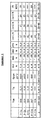
- Table I in the appendix summarizes the characteristics of the various polyols obtained in the examples, and provide their variation ranges ( ⁇ ).
- the formulations are expressed in masses relating to 100 g of polyol mixture; the porogen is HCFC 141b (FORANE F 141b from ELF-ATOCHEM); the catalysts are the dimethylcyclohexylamine (P8 from AIR PRODUCTS), bis- (2-dimethylaminoethyl) ether (NIAX A1 from UNION CARBIDE) and the octoate of potassium (K 15 from AIR PRODUCTS), the surfactants are copolymers poly (ether / siloxane) (DC 5454 and DC 5098 from AIR PRODUCTS)
- Isocyanate mixed with Polyol-Ib for foaming is a PMDI (4,4'-diphenylmethane diisocyanate), the SUPRASEC DNR from ICI, a polyisocyanate with a functionality of 2.7; PMDI is mixed with the "formulated polyol" in the quantity corresponding to the index longed for; mixing is carried out by mechanical stirring at 4000 rpm for 10 seconds; the reaction mixture is poured into a bag, the expansion is free.
- PMDI 4,4'-diphenylmethane diisocyanate
- the reactivity of the formulated polyol is appreciated by the cream time (tc), by the thread time (tf), by the end time of rise (tfm) and by time out of tack (thp).
- the resulting foams are judged by the measurement, 1 day after their development, of their density (NFT 56107) and their thermal conductivity (ISO 2581); the evolution of the characteristics is appreciated by comparison, after 28 days at room temperature, the initial thermal conductivity (I1j) and after stabilization (I28j), and by shrinking dimensional (Dv28j); TABLE II of the appendix provides the results.
- Polyurethane and polyisocyanurate foams obtained are remarkably well suited to insulation thermal, their cellularity is very fine and the stability of their properties is remarkable.
- Diagrams of the following figures illustrate the evolution of the composition of the polyesterol phase obtained, before (graph -) and after (graph ⁇ ) the final distillation; the analysis of the composition of the polyesterol phase of the polyol was carried out by steric exclusion chromatography coupled with a UV detector; for the chromatograms relating to example 1 and to the remark associated with this example, a "LICROGEL PS4 (5 ⁇ m) MERCK column was used; for all other chromatograms used an SDV 100 ⁇ MZ column.
- the diagram in fig. 6 corresponds to Example 2 of implementation of the first variant.
- the invention finds an application particularly advantageous in thermal insulation, buildings especially.
Landscapes
- Chemical & Material Sciences (AREA)
- Polymers & Plastics (AREA)
- Health & Medical Sciences (AREA)
- Chemical Kinetics & Catalysis (AREA)
- Medicinal Chemistry (AREA)
- Organic Chemistry (AREA)
- Sustainable Development (AREA)
- Life Sciences & Earth Sciences (AREA)
- Polyesters Or Polycarbonates (AREA)
- Polyethers (AREA)
- Polyurethanes Or Polyureas (AREA)
- Manufacture Of Porous Articles, And Recovery And Treatment Of Waste Products (AREA)
- Organic Low-Molecular-Weight Compounds And Preparation Thereof (AREA)
- Separation, Recovery Or Treatment Of Waste Materials Containing Plastics (AREA)
Description
- l'obtention de polyols liquides, stables au stockage, de viscosité suffisamment faible pour en permettre une manipulation aisée, et aptes à la préparation de matériaux cellulaires PUR ou PIR à pouvoir isolant thermique fort et durable;
- l'obtention de polyols présentant une bonne capacité de solubilisation des chlorofluorohydrocarbures (HCFC) porogènes (agents gonflants) en particulier le HCFC 141b, à savoir au moins 20% en poids de HCFC 141b, sans que pour autant le HCFC 141b gazeux contenu dans les cellules ne puisse se dissoudre ultérieurement dans la matrice PUR ou PIR, donc des polyols conduisant à une matrice PUR ou PIR ayant une faible affinité pour les HCFC;
- l'obtention de polyols à distribution molaire étroite, c'est à dire des polyesterdiols essentiellement constitués d'oligomères polyesters "monomères" et "dimères" et contenant très peu d'oligomères supérieurs et de glycols libres;
- l'obtention de polyols ayant une teneur réduite, en glycols libres difonctionnels, compatibles avec des polyols multifonctionnels pouvant conduire à des réseaux PUR rigides après addition de quantités limitées de polyols multifonctionnels;
- l'obtention de polyols de fonctionnalité supérieure à deux, à distribution molaire étroite;
- l'obtention de polyols dans des réacteurs simples c'est à dire des capacités pourvues seulement de moyens d'agitation, d'introduction d'atmosphère inerte (N2), de chauffage jusqu'à 220-240°C, de reflux total ou de distillation, de remplissage et de soutirage, et pouvant fonctionner à pression atmosphérique et sous vide (pression de 3 mmHg et plus);
- l'obtention de polyols par un procédé mettant en oeuvre une distillation des glycols libres et permettant un recyclage interne du distillat;
- enfin l'obtention de polyols par un procédé basé sur la glycolyse/estérification du PET avec des temps de réaction courts et une distillation de glycols libres n'entraínant pas de réactions de rééquilibrage.
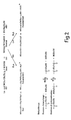
- la fig.1 est un organigramme du procédé dans ses variantes I et II,
- la fig.2 expose les réactions entrant en jeu dans le procédé de la fig.1,
- le tableau I fournit des caractéristiques et compositions de polyols obtenus selon le procédé de l'invention, et
- le tableau II fournit des caractéristiques de mousses PUR/PIR formées à partir de polyols obtenus suivant le procédé de l'invention.
- la fig 3 est un organigramme du procédé dans ses variantes III et IV,
- les diagrammes des fig.4 à 9 illustrent des compositions de la phase polyestérol dans des exemples des variantes I à IV avant et après distillation.
- PET :
- 119 g (0,62 mole) (polyéthylènetéréphtalate sous forme de copeaux provenant de déchets de fabrication de préformes de bouteilles),
- DEG :
- 321 g (3,03 mole) (diethylèneglycol),
- DPG :
- 109,2 g (0,815 mole) (dipropylèneglycol)
- CAT :
- 0,12 g (0,49 mmole) (acétate de manganèse (Mn(OAc)2,4H2O).
dont :
- monomères (n=1) : 39,5 %
- dimères (n=2): 37,5 %
- oligomères sup. (n≥3) : 23 %
glycols libres : 12,8 % dont :
- MEG : ≃ 0 %
- DEG : 10,2 %
- DPG : 2,6%
- monomère (n=1) : 23 %
- dimères (n=2): 23 %
- oligomères sup. (n≥3) : 54 %
- PET : 119 g (0,62 mole) (polyéthylène-téréphtalate sous forme de copeaux provenant de déchets de fabrication de "préformes" de bouteilles,
- MEG : 38,5 g (0,62 mole)
- DEG : 269,3 g (2,54 mole) (diethylèneglycol),
- DPG : 91,6 g (0,68 mole) (dipropylèneglycol)
- Anh. phtalique : 36,7 g (0,248 mole)
- Acide adipique : 36,2 g (0,248 mole),
- CAT : 0,12 g (0,49 mmole) (acétate de manganèse (Mn(OAc)2.4H2O).
- Acide phosphorique (H3PO4 à 85%): 0,45 g (2,5 mmole).
- MEG : 14,9 %
- DEG : 55 %
- DPG : 30 %
- IOH (mg KOH/g) : 310
- IA (mg KOH/g): 0,8
- η25°C (cPs) : 1650 .
- glycols libres : 7,2% dont
- MEG : ≃ 0 %
- DEG : 6,8 %
- DPG : 0,4 %
- MEG : 8,9 g
- DEG : 159,3 g
- DPG : 31,6 g
- IOH (mg KOH/g): 302
- IA(mg KOH/g): 1,8
- glycols libres : 4,6 %, composés de :
- MEG : ≃ 0 % (identique)
- DEG : 4,5 %
- DPG : 0,1 %
- PET : 119 g (0,62 mole) de copeaux provenant de déchets de fabrication de préformes de bouteilles,
- DEG: 321,1 g (3,03 mole),
- DPG :109,2 g de (0,815 mole),
- CAT : 0,12 g (0,49 mmole) d'acétate de manganèse (Mn(OAc)2.4H2O);
- 78,7 g (0,495 mole) d'un mélange (AGS) des diméthylesters suivants :
- diméthyladipate: ≃ 16 % en poids
- diméthylglutarate: ≃ 60 % "
- diméthylsuccinate : ≃ 24 % "
- MEG : 6,8 %
- DEG : 60,5 %
- DPG : 32,6 %,
- IOH (mgKOH/g) : 307
- IA (mgKOH/g) : 0,4
- η25°C (cPs) : 810
- glycols libres : 4,4 % dont :
- MEG : ∼ 0%
- DEG : 4,2 %
- DPG : 0,2 %
- monomères (n=1):35 - 42%, soit >35 %
- oligomères sup. (n≥3):20 - 28% soit <35 %
- Compatibilité avec le HCFC 141b : 20 - 50 %
- PET :
- 288g(1,50 mol)
- DEG :
- 195,6g(1,845 mol)
- CAT :
- 0,27g(1,1 mmole)d'acétate de manganèse
- MEG :
- 54,2%
- DEG :
- 45,8%
- DEG :
- 180,2g(1,70 mol)
- DPG
- 134,09(1,00 mol)
- GLR
- 55,2g(0,60 mol)
- MEG :
- 7,9 %
- DEG :
- 60,8 %
- DPG :
- 28,2 %
- GLR :
- 3,1 %
| I0H (mgKOH/g) | 339 | |
| IA(mgKOH/g) | 1,2 | |
| η25°C (cPs) | 15200 | |
| Glycols libres | 5,9 % dont : | |
| MEG : | 0 | |
| DEG : | 1,8 % | |
| DPG : | 0 | |
| GLR : | 4,1% | |
| Polyesterols | 94,1 % composés de : | |
| monomères (n=1) : | 44 % | |
| dimères (n=2) : | 36 % | |
| oligomères sup (n≥3) : | 20 % |
- PET :
- 238 g (1,24 mol)
- DEG :
- 64,2 g (6,06 mol)
- DPG :
- 218,4 g (1,63 mol)
- GLR :
- 68,0 g (0,74 mol)
- CAT :
- 0,24 g (0,49 mmole)
- diméthyladipate :
- 16 % en poids
- diméthylglutarate :
- 60 % en poids
- diméthylsuccinate :
- 24% en poids
- MEG :
- 10,0%
- DEG :
- 63,7%
- DPG :
- 23,9%
- GLR :
- 2,4%
| IOH (mgKOH/g) | 299 | |
| IA (mgKOH/g) | 0,61 | |
| η25°C (cPs) | 1350 | |
| Glycols libres | 4,3% dont: | |
| MEG | 0,1% | |
| DEG | 2,3% | |
| DPG | 0 | |
| Glycérol | 1,9% | |
| Polyesterols | 95,7% composés de : | |
| monomères (n=1) | 49% | |
| dimères (n=2) | 36% | |
| oligomères sup. (n≥3) | 15% |
Claims (10)
- Procédé d'obtention de polyols, consistant dans une première étape à faire réagir des glycols, c'est à dire des plurialcools de fonctionnalité au moins égale à deux (MEG, DEG, DPG, ...) sur du polyéthylènetéréphtalate (PET) en présence d'un catalyseur (CAT) de glycolyse/transestérification, puis, dans une dernière étape, à distiller les glycols libres, caractérisé :en ce qu'une étape postérieure à la première et antérieure ou simultanée à la dite dernière étape, comprend la désactivation du catalyseur de glycolyse par un agent désactivant (DES).d'où il résulte :en premier lieu, une distribution molaire remarquablement étroite des polyols obtenus et/ou l'absence de réactions de rééquilibrageen second lieu, que la distillation finale des glycols libres peut être effectuée sans rééquilibrage, sous un vide peu poussé (3 mmHg<P<30 mmHg) n'exigeant qu'une installation ordinaire;
- Procédé d'obtention de polyols selon la revendication 1, caractérisé :en ce que le catalyseur (CAT) de la réaction de glycolyse est l'un des agents du groupe comprenant l'acétate de zinc et l'acétate de manganèse, les amines telles que la triéthylamine et tributylamine, eten ce que l'agent désactivant (DES) de la réaction de désactivation est l'un des agents du groupe comprenant l'acide phosphorique, l'acide phosphoreux, les esters aryliques, alcoyliques, cycloalcoyliques, arylalcoyliques de ces acides, les acides carboxyliques aliphatiques et aromatiques tels les acides oxalique, citrique, tartrique, téréphtalique, les sels tétrasodiques de l'acide éthylène-diamine-tétracétique, l'acide phénylphosphinique;
- Procédé d'obtention de polyols selon la revendication 2, caractérisé :
en ce que l'agent désactivant choisi est l'acide phosphorique à 85%; - Procédé d'obtention de polyols selon la revendication 1, caractérisé :
en ce que (variante (I)) une seconde étape, dite d'estérification, consécutive à la première étape de glycolyse, consiste :à introduire dans le milieu glycolisé un pluriacide (PLA) et/ou ses dérivés (anhydrides, ...) et l'agent désactivant (DES), puisà porter le milieu réactionnel à une température comprise entre 170 et 240°C sous atmosphère inerte, en distillant l'eau formée, eten ce que la dernière étape consiste à distiller sous vide (3 mmHg < P < 40 mmHg) à une température comprise entre 120 et 220°C, les glycols libres; - Procédé d'obtention de polyols selon la revendication 1, caractérisé :en ce que (variante (II)) la seconde étape, ou étape d'estérification, consiste à introduire dans le milieu glycolisé un/des pluriesters (PLE), et (simultanément, préalablement ou consécutivement) à porter le milieu réactionnel à une température comprise entre 170 et 240°C sous atmosphère inerte, en distillant l'alcool formé, puisà introduire dans le milieu réactionnel, l'agent désactivant (DES), puis,constituant la dernière étape, à distiller sous vide (3 mmHg ≤ P ≤ 40 mmHg) à une température comprise entre 120 et 220°C, les glycols libres;
- Polyol obtenu selon un procédé conforme à l'une quelconque des revendications précédentes, caractérisé :
en ce qu'il comporte les caractéristiques et composition suivantes :IOH : compris entre : 200 et 400 mgKOH/g,IA compris entre : 0,1 et 10 mgKOH/gη25°C (cPs) compris entre : 500 et 5000,Compatibilité HCFC 141b : comprise entre 20 - 50 %.glycols libres (mesurés par chromatographie gazeuse) compris entre : 0 et 10%, dont
MEG inférieur à 0,3 %,polyestérols formant entre: 92 et 100% du poids du polyol de composition (mesurée par chromatographie d'exclusion stérique, détecteur UV) :monomères (n=1) : > 35 %,oligomères sup.(n≥3) : < 35 %; - Polyol obtenu selon la revendication 3 et conforme à la revendication 6, caractérisé
en ce qu'il comporte en outre, au moins à l'état de traces, :l'un au moins des corps du groupe comprenant le manganèse (Mn) et le zinc (Zn), comme reste du catalyseur (CAT), etdu phosphore (P) comme reste de l'agent désactivant (DES). - Procédé d'obtention de polyols selon la revendication 1, caractérisé :
en ce que (variante III) , avant introduction de l'agent désactivant et distillation des glycols libres:on procède, à la suite de la glycolyse, à une distillation à température élevée d'une partie des glycols libres, ce qui permet l'élimination d'une forte proportion de MEG, eten second lieu on procède à une nouvelle étape de transestérification à la suite d'un ajout de glycols et de plurialcools de fonctionnalité f>2; - Procédé d'obtention de polyols selon la revendication 8, caractérisé :
en ce qu'un plurialcool de fonctionnalité supérieure à deux est le glycérol (GLR); - Procédé d'obtention de polyols selon la revendication 1, caractérisé :
en ce que (variante IV) on met en outre en oeuvre pour effectuer la glycolyse, en plus du DEG et du DPG, d'une part des plurialcools de fonctionnalité f>2, et, par la suite, une transestérification au moyen d'un mélange, dit AGS, de diméthylesters.
Applications Claiming Priority (3)
| Application Number | Priority Date | Filing Date | Title |
|---|---|---|---|
| FR9607031 | 1996-06-04 | ||
| FR9607031A FR2753973B1 (fr) | 1996-06-04 | 1996-06-04 | Procede d'obtention de polyols et polyols obtenus selon le procede |
| PCT/FR1997/000984 WO1997046611A1 (fr) | 1996-06-04 | 1997-06-04 | Procede d'obtention de polyols et polyols obtenus selon le procede |
Publications (2)
| Publication Number | Publication Date |
|---|---|
| EP0904317A1 EP0904317A1 (fr) | 1999-03-31 |
| EP0904317B1 true EP0904317B1 (fr) | 2001-03-28 |
Family
ID=9492795
Family Applications (1)
| Application Number | Title | Priority Date | Filing Date |
|---|---|---|---|
| EP19970927229 Expired - Lifetime EP0904317B1 (fr) | 1996-06-04 | 1997-06-04 | Procede d'obtention de polyols et polyols obtenus selon le procede |
Country Status (14)
| Country | Link |
|---|---|
| US (1) | US6573304B1 (fr) |
| EP (1) | EP0904317B1 (fr) |
| JP (1) | JP2001503450A (fr) |
| CN (1) | CN1084762C (fr) |
| AT (1) | ATE200096T1 (fr) |
| AU (1) | AU3179497A (fr) |
| CA (1) | CA2257181A1 (fr) |
| DE (1) | DE69704424T2 (fr) |
| DK (1) | DK0904317T3 (fr) |
| ES (1) | ES2158566T3 (fr) |
| FR (1) | FR2753973B1 (fr) |
| GR (1) | GR3036883T3 (fr) |
| PT (1) | PT904317E (fr) |
| WO (1) | WO1997046611A1 (fr) |
Families Citing this family (19)
| Publication number | Priority date | Publication date | Assignee | Title |
|---|---|---|---|---|
| EP1000956A1 (fr) * | 1998-11-12 | 2000-05-17 | Oxid, L.P. | Aromatic polyester polyols composition and process |
| FR2811246B1 (fr) * | 2000-07-06 | 2003-01-17 | Electricite De France | Procede de valorisation de materiaux composites |
| JP3994660B2 (ja) * | 2000-12-22 | 2007-10-24 | 日立化成工業株式会社 | 不飽和ポリエステル樹脂硬化物用分解処理液、該処理液を用いた不飽和ポリエステル樹脂硬化物の処理方法及び複合材料の分離方法 |
| US7157139B2 (en) * | 2004-04-19 | 2007-01-02 | Grant W. Doney | Polymer manufacturing process |
| US8545952B2 (en) * | 2005-06-07 | 2013-10-01 | The Coca-Cola Company | Polyester container with enhanced gas barrier and method |
| US8476364B2 (en) | 2007-03-29 | 2013-07-02 | Beaulieu Group, Llc | Polymer manufacturing process |
| RO128141B1 (ro) | 2011-06-23 | 2016-02-26 | Institutul Naţional De Cercetare-Dezvoltare Pentru Chimie Şi Petrochimie - Icechim | Procedeu de obţinere a unor poliester-eter polioli aromatici din deşeuri de polietilentereftalat (pet) şi poliester-eter polioli aromatici încorporând deşeuri de polietilentereftalat şi materiale regenerabile, obţinuţi prin respectivul procedeu |
| US9255194B2 (en) | 2013-10-15 | 2016-02-09 | International Business Machines Corporation | Methods and materials for depolymerizing polyesters |
| WO2015171433A1 (fr) | 2014-05-05 | 2015-11-12 | Resinate Materials Group, Inc. | Polyester polyols obtenus à partir de polyesters thermoplastiques et d'acides gras dimères |
| US10414859B2 (en) | 2014-08-20 | 2019-09-17 | Resinate Materials Group, Inc. | High recycle content polyester polyols |
| US9550713B1 (en) | 2015-07-09 | 2017-01-24 | Loop Industries, Inc. | Polyethylene terephthalate depolymerization |
| WO2017087752A1 (fr) | 2015-11-20 | 2017-05-26 | The University Of North Carolina At Chapel Hill | Recyclage chimique de téréphtalate de polyéthylène par irradiation par micro-ondes |
| WO2018115460A1 (fr) * | 2016-12-23 | 2018-06-28 | Basf Se | Polyuréthane thermoplastique présentant une grande résistance à la déchirure amorcée |
| US10252976B1 (en) | 2017-09-15 | 2019-04-09 | 9449710 Canada Inc. | Terephthalic acid esters formation |
| US12071519B2 (en) | 2017-09-15 | 2024-08-27 | 9449710 Canada Inc. | Terephthalic acid esters formation |
| US10988572B2 (en) * | 2017-11-20 | 2021-04-27 | Alliance For Sustainable Energy, Llc | Polymers and methods of making the same |
| UY38276A (es) | 2018-06-25 | 2019-12-31 | 9449710 Canada Inc | Formación de ésteres de ácido tereftálico |
| US11248103B2 (en) | 2019-03-20 | 2022-02-15 | 9449710 Canada Inc. | Process for the depolymerization of polyethylene terephthalate (PET) |
| US11845863B2 (en) | 2020-05-04 | 2023-12-19 | Carlisle Construction Materials, LLC | Polyurethane dispersions and their use to produce coatings and adhesives |
Family Cites Families (7)
| Publication number | Priority date | Publication date | Assignee | Title |
|---|---|---|---|---|
| US3488298A (en) * | 1966-12-01 | 1970-01-06 | Eastman Kodak Co | Polyester scrap recovery processes |
| US3907868A (en) * | 1974-02-15 | 1975-09-23 | Du Pont | Polyester waste recovery |
| US4873268A (en) * | 1984-02-22 | 1989-10-10 | Sloss Industries Corporation | Digestion products of polyalkylene terephthalate polymers and polycarboxylic acid-containing polyols and polymeric foams obtained therefrom |
| US4758607A (en) * | 1985-07-18 | 1988-07-19 | Sloss Industries Corporation | Distilled products of polyethylene terephthalate polymers and polycarboxylic acid-containing polyols and polymeric foams obtained therefrom |
| DE4220473A1 (de) * | 1992-06-23 | 1994-01-05 | Zimmer Ag | Verfahren zur Herstellung von Polybutylenterephthalat aus PET-Abfall |
| US5451611A (en) * | 1994-03-29 | 1995-09-19 | Council Of Scientific & Industrial Research | Process for the conversion of poly(ethylene terephthalate) waste to poly(alkylene terephthalate) |
| DE4437043A1 (de) * | 1994-10-17 | 1996-04-18 | Hoechst Ag | Polyole und Verfahren zu deren Herstellung aus PET-Abfällen der PET-Produktion |
-
1996
- 1996-06-04 FR FR9607031A patent/FR2753973B1/fr not_active Expired - Fee Related
-
1997
- 1997-06-04 US US09/194,978 patent/US6573304B1/en not_active Expired - Fee Related
- 1997-06-04 WO PCT/FR1997/000984 patent/WO1997046611A1/fr not_active Ceased
- 1997-06-04 DE DE69704424T patent/DE69704424T2/de not_active Expired - Fee Related
- 1997-06-04 CA CA 2257181 patent/CA2257181A1/fr not_active Abandoned
- 1997-06-04 ES ES97927229T patent/ES2158566T3/es not_active Expired - Lifetime
- 1997-06-04 JP JP50027898A patent/JP2001503450A/ja not_active Ceased
- 1997-06-04 EP EP19970927229 patent/EP0904317B1/fr not_active Expired - Lifetime
- 1997-06-04 DK DK97927229T patent/DK0904317T3/da active
- 1997-06-04 AU AU31794/97A patent/AU3179497A/en not_active Abandoned
- 1997-06-04 AT AT97927229T patent/ATE200096T1/de not_active IP Right Cessation
- 1997-06-04 CN CN97195185A patent/CN1084762C/zh not_active Expired - Fee Related
- 1997-06-04 PT PT97927229T patent/PT904317E/pt unknown
-
2001
- 2001-06-22 GR GR20010400959T patent/GR3036883T3/el not_active IP Right Cessation
Also Published As
| Publication number | Publication date |
|---|---|
| FR2753973A1 (fr) | 1998-04-03 |
| WO1997046611A1 (fr) | 1997-12-11 |
| JP2001503450A (ja) | 2001-03-13 |
| GR3036883T3 (en) | 2002-01-31 |
| CN1220679A (zh) | 1999-06-23 |
| DE69704424T2 (de) | 2001-11-08 |
| US6573304B1 (en) | 2003-06-03 |
| ATE200096T1 (de) | 2001-04-15 |
| CN1084762C (zh) | 2002-05-15 |
| DK0904317T3 (da) | 2001-08-13 |
| DE69704424D1 (de) | 2001-05-03 |
| CA2257181A1 (fr) | 1997-12-11 |
| AU3179497A (en) | 1998-01-05 |
| PT904317E (pt) | 2001-09-28 |
| ES2158566T3 (es) | 2001-09-01 |
| FR2753973B1 (fr) | 1999-01-29 |
| EP0904317A1 (fr) | 1999-03-31 |
Similar Documents
| Publication | Publication Date | Title |
|---|---|---|
| EP0904317A1 (fr) | Procede d'obtention de polyols et polyols obtenus selon le procede | |
| US4346229A (en) | Reaction products of DMT process residue and dipropylene glycol | |
| US8471072B2 (en) | Soy-based polyols | |
| FR2466475A1 (fr) | Nouveau polyisocyanurate a structure cellulaire | |
| MX2008009171A (es) | Produccion de polimeros de aceite para cocinar de desecho. | |
| TW201406814A (zh) | 聚酯及聚胺基甲酸酯之製造方法 | |
| CA1275336C (fr) | Polyols provenant du terephtalate polyethylene de rebut et de residus du traitement du terephtalate de dimethyle | |
| JP2014522446A (ja) | ポリウレタンおよびポリイソシアヌレートポリマーのための前駆体としてのシクロヘキサン酸化副生成物ストリーム由来の脂肪族ポリエステルポリオール | |
| US4758607A (en) | Distilled products of polyethylene terephthalate polymers and polycarboxylic acid-containing polyols and polymeric foams obtained therefrom | |
| JP2025503680A (ja) | リサイクル分ポリエチレンテレフタラートおよびそれを製造する方法 | |
| EP4186936A1 (fr) | Polyols de polyester d'origine biologique, mousse de polyuréthane polyol de polyester monocomposant d'origine biologique ou composition adhésive en mousse et utilisation de polyol de polyester d'origine biologique pour la fabrication d'une mousse de construction monocomposant ou adhésif en mousse | |
| CN101939031A (zh) | 用于制造中等分子量和高分子量聚酯的方法 | |
| US4521611A (en) | Polyester polyol blend from phthalic anhydride bottoms | |
| CN113214077A (zh) | 一种降解热塑性塑料聚对苯二甲酸乙二酯的方法 | |
| US20100015676A1 (en) | Method for producing polyesterols | |
| EP2924030A1 (fr) | Procédé de production de glycolide, doté d'une étape de rectification au moyen d'un contact gaz-liquide à contre-courant et procédé de purification de glycolide brut | |
| KR102206266B1 (ko) | 바이오매스 유래 성분을 이용한 기능성 수지 조성물 | |
| FR2753974A1 (fr) | Procede d'obtention de polyols et polyols obtenus selon le procede | |
| RU2236422C1 (ru) | Способ получения сложных полиэфирполиолов и жестких пенопластов на их основе | |
| EP0128060B1 (fr) | Procédé de préparation de polyols | |
| US4853419A (en) | Distilled products of polyethylene terephthalate polymers and polycarboxylic acid-containing polyols and polymeric foams obtained therefrom | |
| US20260008734A1 (en) | Low-temperature depolymerization of polymer containing urethane functional group using cosolvent and method for producing polyol | |
| Sipaut et al. | Synthesis and characterization of polyols from refined cooking oil for polyurethane foam formation | |
| EP3504179A1 (fr) | Methode de production de polyol polyesters et leur utilisation dans le polyurethane | |
| EP0006685B2 (fr) | Procédé pour la préparation de polyester-polyols |
Legal Events
| Date | Code | Title | Description |
|---|---|---|---|
| PUAI | Public reference made under article 153(3) epc to a published international application that has entered the european phase |
Free format text: ORIGINAL CODE: 0009012 |
|
| 17P | Request for examination filed |
Effective date: 19981123 |
|
| AK | Designated contracting states |
Kind code of ref document: A1 Designated state(s): AT BE CH DE DK ES FI FR GB GR IE IT LI LU MC NL PT SE |
|
| 17Q | First examination report despatched |
Effective date: 19990325 |
|
| GRAG | Despatch of communication of intention to grant |
Free format text: ORIGINAL CODE: EPIDOS AGRA |
|
| GRAG | Despatch of communication of intention to grant |
Free format text: ORIGINAL CODE: EPIDOS AGRA |
|
| GRAH | Despatch of communication of intention to grant a patent |
Free format text: ORIGINAL CODE: EPIDOS IGRA |
|
| GRAH | Despatch of communication of intention to grant a patent |
Free format text: ORIGINAL CODE: EPIDOS IGRA |
|
| GRAA | (expected) grant |
Free format text: ORIGINAL CODE: 0009210 |
|
| AK | Designated contracting states |
Kind code of ref document: B1 Designated state(s): AT BE CH DE DK ES FI FR GB GR IE IT LI LU MC NL PT SE |
|
| REF | Corresponds to: |
Ref document number: 200096 Country of ref document: AT Date of ref document: 20010415 Kind code of ref document: T |
|
| REG | Reference to a national code |
Ref country code: CH Ref legal event code: EP |
|
| REG | Reference to a national code |
Ref country code: IE Ref legal event code: FG4D Free format text: FRENCH |
|
| REF | Corresponds to: |
Ref document number: 69704424 Country of ref document: DE Date of ref document: 20010503 |
|
| ITF | It: translation for a ep patent filed | ||
| PG25 | Lapsed in a contracting state [announced via postgrant information from national office to epo] |
Ref country code: MC Free format text: LAPSE BECAUSE OF NON-PAYMENT OF DUE FEES Effective date: 20010630 |
|
| REG | Reference to a national code |
Ref country code: CH Ref legal event code: NV Representative=s name: MOINAS & SAVOYE SA |
|
| GBT | Gb: translation of ep patent filed (gb section 77(6)(a)/1977) |
Effective date: 20010627 |
|
| REG | Reference to a national code |
Ref country code: DK Ref legal event code: T3 |
|
| REG | Reference to a national code |
Ref country code: ES Ref legal event code: FG2A Ref document number: 2158566 Country of ref document: ES Kind code of ref document: T3 |
|
| REG | Reference to a national code |
Ref country code: PT Ref legal event code: SC4A Free format text: AVAILABILITY OF NATIONAL TRANSLATION Effective date: 20010620 |
|
| REG | Reference to a national code |
Ref country code: GB Ref legal event code: IF02 |
|
| REG | Reference to a national code |
Ref country code: GR Ref legal event code: EP Ref document number: 20010400959 Country of ref document: GR |
|
| PLBE | No opposition filed within time limit |
Free format text: ORIGINAL CODE: 0009261 |
|
| STAA | Information on the status of an ep patent application or granted ep patent |
Free format text: STATUS: NO OPPOSITION FILED WITHIN TIME LIMIT |
|
| 26N | No opposition filed | ||
| PGFP | Annual fee paid to national office [announced via postgrant information from national office to epo] |
Ref country code: PT Payment date: 20070516 Year of fee payment: 11 |
|
| PGFP | Annual fee paid to national office [announced via postgrant information from national office to epo] |
Ref country code: DE Payment date: 20070612 Year of fee payment: 11 |
|
| PGFP | Annual fee paid to national office [announced via postgrant information from national office to epo] |
Ref country code: CH Payment date: 20070613 Year of fee payment: 11 |
|
| PGFP | Annual fee paid to national office [announced via postgrant information from national office to epo] |
Ref country code: NL Payment date: 20070618 Year of fee payment: 11 Ref country code: AT Payment date: 20070618 Year of fee payment: 11 |
|
| PGFP | Annual fee paid to national office [announced via postgrant information from national office to epo] |
Ref country code: SE Payment date: 20070620 Year of fee payment: 11 Ref country code: FI Payment date: 20070620 Year of fee payment: 11 |
|
| PGFP | Annual fee paid to national office [announced via postgrant information from national office to epo] |
Ref country code: DK Payment date: 20070621 Year of fee payment: 11 |
|
| PGFP | Annual fee paid to national office [announced via postgrant information from national office to epo] |
Ref country code: ES Payment date: 20070625 Year of fee payment: 11 |
|
| PGFP | Annual fee paid to national office [announced via postgrant information from national office to epo] |
Ref country code: BE Payment date: 20070626 Year of fee payment: 11 Ref country code: IE Payment date: 20070626 Year of fee payment: 11 |
|
| PGFP | Annual fee paid to national office [announced via postgrant information from national office to epo] |
Ref country code: LU Payment date: 20070809 Year of fee payment: 11 |
|
| PGFP | Annual fee paid to national office [announced via postgrant information from national office to epo] |
Ref country code: GB Payment date: 20070619 Year of fee payment: 11 |
|
| PGFP | Annual fee paid to national office [announced via postgrant information from national office to epo] |
Ref country code: IT Payment date: 20070621 Year of fee payment: 11 |
|
| PGFP | Annual fee paid to national office [announced via postgrant information from national office to epo] |
Ref country code: FR Payment date: 20070530 Year of fee payment: 11 |
|
| PGFP | Annual fee paid to national office [announced via postgrant information from national office to epo] |
Ref country code: GR Payment date: 20070626 Year of fee payment: 11 |
|
| REG | Reference to a national code |
Ref country code: PT Ref legal event code: MM4A Free format text: LAPSE DUE TO NON-PAYMENT OF FEES Effective date: 20081204 |
|
| BERE | Be: lapsed |
Owner name: TECHNIQUES DU *BATIMENT ET DE L'INDUSTRIE S.A.R.L. Effective date: 20080630 |
|
| PG25 | Lapsed in a contracting state [announced via postgrant information from national office to epo] |
Ref country code: PT Free format text: LAPSE BECAUSE OF NON-PAYMENT OF DUE FEES Effective date: 20081204 |
|
| REG | Reference to a national code |
Ref country code: CH Ref legal event code: PL |
|
| REG | Reference to a national code |
Ref country code: DK Ref legal event code: EBP |
|
| EUG | Se: european patent has lapsed | ||
| GBPC | Gb: european patent ceased through non-payment of renewal fee |
Effective date: 20080604 |
|
| PG25 | Lapsed in a contracting state [announced via postgrant information from national office to epo] |
Ref country code: FI Free format text: LAPSE BECAUSE OF NON-PAYMENT OF DUE FEES Effective date: 20080604 |
|
| NLV4 | Nl: lapsed or anulled due to non-payment of the annual fee |
Effective date: 20090101 |
|
| PG25 | Lapsed in a contracting state [announced via postgrant information from national office to epo] |
Ref country code: BE Free format text: LAPSE BECAUSE OF NON-PAYMENT OF DUE FEES Effective date: 20080630 |
|
| REG | Reference to a national code |
Ref country code: IE Ref legal event code: MM4A |
|
| REG | Reference to a national code |
Ref country code: FR Ref legal event code: ST Effective date: 20090228 |
|
| PG25 | Lapsed in a contracting state [announced via postgrant information from national office to epo] |
Ref country code: IE Free format text: LAPSE BECAUSE OF NON-PAYMENT OF DUE FEES Effective date: 20080604 Ref country code: DE Free format text: LAPSE BECAUSE OF NON-PAYMENT OF DUE FEES Effective date: 20090101 Ref country code: AT Free format text: LAPSE BECAUSE OF NON-PAYMENT OF DUE FEES Effective date: 20080604 |
|
| PG25 | Lapsed in a contracting state [announced via postgrant information from national office to epo] |
Ref country code: NL Free format text: LAPSE BECAUSE OF NON-PAYMENT OF DUE FEES Effective date: 20090101 |
|
| PG25 | Lapsed in a contracting state [announced via postgrant information from national office to epo] |
Ref country code: LI Free format text: LAPSE BECAUSE OF NON-PAYMENT OF DUE FEES Effective date: 20080630 Ref country code: GR Free format text: LAPSE BECAUSE OF NON-PAYMENT OF DUE FEES Effective date: 20090107 Ref country code: GB Free format text: LAPSE BECAUSE OF NON-PAYMENT OF DUE FEES Effective date: 20080604 Ref country code: CH Free format text: LAPSE BECAUSE OF NON-PAYMENT OF DUE FEES Effective date: 20080630 |
|
| REG | Reference to a national code |
Ref country code: ES Ref legal event code: FD2A Effective date: 20080605 |
|
| PG25 | Lapsed in a contracting state [announced via postgrant information from national office to epo] |
Ref country code: IT Free format text: LAPSE BECAUSE OF NON-PAYMENT OF DUE FEES Effective date: 20080604 Ref country code: FR Free format text: LAPSE BECAUSE OF NON-PAYMENT OF DUE FEES Effective date: 20080630 |
|
| PG25 | Lapsed in a contracting state [announced via postgrant information from national office to epo] |
Ref country code: ES Free format text: LAPSE BECAUSE OF NON-PAYMENT OF DUE FEES Effective date: 20080605 |
|
| PG25 | Lapsed in a contracting state [announced via postgrant information from national office to epo] |
Ref country code: DK Free format text: LAPSE BECAUSE OF NON-PAYMENT OF DUE FEES Effective date: 20090106 |
|
| PG25 | Lapsed in a contracting state [announced via postgrant information from national office to epo] |
Ref country code: DK Free format text: LAPSE BECAUSE OF NON-PAYMENT OF DUE FEES Effective date: 20080630 |
|
| PG25 | Lapsed in a contracting state [announced via postgrant information from national office to epo] |
Ref country code: LU Free format text: LAPSE BECAUSE OF NON-PAYMENT OF DUE FEES Effective date: 20080604 |
|
| PG25 | Lapsed in a contracting state [announced via postgrant information from national office to epo] |
Ref country code: SE Free format text: LAPSE BECAUSE OF NON-PAYMENT OF DUE FEES Effective date: 20080605 |